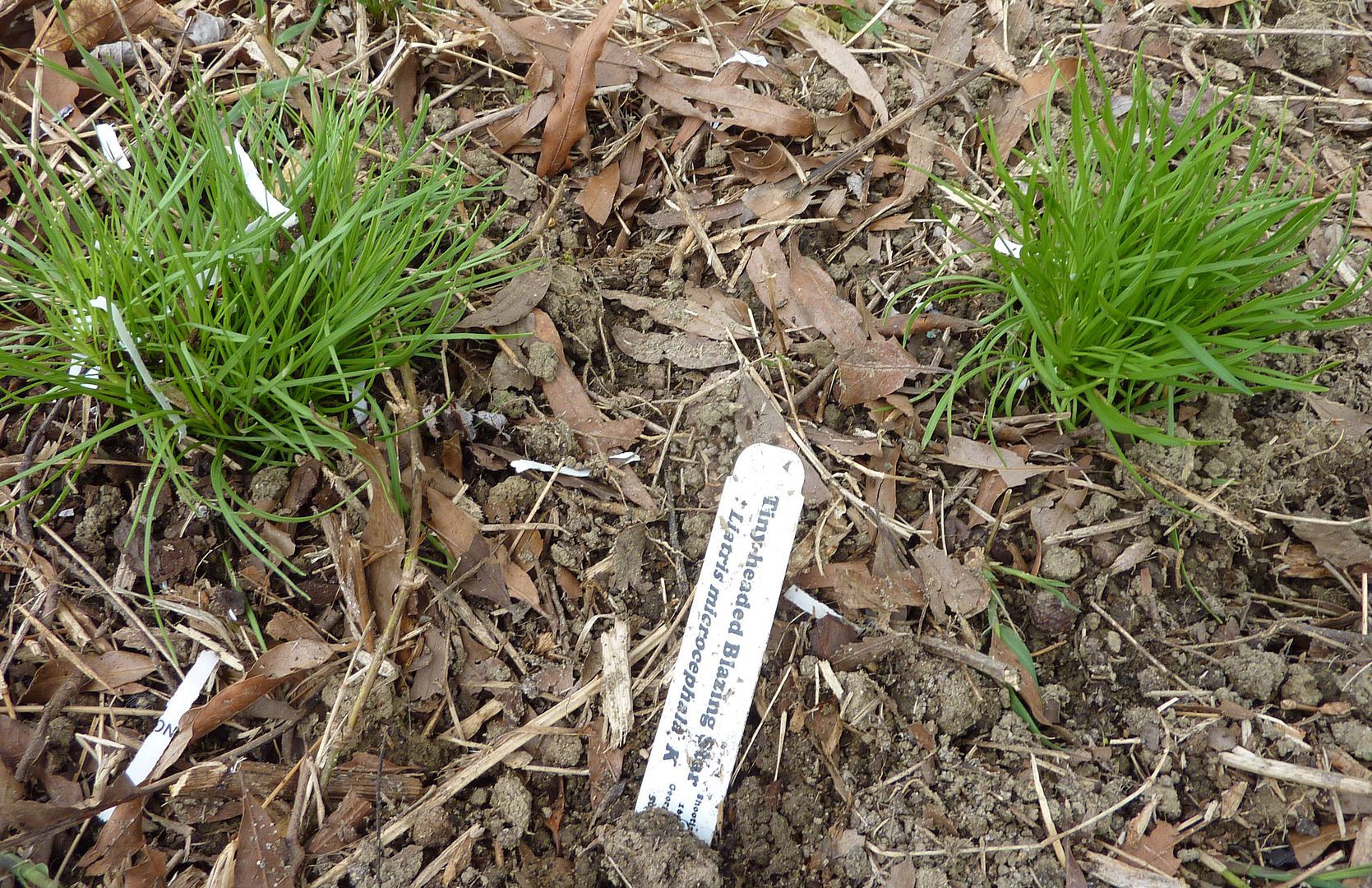
Around this time each year I start to form a plant list. I don't bother with a whole lot of seeds except for annuals like Sunflowers and filler annuals I like more for sentimental reasons and color. The focus is more on plugs and bare roots, often things that will flower in late summer and autumn.
Phlox 'jeana'
I don't have actual photos of this cultivar, but I was at the Mt. Cuba Center in the fall where they're currently doing a trial run of basically all the true species and cultivars on the market today. They said of all of the verities available this one had twice as many butterflies on it compared to all the rest. They noted the flowers were smaller than most other Phlox which likely makes it easier for the butterflies to work, but other factors like nectar quality and fragrance probably also play a roll. A failing might be that it's otherwise fairly average besides. Flowering wise I'm told other verities did better at offering blooms later int he year so it's still good to diversify. I'm looking forward to their complete trial when it's released in the next year or two.
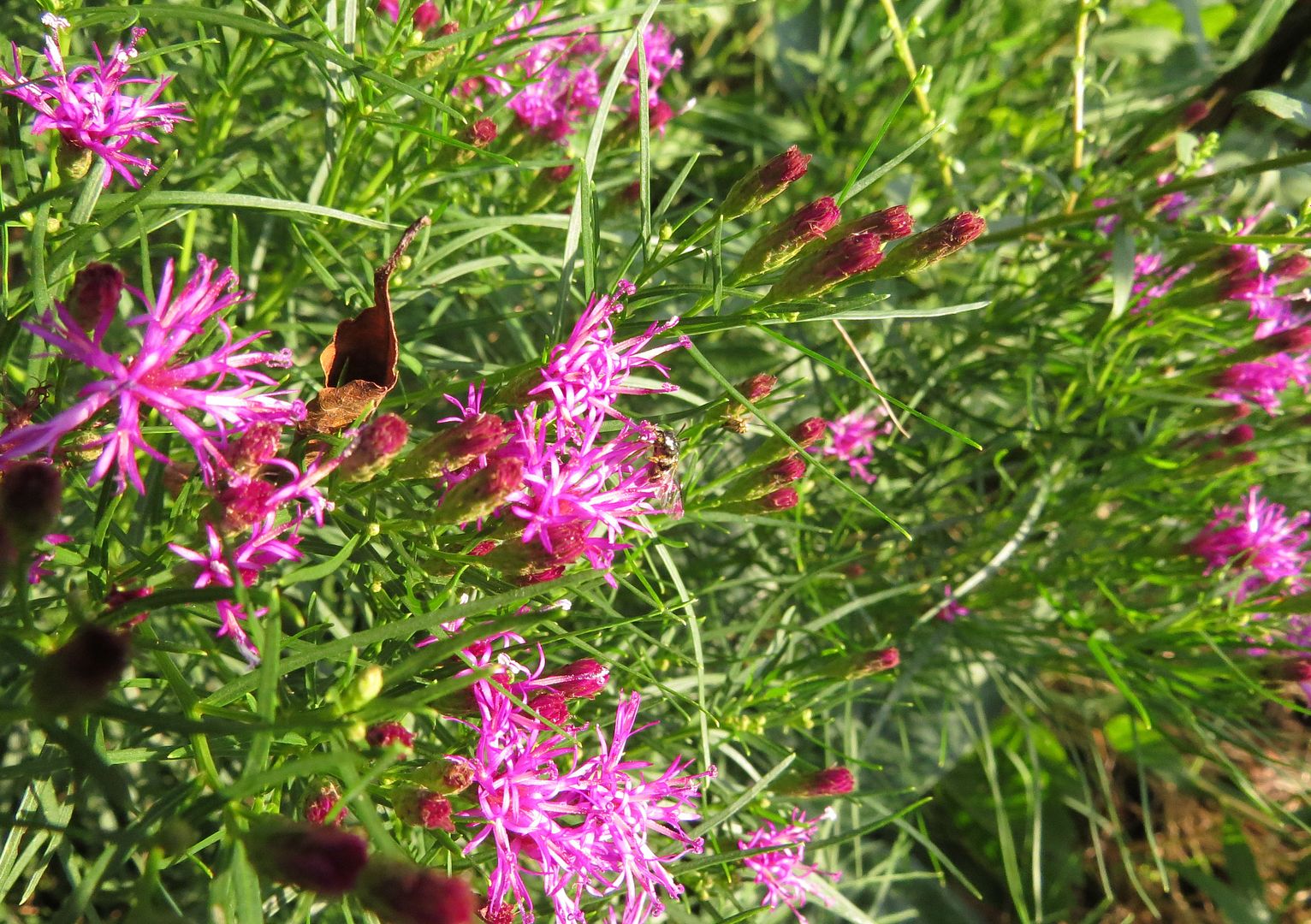
Ironweed, Vernonia angustifolia 'Plum Peachy'
This perennial turns into a bush of purple flowers in late summer.
I tried planting it in the autumn once but it failed to survive the winter. I think if I plant it in the spring it will have a better chance of establishing.
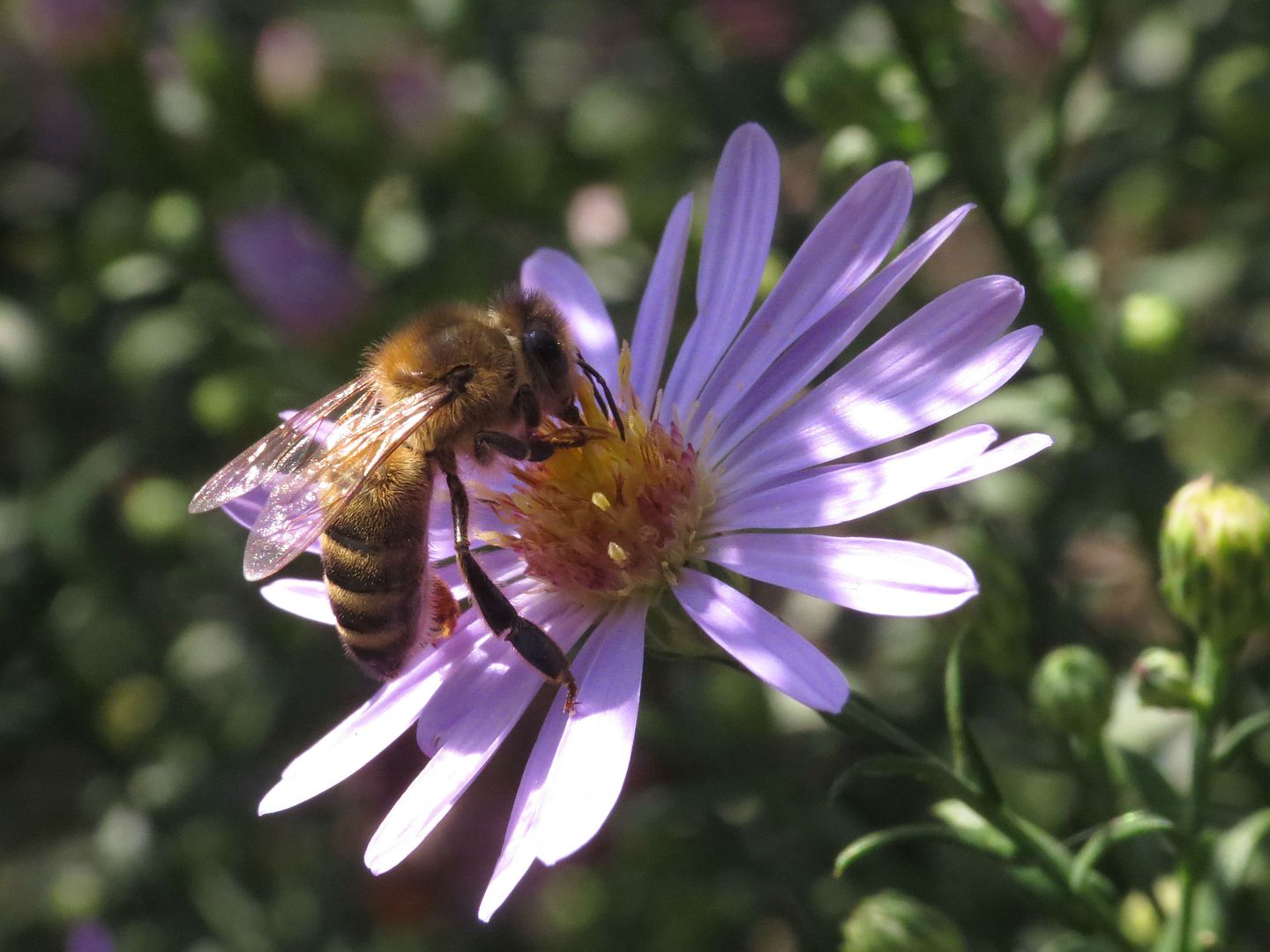
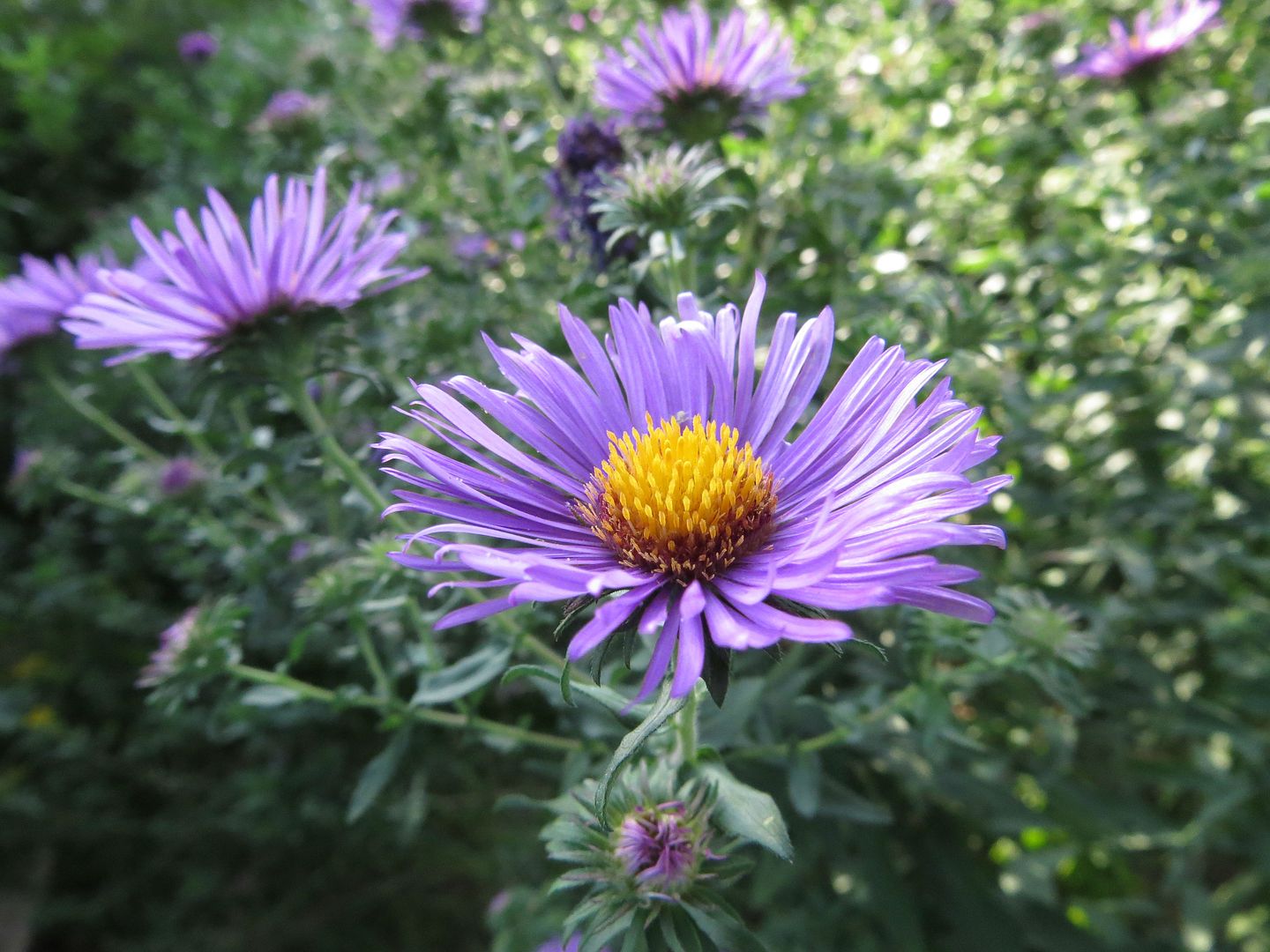
Aster leavis, 'Bluebird' (actually this is Symphyotrichum leavis but no one seems to care.)
My picture really doesn't do this plant any justice. I have a few planted and love them all, sadly they're not in the most photogenic of places. The one I have nest to a tree with a bird feeder next to it so the squirrels are always snapping the stems off the thing. Even with several dozen stems snapped though it still manages to impress me with tall pyramids of flowers. The perfect compliment to Showy Goldenrod.
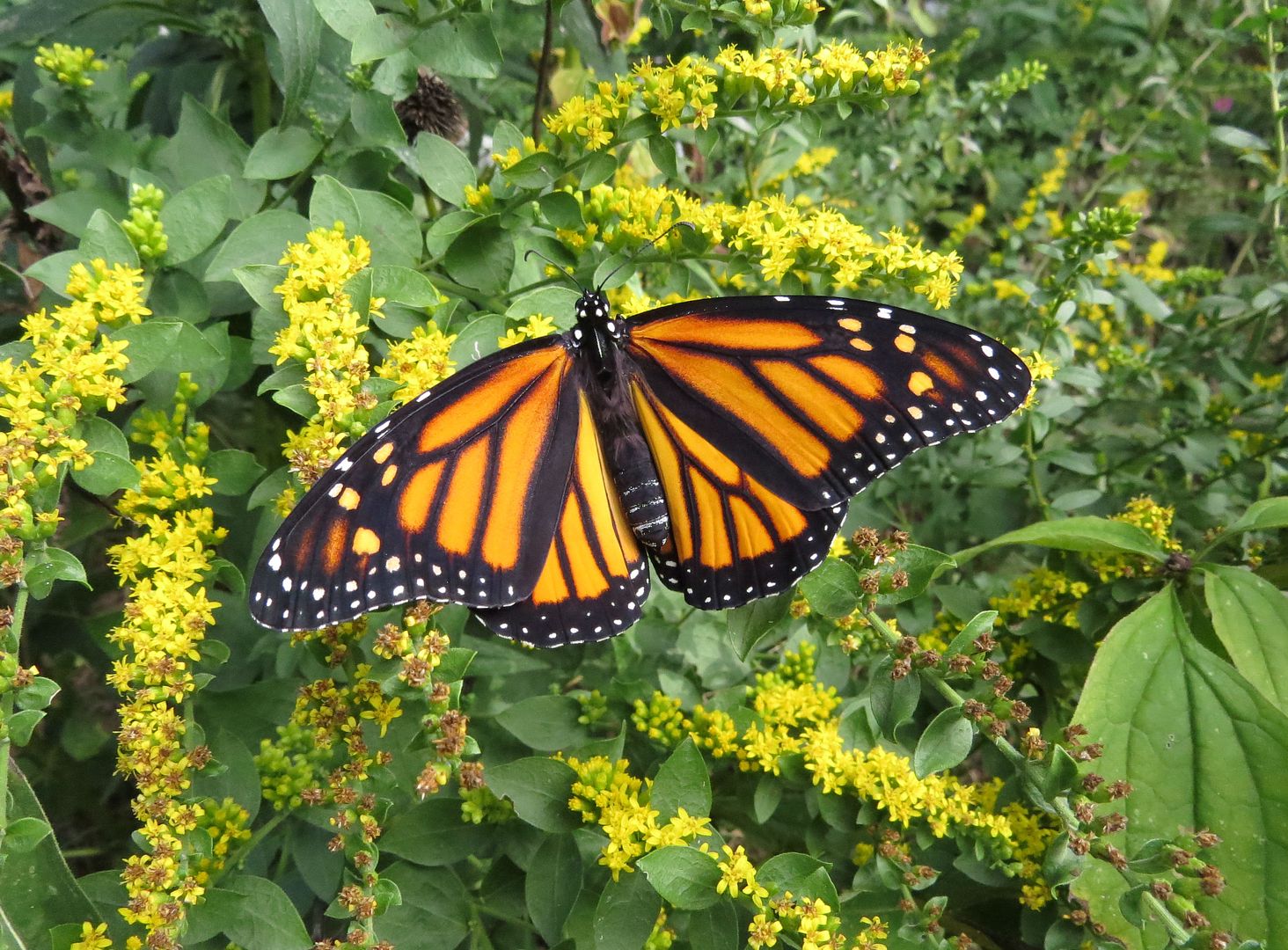
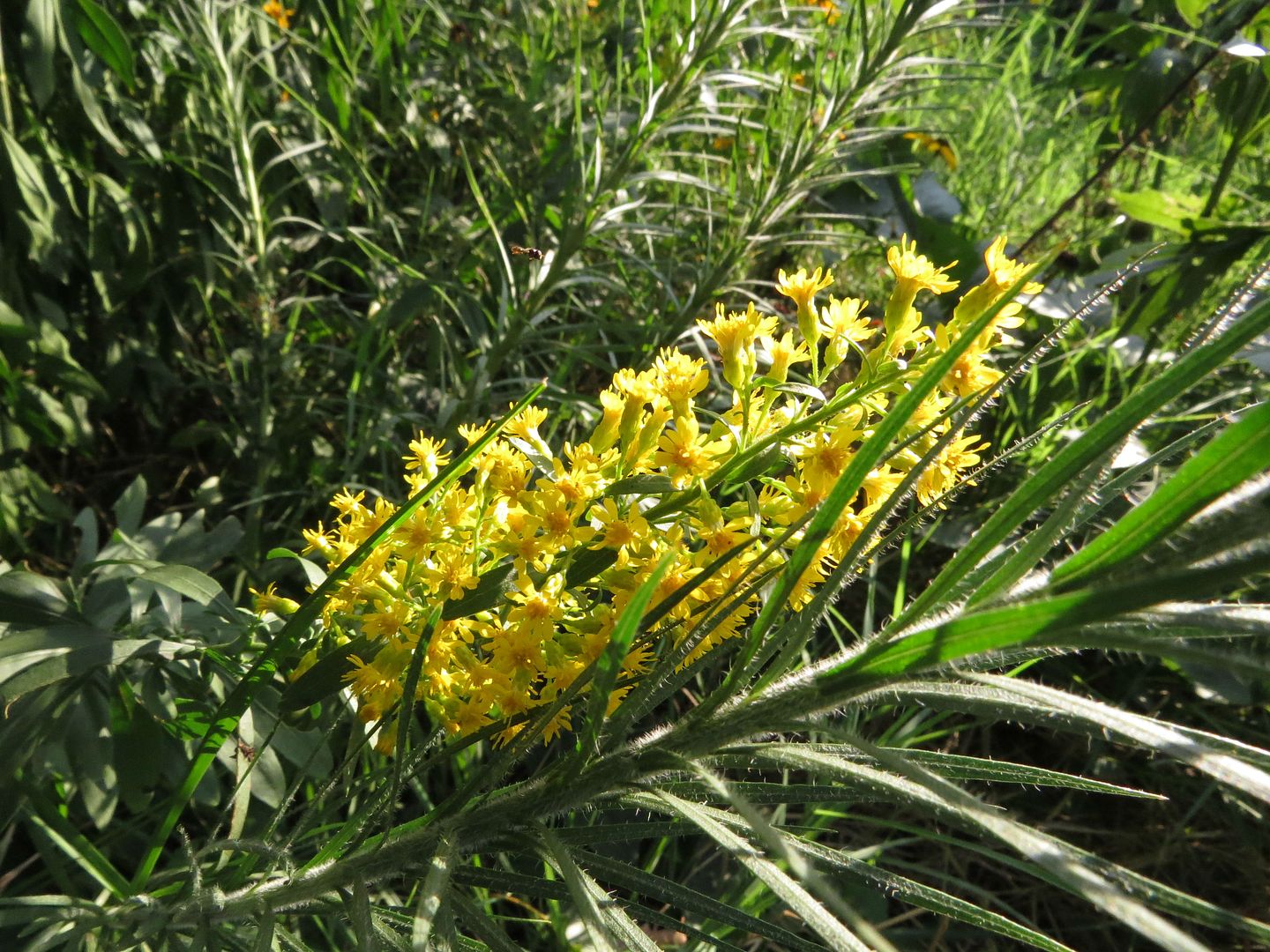
Cliff Goldenrod, Solidago drummondii
I bought this plant from some random nursery online and didn't expect much of it. Now that it's established I'm surprised it's not more popular. A failing, if you can call it that, is it forms a rosette of leaves with a couple dozen stems arching out in all directions. The stems tend to get a little long and arch all the way to the ground. I think it's because of the soil I'm growing it in though, too rich. In nature I believe this is meant to be a rock garden plant (hence the name) where the soils tend to be nutrient deprived.
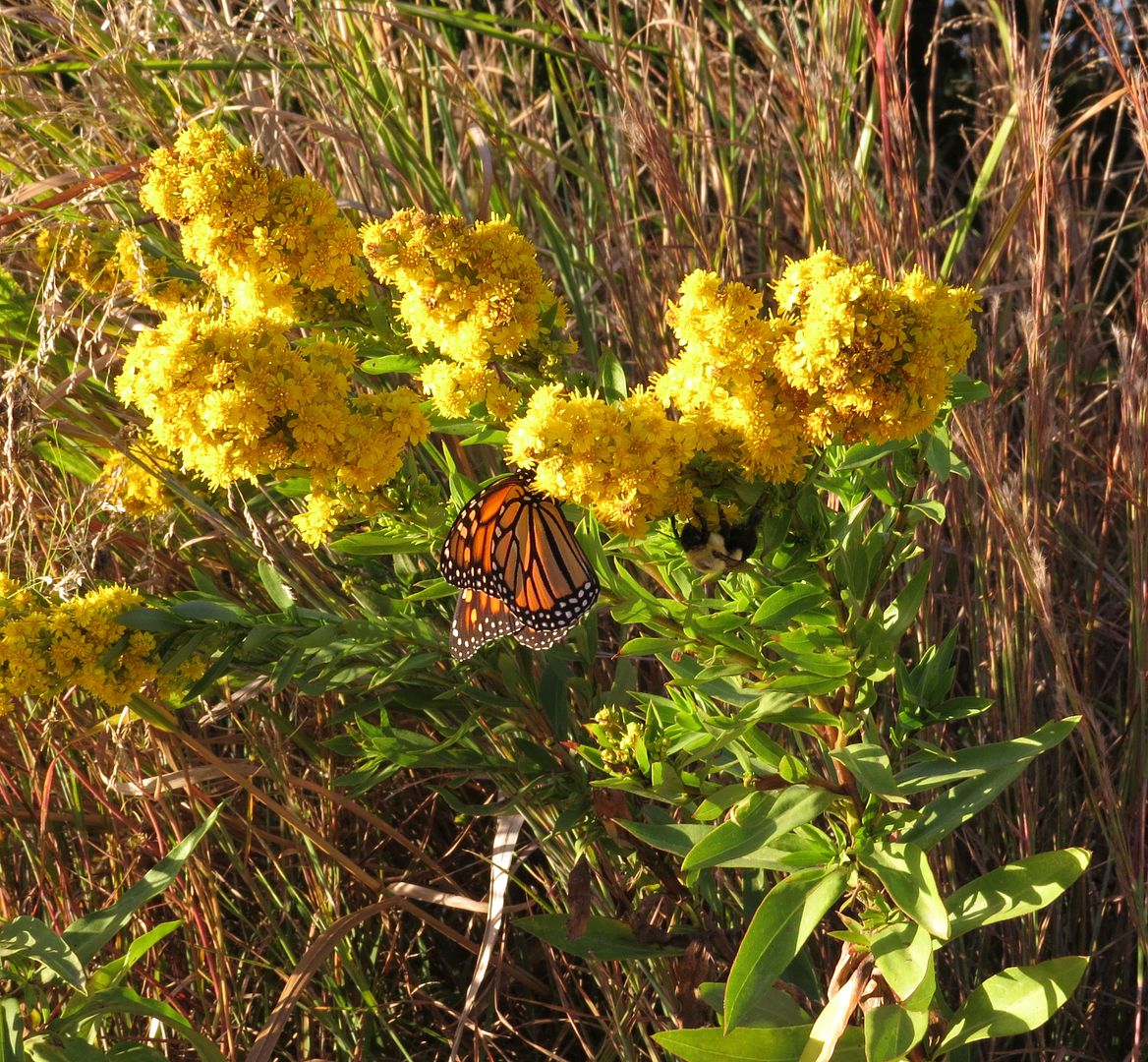
Stiff Goldenrod, Solidago rigida, Actually what's pictured above is Seaside Goldenrod but the two species look similar. They still have broad leaves at the bottom, but Stiff Goldenrod has more flat top flower heads.
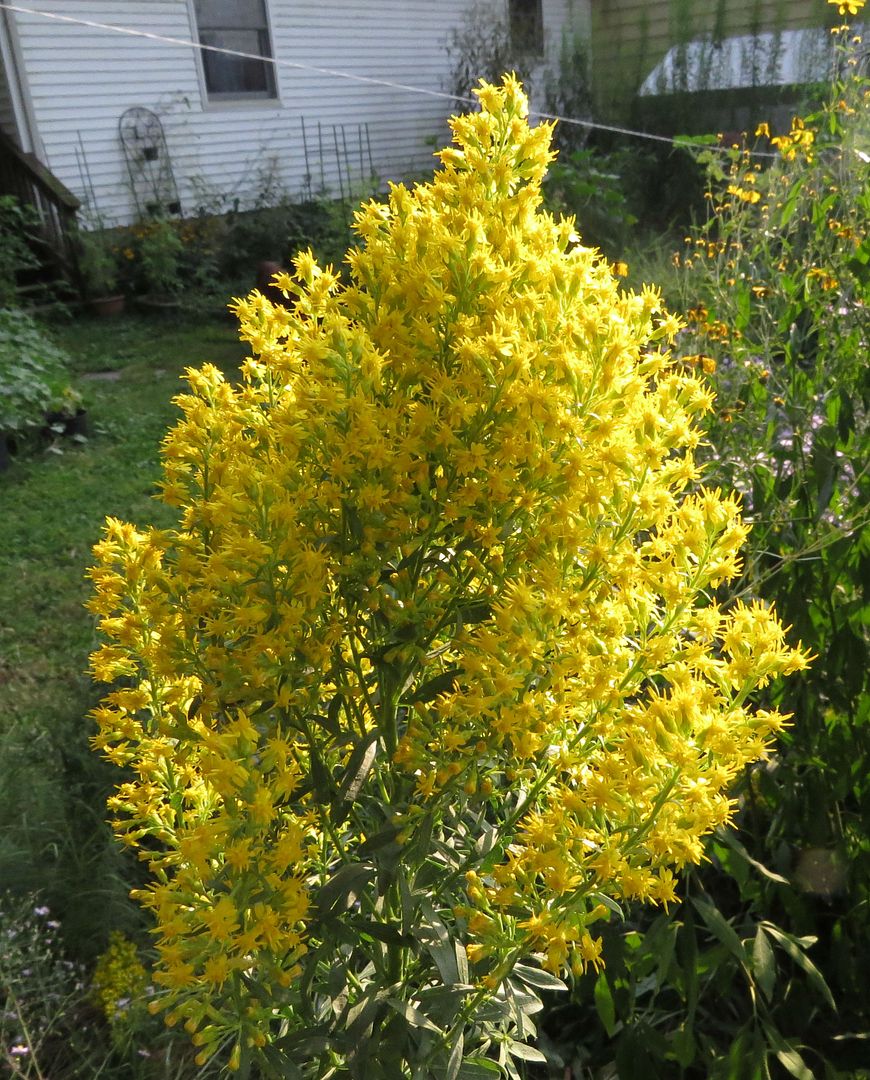
Showy Goldenrod, Solidago speciosa
This plant lives up to its name very well.... when it grows right. I bought it because I needed plants for my meadow garden which is dry clay but after flowering great for two years the plants slowly petered out. It's either a short lived perennial or benefits from slightly wetter conditions. Whatever the case I'm willing to give it another chance, perhaps in a more formal setting.
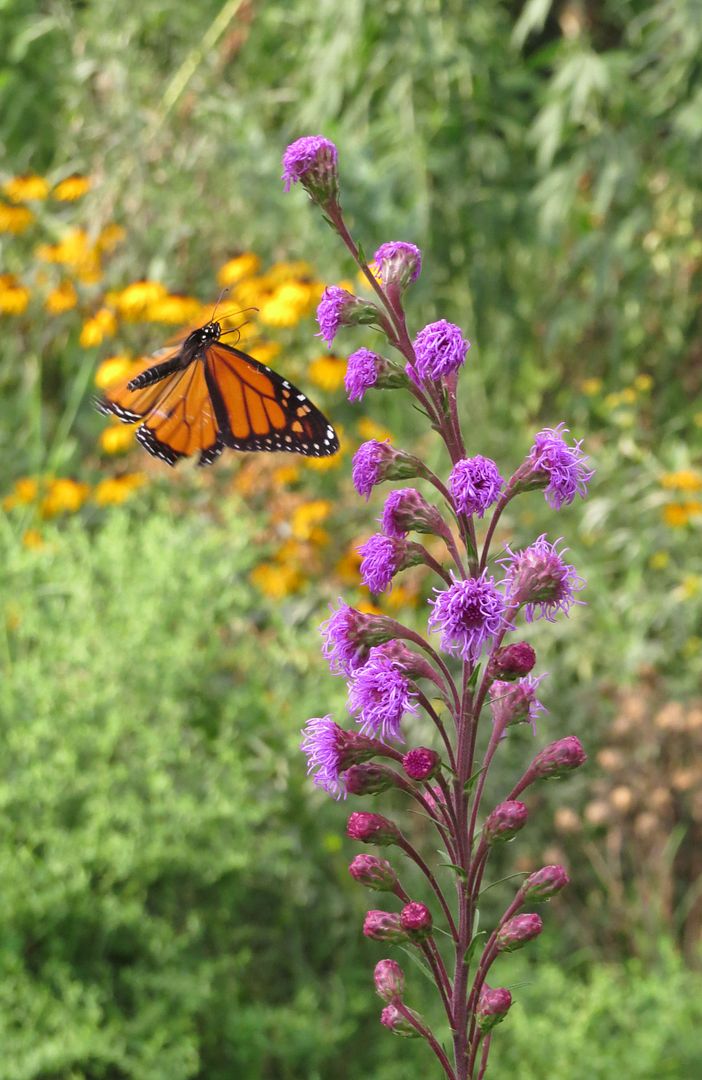
Meadow Blazing Star, Liatris ligulistylis
Same issue as the Showy Goldenrod. I plant these in the Meadow Garden and they do great for two years (being a biannual) but don't reseed on their own. I do have one that has lasted the test of time but it's planted next to our pond. So I'm thinking if I plant more of them in slightly wetter locations, they'll do better.
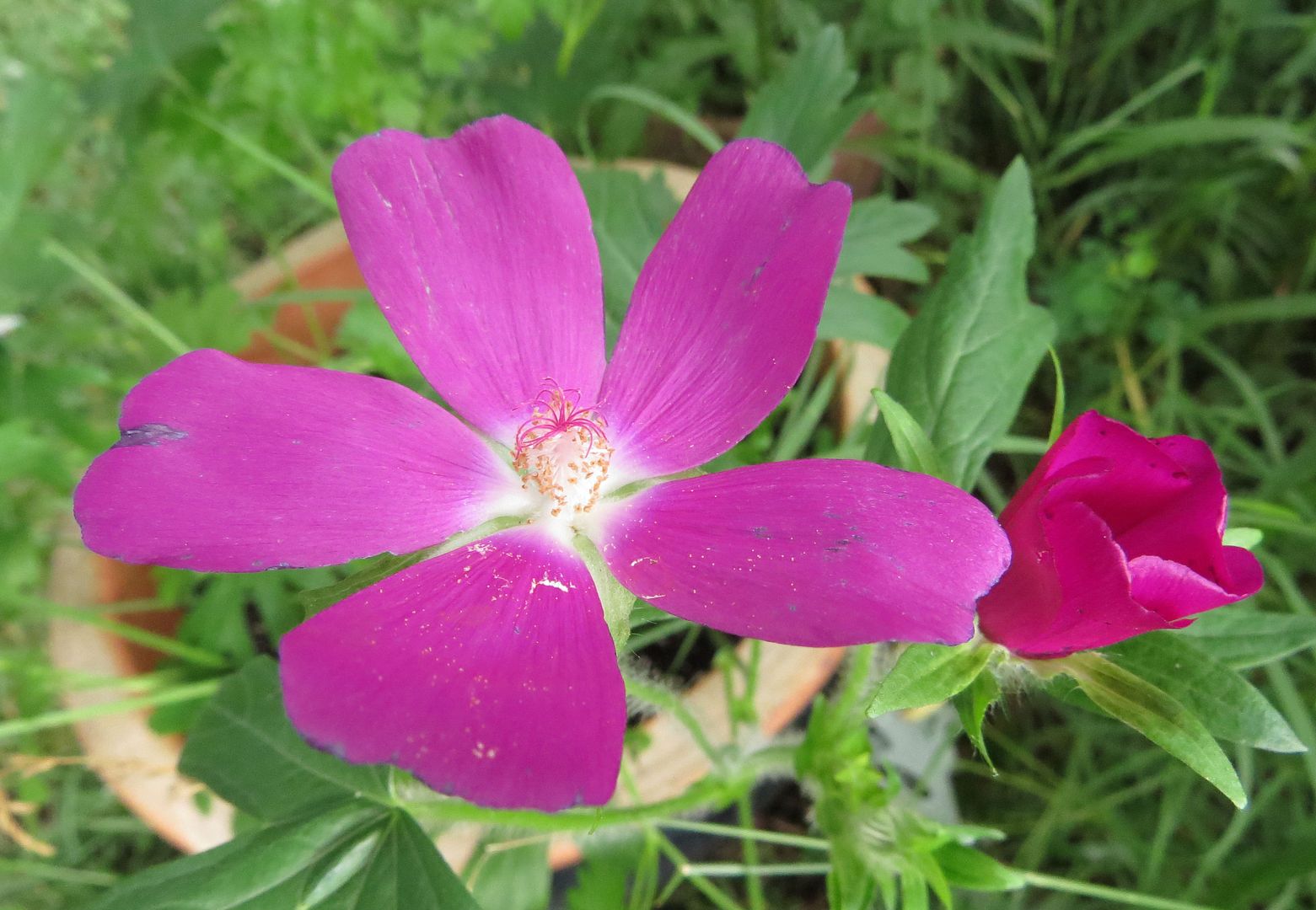
Bush's Poppy Mallow, Callirhoe bushii
This is a fantastic burst of color. Originally I was against planting these because it's not really a true meadow plant, at least not a plant everyone instantly thinks of when they think of a short grass prairie. Their distribution threw out the US is somewhat limited as well (to the point of being threatened in the wild). Something I noticed about the plant though is that they do well in dry conditions.... making it the perfect candidate for my meadow garden where few other natives seem to be able to establish.
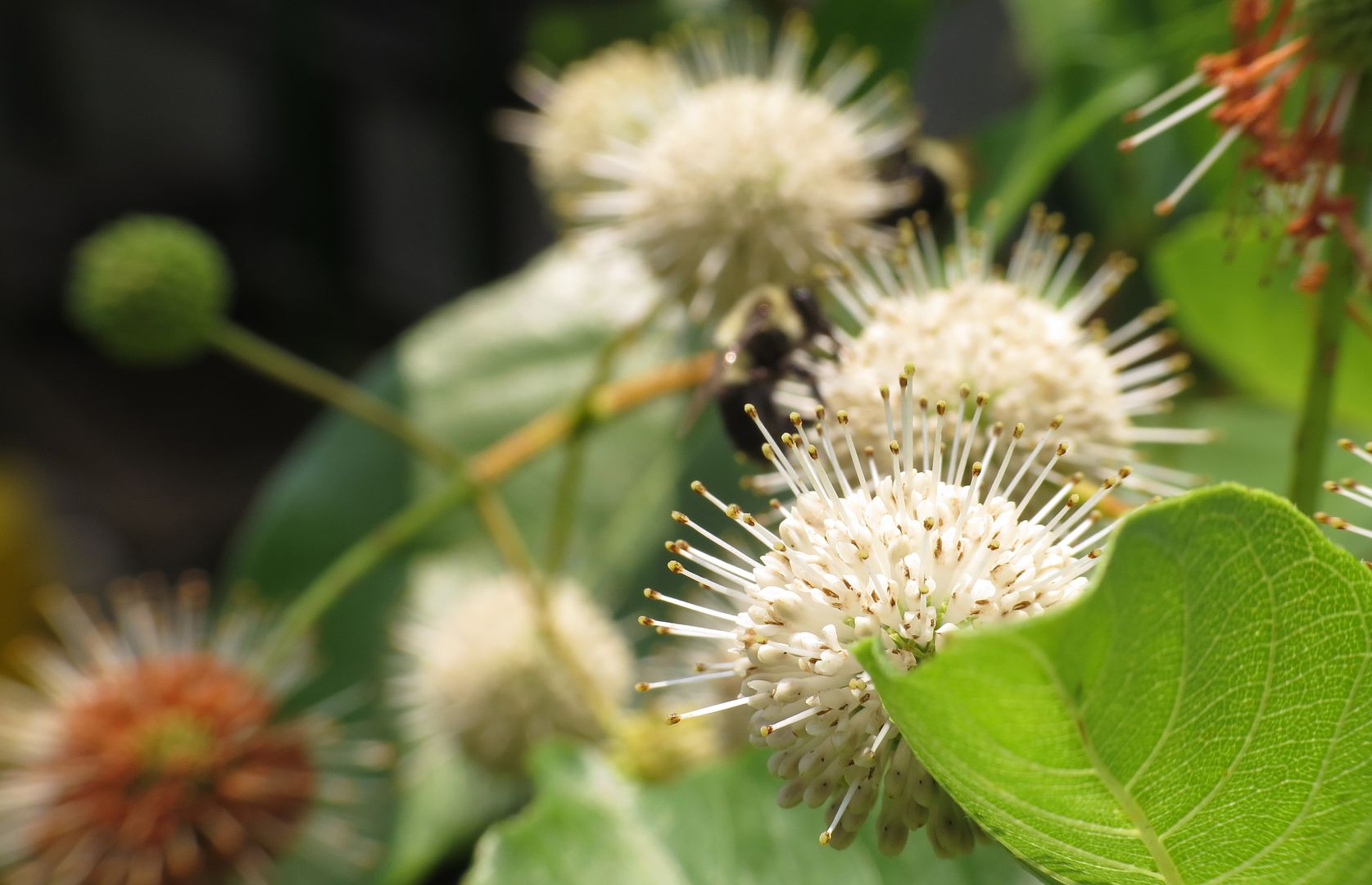
I'm also tempted to buy a second Button Bush. The one I currently have is doing okay, but has a dead limb or two I need to cut out. Also I saw it advertised for in an actual garden brochure I got in the mail. This species is rarely sold and I'd like to support that. I would liken it to Butterfly Bush in terms of attention but it has a far more limited bloom time.
Showing posts with label Liatris. Show all posts
Sunday, January 22, 2017
Monday, August 11, 2014
I'm Back, Also Monarchs!
I'm back! Stories of what Ants of the Southwest was like will have to wait a few days while I get my luggage and belongings mailed to me. I managed to fill up 2 memory cards with photos and videos. My short review is it was awesome, I had a great time, and highly recommend it to anyone with an interested in the topic of ants, or just looking for a vacation to one of the most biodiverse spots in North America. It's a happening bird and butterfly spot, and the whole place is crawling with lizards, toads, and assorted other kinds of creepy crawlies.
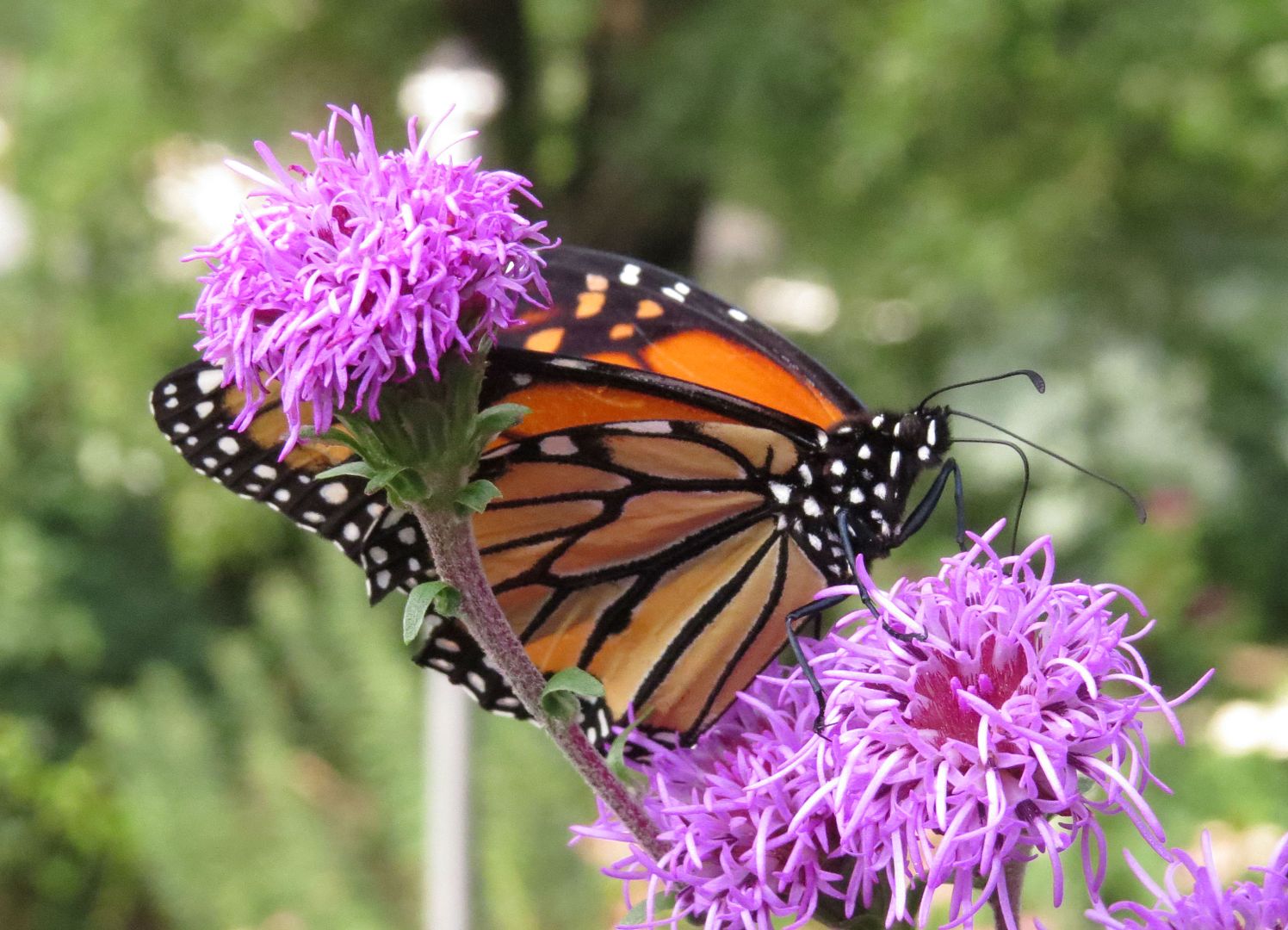
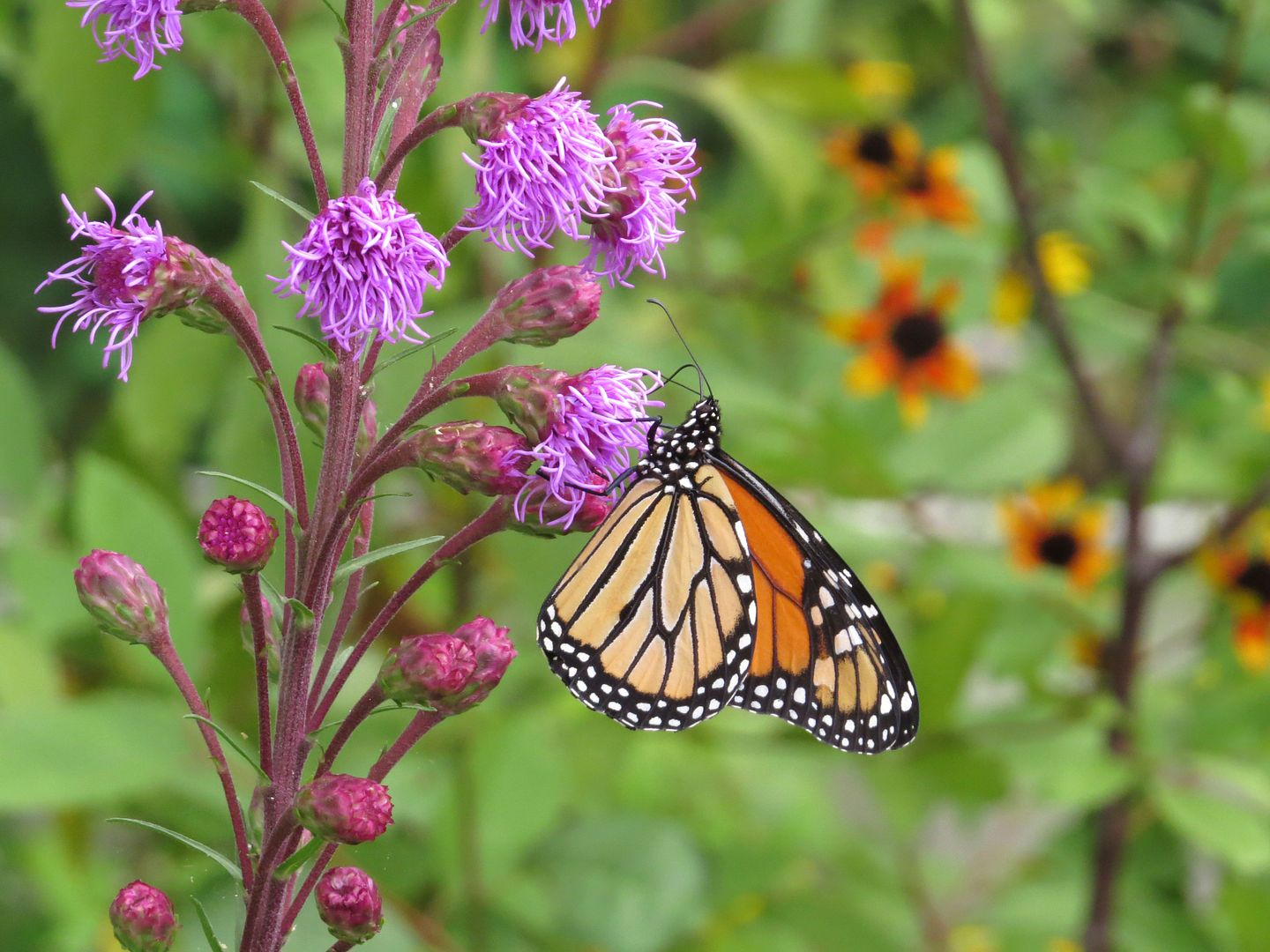
I came home to find the garden completely overgrown, but also robustly flowering. I finally got the attention of some Monarchs this year.
Unfortunately they're getting harder and harder to attract it seems. I had to plant 24 more plants of the types of Liatris they like.
They're also on the New England Asters, but Meadow Liatris seems to be more of a magnet to them, and it's less aggressive than the asters, which I have plenty of at this point.
I came home to find the garden completely overgrown, but also robustly flowering. I finally got the attention of some Monarchs this year.
Unfortunately they're getting harder and harder to attract it seems. I had to plant 24 more plants of the types of Liatris they like.
They're also on the New England Asters, but Meadow Liatris seems to be more of a magnet to them, and it's less aggressive than the asters, which I have plenty of at this point.
Sunday, January 5, 2014
2013 Best of Bees
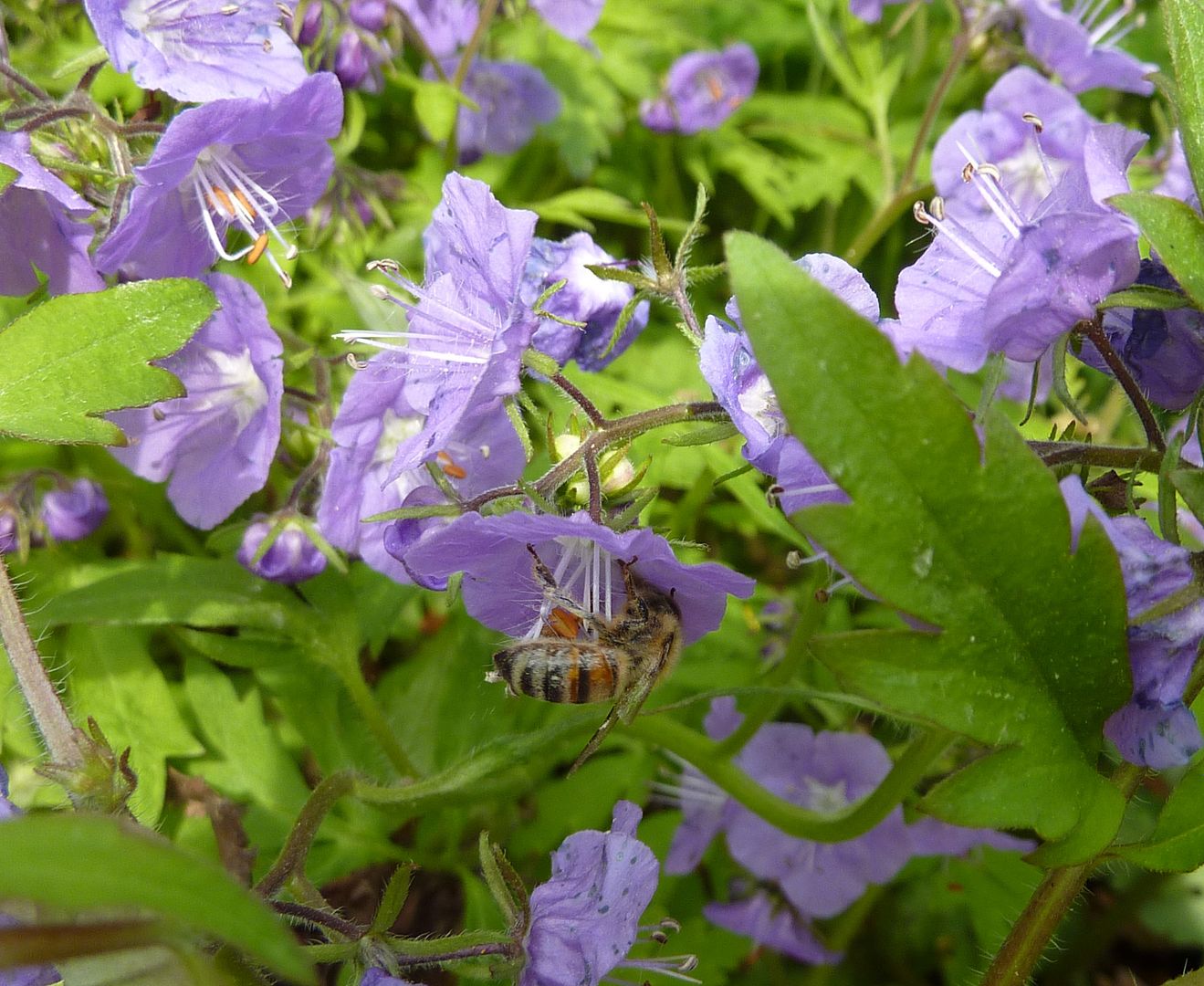
For bees I was thrilled to find Honeybees working Fern Leaf Phacelia this year. Beekeepers are always gushing over the Phacelia flowers for their bees but always had to rely on the western native annuals. Phacelia bipinnatifida, is an aggressive biannual that grows abundantly in woodlands, going as far as carpeting the forest floor with puffy clouds of purple flowers. This shot was at the Mt. Cuba Center and I picked up a few plants to hopefully establish in my yard but I'm not entirely confident it's going to work. Here's hoping I can get a population going.
I noticed a queen bumblebee earlier in the year. Honestly I can't remember where this image was taken or what she's even on. On a positive note though this was a stellar year for bumblebees. They were easily the most abundant pollinator in my garden this year.
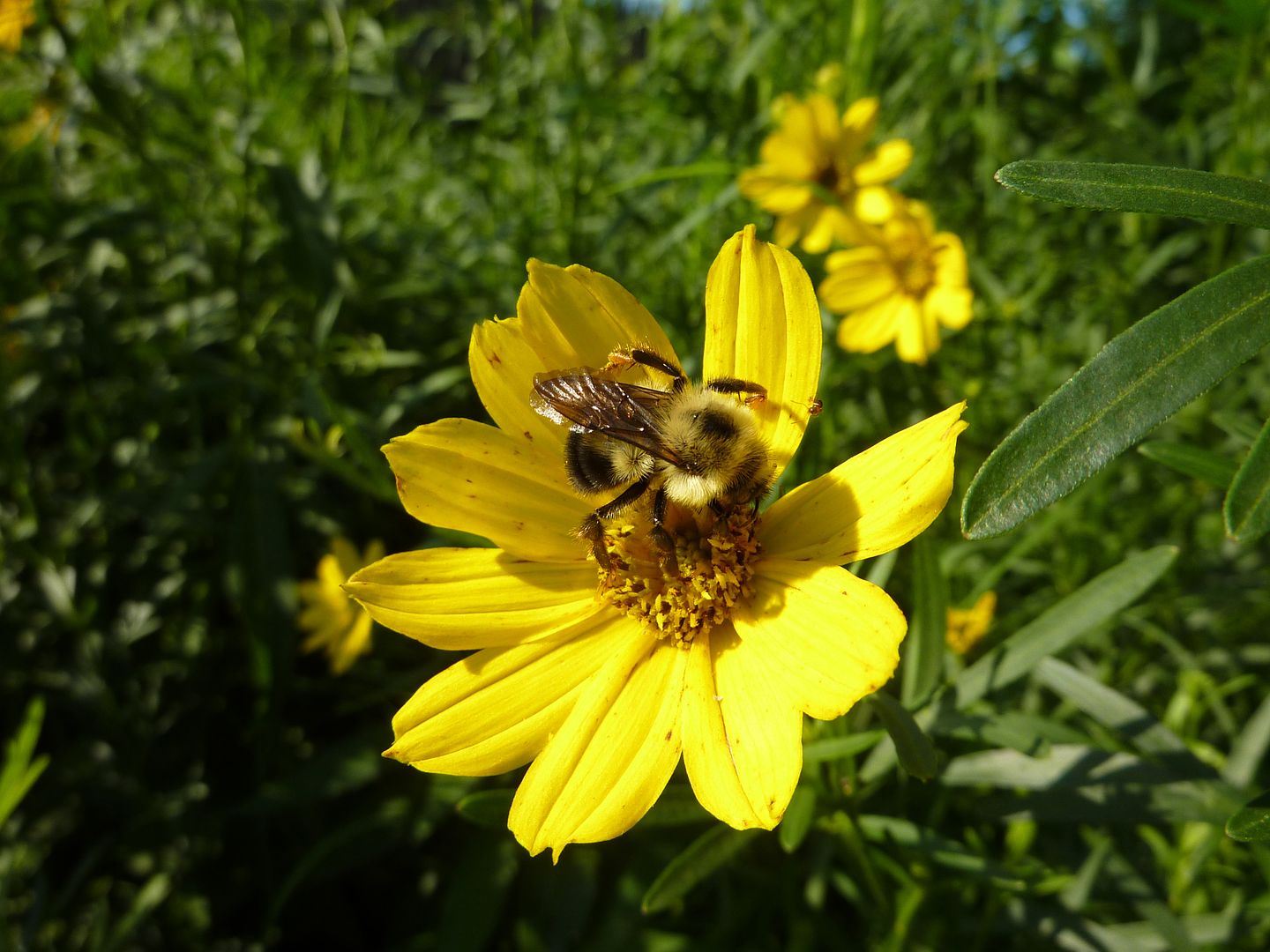
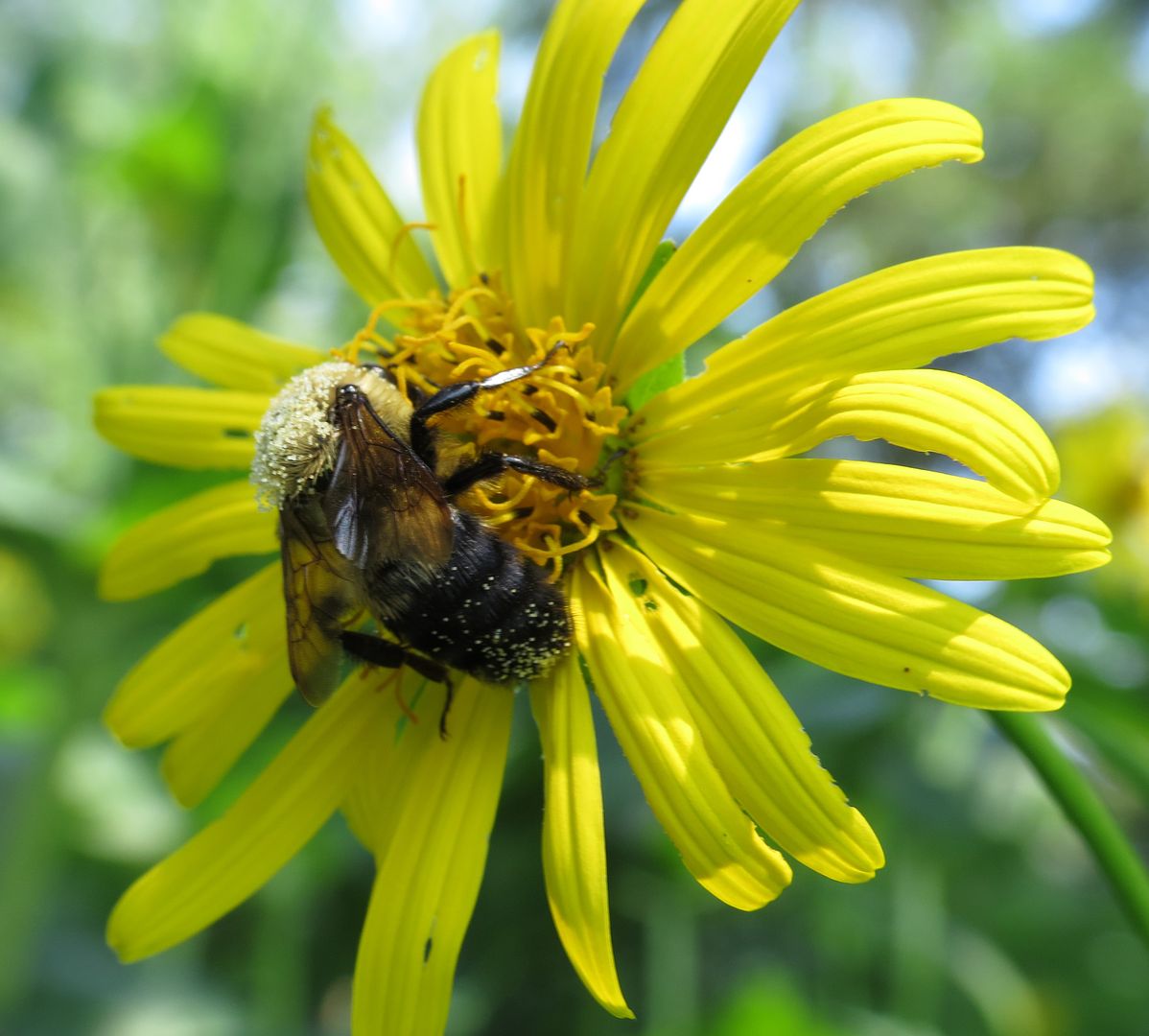
Stiff Coreopsis put on a huge display. This is a slightly aggressive species which spreads by root suckers out in all directions, though they invasion is slow going. They really just push out 3 to 6 inches. They're not as floriferous as I would like them to be, other species of Coreopsis can be covered in flowers where as these seem to space it out.
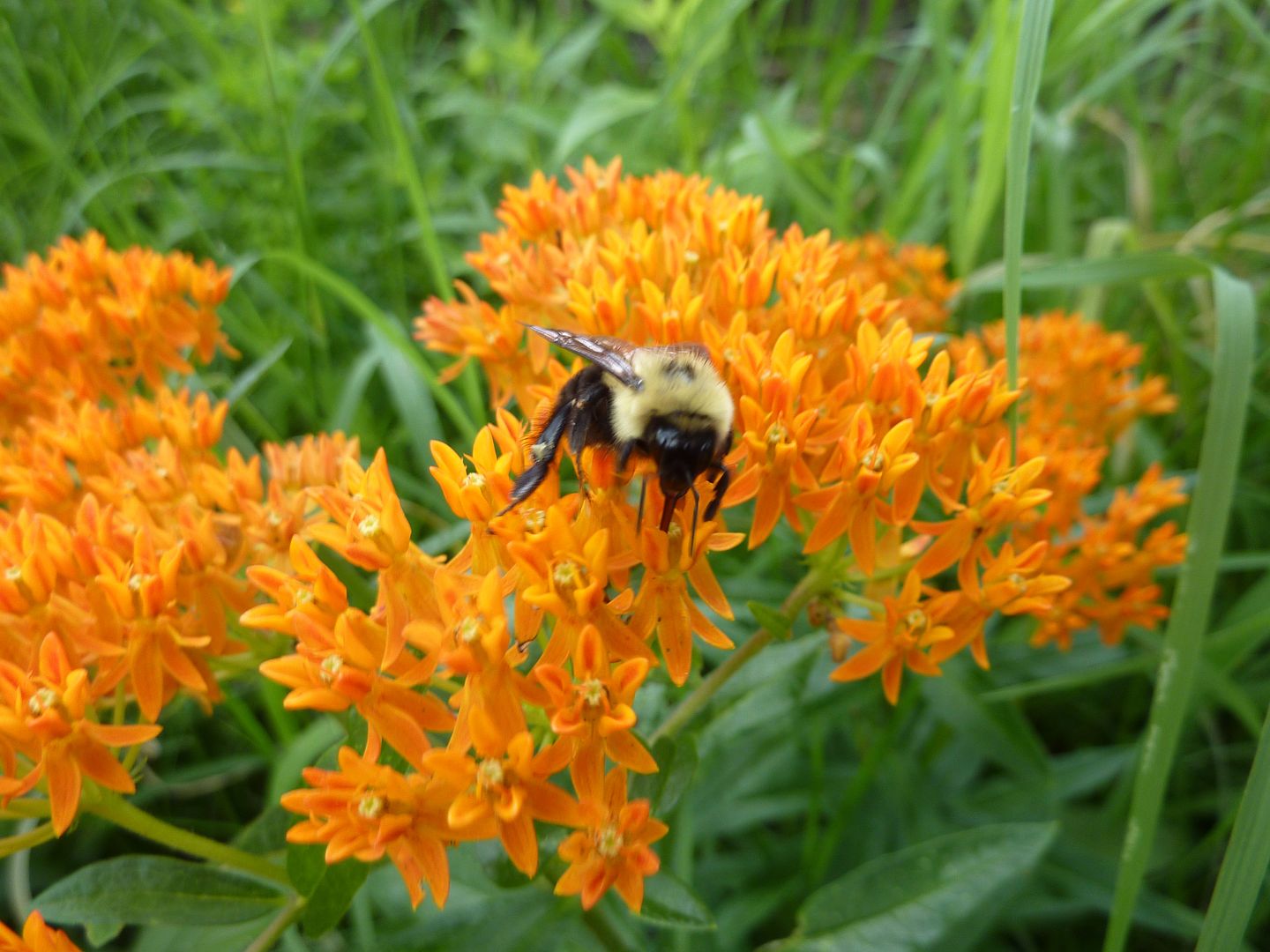
Another queen out on Butterfly Weed, Asclepias tuberosa. Eventually they stop foraging all together but this year I was seeing them well into the end of June and mid July.
This is the yellow variety of Butterfly Weed. It seems to be a bigger hit with pollinators.
Honeybees go to the yellow ones more it seems. I have seen patches of orange Butterfly Weed that were covered in honeybees but none of my plants seem to have any luck.
A sweat bee on Stiff Coreopsis.
Here another species of Bumblebee is working one of my rare plants, Asclepias rubra. This is called Red Milkweed but annoyingly enough I believe Prairie Moon Nursery has started calling Swamp Milkweed Red Milkweed. This demonstrates how unreliable common names are.
Bumblebees bustling around the Buttonbush.
Cup Plant. This is when I got my new camera. Notice how much clearer the subject is and how much more blurry the background appears.
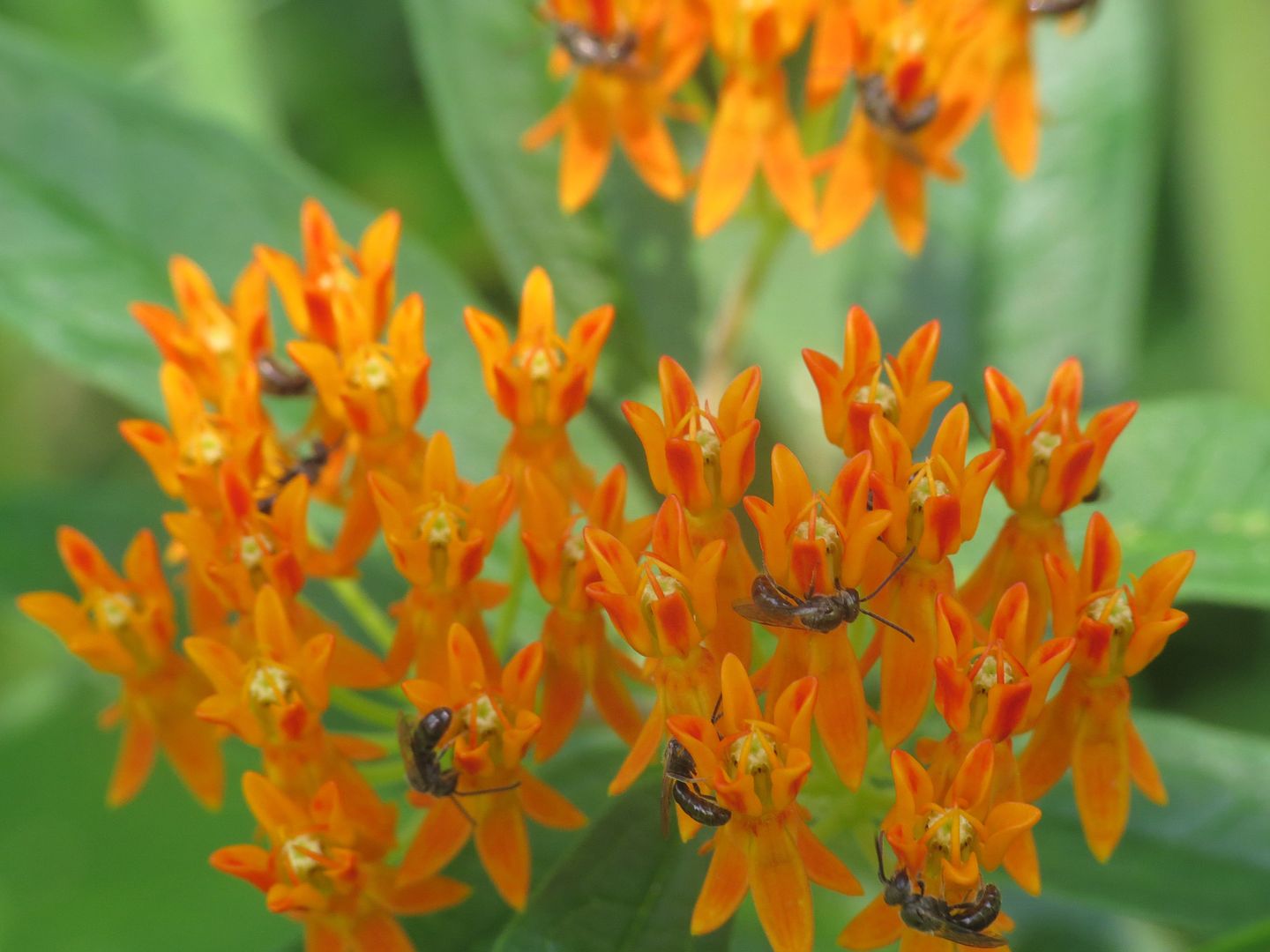
A group of sweat bees socially foraging on Butterfly Weed.
Joe Pye Weed.
Another Oh HA! moment when my new camera became worth every penny. Now if only the darn bee were facing the camera.
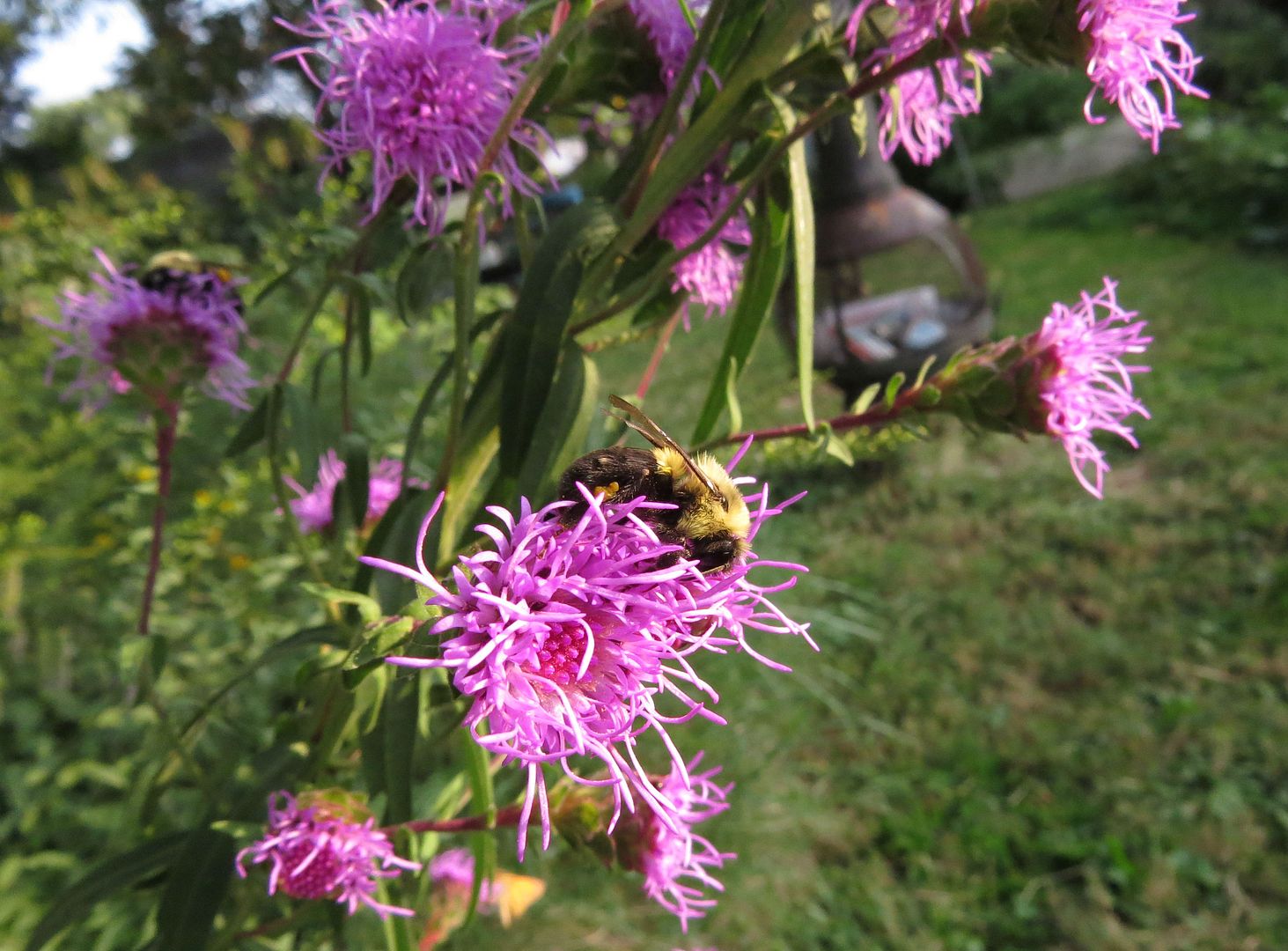
Here a few bumblebees work a species that I think might have been mislabeled. It's supposed to be Northern Blazing Star but I'm not so sure anymore. It's supposed to only reach 3' but this one shot up to 5'.
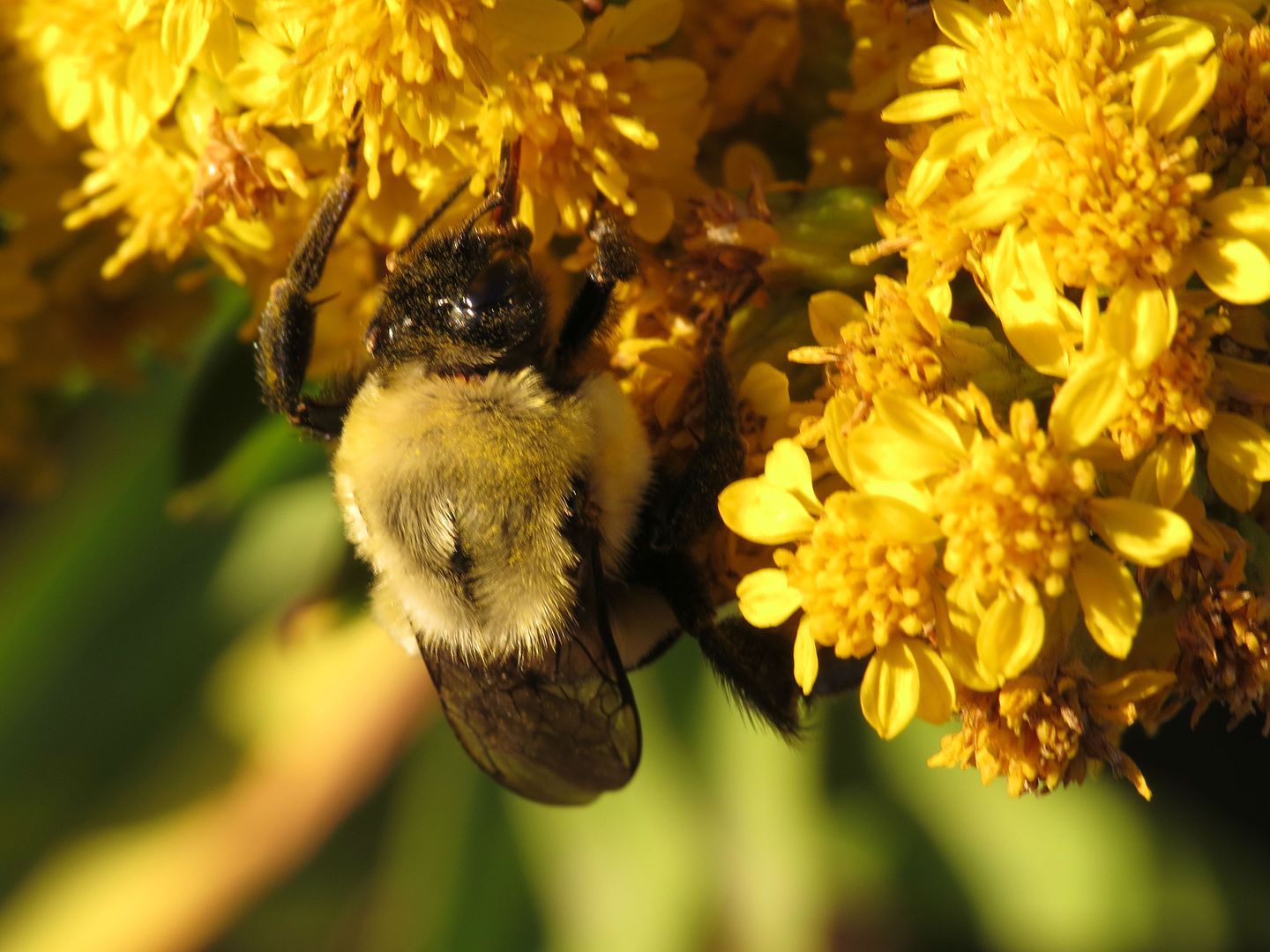
And lastly I was down at the shore later in the year where stands of Seaside Goldenrod provided food for migrating Monarchs and next year's generation of queen bumblebees.
I noticed a queen bumblebee earlier in the year. Honestly I can't remember where this image was taken or what she's even on. On a positive note though this was a stellar year for bumblebees. They were easily the most abundant pollinator in my garden this year.
Stiff Coreopsis put on a huge display. This is a slightly aggressive species which spreads by root suckers out in all directions, though they invasion is slow going. They really just push out 3 to 6 inches. They're not as floriferous as I would like them to be, other species of Coreopsis can be covered in flowers where as these seem to space it out.
Another queen out on Butterfly Weed, Asclepias tuberosa. Eventually they stop foraging all together but this year I was seeing them well into the end of June and mid July.
This is the yellow variety of Butterfly Weed. It seems to be a bigger hit with pollinators.
Honeybees go to the yellow ones more it seems. I have seen patches of orange Butterfly Weed that were covered in honeybees but none of my plants seem to have any luck.
A sweat bee on Stiff Coreopsis.
Here another species of Bumblebee is working one of my rare plants, Asclepias rubra. This is called Red Milkweed but annoyingly enough I believe Prairie Moon Nursery has started calling Swamp Milkweed Red Milkweed. This demonstrates how unreliable common names are.
Bumblebees bustling around the Buttonbush.
Cup Plant. This is when I got my new camera. Notice how much clearer the subject is and how much more blurry the background appears.
A group of sweat bees socially foraging on Butterfly Weed.
Joe Pye Weed.
Another Oh HA! moment when my new camera became worth every penny. Now if only the darn bee were facing the camera.
Here a few bumblebees work a species that I think might have been mislabeled. It's supposed to be Northern Blazing Star but I'm not so sure anymore. It's supposed to only reach 3' but this one shot up to 5'.
And lastly I was down at the shore later in the year where stands of Seaside Goldenrod provided food for migrating Monarchs and next year's generation of queen bumblebees.
Sunday, September 15, 2013
Autumn Native Plant Garden Tour 2013
Mountain Mint, Pycnanthemum sp.
Wild Senna, Senna hebecarpa (seed pods)
New England Aster, Symphyotrichum novae-angliae (Pink and Purple)
Goldenrod 'fireworks' Solidago rugosa 'fireworks'
Perennial Sunflower, Helianthus maximiliani
Small Woodland Sunflower, Helianthus microcephalus
Anise Hyssop, Agastache foeniculum
White Woodland Aster or Heath Aster, Eurybia sp.
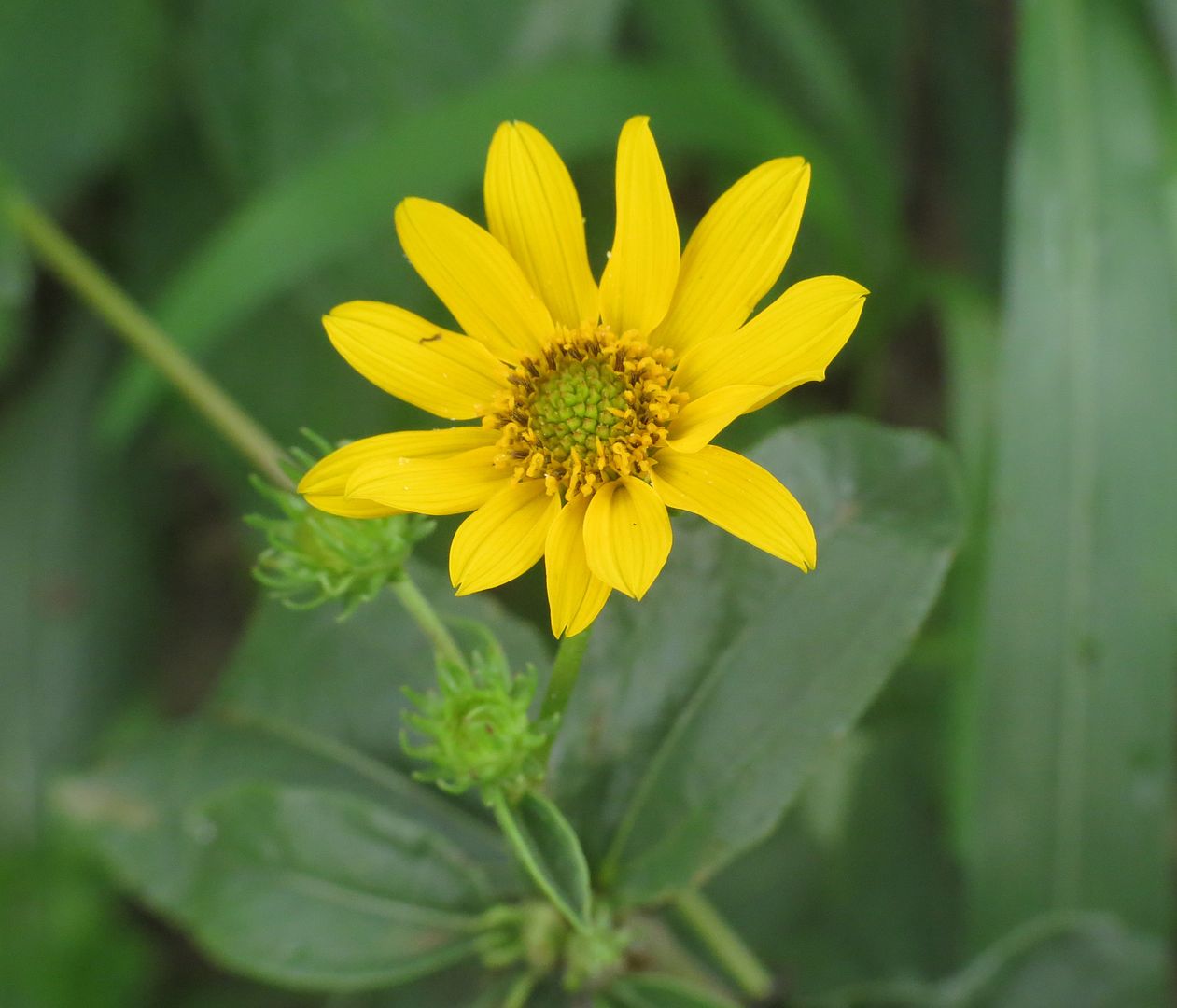
False Sunflower or Early Sunflower, Heliopsis helianthoides
Northern Blazingstar, Liatris scariosa (might be Liatris borealis)
Threadleaf Ironweed, Vernonia lettermanii
Showy Goldenrod, Solidago speciosa
Smooth Blue Aster, Symphyotrichum laeve
Sky Blue Aster, Symphyotrichum oolentangiense
Purpledisk Sunflower or Appalachian Sunflower, Helianthus atrorubens
Western Sunflower, Helianthus occidentalis
Cutleaf Coneflower, Rudbeckia laciniata
This video features both Swamp Sunflower, Helianthus angustifoliu and Narrow-leaf Sunflower, Helianthus salicifolius. I'm confused as to which is which. The tallest one at the end is supposedly a true species of H. angustifolius, while all the others are supposedly cultivars of H. salicifolius, however I find the same cultivar names listed as H. angustifolius species but never at the same nursery. What's more the two species can also hybridize and often grow in the same locations in the wild.... H. salicifolius supposedly just doesn't get as tall... but I'm unaware of any other differences between the two species, so I'm starting to feel it really doesn't matter which species you have. Even the flowers to both look the same.
Labels:
Anise Hyssop,
Aster,
Garden,
Goldenrod,
Ironweed,
Liatris,
Mint,
Rudbeckia,
Sunflowers,
Wild Senna
Thursday, September 5, 2013
September Wildflowers
New England Aster, Symphyotrichum novae-angliae, is an autumn (late summer) highlight as always. And has only recently started spreading like a weed, presumably because it's not able to pollinate itself, but two or more plants will. Plants can also be divided.
Narrow-leaf Ironweed, Vernonia Lettermannii, curiously enough the flowers this year are pink, last year they were purple. I'm not sure what caused the change. Supposedly this is the cultivar 'Iron Butterfly' though I'm not sure what's so special about it.
Showy Goldenrod, Solidago speciosa, has petered out a bit in my garden, but new seedlings are at that flowering age now so hopefully it hangs in there. This isn't the best example because usually there are way more flowers, but they always produce a compact amount of them at the top of each stem.
Yellow Passionflower, Passiflora lutea, is a timid member of this aggressive genus. I'm not sure if it's hardy here in zone 7 (previously zone 6 as of a few years ago), so hopefully it survives. Calling it a "Passion Flower" isn't entirely accurate because the flowers are not very showy and simple by comparison to other Passionflowers. I have yet to see the flowers open fully too, presumably they close by the afternoon or require full sun to open. Fruit-wise it's said to be inedible, with sources saying it's better used in the production of ink... yuck.
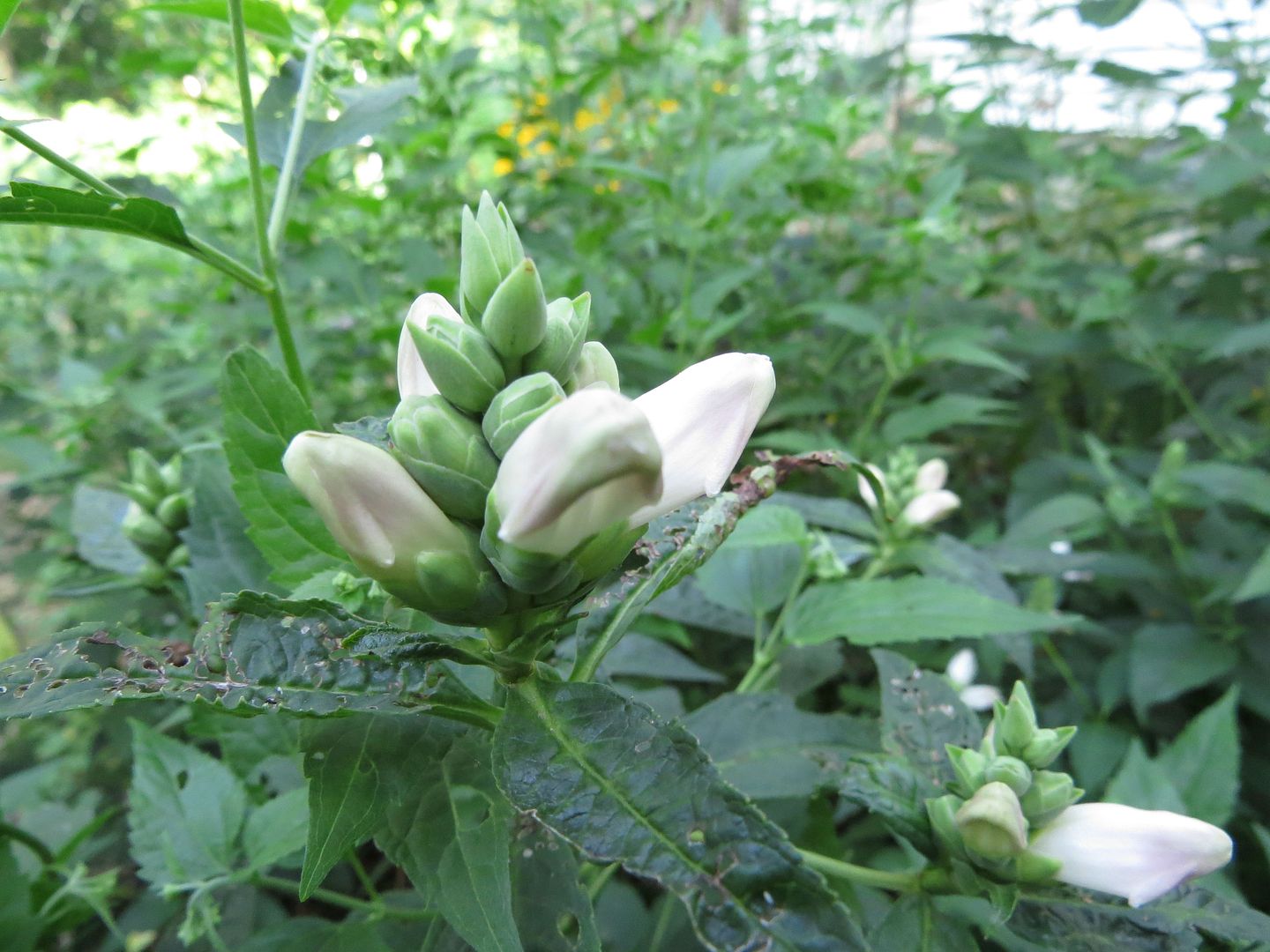
White Turtlehead, Chelone glabra, is not a particularly showy plant but it's good if you have a wet spot in partial shade to full sun in need of some late blooms. This is the host plant to the Baltimore Checkerspot, a locally threatened species of butterfly with an odd life style. Basically the caterpillars form a communal net on the plant and over winter inside it. Come spring they emerge still as caterpillars but are less picky about what they consume. Their host plant, Turtlehead, probably hasn't broken ground yet for the year so they turn instead to other plants like Monkey Flower (which I have yet to grow successfully).
Tall Coreopsis, Coreopsis tripteris. This is kind of a deceptive photo because it's taken at eye level. I'm about 5'7" and that's where this plant gets its name. They can grow to be 10' tall though individual plants often stick to a max size each year, which makes cultivars easy to pick out because they can selected to be a specific size.
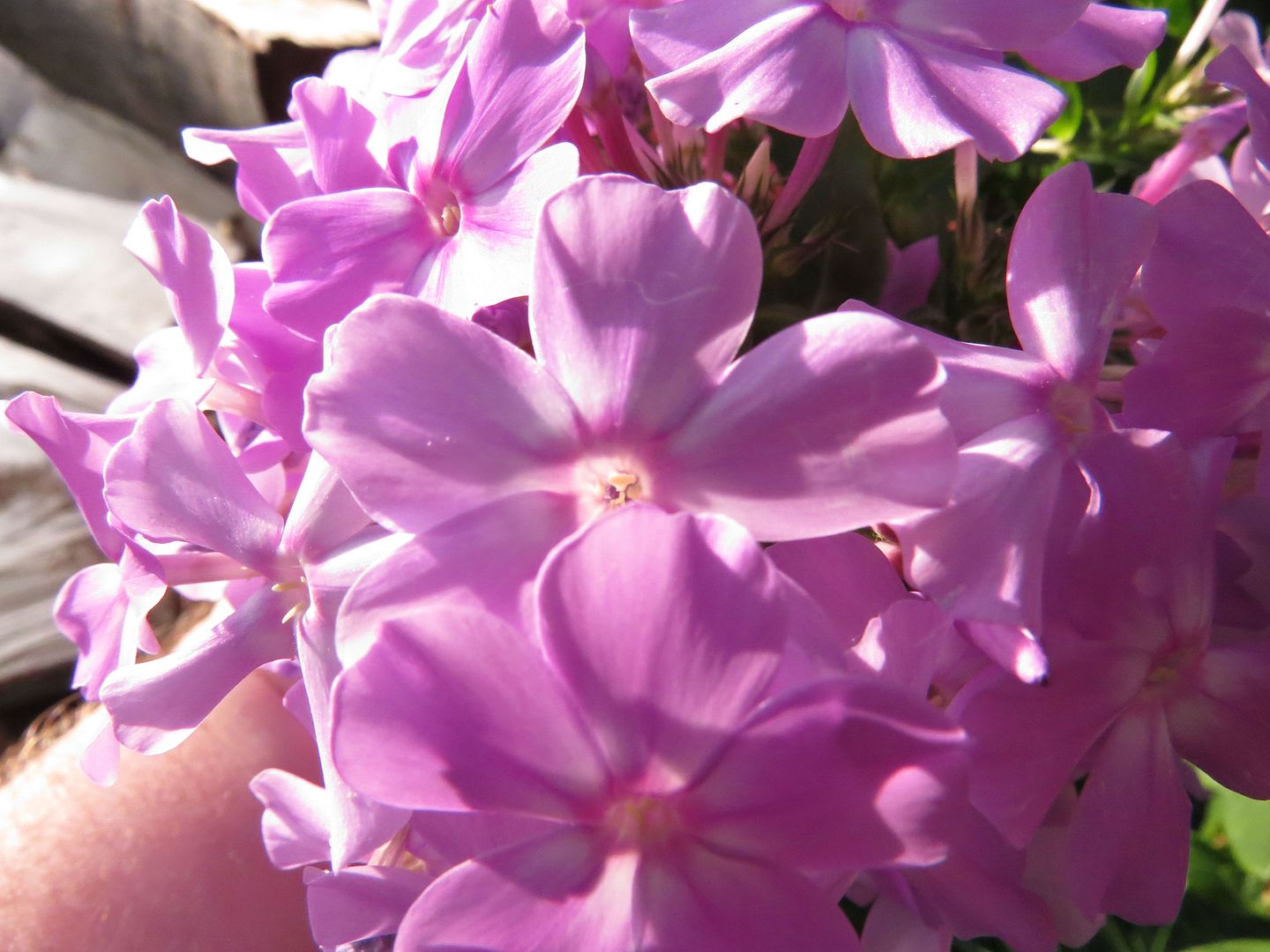
Summer Phlox. Don't know the species, don't really care either. Years and years ago I planted this in the front garden where it was too shady for it to flower. Now that we took down a street tree that seems to have opened up enough light to give what I honestly thought was a Bee Balm for the longest time to flower.
Most impressive of all is this Northern Blazing Star, Liatris borealis. The flowers are almost twice the size of Meadow Blazing Star, L. ligulistylis. The height is easily 5' tall also contrary to what the nursery I bought it from (and others!) said it only grows to 2' tall. Granted this is an enormous bulb almost the size of a baseball and it sent out three canes, two of which fell over, but the main one in the center is pushing strong. Note how the flowers extend away from the stem some on their own stalk, well this is the only Liatris species I've seen that will put more than one flower head on those! It's putting the New England Aster next to it to shame at this point. I'll post more pictures of it later.
Saturday, August 17, 2013
Blooms of August
So my garden is probably at its peak bloom right now, as far as species diversity goes that is.
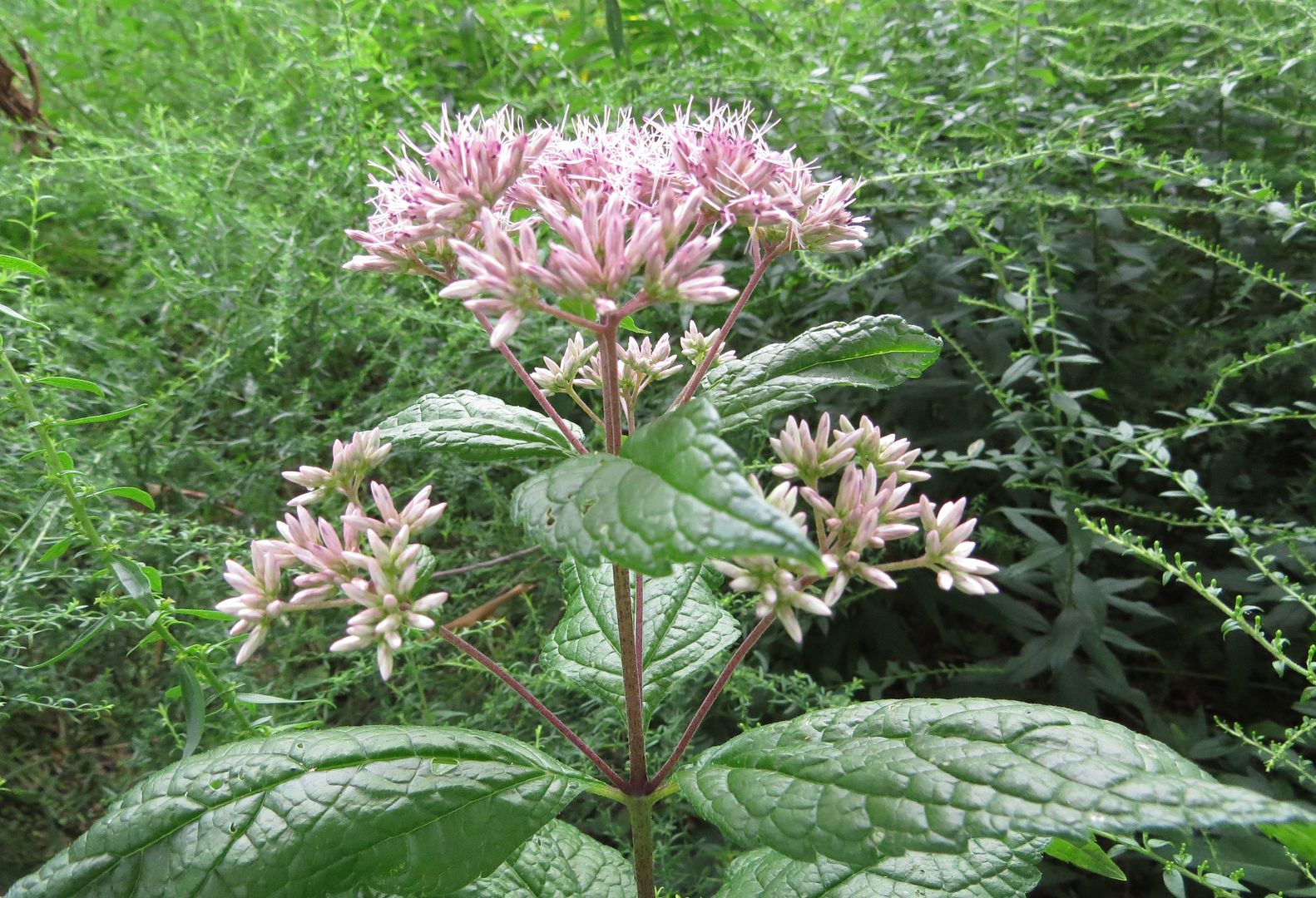
Sweet Joe Pye Weed, Eupatorium purpureum, is slightly more shade tolerant than I expected. It's still in a partial shade condition but also dryer than most of the Joe Pye Weeds I grow.
Spotted Joe Pye Weed, Eupatorium maculatum, is a new addition to the garden this year. Lower on the stem there are tiny spots which are lacking in other species, hence the name. I have it growing in a bit more shade than it can probably handle to I might have to move it.
Hollow Stem Joe Pye Weed, Eutrochium fistulosum, is sadly growing old. This is one of the tallest and more impressive species I have, but also one of the first natives I planted. The rhizome in the ground seems to be dying out in the middle, resulting in an uneven ring of stems emerging from the ground each year. I may need to divide it up next year.
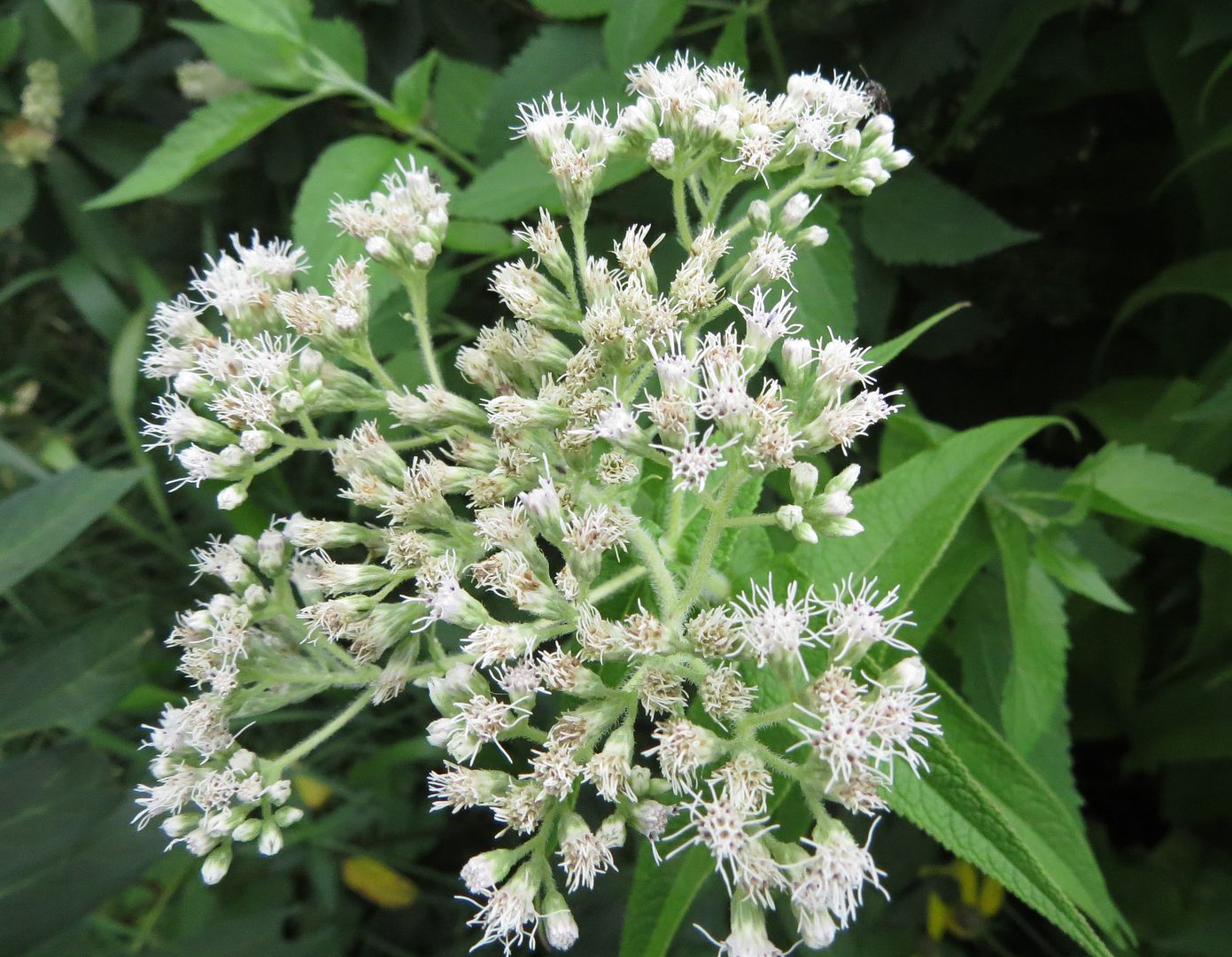
Common Boneset, Eupatorium perfoliatum, is another new plant for the garden. My yard has an abundance of Boneset but not this species. Unlike the ones that grow wild in my yard, this species actually gets a fair amount of bee attention.
Giant Blue Lobelia, Lobelia cardinalis. Normally I stay away from "hummingbird plants" but I was stricken by how adorable bees look when they try to work the flowers enough to give it a try. Lobelias regardless of the species, all tend to be short lived plants so it's important to let them set seed each year.
Liatris pycnostachya and Liatris spicata are both blooming out in the meadow. This is an image of L. spicata which tends to shade a hue or two brighter with slightly paler leaves, while L. pycnostachya is more magenta-like. Honestly though I can't tell either apart all that well.
Anise Hyssop, and a bumblebee I caught mid flight with my new camera. Coneflowers, Liatris, Black Eyed Susan, and Rudbeckia laciniata are all flowering in the background.
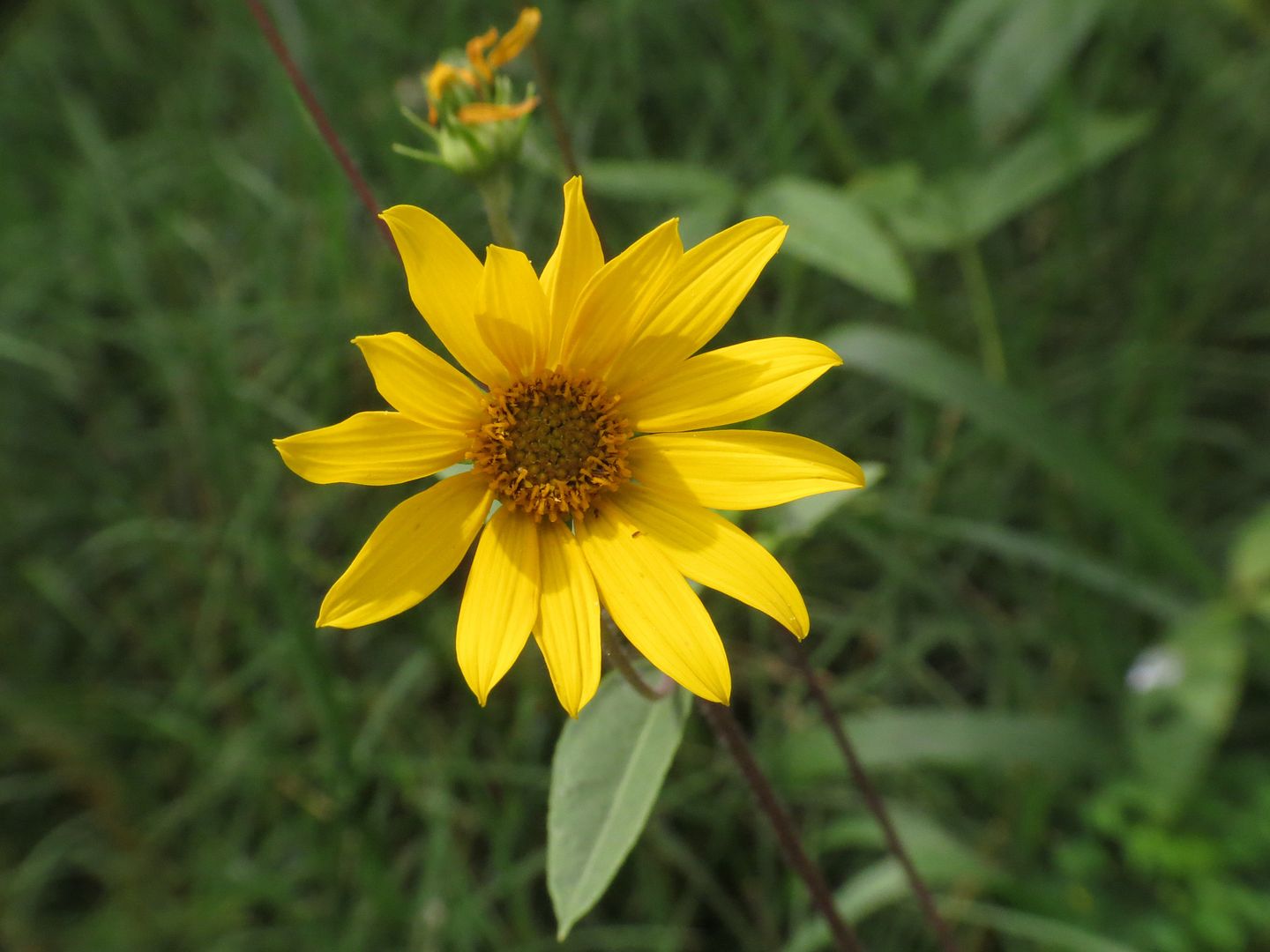
Western Sunflower, Helianthus occidentalis, was a fun addition this year. All the green growth is at the base of the plant with relatively few leaves occurring on their red stems which part a few times to sport a flower atop of each tip. The flowers are otherwise average in size given the genus.
Appalachian Sunflower (becuase Purple Disk Sunflower so far doesn't make any sense) Helianthus atrorubens, grows in much the same with but with more leaves hugging the green stem. Leaves are also fleshier and thicker looking. The flowers are fairly similar to Western Sunflowers in size and appearance.
Maximilian Sunflower, Helianthus maximiliani, has also just started to bloom. It's a much taller plant, much more aggressive (though less so than any goldenrod with new stems occurring closer to the parent plant) and with flowers that are two to three times bigger.
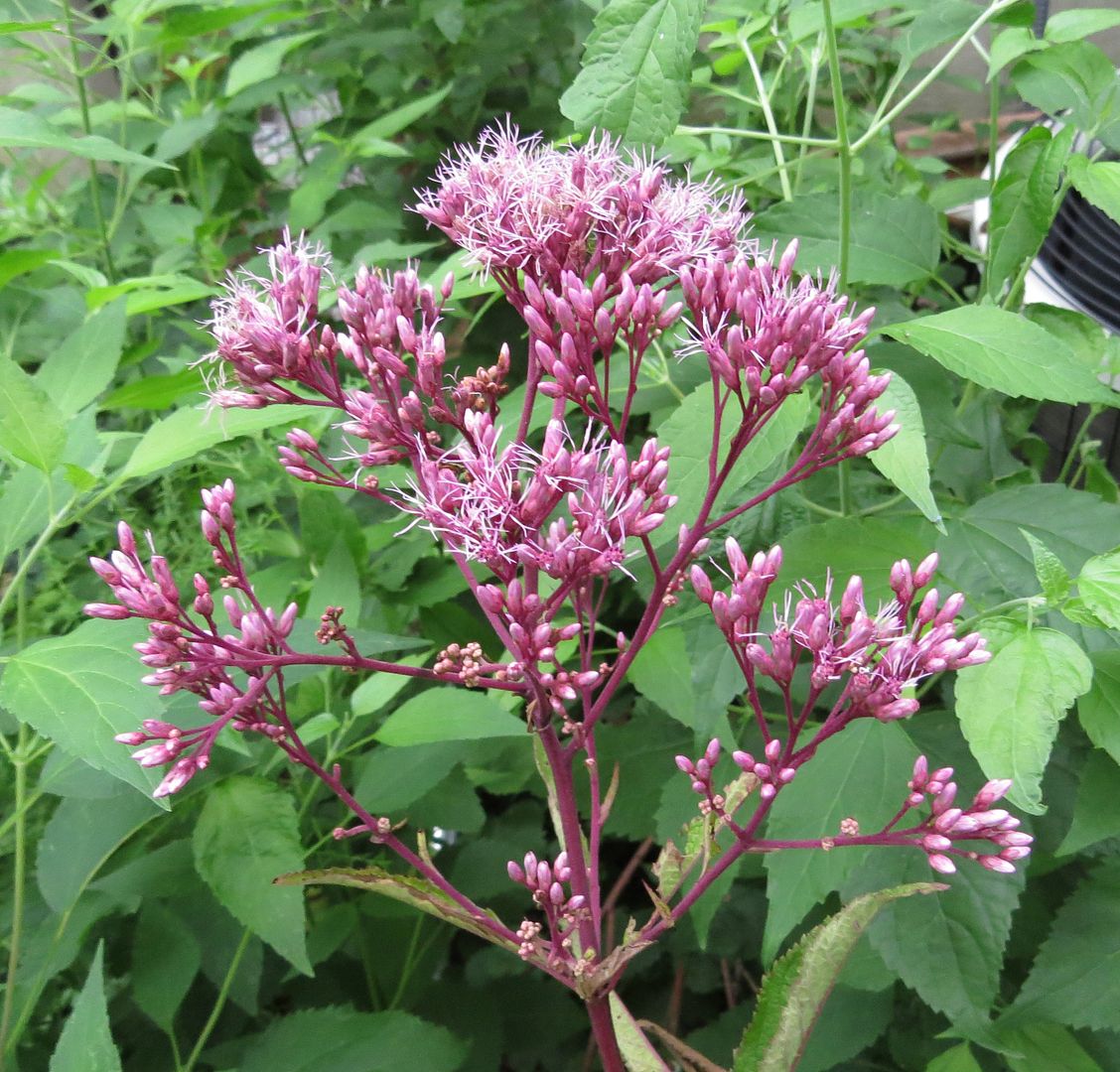
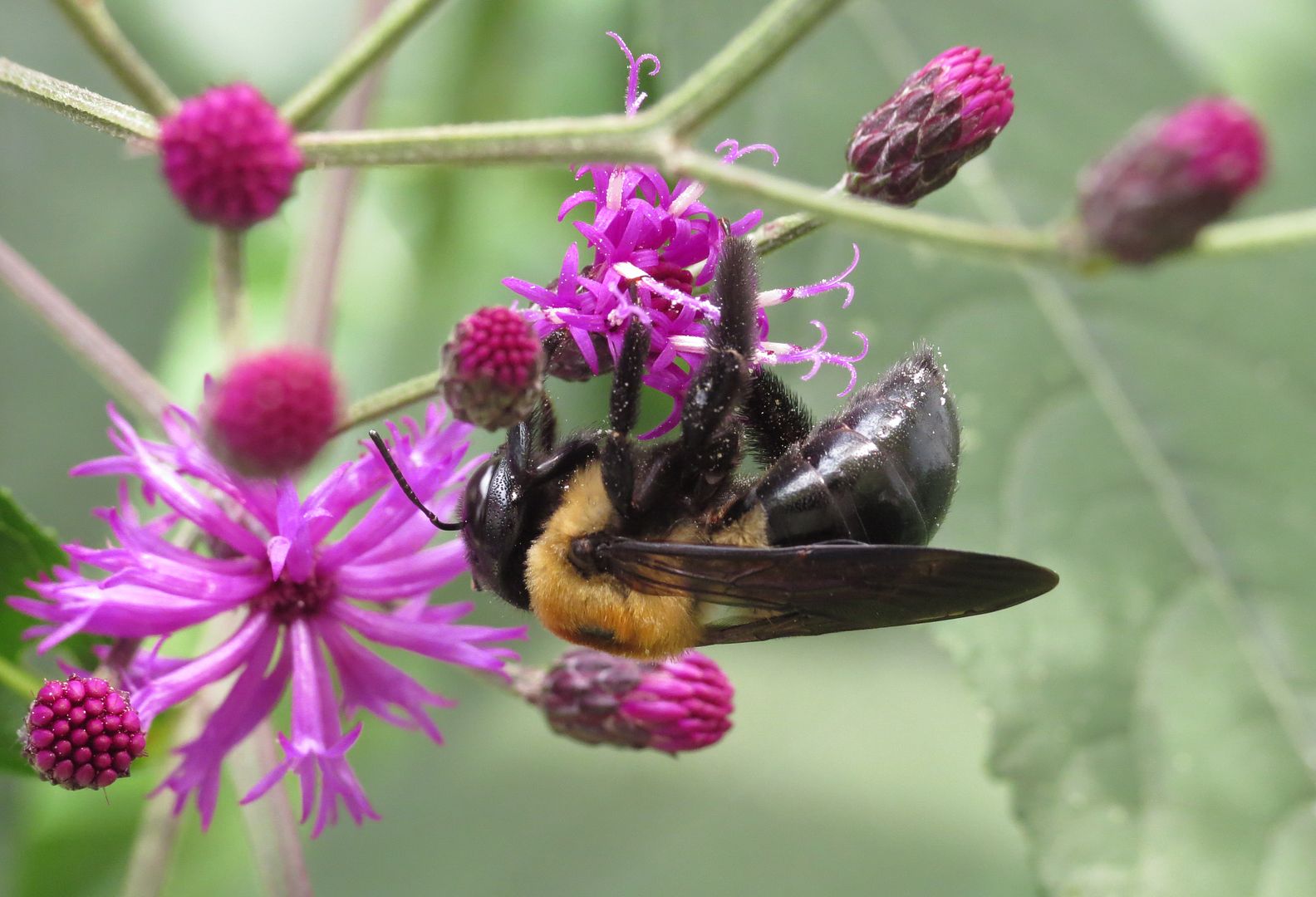
Ironweed, Vernonia sp. I have a bunch of species of this. The biggest one blooming now I acquired on accident thanks to a nursery mix up, so I'm not 100% on the species.
Sweet Joe Pye Weed, Eupatorium purpureum, is slightly more shade tolerant than I expected. It's still in a partial shade condition but also dryer than most of the Joe Pye Weeds I grow.
Spotted Joe Pye Weed, Eupatorium maculatum, is a new addition to the garden this year. Lower on the stem there are tiny spots which are lacking in other species, hence the name. I have it growing in a bit more shade than it can probably handle to I might have to move it.
Hollow Stem Joe Pye Weed, Eutrochium fistulosum, is sadly growing old. This is one of the tallest and more impressive species I have, but also one of the first natives I planted. The rhizome in the ground seems to be dying out in the middle, resulting in an uneven ring of stems emerging from the ground each year. I may need to divide it up next year.
Common Boneset, Eupatorium perfoliatum, is another new plant for the garden. My yard has an abundance of Boneset but not this species. Unlike the ones that grow wild in my yard, this species actually gets a fair amount of bee attention.
Giant Blue Lobelia, Lobelia cardinalis. Normally I stay away from "hummingbird plants" but I was stricken by how adorable bees look when they try to work the flowers enough to give it a try. Lobelias regardless of the species, all tend to be short lived plants so it's important to let them set seed each year.
Liatris pycnostachya and Liatris spicata are both blooming out in the meadow. This is an image of L. spicata which tends to shade a hue or two brighter with slightly paler leaves, while L. pycnostachya is more magenta-like. Honestly though I can't tell either apart all that well.
Anise Hyssop, and a bumblebee I caught mid flight with my new camera. Coneflowers, Liatris, Black Eyed Susan, and Rudbeckia laciniata are all flowering in the background.
Western Sunflower, Helianthus occidentalis, was a fun addition this year. All the green growth is at the base of the plant with relatively few leaves occurring on their red stems which part a few times to sport a flower atop of each tip. The flowers are otherwise average in size given the genus.
Appalachian Sunflower (becuase Purple Disk Sunflower so far doesn't make any sense) Helianthus atrorubens, grows in much the same with but with more leaves hugging the green stem. Leaves are also fleshier and thicker looking. The flowers are fairly similar to Western Sunflowers in size and appearance.
Maximilian Sunflower, Helianthus maximiliani, has also just started to bloom. It's a much taller plant, much more aggressive (though less so than any goldenrod with new stems occurring closer to the parent plant) and with flowers that are two to three times bigger.
Ironweed, Vernonia sp. I have a bunch of species of this. The biggest one blooming now I acquired on accident thanks to a nursery mix up, so I'm not 100% on the species.
Monday, April 22, 2013
Happy Earth Day
I don't really celebrate Earth Day by doing anything special. In my mind I think I celebrate the earth every day that I'm able to walk around and enjoy the outdoors. As a compulsive gardener though I can say one again I've splurged or didn't know when to stop and gone ahead and bought $800 worth of plants from almost a dozen nurseries that sell native plants.
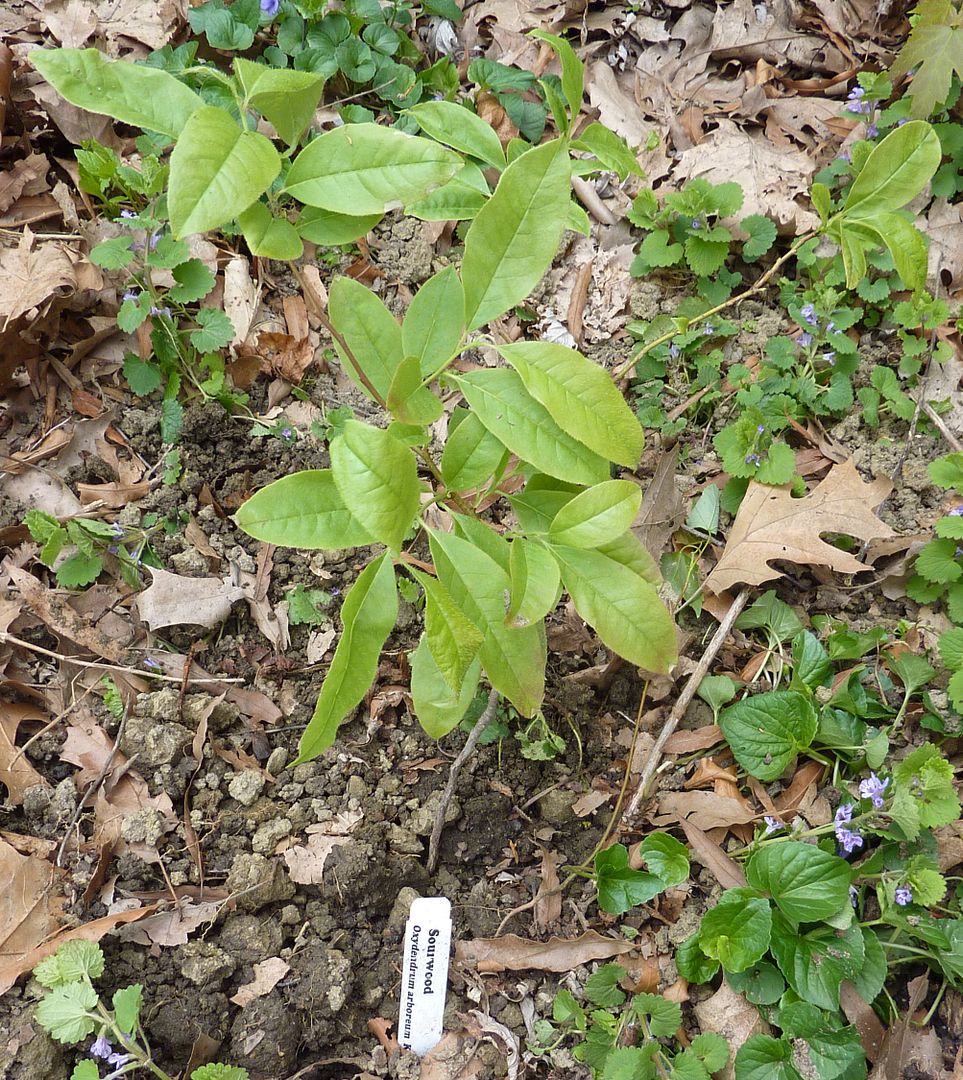
Sourwood, Oxydendrum arboreum, is probably going to end up being the prettiest tree I'll have planted. They produce bell shaped flowers that aren't entirely showy but they're arranged like exploding fireworks scattered throughout the tree. In the autumn time these seed pods occur in the same locations and the red foliate makes them pop out even more.
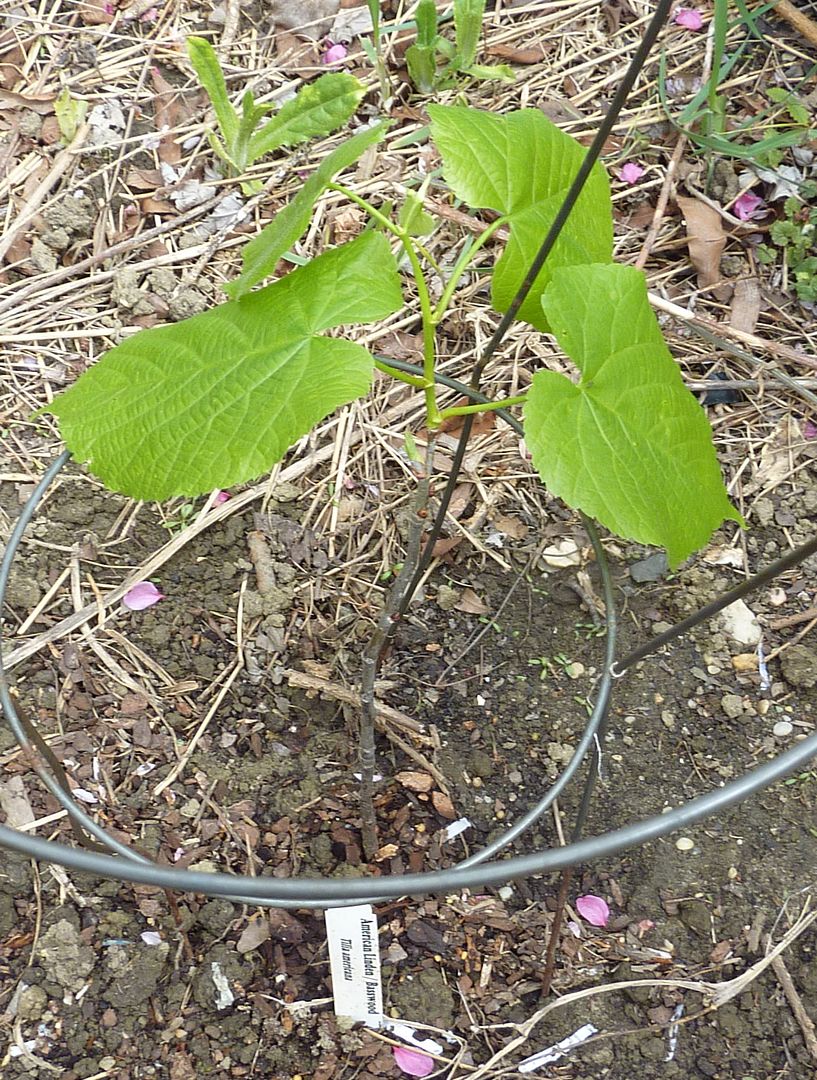
American Linden (aka Basswood), Tilia americana, also has red foliage in the fall time, which is pretty but they lack the seed pods of the Sourwood. Their flowers are slightly noticeable as a pale yellow or blond color. Bees really love them.
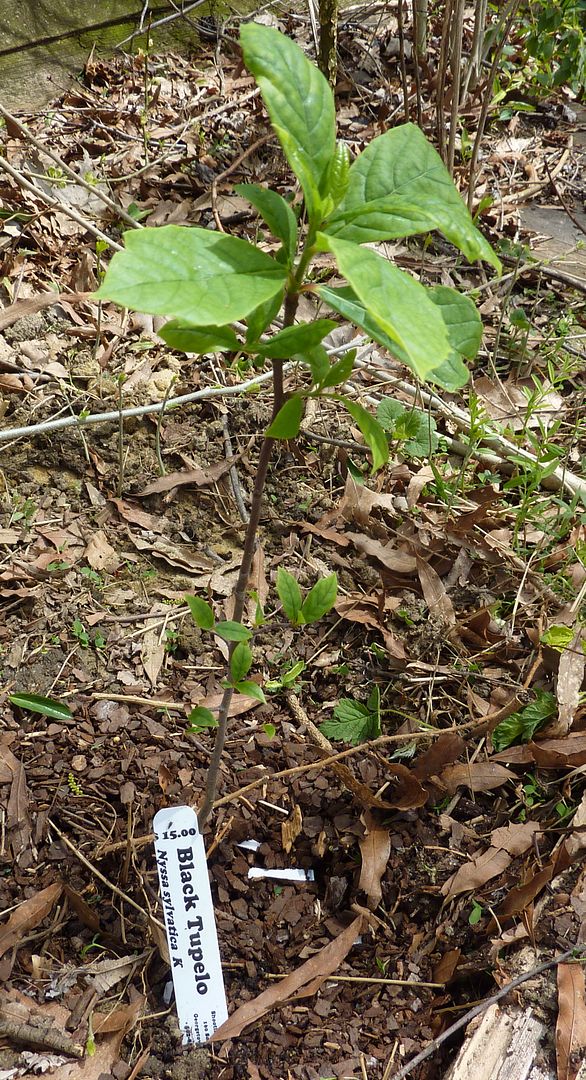
Black Tupelo (aka Black Gum), Nyssa sylvatica, is another red leaf tree in the Autumn. The flowers aren't showy in that they're green balls of blooms, but bees absolutely love them and they go on to produce tiny blue berries that birds love.
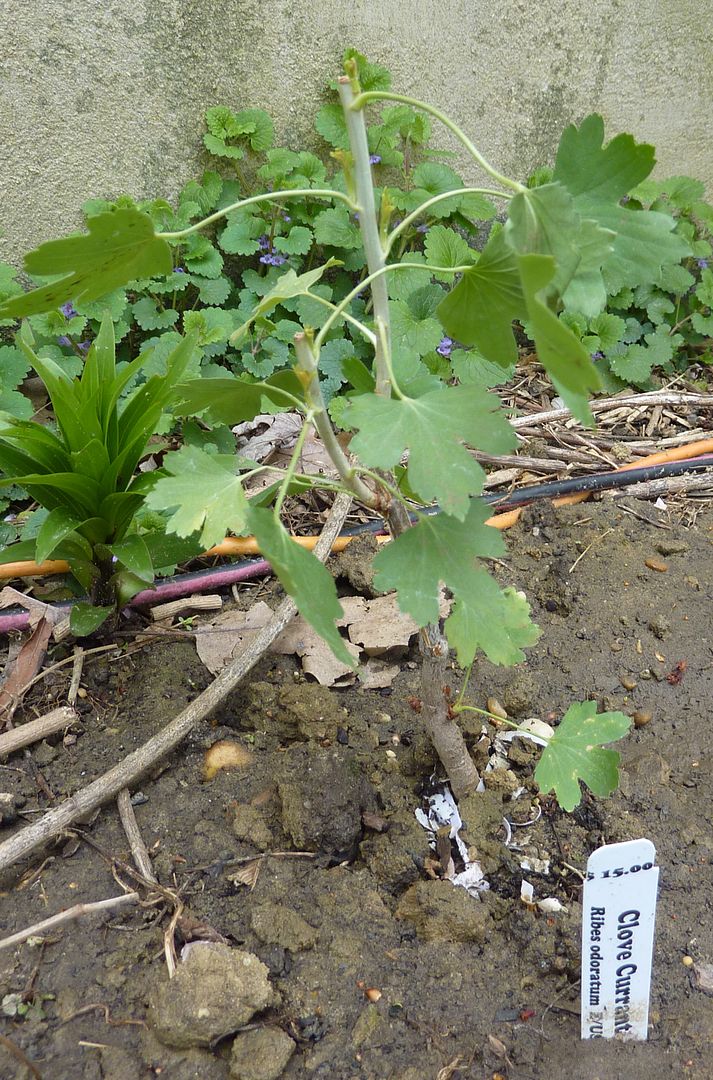
Clove Currant, turns into a shrub up to 10' tall and around.
Helianthus salicifolius 'First Light' is a more floriferous cultivar to the true species. Online images show them absolutely covered in flowers.
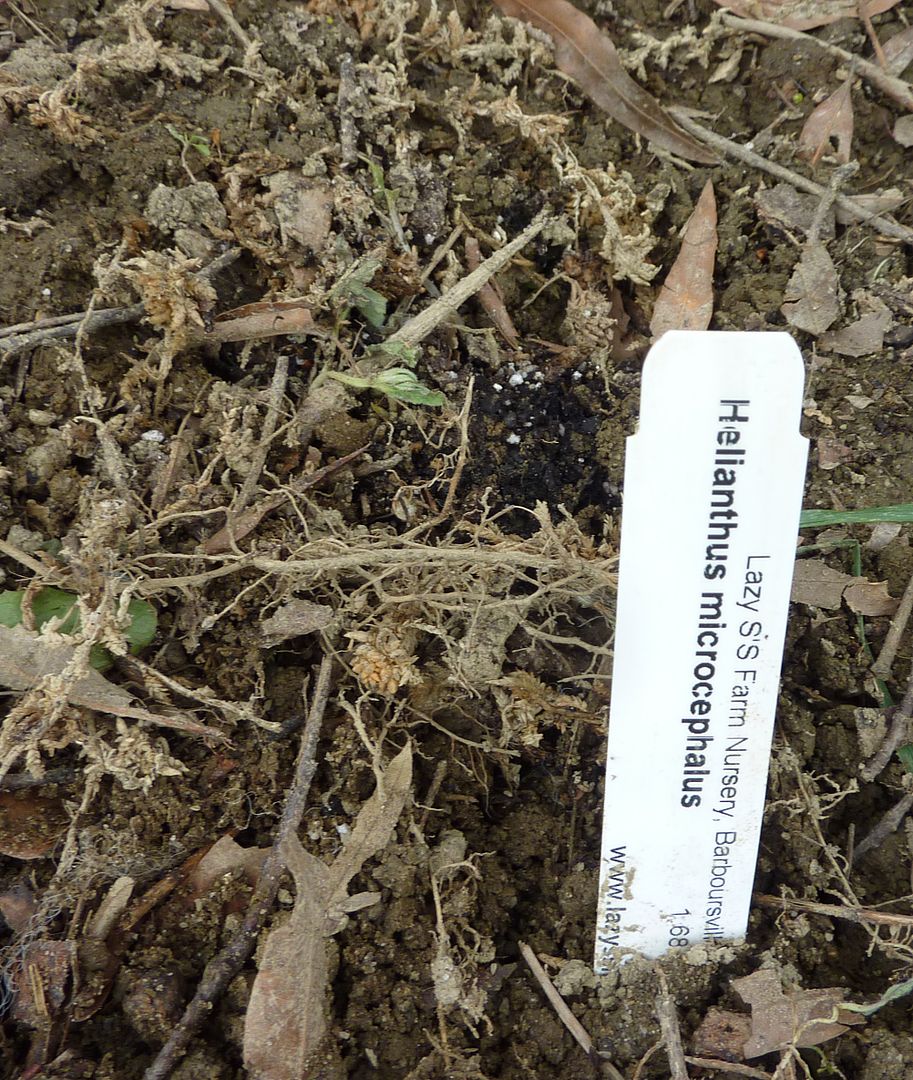
Helianthus microcephalus, is a small headed sunflower. Yesterday when I planted it, it was green and growing up a storm, but it seems a squirrel decided to eat off the stems, Bastards. I do wish to eventually find some plant that would kill the squirrels someday as they do stand in the way of a lot of my gardening exploits.
Liatris mucronata, which produce a sort of thick and tuffy looking stem with flowers in the late summer and autumn months.
Liatris microcephala, which seem to make really tiny corms or at least send up dozens of stems out of one big one. These grow out very tight and grassy looking until they flower in the late summer and autumn months.
Sourwood, Oxydendrum arboreum, is probably going to end up being the prettiest tree I'll have planted. They produce bell shaped flowers that aren't entirely showy but they're arranged like exploding fireworks scattered throughout the tree. In the autumn time these seed pods occur in the same locations and the red foliate makes them pop out even more.
American Linden (aka Basswood), Tilia americana, also has red foliage in the fall time, which is pretty but they lack the seed pods of the Sourwood. Their flowers are slightly noticeable as a pale yellow or blond color. Bees really love them.
Black Tupelo (aka Black Gum), Nyssa sylvatica, is another red leaf tree in the Autumn. The flowers aren't showy in that they're green balls of blooms, but bees absolutely love them and they go on to produce tiny blue berries that birds love.
Clove Currant, turns into a shrub up to 10' tall and around.
Helianthus salicifolius 'First Light' is a more floriferous cultivar to the true species. Online images show them absolutely covered in flowers.
Helianthus microcephalus, is a small headed sunflower. Yesterday when I planted it, it was green and growing up a storm, but it seems a squirrel decided to eat off the stems, Bastards. I do wish to eventually find some plant that would kill the squirrels someday as they do stand in the way of a lot of my gardening exploits.
Liatris mucronata, which produce a sort of thick and tuffy looking stem with flowers in the late summer and autumn months.
Liatris microcephala, which seem to make really tiny corms or at least send up dozens of stems out of one big one. These grow out very tight and grassy looking until they flower in the late summer and autumn months.
Labels:
Black Tupelo,
Currant,
Liatris,
native,
Sourwood,
Sunflowers,
Trees
Subscribe to:
Posts (Atom)