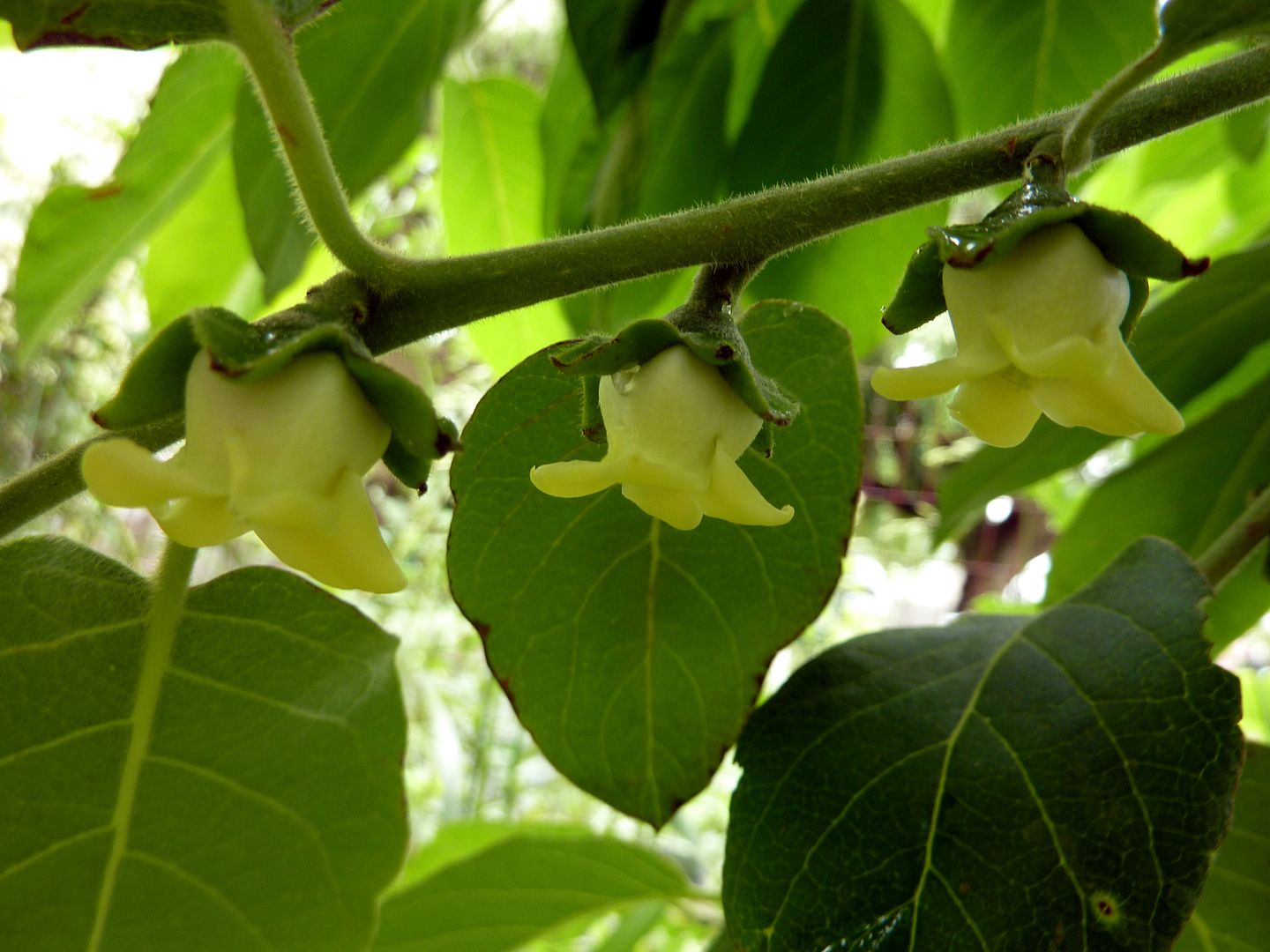
So this is the second year my wild persimmon tree has flowered. Diospyros virginiana is our native species which normally requires two trees for pollination but I have a cultivar called 'Meader' which can self pollinate. This is a desirable trait becuase our native persimmon can turn into a 60' tall tree, though I rarely see them that big. Last year it did produce fruit but unfortunately hurricane Sandy had other plans and there was not a fruit to be had on the tree. (All things considered we were lucky.)
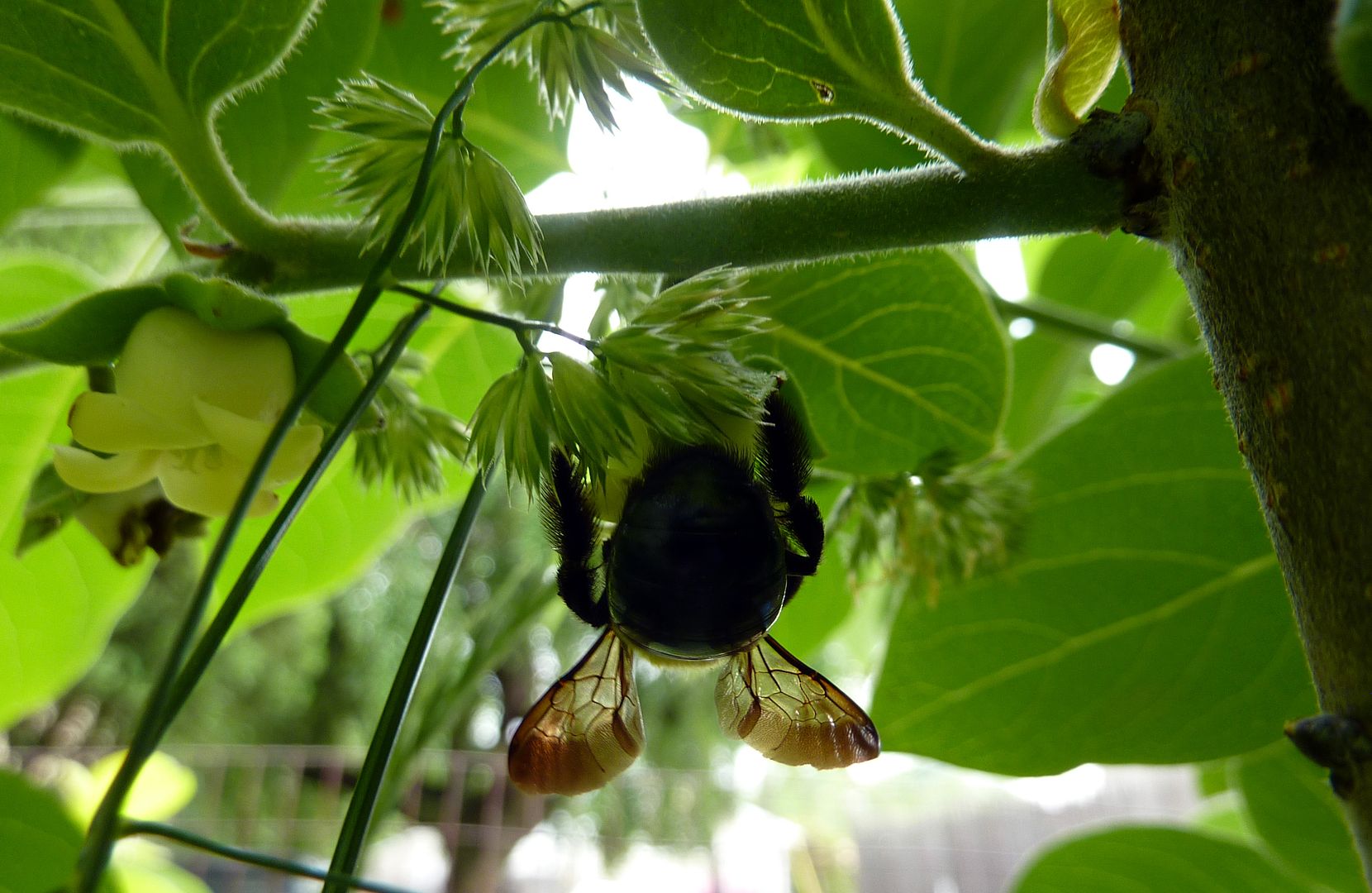
I've found our native Carpenter Bees like to pollinate them. Unfortunately some grass is blocking the picture but this demonstrates how they like to flower on semi-old wood. All the new stems pushing out this year don't have any flowers on them.
Persimmons are a very odd fruit, shaped like tomatoes, orange like pumpkins, and they taste sort of like cantaloupe (musk melon) once you get past the astringent aspects. Storing them in the freezer for a day removes the unpleasant taste. What's neat is that the fruit usually clings to the tree even after the leaves have fallen off in the autumn.
Now if only my Paw Paws would get their act together.
I'd love to have shown off the bright orange persimmons our tree produced this year but hurricane Sandy seems to have blown them away. (I can only hope they managed to hit some politicians house.)
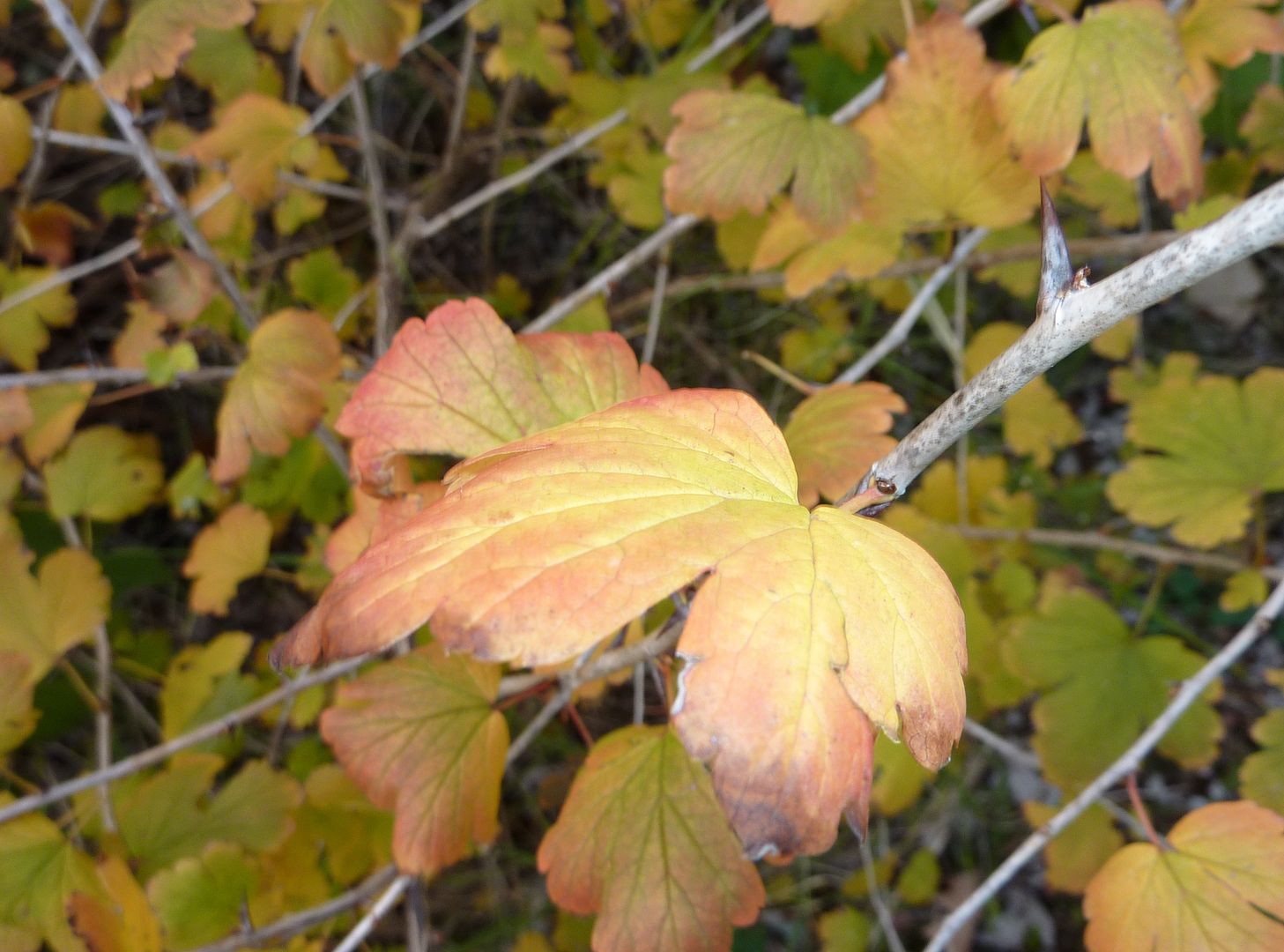
Any who, I've never been a huge fan of fall color though some of the brilliant yellow and brilliant red trees have impressed me. These scenes are few and far between though and only last a few days before they're gone. What's happening here is that insects can't see red as well as other colors. The plants are purposely producing this pigment to discourage aphids from laying eggs around them. In this way they won't be the first trees infested with them come spring. How effective this is is debatable though especially with yellow being such a common fall color.
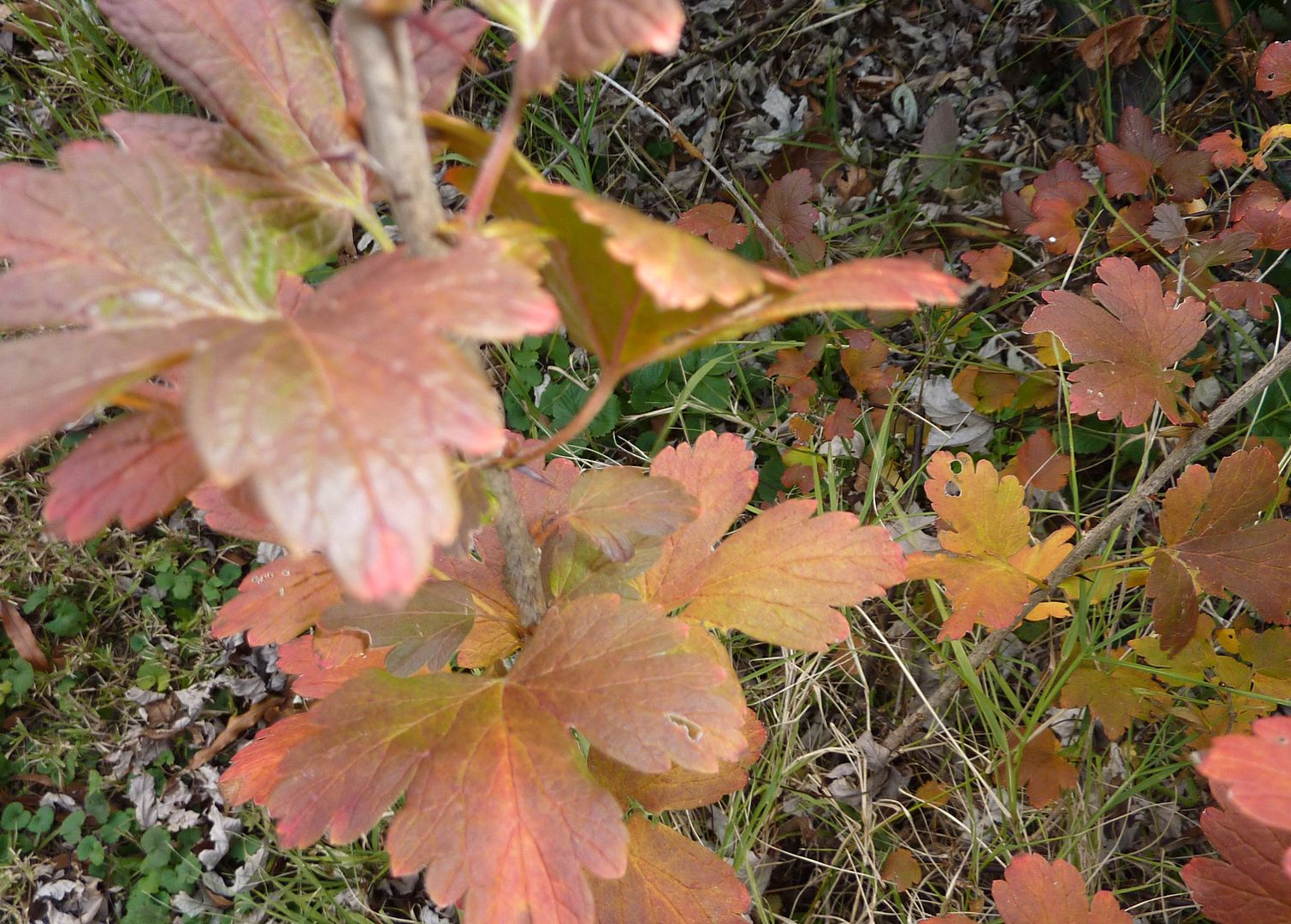
Our Gooseberry plants seem to be all over the place with colors. Fall color varies from cultivar to cultivar, species to species, and plant to plant as with the flavor of the berries. Some species growing in the same field can vary dramatically. It makes me wonder if any of the vendors selling Gooseberry/Current in the US knows what they're doing.
From the same nursery this was sold as Red Gooseberry.
And so was this, but it has a different fall color, different branching habit, the leaves are slightly larger, and even the thorns were different. Next year I'll see about getting these identified to species level.
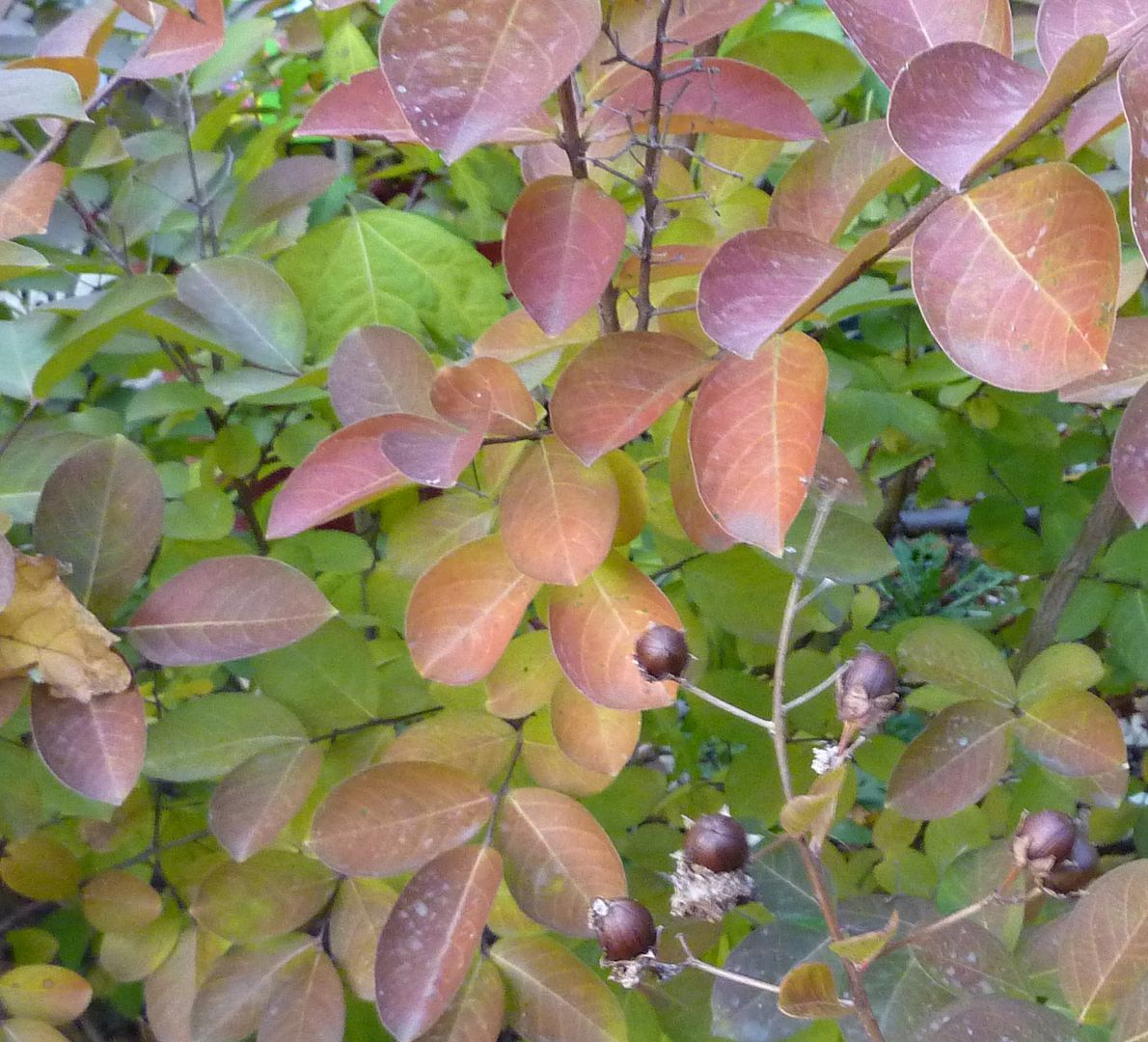
Crape Myrtles seem to sport every color in the rainbow.
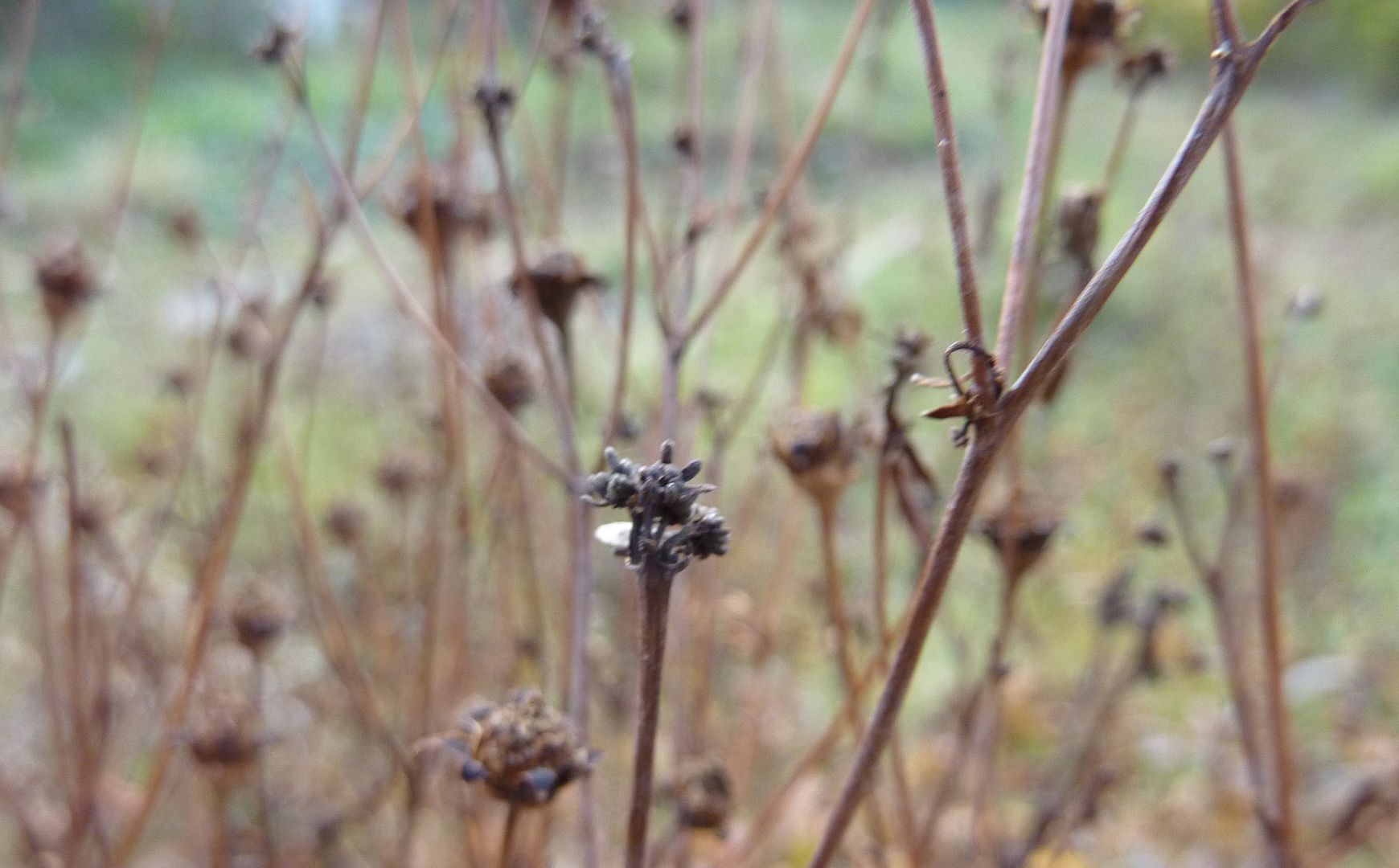
Here I found the blurry view of our lawn through the stems of the Tall Tickseed to be an interesting composition.
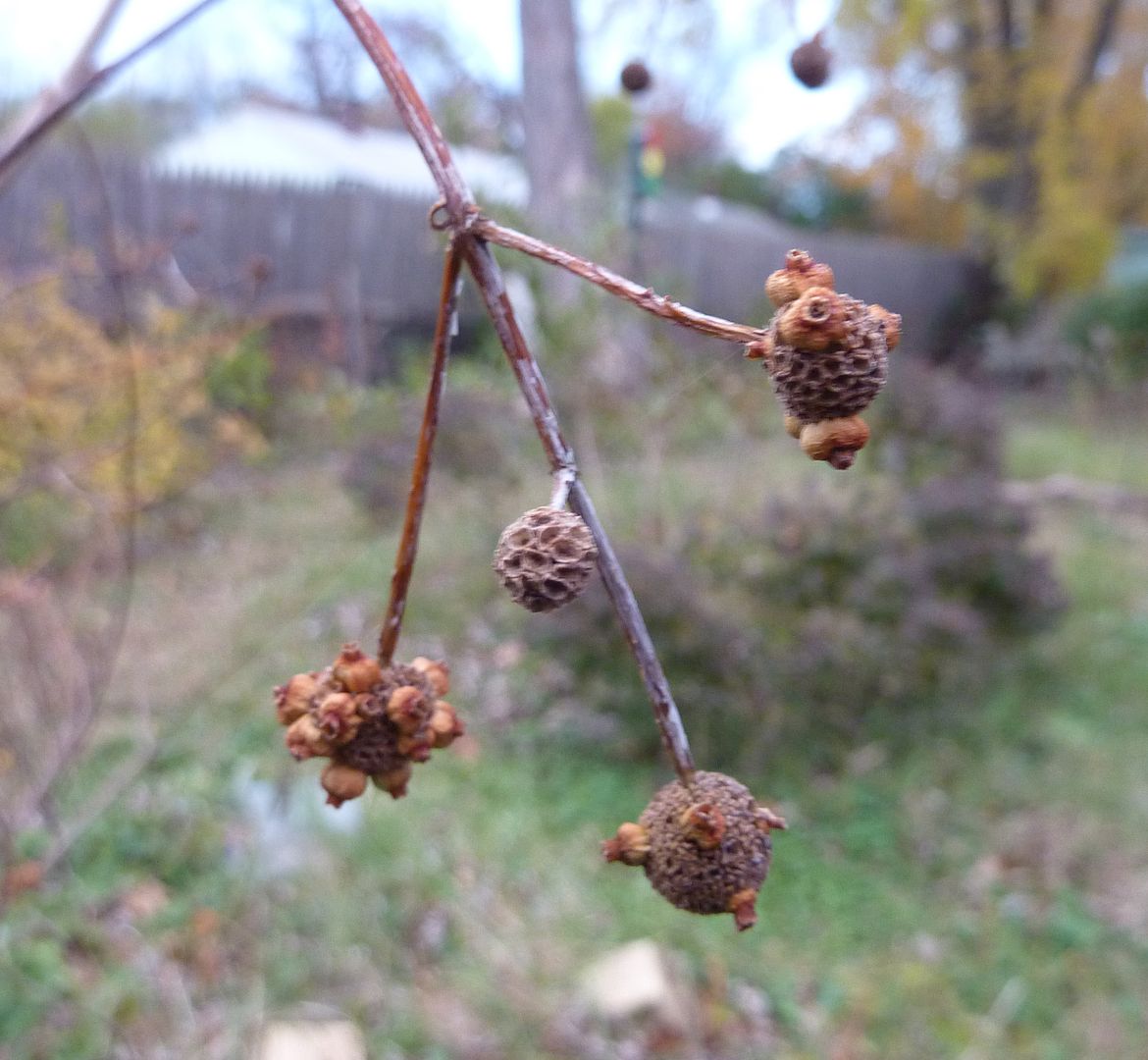
The nut-like seeds to our Buttonbush. It's nice to see some of these developed from all the attention the bees gave it this year.
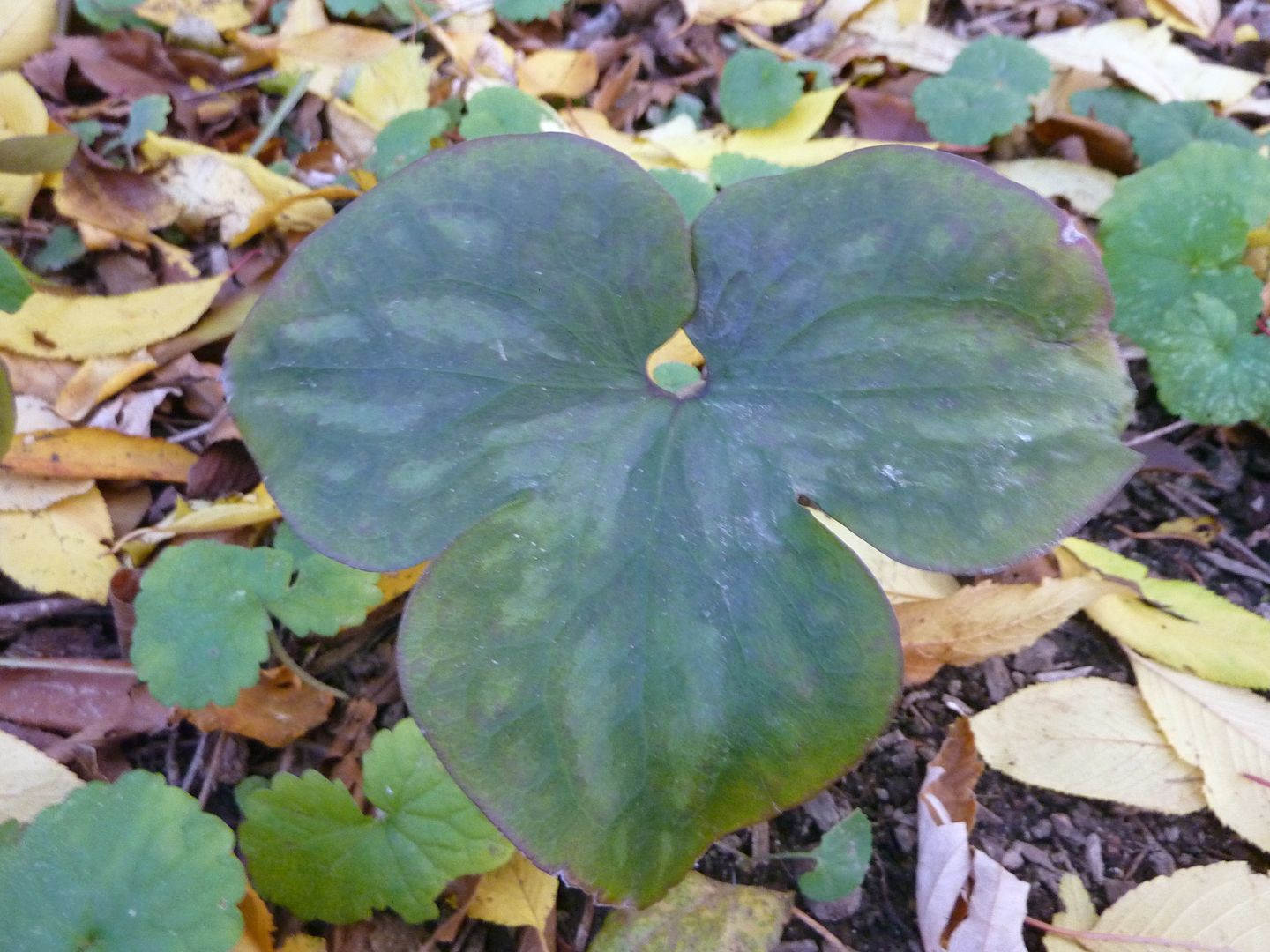
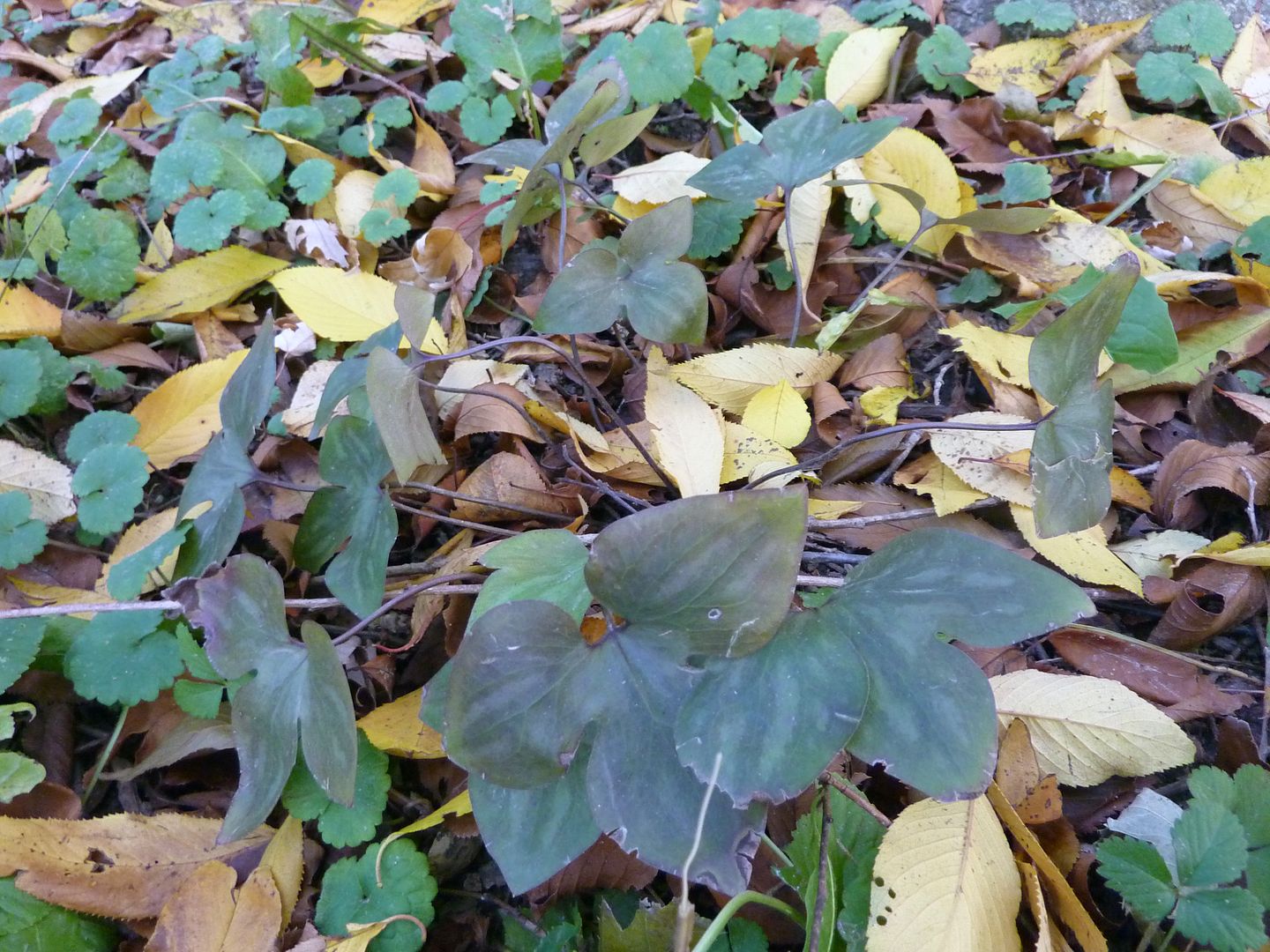
Mixed among the leaf litter is a couple of my Hepatica plants, which are semi-evergreen.
Hepatica leaves last the winter and finally die off right when it flowers in the spring. New leaves are produced just as the old ones have all broken off.
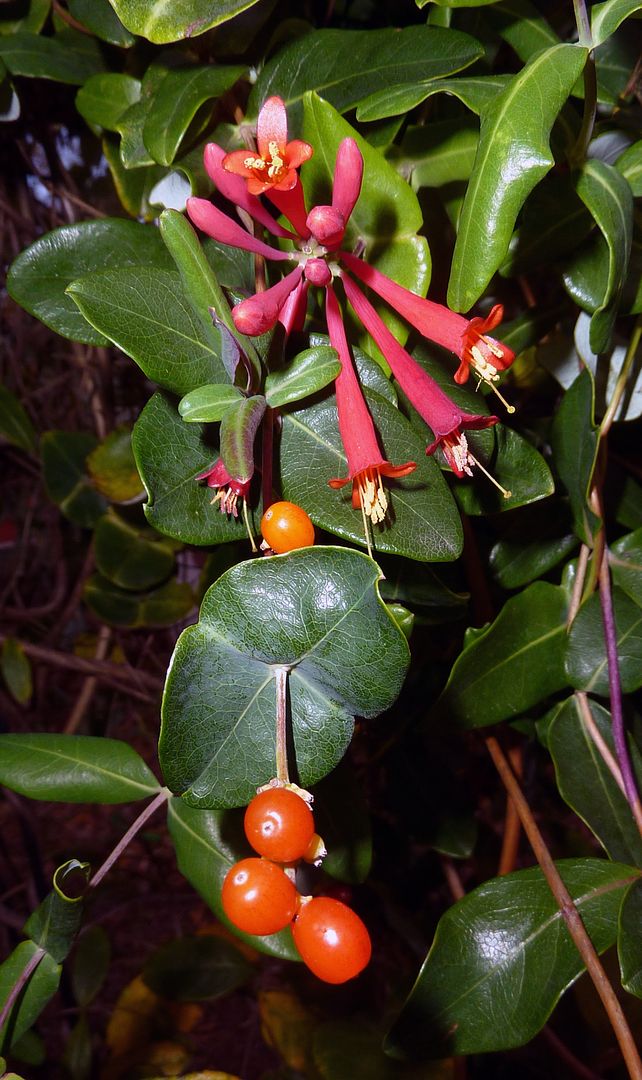
Coral Honeysuckle, does not care that its winter or not. I've always been impressed by how cold tolerant this plant is. Barely any of the leaves have started turning yellow and it still has unopened flower buds to go! I swear this vine must drop its leaves for only two months of the year, and each spring it makes up for lost time by quadrupling the number of flowers it produced all last year. It's never been a heavy fruiting plant but there's always a berry or two where the flowers used to be.
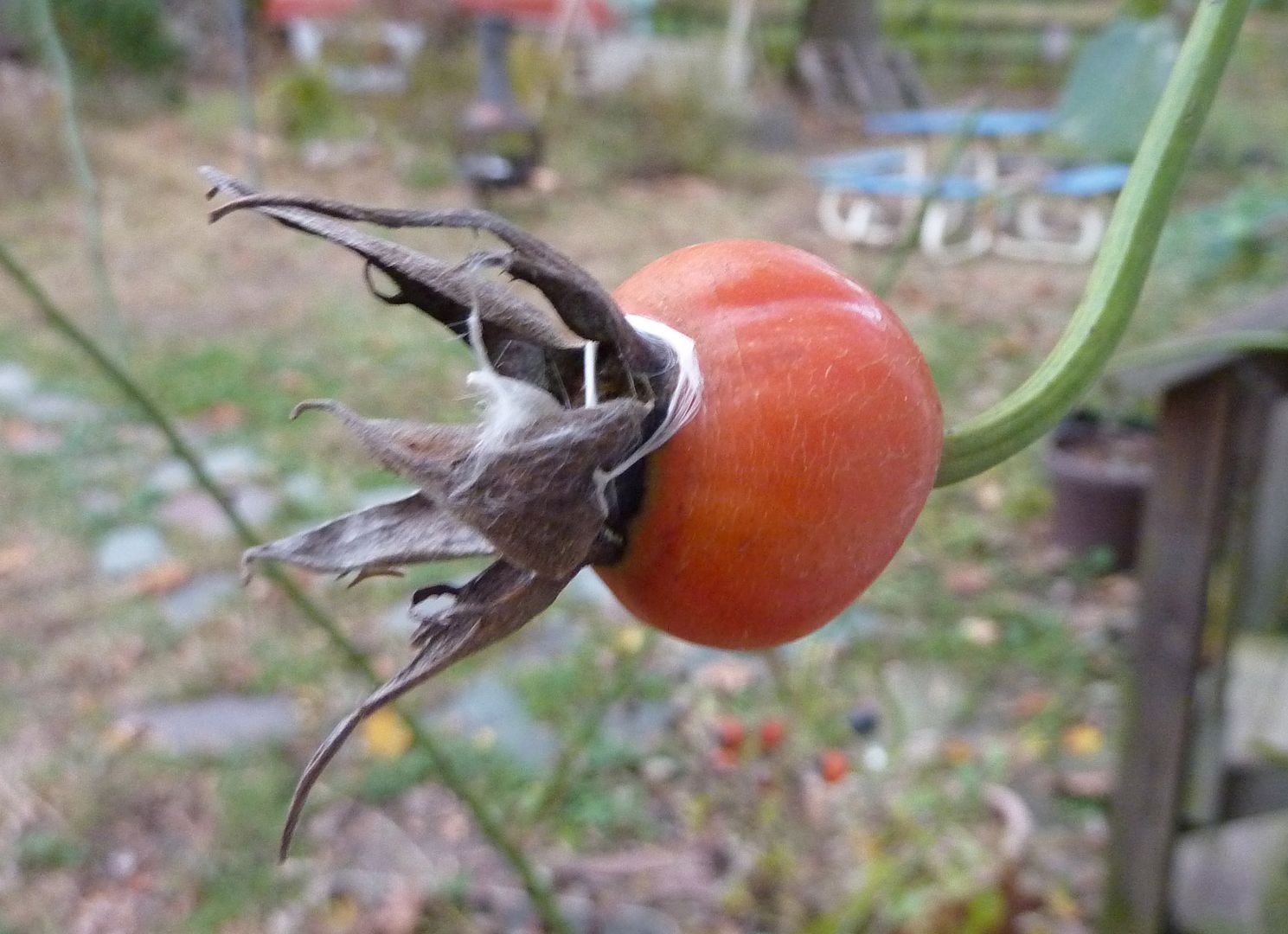
Rose hips are another fruit showing off right now. I'm told these are edible, but honestly I wouldn't know what to do with them.
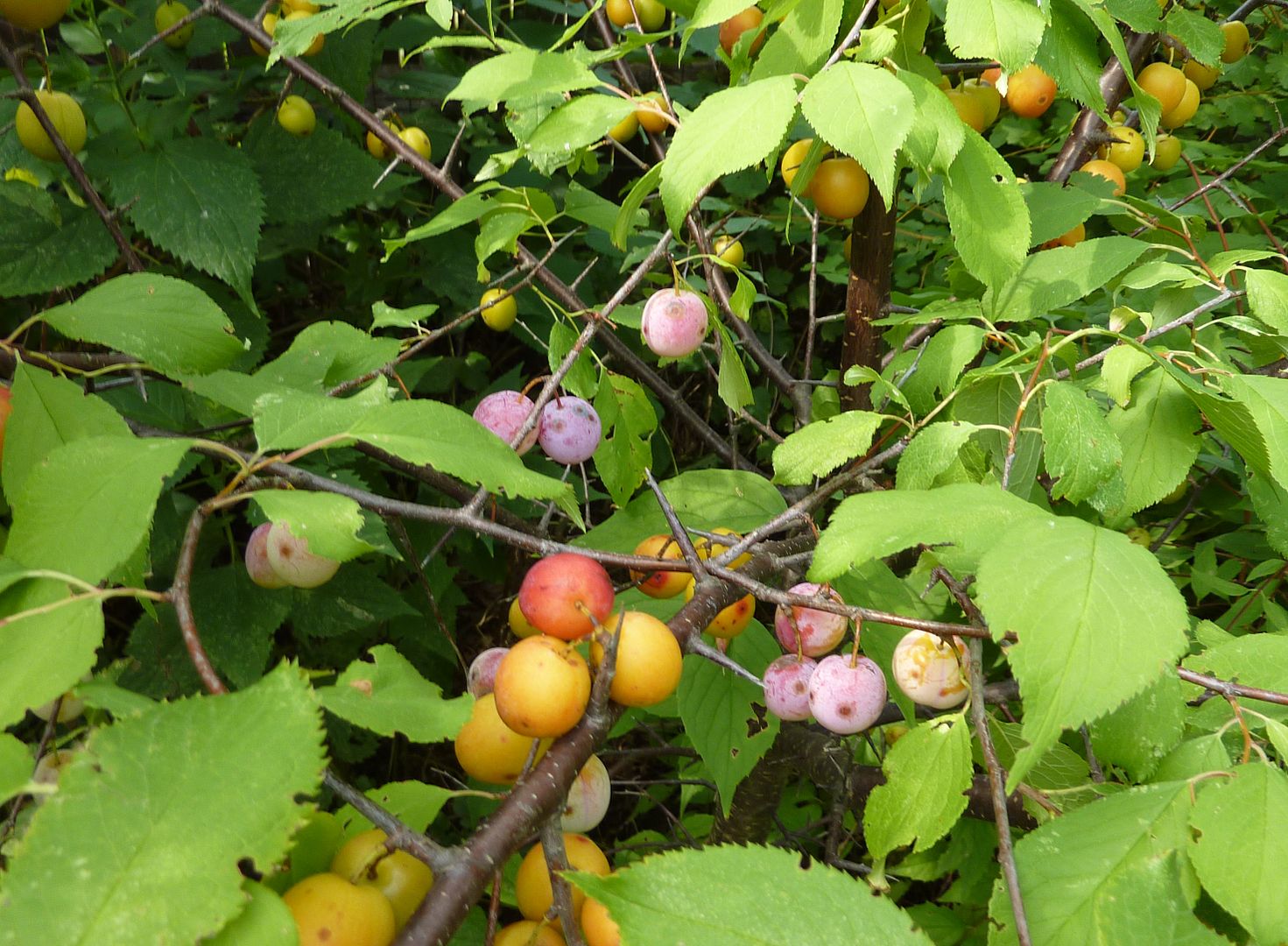
A few years back I bought some Native Plum trees, Prunus americana. It's been about 4 or 5 years now and they've finally decided to fruit. Some fungal spraying was necessary which I did every two weeks.
These trees like to produce! The fruit is very sweet. I have only found a worm/caterpillar in two of the fruits which seemed to ripen earlier than the rest. I've probably pulled 400 of these bite sized fruits off the trees in total, with another 200-400 left to go. So far the wildlife seems to have left them alone which is always a plus, and something my Peach and Nectarine trees can't say.
As you can see they are bite sized and the color ranges a bit. I believe one of them crossed with a different variety at some point as its fruits are purple and have dust on them, where as the true species are yellow, mostly dust free, and turn red when ripe. They're about the size of cherry tomatoes, and delicious to eat. I highly recommend them.
People have complained that this species sends up root suckers. Actually all plum trees do this so I don't consider it a valid complaint. A lawn mower or pruners make short work of them. In nature the root suckers serve to replace the trunk as the heavy fruit yields each year are often so heavy that they snap the tree's branches. In this way single trees can form their own grove and potentially reach other trees to cross pollinate with.
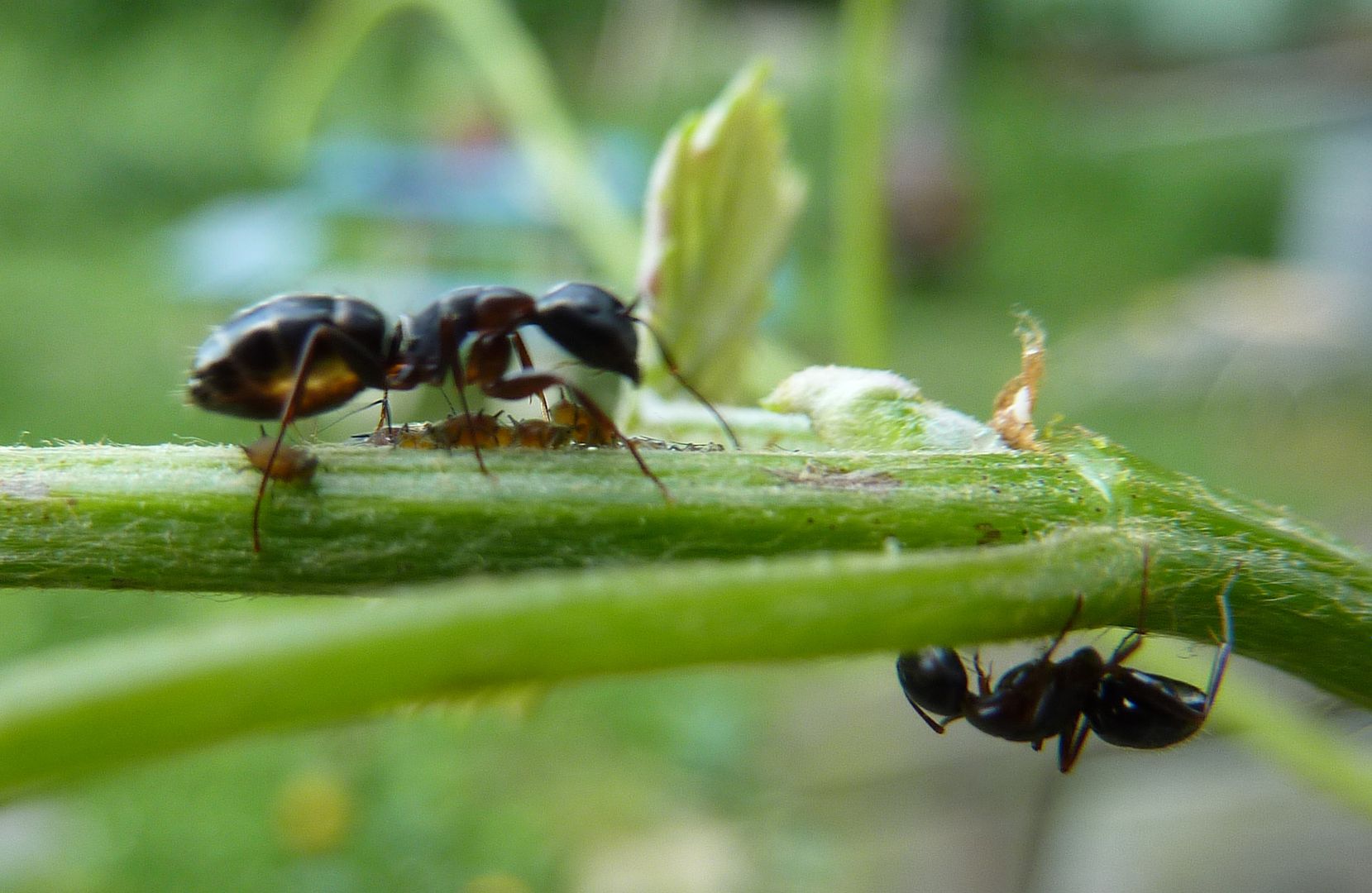
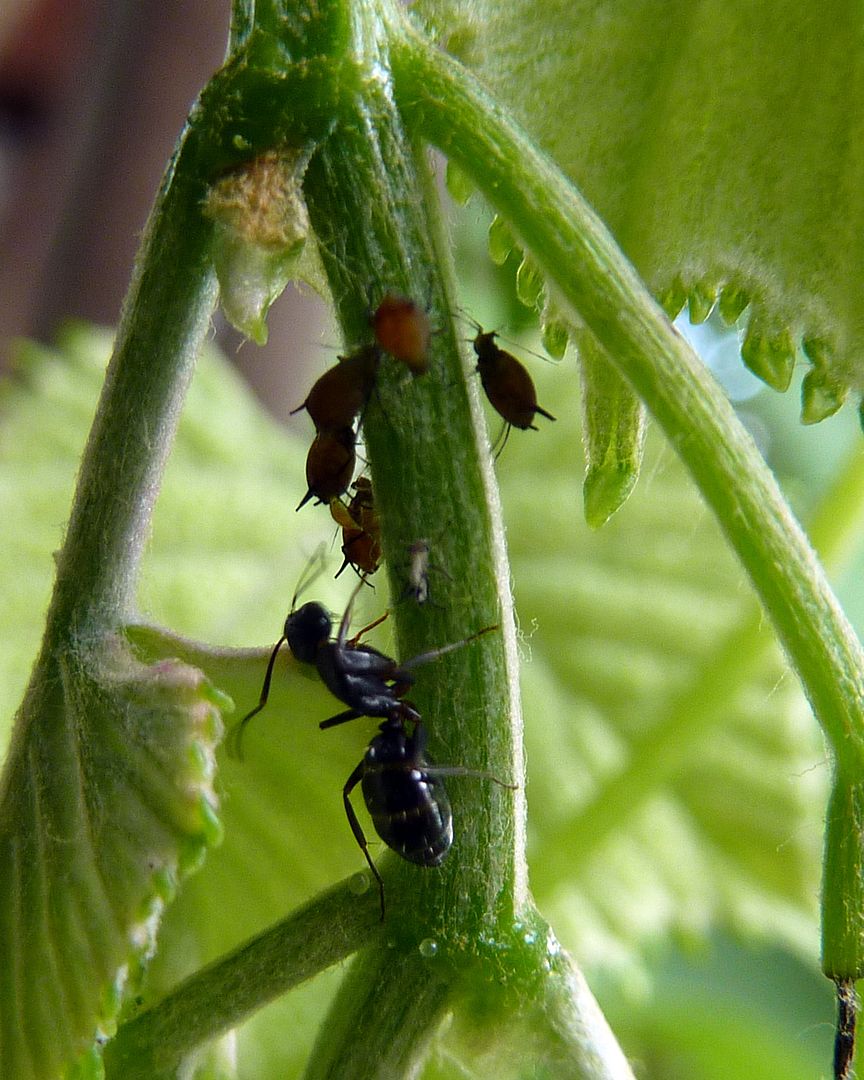
As my Concord Grape vine grows I've found that aphids have started occurring on the tips of the new growth. Concord Grapes are not one I recommend, unless you're experienced with canning and making jam. They taste exactly like jelly right out of the jar.
The ants here are Camponotus nearcticus is the ant species looking over the aphids. Notice how the major worker above is so full of honeydew that her gaster has expanded to become transparent in places. The soft membrane under her exoskeleton stretches out to allow for more room. Major workers are often used as food carriers in the colony as they can hold a greater capacity than their smaller counterparts.
This isn't an infestation by any means. Along the entire vine that stretched around our entire back deck I was only able to find two clusters of them. I'd be worried if they were infesting places where the plant was fruiting but so far that's not the case. At their worst aphids tend to only hinder 15% of the year's growth. Some species can cause feather problems by raining down honeydew all over the plant, allowing diseases to spread easy, but this isn't one of them.
Last year I planted a Meadow. And this year I'm officially naming it the Monarch Meadow. Hopefully in years to come it will live up to that name. I'll add more species of Milkweed, and nectar plants Monarchs love. Not that I'm in any shortage of either mind you. I'm also proud to be growing Franklinia, Buttonbush, Native Pipevine, Bottlebrush and Buckeye.
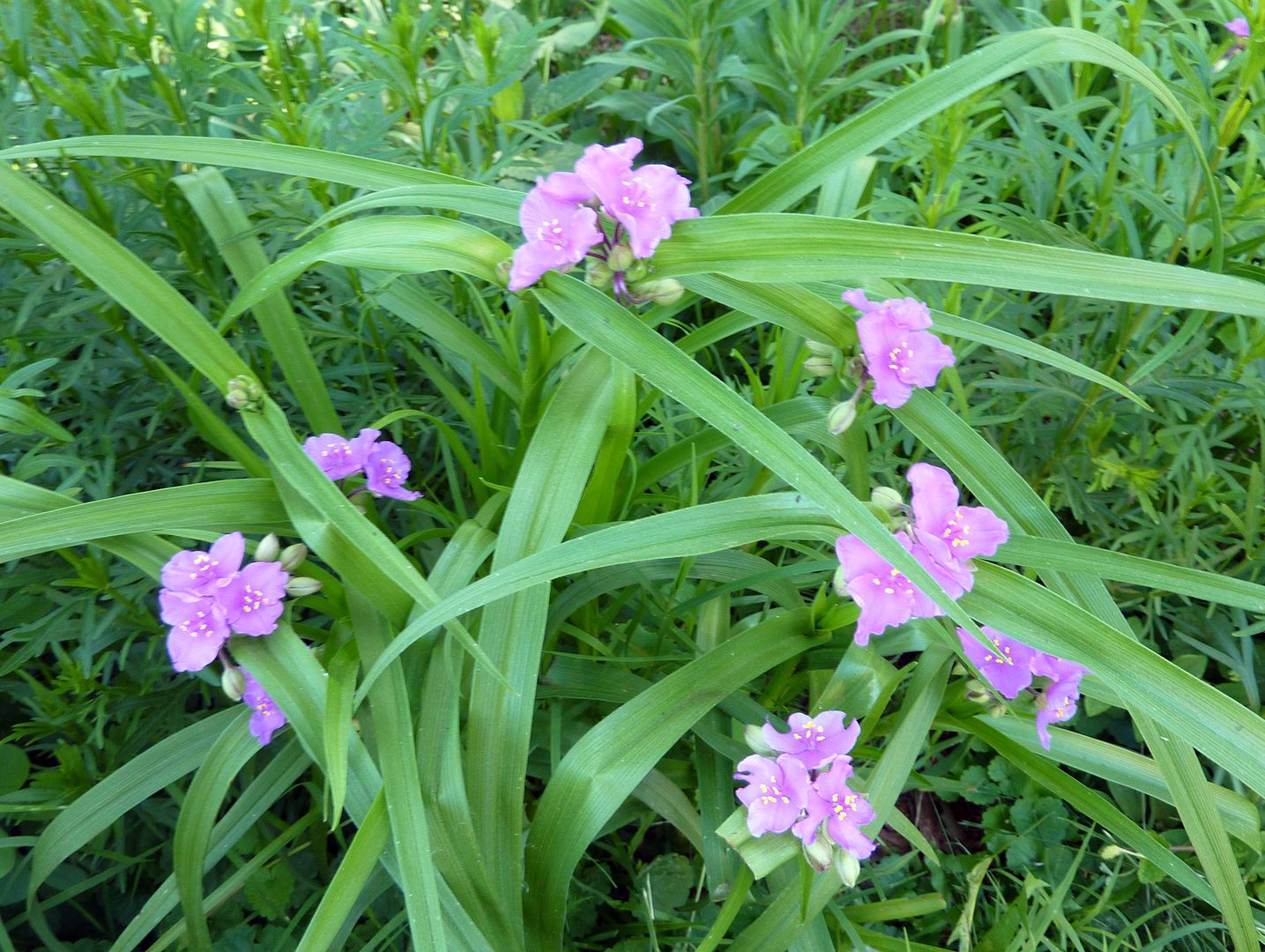
Prairie Spiderwort, Tradescantia occidentalis, is also called Western Spiderwort because it's primarily native the prairies of the midwest. There are also populations of it in New York and New Jersey though. Of other species of Spiderwort that I've had over the years this one seems to stay open for longer in the afternoon. Other ones I've had are closed completely by 2:00pm. This one I can still find open around 4:00pm.
The bright pink/magenta flowers are imposable to miss in the morning and mid-afternoon. Butterflyweed, and Ozark Coneflower will be flowering shortly though along with assorted Coreopsis species. Also mixed in are some 215+ Liatris plants. I'll be making update videos once these start blooming.
Native Plums on the plum tree. I find it odd that I need to spray these with fungicide to get them to ripen. I wonder if it's just because of the Peach and Nectarine tree being so close. The disease seems to start on those trees while the Native Plum leaves are unaffected. Typically our native fruits don't get anywhere near the diseases found in commercial fruits.
This morning I harvested a hand full of strawberries. And I'll probably be doing this for the next week or so.
As far as perennial fruit crops go strawberries are a fair investment. They're a little runner vine that hops along the ground. So one plant can become 7 next year. Each plant produces about 4 to 15 berries, that ripen over a 2 to 4 week period. So it's an easy plant to get established and let them spread as a ground cover or give them an entire bed to take over. They're easy to control and transplant too. Just herd where the runner shoots land so they make plants where you want them.
Our Native Plum is flowering in full force this year. I actually have 4 of these planted right next to one another. You're looking at two in the picture, then there's a pink flowering 5 in 1 peach and whatever tree, then next to that are the other two plums. I believe they are Prunus americana but I'm not sure of that. As it's is a Prunus though that means it's very beneficial to nature both in Lepidoptera host plants, and to wild life. The flowers have a great scent to them.
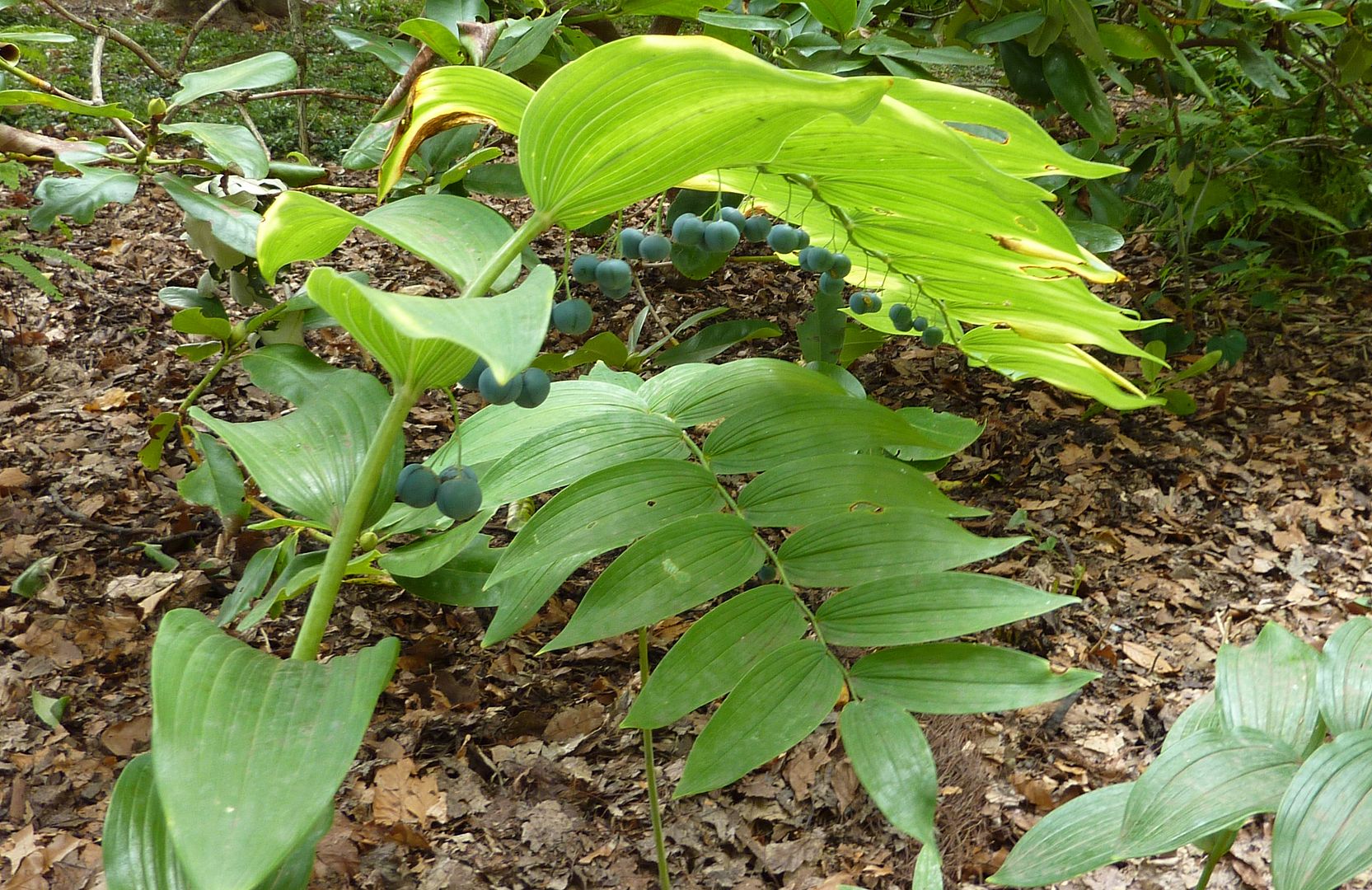
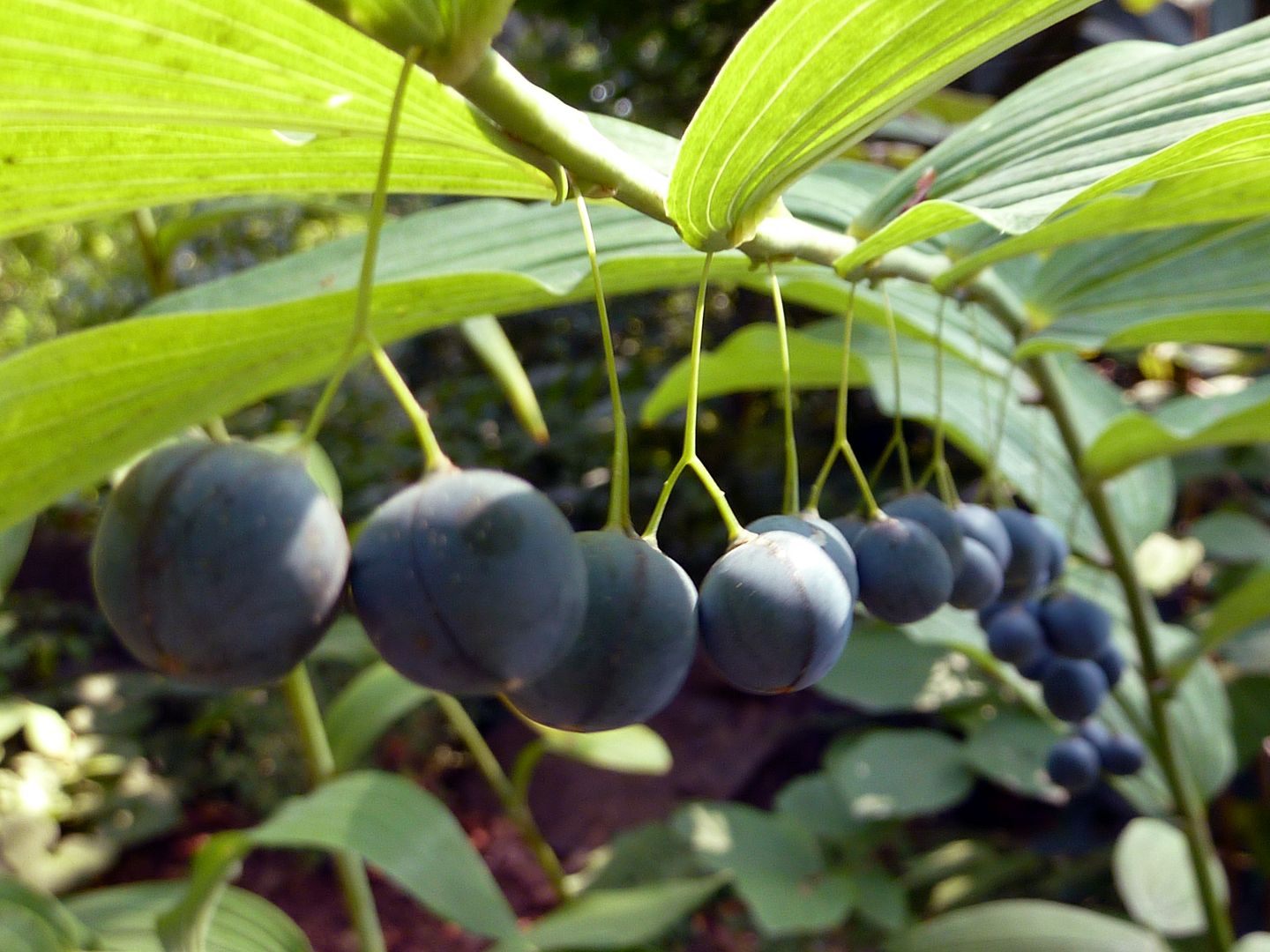
Solomon's Seal, Polygonatum commutatum, I think. It's the most common one I think though there are other Polygonatum species around. This was another woodland highlight they had growing at the Mt. Cuba Center. It's well past flowering but unlike other spring ephemerals it stick around longer in the year. I feel like the majority spring ephemerals are pollinated by either flies or beetles, but this is one that's actually geared towards bees.
The fruit are these charming blue cherry-like berries which are eaten mostly by woodland birds
Garden themes are a dime a dozen these days, though not quite as bad as the Diet and Exercise industry. Some of these are gimmicky, while others are classic categories handed down for generations. Really I want gardeners everywhere to just take two steps back and ask where the industry is going.
Compost Tea -
Okay I've never tired this personally but it seems to me hosing down the food with compost isn't as much of a good idea as you might think. What isn't mentioned here is you can occasionally grow Escherichia coli in the tea, also known as E. coli. Also 8 cups of compost sounds like a lot. 1 quart is what other folks online seem to be saying.
Hydroculture - Basically this is the stupid thing to the below. Actually it's wrong to call it stupid because it actually works. It's just you can't grow anything with a grow light alone. You need to have it next to a window to really grow anything out of it. Basically you're growing plants without soil, they survive because there's an air bubbler constantly feeding the roots air and ever two weeks or so you dump in a pill capsule of nutrients. This works but it feels anything but natural.
Aquaculture - This is the biggest waste of money unless you have a garage or green house devoted to it. The idea is the same as Hydroculture but instead of adding nutrients you have fish (usually Tilapia, Koi or Goldfish) living in a tank and the water is filtered through the growing beds. On a large scale I can see this working but as something to be put in your home or apartment it just doesn't work. I tried one product that cost $200+ which grew more mold gnats than anything edible. It must be placed next to a window to get the right amount of light and even then you will need a grow light over it. There isn't enough light coming in through your house windows to grow any edible plant. But if to much light hits the fish tank you'll get green algae which will suck up all the nutrients. In the home these really need to be in the right spot or it's all going to fail.
A few places do this on large scale and are more impressive. The issue though is because they're supplying food to the public and or allowing people to walk around and view their setup, they have to have the water tested daily to make sure E. coli isn't a concern.
Topsy Turvy Tomato and Herb Planter
This sounds as stupid as it looks. Plants want to grow up, not down. They don't hole enough soil either. You're better off just growing a plant inside a bucket. Moving on.
Permaculture - I love the idea here. Basically you garden as a forest. Tall trees are nitrogen fixing with their leaves every year, or otherwise a food crop in some right, vines are allowed to grow up and around them for more food production, shrubs are all food producing, The understory is a mix of shade tolerant plants that all serve some purpose in producing food. As we go farther out into more sun lit areas we find the traditional fruits and vegetables growing. And there's a cycle happening here as the trees drop their branches for firewood, or other material, so that everything is recycled and interconnected in the same system. Basically every plant here should be useful, there's no need for a lawnmower or anything like that other than to add to the compost pile.
What I hate about is when Permaculture nuts recommend stupid plants. YOU ARE NOT going to make your own paper or re-shingle your own house using bamboo. Anyone growing Trilliums as a source of toilet paper is an idiot. Perennial Sunflowers aren't all they're cracked up to be and frankly fall over on everything.
Crop Rotation - Okay this makes sense. It's actually grounded in reality. The idea is certain crops promote or use different nutrients in the soil. So one year you grow tomatoes, and the next year you move those to another spot, etc... Farmers used to do this a lot but used livestock and whatever crop they happen to be growing.
Square Foot Gardening -
With this we're still rotating the crops but they're being grown inter mingled as communities with different root types as opposed to a small mono-culture. This makes sense to me and is very similar to how I have my garden arranged. Along with working, it makes the garden look more like a landscape or flower arrangement almost. There's some design and ascetic qualities to take into account, or even if that's not your thing then it really doesn't matter because it all needs to grow together somehow.
Hummingbird Garden - These don't produce anything other than that is to say they attract hummingbirds. There are a lot of plants at nurseries that say they attract hummingbirds, so many in fact it leads one to believe that there are hummingbirds everywhere just around every corner you don't happen to be looking at right now. Where a lot of gardeners go wrong is actually believing these labels instead of doing research. If you're in the natural range of Coral Honeysuckle, Lonicera sempervirens, then you should have several of these planted in your garden! This is one of the plants these birds migrate with the bloom of and it does a hell of a lot better than Japanese Honeysuckle, Lonicera japonica which gets nothing but carpenter bees.
You'll hear other tips like, "include plants that get lots of insects," and, "always have a few evergreens nearby for them to nest in."
Now, I understand the second one, though I'll point out I've seen them nesting more openly at times. As for the first one... "include plants that get lots of insects,"... Where the hell did this come from? Considering the years and years of gardening mentality that is bugs are bad how the hell did these words come out of a gardener's mouth? What plant at the nursery has ever been labeled that? The only one that comes to mind is New Jersey Tea, Ceanothus americanus, which is really hard to find in most garden centers, and from my understanding has been on serious decline over the past 50 years! I think what they mean by lots of bugs really is that it gets lots of aphids and things like hover flies for them to eat. Caterpillars are also high on the menu.
Butterfly Garden - Here's another theme that a lot of gardeners go wrong with thanks to garden labels. There are a lot of videos online that stress the use of both nectar plants and host plants, and frankly a lot of them talk down to their audience in the process. It's okay to have a butterfly bush, in states where it's not considered a noxious weed, but I would rather have Ironweed, assorted Liatris, assorted Milkweed, some Joe Pye Weeds, Wild Senna, Buttonbush, Asters and Goldenrod all growing in the same 10 by 10 area one butterfly bush can take up.
One problem often talked about with butterfly gardeners is they never seem to have enough insects! Found in the what many call the bible of our age, Bringing Nature Home: How You Can Sustain Wildlife with Native Plants, Updated and Expanded Doug Tallamy has created a list of host plants, also available online! Woody Plants, Herbaceous Plants. So generally if you have a forest and prairie themed garden full of mostly natives you're doing great. Unfortunately most Lepidoptera are moths. Butterflies are actually a rather small group as a whole and considered to just be day time flying moths. To really get those host plants for each should be researched individually.
Vegetable Garden - Consequently, one problem often talked about with vegetable gardeners is they always have to many insects! I've caught my neighbor throwing Tomato Horn Worms over the fence cause she knows how much I love caterpillars. I'm often parted with how I should react in that situation.
Pollinator Garden - These are big with bee keepers mostly but include elements of butterfly and hummingbird gardens usually. As I've already talked about the other two I'll focus on the honeybee aspect. Going to beekeeping meetings and reading the newsletter often has me cringing at some of the recommendation people have. Often they're promoting down right invasive weeds as nectar sources. I refuse to promote what they are and I'll be posting a list of Native Plants for Honey Bees later in the year.
Xeriscaping - This is when plants are selected for their drought tolerant ability, often with a desert or rock garden theme. I like it but I don't feel that's it's meant for all areas. We have cacti all over, even here in New Jersey, but an entire garden devoted to it doesn't sounds right.
Rain Garden - Quite possibly the best choice of the lot. Water is collected, usually as run off from the gutters, and directed into a little pond or vernal pool, where plants often native and used in other categories above to filter the water. There's no fuss and no muss with this. It's just a water conscious garden.
Conclusions - So regardless of what you're doing and how your growing things, the underlying theme needs to be as follows. It is better to be pretty useful as opposed to just looking pretty. All exceptions must be native to within at least your region of the country. And it's that simple.
While spending Easter at my grandparents house I noticed their apple tree was in bloom. The fruit is a small green crabapple of some sort, not very edible at all. The flowers were being swarmed by bees though. Assorted Mason Bees were the main pollinator here. I hardly saw any Honeybees on it at all but they were there. I think they were more interested in my grandparent's flowering quinces (an Asian plant that can produce edible fruit farther south). Bumblebees were there too but they're not in as great of numbers at this time of year.
Well we finally got some snow here. The governor is calling it a state of emergency, however the only state of emergency my friends are experiencing is the football game being delayed. Back on topic, I tried taking some pictures with the snow.
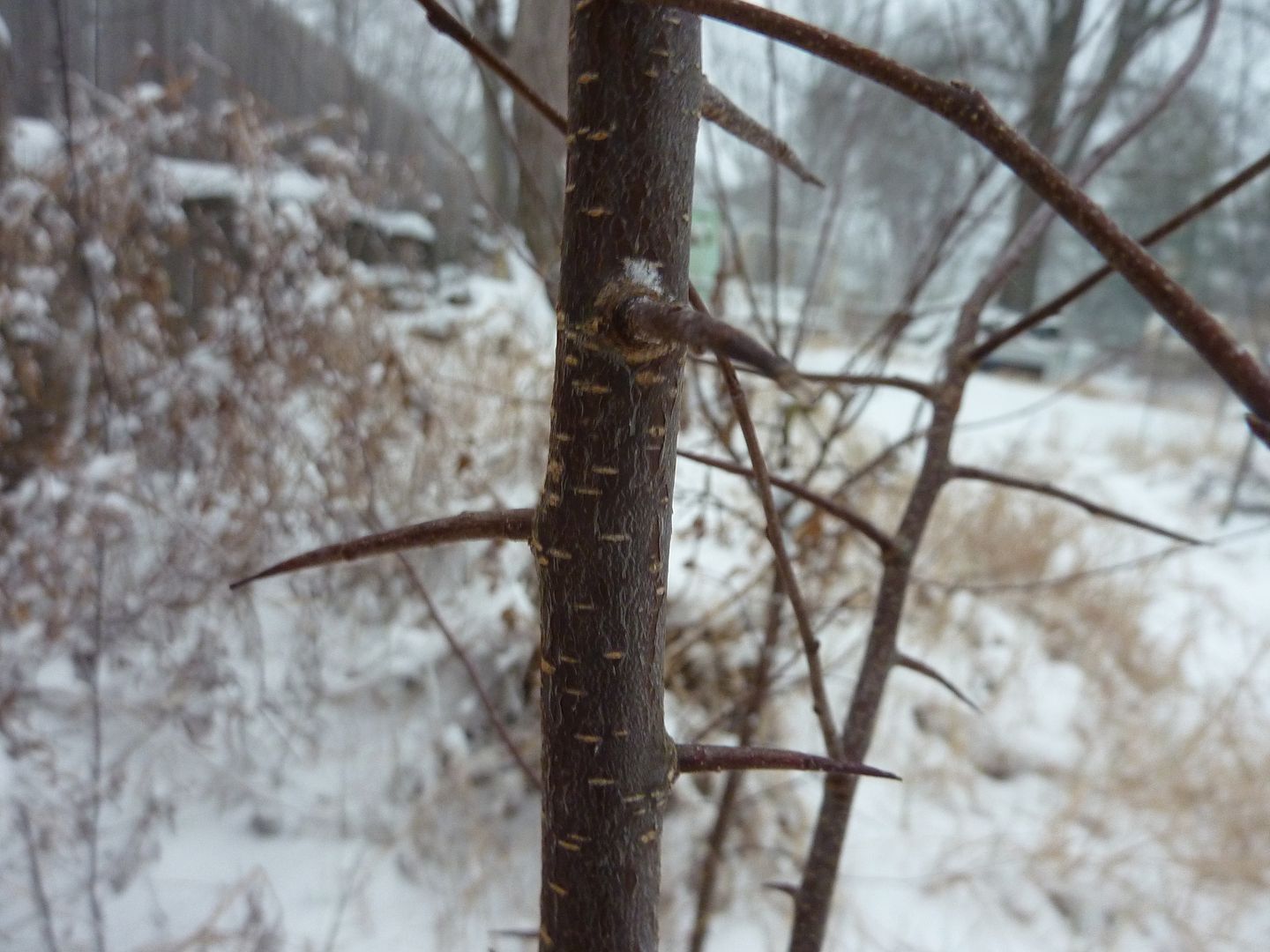
Something neat about the Native Plum tree. I'd thought all year that it was growing a little odd, to many leaves right around the trunk and I assumed I'd have to trim off the compact branches... Now that the leaves have fallen off though I see them for what they are.
These thorns range from 2 to 6 inches long! I will be trimming them off when warmer weather hits but I might leave them for the spring. I'm envisioning the contrast of thorns and flowers, that might arrange in a neat way.
The other thing I'm really enjoying is how the grass pokes above the snow. Very pretty. There are also piles of junk in my yard that suddenly look magical with the snow covering.
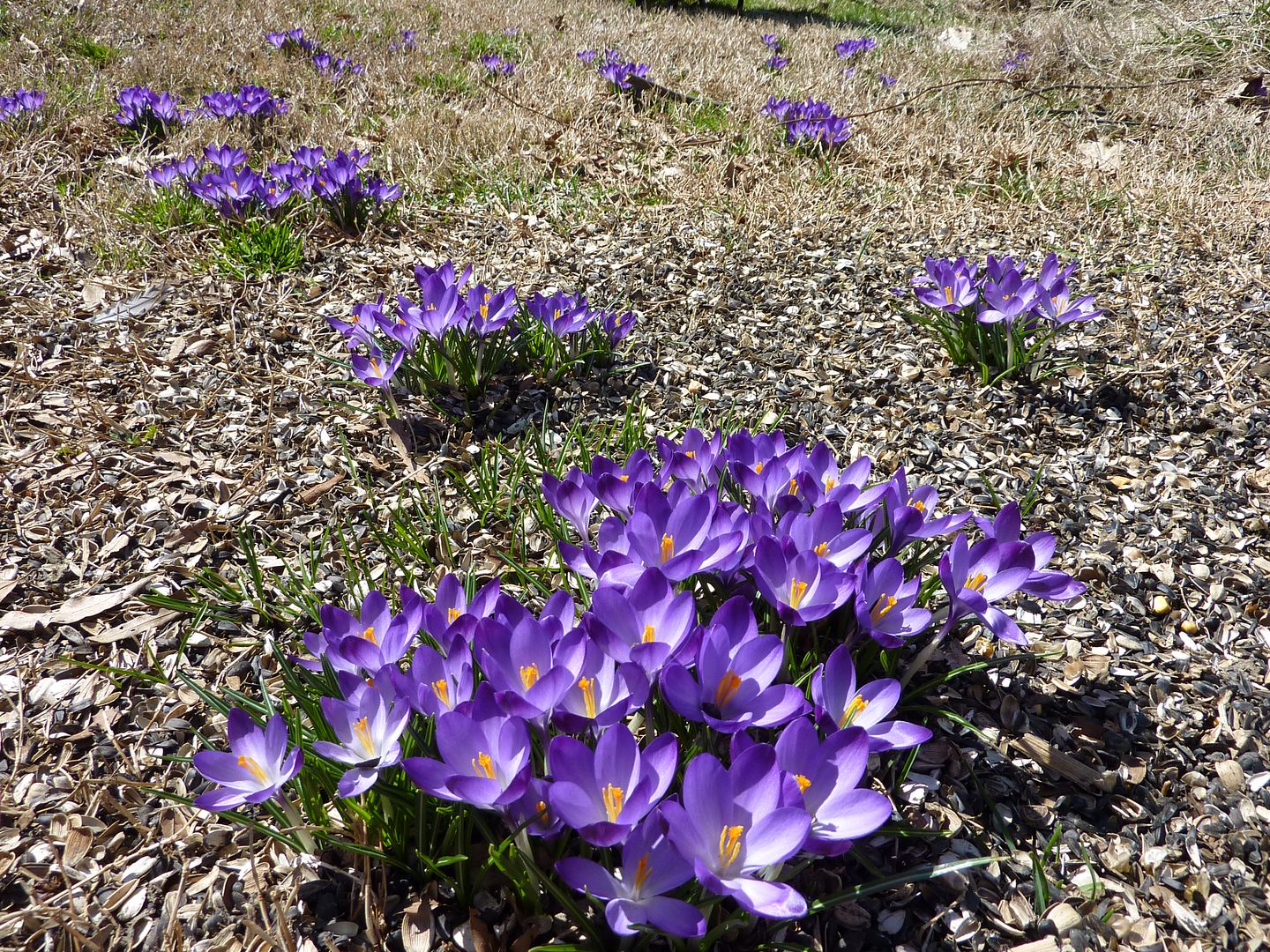
When I planted a few Crocuses in the lawn three years ago, I had no idea they'd each divide and multiply into their own clump. They are getting to the point where I could harvest certain groups and sell them.
Maple Tree in bloom. So many of my friends scratch their heads when I mention that Maple Trees have flowers. I don't know what it is that makes these so hidden. I think they're confused by all the Magnolia trees that scatter the neighborhood.
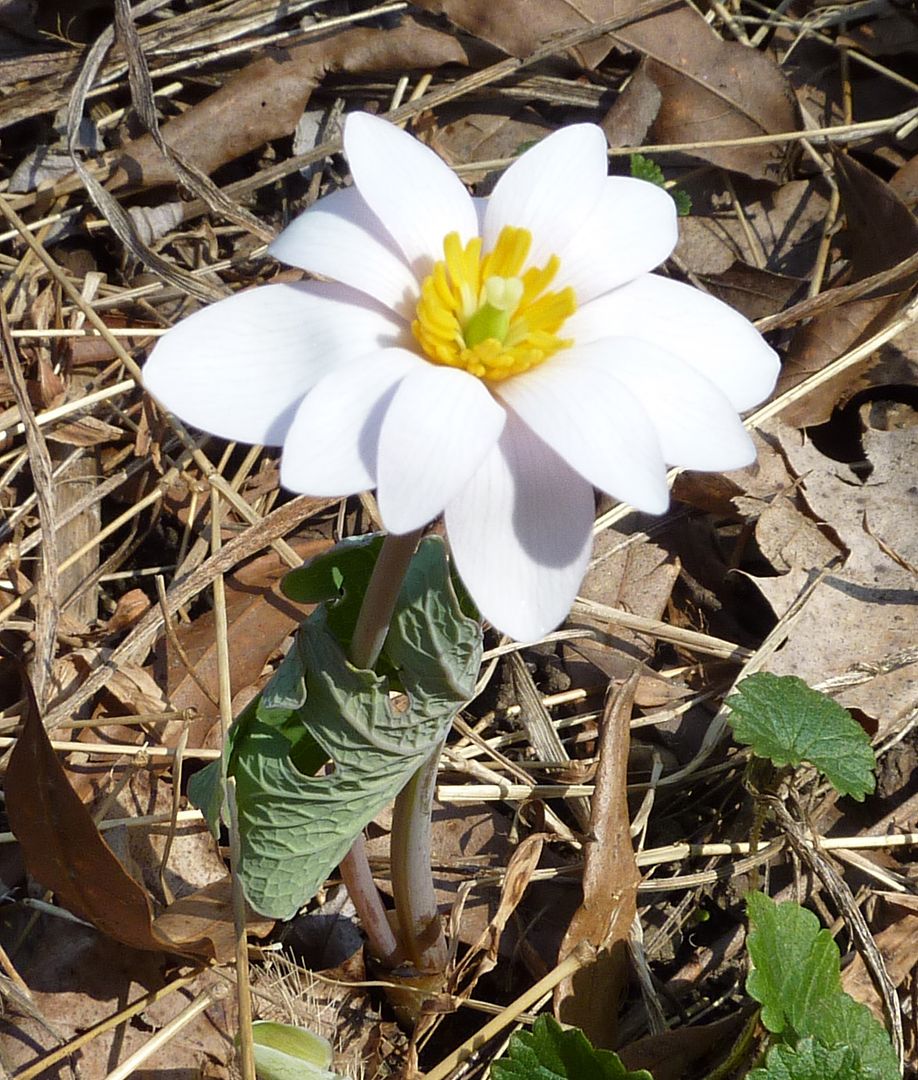
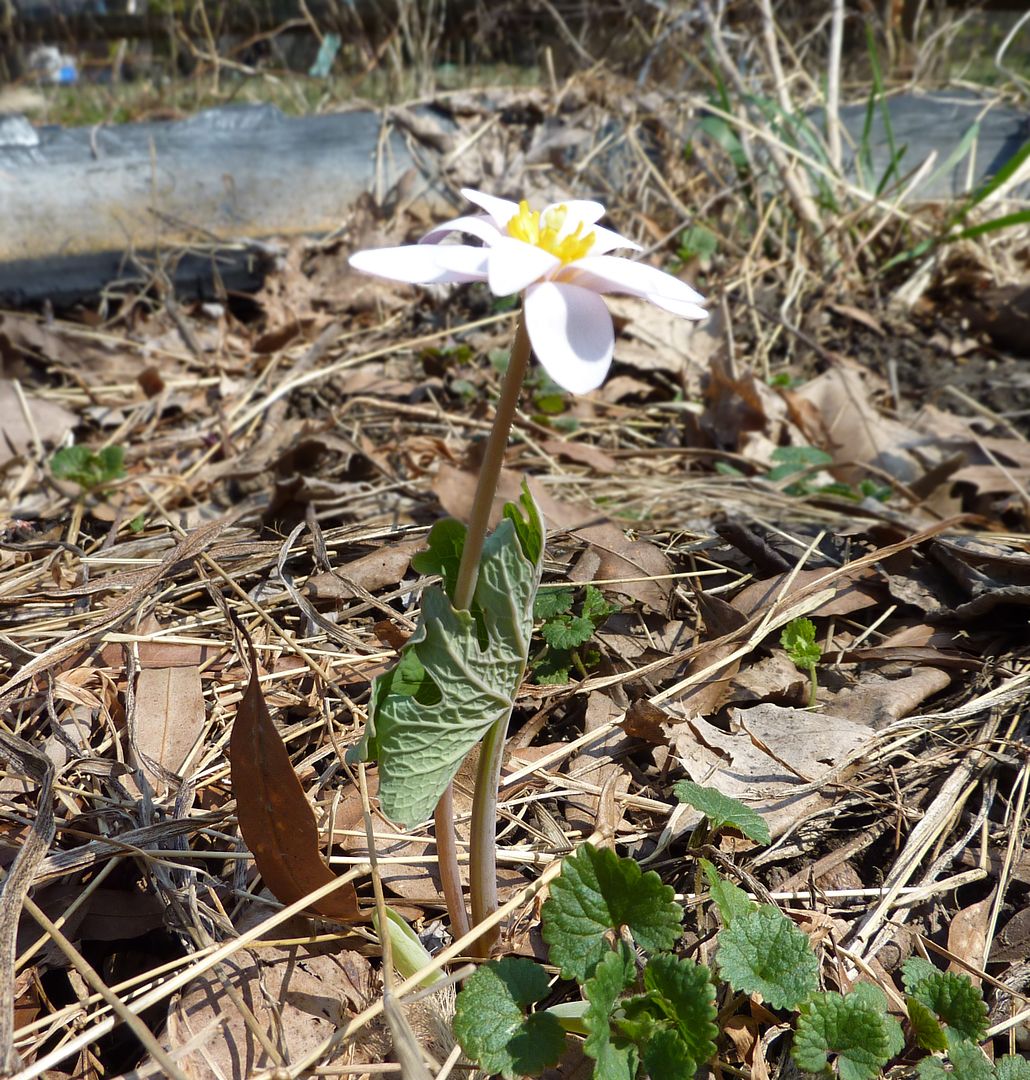
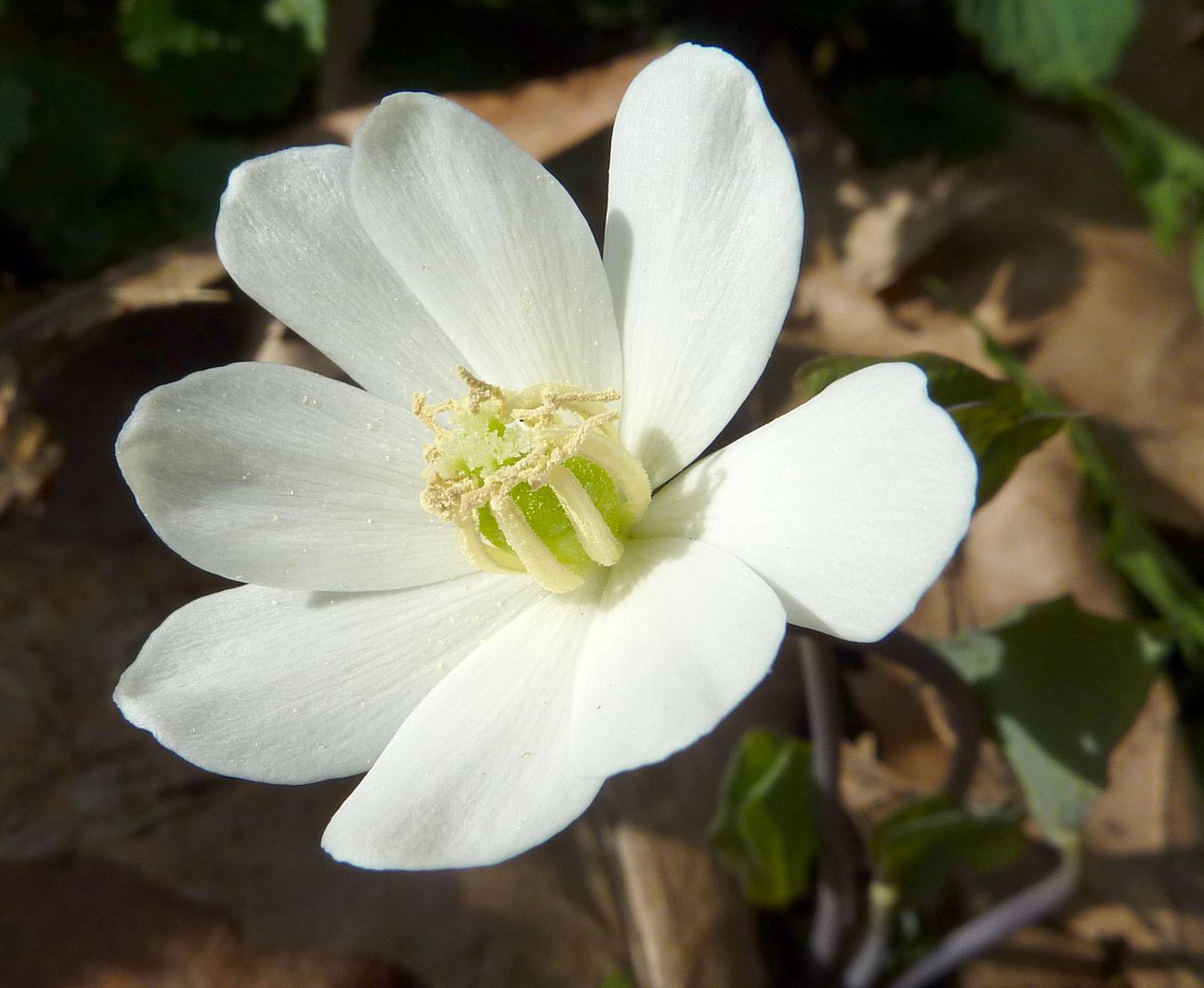
Bloodroot, Sanguinaria canadensis, in flower. I planted 3 of these last year. Unfortunately only one has come back.
I love how the leaf clasps around the flower stem for added support.
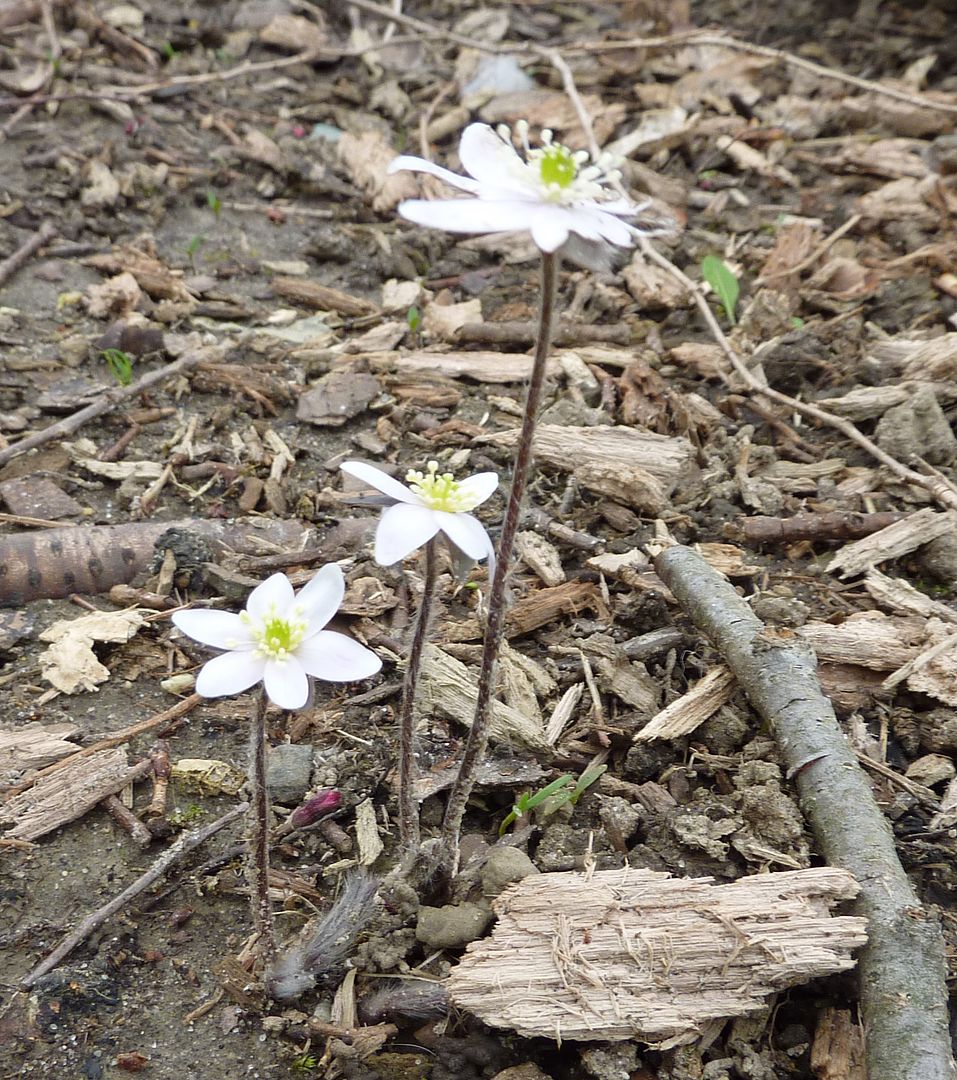
Hepatica sp. This is one of the earliest and smallest wildflower. The tallest one here is maybe just shy of a U.S. dime.
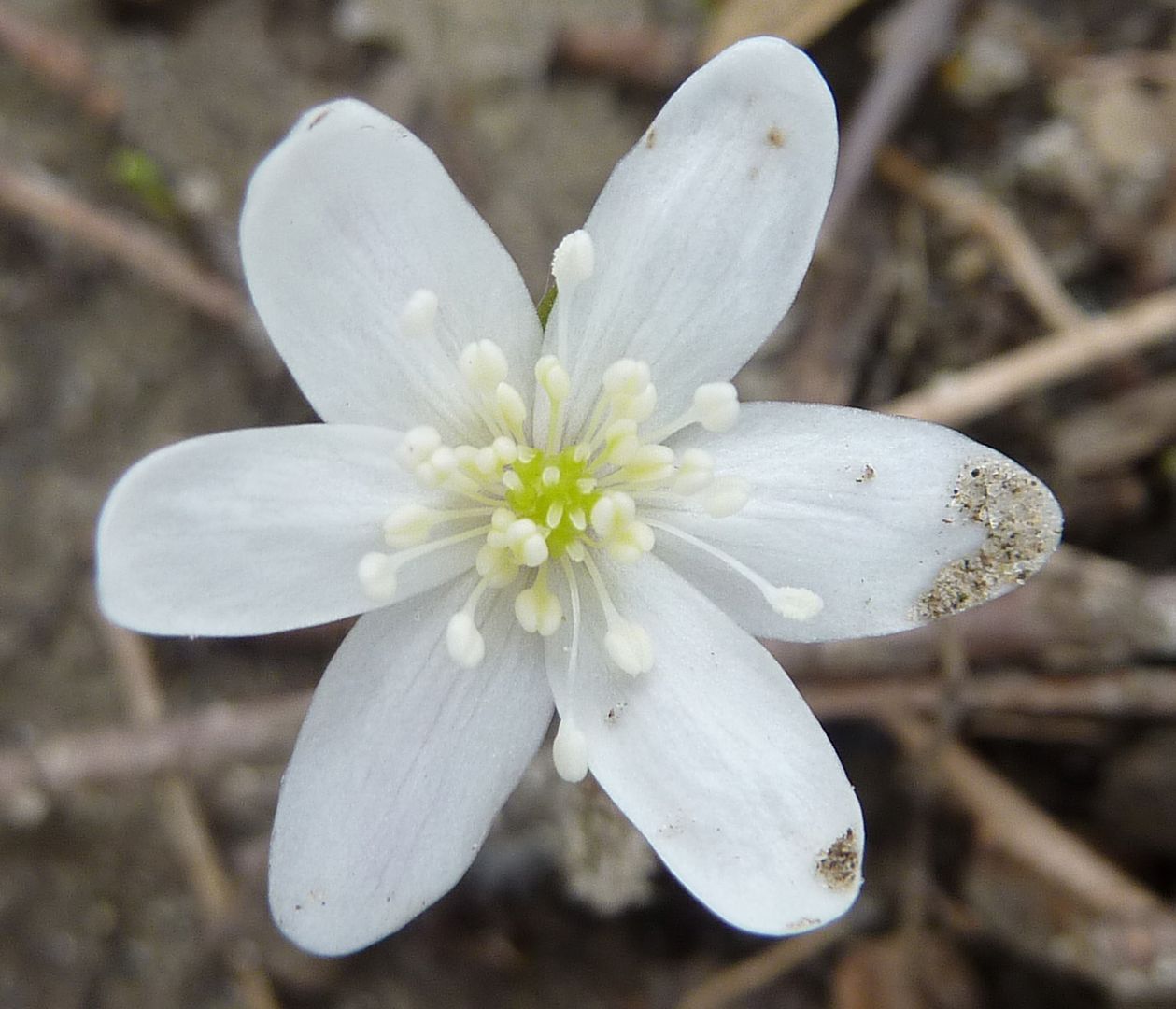
Hepatica sp. up close.
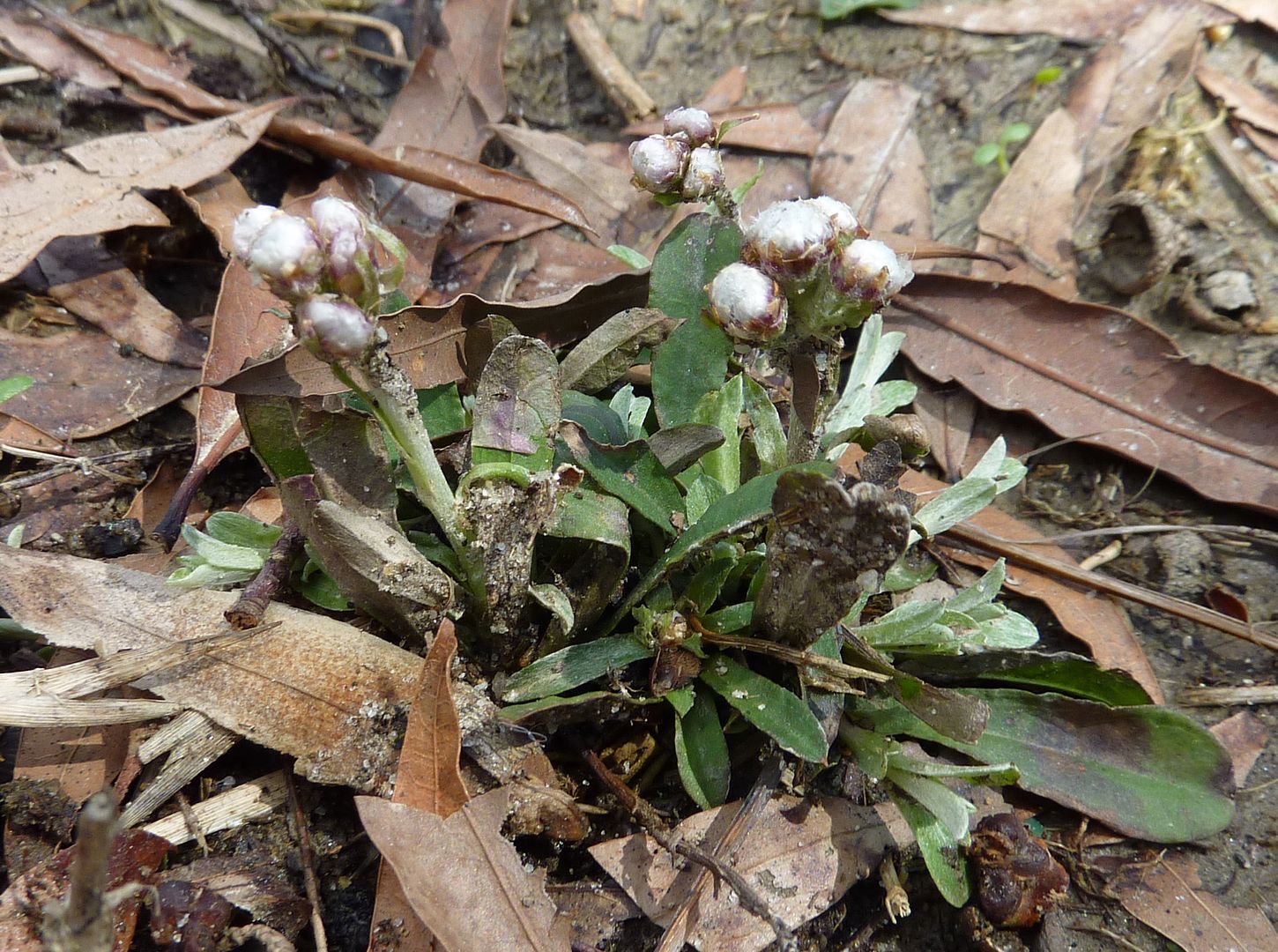
The plant with one of the worst common names I've ever herd; Pussytoe, Antennaria neglecta, this short plant is easy to over look except when in flower. This species though only has blooms that reach 4 inches at most. Other species can reach 18inches high above the plant.They spread by touching down runners, just as certain strawberries do.
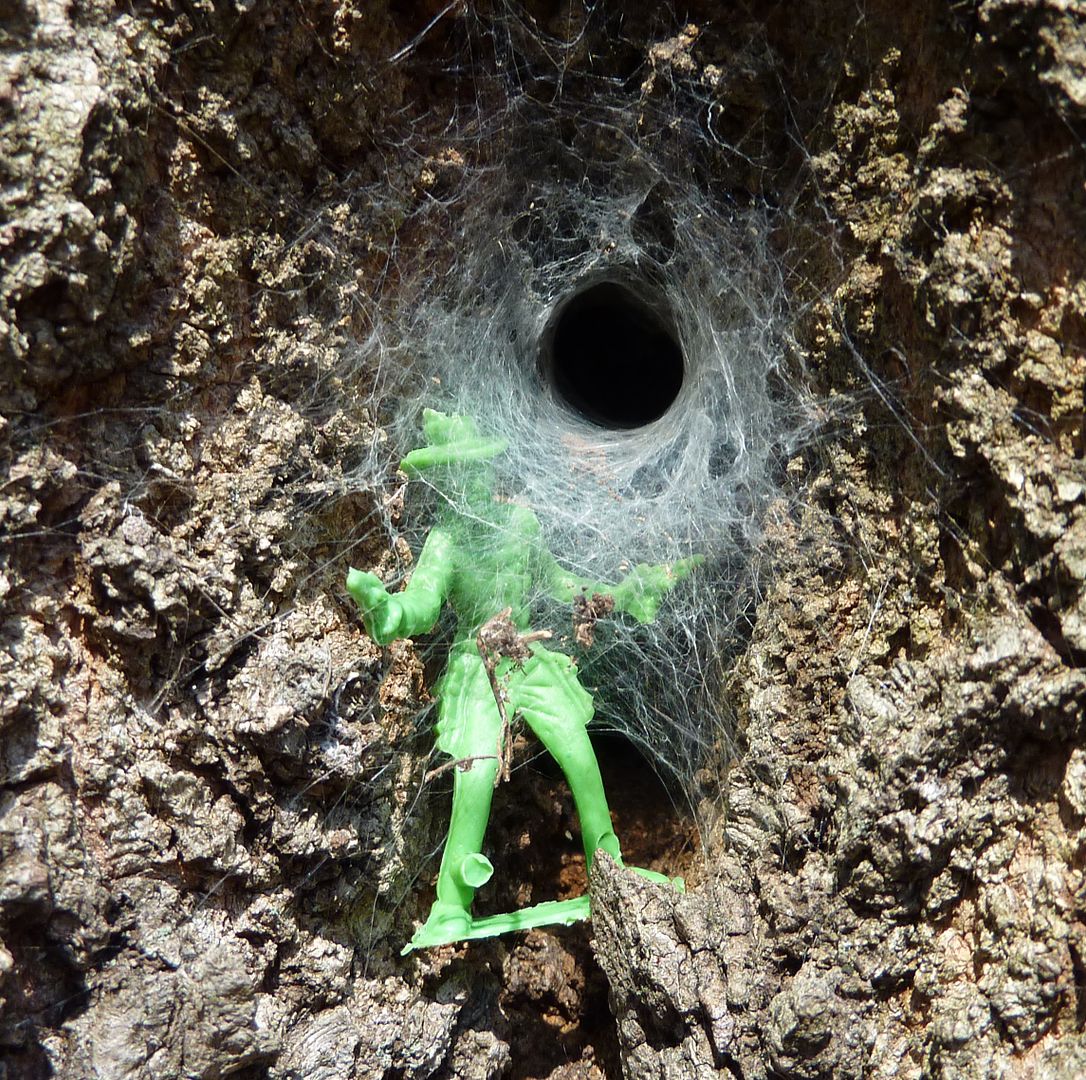
Somewhere in the forest has a good sense of humor.
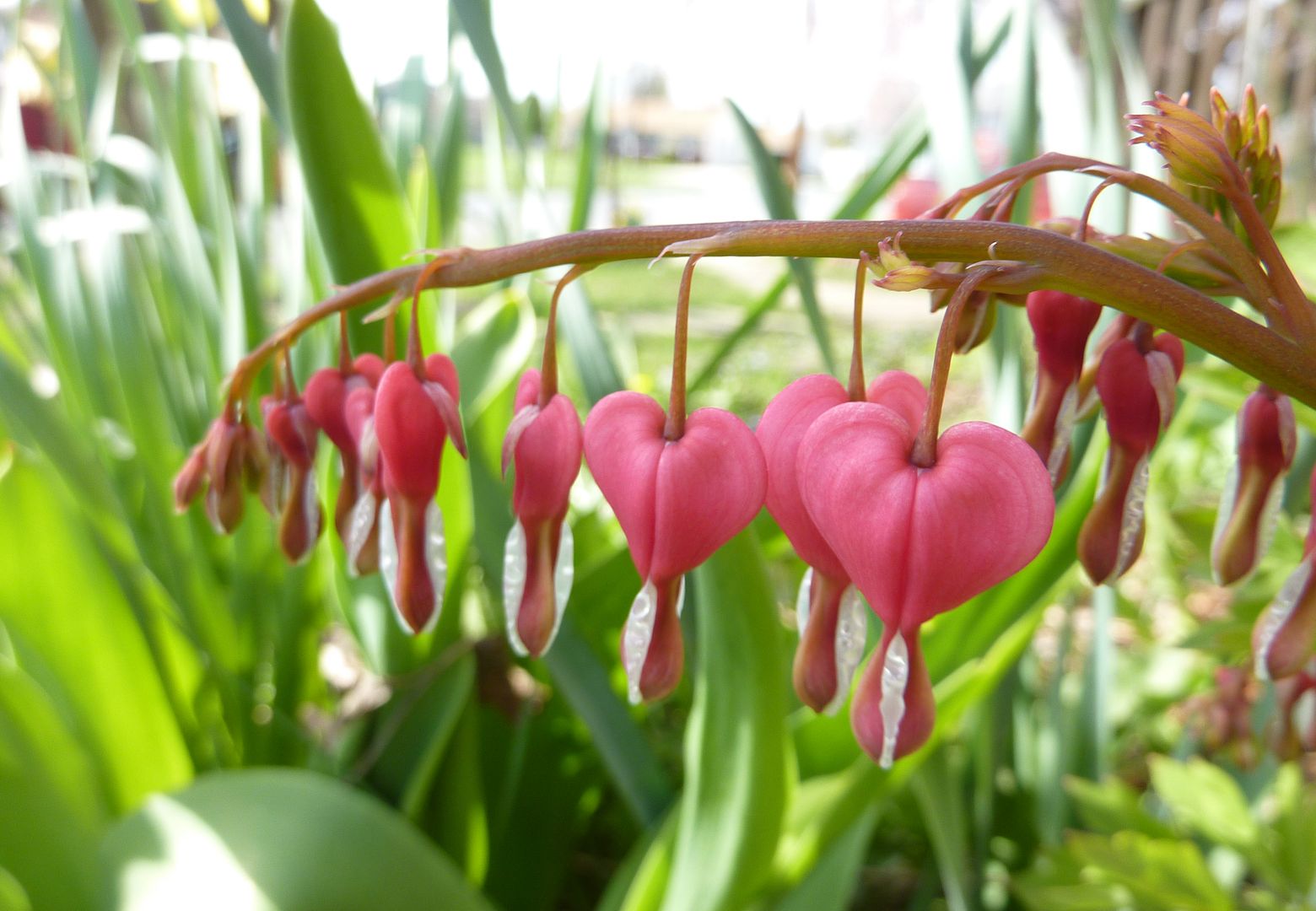
Bleeding Hearts. A native plant you can actually find at a fair amount of nurseries.
Take a picture of this picture! This is the flower to Twin Leaf, Jeffersonia diphylla. The flower is up and gone in less than a day. This one started opening in the early morning, finally opening fully after about 6 hours... 2 hours later all the petals fall off! I hope this one comes back next year, and the others I'd planted actually flower.
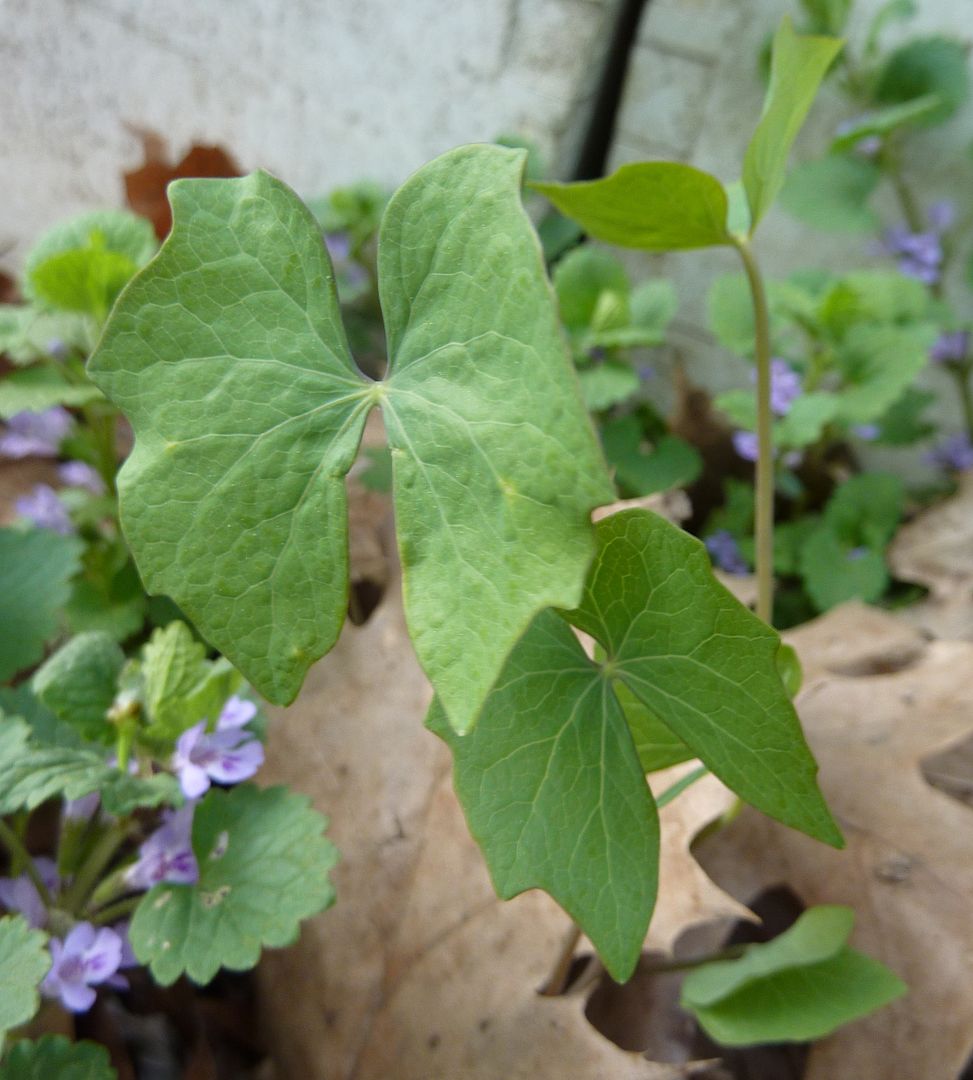
Twin Leaf, Jeffersonia diphylla. Common name kind of says it all. I've herd it called Elephant Ear too but another and much larger plant has that common name too.
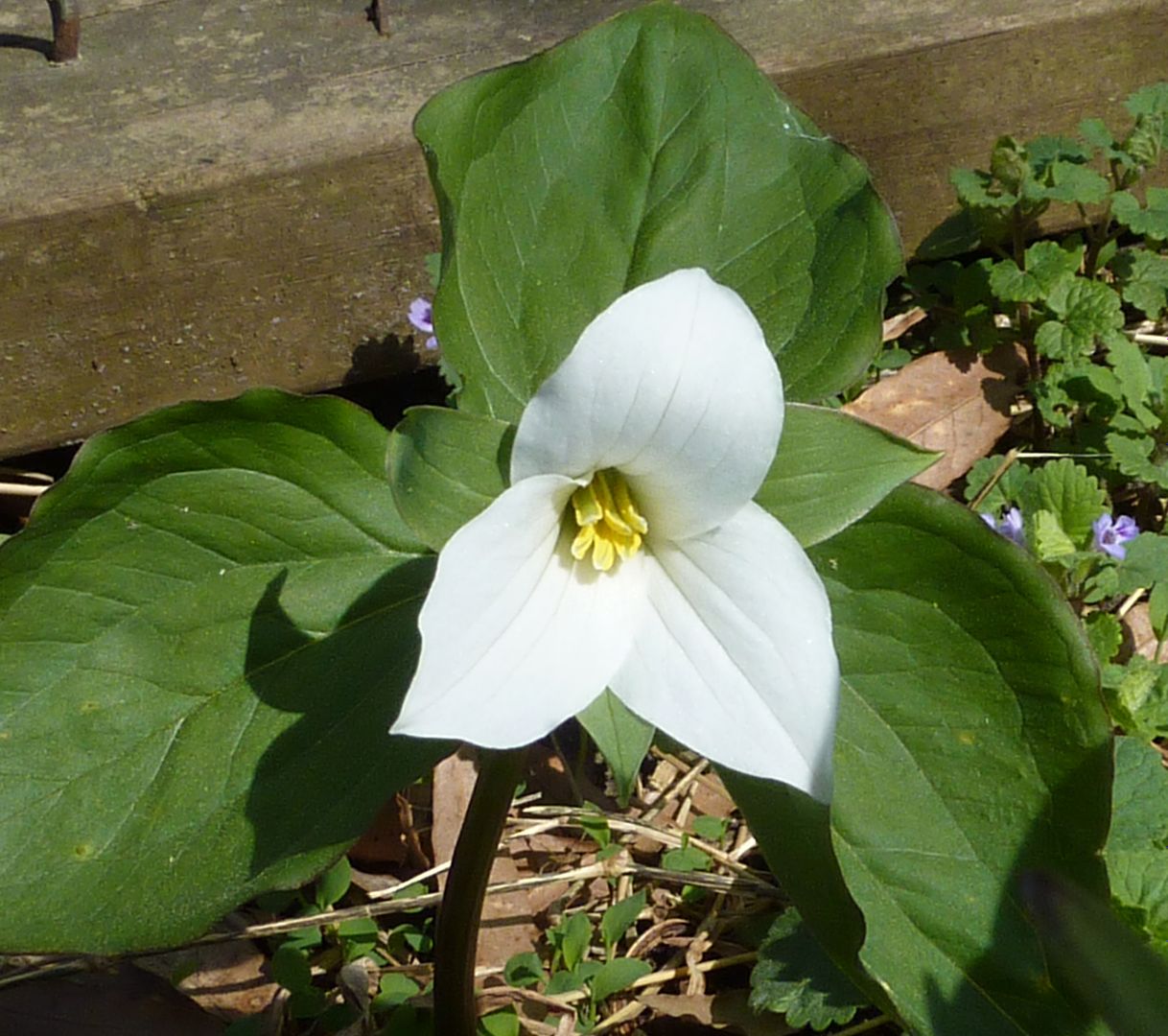
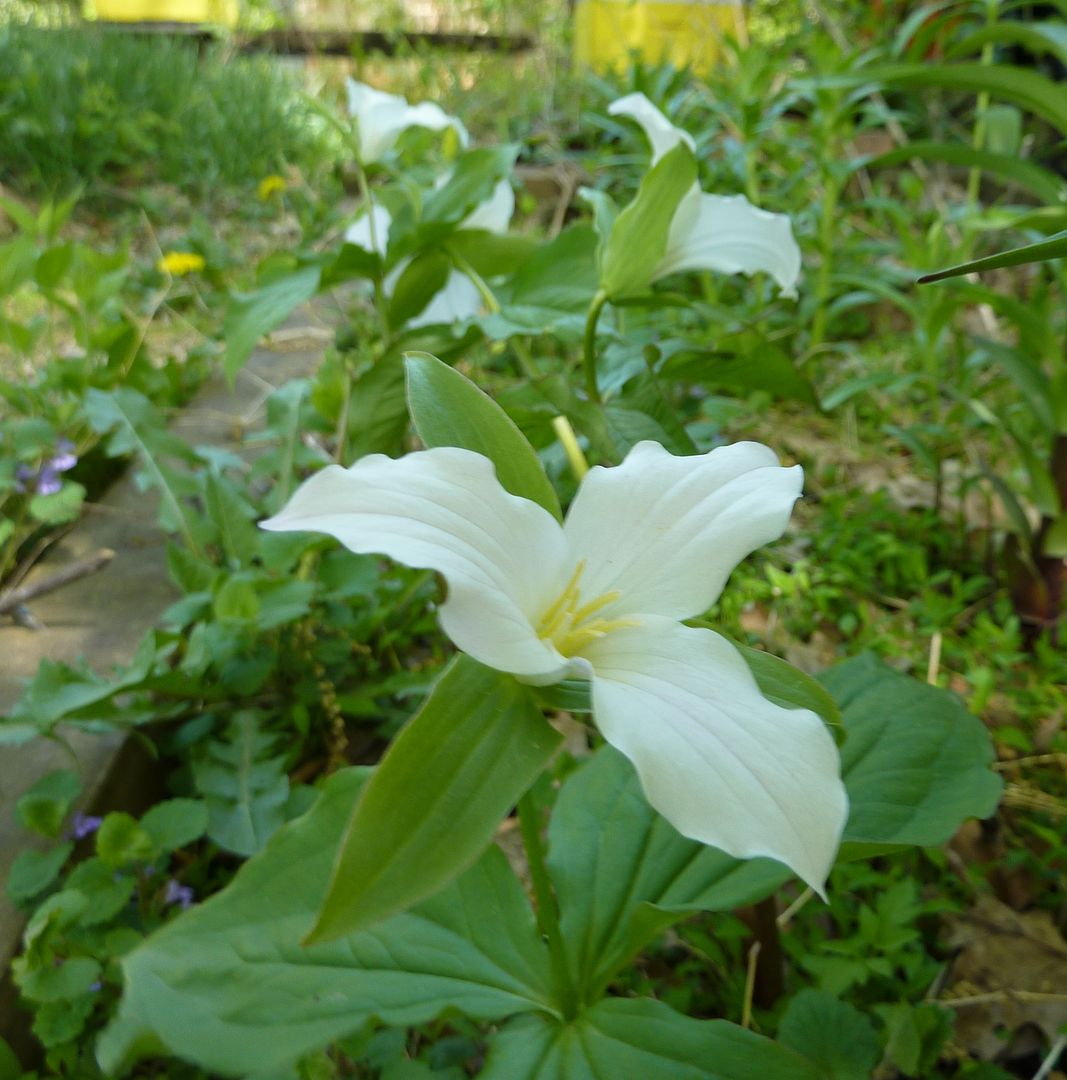
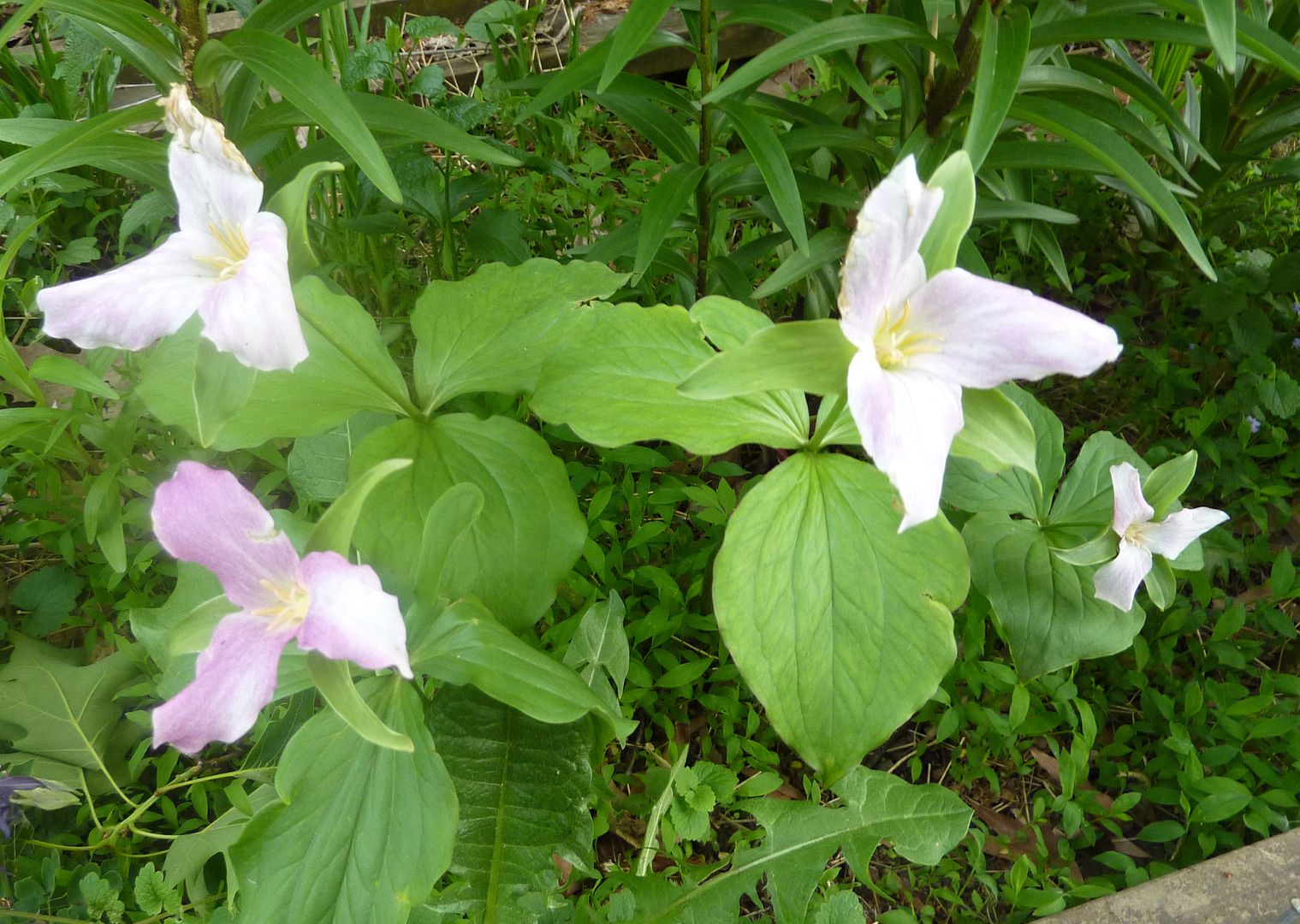
Trillium grandiflorum. I'm so happy that these started blooming. I started planting these every year since 3 years ago. Finally a few are of flowering age. They're long lasting and very elegant. Besides taking the better half of a decade to flower (I planted adult rhizomes) there's no reason people shouldn't be planting more of this.
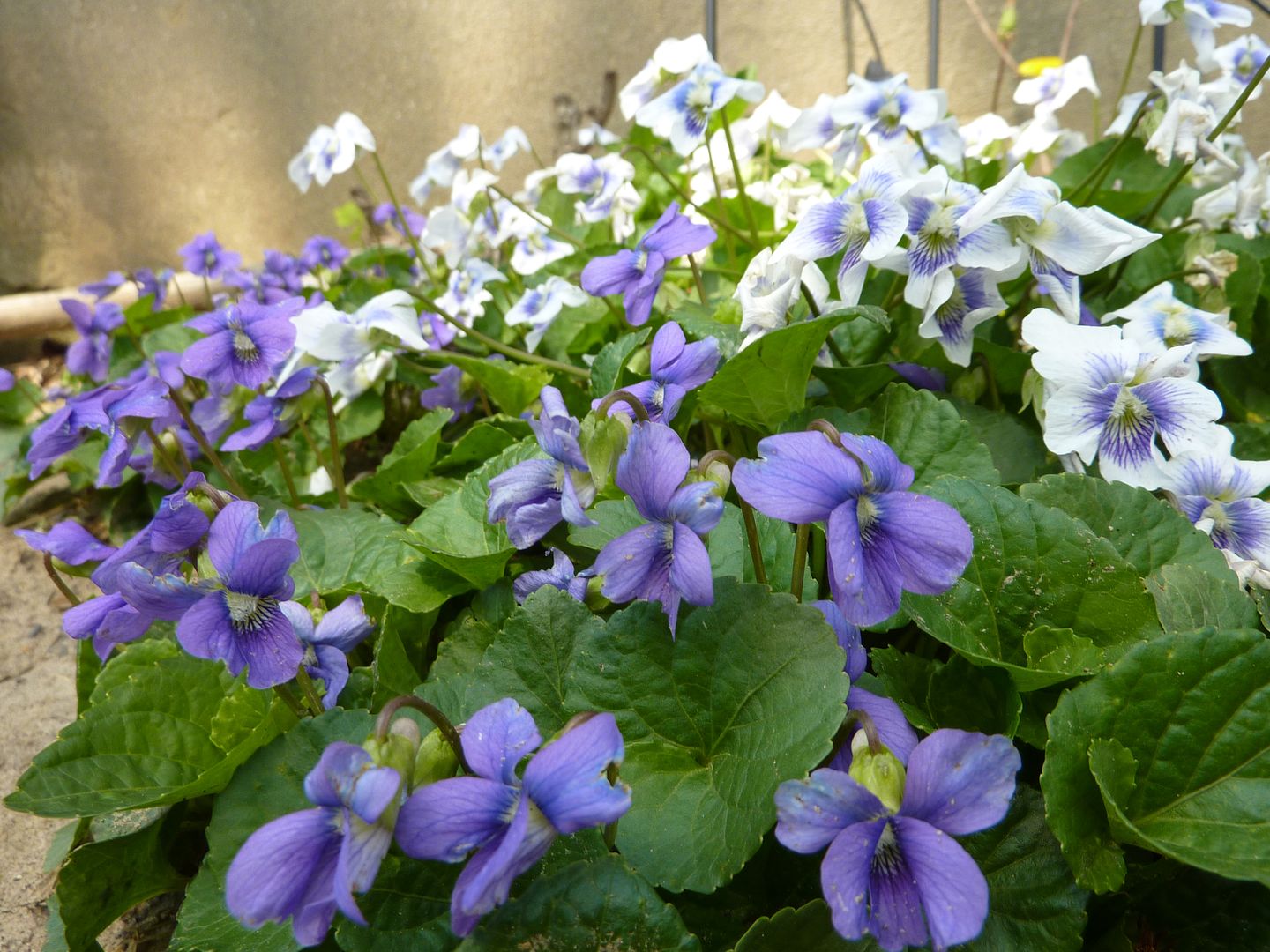
Violets!
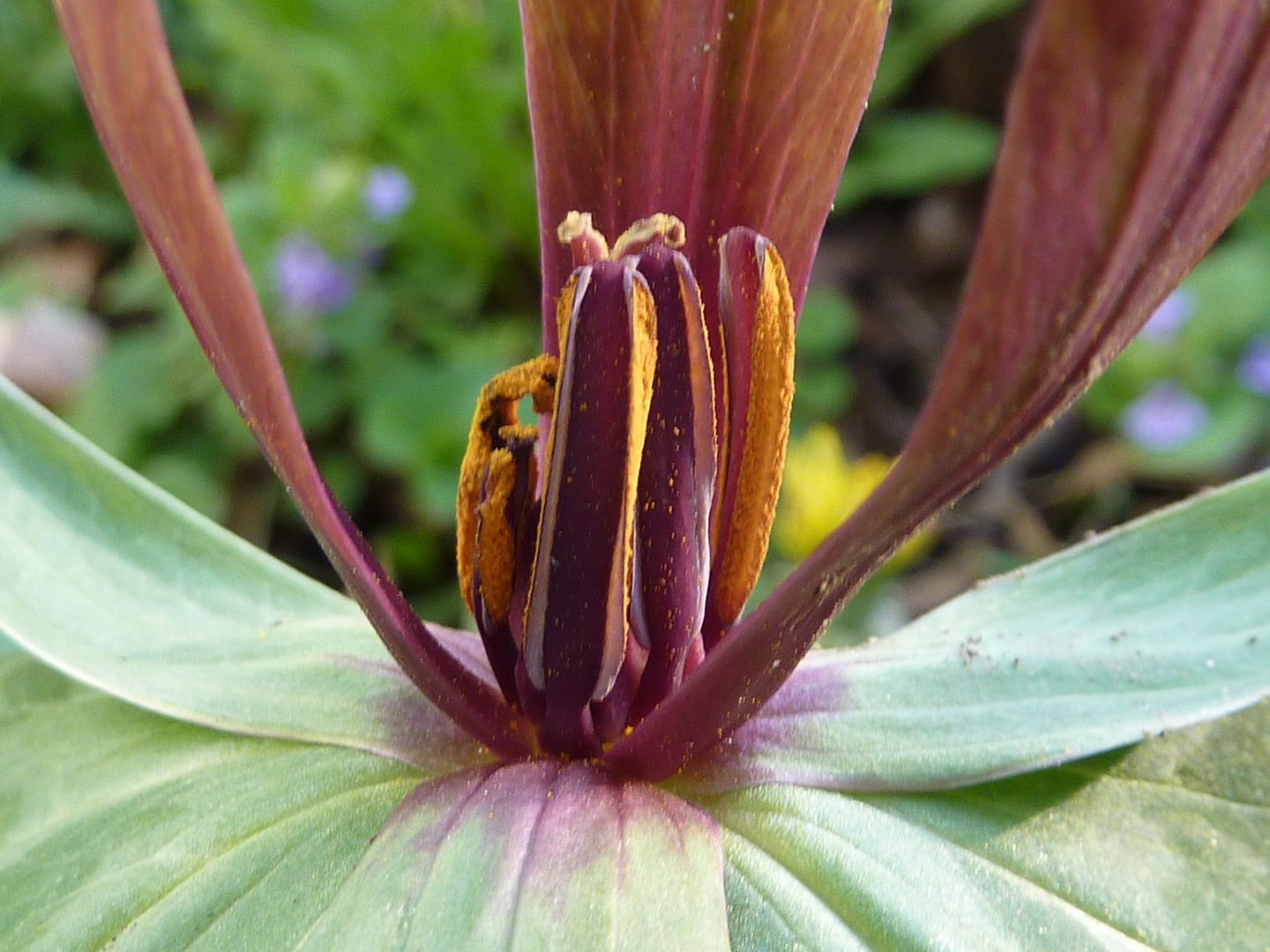
Trillium cuneatum anthers close up.
More Trillium grandiflorum.
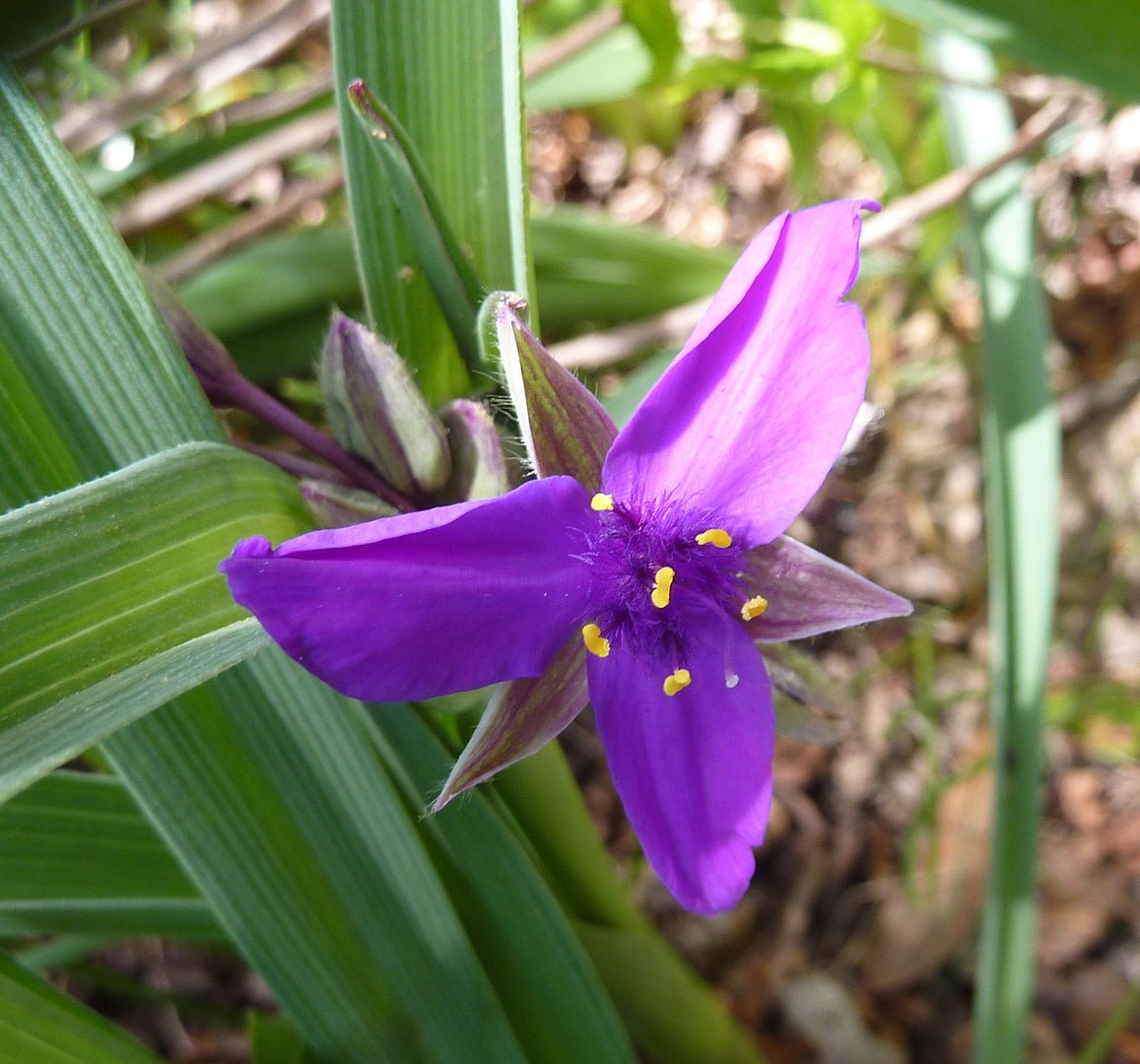
Spider Wort, they only flower in the morning. But do so abundantly.
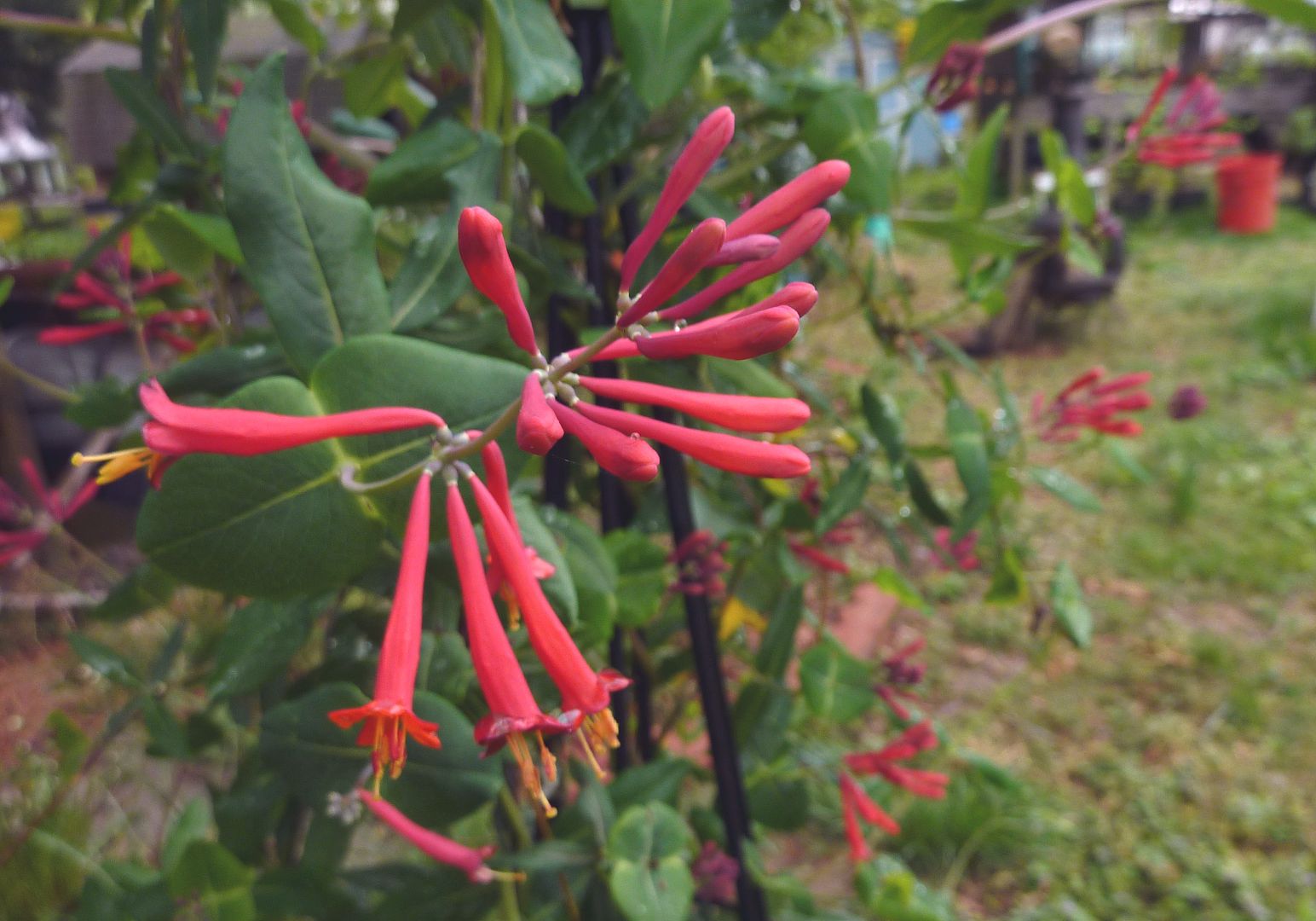
Coral Honeysuckle, Lonicera sempervirens. Unlike the invasive Japanese kind this actually gets the attention of hummingbirds, and 0 carpenter bees.
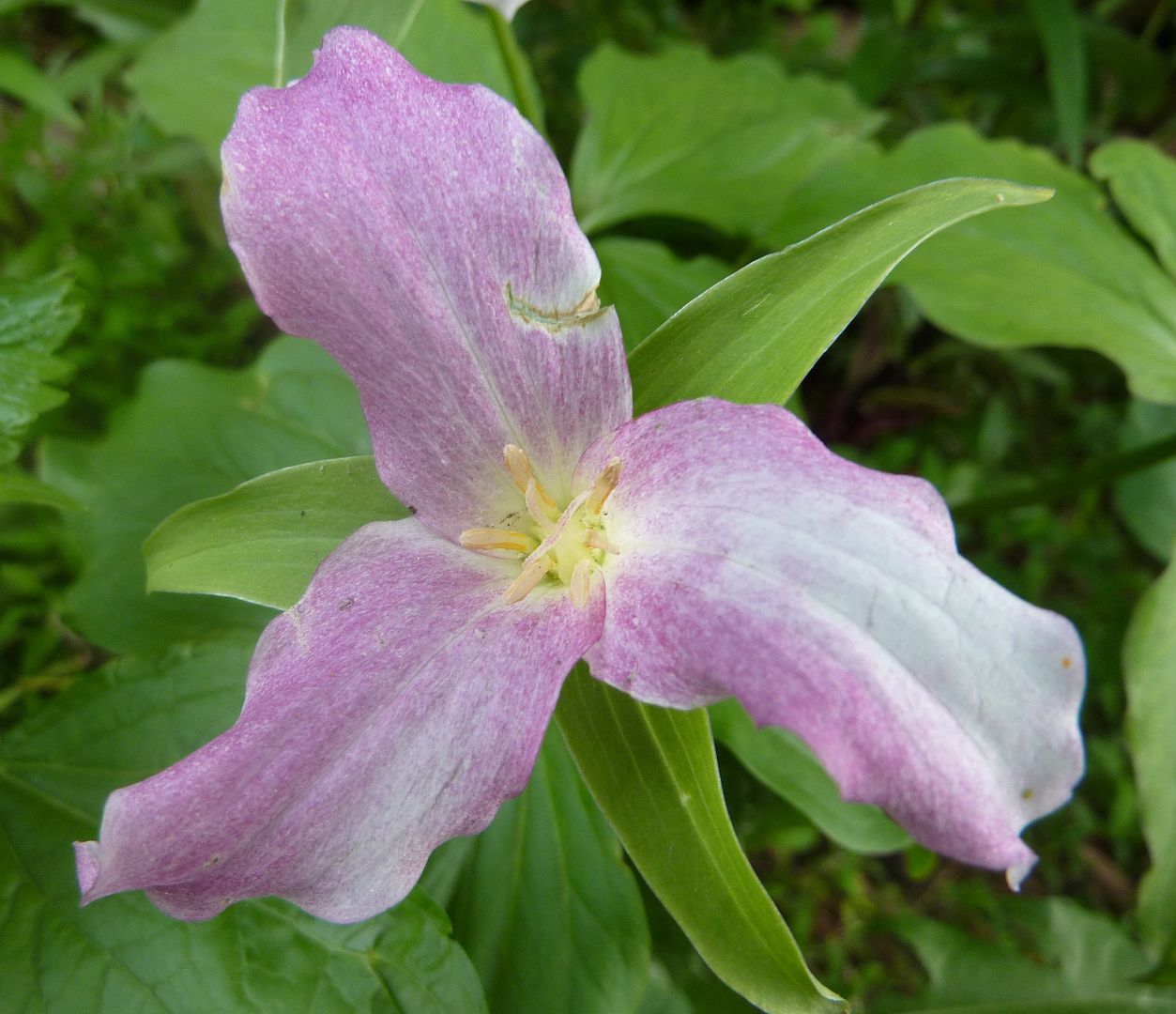
Trillium grandiflorum. After about a week and a half the white fades to a purplish pink color. When these blanket the forest floor they're so pretty to see in all different stages of changing color.
Trillium grandiflorum. After about a week and a half the white fades to a purplish pink color.
Chives in flower at a community garden.
Flame Azalea! Yes somehow the vibrant colors of our native Azaleas/Rhododendrons just never made it to the US. ornamental industry. Rhododendron calendulaceum comes in yellow, orange, and a blood red. Other native Rhododendrons are the classic white, pink, salmon, and purples everyone clings to.
Summer rolls in and already the full sun prairie plants show extreme differences in height. In the foreground Butterfly Weed, Asclepias tuberosa, grows to be only 3' tall. The purplish Sedum, in the mid-ground isn't much taller. In the background to the left Solidago altissima is already as tall as I am and won't flower until it reaches 10' in the autumn.
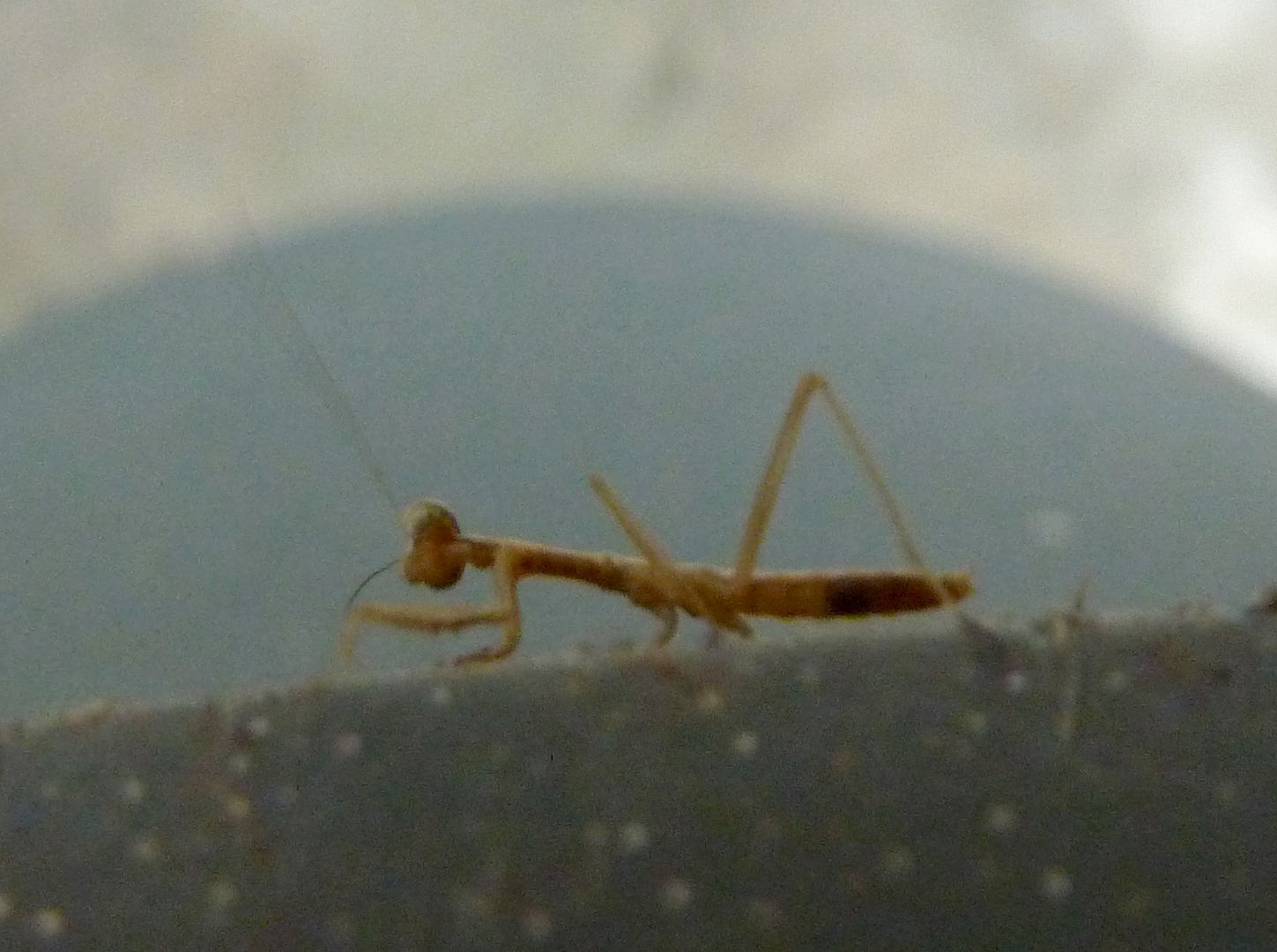
A Praying Mantis.
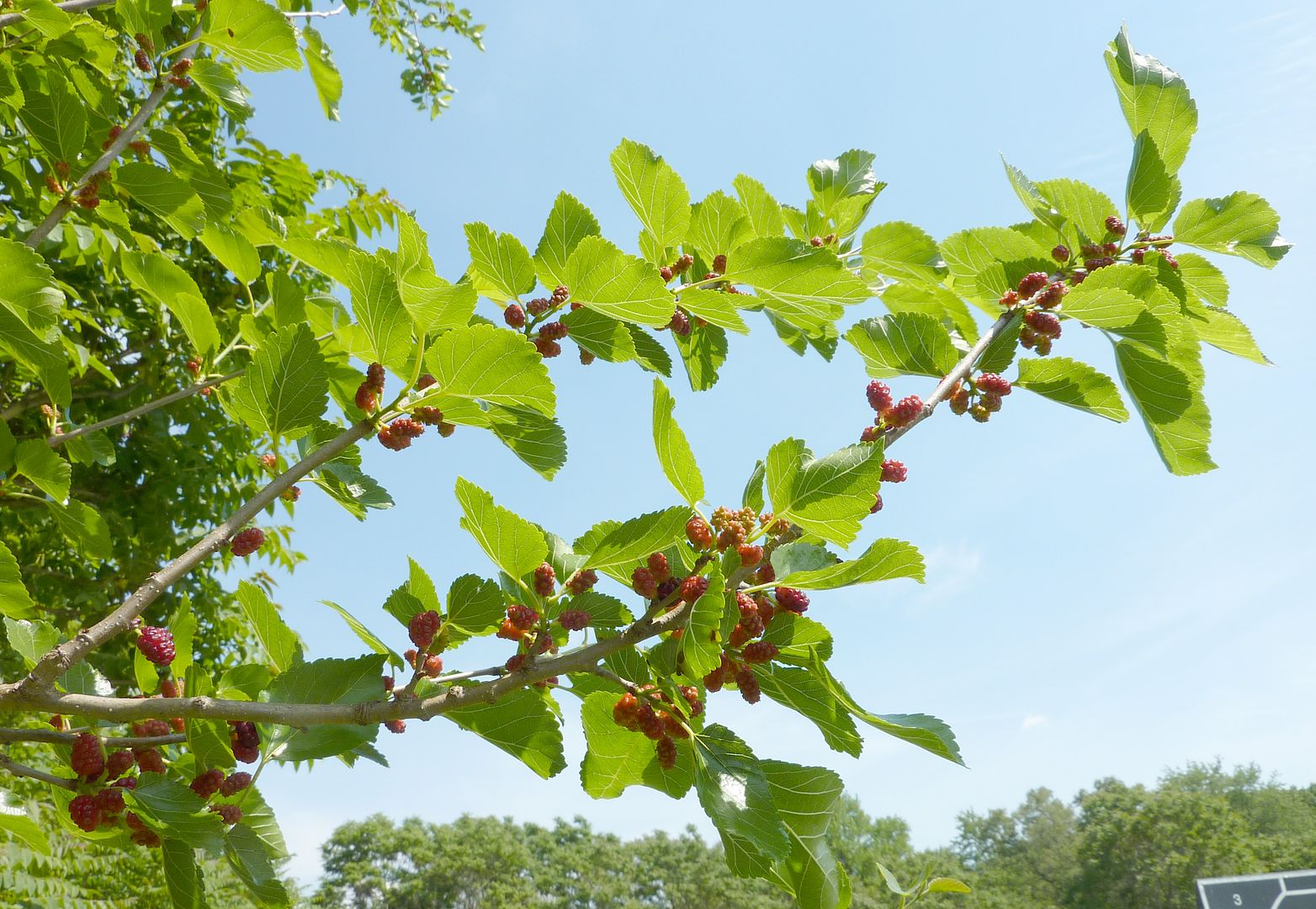
Mulberry already fruiting.
Pawpaw, asimina triloba, sapling.
A robin getting a drink from our pond.
A white squirrel, gray is the most dominant color form here so this was a surprise.
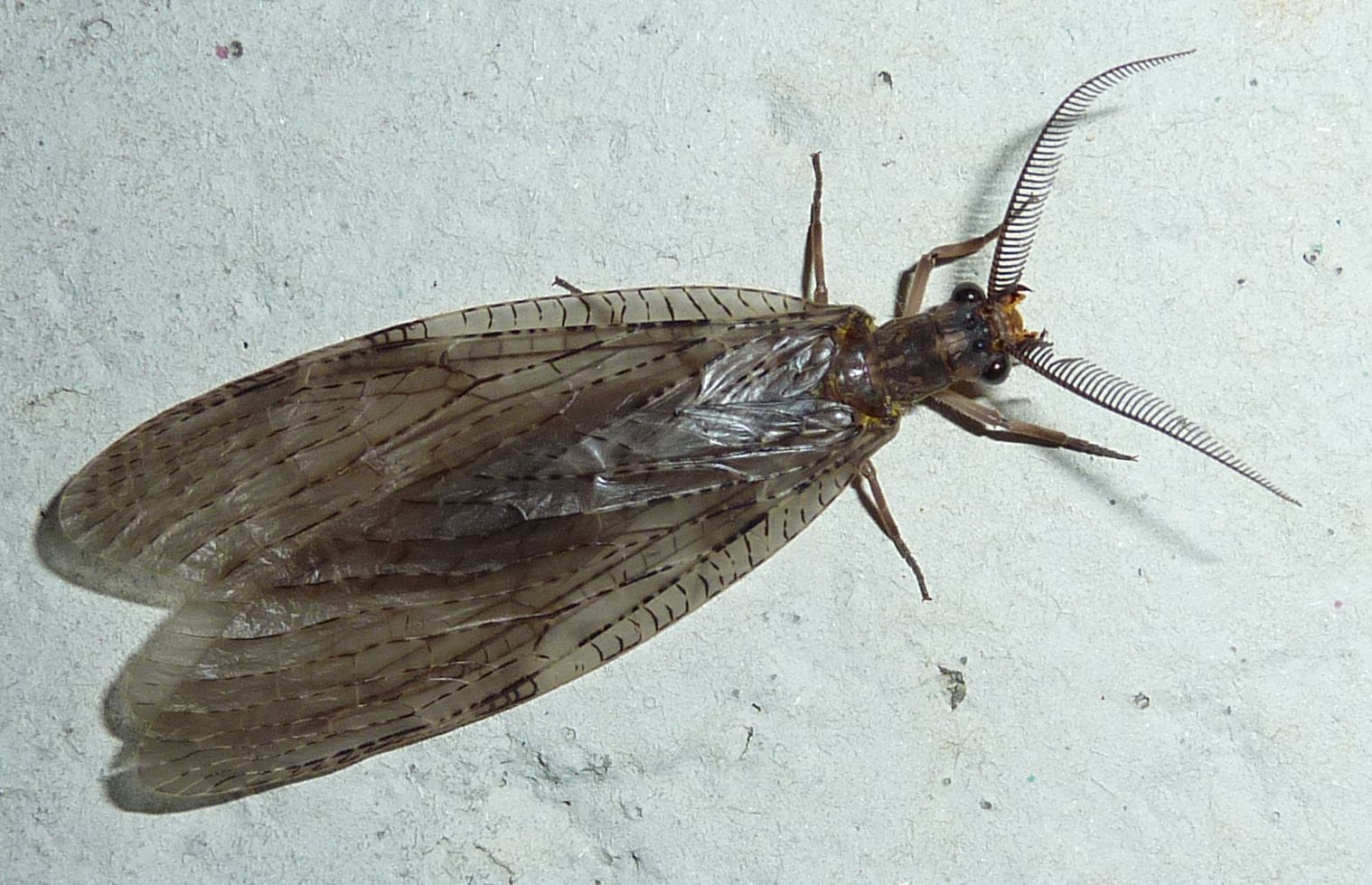
A Dobsonfly, Corydalus cornutus. This is easily one of the evilest looking insects that is perfectly harmless provided you don't mess with it. Males have two long menacing looking horns that they use to grasp the female while mating. Here is a video from youtube (not of me!) of a man holding one.
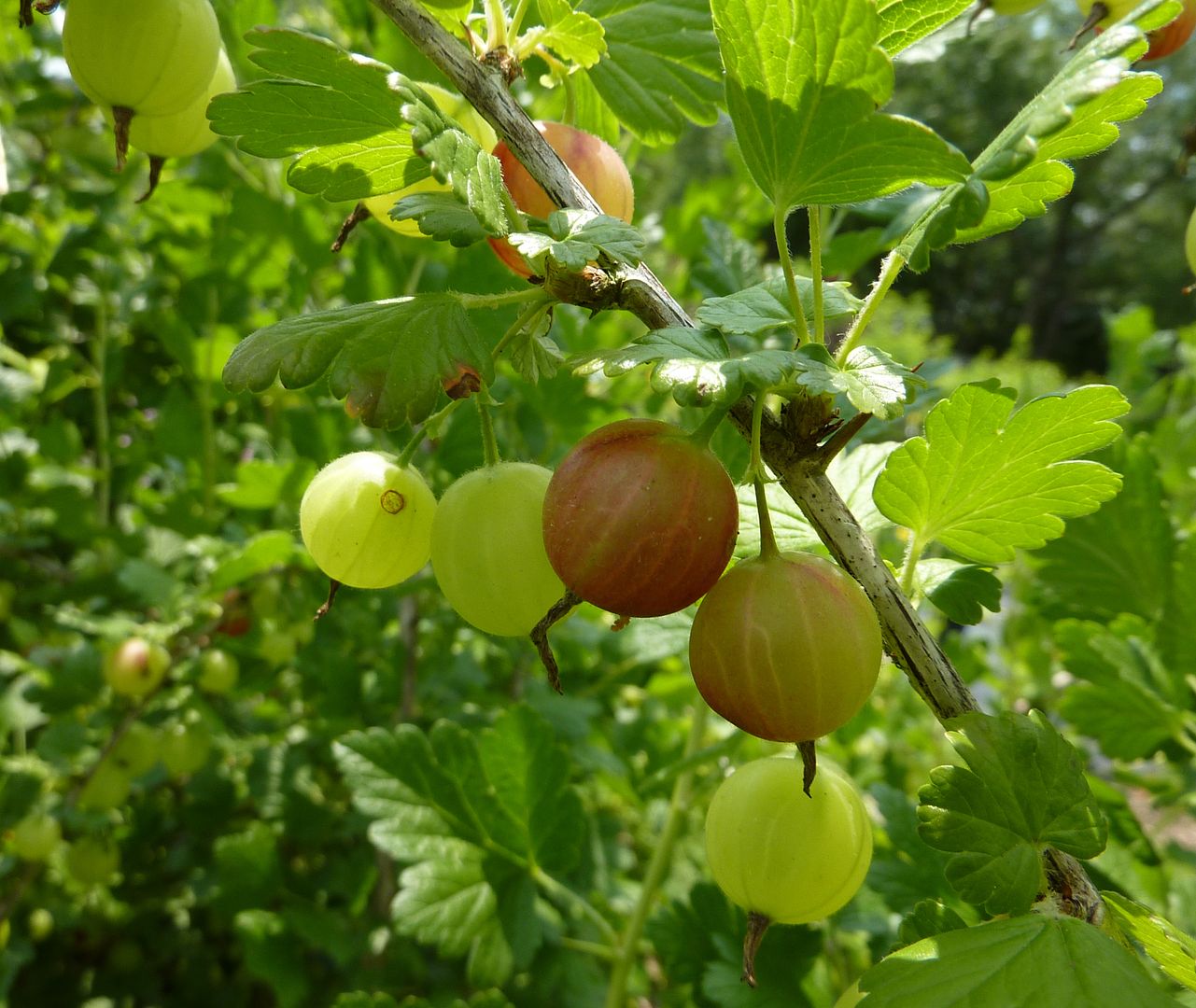
Gooseberries! Ribes sp. These are illegal to grow in most states. Despite being a native species they supposidly spread an odd disease that requires two host plants to complete it's life cycle. After using the Gooseberry it will target White Pine Trees which the Timber industry didn't like. People actually got paid to destroy Gooseberry plants both in the forest and in neighbor's gardens, which is one of the earliest cases of people trying to control a disease of this kind. Sadly we almost lost a native food sources in the process.
Modern cultivars don't spread the disease (supposidly). I've seen pictures of Gooseberry and White Pine growing together and both looked healthy. Even when they spread the disease though, under good conditions it can spread 100 miles away. Despite this, Gooseberries are still so unknown that in many states it's still technically illegal to grow any of them.
The inside is juicy and sweet tasting, but the skin is bitter and makes the taste more sour the more it's chewed. It's best to either make jam or to spit the skins out while eating. Because this is still a wild food source taste can vary dramatically from one plant to the next, even in the same species! Modern Cultivars are slowly fixing this though.
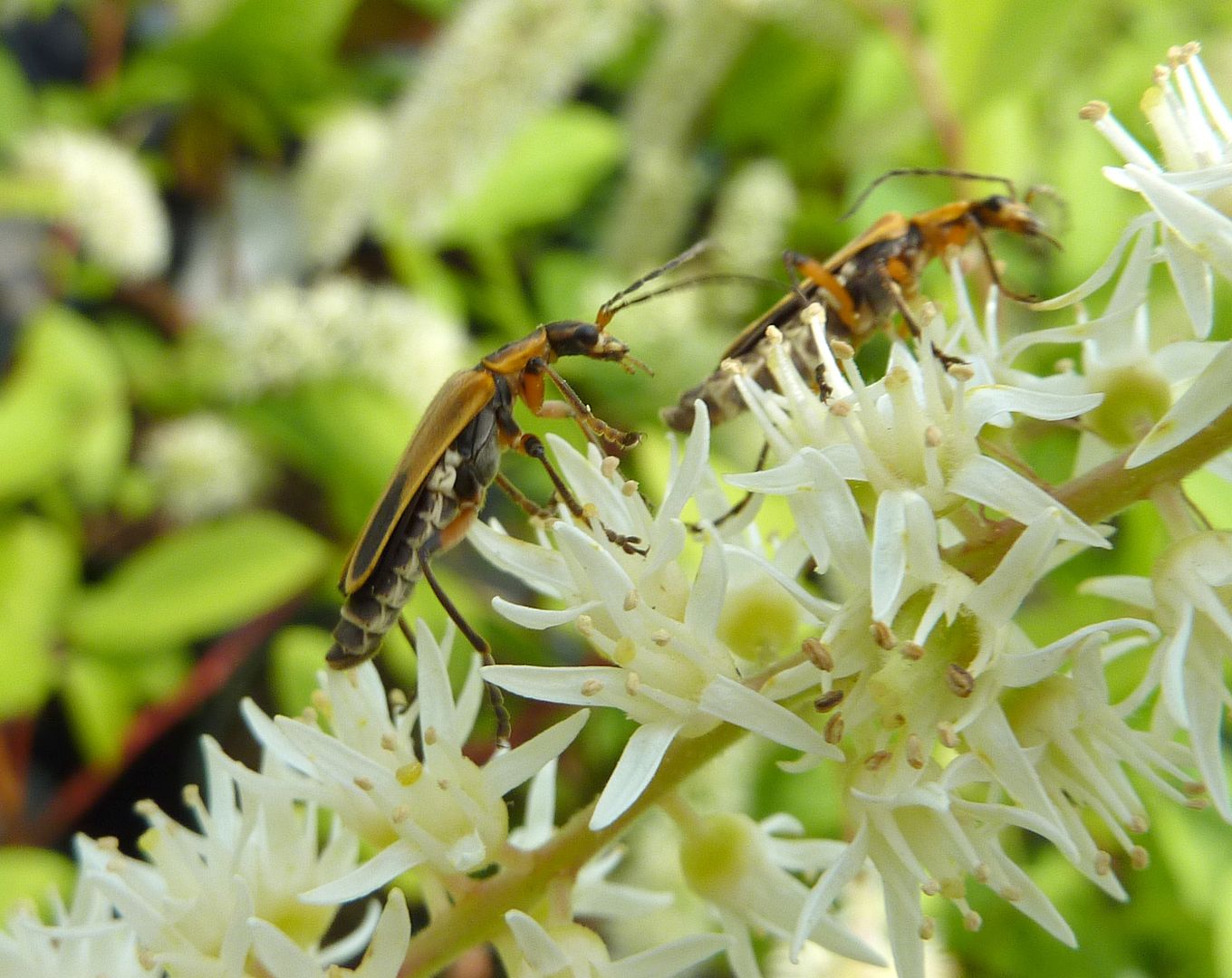
Soldier Beetles.
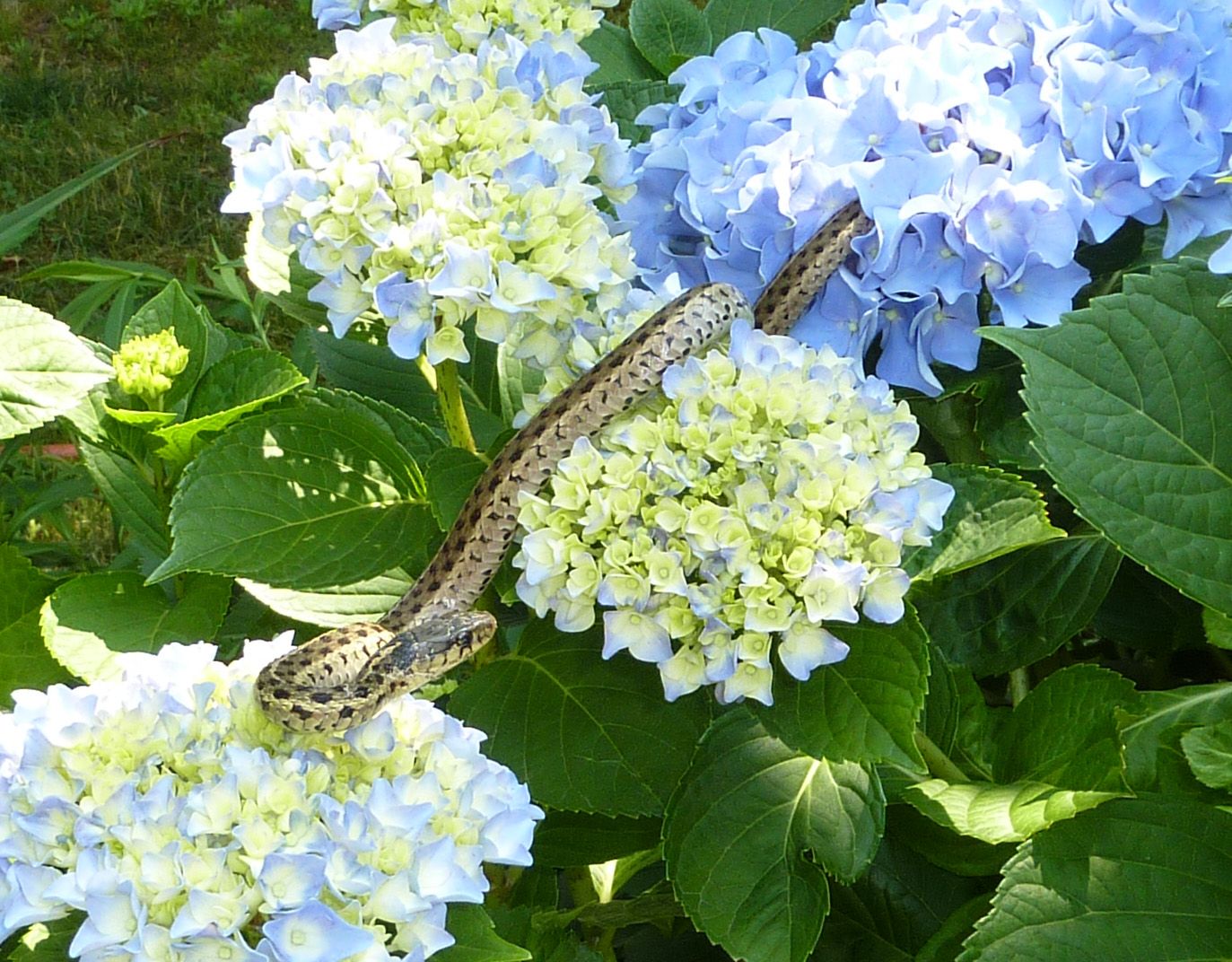
Not what most people expect to find on their Hydrangeas in the morning.
A poor shot of a Red Milkweed Beetle, aka Four Eyes. Tetraopes tetraophthalmus. The name Four Eyes comes from the fact the antenna scape protrude out from the compound eyes, thus dividing each eye in two for a total of four.
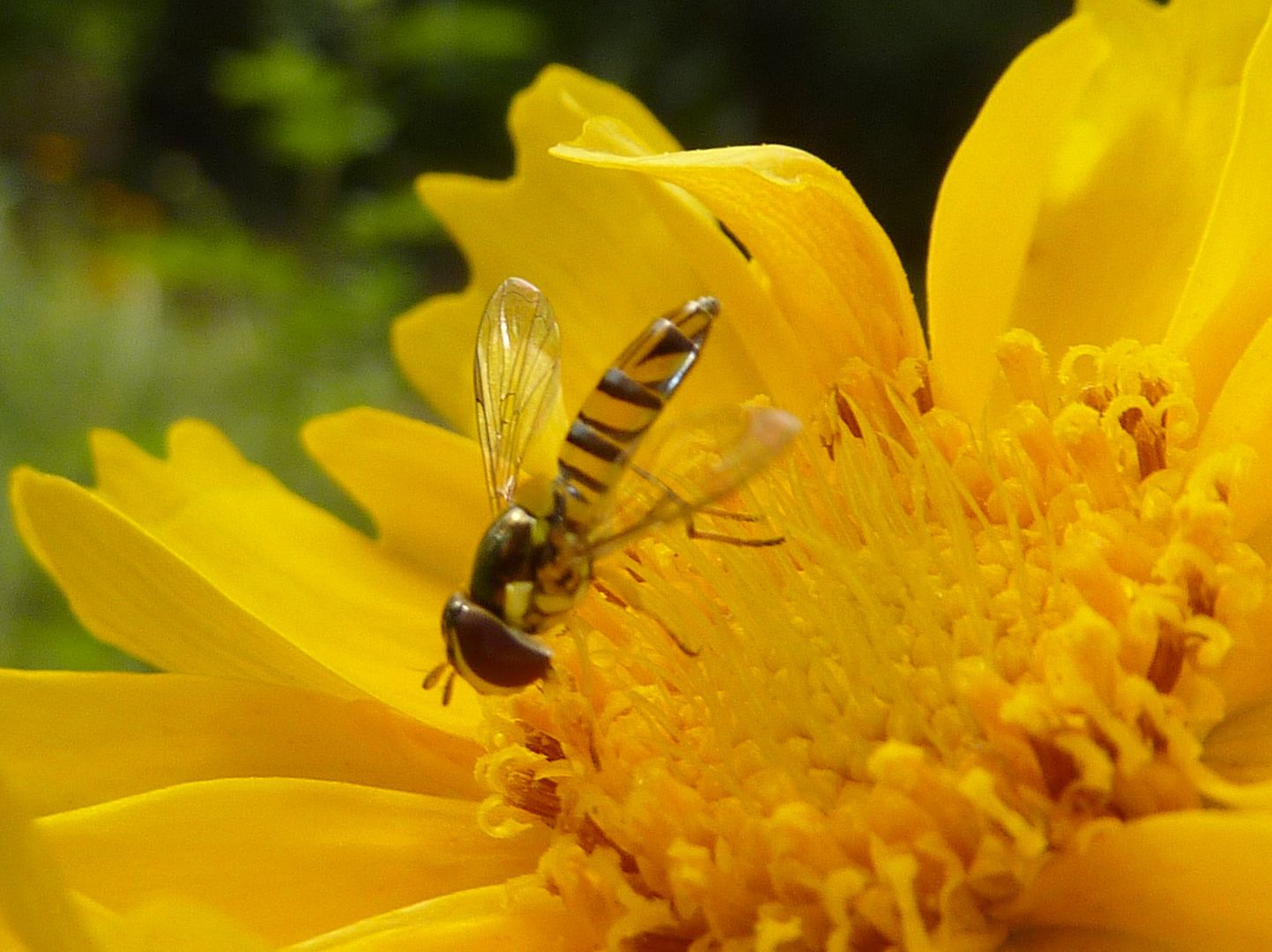
Hoverfly on Coreopsis.
Goldfinches on a Sunflower. I loved this sunflower so much. See more of it here. I just love how this one plant produces multiple flowers on each leaf facing multiple directions. I should have collected seeds. If anyone knows the name of this variety please comment below.
Indian Pipe, a parasitic plant.
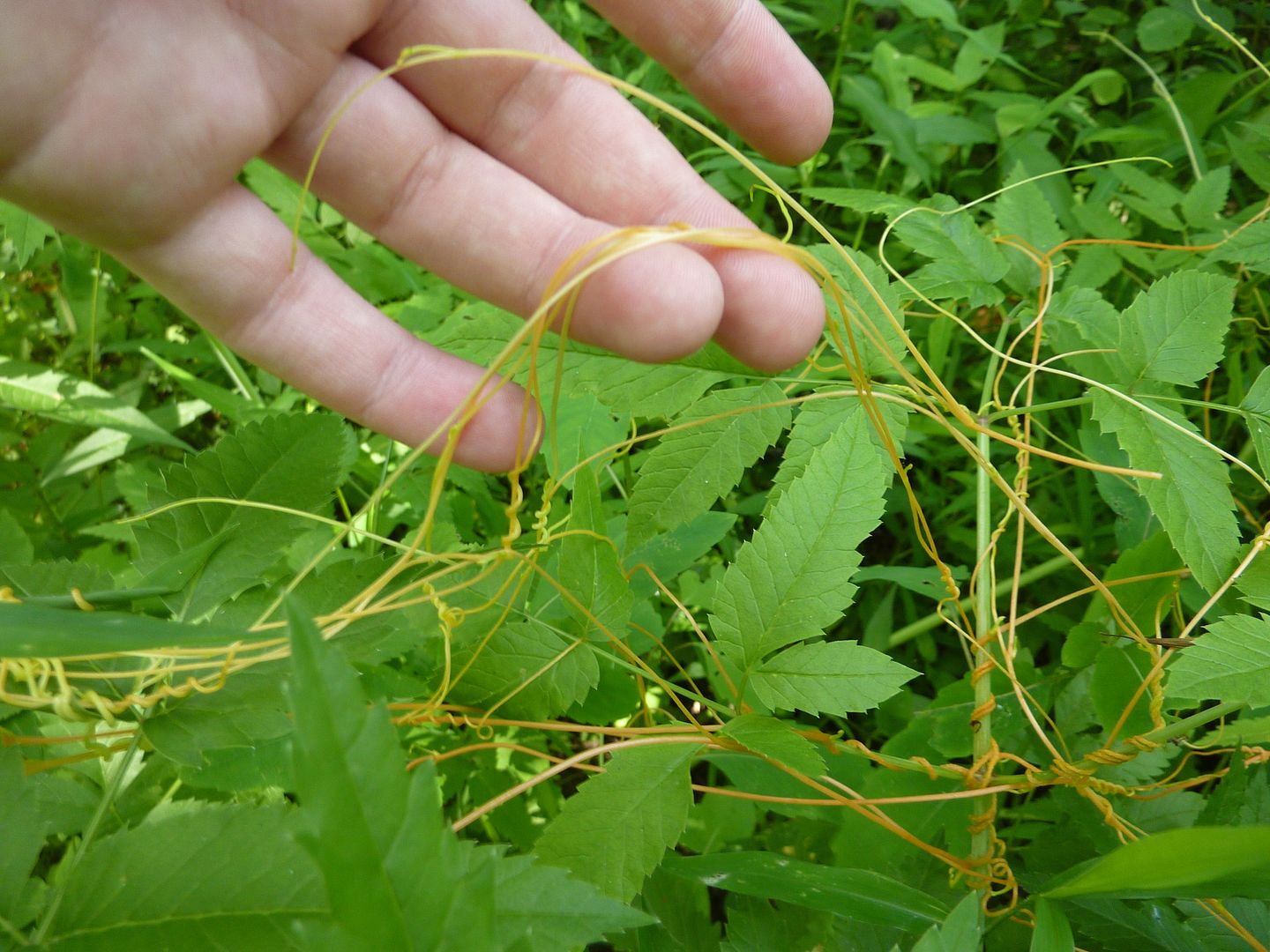
Dobber, another parasitic plant. Basically it causes the host plant to burst out in orange or yellow silly string.
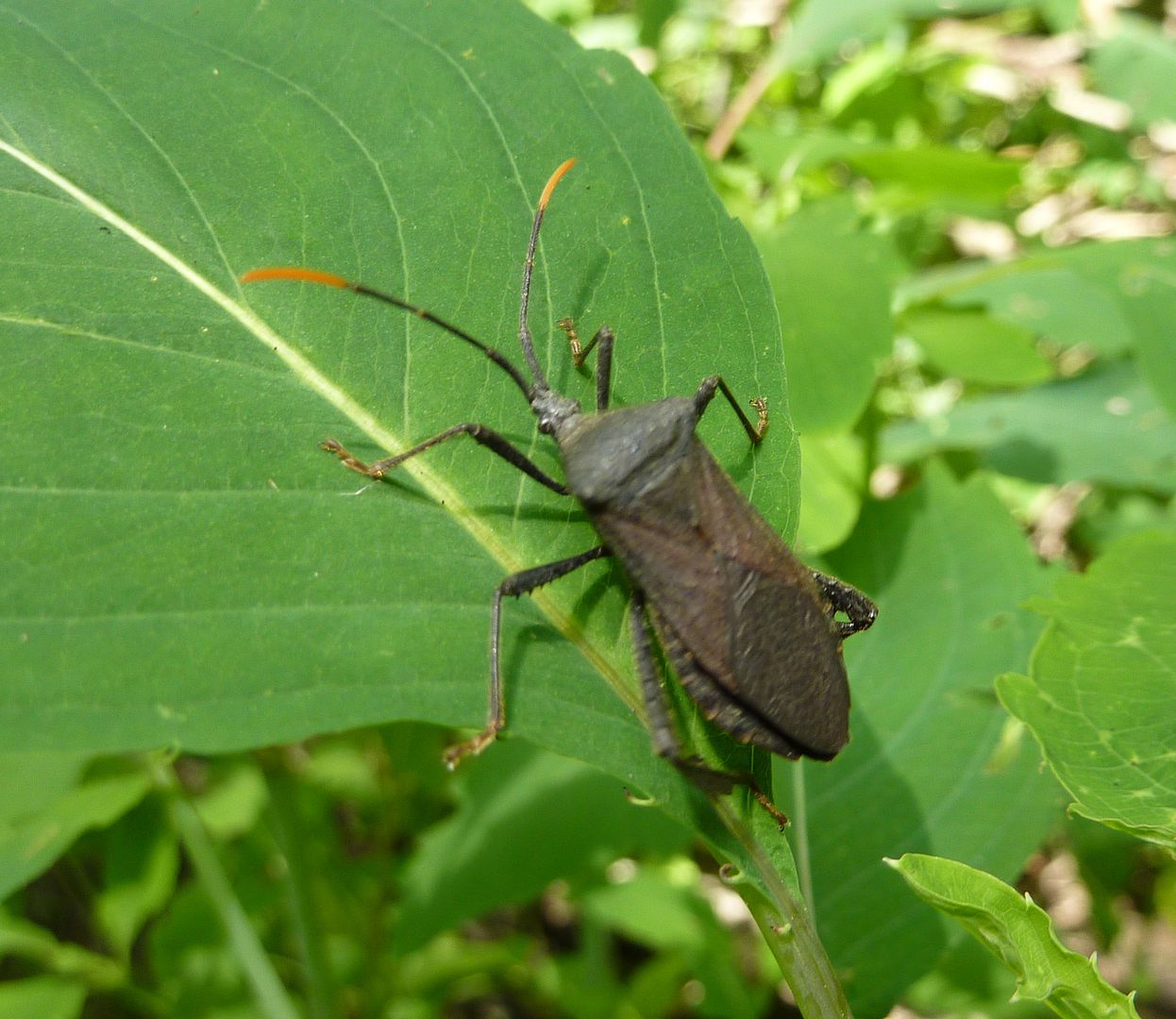
One of the largest stink bugs I've ever found. This one puts all the dead ones currently in the windowsill to shame.
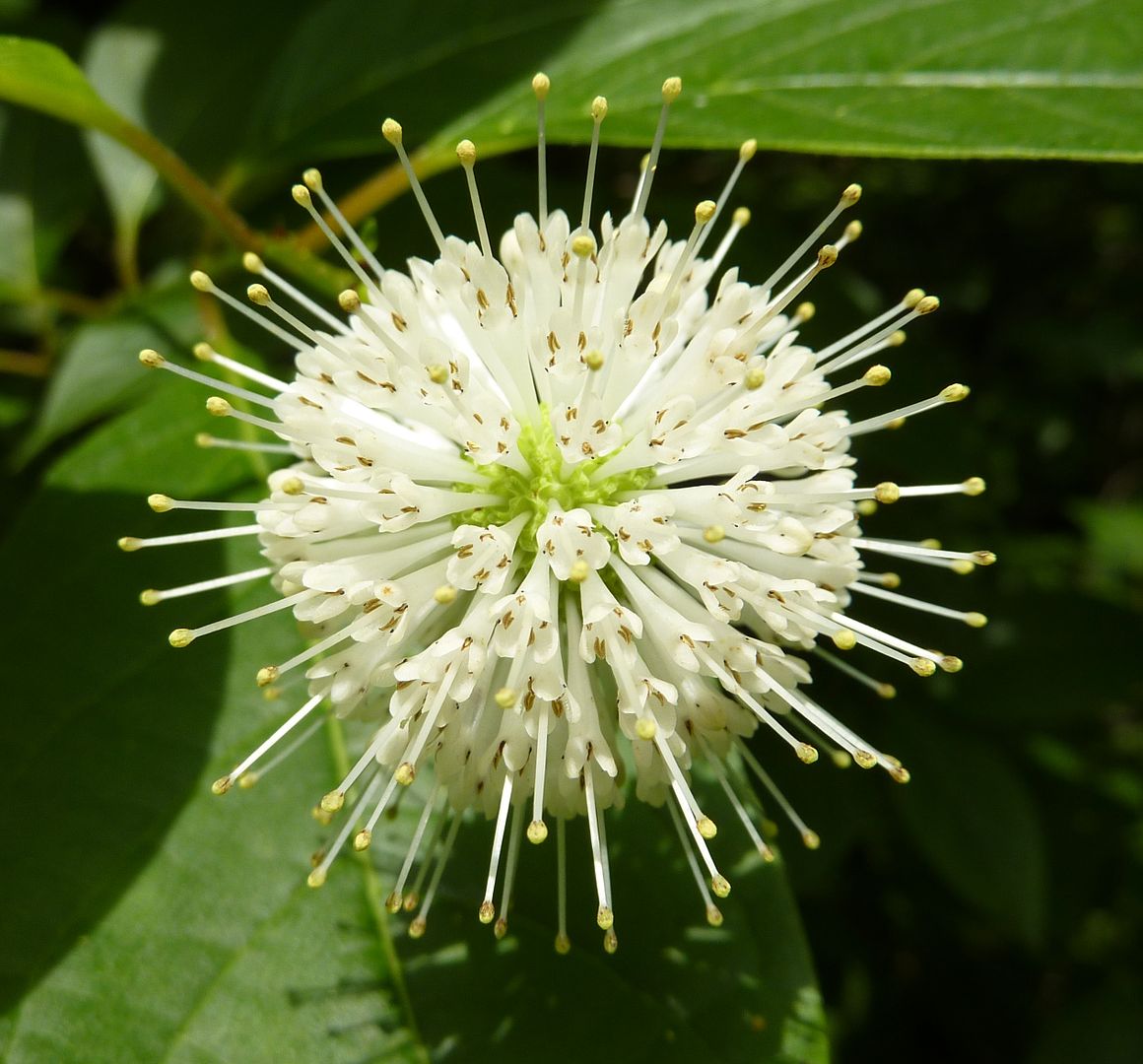
Button Bush! Cephalanthus occidentalis. This is basically our native version of a butterfly bush no one is planting. They do great in full sun or partial shade and can handle being planted in up to 4 feet of water! As you may guess they like it wet.
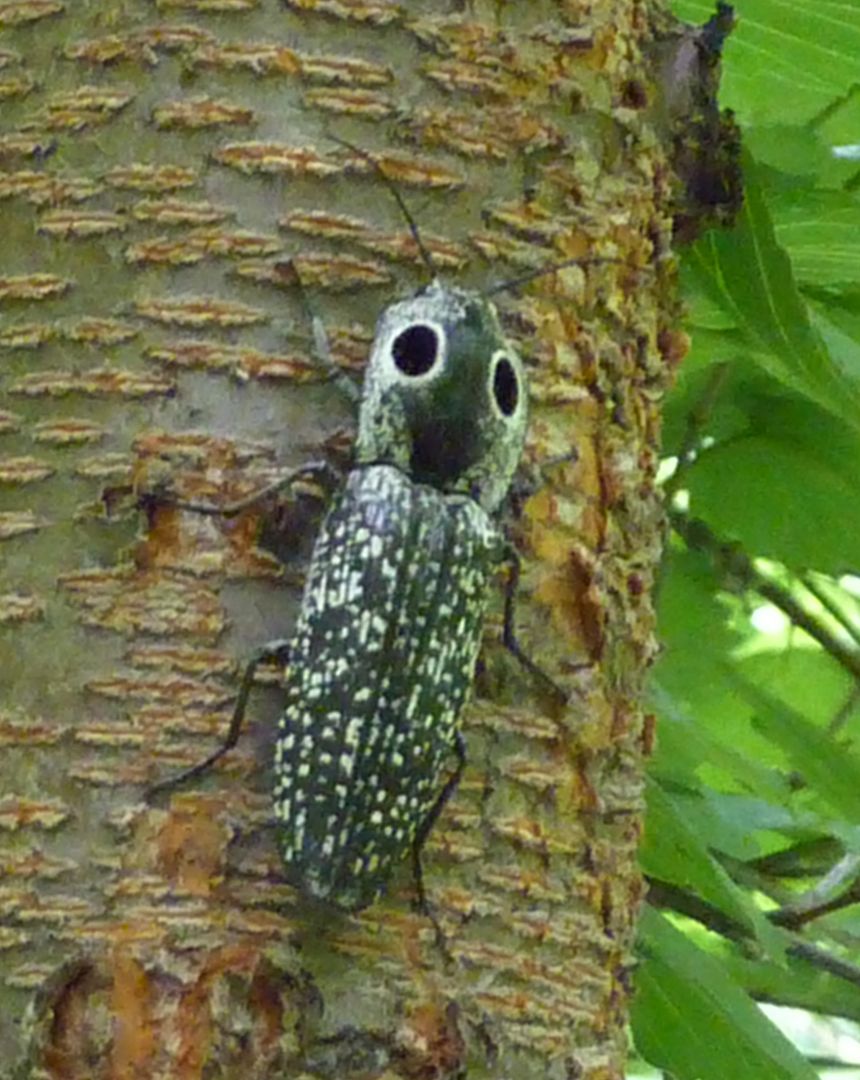
Eyed Click Beetle, Alaus oculatus. This click beetle puts all the other click beetles that are dead in the window sill to shame.
A woolly aphid. They shed fluff to make themselves less appetizing... and perhaps hidden.
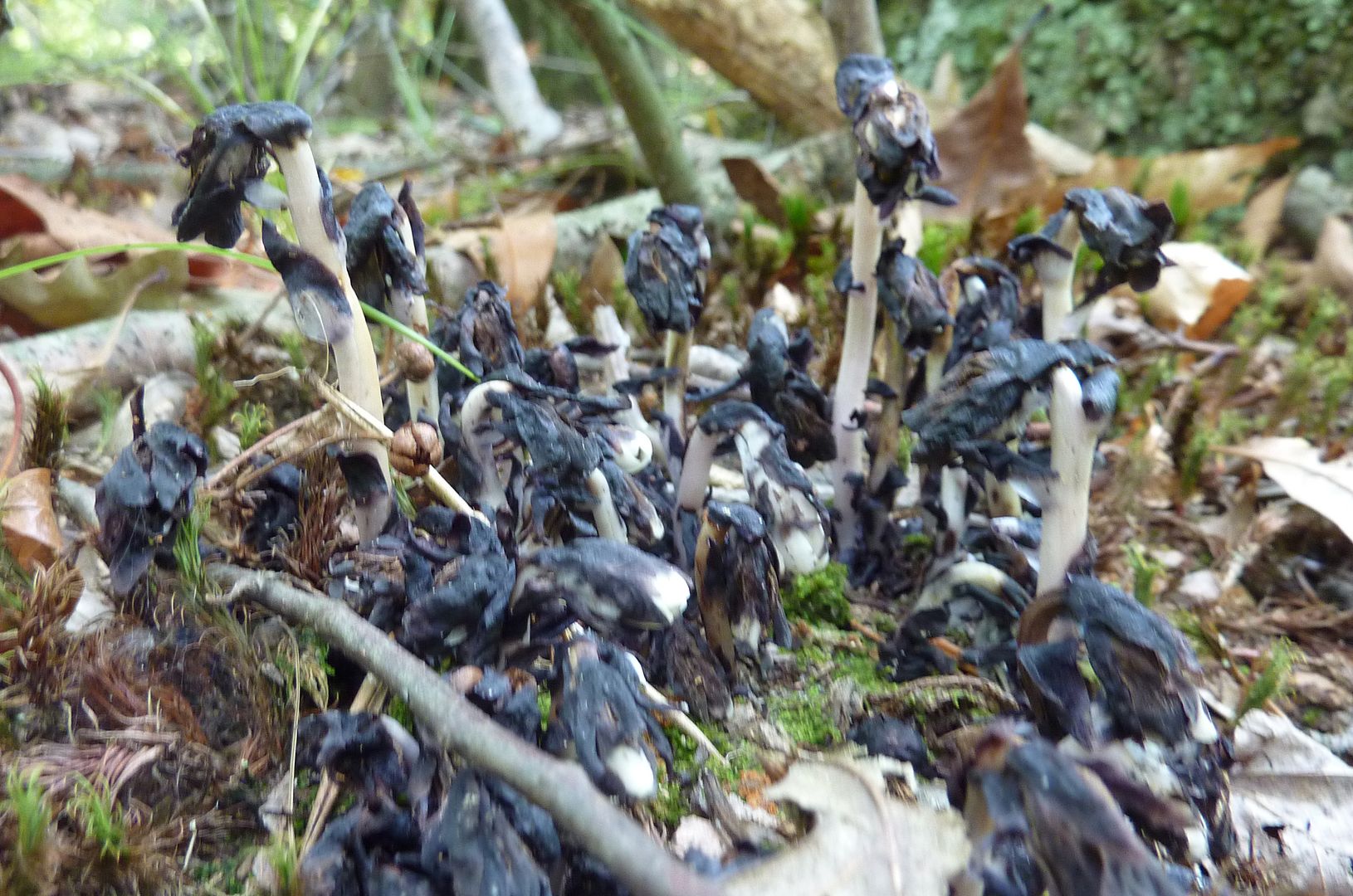
Indian Pipe slowly melting away.
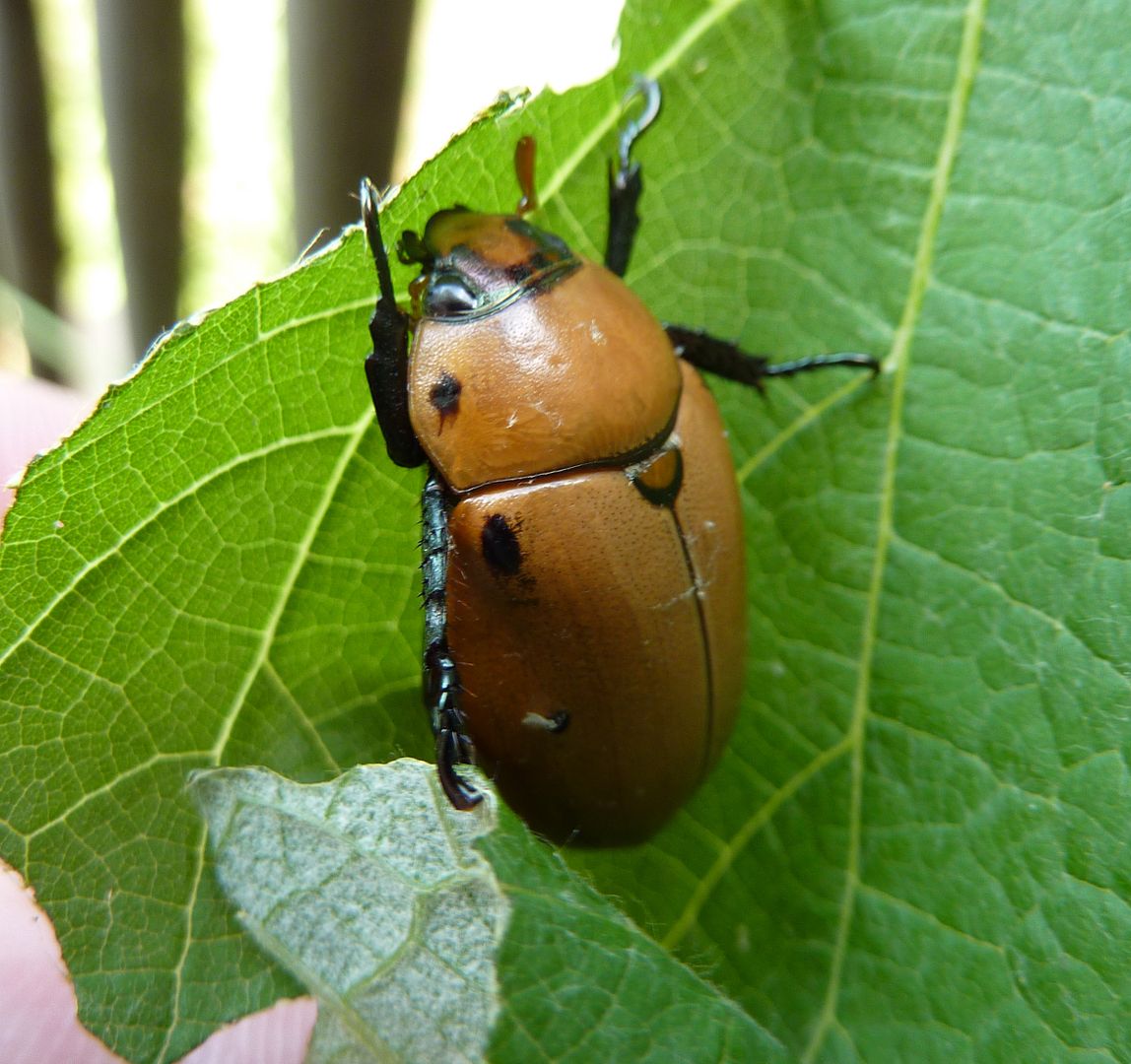
Grape Vine Beetle, Pelidnota punctata. I found this huge thing eating our grape vine.
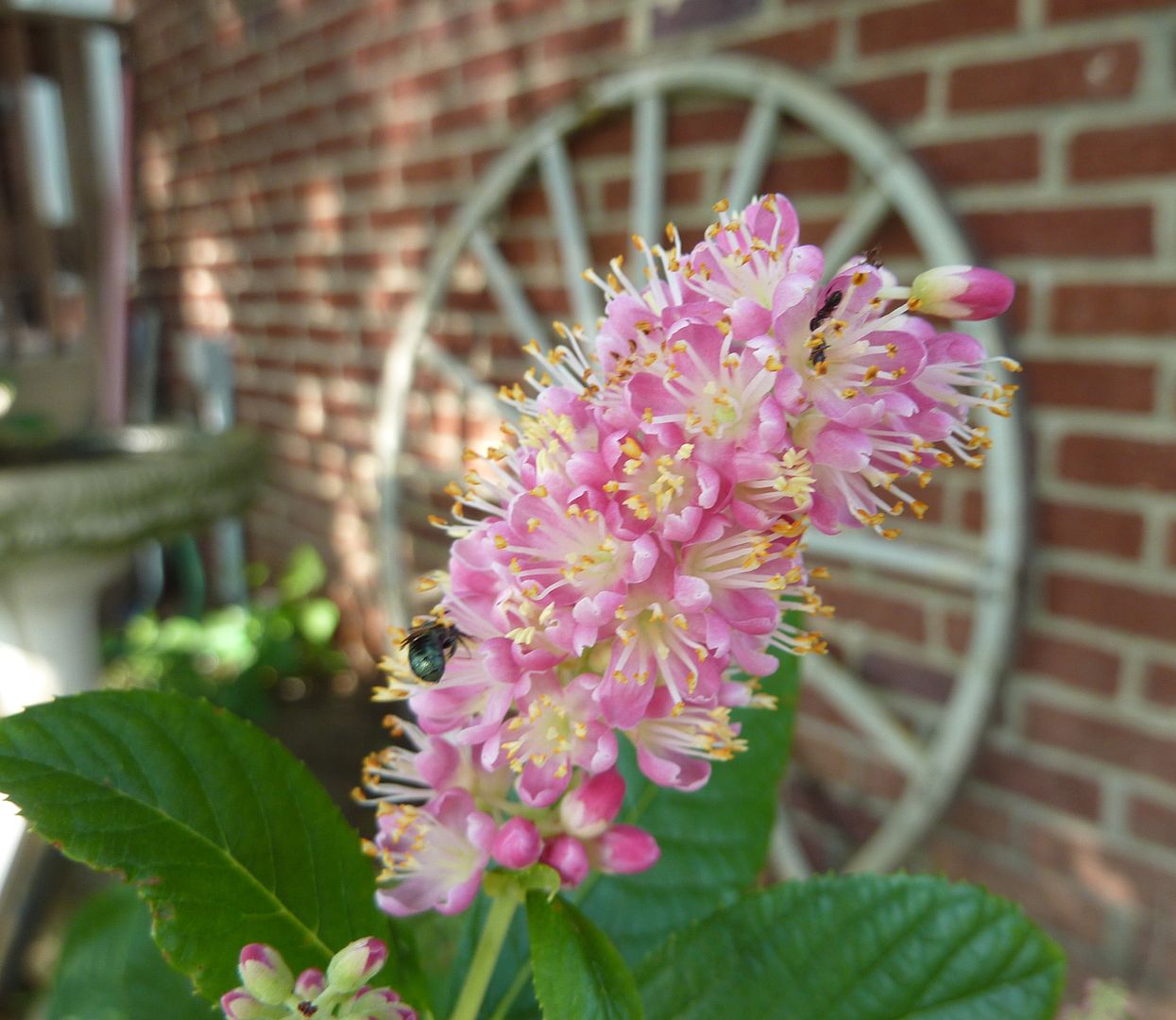
Clethra alnifolia, aka Summersweet. This is another beauty no one seems to be planting. The fragrance on a good day is powerful and potent, and I want to harness it into little crystals to snort off a mirror... or maybe scent a candle with. Whichever is easier.
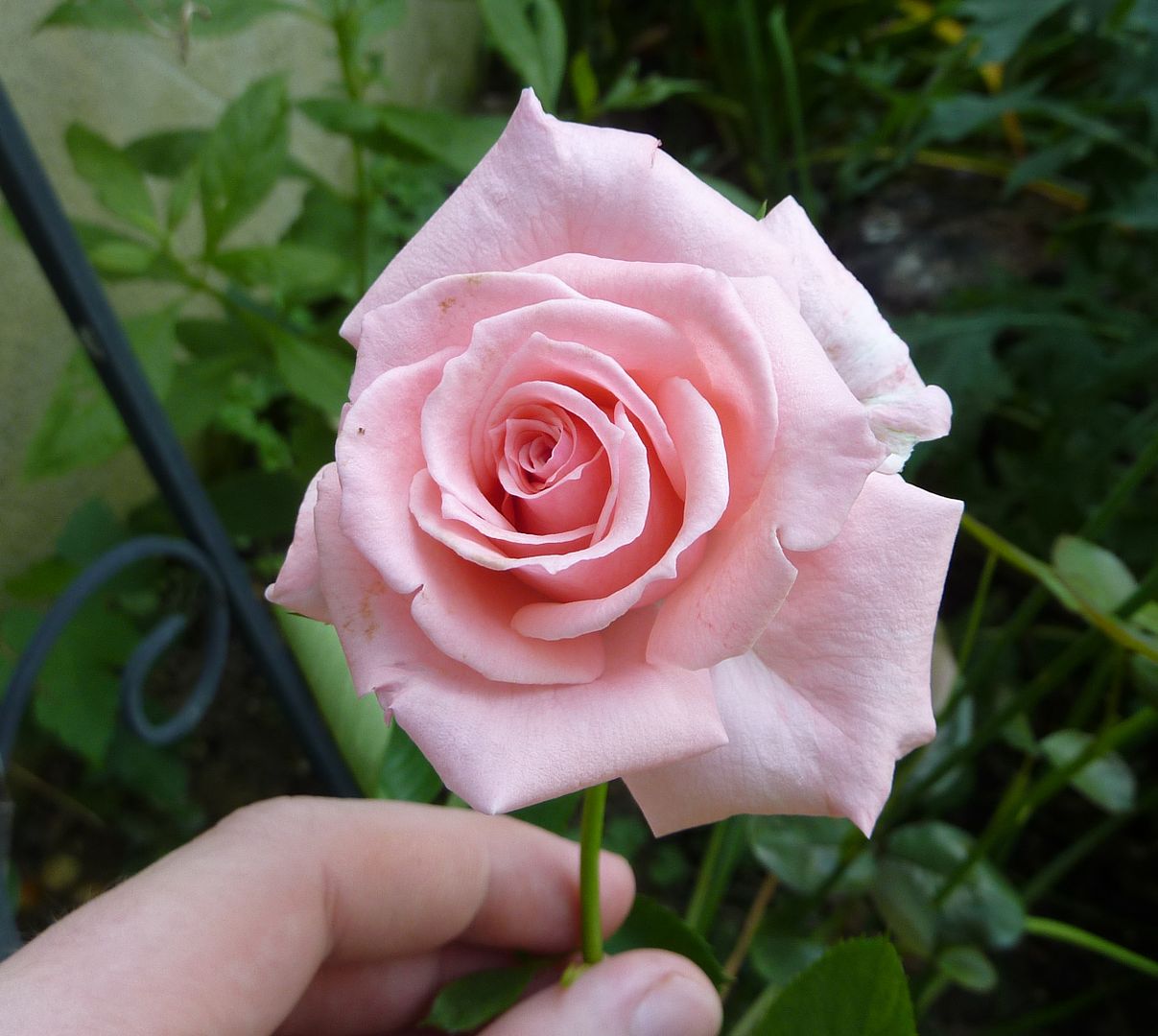
I planted a few roses this year. This one is named after my favorite author, Agatha Christie. It's a climbing variety of a more common one I forget the name of. Not sure how Rose Identifying works.
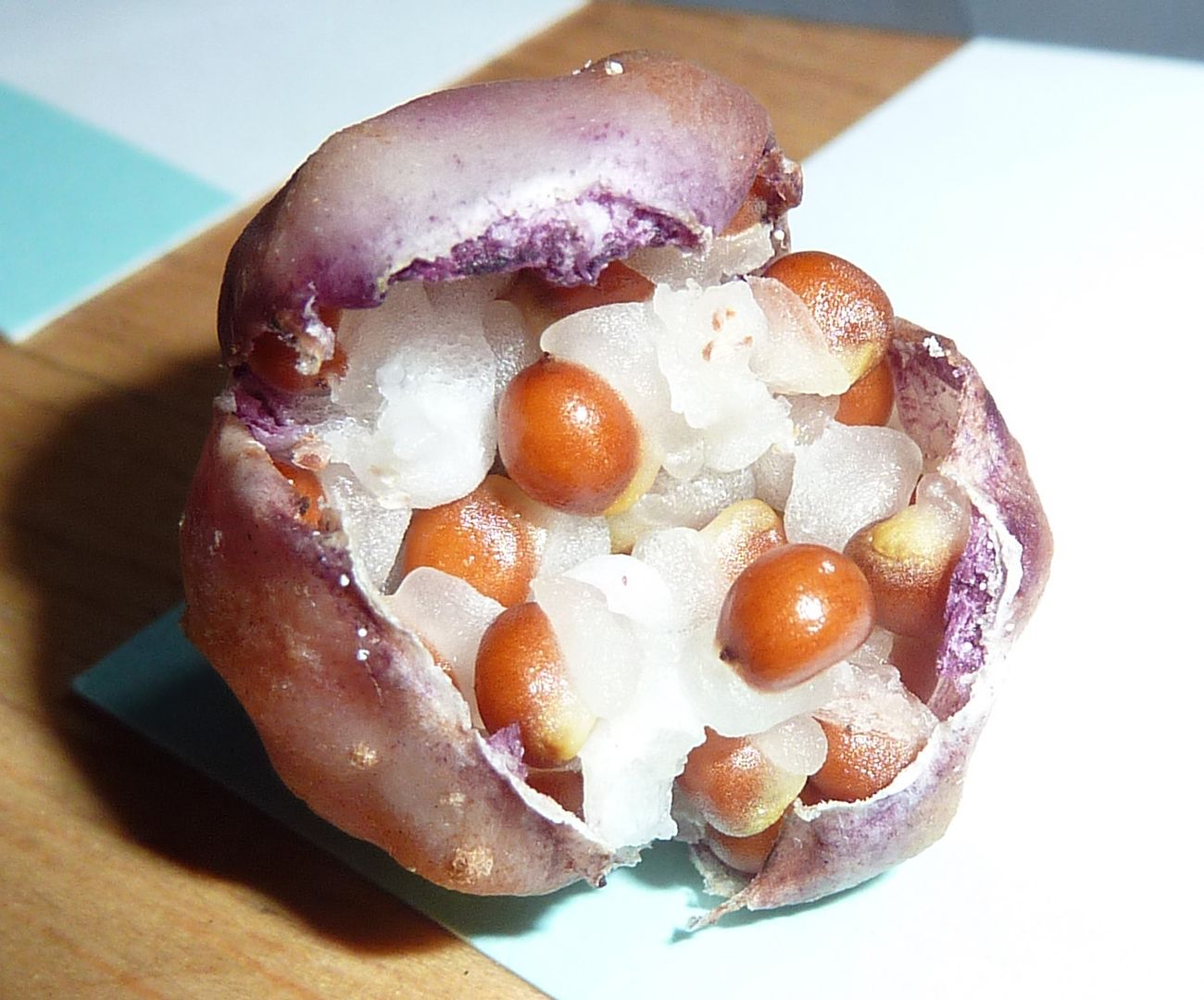
Seeds of Trillium cuneatum. Note the packets of elaiosome on each one. These lipid rich bodies have more in common with insect tissue than plant tissue and ants find it irresistible. See my video on Myrmecochory for more. Supposedly in some species it can cause more of the brood to develop into alate queens instead of workers. In some species though they have the opposite effect.
A damselfly. Since we installed our little pond ... maybe 7 years ago, we've been getting more and more of these. The top section of our pond doesn't have fish in it. So they could potentially be reproducing there.
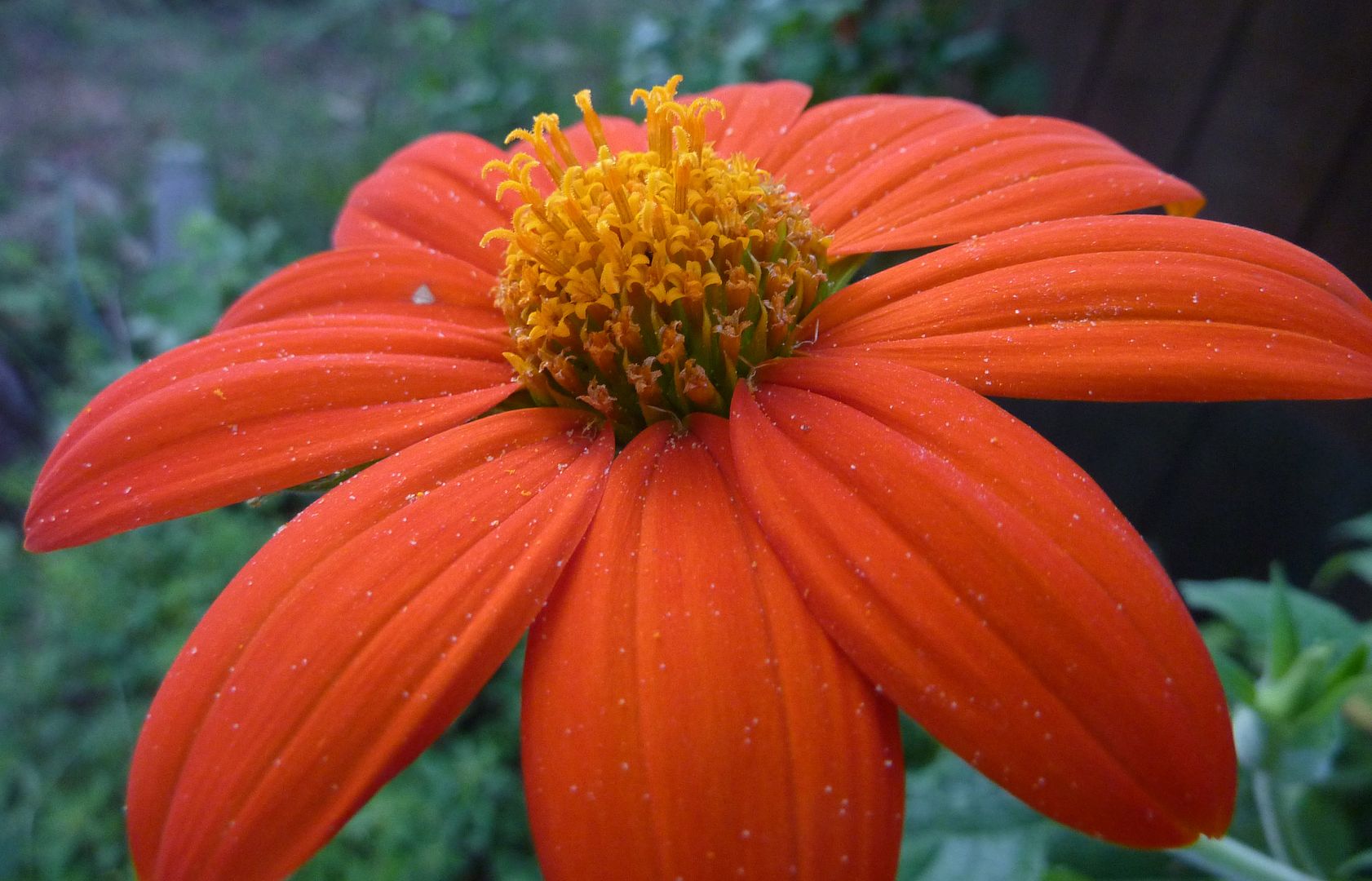
A Mexican Sunflower.
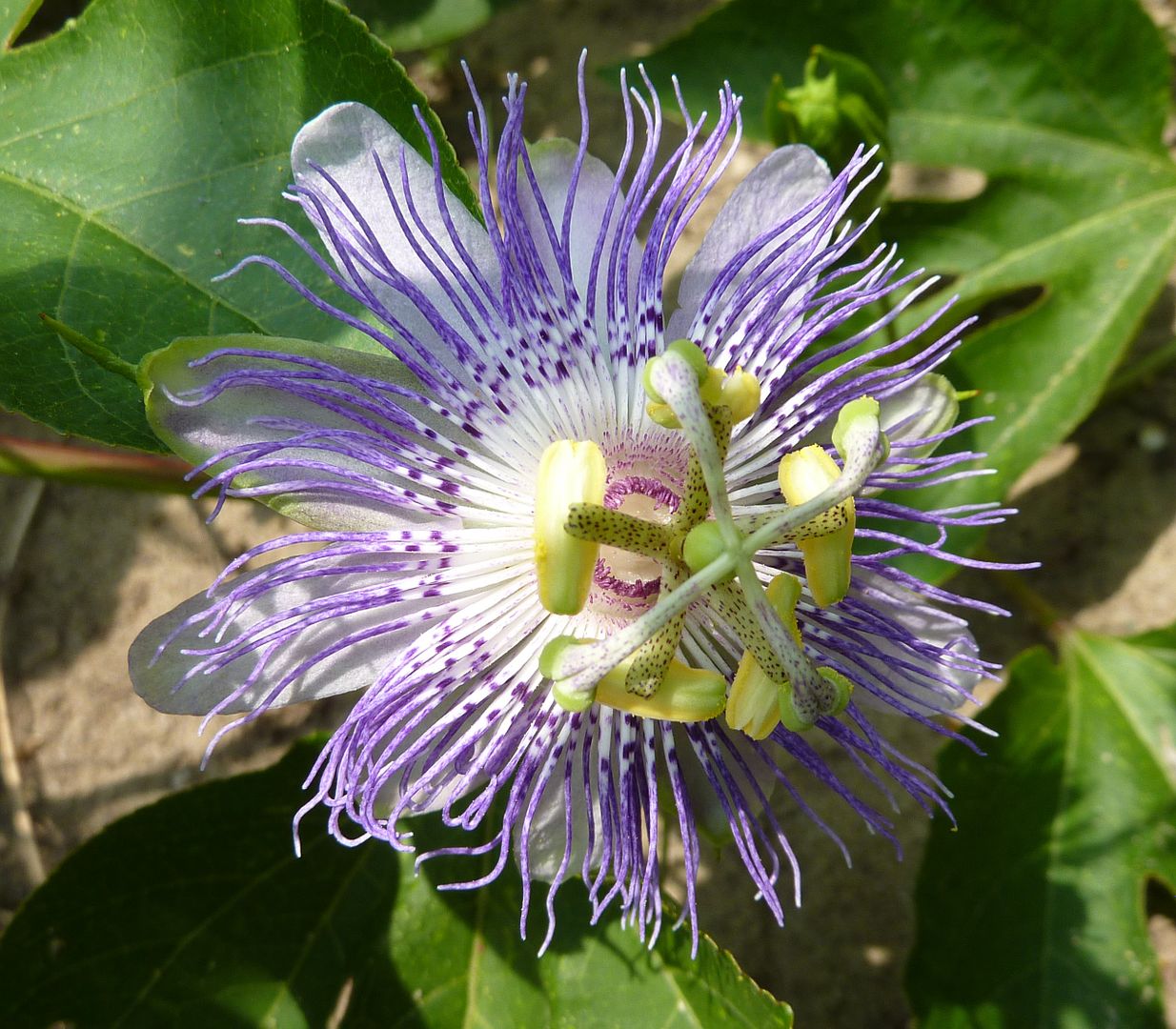
Native Passionflower, Passiflora incarnata.
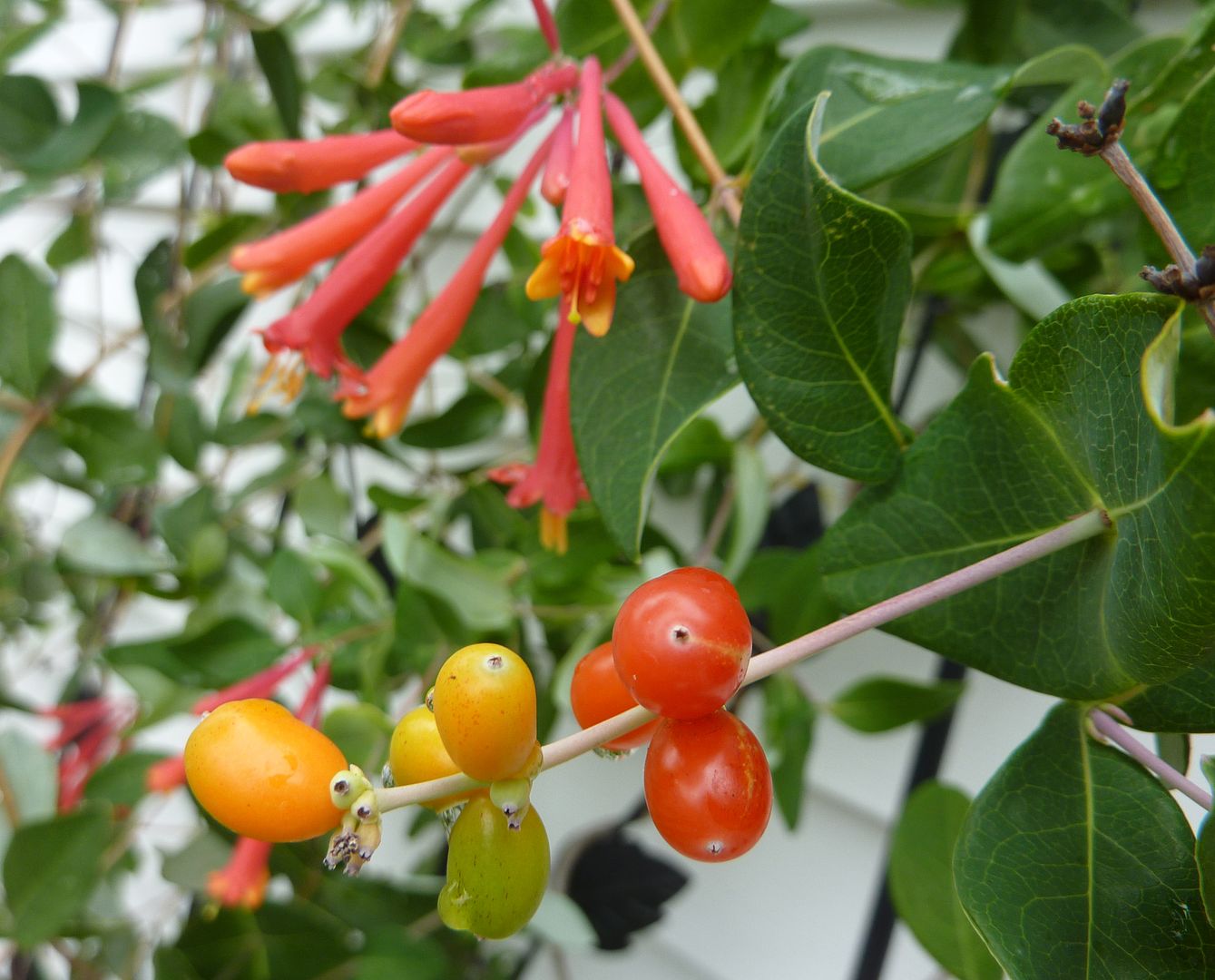
Coral Honeysuckle in bloom and berry.
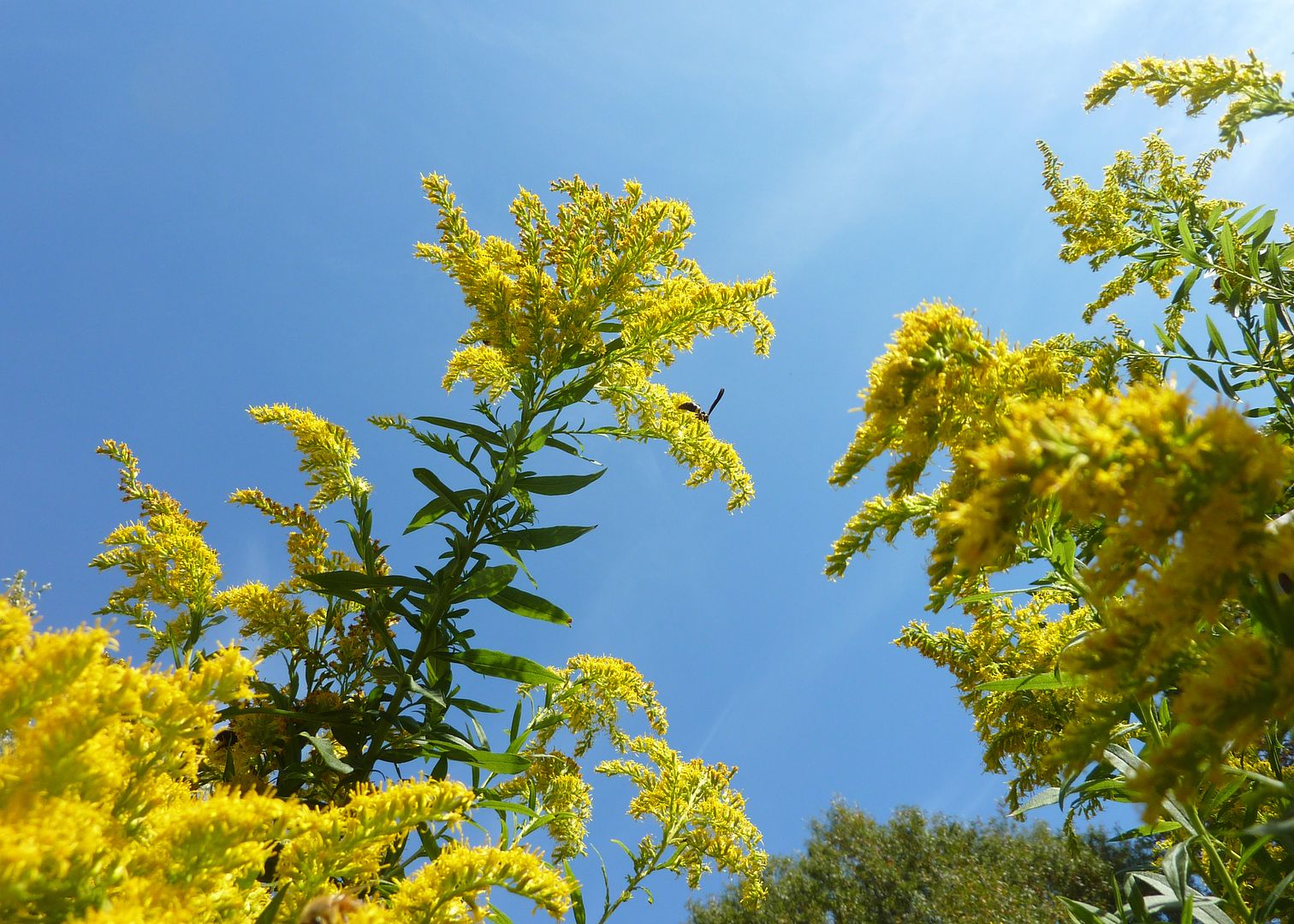
The towering Tall Goldenrod in flower, Solidago altissima. See my video here.
Bluets! aka Quaker Ladies! I'm looking forward to these hopefully flower next spring the most.
Despite the cold killing the top growth to many plants. New growth begins sooner than later.






 Doug Tallamy has created a list of host plants, also available online!