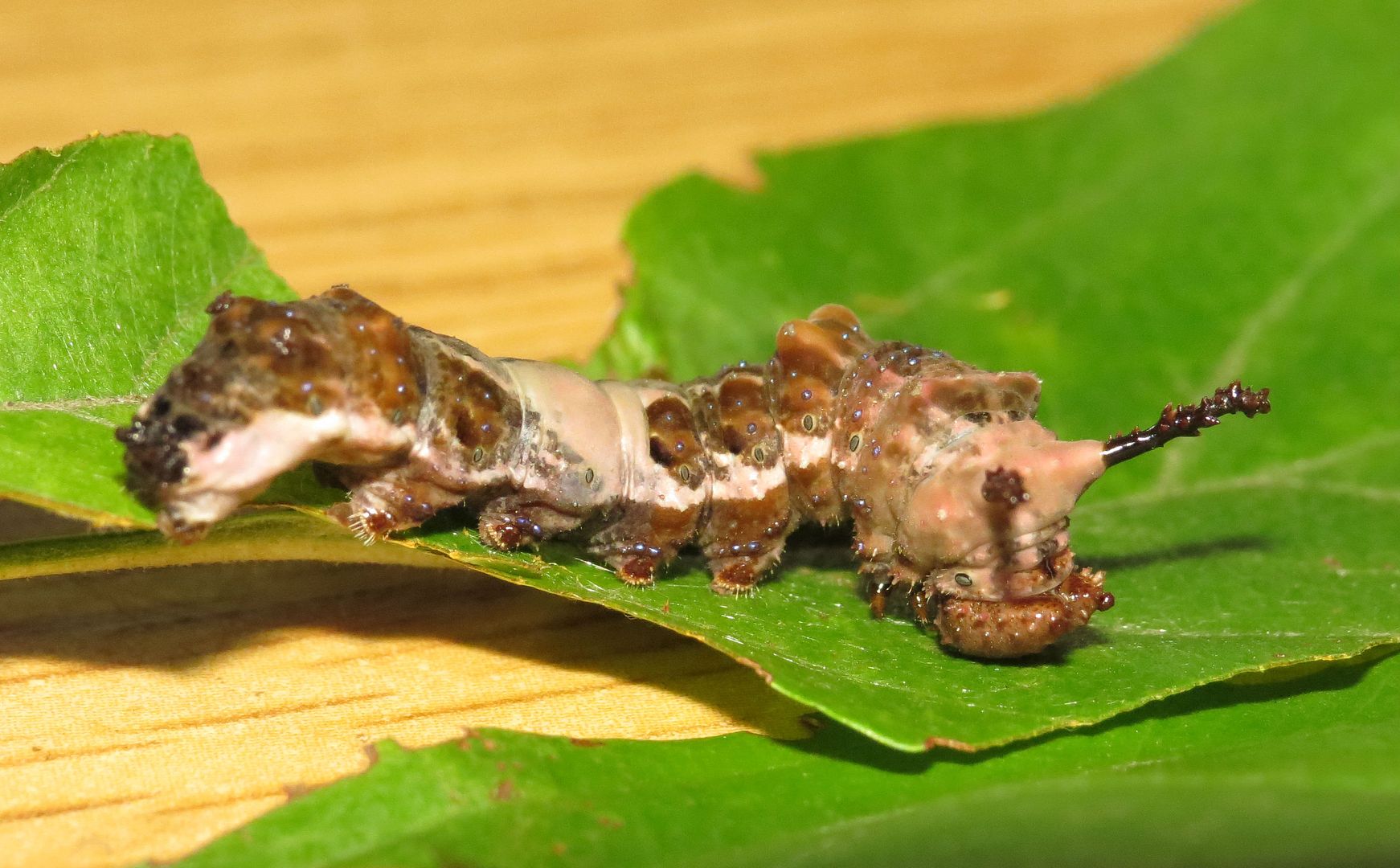
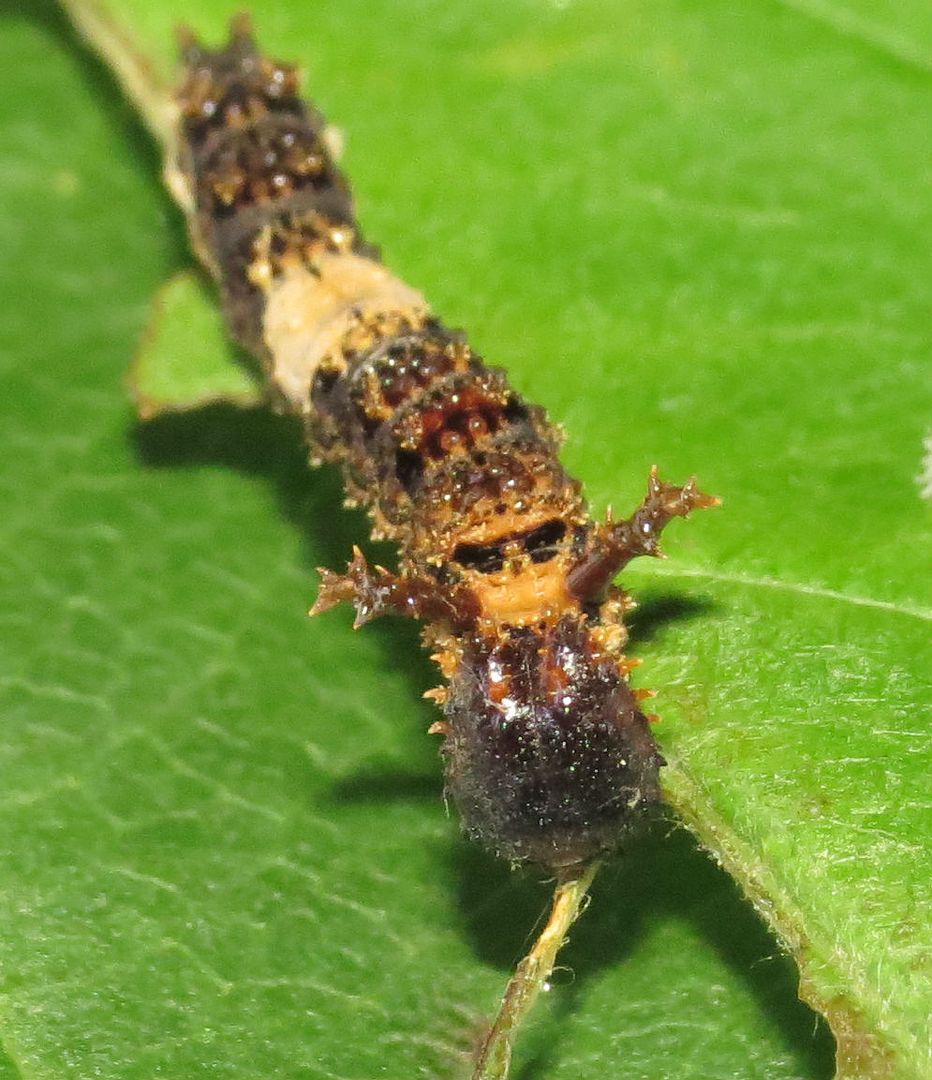
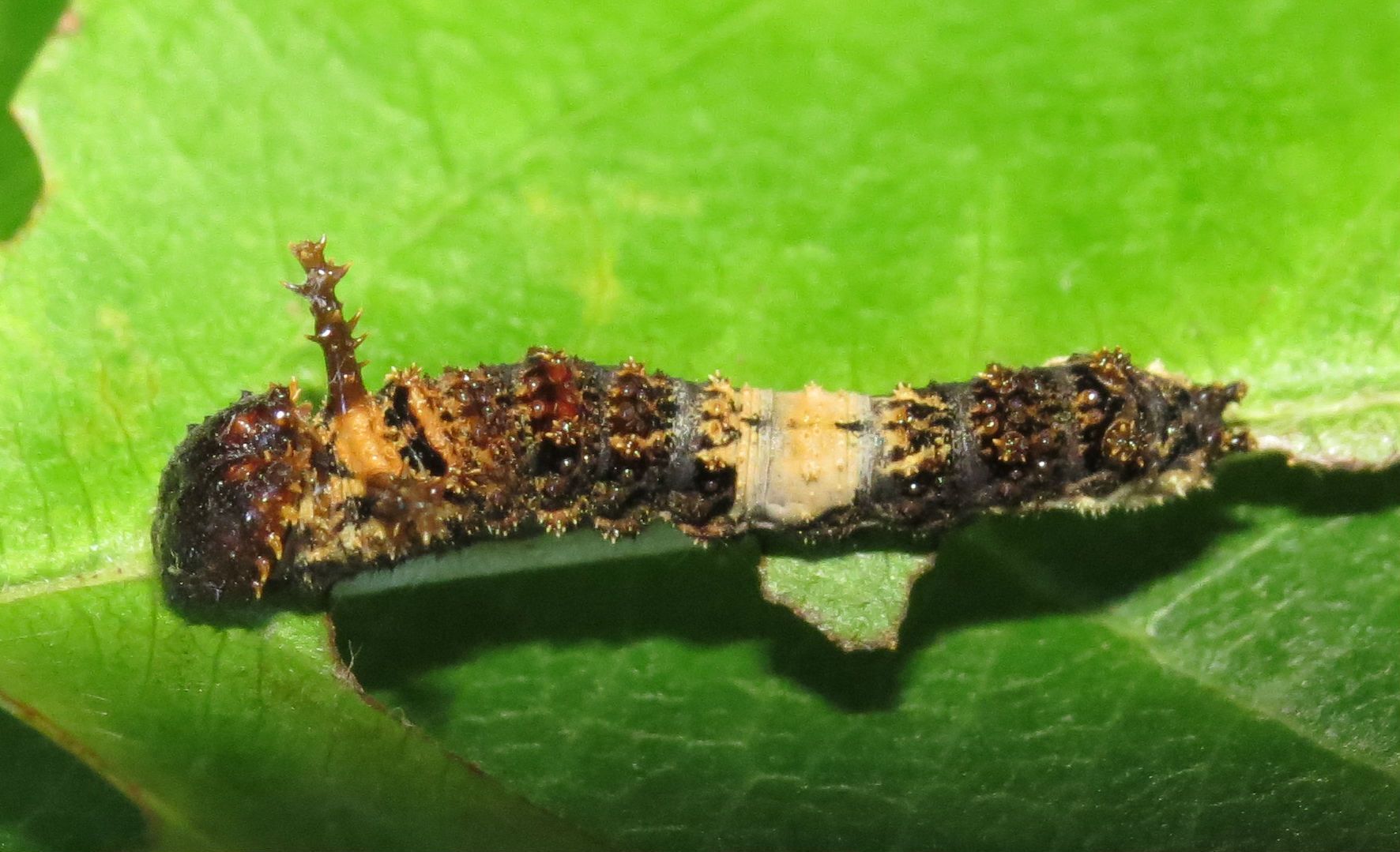
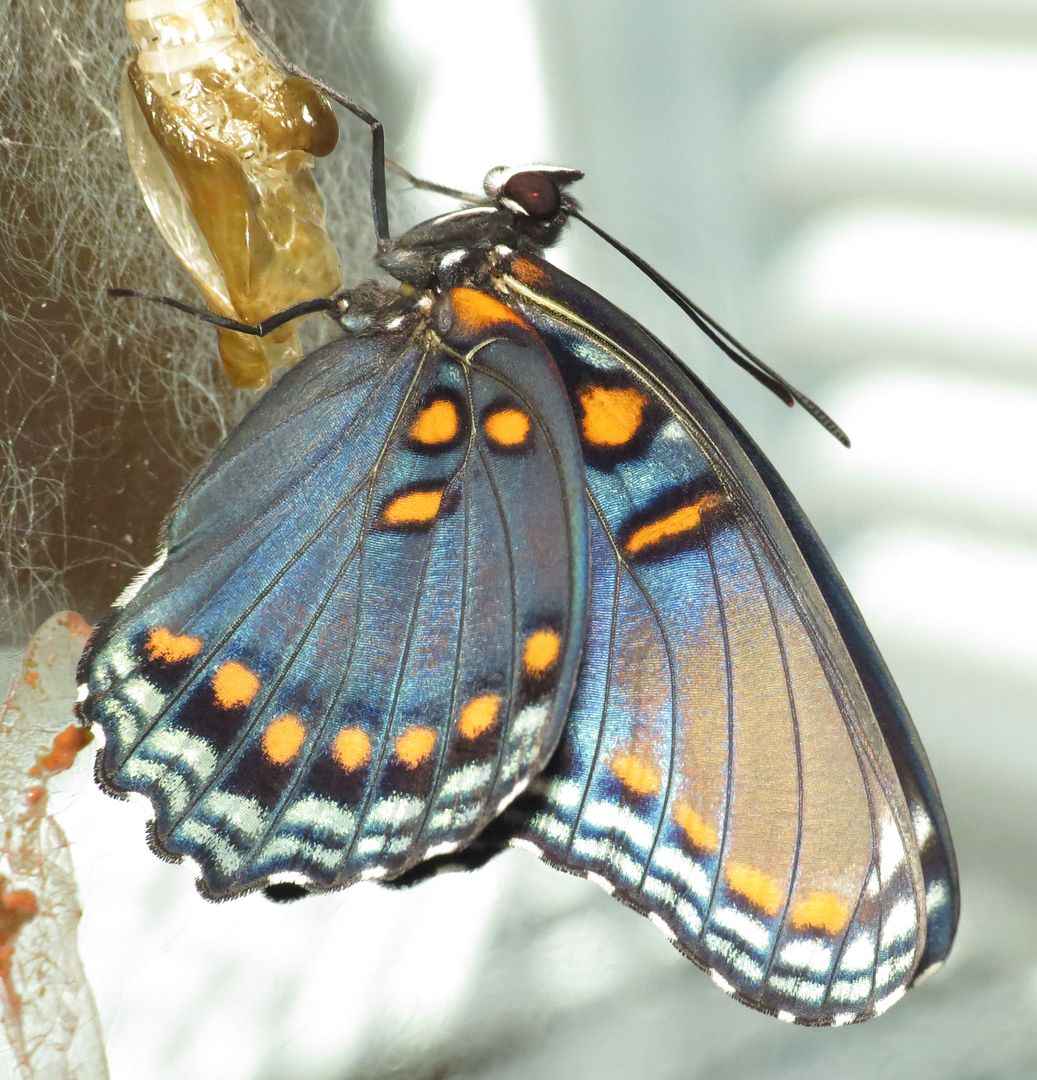
Well the Red Spotted Purple emerged, Limenitis arthemis. And it's bizarrely small, maybe 3 inches wide at most. I've heard of small generations of other Lepidoptera being born but it was always attributed to poor leaf quality, occasionally species having to eat leaves that had already fallen off of trees. I don't think that's what happened here. In the last two instars I was picking leaves fresh off the tree in groups of four to seven and the caterpillar consumed them all in one sitting. My only thought on this is either it's somehow beneficial to be smaller than typical during the winter months (when these dwarf versions tend to occur) and must be somehow triggered by either chemicals in the tree leaves it consumed and/or hours in the day.
I did notice the White Snowdrift Crabapple retained its leaves, and still has them on the tree even now, where as the native American Plum, Beach Plum and Black Cherry have all already dropped their leaves. It also had ripening fruit on it, so maybe it's just a result of hosting on Apples instead of Plums at this time of year. (They can use both).
I'm going to try and keep this one in captivity. We're well past the time to let them go for the year, and outside the only thing blooming is Goldenrod and Georgia Asters. The species does not migrate south and they do not over winter as adults, so there's zero chance of it surviving beyond a week. My intent is to keep this one as a specimen.
Showing posts with label Red Spotted Purple. Show all posts
Thursday, October 29, 2015
Saturday, October 17, 2015
I Goofed, Red Spotted Purple Update
So I noticed the caterpillar seemed to make an abrupt jump in its development. I made an assumption that as long as the apple tree I found it on had leaves, then this caterpillar would happily eat them. What I forgot though was the average temperature and amount of day light were also factors.
Posing the question of when I should put this one in the fridge to over winter, I learned I should have done that a week ago when it was in the third instar. Apparently that is the instar that they go into hibernation. Unlike species who spend winter in the chrysalis stage, the number of hours in the day when the sun is shining as well as the temperature determine whether or not they should hibernate or move on to further instars and adulthood.
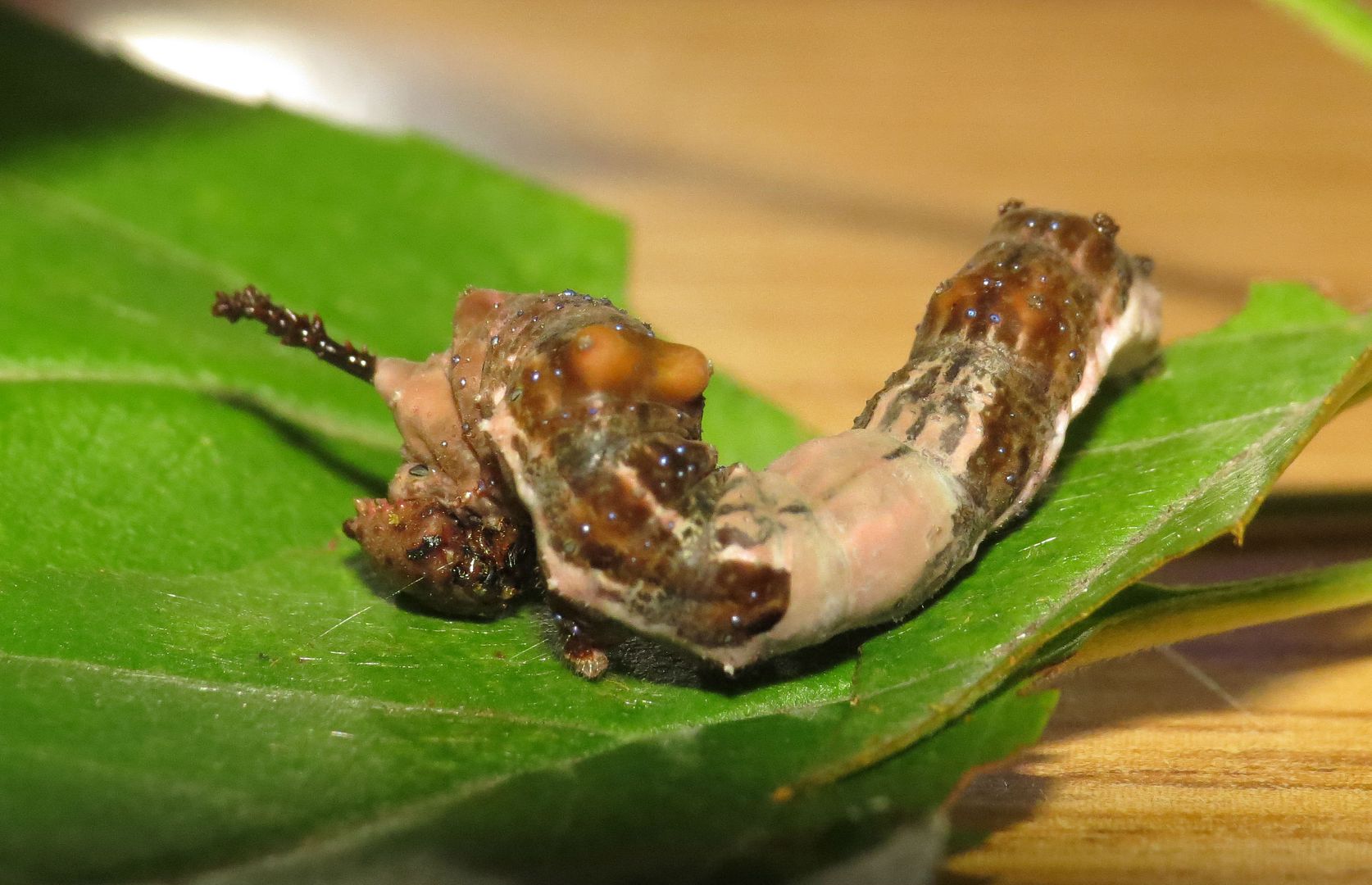
Tragically my caterpillar is well into its 5th instar and I'm told nothing will stop it now from developing into a chrysalis and emerge into an adult 7 to 10 days later. This species does not migrate and by then it will be late October or early November, when it is too cold to release, and the host tree (a White Snowdrift Crabapple) will likely have lost all its leaves. I suppose I will have to let it happen and keep the butterfly captive until it expires. I'll try and keep it alive by offering it pieces of rotting fruit, and eventually pin it I guess.
Speaking to its host plant for a moment. The little crabapples have turned orange and the birds are already eagerly pecking away at them. Lots of the leaves are now covered in damaged fruits as well a surprising amount of bird droppings. I wonder if actually having real bird crap around makes the disguise this caterpillar produces more or less convincing.
There are likely two or tree more Red Spotted Purple caterpillars on the tree, but as they're likely just in their third instar, I'll have to wait until the leaves fall off of the tree to look for them. My understanding is the "shed" they make by rolling a leaf around them with silk does not fall off of the host plant. If I find a few, I'll be sure to collect and store in my fridge until the tree leafs out and flowers the next year.
Posing the question of when I should put this one in the fridge to over winter, I learned I should have done that a week ago when it was in the third instar. Apparently that is the instar that they go into hibernation. Unlike species who spend winter in the chrysalis stage, the number of hours in the day when the sun is shining as well as the temperature determine whether or not they should hibernate or move on to further instars and adulthood.
Tragically my caterpillar is well into its 5th instar and I'm told nothing will stop it now from developing into a chrysalis and emerge into an adult 7 to 10 days later. This species does not migrate and by then it will be late October or early November, when it is too cold to release, and the host tree (a White Snowdrift Crabapple) will likely have lost all its leaves. I suppose I will have to let it happen and keep the butterfly captive until it expires. I'll try and keep it alive by offering it pieces of rotting fruit, and eventually pin it I guess.
Speaking to its host plant for a moment. The little crabapples have turned orange and the birds are already eagerly pecking away at them. Lots of the leaves are now covered in damaged fruits as well a surprising amount of bird droppings. I wonder if actually having real bird crap around makes the disguise this caterpillar produces more or less convincing.
There are likely two or tree more Red Spotted Purple caterpillars on the tree, but as they're likely just in their third instar, I'll have to wait until the leaves fall off of the tree to look for them. My understanding is the "shed" they make by rolling a leaf around them with silk does not fall off of the host plant. If I find a few, I'll be sure to collect and store in my fridge until the tree leafs out and flowers the next year.
Sunday, October 4, 2015
Red Spotted Purple Growing Up
The Red Spotted Purple, Limenitis arthemis, that I have in captivity has grown a bit since I last bothered to look at its container. It's been nibbling the same leaf in there for quite a few days now. I add a free leaf off the crab-apple tree its egg was laid upon ever few days. I also put a wadded up tissue that's soaking wet with water in the container so it doesn't dry out, though I'm not sure how necessary this is. I know ants are in danger of drying out so perhaps caterpillars have the same risk?
We're now in what I believe to be the third instar. It's no longer making a stick out of frass to hide on, which the younger instars do to escape ants. Instead more natural defenses are starting to develop. I suspect from here on, birds would be the primary predator over ants. Their coloration is starting to mimic that of bird droppings. So they've gone from hanging out on a poop stick, to looking like one!
And of course it's now sporting a lovely set of jagged horns. My understanding is the horns are hollow and intended to break apart in the bird's throat to, ideally, puncture a hole in the crop or wind pipe killing the bird dead. This probably doesn't happen when they're this small, but I can easily see some damage being done when they're bigger. Birds don't have teeth to chew them up first.
Remember adult birds rarely eat insects as their own food sources. Seeds and berries are the fuel of most adults while protein rich insects are important for baby birds. Would you feed something covered in thorns and looked like poop to your children? (Granted they're eating it half digested as you vomit it from into their mouth, but still someone has to do the initial eating!)
We're now in what I believe to be the third instar. It's no longer making a stick out of frass to hide on, which the younger instars do to escape ants. Instead more natural defenses are starting to develop. I suspect from here on, birds would be the primary predator over ants. Their coloration is starting to mimic that of bird droppings. So they've gone from hanging out on a poop stick, to looking like one!
And of course it's now sporting a lovely set of jagged horns. My understanding is the horns are hollow and intended to break apart in the bird's throat to, ideally, puncture a hole in the crop or wind pipe killing the bird dead. This probably doesn't happen when they're this small, but I can easily see some damage being done when they're bigger. Birds don't have teeth to chew them up first.
Remember adult birds rarely eat insects as their own food sources. Seeds and berries are the fuel of most adults while protein rich insects are important for baby birds. Would you feed something covered in thorns and looked like poop to your children? (Granted they're eating it half digested as you vomit it from into their mouth, but still someone has to do the initial eating!)
Subscribe to:
Posts (Atom)