Showing posts with label Myrmecochory. Show all posts
Saturday, June 3, 2017
This Week in Anting (Myrmecochory)
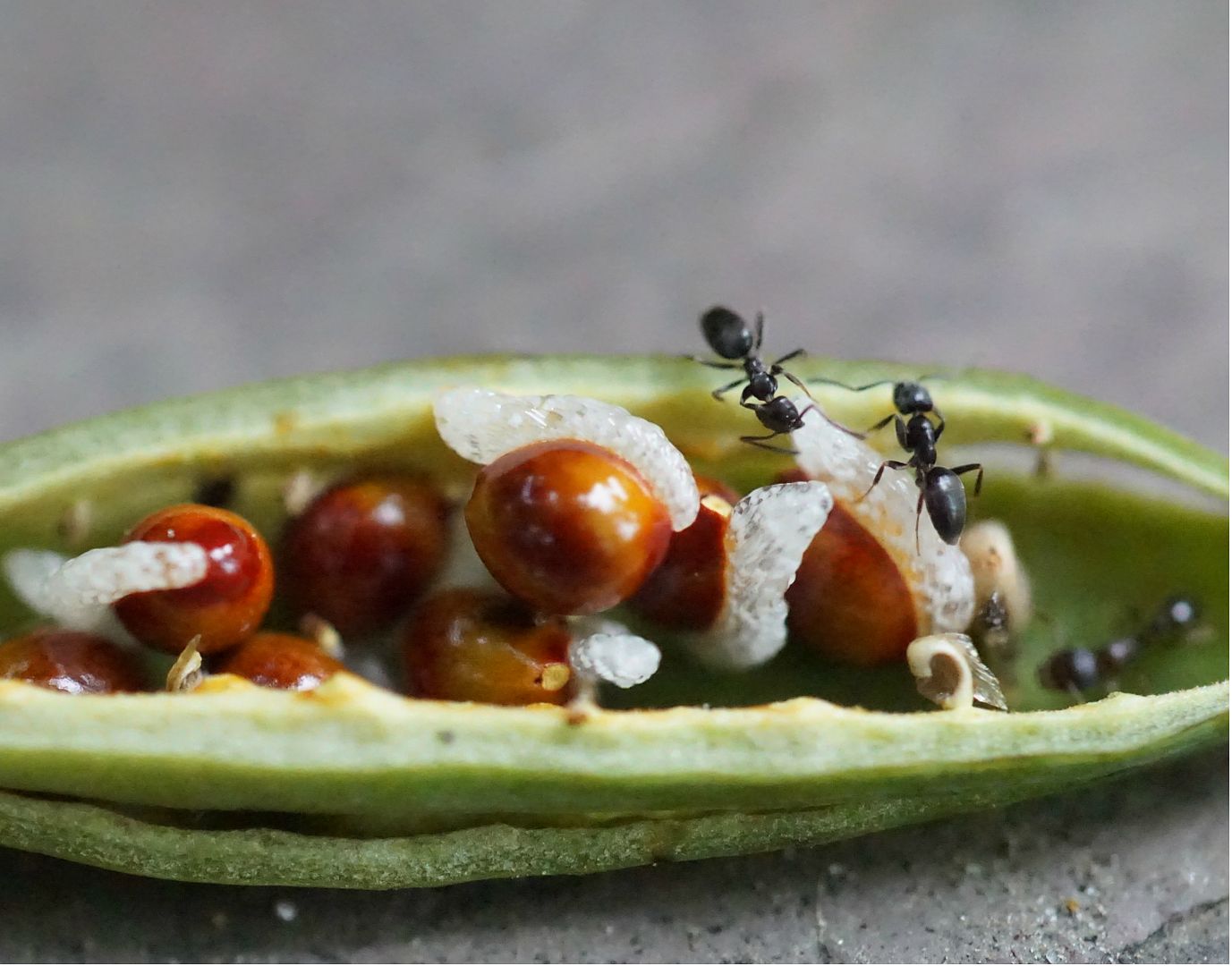
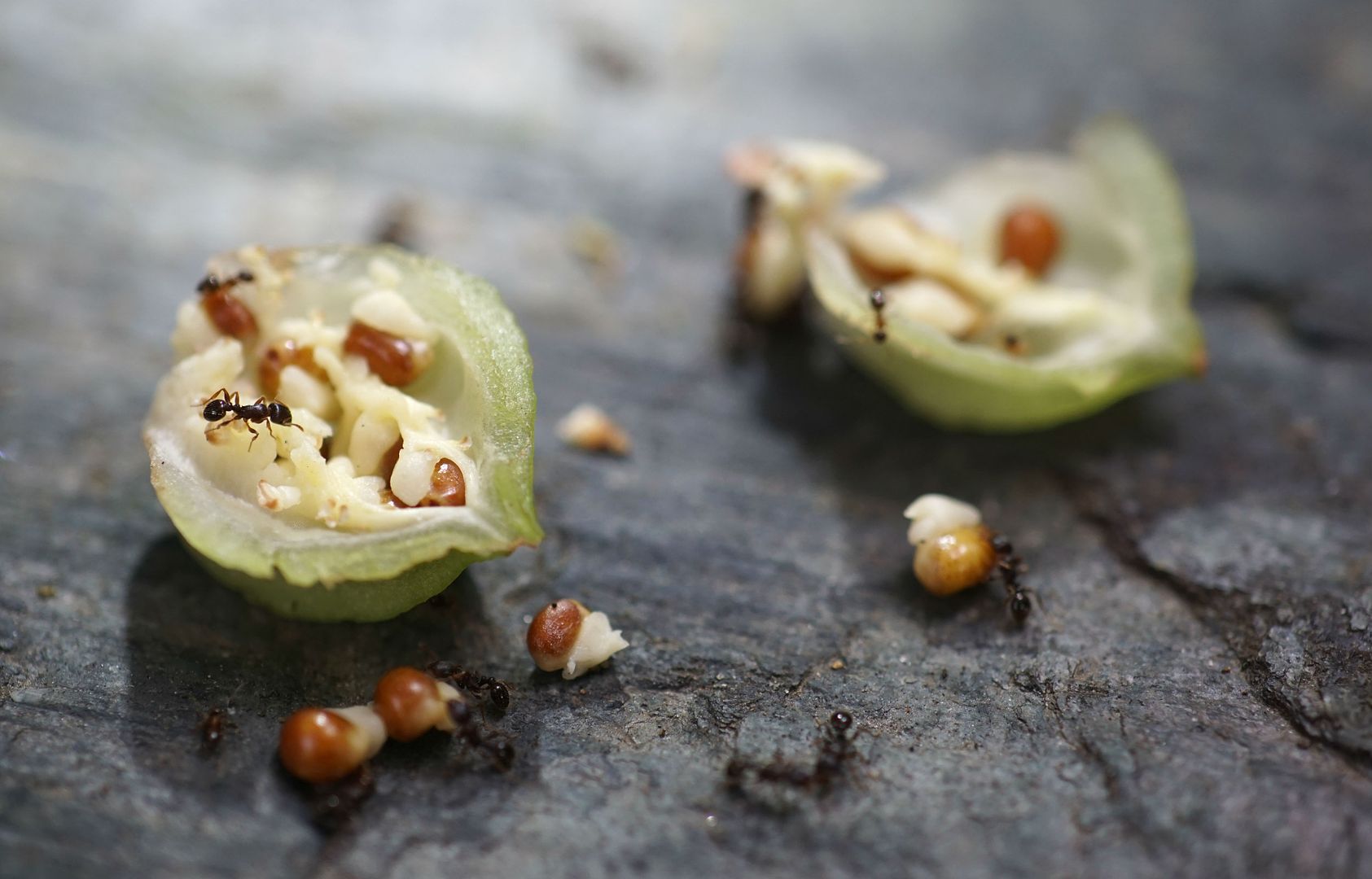
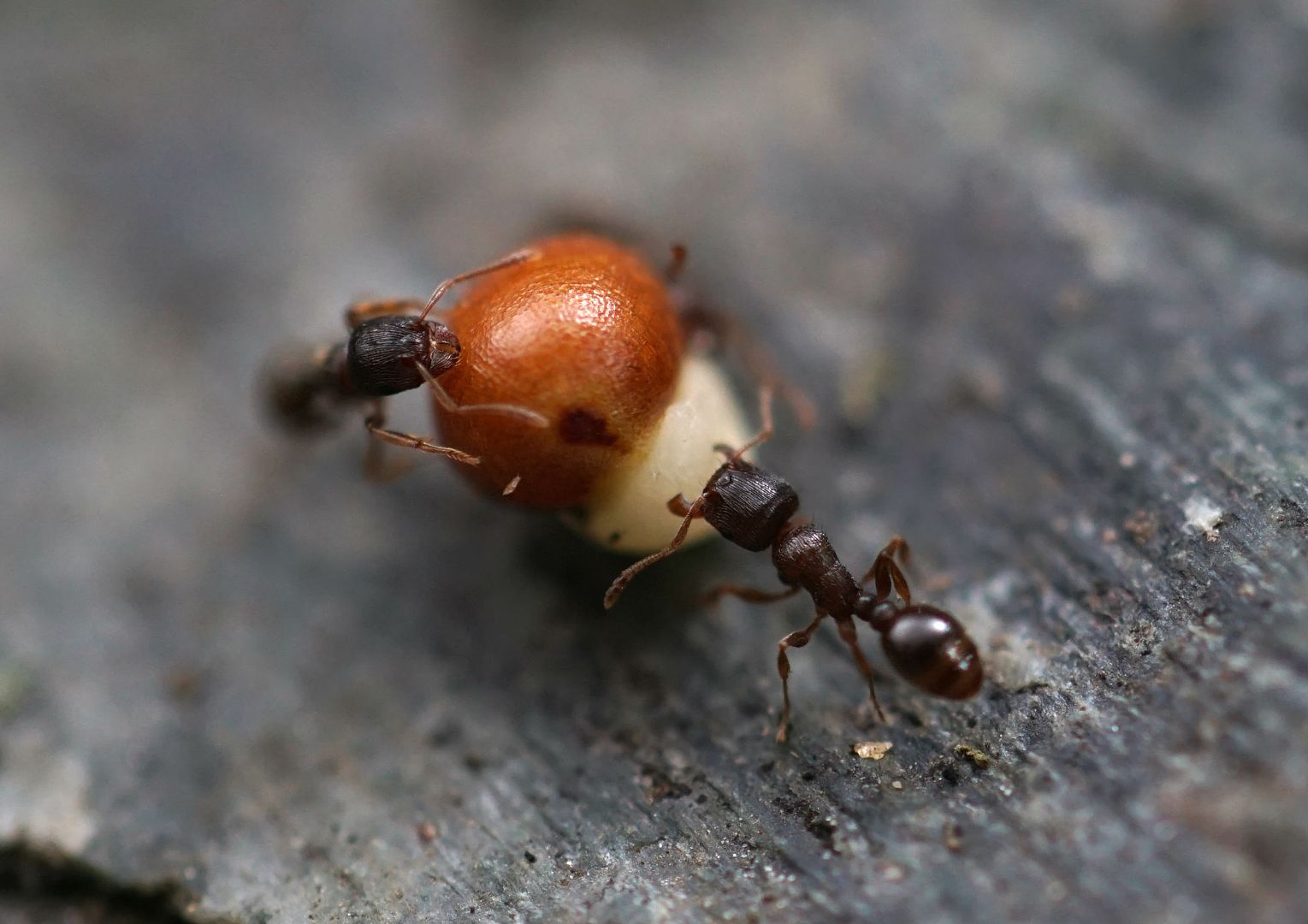
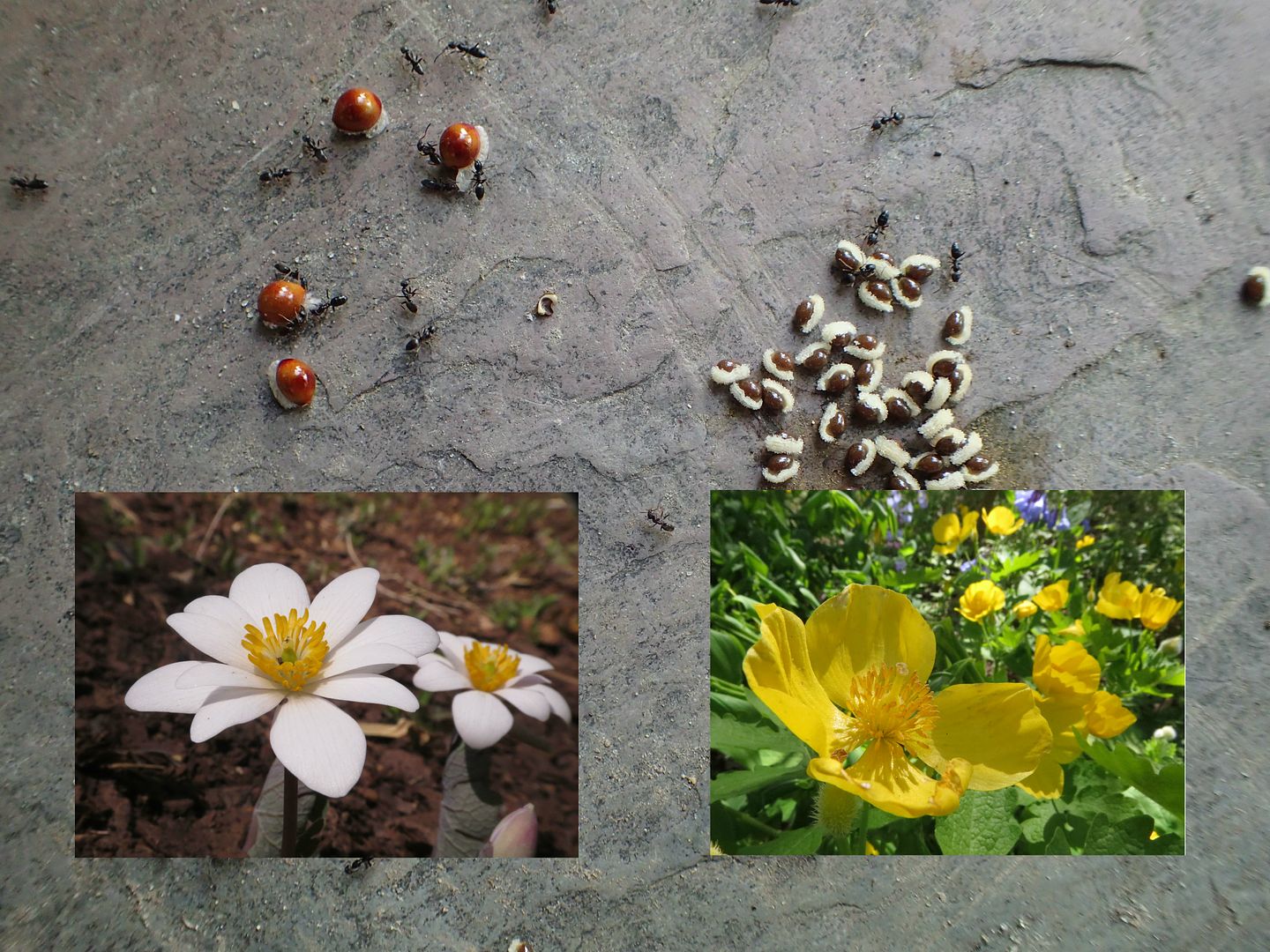
This week Woodland Poppies and Bloodroot went to seed. Both plants have elaiosome on their seeds which entice ants into dispersing them.
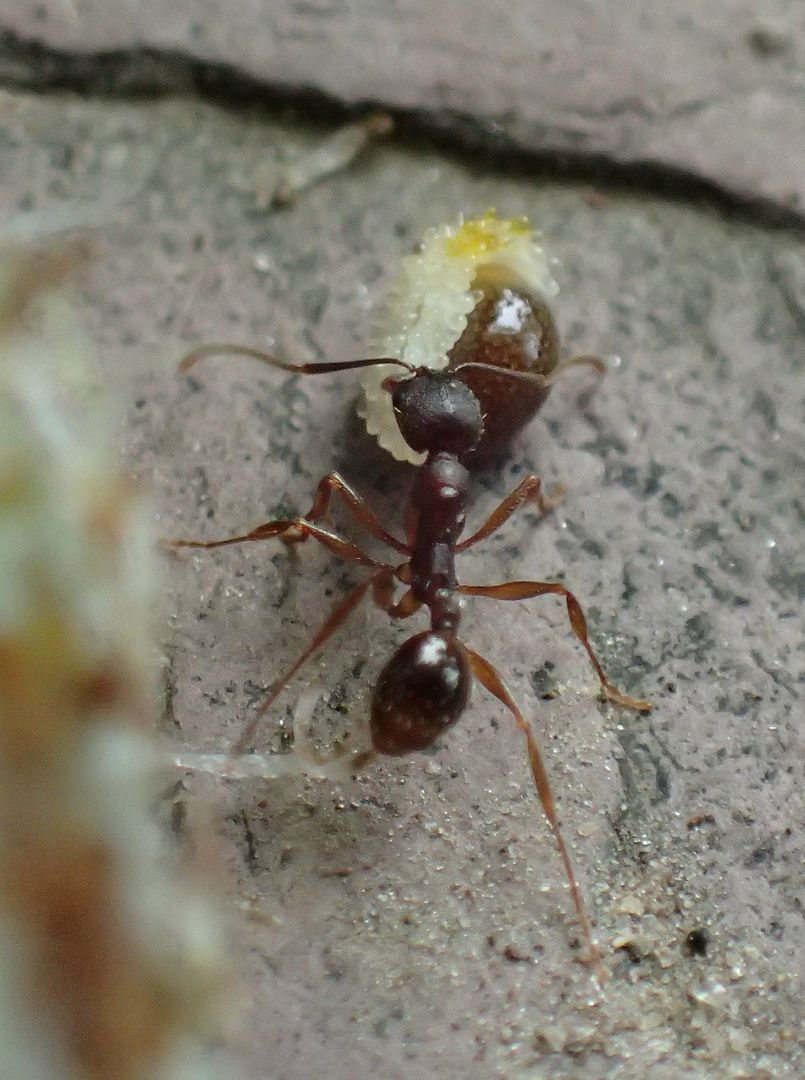
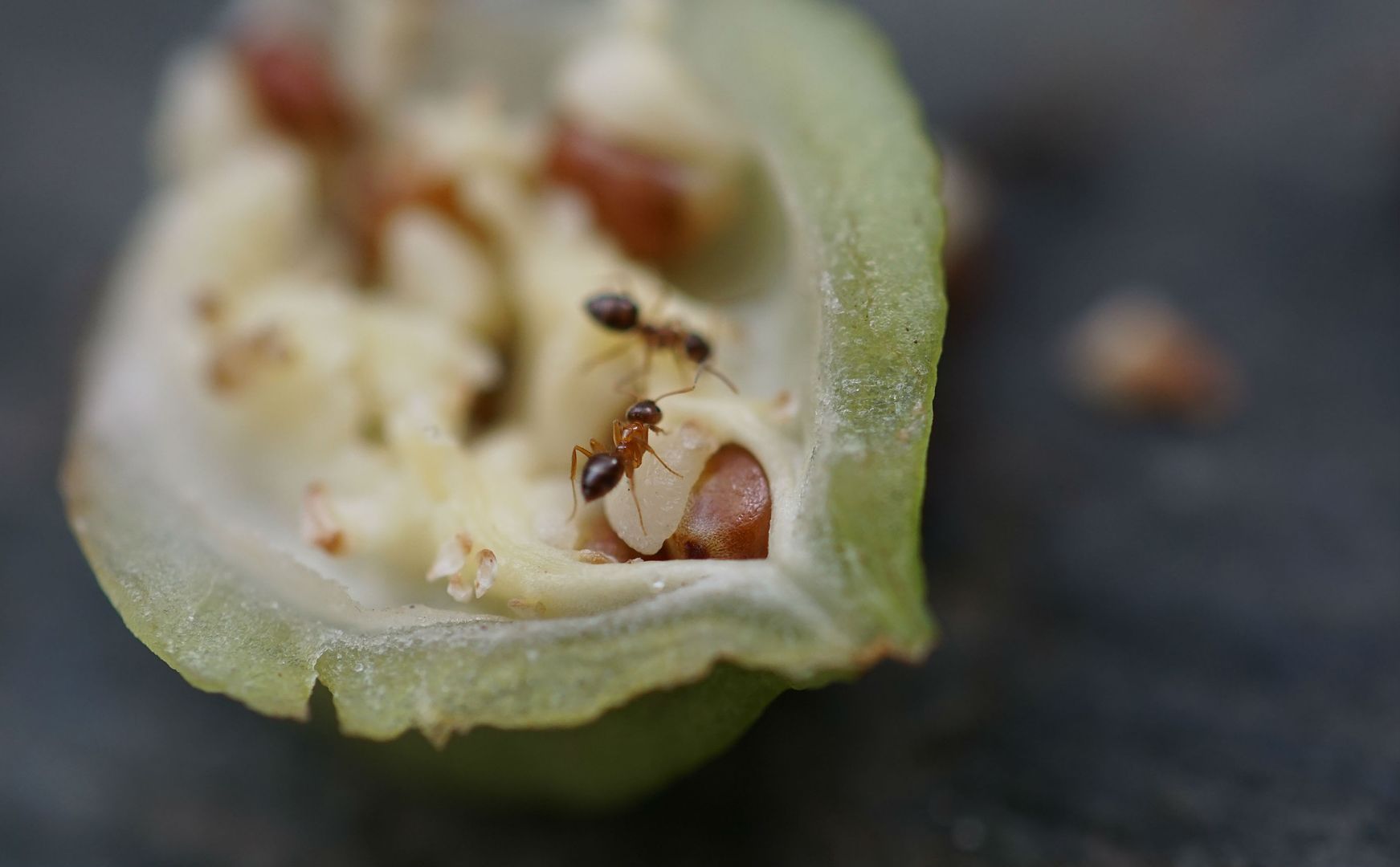
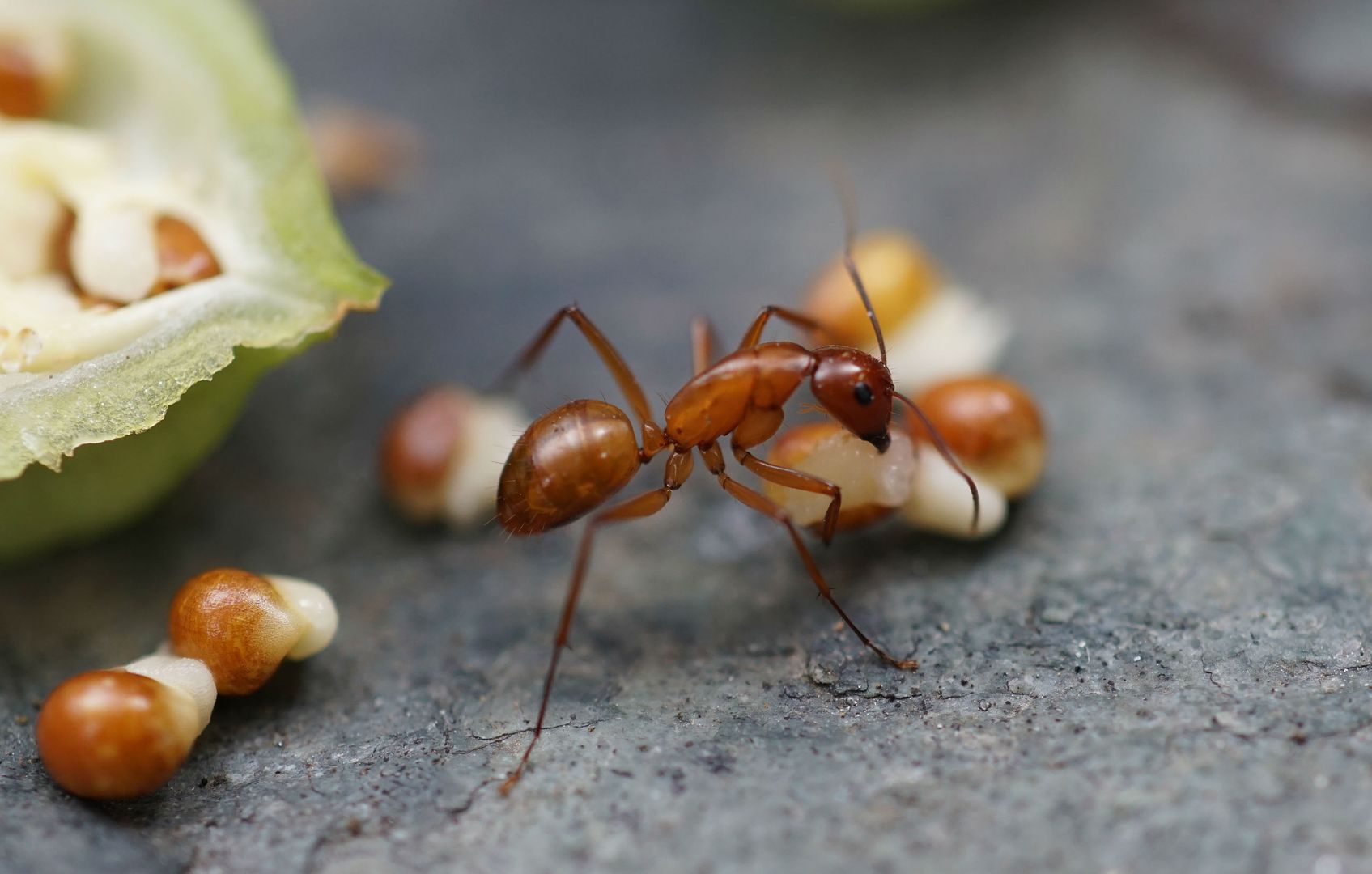
Twinleaf also went to seed but none of my plants flowered at the same time as one another. Presumably the lack of crosspollination means the packets of elaiosome on the seeds are smaller, and they're already pretty tiny on these plants as it is. Pictured above is Crematogaster cerasi which isn't strong enough to physically lift the seeds. Even the seeds that fell out of the pod naturally from the wind blowing it around were practically unmoved.
So the focus was on the Bloodroot and the Woodland Poppy. Both have great big packets of elaiosome on their seeds. I would love to include Twinleaf one year but they're tricky; seedpods can seem ripe but the seeds inside might still be soft.
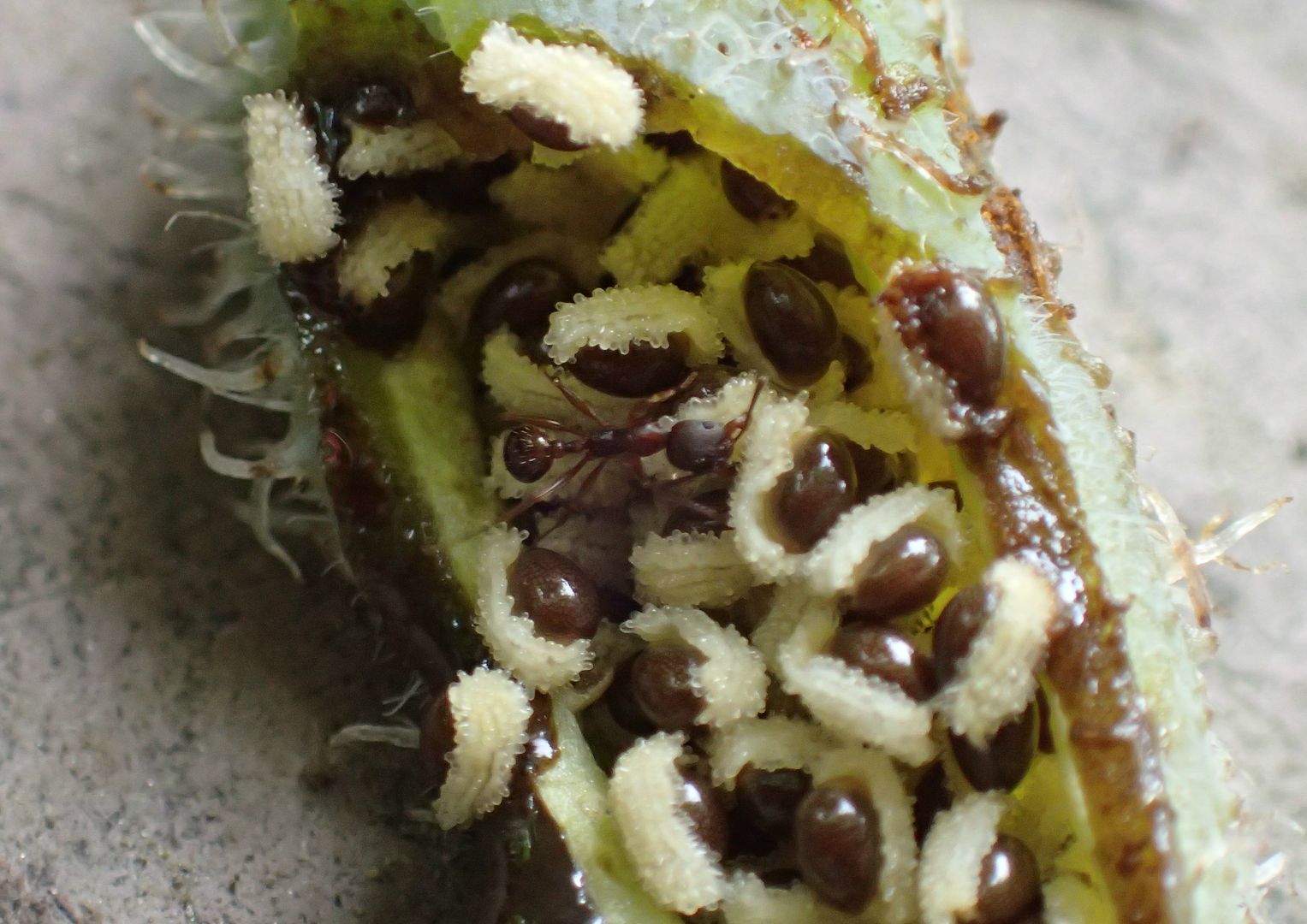
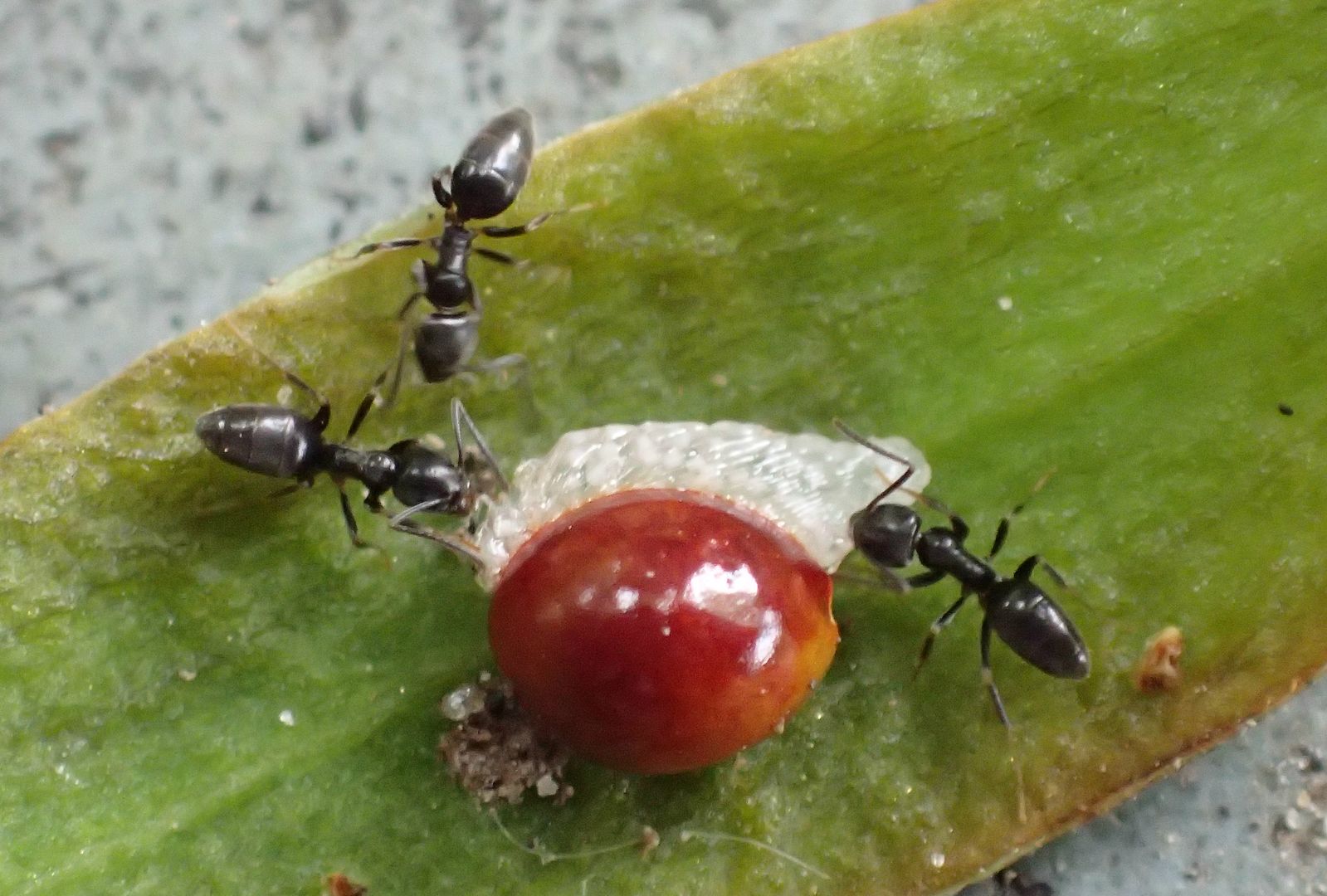
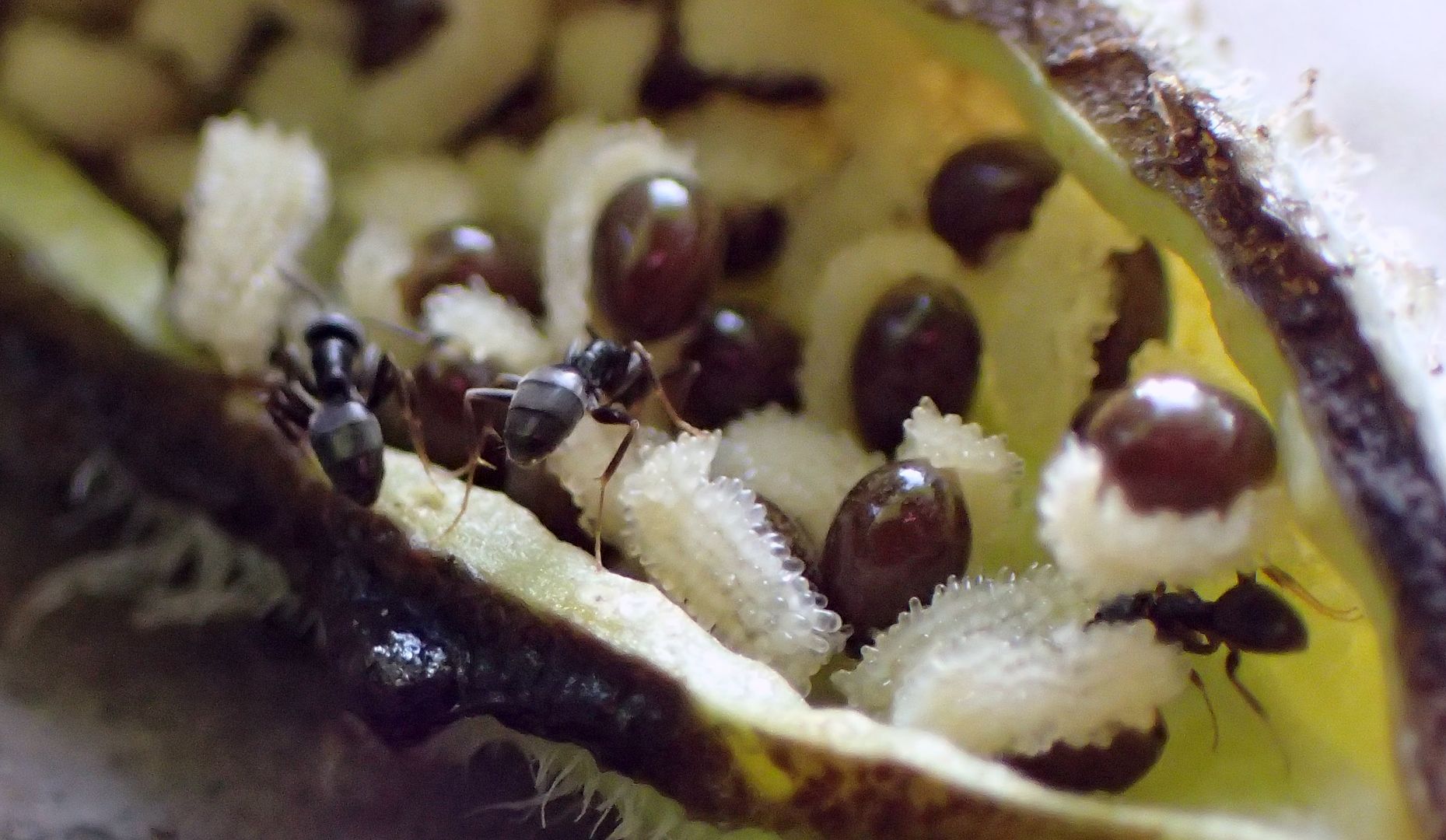
Bloodroot seeds are about the same size as Twinleaf, and the packets of elaiosome are huge by comparison.
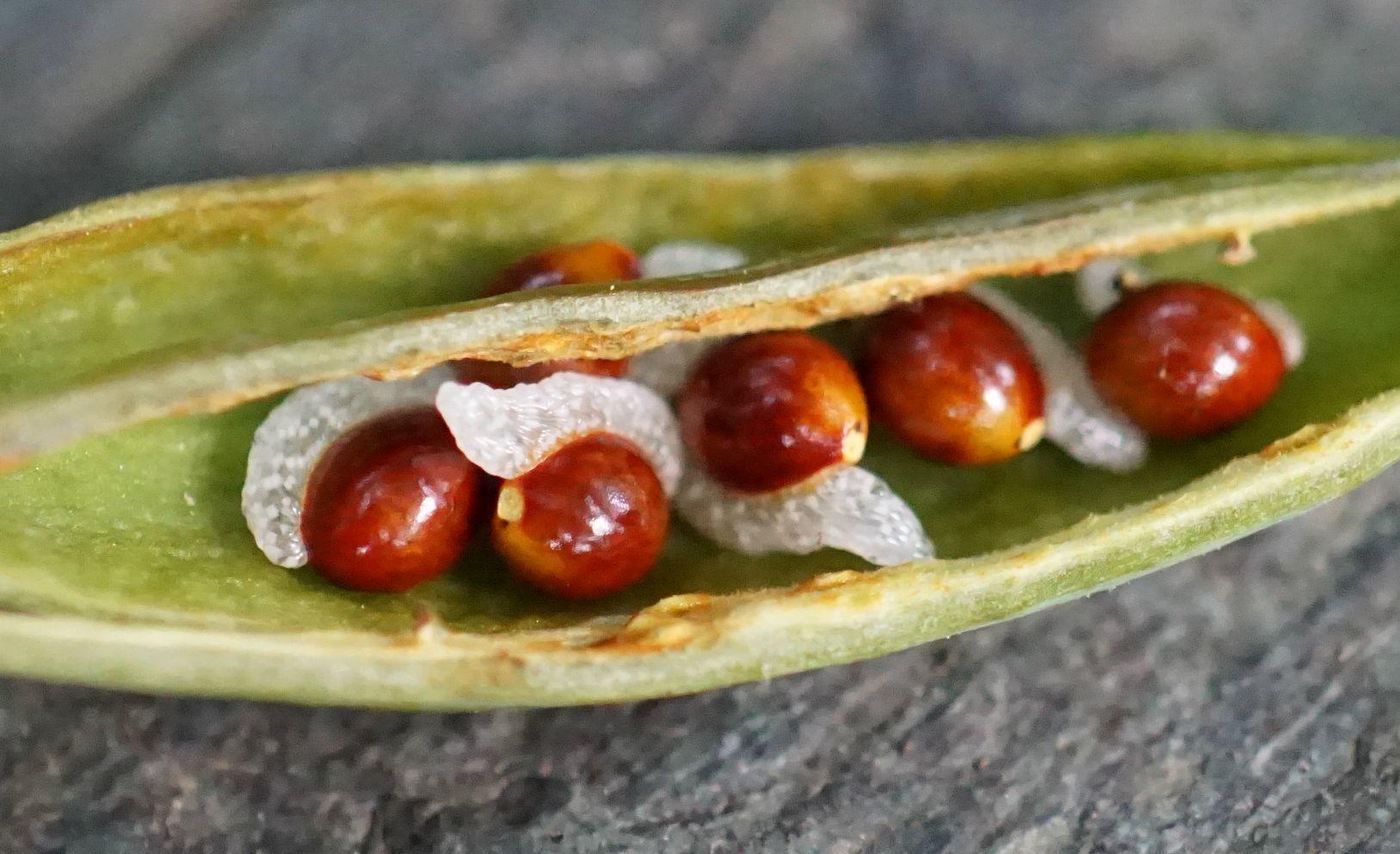
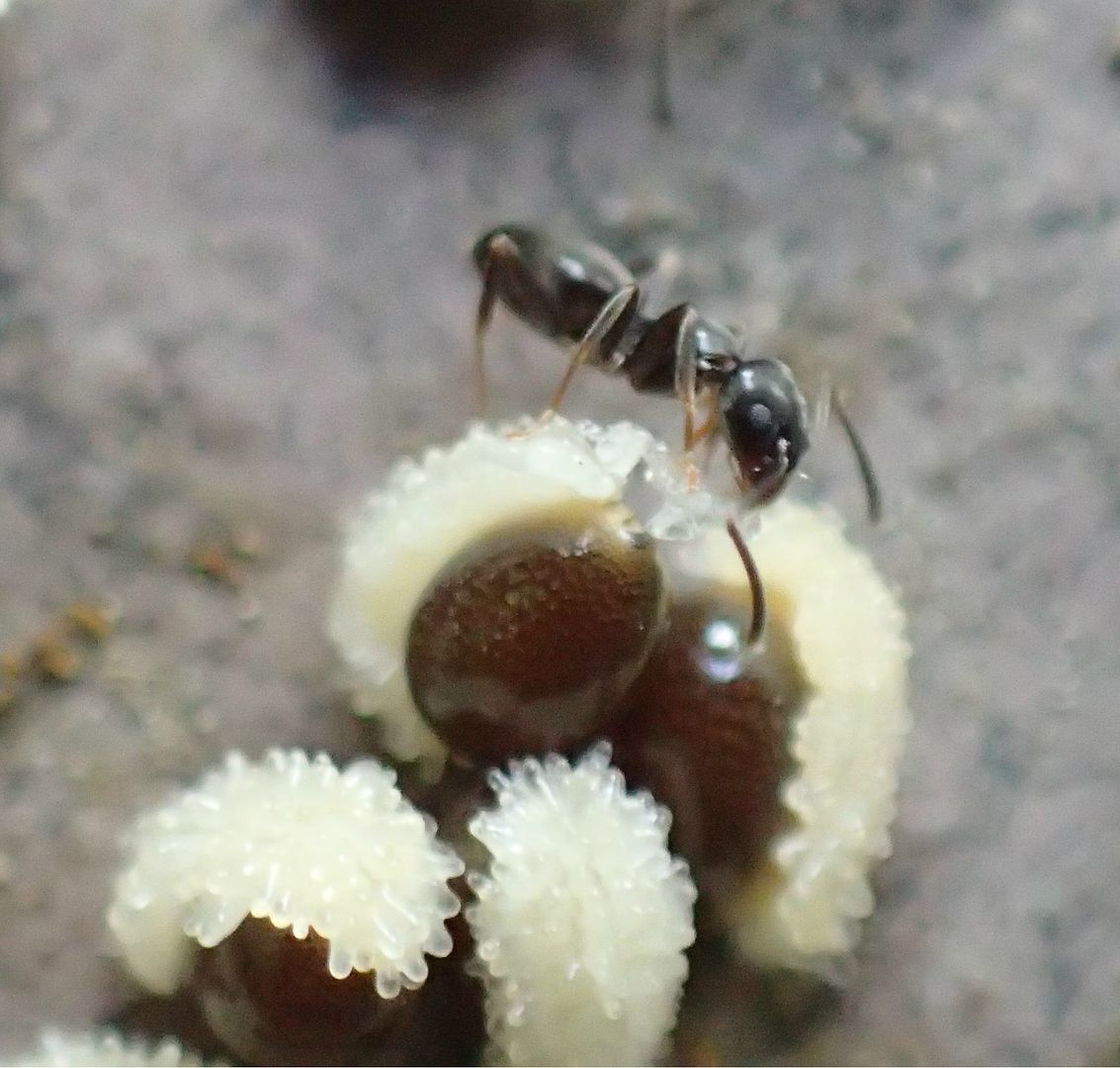
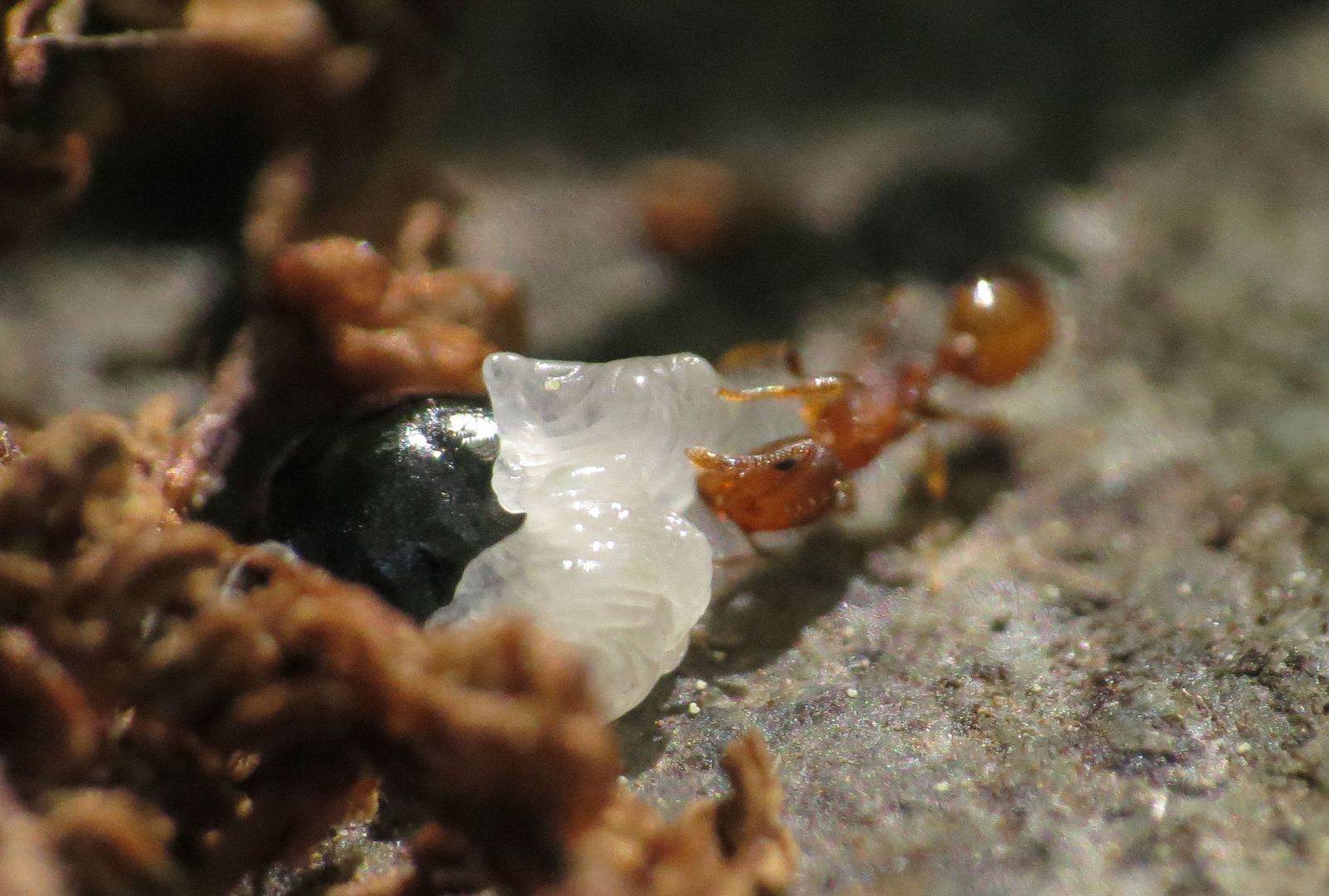
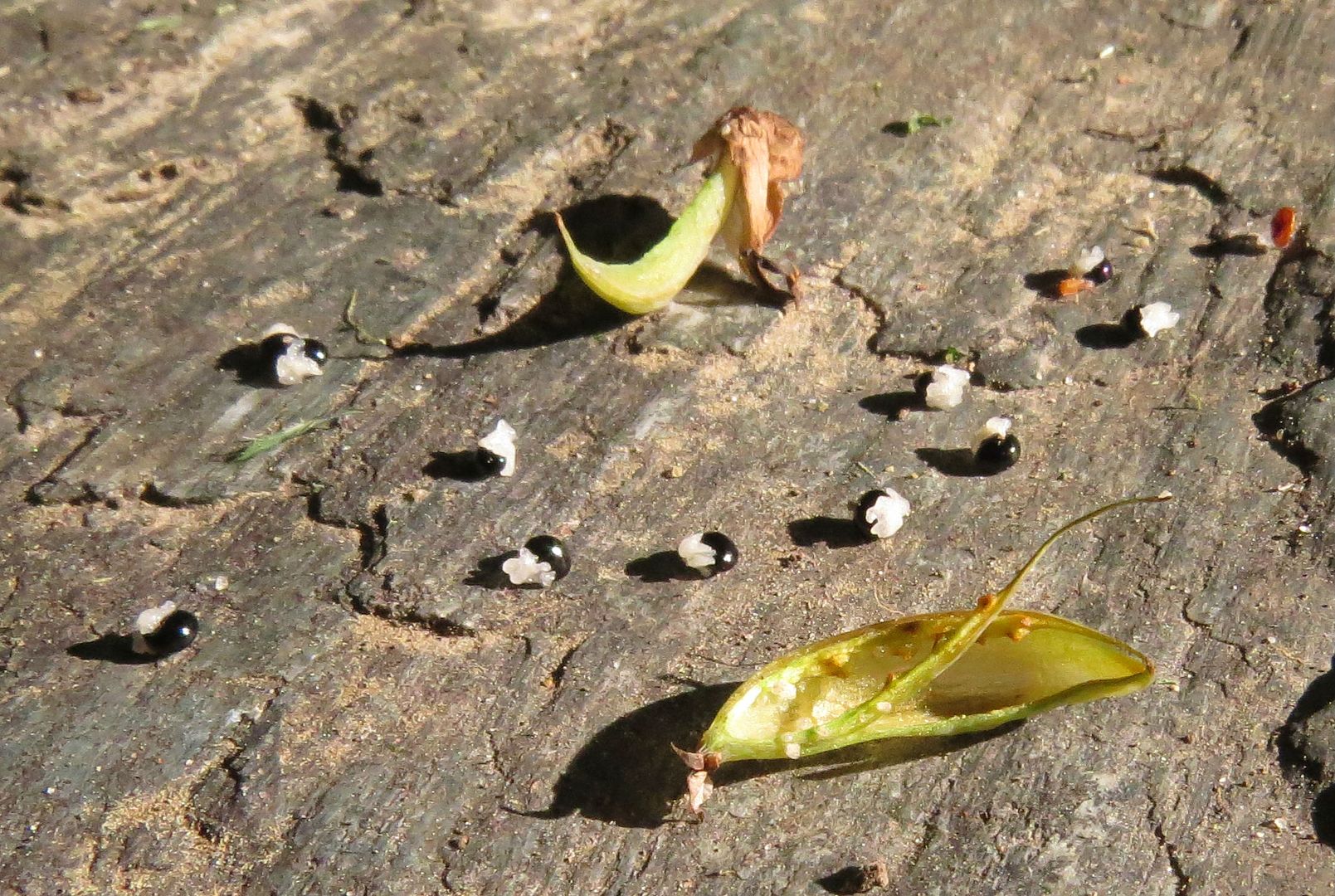
Woodland Poppy seeds are smaller but also have tons of elaiosome on them, though they look different. Actually the seeds to this pod are just shy from being ripe as they're normally black colored, but these should be dark enough that they'll still grow.
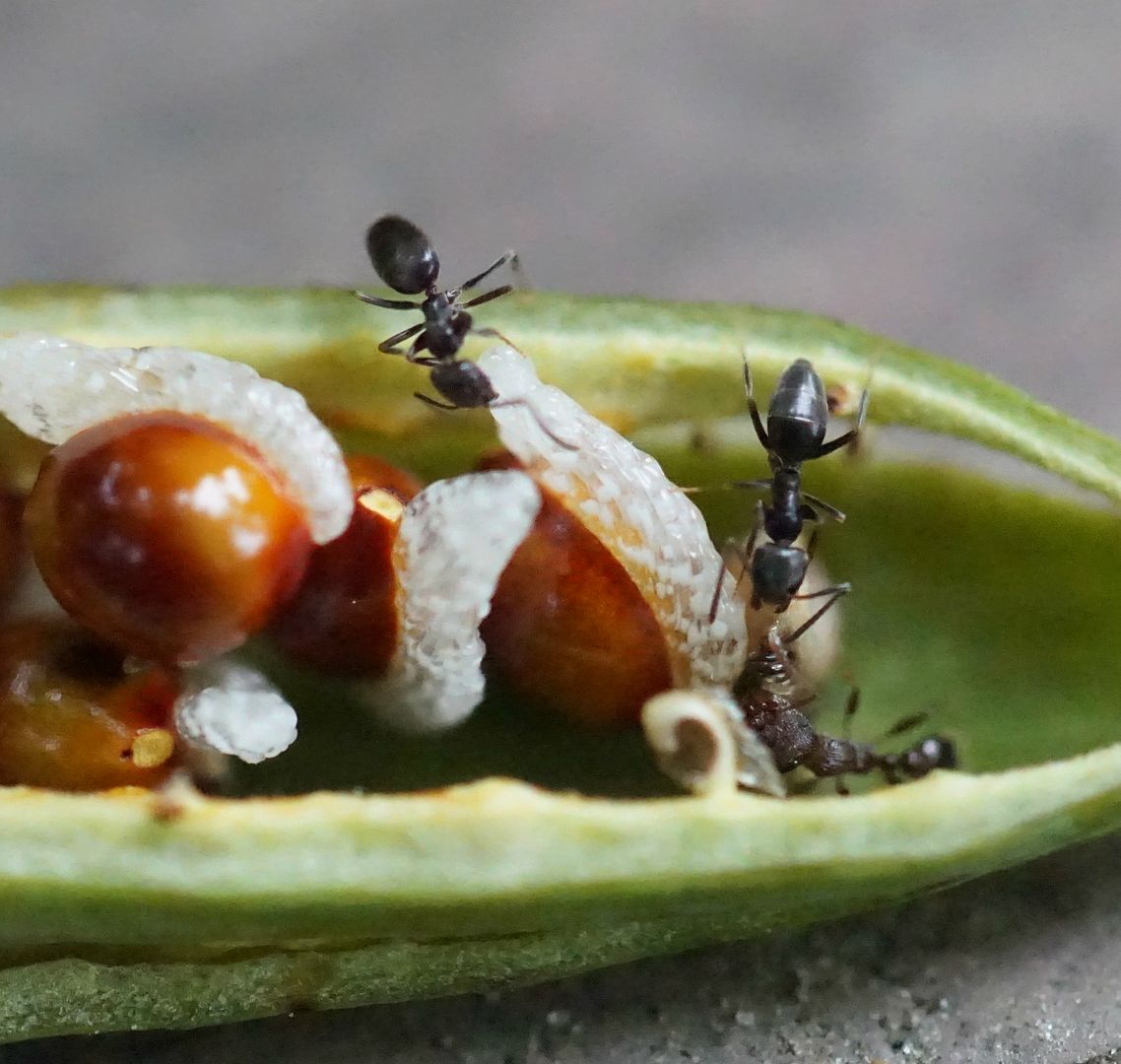
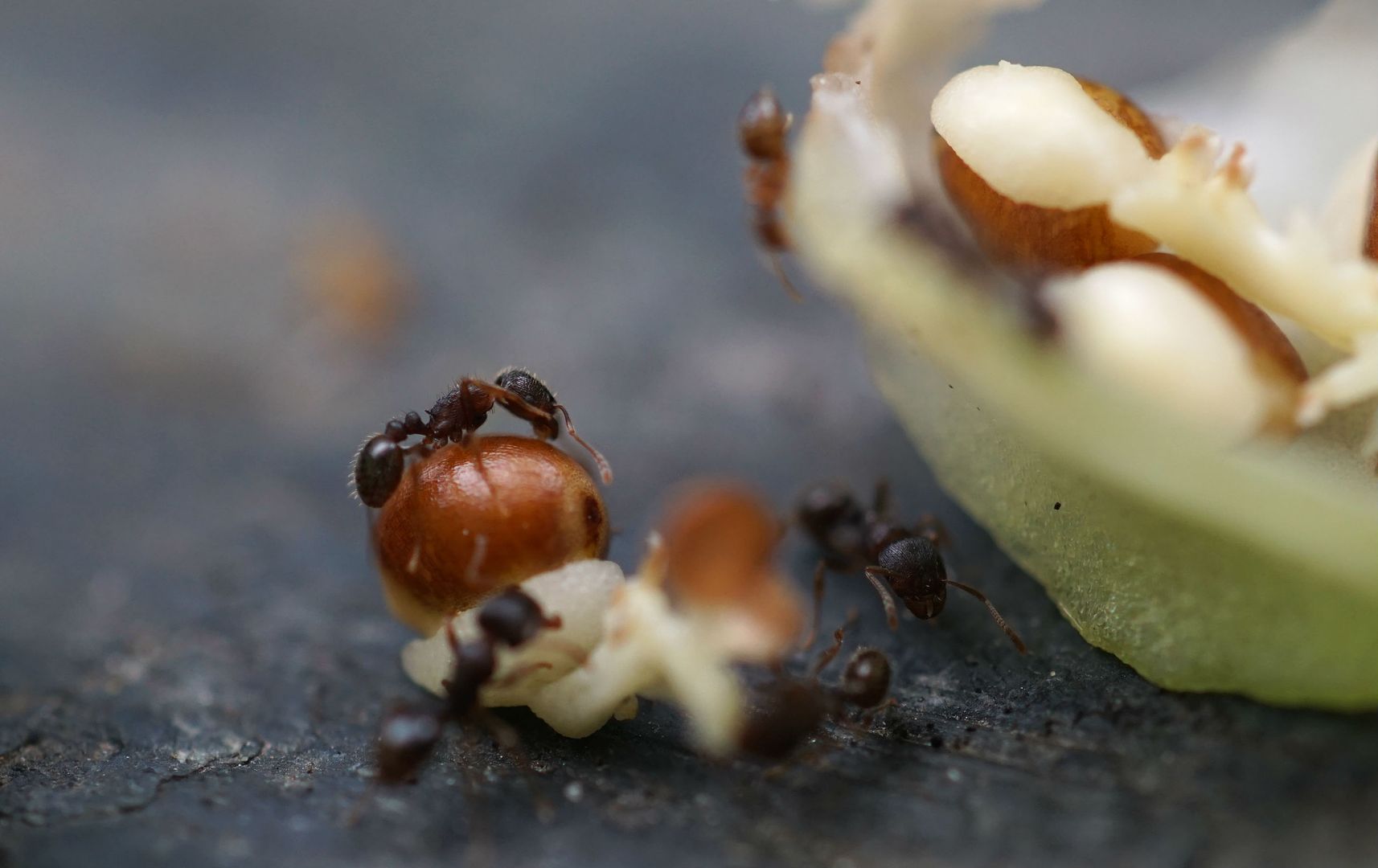
The two main ant species attracted are the Odorous House Ant, Tapinoma sessile, and....
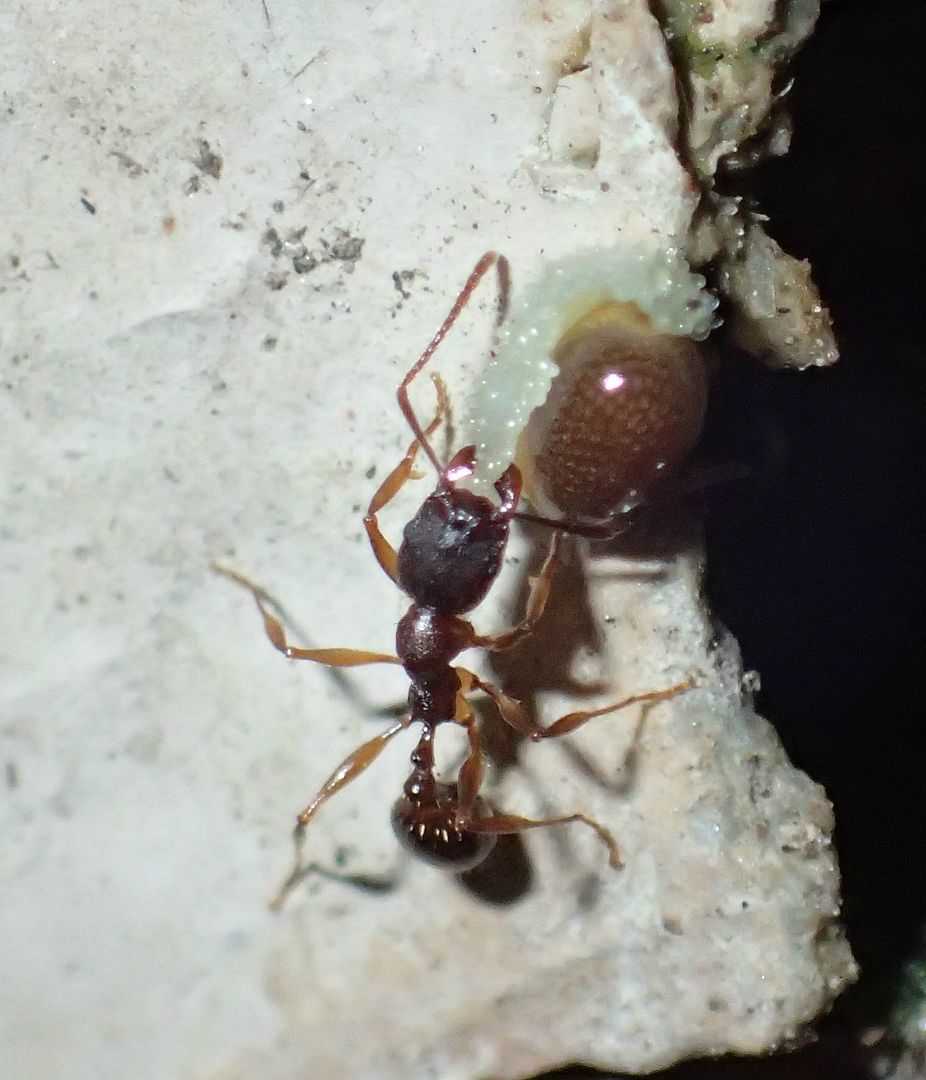
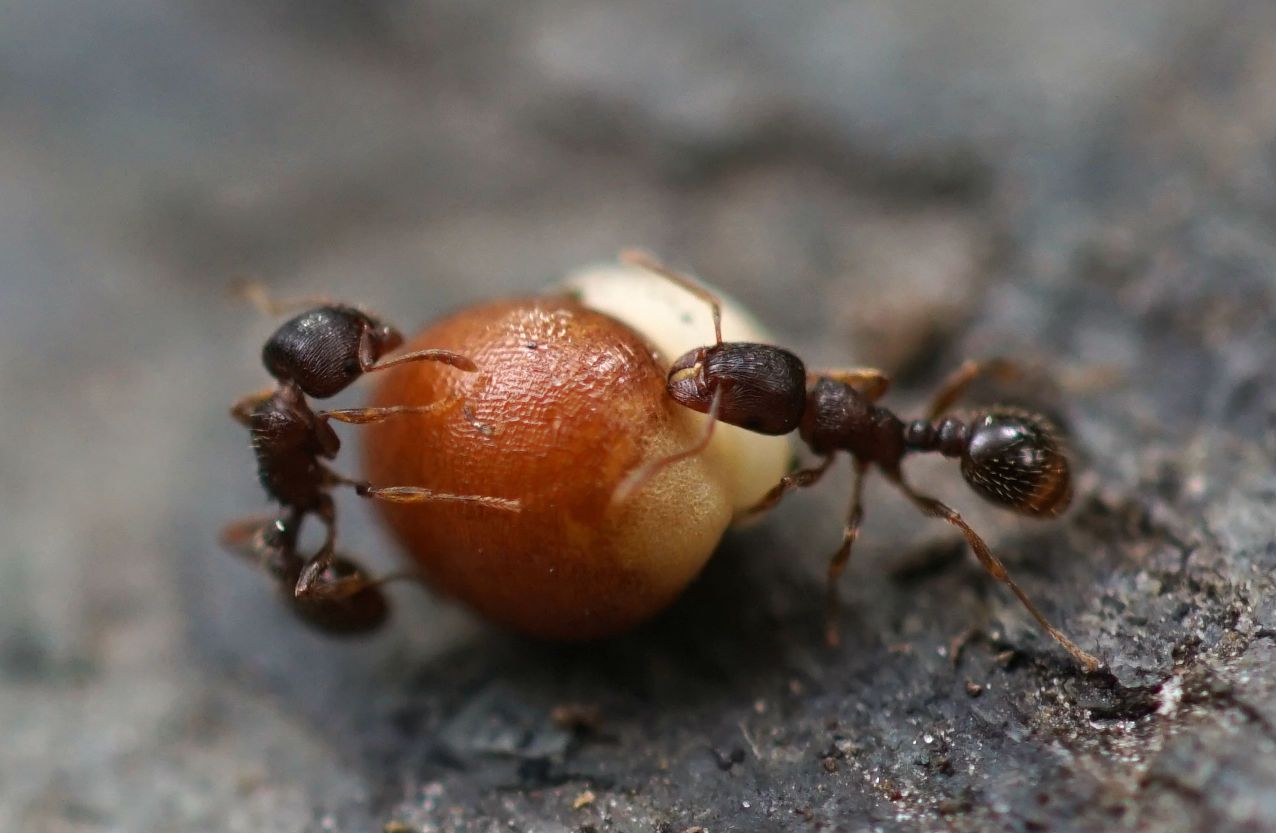
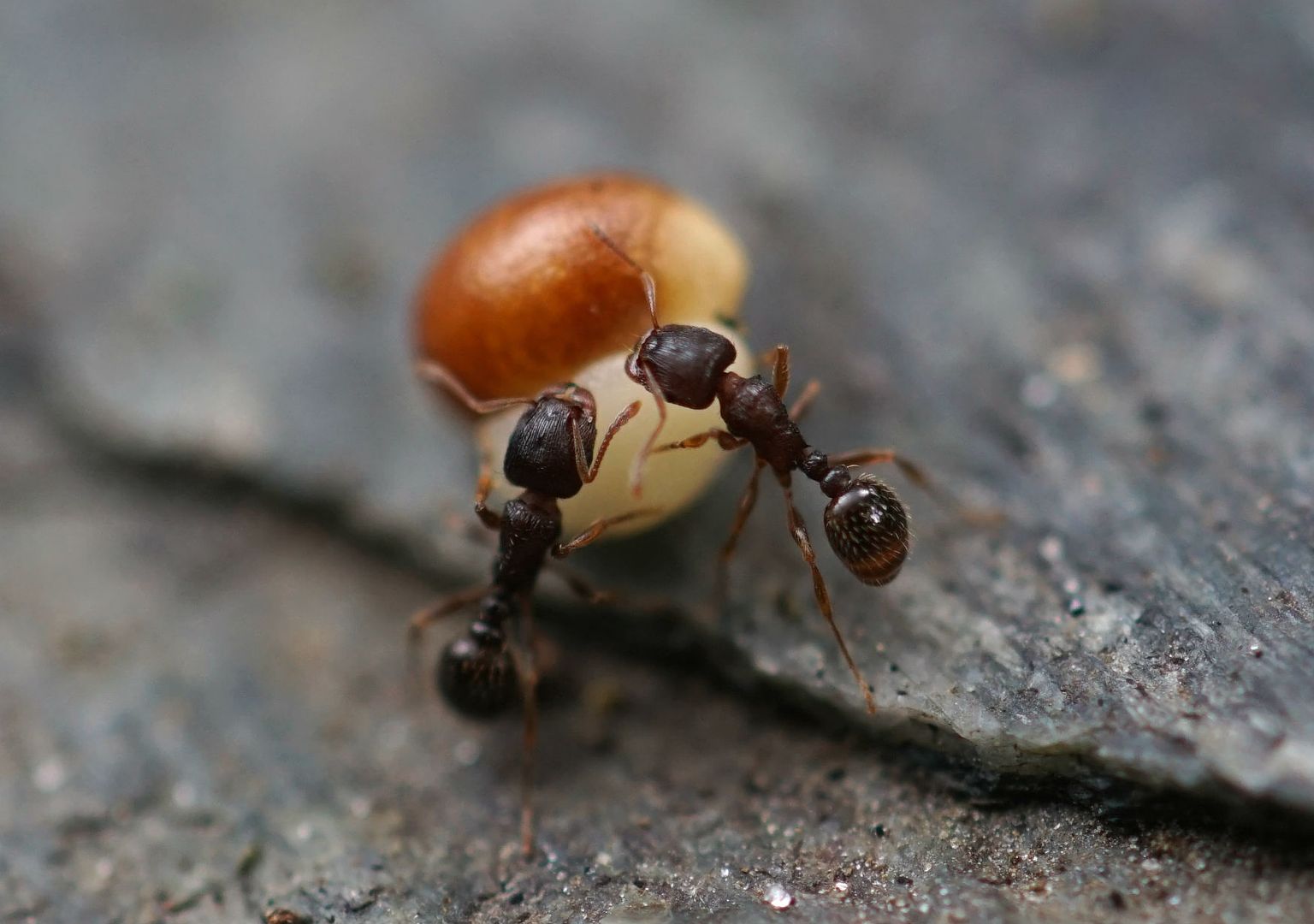
... Aphaenogaster rudis. This ant for the most part doesn't have a common name. In "A Field Guide to the Ants of New England" they're referred to as "The Rough Aphaenogaster" which refers to a rough spot on the thorax that set it apart from other Aphaenogaster. The problem here though is the genus name is in the common name so why bother? Also A. rudis has been found to be a HUGE species complex! I forget the exact number but I recall a study saying there was something like 8 or 16 nearly identical-looking species that all fall under the A. rudis blanket. Each one has a different number of chromosome in their DNA so you actually have to look at their blood to tell them apart. I don't have access to that kind of tech so for convenient sake they're all A. rudis, and to be honest they're all pretty similar to one another. I've found a few colonies before that have multiple queens and others that only have just one, some colonies seem to divide, but all pretty much nest in forests with colonies of ~2,000 ants.
Tapinoma sessile are either incapable or unwilling to transport Bloodroot seeds.
The seeds overall are too large and bulky for them to lift so they spent the whole time just nibbling at the elaiosome.
They started to bite pieces off and carrying them back to the nest bit by bit. At no point did they actually move the seeds other than to accidentally jostle one or two of them free of the pod.
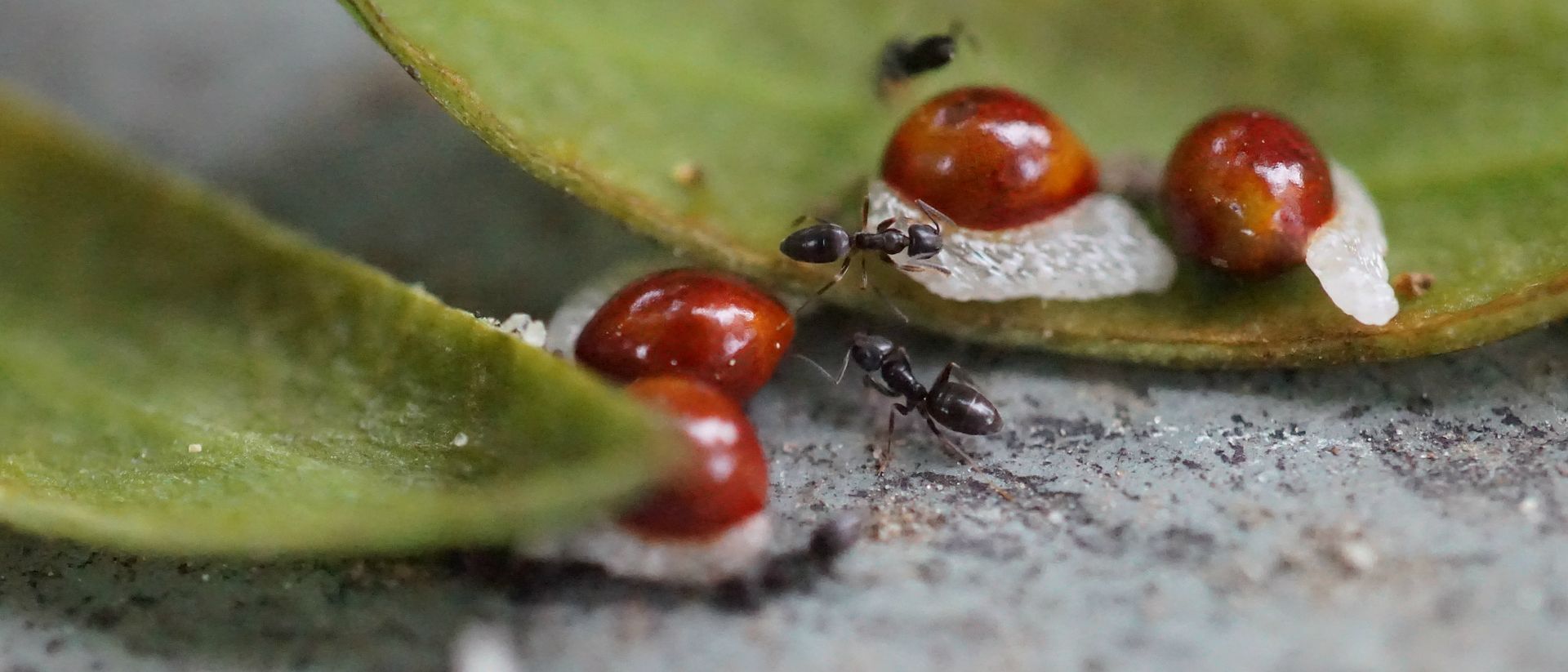
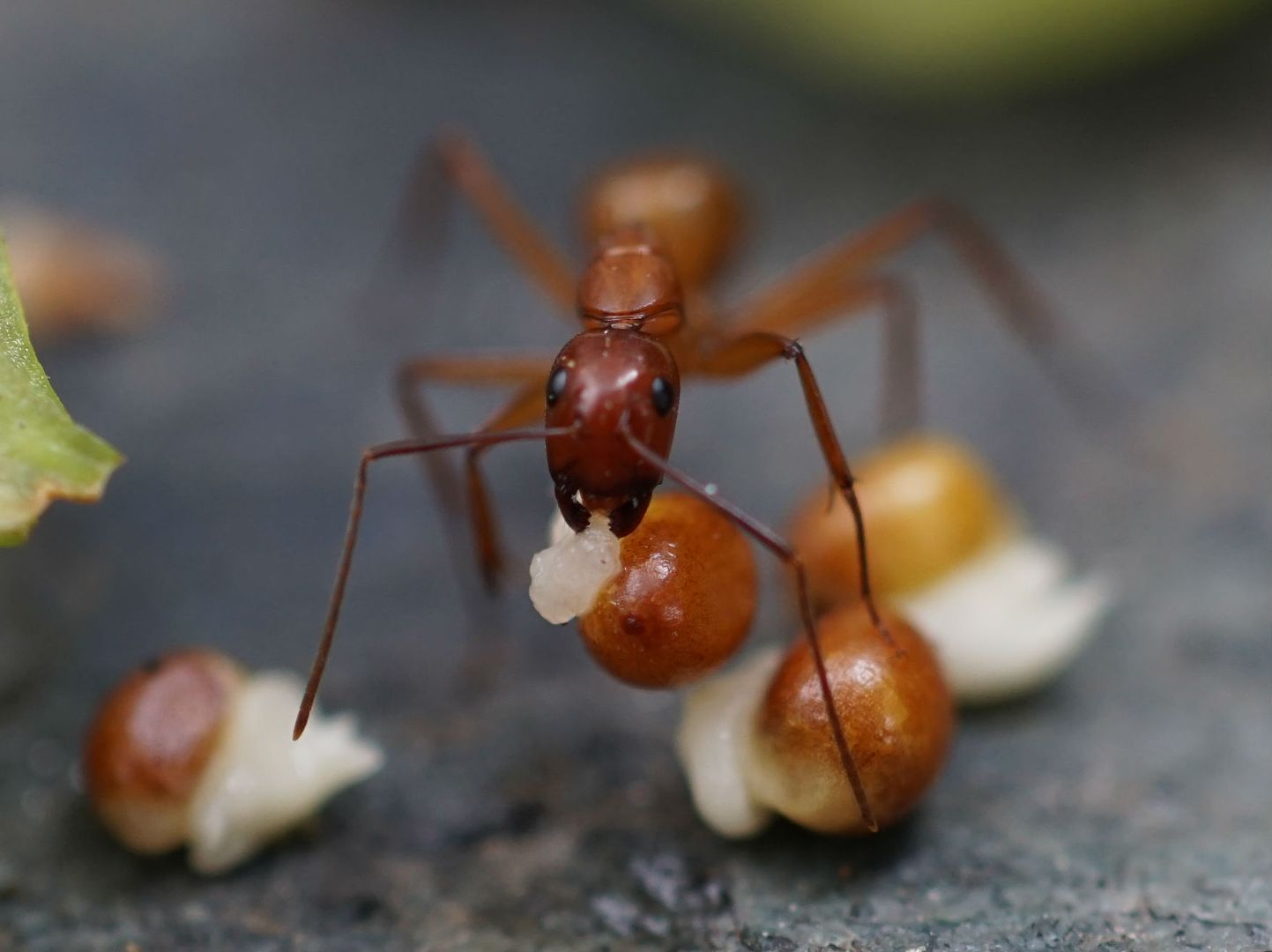
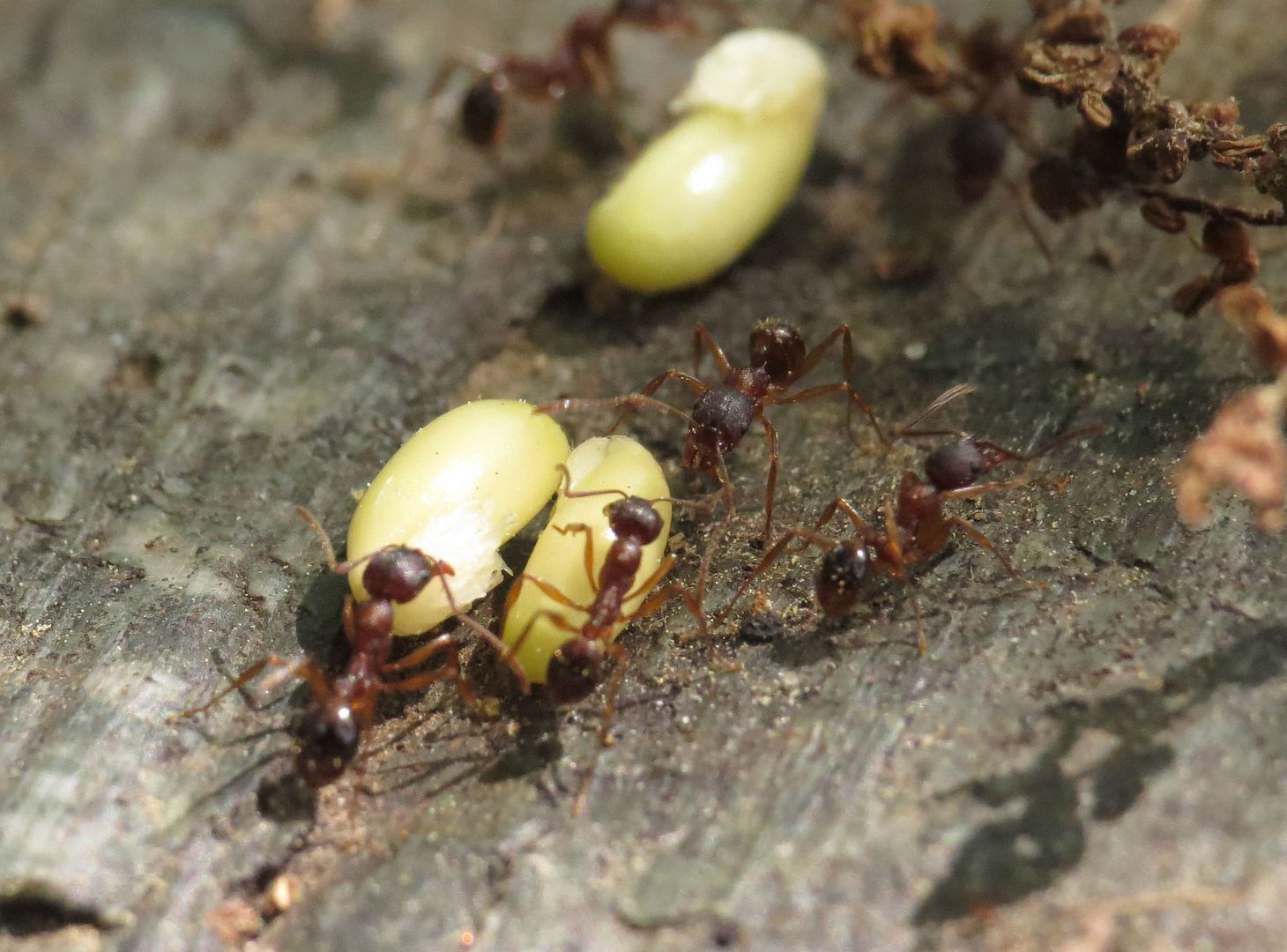
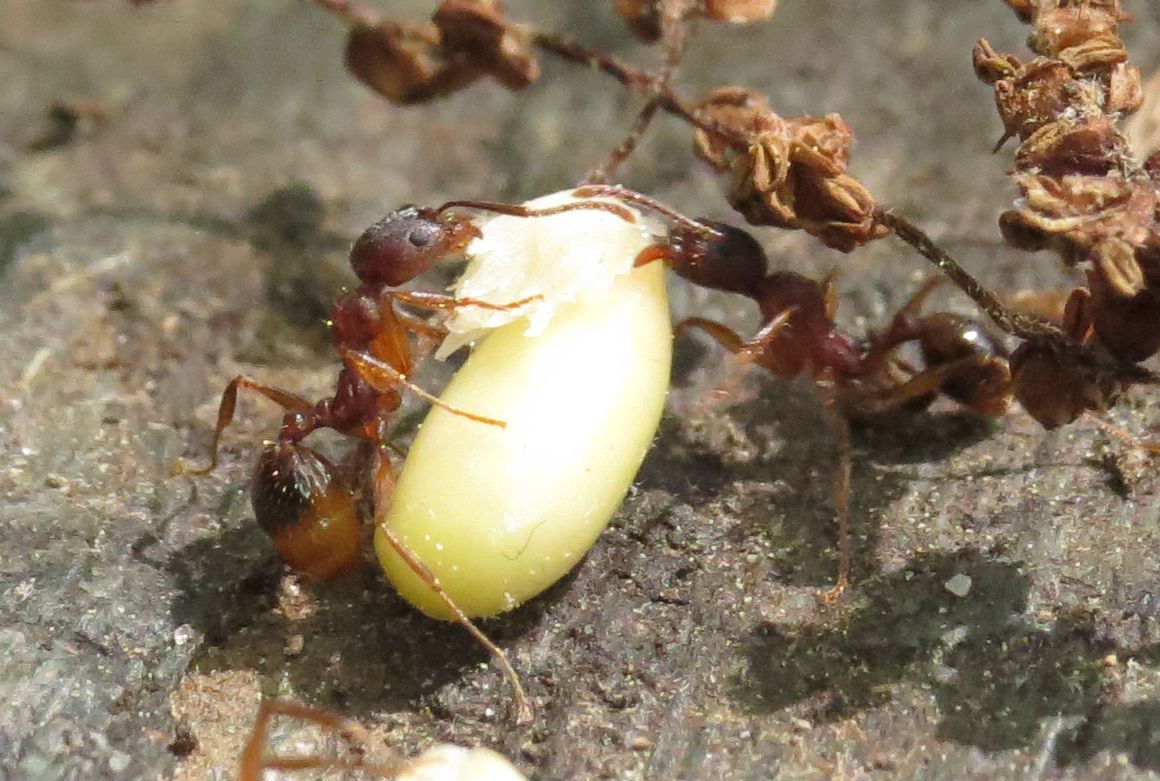
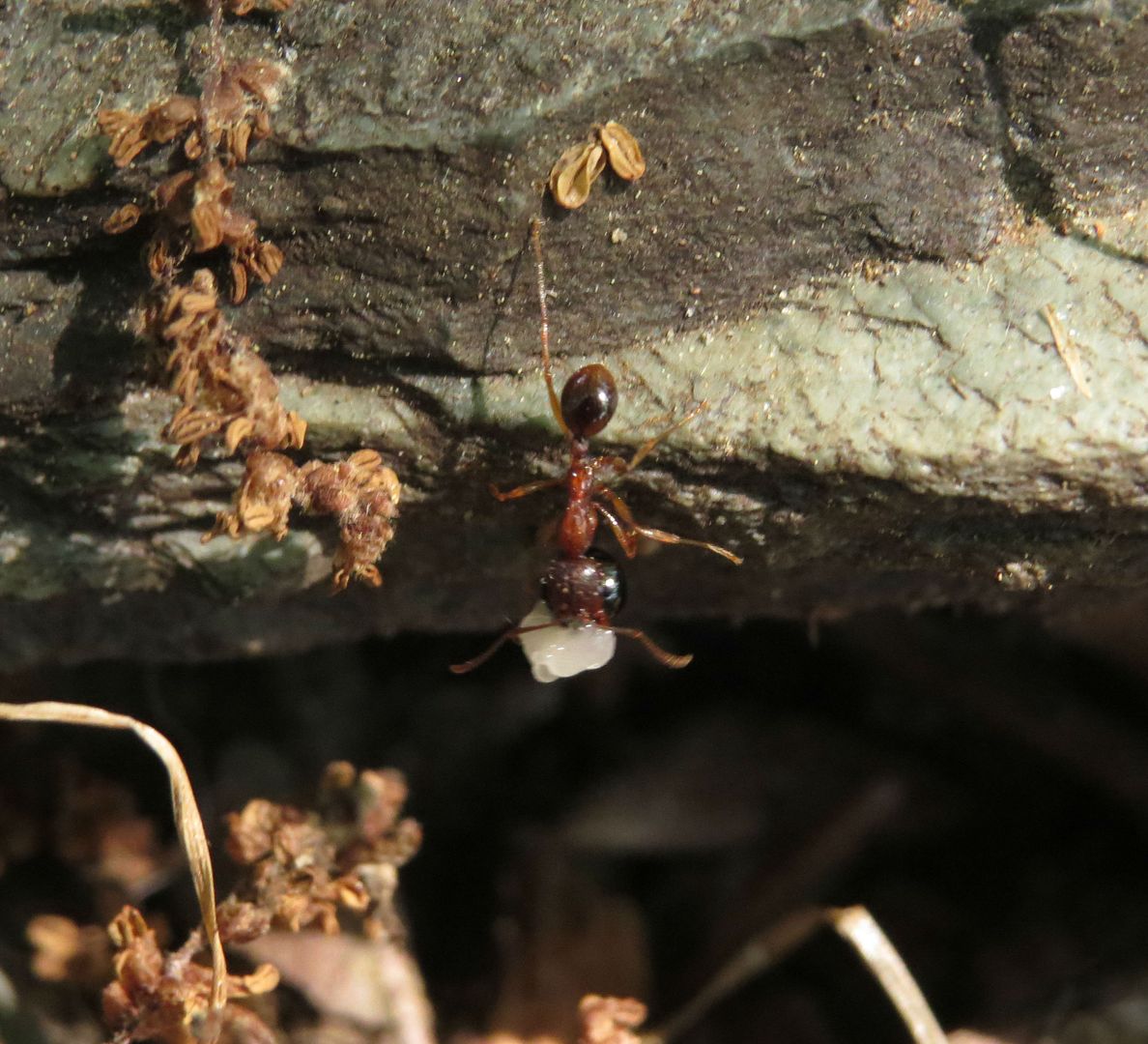
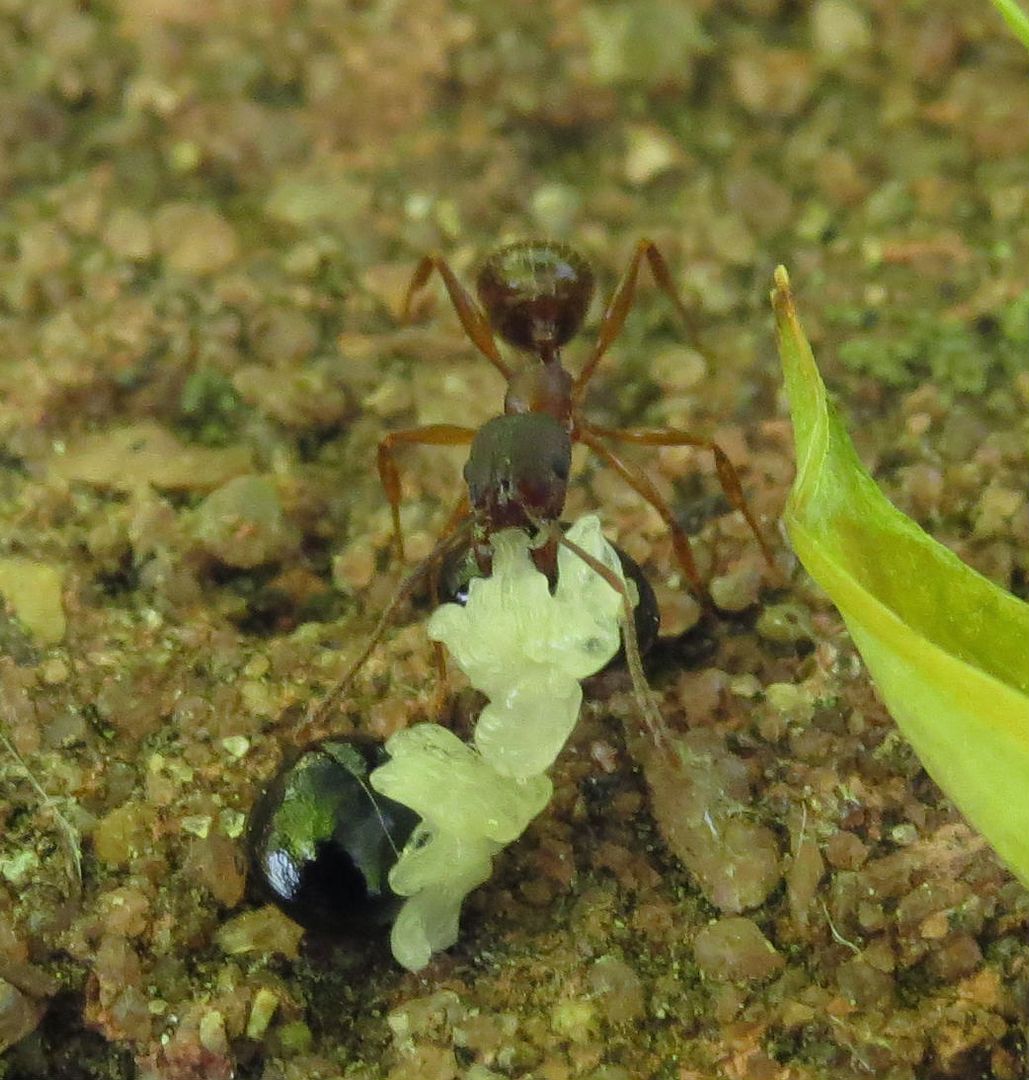
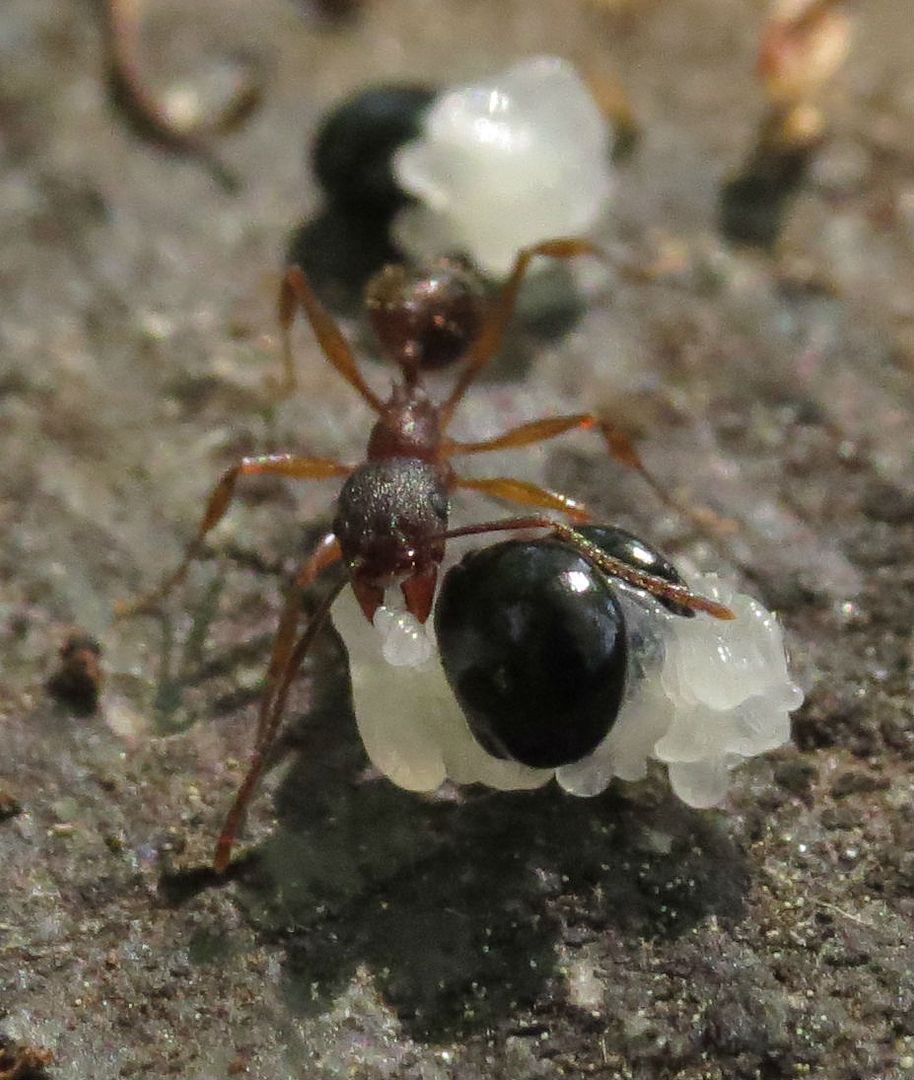
Aphaenogaster rudis on the other hand was more than happy to haul the seeds off.
They would latch hold of the elaiosome and drag them back to the nest that way.
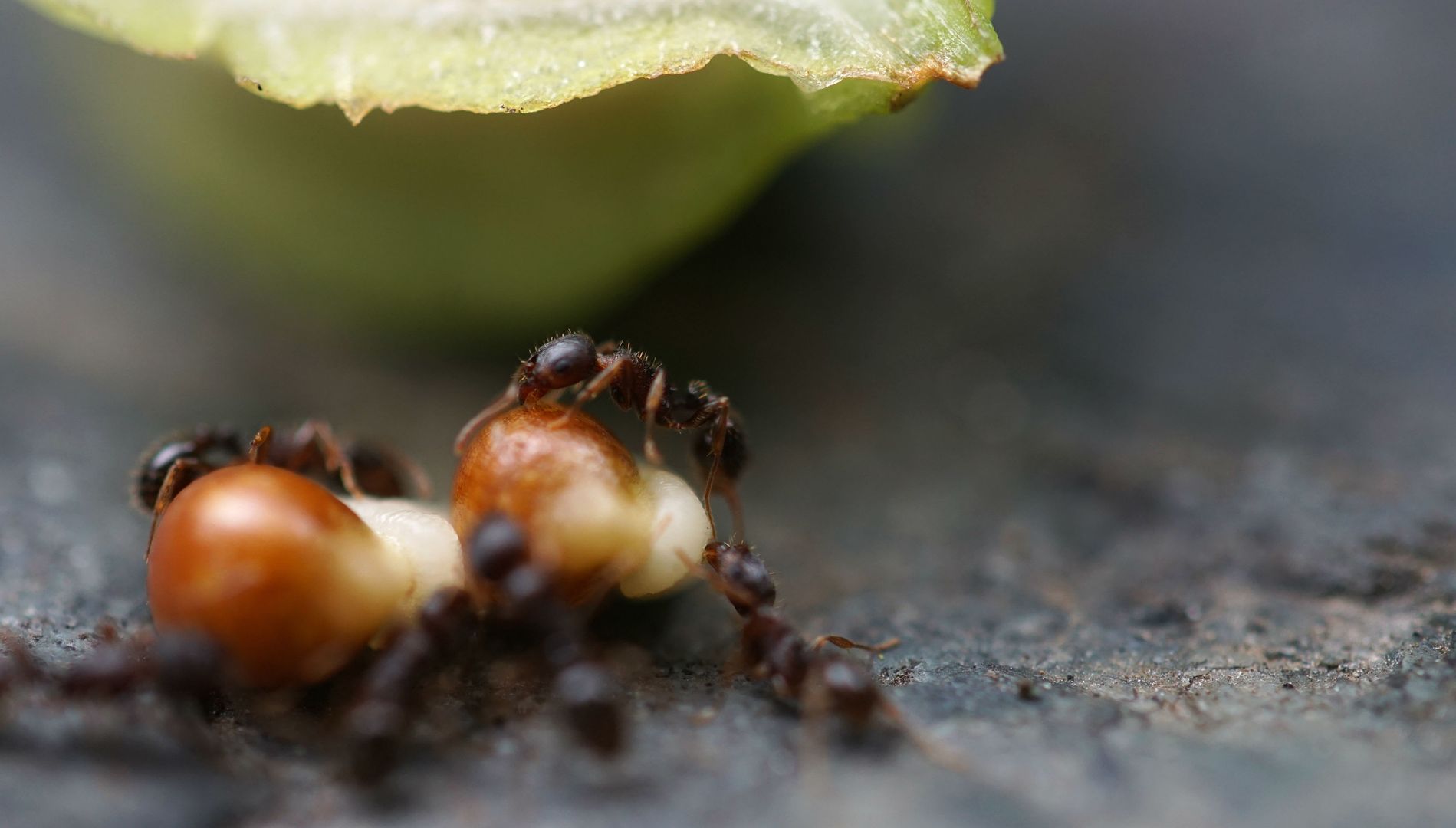
With Woodland Poppy, I was amazed to see Tapinoma sessile workers actually carrying them back to the nest. Most of their time was spent on removing the elaiosome from the seeds within the pod but several of the workers actually did disperse them... the colony is nesting in a soliar light but they're still dispersing them.
This is a native ant species so it's not too surprising to see them dispersing a native plant species but there is still a problem. The Odorous House Ant is often the little black ant seen running around your bathroom and kitchen counter. They nest opportunistically in mulch, under tree bark, and in man made structures. So they're not the best ant to be dispersing seeds because they can end up in the walls of your home, in foundation bricks, or under loose bark, but also in the mulch of your garden, and in flower pots. So it's the flip of the coin as to whether they end up in a spot they can grow.
Aphaenogaster rudis is better at the task.
They're generalist scavengers more in the habit of bringing food items back to the nest.
They nest under logs, in leaf litter, or along clumps of grass.
At no point during my observations did I witness any try to remove the elaiosome from the seeds outside of the nest. Actually shortly after bringing them into the nest the seeds were quickly discarded out to the colony's midden (trash) pile which was hidden among leaf litter.
Midden piles are where ants put their garbage. Old insect carcasses, dead workers, spent cocoons, general roughage and things to be discarded all get piled up here. In deserts of the South West they're very noticeable around ant nests but here in the forests of the North Eastern United States they're often hidden under leaf litter.
Overall were it not for the ants dispersing these seeds they wouldn't have gotten very far. New plants would try to germinate just inches away from the old ones and the patch would move at a snails pace and only on the rarest of occasions would they travel up hill. Thanks to the ants carrying the seeds off, even if they're dropped or discarded shortly after, new populations of these plants can spring up to 24' away, potentially more if colonies fight over them or raid the midden piles of other colonies they often do for dead ants.
Other ants that also showed:
Prenolepis imparis - single worker that did not recruit other nest mates.
Nylanderia flavipes - even smaller than Tapinoma sessile in size. Barely able to remove elaiosome. did not disperse seeds.
Temnothorax curvispinosus - even smaller than Nylanderia flavipes. Incapable of recruiting nest mates as they don't use chemical trails.
Wednesday, July 20, 2016
Myrmecochory: Ant Plant Seed Dispersal
It's that time of the year again. This is probably my favorite part about native plant gardening because it combines so many of our loved spring ephemerals with ants.
Ants are largely overlooked by gardeners despite being the most common insect (by number). Part of the reason gardeners don't appreciate ants is likely because they are generalist foragers. So it doesn't matter a whole lot what plants are growing in a garden, native or non; if you have soil and dead wood, chances are ants live in your yard.
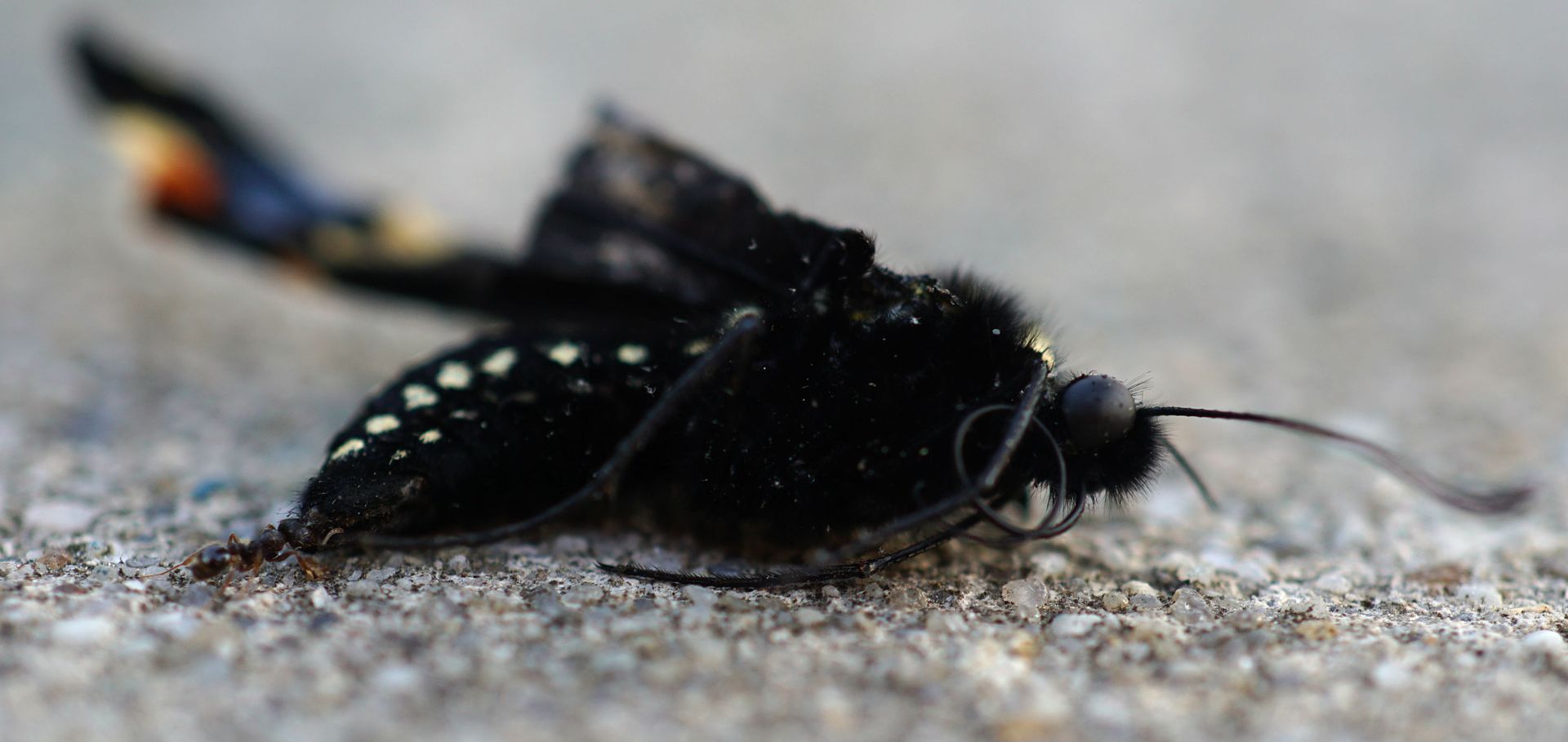
They play a vital role in removing dead insects. So after those big pretty swallowtail butterflies are done laying their eggs and visiting the flowers in your garden, ants are more than happy to collect, dissect, and consume their expired carcass. Though on the other hand, ants are also happy to remove butterfly eggs from host plants and often kill early instars to a lot of species. Ants don't forage equally on certain plants though, so it can depend on what's nesting near the tree/plant. Many caterpillars have defenses against ants too, but they're not always effective.
I have a Hackberry sapling that's about as tall as me right now. My dream is to someday see some Hackberry Emperors using it as a host plant. Every year though I got out there and find ants (Lasius alienus, Camponotus pennsylvanicus, C. chromaiodes, C. nearcticus, C. subarbatus, Temnothorax curvispinosus and Nylanderia faisonensis) foraging on the tree. They're mostly doing what's called nectar scraping where they wonder the plant licking and scraping the surface of the leaves to collect the small amounts of sweet sap that bleeds out of the leaves with the changing temperature of the day. The foraging power of 1 ant colony is enough to put a dent in the number of Lepidoptera eggs on a sapling; this one has 7 different species and likely multiple colonies of each constantly foraging on it, so I won't likely be seeing any Hackberry Emperors for several years.
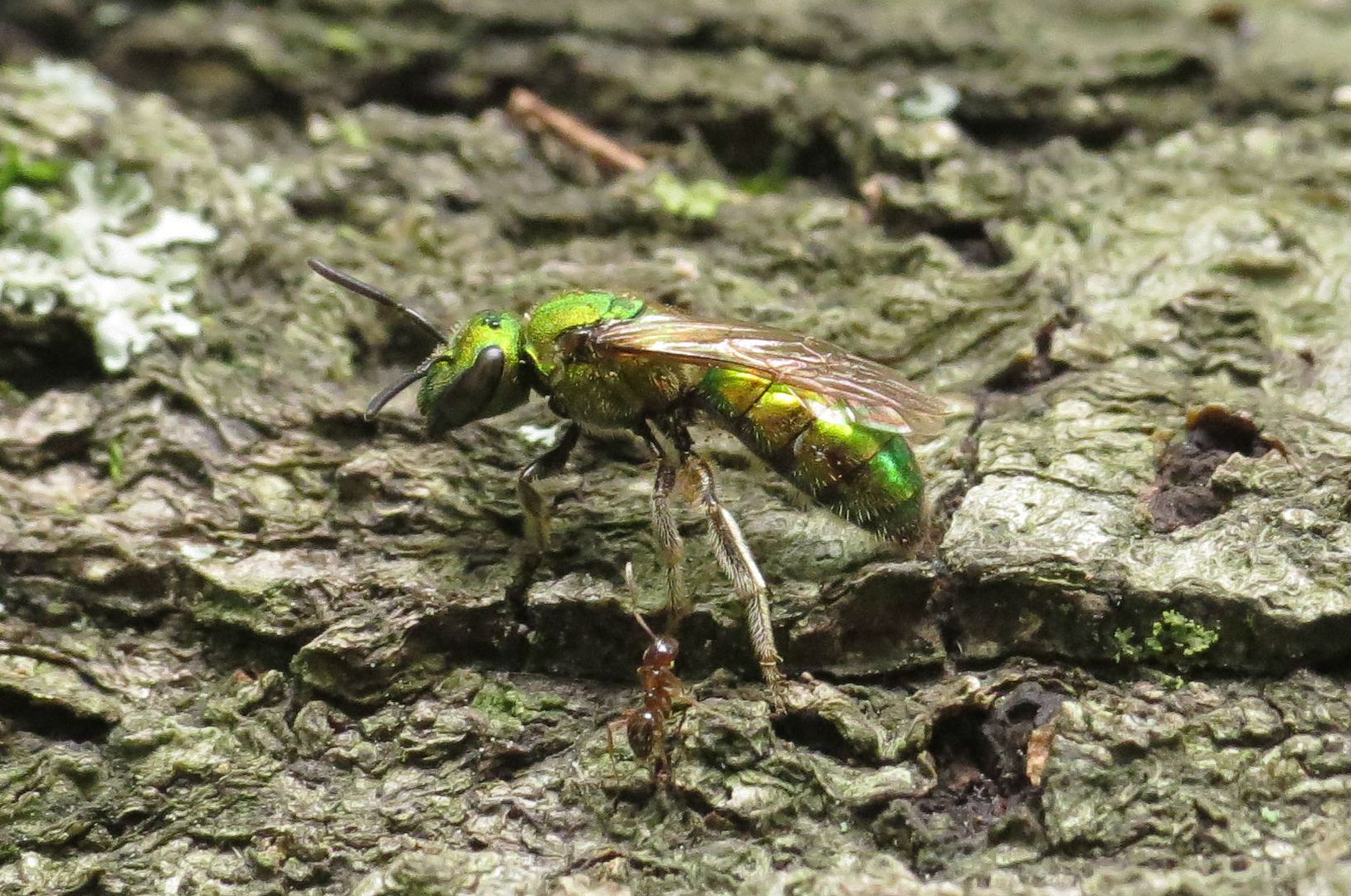
To a lesser degree, ants also think pollinators are delicious. They're mostly an issue with solitary bees, usually ground nesting or mason bee nests when discovered by ants. Ants typically don't dig into structures in search of food though, so as long as the burrows or tubes are properly secured with mud the developing bee larva should be safe.
My favorite thing ants do in the garden is called Myrmecochory, or ant plant seed dispersal. Even here though ants can be considered annoying. Let's say you paid $20 for a rare Trillium species, looking to start a clump of them over the next decade, which is how long many Trilliums take to flower from seed. Often though Trillium seeds have the annoying habit of walking away from the plant thanks to packets of "Elaiosome," a lipid rich substance on the seed, attracting ants to come and carry them home.
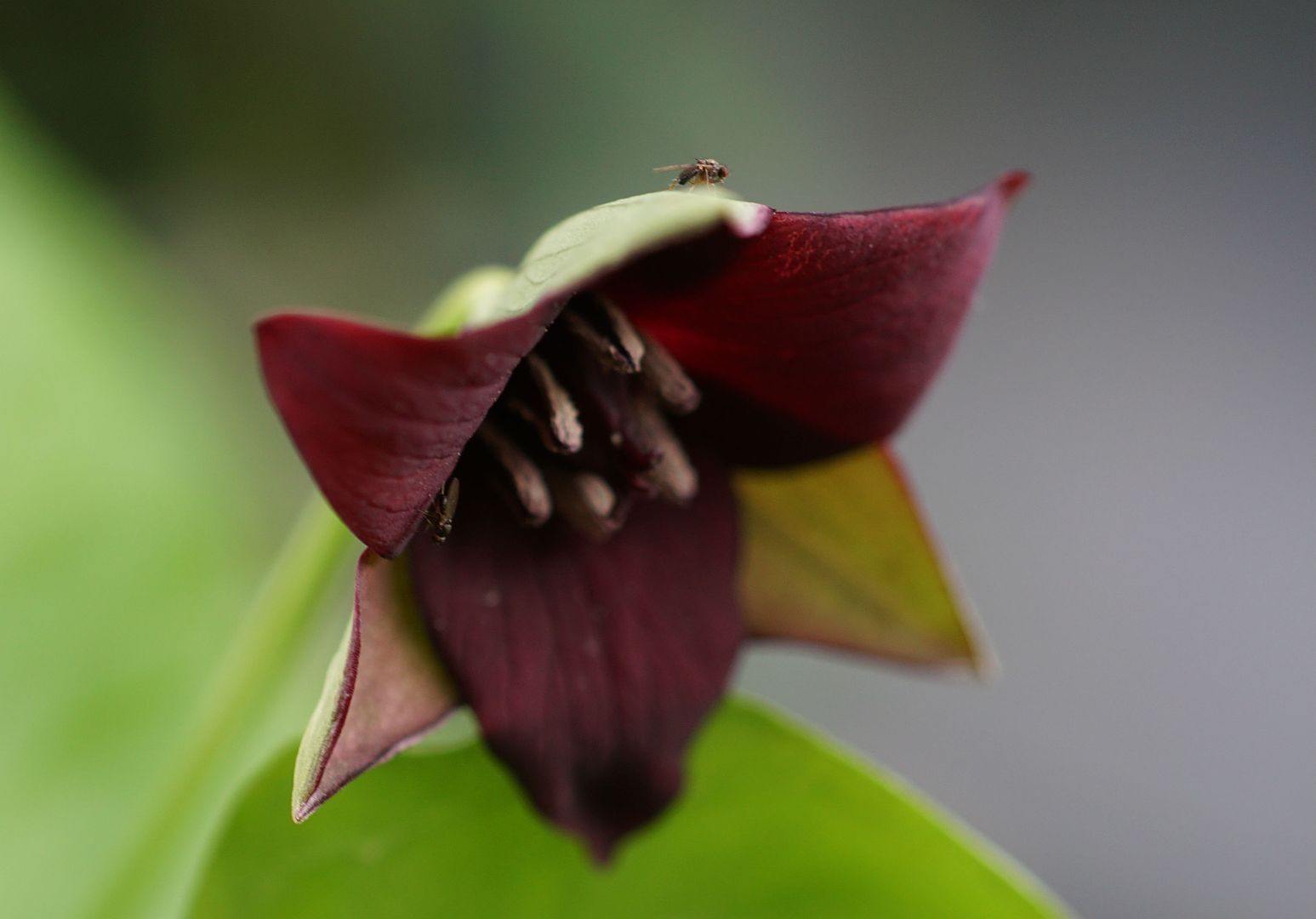
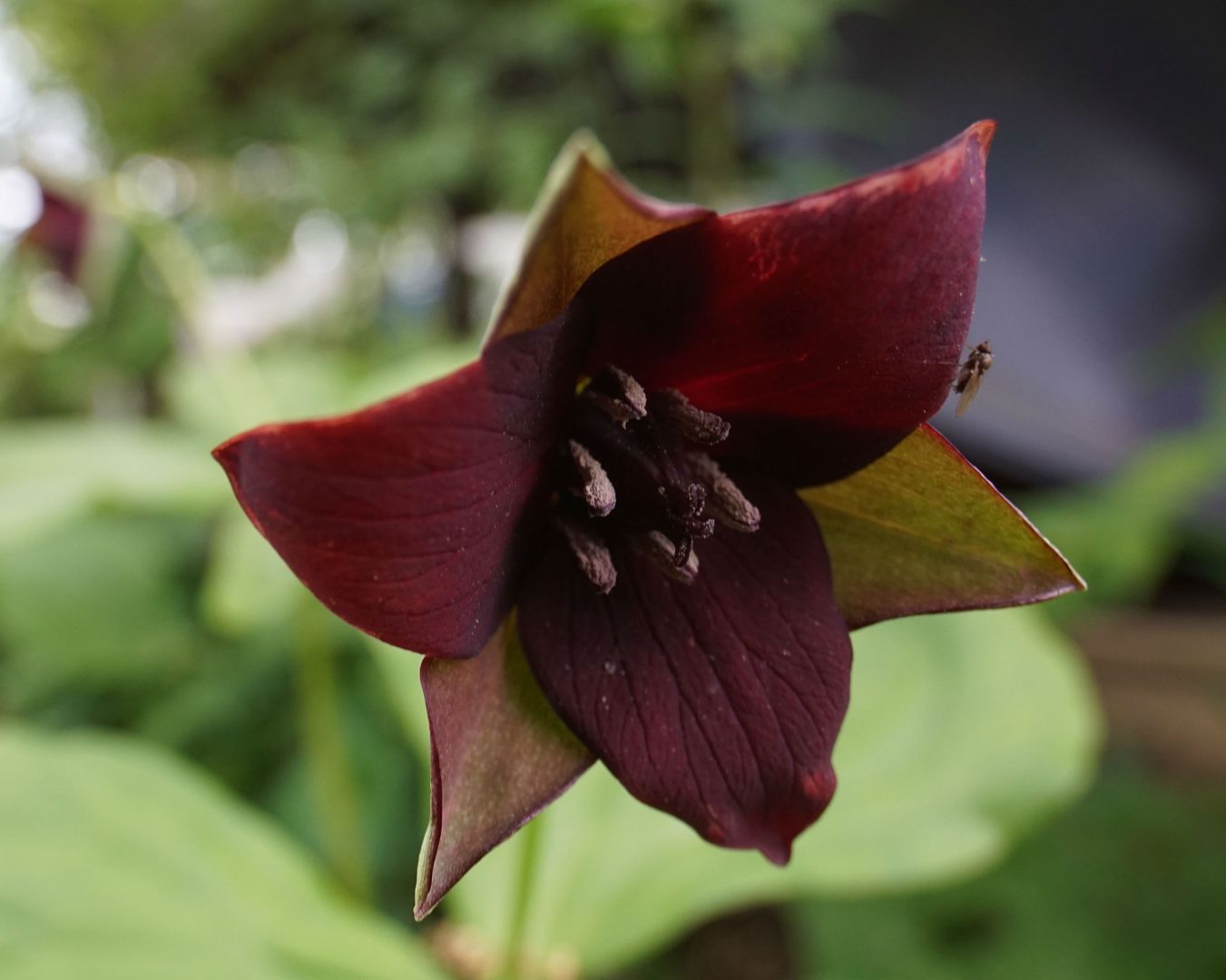
This is Trillium vaseyi, (I believe), which is pollinated by Vinegar Flies and other sorts of carrion insects. Note Vinegar Flies are sold in pet stores as "Fruit Flies" because that sounds better than Vinegar Flies. True Fruit Flies consume fresh fruit and tune delicious apples and berries into balls of maggots. Vinegar Flies target foods that have already spoiled, drawn in by the fermenting smell of yest, cider and dead fish, which is what this flower smell like.
Lots of Trilliums are either pollinated by carrion insects or bees. In my garden this particular Trillium species isn't quite ready to produce seeds yet, though they flower every year. A rabbit or some other critter trampled through the Trillium garden and snapped the stems to the two plants of this species so I've yet to get photograph them. Fortunately I have 8 other Trillium species in my garden!
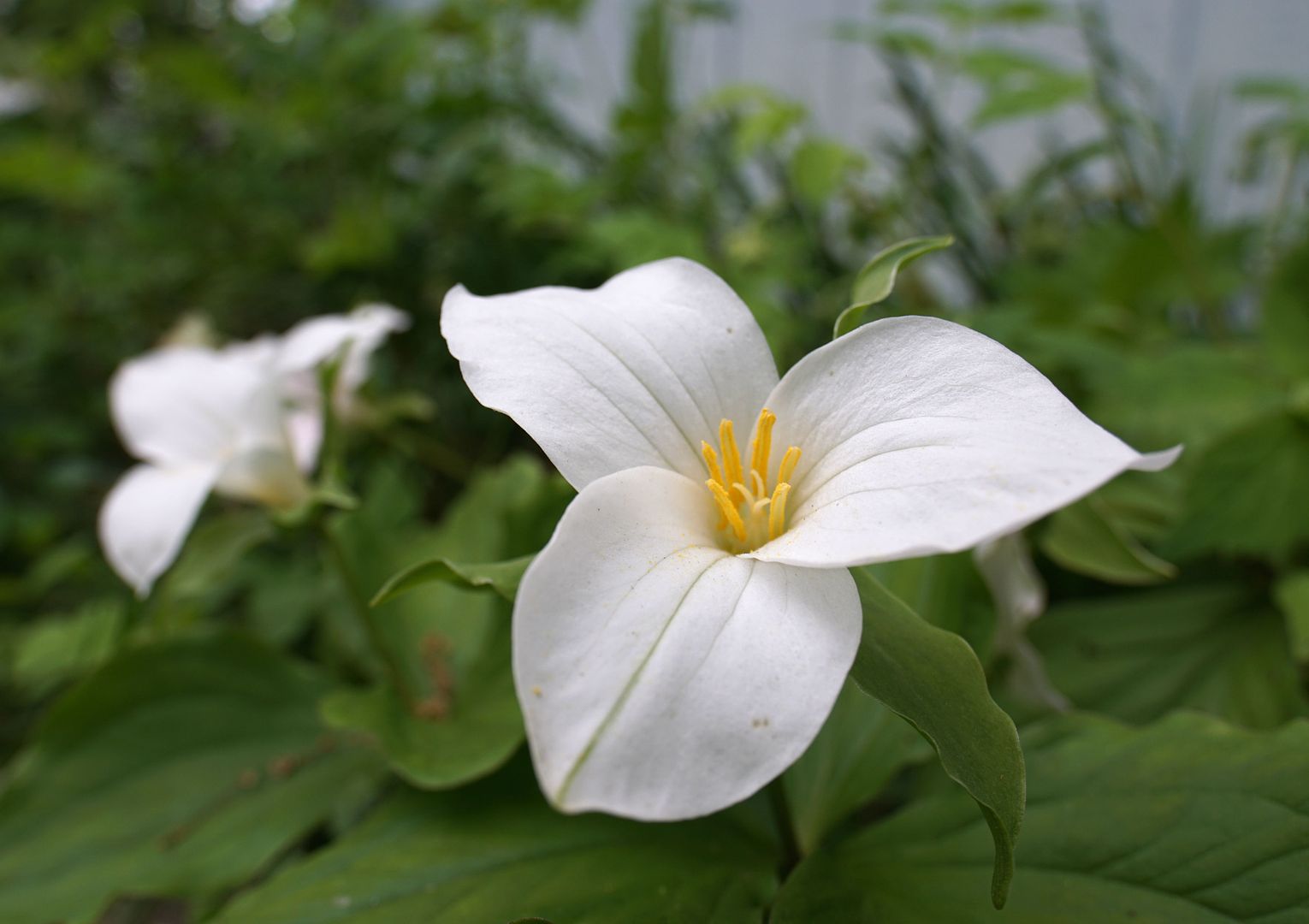
Trillium grandiflorum! This is by far the most common and easily recognized Trillium species. It's pollinated by bees and while I never witnessed any bees visiting my flowers I have seen honeybees visiting them in other gardens when planted in sufficient numbers. I'm certain Bumblebees and others must visit them on occasion too. Currently I have a clump of about 9 plants of flowering age. Each of which has a few off shoots underneath that will reach flowering age in years to come. I may even need to divide a few in a year or two.
Admittedly things like Twinleaf, Violets, Blood Root, Hepatica, Woodland Poppy, and Bleeding Hearts have already dropped their seeds for ants to disperse. Trilliums are latest ephemeral plant in North America to drop their seeds as many of the ones I've mentioned are already dormant.
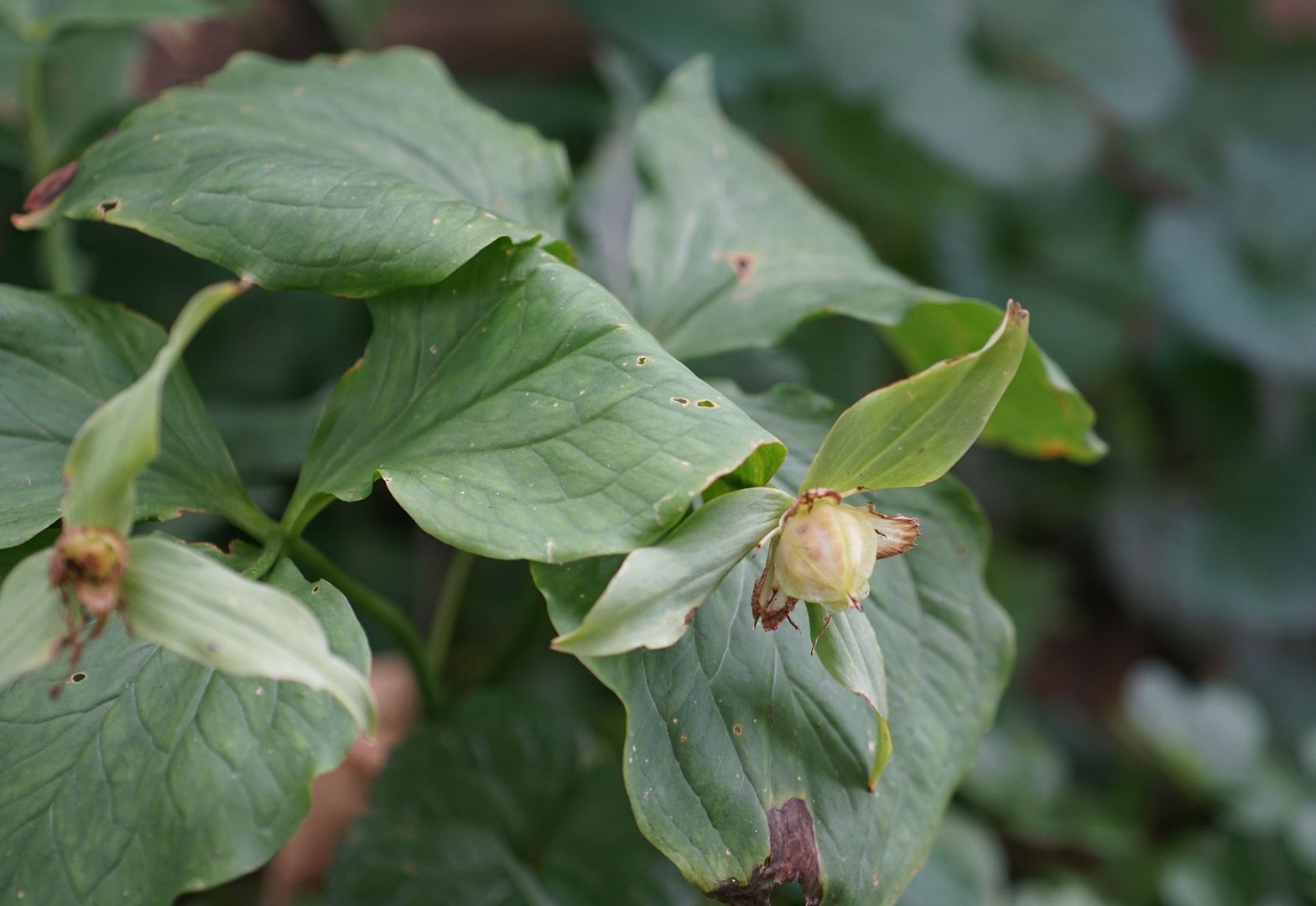
Note how the leaves to the plants photoed above are singed at the tips. If you don't water your plants, they will fry right up and abort the seedpod entirely. You can plant Trilliums in full sun and they'll grow happily but probably won't produce seeds because of how much sun they get. You can compensate for this by adding water but there's only so much watering can do. It's best to plant them in the shade with a small amount of mulch and a low ground cover growing underneath such as Hepatica or Stone Crop. I like to water the roots to mine basically every time I walk past with the hose, or once every other day. Just put the water to the stem and count to 10 for each plant. Even doing this though won't guarantee success. Note the plant to the left didn't bother producing a seedpod at all. Of 9 plants only 2 didn't make seedpods, lack of pollination is likely the issue. Some that did make seedpods made smaller than average ones.
You can tell a Trillium pod is ripe when you can see the seeds right through the pod. Another thing to look for is a change in color. Some go from green to purple, others go from purple to green, some ends up as bright red, depending on the species. Seeing these changes, and especially seeing the seeds within, mean you're within 2 weeks of the seeds being ripe. Seeds should be hard, like unpopped popcorn. The longer you wait the more likely the pod will become damaged, where ants, wasps, birds, and rodents will make off with the seeds. I've found seedpods completely hollow inside thanks to a small puncture hole allowing ants to gain entry.
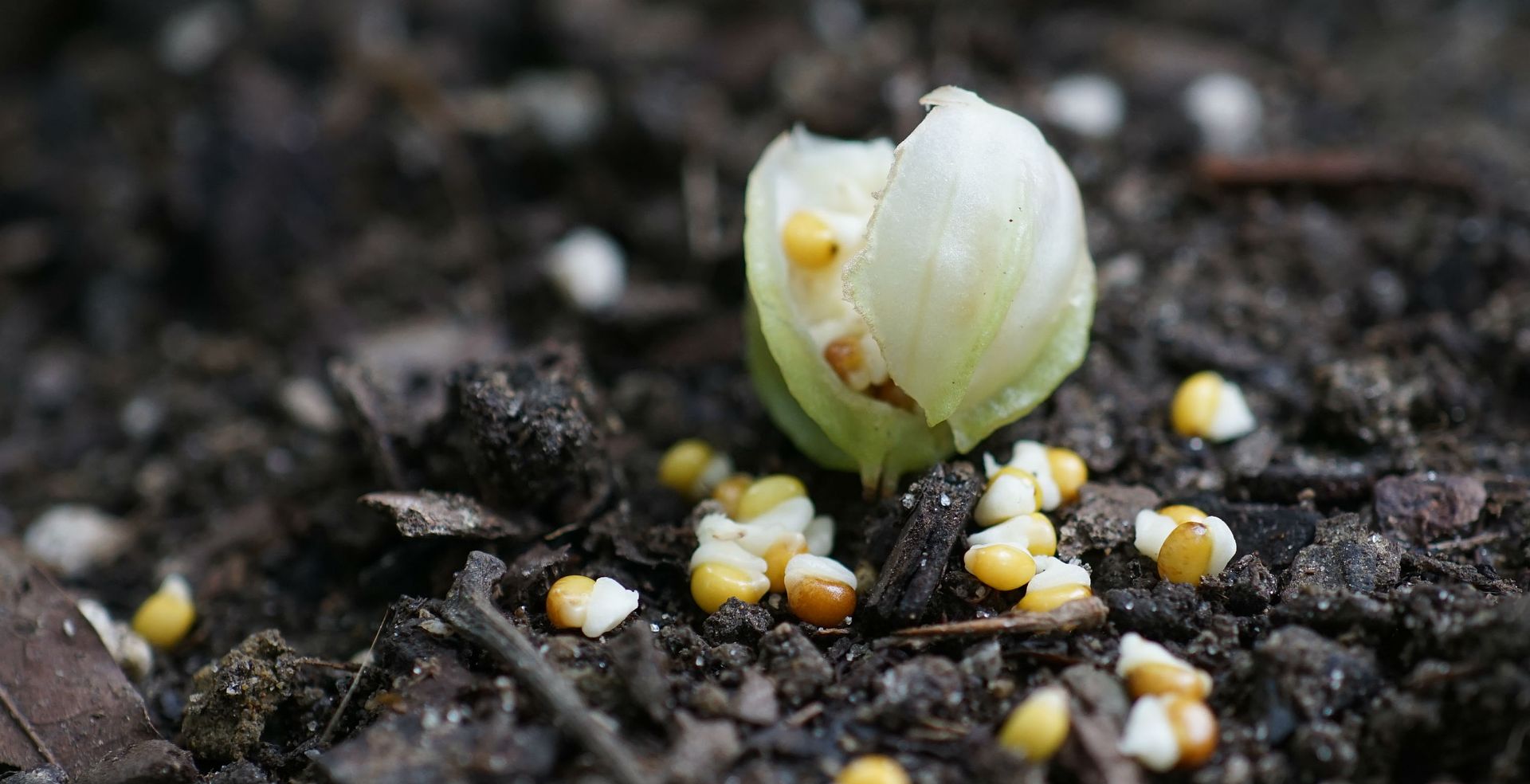
Ants planting the seeds is not necessary for germination! This is just how the plants disperse their seeds in the wild. For gardeners looking to start a bed of these, I'd say go ahead and crack open a pod or two and just dump the seeds out in a shallow ditch and plant them yourself. Ideally the elaiosome should be removed before doing this, however that stuff is really effing on there!!! You can't just cut it off or take your finger nail to it. The risk is sometimes a kind of mold or fungus grows on the elaiosome and may kill the seed... I've never seen this happen to an extreme degree though. Maybe let the seeds dry out for two hours before planting.
Personally I like letting the ants carry the seeds off. The consequence here is that I get Trillium seedlings coming up in the lawn and in unwanted places. These are easy enough to transplant when I notice them, but determining what species they are can't be done for many more years!
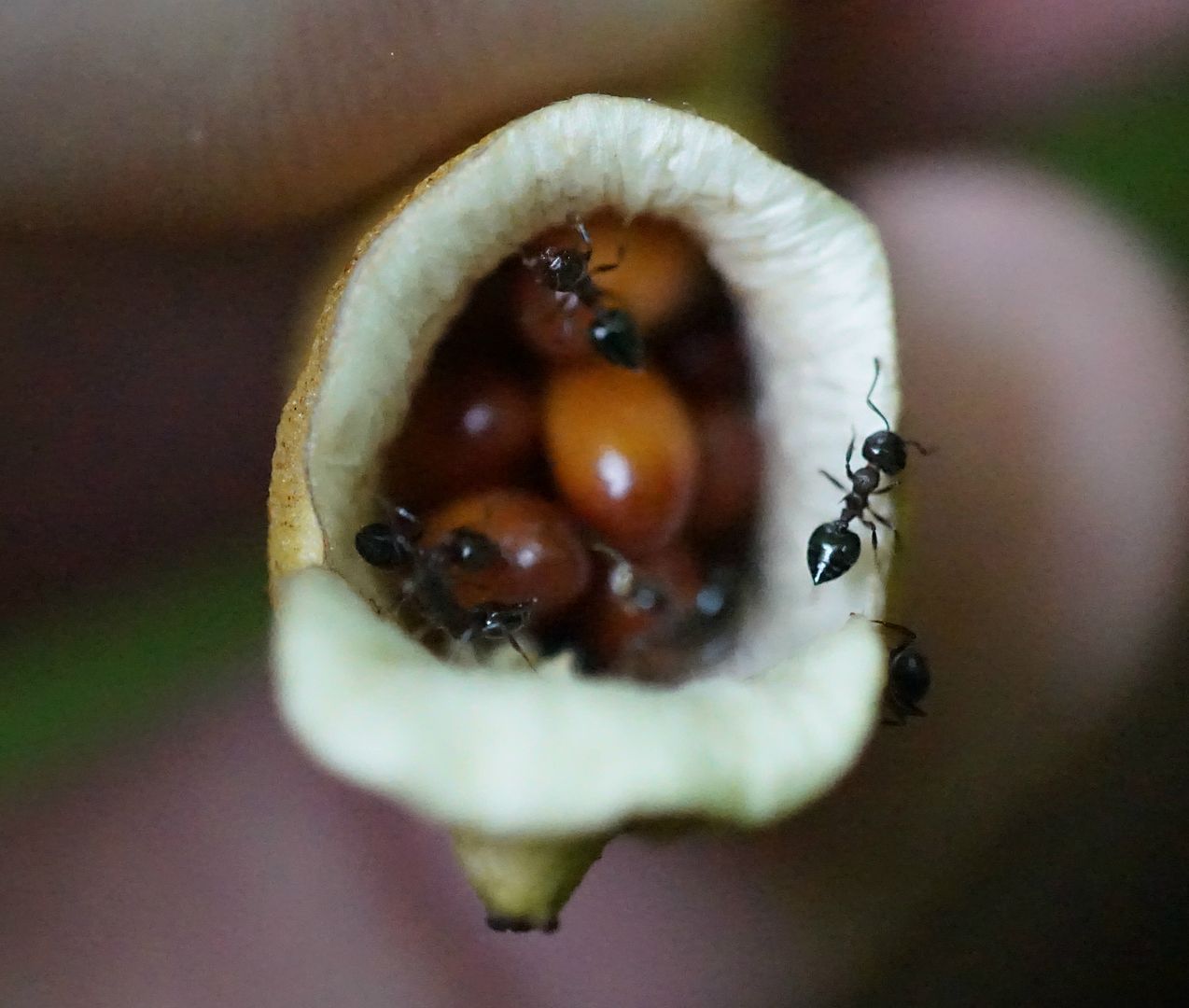
Shortly after a pod has become damaged, ants will more than likely find the seeds. Here a pavement ant, Tetramorium caespitum, has chanced upon the mother load.
Because dirt doesn't make for a thrilling background, I took the liberty of placing a seedpod on one of the stepping stones of my garden.
Nylanderia faisonensis is a nonnative woodland species that's slowly been invading areas rich in leaf litter. Nylanderia is a genus of tramp ants which are accidentally imported all over the world. Not all ants are ideal at planting seeds, and this is one of them. The ants are too small to carry the seeds anywhere, so instead of dispersing them as the plant wanted, the ants simply feed on the elaiosome where they found the seed.
Tetramorium caespitum, Pavement Ants, do a better job but also are not native. Studies have been coming out finding that Nonnative Ants tend to favor the seeds to Nonnative Plants. In this case the Tetramorium were more than happy to disperse these seeds for me. (My yard also lacks any nonnative plant that has elaiosome on the seeds.)
Another risk facing Trillium seeds is the ants eating the seed along with the elaiosome. Trillium seeds tend to be rock hard for the first two years then soften up as they go to germinate. They are said to produce a fowl smell which is probably meant to encourage ants to move their nest elsewhere!
The ideal ant genus to be doing this seems to be Aphaenogaster which form abundant colonies of ~2000 ants throughout woodland settings. They're also very much in the habit of changing their nest location, so as the colonies move around they leave seed banks behind where plants like Trilliums tend to grow. There used to be a colony of Aphaenogaster rudis under this stepping stone which is why I picked it, sadly it seems the colony has moved on.
Two Pavement Ants trying to carry a Trillium seed home.
These ants are just big enough to handle the seed, though it still takes two of them to move it. Sometimes ants will actually give up after carrying the seeds a few feet. The seed is still dispersed from the parent plant but slightly at risk of being eaten by a rodent. Trilliums naturally grow best where there is plenty of leaf litter decomposing, and it's likely in these kinds of settings such discarded seeds are still successful.
I love this shot.
The larger, ground nesting, Camponotus castaneus does a great job of dispersing seeds too. In the past I had assumed the seeds might get lost 4' underground where these ants like to nest. As it turns out though after bringing the seeds home, they're discarded a short while later, once the elaiosome has dried up typically. While the seeds may not be planted, they are dispersed and left in the colony midden pile (trash heap) which is still better than nothing.
These are one of the most elegant ants in my opinion and I love their chestnut brown and orange color tone.
Ants are largely overlooked by gardeners despite being the most common insect (by number). Part of the reason gardeners don't appreciate ants is likely because they are generalist foragers. So it doesn't matter a whole lot what plants are growing in a garden, native or non; if you have soil and dead wood, chances are ants live in your yard.
They play a vital role in removing dead insects. So after those big pretty swallowtail butterflies are done laying their eggs and visiting the flowers in your garden, ants are more than happy to collect, dissect, and consume their expired carcass. Though on the other hand, ants are also happy to remove butterfly eggs from host plants and often kill early instars to a lot of species. Ants don't forage equally on certain plants though, so it can depend on what's nesting near the tree/plant. Many caterpillars have defenses against ants too, but they're not always effective.
I have a Hackberry sapling that's about as tall as me right now. My dream is to someday see some Hackberry Emperors using it as a host plant. Every year though I got out there and find ants (Lasius alienus, Camponotus pennsylvanicus, C. chromaiodes, C. nearcticus, C. subarbatus, Temnothorax curvispinosus and Nylanderia faisonensis) foraging on the tree. They're mostly doing what's called nectar scraping where they wonder the plant licking and scraping the surface of the leaves to collect the small amounts of sweet sap that bleeds out of the leaves with the changing temperature of the day. The foraging power of 1 ant colony is enough to put a dent in the number of Lepidoptera eggs on a sapling; this one has 7 different species and likely multiple colonies of each constantly foraging on it, so I won't likely be seeing any Hackberry Emperors for several years.
To a lesser degree, ants also think pollinators are delicious. They're mostly an issue with solitary bees, usually ground nesting or mason bee nests when discovered by ants. Ants typically don't dig into structures in search of food though, so as long as the burrows or tubes are properly secured with mud the developing bee larva should be safe.
My favorite thing ants do in the garden is called Myrmecochory, or ant plant seed dispersal. Even here though ants can be considered annoying. Let's say you paid $20 for a rare Trillium species, looking to start a clump of them over the next decade, which is how long many Trilliums take to flower from seed. Often though Trillium seeds have the annoying habit of walking away from the plant thanks to packets of "Elaiosome," a lipid rich substance on the seed, attracting ants to come and carry them home.
This is Trillium vaseyi, (I believe), which is pollinated by Vinegar Flies and other sorts of carrion insects. Note Vinegar Flies are sold in pet stores as "Fruit Flies" because that sounds better than Vinegar Flies. True Fruit Flies consume fresh fruit and tune delicious apples and berries into balls of maggots. Vinegar Flies target foods that have already spoiled, drawn in by the fermenting smell of yest, cider and dead fish, which is what this flower smell like.
Trillium grandiflorum! This is by far the most common and easily recognized Trillium species. It's pollinated by bees and while I never witnessed any bees visiting my flowers I have seen honeybees visiting them in other gardens when planted in sufficient numbers. I'm certain Bumblebees and others must visit them on occasion too. Currently I have a clump of about 9 plants of flowering age. Each of which has a few off shoots underneath that will reach flowering age in years to come. I may even need to divide a few in a year or two.
Admittedly things like Twinleaf, Violets, Blood Root, Hepatica, Woodland Poppy, and Bleeding Hearts have already dropped their seeds for ants to disperse. Trilliums are latest ephemeral plant in North America to drop their seeds as many of the ones I've mentioned are already dormant.
Note how the leaves to the plants photoed above are singed at the tips. If you don't water your plants, they will fry right up and abort the seedpod entirely. You can plant Trilliums in full sun and they'll grow happily but probably won't produce seeds because of how much sun they get. You can compensate for this by adding water but there's only so much watering can do. It's best to plant them in the shade with a small amount of mulch and a low ground cover growing underneath such as Hepatica or Stone Crop. I like to water the roots to mine basically every time I walk past with the hose, or once every other day. Just put the water to the stem and count to 10 for each plant. Even doing this though won't guarantee success. Note the plant to the left didn't bother producing a seedpod at all. Of 9 plants only 2 didn't make seedpods, lack of pollination is likely the issue. Some that did make seedpods made smaller than average ones.
You can tell a Trillium pod is ripe when you can see the seeds right through the pod. Another thing to look for is a change in color. Some go from green to purple, others go from purple to green, some ends up as bright red, depending on the species. Seeing these changes, and especially seeing the seeds within, mean you're within 2 weeks of the seeds being ripe. Seeds should be hard, like unpopped popcorn. The longer you wait the more likely the pod will become damaged, where ants, wasps, birds, and rodents will make off with the seeds. I've found seedpods completely hollow inside thanks to a small puncture hole allowing ants to gain entry.
Ants planting the seeds is not necessary for germination! This is just how the plants disperse their seeds in the wild. For gardeners looking to start a bed of these, I'd say go ahead and crack open a pod or two and just dump the seeds out in a shallow ditch and plant them yourself. Ideally the elaiosome should be removed before doing this, however that stuff is really effing on there!!! You can't just cut it off or take your finger nail to it. The risk is sometimes a kind of mold or fungus grows on the elaiosome and may kill the seed... I've never seen this happen to an extreme degree though. Maybe let the seeds dry out for two hours before planting.
Personally I like letting the ants carry the seeds off. The consequence here is that I get Trillium seedlings coming up in the lawn and in unwanted places. These are easy enough to transplant when I notice them, but determining what species they are can't be done for many more years!
Because dirt doesn't make for a thrilling background, I took the liberty of placing a seedpod on one of the stepping stones of my garden.
Nylanderia faisonensis is a nonnative woodland species that's slowly been invading areas rich in leaf litter. Nylanderia is a genus of tramp ants which are accidentally imported all over the world. Not all ants are ideal at planting seeds, and this is one of them. The ants are too small to carry the seeds anywhere, so instead of dispersing them as the plant wanted, the ants simply feed on the elaiosome where they found the seed.
Tetramorium caespitum, Pavement Ants, do a better job but also are not native. Studies have been coming out finding that Nonnative Ants tend to favor the seeds to Nonnative Plants. In this case the Tetramorium were more than happy to disperse these seeds for me. (My yard also lacks any nonnative plant that has elaiosome on the seeds.)
Another risk facing Trillium seeds is the ants eating the seed along with the elaiosome. Trillium seeds tend to be rock hard for the first two years then soften up as they go to germinate. They are said to produce a fowl smell which is probably meant to encourage ants to move their nest elsewhere!
The ideal ant genus to be doing this seems to be Aphaenogaster which form abundant colonies of ~2000 ants throughout woodland settings. They're also very much in the habit of changing their nest location, so as the colonies move around they leave seed banks behind where plants like Trilliums tend to grow. There used to be a colony of Aphaenogaster rudis under this stepping stone which is why I picked it, sadly it seems the colony has moved on.
Two Pavement Ants trying to carry a Trillium seed home.
These ants are just big enough to handle the seed, though it still takes two of them to move it. Sometimes ants will actually give up after carrying the seeds a few feet. The seed is still dispersed from the parent plant but slightly at risk of being eaten by a rodent. Trilliums naturally grow best where there is plenty of leaf litter decomposing, and it's likely in these kinds of settings such discarded seeds are still successful.
I love this shot.
The larger, ground nesting, Camponotus castaneus does a great job of dispersing seeds too. In the past I had assumed the seeds might get lost 4' underground where these ants like to nest. As it turns out though after bringing the seeds home, they're discarded a short while later, once the elaiosome has dried up typically. While the seeds may not be planted, they are dispersed and left in the colony midden pile (trash heap) which is still better than nothing.
These are one of the most elegant ants in my opinion and I love their chestnut brown and orange color tone.
Sunday, May 24, 2015
Some Early Myrmecochory Action
I so rarely get to see my specimens of Twinleaf, Jeffersonia diphylla, all flowering at once, let alone be pollinated by one another to see the seedpods. Normally the pods don't grow bigger than a nickle and shrivel up with nonviable seed inside. Today though I came across a fairly large seedpod. I reached down to see if it was soft enough to harvest and the darn thing broke right off the stem on me. Worst of all, the seeds weren't ready yet.... Waste not, want not.
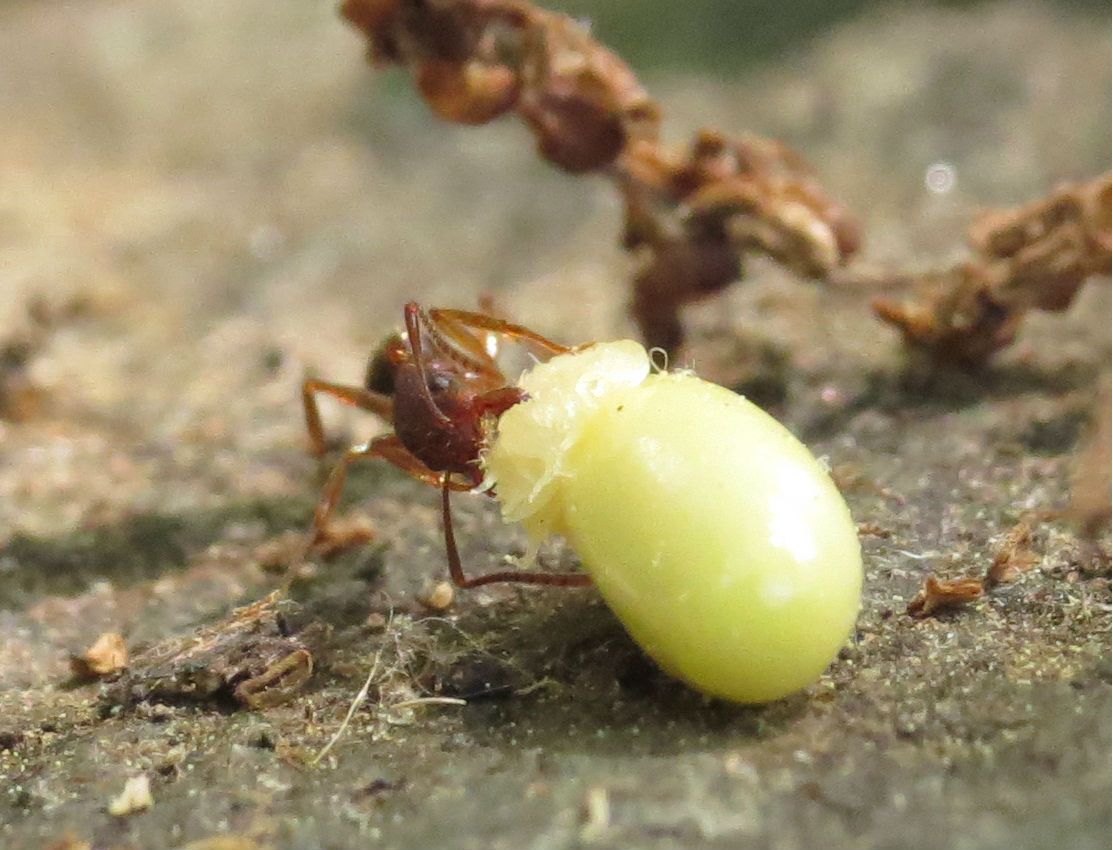
Twinleaf disperses its seeds with aid of ants. Normally the seeds are rock hard and brown very much like unpopped popcorn. These had their little bit of elaiosome formed but the seeds were soft and green, like peas or green beans. The ants didn't seem to mind this and carried them off all the same.
The elaiosome is what's treasured by the ants but with the seeds still soft it's likely they'll be eaten too. This is just as well though. I doubt they would have grown in this early state anyway.
The ants here are Aphaenogaster rudis, which is actually a complex of several species. DNA analysis to count the number of chromosomes is required for a true species ID but overall they're the same. The species names are more or less scientific codes instead of Latin names, so the blanket term A. rudis works fine. They're all commonly found in woodlands across North America, they all nesting in soil and sometimes rotten wood in contact to the soil. They all form colonies with populations ranging from 2,000 - 12,000 ants. Nests are small and move around on occasion, making them ideal seed dispersers, along with their size.
Ideally the seeds would be rock hard and either discarded in the nest, or hauled out to the waste or midden pile where it would be buried in dead insects and other discarded seed husks anyway. Often plant seeds like this require two winters to germinate, where it's more likely the colony of ants has moved on, and or the garbage heap has decomposed into plant fertilizer. Some plants such as Trilliums emit a terrible odor when they germinate which likely helps encourage the ant colony to move along.
The ants find nourishment everywhere they can, even among the seedpod itself. If the ants didn't come along to clean out the seeds, rodents, birds, and wasps would have. Rodents and birds love eating the seeds. Wasps go for the elaiosome just like the ants, but are unlikely candidates for seed dispersal. They may drop them on the surface for birds and rodents to find, or bury them too deep within the earth, or the seed could end up within the dead branch of a tree.
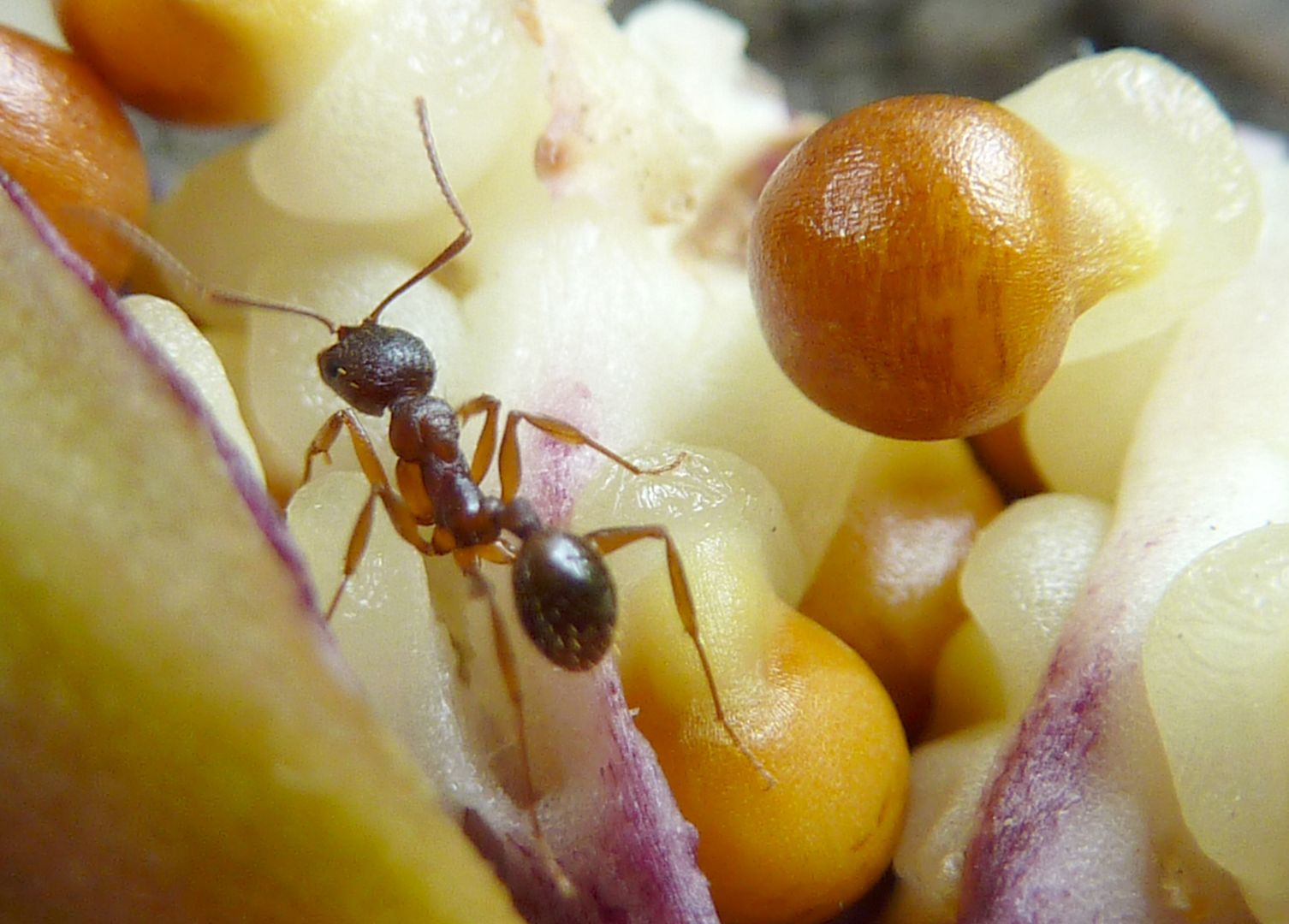
One plant that was right on time was the Woodland Poppy, Stylophorum diphyllum. The same idea of seed dispersal applies, however I can't get it out of my head how much the elaiosome to this plant resembles ant brood. It just looks like clusters of eggs and larva, which ants are more than happy to eat, especially if it doesn't belong to them.
The seeds, being ripe, are rock hard and firmly attached to the elaiosome packet. I have trouble removing it and I'm a human! It's unlikely the ants will be able to chew them into dust or "ant bread" so they'll be discarded within the nest and in a few years I'll likely have a patch of woodland poppy growing here.
Where this strategy of seed dispersal can go wrong though is when the wrong sort of ant finds the seed. This is an Acorn Ant known as Temnothorax curvispinosus. They're adorably tiny, with small colonies of ~200 workers that all fit right inside a hollow acorn, hollow plant stems, or dead plant matter. Not only do they nest in the wrong sort medium for starting seeds, but also the workers are too small to carry the seeds off. They're more likely to just recruit more workers from the colony and deal with the elaiosome where they found it, and the seed is simply left where it was beneath the parent plant.
As a disclaimer I will admit all of these photos were staged to a point. You'll notice I just opened the seedpods and spilled them on a stepping stone where an Aphaenogaster rudis colony happens to nest. I just don't have the time to wait for this to happen naturally in my yard, but trust me it does. There are plenty of Woodland Poppy plants with open seedpods on them right now that have spilled their seeds in the garden. I typically find Tapinoma sessile and Crematogaster cerasi stealing the elaiosome from the seeds where they fell and don't disperse them. The occasional Aphaenogaster forager does find a few though and bring them back to the colony. Since they've been self seeding in my yard for the past three years now I've been finding Woodland Poppies coming up in places where ant colonies tend to nest, and or have been dragged away from the parent plant a short ways at least. Sometimes the ant carrying the seed home gives up or gets disturbed by a spider or something.
Turkey Corn, Dicentra eximia, will likely be the next plant who's seeds do this to ripen in my garden... sadly I missed my chance with Hepatica this year, but they seem okay about germinating where they fall anyhow. So though a plant uses this strategy to disperse its seeds, it's not always required for success, simply a way to give them a leg up.
Twinleaf disperses its seeds with aid of ants. Normally the seeds are rock hard and brown very much like unpopped popcorn. These had their little bit of elaiosome formed but the seeds were soft and green, like peas or green beans. The ants didn't seem to mind this and carried them off all the same.
The elaiosome is what's treasured by the ants but with the seeds still soft it's likely they'll be eaten too. This is just as well though. I doubt they would have grown in this early state anyway.
The ants here are Aphaenogaster rudis, which is actually a complex of several species. DNA analysis to count the number of chromosomes is required for a true species ID but overall they're the same. The species names are more or less scientific codes instead of Latin names, so the blanket term A. rudis works fine. They're all commonly found in woodlands across North America, they all nesting in soil and sometimes rotten wood in contact to the soil. They all form colonies with populations ranging from 2,000 - 12,000 ants. Nests are small and move around on occasion, making them ideal seed dispersers, along with their size.
Ideally the seeds would be rock hard and either discarded in the nest, or hauled out to the waste or midden pile where it would be buried in dead insects and other discarded seed husks anyway. Often plant seeds like this require two winters to germinate, where it's more likely the colony of ants has moved on, and or the garbage heap has decomposed into plant fertilizer. Some plants such as Trilliums emit a terrible odor when they germinate which likely helps encourage the ant colony to move along.
The ants find nourishment everywhere they can, even among the seedpod itself. If the ants didn't come along to clean out the seeds, rodents, birds, and wasps would have. Rodents and birds love eating the seeds. Wasps go for the elaiosome just like the ants, but are unlikely candidates for seed dispersal. They may drop them on the surface for birds and rodents to find, or bury them too deep within the earth, or the seed could end up within the dead branch of a tree.
One plant that was right on time was the Woodland Poppy, Stylophorum diphyllum. The same idea of seed dispersal applies, however I can't get it out of my head how much the elaiosome to this plant resembles ant brood. It just looks like clusters of eggs and larva, which ants are more than happy to eat, especially if it doesn't belong to them.
The seeds, being ripe, are rock hard and firmly attached to the elaiosome packet. I have trouble removing it and I'm a human! It's unlikely the ants will be able to chew them into dust or "ant bread" so they'll be discarded within the nest and in a few years I'll likely have a patch of woodland poppy growing here.
Where this strategy of seed dispersal can go wrong though is when the wrong sort of ant finds the seed. This is an Acorn Ant known as Temnothorax curvispinosus. They're adorably tiny, with small colonies of ~200 workers that all fit right inside a hollow acorn, hollow plant stems, or dead plant matter. Not only do they nest in the wrong sort medium for starting seeds, but also the workers are too small to carry the seeds off. They're more likely to just recruit more workers from the colony and deal with the elaiosome where they found it, and the seed is simply left where it was beneath the parent plant.
As a disclaimer I will admit all of these photos were staged to a point. You'll notice I just opened the seedpods and spilled them on a stepping stone where an Aphaenogaster rudis colony happens to nest. I just don't have the time to wait for this to happen naturally in my yard, but trust me it does. There are plenty of Woodland Poppy plants with open seedpods on them right now that have spilled their seeds in the garden. I typically find Tapinoma sessile and Crematogaster cerasi stealing the elaiosome from the seeds where they fell and don't disperse them. The occasional Aphaenogaster forager does find a few though and bring them back to the colony. Since they've been self seeding in my yard for the past three years now I've been finding Woodland Poppies coming up in places where ant colonies tend to nest, and or have been dragged away from the parent plant a short ways at least. Sometimes the ant carrying the seed home gives up or gets disturbed by a spider or something.
Turkey Corn, Dicentra eximia, will likely be the next plant who's seeds do this to ripen in my garden... sadly I missed my chance with Hepatica this year, but they seem okay about germinating where they fall anyhow. So though a plant uses this strategy to disperse its seeds, it's not always required for success, simply a way to give them a leg up.
Wednesday, June 4, 2014
Myrmecochory: Turkey Corn (Dicentra eximia)
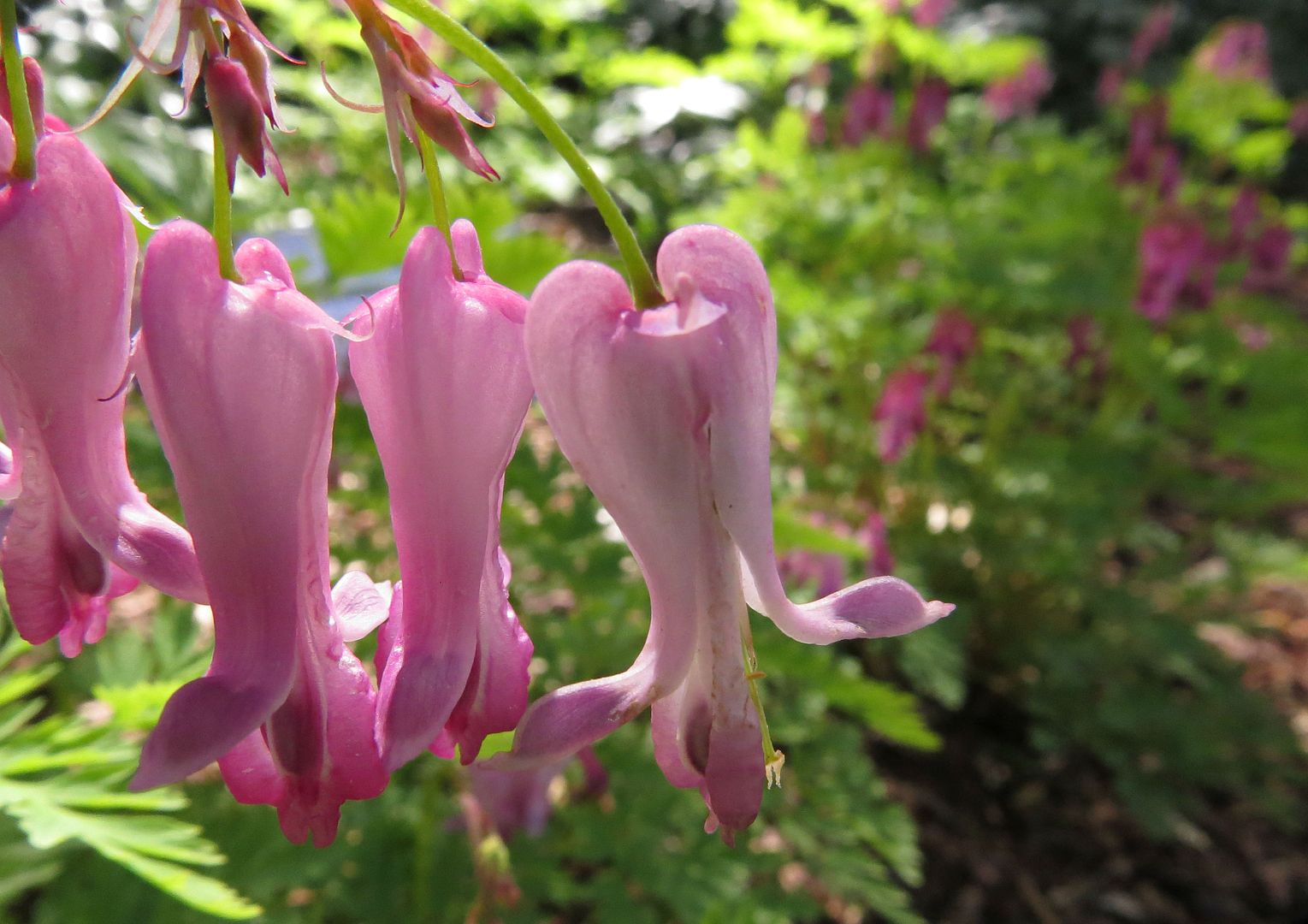
Turkey Corn, Dicentra eximia, is a ... wildflower? I don't think it dies back technically until the autumn so it's not an ephemeral. The peak bloom is in the springtime though alongside the majority of our ephemerals in North America. A lot of people mistake this for Bleeding Heart, Lamprocapnos spectabilis, but that's a different genus and it's not native; it's also more commonly sold by nurseries but both tend to be available if you look hard enough. Turkey Corn is better though because, despite the flowers not being as heart shaped, it actually blooms year round until it goes dormant in the autumn.
Maybe 4 to 6 weeks after flowering seed pods will form on some of the blooms. Oddly enough though I've never seen any pollinators tending to the flowers so perhaps nocturnal moths are what it attracts? Seeds are tiny black beads with packets of elaiosome on them.
Elaiosome is a lipid rich substance that ants find irresistible. Nutritionally speaking, it has more in common with a dead insect than nectar or honey, thus the ant thinks it's just found a dead bug, or eggs. It's been found that this substance effects the caste system within the colony. Some species will produce more new queens while others produce more workers over reproductive. So colonies will either go bigger or spread faster depending on which ant we're talking here. Both can benefit the plant in the long run. A bigger colony will plant more seeds in a central location; colonies also move and change location every year or two thus multiple patches are planted over the years. New queens produce more colonies overall so the seeds from one patch of plants can be taken in multiple directions potentially.
Thursday, January 16, 2014
Certain Plants Compete for Ants
A new study came to my attention today titled "Competition as a Merchanism Structuring Mutualisms" by Robert J. Warren II1, Itamar Giladi2, and Mark A. Bradford3
I haven't read it fully yet however I think I got the gist. They setup two plots of Asarum arifolium (Wild Ginger) and Anemone americana (Hepatica), two plants that disperse their seeds via Myrmecochory. Basically a substance called elaiosome (ant food) is attached to the seed, the ants find the seeds and are encouraged to bring them back to the nest where they are planted. The authors point out that the Hepatica flowers earlier and produces smaller seeds than the Wild Ginger which flowers later and has slightly larger seeds. They suggest that larger seeds are always favored by the ants, and true enough larger seeds tend to have larger packets of elaiosome on them. Thus the Heptaica produces smaller seeds because it can get away with it and not have to compete with the larger seeds of the Wild Ginger.
This study could be expanded had they included Woodland Poppy and Trilliums which also follow this pattern, but Wild Ginger seeds are larger than Woodland Poppy... and then their argument falls apart completely when you include Violets which have seeds smaller than Hepatica. Twinleaf also has Trillium-sized seeds so there isn't a whole lot of support here.
We've already known that ants favor larger seeds because they plants produce better seeds and a higher quality of elaiosome on those that were pollinated better than others. Open a Trillium seed pod and you'll see some seeds are half the size of all the rest and even some that didn't even develop at all.
I'll read the rest of the study in full later on.
I haven't read it fully yet however I think I got the gist. They setup two plots of Asarum arifolium (Wild Ginger) and Anemone americana (Hepatica), two plants that disperse their seeds via Myrmecochory. Basically a substance called elaiosome (ant food) is attached to the seed, the ants find the seeds and are encouraged to bring them back to the nest where they are planted. The authors point out that the Hepatica flowers earlier and produces smaller seeds than the Wild Ginger which flowers later and has slightly larger seeds. They suggest that larger seeds are always favored by the ants, and true enough larger seeds tend to have larger packets of elaiosome on them. Thus the Heptaica produces smaller seeds because it can get away with it and not have to compete with the larger seeds of the Wild Ginger.
This study could be expanded had they included Woodland Poppy and Trilliums which also follow this pattern, but Wild Ginger seeds are larger than Woodland Poppy... and then their argument falls apart completely when you include Violets which have seeds smaller than Hepatica. Twinleaf also has Trillium-sized seeds so there isn't a whole lot of support here.
We've already known that ants favor larger seeds because they plants produce better seeds and a higher quality of elaiosome on those that were pollinated better than others. Open a Trillium seed pod and you'll see some seeds are half the size of all the rest and even some that didn't even develop at all.
I'll read the rest of the study in full later on.
Labels:
Ants,
Myrmecochory,
Seeds,
Study,
Trilliums
Thursday, May 16, 2013
Grass Seed Dispersal by Ants
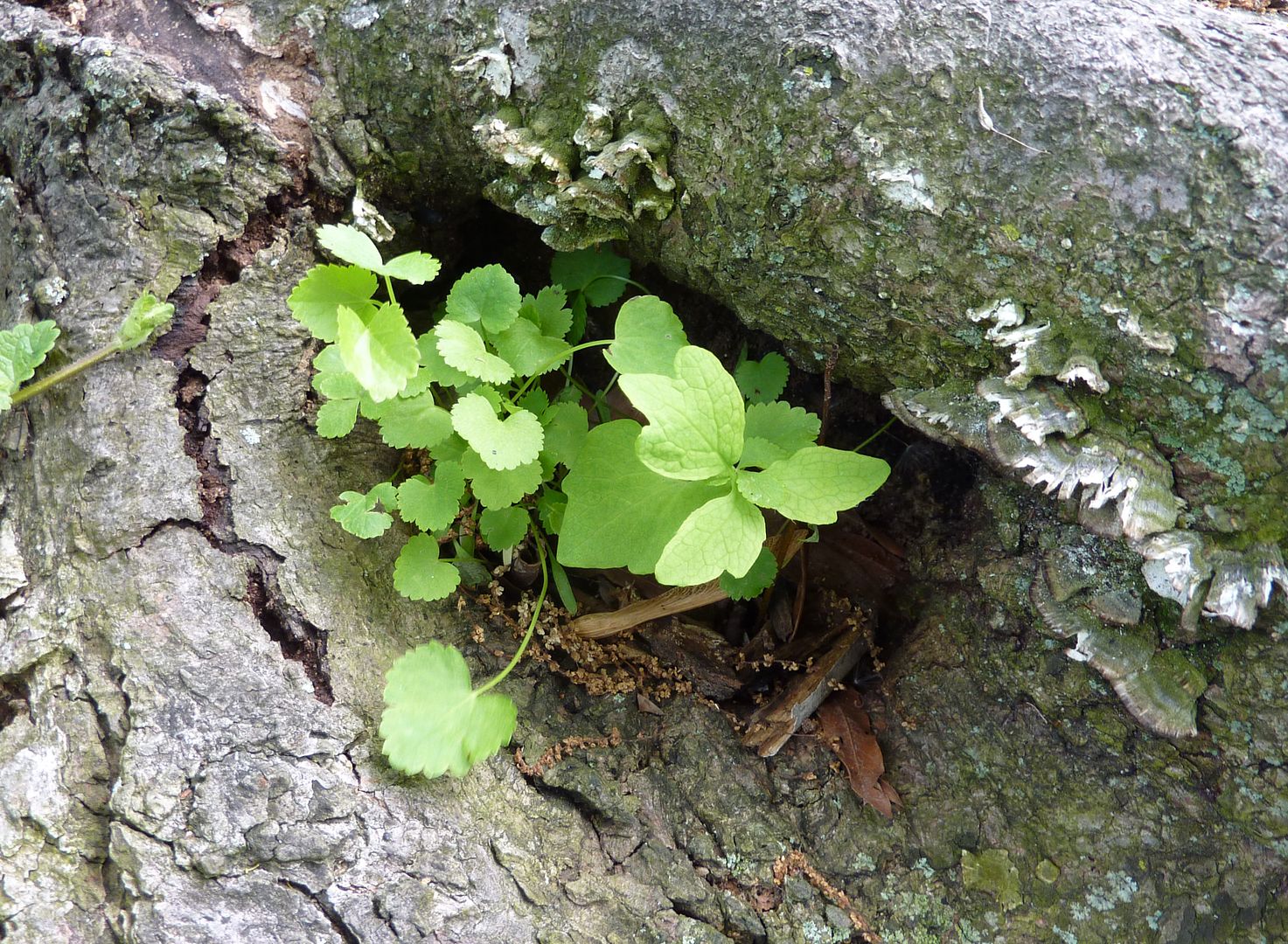
Upon inspecting the yard I realized some seedlings had germinated in the knot of a rotting log. The leafy green to the right is our native Woodland Poppy, Stylophorum diphyllum, the other is all Creeping Charlie, which were likely dropped in there from a plant that grew over the hole (note the stalk to the left climbing up the side).
Woodland Poppy seeds have elaiosome on them and are thus dispersed by ants, but even seeds that don't have this substance on them can still be dispersed.
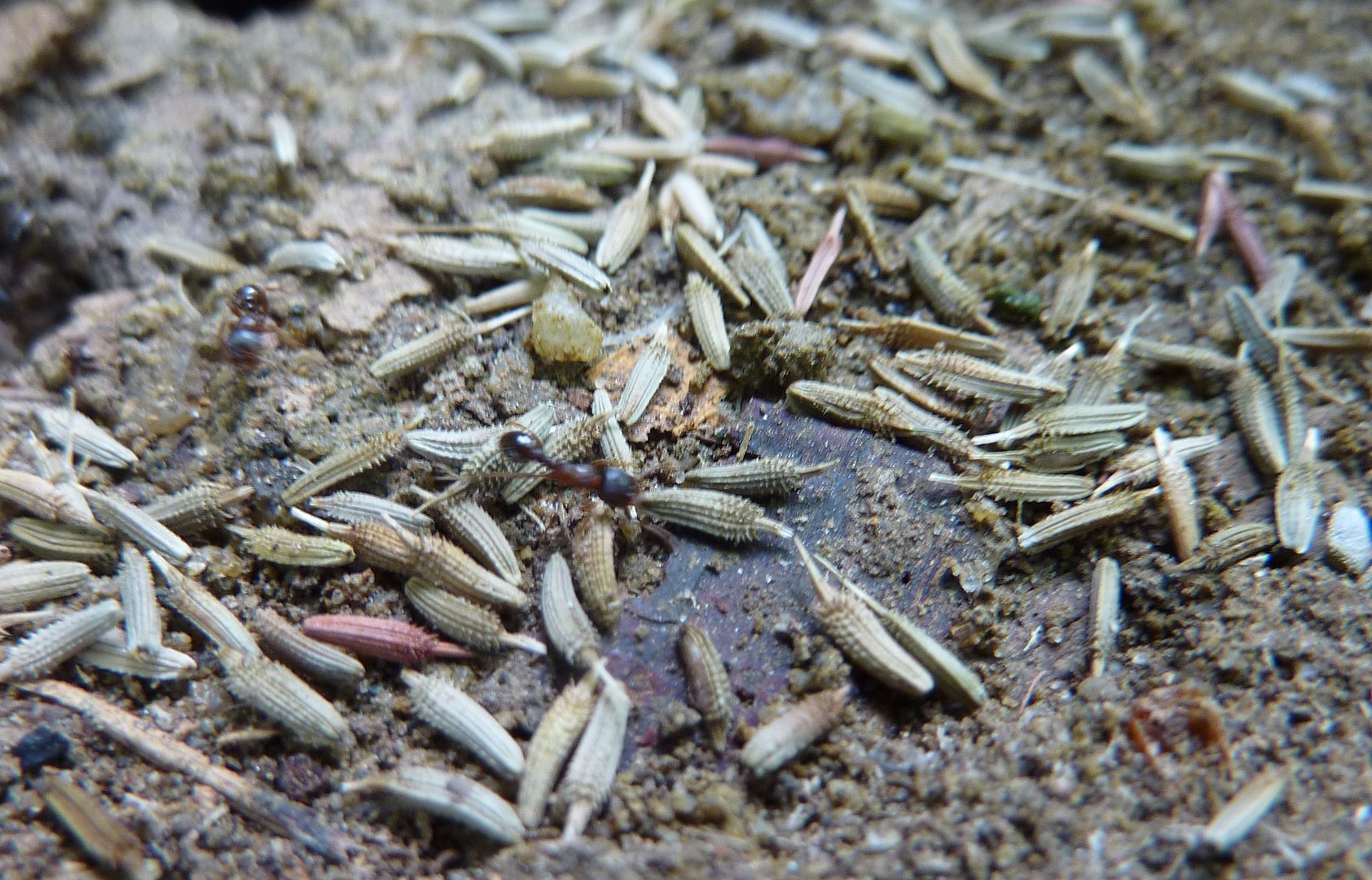
The granary of the common pavement ant, Tetramorium species E. are full of seeds to some sort of grass. While these seeds are eventually ground up to be eaten, the ants collect too many of them and they end up germinating before they're eaten.
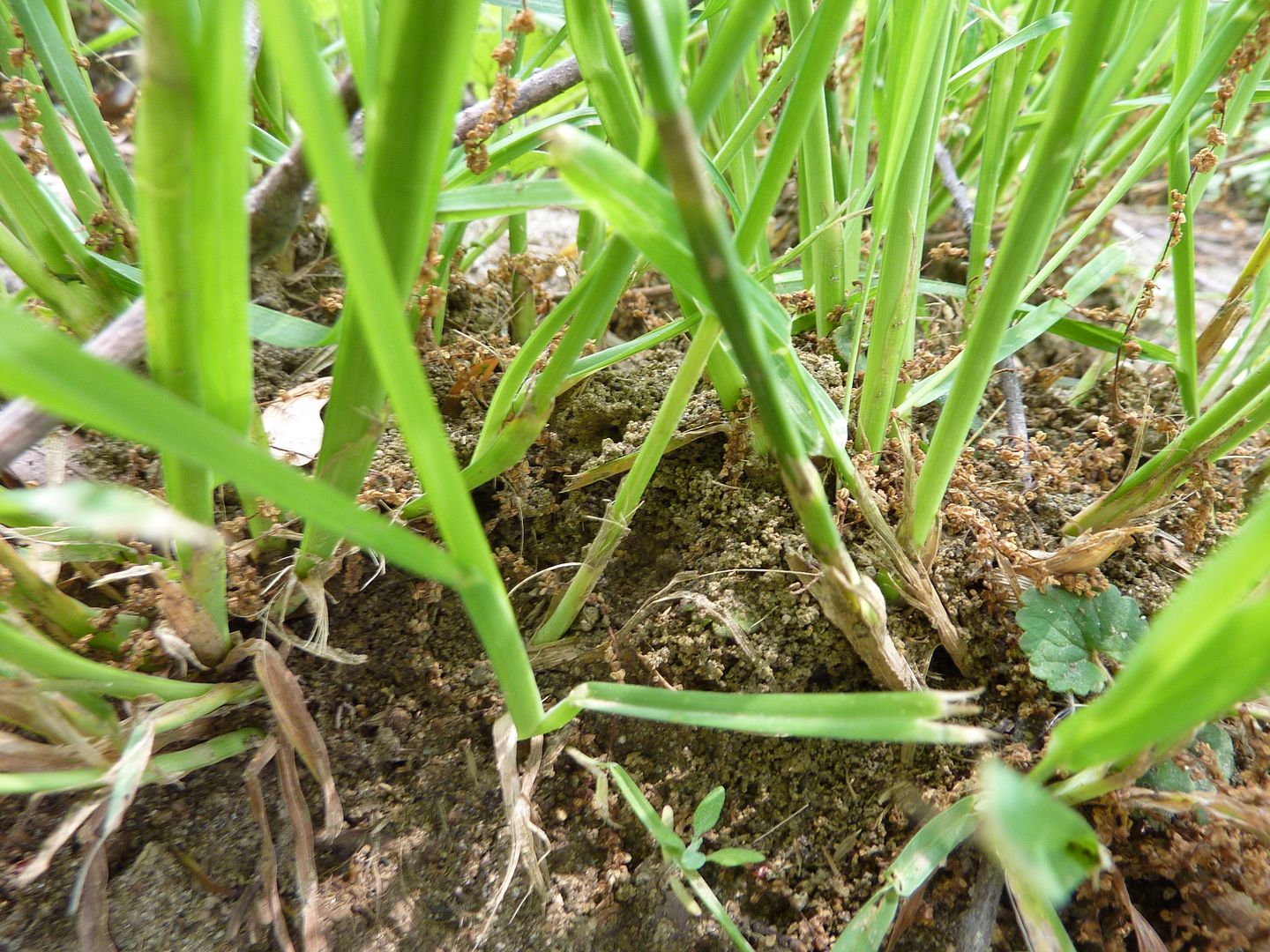
At the stands to a number of grasses you can often find ant hill from species that likely planted them.
Woodland Poppy seeds have elaiosome on them and are thus dispersed by ants, but even seeds that don't have this substance on them can still be dispersed.
The granary of the common pavement ant, Tetramorium species E. are full of seeds to some sort of grass. While these seeds are eventually ground up to be eaten, the ants collect too many of them and they end up germinating before they're eaten.
At the stands to a number of grasses you can often find ant hill from species that likely planted them.
Labels:
Ants,
Grass,
Myrmecochory,
Seeds,
Tetramorium,
Woodland Poppy
Subscribe to:
Posts (Atom)