Showing posts with label Swarms. Show all posts

Monday, June 6, 2011

Native Plants Honeybees Love (part 1 of 2)

We are nearing the end of Swarm Season for honeybees. There are the occasional swarms over the summer months and even rarely in autumn, but spring time seems to be the peak. There are two main reasons for this.

The first, is that it takes 21 days for a worker bee to be born. Honeybees don't take any of the old nest with them, but rather have to build new comb wherever they decide to settle down. That's 21 days where the population is getting lower and lower. So the sooner swarming can occur the sooner they can start becoming productive. The saying around here is "swarm after July, let it fly." This is true enough, but of course all they really need is lots of help. Boosting with frames of brood or already drawn frames of comb, as well as maybe extra feeding, should help any hive along.

The second reason is likely the ever prevalent sources of nectar available to the bees. As early as February all the trees start blooming here. Willows, Maples, Hazelnut, quickly turn into Dogwood, Redbud, Poplar, Oak, Magnolia, Cherry, Basswood/Linden, Birch, and assorted Fruit Trees, such as Apple, Plum, Pear, Peach and so on. Before the end of spring, Honey Locust Trees, and White Dutch Clover will bloom, which are two of the most abundant sources of nectar locally here in NJ.

The abundance of food available makes spring time the easiest for bee swarms. Even before they've found a place to live, hanging swarms send out foragers. 


Here Chip Taylor (Chuck?) over at Monarch Watch has caught a swarm using a chemical swarm lore.

I often hear beekeepers proclaim that they're hives are good for the environment. In truth, Apis millifera, is a nonnative species that was imported to aid with mono-cultural farming. Their native range is most of Africa, Europe, and about the western third of Asia. A food crop in their own right, Honeybees have become something of a backyard hobby for community gardens, people with to much land, and even city residents.

So their nectar needs are pretty much filled in the spring time. This leaves people wondering what bees work, or more precisely, what they can plant to help their honey yields.

Asking your local beekeeping association and they'll likely recommend: Purple Loosestrife, Japanese Knotweed, Kudzu, Catmint, Chinese Popcorn Trees. Generally the more of a noxious weed and invasive it is the more honeybees love it. Ask anyone who is environmentally conscious and they'll tell you NOT to plant any of these!

Why Do Honeybees Love Invasive Plants?
This has to do with the way Honeybees communicate to one another.


Minus a strange comment about "if the bee doesn't stop dancing immediately she will be stung to death" this is fairly accurate.

So we have an entire society of around 60,000 bees with many of them acting as foragers. As they find abundant sources of food up to 6 miles away from the hive, they have to return and tell the other foragers what and where they found. Invasive plants tend to take over or be very abundant where they occur. So naturally when they discover such a food source they take full advantage of it, passing over other, less abundant sources in the process. In essence they get distracted. As mentioned before they are used to pollinate farms which are typically monoculars. Despite blueberry plants having flowers that honeybees have trouble with, the bees still manage to persevere and pollinate the plants. In fact honeybees love just about everything that flowers in a vegetable and herb garden.

Understanding these habits is the key to getting honeybees into your garden.


Native Plants Honeybees Love

When planting for Honeybees the 3 to 5 plant rule most certainly applies, more would be better! But all flowers are not created equally.

Here we have a Thalictrum species, Meadow Rue, which is probably not a native. Other than having it's pollen anthers out for all to see, these flowers have nothing going for them. If I had massive basket ball sized clumps of these flowers out in the garden then yes I might see a few bees on them. This plant is mostly pollinated by flies, and flies that mimic bees oddly enough.

It's best to go with members of the composite family.
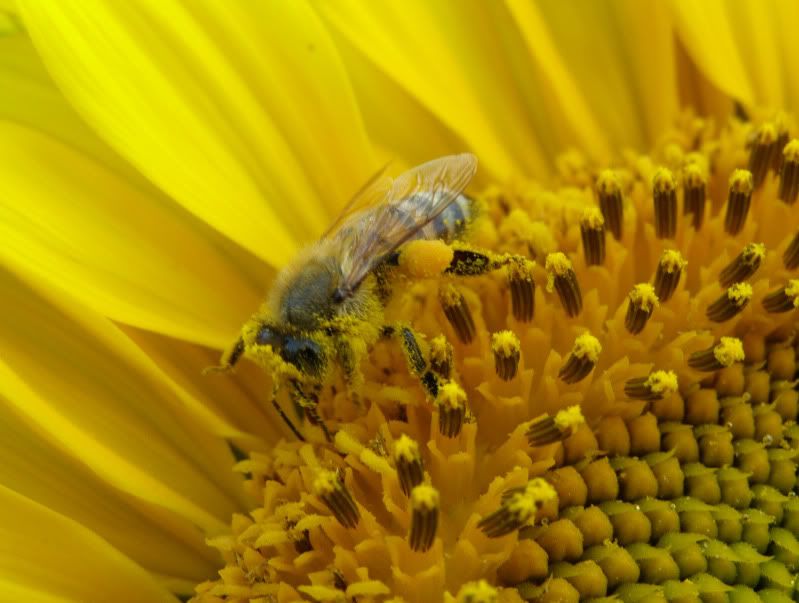
A sunflower is an excellent example of what a composite flower is. The outer most ring here is comprised of fake flower petals. The ring with the bee on it is comprised of all the flowers that are in bloom, each of those black anthers is poking out of its own flower. With sunflowers and most composites the flowers bloom from the outside and work their way in, so the inner most ring here are flowers that have yet to open. Often though people think of a sunflower as being one giant flower.

Sunflowers are also the plant of choice for Goldfinches, short of a field of Coneflowers which can be hard to establish.


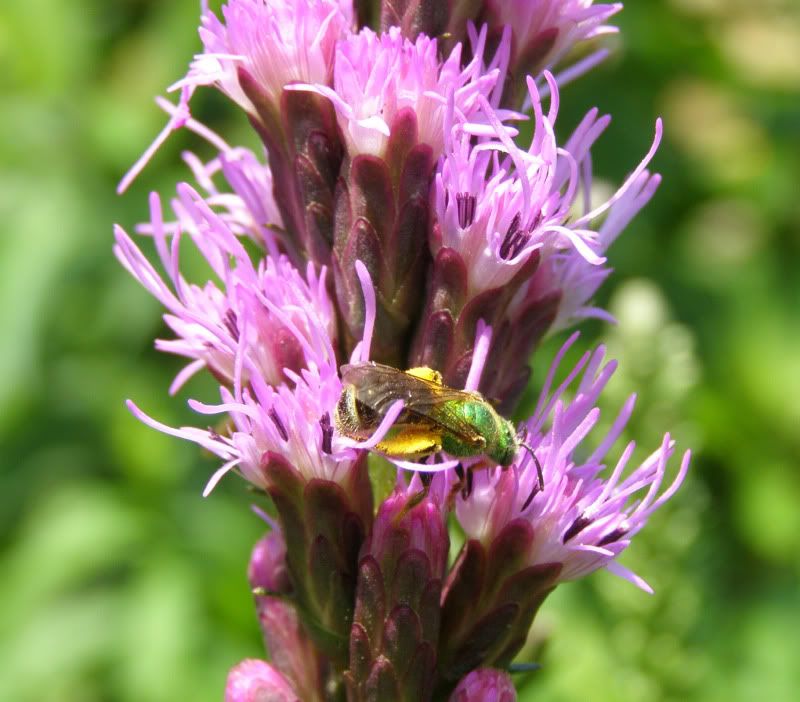
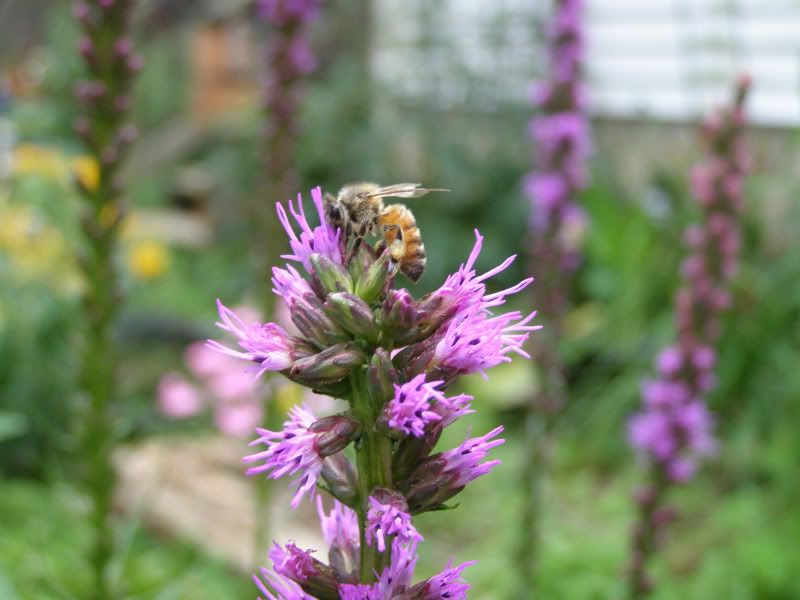
Liatris, Shooting Star, is a great option. Don't restrict yourself to the mass marketed one sold by the bag in garden centers though. There's nothing wrong with that species but it only flowers in June. 
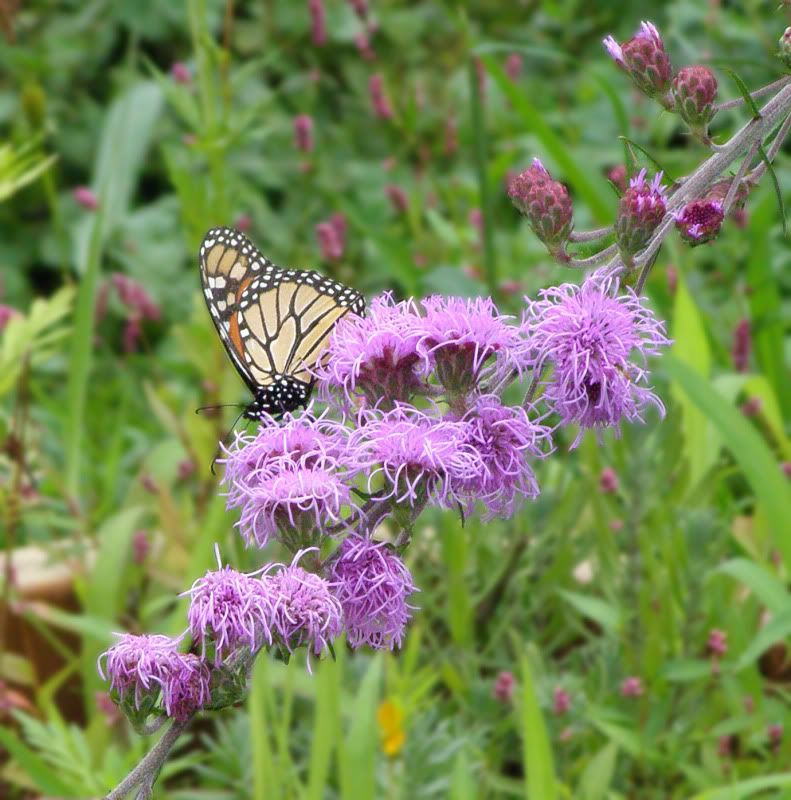
Much taller and later flowering species such as Liatris ligulistylis, are a magnet for Monarch butterflies.
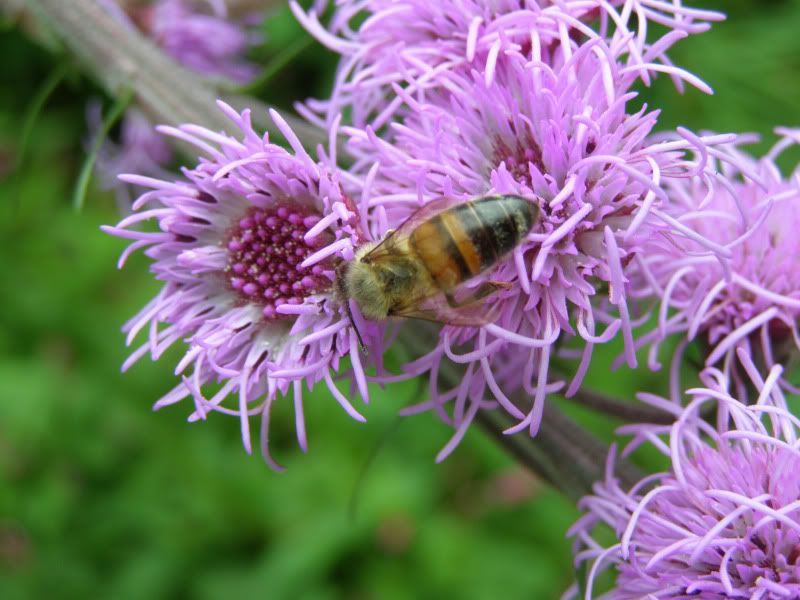
Honeybees go to them too, but that late in the year typically their attention is elsewhere. Also notice how each of these purple clusters is comprised of multiple flowers as with the sunflower.


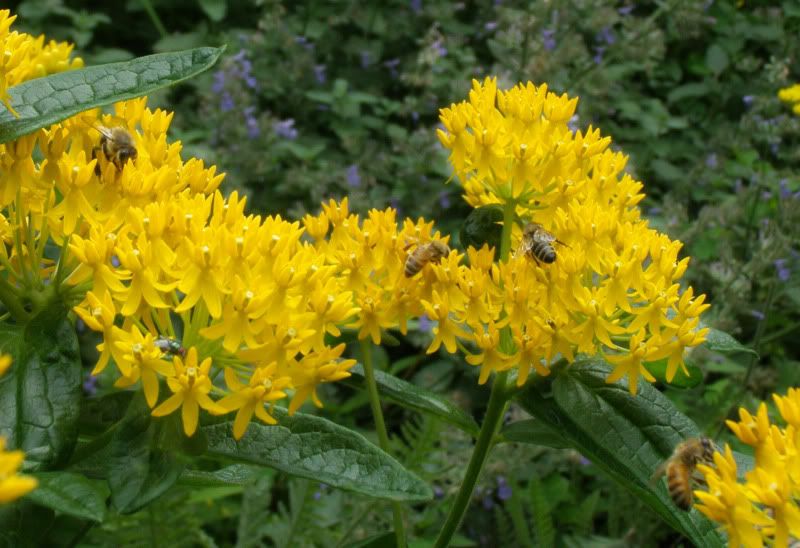
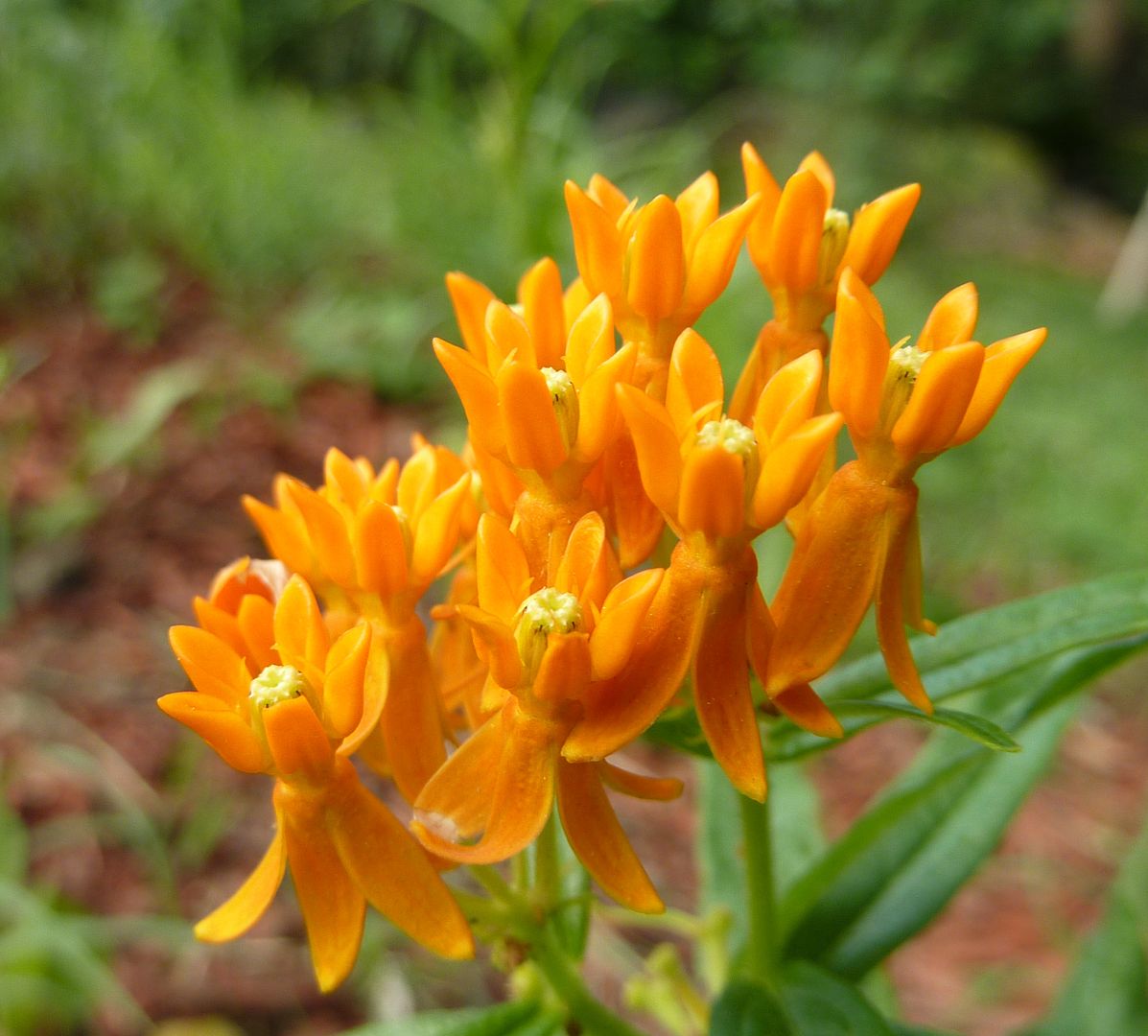
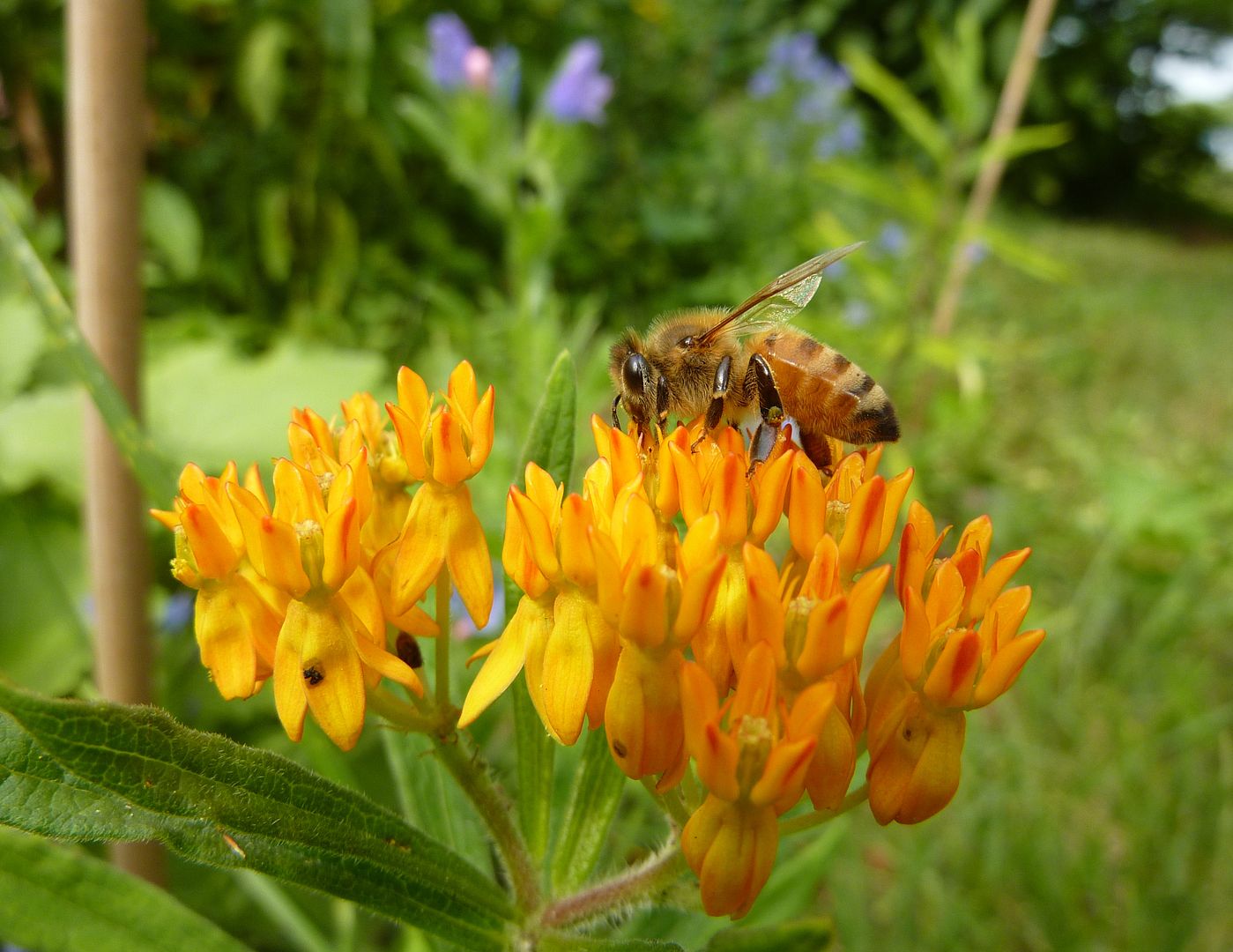
Butterfly Weed, Asclepias tuberosa, is a host plant for the Monarch Butterfly as well as 11, or so, other Lepidoptera. It's also host so several beetles for assorted reasons, food and mating to name a few.


Milkweeds, Asclepias sp. get misunderstood with a lot of beekeepers. Basically the anthers get attached to the bee’s legs and can leave them hanging from the flowers. The misconception is that the bee dies from exhaustion. This isn’t true though. They eventually get free and the anthers are later removed. Assassin bugs, however, will take advantage of a few bees that get stuck. So beekeepers shouldn’t be put off from including these plants in their pollinator garden. It doesn’t happen as often as it sounds. A. tuberose, A. purpurascens, and A. incarnate are excellent garden choices.

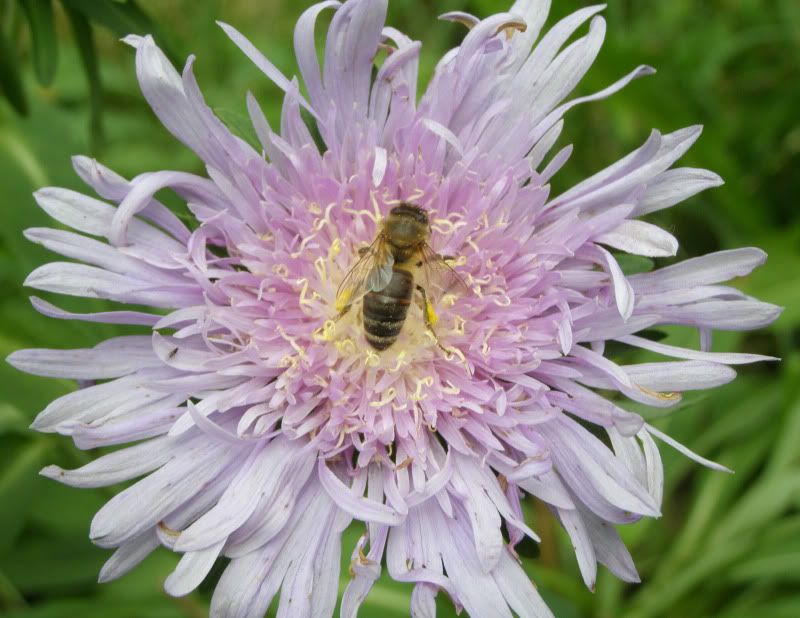
Stokes Aster, Stokesia laevis, is a good choice for slightly acidic soil. 

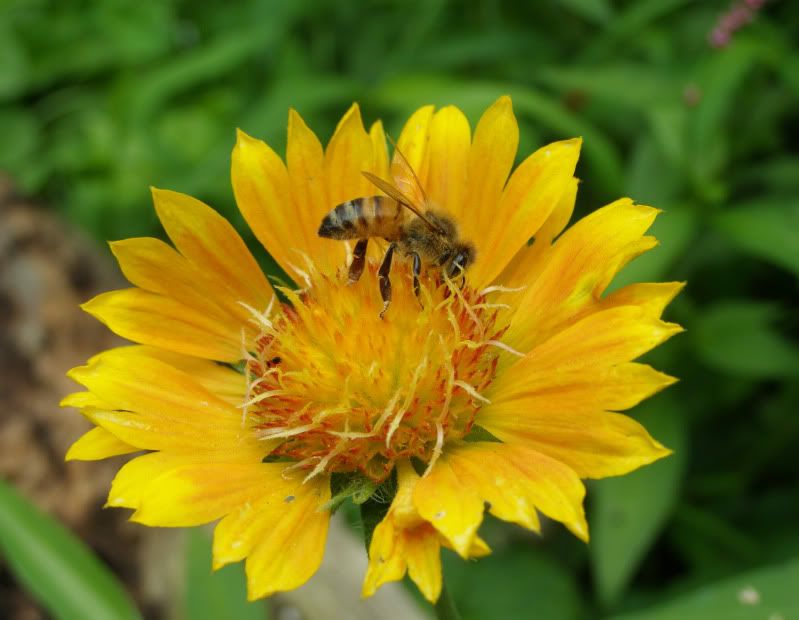
Gaillardia aristata, Blanket Flower, normally has a red, orange and yellow flower. Whatever color your's may have it doesn't matter to the honey bees.

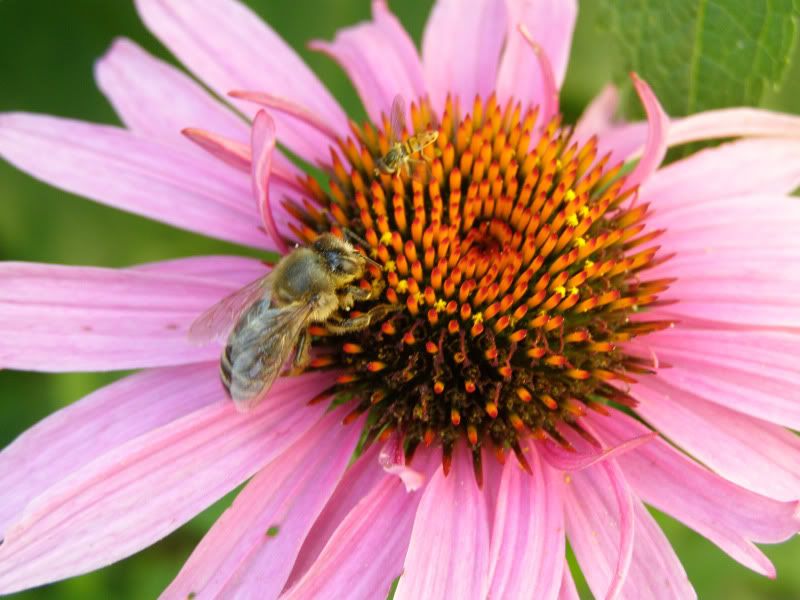
Coneflower, Echinacea, is good but should really be mass planted. They're occasionally nibbled upon by Goldfinches when they go to seed, but you really need like 20 plants to see that happening consistently. I have a theory that it's best to grow this plant from seed when you can. Store bought cultivars don't seem to reproduce but will work in the mean time as long as they're not double flowering.


Dalea purpurea, Purple Prairie Clover. There is also a White Prairie Clover that I imagen gets the same amount of attention. I think this is a clump of several plants in this video as I've never known them to get that tall or big.
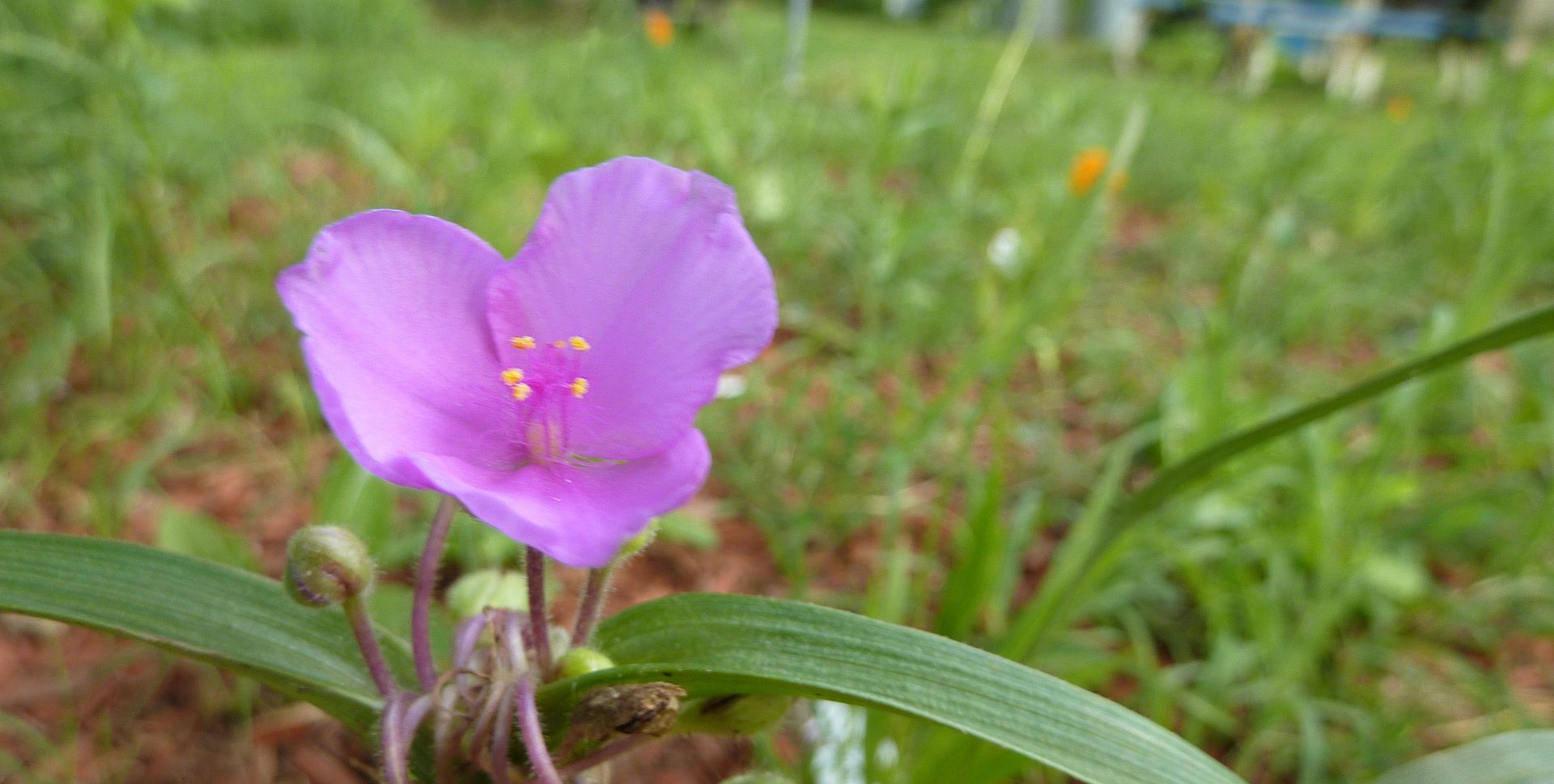
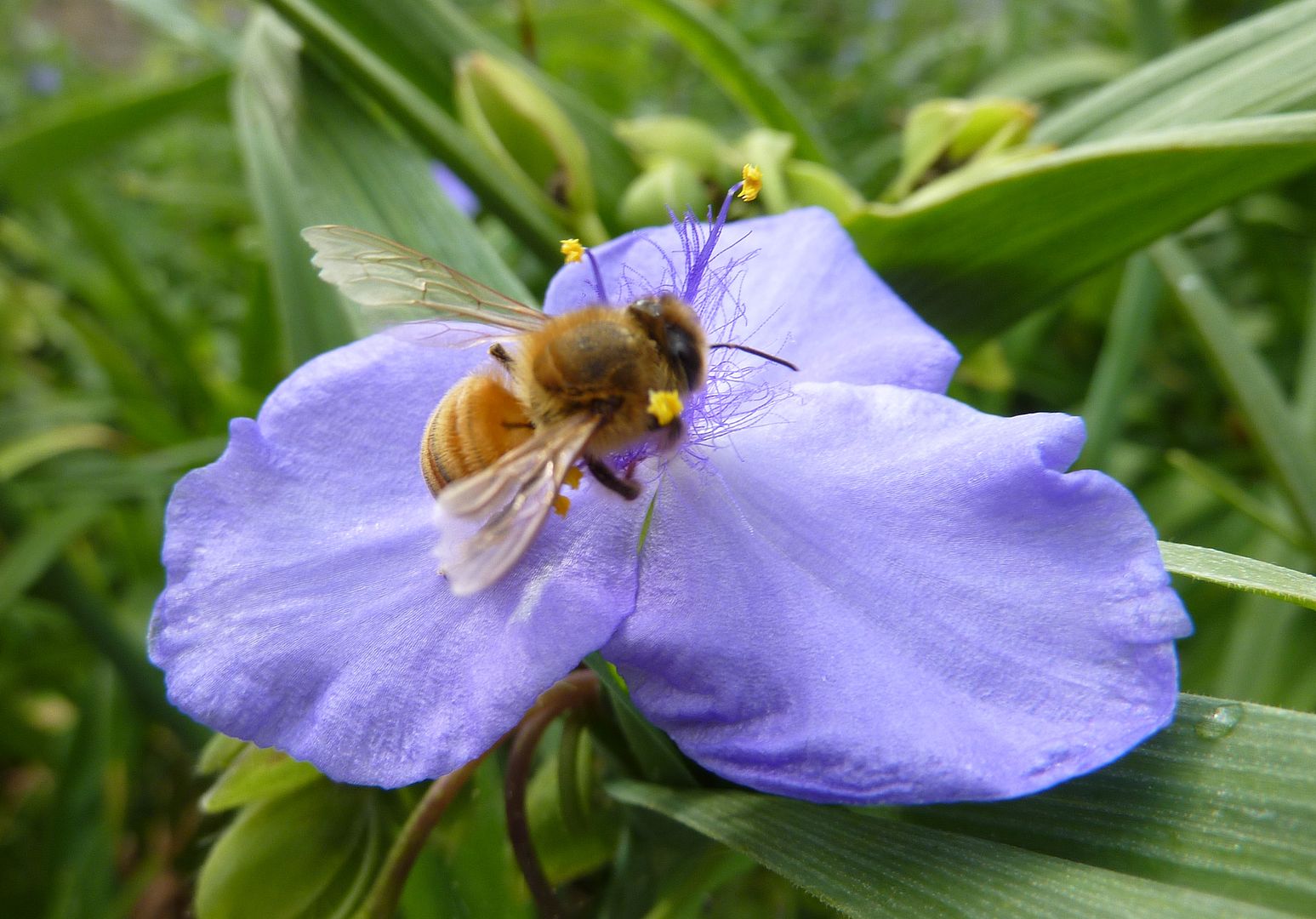
Spiderwort, Tradescantia sp. I think it's best to have several 3 gallon sized plants in order to get their attention. The flowers are also only open in the day time but that's not a bad thing. A lot of plants might even stop producing nectar by around 4:00pm.

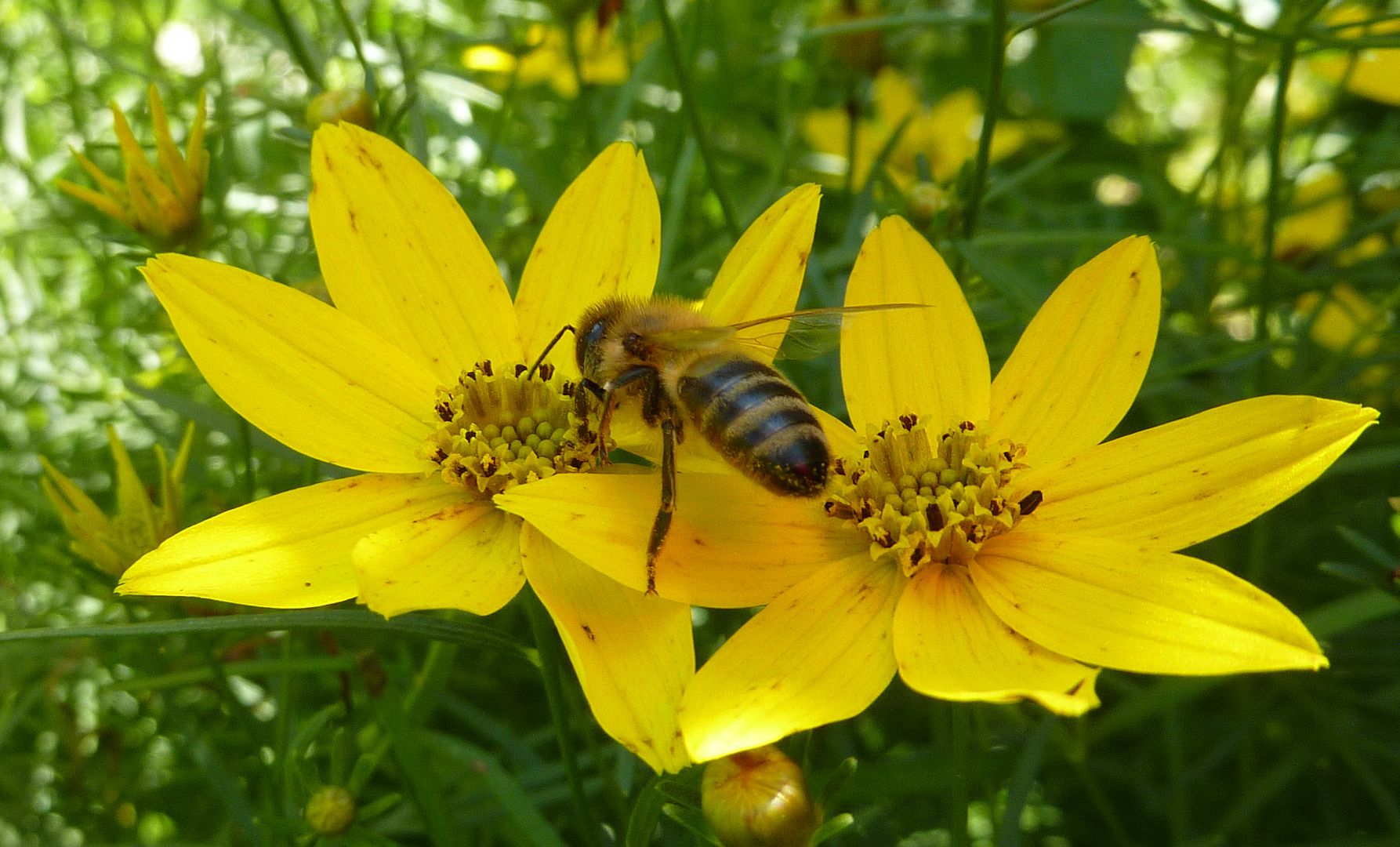
Tick Seed, Coreopsis sp. Ones that reproduce slowly by seed are best, not only for free plant, but they help compete with grass that is otherwise taking up space.

Rudbeckia sp. These are hit or miss. Some years I see bees going nuts over the Black-Eyed Susans and on other years they could care less.


Anis Hyssop, Agastache foeniculum.
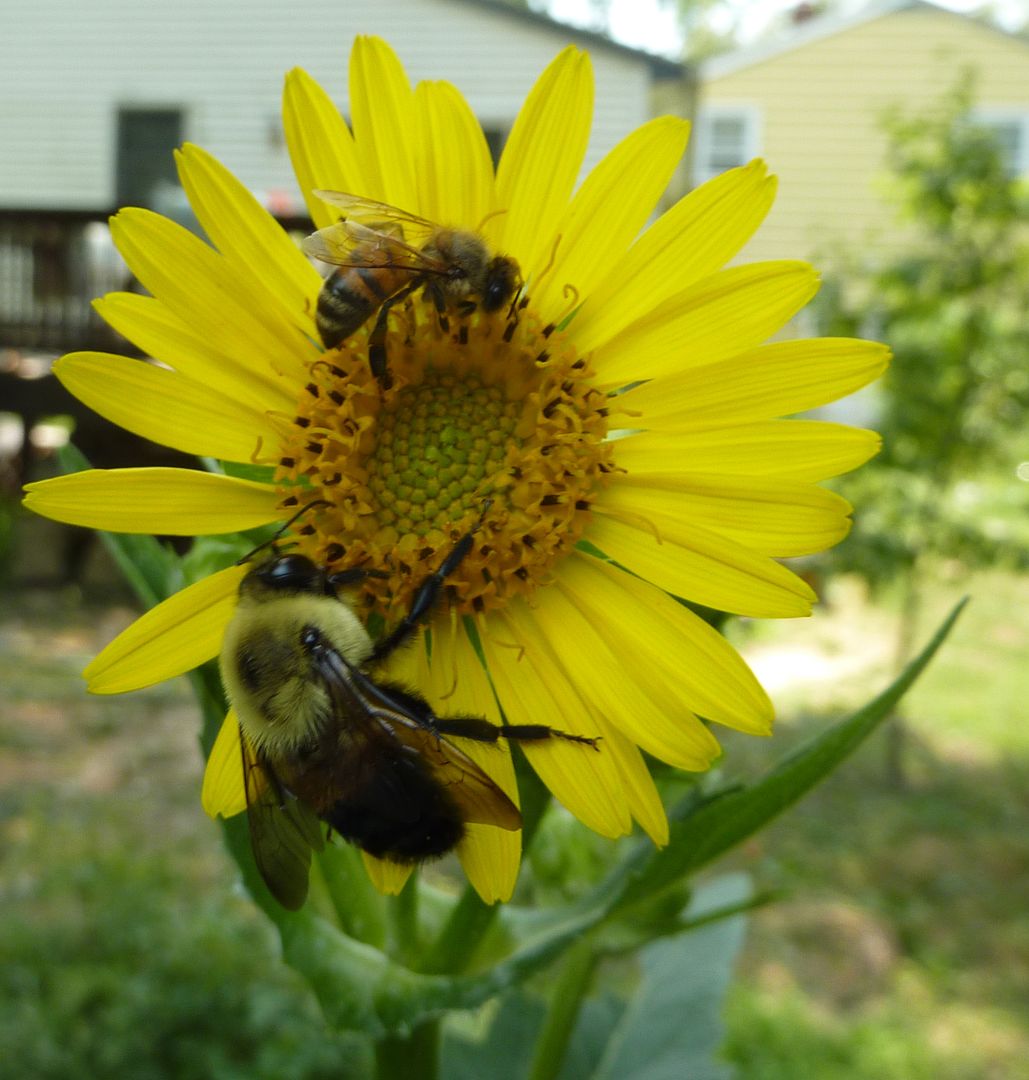
Cup Plant, Silphium perfoliatum, is a little aggressive and seedlings can be downright weedy, but this is a good plant when kept under control. Each plant forms its own patch and thankfully seems to peter out from there. The leaves come together to form a small cup that collects water, hence the common name. Bees not only love the flowers but go for the water in the cups as well. They are fairly straight up and don't fall over often. It’s a surprisingly good butterfly plant too.

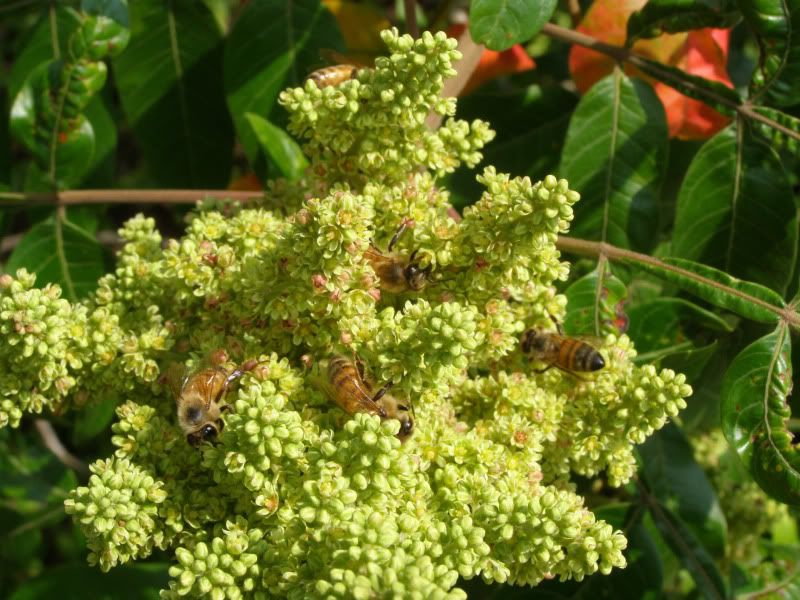
Rhus copallinum, Winged Sumac. Probably other Sumacs as well. This one wants to form it's own grove and sends up root suckers. They're common to see along road sides.

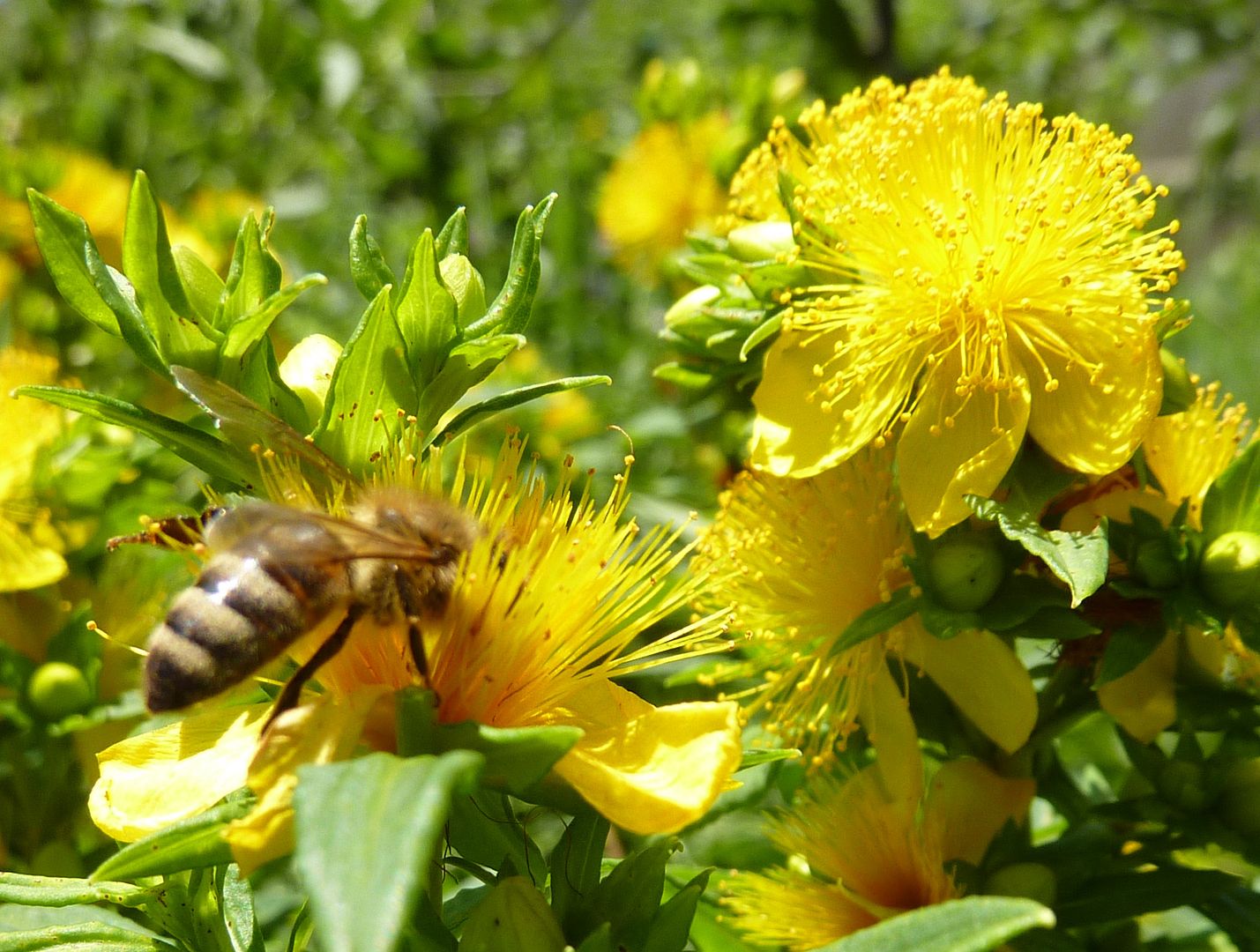
St. Johnswort, Hypericum sp. has wonderful puffy yellow flowers that produce rich amounts of pollen bees can’t resist. H. punctatum and H. pyramidatum are herbaceous perennials. H. prolificumis a deciduous shrub that gets to be about 4’ by 5’in diameter. Be afraid of H. perforatum,which is an imported noxious weed!

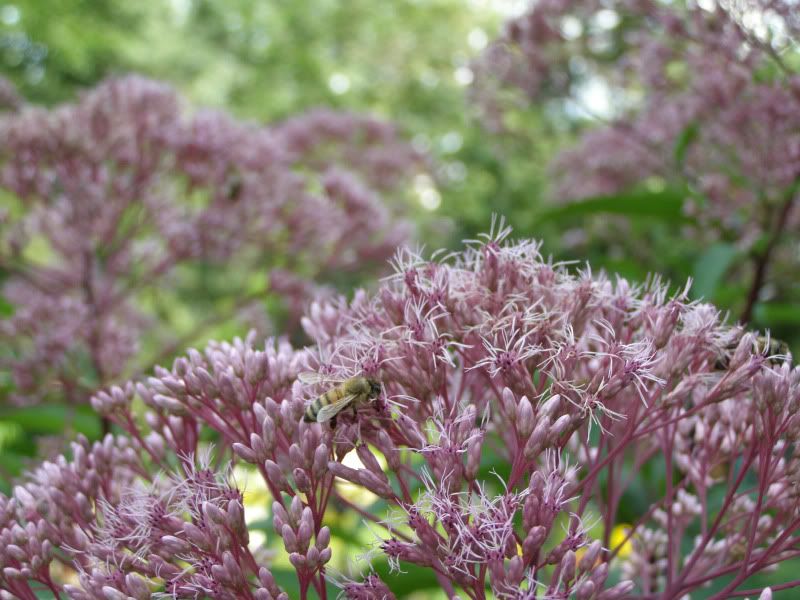
Most Eupatorium species are great for honeybees. In this case E. fistulosum which gets pretty big, but there are also smaller species as well. They like being around water and often droop in the afternoon sun. As the shade hits them they perk right back up and when flowering usually produce a medicinal-like odor at that time of day.

Eupatorium coelestinum, Blue Mist Flower, is a smaller species that blooms towards the end of summer. I haven't had it for very long but I've found honeybees enjoy it. I've read however that it's a tad aggressive.
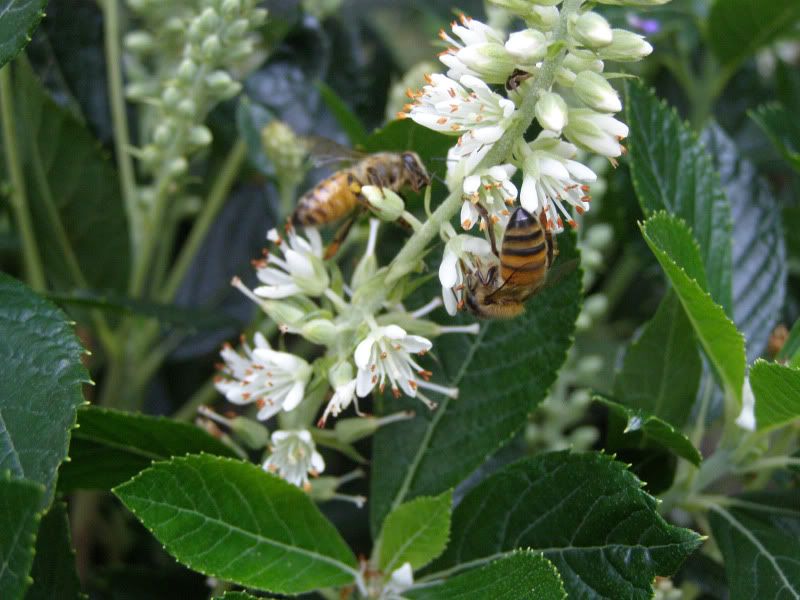
Clether alnifolia, Summer Sweet is also very shade tolerant but will grow in full sun nicely too. The flowers can be extremely fragrant when they want to be. The other common name for this plant is Sailor's Delight because on someday you could smell it out at sea. I haven’t quite figured it out yet, but occasionally I can smell my neighbor’s plant from 30’ away and it's covered in a cloud bee. More commonly though the fragrance rarely travels more than 5 feet and the bee numbers are not what they were but still great.

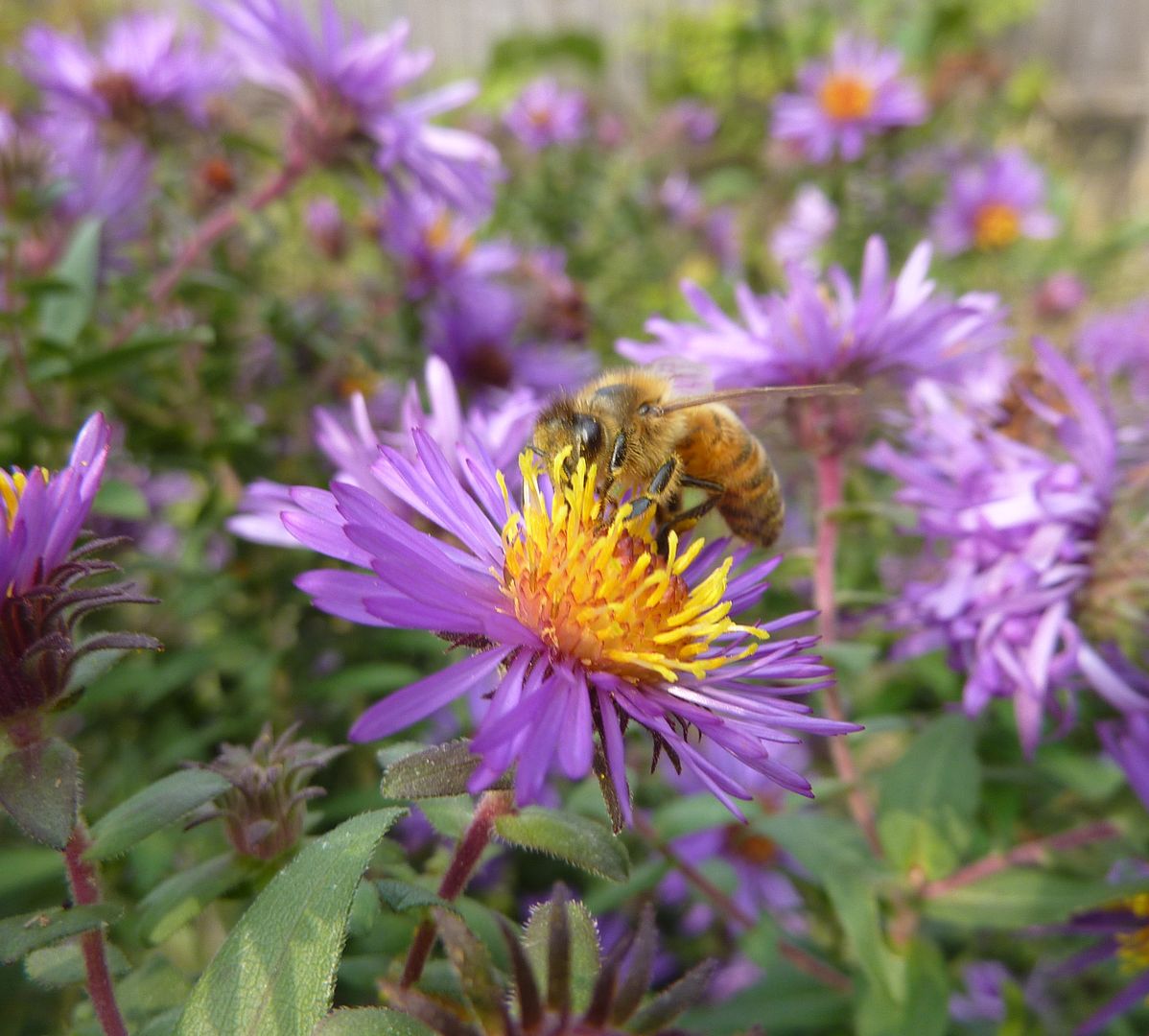
As we move into fall Asters become a main source of nectar. Something to note though is that Aster was recently divided into 7 genera, that are all now Asters in common name only. The genus Symphyotrichum is the main one you want to pay attention to I've found, S. novi-belgii, New York Aster, is one I like but can't seem to come back year after year.

Symphyotrichum novae-angliae, New England Aster, is one I have better luck with. An issue though is they get nice and tall but by autumn all the lower growth has died off the plant and the dam things want to fall over.

These are a favorite for Monarchs as well as Bees.

Aster oblongifolius is one I'm trying this year. It blooms in November, very late in the year! But it has a natural domed habit so no falling over.


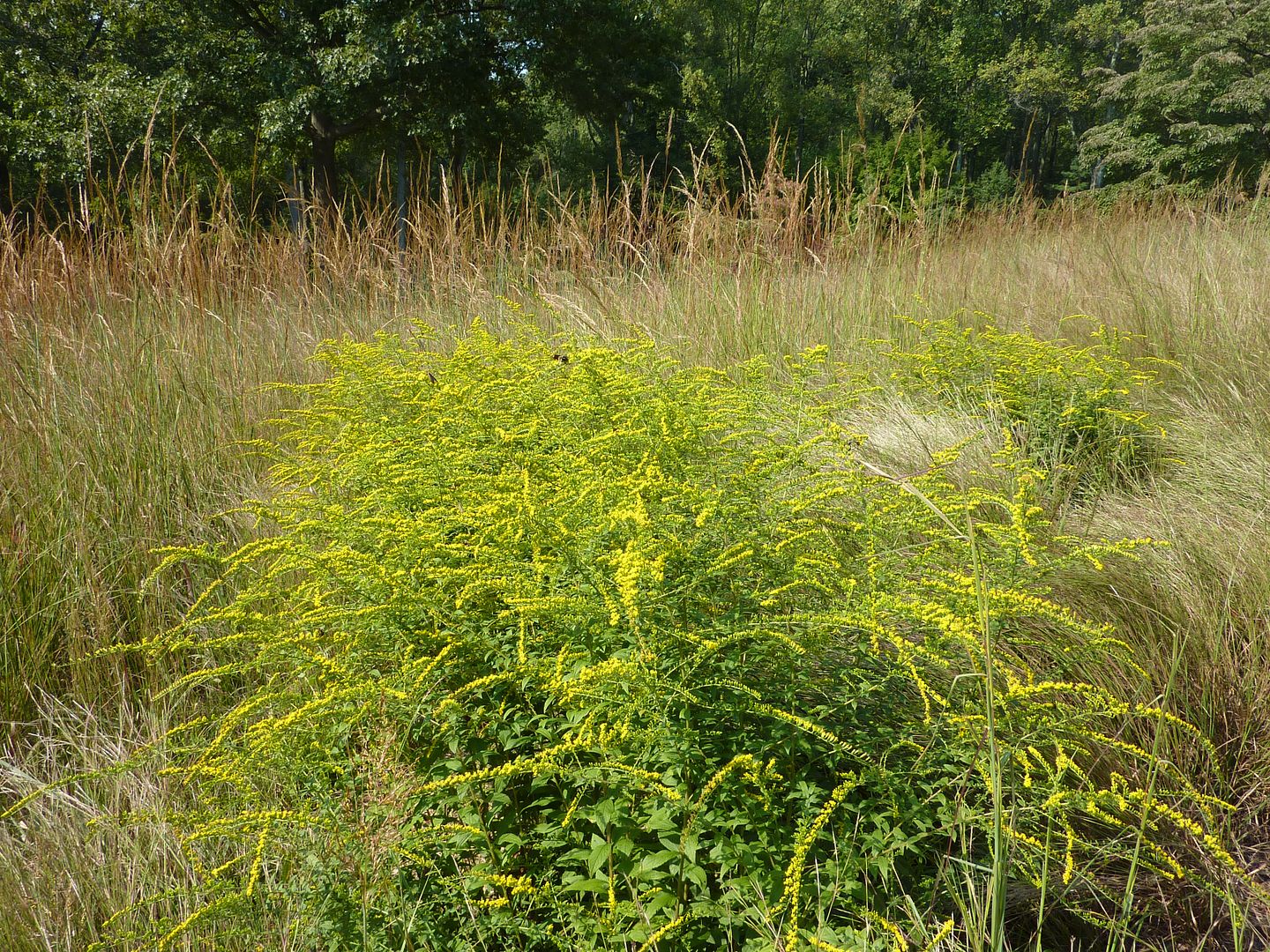
Goldenrods are the second big plant now, if not the biggest plant! Beekeepers are on the fence with these as they're great nectar sources, but also make a honeybee hive smell like a gym sock, which the bees don't mind. The honey tastes good, but has a tangy fragrance. Typically the bees will have eaten these stores over the winter if left alone.

The other thing about goldenrods is the majority of species are aggressive. Often they'll spread by root suckers. People who restore and maintain prairies for a living often shun Canadian Goldenrod for this reason. And honestly there's enough of it colonizing roadsides and areas around major power lines that it's not essential to anyone's garden. Still though I've added a few good choices that are at least easy to control. 

Solidago sphacelata, Autumn Goldenrod, is a showy low growing perennial that almost creeps along the ground. Perfect for a garden boarder.

Solidago rugosa, in this case you're looking at it's cultivar 'Fireworks' which has nicely spread out long stringy looking flowers. The true species has thicker flower clusters that are most focused higher up on the plant. This species will spread a little by seed and root sucker but not on the same scale as other Goldenrods. 

As a general rule, typically the shorter Solidago species bloom earlier in the year, while the taller ones bloom much later.


Solidago altissima, Tall Goldenrod, is NOT one I recommend for the garden. I have it in my own garden but only because it blooms in October through November when almost nothing else is in flower. Naturally it gets covered in bees and I even see queen bumblebees working it in preparation for next year.

This plant started as just one cane coming from the ground. Year two that turned into about 7, and it's been sending up 7 to 12 more canes every year now. Despite being aggressive though I've found the root suckers are simple to weed. Cutting them off at the tip causes them to grow out from the sides of where you just cut, so you can sort of herd it to grow like a box and pull up what you don't need.

Another honorable mention should go to Vernonia sp., Ironweed, which I don't have a picture of so here's a google image search. They're also a hit with butterflies as well as bees.

Thistle is also good for bees but sadly I've found all species to be aggressive spreading, covered in thorns, and the very definition of what a weed is.

Tuesday, May 31, 2011

Today's Bee Swarming Action

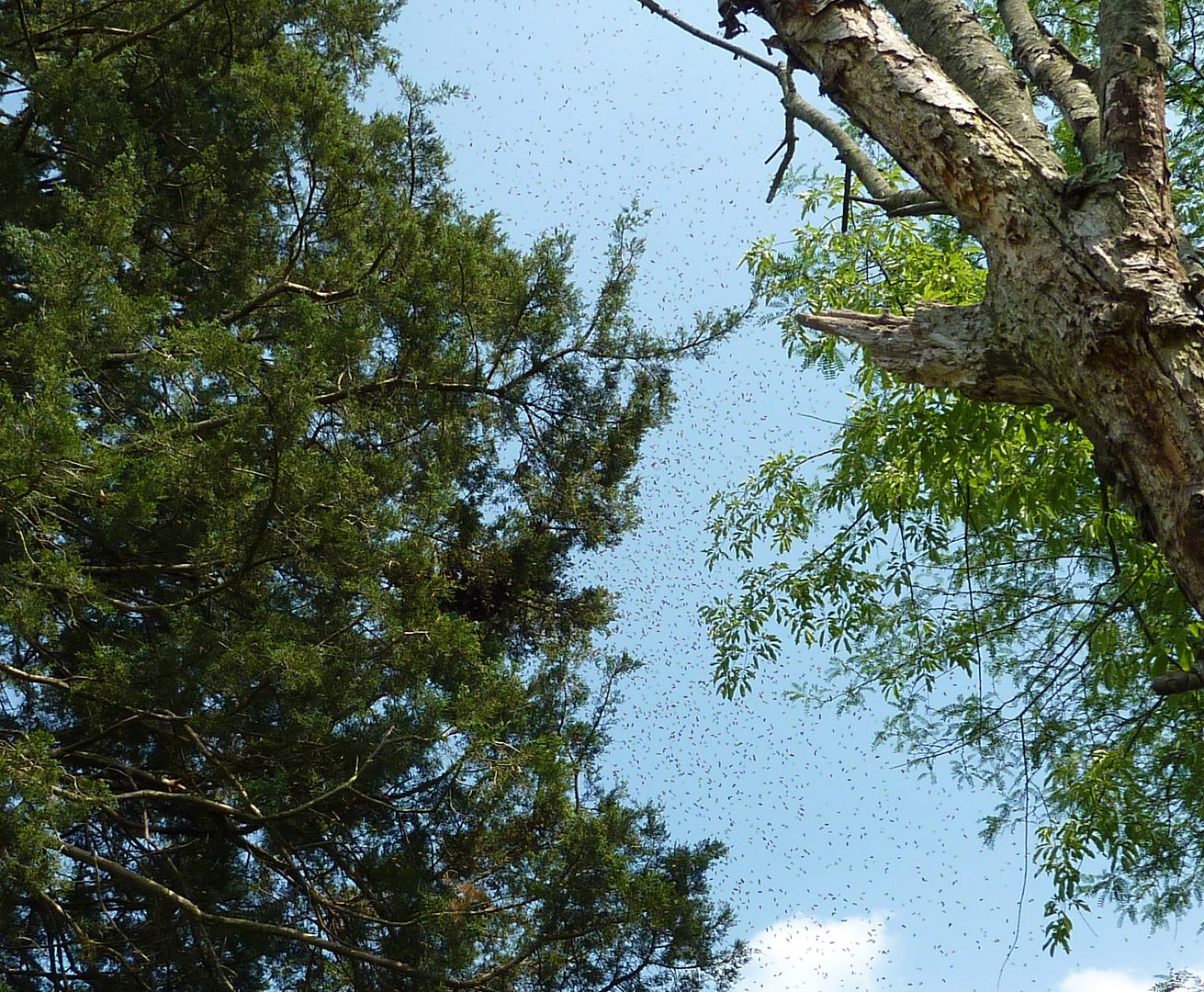
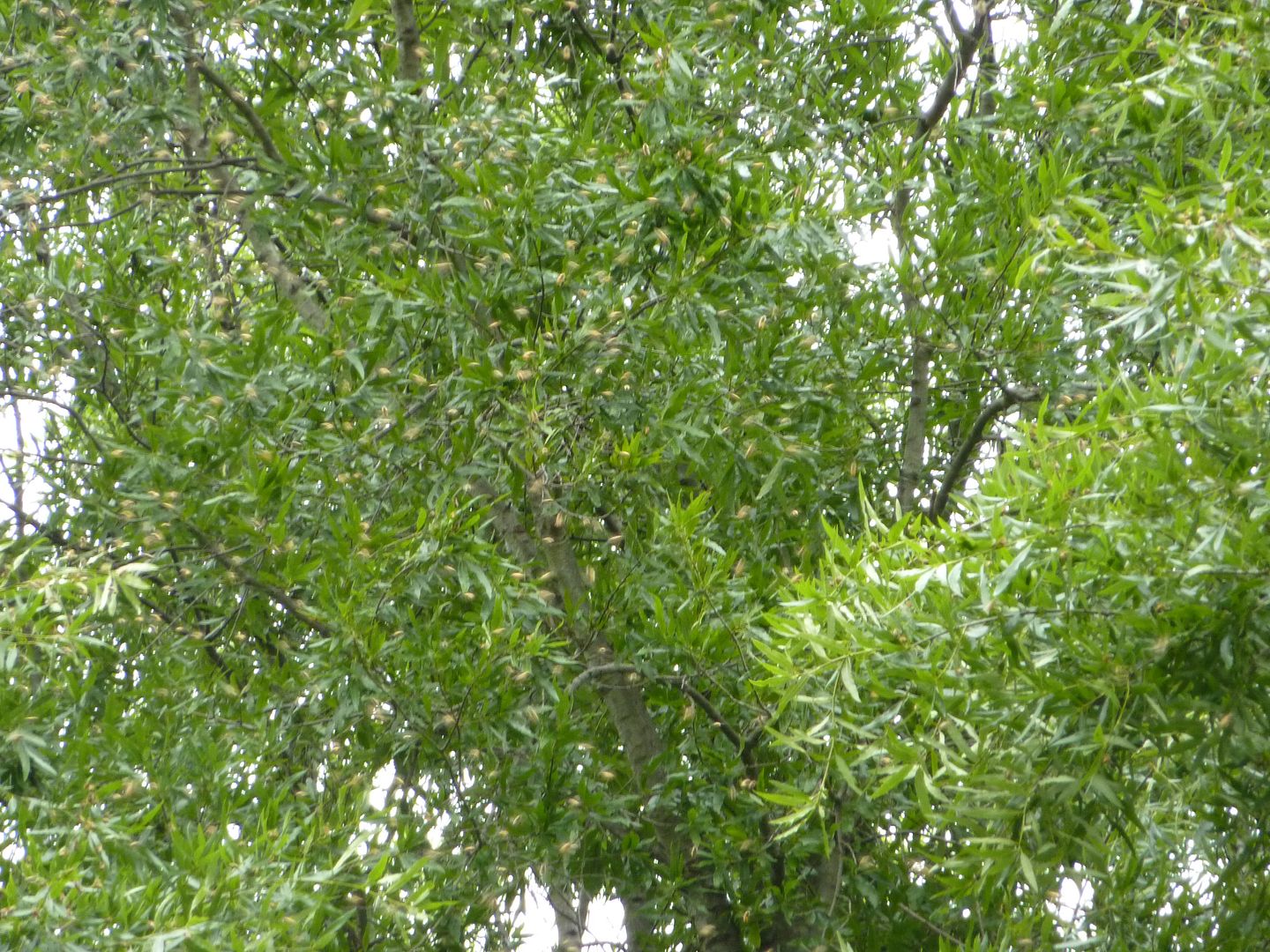
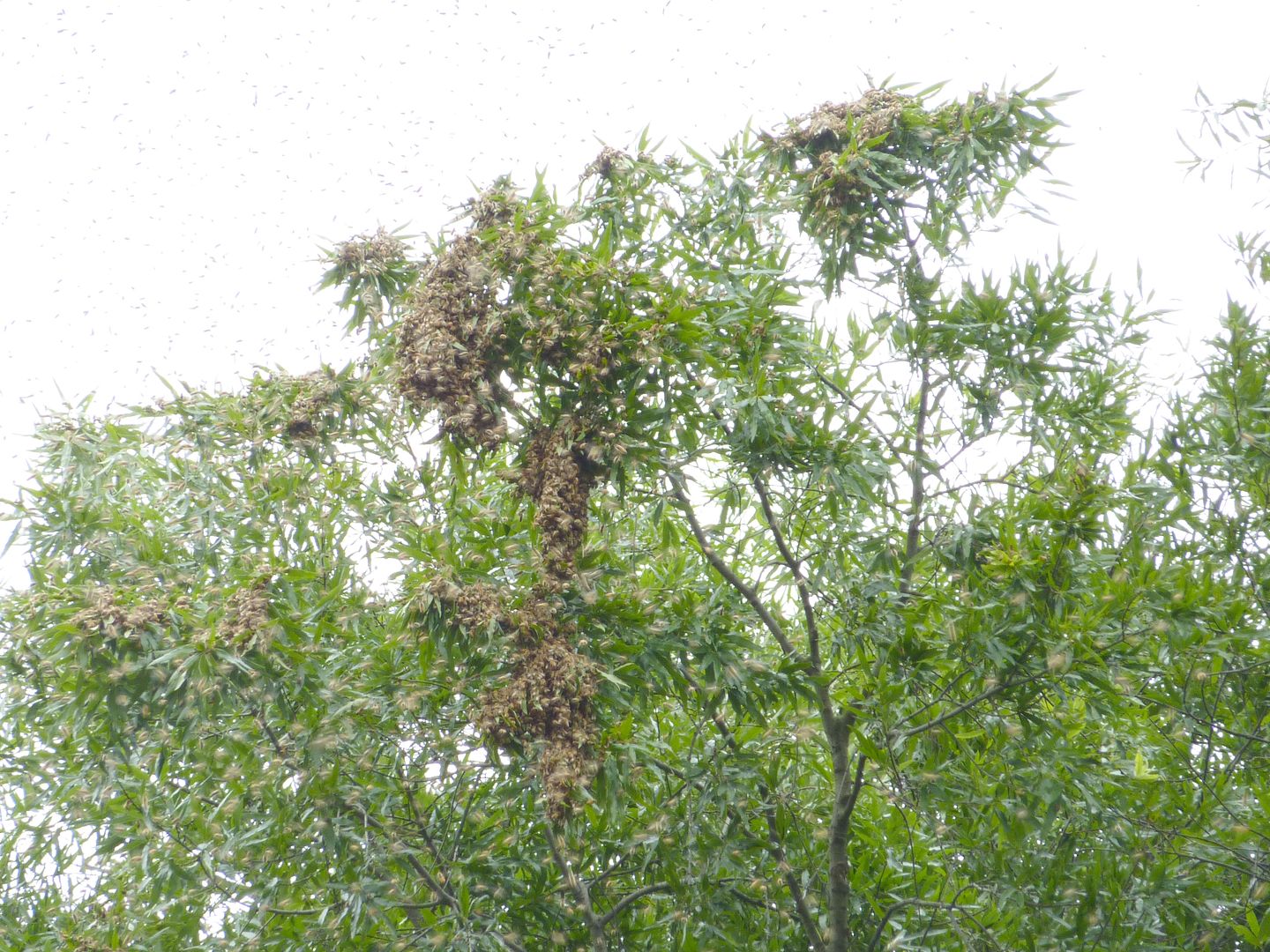
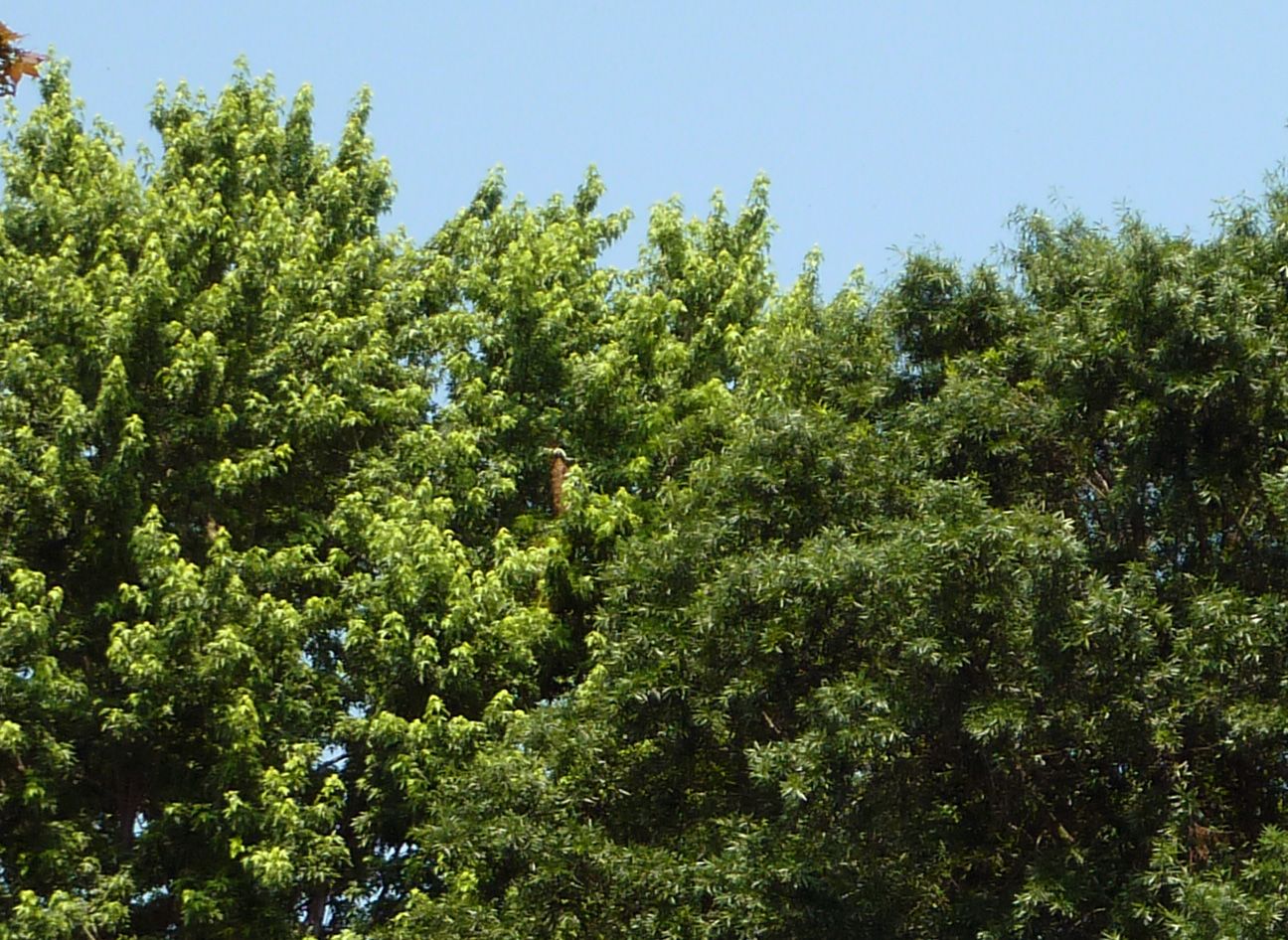
Today my honeybees finally decided to swarm. See if you can find them in the picture above. They're in one of the trees.

They're that giant brown pine cone looking thing in the middle there. Honeybee hives divide each year as a way of reproduction. A new queen takes over the work of her mother at the original nest site, while the original queen and about 40% to 60% of the bees take flight to setup shop elsewhere.

Often they land somewhere near the hive to start out. This tree is in our yard. While there scouts explore the neighborhood looking for someplace to setup. If they don't find what they're looking for then they'll eventually just move where they're hanging out.

And sure enough that's what happened. They took to the sky, and I ran to my car grabbing my camera along the way to film an episode of Swarm Chasers, soon to be complete with the theme of Police Squad blaring in the back.

Naturally they landed only 2 blocks away and will keep this patter up of swarming from one tree/bush to another until a suitable home is found. They're still to high up for me to get, and the home owner said he'd rather not let me rile them up. He said he's allergic which I tend to believe, though most people make it up. That's fine with me, I still have a hive and split I'm nurturing into a productive state. I told him they'll likely fly off early tomorrow morning so there's no need to spray them or anything like that, I left him my name and number, told him where I live, and drove off.

Sometimes you just have to let it fly. 

Tuesday, May 25, 2010

Attempting to Catch a Bee Swarm


Here is one of my beehives attempting to swarm. I know because they're THAT busy and the hive is in the shade. My hives aren't that productive. The bees begin swarming around the entrance waiting for the queen to emerge. Once she's out the swarm takes to the air and a cloud of bees fills the air. They don't go very far at first though.


Swarms land close to the parent hive at first. They do this to, first off make sure they have a queen, workers make the final decision if they're going with that queen or staying with the old hive, and they make sure they have enough food stores to make this new hive happen. In this case they're landing on my neighbor's house. My neighbors were so Cool about this though, thank god! Lots of people get angry and kill sitting swarms of bees. I've even herd of cases where neighbors are okay with swarms but their neighbors aren't and go ahead and "take care of that bee problem for yah."

Hanging swarms are ones where the bees are out in the open and they will move on. In the mean time call you local county office and request a beekeeper, tell them you have $100 hanging in a tree for them. Referring to the bees of course. Here is where some odd etiquette happens. The beekeeper is up 1 hive from this which is easily worth $100 by itself. They remove it for the home owner but should the home owner be charged money for this? It's polite to give gas money so that's $5 about but it's so small why bother. I suppose the home owner should pay money if they have demands, such as not damaging a tree, or removing a swarm because it's in the way of business or an event.

But then we have the Huge Spectacle Swarm. The one where police have roped off a bush, shut down two lanes of traffic, and the local news media has shown up. Here the beekeeper is regarded as a hero usually and that's their reward, minus some asshole being quoted in the local paper as "Beekeeper's Swarm Run Amuck."

So it's better to not let swarms happen or control them as you see fit. Splitting Hives is always an option but they don't always work. Even after dividing the hive they may still swarm. Thankfully there are a few products on the market to help catch swarms.

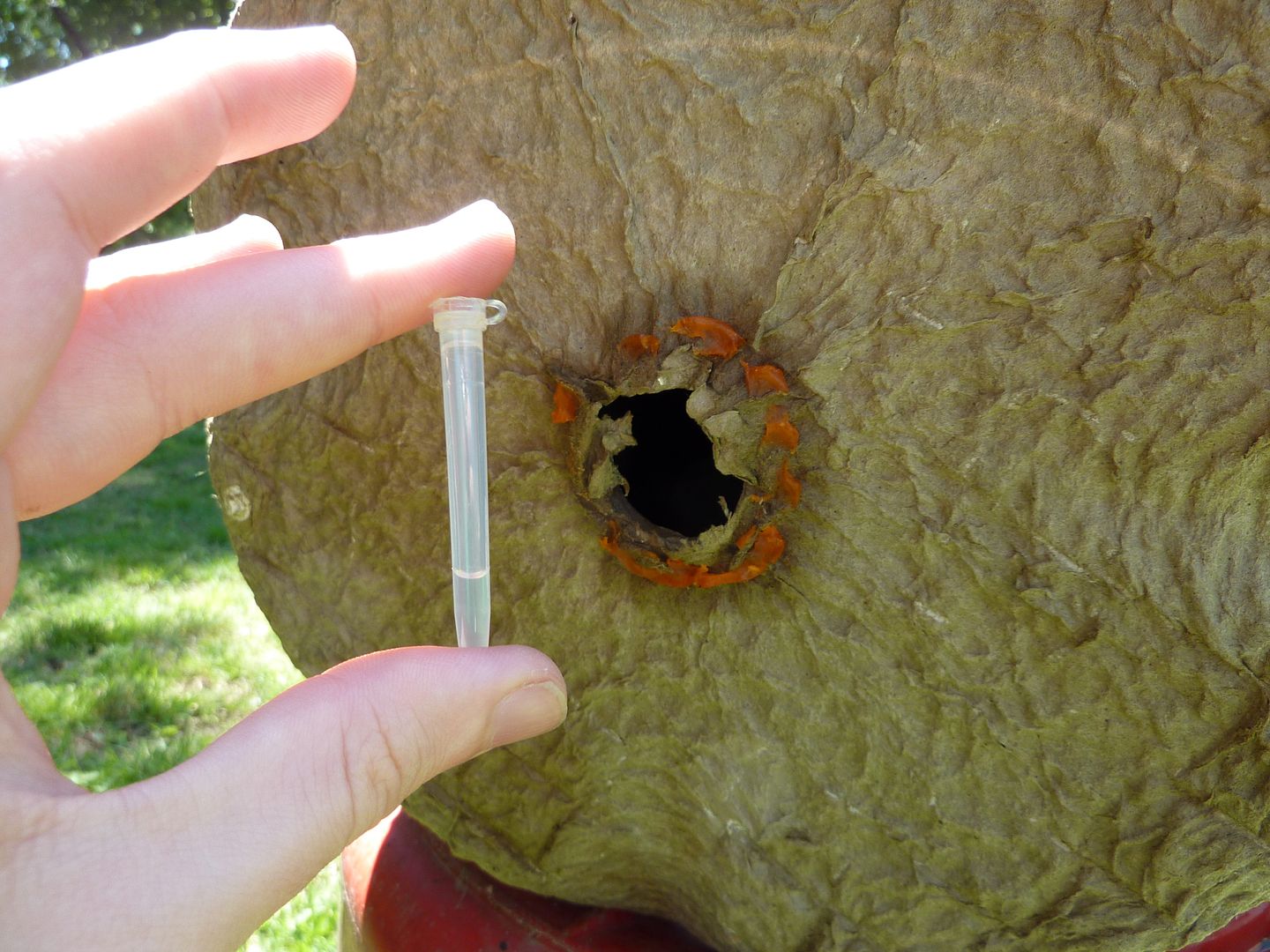
Bee Charm and Swarm Lore, which are probably variations of Lemon Grass Oil, all attract Honey Bees and help gain favor over a swarming hive. Vials of scent or creams placed inside a swarm catching box. 

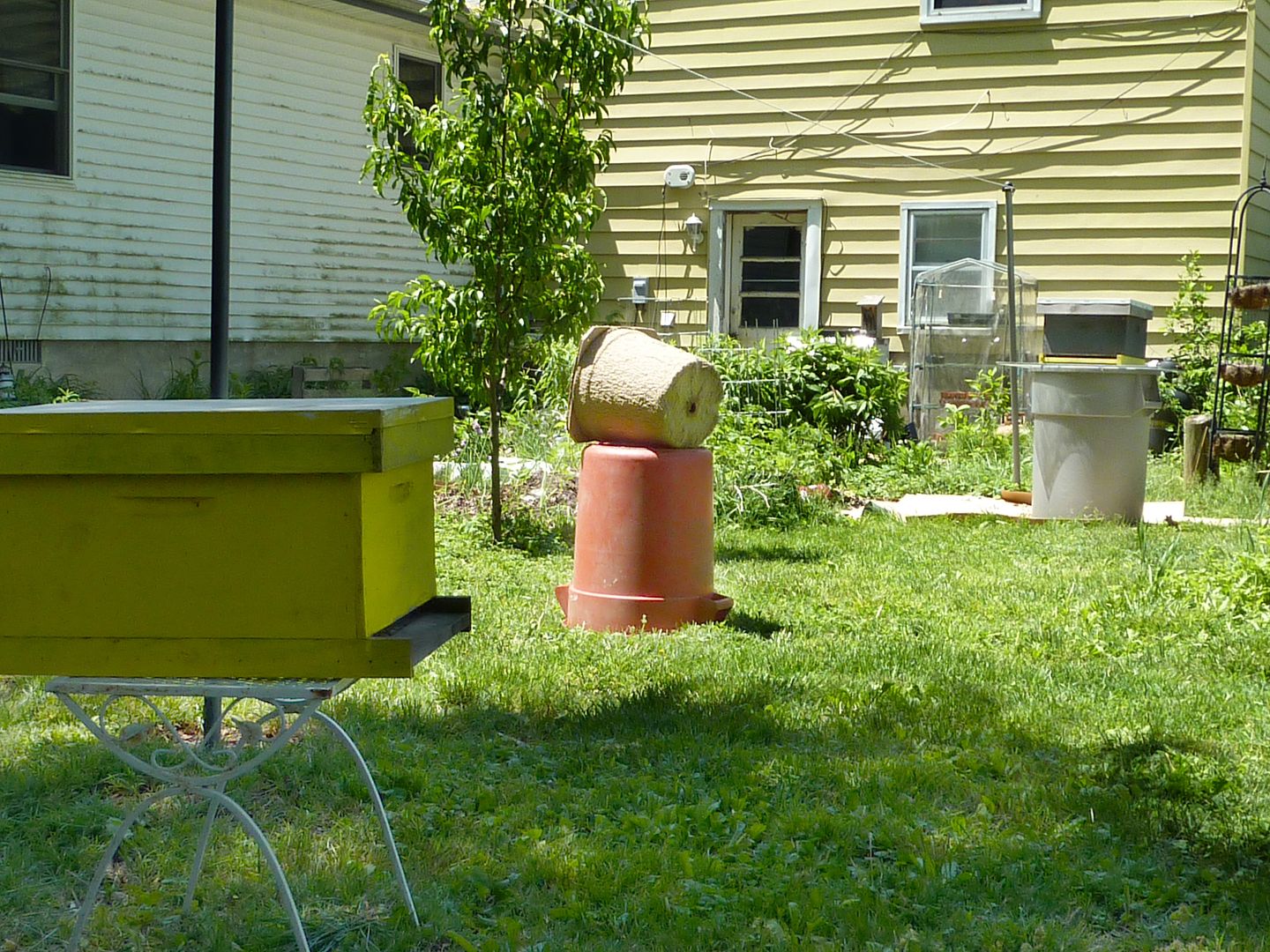
These can be setup around the yard and potentially attract some bees. The sweet fragrance that fills the box helps make up for the failings of the potential spot. Bees are picky.

Scout bees fly around the box and check it out. 1 or 2 bees though isn't a good sign at all. When you start seeing more than 40 checking out a box though that's when you know a swarm is on it's way. This is particularly helpful when you have swarms high up in the trees. 


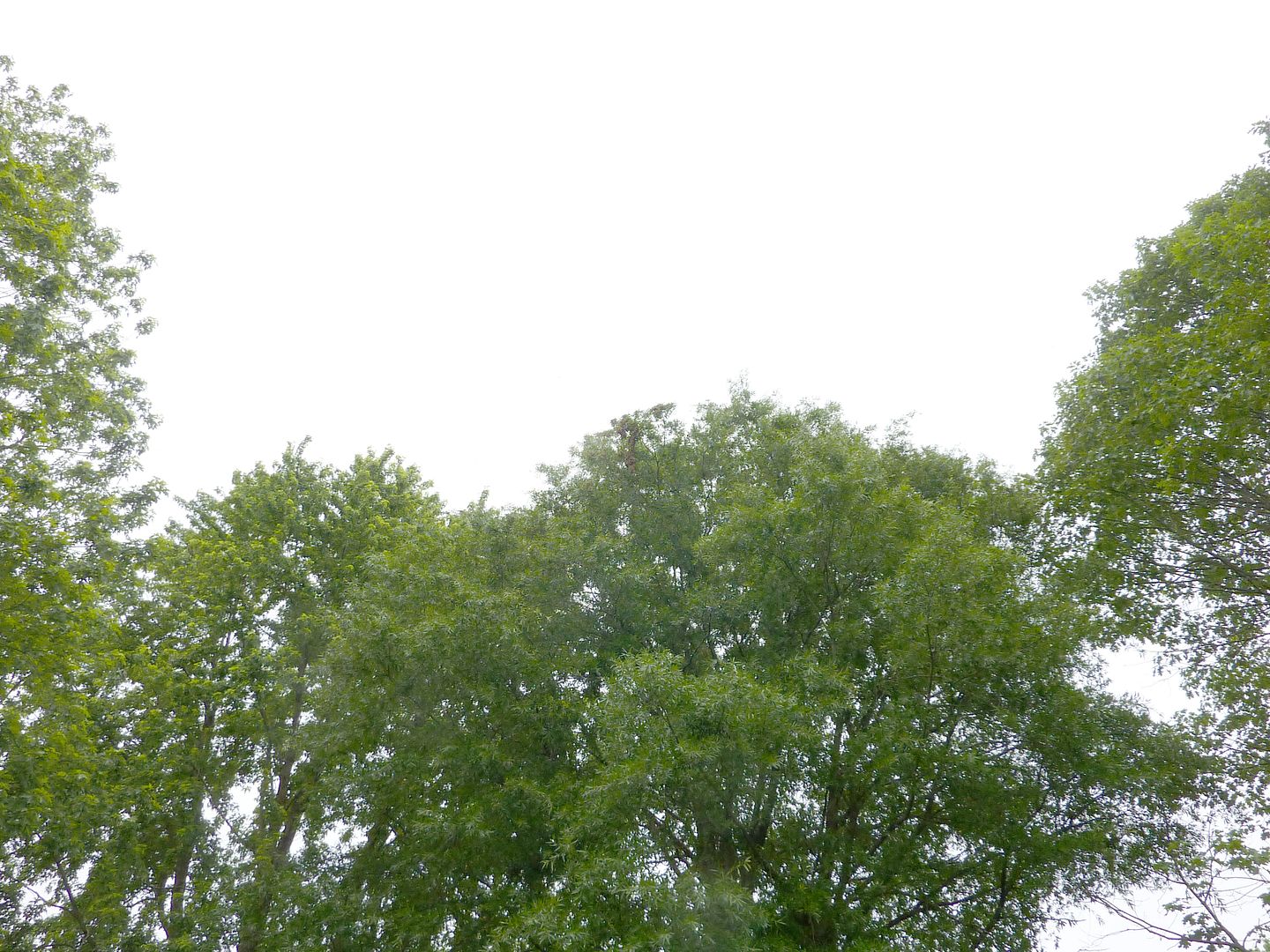
The normal method to get a swarm (yes there's one in this picture) that high up involves taking a frame of brood from the old nest, throwing a rope up to them, and shimmying the frame up to them. The nurse bees take care of the brood and the whole thing snow balls. The hive can then be lowered down and safely caught. Some of us though can't throw that high.

So there's the problem. They do sell a bucket on the end of an expendable poll which is also good for this situation but that's not an option either. Cutting the limb isn't an option either for the swarm this high.

So we assumed the swarm catchers would work. Unfortunately they didn't and once again my hives are supporting the feral bee population (wild hives). They took off for the woods somewhere.

It turns out that swarm catching products such as Lemon Grass Oil slowly lose their potency. All our chemicals were from last year. But boy when these things are fresh do they work great! Last year we couldn't keep the swarms out of the thing! So these products do work but only when they're fresh.