Showing posts with label Formica pergandei. Show all posts

Tuesday, September 20, 2016

Late Summer Anting

For personal reasons this year I decided not to have an official "Ant Together." The short story is that my grandfather unexpectedly passed away during the peak month that we would have had one. I found myself in this odd state of mine where I just wanted to skip everything required of me and not volunteer for certain family obligations... thus it stood to reason that I shouldn't be doing other things either such as holding events.

Though the truth is as much as I like to promote the New Jersey Ant Together as a big annual thing, it's never escaped being a simple hiking trip with like minded individuals. And maybe it should stay as a simple get together in future.

I did manage to get a trip in thanks to my friend Matt coming back for a visit. He's attended every Ant Together I've ever done so it was good to get some in while he was back home. Our hunting ground of choice was the Rancocas Nature Center where we held our first one.

This was not our most productive trip, mostly owing to the fact that I forgot my shovel (Doh!), but we still had fun. Our first visit there five years ago we had come across colonies of Polyergus, Stigmatomma, and Strumigenys which was pretty good for our first time! Polyergus are specialist slave making ants of the common Formica genus, that are only found in certain fields. Stigmatomma are a type of "Dracula Ant" which specializes on hunting down centipedes for food. The term Dracula Ant comes from their habit of feeding on their own larva through non-lethal cutting. Strumigenys are cryptic, often hard to find, specialist on soft bodied arthropods... basically miniature Trap-Jaw Ants. None of which we found on our trip owing to the fact that it was very late in the summer.

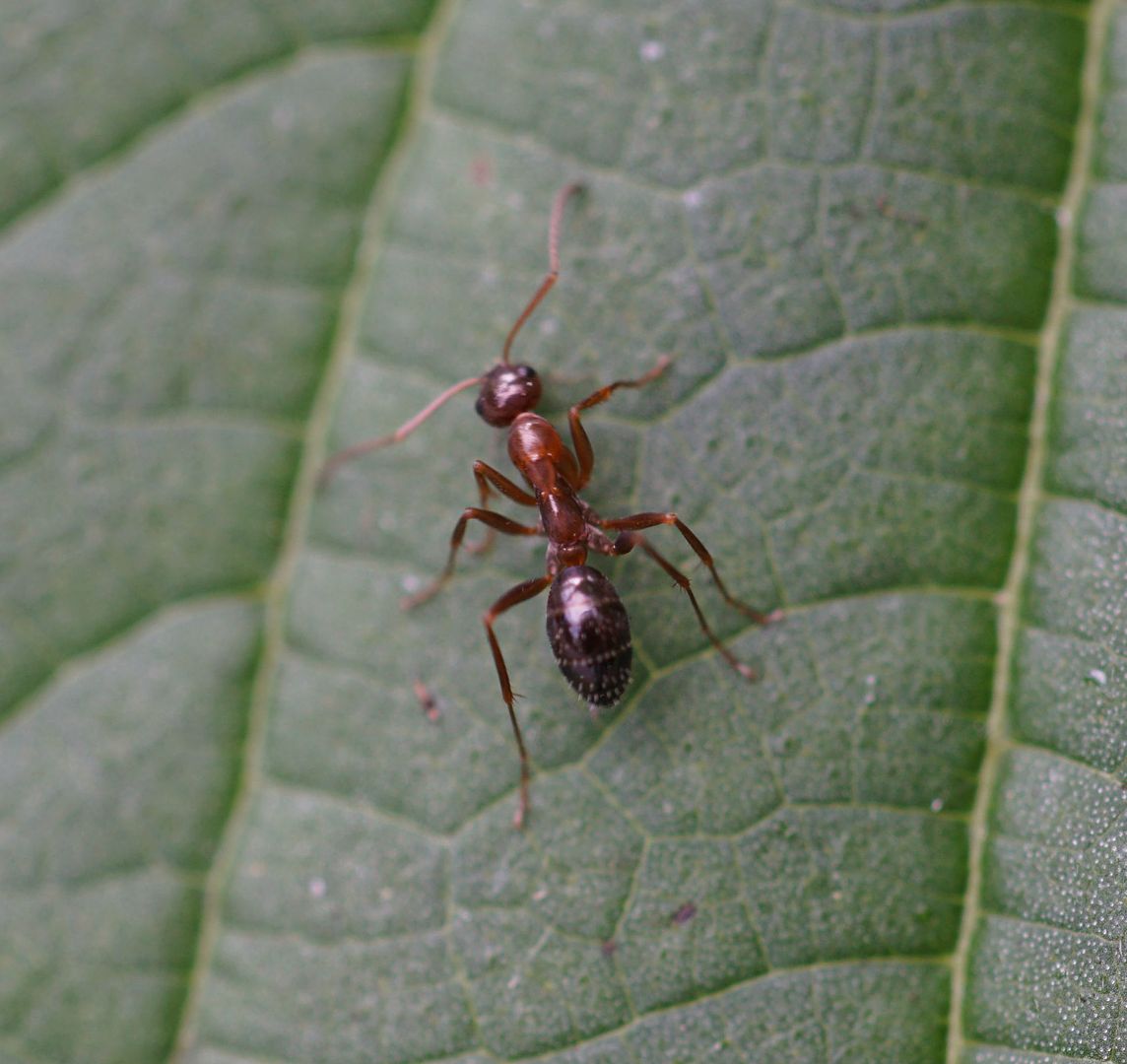
Formica incerta, very similar looking to Formica pallidefulva, differing primarily by the amount of facial hair. The two species often live in the same fields together and prefer not so lush lawn or scrub habitats. Colonies tend to be small typically around 2,000 to 10,000 ants. Queen number varies with these two species, I believe because some colonies are in the habit of allowing new queens to return to the nest after mating. The colonies then divide after that. It's likely this behavior came about from the presence of other slave making Formica and Polyergus species, perhaps even becoming more common when these threats are around.

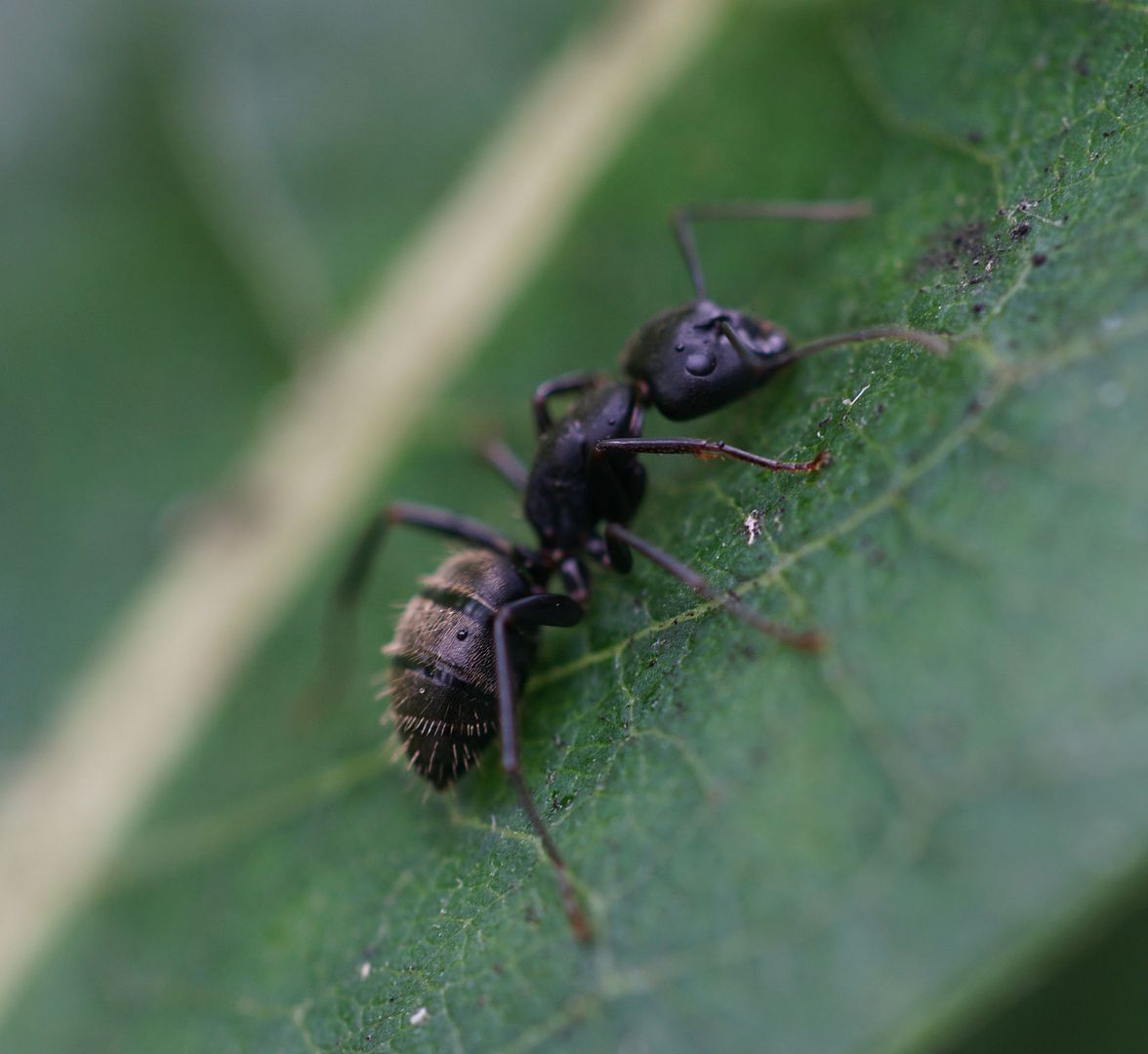
Camponotus pennsylvanicus The Eastern Black Carpenter Ant, is easily identified by its large size, ~8 to 15mm. They are solid black color in color, though sometimes the legs with hue dark brown or red, more so in queens than workers. Also they have large amounts of hair on the gaster (abdomen), that's usually brown or gray in color. Colonies are strictly Monogyne/Oligegyne where they only tolerate one queen at a time; the Oligegyne comes from the fact that occasionally colonies have two egg laying queens in them... this is a temporary situation at best and likely comes from a situation where a new queen was brought back into the nest on accident. The new queen is "safe" as long as she's not in the same satellite nest as the mother queen of the colony. These situations usually resolve themselves each winter when colonies reduce the number of satellite nests retreating into one or two locations.

Crematogaster cf. cerasi. This likely is Crematogaster cerasi from their habit of sometimes building shed-like structures over the aphids and leaf hoppers they tend. Crematogaster species otherwise tend to be difficult to identify because of how similar most of them look and needing to count the number of hairs on parts of the body from multiple workers to get a range. This colony likely only has one queen but grows to be enormous in size. Locally they're known for having extensive foraging trails and satellite nests established basically in any dead wood structure or hollow cavity they can find. Despite this they're not really a structural pest.

The genus Crematogaster is easily identified because their waste segment connects to the upper half of the gaster, where as every other ant genus in the world connects to the lower half, or to both with a wide surface area. Their gaster is also considered "heart-shaped." The reason for this upper connection to the gaster is so they can more easily flick venom onto enemies or "sting" venom in an overhead like action as a scorpion would go to sting. Their stinger is said to be soft and flexible, like a hair so really they're not so much injecting venom as painting it on.

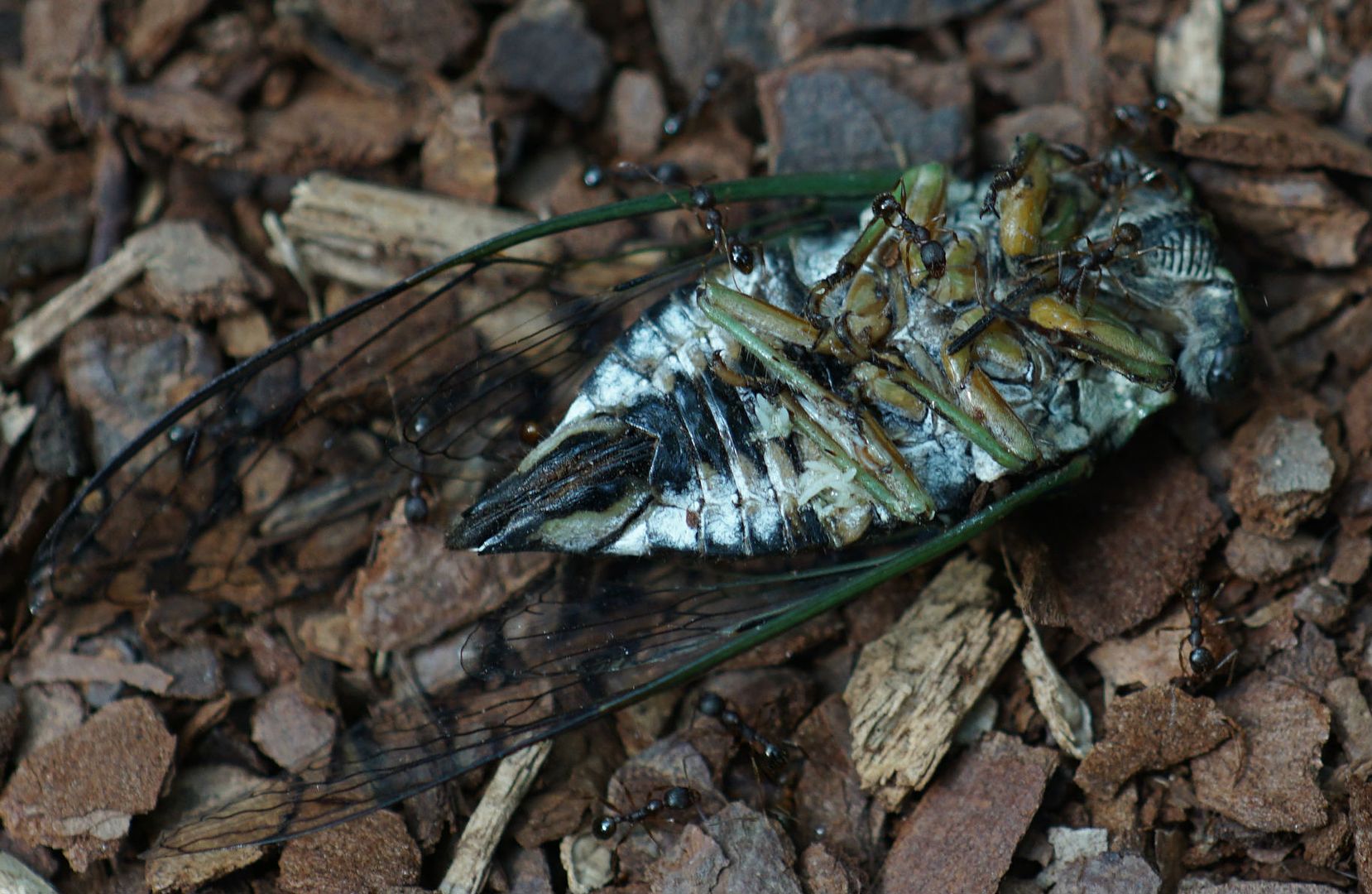
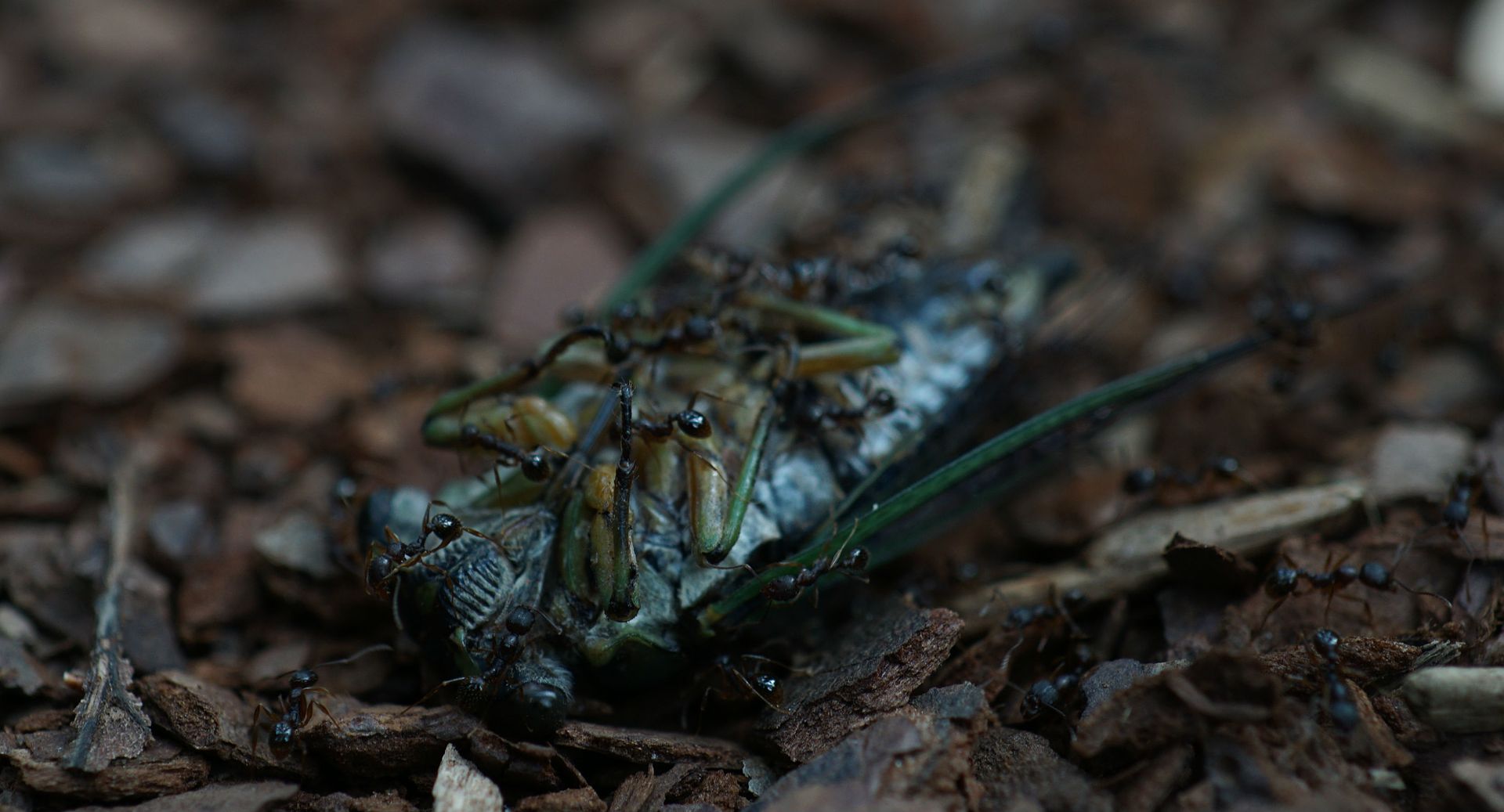
Aphaenogaster is a true genus of scavengers in the forests of the North East. Now that it's late summer the Dog Days Cicada's are dropping like flies and the ants are cashing in. It's been said that ants keep the forest floor clear of dead insects and it's uncommon for a carcass to go more than 5 minutes without being discovered by an ant.

Discovery is one thing though. Dismantling and hauling it away might take a day or two. These were ripping at the soft parts first and eventually managed to remove the legs. I did not stay to watch anything more.

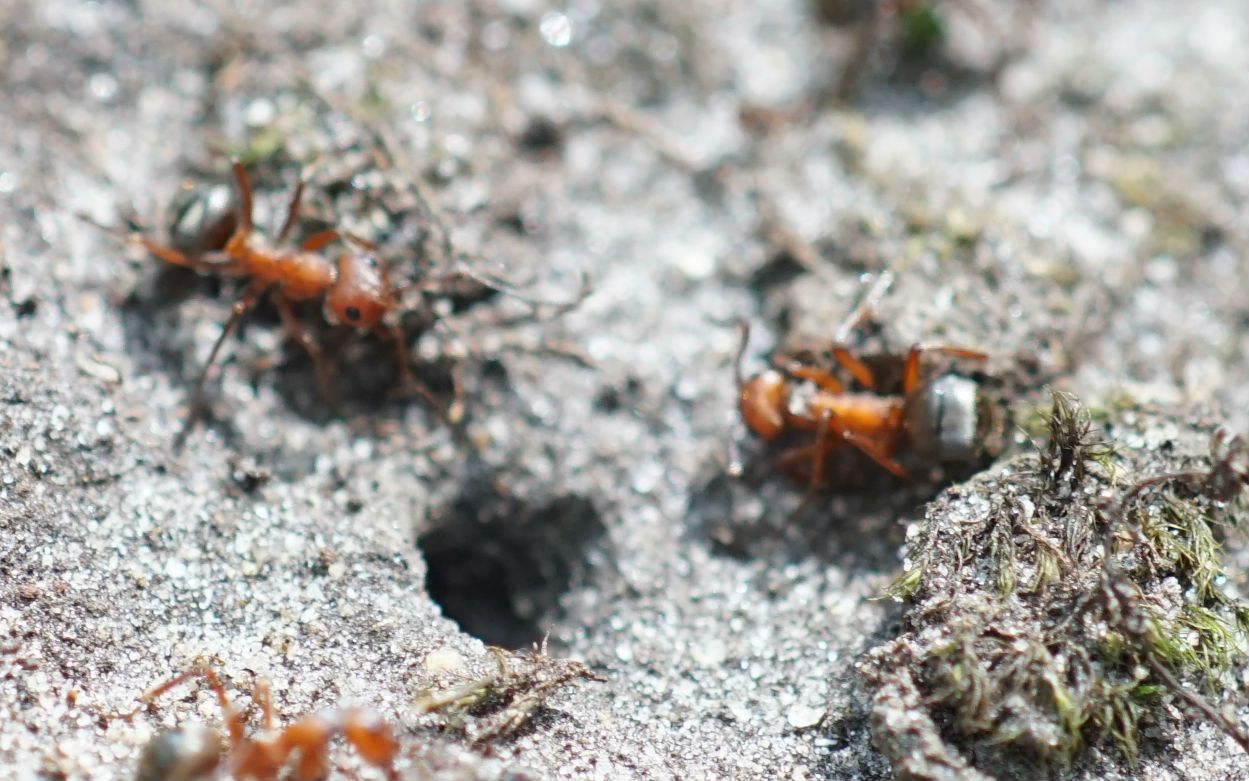
While we didn't come across any slave making Polyergus, we did chance upon a colony of slave making Formica. This is either Formica pergandei or rubicunda. I didn't collect any specimens, so we'll likely never know what they are unless I go back sometime. This doesn't matter much though as both species tend to live exactly the same way. F. pergandei has 1 - 4 hairs under the head, while F. rubicunda always has 4. F. rubicunda is also more in the habit of having dark patches on the head and thorax. There are other slight differences but this is the kind of stuff that taxonomists nit pick about for hard identifications. 

This is a good photo of the waste segment, looking head on, which is the light orange heart-shaped part before the black gaster. But this is also a bad photo of the "clypeal notch" which is the front section on the head between the mandibles. Trust me there is a notch there; it's visible in other photos I took of these ants. Unfortunately none of these were good enough photos I felt worth uploading and showing. I mention the notch because Formica is the largest ant genus in North America and it's the defining characteristic that narrows it down to those two species. 

Members of the Sanguinae group of Formica HAVE to have host ants within the colony to do the work for them. They are obligated slave makers. Other species of Formica found in the Exsecta, Rufa, and Microgyna groups might use host colonies to found new nests, but after that host species are no longer needed. In fact the Formica exesectoides mounds we like to visit in Turkey Swamp Park rarely use host species. They've move beyond the need for them, allowing new queens from their own colony back into the nest to form a massive super colony within the forest.

These do require slaves though and we chanced upon, I believe starting out on a raid. 

They would pull up individuals of their own species out of the nest and then began running along a trail to a host colony I believe to be either Formica fusca or subsericea. They would then run into the nest, grab a cocoon of one of their hosts and bring it back. None of which I got any good photos of :( 

Friday, September 2, 2011

Ant Chat Episode 35: My Formica pergandei Colony


So I've decided to do another episode. Ants during the summer really take a break, which is a shame because that's when ratings for my show go through the roof. Now that we've had a few hurricanes, err umm, cold spells, more ants are becoming active and I'll be able to post more outdoor things hopefully.

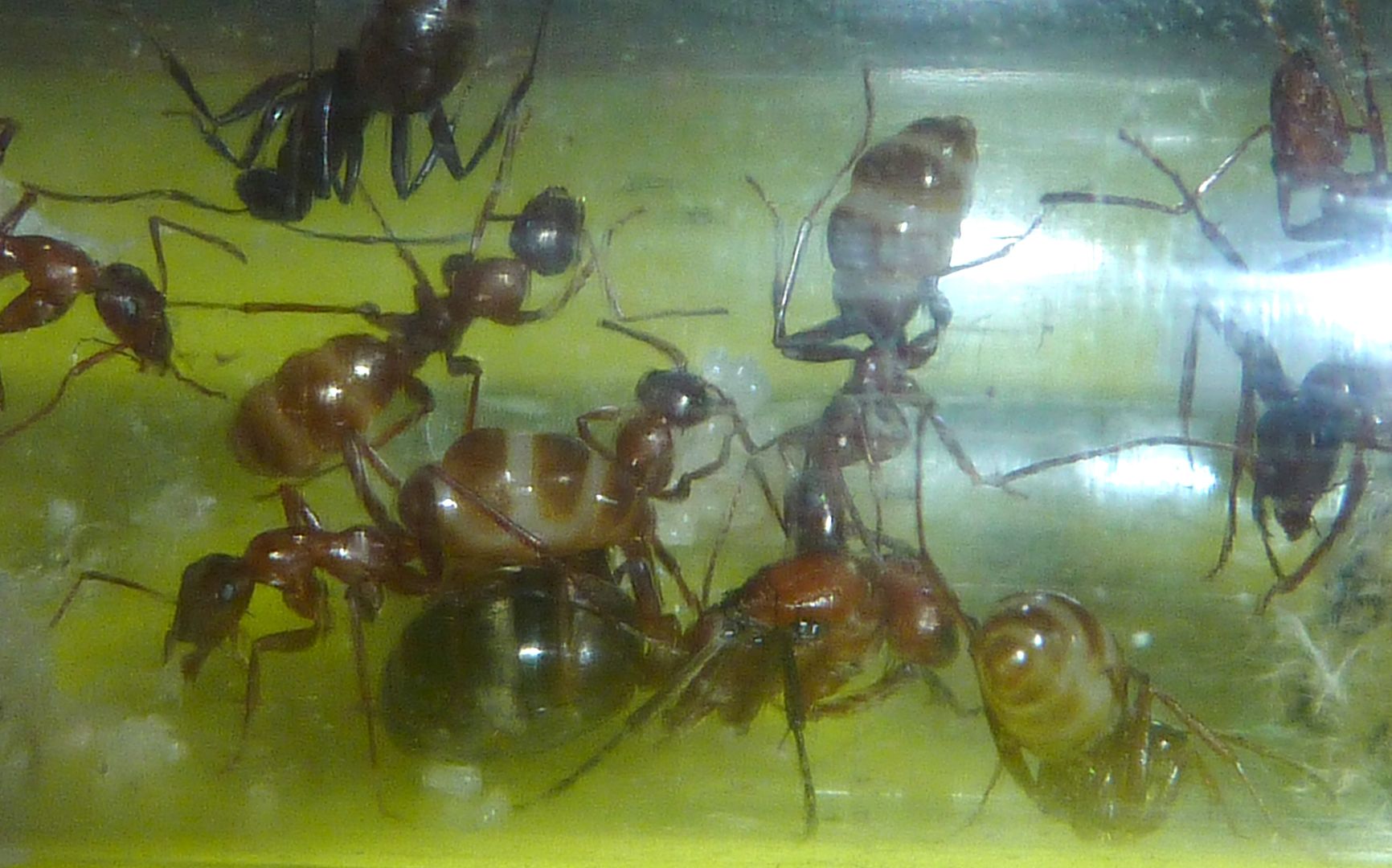
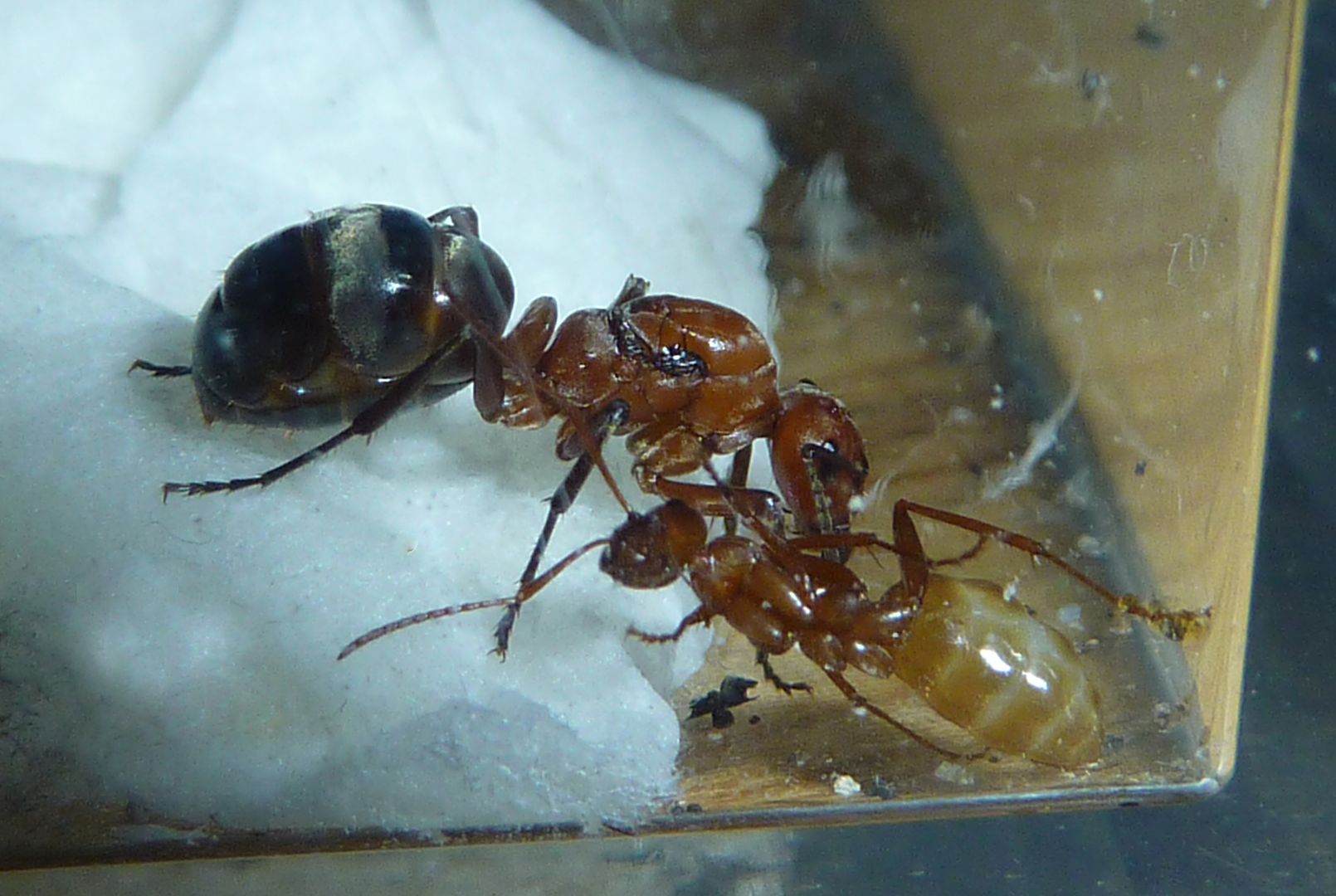
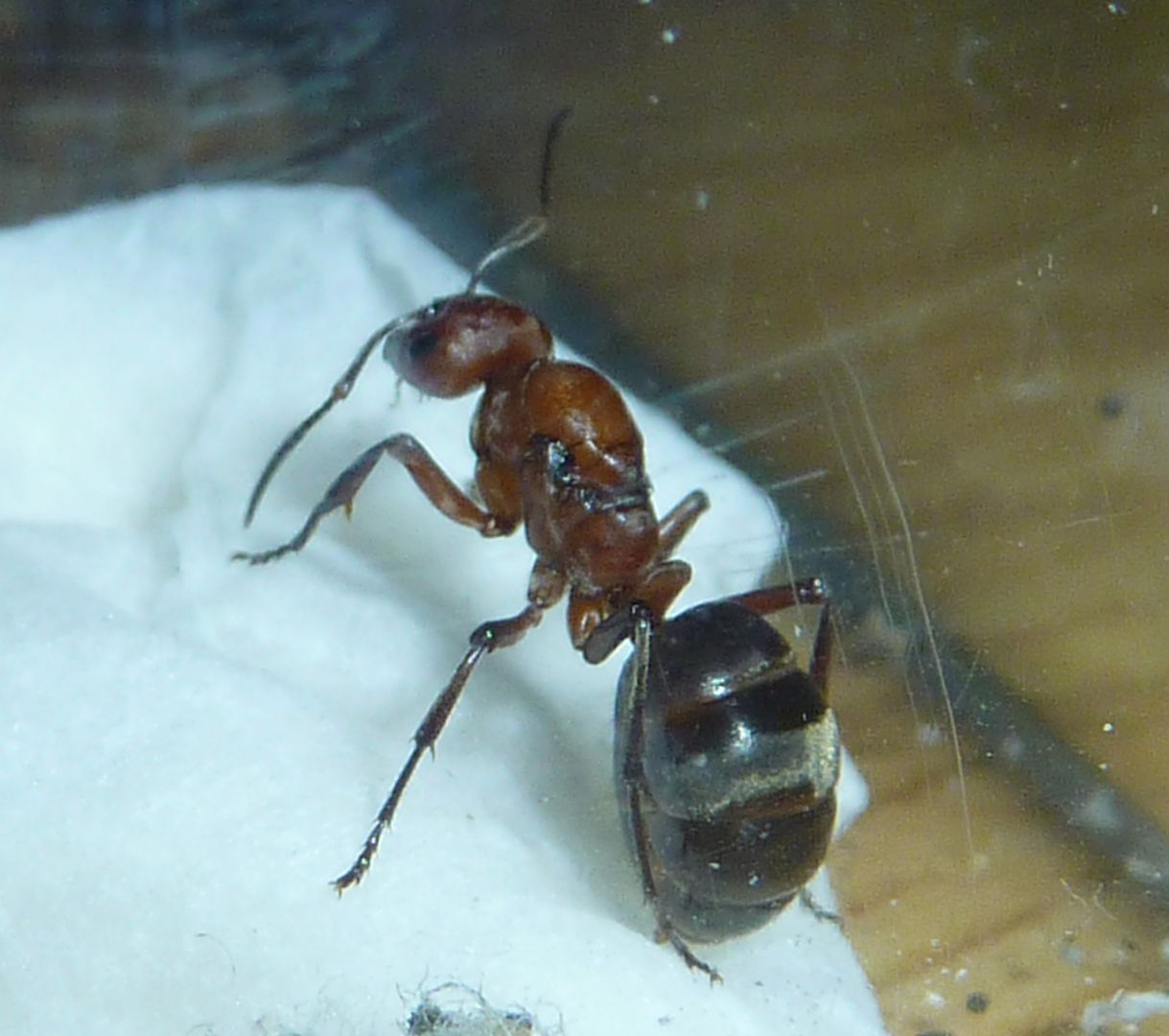
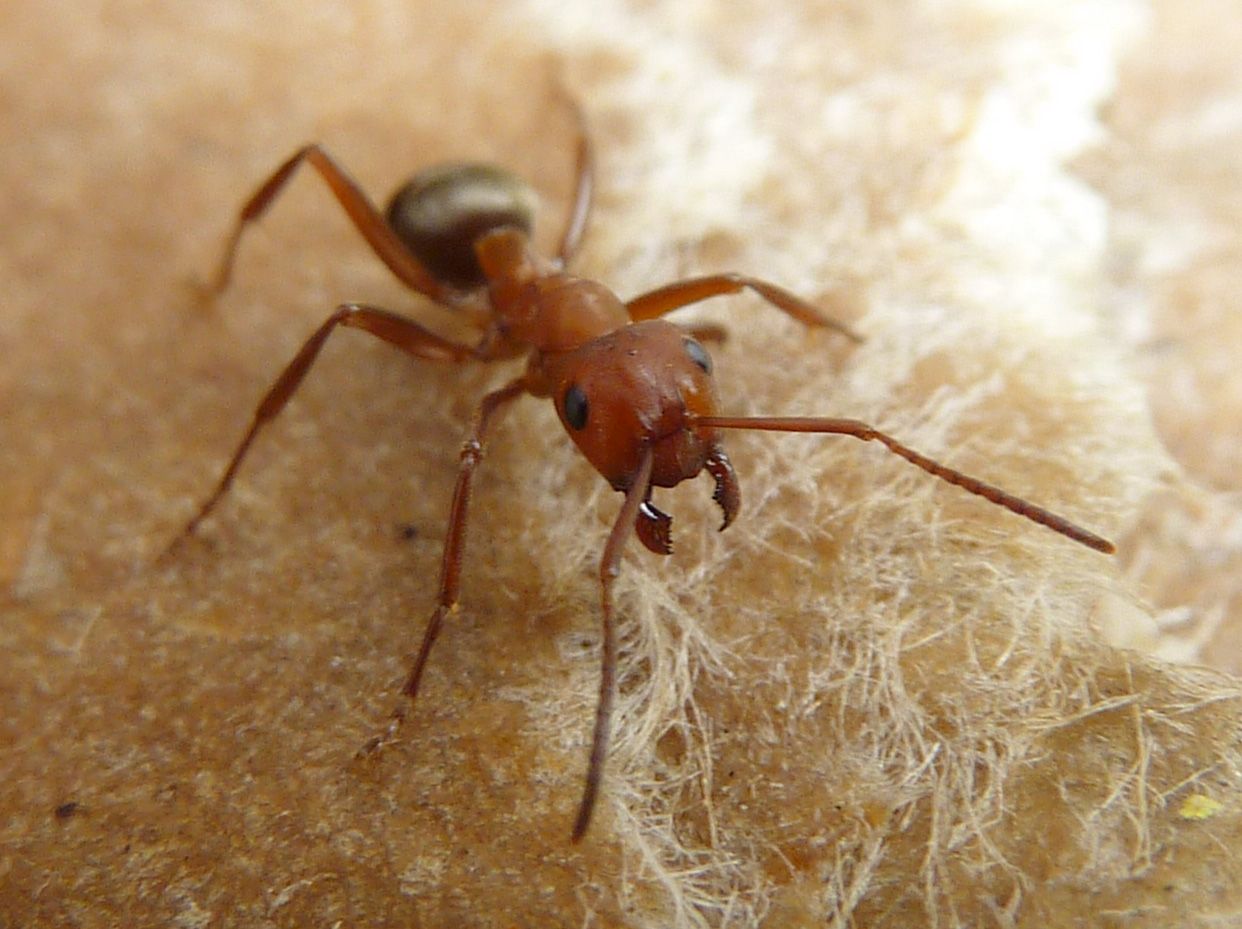
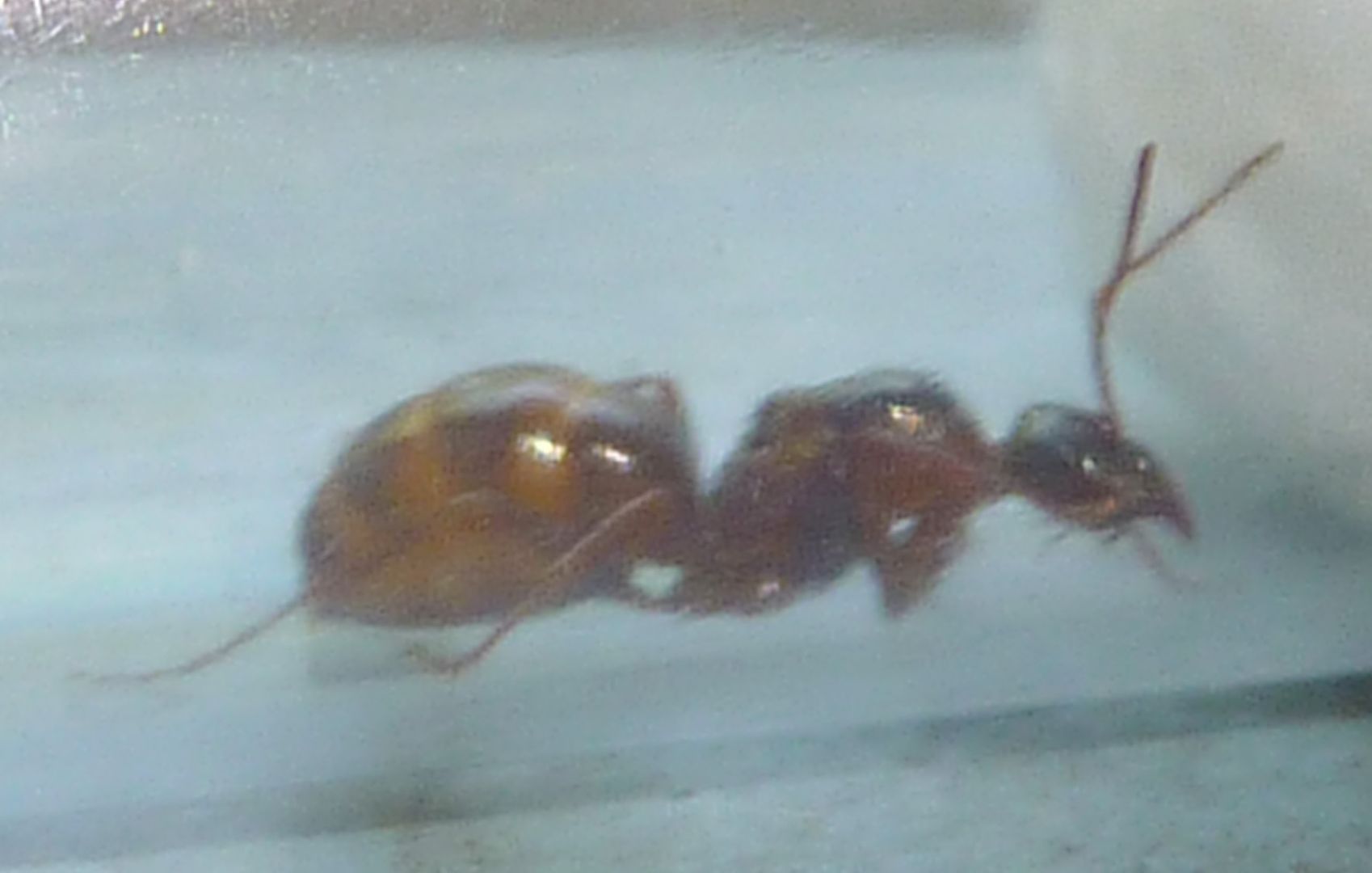
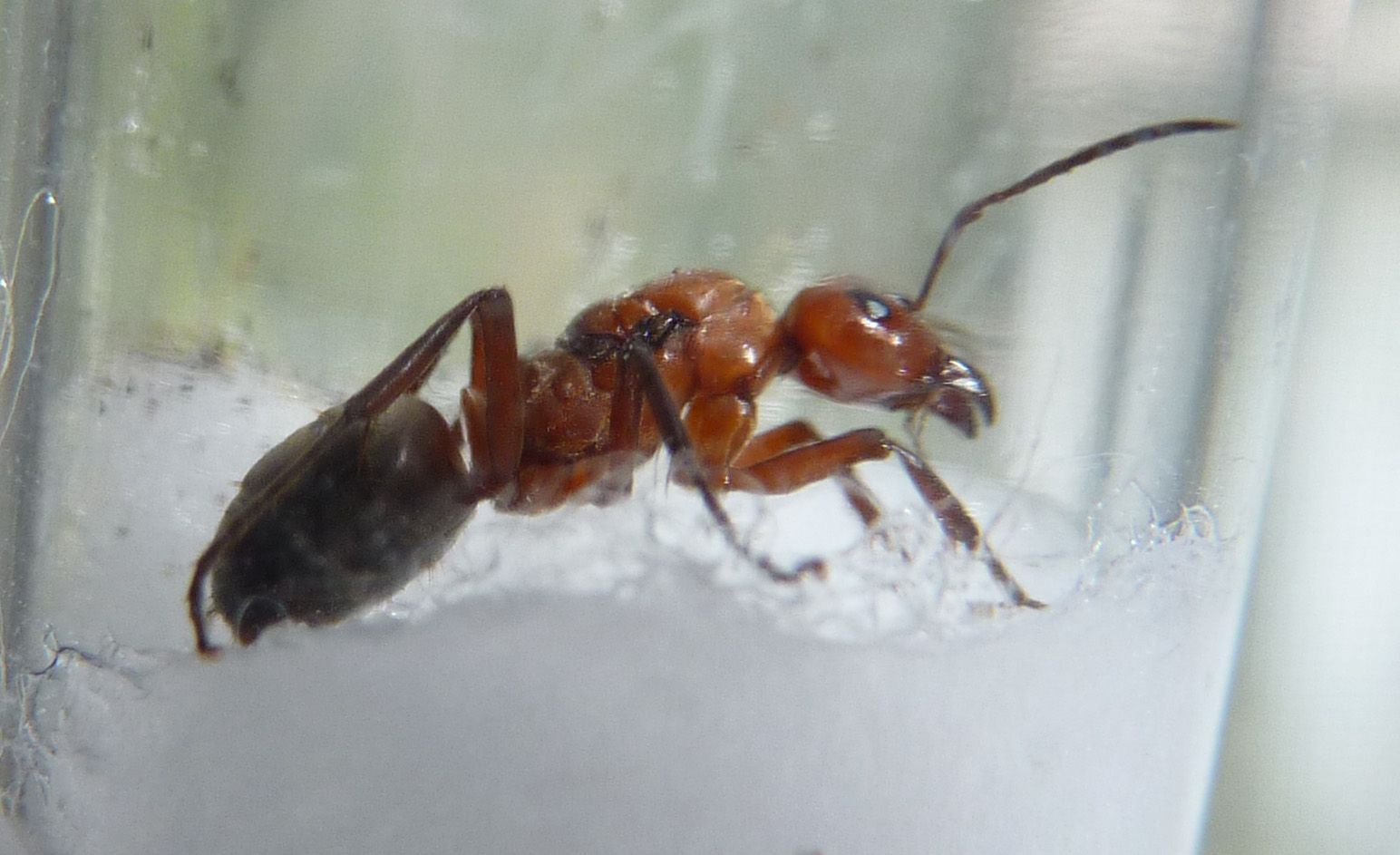
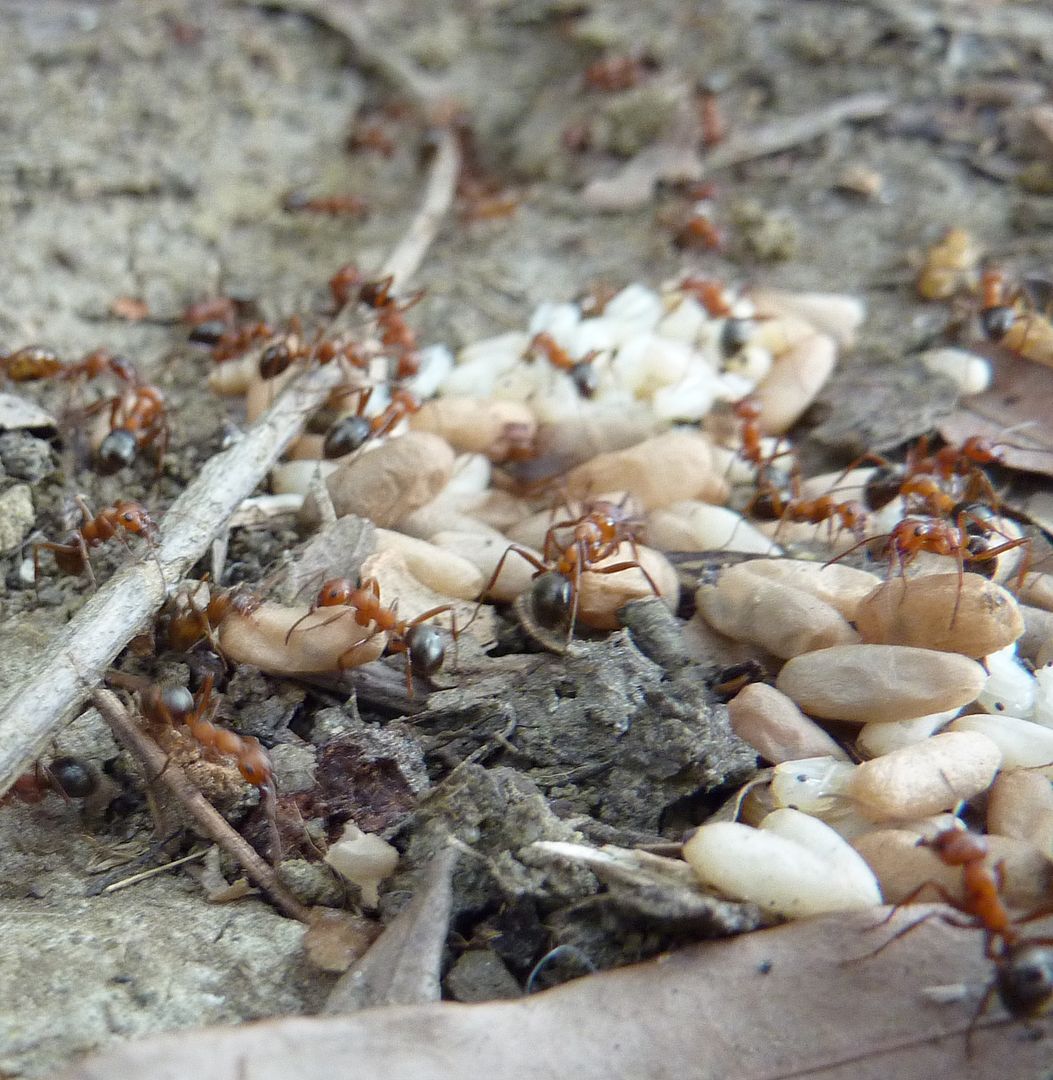
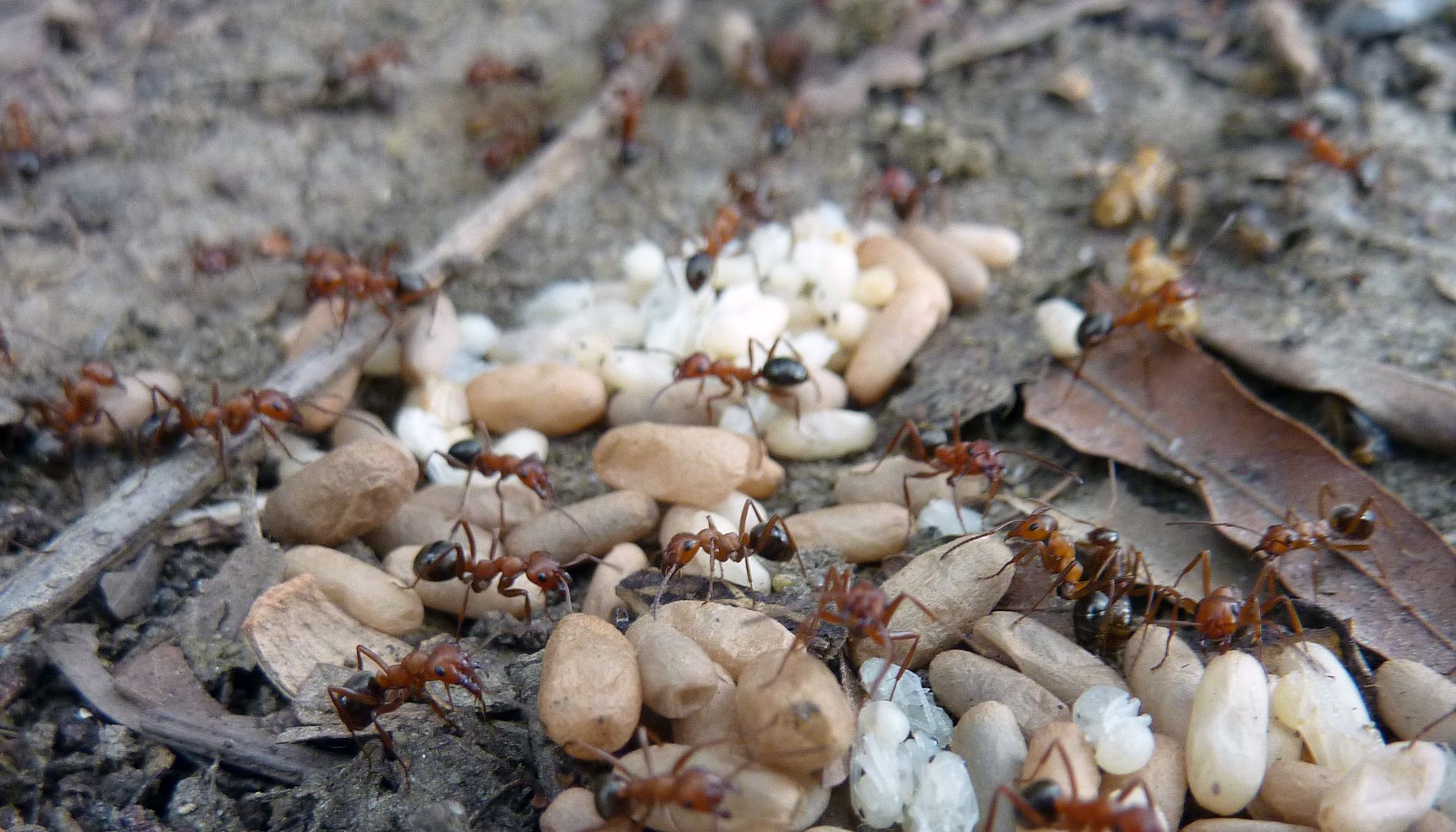
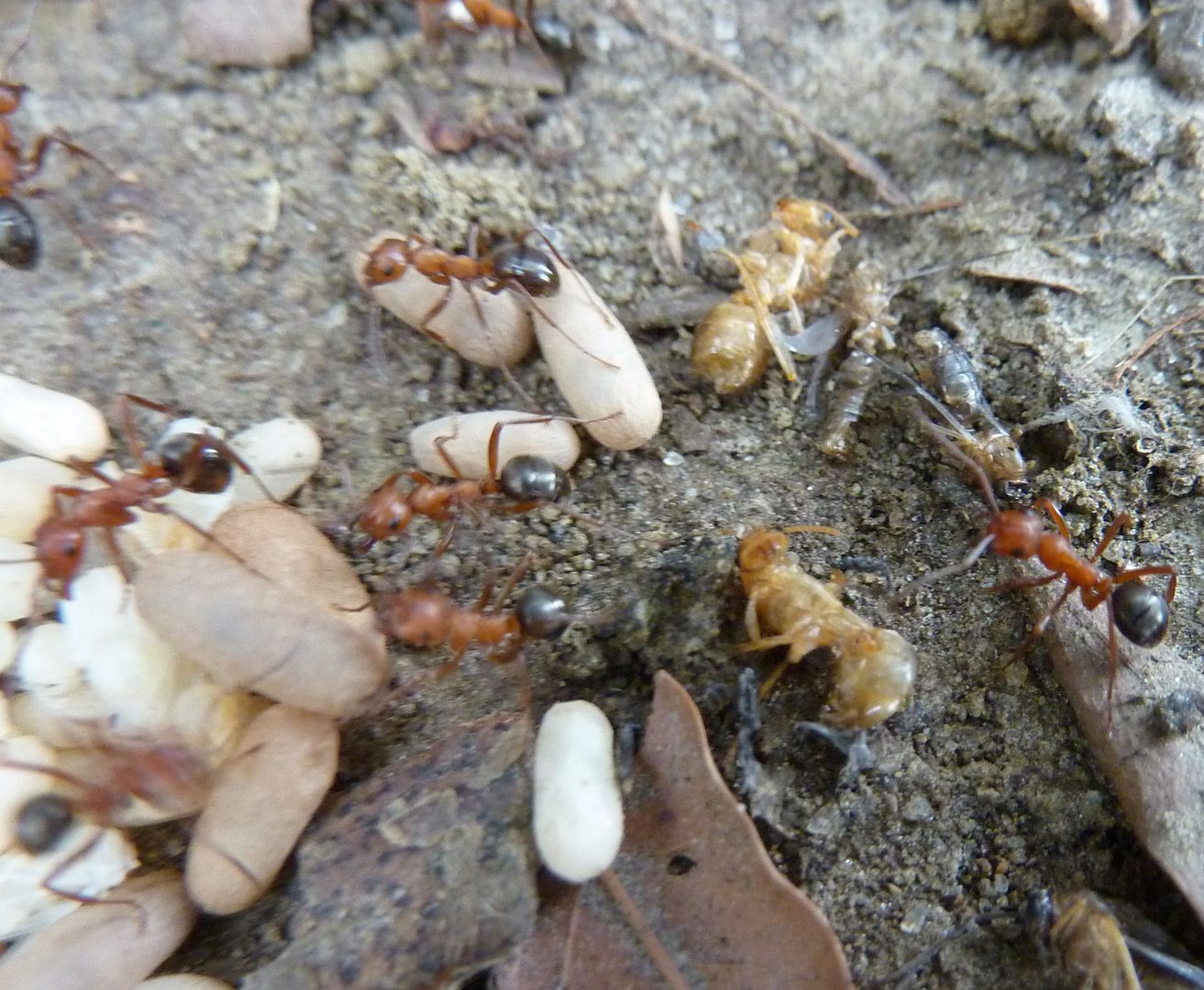
Some images of my Formica pergandei colony and host workers.

Saturday, May 21, 2011

Formica pergandei Give a Head Start

I have two Formica colonies started from queens last year. One is Formica pallidefulva and she started laying eggs maybe a month and a half to two months ago. She's already got some fresh workers born for the year and it looks like the colony will continue to grow well into the autumn. The other colony I have is interesting though, Formica pergandei.

Formica pergandei is a social parasite of other Formica species. That is F. pergandei queens can't start a colony on their own. They have to invade established colonies of hosts and replace it's resident queen, usually by assassination and stealing the colony odor by rolling in the queen's juices, etc... so the host workers don't turn on here.

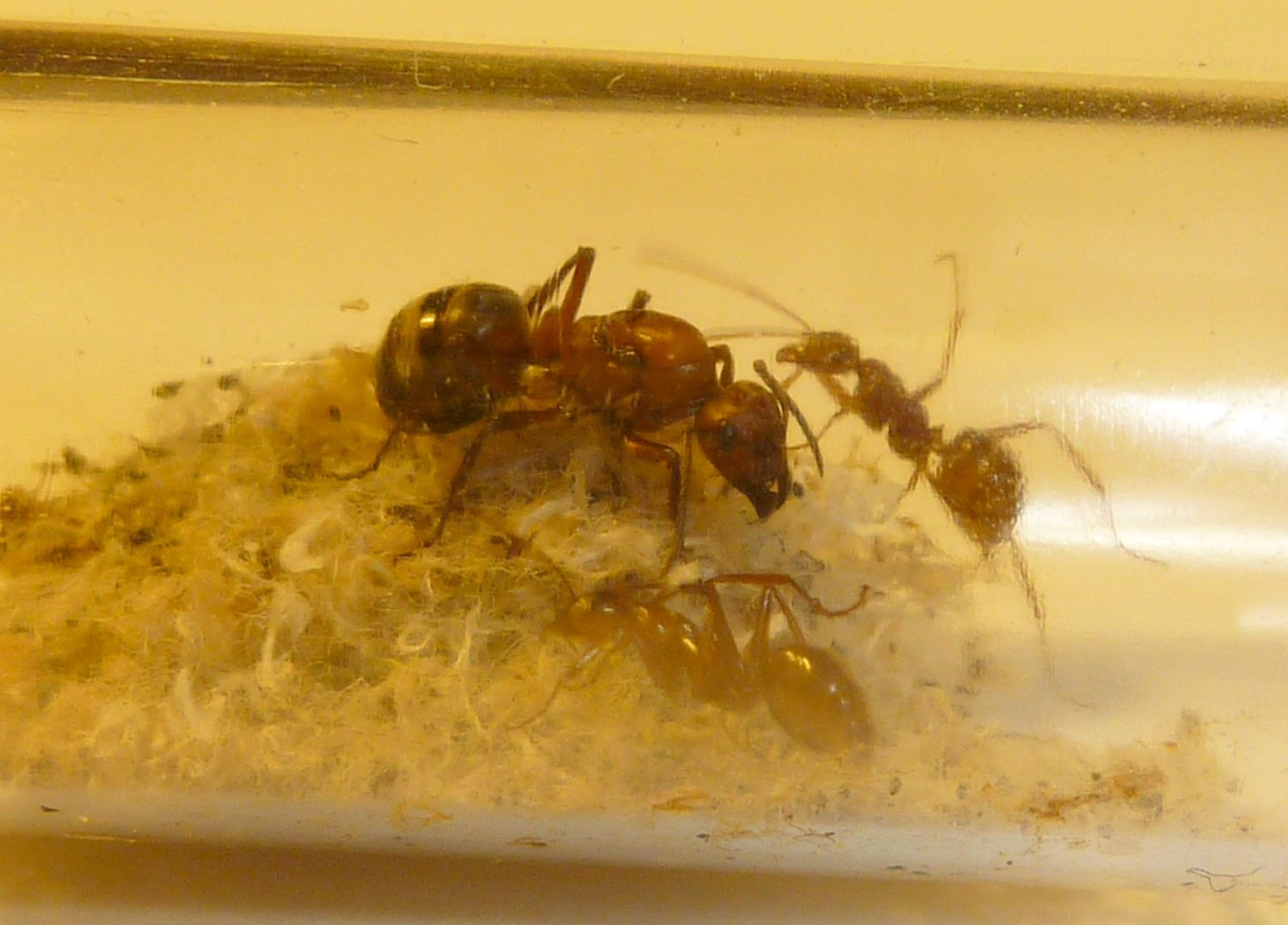
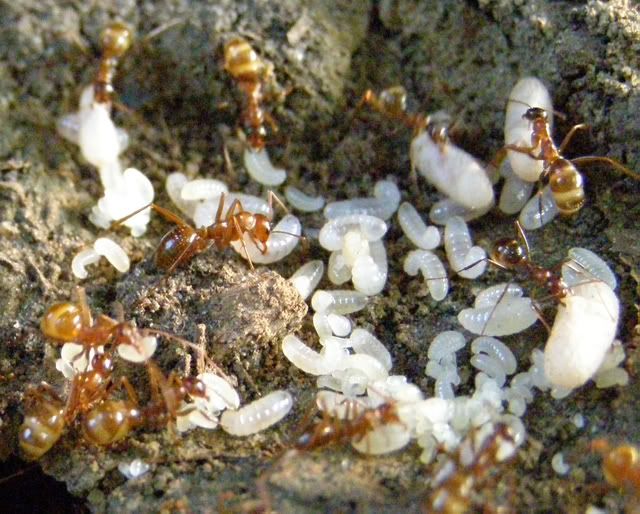
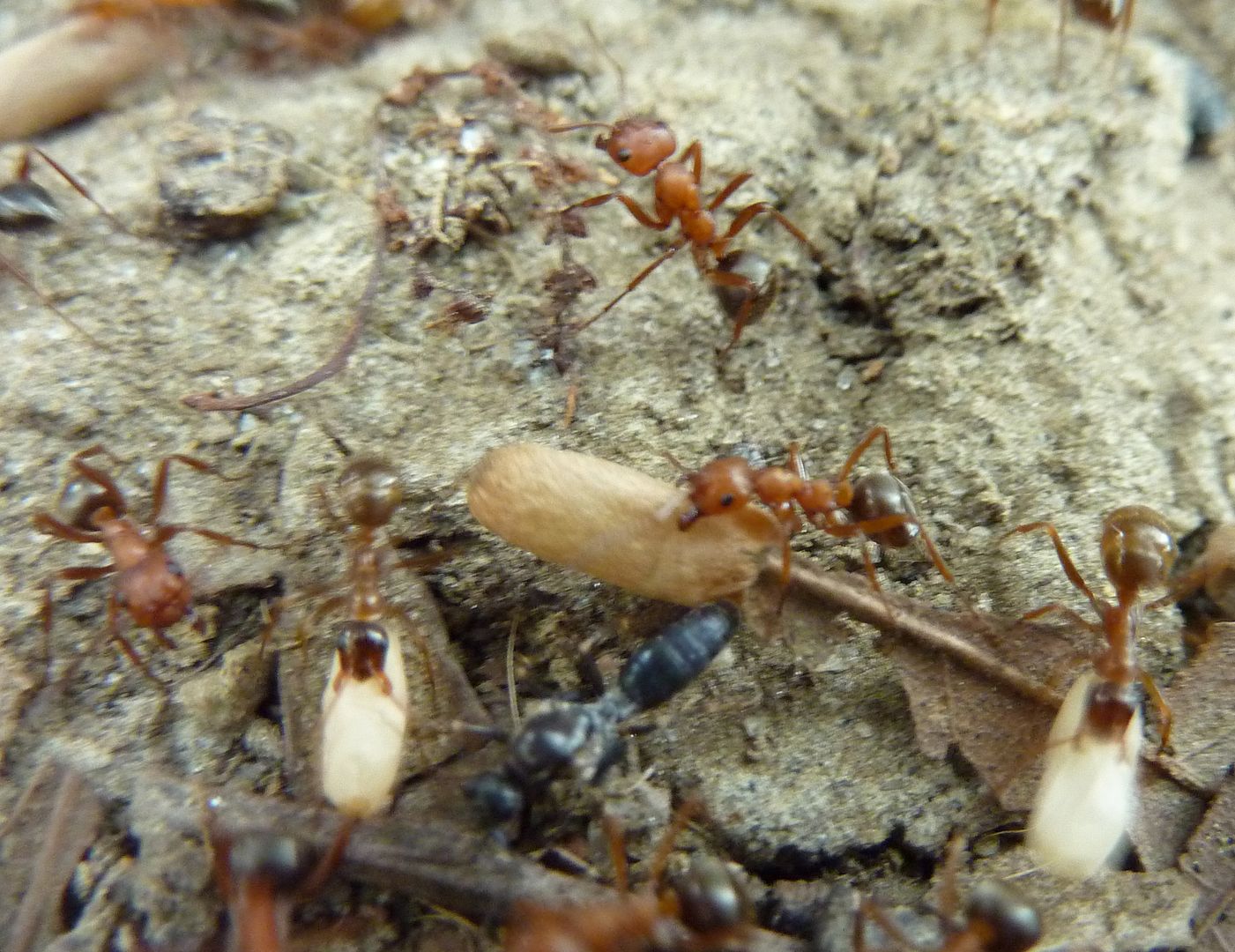
This picture was taken yesterday. Note the eggs scattered about as well the large clutch the worker in the middle is holding. As a social parasite she started laying eggs about a month later than the host species.

She may produce workers but sometimes social parasites are so dependent to their host species that they're required for their survival. The trouble is the F. pergandei queen had to replace the F. pallidefulva queen in order to start her colony, so they're eventually going to run out of host workers. 
F. pergandei colonies get around this by raiding established host colonies for brood. Occasionally I believe host colonies are out right overrun by the F. pergandei as they move their entire nest into the new location. It's a vicious cycle but at least the F. pergandei are giving their hosts a chance to get a head start. Come summer though the F. pergandei will be born and raids will begin.

Tuesday, April 19, 2011

Formica Pergandei

Formica pergandei worker
While out transplanting some things I disturbed a fold of cardboard in the garden to find a colony of Formica (either pallidefulva or incerta) mixed with the parasitic Formica pergandei. While observing I was surprised to find that the smallest F. pergandei workers are much smaller than their host species. I find this strange for an ant that is supposed to be completely dependent on their host. How could a polymorphic caste system be beneficial in this case?

Friday, July 9, 2010

Ant Chat Episode 22: Anting Seeds and Slave Makers

Slave Making or Non?

Formica pallidefulva queens are perfectly able to start colonies on their own. It's one of many Formica species flying now in the early morning to afternoon hours. This is a highly successful genus in temperate areas of the world. But something similar to what's happened in Bumblebees has also occurred in this genus. With colonies releasing thousands of queens, the room for new nests is very limited. While some species have taken to banding together there is another, more sinister option.


Years of killing other queens for nest sites has eventually turned into killing queens with existing colonies and thus the social parasite was born. Social parasitic species don't need to leave the nest with as much food so the abdomen tends to be much smaller than the non-parasitic counterpart. They need to be aggressive too, to disembowel or decapitate their competition. So the head is larger and houses much stronger muscles to get the job done. Disemboweling doubles as the odors of the host queen splash onto the social parasite giving her the colony odor. This fools the host workers into raising brood to the parasitic species.

Some parasites stop here as we see in the genus Lasius. But some Formica take it to a whole new level. Formica pergandei (most likely identification) is one such species that's recently moved into my yard. 

This picture of Formica pallidefulva was taken back in 2008. They've lived in my yard for a number of years and the colony is frankly a little boring. There are numerous colonies just like it in the area, and this one was doing great up until sometime in the past 5 days.

A colony of Formica pergandei have moved in, though I'm not sure yet if they've moved on yet. These ants are completely devoted to their host species, of which there are numerous. It's not enough for a queen to take over one colony of host ants. As their workforce dies they have to be replenished and other colonies have to be raided. Here is a quote from their description on Ant Web.

Throughout the eastern and Midwestern US, F. pergandei is the premier dulotic Formica in grasslands and open woodland habitats, utilizing virtually all other Formica species (except other F. sanguinea group species) as hosts. The host workers are obtained through regular nest-to-nest raids to steal brood of the host. Often, some stolen larvae are eaten, especially any pillaged sexual brood, but at least a portion of the pupae are reared by host workers in the F. pergandei nest. Raids start in the morning, slow down or cease in mid-day, then pick up again in the late afternoon. F. pallidefulva and F. subsericea are the prevalent host species in woodlands, and F. incerta or F. montana prevail as the host in drier and wetter grassland habitats, respectively. Any one, or often, a combination of these species may occur among the host workers, with lesser numbers of other species from the pallidefulva, fusca or even the rufa-microgyna groups also in the mixed population. In Lincoln Co., one F. pergandei nest contained a mélange of six host species, including (in order of decreasing relative abundance) F. pallidefulva, F. subsericea, F. biophilica, F. dolosa, F. incerta, F. obscuriventris, certainly the most species-rich, naturally occurring ant colony on record! Nest architecture, and more interestingly, total mixed colony population level, seem to closely approximate those of the host, such that F. pergandei parasitizing F. montana or F. subsericea typically lives in a mound with the typical mound structure and a population like those of these host species, while those parasitizing F. pallidefulva often live in a moundless soil nest or in rotten wood with the much lesser total numbers of workers, as does this latter host. F. pergandei workers in the mixed nest do not care for brood, gather sweets, or effectively contribute to nest maintenance. 
While observing them I got the impression that they'd moved into this nest. I would imagen a raid would have scattered somewhat when I disturbed them. Most of these were stationary and assisting with pulling the brood into the former F. pallidefulva nest. They don't always move into their target's nest. Often this kind of Formica will do a quick raid and rob the colony of it's brood, sometimes the host colony will even survive the attack.

 
Reproductive brood lay in ruins in the nest. The wings were mangled and parts of the developing ant were damaged. 

A male F. pallidefulva (the black ant bottom center) has had his wings removed.

What they lack in basic essentials they more than make up for in aggression. They were even defending the nest. When disturbed several ants form a defensive stance. They have better eye sight and lock on to motion, only moving towards things that move. I had a fun time playing Red Light Green Light with this species. (Don't do that with Formica that spray acid as there's a serious risk you can go blind.) This type of behavior is an evolved defense against larger predators such as bears and opossums etc... that occasionally like eating ant brood.


Overall this seems like a fun addition to the normal array of ants found in my yard. I've lived here for 26 years and never come across this species. I can't help but feel it's to do with my fairly recent hobby of gardening with native plants. What's most exciting though is I only ever see this type of ant in the forested areas at the nature preserve I visit now and then. Hopefully I'll be able to post more on this species as they slowly devastate the colonies of Formica around the yard.