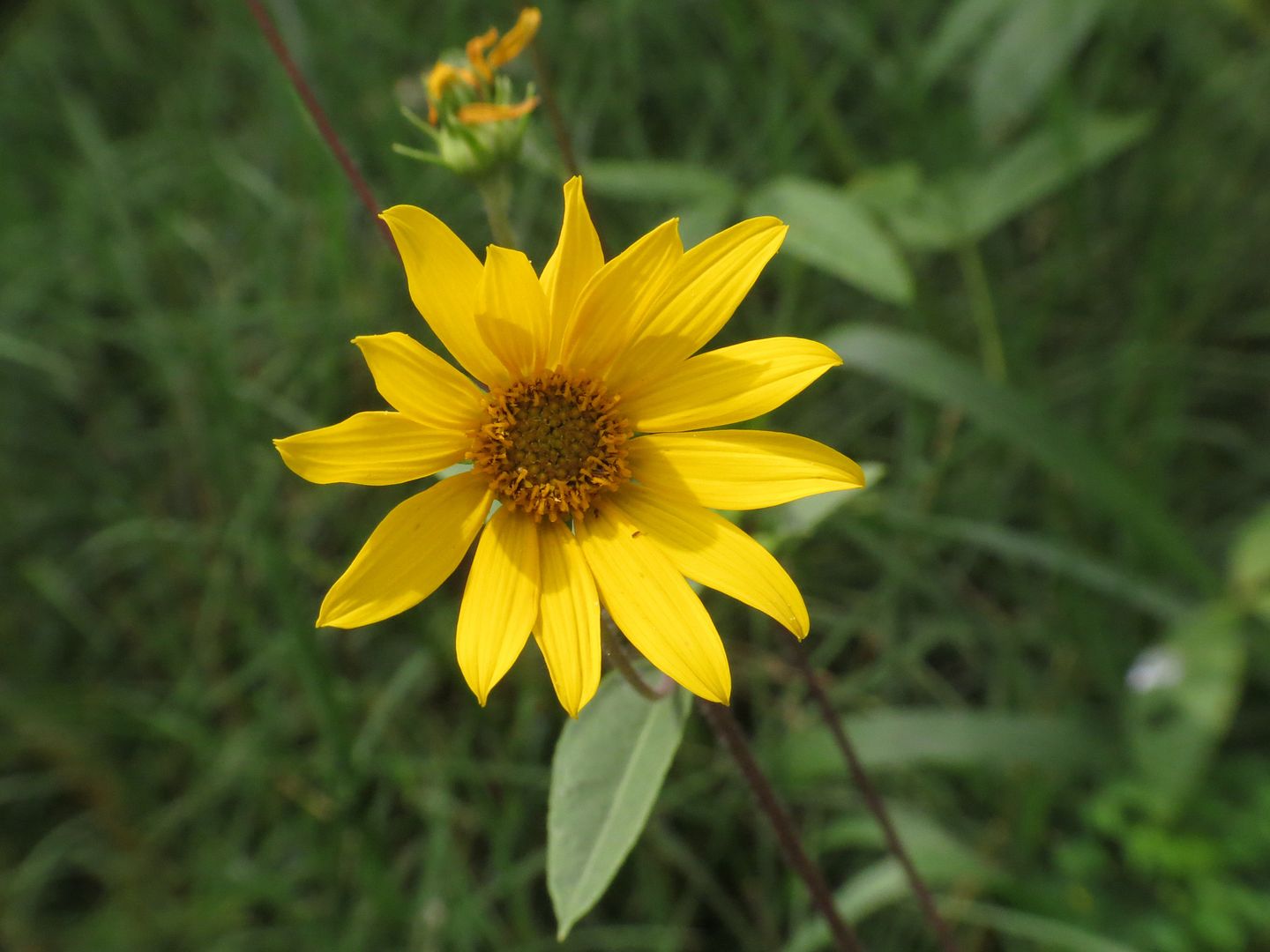
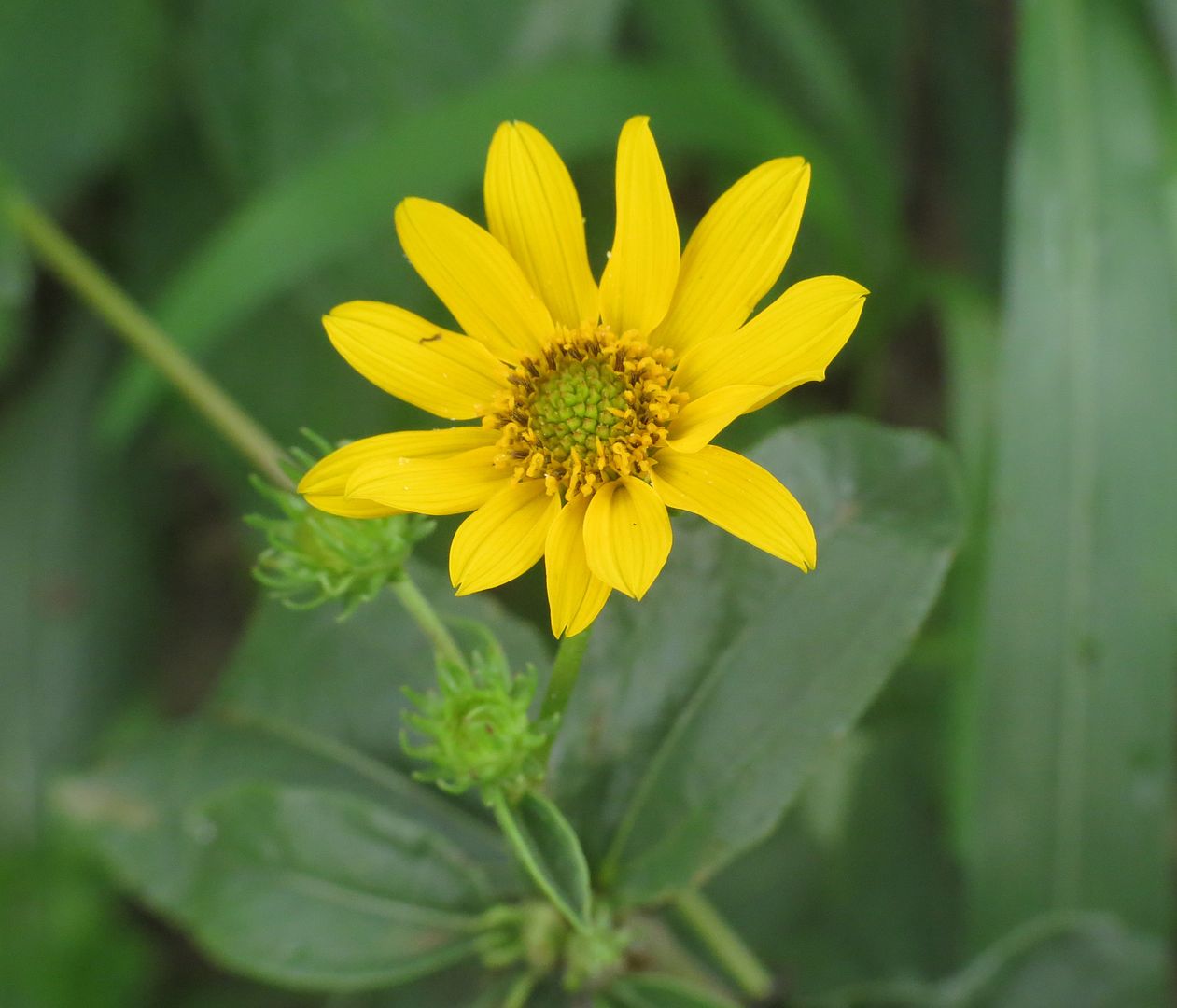
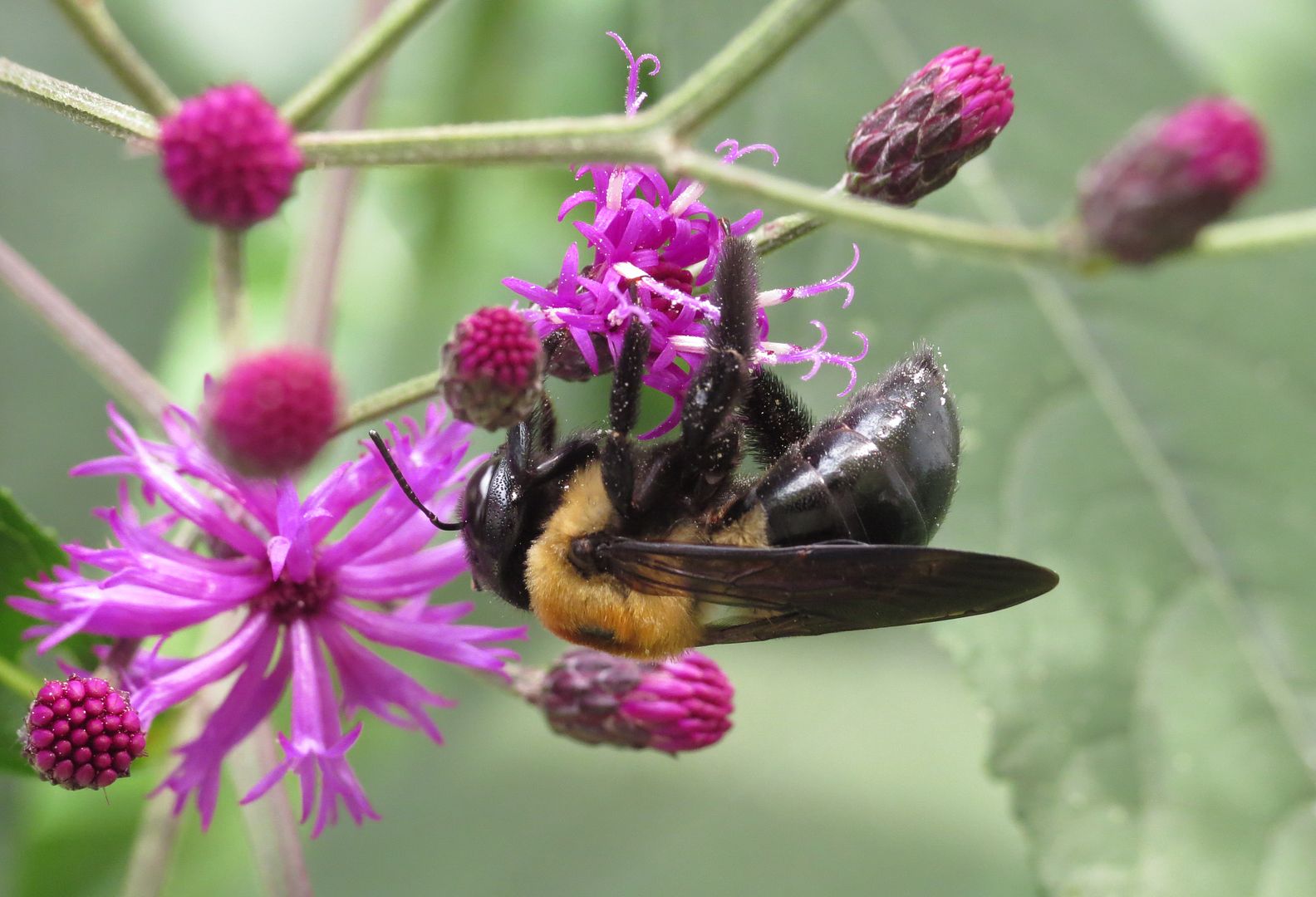
Around this time each year I start to form a plant list. I don't bother with a whole lot of seeds except for annuals like Sunflowers and filler annuals I like more for sentimental reasons and color. The focus is more on plugs and bare roots, often things that will flower in late summer and autumn.
Phlox 'jeana'
I don't have actual photos of this cultivar, but I was at the Mt. Cuba Center in the fall where they're currently doing a trial run of basically all the true species and cultivars on the market today. They said of all of the verities available this one had twice as many butterflies on it compared to all the rest. They noted the flowers were smaller than most other Phlox which likely makes it easier for the butterflies to work, but other factors like nectar quality and fragrance probably also play a roll. A failing might be that it's otherwise fairly average besides. Flowering wise I'm told other verities did better at offering blooms later int he year so it's still good to diversify. I'm looking forward to their complete trial when it's released in the next year or two.
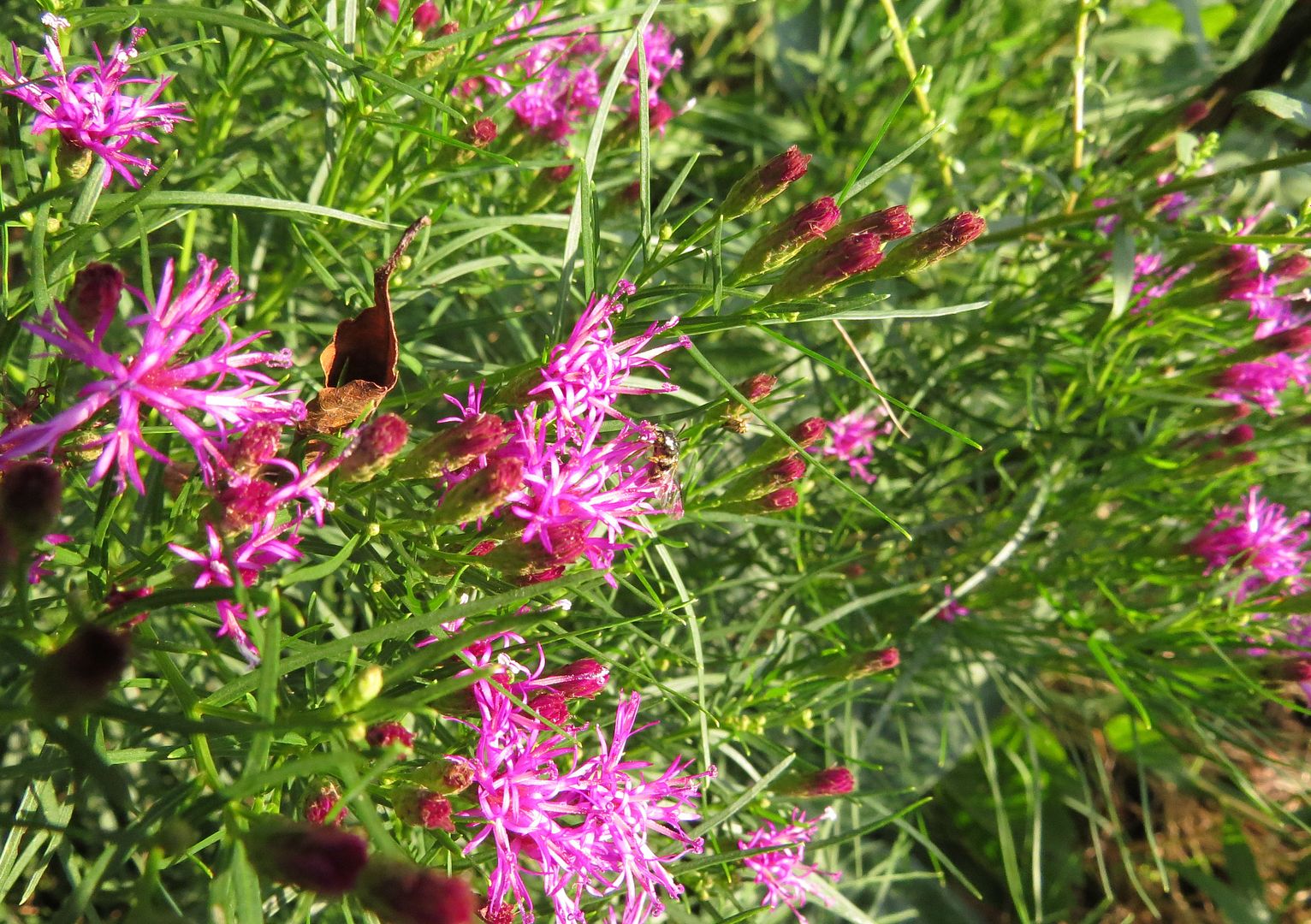
Ironweed, Vernonia angustifolia 'Plum Peachy'
This perennial turns into a bush of purple flowers in late summer.
I tried planting it in the autumn once but it failed to survive the winter. I think if I plant it in the spring it will have a better chance of establishing.
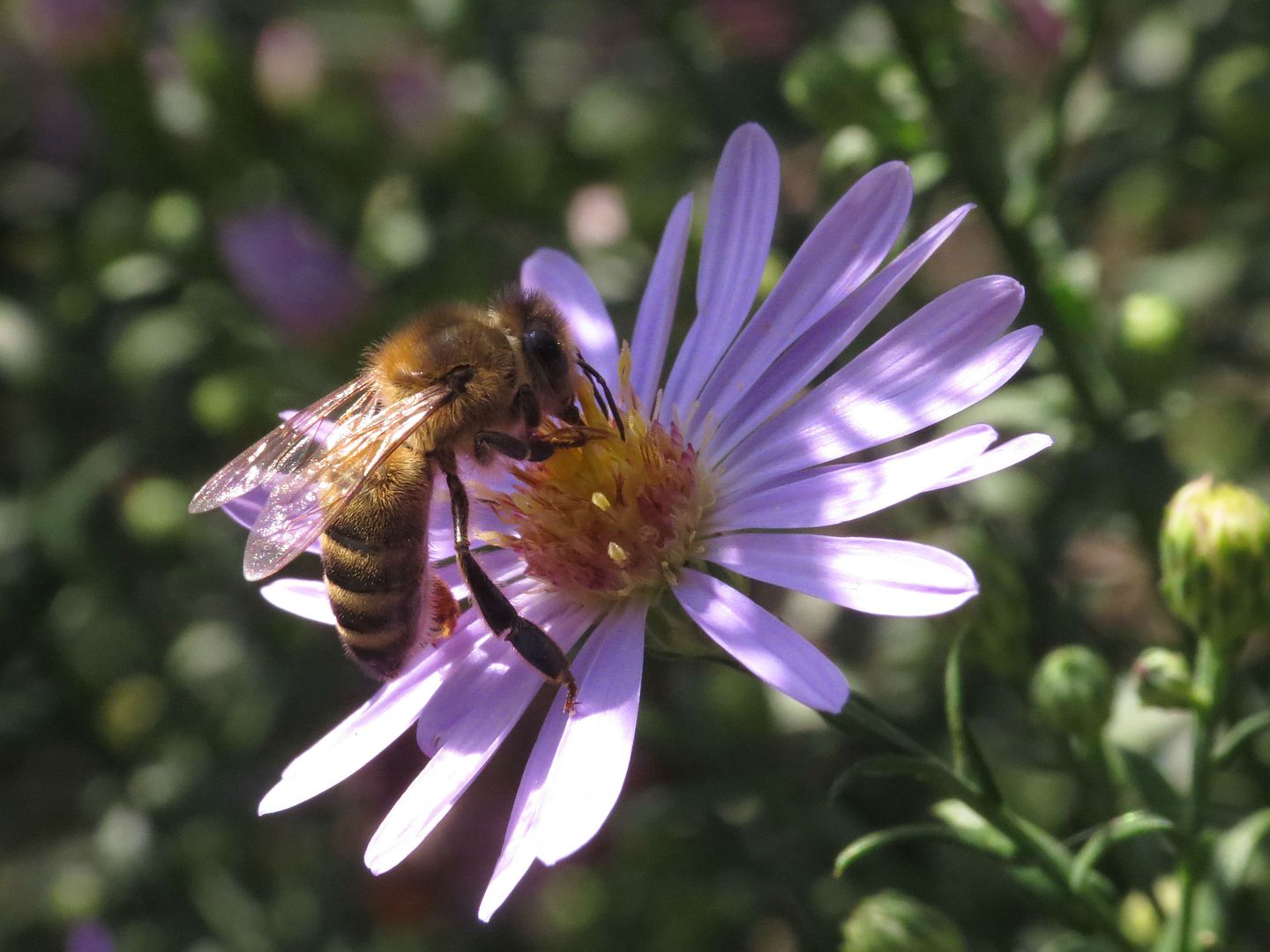
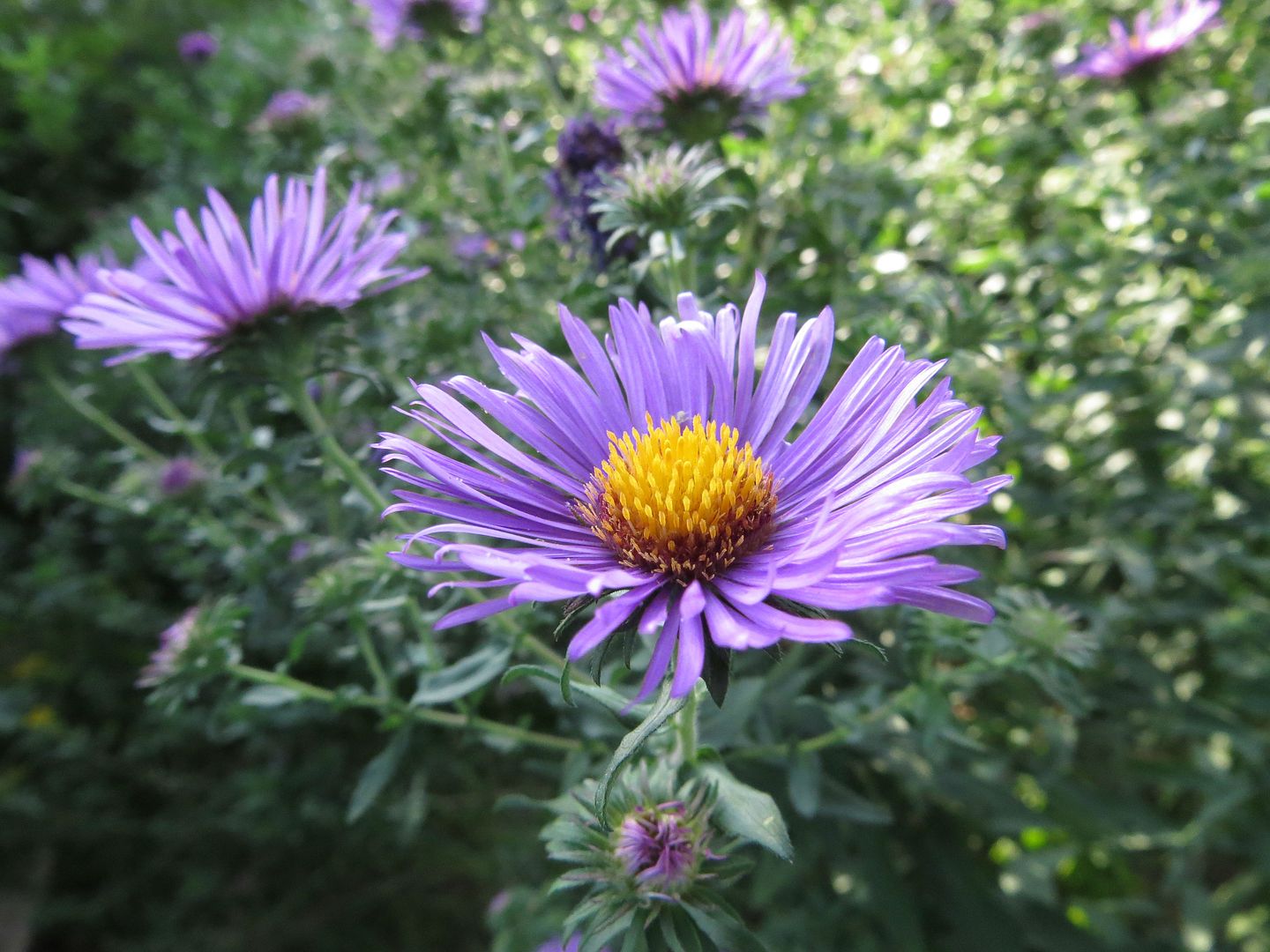
Aster leavis, 'Bluebird' (actually this is Symphyotrichum leavis but no one seems to care.)
My picture really doesn't do this plant any justice. I have a few planted and love them all, sadly they're not in the most photogenic of places. The one I have nest to a tree with a bird feeder next to it so the squirrels are always snapping the stems off the thing. Even with several dozen stems snapped though it still manages to impress me with tall pyramids of flowers. The perfect compliment to Showy Goldenrod.
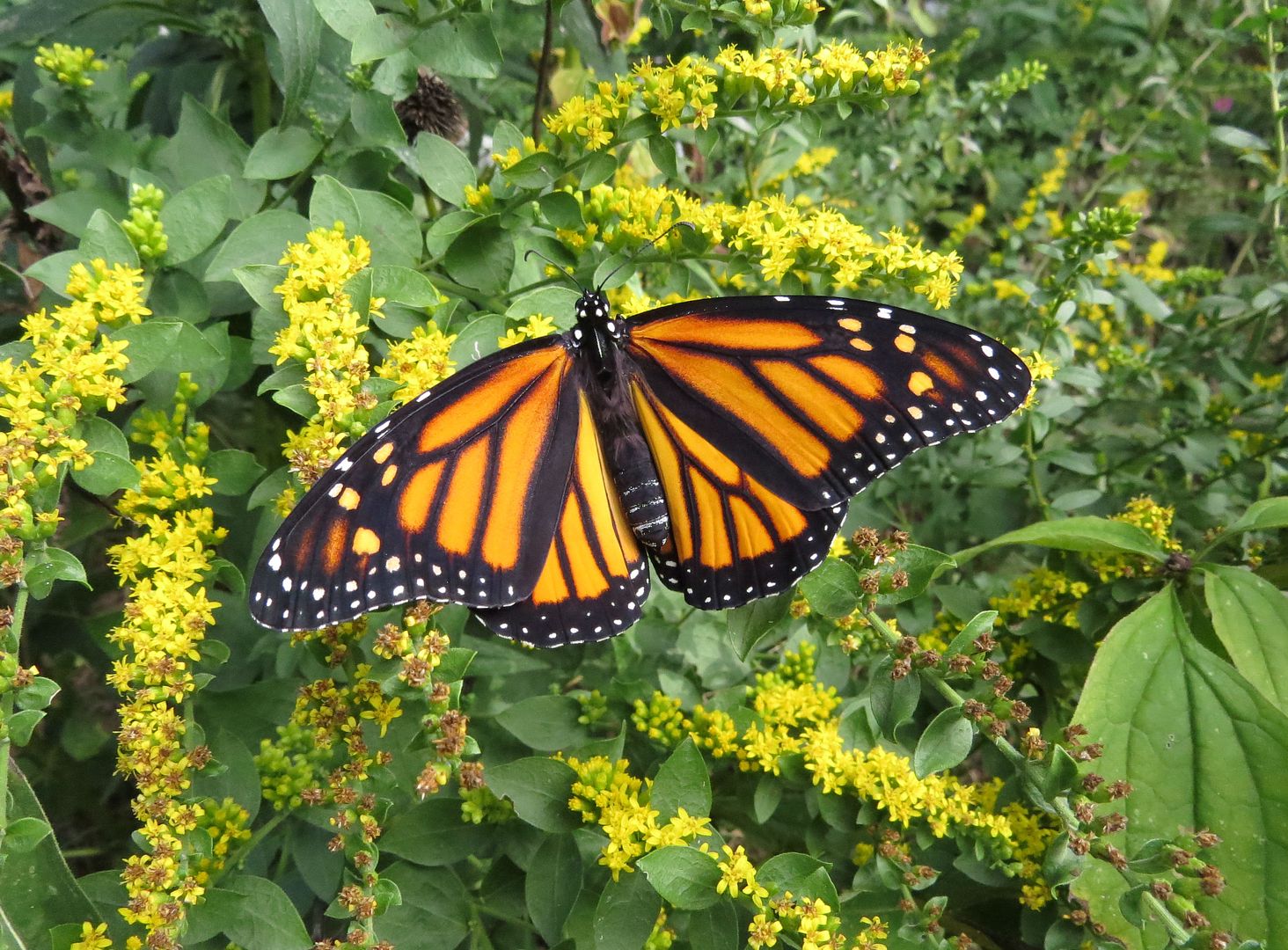
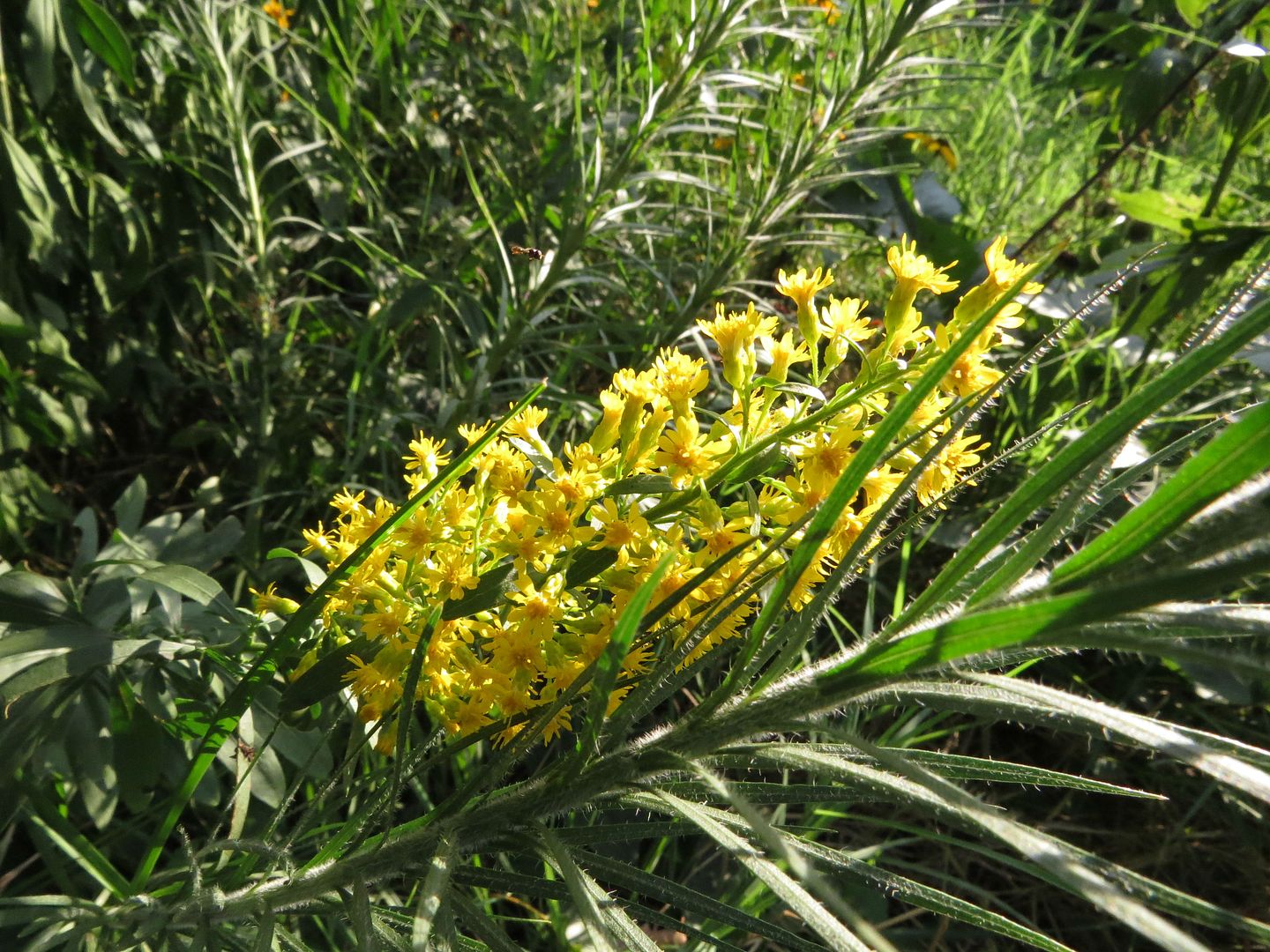
Cliff Goldenrod, Solidago drummondii
I bought this plant from some random nursery online and didn't expect much of it. Now that it's established I'm surprised it's not more popular. A failing, if you can call it that, is it forms a rosette of leaves with a couple dozen stems arching out in all directions. The stems tend to get a little long and arch all the way to the ground. I think it's because of the soil I'm growing it in though, too rich. In nature I believe this is meant to be a rock garden plant (hence the name) where the soils tend to be nutrient deprived.
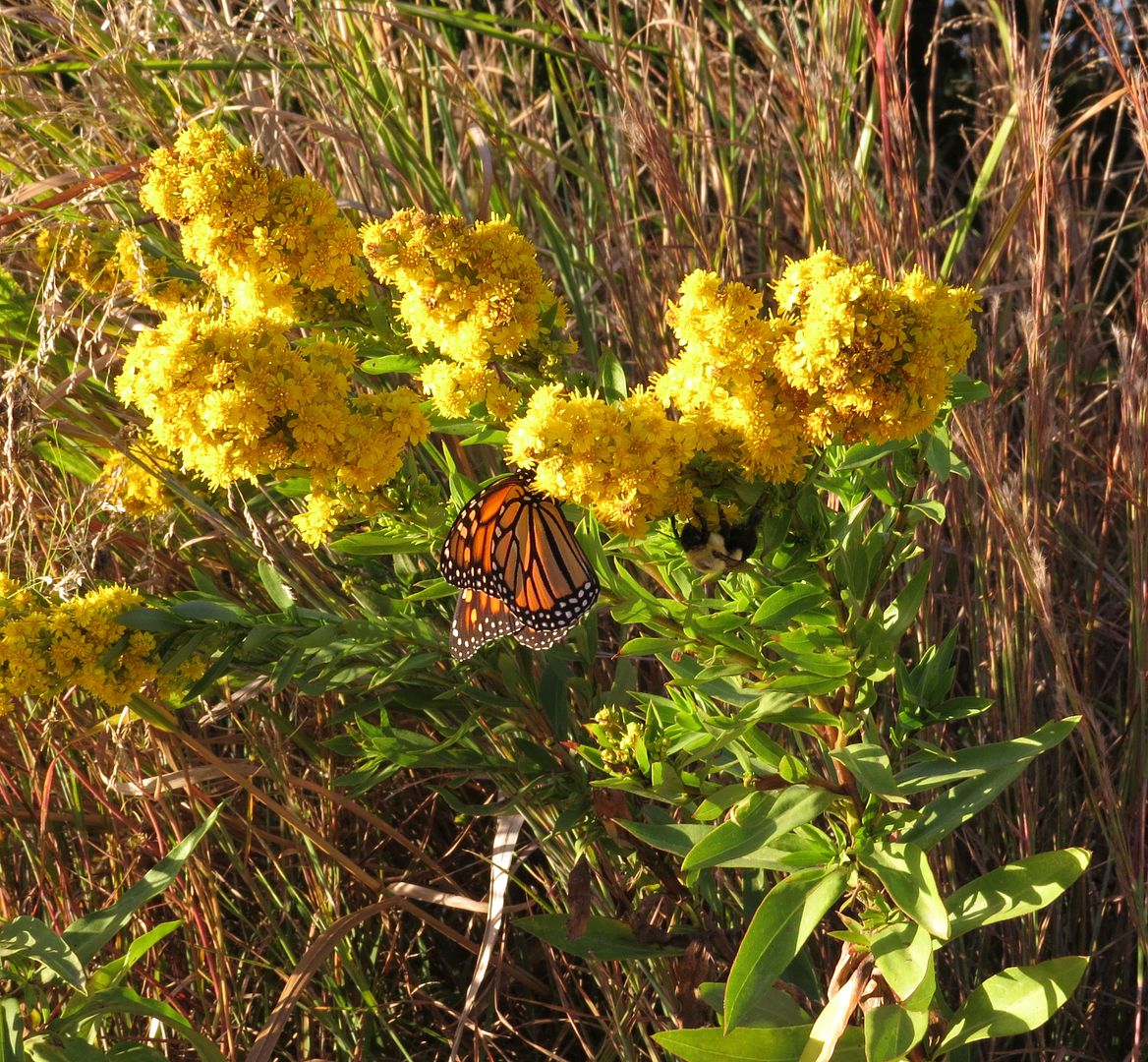
Stiff Goldenrod, Solidago rigida, Actually what's pictured above is Seaside Goldenrod but the two species look similar. They still have broad leaves at the bottom, but Stiff Goldenrod has more flat top flower heads.
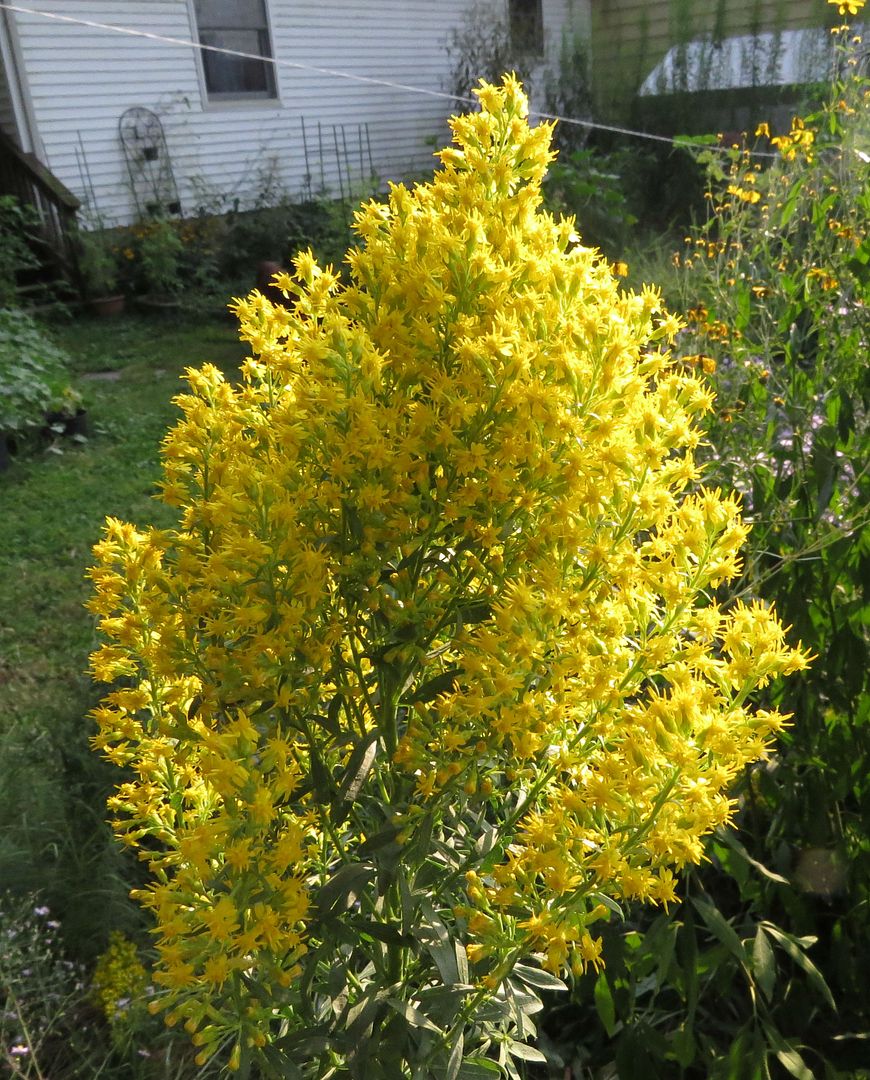
Showy Goldenrod, Solidago speciosa
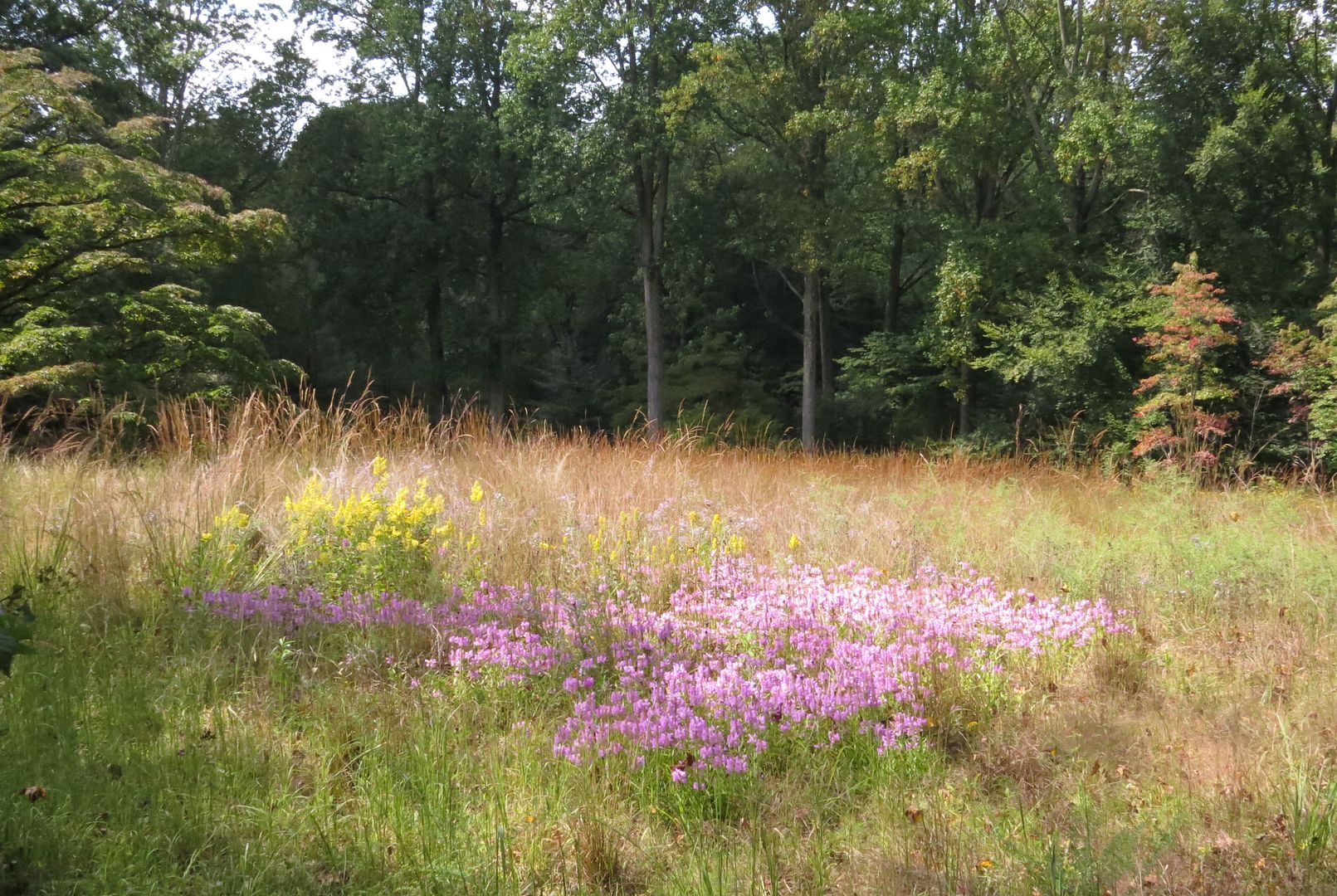
This plant lives up to its name very well.... when it grows right. I bought it because I needed plants for my meadow garden which is dry clay but after flowering great for two years the plants slowly petered out. It's either a short lived perennial or benefits from slightly wetter conditions. Whatever the case I'm willing to give it another chance, perhaps in a more formal setting.
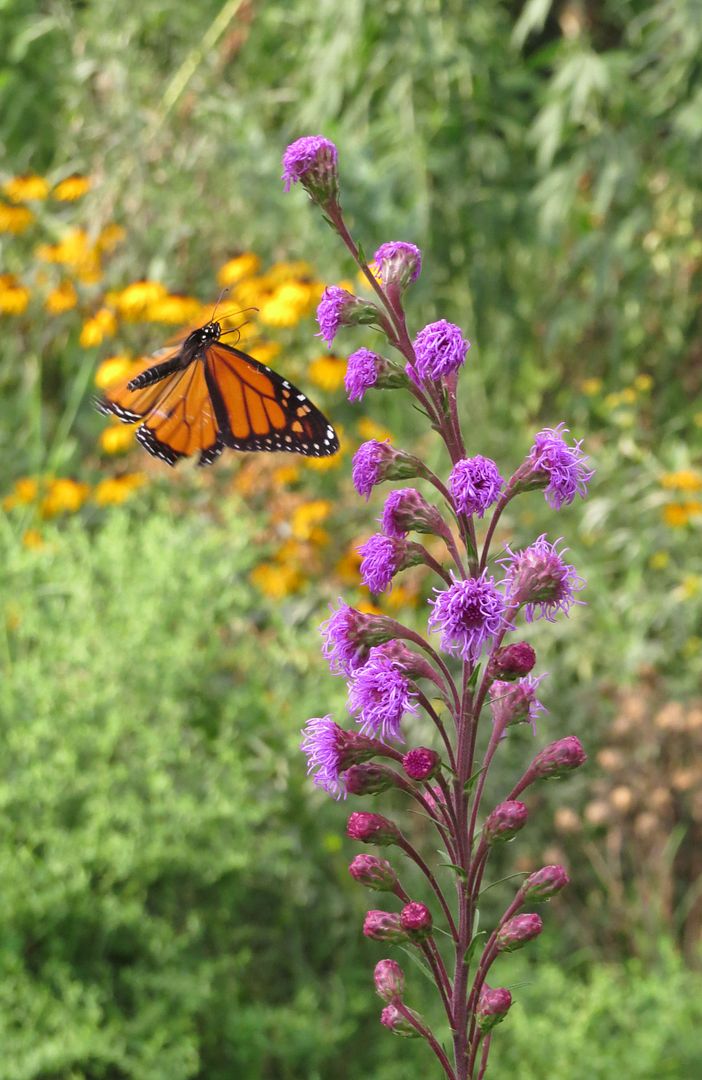
Meadow Blazing Star, Liatris ligulistylis
Same issue as the Showy Goldenrod. I plant these in the Meadow Garden and they do great for two years (being a biannual) but don't reseed on their own. I do have one that has lasted the test of time but it's planted next to our pond. So I'm thinking if I plant more of them in slightly wetter locations, they'll do better.
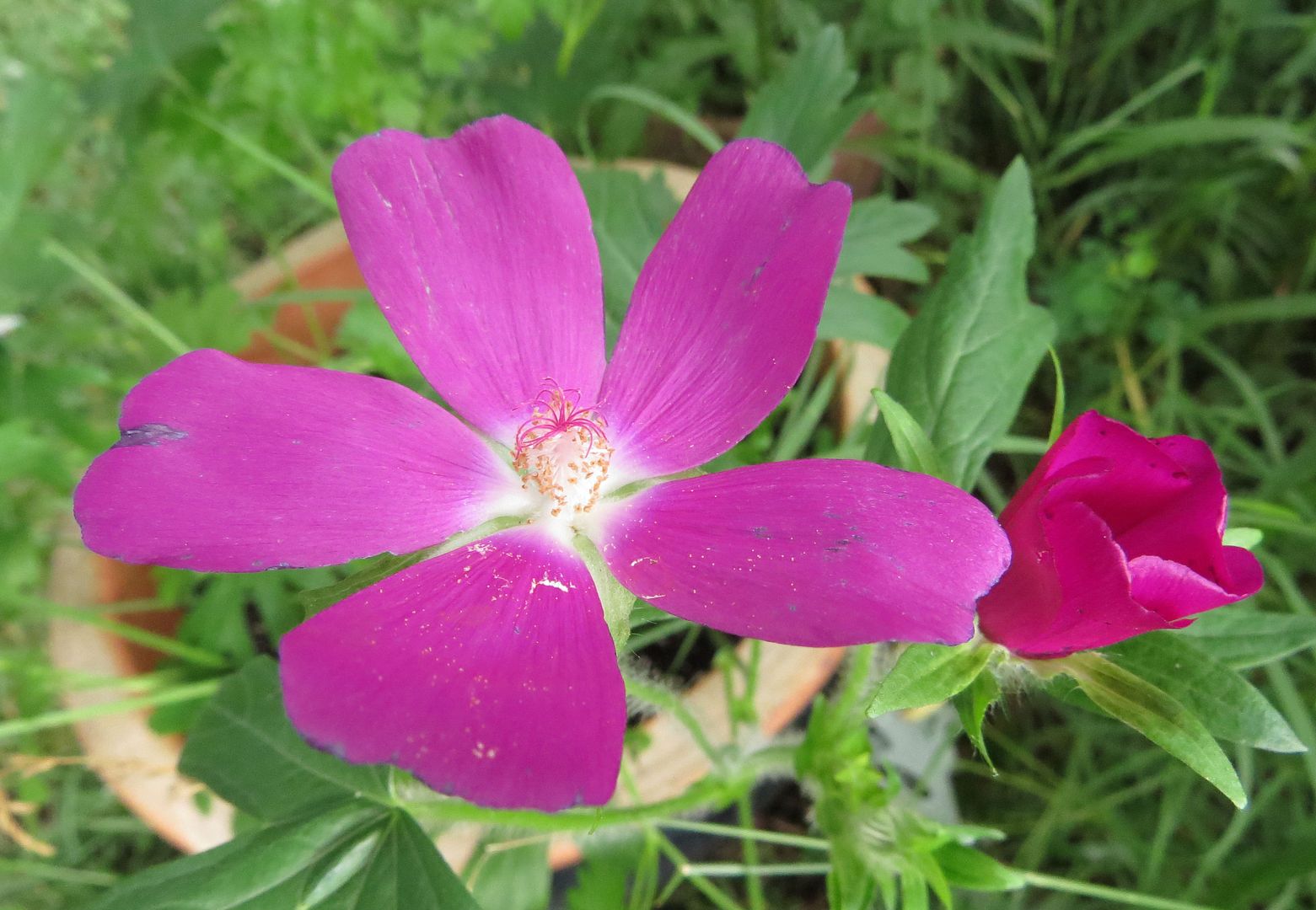
Bush's Poppy Mallow, Callirhoe bushii
This is a fantastic burst of color. Originally I was against planting these because it's not really a true meadow plant, at least not a plant everyone instantly thinks of when they think of a short grass prairie. Their distribution threw out the US is somewhat limited as well (to the point of being threatened in the wild). Something I noticed about the plant though is that they do well in dry conditions.... making it the perfect candidate for my meadow garden where few other natives seem to be able to establish.
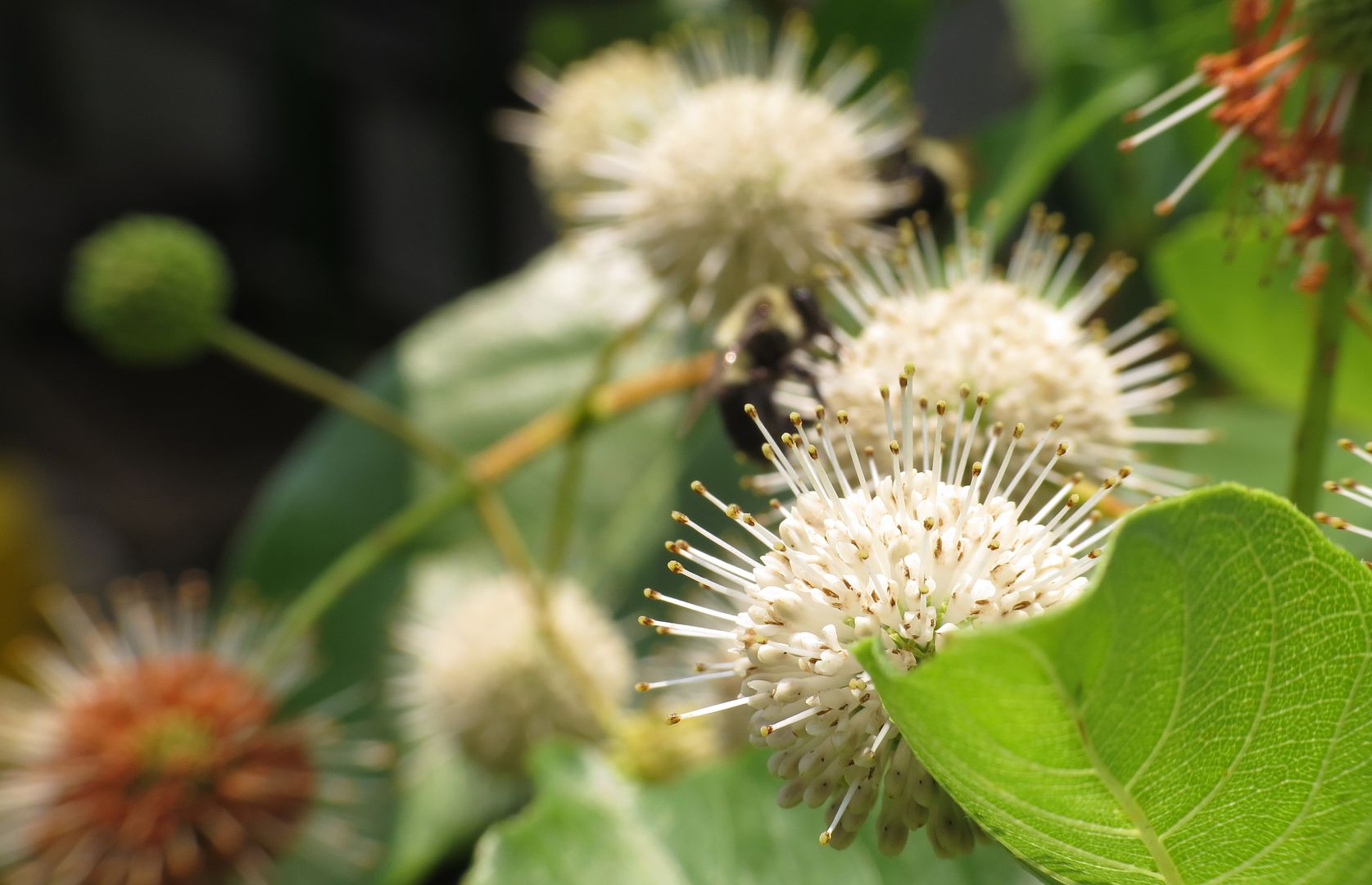
I'm also tempted to buy a second Button Bush. The one I currently have is doing okay, but has a dead limb or two I need to cut out. Also I saw it advertised for in an actual garden brochure I got in the mail. This species is rarely sold and I'd like to support that. I would liken it to Butterfly Bush in terms of attention but it has a far more limited bloom time.
Showing posts with label Ironweed. Show all posts
Sunday, January 22, 2017
Saturday, September 17, 2016
Late Summer Mt. Cuba Center Visit
I was at the Mt. Cuba Center last weekend for a little late summer photo stroll. Here are a few of the sights I saw.
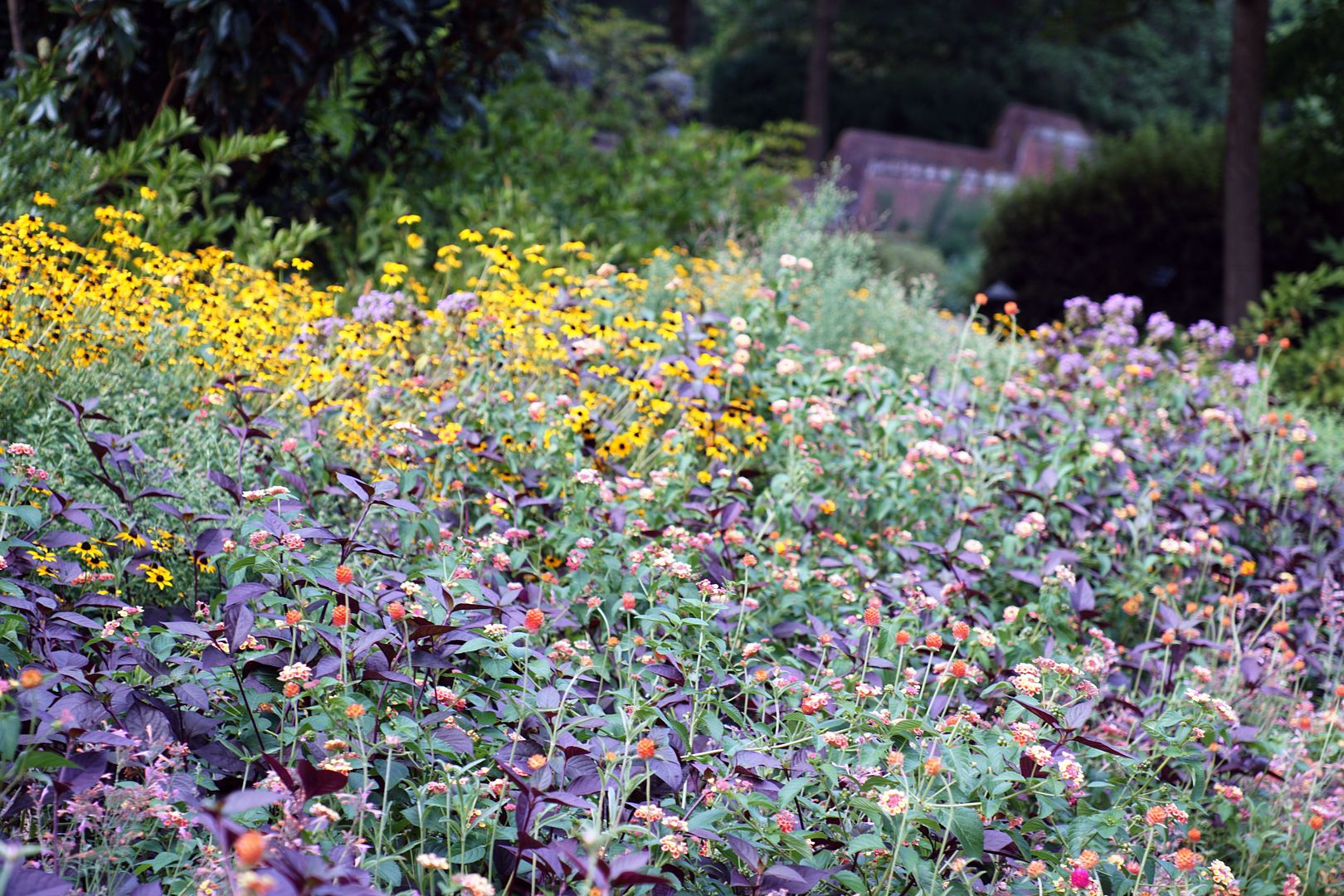
The round garden perhaps off from the main house is a dazzling array of color now, though perhaps a little busy for some. While it's comprised of mostly nonnative annuals, it serves as a bustling stop for an assortment of butterflies who's host plants are all around some ~650 acres of fairly well kept wilderness and native plant gardens.
I'm not sure what the purple plant is but it's foliage contrasts well with the brightness of the Lantana in bloom among other flowering plants. Here some skippers flutter about. Among them were an assortment of Swallowtails, Monarchs, and Fritillary Butterflies that proved too quick for me to photograph.
Elsewhere in a native flower bed the Swallowtails were a bit more cooperative. Here two Tigers sip at an Ironweed, I believe the cultivar is Vernonia angustifolia 'Plum Peachy' which is like 'Iron Butterfly' but about twice as tall.
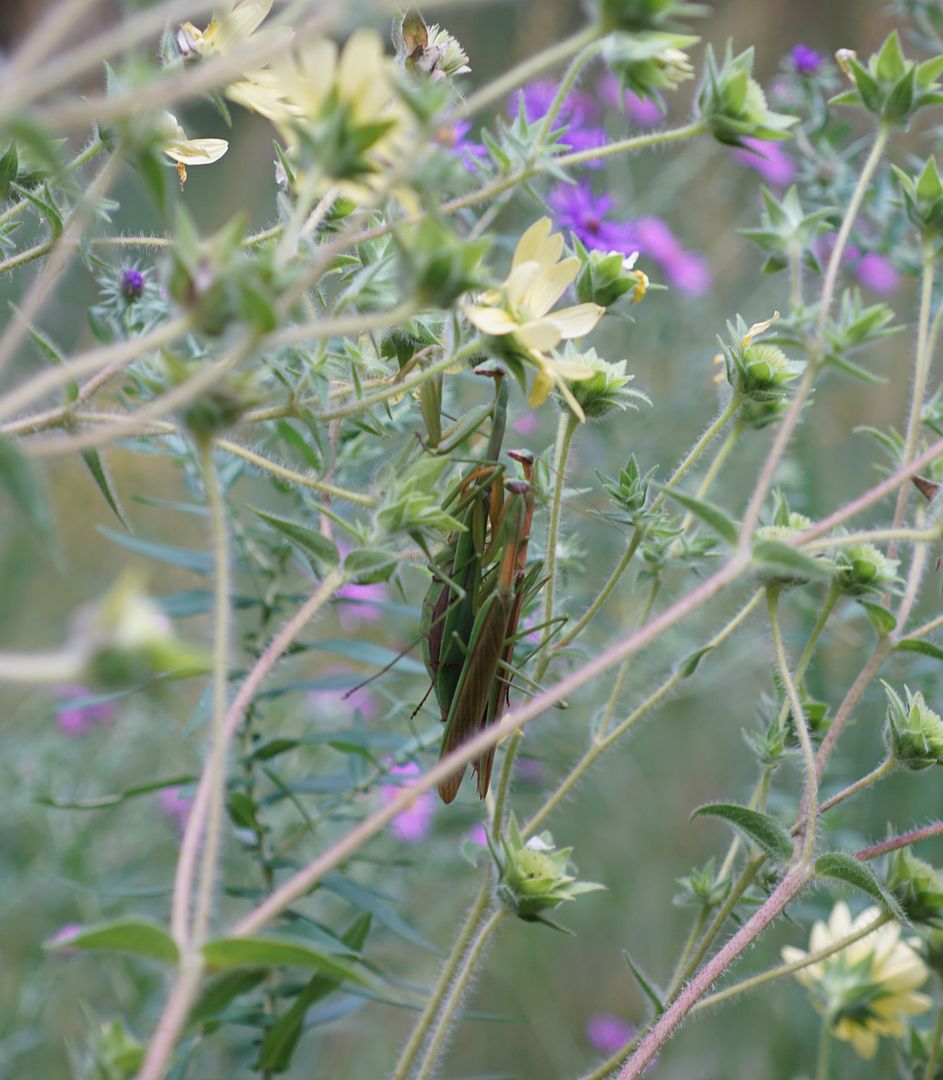
Praying Mantises were abound in the meadow garden. Not only were females laying eggs but also in the act of mating... some with more than one partner courting them at the same time.
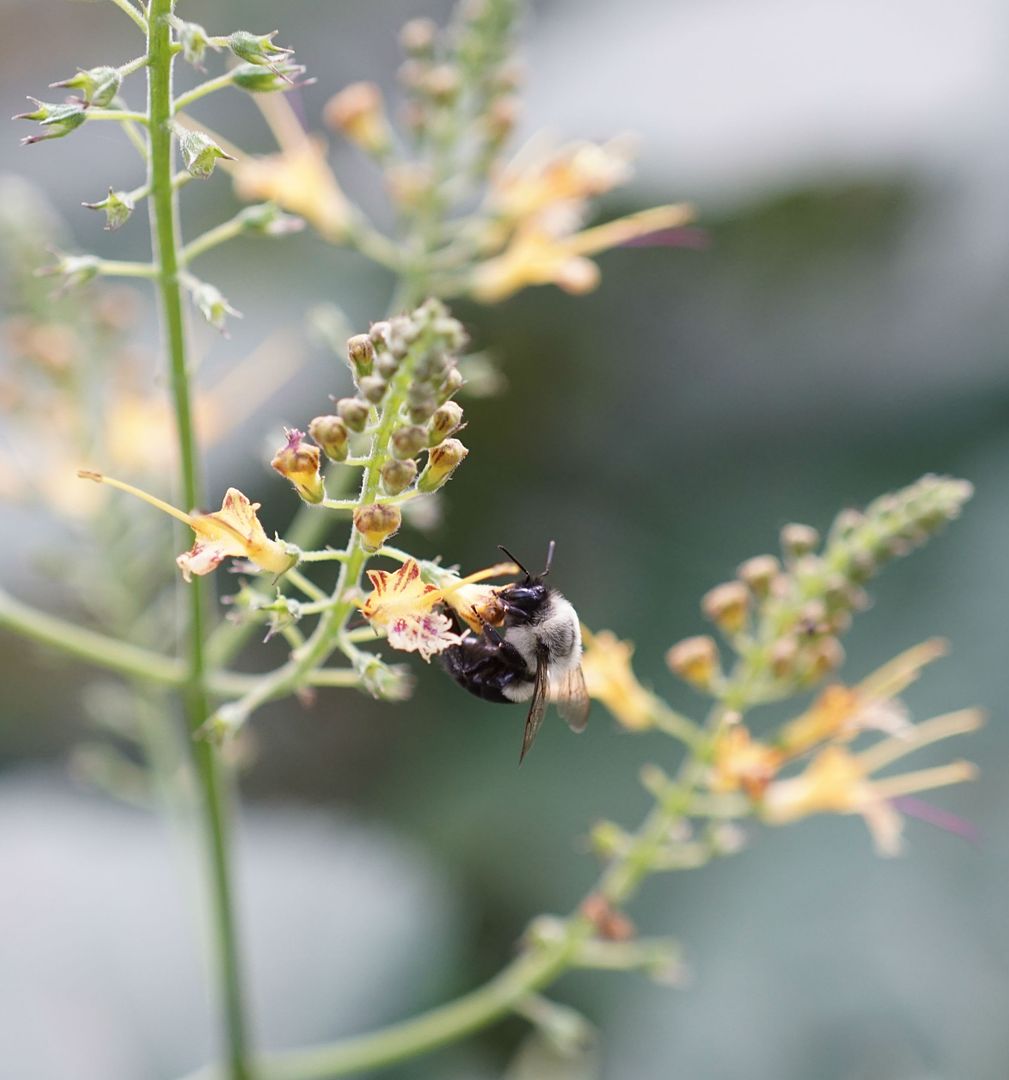
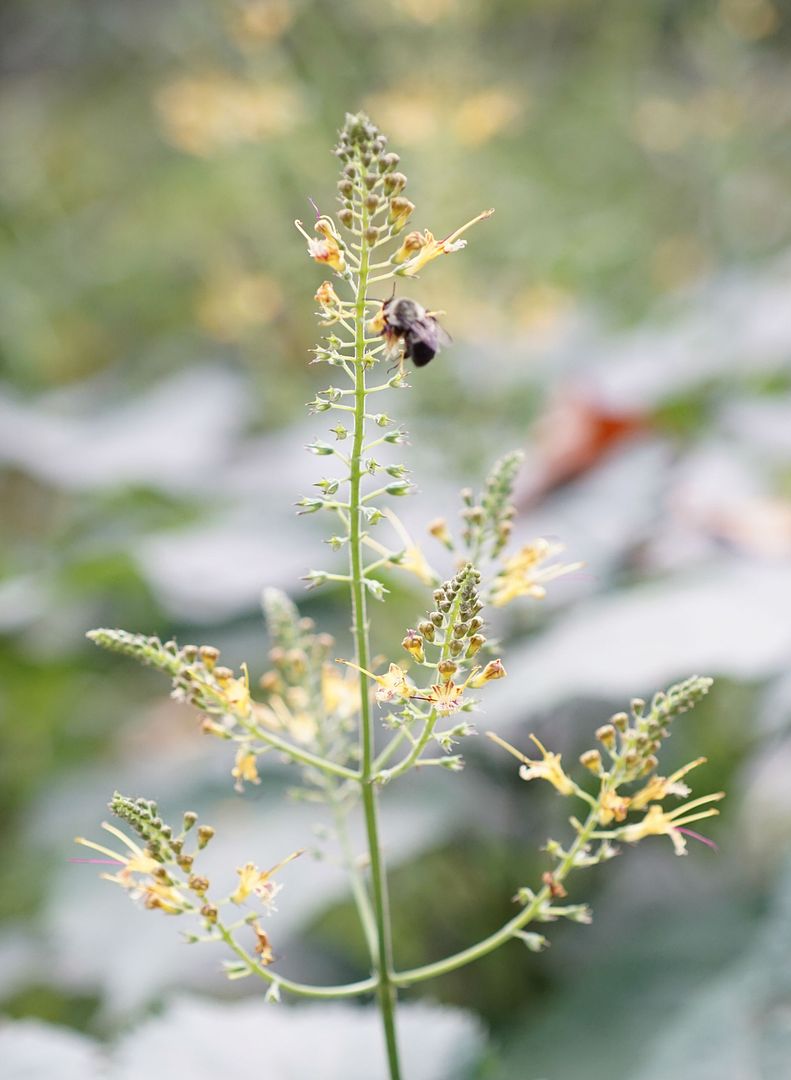
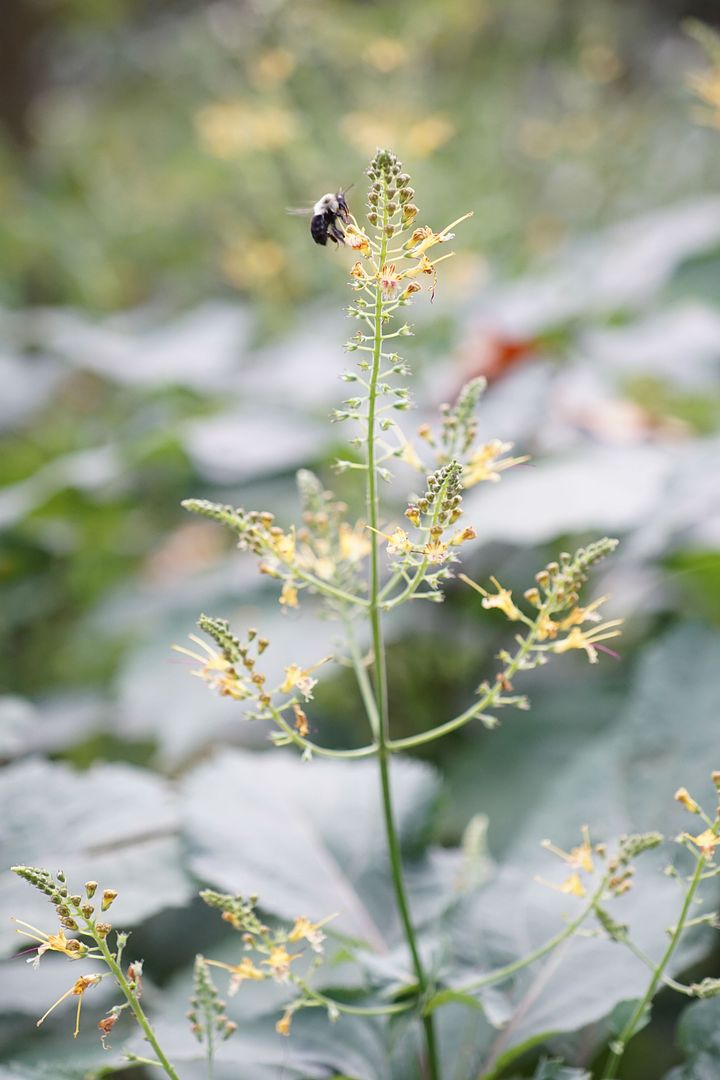
Though the woodland was filled with an assortment of Woodland Asters, I found the Richweed, Collinsonia canadensis, to be particularly interesting.
Though common in woodland areas across the eastern United States, it's not something a lot of people stop to look at.
Part of the issues that it's not a more mainstream plant is likely due to the large leaves of the plant, compared to the fairly delicate flower stalks that come above. The flowers are small and not entirely noticeable either. I actually walked past the patch of these plants twice before I even noticed it. It's plants like this where interesting leaves or flower shapes from cultivation would benefit to get it sold and brought into the main nursery trade.
The round garden perhaps off from the main house is a dazzling array of color now, though perhaps a little busy for some. While it's comprised of mostly nonnative annuals, it serves as a bustling stop for an assortment of butterflies who's host plants are all around some ~650 acres of fairly well kept wilderness and native plant gardens.
I'm not sure what the purple plant is but it's foliage contrasts well with the brightness of the Lantana in bloom among other flowering plants. Here some skippers flutter about. Among them were an assortment of Swallowtails, Monarchs, and Fritillary Butterflies that proved too quick for me to photograph.
Elsewhere in a native flower bed the Swallowtails were a bit more cooperative. Here two Tigers sip at an Ironweed, I believe the cultivar is Vernonia angustifolia 'Plum Peachy' which is like 'Iron Butterfly' but about twice as tall.
Praying Mantises were abound in the meadow garden. Not only were females laying eggs but also in the act of mating... some with more than one partner courting them at the same time.
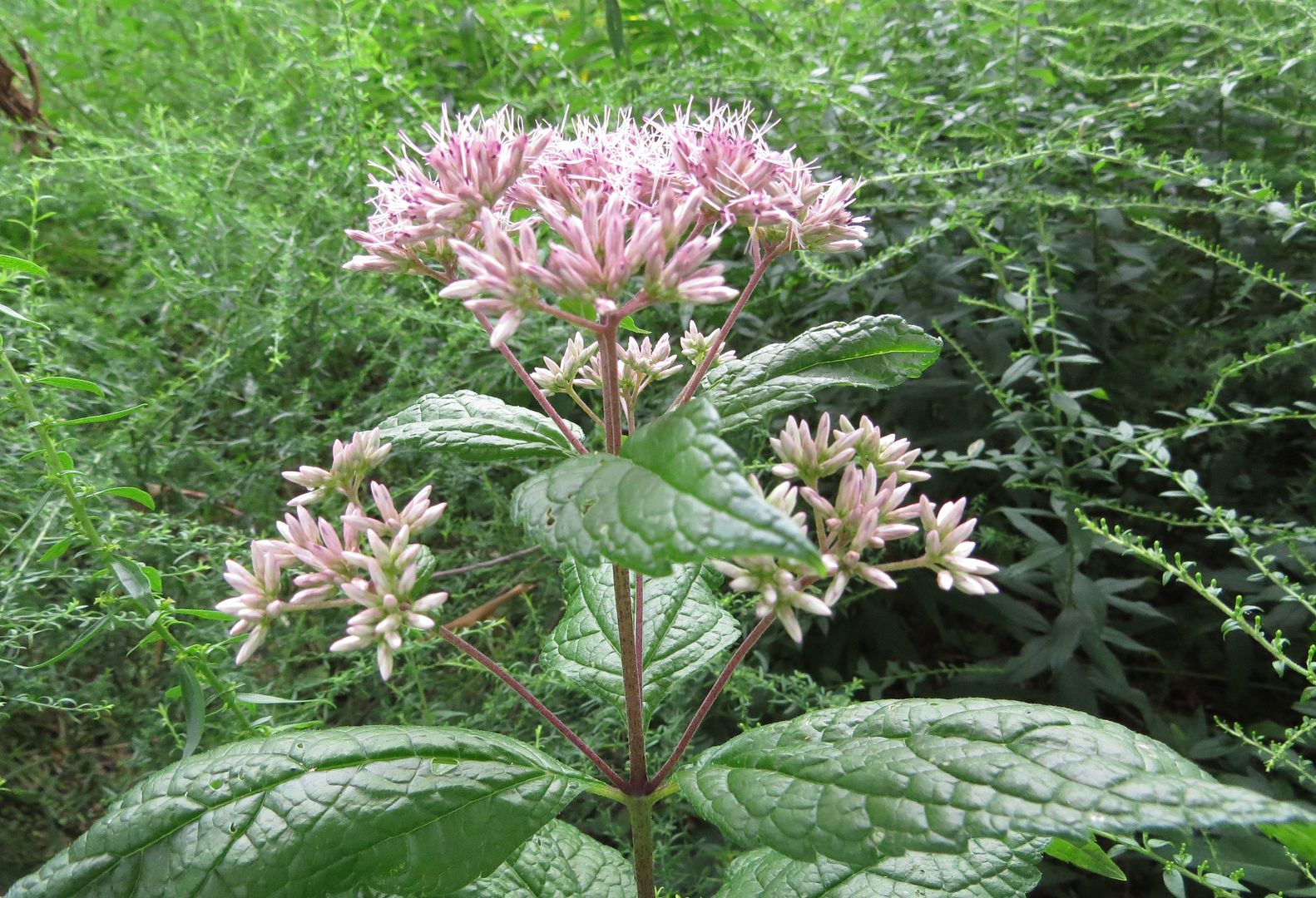
Though the woodland was filled with an assortment of Woodland Asters, I found the Richweed, Collinsonia canadensis, to be particularly interesting.
Though common in woodland areas across the eastern United States, it's not something a lot of people stop to look at.
Part of the issues that it's not a more mainstream plant is likely due to the large leaves of the plant, compared to the fairly delicate flower stalks that come above. The flowers are small and not entirely noticeable either. I actually walked past the patch of these plants twice before I even noticed it. It's plants like this where interesting leaves or flower shapes from cultivation would benefit to get it sold and brought into the main nursery trade.
Tuesday, September 22, 2015
Honeybees on Fall Flowers
While visiting the Mt. Cuba Center this past weekend I was treated to a variety of fall wildflowers with fall colors right around the corner.
The gardeners there do such an amazing job, and they've introduced a number of cultivars over the years that I find well worth the effort in tracking down.
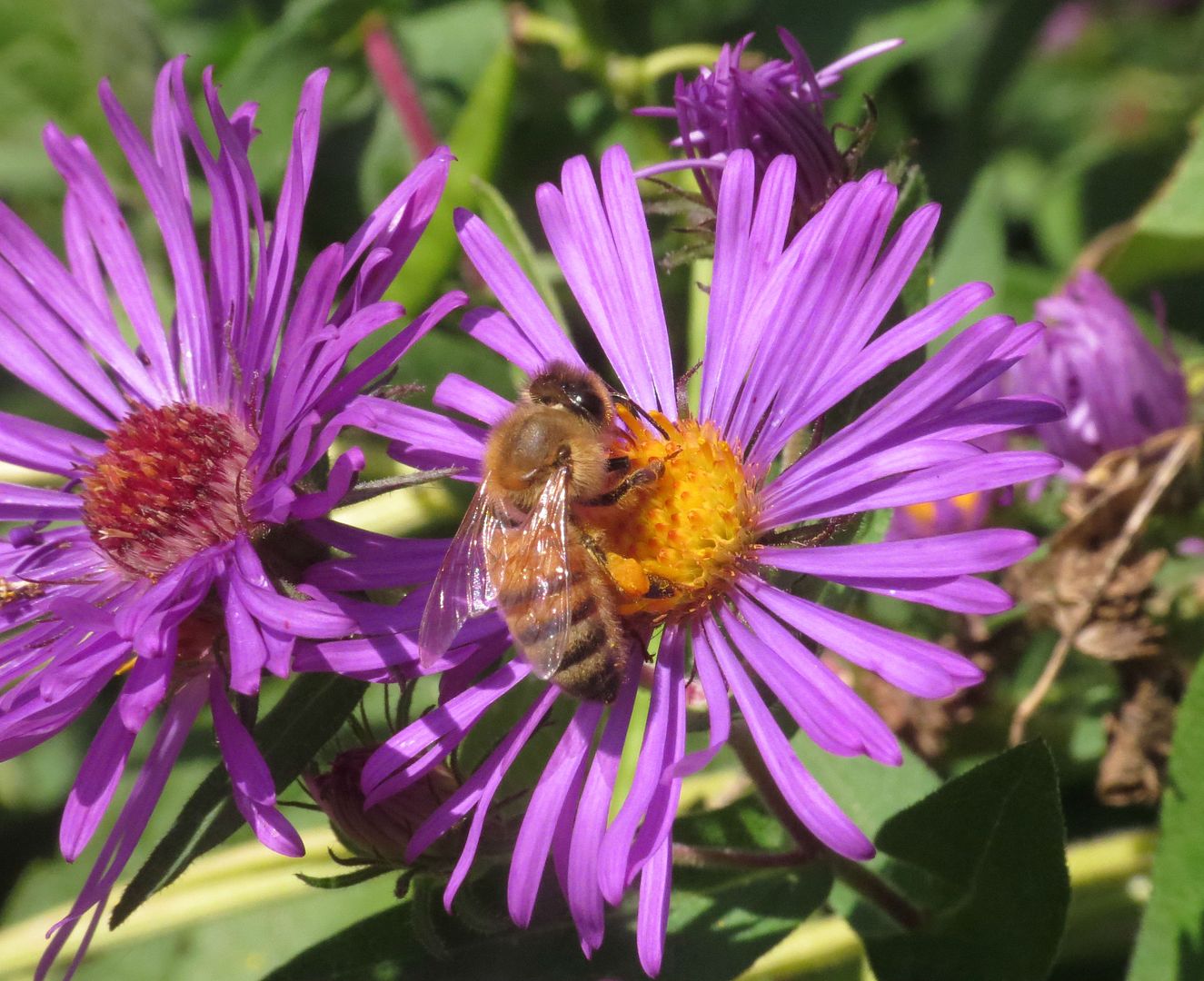
And of course now that they have a few honeybee hives on the property it's become far more apparent what native plants the bees really love. Now that Mountain Mint has finished blooming, I believe the winner of most perennial beds will be the common New England Aster, Symphyotrichum novae-angliae.
New England Asters come in a variety of colors but I've found the purple to be the most common. Pink, brilliant shades of Red, White and everything in between are also possible. Lost of cultivars are available on the market today and they're pretty easy grow by division or spreading seeds in pots of dirt outside over the winter. They can be slightly weedy but sometimes it's worth it to let them flower before pulling. A friend of mine had New England Asters take over his meadow garden but now he has every color in the rainbow.
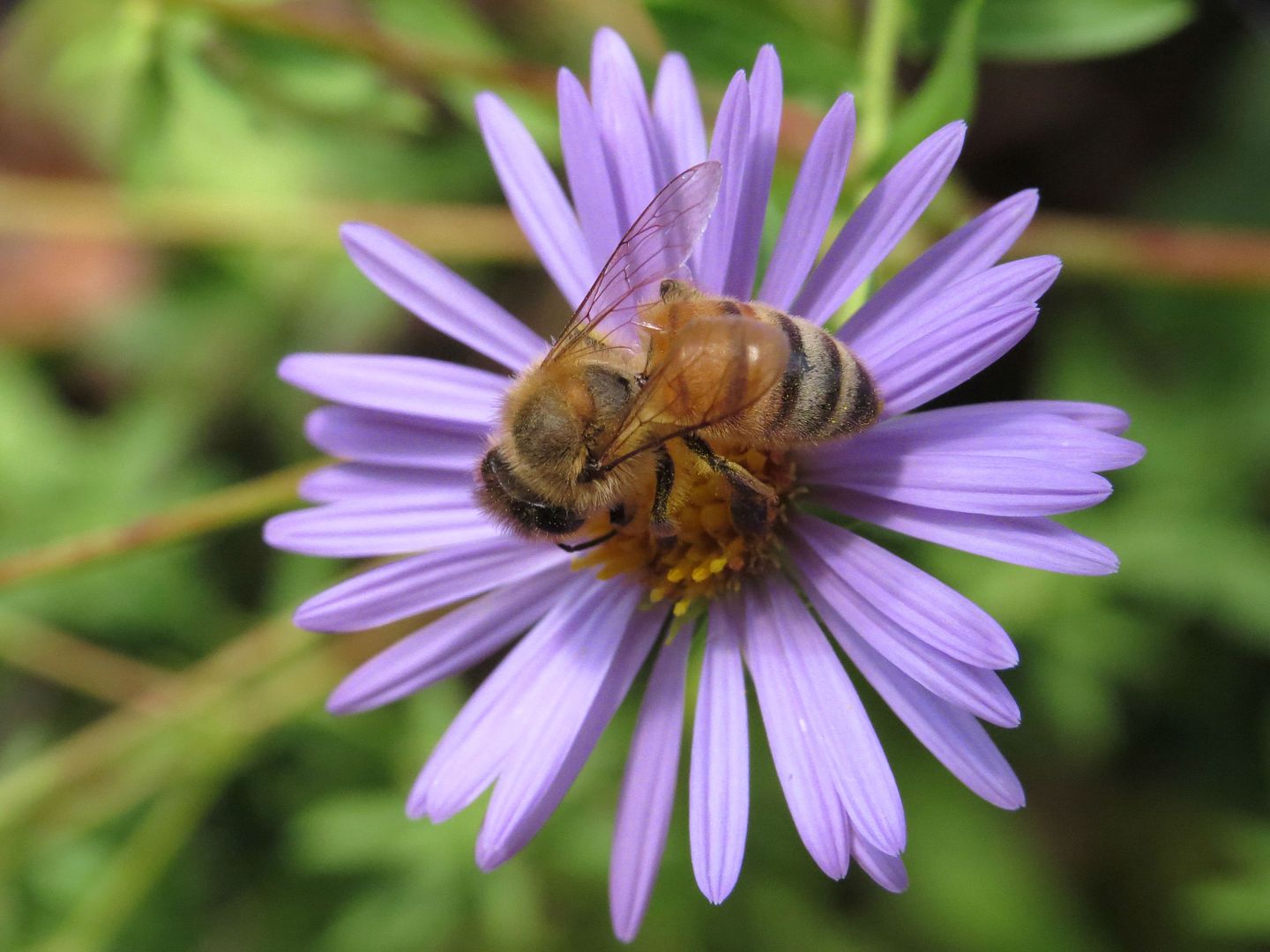
Symphyotrichum laeve 'Bluebird' is an up right perennial that grows more flowers than the true species. This is because it's actually a hybrid with another species, though I don't know the particulars on that. They look great if you can grow them. I've tried in the past and believe they benefit from regular watering, and or mulch, as opposed to testing out their drought tolerance. I don't believe this cultivar is prolific by seed, but they are pretty when grown beside other asters or goldenrod of similar height.
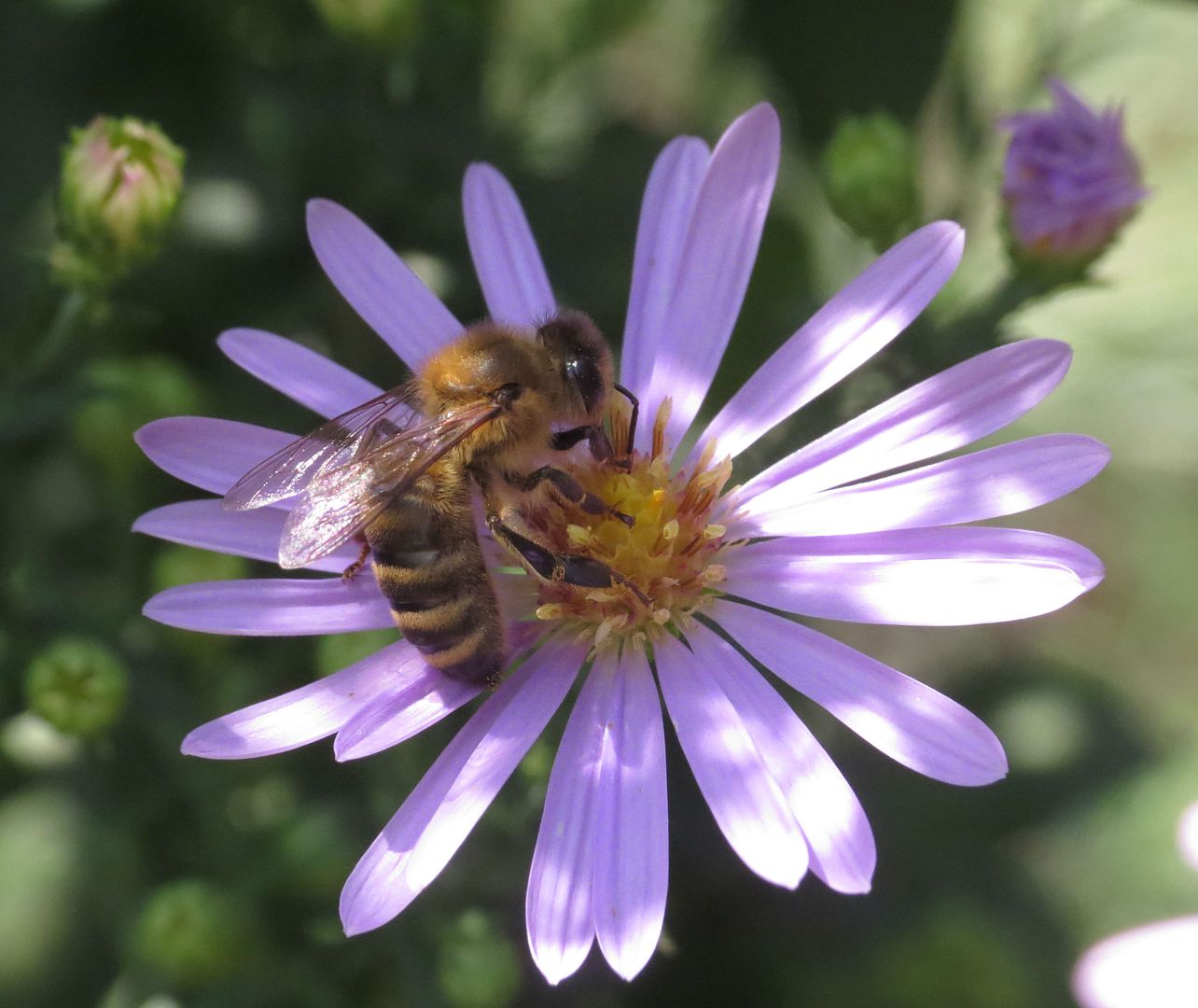
Aromatic Aster 'October Skies' is wonderful in mass plantings. A cultivar of Symphyotrichum olongifolium, this is a low growing aster which lays on the ground forming thick cloud-like pillows of flowers. Perfect at the edge of a flower bed or scattered among a meadow/garden of low plants.
White Woodland Aster... actually I'm a little unclear what species this one in particular is. It's one of the lower growing species with masses of white blooms. Oddly enough I have a species or two of these that come up wild in my yard and I only rarely see honeybees take a liking to them. At Mt. Cuba the clumps they had growing in the sparse woodland were getting a decent amount of attention. Not as much as any of the other asters but certainly more than anything else flowering in the woods.
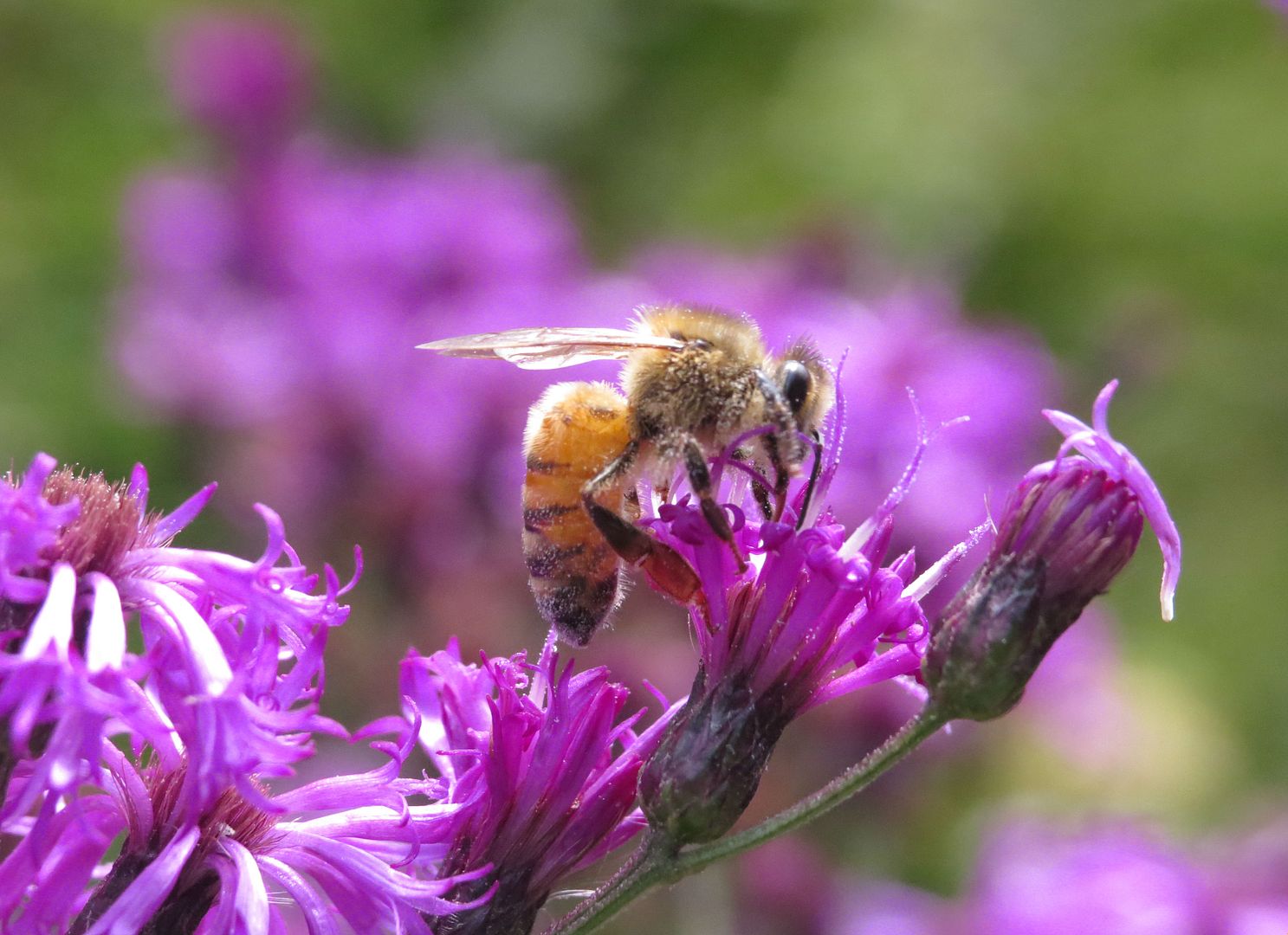
Vernonia angustifolia 'Plum Peachy' is a form of Narrow-leaf Ironweed with darker foliage and is more compact than the wild species. I believe it may also have flowers more evenly spread around it as opposed to just at the tips of stems but I could be confusing that with another the Mt. Cuba Center has/is working on.
I didn't think to take photos of the foliage at the time but it has nice narrow leaves and looked similar to other cultivars of ironweed I'd seen in local nurseries. It was getting a decent amount of attention, slightly more so than the goldenrods growing around it but I know honeybees don't go nuts for goldenrod until after the peak Aster blooms. I'm planting three of these this fall and putting them right in next to my narrow-leaf Amsonia to see if they grow well at all.
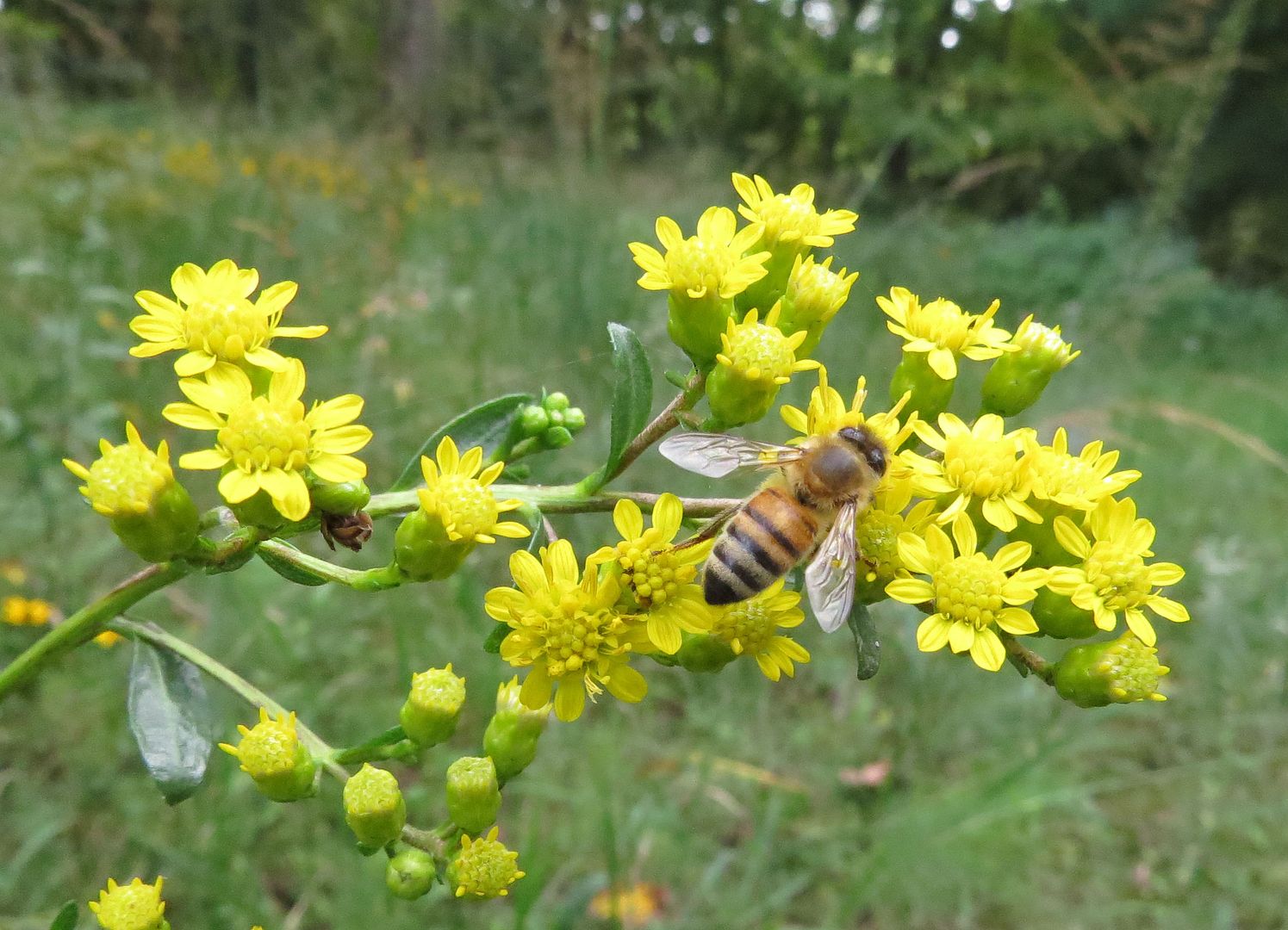
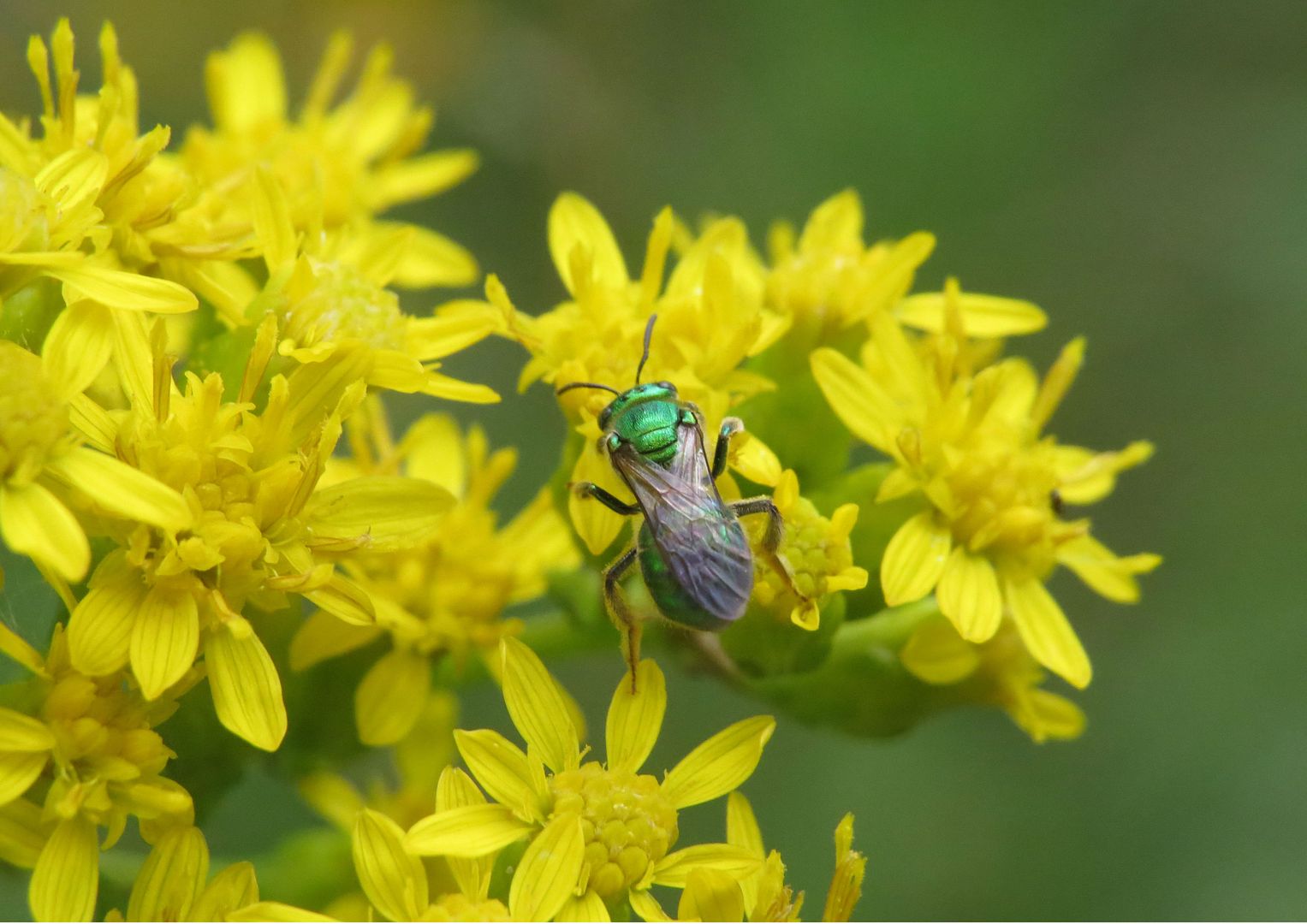
Stiff Goldenrod, Solidago rigida, was blooming well. This was the first time I've ever seen this species and I was taken by how big and fat the flower petals are which you usually don't even notice on Goldenrods. They had a patch of 50 or so plants, or at least that's about how many flowering stems there were.
Just thought this was a good shot. Had the bee been posed a little better I'd go as far to say excellent.
Noticed some spittle bugs on the stem. They produce a foam or "spit" to hide within while they feed on the plant much like an aphid.
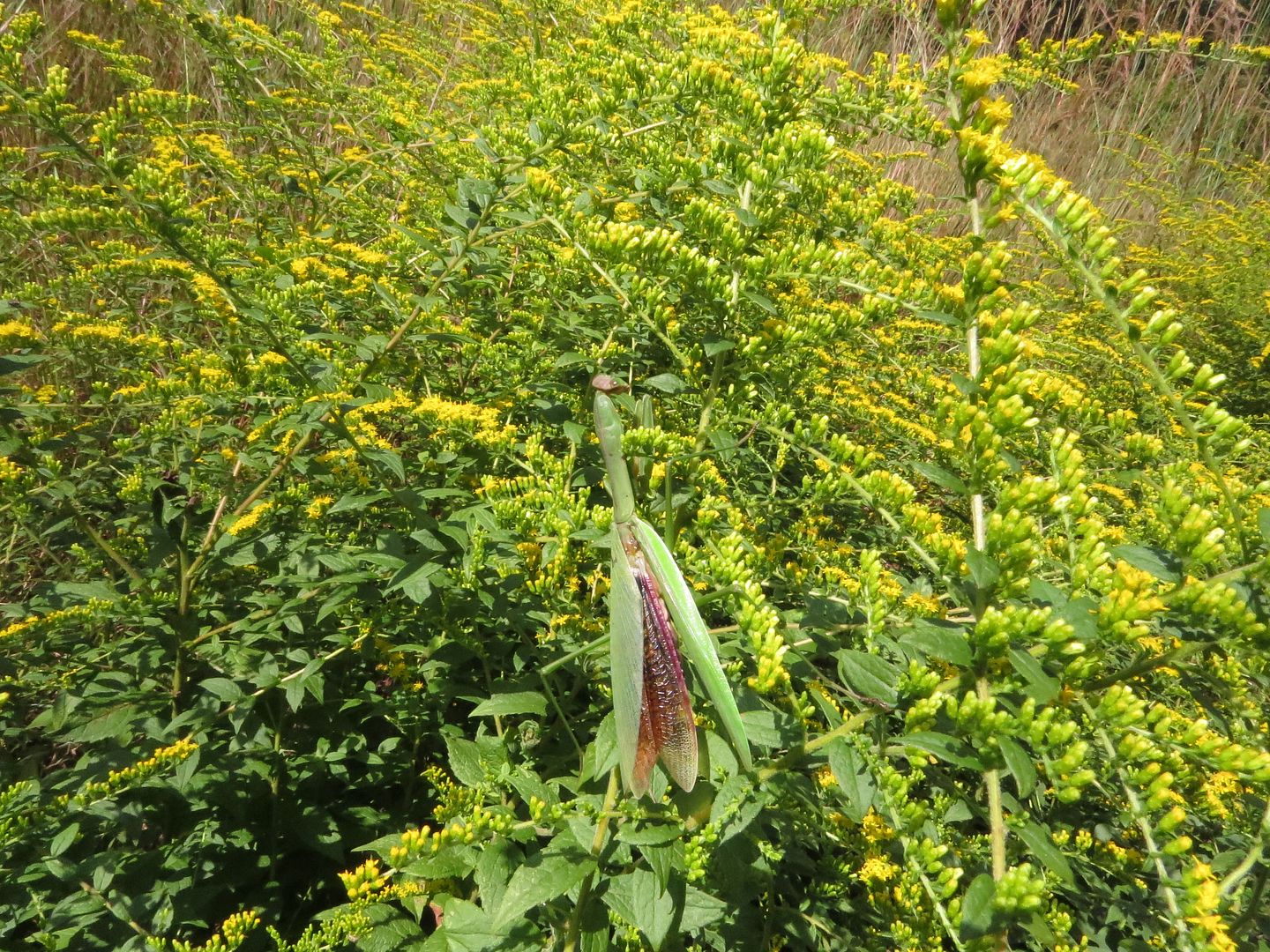
Solidago 'Fireworks' was also flowering, though not getting as much attention as I've seen it get in the past. (The huge hungry mantis about to lay an egg casing might have something to do with that.) It's also not quite at its peak bloom yet and that's really when honeybees tend to take over such nectar sources.
Obedient Plant is typically swarming with pollinators but I didn't find that to be the case that day. At least it wasn't for the patch that was next to the path. They also have it planted out in the meadow itself for a lovely pink effect but I didn't notice much flying around.
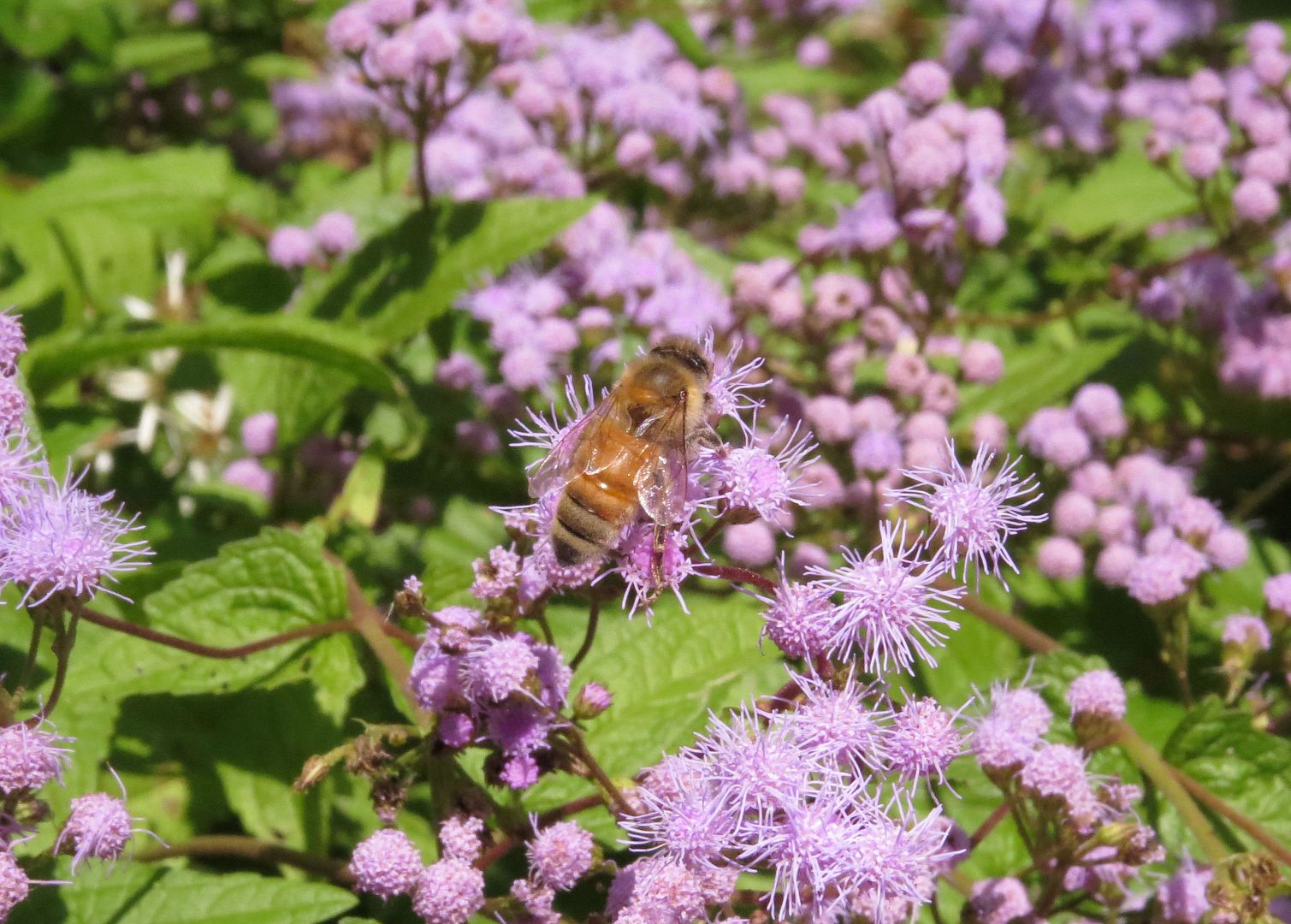
Mistflower, Conoclinum coelestinum. I was slightly surprised to see honeybees on this one. First off I've never been able to get this species to grow in my yard. They have water requirements that are somewhat finicky; too wet and they don't survive the winter, too dry and they won't reproduce. I read they're ideally a shade plant and the more sunlight they receive the more moisture they require. The Mt. Cuba Center had them in full sun, at the bottom of a slope.
Honeybees use other plants that were formerly in the Eupatorium genus. Pretty much all of Joe Pye Weeds are a hit with them, but only some of the Boneset species.
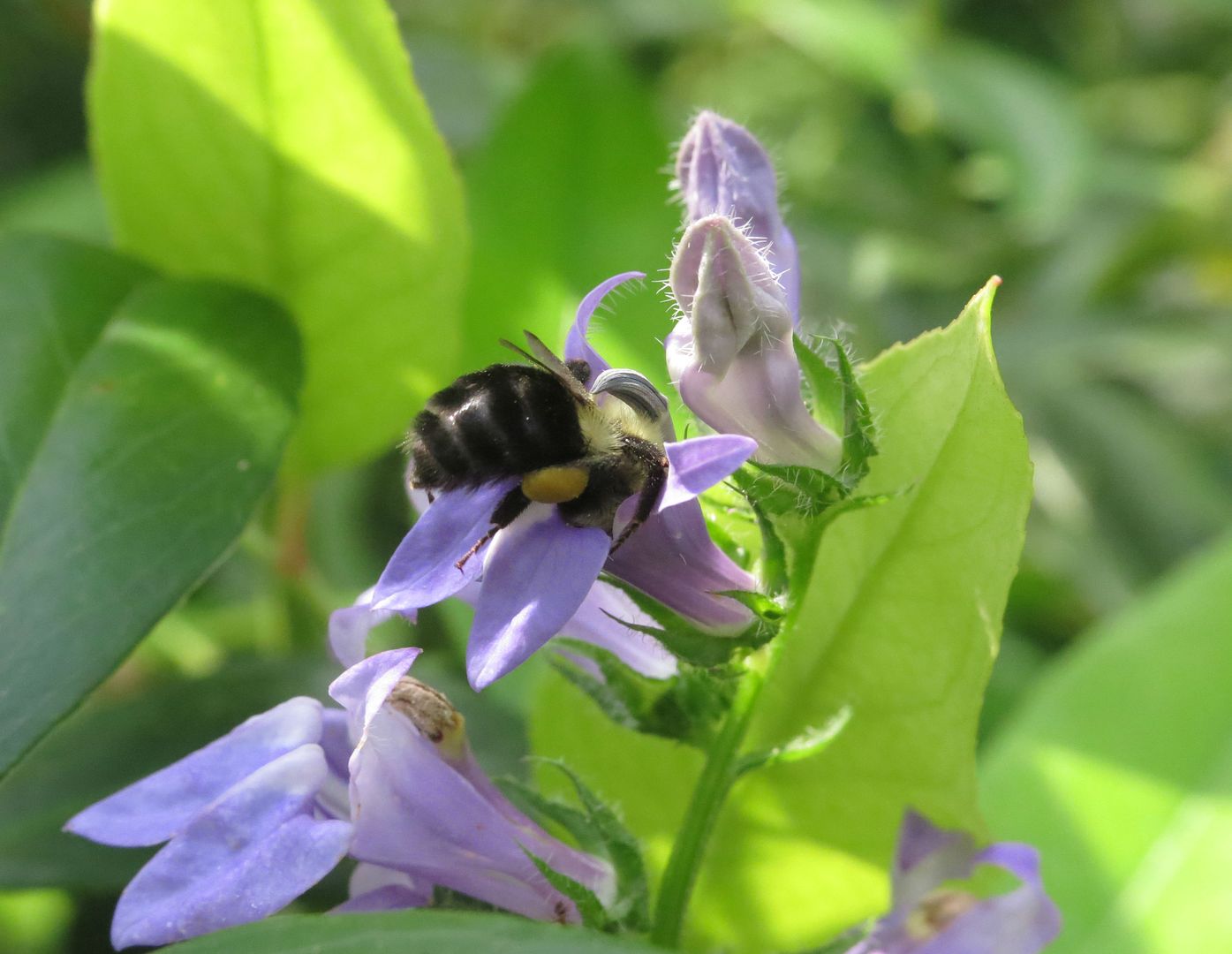
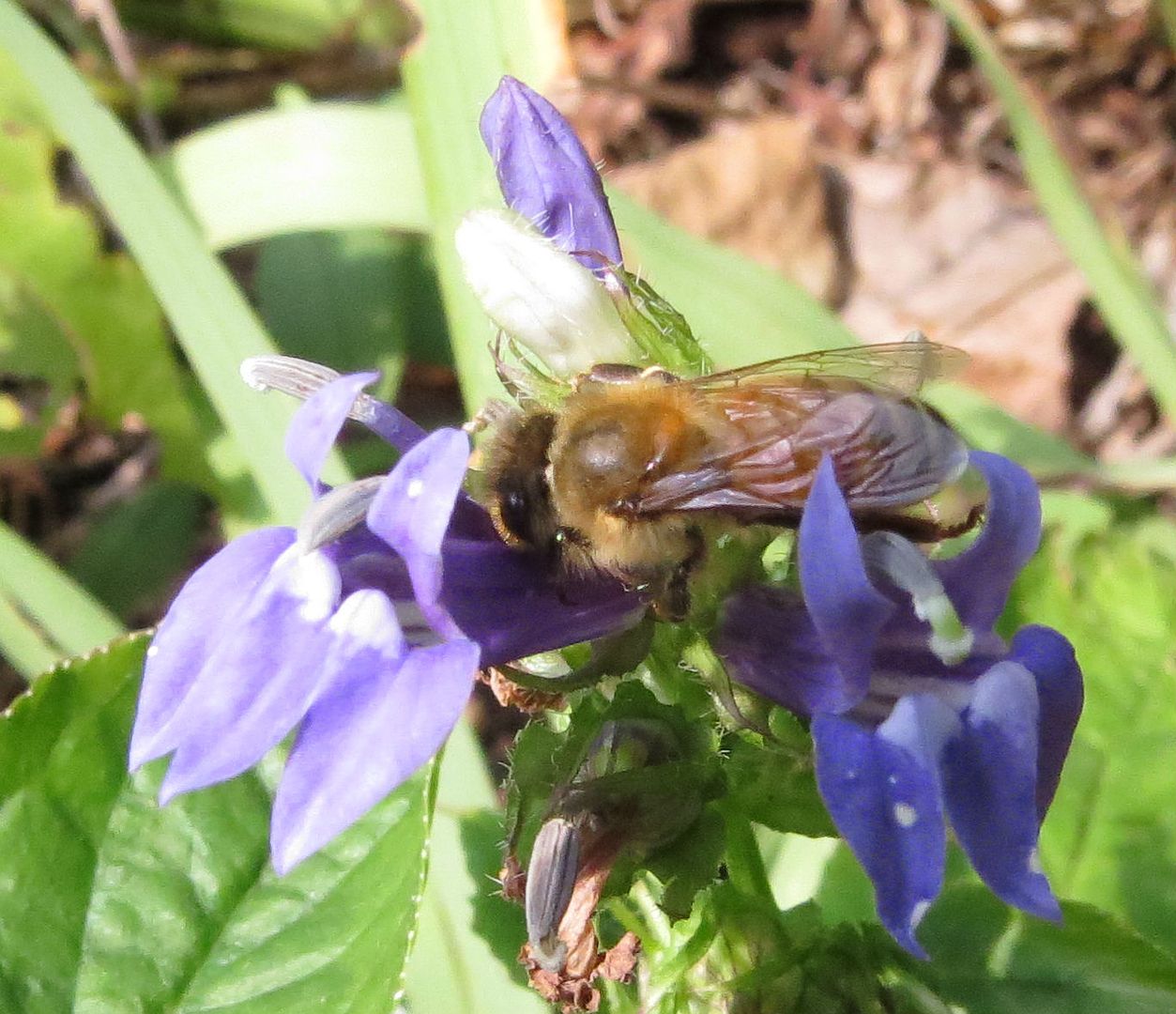
Our native Blue Lobelia, Lobelia siphilitica, is an upright, sometimes hard to establish and other times weedy perennial, with tube shaped pale blue flowers. I observe that while this is a wetland species, specamins growing closest to the water are among the shortest at around 2' at most while those growing farther away could reach up to 5' though 3 and a half certainly seemed more the norm.
Honeybees are perfectly capable of working the flowers but I noticed none of them were bothering to do so. The only flowers they visited were ones which carpenter bees had already chewed holes in.
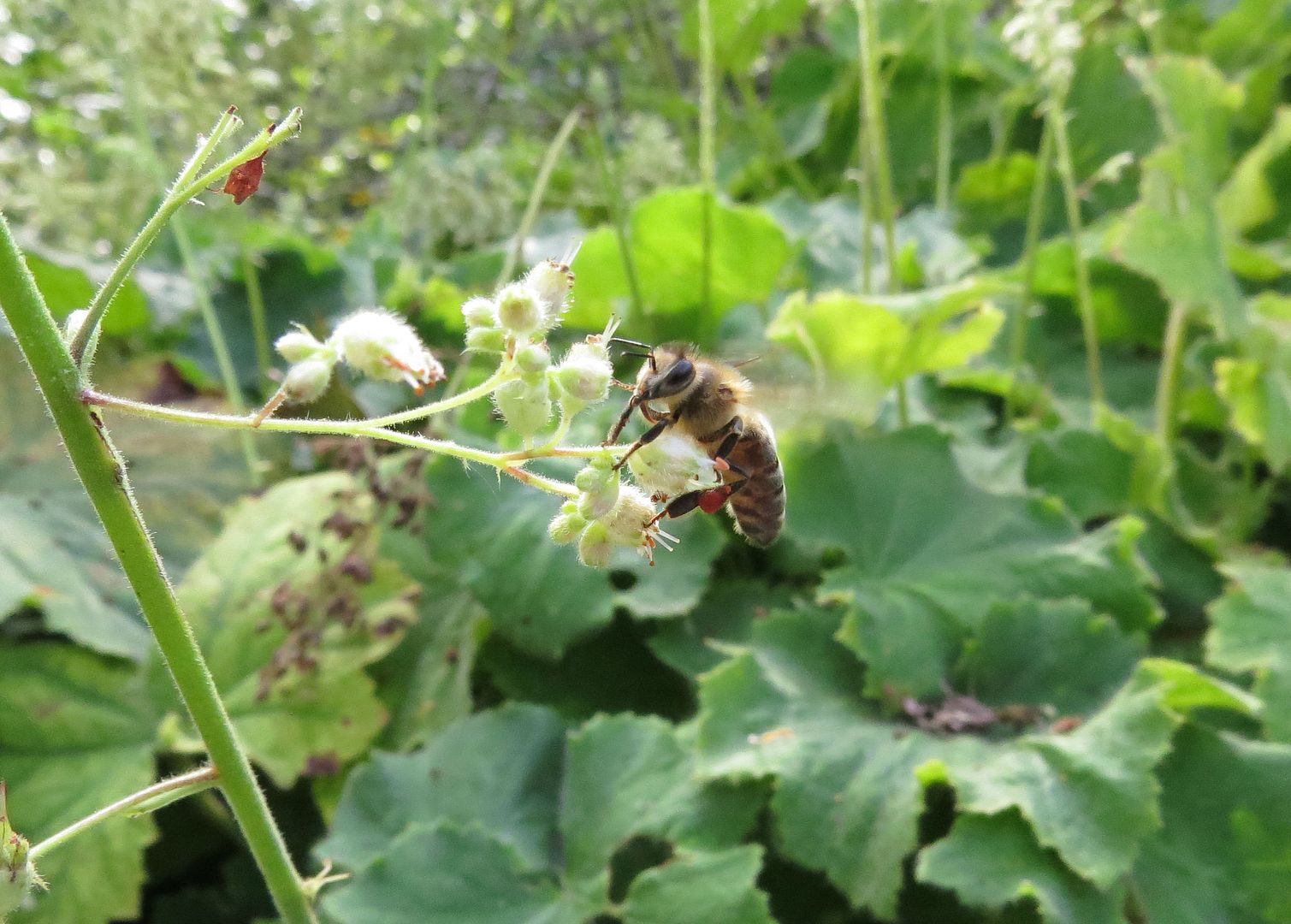
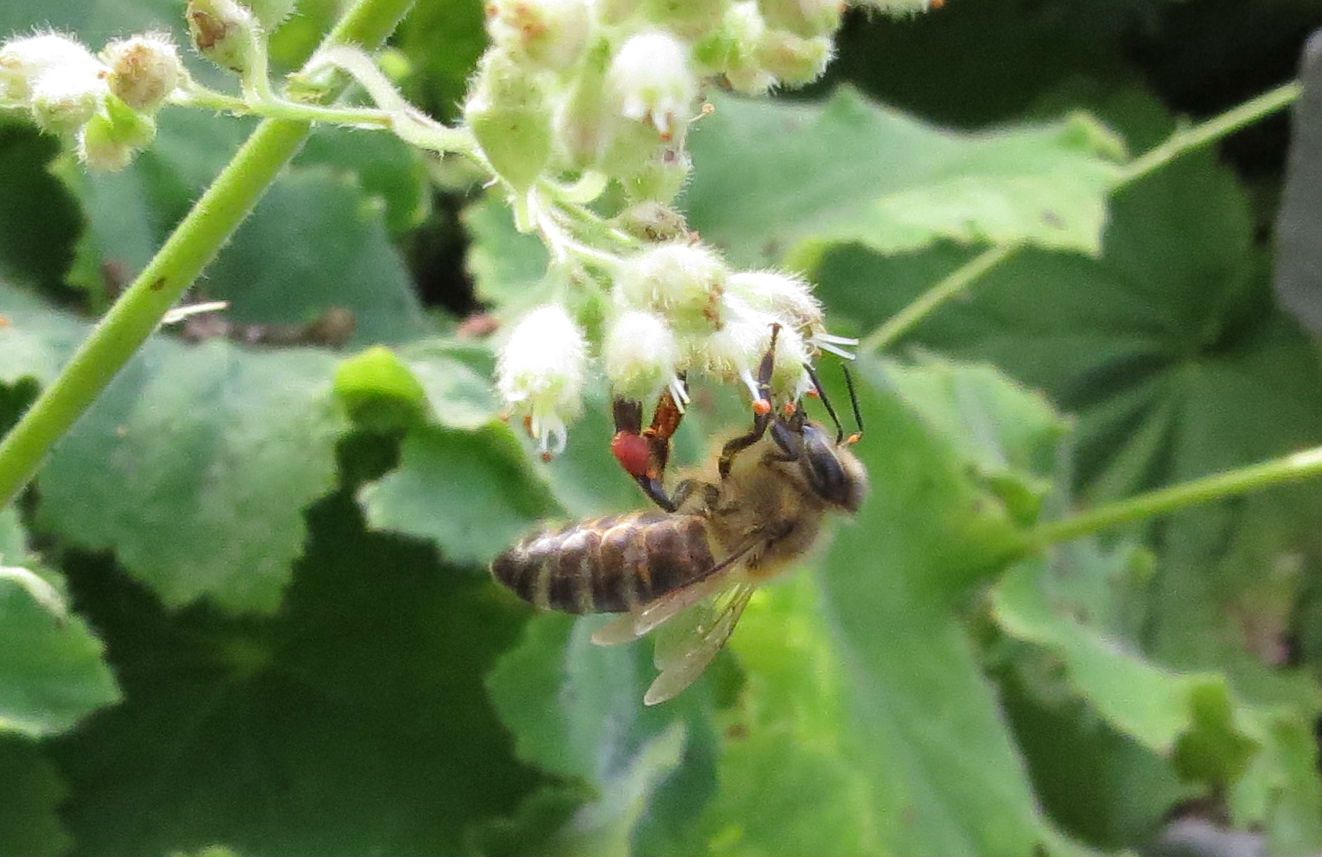
And lastly, I noticed honeybees working one of the Heucheras. This is a genus of plants with hundreds of cultivars that offer every color imaginable. They're mostly pollinated by flies but a certain few, typically ones with larger (for the genus) white flowers are visited by bees.
This particular species was mass planted near the Round Garden and the bees were gathering up nectar, and just look at that wonderful deep red pollen.
The gardeners there do such an amazing job, and they've introduced a number of cultivars over the years that I find well worth the effort in tracking down.
And of course now that they have a few honeybee hives on the property it's become far more apparent what native plants the bees really love. Now that Mountain Mint has finished blooming, I believe the winner of most perennial beds will be the common New England Aster, Symphyotrichum novae-angliae.
New England Asters come in a variety of colors but I've found the purple to be the most common. Pink, brilliant shades of Red, White and everything in between are also possible. Lost of cultivars are available on the market today and they're pretty easy grow by division or spreading seeds in pots of dirt outside over the winter. They can be slightly weedy but sometimes it's worth it to let them flower before pulling. A friend of mine had New England Asters take over his meadow garden but now he has every color in the rainbow.
Symphyotrichum laeve 'Bluebird' is an up right perennial that grows more flowers than the true species. This is because it's actually a hybrid with another species, though I don't know the particulars on that. They look great if you can grow them. I've tried in the past and believe they benefit from regular watering, and or mulch, as opposed to testing out their drought tolerance. I don't believe this cultivar is prolific by seed, but they are pretty when grown beside other asters or goldenrod of similar height.
Aromatic Aster 'October Skies' is wonderful in mass plantings. A cultivar of Symphyotrichum olongifolium, this is a low growing aster which lays on the ground forming thick cloud-like pillows of flowers. Perfect at the edge of a flower bed or scattered among a meadow/garden of low plants.
White Woodland Aster... actually I'm a little unclear what species this one in particular is. It's one of the lower growing species with masses of white blooms. Oddly enough I have a species or two of these that come up wild in my yard and I only rarely see honeybees take a liking to them. At Mt. Cuba the clumps they had growing in the sparse woodland were getting a decent amount of attention. Not as much as any of the other asters but certainly more than anything else flowering in the woods.
Vernonia angustifolia 'Plum Peachy' is a form of Narrow-leaf Ironweed with darker foliage and is more compact than the wild species. I believe it may also have flowers more evenly spread around it as opposed to just at the tips of stems but I could be confusing that with another the Mt. Cuba Center has/is working on.
I didn't think to take photos of the foliage at the time but it has nice narrow leaves and looked similar to other cultivars of ironweed I'd seen in local nurseries. It was getting a decent amount of attention, slightly more so than the goldenrods growing around it but I know honeybees don't go nuts for goldenrod until after the peak Aster blooms. I'm planting three of these this fall and putting them right in next to my narrow-leaf Amsonia to see if they grow well at all.
Stiff Goldenrod, Solidago rigida, was blooming well. This was the first time I've ever seen this species and I was taken by how big and fat the flower petals are which you usually don't even notice on Goldenrods. They had a patch of 50 or so plants, or at least that's about how many flowering stems there were.
Just thought this was a good shot. Had the bee been posed a little better I'd go as far to say excellent.
Noticed some spittle bugs on the stem. They produce a foam or "spit" to hide within while they feed on the plant much like an aphid.
Solidago 'Fireworks' was also flowering, though not getting as much attention as I've seen it get in the past. (The huge hungry mantis about to lay an egg casing might have something to do with that.) It's also not quite at its peak bloom yet and that's really when honeybees tend to take over such nectar sources.
Obedient Plant is typically swarming with pollinators but I didn't find that to be the case that day. At least it wasn't for the patch that was next to the path. They also have it planted out in the meadow itself for a lovely pink effect but I didn't notice much flying around.
Mistflower, Conoclinum coelestinum. I was slightly surprised to see honeybees on this one. First off I've never been able to get this species to grow in my yard. They have water requirements that are somewhat finicky; too wet and they don't survive the winter, too dry and they won't reproduce. I read they're ideally a shade plant and the more sunlight they receive the more moisture they require. The Mt. Cuba Center had them in full sun, at the bottom of a slope.
Honeybees use other plants that were formerly in the Eupatorium genus. Pretty much all of Joe Pye Weeds are a hit with them, but only some of the Boneset species.
Our native Blue Lobelia, Lobelia siphilitica, is an upright, sometimes hard to establish and other times weedy perennial, with tube shaped pale blue flowers. I observe that while this is a wetland species, specamins growing closest to the water are among the shortest at around 2' at most while those growing farther away could reach up to 5' though 3 and a half certainly seemed more the norm.
And lastly, I noticed honeybees working one of the Heucheras. This is a genus of plants with hundreds of cultivars that offer every color imaginable. They're mostly pollinated by flies but a certain few, typically ones with larger (for the genus) white flowers are visited by bees.
This particular species was mass planted near the Round Garden and the bees were gathering up nectar, and just look at that wonderful deep red pollen.
Sunday, September 15, 2013
Autumn Native Plant Garden Tour 2013
Mountain Mint, Pycnanthemum sp.
Wild Senna, Senna hebecarpa (seed pods)
New England Aster, Symphyotrichum novae-angliae (Pink and Purple)
Goldenrod 'fireworks' Solidago rugosa 'fireworks'
Perennial Sunflower, Helianthus maximiliani
Small Woodland Sunflower, Helianthus microcephalus
Anise Hyssop, Agastache foeniculum
White Woodland Aster or Heath Aster, Eurybia sp.
False Sunflower or Early Sunflower, Heliopsis helianthoides
Northern Blazingstar, Liatris scariosa (might be Liatris borealis)
Threadleaf Ironweed, Vernonia lettermanii
Showy Goldenrod, Solidago speciosa
Smooth Blue Aster, Symphyotrichum laeve
Sky Blue Aster, Symphyotrichum oolentangiense
Purpledisk Sunflower or Appalachian Sunflower, Helianthus atrorubens
Western Sunflower, Helianthus occidentalis
Cutleaf Coneflower, Rudbeckia laciniata
This video features both Swamp Sunflower, Helianthus angustifoliu and Narrow-leaf Sunflower, Helianthus salicifolius. I'm confused as to which is which. The tallest one at the end is supposedly a true species of H. angustifolius, while all the others are supposedly cultivars of H. salicifolius, however I find the same cultivar names listed as H. angustifolius species but never at the same nursery. What's more the two species can also hybridize and often grow in the same locations in the wild.... H. salicifolius supposedly just doesn't get as tall... but I'm unaware of any other differences between the two species, so I'm starting to feel it really doesn't matter which species you have. Even the flowers to both look the same.
Labels:
Anise Hyssop,
Aster,
Garden,
Goldenrod,
Ironweed,
Liatris,
Mint,
Rudbeckia,
Sunflowers,
Wild Senna
Thursday, September 5, 2013
September Wildflowers
New England Aster, Symphyotrichum novae-angliae, is an autumn (late summer) highlight as always. And has only recently started spreading like a weed, presumably because it's not able to pollinate itself, but two or more plants will. Plants can also be divided.
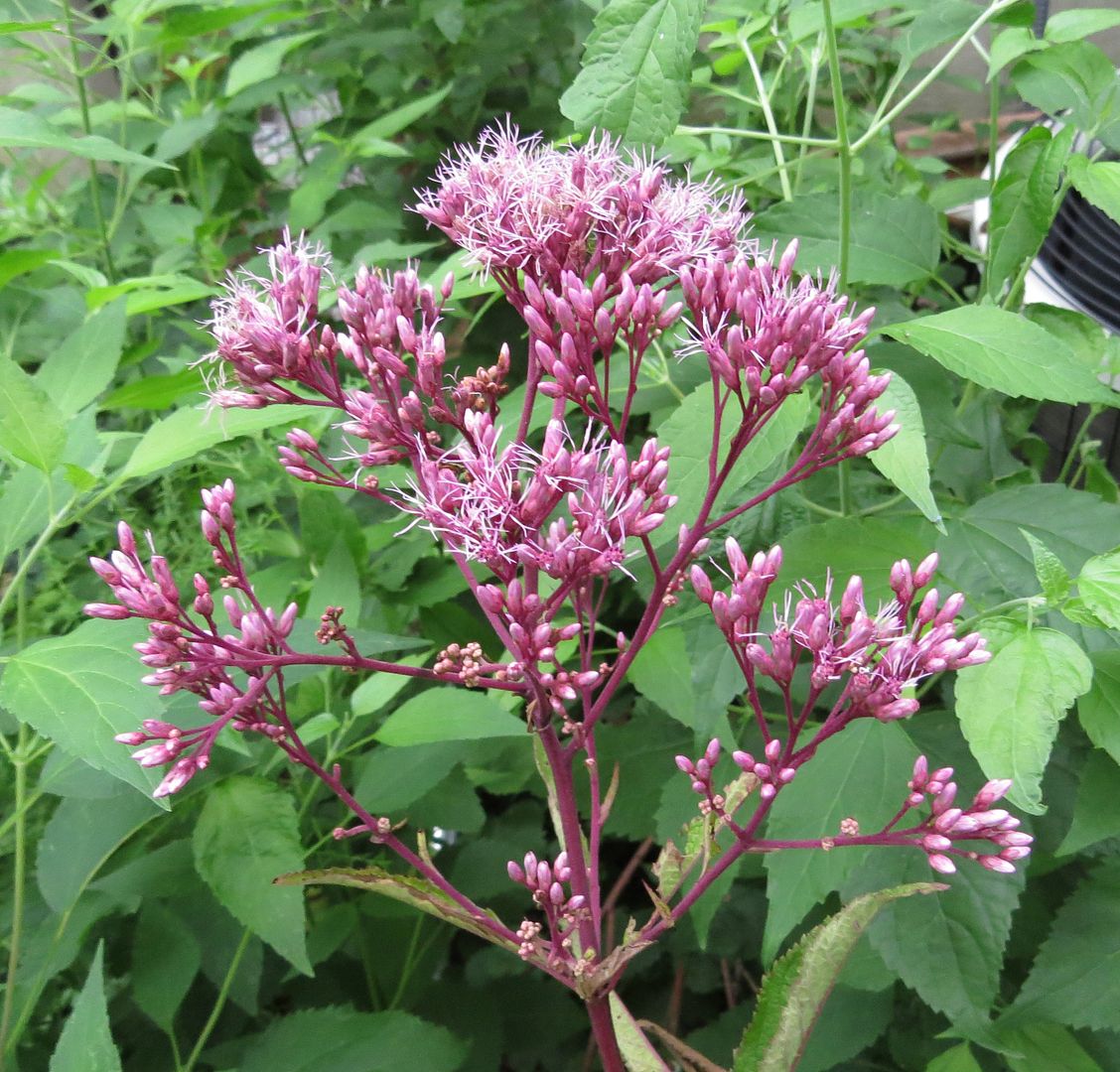
Narrow-leaf Ironweed, Vernonia Lettermannii, curiously enough the flowers this year are pink, last year they were purple. I'm not sure what caused the change. Supposedly this is the cultivar 'Iron Butterfly' though I'm not sure what's so special about it.
Showy Goldenrod, Solidago speciosa, has petered out a bit in my garden, but new seedlings are at that flowering age now so hopefully it hangs in there. This isn't the best example because usually there are way more flowers, but they always produce a compact amount of them at the top of each stem.
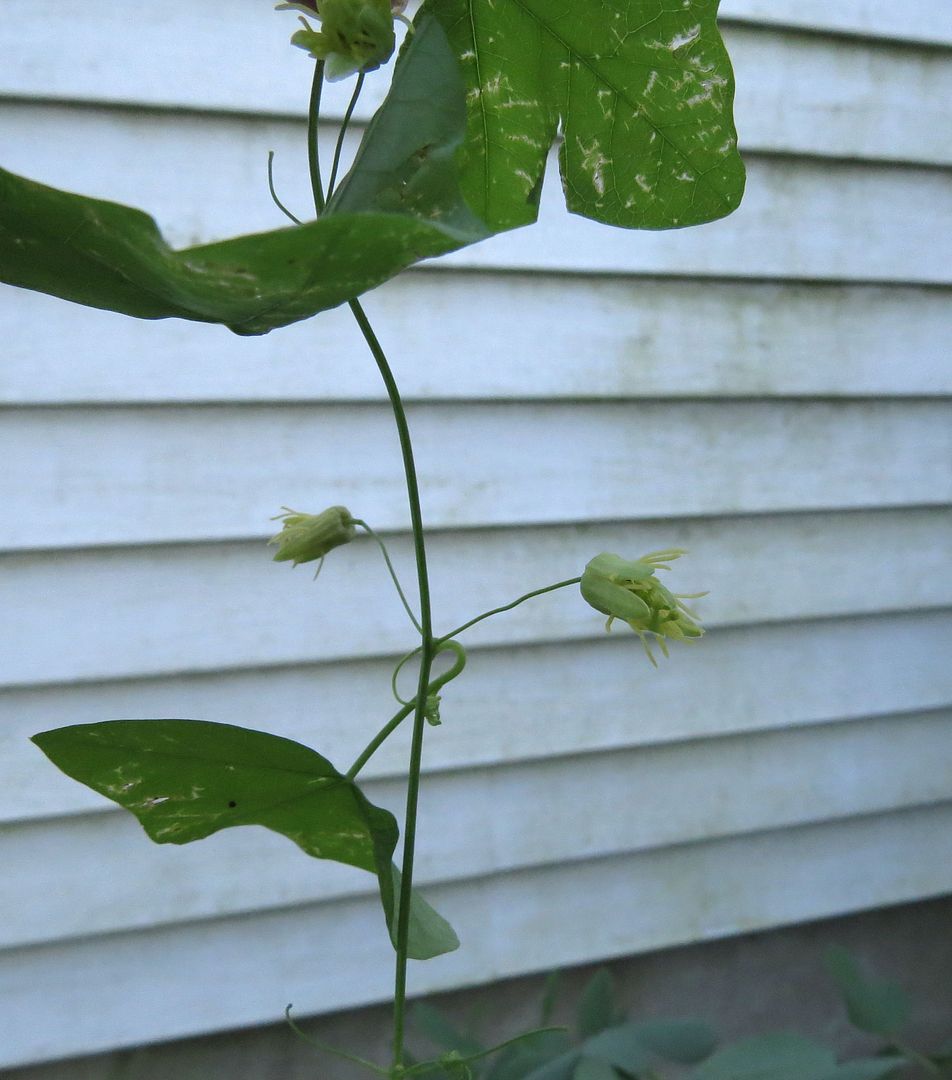
Yellow Passionflower, Passiflora lutea, is a timid member of this aggressive genus. I'm not sure if it's hardy here in zone 7 (previously zone 6 as of a few years ago), so hopefully it survives. Calling it a "Passion Flower" isn't entirely accurate because the flowers are not very showy and simple by comparison to other Passionflowers. I have yet to see the flowers open fully too, presumably they close by the afternoon or require full sun to open. Fruit-wise it's said to be inedible, with sources saying it's better used in the production of ink... yuck.
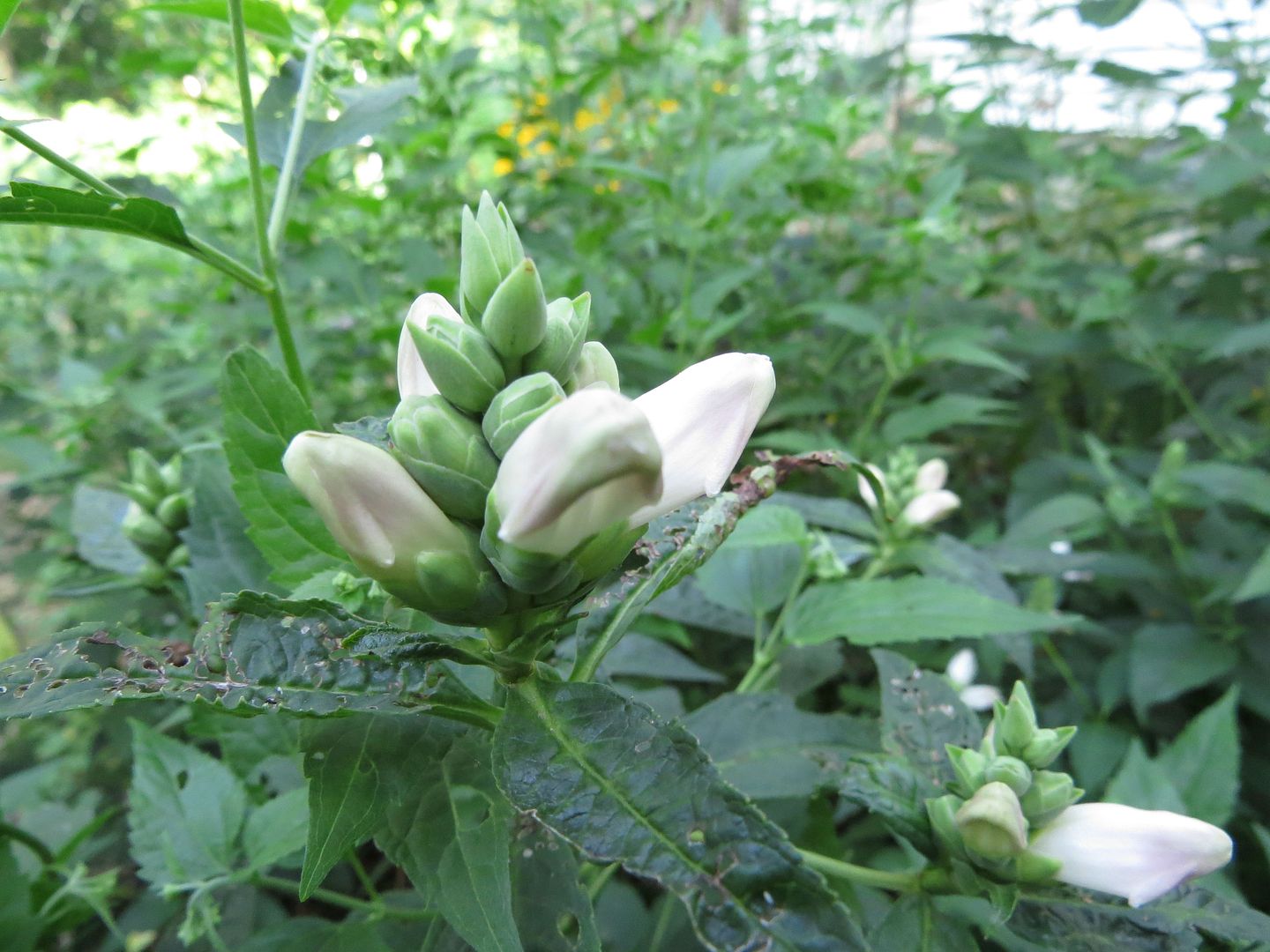
White Turtlehead, Chelone glabra, is not a particularly showy plant but it's good if you have a wet spot in partial shade to full sun in need of some late blooms. This is the host plant to the Baltimore Checkerspot, a locally threatened species of butterfly with an odd life style. Basically the caterpillars form a communal net on the plant and over winter inside it. Come spring they emerge still as caterpillars but are less picky about what they consume. Their host plant, Turtlehead, probably hasn't broken ground yet for the year so they turn instead to other plants like Monkey Flower (which I have yet to grow successfully).
Tall Coreopsis, Coreopsis tripteris. This is kind of a deceptive photo because it's taken at eye level. I'm about 5'7" and that's where this plant gets its name. They can grow to be 10' tall though individual plants often stick to a max size each year, which makes cultivars easy to pick out because they can selected to be a specific size.
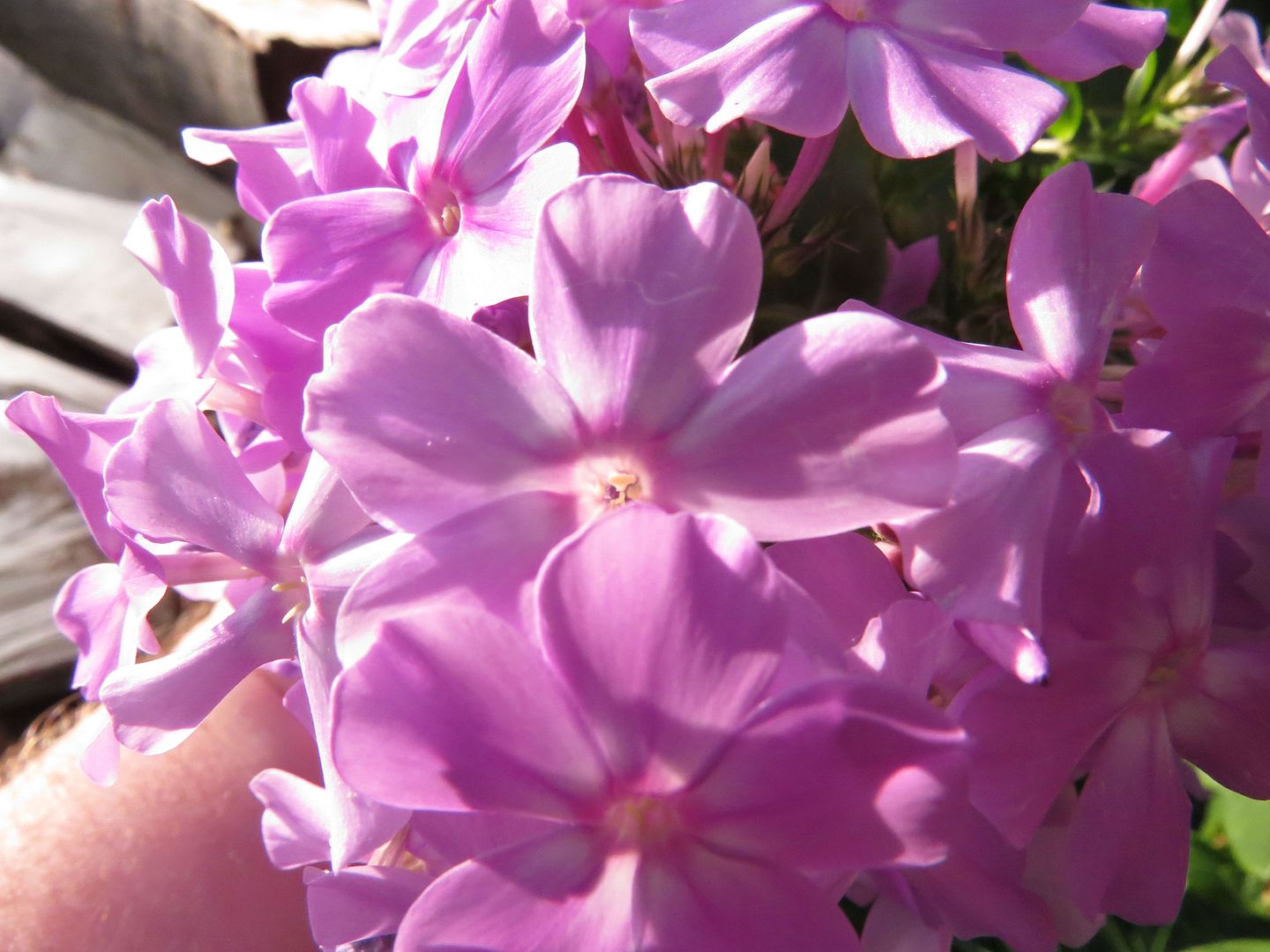
Summer Phlox. Don't know the species, don't really care either. Years and years ago I planted this in the front garden where it was too shady for it to flower. Now that we took down a street tree that seems to have opened up enough light to give what I honestly thought was a Bee Balm for the longest time to flower.
Most impressive of all is this Northern Blazing Star, Liatris borealis. The flowers are almost twice the size of Meadow Blazing Star, L. ligulistylis. The height is easily 5' tall also contrary to what the nursery I bought it from (and others!) said it only grows to 2' tall. Granted this is an enormous bulb almost the size of a baseball and it sent out three canes, two of which fell over, but the main one in the center is pushing strong. Note how the flowers extend away from the stem some on their own stalk, well this is the only Liatris species I've seen that will put more than one flower head on those! It's putting the New England Aster next to it to shame at this point. I'll post more pictures of it later.
Saturday, August 17, 2013
Blooms of August
So my garden is probably at its peak bloom right now, as far as species diversity goes that is.
Sweet Joe Pye Weed, Eupatorium purpureum, is slightly more shade tolerant than I expected. It's still in a partial shade condition but also dryer than most of the Joe Pye Weeds I grow.
Spotted Joe Pye Weed, Eupatorium maculatum, is a new addition to the garden this year. Lower on the stem there are tiny spots which are lacking in other species, hence the name. I have it growing in a bit more shade than it can probably handle to I might have to move it.
Hollow Stem Joe Pye Weed, Eutrochium fistulosum, is sadly growing old. This is one of the tallest and more impressive species I have, but also one of the first natives I planted. The rhizome in the ground seems to be dying out in the middle, resulting in an uneven ring of stems emerging from the ground each year. I may need to divide it up next year.
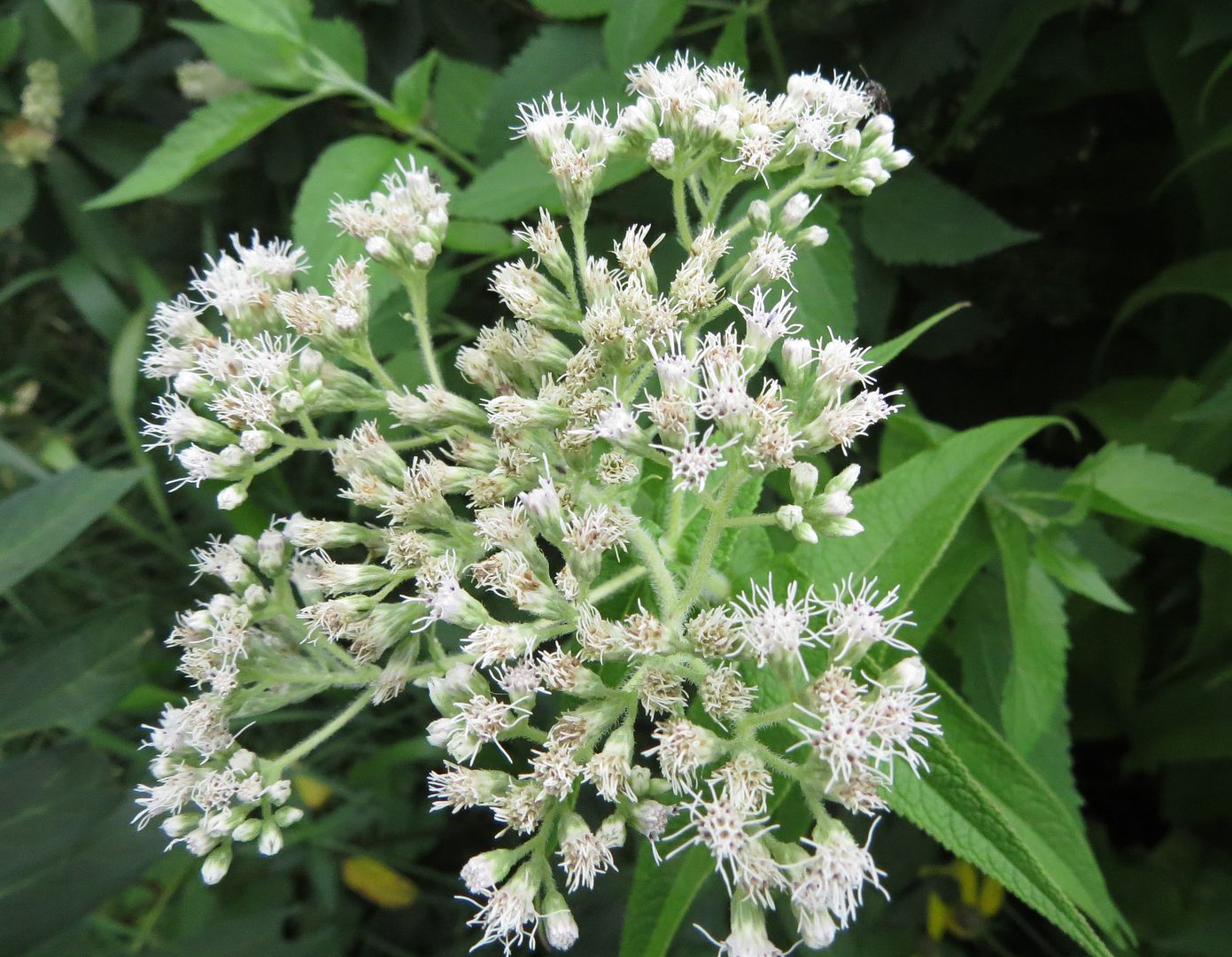
Common Boneset, Eupatorium perfoliatum, is another new plant for the garden. My yard has an abundance of Boneset but not this species. Unlike the ones that grow wild in my yard, this species actually gets a fair amount of bee attention.
Giant Blue Lobelia, Lobelia cardinalis. Normally I stay away from "hummingbird plants" but I was stricken by how adorable bees look when they try to work the flowers enough to give it a try. Lobelias regardless of the species, all tend to be short lived plants so it's important to let them set seed each year.
Liatris pycnostachya and Liatris spicata are both blooming out in the meadow. This is an image of L. spicata which tends to shade a hue or two brighter with slightly paler leaves, while L. pycnostachya is more magenta-like. Honestly though I can't tell either apart all that well.
Anise Hyssop, and a bumblebee I caught mid flight with my new camera. Coneflowers, Liatris, Black Eyed Susan, and Rudbeckia laciniata are all flowering in the background.
Western Sunflower, Helianthus occidentalis, was a fun addition this year. All the green growth is at the base of the plant with relatively few leaves occurring on their red stems which part a few times to sport a flower atop of each tip. The flowers are otherwise average in size given the genus.
Appalachian Sunflower (becuase Purple Disk Sunflower so far doesn't make any sense) Helianthus atrorubens, grows in much the same with but with more leaves hugging the green stem. Leaves are also fleshier and thicker looking. The flowers are fairly similar to Western Sunflowers in size and appearance.
Maximilian Sunflower, Helianthus maximiliani, has also just started to bloom. It's a much taller plant, much more aggressive (though less so than any goldenrod with new stems occurring closer to the parent plant) and with flowers that are two to three times bigger.
Ironweed, Vernonia sp. I have a bunch of species of this. The biggest one blooming now I acquired on accident thanks to a nursery mix up, so I'm not 100% on the species.
Sweet Joe Pye Weed, Eupatorium purpureum, is slightly more shade tolerant than I expected. It's still in a partial shade condition but also dryer than most of the Joe Pye Weeds I grow.
Spotted Joe Pye Weed, Eupatorium maculatum, is a new addition to the garden this year. Lower on the stem there are tiny spots which are lacking in other species, hence the name. I have it growing in a bit more shade than it can probably handle to I might have to move it.
Hollow Stem Joe Pye Weed, Eutrochium fistulosum, is sadly growing old. This is one of the tallest and more impressive species I have, but also one of the first natives I planted. The rhizome in the ground seems to be dying out in the middle, resulting in an uneven ring of stems emerging from the ground each year. I may need to divide it up next year.
Common Boneset, Eupatorium perfoliatum, is another new plant for the garden. My yard has an abundance of Boneset but not this species. Unlike the ones that grow wild in my yard, this species actually gets a fair amount of bee attention.
Giant Blue Lobelia, Lobelia cardinalis. Normally I stay away from "hummingbird plants" but I was stricken by how adorable bees look when they try to work the flowers enough to give it a try. Lobelias regardless of the species, all tend to be short lived plants so it's important to let them set seed each year.
Liatris pycnostachya and Liatris spicata are both blooming out in the meadow. This is an image of L. spicata which tends to shade a hue or two brighter with slightly paler leaves, while L. pycnostachya is more magenta-like. Honestly though I can't tell either apart all that well.
Anise Hyssop, and a bumblebee I caught mid flight with my new camera. Coneflowers, Liatris, Black Eyed Susan, and Rudbeckia laciniata are all flowering in the background.
Western Sunflower, Helianthus occidentalis, was a fun addition this year. All the green growth is at the base of the plant with relatively few leaves occurring on their red stems which part a few times to sport a flower atop of each tip. The flowers are otherwise average in size given the genus.
Appalachian Sunflower (becuase Purple Disk Sunflower so far doesn't make any sense) Helianthus atrorubens, grows in much the same with but with more leaves hugging the green stem. Leaves are also fleshier and thicker looking. The flowers are fairly similar to Western Sunflowers in size and appearance.
Maximilian Sunflower, Helianthus maximiliani, has also just started to bloom. It's a much taller plant, much more aggressive (though less so than any goldenrod with new stems occurring closer to the parent plant) and with flowers that are two to three times bigger.
Ironweed, Vernonia sp. I have a bunch of species of this. The biggest one blooming now I acquired on accident thanks to a nursery mix up, so I'm not 100% on the species.
Subscribe to:
Posts (Atom)