Easter is conveniently happening at the peak of wildflower season in my yard. Lots of wonderful colors to look at that are all on theme with the holiday. It's a shame my family doesn't gather at my house for this holiday but in a way it's a blessing. So many non-native bulbs though they certainly serve their purpose. The thing about Tulips, Daffodils, Hyacinths, and "Easter" Lilies is they thrive best in full sun. Almost all our native ephemerals are shade plants. It's a shame they're not sold in as much abundance or bought with the same enthusiasm.
I rarely get to show off my garden to family members I don't live with.
Often the holidays they do come over my garden is transitioning from one
season to the next and lacking in flowers. Despite the diversity in my
garden few of the species bloom with any abundance. They don't always demonstrate their usefulness either.
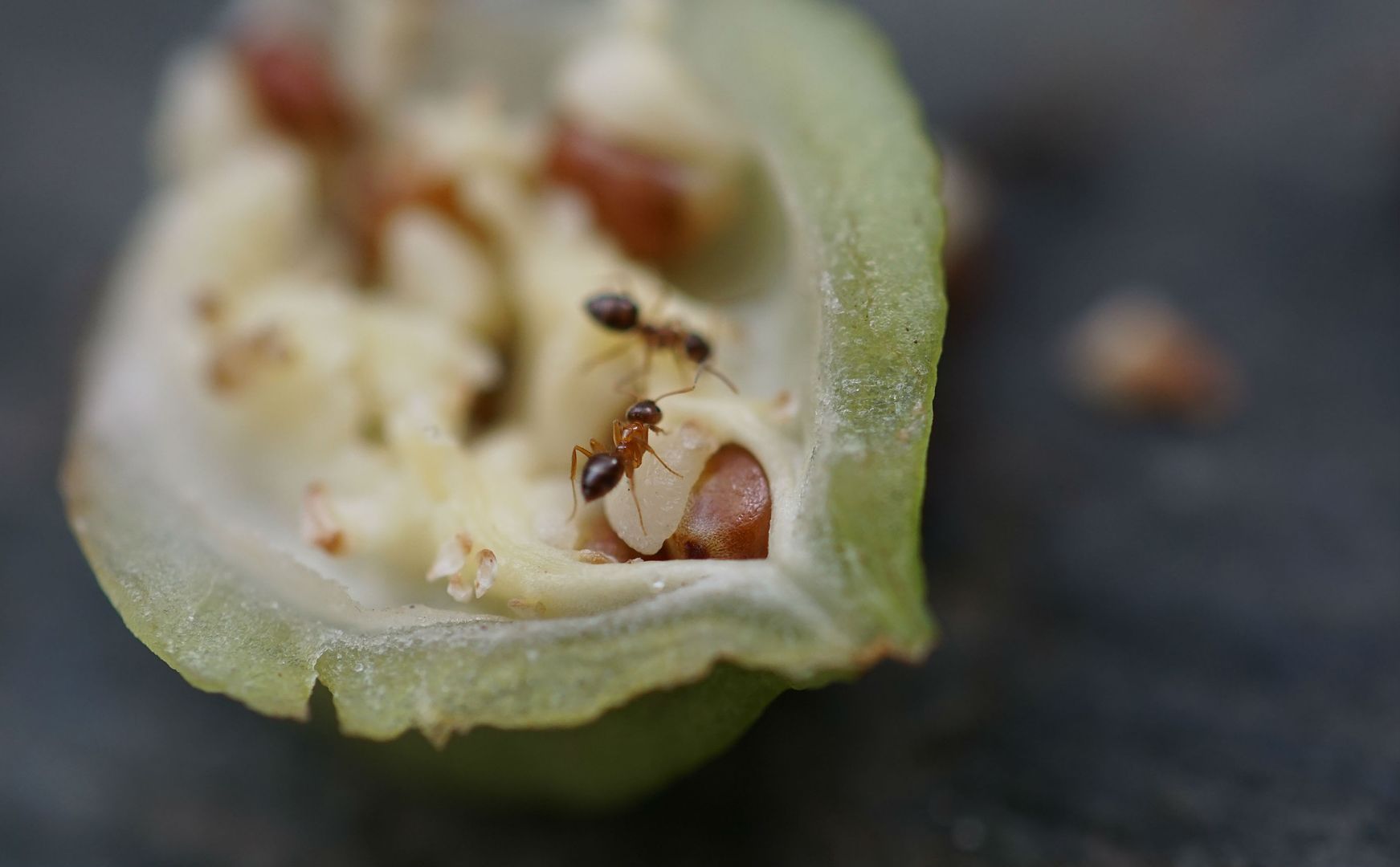
My camera doesn't capture the detail it should in this photo.
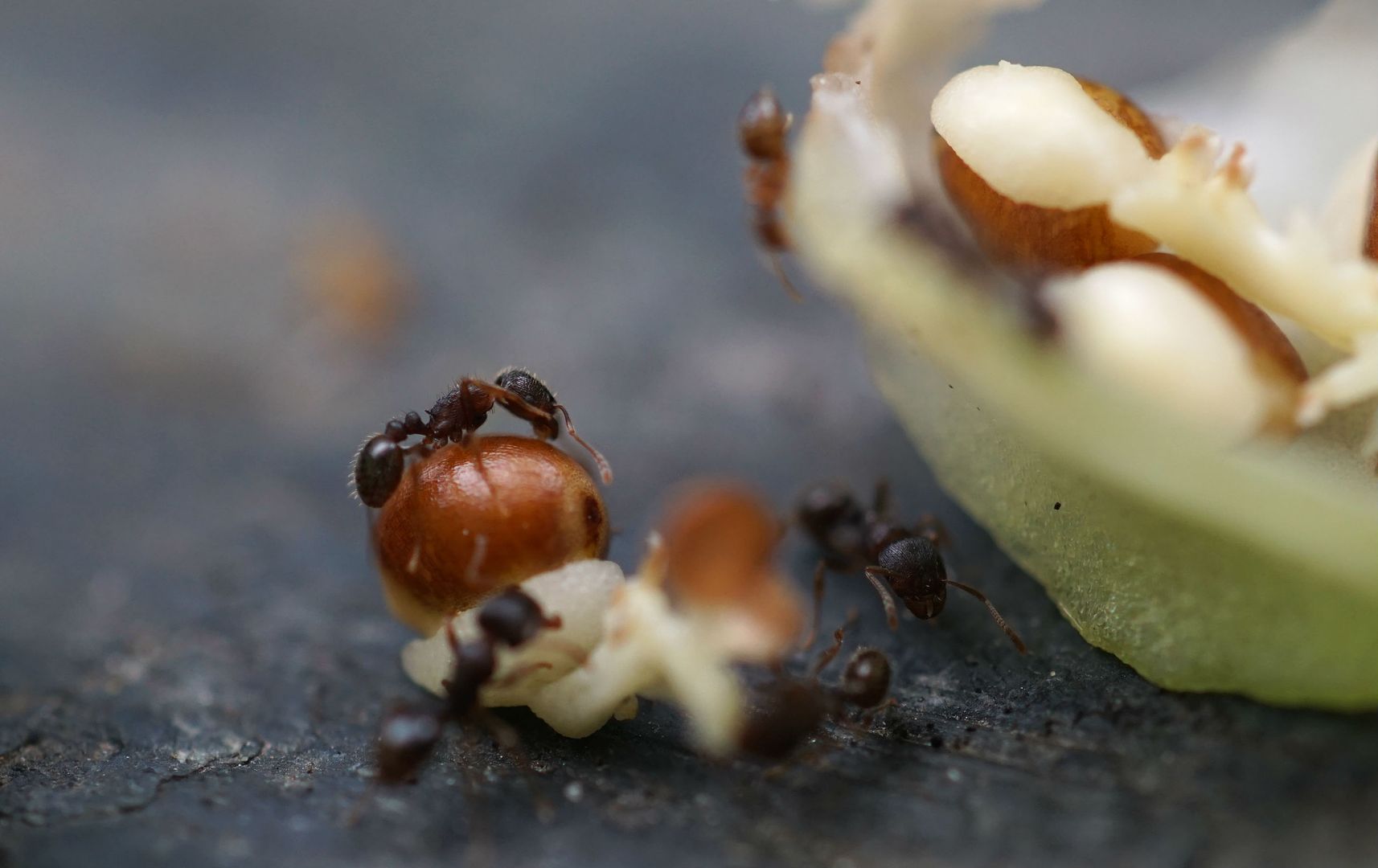
Second attempt wasn't much better I should probably stop trying such wide photos of small objects.
Trees are probably the best way to entice pollinators into the garden. This beefly is a little late to the party but cooperated for a photo on a cool day on the new Witch Hazel I've added to the garden. On warm days I've seen it (more likely others) flying around on the Native Plums when they flowered then a day before those blooms closed up onto the Beach Plum tree and now onto the Apple Tree which started flowering this weekend.
Beeflies are important pollinators for certain plants like Woodland Phlox,
Phlox divaricata. Long tongued bees and flies are the only insects that can reach the pollen anthers hidden deep within the tube-shaped flowers. Without them populations of these flowers diminish in size or blink out entirely. Unlike creeping phlox,
Phlox divaricata is a short lived perennial. When pollination occurs though they are abundant seeders and spread far and wide.
But the other thing about beeflies is that most of them are parasites of Bumblebee hives. They invade the nests, lay a few eggs and the maggots eat the wax. Bumblebees don't really pollinate phlox though, so in order to have the pollinator of this Phlox species you need enough wildflowers and trees established to support a few bumblebee hives.
As an aside, I did a google image search for "Bumblebee Phlox" and almost all the images that come up are of Carpenter Bees which chew holes in the sides of the Phlox flowers to gain access to the nectar and probably don't pollinate the flower. Bumblebees do visit Phlox but of the images taken I only saw the summer flowering species. Not
Phlox divaricata. I'm not saying it doesn't happen but it seems rare if it does.
Our ephemerals get away growing and flowering now because most trees have yet to leaf out. When they do though they secrete a small amount of sugary sap. Here a
Nylanderia faisonensis worker is exploring a few leaves on the sapling I planted last year.
Sap isn't always a good thing though. The flower buds to our Flame Azalea,
Rhododendron calendulaceum, are so sticky with sap that insects that land on them get stuck. This is probably an added way to entice humming birds to visit the flower but I don't think it's always successful. More likely it's a method to prevent ants from crawling into the blooms when they open and stealing all the nectar to them selves. (I've actually found opened Flame Azalea flowers that had ants all stuck to the stems of their flowers). Whether it's intentional or not, it's probably still to the humming bird's benefit should it chance up on one.
These types of flies are becoming more abundant in my yard too. I've caught them visiting more than a few of my Trillium species. I had assumed all the large white flowering Trilliums were pollinated by bees but this photo tells another story. The pale yellow/white dots on the fly here are actually pollen.
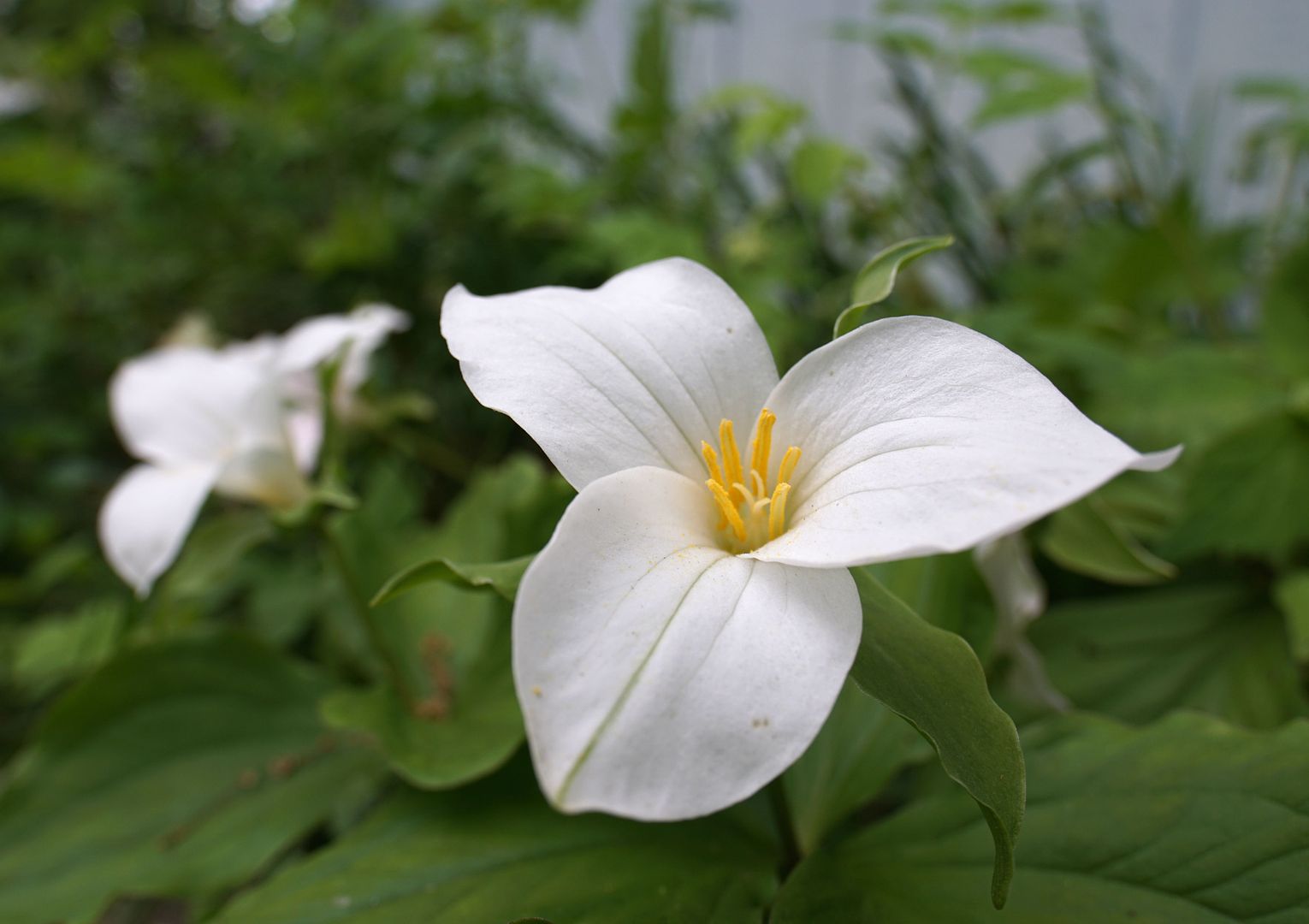
These are
Trillium flexipes, note how fat the petals are to form a triangular shape overall and how the pollen is pale in color.
This is
Trillium grandiflorum, note the bright yellow pollen and how the petals are ruffled along the edges. The petals aren't as wide either.
I know for a fact that Honeybees and Bumblebees will visit these flowers but only when the patches are in abundance. Maybe ~25 plants all flowering within a few feet of one another? My plants aren't quite there yet but given time they'll get there.
I've found our native Jacob's Ladder,
Polemonium reptans, makes a beautiful companion plant for them. They're just short enough to fill in all around underneath the Trilliums and the blue flowers are a nice addition.
I bought a nice big flat of these from New Moon Nursery a few years back. They were a pain in the ass the rip free from the plastic flat. The roots seem to push outward all the way up the plastic. I was ripping the foliage clean off the top of them and probably did that to most of them before I figured out a good method. Pushing up from the bottom worked but required a lot more force than expected. They really didn't want to come out of there!
Fernleaf Phacelia,
Phacelia bipinnatifida, has FINALLY started to establish in my yard! Of all the spring ephemerals in eastern North America, this is probably one of the best ones to plant for honeybees... a shame I don't have hives anymore. I've been trying to get this plant to grow in my yard for probably the last 8 years now.
The issue with it is that it's a biannual and the only place selling it online basically has an
F rating from the Better Business Bureau. I bought from them once and they sent me Watercress by mistake, yes that little invasive lawn weed with exploding seed pods everyone tries to get ride of... This place Sells that... to people... for money... and they pay them to do it apparently...
I called them about the mistake and they refused to help me until I had sent them pictures to prove they had made the mistake and then demanded the plants back at my cost! About a month later I received a trash bag in the mail of Fernleaf Phacelia roots that were lacking any green growth to them. This was in May so the plants had already flowered which they do at the end of their life cycle... So they sent me a bunch of dead plants.
So in order for me to obtain this species I have to drive to Native Plant Sales in Delaware and Pennsylvania (I'm in NJ) and hope they happen to be selling this species.
I fell in love with this stuff at the Mt. Cube Center in DE where it grows in huge abundance on some years. One time during their annual Wildflower Celebration I was telling one of the gardeners there I'm friendly with how I wish the species were more available to sale, especially in seed form. You'd think someone would sell it in seed form given that it's a biannual or at the very years recently germinated plugs. The Gardener couldn't believe no one was doing that and then told me, to my horror, that they actually cull the stuff there every few years! They fill up huge trash bags with it.... I wonder if that awful online nursery I bought from was stealing from their garbage?

Anyway, as you can see my efforts to get this plant started has come along. It's growing nicely beside some Jacob's Ladder. Several years of planting 1 quart sized pots of it have started something of a seed bank. The only thing holding it back now are the rabbits which have a real liking for the stuff. One year I had a great big plant growing a good 3' across and then the next day it had all been nibbled down into nothing.
Virginia Bluebells are another one that's supposed to spread like crazy. So far my plants have only enlarged in size each year. I'm not seeing any seedlings at all. It's another plant the gardeners at the Mt. Cuba Center occasionally have to weed out when they get too aggressive.
Woodland Poppy,
Stylophorum diphyllum, has spread like a sort of weed though not in the direction I'd like it to. I stared with maybe 6 plants of this one year and they've spread quite a bit, but died out where I initially planted them. They seem to like growing away from other plants instead of next to them though I do like that they're spreading.
This species is also called the Caladine Poppy, but I hate this name because I have no idea what a Caladine is besides a different plant.
Webster's Dictionary says it's basically a yellow flower scientifically known as
Chelidonium majus, which is an invasive weed in America often mistaken for
Stylophorum diphyllum. So it's common name refers to a species that it isn't... What? Is the dictionary wrong? It seems to be implying that the Calandine Poppy is the Calandine Poppy but not that Calandine Poppy, rather it's this Calandine Poppy over here.
If you google Calandine Poppy it certainly gives you
Stylophorum diphyllum. So someone stole a name somewhere or is wrong.
The Eastern Redbuds in my yard are now all very well established and the perfect overlay to the ephemeral garden plants beneath them. Eventually the red/pink petals will drop from the tree and sprinkle the color to the display below.
I had assumed the Spring Beauty, Claytonia , would be pinker before I planted it. That was the intent anyhow. I tried planting a pink flowering
Phlox stolonifera which I read is aggressive spreading and one of the hardest phlox species to kill... well it died out.
Right now the only pink under the tree are the shriveled up petals
Trillium pusillum. Interesting thing about this plant, I bought them from a nursery selling them as
Trillium catesbaei. At least I think that was this nursery. I don't keep good records of all the plants I buy and from whom but given how much of this I have coming up, I would have had to have bought a flat of them. They've taken this long to ID because this is the first time one of them has flowered.
Trillium viridescens, looking handsome as usual.
This is by far the most successful Trillium species in my yard. Each late afternoon they produce a faintly pungent scene of rotting apples and get swarmed by vinegar flies which transfer pollen from one flower to the other. They all started as just three plants, but that's become three large clumps of flowering stems with patches of seedlings all around them and then strays like the one photographed here coming up in other places.
I'm gonna have to start giving them away as gifts.
More Jacob's Ladder doing well. I planted so much of this because I'd given up on Fernleaf Phacelia and wanted to move onto something easier to grow. Despite having such a good year with Phacelia, ultimately because it's a biannual I have no idea where it will come up next year, unless I collect seeds.
Round Leaf Ragwort. This would be having a good year but isn't. Basically the past two years, a female rabbit used the patch to have her babies in. She cleared out a nest in the middle. Then this year we got a puppy... (I'm amazed my Trilliums are holding up as well as they are.) She's has also decided to make this spot in the Ragwort patch her little spot to lay and chew things like plant stem.
Trillium cuneatum growing beneath one of my few non native plants. The non native Bleeding heart was a mistake on my part. Back when I started gardening they were in the same genus as the native ones. So I have this gigantic bleeding heart plant I've started dividing and spreading about.
I didn't know
Trillium cuneatum, was so amazingly fragrant until last year when a different one started flowering. While
T. viridescens smells like rotting fruit,
T. cuneatum is much more like fresh apples. Oddly though it doesn't seem to get anywhere near as many pollinators to it. I've yet to see anything land on them actually.
Another of what I'm calling T. cuneatum though I suspect one or the other is a different species. These are flowering for the first time and relatively short. They're newly planted this year so the stems might not be so short in future.
I have another one that's just as big as the red flowering one (two pictures up) but with flower petals in this shade. They all smell the same but that might be coincidence. We'll see what they do next year.
There are Trillium species that remain this short though.
I've been finding Trillium growers (even reputable ones that don't steal from nature) have difficulty distinguishing some species apart. Lots of reasons for this. Growing them from seed they require 2 years to germinate, produce a single leaf of foliage for the next 2 to 3 years and then all look fairly identical until flowering. Take into account having to move flats around in a green house and it's easy to see over even just a 5 year period how things can get mixed around. Likewise Trilliums are prone to hybridizing with some frequency.
Trillium luteum is another one I've had for a long time. They've mostly started to divide like my
T. viridescens, but I've noticed when they do that they don't flower as much. I've never gotten them to produce seeds, nor seen anything visiting the flowers, even though they smell nice and lemony. Hopefully as the Trillium patches continue to grow in size I'll get more of the flies, beetles, and bees that pollinate them taking closer attention.
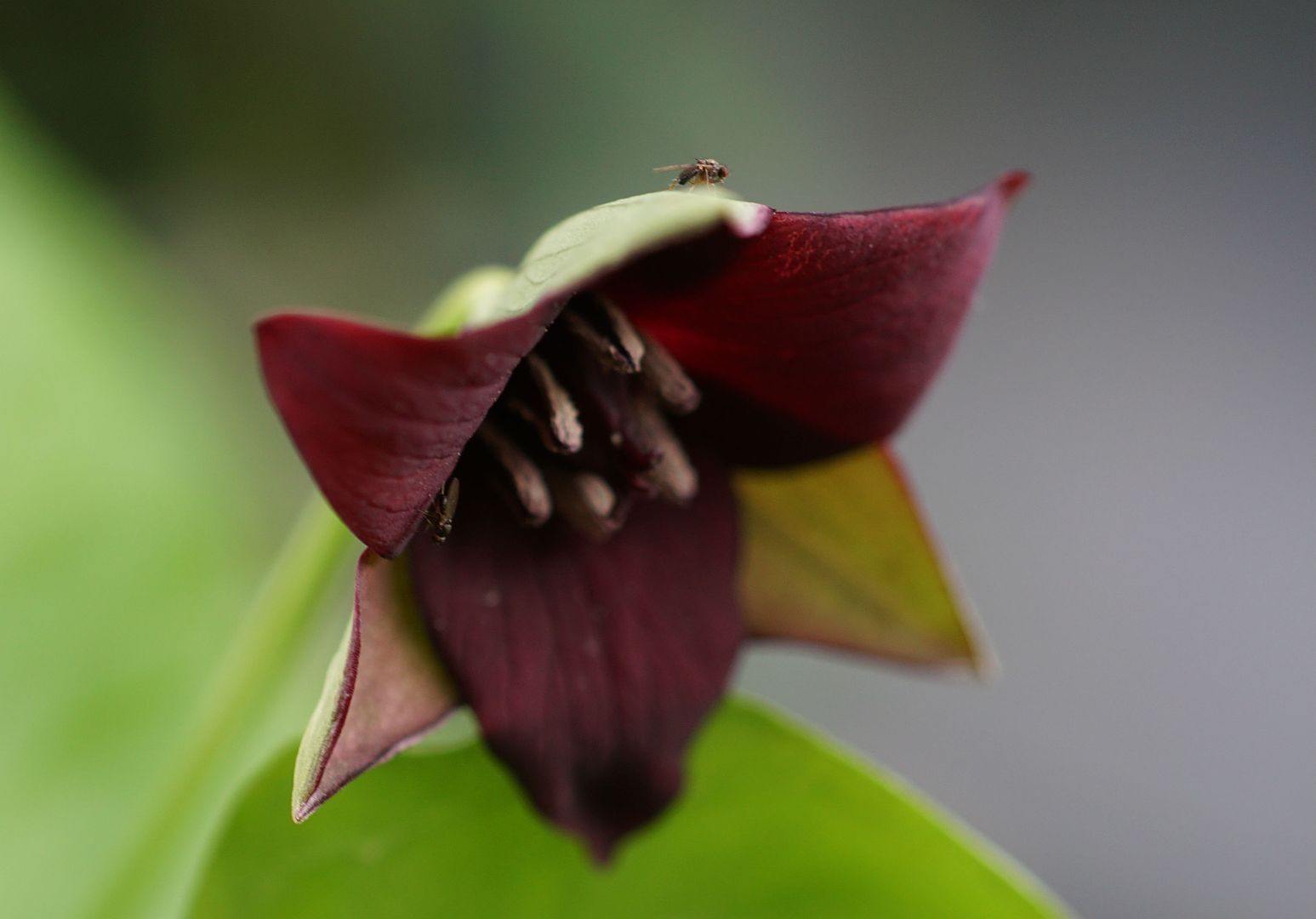
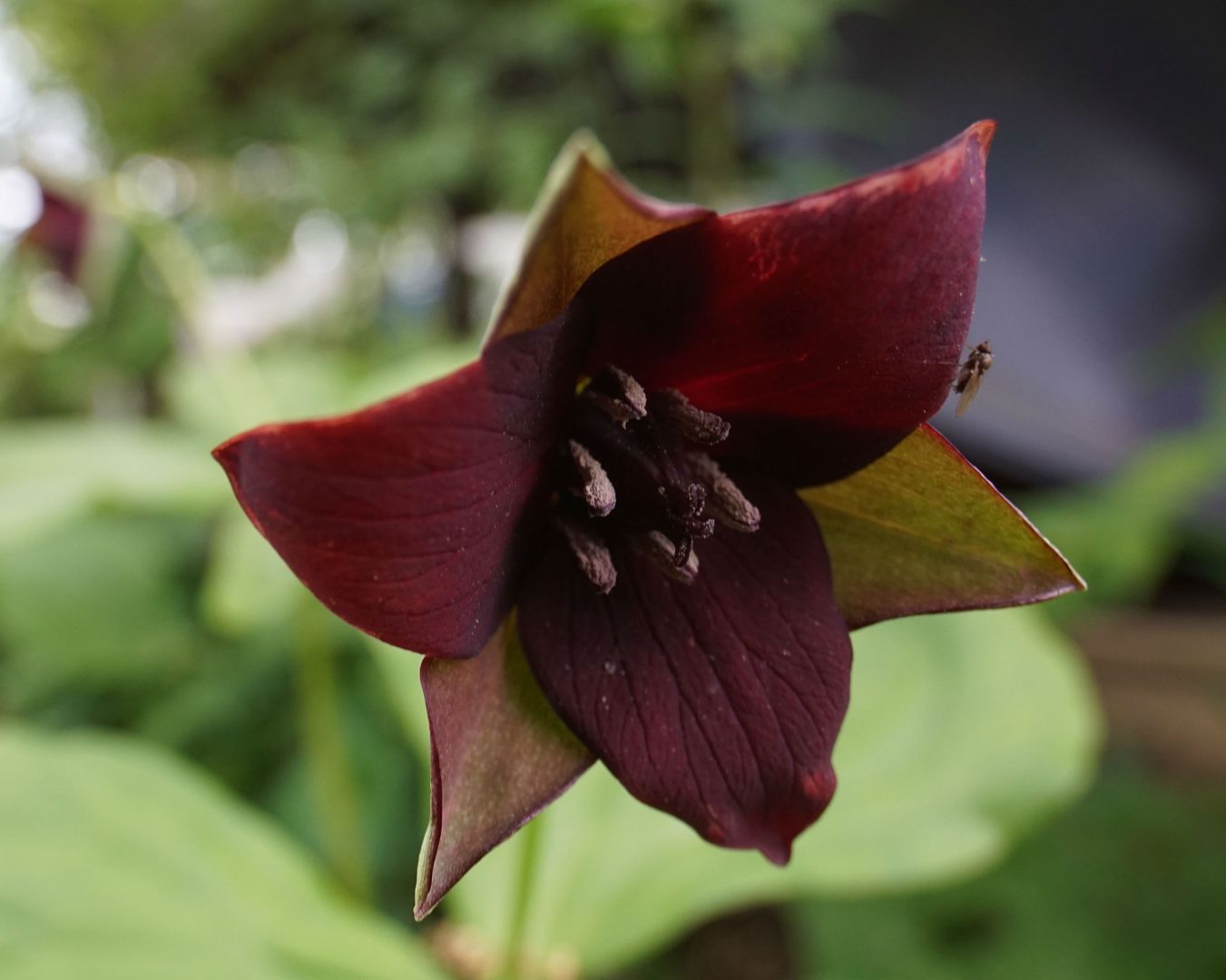
Red Trilliums I've been finding very tricky to ID. I'm going with
T. vaseyi because that's what the nursery said they were, but I'm not certain how they ruled out,
T. sulcatum, or
T. erectum. Actually I can kind of see how it isn't
T. erectum which I assume would have a larger flower with slightly longer petals.
T. vaseyi and
T. sulcatum seem to differ only in whether they stick the flower above or below the leaves. Mine just opened today so and have the flowers above the leaves suggesting
T. sulcatum ... but they might hang under the leaves in a day or two...
Whatever the case, I'm happy to see they're at least getting pollinated both by vinegar flies and some sort of pollen beetle.
Maybe I should cave in and plant more tulips; no one cares what pollinates those.