Showing posts with label War. Show all posts

Tuesday, April 9, 2013

Nature and Some Ants

It's been warm for the past two days in a row, but I've had to work so I haven't been able to get out there and do much. Today I went for a short walk to see if I could find any Prenolepis imparis flying, but it seems I've missed the flight. There were a few males here and there, but nothing that impressed me enough to hang around and wait for queens to show up. (They may fly again after a brief rainfall in the coming weeks.)

image
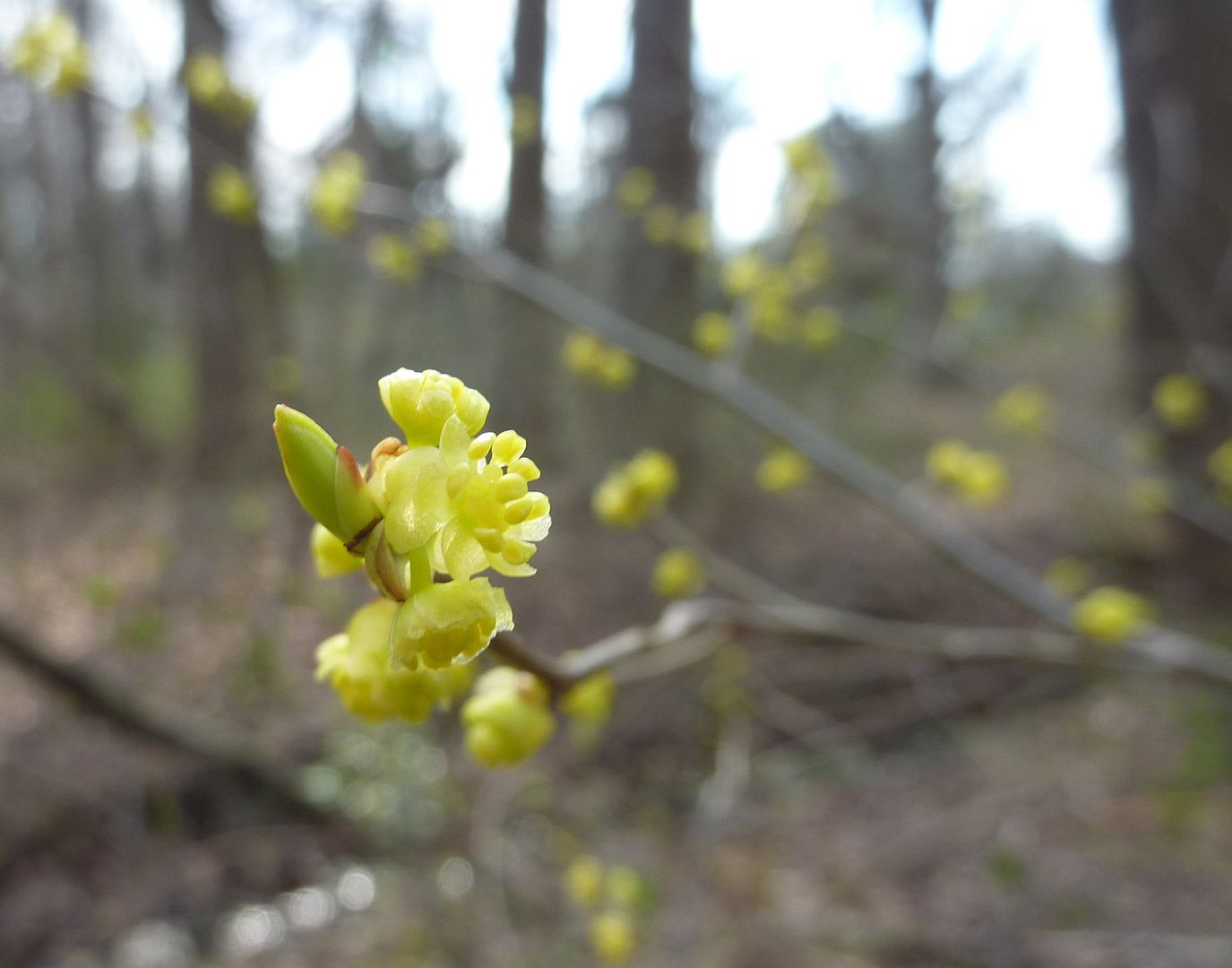
I did notice some Spice Bush, Lindera benzoin, flowering which I can now add to my collection of wildflowers photographed. This is the host plant to the Spicebush Swallowtail Butterfly who's caterpillar mimics a snake. I'll try and visit them later in the year to see if I can find any.

image
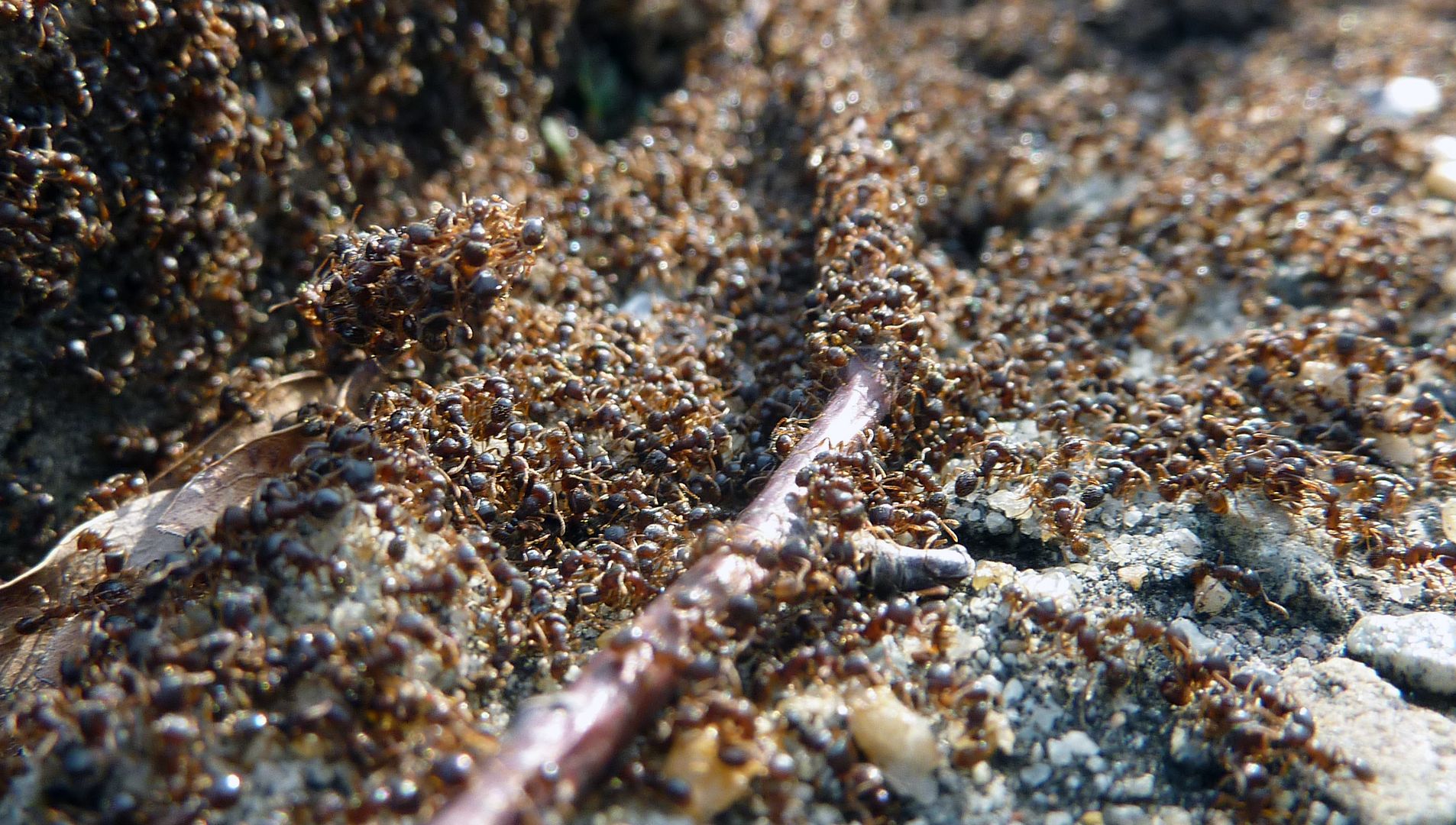
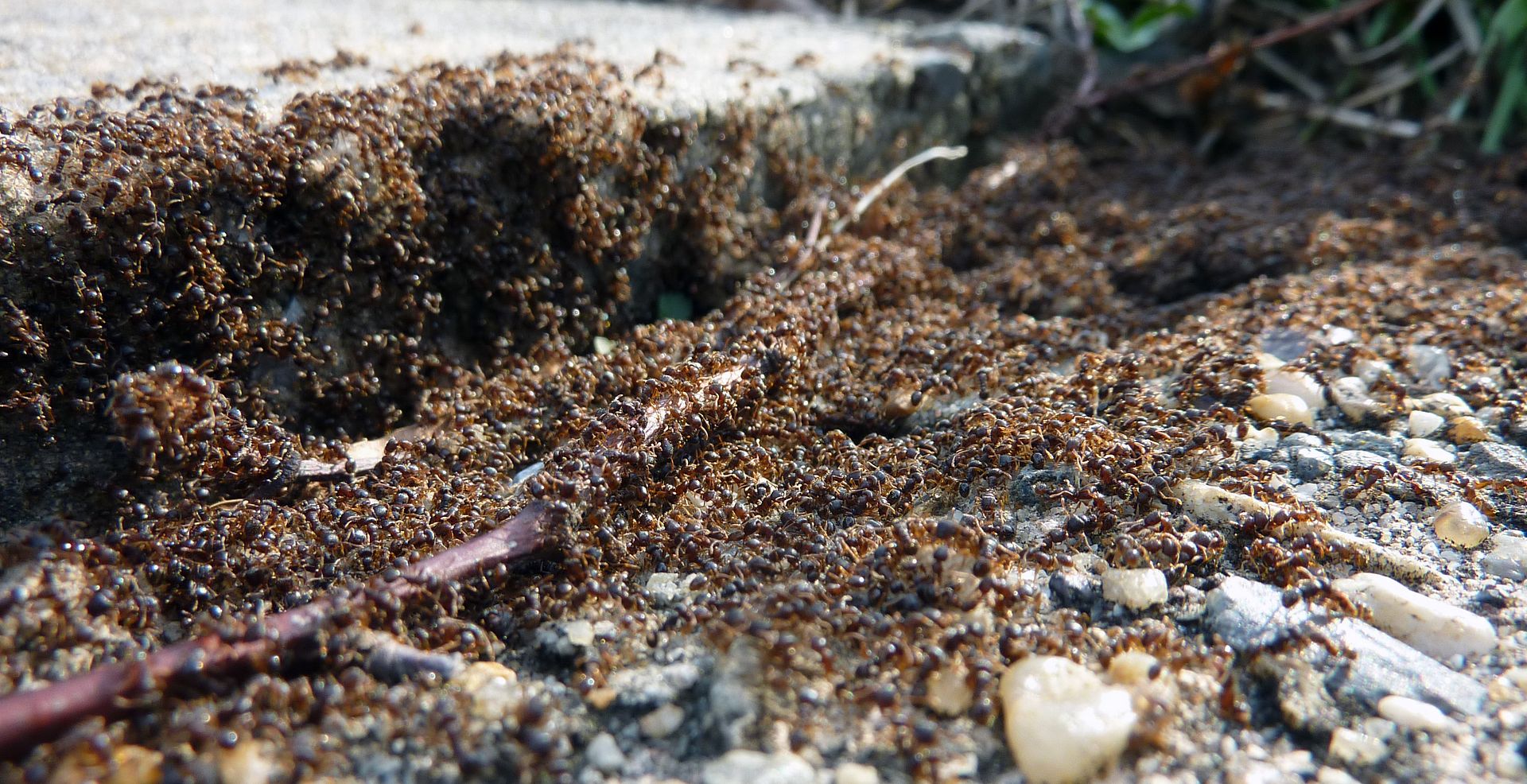
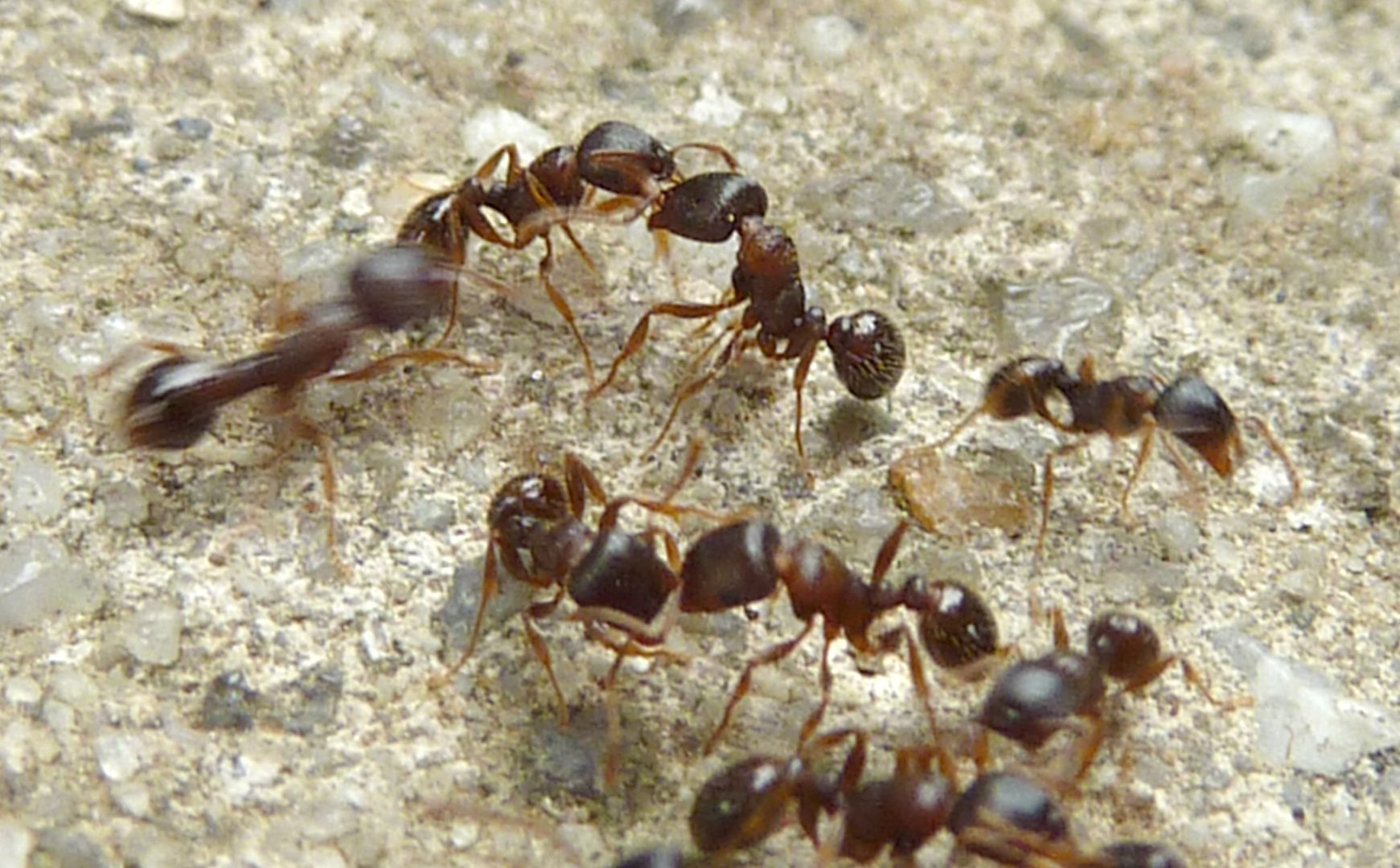
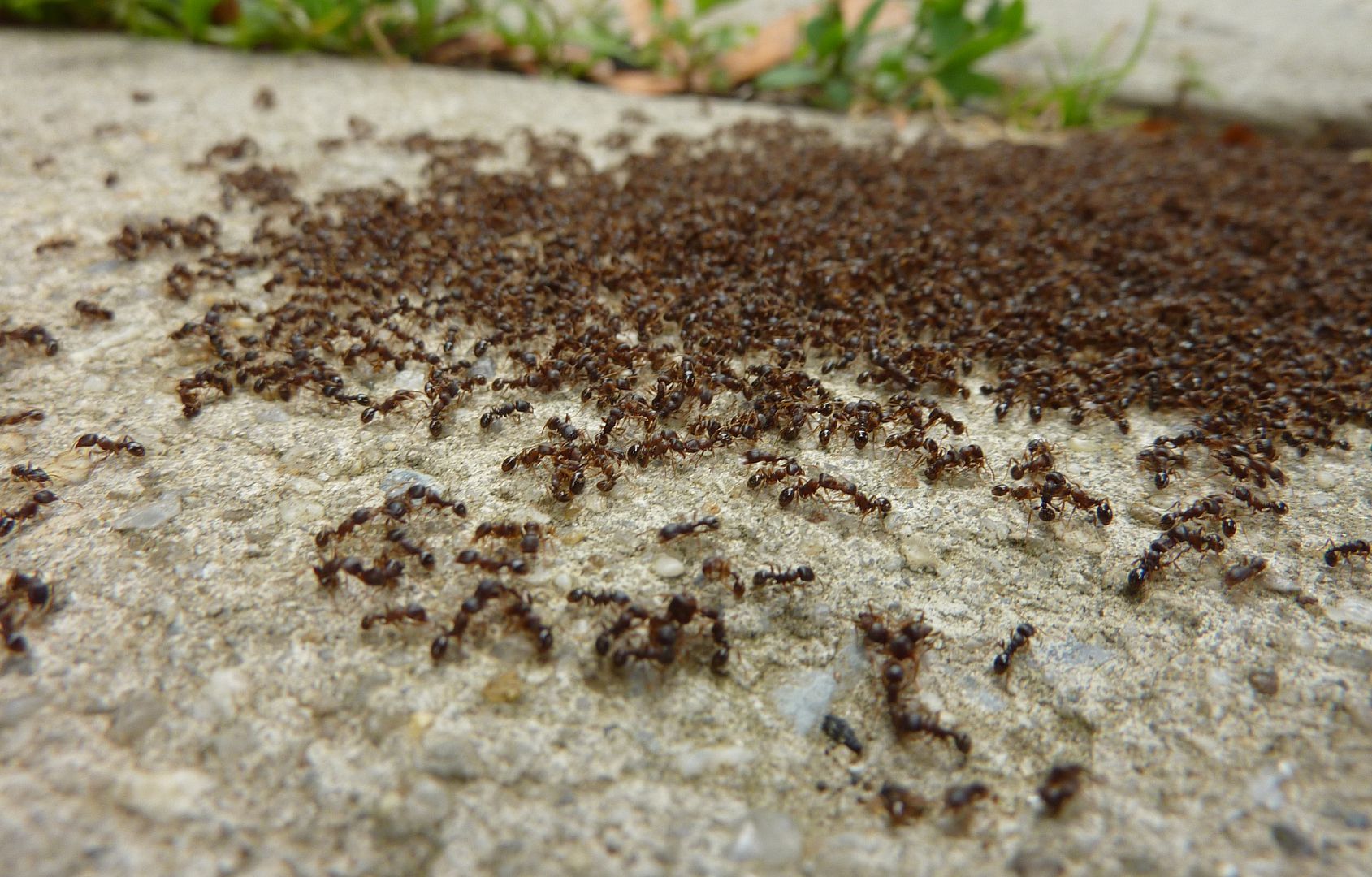
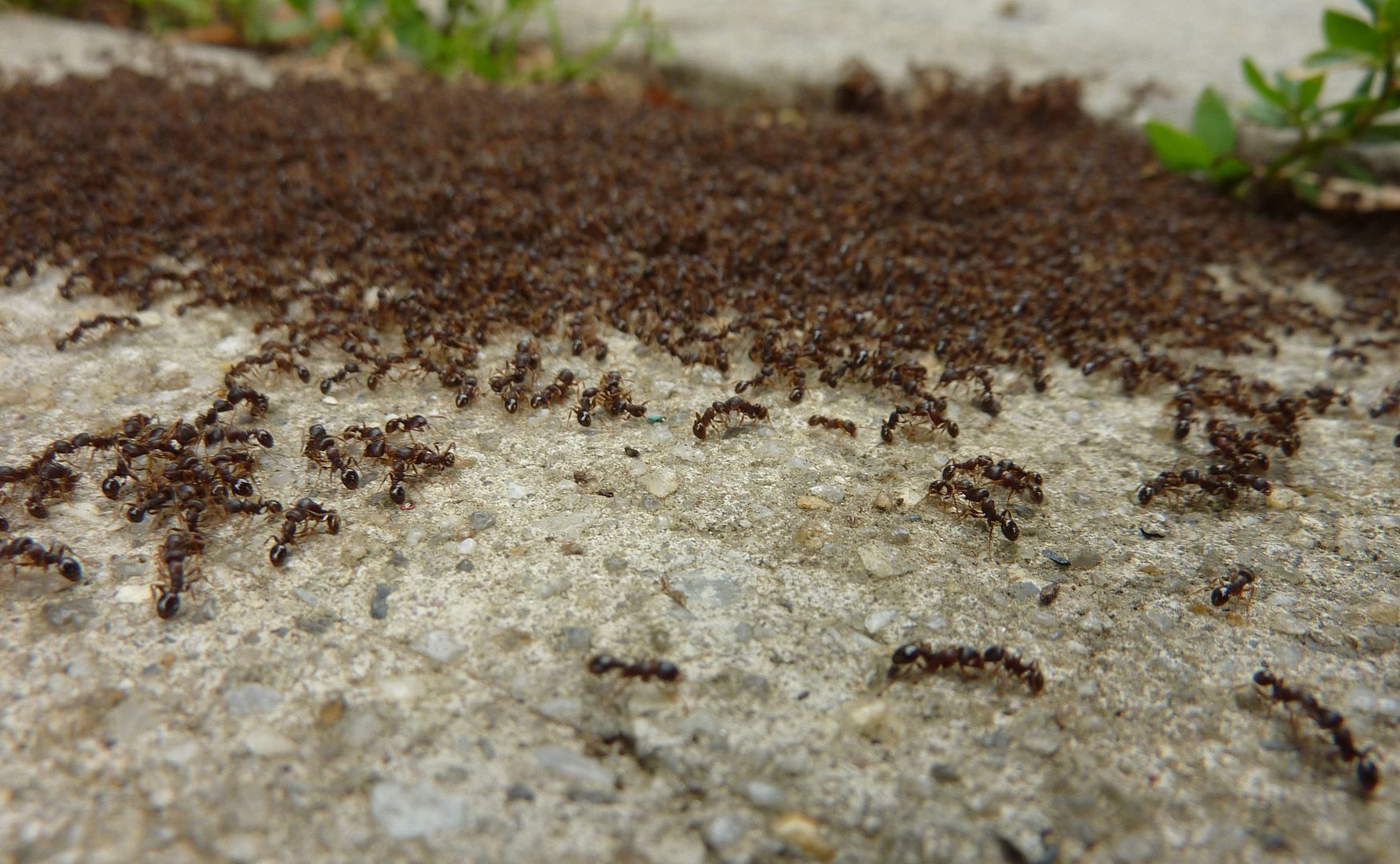
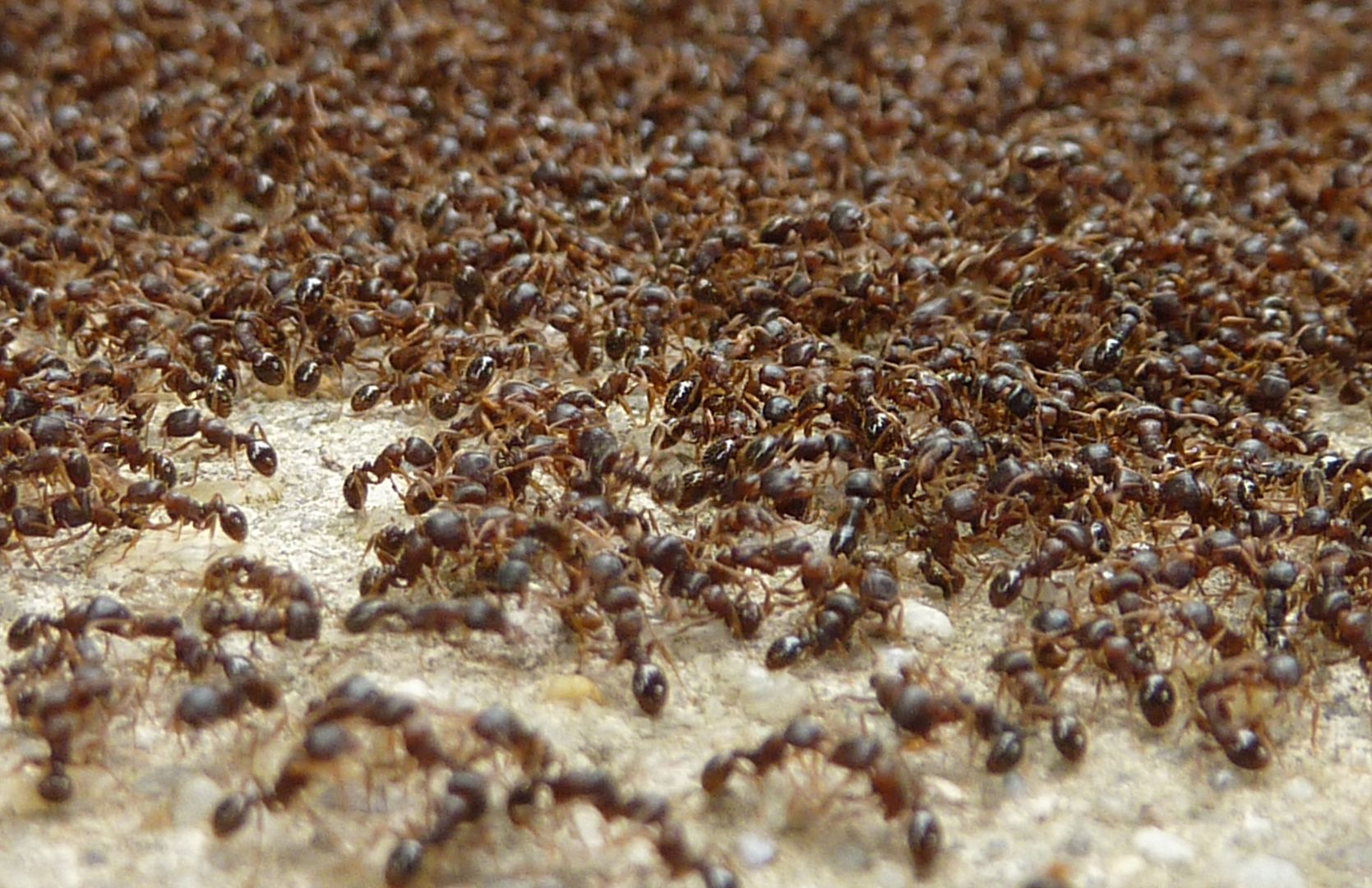
Along the way to the woods and back I came across a pavement ant war, where two colonies of Tetramorium cf. species E.were battling it out. A women thought I was recording this and commented "I'm sure that video will get like five million hits on youtube."

image
image

image
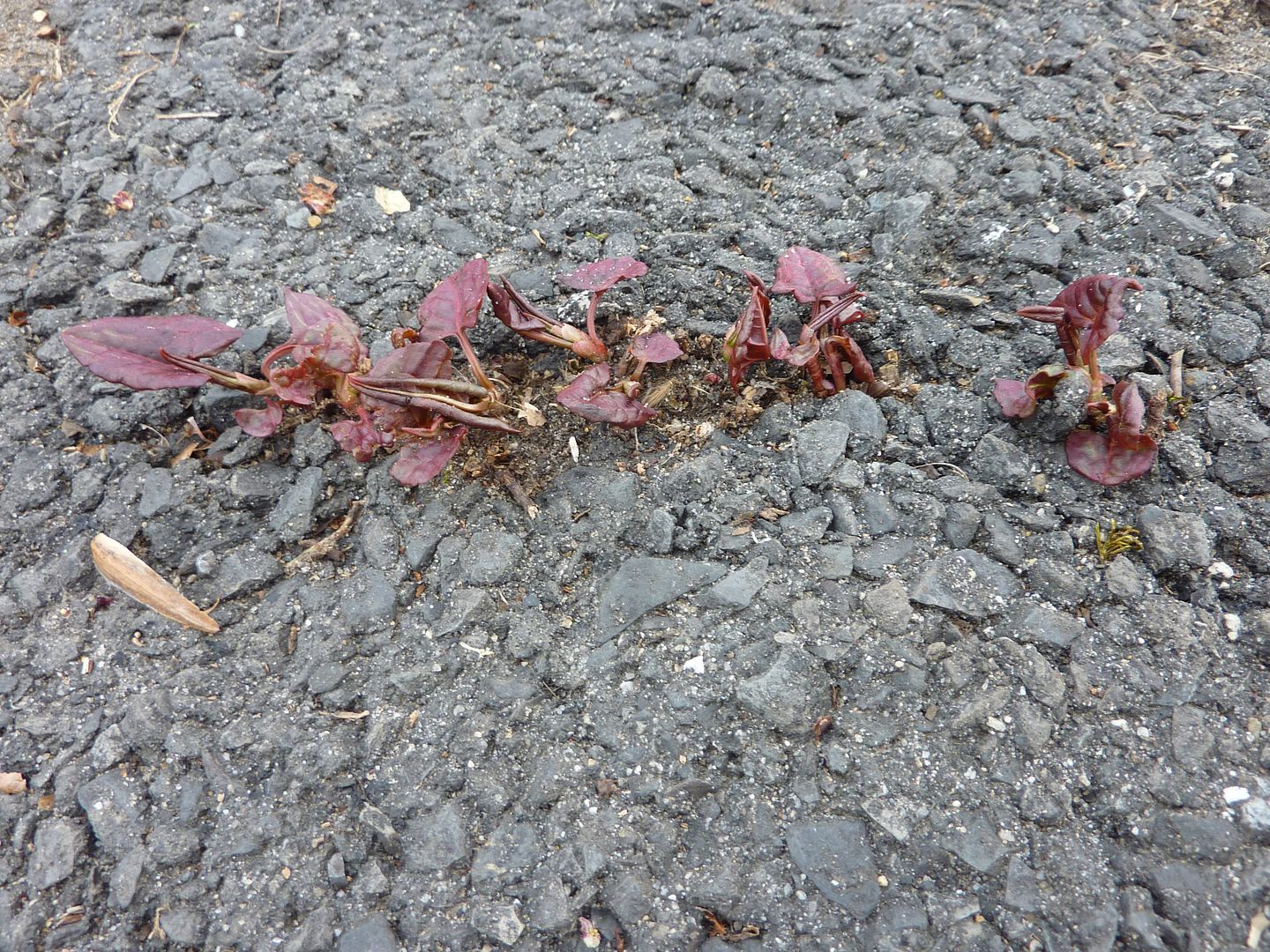
Also by the park there's a patch of Japanese Knotweed. This nonnative plant is so invasive that stems can actually push up through the road.

Wednesday, March 21, 2012

The Prairie War

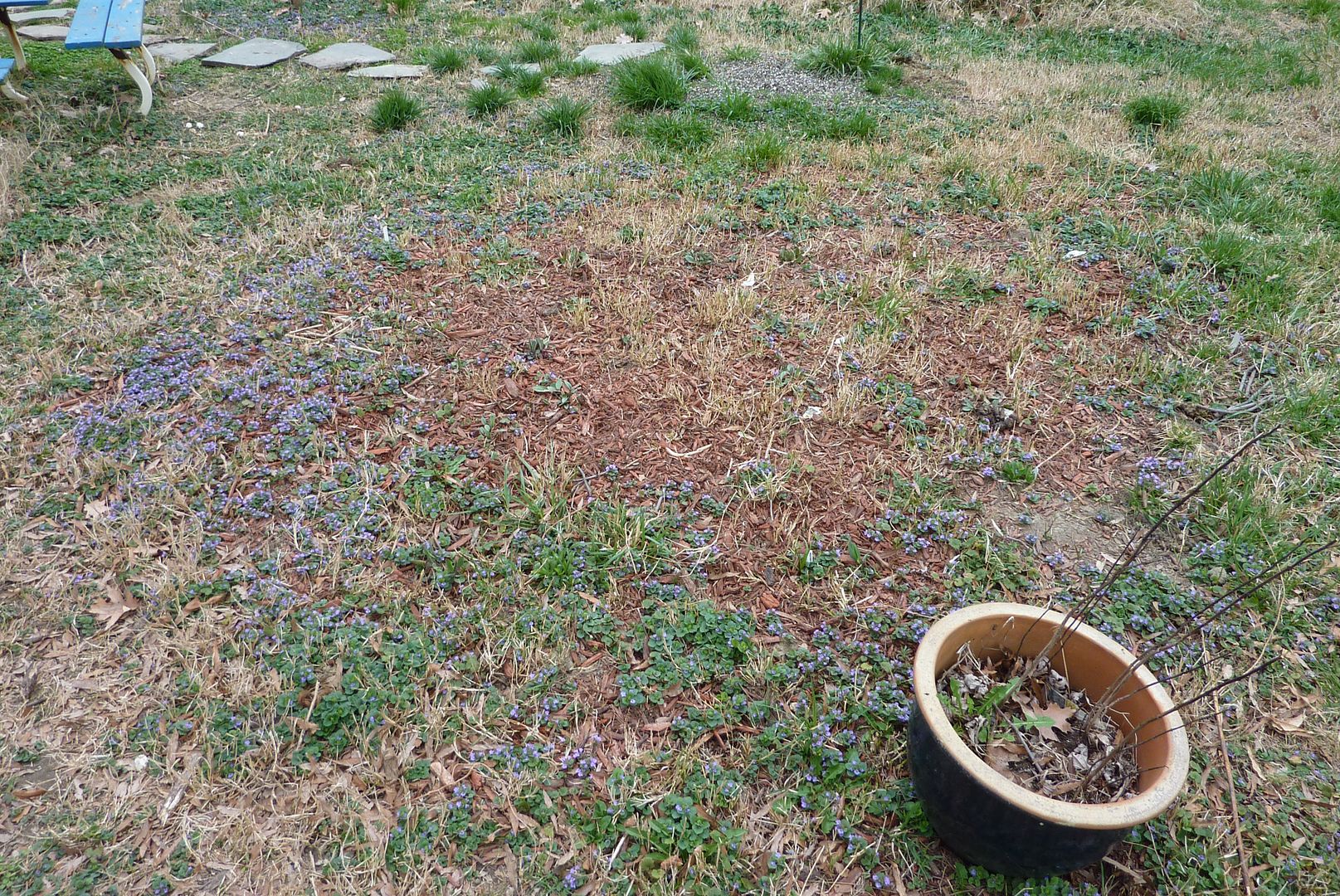
While it might not look it, the prairie is actually coming back to life. It's a little taken over at the moment by Creeping Charlie, Glechoma hederacea, which is the creeping plant with the bright blue flower. It's not native but I tolerate it because my honeybees like it. It's also very easy to weed out as it has a shallow root system. 

So far everything except the Milkweed seems to be emerging. Here I think we're looking at Blue False Indigo, though it's a little hard to tell. The Spiderwort looks like it's reseeded, some of the Asters are coming back aggressively, the coneflowers are sending up their first leaves, and it won't be long before the Jacob's Ladder will be flowering.

Something that shocked me was the Pavement Ants have already started fighting over territory. They're nonnative species that's "invasive" in that it displaces some species of Formica. Not the worst species in the world and they're almost control their own population thanks to wars like this. Their colonies can get huge, 80,000 or so, and they fight over sunny exposed areas to incubate their brood and speed up worker production. Often the losing colony is destroyed or crippled for the season.

So hopefully once all the native plants here in my monarch meadow get growing they'll be able to better fend off these foreign invaders.

Sunday, June 26, 2011

Tetramorium War: Battle of the Driveway

Pavement Ants are a common invasive in North America. They like disturbed habitats, typically with a low diversity of plant life, with plenty of access to full sun (6 hours or more per day), typically with access to logs and stones who's heat assists with the incubation process. Colonies can get massive, upwards of 80,000 individuals, that all come from a single queen.

Despite one common name, there are two species of Pavement Ants to look out for in North America (11 in total but most are restricted to the south west). Tetramorium tsushimae and Tetramorium species E. are the main ones found in the US, though which one you have makes little difference. Both are virtually identical. Don't let the links to antweb in this paragraph fool you; you're looking at a fraction of the total diversity within a colony. I'm not even sure I linked to the correct T. species E. In North America for the past ~180 years both species were simply assumed to be Tetramorium. caespitum. That species is only found in Europe, so what we have in North America has been found, mostly through DNA I think, to be the two species linked above. Now species E. doesn't match up properly with anything but it's generally known that it's not native. So the species name seems to be in limbo until someone figures out what is going on.

In short, though, they're pavement ants. T. species E. is typically .5mm longer than T. tsushimae and more often than not, T. species E. is uniformly black or dark brown. T. tsushimae tends to be smaller, and has a lighter mesosoma (middle body segment). Both traits of which vary within a colony. As I said though it makes little difference.

A fun aspect these species have is how territorial they are even among the same species. Assuming they're present in your neighborhood, it should be easy to find one of their wars happening with a reasonable walk to your local park or playground of choice. 

As mentioned, these ants love rocks and logs for incubation and they nest in places (typically lawns) that have very low resources. They're not the worst invasive because they more or less displace native species as opposed to taking this kind of aggression and putting towards their enemy. Really I think they ignore all other ant species except their own or other Tetramorium. That said, they will still harass other species right out of their territory as they fight to take over structures for incubating their brood.

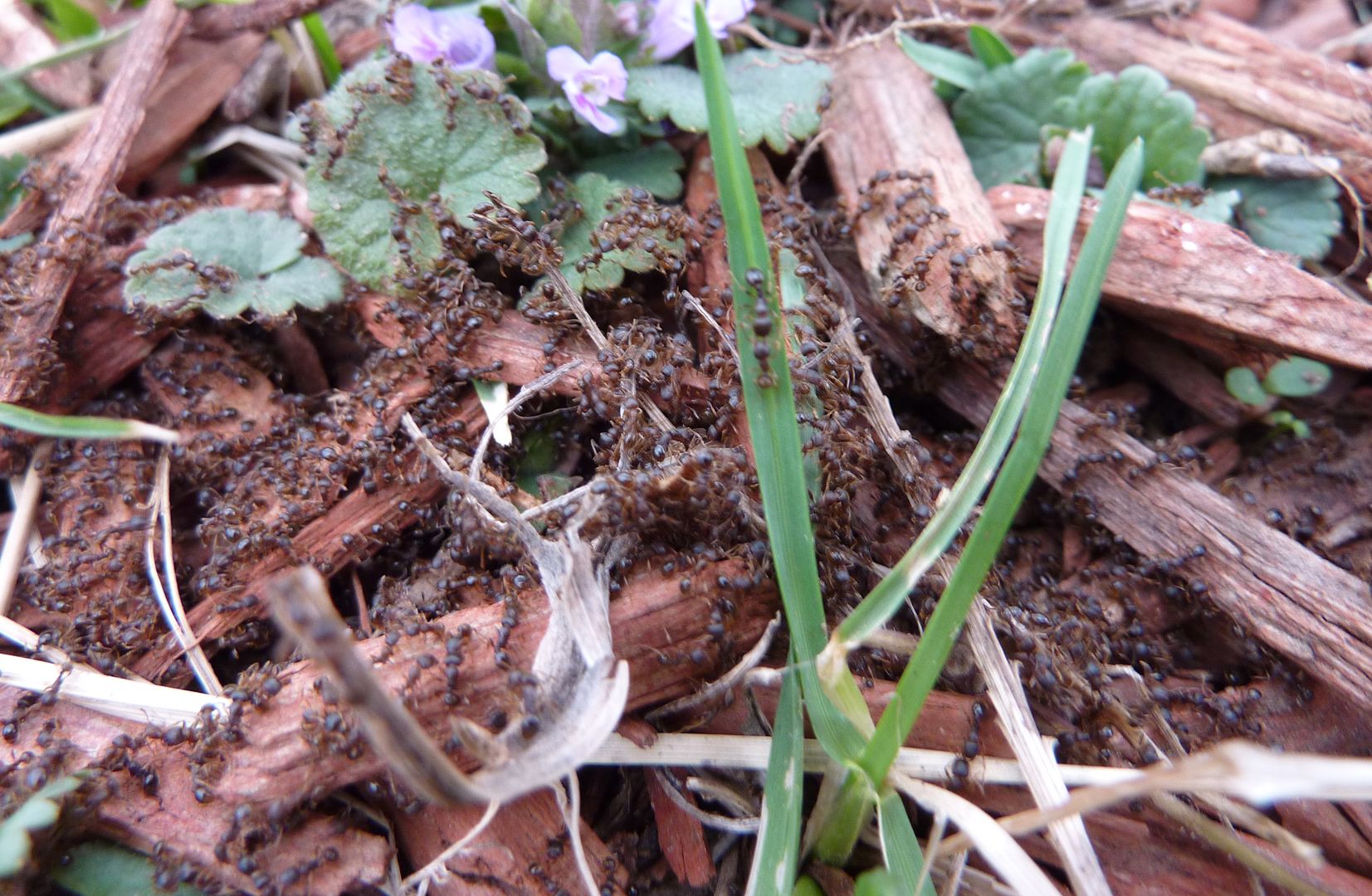
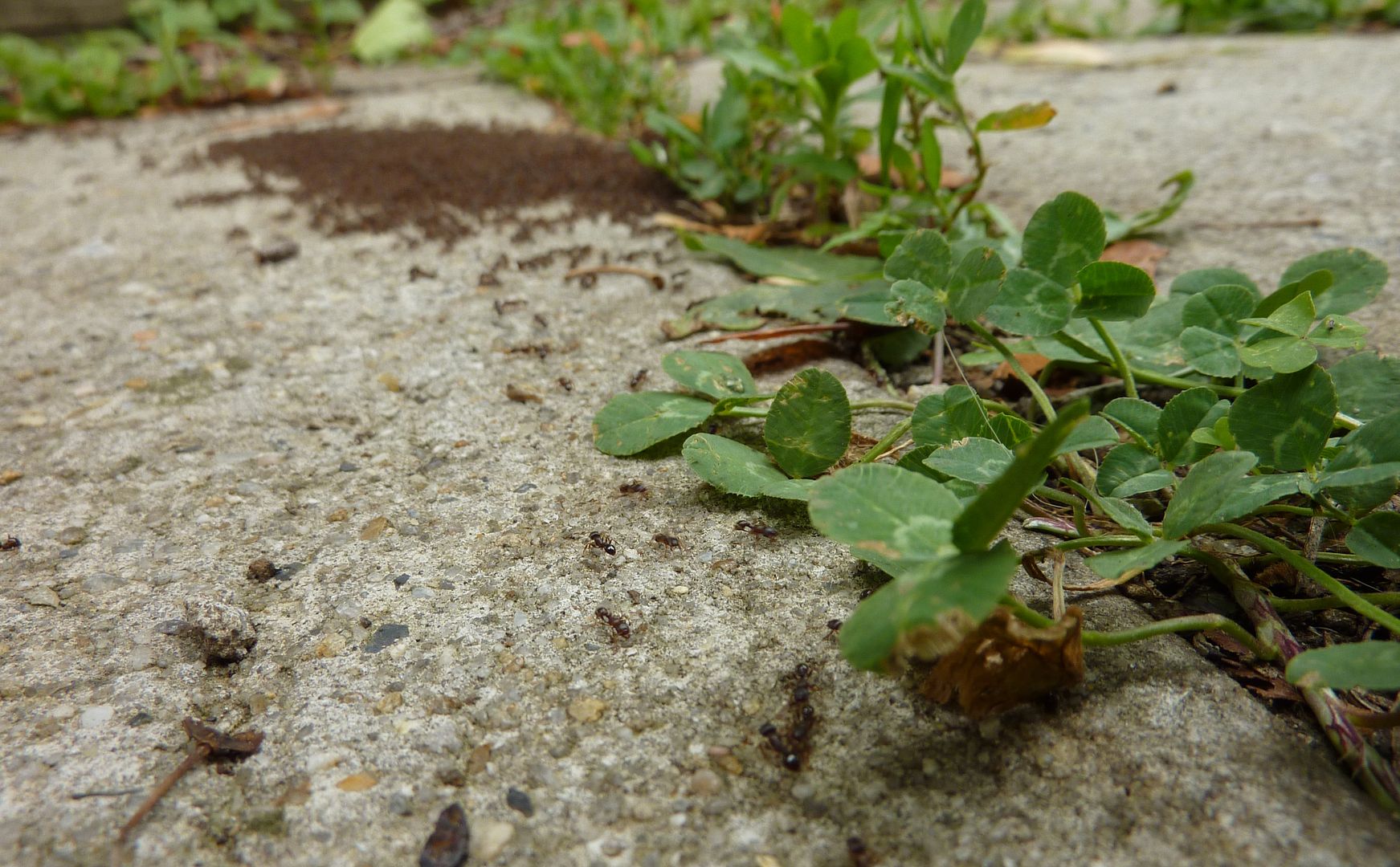
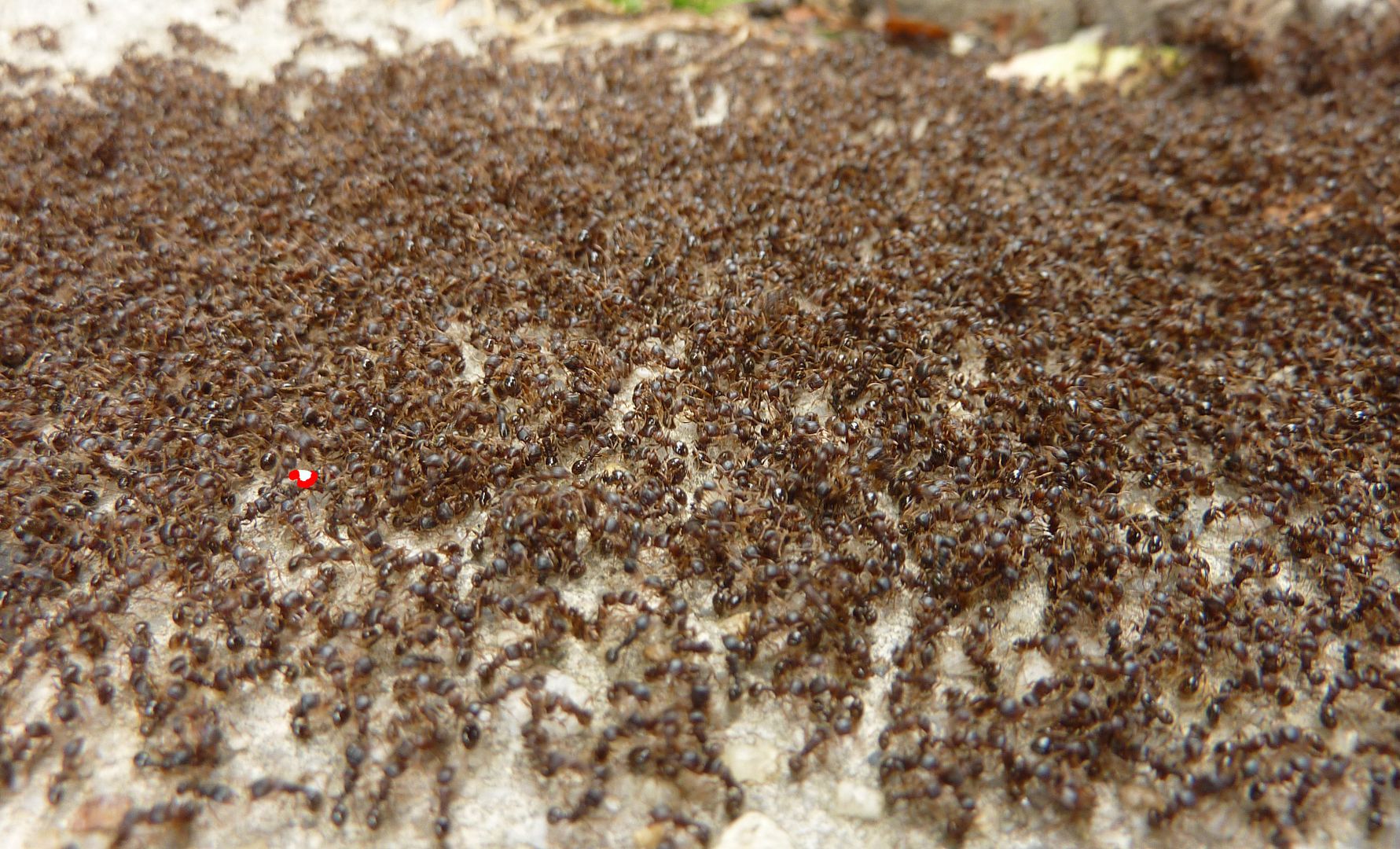
With competition so high for land these kinds of battles are epic, despite looking like a dark patch you could fit a dinner plate over.

These aren't two different species fighting, but rather two different colonies. The only way to tell which side is winning and by seeing which colony the mob is closer to. Should one side push the other all the way home, all bets are off! The winner will steal all the brood either to eat or rear as their own, kill the resident queen if they can, and what workers remain won't be in the best of shape to be of any threat in the future. 

Early on in the year colonies make a series of foraging tunnels that branch out from the main area they over wintered. I suspect these can be used later on as an escape rout should another colony push on their front door. And at the same time these tunnels allow the colony to reach out into the surrounding land and control an area. (About 15' from the nest?)

Numbers are the key to victory here. Casualties are surprisingly infrequent. This has been described as more ritual than a slaughter fest though a number of them will certainly die. While this may be true, I suspect it's more because the individuals are doppelgangers of one another. No individual has any chemical or phisical advantage over the other. The result is typically thousands of ants grappled with one another in a struggle of life and death.... until one lets go.


Click to Enlarge

Monday, May 3, 2010

Camponotus War

Two days ago we suddenly had some warm weather. High 80's low 90's roughly. And there was something about the day, maybe it's just New Jersey but there was a grassy, pool smell in the air. I don't know what it is but it's just something I pick up on. And I mention these things because Camponotus around me usually starts flying on days like this.

Sure enough I found a few males but this was the first day of the year they could fly... so it wasn't anything special, just a few males and a queen to some one of the smaller species. The main flights will pick up next week or after this odd storm system passes over the area.

Having nuptial causes colonies to become territorial. Firstly they want to make their range safe for queens and males to fly away from the nest. Secondly to prevent new queens and males from other colonies from founding on their land. These arguments continue well into the daylight hours when Camponotus usually don't forage.

This Camponotus pennsylvanicus major has the battle scars of a recent skirmish. The smaller ants are either C. nearcticus or C. caryae. They hold on to their opponent well into death. Both are missing their abdomen and will likely stay attached to this ant until she dies.

This is the same ant but there were a few hanging around the same general area. C. nearcticus and C. caryae have small colonies of 300 ants or so, while the larger C. pennsylvanicus is known to have 10,000 or more.

I didn't see to much fighting to be honest but it seemed like the larger species was moving into the same dead branch as the smaller species. Ants gripped in combat fell off the tree at a slow pace.

The smaller species wasn't without some victory. This ant C. penn major isn't dead yet but is missing most of her limbs and without her antenna she will die. I forget why losing the antenna causes the ant to die exactly but I know it's fatal to them.

Be on the look out for Camponotus queens both big and small over the next couple of weeks.
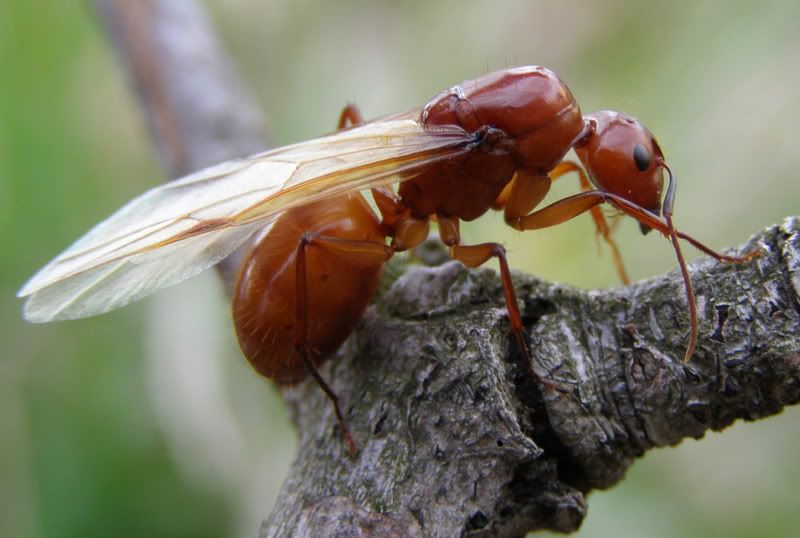
In Camponotus queens tend to be the largest, or equally as big as the major workers, in the colony. Unlike the majors, their thorax is more developed looking and rounded. Queens will always have wing scars too. These are where the wings used to be attached to the thorax.

They come in a variety of colors depending on the species. The abdomen isn't always as swollen looking as in the photo above. The white "stripes" as people like to call them are actually a stretchable membrane under the plates that make up the abdomen.

Queens are not always common but the larger species are very easy to spot. After a nuptial flight they'll be walking around for as much as 24 hours before settling down. The sooner the better. Regardless of preference to nest in soil or in dead wood, because of their size they're almost always seen walking around or found under objects, rocks, logs, etc...

I occasionally find a young colony (less than 100 ants) all nesting under a log, having been displaced by a larger colony. Young colonies like this are easily collected if you're quick enough. They're the result of a larger colony moving on in. Rather than duke it out one colony flees. 

Monday, December 21, 2009

Guarded Entrances


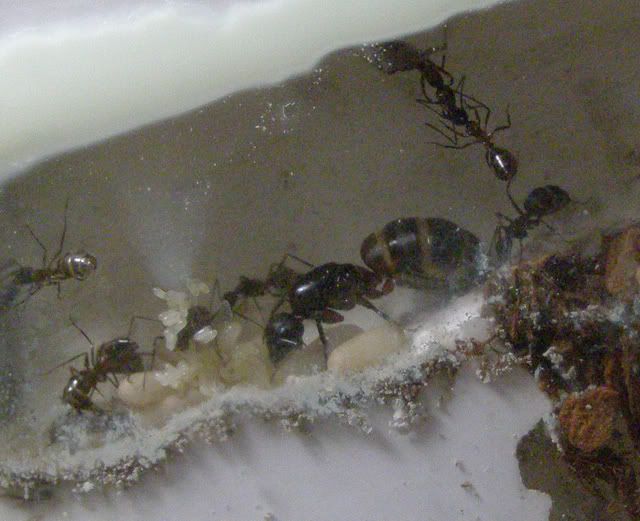
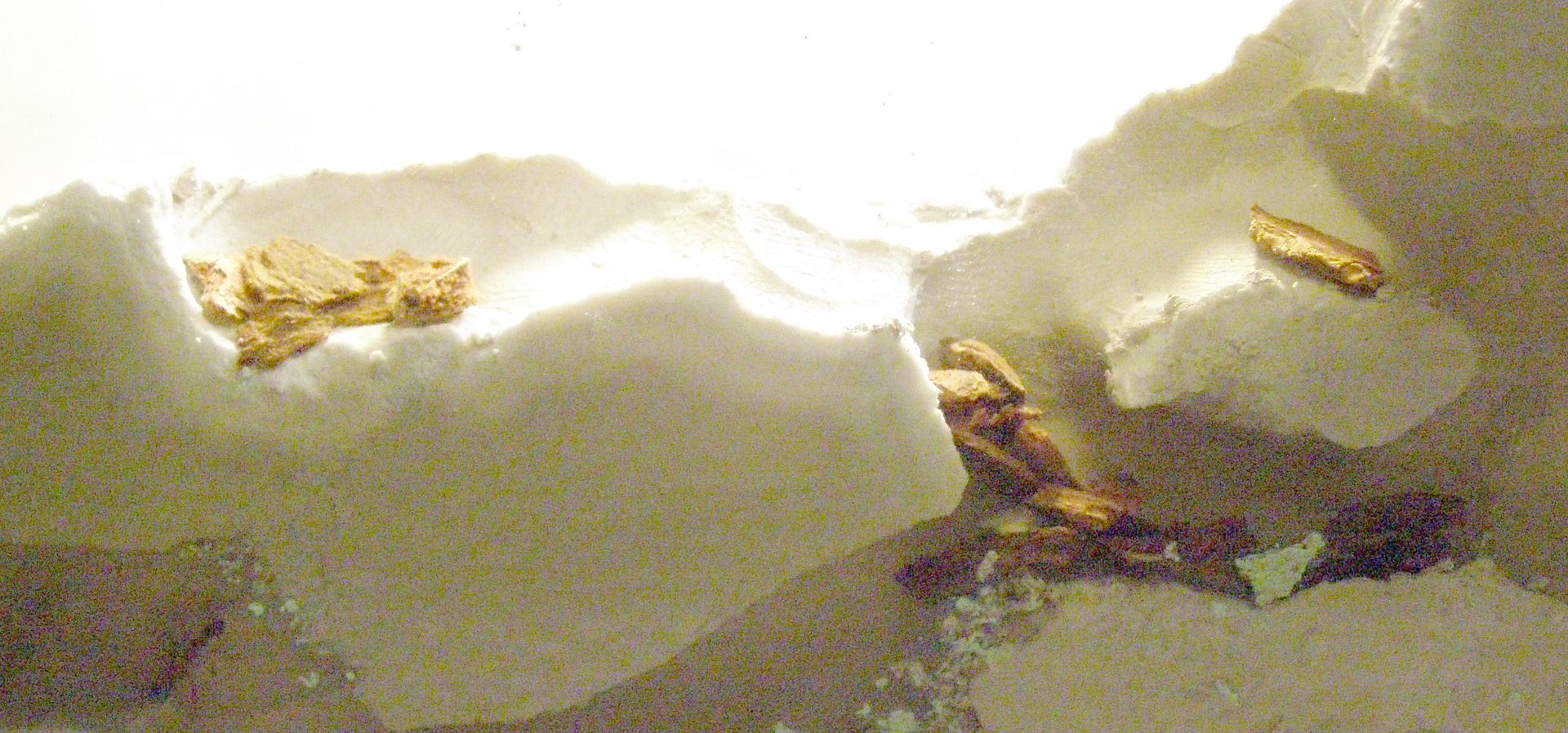
Well as I've said they would the ants have used some of the wood chips to improve their nest. In this case they've simply narrowed the entrance. No sense in being invaded by swarms of ants after all. Creating a chock point is as good a strategy as any. If they ever produce a major caste blocking the entrance up will be simple. Of course the only thing this colony has to fear is a pest species invading my house.

I'm lucky enough that it's only been Tapinoma sessile, which isn't that invasive a species but they do harasser other colonies of ants for some reason or other. In other parts of the country though ant keepers might have to deal with Fire Ants, Solenopsis invicta, or worse, the Argentine Ant, Linepithema humile. These two invasives will forage in your home happily. It's one thing for them to find a food source but quite another to stumble on a cash of rival queens in test tubes trying to start colonies in what they consider to be their territory. You'll have a line of invaders all swarming to get in your ant setups and there's little you can do about it. Surrounding them with water doesn't help either. Argentine ants have been known to wonder in large numbers right into fish tanks, in an attempt to get a drink. They don't break the surface of the water either. Fire ants might be better detoured by water though despite their behavior to flooding. I still don't see either being a good solution though and I'm not sure there is one. :(