Showing posts with label Black Swallowtail. Show all posts
Monday, May 11, 2015
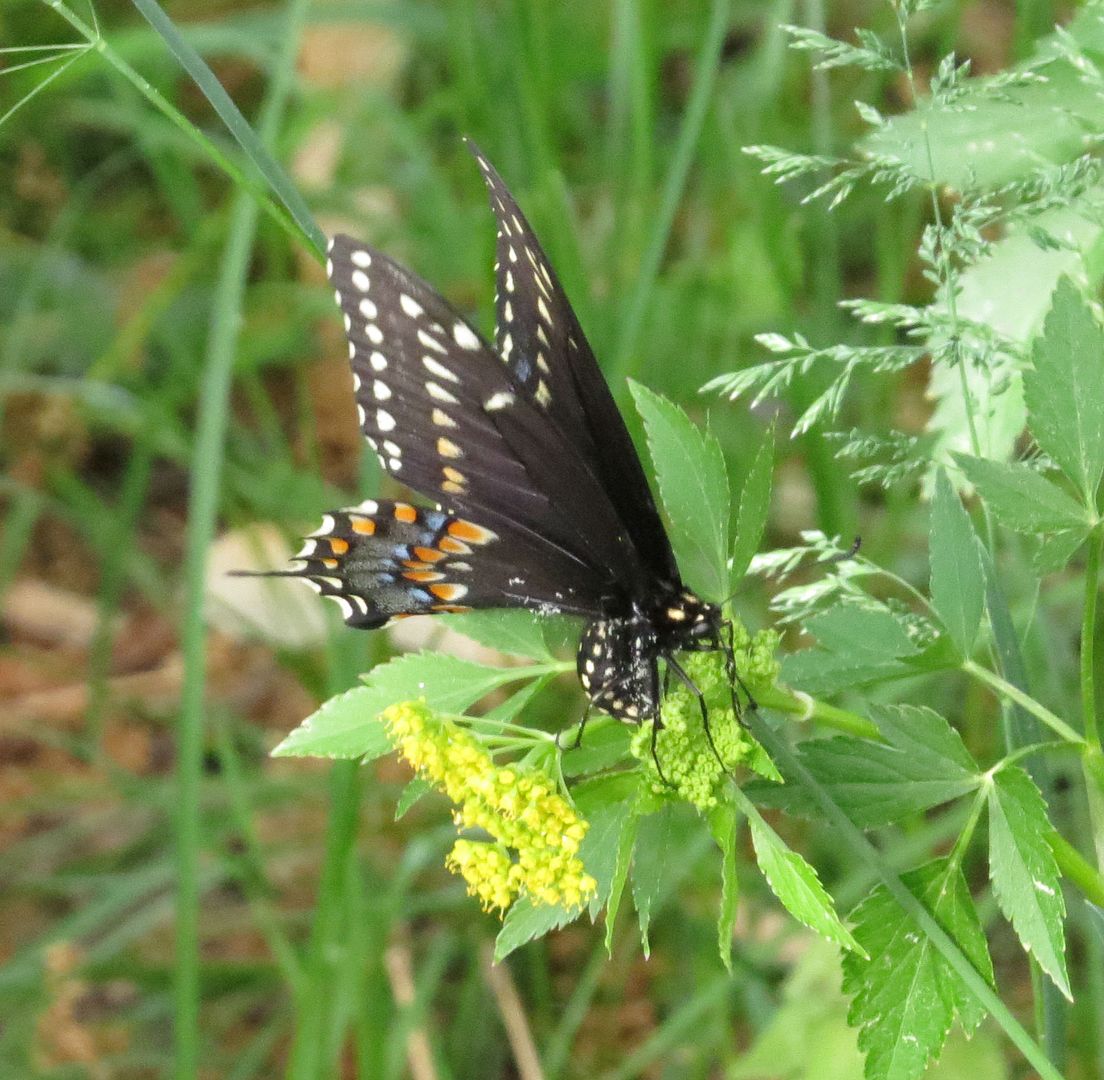
Black Swallowtail Laying Eggs on Golden Alexander
When Native Plant Gardeners decide to add Golden Alexander to their landscape, they're often disappointed to see a lack of Black Swallowtails. Perhaps Monarchs boldly laying dozens of eggs all over Milkweed and their easy to spot black and white caterpillars spoil them. A couple of things are going on here.
Firstly, Black Swallowtails are native to North America, so much so that they're sometimes referred to as the American Swallowtail. Golden Alexander was their primary host plant among a few other members of the carrot family, but when western settlers brought with them delicious Parsley, Dill, and yet more members of the carrot family, suddenly the American Swallowtail had a lot more hosts to choose from. Parsley and Dill in particular were bread for their pungent odor and flavor, and likely possess more of the chemicals in the plant Black Swallowtails use to make themselves bitter tasting. Not only do the caterpillars mimic bird shit in the first few instars, but they want to taste like it too! This is likely why Parsley and Dill tend to be heavily favored as host plants.
Monarchs are down right poisonous to consume, and they want to go out of their way to show themselves off. Causing a mother bird to throw up the contents of her crop is one less meal her baby birds will get. It's a swift lesson and birds quickly learn not to bother with black and white caterpillars.
Golden Alexander has other pest problems such as Aphids. Parsley gets aphids too but not the same kind. These aphids are better about attracting Ants, which are more than happy to consume butterfly eggs, as well as young instars caterpillars. The plant itself also excretes extra floral nectar on its leaves which ants will "nectar scrape" for food, to further get ants crawling all over the plant. Golden Alexander is also a more open, airy plant, which wasps have an easier time exploring to hunt. Some types of parsley are dense with leaves.
One thing Golden Alexander can boast though is that it's a spring ephemeral. Seen here at 2 - 3' tall it's produced almost all its foliage for the year, whereas Parsley and Dill flower in late summer and autumn, and thus have quite a bit of growing to do. So Golden Alexander is usually a better choice as a spring host plant because even nursery born Parsley and Dill are barely this tall.
Admittedly I can only recall two instances when a female has bothered to lay eggs on our Golden Alexander patch in the past 5 years. I'd probably do better to plant something else in the patch but I keep the plants around all the same.
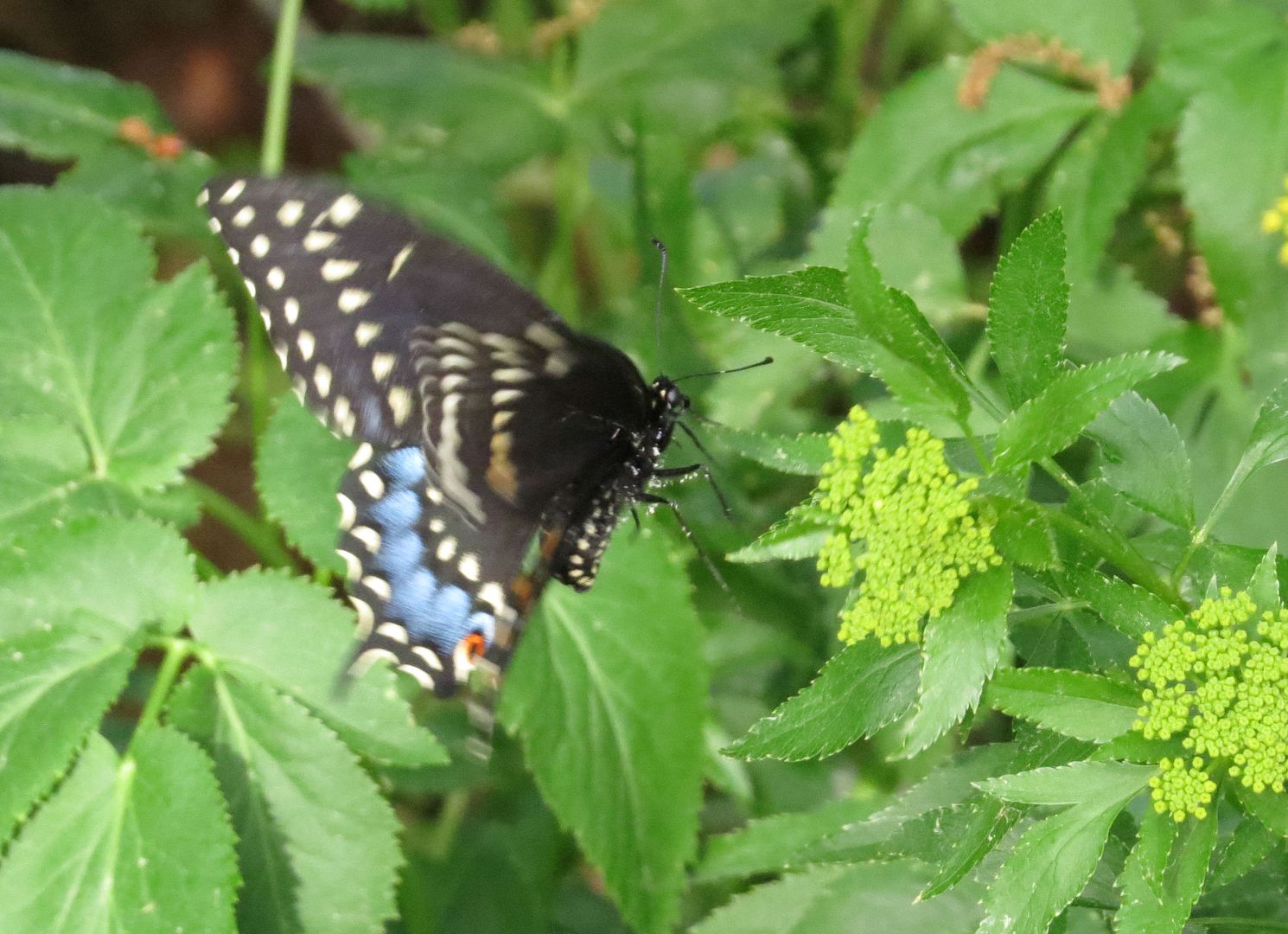
One thing I noticed was a preference to lay directly on the flower clusters as opposed to stems or leaves. There may be other reasons Golden Alexander is favored in the spring that I don't know about.
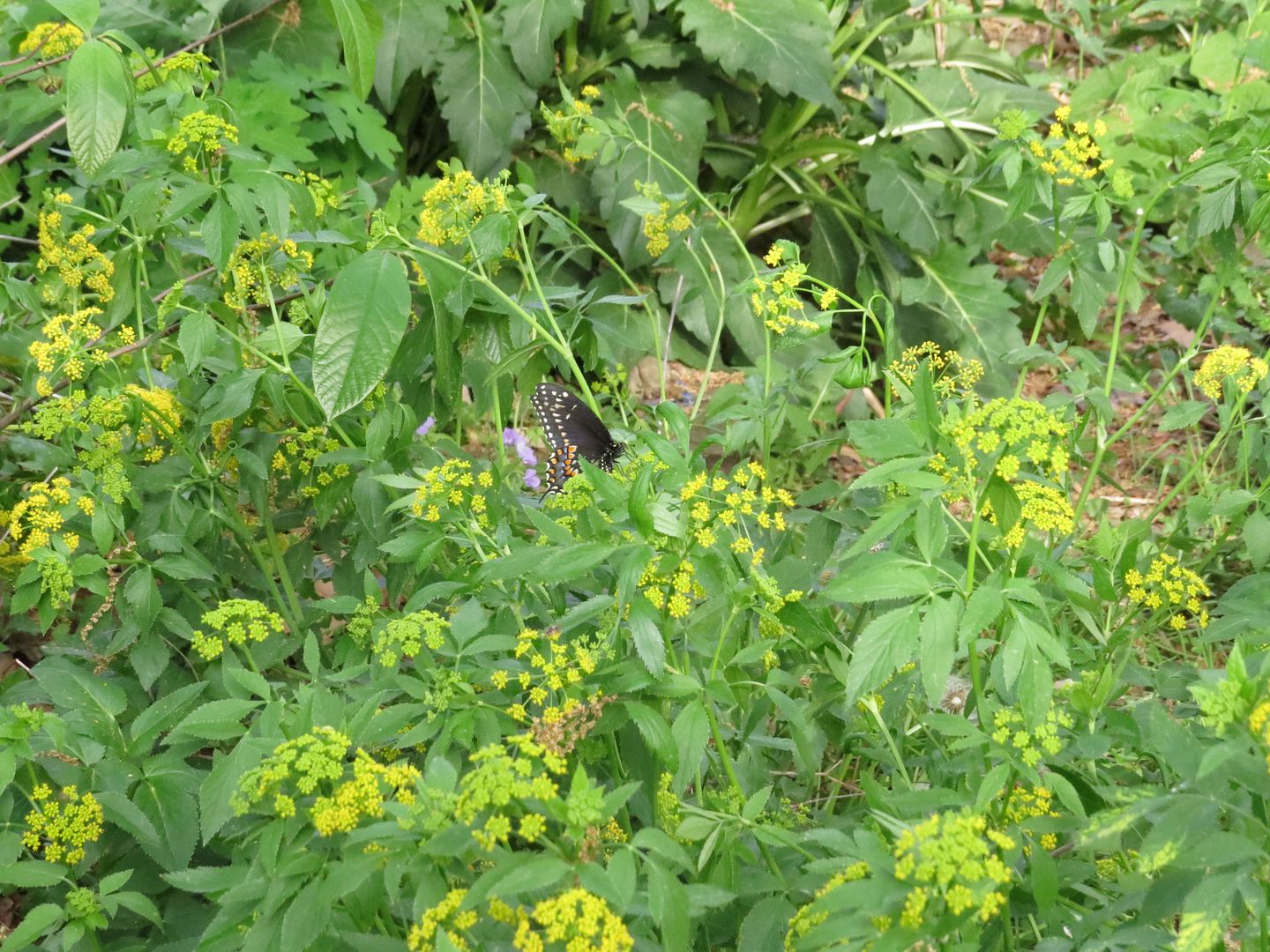
Either that or she's playing a clever game of Where's Waldo. Note the tiny egg planted among the flower buds.
Saturday, April 25, 2015
More Black Swallowtails
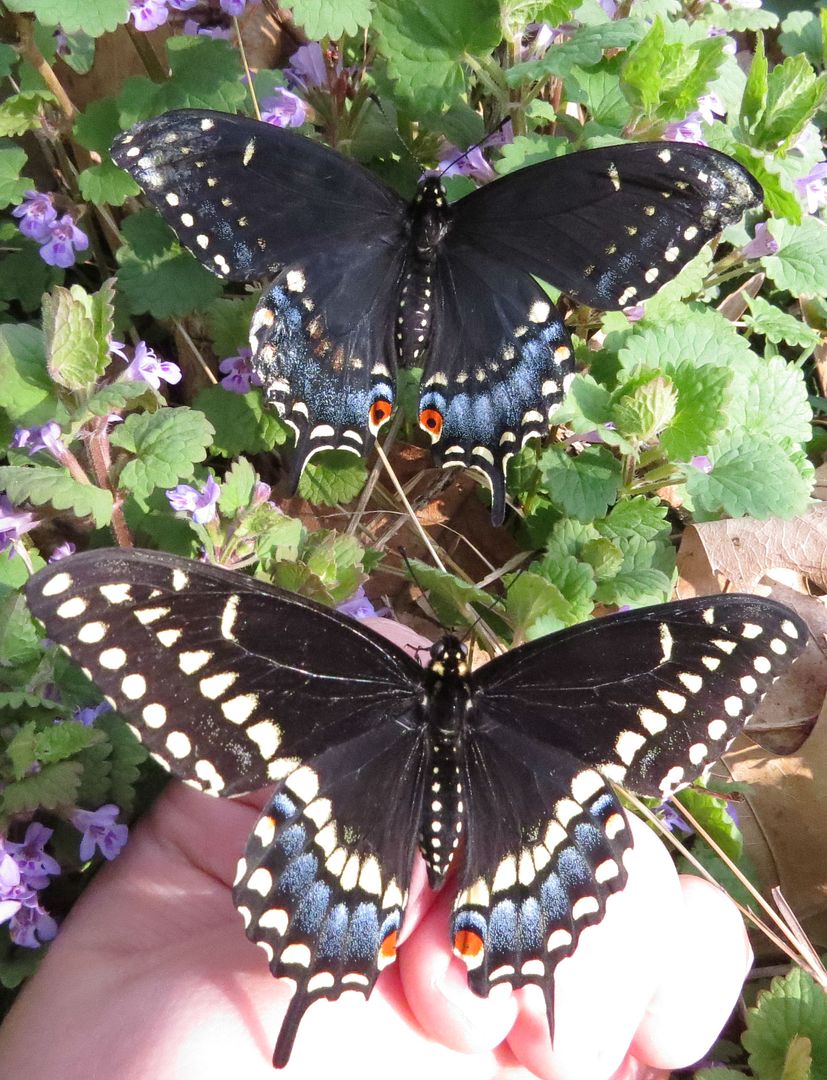
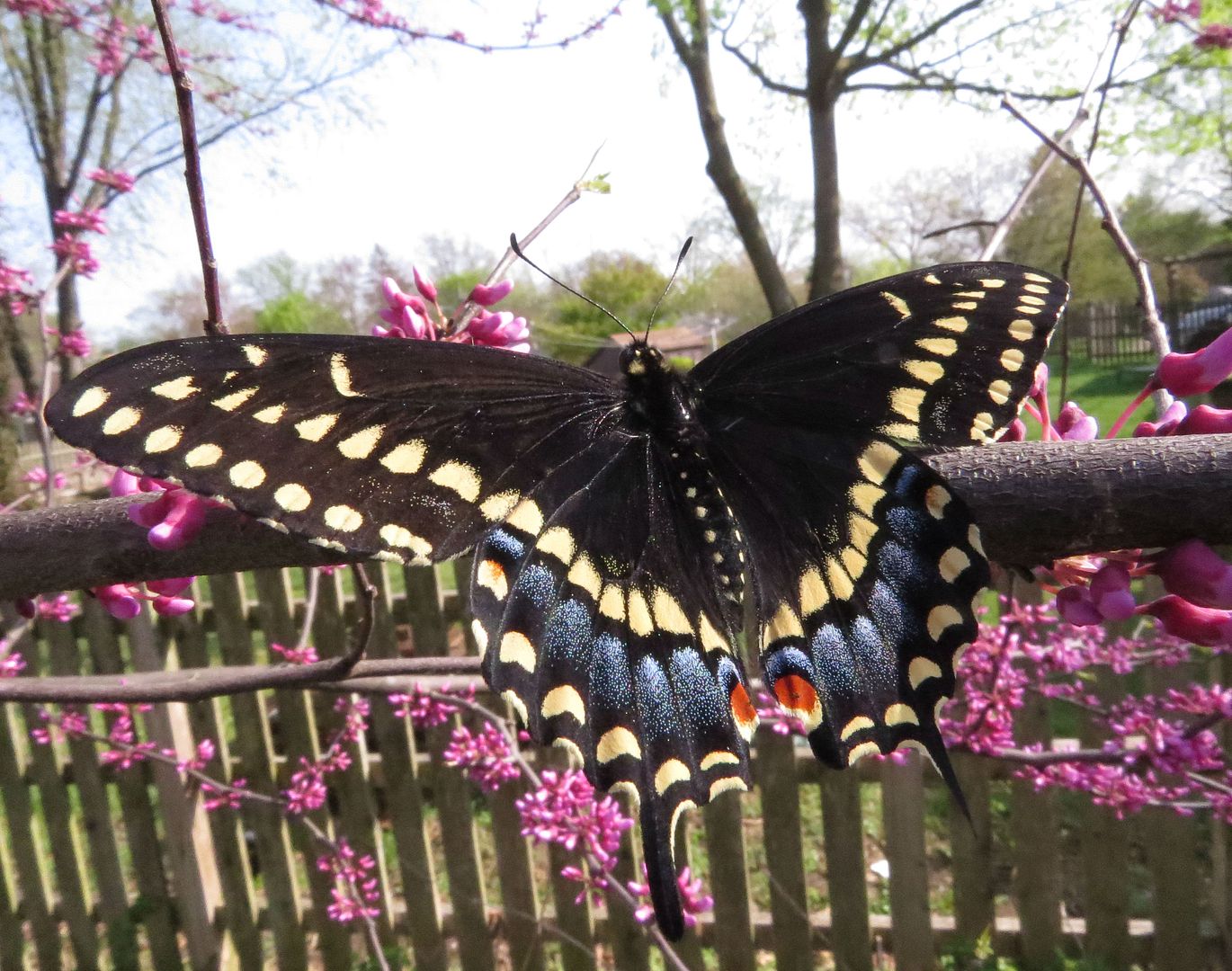
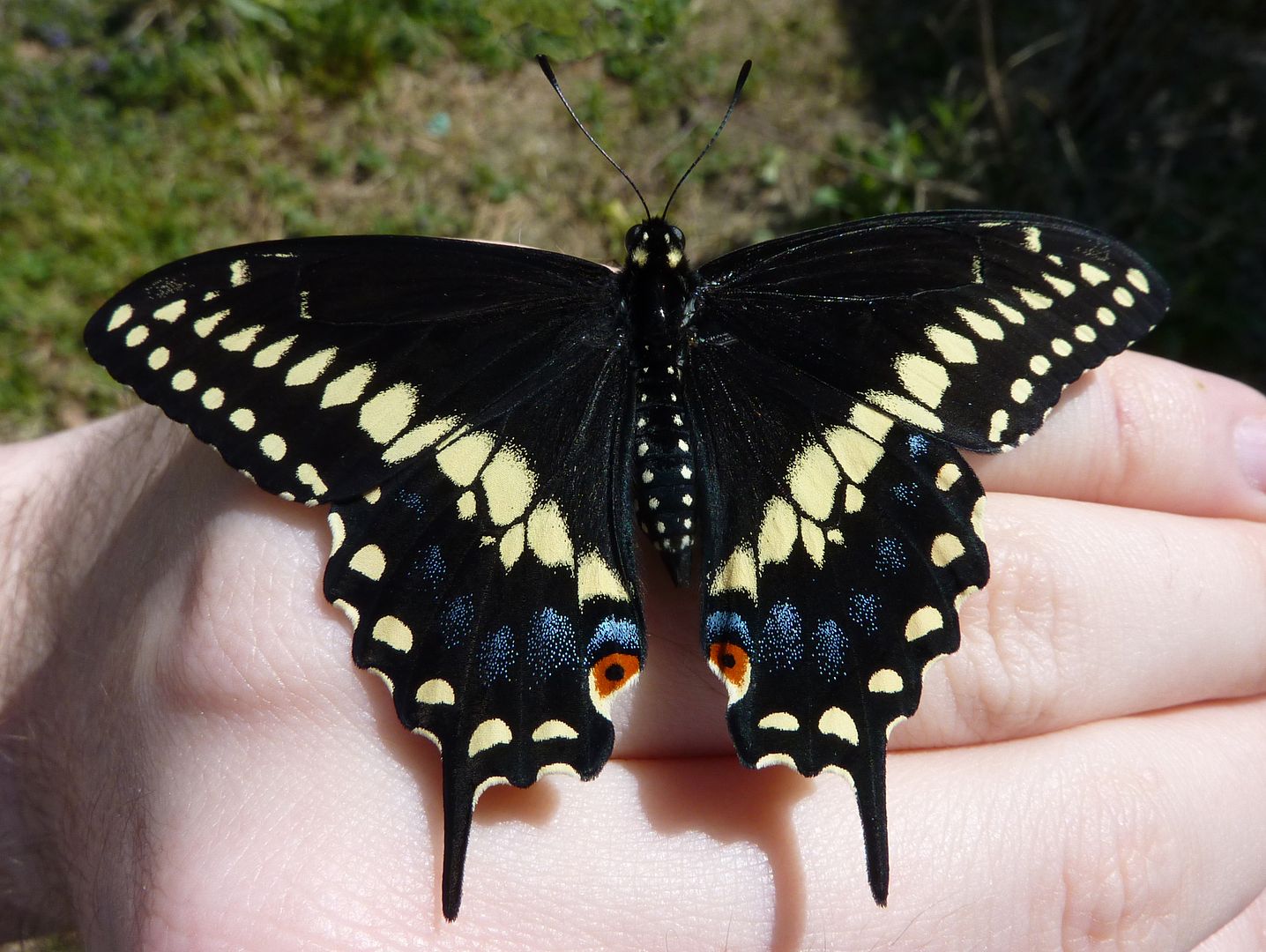
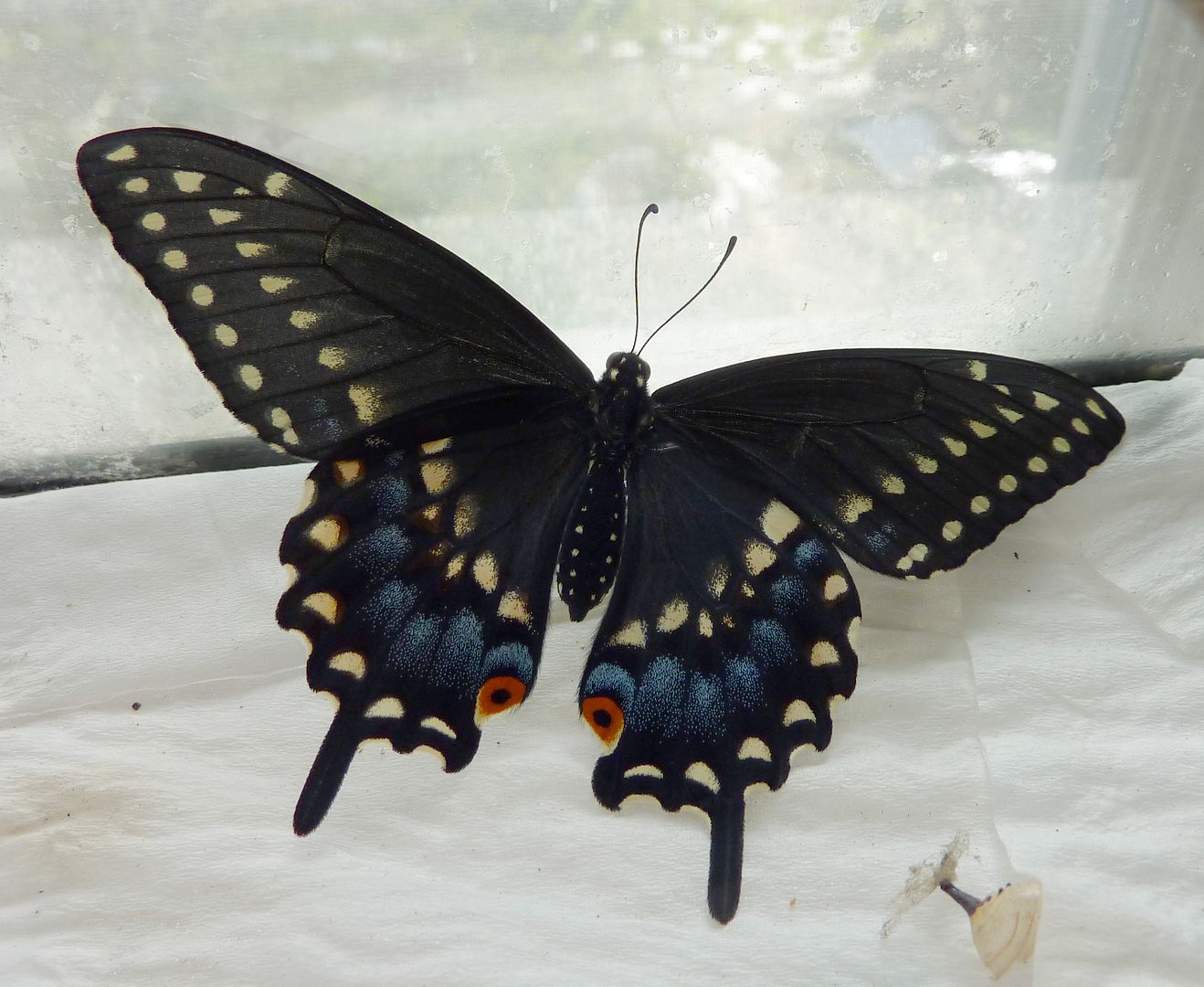
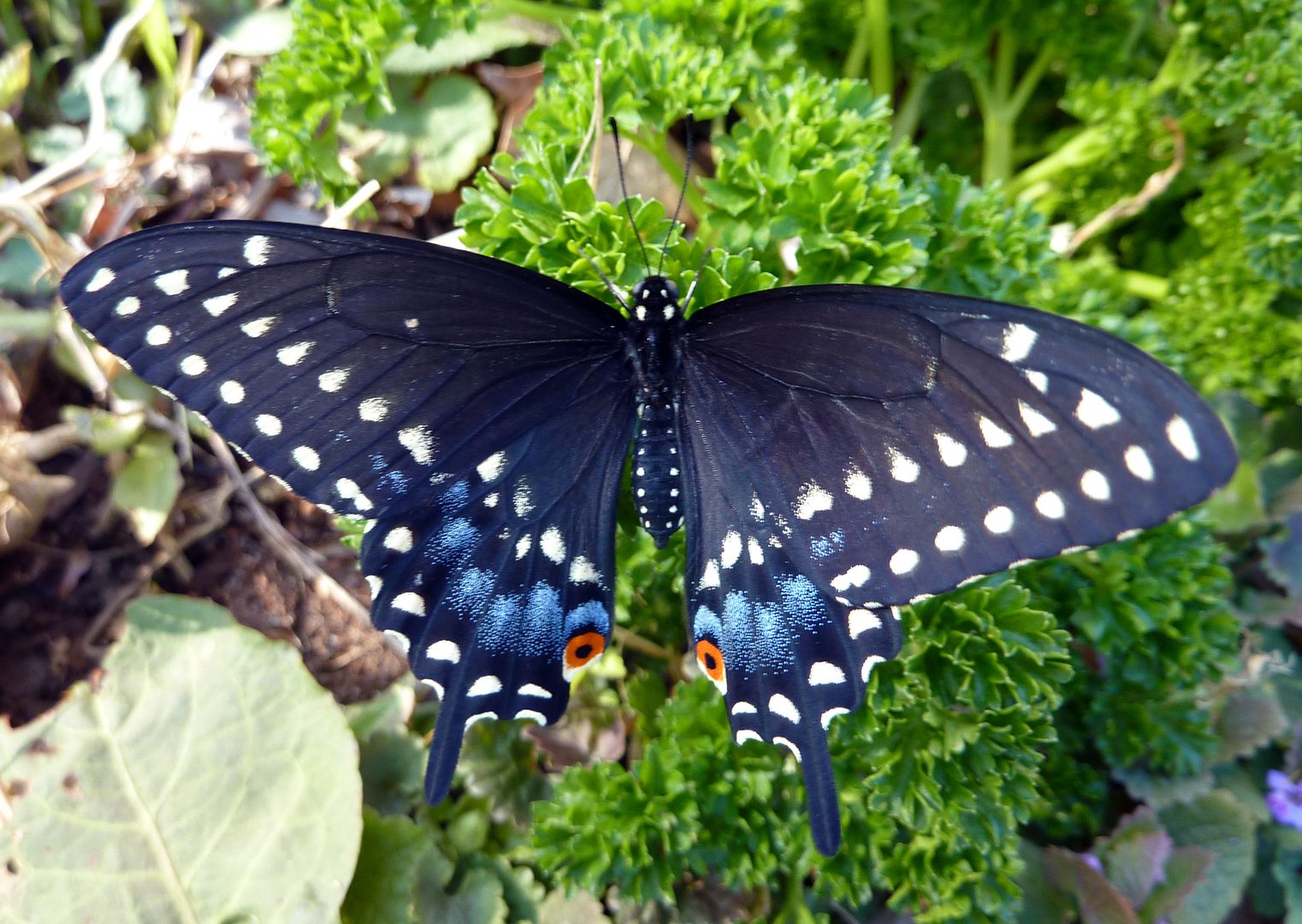
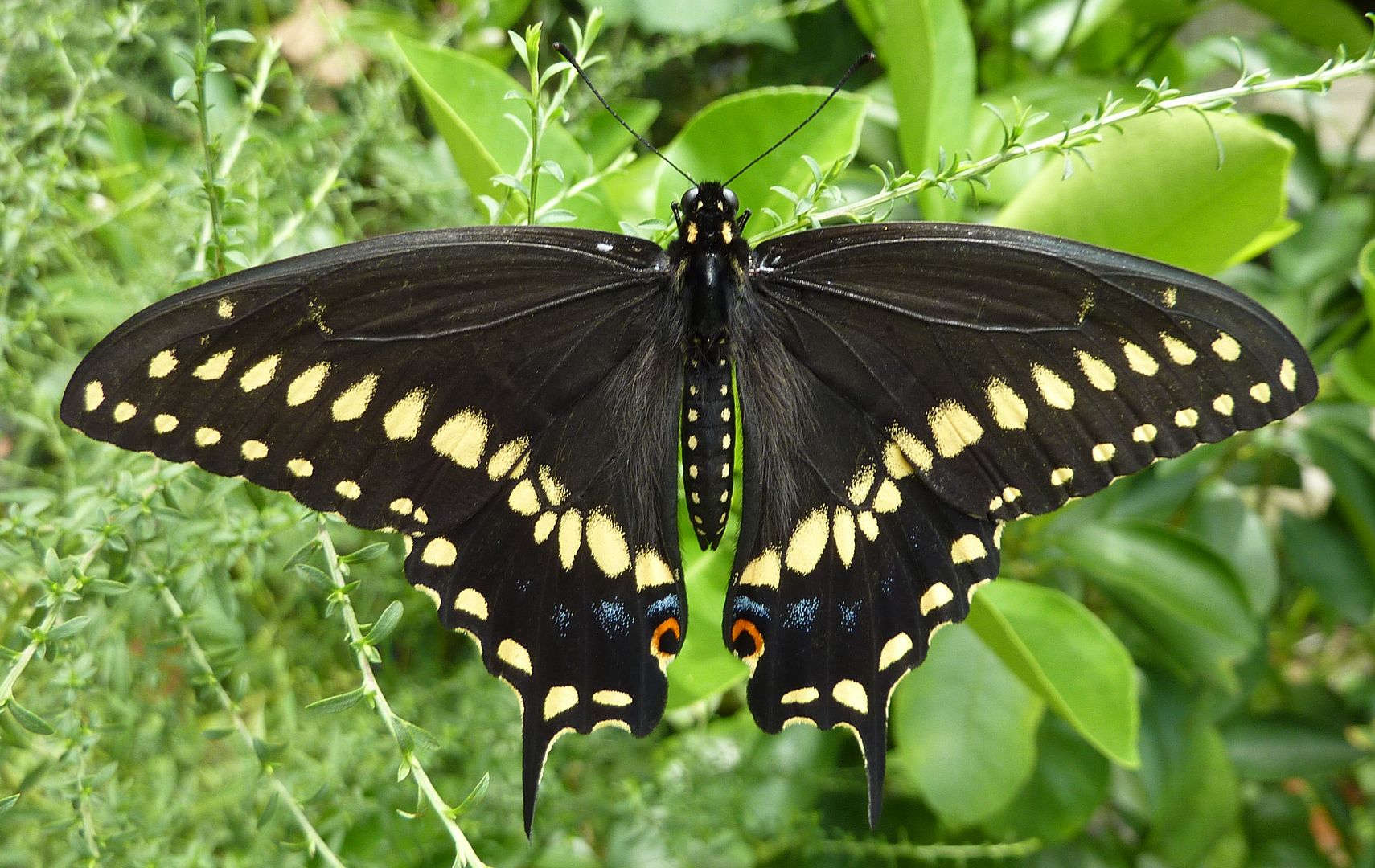
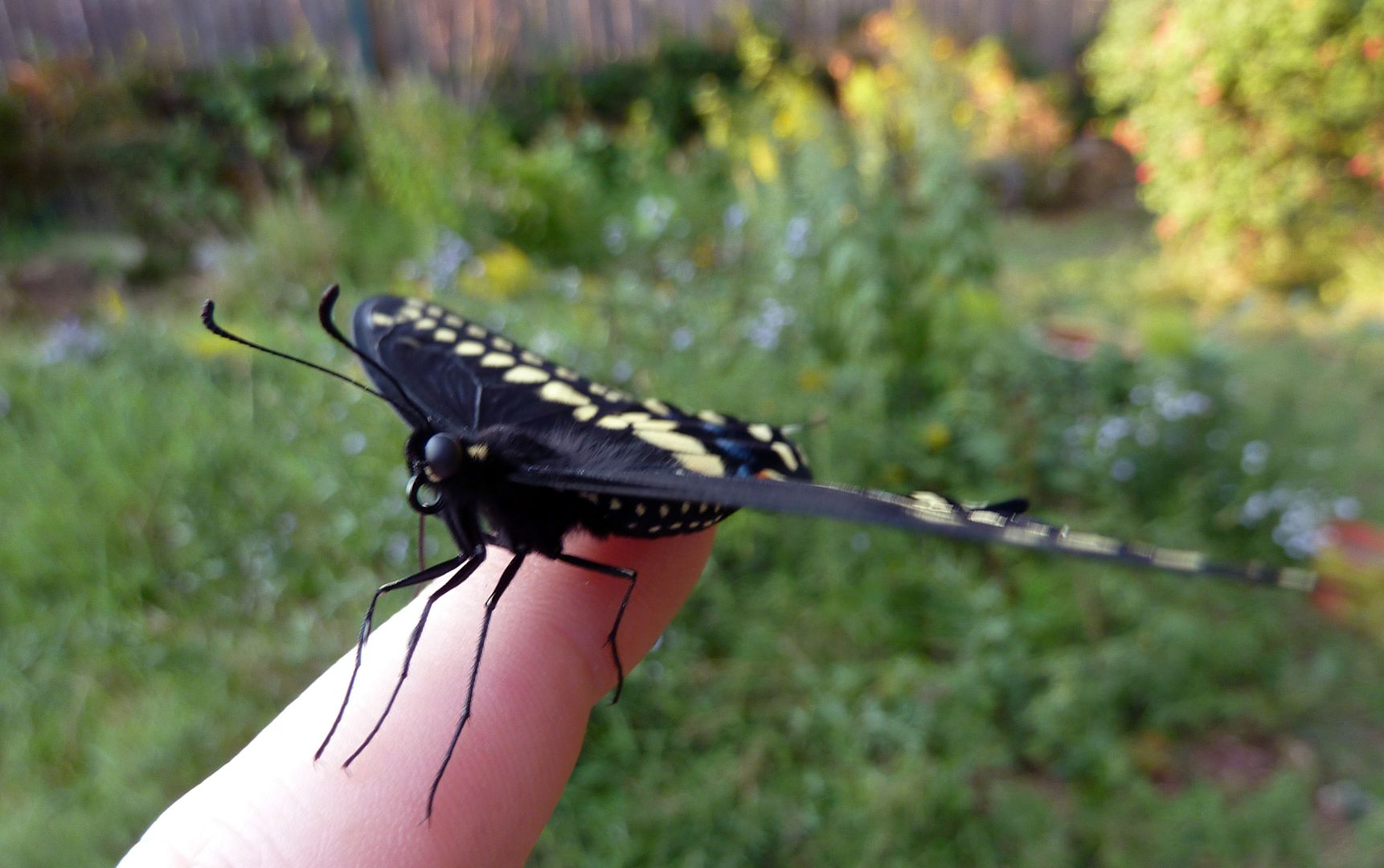
Released three more Black Swallowtails this week, two of which emerged as a pair. I may have been wrong on my earlier assessment of gender. The female (top) seems to barely have any yellow spots at all. The male (bottom) has the yellow spots but more strongly.
Here's the first one again, which I called a female but now I see the yellow spots are somewhat in between male and female, leaning towards male. It just goes to show these traits can vary among members within a species.
I seem to recall a one of my friends who raises a huge variety of silk moths that these wing colors and patterns aren't all entirely reliable. She occasionally hatches silk moths that have wing patterns belong to the other gender but she had said only happens rarely.
Also normally the females are larger than the males. Poor food quality in the autumn, an abundance of parasites, and long harsh winters seem to cause smaller or stunted generations.
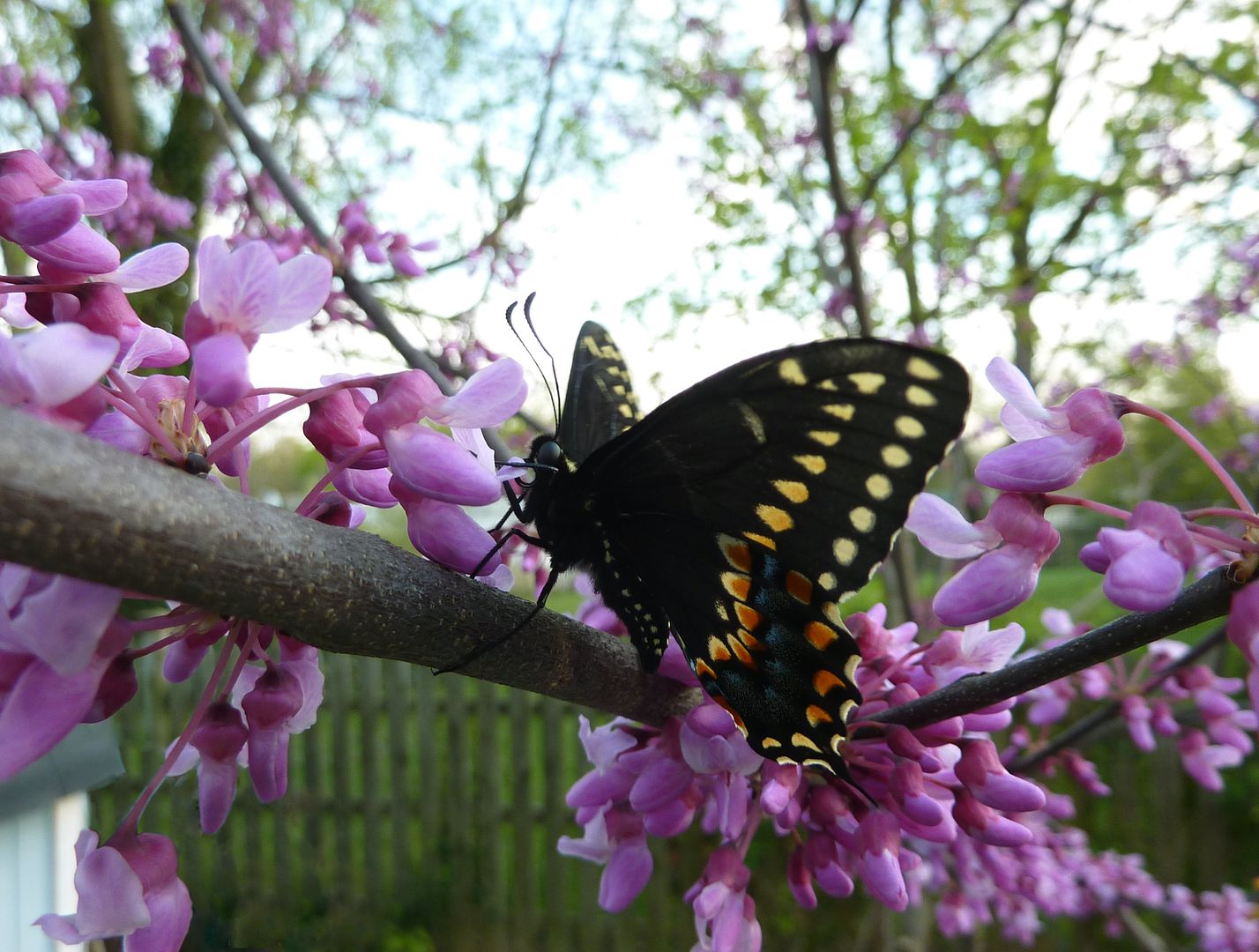
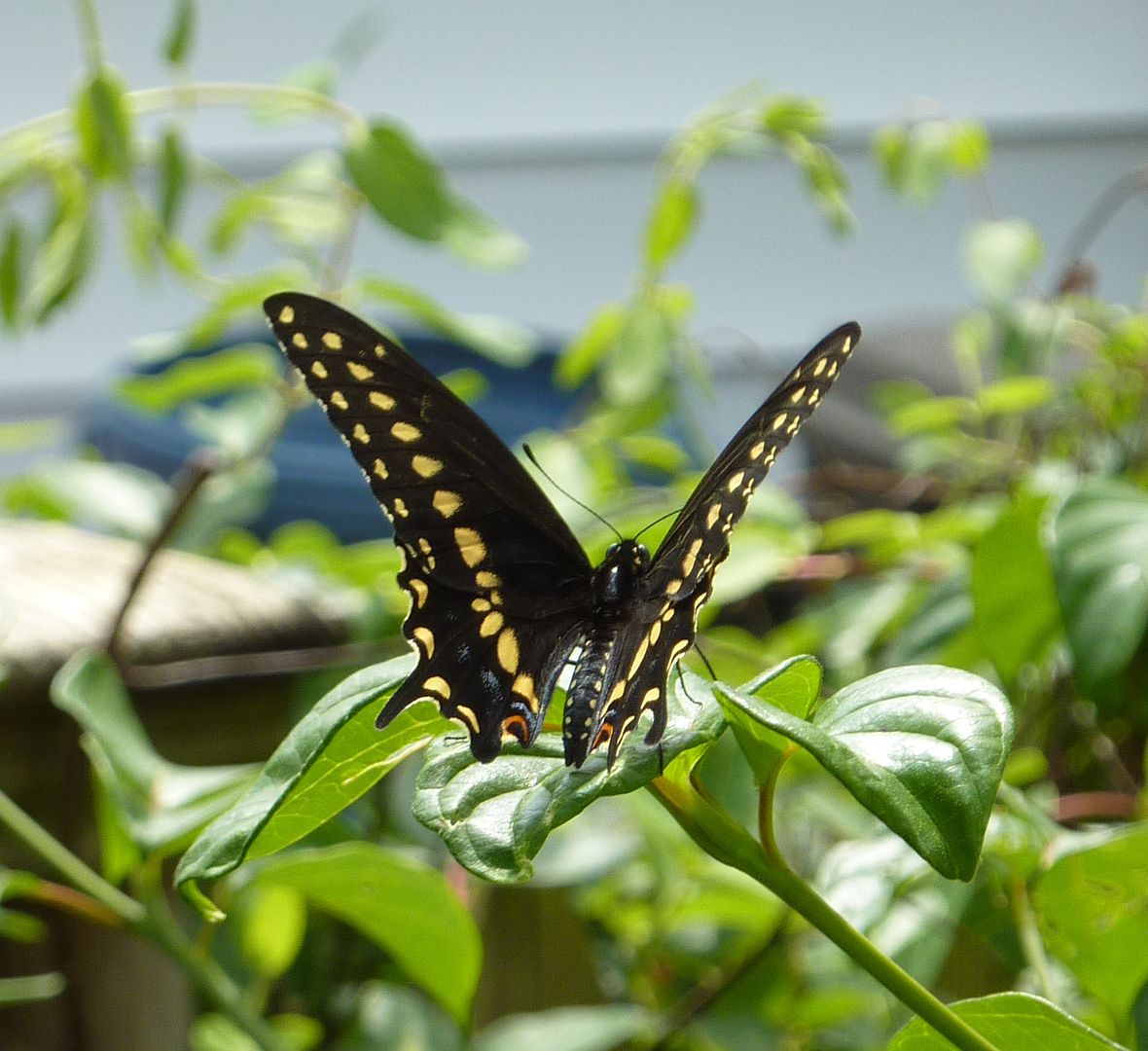
The female fluttered off before I could do much with her. The male however I was able to place and pose about to get this wonderful shot on my eastern redbud. (I don't think this butterfly wants anything to do with this tree. I'm actually not sure what flowers they go to this early in the year. Phlox maybe?)
Here's the first one again, which I called a female but now I see the yellow spots are somewhat in between male and female, leaning towards male. It just goes to show these traits can vary among members within a species.
I seem to recall a one of my friends who raises a huge variety of silk moths that these wing colors and patterns aren't all entirely reliable. She occasionally hatches silk moths that have wing patterns belong to the other gender but she had said only happens rarely.
Also normally the females are larger than the males. Poor food quality in the autumn, an abundance of parasites, and long harsh winters seem to cause smaller or stunted generations.
The female fluttered off before I could do much with her. The male however I was able to place and pose about to get this wonderful shot on my eastern redbud. (I don't think this butterfly wants anything to do with this tree. I'm actually not sure what flowers they go to this early in the year. Phlox maybe?)
Monday, April 20, 2015
First Black Swallowtail
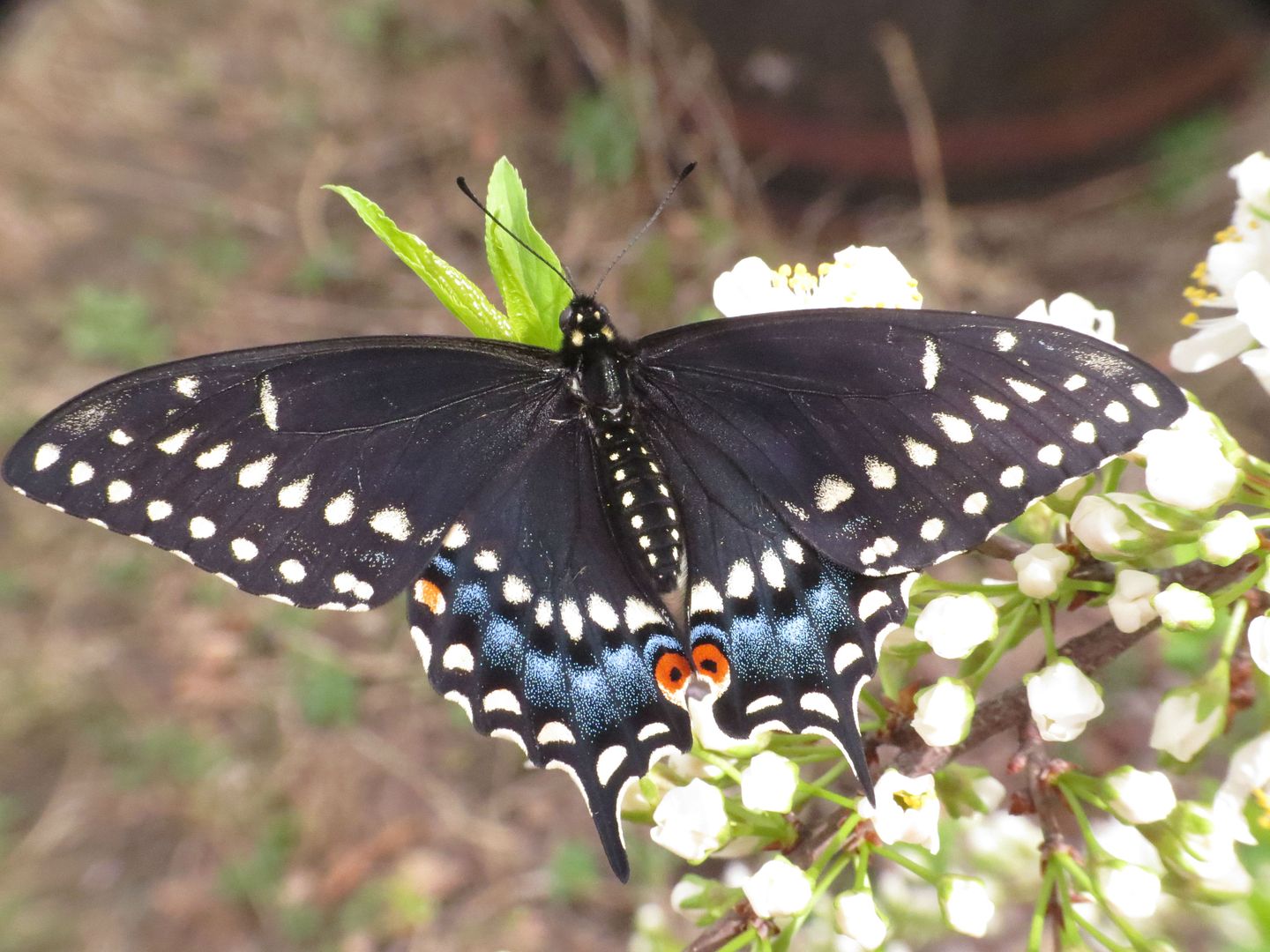
The first of the Black Swallowtails I stored last autumn have finally started emerging. Just one so far, but I have a cage with somewhere close to 18 chrysalises. It's a female judging by the strong patch of blue on the wings. Males tend to have a more strongly defined row of yellow spots.
I like handling them at this stage because they're easy to pose on plants and flowers. I didn't quite do a good job here though. It's a little unrealistic that they'd be on a native plum but I suppose anything's possible.
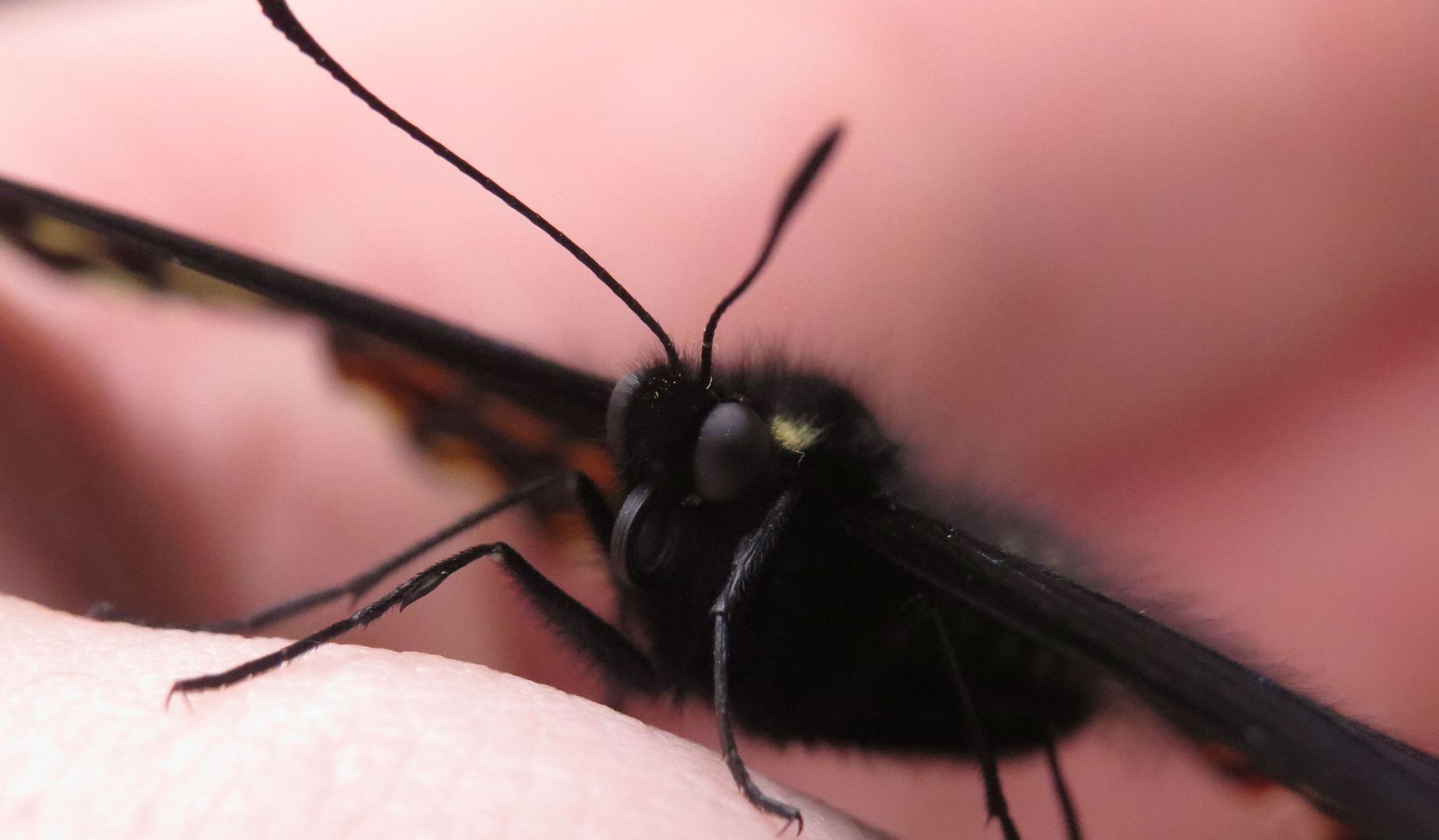
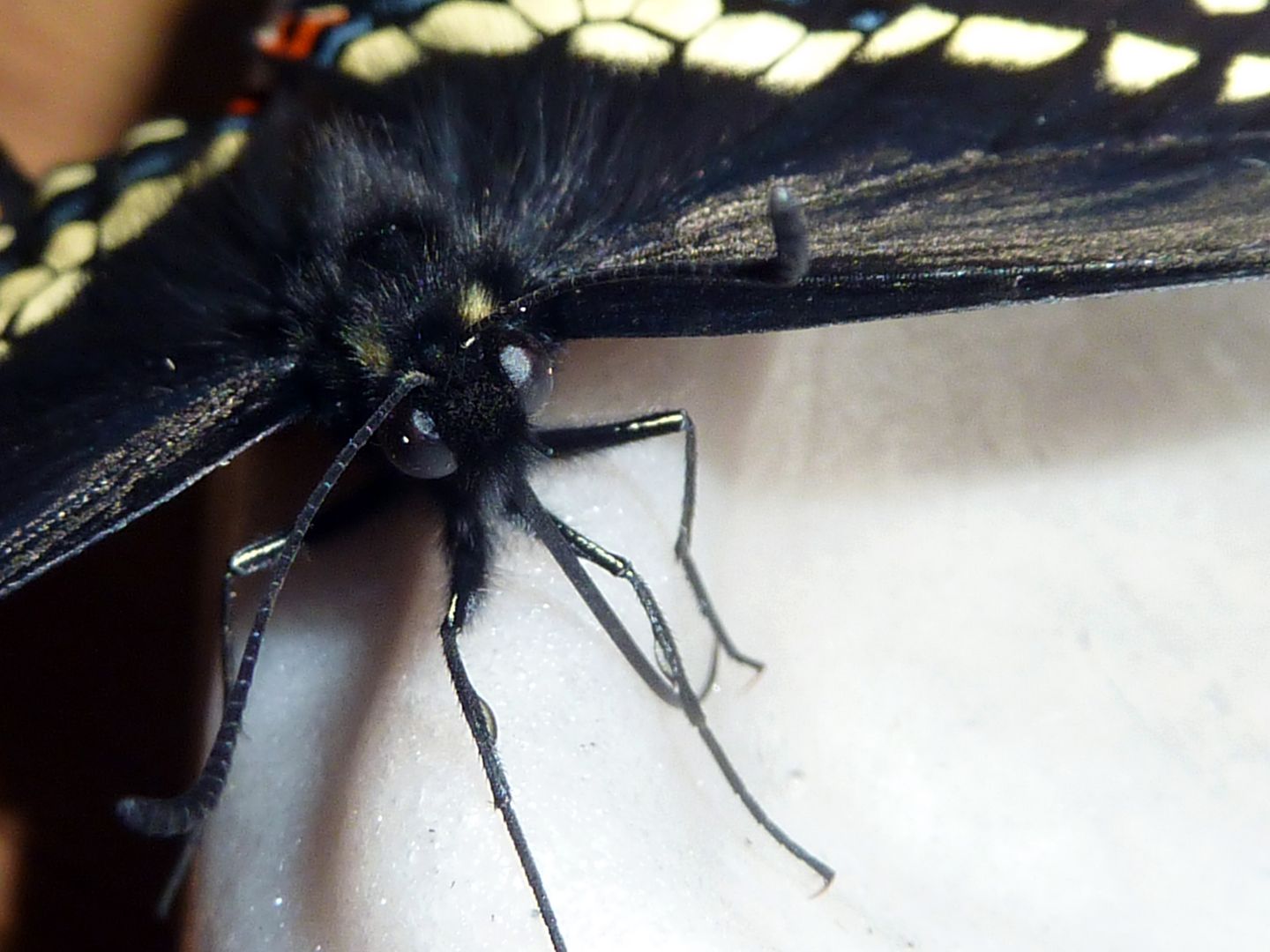
Her wings weren't quite stiff enough to fly off so she took to being placed in the sun real well. You can get in nice and close, at least as much as my camera would allow.
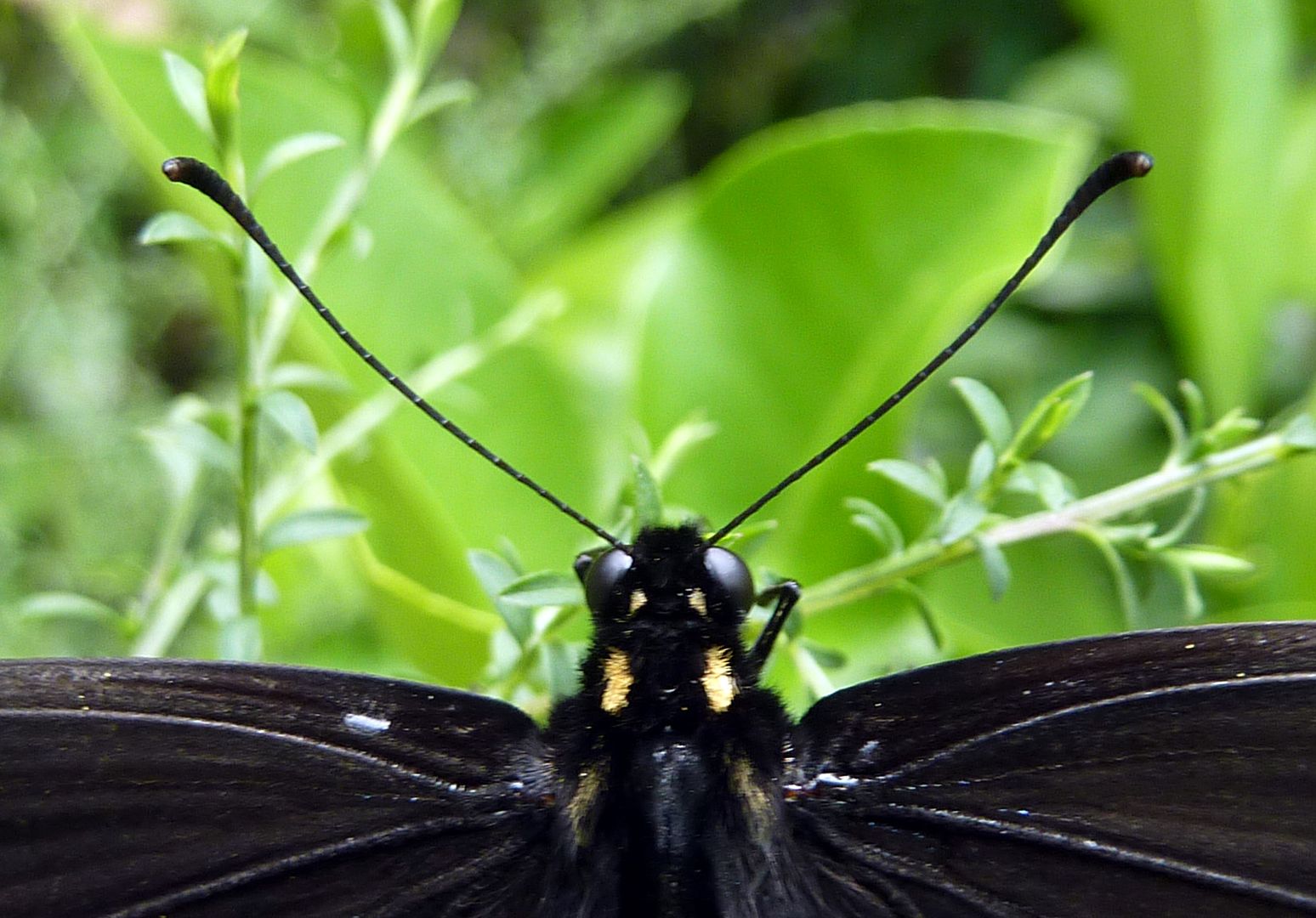
I know some photographers have lenses that let you zoom in on the eyes.
More to come, though there's a possibility some might hatch out as parasitic wasps.
This year I kept them stored outside in the green house for shelter. It was left open so the temperatures didn't fool them into emerging too early as it did last year, (had them emerging in February). This year I think the timing is more correct. I'm seeing Mourning Cloaks flying about and the host plants Golden Alexander has plenty of foliage for caterpillars, (though they sure love parsley and fennel more).
I like handling them at this stage because they're easy to pose on plants and flowers. I didn't quite do a good job here though. It's a little unrealistic that they'd be on a native plum but I suppose anything's possible.
Her wings weren't quite stiff enough to fly off so she took to being placed in the sun real well. You can get in nice and close, at least as much as my camera would allow.
I know some photographers have lenses that let you zoom in on the eyes.
More to come, though there's a possibility some might hatch out as parasitic wasps.
This year I kept them stored outside in the green house for shelter. It was left open so the temperatures didn't fool them into emerging too early as it did last year, (had them emerging in February). This year I think the timing is more correct. I'm seeing Mourning Cloaks flying about and the host plants Golden Alexander has plenty of foliage for caterpillars, (though they sure love parsley and fennel more).
Monday, January 6, 2014
2013 Best of Butterflies
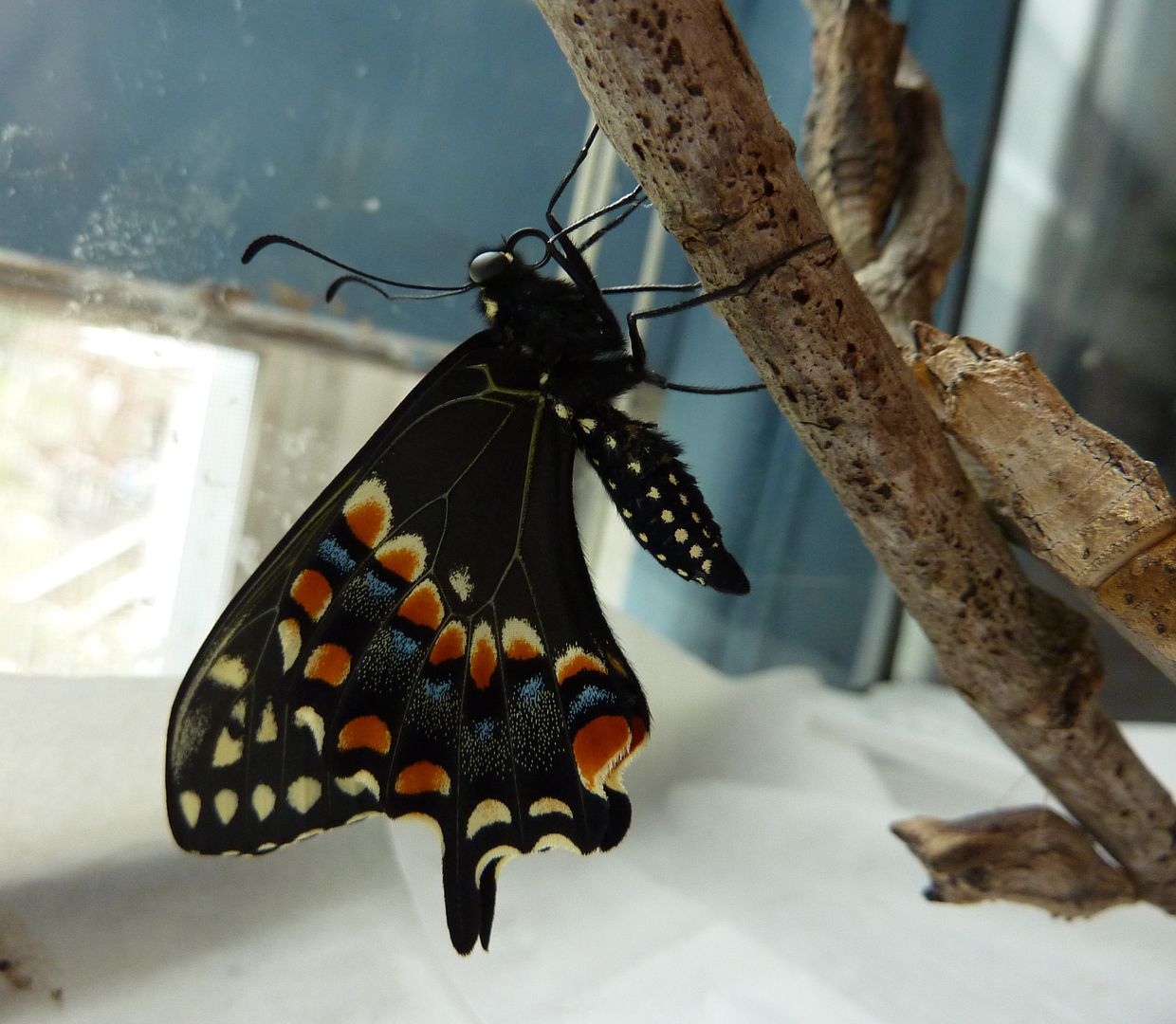
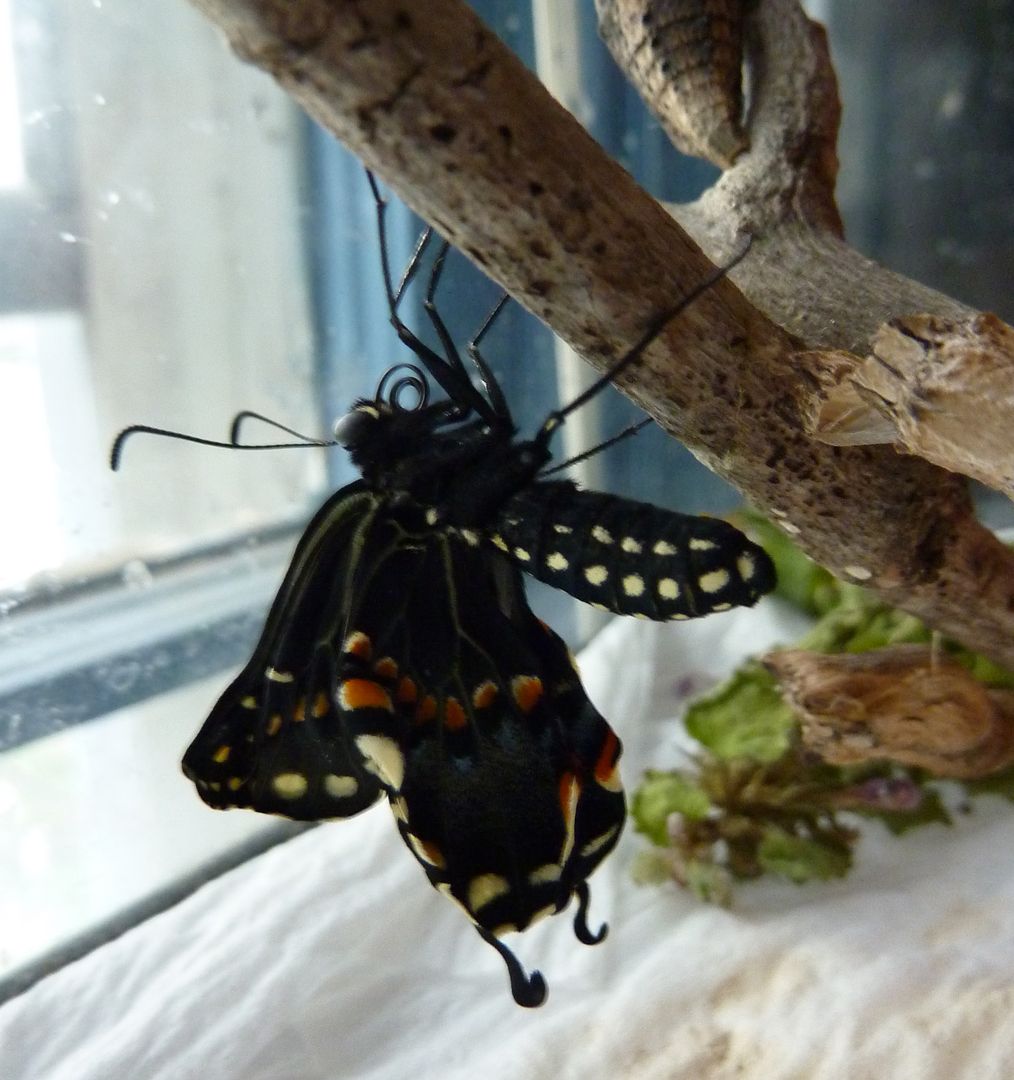
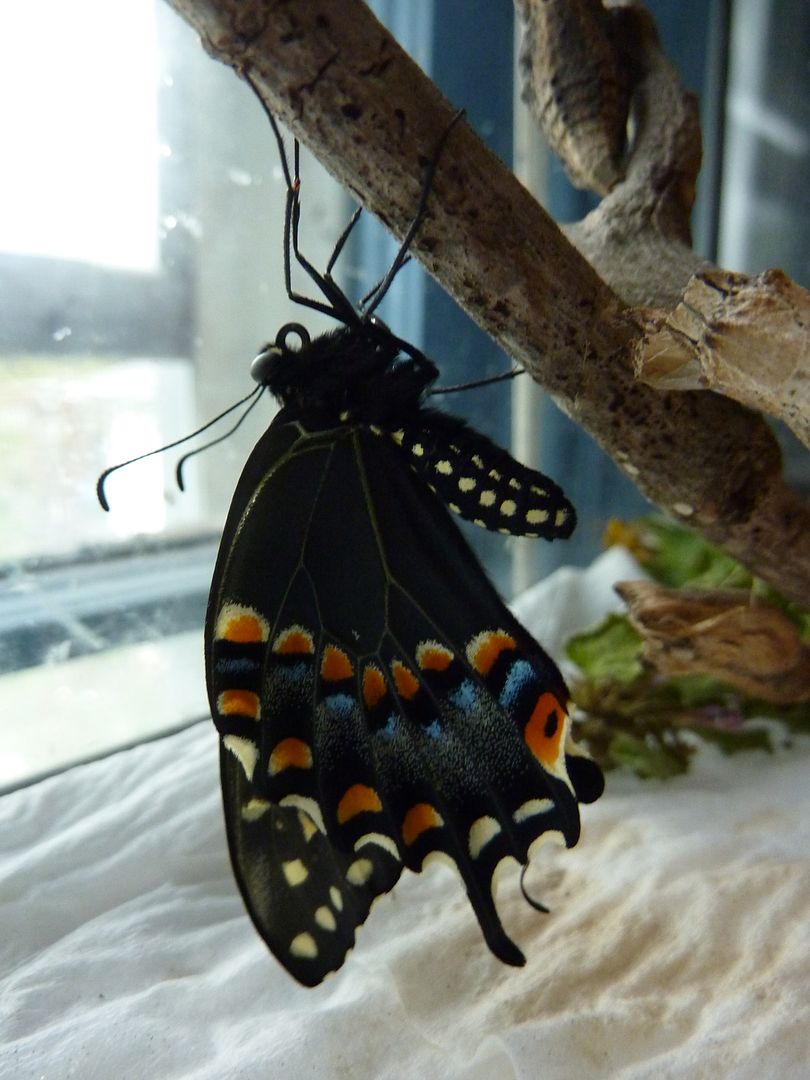
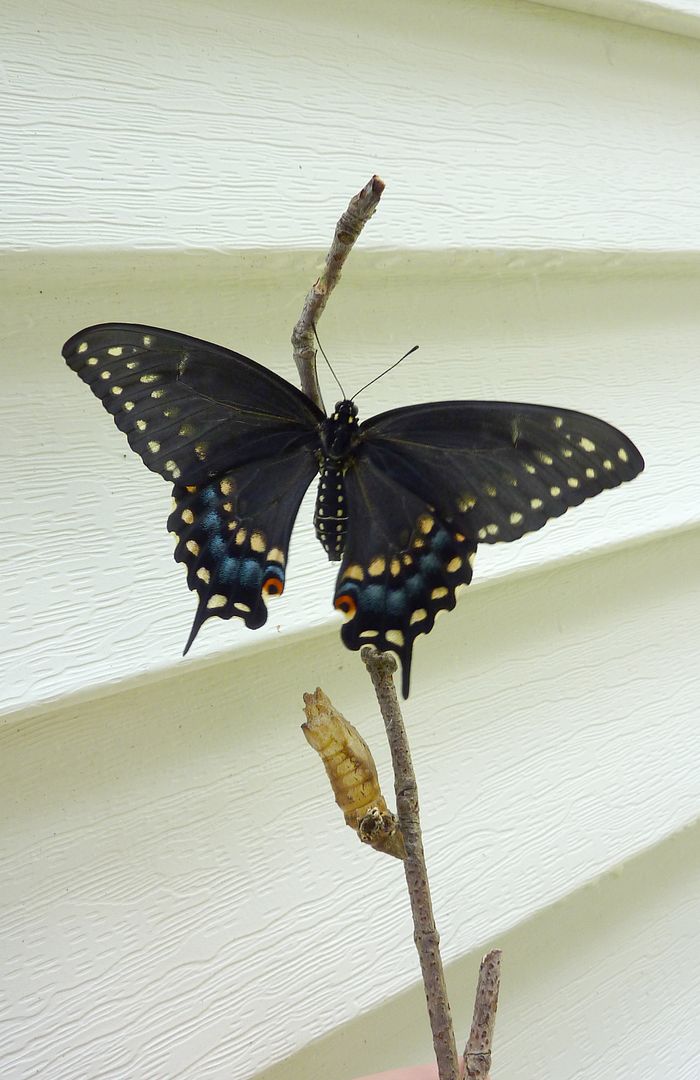
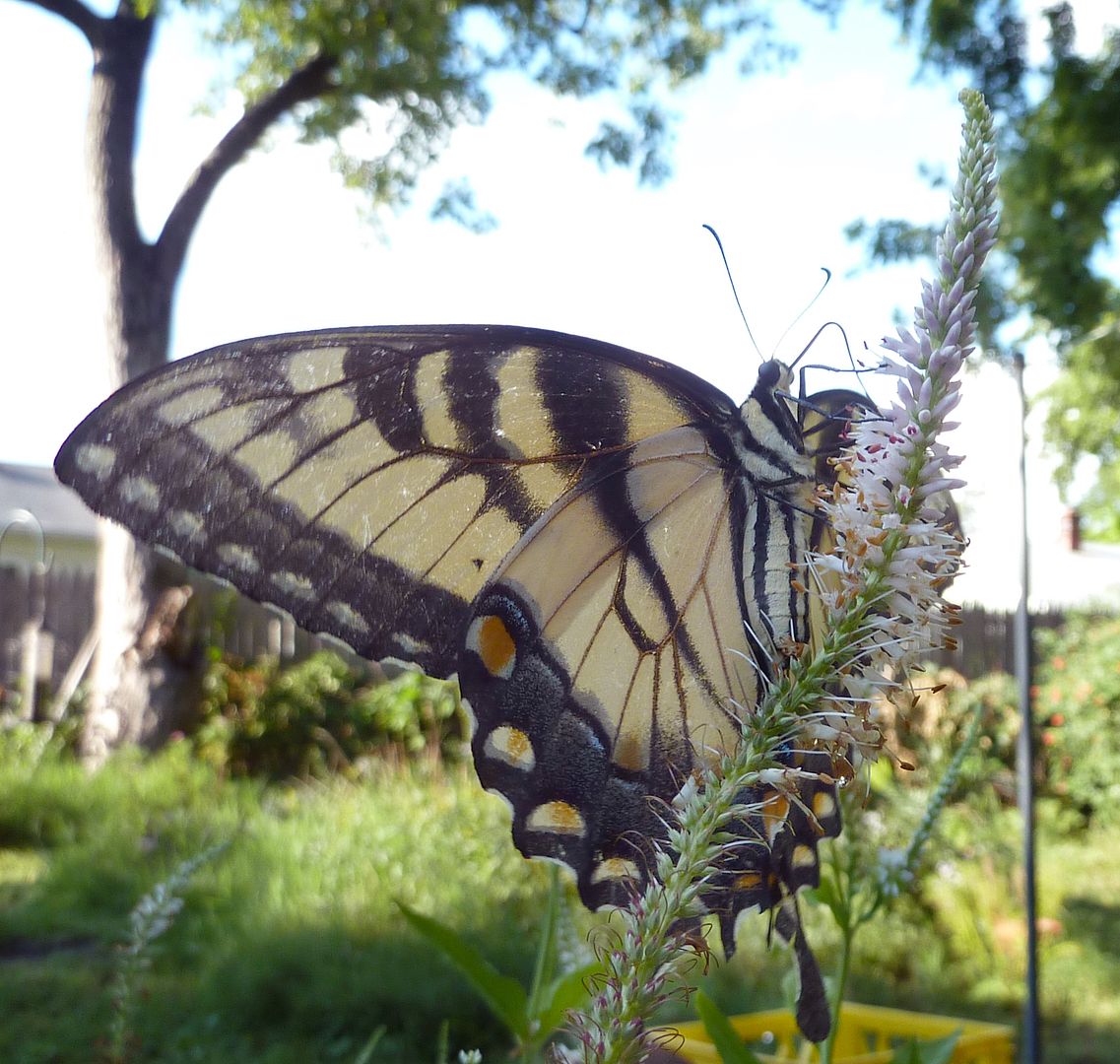
From the previous year, my butterfly season started with a series of Black Swallowtail Chrysalises over wintering in a cage I kept down in my basement. Well one emerged prematurely which lead to this shot.
Over the next three months as they hatched out, I did start letting them go. Despite this though I am sad to report that ended my experience with Black Swallowtails for the year. While I'm sure some of them survived, none of them returned to my garden to lay eggs or even pay me a visit.
Now I don't think I did anything particularly bad. Even around carrot farms this species is not considered a pest. For whatever reason they just don't spread dramatically in huge numbers.
I found this Silver Spotted Skipper Caterpillar nestled on my False Indigo tree. It's a new plant I'm trying out, which will hopefully flower this year. Sadly I think a bird ate this little guy.
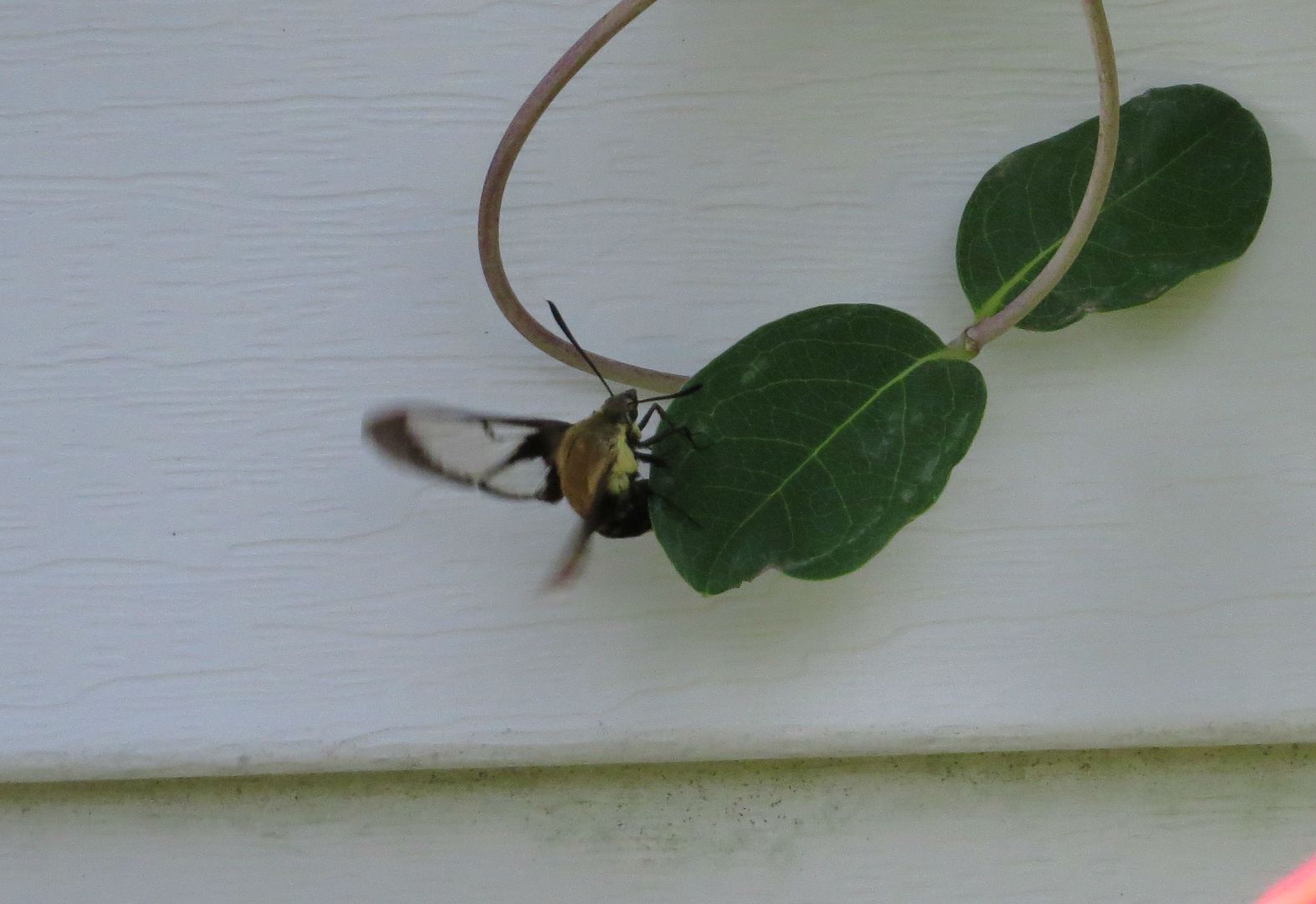
Hummingbird Moth laying eggs on my Coral Honeysuckle.
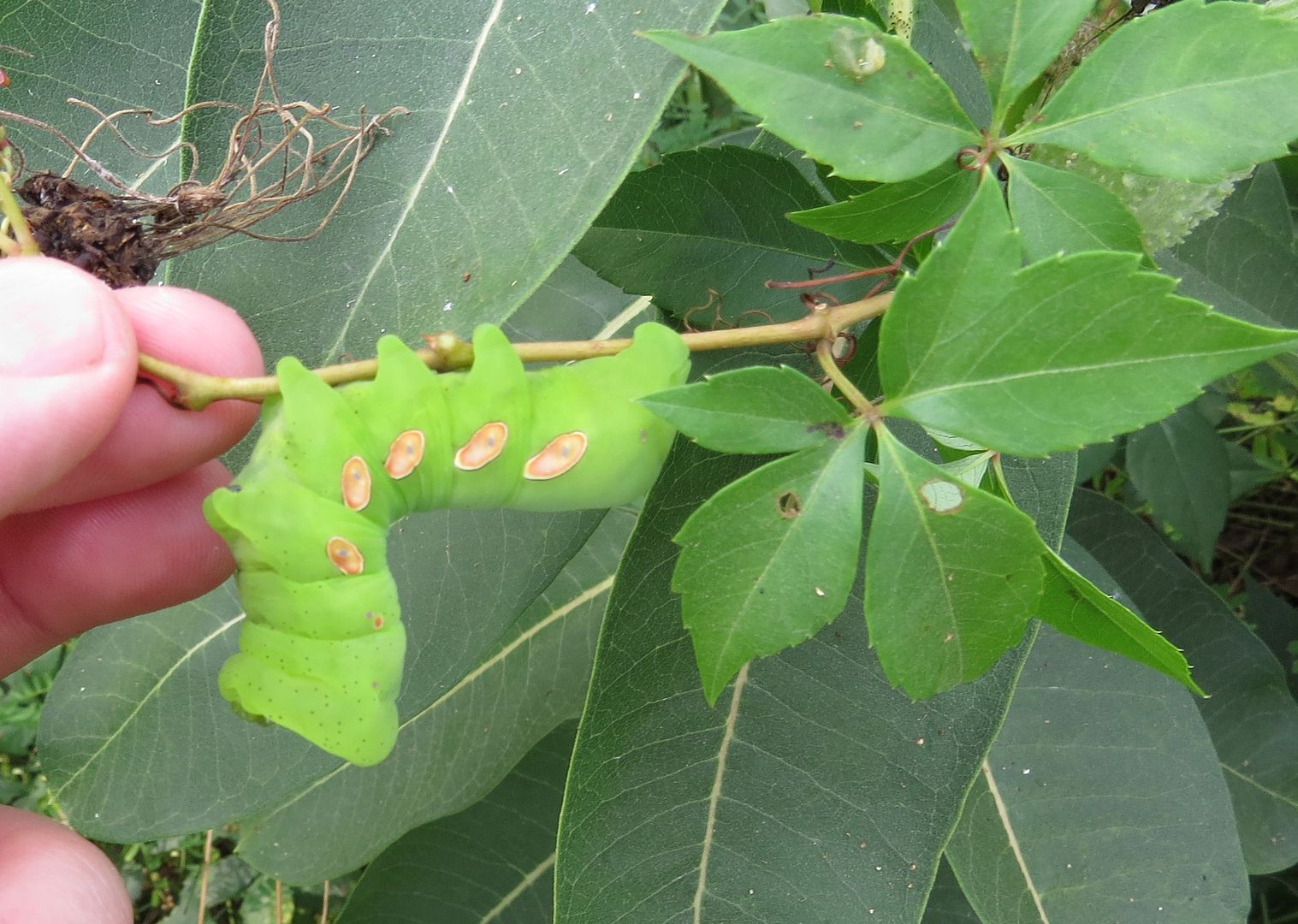
A Pandorus Sphinx nibbling on Virginia Creeper. I had no idea these caterpillars were this enormous.
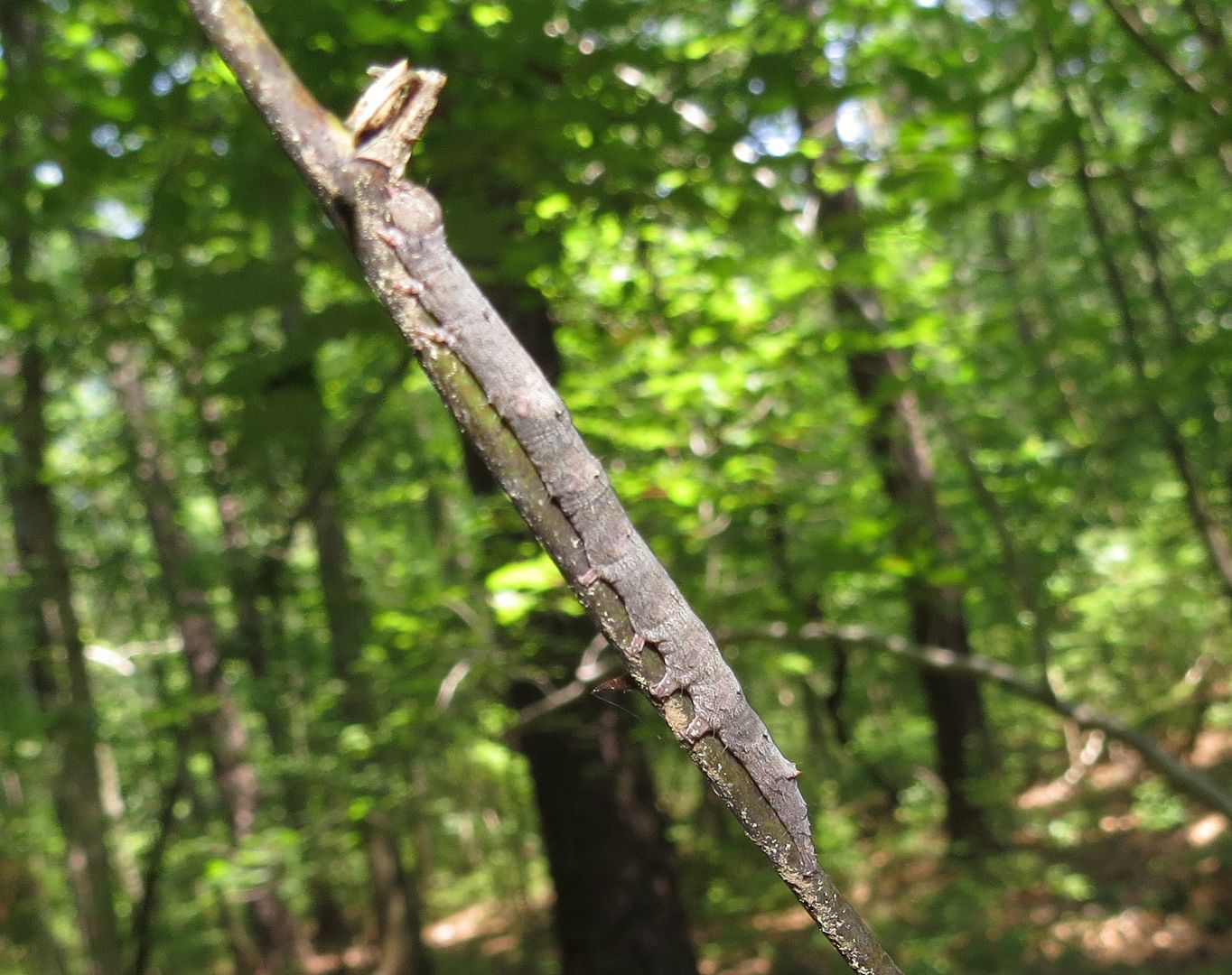
I don't know the name of this one but if I recall right they can spray acid if you disturb them.
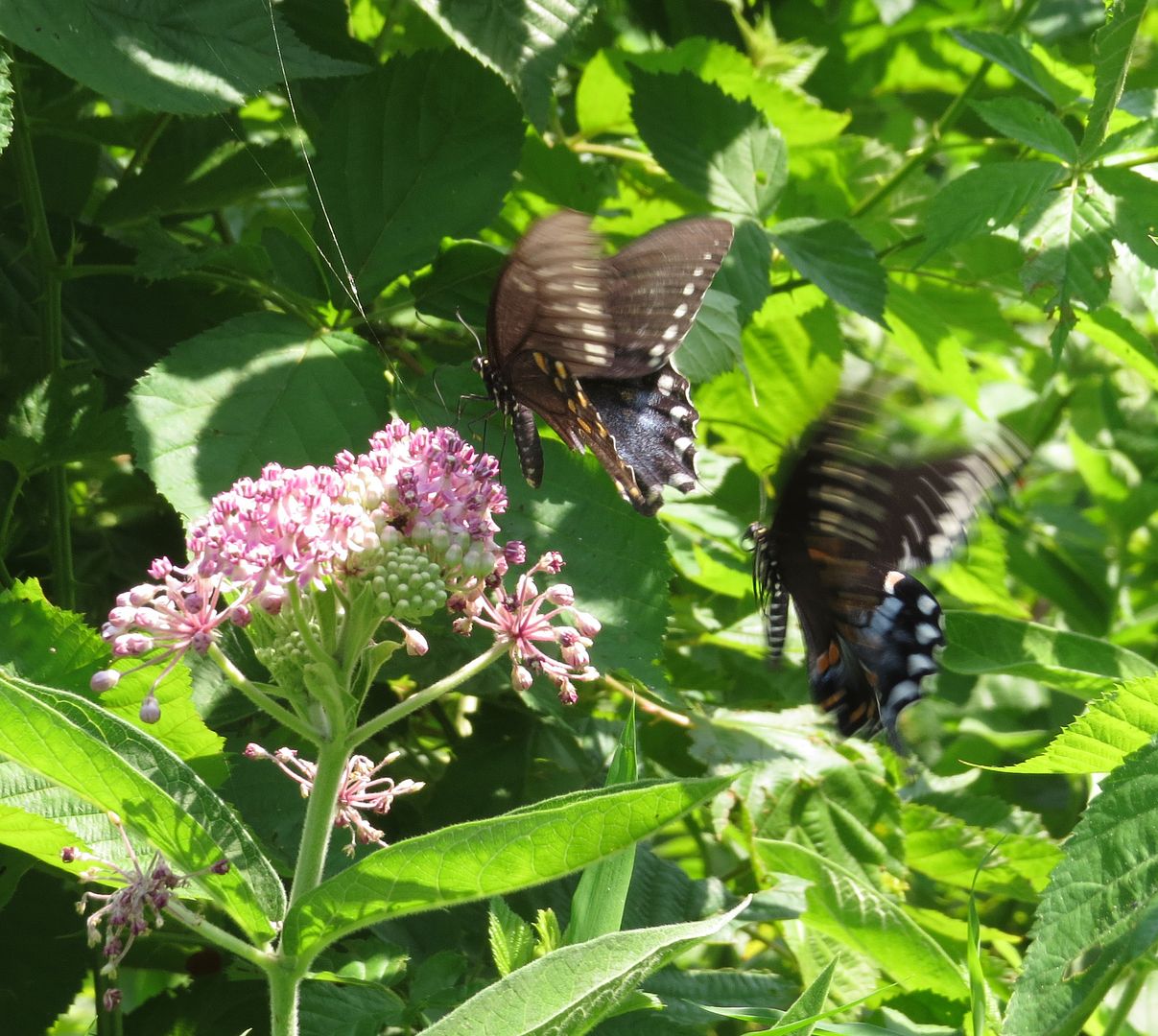
A Spicebush Swallowtail sipping at some Hairy Swamp Milkweed. Note the missing orange spot under the wing, how it's replaced with just the blue smear. This species mimics the Pipevine Swallowtail which is poisonous for birds to eat. Despite this ability, it seems the Pipevine Swallowtail doesn't need to be around to have decent Spicebush Swallowtail populations. I'm told though when the Pipevine Swallowtail is around that it benefits all the other species of black butterflies that mimic them.
There were about six of them zooming around this milkweed patch.
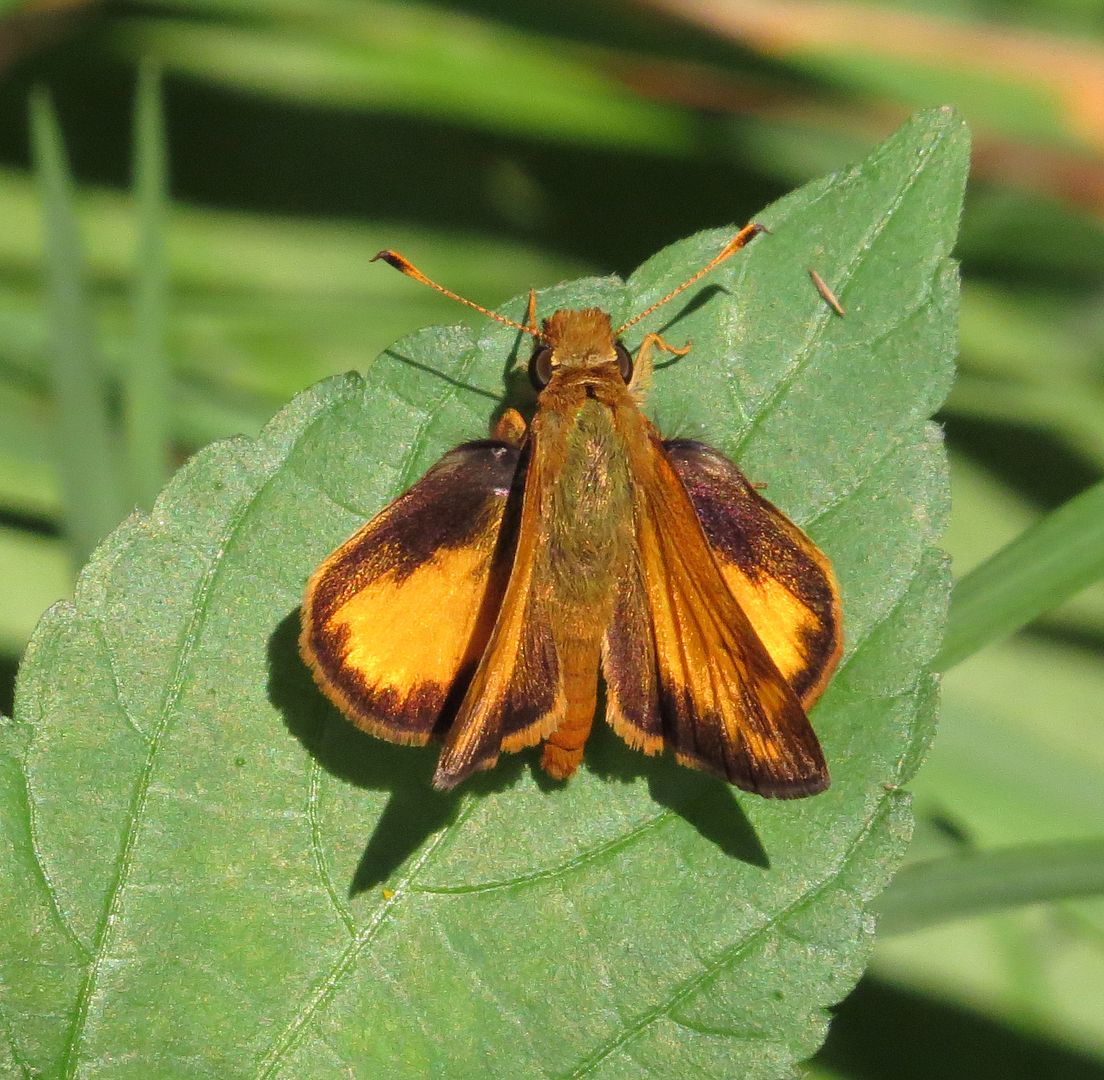
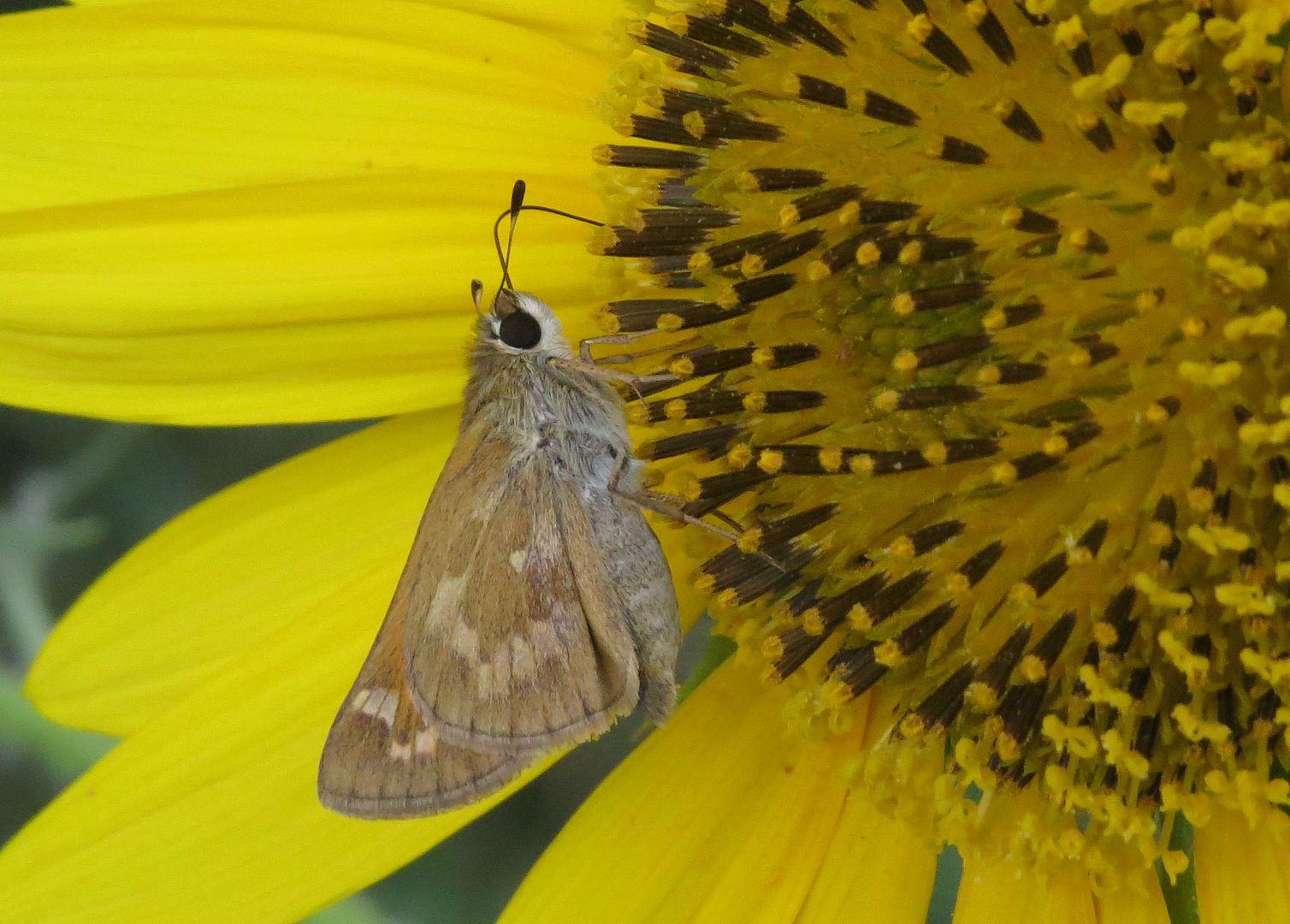
One of these days I need to figure out which of the random grasses in my yard is supporting the skipper population.
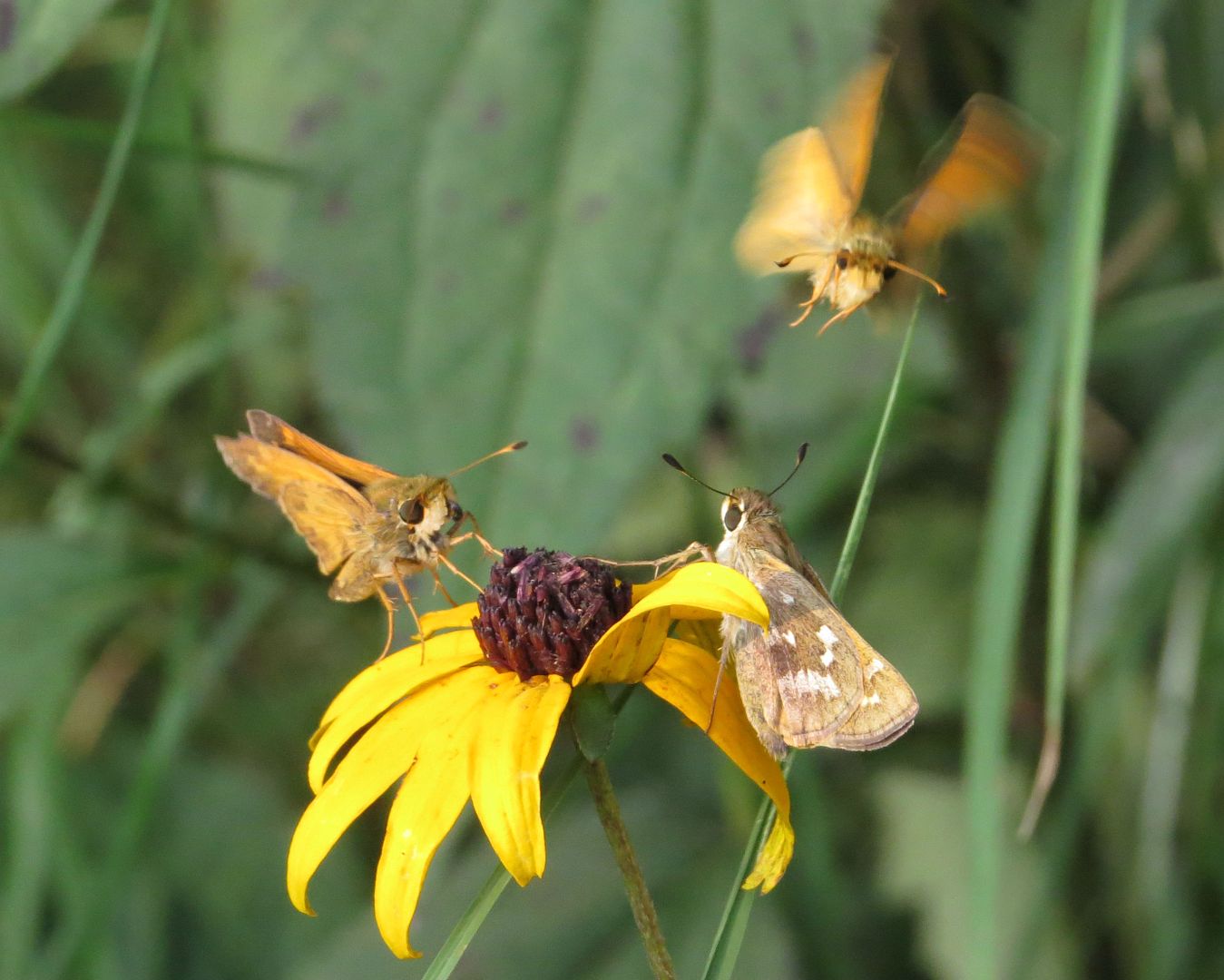
Every autumn, I'm suddenly blessed with droves and droves of skippers.
And they absolutely loved the Rudbeckia of all things!
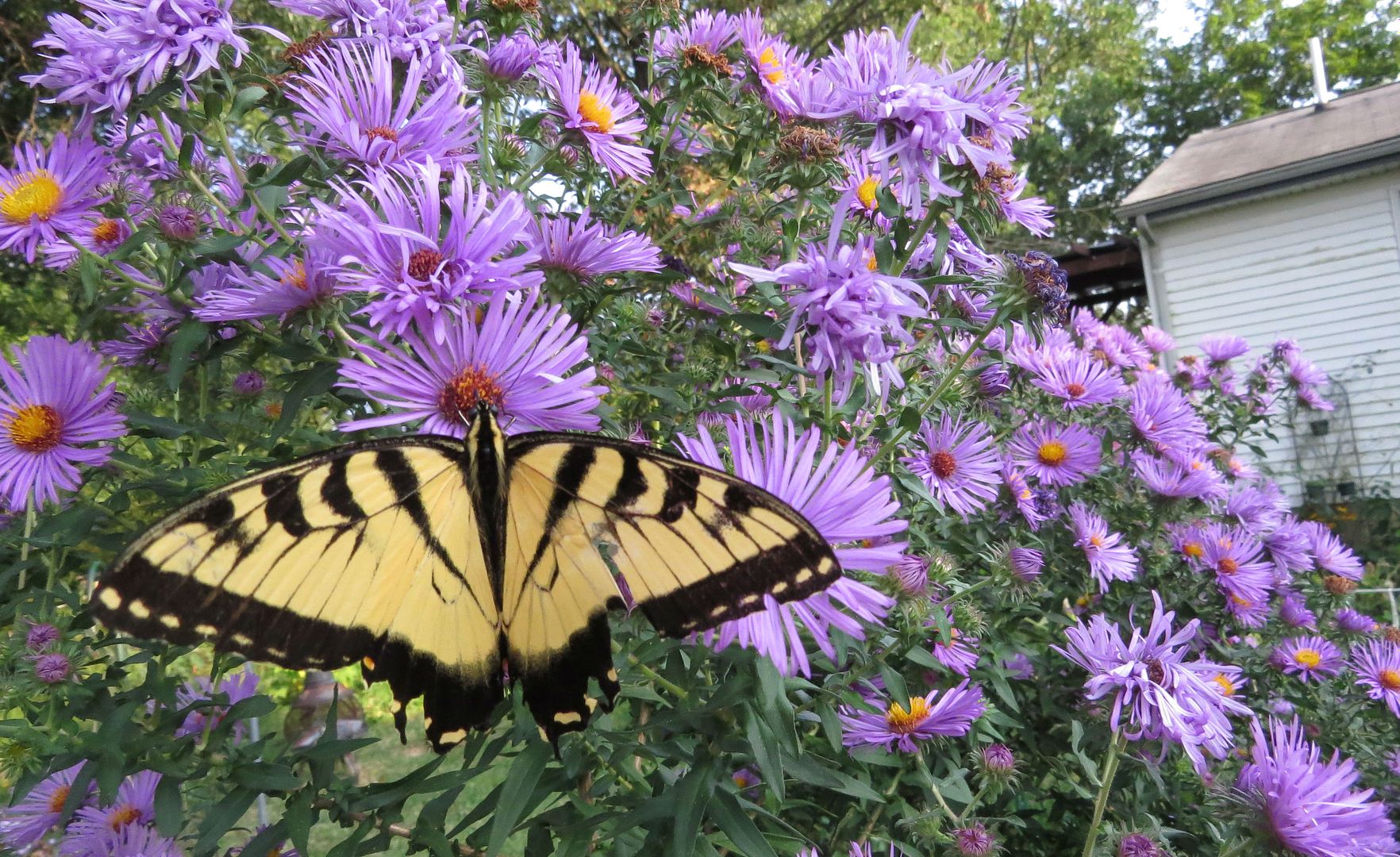
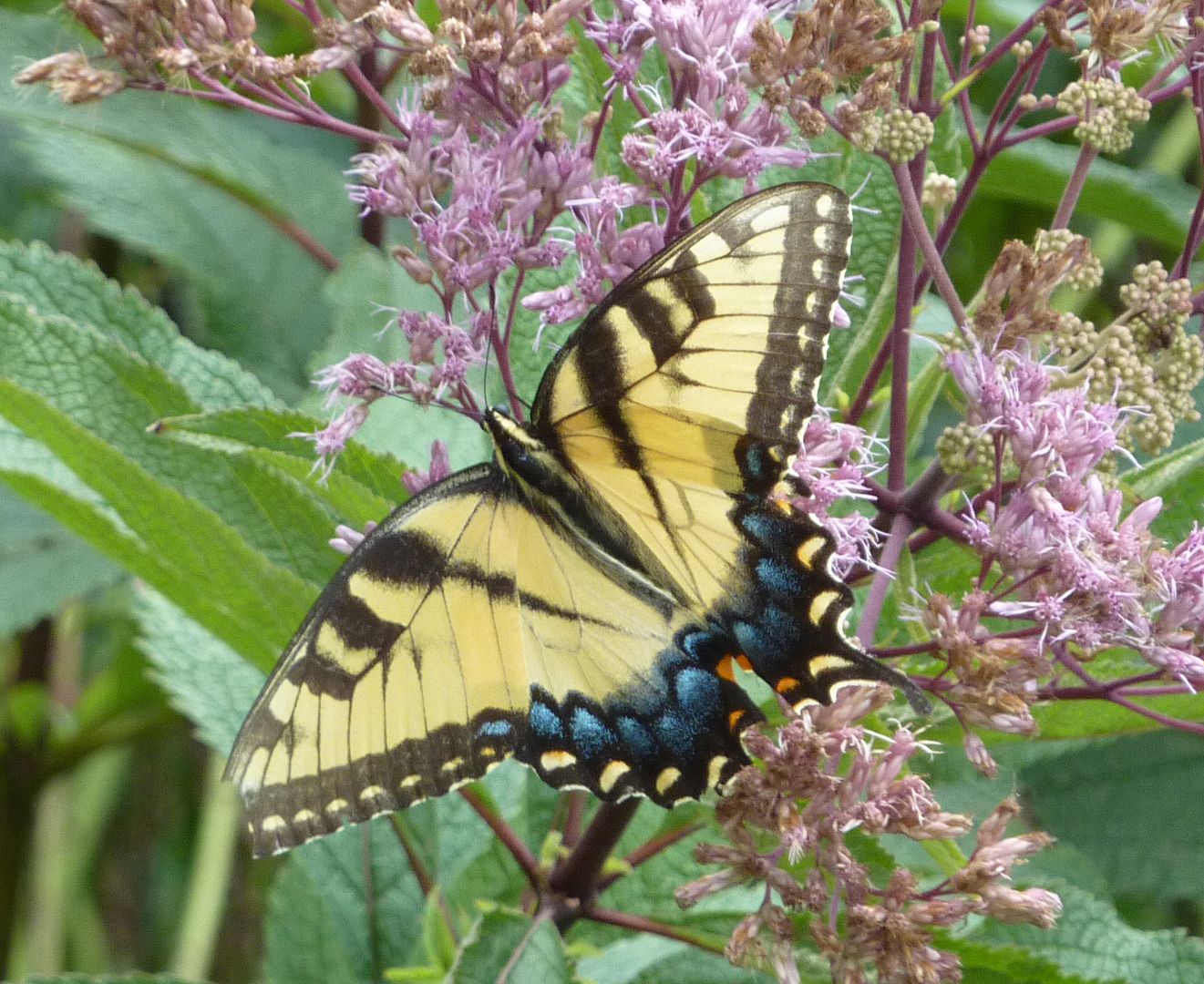
New England Asters I'd have expected to be the bigger hit, as it was with everything else. But not the skippers, they worked the Rudbeckia until it stopped blooming. Very strange. Any who this is a Tiger Swallowtail, male judging from the lack of blue along what I call the tramp stamp.
Monarchs! This was an awful year for them. Years ago when I started doing this (back in 2008 maybe?) I planted Swamp Milkweed and with in a few weeks there were Monarchs, not only having sex on the lawn but laying eggs all over the milkweed patch. I had caterpillars all summer long, and witnessed one emerging from its chrysalis. It's actually that moment that brought me tears that I was really hooked on this whole native plant thing. But this year tragically I didn't see a single one in my garden.
It wasn't until I took a trip to Cape May with a few friends that I really saw them this year. There were stands of Seaside Goldenrod planted all along the beach specifically to help the Monarch migration. While I saw a few dozen flying around it really wasn't enough to give me any sort of hope that their population was doing well at all.
I know that they're by no means endangered. It's simply that the population that migrates through the eastern half of North America will be lost. They're doing okay out in California, apparently there's a population that migrates through South America as well, but what a shame it would be to never see the butterfly that inspired me to garden to ever flutter through my yard again.
Friday, June 7, 2013
Better Late Than Never
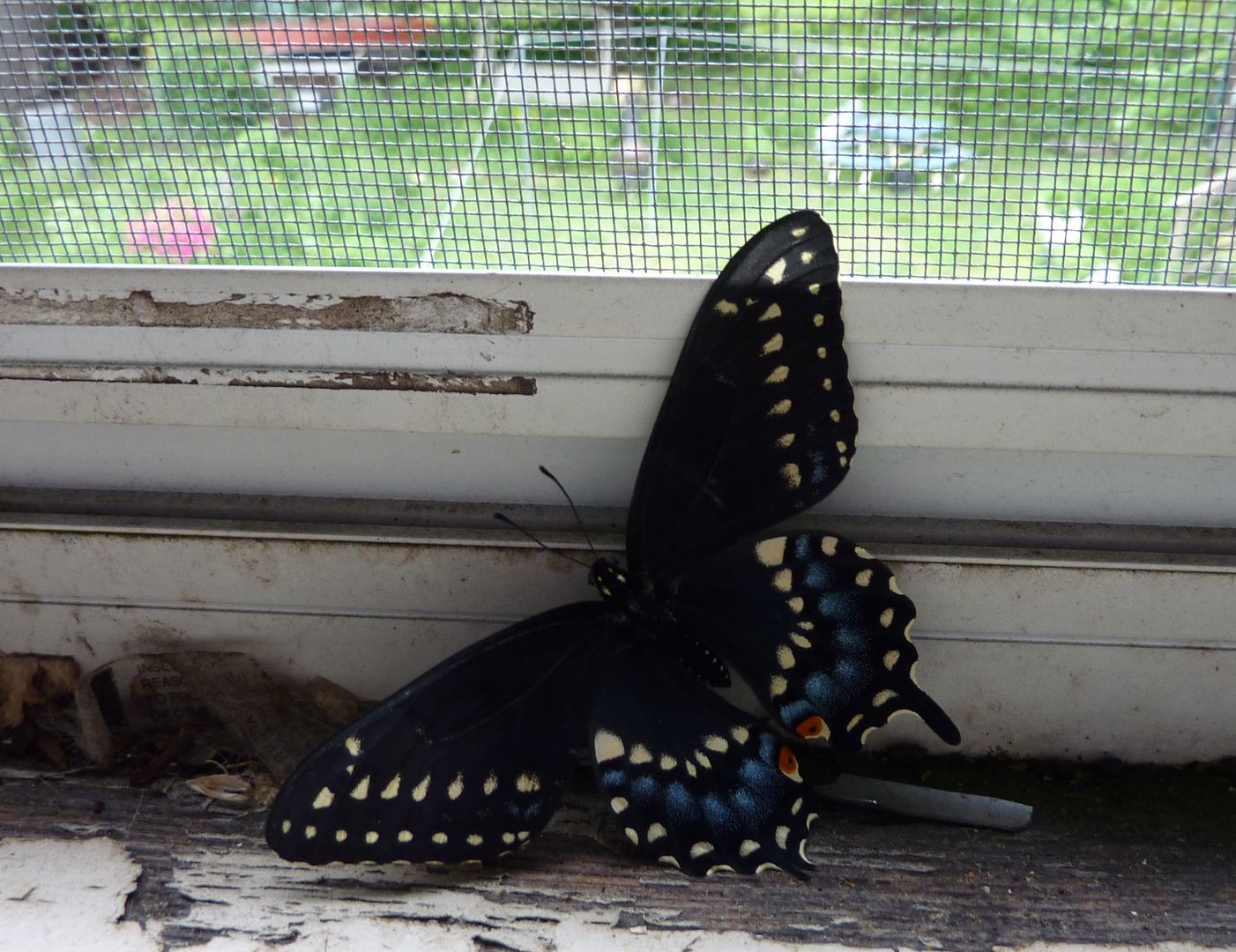
So in the midst of a flood warning on a day that's forecast to be nothing but rain, I come home to find my green house flooded at least four inches and rising, I then discover that the last Black Swallowtail decided to emerge...
Assuming there's clear skies in the morning, I'll be releasing her into the meadow.
Friday, May 17, 2013
One Last Black Swallowtail Emerges
Well that's it for Black Swallowtails I think. This is but one chrysalis left but I'm not sure if it's alive, or waiting until next year to emerge. Whatever the case I'll be putting the last one out in the garden.
Tuesday, April 30, 2013
Another Butterfly... again...
Alright, second girl. This is starting to get old and less eventful. I count two left to emerge and then hopefully I'll be able to get some caterpillars going after that. Releasing these into the wild my backyard typically results in them sunbathing (as seen above) and then taking off and flying away.
Thursday, April 25, 2013
More Black Swallowtails Emerge
It's a Boy!
It's a Girl!
Yes so after four boys I finally get a girl in the bunch. Makes sense, mason bees kind of do that too. What also makes sense is that her wings are so much bigger. Generally I've been learning that the males to most swallowtails just hang out where they were born, whereas females do all the gene spreading and flutter off to new patches of host plants.
Sunday, April 21, 2013
Black Swallowtail Release
Alright, I'm throwing in the towel. I tried feeding it sugar water, two flavors of Gatorade at room temperature, and a bouquet of cut flowers, and still he refuses to eat. Finally I brought him outside and put him on various things flowering hoping he'd do something, but frankly he's too weak to fly. I let him go. He was on a flowering tree a while, I left to plant some things, and then he vanished. So either he flew off, or a bird got him.
Friday, April 19, 2013
Swallowtail Number Three Emerges
Good Morning!
The third Eastern Black Swallowtail emerged today. And unlike the second, his wings are perfect. I've since lined the bottom of the tank with tissue paper. While it felt clean to me, the second one's wings were apparently delicate enough to still get stuck on the trace amounts of stickiness. His wings were so messed up that he wouldn't stop trying to flap them and tragically he ran out of energy by the second morning.
I'll be feeding him room temperature Gatorade, once it gets to be room temperature that is. And hopefully this one will live long enough for me to release him into the wild. It's going to storm here later today and possibly tomorrow morning so hopefully he doesn't mind being cooped up a day or two.
Wednesday, March 20, 2013
First Black Swallowtail of Spring Hatched
It's the first day of spring (03/20/2013) and appropriately enough the first of the Black Swallowtails has emerged from their chrysalis. The generation that over-winters tends to be smaller than usual, I suspect because more of the energy goes towards sustaining the adult through the winter. This one is a good inch or two smaller than they are typically over the summer, even for a male.
![]() |
| Black Swallowtail - Winter/Spring |
![]() | ||
| Black Swallowtail - Summer |
Now, once again we've relied on the weather forecasts of a clearly defective groundhog and it's abilities to predict when spring will happen. (I'm sure the groundhogs of Hawaii and Alaska aren't half as bad as Punxsutawney Phil, whose track record is worse than flipping a coin.) Needless to say it's still cold here and I'm keeping them inside. I'm told they can be sustained for about 6 weeks indoors when fed sugar water. My friend tells me she hears anywhere from 1:3 to 1:10 ratio sugar to water.... which isn't helpful so I'm trying 1:4 and will be providing them a source of salt in a day or so.
I haven't decided how yet. Everything I read tends to be writing about an open feeding yard setting. But how much does one butterfly need and is it safe to feed them raw salt? I guess I'll have to find out.
I have parsley growing now but perhaps most interesting of all is that they occasionally use Citrus as a host plant... and I just bought a Mayar Lemon and Key Lime tree in the basement. The parsley in the garden had green growth all winter, and the Golden Alexander has pushed out several inches of growth since January ended. So even with all the cold, I have plenty of options.
Saturday, March 2, 2013
Eastern Black Swallowtail Winter Update
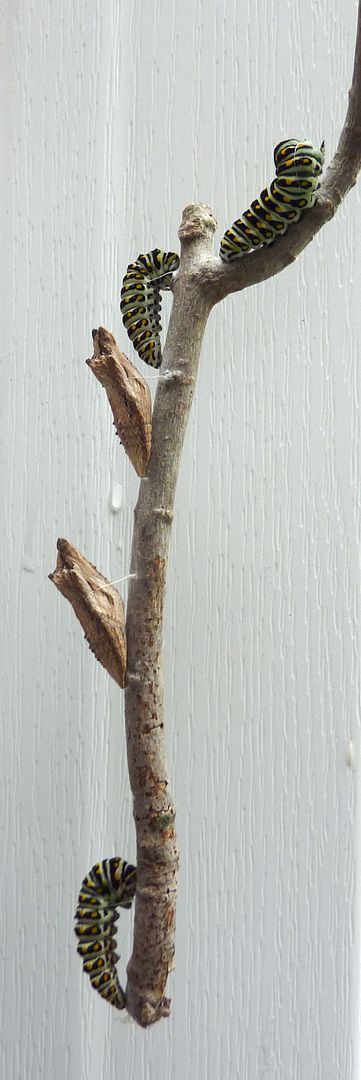
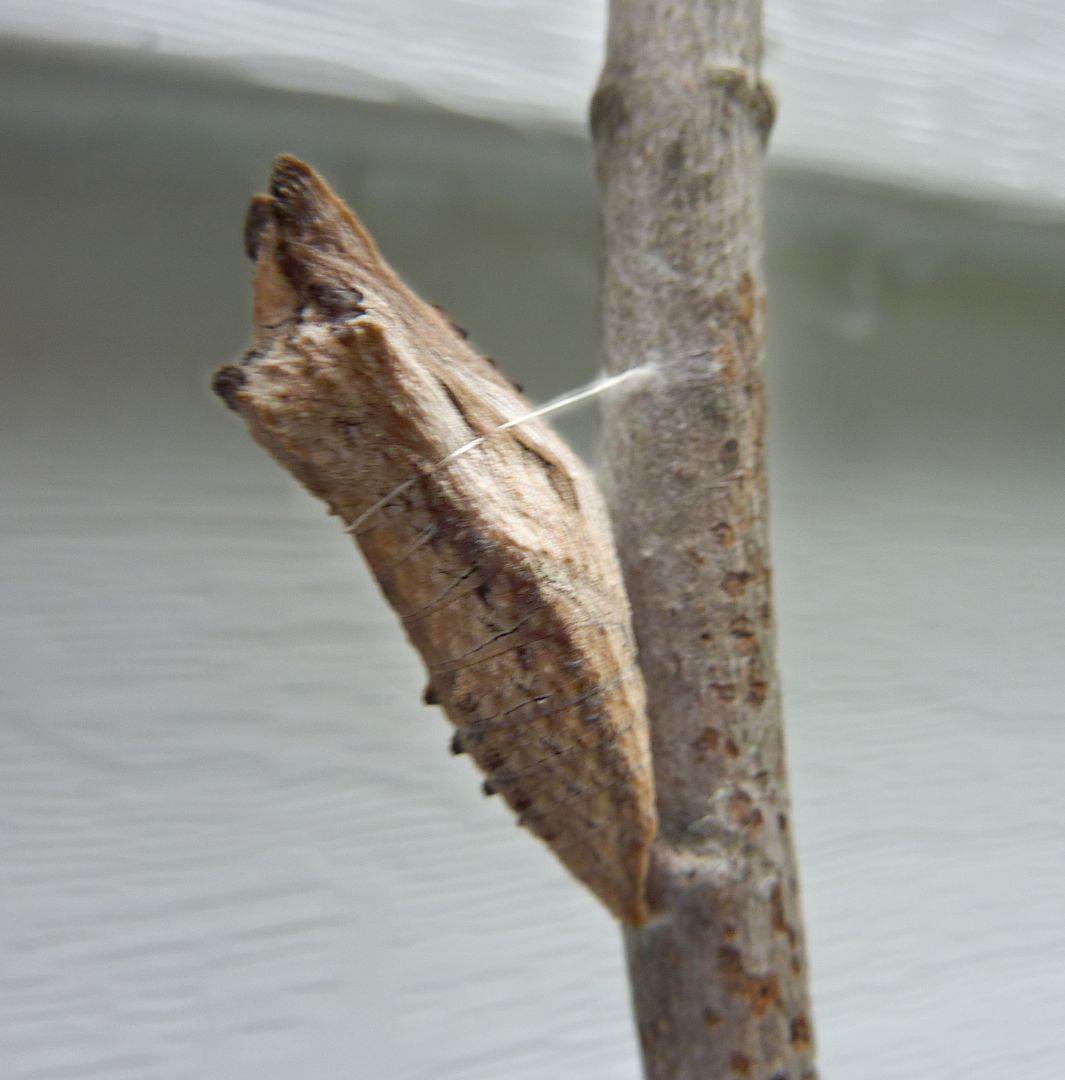
This past year I was able to raise 9 Eastern Black Swallowtail caterpillars in a screened cage. They over winter as a chrysalis and hatch out sometime in late winter or early spring right in time to get another generation of butterflies going again. They're stored in our basement which is freezing cold, along with my mason bee nest blocks, which I should be cleaning off and treating for mites and such but ... oh well.
Saturday, December 15, 2012
Best of Butterflies 2012
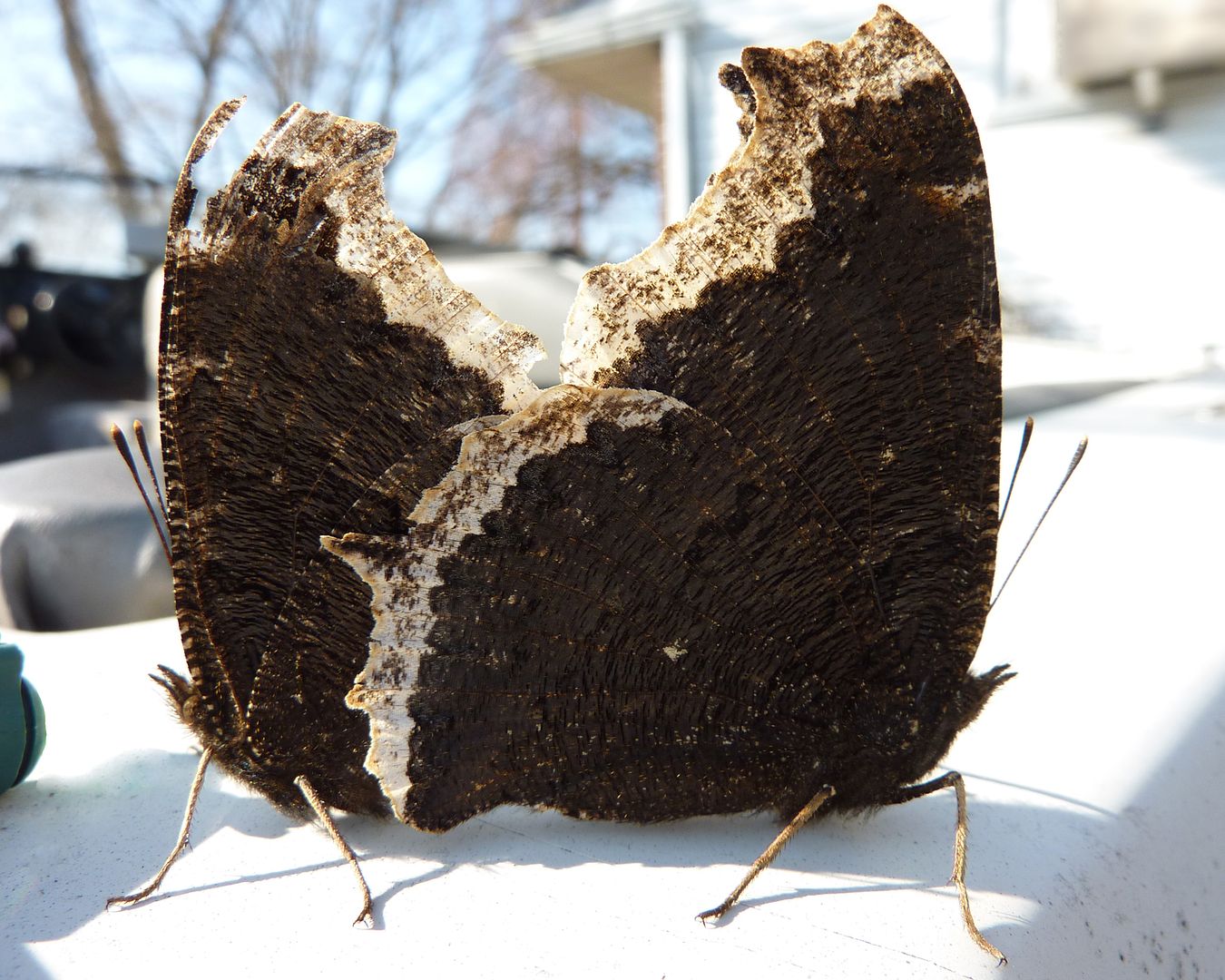
The first butterflies I encountered this year was a mating pair of Mourning Cloaks. Apparently this is the way to take pictures of them because all my prior attempts caused them to zip into the air at speeds thought to be impossible by most butterfly standards. The two were happy to move onto my finger and I was able to position them around as I liked. It's always nice to find nature being cooperative.
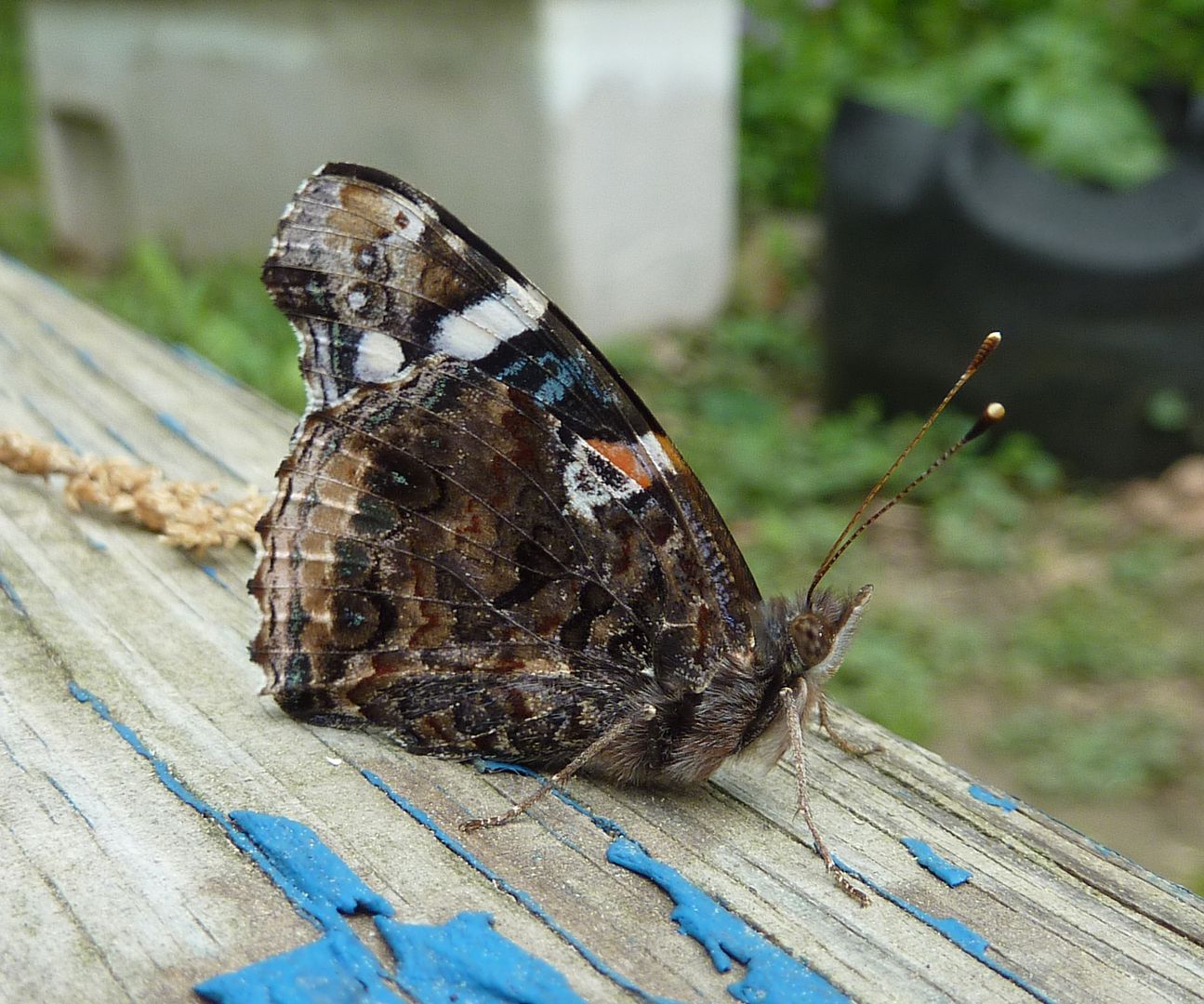
Red Admirals are another butterfly I'd struggled to photograph and I've yet to get one with their wings open.
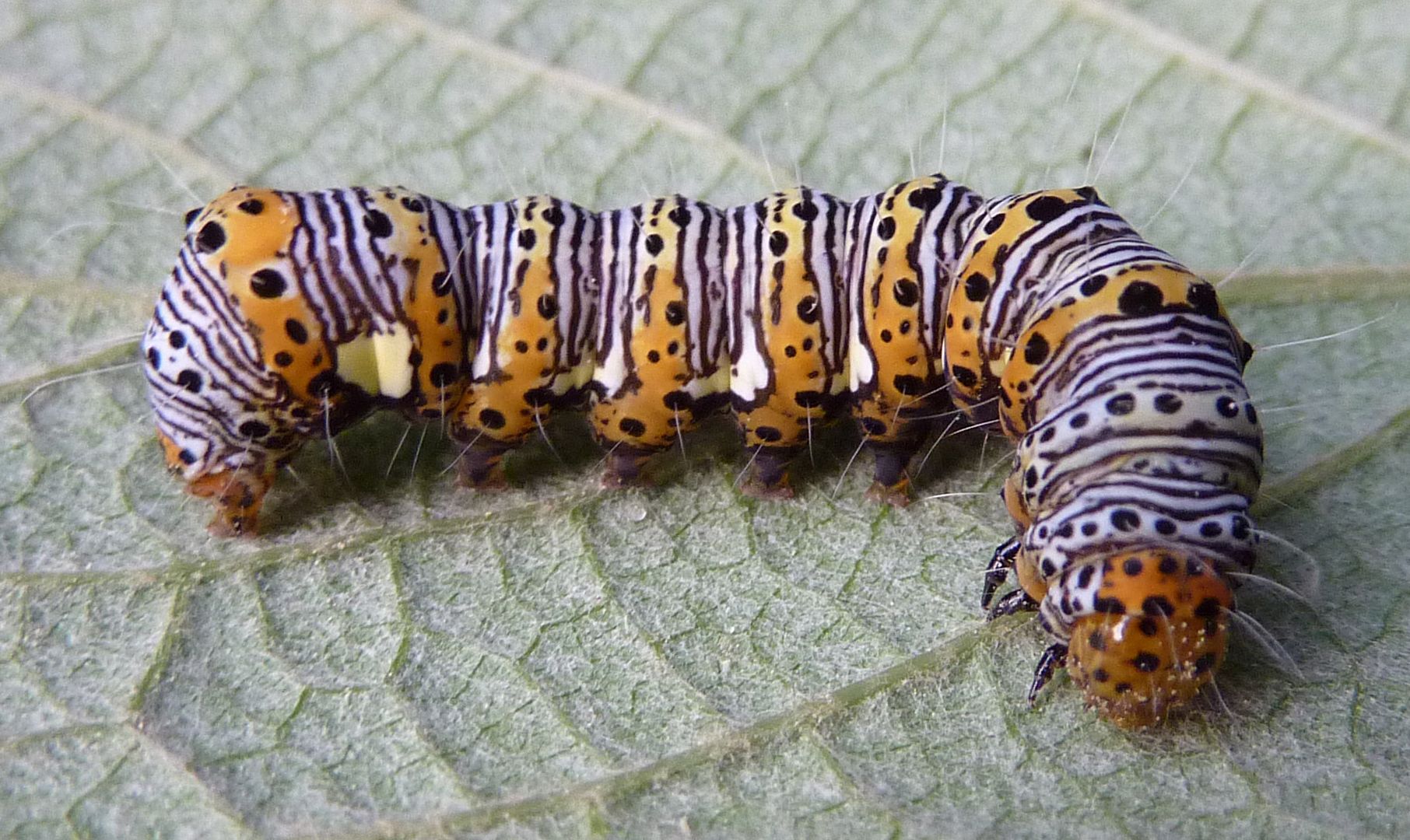
Nothing butterfly related really happened again until the summer when I noticed some unusual chewing on the grape vine. Eight-Spotted Foresters turned out to be the culprit. They're tricky to find because disturbing the host plant in any way causes them to abruptly drop via silk lasso where they're quickly lost in the grass below.
There was an Abbot Sphinx on there too but unfortunately it vanished a few days afterward. That's a shame because they eventually get coloration to mimic a snake with one-eye.
Never got this one ID'd but it was eating the asparagus. I believe it's some sort of Owlet which narrows it down to a few hundred candidates.
Probably the most faded Red Admiral I've ever seen. They're normally black and orange. (This is a Red Admiral right?) I'm not counting this as getting one with the wings open just from what an awful condition its in.
Sulphurs are one butterfly I've been trying to attract more of, namely by planting Wild Senna, but I've found these plants need more moisture than most of my yard can offer. False Indigos are far easier to grow but they're not as often used by this butterfly. I did throw out some Wild Senna seeds but none of them germinated this year. Hopefully they'll do so this spring.
Black Swallowtails were the more recent visitor of the garden.
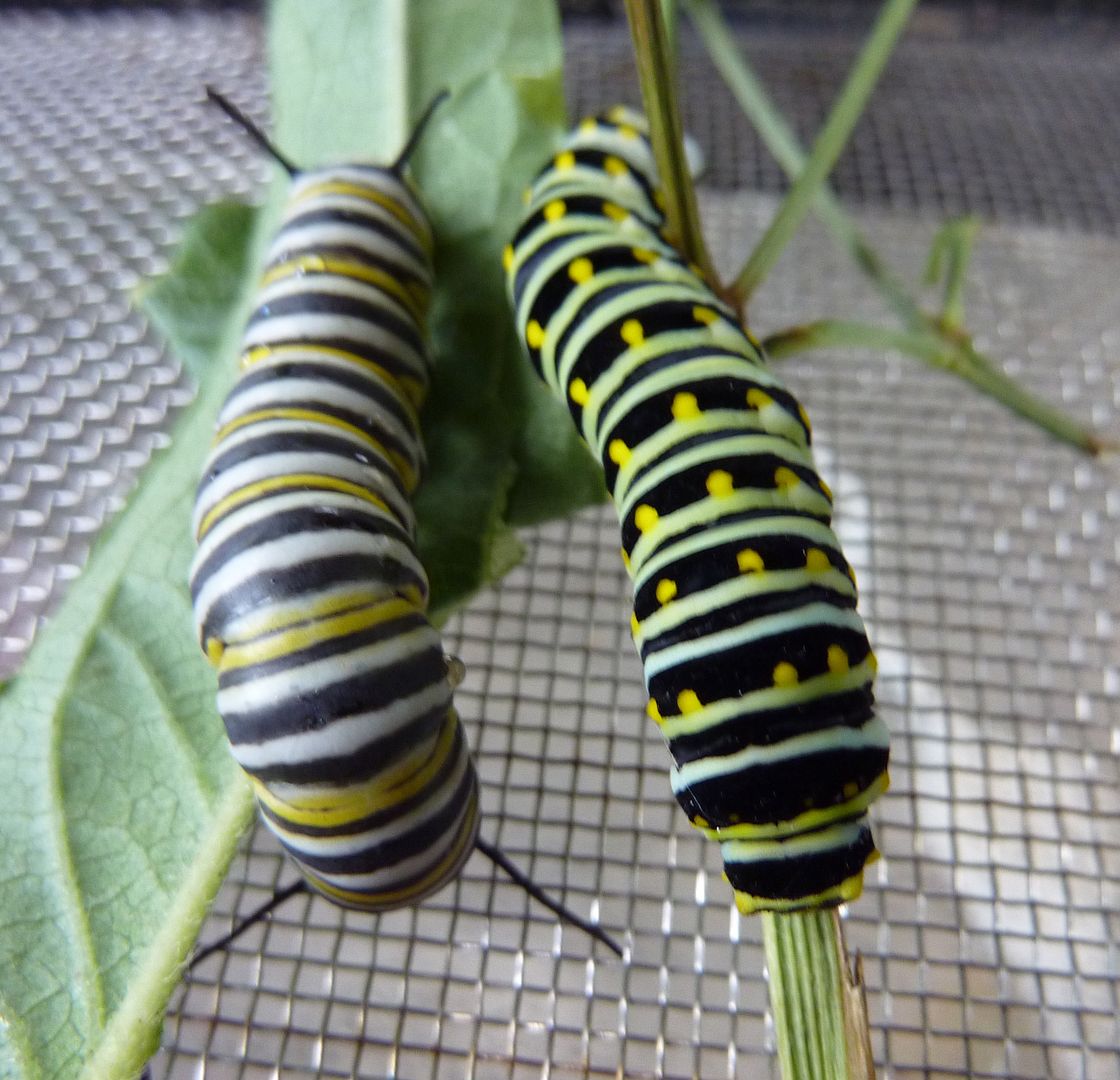
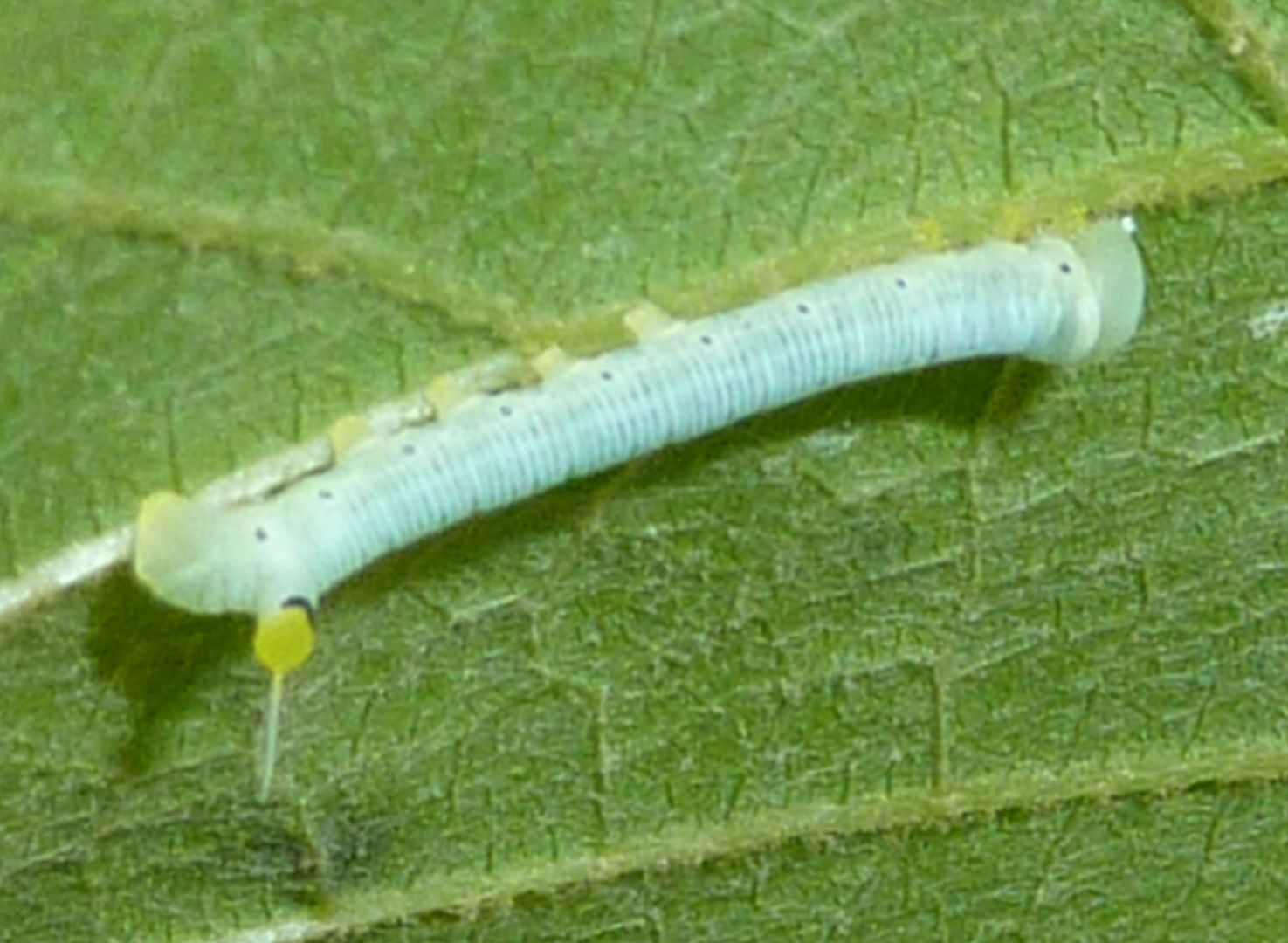
Parsley was the host plant of choice, but I did find a few on the Golden Alexander as well. A couple things about this species: the first instar caterpillars are so amazingly tiny I shell never be able to eat fresh parsley again without examining it thoroughly with the largest magnifying glass I own. They're tiny black leach-like creatures that are fast moving and unrecognizable as caterpillars unless magnified. Secondly, I was surprised how little each caterpillar eats in a day. A single spring can sustain a caterpillar until it's 2/3rds grown. The last instar on the other hands seems to eat two whole springs a day.
I was so successful with Black Swallowtails that I was able to photograph everything about their life cycle except for them over wintering. Though I hope to fix that next year.
Females have more blue and less yellow, where as males have bolder looking yellow spots and almost no blue at all.
Monarchs seems to be avoiding my yard this year. I was seeing them everywhere else in NJ but not my yard, which is a shame becuase I had lots of milkweed that went uneaten. A girl I work with apparently, her neighbor also lives in my town and she got caterpillars on her milkweed so I'm jealous.
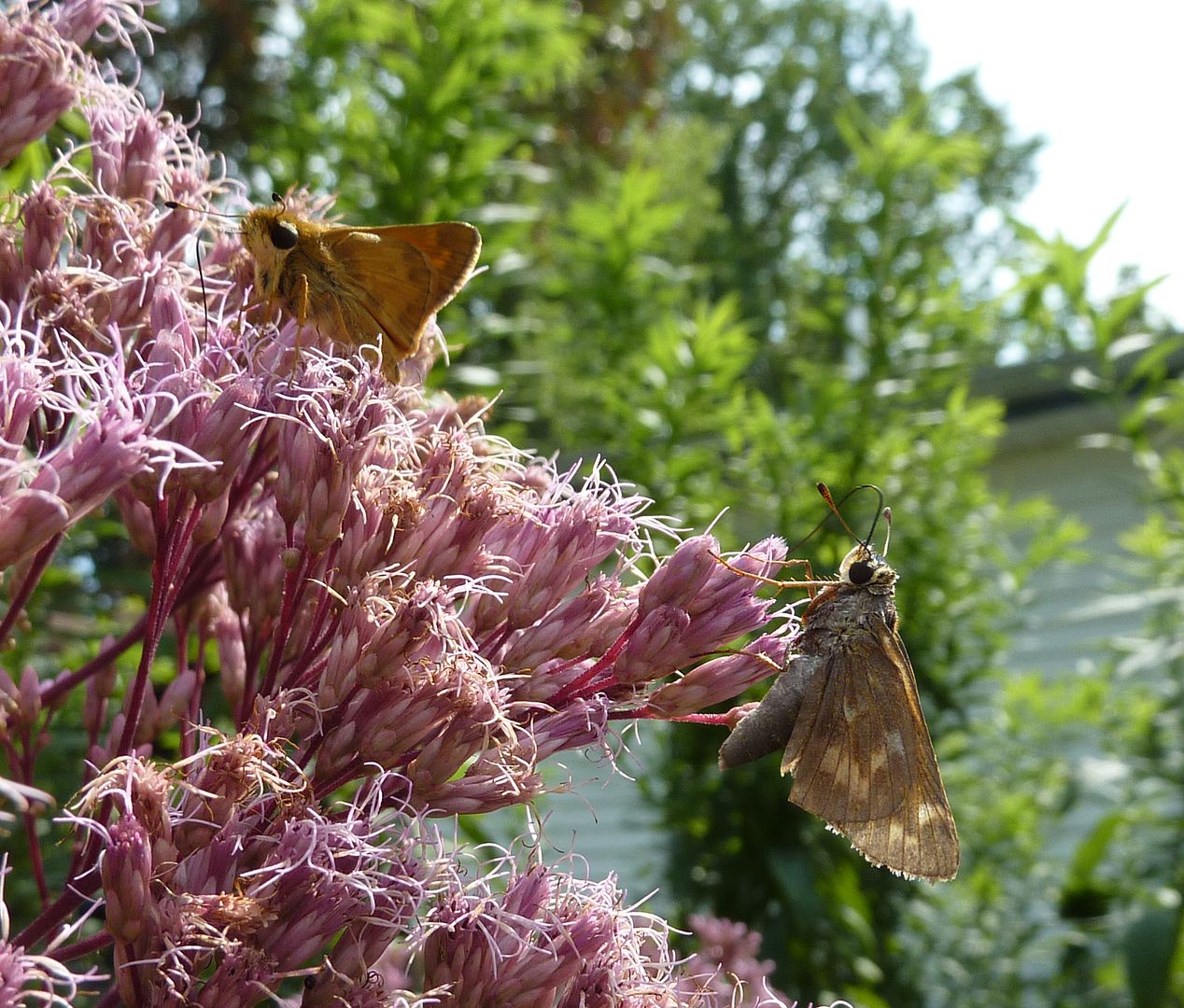
Sachem Skippers, male on the left, female on the right. I had no idea I'd photographed a set of the same species until my friend on facebook helped me ID them. I always get dozens of skippers at the end of the year and never pay any attention to them. I'm sort of tempted to fix that but I've never been a fan of their host plant, grasses.
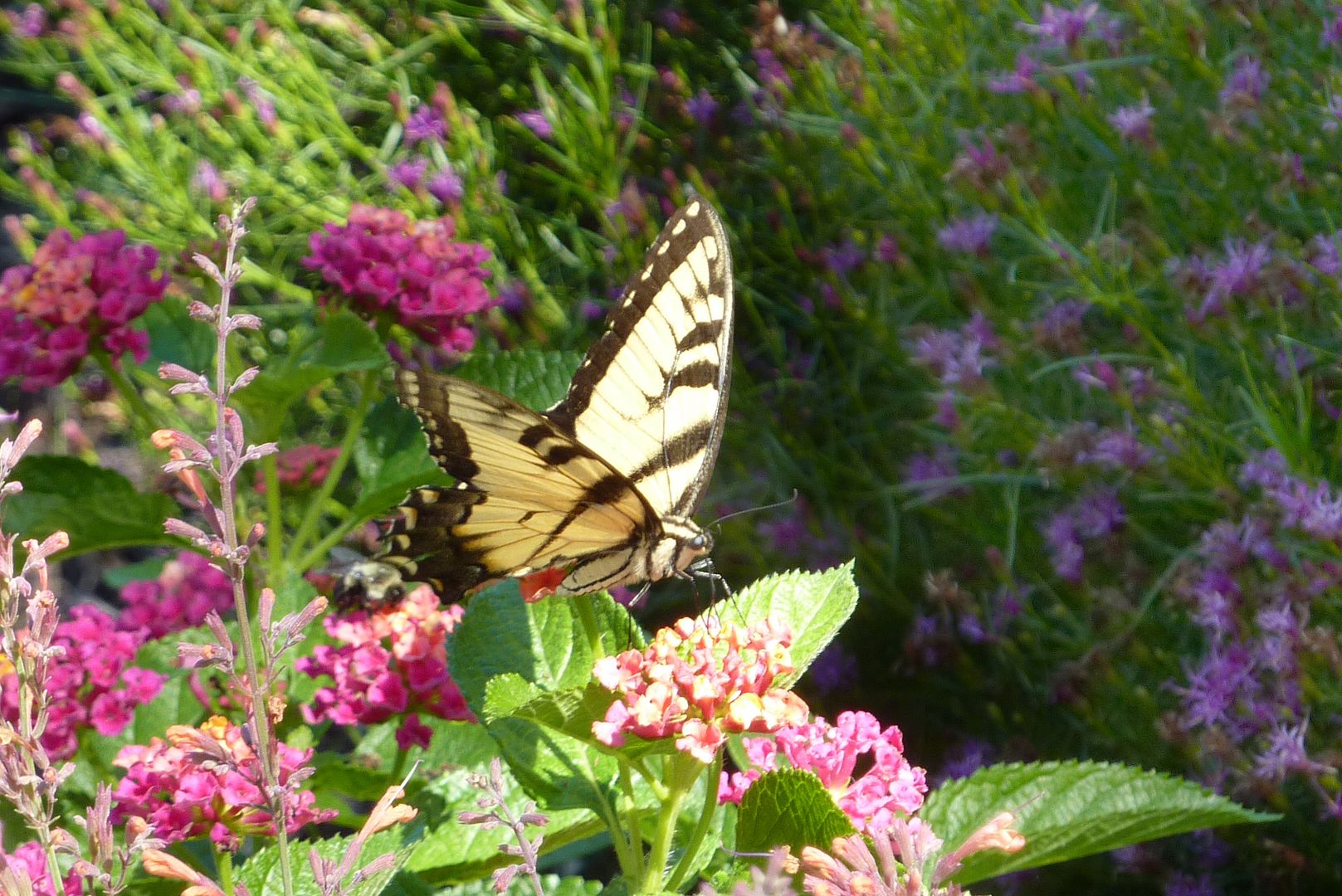
Eastern Tiger Swallowtail.
Eastern Tiger Swallowtail. I believe this is a female because the blue is stronger where as males have either less blue or it's absent entirely.
One of the first Black Swallowtails I raised. He was nice enough to let me show him my little meadow garden, but darted off after the wind started blowing.
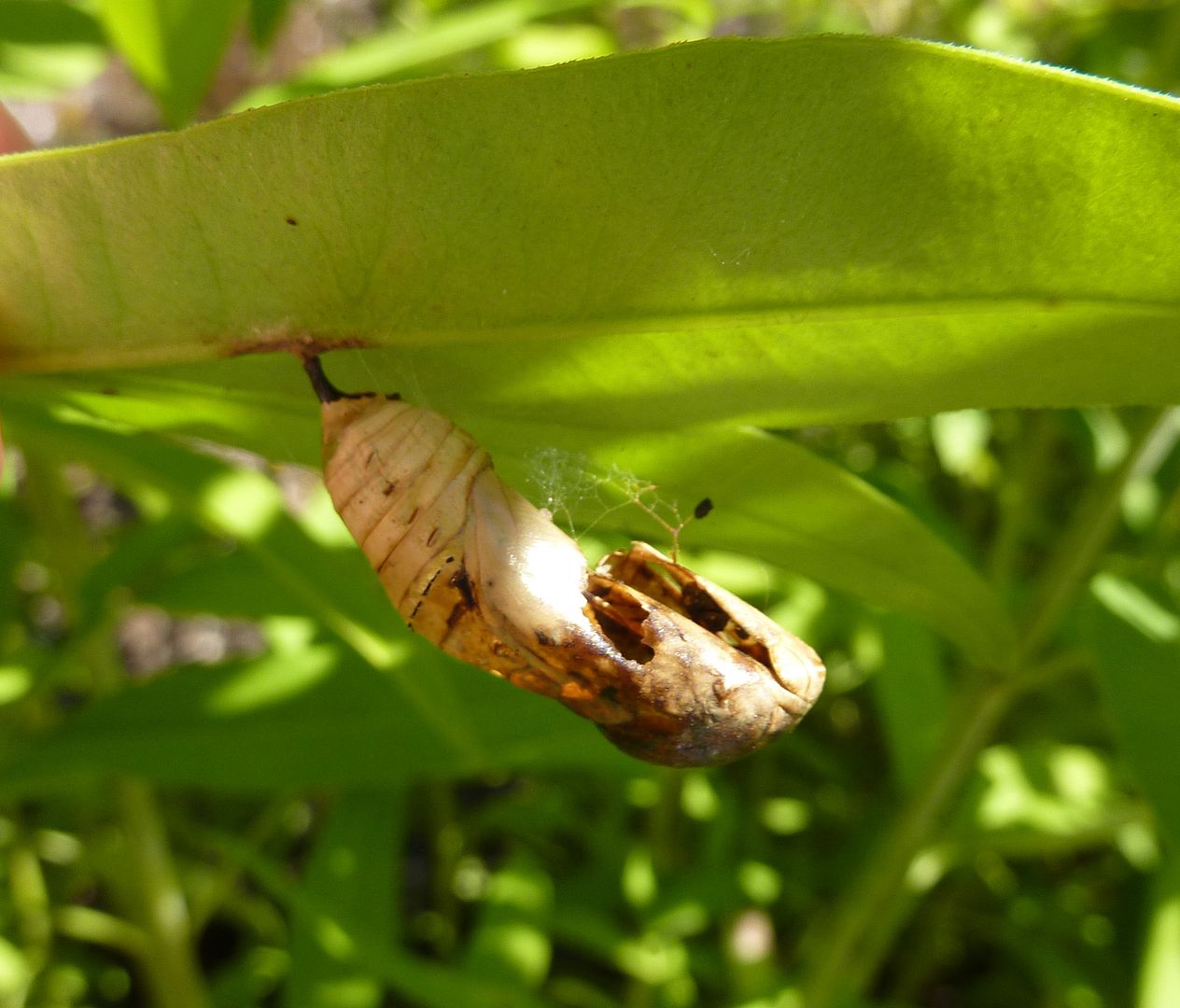
I like how they look like plant stems. Some actually start out green and fade to brown in a few days while others just skip ahead to being brown from the start.
Cabbage Whites are another one I don't pay attention to much. I feel like seeing them is somehow a mark of a bad gardener. Not that I've ever prided myself on growing cabbage.
At the Mt. Cuba Center butterflies were flying in formations in their round garden. Most of the trees there are host plants to something or other and their gardens are almost always swarming with something bright and showy.
Under a Tall Coreopsis leaf I came across a chrysalis to what might be a Fritillary.
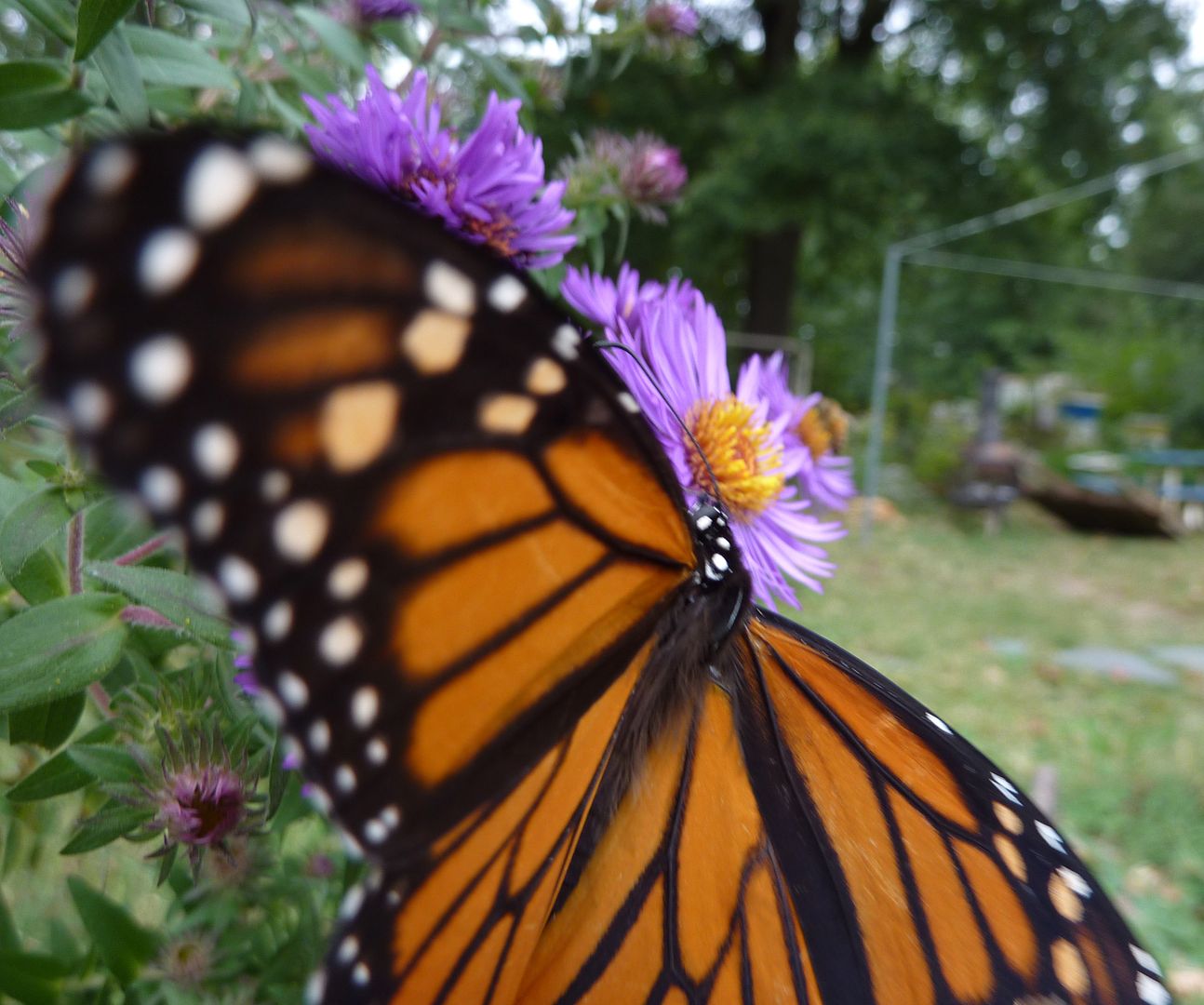
Monarchs finally started arriving after the milkweed was past its prime.
Not a good angle but an interesting one.
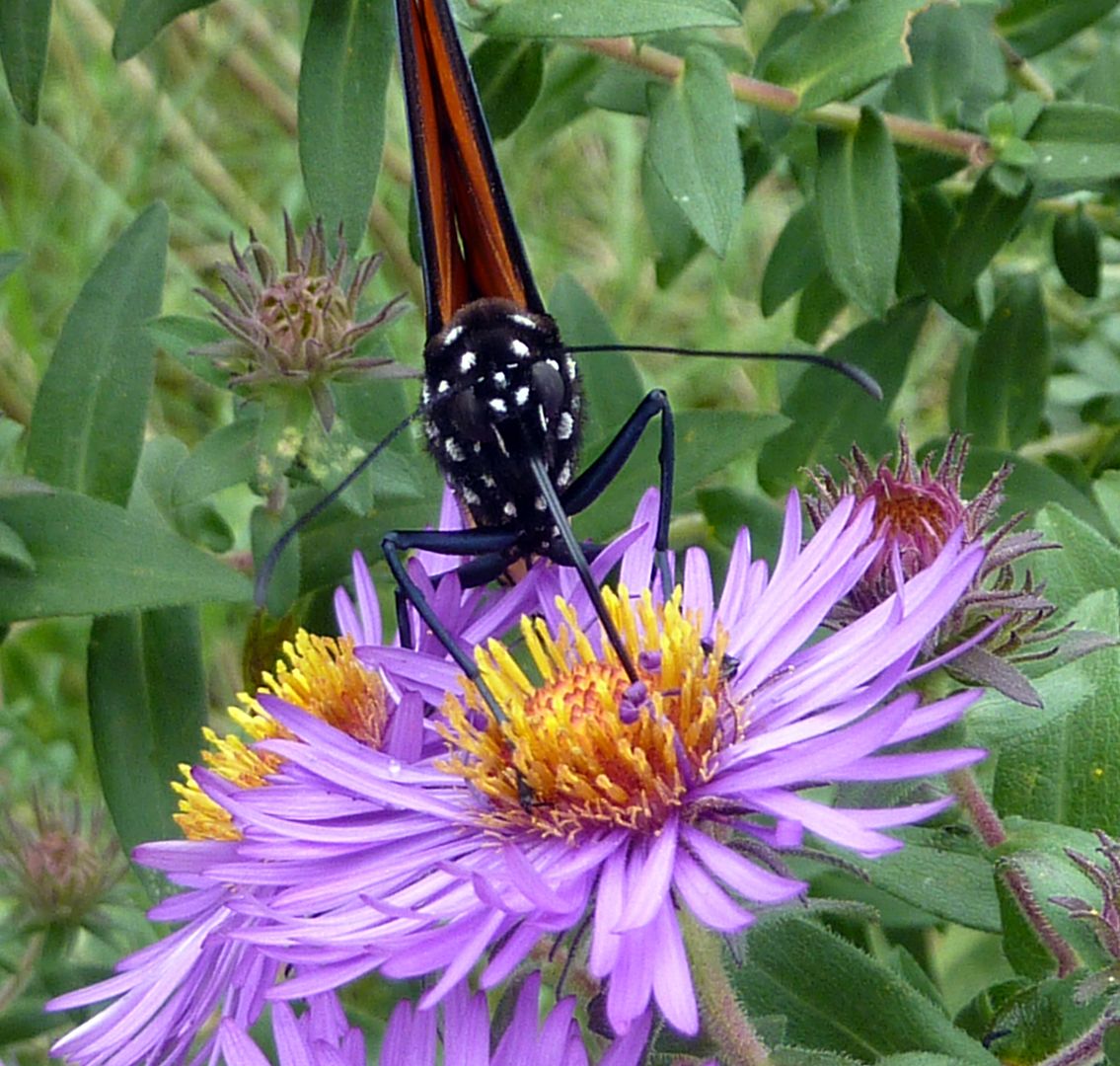
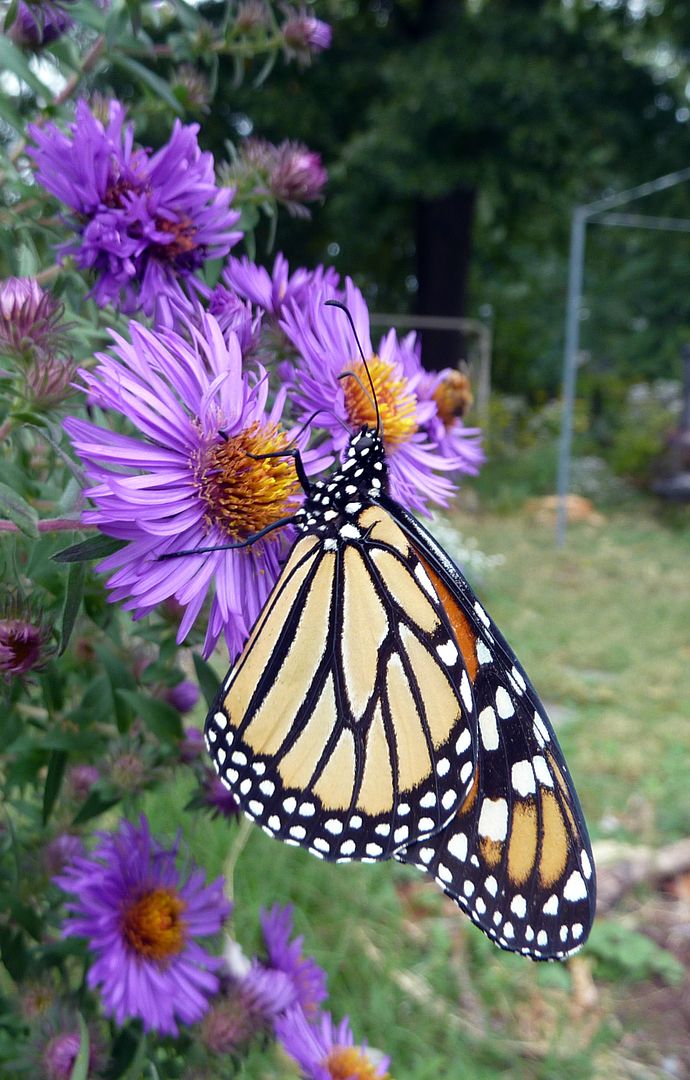
They started showing up on the New England Asters two at a time. I couldn't get a group photo as I'd like it to be so that's why I'm not posting the pair of them here. Hopefully I'll see more of them next year.
Subscribe to:
Posts (Atom)