I was at the Mt. Cuba Center last weekend for a little late summer photo stroll. Here are a few of the sights I saw.
The round garden perhaps off from the main house is a dazzling array of color now, though perhaps a little busy for some. While it's comprised of mostly nonnative annuals, it serves as a bustling stop for an assortment of butterflies who's host plants are all around some ~650 acres of fairly well kept wilderness and native plant gardens.
I'm not sure what the purple plant is but it's foliage contrasts well with the brightness of the Lantana in bloom among other flowering plants. Here some skippers flutter about. Among them were an assortment of Swallowtails, Monarchs, and Fritillary Butterflies that proved too quick for me to photograph.
Elsewhere in a native flower bed the Swallowtails were a bit more cooperative. Here two Tigers sip at an Ironweed, I believe the cultivar is Vernonia angustifolia 'Plum Peachy' which is like 'Iron Butterfly' but about twice as tall.
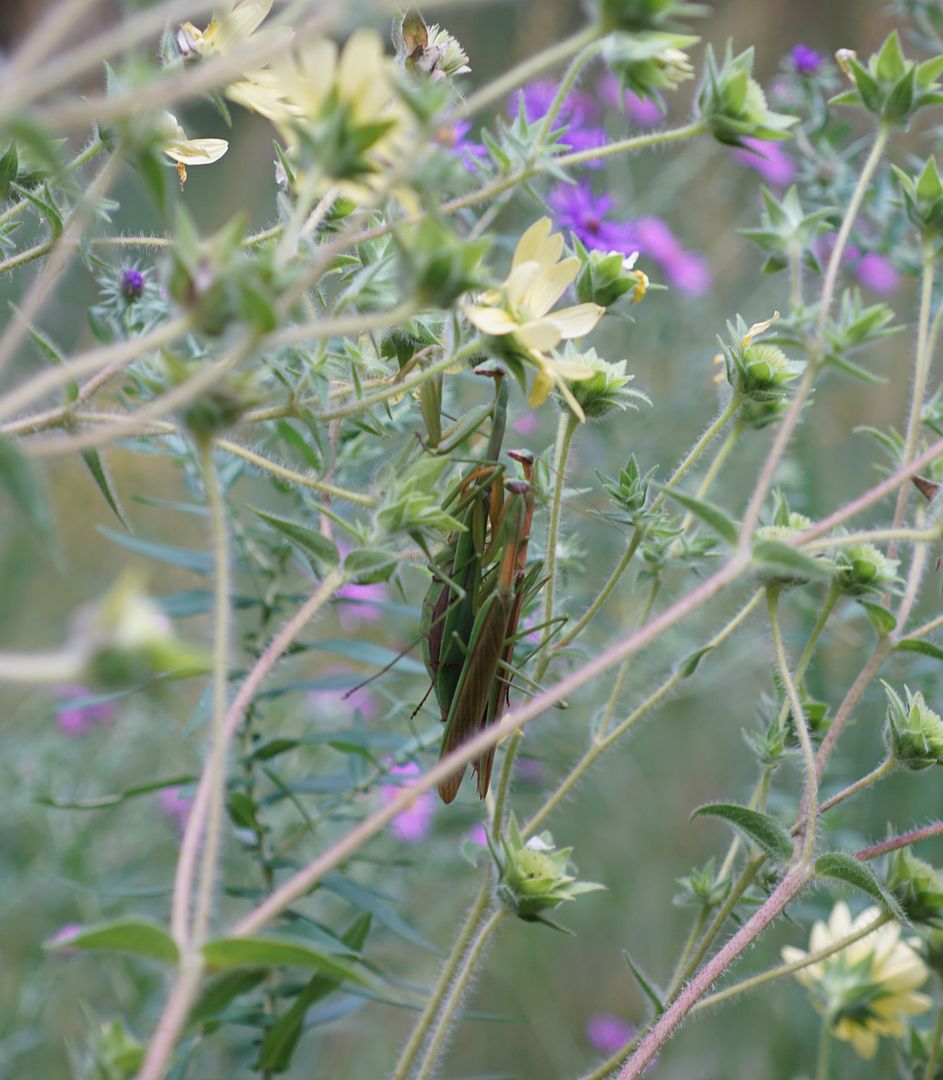
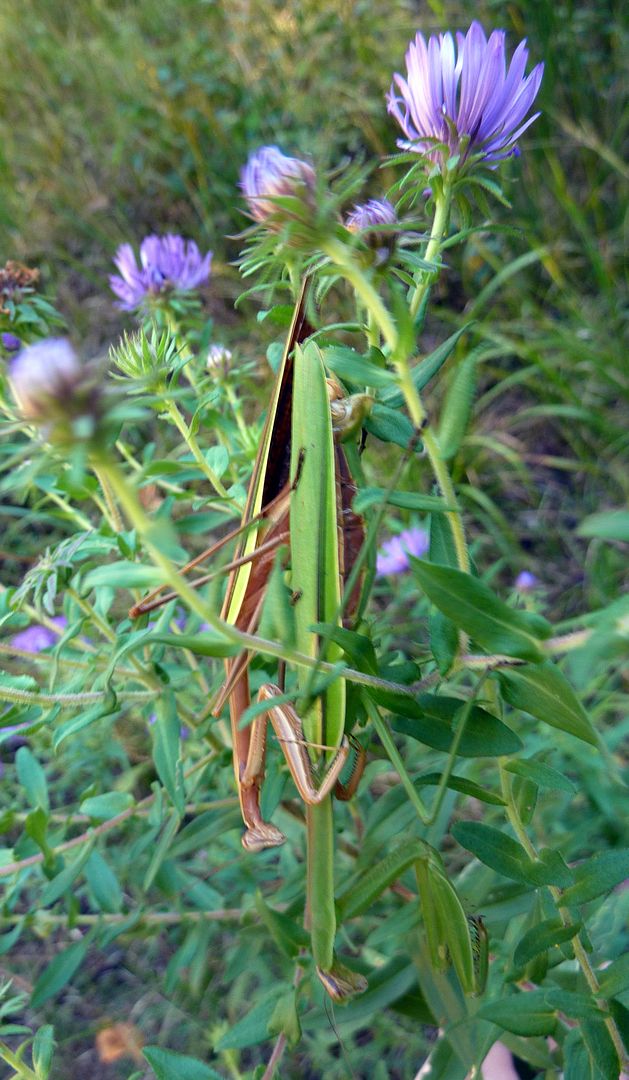
Praying Mantises were abound in the meadow garden. Not only were females laying eggs but also in the act of mating... some with more than one partner courting them at the same time.
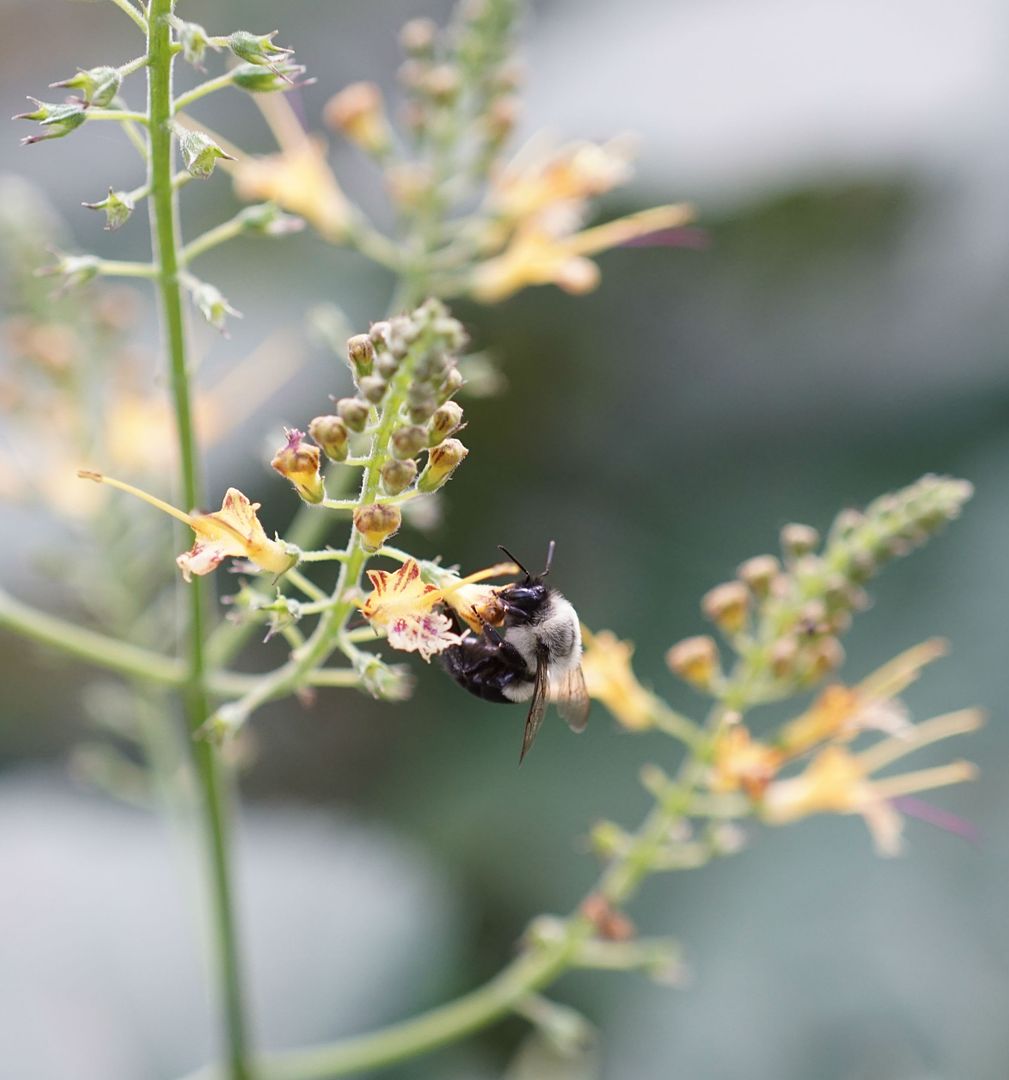
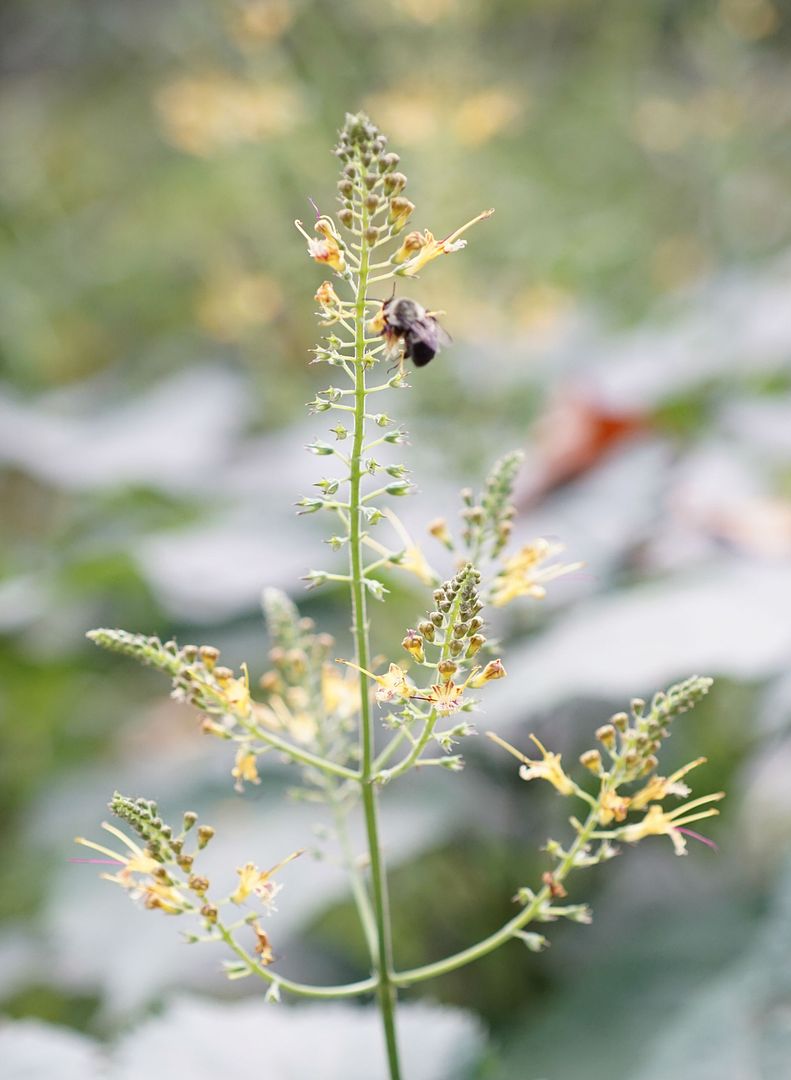
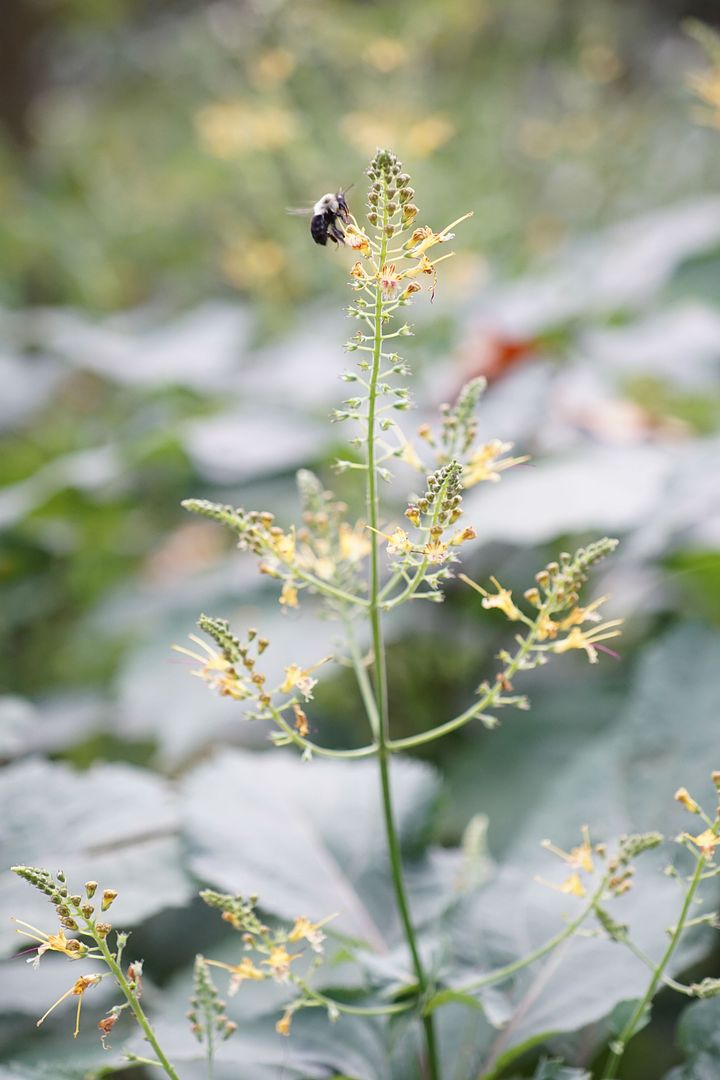
Though the woodland was filled with an assortment of Woodland Asters, I found the Richweed, Collinsonia canadensis, to be particularly interesting.
Though common in woodland areas across the eastern United States, it's not something a lot of people stop to look at.
Part of the issues that it's not a more mainstream plant is likely due to the large leaves of the plant, compared to the fairly delicate flower stalks that come above. The flowers are small and not entirely noticeable either. I actually walked past the patch of these plants twice before I even noticed it. It's plants like this where interesting leaves or flower shapes from cultivation would benefit to get it sold and brought into the main nursery trade.

Showing posts with label Mantis. Show all posts
Saturday, September 17, 2016
Thursday, January 31, 2013
Some Yard Clean Up and Chores
Yesterday was finally warm enough for me to break hibernation, get outside and do some yard work.
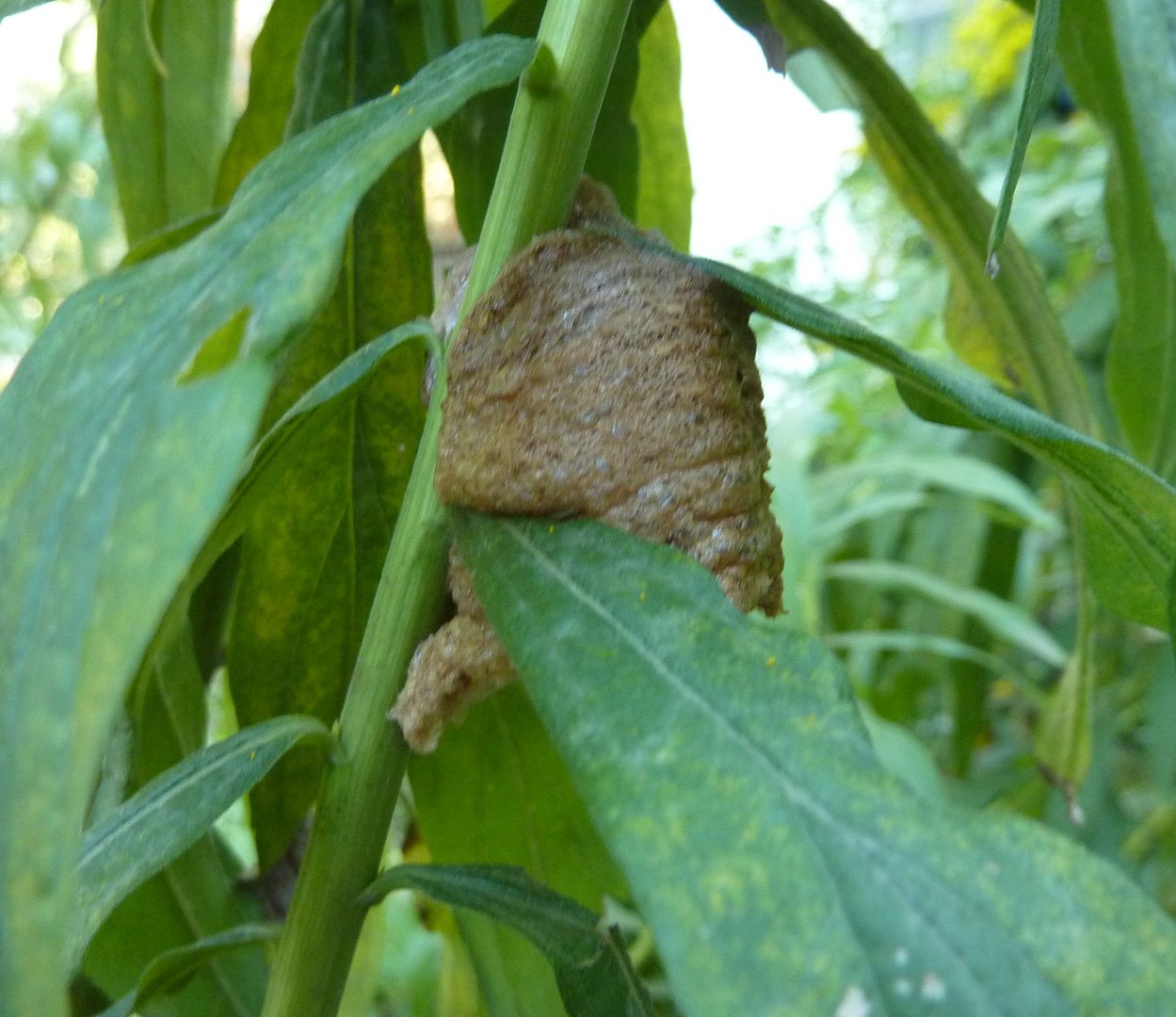
I discovered a mantis egg right on the Alternate-leaf Dogwood.
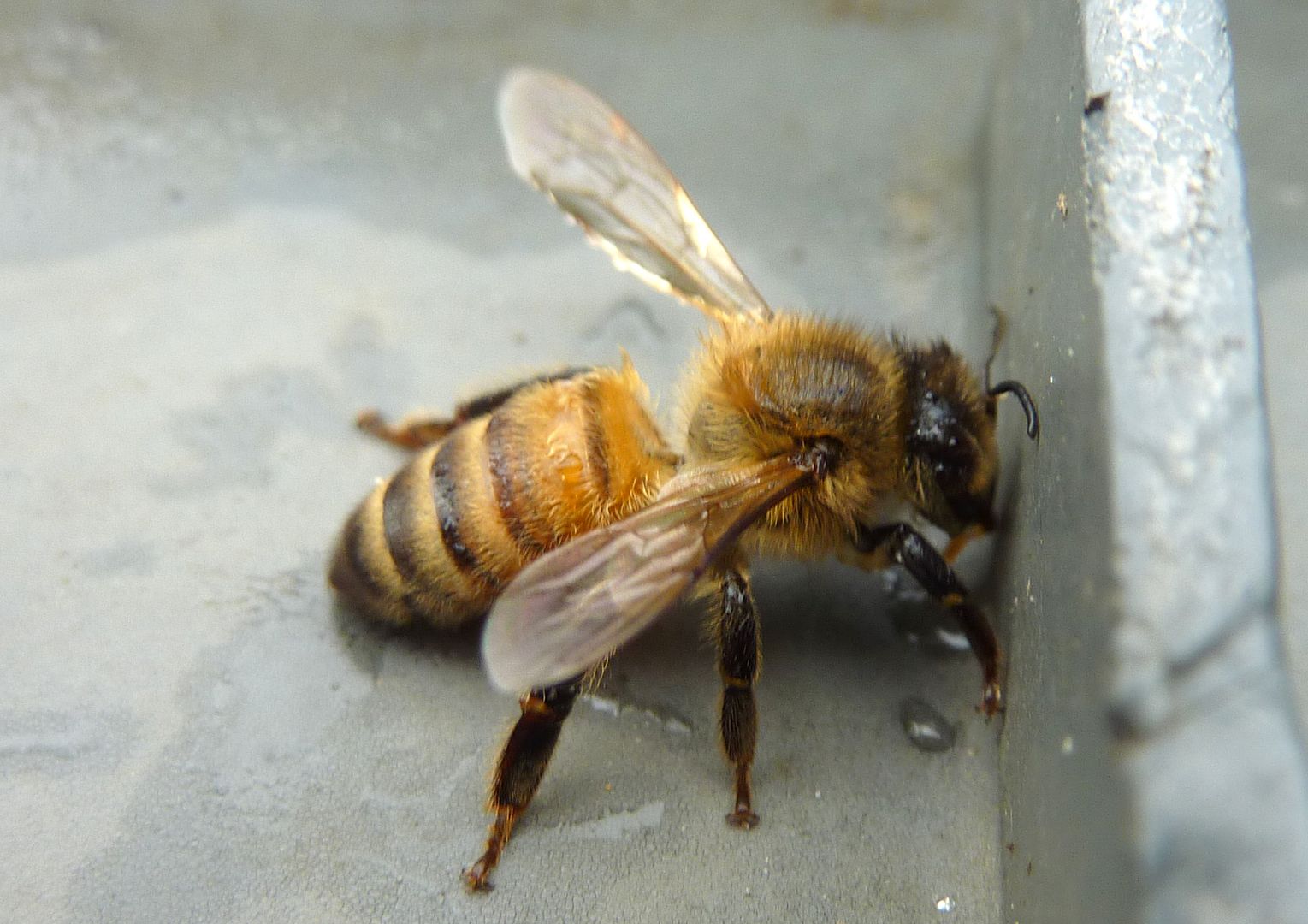
My honeybee hives were active and buzzing around. This one was drowning so I saved it and thought the colors and hairs looked great. There aren't to many bright colors to photograph at this time of year.
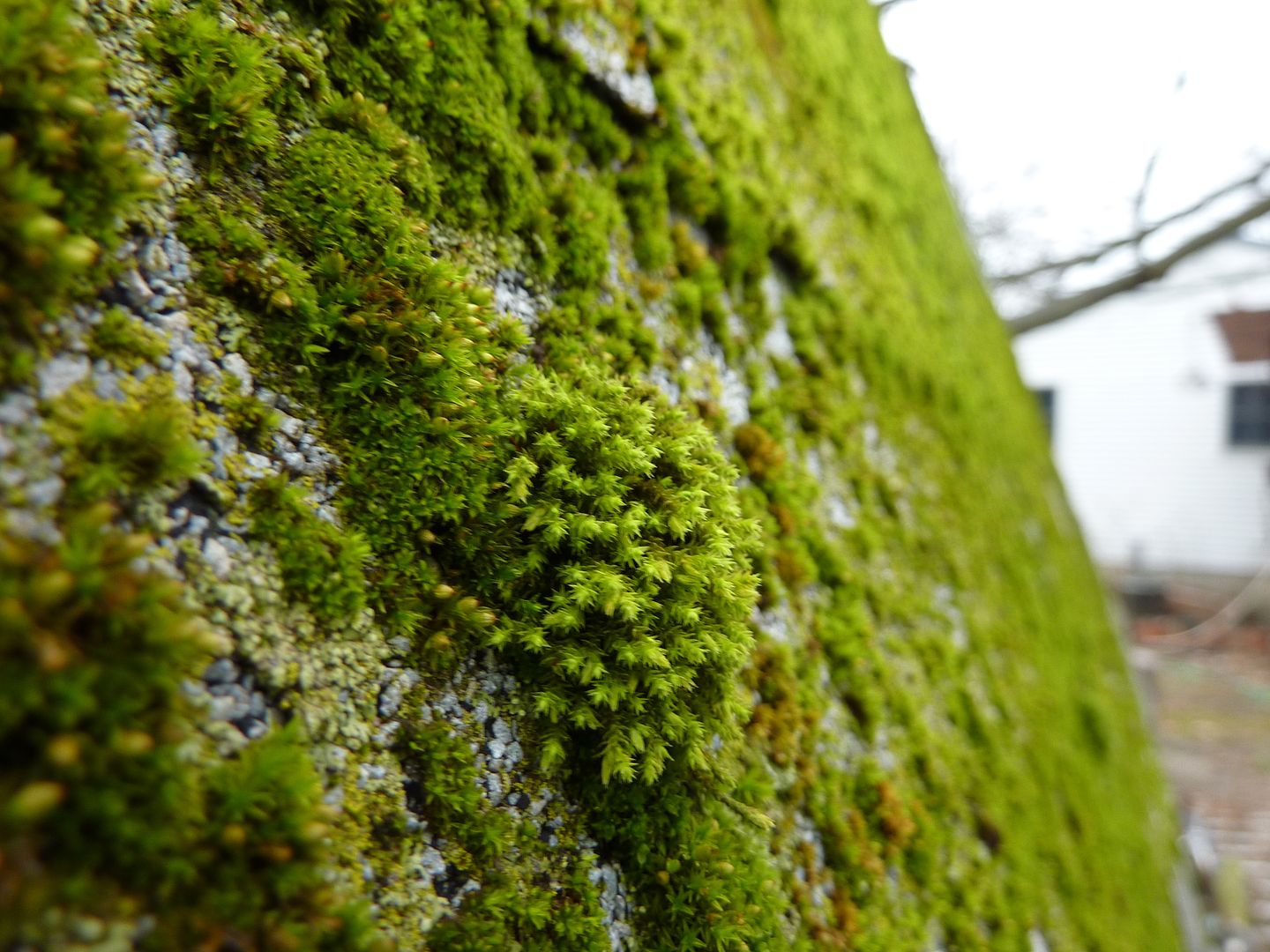
I was near the hives putting sugar water on them when I realized the moss on our shed has grown out of control. I'm not sure if that's bad or not but I think I could probably transplant some of it elsewhere.
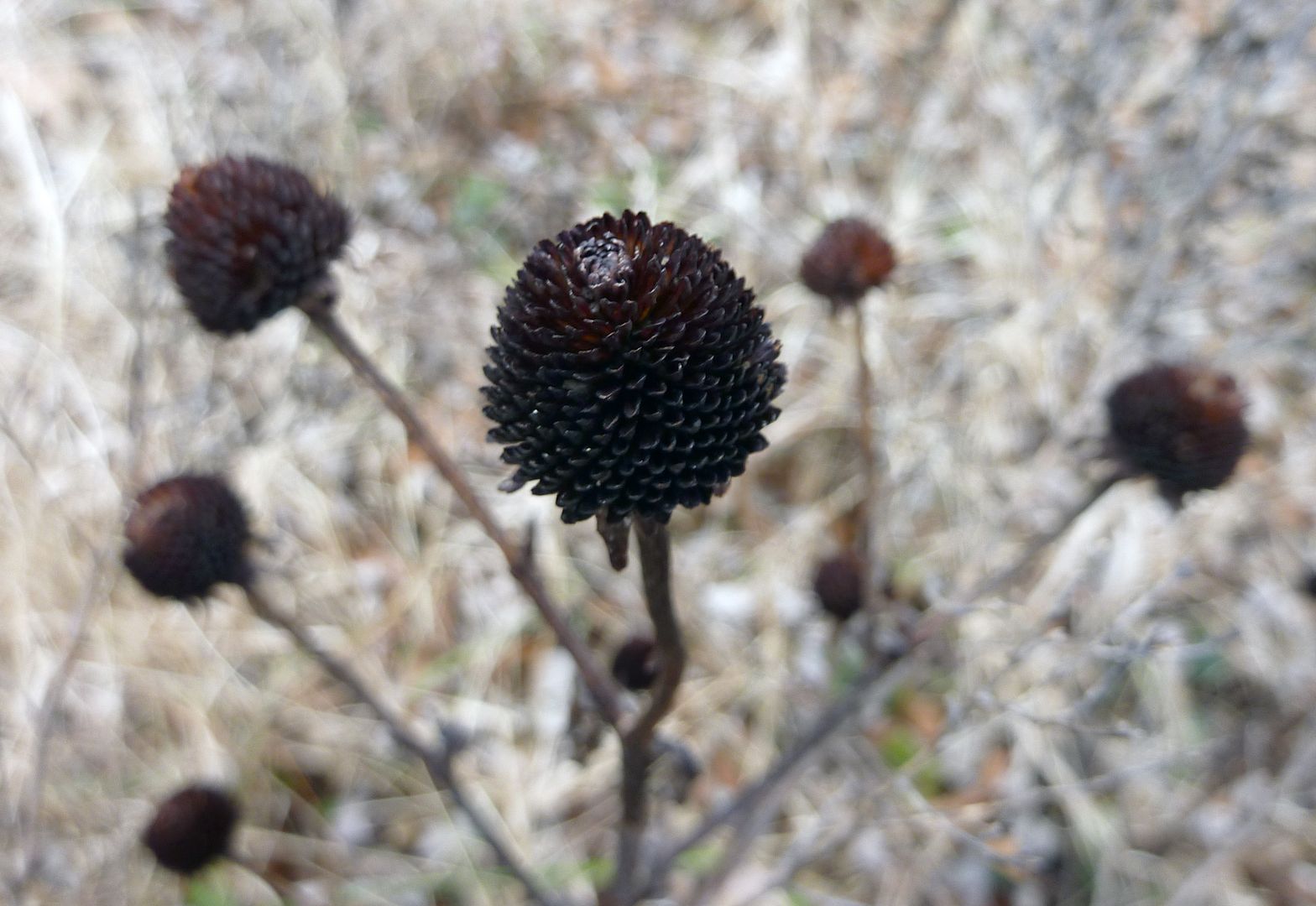
As much as I dislike Rudbeckia plants, I actually think their seed pods are a highlight out in the meadow garden. They're a nice easy filler plant with a good burst of color, but I roll my eyes at the lack of pollinators they get. Maybe that will change as they spread, and I look forward to them spreading, but right now I just think of them as being only pretty and not good for anything else.
I discovered a mantis egg right on the Alternate-leaf Dogwood.
My honeybee hives were active and buzzing around. This one was drowning so I saved it and thought the colors and hairs looked great. There aren't to many bright colors to photograph at this time of year.
I was near the hives putting sugar water on them when I realized the moss on our shed has grown out of control. I'm not sure if that's bad or not but I think I could probably transplant some of it elsewhere.
As much as I dislike Rudbeckia plants, I actually think their seed pods are a highlight out in the meadow garden. They're a nice easy filler plant with a good burst of color, but I roll my eyes at the lack of pollinators they get. Maybe that will change as they spread, and I look forward to them spreading, but right now I just think of them as being only pretty and not good for anything else.
Monday, September 17, 2012
Praying Mantises in a Meadow
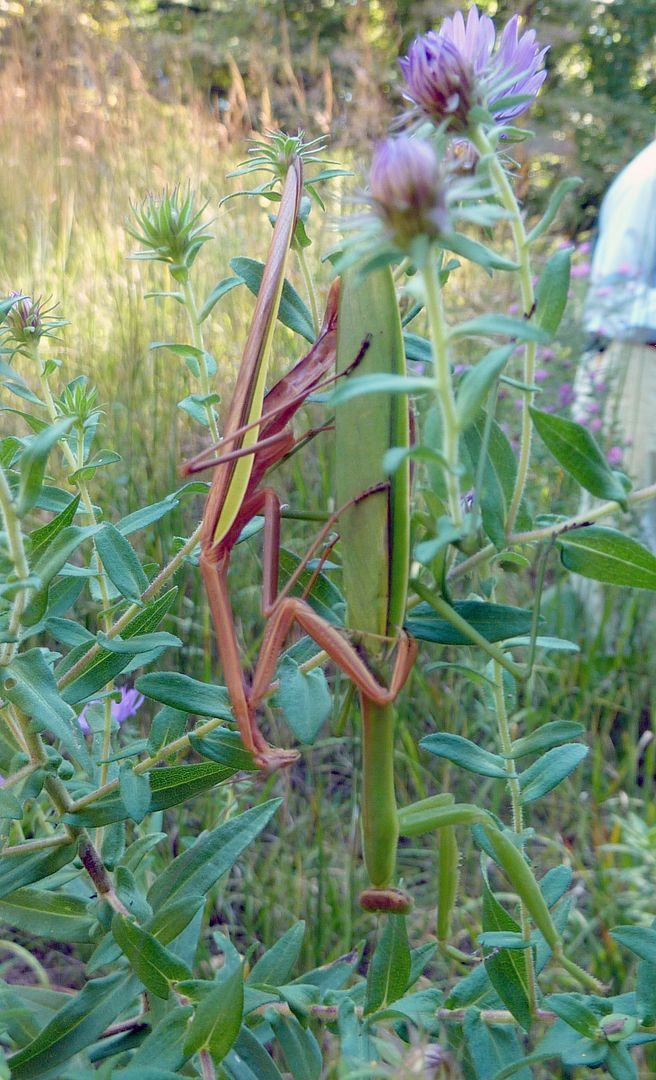
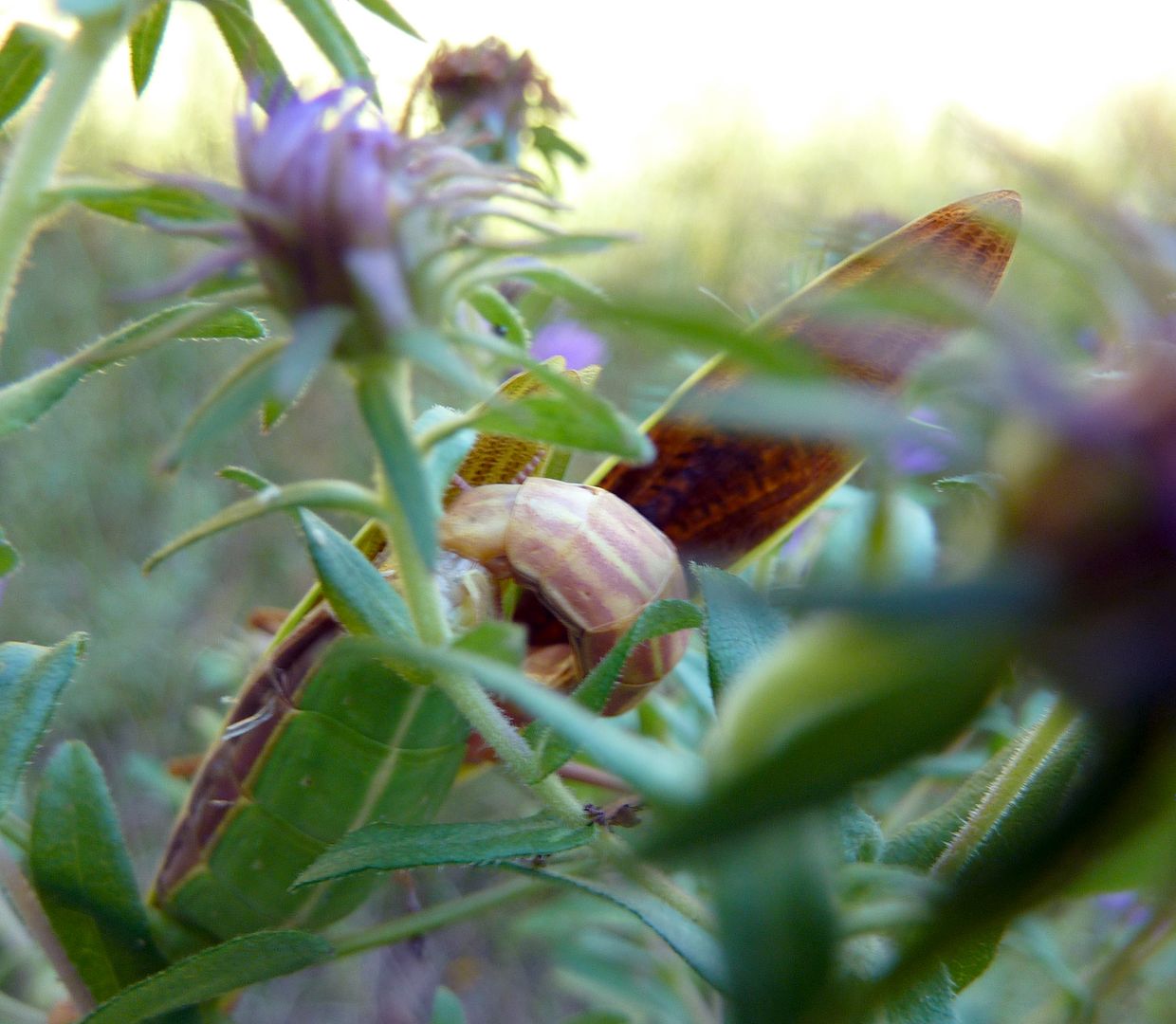
Two Chinese Mantises, Tenodera sinensis, mating on a New England Aster. I actually like both of these pictures. The one on the right for the inclusion of the blue flowers, and the one on the left for the golden meadow background and better stance of the male. Yes the brown one is the male in this case.
At least I'm assuming that's the case here.
I took these while at the Mt. Cuba Center on Saturday. Around this time of year mating and laying eggs is just about all mantises are doing. Eggs are laid on tall grasses or plant stems in sunny spots, often along a forest edge. And maybe a higher concentration next to late flowering perennials who's pollinator activity sustained the female during her last few days.
Friday, February 3, 2012
Dr. Art Evens on Cocoons
Egg Case in Winter
He talks about Polyphemus Moth cocoons and Praying Mantis Eggs. He's also on Facebook.
Without doing to much exploring of the yard this year I've already managed to find two egg cases of Praying Mantises. One year I found a hatched Polypheumus Cocoon on the ground, so I know they're out there. I know other giant silk moths certainly make cocoons such as the Cecropia silkmoth, Hyalophora cecropia.
Other species such as the Imperial Moth, Eacles imperialis, burrow in the ground before forming a chrysalis. I had a friend call me over the summer because she kept finding these "things" emerging from the ground. When they first emerge their wings are as limp as a silk swatch used to clean eye glasses, so they don't look much like a moth at all. Thankfully she sent me some pictures and I told her not to kill them. They turn into something quite pretty.
So the cocoons and eggs are out there. Time to start looking. Should you find a giant silk moth cocoon, perhaps a sheltered cage placed just outside the window or inside a shed, or unheated garage would work best. Praying mantis eggs are fairly common along forest edges and among tall grasses in sunny locations.
He talks about Polyphemus Moth cocoons and Praying Mantis Eggs. He's also on Facebook.
Without doing to much exploring of the yard this year I've already managed to find two egg cases of Praying Mantises. One year I found a hatched Polypheumus Cocoon on the ground, so I know they're out there. I know other giant silk moths certainly make cocoons such as the Cecropia silkmoth, Hyalophora cecropia.
Other species such as the Imperial Moth, Eacles imperialis, burrow in the ground before forming a chrysalis. I had a friend call me over the summer because she kept finding these "things" emerging from the ground. When they first emerge their wings are as limp as a silk swatch used to clean eye glasses, so they don't look much like a moth at all. Thankfully she sent me some pictures and I told her not to kill them. They turn into something quite pretty.
So the cocoons and eggs are out there. Time to start looking. Should you find a giant silk moth cocoon, perhaps a sheltered cage placed just outside the window or inside a shed, or unheated garage would work best. Praying mantis eggs are fairly common along forest edges and among tall grasses in sunny locations.
Friday, June 3, 2011
Some Beneficial Predators
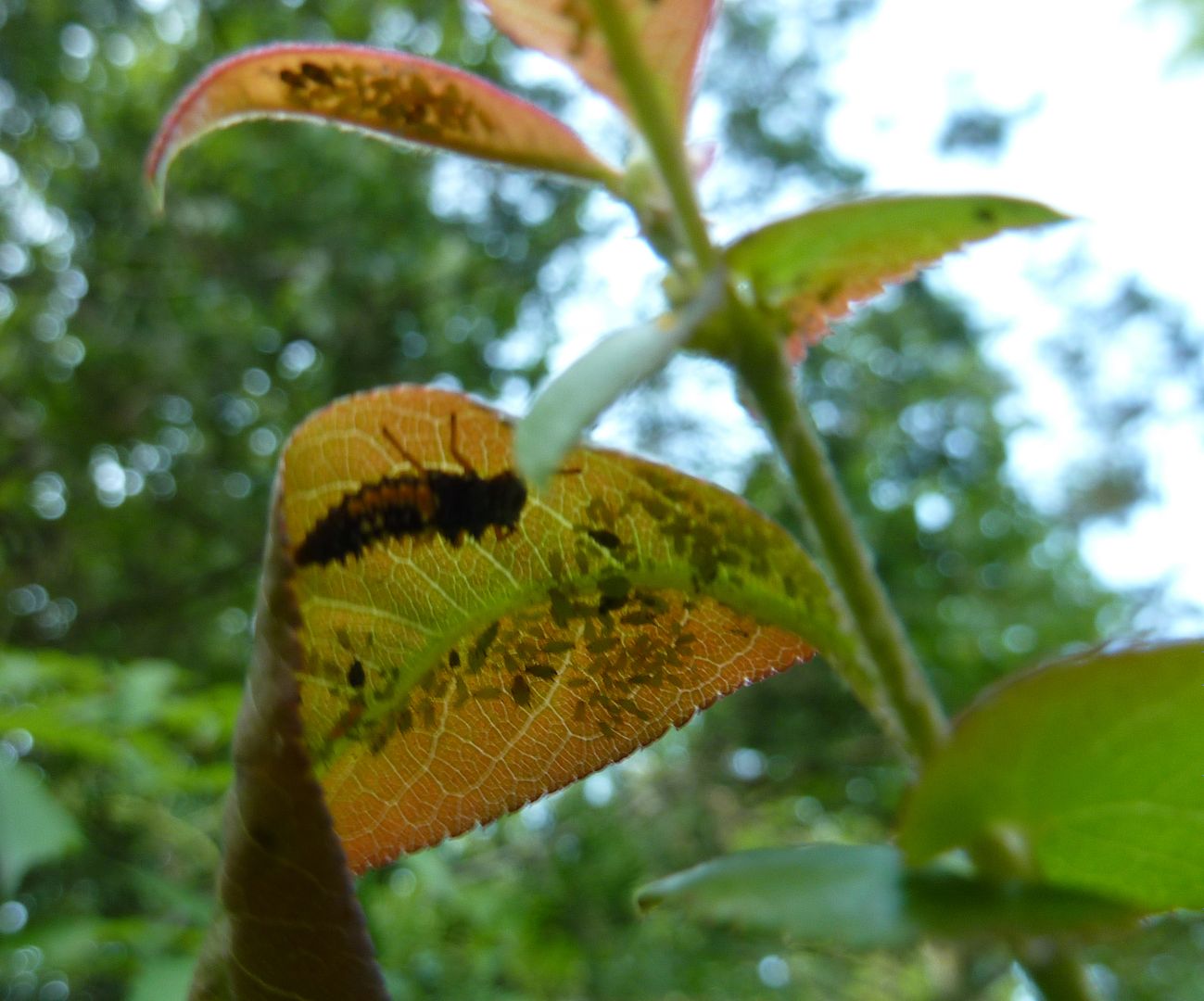
Predatory insects are out and about taking advantage of the scavenger and herbaceous pray. Here a ladybug larva feasts upon a plentiful supply of aphids. This is well needed too as the main tree with the aphid problem has so much honeydew dripping on it's leaves that portions of the lower growth, and other plants around it, have started turning black. This should go away soon, but when this tree gets a little taller such aphid problems might cause bad things to the fruit (native plums). Honey dew rain is also disgusting to sit under.
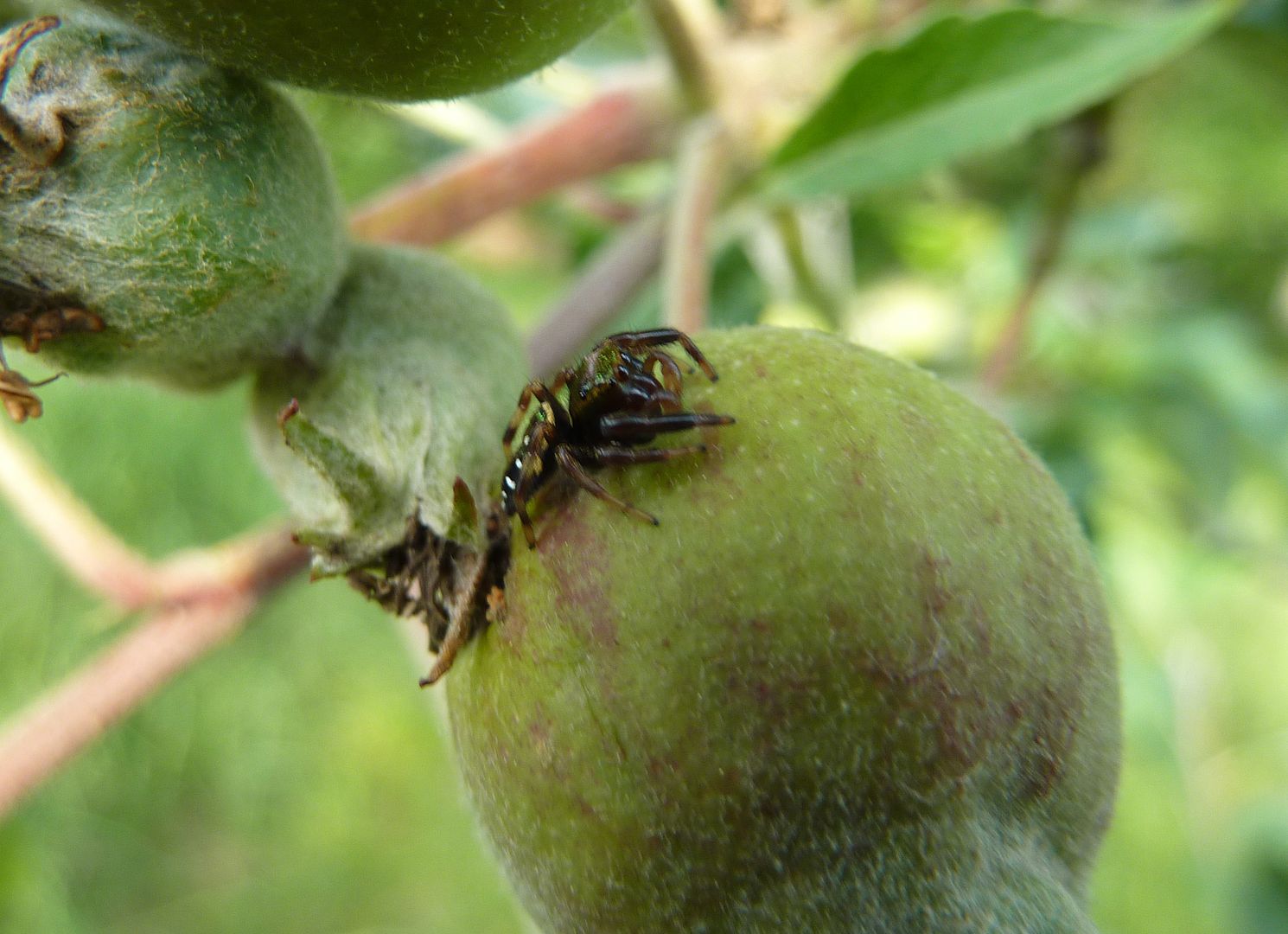
Here some type of spider guards an apple. I've always called these jumping spiders, perhaps someone else knows a better name? Apple Trees are a good place to hunt for insects. Contrary to what supermarkets lead you to believe, Apples are not easy to grow, at least perfect ones that is. These trees get used by an assortment of common moths, diseases run rampant, and all to often you'll find a large worm crawling around inside the fruit. Weekly spraying is the only way to really ensure a good harvest but isn't always necessary. A few apples are typically untouched by all the insect pandemonium.
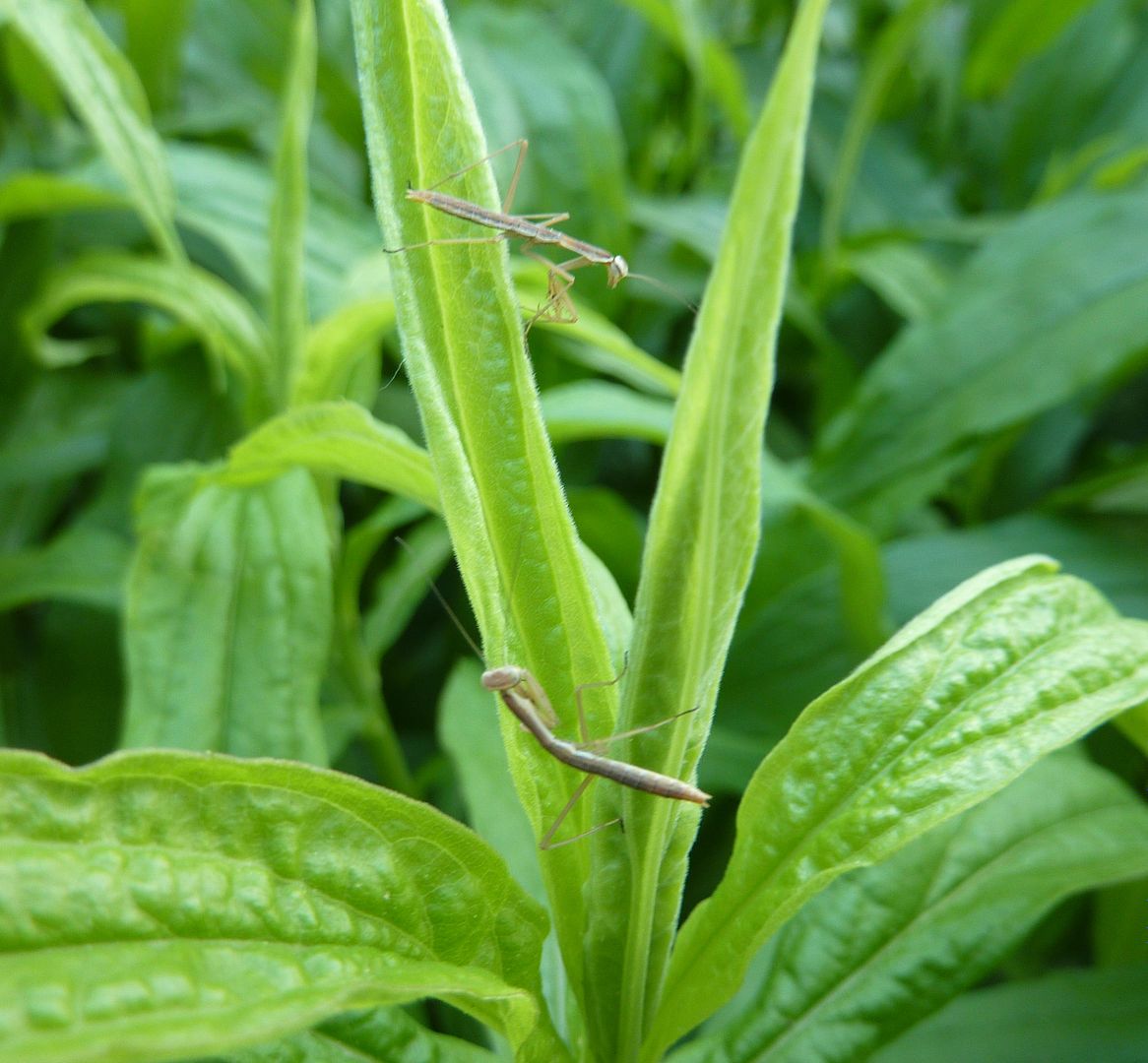
I'm still seeing droves of Praying Mantises wondering about. They haven't ventured very far from the eggs but I'm sure they're slowly dispersing around the garden. What's neat is how some of them are developing. Some have larger heads now, while others seem to get bigger four-arms. I'll try and get pictures of this later on.
Here some type of spider guards an apple. I've always called these jumping spiders, perhaps someone else knows a better name? Apple Trees are a good place to hunt for insects. Contrary to what supermarkets lead you to believe, Apples are not easy to grow, at least perfect ones that is. These trees get used by an assortment of common moths, diseases run rampant, and all to often you'll find a large worm crawling around inside the fruit. Weekly spraying is the only way to really ensure a good harvest but isn't always necessary. A few apples are typically untouched by all the insect pandemonium.
I'm still seeing droves of Praying Mantises wondering about. They haven't ventured very far from the eggs but I'm sure they're slowly dispersing around the garden. What's neat is how some of them are developing. Some have larger heads now, while others seem to get bigger four-arms. I'll try and get pictures of this later on.
Monday, October 18, 2010
Tall Goldenrod Pollinators
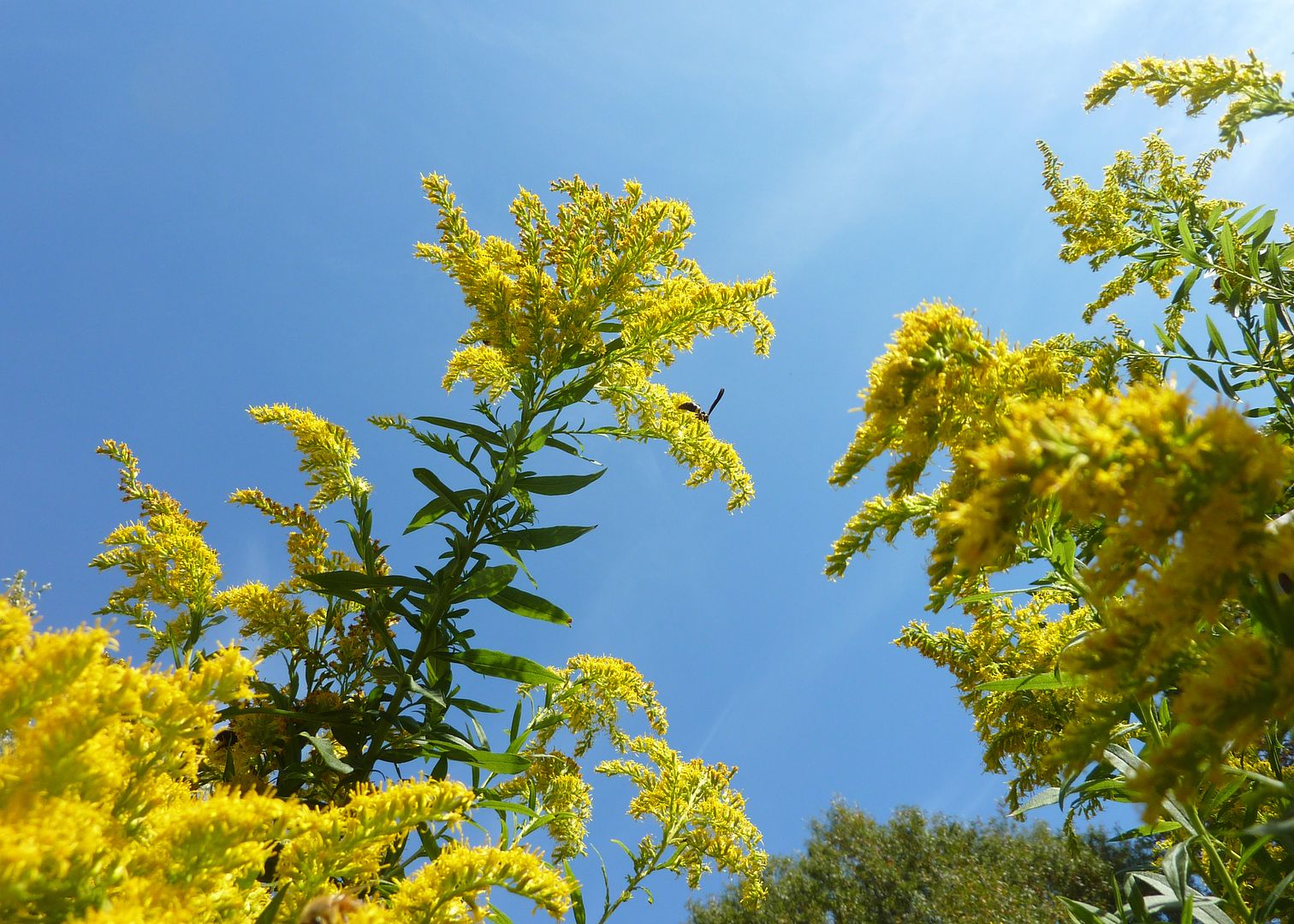
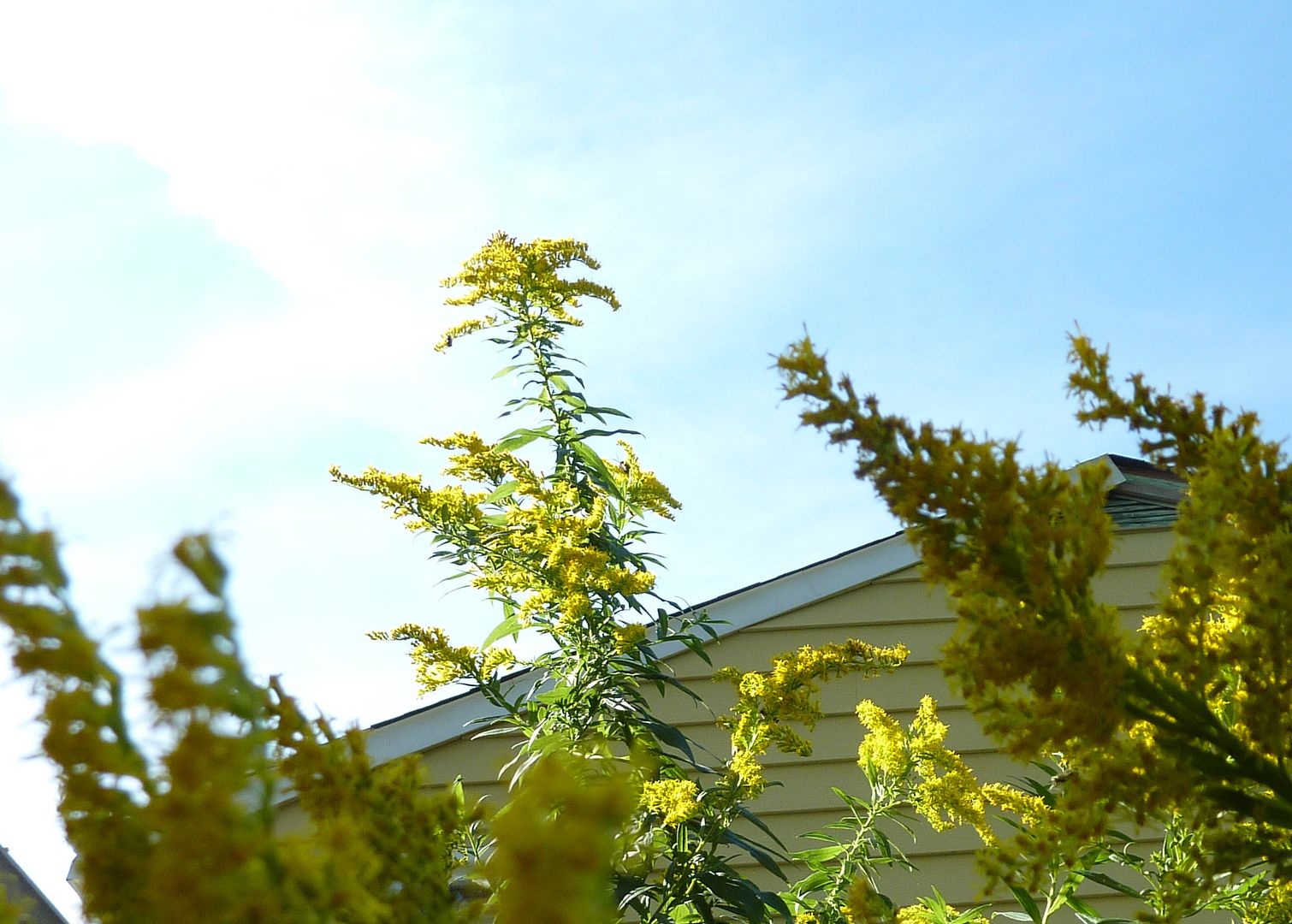
So this is the Goldenrod monster that lives in my backyard. Solidago altissima, Tall Goldenrod is identified as growing 5' tall, though this plant is a noted exception at 10' tall.
The leaves are narrow, long, and few if any teeth on them, and when present they're not long or clearly noticeable. They're more like small points than teeth. (presence of a mantis egg is optional.)
For those gardeners who love having really tall perennials this is a must have. My only complain is this year the storms were harsh enough that it fell over. Thankfully though this plant flowers late enough in the year that it doesn't matter to much. Considering most other perennials are dying back for fall, somehow a 10' tall plant shading them out isn't so bad.
Although this year I've resorted to using two ladders to prop these plants up, on other years they stand tall and flower beautifully. A diversity of insects use this plant as one last taste of pollen and nectar before winter sets in.
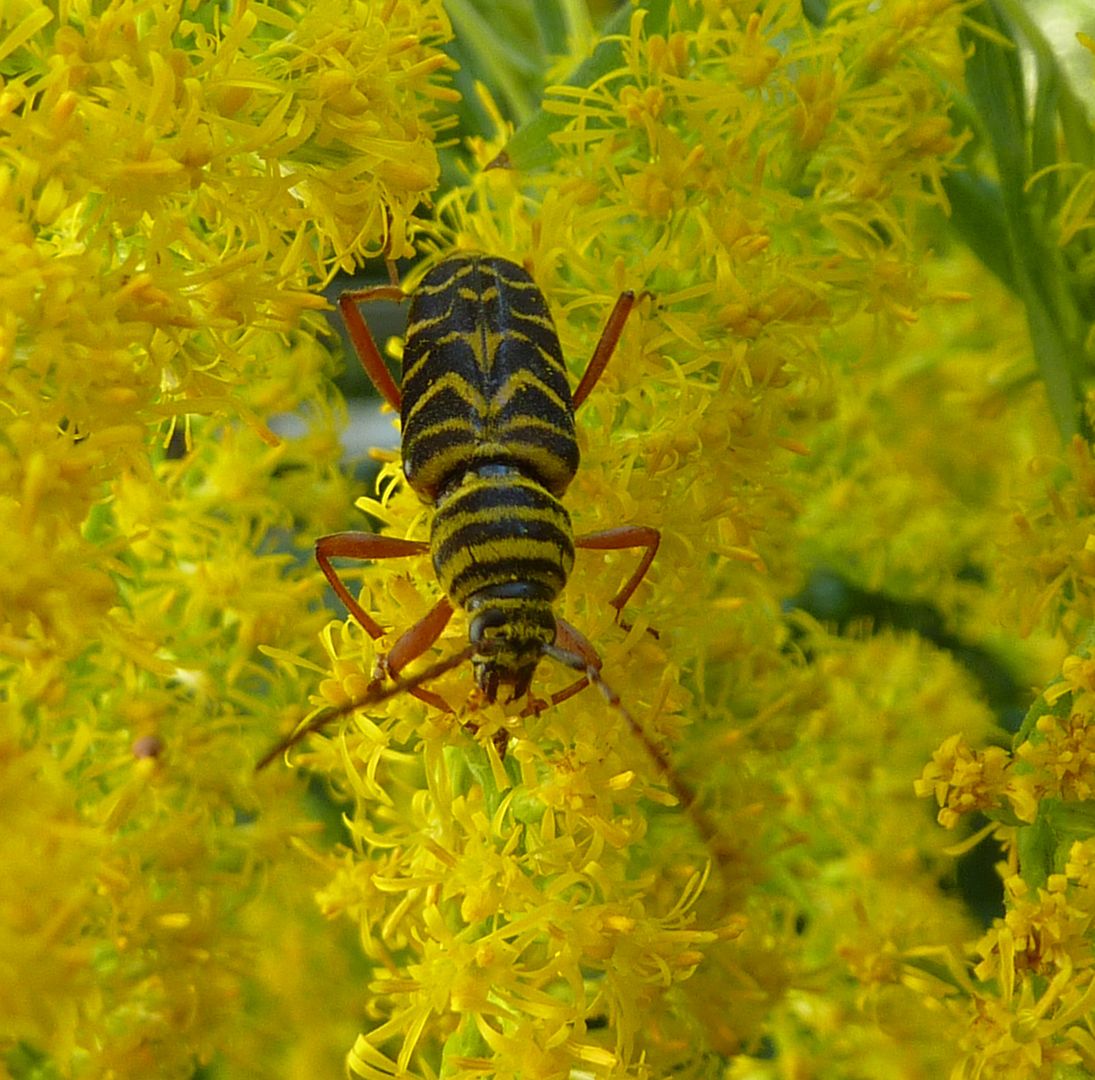
Megacyllne robiniae, The Locust Borer. Goldenrod is a common food source for this beetle. Though considered a pest it's a native species that feeds on a native tree, Robinia pseudoacacia, Black Locust Trees. It makes sense that they're around here as all the beekeepers look forward to the Locust bloom as a major boost in honey flow. The larva feed on the tree wood itself boring tunnels through the trunk. This makes them susceptible to wind storms and breaking and that can lead to disease setting in and shortening the life of the tree. Thankfully there's also the Honey Locust Tree, Gleditsia triacanthos, which is not effected by this beetle.
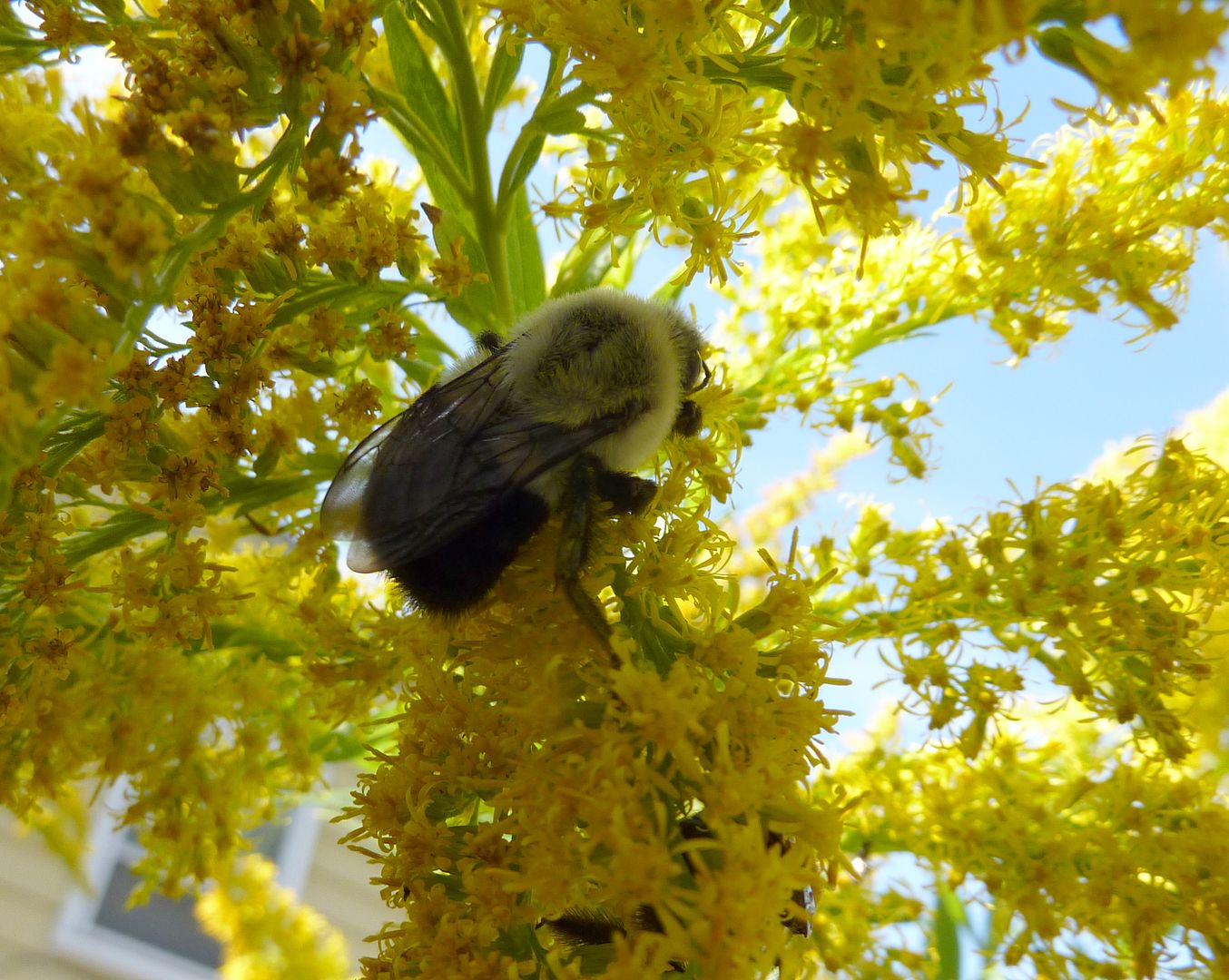
Buzzing around is what's likely one of next years Bumblebee queens. I think the species is Bombus impatiens.
Here they get one last taste of nectar before having to hibernate over the winter and trying to found a new hive next spring.
The leaves are narrow, long, and few if any teeth on them, and when present they're not long or clearly noticeable. They're more like small points than teeth. (presence of a mantis egg is optional.)
For those gardeners who love having really tall perennials this is a must have. My only complain is this year the storms were harsh enough that it fell over. Thankfully though this plant flowers late enough in the year that it doesn't matter to much. Considering most other perennials are dying back for fall, somehow a 10' tall plant shading them out isn't so bad.
Although this year I've resorted to using two ladders to prop these plants up, on other years they stand tall and flower beautifully. A diversity of insects use this plant as one last taste of pollen and nectar before winter sets in.
Megacyllne robiniae, The Locust Borer. Goldenrod is a common food source for this beetle. Though considered a pest it's a native species that feeds on a native tree, Robinia pseudoacacia, Black Locust Trees. It makes sense that they're around here as all the beekeepers look forward to the Locust bloom as a major boost in honey flow. The larva feed on the tree wood itself boring tunnels through the trunk. This makes them susceptible to wind storms and breaking and that can lead to disease setting in and shortening the life of the tree. Thankfully there's also the Honey Locust Tree, Gleditsia triacanthos, which is not effected by this beetle.
Buzzing around is what's likely one of next years Bumblebee queens. I think the species is Bombus impatiens.
Here they get one last taste of nectar before having to hibernate over the winter and trying to found a new hive next spring.
Wednesday, May 26, 2010
Some Bugs
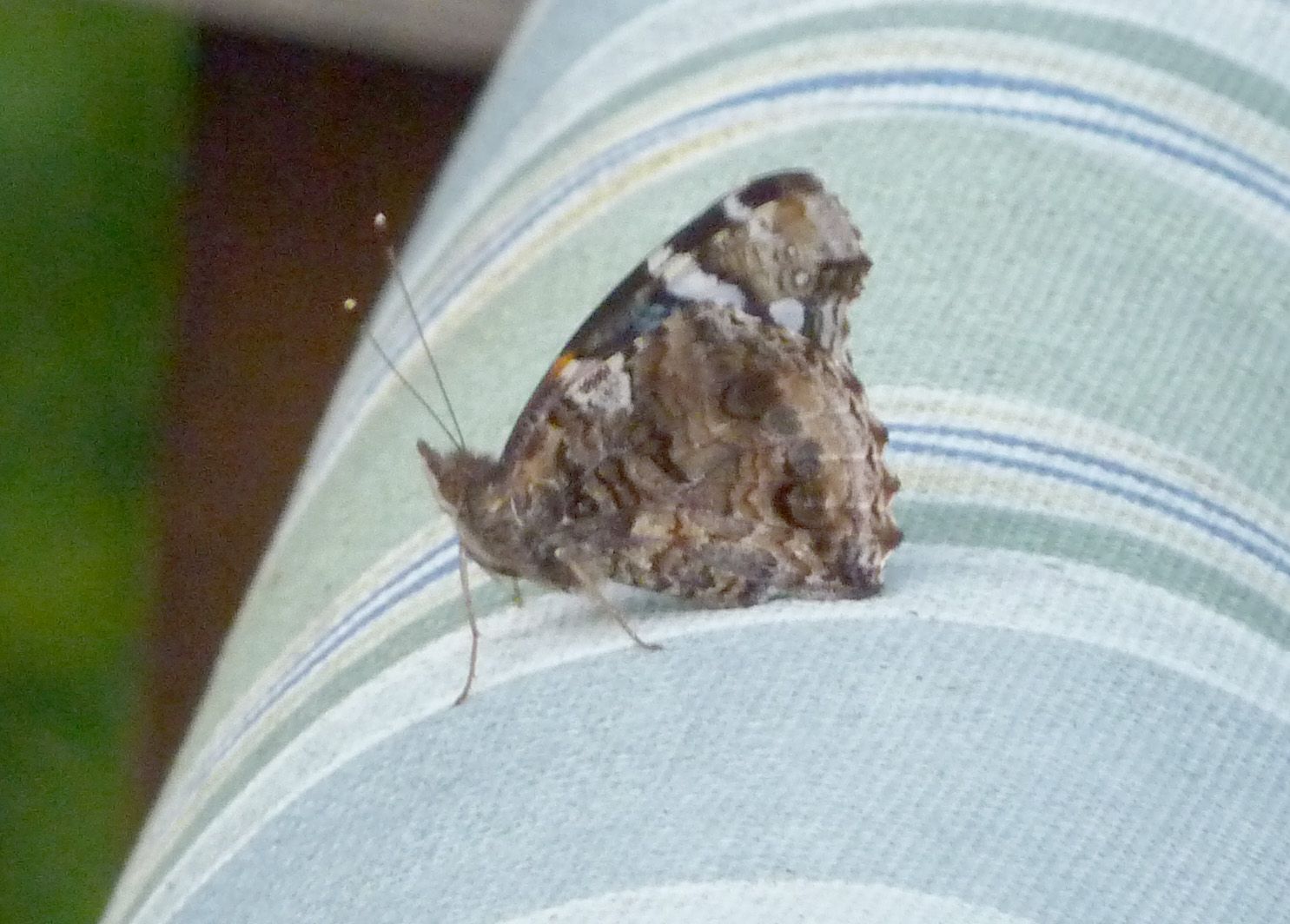
This is the best I could do with the Red Admiral migration. It's a shame it wouldn't open it's wings for me as they are very pretty.
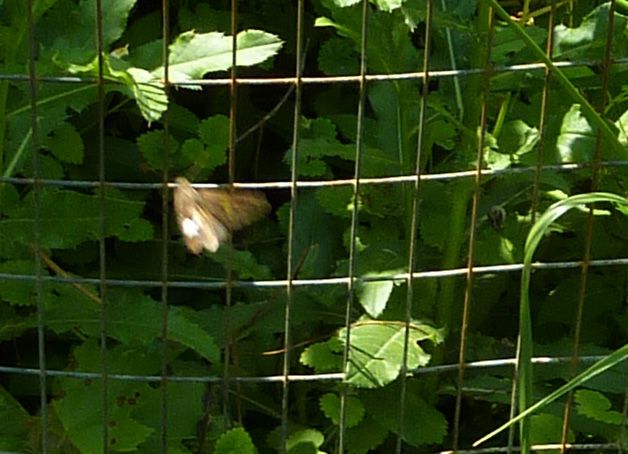
Got about 100 pictures of this. At least the butterfly is in this one.
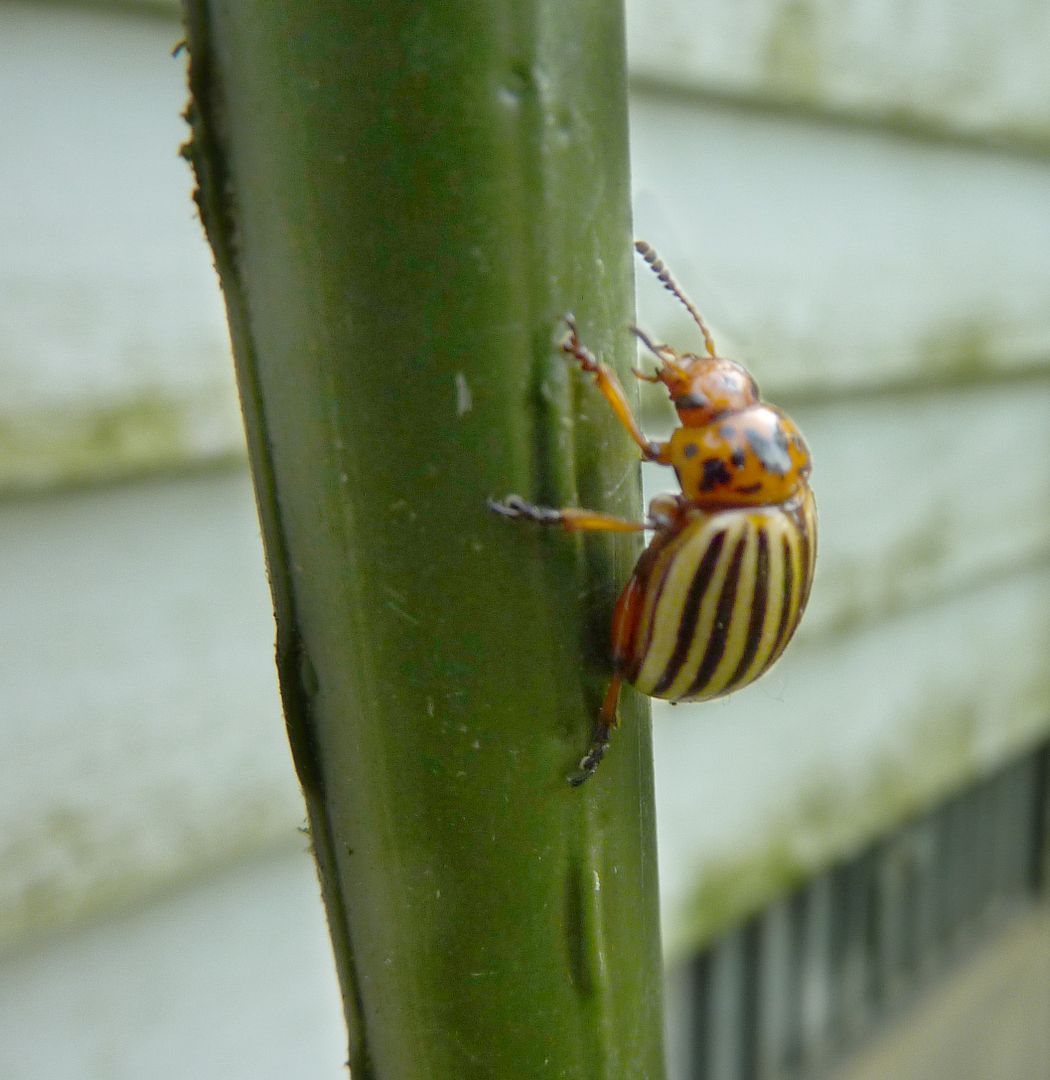
Started seeing Colorado Potato Beetles too. They eat potato plants. There is also the False Potato Beetle laying around which looks almost the exact same with an orange stripe down the middle.
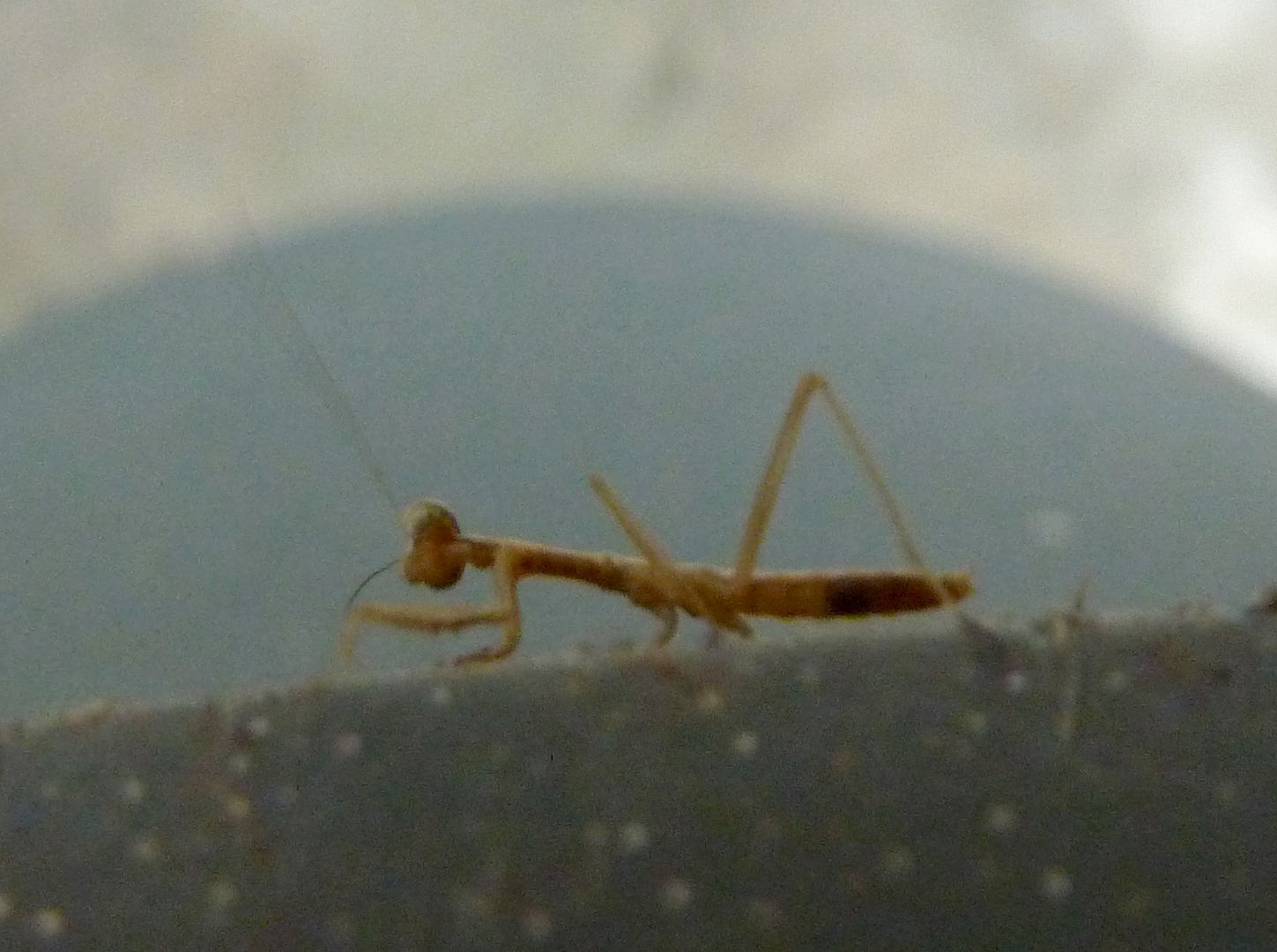
The highlight really is that Mantises have hatched. Predators of good and bad bugs. The trouble is they're in the same boat as lady bugs are. Most of the eggs sold in stores are not a native species. Regardless though they have the benefit of arriving later in the year, grow with age while they slowly reduce in number.
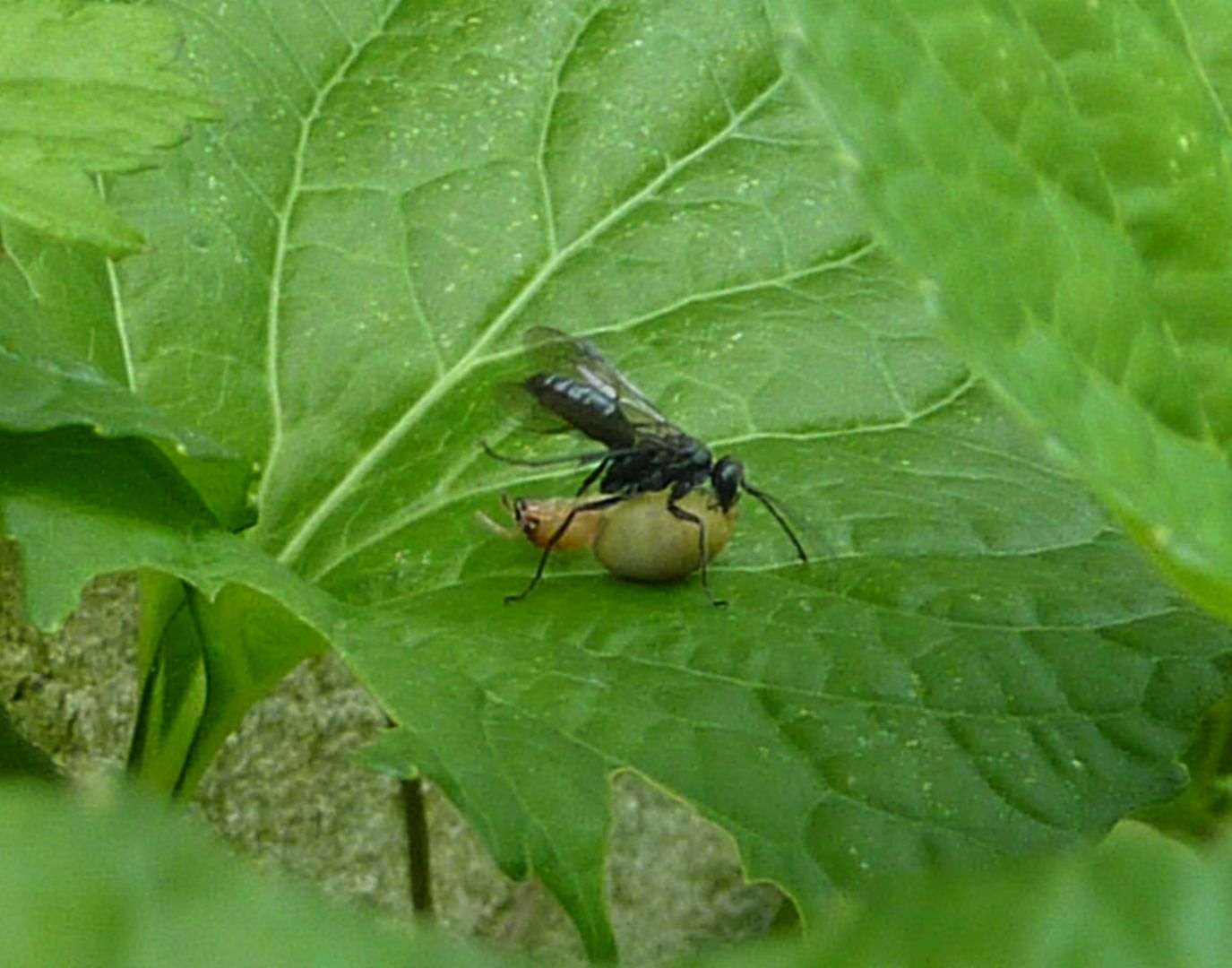
Spider Wasps are about doing their thing. Paralyzing specific types of spiders to lay their eggs in and bury in their burrows.
Got about 100 pictures of this. At least the butterfly is in this one.
Started seeing Colorado Potato Beetles too. They eat potato plants. There is also the False Potato Beetle laying around which looks almost the exact same with an orange stripe down the middle.
The highlight really is that Mantises have hatched. Predators of good and bad bugs. The trouble is they're in the same boat as lady bugs are. Most of the eggs sold in stores are not a native species. Regardless though they have the benefit of arriving later in the year, grow with age while they slowly reduce in number.
Spider Wasps are about doing their thing. Paralyzing specific types of spiders to lay their eggs in and bury in their burrows.
Labels:
beetles,
Butterflies,
Mantis,
Spiders,
Wasps
Subscribe to:
Posts (Atom)