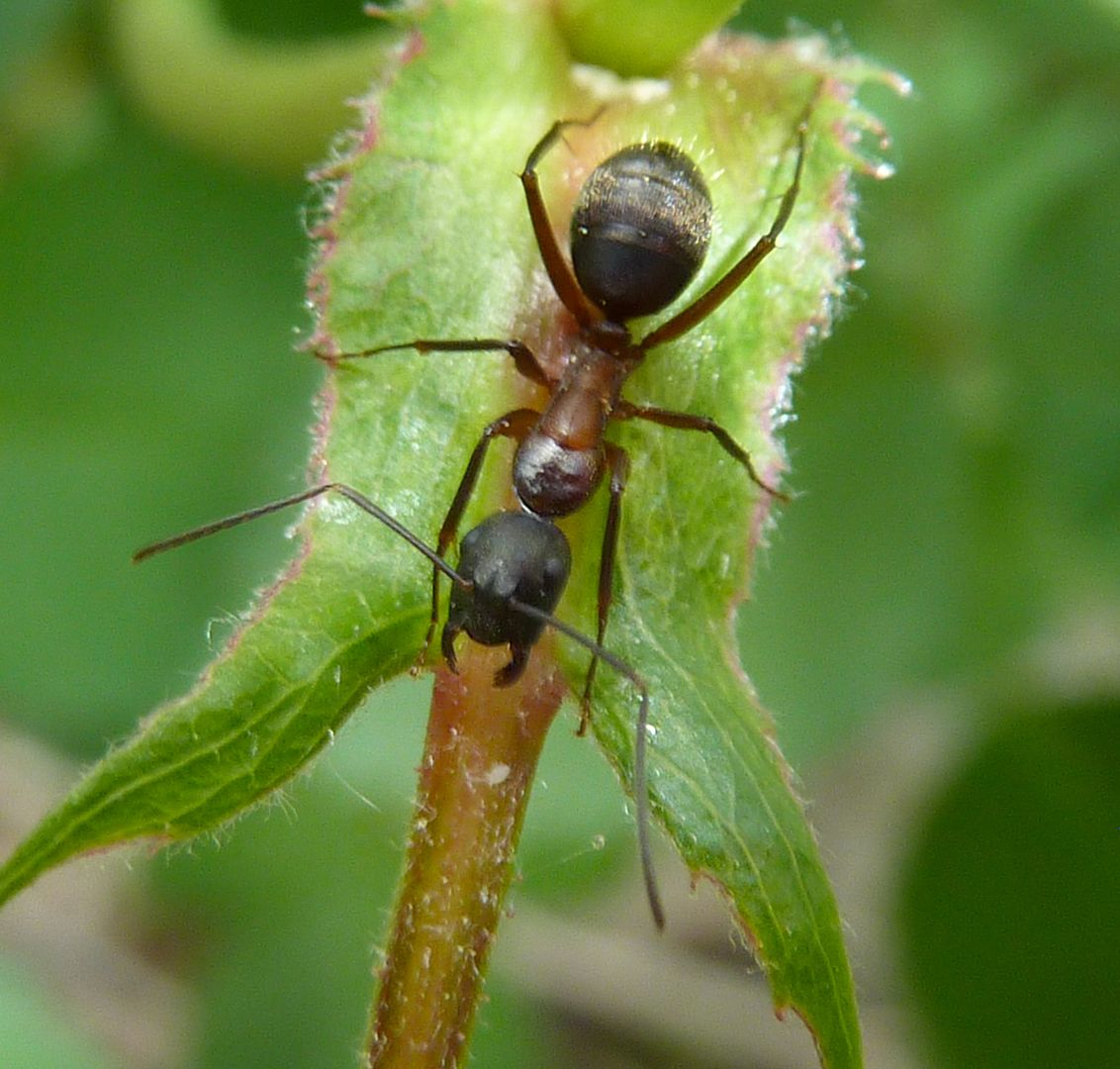
For the past two years I've been finding random Camponotus chromaiodes workers exploring plants out in the garden. The location gets very few ant colonies; as the soil is poorly drained, it naturally floods into a small puddle every time it rains. Waterlogged soils are awful for ant nests. Always though I would find the one worker to this species roaming about the perennial sunflower and small rose bush.
The only real ants I find there are all opportunistic nesting. Nylanderia flavipes, Temnothorax, and a few of the smaller Camponotus species that live happily in hollow plant stems from adjacent foliage. There is a reasonably sized log I use as a boarder for the garden, but upon lifting it up I find nothing there. In truth I've thought about replacing the log because it's gotten so water rotted that half of it sticks to the ground, I assume from fungi. The obvious place to look is inside the log but such snags are hard to come by and I'd like to keep it in tact as I kind of built the garden around it... then fate intervened.
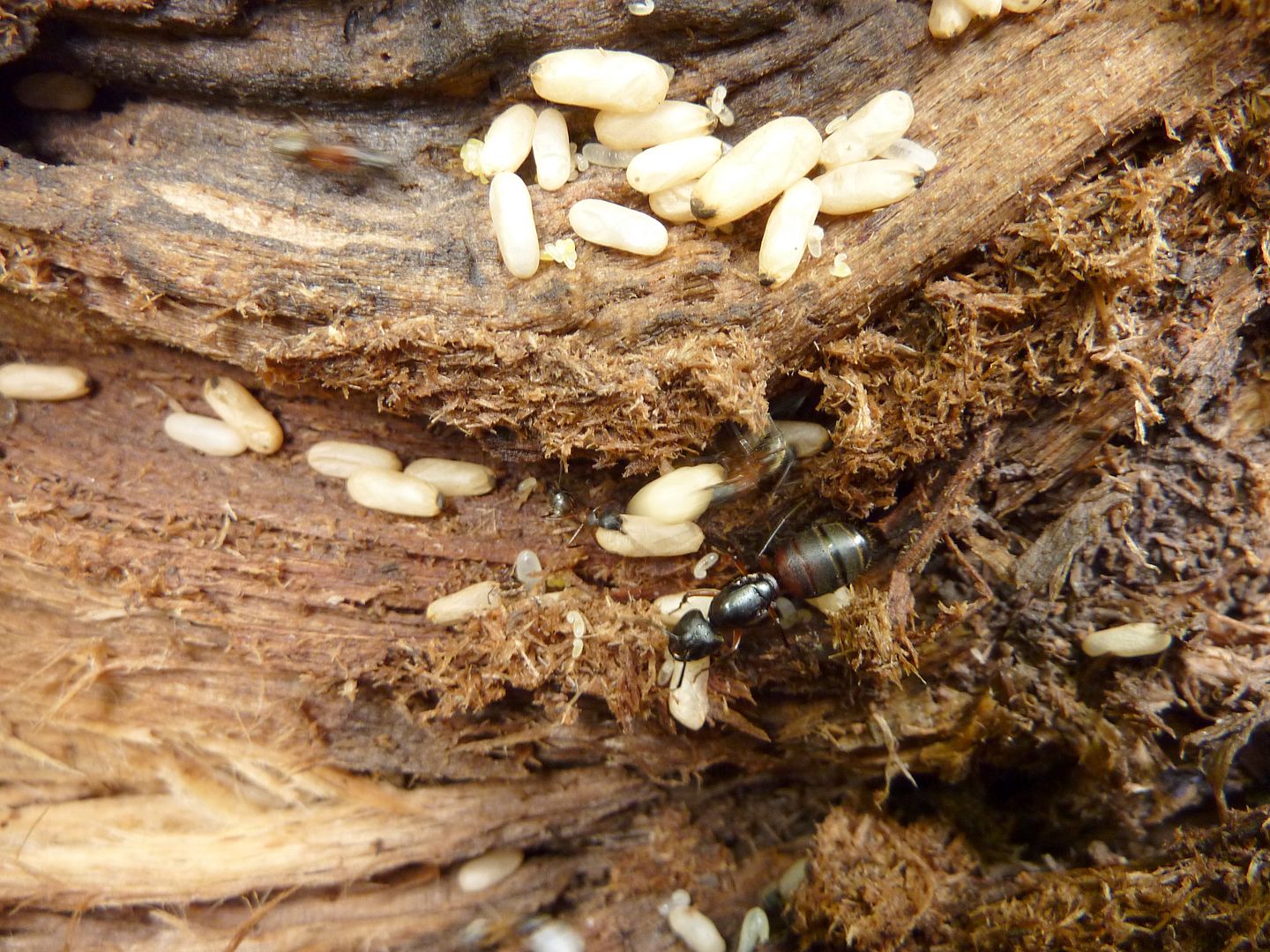
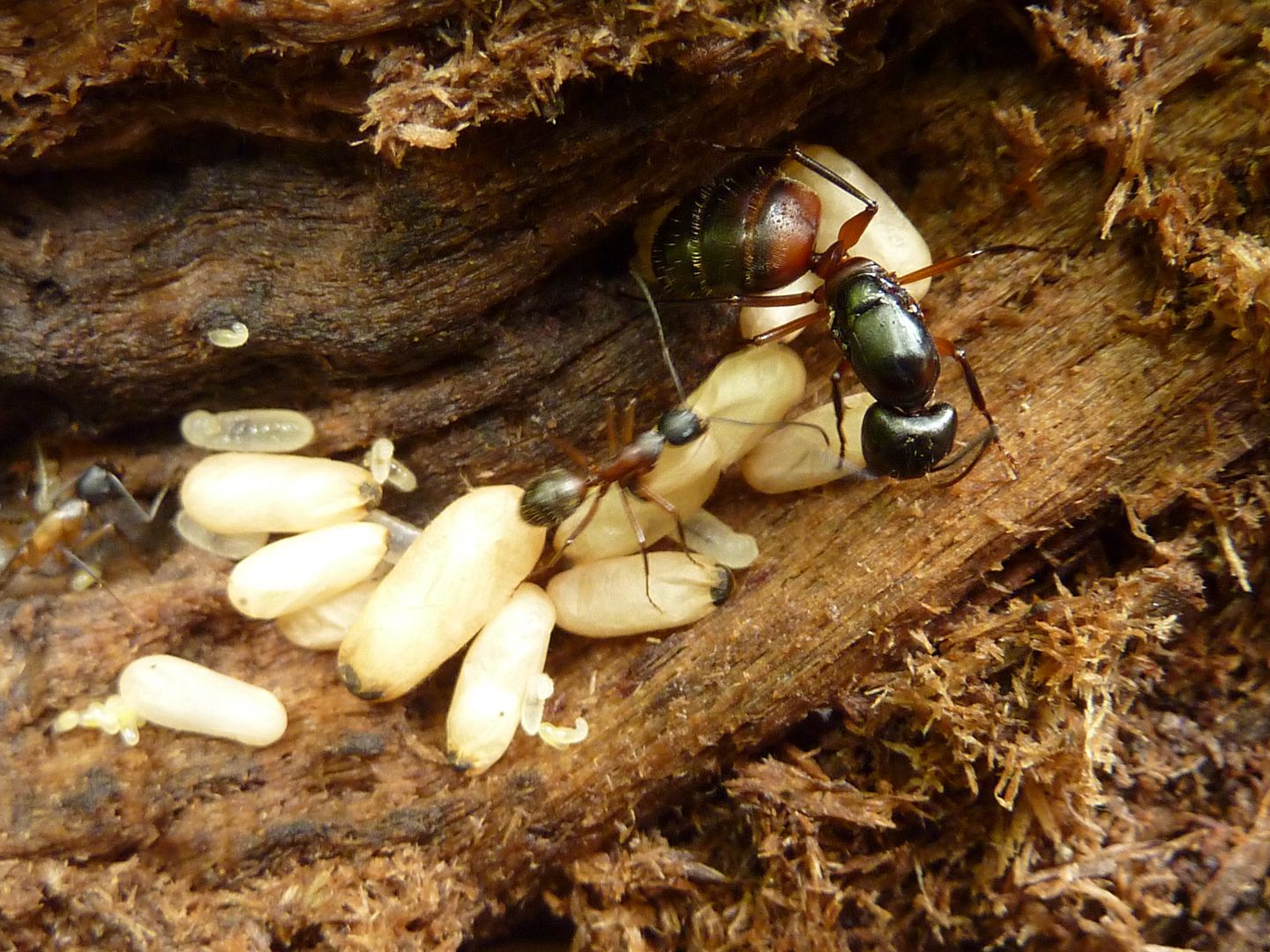
I had a friend over and lifted the log up for him, only to have it snap in half while I heaved. All the dampness has turned the wood soft and sponge-like. So there was the main brood chamber, and queen spilling out between the two halves of the log. So I feel I should take this opportunity to exercise a point.
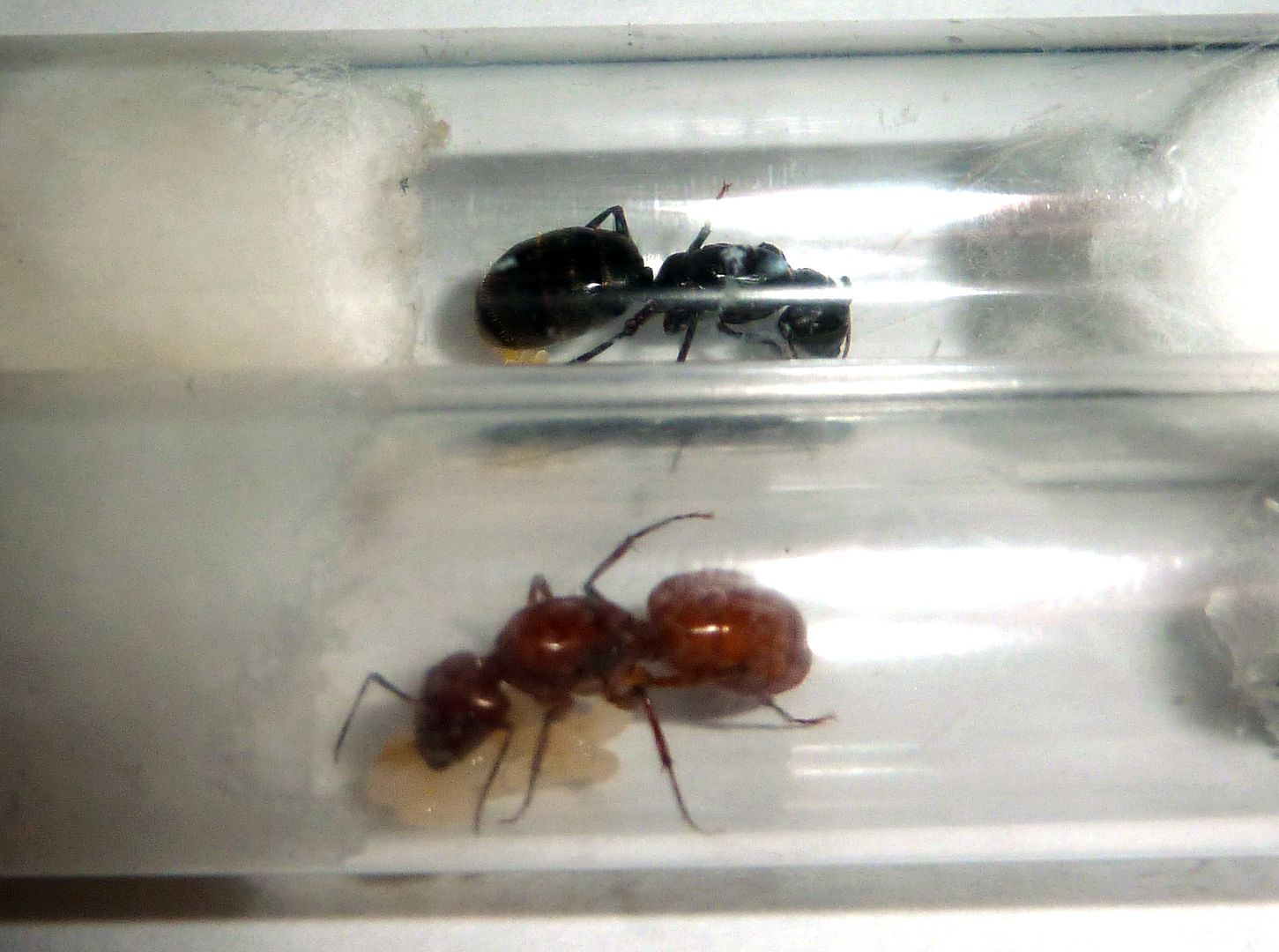
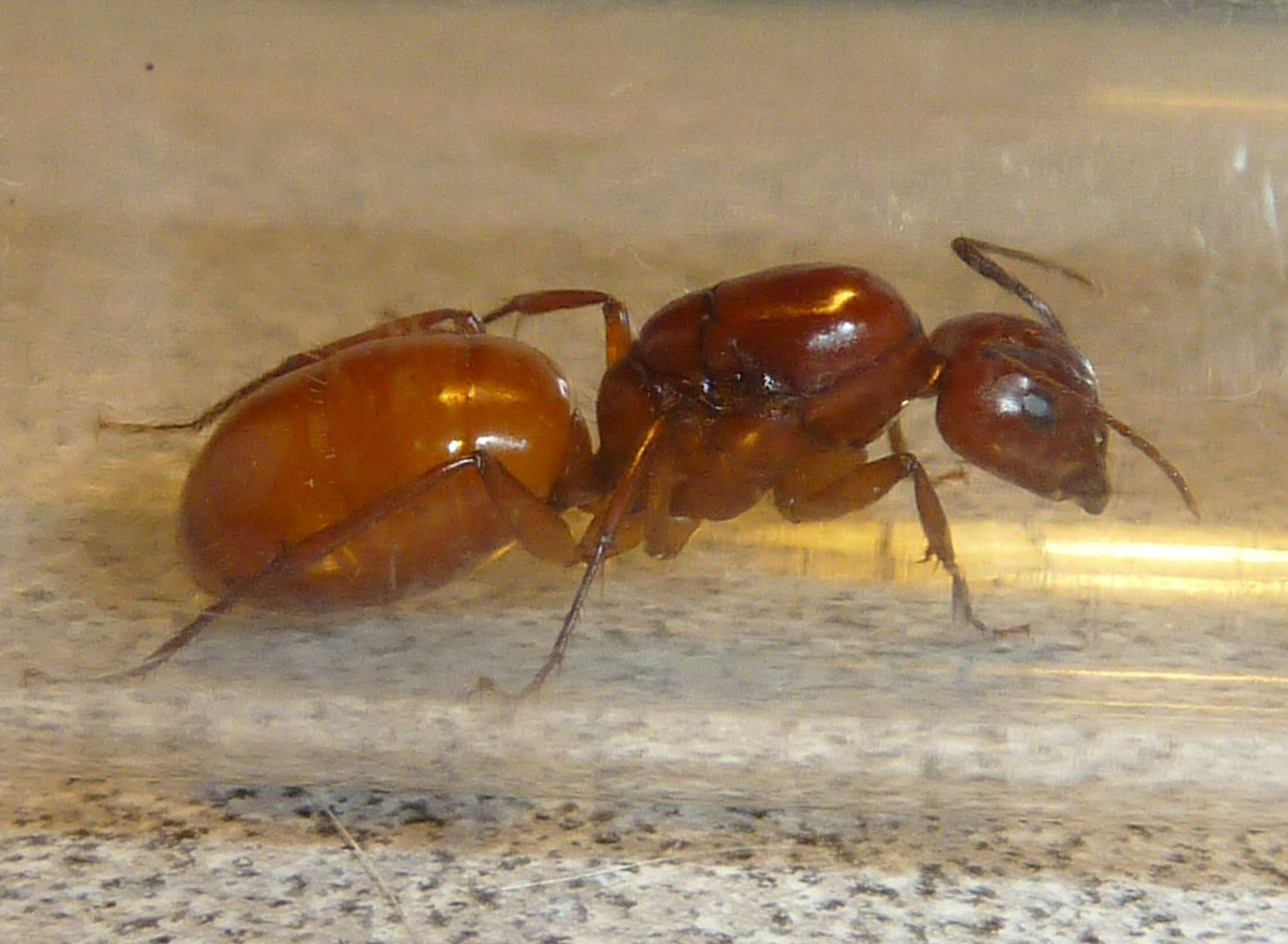
Pictured here are two common species of Camponotus. Up top is Camponotus pennsylvanicus which is solid black in color and only nests in dead wood, the softer the better. Down below is Camponotus castaneus which is almost a glowing orange yellow color that nests in soil, typically within a forest.
Soil nesting species for whatever reason have shed the darker colors of their wood nesting cousins. This trend seems to apply for all of the Camponotus species in North America, at least the larger ones that is.
Species that are mixed in color, such as Camponotus chromaiodes, have the option to nest in either soil or wood, and often do both. I believe young colonies favor wood before moving into soil though.
Now because a lot of Camponotus nest in dead wood, often their colonies are found "down hill" as dead wood typically rolls down hill over time. It would be interesting to see weather the species that nest in both soil and wood, bother to nest in soils that are poorly drained, or weather this is only an upland habit.
So I left the C. chromaiodes colony to rebuild in their log. They swiftly moved the queen and all their brood to what I assume used to be an entrance tunnel. Hopefully I'll continue to see them in the garden. It is always nice having colonies to check on easily so I have an idea of what to expect out in the wild. It is unfortunately that discovering of colonies can sometimes be destructive though.