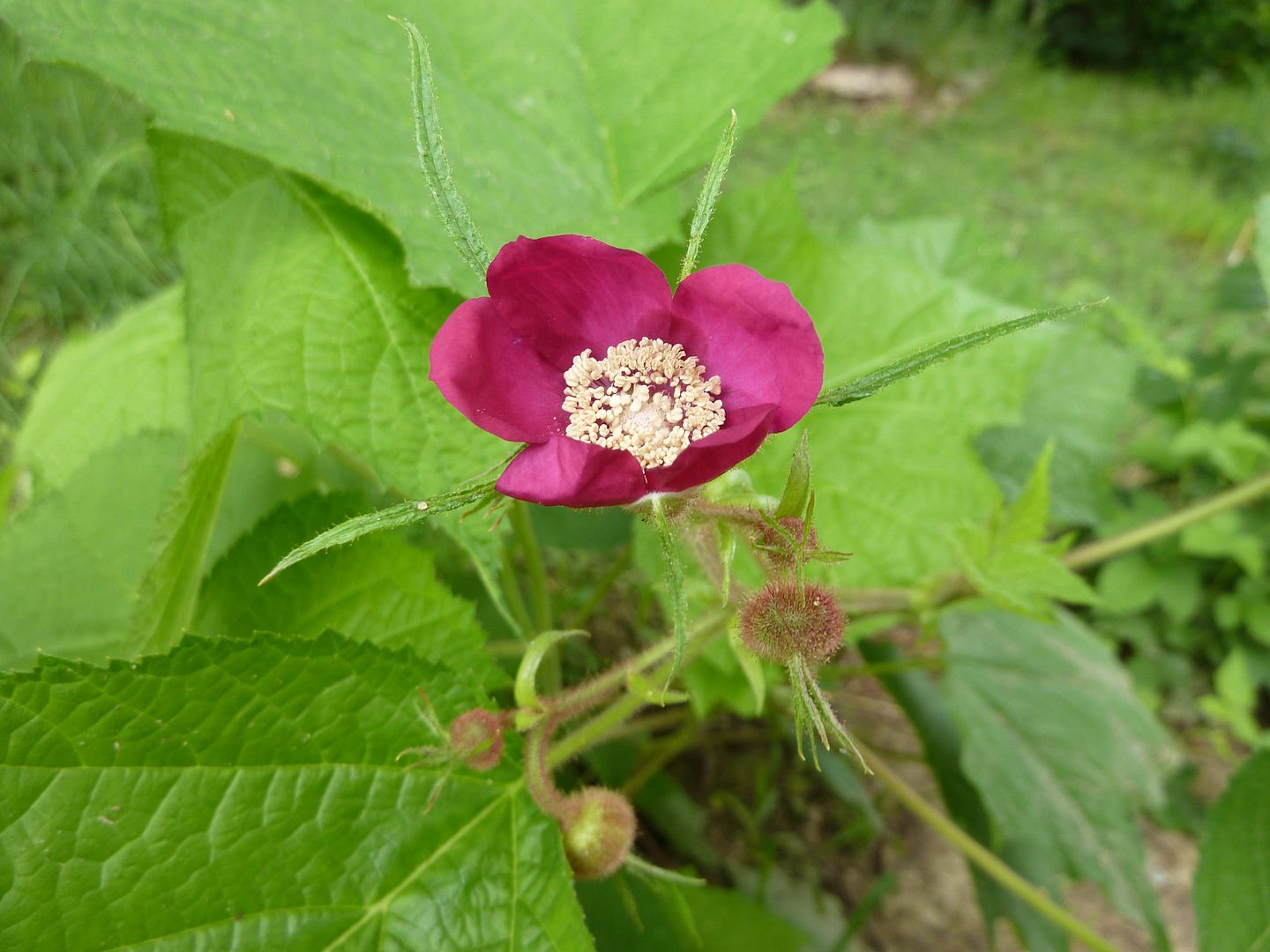
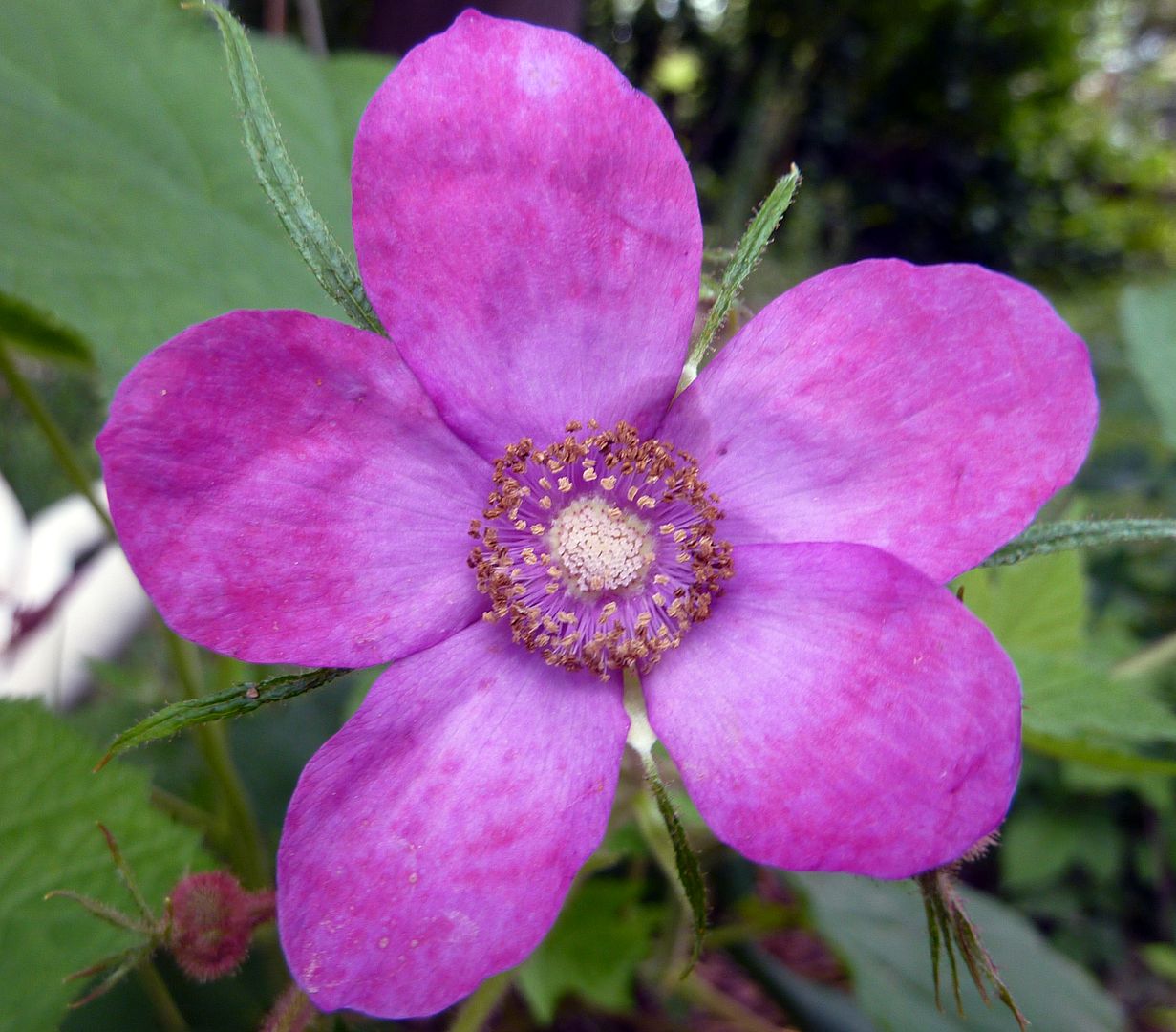
It opened! And it also stormed last night so that fluffy pollen filled appearance went a little down hill. Also the petals faded up a bit quicker than I'd expected. It's still pretty and I'm looking forward to seeing lots more of them.
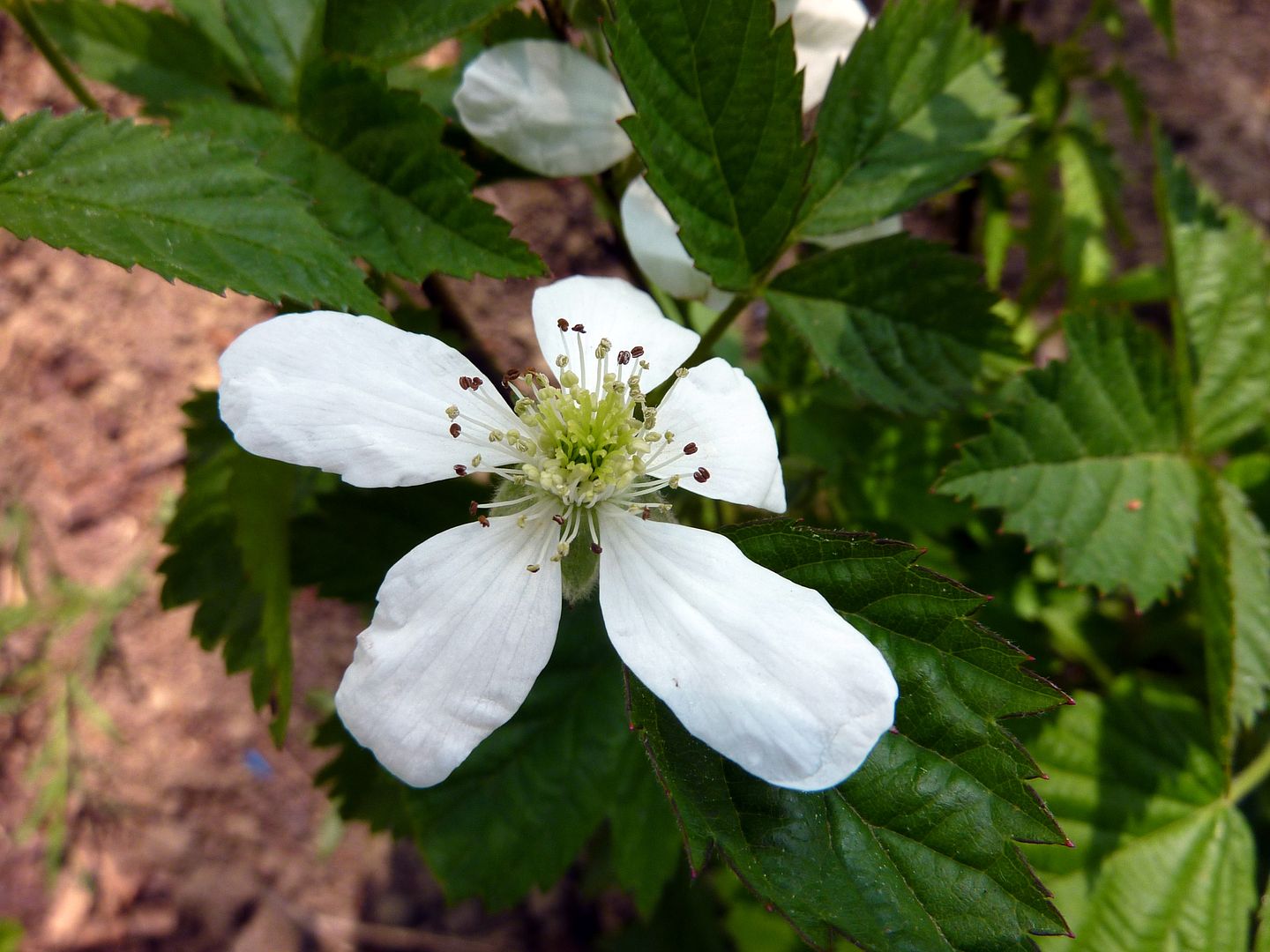
Another plant in this genus I've tried is Common Dewberry, Rubus flagellaris. This is basically a low growing blackberry that grows more as a bramble along the ground. Their fruiting stems come up to about 4' but the longer ones that spread out can grow to be 15' long! This flowered about a month ago, and it's just produced a few berries. They're tart but sweeter than the actual blackberries I grow. Meaning you don't really need to eat them with heavy cram or anything. They're still super tart so it's always an option but they're bearable to eat right off the vine.
Showing posts with label Berries. Show all posts
Monday, June 24, 2013
Sunday, June 23, 2013
Purple Flowering Raspberry
Open Faster!!!
So this little jewel started to peek open this morning and I've never wanted a flower to open up faster before in my life. This is Purple
Flowering Raspberry, Rudus odoratus. Along with looking like one of our native roses, this plant lack prickers or thorns as found on typical Raspberries and instead has sticky hairs which are sort of neat to touch. Their pollen filled flowers go on to produce edible fruit that I've read taste as good as if not slightly less than traditional red Raspberries. Honestly though it might be a sacrifice I can live with if I could get a row of these beauties in my yard every year. Why isn't this plant more widely sold? Or at least crossed so the red raspberry produces a prettier flower?
Friday, May 10, 2013
Some Native Berry Plants
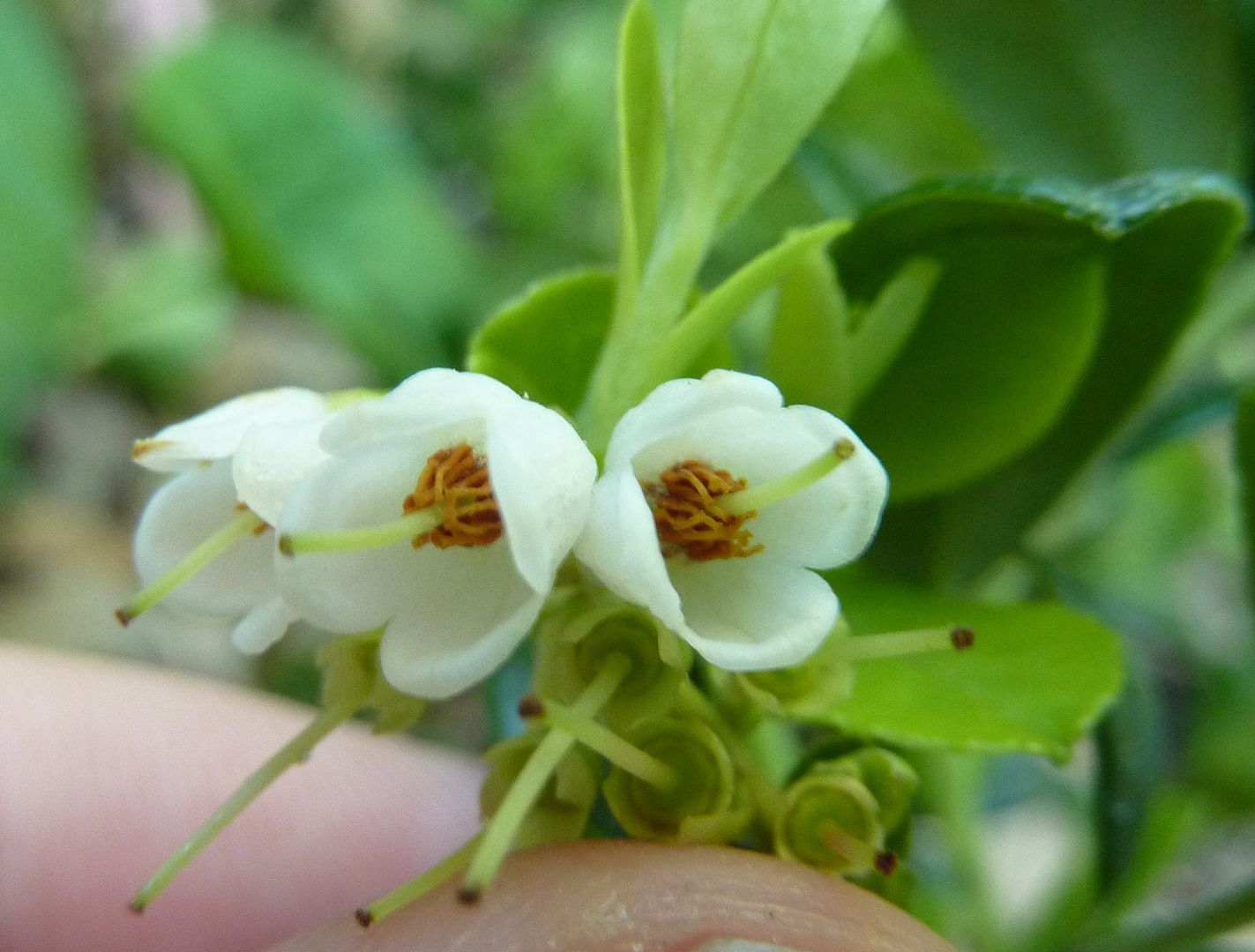
I'm giving Lingonberries, Vaccinium vitis-idaea, another try. Years ago I planted some next to the Gooseberry/Currant shrubs but the area proved to be too dry over the summer time and they were dead within the year. They were just four plants that came in 4" pots but were obviously recent cuttings that had rooted because it was just one little stem poking out of the ground. So I decided to try them again, and somehow or other I ended up buying 18 of them! This is excessive even for me and my plant spending habits, though I want to say the bill was something like $60 in total so that's at least an okay deal. The plants arrived in 4" pots (from a different nursery) and looked like very healthy Box Wood-like plants. So I'm very happy with what I got in the mail. From planting them I see they spread some by underground runners so they might eventually pay for themselves. I've planted them into two groups, one is sunny and damp, while the other is shaded, slightly dryer, and also right next to the garden hose. Their flowers are very much like the white bells we see on blueberries, but with earthy orange and red pollen inside.
Lingonberries are native to the US, despite how prized they are in Scandinavia. Though I'm sure some variation of them must occur in northern Europe and Asia. Basically they're like a cranberry and I'm told with a similar flavor. Unlike cranberries though, these should flower twice a year and produce two crops of berries each year! I had thought this was universal but I notice it's not listed for all varieties making me think it could have been bread out of some cultivars or not a trait in all species, hmm....
My Blueberry shrubs are also flowering, though I don't believe I'll be getting as many berries as I got last year. One of the six plants actually died. The ones that remain have dead limbs on them that I believe I should prune off. For as much as I love blueberries, I sure wish I could grow them better. I do add acidity to the soil each spring and autumn, but it doesn't seem to be enough. Hopefully it's just them establishing their first year.
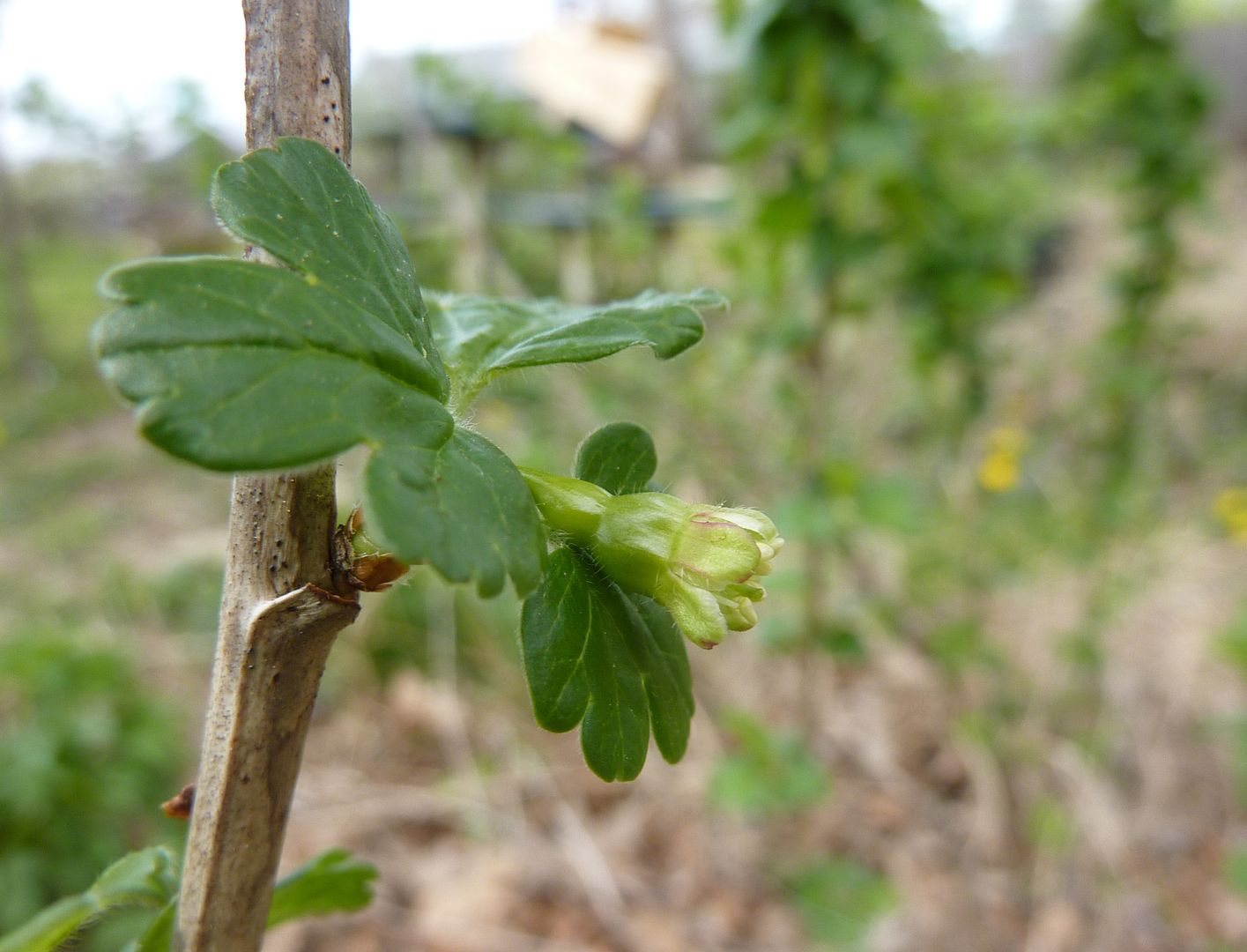
The Gooseberry/Currants flowered too. I think this is one of the western varieties I bought a few years ago. They really took their sweet time just growing to be waist high, but are now flowering at pretty much everywhere that pushed out a leaf. They're very productive plants when they get going.
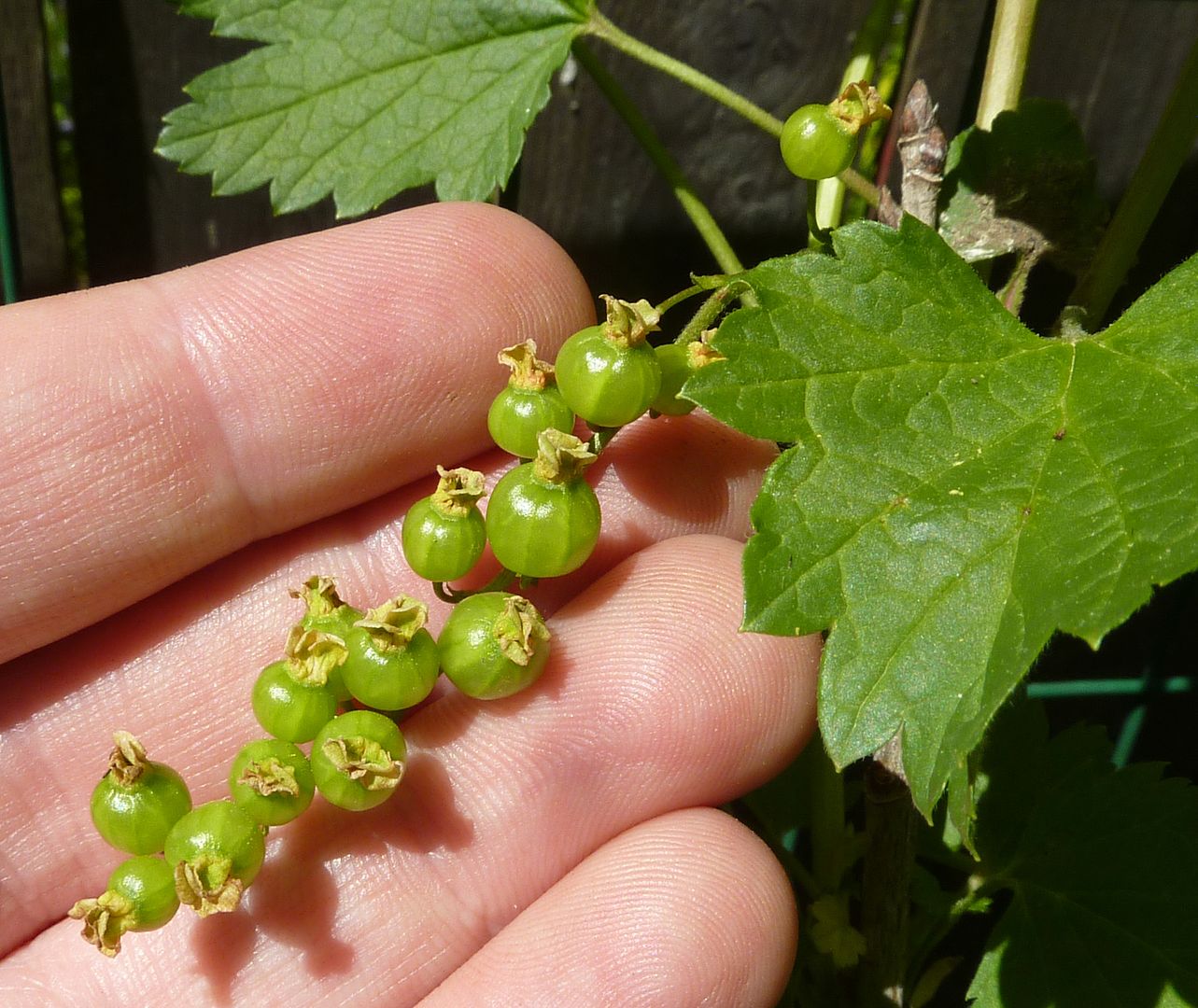
One variety that was supposed to be 'Pixwell' but clearly isn't, is already puffing up its berries. These turn into bright red orbs like Red Currant if I recall right. I'm reasonably sure this is Red Currant, which is probably one of the few plants I complain about the most. Their berries are very tart and sometimes bitter, and yet they're addictive. In other words the perfect plant for your masochistic grandmother.
Lingonberries are native to the US, despite how prized they are in Scandinavia. Though I'm sure some variation of them must occur in northern Europe and Asia. Basically they're like a cranberry and I'm told with a similar flavor. Unlike cranberries though, these should flower twice a year and produce two crops of berries each year! I had thought this was universal but I notice it's not listed for all varieties making me think it could have been bread out of some cultivars or not a trait in all species, hmm....
My Blueberry shrubs are also flowering, though I don't believe I'll be getting as many berries as I got last year. One of the six plants actually died. The ones that remain have dead limbs on them that I believe I should prune off. For as much as I love blueberries, I sure wish I could grow them better. I do add acidity to the soil each spring and autumn, but it doesn't seem to be enough. Hopefully it's just them establishing their first year.
The Gooseberry/Currants flowered too. I think this is one of the western varieties I bought a few years ago. They really took their sweet time just growing to be waist high, but are now flowering at pretty much everywhere that pushed out a leaf. They're very productive plants when they get going.
One variety that was supposed to be 'Pixwell' but clearly isn't, is already puffing up its berries. These turn into bright red orbs like Red Currant if I recall right. I'm reasonably sure this is Red Currant, which is probably one of the few plants I complain about the most. Their berries are very tart and sometimes bitter, and yet they're addictive. In other words the perfect plant for your masochistic grandmother.
Labels:
Berries,
Blueberry,
Currant,
flowers,
Gooseberry,
Lingonberries,
native,
Shrubs
Friday, April 19, 2013
It's Like Christmas Time
Boxes keep arriving full of plants for me to plant. Since I wrote my own book on "Native Plants for Honeybees" I figured I'd take my own advice and install so real treasures. That's not to say I didn't research at all, but I personally haven't some of them, and many of the good ones sadly I don't have photographs of.
These all just arrived from Shooting Star Nursery:
Basswood, Tilia americana, also called American Linden Tree. This is actually a common street tree in some neighborhoods, but I haven't seen any of it growing around here. I know someone who planted one but it didn't make it through the winter which is odd because they are hardy. This is one of those great summer nectar sources for honeybees to enjoy. The flowers are said to have a sweet distinctive scent (see Mitchell and Webb).
Fall Color is Red.
Sourwood, Oxydendrum arboreum, is another good summer-ish nectar plant. The flowers are bell shaped, like those of blueberries and heathers, and occur along horizontal "strands" almost like exploding fireworks which bees have fairly easy access to. It's said to be a high quality honey.
Fall Color is Red, with lines of yellow or blond seed pods all over.
Black Tupelo, Nyssa sylvatica, is a massive tree that grows in the bog and wetlands down south. This species, I've read, can tolerate growing in average moisture and should be somewhat drought tolerant onces it's established. Tupelo honey is said to be one of the best tasting in the world, and while I doubt one tree will be enough to get that pure tupelo honey, I look forward to adding it's flavor to the typical wildflower mix my bees produce. Great nectar plant.
Fall Color is Red.
Clove Currant, Ribes odoratum, which I believe is a synonymy with Ribes aureum. Anywho it's an early blooming shrub with wonderful fragrant yellow flowers. Honeybees use it for both nectar and pollen, however it does have seperate male and female plants so you don't necessarily get both on one plant. Females that get pollinated will make berries that I read are tasty both for humans and the birds.
Purple Flowering Raspberry, Rudus odoratus, which has brilliant 2" red/magenta/purple flowers worthy of any rose garden, that go on to produce edible raspberries. I'm scratching the back of my head wondering why this isn't planted more often? And why isn't is more widely available? What's more, why haven't growers gone nuts breeding the flower traits into other varieties? At the very least you'd expect them to breed in the lack of prickers along the stem wouldn't you? Raspberries are good nectar and pollen plants for honeybees.
Prairie Rose, Rosa setigera, is a climbing or tailing rose with a vigorous growing habit. Native roses are often labeled as aggressive spreading both by seeds and by runner/root suckers. Well I can't argue the seed aspect but that's easily solved by dead heading. As for sending out new stems along the root system, in truth this varies from plant to plant and can even be bread out of them. Roses only produce pollen for honeybees, and if the bee doesn't have to dredge a labyrinth of 50+ petals all the better.
Blood Root, Sanguinaria canadensis, which is a native wildflower that only produced pollen. It's also one that I went a little nuts with and apparently ordered it from several other nurseries as well.
Tiny-Headed Blazing Star, Liatris microcephala, which is just to add to my collection of Liatris species. Liatris produce okay amounts of nectar but I don't believe it's ever collected in high enough quantities for it's only honey type. I find this strange though because I know honeybees love this plant, and there are defiantly fiends that are glowing with Liatris when they bloom. I suspect there's too much else flowering in the same fields when they are to narrow it down.
These all just arrived from Shooting Star Nursery:
Basswood, Tilia americana, also called American Linden Tree. This is actually a common street tree in some neighborhoods, but I haven't seen any of it growing around here. I know someone who planted one but it didn't make it through the winter which is odd because they are hardy. This is one of those great summer nectar sources for honeybees to enjoy. The flowers are said to have a sweet distinctive scent (see Mitchell and Webb).
Fall Color is Red.
Sourwood, Oxydendrum arboreum, is another good summer-ish nectar plant. The flowers are bell shaped, like those of blueberries and heathers, and occur along horizontal "strands" almost like exploding fireworks which bees have fairly easy access to. It's said to be a high quality honey.
Fall Color is Red, with lines of yellow or blond seed pods all over.
Black Tupelo, Nyssa sylvatica, is a massive tree that grows in the bog and wetlands down south. This species, I've read, can tolerate growing in average moisture and should be somewhat drought tolerant onces it's established. Tupelo honey is said to be one of the best tasting in the world, and while I doubt one tree will be enough to get that pure tupelo honey, I look forward to adding it's flavor to the typical wildflower mix my bees produce. Great nectar plant.
Fall Color is Red.
Clove Currant, Ribes odoratum, which I believe is a synonymy with Ribes aureum. Anywho it's an early blooming shrub with wonderful fragrant yellow flowers. Honeybees use it for both nectar and pollen, however it does have seperate male and female plants so you don't necessarily get both on one plant. Females that get pollinated will make berries that I read are tasty both for humans and the birds.
Purple Flowering Raspberry, Rudus odoratus, which has brilliant 2" red/magenta/purple flowers worthy of any rose garden, that go on to produce edible raspberries. I'm scratching the back of my head wondering why this isn't planted more often? And why isn't is more widely available? What's more, why haven't growers gone nuts breeding the flower traits into other varieties? At the very least you'd expect them to breed in the lack of prickers along the stem wouldn't you? Raspberries are good nectar and pollen plants for honeybees.
Prairie Rose, Rosa setigera, is a climbing or tailing rose with a vigorous growing habit. Native roses are often labeled as aggressive spreading both by seeds and by runner/root suckers. Well I can't argue the seed aspect but that's easily solved by dead heading. As for sending out new stems along the root system, in truth this varies from plant to plant and can even be bread out of them. Roses only produce pollen for honeybees, and if the bee doesn't have to dredge a labyrinth of 50+ petals all the better.
Blood Root, Sanguinaria canadensis, which is a native wildflower that only produced pollen. It's also one that I went a little nuts with and apparently ordered it from several other nurseries as well.
Tiny-Headed Blazing Star, Liatris microcephala, which is just to add to my collection of Liatris species. Liatris produce okay amounts of nectar but I don't believe it's ever collected in high enough quantities for it's only honey type. I find this strange though because I know honeybees love this plant, and there are defiantly fiends that are glowing with Liatris when they bloom. I suspect there's too much else flowering in the same fields when they are to narrow it down.
Tuesday, November 13, 2012
Fall Color
I'd love to have shown off the bright orange persimmons our tree produced this year but hurricane Sandy seems to have blown them away. (I can only hope they managed to hit some politicians house.)
Any who, I've never been a huge fan of fall color though some of the brilliant yellow and brilliant red trees have impressed me. These scenes are few and far between though and only last a few days before they're gone. What's happening here is that insects can't see red as well as other colors. The plants are purposely producing this pigment to discourage aphids from laying eggs around them. In this way they won't be the first trees infested with them come spring. How effective this is is debatable though especially with yellow being such a common fall color.
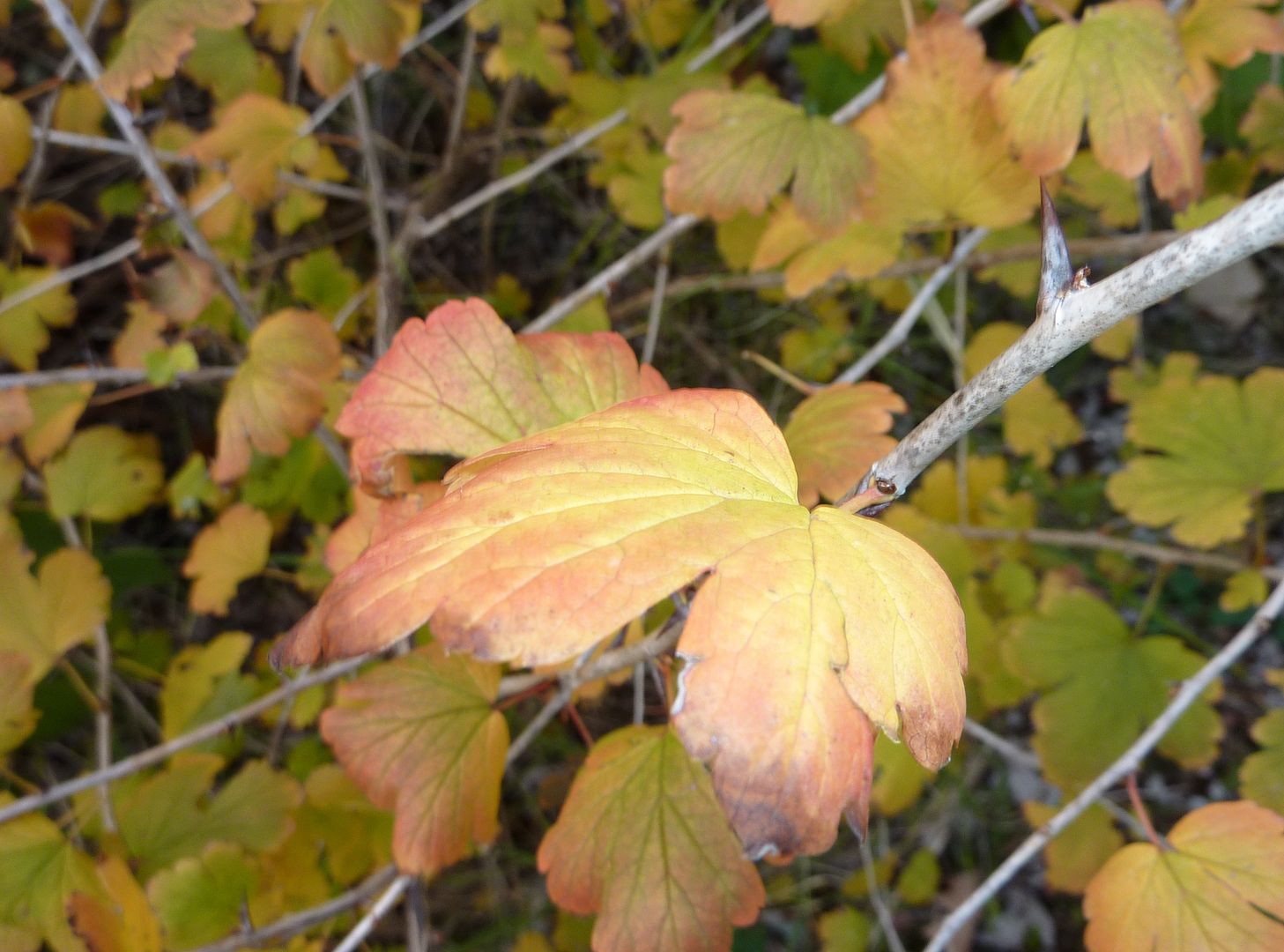
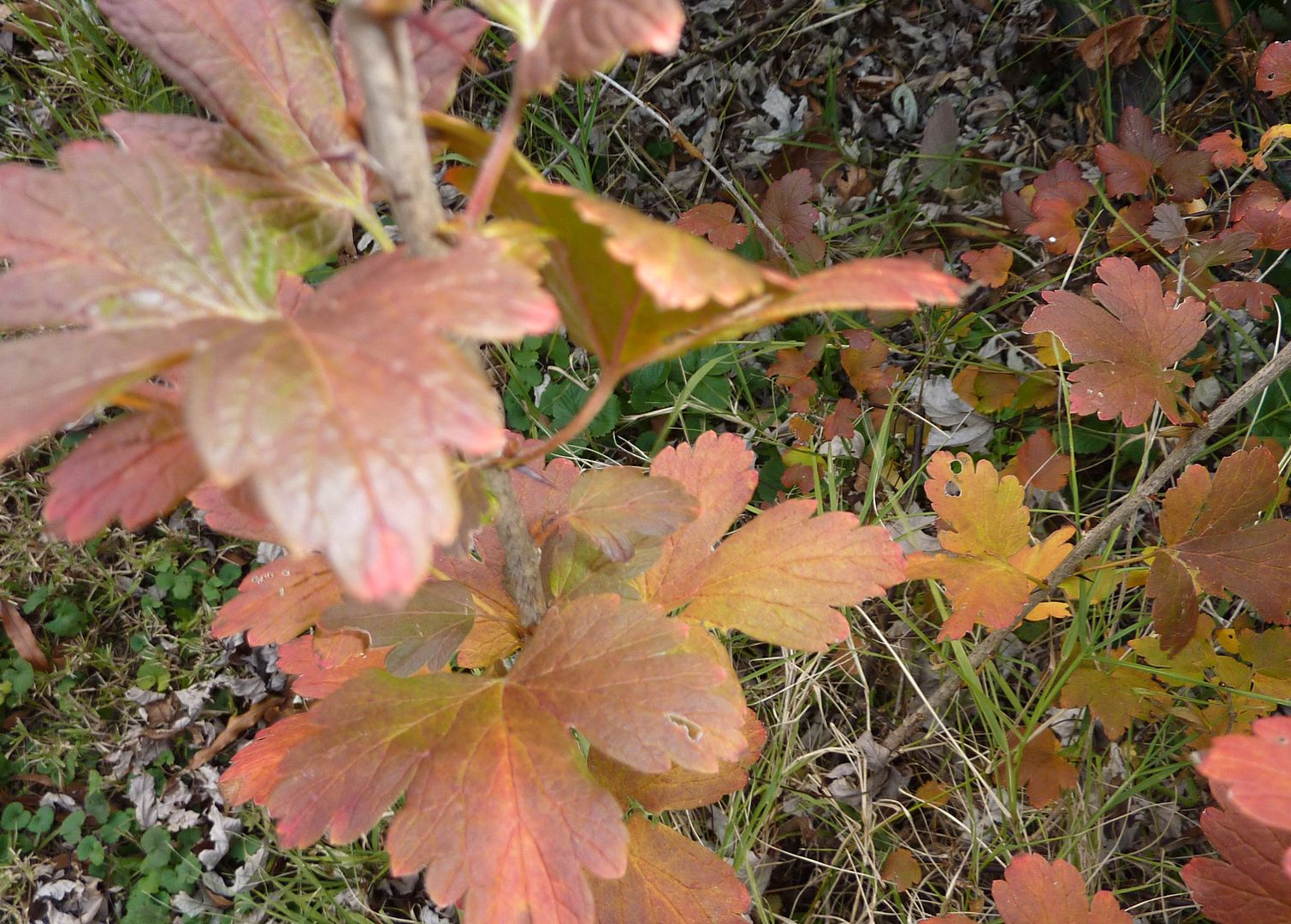
Our Gooseberry plants seem to be all over the place with colors. Fall color varies from cultivar to cultivar, species to species, and plant to plant as with the flavor of the berries. Some species growing in the same field can vary dramatically. It makes me wonder if any of the vendors selling Gooseberry/Current in the US knows what they're doing.
From the same nursery this was sold as Red Gooseberry.
And so was this, but it has a different fall color, different branching habit, the leaves are slightly larger, and even the thorns were different. Next year I'll see about getting these identified to species level.
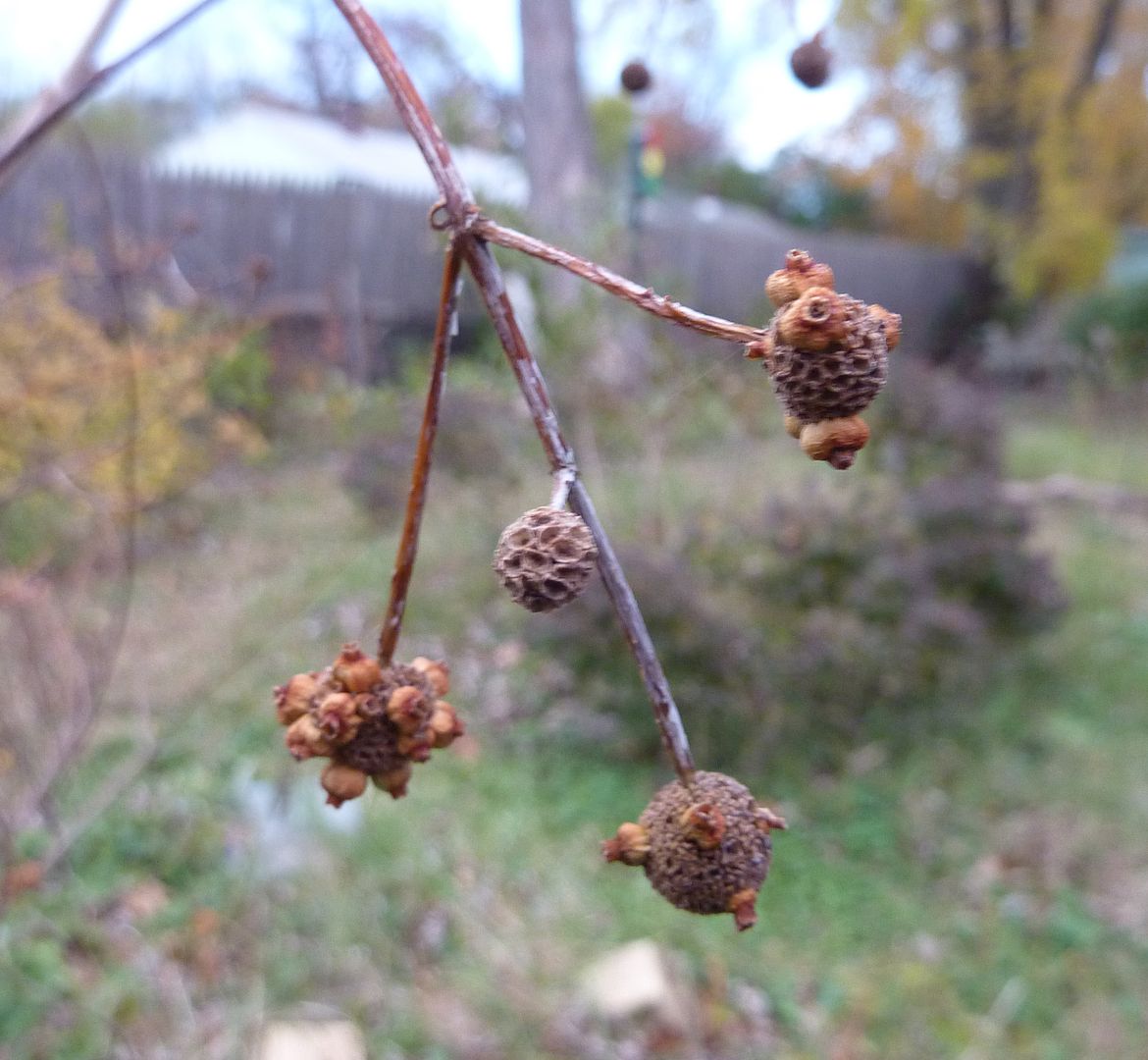
The nut-like seeds to our Buttonbush. It's nice to see some of these developed from all the attention the bees gave it this year.
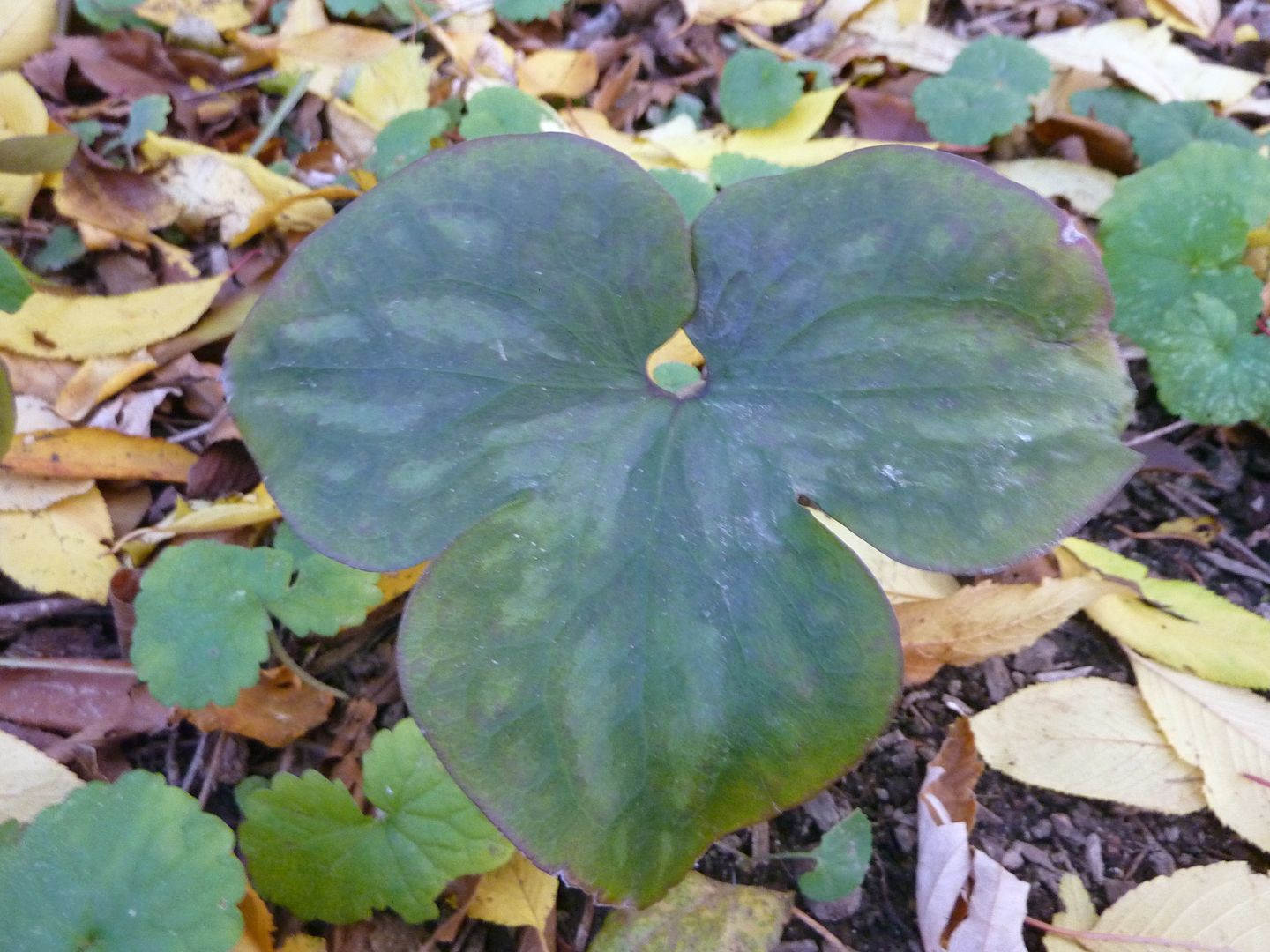
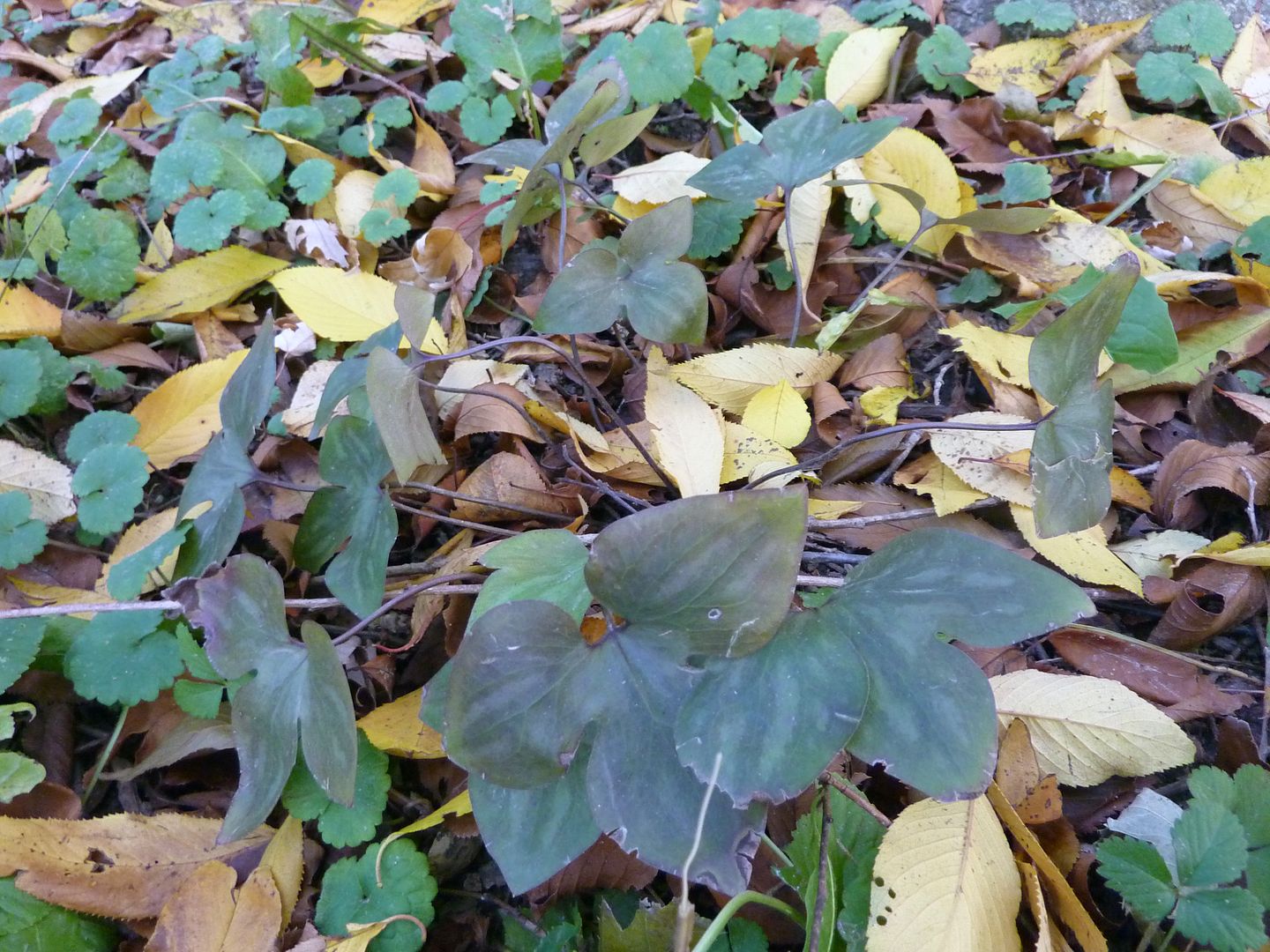
Mixed among the leaf litter is a couple of my Hepatica plants, which are semi-evergreen.
Hepatica leaves last the winter and finally die off right when it flowers in the spring. New leaves are produced just as the old ones have all broken off.
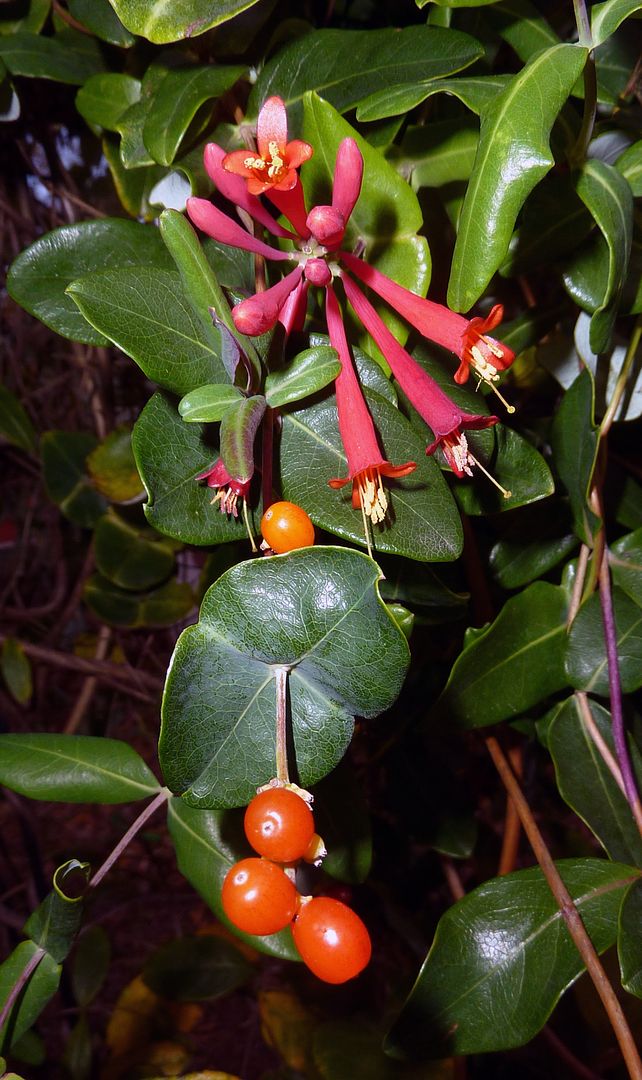
Coral Honeysuckle, does not care that its winter or not. I've always been impressed by how cold tolerant this plant is. Barely any of the leaves have started turning yellow and it still has unopened flower buds to go! I swear this vine must drop its leaves for only two months of the year, and each spring it makes up for lost time by quadrupling the number of flowers it produced all last year. It's never been a heavy fruiting plant but there's always a berry or two where the flowers used to be.
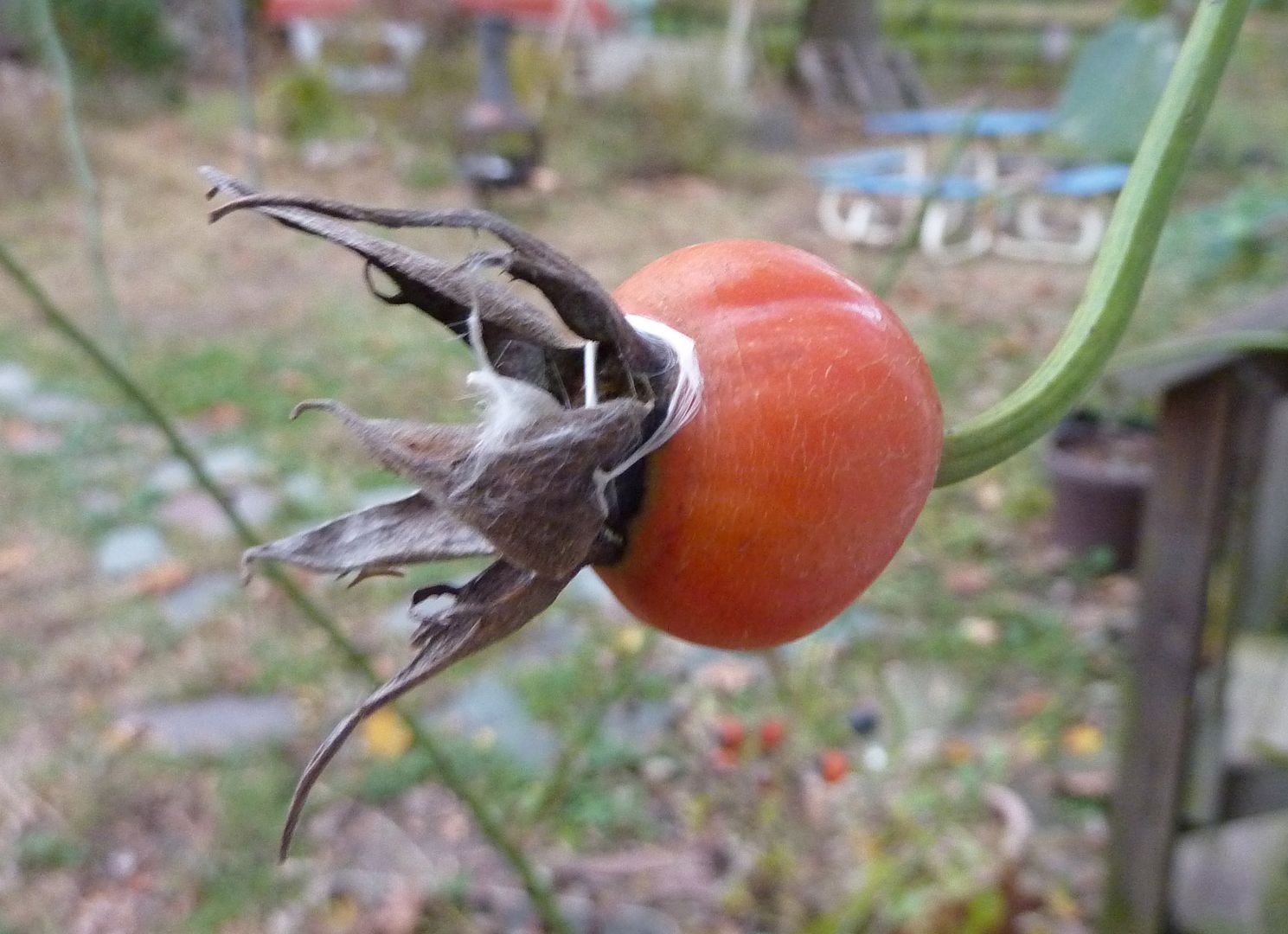
Rose hips are another fruit showing off right now. I'm told these are edible, but honestly I wouldn't know what to do with them.
Any who, I've never been a huge fan of fall color though some of the brilliant yellow and brilliant red trees have impressed me. These scenes are few and far between though and only last a few days before they're gone. What's happening here is that insects can't see red as well as other colors. The plants are purposely producing this pigment to discourage aphids from laying eggs around them. In this way they won't be the first trees infested with them come spring. How effective this is is debatable though especially with yellow being such a common fall color.
Our Gooseberry plants seem to be all over the place with colors. Fall color varies from cultivar to cultivar, species to species, and plant to plant as with the flavor of the berries. Some species growing in the same field can vary dramatically. It makes me wonder if any of the vendors selling Gooseberry/Current in the US knows what they're doing.
From the same nursery this was sold as Red Gooseberry.
And so was this, but it has a different fall color, different branching habit, the leaves are slightly larger, and even the thorns were different. Next year I'll see about getting these identified to species level.
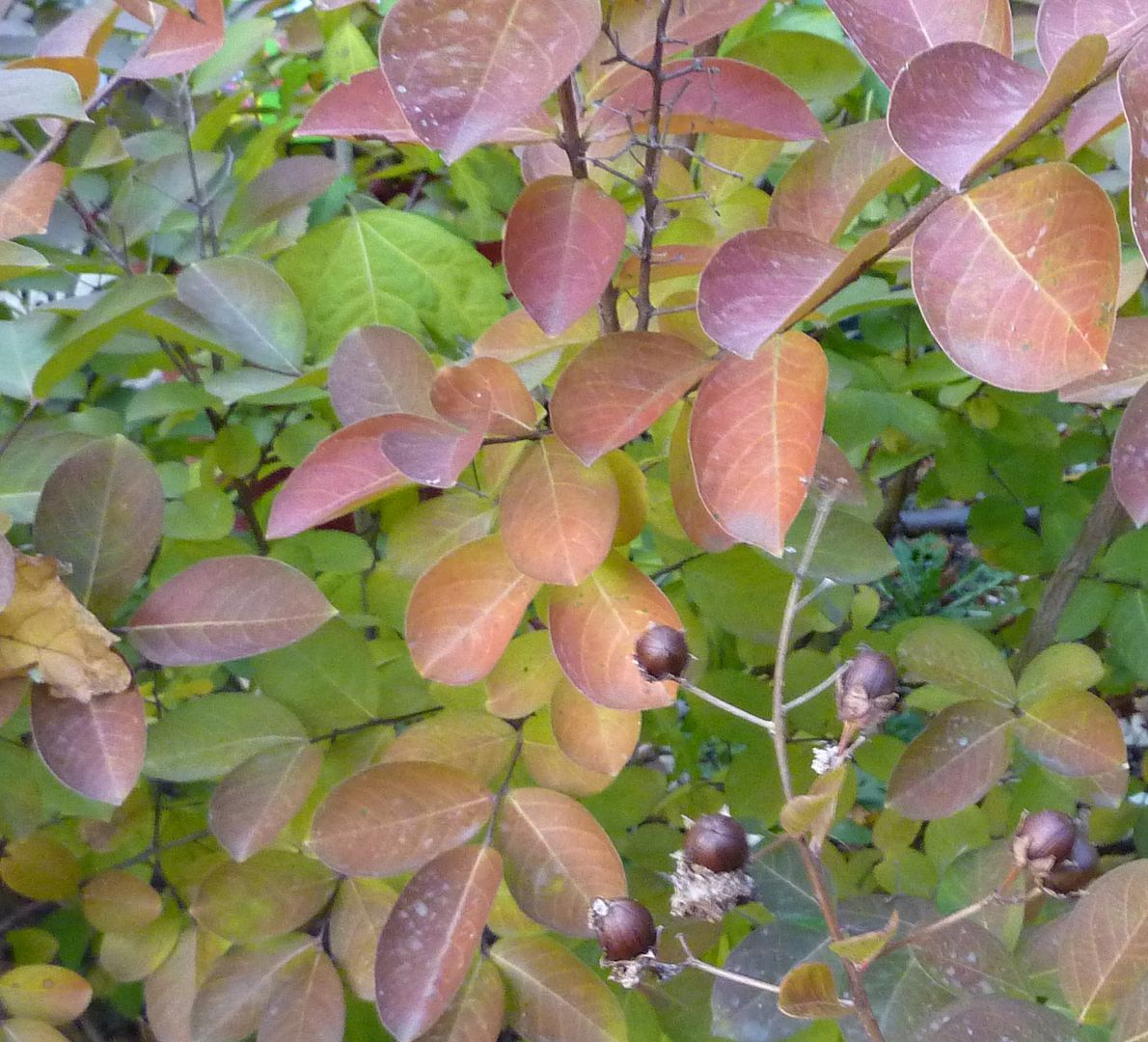
Crape Myrtles seem to sport every color in the rainbow.
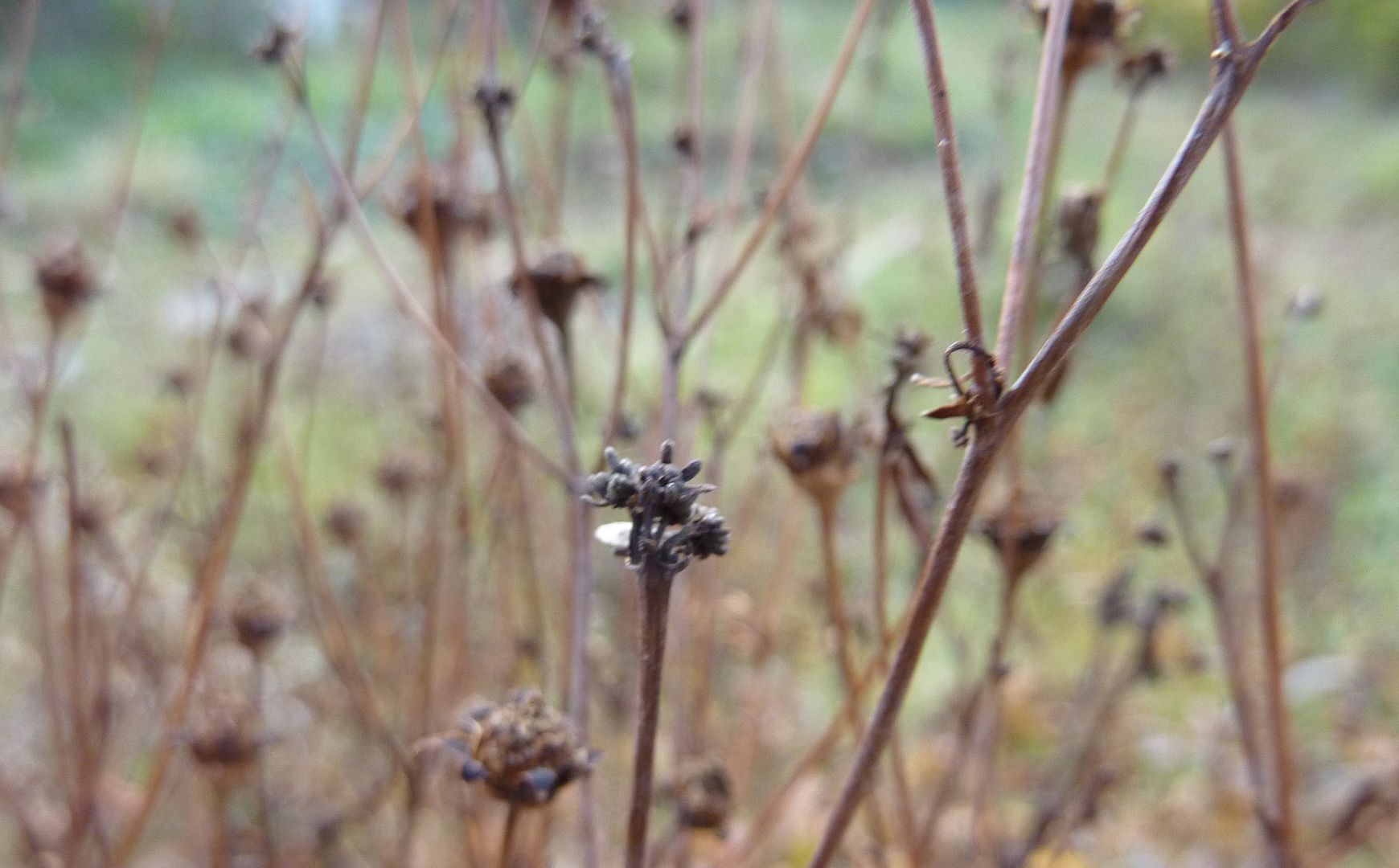
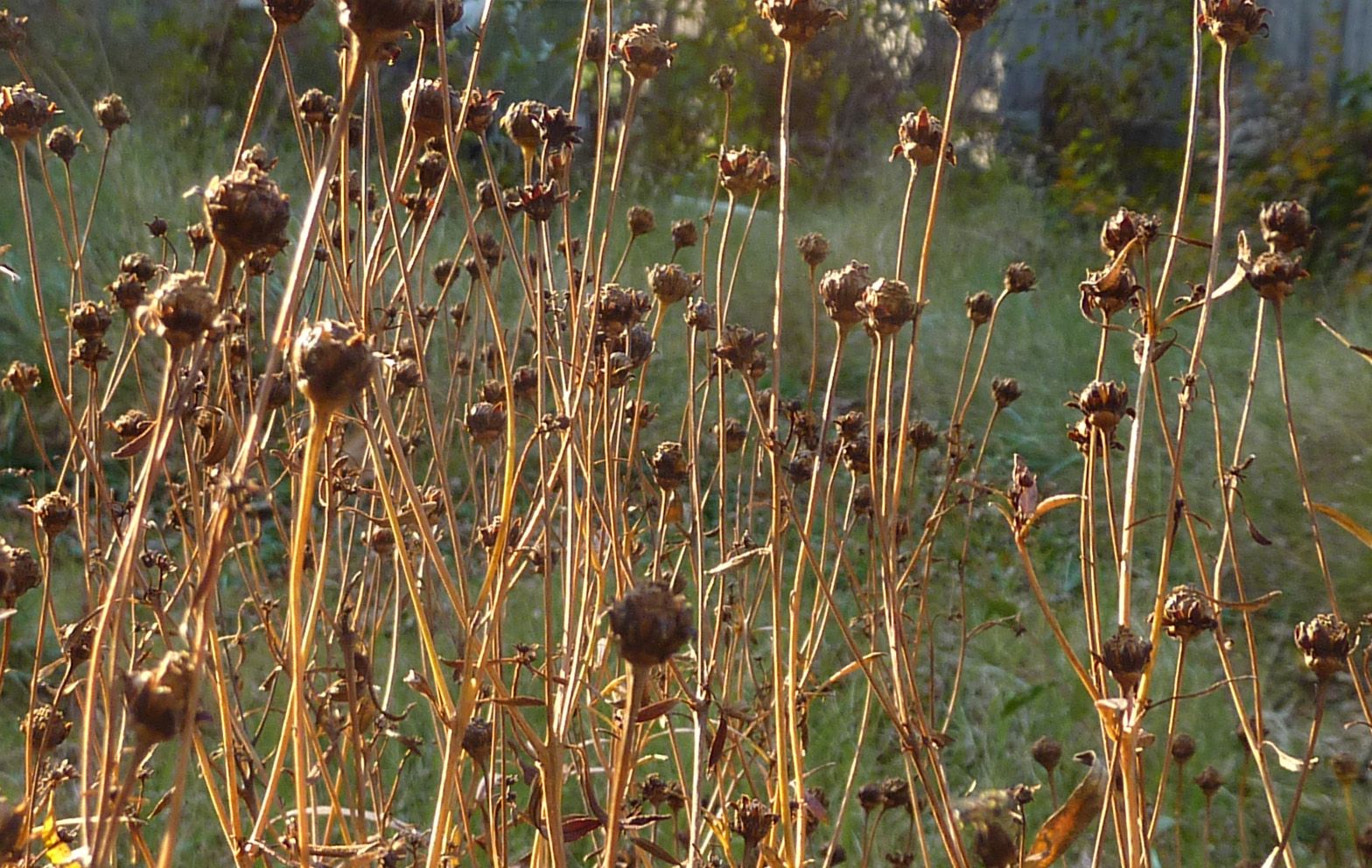
Here I found the blurry view of our lawn through the stems of the Tall Tickseed to be an interesting composition.
Mixed among the leaf litter is a couple of my Hepatica plants, which are semi-evergreen.
Hepatica leaves last the winter and finally die off right when it flowers in the spring. New leaves are produced just as the old ones have all broken off.
Coral Honeysuckle, does not care that its winter or not. I've always been impressed by how cold tolerant this plant is. Barely any of the leaves have started turning yellow and it still has unopened flower buds to go! I swear this vine must drop its leaves for only two months of the year, and each spring it makes up for lost time by quadrupling the number of flowers it produced all last year. It's never been a heavy fruiting plant but there's always a berry or two where the flowers used to be.
Rose hips are another fruit showing off right now. I'm told these are edible, but honestly I wouldn't know what to do with them.
Labels:
Berries,
coreopsis,
fall color,
Fruit,
Gooseberry,
Hepatica,
native,
Plants,
Rose
Tuesday, October 23, 2012
Elderberry
One of the plants featured in the upcoming book is the American Elderberry, Sambucus canadensis. As it so happened I was looking for plants to put in when I got a newsletter from the Mt. Cuba Center telling me about a class that weekend on Elderberries. And upon researching Elderberries apparently Honeybees help pollinate the flowers to increase yields at the end of the year. How could I say no?
Probably the most valuable thing I got from the class was what they meant by it being a "Suckering Plant." Elderberries are among the most vigorous growing plants you'll ever grow. They seriously push out 6' long stems in a year, and they don't stop growing until they reach 12' or so. Most places on the internet praise this plant for how "aggressive" it is at growing. HOWEVER! This is a very friendly plant and appropriate for any garden needing a large shrub.
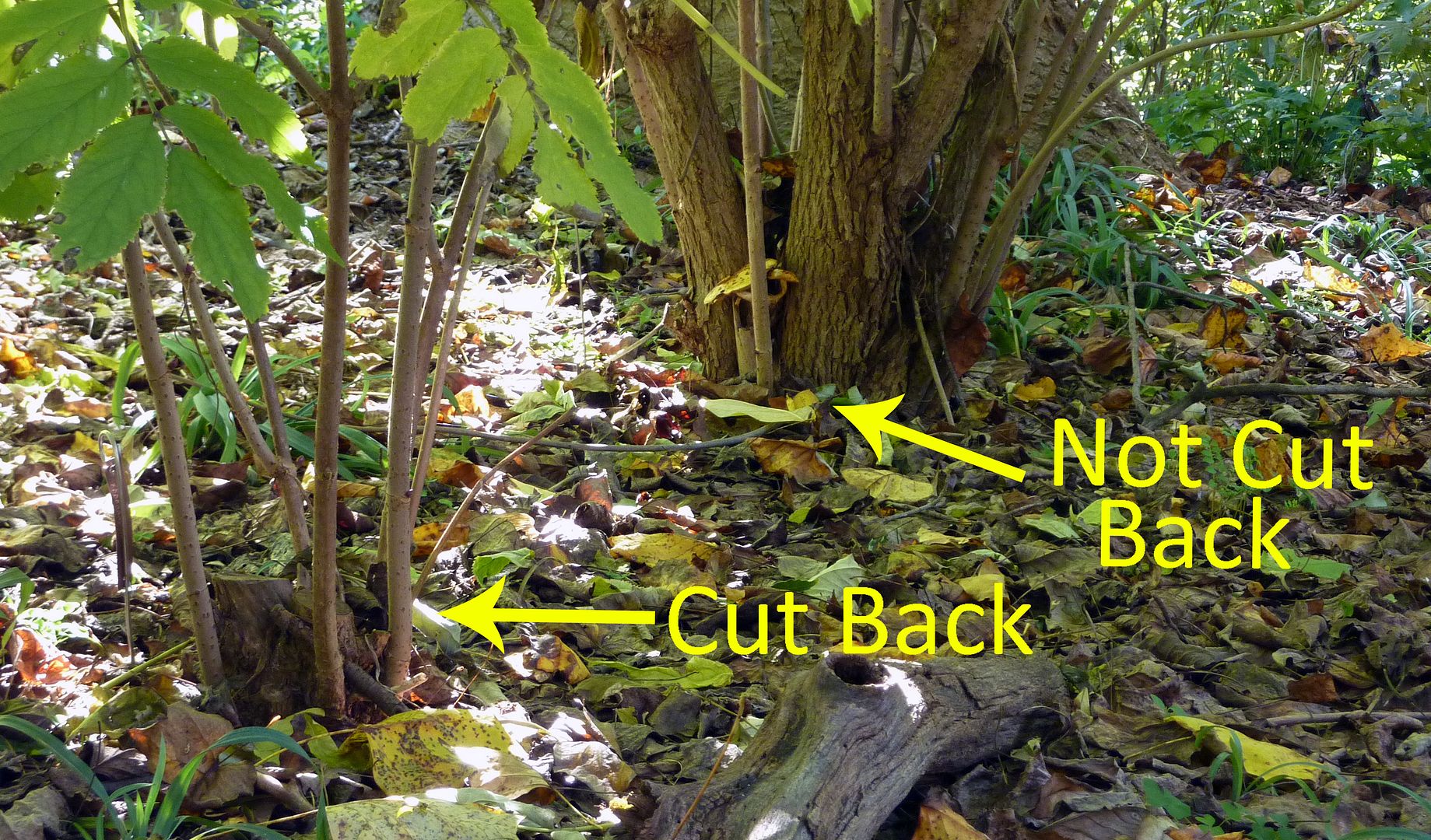
All of the sucker come up at the trunk or close to the root ball. They do not come up anywhere that the roots have spread out to! Treat this plant like an ordinary shrub. (If you want an awful plant that does spread aggressively by root suckers along the roots, I recommend Trumpet Vine.) Pictured above are two Elderberry plants. One is allowed to grow into a 12' shrub. The other is cut back every year and is kept short to 6' as a result. Flowers occur on both new growth and old, the more sunlight the better, the more plants around, the better your fruit yields. If they get too much shade they won't fruit at all.
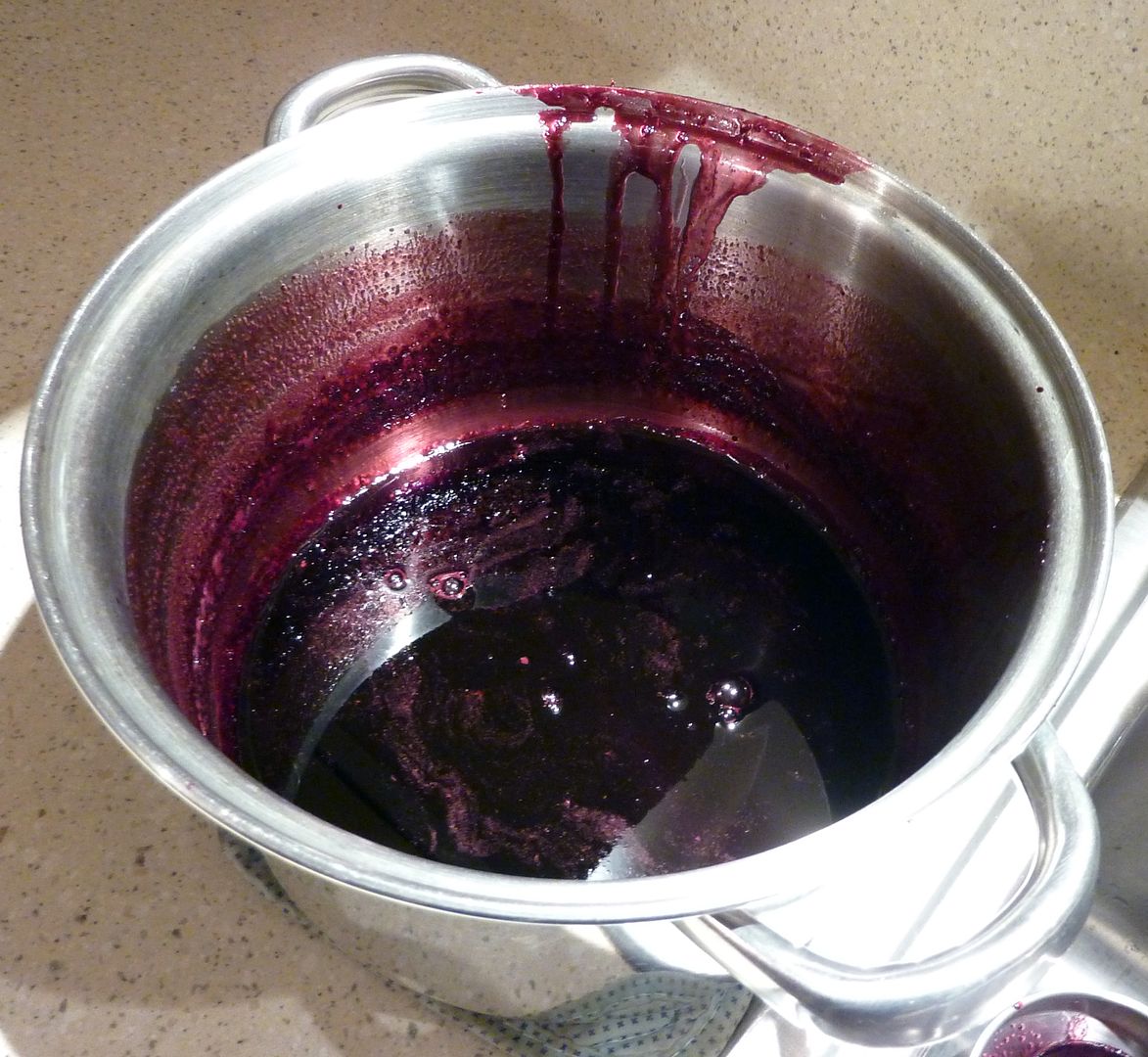
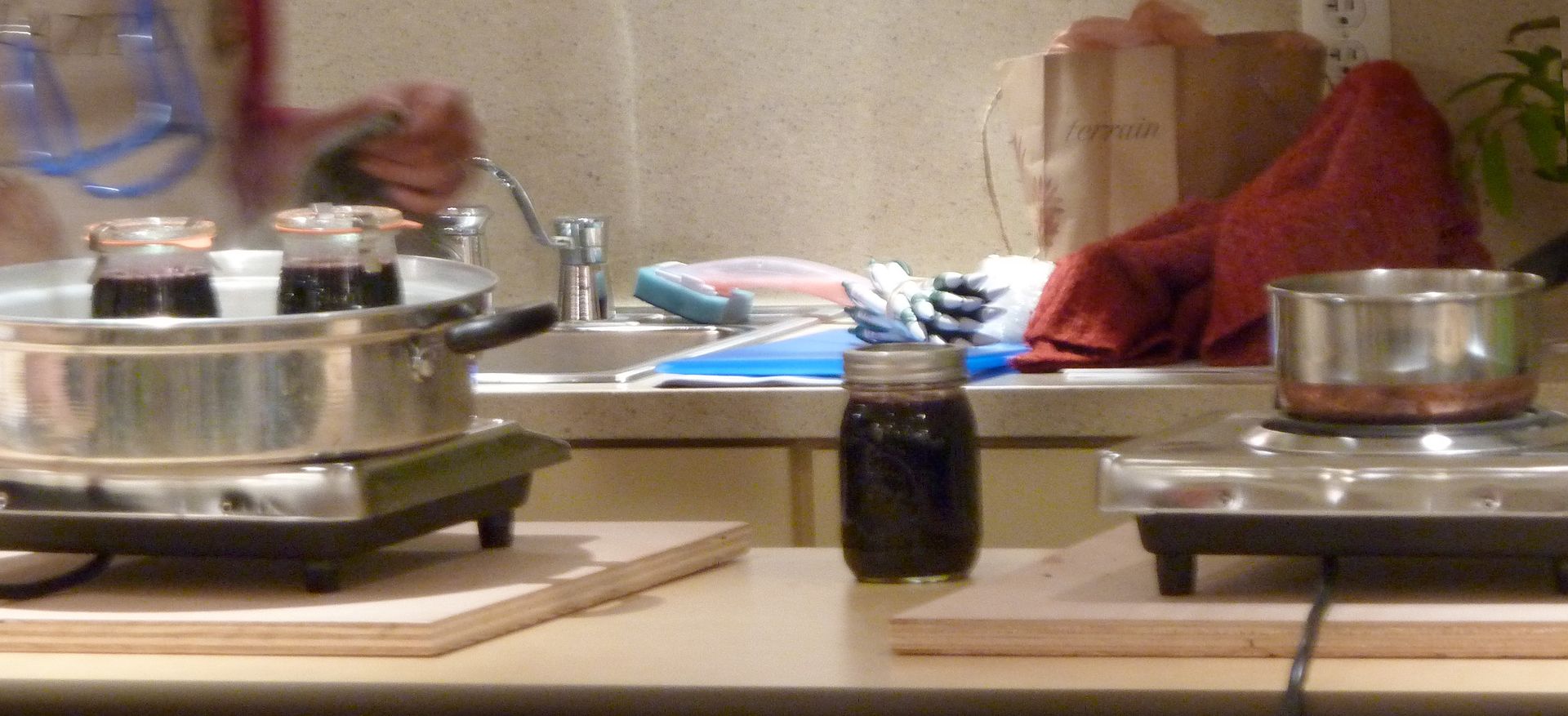
A fair amount of the class was devoted to jam making! This was the Mt. Cuba Center's first attempt at a food demonstration and boy was it a success.
Sadly they don't have a food license and we weren't able to take any home.
Probably the most valuable thing I got from the class was what they meant by it being a "Suckering Plant." Elderberries are among the most vigorous growing plants you'll ever grow. They seriously push out 6' long stems in a year, and they don't stop growing until they reach 12' or so. Most places on the internet praise this plant for how "aggressive" it is at growing. HOWEVER! This is a very friendly plant and appropriate for any garden needing a large shrub.
All of the sucker come up at the trunk or close to the root ball. They do not come up anywhere that the roots have spread out to! Treat this plant like an ordinary shrub. (If you want an awful plant that does spread aggressively by root suckers along the roots, I recommend Trumpet Vine.) Pictured above are two Elderberry plants. One is allowed to grow into a 12' shrub. The other is cut back every year and is kept short to 6' as a result. Flowers occur on both new growth and old, the more sunlight the better, the more plants around, the better your fruit yields. If they get too much shade they won't fruit at all.
A fair amount of the class was devoted to jam making! This was the Mt. Cuba Center's first attempt at a food demonstration and boy was it a success.
Elderberries can produce anywhere from 12 to 15lbs of fruit each year. If you're able to harvest them before the birds do, making jam is probably the best application. They showed us everything except for sterilizing the jars.
Sadly they don't have a food license and we weren't able to take any home.
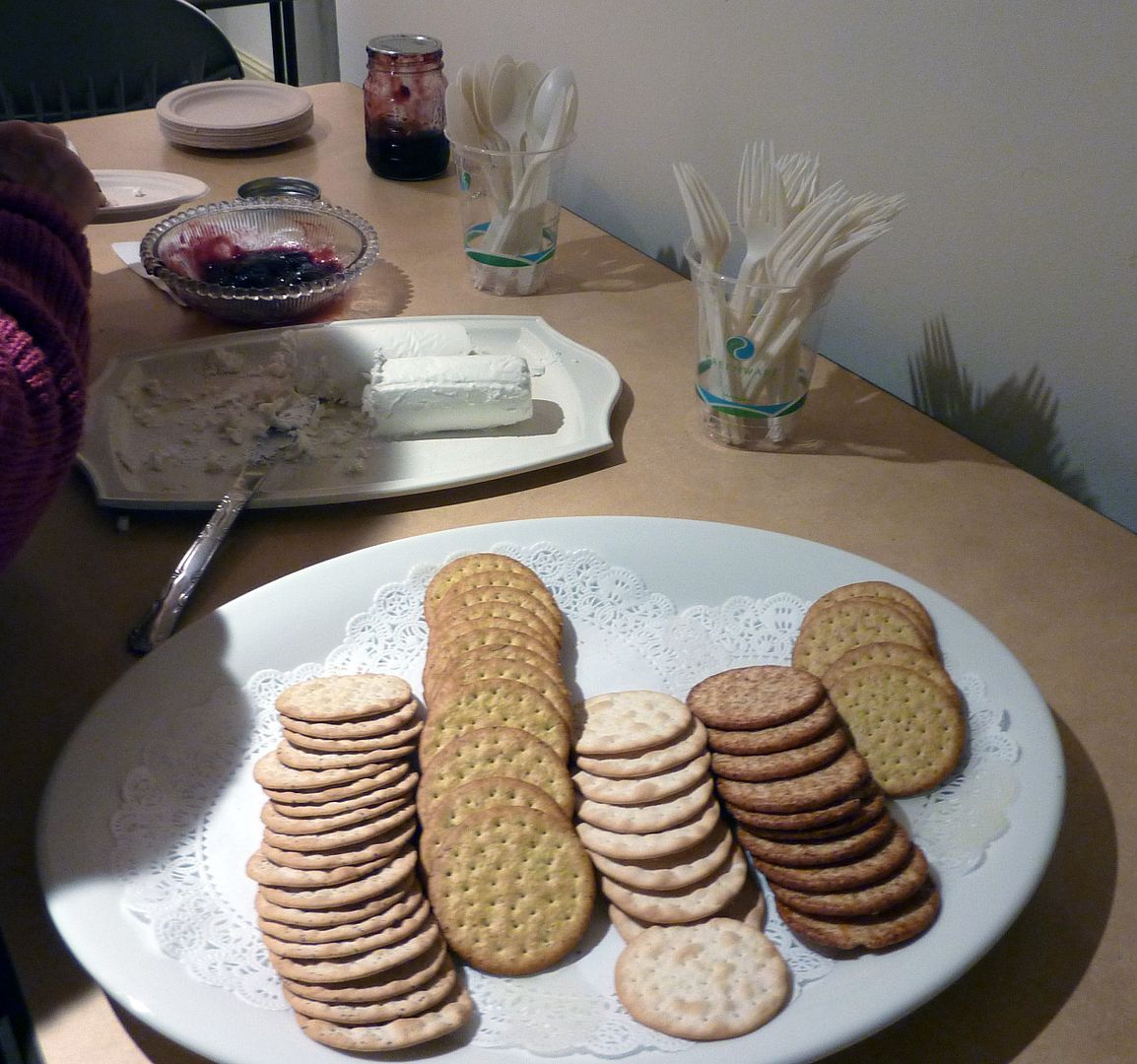
So while we waited for things to be made, they fed us! Elderberry jam tastes just like Grape Jelly but without the grape flavor. Same texture and everything just not that acidic grape taste. It goes great with crackers and goat cheese.
After such a wonderful course I really didn't care that the plant I was give barely fit in my car. Pot included, the elderberry plant I got to take home was around 5' tall (6 months worth of growth, I'm told). Assuming it produces fruit next year you can bet I'll be making jam, or jelly, or a mess or something, next year!
Labels:
Berries,
Elderberry,
Food,
native
Saturday, November 19, 2011
Starting Native Plants From Seed
Yet again I spontaneously signed up for a class at the Mt. Cuba Center and drove to Delaware at the last minute. This time the class was on starting native plants from seed, a class I wanted to take and thankfully my schedule allowed.
In the past I have been able to get milkweed seeds to germinate simply by keeping them damp. I'd always wondered why though after about two months I'd find them already germinated, and poking out some shoots. Well this class answered my questions and more and I'd like to share what I learned.
Bare in mind, a three hour course is anything but comprehensive. It was very instructive and inspirational enough that I'd like to explore the topic more seriously. Until then, here's the basics of what I learned.
When to Collect
Collecting seeds should be done on a dry day. Seed heads can otherwise be mushy and plants that produce compartments full of seeds don't release them when it's wet. The water gets everywhere and collecting is so much easier when things are dry.
While collecting it's important to sort and label out in the field. Use paper or plastic bag and label everything. Plants that have tiny dots for seeds all look the same.
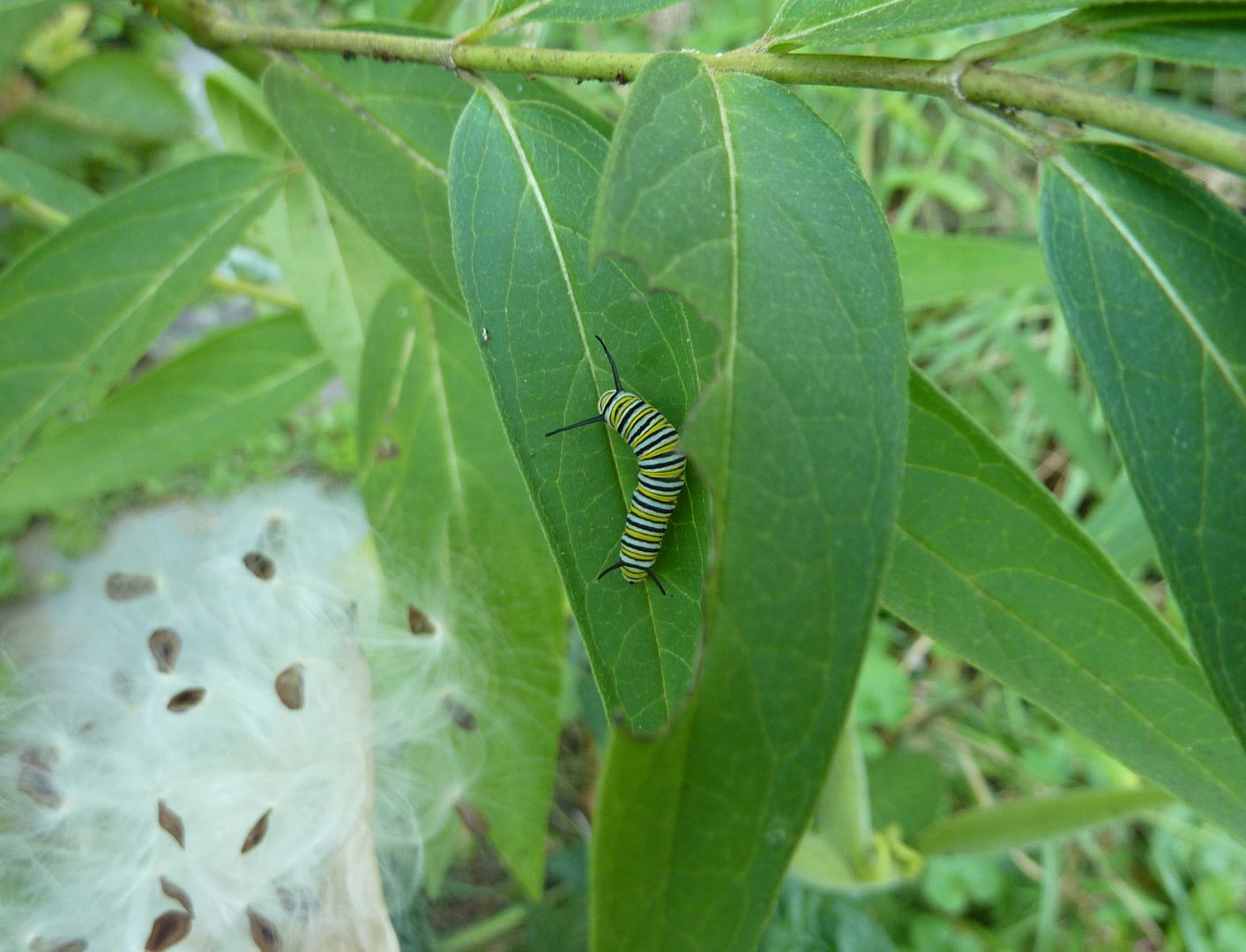
Seeds that are spread by the wind typically have fluff or down attached to them. Here you can see milkweed seeds in the lower left. There is no need to wait until they've all fluffed out to collect. If the pod has opened it's perfectly fine to pull them all out while they're neat and orderly. This also makes cleaning them easier. A fun fact about milkweed: their seeds will tolerate being burned, but this is not needed for germination. So even if they do puff out you can take a lighter to them in a controlled space and burn off the fluff.
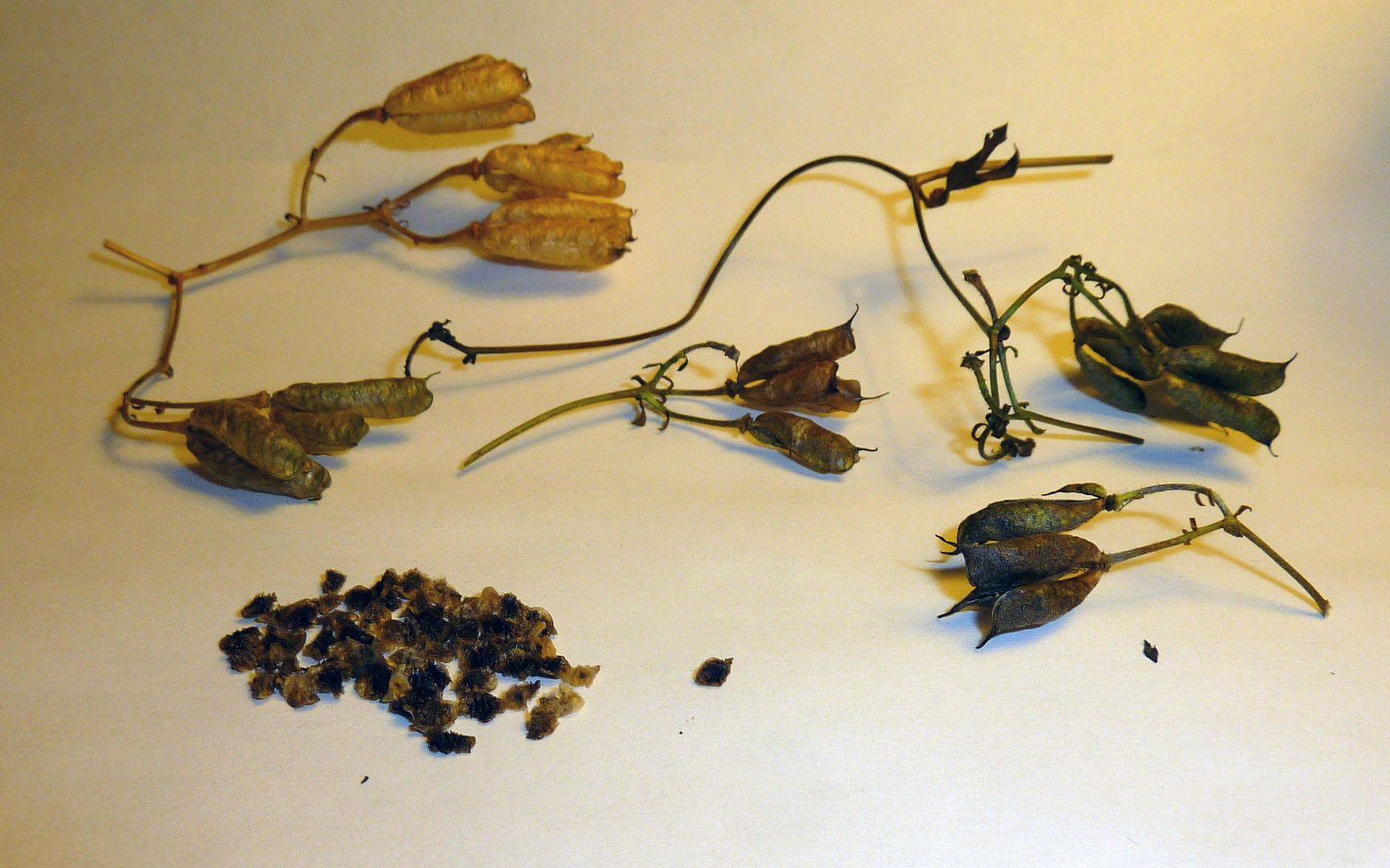
Here we have Wild Monkshood, Aconitum uncinatum. The seed heads form hollow pods with the seeds hanging freely inside. Columbines, Rhododendrons, and many other plants produce seed pods like this. Collecting and sorting is a simple matter of shaking the seeds out.
By sifting seeds on sheets of paper and or shaking them over screens and filters they can eventually be separated by from the more annoying bits of debris.
How to Clean
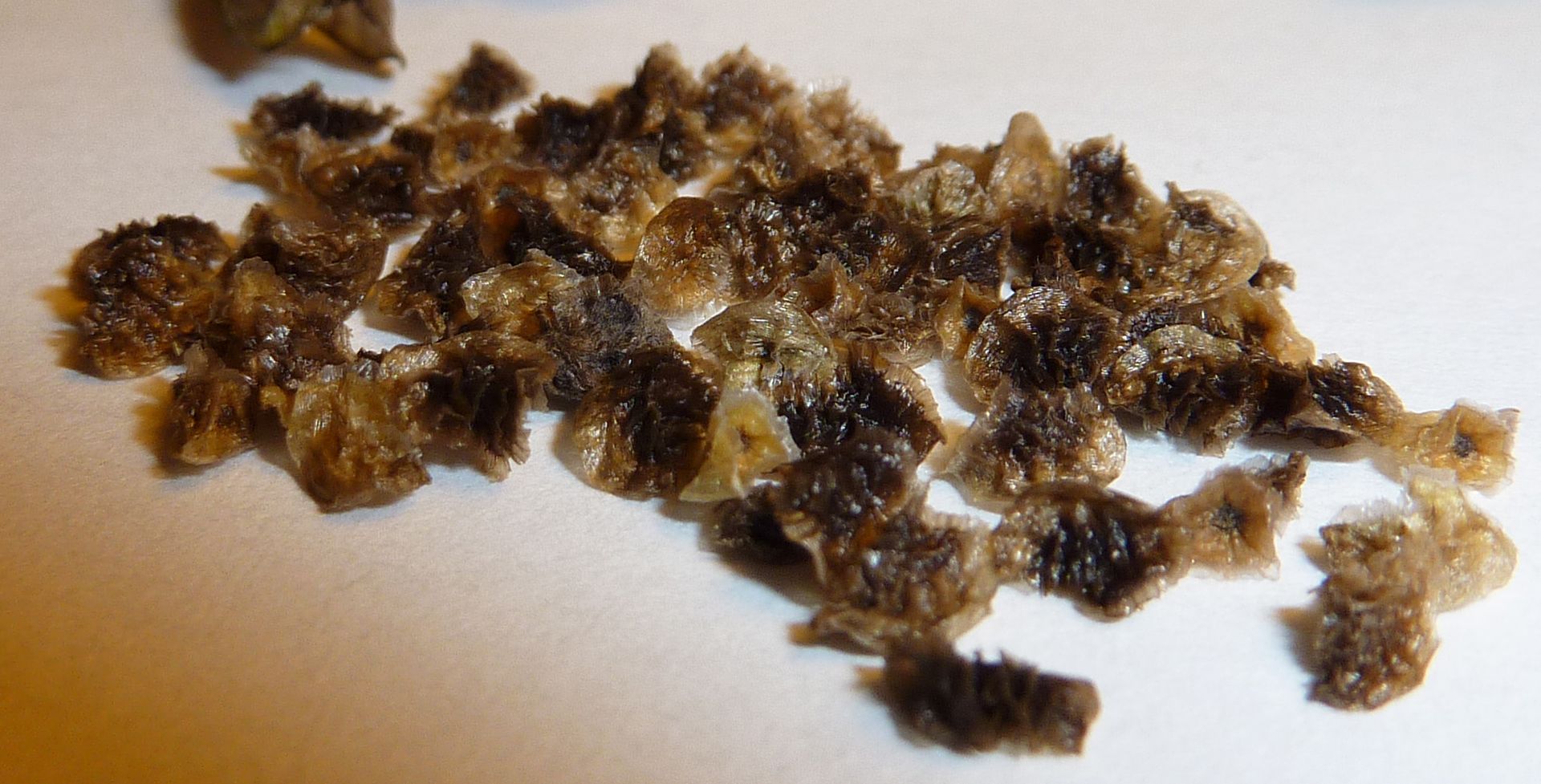
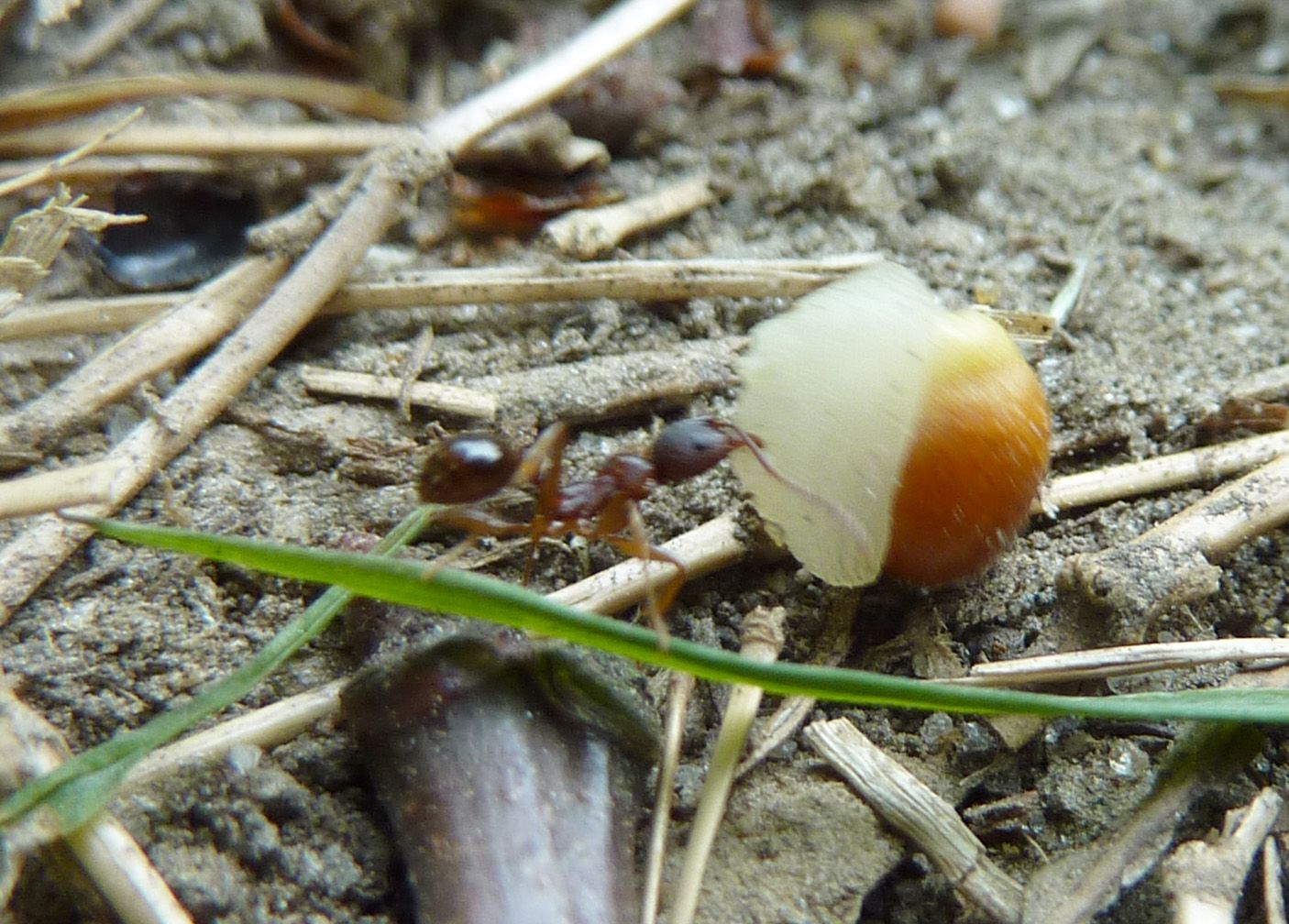
There are "Dry Seeds" and there are "Wet Seeds." Dry seeds are seeds that have developed without any sort of exterior edible parts to them. I use the word edible loosely as many seeds are themselves edible. Generally Wet seeds differ from dry because they developed inside a fruit or otherwise have external food pockets attached to them such as elaiosome.
Trillium seeds don't need to be removed from their elaiosome packet. However there is always a slight risk of mold feeding growing around it and eventually killing off the seed. Thankfully ants are great about finding such seeds and more than willing to eat the elaiosome food right off.
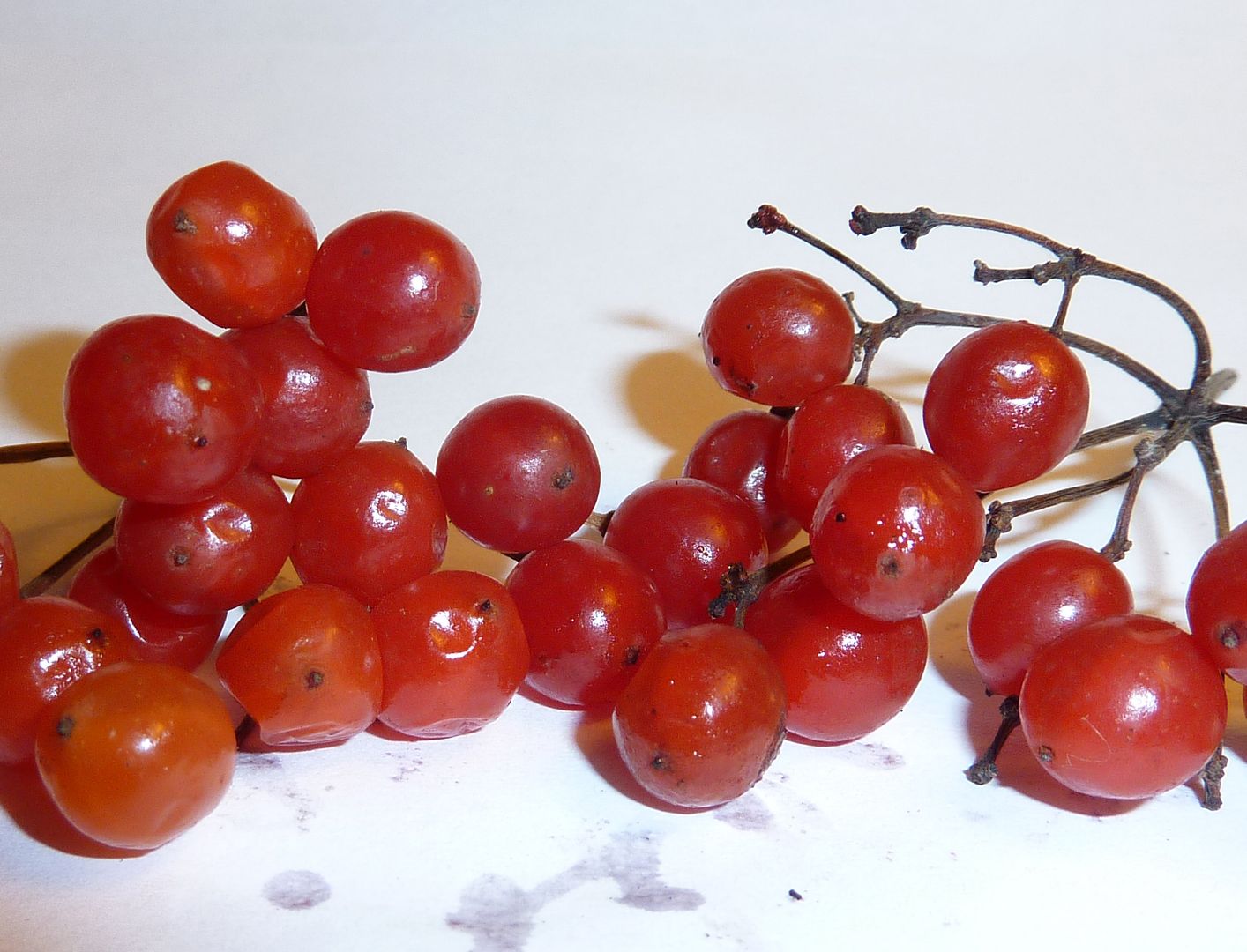
Highbush Cranberry, Viburnum opulus, is another example of a "wet seed." The berries are edible to humans, and birds find them tasty too. In nature the outer coating of flesh would be digested off after being eaten and eventually leave the seed in a nice clump of fertilizer.
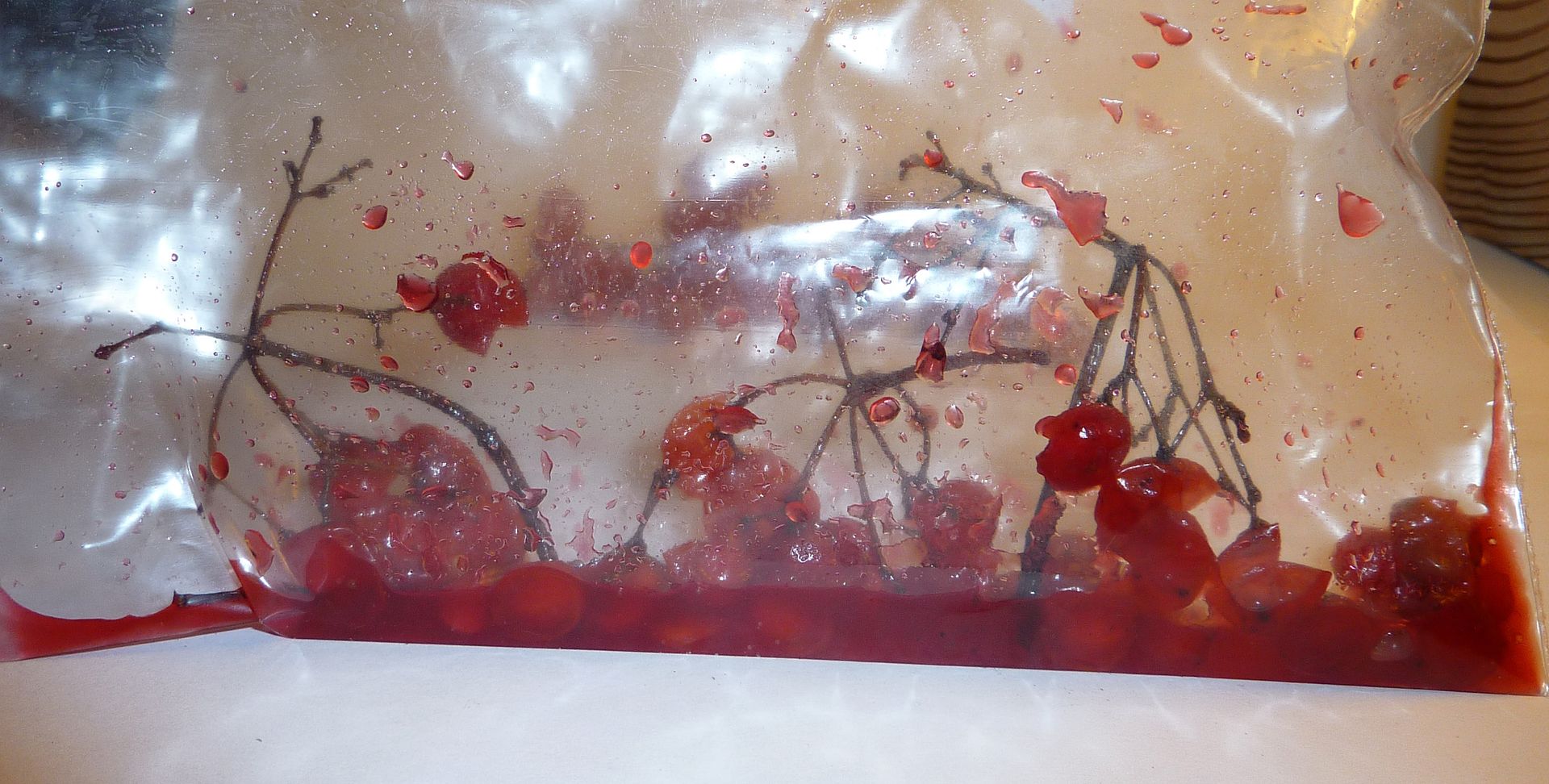
Removing the seed from the flesh is best done by putting all the berries in plastic bags and popping them individually. This frees the fairly large seeds from each berry. From there water can be added and removed and repeated to help rinse away excess material. The whole process can take a day to a week. It's okay to let it ferment but you really want to get that stuff off of the seeds, especially if it starts rotting. Should mold appear you can still remove it and it should be find as long as the mold hasn't totally consumed the seed.
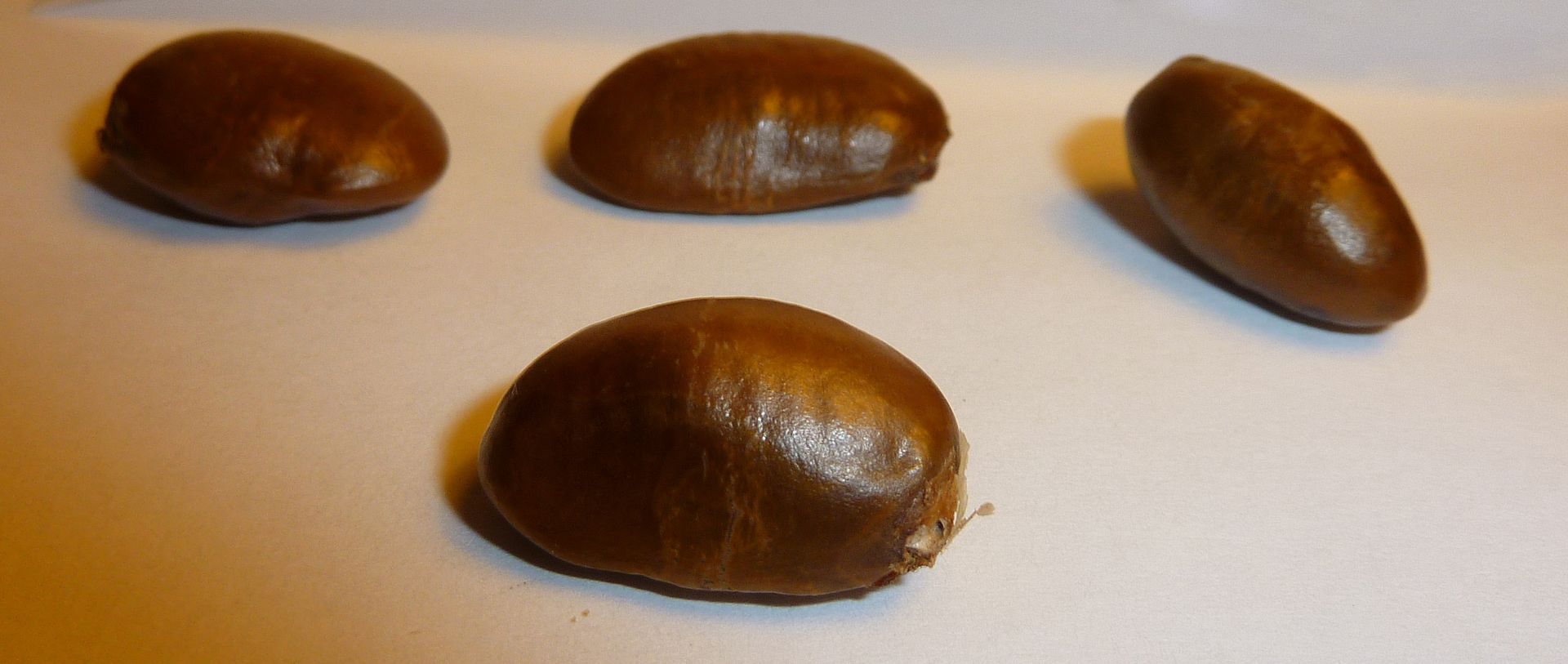
The massive seeds the Pawpaw, Asimina triloba, developed inside of larger fruits. I think they're technically considered wet seed because of this, but seed removal and clean up is as easy as removing those of an apple, pumpkin or watermelon. Clean off and allow to dry before storage.
Checking for Viability
The easiest method is to place the seeds in a bowl of water and maybe shake out all the air bubbles for a few minutes. Room temp is fine, nothing to hot or cold though. Bad seed typically floats, unless you're dealing with a wetland species who's seeds are intended to float. In that case this test is unreliable. For everything else though, bad seeds float because they are hollow. And yes seeds that look good can in fact be bad. It's one of those things you'll never know for sure unless you crack one open or do this test. Good seed typically sinks or is otherwise botany just under the surface.
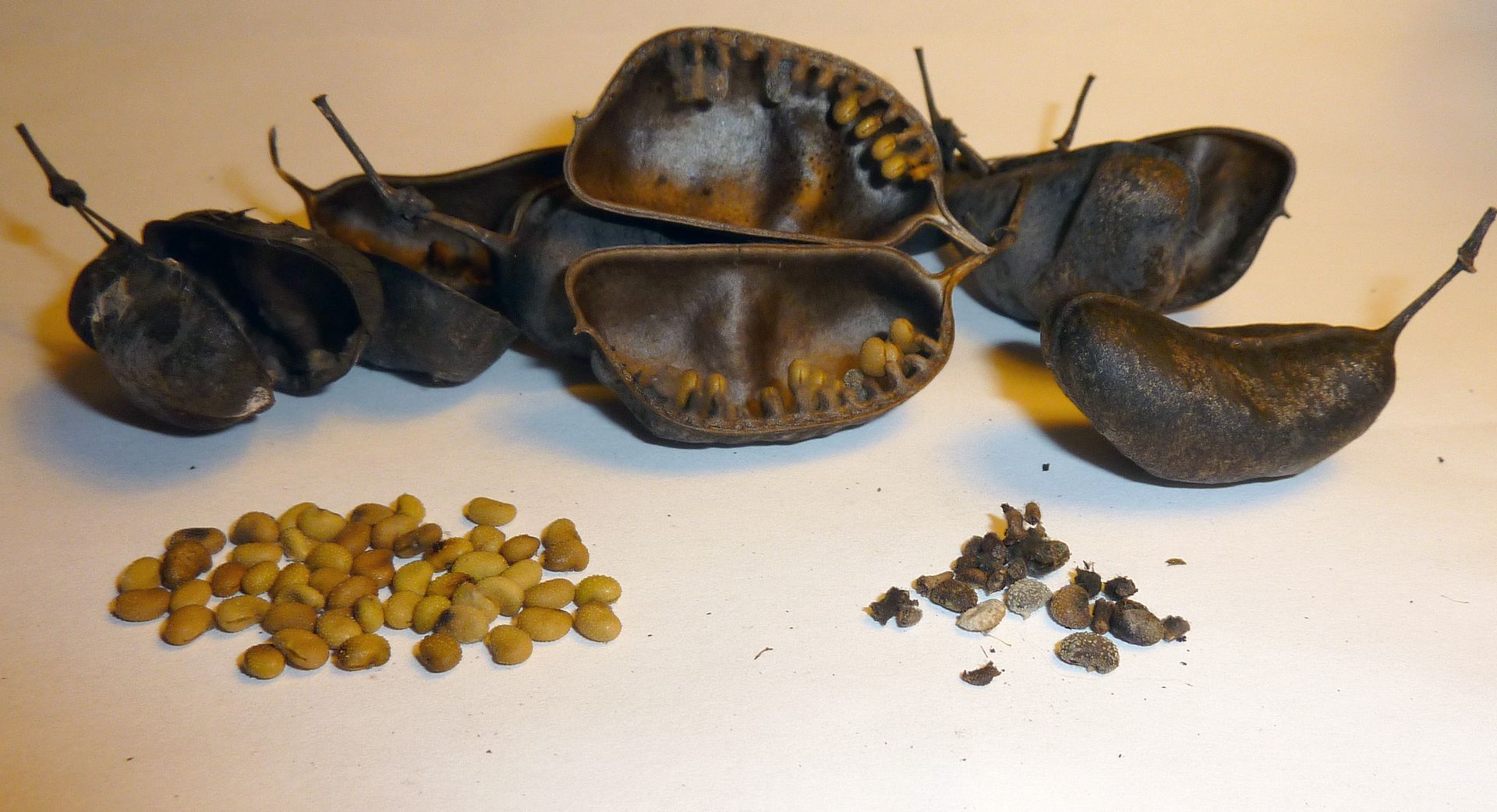
Here we have seed heads to White False Indigo, Baptisia alba.
Bad seeds are obvious looking. Even here though some of these could potentially be salvaged by removing the mold. Even then though the smaller ones might not be savable.
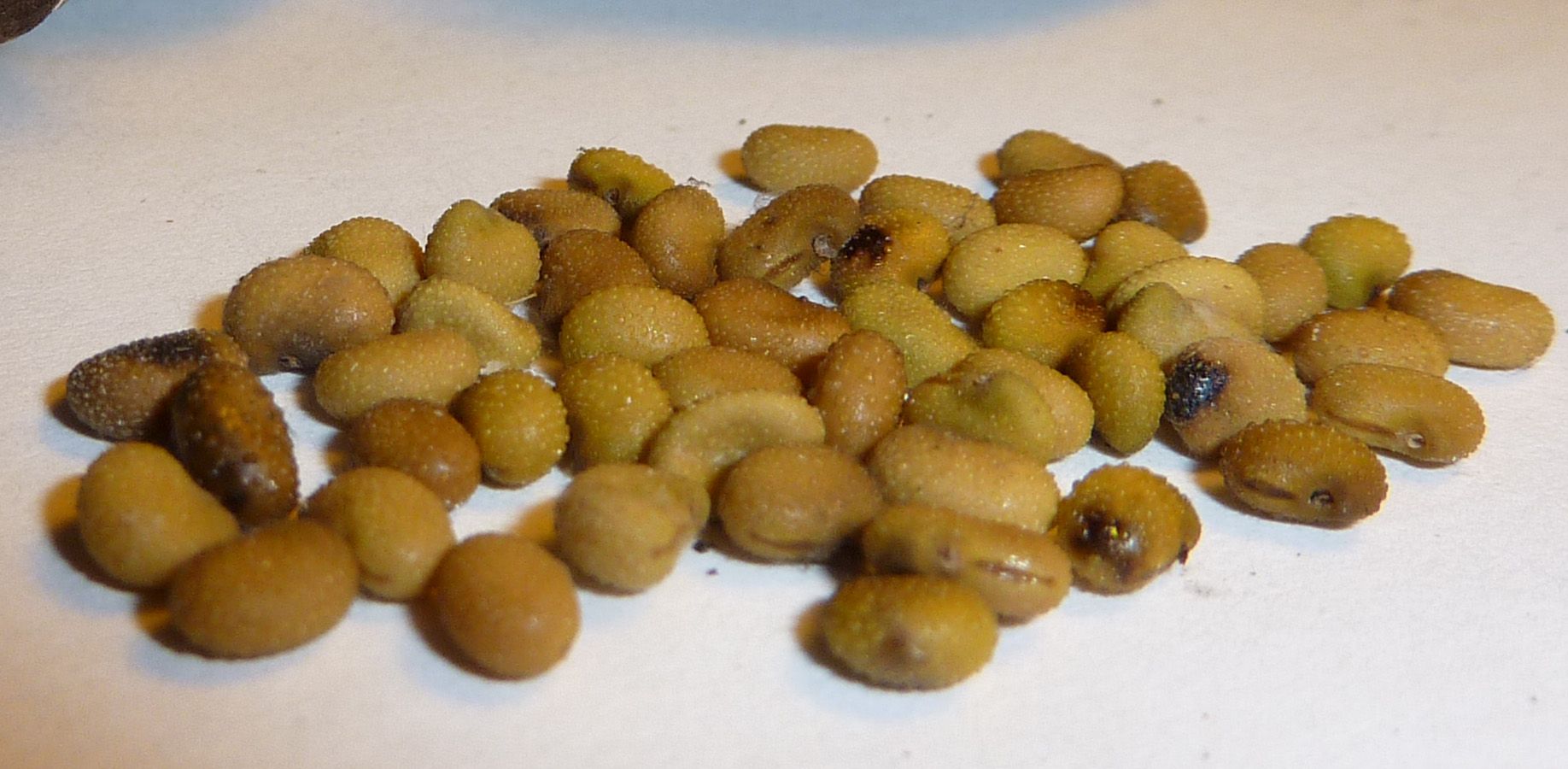
Good seeds are obvious looking too, but even some of these may have developed hollow.
An issue with the soaking test and member of the pea family is that the seeds need to expand in order to germinate. When checking for viability don't leave these seeds in the water for more than a half hour or so. Maybe don't risk doing it at all even.
For storage leaving them this way is fine. When it comes time to germinate though, this species needs to be soaked in very warm (not scolding) water for 24 hours. They should expand about 3 times bigger and look more pea-like. They can be planted immediately from there and germinate with warmer weather.
How to Store
Moisture is the factors here. Some seed needs to be stored dry or else risk early germination. Others benefit in mortality rate by being kept moist and are triggered to germinate more from periods of hot and cold. For seeds that need to be stored wet, the absolute bare minimum of water is all that's required.
An example the instructor gave was when you take a paper towel and drench it in water, then squeeze out every last drop... that is still too wet! They recommend placing the seeds in a dry paper towel and spraying it twice with a squirt bottle. From there they can be placed in a cheap zip lock bag. Cheap as in nothing fancy, you're not worried about freezer burn, you want the air to circulate and breath somewhat. Leaving the bag open can make them dry out quickly.
Storage can be done at room temperature and in a dark place, however, it's recommended they be kept cool. Once the seed gets the trigger to germinate, some won't hesitate to do so.
How to Germinate
There are many triggers for germination. Just add water being the most common, and most important. Many species require at least a 90 day period of being Cold and Moist as the trigger. For species that don't germinate on cue, being exposed to warmer temps is all that's needed to germinate. More touchy species will require multiple cycles of 90 days of cold, and 90 days of warm to trigger.
Feel free to experiment with methods but also remember to collect enough seeds to experiment with. There are a fair amount of books on the topic of seed germination. Some of them contradict one another. But also some seeds don't care if they're stored in dry or wet conditions. And likewise the need for multiple cycles of hot and cold might not be true for 100% of a population, even if all the seeds came from one plant.
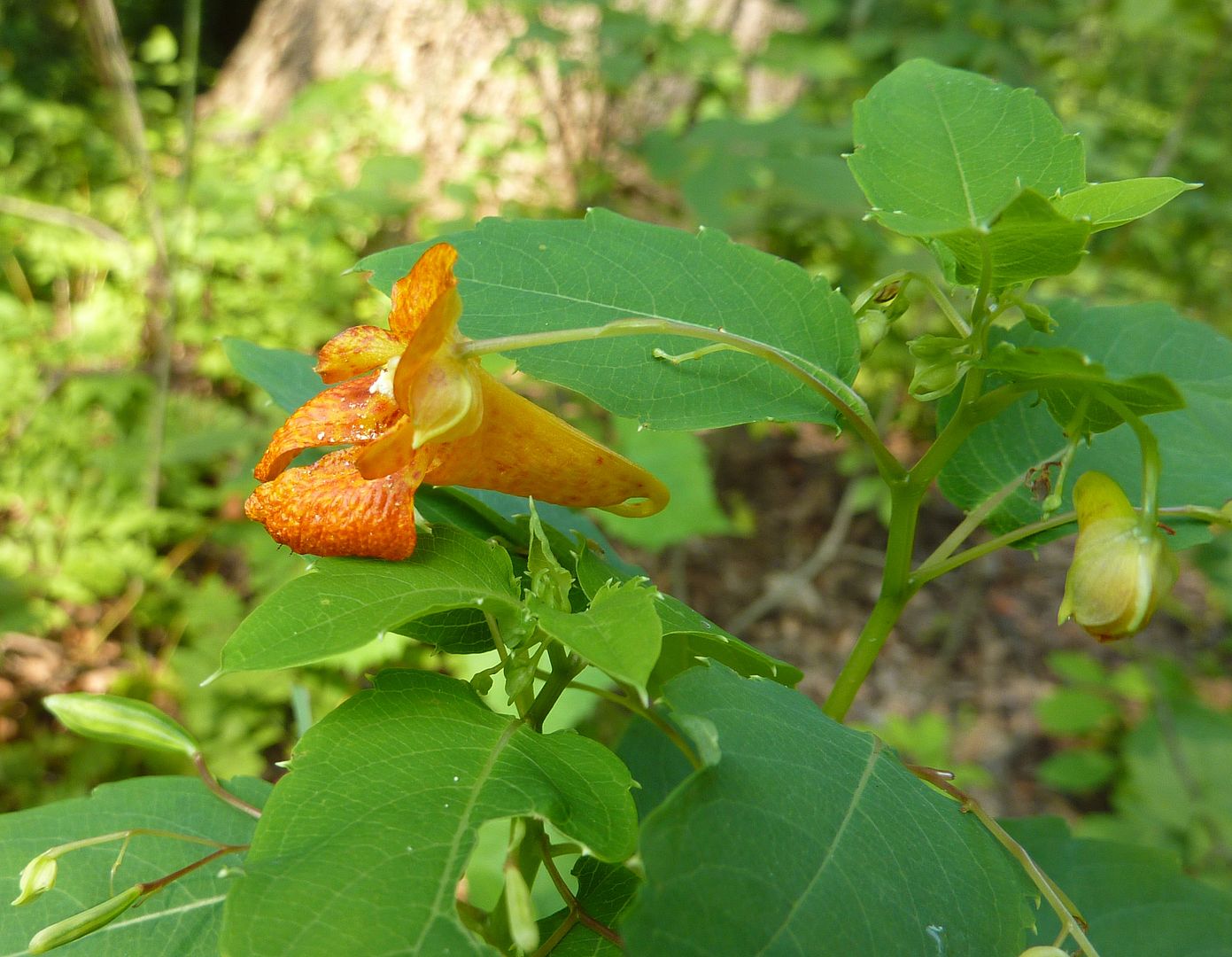
Jewelweed, Impatiens capensis, is an annual who's seeds require multiple hot and cold cycles before they germinate. The result of planting them by seed is they'll reappear once every 3 years. In nature though not every seed gets the memo and a small percent will germinate a year or two later! For a more consistent population in one spot you can put them through periods of hot and cold over the summer and get some to germinate prematurely.
There are a few cases where seeds need Scarification in order to germinate. In nature this would mostly be frozen then thawed, or burned. Gardeners sometimes use acid, sandpaper, or lightly scoring the seed coat to break dormancy.
Once the method of germination has been figured out they recommend placing them in a plastic bag with equal parts medium to seeds. So a light airy seed starting mix is what's required. Mix to combine, then give them just a squirt of water. When they germinate they can carefully be moved to a flat. The idea of adding the soil is to maximize moisture contact.
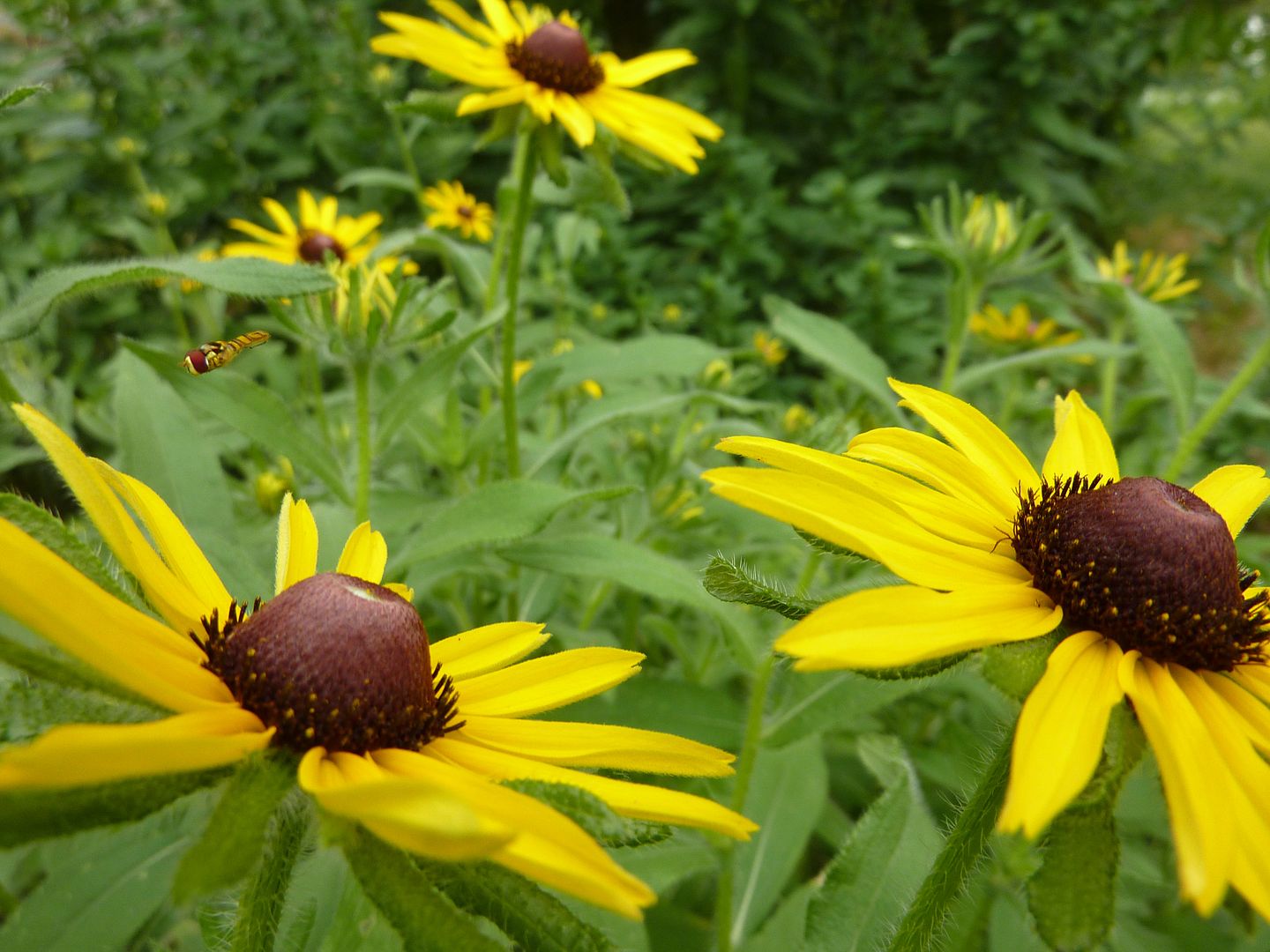
At this point a small minority of seeds demand sunlight in order to germinate. Such is the case for Black Eyed Susans, Rudbecia fulgida. In nature, If there's too much organic matter laying around, their seeds won't germinate. Instead they go dormant and wait for sunlight to finally reach them. Plants like this are known to appear in great numbers after disturbances such as fires, or trees falling over in the woods. Species like this tend to be annuals, biannual, or short lived perennials at most. Their populations booms until once again the amount of organic matter prevents their spread. Ungerminated seeds lay dormant in the seed bank below the leaves.
You can skip the soil in bag method and just plant seeds directly into flats. When you do, make sure soil is up to the rim of each chamber. Lightly water before you plant the seeds. NOTE: it is physically imposable for a plant to absorb more than it's mass in water in one day. Watering with an eye dropper is perfectly fine! Adding too much water is the easiest way to kill all of your plants. Over watering causes the soil in each compartment to form a dense layer on top which is ideal for mold and fungi to cling onto and eventually nibble the narrow shoot of each seedling. Also don't pat the soil down! You want nice even airflow but some mild tampering is okay.
Seeds that demand sunlight to germinate can be sprinkled on the surface. There are special tools sold for this purpose and some mail order places even provide them with orders. Otherwise the general rule is to plant each seed 3 to 4 times deep as the seed is wide.
Heating pads and seed germinating products are also okay to use. In the case of heating pads though they really aren't needed after germination. Especially in a green house setting you can end up cooking your plants. They do benefit some plants such as tomatoes though which don't grow until the soil is over 60F. As your plants grow bigger and bigger their water demands will be greater and greater.
Mold Gnats will be a problem. These are those annoying flies that always seem to show up around potted plants. They are slow moving compared to the typical house fly and fairly easy to swat. The trouble is by the time you see the adults they've more than likely laid eggs for the next generation. These are typically an indoor problem and quickly disperse in an opened green house or outdoor setting. Pesticides can kill them easy but are also harsh on young seedlings, so don't use them! Nematodes are an easy solution but have to be reapplied every few weeks.
In the past I have been able to get milkweed seeds to germinate simply by keeping them damp. I'd always wondered why though after about two months I'd find them already germinated, and poking out some shoots. Well this class answered my questions and more and I'd like to share what I learned.
Bare in mind, a three hour course is anything but comprehensive. It was very instructive and inspirational enough that I'd like to explore the topic more seriously. Until then, here's the basics of what I learned.
When to Collect
Collecting seeds should be done on a dry day. Seed heads can otherwise be mushy and plants that produce compartments full of seeds don't release them when it's wet. The water gets everywhere and collecting is so much easier when things are dry.
While collecting it's important to sort and label out in the field. Use paper or plastic bag and label everything. Plants that have tiny dots for seeds all look the same.
Seeds that are spread by the wind typically have fluff or down attached to them. Here you can see milkweed seeds in the lower left. There is no need to wait until they've all fluffed out to collect. If the pod has opened it's perfectly fine to pull them all out while they're neat and orderly. This also makes cleaning them easier. A fun fact about milkweed: their seeds will tolerate being burned, but this is not needed for germination. So even if they do puff out you can take a lighter to them in a controlled space and burn off the fluff.
Here we have Wild Monkshood, Aconitum uncinatum. The seed heads form hollow pods with the seeds hanging freely inside. Columbines, Rhododendrons, and many other plants produce seed pods like this. Collecting and sorting is a simple matter of shaking the seeds out.
By sifting seeds on sheets of paper and or shaking them over screens and filters they can eventually be separated by from the more annoying bits of debris.
How to Clean
There are "Dry Seeds" and there are "Wet Seeds." Dry seeds are seeds that have developed without any sort of exterior edible parts to them. I use the word edible loosely as many seeds are themselves edible. Generally Wet seeds differ from dry because they developed inside a fruit or otherwise have external food pockets attached to them such as elaiosome.
Trillium seeds don't need to be removed from their elaiosome packet. However there is always a slight risk of mold feeding growing around it and eventually killing off the seed. Thankfully ants are great about finding such seeds and more than willing to eat the elaiosome food right off.
Highbush Cranberry, Viburnum opulus, is another example of a "wet seed." The berries are edible to humans, and birds find them tasty too. In nature the outer coating of flesh would be digested off after being eaten and eventually leave the seed in a nice clump of fertilizer.
Removing the seed from the flesh is best done by putting all the berries in plastic bags and popping them individually. This frees the fairly large seeds from each berry. From there water can be added and removed and repeated to help rinse away excess material. The whole process can take a day to a week. It's okay to let it ferment but you really want to get that stuff off of the seeds, especially if it starts rotting. Should mold appear you can still remove it and it should be find as long as the mold hasn't totally consumed the seed.
The massive seeds the Pawpaw, Asimina triloba, developed inside of larger fruits. I think they're technically considered wet seed because of this, but seed removal and clean up is as easy as removing those of an apple, pumpkin or watermelon. Clean off and allow to dry before storage.
Checking for Viability
The easiest method is to place the seeds in a bowl of water and maybe shake out all the air bubbles for a few minutes. Room temp is fine, nothing to hot or cold though. Bad seed typically floats, unless you're dealing with a wetland species who's seeds are intended to float. In that case this test is unreliable. For everything else though, bad seeds float because they are hollow. And yes seeds that look good can in fact be bad. It's one of those things you'll never know for sure unless you crack one open or do this test. Good seed typically sinks or is otherwise botany just under the surface.
Here we have seed heads to White False Indigo, Baptisia alba.
Bad seeds are obvious looking. Even here though some of these could potentially be salvaged by removing the mold. Even then though the smaller ones might not be savable.
Good seeds are obvious looking too, but even some of these may have developed hollow.
An issue with the soaking test and member of the pea family is that the seeds need to expand in order to germinate. When checking for viability don't leave these seeds in the water for more than a half hour or so. Maybe don't risk doing it at all even.
For storage leaving them this way is fine. When it comes time to germinate though, this species needs to be soaked in very warm (not scolding) water for 24 hours. They should expand about 3 times bigger and look more pea-like. They can be planted immediately from there and germinate with warmer weather.
How to Store
Moisture is the factors here. Some seed needs to be stored dry or else risk early germination. Others benefit in mortality rate by being kept moist and are triggered to germinate more from periods of hot and cold. For seeds that need to be stored wet, the absolute bare minimum of water is all that's required.
An example the instructor gave was when you take a paper towel and drench it in water, then squeeze out every last drop... that is still too wet! They recommend placing the seeds in a dry paper towel and spraying it twice with a squirt bottle. From there they can be placed in a cheap zip lock bag. Cheap as in nothing fancy, you're not worried about freezer burn, you want the air to circulate and breath somewhat. Leaving the bag open can make them dry out quickly.
Storage can be done at room temperature and in a dark place, however, it's recommended they be kept cool. Once the seed gets the trigger to germinate, some won't hesitate to do so.
How to Germinate
There are many triggers for germination. Just add water being the most common, and most important. Many species require at least a 90 day period of being Cold and Moist as the trigger. For species that don't germinate on cue, being exposed to warmer temps is all that's needed to germinate. More touchy species will require multiple cycles of 90 days of cold, and 90 days of warm to trigger.
Feel free to experiment with methods but also remember to collect enough seeds to experiment with. There are a fair amount of books on the topic of seed germination. Some of them contradict one another. But also some seeds don't care if they're stored in dry or wet conditions. And likewise the need for multiple cycles of hot and cold might not be true for 100% of a population, even if all the seeds came from one plant.
Jewelweed, Impatiens capensis, is an annual who's seeds require multiple hot and cold cycles before they germinate. The result of planting them by seed is they'll reappear once every 3 years. In nature though not every seed gets the memo and a small percent will germinate a year or two later! For a more consistent population in one spot you can put them through periods of hot and cold over the summer and get some to germinate prematurely.
There are a few cases where seeds need Scarification in order to germinate. In nature this would mostly be frozen then thawed, or burned. Gardeners sometimes use acid, sandpaper, or lightly scoring the seed coat to break dormancy.
Once the method of germination has been figured out they recommend placing them in a plastic bag with equal parts medium to seeds. So a light airy seed starting mix is what's required. Mix to combine, then give them just a squirt of water. When they germinate they can carefully be moved to a flat. The idea of adding the soil is to maximize moisture contact.
At this point a small minority of seeds demand sunlight in order to germinate. Such is the case for Black Eyed Susans, Rudbecia fulgida. In nature, If there's too much organic matter laying around, their seeds won't germinate. Instead they go dormant and wait for sunlight to finally reach them. Plants like this are known to appear in great numbers after disturbances such as fires, or trees falling over in the woods. Species like this tend to be annuals, biannual, or short lived perennials at most. Their populations booms until once again the amount of organic matter prevents their spread. Ungerminated seeds lay dormant in the seed bank below the leaves.
You can skip the soil in bag method and just plant seeds directly into flats. When you do, make sure soil is up to the rim of each chamber. Lightly water before you plant the seeds. NOTE: it is physically imposable for a plant to absorb more than it's mass in water in one day. Watering with an eye dropper is perfectly fine! Adding too much water is the easiest way to kill all of your plants. Over watering causes the soil in each compartment to form a dense layer on top which is ideal for mold and fungi to cling onto and eventually nibble the narrow shoot of each seedling. Also don't pat the soil down! You want nice even airflow but some mild tampering is okay.
Seeds that demand sunlight to germinate can be sprinkled on the surface. There are special tools sold for this purpose and some mail order places even provide them with orders. Otherwise the general rule is to plant each seed 3 to 4 times deep as the seed is wide.
Heating pads and seed germinating products are also okay to use. In the case of heating pads though they really aren't needed after germination. Especially in a green house setting you can end up cooking your plants. They do benefit some plants such as tomatoes though which don't grow until the soil is over 60F. As your plants grow bigger and bigger their water demands will be greater and greater.
Mold Gnats will be a problem. These are those annoying flies that always seem to show up around potted plants. They are slow moving compared to the typical house fly and fairly easy to swat. The trouble is by the time you see the adults they've more than likely laid eggs for the next generation. These are typically an indoor problem and quickly disperse in an opened green house or outdoor setting. Pesticides can kill them easy but are also harsh on young seedlings, so don't use them! Nematodes are an easy solution but have to be reapplied every few weeks.
Sunday, November 6, 2011
Fall Color Around the Prairie
I happened to be off last Saturday which happened to be the last day the Mt. Cuba Center was offering the Meadow Studies class for the year. I figured I wasn't doing anything so why not drive an hour to Delaware (after registering online of course).
They offer Meadow Studies as a one day course 5 times a year. I went to the first two, missed the next two, so this is my third. Overall I'm happy with them but they weren't what I had expected. Emphasis is more on how they maintain it each year and what plants are showy at the particular time of year. The second half of the class is a nice tour mostly of the meadow itself but also other plants they have elsewhere on the property that might fit the theme of a meadow setting.
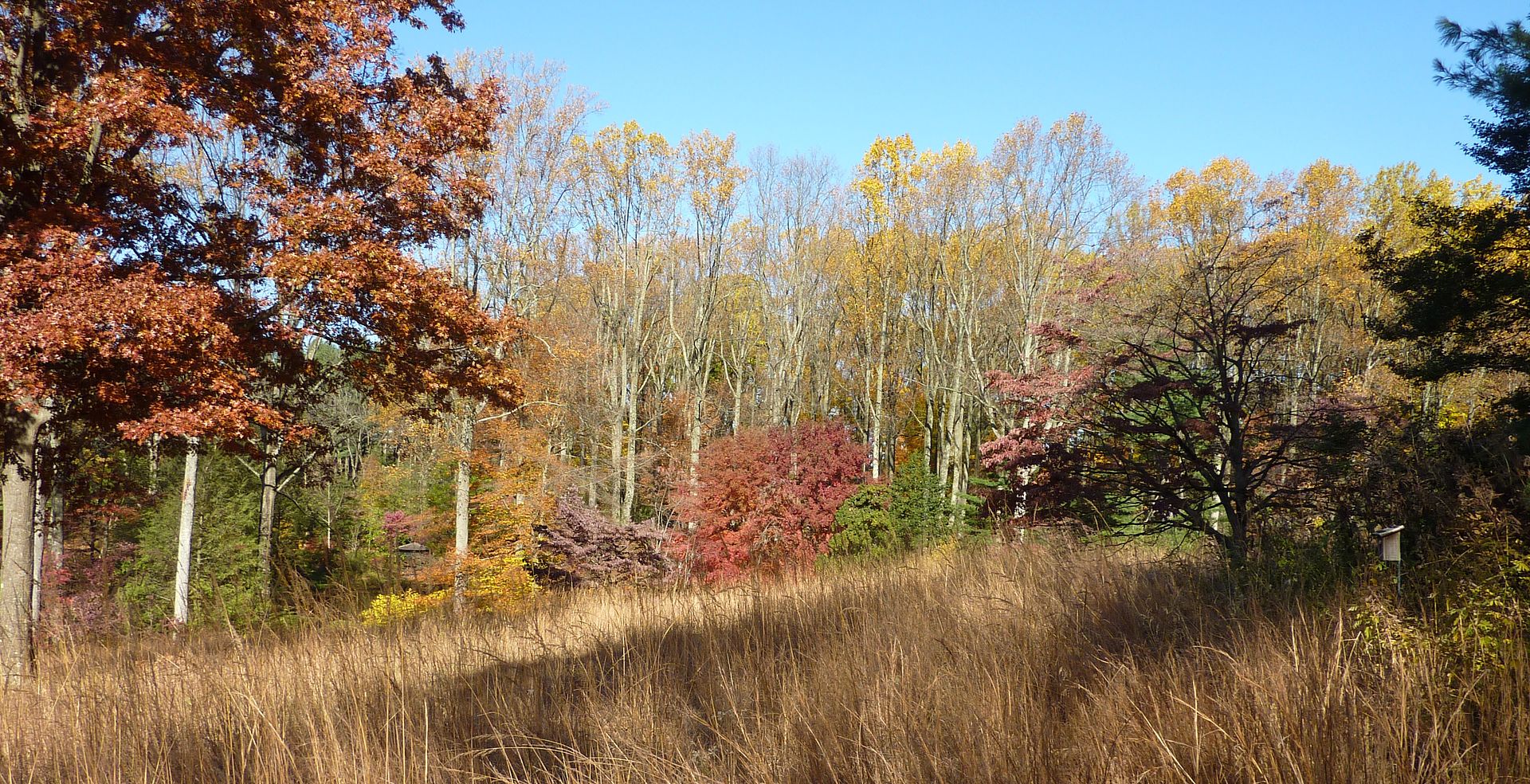
The autumn is easily the peak of a grassland meadow's grandeur. The fall colors are setting in, the seed heads glinting in the sun, and gusts of wind create visible waves of movement. It's not the largest prairie in the world, but it's still impressive in it's own right.
Their meadow is mostly composed of Little Bluestem, Big Bluestem, and Yellow Indian Grass. Before the tour began we were give the option to collect seeds in a paper bag. I thought this was a great idea, but if only the course were focused more on installing a meadow. This would have been a great starting point.
Hair Awn Murhly, Muhlenbergia capillaris, features fluffy pink stalks which seem to float over the plant.
Prairie Dropseed, Sporobolus heterolepis, slowly transitions into it's fall color. It ends up being a brighter yellow than most other grasses, but in the mean time it puts on an almost tie-dyed effect.
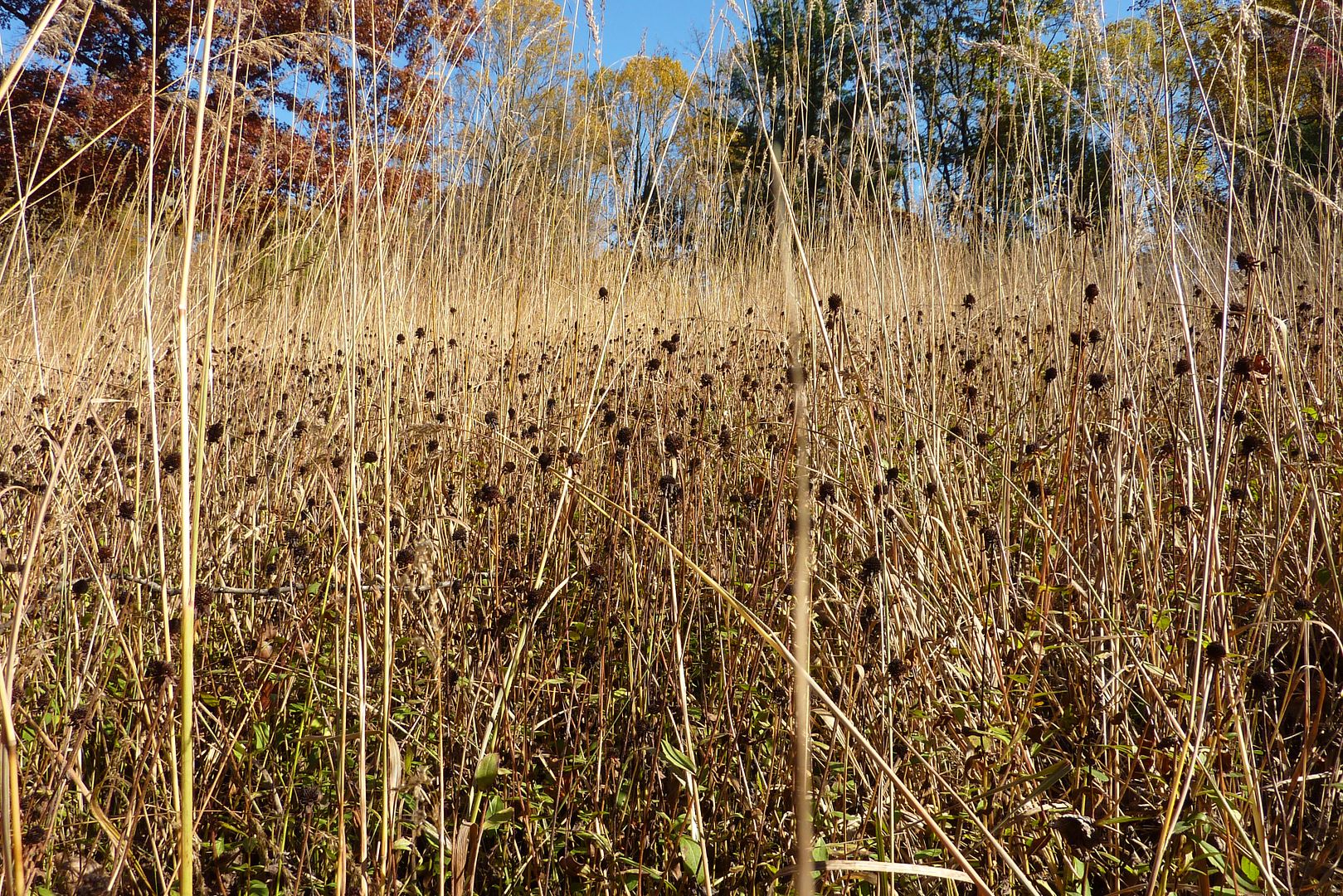
Most of the wildflowers have finished their show for the year and take a back seat to the grasses which now tower over most of them.
Rose Hips to one of our native roses are hidden in clumps of grass. Birds will likely eat them over the winter.
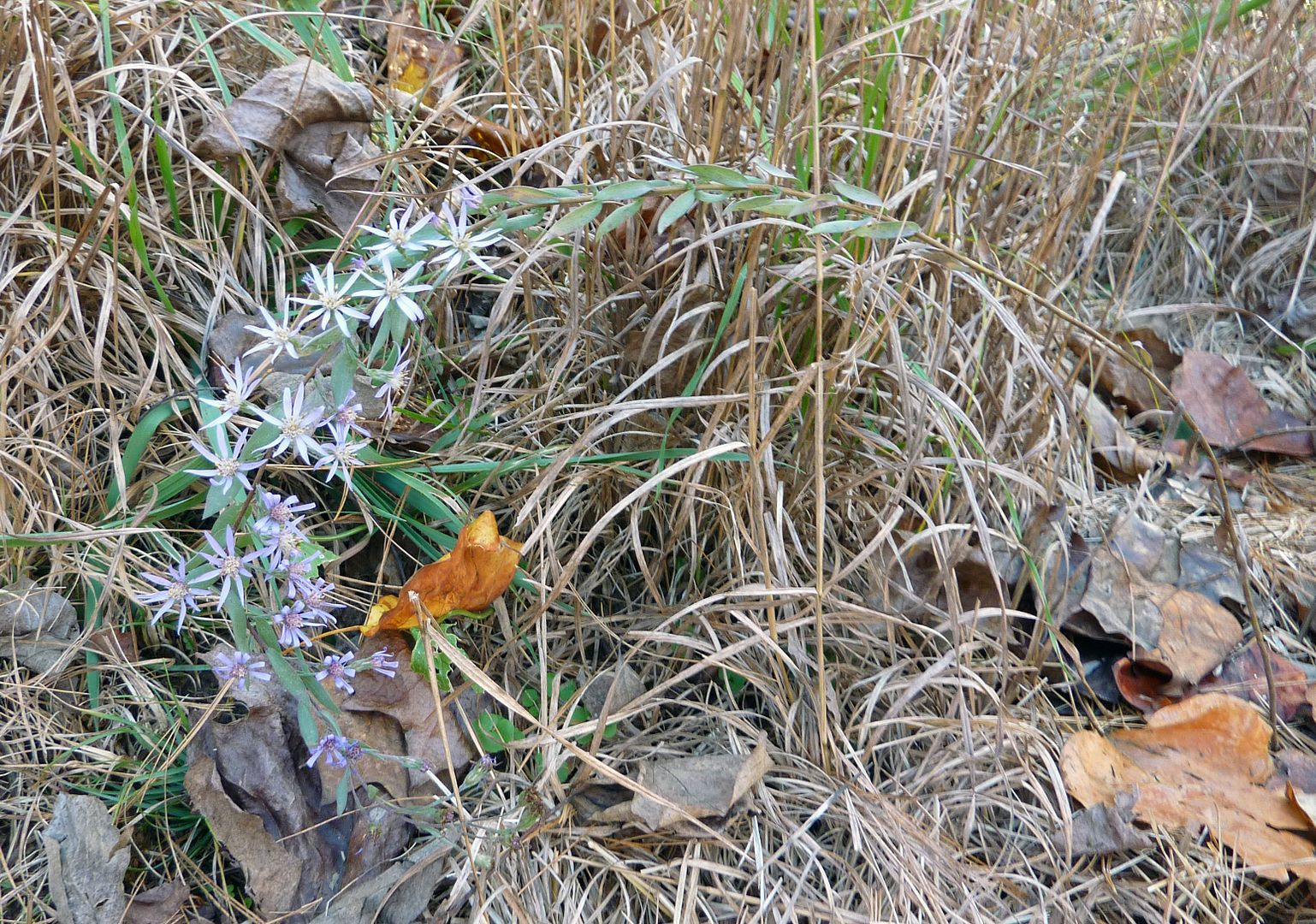
A few years back, the Mt. Cuba Center did a study on Asters species and cultivars to see which were garden appropriate, disease resistant, had nice form, long bloom period and such. The eastern Silver Aster, Symphyotrichum concolor, was one they tried out. I don't think it's one they recommend thought. I could be wrong but it certainly wasn't doing much for me. Generally anything flowering at this time of year is a plus but the plant is a little unimpressive.
I noticed how Liatris-like it is with all it's flowering coming out so close to the stem. The full plant was actually several stalks, just like a clump of Liatris, all coming out of the ground. It was very neat but I was mostly disappointed nothing was pollinating it.
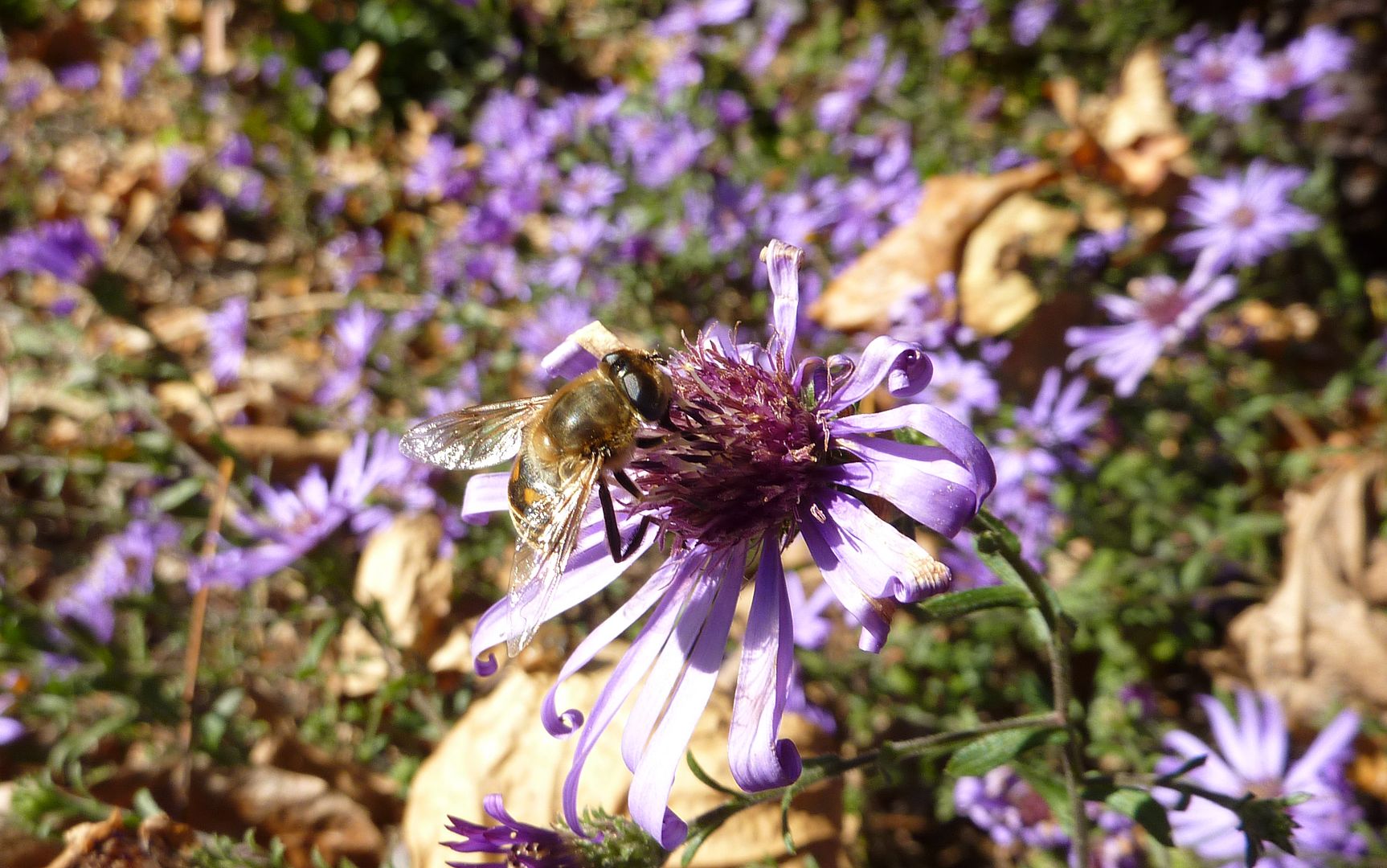
The Georgia Aster, Symphyotrichum georgianmum, was another one blooming now, though clearly a few days past it's peak on most plants. I'm sure this is closer to being a species they'd recommend. Though I don't think it's native to Delaware it's surprisingly hardy.
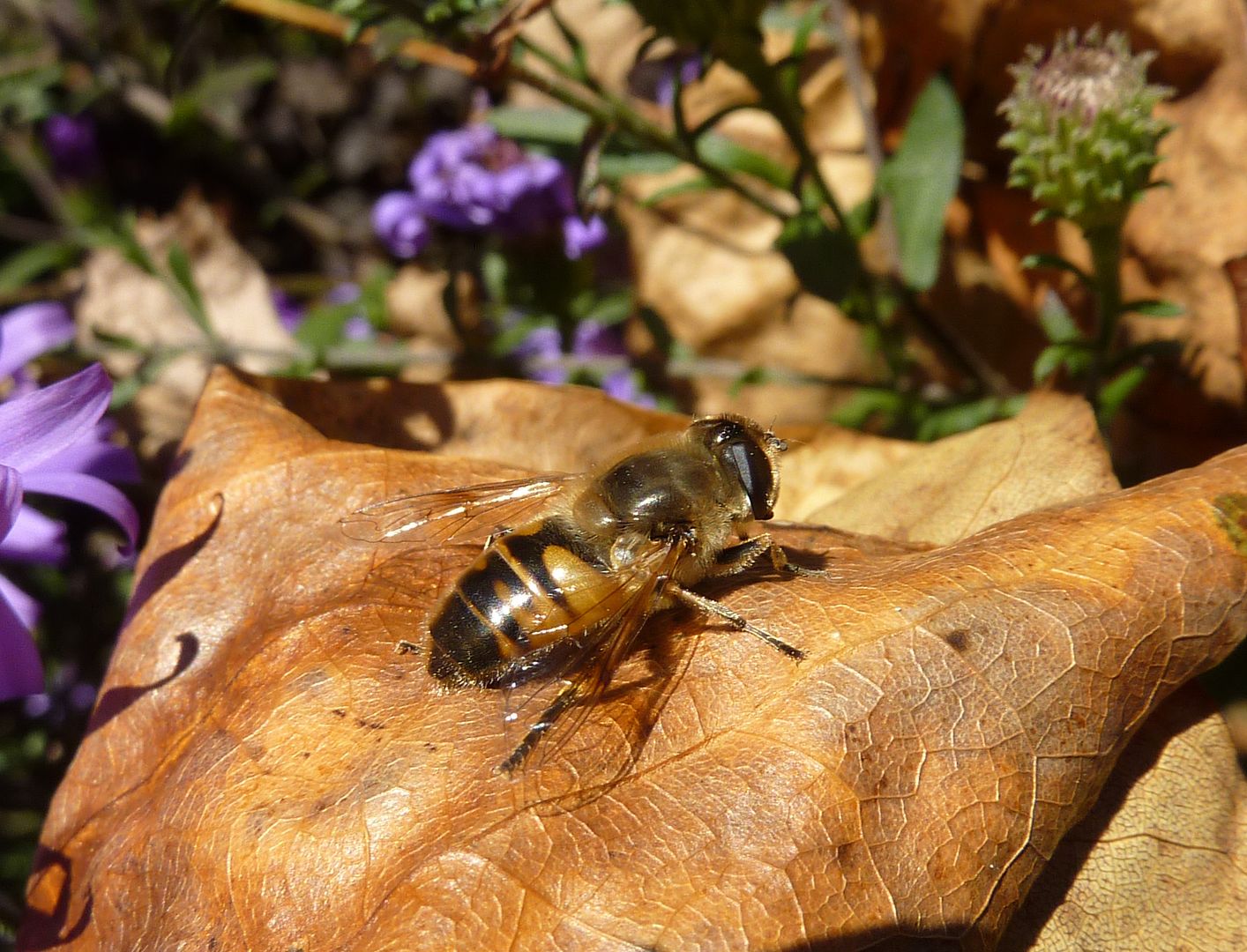
Georgia Asters that were growing in full sun were absolutely loaded with bees and flower flies (seen above) which mimic bees. The one above is doing a great job.
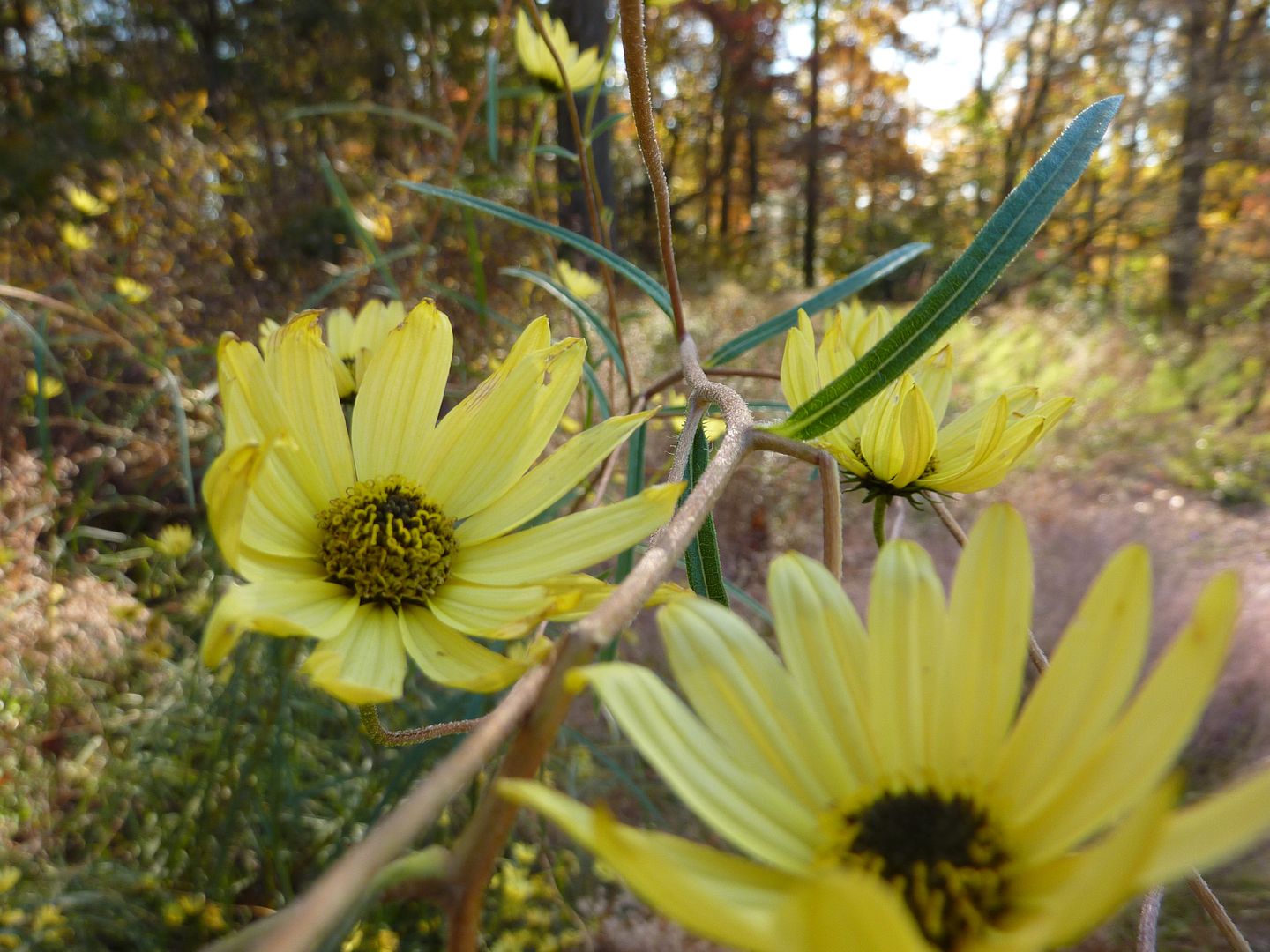
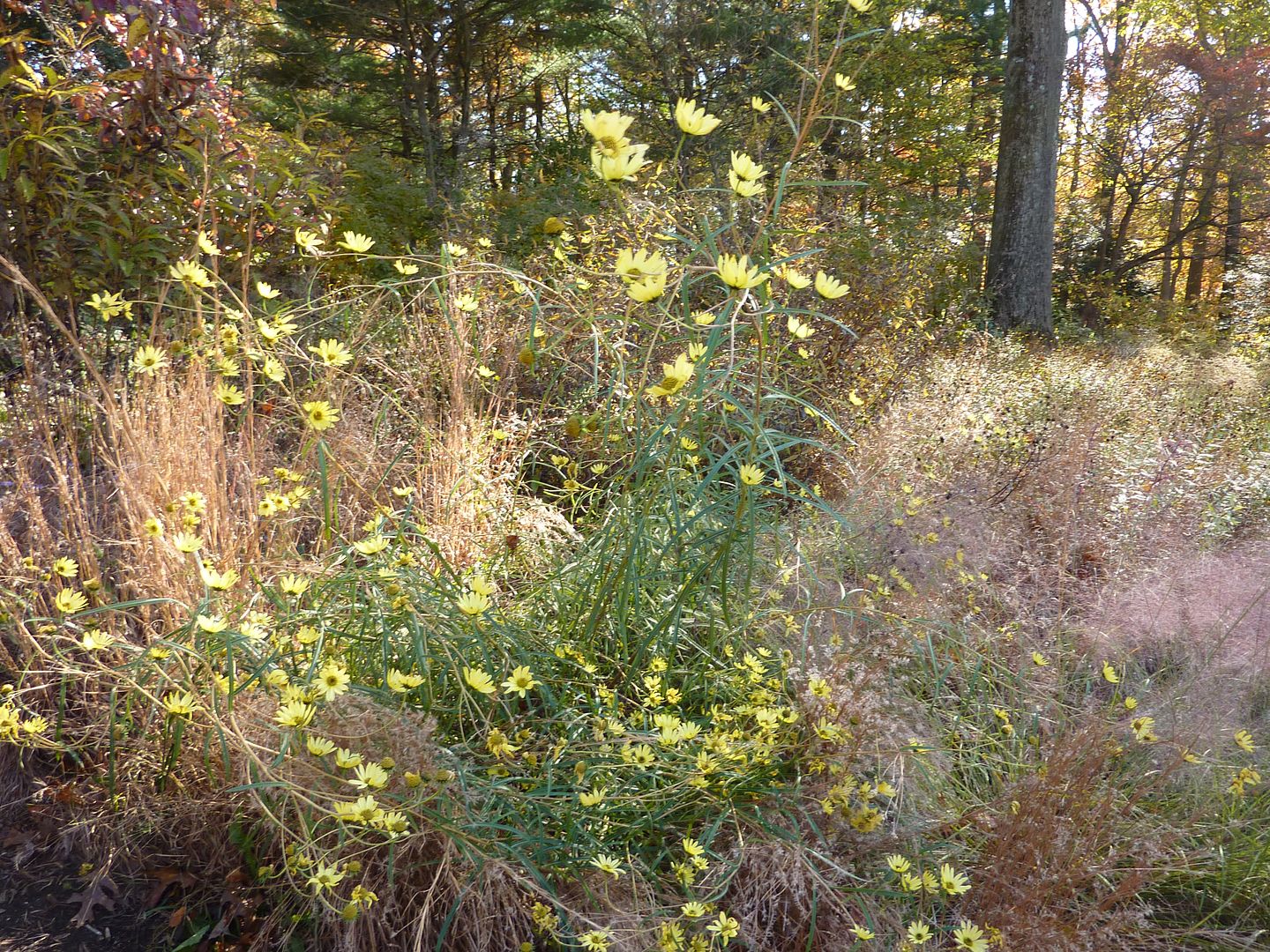
Narrowleaf Sunflower, sometimes called Swamp Sunflower, or Helianthus angustifolius, was also flowering. They favored the narrowleaf common name because it grows fine in non swampy conditions along side several species of Joe Pye Weed, Wild Senna, Prairie Onion, and so on. The leaves have a very rough feel to them.
This is actually the cultivar 'Mellow Yellow' which has paler yellow flowers. The true species is as bright as the sun and impossible to miss from across a field.
The plant has a slightly messy look to it, but I've found that's the case with most perennial sunflowers. Lord only knows how the annual varieties keep from falling down. I guess when you only have one year to live it pays to get it right the first time.
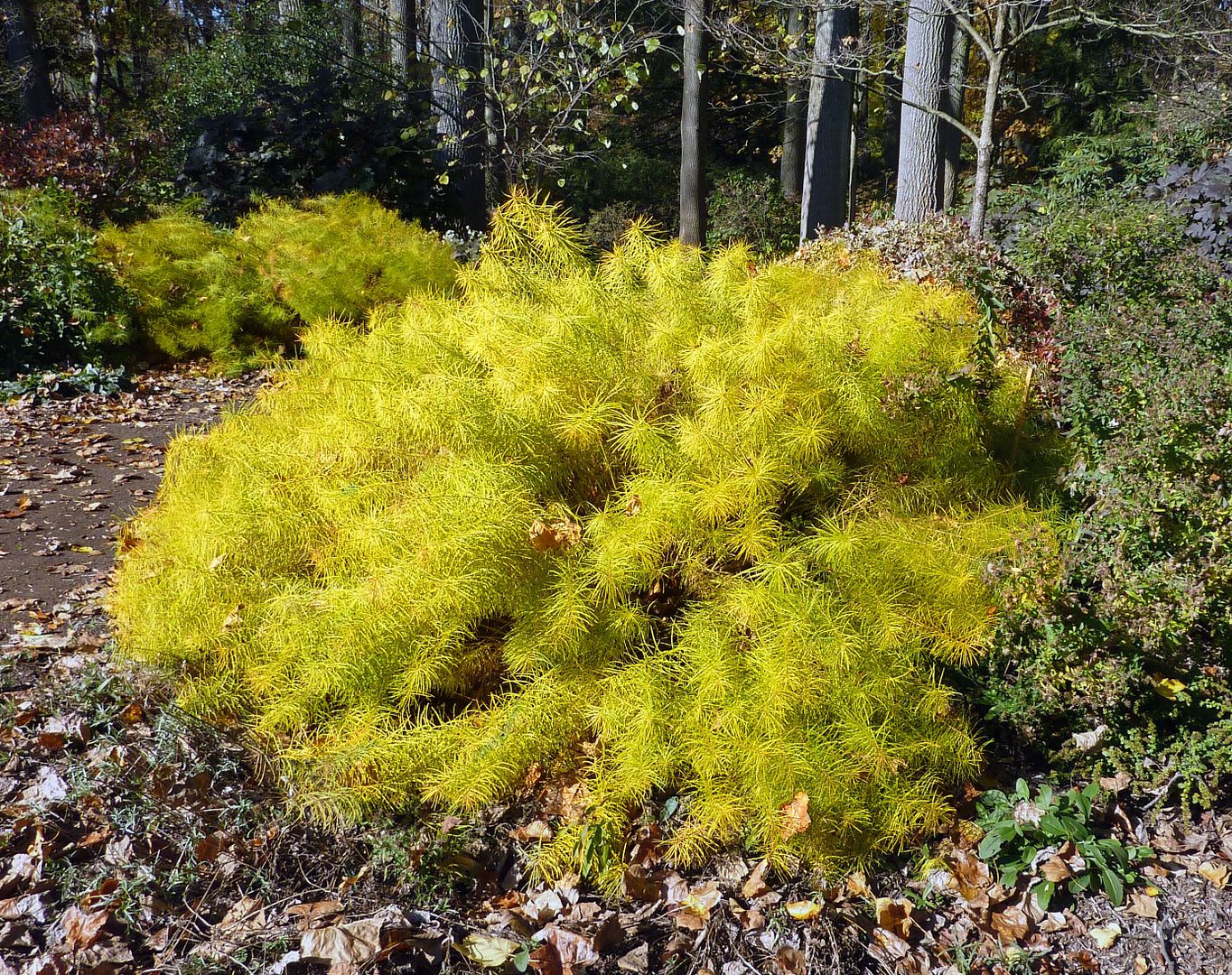
Lastly they had multiple specimens of Arkansas Blue Star, Amsonia hubrichtii, showing off their fall color.
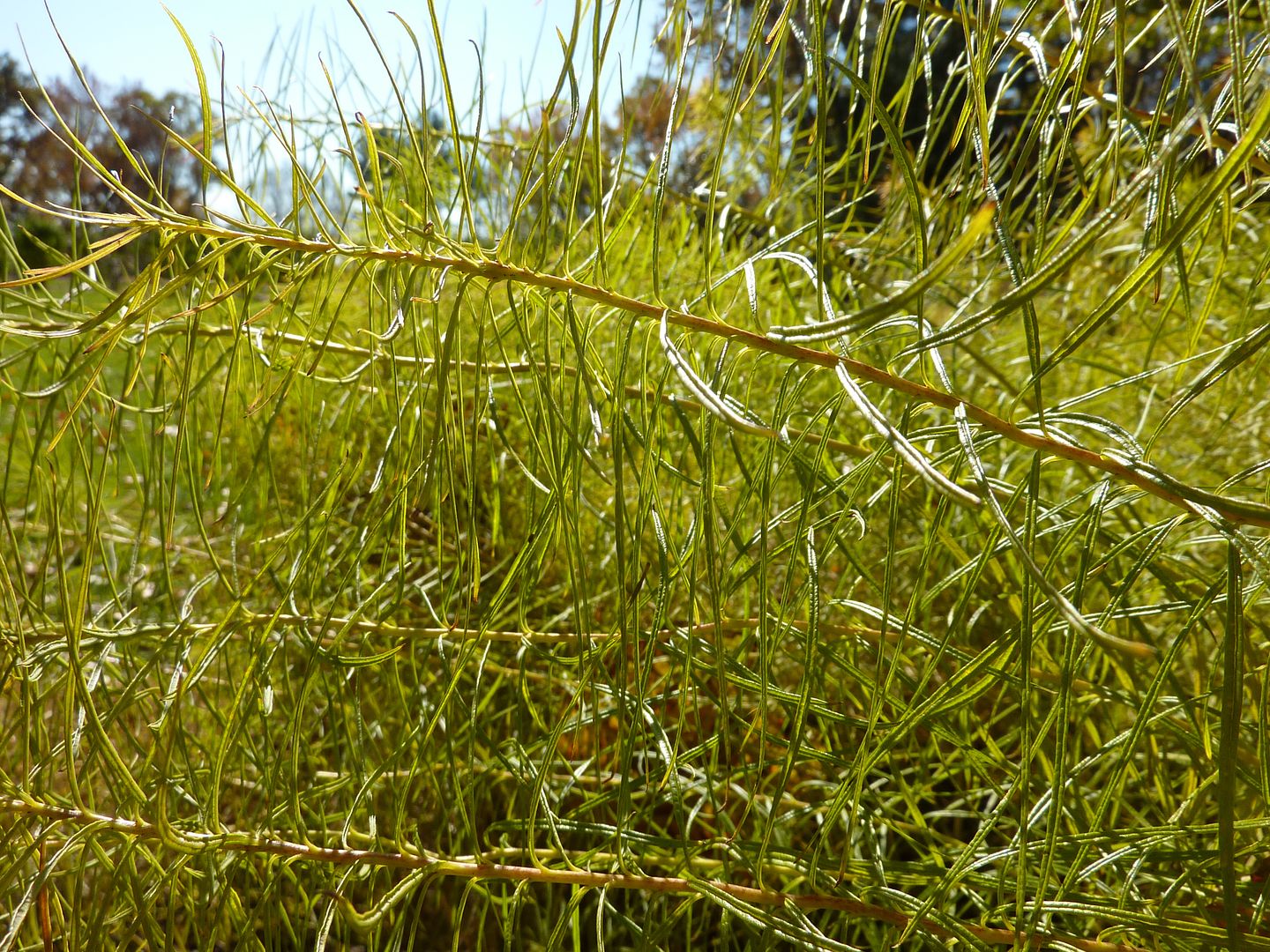
This particular species has very thin Pine-like leaves. Common Blue Star, Amsonia tabernaemontana, has more normal looking leaves but the same fall color. I think people prefer Arkansas Blue Star more because they look puffy and cloud-like. While I don't recommend sleeping on one, maybe plant something prone to falling over right next to it.
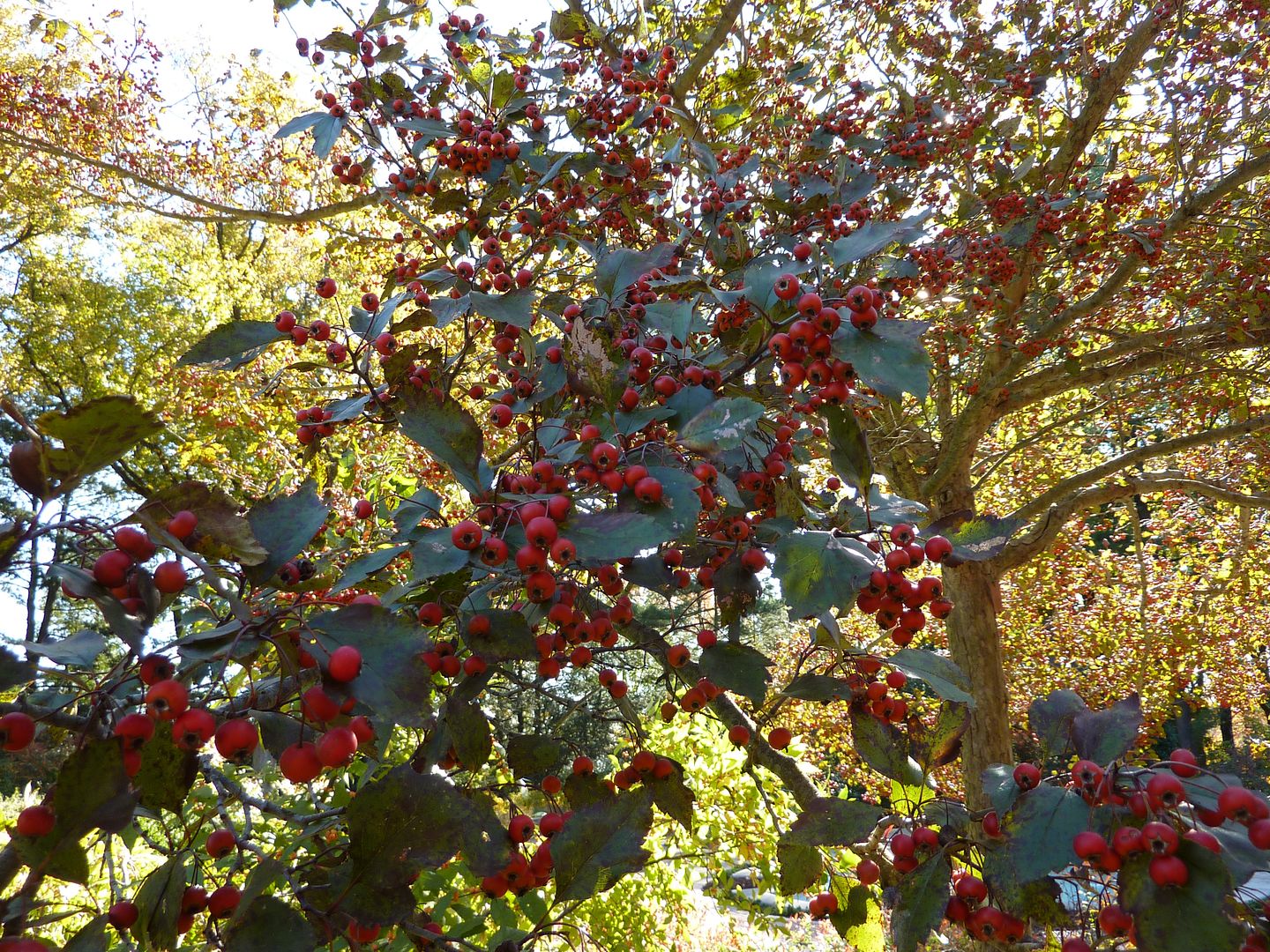
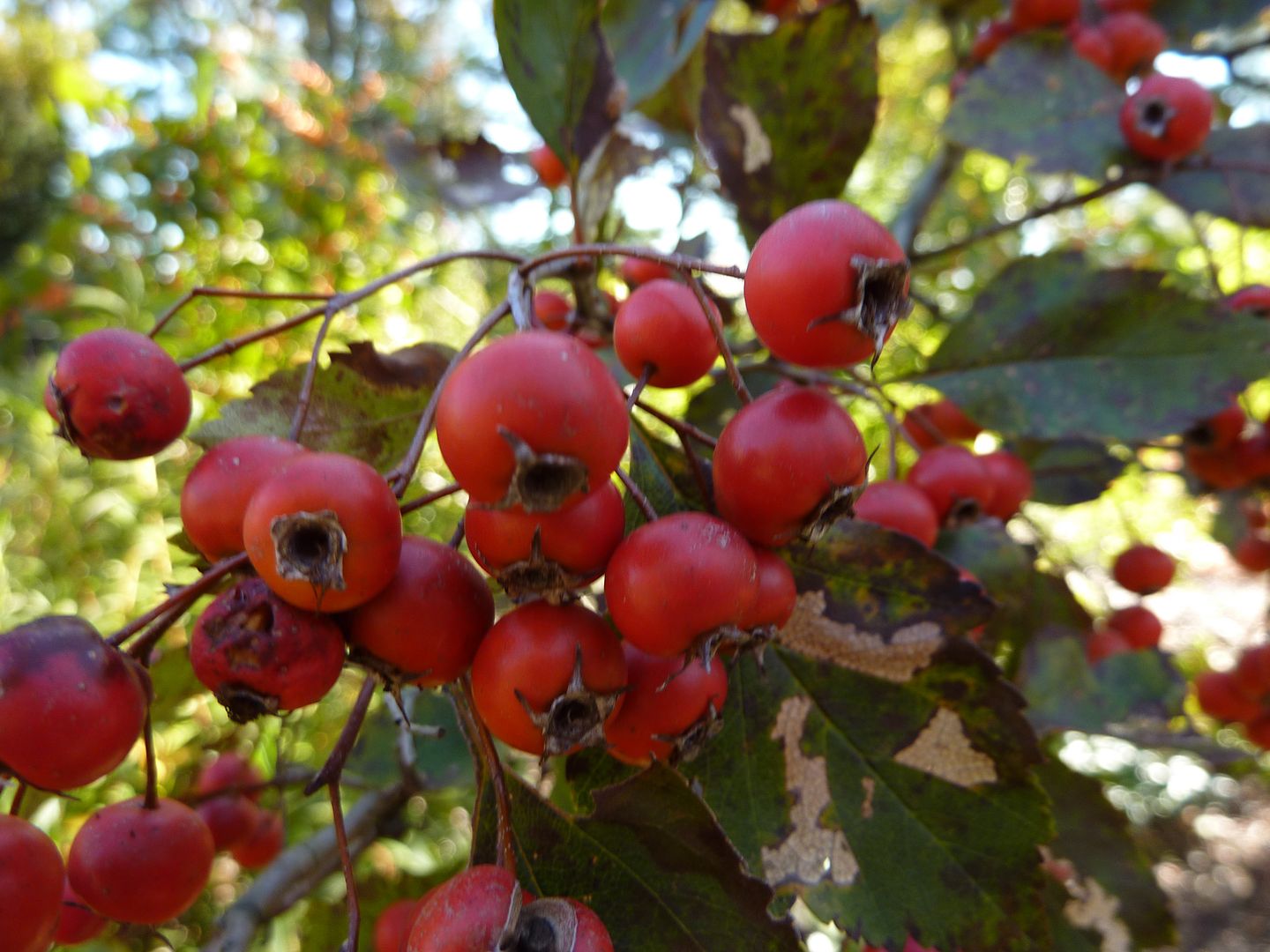
While walking back up to the house I noticed a Hawthorn Tree that probably had more berries than leaves on it. The birds will be well fed this year.
Before leaving everyone was given a plant of Tufted Hair Grass, Deschampsia cespitosa, which is a nice cold season grass that can be planted at this time of year. Warm season grasses do all of their growing over the summer and aren't very successful when planted after soil temperatures get below 60F. So I understand why they gave us a cold season species.
One Saturday well spent.
They offer Meadow Studies as a one day course 5 times a year. I went to the first two, missed the next two, so this is my third. Overall I'm happy with them but they weren't what I had expected. Emphasis is more on how they maintain it each year and what plants are showy at the particular time of year. The second half of the class is a nice tour mostly of the meadow itself but also other plants they have elsewhere on the property that might fit the theme of a meadow setting.
The autumn is easily the peak of a grassland meadow's grandeur. The fall colors are setting in, the seed heads glinting in the sun, and gusts of wind create visible waves of movement. It's not the largest prairie in the world, but it's still impressive in it's own right.
Their meadow is mostly composed of Little Bluestem, Big Bluestem, and Yellow Indian Grass. Before the tour began we were give the option to collect seeds in a paper bag. I thought this was a great idea, but if only the course were focused more on installing a meadow. This would have been a great starting point.
Hair Awn Murhly, Muhlenbergia capillaris, features fluffy pink stalks which seem to float over the plant.
Prairie Dropseed, Sporobolus heterolepis, slowly transitions into it's fall color. It ends up being a brighter yellow than most other grasses, but in the mean time it puts on an almost tie-dyed effect.
Most of the wildflowers have finished their show for the year and take a back seat to the grasses which now tower over most of them.
Rose Hips to one of our native roses are hidden in clumps of grass. Birds will likely eat them over the winter.
A few years back, the Mt. Cuba Center did a study on Asters species and cultivars to see which were garden appropriate, disease resistant, had nice form, long bloom period and such. The eastern Silver Aster, Symphyotrichum concolor, was one they tried out. I don't think it's one they recommend thought. I could be wrong but it certainly wasn't doing much for me. Generally anything flowering at this time of year is a plus but the plant is a little unimpressive.
I noticed how Liatris-like it is with all it's flowering coming out so close to the stem. The full plant was actually several stalks, just like a clump of Liatris, all coming out of the ground. It was very neat but I was mostly disappointed nothing was pollinating it.
The Georgia Aster, Symphyotrichum georgianmum, was another one blooming now, though clearly a few days past it's peak on most plants. I'm sure this is closer to being a species they'd recommend. Though I don't think it's native to Delaware it's surprisingly hardy.
Georgia Asters that were growing in full sun were absolutely loaded with bees and flower flies (seen above) which mimic bees. The one above is doing a great job.
Narrowleaf Sunflower, sometimes called Swamp Sunflower, or Helianthus angustifolius, was also flowering. They favored the narrowleaf common name because it grows fine in non swampy conditions along side several species of Joe Pye Weed, Wild Senna, Prairie Onion, and so on. The leaves have a very rough feel to them.
This is actually the cultivar 'Mellow Yellow' which has paler yellow flowers. The true species is as bright as the sun and impossible to miss from across a field.
The plant has a slightly messy look to it, but I've found that's the case with most perennial sunflowers. Lord only knows how the annual varieties keep from falling down. I guess when you only have one year to live it pays to get it right the first time.
Lastly they had multiple specimens of Arkansas Blue Star, Amsonia hubrichtii, showing off their fall color.
This particular species has very thin Pine-like leaves. Common Blue Star, Amsonia tabernaemontana, has more normal looking leaves but the same fall color. I think people prefer Arkansas Blue Star more because they look puffy and cloud-like. While I don't recommend sleeping on one, maybe plant something prone to falling over right next to it.
While walking back up to the house I noticed a Hawthorn Tree that probably had more berries than leaves on it. The birds will be well fed this year.
Before leaving everyone was given a plant of Tufted Hair Grass, Deschampsia cespitosa, which is a nice cold season grass that can be planted at this time of year. Warm season grasses do all of their growing over the summer and aren't very successful when planted after soil temperatures get below 60F. So I understand why they gave us a cold season species.
One Saturday well spent.
Labels:
Amsonia,
Aster,
Autumn,
Berries,
Color,
fall color,
Flower flies,
Grass,
Rose,
Seeds,
Sunflowers,
Trees,
Wildflowers
Subscribe to:
Posts (Atom)