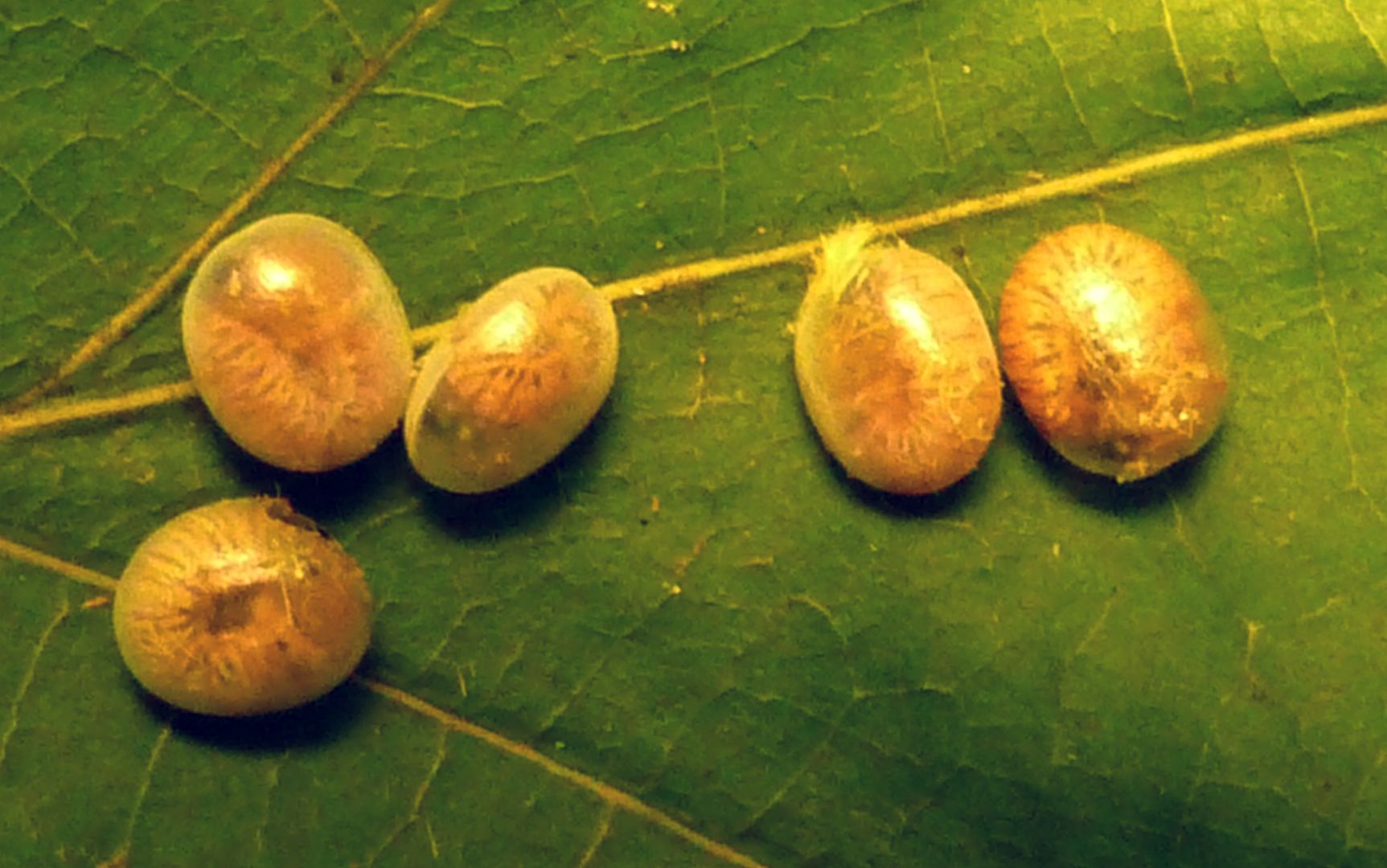
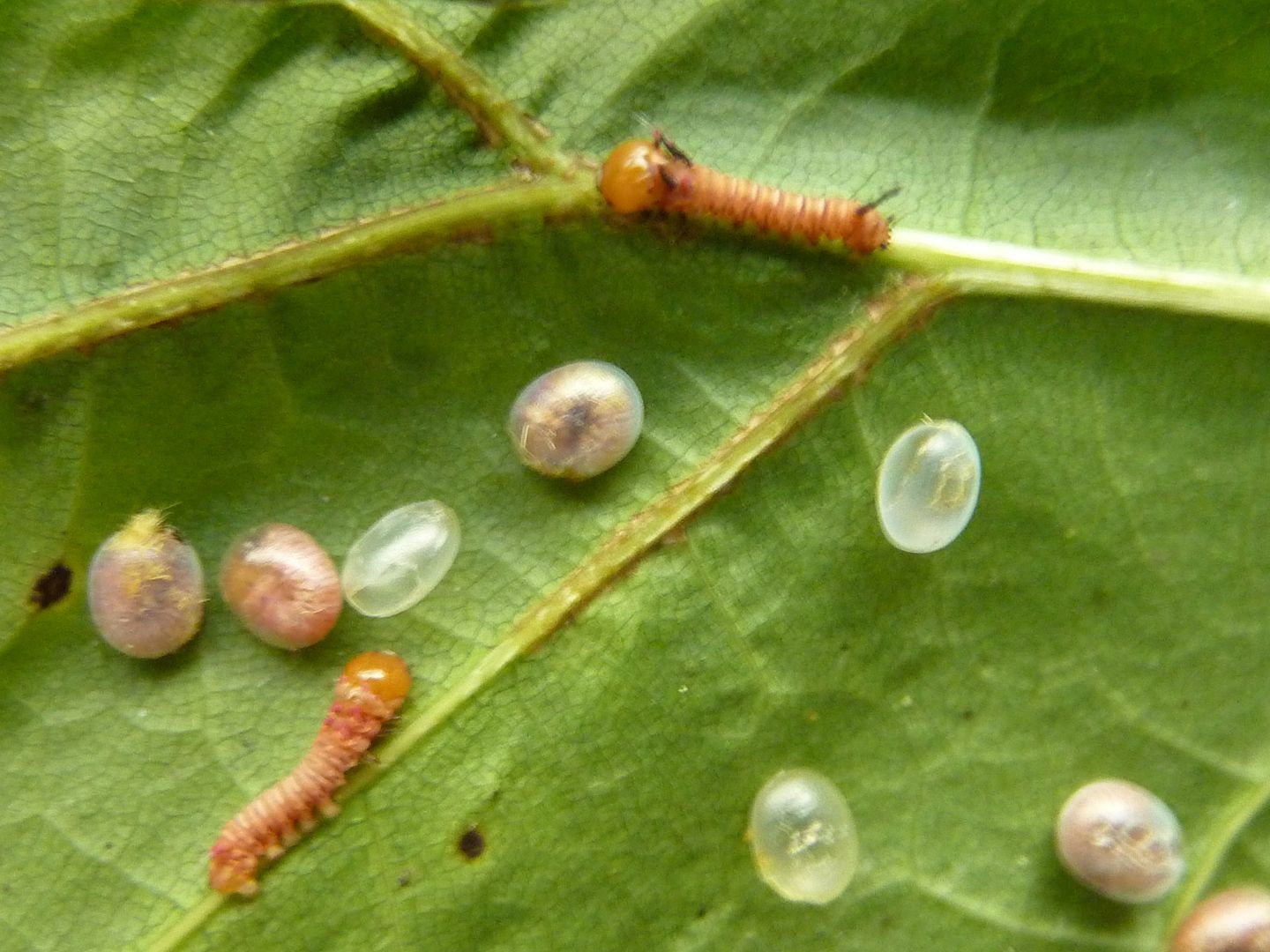
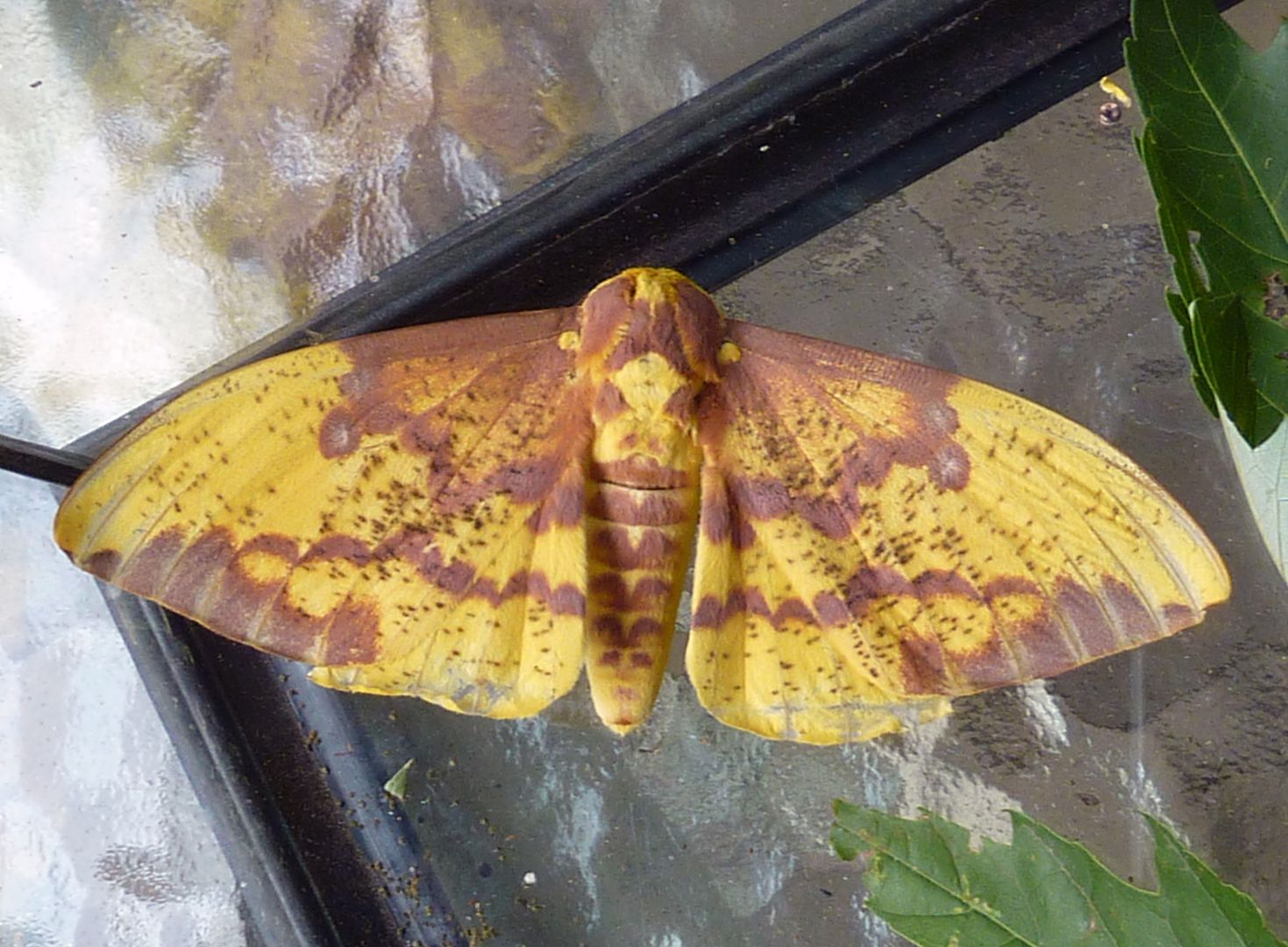
After two attempts trying at catch and release with Eacles imperialis, Imperial Moth, I have no eggs to show for it. The idea with catch and release is as you can imagine. Catch and store in a dark place where they can spend the night. Sheltered outside in a birdcage or screened terrarium will work. There's no way to tell if they're mated with from looks alone but if they're mated they should start laying eggs in the darkness (leaves to a host plant are optional). If they're not mated with then there's the potential to attract a male right up to the cage and it's a simple matter of sticking him inside with her. They're quite easy to handle.
Telling the two genders apart as I recently learned from a friend isn't as you might read in books. Typically males are darker and have more brown/purple color, while females tend more towards the yellow. I'm told this is inconsistent, and it's "easier" to judge gender based on the antenna. Males have fluffier antenna, while the female is thinner, and more strand-like.
If there's no eggs in the morning, then it's best to release them later that night, or at least leave the lid off the cage while outside just before dark. The life cycle to these moths is something like 2 weeks in the adult stage. Weather pending that's not a lot of time to get stuff done.
I'm not sure how successful this method is with other moths. Polyphemus moths are the only one I'm confident enough to say, "they will lay eggs in the dark, even in the absence of a host plant." I would assume other giant silk moths would do the same, especially because they all seem to be generalist foragers using most tree genera in the average forest as host plants. Females are commonly mated with just after they've come out of their cocoon, or crystals, during the late afternoon hours. As darkness rolls in she almost doesn't need to care where she deposits her eggs in a forest full of host plants. This makes sense in my mind at least. Other moths who have more specific host plants or lay eggs at different times of the day might not be as receptive to this method.
Upon success: young caterpillars should be divided into small groups (10 at most) in containers they can't escape from. They should be fed their host plant into adulthood, and perhaps bred in captivity before releasing into the wild again. This can be harder than it sounds, especially when a single female to one of these species can lay some 400 eggs over night. If that's to much to handle, consider sharing the wealth with others, or releasing the young caterpillars on host plants as they're born.
I had success getting a Polyphemus moth to lay eggs last year, and she deposited ~200 eggs. I released her into the yard afterward and found she'd laid eggs in our oak tree where I discovered a cocoon to at least one successful individual. The mistake I made with that generation was keeping all the caterpillars together in the same cage, and eventually moving them to a setup where they started escaping. Sadly not one of them made it past the second or third instar. They kept wondering off away from their host plant leaves, I think attempting to disperse, and the AC did them in shortly after. Once they get beyond this wondering stage I'm told they settle down and play nice.
This year I'm going to try keeping them all inside on a heating pad in small groups. Once they're old enough I have a larger setup outside on our covered deck. A friend mailed me eggs to two species and hopefully I'll be able to update you all on their progress.