Showing posts with label flowers. Show all posts
Showing posts with label flowers. Show all posts
Sunday, April 4, 2021
Easter Garden Tour 2021
No ants this time. Just a quick garden tour. This was recorded the day before Easter. Additional Daffodils and Easter Lilies and Tulips were set out in the garden afterward. Several plants featured in the garden had to be replanted because squirrels had removed them, mostly hyacinths and pansies, over night. Not in the video was an Easter Egg hunt I arranged with my niece who had a great time finding them all among the flowers.
Friday, April 25, 2014
Spring Pollinators
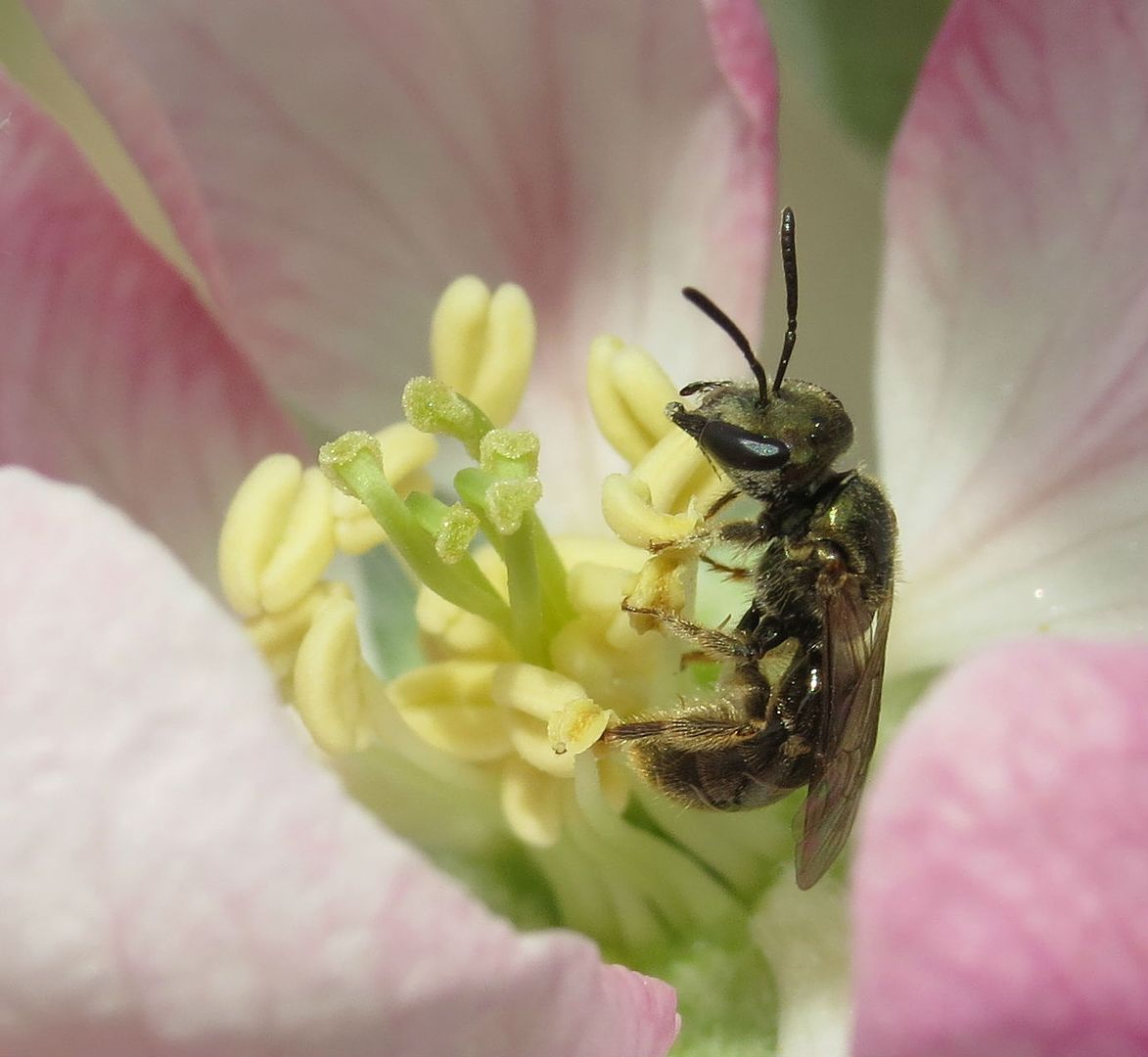
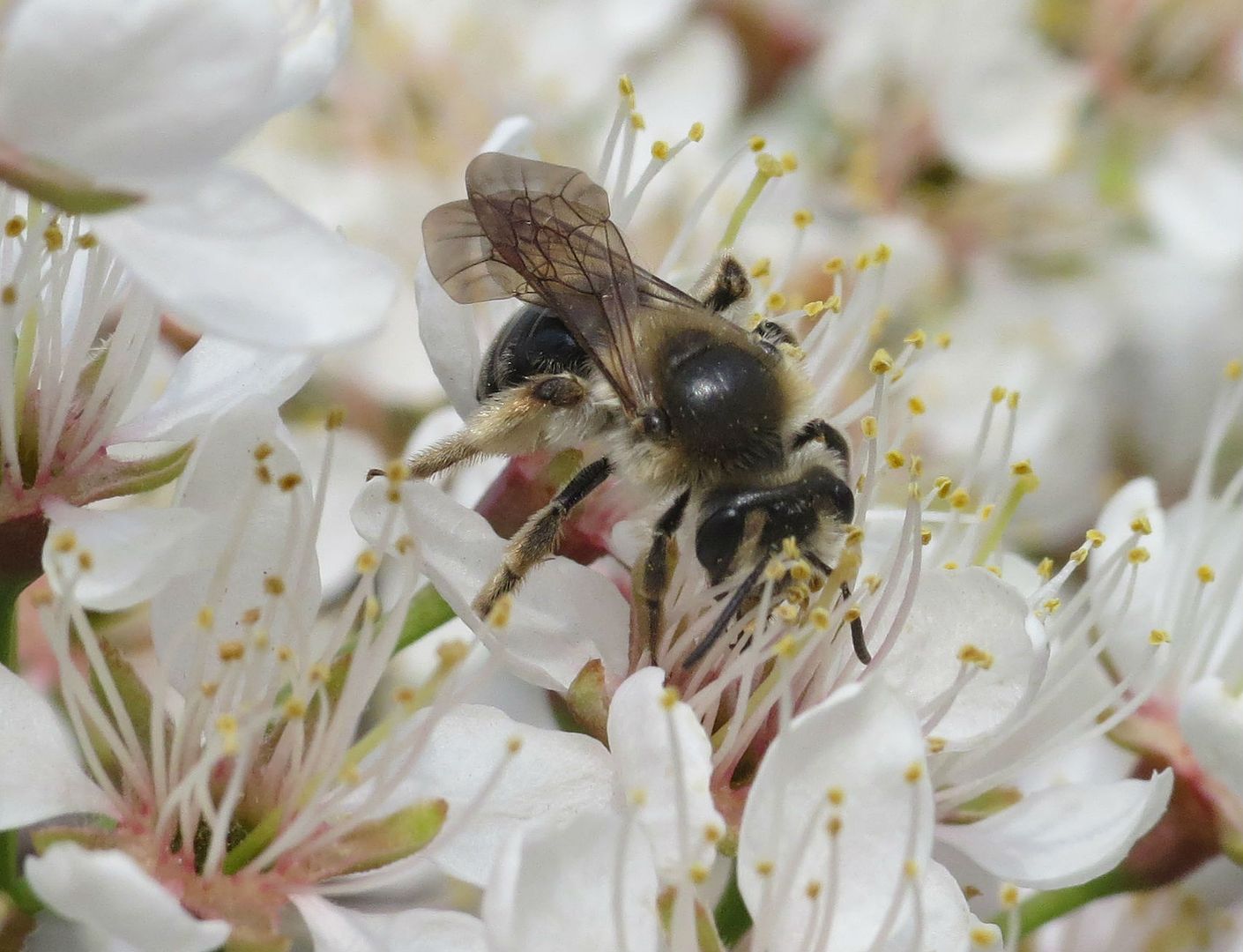
These types of bees like to burrow in sandy hillsides usually clear of tall foliage; often in full sun, though the early species/generations work do full shade just fine because the trees haven't filled in yet. I'm not sure how successful these shaded burrows turn out though compared to ones in full sun. But of course tall grasses and forbs may grow more abundantly on sunny locations.
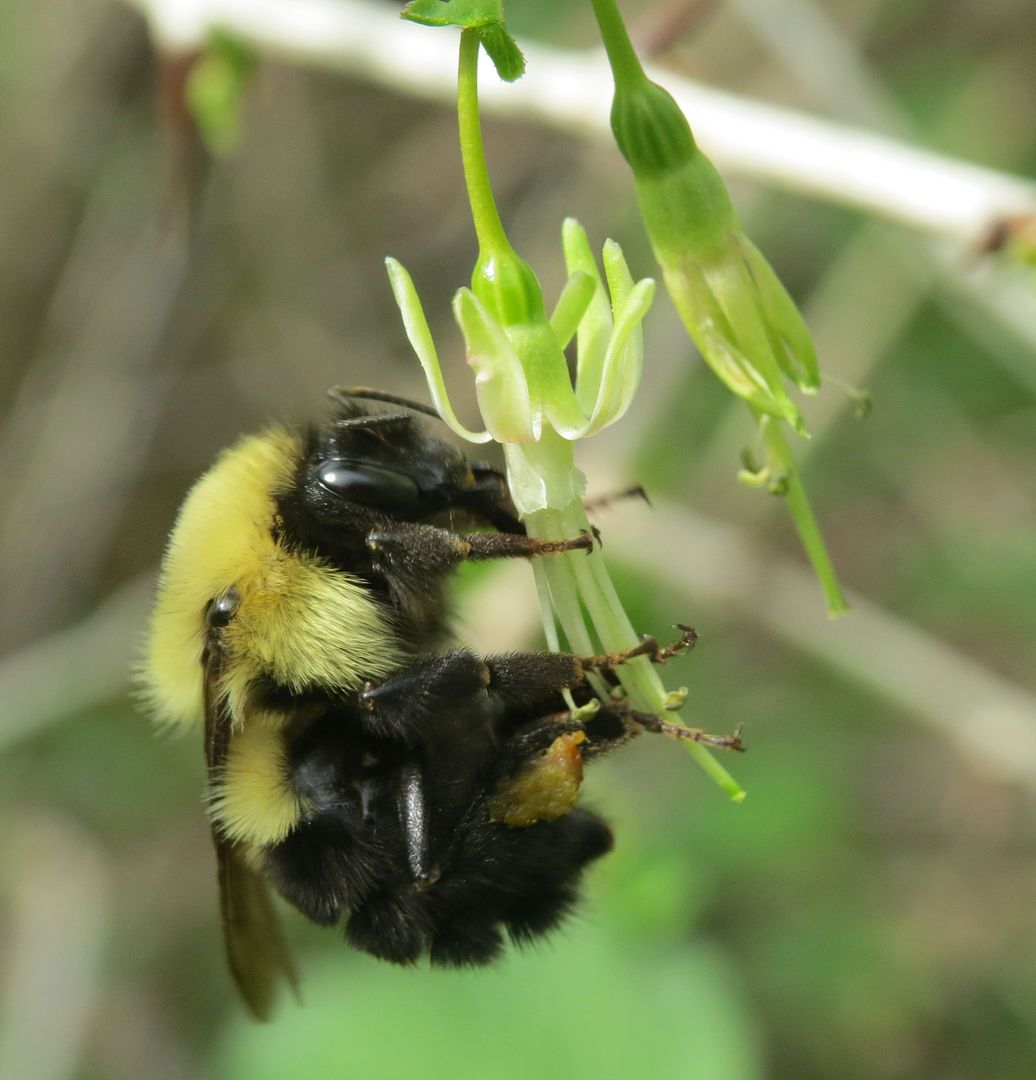
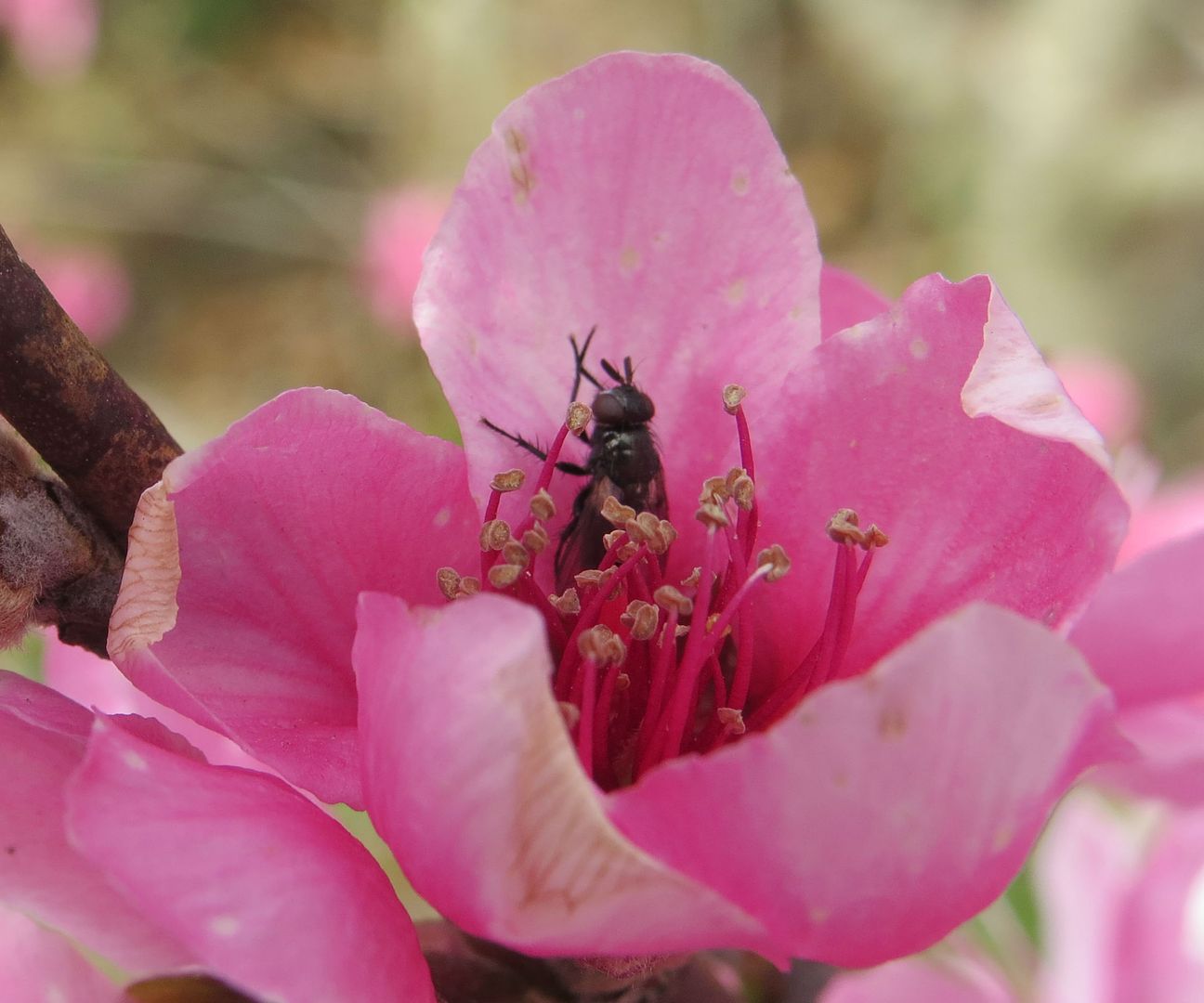
Here I watched a queen visit the flowers to our gooseberry/currant. It was neat watching her work these small, inconspicuous flowers, when the native plum, apple, and peach trees are all right beside them. She was devoted to visiting each and every flower on this shrub, ignoring ones she already visited. I did see her fly to the plum tree once, but that was very clearly an accident on her part, as she virtually walked right over the flowers in search of the gooseberry she'd been working. Bees are often devoted to the pollen of the type of plant they work because the nutritional value can vary greatly from plant to plant. It's best to raise brood on one type of pollen to perhaps judge the results, or maybe it's detrimental to mix and match pollen types? Whatever the case, this devotion to one type of plant is what makes them excellent pollinators.
Thursday, October 17, 2013
The Wildlife Gardener's Meetup (Part 2)
Wildlife Gardener's Forum,
On the second location we were in a park somewhere in Maplewood, NJ. I'd describe it as a Piedmont area which is not quite mountainous but rocky enough to not be considered coastal. There were tons of large boulders and rocks all over the place. It was clear that in some places the park designers had just given up trying to remove them and simply placed pick nick tables in the middle of the most uneven and treacherous terrine imaginable. It would not surprise me in the least to learn we'd walked over the breeding tunnels to countless snakes and other critters that crawled from Pandora's box.
 The forest here seemed to be in good health. I can't say we noticed any major invasive at all. I recall a few of the highways on the drive up there even had wildlife corridors built as over passes over the road.
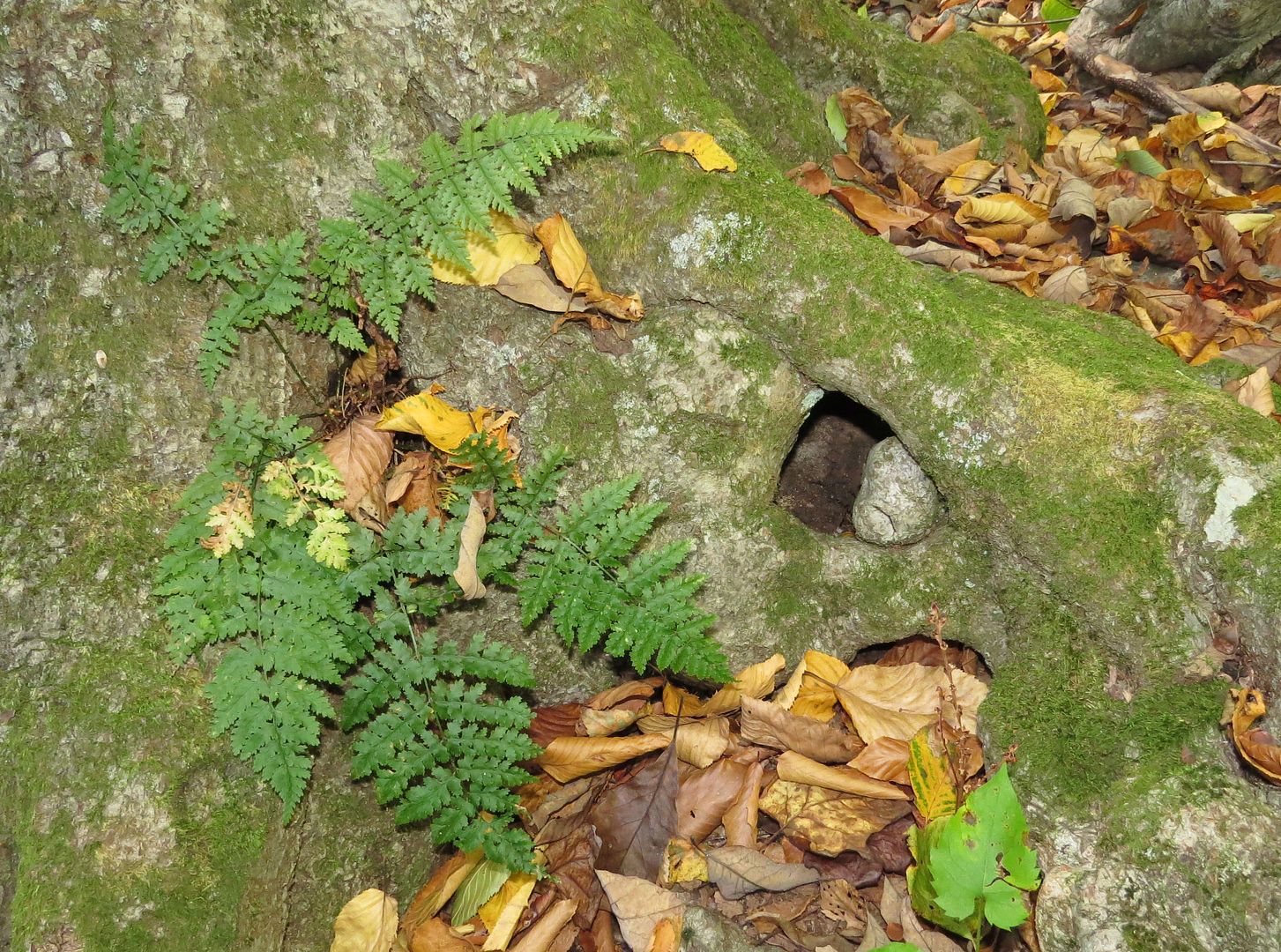 Ferns grew almost everywhere that had view of the water.
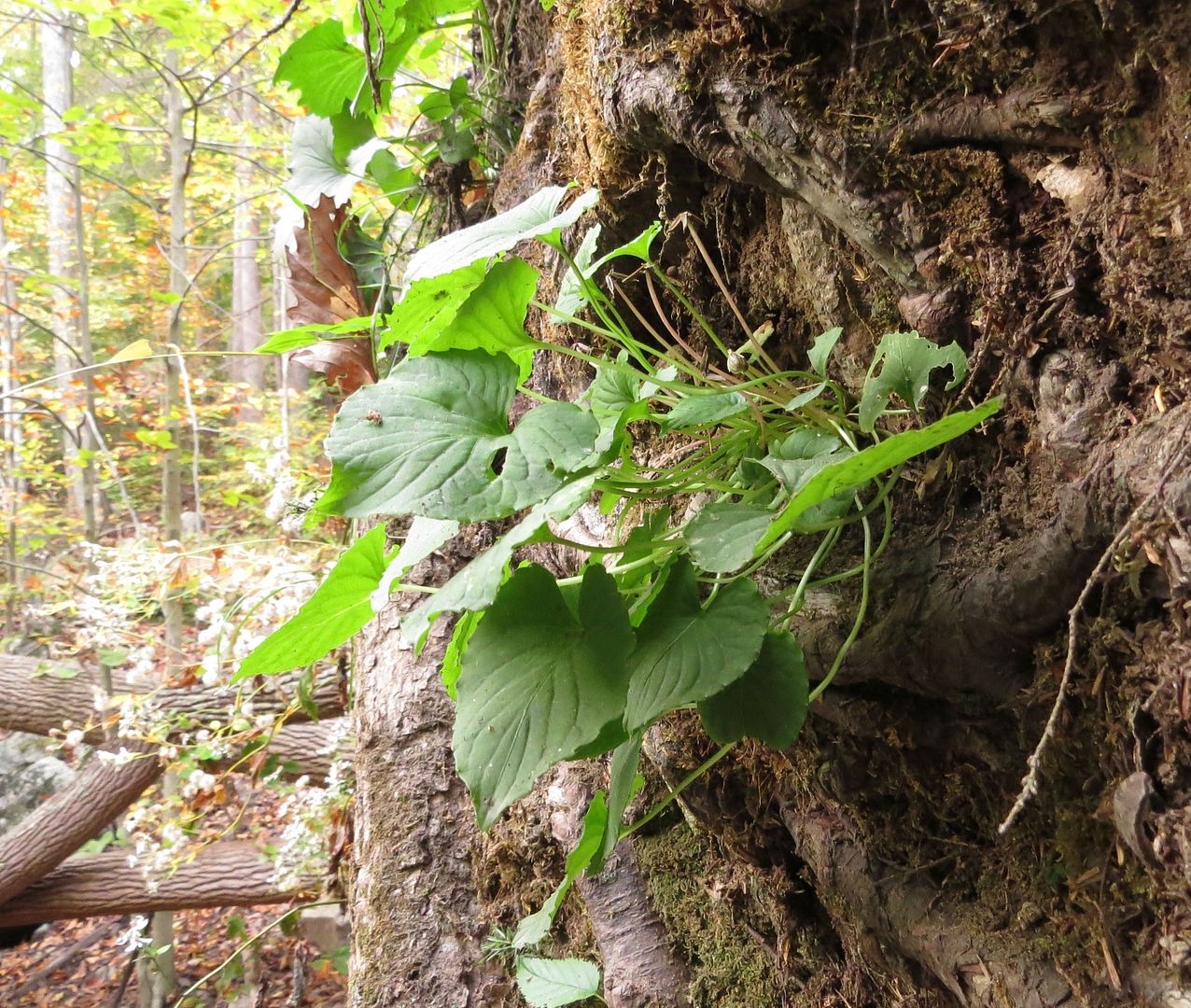 Violets were here and there too and were even sprouting up among the roots of fallen trees.
 Hepatica was growing wildly there too. This is a wonderful spring ephemeral that blooms around March and April that few travelers get to see. It's often still too cold out to really venture into the wilderness. The leaves are semi-evergreen which is uncommon for an ephemeral.
 There were a few Asters about too but they were all mostly small plants that each had only a few flowers. They were certainly nothing like the New England Asters I have in my garden.
 This is where the troll lives. Actually believe it or not this is a pathway. You have to scale the rocks and climb your way through this slope. Some of the trails there are not for the faint of heart and certainly not handicap assessable.
 Waterfalls were the real highlight of this place. A few streams come through it and the main trails lead you right along them.
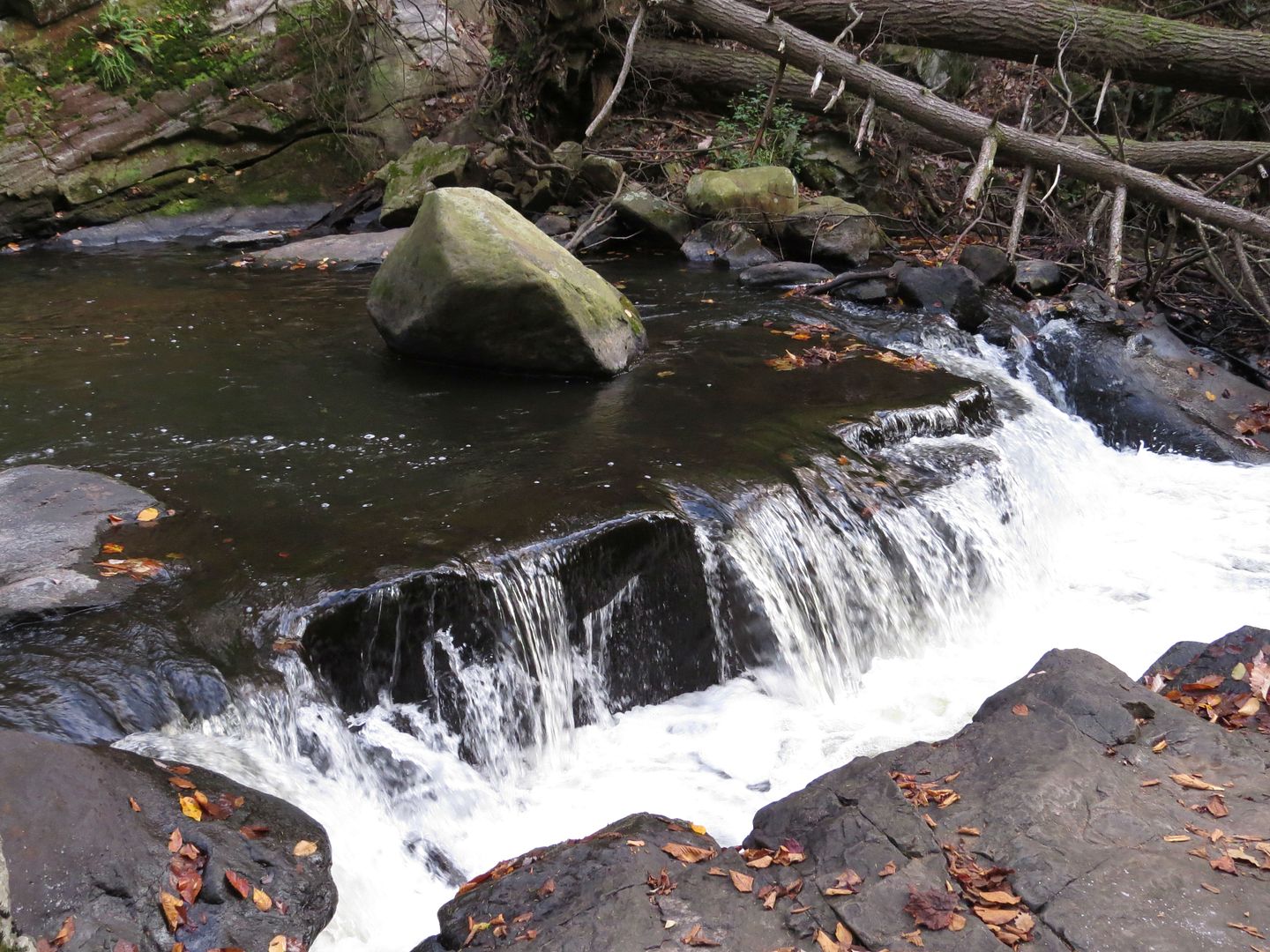 It's better to walk a trail that takes you all the way to the end of the park, one not near the river; so this way you walk up stream facing all the waterfalls, as opposed to having to turn around always to look at them.
 The river never seemed to be all that deep, but it did widen up a bit here and there. I can't imagine anyone kayaking down it for very long. The picture above aside, there are too many rocks everywhere and you'd likely bust your head open going down some of the falls.

There were several benches setup, sometimes in odd places, but often highlighting a particular view or vista.
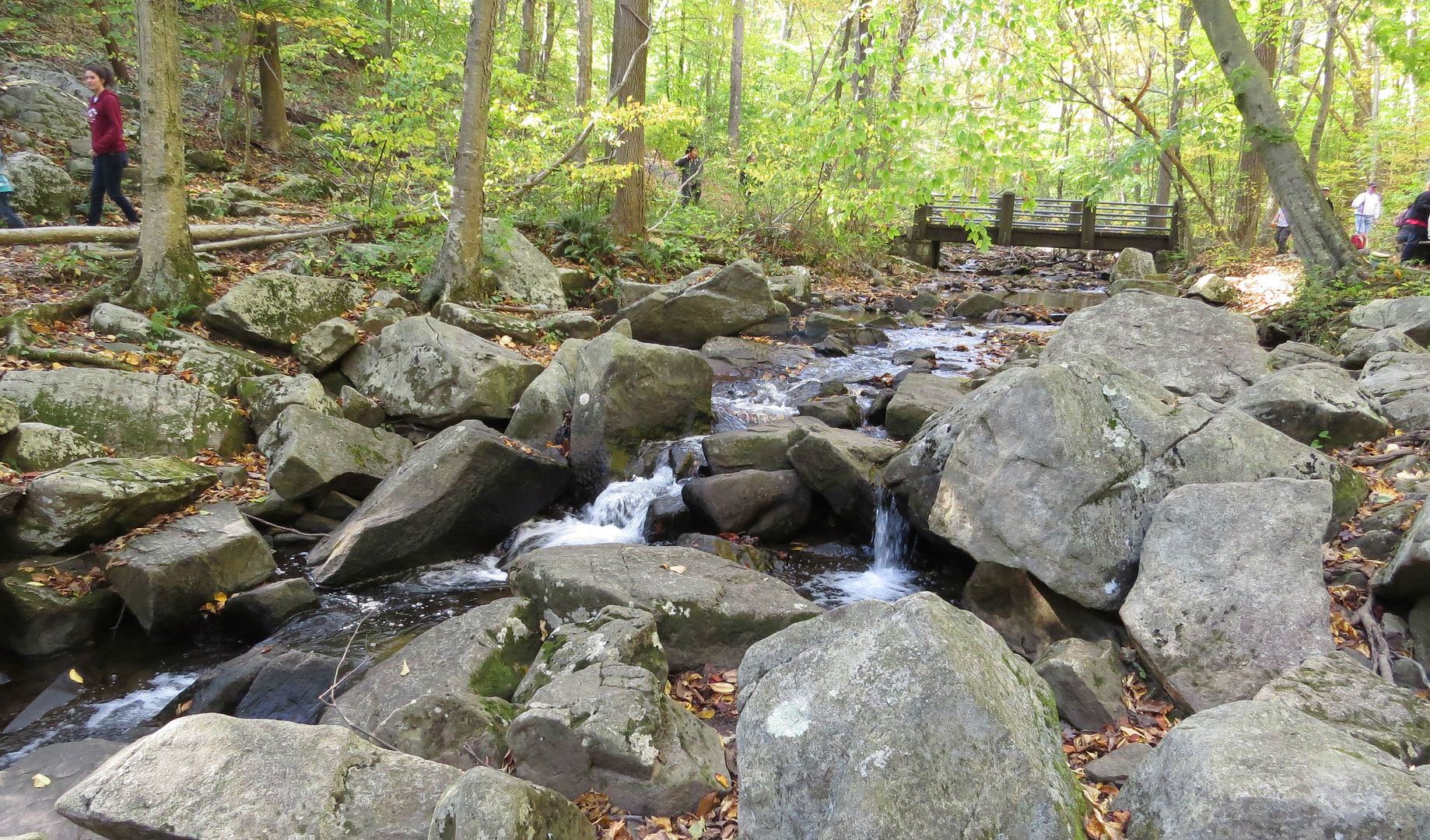 Looking forward.
 Looking back.
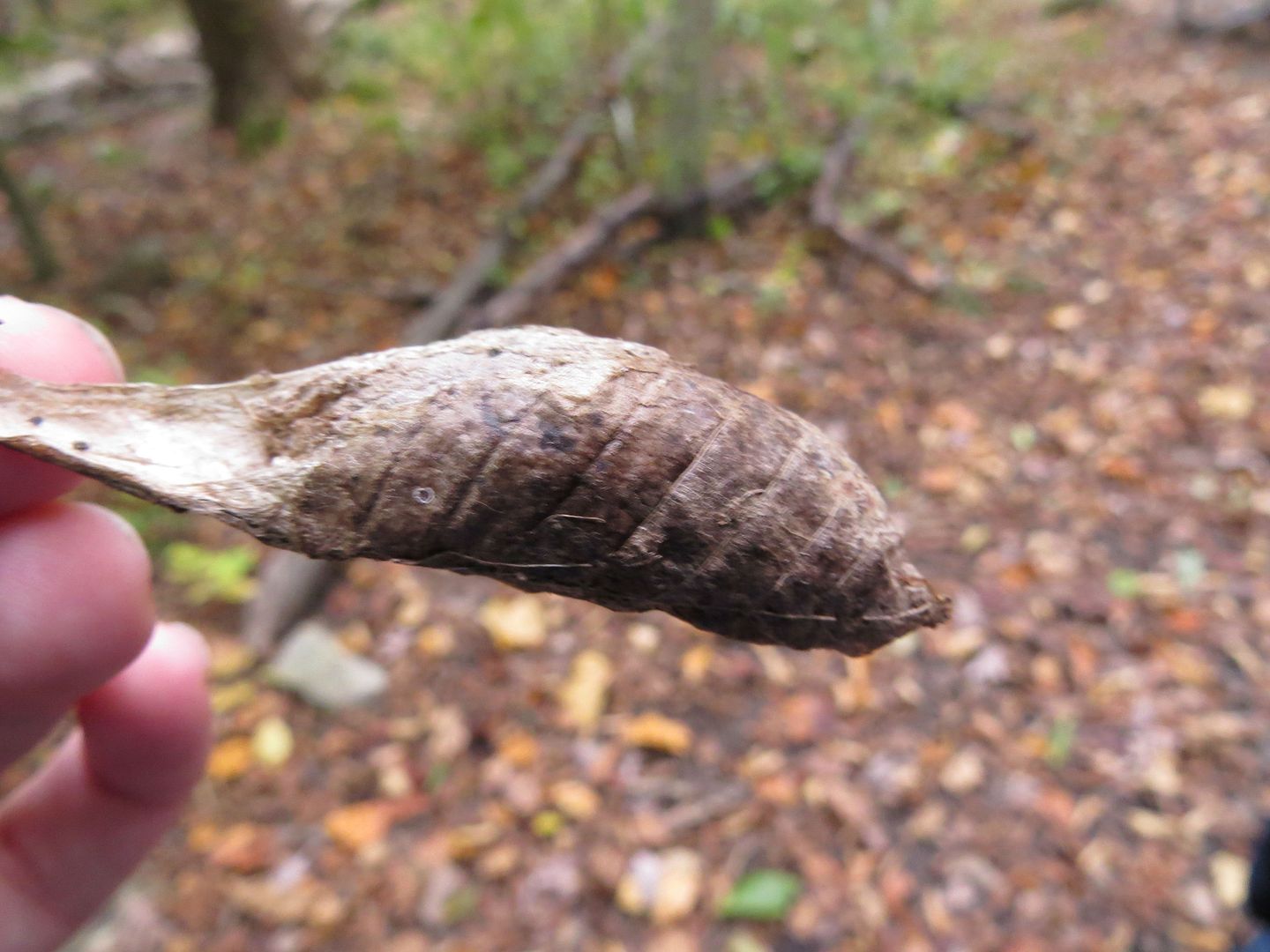 On the way out, I spotted what I think is a Cecropia moth cocoon all bundled up within a leaf.
On the second location we were in a park somewhere in Maplewood, NJ. I'd describe it as a Piedmont area which is not quite mountainous but rocky enough to not be considered coastal. There were tons of large boulders and rocks all over the place. It was clear that in some places the park designers had just given up trying to remove them and simply placed pick nick tables in the middle of the most uneven and treacherous terrine imaginable. It would not surprise me in the least to learn we'd walked over the breeding tunnels to countless snakes and other critters that crawled from Pandora's box.
There were several benches setup, sometimes in odd places, but often highlighting a particular view or vista.
Sunday, October 6, 2013
Native Flower Bouquet

Monday, September 2, 2013
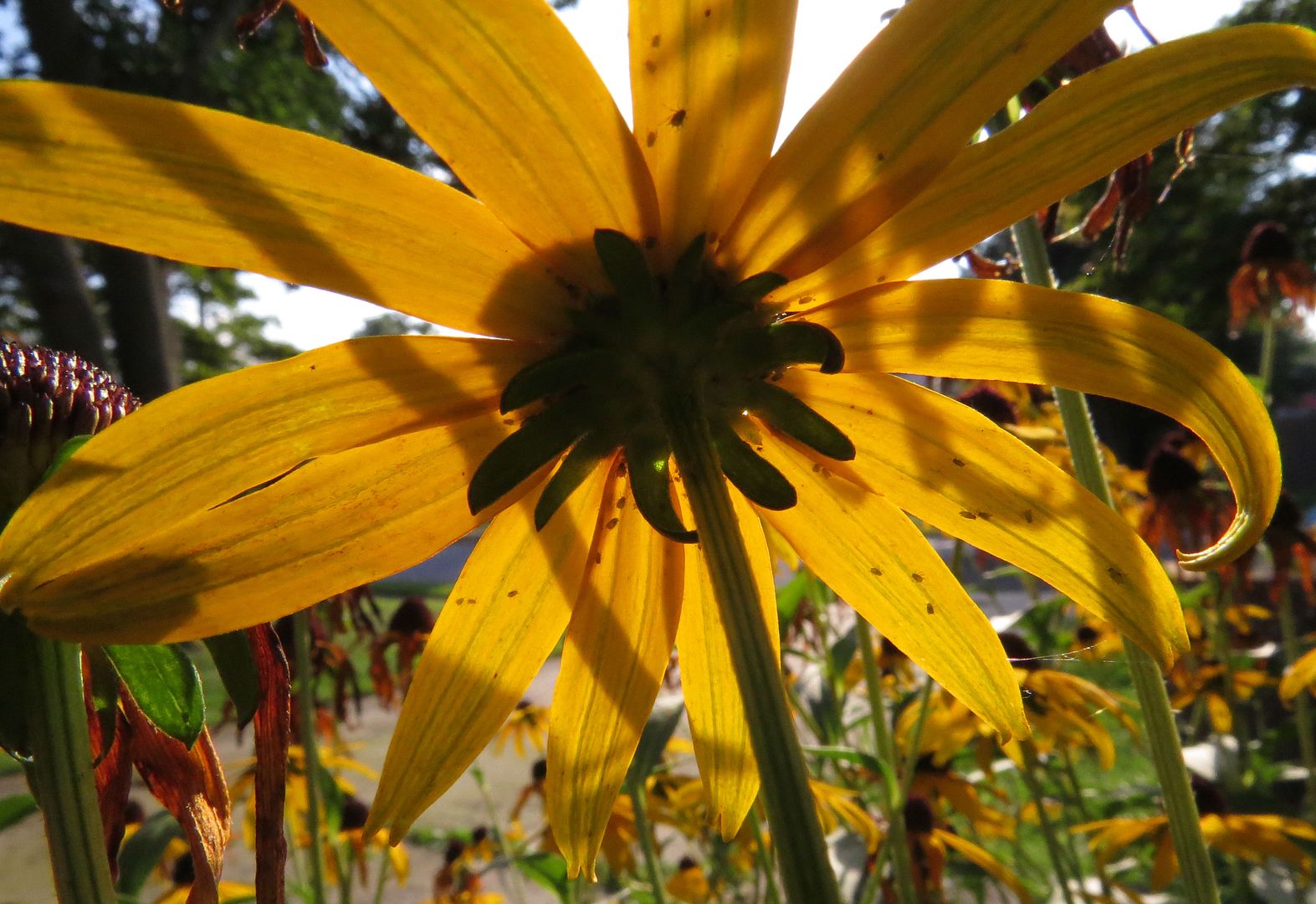
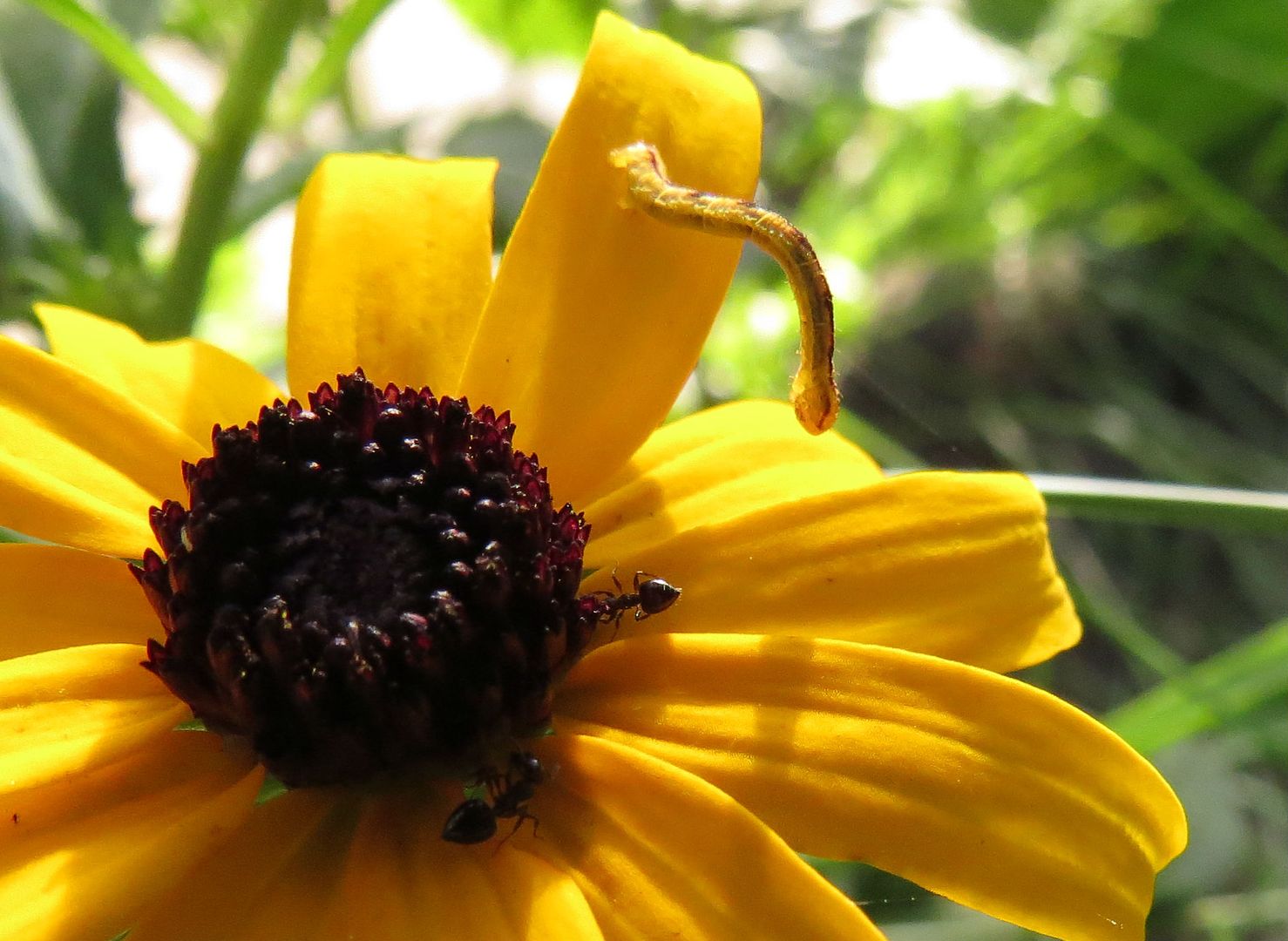
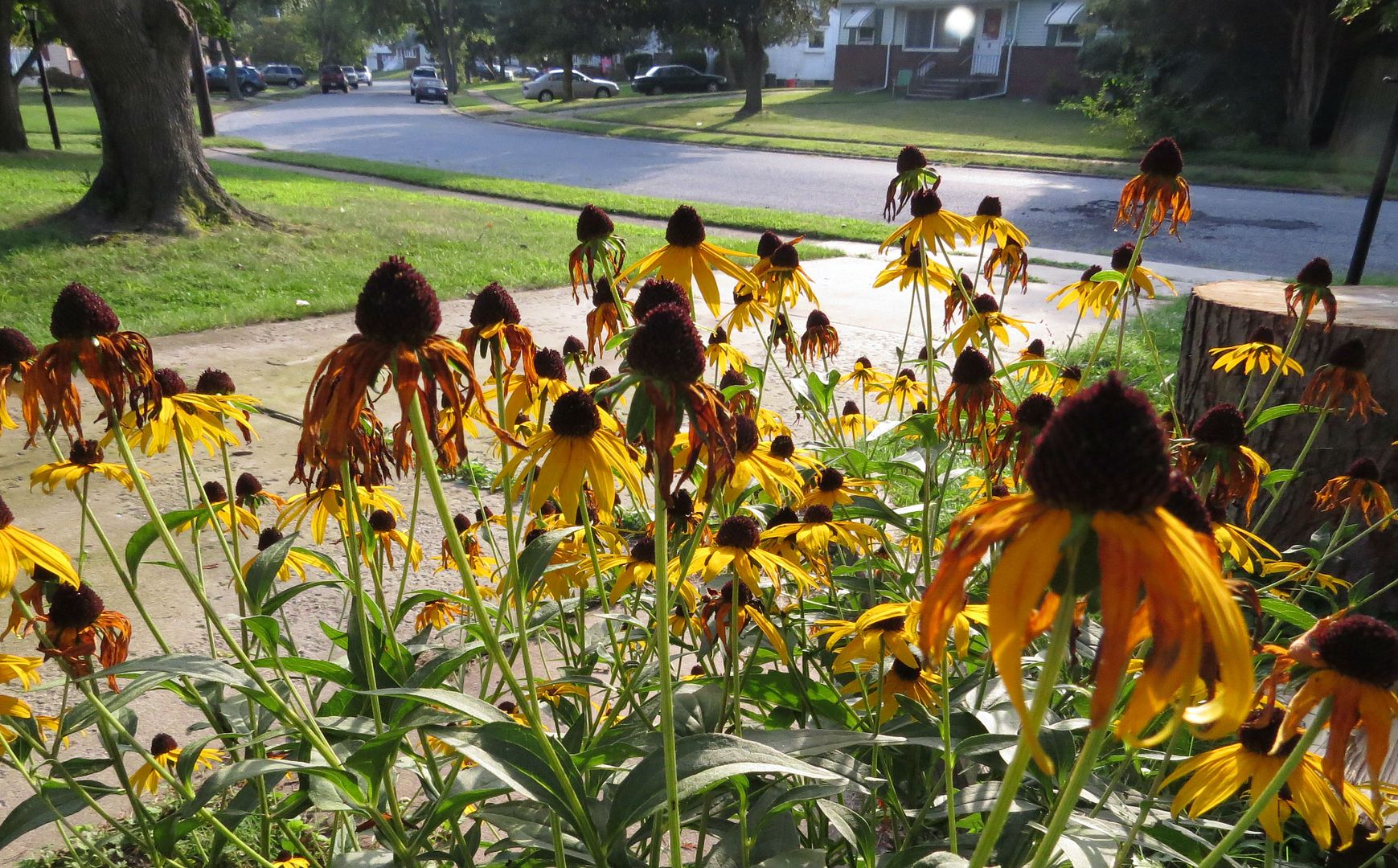
Rudbeckia Seed Aphids

Wednesday, July 24, 2013
Hummingbird Wrestling
So I had just harvested honey today. It's a very mundane process. Smoke the bees, open the boxes, remove frames into empty box, brush off bees before putting frame into said box, carry haul into home, uncap frames, put frames into honey extractor, spin handle about a hundred times per interval, take a break, let honey drip through strainer into pan, switch pan as needed, scoop honey into jars.
While doing all this I'd turned on the TV in the kitchen which we don't use much at all anymore. The channels come in via antenna instead of cable becuase no one is out there ever so we don't know the channels at all. We found a marathon playing Law and Order Special Victim's Unit, which I'm not a fan of. The lead character talks funny, and they show you who the murderer is and what he's doing, removing all sense of mystery and who done it in one fail swoop. This somehow turned into Pro Wrestling after two hours... same channel. I don't watch Wrestling ever but I found it way more entertaining than Law and Order.
Out in the garden though another form of wrestling was going on.
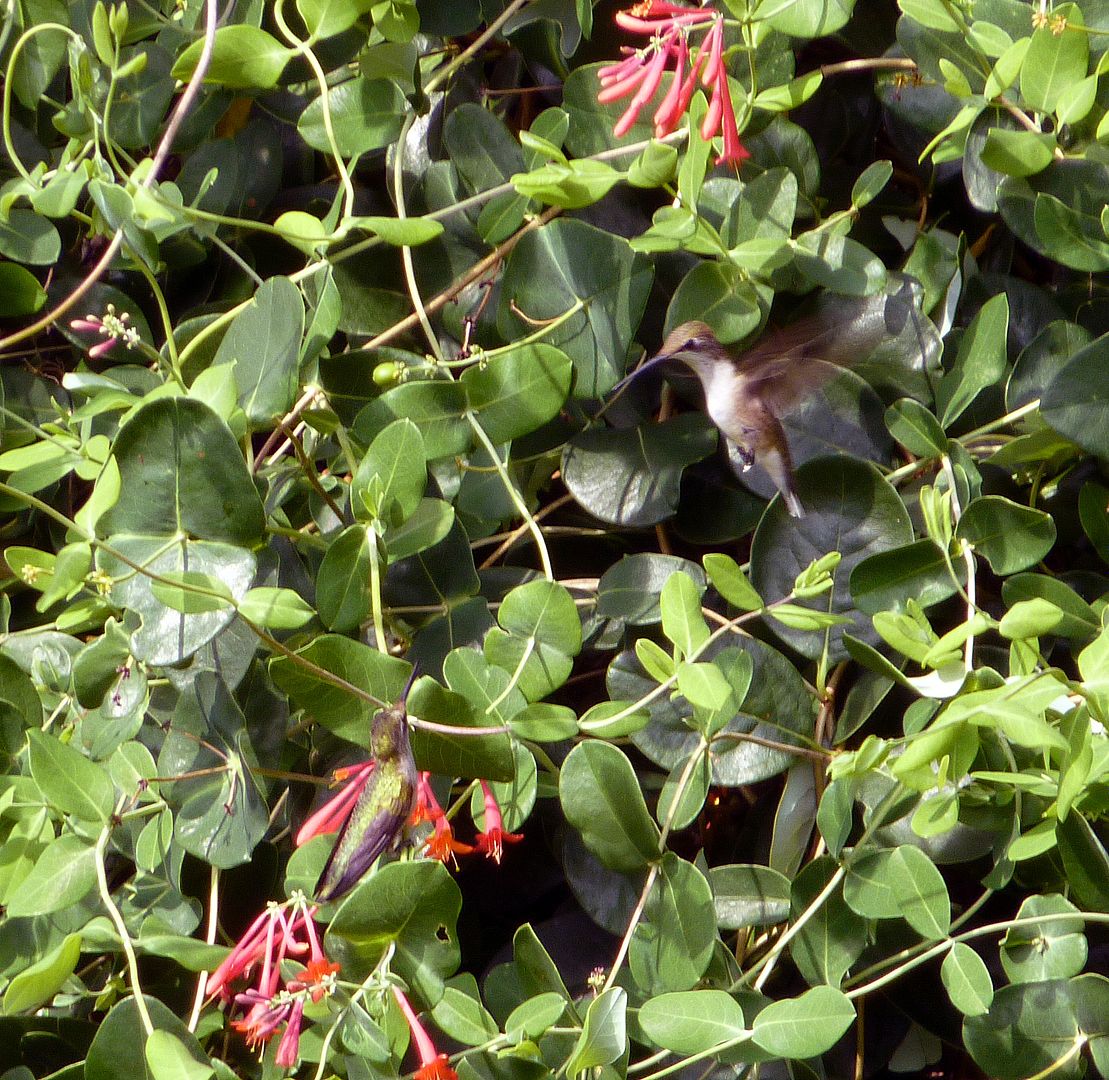

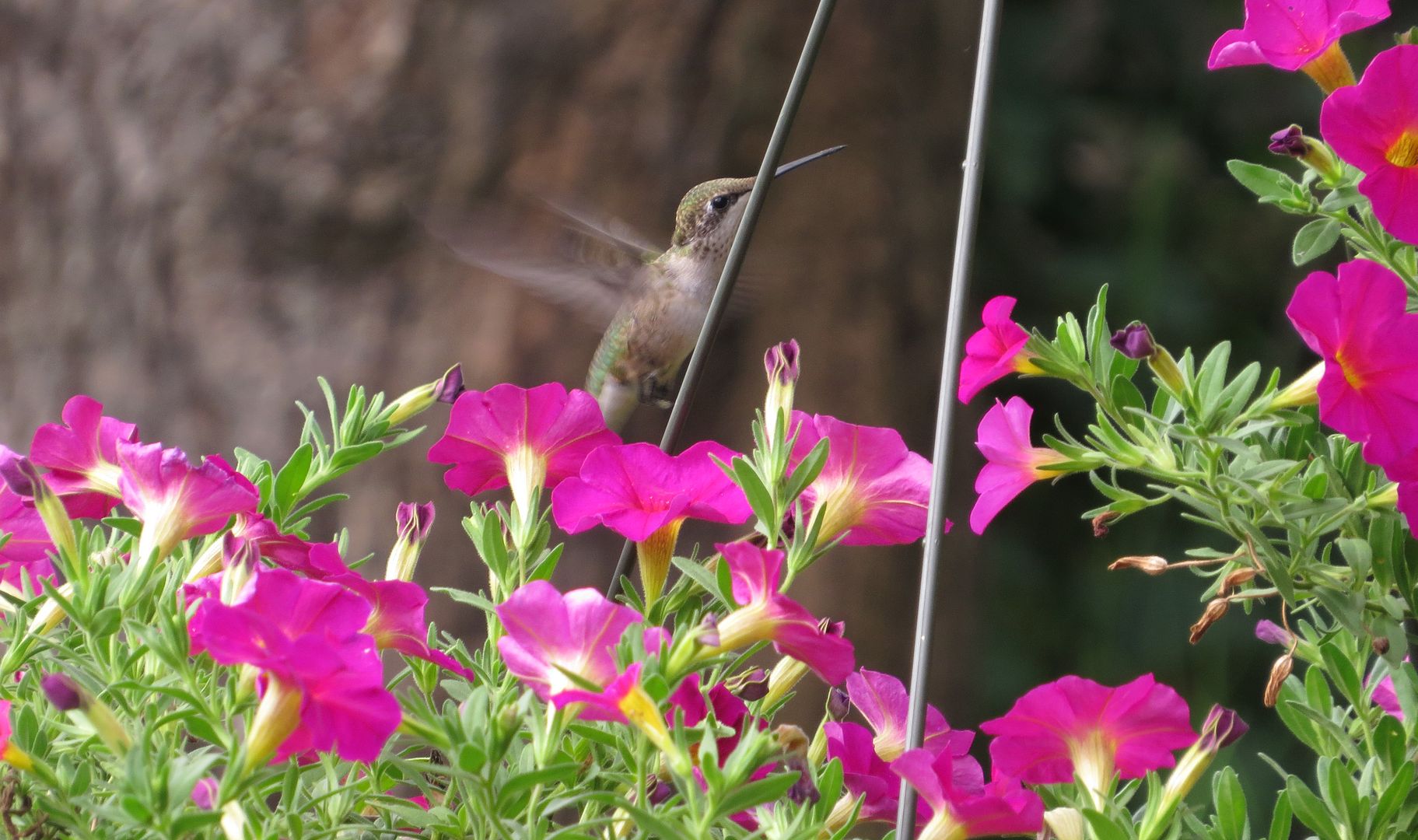
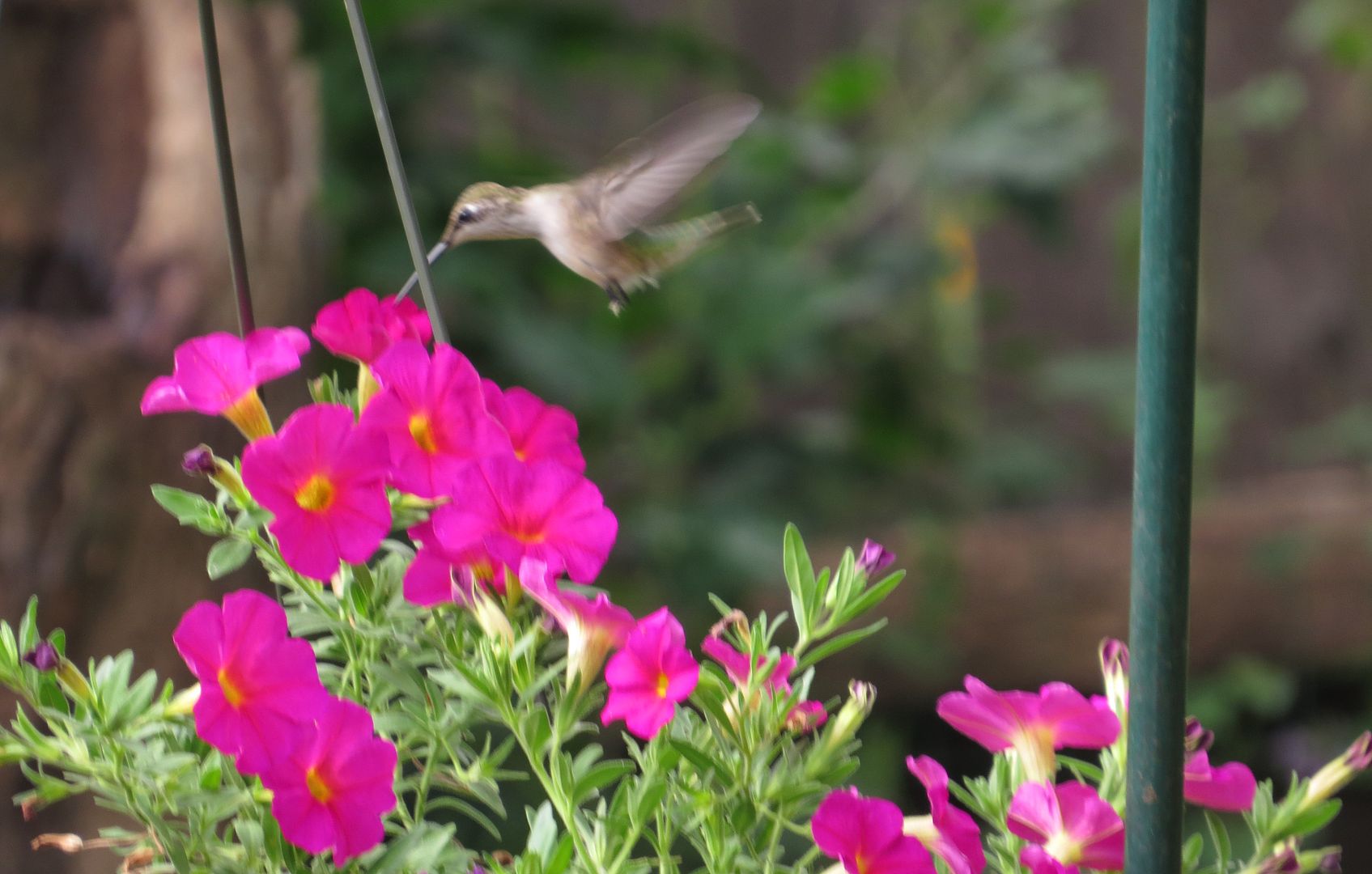
 My yard has never been known for an abundance of Hummingbirds, but this afternoon I suddenly had three or four of them fighting over the Coral Honeysuckle. To the point one had started tackling the others to the ground... unless I'm mistaking some sort of mating. I did hear a loud chirping by some as they flew over head, but I think it was the female making that sound.
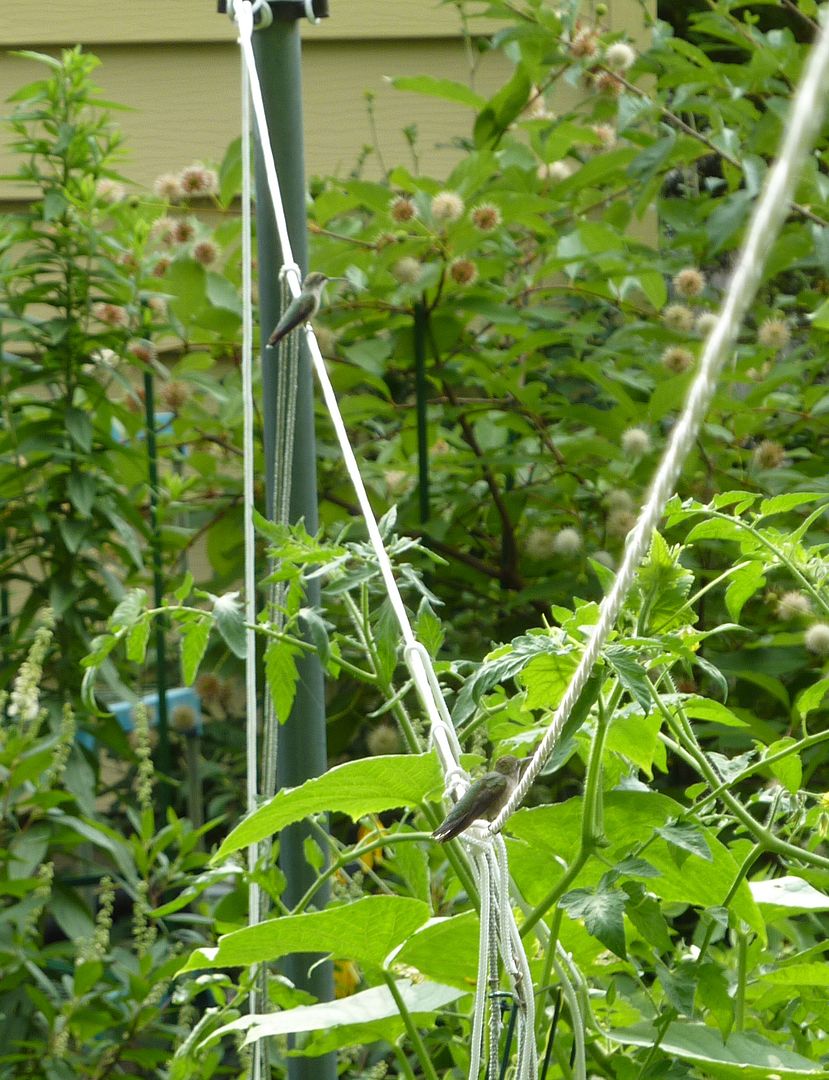
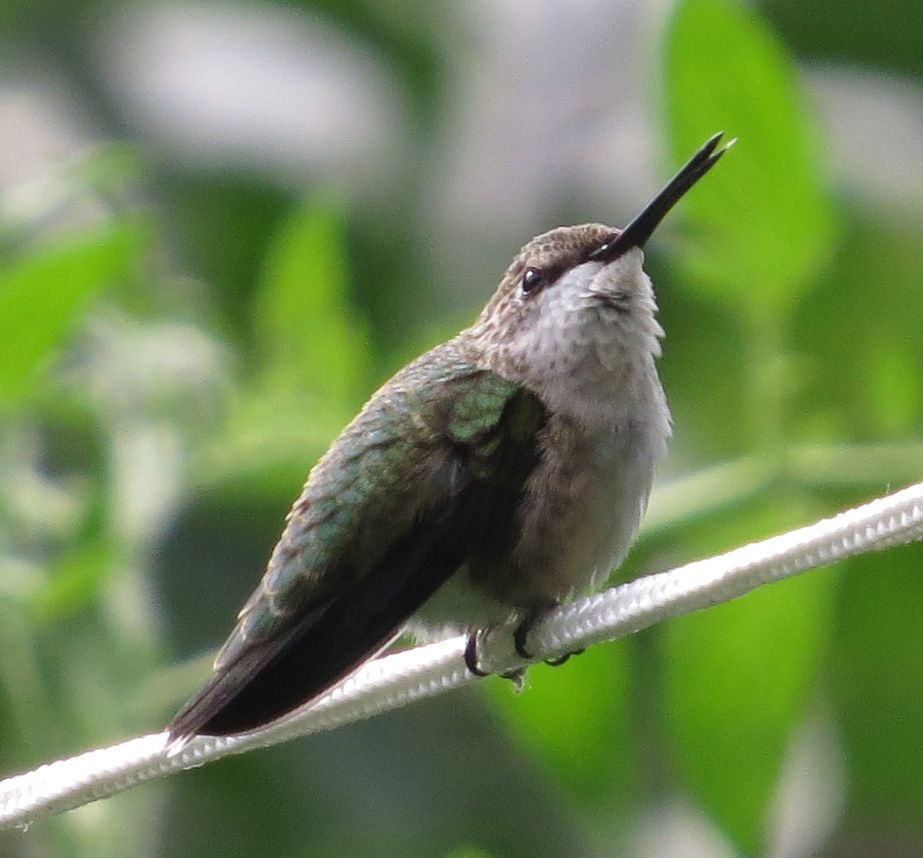
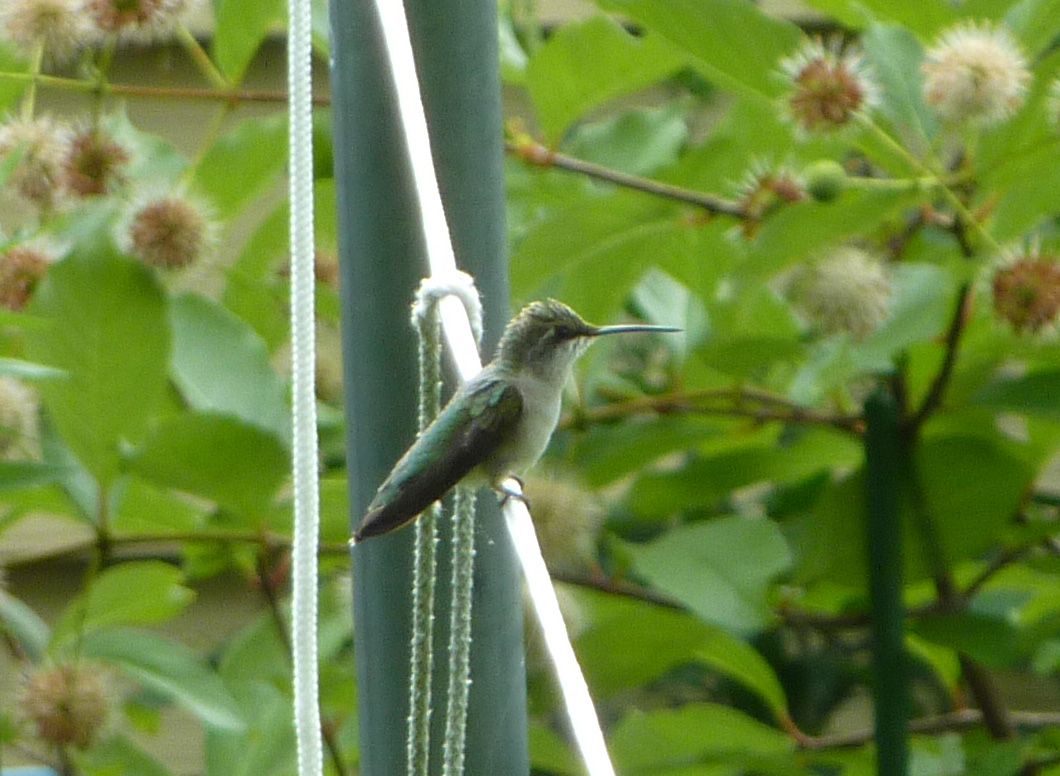 Half Time was held at the cloths line, which I've confiscated to grow cucumbers and tomatoes along. They sip at all the plants, while they tackle and peck one another, then break a little bit before starting up again. It's like they're playing some sort of game.
While doing all this I'd turned on the TV in the kitchen which we don't use much at all anymore. The channels come in via antenna instead of cable becuase no one is out there ever so we don't know the channels at all. We found a marathon playing Law and Order Special Victim's Unit, which I'm not a fan of. The lead character talks funny, and they show you who the murderer is and what he's doing, removing all sense of mystery and who done it in one fail swoop. This somehow turned into Pro Wrestling after two hours... same channel. I don't watch Wrestling ever but I found it way more entertaining than Law and Order.
Out in the garden though another form of wrestling was going on.
Wednesday, July 17, 2013
New Camera
Canon PowerShot SX50 HS 12MP Digital Camera with 2.8-Inch LCD (Black)
Which I bought because it topped the list of a few macro point and shoot though really it seemed to be a narrow margin between that and the next four below it. Sadly it doesn't have any port to plug in a portable flash, (at least not that I've found).
Also it does NOT come with the USB cord required to get images off of the camera and onto the computer! Thankfully my first camera years ago was a Canon and I still had a cord laying around.
Raynox DCR-250 Super Macro Snap-On Lens
I also bought this which might have been the better buy because it's almost universally able to attach to any point and shoot camera.
All of which came at the recommendation by Alex Wild, a professional photographer in the scientific world who teaches classes around the world with emphasis on photographing insects. (Though he's more so a professor at one of the Universities I believe.)
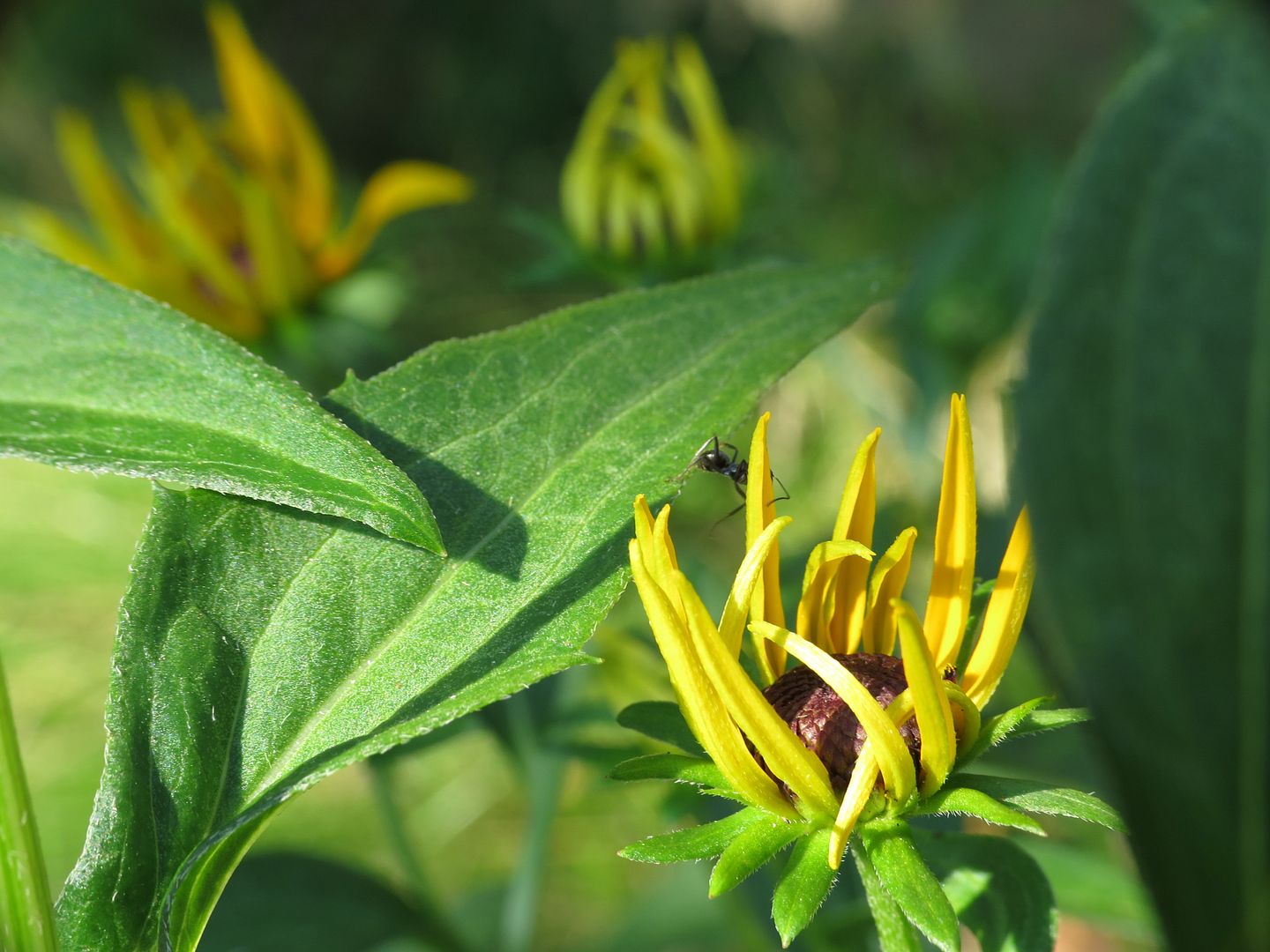
So after a day of shooting here's some of what I came up with.

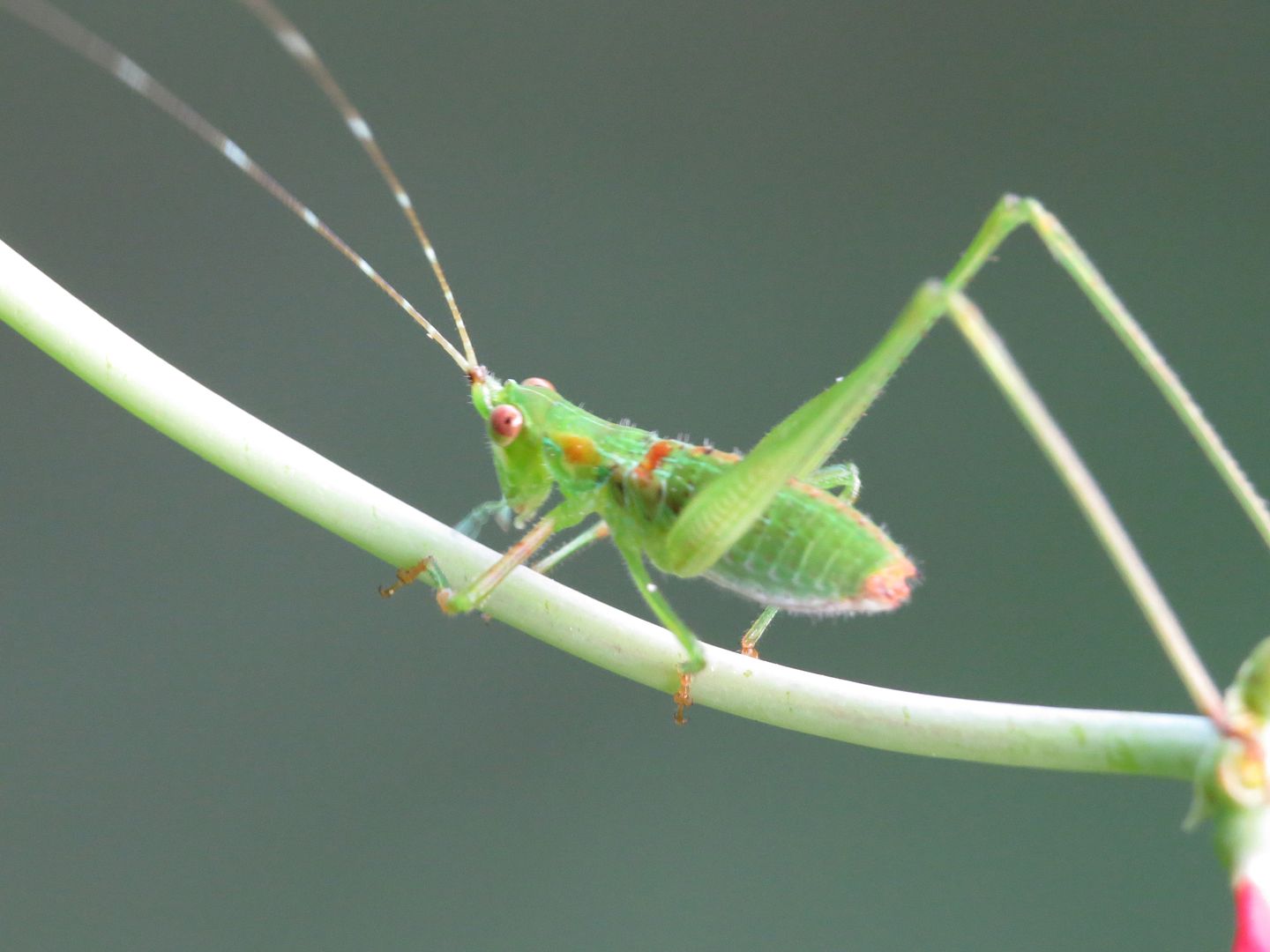
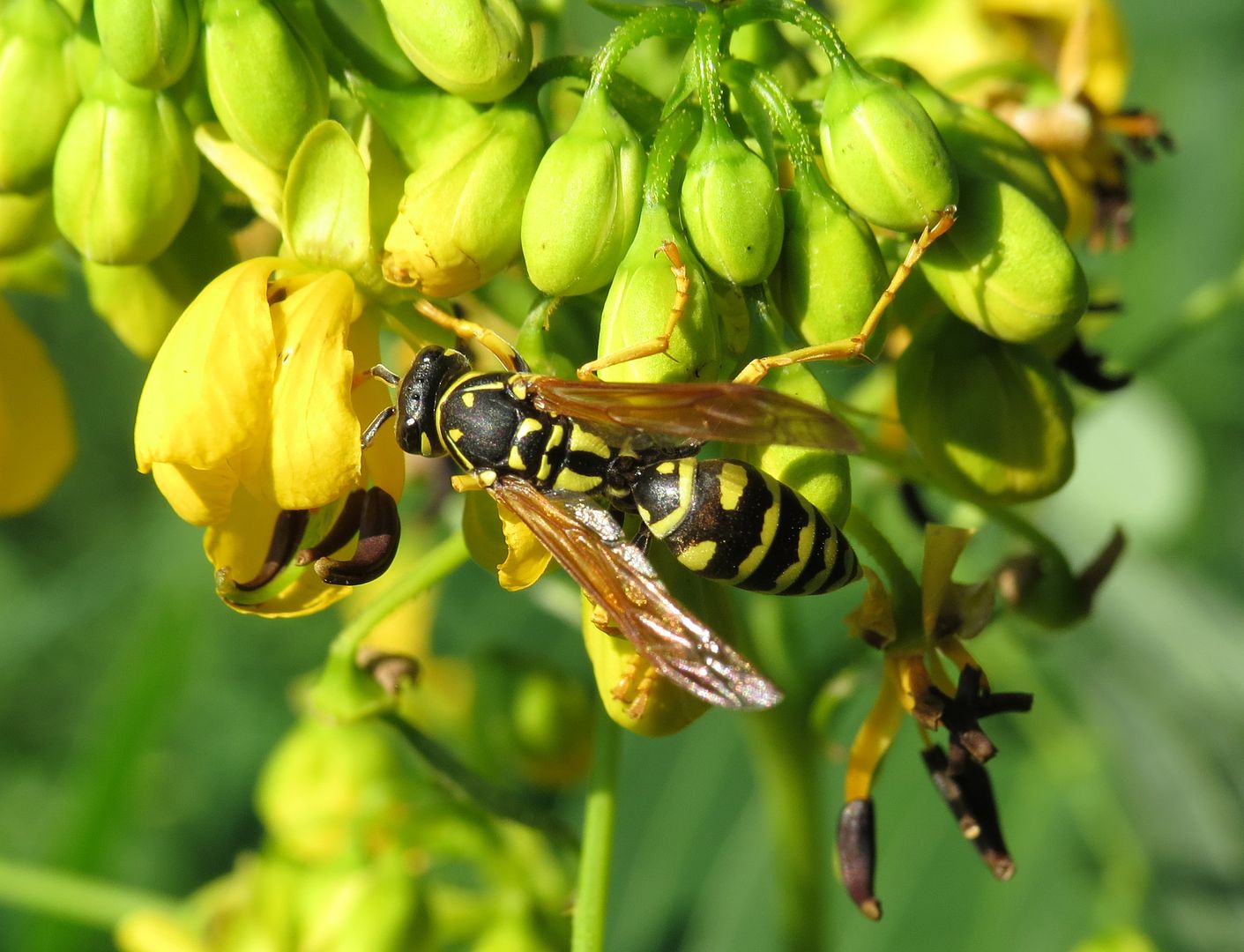

Which I bought because it topped the list of a few macro point and shoot though really it seemed to be a narrow margin between that and the next four below it. Sadly it doesn't have any port to plug in a portable flash, (at least not that I've found).
Also it does NOT come with the USB cord required to get images off of the camera and onto the computer! Thankfully my first camera years ago was a Canon and I still had a cord laying around.
Raynox DCR-250 Super Macro Snap-On Lens
I also bought this which might have been the better buy because it's almost universally able to attach to any point and shoot camera.
All of which came at the recommendation by Alex Wild, a professional photographer in the scientific world who teaches classes around the world with emphasis on photographing insects. (Though he's more so a professor at one of the Universities I believe.)
So after a day of shooting here's some of what I came up with.
Sunday, July 7, 2013
A Nonnative Treat
So maybe two years ago I was at the Philadelphia International Flower Show and one of the vendors was this French women selling nothing but Lilies. As the show takes place over the winter they were all in the form of bulbs. I forget how much they cost but apparently I came home with five of them. Last year they didn't do anything; this year they're up with force and flowering.
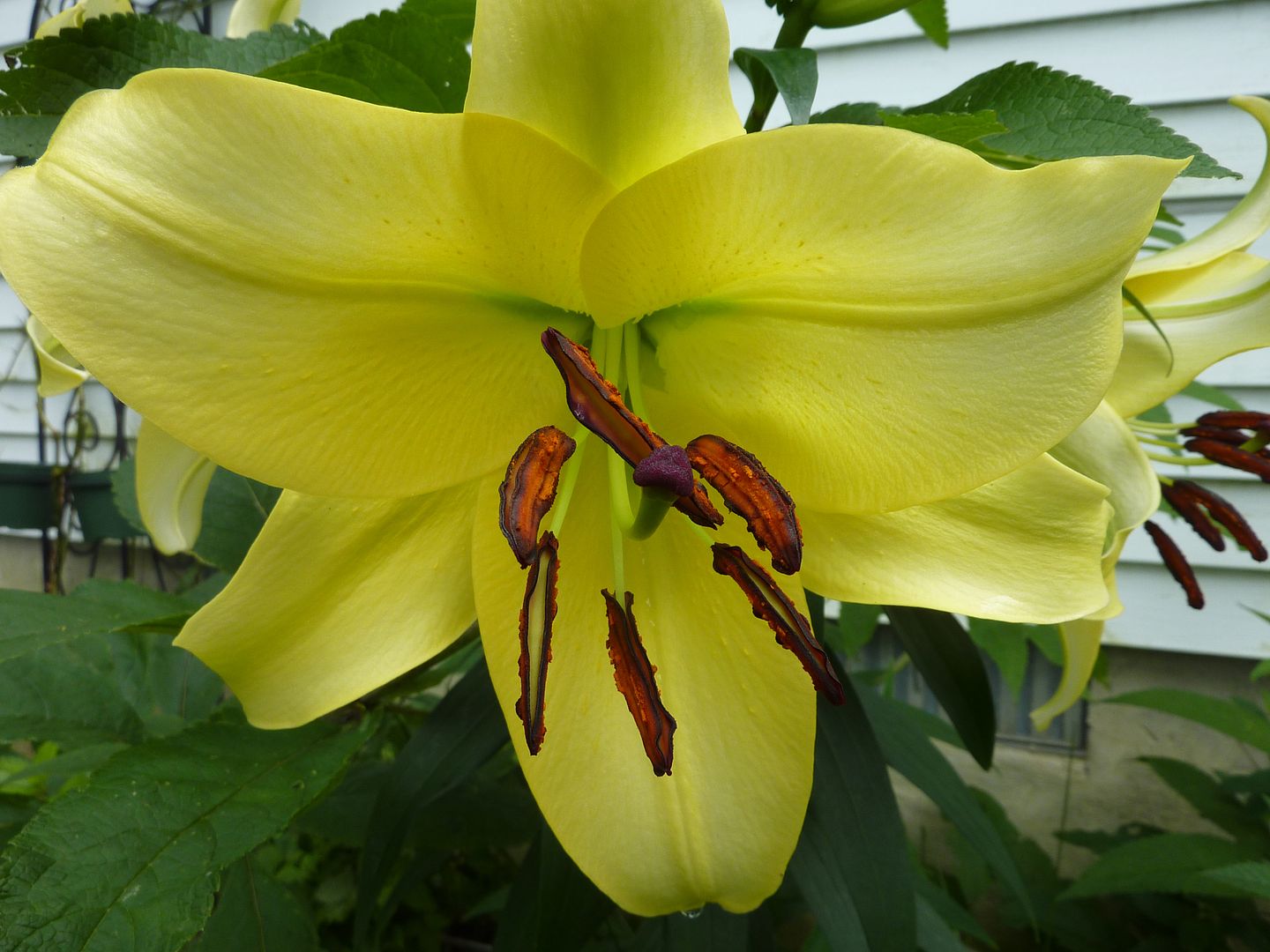 Dear god! This monstrous flower is larger than any Amaryllis I've ever grown. It's supposed to be some kind of lily but the flower is enormous, and the anthers are longer than my fingers. My brother's bride to be took one look at them and demanded she walk down the isle with a bouquet of them.... tragically the wedding is in October so that's not really doable but I'm sure a floret will have something nice.
So this clearly isn't a native plant. True they look lovely and any gardener would be happy to have them growing in their garden. But as I'm committed to the native theme I feel it might be best if I dig up the bulbs later this winter and give them to my brother's bride as a gift. She seemed to enjoy the flower more than me and I know she loves cut flowers. They're fragrant by the way.
Personally I try to garden with the theme that it's one thing to be pretty but quite anther to be pretty useful. Right now I'm at a loss to imagine what could pollinate them. Maybe half a dozen swallowtails and hummingbirds could probably fit in it all at once to sip nectar. There's enough pollen on the anthers to stain everything they touch. Any who, I'm sure she'll be thrilled with the gift.
So this clearly isn't a native plant. True they look lovely and any gardener would be happy to have them growing in their garden. But as I'm committed to the native theme I feel it might be best if I dig up the bulbs later this winter and give them to my brother's bride as a gift. She seemed to enjoy the flower more than me and I know she loves cut flowers. They're fragrant by the way.
Personally I try to garden with the theme that it's one thing to be pretty but quite anther to be pretty useful. Right now I'm at a loss to imagine what could pollinate them. Maybe half a dozen swallowtails and hummingbirds could probably fit in it all at once to sip nectar. There's enough pollen on the anthers to stain everything they touch. Any who, I'm sure she'll be thrilled with the gift.
Monday, July 1, 2013
More Ant Plant Relations
Ants marching around on plants is something of a common sight in my yard.
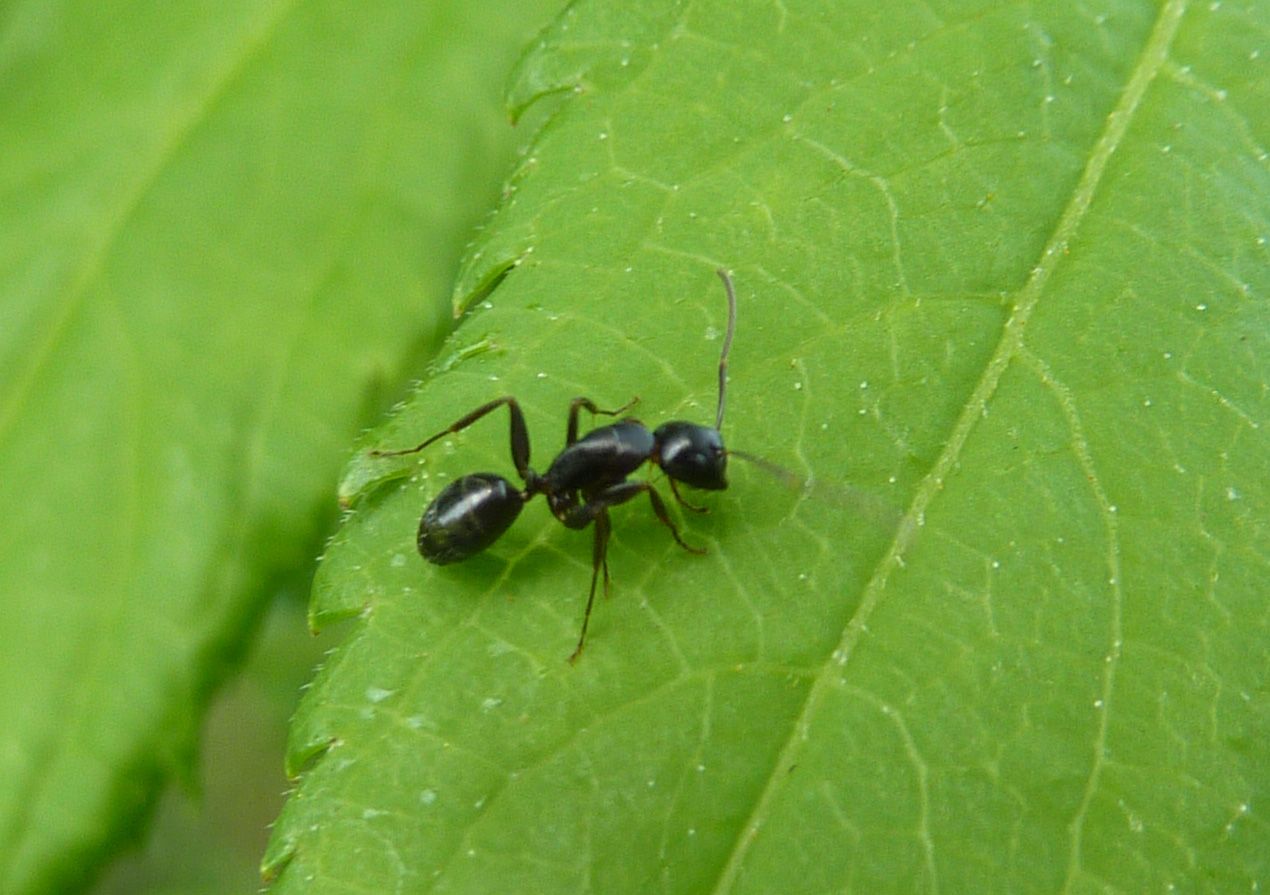 Here a Camponotus nearcticus worker explores the leaves to a cup plant. Likely she's interested in small amounts of pollen or sweetness on the leaves or simply foraging for some insect or some other resource for the colony. Occasionally aphids will drip honeydew down onto lower leaves and it's this that ants go for, but that's not the case here. I've actually never found aphids on cup plants before. Cup Plants are related to Perennial Sunflowers which produce extra floral nectar so I suspect that might be what's going on.
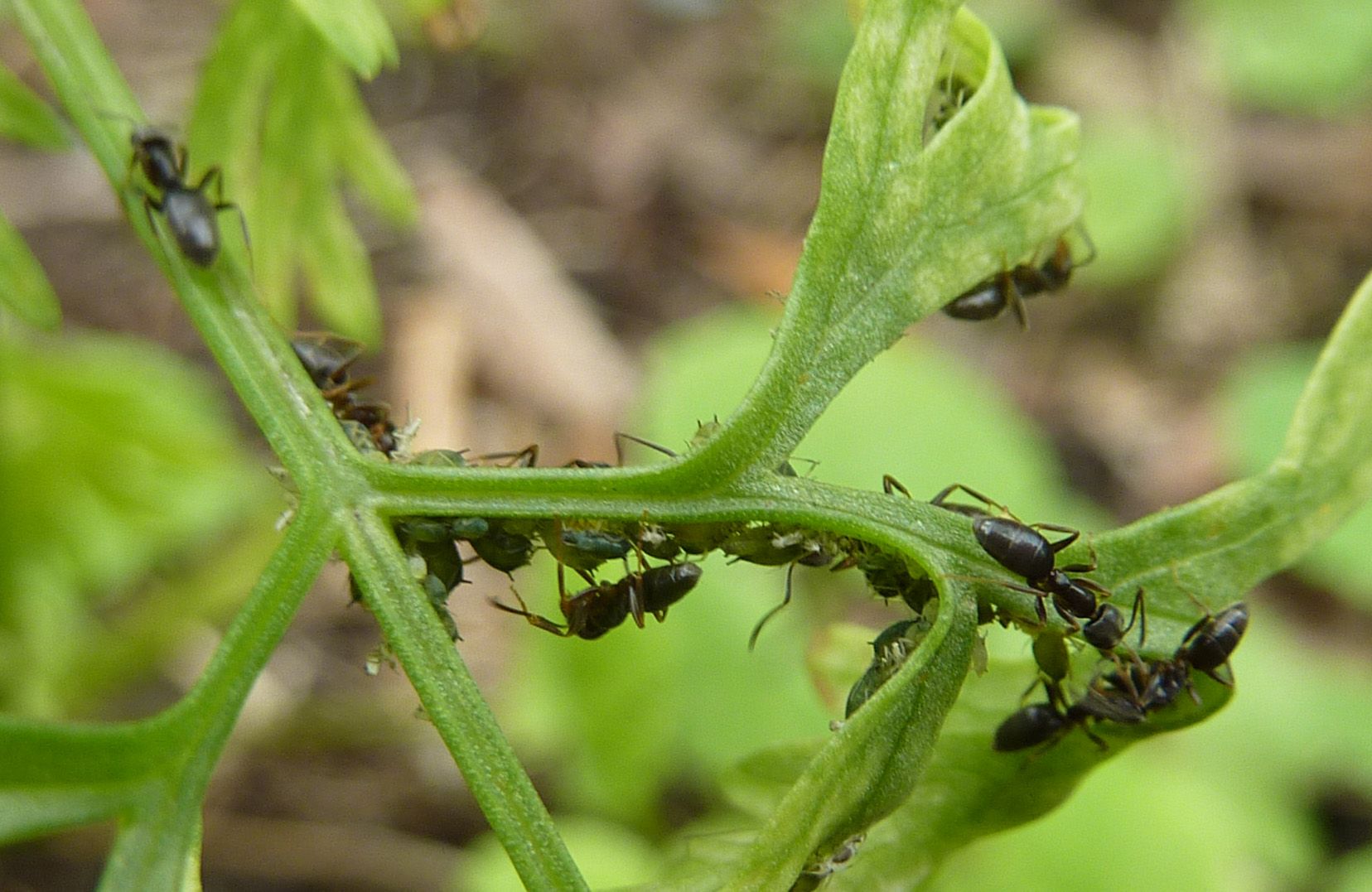 I'd never found aphids on parsley before either but that's happened this year. Sometimes aphids don't afflict the same host plants each year or at least don't do so as badly as on previous years. The ants here are Tapinoma sessile which has become one of the most common ants in my yard. I believe my use of a green house to grow seedlings is the cause. Because their colonies move into the flats I effectively divide the colony every time I plant something in the yard.
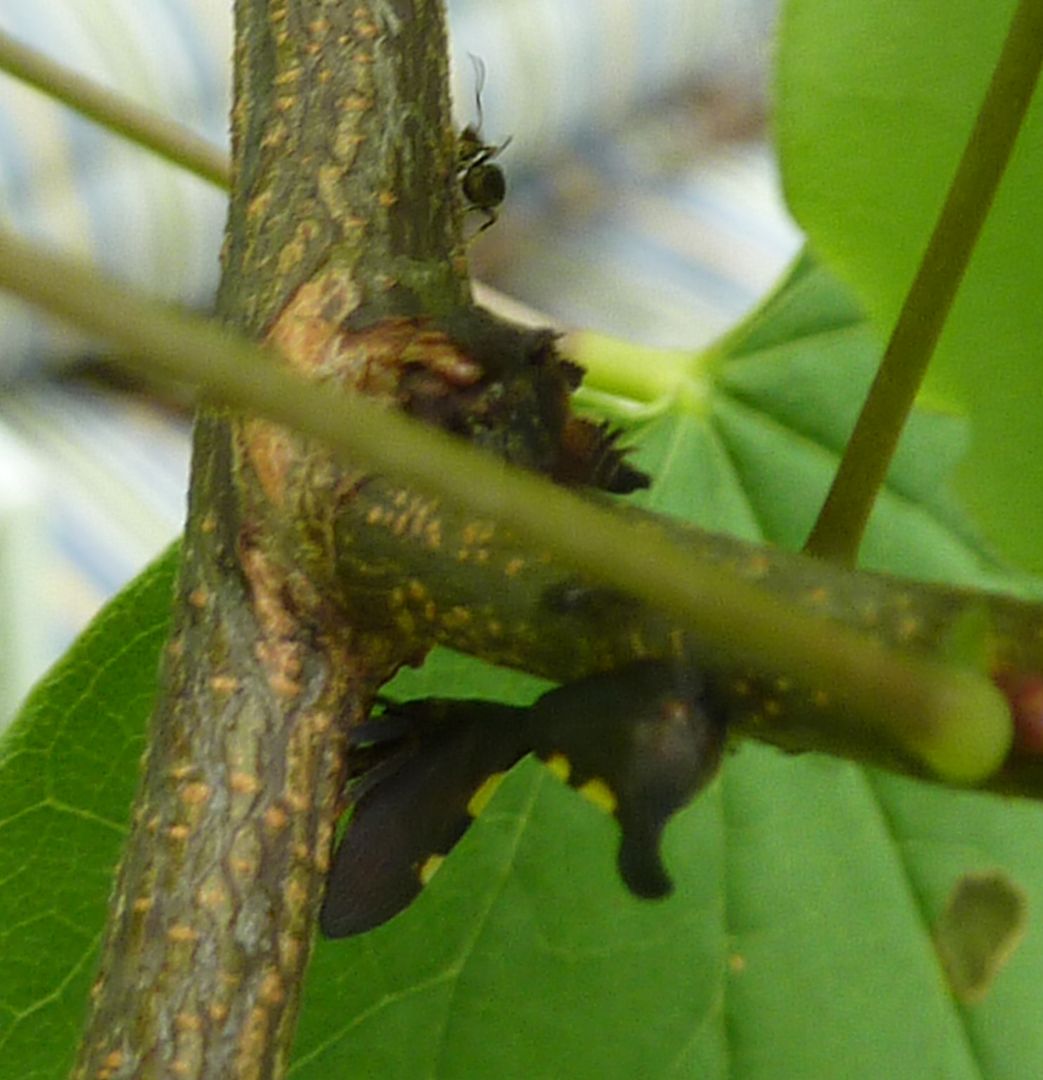 Some insects only require the protection from ants during the early stages. Here is a bad photo of some Leaf Hoppers. The younger nymphs are tended by ants but older ones, who've gained their hood, "wings", and brighter color, tend away from this relation. They become fidgety and are quick to flee when predators approach, something aphids don't do.
 In the absence of aphids ants and free sources of nectar, ants will out right steal it from flowers. Here a tiny Nylanderia faisonensis worker explores the fanged flowers of an Asclepias tuberosa plant. They're a rather small ant that's able to get into the deep crevices.
 Oddly enough the flowers of Swamp Milkweed, Asclepias incarnatta, are even smaller and I found them being robbed out by a much larger species of ant, Camponotus pennsylvanicus. I suspect the large mandibles of this carpenter ant aid in their ability to get at the nectar somehow but I haven't had the time to inspect the flowers for damage.
Sunday, June 30, 2013
Tall Bellflower Flowers

Campanulastrum americanum, (Campanula americana? I guess the taxa was updated.)
This was a simple rosette of leaves last year that was barely four inches tall. I bought a seed pack of them from Prairie Moon Nursery. Of the seedlings I got 6 past the initial germination stage with many of the them dying. I eventually planted the survivors in the front garden, where for unknown reasons, only one of the six grew to be a rather big clump of leaves (like a Forget-Me-Not) while the others never really pushed out anything more after being planted.
After winter this one surviving plant was the only one to come back. And it quickly started to push up this massive stem which measures just over five feet at the end of June. It's probably not going to get much taller but also I wasn't expecting to be able to see it right out the window.
So the top third of the plant is mostly flower buds, along with a few off shoots and even a second main stem coming up from the roots. This plant should put on a pretty good show. I'm especially looking forward to getting a patch of them established and maybe letting them seed elsewhere in the yard. A plant that grows in dry shade isn't exactly common.
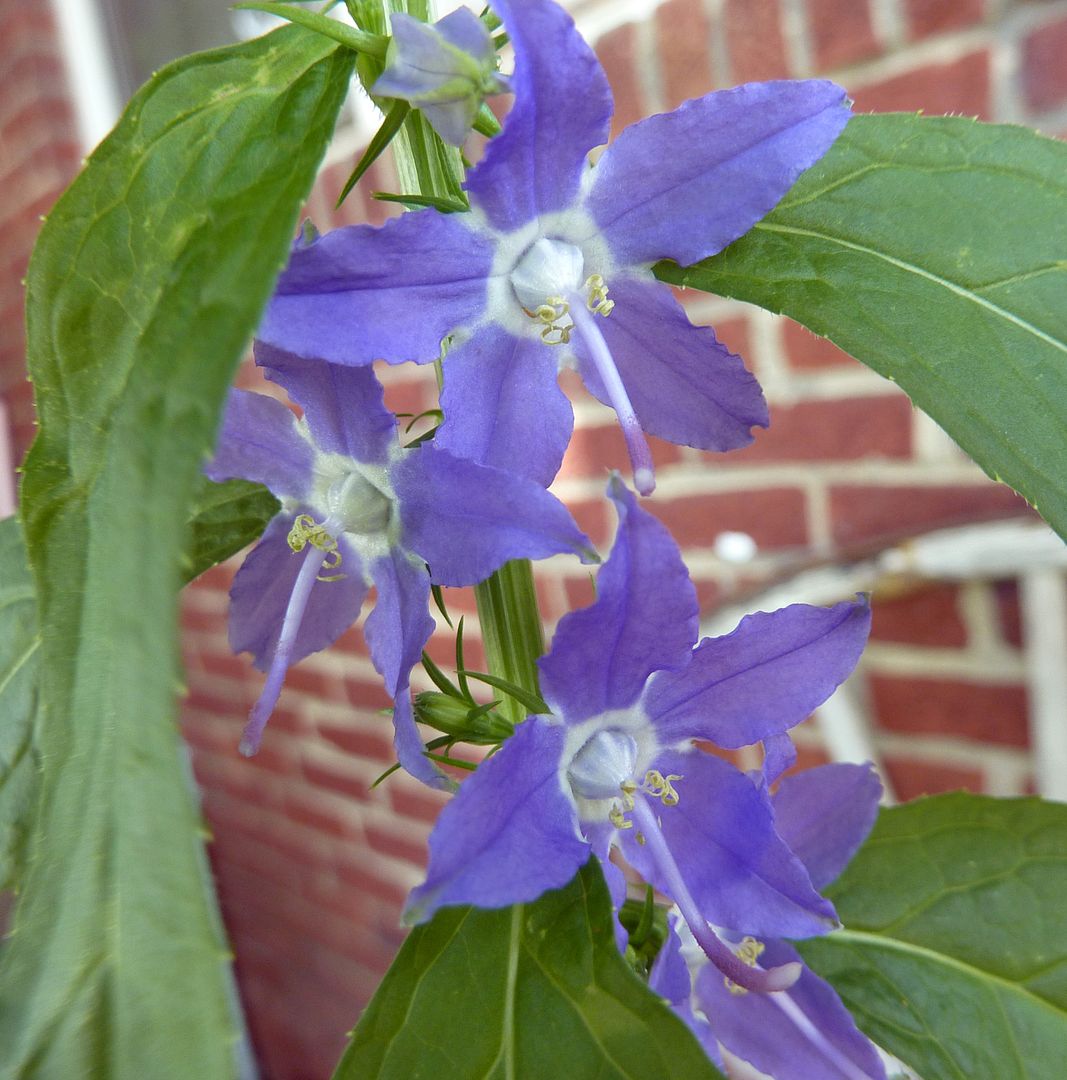
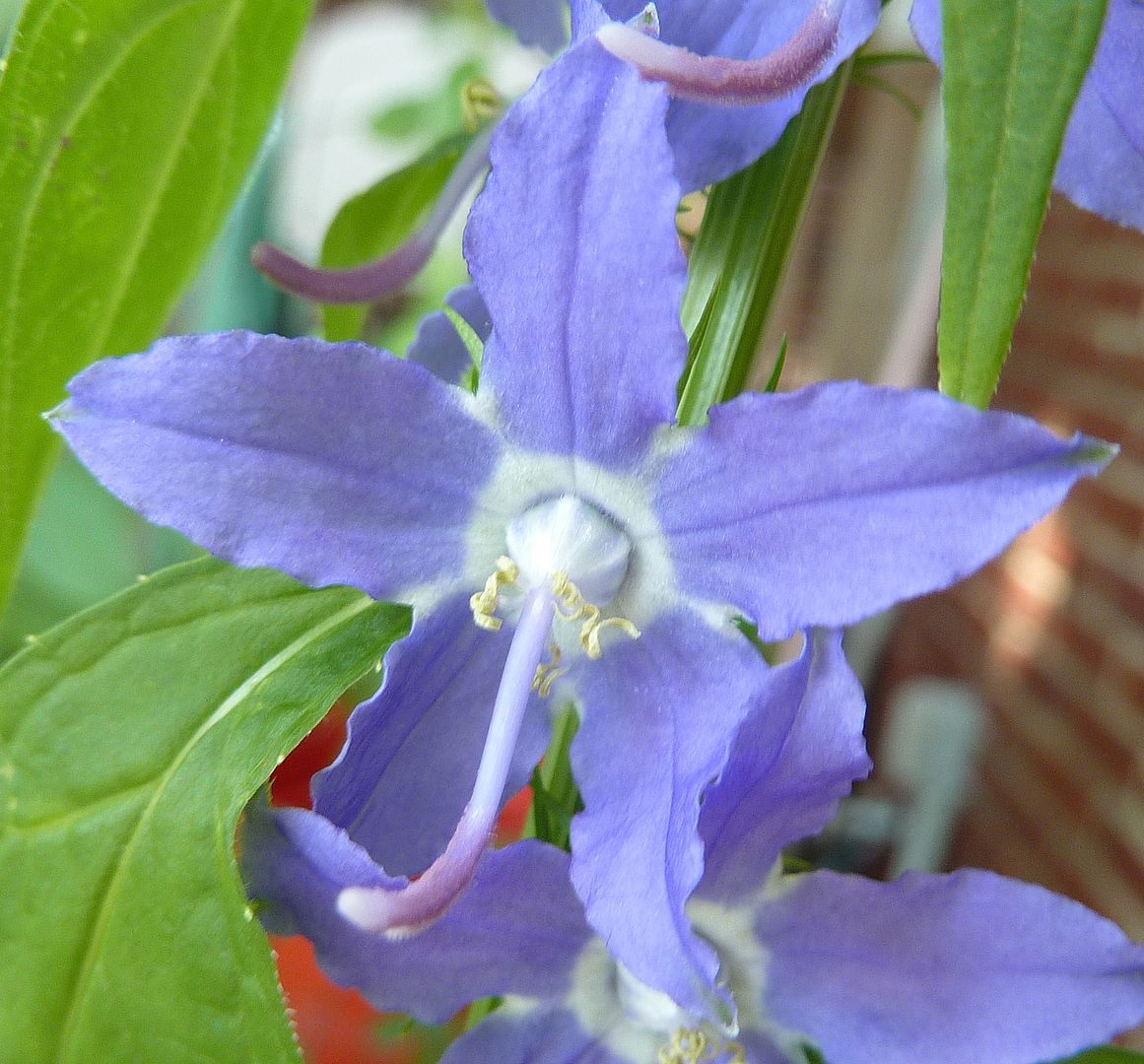
This isn't a plant I see a lot of native plant gardeners using, and I think once you get over that first year of establishing from seed, it's easy sailing from there. But I can't speak for subsequent years or if they're self pollinating or not.
Saturday, June 29, 2013
Yellow Flowers
Between work and these thunderstorms we've been getting on a daily basis it's hard keeping up with everything that's flowering. Although the other issue might be that Yellow is probably the most over used color of our native wildflowers.
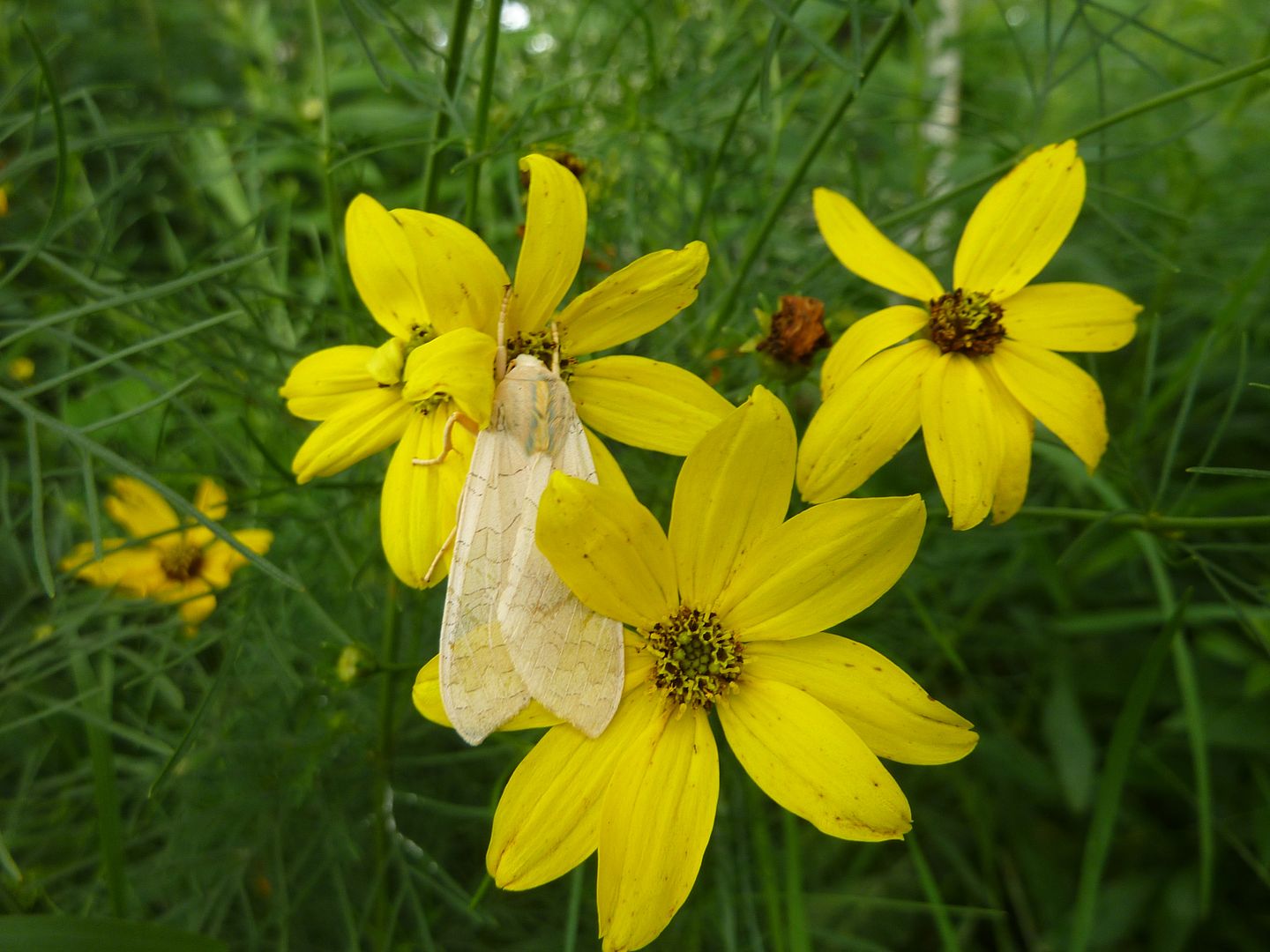 Whorled Coreopsis, C. verticillata, with what's been identified as a Banded Tussock Moth, Halysidota tessellaris, clinging to stay out of the rain to one of the flowers. The host plants to these are basically all the hardwood trees in the forest and the Willow-leaf Oak tree behind the garden was likely the host plant. The fun thing is I've actually found caterpillars of this species and not even realized it. They're basically white Woolly Bears with tufts of longer black hairs here and there.
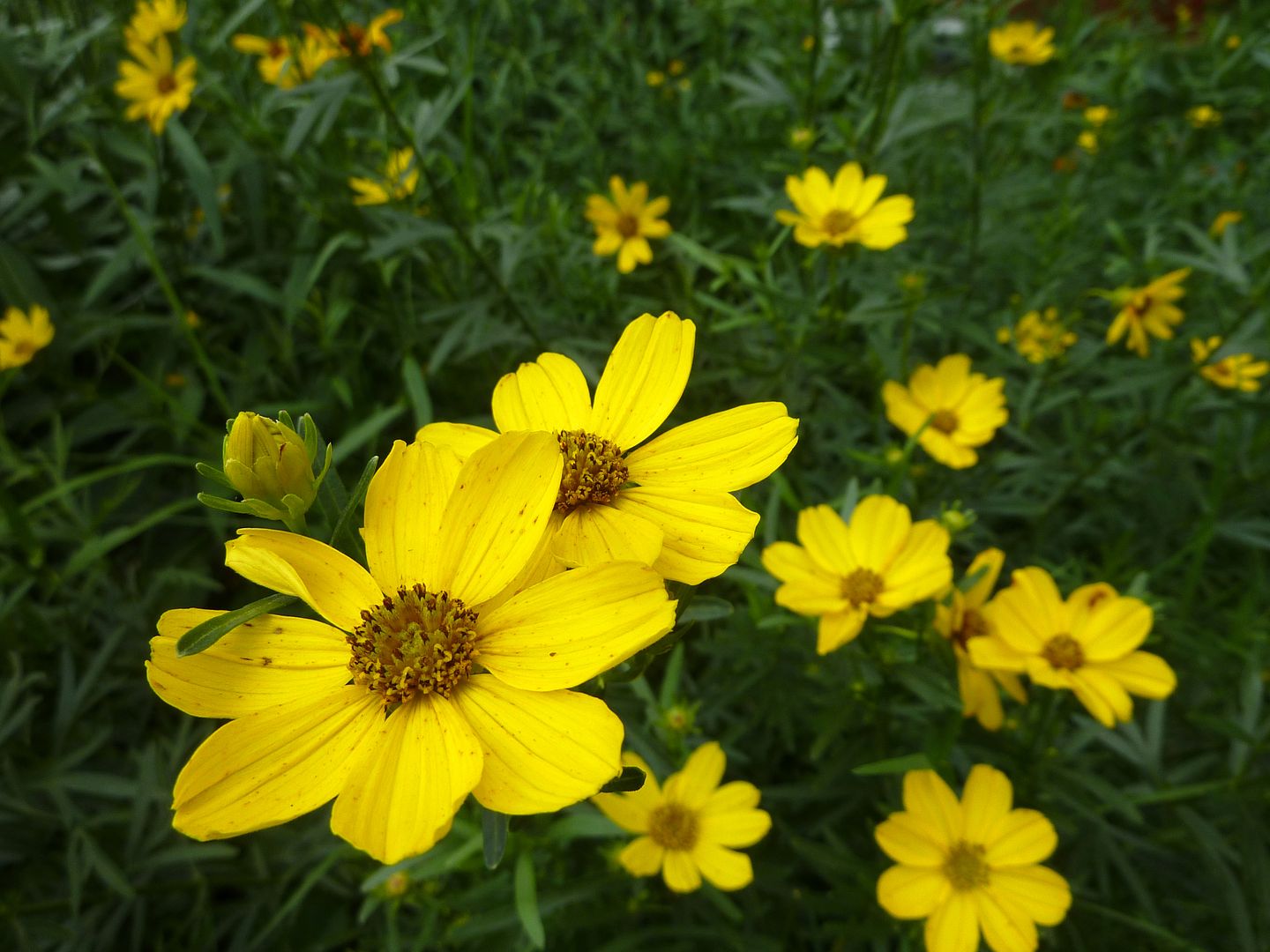 Stiff Coreopsis, C. palmata, has really been kicking but these past few weeks. They're not forming a carpet of yellow but it's enough that I'm seeing bees work them on a daily basis now.
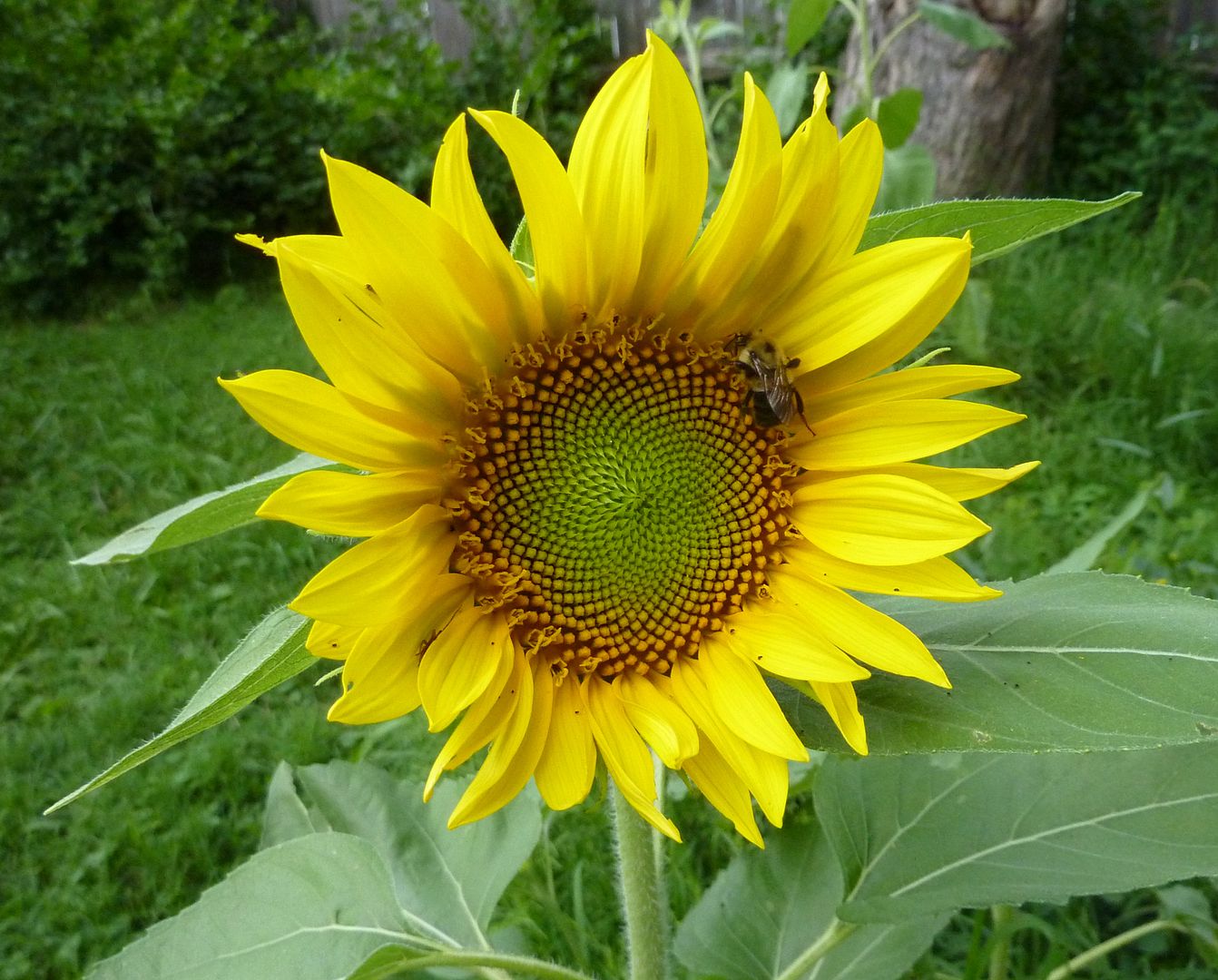 Annual Sunflower, Helianthus annuus, planted courtesy of messy birds at our bird feeder. I insist on only feeding them sunflowers because it's a native seed.
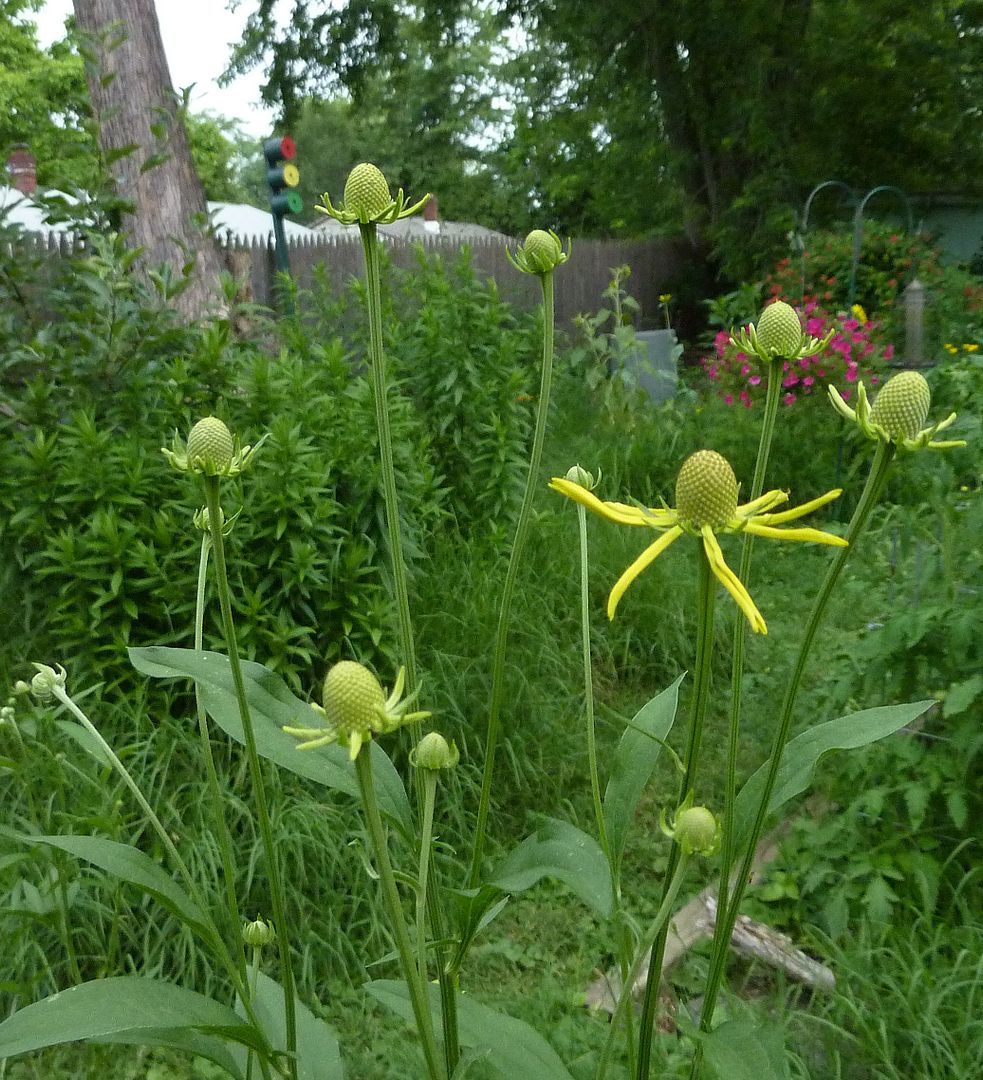
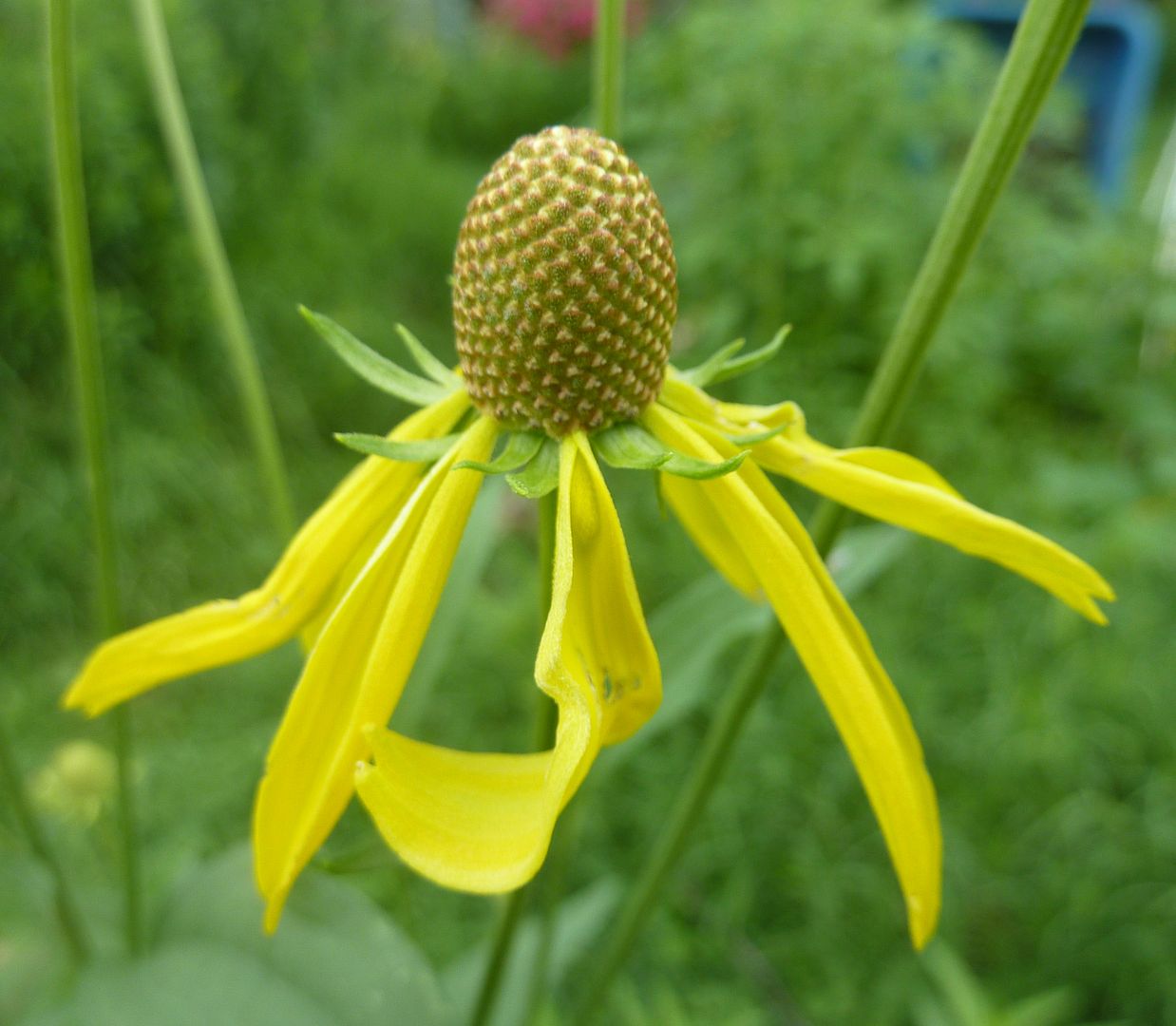 Prairie Coneflower, Ratibida pinnata, isn't a coneflower but close enough. They're not officially open yet but the petals are starting to push out and look nice on some of them.
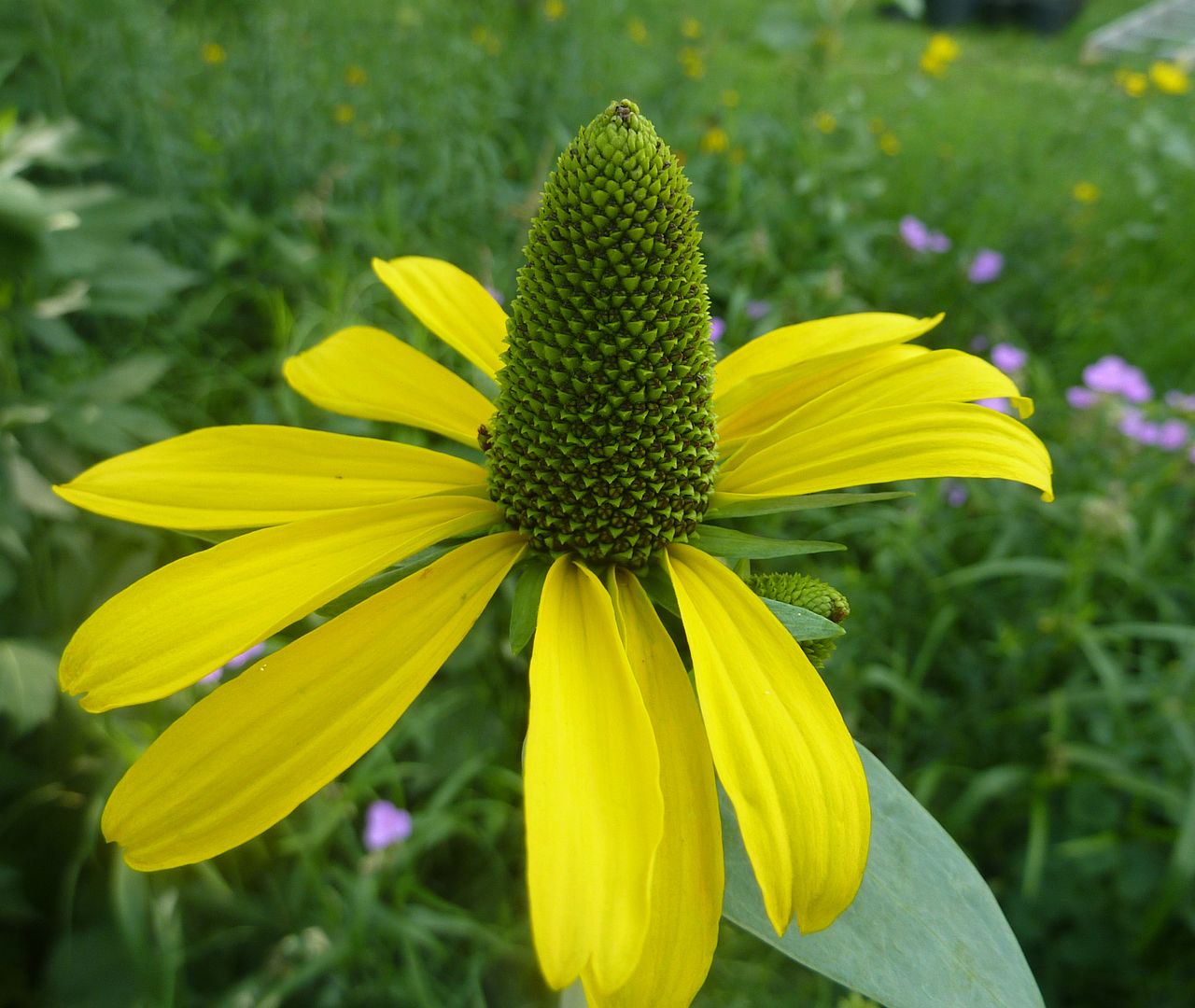 Greater Coneflower, Rudbeckia maxima, also not officially open yet, and also not officially a coneflower but close enough. As it's in the Rudbeckia genus that makes it more closely related to the Black Eyed Susan, which is strange becuase they're 5' tall, have blue/gray foliage, and bloom earlier than any other Rudbeckia species at least in my garden.
Subscribe to:
Posts (Atom)