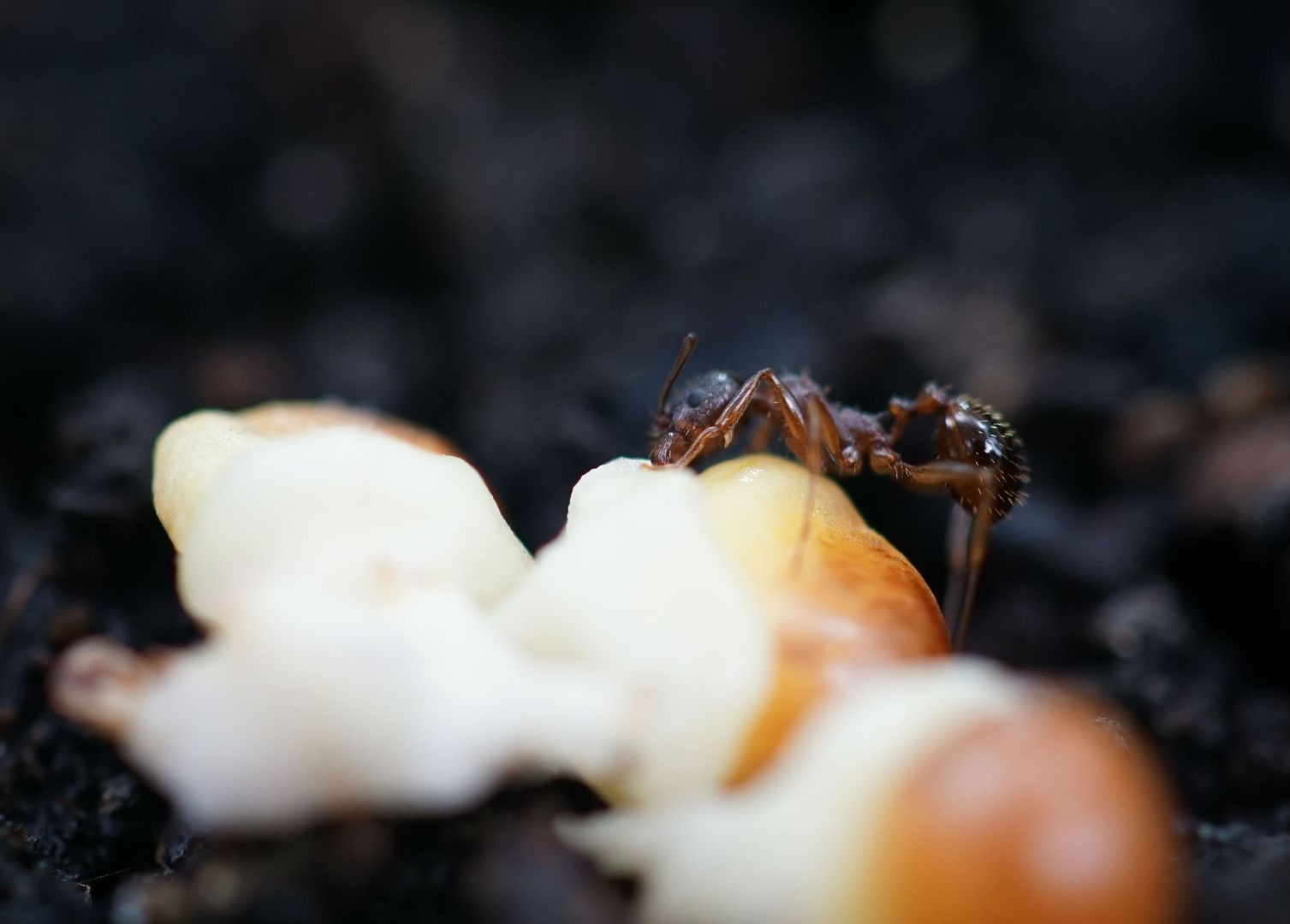
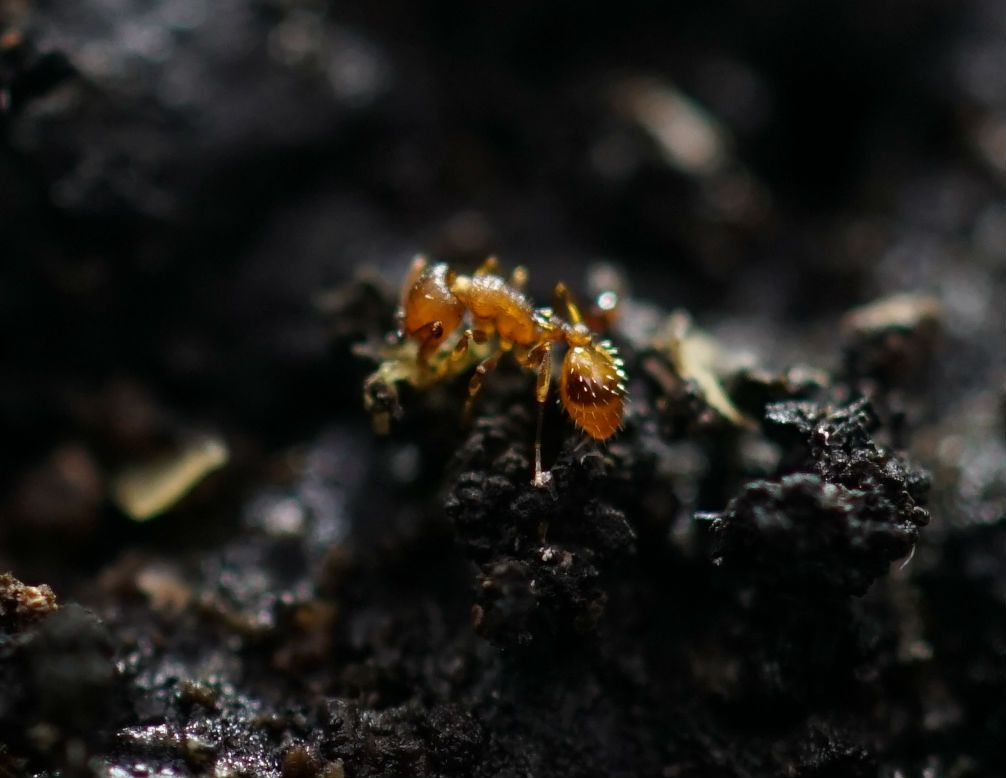
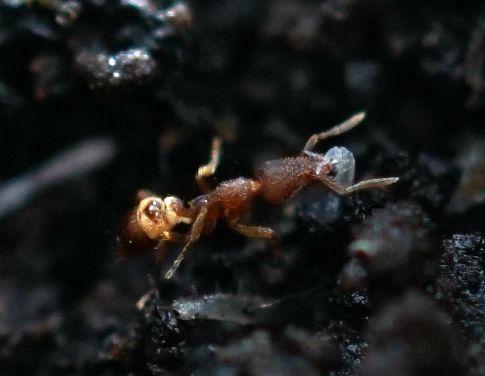
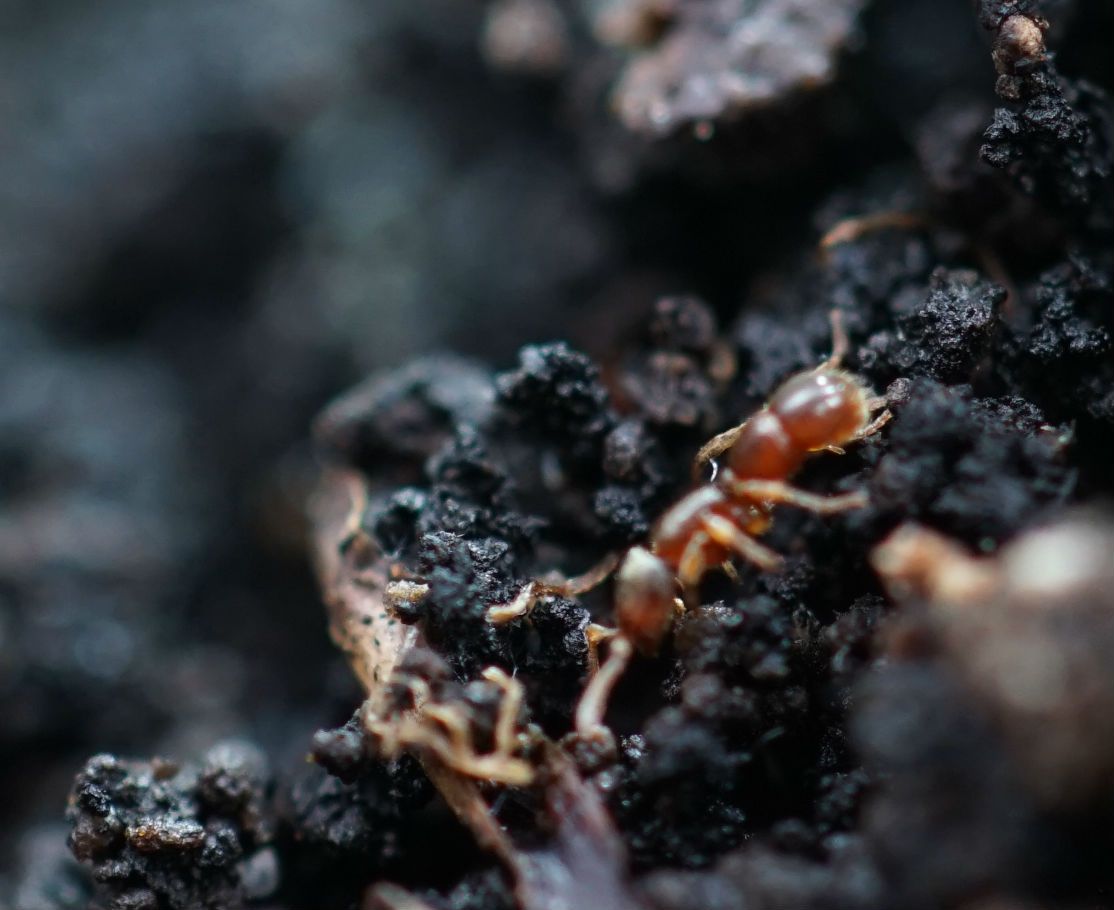
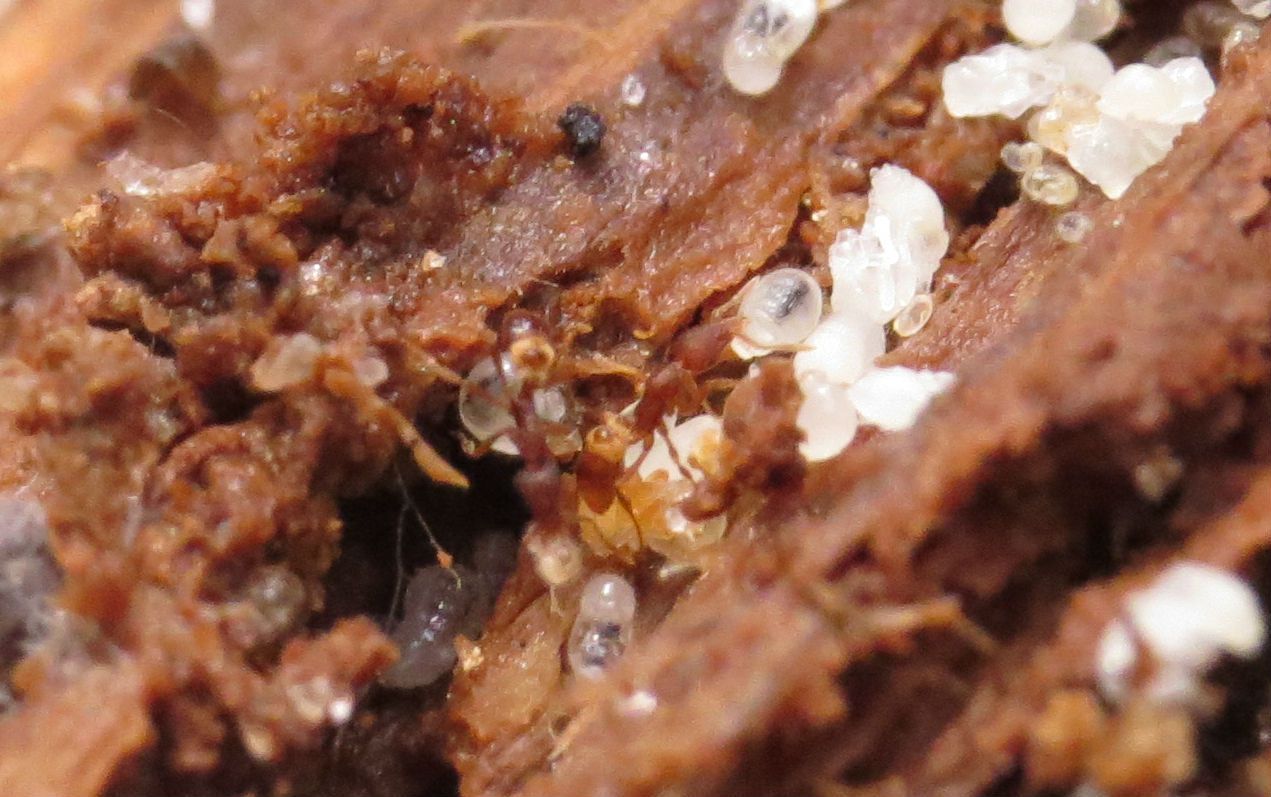
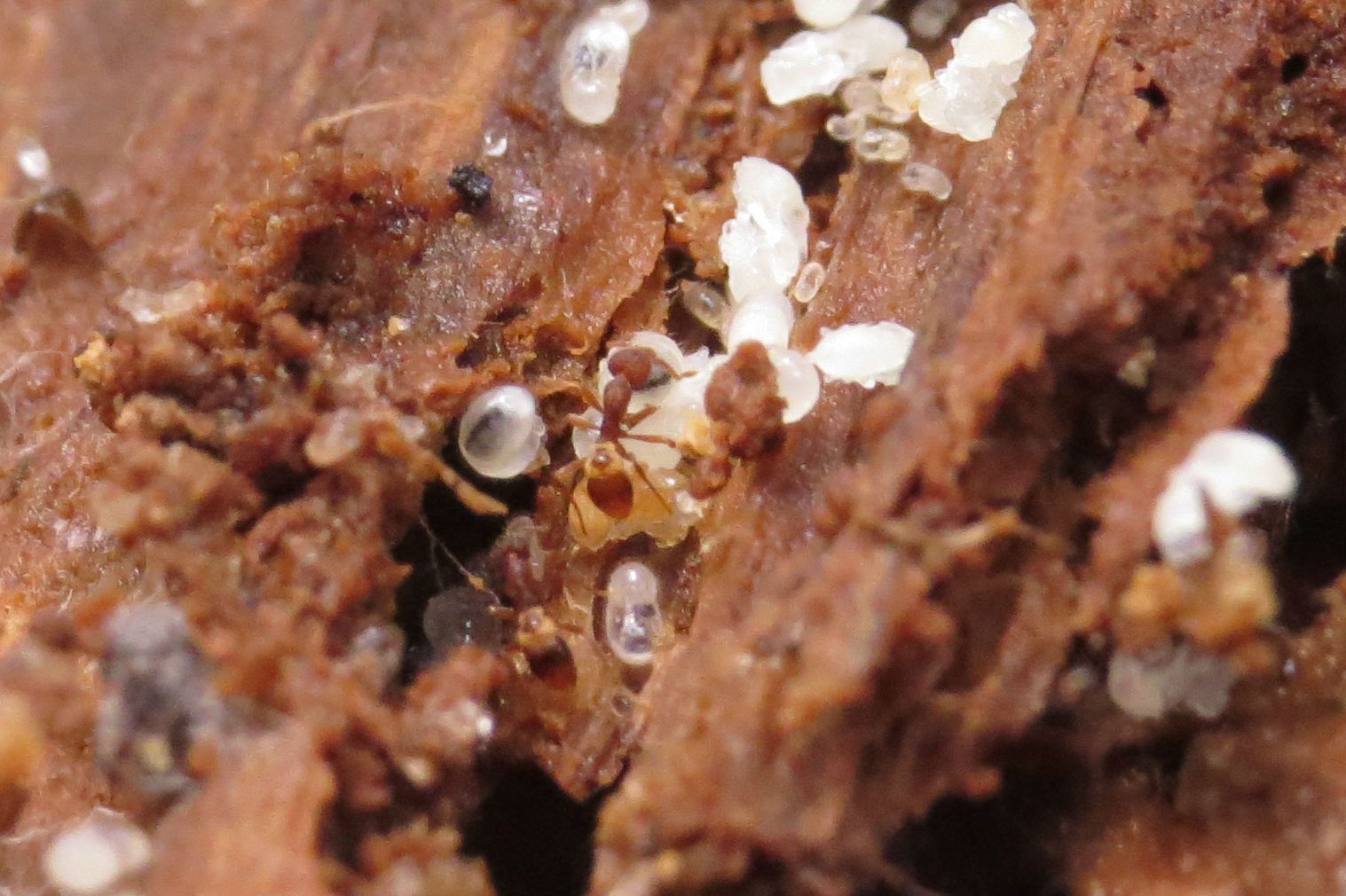
Strumigenys is a diverse genus in North America with almost 50 species. Despite this diversity though, the genus is almost exclusively encountered by Myrmecologiests and those in other scientific fields that involve sifting through leaf litter and dead wood.
They're so small that they're hardly noticeable, and they look so strange compared to other ants that most people would likely be confused that they were even looking at an ant.
For better close ups, here's a link to
Ant Web's specimens, and
Alex Wild's album of the genus. Notice the odd petal-like structures that cover the body. These are modified hairs which I believe are used help cloak the ants as they hunt. Some species in the genus have long mandibles similar to a Trap Jaw ant's. These are used to allow oils (and fungi?) which make the ant less noticeable while hunting.
They're primarily predators of
springtails which are small, mite or termite-looking insects often found in decaying wood. Truthfully though these ants are more than happy to kill any sort of soft bodied invertebrate.
These ants require "cool" conditions in order to survive. In the wild they always nest inside the damp and decaying media within the hollow of a tree, or in a soggy log that's often well shaded and rotting. Other species are at home nesting in soil and leaf litter, but good luck finding those. Colonies do not make mounds of any kind, entrance holes are often cryptic at best, and populations tend to range around 200 individuals that could happily fit on a US. Quarter.
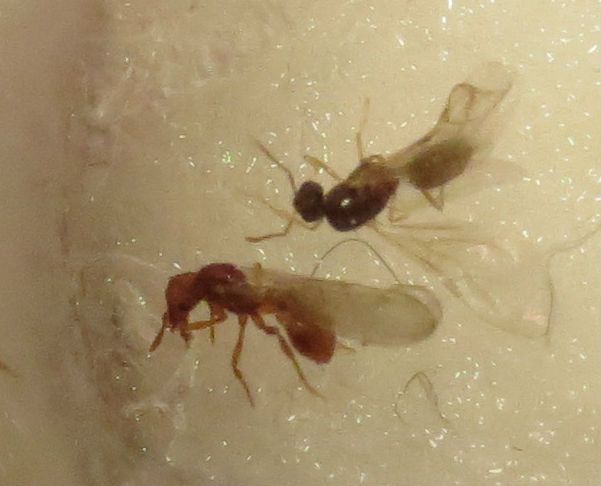
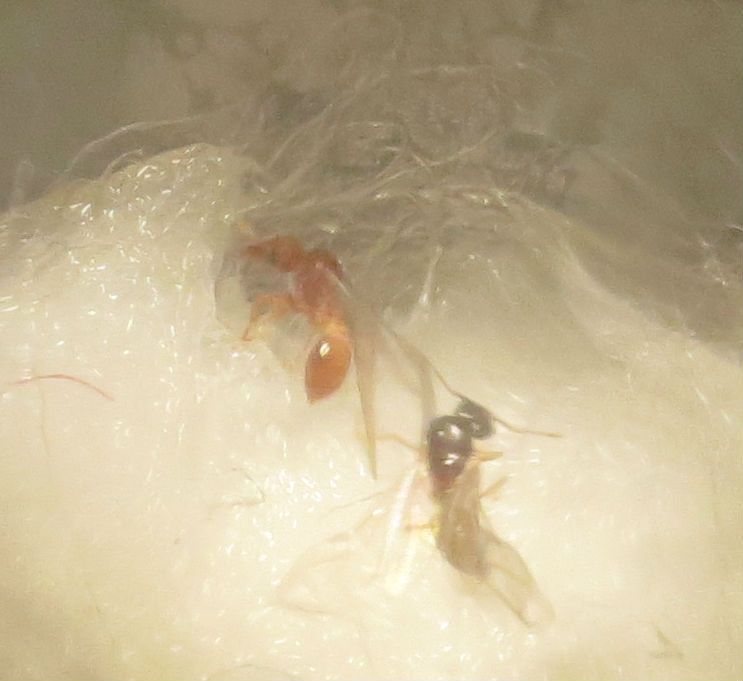
Curiously I discovered these ants hold nuptial flights in the day time but under specific conditions. Here in New Jersey it's the calm before the storm as Hurricane Joaquin moves up the coast. The sky has been solid grey clouds for as far as the eye can see for a few days now, and raining has been off and on. It's been cool out too, around 55F but on the day that it was still 77F I happen to find a few alates to this genus landing on my car.
Ants being attracted to bodies of water, parking lots full of cars, and other reflective surfaces isn't anything new, but the fact that this genus flies in the day time is! Everything about their nesting habits has been cold and shaded, and it's entirely possible to accidentally kill them if they get too much sun. So I find it odd that they wouldn't hold nuptial flights at night.
Regrettable I couldn't locate a colony sending alates into the air. Their colonies are just too hard to find. But I was successful in catching a queen and male. I've no idea if she managed to mate or not (leaning towards no) and it's rare for ants to mate in captivity, especially after being collected. All the same, I'll give her a shot and see if she's able to produce any workers. If not then I'll have to store her in alcohol and eventually pin her for my collection.