So I had just harvested honey today. It's a very mundane process. Smoke the bees, open the boxes, remove frames into empty box, brush off bees before putting frame into said box, carry haul into home, uncap frames, put frames into honey extractor, spin handle about a hundred times per interval, take a break, let honey drip through strainer into pan, switch pan as needed, scoop honey into jars.
While doing all this I'd turned on the TV in the kitchen which we don't use much at all anymore. The channels come in via antenna instead of cable becuase no one is out there ever so we don't know the channels at all. We found a marathon playing Law and Order Special Victim's Unit, which I'm not a fan of. The lead character talks funny, and they show you who the murderer is and what he's doing, removing all sense of mystery and who done it in one fail swoop. This somehow turned into Pro Wrestling after two hours... same channel. I don't watch Wrestling ever but I found it way more entertaining than Law and Order.
Out in the garden though another form of wrestling was going on.
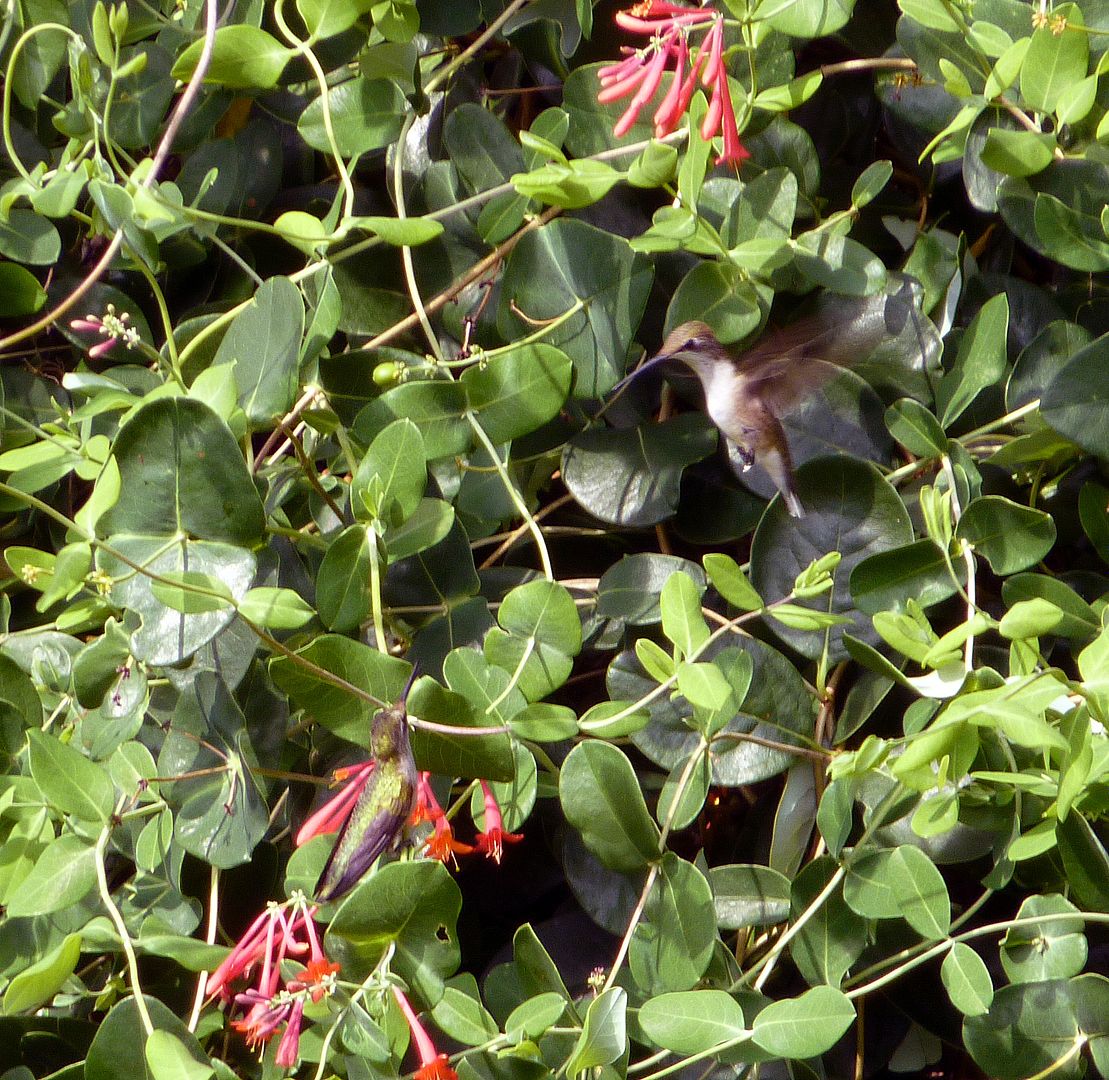
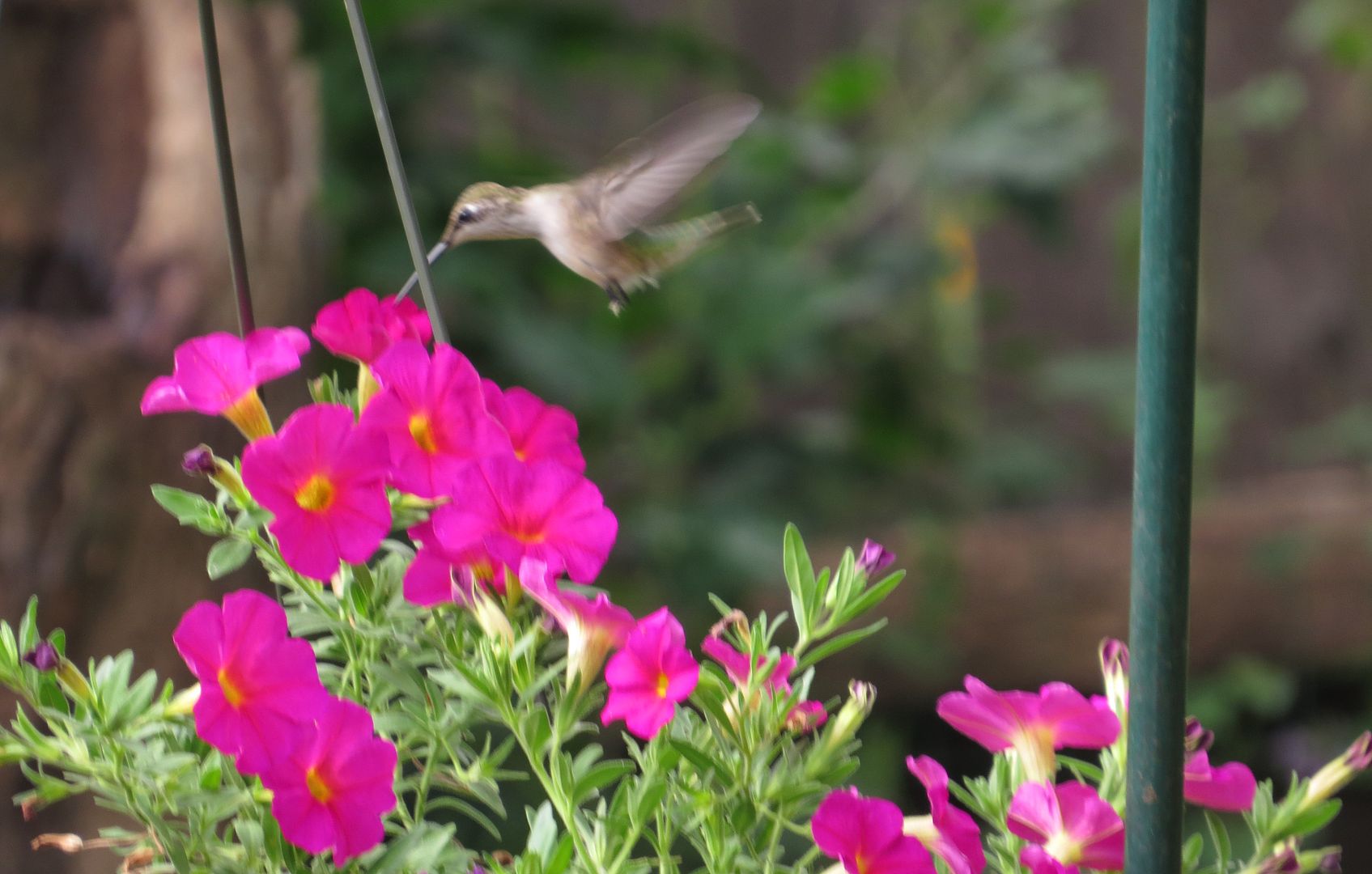
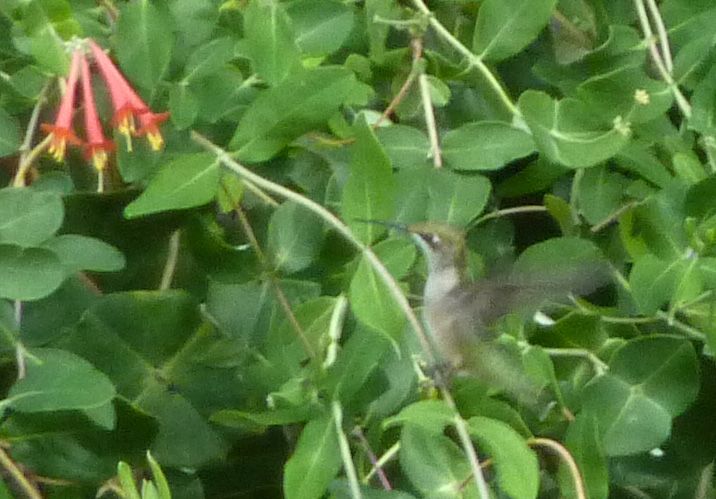
My yard has never been known for an abundance of Hummingbirds, but this afternoon I suddenly had three or four of them fighting over the Coral Honeysuckle. To the point one had started tackling the others to the ground... unless I'm mistaking some sort of mating. I did hear a loud chirping by some as they flew over head, but I think it was the female making that sound.
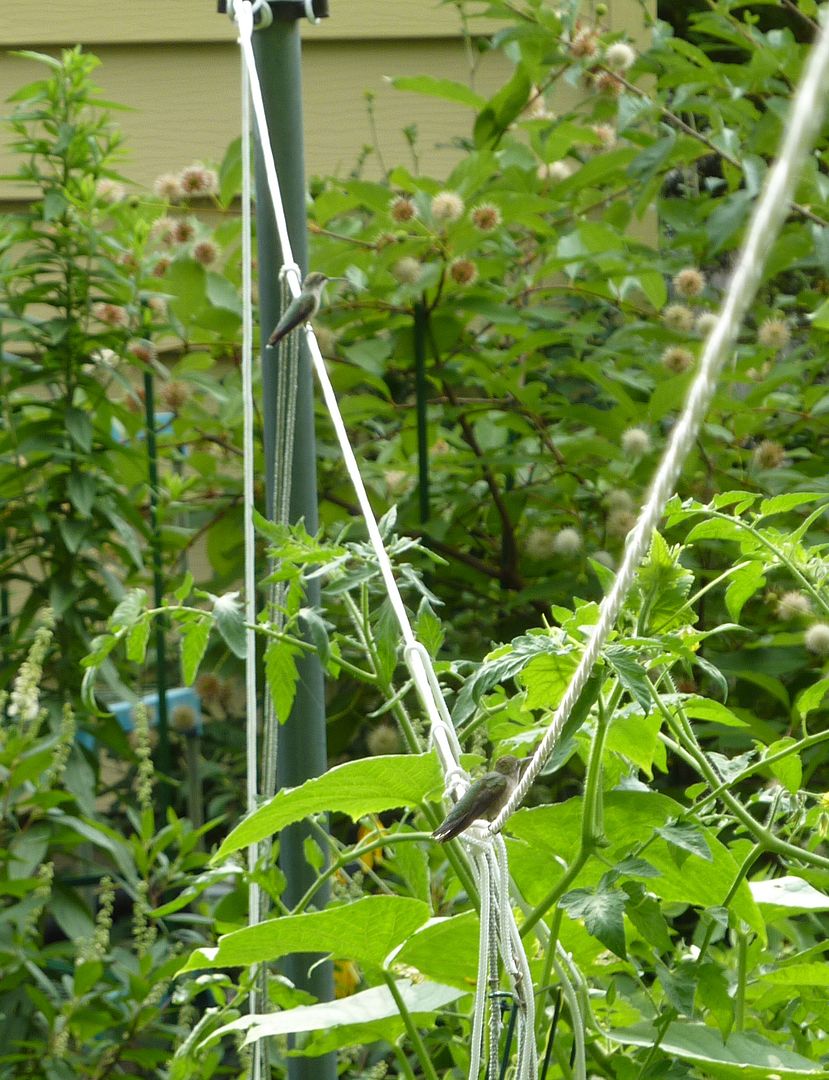
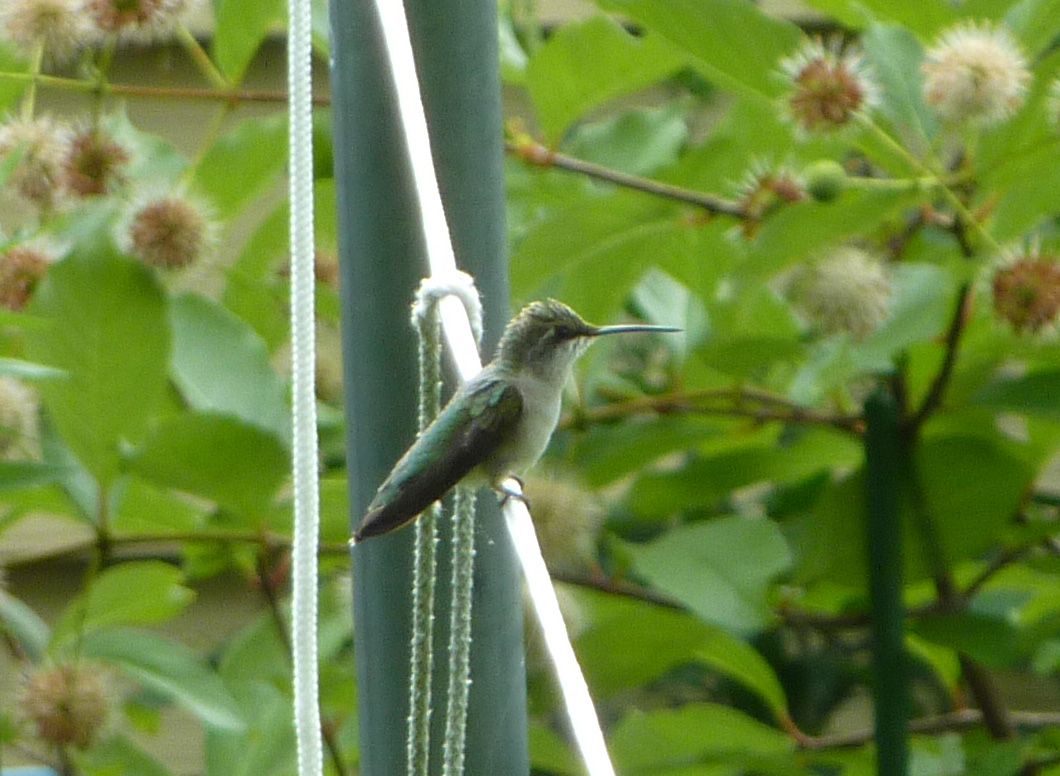
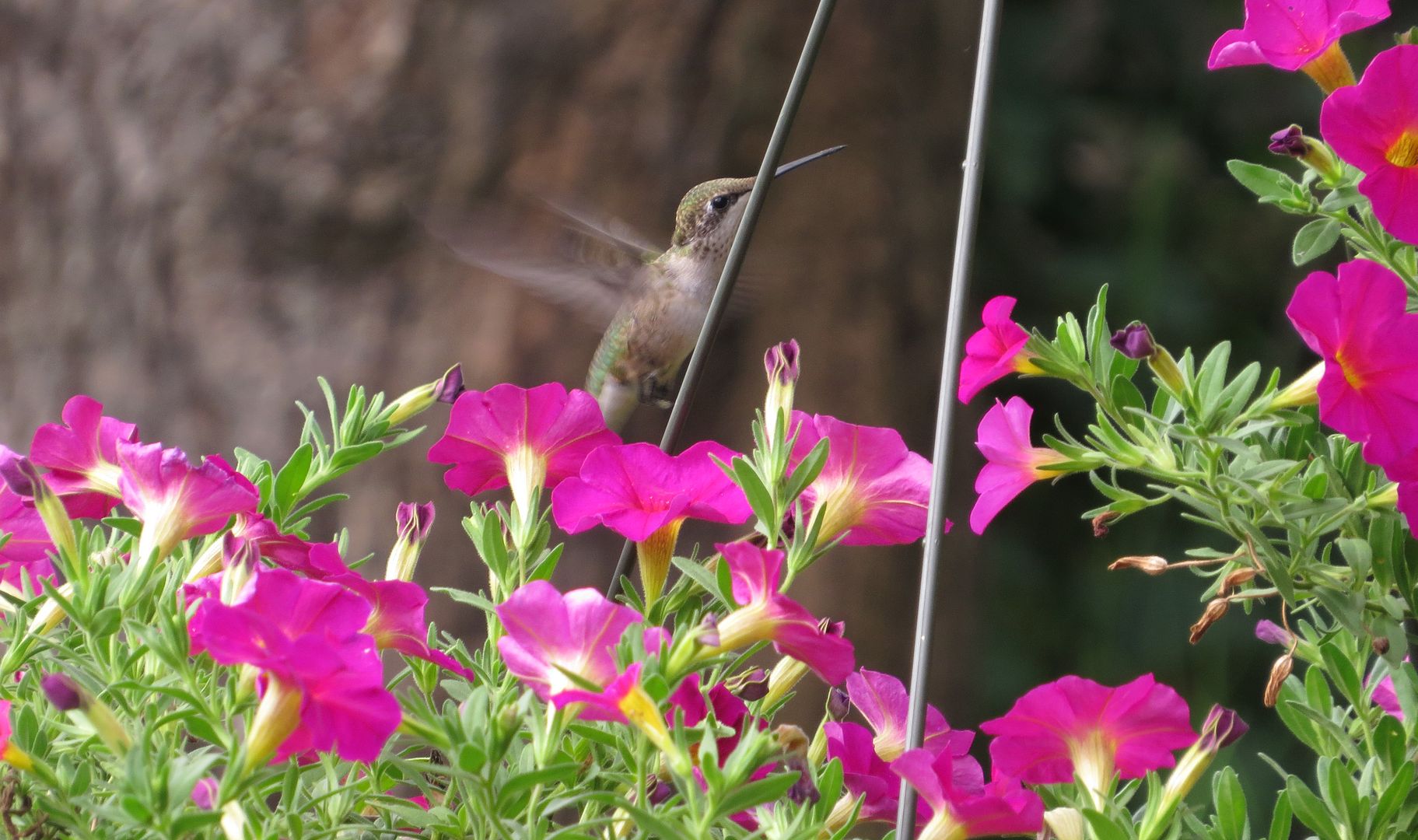
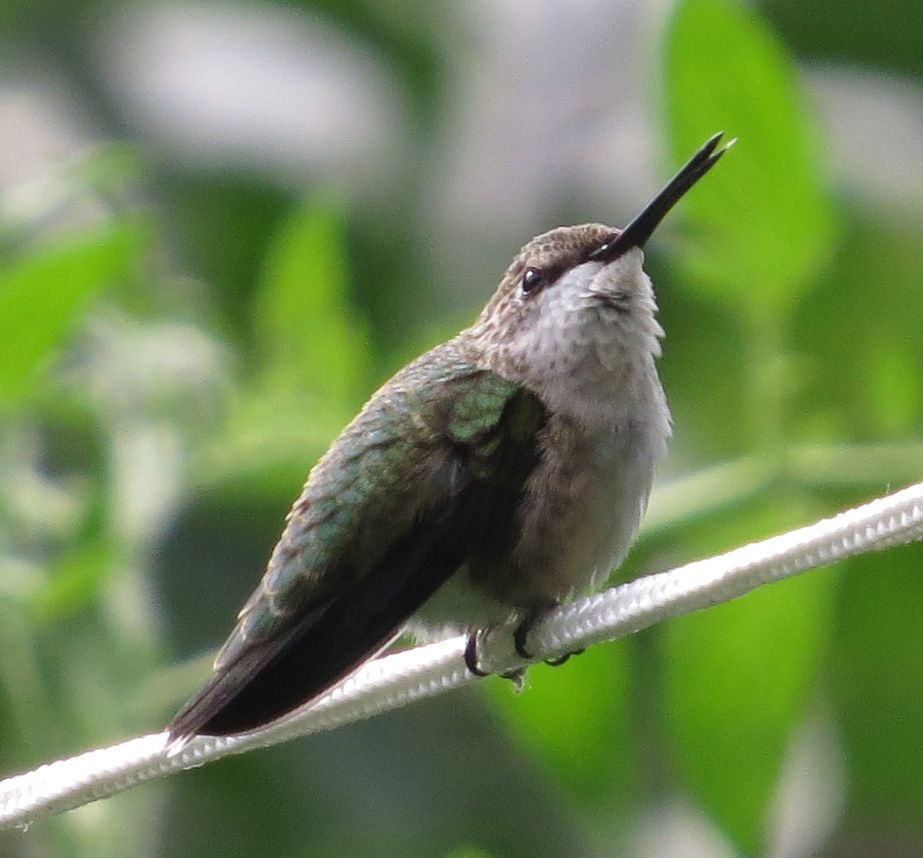
Half Time was held at the cloths line, which I've confiscated to grow cucumbers and tomatoes along. They sip at all the plants, while they tackle and peck one another, then break a little bit before starting up again. It's like they're playing some sort of game.
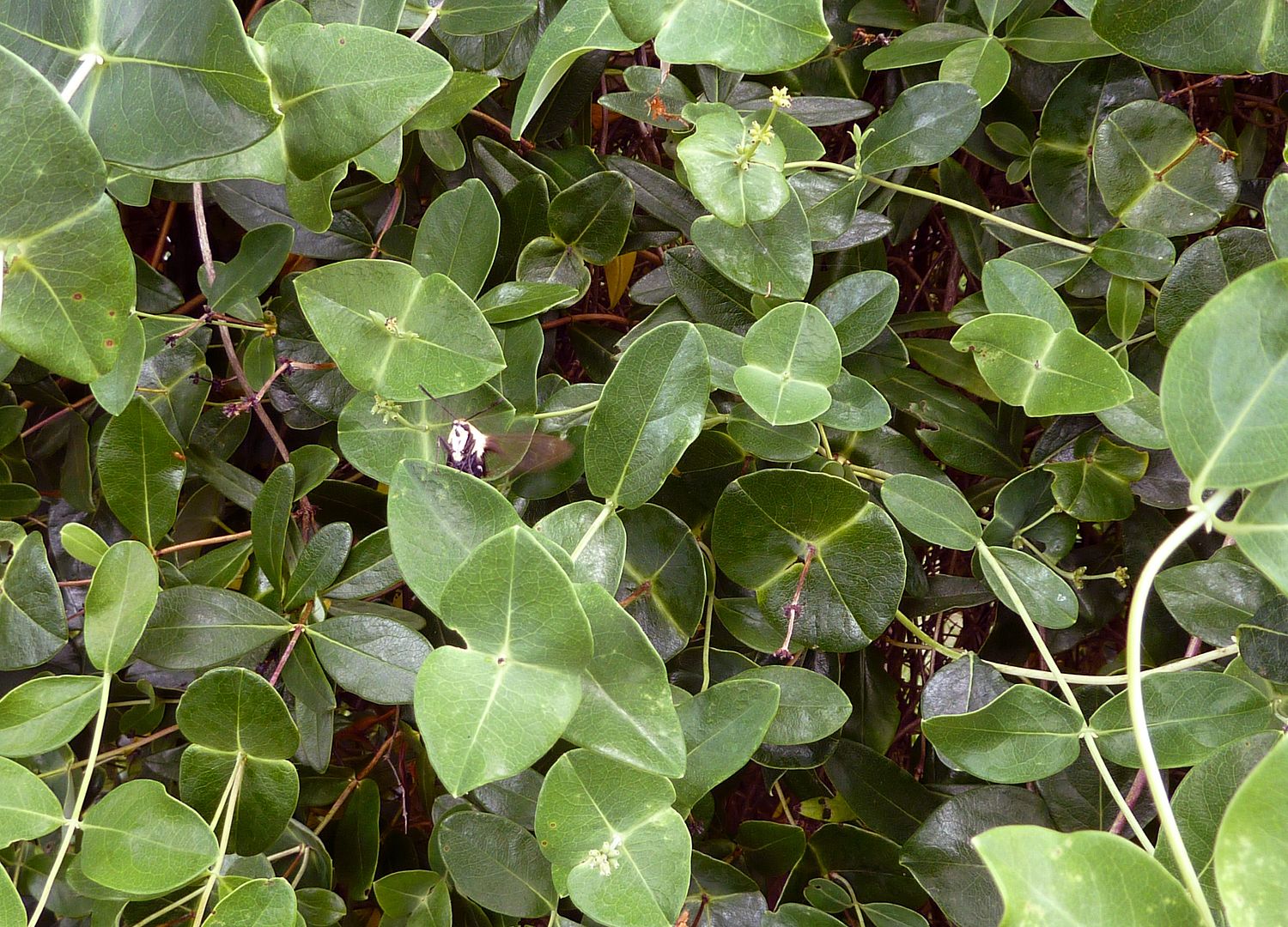
I was out in the garden yesterday and spied a Snowberry Clearwing, Hemaris diffinis, laying eggs sporadically all over the Coral Honeysuckle, Lonicera sempervirens. She flew around sampling leaves and would occasionally place one on the under side before flying off to locate another spot. I'll have to keep an eye out for caterpillars in the next week or so assuming the ants don't remove them first. I occasionally get sudden bursts of these hummingbird moths in my yard, usually groups of 12 or so all at once and I always wondered where they were coming from.
While spying a Goldfinch through the window this morning I soon realized that there was a lot of bird activity going on in the yard. The Goldfinch itself landed on some Anise Hyssop to inspect for seeds then took off to one of the weedy Rose of Sharons growing along the fence. It took off before I could snap any pictures but then I noticed the Hummingbird flying about.
They've been showing up to the Coral Honeysuckle every morning and afternoon these past few weeks. As we move into colder weather the vine should produce another flush of blooms though nothing compared to the early spring flowers.
Rahhhh!?
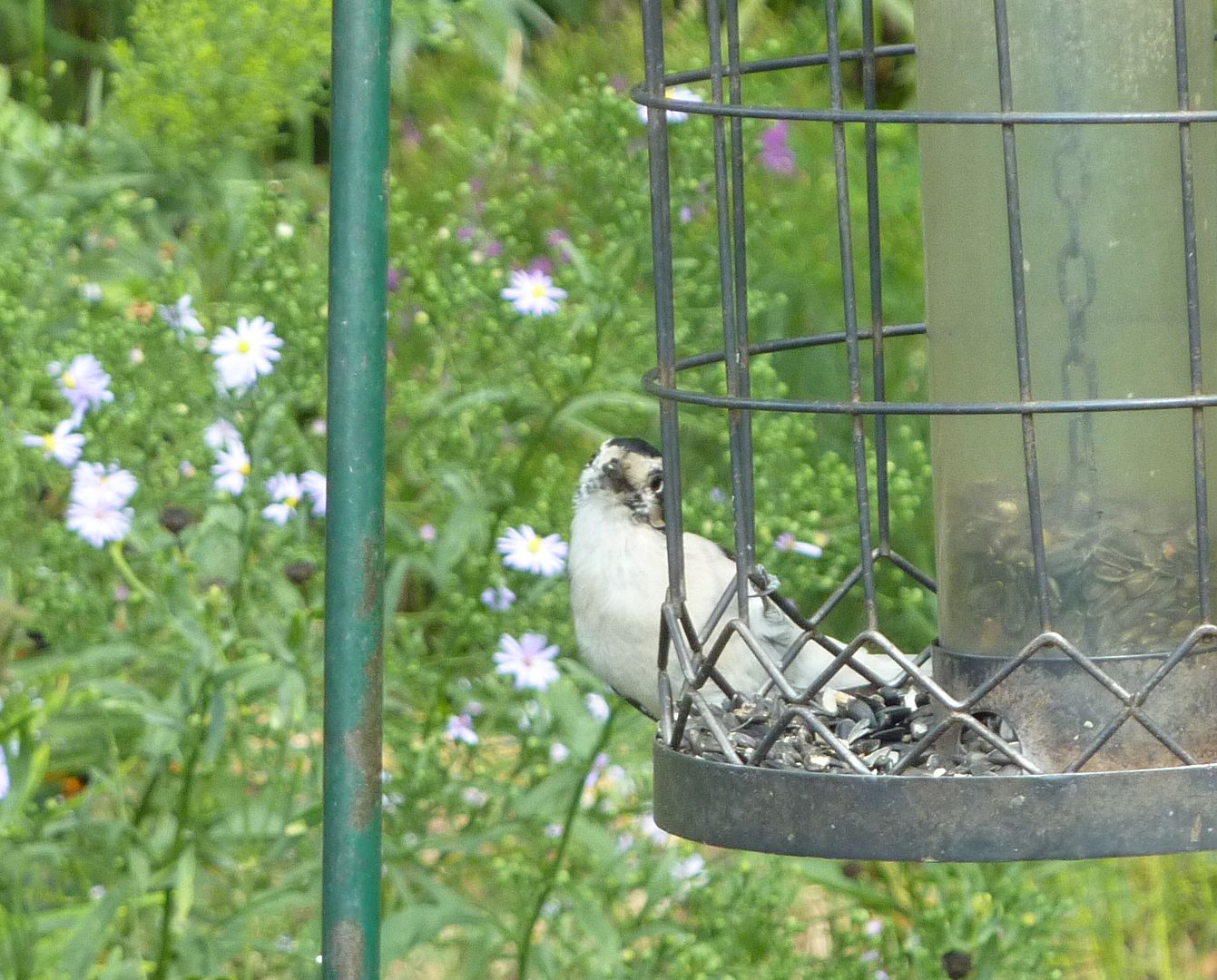
So I glanced at the bird feeder to find this speckled Black and White Warbler, which is the first time I've ever seen those in the yard. I understand that they migrate south but I've never noticed them before.
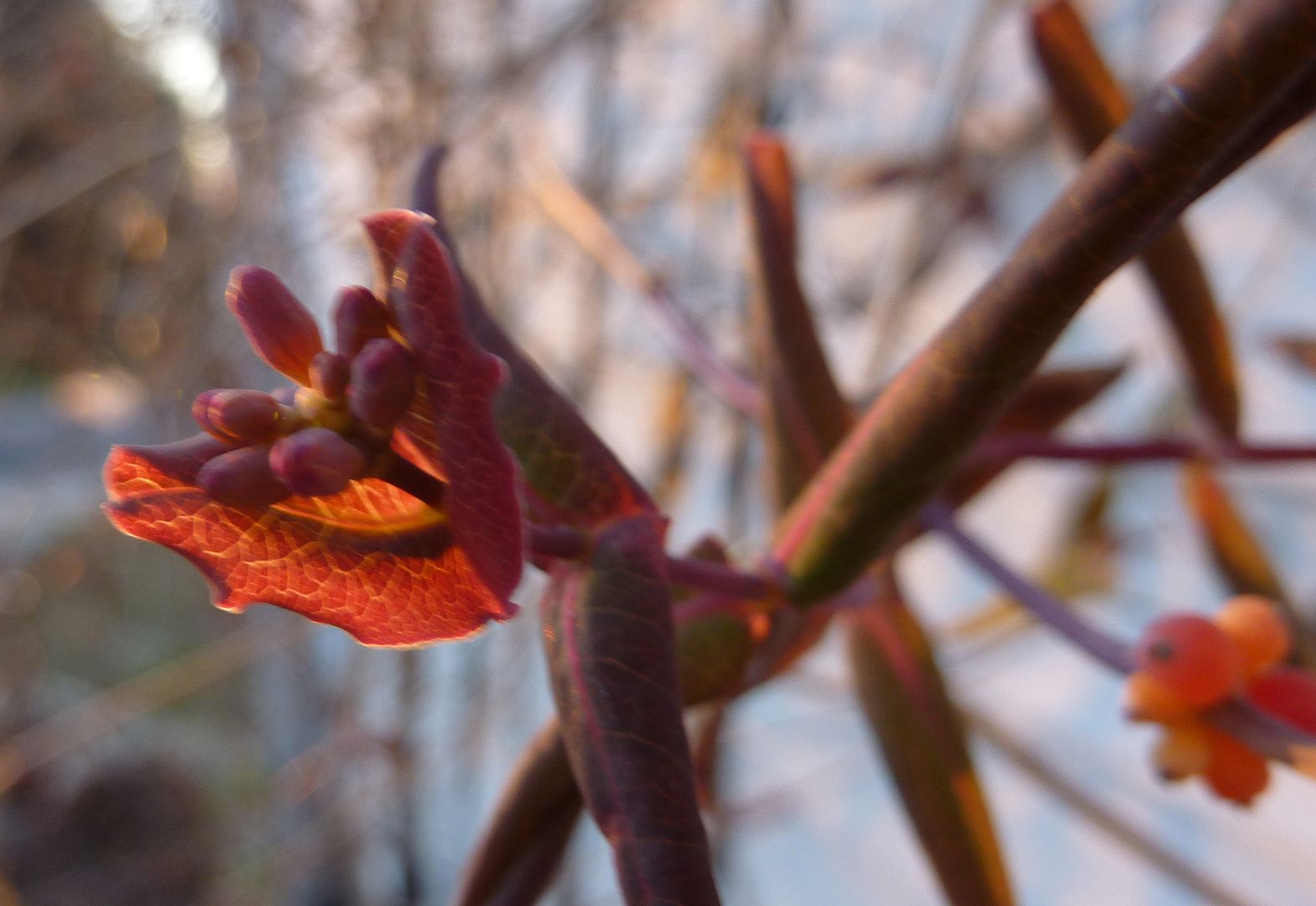
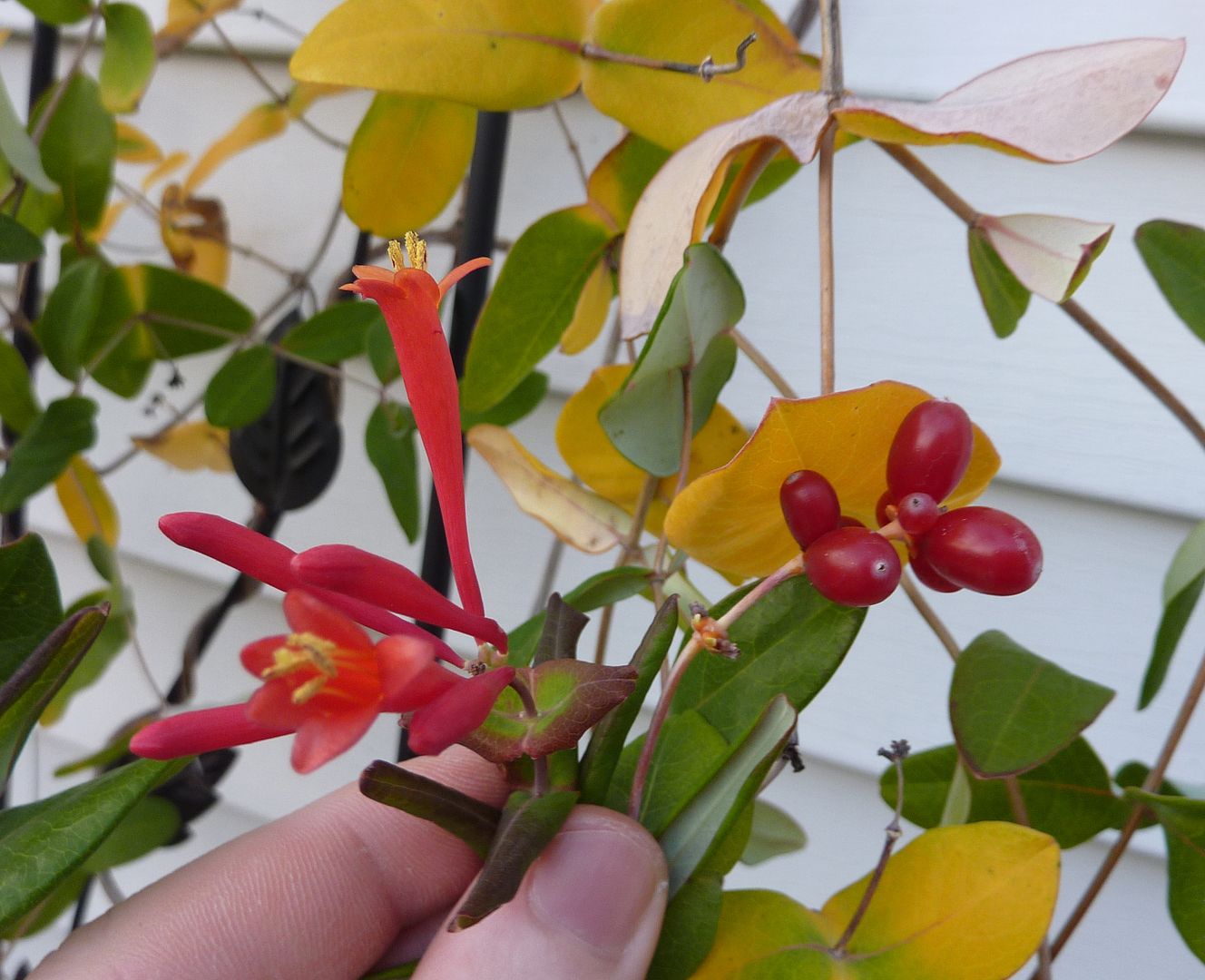
That's this year's flower buds next to last year's berries. Lonicera sempervirens is a native honeysuckle that blooms with the early migration of the hummingbirds, though this year I think it's going to flower even earlier then that. At this rate it might even beat the Daffodils.
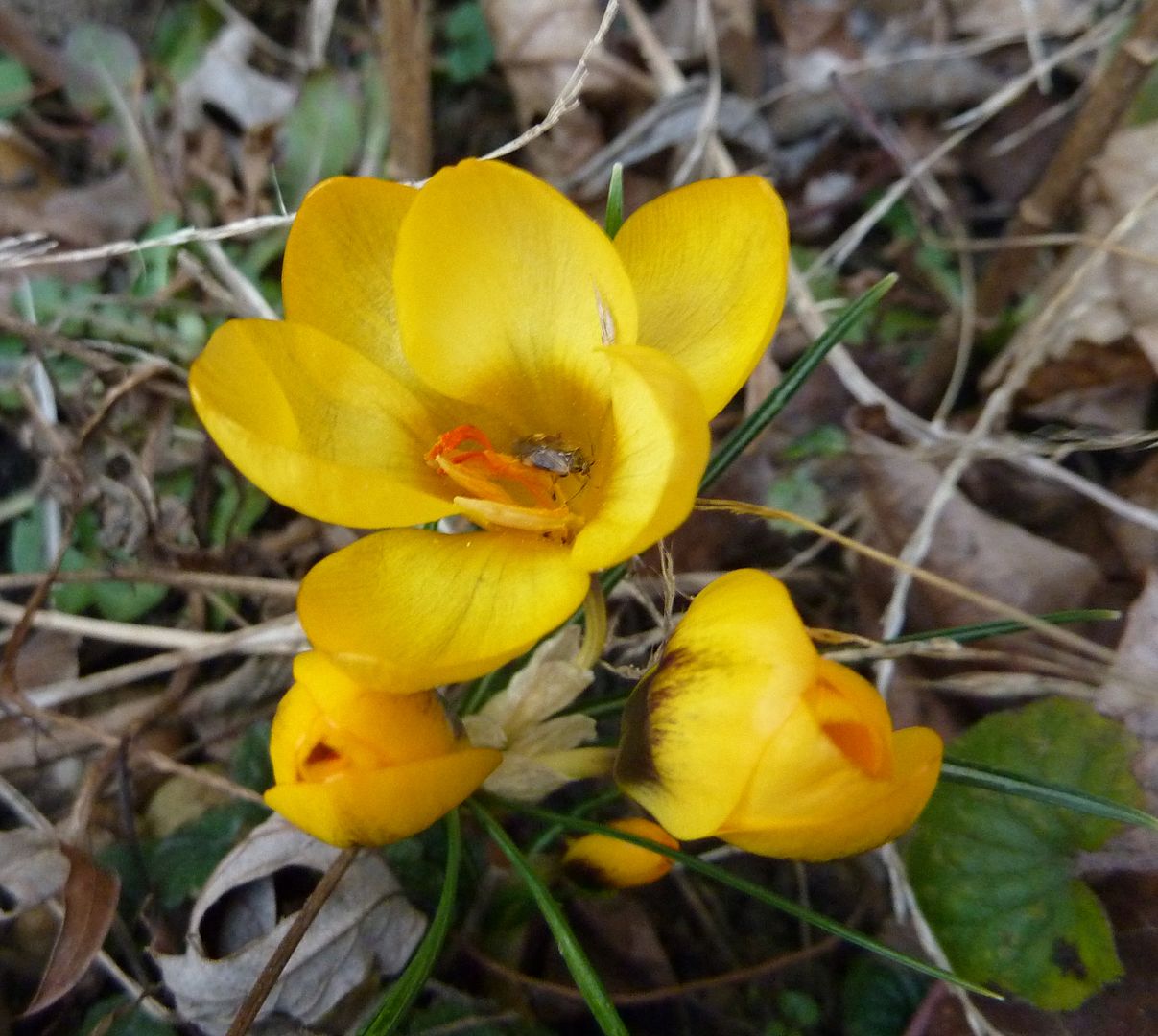
Something that is blooming is the yellow crocuses. Note the stink bug (dead or dormant I think) trying to stay warm inside the flower.
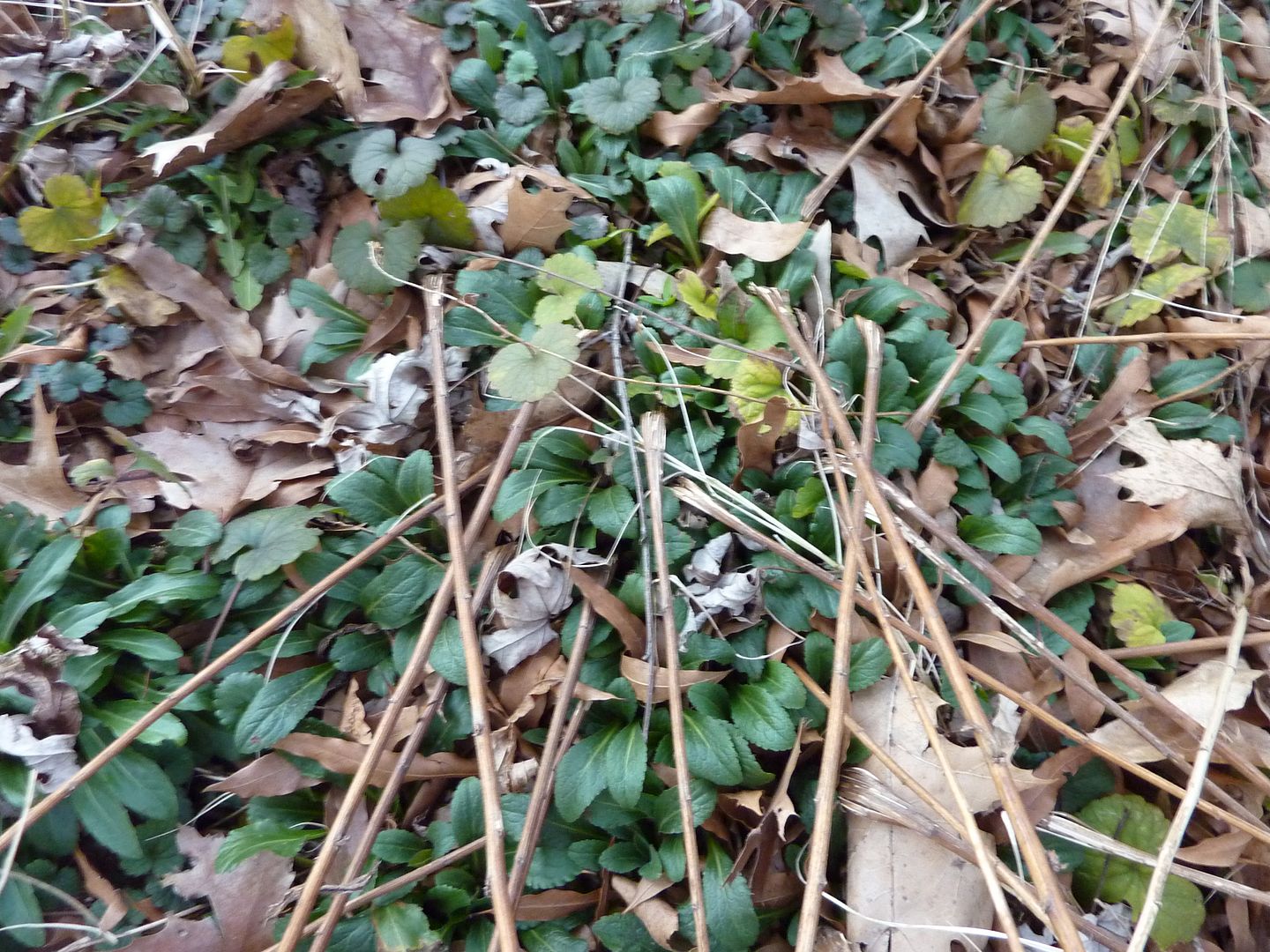
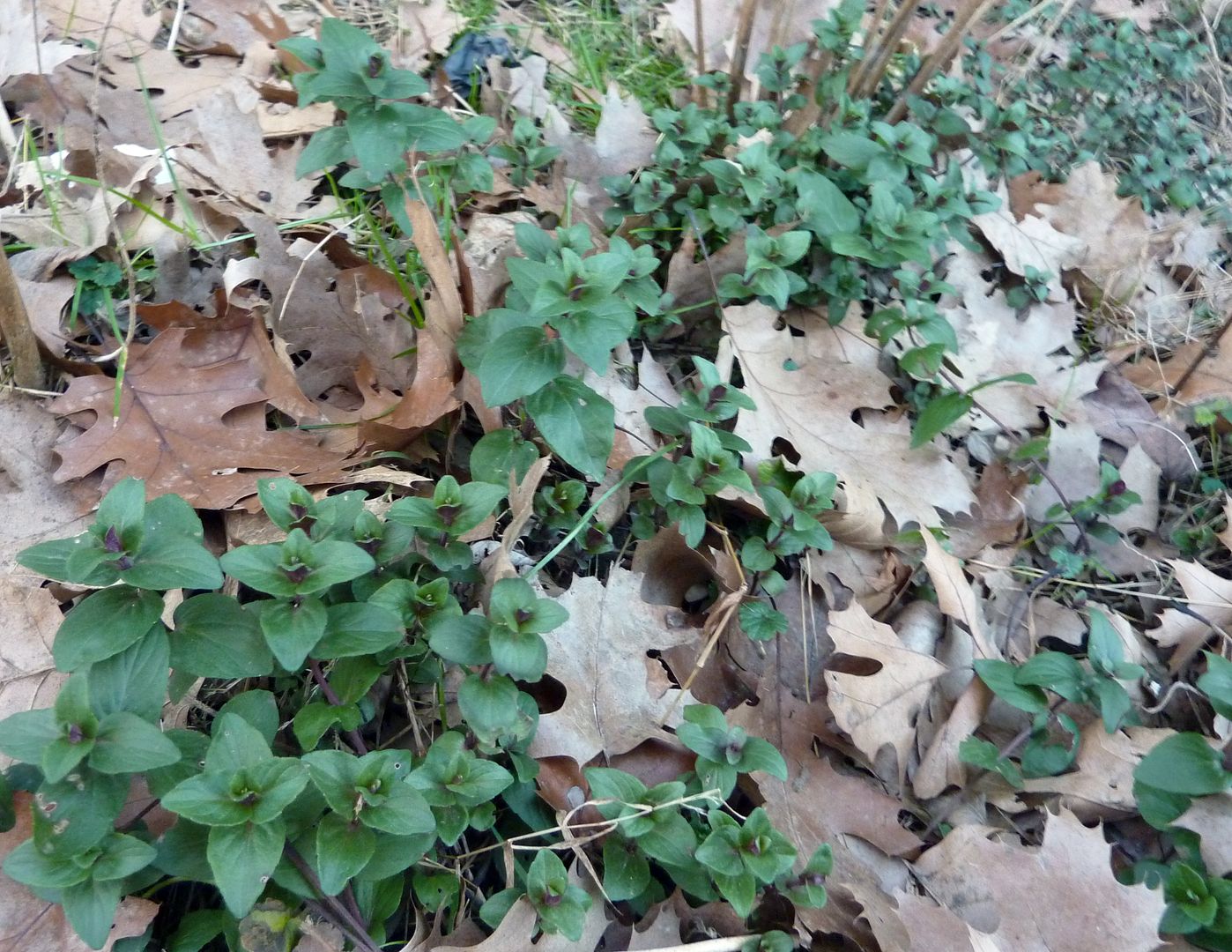
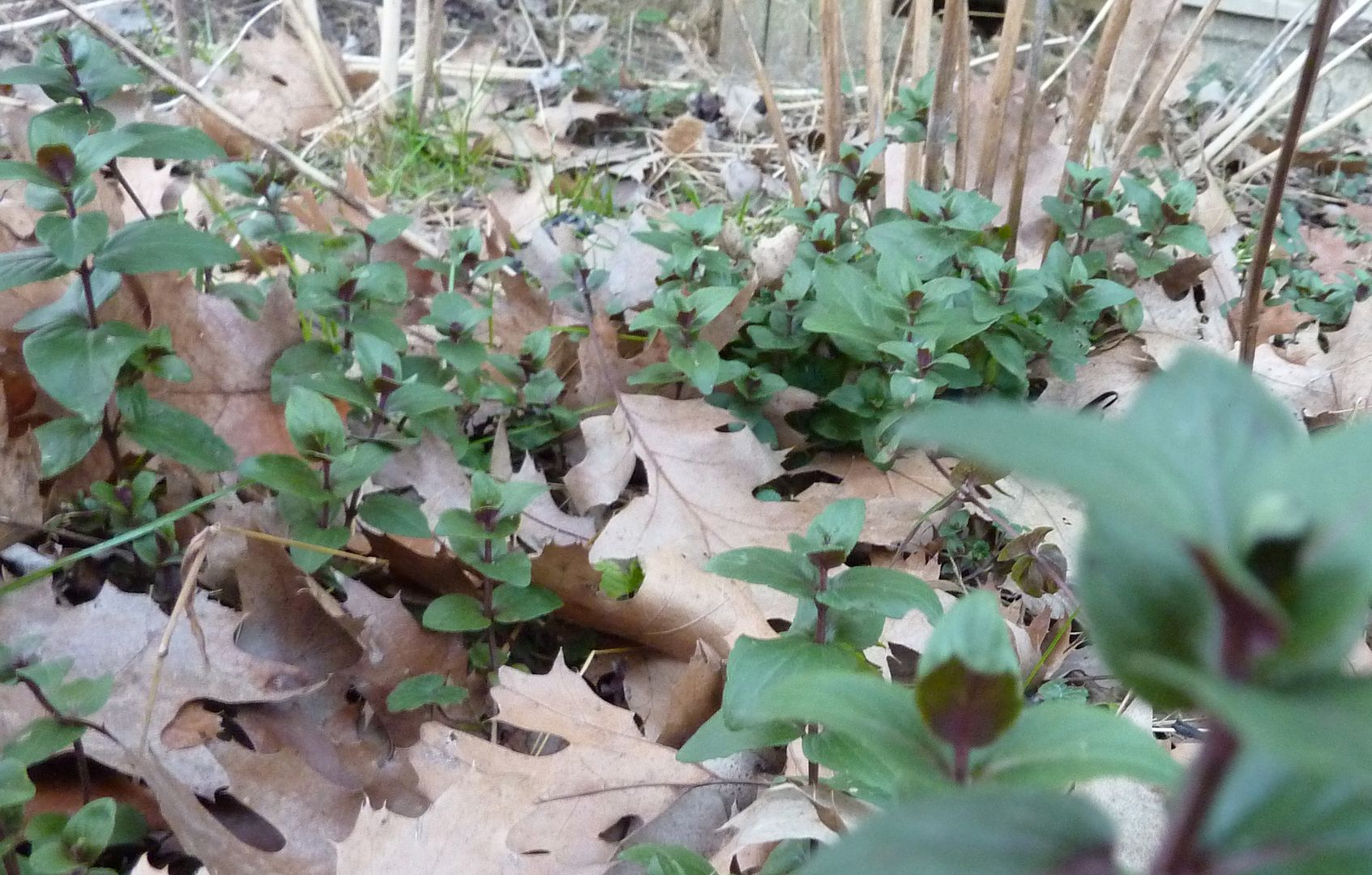
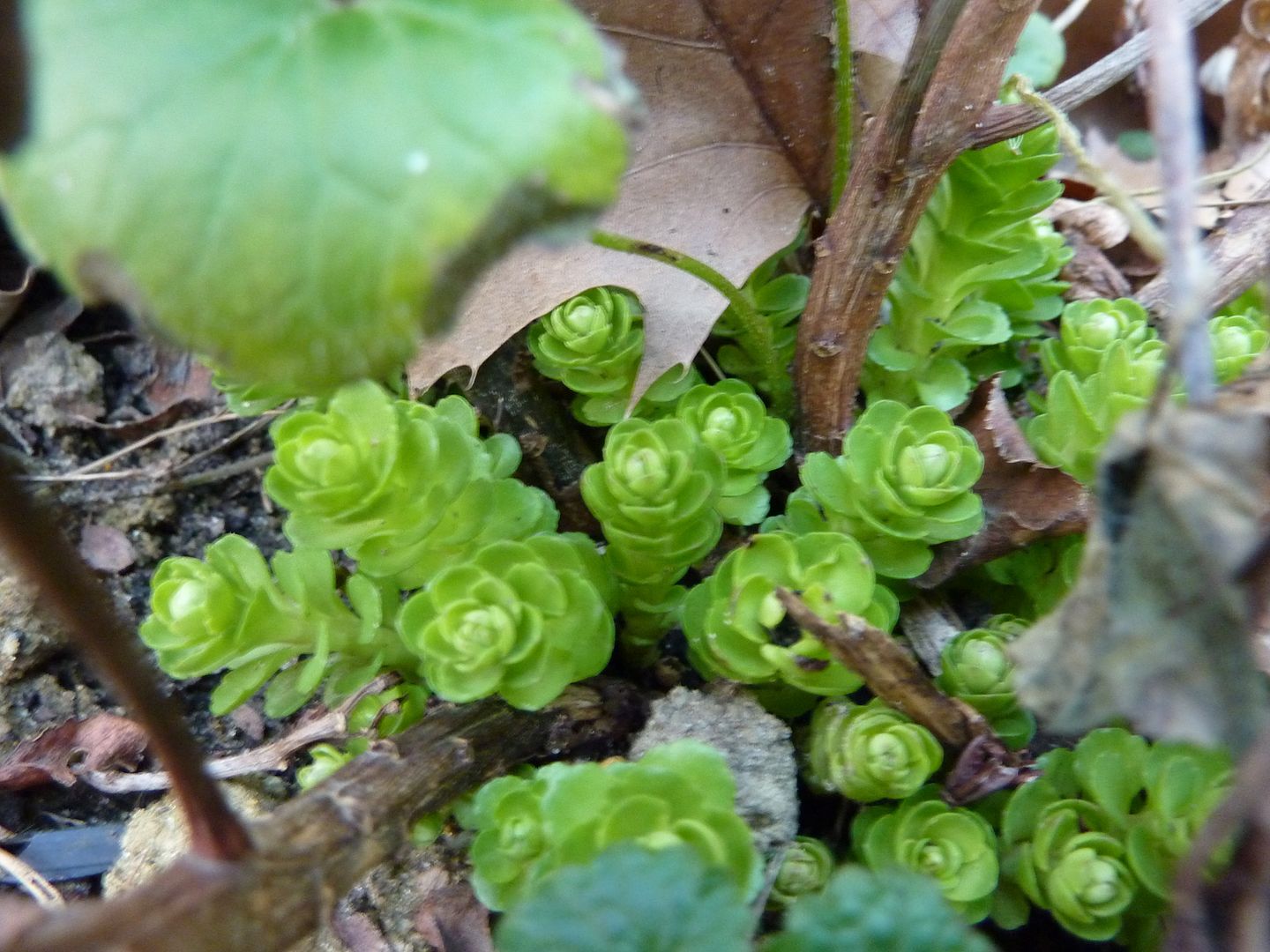
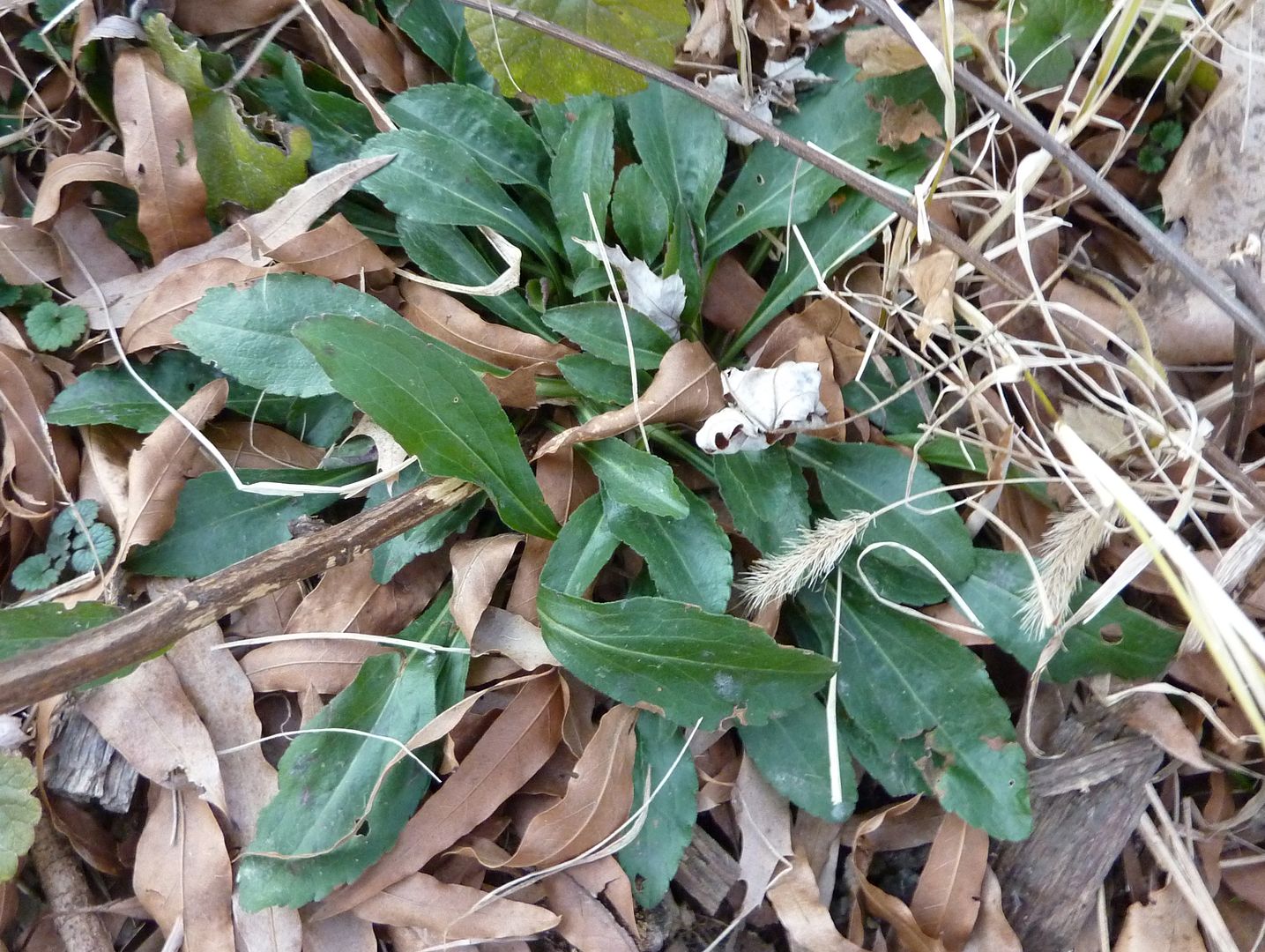
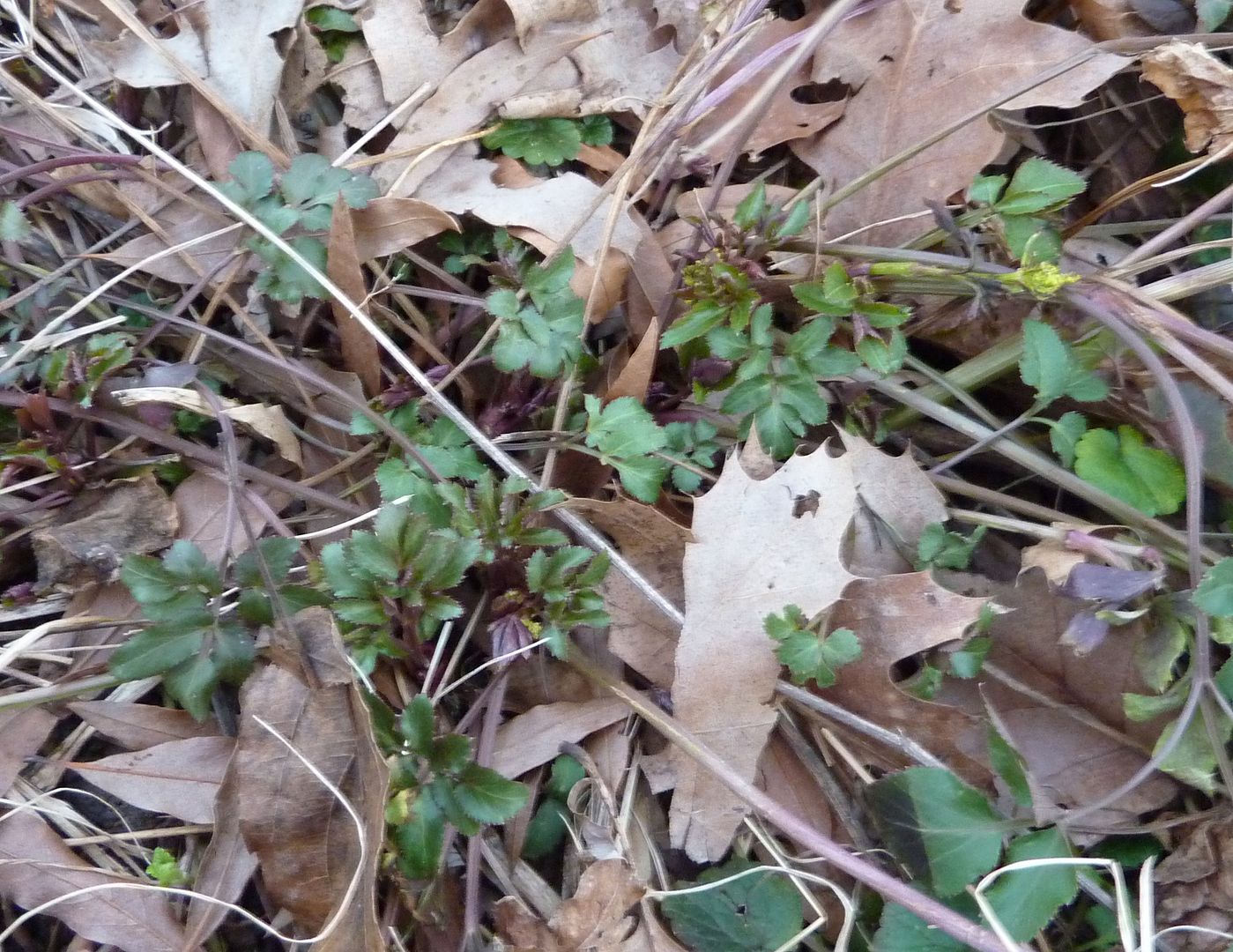
So all these early blooms got me wondering what else is pushing out new growth this early.
This years crop of Tall Goldenrod, Solidago altissima, is getting a head start on the invasion this year. I think it's time I finally ripped a few dozen of these out of the garden.
Solidago rugosa 'Fireworks' is also spreading nicely.
The Mountain Mint, Pycnanthemum sp., is conquering the milkweed patch nicely. I'll be ripping this out liberally.
The stuff smells great and minty too.
The Sedums are bursting back.
Ironweed.
Roundleaf Ragwort, Packera obovata, is also spreading some. It's doing so in nice, garden friendly, tight clumps though. Despite it's seeds being transported by the wind it seems to be growing as a well behaved ground cover. I like this plant so much I'm thinking about spreading it around the yard everywhere. Note the flower buds starting to appear.
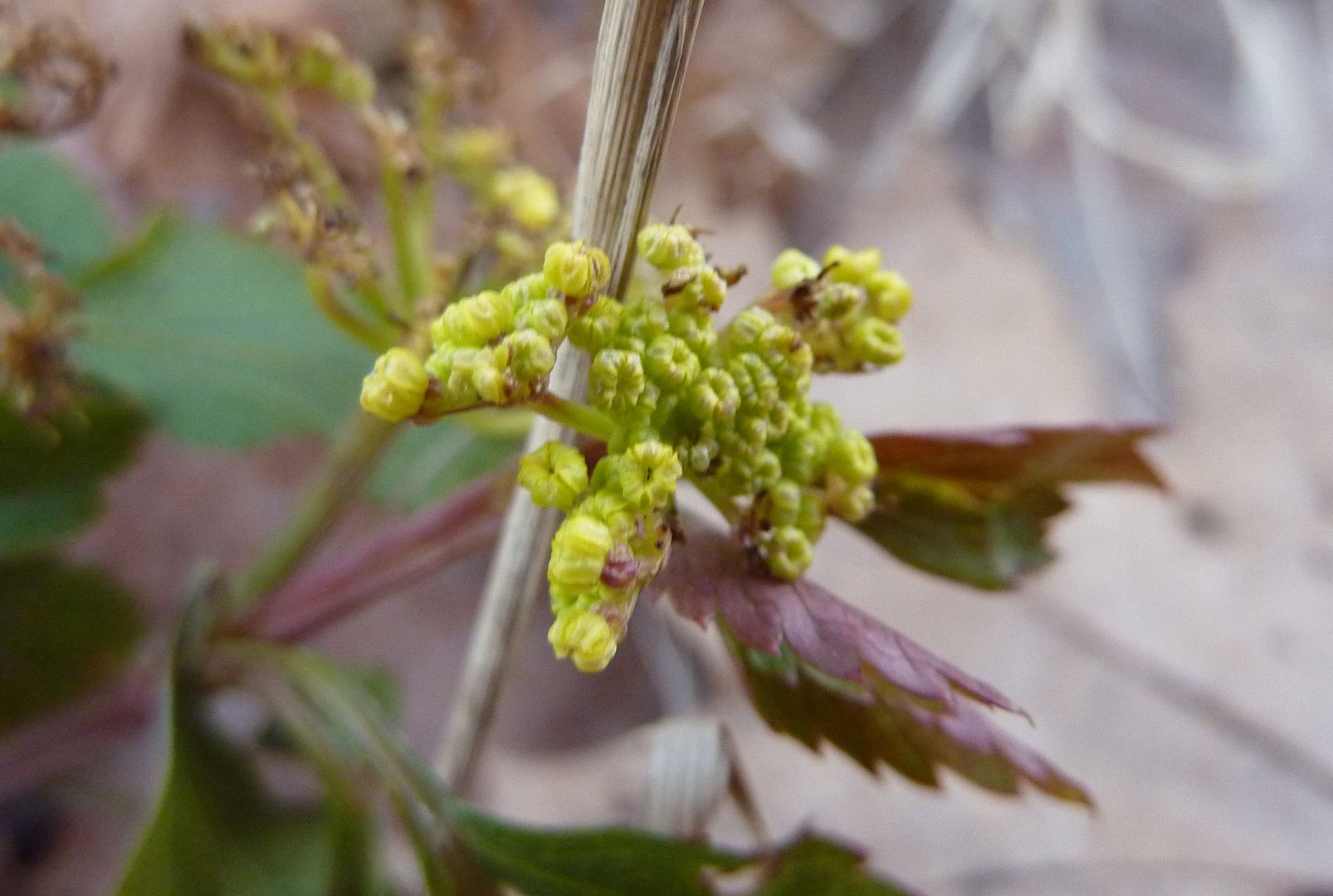
And then there's Golden Alexander, Zizia aurea. What this is doing with flower buds on it this early is a mystery to me. This is just one plant of the 4 doing it. Perhaps this is a seedling that's got its wires crossed somewhere.
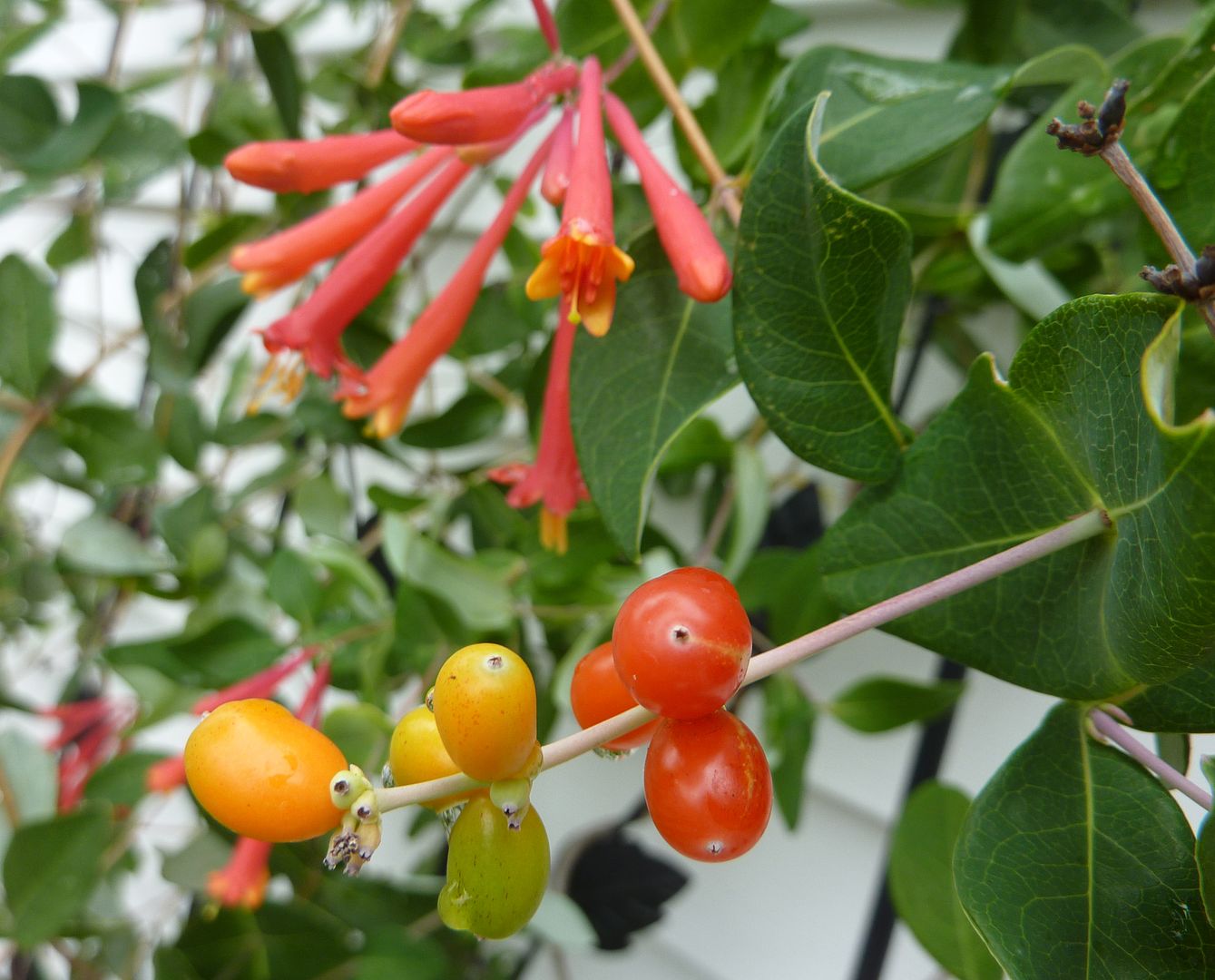
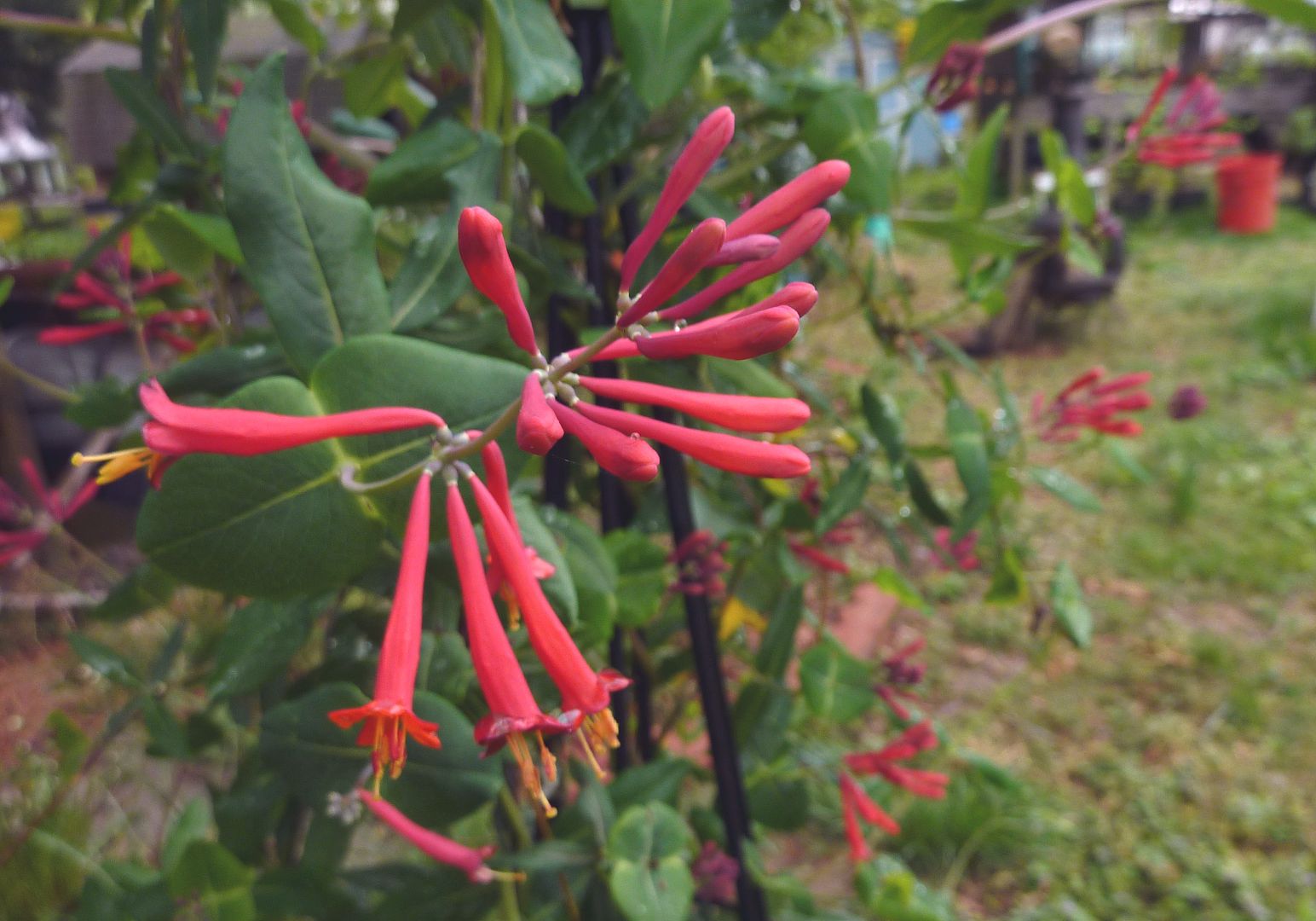
Just to show off what the coral honeysuckle, Lonicera sempervirens, has to offer in the late winter. It's still flowering sporadically on new growth. It's got a few berries too. It's staying nice and compact even though there's a cable wire running next to it, a simple cut was all that's needed to get it to stay away. And it hasn't grown back in that direction at all. That said, my only complaint about this plant is it's to easy to snap off a stem. At the start of the year maybe 40% of the plant died because a squirrel chewed through one of the stems at the base of the plant.
First frost all those leaves should fall off and the plant will go dormant until next spring. Spring time is the best time for flowers because of all the new growth bursting out of the plant.
While some gardeners have been searching high and low for fall color this native honeysuckle, Lonicera sempervirens has been flowering since early spring! They bloom early for the hummingbird migration. Afterward, flowering dies down but continues sporadically over the summer. Now that it's getting cold again they're putting on another dazzling show for the migration back.
A delightful treat for other birds slowly form on the vine. I can't imagen hummingbirds eating the berries. Hopefully I'll get to photograph what does.
Let me just say I order from Prairie Moon Nursery religiously. They probably sell the most wide range of native perennials and herbaceous plants on the internet. And I love the fact they started doing videos of their plants. They sort of show and talk about the environment where the plant grows, what grows around it sometimes, and you get an idea on scale and so on. However, in this video he goes on to talk about our native Columbine is good for attracting bees, hummingbirds, and butterflies. The only real fault with this video is not showing that. I will give in and say YES bees, hummingbirds, and butterflies probably do work that plant... but I wish they'd show us some proof or illiterate a little more.
I don't mean to pick on Prairie Moon at all. This is actually an epidemic for every garden center I've been to. Their plants have tags on them, all saying "Hummingbird Plant" or "Attracts Butterflies" and these are some of the most over used labels on plants. It's to the point where I believe people just start putting "Hummingbird Plant" on anything with red flowers. This lack of information really annoys me. It take a bit more than a hummingbird plant to get hummingbirds.
Earlier in the week I saw Goldfinches much earlier than I thought before. They were hanging out in a field next to a nature preserve. Walk though the nature preserve and you'll find almost nothing of interest, besides an abundance of chipmunks and robins probing the leaf litter. The occasional butterfly passes by and they have frogs in the streams. Nothing special. But the birds in this place are amazing. There's a community garden out in this field and all the birds hang out there picking at what the people didn't harvest. While talking to a fellow gardener I saw a Red Winged Blackbird and an Oriole fly over. These are fairly uncommon except in certain areas. There were a bustling community of birds here all nesting in the trees and shrubs that made up the forest edge.
Red Winged Blackbirds are a new one on me so I'll skip it for now. Orioles though love fruit. They say put sliced oranges at the feeder to attract them. The thing about Orioles though is the males are territorial spanning areas for miles and they often fight to the death for females.
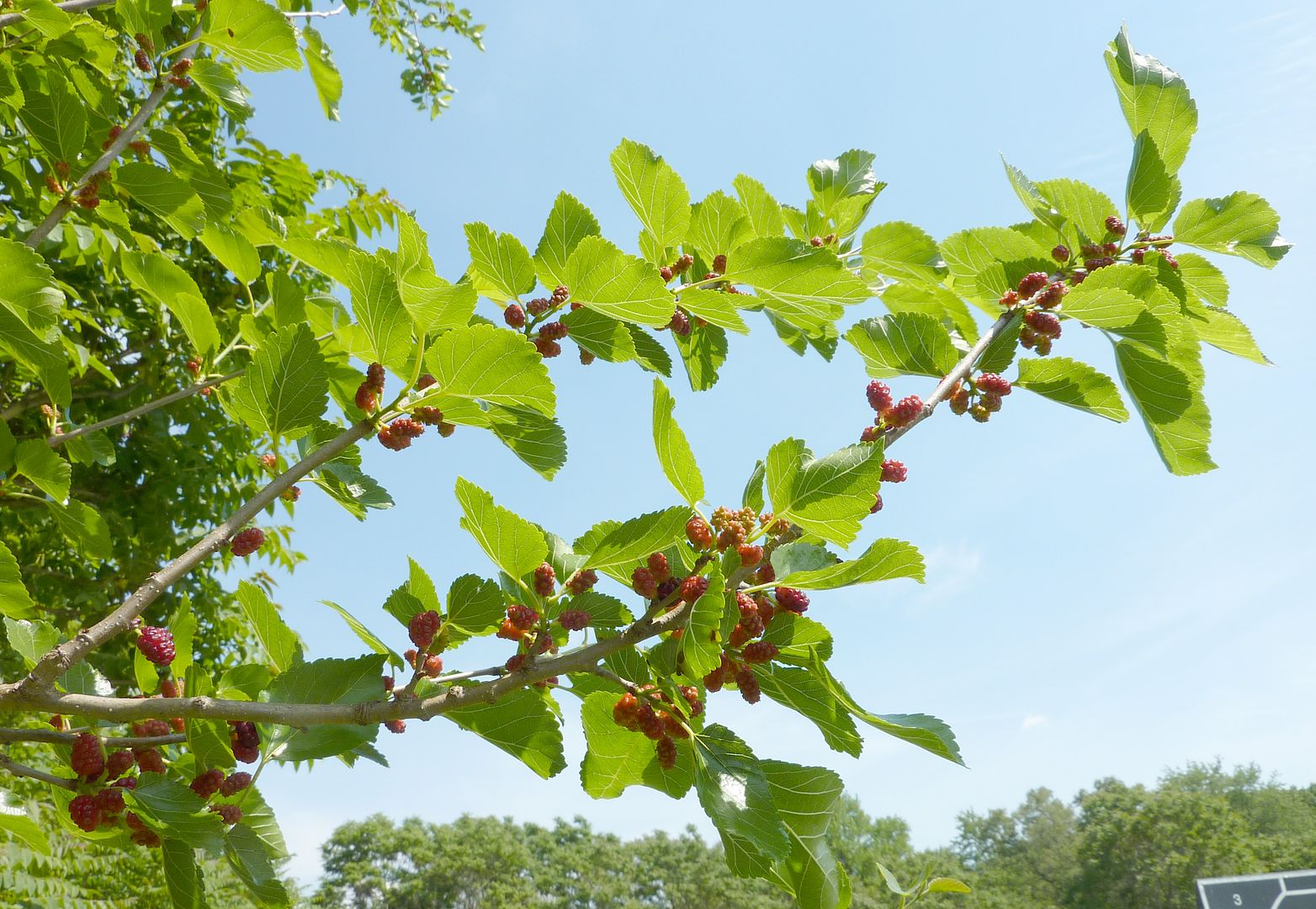
Some of the food sources coming into season included assorted Mulberries, some Sumac, and Choke Cherry.
Red Mulberry.
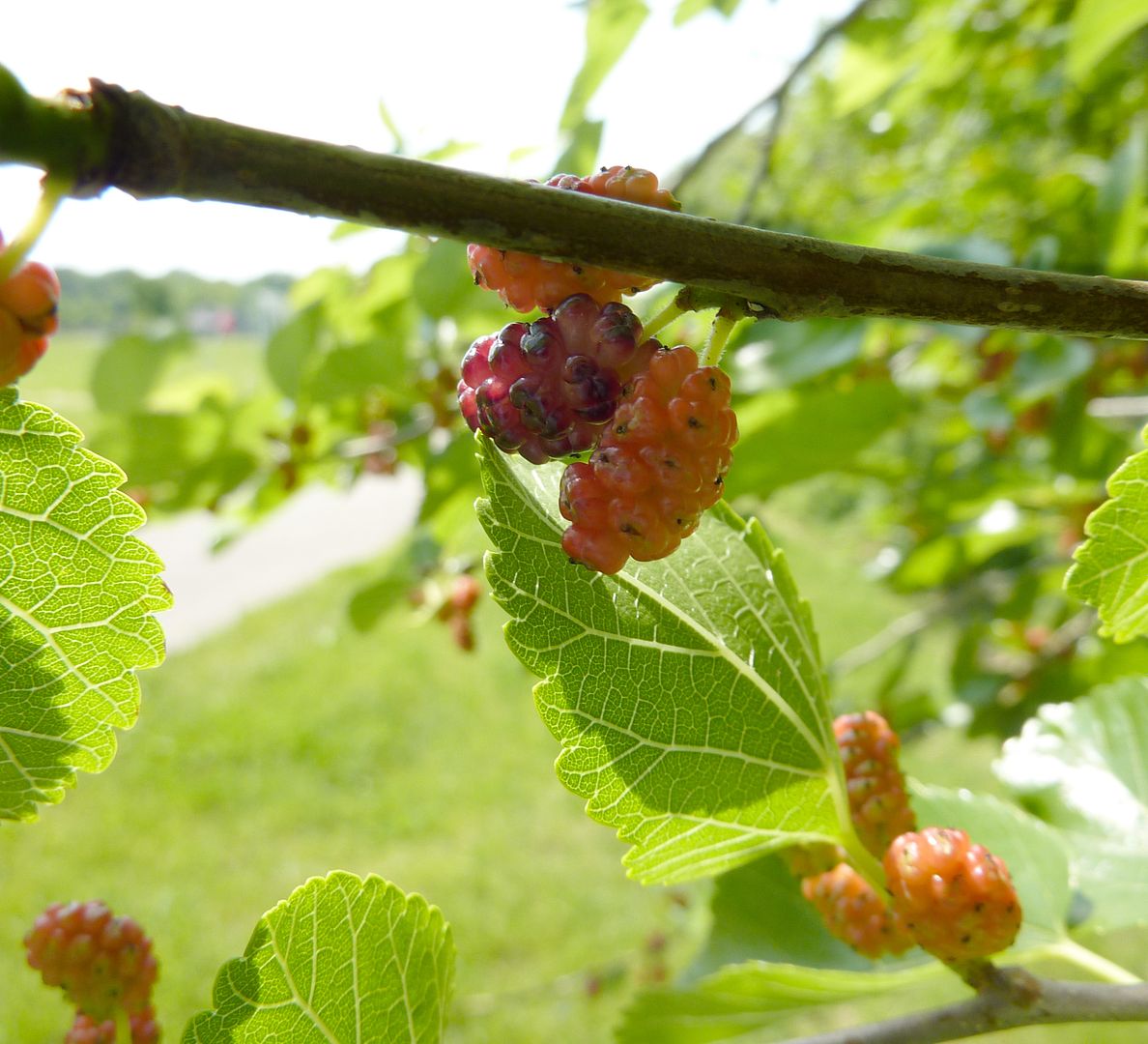
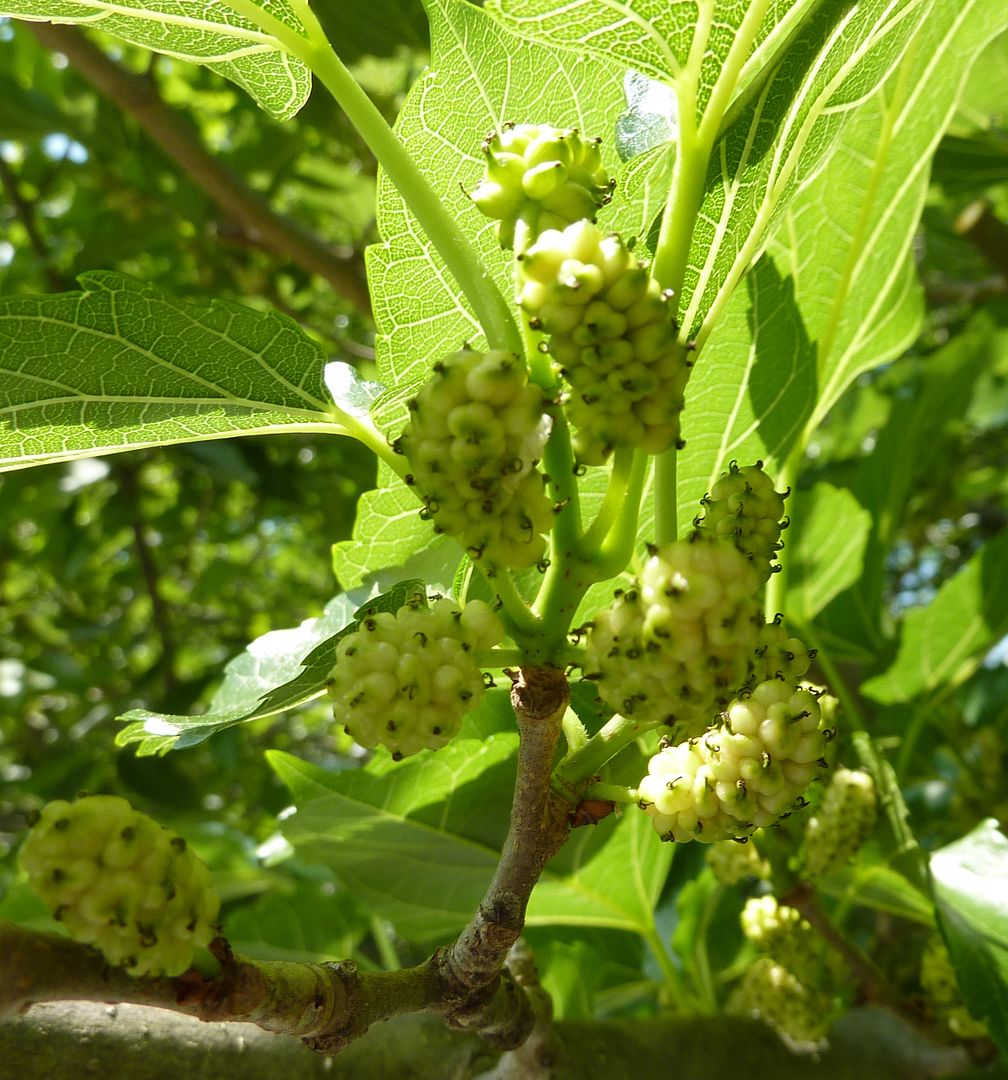
White Mulberry, almost ripe. The fruit gets fatter and doesn't turn any particular color.
Both of which can double as a source of protein thanks to a type of worm that digs into the fruit. There were several of these trees lining the forest.
Driving a few miles back to my house; we don't have anything like those birds at our feeder. Goldfinches don't show up until the sunflowers go to seed. Some of our native sparrows also show up to sunflowers. They see the flowers while passing over and land to do an inspection. Once they learn there's food there they usually make a point to check it regularly. Our most recent triumph is making it onto such a list to a Hummingbird. He's shown up to our Coral Honeysuckle twice now. Coral Honeysuckle works great for this. The plants are only two years old and loaded with flowers. The red color catches their attention, and the long tube shape makes sure that only the hummingbird and most long tonged of butterflies can get at the nectar.
Go to a garden center though and you'll find probably all of the honeysuckles regardless of the flower shape are labeled as "Hummingbird Plants." Bush Honeysuckles, which are considered invasive as well as the invasive Japanese Honeysuckle have smaller flowers that open up. This means it's just as much a food source to Carpenter Bees (which everyone hates as far as I can tell) as Hummingbirds! I see way more Carpenter Bees working the flowers than anything else.