Showing posts with label Butterfly. Show all posts

Tuesday, February 27, 2024

Last Year's Pipevine Swallowtails!!!

 So, I have been growing Woolly Pipevine for at least 14 years. I went with Aristolochia macrophylla over A. tomentosa because it's less aggressive.... or at least, it's easier to control. A. tomentosa sends up new stems from everywhere its roots spread out, so just one plant can take over a whole garden bed with new stems poking up and climbing all over the plants that grow there. A. macrophylla doesn't do this. It's just the one main trunk and lots of stems that come off of that and climb all over whatever. Put another way, the roots stay where you planted them. 

I initially planted this as a host plant for the Pipevine Swallowtail Butterfly. But this isn't a species very common to my area. They are found in New Jersey and have been sighted in my county, but there aren't any large populations nearby. The reason for this is there aren't many host plants around. Black Swallowtail are abundant because they're a generalist on the carrot family, so every field that's been invaded by Queen Anna's Lace, or home gardener growing Parsley, Carrots, Fennel, Dill and so on are helping this species thrive. Tiger Swallowtails are even more common thanks to Tulip Trees, Black Cherry, and what remains of the Ash population being staples in the patchwork of our local forest lands. 

The nearest sighting of the Pipevine Swallowtail to me is about a 30 minute drive from my house. So for 14 years the vine pretty much went unused aside for the occasional Robin's nest, and Ant which used it to get from our shed to the Redbud it's latched onto. 
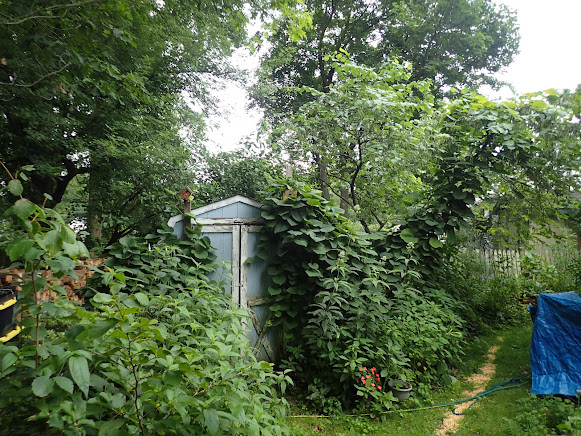
Ohh yes, the shed. The vine is slowly consuming it on both sides, though hasn't quite taken over the roof yet. The shingles still get too hot for its stems to lay but each year I see it adding another layer as the leaves it makes up there grow larger and larger and shade out enough for new stems to safely sit without getting baked off. 

I'd been thinking about pruning it back but then one day last July I went out there and noticed these clusters of little orange eggs. "OH MY FUCKING GOD!!!" I shouted.

A female Pipevine Swallowtail had found our vine and graced it with four clusters of eggs. Sadly one of them was on a vine that stuck out into the path and I was going to prune off. Raising butterflies in captivity is normally frowned upon but I decided to make an exception here, and this would let me better document their life cycle. And for the record, the majority of the egg clusters I left outside. It was just a cluster of 9 eggs that I brought in and raised in a butterfly cage. Also a few days later I discovered additional egg clusters that seem to have been laid after the first four clusters, so I guess she came back or a second female flew by. 


Outside I noticed all of the egg clusters were laid on the newest growth. This is likely because the toxin in the leaves will be at the lowest here and the caterpillars will be better able to handle it.


After a few days, they entered the "Forbidden Gummy Worm" phase of development. Seriously though don't eat these. The toxin pipevine plants make, and caterpillars eventually store in their bodies, is an actual carcinogen. This is likely why the plant fell out of favor among gardeners. 

I was making a mistake with raising the ones indoors. You're not supposed to bring them inside it seems as this throws off their natural rhythm. Should I do this in the future I'll be sure to keep the butterfly cage outside. 

It was neat having them inside though. Their constant chewing is loud and with nine of them going at it there was an ambient Yule Log effect going on. I wish I had recorded it.

Being Swallowtails, this meant their caterpillars have "horns" this yellow/orange tongue-like appendage that comes out of their head and sprays a kind of formic acid or foul smelling chemical out. The idea is should a bird try and pick one up, BAM!!! Awful Perfume Sample right in the eyes! The caterpillar will likely die soon after this happens but rest assured, that bird certainly won't be picking one of these up to feed to their kids. 

All that being said, I had to poke this thing with a pencil for a good ten minutes or so just to get him angry. 

Large black worms with orange dots all over them don't exactly blend in. It's almost like they're asking to be eaten. And as it turns out, this is exactly what they're doing. This is the same/similar strategy the Monarch Butterfly uses. Monarch caterpillars are black, white and yellow, and they actively feed in the day in full view of predators. They taste nasty though and have bad chemicals in them that might kill a baby bird. Eventually through repeated predator, the birds learn not to feed these caterpillars to their babies. The trouble with this strategy is there's always a new generation of birds to teach but eventually the local population learns to leave them alone and the caterpillars thrive.

 
It's around now that I noticed none of the outdoor caterpillars have survived past the second or third instar. This makes me glad I at least brought a few indoors. Maybe I'm greedy but I didn't want to wait another 14 years to photograph them. Also as far as caterpillars go, they look really cool.

 Chrysalis Day!

 One by one, they all shed their last layer of skin off and formed a chrysalis. 

10 to 14 days later, they started to emerge. 

BTW I have no idea how you tell the gender in this species. Some people say the females are this navy blue color while males are more of a green... but uhhh.

This is the same butterfly as the navy blue one pictured just above. I don't think the color thing is accurate. Either that or I somehow managed to hatch 8 girls. (1 did not emerge from its chrysalis at all. I'm assuming it's going to hatch out sometime this Spring.)

I released all 8 of them once their wings were expanded and they were able to fly. Sometimes they would hang out on the flowers I put them on but not for long. Within the hour they were fueled up and flew out into the world. 

A few days releasing them all though, I was delighted to come home and find one in my garden. This wasn't staged at all. I had to pull out my phone and quickly snap a picture. 

Hopefully they'll find my garden again this year. And hopefully more people will give Pipevine a try so this butterfly becomes a more common sight every year.

Sunday, April 9, 2017

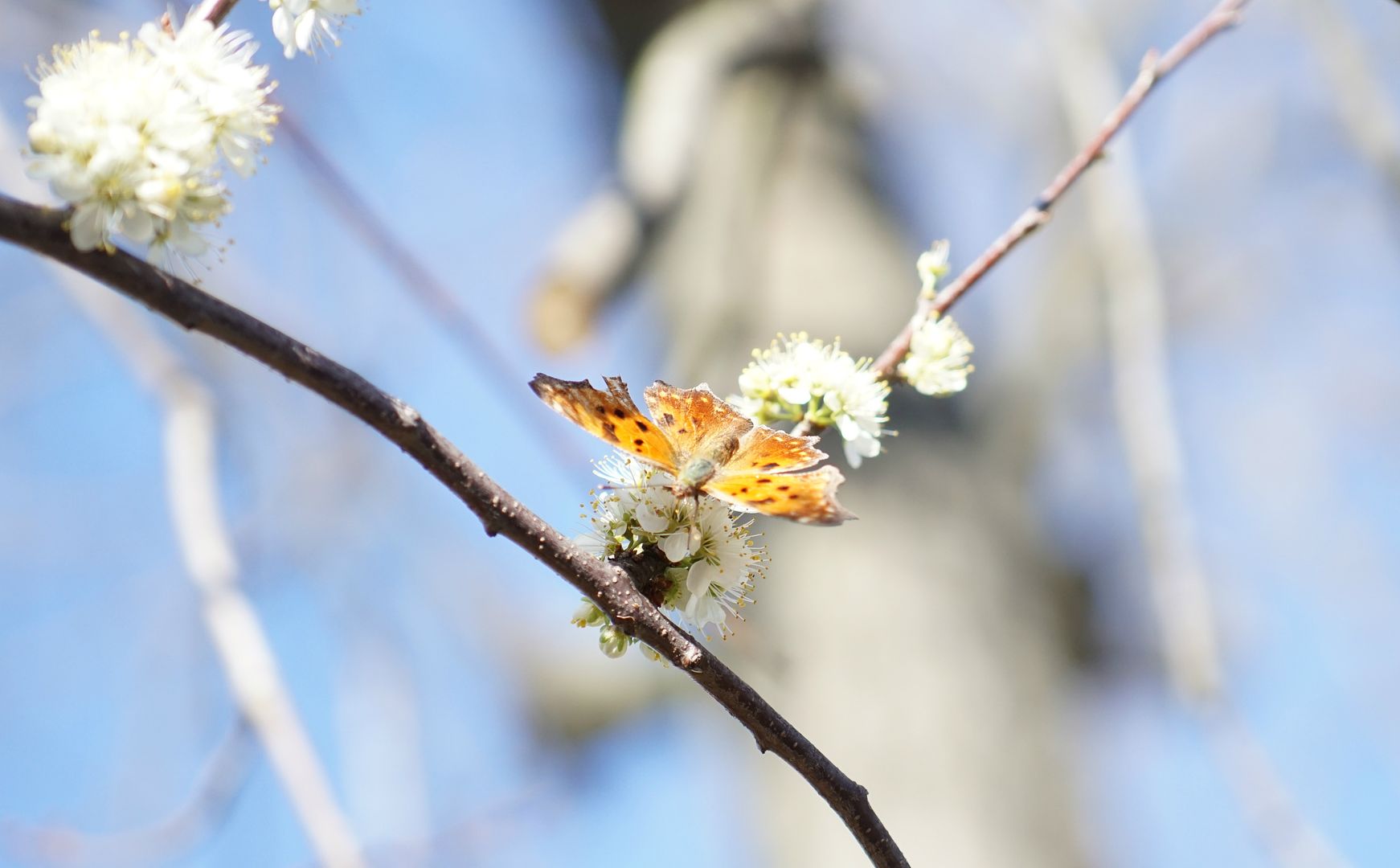
Eastern Comma on Native Plum

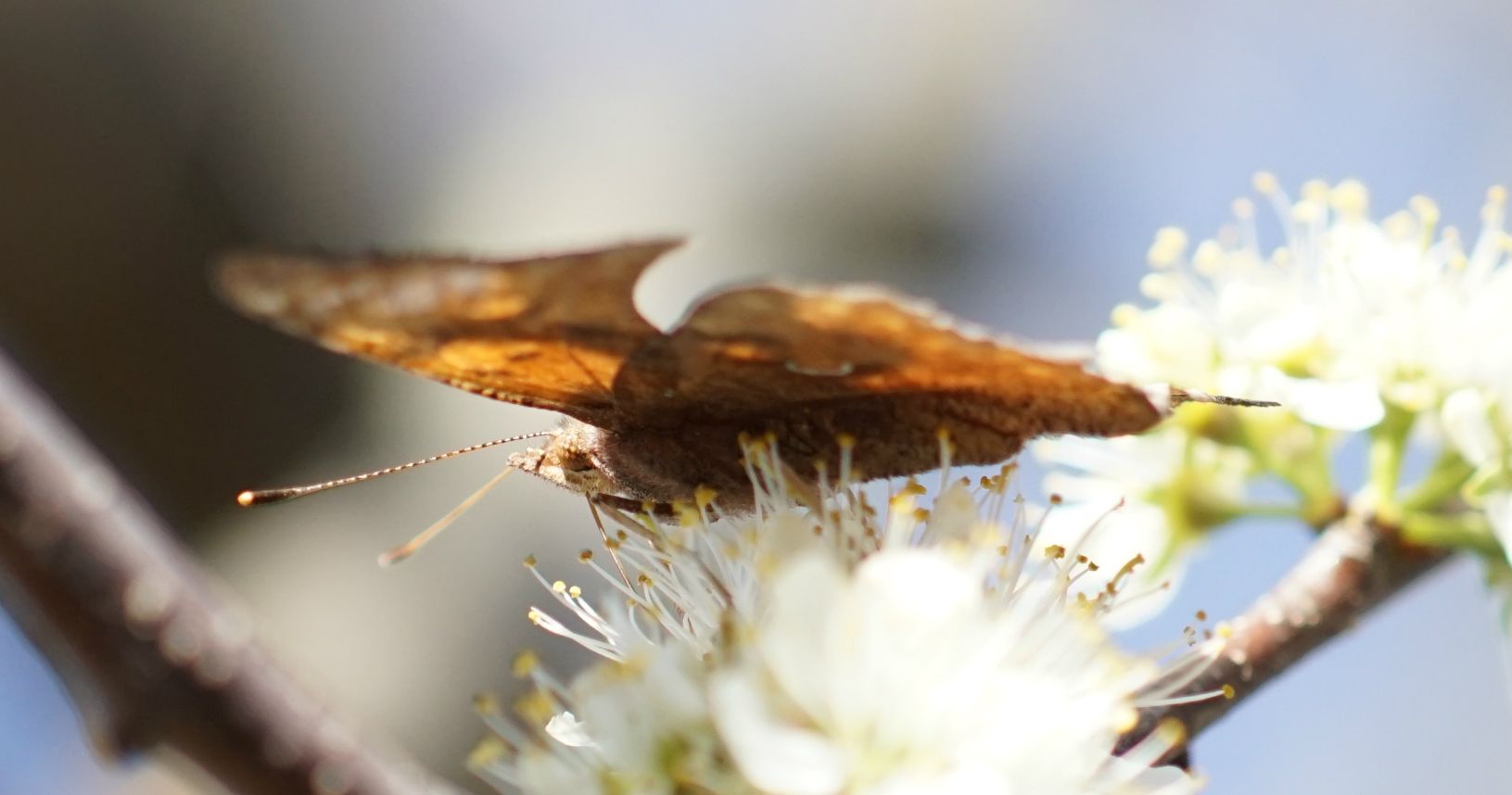
I found an Eastern Comma on my Native Plum today.


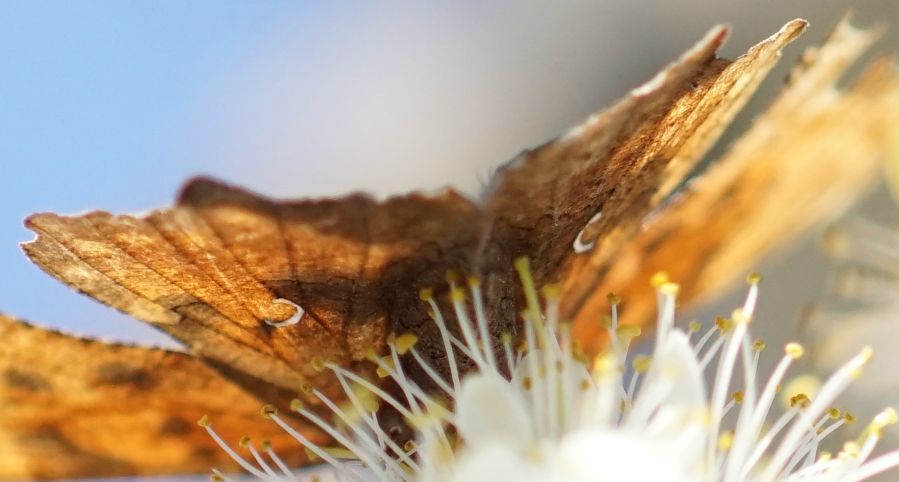
Polygonia comma is a species literally named for it's two C or   ,    shaped marks on the underside of it's rear wings. A similar-looking species, Polygonia interrogationis is known as the Question mark because of a break in the C shape, making them look more like question marks.


Thursday, October 29, 2015

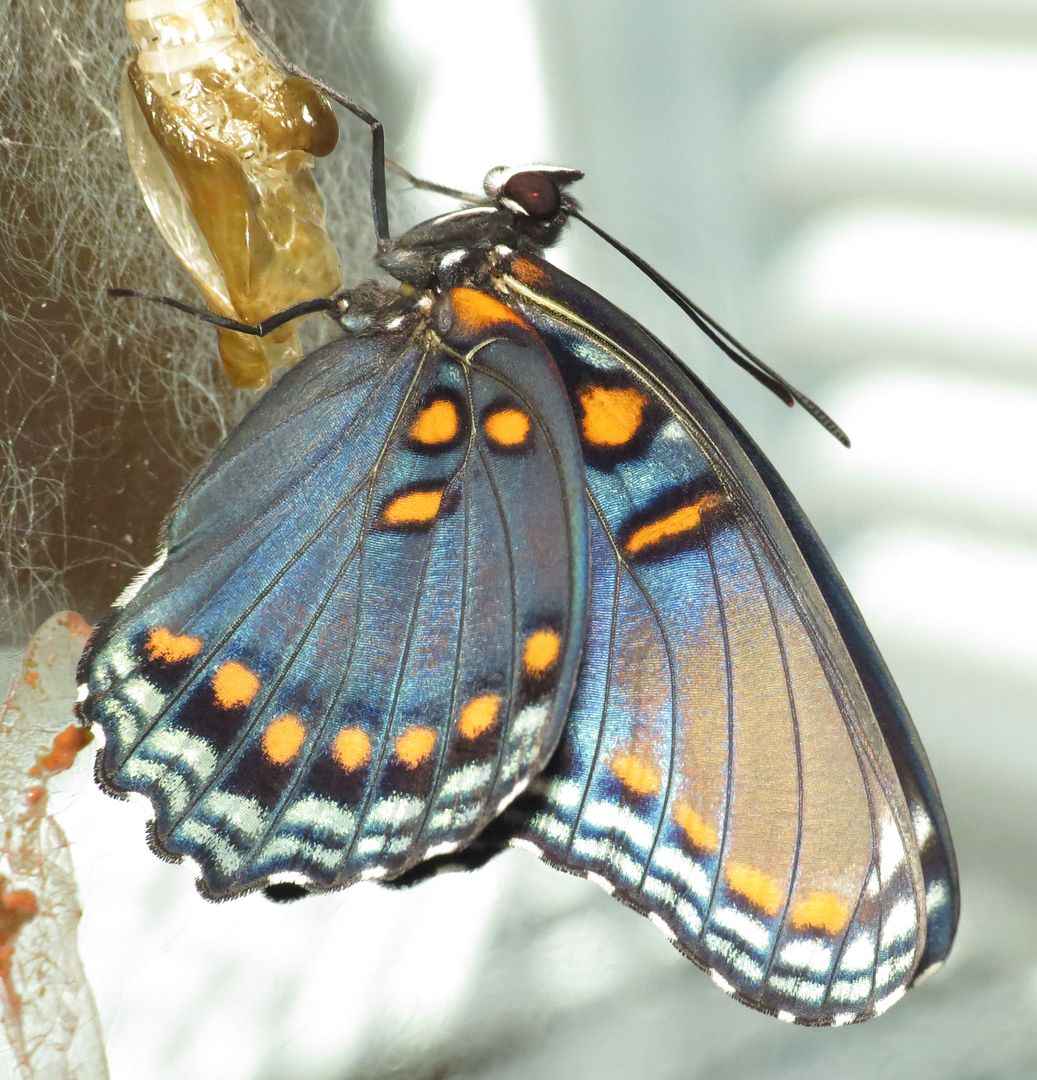
Red Spotted Purple Emerges

Well the Red Spotted Purple emerged, Limenitis arthemis. And it's bizarrely small, maybe 3 inches wide at most. I've heard of small generations of other Lepidoptera being born but it was always attributed to poor leaf quality, occasionally species having to eat leaves that had already fallen off of trees. I don't think that's what happened here. In the last two instars I was picking leaves fresh off the tree in groups of four to seven and the caterpillar consumed them all in one sitting. My only thought on this is either it's somehow beneficial to be smaller than typical during the winter months (when these dwarf versions tend to occur) and must be somehow triggered by either chemicals in the tree leaves it consumed and/or hours in the day. 

I did notice the White Snowdrift Crabapple retained its leaves, and still has them on the tree even now, where as the native American Plum, Beach Plum and Black Cherry have all already dropped their leaves. It also had ripening fruit on it, so maybe it's just a result of hosting on Apples instead of Plums at this time of year. (They can use both).

I'm going to try and keep this one in captivity. We're well past the time to let them go for the year, and outside the only thing blooming is Goldenrod and Georgia Asters. The species does not migrate south and they do not over winter as adults, so there's zero chance of it surviving beyond a week. My intent is to keep this one as a specimen. 

Wednesday, August 5, 2015

Spring Azure Host on Sourwood

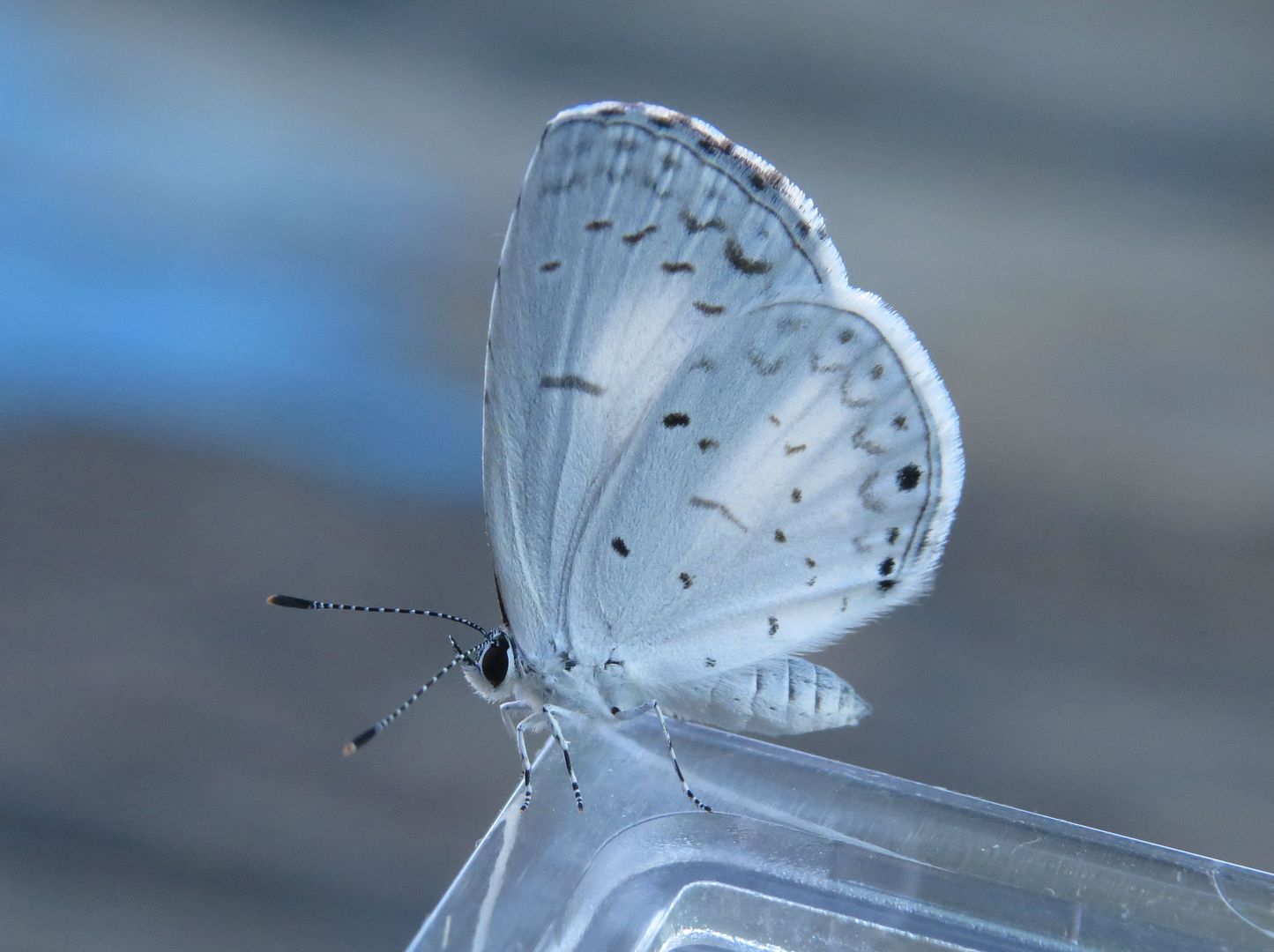
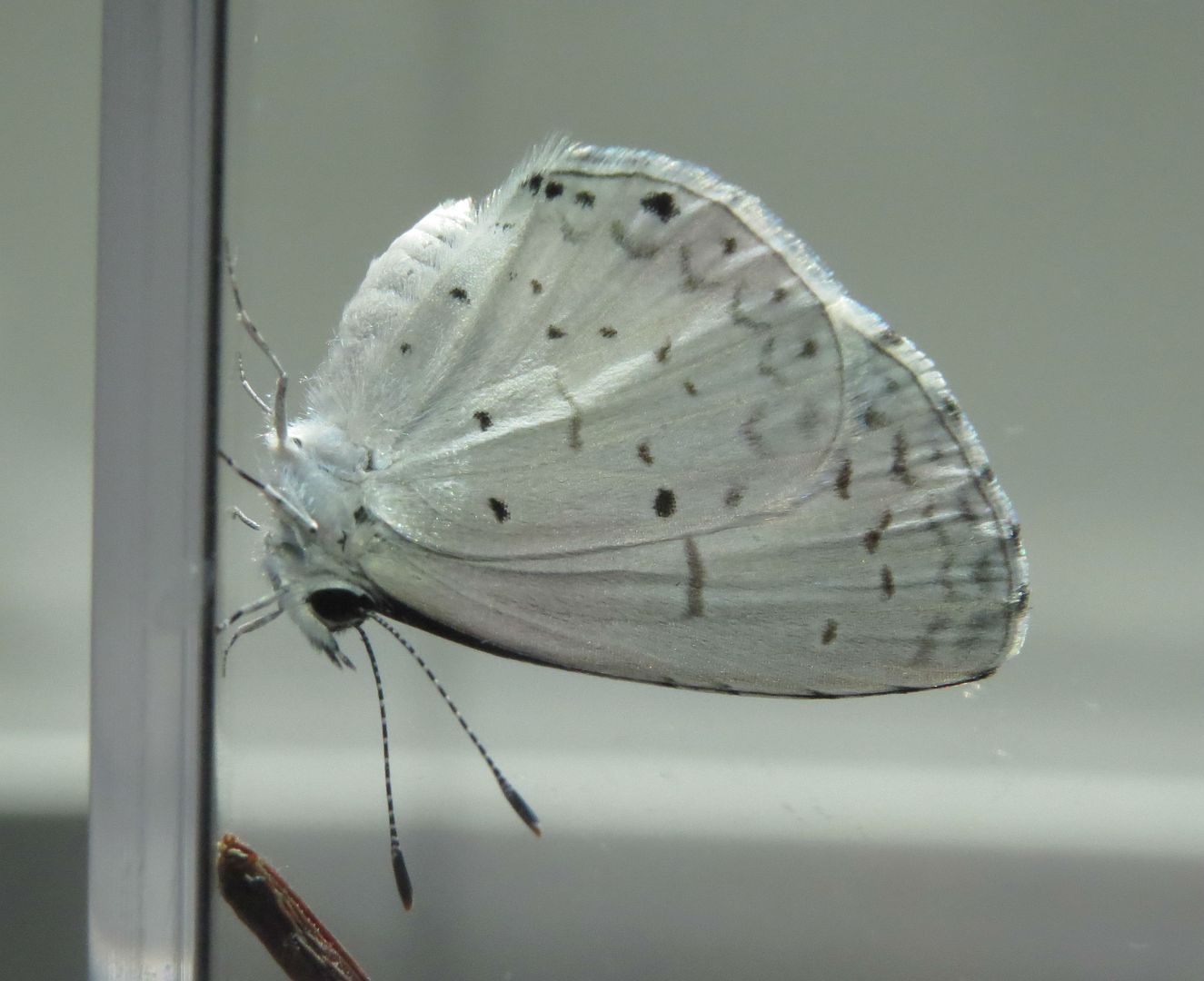
On a recent post, I talked about how I discovered caterpillars consuming the flowers to my Sourwood tree. I was determined to find out what they were so I collected one and put it in a jar on my desk. A few days passed and the caterpillar formed a chrysalis, the smallest chrysalis I've ever seen! And roughly ten days later, it has emerged, no surrogate ant colony needed.

Spring Azure it is! Something in the Celastrina ladon complex. Basically there's like 4 or 5 butterflies that all look seemingly identical to one another and have a huge variety of host plants. What makes them a complex is that it's unclear how many species are involved, which ones use what host plants, and how each host plant alters the appearance of the caterpillar and the adult form. Overall this butterfly uses the flower buds Dogwoods, New Jersey Tea, and a few others but some host plants such as the Sourwood are unknown, which might suggest there are more species out there than the initial 4 or 5 believed to be in existence. 

Saturday, April 25, 2015

More Black Swallowtails

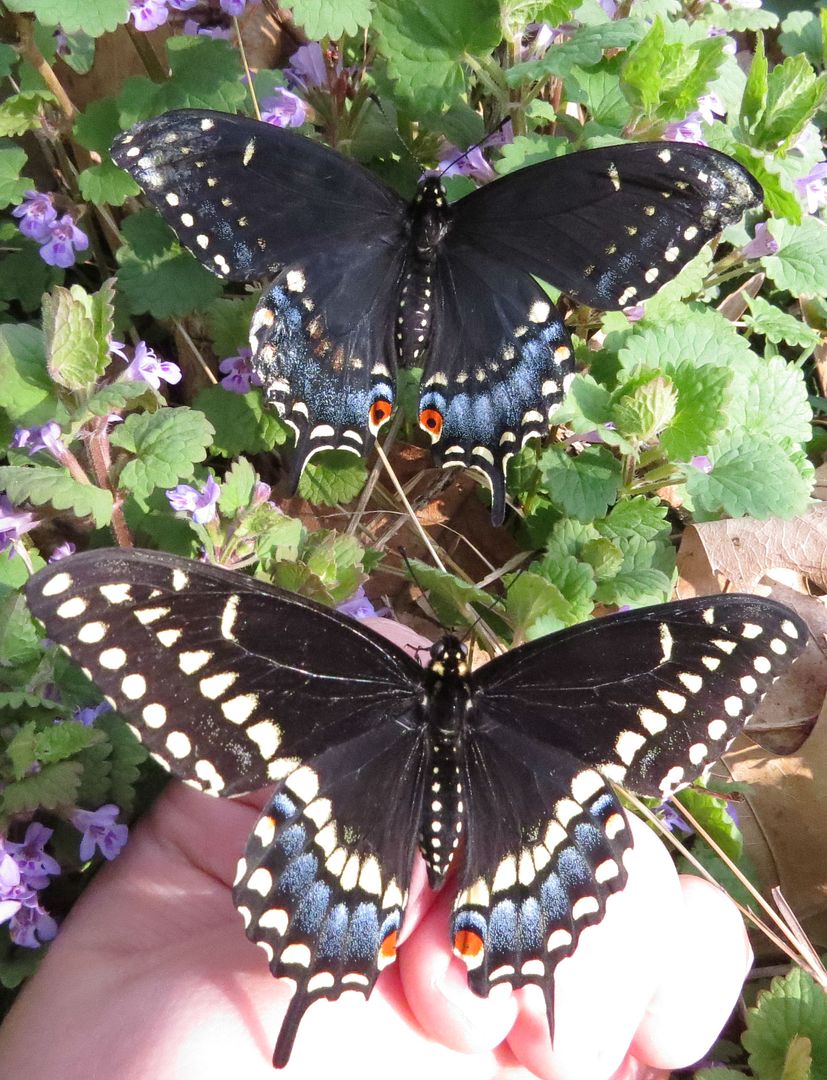
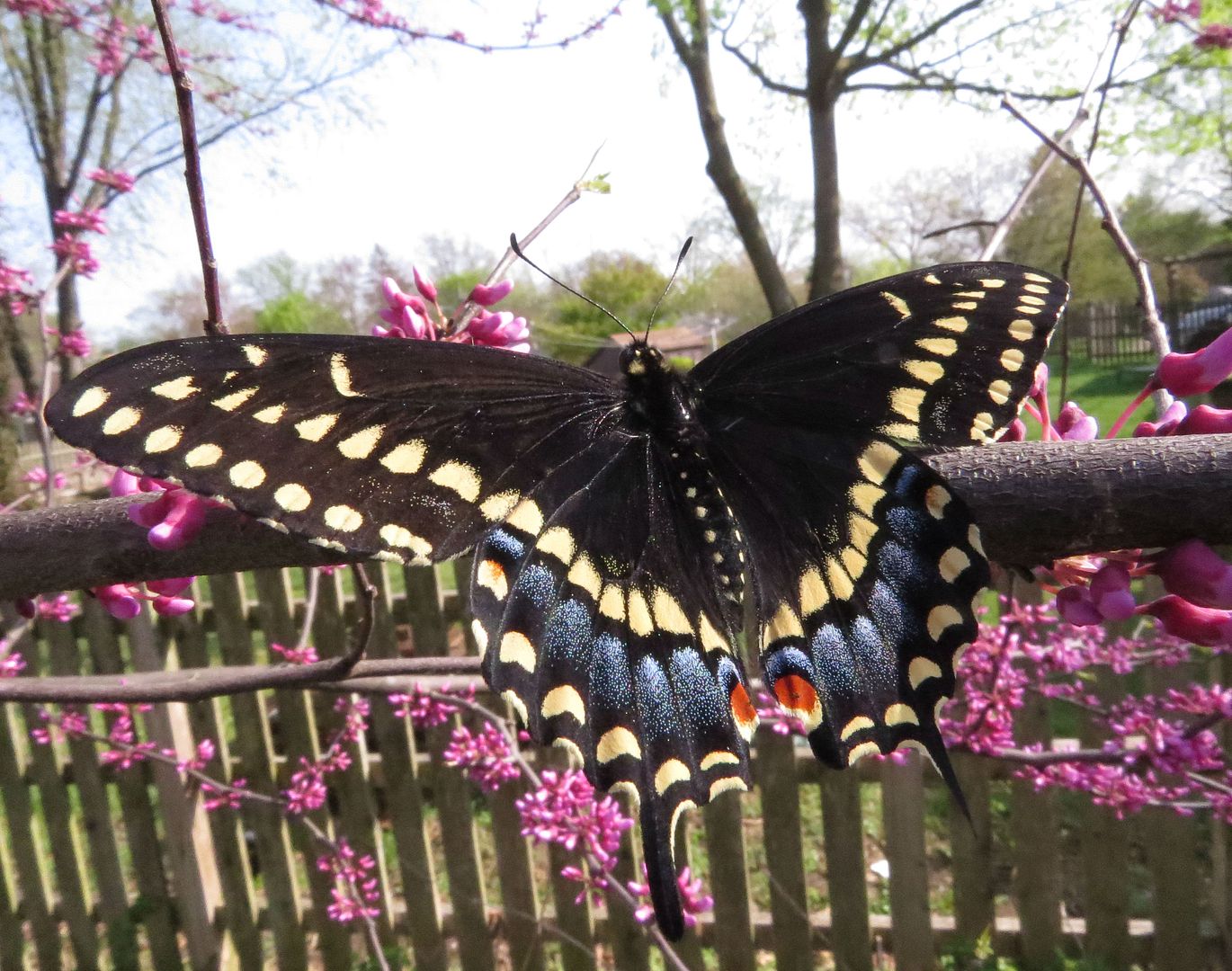
Released three more Black Swallowtails this week, two of which emerged as a pair. I may have been wrong on my earlier assessment of gender. The female (top) seems to barely have any yellow spots at all. The male (bottom) has the yellow spots but more strongly.

Here's the first one again, which I called a female but now I see the yellow spots are somewhat in between male and female, leaning towards male. It just goes to show these traits can vary among members within a species.

I seem to recall a one of my friends who raises a huge variety of silk moths that these wing colors and patterns aren't all entirely reliable. She occasionally hatches silk moths that have wing patterns belong to the other gender but she had said only happens rarely.

Also normally the females are larger than the males. Poor food quality in the autumn, an abundance of parasites, and long harsh winters seem to cause smaller or stunted generations.

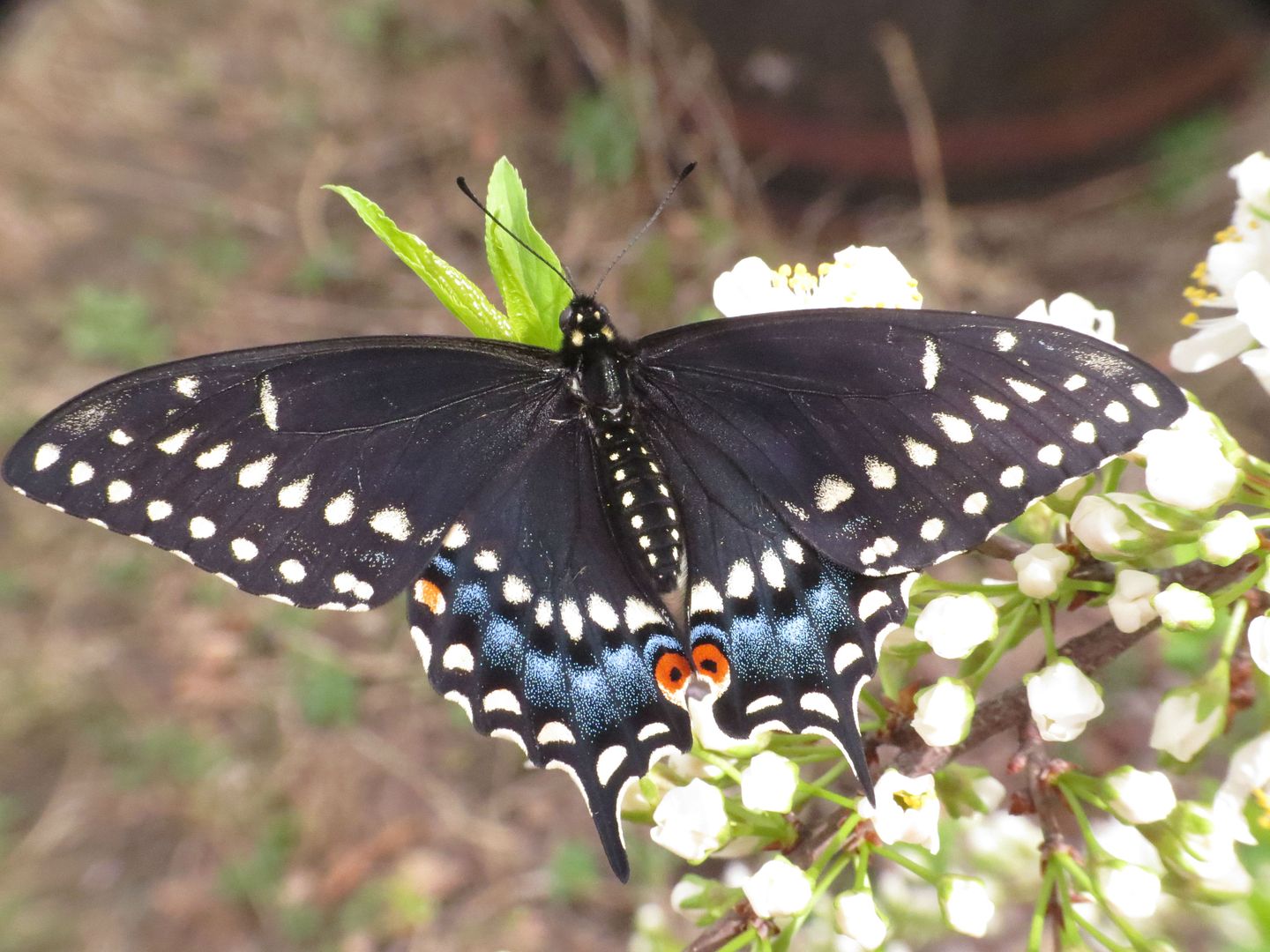
The female fluttered off before I could do much with her. The male however I was able to place and pose about to get this wonderful shot on my eastern redbud. (I don't think this butterfly wants anything to do with this tree. I'm actually not sure what flowers they go to this early in the year. Phlox maybe?)


Monday, April 20, 2015

First Black Swallowtail

The first of the Black Swallowtails I stored last autumn have finally started emerging. Just one so far, but I have a cage with somewhere close to 18 chrysalises. It's a female judging by the strong patch of blue on the wings. Males tend to have a more strongly defined row of yellow spots.


I like handling them at this stage because they're easy to pose on plants and flowers. I didn't quite do a good job here though. It's a little unrealistic that they'd be on a native plum but I suppose anything's possible.

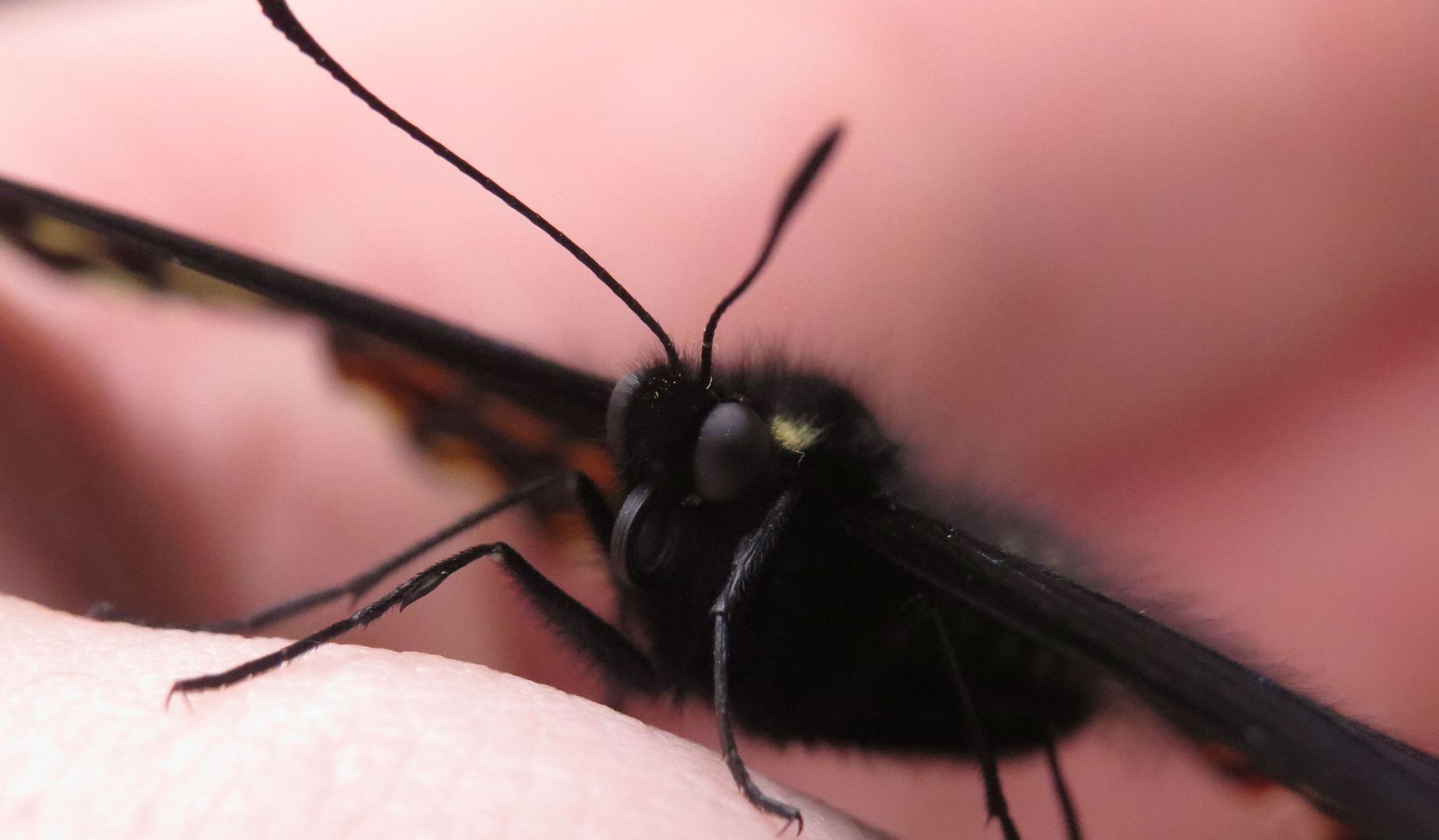
Her wings weren't quite stiff enough to fly off so she took to being placed in the sun real well. You can get in nice and close, at least as much as my camera would allow.

I know some photographers have lenses that let you zoom in on the eyes.

More to come, though there's a possibility some might hatch out as parasitic wasps.

This year I kept them stored outside in the green house for shelter. It was left open so the temperatures didn't fool them into emerging too early as it did last year, (had them emerging in February). This year I think the timing is more correct. I'm seeing Mourning Cloaks flying about and the host plants Golden Alexander has plenty of foliage for caterpillars, (though they sure love parsley and fennel more).

Monday, April 13, 2015

Insects Take Flight

I went to the local woods last week.

Winters Ants were flying though I didn't notice any queens. It was nothing but males (pictured here caught in a spider web). The species is Prenolepis imparis and in general they produce around 200 males for every new queen. In years past I was able to find them in abundance but not so much this year. Queens arrive and are quickly taken by a few dozen males. It's unclear if more than one gets to mate with her but they certainly try.

Workers to established colonies were also out foraging. Whole lines of these ants were streaming up and down trees, collecting the earliest bits of sap pushed out by newly forming buds.

The Mourning Cloaks were also fluttering about occasionally landing to sunbath. I believe they over winter in the adult stage and mate around this time of year, just before their host plants push out the first flush of flowers and leaves. They host on Willows, Birch, Elm, Cottonwood, a few others too; generally trees you find in a mature forest.

Despite their color here, they turn almost invisible when laying among the leaves. The rich rosy copper tone seen here is more like a black when viewed from afar. The spots along the edge of the wing change from blue, to white, to pink depending on the angle they're viewed. Often the wings are closed up when resting, making them blend in with the leaves perfectly. 
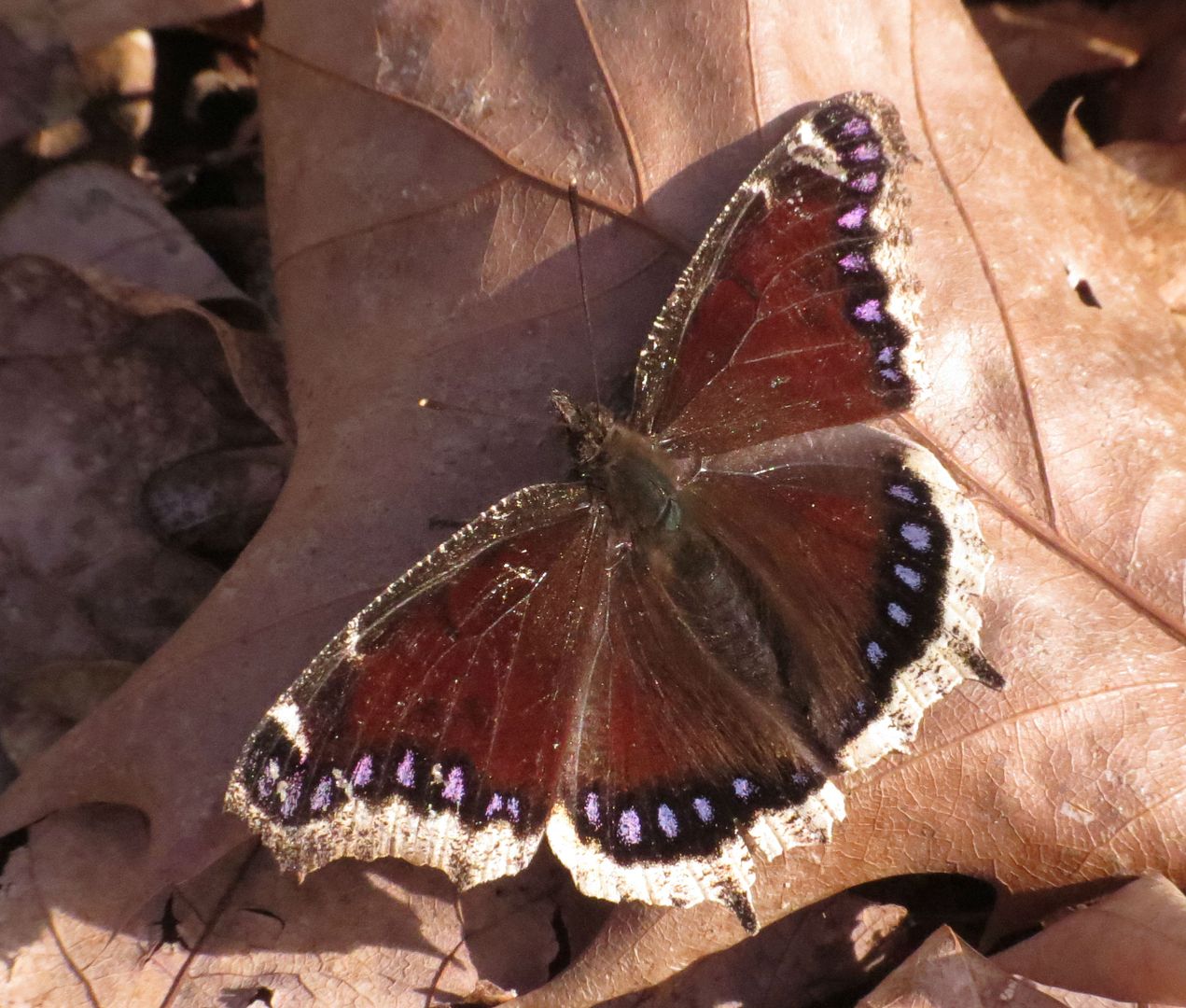
This one was sun bathing and didn't seem to mind me getting up close. It did flutter away when I blocked the sun though.