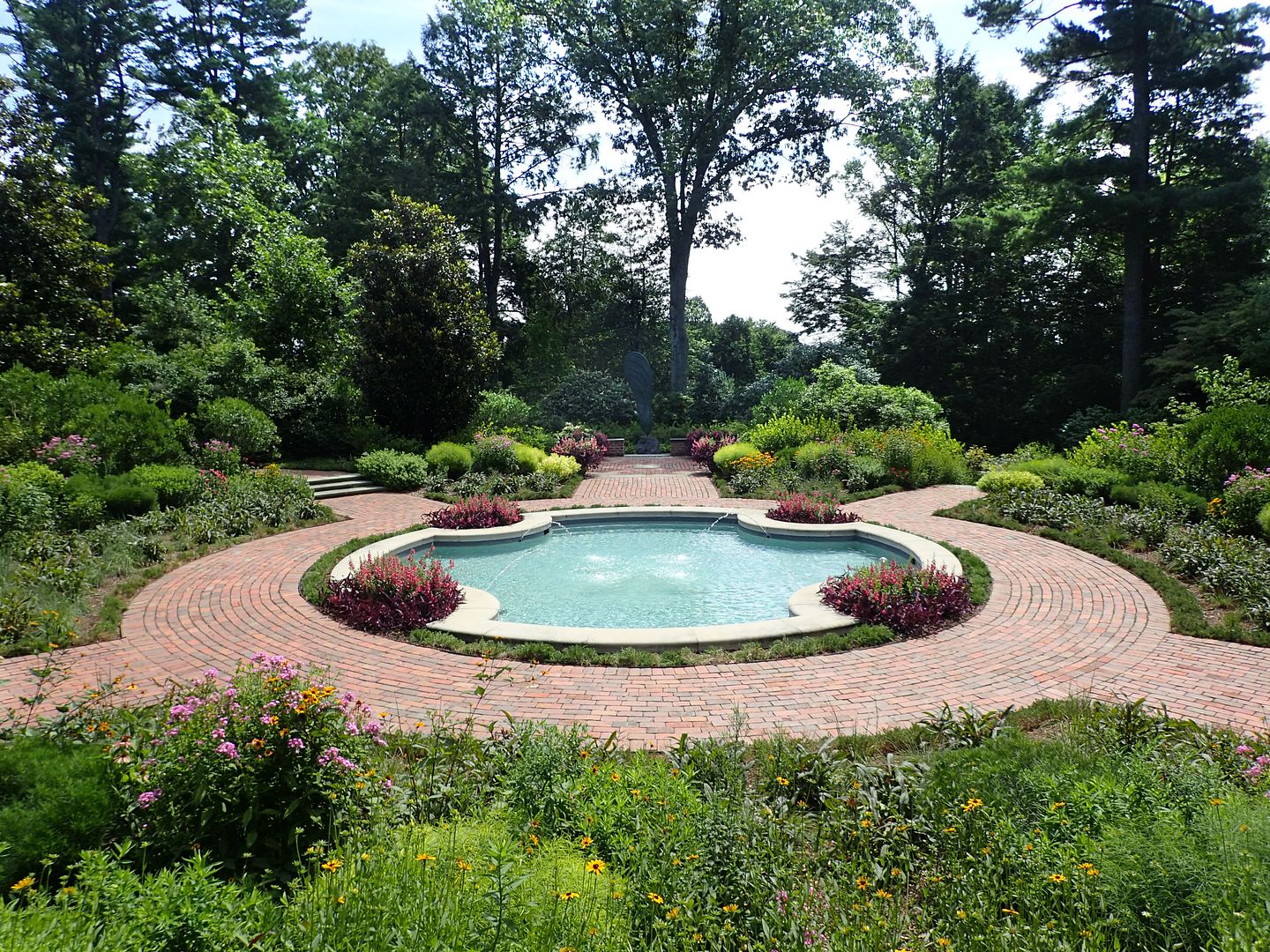
I was at the Mt. Cuba Center a few weeks ago and was glad to see all the different plants in bloom. Some of these I had never seen flowering before and was quite amazed to realized I'd been walking past shrubs and plants at the Mt. Cuba Center I'd never seen flowering all because I'd never visited on a certain week.
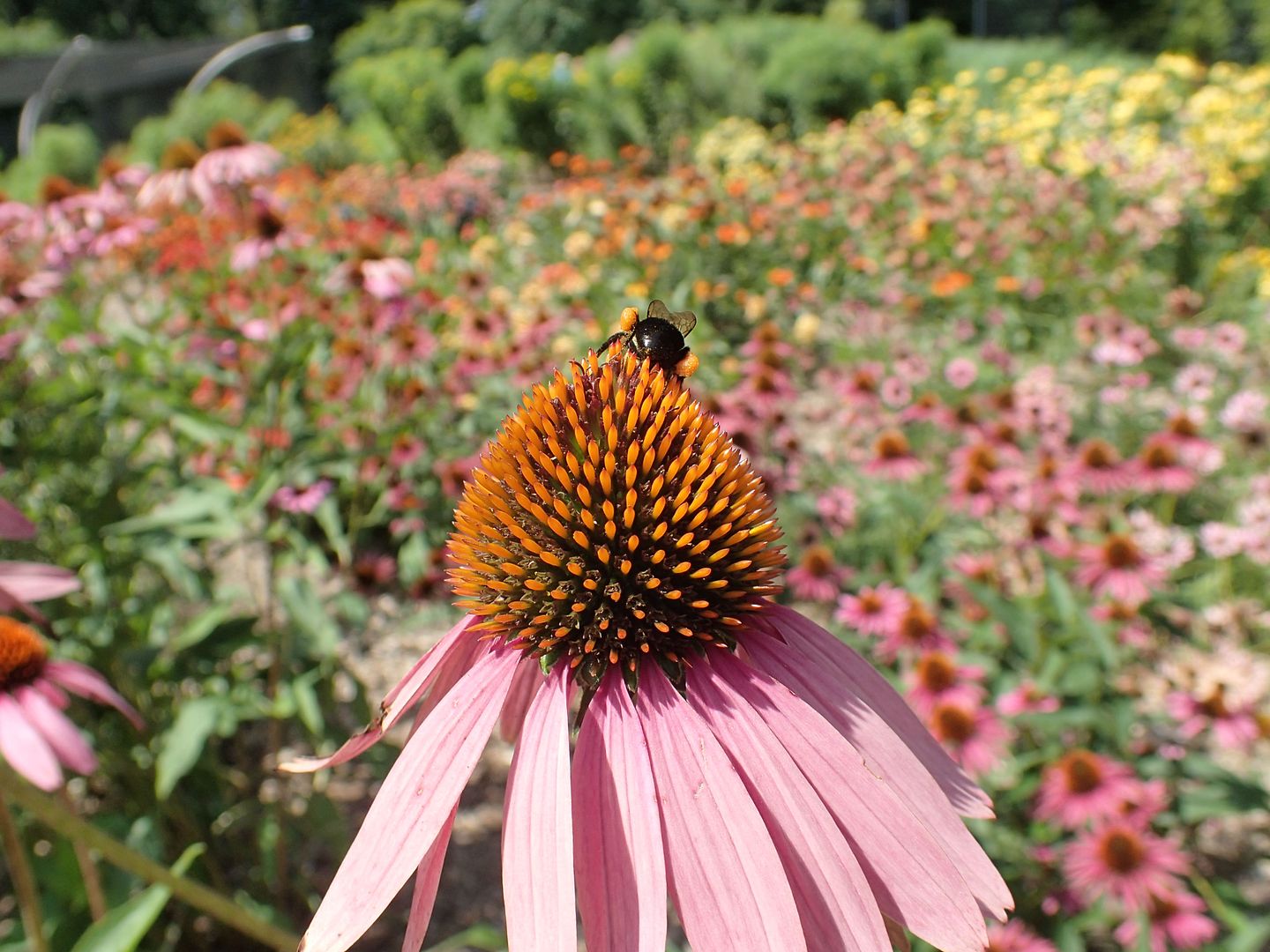
First though, while around the Round Garden, I paid a visit to the adjacent Trial Garden where they seem to be revisiting Coneflowers. They had already done these a few years back but I think they had different criteria back then. I know in recent trials with Monarda, and Phlox, they mention which ones Hummingbirds, Butterflies, and Bees favor so that would be a nice thing to know when deciding which of the hundreds of different Coneflower varieties they like.
So this is a fairly standard coneflower. I don't know if it's the true species or a cultivar but it's close enough. I recall looking around at all the colorful and wondering why they hadn't included 'Rainbow Marcella' which I bought this past spring.
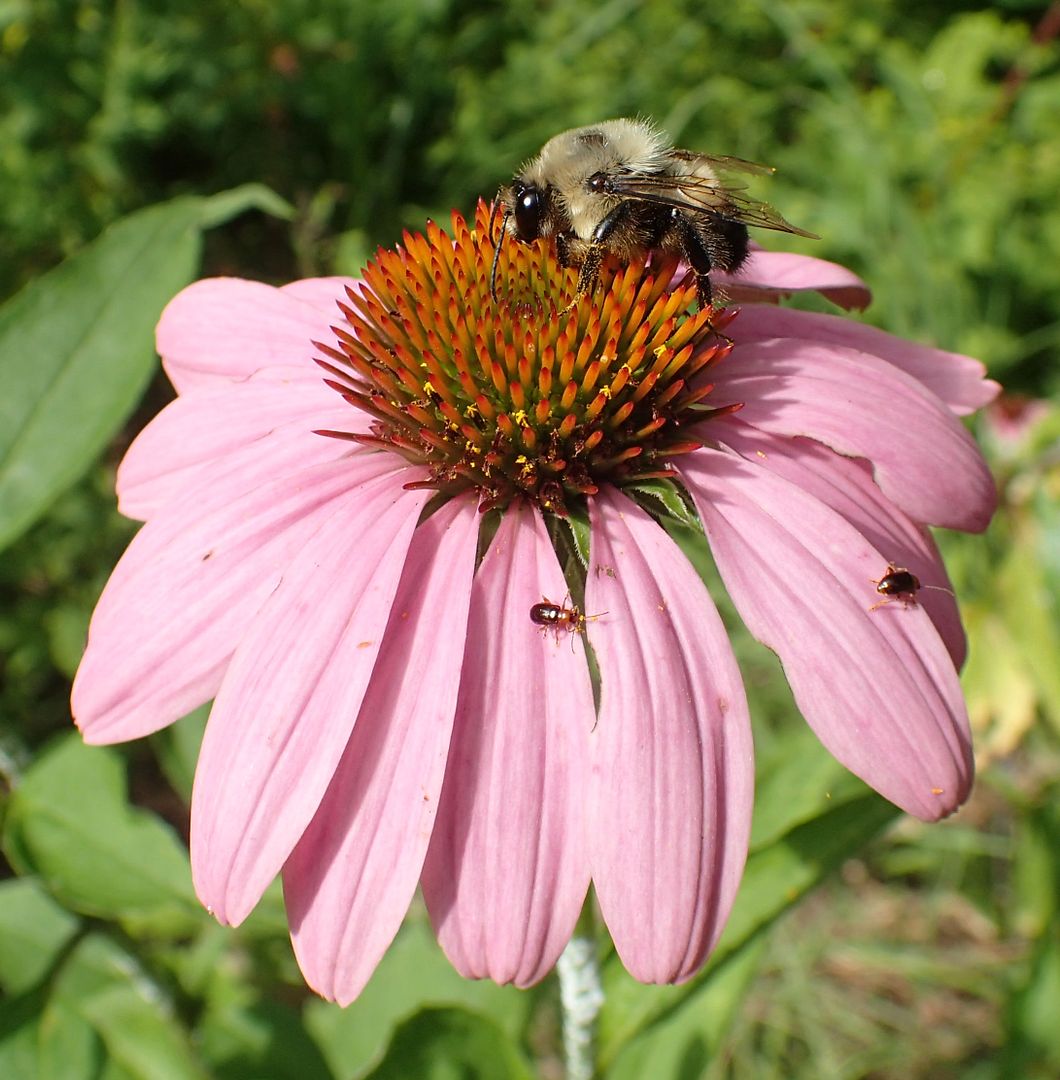
This is a plant back in my garden and the flower which the squirrels damaged but I was otherwise pleased with them. Now of 6 plants only 4 have flowers but only 1 of them has the cultivar color as advertised. I'd been thinking I was ripped off.
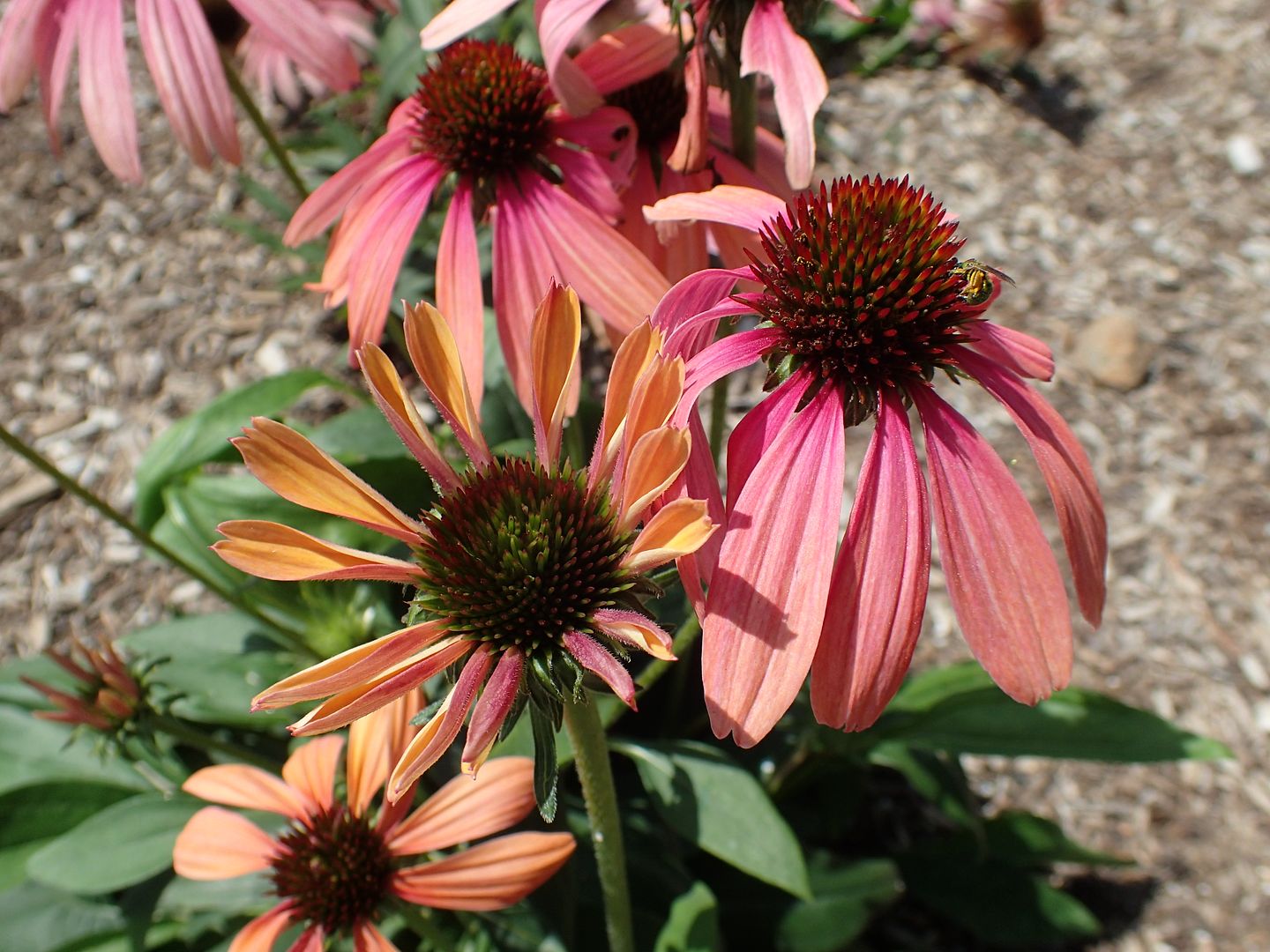
Well then I found it in the Mt. Cuba Center trial garden and realized the orange in the petals quickly fades out of the flowers. Also of all the cultivars in their trial it was among the shortest and I believe 1 of the 5 plants they had was already dead. :(
But once their trial ends, I'll be sure to read over the results carefully and if there's a particular cultivar or true species that does well I'll be sure to add it.
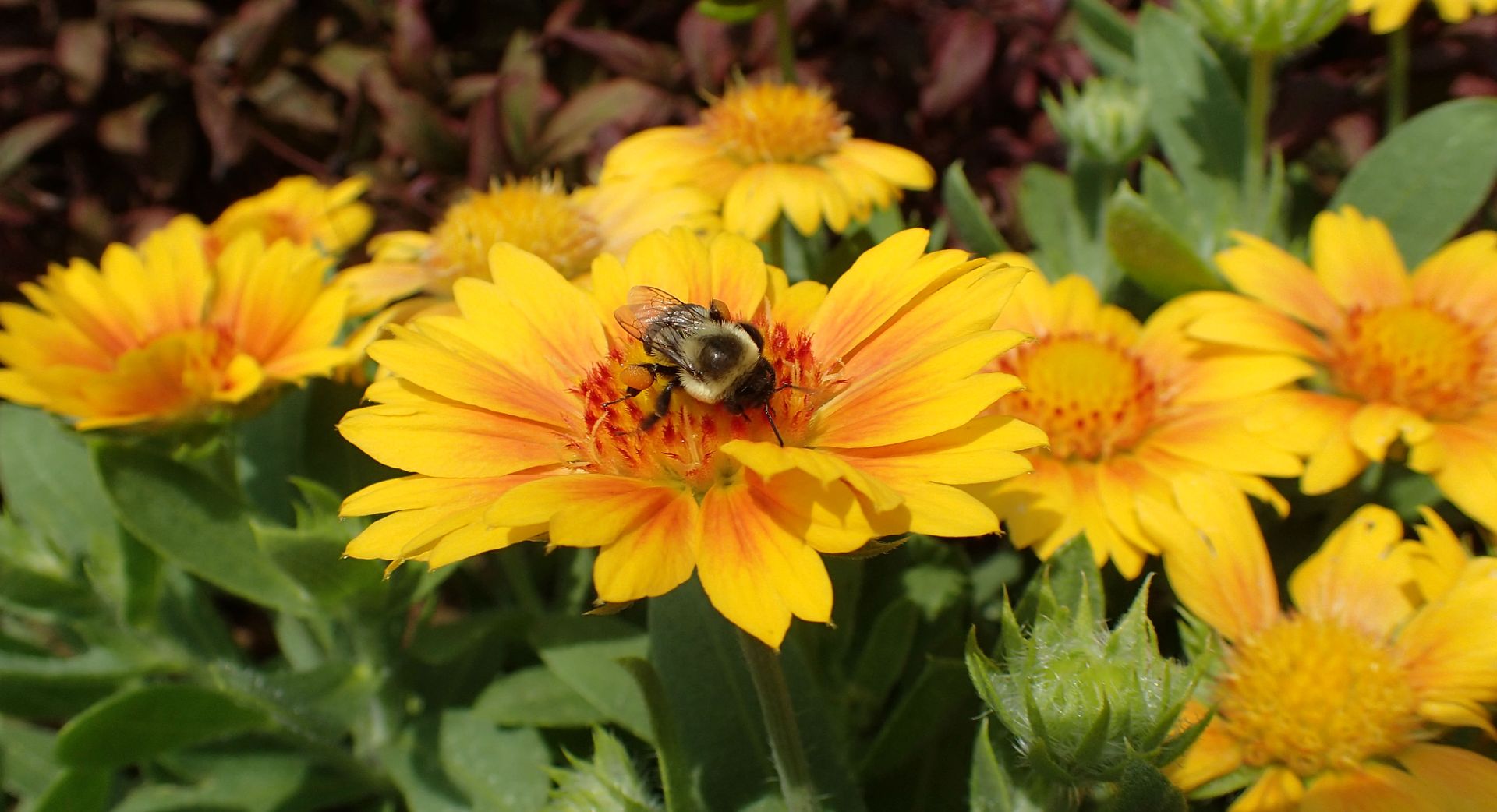
Two natives I've overlooked in my perennial garden are Blanket Flower (seen above) and Stokes' Aster which I wasn't able to photograph well. I installed a perennial garden in the front yard this year, right up against the side walk so people walking by can admire the flowers. If it were just a little bit longer I would fill it in these two plants for sure.
There were lots of different Silpheum species flowering there. Many of which I can't identify off hand, and actually I was surprised to learn there were more than 4.
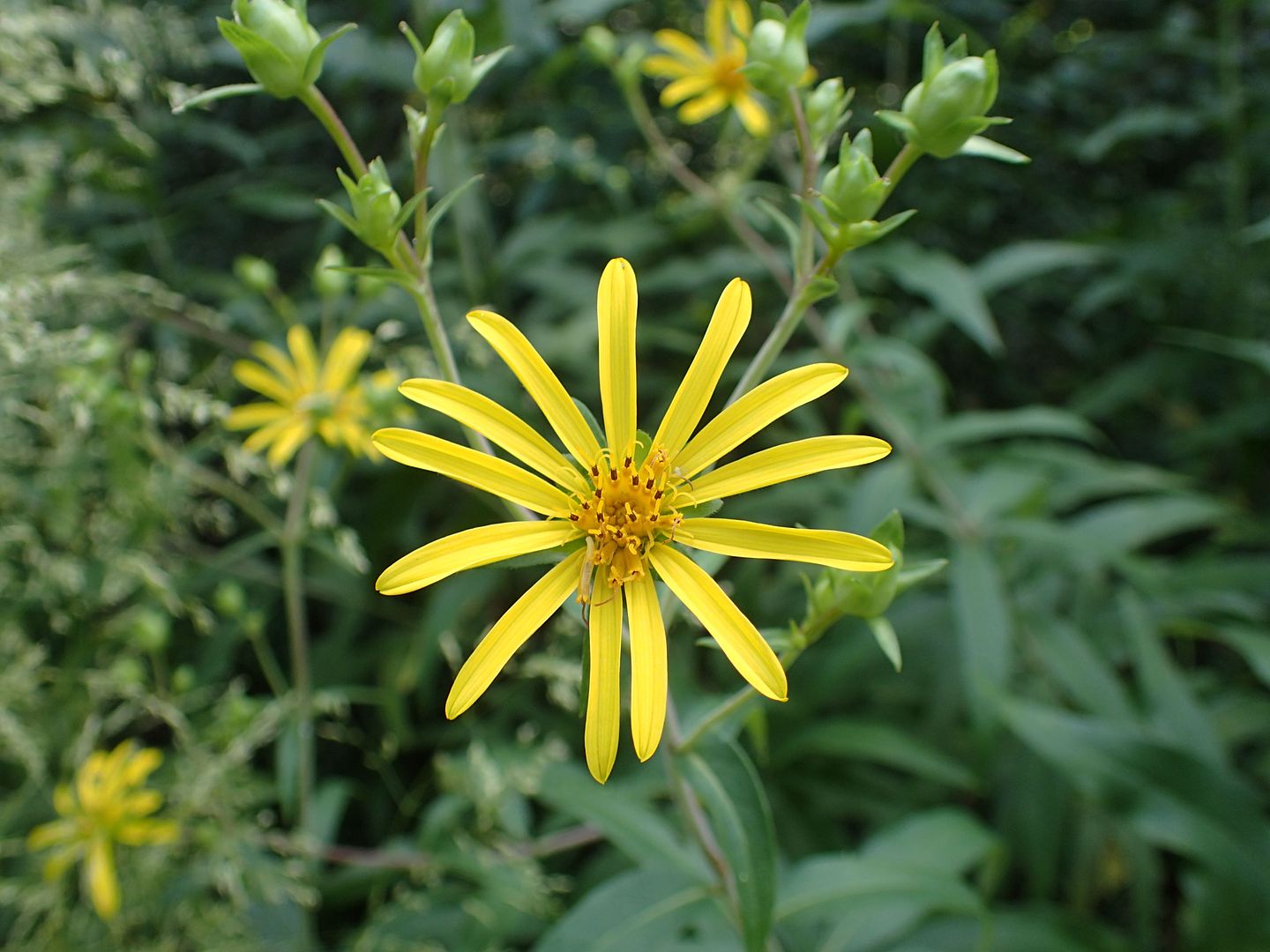
Mohr's Rosinweed I did recognize though. Silphium mohrii has lighter yellow flowers and the foliage has white hairs too, giving the stem and leaves a pale appearance. This was also the first place I ever encountered the plant. On previous visits with actual classes the gardener, David, had been reluctant to point this very obvious plant out. It's not exactly native to Delaware nor commercially available. It was a gift from someone which they planted and grow in the meadow. Considering the norther most range for the species is a population in Tennessee I imagine they were surprised to discover it's cold hardy.
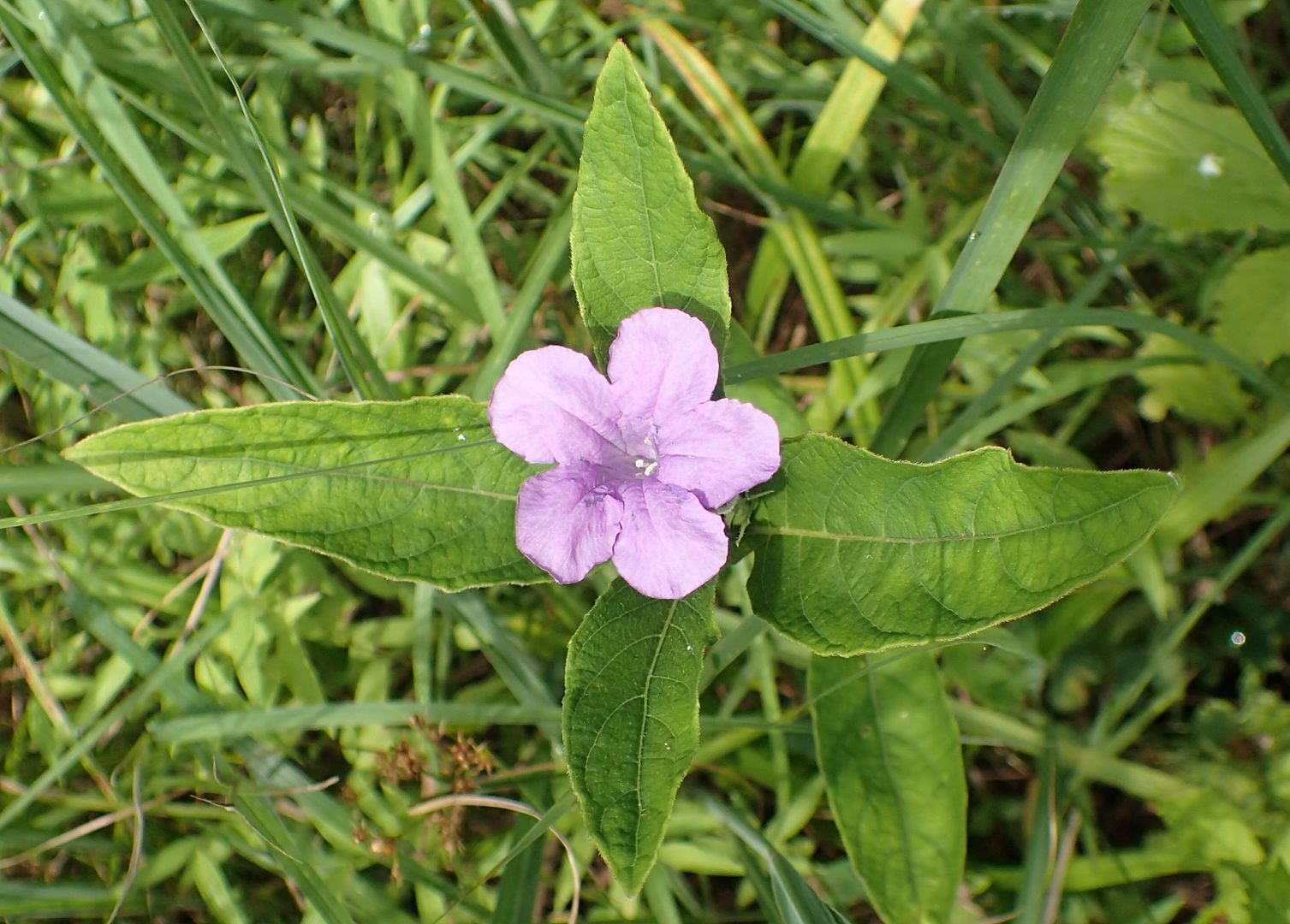
Wild Petunia, Ruellia humilis. To be perfectly honest, if this wasn't flowering I'd have never even noticed it. This is one of those native plants that you have to plant ~25 of right next to one another to form any sort of an impact because each individual plant on it's own is kind of pathetic. Sometimes they'll have a cluster of 4 flowers on them but that's about the most they'll ever have at one time. So when grown as if it were a clumping aster the impact is easier to appreciate. This one may have been a seedling that came up on its own.
Meadow Beauty, Rhexia virginica. I wish I could say more about this one because the flower is interesting. It's a pond plant, or maybe riparian plant that has a wonderful pink flower.
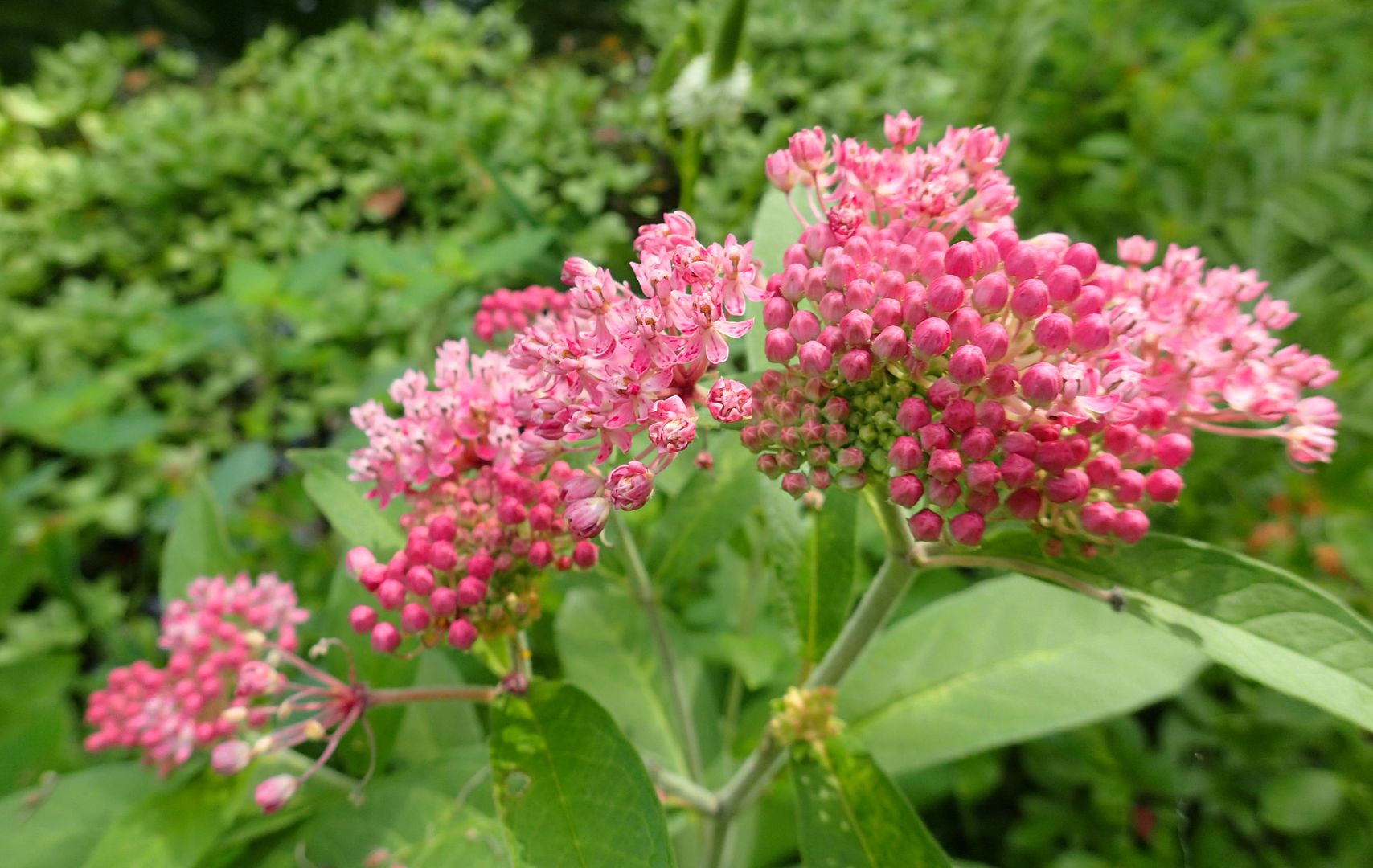
Asclepias incarnata. I always love wild strains of Swamp Milkweed. They seem to grow more vigorously and branch out more at the top of the plant than traditional plants sold in stores. Also the flower color is more wild. Some of this one even has pink spots on the flowers while other parts of it are more uniformly patterned.
And of course there were Monarchs swooping about along with Tiger Swallowtails, Red Admirals, and a few other butterflies. I found a Monarch Caterpillar chomping away on a plant of milkweed.
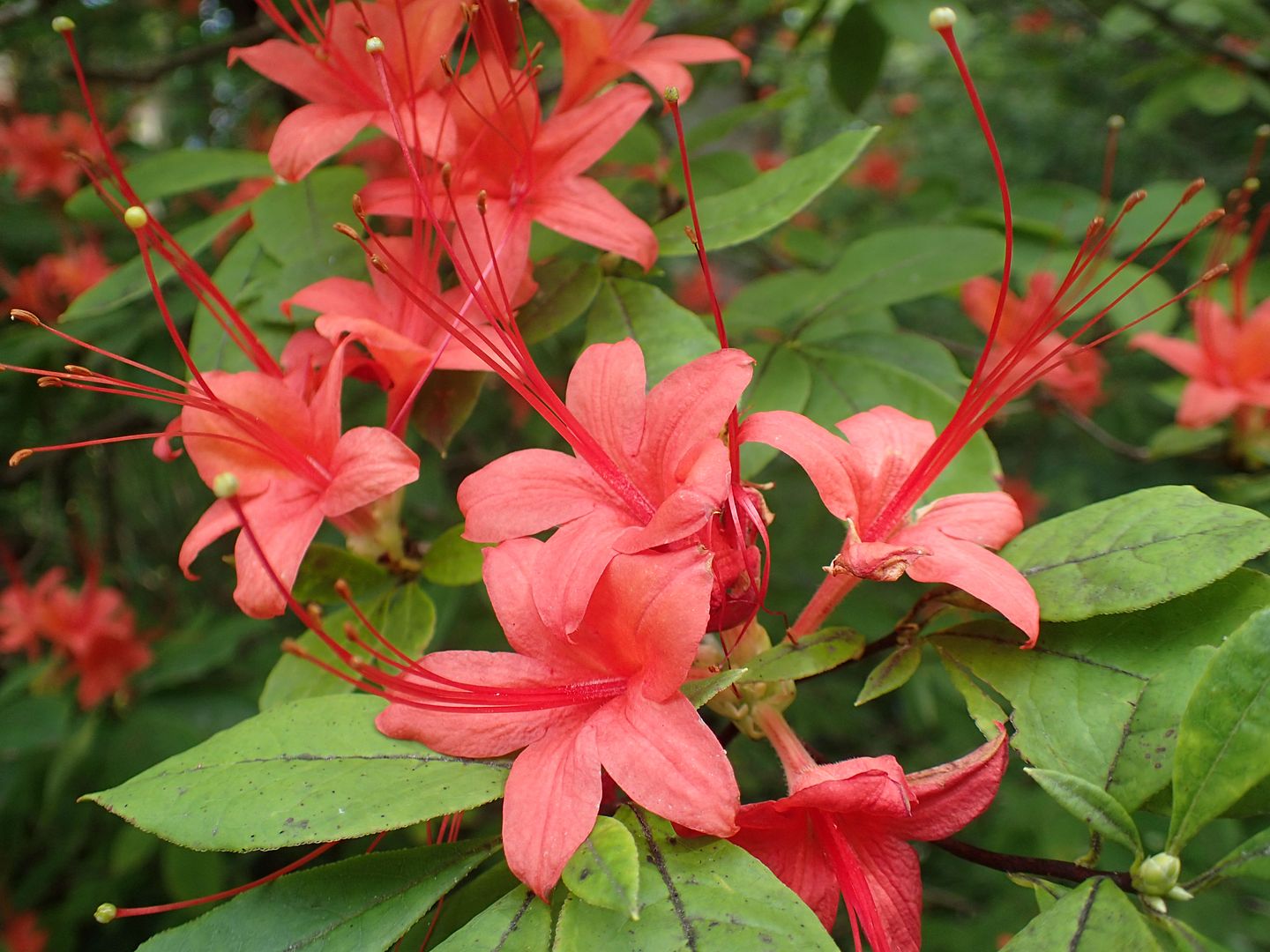
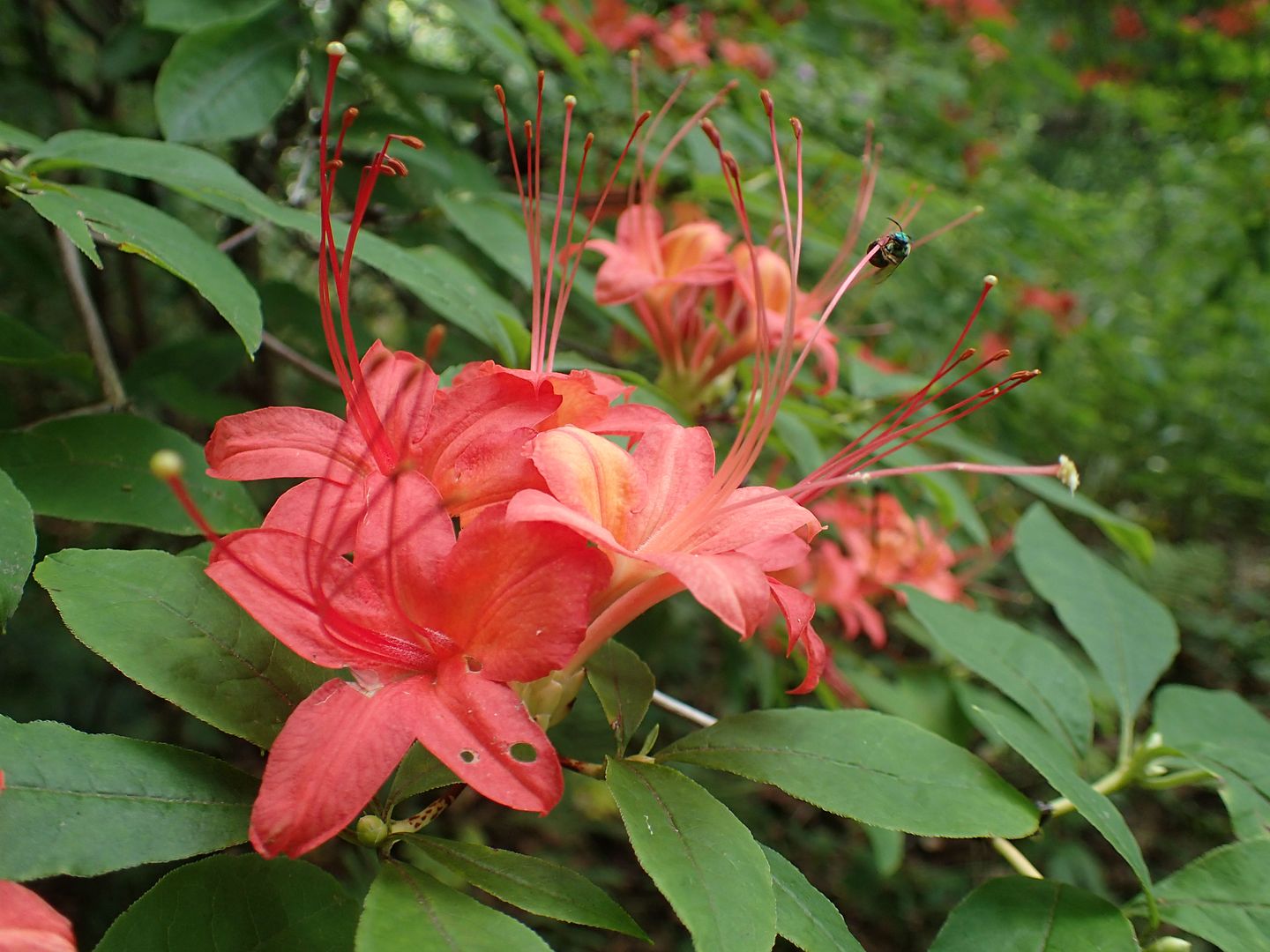
Plum Leaf Rhododendron, R. prunifolium, was a real stand out at the gardens. Partly because of their size and partly because of the display they were putting on. This is a species native to a very narrow strip between Georgia and Alabama and yet they still manage to achieve 10' tall growing in Delaware. (I've purchased two of these via an online dealer to see if they're hardy in zone 7).
The Mt. Cuba Center has about a dozen shrubs planted around its property and each one was covered in large clusters of orange/salmon-colored flowers. Some hued more red while others were orange but salmon-ish was the norm.
There wasn't a whole lot of pollinator activity with them but that's generally the case with Rhododendrons. They're ideally pollinated by large swallowtail butterflies who's wings rub against the pollen anthers and then the stigma to ensure pollination. Hummingbirds might also do something similar but I don't think this has been scientifically proven (though it likely happens).
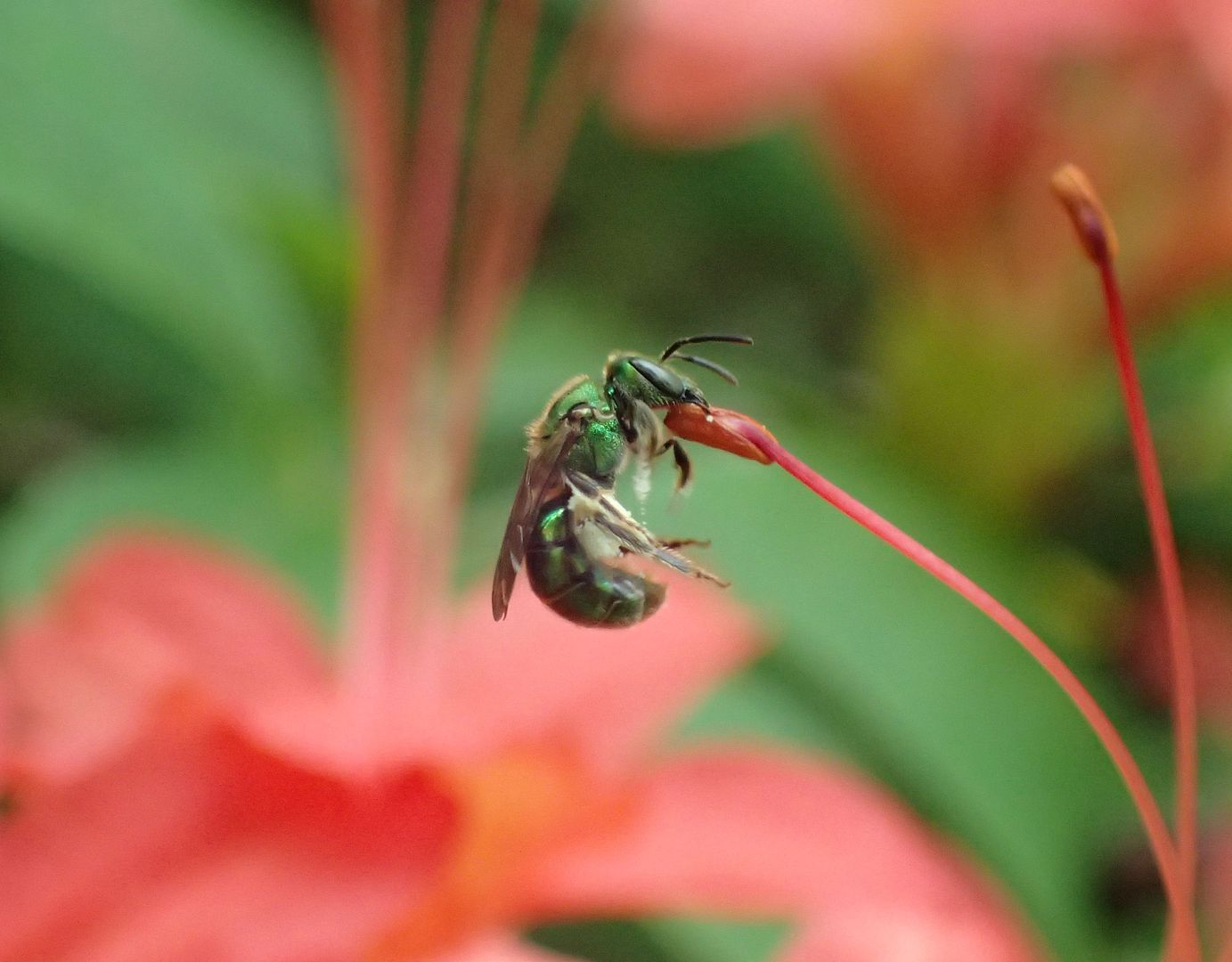
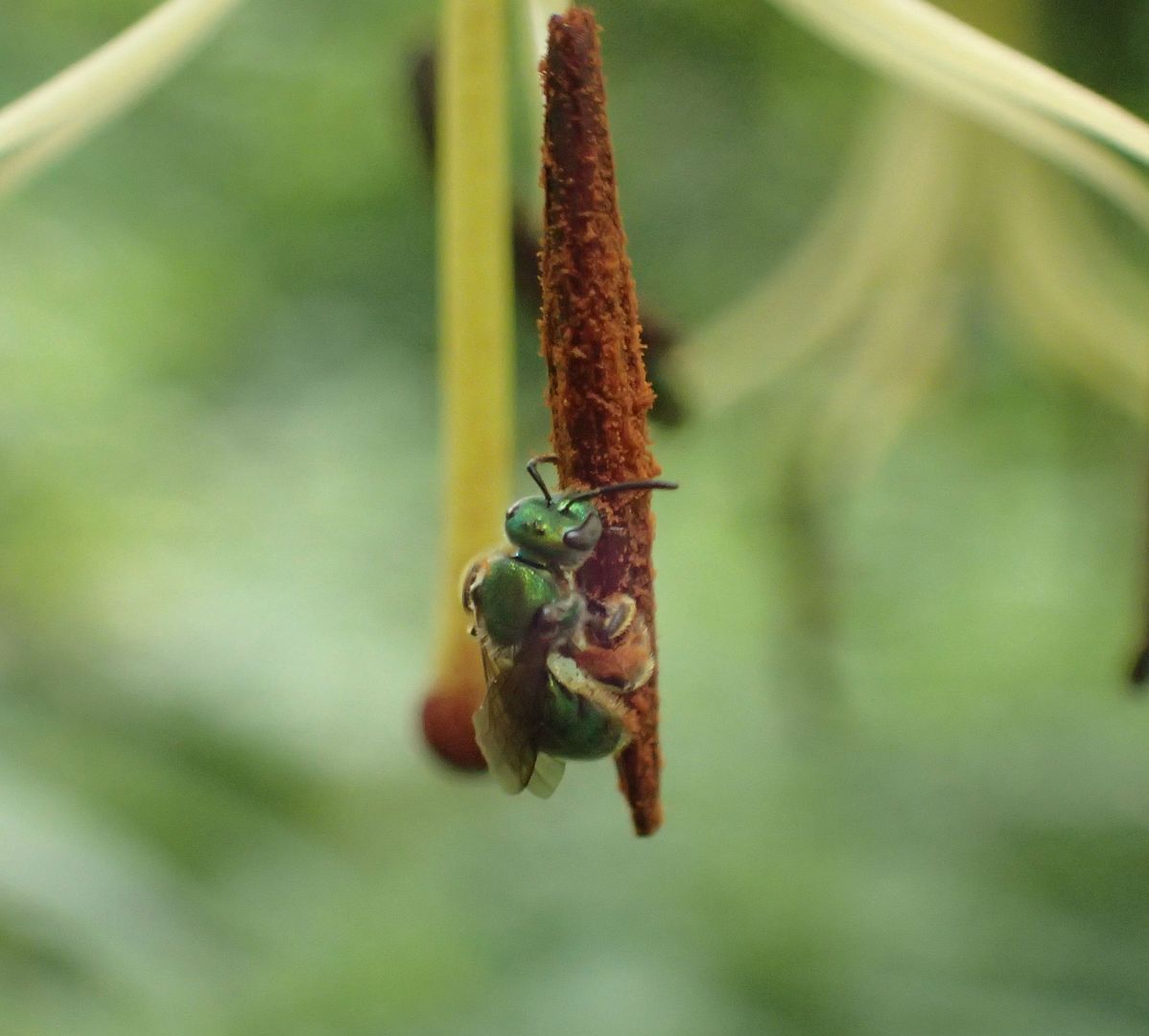
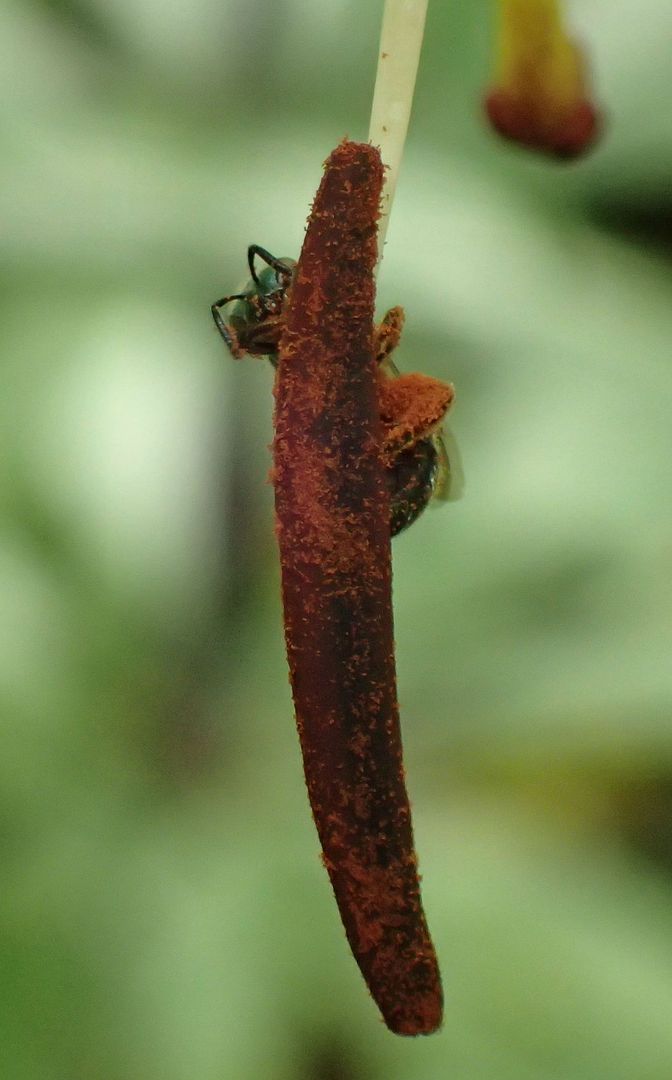
The only bees I saw taking an interest in the flowers were these tiny sweat bees who couldn't help but take advantage of all the pollen being offered.
Another large shrub that was flowering heavily was Summer Sweet, Clethra alnifolia which is seen here on the background with all the white flowers.
Summer Sweet is sometimes called Sweet Pepper Bush because of the seed heads looking like peppercorns waiting to be ground, though you'd never want to do that with Clethra. It's not poisonous but isn't pepper either.
Another name it goes by is Sailor's Delight referring to it's sweet
fragrance which is know to travel a great distance in the right
conditions. This plant is at home in a damp forest understory or along
water ways and like filtered to full sun.
I couldn't tell if this was Bugbane or Doll's Eyes. Both are fairly similar-looking and I think in the same genus, Actaea. Some of these used to be in Cimicifuga but I believe they've been consolidated.
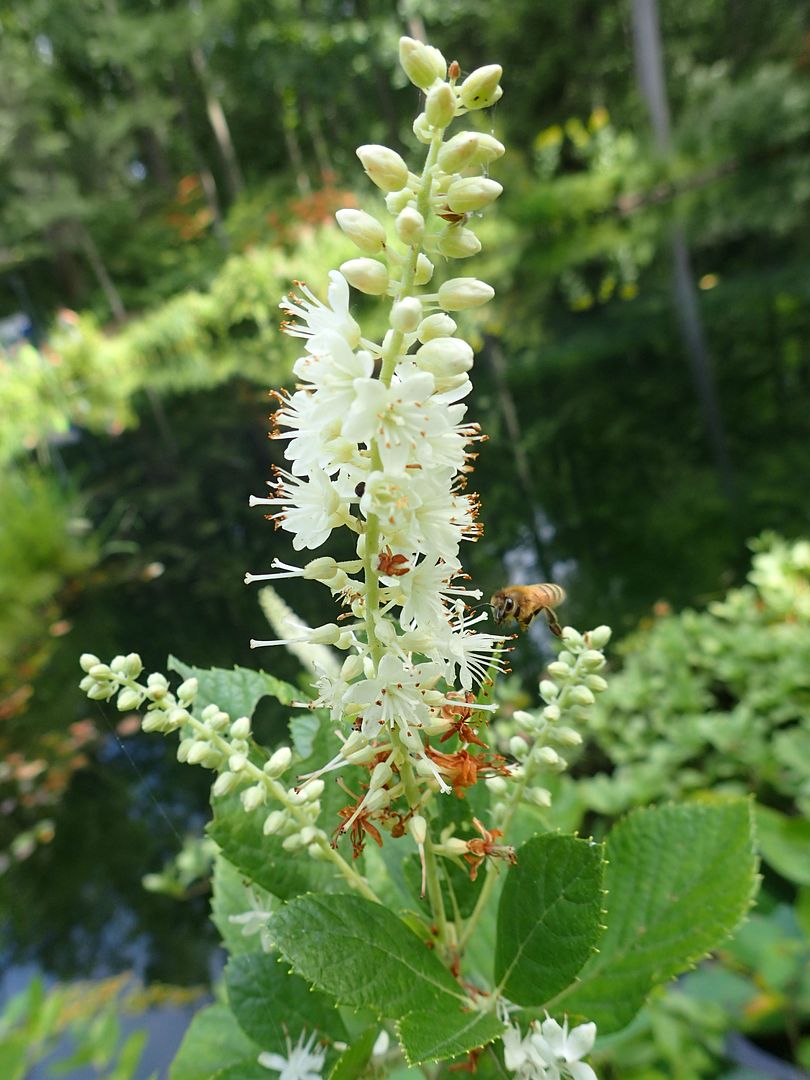
Honeybees work both Clethra and Actaea but I don't think they're very happy about Actaea. Likely something about the irritating smell of Actaea seems to make them angry while working this plant. They are obviously more on edge and seem to fly directly into other bees working the flowers. Things are more calm and easy going around Clethra.
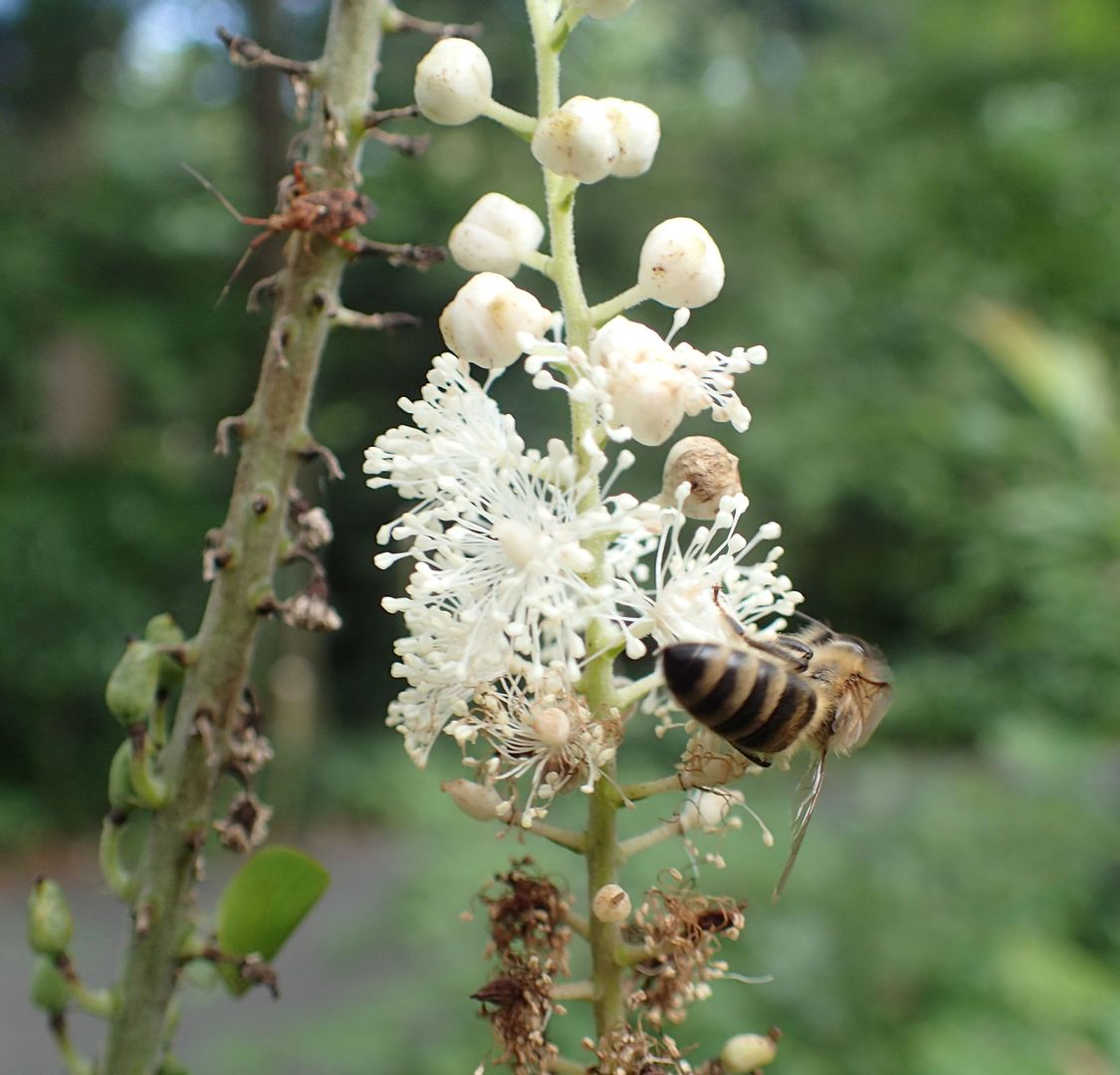
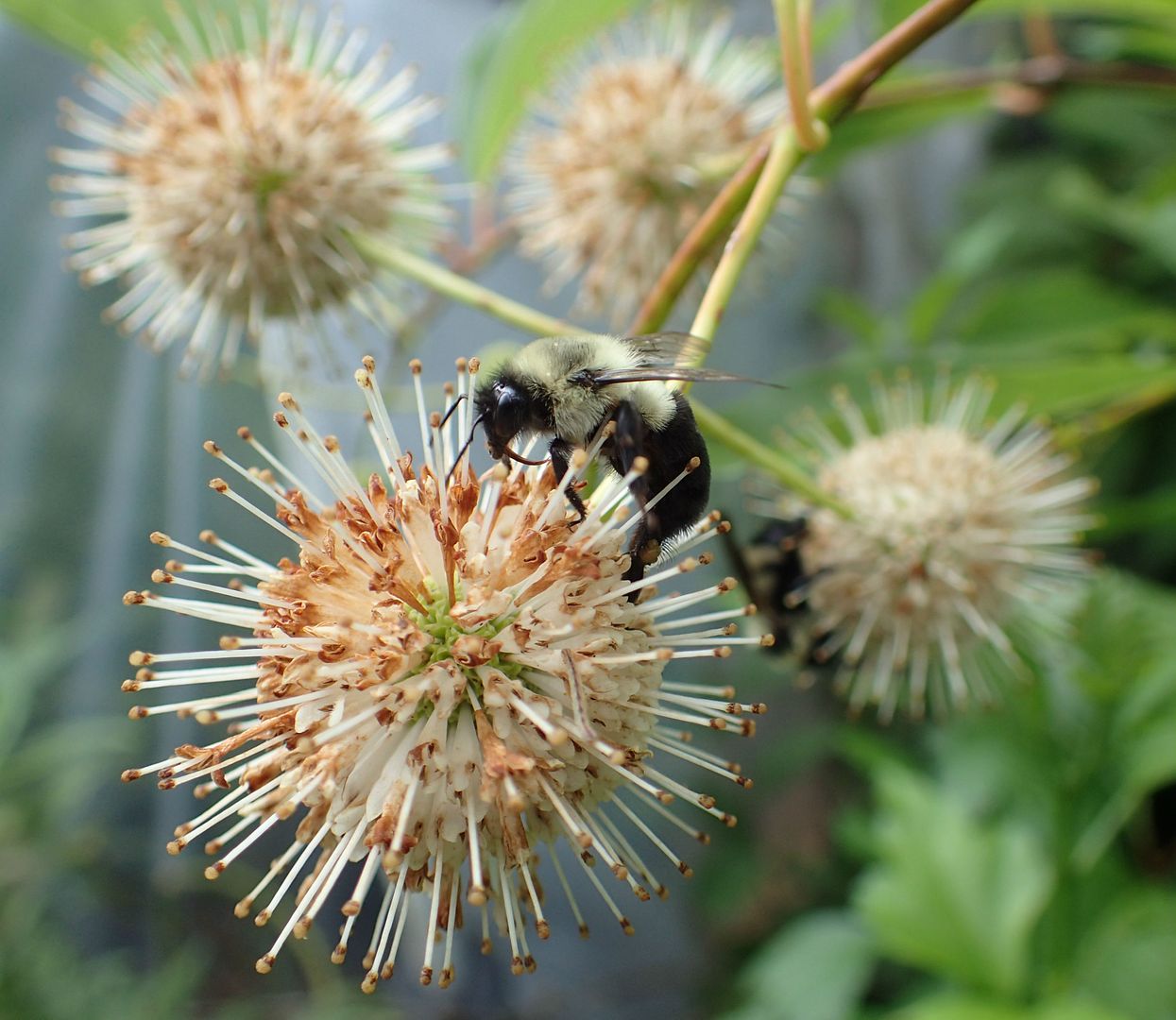
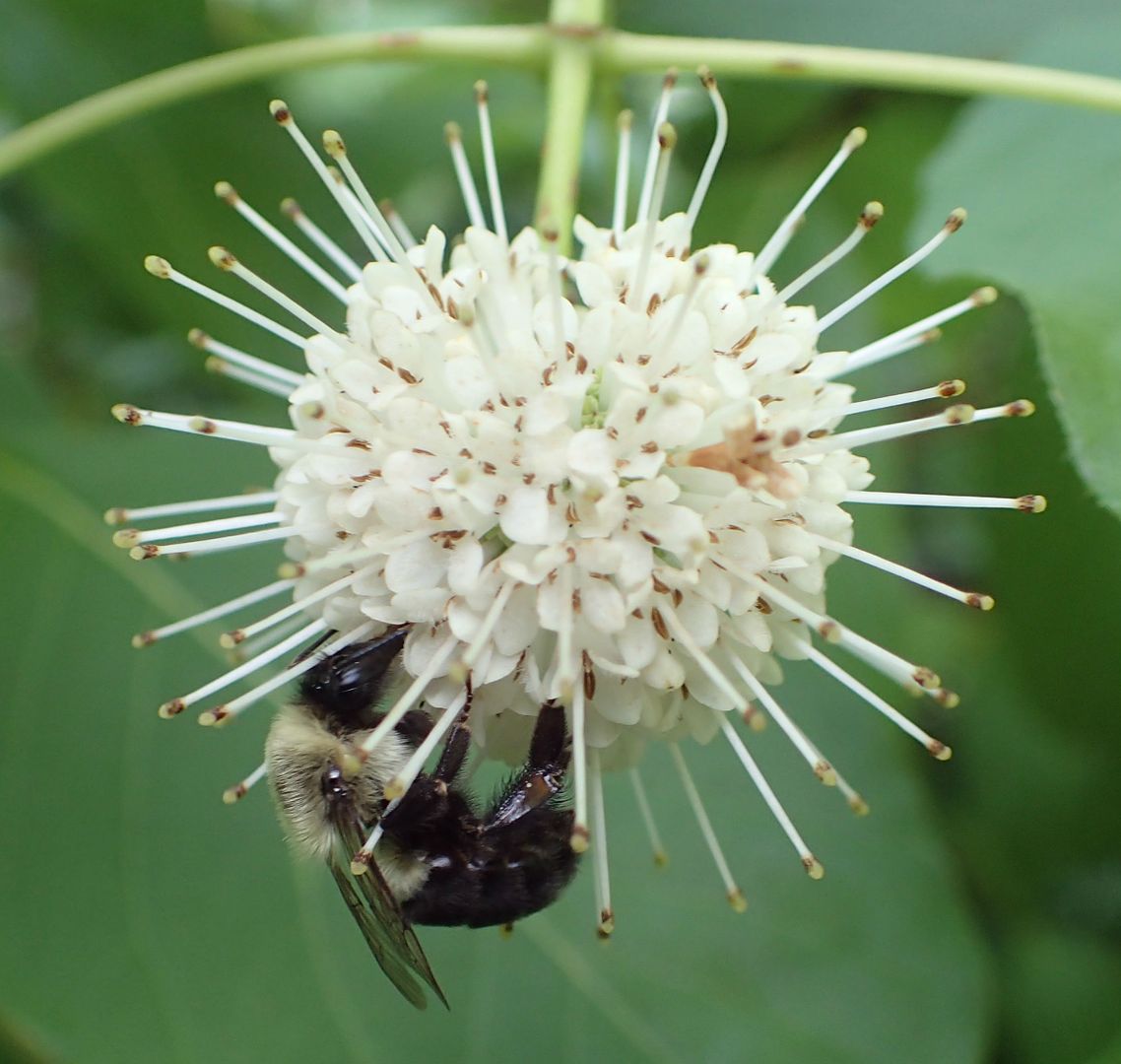
Buttonbush, Cephalanthus occidentalis, was another bustling hub of bees. These photos were actually taken at my house where I grow 3 of these wonderful shrubs. In talking with the gardeners at the Mt. Cuba Center I often ask them why they don't have certain things. And walking the gardens this past weekend I was happy to see they have added this one!
I took pictures of the flowers from the shrubs in my yard in New Jersey though because curiously enough they weren't flowering there in Delaware... So next weekend I'm sure their button bush plants will be blooming.
Although I have to say they weren't planted where I would have planted them. They're at the top of their meadow garden. (top of a hill that is.) Whereas in nature they usually occur growing along the banks of lakes and streams. Where they have them isn't a bad location, just not where they'd be found in the wild. Their meadow garden, I believe because of the slope, allows them to grow things that like water along it. For example they have Joe Pye Weed at the top too as well as by the ponds and it does fine in both locations.
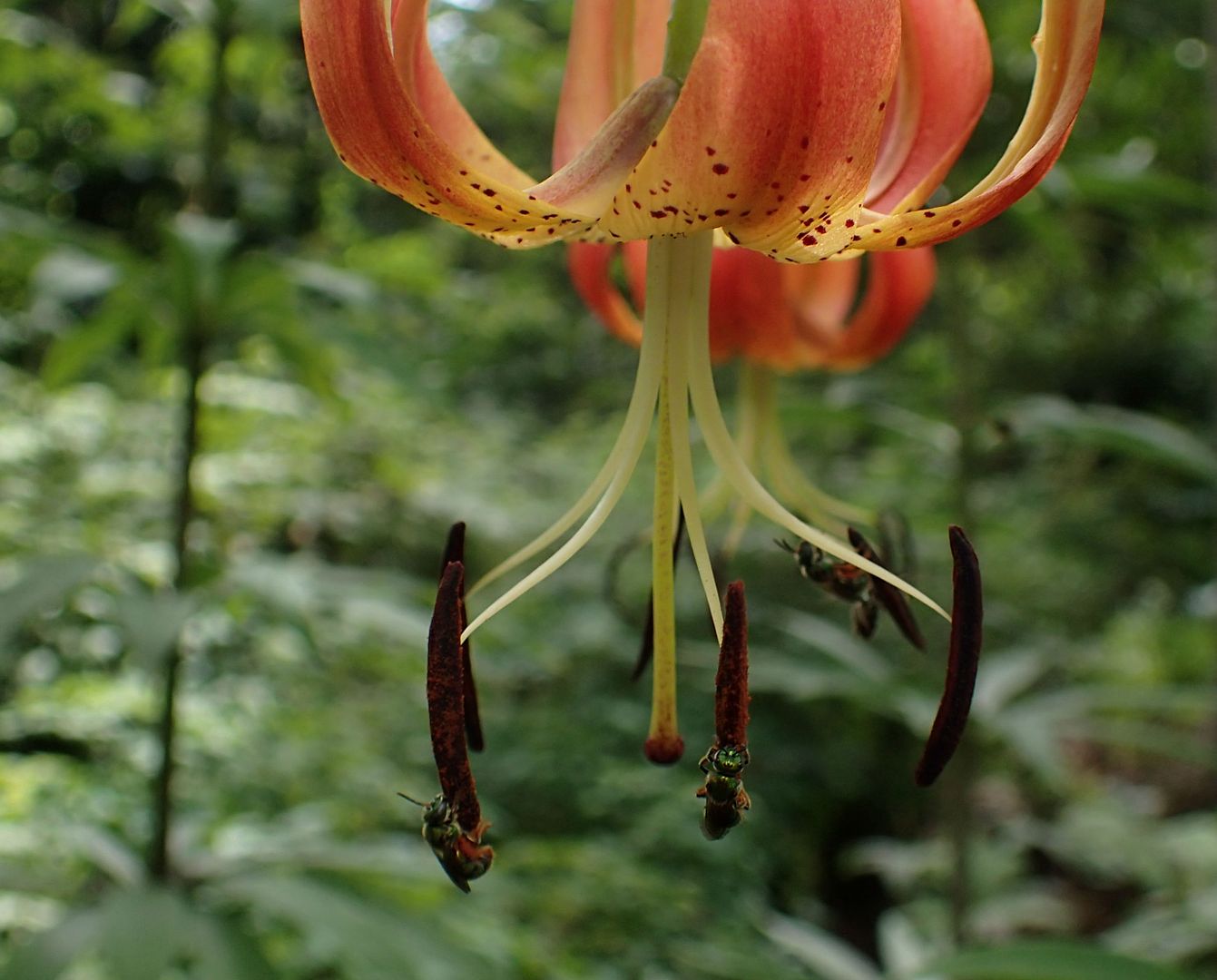
Along their forest path they had some native Lilies growing. And these are some of the harder ones to grow in my experience. The Mt. Cuba Center makes it look easy as they have several nice big plants, each with lots of blooms to them. In general the plant opens one flower at a time, but because a plant might have 15 flower buds on it, this prolongs the bloom.
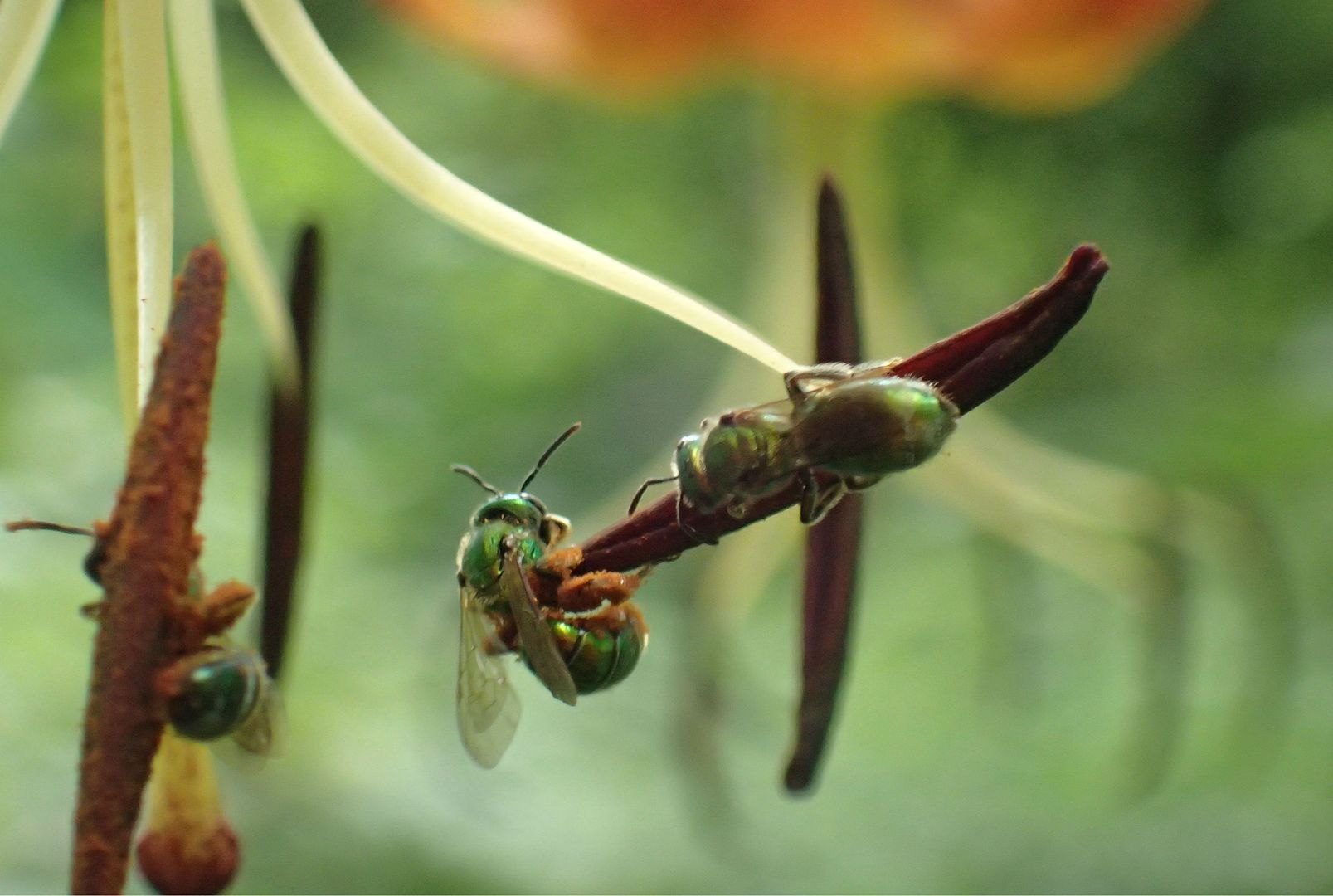
Ideally they're pollinated by large swallowtail butterflies and possibly hummingbirds whose' wings and feathers brush up against the pollen anthers and make contact with the stamen. While I didn't witness that I did see loads of little sweat bees stealing the pollen. What were clearly females were becoming covered in pollen and what were likely males kept pouncing upon them to mate.
These actually aren't pollinating the flowers because they're not making any contact with the stamens.
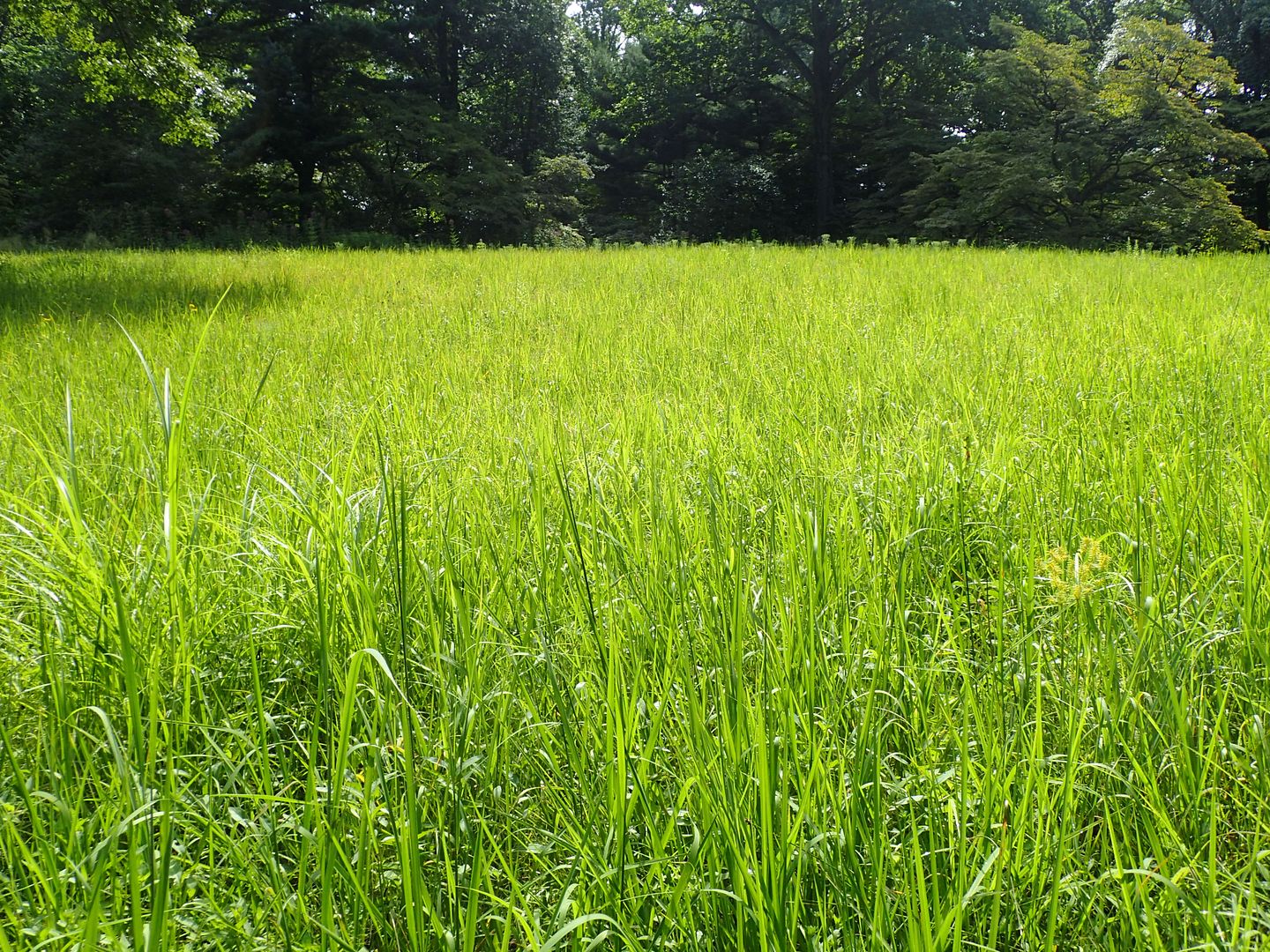
Their meadow garden was growing nicely. This is a combination of Little Blue Stem, Big Blue Stem, Indian Grass, and a few dozen others. This main section is mainly comprised of grasses though. Flowering plants were kept to a minimum on purpose because the late Mrs. Copeland felt there were few things as calming as seeing the wind casting waves across a grassy meadow. And honestly I think she was right.
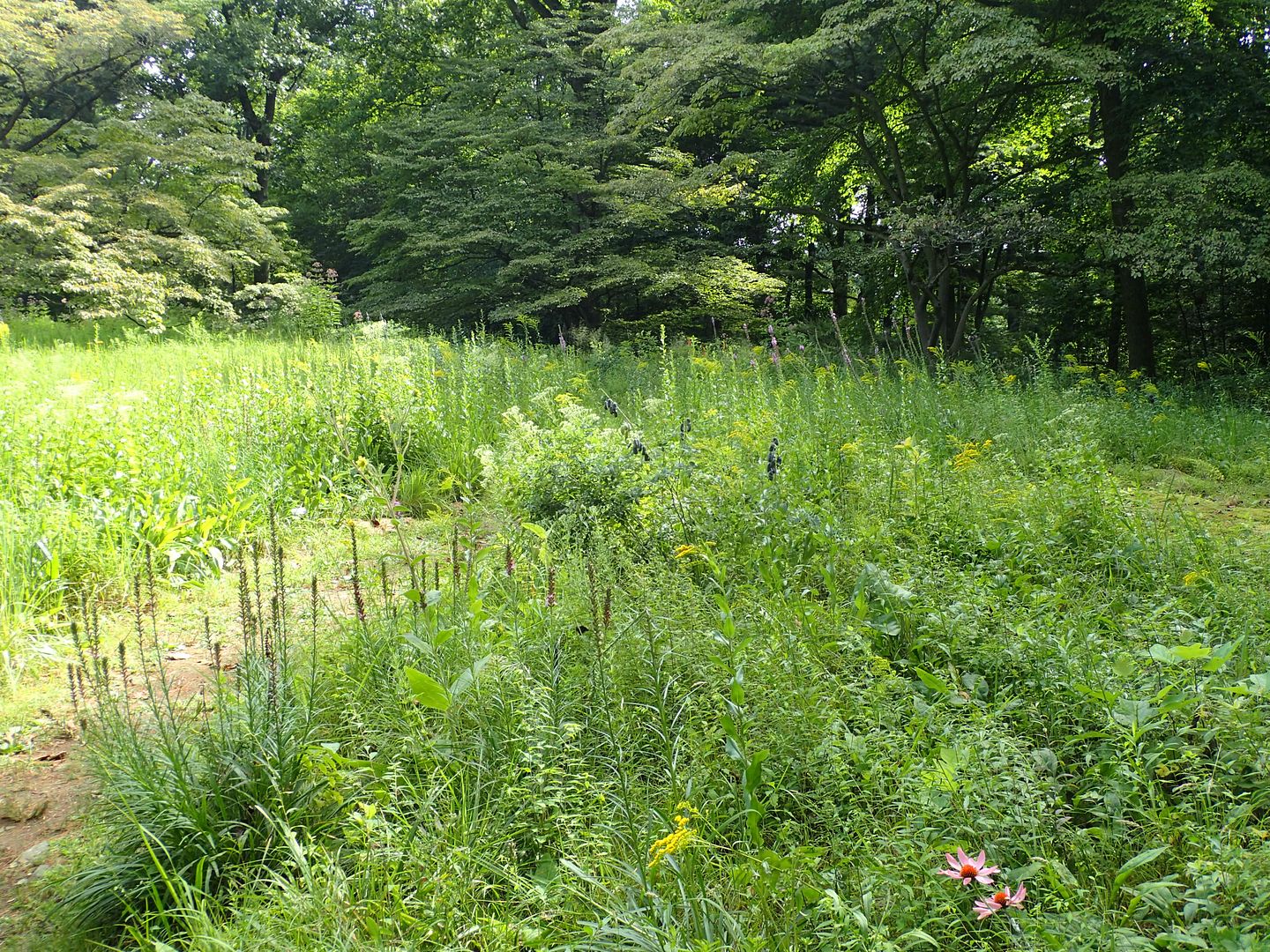
Becasue flowering plants are obviously a big part of a meadow they're grown mostly at the top of the hill, out of view from the lower areas. They have a great collection here but early summer isn't the best time to view them. Goldenrods, Liatris, Perennial Sunflowers, Wild Senna, Black-eyed Susans, Joe Pye Weed, Milkweeds and loads of Asters all grow among the grasses.
Showing posts with label Coneflower. Show all posts
Wednesday, August 29, 2018
Saturday, June 29, 2013
Yellow Flowers
Between work and these thunderstorms we've been getting on a daily basis it's hard keeping up with everything that's flowering. Although the other issue might be that Yellow is probably the most over used color of our native wildflowers.
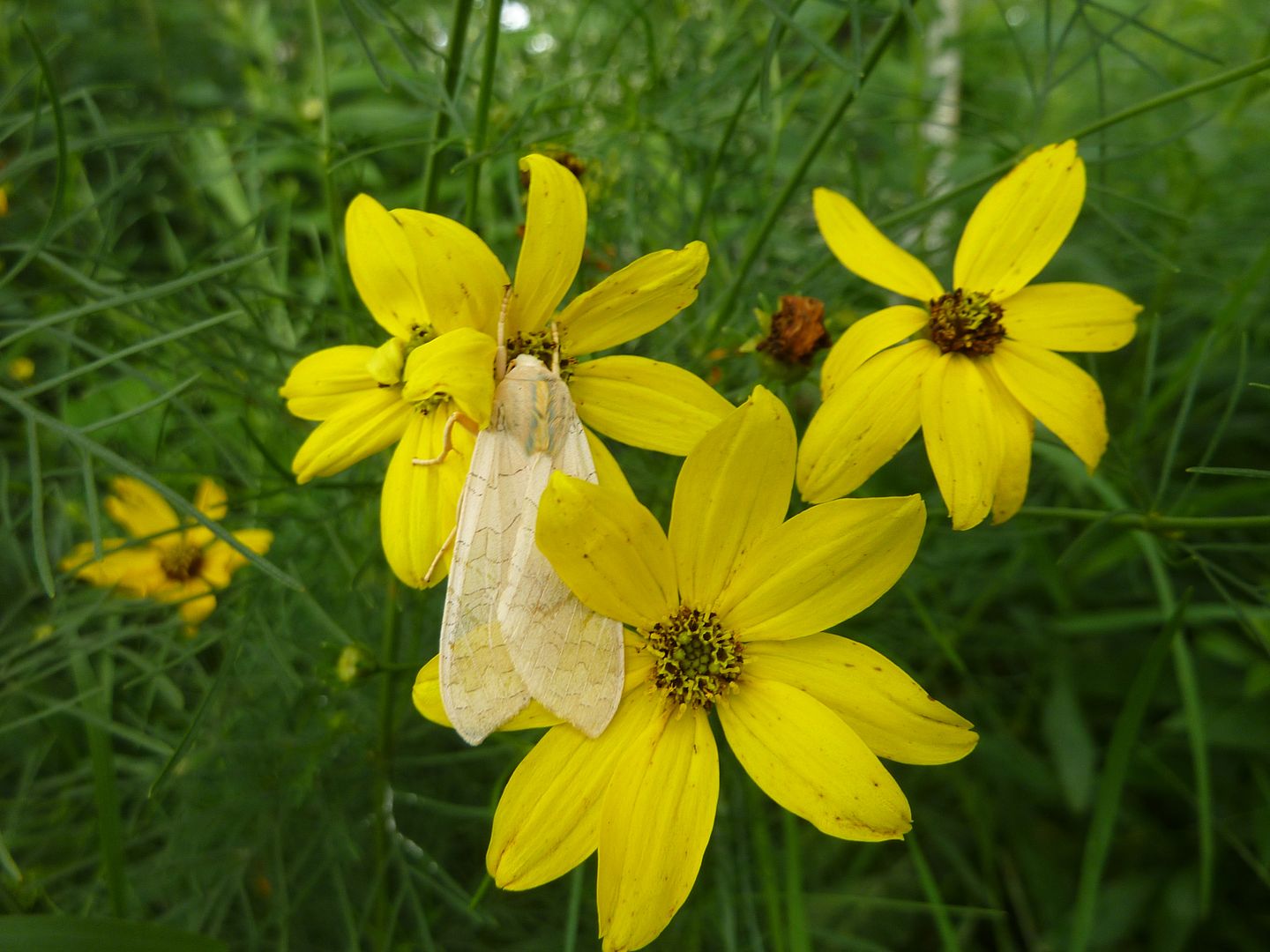
Whorled Coreopsis, C. verticillata, with what's been identified as a Banded Tussock Moth, Halysidota tessellaris, clinging to stay out of the rain to one of the flowers. The host plants to these are basically all the hardwood trees in the forest and the Willow-leaf Oak tree behind the garden was likely the host plant. The fun thing is I've actually found caterpillars of this species and not even realized it. They're basically white Woolly Bears with tufts of longer black hairs here and there.
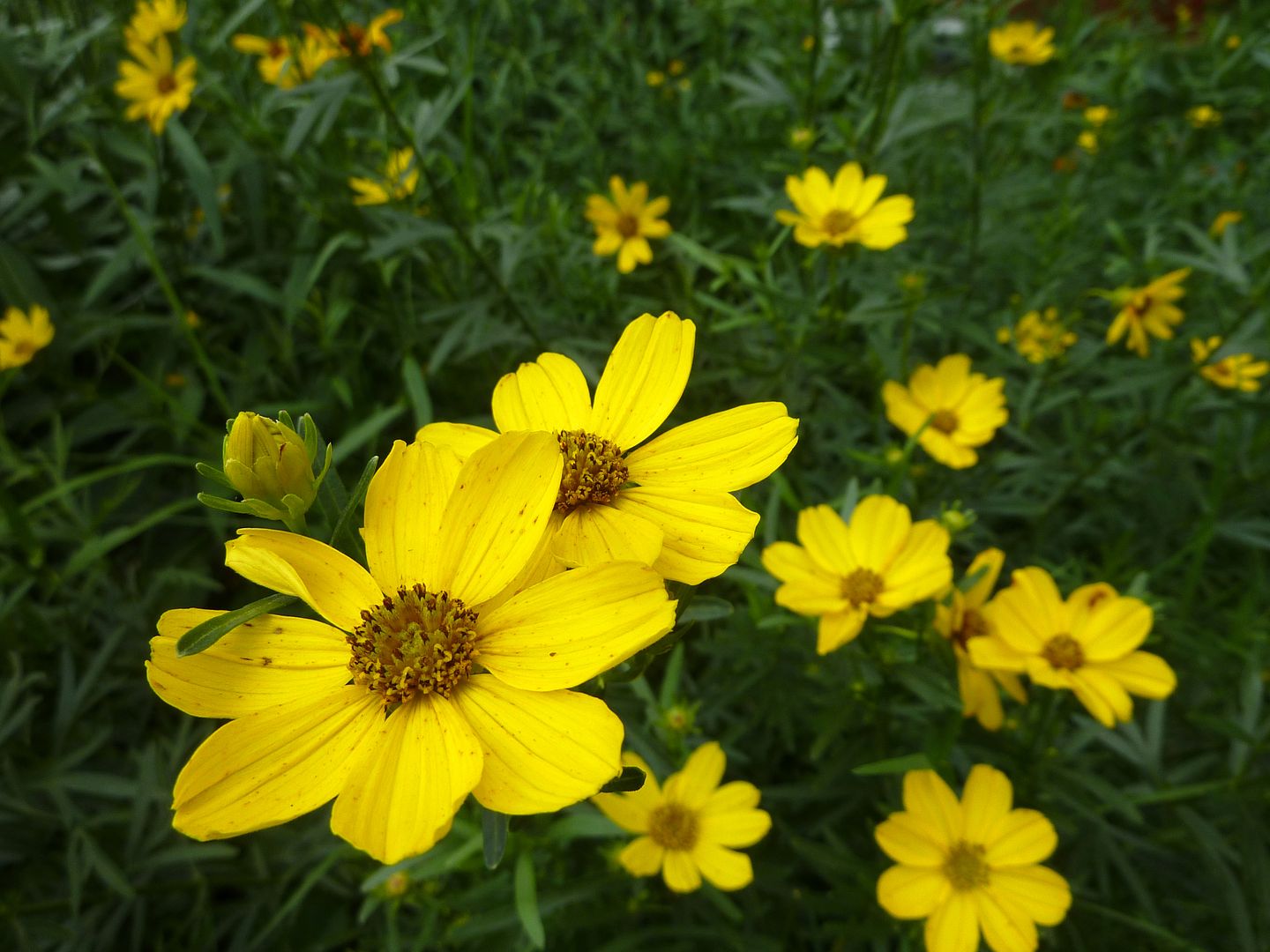
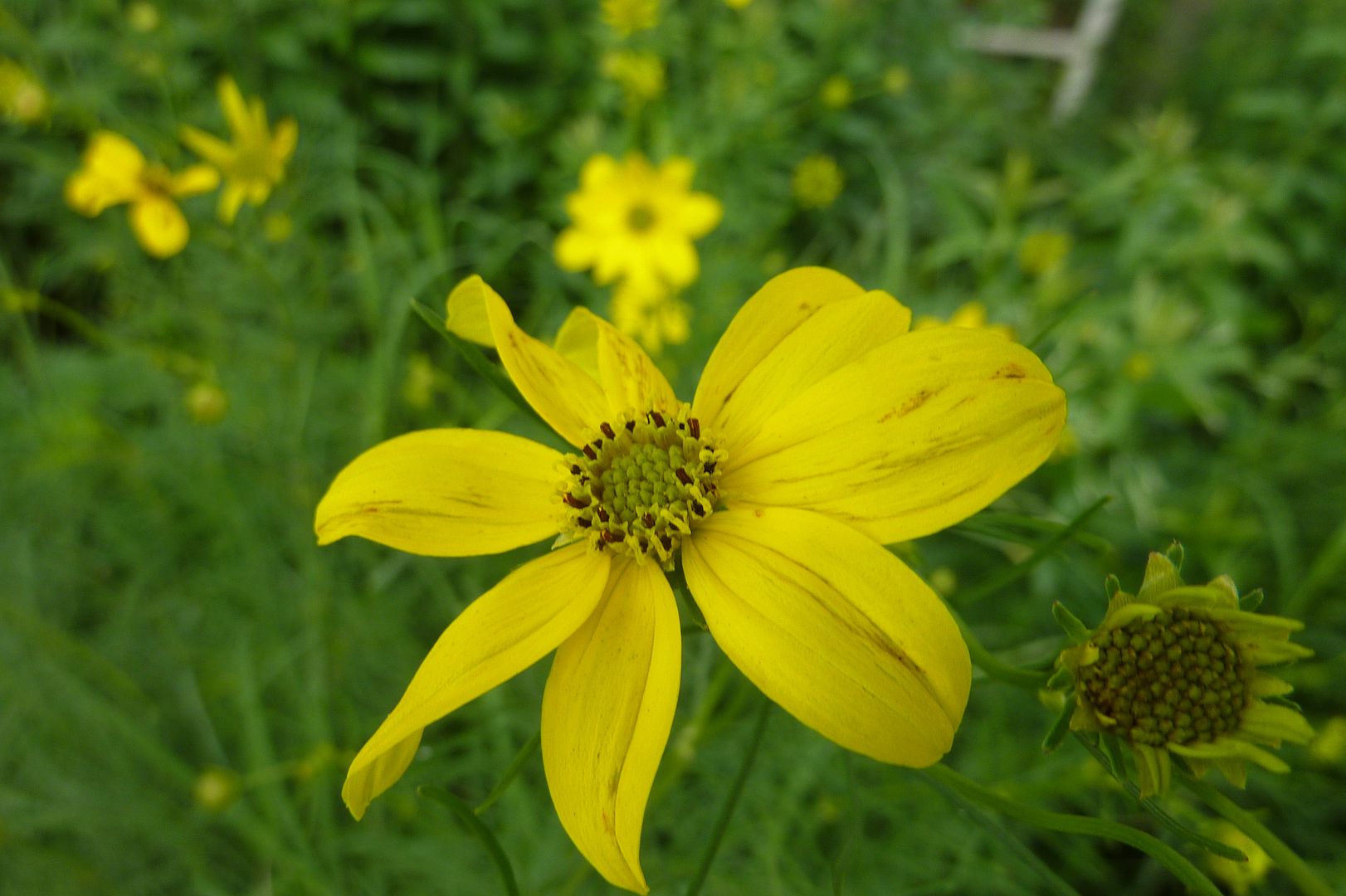
Stiff Coreopsis, C. palmata, has really been kicking but these past few weeks. They're not forming a carpet of yellow but it's enough that I'm seeing bees work them on a daily basis now.
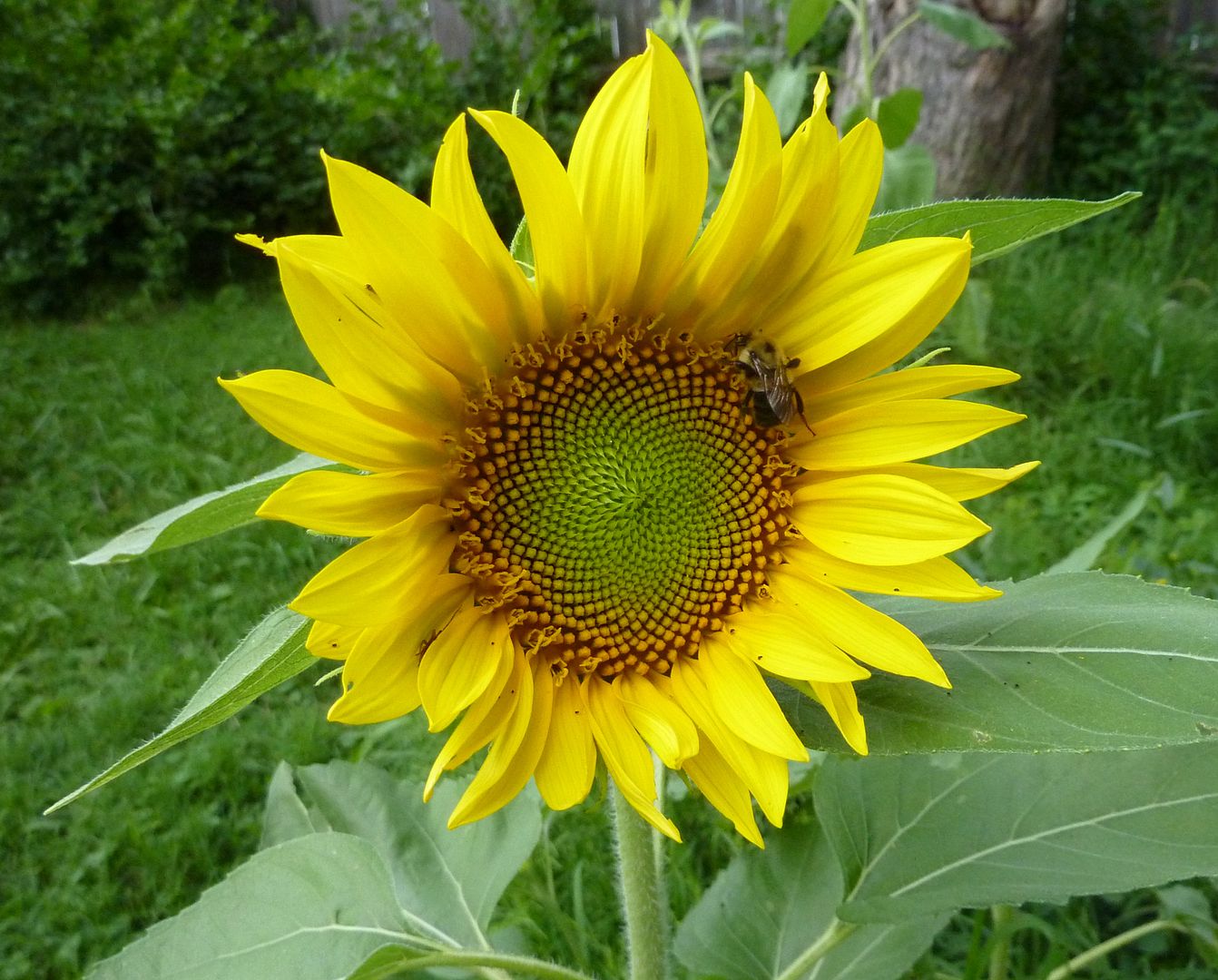
Annual Sunflower, Helianthus annuus, planted courtesy of messy birds at our bird feeder. I insist on only feeding them sunflowers because it's a native seed.
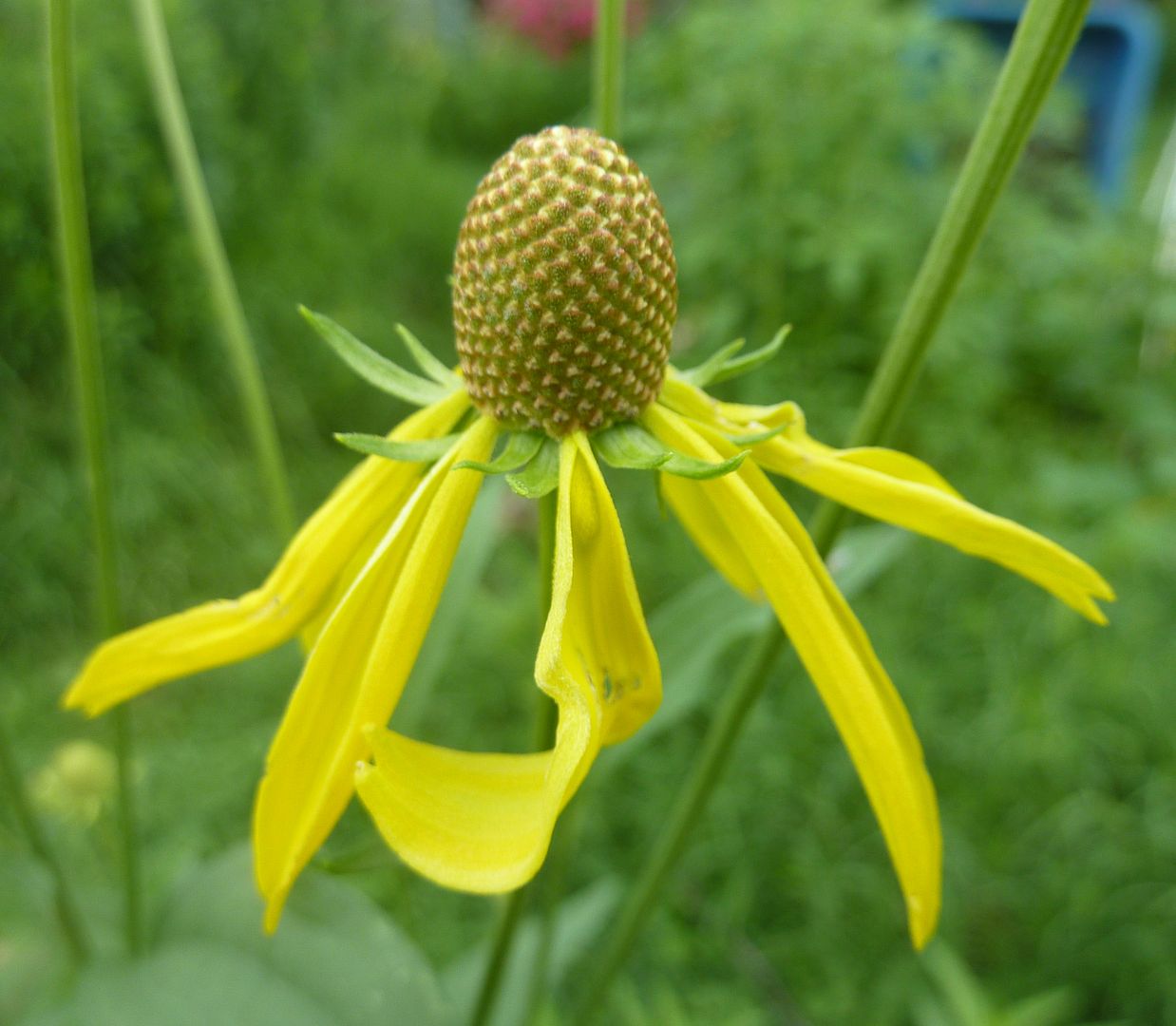
Prairie Coneflower, Ratibida pinnata, isn't a coneflower but close enough. They're not officially open yet but the petals are starting to push out and look nice on some of them.
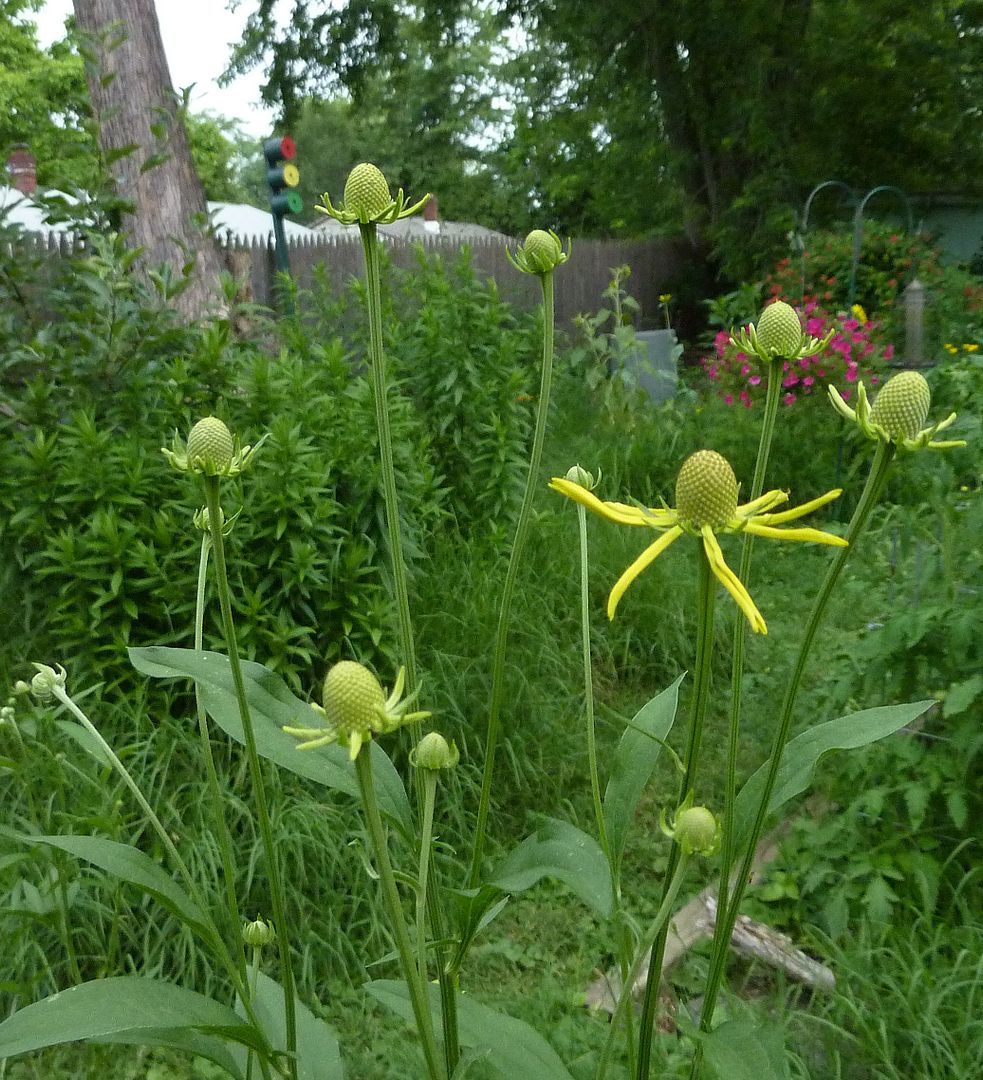
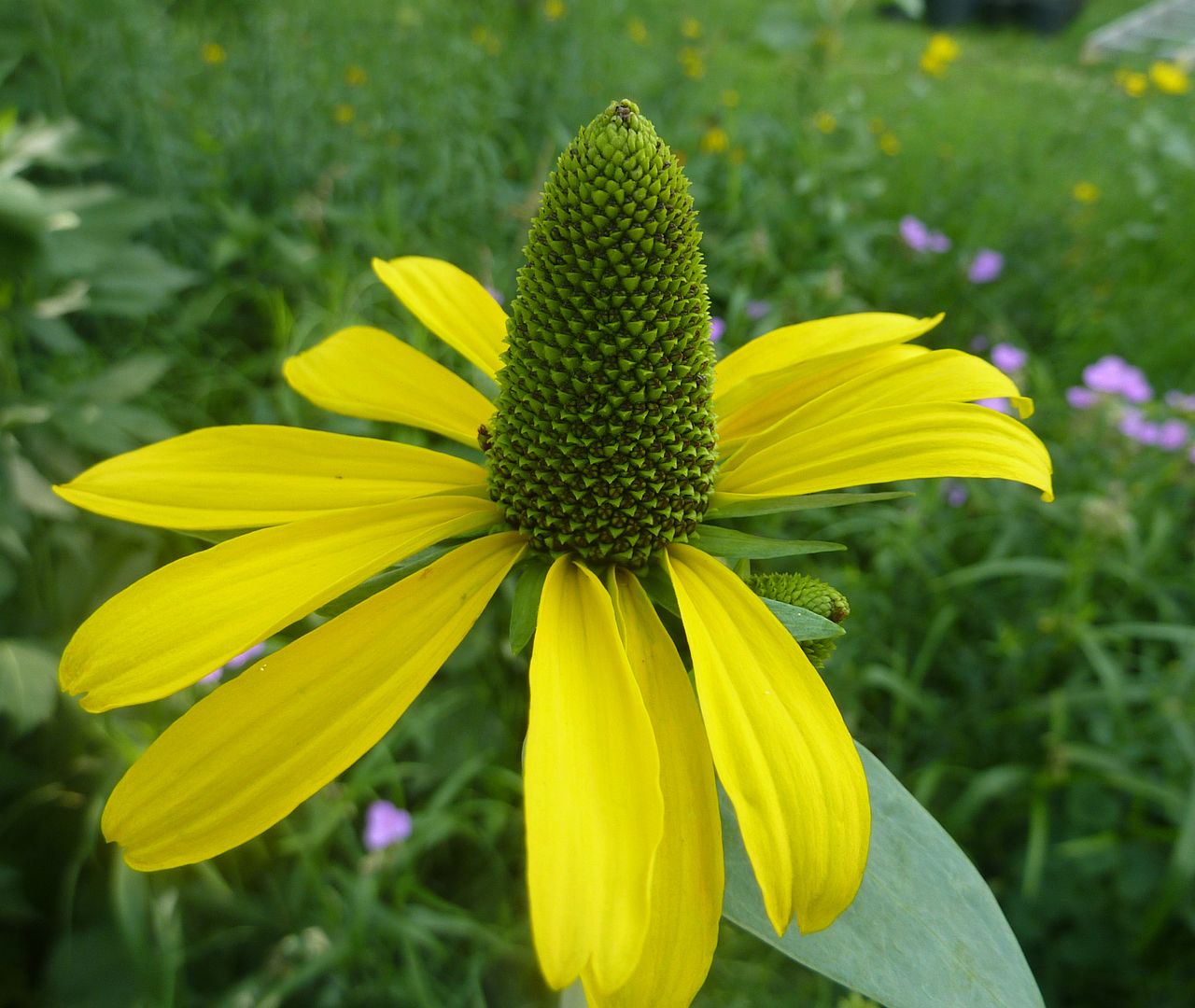
Greater Coneflower, Rudbeckia maxima, also not officially open yet, and also not officially a coneflower but close enough. As it's in the Rudbeckia genus that makes it more closely related to the Black Eyed Susan, which is strange becuase they're 5' tall, have blue/gray foliage, and bloom earlier than any other Rudbeckia species at least in my garden.
Whorled Coreopsis, C. verticillata, with what's been identified as a Banded Tussock Moth, Halysidota tessellaris, clinging to stay out of the rain to one of the flowers. The host plants to these are basically all the hardwood trees in the forest and the Willow-leaf Oak tree behind the garden was likely the host plant. The fun thing is I've actually found caterpillars of this species and not even realized it. They're basically white Woolly Bears with tufts of longer black hairs here and there.
Stiff Coreopsis, C. palmata, has really been kicking but these past few weeks. They're not forming a carpet of yellow but it's enough that I'm seeing bees work them on a daily basis now.
Annual Sunflower, Helianthus annuus, planted courtesy of messy birds at our bird feeder. I insist on only feeding them sunflowers because it's a native seed.
Prairie Coneflower, Ratibida pinnata, isn't a coneflower but close enough. They're not officially open yet but the petals are starting to push out and look nice on some of them.
Greater Coneflower, Rudbeckia maxima, also not officially open yet, and also not officially a coneflower but close enough. As it's in the Rudbeckia genus that makes it more closely related to the Black Eyed Susan, which is strange becuase they're 5' tall, have blue/gray foliage, and bloom earlier than any other Rudbeckia species at least in my garden.
Labels:
Colors,
Coneflower,
coreopsis,
flowers,
Moth,
native,
Sunflowers,
Wildflowers
Sunday, June 16, 2013
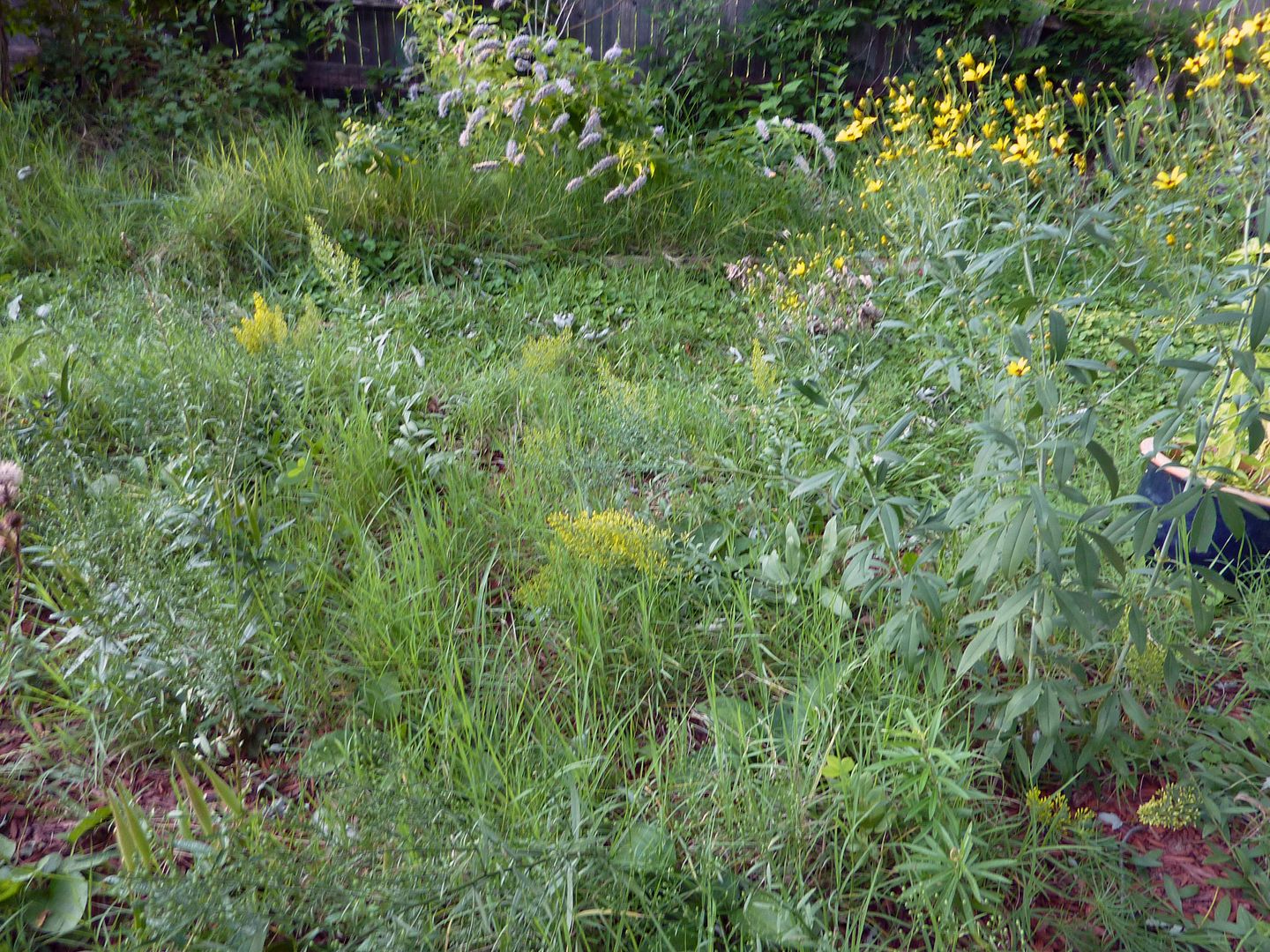
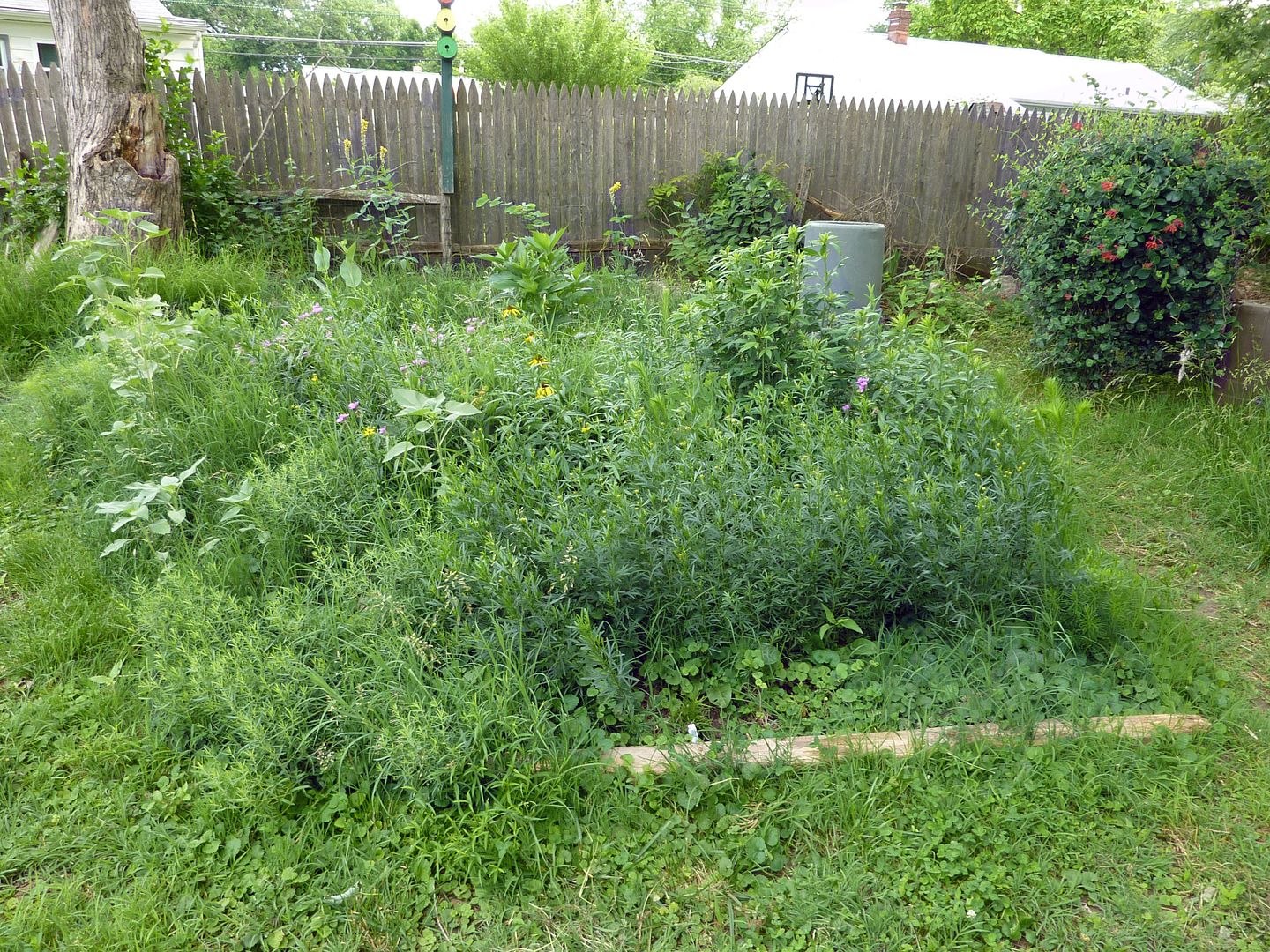
My Meadow Garden
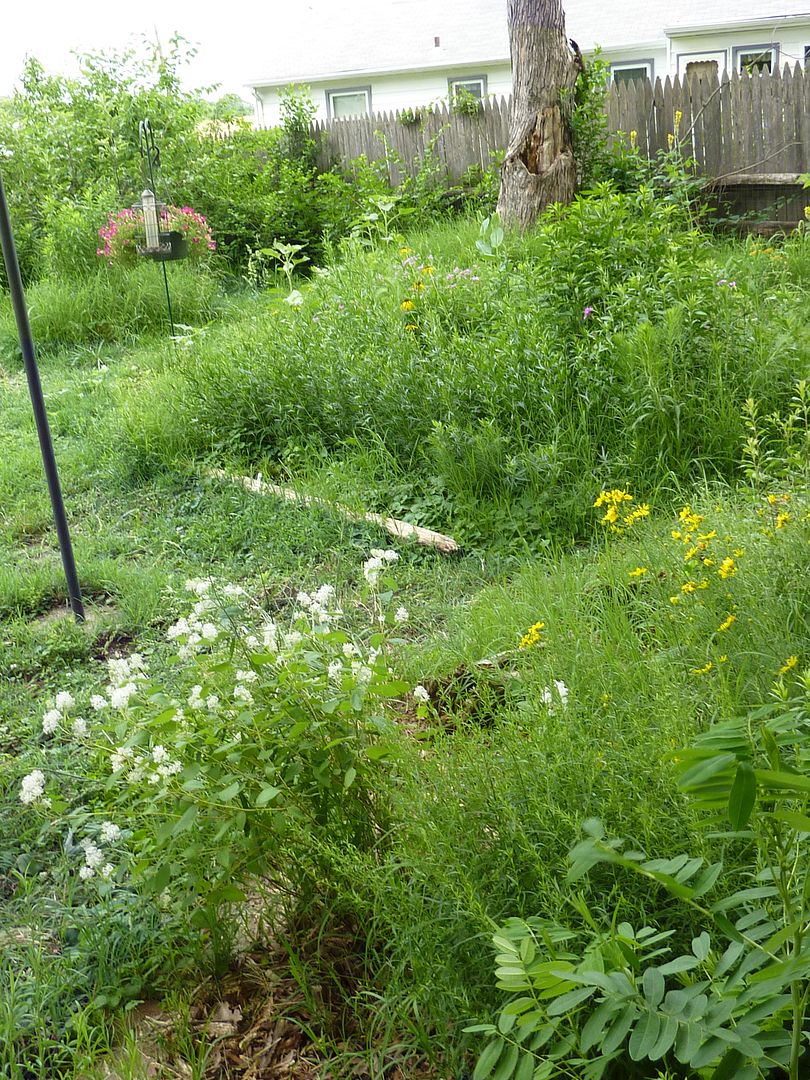
Being the compulsive plant shopper that I am, I'm so thrilled with the way the meadow garden has turned out this year. I started this project back in 2011, and they say it takes three year before a meadow really takes off. What's odd though is they say that about meadows started by seed because nothing really flowers until year two or three and then some don't flower until year seven or beyond. Meadows otherwise look like a bunch of weeds their first, and sometimes second year.
Another reason seeds wouldn't have worked was that my lawn is basically made up of crab grass, which my dad "thinks" he may have planted on purpose years ago becuase it naturally spreads by runners and fills in an area. His theory being that this would lead to a nice thick lawn. While many lawn grasses do this, this crab grass in particular is the most annoying plant I've ever had to deal with. Along the roots it produces corms that are thorn shaped thus pulling them out of the ground often results in me being stabbed and pricked in uncomfortable ways.
To it's benefit though, it does fill in, my meadow is lacking grasses, and it basically marks where I haven't planted things yet.
So here's a short list of what's blooming now.
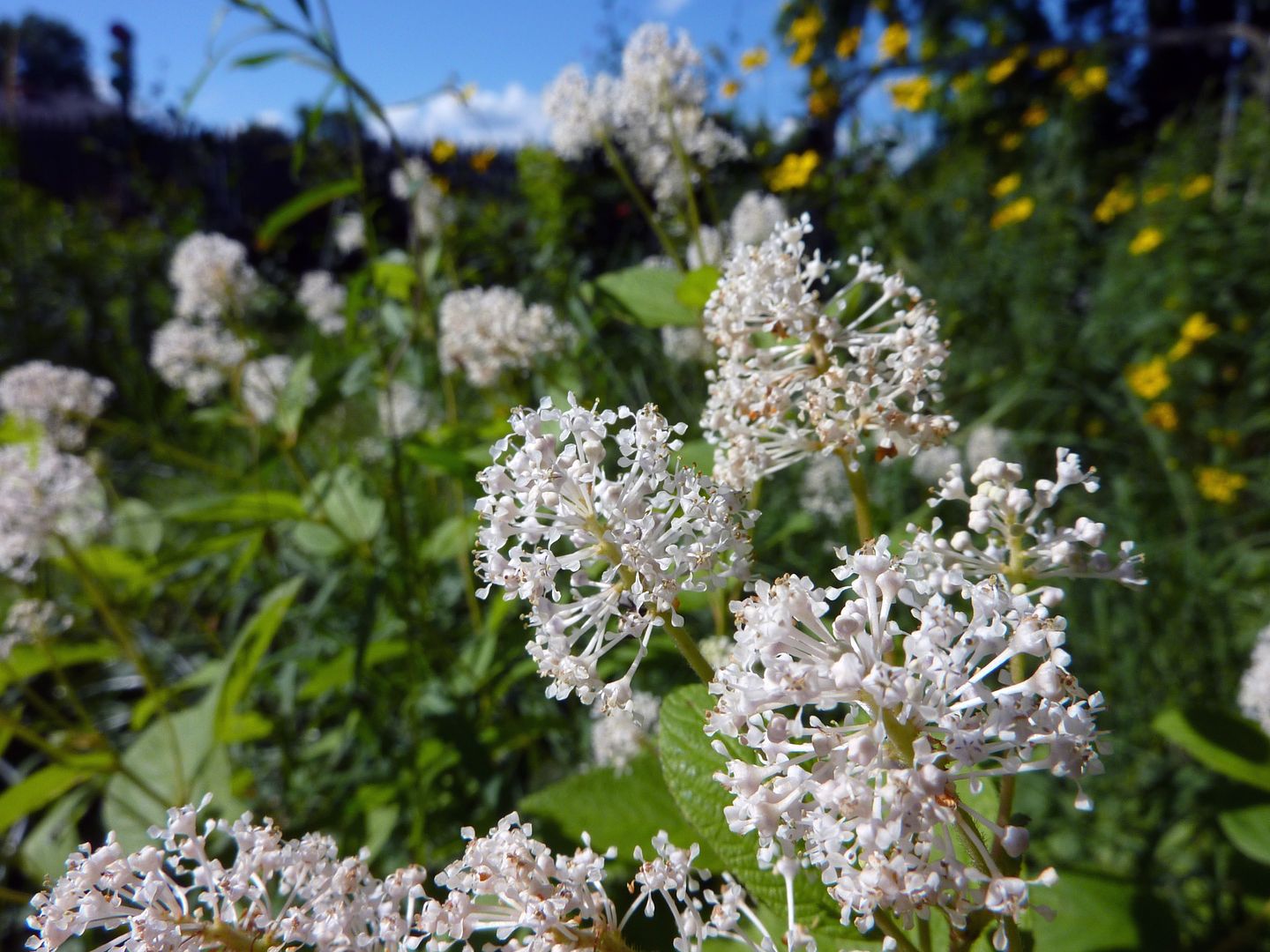
New Jersey Tea, Ceanothus americanus, which is actually a low 3' tall shrub that's covered in little white puffs of flowers. This is the only plant I need to remember not to mow over with the lawn mower each year and it's bright yellow stems really make it stand out. It's often praised as a good hummingbird plant, not because of the flowers, but because of the swarms of tiny bugs that go for the flowers. It's taken three years but sure enough I'm starting to see in the late afternoon this plant is bustling with tiny gnat-like insects. I haven't seen hummingbirds going for them yet but I'm sure it's only a matter of time. During the hotter times of the day nonsocial wasps tend to pollinate it. These types of wasps are beneficial because they're often specialized predators or parasites of beetle grubs, spiders, and caterpillars.
Whorled or Thread-leaf Coreopsis, Coreopsis verticillata, is growing right behind it. It doesn't get that much attention but I'm sure that may change in a few years. This started out as one plant, that is to say one stem that grew up to about 3' tall and produced maybe four flowers in it's first year. It's since reseeded in a non-aggressive way onto adjacent bare soil. This was the first of my native plants that I realized was not only growing happily but also self seeding around. Before then there had been this fear that maybe I'll rip up the lawn, plant everything, but only to watch it all die out slowly over the next ten years. This plant cured me of that fear.
Butterfly Weed, Asclepias tuberosa, these flowers are now open but I thought it was a neat shot. This is the host plant to the Monarch Butterfly among a few other things we don't hear enough about. Drought tolerant, loves growing in dry locations, and boasts brilliant orange flowers.
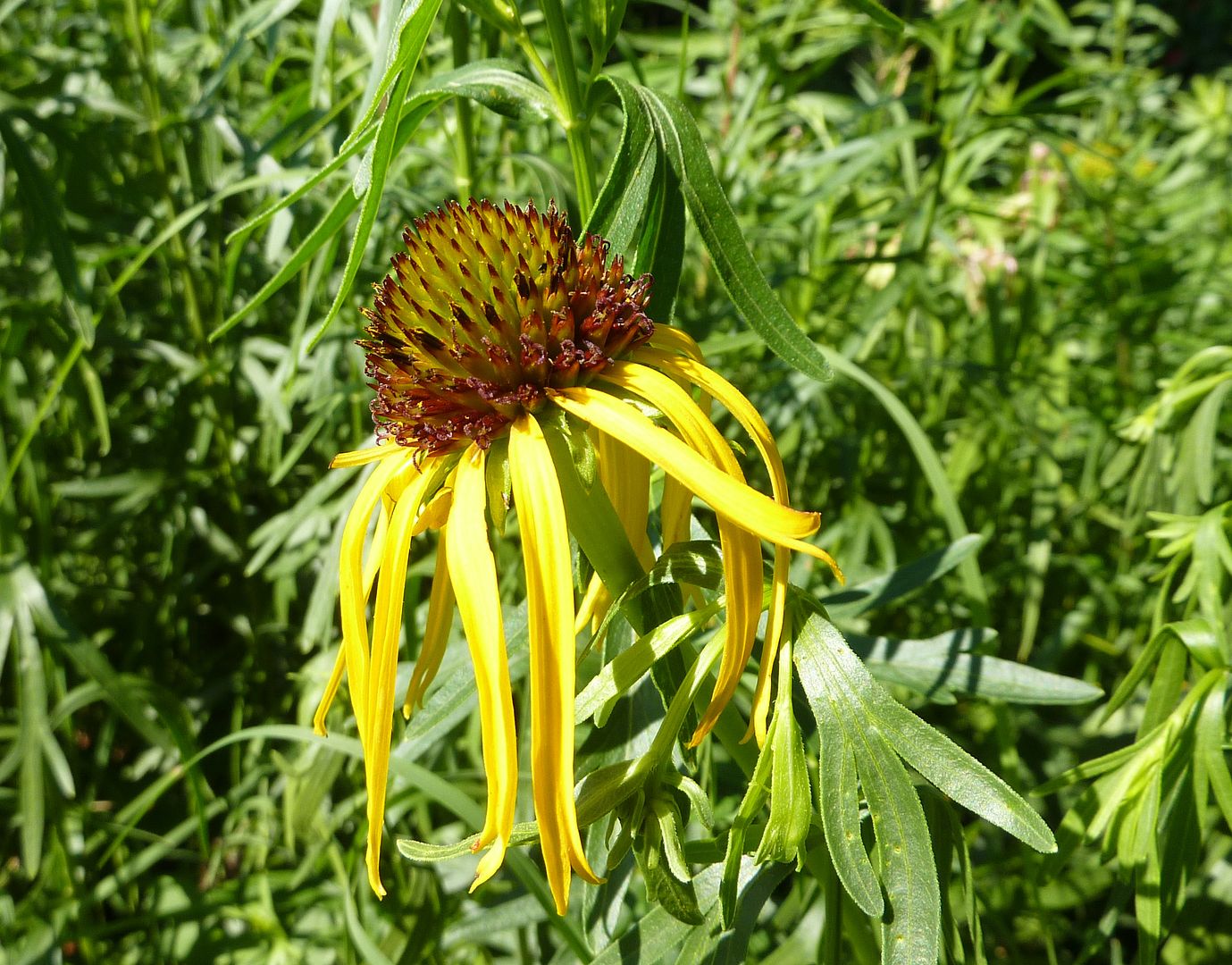
Ozark Coneflower, Echinacea paradoxa, this was a surprise this year because I'd planted this species a year or two ago and it died out. Coneflowers have never done well in my meadow and I'm not sure why that is. So this year I ordered Pale Purple Coneflower, Echinacea pallida, to give that species a try. Well what arrived grew better than anything had before, and when I saw the flower buds I was thrilled... but then the petals were yellow! So so one of the nurseries I ordered Pale Purple Coneflowers had mix up and they'd sent me Ozark Coneflower instead.
I'm not complaining. These plants seem to be a lot healthier than the first batch of Ozark Coneflowers I tried years ago. I initially wanted that species because the yellow went so well with the orange Butterfly Weed. We'll see if these are better able to establish.
Wednesday, June 6, 2012
Some Late Spring Bloomers
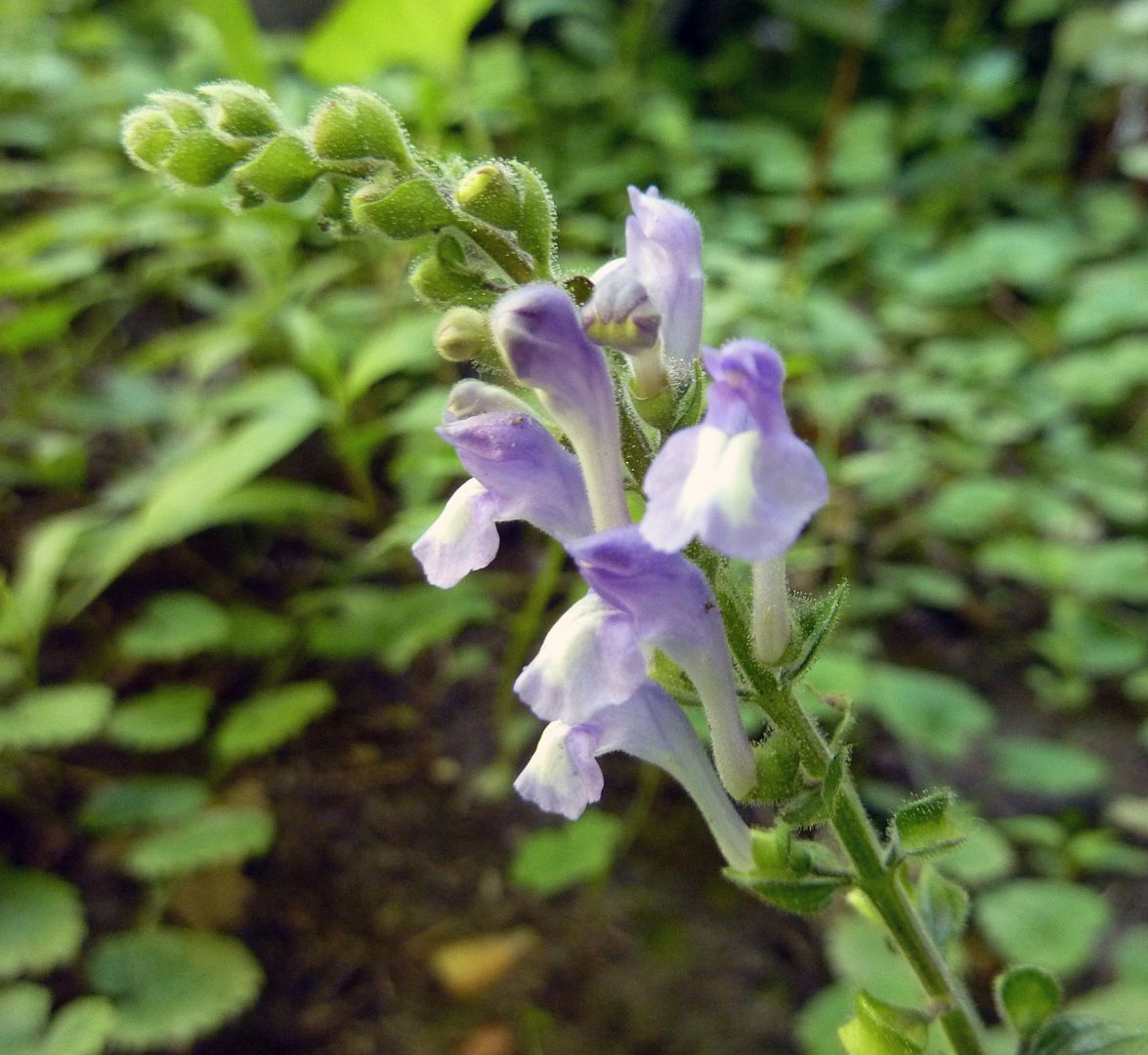
Heart-Leaf Skullcap, Scutellaria ovata, is a shade loving perennial that spreads by rhizomes. This is an odd combination. Shade plant and mint family don't really go together in my mind. Spreading by rhizomes is common in the mint family but because it's a shade plant I wonder if it will be as aggressive as its relatives.
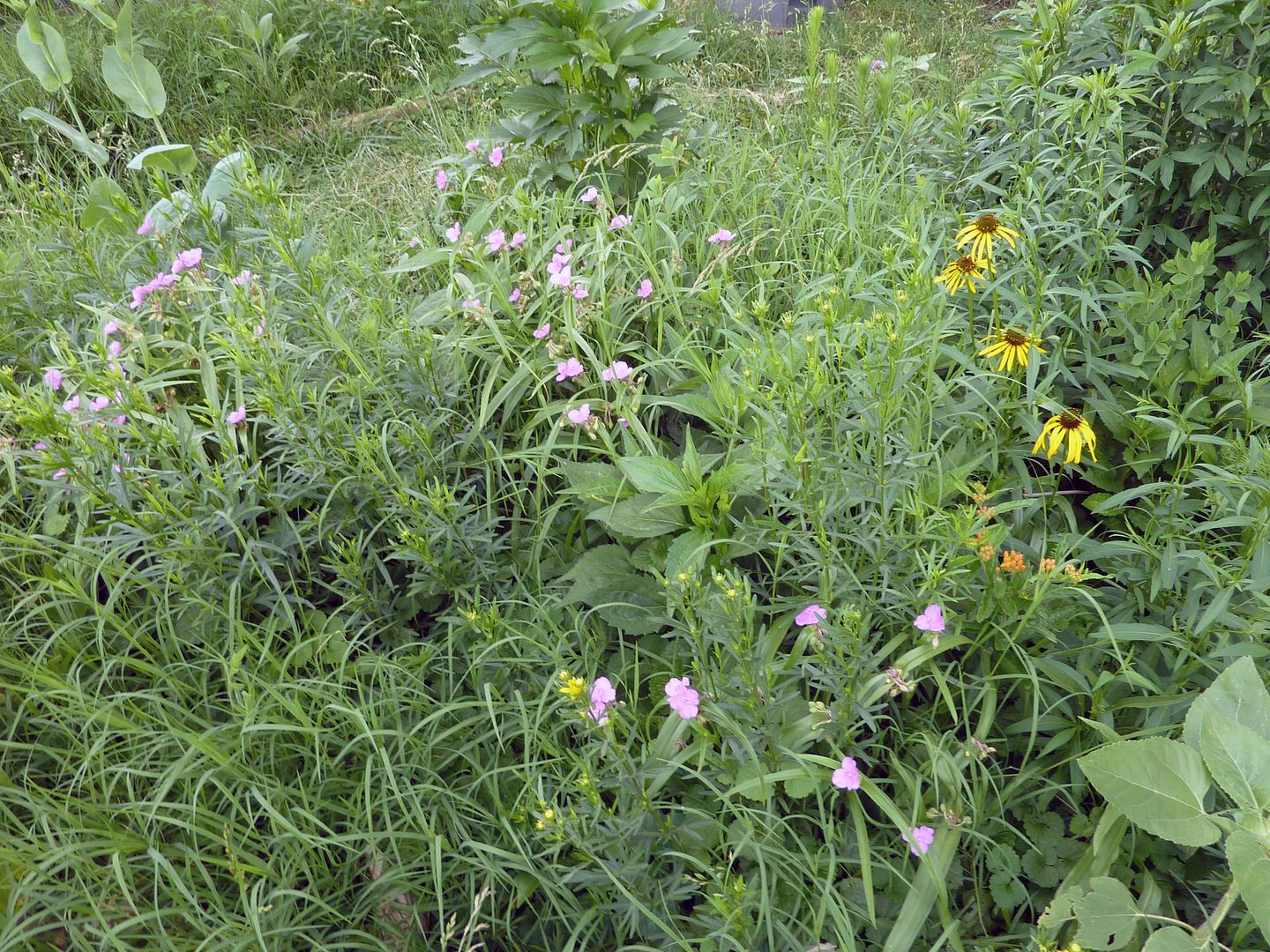
New Jersey Tea, Ceanothus americanus, is blooming. The leaves are a lighter green color that make it stand out, with the white clusters of flowers. I'm told this plant used to be extremely common but unfortunately it's one of those plants that is a sigh of ideal farming soil. I've never seen it growing wild and I live in New Jersey. It's been in a steep decline though not enough to be threatened. Ceanothus is a very diverse genus, especially out west where they all have blue flowers, and grow to be much larger shrubs. This species only gets about 3' tall.
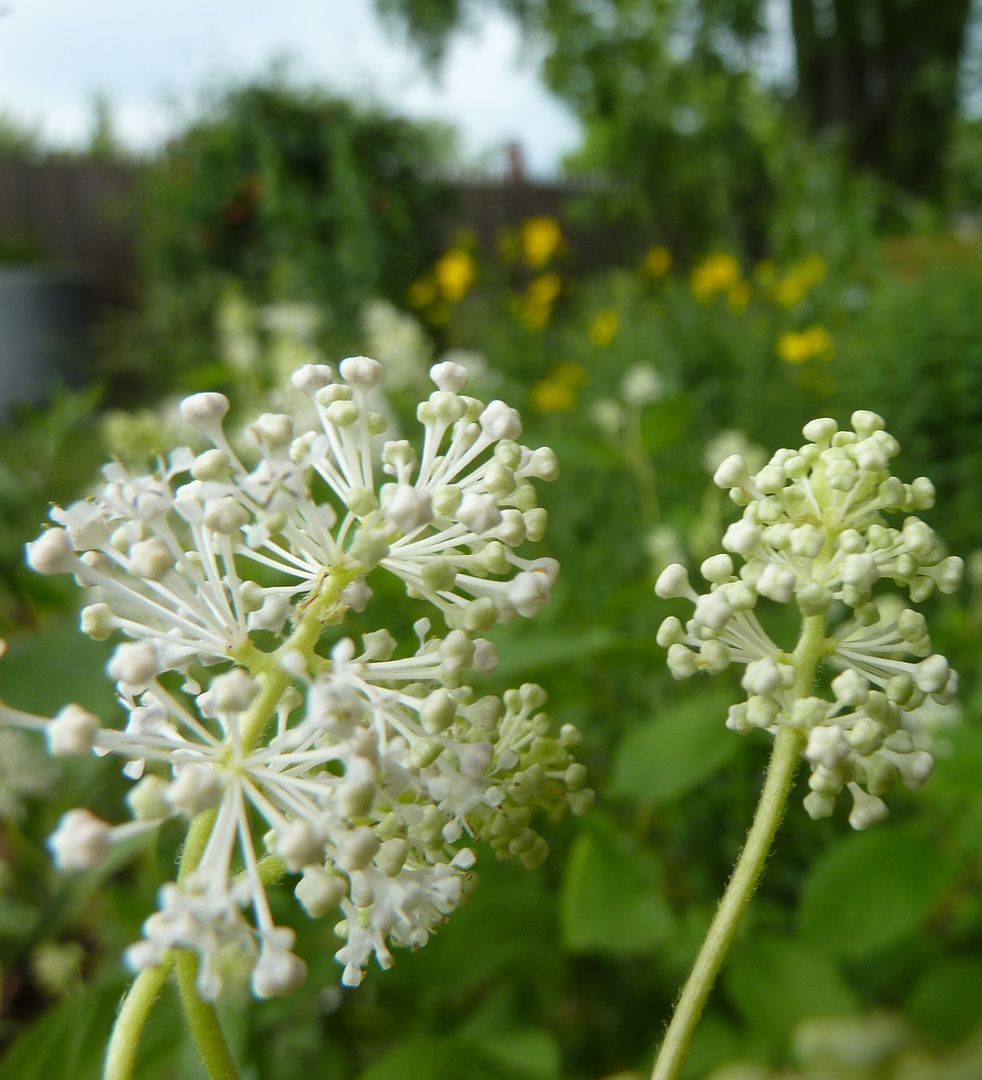
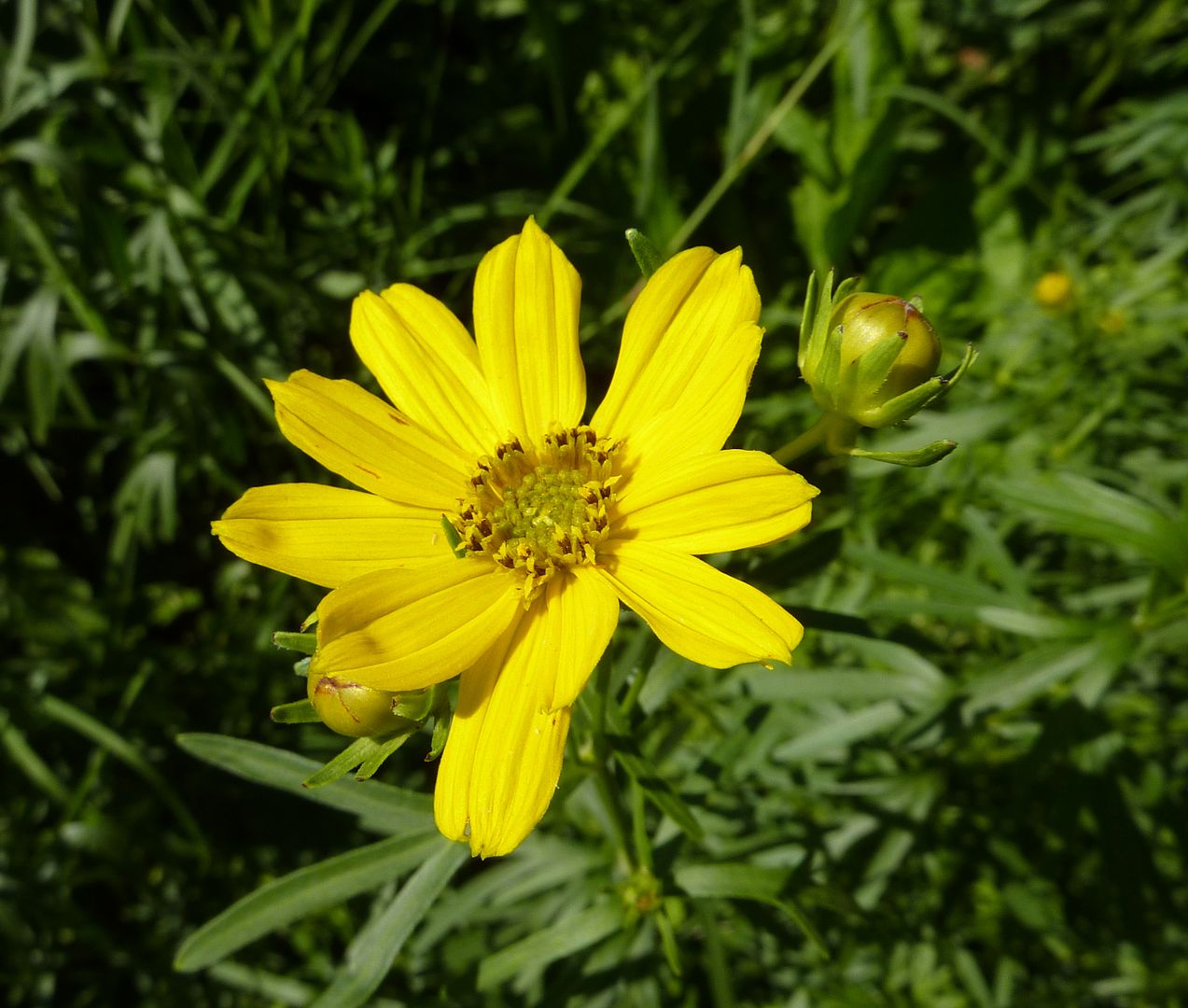
Coreopsis palmata, has just started too. It's one of the more aggressive spreading Coreopsis species. I planted maybe 7 of these last year as 4" plugs, and they're all coming up as though they were 3 gallon pots.
Ozark Coneflower, Echinacea paradoxa, isn't native to New Jersey but neither are coneflowers. So I decided to go with an uncommon species and may add more later on. It's the only naturally occurring yellow flowering coneflower. When you see yellow coneflowers at nurseries they're typically mutants, genetically altered to circumvent the terminator gene (Echinacea otherwise don't hybridize naturally).
Soon to come, Queen of the Prairie.
New Jersey Tea, Ceanothus americanus, is blooming. The leaves are a lighter green color that make it stand out, with the white clusters of flowers. I'm told this plant used to be extremely common but unfortunately it's one of those plants that is a sigh of ideal farming soil. I've never seen it growing wild and I live in New Jersey. It's been in a steep decline though not enough to be threatened. Ceanothus is a very diverse genus, especially out west where they all have blue flowers, and grow to be much larger shrubs. This species only gets about 3' tall.
Coreopsis palmata, has just started too. It's one of the more aggressive spreading Coreopsis species. I planted maybe 7 of these last year as 4" plugs, and they're all coming up as though they were 3 gallon pots.
Ozark Coneflower, Echinacea paradoxa, isn't native to New Jersey but neither are coneflowers. So I decided to go with an uncommon species and may add more later on. It's the only naturally occurring yellow flowering coneflower. When you see yellow coneflowers at nurseries they're typically mutants, genetically altered to circumvent the terminator gene (Echinacea otherwise don't hybridize naturally).
| Blue-Ridge Buckbean, Thermopsis caroliniana. Despite tolerating more soil conditions than Lupins, this plant doesn't have as many populations scattered around the country. It's something of a mystery to me. They're known to colonize where they occur but they don't seem to spread at all. | |
Soon to come, Queen of the Prairie.
Labels:
Coneflower,
coreopsis,
flowers,
Mint,
native,
New Jersey Tea,
Plants
Saturday, September 3, 2011
Meadow Project: September
Well it's September and my little meadow's fall blooming species have started to become very showy. Everything was started here as a bare root plug. Most of the spring and summer blooming species didn't flower at all, some even went dormant or died. Hopefully they'll all be back in force next year.
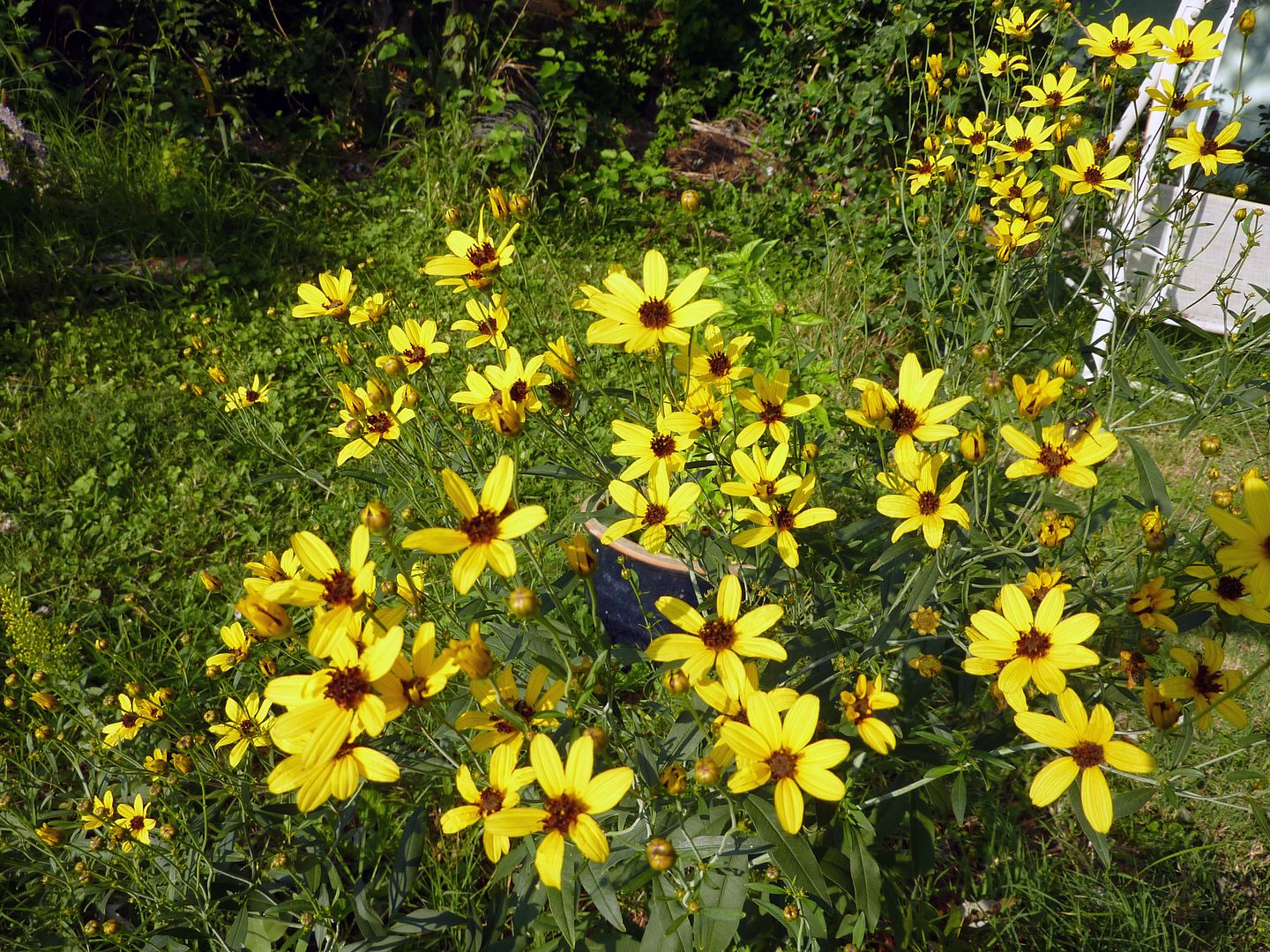
Tall Coreopsis, Coreopsis tripteris, is about 3' tall and topped with lots of flowers. Not bad for two bare roots that cost $5 each. I could see going nuts with this plant in the coming years. When they become better established I'm sure they'll reach that 5' to 8' tall I read on the internet.
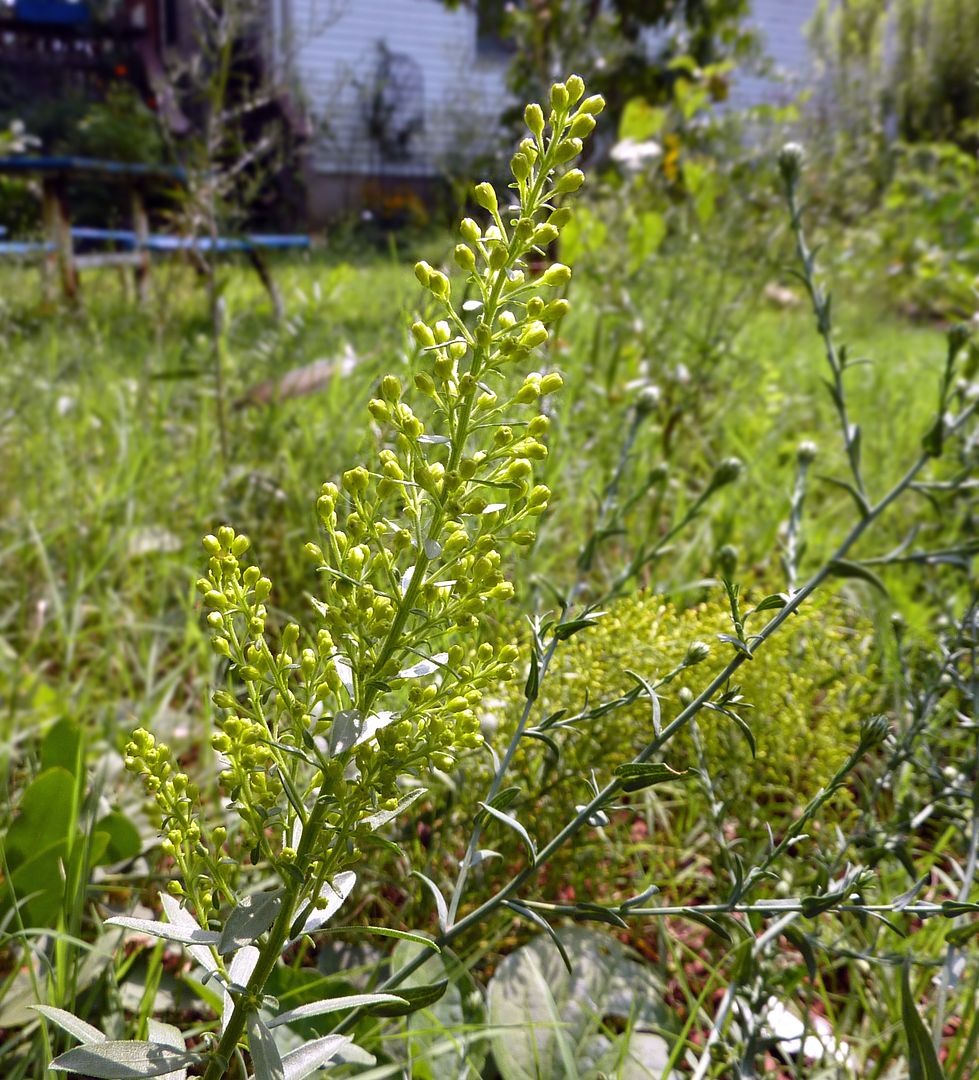
Showy Goldenrod, Solidago speciosa. This plant gets it's name for being showy. The internet does a better job of showing that off than my blog though. All four of my plants fell over and are sort of slinking along the ground. The orientation of the flowers is somewhat more uniform than on other Solidago's also the really tiny flower petals are slightly larger too, making them look more brightly yellow.
There are a few Asters popping open now too but nothing showy enough to take a picture of.
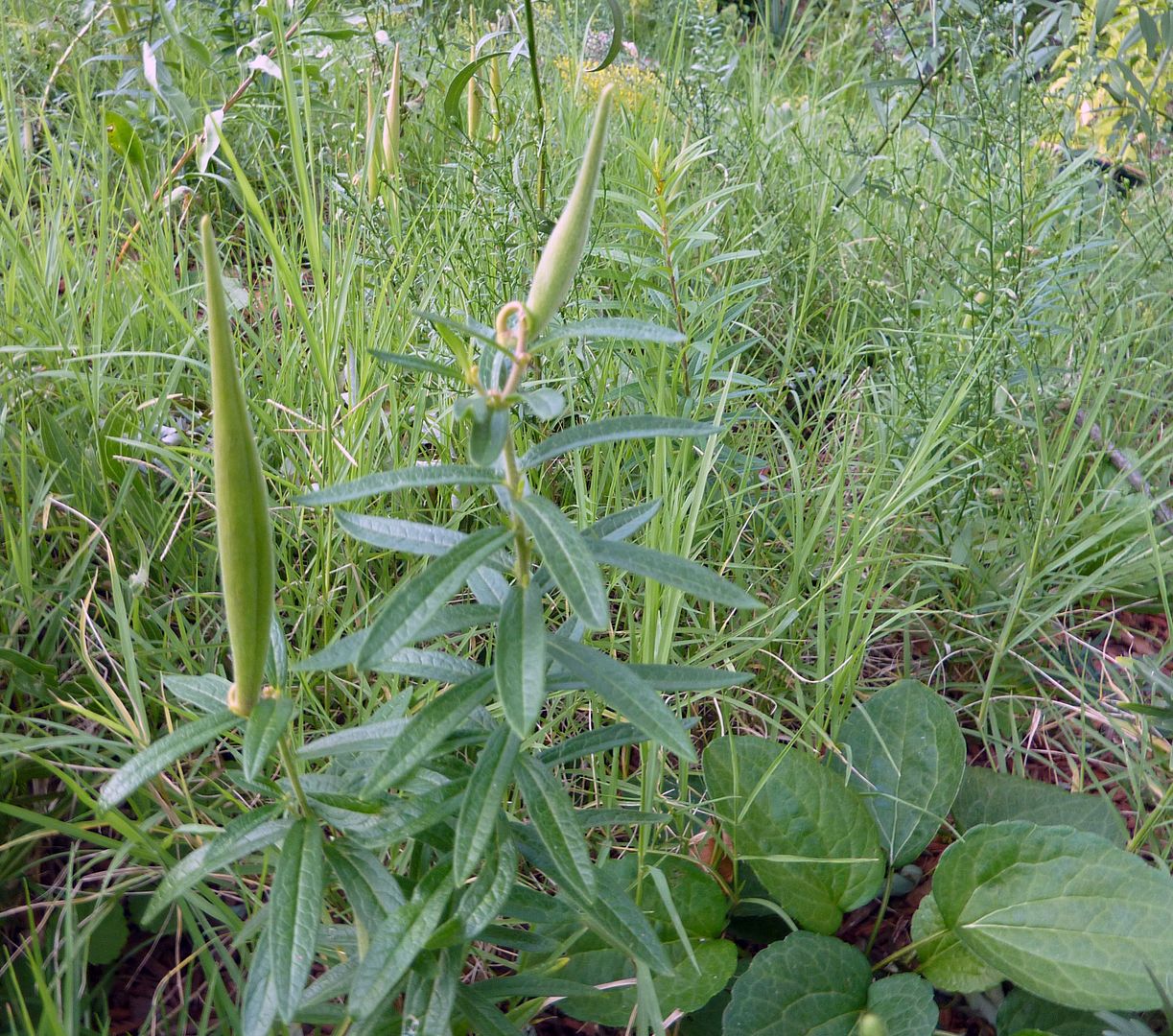
The butterfly weed, Asclepias tuberosa, flowered well and has now gone to seed. Over the summer that awful grass has come back in force, I'll need to start weeding it out again.
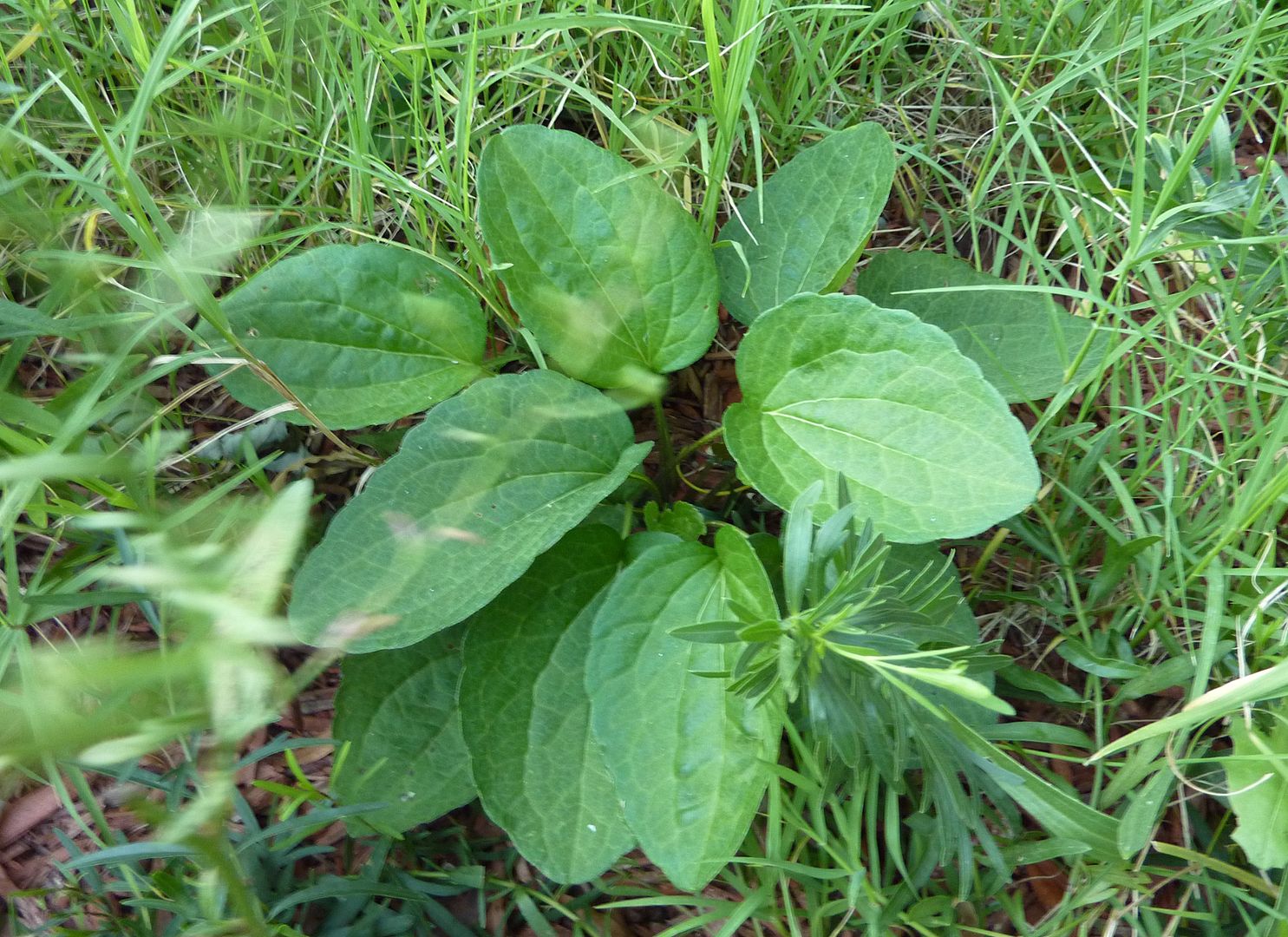
The Ozark Coneflowers, Echinacea paradoxa, have particularly neat leaf clusters. They're nowhere near native to New Jersey but frankly nothing in Echinacea is anyhow. What drew me to it was it's yellow flowers, without having to be a cultivar.
I need to weed out some grass but I'm overall happy with what's out there.
Tall Coreopsis, Coreopsis tripteris, is about 3' tall and topped with lots of flowers. Not bad for two bare roots that cost $5 each. I could see going nuts with this plant in the coming years. When they become better established I'm sure they'll reach that 5' to 8' tall I read on the internet.
Showy Goldenrod, Solidago speciosa. This plant gets it's name for being showy. The internet does a better job of showing that off than my blog though. All four of my plants fell over and are sort of slinking along the ground. The orientation of the flowers is somewhat more uniform than on other Solidago's also the really tiny flower petals are slightly larger too, making them look more brightly yellow.
There are a few Asters popping open now too but nothing showy enough to take a picture of.
The butterfly weed, Asclepias tuberosa, flowered well and has now gone to seed. Over the summer that awful grass has come back in force, I'll need to start weeding it out again.
The Ozark Coneflowers, Echinacea paradoxa, have particularly neat leaf clusters. They're nowhere near native to New Jersey but frankly nothing in Echinacea is anyhow. What drew me to it was it's yellow flowers, without having to be a cultivar.
I need to weed out some grass but I'm overall happy with what's out there.
Subscribe to:
Posts (Atom)