Showing posts with label brood. Show all posts

Thursday, April 18, 2013

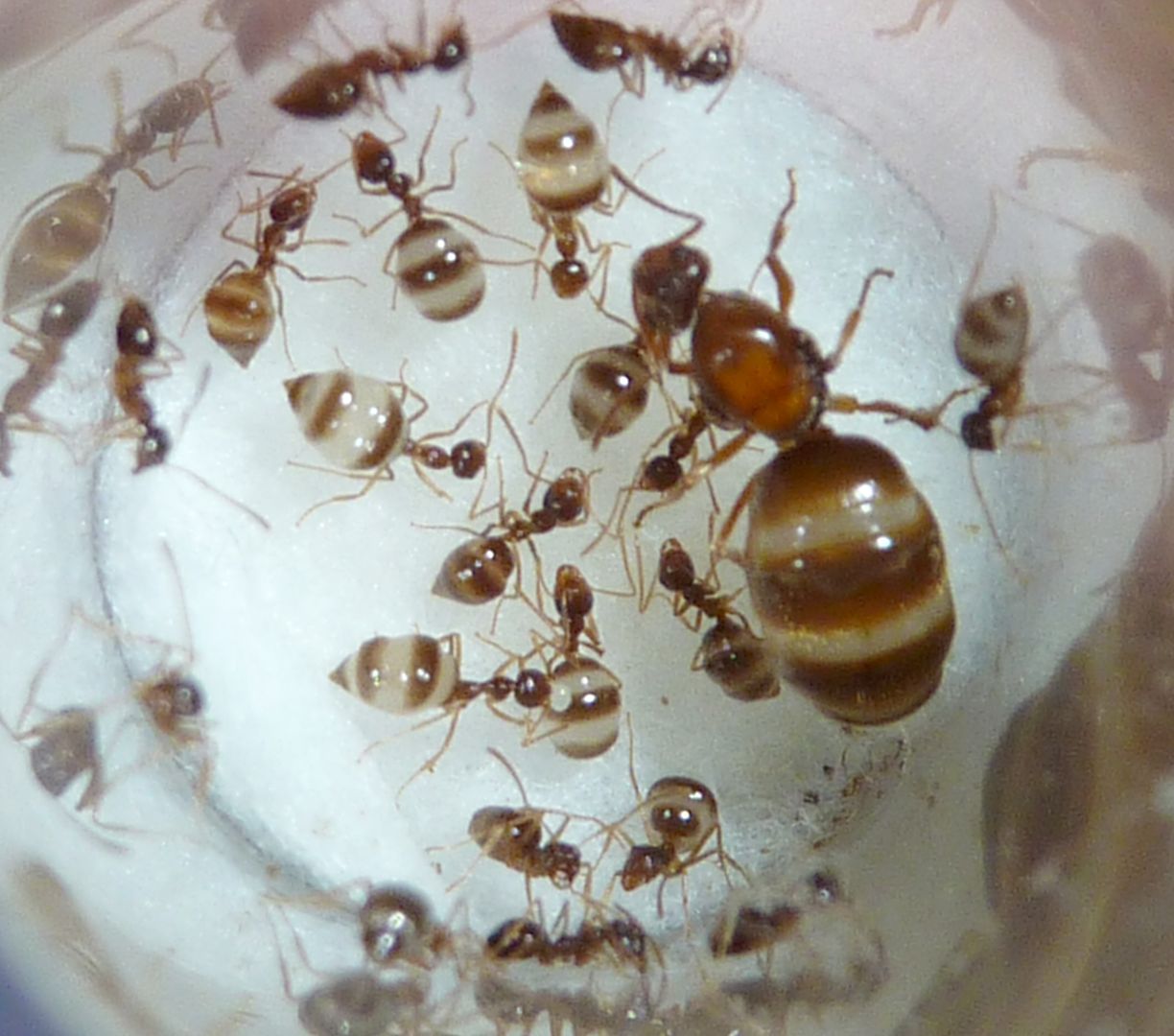
Camponotus castaneus Waking Up

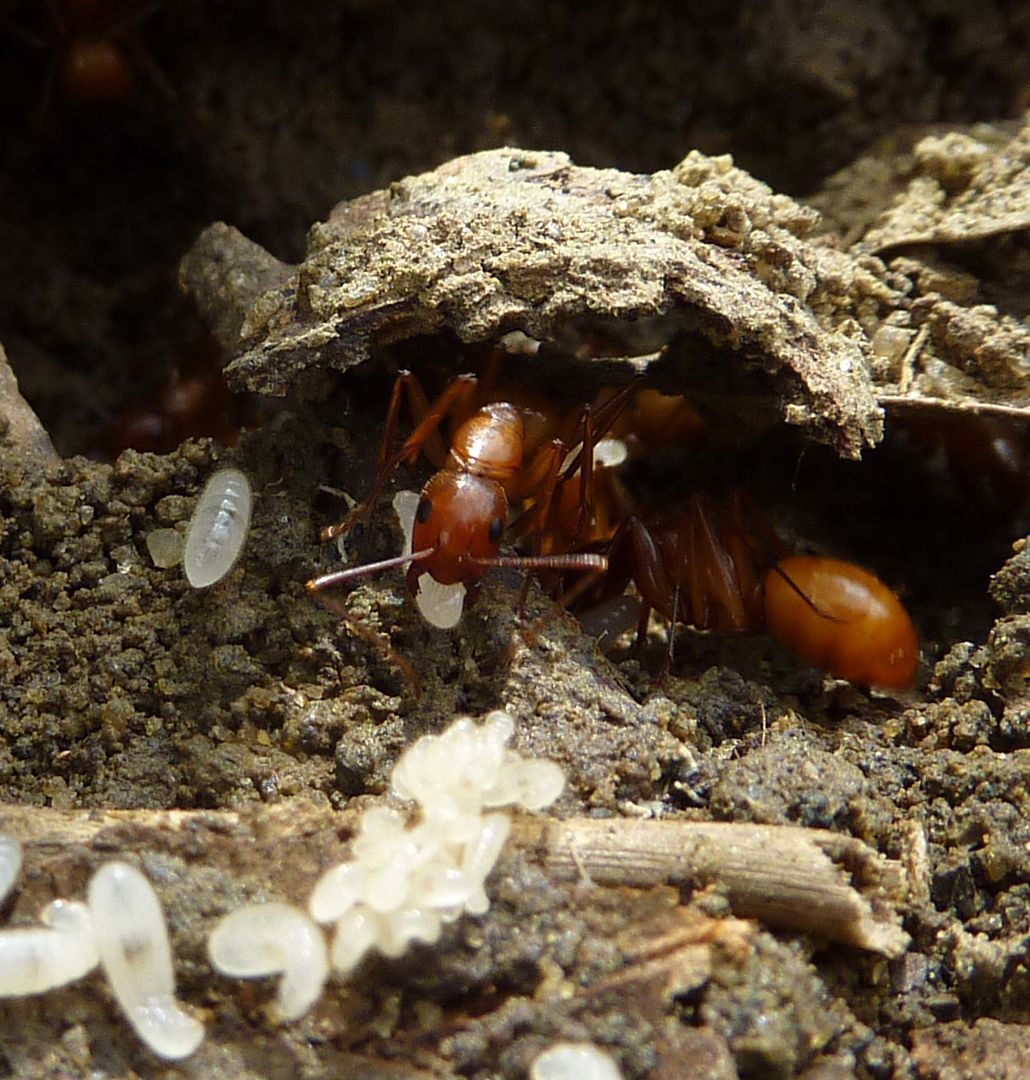
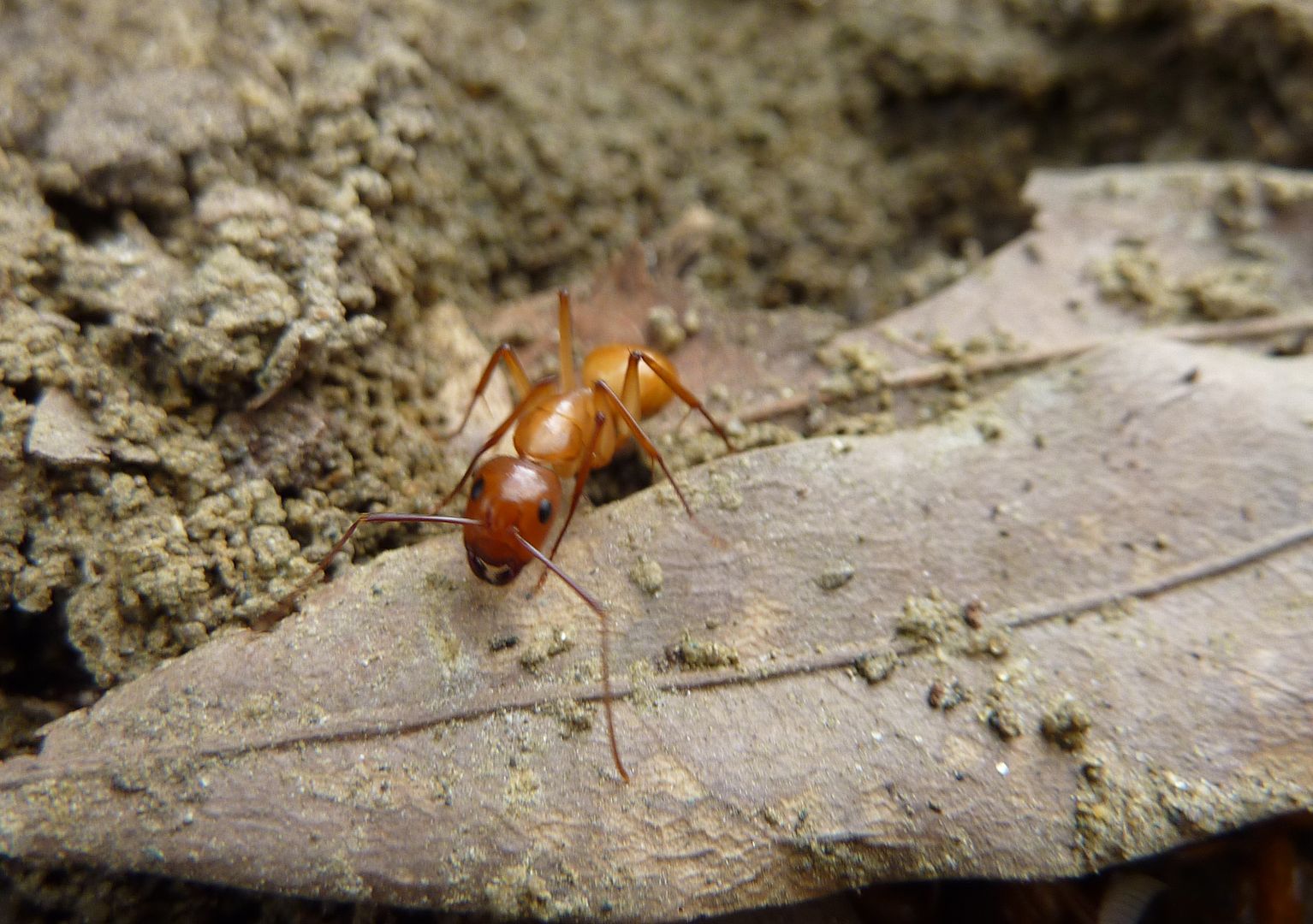
Camponotus castaneus has started laying their brood for the year it seems. I feel that this is one of those treasured species among ant keepers because of their brilliant orange color, and size 7mm to ~17mm long with queens up to ~17mm. They're among the largest ants in North America as with other true Camponotus species in the genus. It's a diverse genus among the largest in the world and also includes several smaller species who's workers are around 4mm to 7mm long and queens around 12mm give or take.

Along with having only one waist segment (note the ant in the lower left) Camponotus also have a domed mesosoma (thorax or middle section) with the three segments almost forming a smooth curve. This is the only color they come in too, the head is typically darker than the rest of the body but never black the way it is in C. americanus which also tends to have black all over it's body around joints especially.

Technically C. castaneus isn't a true Camponotus species, they fall in a subgroup within the genus known as Tanaemyrmex. Such species are supposidly identified in the genus as being large just like the true Camponotus, but also having elongated looking heads. The trouble I find with this rule is that the trait is only seen in established colonies, hard to see in the smallest workers, doesn't seem to apply to the major caste (the soldiers) and I really only see it in the in between workers. So you need to be looking at a well established colony that's past their first year just to find this trait.

It's one of those scientific facts that's good to know but frankly not practical enough to be useful, especially with a species you can identify at a glance if you're in the eastern U.S. and Canada.

A Field Guide to the Ants of New England lists their common name as "The Chestnut Carpenter Ant"

Tuesday, March 16, 2010

Brood Developing

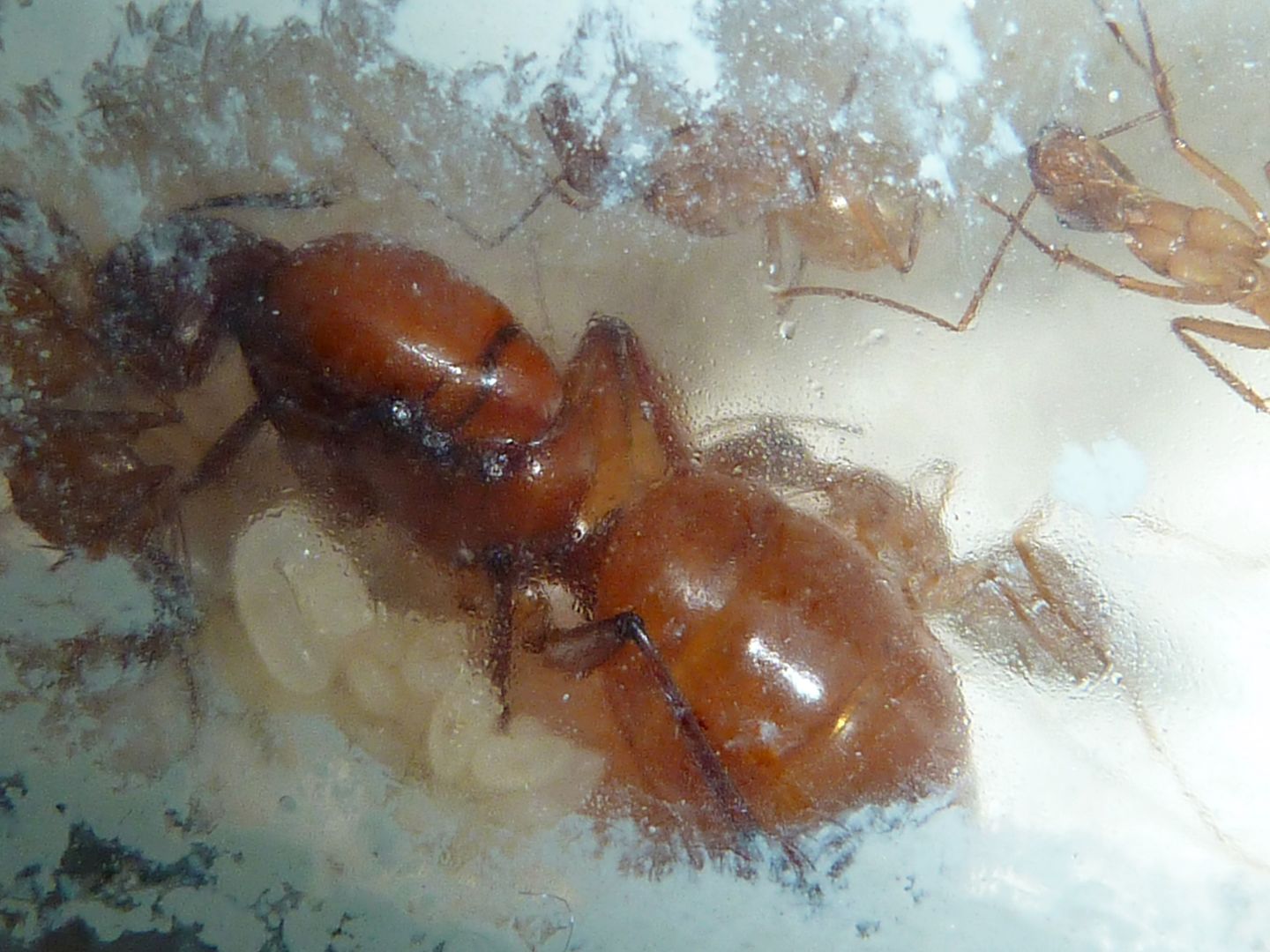
Well I finally got around to taking a picture of the developing brood. They haven't grown much but I'm sure they'll have made great strides by April, maybe new workers by May. 

You can make out the one closest to the queen's head (to the left) is nearly double the size of some of the others. I've started feeding them regularly again but I don't think they've found the food. I'll try forcing it on them later on. 

My colony of Prenolepis imparis has been doing almost nothing. These are considerably boring ants in all honestly but I love them because they fly early in the year. Wild colonies are probably holding their nuptial flights in parts of the US that are close to or above 70F. 

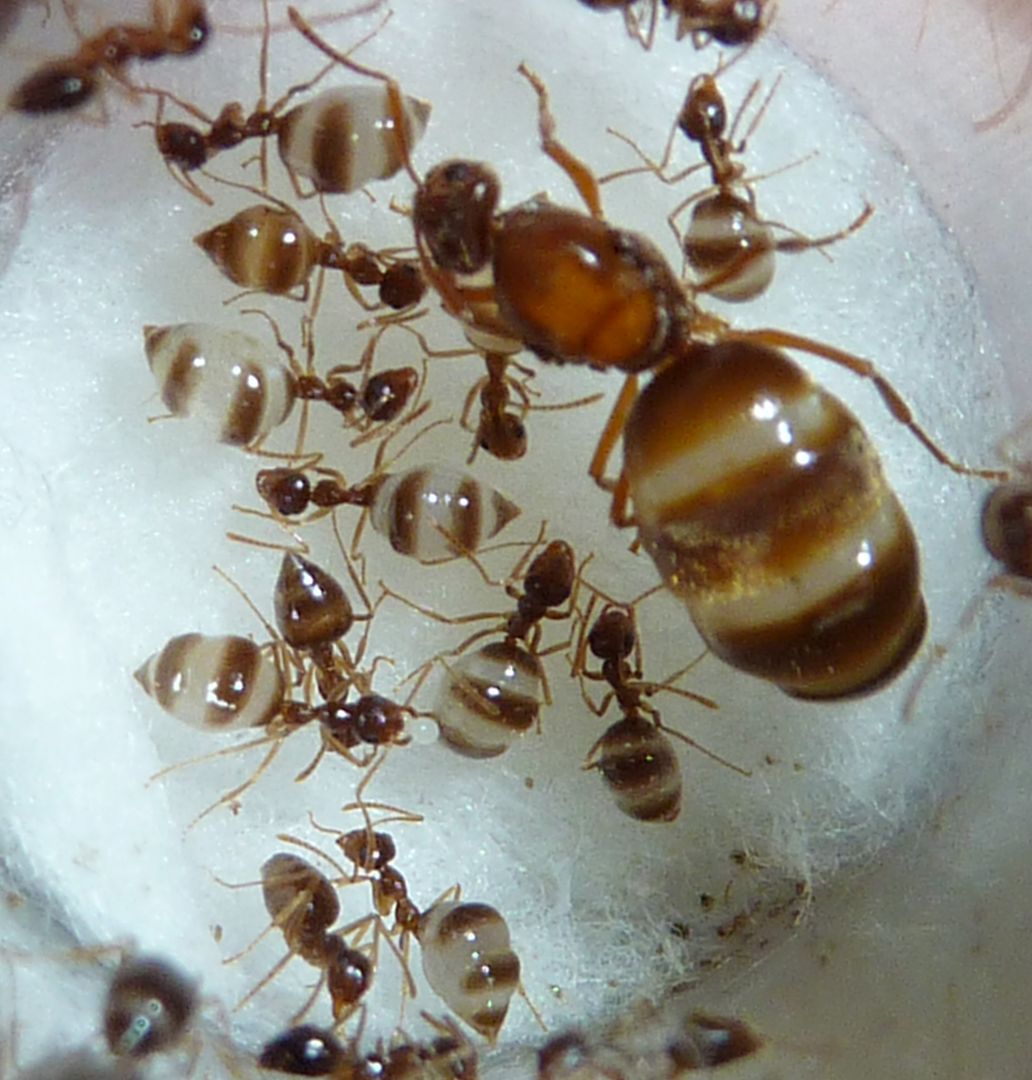
I didn't notice it at the time but if you look at the worker 2/3rds down on the left side, the one facing the right, she's holding an egg! I've had colonies of these before and they always die off because of a failed batch of brood. I believed their diet focused almost entirely on sugar. This colony as you can see is well fed but I focused on protein just as much. 

Here is a little better photo where the egg is easier to spot. Notice the different sized heads to the workers in the middle. That's a sign of a good diet in a colony. Usually larger head size (larger caste in general) early on is a sign of good health. Smaller workers are cheaper to produce but aren't as developed as they could be and that usually means they don't live as long.

I'm also happy to see the queen still has some of her original color. I notice that this seems to fade with time. Younger queens seem brighter in color for this species. The browns are more dull orange, the red thorax is a very soft mix of rose red and salmon which is the best I can describe it. Happy Hunting.