Dictyoptera
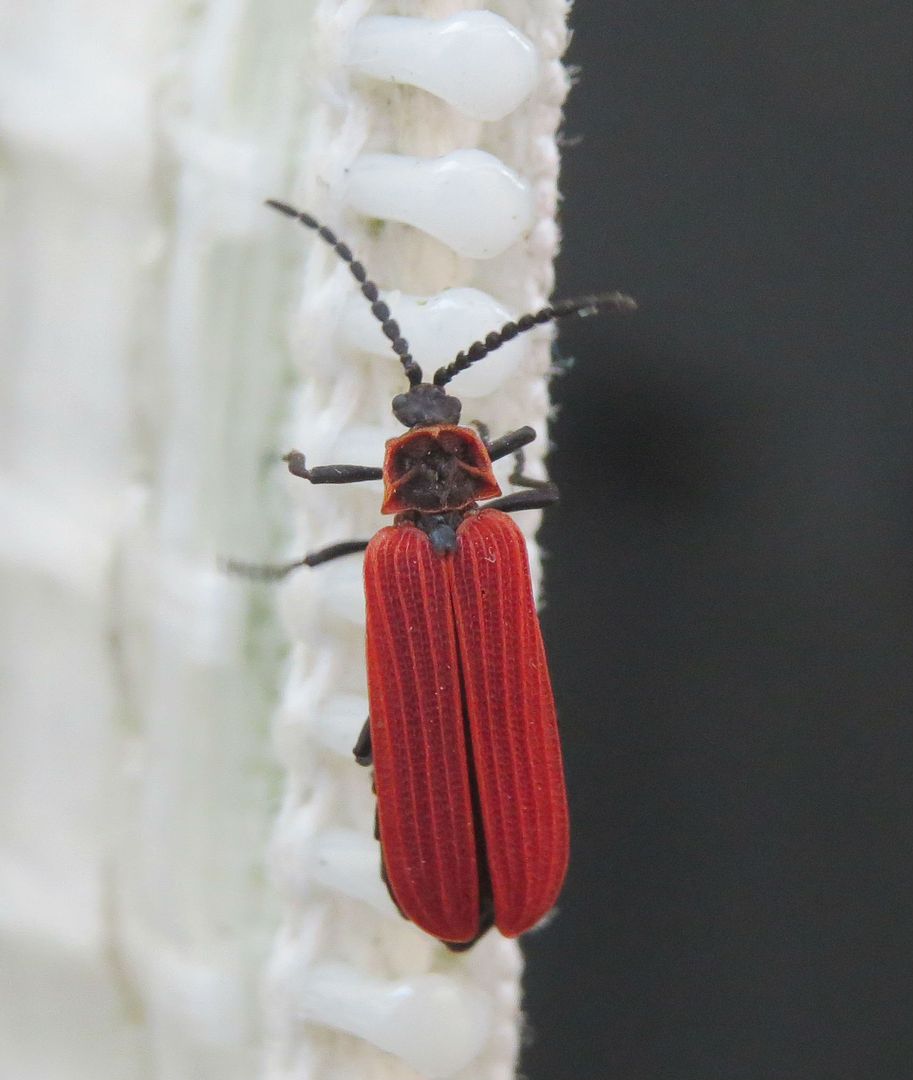
aurora, Golden Net-wing Beetle. The adult stage is mostly active for about two months in the springtime. The grubs are predators of other insects.
These are found around conifer forests... suggesting that I may have
planted one too many trees in my yard.
It's something of a mystery to me that I haven't noticed this species in my yard before. We have a pine tree, which I didn't plant. It was a "gift" my brother gave my mom at the age of 5, though I'm sure my dad helped there. We aren't that close to the pine barrens or too many stands of pine trees, so I'm wondering it it took 25+ years for our one evergreen tree to become substantial enough to attract this species to my yard.
Showing posts with label Colors. Show all posts
Sunday, April 13, 2014
Friday, October 18, 2013
The Wildlife Gardener's Meetup (Part 3)
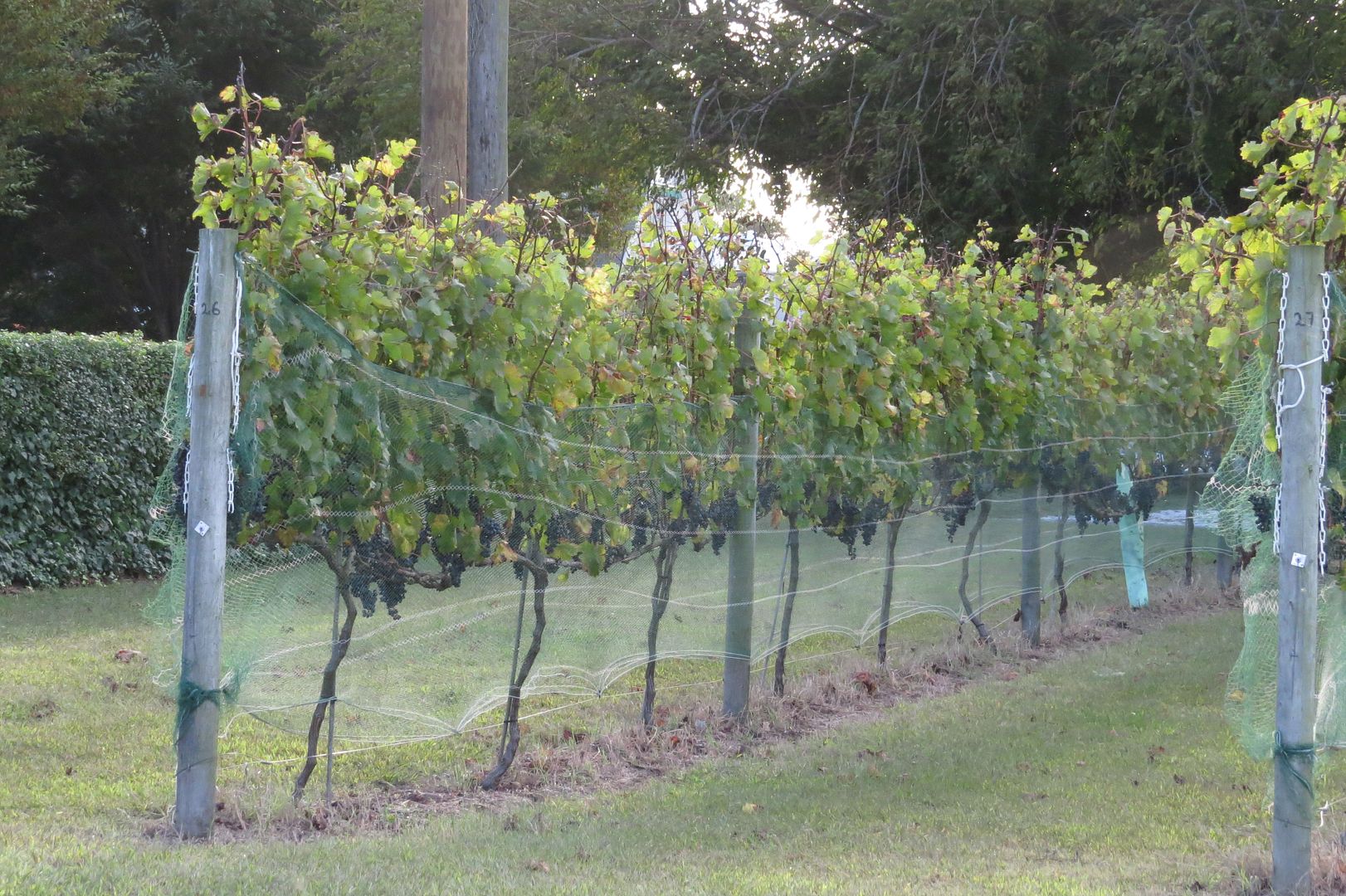
On the last day of the Wildlife Gardener's Forum meetup, we went to Cape May, NJ. I had never been there before but always heard good things. On the way there we came across a grape farm (vineyard?) which still had grapes growing. It was neat to see how they protect the fruit with lines of cloth. I'll have to mimic this method myself somehow.
Also before we got there, there was a group of photographers all standing in the road, cameras focused on a tidy little garden they have down there. These people were blocking the road and all anxiously awaiting for something to happen. Apparently some west coast hummingbird species had been spotted there the previous night and everyone was standing there waiting for it to show again... we stopped a moment to think if that would be worth our time but decided it was not. While leaving we asked if it had shown and it hadn't.
Cape May is the southern most point of New Jersey which also bottle necks into a peninsula, making it ideal for viewing most things that migrate at this time of year. It was a little late though so we caught the tail end of the Monarch Migration and little else.
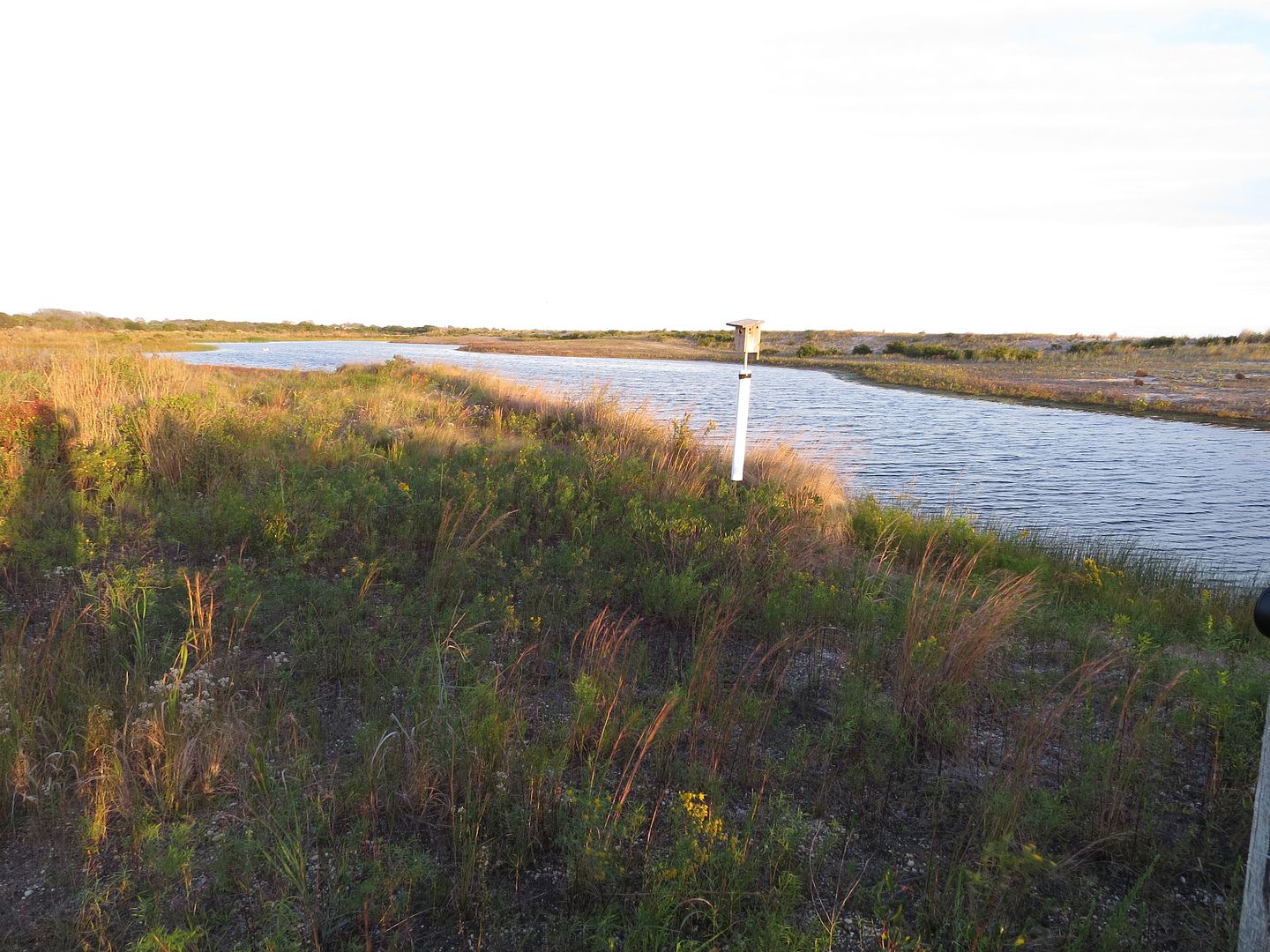
The park was a nice wetland area with trails leading all up and down the bays and beaches there.
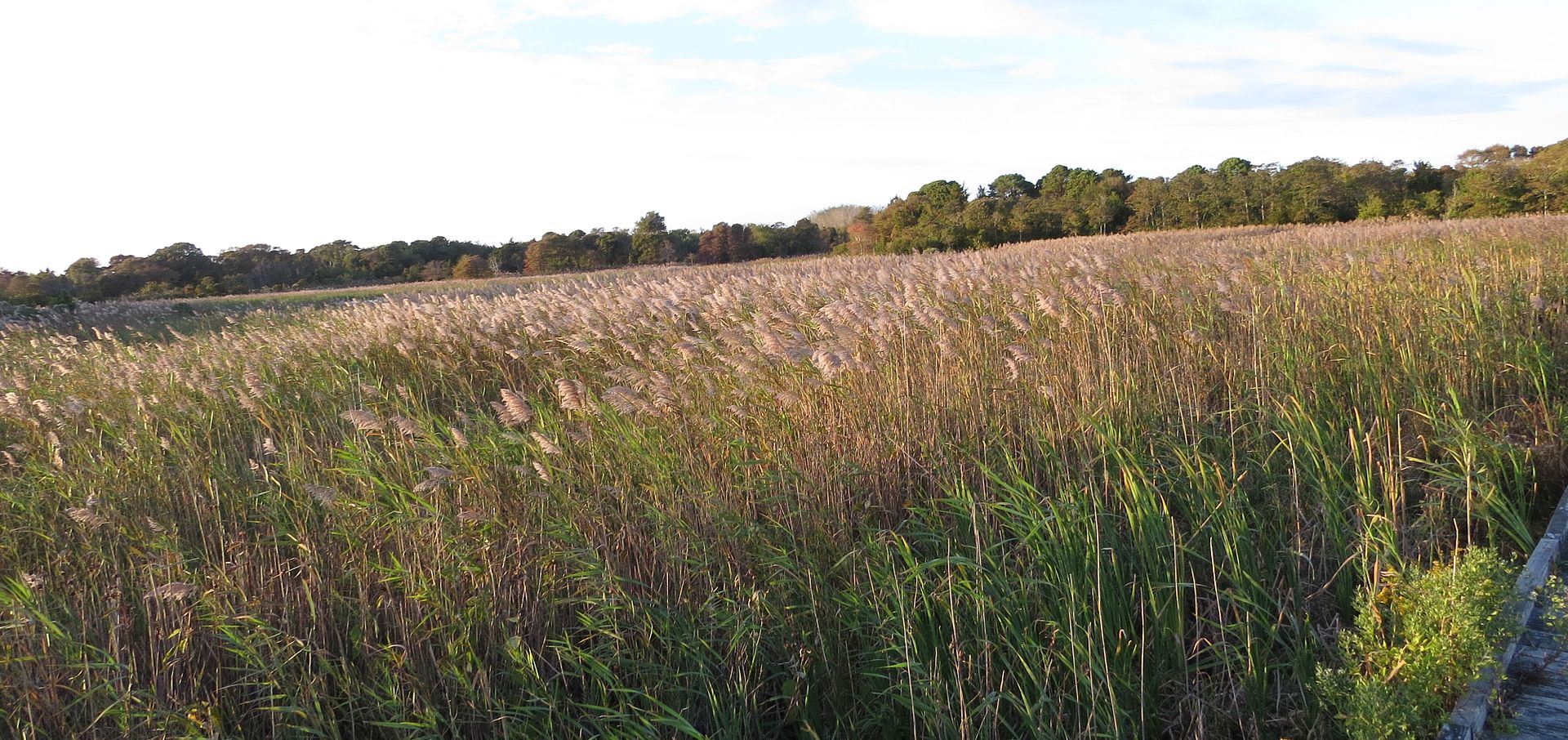
The least interesting parts were those overrun with the invasive Common Reed Grass, Phagmites australis. This grass can be drown as a method of control, and though it likes growing in wetlands it's very growing habit slowly generates new land. They push up so much top growth every year that it doesn't decompose until several years more, thus the ground is slowly raised. Seeds are air born, and once established they will send out runners several feet away, making them quick to colonize.
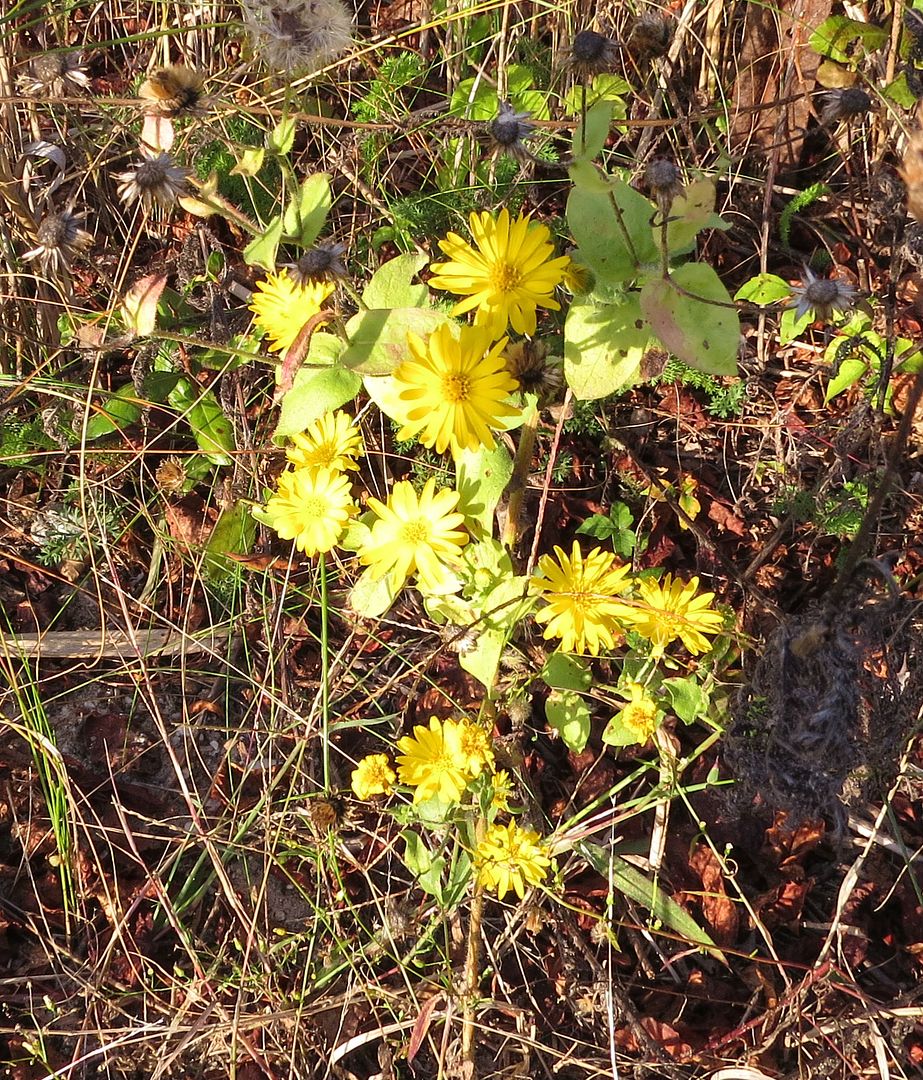
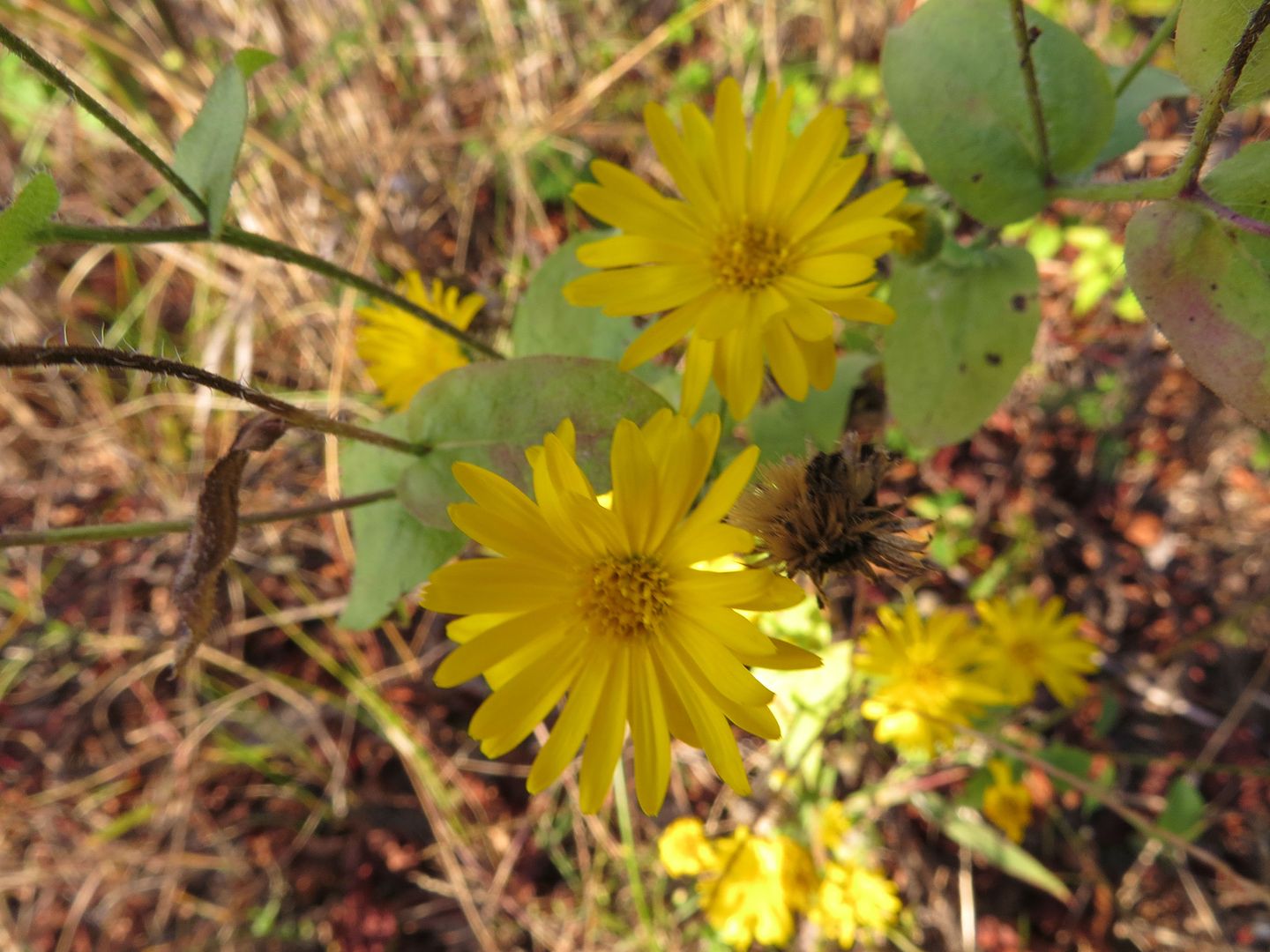
The occasional Golden Aster, Heterotheca and Chrysopsis sp. grew in places. Overall it was a rare plant but still a nice one to see.
I don't think it's Maryland Golden Aster, but certainly something in that genus, (or the other one).
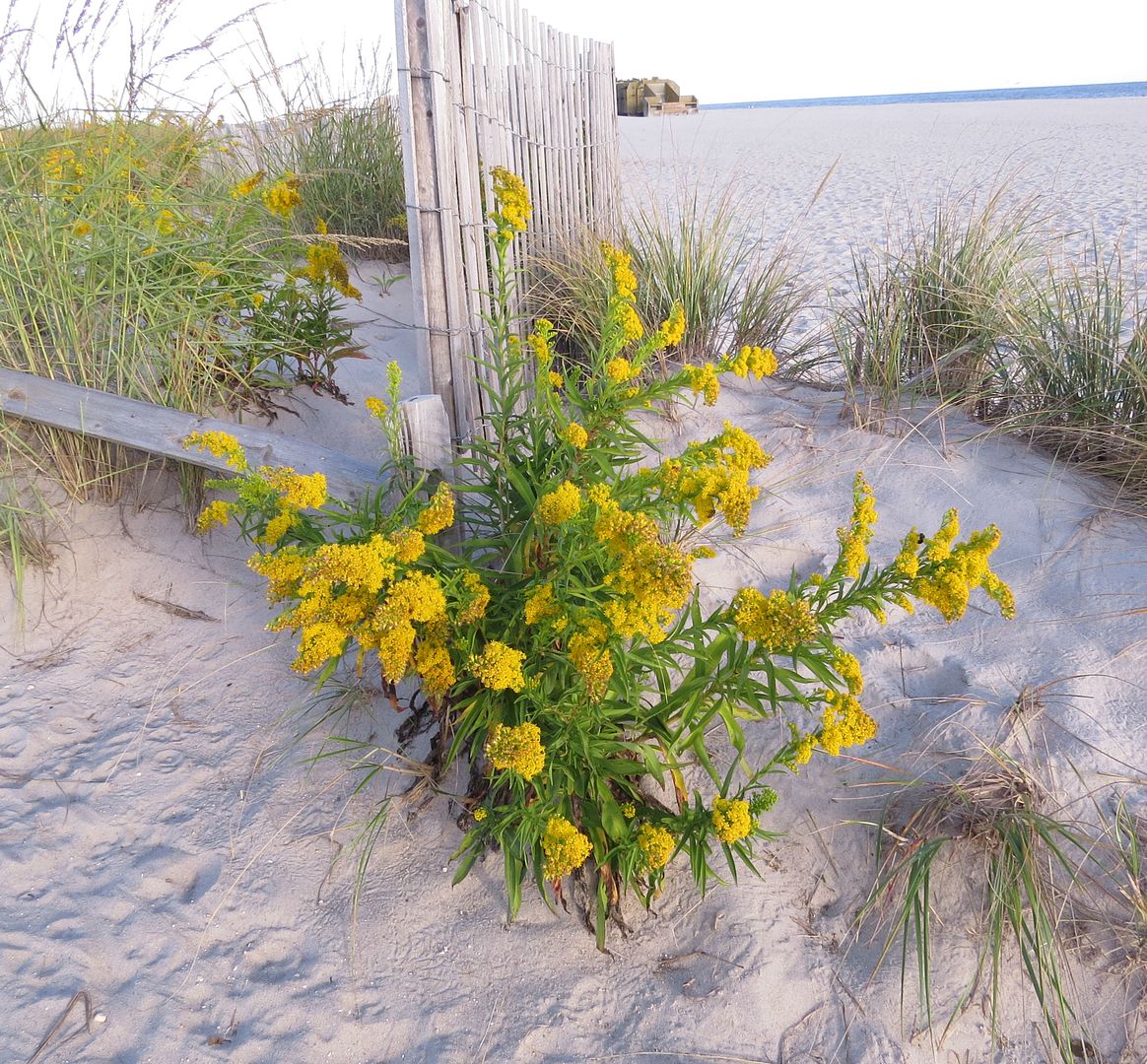
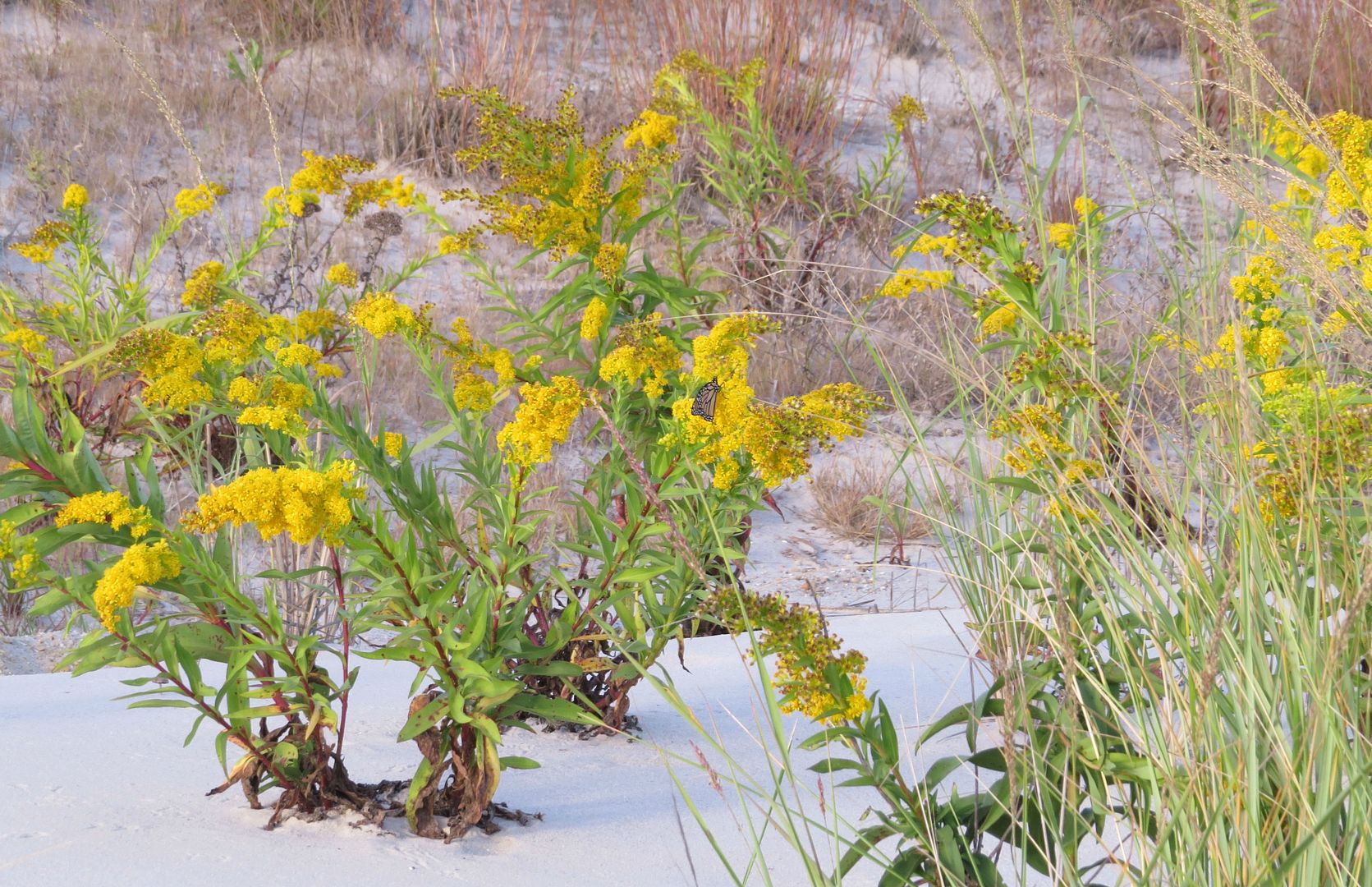
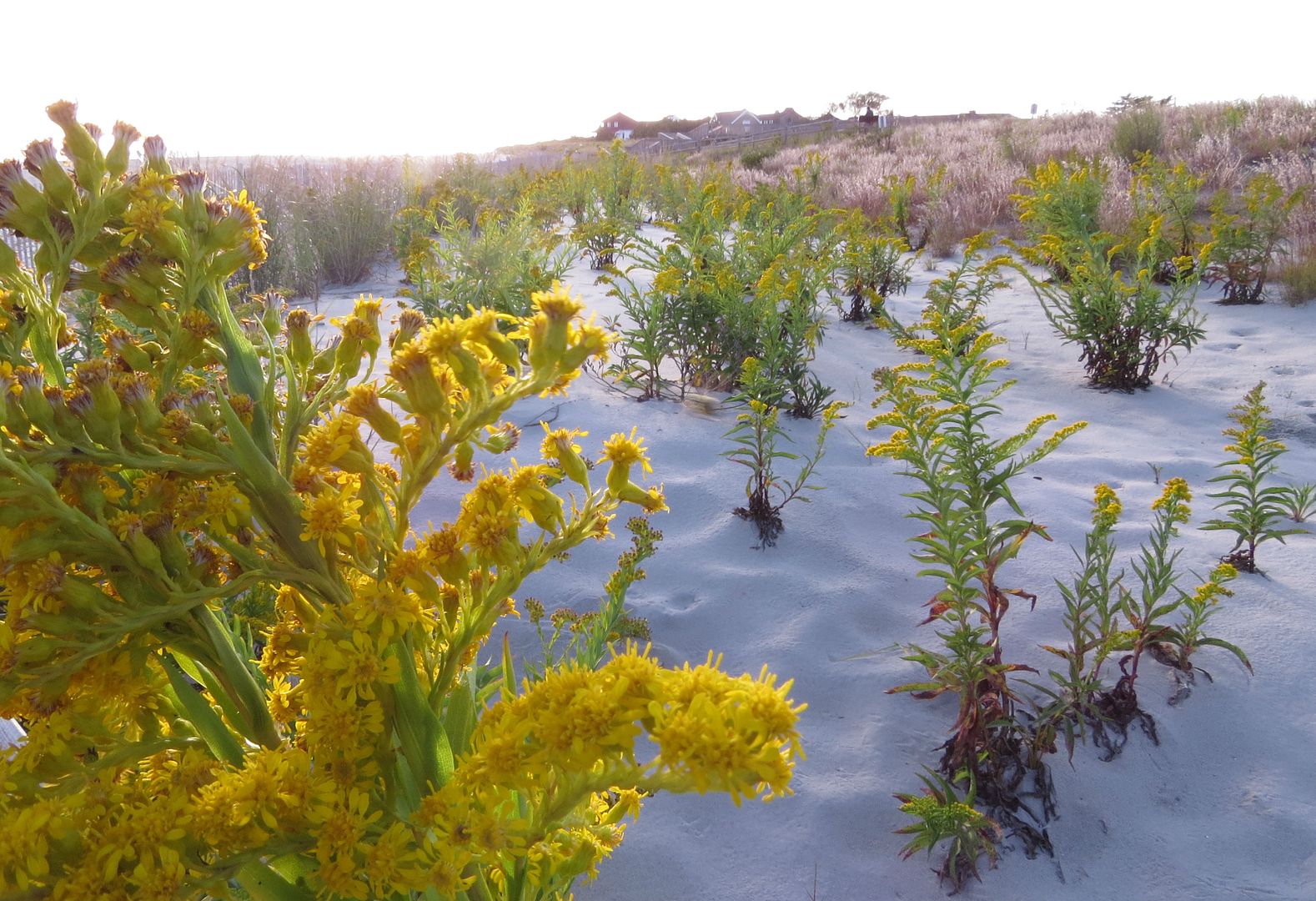
Along the beach there seemed to be some sort of restoration project. There had to be a few thousand plants of Seaside Goldenrod, Solidago sempervirens, and what might be Little Blue Stem, or it's sand and salt water tolerant counterpart.
This is a fantastic goldenrod species. If I had a dune of 100% sand in my yard I'd certainly be trying to grow it! The plant is a good size, they don't seem all that aggressive, and the flowers are as nice and showy as Showy Goldenrod.
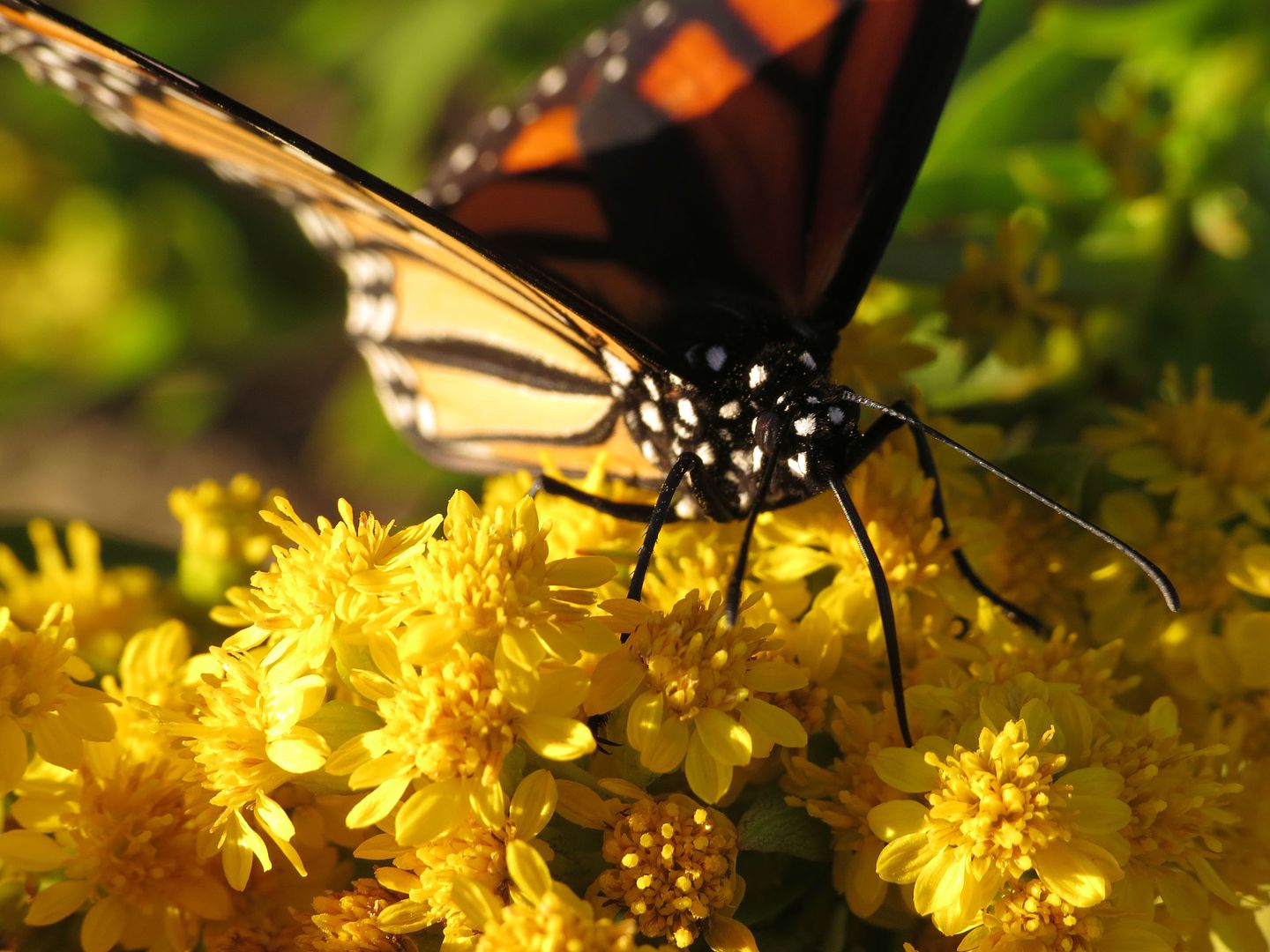
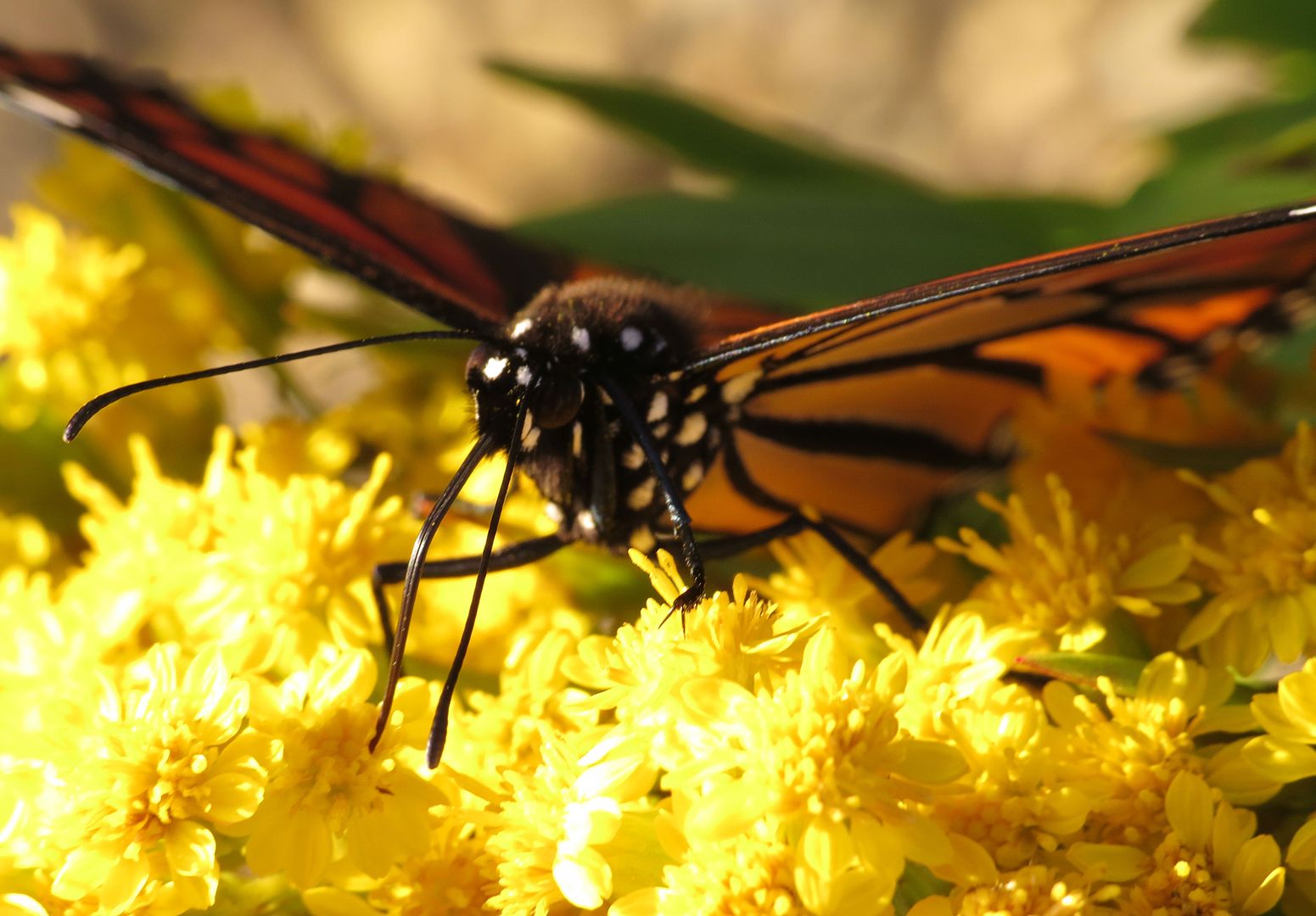
Monarch Butterflies swooped about from plant to plant. Most of them seemed to be having difficulty staying with the plant from the force of the wind though. As I mentioned earlier this was the tail end of their migration so we really only saw a few dozen. But that's a lot more than I had in my yard this year or had seen flying around.
Beautiful Plant.
They were less common inland where the soil turned more rocky than sandy, but Monarchs found them all the same.
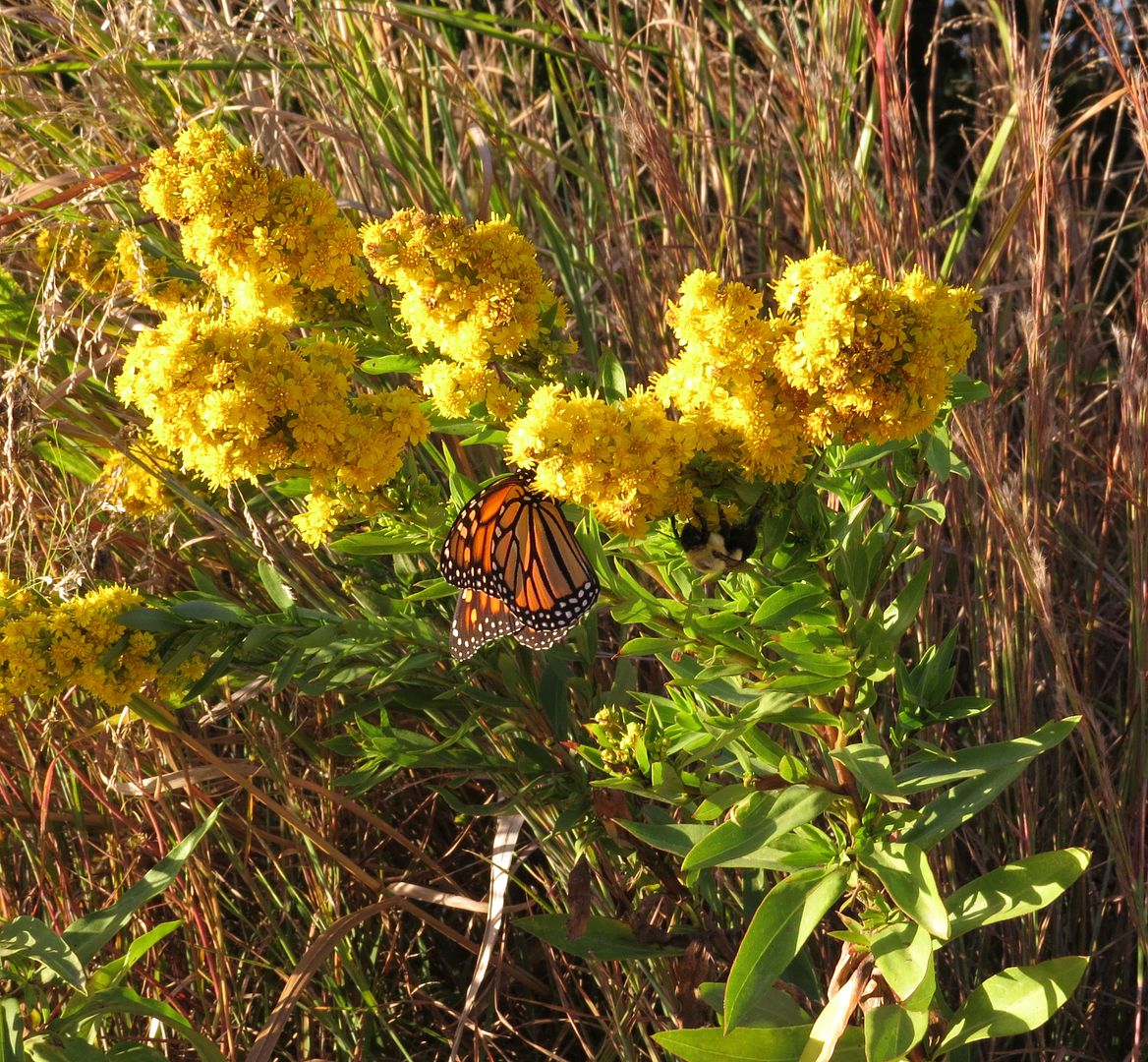
I got to test out my new Raynox DCR-250 Super Macro Snap-On Lens with some Monarchs and in such beautiful lighting! This little snap on works with just about any camera that has a clip on lens cap, and is well worth the money.
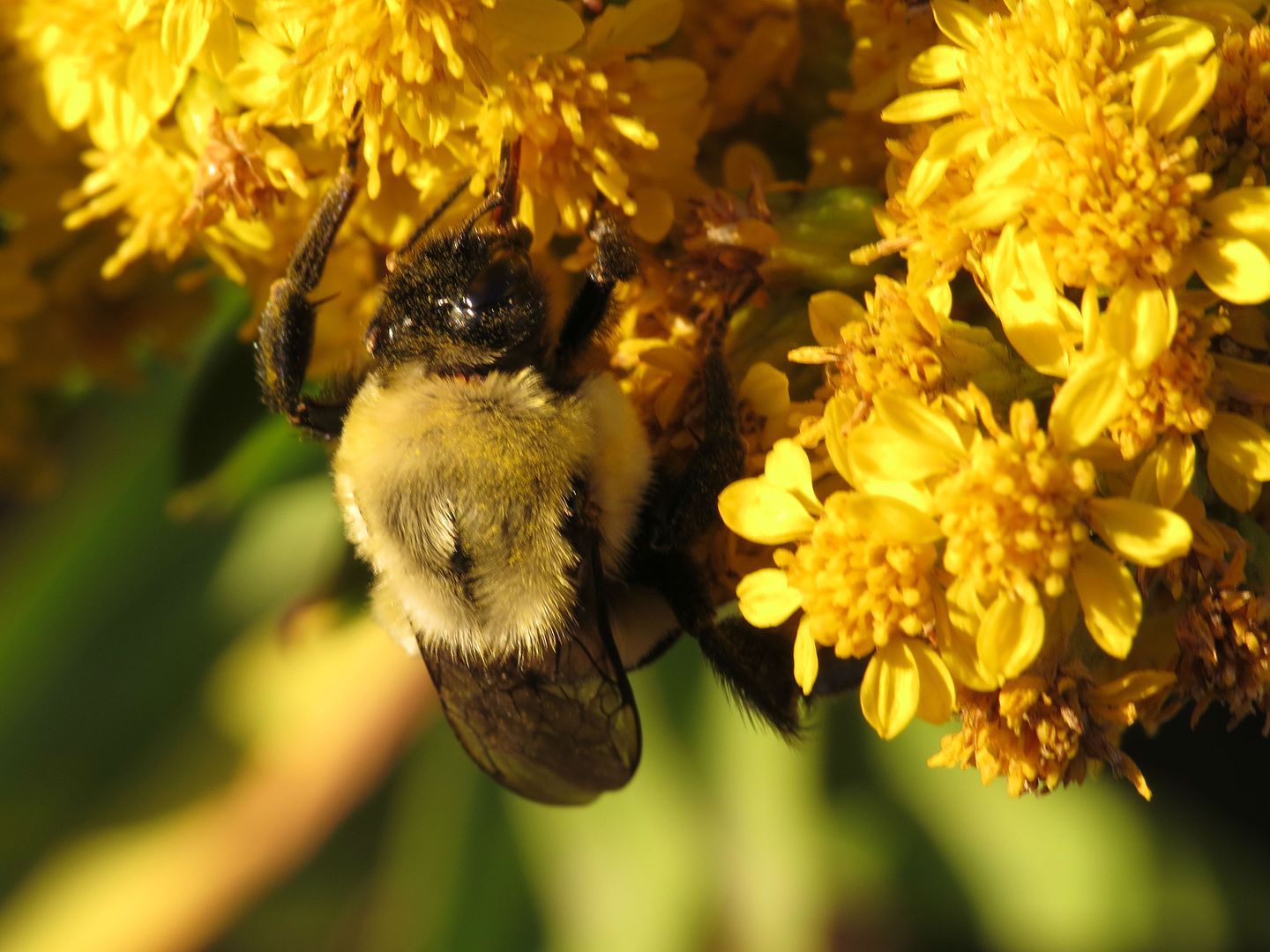
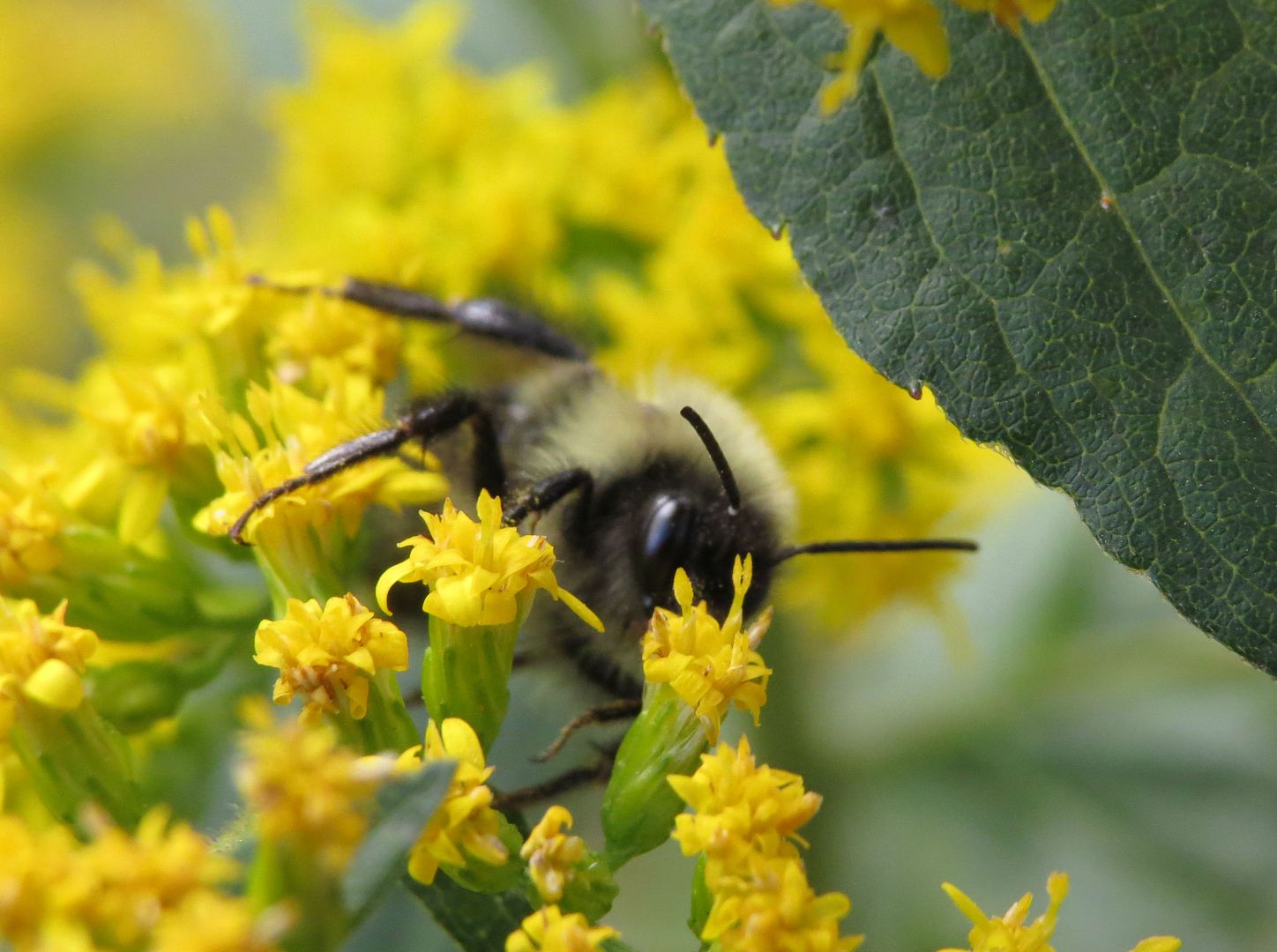
A queen bumblebee. She won't start a nest until next year but in the mean time they fuel up on nectar.
This one fooled me a bit because the bee that it was mimicking were on other plants.
This is a bee mimicking flower fly. They do this to be left alone, and sometimes to sneak into bumblebee nests to lay their eggs upon the decomposing parts of the nest. I don't think they're a pest to bumblebees (though I might be wrong) but this camo also means fewer predators will mess with them.
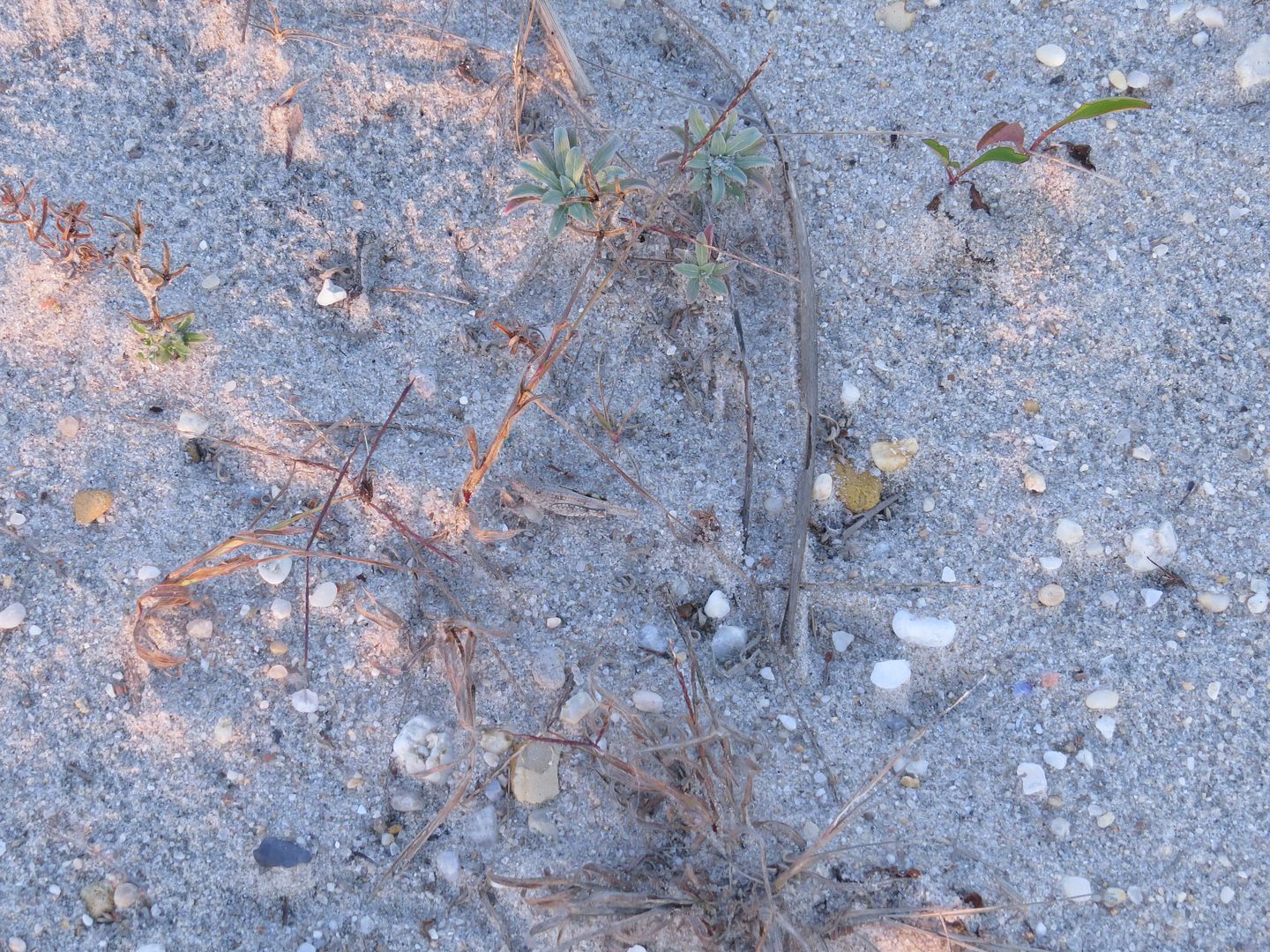
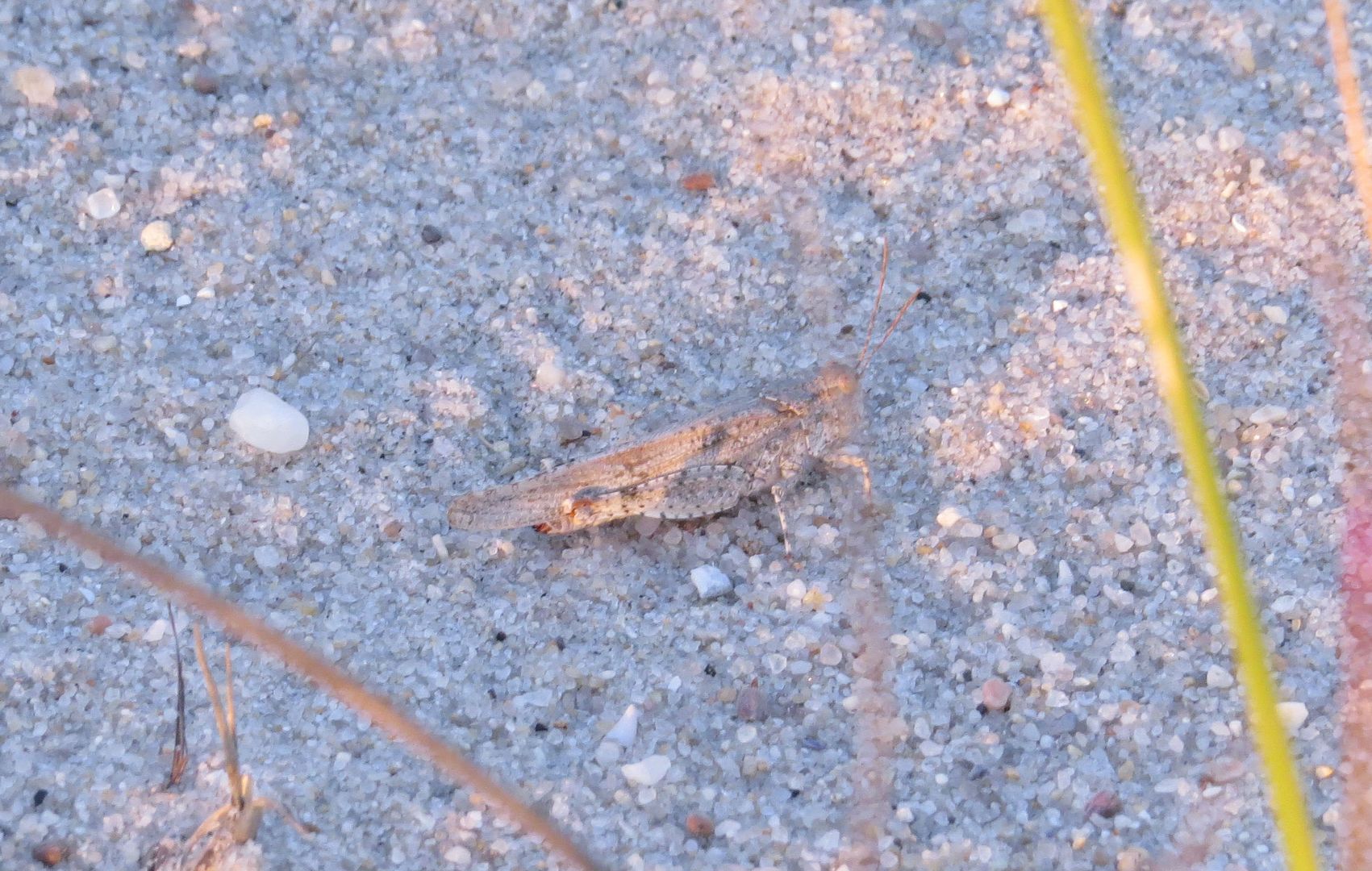
Back at the beach there were other critters in camo. Can you see it?
This grass hopper is perfectly colored to blend in with the beach.
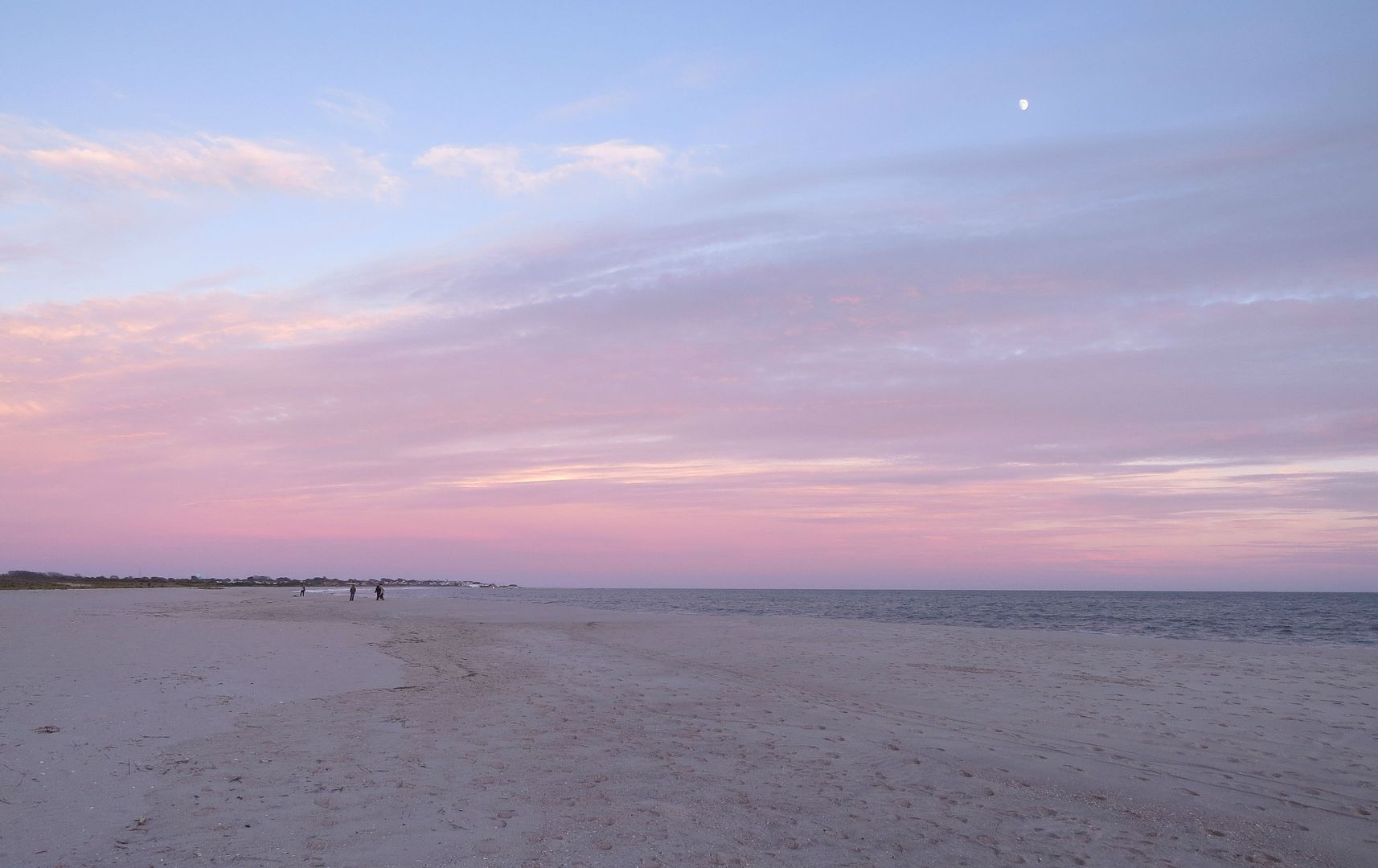
The sky away as we looked away from the sun.
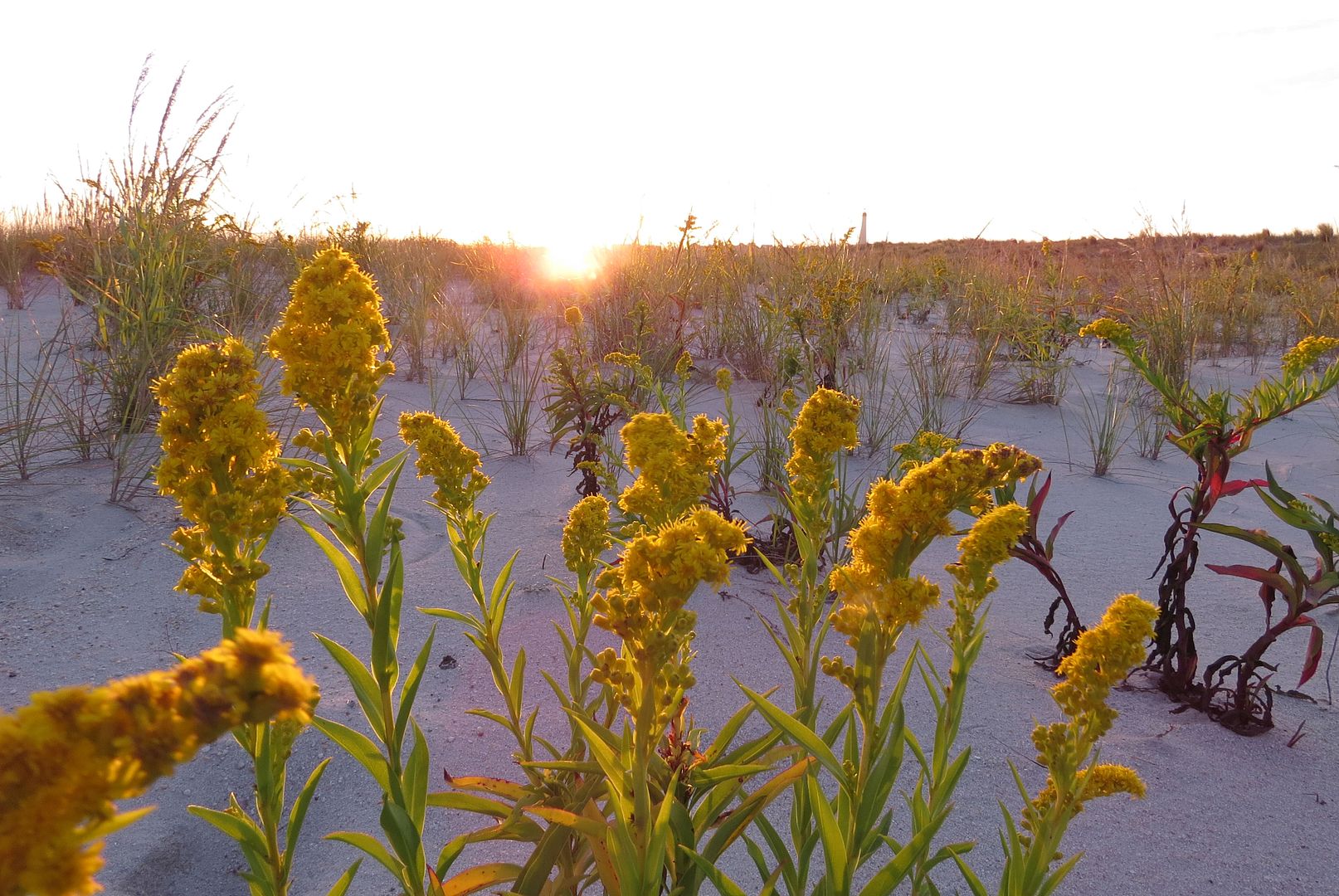
Goldenrod as we looked toward the sun.
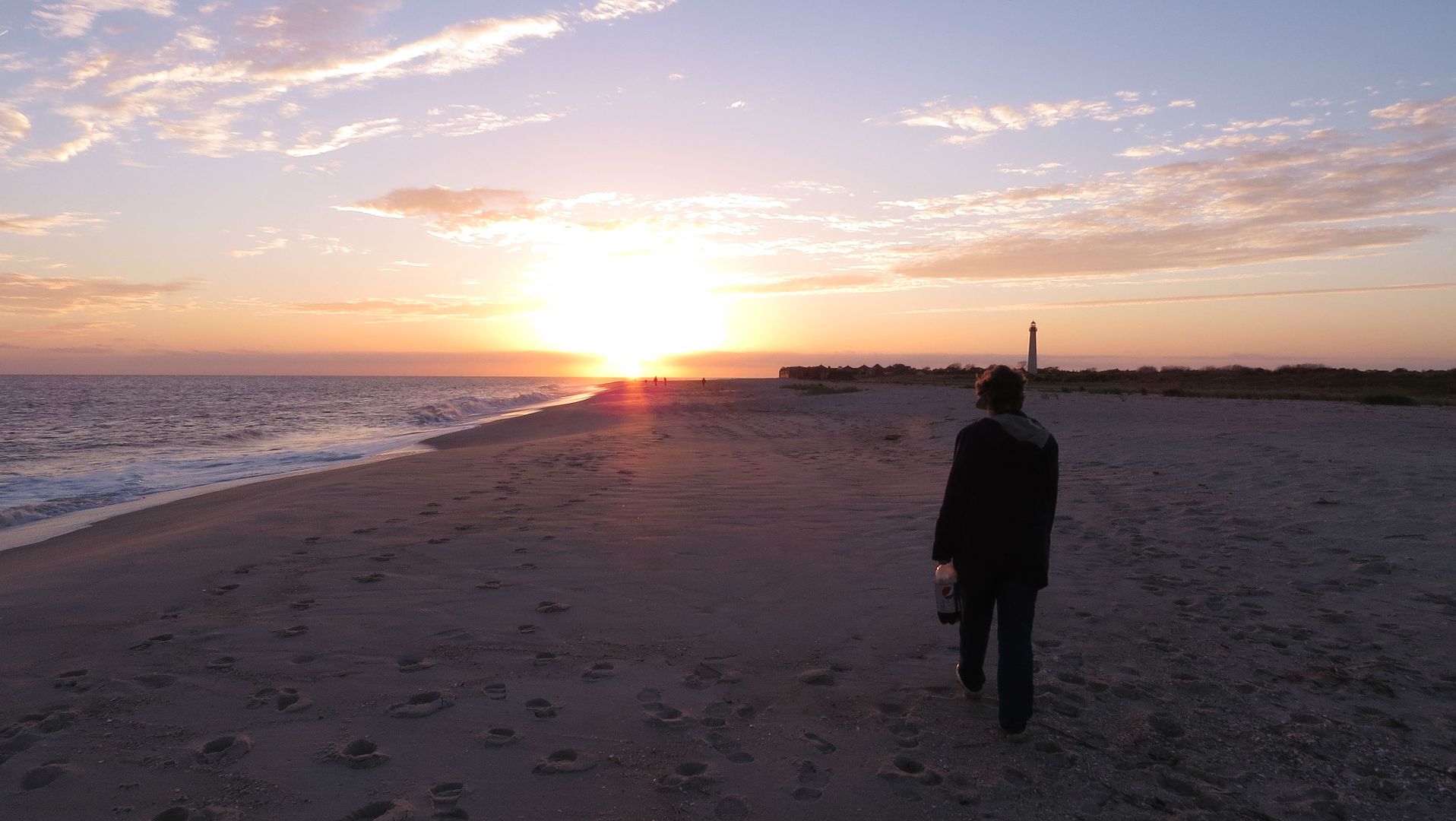
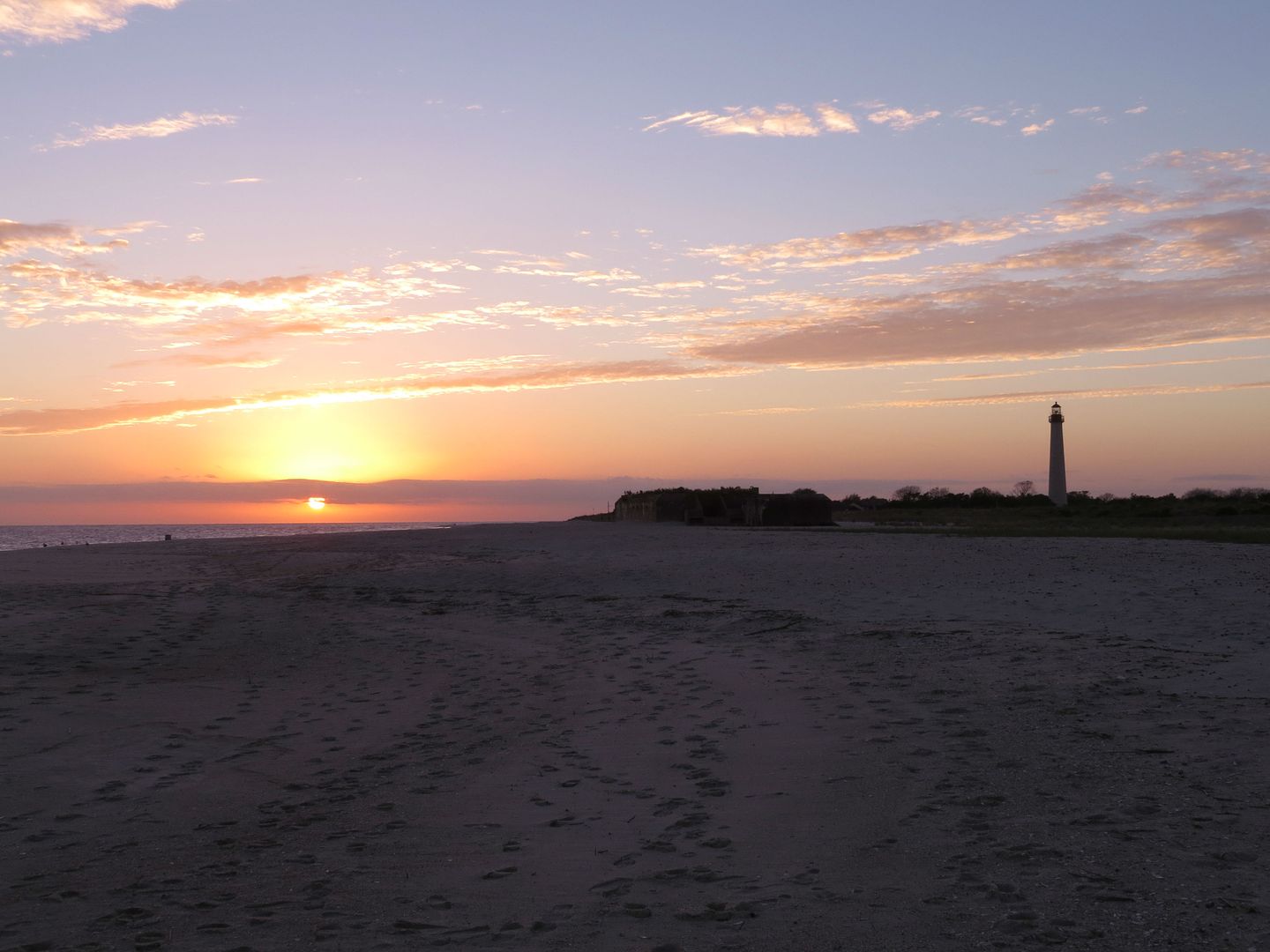
... we were parked over by the light house.
Walking back to the car proved to be one of the prettiest moments of the whole day. I'll have to do this again next year.
Also before we got there, there was a group of photographers all standing in the road, cameras focused on a tidy little garden they have down there. These people were blocking the road and all anxiously awaiting for something to happen. Apparently some west coast hummingbird species had been spotted there the previous night and everyone was standing there waiting for it to show again... we stopped a moment to think if that would be worth our time but decided it was not. While leaving we asked if it had shown and it hadn't.
Cape May is the southern most point of New Jersey which also bottle necks into a peninsula, making it ideal for viewing most things that migrate at this time of year. It was a little late though so we caught the tail end of the Monarch Migration and little else.
The park was a nice wetland area with trails leading all up and down the bays and beaches there.
The least interesting parts were those overrun with the invasive Common Reed Grass, Phagmites australis. This grass can be drown as a method of control, and though it likes growing in wetlands it's very growing habit slowly generates new land. They push up so much top growth every year that it doesn't decompose until several years more, thus the ground is slowly raised. Seeds are air born, and once established they will send out runners several feet away, making them quick to colonize.
The occasional Golden Aster, Heterotheca and Chrysopsis sp. grew in places. Overall it was a rare plant but still a nice one to see.
I don't think it's Maryland Golden Aster, but certainly something in that genus, (or the other one).
Along the beach there seemed to be some sort of restoration project. There had to be a few thousand plants of Seaside Goldenrod, Solidago sempervirens, and what might be Little Blue Stem, or it's sand and salt water tolerant counterpart.
This is a fantastic goldenrod species. If I had a dune of 100% sand in my yard I'd certainly be trying to grow it! The plant is a good size, they don't seem all that aggressive, and the flowers are as nice and showy as Showy Goldenrod.
Monarch Butterflies swooped about from plant to plant. Most of them seemed to be having difficulty staying with the plant from the force of the wind though. As I mentioned earlier this was the tail end of their migration so we really only saw a few dozen. But that's a lot more than I had in my yard this year or had seen flying around.
Beautiful Plant.
They were less common inland where the soil turned more rocky than sandy, but Monarchs found them all the same.
I got to test out my new Raynox DCR-250 Super Macro Snap-On Lens with some Monarchs and in such beautiful lighting! This little snap on works with just about any camera that has a clip on lens cap, and is well worth the money.
A queen bumblebee. She won't start a nest until next year but in the mean time they fuel up on nectar.
This one fooled me a bit because the bee that it was mimicking were on other plants.
This is a bee mimicking flower fly. They do this to be left alone, and sometimes to sneak into bumblebee nests to lay their eggs upon the decomposing parts of the nest. I don't think they're a pest to bumblebees (though I might be wrong) but this camo also means fewer predators will mess with them.
Back at the beach there were other critters in camo. Can you see it?
This grass hopper is perfectly colored to blend in with the beach.
The sky away as we looked away from the sun.
Goldenrod as we looked toward the sun.
... we were parked over by the light house.
Walking back to the car proved to be one of the prettiest moments of the whole day. I'll have to do this again next year.
Labels:
Beach,
Bumblebees,
Coastal,
Colors,
Fly,
Golden Aster,
Goldenrod,
Grapes,
Grass,
Lighthouse,
Monarch
Tuesday, October 15, 2013
The Wildlife Gardener's Meetup (Part 1)
So I'm a member of the Wildlife Gardener's Forum, and I think for the past two or three years now a few of the members have arrange a yearly meetup or road trip or combination there of to get various forum members involved. This year I decided to participate in a few of the trips which happened to be here in my home state of New Jersey. I wasn't expecting much though because of the time of year. We're not really at the peak of the "leafing" season and most of the wildflowers have finished flowering.
I can't quite remember the name of the first place we visited but it had a bustling dog park and multiple trails leading through woodlands and what may eventually become nice meadow. As I said though most of the wildflowers weren't flowering so it was hard to judge. Almost all of the goldenrod was finished for the year up there so we're pretty much at the end of the flowering season. One thing I noticed was that they had almost too much goldenrod up there. It's a mid to late stage meadow plant which will usually push out milkweed species. (This doesn't always happen, and there are old fields where goldenrod mysteriously never takes over but it tends to be the norm.) There were a lot of trees and even a few nonnative plants about. There's almost too much work there to be done for what they have, but most of the problems seemed to be in the meadow and forest edge areas which accounted for maybe 1/4th the park that we saw. They just need to come up with a treatment strategy to hopefully get things under control. I recommended having it mowed once a year to get rid of the woody tree species but they were afraid of killing butterfly chrysalises. A valid concern, but removing tree seedlings manually will eventually become an impossible task, so maybe only mow half the meadow each year, and alternate from there. Even haying the field (cutting it to knee high) can be beneficial.
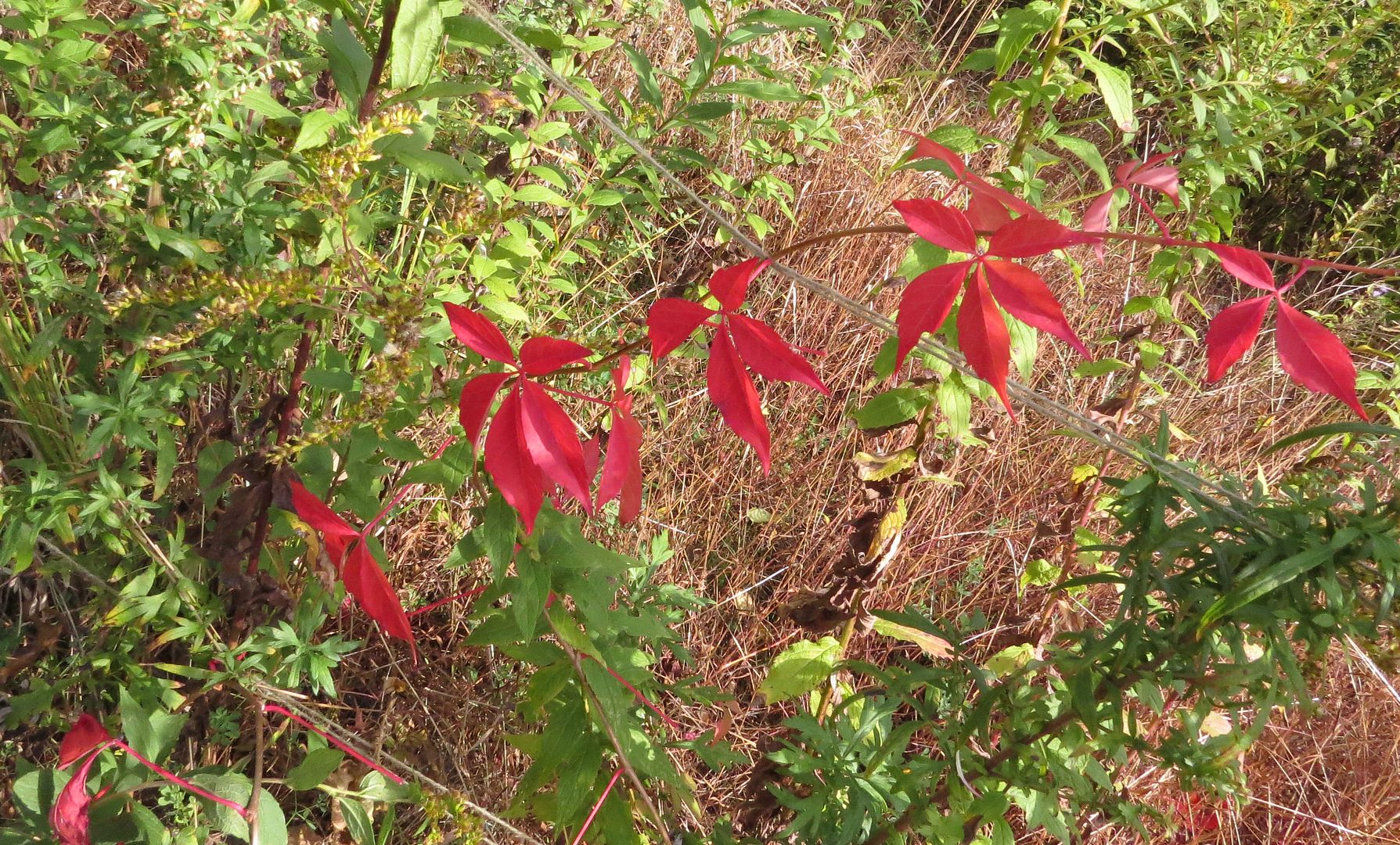
Virginia Creeper, Parthenocissus quinquefolia, was showing off its fall color in a brilliant shade of red.
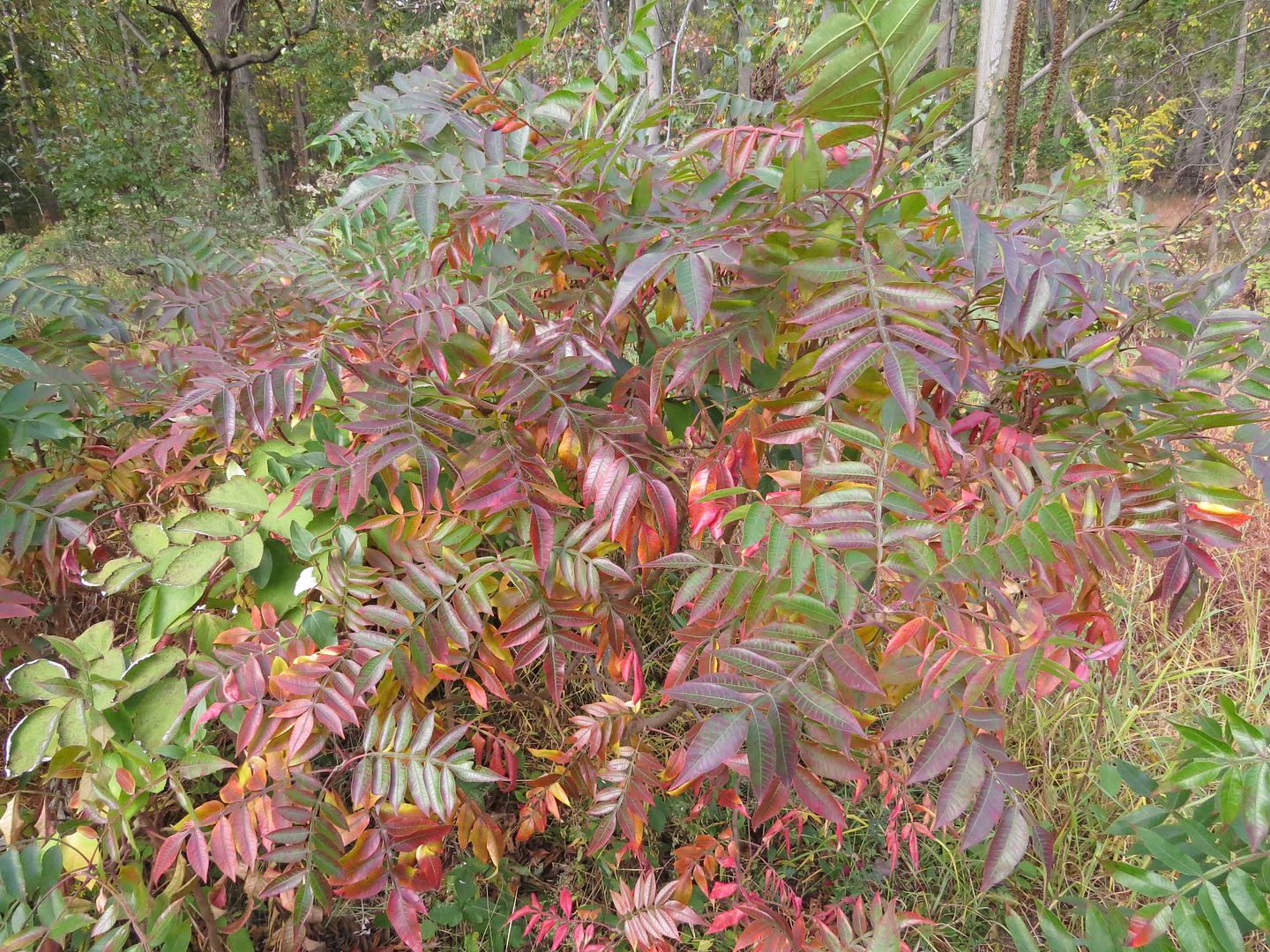
Winged Sumac, Rhus copallina, eventually also turns this brilliant shade of red. A failing though is that this species spreads by root suckers to form it's own grove. Mowing is just about the only way to keep these suckers under control.
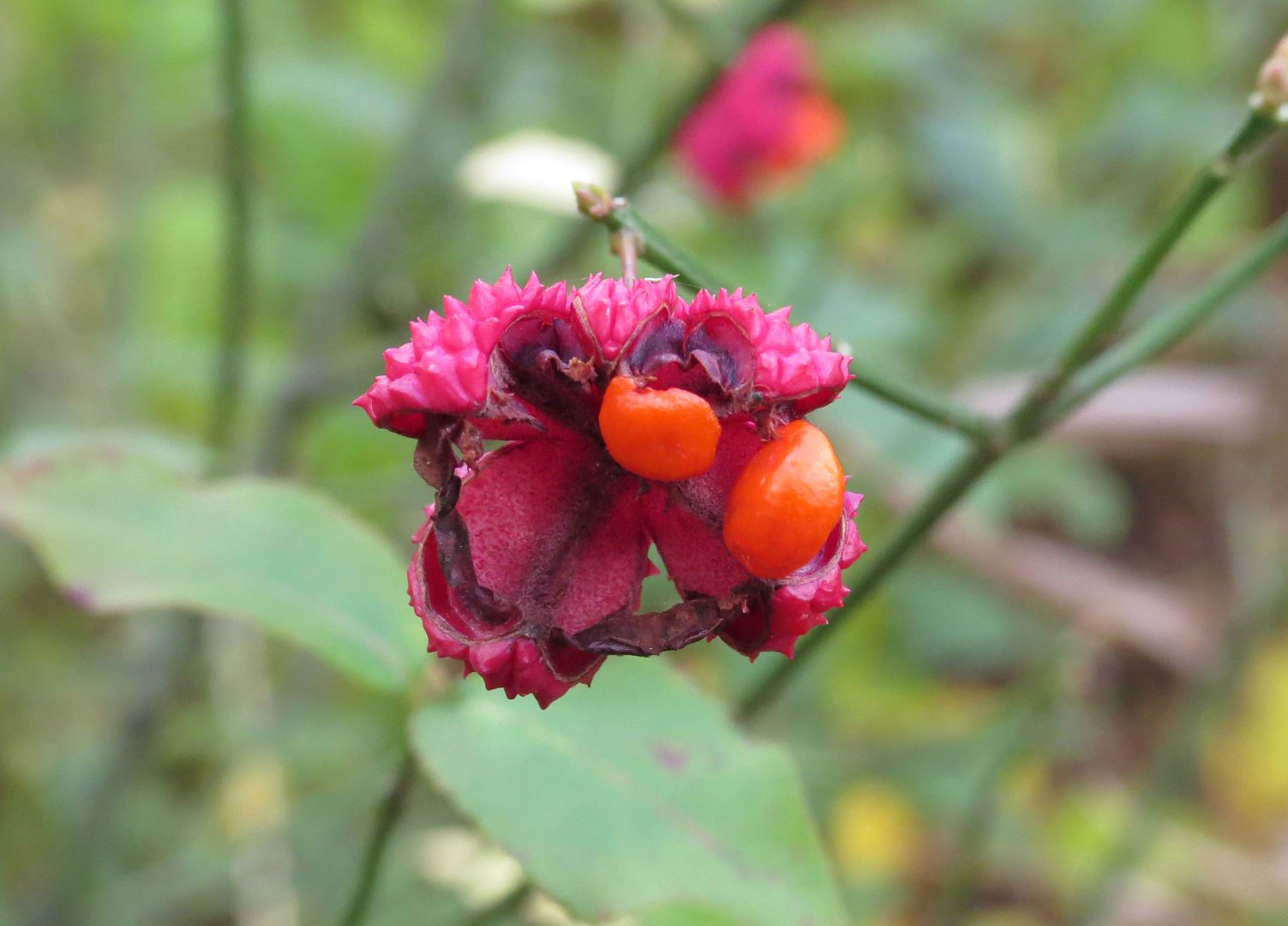
Strawberry Bush, Euonymus americanus, was something of a highlight because almost none of us had ever seen it before. The common name is misleading because it has nothing to do with the edible runner vine people are so fond of. I believe the name comes from the seed pod resembling a strawberry before it opens to reveal the nut-like fruit (as seen above).
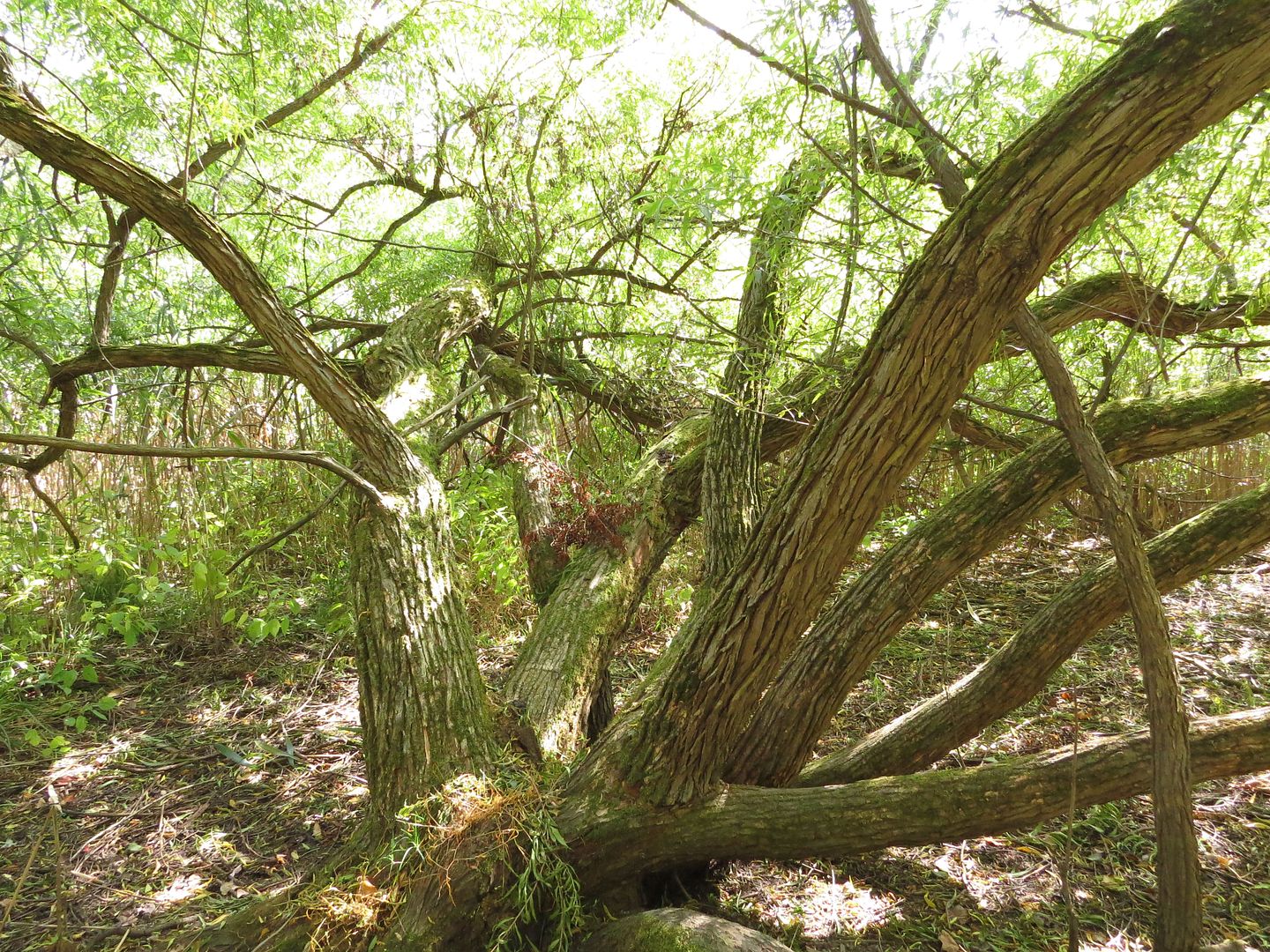
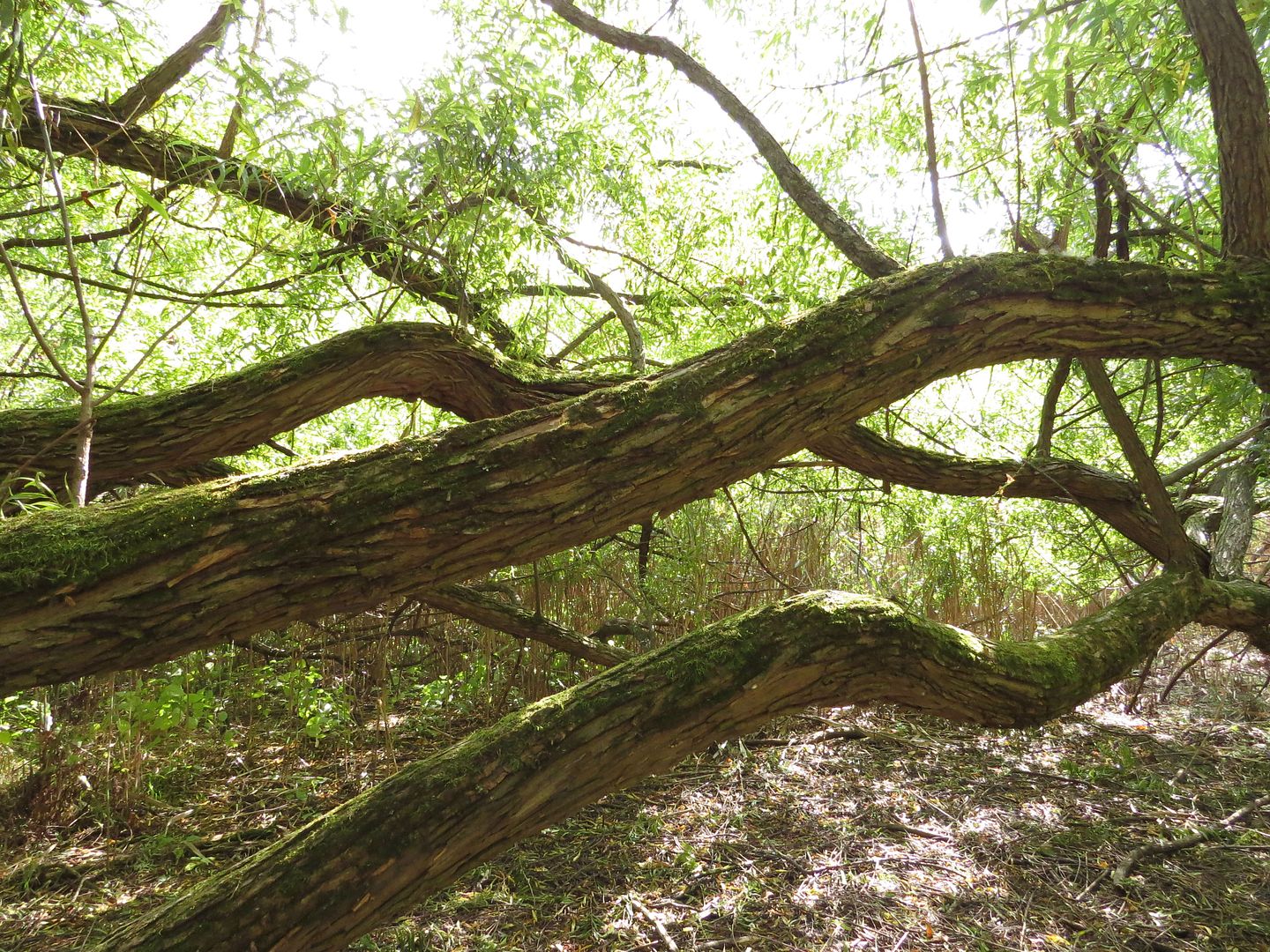
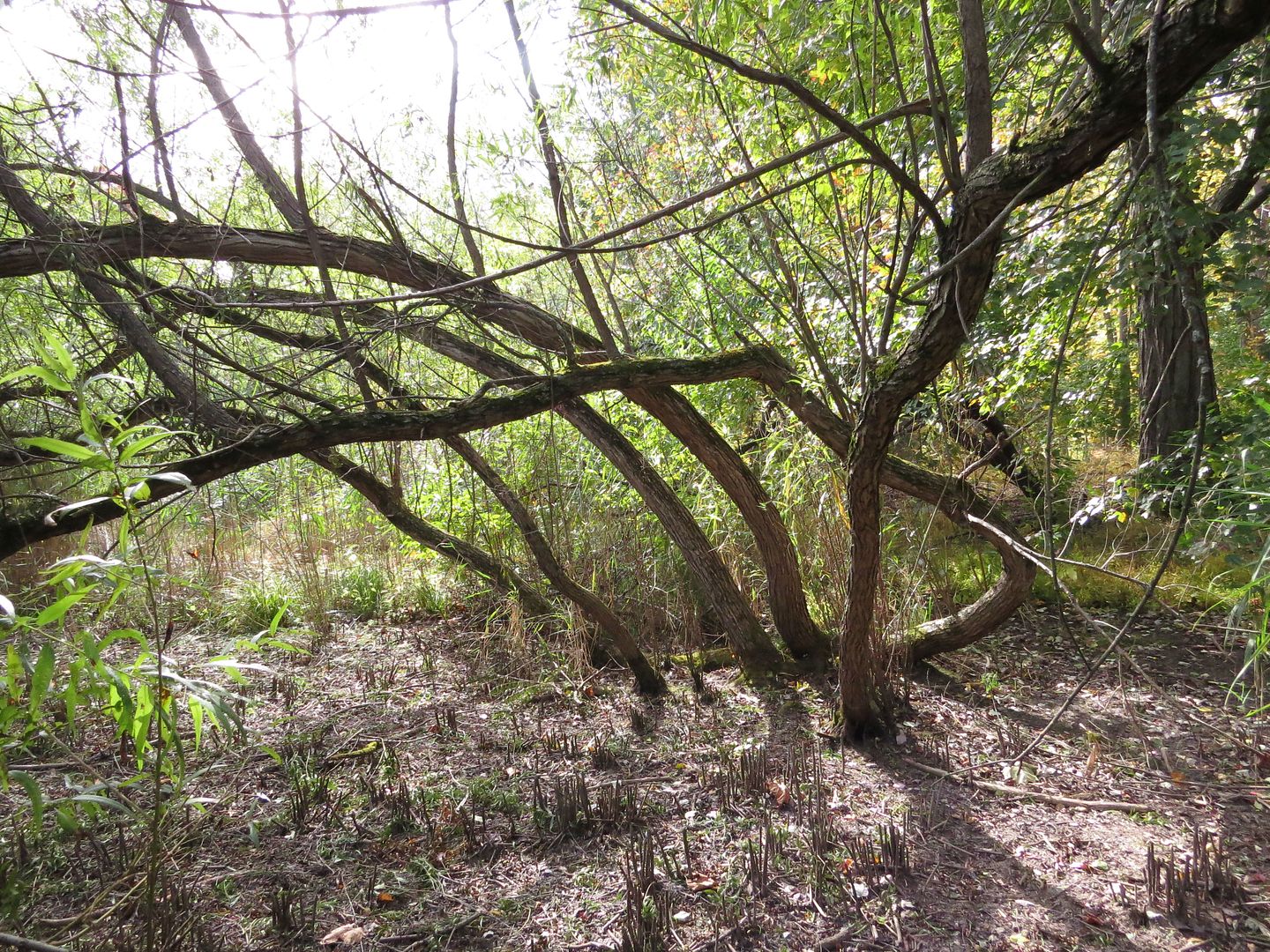
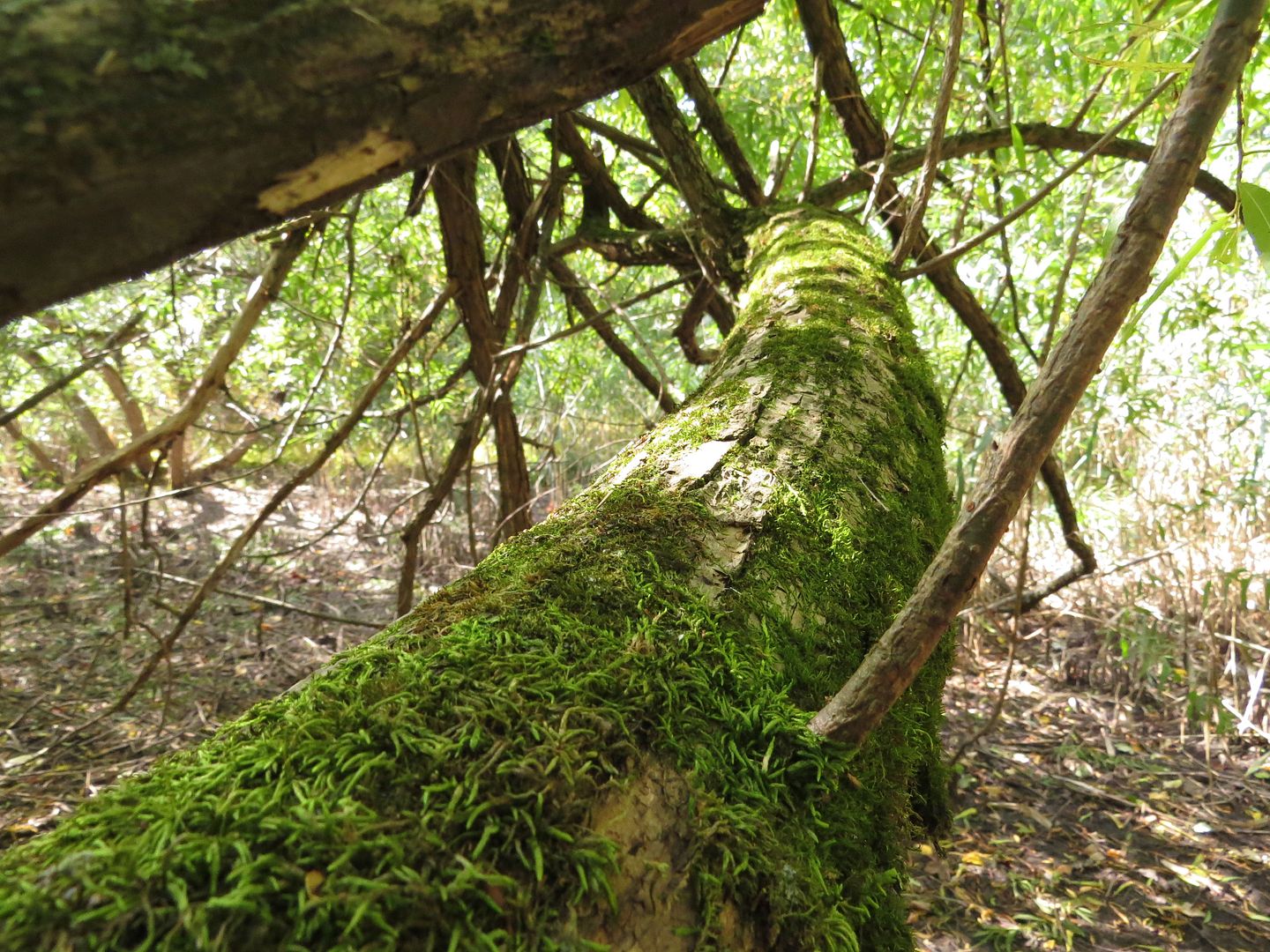
Venturing into the woods the real highlight of this place were a few Black Willow, Salix nigra, trees they had growing there. My camera really doesn't do them justice though.
The dappled shade underneath and the low winding branches make you feel like a kid again, getting tangled up in shrubs and makeshift club houses designed by nature.
They're growing in an area that clearly flood when it rains which prevents most types of plants from growing there. But this particular species is well suited to the location. The ground was mostly stable enough to walk in too and not muddy at all, though I'm sure just after a storm that could be a problem.
Moss was growing all up and down the trunk and branches. They seemed to be in very good health. This is probably the closest thing have to Mangroves which grow down in the tropics, of course the two are in no way related.
I can't quite remember the name of the first place we visited but it had a bustling dog park and multiple trails leading through woodlands and what may eventually become nice meadow. As I said though most of the wildflowers weren't flowering so it was hard to judge. Almost all of the goldenrod was finished for the year up there so we're pretty much at the end of the flowering season. One thing I noticed was that they had almost too much goldenrod up there. It's a mid to late stage meadow plant which will usually push out milkweed species. (This doesn't always happen, and there are old fields where goldenrod mysteriously never takes over but it tends to be the norm.) There were a lot of trees and even a few nonnative plants about. There's almost too much work there to be done for what they have, but most of the problems seemed to be in the meadow and forest edge areas which accounted for maybe 1/4th the park that we saw. They just need to come up with a treatment strategy to hopefully get things under control. I recommended having it mowed once a year to get rid of the woody tree species but they were afraid of killing butterfly chrysalises. A valid concern, but removing tree seedlings manually will eventually become an impossible task, so maybe only mow half the meadow each year, and alternate from there. Even haying the field (cutting it to knee high) can be beneficial.
Virginia Creeper, Parthenocissus quinquefolia, was showing off its fall color in a brilliant shade of red.
Winged Sumac, Rhus copallina, eventually also turns this brilliant shade of red. A failing though is that this species spreads by root suckers to form it's own grove. Mowing is just about the only way to keep these suckers under control.
Strawberry Bush, Euonymus americanus, was something of a highlight because almost none of us had ever seen it before. The common name is misleading because it has nothing to do with the edible runner vine people are so fond of. I believe the name comes from the seed pod resembling a strawberry before it opens to reveal the nut-like fruit (as seen above).
Venturing into the woods the real highlight of this place were a few Black Willow, Salix nigra, trees they had growing there. My camera really doesn't do them justice though.
The dappled shade underneath and the low winding branches make you feel like a kid again, getting tangled up in shrubs and makeshift club houses designed by nature.
They're growing in an area that clearly flood when it rains which prevents most types of plants from growing there. But this particular species is well suited to the location. The ground was mostly stable enough to walk in too and not muddy at all, though I'm sure just after a storm that could be a problem.
Moss was growing all up and down the trunk and branches. They seemed to be in very good health. This is probably the closest thing have to Mangroves which grow down in the tropics, of course the two are in no way related.
Saturday, June 29, 2013
Yellow Flowers
Between work and these thunderstorms we've been getting on a daily basis it's hard keeping up with everything that's flowering. Although the other issue might be that Yellow is probably the most over used color of our native wildflowers.
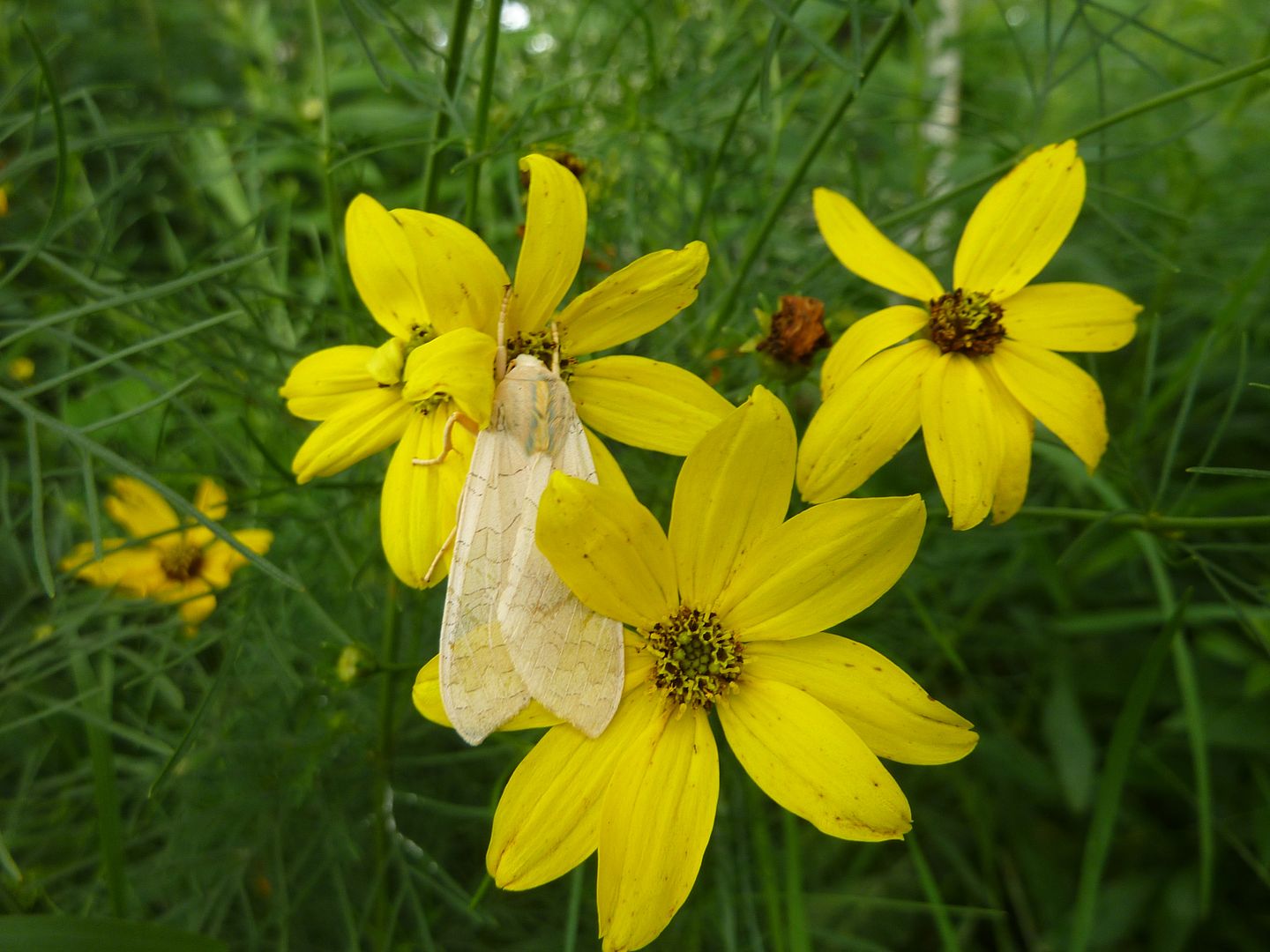
Whorled Coreopsis, C. verticillata, with what's been identified as a Banded Tussock Moth, Halysidota tessellaris, clinging to stay out of the rain to one of the flowers. The host plants to these are basically all the hardwood trees in the forest and the Willow-leaf Oak tree behind the garden was likely the host plant. The fun thing is I've actually found caterpillars of this species and not even realized it. They're basically white Woolly Bears with tufts of longer black hairs here and there.
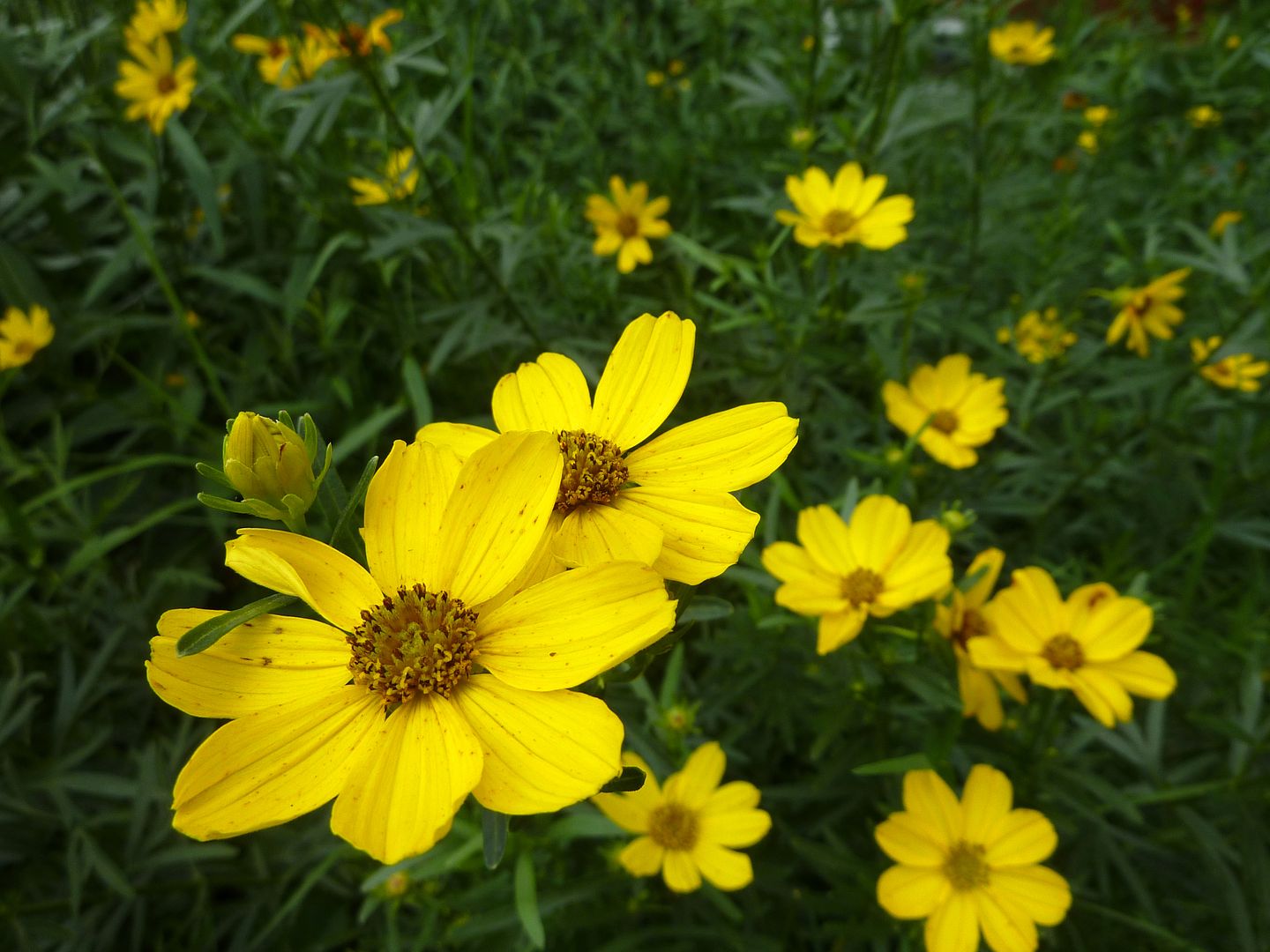
Stiff Coreopsis, C. palmata, has really been kicking but these past few weeks. They're not forming a carpet of yellow but it's enough that I'm seeing bees work them on a daily basis now.
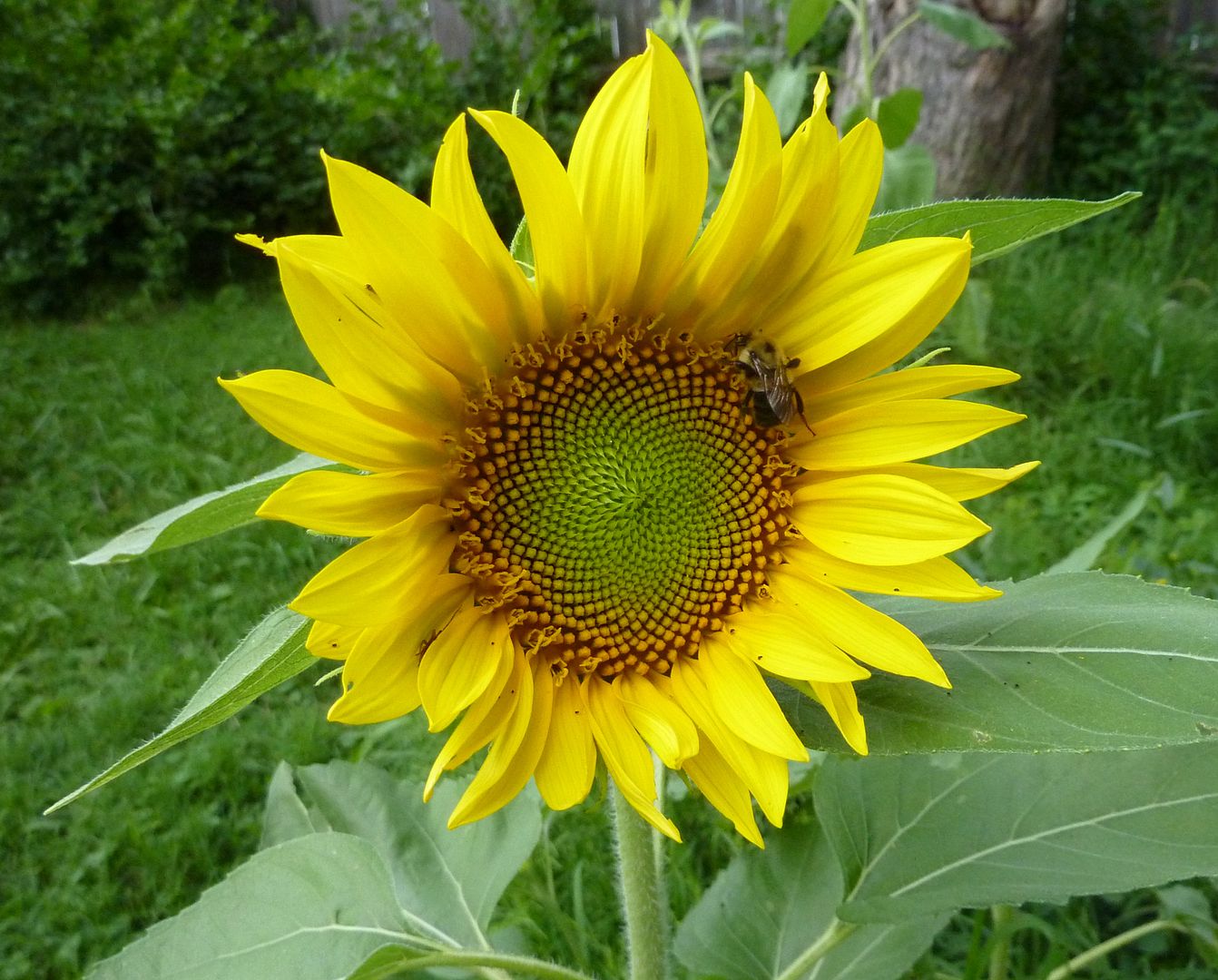
Annual Sunflower, Helianthus annuus, planted courtesy of messy birds at our bird feeder. I insist on only feeding them sunflowers because it's a native seed.
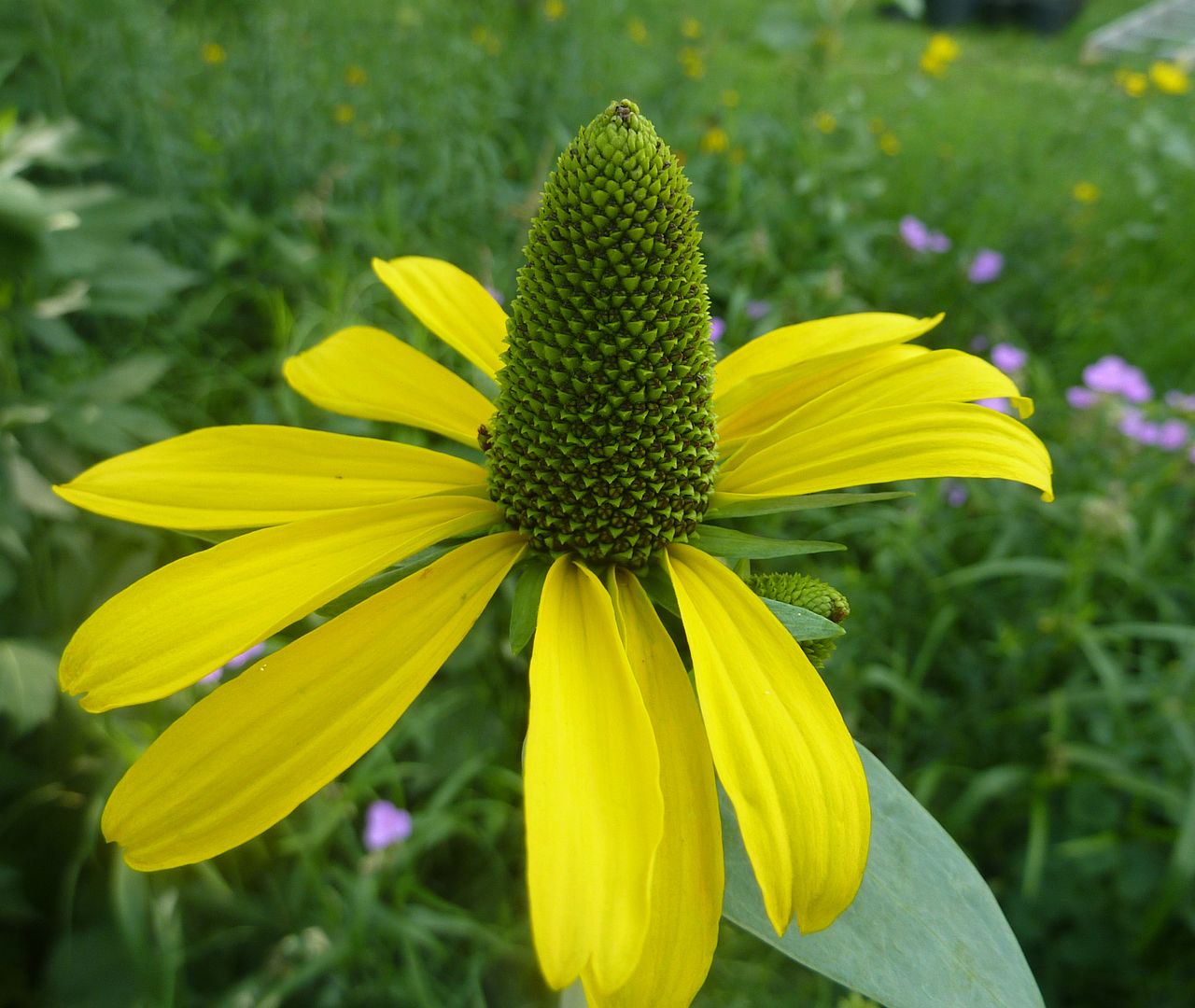
Prairie Coneflower, Ratibida pinnata, isn't a coneflower but close enough. They're not officially open yet but the petals are starting to push out and look nice on some of them.
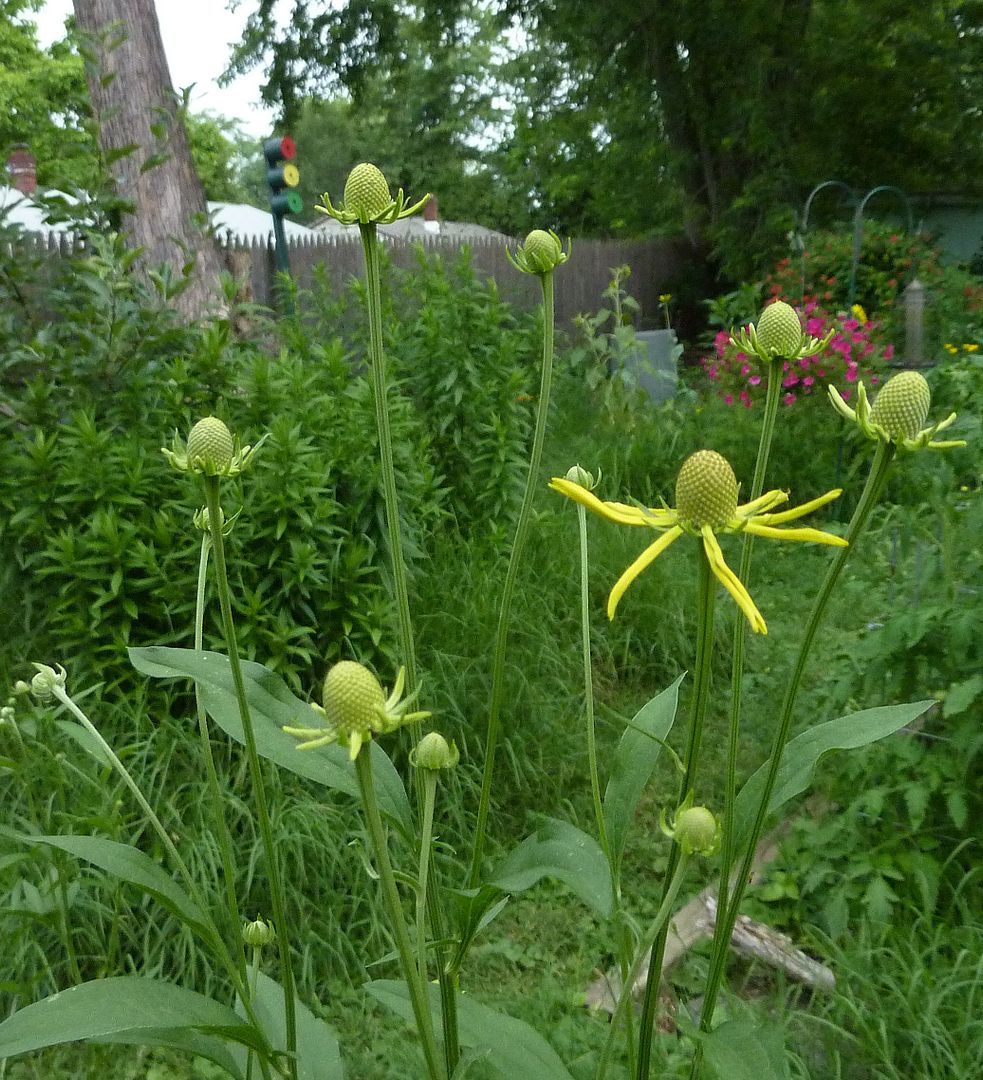
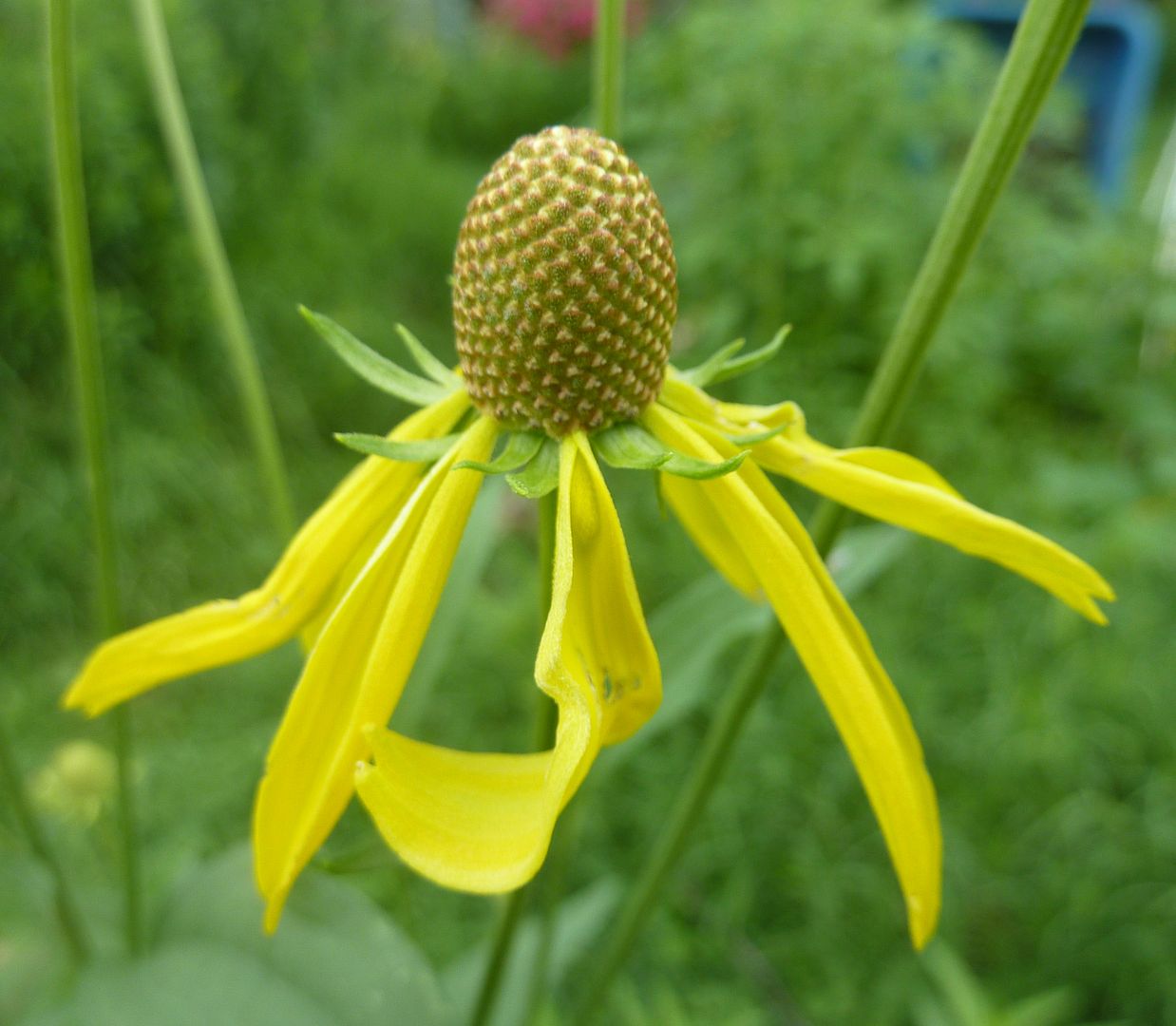
Greater Coneflower, Rudbeckia maxima, also not officially open yet, and also not officially a coneflower but close enough. As it's in the Rudbeckia genus that makes it more closely related to the Black Eyed Susan, which is strange becuase they're 5' tall, have blue/gray foliage, and bloom earlier than any other Rudbeckia species at least in my garden.
Whorled Coreopsis, C. verticillata, with what's been identified as a Banded Tussock Moth, Halysidota tessellaris, clinging to stay out of the rain to one of the flowers. The host plants to these are basically all the hardwood trees in the forest and the Willow-leaf Oak tree behind the garden was likely the host plant. The fun thing is I've actually found caterpillars of this species and not even realized it. They're basically white Woolly Bears with tufts of longer black hairs here and there.
Stiff Coreopsis, C. palmata, has really been kicking but these past few weeks. They're not forming a carpet of yellow but it's enough that I'm seeing bees work them on a daily basis now.
Annual Sunflower, Helianthus annuus, planted courtesy of messy birds at our bird feeder. I insist on only feeding them sunflowers because it's a native seed.
Prairie Coneflower, Ratibida pinnata, isn't a coneflower but close enough. They're not officially open yet but the petals are starting to push out and look nice on some of them.
Greater Coneflower, Rudbeckia maxima, also not officially open yet, and also not officially a coneflower but close enough. As it's in the Rudbeckia genus that makes it more closely related to the Black Eyed Susan, which is strange becuase they're 5' tall, have blue/gray foliage, and bloom earlier than any other Rudbeckia species at least in my garden.
Labels:
Colors,
Coneflower,
coreopsis,
flowers,
Moth,
native,
Sunflowers,
Wildflowers
Wednesday, June 26, 2013
Butterfly Weed in Bloom
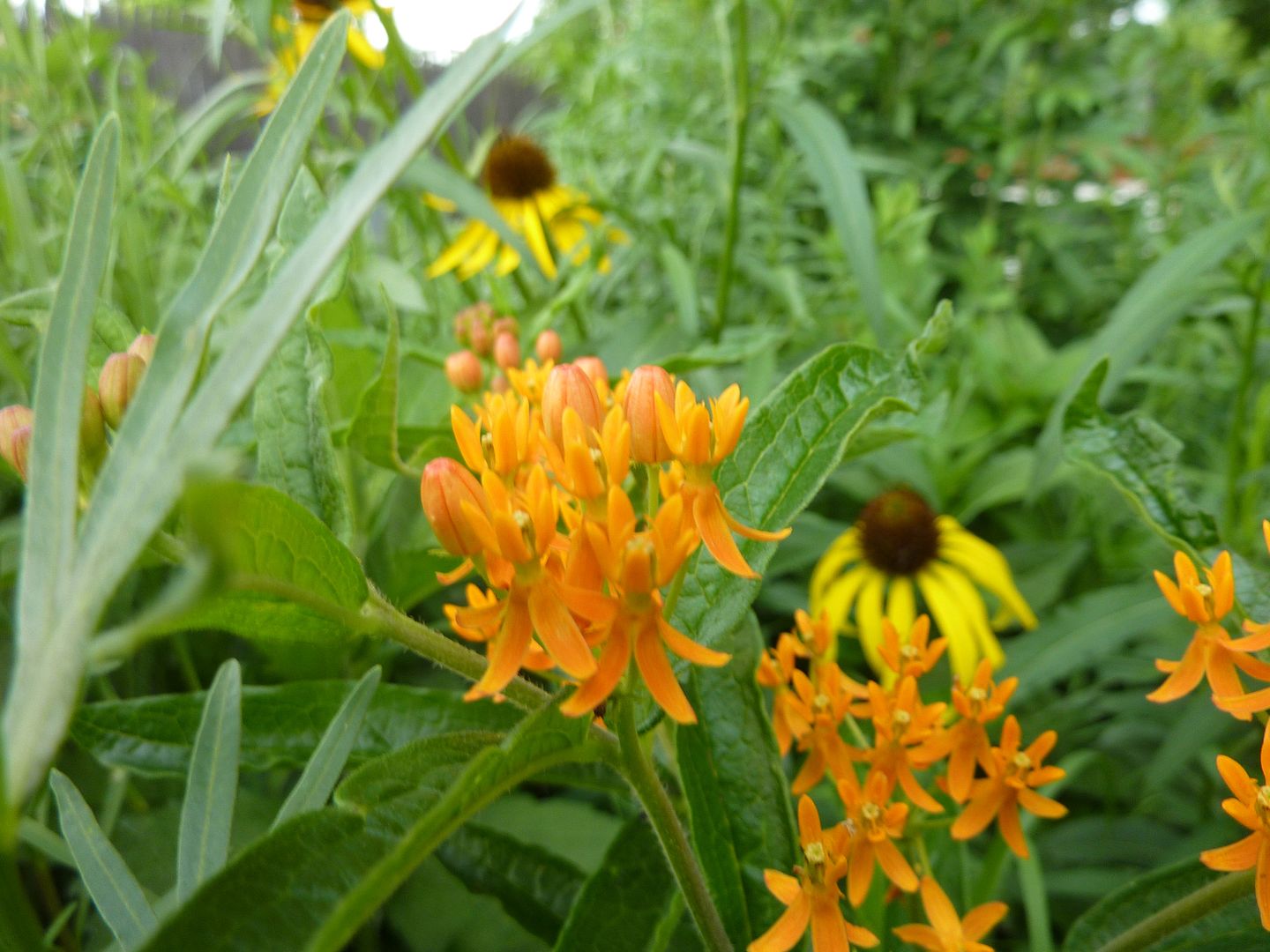
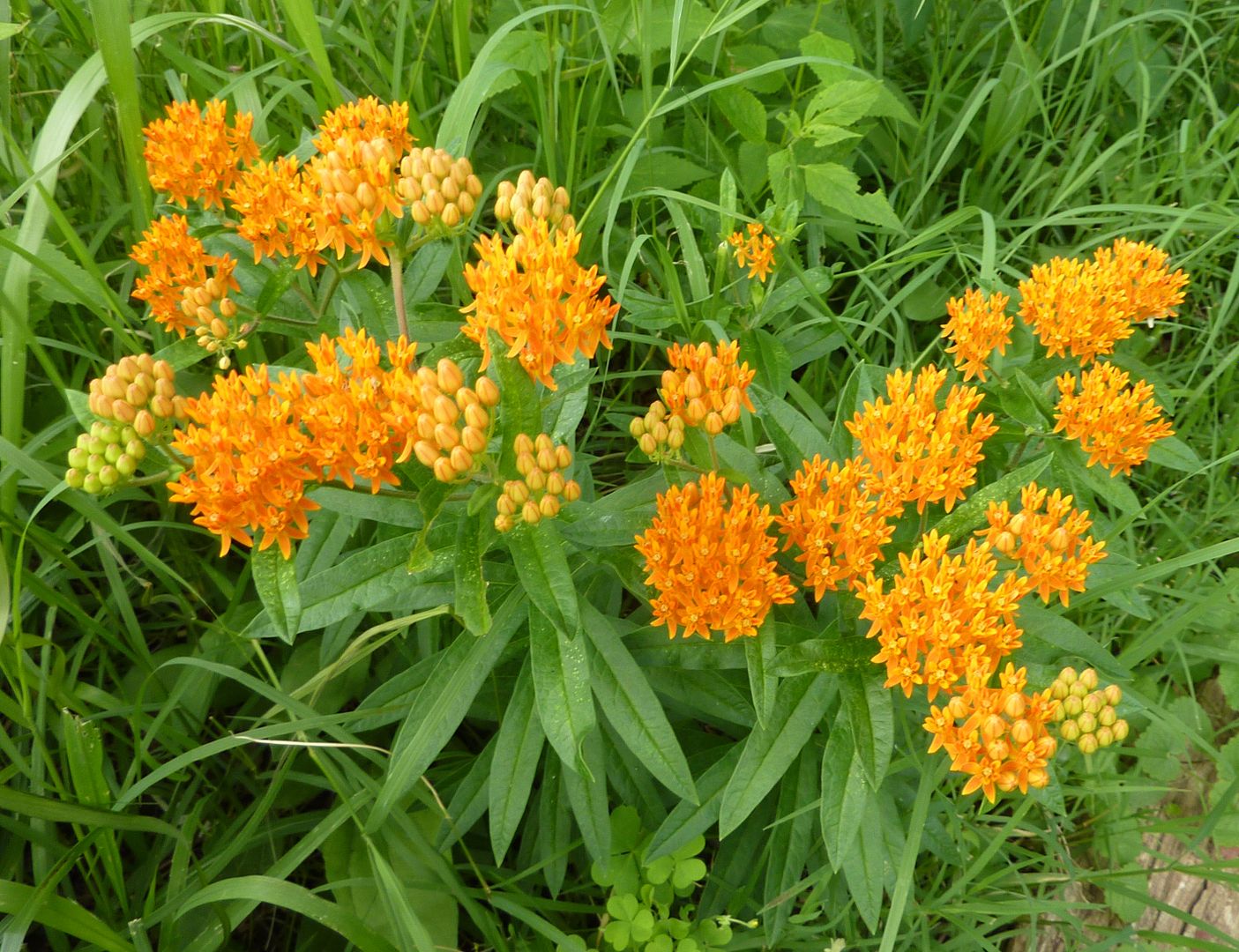
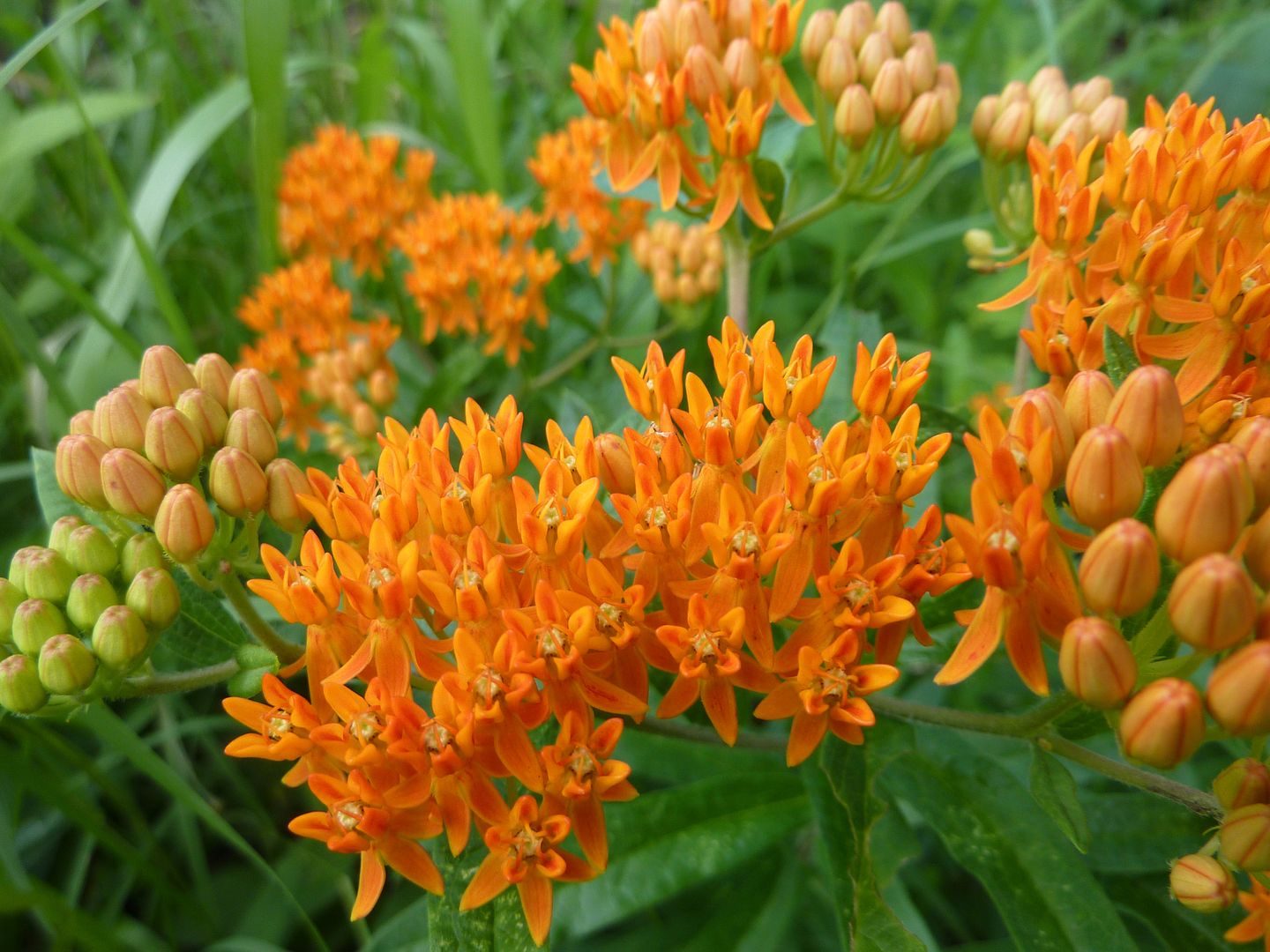
Butterfly Weed, Asclepias tuberosa, gets its name from the fact that butterflies like it... and it's a weed? Okay this is why common names suck; labels at any garden center will have you think all plants attract butterflies, and calling something a weed is subjective. In the right setting butterflies will flock to this plant but so far we're having an off year for butterflies.
This particular species is most often found with orange flowers, but there's also a yellow form and one with deeper red vanes. Although I grow both yellow and orange forms, this one pictured above is a seedling that's come up on it's own.
This is a brilliant care free plant for dry sunny places and once established they won't need watering at all. In fact it's been reported this plant will stay lush and green even after grasses have gone brown and dormant around it.
The red vane doesn't always occur on the flowers, but I've seen some patches that had more red to them than orange. This doesn't seem to be common at all and I wish I had some to show what I'm talking about.
This particular species is most often found with orange flowers, but there's also a yellow form and one with deeper red vanes. Although I grow both yellow and orange forms, this one pictured above is a seedling that's come up on it's own.
This is a brilliant care free plant for dry sunny places and once established they won't need watering at all. In fact it's been reported this plant will stay lush and green even after grasses have gone brown and dormant around it.
The red vane doesn't always occur on the flowers, but I've seen some patches that had more red to them than orange. This doesn't seem to be common at all and I wish I had some to show what I'm talking about.
Subscribe to:
Posts (Atom)