Showing posts with label Tall. Show all posts
Tuesday, October 18, 2011
The Amazing Goldenrod
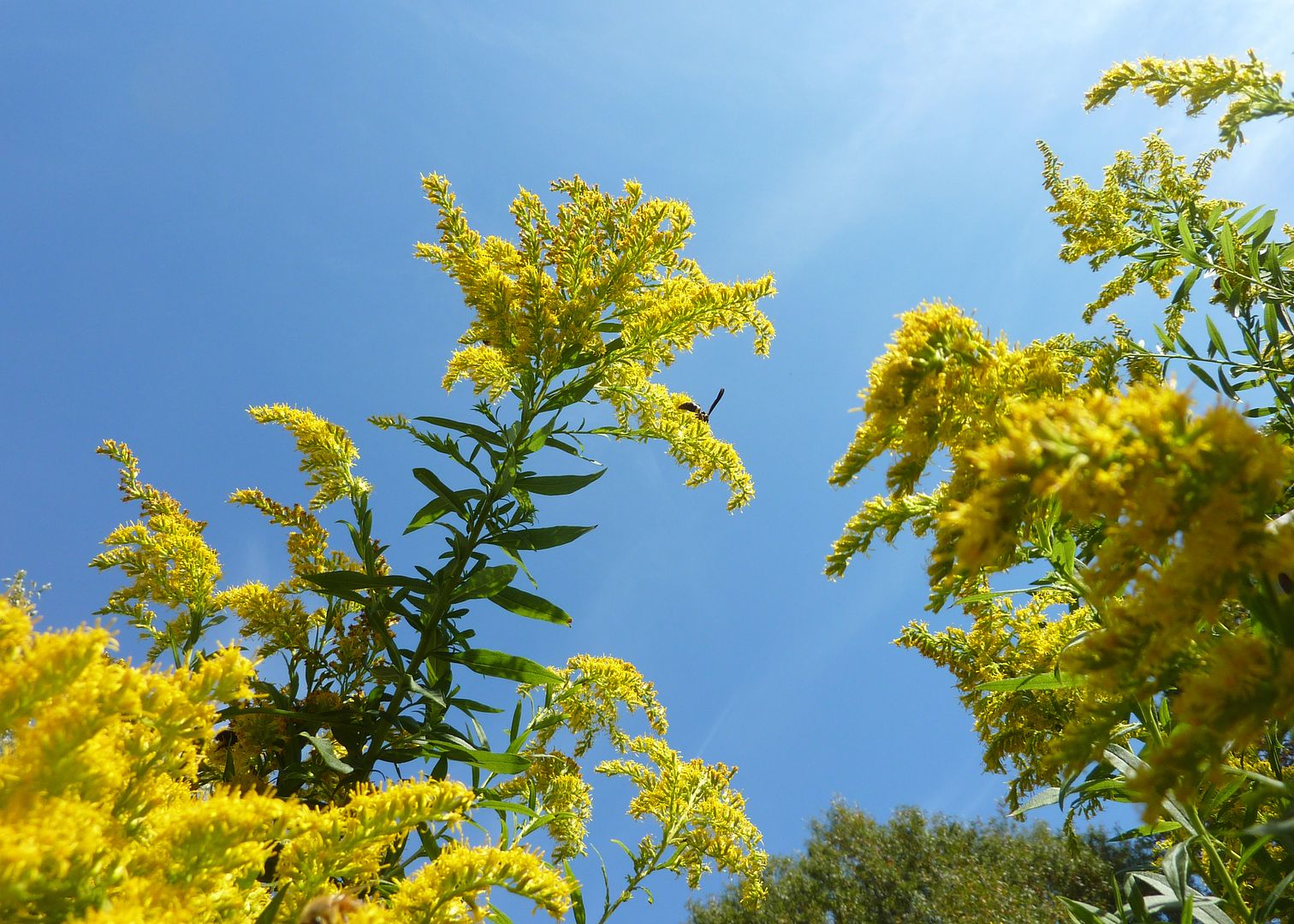
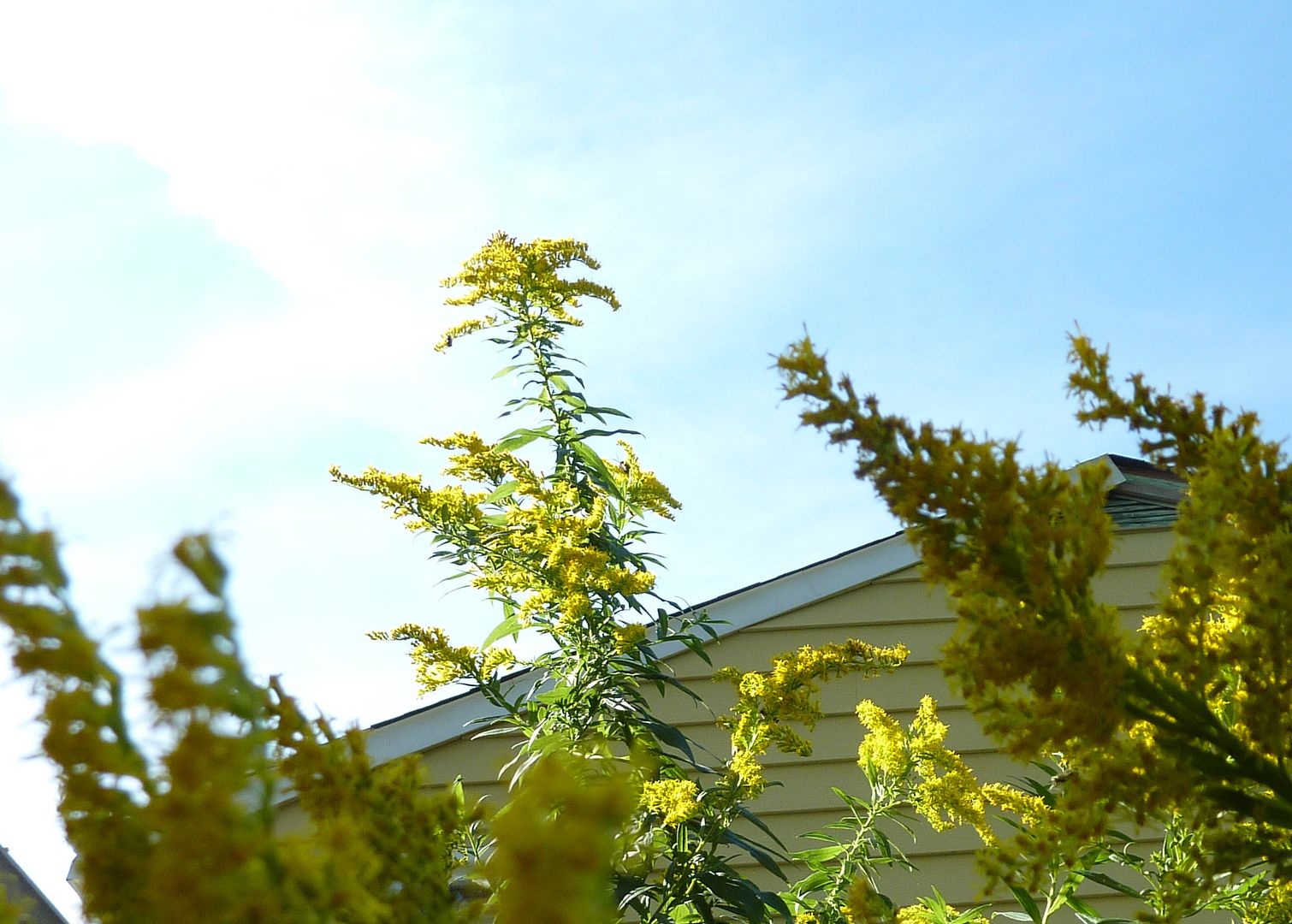
Well the Solidago altissima, Tall Goldenrod, is back in bloom. It doesn't quite make it to our first frost but it's late enough that ... frankly I don't think anything else that's native is flowering! We have a white flowering Chrysanthemum that blooms a little later but I've never seen any bees on that plant.
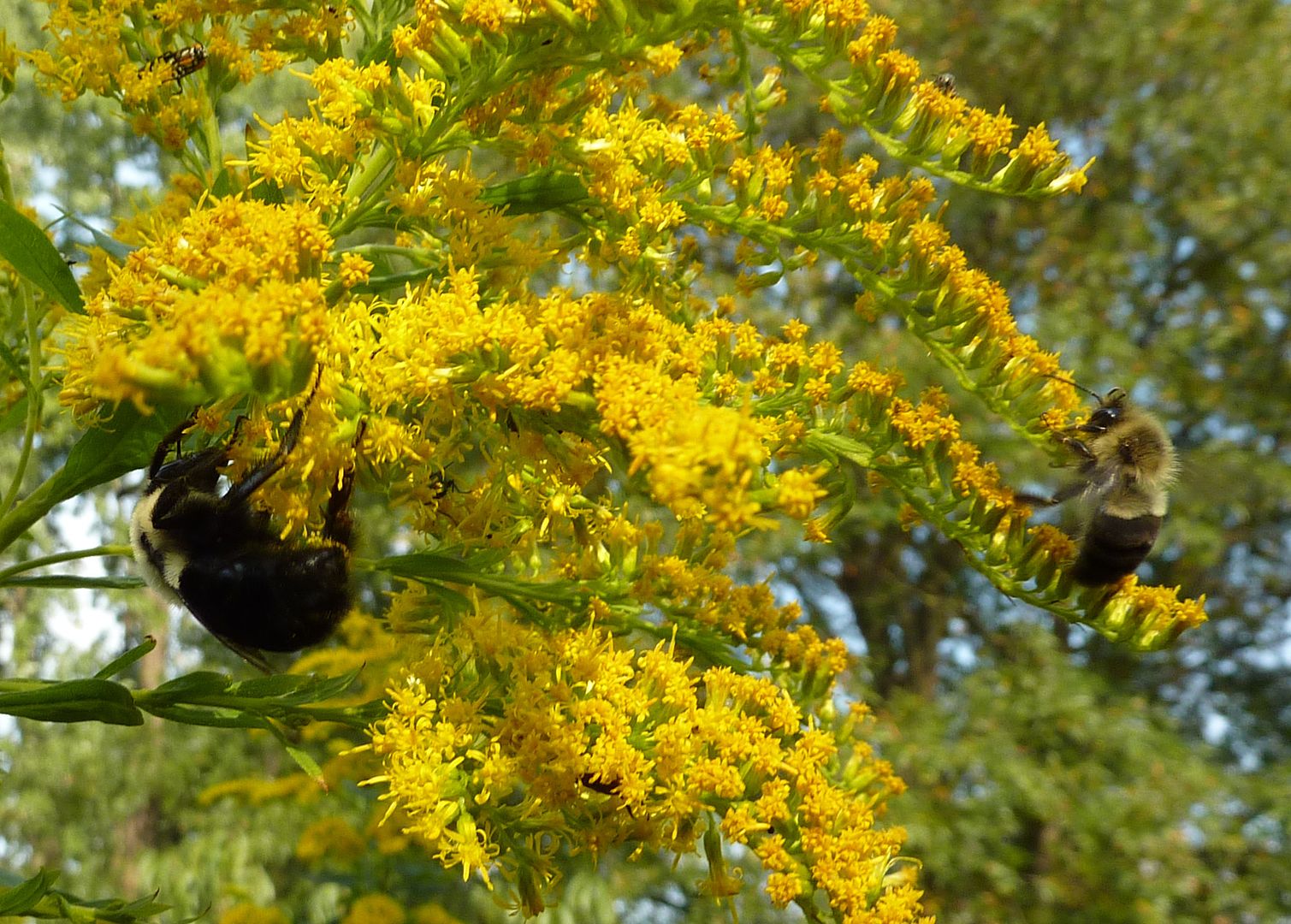
The canes are once again reaching 13' tall and Bumblebee queens (left) are showing up slowly as they did last year. Workers and possibly males (right) are also showing up and more diligently working the flowers.
All manner of pollinator seem to be swarming over this plant. There are even swarms of tiny sweat bees who all seem to work flowers next to one another.
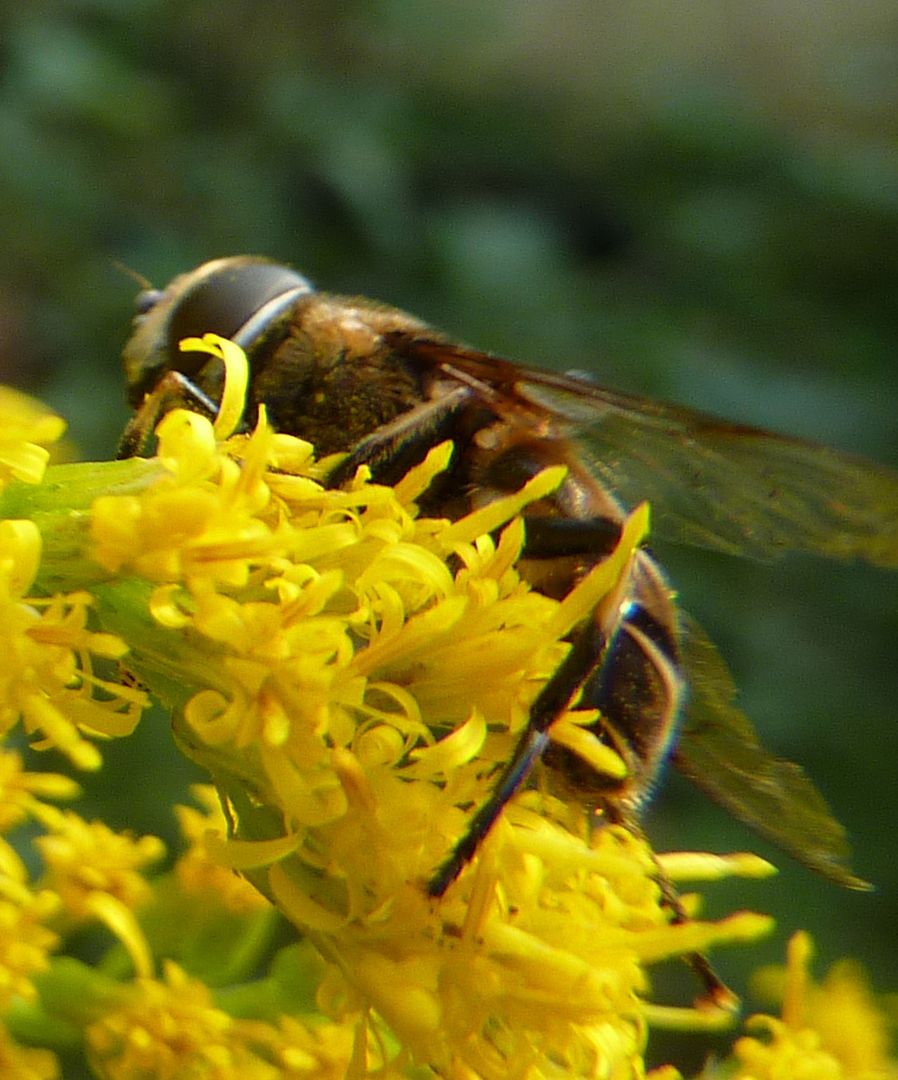
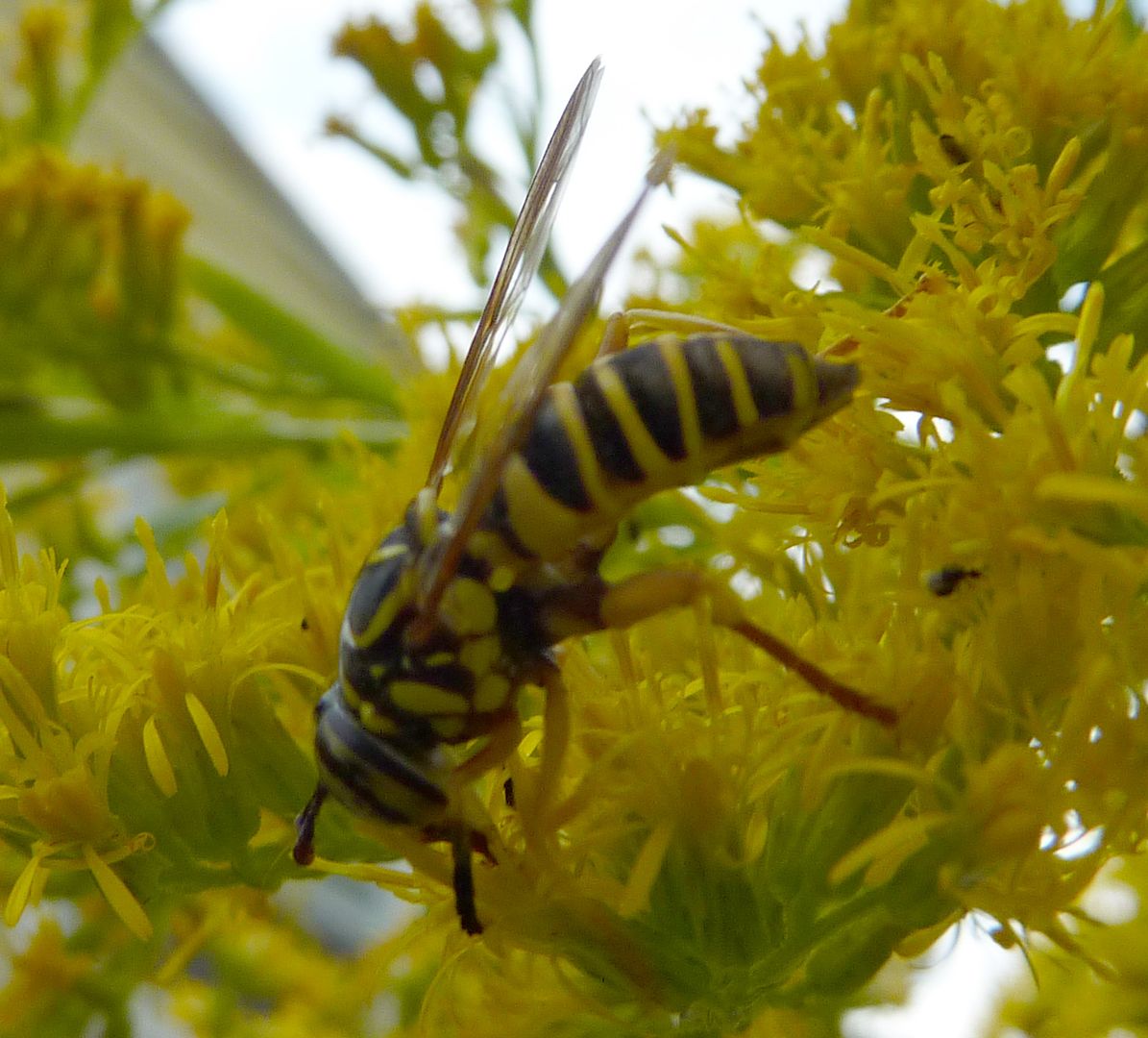
Droves of Flower Flies which mimic both bumblebees and wasps are all over this plant.
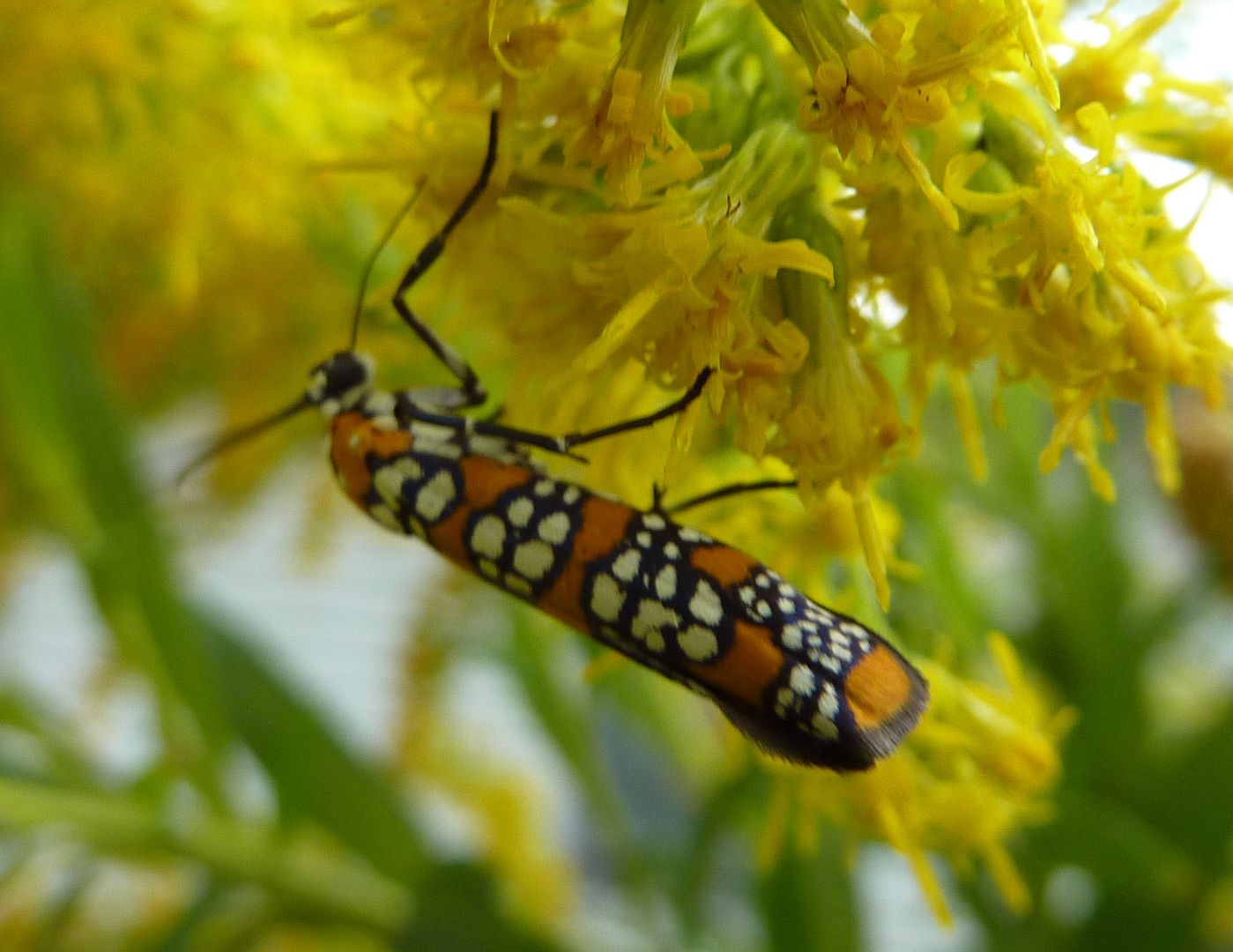
Atteva aurea, The Ailanthus Webworm, is an attractive little moth that's easily identified as it's the only member of the genus in North America. The common name refers to the host plant's genus, The Tree of Heaven, a fast growing invasive tree.
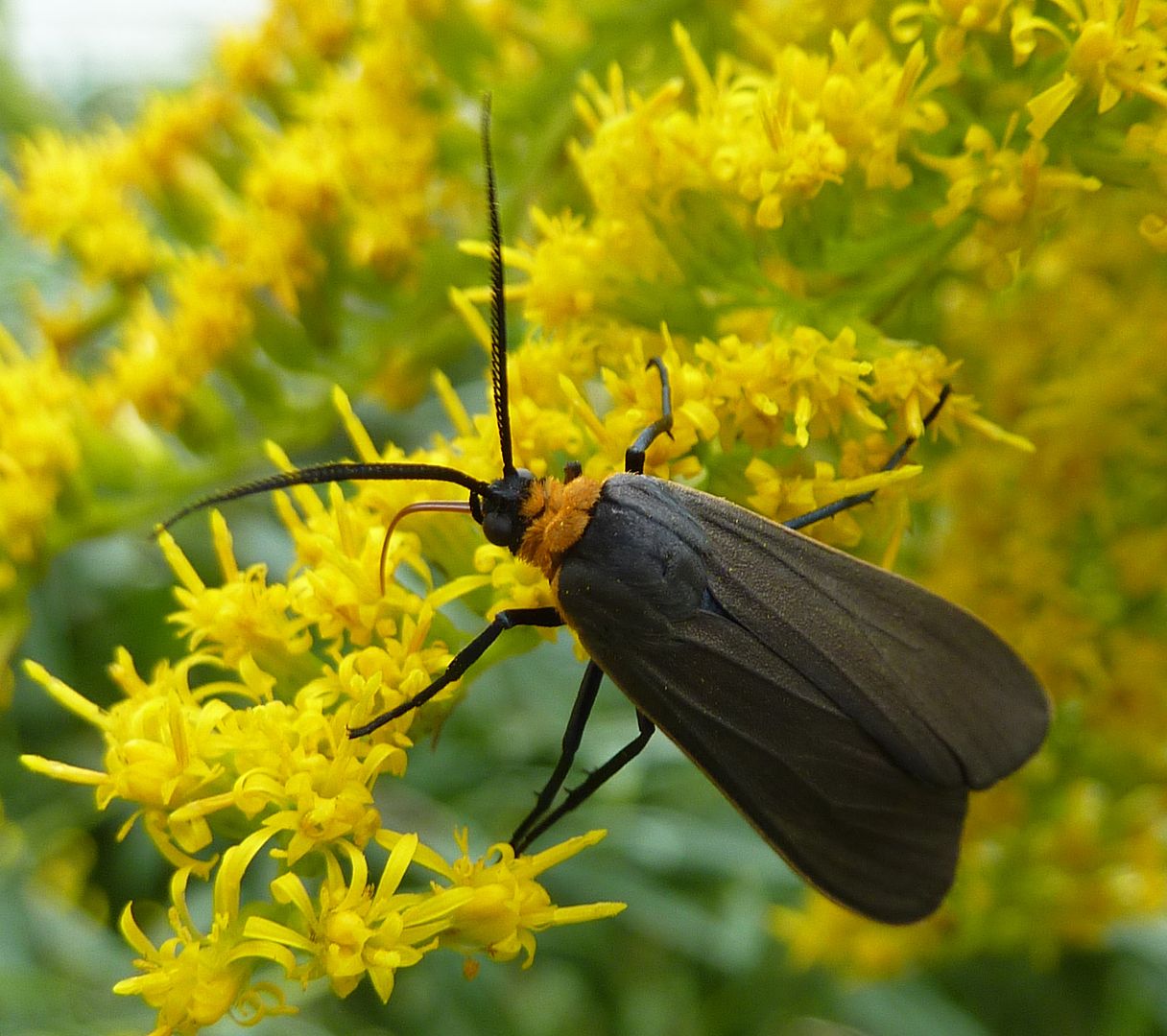
Ctenucha fulvicollis, Yellow-Collared Scape Moth, are commonly seen on Goldenrods throughout the autumn.
Shortly after I'd recorded the video way above, a Monarch came fluttering bye. It didn't land very long and was quick to take off. Much like honeybees I find Monarchs seem to prefer Asters when given the choice.
Saturday, September 3, 2011
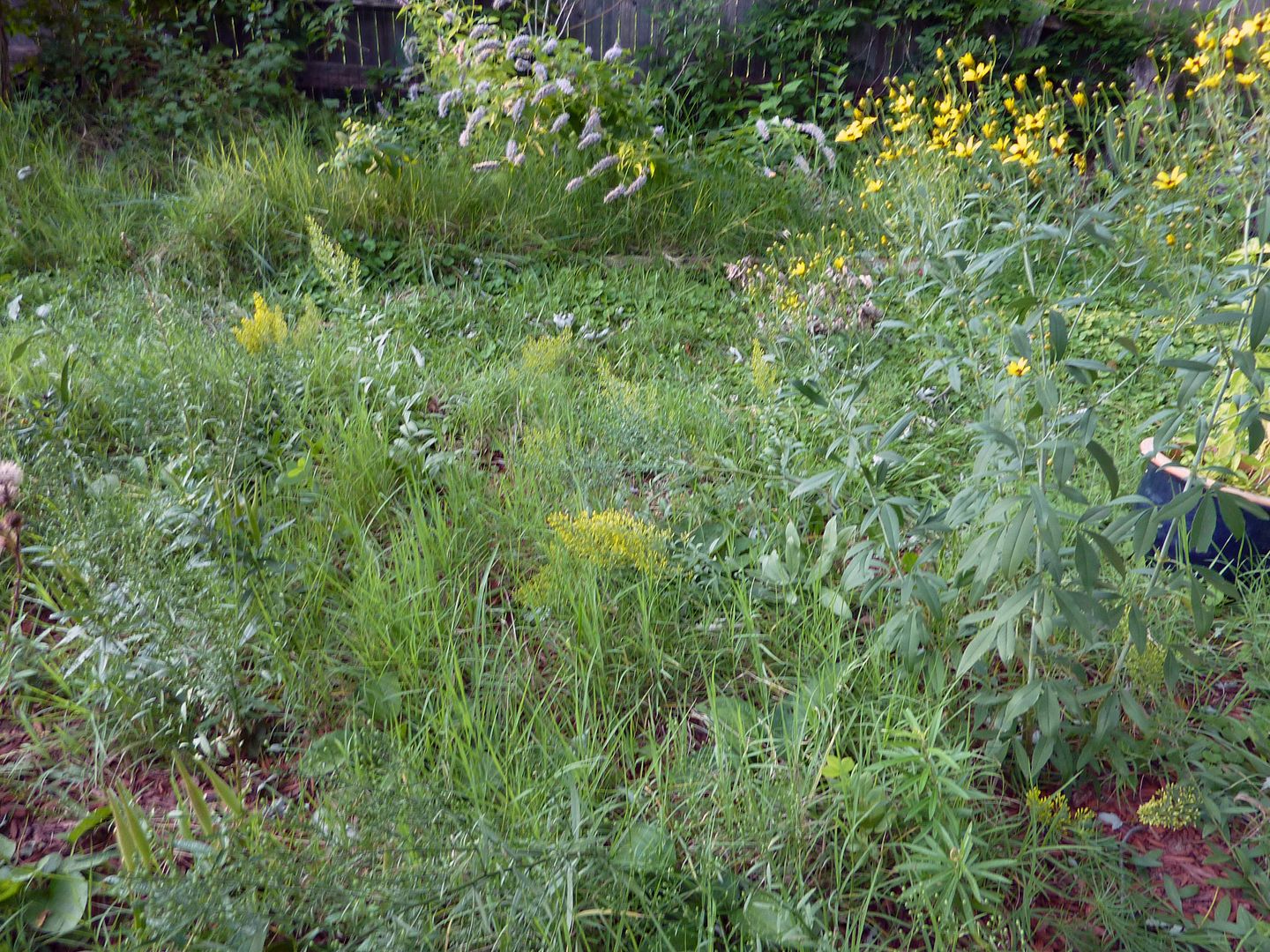
Meadow Project: September
Well it's September and my little meadow's fall blooming species have started to become very showy. Everything was started here as a bare root plug. Most of the spring and summer blooming species didn't flower at all, some even went dormant or died. Hopefully they'll all be back in force next year.
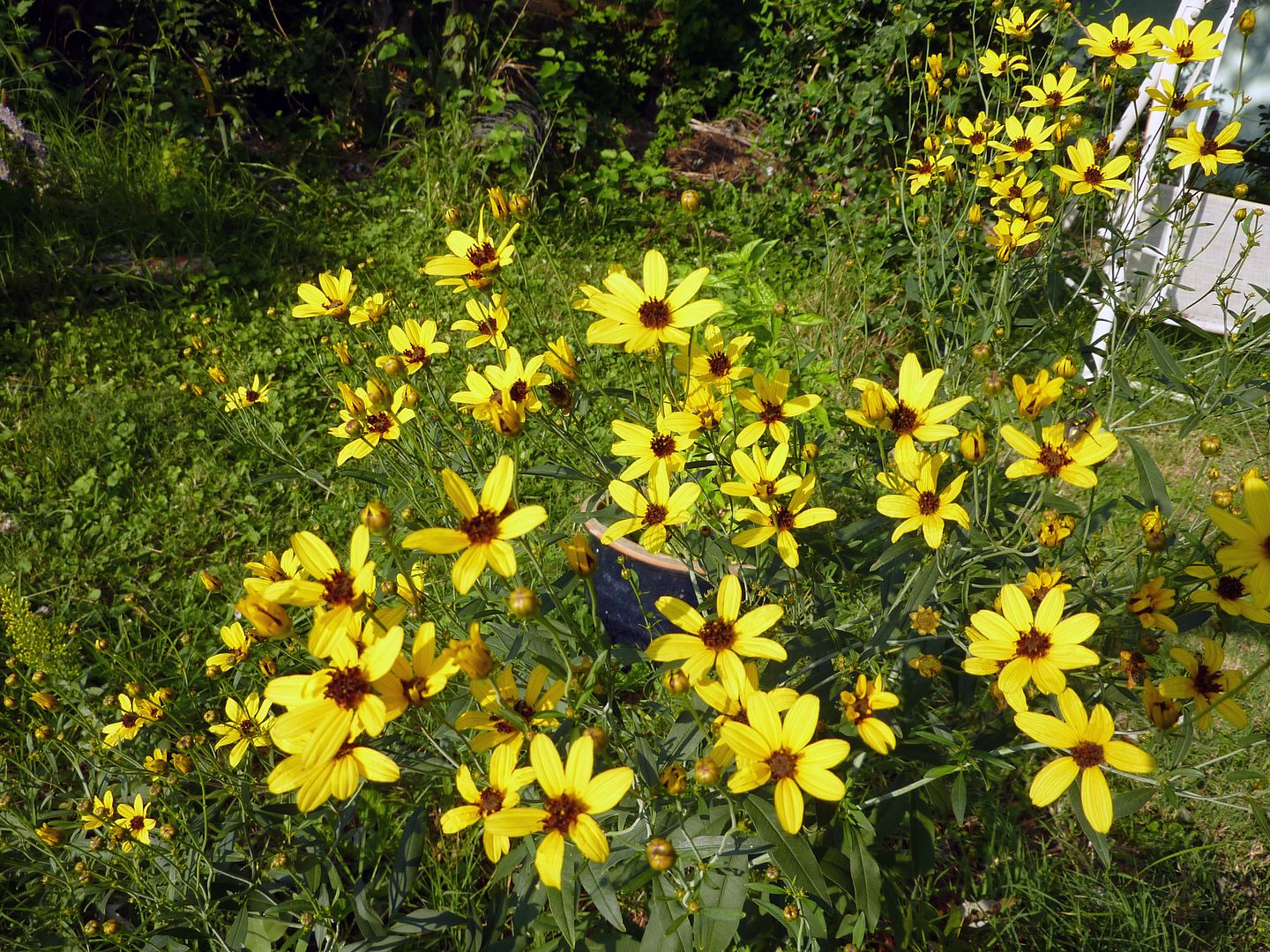
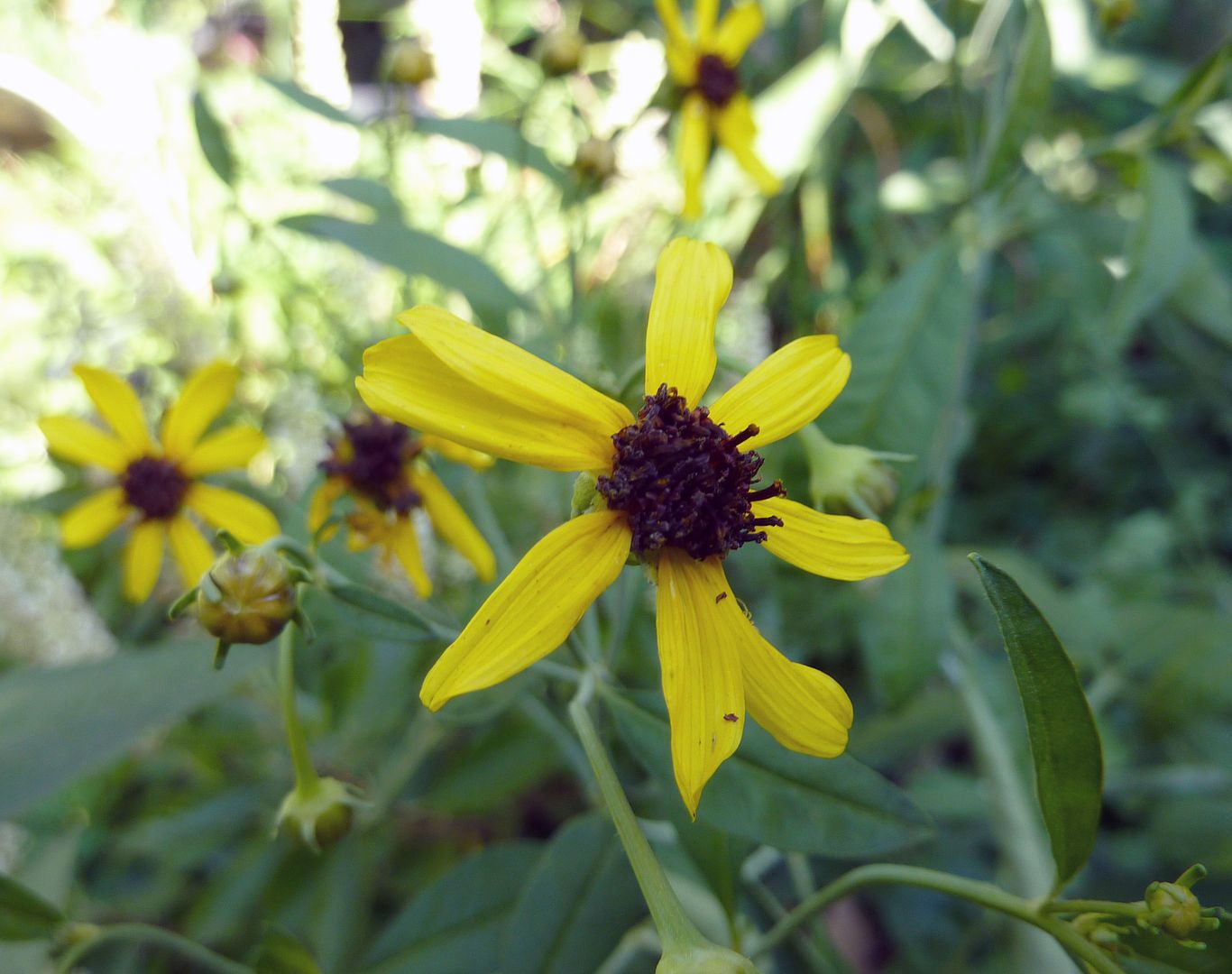
Tall Coreopsis, Coreopsis tripteris, is about 3' tall and topped with lots of flowers. Not bad for two bare roots that cost $5 each. I could see going nuts with this plant in the coming years. When they become better established I'm sure they'll reach that 5' to 8' tall I read on the internet.
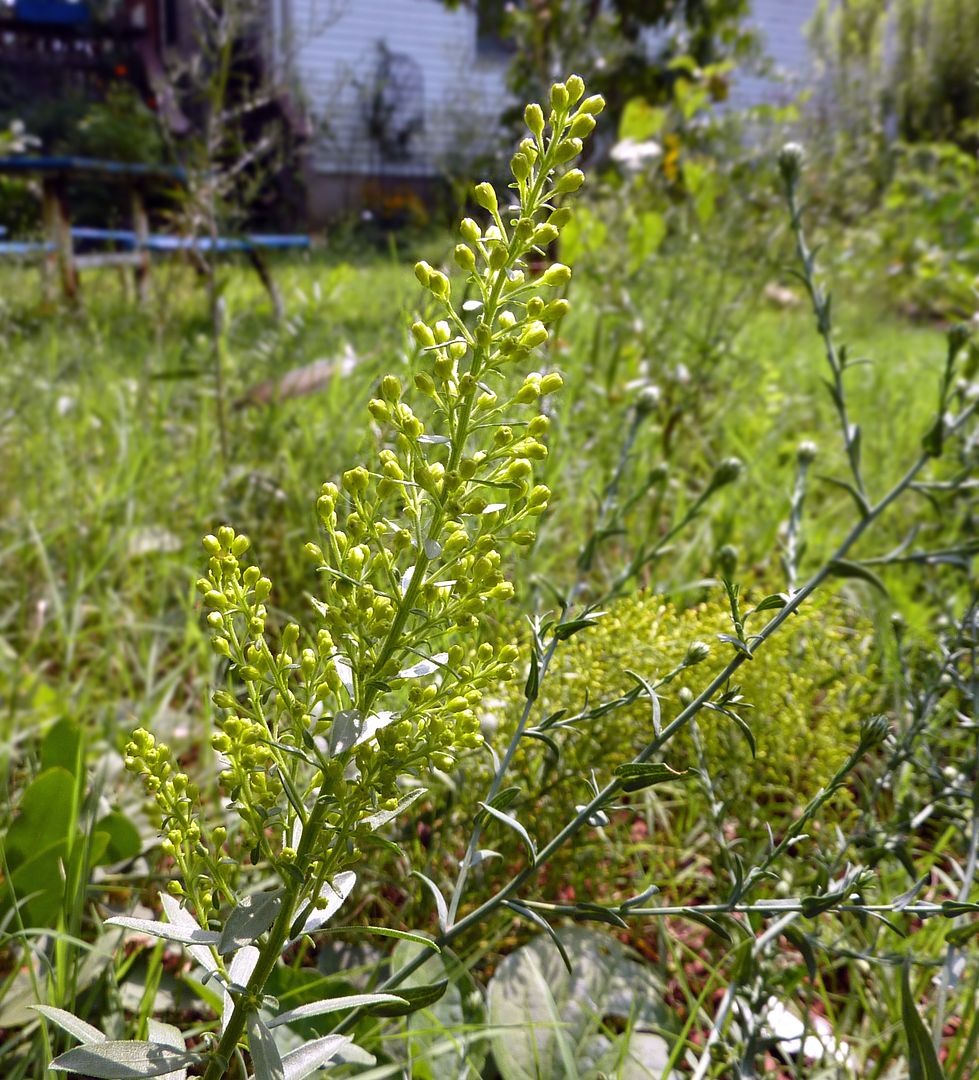
Showy Goldenrod, Solidago speciosa. This plant gets it's name for being showy. The internet does a better job of showing that off than my blog though. All four of my plants fell over and are sort of slinking along the ground. The orientation of the flowers is somewhat more uniform than on other Solidago's also the really tiny flower petals are slightly larger too, making them look more brightly yellow.
There are a few Asters popping open now too but nothing showy enough to take a picture of.
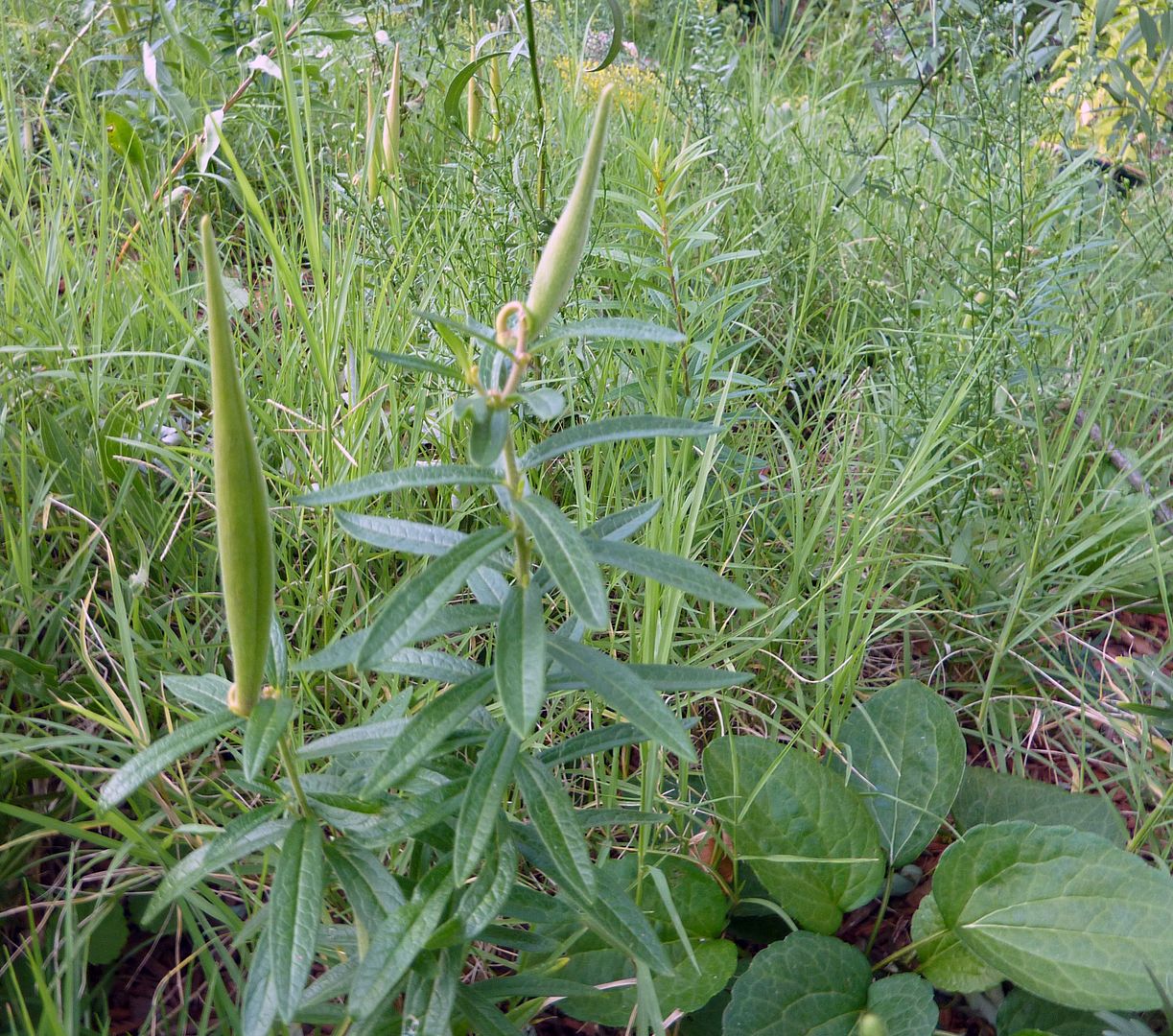
The butterfly weed, Asclepias tuberosa, flowered well and has now gone to seed. Over the summer that awful grass has come back in force, I'll need to start weeding it out again.
The Ozark Coneflowers, Echinacea paradoxa, have particularly neat leaf clusters. They're nowhere near native to New Jersey but frankly nothing in Echinacea is anyhow. What drew me to it was it's yellow flowers, without having to be a cultivar.
I need to weed out some grass but I'm overall happy with what's out there.
Tall Coreopsis, Coreopsis tripteris, is about 3' tall and topped with lots of flowers. Not bad for two bare roots that cost $5 each. I could see going nuts with this plant in the coming years. When they become better established I'm sure they'll reach that 5' to 8' tall I read on the internet.
Showy Goldenrod, Solidago speciosa. This plant gets it's name for being showy. The internet does a better job of showing that off than my blog though. All four of my plants fell over and are sort of slinking along the ground. The orientation of the flowers is somewhat more uniform than on other Solidago's also the really tiny flower petals are slightly larger too, making them look more brightly yellow.
There are a few Asters popping open now too but nothing showy enough to take a picture of.
The butterfly weed, Asclepias tuberosa, flowered well and has now gone to seed. Over the summer that awful grass has come back in force, I'll need to start weeding it out again.
The Ozark Coneflowers, Echinacea paradoxa, have particularly neat leaf clusters. They're nowhere near native to New Jersey but frankly nothing in Echinacea is anyhow. What drew me to it was it's yellow flowers, without having to be a cultivar.
I need to weed out some grass but I'm overall happy with what's out there.
Friday, July 29, 2011
Some Summer Flowering Forbs
Tall Coreopsis is flowering! Coreopsis tripteris. I planted this in two locations this year. The first I bought from an online nursery as a bare root plant and it's gotten to be about 4' tall. No flowers open yet but there are buds. The second location was from a 3 gallon pot I found among the massive inventory Popes' Gardens has. They're a local nursery about the size of a farm that sells at least one of everything. I wish they stocked more natives but they have such a huge selection that it's easy to overlook things like Tall Coreopsis. I kind of jumped up and gasped when I saw they sell it. The one from their nursery is flowering now, with it's blooms pictured above.
To be more accurate, 3' high isn't very tall at all but that should change next year. An unfortunate side effect of nursery grown can be stressed roots, either from growing in a pot to long or being divided off an adult plant. This stress limits the natural growth and disrupts the normal cycle of growing. This isn't necessarily bad for the plant though, it encourages early flowering is all. Next year it should grow to a more normal size of 5' to 8' tall.
To talk a little bit more about stressed plants, it's almost standard practice in the nursery trade. Think about how many trees being sold are taller than you are and yet they sit in pots where their root structure is little more than the size of a basket ball. Ideally you should grow everything from seed, or at least only plant things that are about knee high, so the root structure is more evenly balanced with the top growth. Time is the issue though as many of those potted trees are likely 5 to 10 years old.
The flowers to Tall Coreopsis aren't very showy, but frankly that's normal for a Coreopsis. The real show will hopefully happen next year when the plant isn't as stressed. Tearing out some of the tangled roots before planting encourages them to grow out and get a firm grip on the surrounding soil. Next year they should reach 5' to 8' tall and flower much more heavily. I have a Perennial Sunflower planted right next to this one (not in the photo) and the contrast of flower size should be neat to see.
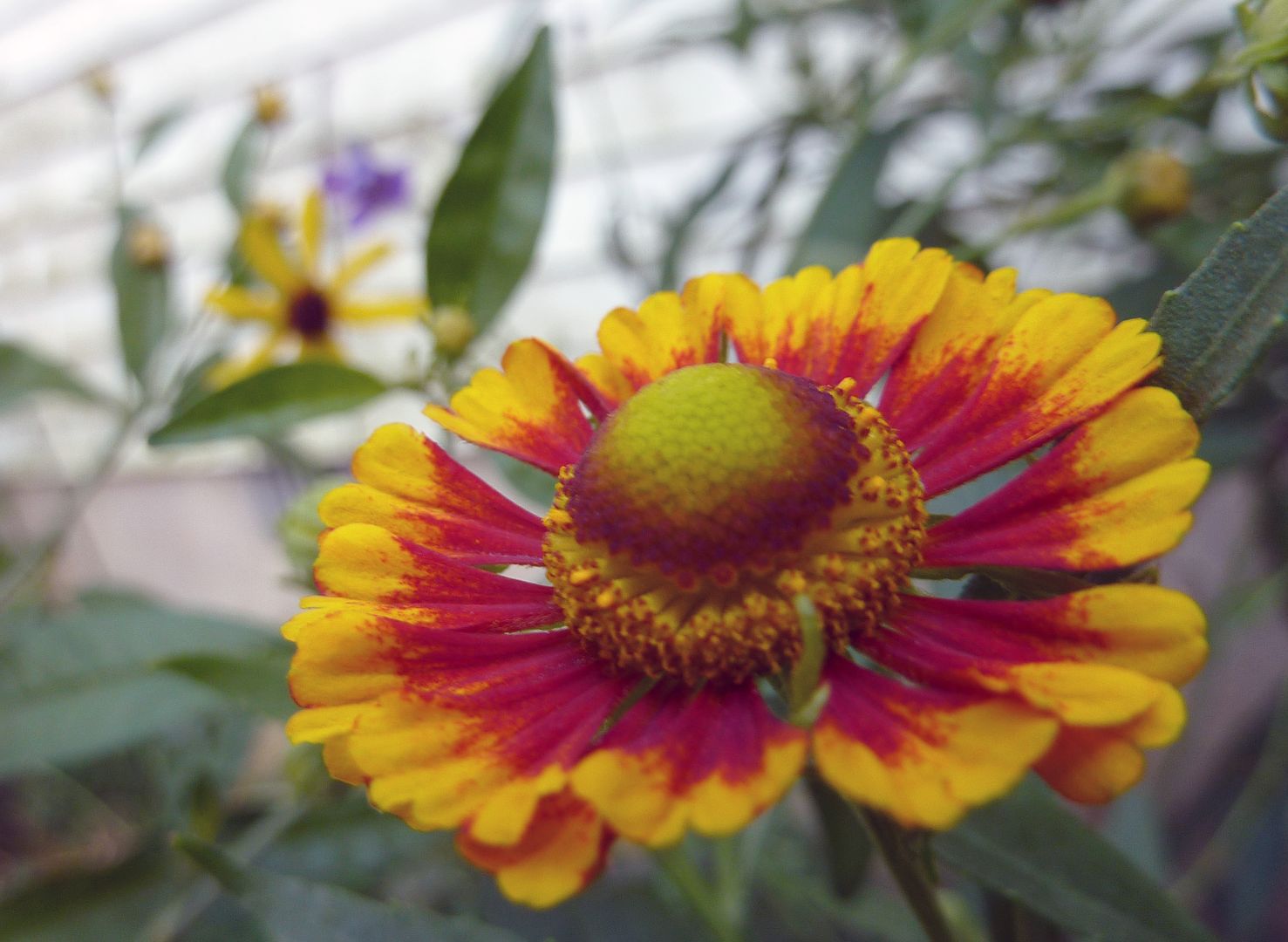
Also flowering now is Sneezeweed. I can't remember why I bought this plant honestly. I've never been happy with the amount of pollinators on it. I hate the red ring around the flower, it really annoys me when plants have this. I'd rather the bloom be totally red or not at all. Red is to showy of a color and it can easily contrast with green in irritating ways. It's not that I hate red flowers, but it's the hardest flower color to ignore and can be very distracting when seen in the background. It just takes the eye off the focus, say a butterfly on a flower... on and then there's that big red glob in the background. I'd get rid of the thing but it's filling in a bare spot and nothing seems to survive very well there anyhow. I used to have a totally yellow form but it seems to have died off.
Black-Eyed Susans, Rudbeckia hirta, are also flowering finally. In the past I've listed this on plants honeybees love. I still stand by that but I really need to stress the following: You need a field, like a 10' by 10' area of just this plant (and maybe related or similar flowering species) all in bloom to really get honeybee attention. They otherwise ignore it completely along with most other pollinator. This little sweat bee (right?) so far is the only thing I've seen working the flowers all year. I know something likes pollinating them because they keep coming back year after year. Black-Eyed Susans are biannual! The nonflowering leaves poking out of the ground are next year's blooms waiting to happen. Occasionally there is a perennial in the mix but those aren't the standard.
What's great about this plant is it's a pioneer species. The seeds germinate in response to sunlight so you'll find this plant reseeding itself where there are bare patches of soil. If there's to much organic matter laying about then this species slowly dies out in the field. After a good swift burning all the plant debris shrivels up into ash and allows more light to hit the soil. Within two years they're back at it flowering in all their glory. Of course if you're haying the field once a year, that is removing your lawn clippings instead of mulching them back into the land, then they don't really go away.
Generally they're one of the easier plants to spread around by seed. After the plant pretty much dies back and you're left only with the dead stems, cut off a few seed heads and sprinkle their contents about in open bare soil in a full sun location. Next year if they germinate you should be able to see a leaf or two poking out of the soil, and the year after that they should be of flowering age. Some seeds won't germinate until the next year, so you'll get fluctuation in how lush and full their patches are unless you keep at it reseeding them around.
As far as nectar and pollen go, you'll get far more interesting things happening with Sunflowers, Liatris, Coneflowers, and many others. It's just nice to have a few plants not covered in bees now and again. Some Fritillary Butterflies use Rudbeckia as a host plant as well, though it's vital to their populations to leave the plant stems where they are until next spring. The caterpillar pupa over winter on the stem and preemptive burning or mowing can decimate their population locally.
To be more accurate, 3' high isn't very tall at all but that should change next year. An unfortunate side effect of nursery grown can be stressed roots, either from growing in a pot to long or being divided off an adult plant. This stress limits the natural growth and disrupts the normal cycle of growing. This isn't necessarily bad for the plant though, it encourages early flowering is all. Next year it should grow to a more normal size of 5' to 8' tall.
To talk a little bit more about stressed plants, it's almost standard practice in the nursery trade. Think about how many trees being sold are taller than you are and yet they sit in pots where their root structure is little more than the size of a basket ball. Ideally you should grow everything from seed, or at least only plant things that are about knee high, so the root structure is more evenly balanced with the top growth. Time is the issue though as many of those potted trees are likely 5 to 10 years old.
The flowers to Tall Coreopsis aren't very showy, but frankly that's normal for a Coreopsis. The real show will hopefully happen next year when the plant isn't as stressed. Tearing out some of the tangled roots before planting encourages them to grow out and get a firm grip on the surrounding soil. Next year they should reach 5' to 8' tall and flower much more heavily. I have a Perennial Sunflower planted right next to this one (not in the photo) and the contrast of flower size should be neat to see.
Also flowering now is Sneezeweed. I can't remember why I bought this plant honestly. I've never been happy with the amount of pollinators on it. I hate the red ring around the flower, it really annoys me when plants have this. I'd rather the bloom be totally red or not at all. Red is to showy of a color and it can easily contrast with green in irritating ways. It's not that I hate red flowers, but it's the hardest flower color to ignore and can be very distracting when seen in the background. It just takes the eye off the focus, say a butterfly on a flower... on and then there's that big red glob in the background. I'd get rid of the thing but it's filling in a bare spot and nothing seems to survive very well there anyhow. I used to have a totally yellow form but it seems to have died off.
Black-Eyed Susans, Rudbeckia hirta, are also flowering finally. In the past I've listed this on plants honeybees love. I still stand by that but I really need to stress the following: You need a field, like a 10' by 10' area of just this plant (and maybe related or similar flowering species) all in bloom to really get honeybee attention. They otherwise ignore it completely along with most other pollinator. This little sweat bee (right?) so far is the only thing I've seen working the flowers all year. I know something likes pollinating them because they keep coming back year after year. Black-Eyed Susans are biannual! The nonflowering leaves poking out of the ground are next year's blooms waiting to happen. Occasionally there is a perennial in the mix but those aren't the standard.
What's great about this plant is it's a pioneer species. The seeds germinate in response to sunlight so you'll find this plant reseeding itself where there are bare patches of soil. If there's to much organic matter laying about then this species slowly dies out in the field. After a good swift burning all the plant debris shrivels up into ash and allows more light to hit the soil. Within two years they're back at it flowering in all their glory. Of course if you're haying the field once a year, that is removing your lawn clippings instead of mulching them back into the land, then they don't really go away.
Generally they're one of the easier plants to spread around by seed. After the plant pretty much dies back and you're left only with the dead stems, cut off a few seed heads and sprinkle their contents about in open bare soil in a full sun location. Next year if they germinate you should be able to see a leaf or two poking out of the soil, and the year after that they should be of flowering age. Some seeds won't germinate until the next year, so you'll get fluctuation in how lush and full their patches are unless you keep at it reseeding them around.
As far as nectar and pollen go, you'll get far more interesting things happening with Sunflowers, Liatris, Coneflowers, and many others. It's just nice to have a few plants not covered in bees now and again. Some Fritillary Butterflies use Rudbeckia as a host plant as well, though it's vital to their populations to leave the plant stems where they are until next spring. The caterpillar pupa over winter on the stem and preemptive burning or mowing can decimate their population locally.
Monday, October 18, 2010
Tall Goldenrod Pollinators
So this is the Goldenrod monster that lives in my backyard. Solidago altissima, Tall Goldenrod is identified as growing 5' tall, though this plant is a noted exception at 10' tall.
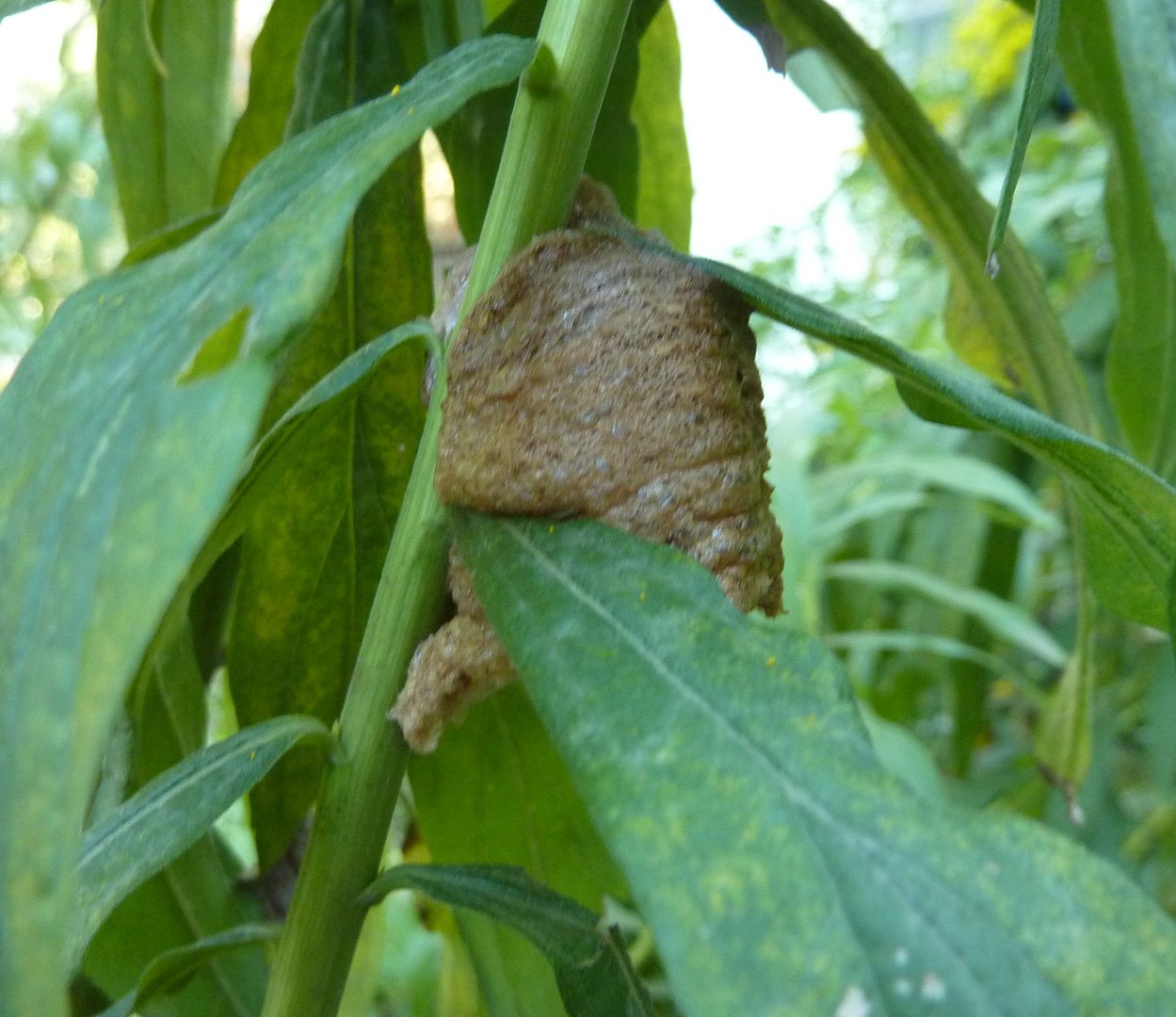
The leaves are narrow, long, and few if any teeth on them, and when present they're not long or clearly noticeable. They're more like small points than teeth. (presence of a mantis egg is optional.)
For those gardeners who love having really tall perennials this is a must have. My only complain is this year the storms were harsh enough that it fell over. Thankfully though this plant flowers late enough in the year that it doesn't matter to much. Considering most other perennials are dying back for fall, somehow a 10' tall plant shading them out isn't so bad.
Although this year I've resorted to using two ladders to prop these plants up, on other years they stand tall and flower beautifully. A diversity of insects use this plant as one last taste of pollen and nectar before winter sets in.
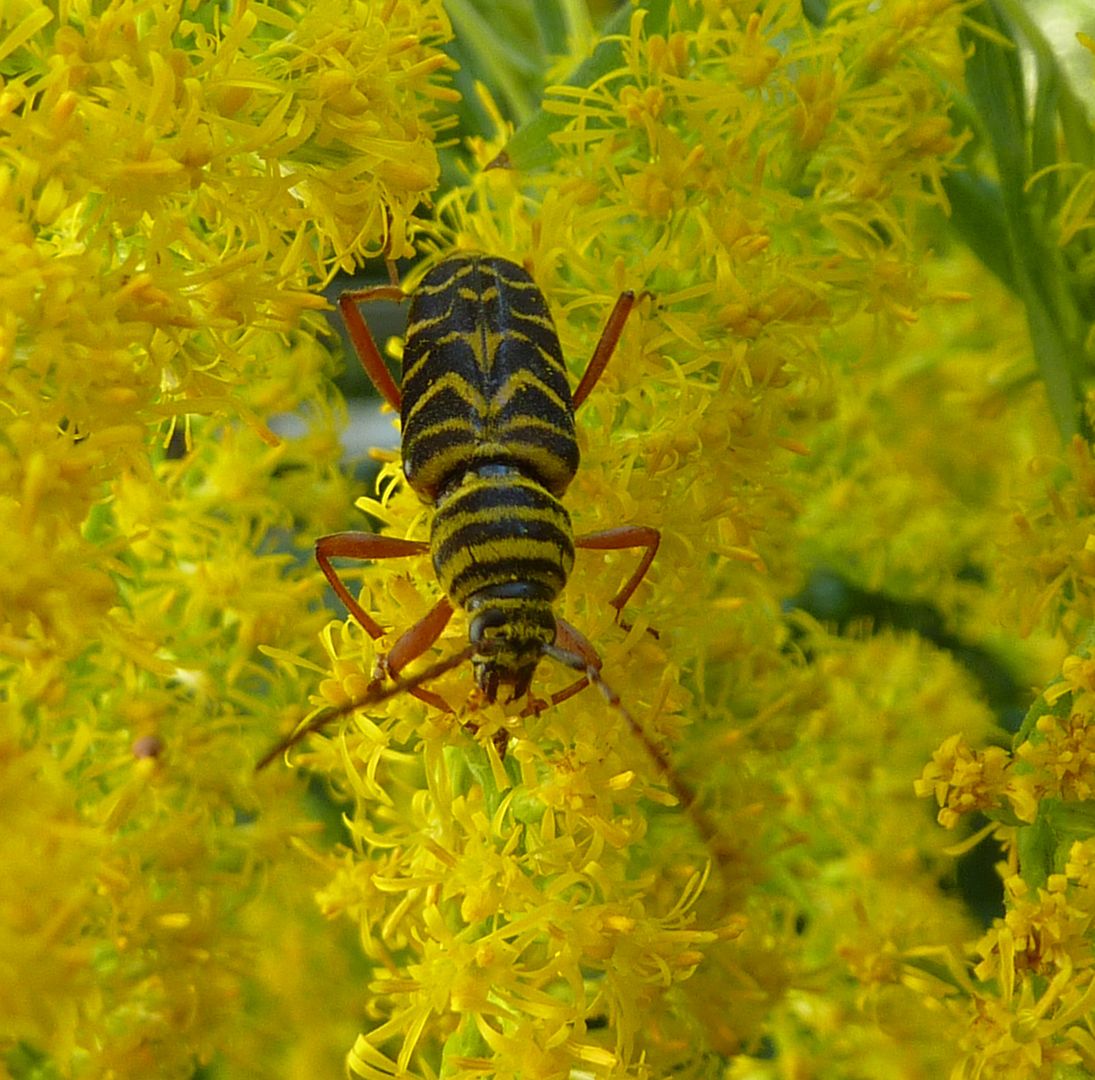
Megacyllne robiniae, The Locust Borer. Goldenrod is a common food source for this beetle. Though considered a pest it's a native species that feeds on a native tree, Robinia pseudoacacia, Black Locust Trees. It makes sense that they're around here as all the beekeepers look forward to the Locust bloom as a major boost in honey flow. The larva feed on the tree wood itself boring tunnels through the trunk. This makes them susceptible to wind storms and breaking and that can lead to disease setting in and shortening the life of the tree. Thankfully there's also the Honey Locust Tree, Gleditsia triacanthos, which is not effected by this beetle.
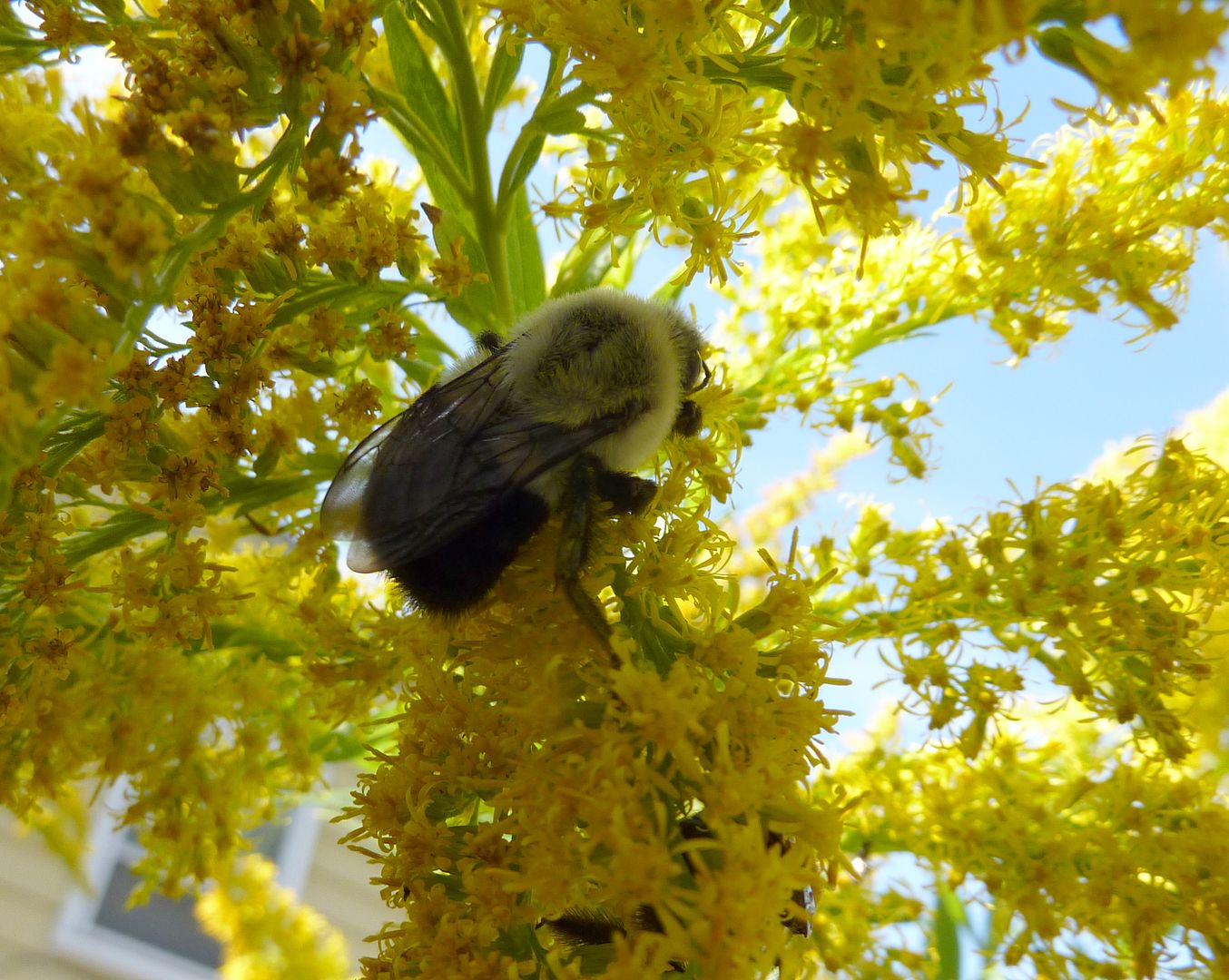
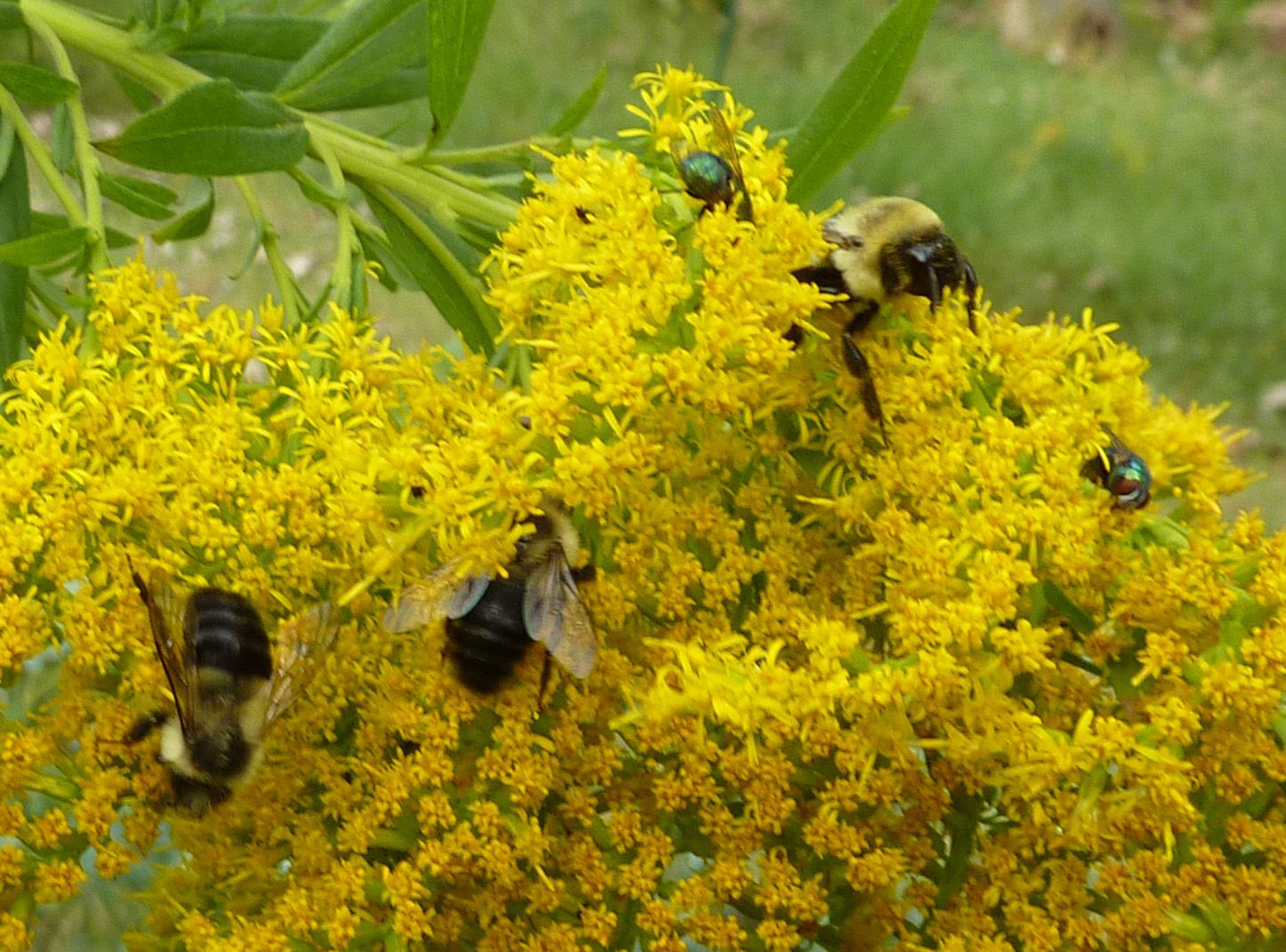
Buzzing around is what's likely one of next years Bumblebee queens. I think the species is Bombus impatiens.
Here they get one last taste of nectar before having to hibernate over the winter and trying to found a new hive next spring.
The leaves are narrow, long, and few if any teeth on them, and when present they're not long or clearly noticeable. They're more like small points than teeth. (presence of a mantis egg is optional.)
For those gardeners who love having really tall perennials this is a must have. My only complain is this year the storms were harsh enough that it fell over. Thankfully though this plant flowers late enough in the year that it doesn't matter to much. Considering most other perennials are dying back for fall, somehow a 10' tall plant shading them out isn't so bad.
Although this year I've resorted to using two ladders to prop these plants up, on other years they stand tall and flower beautifully. A diversity of insects use this plant as one last taste of pollen and nectar before winter sets in.
Megacyllne robiniae, The Locust Borer. Goldenrod is a common food source for this beetle. Though considered a pest it's a native species that feeds on a native tree, Robinia pseudoacacia, Black Locust Trees. It makes sense that they're around here as all the beekeepers look forward to the Locust bloom as a major boost in honey flow. The larva feed on the tree wood itself boring tunnels through the trunk. This makes them susceptible to wind storms and breaking and that can lead to disease setting in and shortening the life of the tree. Thankfully there's also the Honey Locust Tree, Gleditsia triacanthos, which is not effected by this beetle.
Buzzing around is what's likely one of next years Bumblebee queens. I think the species is Bombus impatiens.
Here they get one last taste of nectar before having to hibernate over the winter and trying to found a new hive next spring.
Tuesday, December 1, 2009
Zone 6 Bills Shows off some Tall Perennials
Sorry for mining YouTube for yet another video rather then coming up with my own material. Unfortunately as winter sets in the normal topics of my blog will be going into hibernation. So until spring time please try to bare with.
This guy is kind of a nut but I found his show to be very informative and entertaining. And I'm looking forward to part 2 of this episode.
Labels:
Perennials,
Tall,
zone 6
Subscribe to:
Posts (Atom)