A few days ago it was unbearably hot and humid out, but I was enjoying it nonetheless because this seemed to bring out all the ants and other bugs of interest. There were so many types of ants wondering all over my plants that I was tempted to make a video about them all but the mosquitoes got the better of me.
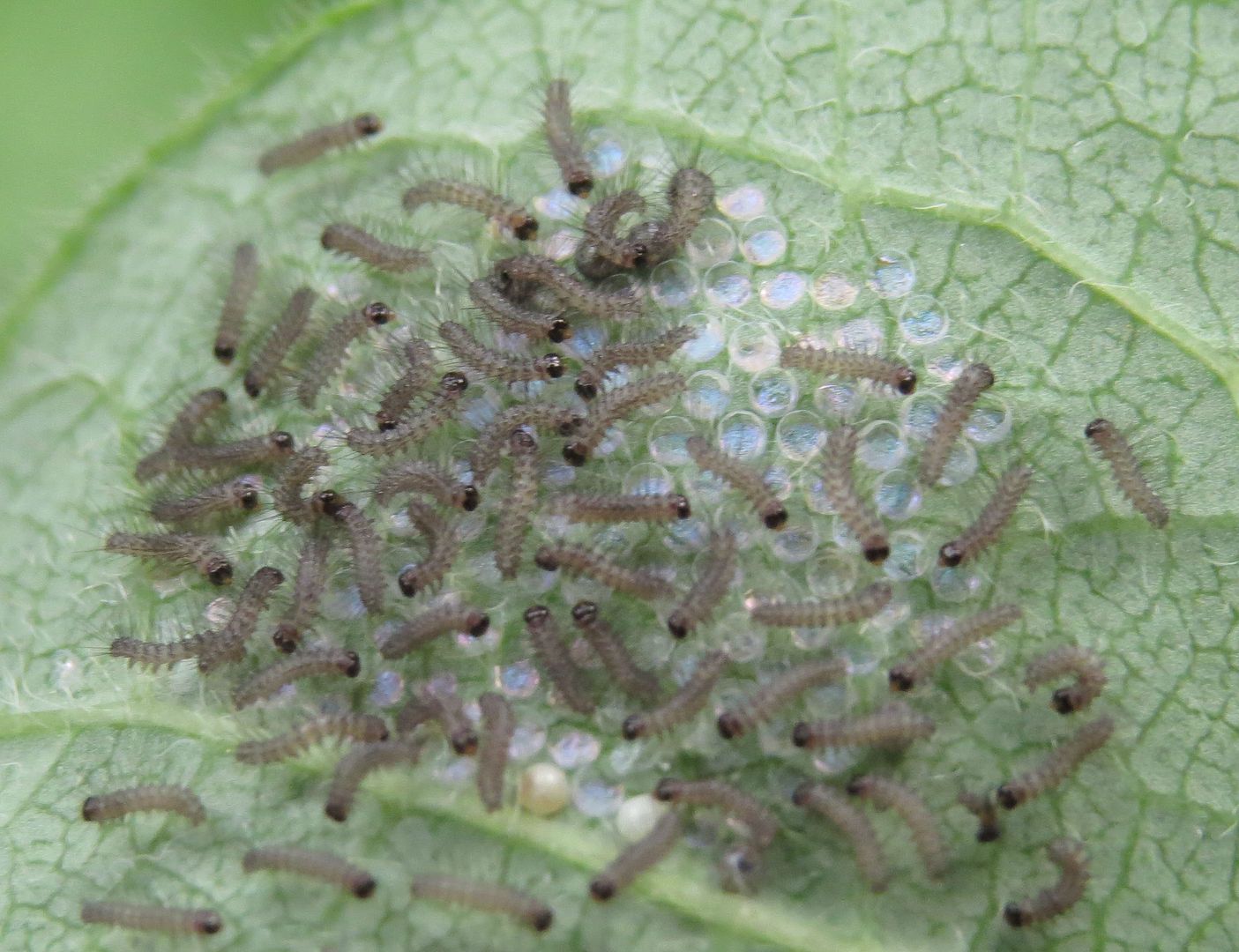
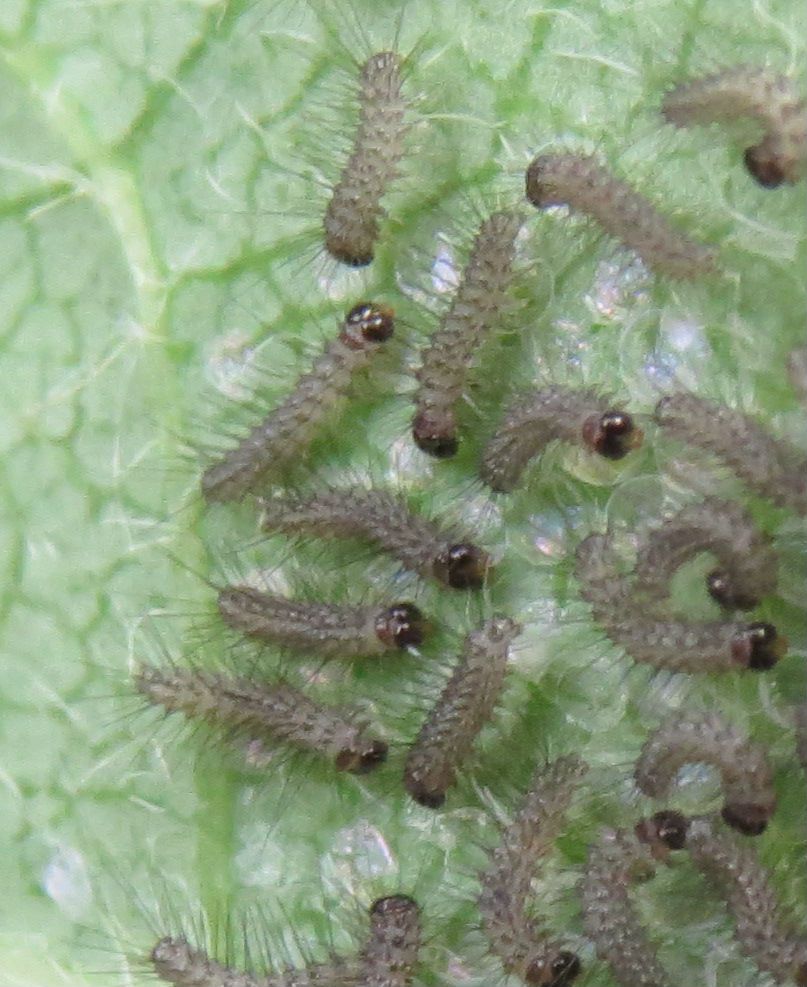
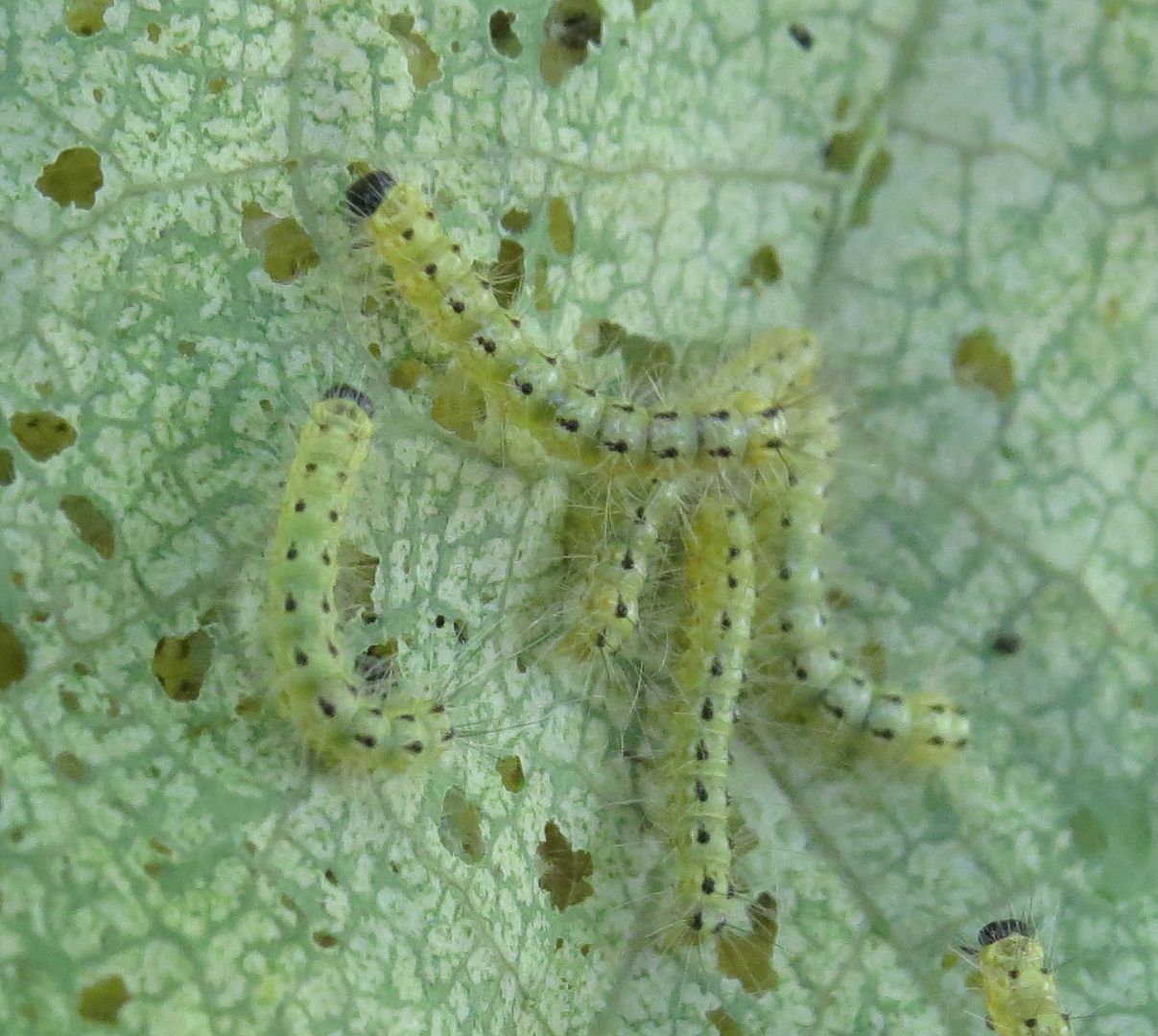
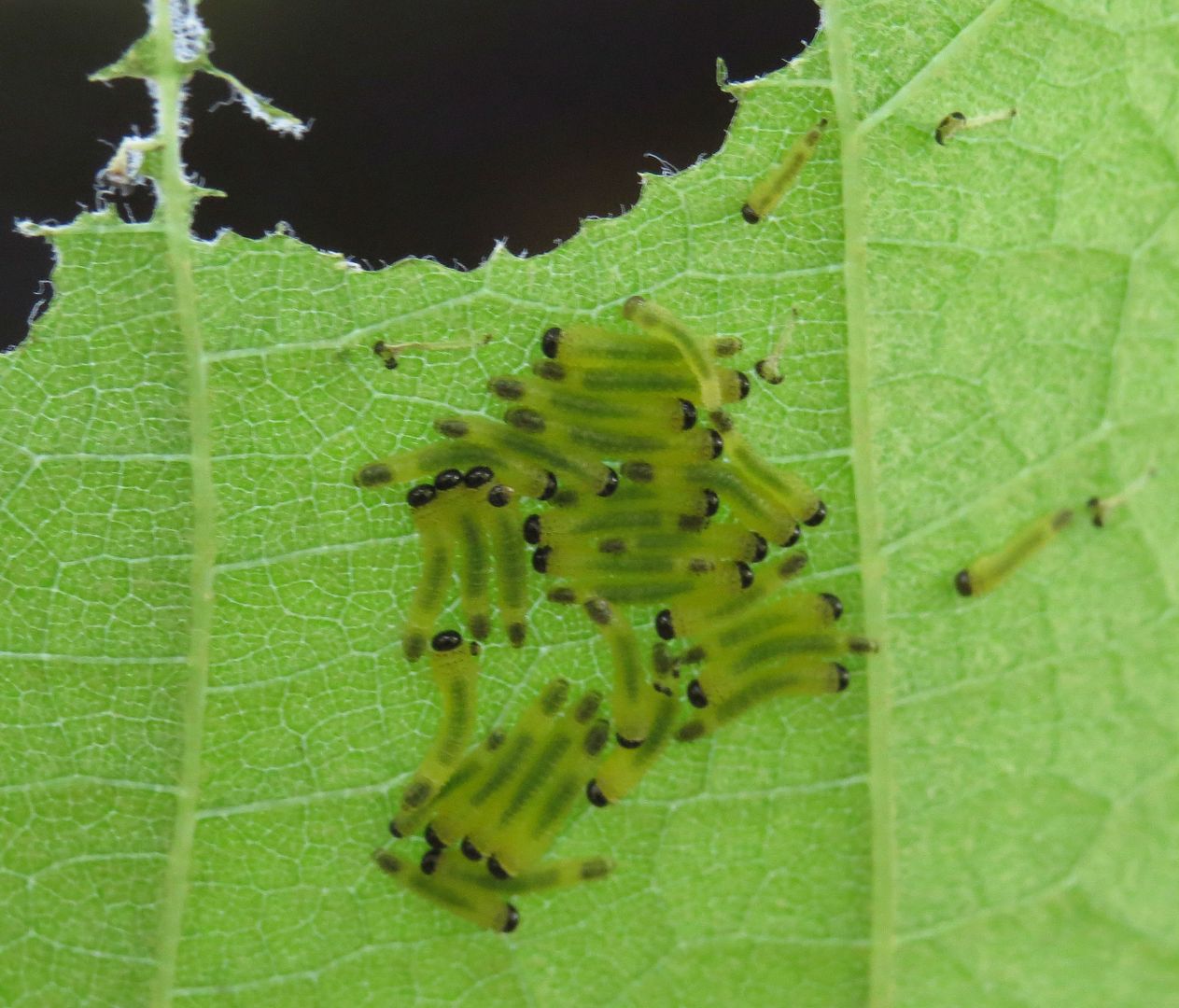
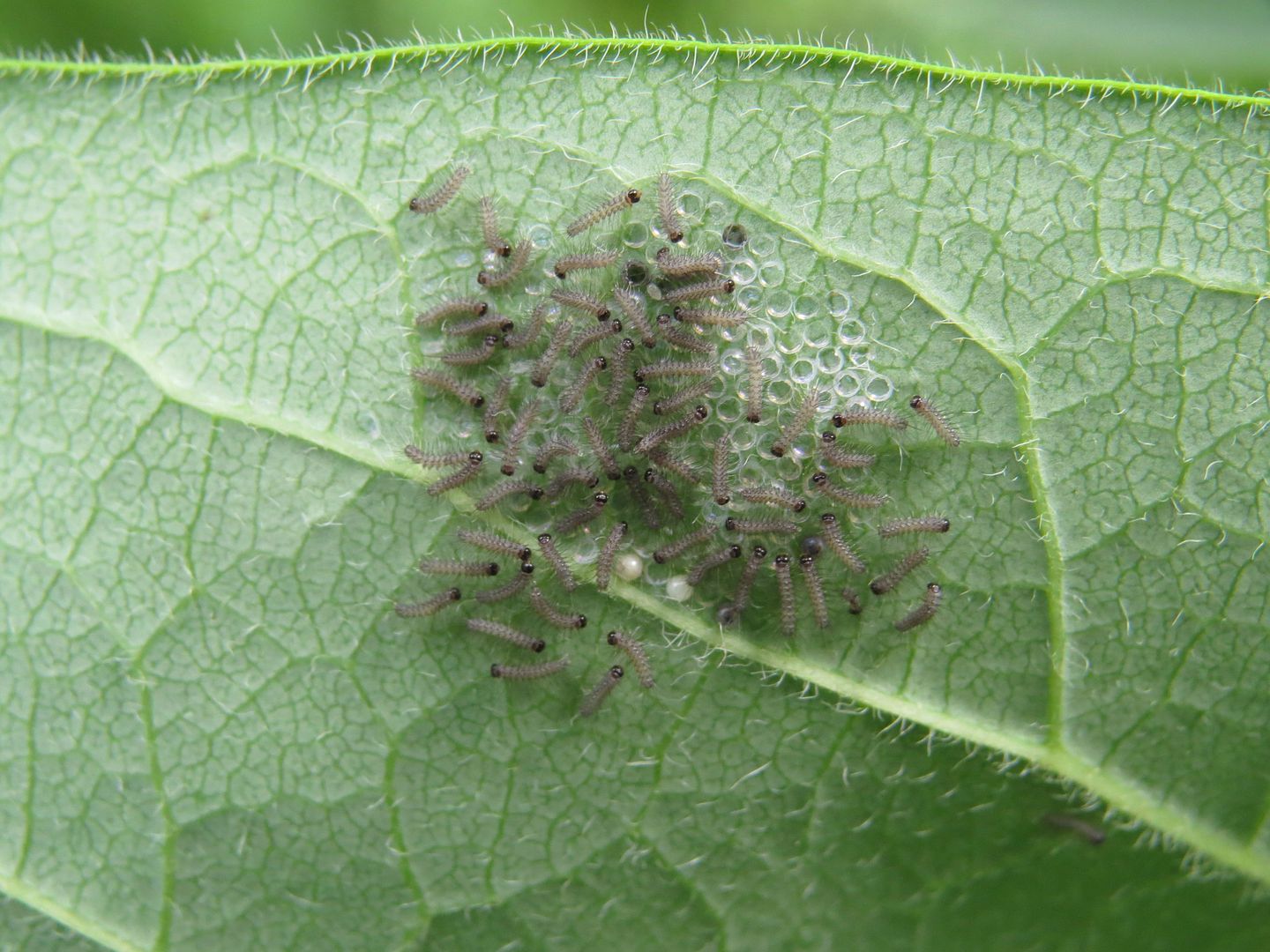
One thing I had to photograph was this patch of caterpillars on my Persimmon tree. My assumption was they were some type of giant silk moth but I don't believe that to be the case.
Unfortunately they were all dead the next morning. No doubt a large black carpenter ant, Camponotus pennsylvanicus, came along and chewed them all up into mush as there were several of those out on the tree. The whole clutch of them could have fit on a quarter, they were that tiny. I'm kicking myself for not removing the leaf and placing them into the butterfly cage.
I've no idea what they were, other than they were on Native Persimmon, they're were sort of hairy, and that I live in New Jersey. If anyone out there wants to take a crack at identifying them, be my guest.
So I then realized this week, there are a lot of caterpillars in my yard!
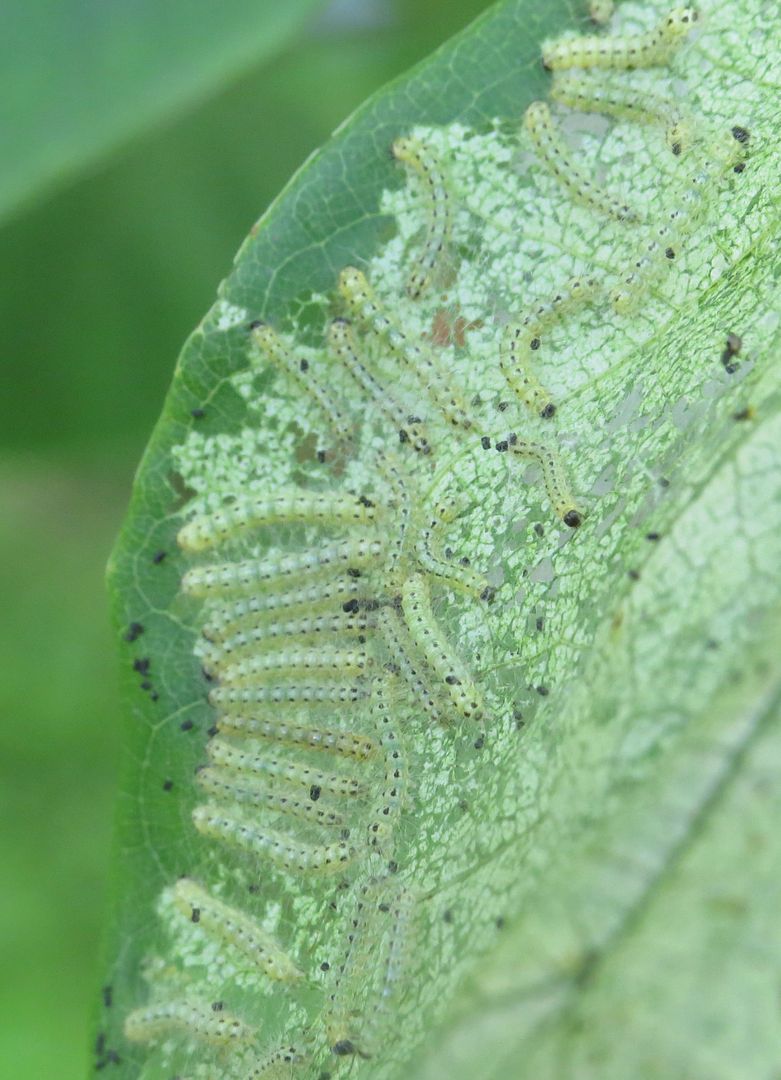
The Eastern Redbud has Fall Webworm, Hypantria cunea, which are poorly named because it's clearly the start of summer.
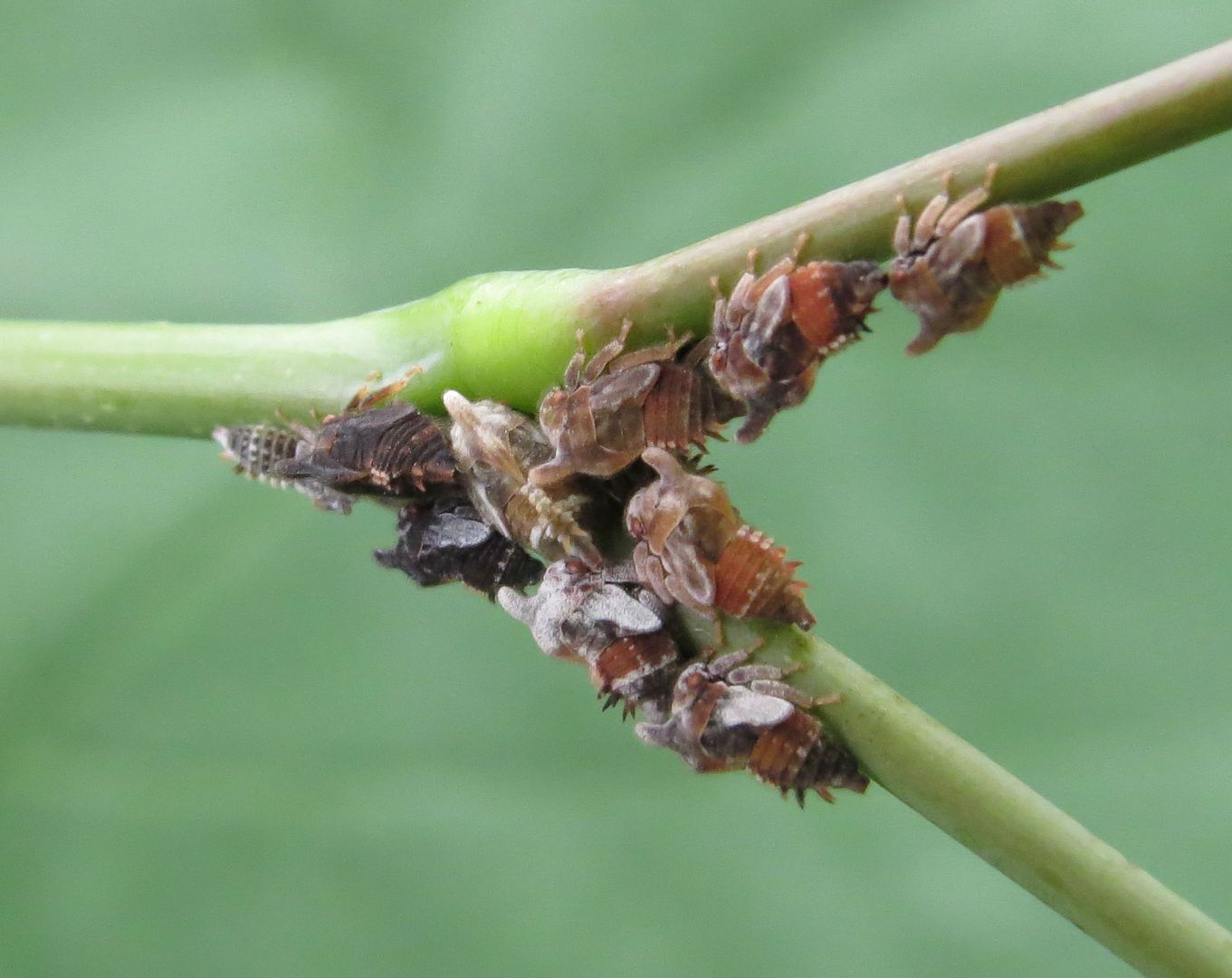
The tree also has treehoppers and a few aphids which are attracting ants that are supposed to help prevent insect herbivores or at least discourage and harass them onto other plants. It's not a perfect system but it does have an effect.
Fall Webworms get around this though by sticking together in a small group and forming webs around the leaves they eat for protection.
They do this until they're big enough to take on a few ants or develop other defenses. I'm not sure what they are for this species but I know long hairs, tasting bad, chemical weaponry, are a small taste of what some caterpillars do for protection. It's the early instars when the caterpillars have basically just hatched and don't have these defenses when they're picked off by everything, like the ones I found on the Persimmon tree.
The Eight-Spotted Forester is a day-flying moth (not quite a butterfly) that hosts on grape vines. The adult has black wings and eight cream/white or pail blue spots on the wings, hence the name.
Caterpillars are somewhat colorful looking and are in the habit of jumping ship upon disturbance, often leaving a silk lasso behind so they can climb back up. Grape Vines are very aggressive growing and often the caterpillars don't effect the yield of the crop.
Now I tried looking up what young Eight-Spotted Foresters look like, and I don't think these are them. What interests me is that the grape vine doesn't have any pores that produce extra floral nectar or attract aphids and other insects to do that for the plant. So that means the only ants walking over the plant are simply foraging for the sake of it, meaning fewer ants compared to a plant that's gushing out food to encourage them. So I'm curious to see how far these guys get.
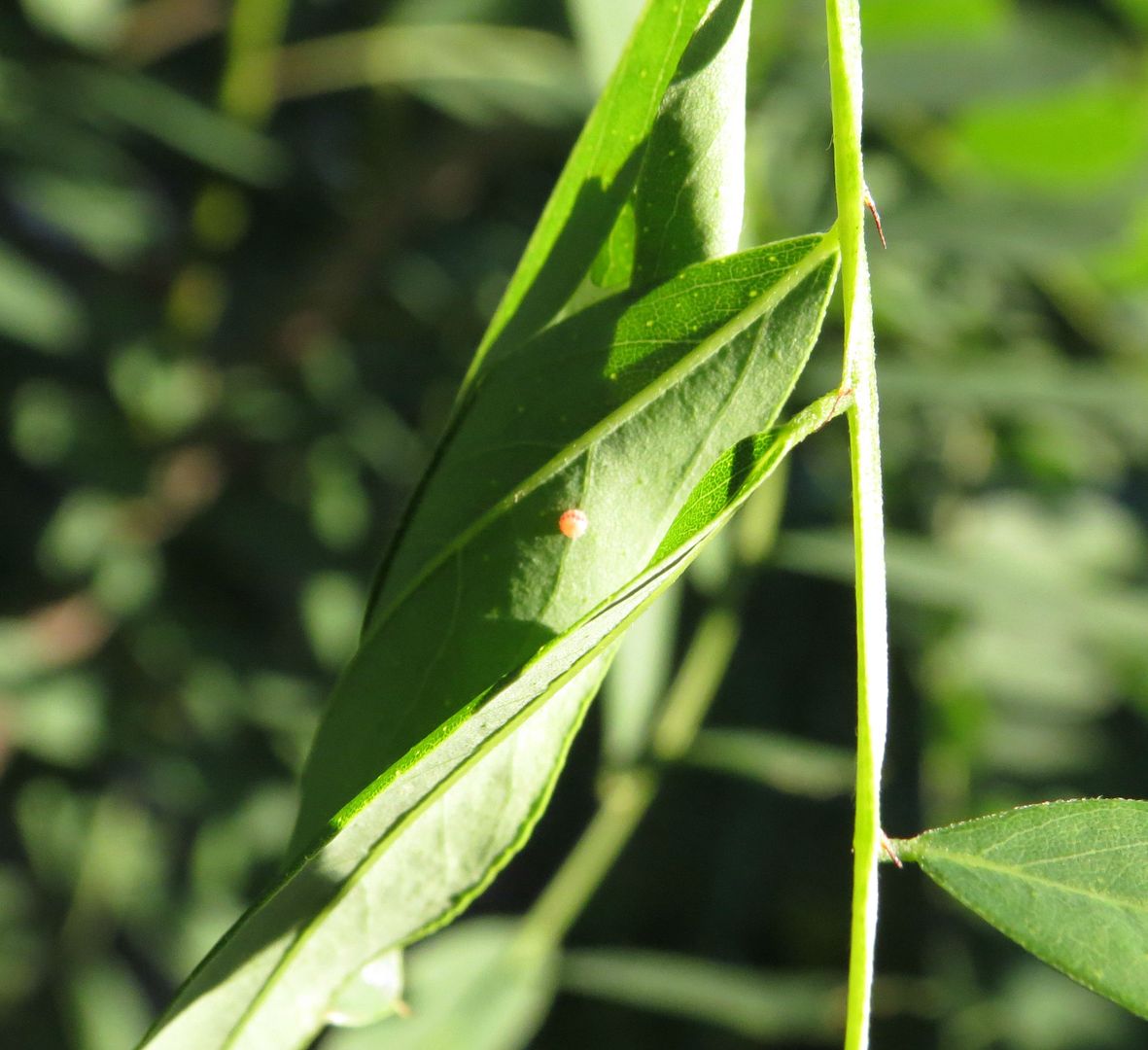
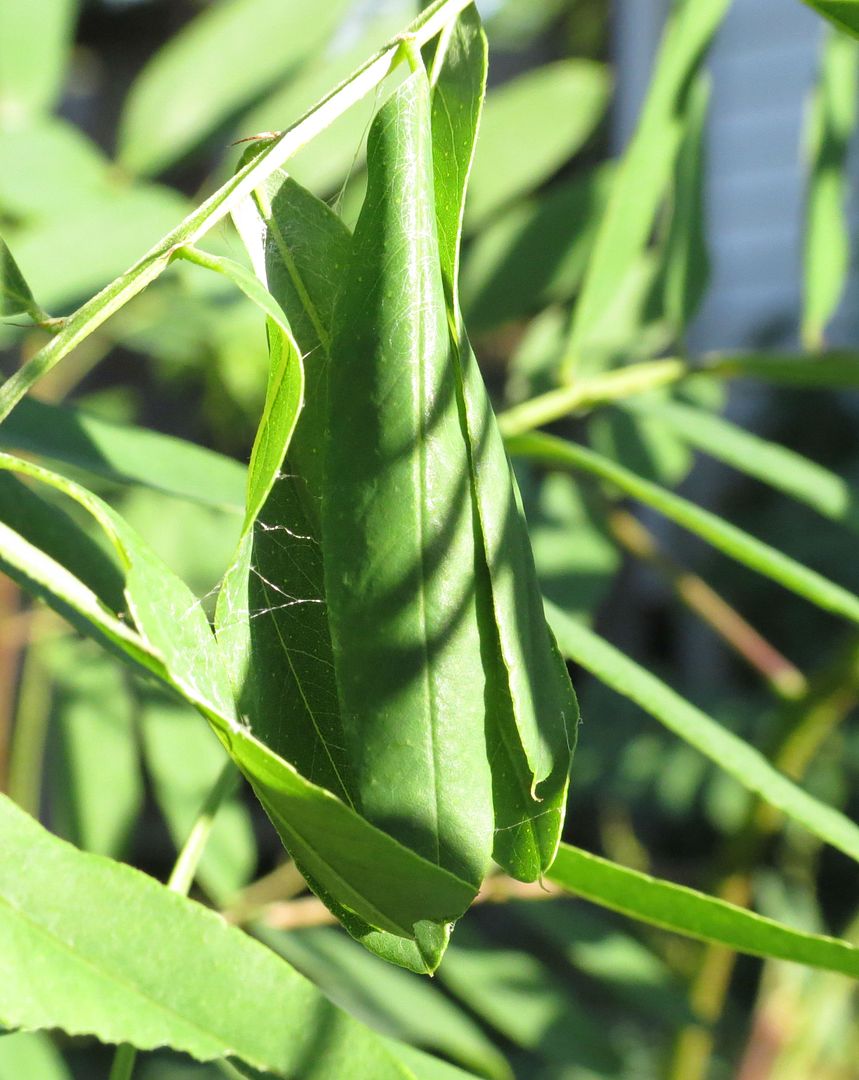
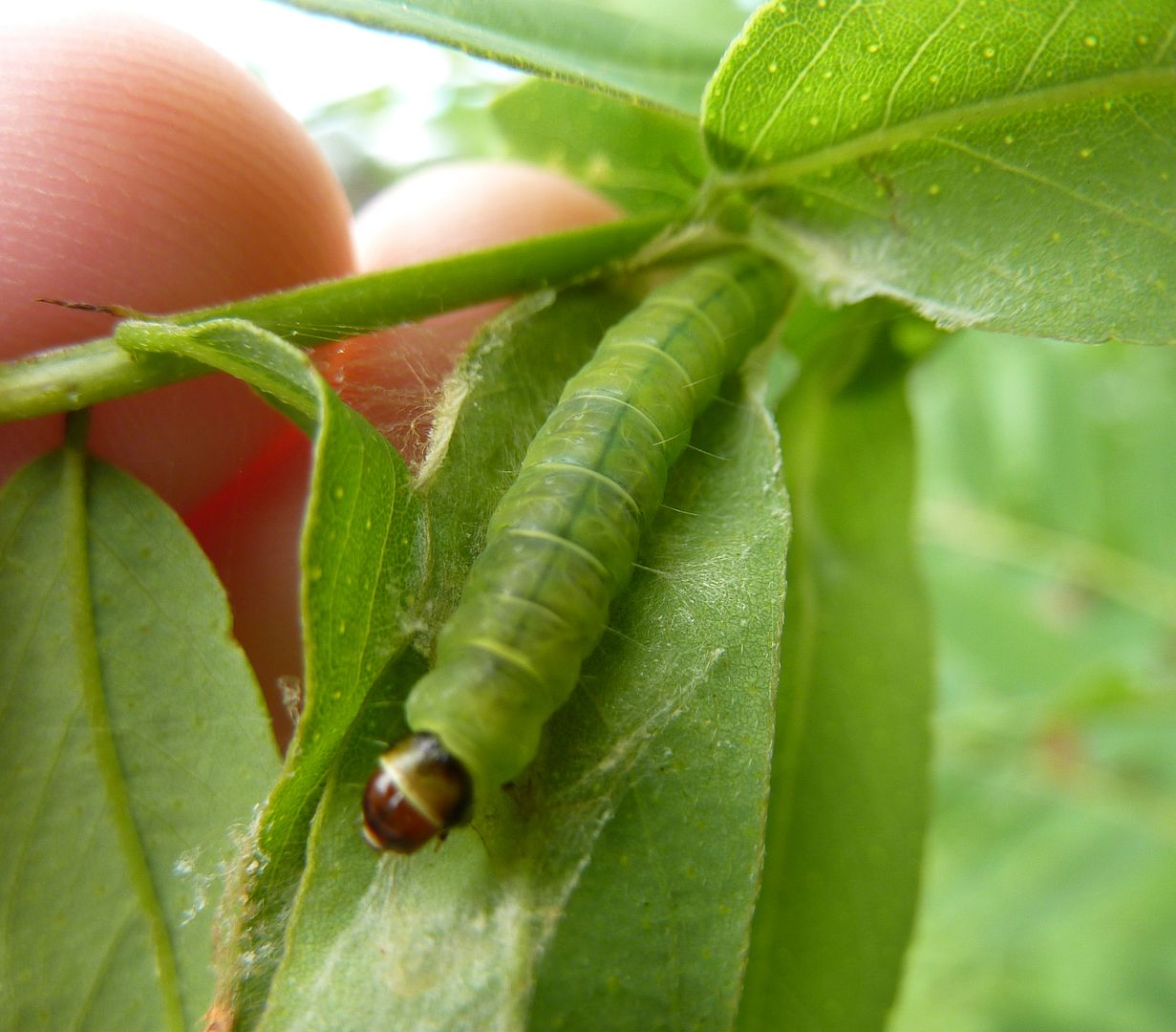
And lastly the False Indigo Bush, Amorpha fruticosa, has not only eggs but fully grown caterpillars on it.
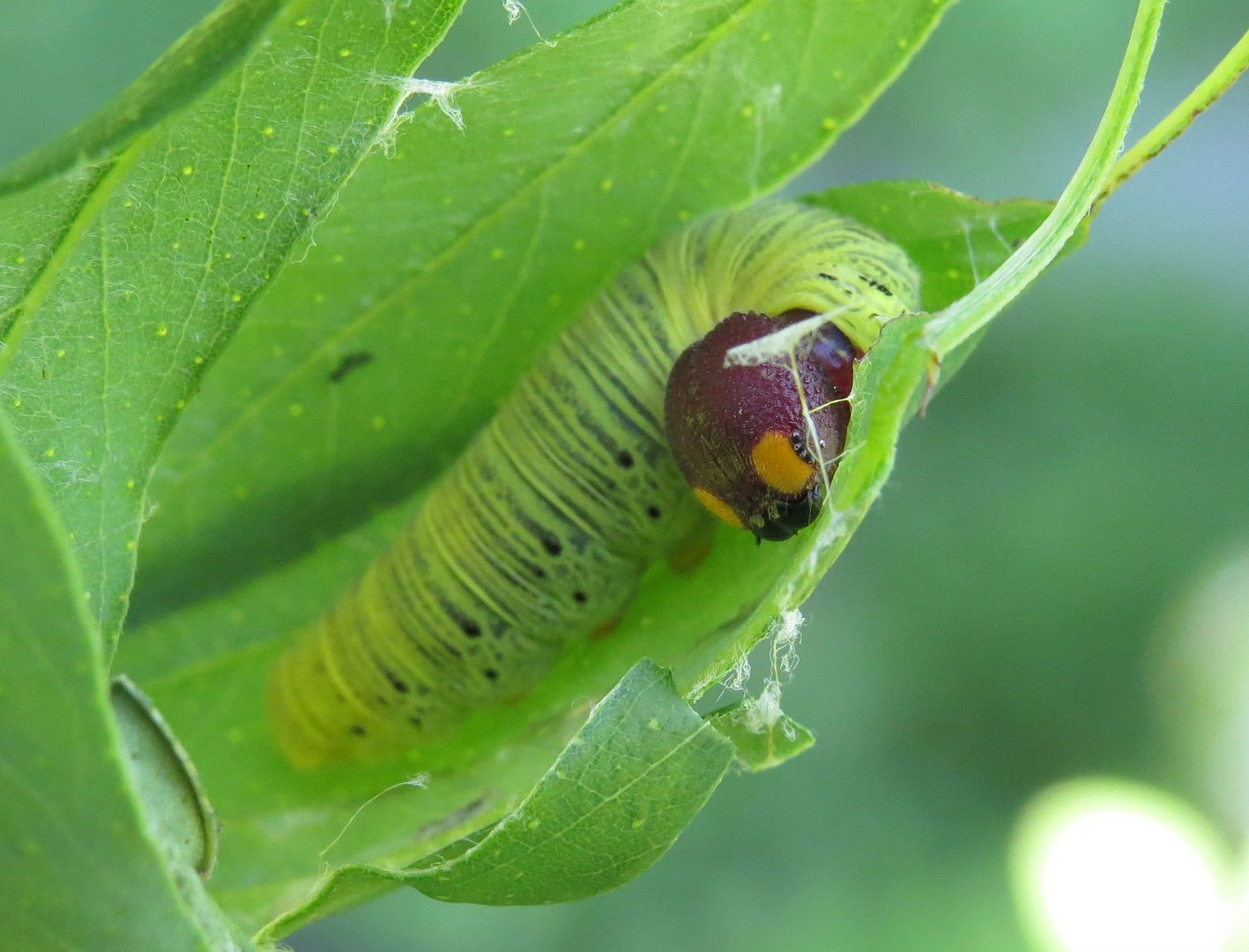
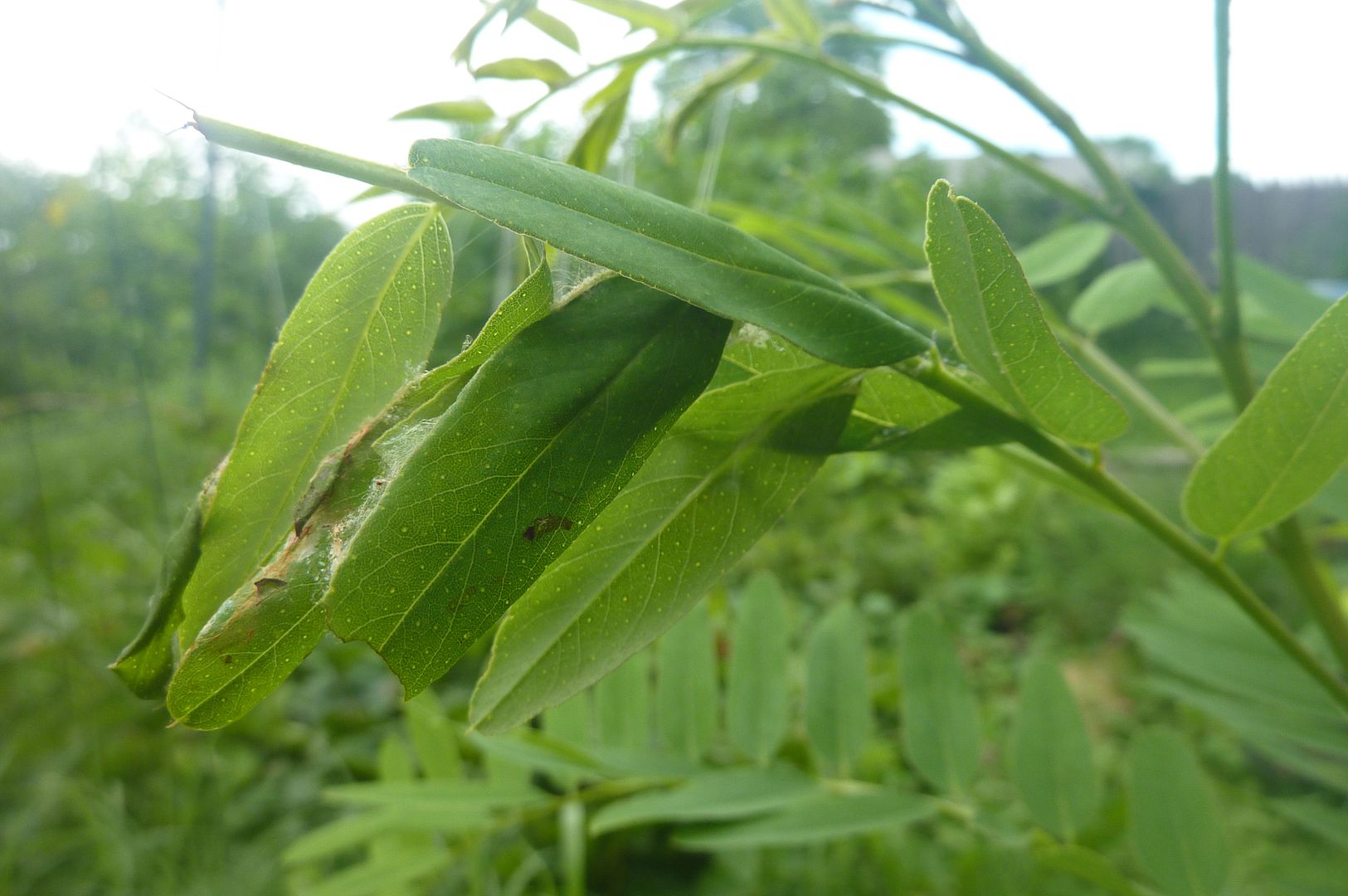
Silver Spotted Skippers, Epargyreus clarus, forage at night, making them hard to spot. During the day they stay inside a small "shed" of leaves they've woven together to hide from birds. Smaller caterpillars simply chew a section of a single leaf and fold it over with silk.
This is another case of the plant not attracting ants, other than letting them steal nectar from the flowers, but even this isn't a popular practice compared to other plants.
The caterpillars are a decent size and employ an additional tactic to hide from ants. One of the things ants look when hunting is insect frass; when they find it they know an insect can't be far. In this case though the caterpillars actually launch their frass pellets several feet away from them. They also lay silk down on just about everything they walk on to discourage ants from following them.
Showing posts with label Skippers. Show all posts
Friday, June 20, 2014
Monday, January 6, 2014
2013 Best of Butterflies
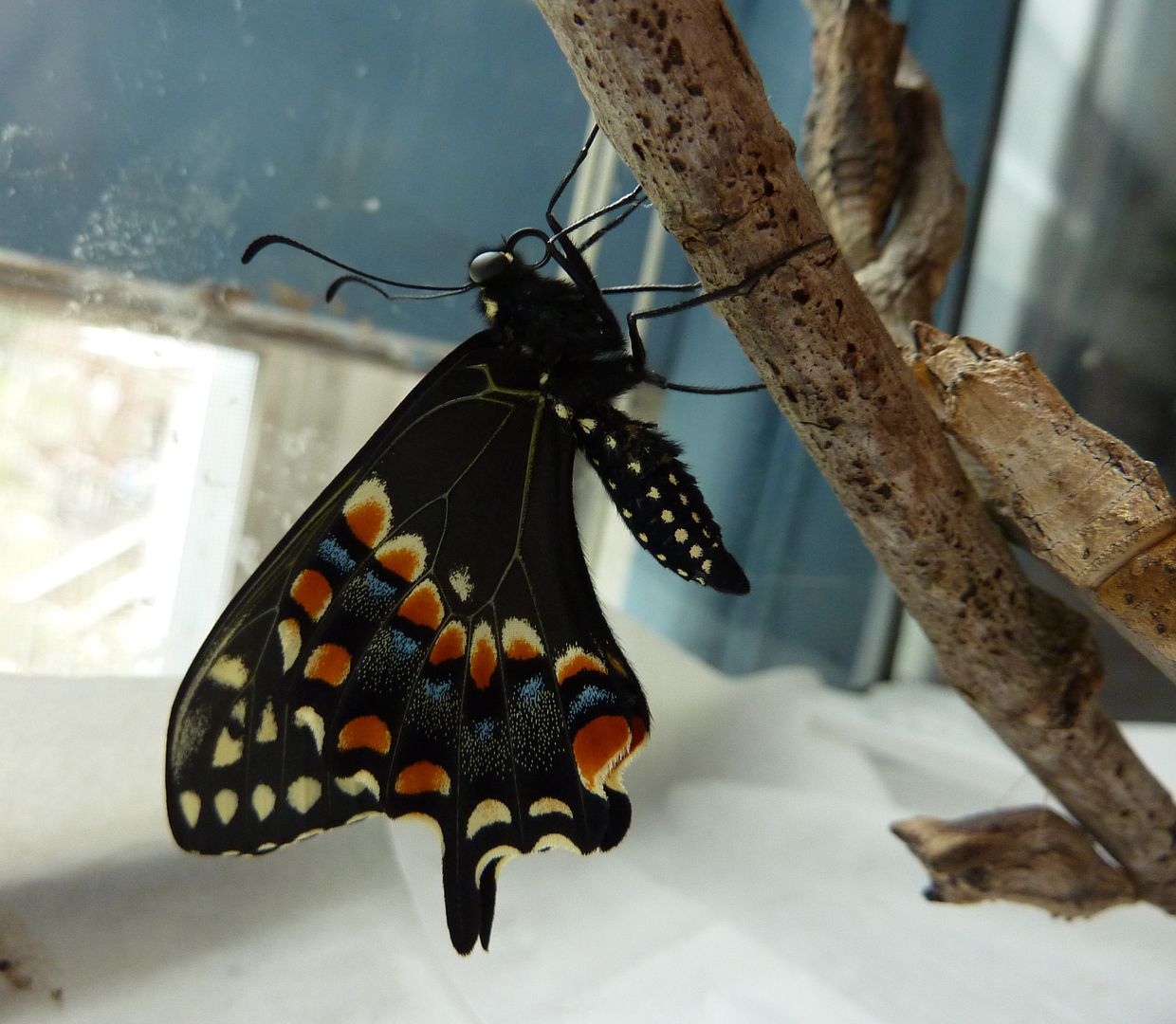
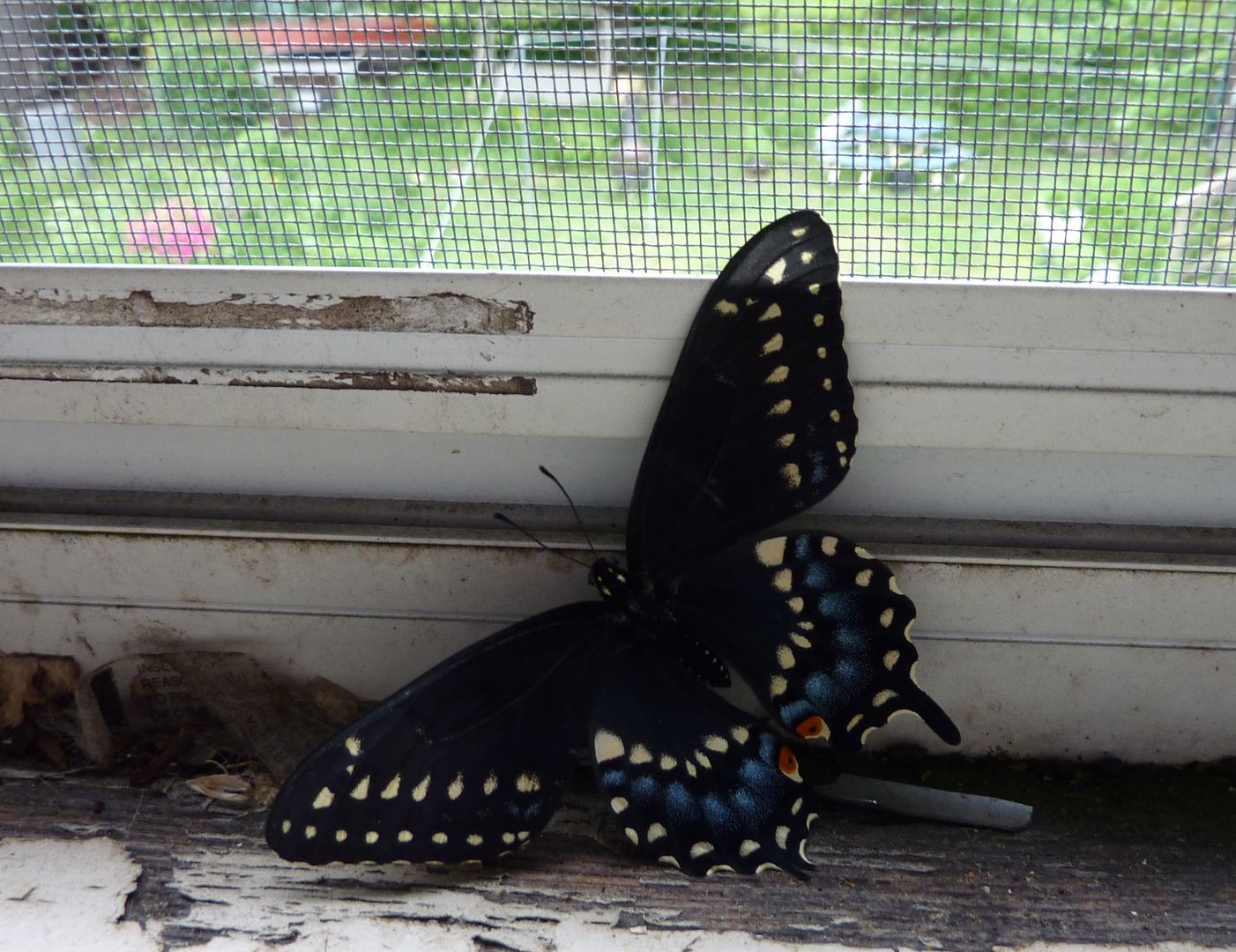
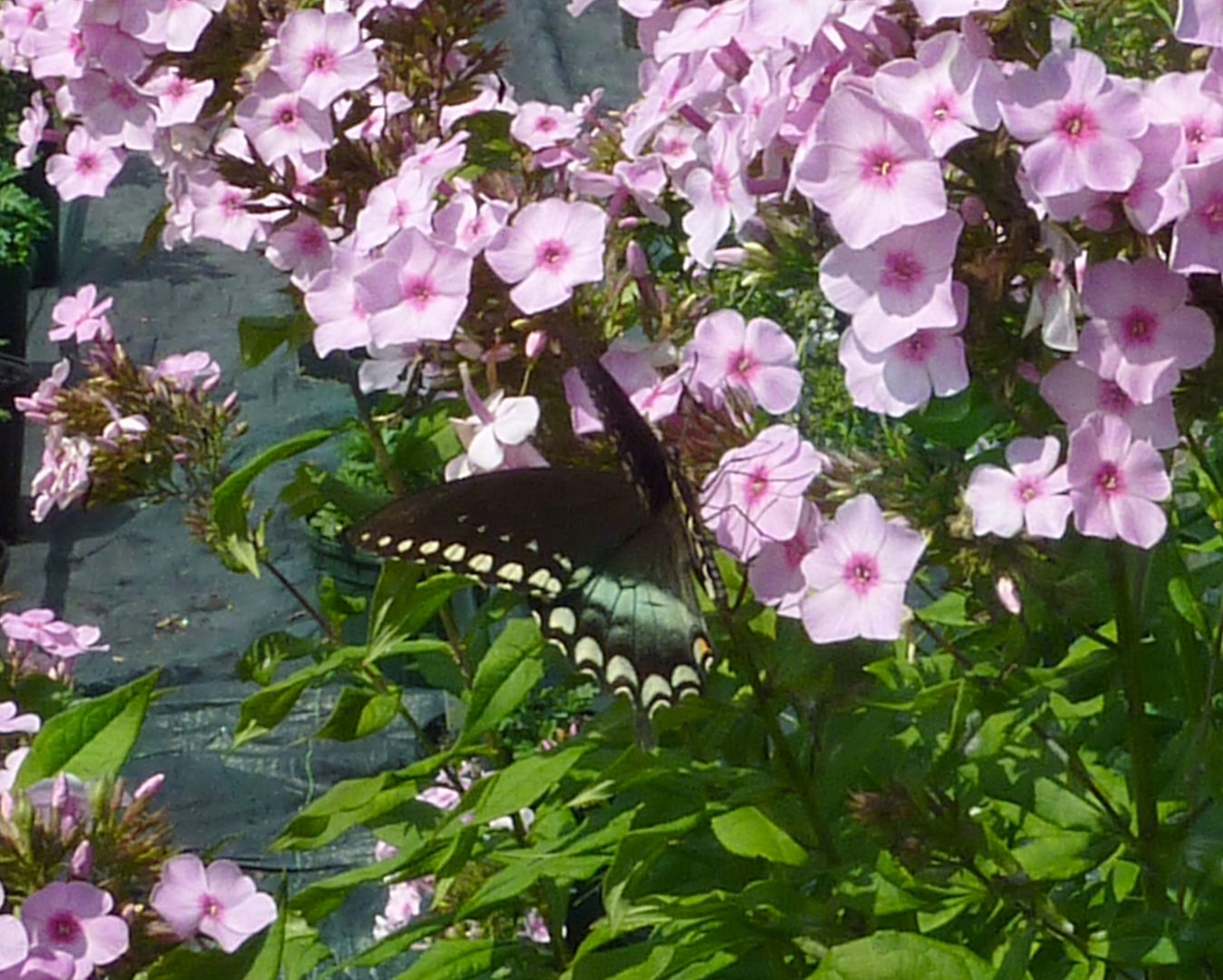
From the previous year, my butterfly season started with a series of Black Swallowtail Chrysalises over wintering in a cage I kept down in my basement. Well one emerged prematurely which lead to this shot.
Over the next three months as they hatched out, I did start letting them go. Despite this though I am sad to report that ended my experience with Black Swallowtails for the year. While I'm sure some of them survived, none of them returned to my garden to lay eggs or even pay me a visit.
Now I don't think I did anything particularly bad. Even around carrot farms this species is not considered a pest. For whatever reason they just don't spread dramatically in huge numbers.
I found this Silver Spotted Skipper Caterpillar nestled on my False Indigo tree. It's a new plant I'm trying out, which will hopefully flower this year. Sadly I think a bird ate this little guy.
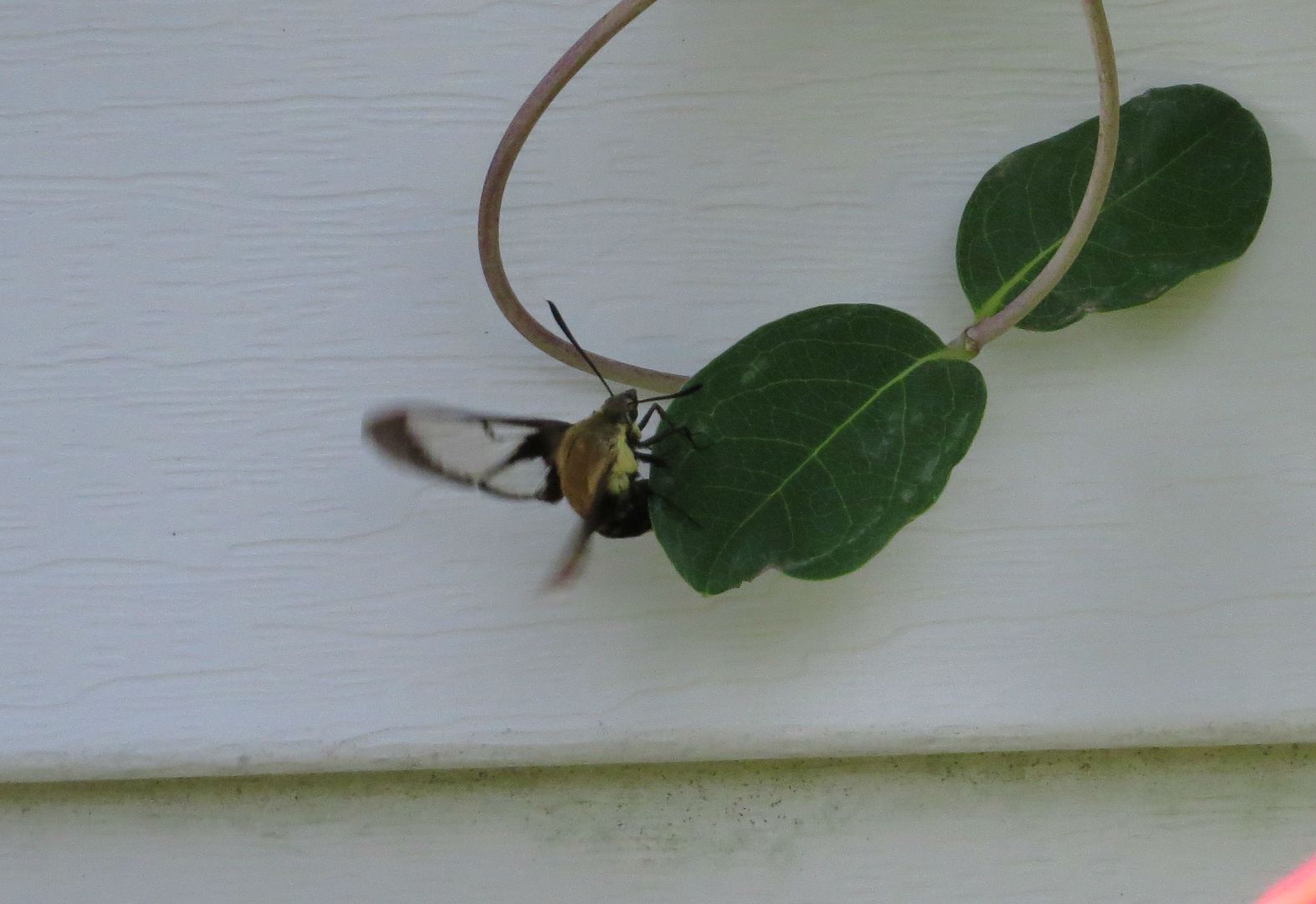
Hummingbird Moth laying eggs on my Coral Honeysuckle.
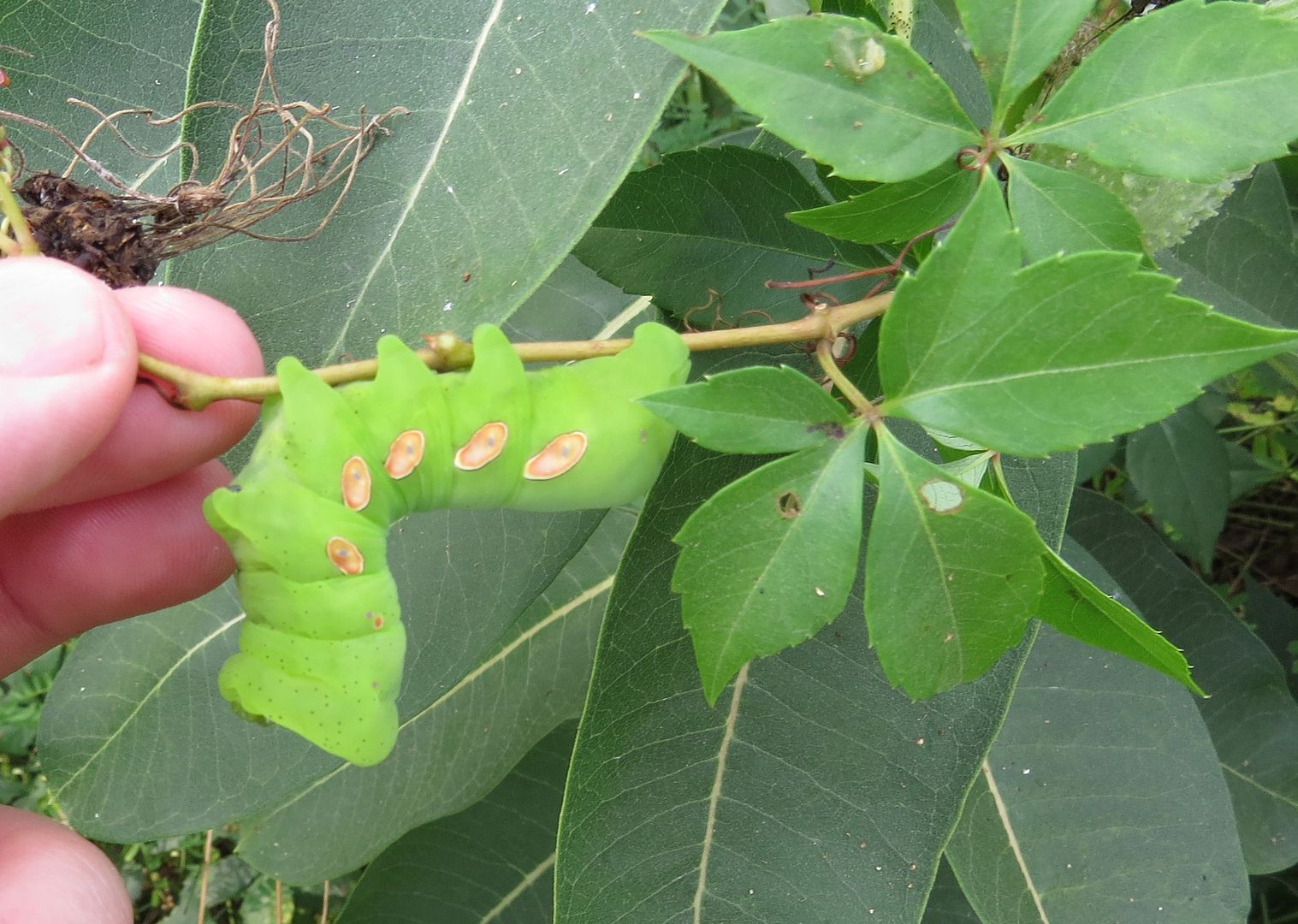
A Pandorus Sphinx nibbling on Virginia Creeper. I had no idea these caterpillars were this enormous.
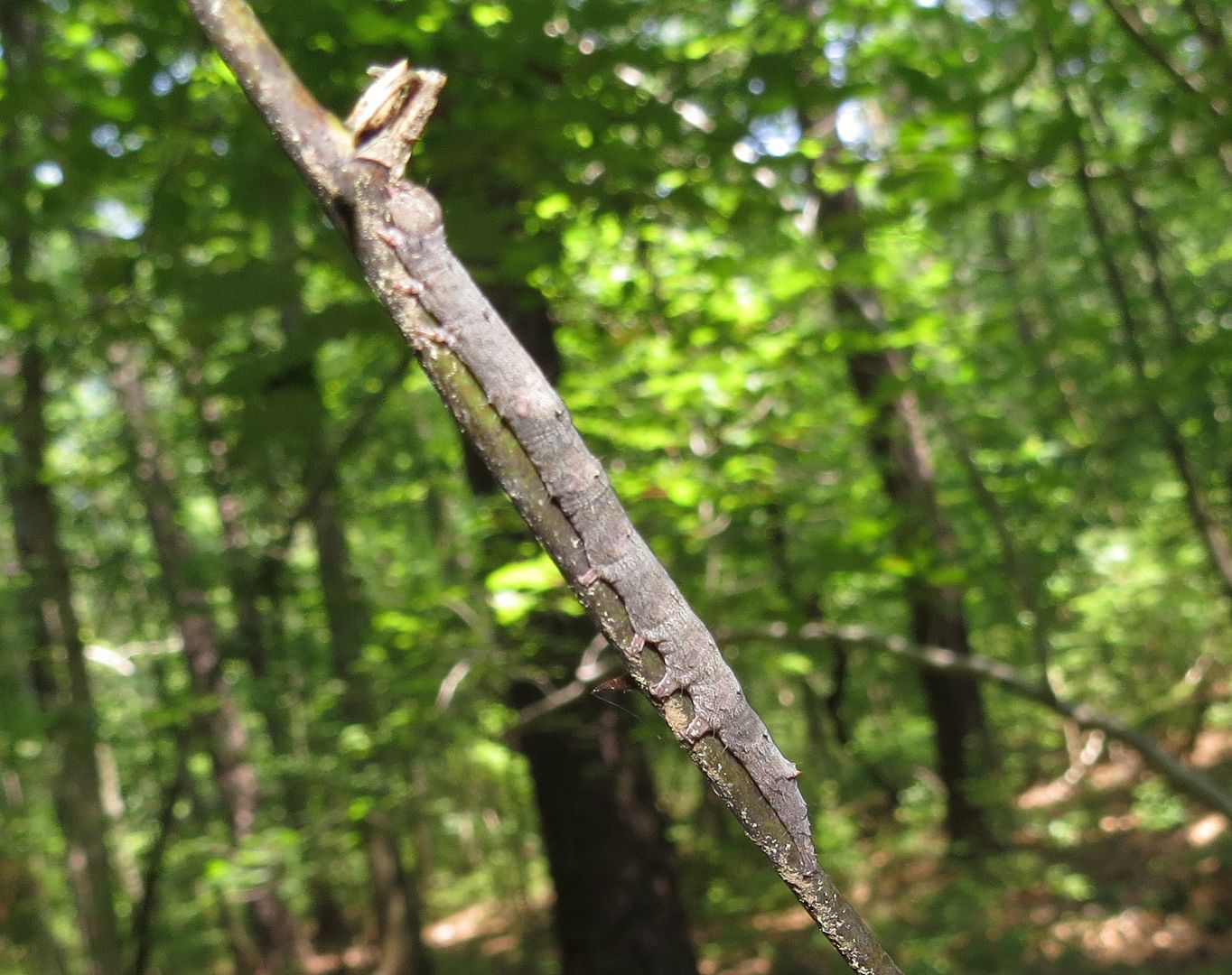
I don't know the name of this one but if I recall right they can spray acid if you disturb them.
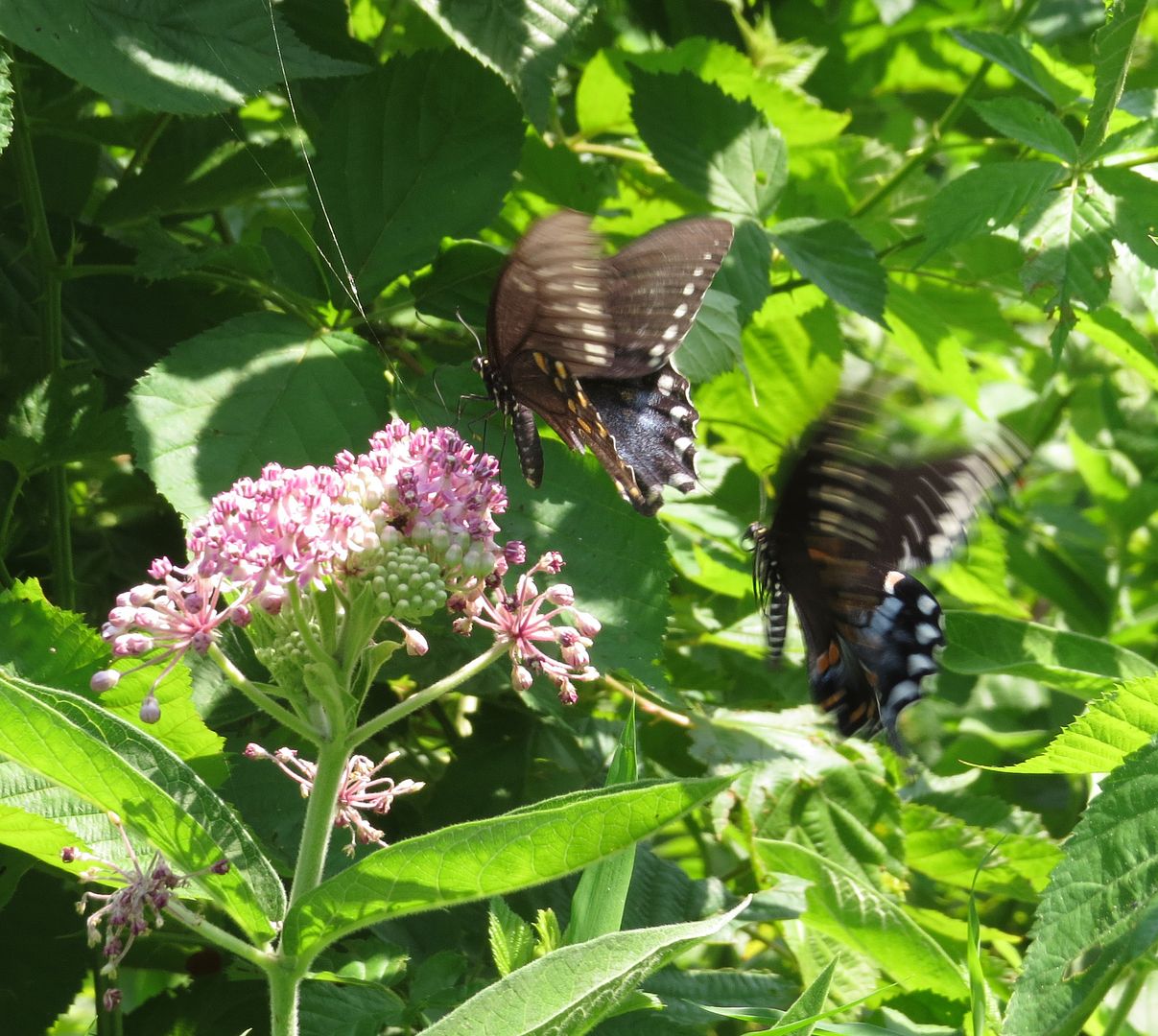
A Spicebush Swallowtail sipping at some Hairy Swamp Milkweed. Note the missing orange spot under the wing, how it's replaced with just the blue smear. This species mimics the Pipevine Swallowtail which is poisonous for birds to eat. Despite this ability, it seems the Pipevine Swallowtail doesn't need to be around to have decent Spicebush Swallowtail populations. I'm told though when the Pipevine Swallowtail is around that it benefits all the other species of black butterflies that mimic them.
There were about six of them zooming around this milkweed patch.
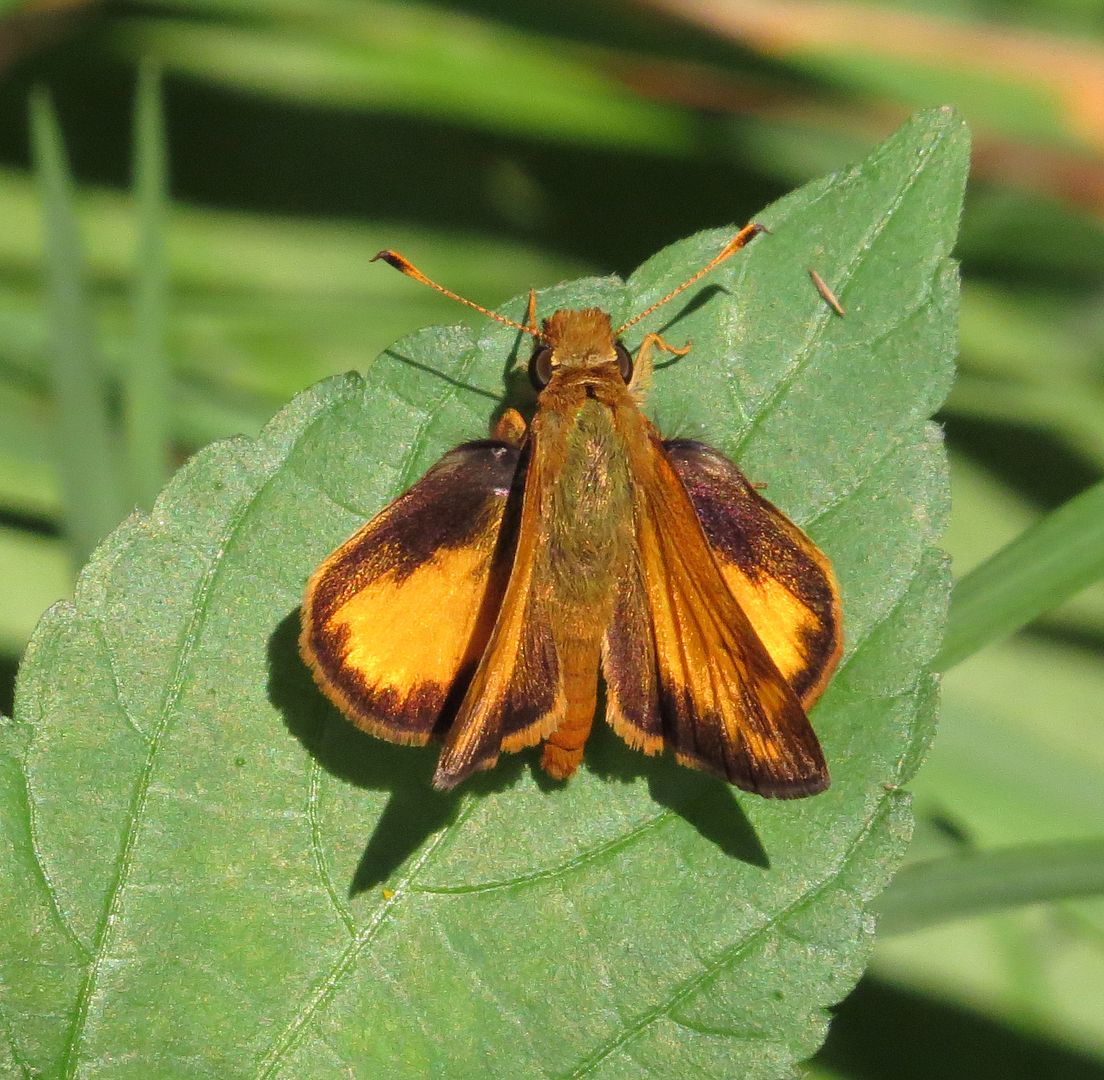
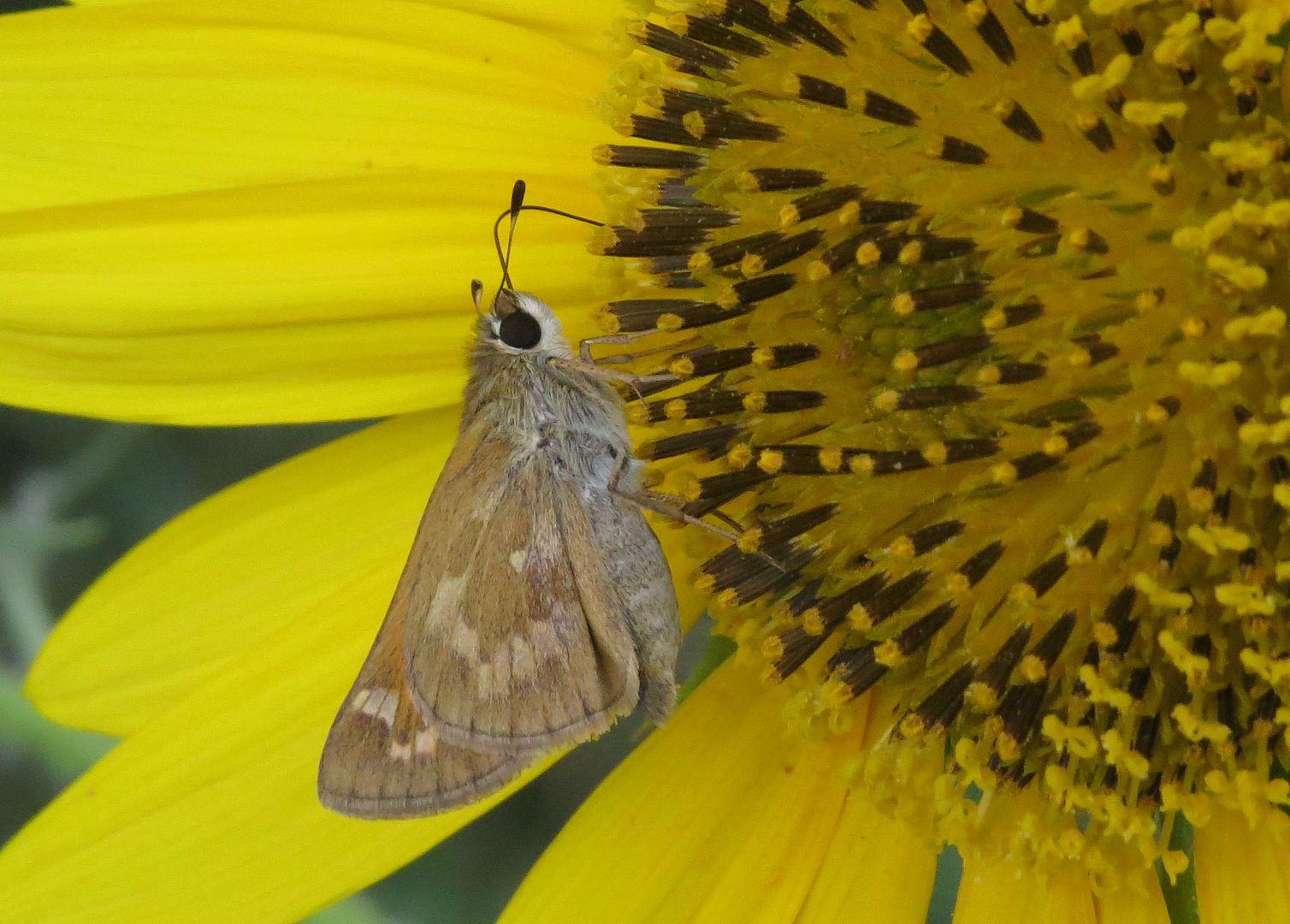
One of these days I need to figure out which of the random grasses in my yard is supporting the skipper population.
Every autumn, I'm suddenly blessed with droves and droves of skippers.
And they absolutely loved the Rudbeckia of all things!
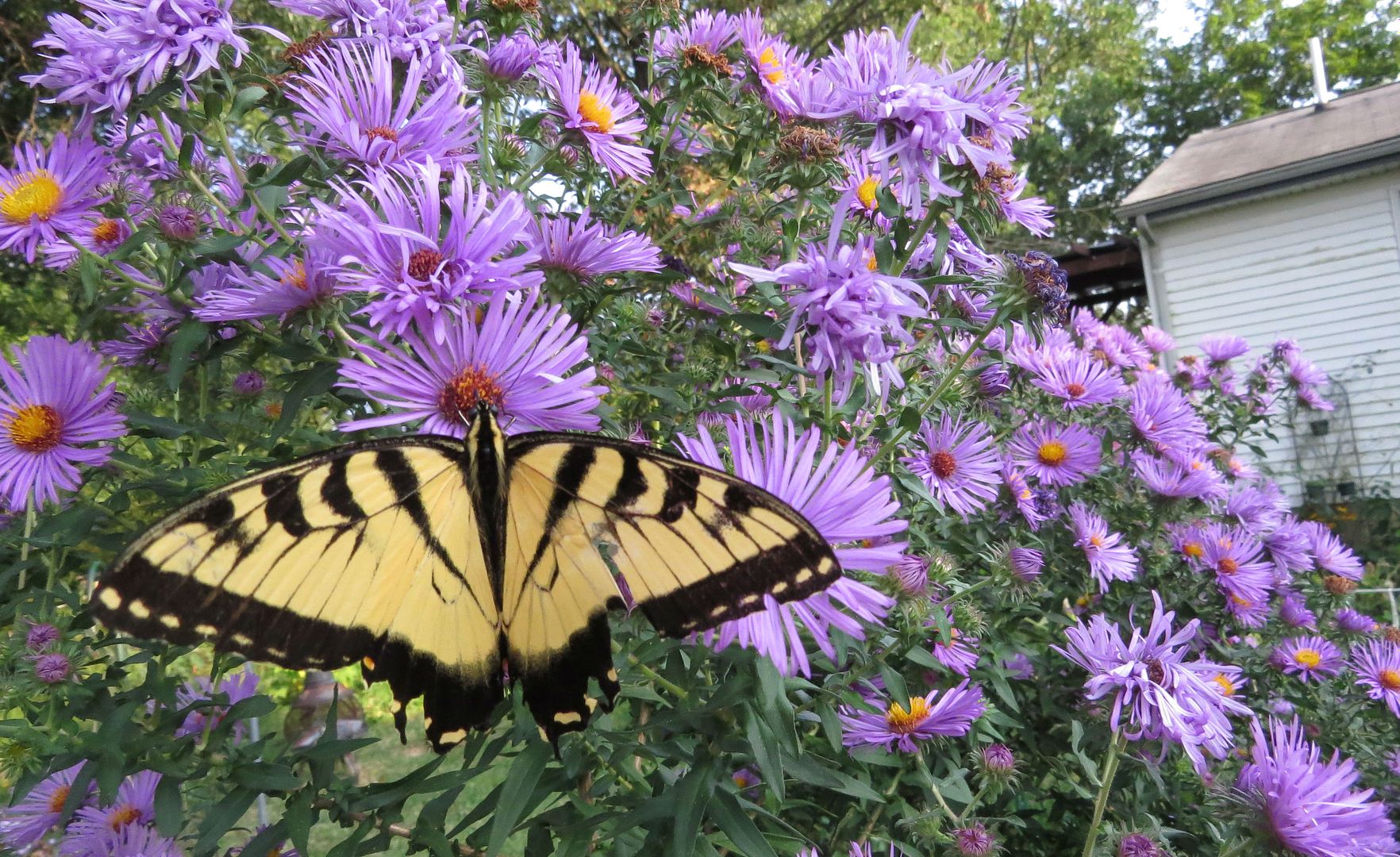
New England Asters I'd have expected to be the bigger hit, as it was with everything else. But not the skippers, they worked the Rudbeckia until it stopped blooming. Very strange. Any who this is a Tiger Swallowtail, male judging from the lack of blue along what I call the tramp stamp.
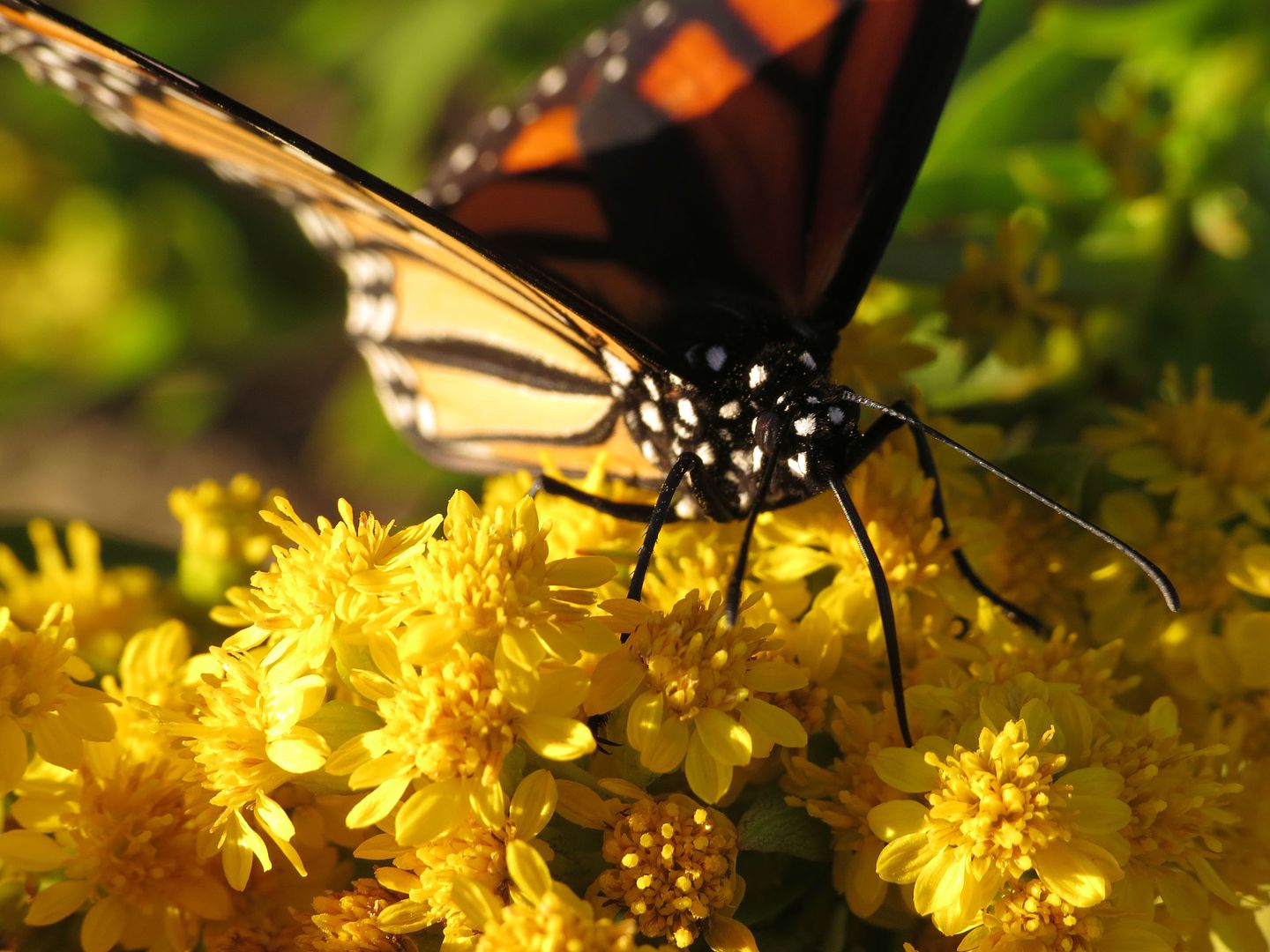
Monarchs! This was an awful year for them. Years ago when I started doing this (back in 2008 maybe?) I planted Swamp Milkweed and with in a few weeks there were Monarchs, not only having sex on the lawn but laying eggs all over the milkweed patch. I had caterpillars all summer long, and witnessed one emerging from its chrysalis. It's actually that moment that brought me tears that I was really hooked on this whole native plant thing. But this year tragically I didn't see a single one in my garden.
It wasn't until I took a trip to Cape May with a few friends that I really saw them this year. There were stands of Seaside Goldenrod planted all along the beach specifically to help the Monarch migration. While I saw a few dozen flying around it really wasn't enough to give me any sort of hope that their population was doing well at all.
I know that they're by no means endangered. It's simply that the population that migrates through the eastern half of North America will be lost. They're doing okay out in California, apparently there's a population that migrates through South America as well, but what a shame it would be to never see the butterfly that inspired me to garden to ever flutter through my yard again.
Wednesday, September 4, 2013
Sachem Skippers
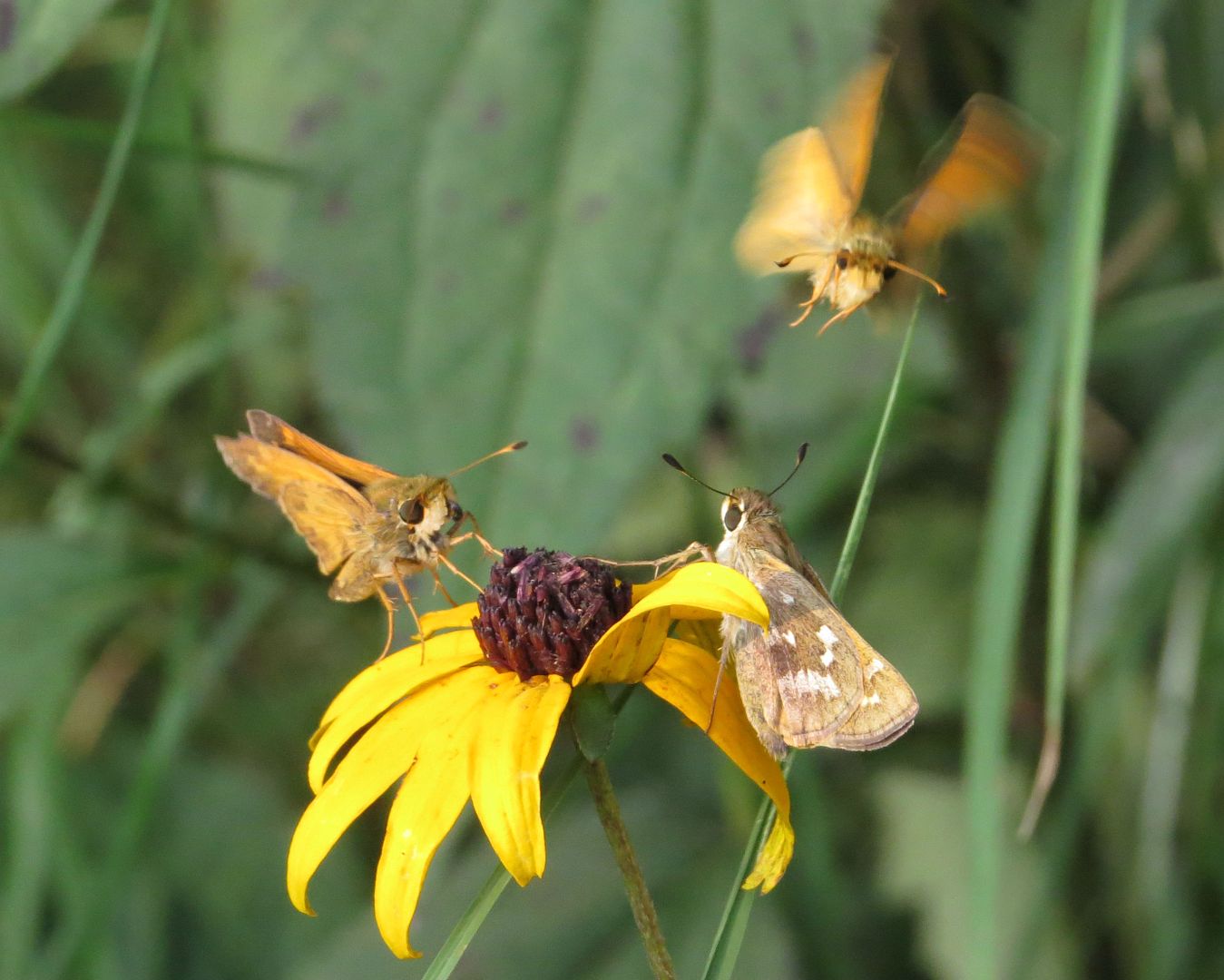
Sachem Skippers, Atalopedes campestris, have started invading my garden in great numbers. Their populations always seem to peak towards the end of summer. Here a female (the grayish slightly larger of the two) is courted by two males (which are more orange-looking). In truth she had about seven males to choose from. One would always be close to her, and bat away other males as they swooped in to be with her. Occasionally one would take place as the guarding male or sometimes two males would tolerate one another on the same flower with her.
I'm seeing more and more skippers every day and all without growing any of their host plants... intentionally that is. When we look at a list of what they use it seems most of the grasses that comprise my lawn and weedy areas in the garden are what's attracting them.
Cynodon dactylon, Bermuda grass
Stenotaphrum secundatum, St. Augustine grass
Eleusine, goosegrass
Digitaria, Crabgrass
These are all common lawn grasses throughout North America. What's neat is despite how common they are, their caterpillars are very rarely seen. Go to BugGuide.net a second Here, and click on Adults, and then click on Caterpillars. There are 9 full pages of images of adults and yet only two shots of the caterpillars. I believe this suggests the caterpillars feed at night or around dusk, or only stick to host plants that are of high quality.
I'm seeing more and more skippers every day and all without growing any of their host plants... intentionally that is. When we look at a list of what they use it seems most of the grasses that comprise my lawn and weedy areas in the garden are what's attracting them.
Cynodon dactylon, Bermuda grass
Stenotaphrum secundatum, St. Augustine grass
Eleusine, goosegrass
Digitaria, Crabgrass
These are all common lawn grasses throughout North America. What's neat is despite how common they are, their caterpillars are very rarely seen. Go to BugGuide.net a second Here, and click on Adults, and then click on Caterpillars. There are 9 full pages of images of adults and yet only two shots of the caterpillars. I believe this suggests the caterpillars feed at night or around dusk, or only stick to host plants that are of high quality.
Labels:
Butterflies,
Grass,
Skippers
Wednesday, July 3, 2013
Silver-spotted Skipper Caterpillar on False Indigo Bush
I found the tent to a Silver-spotted Skipper, Epargyreus clarus, on the False Indigo Bush, Amorpha fruticosa, today. I'd planted the sapling last fall as a nitrogen-fixing shrub/small tree right next to the vegetable garden. Their leaves decompose as a natural fertilizer and their roots enrich the soil somewhat. Though spraying Miracle Grow is certainly more effective.
Inside the little tent (or shed as it's called for reasons that escape me) I found the little caterpillar tucked away. They hang out here and feed at night so they're less likely to be eaten by birds.
Unfortunately when I tore it open initially I'd expected to find a spider. Oops. So the little guy jumped ship after I left. I tried putting the leaves back over it but he didn't repair it at all.
So this had me thinking I should inspect some of my other plants for caterpillars, such as Wild Senna, which they also might use. Sadly I didn't find anything else but this one caterpillar. It's great that this sapling got me success on the first years though. I'm still debating if I should prune it into a shrub or a small tree.
Labels:
Caterpillar,
False Indigo,
Host,
native,
Plant,
Skippers
Tuesday, August 9, 2011
More Butterflies of Summer
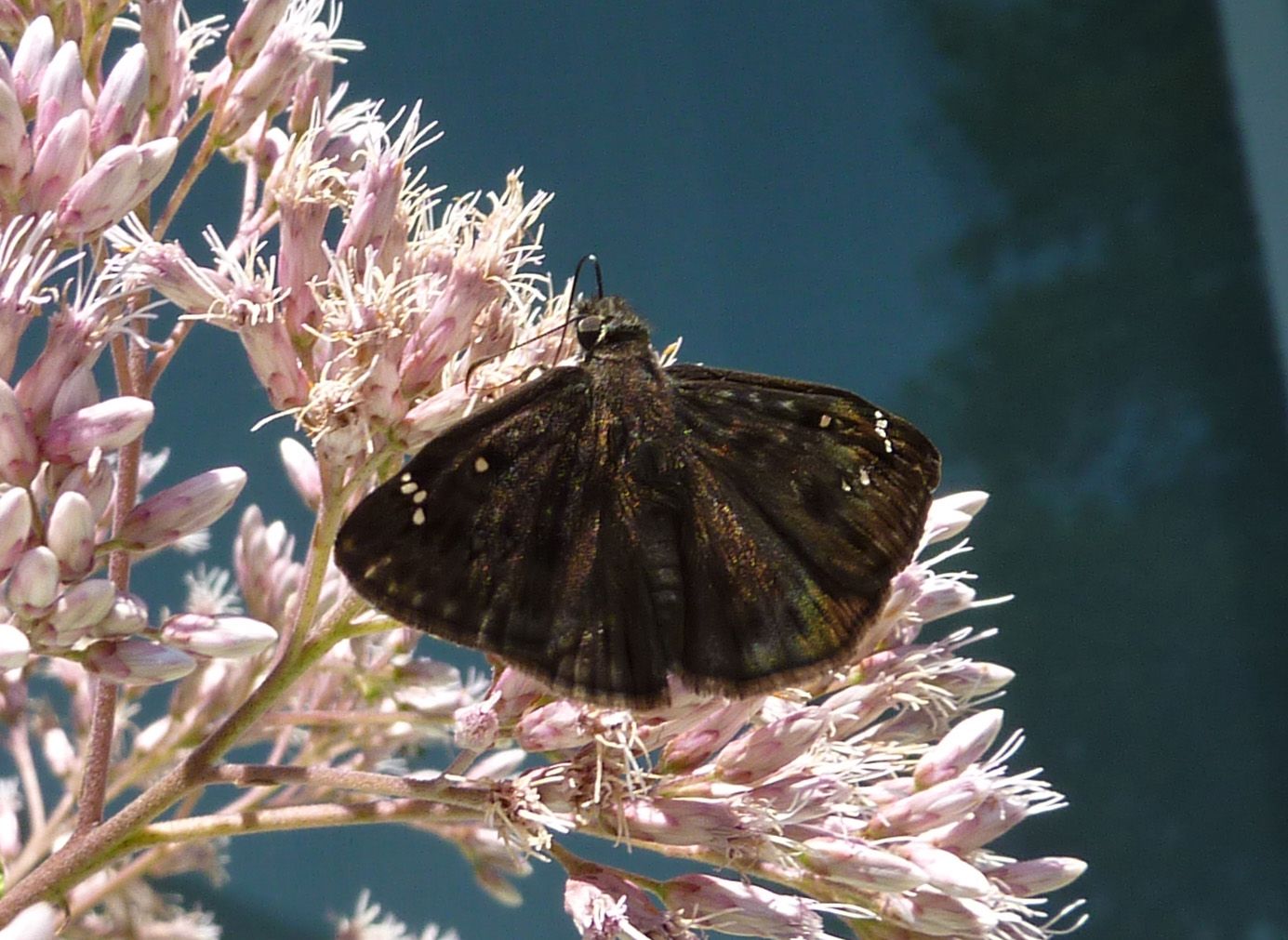
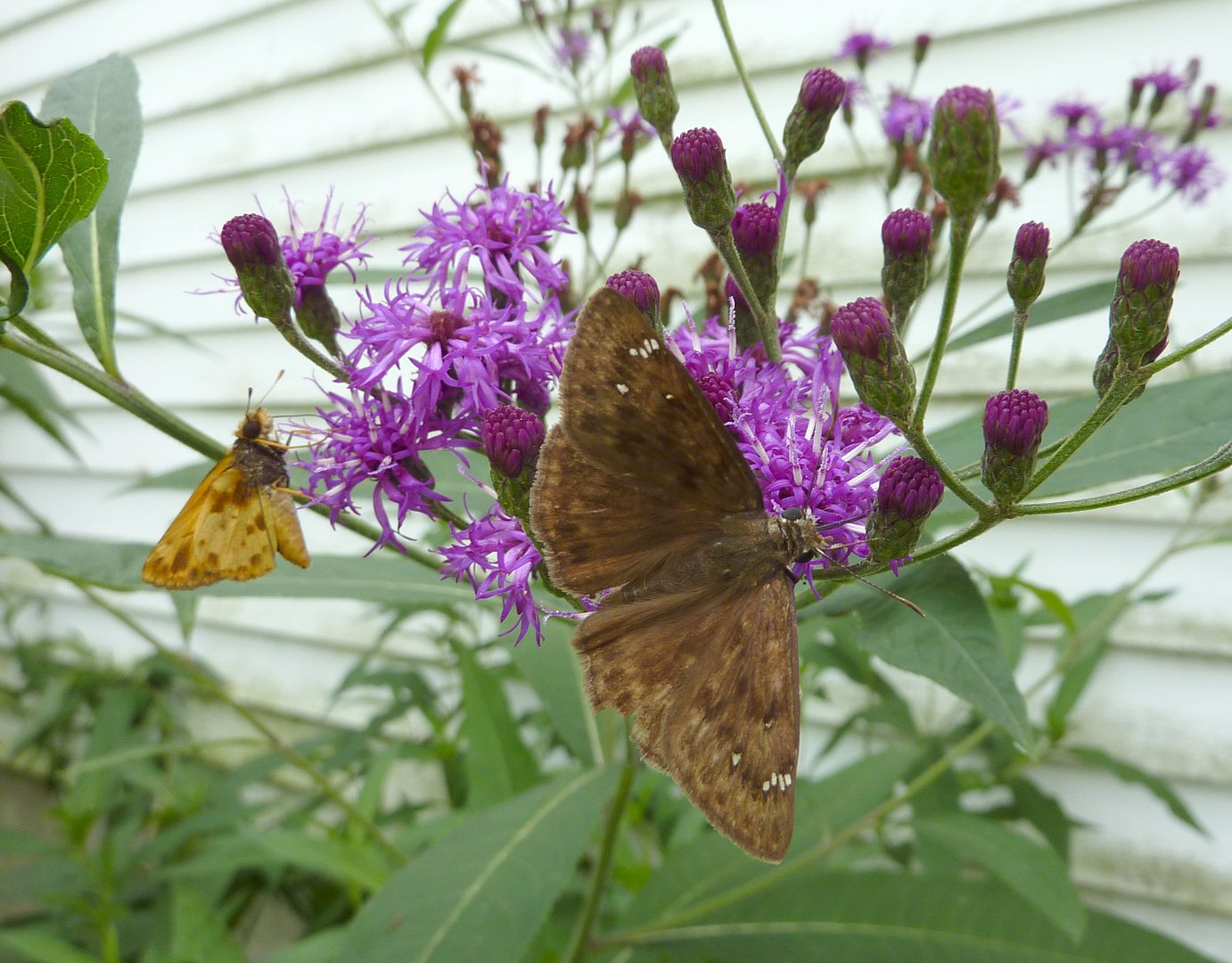
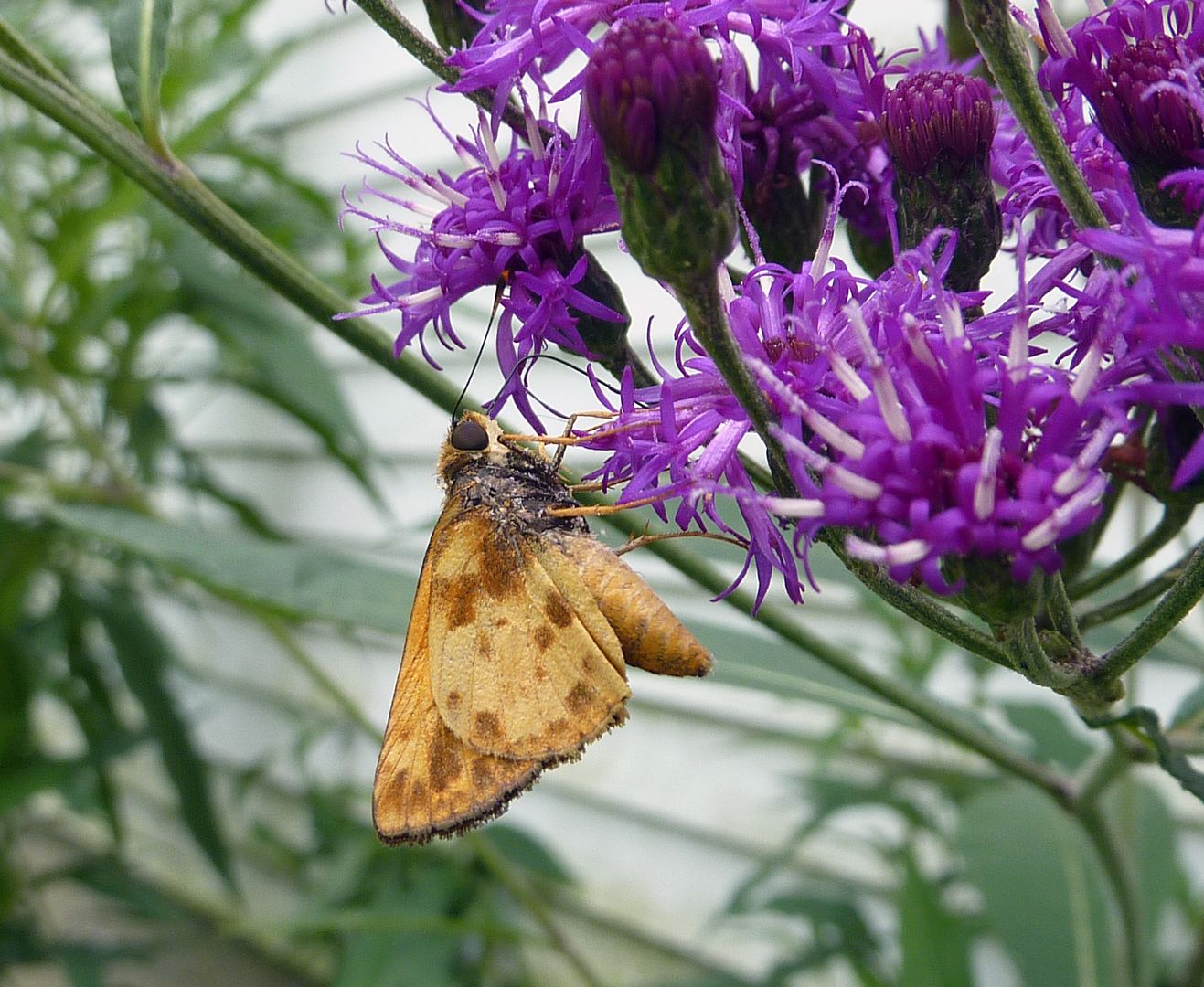
There is something like 250+ species of Skipper in North America. These are all rather small butterflies that get their name for their sort of hopping habit. Lots of species hang out in groups and all fly together making the garden bustling with activity. They're often ignored though for their assorted brown and orange color scheme. Caterpillars only feed at night and are almost never seen either. Most species use native grasses as host plants but a few dabble in Oak and Legumes as well. This rather dark species above I've only started noticing this year. I'm hoping it's the Wild Indigo Duskywing, Erynnis baptisiae, which uses Blue False Indigo, Baptisia australis, as a host plant.
Here's a better picture of what might be the same species. (I'm also glad they found a use for the ironweed.)
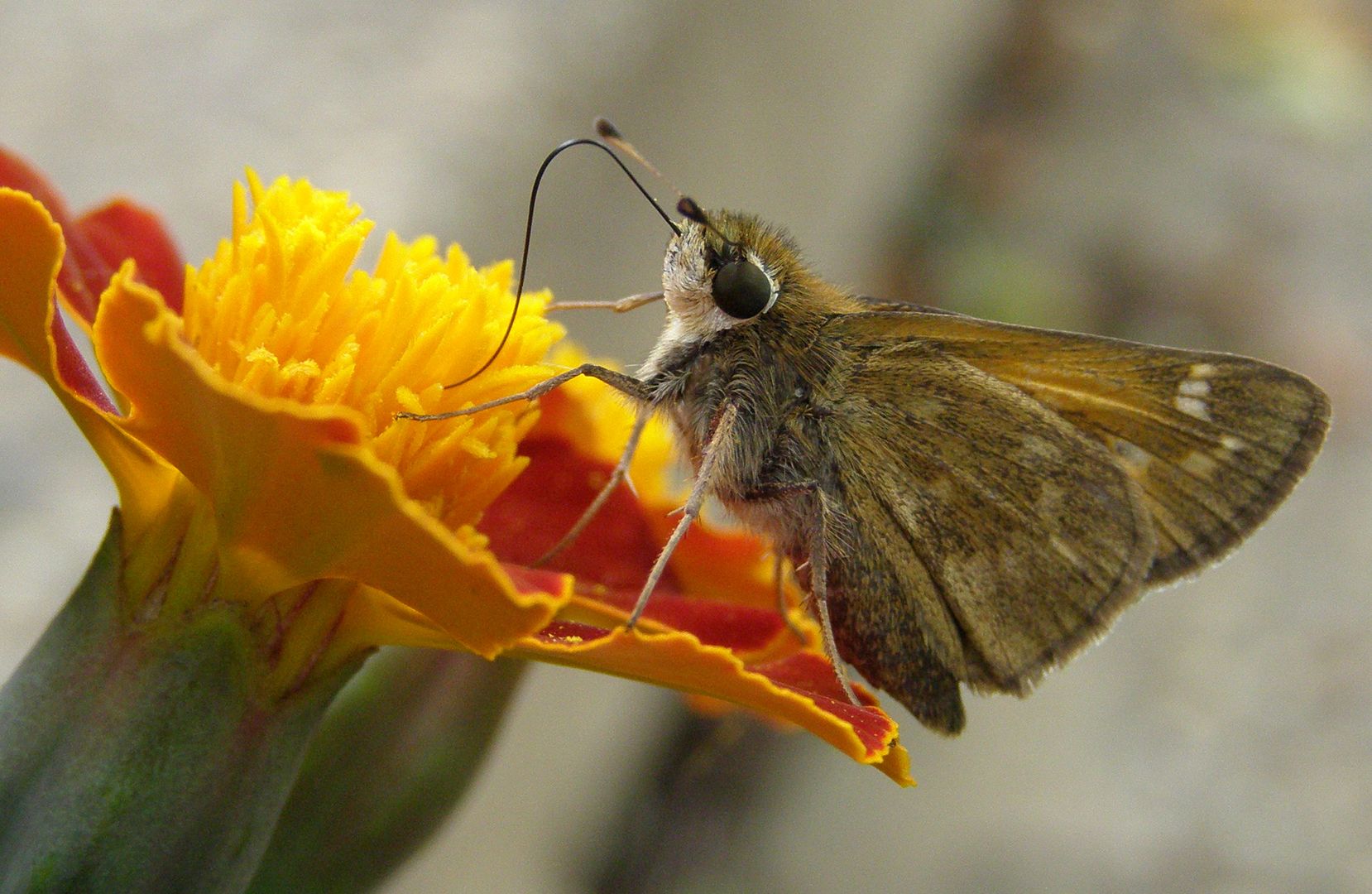
Other skippers have started showing up as well. This one is smaller and more of the standard when I think of skippers. It's slightly unusual in how pale beige it is, as most species seem to be dark brown. The only species I can really identify at a glance is the Silver-Spotted Skipper, Epargyreum clarus. It's larger than most skippers, brown, and with a bold white and orange stripe crossing it's wings.
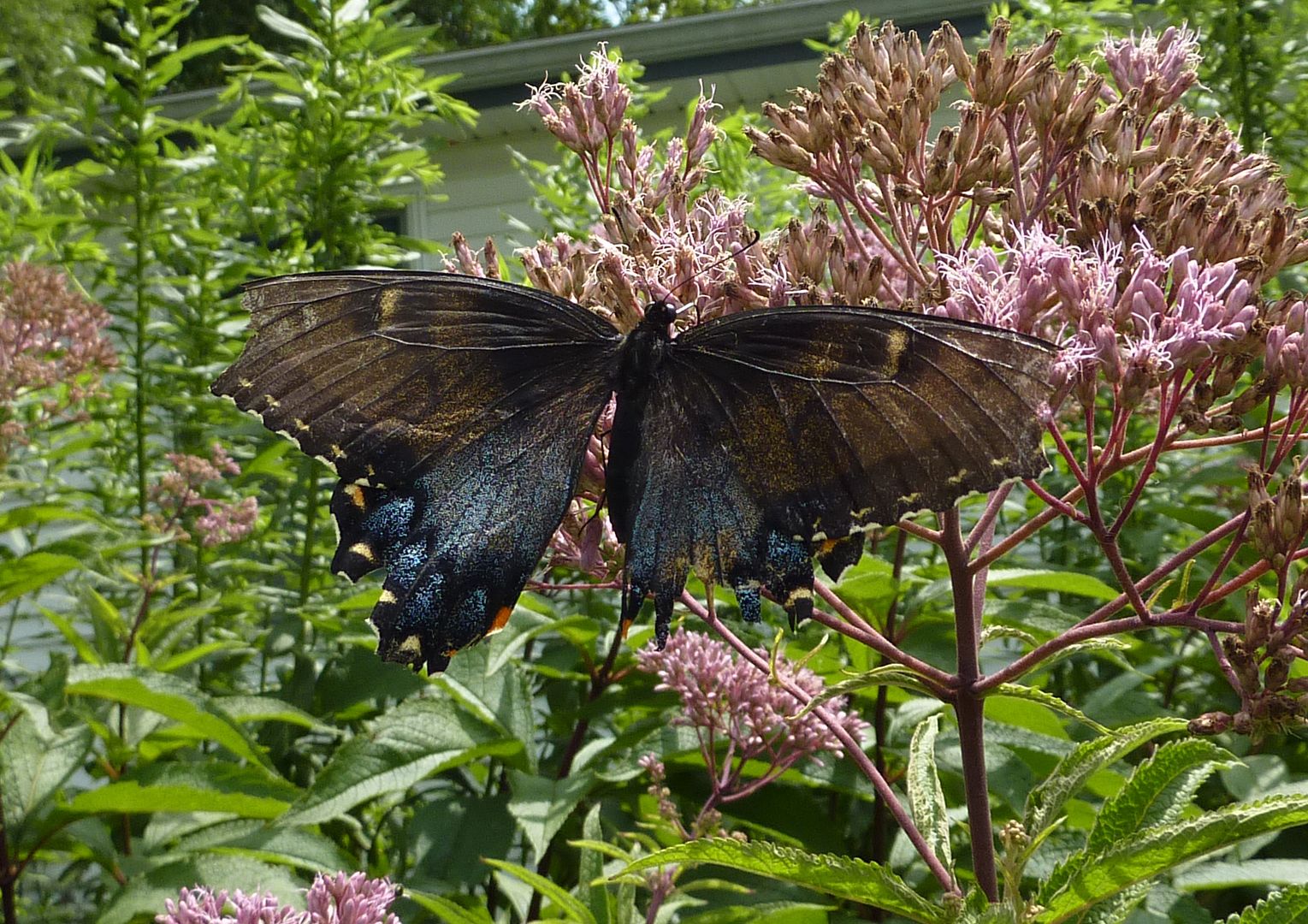
Here on the Joe Pye Weed is the black form of the Eastern Tiger Swallowtail, Papilio glaucus, and a rather beat up one at that. The light reflecting under the wings is creating a slight yellow appearance.
A new species I've started seeing is the Spicebush Swallowtail, Papilio troilus. The wings are always lined with white or yellow spots, but there's also this large area of either blue, green, or teal to the rear of the wings. I took this picture at a nursery which sells an unidentified species of Spicebush. I never buy plants when they're not identified to species level. However, in this case identifying to genus level is all that's needed. As it turns out there are only 3 species of Spicebush in the US and all of them are native. I'm probably going to go back and buy a shrub.
Friday, October 2, 2009
Things Butterflies can Teach Us

This skipper looks dressed for winter. I'm sure brightly colored flowers must look warm too. I'm looking at my Monarch pictures to keep warm right now. Burrrr.
Things I've learned from the butterflies:
1) stare at sun to keep warm. (disclaimer, do not stare at sun!)
2) cocoons will keep you warm.
3) migrating south for winter is the best idea ever.
4) plants are chewy.
5) eating milkweed will help you develop. (disclaimer, do not eat milkweed!)
Saturday, September 26, 2009
Asters Bees and Skippers

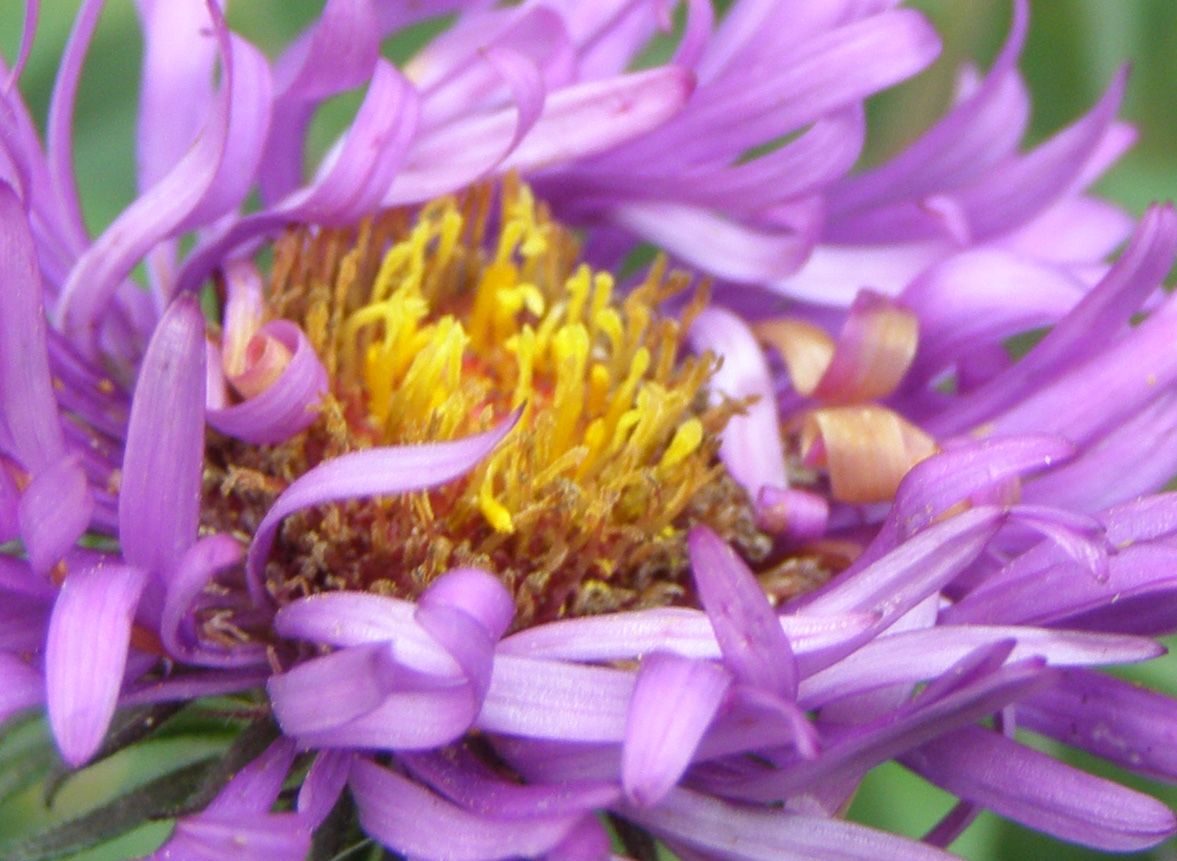
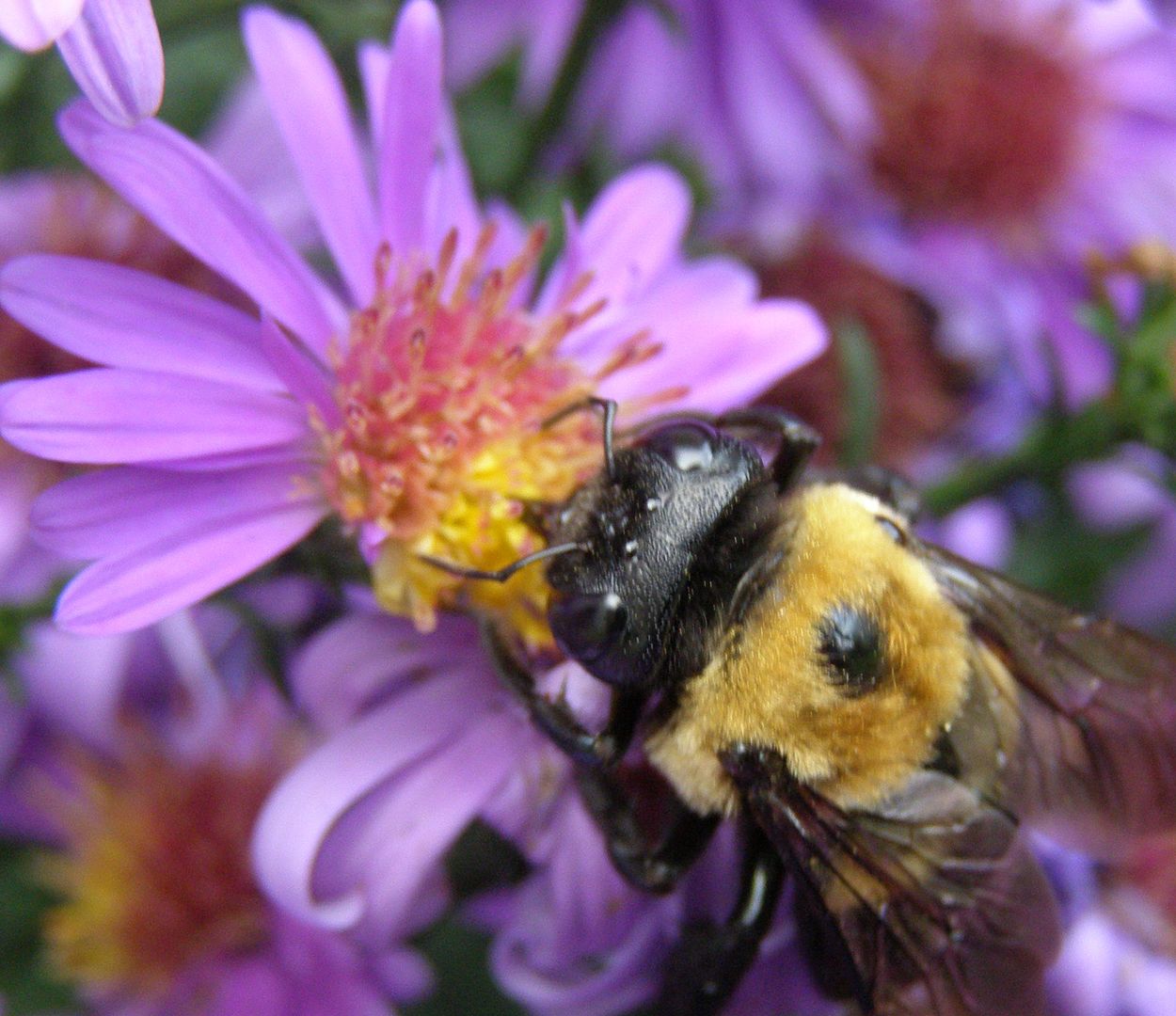
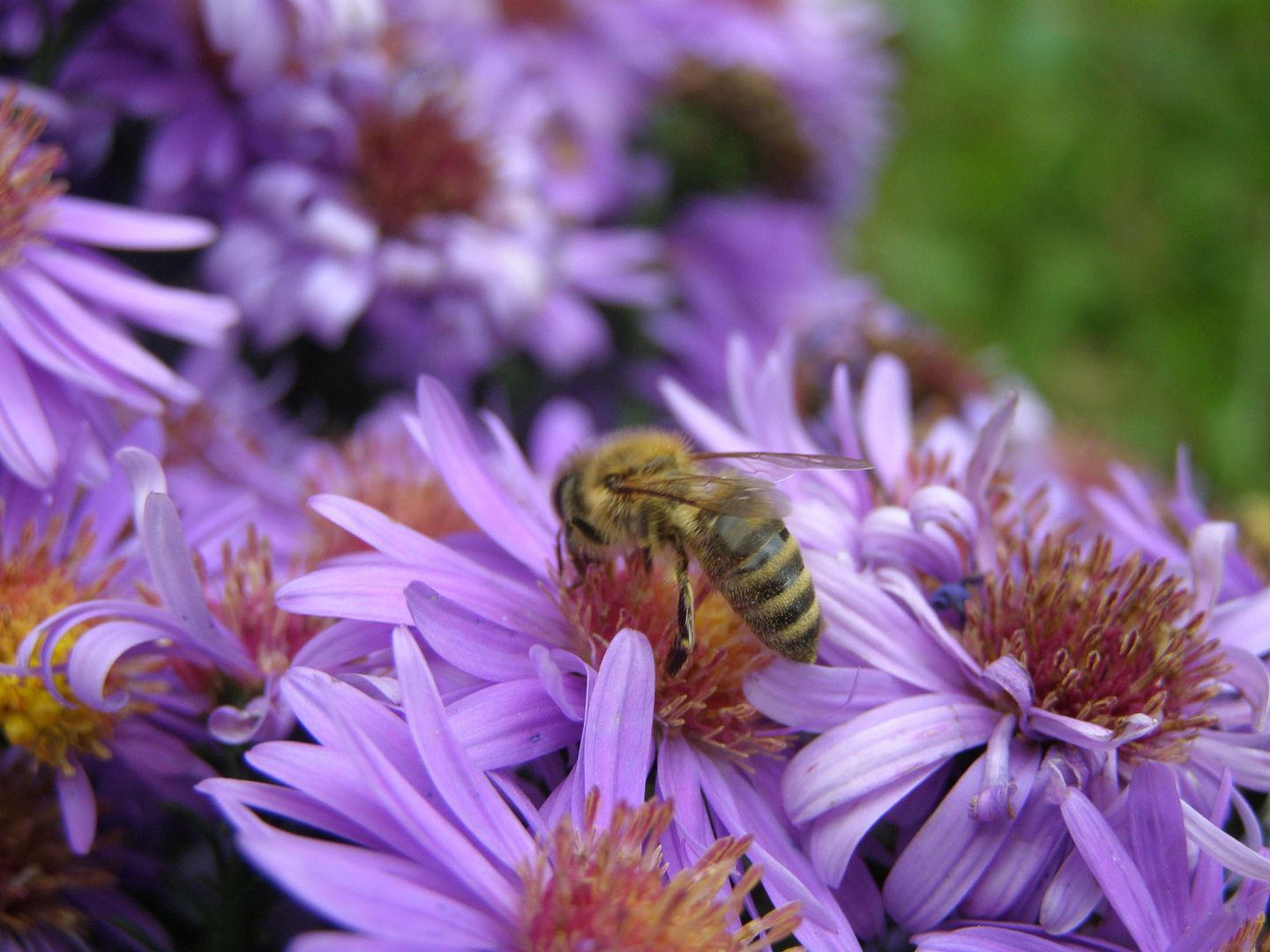
A closeup of an Aster novae-angliae flower. I can see why bees and butterflies would be attracted to these. The flower petals are so softly colored they might as well be made of silk.

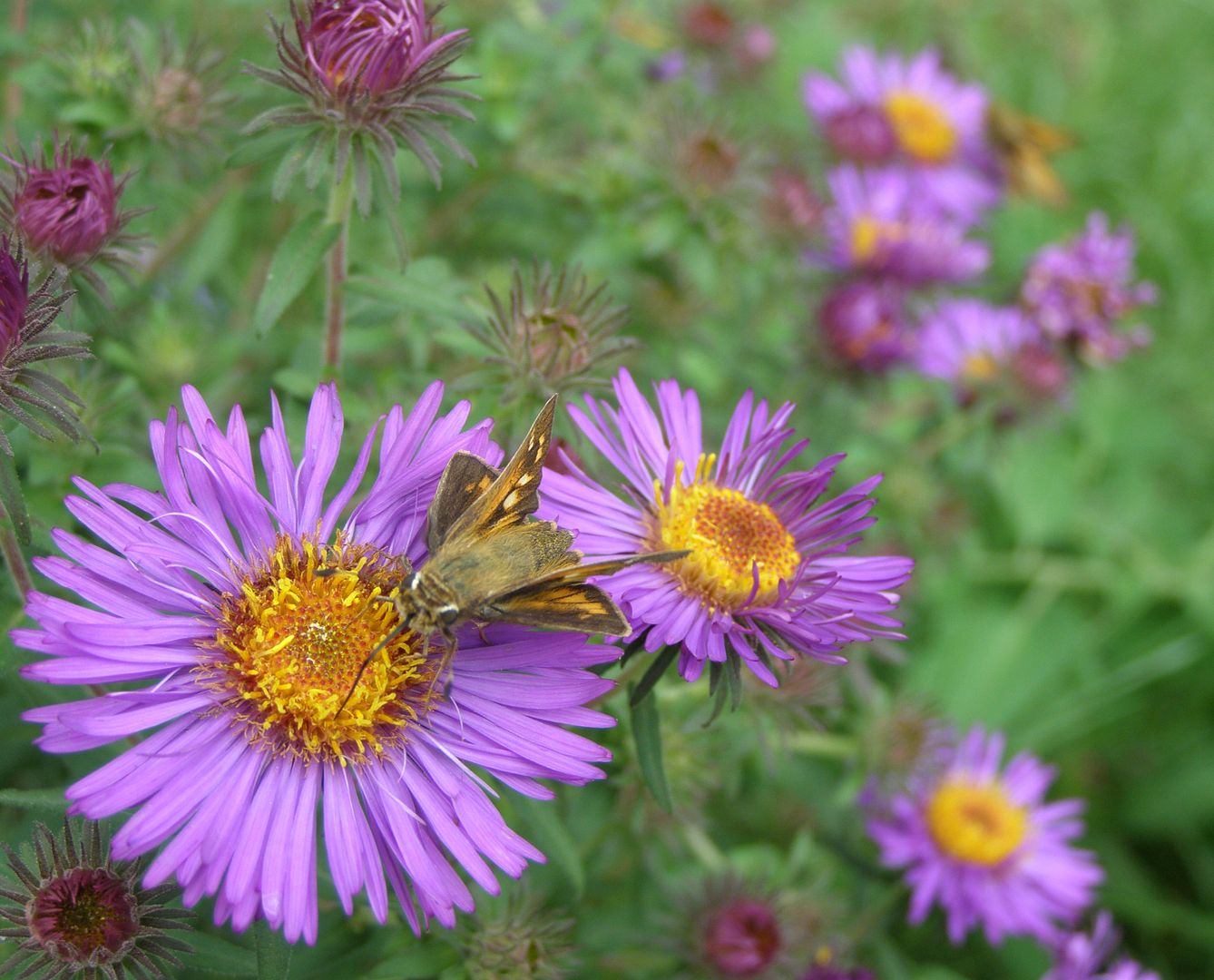
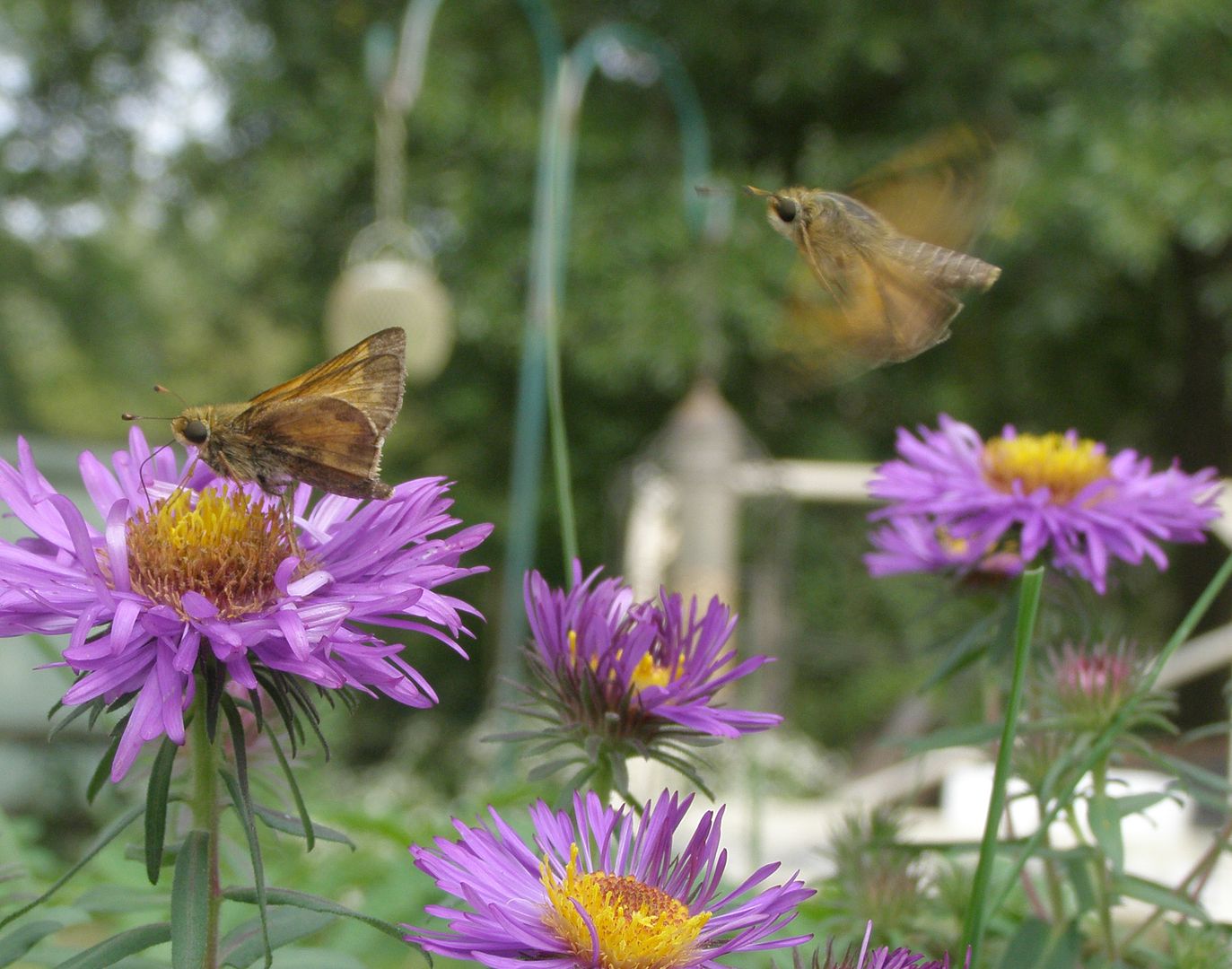
Swarms of skippers have been dancing around these plants. Over the winter I'm making it a goal to learn more about these butterflies. Currently I don't even know what the caterpillar looks like or what host plants they use. Clearly I'm doing something right though.

In past years we only had brown species of these. But as I've introduced more native plants I've found the color pallet has expanded to orange. Like THIS one. Maybe I'm just attracted to colorful things.

Every time I see swarms of skippers I never fail to see a few pairs engage in their mating ritual; a game of follow the leader.

Aster novi-belgii is an Aster I found out front of an ACME (grocery store) and they were 2 for $10 and covered in bees!

Honey Bees and great big Carpenter Bees soon found them once I got home. By the next they they were covered. I'm really learning to like Asters with "nov" in the name.

I've also noticed most of the asters that get pollination have their flowers change color after pollination.
An added bonus to all these asters, especially when you let them grow on their own. I've scared so many birds hidden in the Aster thicket this year. I want to say they have to be eating the seeds. My Summer blooming Aster (which I forget the name of, sorry) never really got any attention from pollinators but is getting some bird attention now.
Labels:
Aster,
Bees,
Butterflies,
Skippers
Subscribe to:
Posts (Atom)