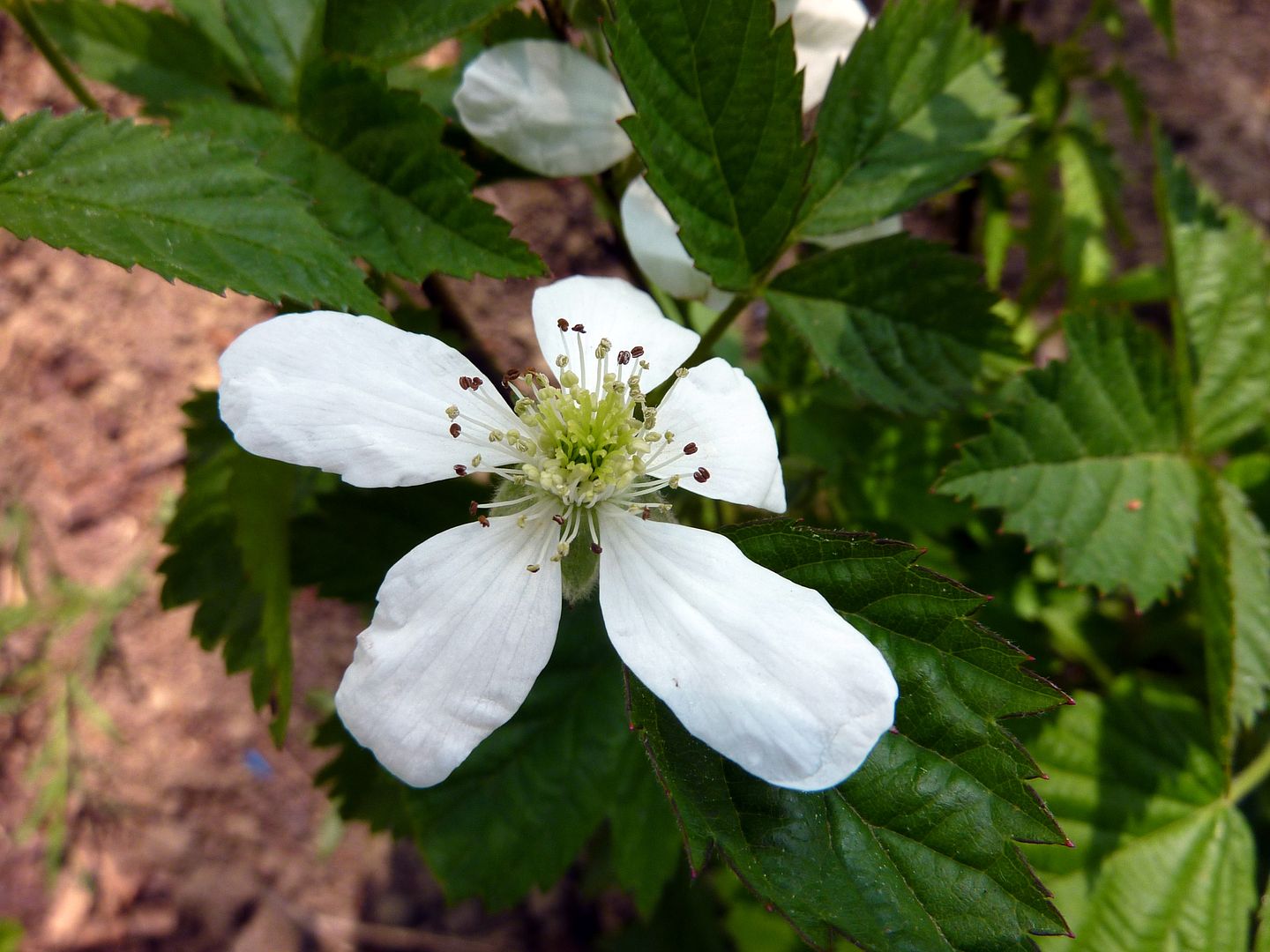
It opened! And it also stormed last night so that fluffy pollen filled appearance went a little down hill. Also the petals faded up a bit quicker than I'd expected. It's still pretty and I'm looking forward to seeing lots more of them.
Another plant in this genus I've tried is Common Dewberry, Rubus flagellaris. This is basically a low growing blackberry that grows more as a bramble along the ground. Their fruiting stems come up to about 4' but the longer ones that spread out can grow to be 15' long! This flowered about a month ago, and it's just produced a few berries. They're tart but sweeter than the actual blackberries I grow. Meaning you don't really need to eat them with heavy cram or anything. They're still super tart so it's always an option but they're bearable to eat right off the vine.
Showing posts with label Raspberries. Show all posts
Monday, June 24, 2013
Friday, April 19, 2013
It's Like Christmas Time
Boxes keep arriving full of plants for me to plant. Since I wrote my own book on "Native Plants for Honeybees" I figured I'd take my own advice and install so real treasures. That's not to say I didn't research at all, but I personally haven't some of them, and many of the good ones sadly I don't have photographs of.
These all just arrived from Shooting Star Nursery:
Basswood, Tilia americana, also called American Linden Tree. This is actually a common street tree in some neighborhoods, but I haven't seen any of it growing around here. I know someone who planted one but it didn't make it through the winter which is odd because they are hardy. This is one of those great summer nectar sources for honeybees to enjoy. The flowers are said to have a sweet distinctive scent (see Mitchell and Webb).
Fall Color is Red.
Sourwood, Oxydendrum arboreum, is another good summer-ish nectar plant. The flowers are bell shaped, like those of blueberries and heathers, and occur along horizontal "strands" almost like exploding fireworks which bees have fairly easy access to. It's said to be a high quality honey.
Fall Color is Red, with lines of yellow or blond seed pods all over.
Black Tupelo, Nyssa sylvatica, is a massive tree that grows in the bog and wetlands down south. This species, I've read, can tolerate growing in average moisture and should be somewhat drought tolerant onces it's established. Tupelo honey is said to be one of the best tasting in the world, and while I doubt one tree will be enough to get that pure tupelo honey, I look forward to adding it's flavor to the typical wildflower mix my bees produce. Great nectar plant.
Fall Color is Red.
Clove Currant, Ribes odoratum, which I believe is a synonymy with Ribes aureum. Anywho it's an early blooming shrub with wonderful fragrant yellow flowers. Honeybees use it for both nectar and pollen, however it does have seperate male and female plants so you don't necessarily get both on one plant. Females that get pollinated will make berries that I read are tasty both for humans and the birds.
Purple Flowering Raspberry, Rudus odoratus, which has brilliant 2" red/magenta/purple flowers worthy of any rose garden, that go on to produce edible raspberries. I'm scratching the back of my head wondering why this isn't planted more often? And why isn't is more widely available? What's more, why haven't growers gone nuts breeding the flower traits into other varieties? At the very least you'd expect them to breed in the lack of prickers along the stem wouldn't you? Raspberries are good nectar and pollen plants for honeybees.
Prairie Rose, Rosa setigera, is a climbing or tailing rose with a vigorous growing habit. Native roses are often labeled as aggressive spreading both by seeds and by runner/root suckers. Well I can't argue the seed aspect but that's easily solved by dead heading. As for sending out new stems along the root system, in truth this varies from plant to plant and can even be bread out of them. Roses only produce pollen for honeybees, and if the bee doesn't have to dredge a labyrinth of 50+ petals all the better.
Blood Root, Sanguinaria canadensis, which is a native wildflower that only produced pollen. It's also one that I went a little nuts with and apparently ordered it from several other nurseries as well.
Tiny-Headed Blazing Star, Liatris microcephala, which is just to add to my collection of Liatris species. Liatris produce okay amounts of nectar but I don't believe it's ever collected in high enough quantities for it's only honey type. I find this strange though because I know honeybees love this plant, and there are defiantly fiends that are glowing with Liatris when they bloom. I suspect there's too much else flowering in the same fields when they are to narrow it down.
These all just arrived from Shooting Star Nursery:
Basswood, Tilia americana, also called American Linden Tree. This is actually a common street tree in some neighborhoods, but I haven't seen any of it growing around here. I know someone who planted one but it didn't make it through the winter which is odd because they are hardy. This is one of those great summer nectar sources for honeybees to enjoy. The flowers are said to have a sweet distinctive scent (see Mitchell and Webb).
Fall Color is Red.
Sourwood, Oxydendrum arboreum, is another good summer-ish nectar plant. The flowers are bell shaped, like those of blueberries and heathers, and occur along horizontal "strands" almost like exploding fireworks which bees have fairly easy access to. It's said to be a high quality honey.
Fall Color is Red, with lines of yellow or blond seed pods all over.
Black Tupelo, Nyssa sylvatica, is a massive tree that grows in the bog and wetlands down south. This species, I've read, can tolerate growing in average moisture and should be somewhat drought tolerant onces it's established. Tupelo honey is said to be one of the best tasting in the world, and while I doubt one tree will be enough to get that pure tupelo honey, I look forward to adding it's flavor to the typical wildflower mix my bees produce. Great nectar plant.
Fall Color is Red.
Clove Currant, Ribes odoratum, which I believe is a synonymy with Ribes aureum. Anywho it's an early blooming shrub with wonderful fragrant yellow flowers. Honeybees use it for both nectar and pollen, however it does have seperate male and female plants so you don't necessarily get both on one plant. Females that get pollinated will make berries that I read are tasty both for humans and the birds.
Purple Flowering Raspberry, Rudus odoratus, which has brilliant 2" red/magenta/purple flowers worthy of any rose garden, that go on to produce edible raspberries. I'm scratching the back of my head wondering why this isn't planted more often? And why isn't is more widely available? What's more, why haven't growers gone nuts breeding the flower traits into other varieties? At the very least you'd expect them to breed in the lack of prickers along the stem wouldn't you? Raspberries are good nectar and pollen plants for honeybees.
Prairie Rose, Rosa setigera, is a climbing or tailing rose with a vigorous growing habit. Native roses are often labeled as aggressive spreading both by seeds and by runner/root suckers. Well I can't argue the seed aspect but that's easily solved by dead heading. As for sending out new stems along the root system, in truth this varies from plant to plant and can even be bread out of them. Roses only produce pollen for honeybees, and if the bee doesn't have to dredge a labyrinth of 50+ petals all the better.
Blood Root, Sanguinaria canadensis, which is a native wildflower that only produced pollen. It's also one that I went a little nuts with and apparently ordered it from several other nurseries as well.
Tiny-Headed Blazing Star, Liatris microcephala, which is just to add to my collection of Liatris species. Liatris produce okay amounts of nectar but I don't believe it's ever collected in high enough quantities for it's only honey type. I find this strange though because I know honeybees love this plant, and there are defiantly fiends that are glowing with Liatris when they bloom. I suspect there's too much else flowering in the same fields when they are to narrow it down.
Tuesday, November 20, 2012
Some Neat Natives
While researching plants for the book I've come across a lot of really cool native plants that are very much outside the norm of what's sold at native plant nurseries. (I get tired of constantly seeing the same plants year after year and frankly I wish they'd sell more than just the same 3 species of milkweed, to give you an idea of what I mean by norm).
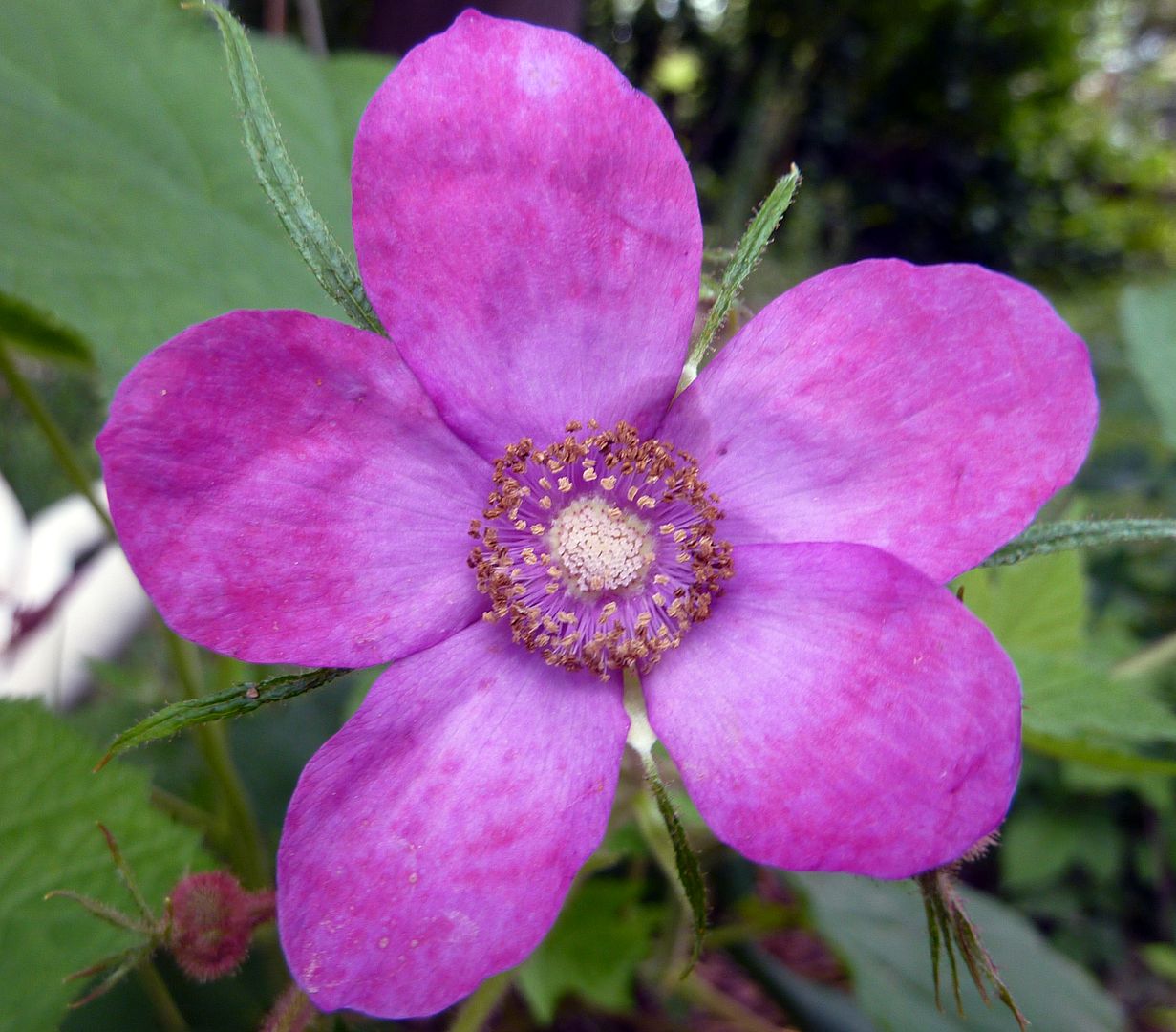
Red Flowering Raspberry, Rubus odoratus, has gorgeous 2" flowers that come in a narrow range of purples pinks and reds. The fruit I read is either just as tasty or slightly less than the normal raspberries sold in stores. It's not often sold but I was able to find a few places selling it.
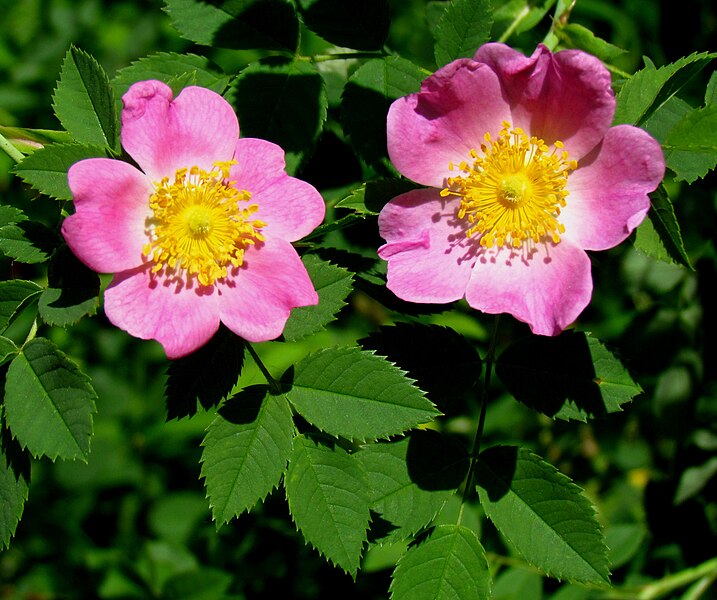
Compare that to our native Rose, and you can seem more than a passing resemblance; as far as the flower is concerned anyway. I've always wanted to grow one of our native roses but frankly I'm not open to the idea of eating rose hips and I think they're too thorny and aggressive of a plant to grow just for the birds. So growing the Red Flowering Raspberry is a handy food producing alternative. Both plants spread by root suckers/rhizomes, both have thorns or prickers on the stems, and both grow to be just about the same height. (I've never thought to use Raspberries as a cut flower before but they may even do good in a vase.)
| Image from Wikipedia |
| Image from Wikipedia |
| Image from Wikipedia |
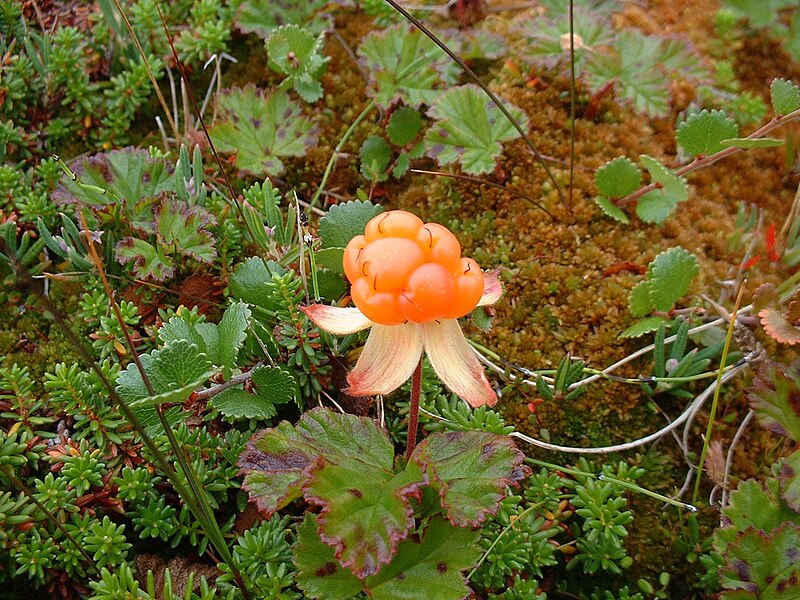
Cloudberry, Rubus chamaemorus, is a low growing alpine raspberry. This image doesn't do it justice compared to other google search images. They're low growing and are reminiscent of a strawberry patch. The fruit is said to taste a little starchy (lacking somewhat in flavor), but I just think the novelty of a dwarf yellow raspberry is neat. There are actual yellow fruiting raspberries that are probably better worth you time but this was an oddity I thought worth mentioning.
| Image from Wikipedia |
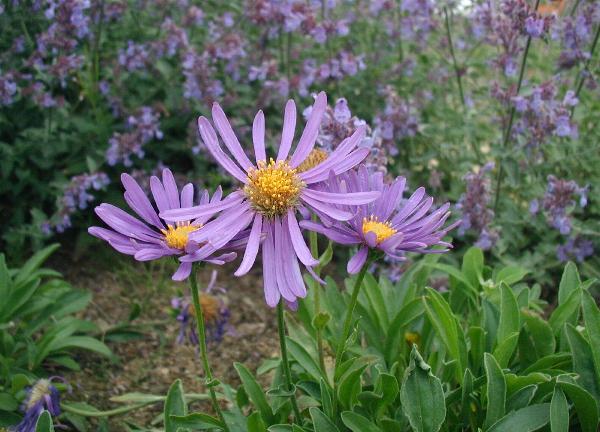
Alpine Aster, Aster alpinus, is a true aster that flowers in May! As far as I can tell this is the ONLY aster species native to North America that wasn't move out of the true Aster genus. And oddly enough this plant grows more like a spring bulb than a perennial you'd expect sold at a nursery. They emerge each spring and flower before going dormant sometime over the summer. It's a really bizarre growth habit for the genus... though I guess maybe it isn't. What are other true Asters like around the world? Seeds are available for sale but no one seems to sell the full plants. I'm tempted to buy some and give them a shot. Being an alpine plant I wonder if anyone can really grow them that far south of Canada. There is a patch of them in the rocky mountains though so maybe an ideal addition to a rock garden. Check them out on Google too!
Not to be out done, there's also the Climbing Aster, Symphyotrichum carolinianum, (which some people have labeled as Ampelaster carolinianus, not sure who's right but it looks like a Symphyotrichum to me. Maybe the climbing aspect is why its in a different genus but I still think Symphyotrichum is right). As the common name implies, this is a vine the rambles all over and grows into a massive 6' - 10' long clump of flowers. They seem to bloom unusually late in the year too, and prefer growing in wet sunny conditions. I believe this is one plant that shouldn't be cut all the way to the ground but rather trained up a fence or trellis and cut back as needed.
So those are a few of the neat plants I found and I hope to add more later on.
Labels:
Aster,
native,
Plants,
Raspberries,
Rose
Saturday, May 14, 2011
Joe MacGrown has a YouTube Channel
So I just learned that Joe MacGown of the Mississippi Entomological Museum has a YouTube channel. I was showing a friend the most recent Ant Chat episode and they mentioned the species of Nylanderia, N. sp. near pubens. I didn't even know they gave it a name and upon seeing pictures of it I wondered if my ID for the local Nylanderia flavipus was correct. After watching the video I was assured what I have on my raspberries wasn't them. N. flavipus doesn't run insanely fast like that.
Now let's learn how to dissect a moth's genitals.
He's also quite the artiest.
Now let's learn how to dissect a moth's genitals.
He's also quite the artiest.
Labels:
Ants,
Lepidoptera,
Moths,
Nylanderia,
Raspberries,
Video
Subscribe to:
Posts (Atom)