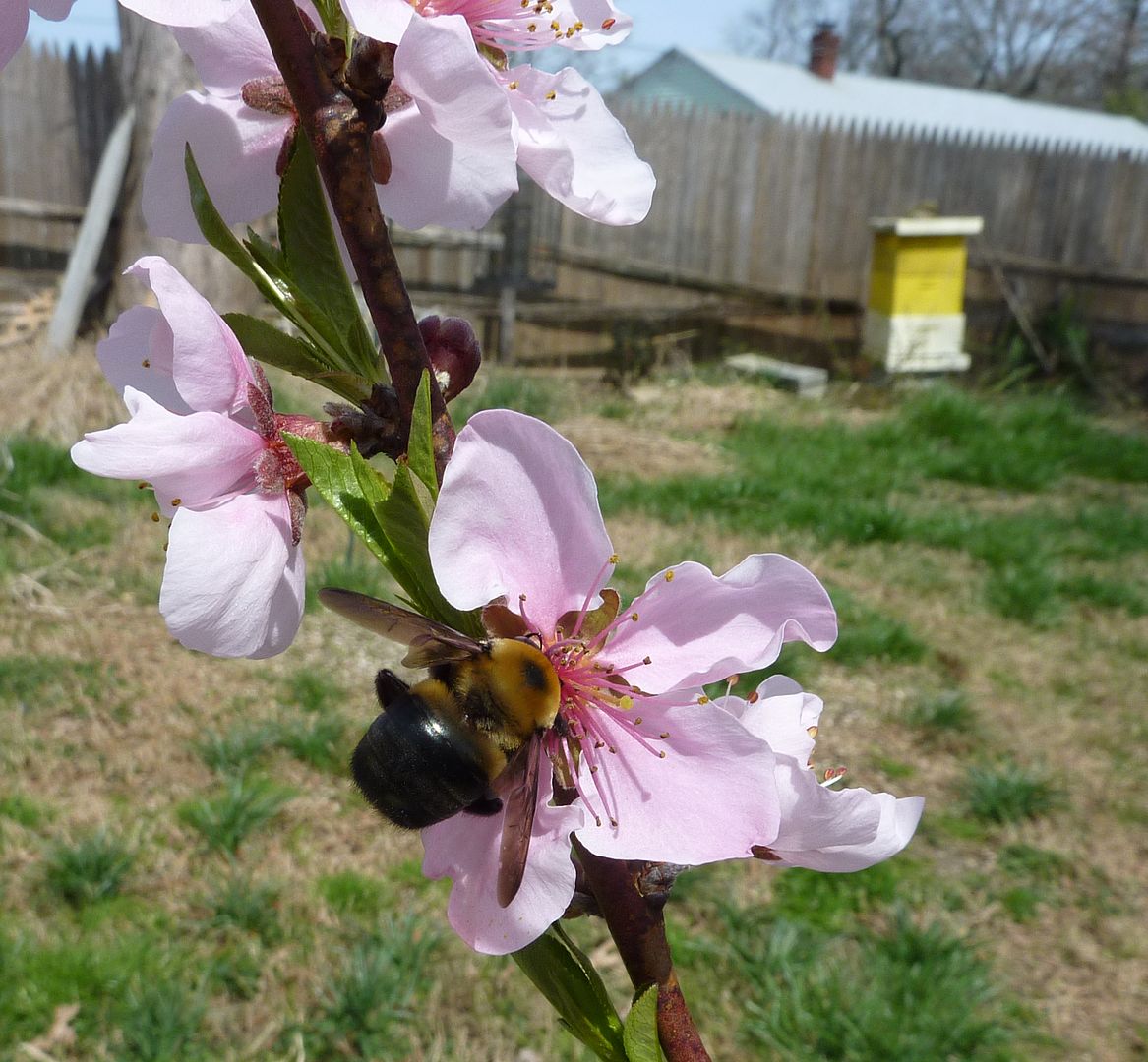
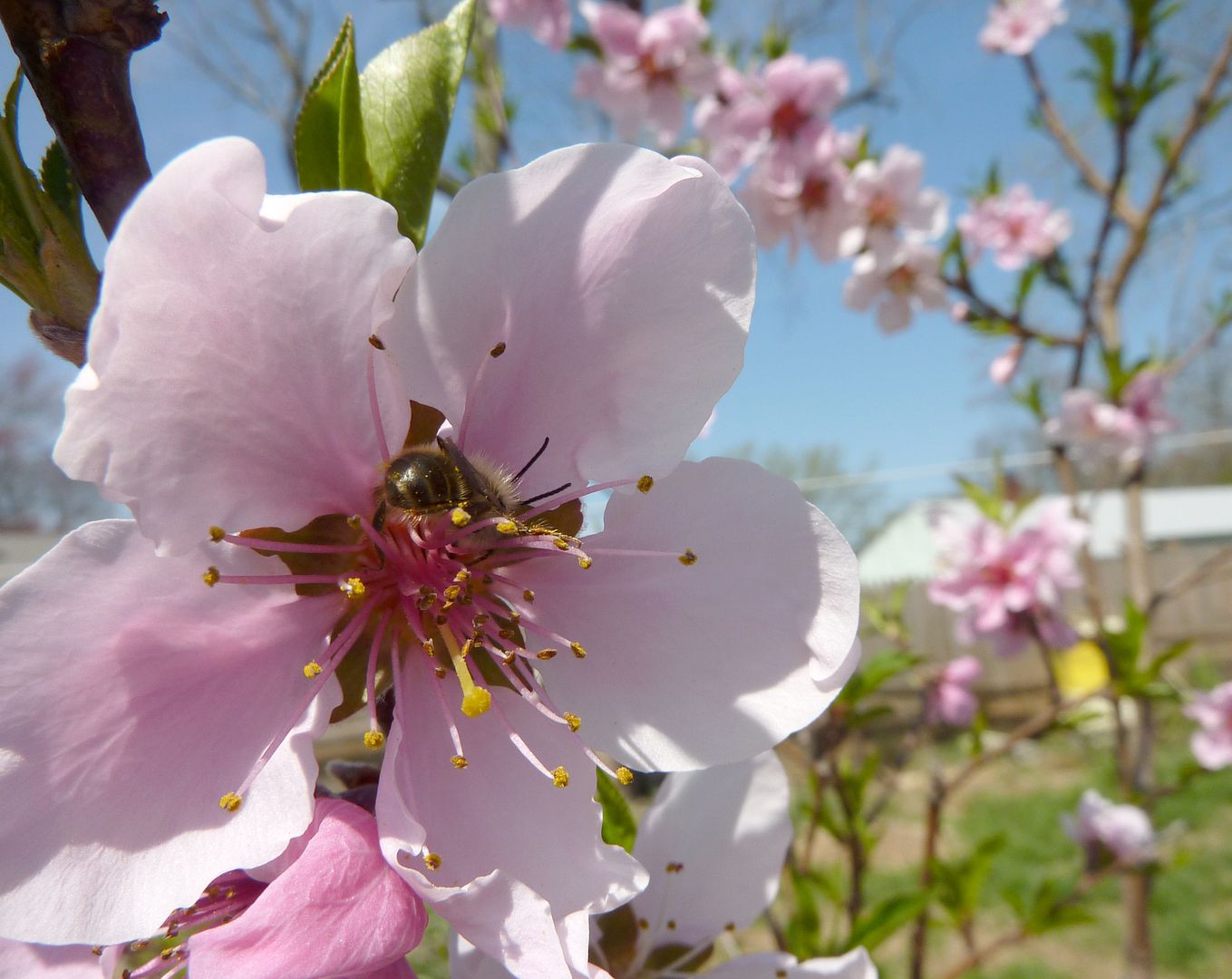
Fruit trees have been blooming left and right here. The Nectarine tree in the middle of our yard is blooming nicely but the flowers seemed very short lived this year. Might have something to do with our skipping spring and rolling right on into summer and it's 90F weather. Thankfully the mason bees were there to pollinate it some.
Large Carpenter Bees, Bee Flies, a few Bumblebees, and what I think might have been the Blueberry Bee also pollinated it. Notice how I didn't say Honey Bee, and yet one of my hives is clearly viable in the background. The tree is far enough from the hive that workers can find the tree so that's not the problem. Honey Bees get distracted by large nectar sources. If I had a farm with a few dozen Nectarine trees, or whatever crop you like, then I'd be more likely to find a Honey Bee working the field. As it stands though a lone fruit tree, a dwarf one at that, just isn't usually worth their time.
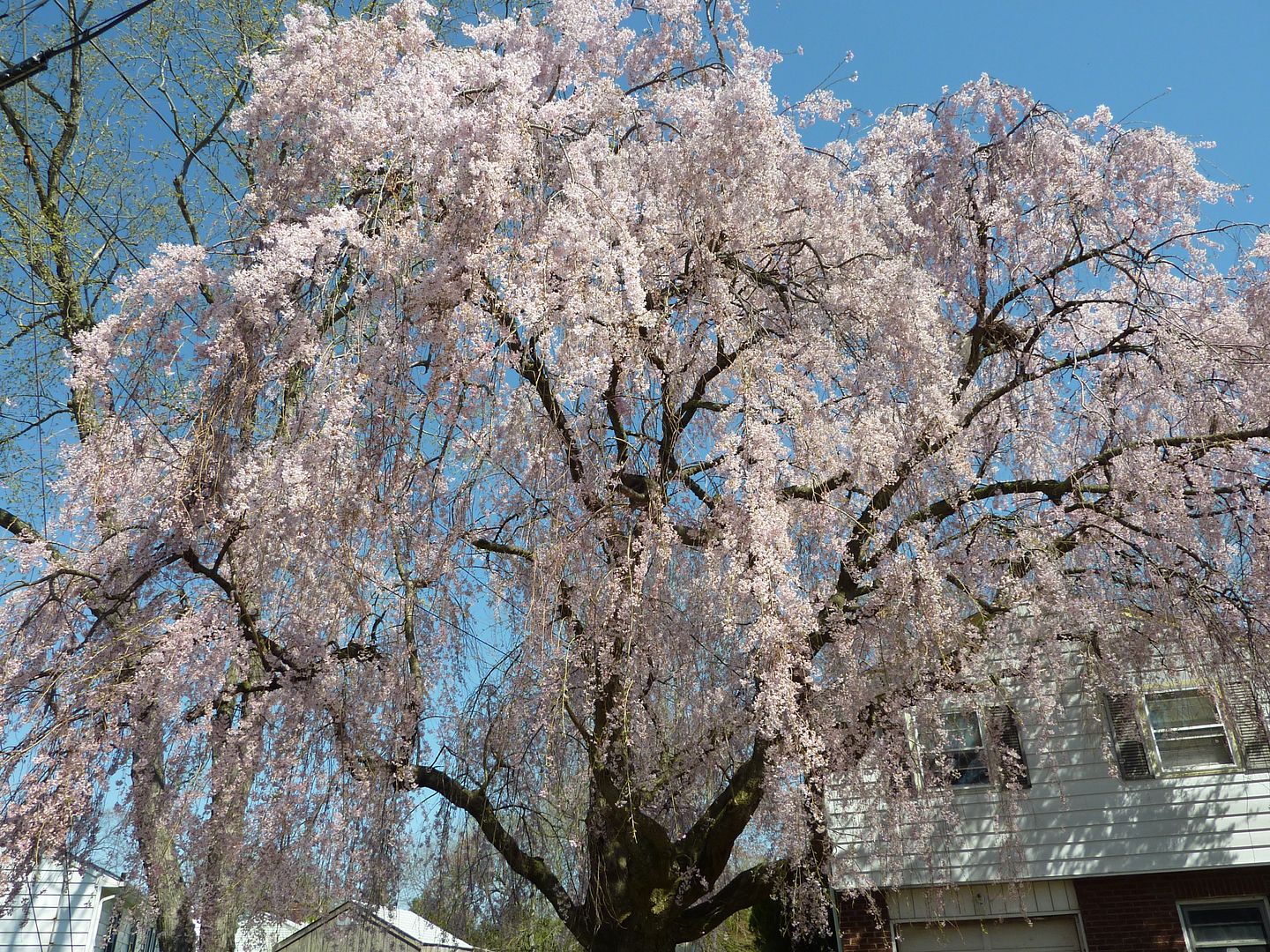
Now the massive cherry tree out front with it's few hundred thousand blooms is another story. Just walking under this tree when it flowers you can hear a noticeable buzzing from the sheer number of bees working the flowers.
A neighbor's Magnolia tree with it's huge flowers had a similar buzzing coming from it. The fact is social bees like the Honey Bee are able to communicate where the best nectar sources are. This causes all of the foraging bees to only work one or two locations at a time. There are random scouts of course but their vote for where the foraging traffic goes is only as good as the patch of flowers they've found. That's why I didn't see a single Honey Bee on my Nectarine tree, or any other small fruit tree I have for that matter.
It's always good to be diverse and support other pollinators.
Friday, April 9, 2010
Thursday, April 8, 2010
Gooseberry Flowers
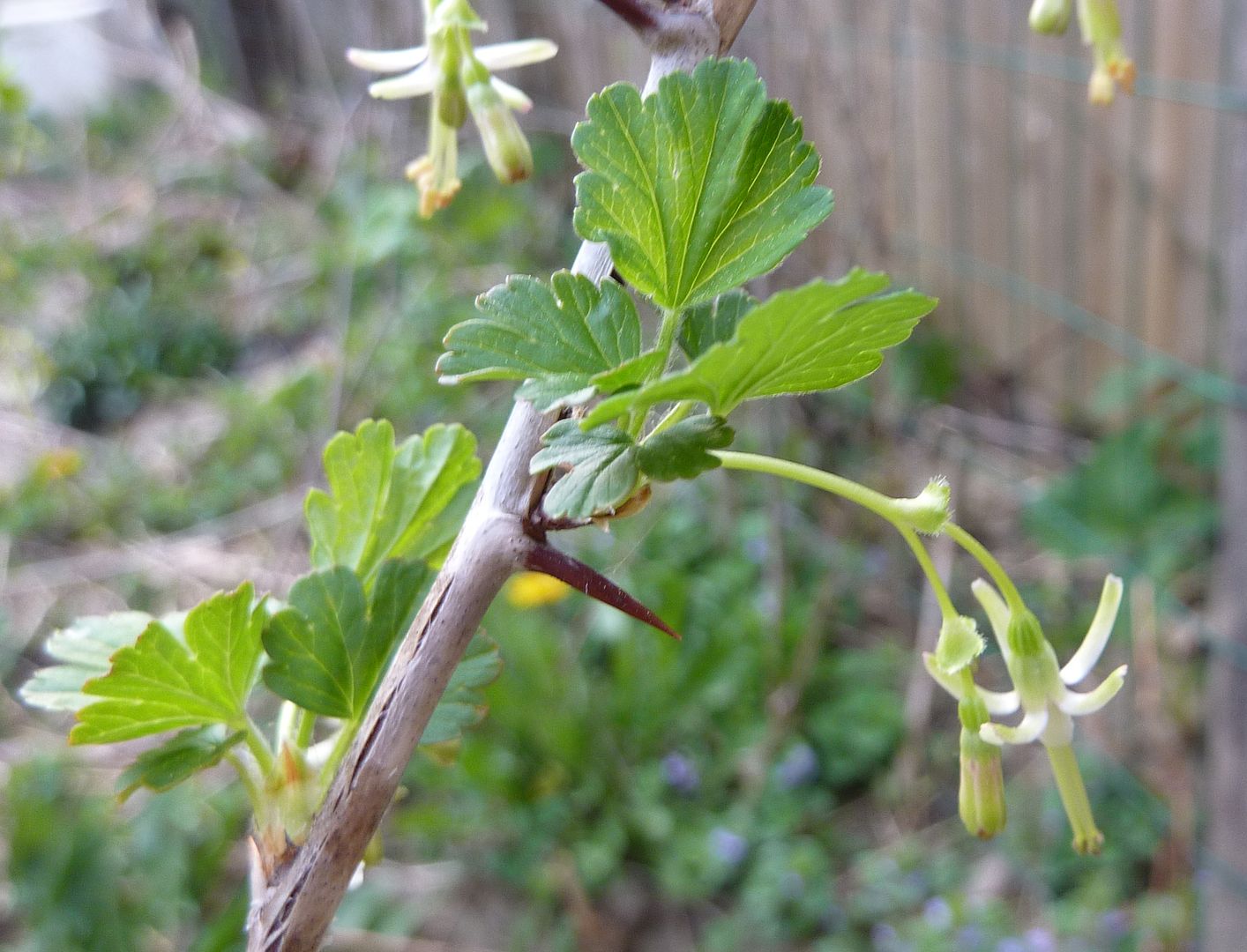
I bought a bunch of Gooseberry plants maybe three weeks ago. They're planted in the ground and shockingly enough flowering plentifully. Pictured above is a Red Gooseberry plant, Ribes species. It's not like me to buy something I don't know the species of but my understanding is Gooseberries are native to both North America, and Europe and species have been mixed and matched and hybridized for several hundred years now. At one point there were over 50 varieties of this fruit growing in the US the progeny of which came from only a dozen or so species. This is a food crop, which implies the person who planted it will keep it under control, so native or not isn't as big an issue.
Because of a disease that uses this plant, and later white pines, often resulting in killing the tree, the timber industry helped pass legislation to have gooseberry irradiated. Modern cultivars have been found to not spread the disease so they're fine to plant, but some states still have it banned from planting. Considering this native food source was almost irradiated it's a wonder how anyone can tell what cultivar is what now.
This is another type of Gooseberry. The fruit will be green and turn slightly pink when ripe. I'll try and find the tag it came with later on. I would like to point out, I just planted these, this one is 4 inches tall, and it's flowering... Assuming I get a harvest from these plants without a hitch, and the fruit tastes good, I will be requesting every garden hit themselves up side the head for having over looked such an easy to grow beneficial food crop. We're not there just yet but keep your hands ready all the same.
The ant on the flower is a Formica species in case you were wondering. Very common across the US and reasonably hard to ID.
Because of a disease that uses this plant, and later white pines, often resulting in killing the tree, the timber industry helped pass legislation to have gooseberry irradiated. Modern cultivars have been found to not spread the disease so they're fine to plant, but some states still have it banned from planting. Considering this native food source was almost irradiated it's a wonder how anyone can tell what cultivar is what now.
This is another type of Gooseberry. The fruit will be green and turn slightly pink when ripe. I'll try and find the tag it came with later on. I would like to point out, I just planted these, this one is 4 inches tall, and it's flowering... Assuming I get a harvest from these plants without a hitch, and the fruit tastes good, I will be requesting every garden hit themselves up side the head for having over looked such an easy to grow beneficial food crop. We're not there just yet but keep your hands ready all the same.
The ant on the flower is a Formica species in case you were wondering. Very common across the US and reasonably hard to ID.
Labels:
flowers,
Gooseberry,
Plants
Tuesday, April 6, 2010
Twin Leaf
It seems like everyday now something new is flowering out in the yard. I have a serious succession of blooms happening. While I have the diversity though I seriously lack the quantity. In a few years that should change.
Jeffersonia diphylla, aka twin leaf gets it's name from it's mirrored leaves that always open in pairs. It's a low growing ground cover, similar to violets when not mowed, but slightly taller. They form mound like clusters of leaves. I planted four of these last year. Immediately three of them crapped out and the fourth slowly died over the summer. It appears this plant is similar to other native rhizome wildflowers. A lot of them will happily divide underground on their own and one plant will happily clone itself into a little patch of wildflowers. Since this is done by the roots the need for green growth over most of the year isn't needed. Flowering is even less needed but they do it all the same.
Here is some young growth to one of the plants that came back. Three have come back but only one of those has flowered. Not sure on the fourth one, hopefully it's a late bloomer.
My ant garden is really coming together this year. Twin Leaf is among those plants who's seeds are distributed by ants. With so many of these types of plants around I'm bound to get a picture of the ants in action.
Jeffersonia diphylla, aka twin leaf gets it's name from it's mirrored leaves that always open in pairs. It's a low growing ground cover, similar to violets when not mowed, but slightly taller. They form mound like clusters of leaves. I planted four of these last year. Immediately three of them crapped out and the fourth slowly died over the summer. It appears this plant is similar to other native rhizome wildflowers. A lot of them will happily divide underground on their own and one plant will happily clone itself into a little patch of wildflowers. Since this is done by the roots the need for green growth over most of the year isn't needed. Flowering is even less needed but they do it all the same.
Here is some young growth to one of the plants that came back. Three have come back but only one of those has flowered. Not sure on the fourth one, hopefully it's a late bloomer.
My ant garden is really coming together this year. Twin Leaf is among those plants who's seeds are distributed by ants. With so many of these types of plants around I'm bound to get a picture of the ants in action.
Bleeding Hearts
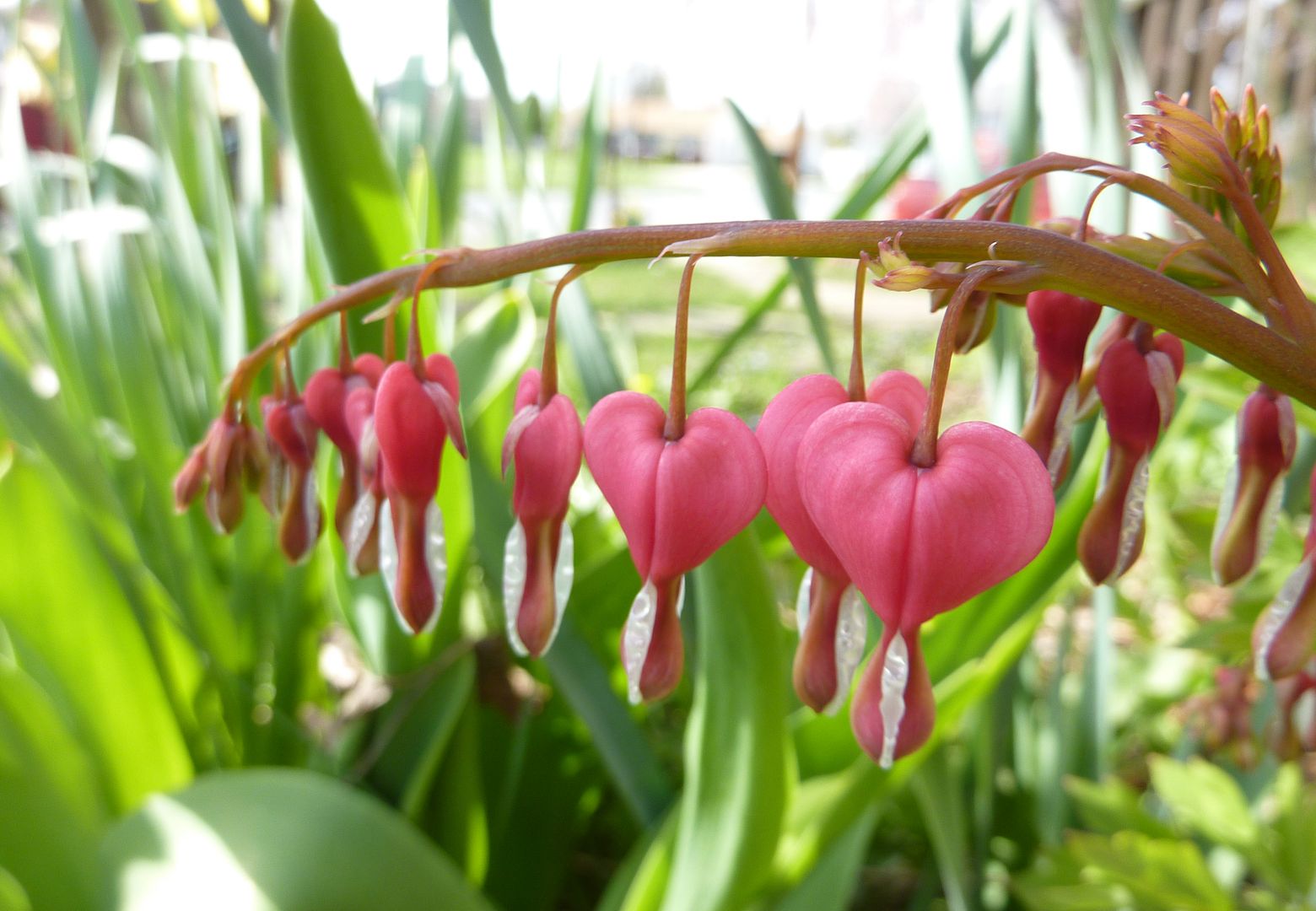
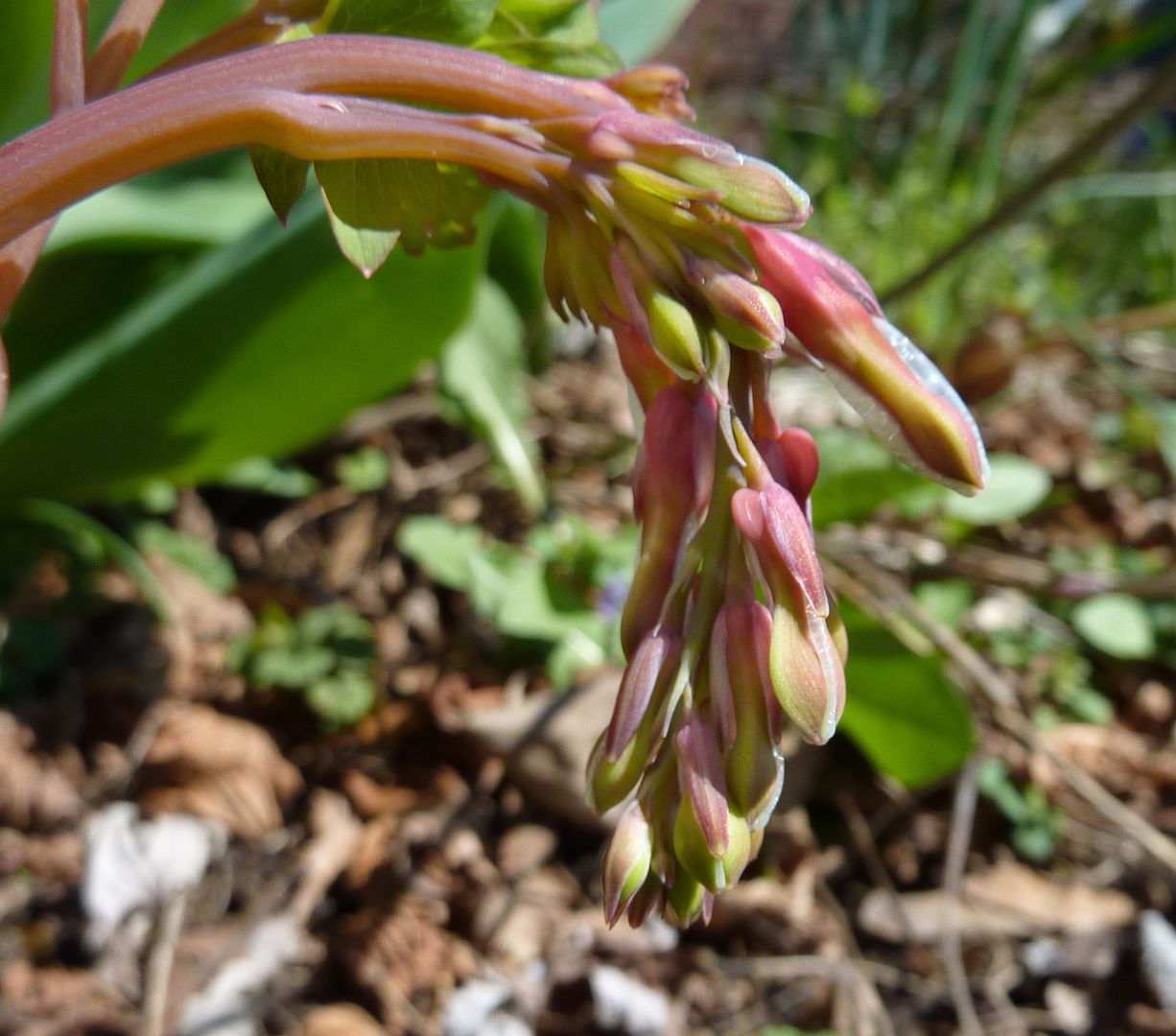
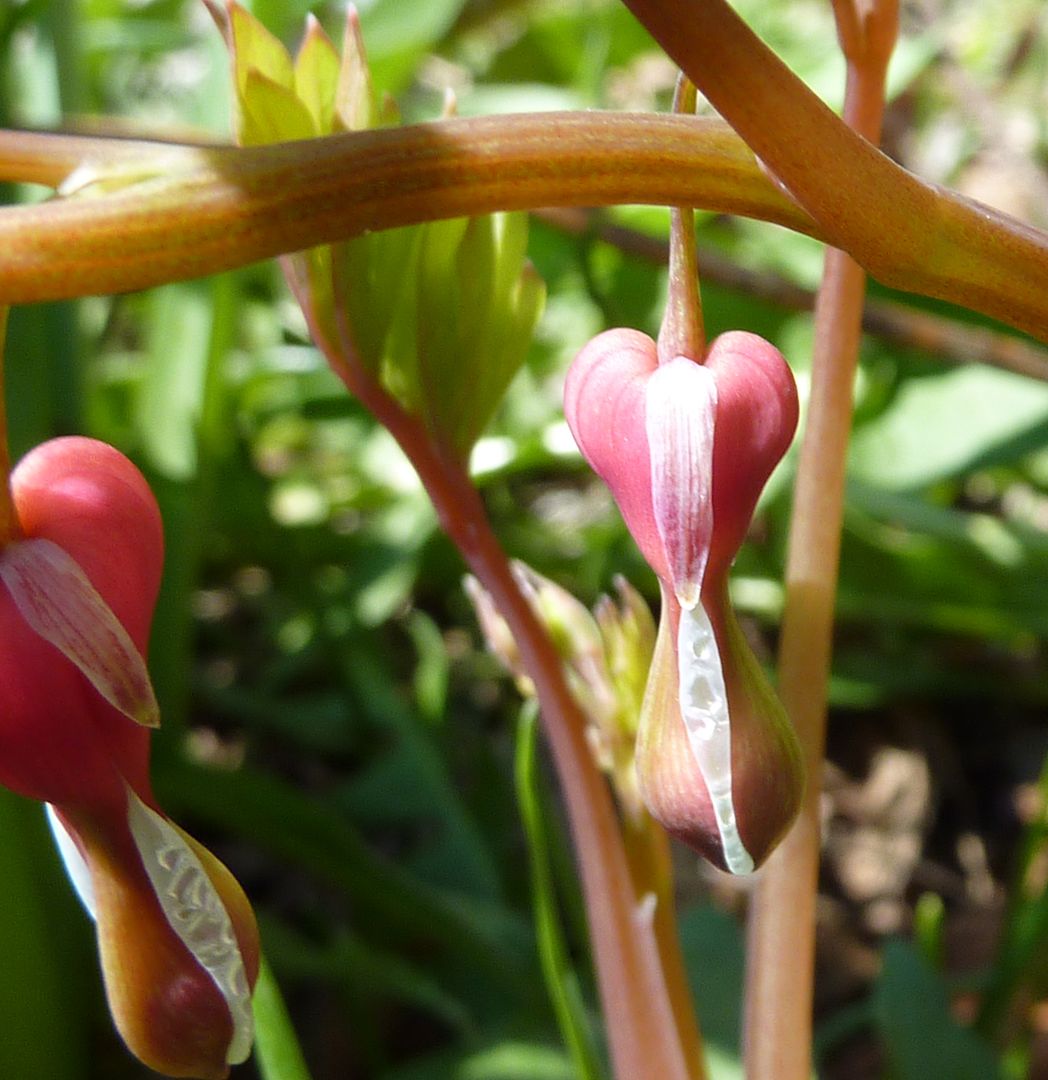
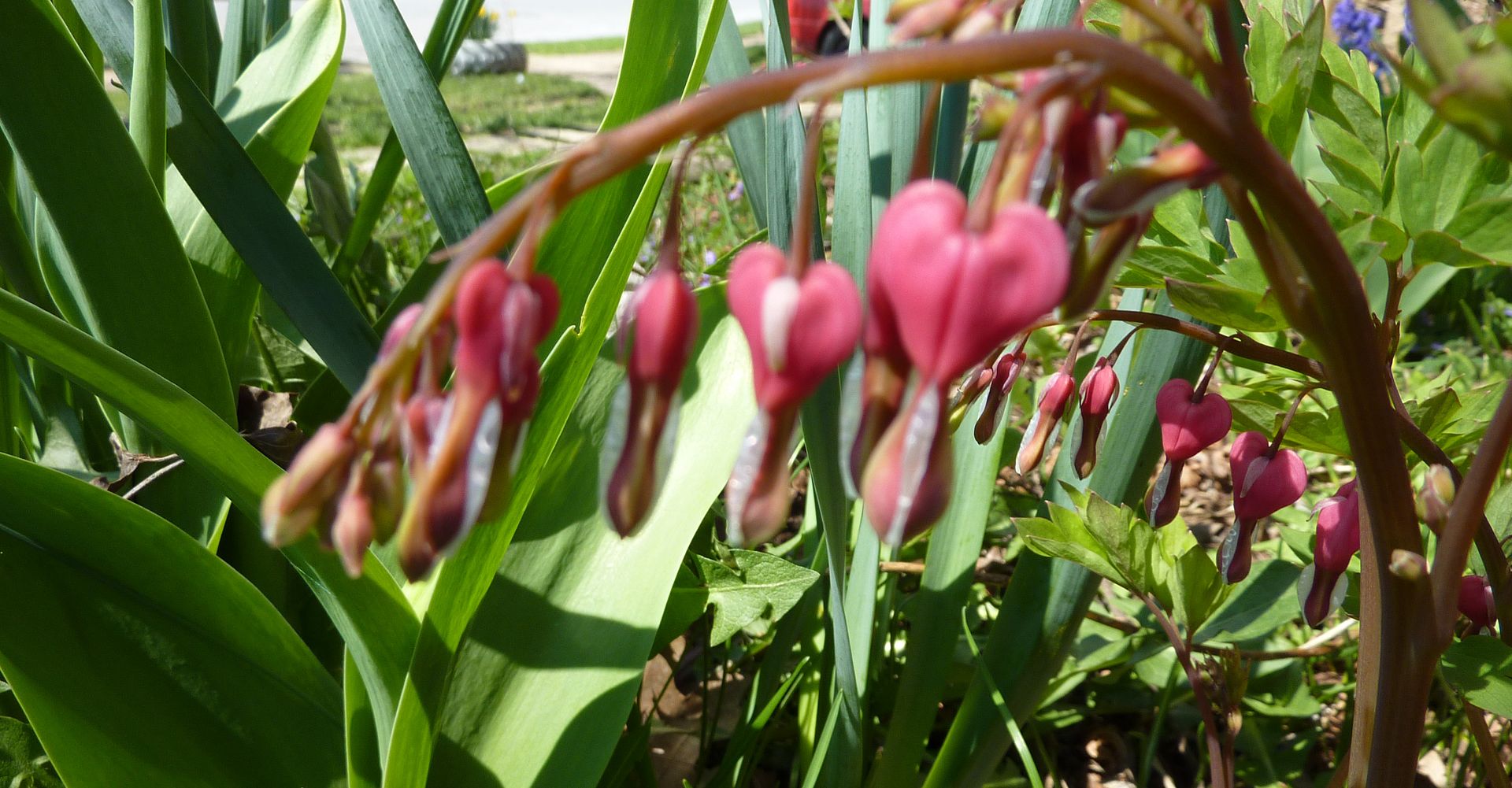
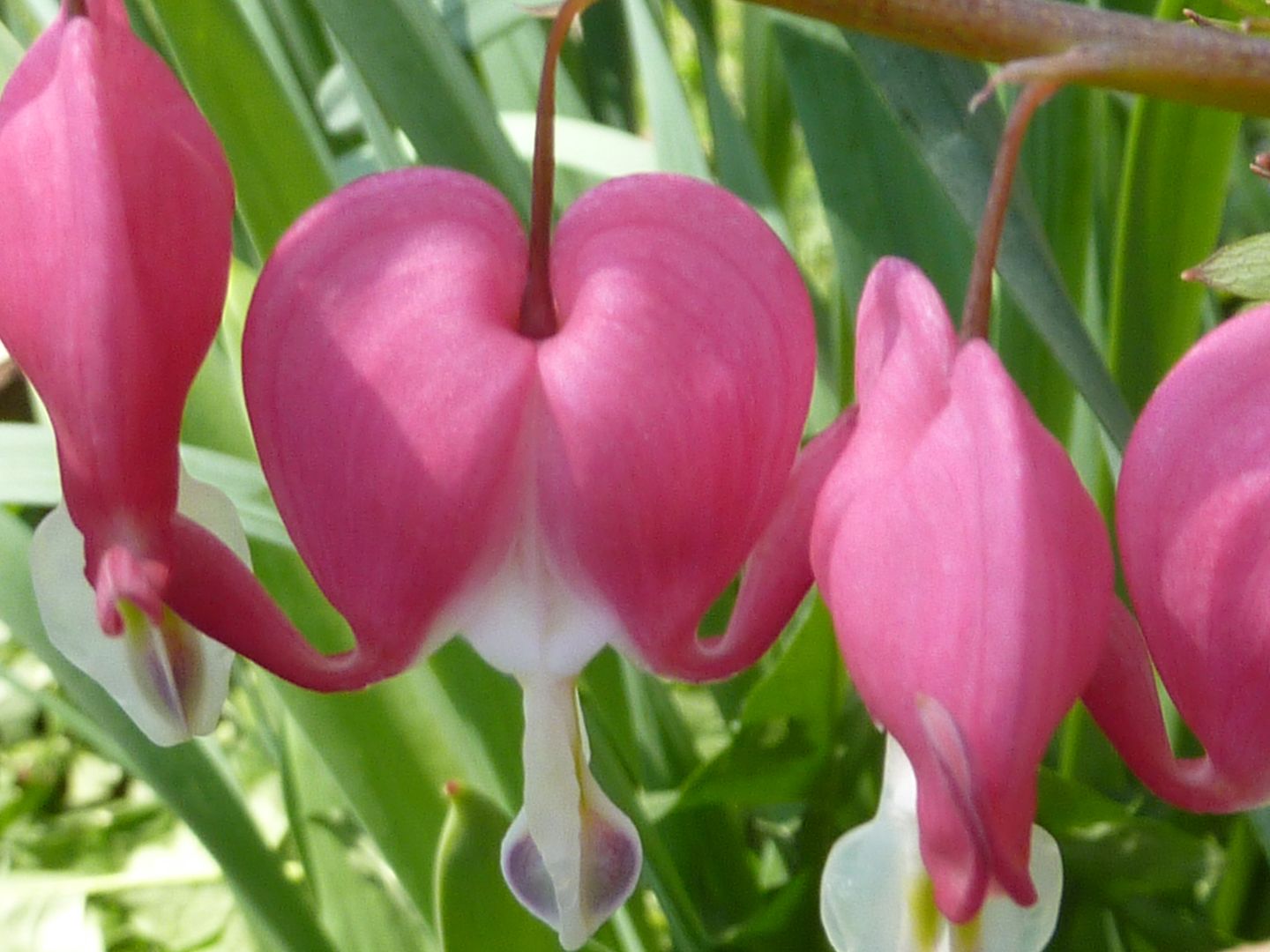
Alright, we're in the peak of bulb season now. Easter has passed, Tulips have started blooming, and the tree canapé is slowly filling in. Why more people don't have this show stopper in their garden is a mystery to me. Dicentra species all have the common name Bleeding Hearts. The one photoed above is Dicentra spectabilis which I'm correcting from earlier.
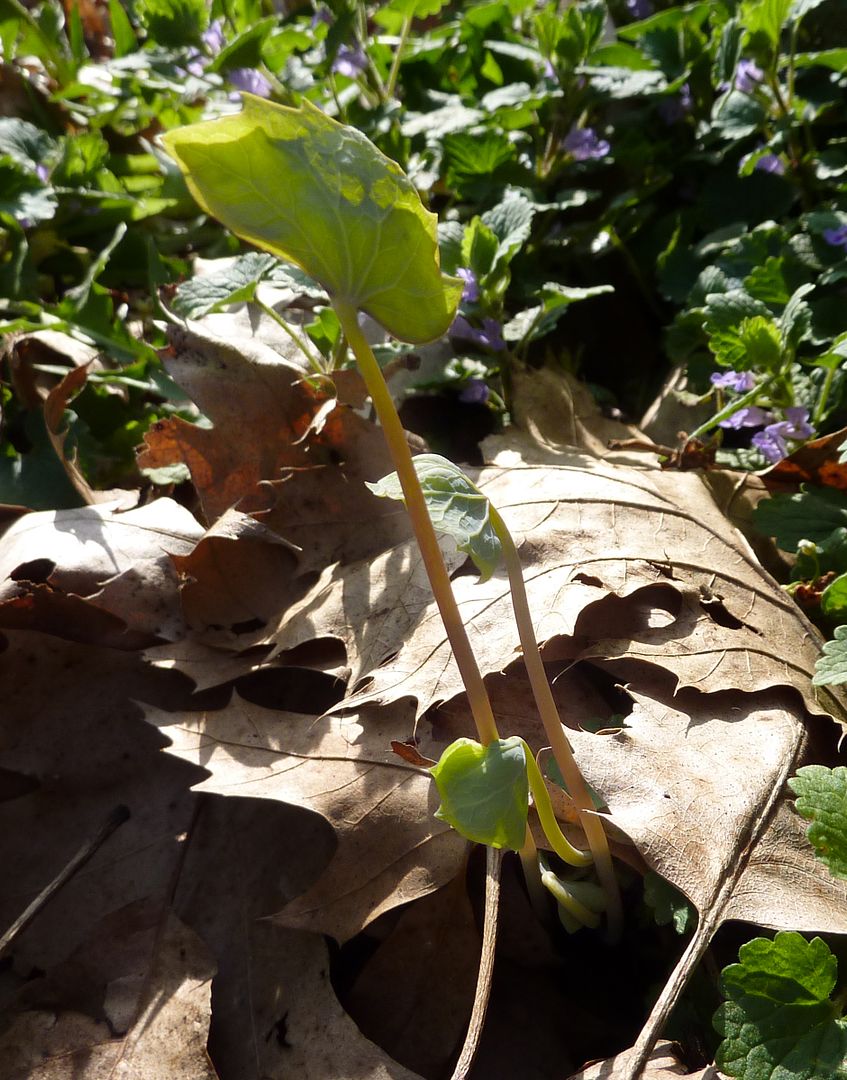
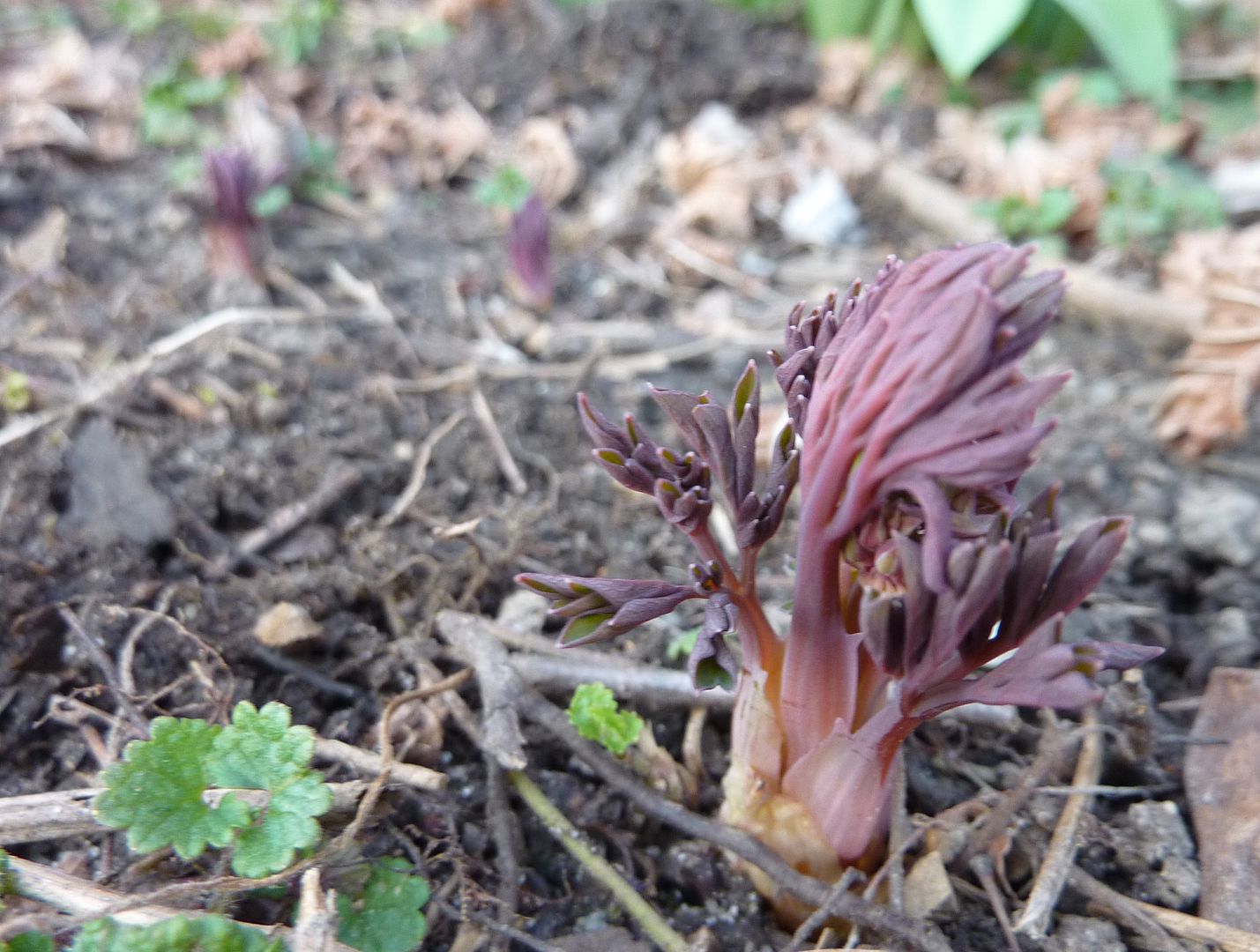
They started coming up way back around the time when Bloodroot started flowering. It's almost like a fleshy cabbage then but eventually thins itself out to be more fern-like.
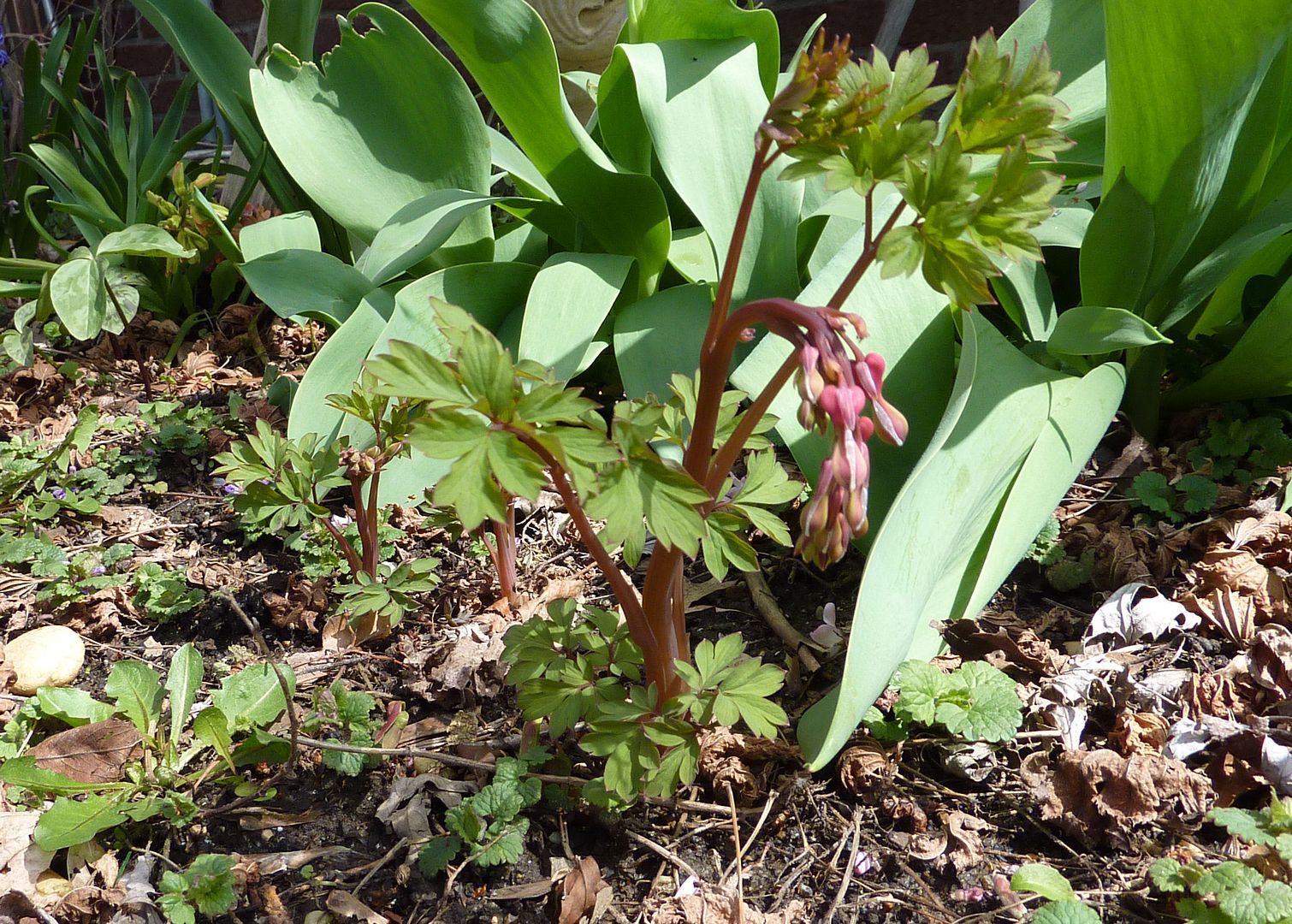
Early on the plant and flowers look a little scraggly. This softness is a welcome change to the bulb garden. Tulips, Daffodils, and Hyacinths all have those stiff grassy leaves and look pretty much the same. Plants like bleeding heart help break this up. Of course there are later flowering alternatives you could go with.
Early on the heart shaped flowers aren't that spectacular, but this is still different than the unopened green flower buds you get on Tulips around the same time.
The color to these pink/red flowers I think is the perfect complement to grape hyacinth. It's a shame I didn't plant them close enough to get a decent picture. But you can see the colors sort of play off one another.
When asked why more gardeners don't plant this beautiful native in their spring garden, one flower was quoted as saying...
They started coming up way back around the time when Bloodroot started flowering. It's almost like a fleshy cabbage then but eventually thins itself out to be more fern-like.
Early on the plant and flowers look a little scraggly. This softness is a welcome change to the bulb garden. Tulips, Daffodils, and Hyacinths all have those stiff grassy leaves and look pretty much the same. Plants like bleeding heart help break this up. Of course there are later flowering alternatives you could go with.
Early on the heart shaped flowers aren't that spectacular, but this is still different than the unopened green flower buds you get on Tulips around the same time.
The color to these pink/red flowers I think is the perfect complement to grape hyacinth. It's a shame I didn't plant them close enough to get a decent picture. But you can see the colors sort of play off one another.
When asked why more gardeners don't plant this beautiful native in their spring garden, one flower was quoted as saying...
"I don't know."
Monday, April 5, 2010
Trillium
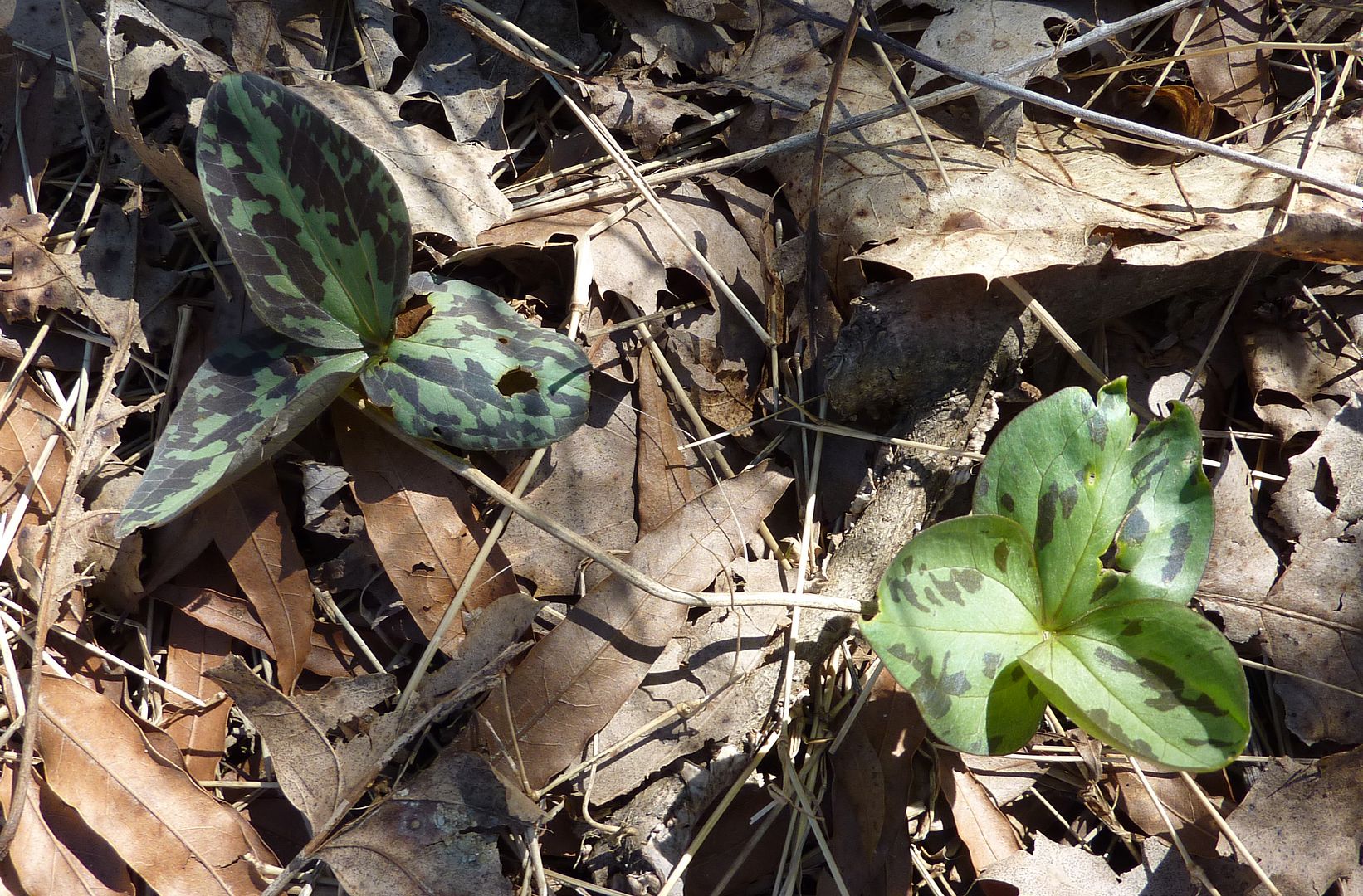
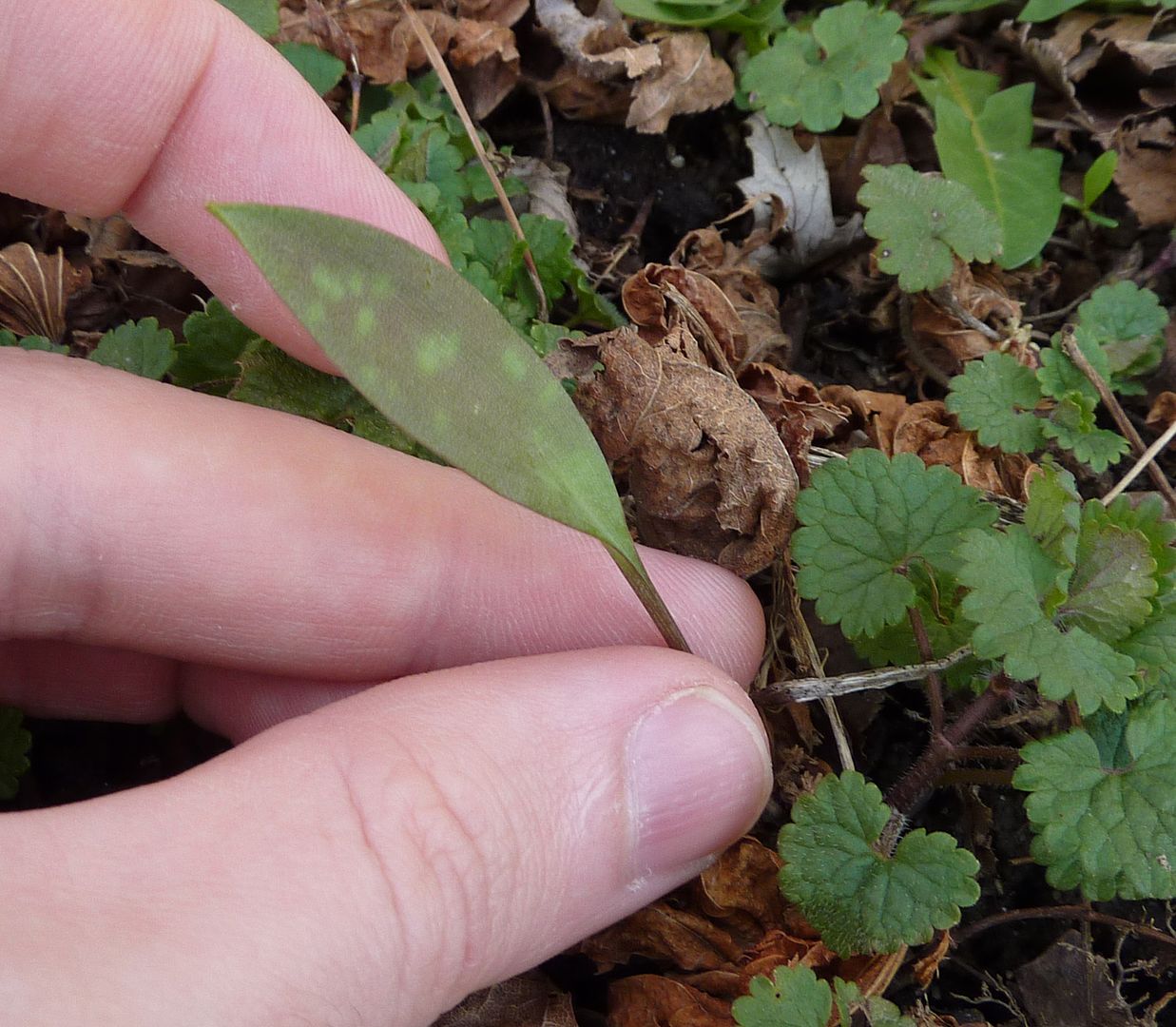
Hay don't pick that blade of grass, that's a Trillium.One of my favorite plants, I think, is the Trillium. Going to the Mt. Cuba center with their lush under story patches of assorted Trilliums in all their glory is enough to inspire anyone to plant some. The fact the seeds are distributed by ants makes them all the more appealing.
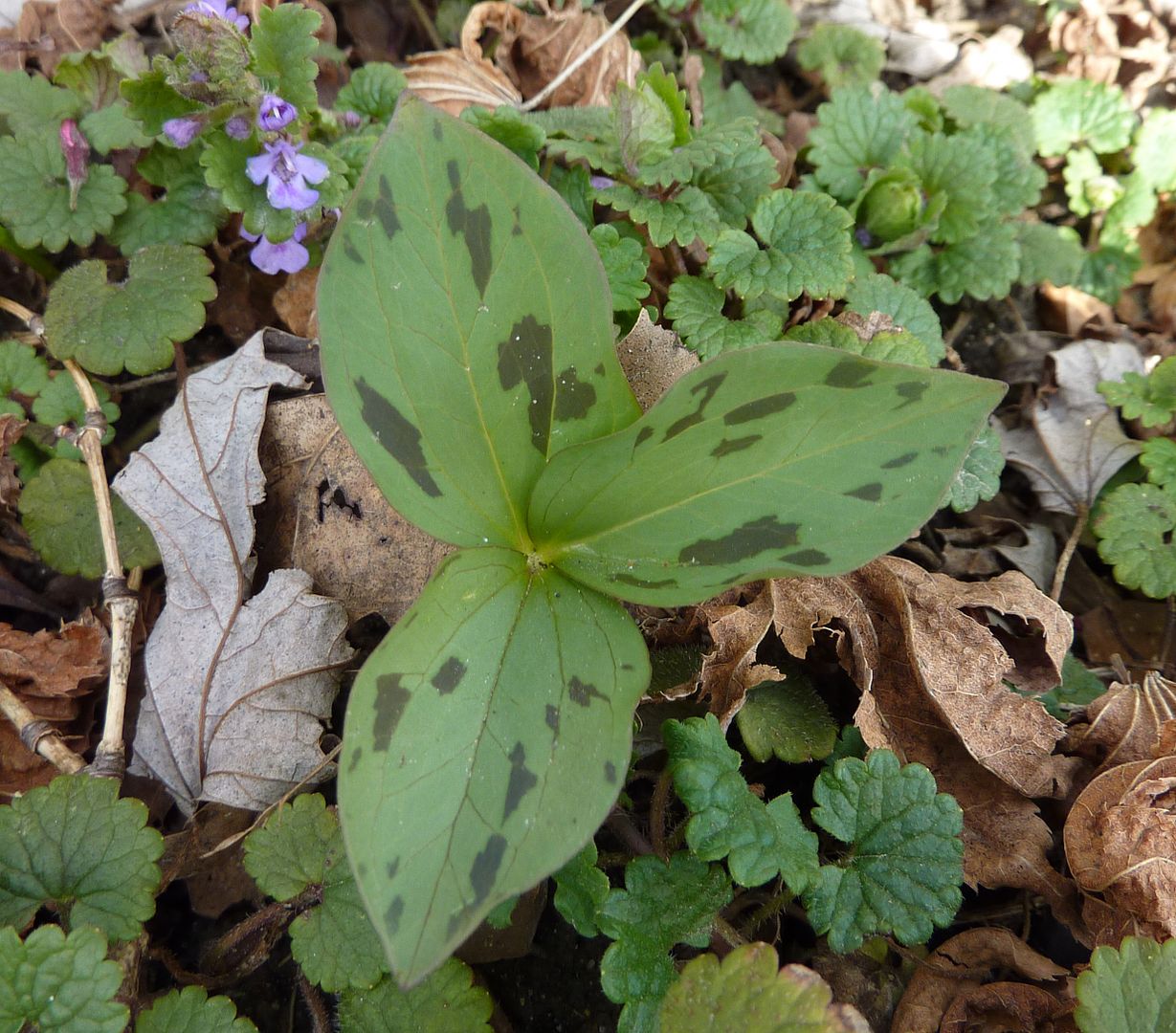
I wanted these in my yard so much in fact that I went ahead and bought them from any old source. I bought them online from what I'm assuming are legitimate sources. You can almost tell by the price but really they should say Nursery Propagated, and you should be paying anywhere from $9.99 to $30.00 each plant.
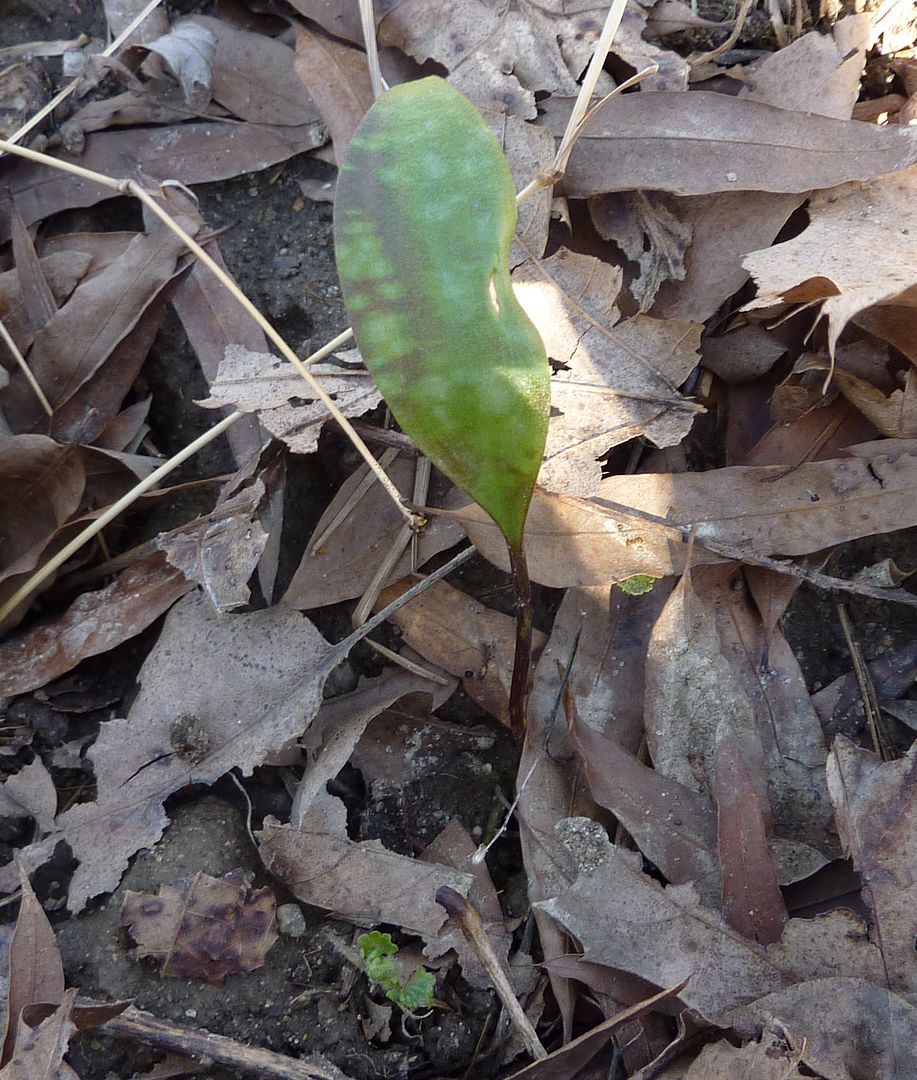
They take the better half of a decade to flower. And they seriously should be kept out of the hands of newbie gardeners. People who just go to the store and buy whatever without researching why. These are a full shade plant, (though oddly enough I've found one type that tolerates full sun). Lowes last year was selling these plants in dried out packets for $3 each. When I saw that I thought "Oh My God! I've got to have that!" Before buying though I asked who provided them. One sales person pointed out the back of the label. It read Botanical Wonders.
As far as I can tell they don't have a website. And I don't think they know how to identify Trilliums. There were maybe 12 other types of plants this company was selling there at Lowes. Assuming they are stripping our national forests bare of their native wildflowers they certainly aren't doing that good of a job. Only finding 12? Really?
See I don't know what to make of this. It's a problem with a company that doesn't have a website as far as I can tell or contact info on their packaging. On the other hand there's no way they're only finding 12 species of native plant. Granted Trillium can be tricky to ID a good nursery should know better.
A few theories that might explain this. Trillium in their ideal soil and lighting conditions will divide. Often times the newer Trillium plants will also flower. So you have two adult plants flowering that don't take 2 years to germinate and another 3 to 5 to flower. Fair enough. I've even herd of some people taking 1 inch long root cuttings that will form it's own rhizome. This would be a great method for mass producing plants but it would still take years before they flower.
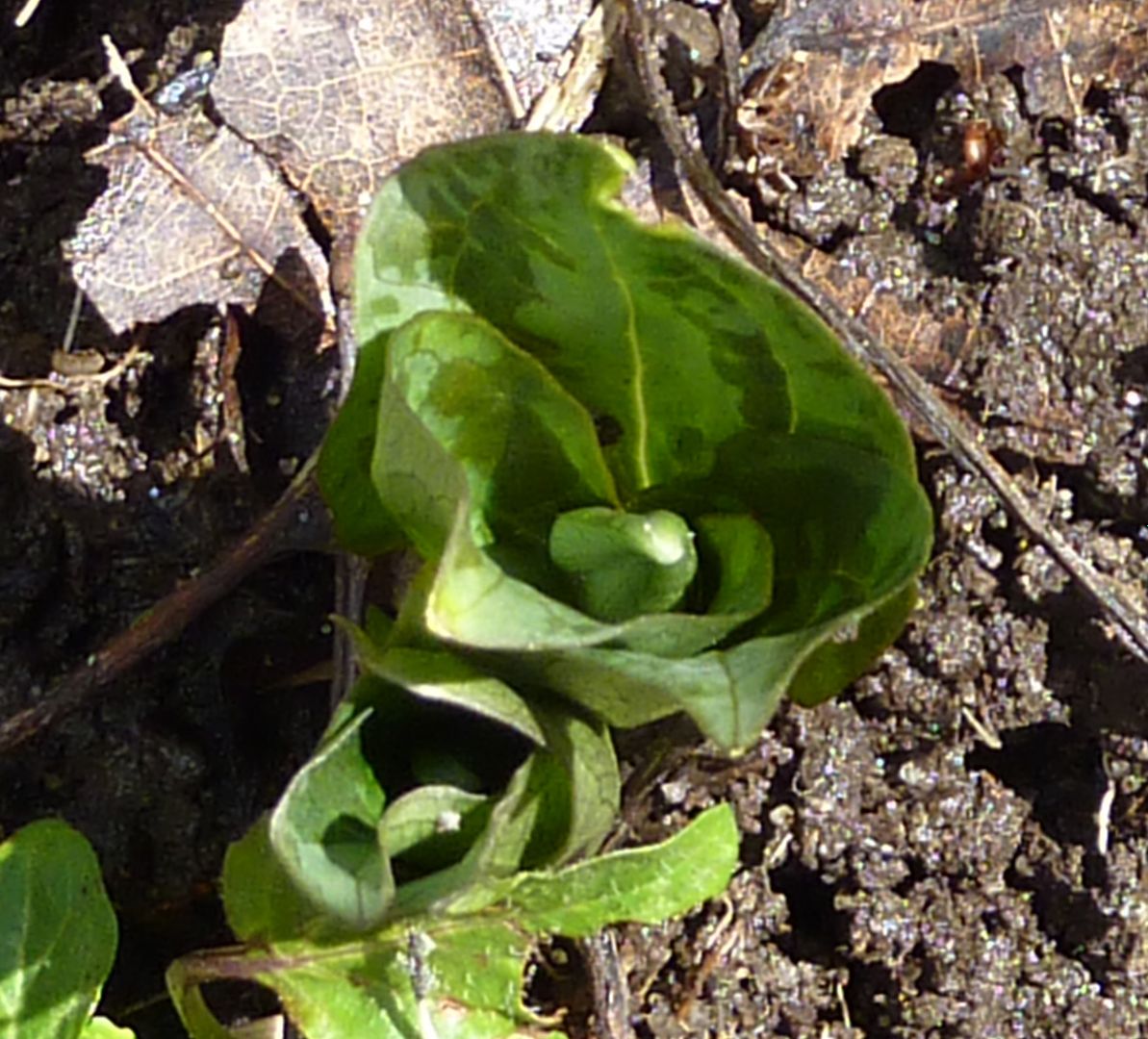
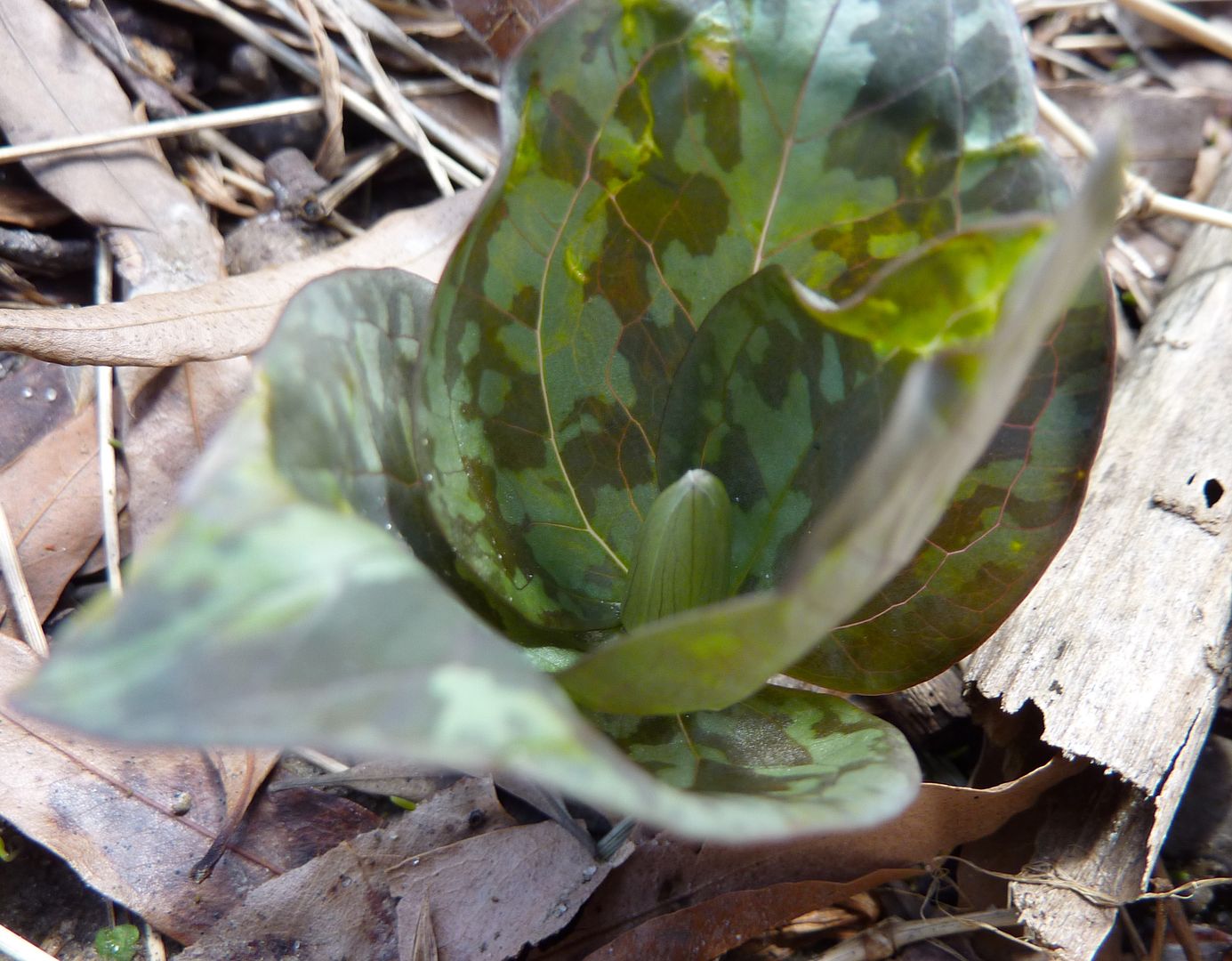
Whatever the case, they're coming up this year, some are juvenile with only one leaf while others are flowering. I don't think I'll be buying from Botanical Wonders again, but I'm happy I liberated them all the same. A few however seem to have died.
Saturday, April 3, 2010
Good Mourning
The highlight of nature for yesterday's walk through the woods was finding a few Mourning Cloak Butterfly, Nymphalis antiopa. The pathways to the forest were lined with sand and these were drinking on the patches. This is one of those butterflies you're more likely to see on rotting fruit than flowers. They have a wide range of host plants, mostly willow, but a few other hardwoods too. See Here for more info.
Boring Nature
I went to a nature preserve earlier today. I don't want to say which one because it's pretty close to my home. Calling this place a nature preserve though is a serious stretch of the word, but they get points for being a forest. It's fairly big, it would take about 3 hours to casually walk every trail. For the whole trip though there is a total of 5 signs to point things out. That's it. Post cards have more information.
Sign One: This is Skunk Cabbage. And it should have said this is the ONLY forb that grows in the forest.
Sign Two: This is a Bubble Spring. It was a spring of swamp with bubbles slowly trickling up. Sadly this was among the best this place had to offer.
Sign Three: This is a Flood Plane. Yes they have a sign about a plant-less beach next to a stream. Why they need a sign for that is just... wow.
Sign Four: This is a Frog Pond. A stream with frogs living in it, do go on. I didn't see any frogs here but they were present at a bridge later in the trail.
Sign Five: This is a High Land Sand Forest, Trees like Chestnut, Oak, and Maple are the dominant trees here. Low Bush Blueberry and Mountain Laurel are the dominant understood tree. This was the only sign that I liked. It's a shame I had to walk 3 hours to come across it.
No wonder people are losing tough with nature. Not that this place had much going for it but each species of tree should have it's own sign with pictures of leaves and flowers with it. They should be scattered along the trail. More then Skunk Cabbage should be growing in the under story. It was only growing by the stream anyhow. There were no mentions of the Clethra alnifolia, and what I'm sure was native Rhododendron growing everywhere. Note worthy animal activity should also be mentioned. The area used to be known for the skink migration. If they manage it a little better by including a few more patches of native plants this place could even start tours with guided instructors.
I'll be going back to this place later this year, but I'm not expecting much. Maybe they just don't have a lot of Forbs... but forest perennials are mostly active in the spring. The places ides of a prairie (which would be more active in the summer) is a community soccer field.
Sign One: This is Skunk Cabbage. And it should have said this is the ONLY forb that grows in the forest.
Sign Two: This is a Bubble Spring. It was a spring of swamp with bubbles slowly trickling up. Sadly this was among the best this place had to offer.
Sign Three: This is a Flood Plane. Yes they have a sign about a plant-less beach next to a stream. Why they need a sign for that is just... wow.
Sign Four: This is a Frog Pond. A stream with frogs living in it, do go on. I didn't see any frogs here but they were present at a bridge later in the trail.
Sign Five: This is a High Land Sand Forest, Trees like Chestnut, Oak, and Maple are the dominant trees here. Low Bush Blueberry and Mountain Laurel are the dominant understood tree. This was the only sign that I liked. It's a shame I had to walk 3 hours to come across it.
No wonder people are losing tough with nature. Not that this place had much going for it but each species of tree should have it's own sign with pictures of leaves and flowers with it. They should be scattered along the trail. More then Skunk Cabbage should be growing in the under story. It was only growing by the stream anyhow. There were no mentions of the Clethra alnifolia, and what I'm sure was native Rhododendron growing everywhere. Note worthy animal activity should also be mentioned. The area used to be known for the skink migration. If they manage it a little better by including a few more patches of native plants this place could even start tours with guided instructors.
I'll be going back to this place later this year, but I'm not expecting much. Maybe they just don't have a lot of Forbs... but forest perennials are mostly active in the spring. The places ides of a prairie (which would be more active in the summer) is a community soccer field.
Friday, April 2, 2010
Nuptial Flights of Spring Ants
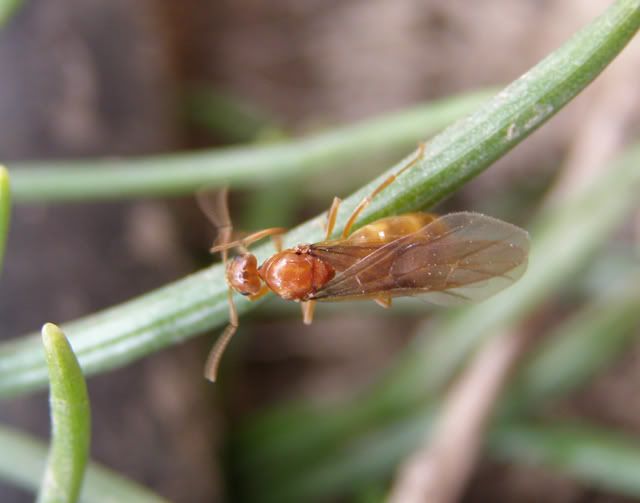
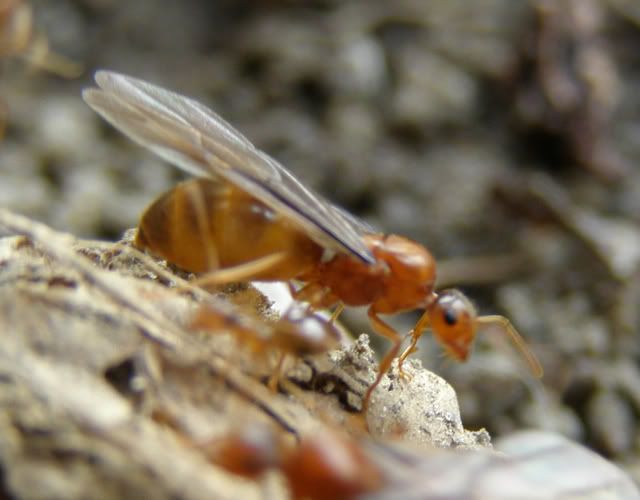
This video shows a nuptial flight that recently happened in California to the widely distributed Prenolepis imparis. The common names are False Honey Ant if you're down south or from an arid area, or Winter Ant if you're up north where it's more temperate.

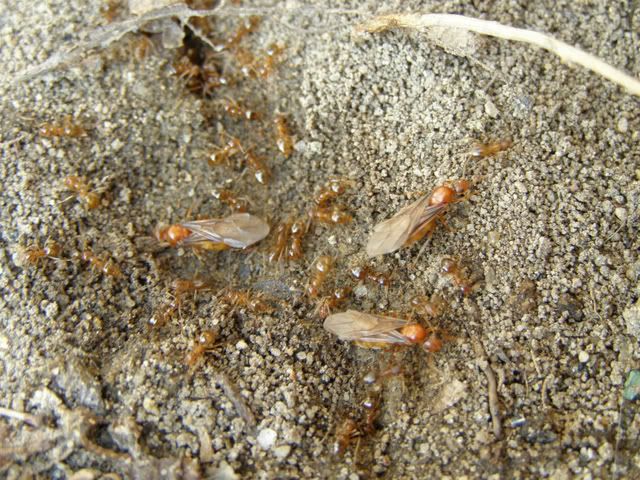
Queens are very Lasius like in appearance. Abdomen color ranges from dark amber to blondish brown and yellow. Thorax is a very noticeable pink salmon like color. Occasionally they're a little darker but almost imposable to mistake for anything else running around this time of year. At least in North America.
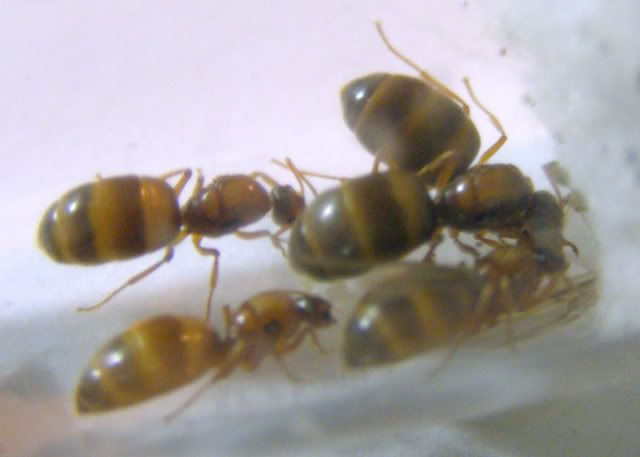
With such a wide distribution though genetic mutations are to be expected. All of these queens above were caught locally and you can see they differ in color and somewhat in size. (This group of 5 queens failed to produce any workers. Since then I've drawn the line at 4.)

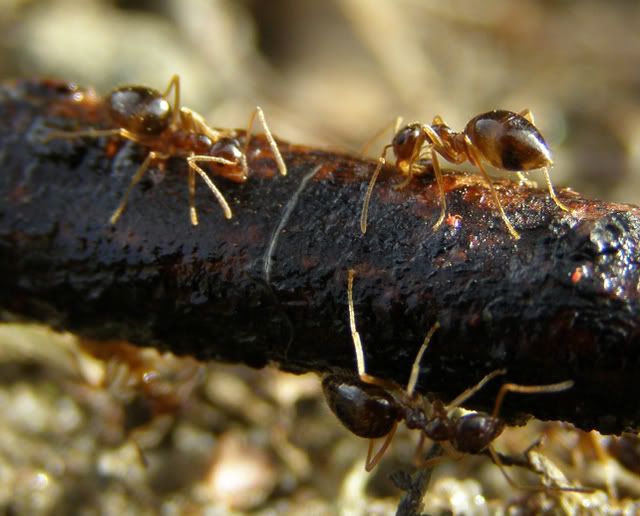
Workers also differ somewhat. All across their range there are several noted varieties of this species. Color varies and I'm sure other features must as well. The two varieties near me tend to be pale brown or deep black. Searching for images on bugguide.net shows us everything in between, including a group that leans more toward being red. This shows how useless color is when identifying ants but it has it's uses all the same. An interesting thing to note though is that P. imparis colonies can have multiple queens in them, AND I have never found a colony that was comprised of two varieties. So this difference in color suddenly suggests P. imparis could be more than one species or hybrids there of.
To anyone planning on starting a colony, I wish you the best of luck. Late afternoon is best, if you can find a swarm as in the video above, even better. And you have until the end of April. Down south you may have missed them for the year, but Camponotus and Nylanderia have likely started up, (as well as a few spring flying Myrmica but fall is the season when most species fly I think).
Down to Business
Oh My!
Mine!
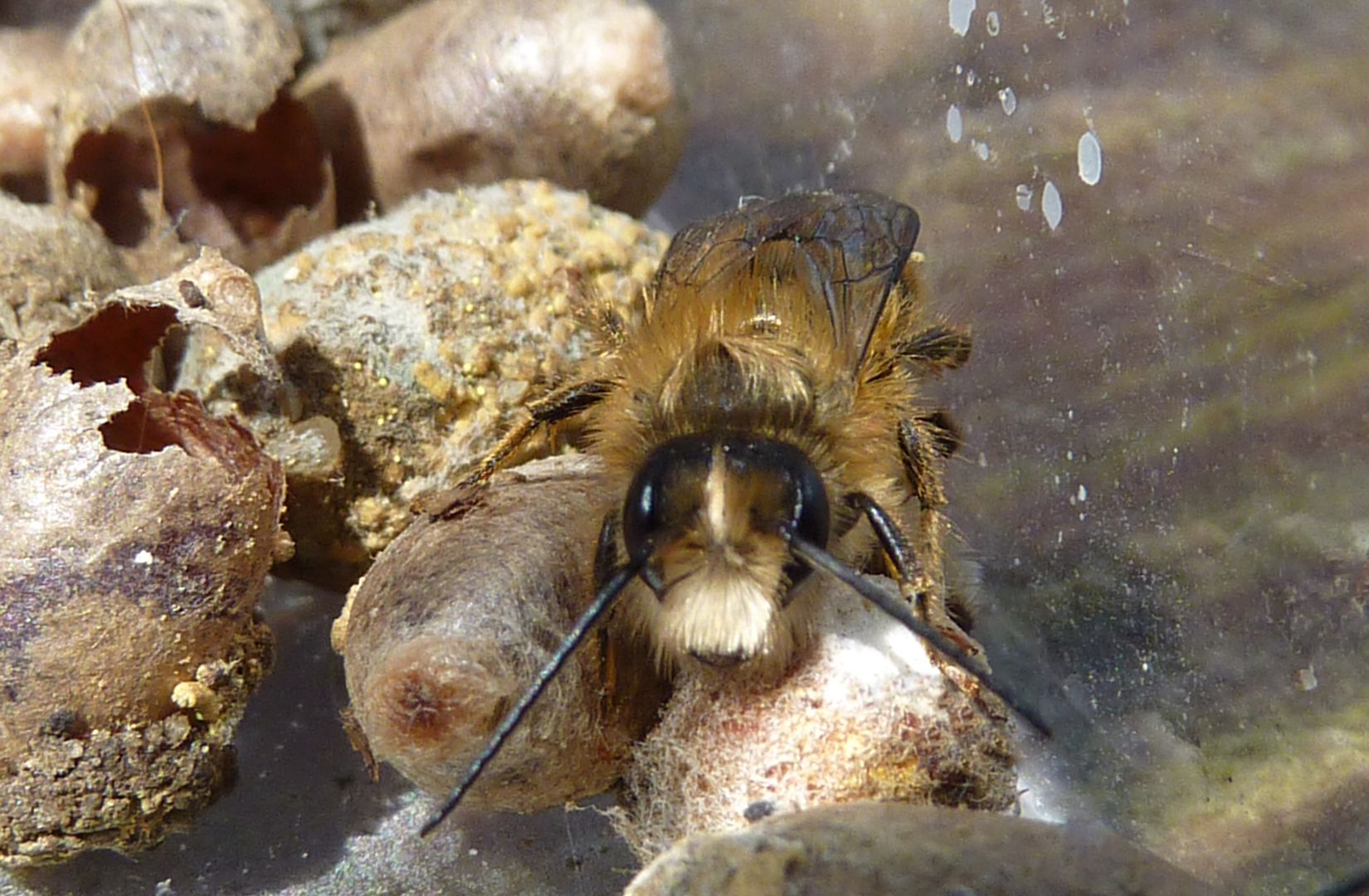
Ok I don't think they're doing it right but then again I'm not a bee. Considering they're only a few days old they're pretty advanced.
Females started hatching today. (though I think this one pictured is a larger male.) And they were immediately courted by males who ... well, two pictures up. None of them fly very far from the container of cocoons. I see them buzzing all around the perimeter of the house and our fence, probably my neighbors yards' too. A few were checking out a hole to a giant carpenter bee. I watched a few enter, in search of females probably, but they were quickly shewed out by a very large and angry carpenter bee. All of this happens at the perfect time of year, as my blueberry bushes and assorted fruit trees begin to flower. Yay Bees.
Thursday, April 1, 2010
Wow That's a Tiny Ant
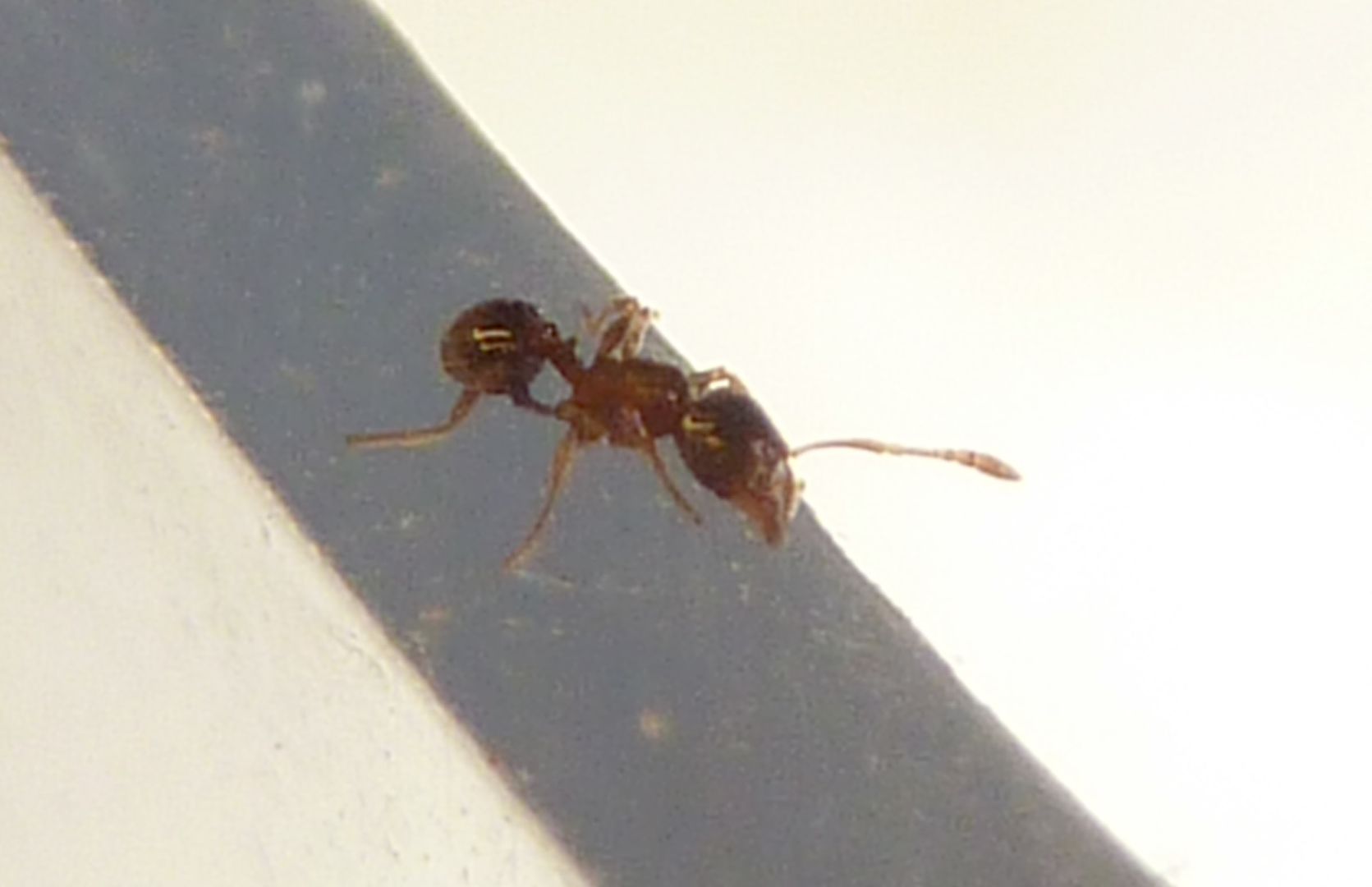
Holy Cow! I know this picture looks a little fake. The Plaster of Paris inside the container caught most of the flash and looks glowing white. The rim of the container, which the ant is on measures 2mm wide. This is a worker to a very small ant species I have, which I think is Pheidole pilifera. Still not good enough magnification to properly identify the species but still a great example of the Panasonic Lumix can focus on. I'm still mad I can't do anything with video files but I love everything else this camera can do.
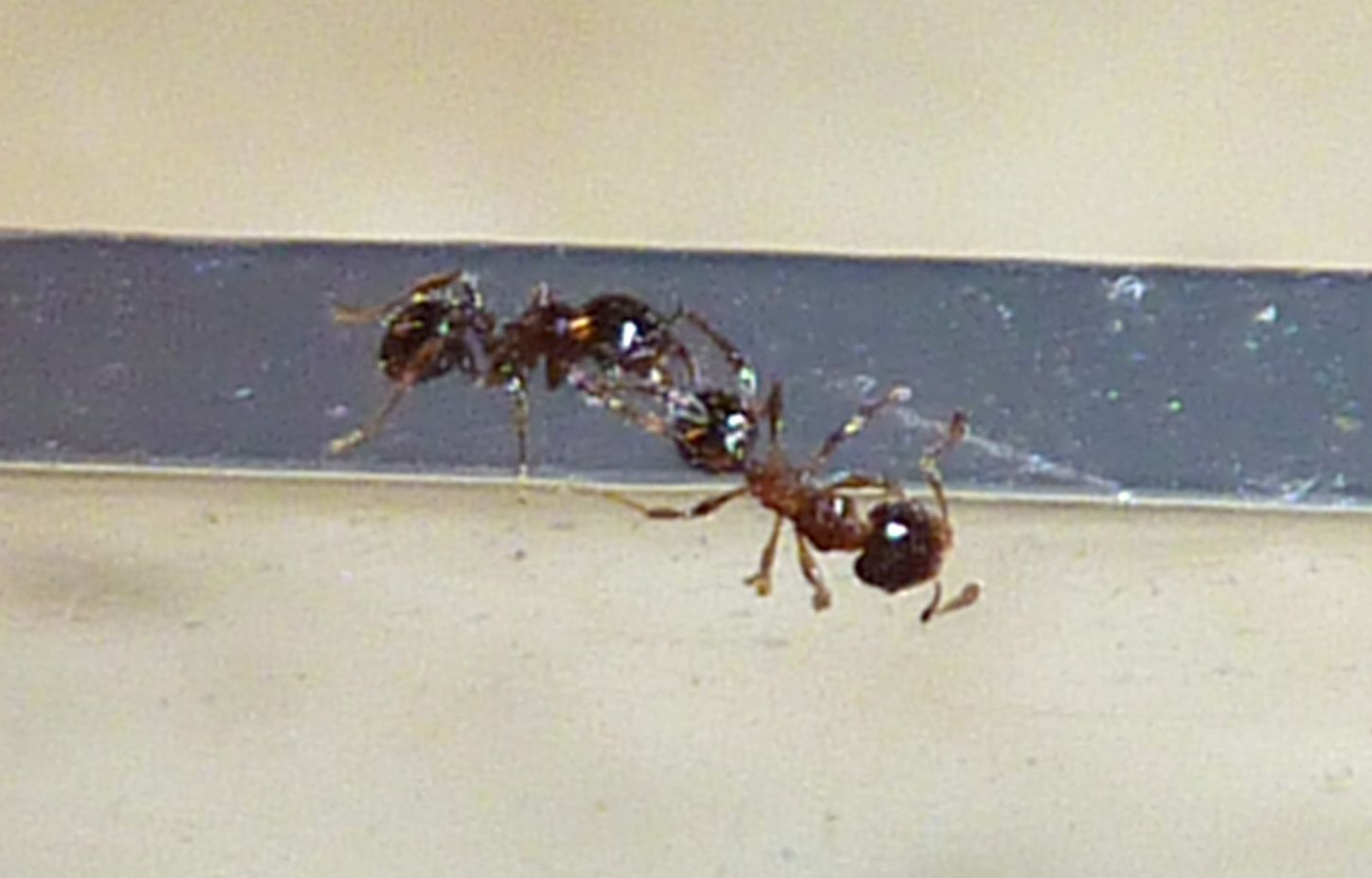
In this picture the lighting is a little to harsh so it's not what a professional photographer should be using for excellent pictures. But it's great for the casual buyer. Here one worker leads the other by tandem running. That's where the lead ant move a little and waits for physical contact from the ant behind before moving on. In this way young ants learn to forage, where to look, and can even steak out new nest sites. The setup sits in a foraging dish so I'm not worried about that.
Subscribe to:
Posts (Atom)