Showing posts with label Parasitic. Show all posts

Saturday, June 16, 2012

Mason Bee Parasite

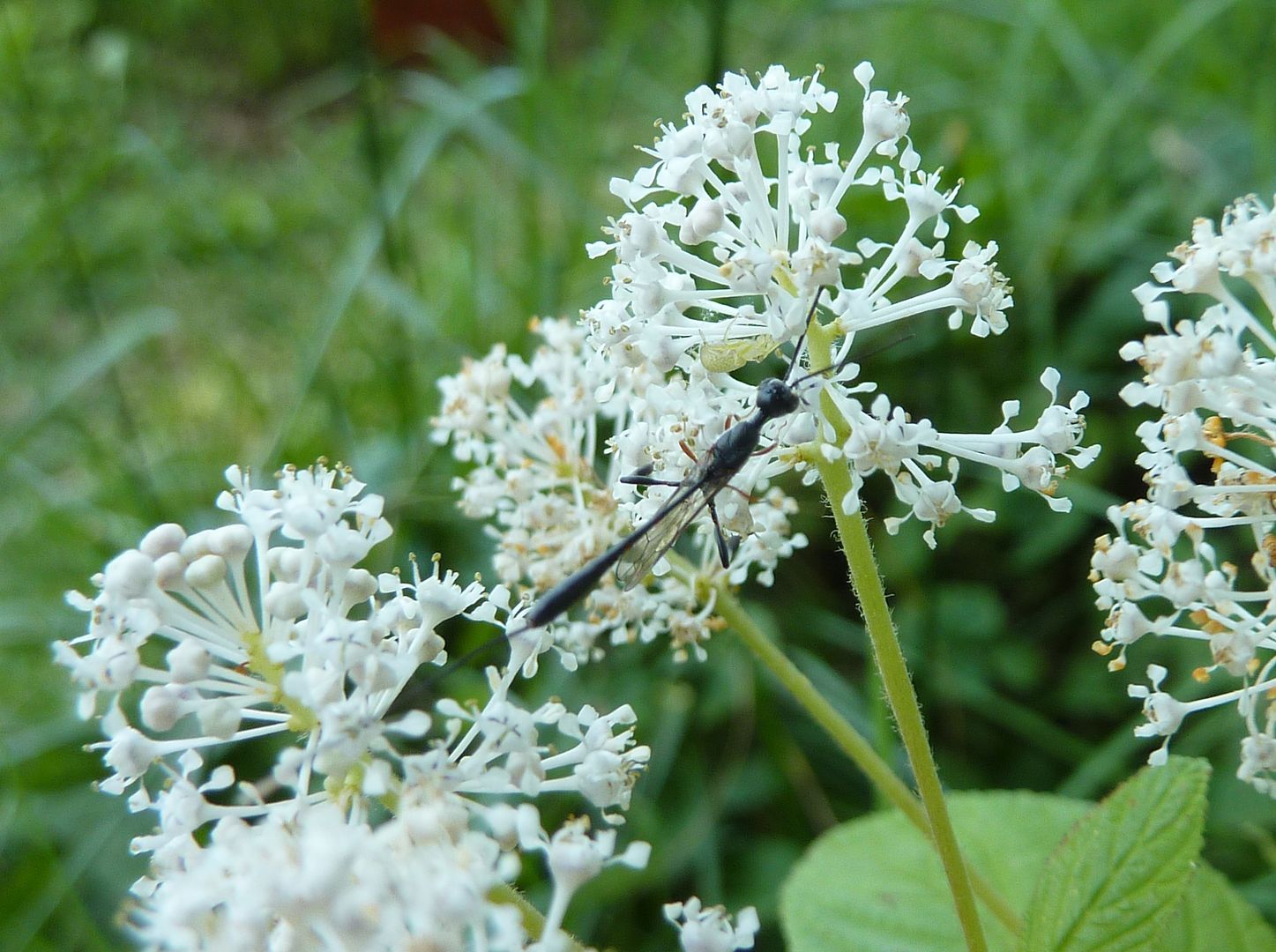
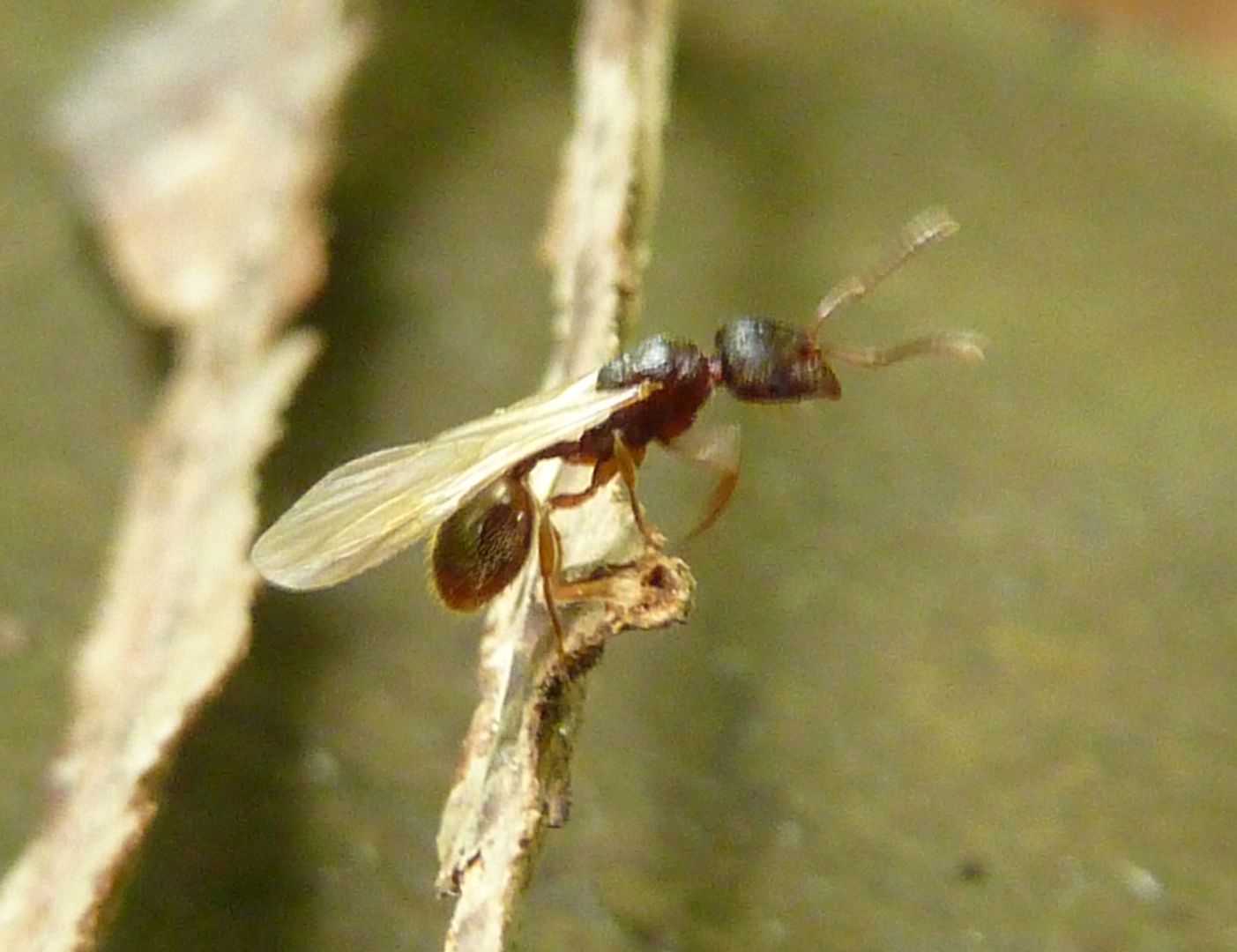
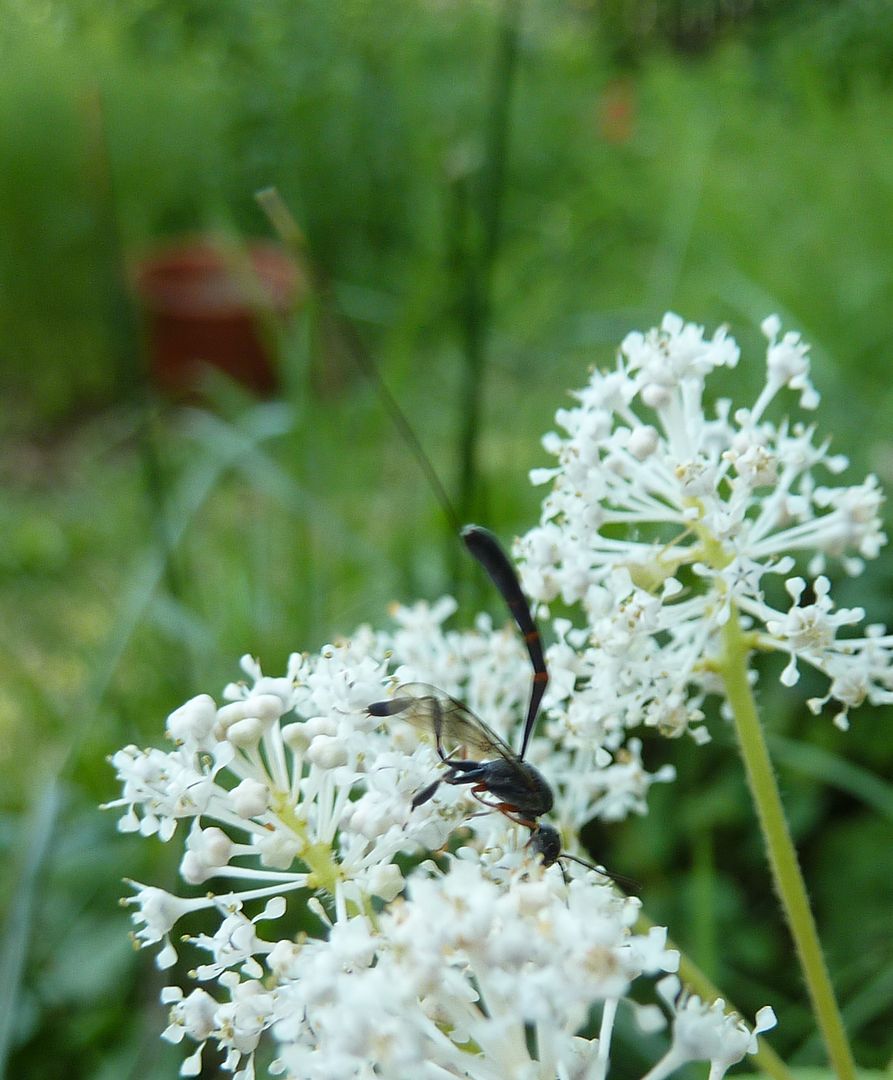
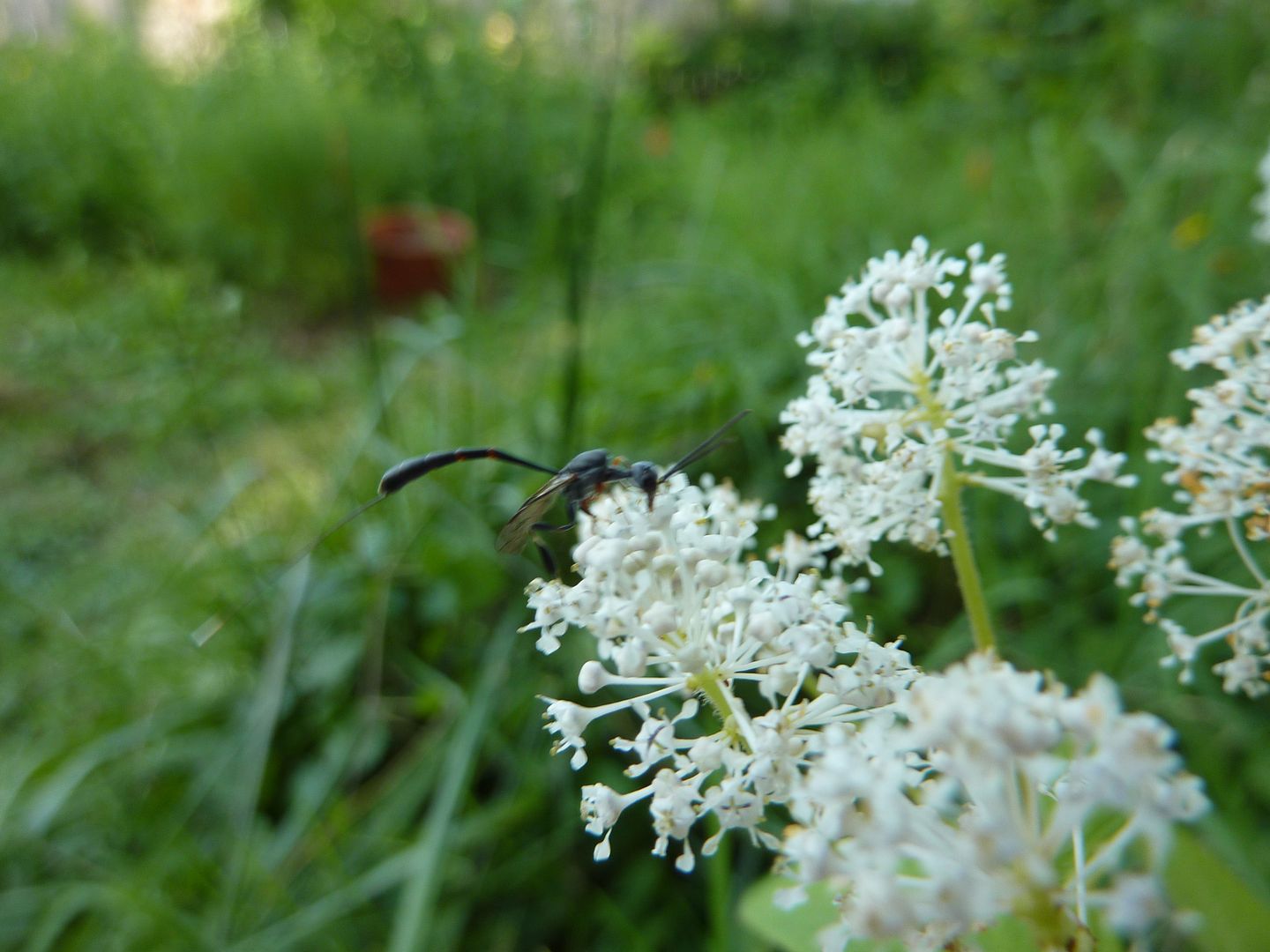
Wasps in the genus Gasteruption are social parasites other Hymenoptera. In this case that means Mason Bees. They inject their egg into the mason bee tunnel where larva of the host species are developing. Next year, instead of hatching as a mason bee, a parasitic wasp will emerge.

The fact that I'm seeing these in the garden should probably be a red flag to bring the mason bee nest blocks inside or at least screen them in somehow. My mason bees are an invasive species though, Osmia taurus, so I'm not really inclined to do that. In the interest of diversity I think I'll let nature takes its course, assuming they are the host that is.

I'm amazed at how pencil thin they are. They even look tiny among the blooms of New Jersey Tea, Ceanothus americanus.

Tuesday, December 6, 2011

Best of Ants 2011

It's that time of year again where I recap the best my photography skills had to offer for the year.

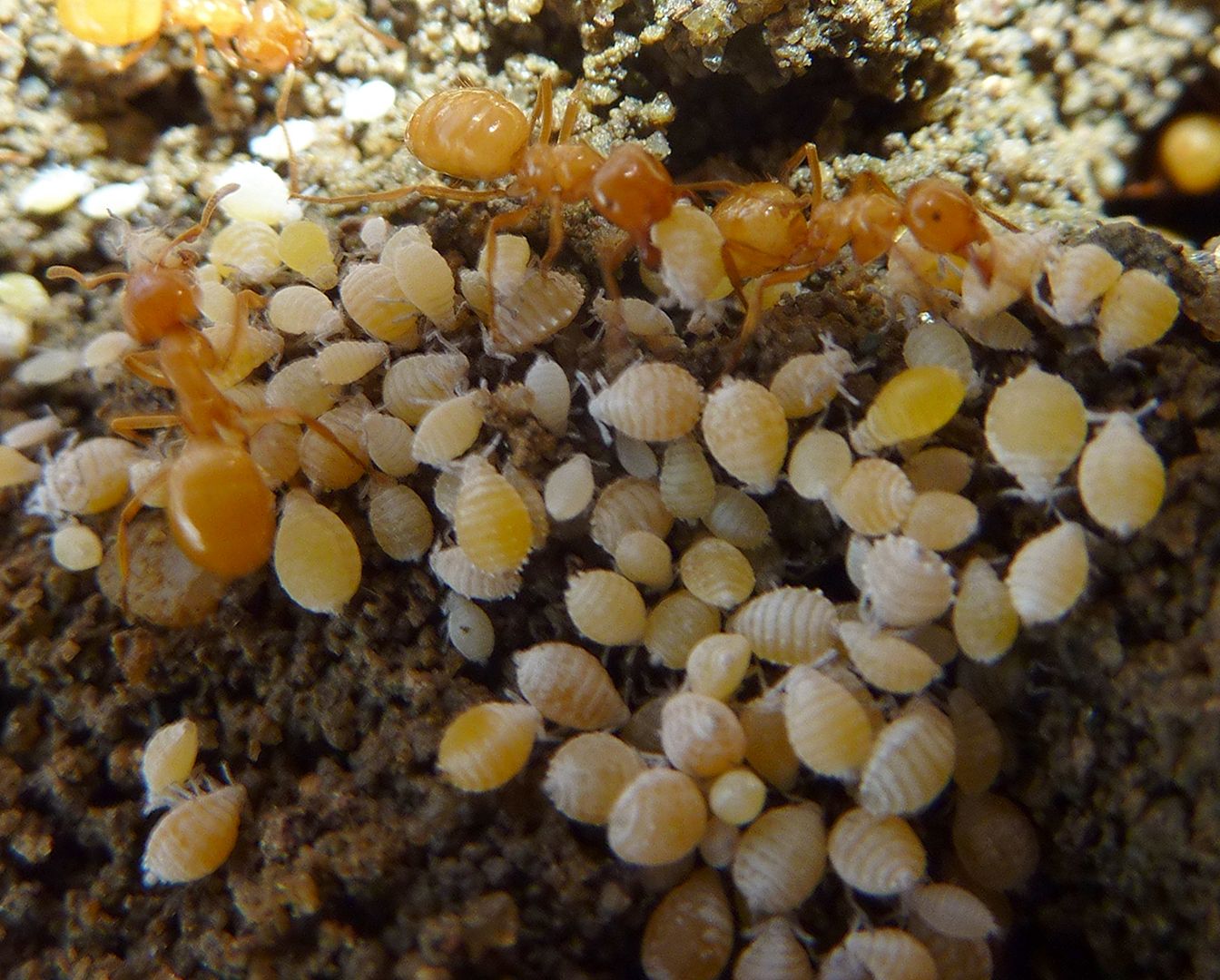
Some Lasius interjectus workers retrieving their root aphid stock which over wintered as eggs from the previous autumn. These herds of insects will nourish the colony in the coming year.

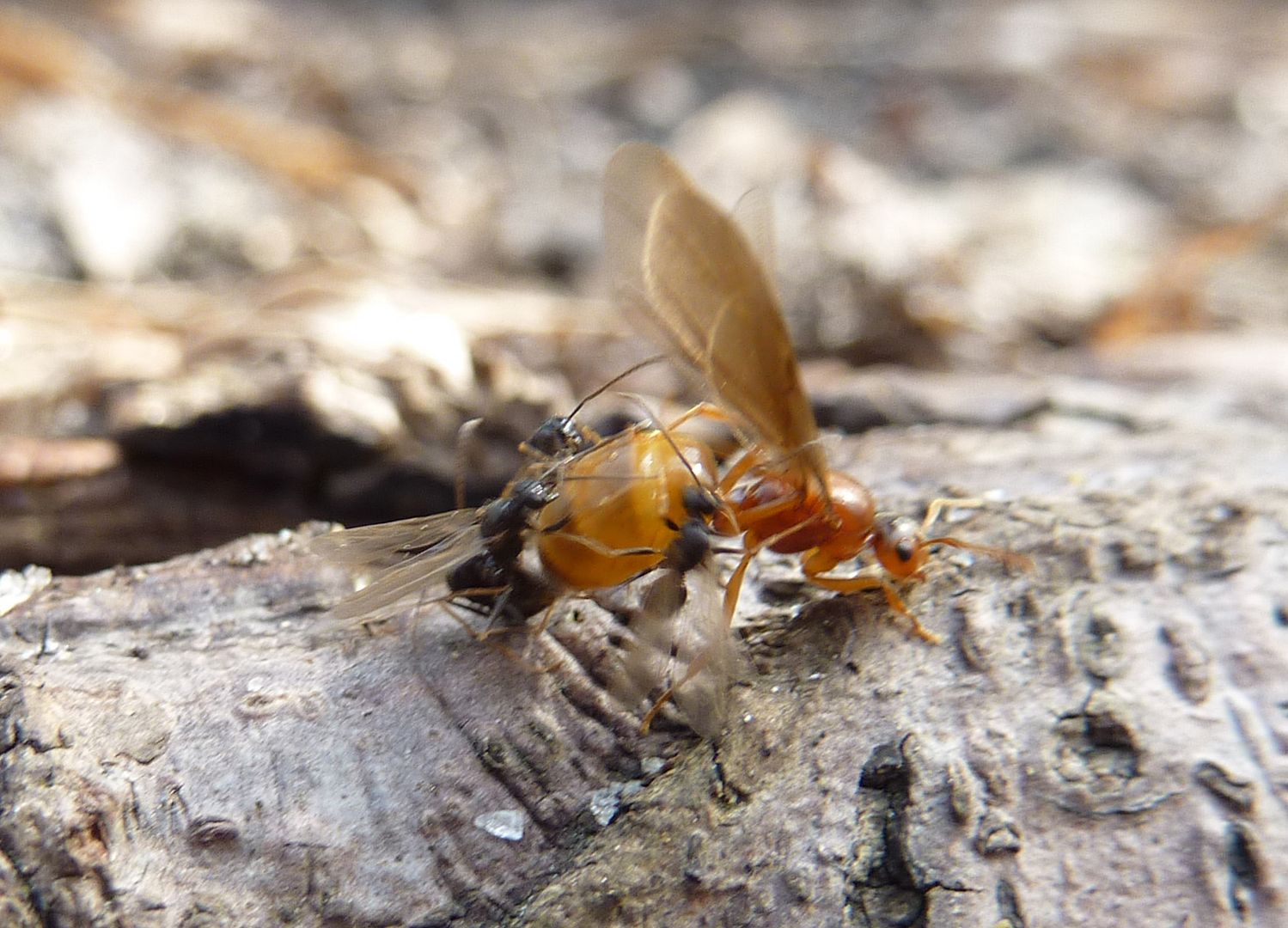
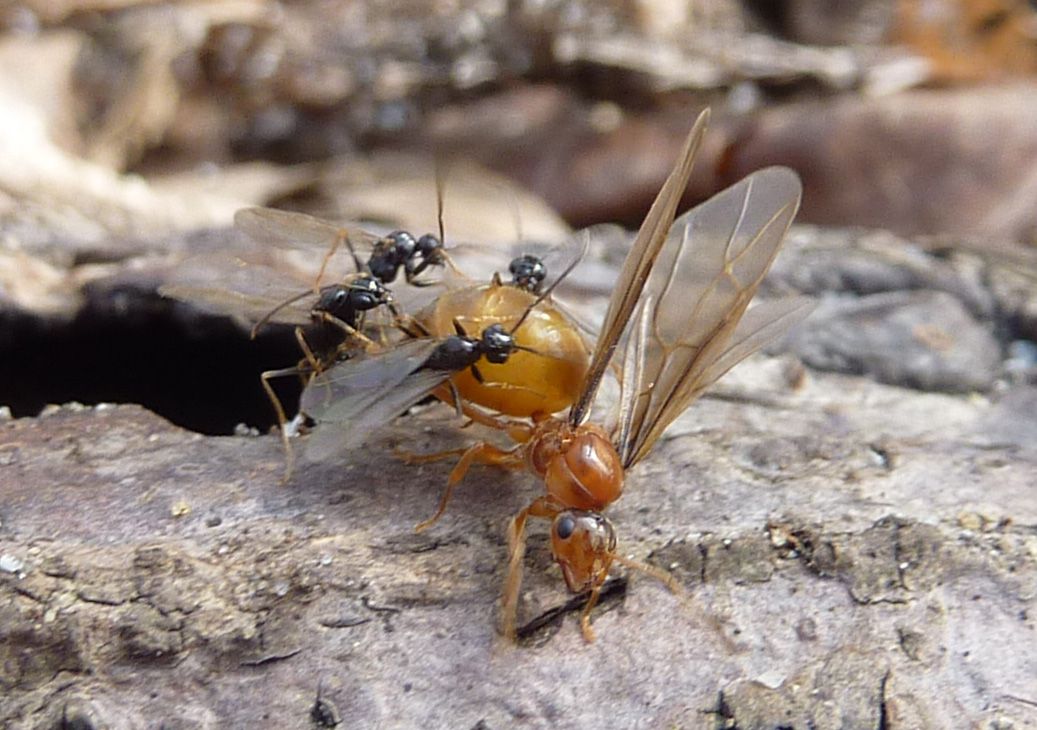
A Prenolepis imparis, Winter Ant, queen and male escorts. Nuptial flights to this species are fairly predictable taking place on the first few warm days (~70F) of the year. Queens take flight in the afternoon and are out numbered by males roughly 200 to 1. Mating happens in swarms low to the ground or otherwise at eye level.

I've always loved how queens are such a robust color. Male ants universally are almost always black for species the world over. Very few deviate away from this standard.

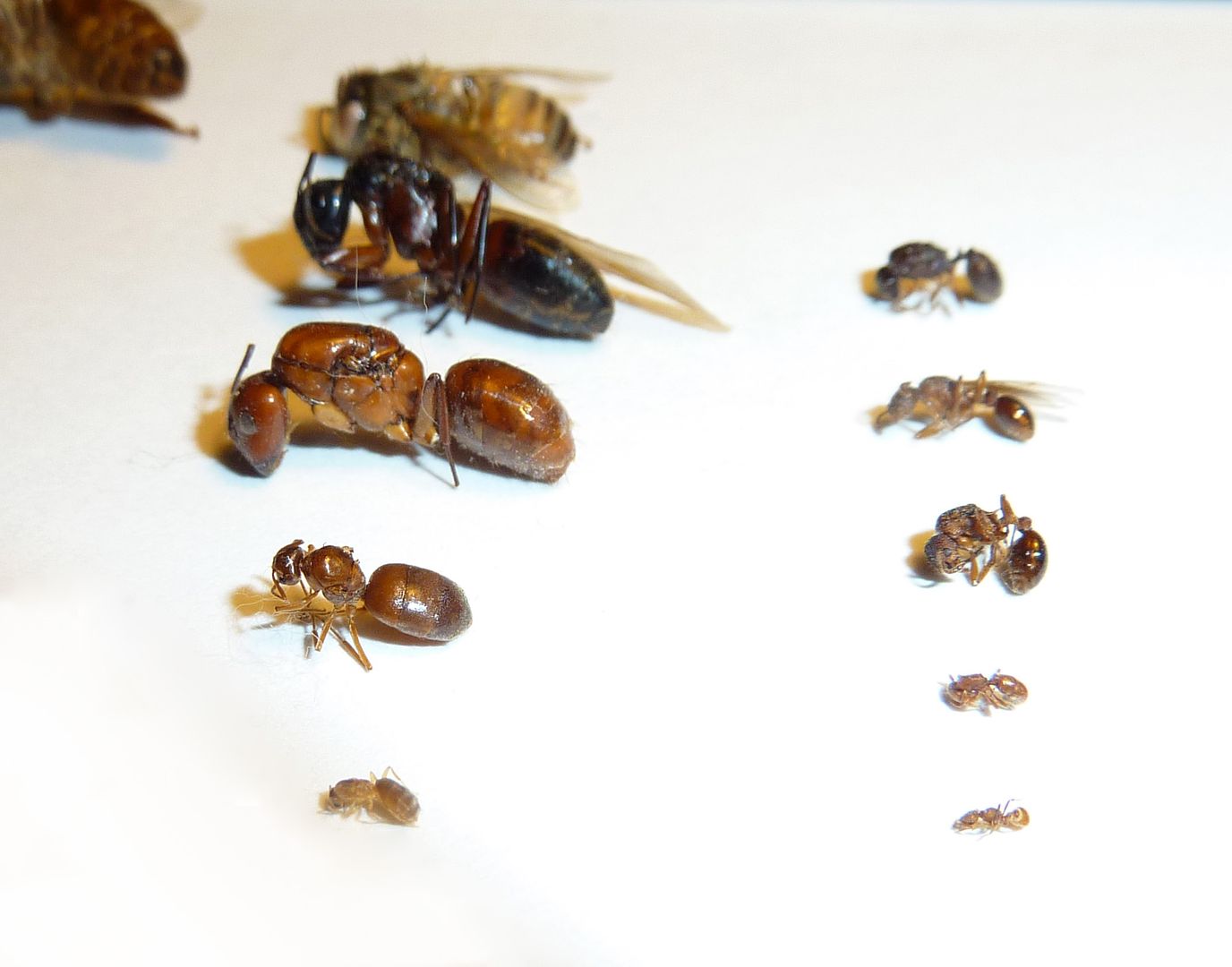
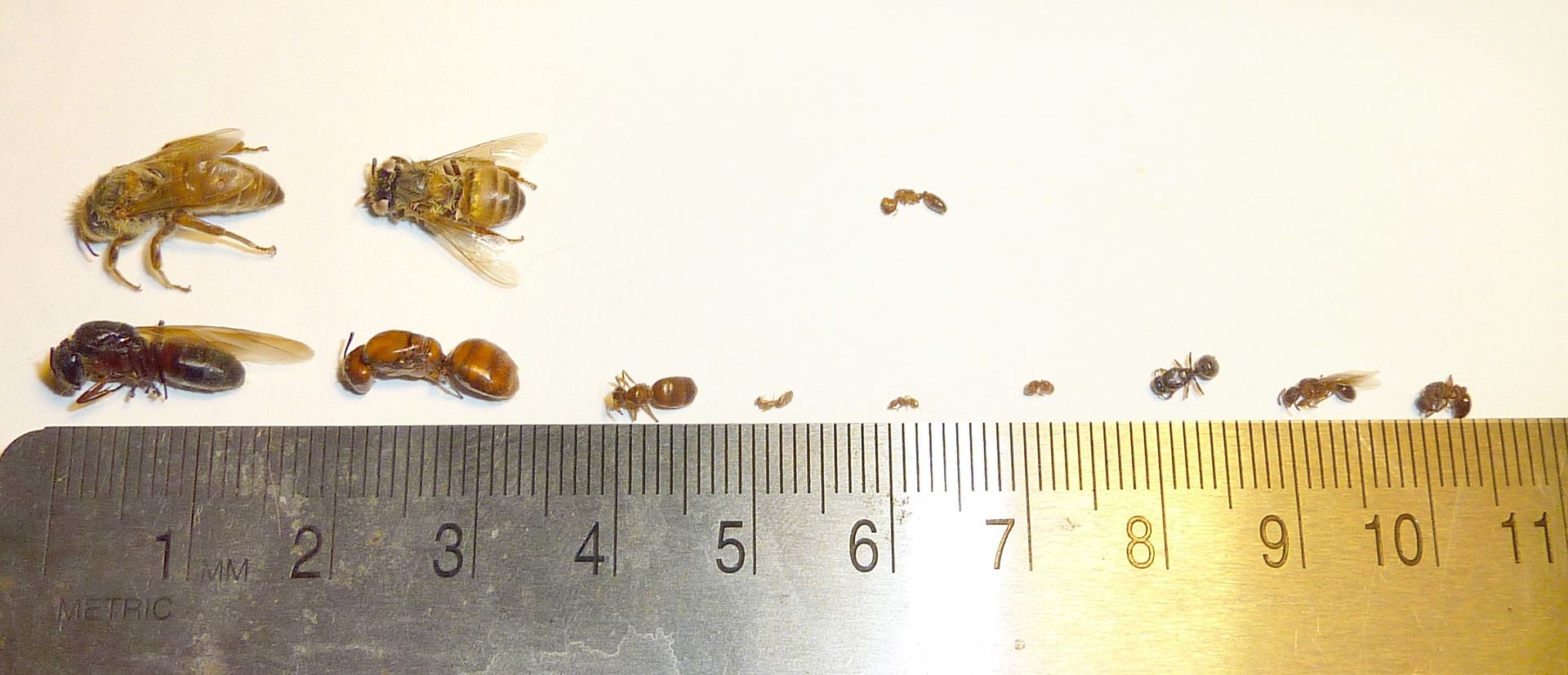
A collection of ant queen from various species. (There is also a worker and half a queen honeybee in the very top left side.)

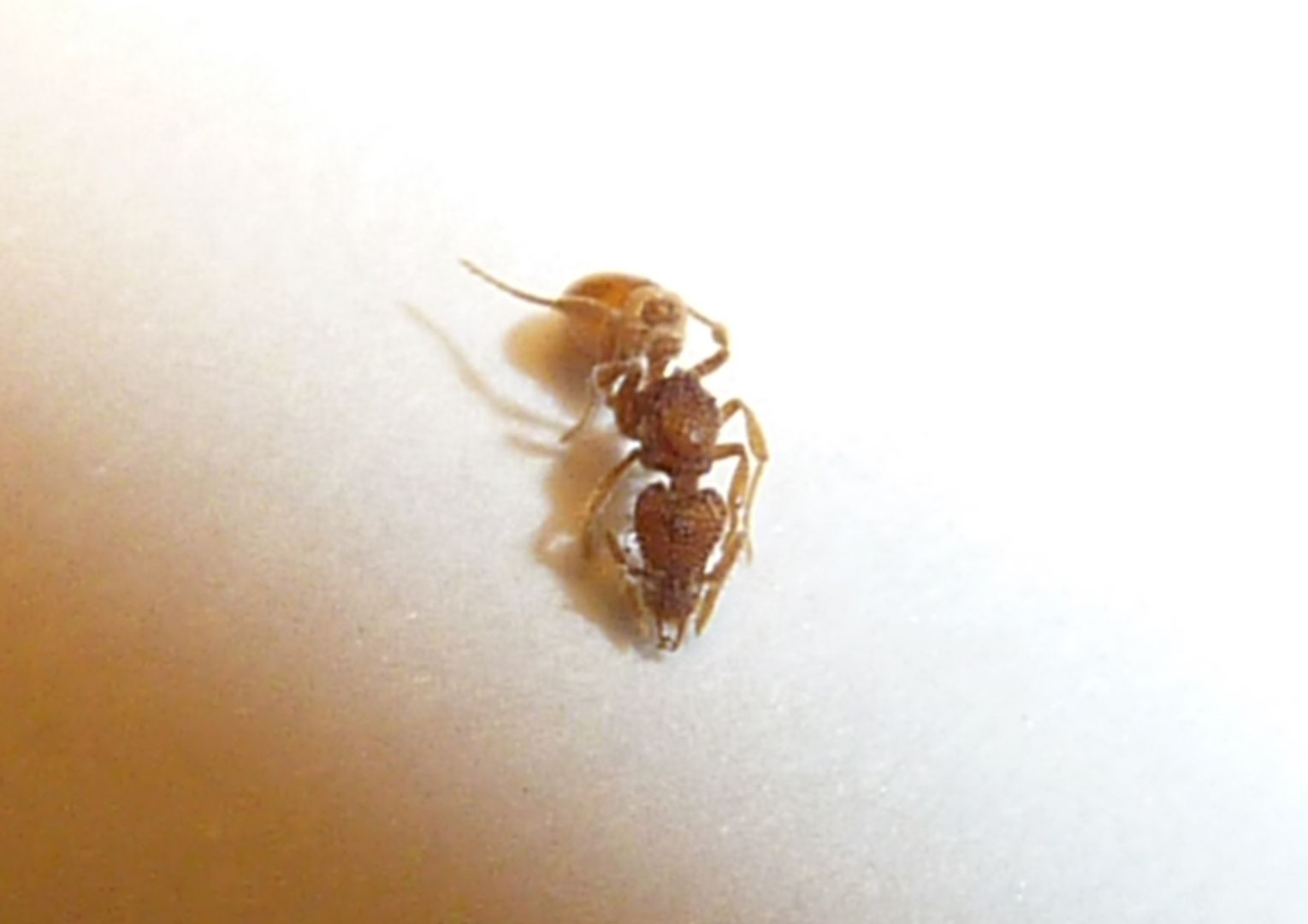
This isn't a particularly great photo. I just love that I finally got around to taking pictures of my Pyramica specimen. This is a genus comprised of subterranean hunters that specalize in small arthropods and collembolans. Because they're subterranean one has to more or less chance upon them or sift through the right material. Around the world this genus gets quite colorful. Check them out on Ant Web.

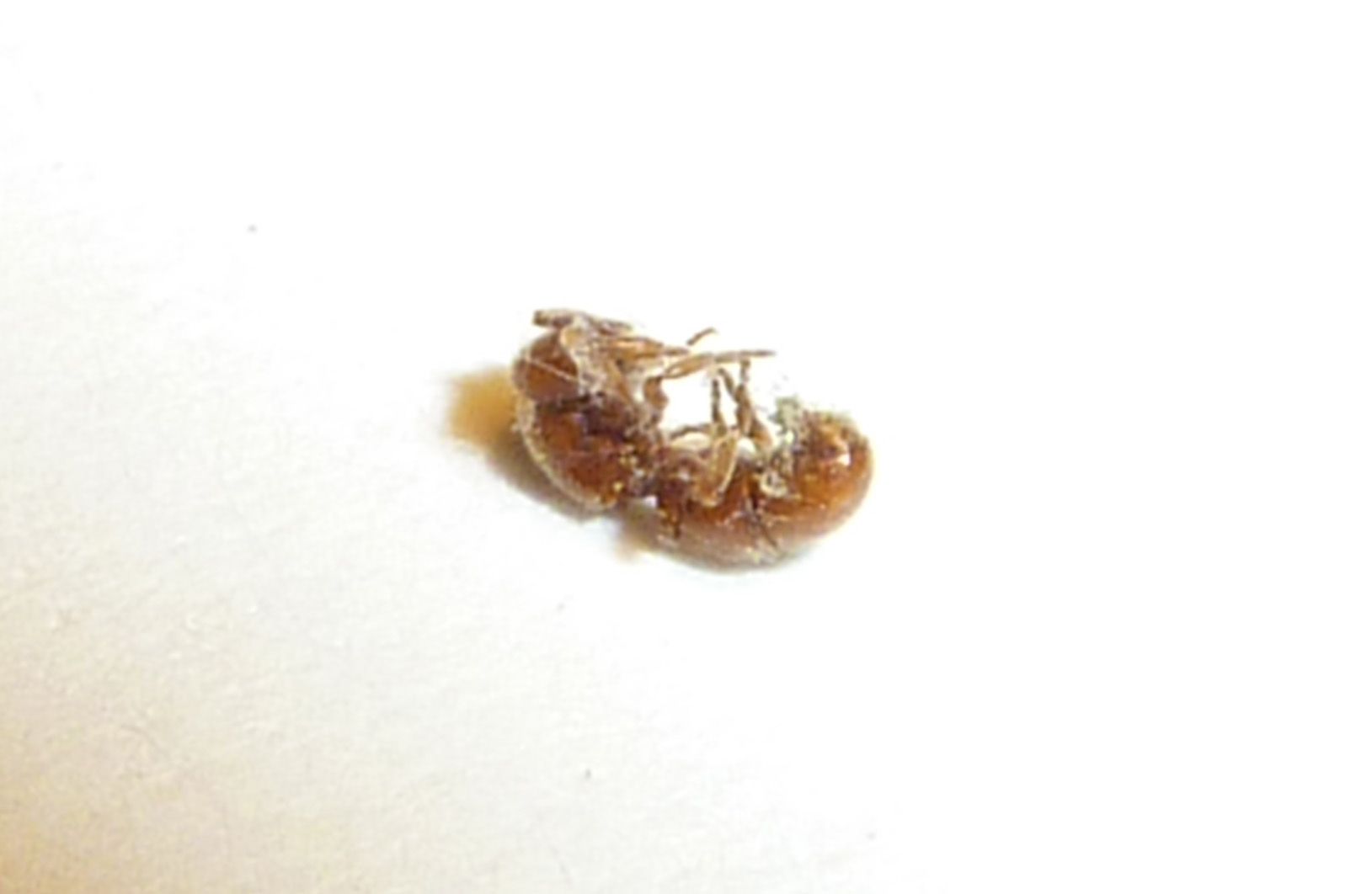
The same is true for my Proceratium specimen. These use a different method of hunting. The tip of their abdomen is unusual looking because the tip naturally curls around to point forward. This makes stinging pray items easier while hunting in tight enclosed spaces.

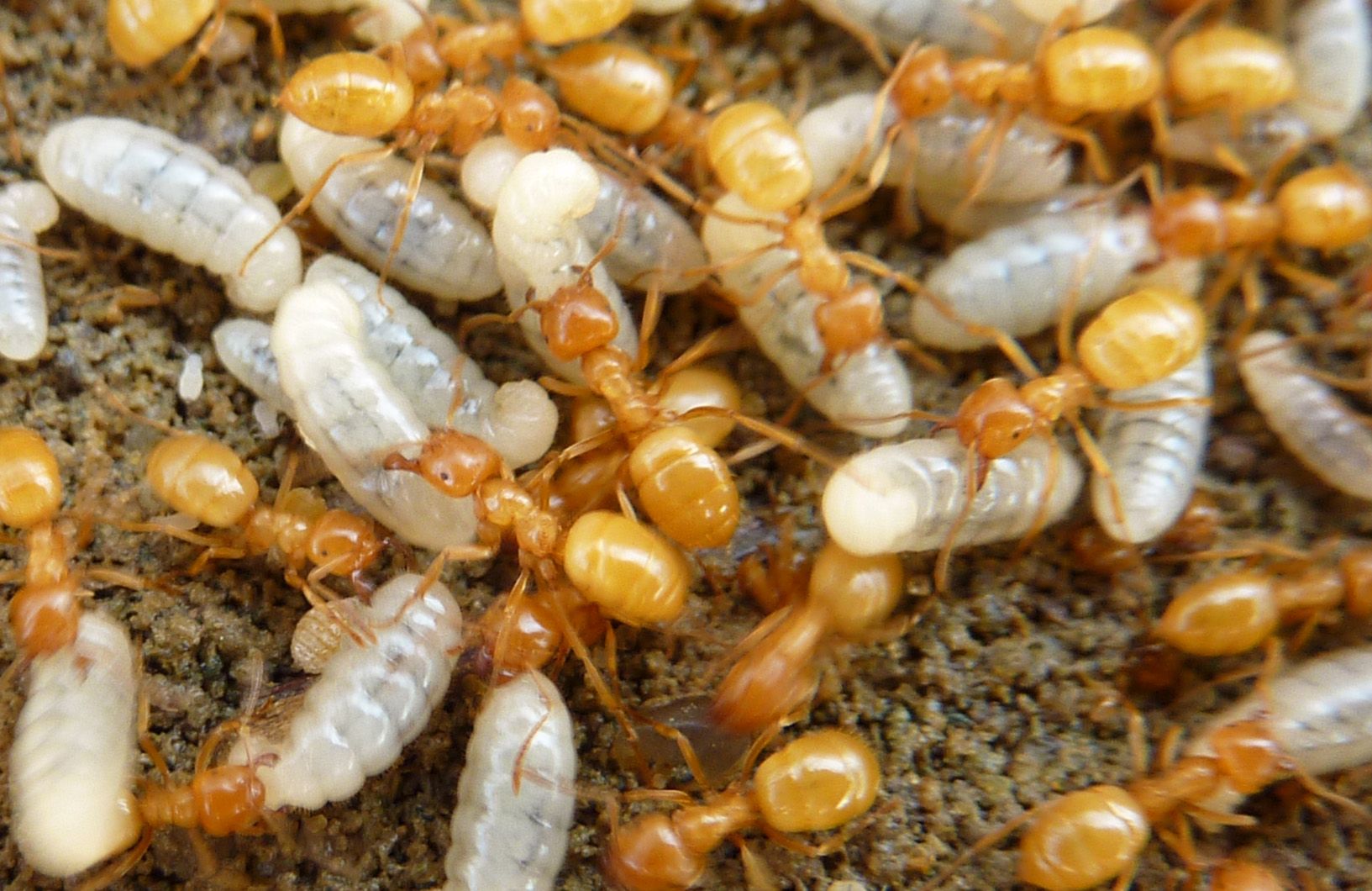
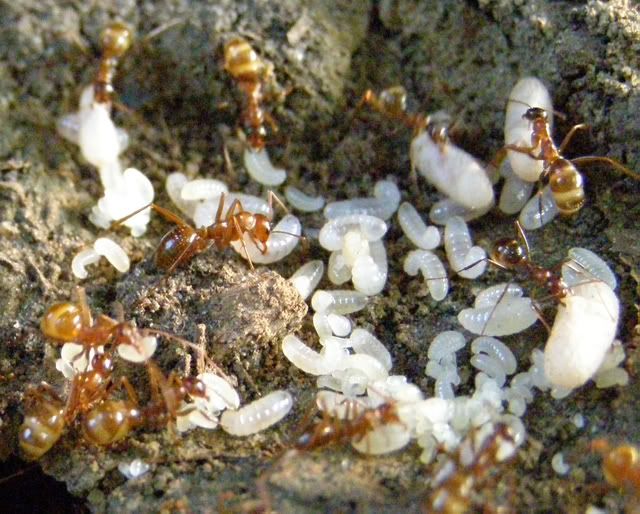
Lasius interjectus workers scrambling to protect the larva after a photographer disturbs the nest. 

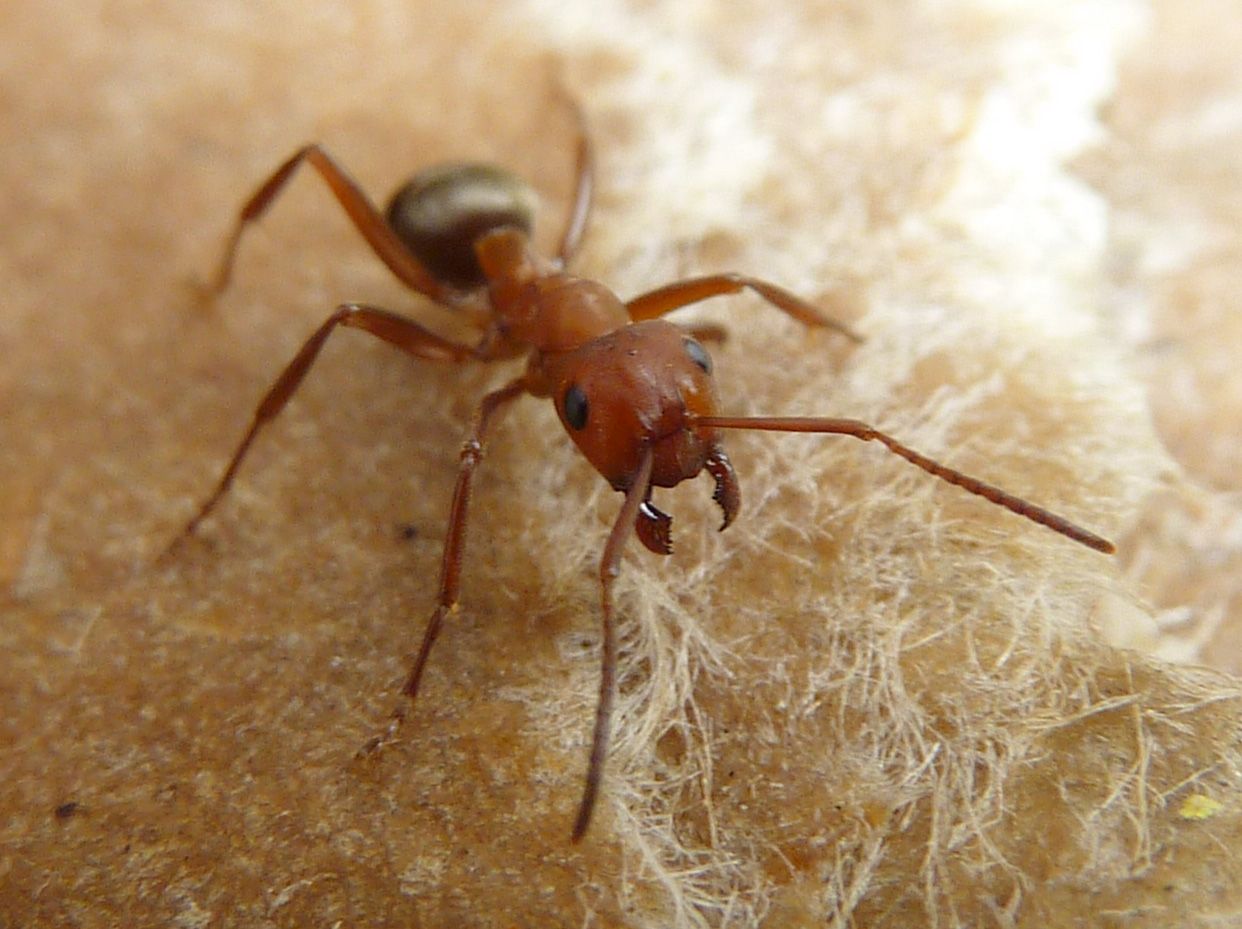
The perfect shot of the clypeal notch (between the mandibles) to a Formica pergandei worker. Formica is one of the largest genera of ants in North America, though not the world. From your back yard, to the peaks of the Rocky Mountains, there is a species to fit every notch except the arid south. To confuse matters even more it's a genus filled with social parasites and slave makers of other Formica. That notch in the middle of the clypeus means this species is in the Sanguinea subgroup, making identification a choice between 11 species instead of 100.

Another Formica worker. This time Formica subsericea which is the most common and widely distributed of the darker members of the Fusca group. The Fusca species in Formica are the most industrious of the host groups. Their colonies tend aphids and other sap producing insects from multiple trees at a time during the day. 

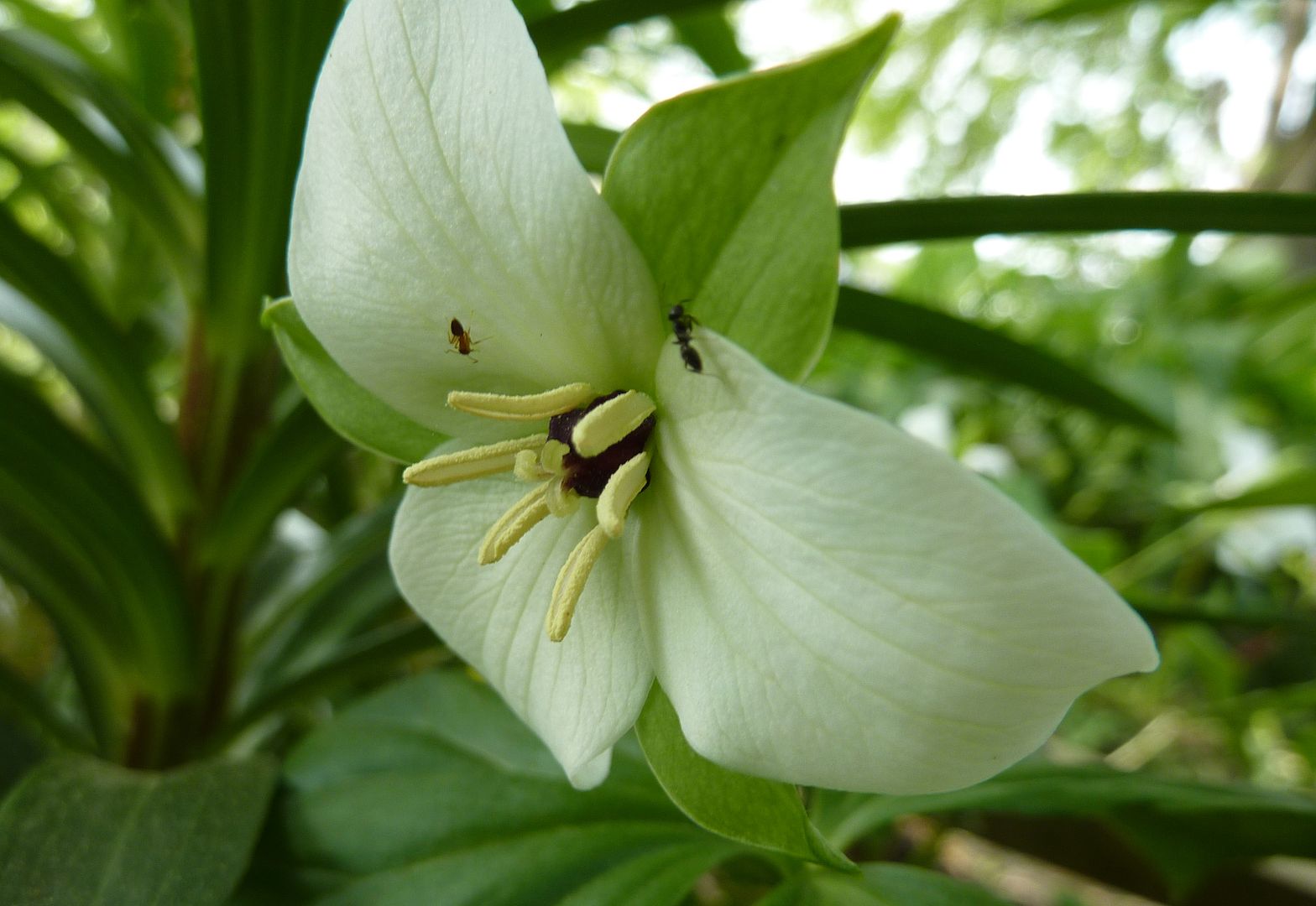
Mixing two of my favorite things, ants and Trilliums. Trillium simile is one of my favorites because the petals come to form a triangle. When grown in a group they have an architectural effect I like, though you'll get that from masses of any Trillium species. The ants are Tapinoma sessile (black) and Nylanderia flavipes (dark orange) which I have found to be notorious for stealing nectar and at the same time eager for seeds to develop.

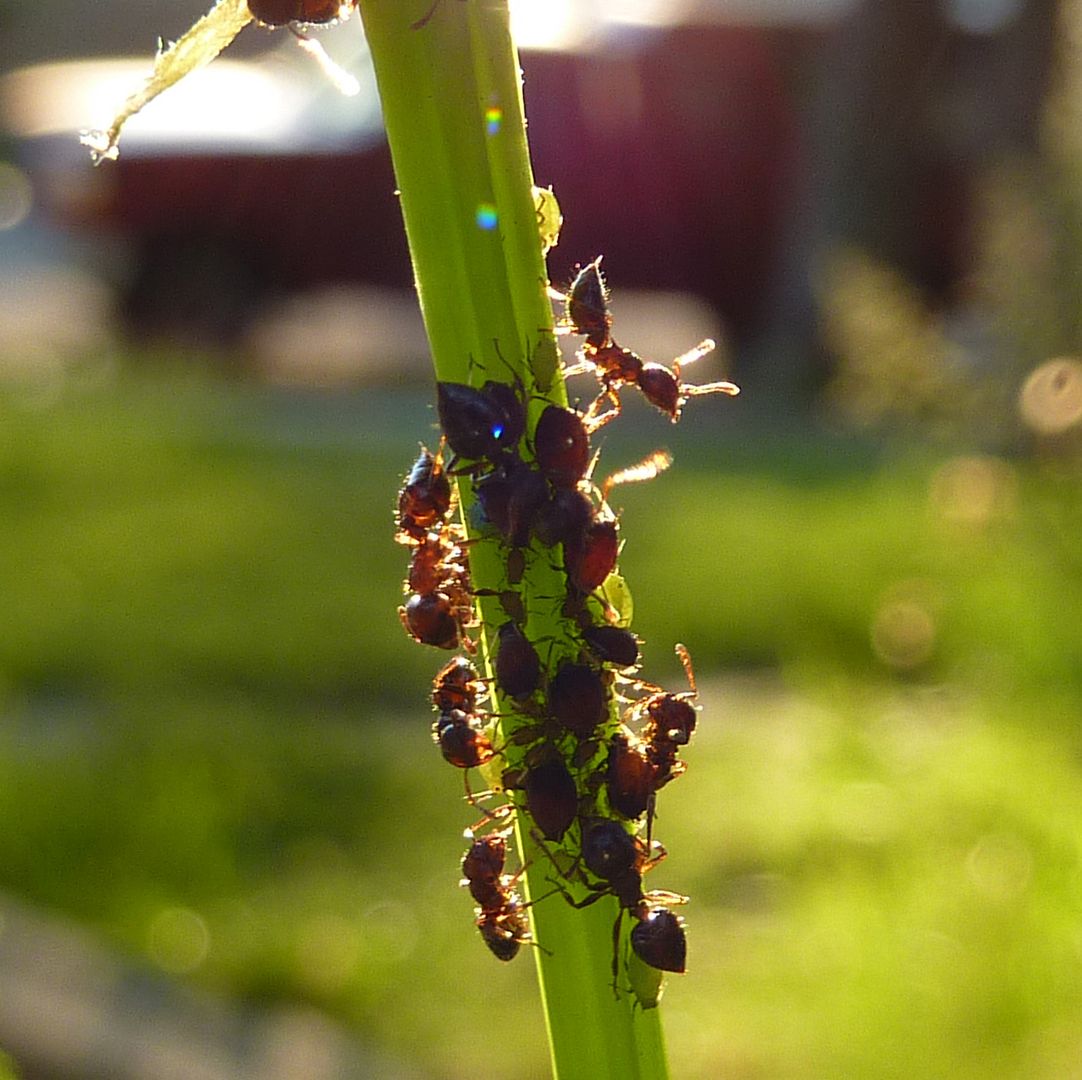
 Crematogaster cerasi workers tending aphids in the sunset.

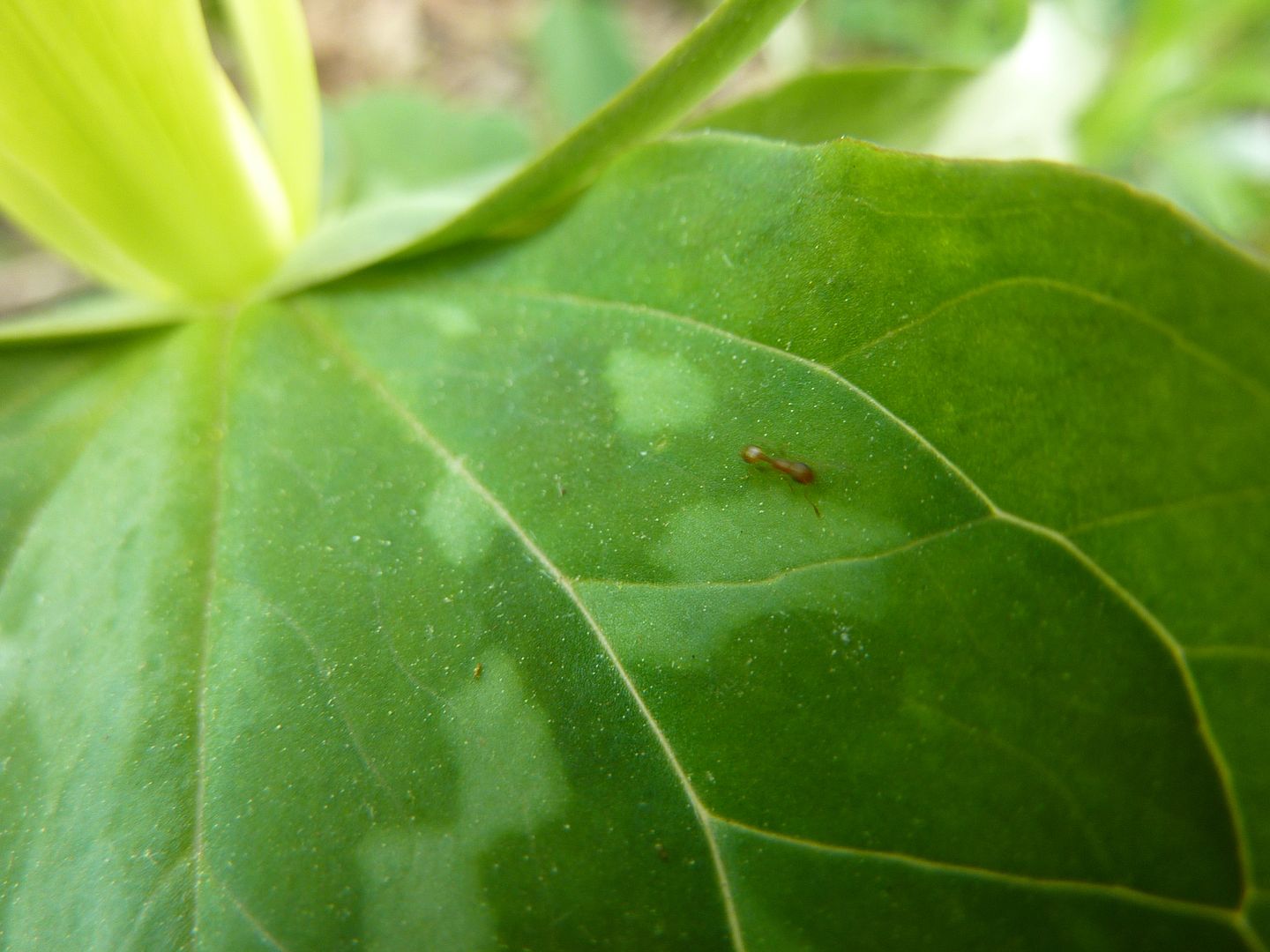
An insignificant little ant, possibility Temnothorax, roams a Trillium leaf in search for food.

A rather small queen ant in the genus Stenamma. I didn't even know this genus existed in New Jersey let alone my backyard but here it is. Seeing her brings into question all of my identifications of the smaller ants like the Temnothorax above.

A Camponotus castaneus queen I caught earlier this year. I love this species because it's the only solid orange ant around here in that genus.

Prenolepis imparis colonies slowdown once summer hits. Their workers inflate with food and are put to work digging tunnels to make the nest deeper. They'll retreat to the damper parts over the summer and move back towards the surface as the rains come back again. Before winter hits they'll eventually be the only species out foraging long after other species have gone into hibernation. They're not called the winter ant for nothing.


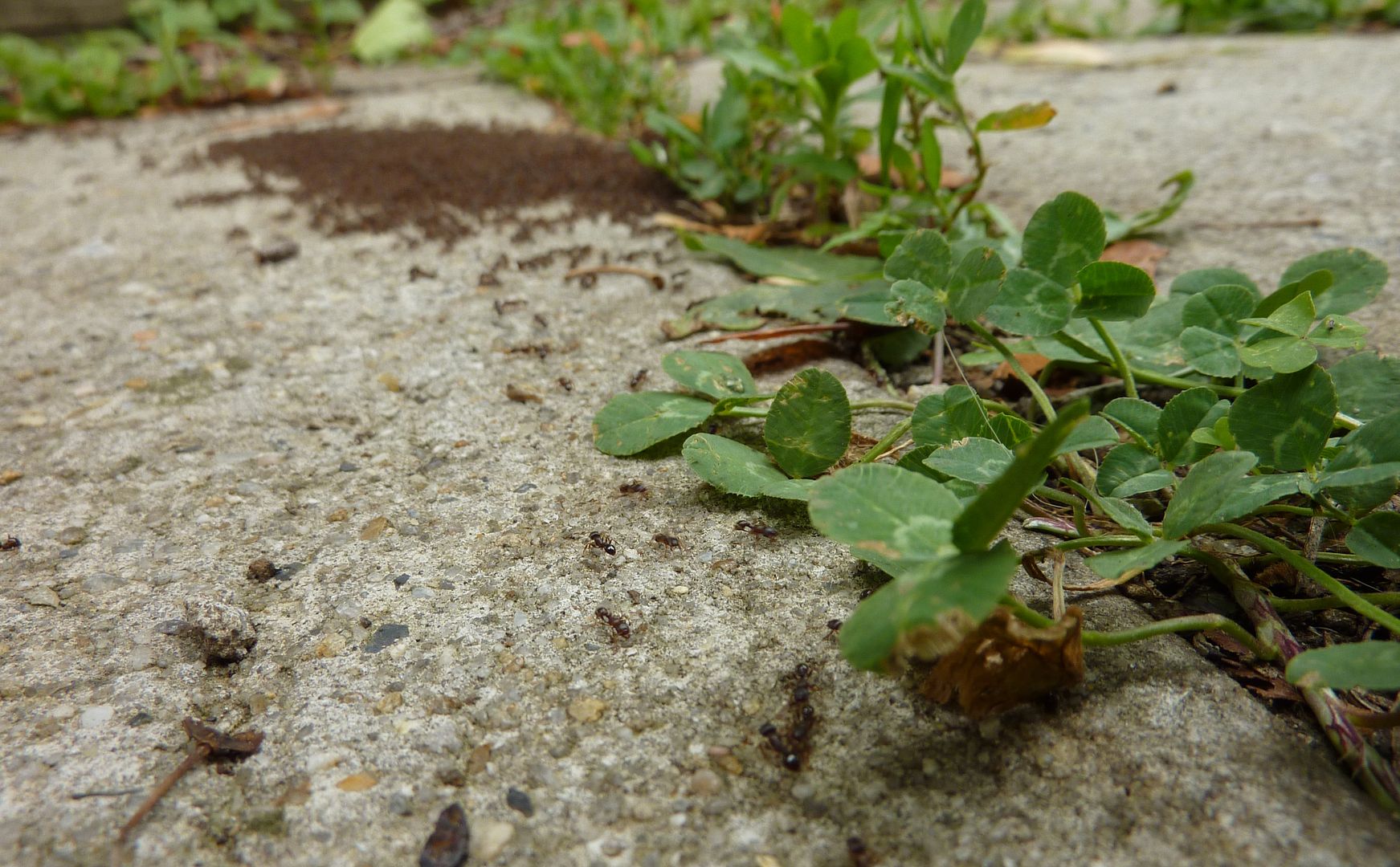
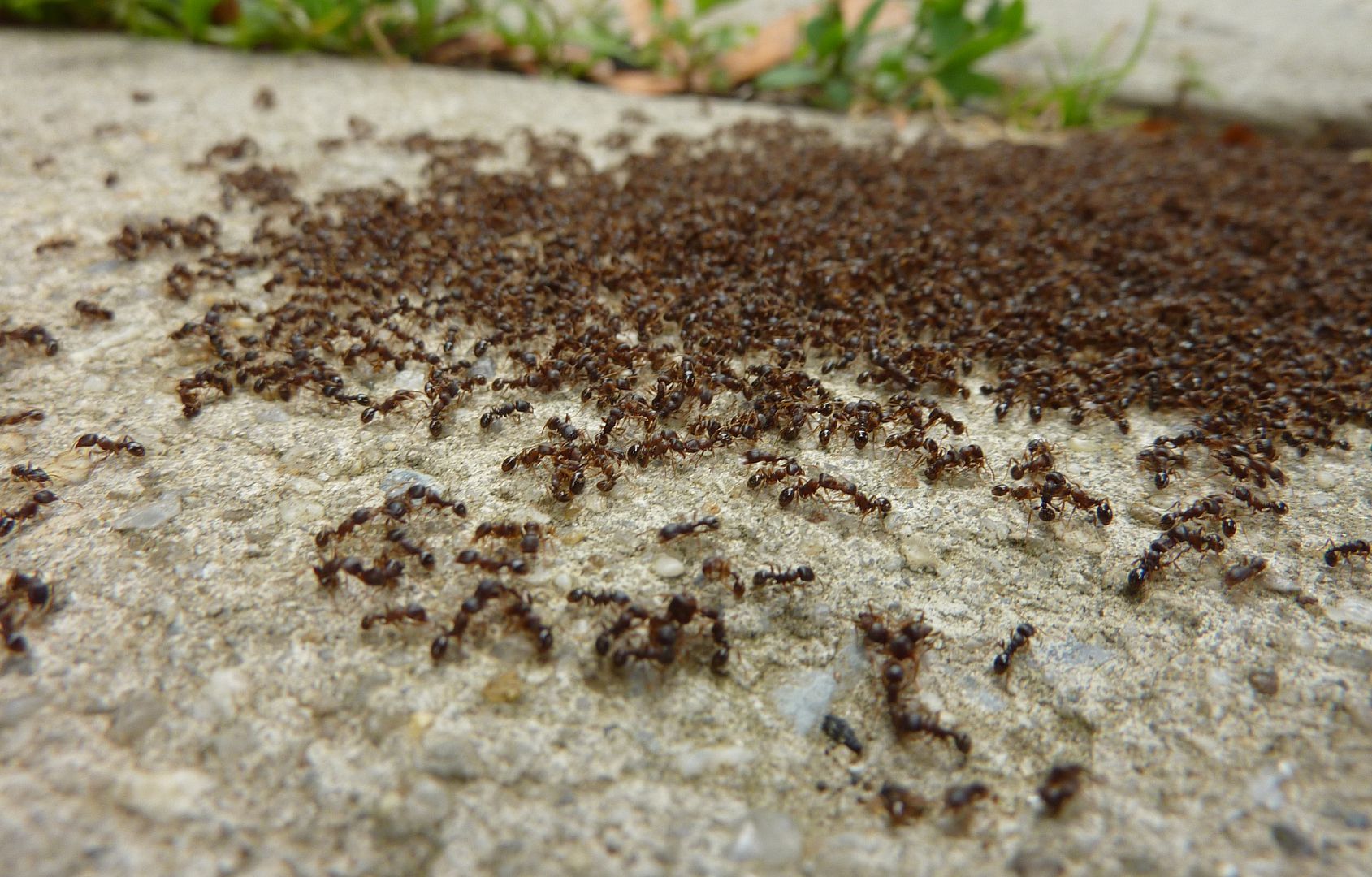
An ominous black stain in the late spring/summer time is more than likely a battle between two colonies of pavement ant, Tetramorium species E. (The E is thanks to their taxonomic limbo at the moment... I wish they'd made it stand for something at least like erecta


Alex Wild who is a very well respected insect photographer featured this image on his blog. Though he color corrected it to make a better image. This species is normally black in color but a few colonies around here tend towards being dark brown or slightly bicolored.

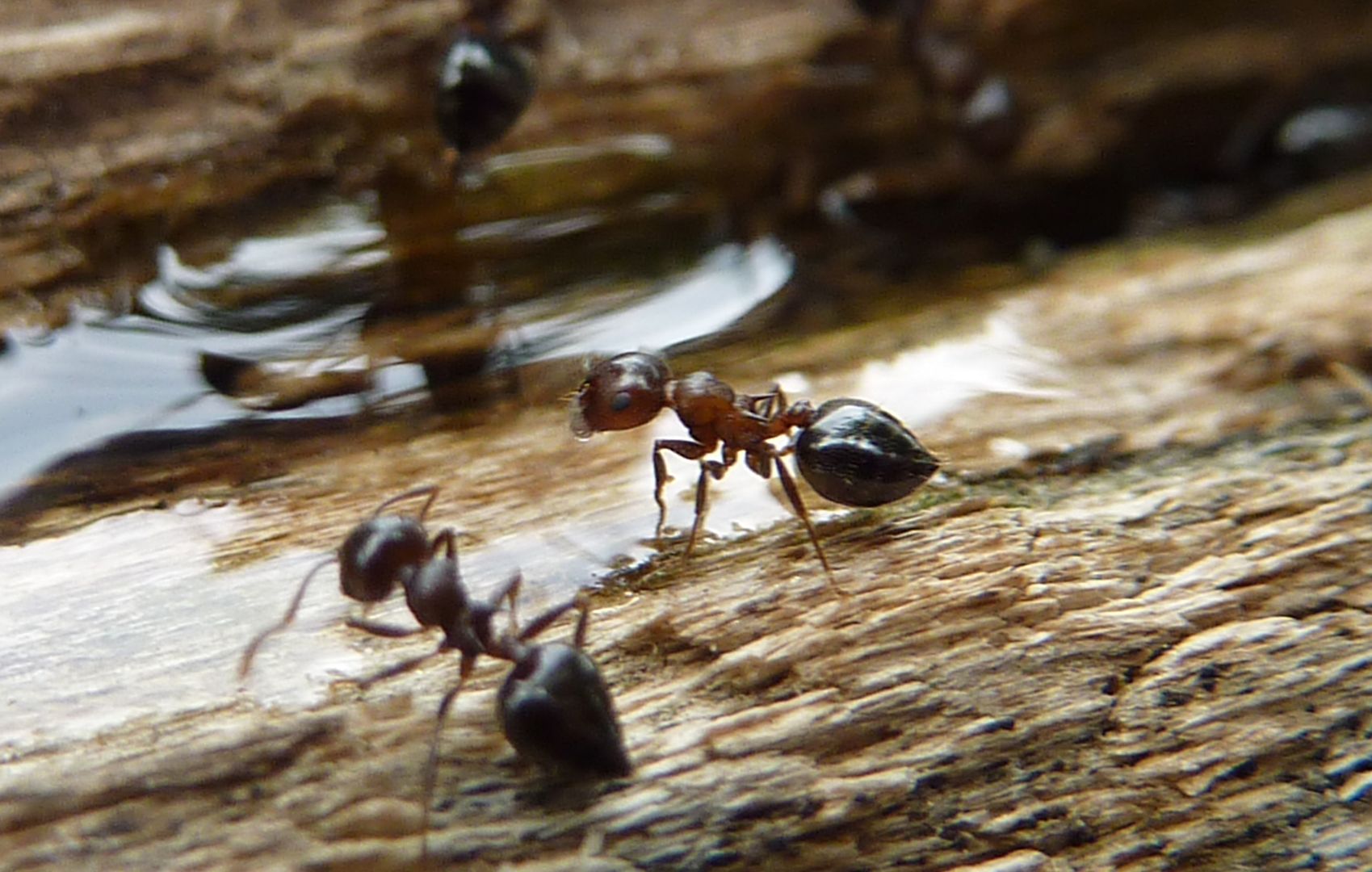
While baiting the yard with honey here and there it's easy for anyone to check the ant diversity hanging about. Here some Crematogaster cerasi workers sip at a small pool of honey.

While having a friend over one day I mentioned I have random workers to a species that seems to be starting up in my yard. As luck would have it we moved an old log in the garden to look under, but it broke open in the process and revealed the nest chamber and queen to the ants I'd just mentioned to him. Camponotus chromaiodes is very common in the Pine Barrens and I'm thrilled they've decided to nest here. They differ from Camponotus novaeboracinsis in the amount of hair on the gaster/abdomen and the amount of red on the mesosoma. C. chromaiodes always has black shoulders while C. novaeboracinsis is solid red. These traits vary somewhat within the colony but are the standards among the largest workers in the colony.The color patterns of queens is another matter. C. chromaiodes is as seen above, with a little bit of red under the mesosoma and somewhat on the gaster. C. nobaeboracinsis queens tend to have more red on the mesosoma and less on the gaster.

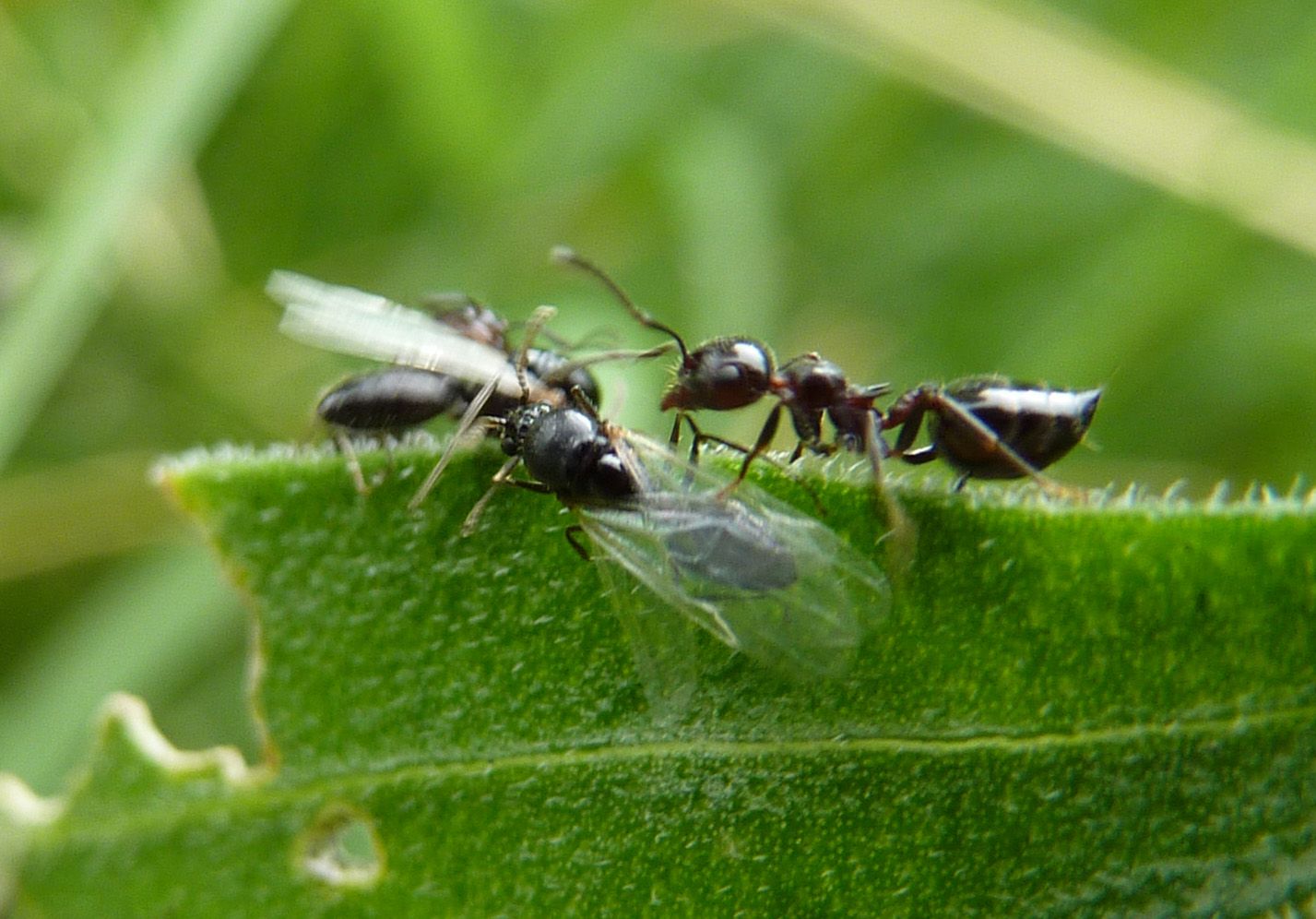
A Crematogaster cerasi workers and male posed on a leaf.

A successful experiment I did where I documented and allowed 4 colonies of Prenolepis imparis to combine. The colony is still together to this day.

An Aphaenogaster rudis workers walking among the Trillium seeds.

Yellow Jackets stealing Trillium seeds and potentially planting or dispersing them perhaps?

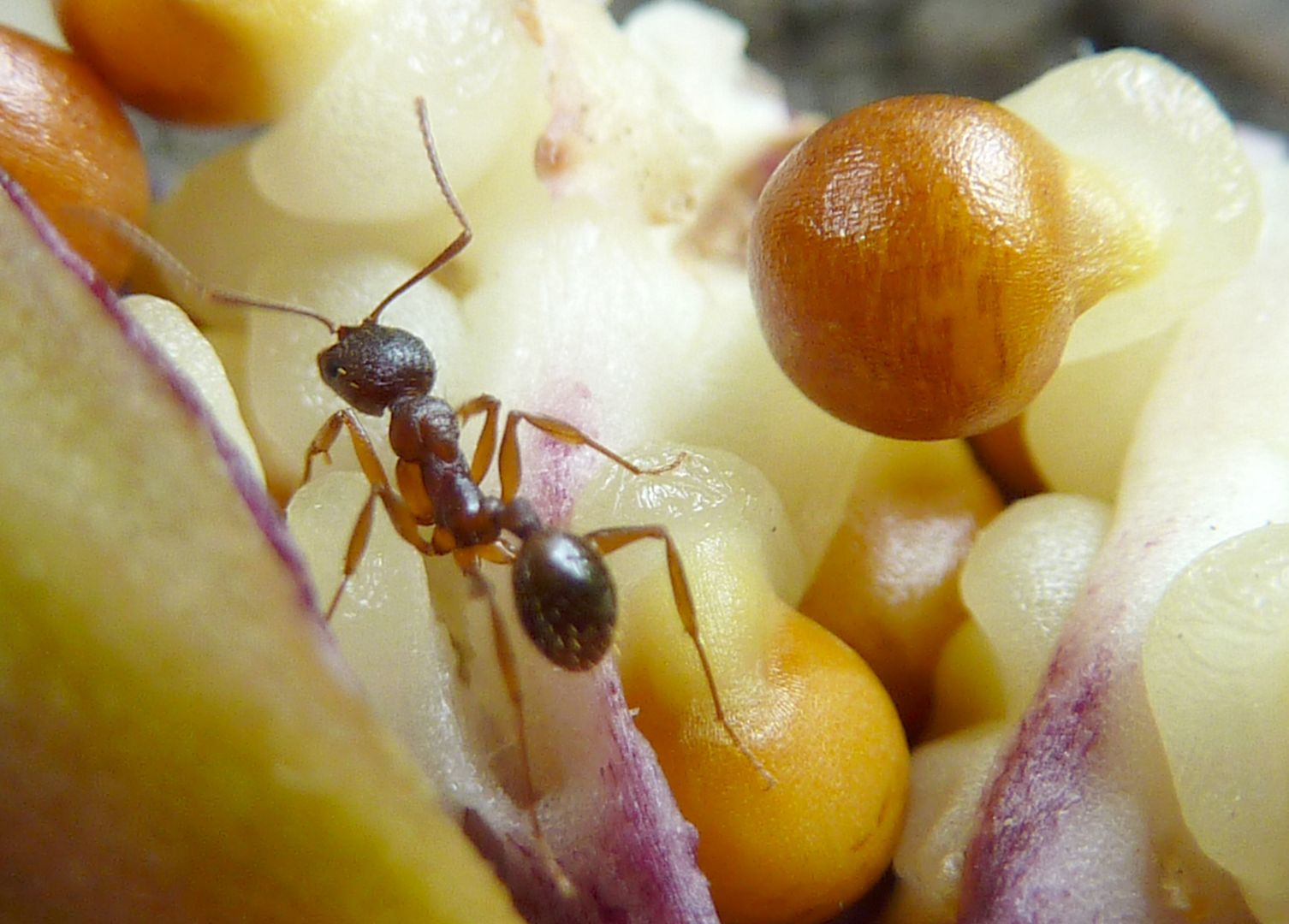
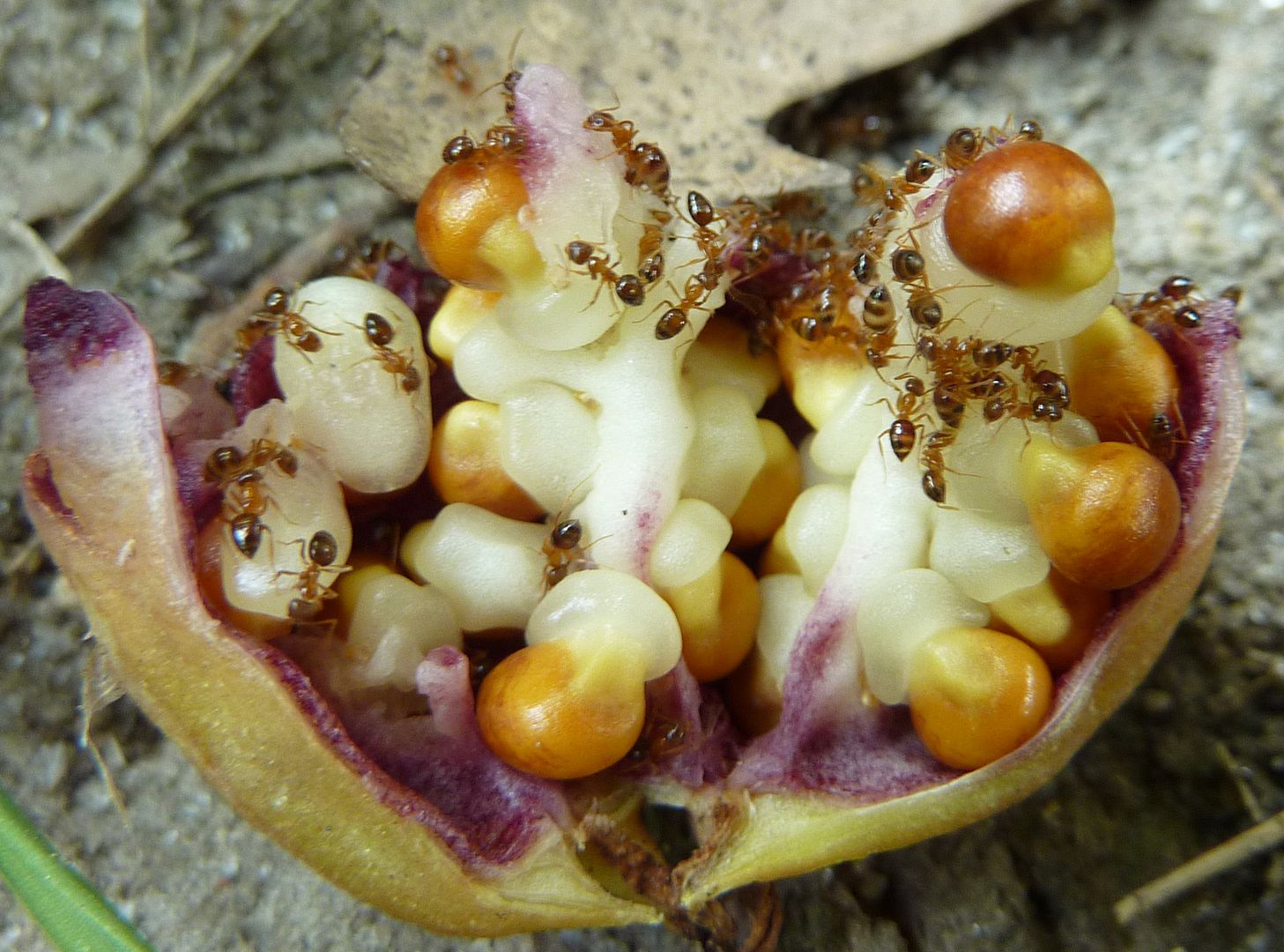
Hordes of Nylanderia flavipes eating the elaiosome off of the Trillium seeds. Because these ants are too small to carry the seeds they simply remove the ant food in place. Sadly this negates the purpose of the elaiosome which is intended to get the ants to carry the seed into their underground nest, effectively planting the seed.

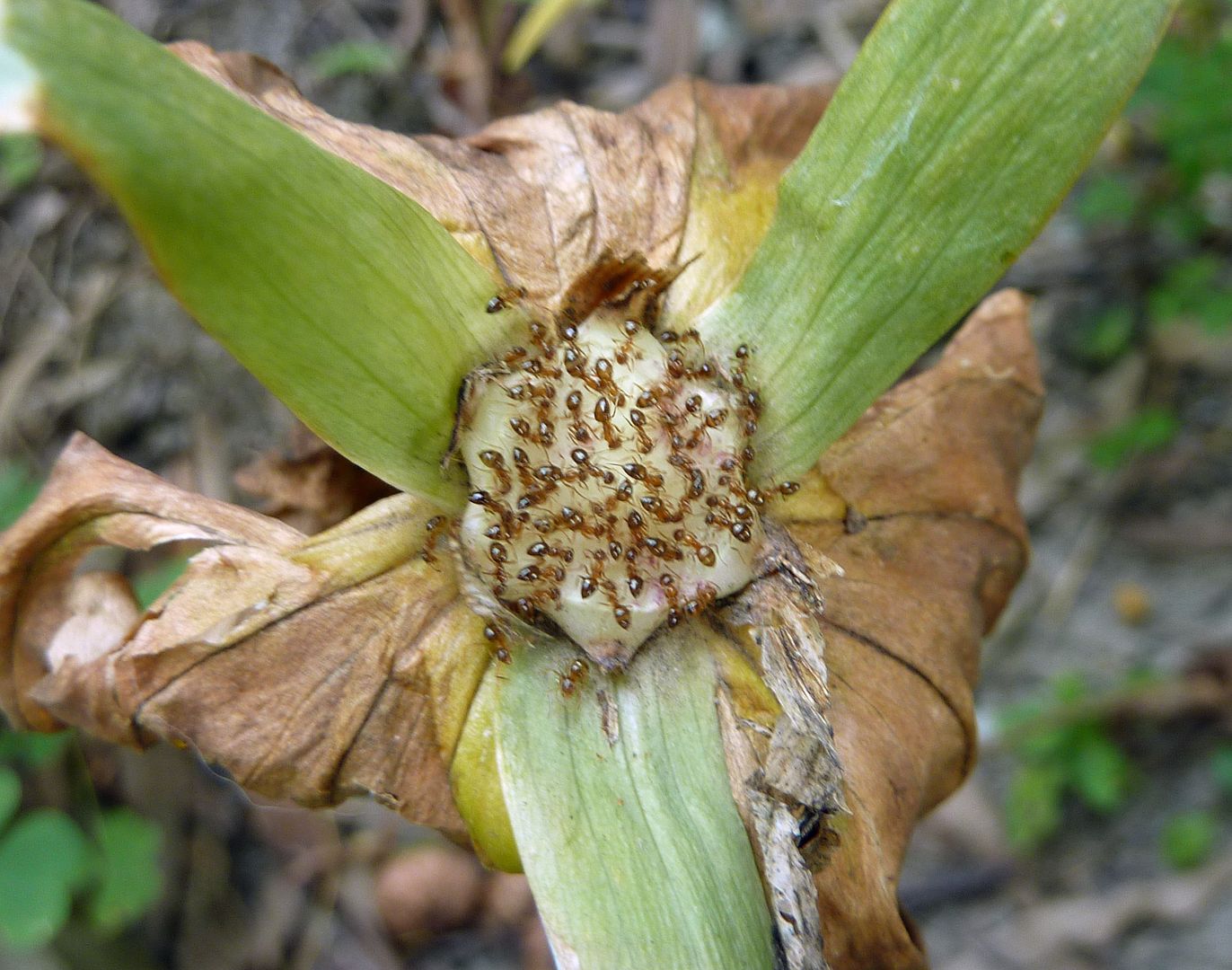
Nylanderia flavipes polishing off the fleshy material where the Trillium seed pod once stood.

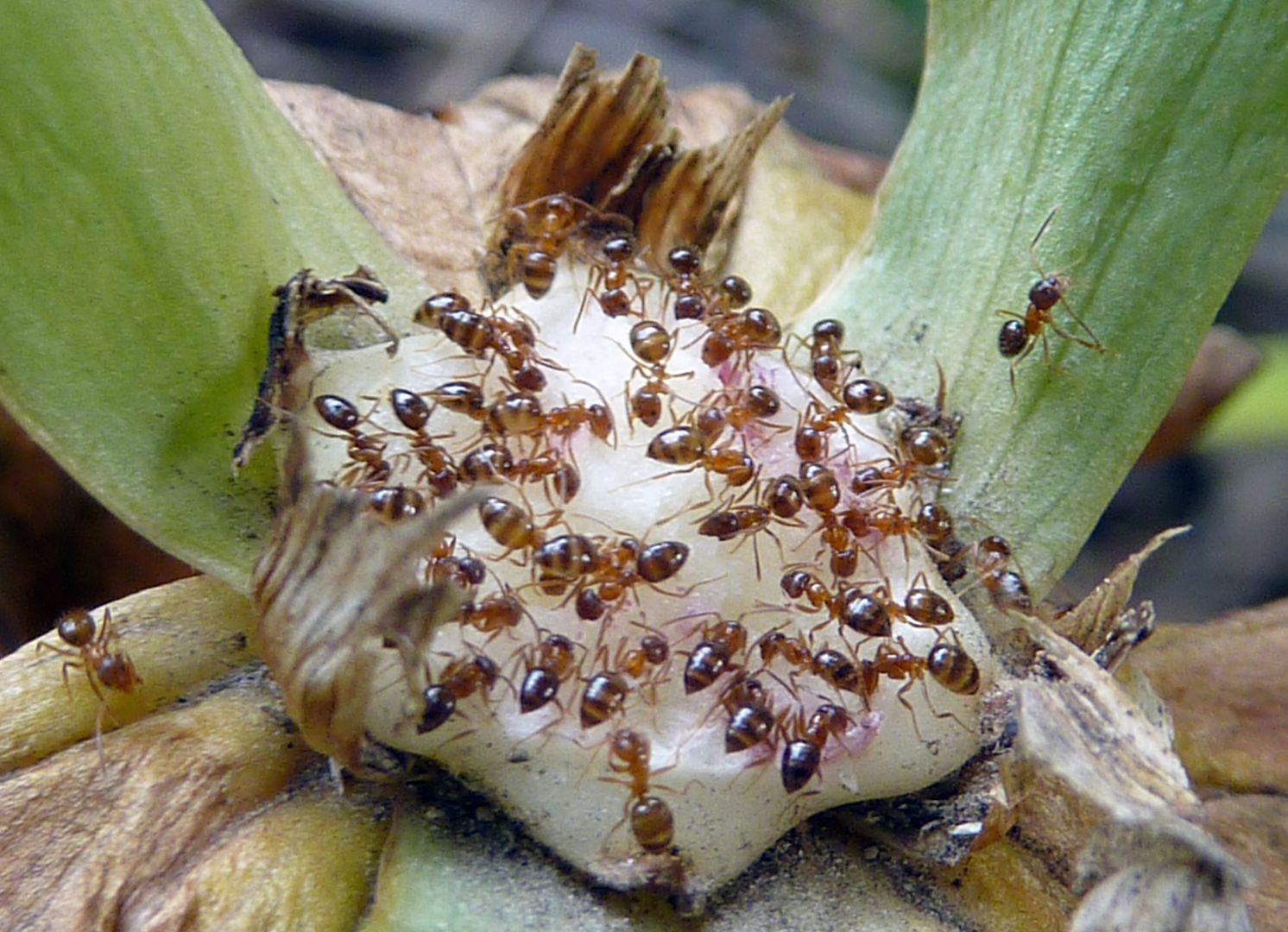
This just says it all about what scavengers ants are; they're finding nourishment in what amounts to connective tissue on the plant.

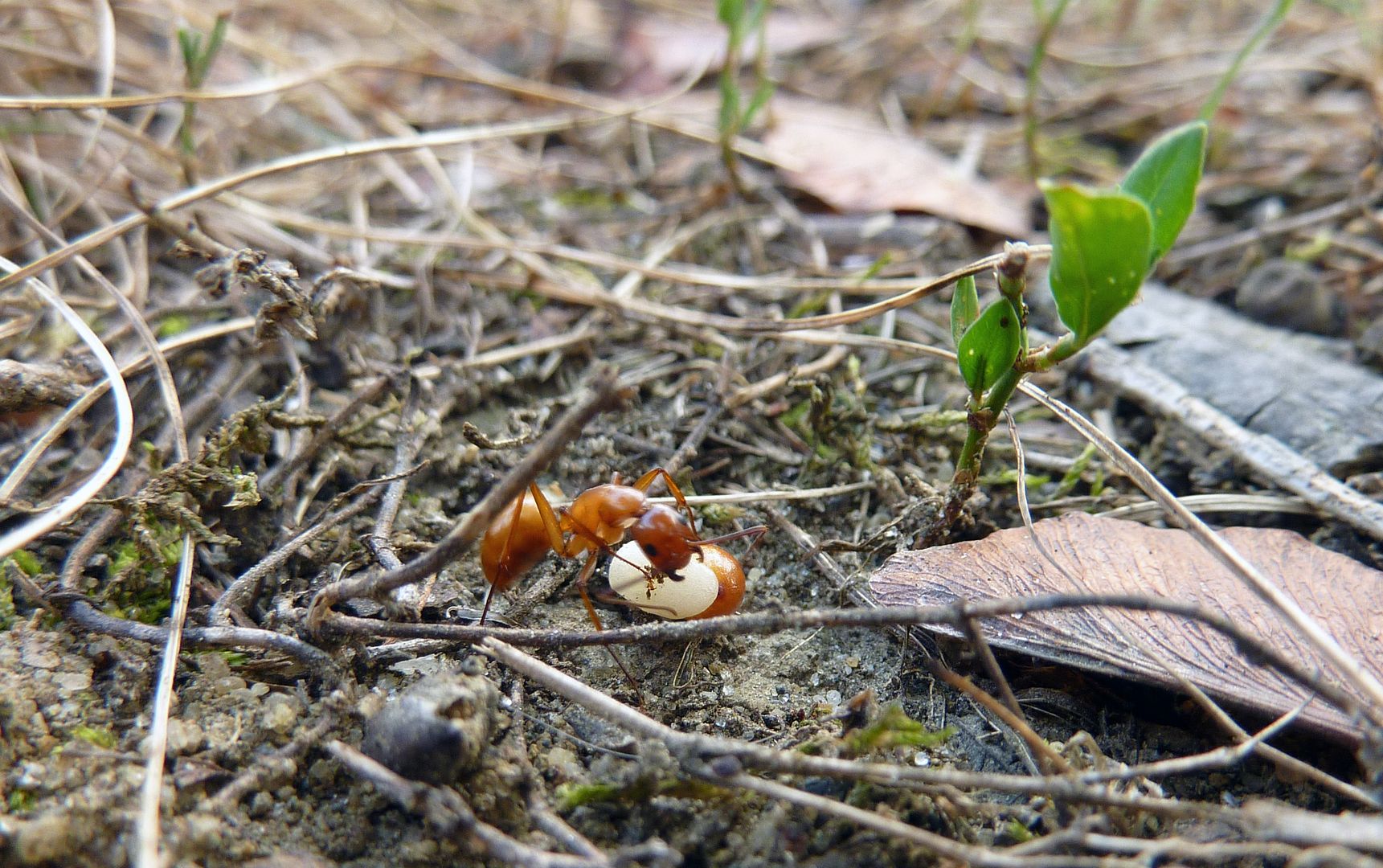
A massive Camponotus castaneus worker has no trouble carrying a Trillium seed home single handed. It's one of the few species that are both willing to carry the seeds away from the plant and are bigger than the seed itself.

Of course if the thing had a handle it might be easier to carry.

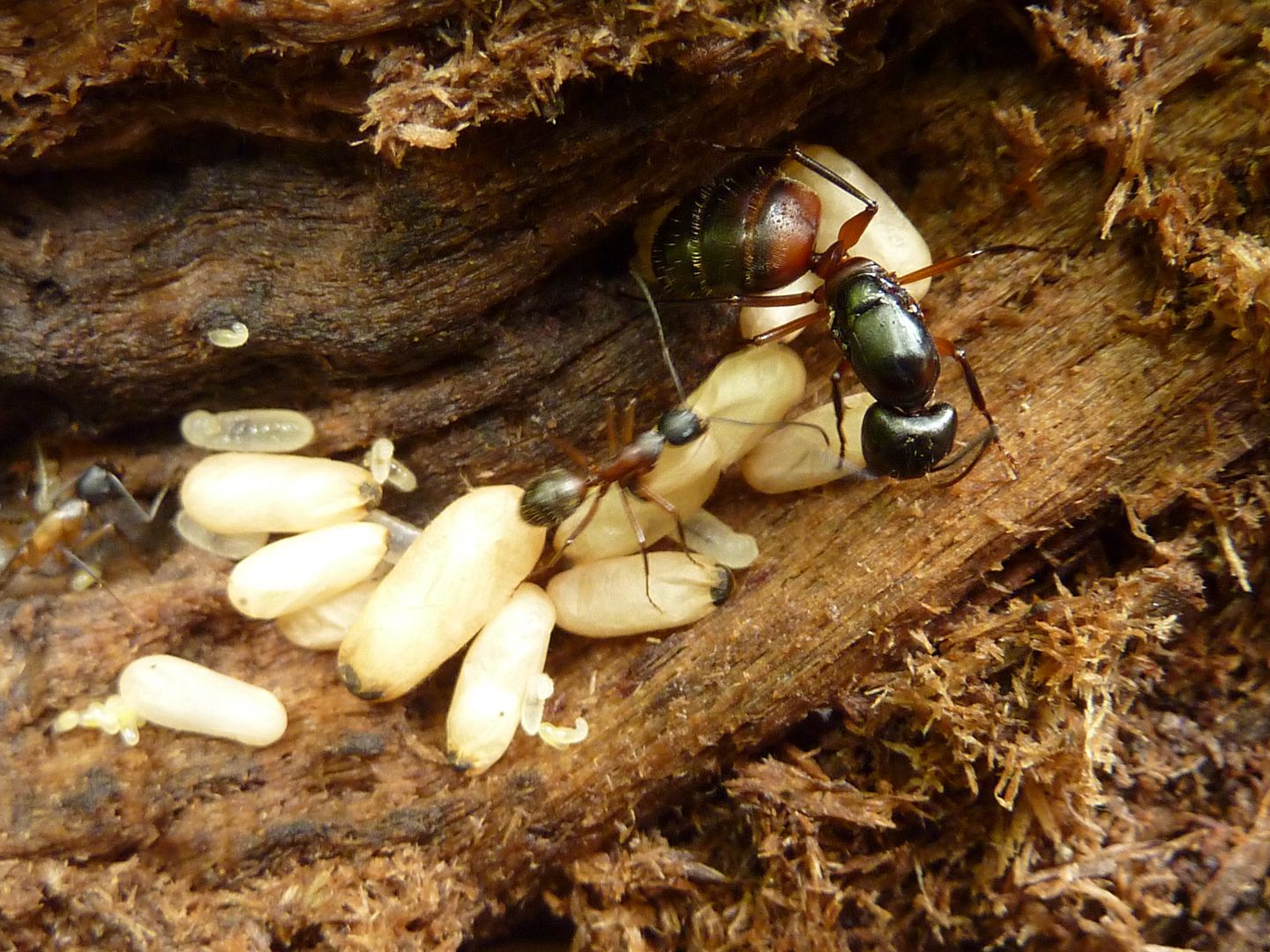
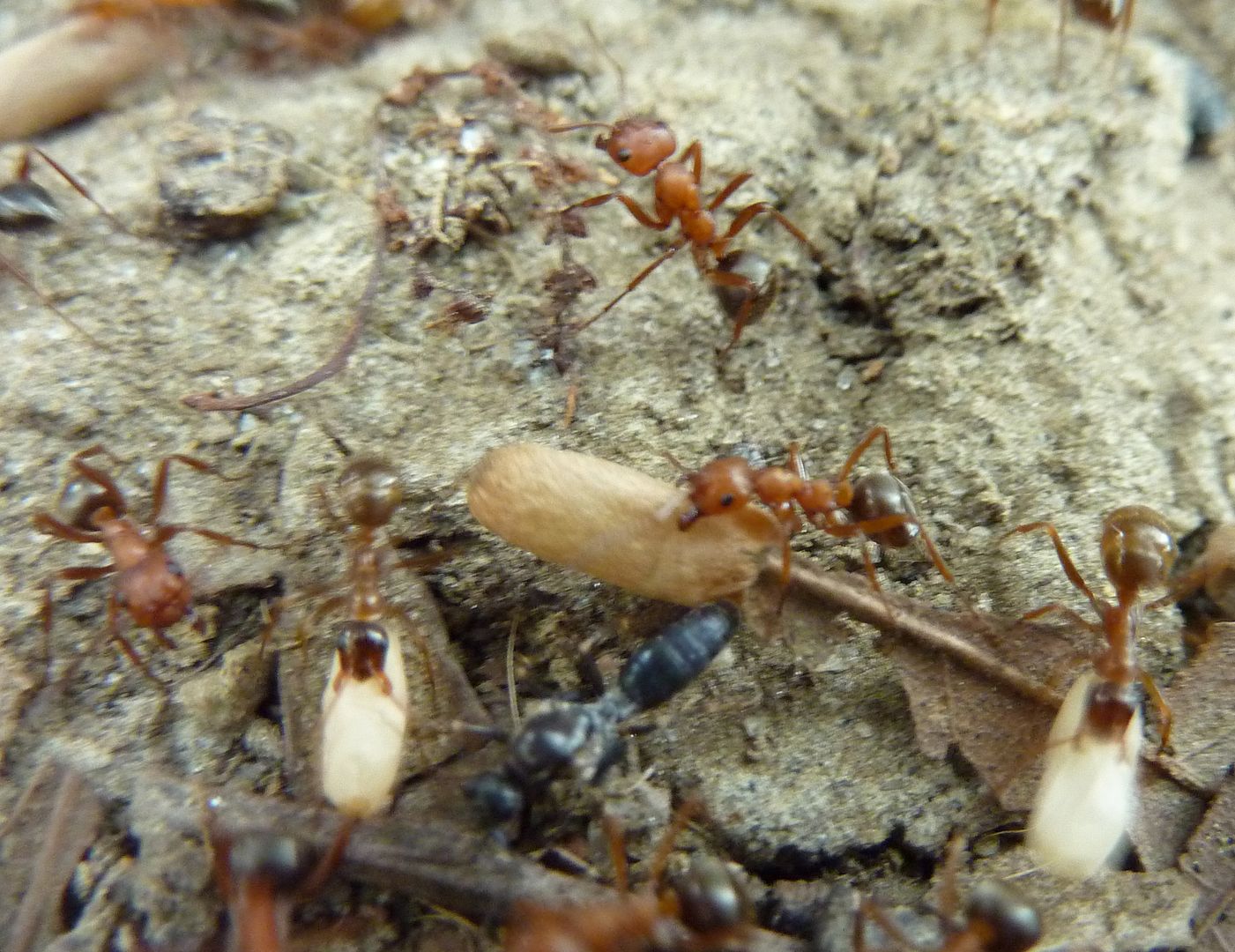
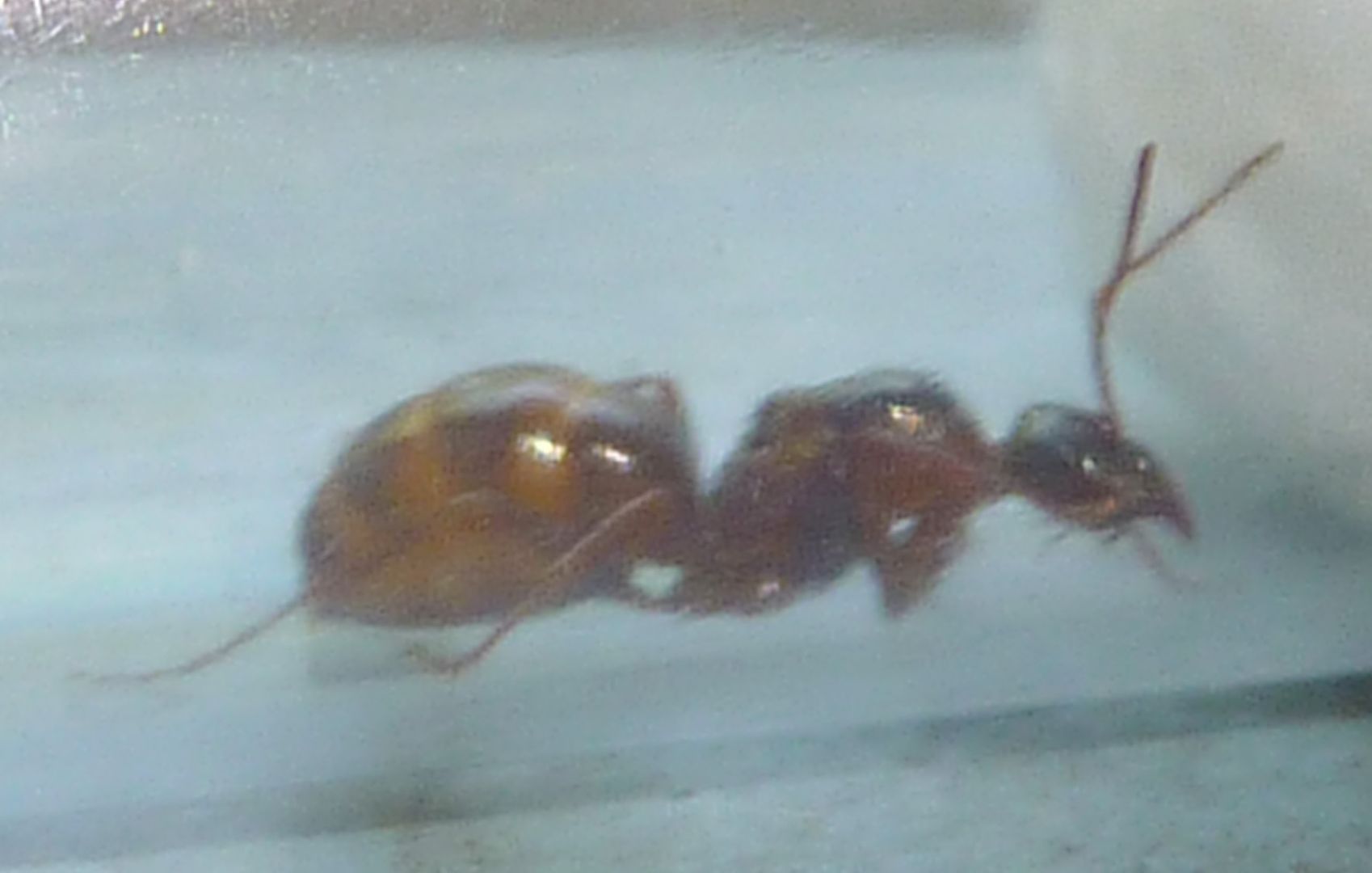
Lastly we have my colony of Formica pergandei and their host Formica pallidefulva and F. incerta workers. F. pergandei colonies can not maintain themselves using their own workforce. They have specialized in stealing cocoons from other Formica species which are then raised as workers of their own nest. There is some evidence though these devoted slave makers weren't always this way. Note the tiny worker in the middle left. Callow castes are often the first ants new queens produce; they are cheaper to make and smaller than the average worker of an adult colony. Their job is to help the queen produce the next generation of workers. Eventually callows are never produced again in favor of larger more standardized workers. True slave makers would never have any use for such a caste and yet here it is. At the very least they seem to help the colony transition into devoted slave makers, though I would be surprised if they were produced beyond the first few broods by the queen.

Hopefully I can keep this colony alive and report more on them in later posts. I may even try to setup a fragment colony of host workers and brood so I can document them raiding it someday.
Tuesday, May 17, 2011

Balancing Ants and Aphids

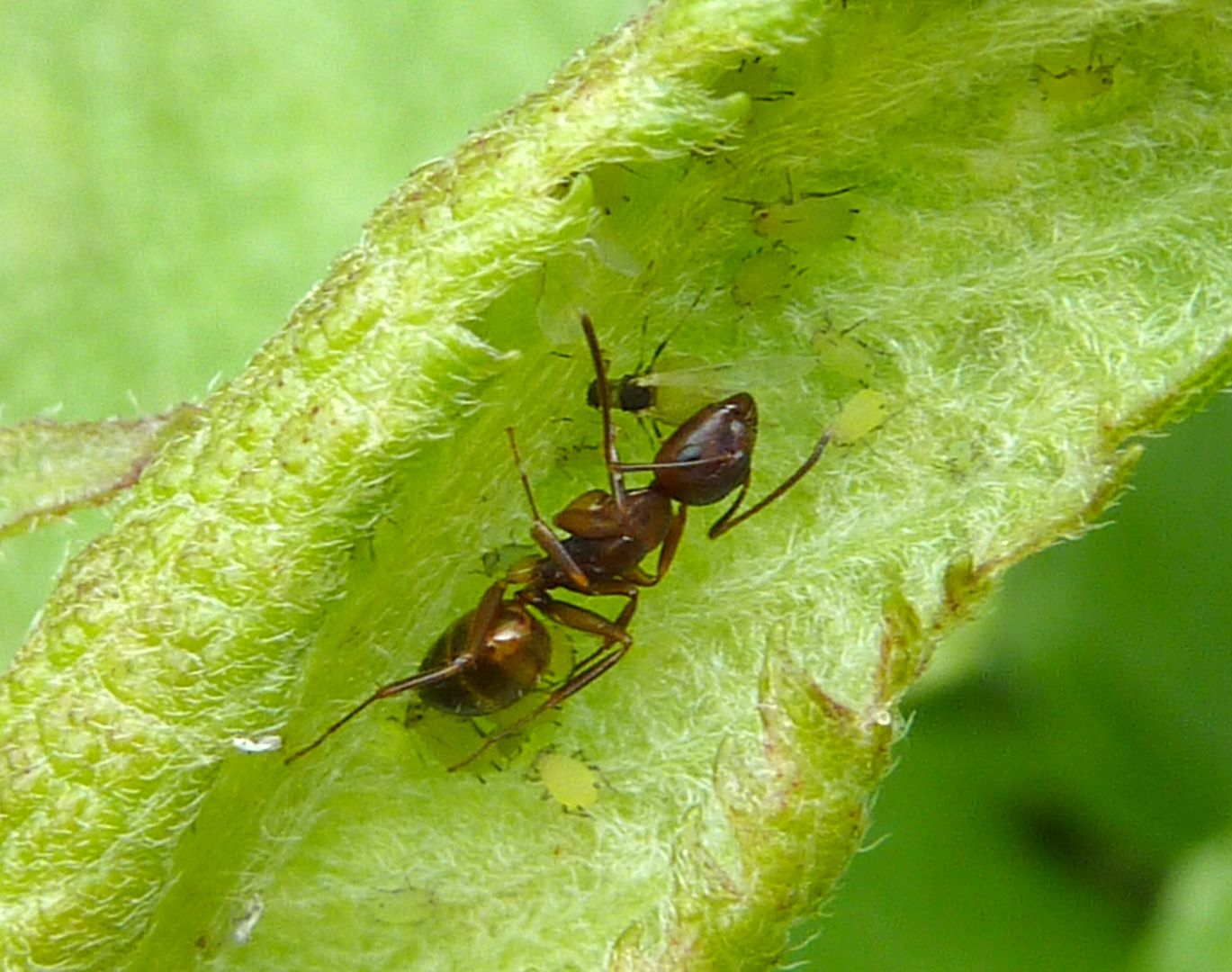
Camponotus subbarbatus tending aphids.
So ants protect aphids can be good for the plant, but only when the population stays under control. Something to note though is that their success is often dependent on the ants being around them and that doesn't always happen. One of the most common genera to be doing this is that of Formica but these are all diurnal foragers. Come night fall they're pretty much replaced by Camponotus (pictured above) which are more nocturnal. An issue with Camponotus though they rarely nest away from trees and are not often found in open fields. An exception to this might be in the case of a tall grass prairie with lots of dead wood or hollow stem plants about, but even then it would be one of the smaller species, and demands the field wasn't burned that spring. I'm not sure what protects aphids at night in fields.

Also, something I noticed last year was that most aphid species in my yard seemed to finish their life cycle before summer really began. These were replaced by other aphids but found on different plants, red ones on Rudbeckia, orange ones on Milkweed etc... With the absence of aphids that also means the absence of hover fly larva, (pictured above) which feed on the aphids without the ants realizing it.

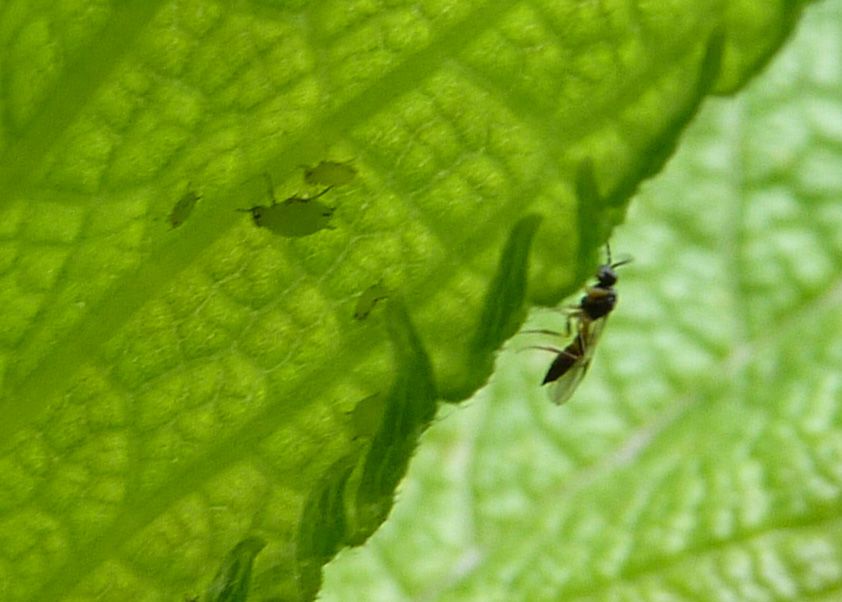
Parasitic wasps are another threat without ants around. I watched this one inject her eggs into several aphids but never got a good picture of it. Always she targeted the groups that didn't have ants guarding them.

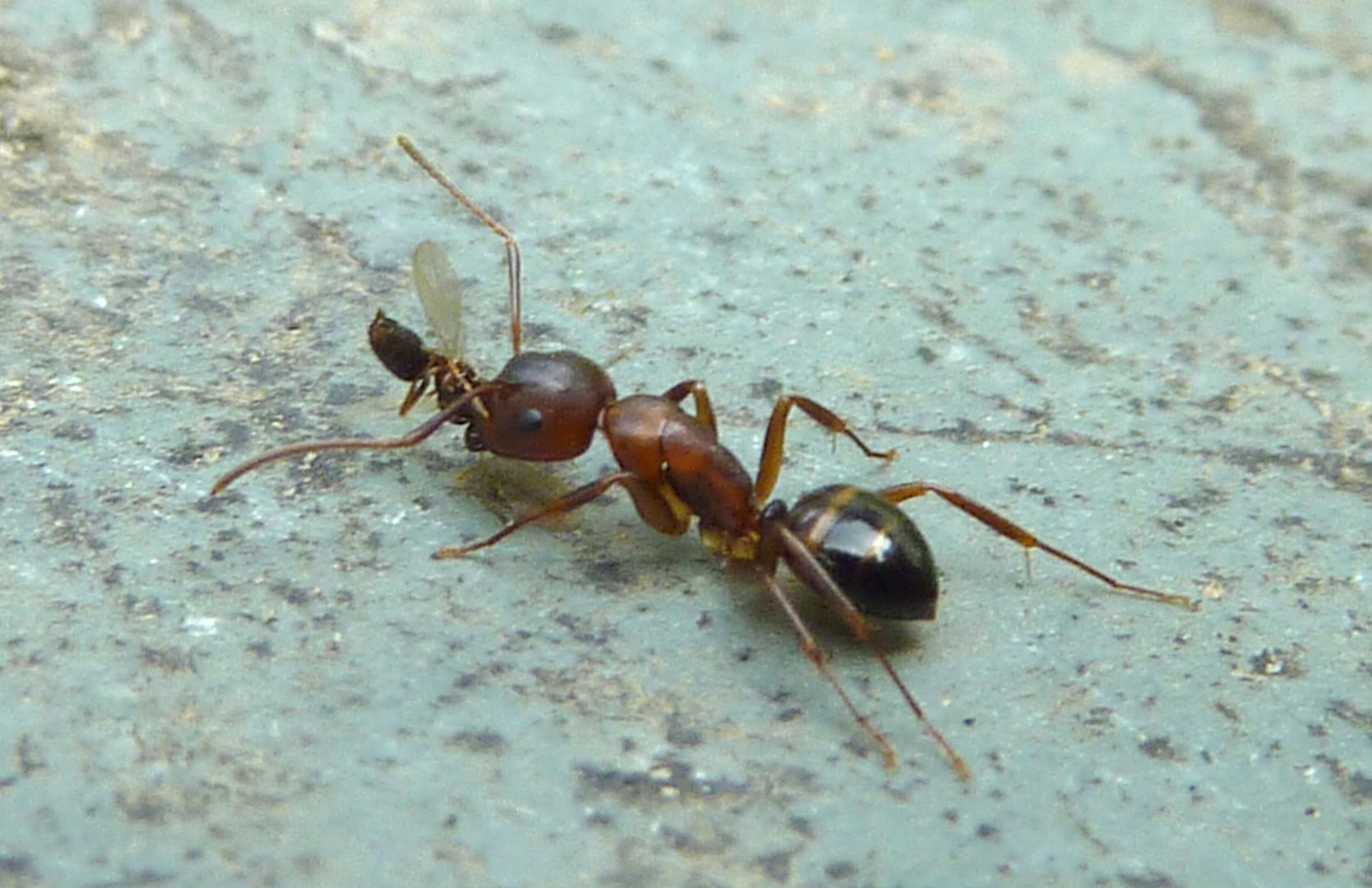
Camponotus subbarbatus grasping a male Nylanderia flavipes.
Another threat to the aphids might be to much of a good thing. Ant colonies need to have a balanced diet and store up on foods to get through parts of the year. Colonies are stealing nectar and tending aphids now as it will become rare over the summer. Once the stores are full up they have no farther need of the aphids and may send fewer workers to maintaining herds. The colony diet turns more towards foods rich in protein (insects) and starches (seeds). These foods don't store as long as carbohydrates (nectar and honeydew) but are needed for producing more ants and especially reproductive castes.

Come autumn nectar stores will be low once again. The colony diet will focus more towards sugars and the ants will be clambering for aphids and nectar once again.

Friday, October 8, 2010

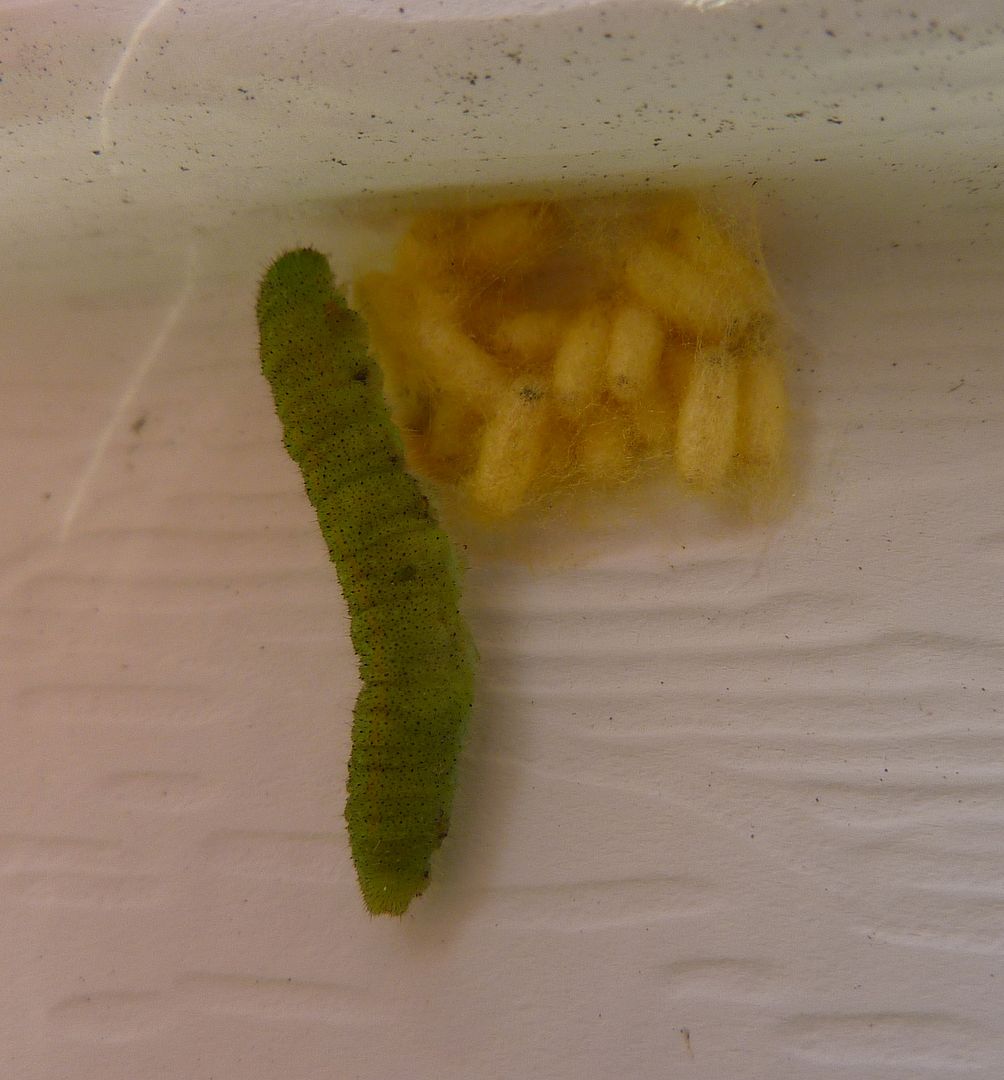
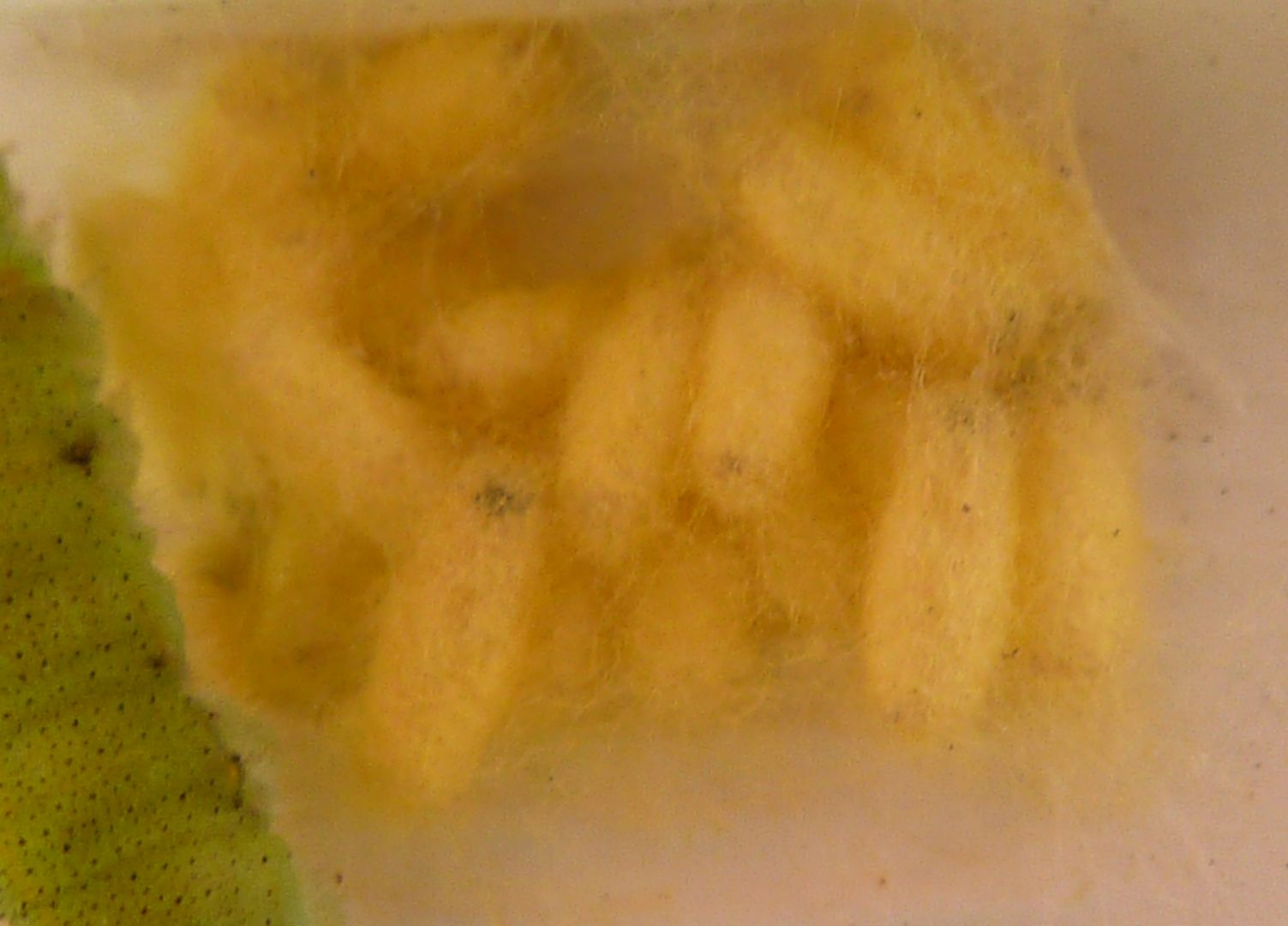
Caterpillars Eaten from the Inside Out


And what's really cool is I found this happening along the side of my house!

Friday, July 9, 2010

Slave Making or Non?

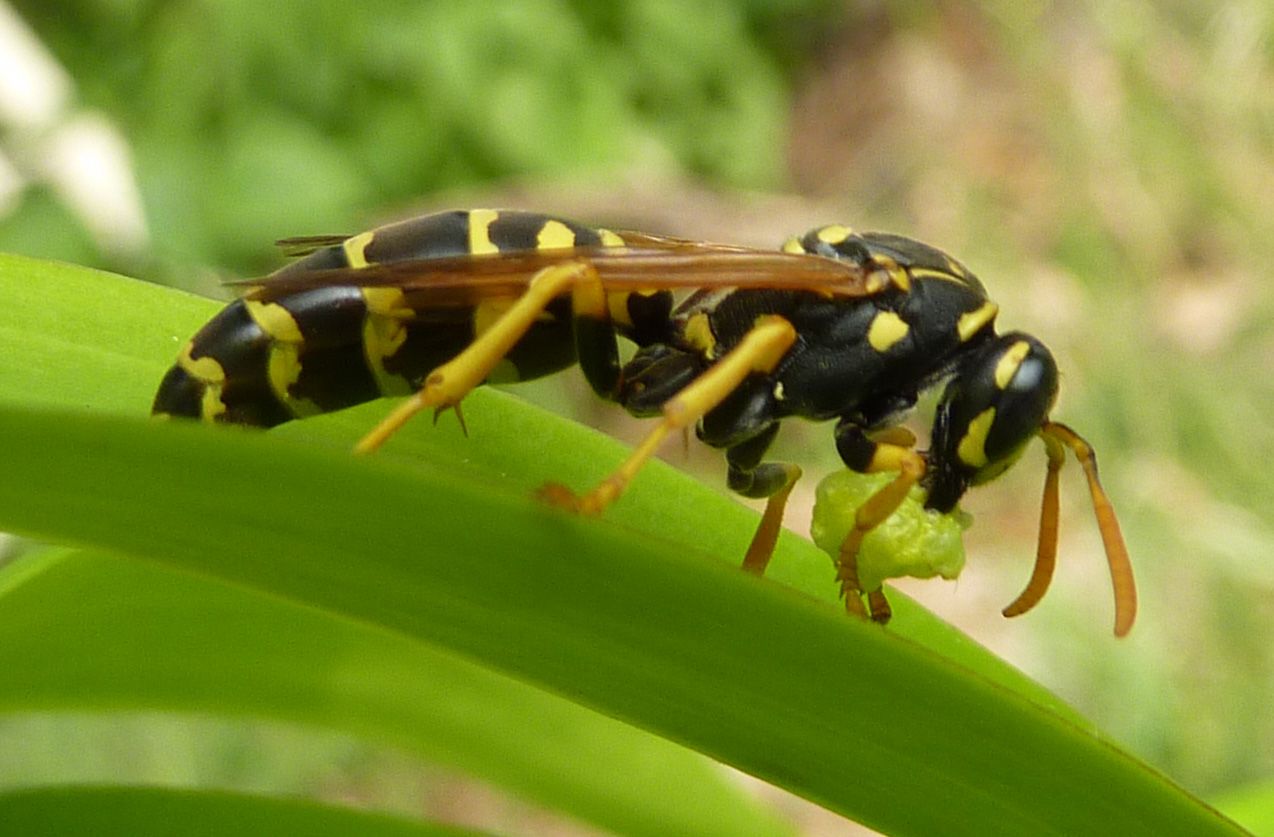
Formica pallidefulva queens are perfectly able to start colonies on their own. It's one of many Formica species flying now in the early morning to afternoon hours. This is a highly successful genus in temperate areas of the world. But something similar to what's happened in Bumblebees has also occurred in this genus. With colonies releasing thousands of queens, the room for new nests is very limited. While some species have taken to banding together there is another, more sinister option.


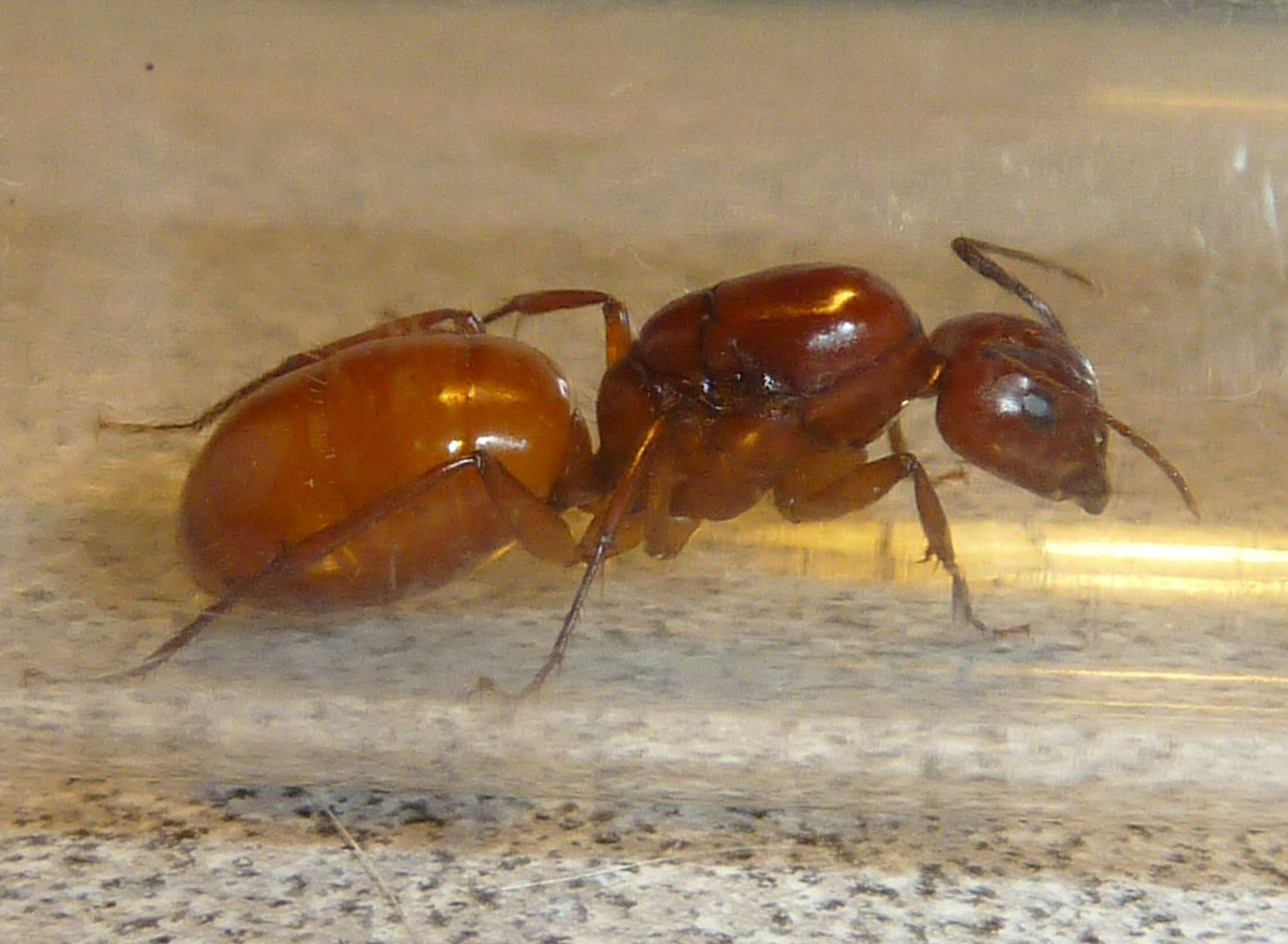
Years of killing other queens for nest sites has eventually turned into killing queens with existing colonies and thus the social parasite was born. Social parasitic species don't need to leave the nest with as much food so the abdomen tends to be much smaller than the non-parasitic counterpart. They need to be aggressive too, to disembowel or decapitate their competition. So the head is larger and houses much stronger muscles to get the job done. Disemboweling doubles as the odors of the host queen splash onto the social parasite giving her the colony odor. This fools the host workers into raising brood to the parasitic species.

Some parasites stop here as we see in the genus Lasius. But some Formica take it to a whole new level. Formica pergandei (most likely identification) is one such species that's recently moved into my yard. 

This picture of Formica pallidefulva was taken back in 2008. They've lived in my yard for a number of years and the colony is frankly a little boring. There are numerous colonies just like it in the area, and this one was doing great up until sometime in the past 5 days.

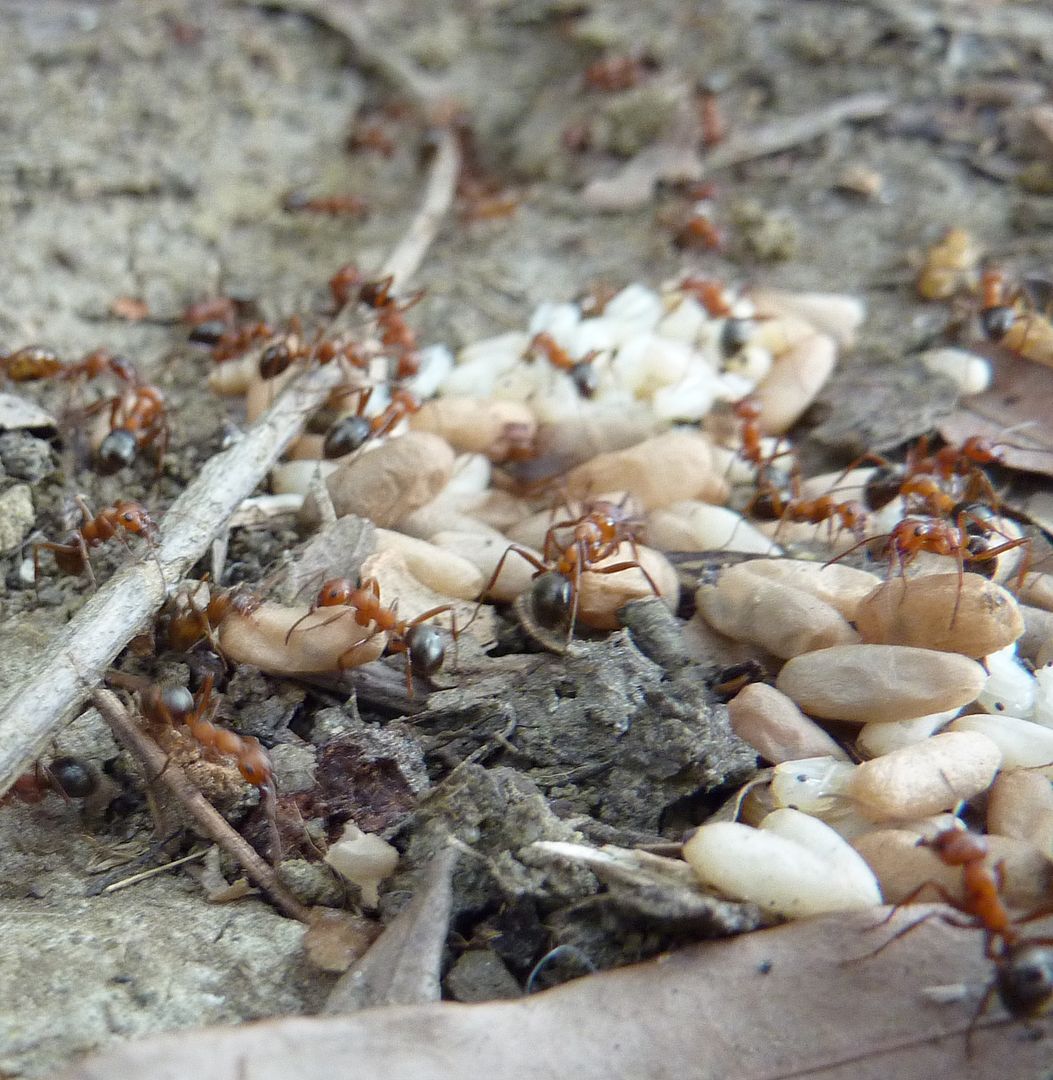
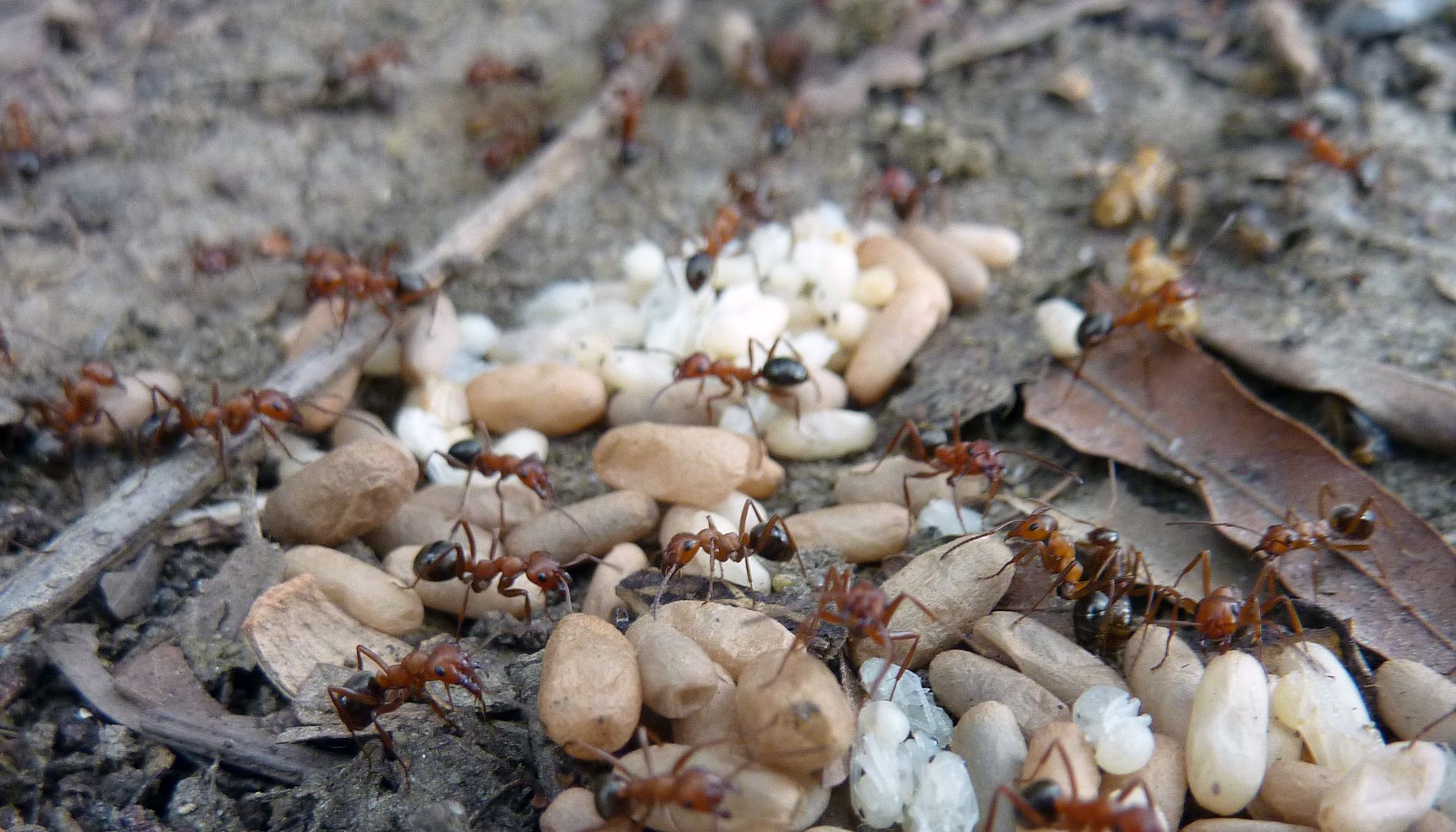
A colony of Formica pergandei have moved in, though I'm not sure yet if they've moved on yet. These ants are completely devoted to their host species, of which there are numerous. It's not enough for a queen to take over one colony of host ants. As their workforce dies they have to be replenished and other colonies have to be raided. Here is a quote from their description on Ant Web.

Throughout the eastern and Midwestern US, F. pergandei is the premier dulotic Formica in grasslands and open woodland habitats, utilizing virtually all other Formica species (except other F. sanguinea group species) as hosts. The host workers are obtained through regular nest-to-nest raids to steal brood of the host. Often, some stolen larvae are eaten, especially any pillaged sexual brood, but at least a portion of the pupae are reared by host workers in the F. pergandei nest. Raids start in the morning, slow down or cease in mid-day, then pick up again in the late afternoon. F. pallidefulva and F. subsericea are the prevalent host species in woodlands, and F. incerta or F. montana prevail as the host in drier and wetter grassland habitats, respectively. Any one, or often, a combination of these species may occur among the host workers, with lesser numbers of other species from the pallidefulva, fusca or even the rufa-microgyna groups also in the mixed population. In Lincoln Co., one F. pergandei nest contained a mélange of six host species, including (in order of decreasing relative abundance) F. pallidefulva, F. subsericea, F. biophilica, F. dolosa, F. incerta, F. obscuriventris, certainly the most species-rich, naturally occurring ant colony on record! Nest architecture, and more interestingly, total mixed colony population level, seem to closely approximate those of the host, such that F. pergandei parasitizing F. montana or F. subsericea typically lives in a mound with the typical mound structure and a population like those of these host species, while those parasitizing F. pallidefulva often live in a moundless soil nest or in rotten wood with the much lesser total numbers of workers, as does this latter host. F. pergandei workers in the mixed nest do not care for brood, gather sweets, or effectively contribute to nest maintenance. 
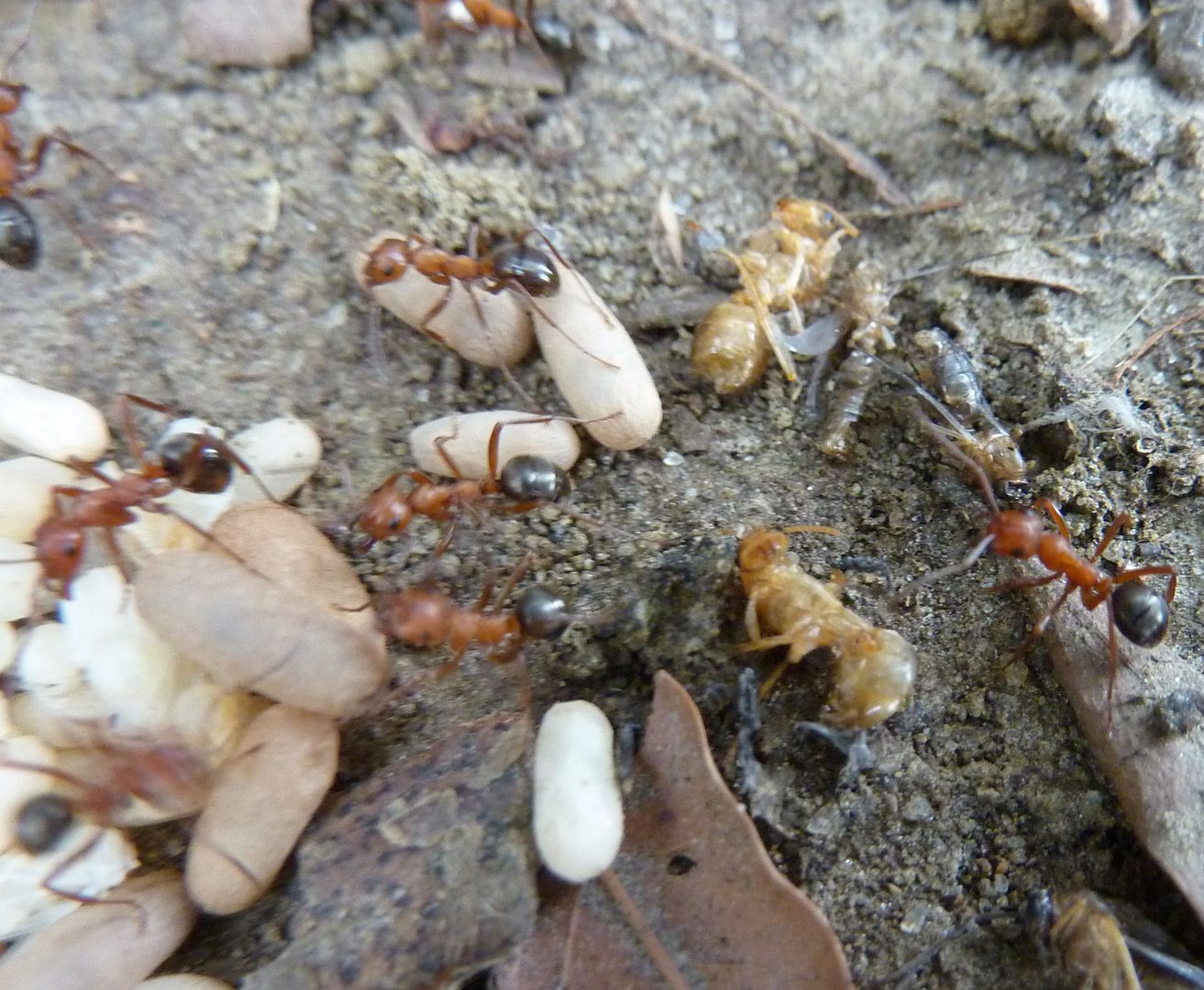
While observing them I got the impression that they'd moved into this nest. I would imagen a raid would have scattered somewhat when I disturbed them. Most of these were stationary and assisting with pulling the brood into the former F. pallidefulva nest. They don't always move into their target's nest. Often this kind of Formica will do a quick raid and rob the colony of it's brood, sometimes the host colony will even survive the attack.

 
Reproductive brood lay in ruins in the nest. The wings were mangled and parts of the developing ant were damaged. 

A male F. pallidefulva (the black ant bottom center) has had his wings removed.

What they lack in basic essentials they more than make up for in aggression. They were even defending the nest. When disturbed several ants form a defensive stance. They have better eye sight and lock on to motion, only moving towards things that move. I had a fun time playing Red Light Green Light with this species. (Don't do that with Formica that spray acid as there's a serious risk you can go blind.) This type of behavior is an evolved defense against larger predators such as bears and opossums etc... that occasionally like eating ant brood.


Overall this seems like a fun addition to the normal array of ants found in my yard. I've lived here for 26 years and never come across this species. I can't help but feel it's to do with my fairly recent hobby of gardening with native plants. What's most exciting though is I only ever see this type of ant in the forested areas at the nature preserve I visit now and then. Hopefully I'll be able to post more on this species as they slowly devastate the colonies of Formica around the yard.

Friday, June 25, 2010

Parasitic Plants

Once again I visited the boring nature site known as Crows Woods. Sure it takes hours to walk, there's almost nothing growing in the under story, and there are all of 5 signs to reads, (one about swam gas... oh joy,) but I'm starting to the place. Their lack of sign-age is a major issue though. If I wasn't skilled enough to identify insects and flowers I'd still be rating this nature preserve as the most boring in the country. But over the past week some interesting things have popped up.

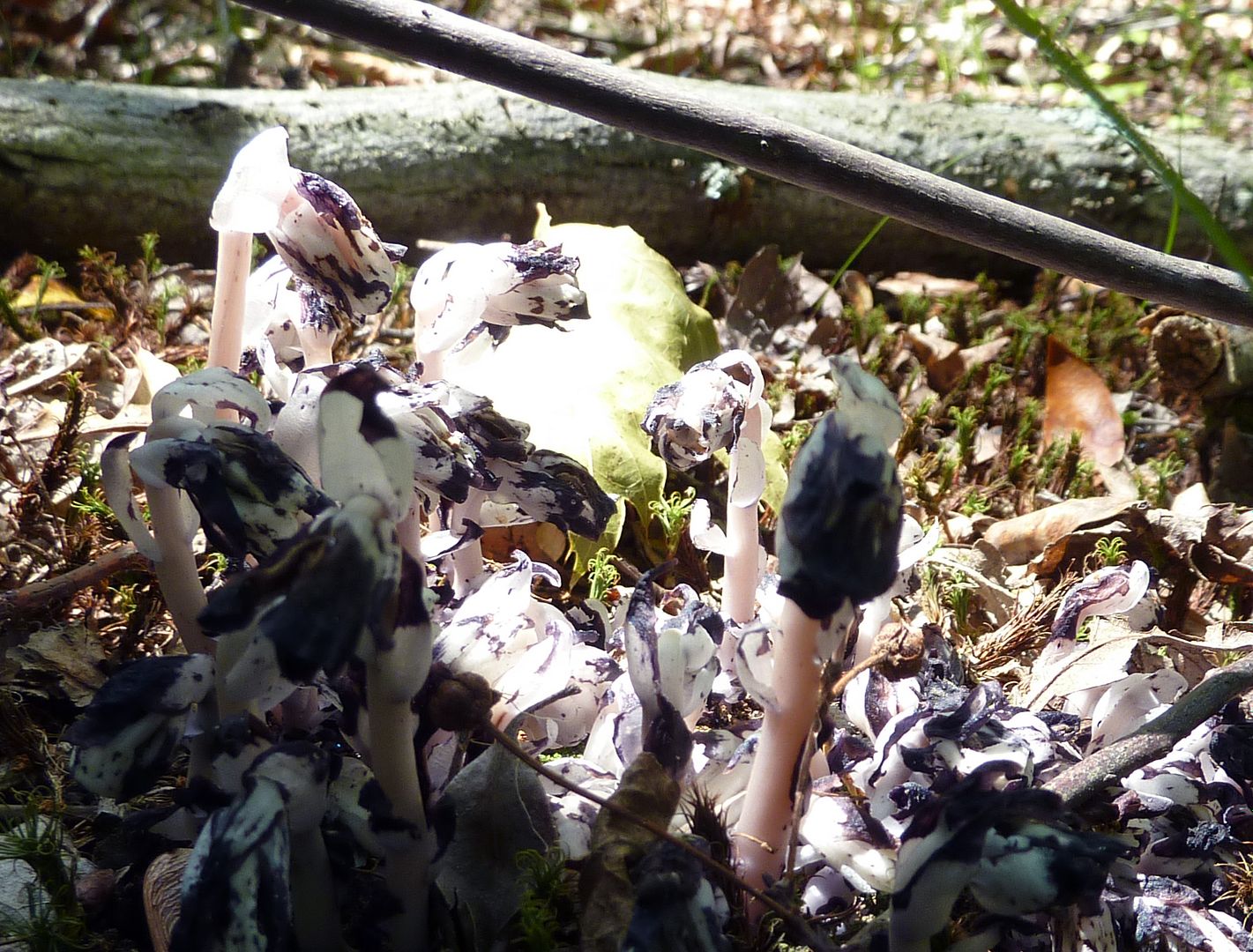
Indian Pipe, Monotropa uniflora, is parasitic plant that emerges for only a few weeks over the summer. It's actually an "epiparasite" which is basically a symbiotic relationship between two parasites. Indian Pipe doesn't steal food directly from it's host tree, but rather produces nutrients that promote the growth of a certain kind of fungus that exchanges food with it. This makes transplanting all but imposable.

The plants I found were a bit past their prime. Normally they're an albino-ish cream color. They don't have chlorophyll or chloroplast so the flesh lacks the green or even brown color seen in other plants. Shortly after blooming seeds are quickly produced and the plant turns to a gooey black as they melt away.
I'm tempted to go back and collect seed if I can. And probably a soil sample to hopefully start a patch in my garden. They always grow in full shade, though this one was getting some afternoon sun. To read more about Indian Pipe and other wildflowers I recommend reading The Secrets of Wildflowers: A Delightful Feast of Little-Known Facts, Folklore, and History. Though it's a little whimsical I'm growing to appreciate it.
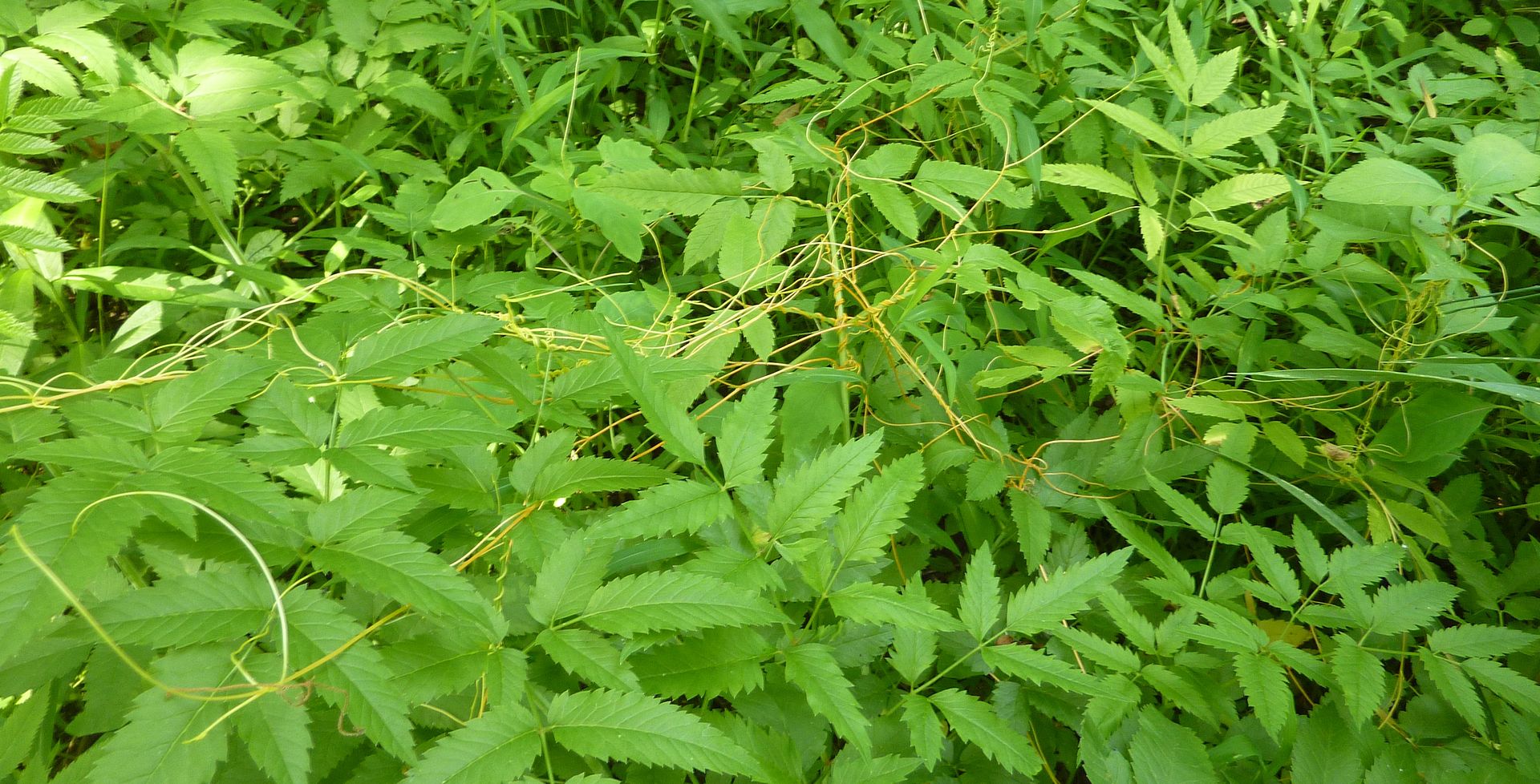
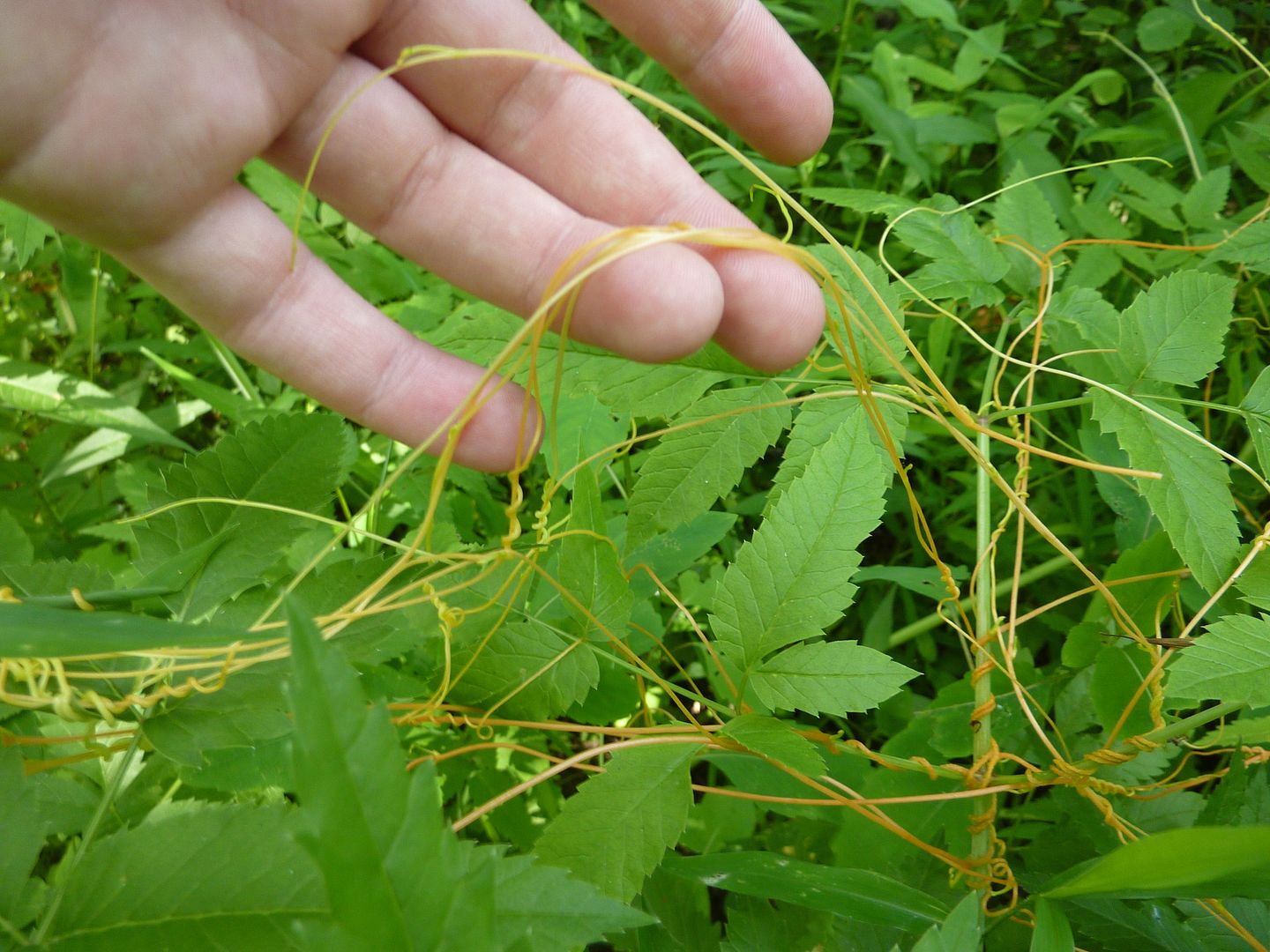
This yellow string like plant is a Cuscuta species. It's a simple parasitic plant that grows as a series of tendrils. They wrap around the host and sap it of energy.

I honestly had no idea what it was when I found it. This is a neat group of plants. Wikipedia offers more information. So thanks to the folks at the Wildlife Gardeners forum for you help identifying.

A forest that can support populations of parasitic plants is a true sign of health. Sure they are parasites but such things rarely kill their hosts. They should be admired for taking advantage of a certain click in their ecosystem. The added diversity should be treasured.