Showing posts with label Mint. Show all posts
Showing posts with label Mint. Show all posts
Sunday, September 15, 2013
Autumn Native Plant Garden Tour 2013
Mountain Mint, Pycnanthemum sp.
Wild Senna, Senna hebecarpa (seed pods)
New England Aster, Symphyotrichum novae-angliae (Pink and Purple)
Goldenrod 'fireworks' Solidago rugosa 'fireworks'
Perennial Sunflower, Helianthus maximiliani
Small Woodland Sunflower, Helianthus microcephalus
Anise Hyssop, Agastache foeniculum
White Woodland Aster or Heath Aster, Eurybia sp.
False Sunflower or Early Sunflower, Heliopsis helianthoides
Northern Blazingstar, Liatris scariosa (might be Liatris borealis)
Threadleaf Ironweed, Vernonia lettermanii
Showy Goldenrod, Solidago speciosa
Smooth Blue Aster, Symphyotrichum laeve
Sky Blue Aster, Symphyotrichum oolentangiense
Purpledisk Sunflower or Appalachian Sunflower, Helianthus atrorubens
Western Sunflower, Helianthus occidentalis
Cutleaf Coneflower, Rudbeckia laciniata
This video features both Swamp Sunflower, Helianthus angustifoliu and Narrow-leaf Sunflower, Helianthus salicifolius. I'm confused as to which is which. The tallest one at the end is supposedly a true species of H. angustifolius, while all the others are supposedly cultivars of H. salicifolius, however I find the same cultivar names listed as H. angustifolius species but never at the same nursery. What's more the two species can also hybridize and often grow in the same locations in the wild.... H. salicifolius supposedly just doesn't get as tall... but I'm unaware of any other differences between the two species, so I'm starting to feel it really doesn't matter which species you have. Even the flowers to both look the same.
Monday, April 1, 2013
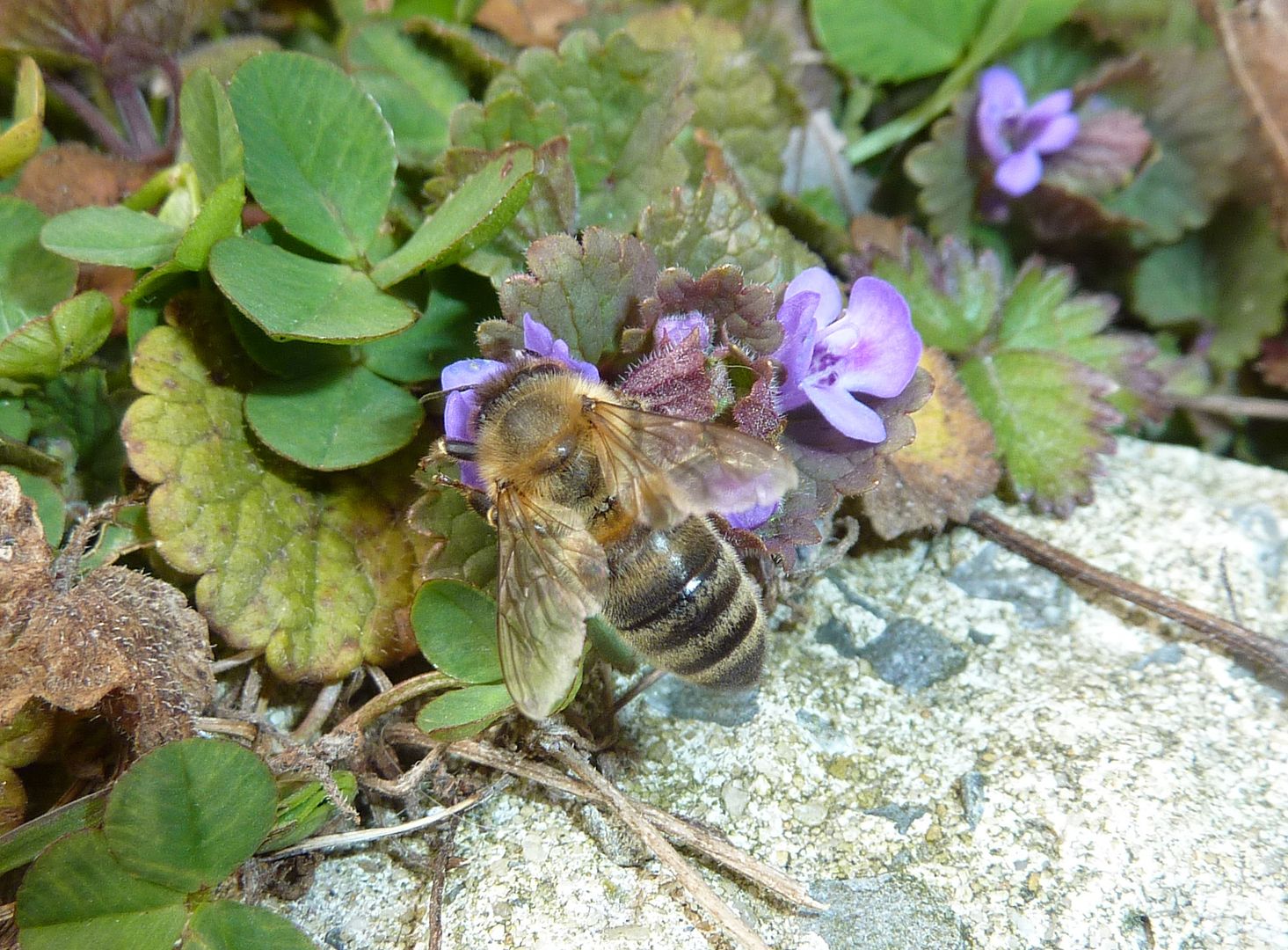
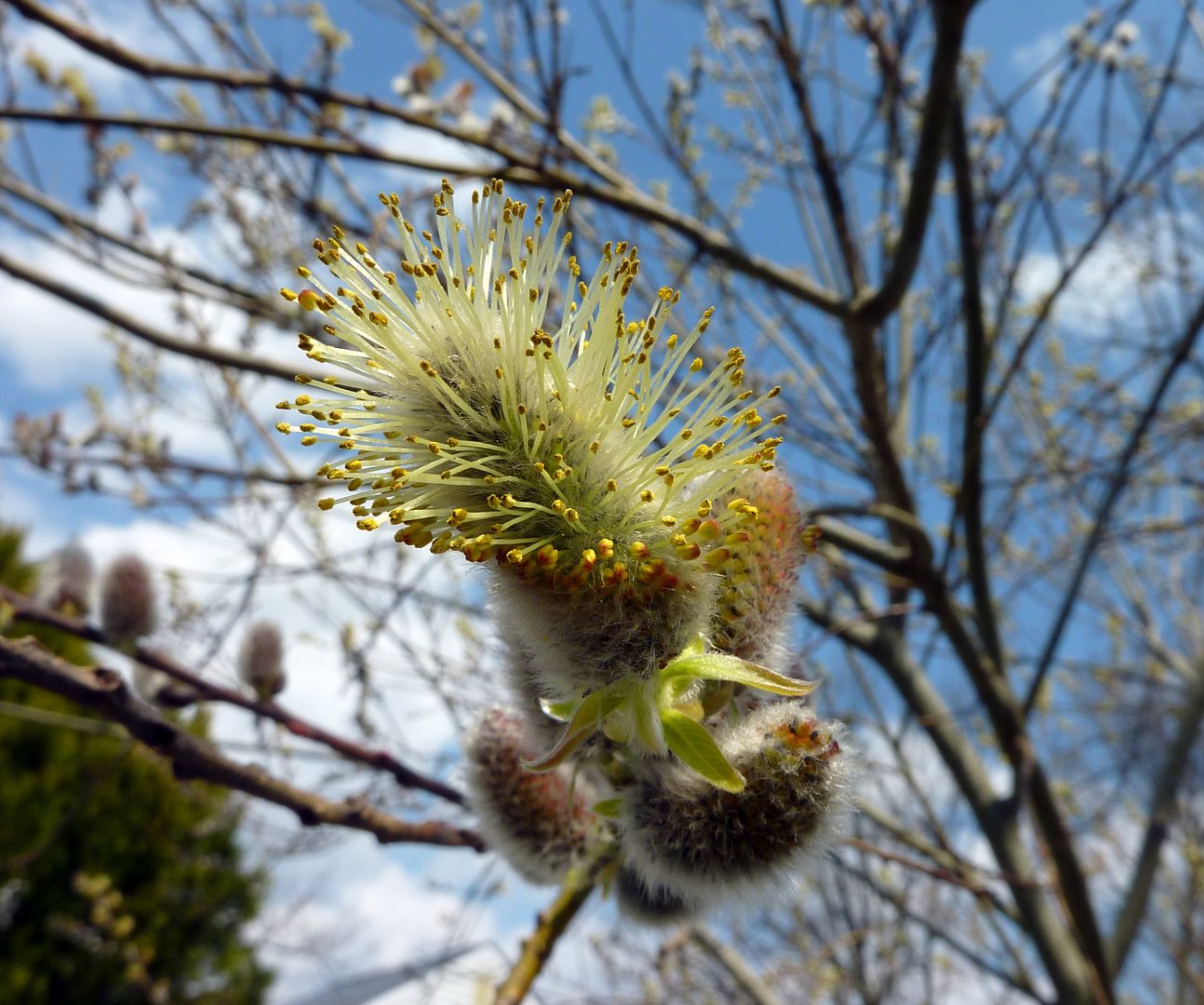
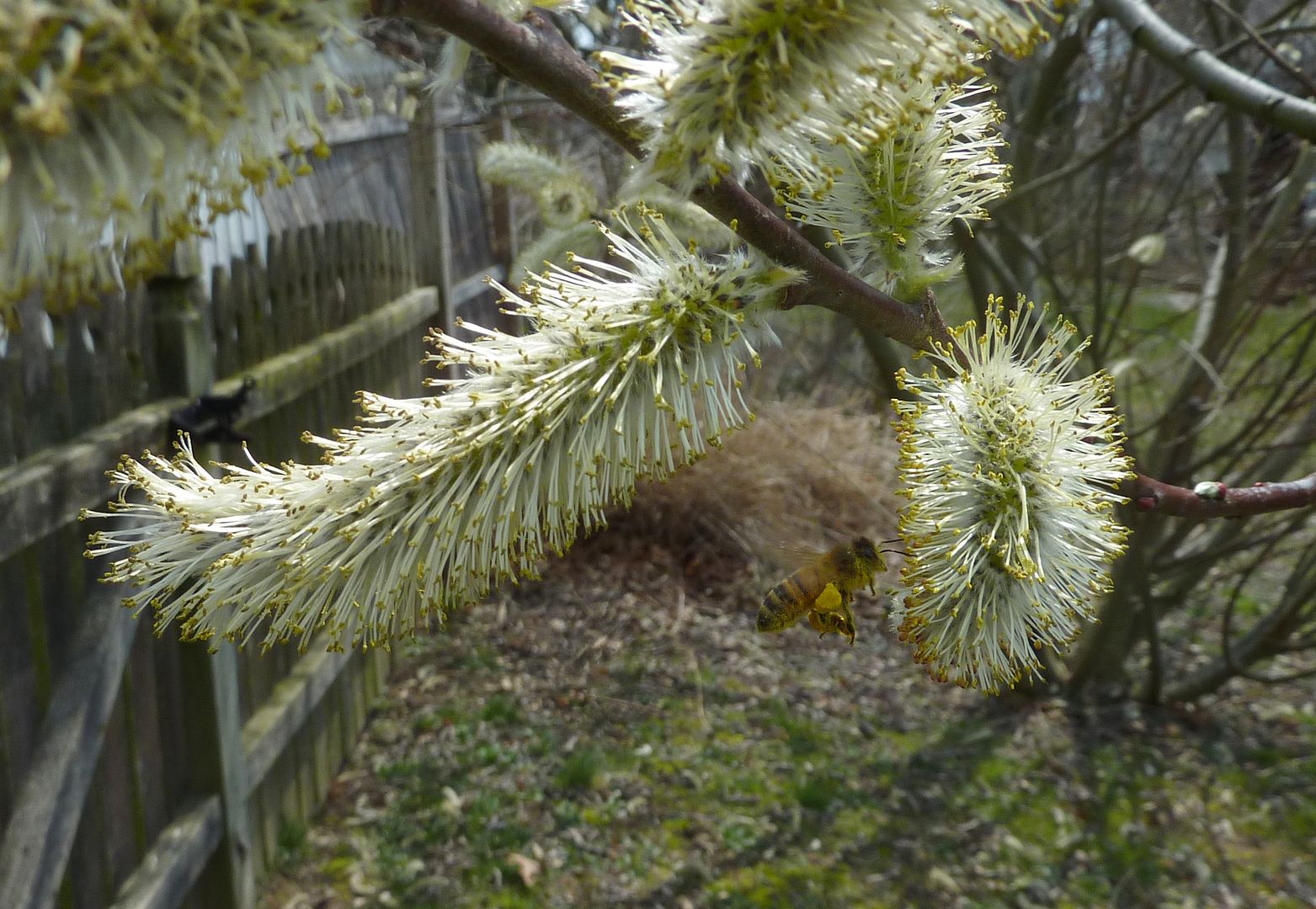
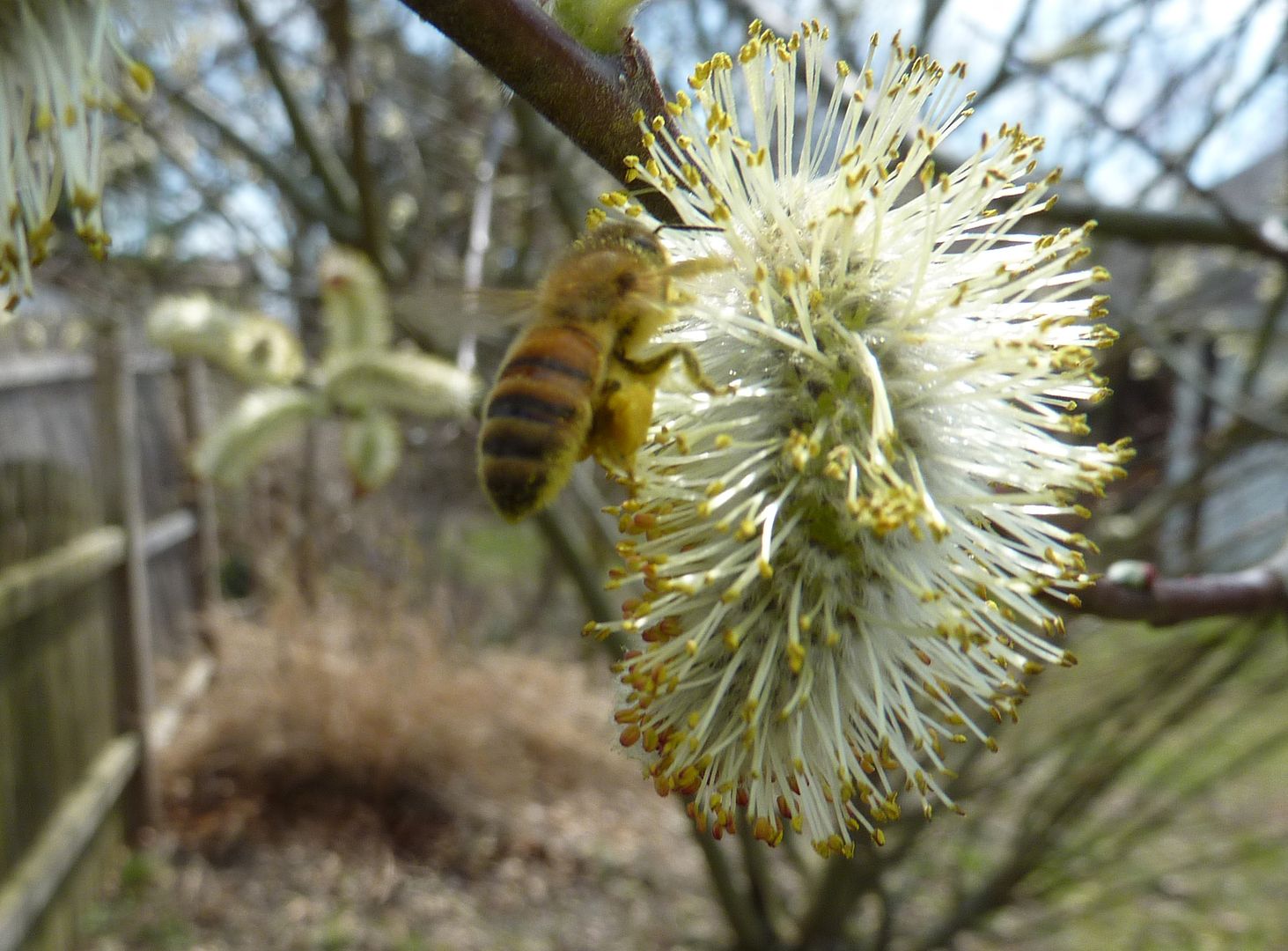
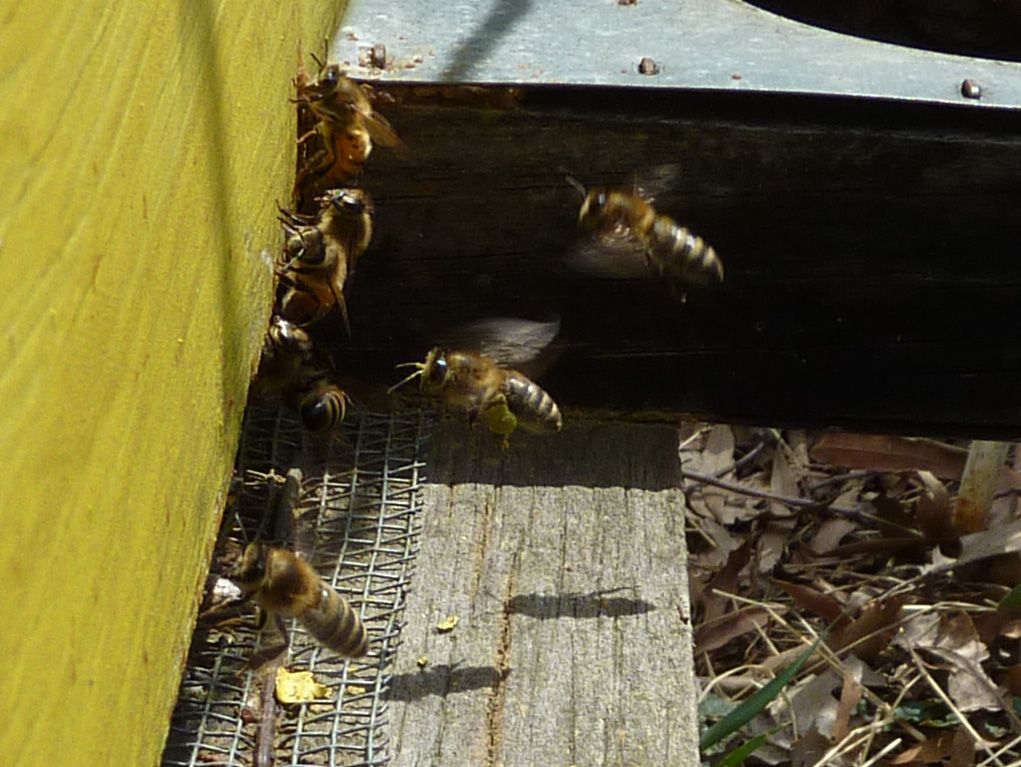
Early Nectar and Pollen for Bees


Wednesday, July 4, 2012
Some More Native Plants for Honeybees
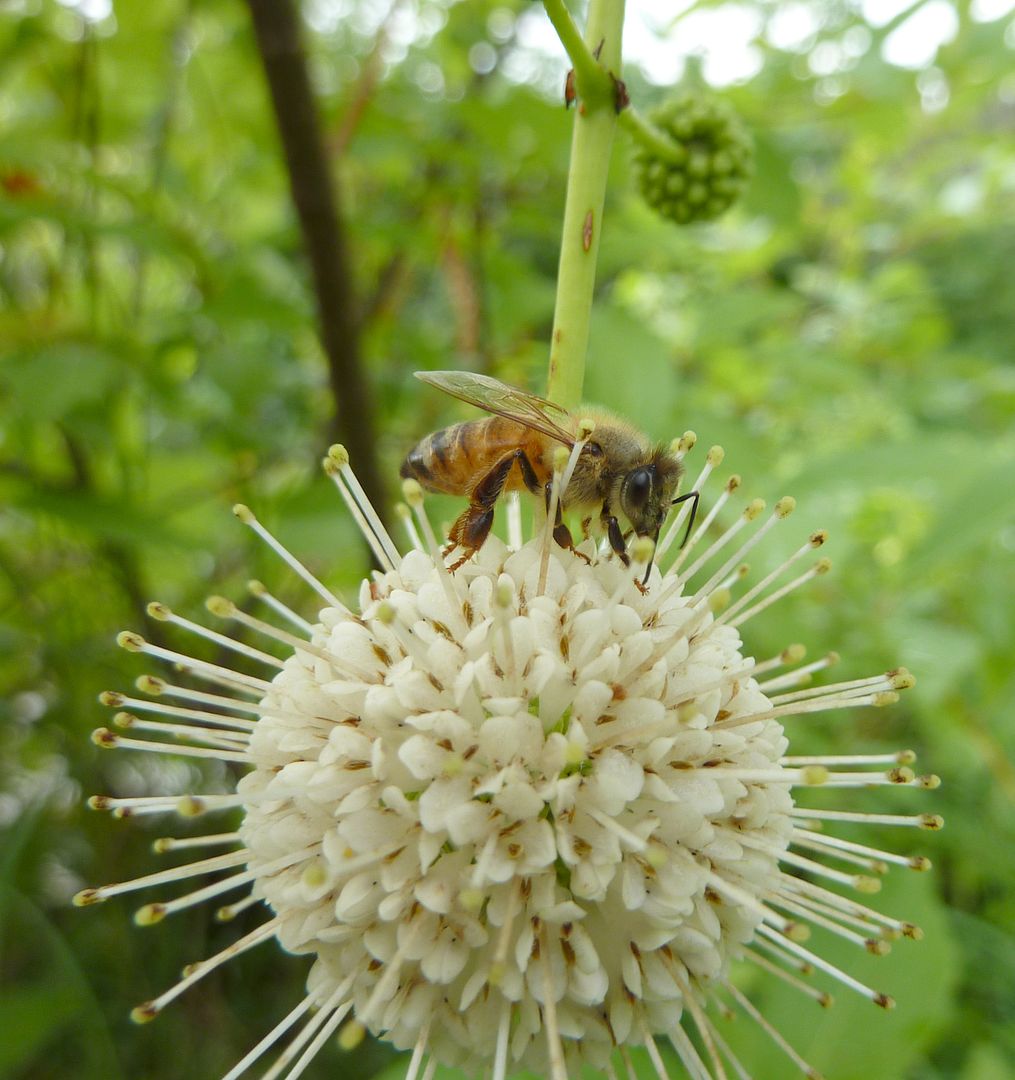
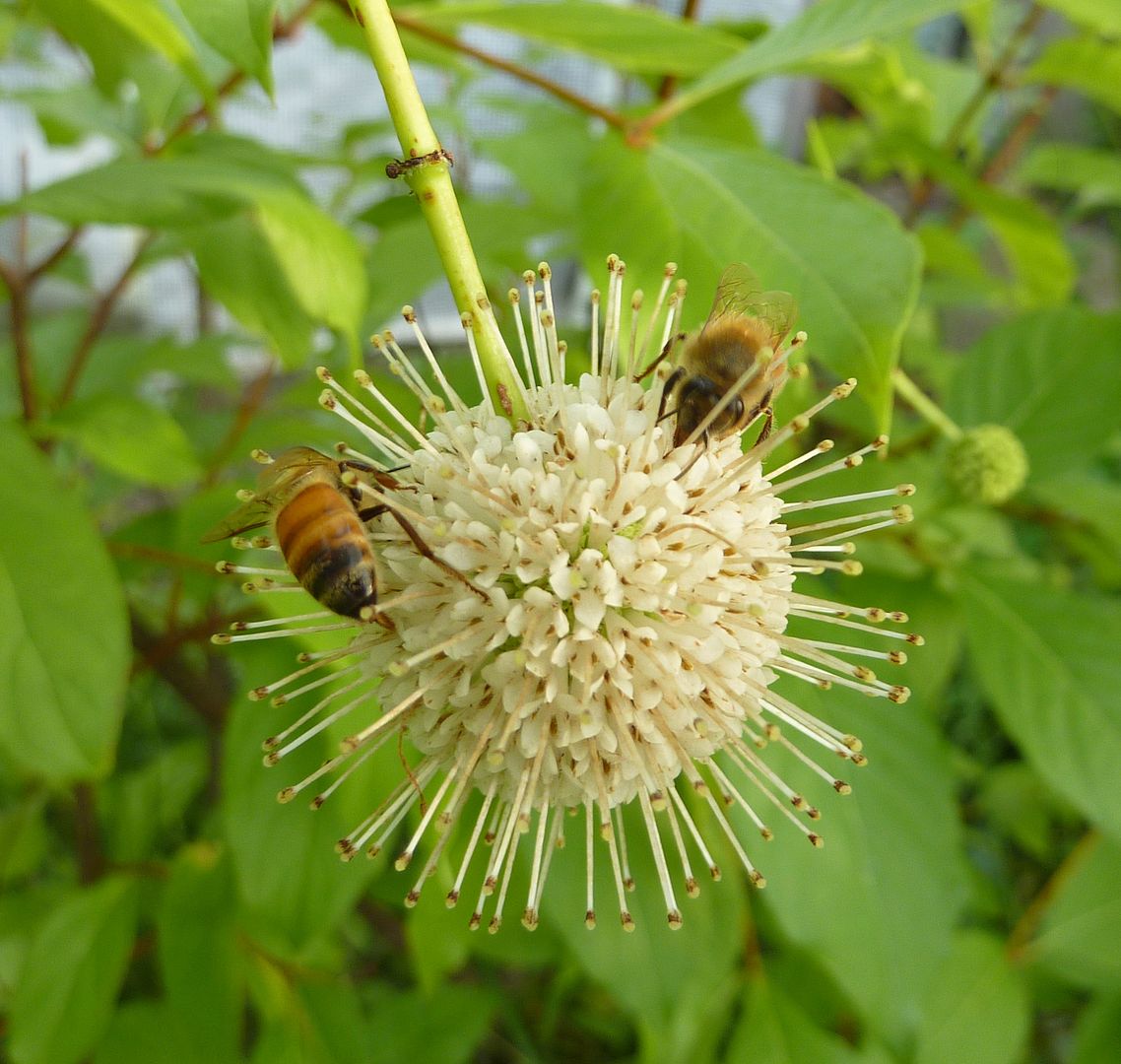
In the past week the honeybees have really taken to my garden. They were working all the Butterfly Weed, Mountain Mint, and Buttonbush in my yard. The Anise Hyssop is just starting to open up too and I'm sure the bees will be all over it in a few days.
Wednesday, June 6, 2012
Some Late Spring Bloomers

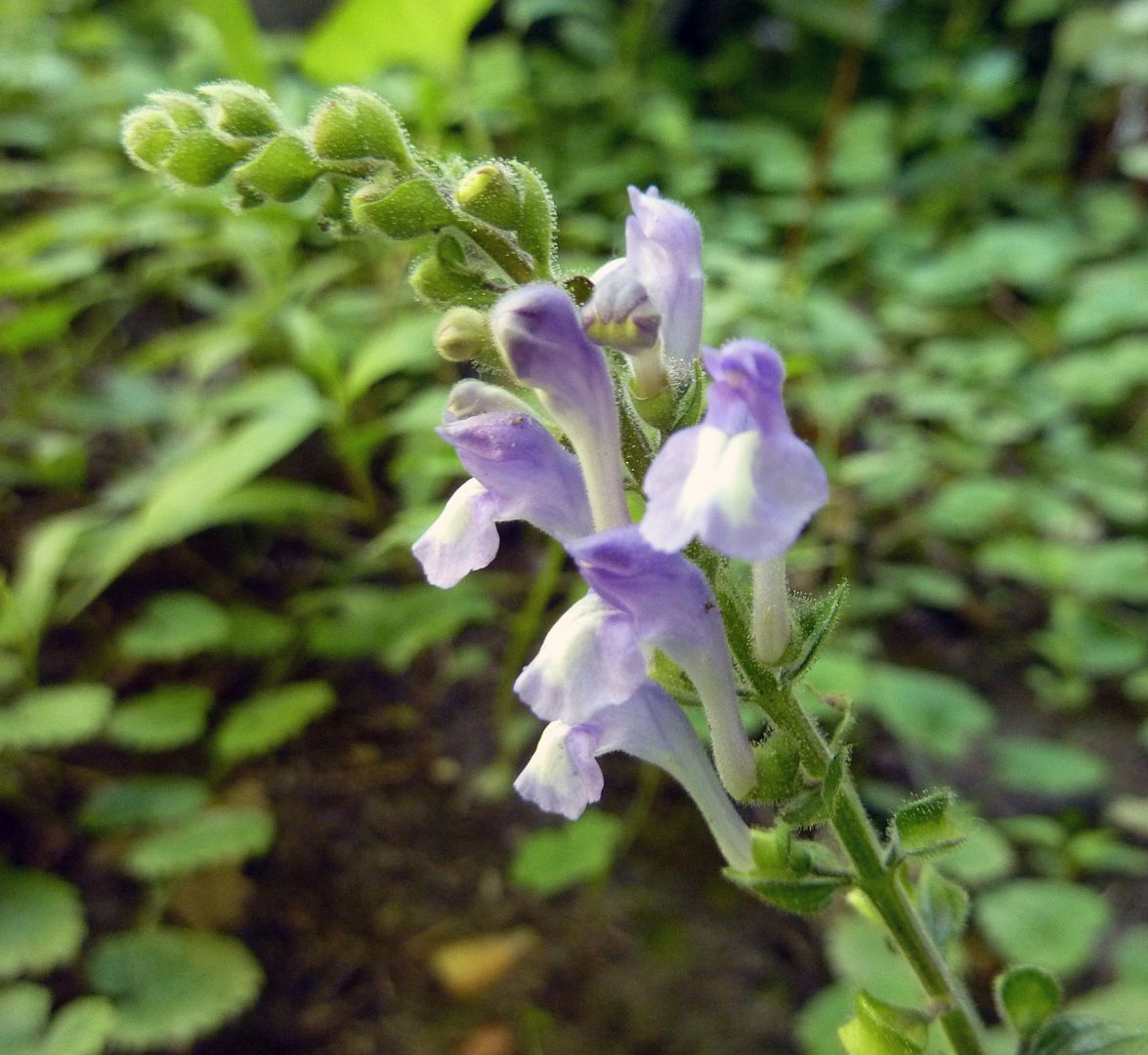
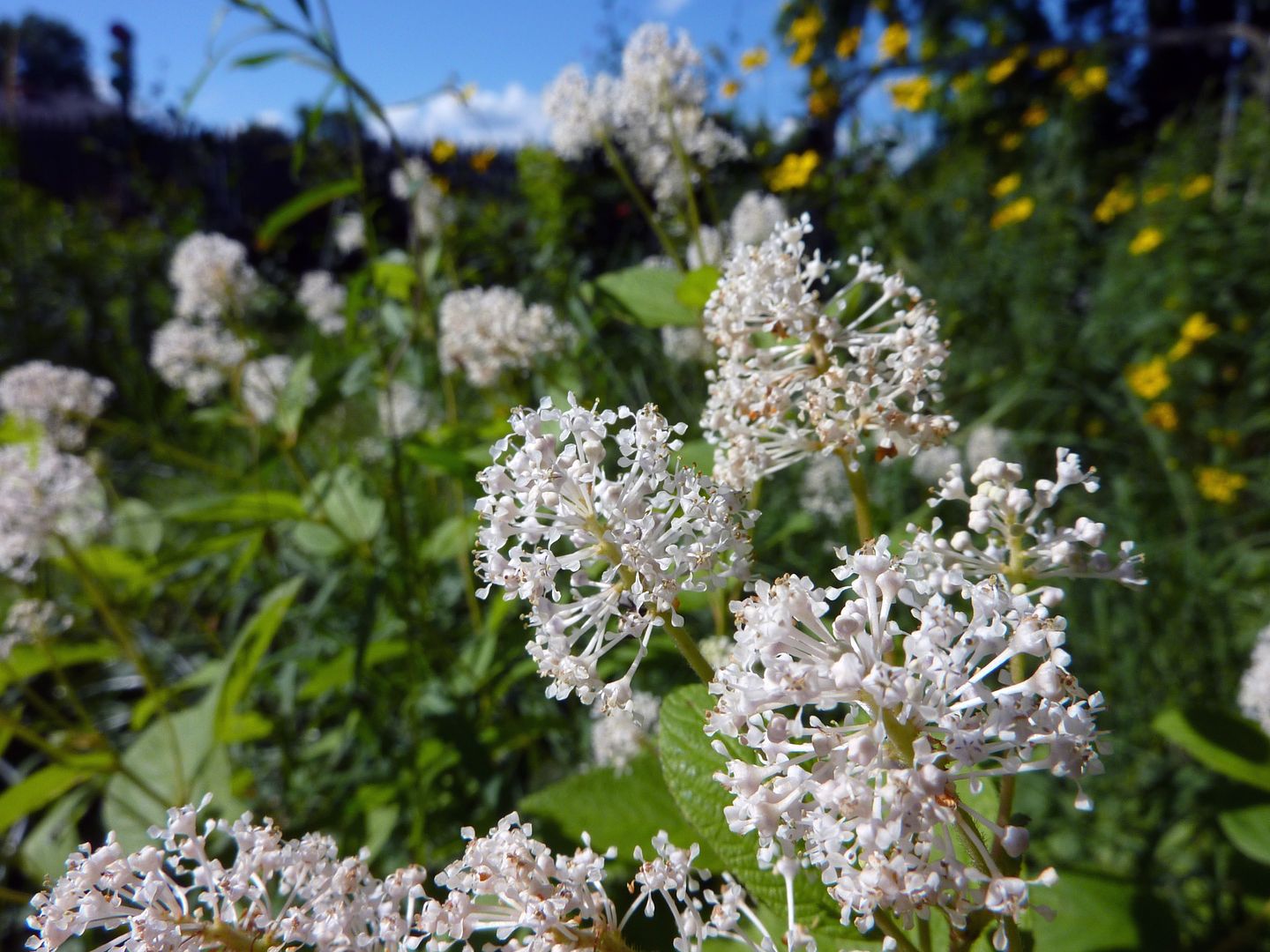
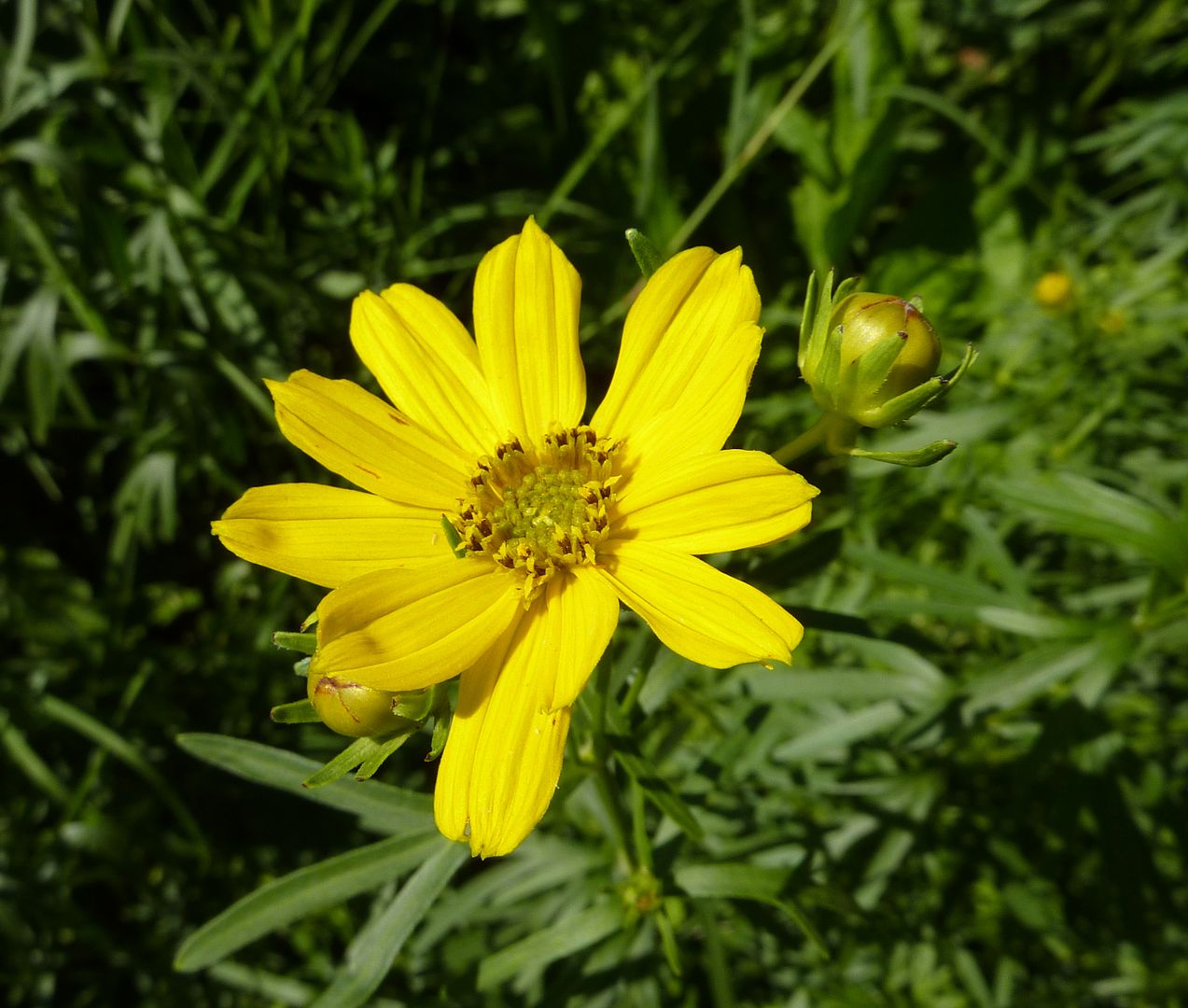
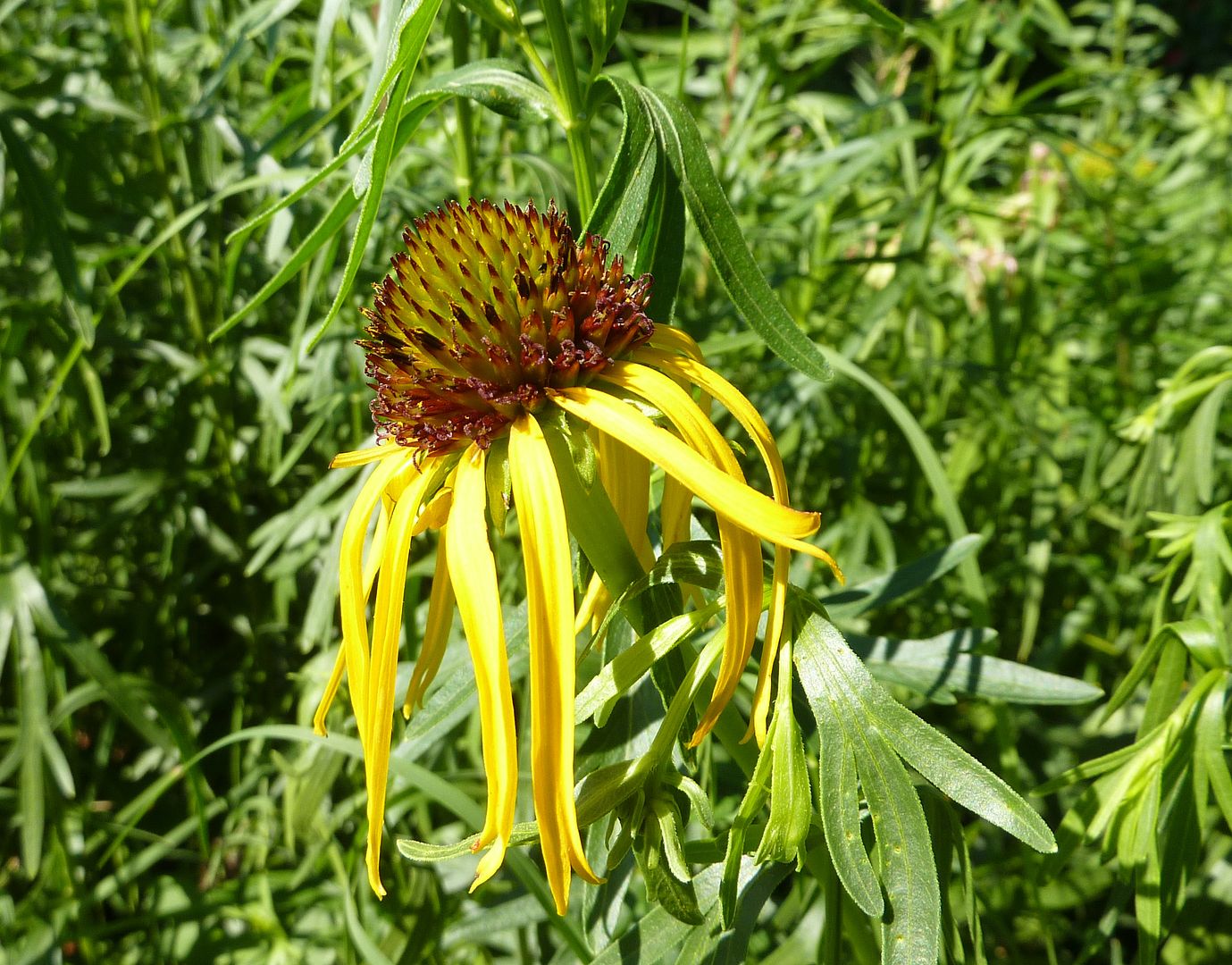

| Blue-Ridge Buckbean, Thermopsis caroliniana. Despite tolerating more soil conditions than Lupins, this plant doesn't have as many populations scattered around the country. It's something of a mystery to me. They're known to colonize where they occur but they don't seem to spread at all. | |
Monday, February 6, 2012
Winter Growth
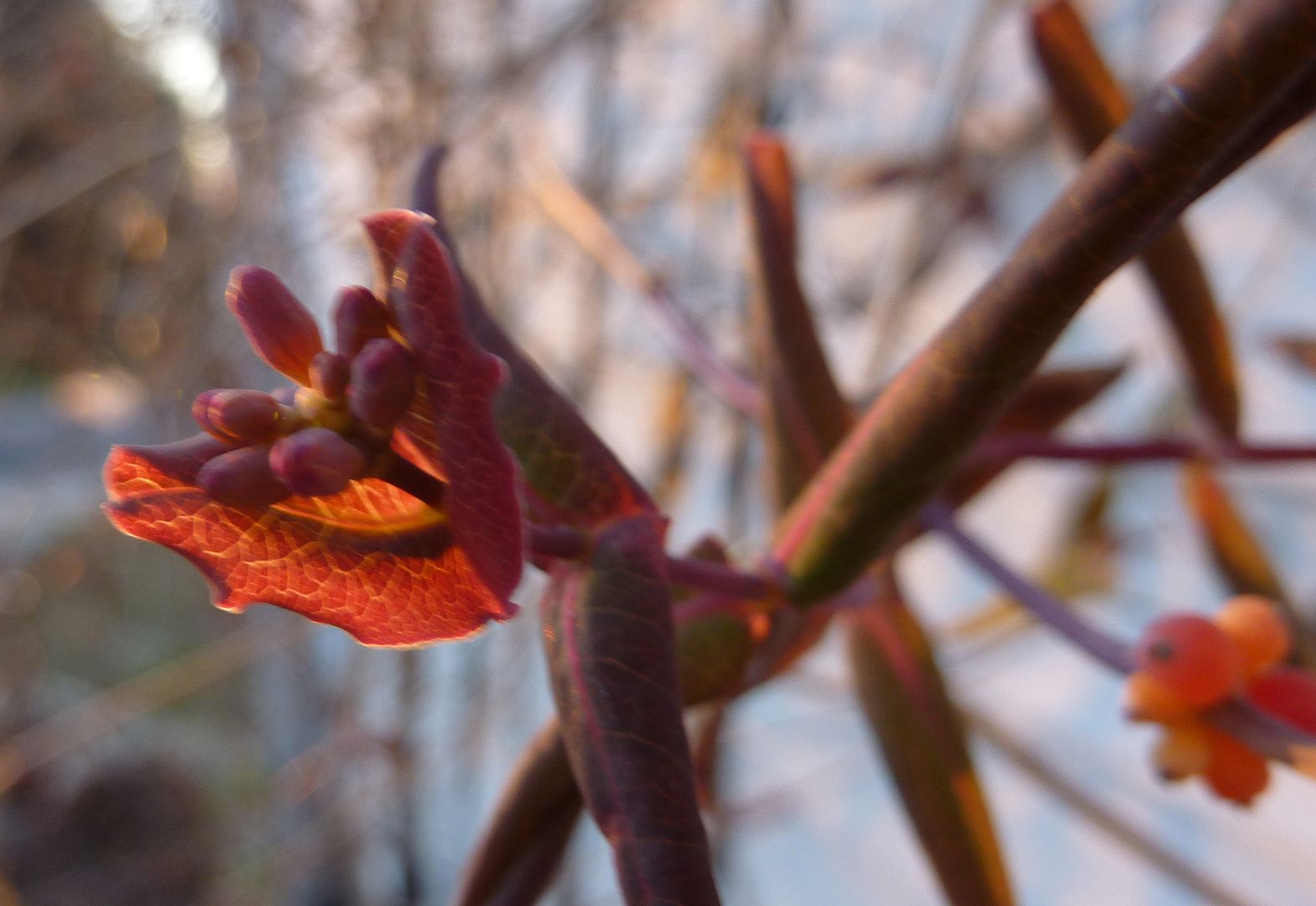
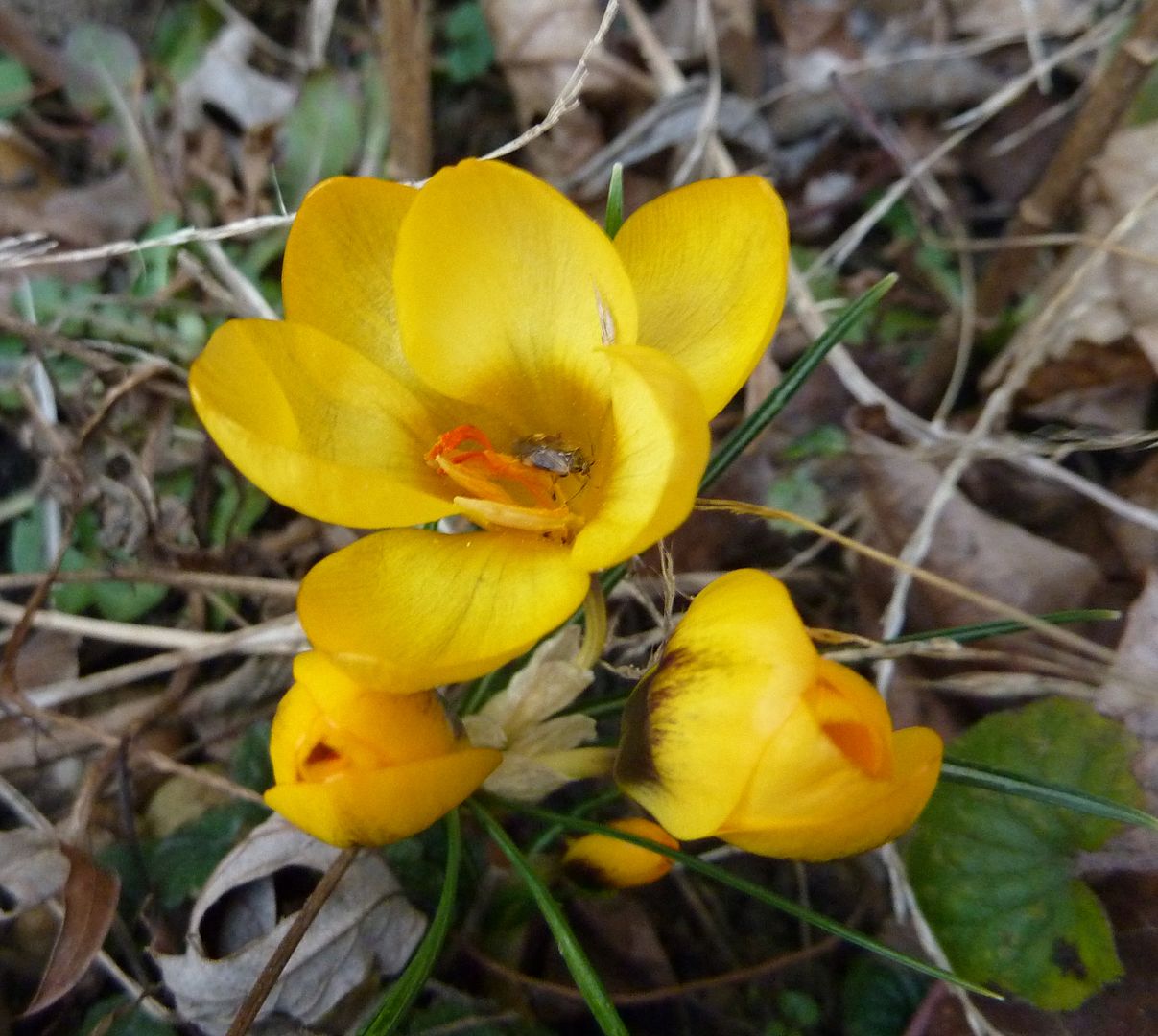
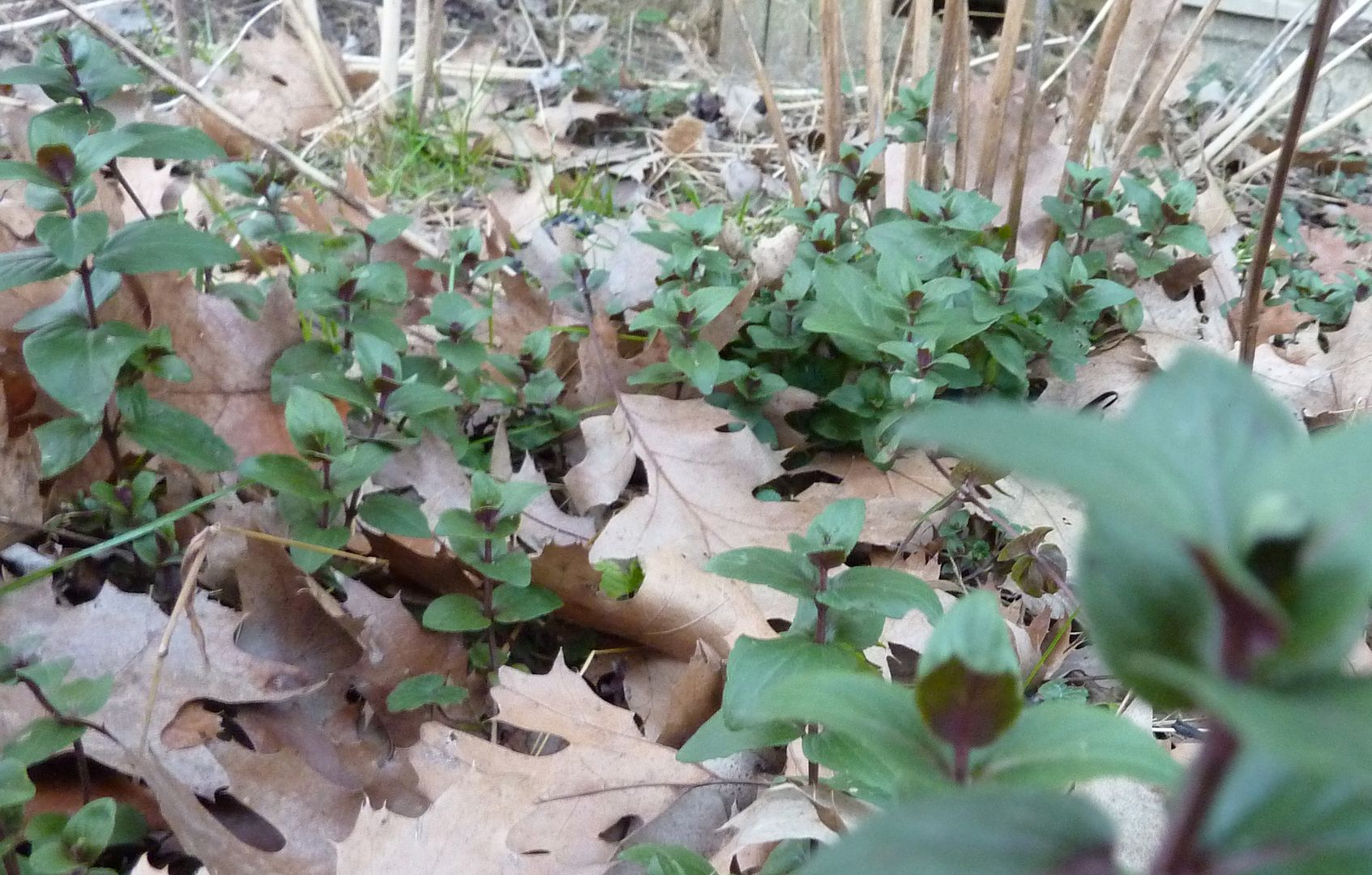
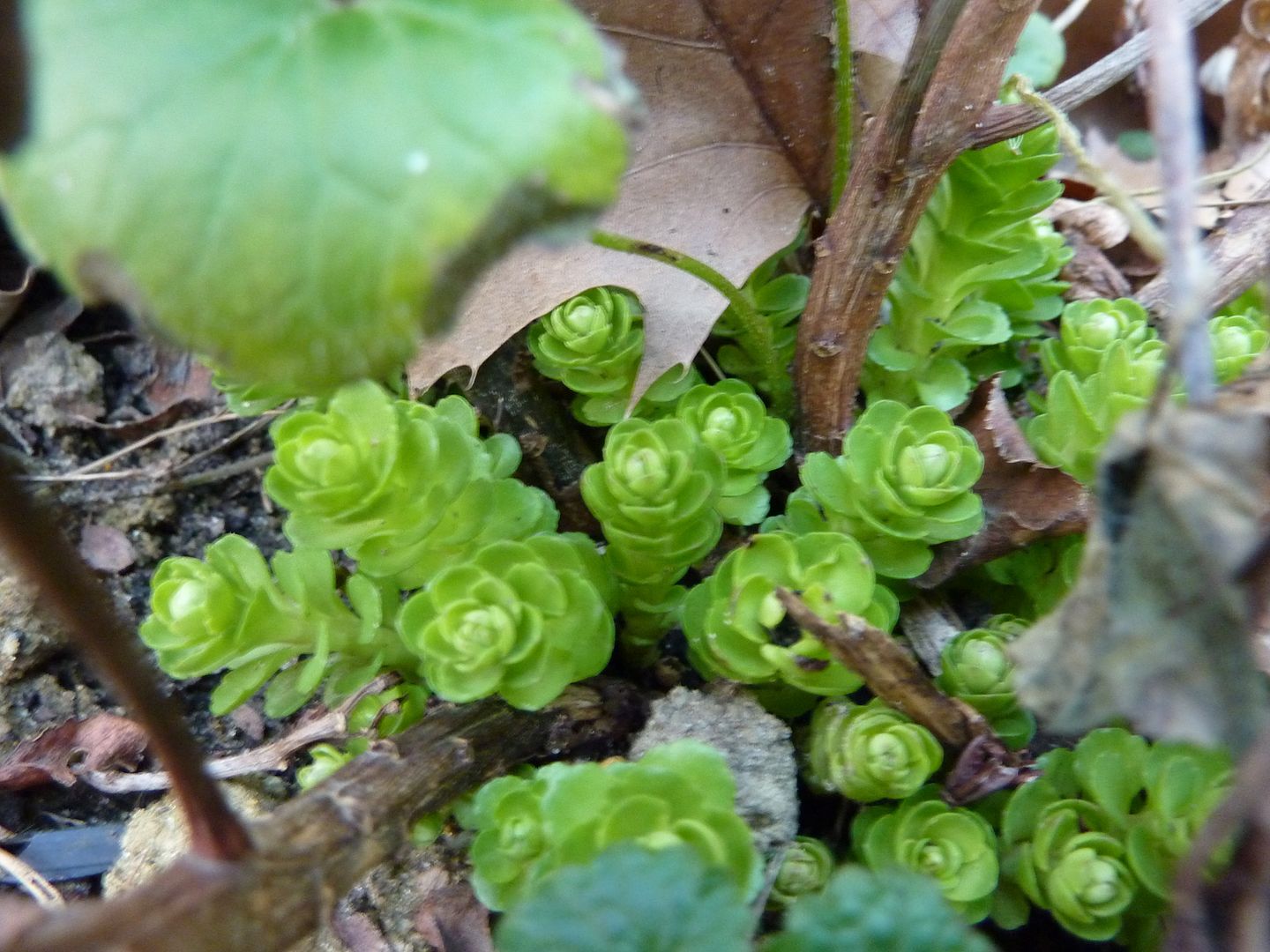
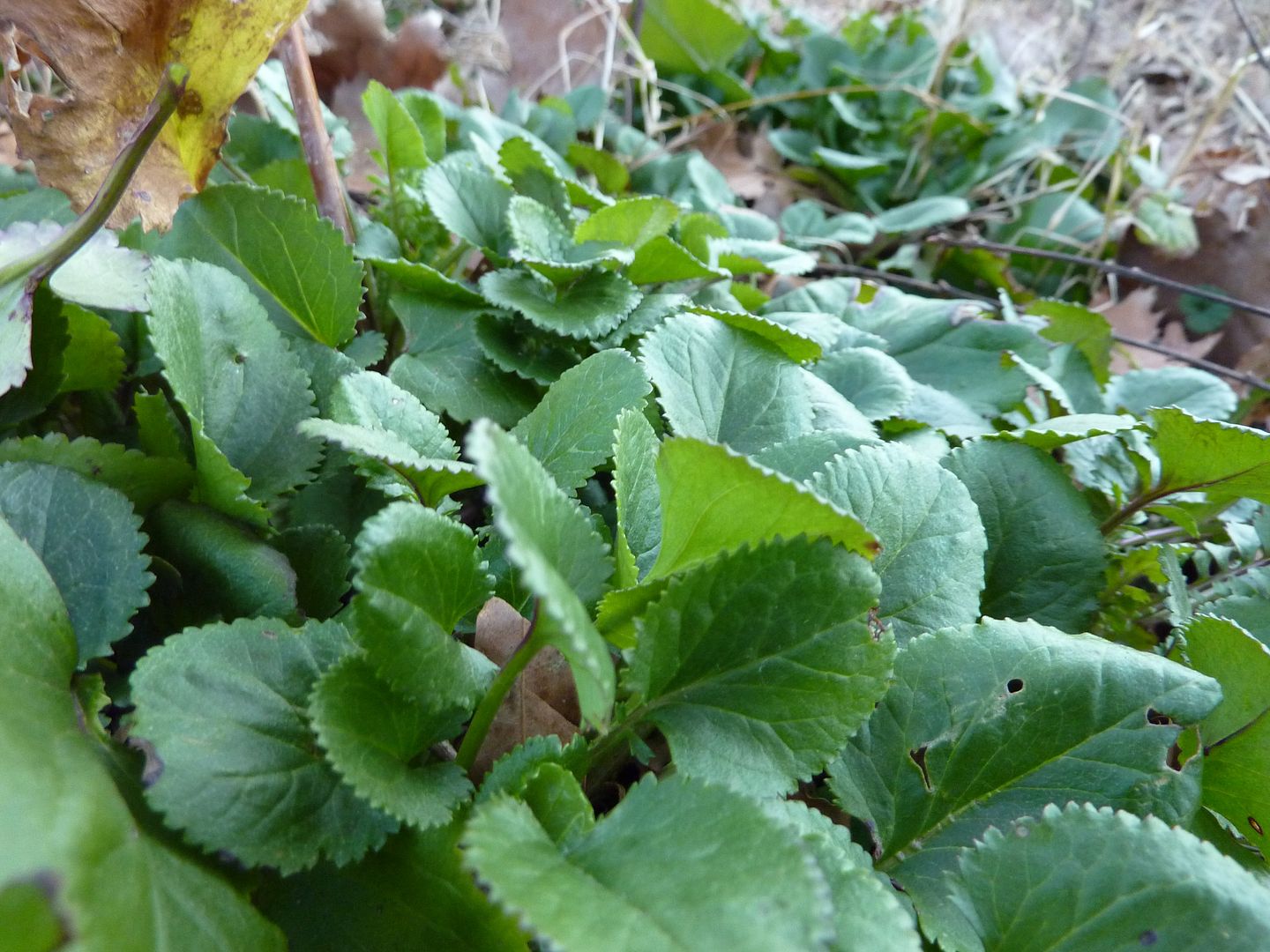
So all these early blooms got me wondering what else is pushing out new growth this early.

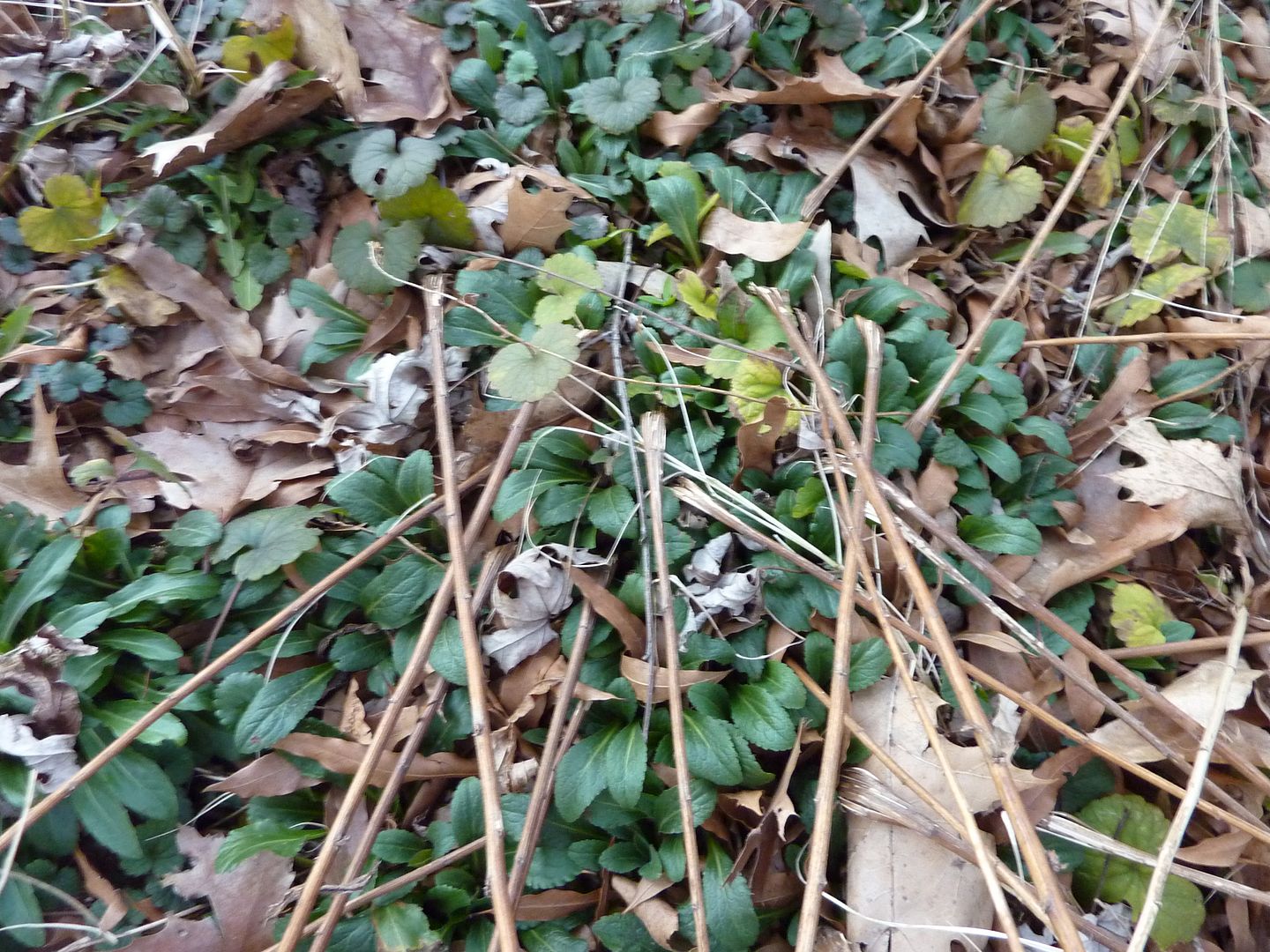
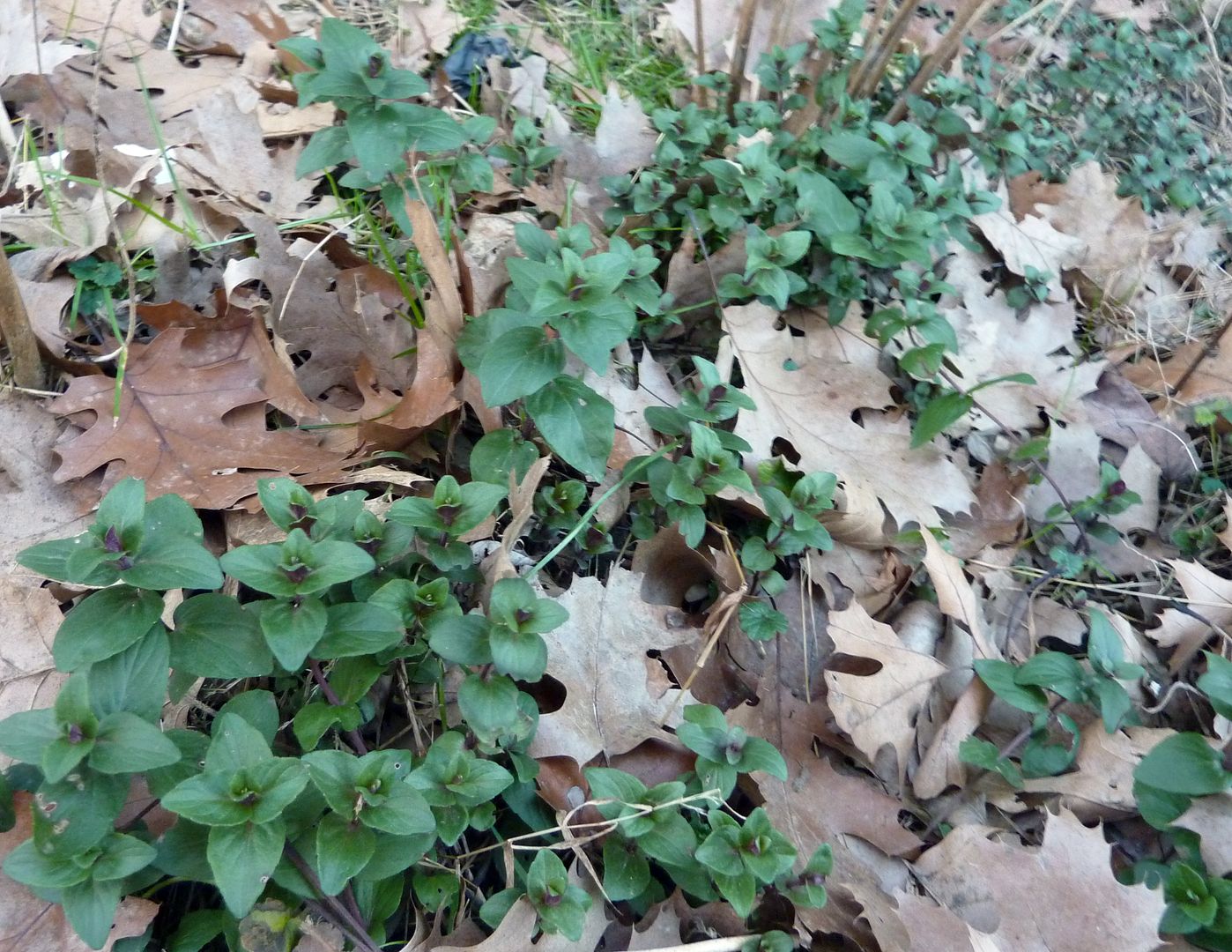
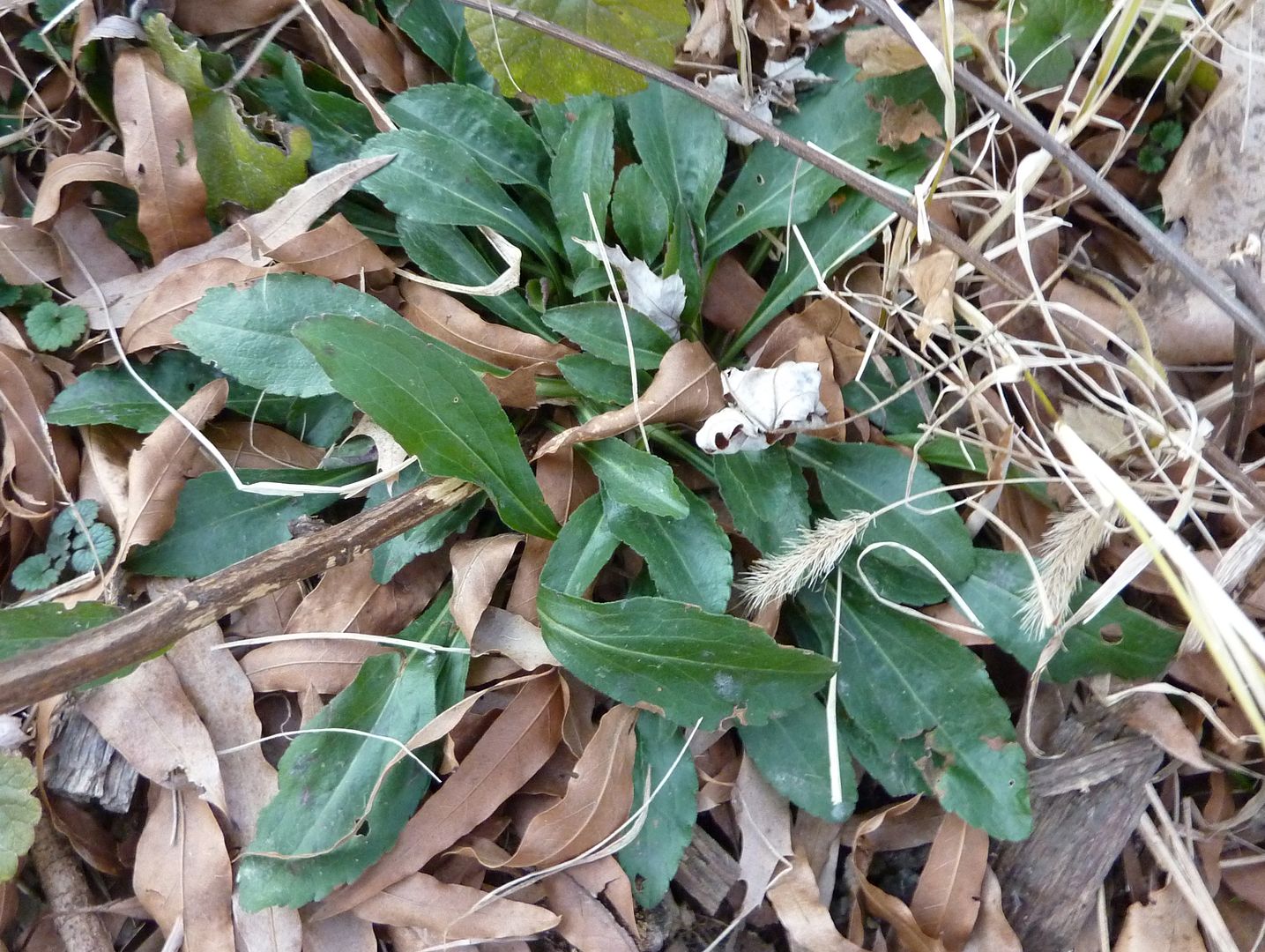
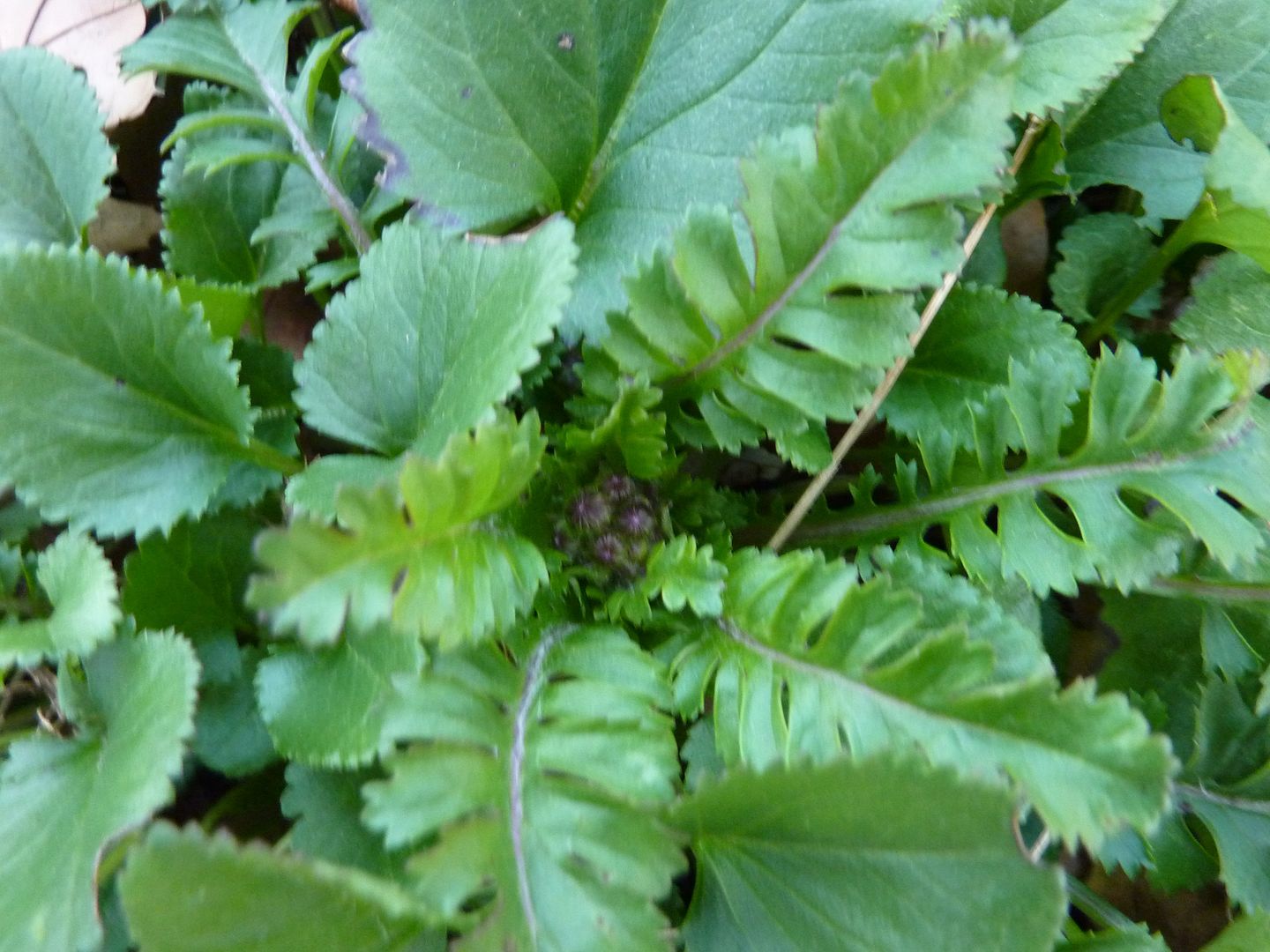
Roundleaf Ragwort, Packera obovata, is also spreading some. It's doing so in nice, garden friendly, tight clumps though. Despite it's seeds being transported by the wind it seems to be growing as a well behaved ground cover. I like this plant so much I'm thinking about spreading it around the yard everywhere. Note the flower buds starting to appear.
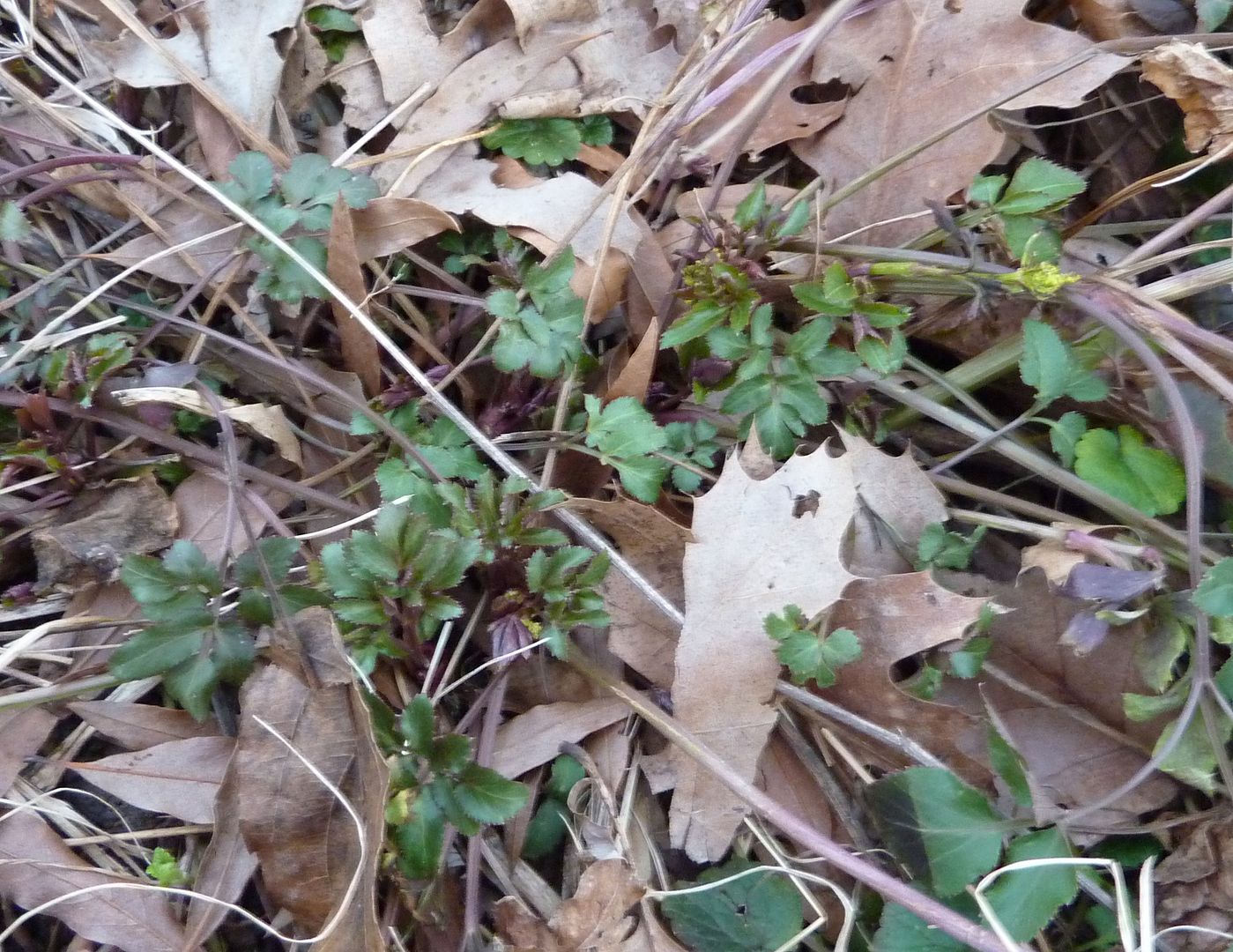
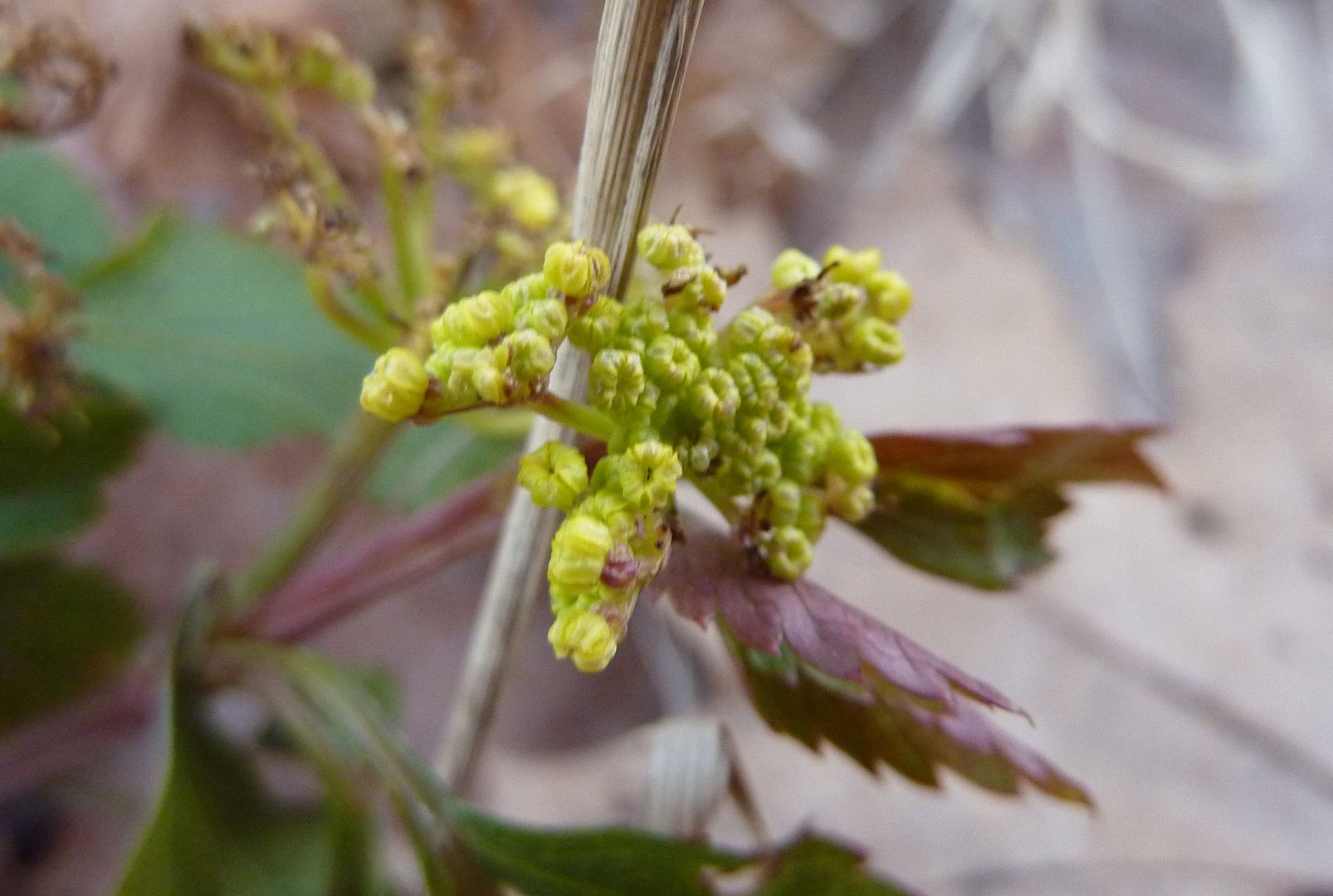
And then there's Golden Alexander, Zizia aurea. What this is doing with flower buds on it this early is a mystery to me. This is just one plant of the 4 doing it. Perhaps this is a seedling that's got its wires crossed somewhere.
Saturday, July 30, 2011
Are Prairies Practical to the Average Joe?
I was at my cousin's house yesterday. He's on 5 acres that form a slight slope with the bottom being a slight wetland area. He mows his entire property in an hour or two with one of those professional-looking riding mowers but can't do the wetland area for various reasons. The ground is to uneven, some woody snags here and there, some of the plants while low growing form woody thickets, it floods and fills a small pond area after rainfall. I don't blame him for not wanting to mow but his idea is to let it go wild so it turns into a slight woodland. I'm not 100% behind that idea.
So I explored his property for an hour and at the end he asked me what I thought. My response, "Well you have a great view from the house, your neighbor's horses are pretty to watch, I love this wetland area and how it's just teaming with life, but the rest of your property bores the hell out me."
My cousin isn't into plants, he has no knowledge that natives are better than non, and I wasn't in the right company to explain otherwise. My dad was also walking with us and he has a habit of "correcting" me. Actually it's more like voicing the opinions of late night infomercials. It's the kind of logic that changes the dynamic of the conversation onto something else. For example he believes nothing in the world can grow without fertilizer. Want to grow something in the middle of the desert? Just dump some fertilizer and your tropical oasis will magically appear. He doesn't understand that a lot of plants love growing in conditions that aren't bursting with nitrogen. Anyhow...
The overall issue my cousin has is owning to much land. He wants to install an in-ground pool with hot tub that waterfalls into it, but at the same time he's thinking about getting a few horses. He might eventually put an addition on his home, will probably need a barn for the horses or whatever other livestock he plans on keeping, and at the same time knows nothing about managing so much land other than to mow the lawn. Plant wise, he's planted some saplings but doesn't know what half of them are. To top that off, towards the end of my visit, he said he has the money to fund any sort of projects or ideas I have about making low maintenance planting.
For starters, before leavings I corrected him about a tree he thought highly of. He wanted a tree just like the one out front of his parent's home, and thought it was a Magnolia so he planted one. In actuality his parents have a Japanese Flowering Cherry, a double flowering one I think. So he was a little bummed about that.
That last part about wanting ideas for low maintenance planting really stuck with me on the ride home. The most obvious solution I think would be to install a Prairie seed mix but he has some nasty, evil looking weeds around his home!
I have no idea what this little vine is but I gasped when I saw those thorns coming out from under the leaf vanes. One dug into my finger pretty bad when I went down to touch it. I was really caught off guard about there being thorns under the leaves.
I really want to recommend my cousin plant a seed mix with a lot of forbs in it so doesn't just look like the side of his house. We'll explore that later. The thing holding me back though is the abundance of weeds like the one above around his property. Thistle and pokeweed are the least of his problems. There are so many types of thorn covered vines around I'd be afraid that they'd seed themselves into the mix from the wind and take over. The thing about managing a backyard prairie is mowing/haying can only suppress so many weeds, not everyone is open to the idea of burning, and asking to barrow the neighbor's cow just sounds silly. In short, I feel I should consult an expert before recommending this as an option.
The benefit to installing a prairie is he'd only have to mow it once a year, but still have to do the perimeter of his fence as well any open lawn areas. I'm certain he's open to the idea of setting fire to the yard, I'd say he's attempted to do that once or twice from the look of his fire pit. Considering he's in farm country maybe borrowing some livestock, or even charging them for the survive could be done too, but their hooves would tear up his property a bit. These are all fairly big jumps for the average person to make.
He didn't know what Milkweed was before today, and he has probably the prettiest specimen of Asclepias incarnata, Swamp Milkweed, I've ever seen growing in his wetland.
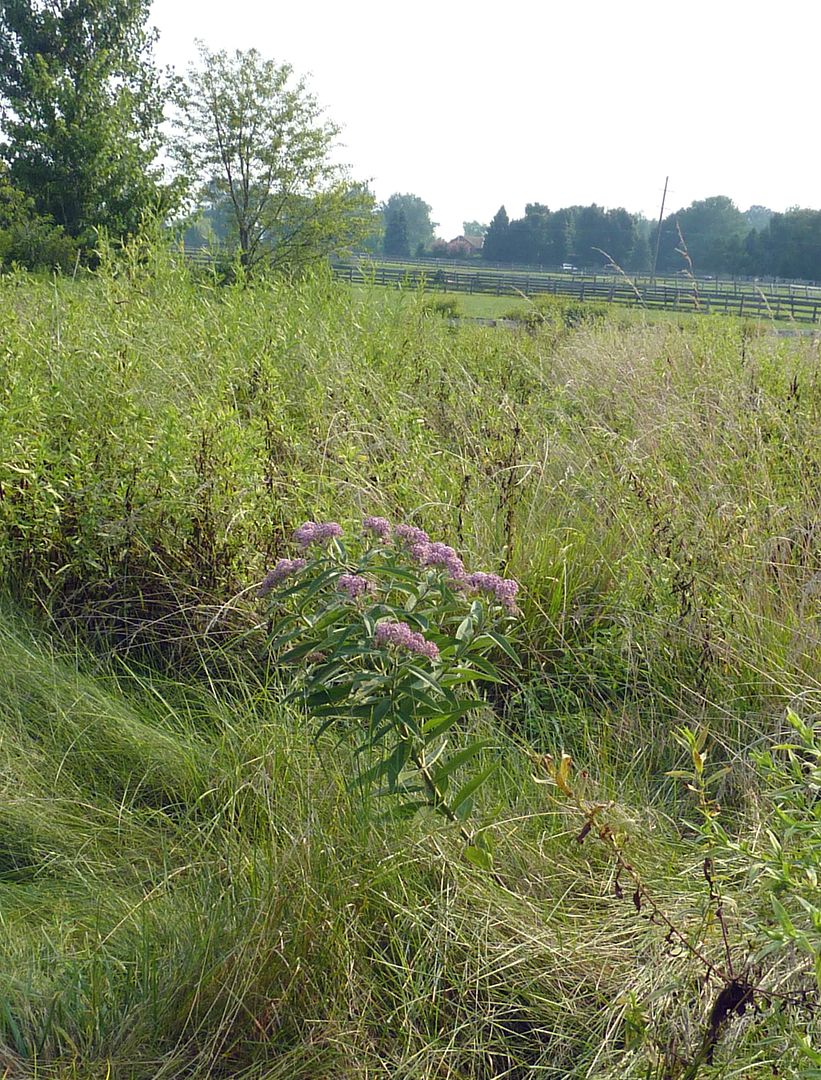 I wish I'd taken this picture at a slightly lower angle to take the focus off the grass behind the milkweed more.
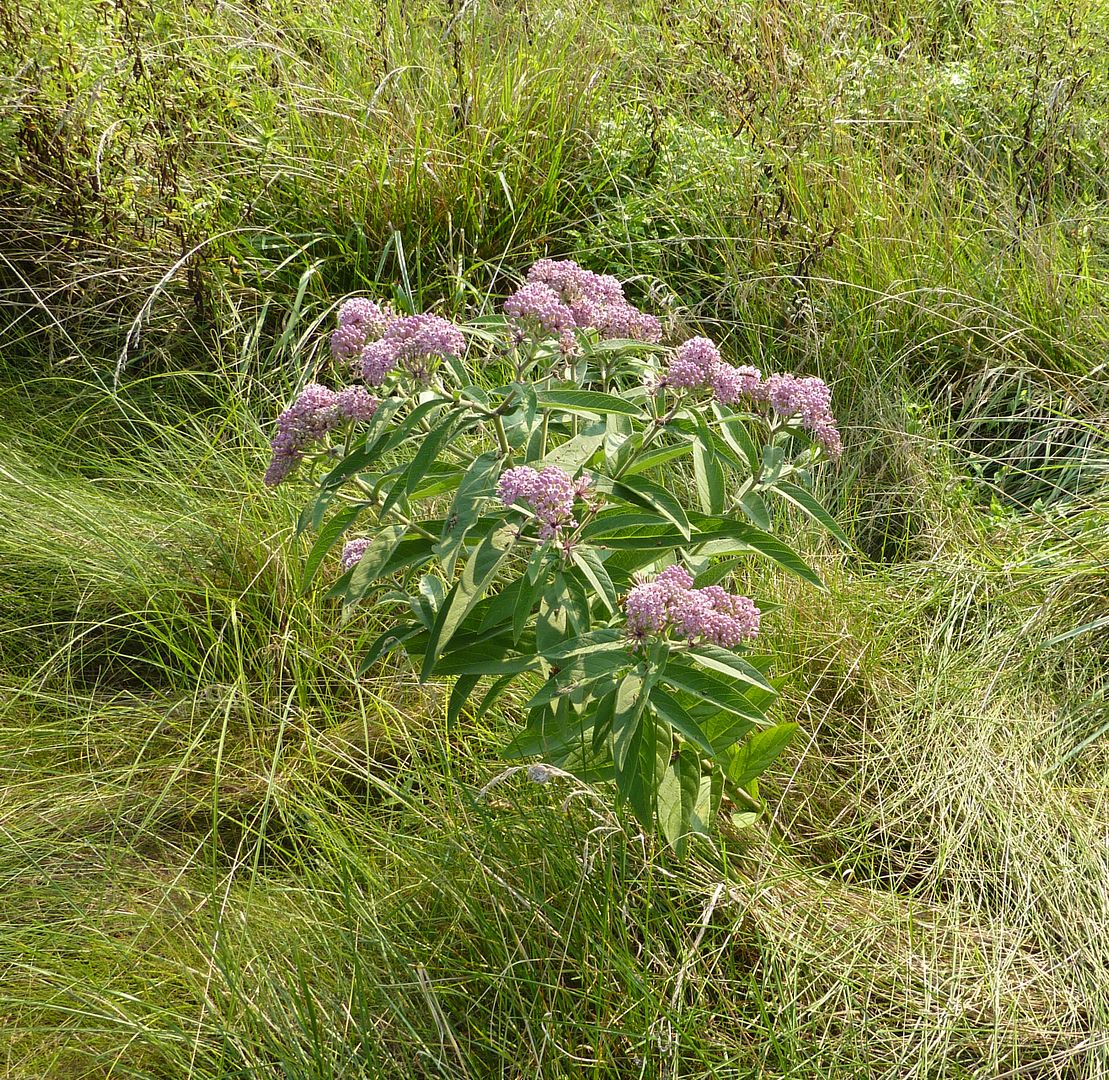 It was just this one milkweed growing among this short grass. There were other Swamp Milkweeds about but this one stood out more than all the others.
 It has a single stem, which I've never seen happen. And look how thick it is compared to my hand. The result was the thing being thicker than what the norm is all over the whole plant. All of the stems were engorged much thicker than they should be. It was enough to make me think twice about my ID. Other specimens in the wetland were more towards the norm though with multiple stems and closer looking to what most nurseries sell.
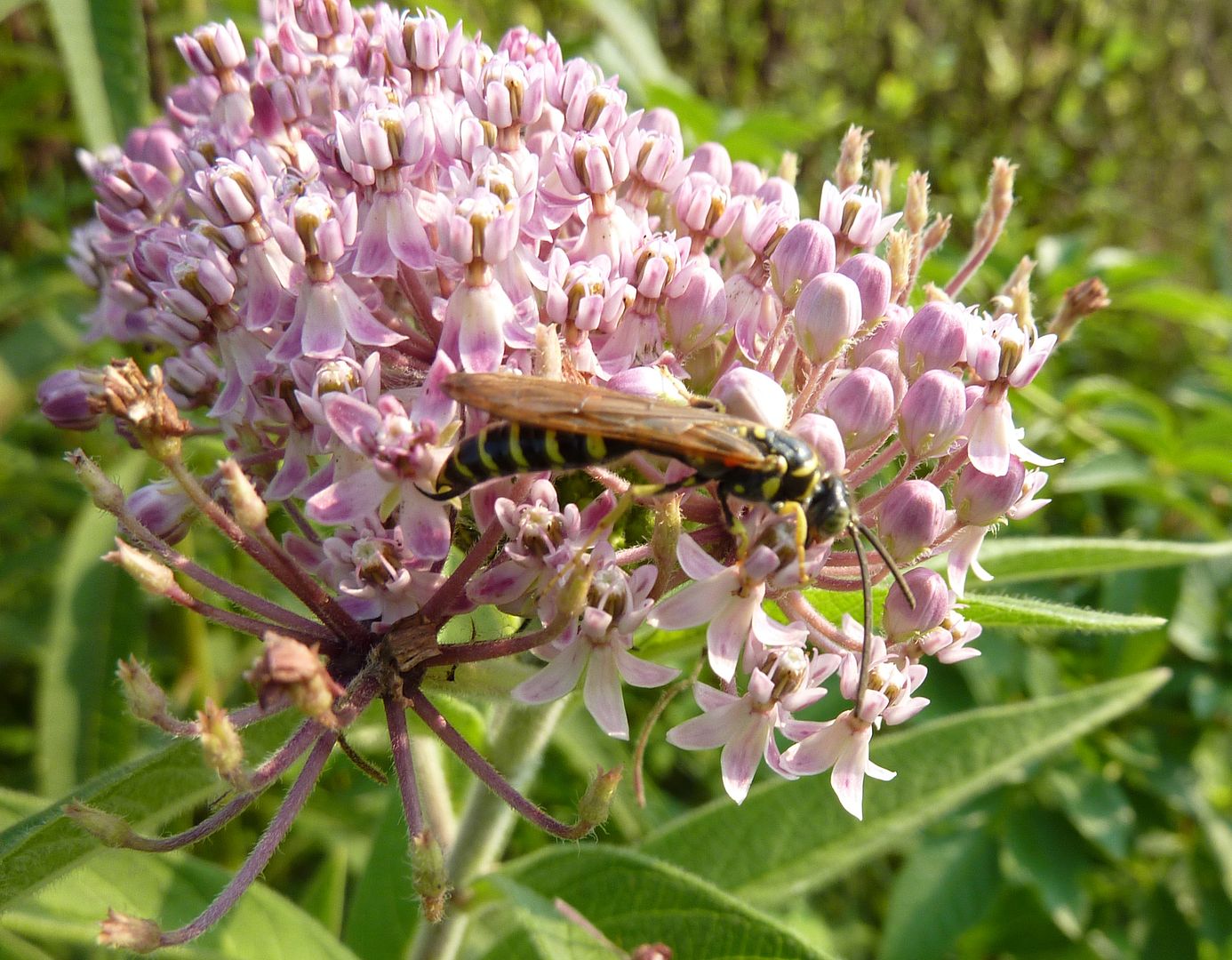
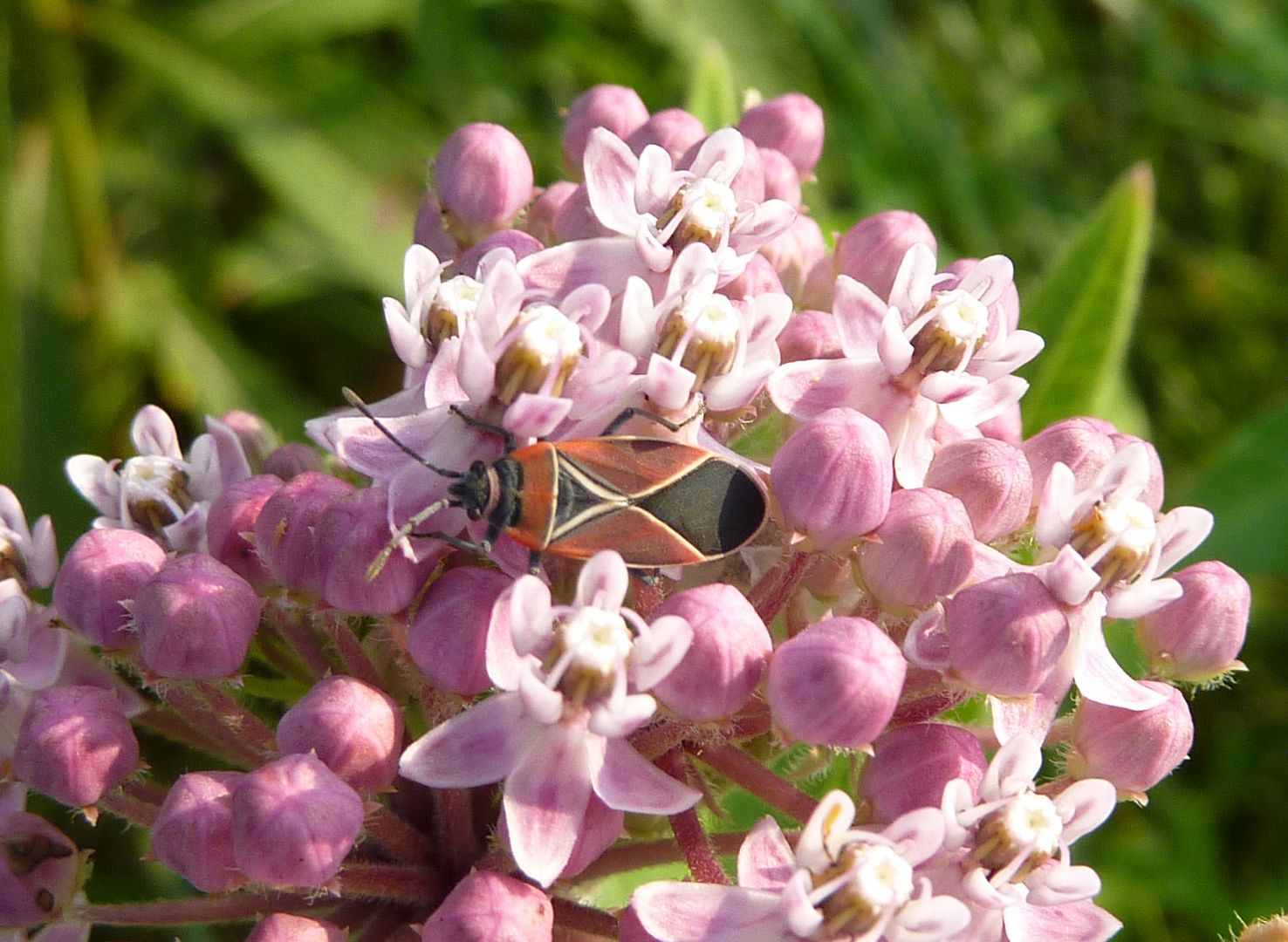 Pollinators were all over this thing. There were lots of Monarchs flying around but they were to busy having sex to be laying eggs it seemed. No caterpillars or nibbling at all, though I'm sure that'll change tomorrow.
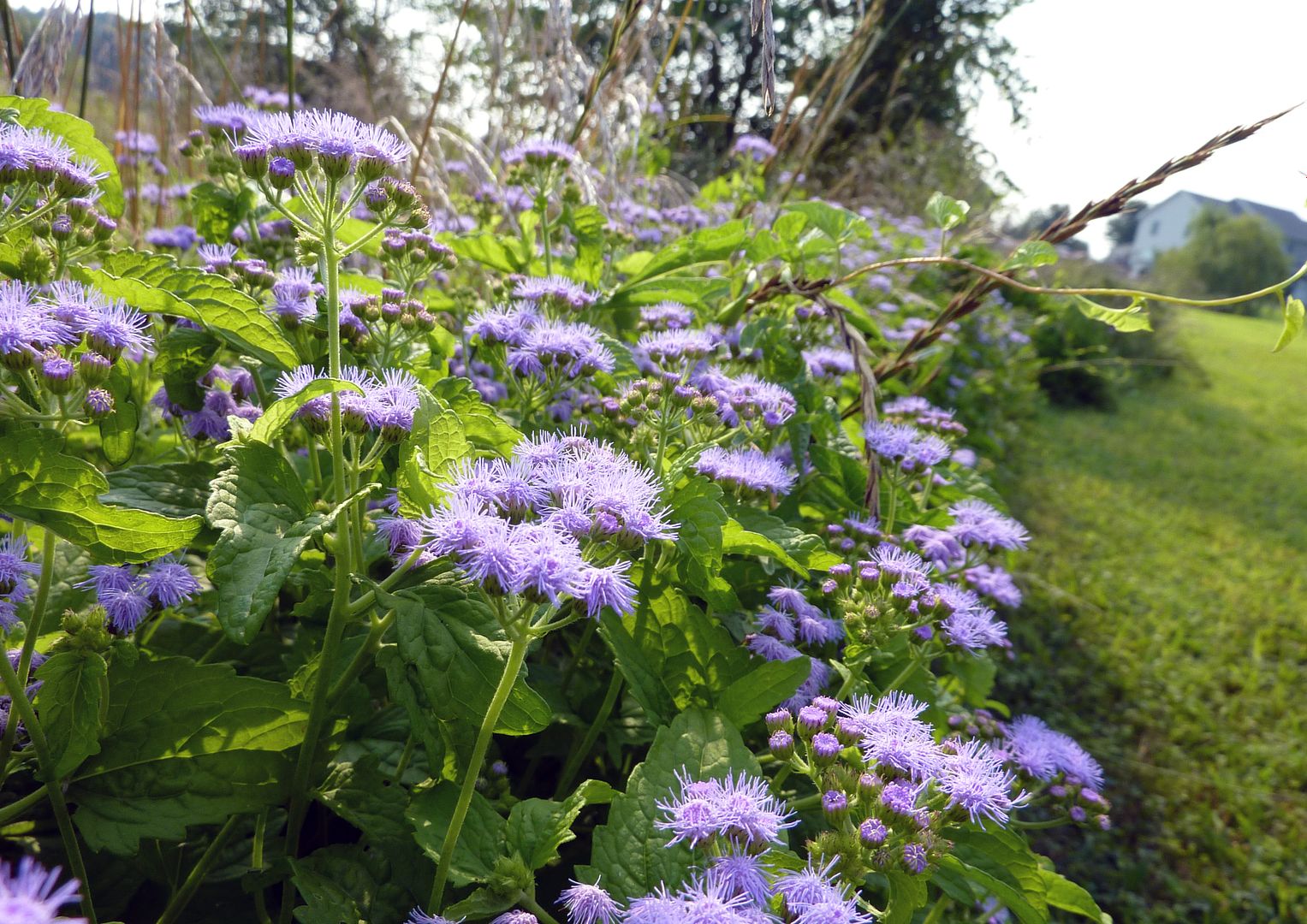 Mist Flower, (The real one this time!) Eupatorium coelestinum, had a few patches here and there. I could see growing this for the sweeps of color their clumps offer.
 What I think is Common Boneset, Eupatorium perfoliatum, was also growing there. Normally I don't like bonesets but this one was more like a white flowering Joe Pye Weed (same genus).
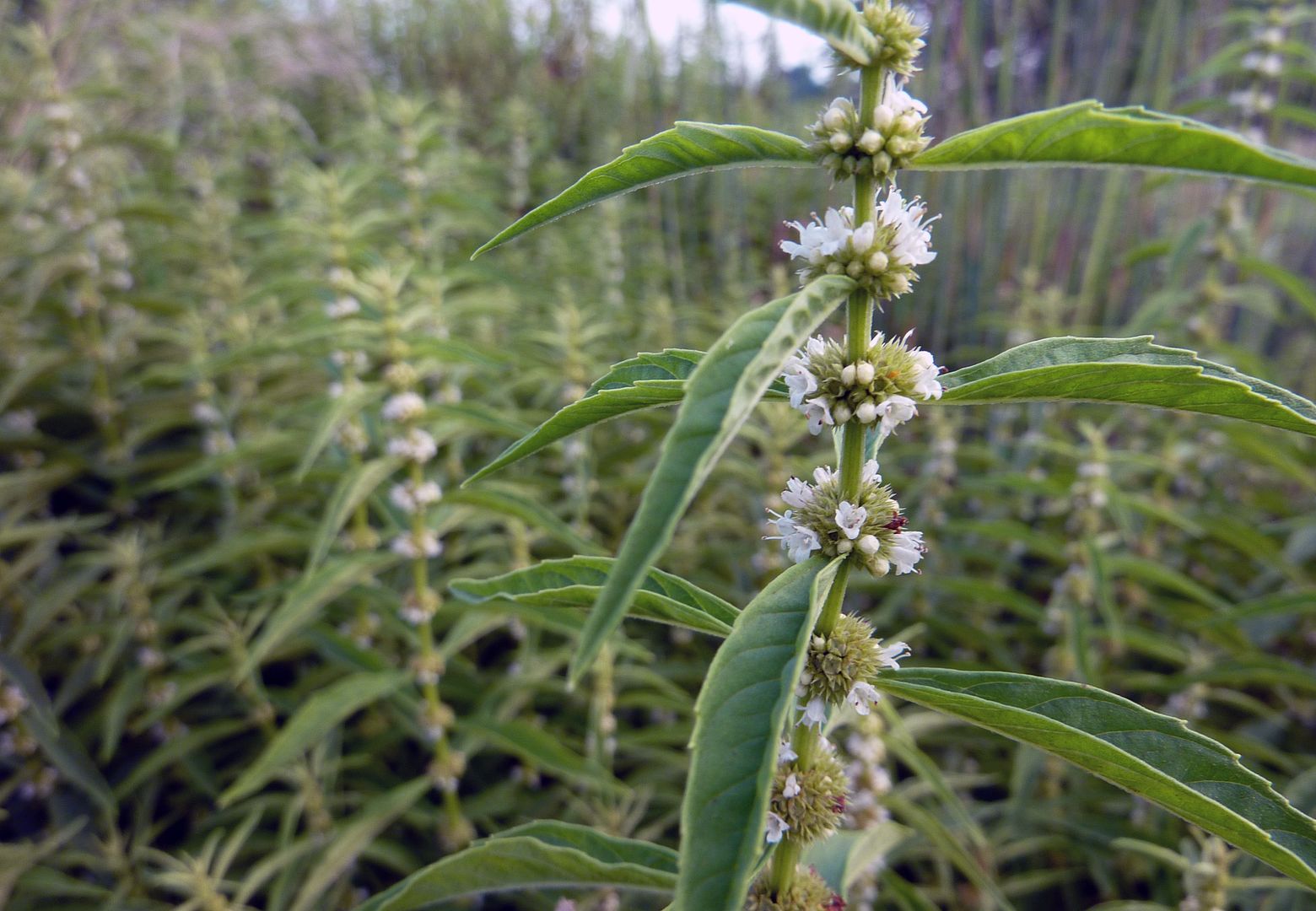 A neat looking kind of Wild Mint, Mentha sp. I think, also caught my eye. There weren't a whole lot of pollinators around it, which is shocking for a mint plant! but there is a lot to be said about the form and pattern all the stems create.
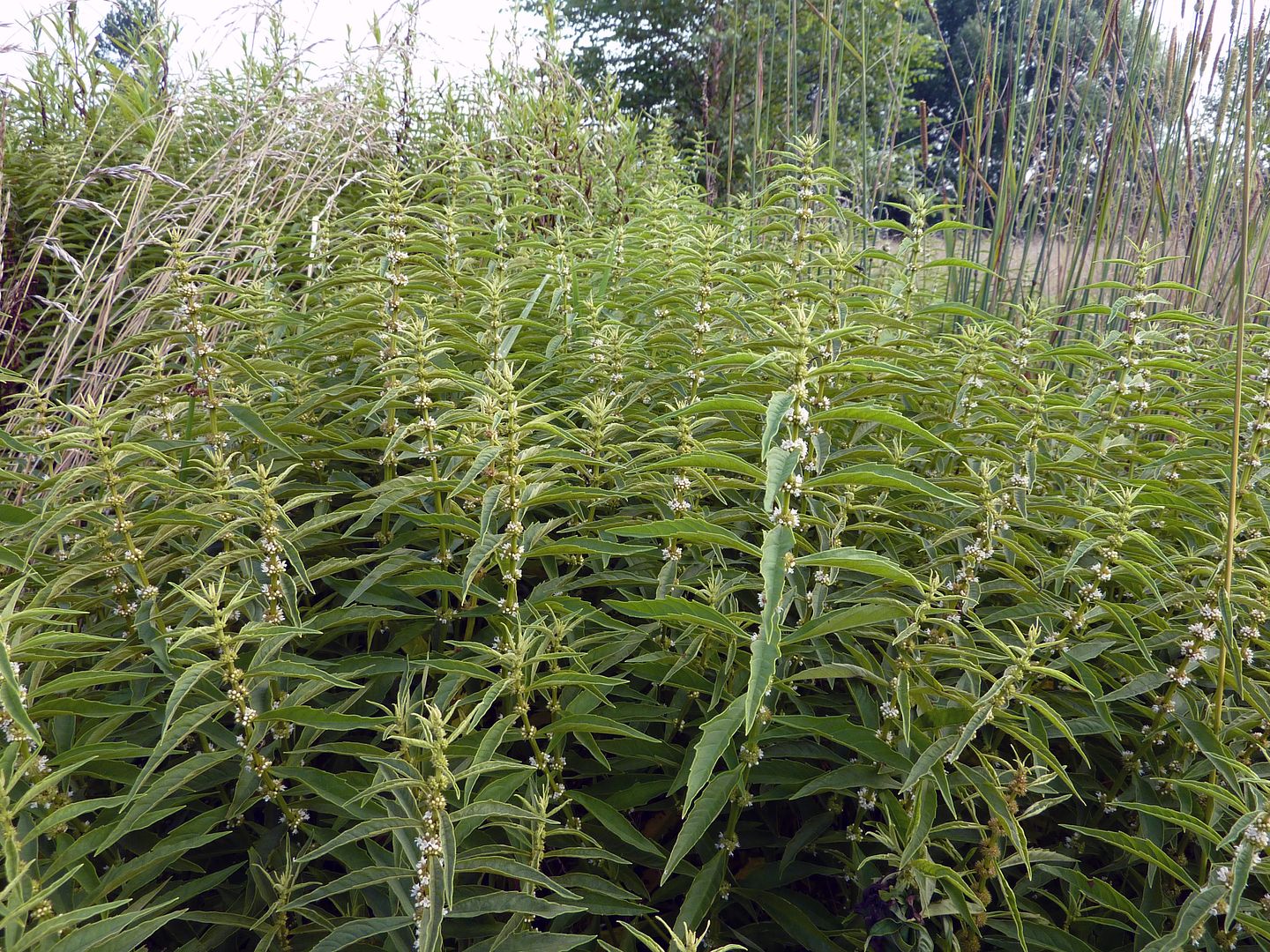 They spread by rhizomes I'm sure.
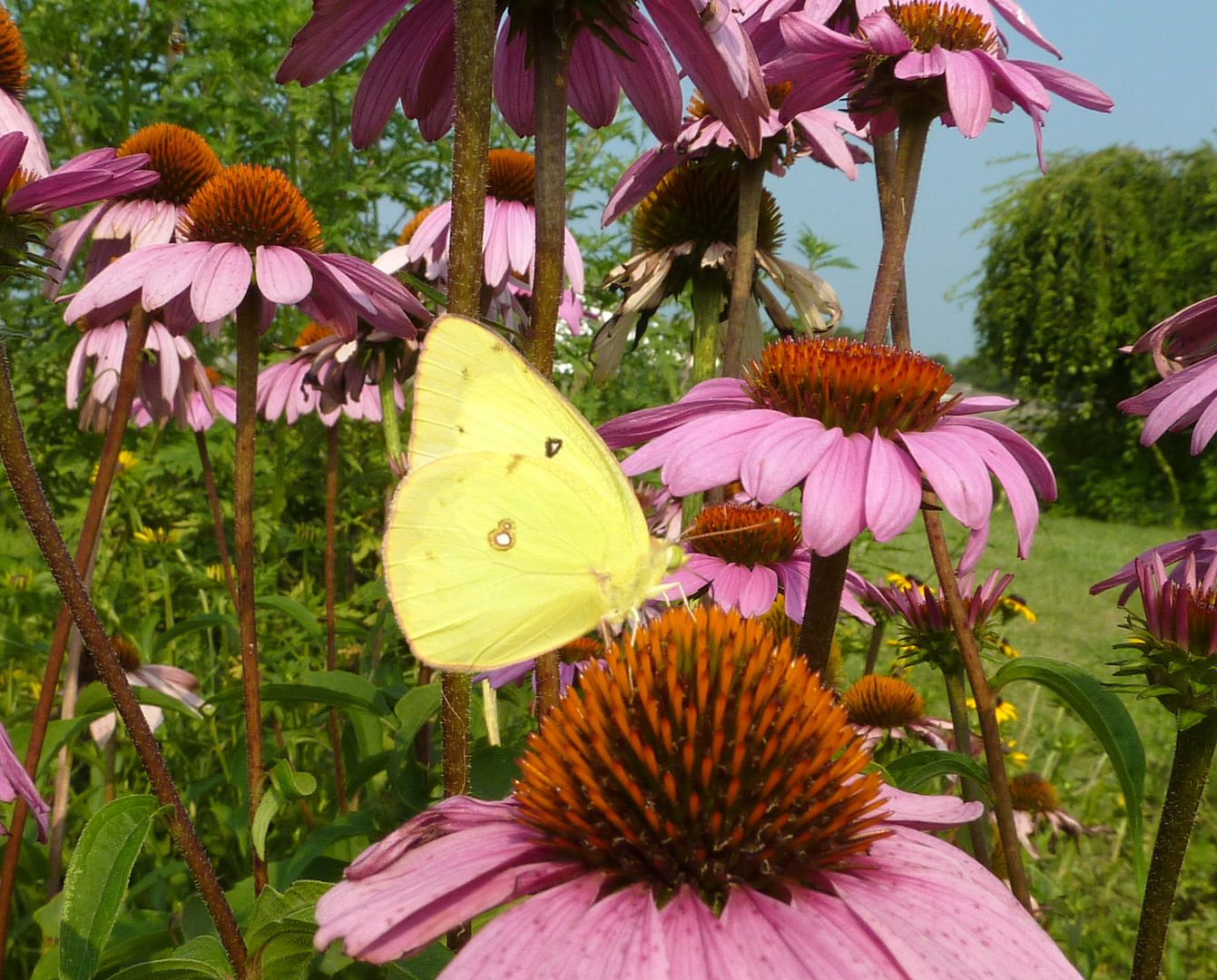 Cloudless Sulphurs, Phoebis sennae, were dancing around some Purple Coneflowers. This wasn't in the wetland at all. He has these planted as part of the landscaping (... I suspect something the former owners put in).
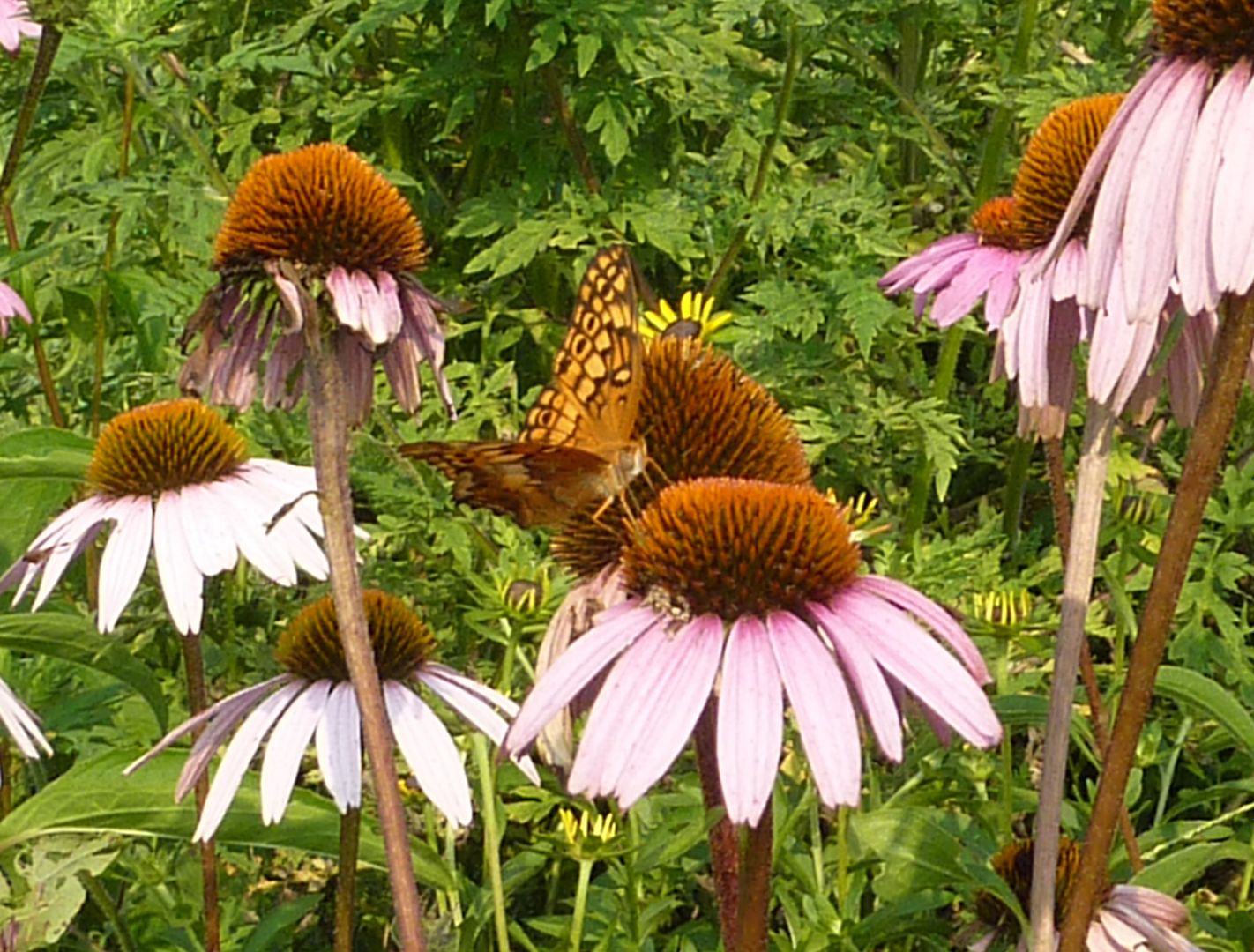
 Fritillaries were also flying about both in the wetland and up by the house. I suspect the abundance of thistle and other unnamed host plants around have been supporting the population.
So I'm left with the conclusion that if all this wonderful nature can grow around his house without any care at all, then despite the weeds it should be worth it to install a prairie. And if he hates that idea then I'll just tell him what to buy and where to plant it!
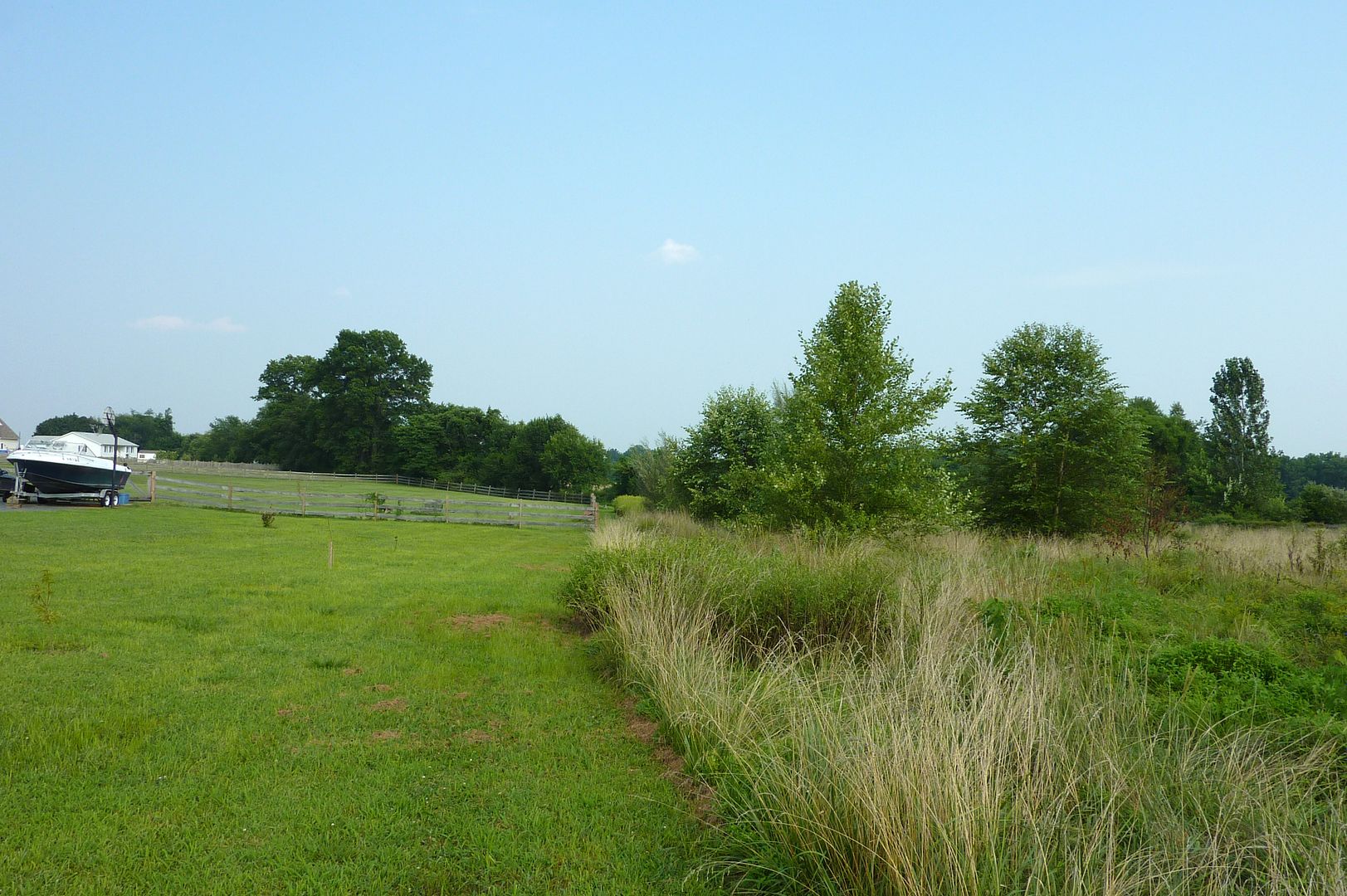 |
| At least the Field side has a boat. |
My cousin isn't into plants, he has no knowledge that natives are better than non, and I wasn't in the right company to explain otherwise. My dad was also walking with us and he has a habit of "correcting" me. Actually it's more like voicing the opinions of late night infomercials. It's the kind of logic that changes the dynamic of the conversation onto something else. For example he believes nothing in the world can grow without fertilizer. Want to grow something in the middle of the desert? Just dump some fertilizer and your tropical oasis will magically appear. He doesn't understand that a lot of plants love growing in conditions that aren't bursting with nitrogen. Anyhow...
The overall issue my cousin has is owning to much land. He wants to install an in-ground pool with hot tub that waterfalls into it, but at the same time he's thinking about getting a few horses. He might eventually put an addition on his home, will probably need a barn for the horses or whatever other livestock he plans on keeping, and at the same time knows nothing about managing so much land other than to mow the lawn. Plant wise, he's planted some saplings but doesn't know what half of them are. To top that off, towards the end of my visit, he said he has the money to fund any sort of projects or ideas I have about making low maintenance planting.
For starters, before leavings I corrected him about a tree he thought highly of. He wanted a tree just like the one out front of his parent's home, and thought it was a Magnolia so he planted one. In actuality his parents have a Japanese Flowering Cherry, a double flowering one I think. So he was a little bummed about that.
That last part about wanting ideas for low maintenance planting really stuck with me on the ride home. The most obvious solution I think would be to install a Prairie seed mix but he has some nasty, evil looking weeds around his home!
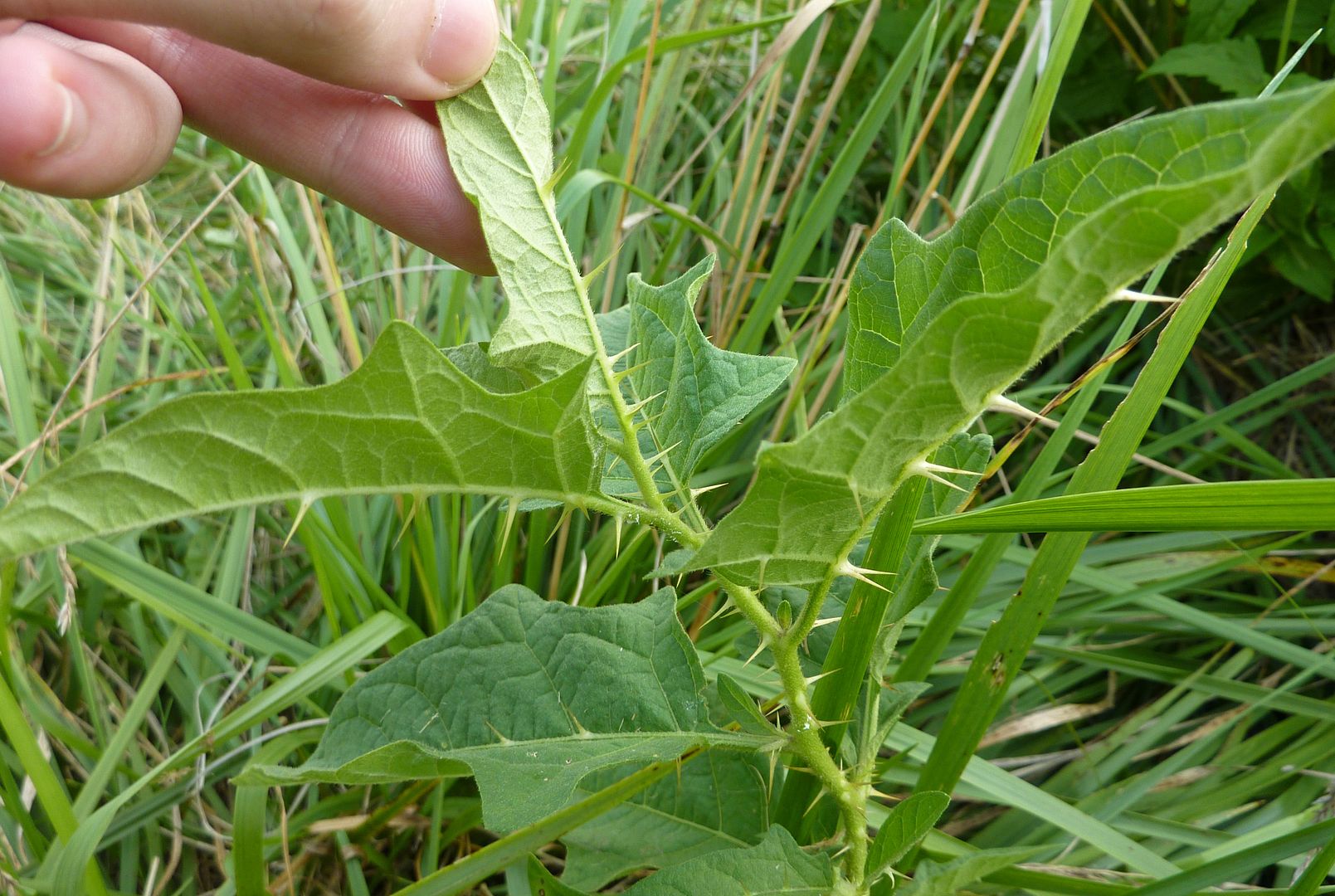 |
| Solanum sp. |
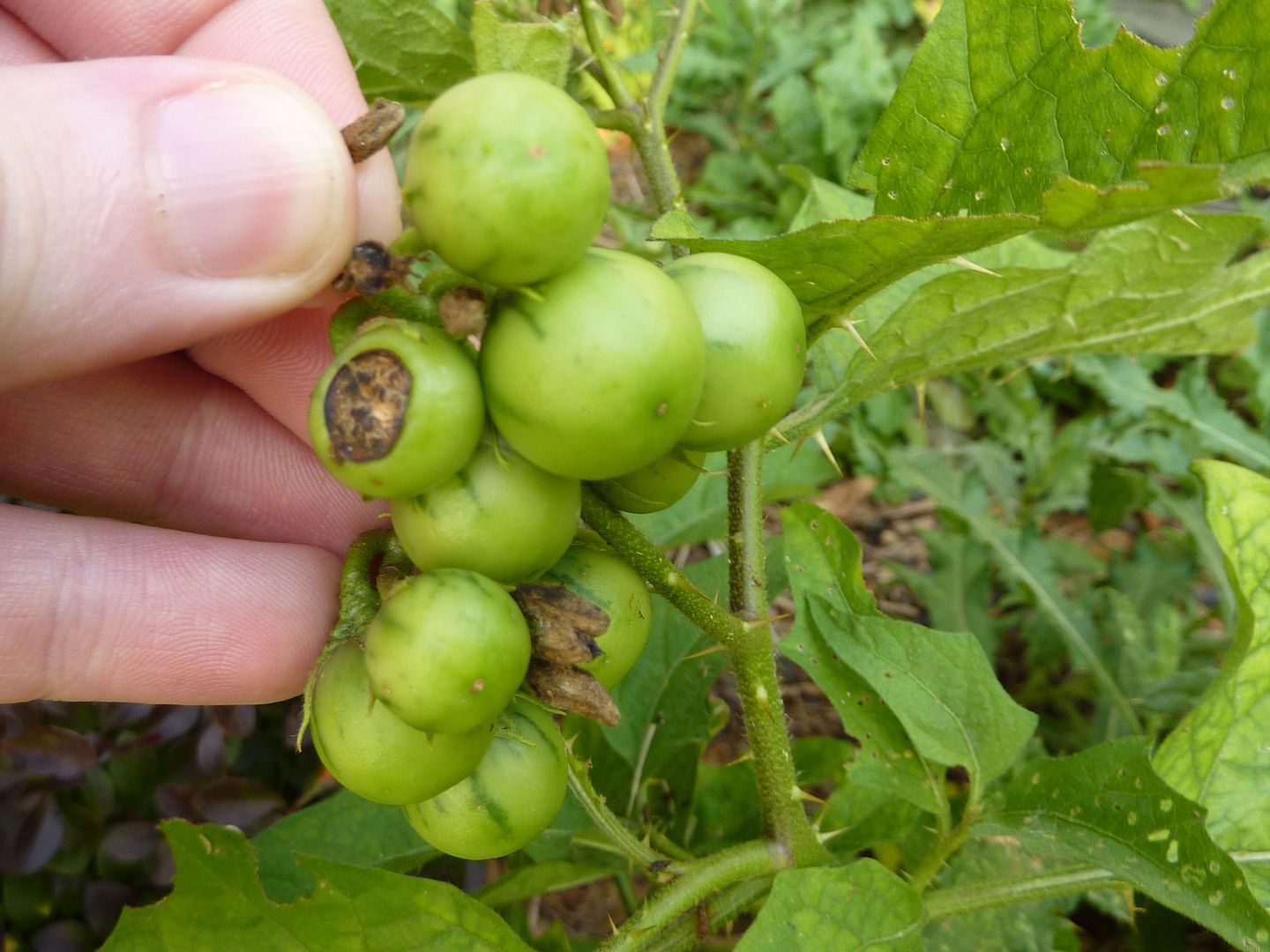 |
| Solanum sp. |
I really want to recommend my cousin plant a seed mix with a lot of forbs in it so doesn't just look like the side of his house. We'll explore that later. The thing holding me back though is the abundance of weeds like the one above around his property. Thistle and pokeweed are the least of his problems. There are so many types of thorn covered vines around I'd be afraid that they'd seed themselves into the mix from the wind and take over. The thing about managing a backyard prairie is mowing/haying can only suppress so many weeds, not everyone is open to the idea of burning, and asking to barrow the neighbor's cow just sounds silly. In short, I feel I should consult an expert before recommending this as an option.
The benefit to installing a prairie is he'd only have to mow it once a year, but still have to do the perimeter of his fence as well any open lawn areas. I'm certain he's open to the idea of setting fire to the yard, I'd say he's attempted to do that once or twice from the look of his fire pit. Considering he's in farm country maybe borrowing some livestock, or even charging them for the survive could be done too, but their hooves would tear up his property a bit. These are all fairly big jumps for the average person to make.
He didn't know what Milkweed was before today, and he has probably the prettiest specimen of Asclepias incarnata, Swamp Milkweed, I've ever seen growing in his wetland.
So I'm left with the conclusion that if all this wonderful nature can grow around his house without any care at all, then despite the weeds it should be worth it to install a prairie. And if he hates that idea then I'll just tell him what to buy and where to plant it!
Thursday, July 28, 2011
Mountain Mint Madness
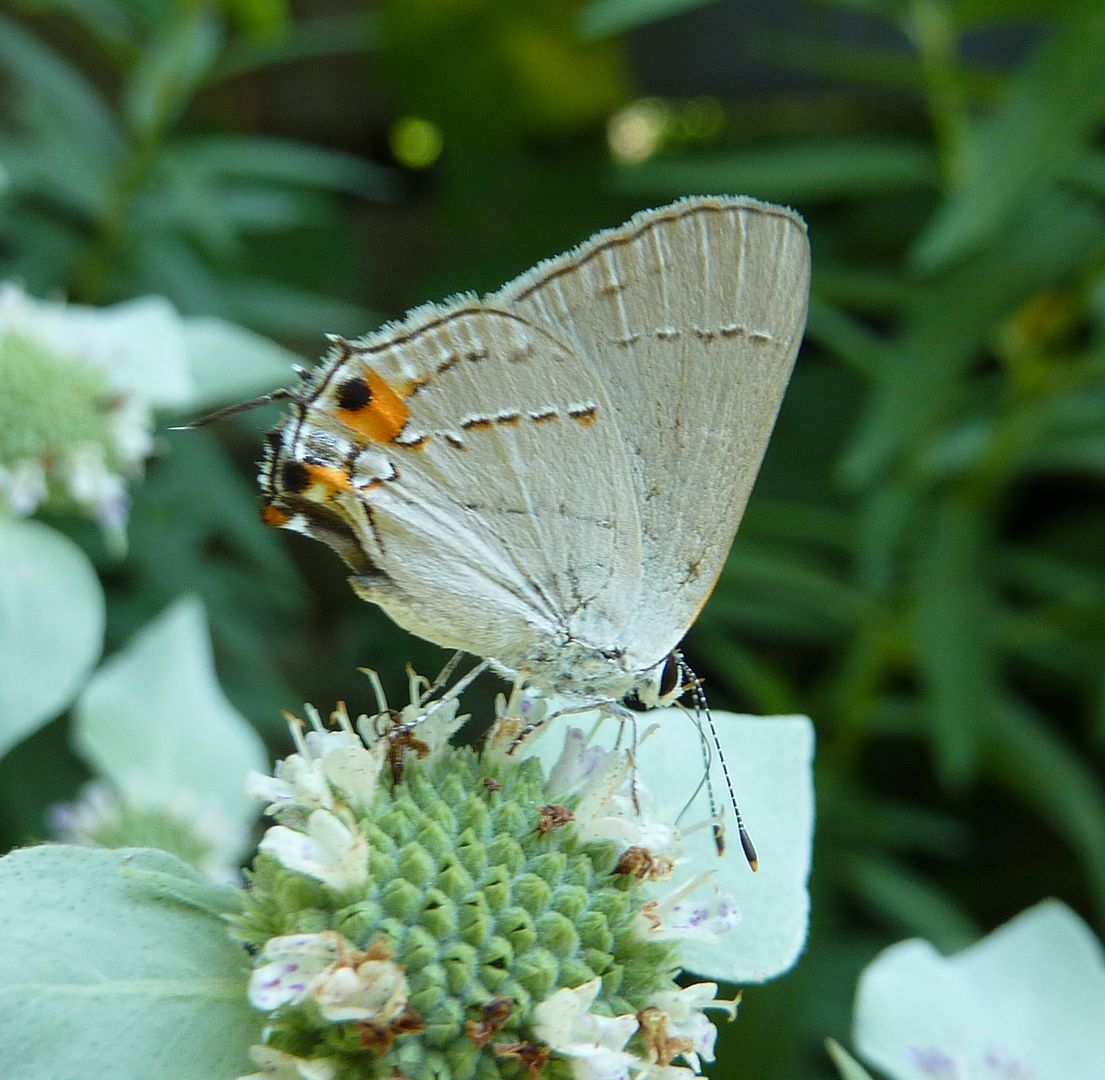
About a month ago the honeybees and bumblebees lost interest in the Mountain Mint, Pycnanthemum sp. presumably to take nectar from bigger and better things. In their absence some of the more obscure pollinating wasps have taking their place.
A lot of these wasps refuse to stay still for pictures so a short video was needed to capture them in action. The rather colorful stripped scoliid wasp was the only that I couldn't get at least a decent picture of. Others were more cooperative.
Another plant I've seen some of these on was the Rattlesnake Master, Eryngium yuccifolium. Last year I had four of them, but only one has come back. I have seen the longer of the two thin dark mud wasps on other kinds of mint as well.
A lot of these wasps refuse to stay still for pictures so a short video was needed to capture them in action. The rather colorful stripped scoliid wasp was the only that I couldn't get at least a decent picture of. Others were more cooperative.
 |
| Mud Wasp of some sort. |
 |
| Mud Wasp of some sort. |
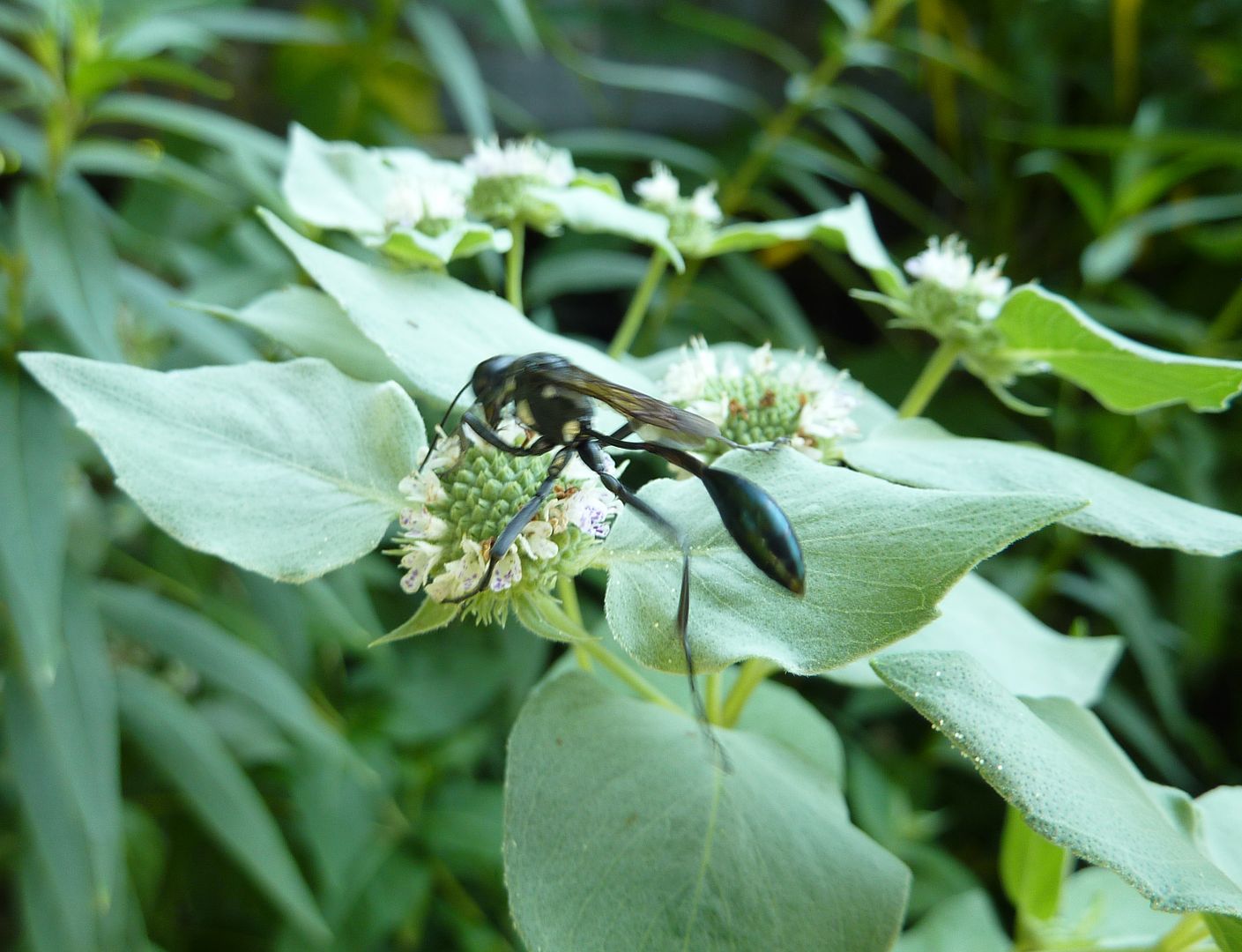 |
| Mud Wasp of some sort. |
 |
| Summer Azure of some sort. |
Monday, July 11, 2011
Some Summer Forbs
The major bloomers of summer have finally started up here. My honeybees have finally noticed! Yeah know I spend like $500 a year on plants specifically to boost honey yields and it almost never works until summer hits. Now I doubt there are many forbs that literally add a jar of honey onto what I pull out, a tree maybe, but not a single forb. So along with being a good nectar source I think it's important the plant be native, drought tolerant, and able to spread around if only to one day sell them to others and get your money back. So here are the highlights the honeybees seem to be loving outside right now.
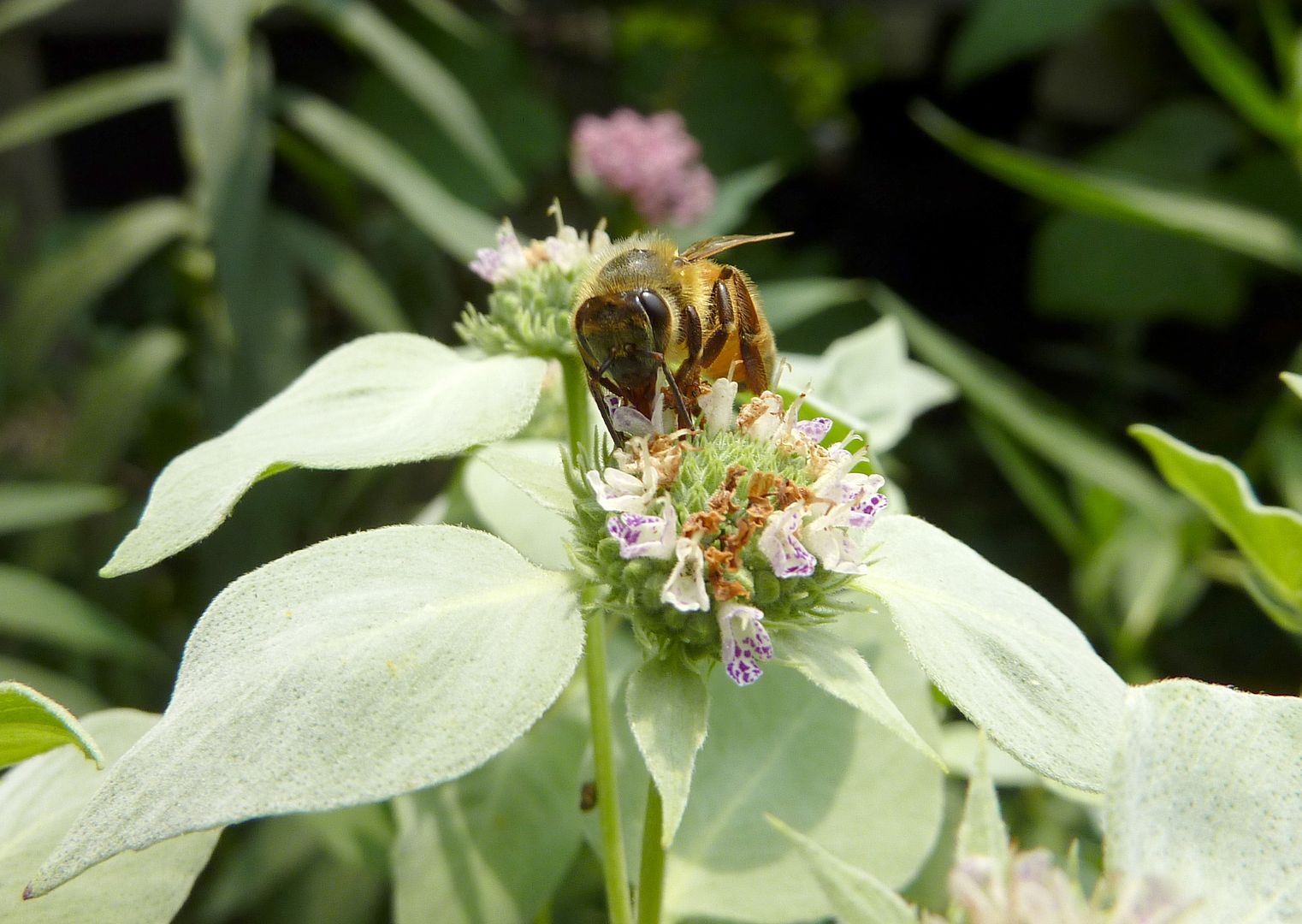 Pycnanthemum sp. Mountain Mint. The very tiny flowers to this plant emerge randomly out a domed cluster lined with special leaves that are naturally covered in a white dust. Bees can not resist.
I find about four honeybees working a single plant nonstop and that's typically for the whole day. Mint plants are certainly a favorite among bees and I hope this native spreads itself around some.
 Asclepias tuberosa, Butterfly Weed. This is a garden staple of any butterfly garden, not because the flowers get lots of butterflies on them but because it's the host plant to the Monarch Butterfly.
These are all plugs I installed this year and they're producing some nice flower heads. I haven't seen any honeybees on them yet but I know from experience that they'll eventually find them. They started flowering in June and next year each plant should send up more stems to fill in brilliantly.
 Cup Plant, Silphium perfoliatum. The fun thing about this plant is the leaves form a small cup at the stem, and the flower have the option of opening either from the middle out or from the outside in. Bees love this plant and surprisingly it's good at attracting butterfly too.
I have these plants forming a wall right out front of my hives. I'm happy to see they haven't spread as much as I thought they were. I started with 4 plants and each one is pretty much taking up a 2' by 2' area with multiple stems. I'm getting lots of flowers and already some butterflies have stopped by.
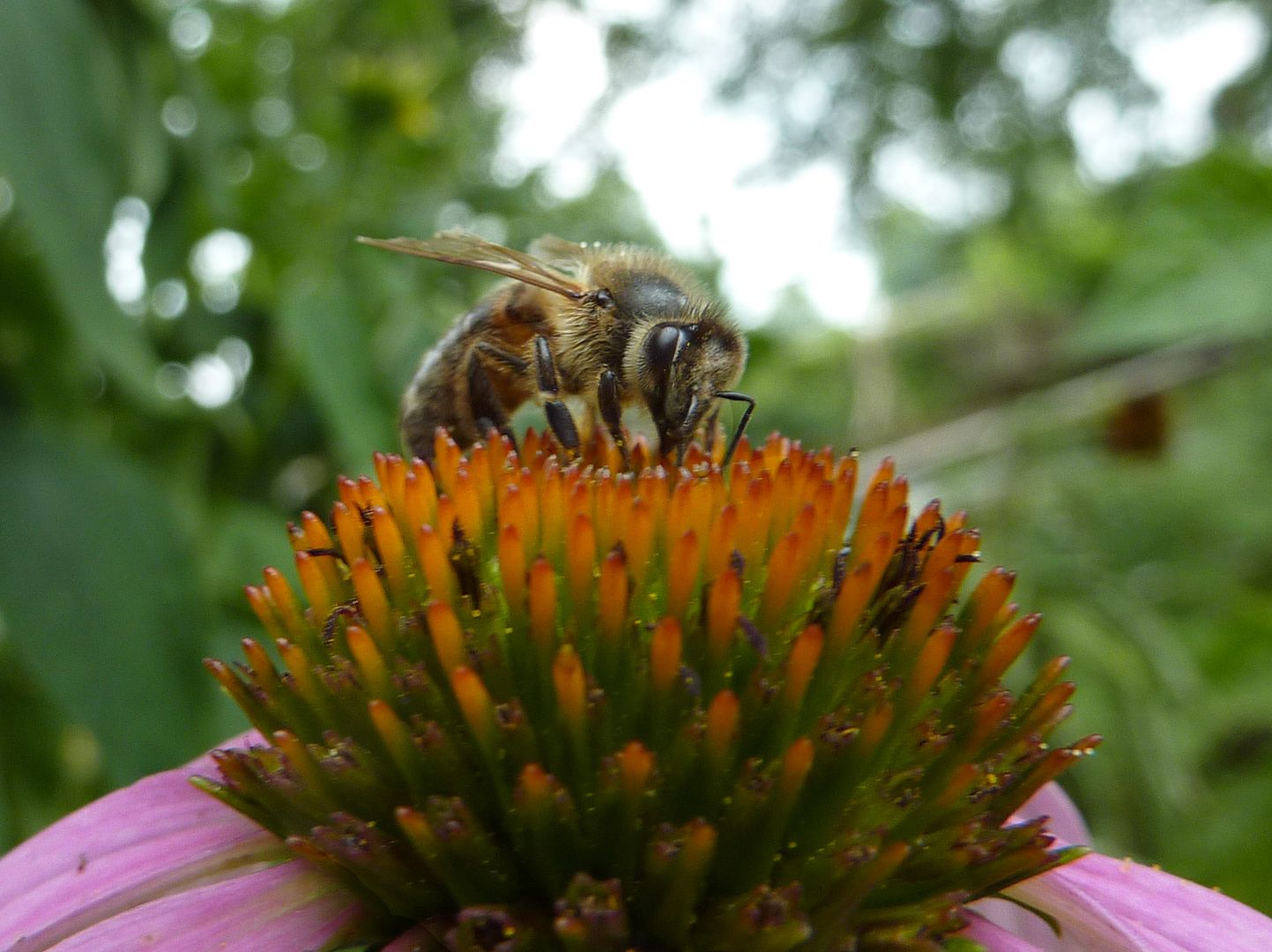 Echinacea purpurea, being pollinated by a honey bee. I don't have as many of these plants as I used to but I'm hoping that will change. This plant came up from a seedling I had several years ago and it's starting to seed itself around.
 Ironweed, Vernonia sp. I'm not sure of the ID yet. This is a rather small clump of flowers that a hummingbird moth was all over. I like to think of Ironweed as a hornless kind of thistle topped with Liatris-like flowers. As it is only a small clump I don't see much on it but I'm sure that will change later on. As it turns out I was accidentally mailed a dozen or so species of Ironweed, different than what's above.
I find about four honeybees working a single plant nonstop and that's typically for the whole day. Mint plants are certainly a favorite among bees and I hope this native spreads itself around some.
These are all plugs I installed this year and they're producing some nice flower heads. I haven't seen any honeybees on them yet but I know from experience that they'll eventually find them. They started flowering in June and next year each plant should send up more stems to fill in brilliantly.
I have these plants forming a wall right out front of my hives. I'm happy to see they haven't spread as much as I thought they were. I started with 4 plants and each one is pretty much taking up a 2' by 2' area with multiple stems. I'm getting lots of flowers and already some butterflies have stopped by.
Subscribe to:
Posts (Atom)