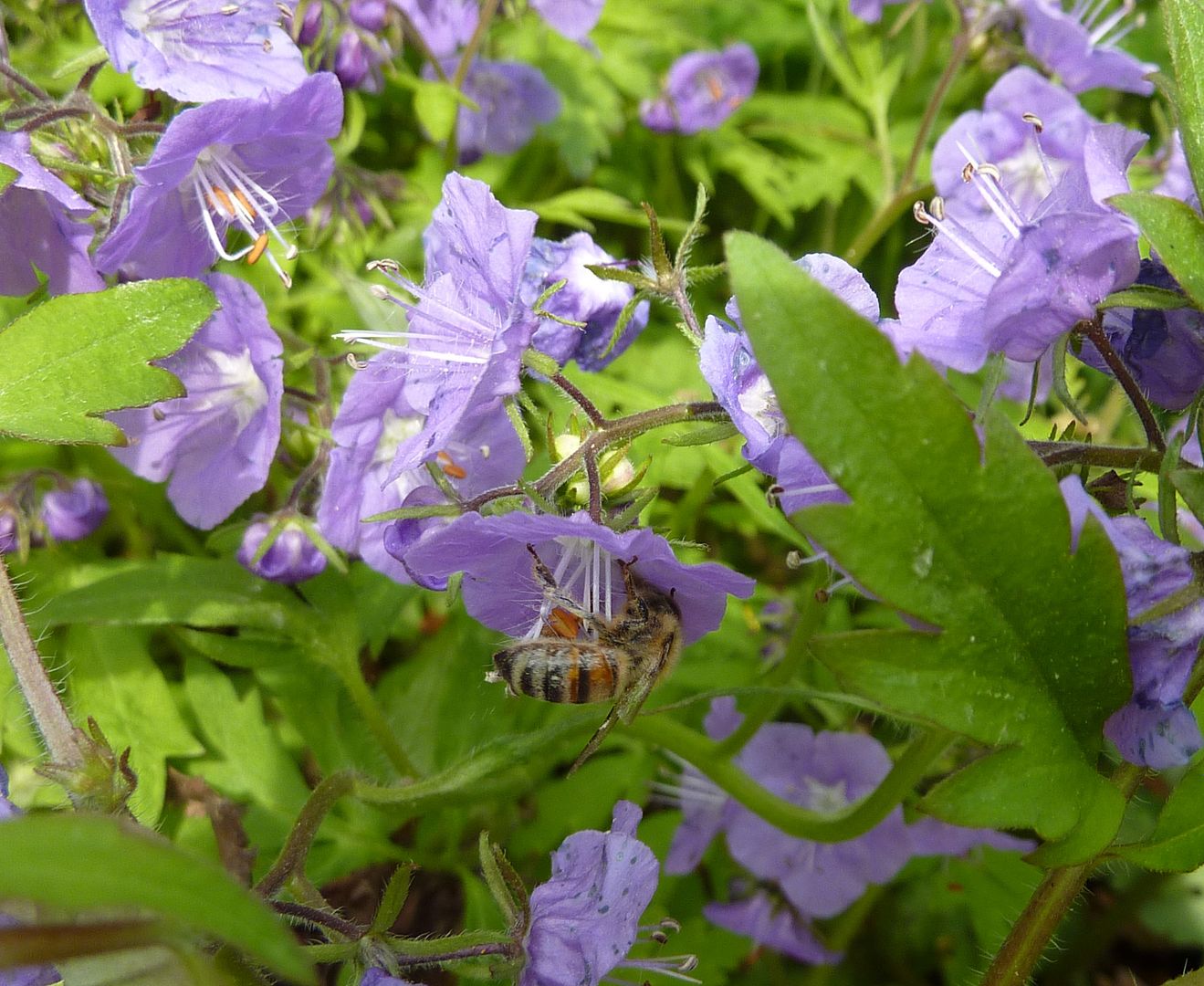
For bees I was thrilled to find Honeybees working Fern Leaf Phacelia this year. Beekeepers are always gushing over the Phacelia flowers for their bees but always had to rely on the western native annuals. Phacelia bipinnatifida, is an aggressive biannual that grows abundantly in woodlands, going as far as carpeting the forest floor with puffy clouds of purple flowers. This shot was at the Mt. Cuba Center and I picked up a few plants to hopefully establish in my yard but I'm not entirely confident it's going to work. Here's hoping I can get a population going.
I noticed a queen bumblebee earlier in the year. Honestly I can't remember where this image was taken or what she's even on. On a positive note though this was a stellar year for bumblebees. They were easily the most abundant pollinator in my garden this year.
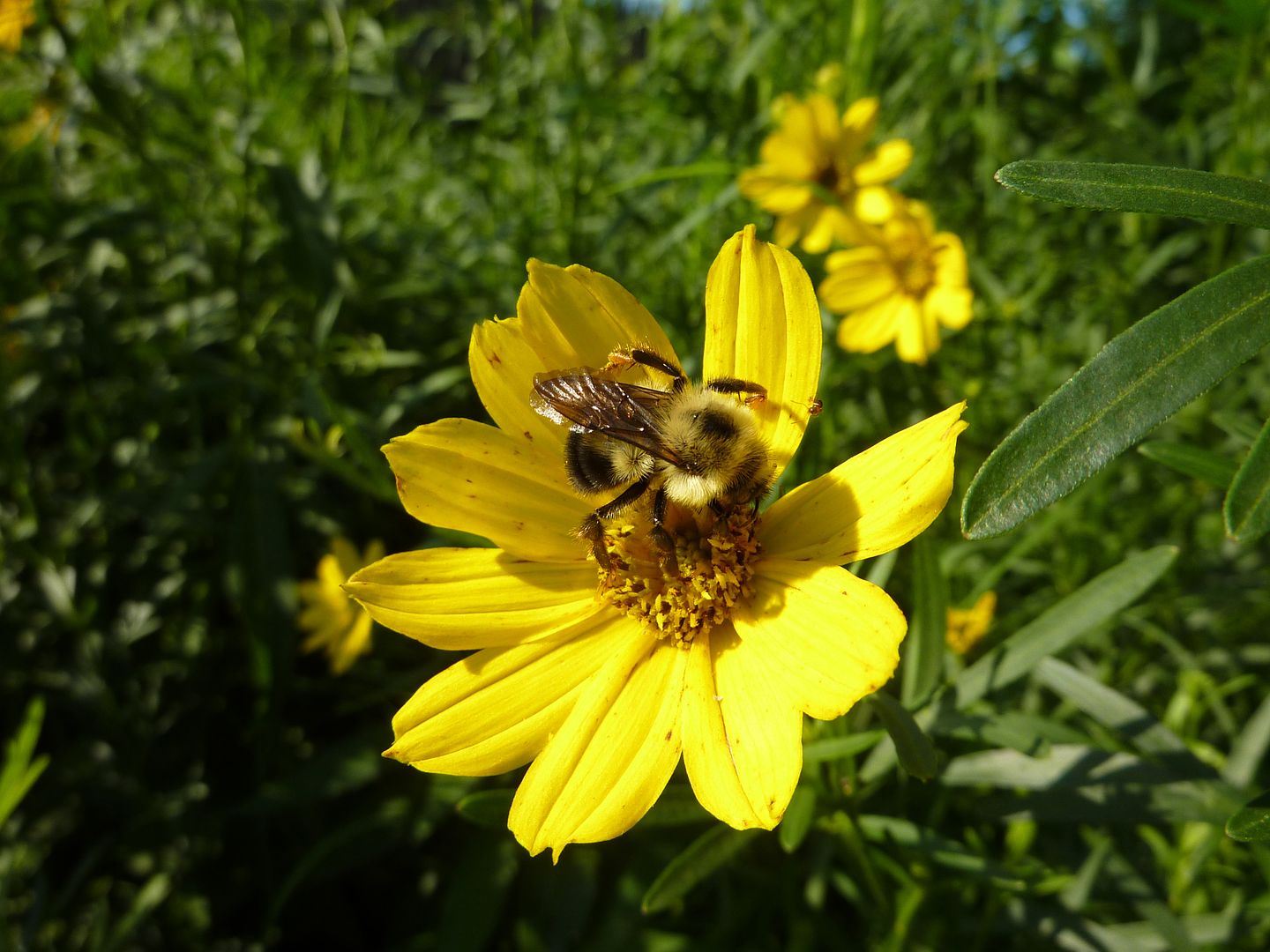
Stiff Coreopsis put on a huge display. This is a slightly aggressive species which spreads by root suckers out in all directions, though they invasion is slow going. They really just push out 3 to 6 inches. They're not as floriferous as I would like them to be, other species of Coreopsis can be covered in flowers where as these seem to space it out.
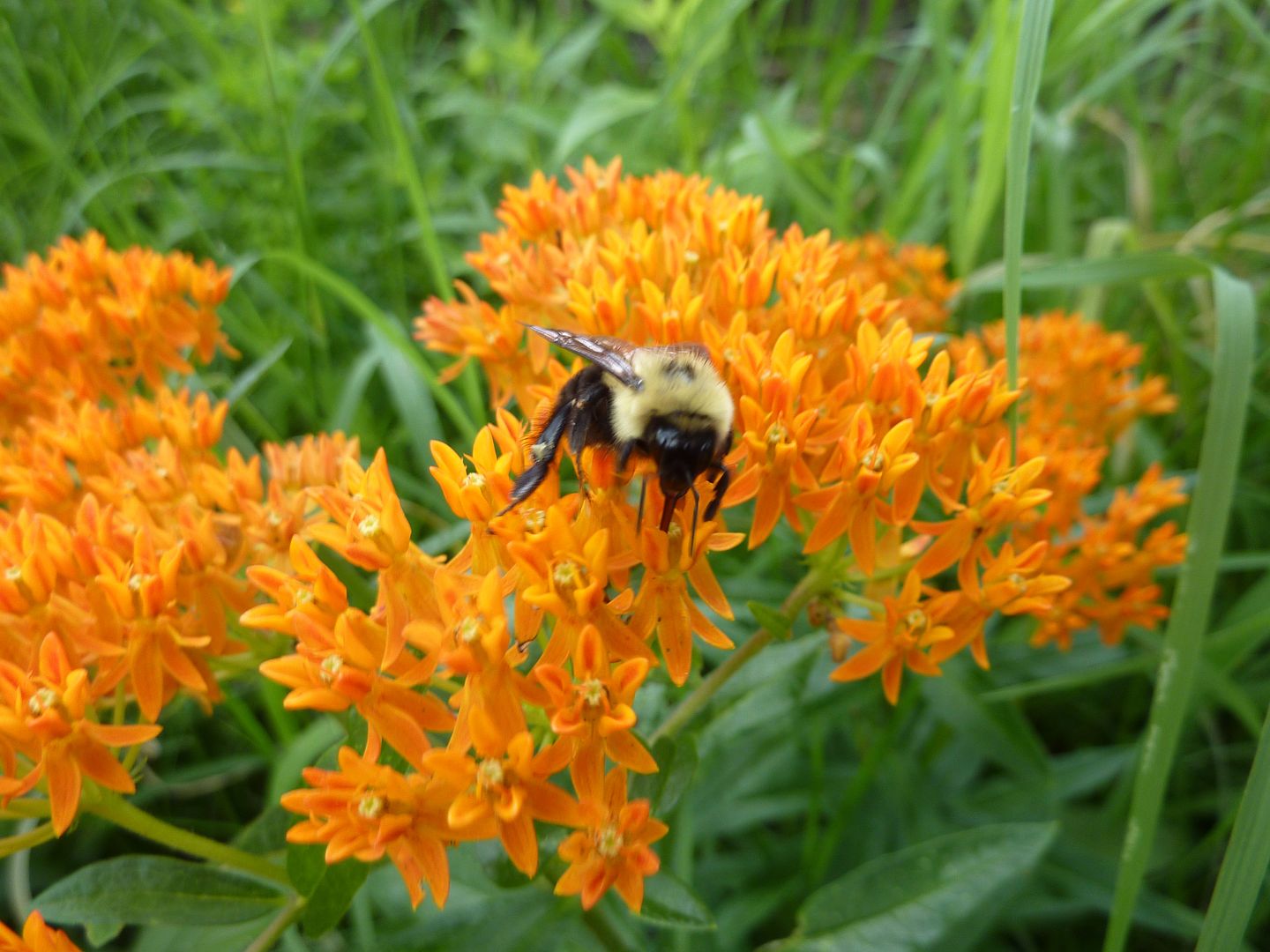
Another queen out on Butterfly Weed, Asclepias tuberosa. Eventually they stop foraging all together but this year I was seeing them well into the end of June and mid July.
This is the yellow variety of Butterfly Weed. It seems to be a bigger hit with pollinators.
Honeybees go to the yellow ones more it seems. I have seen patches of orange Butterfly Weed that were covered in honeybees but none of my plants seem to have any luck.
A sweat bee on Stiff Coreopsis.
Here another species of Bumblebee is working one of my rare plants, Asclepias rubra. This is called Red Milkweed but annoyingly enough I believe Prairie Moon Nursery has started calling Swamp Milkweed Red Milkweed. This demonstrates how unreliable common names are.
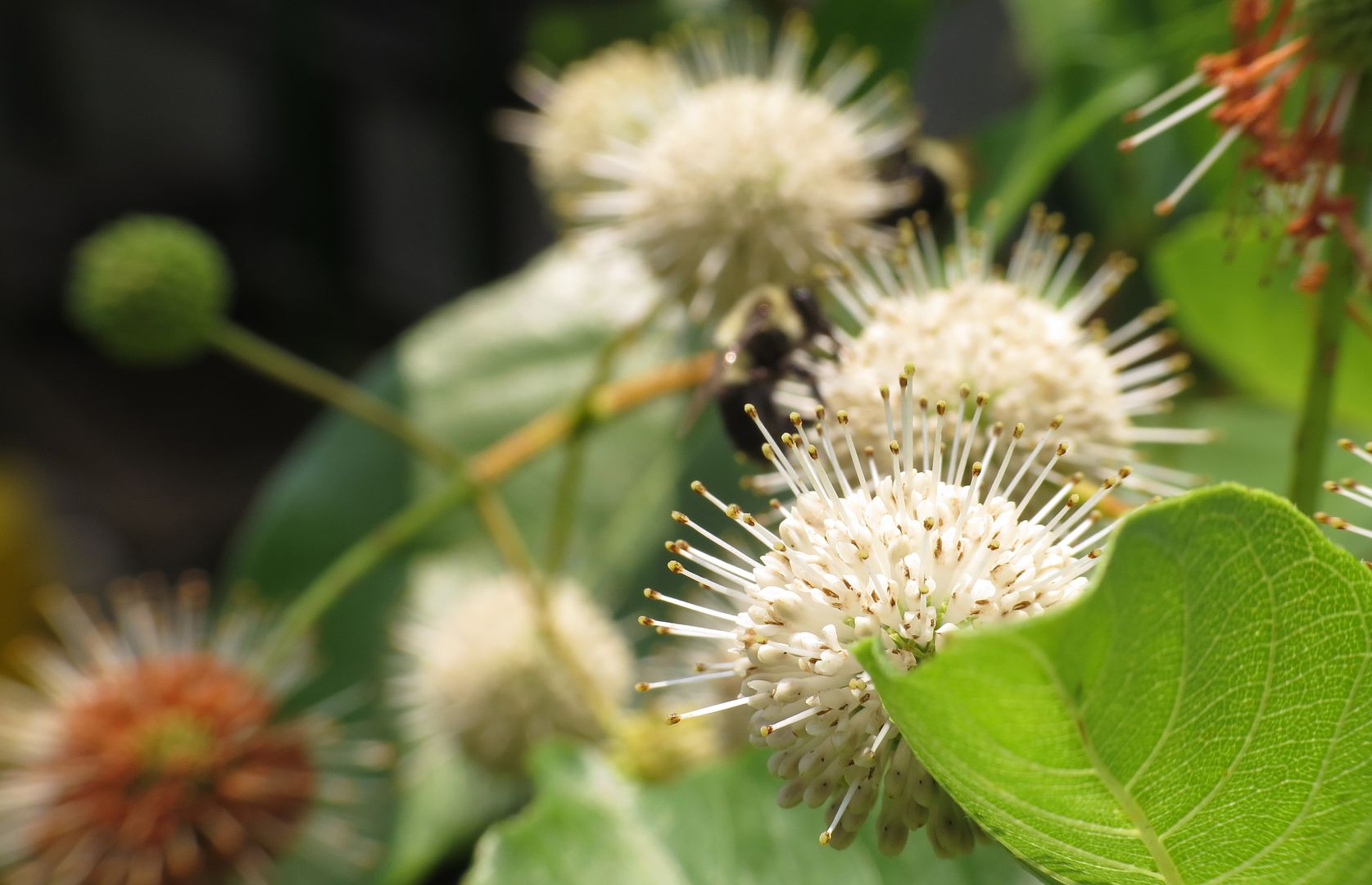
Bumblebees bustling around the Buttonbush.
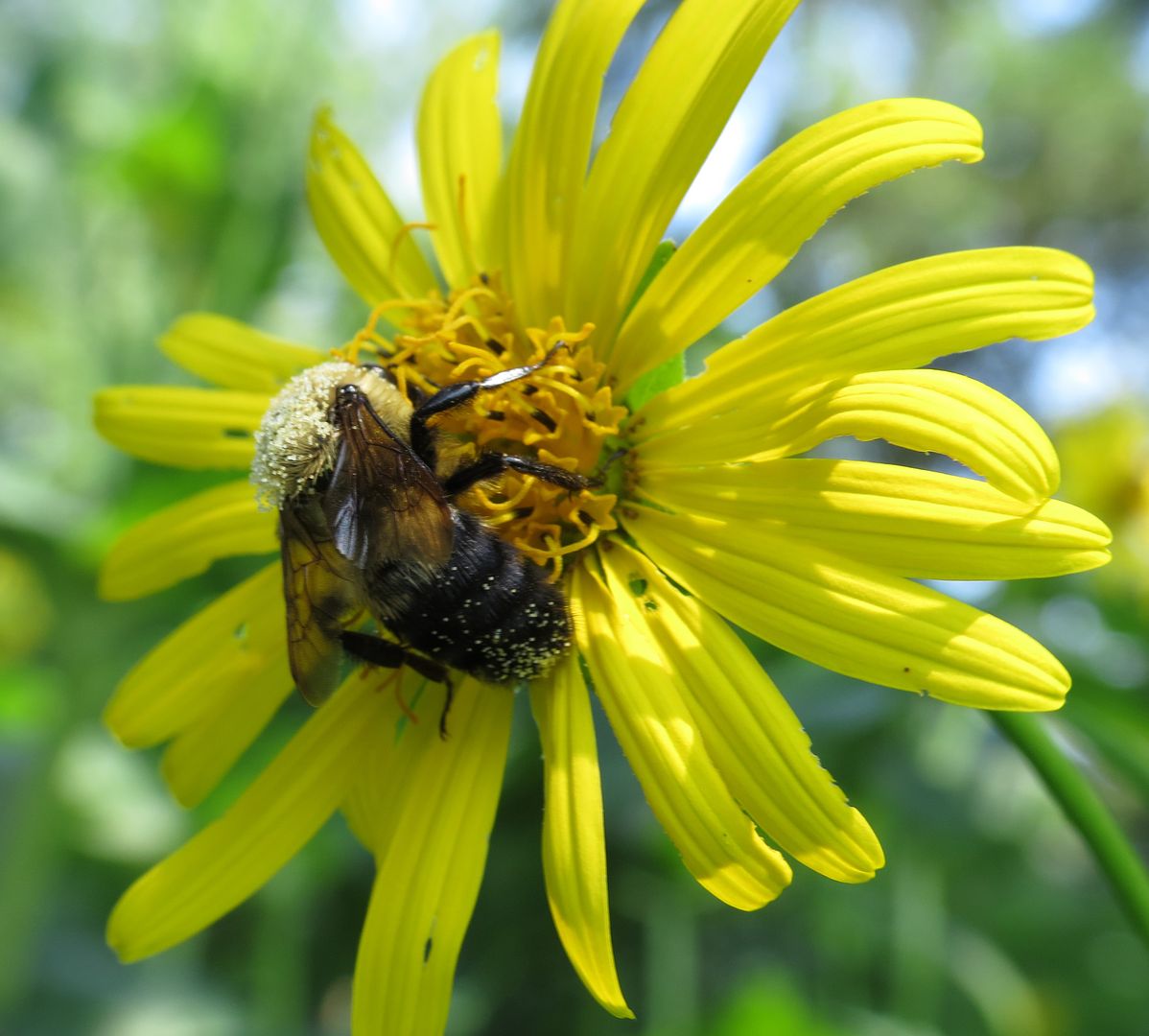
Cup Plant. This is when I got my new camera. Notice how much clearer the subject is and how much more blurry the background appears.
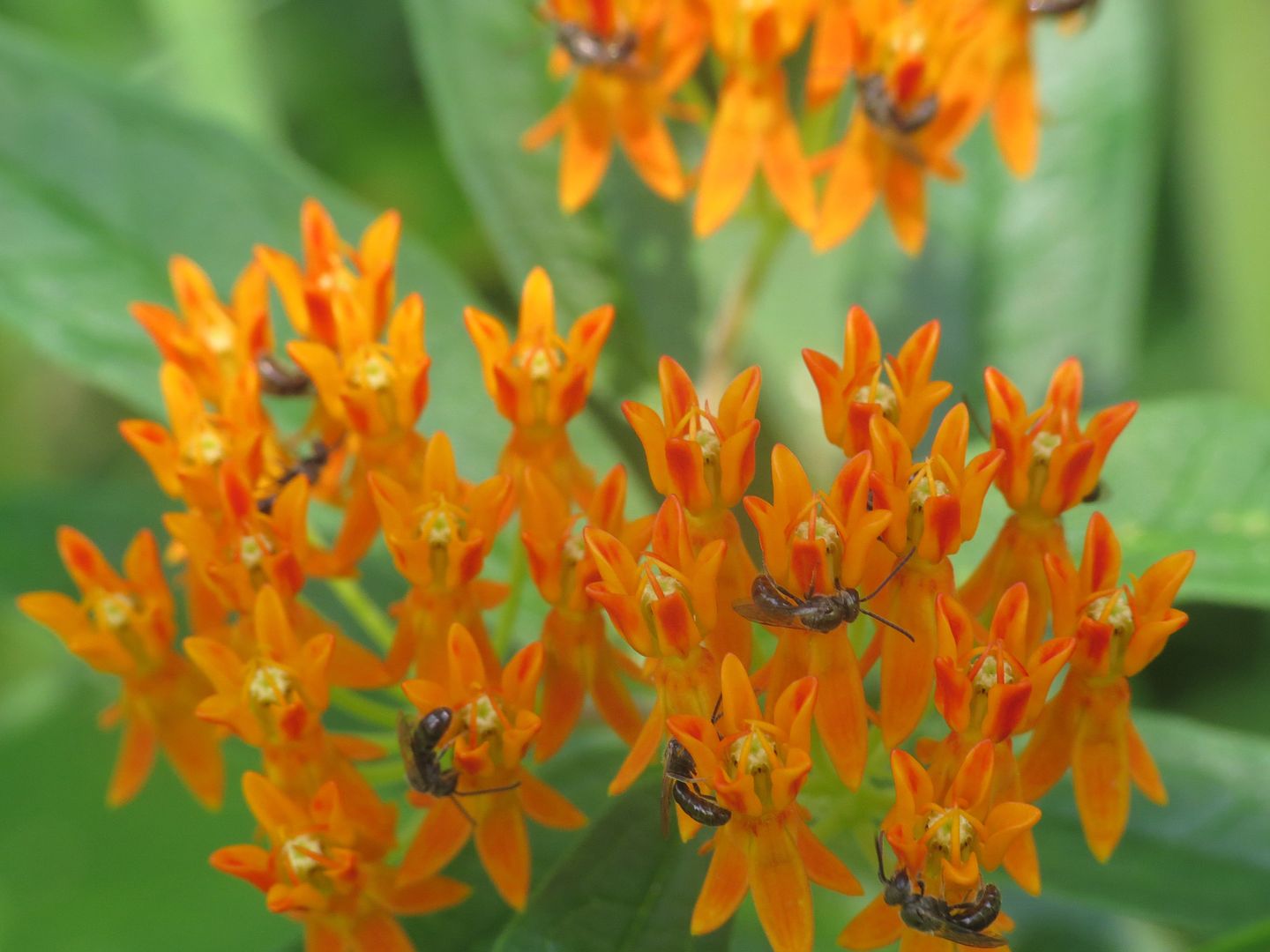
A group of sweat bees socially foraging on Butterfly Weed.
Joe Pye Weed.
Another Oh HA! moment when my new camera became worth every penny. Now if only the darn bee were facing the camera.
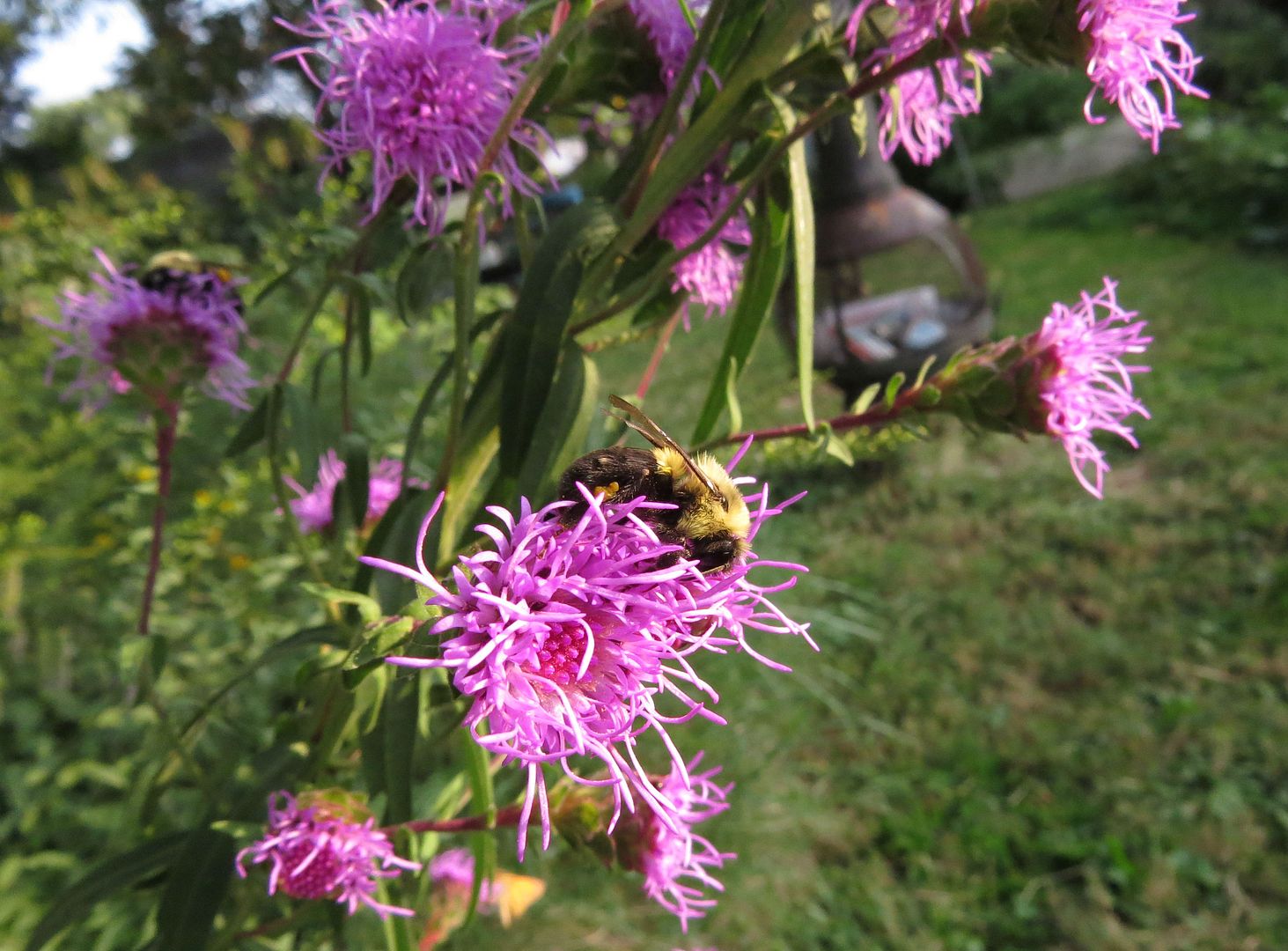
Here a few bumblebees work a species that I think might have been mislabeled. It's supposed to be Northern Blazing Star but I'm not so sure anymore. It's supposed to only reach 3' but this one shot up to 5'.
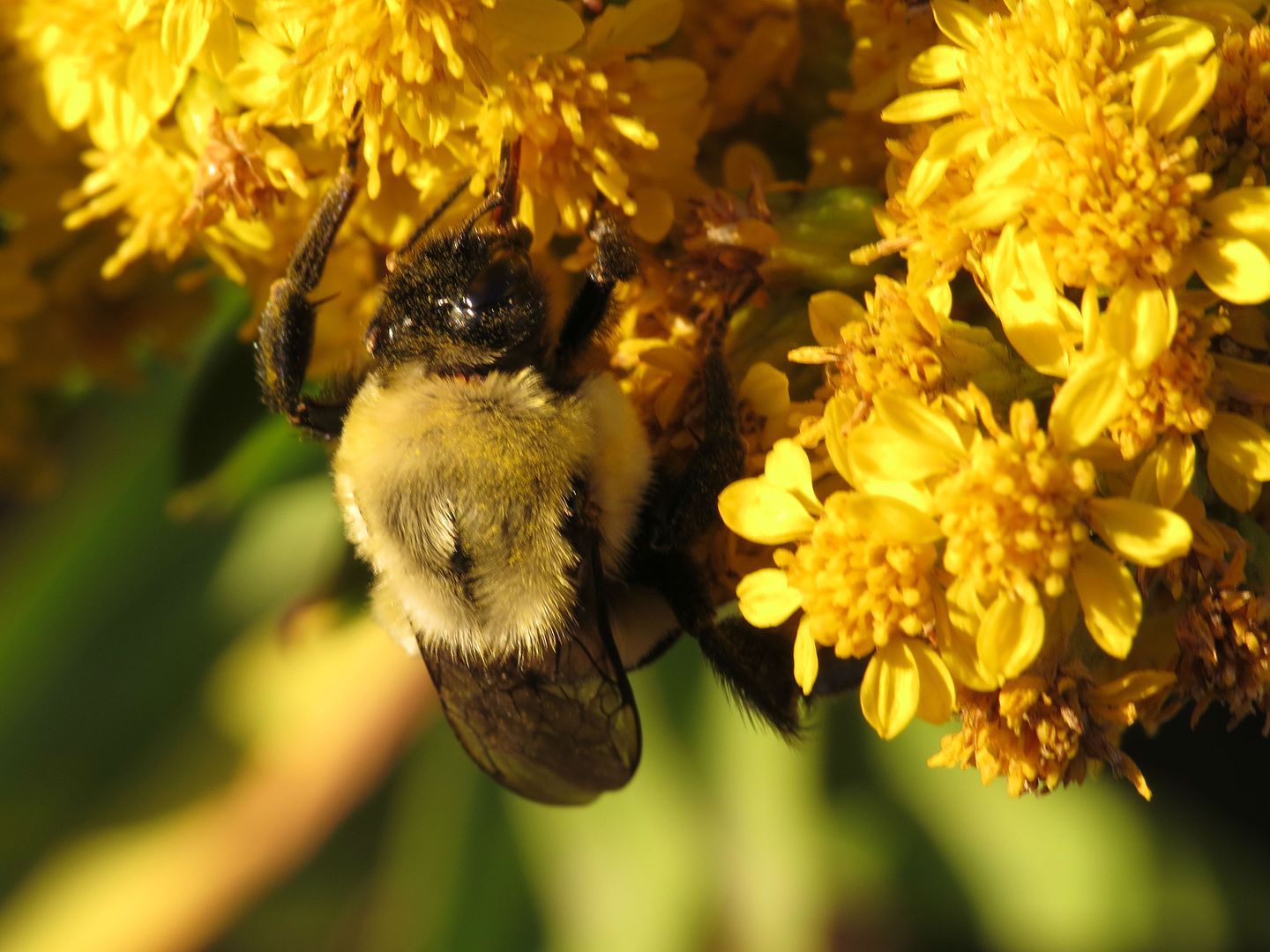
And lastly I was down at the shore later in the year where stands of Seaside Goldenrod provided food for migrating Monarchs and next year's generation of queen bumblebees.
Showing posts with label coreopsis. Show all posts
Sunday, January 5, 2014
Saturday, January 4, 2014
2013 Best of Ants
Well it has been a bustling year this one. I've just realized I took a tone of photos this year, perhaps even more than on previous years. Part of the reason was that I went to three major events where I took lots of photos, and partly because I bought a new camera with a cool new snap on lens.
My anting year started with an unusually early war between two Tetramorium colonies. We had a warm spring and wet year so the ant activity was good this year.
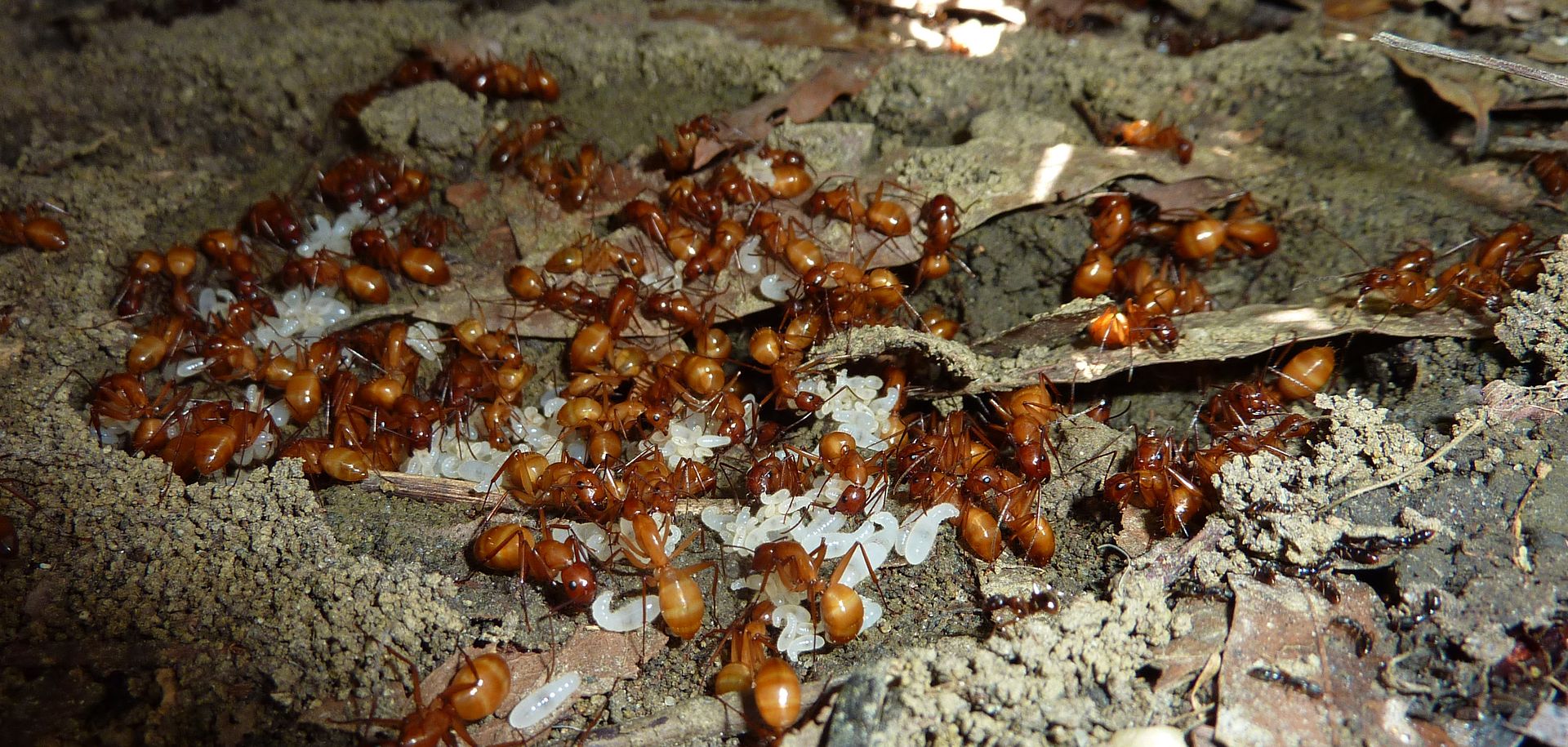
Here is a colony of Camponotus castaneus which seems to have moved on to a new location. I'm not sure where or why but one day they were there and the next they vanished. They didn't reappear at all later in the year either so that's a shame. I really like this species.
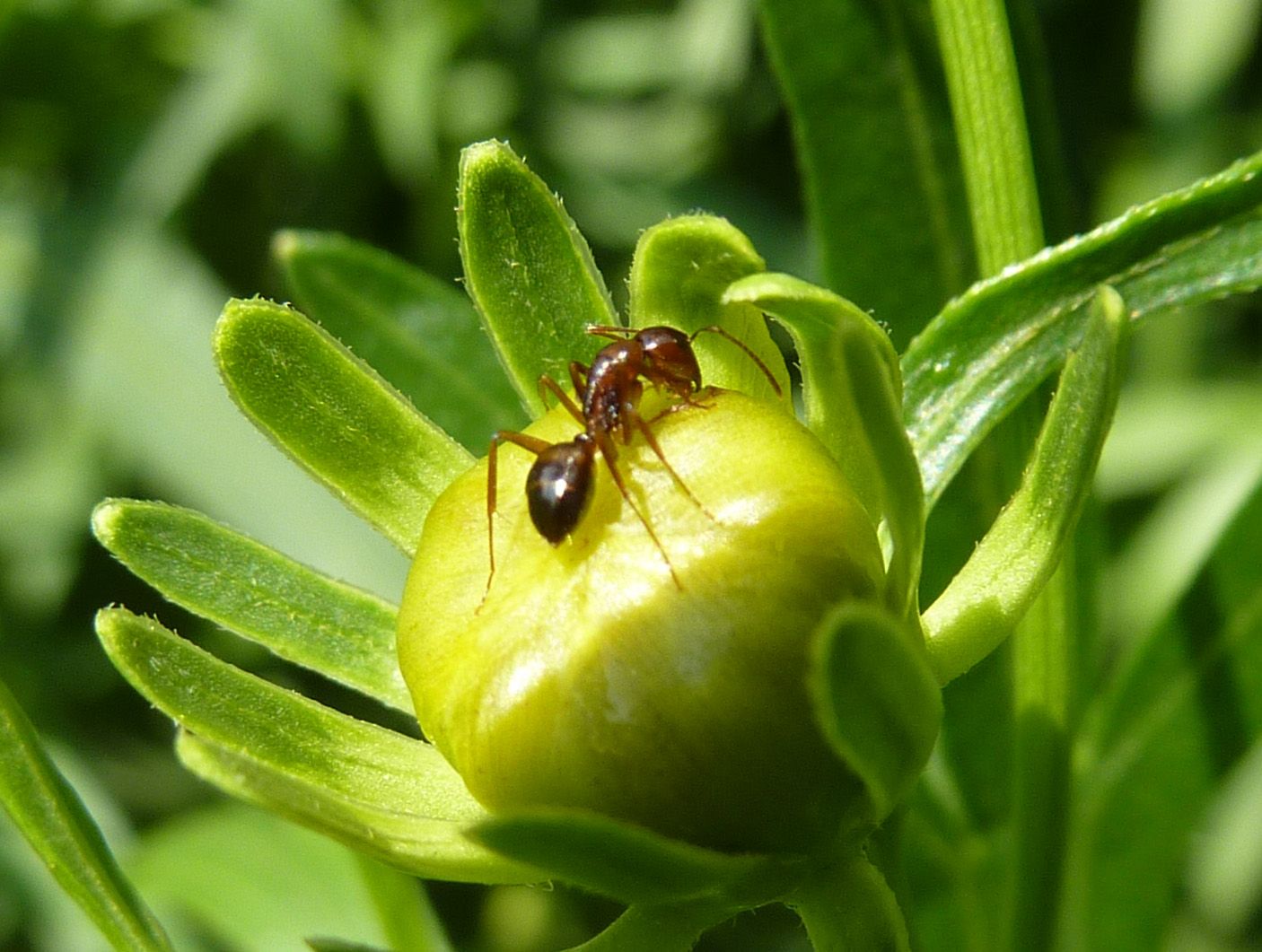
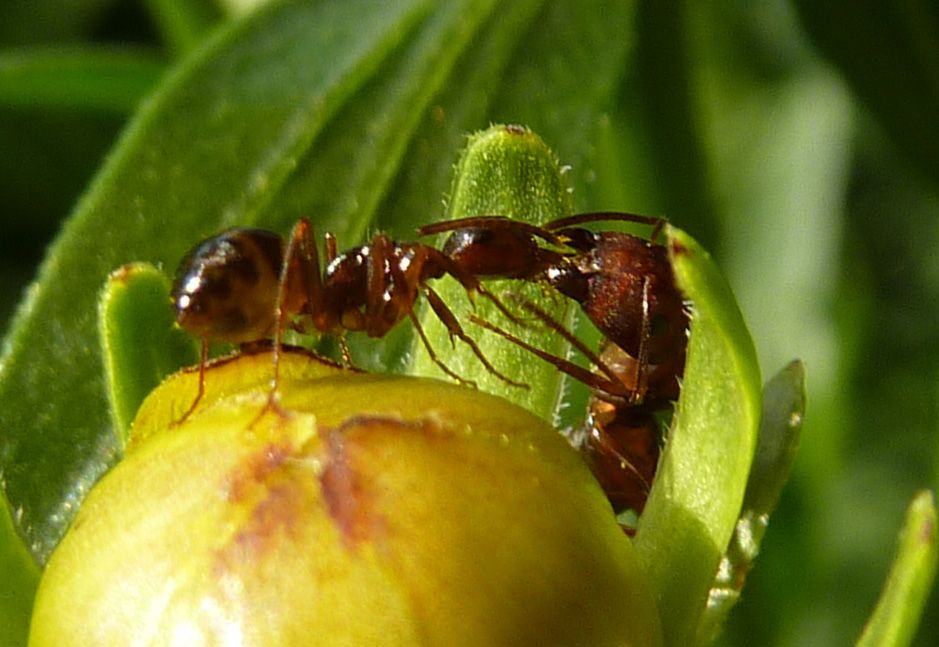
The flowers in my meadow garden were the best they've been yet, and many of the species I've chosen secrete extra floral nectar. Here a Camponotus subbarbatus worker is nectar scraping. Basically they just run their mandibles along the surface of the bud to squeeze out what has to be only a surface thick layer of carbohydrates.
You have to wonder if the nectar is worth the effort but apparently after a few hours of doing this they've collected enough to fill their social stomach. Eventually one of the major workers of the colony would check in on them and trophallaxis ensued. Major workers can hold more food so they're used mostly as storage ants.
One of my rare plants, Purple Milkweed, Asclepias purpurascens, finally flowered this year... only to have it's nectar robbed by Odorous House Ants, Tapinoma sessile. This ant is hands down the most notorious nectar thief because this particular milkweed is covered in hairs along the stem which are supposed to secrete a sticky goo to stop ants dead in their tracks. No one told this species that because they robbed out all the flowers.
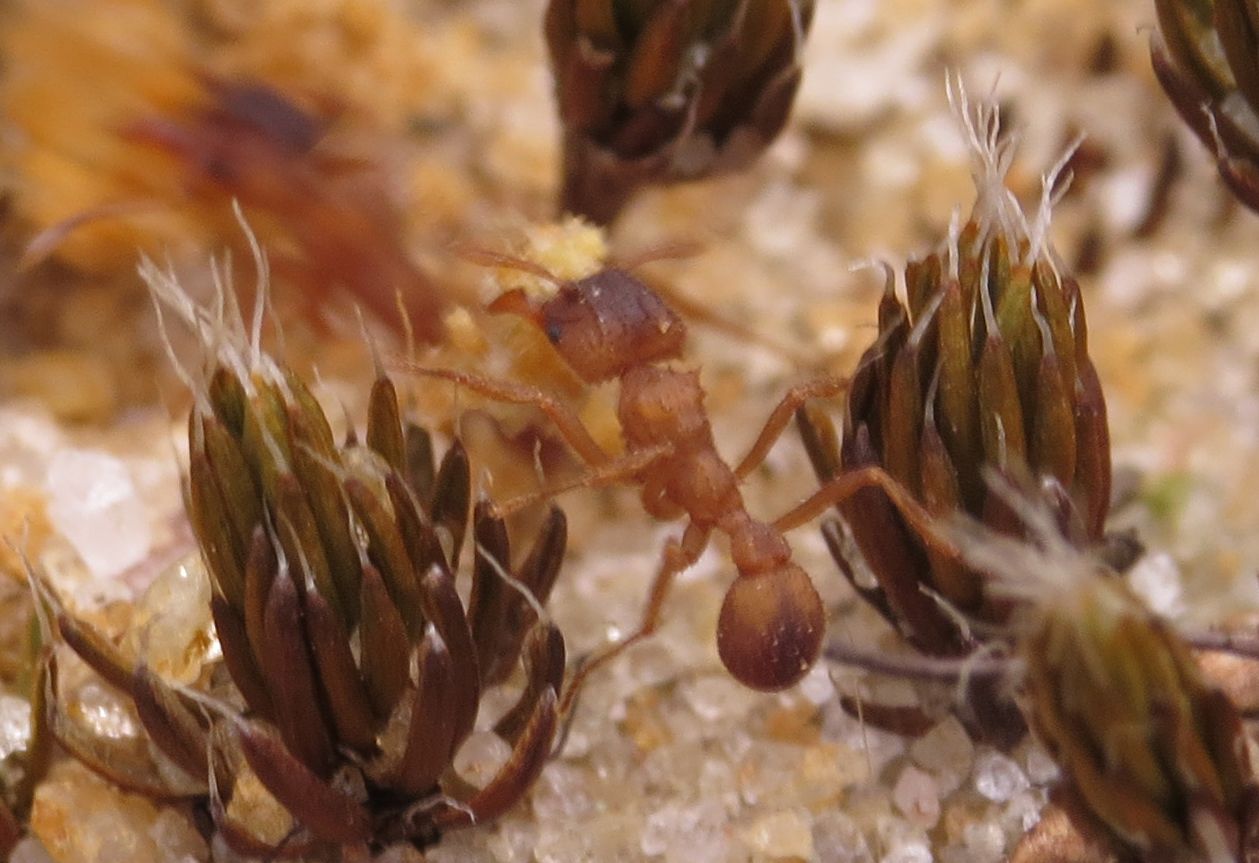
Testing out my new camera I got an image of what I think is Lasius claviger. The hairs on the gaster are randomly spaced out and not in rows the way they are with Lasius interjectus.
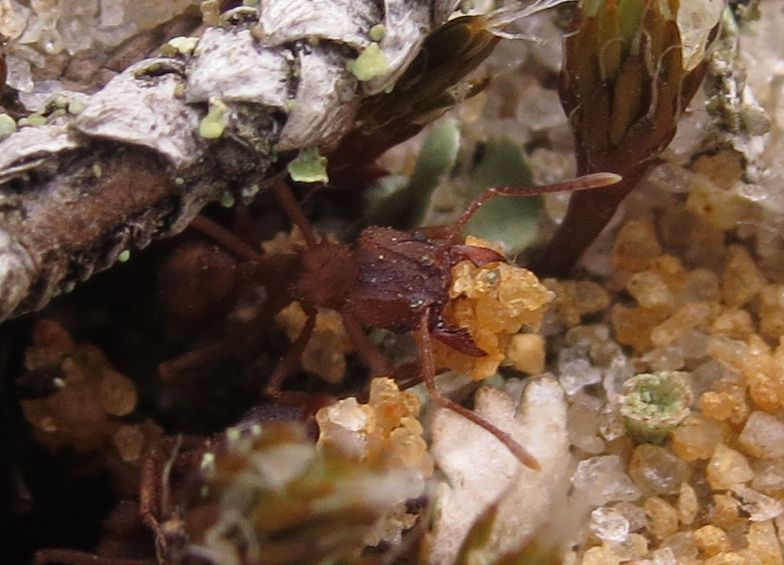
On the NJ Ant Together this year we found a few colonies of Northern Fungus Growing Ants, Trachymyrmex septentrionalis.
They weren't very active so next year I'll try and hit the location sooner. There were a few out digging though.
This was a test for me to realize just how varied one species can be. This is Formica pallidefulva which I have in my yard, but didn't recognize it here. I'm so used to them being a coppery brass color that it never occurred to me that there could be populations with such an abrupt color difference. I'm told they get even darker the farther north you go.
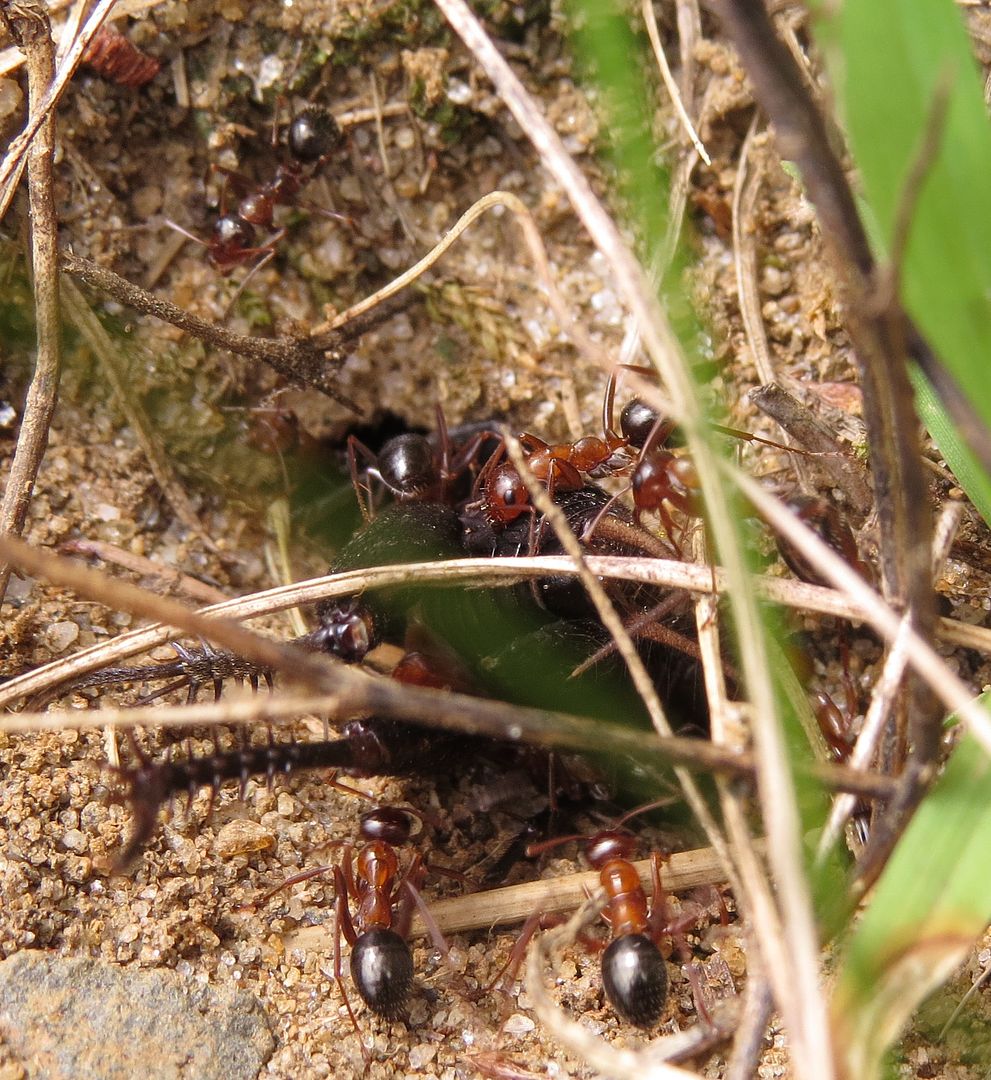
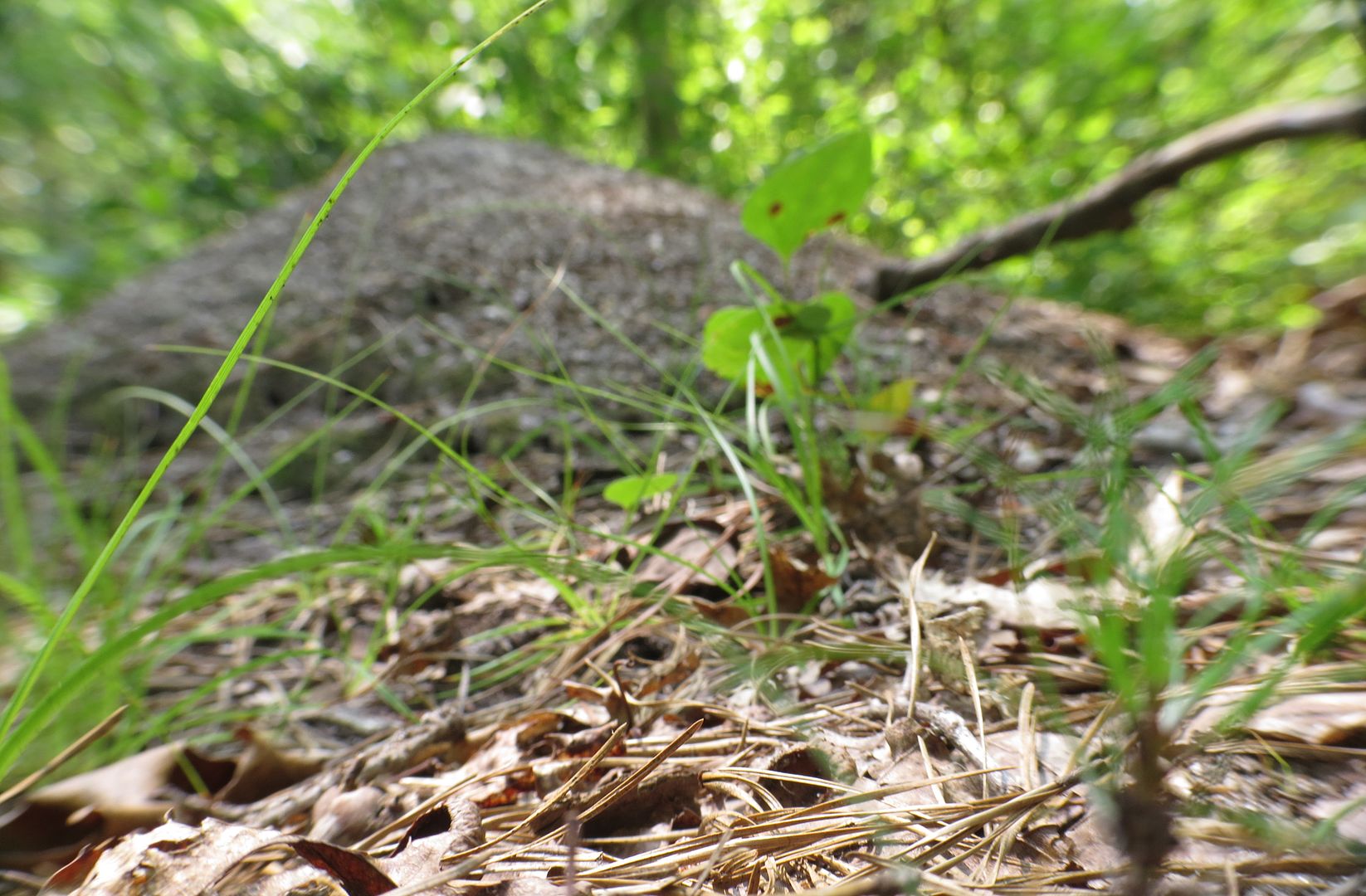
Their cousins live in considerably larger nests. Formic exsectoides for small super colonies in relatively well preserved woodland areas. I think the only thing preventing them from distributing farther is their appetite. In the short while we were there we watched them haul in caterpillars, cicadas, and wasps.
Anywhere that you stepped on the ground, because our shoes disturbed the colony scent on the ground, the ants quickly swarmed the location. It didn't help that there were so many running along the ground that we couldn't help but step on them, thus releasing alarm pheromone.
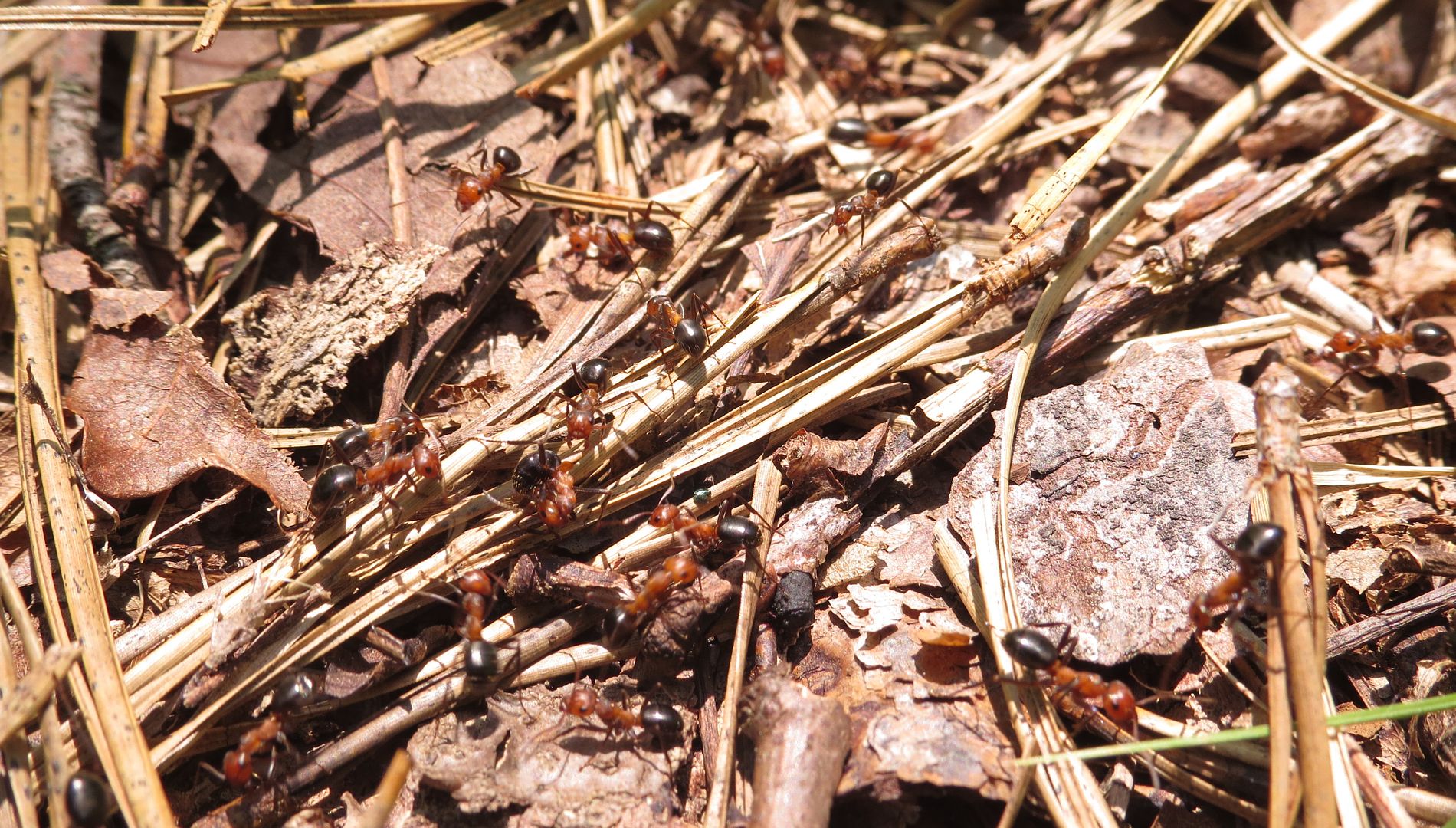
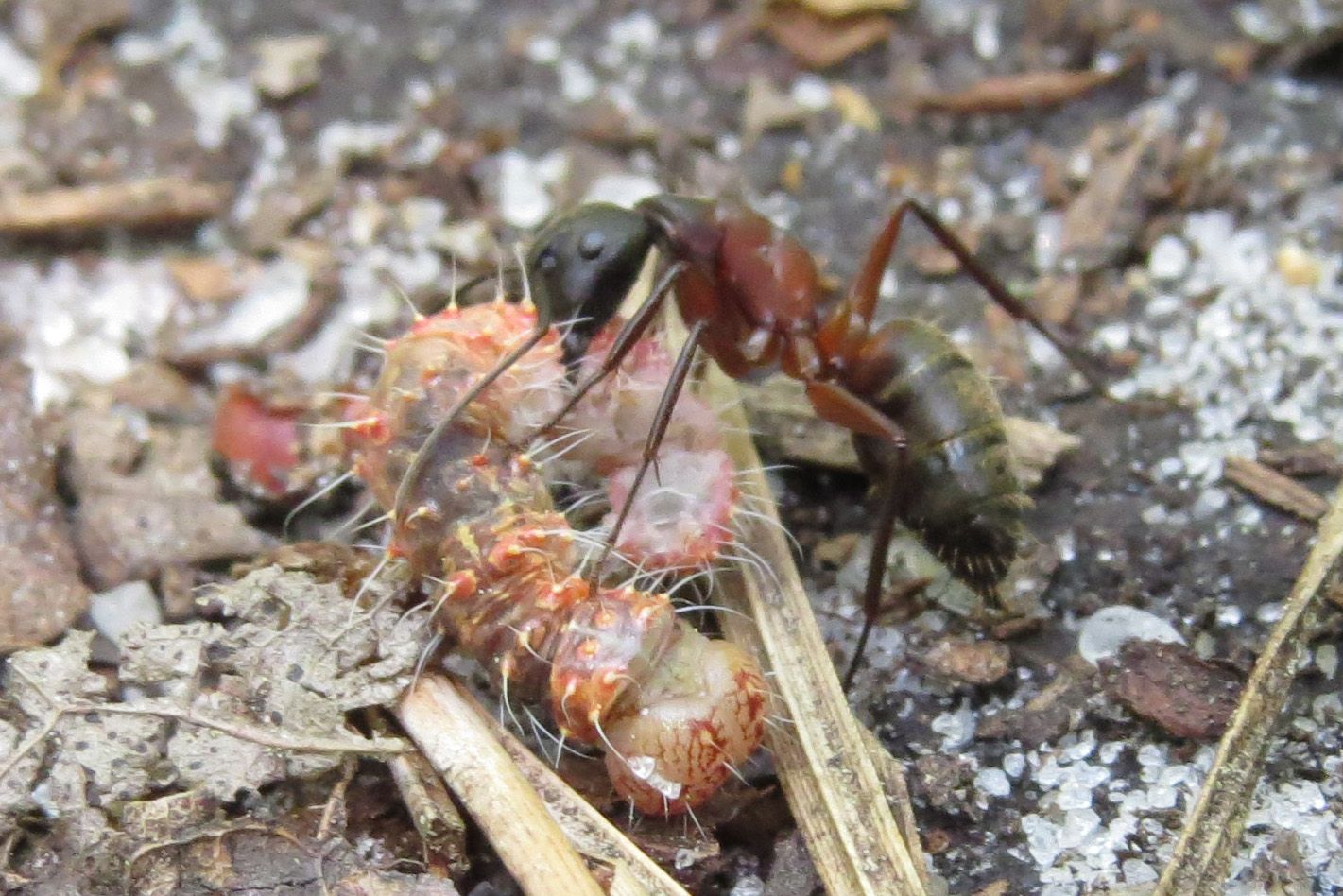
Outside of their range there were a few foragers of Camponotus chromaiodes. Note the pubescence on the gaster as well as the dark shoulders (which is only consistent on the larger members of the colony). Formica forage during the day and the Camponotus take over at night.
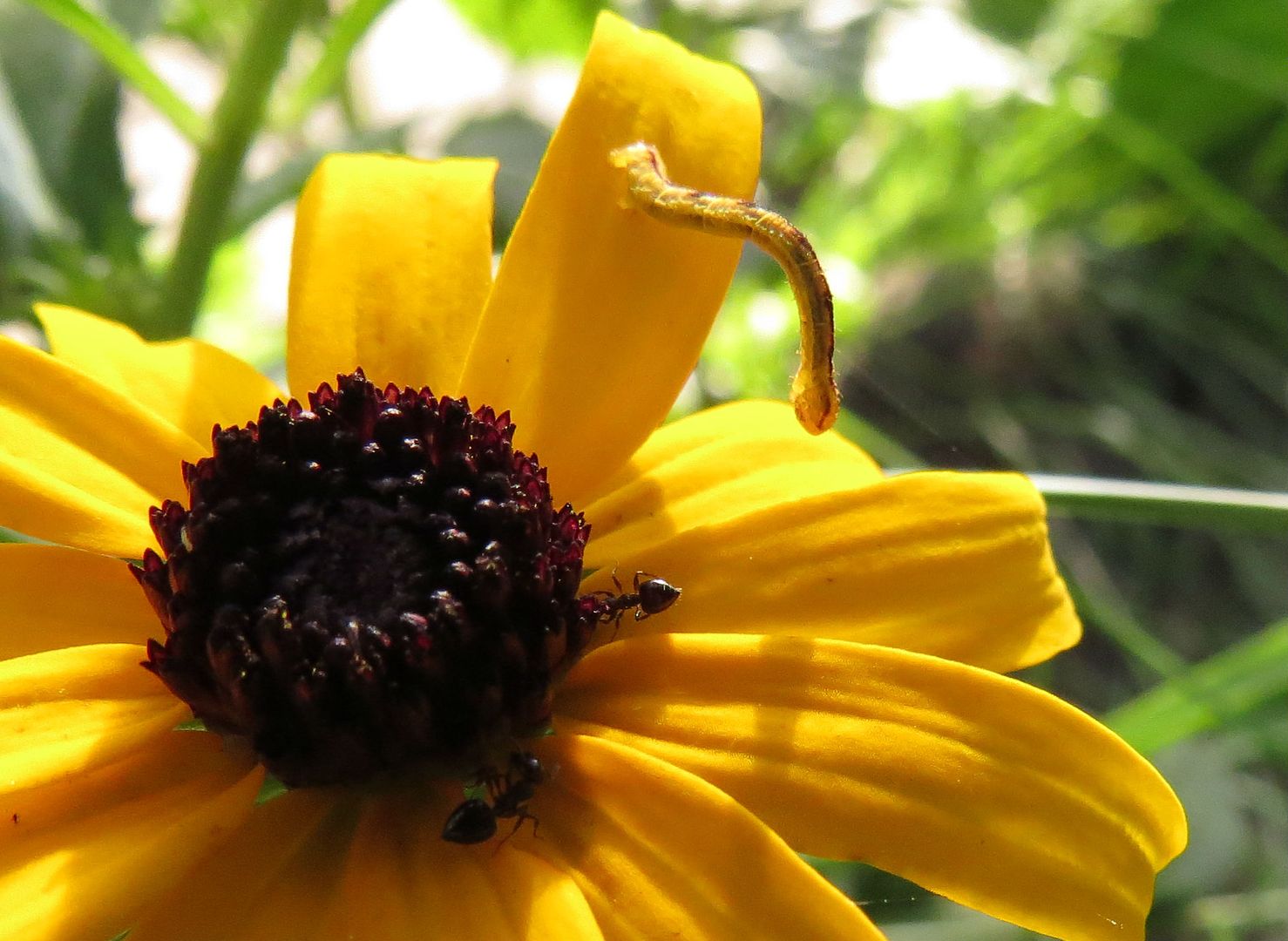
Crematogaster cerasi tending some sort of aphid which had a liking to this Rudbeckia flower. This was the first year I'd ever noticed aphids on Rudbeckia that weren't bright red and on the stems. These were actually green and some seemed to latch onto the seeds or various nodes where they were being developed. The caterpillar here is some sort of inchworm or possibly a looper. These normally feed on the flowers to these plants but was cautious about approaching this flower.
The last thing of anting for the year was observing another one of my rare plants Gentiana catesbaei. Other members of this genus keep the flower tightly closed and it's only through bumblebees forcing their way inside that they get pollinated. This species oddly keeps the flower open and invites everything on in. This also includes the ants. In this case it's the tiny Nylanderia faisonensis though they didn't seem all that interested in it really.
My anting year started with an unusually early war between two Tetramorium colonies. We had a warm spring and wet year so the ant activity was good this year.
Here is a colony of Camponotus castaneus which seems to have moved on to a new location. I'm not sure where or why but one day they were there and the next they vanished. They didn't reappear at all later in the year either so that's a shame. I really like this species.
The flowers in my meadow garden were the best they've been yet, and many of the species I've chosen secrete extra floral nectar. Here a Camponotus subbarbatus worker is nectar scraping. Basically they just run their mandibles along the surface of the bud to squeeze out what has to be only a surface thick layer of carbohydrates.
You have to wonder if the nectar is worth the effort but apparently after a few hours of doing this they've collected enough to fill their social stomach. Eventually one of the major workers of the colony would check in on them and trophallaxis ensued. Major workers can hold more food so they're used mostly as storage ants.
One of my rare plants, Purple Milkweed, Asclepias purpurascens, finally flowered this year... only to have it's nectar robbed by Odorous House Ants, Tapinoma sessile. This ant is hands down the most notorious nectar thief because this particular milkweed is covered in hairs along the stem which are supposed to secrete a sticky goo to stop ants dead in their tracks. No one told this species that because they robbed out all the flowers.
Testing out my new camera I got an image of what I think is Lasius claviger. The hairs on the gaster are randomly spaced out and not in rows the way they are with Lasius interjectus.
On the NJ Ant Together this year we found a few colonies of Northern Fungus Growing Ants, Trachymyrmex septentrionalis.
They weren't very active so next year I'll try and hit the location sooner. There were a few out digging though.
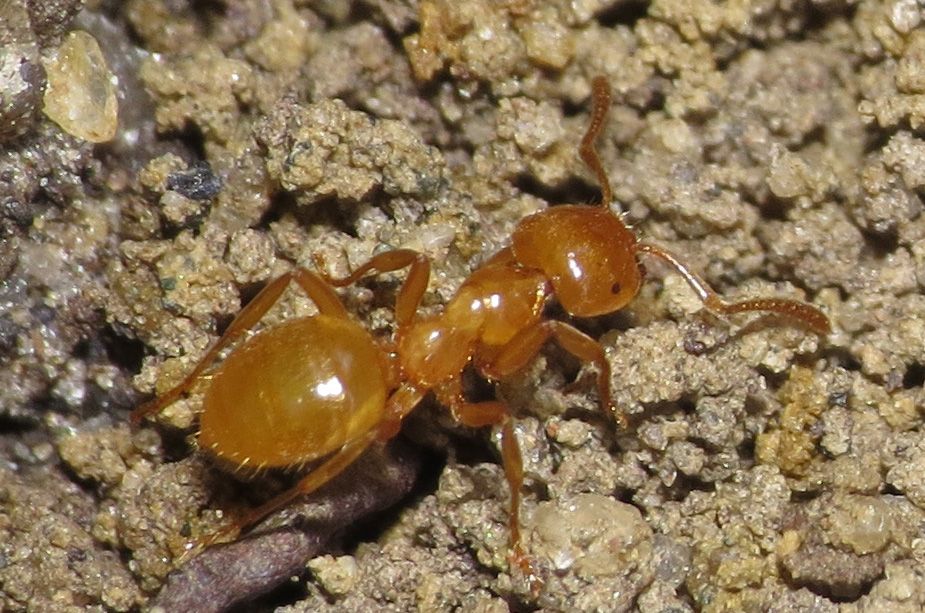
This was a test for me to realize just how varied one species can be. This is Formica pallidefulva which I have in my yard, but didn't recognize it here. I'm so used to them being a coppery brass color that it never occurred to me that there could be populations with such an abrupt color difference. I'm told they get even darker the farther north you go.
Their cousins live in considerably larger nests. Formic exsectoides for small super colonies in relatively well preserved woodland areas. I think the only thing preventing them from distributing farther is their appetite. In the short while we were there we watched them haul in caterpillars, cicadas, and wasps.
Anywhere that you stepped on the ground, because our shoes disturbed the colony scent on the ground, the ants quickly swarmed the location. It didn't help that there were so many running along the ground that we couldn't help but step on them, thus releasing alarm pheromone.
Outside of their range there were a few foragers of Camponotus chromaiodes. Note the pubescence on the gaster as well as the dark shoulders (which is only consistent on the larger members of the colony). Formica forage during the day and the Camponotus take over at night.
Crematogaster cerasi tending some sort of aphid which had a liking to this Rudbeckia flower. This was the first year I'd ever noticed aphids on Rudbeckia that weren't bright red and on the stems. These were actually green and some seemed to latch onto the seeds or various nodes where they were being developed. The caterpillar here is some sort of inchworm or possibly a looper. These normally feed on the flowers to these plants but was cautious about approaching this flower.
The last thing of anting for the year was observing another one of my rare plants Gentiana catesbaei. Other members of this genus keep the flower tightly closed and it's only through bumblebees forcing their way inside that they get pollinated. This species oddly keeps the flower open and invites everything on in. This also includes the ants. In this case it's the tiny Nylanderia faisonensis though they didn't seem all that interested in it really.
Thursday, September 5, 2013
September Wildflowers
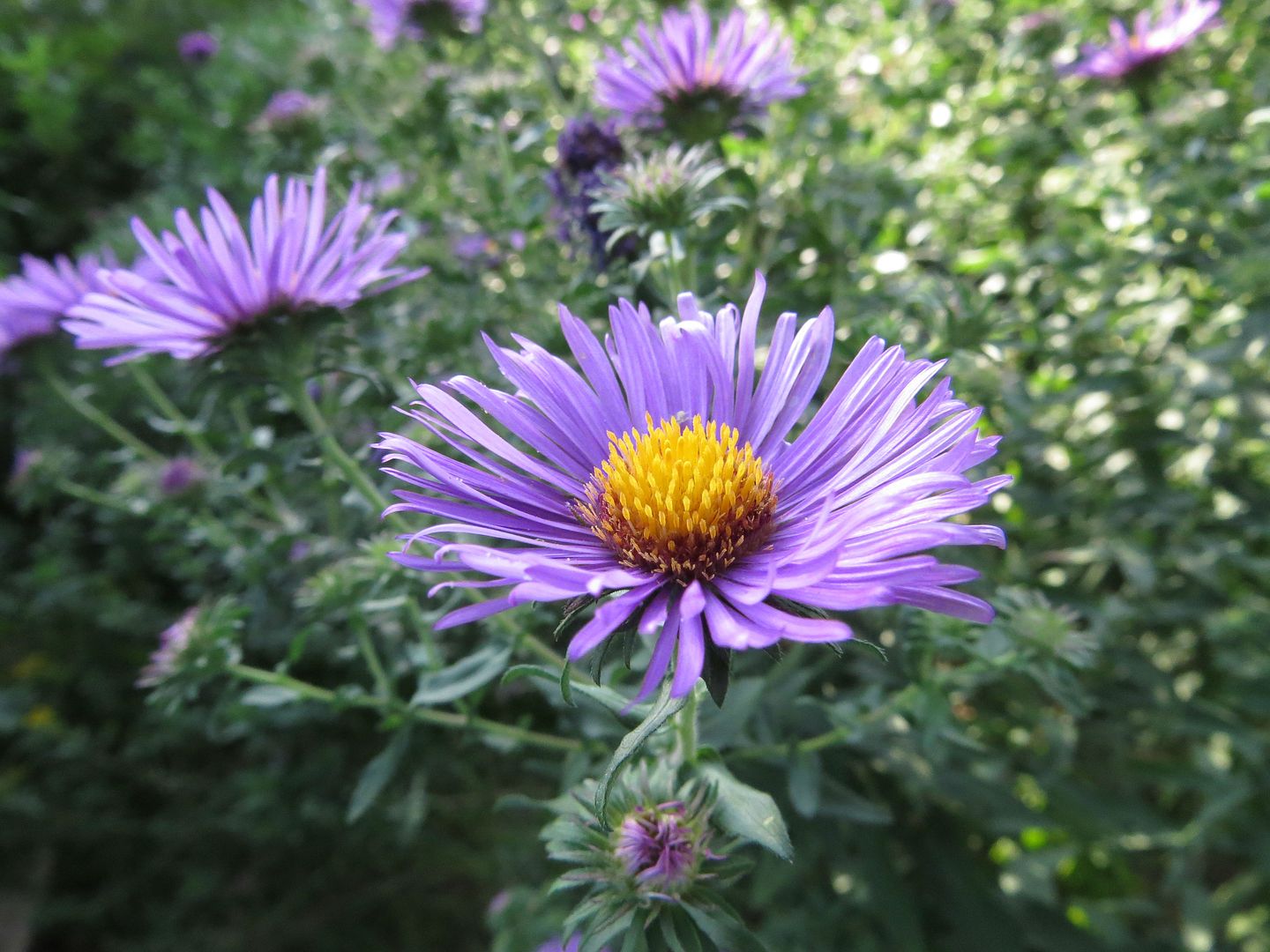
New England Aster, Symphyotrichum novae-angliae, is an autumn (late summer) highlight as always. And has only recently started spreading like a weed, presumably because it's not able to pollinate itself, but two or more plants will. Plants can also be divided.
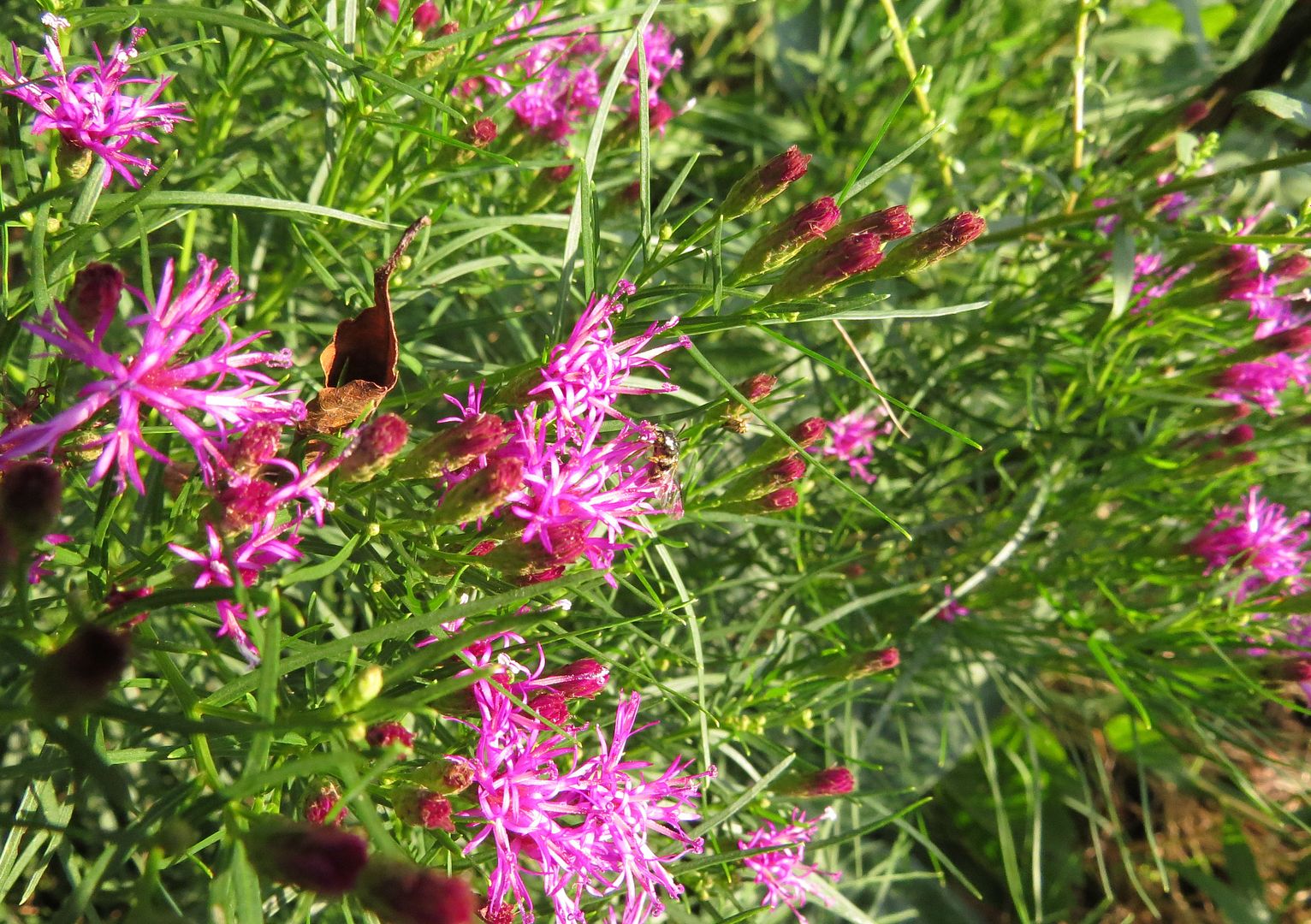
Narrow-leaf Ironweed, Vernonia Lettermannii, curiously enough the flowers this year are pink, last year they were purple. I'm not sure what caused the change. Supposedly this is the cultivar 'Iron Butterfly' though I'm not sure what's so special about it.
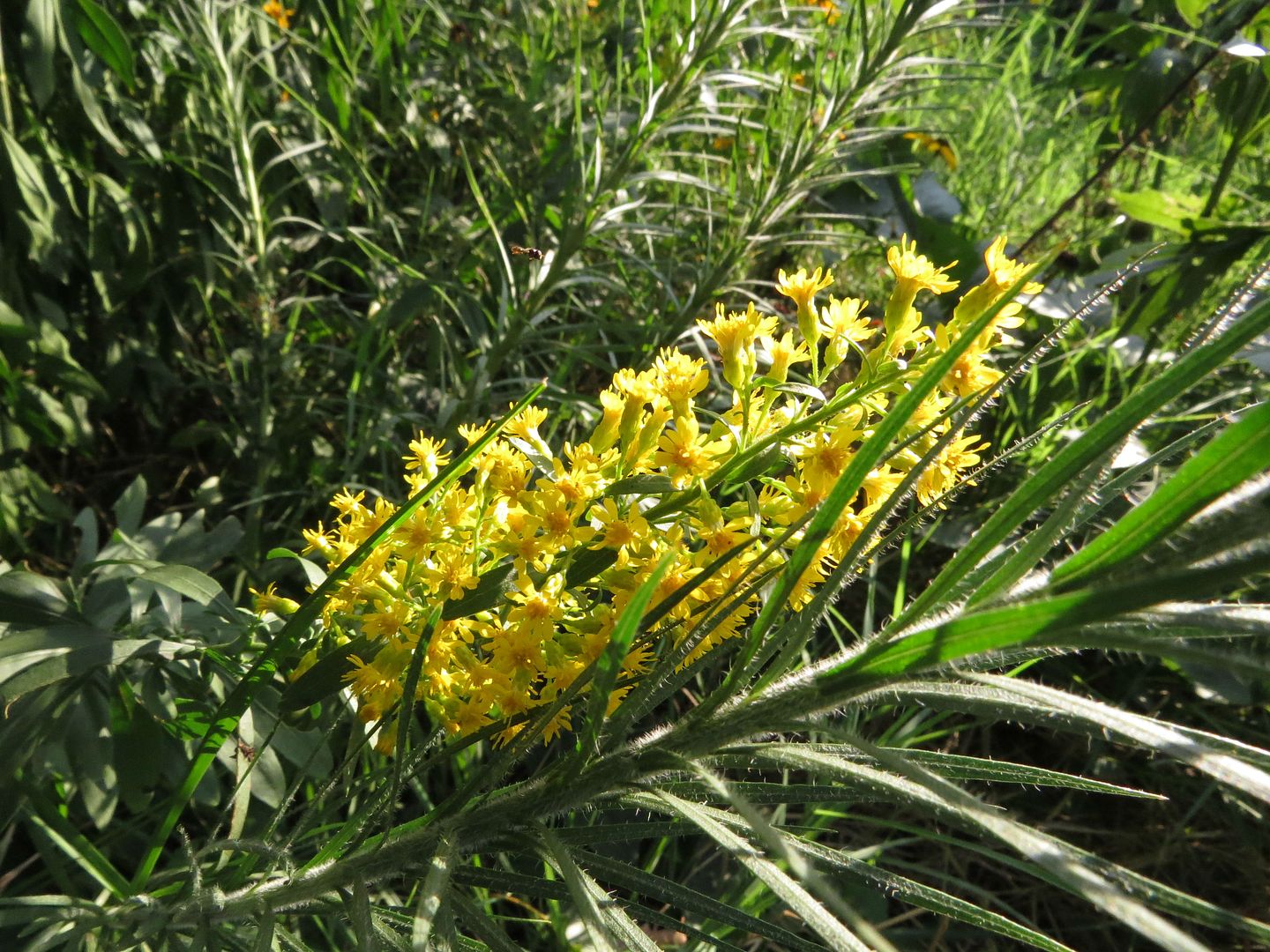
Showy Goldenrod, Solidago speciosa, has petered out a bit in my garden, but new seedlings are at that flowering age now so hopefully it hangs in there. This isn't the best example because usually there are way more flowers, but they always produce a compact amount of them at the top of each stem.
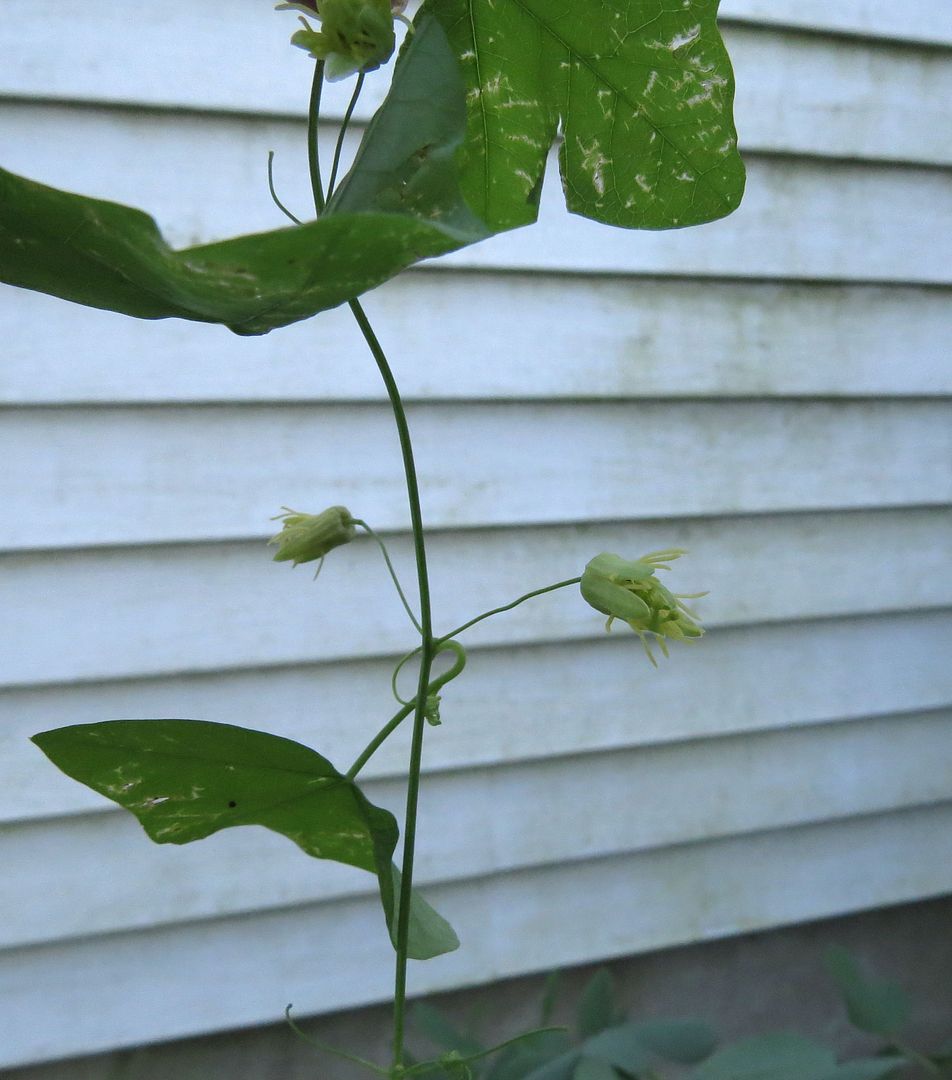
Yellow Passionflower, Passiflora lutea, is a timid member of this aggressive genus. I'm not sure if it's hardy here in zone 7 (previously zone 6 as of a few years ago), so hopefully it survives. Calling it a "Passion Flower" isn't entirely accurate because the flowers are not very showy and simple by comparison to other Passionflowers. I have yet to see the flowers open fully too, presumably they close by the afternoon or require full sun to open. Fruit-wise it's said to be inedible, with sources saying it's better used in the production of ink... yuck.
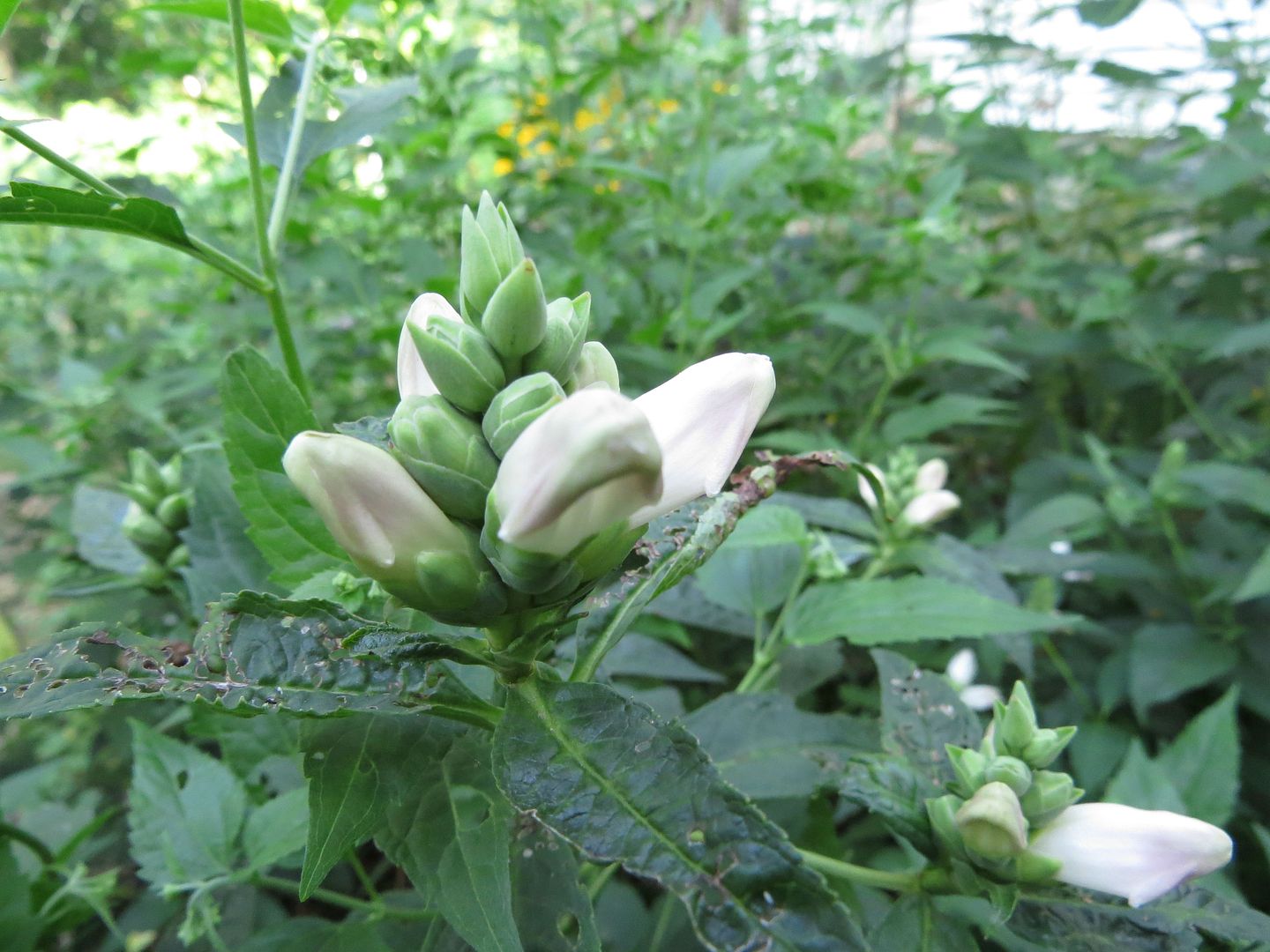
White Turtlehead, Chelone glabra, is not a particularly showy plant but it's good if you have a wet spot in partial shade to full sun in need of some late blooms. This is the host plant to the Baltimore Checkerspot, a locally threatened species of butterfly with an odd life style. Basically the caterpillars form a communal net on the plant and over winter inside it. Come spring they emerge still as caterpillars but are less picky about what they consume. Their host plant, Turtlehead, probably hasn't broken ground yet for the year so they turn instead to other plants like Monkey Flower (which I have yet to grow successfully).
Tall Coreopsis, Coreopsis tripteris. This is kind of a deceptive photo because it's taken at eye level. I'm about 5'7" and that's where this plant gets its name. They can grow to be 10' tall though individual plants often stick to a max size each year, which makes cultivars easy to pick out because they can selected to be a specific size.
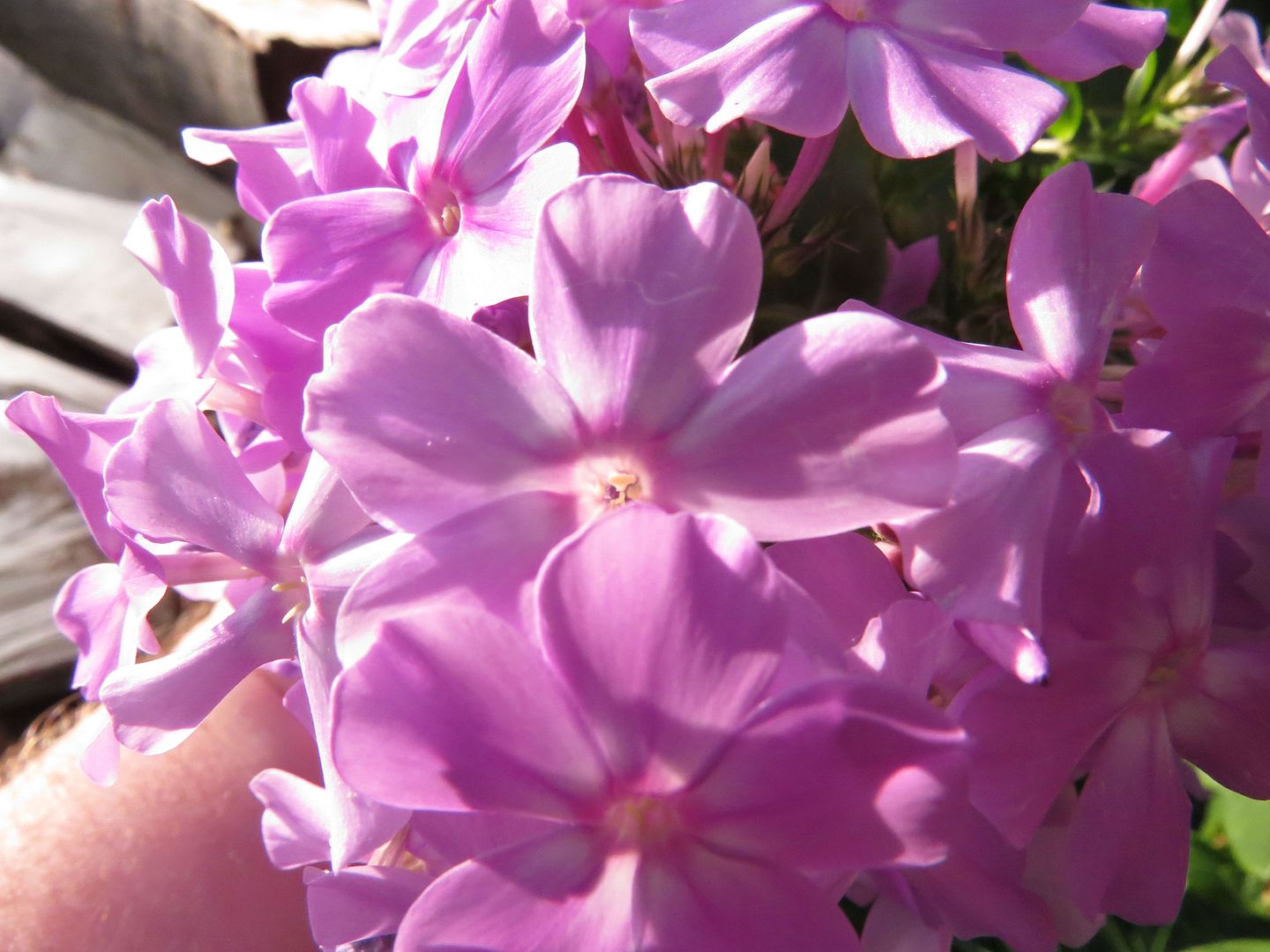
Summer Phlox. Don't know the species, don't really care either. Years and years ago I planted this in the front garden where it was too shady for it to flower. Now that we took down a street tree that seems to have opened up enough light to give what I honestly thought was a Bee Balm for the longest time to flower.
Most impressive of all is this Northern Blazing Star, Liatris borealis. The flowers are almost twice the size of Meadow Blazing Star, L. ligulistylis. The height is easily 5' tall also contrary to what the nursery I bought it from (and others!) said it only grows to 2' tall. Granted this is an enormous bulb almost the size of a baseball and it sent out three canes, two of which fell over, but the main one in the center is pushing strong. Note how the flowers extend away from the stem some on their own stalk, well this is the only Liatris species I've seen that will put more than one flower head on those! It's putting the New England Aster next to it to shame at this point. I'll post more pictures of it later.
Monday, July 8, 2013
Bees Bees and More Bees on Yellow Flowers
A bumblebee on Stiff Coreopsis, Coreopsis palmata.
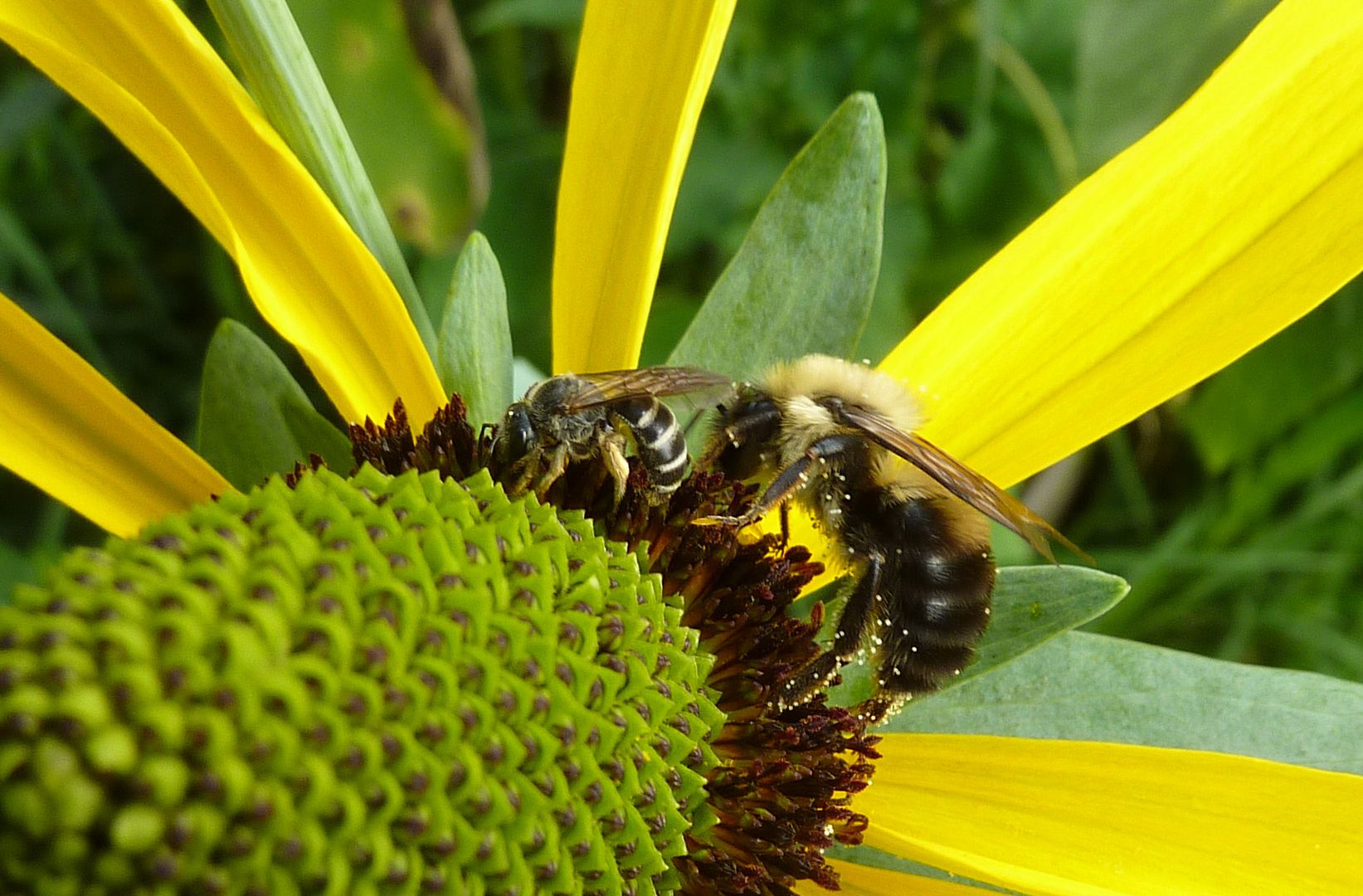
Same plant but this stem fell out into the grass. This is a sweat bee so named because they attracted to the salt in your sweat and sometimes land on you to collect it. Personally I've never had this happen though.
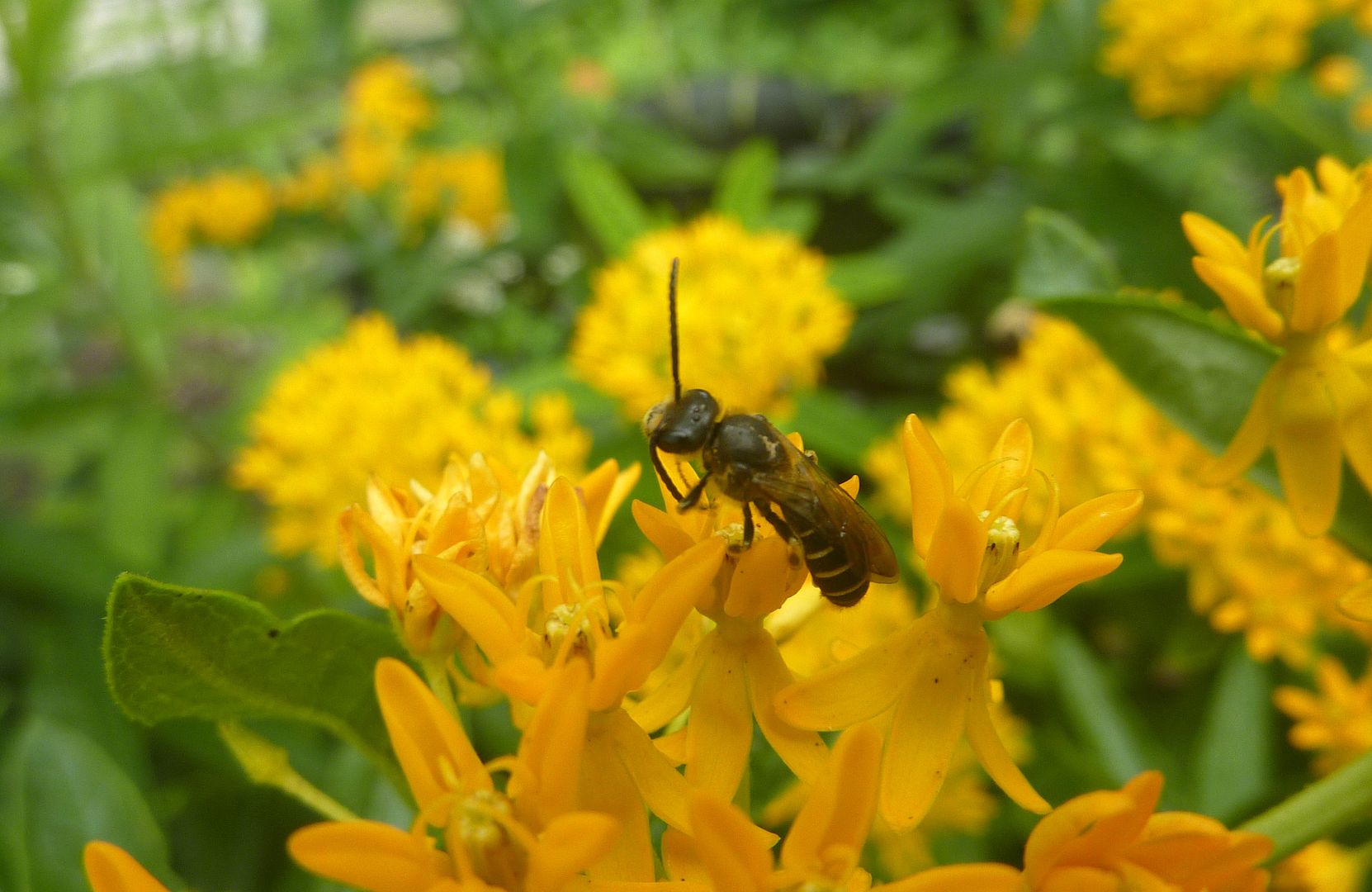
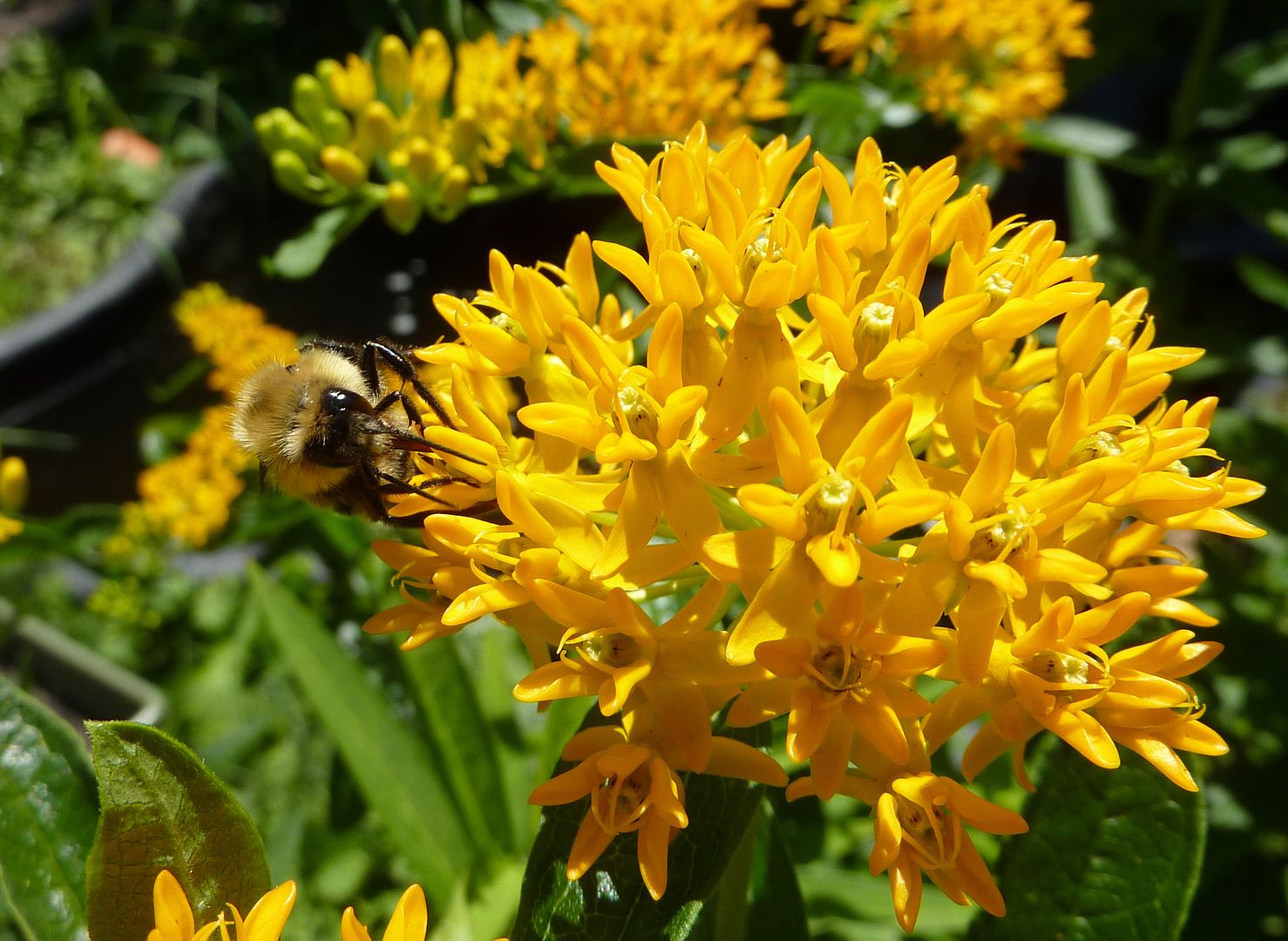
A honeybee on the yellow form of Butterflyweed, Asclepias tuberosa.
A bumblebee on the same plant.
Here some other type of bee is on the plant.
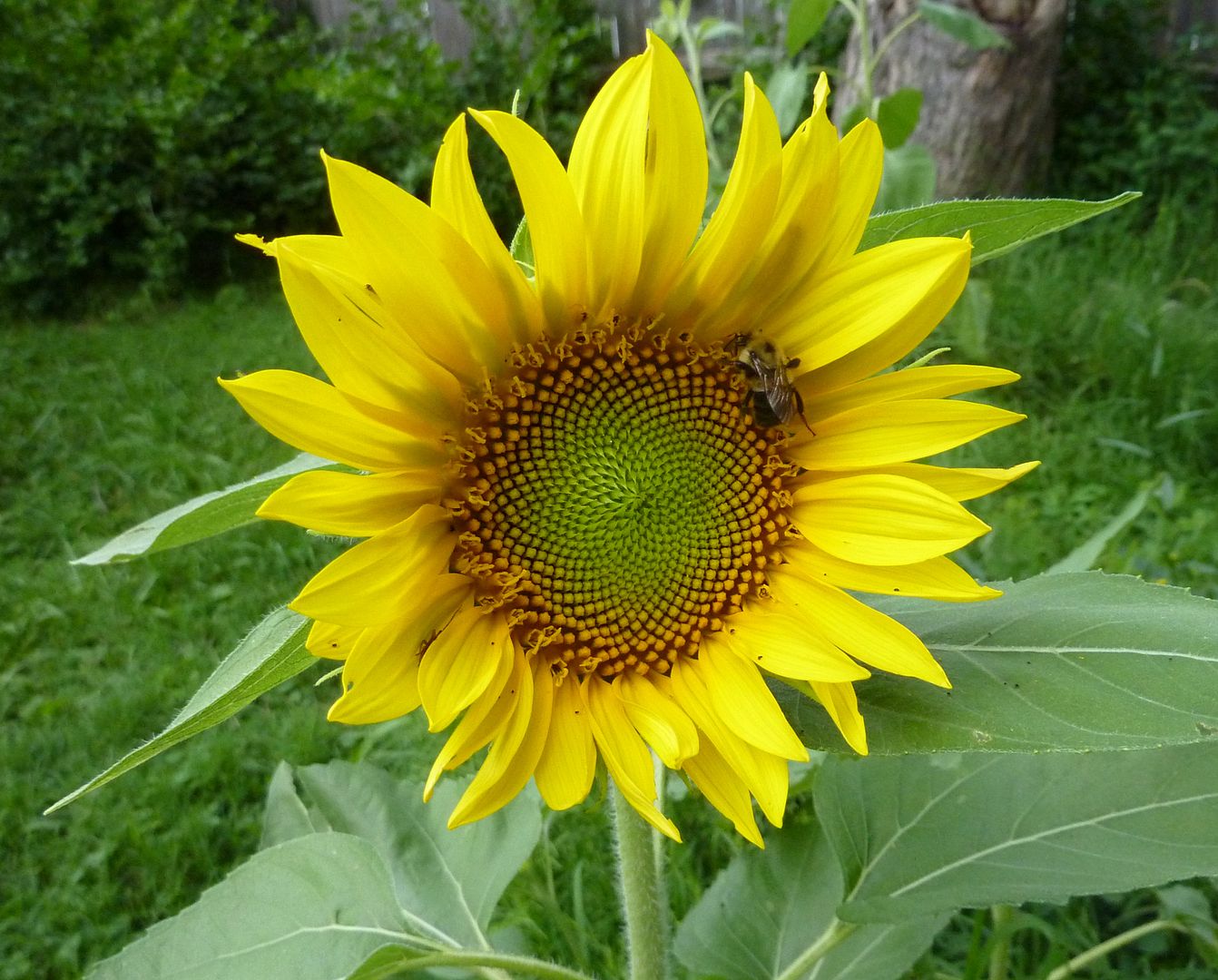
Annual Sunflowers, Helianthus annuus.
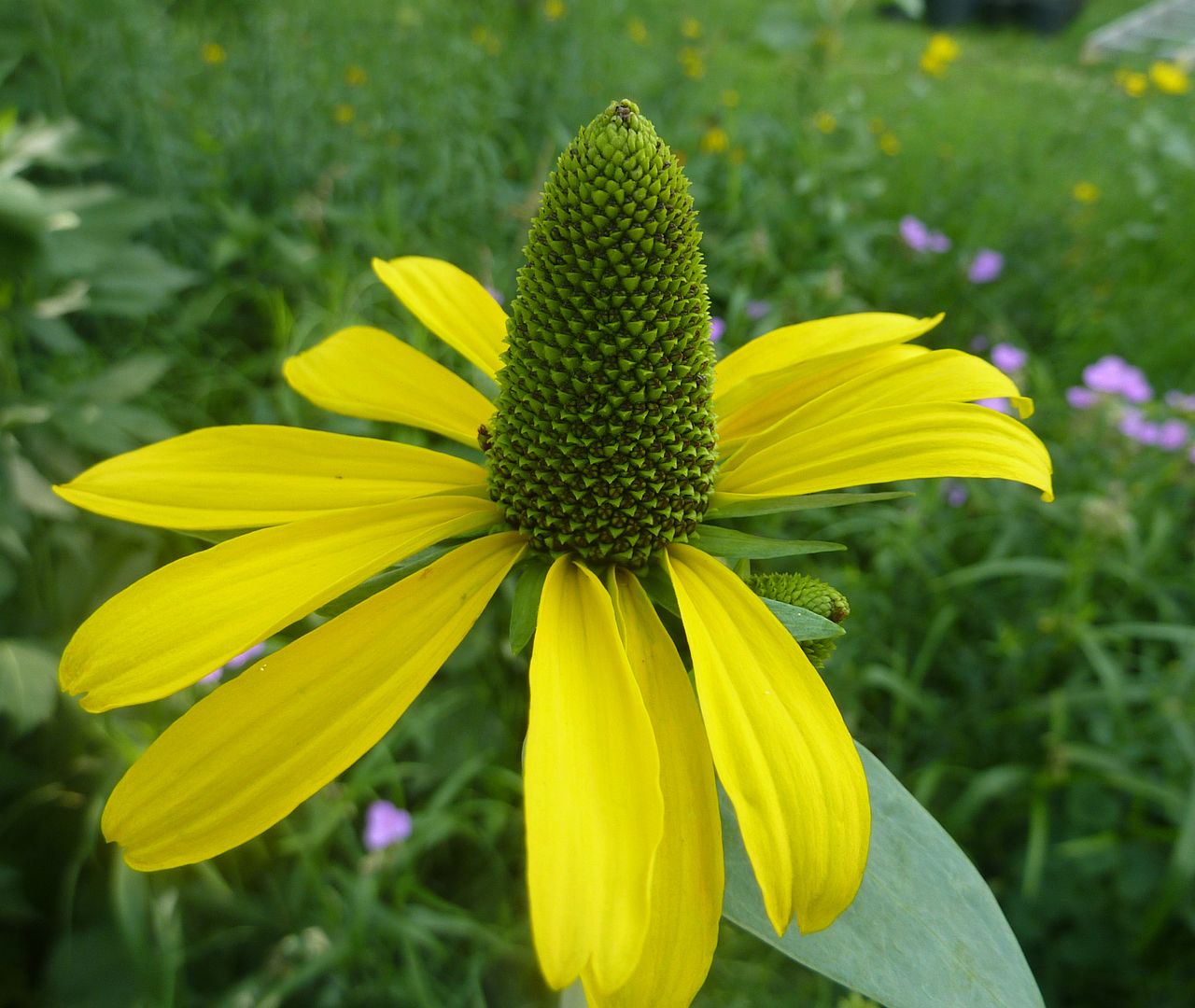
Great Coneflower, Rudbeckia maxima, getting more attention than other Rudbeckia plants I grow.
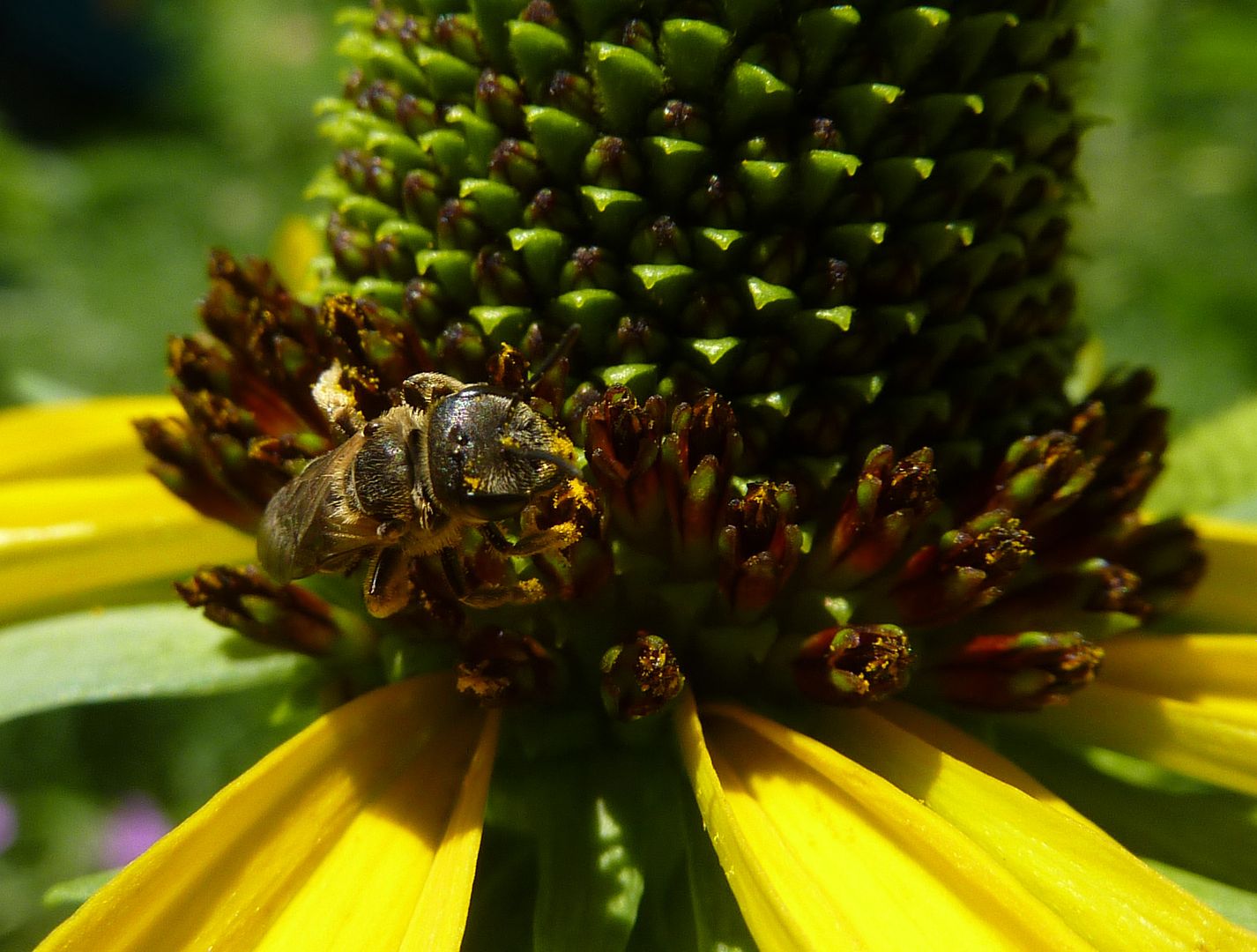
Even tiny bees seem to enjoy the odd shaped flower heads.
Same plant but this stem fell out into the grass. This is a sweat bee so named because they attracted to the salt in your sweat and sometimes land on you to collect it. Personally I've never had this happen though.
A honeybee on the yellow form of Butterflyweed, Asclepias tuberosa.
A bumblebee on the same plant.
Here some other type of bee is on the plant.
Annual Sunflowers, Helianthus annuus.
Great Coneflower, Rudbeckia maxima, getting more attention than other Rudbeckia plants I grow.
Even tiny bees seem to enjoy the odd shaped flower heads.
Labels:
Bees,
Bumblebees,
coreopsis,
Honeybees,
milkweed,
Rudbeckia,
Sunflowers
Saturday, June 29, 2013
Yellow Flowers
Between work and these thunderstorms we've been getting on a daily basis it's hard keeping up with everything that's flowering. Although the other issue might be that Yellow is probably the most over used color of our native wildflowers.
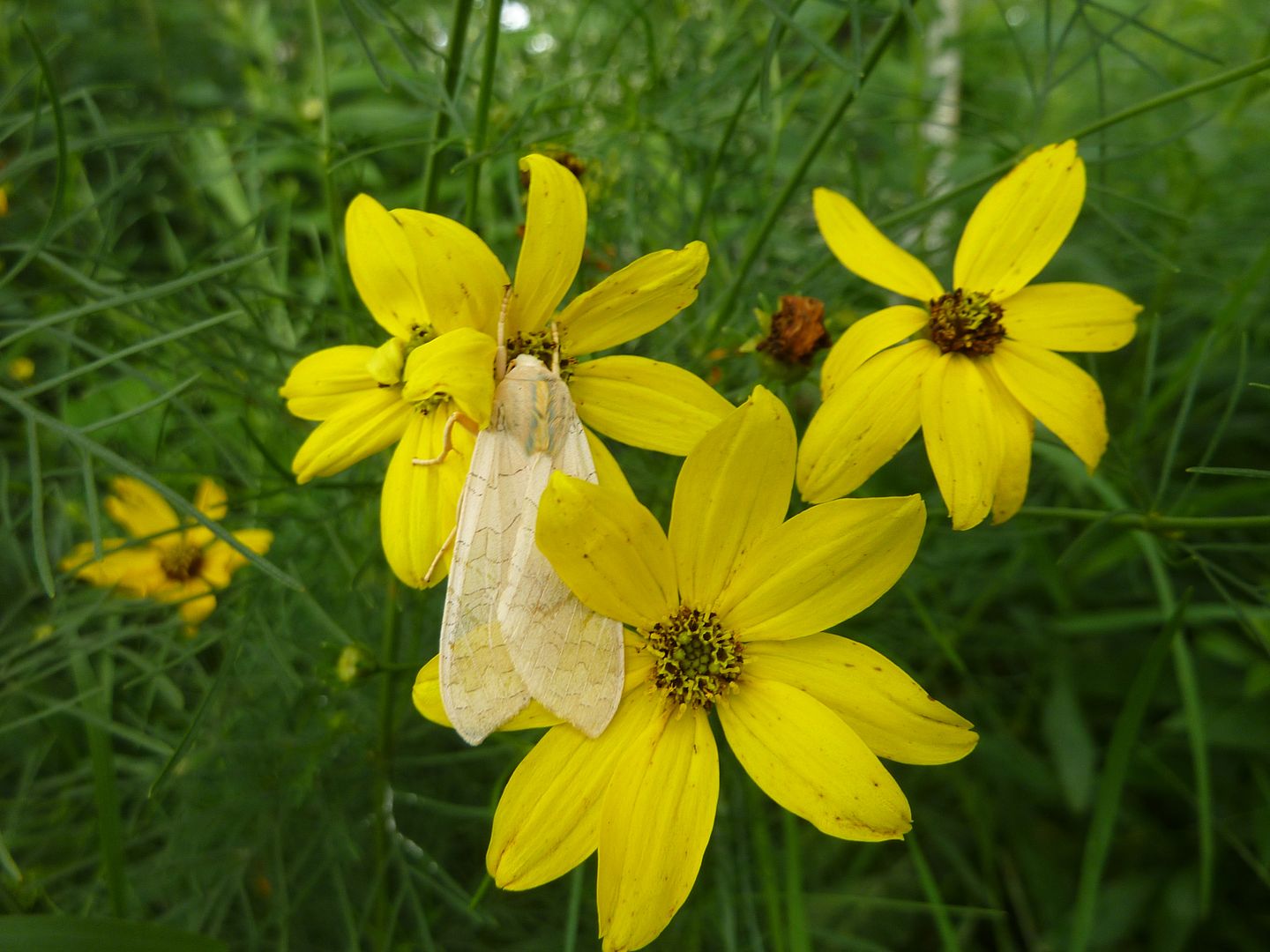
Whorled Coreopsis, C. verticillata, with what's been identified as a Banded Tussock Moth, Halysidota tessellaris, clinging to stay out of the rain to one of the flowers. The host plants to these are basically all the hardwood trees in the forest and the Willow-leaf Oak tree behind the garden was likely the host plant. The fun thing is I've actually found caterpillars of this species and not even realized it. They're basically white Woolly Bears with tufts of longer black hairs here and there.
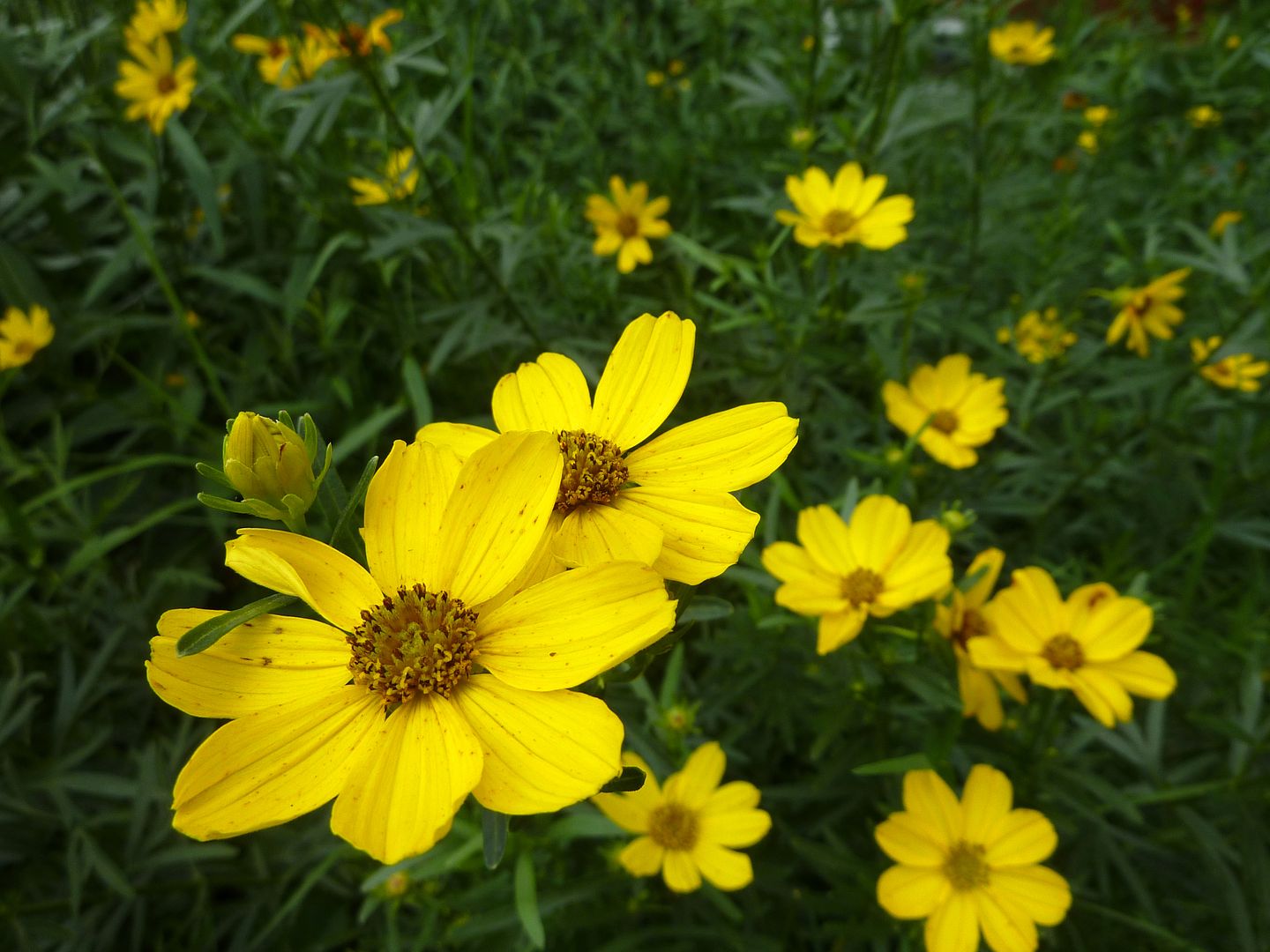
Stiff Coreopsis, C. palmata, has really been kicking but these past few weeks. They're not forming a carpet of yellow but it's enough that I'm seeing bees work them on a daily basis now.
Annual Sunflower, Helianthus annuus, planted courtesy of messy birds at our bird feeder. I insist on only feeding them sunflowers because it's a native seed.
Prairie Coneflower, Ratibida pinnata, isn't a coneflower but close enough. They're not officially open yet but the petals are starting to push out and look nice on some of them.
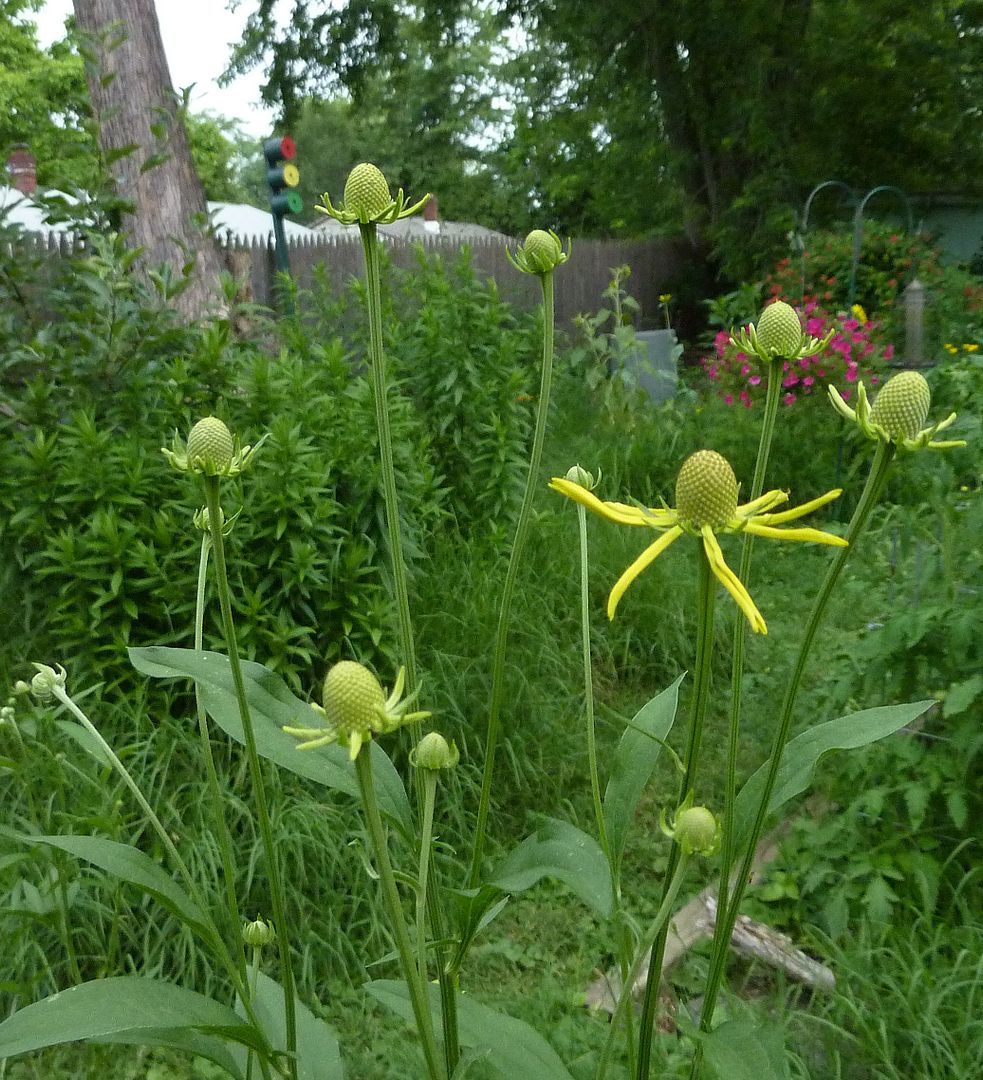
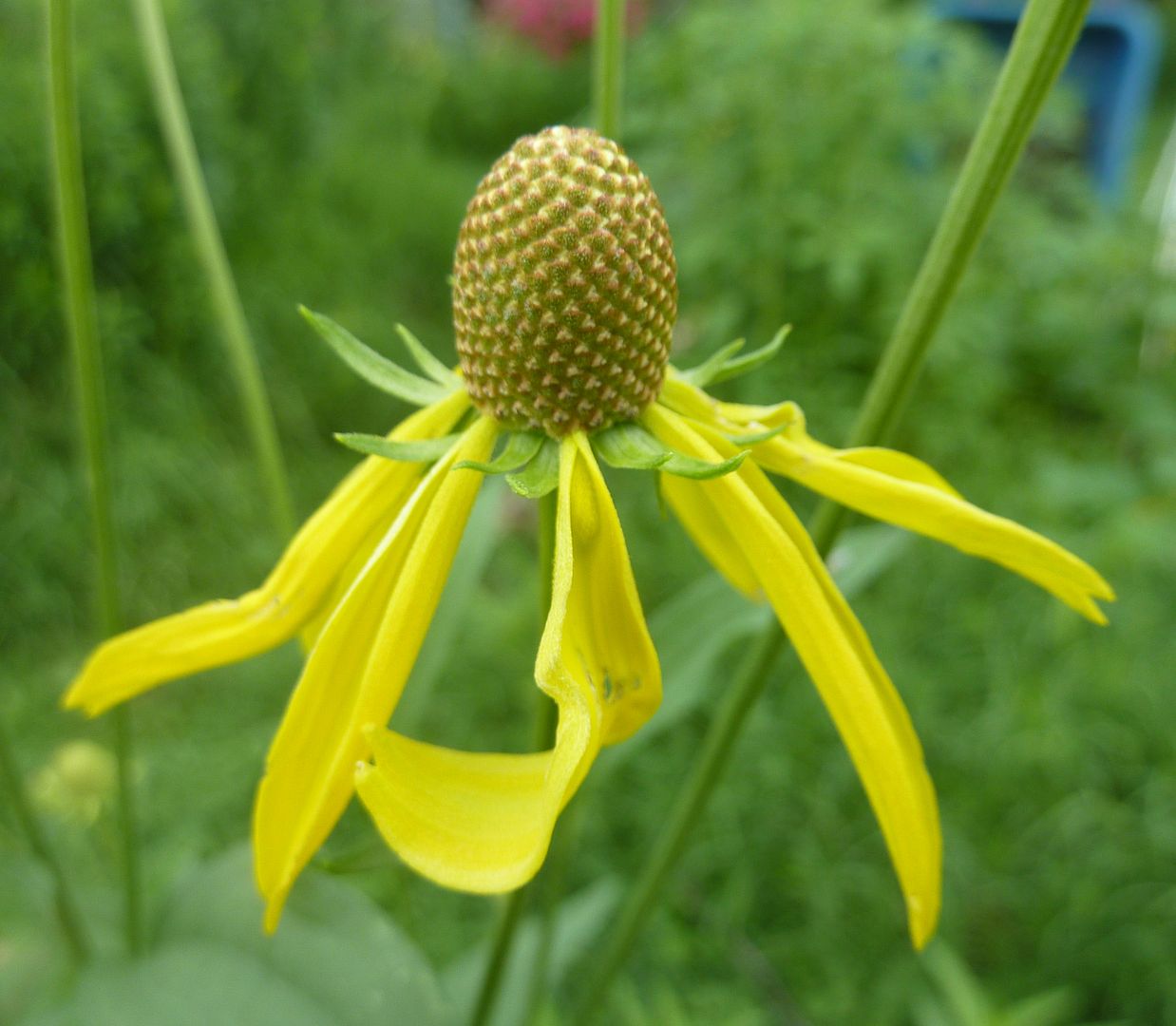
Greater Coneflower, Rudbeckia maxima, also not officially open yet, and also not officially a coneflower but close enough. As it's in the Rudbeckia genus that makes it more closely related to the Black Eyed Susan, which is strange becuase they're 5' tall, have blue/gray foliage, and bloom earlier than any other Rudbeckia species at least in my garden.
Whorled Coreopsis, C. verticillata, with what's been identified as a Banded Tussock Moth, Halysidota tessellaris, clinging to stay out of the rain to one of the flowers. The host plants to these are basically all the hardwood trees in the forest and the Willow-leaf Oak tree behind the garden was likely the host plant. The fun thing is I've actually found caterpillars of this species and not even realized it. They're basically white Woolly Bears with tufts of longer black hairs here and there.
Stiff Coreopsis, C. palmata, has really been kicking but these past few weeks. They're not forming a carpet of yellow but it's enough that I'm seeing bees work them on a daily basis now.
Annual Sunflower, Helianthus annuus, planted courtesy of messy birds at our bird feeder. I insist on only feeding them sunflowers because it's a native seed.
Prairie Coneflower, Ratibida pinnata, isn't a coneflower but close enough. They're not officially open yet but the petals are starting to push out and look nice on some of them.
Greater Coneflower, Rudbeckia maxima, also not officially open yet, and also not officially a coneflower but close enough. As it's in the Rudbeckia genus that makes it more closely related to the Black Eyed Susan, which is strange becuase they're 5' tall, have blue/gray foliage, and bloom earlier than any other Rudbeckia species at least in my garden.
Labels:
Colors,
Coneflower,
coreopsis,
flowers,
Moth,
native,
Sunflowers,
Wildflowers
Subscribe to:
Posts (Atom)