
Sunday, September 2, 2012
Crabgrass Caterpillar
Saturday, September 1, 2012
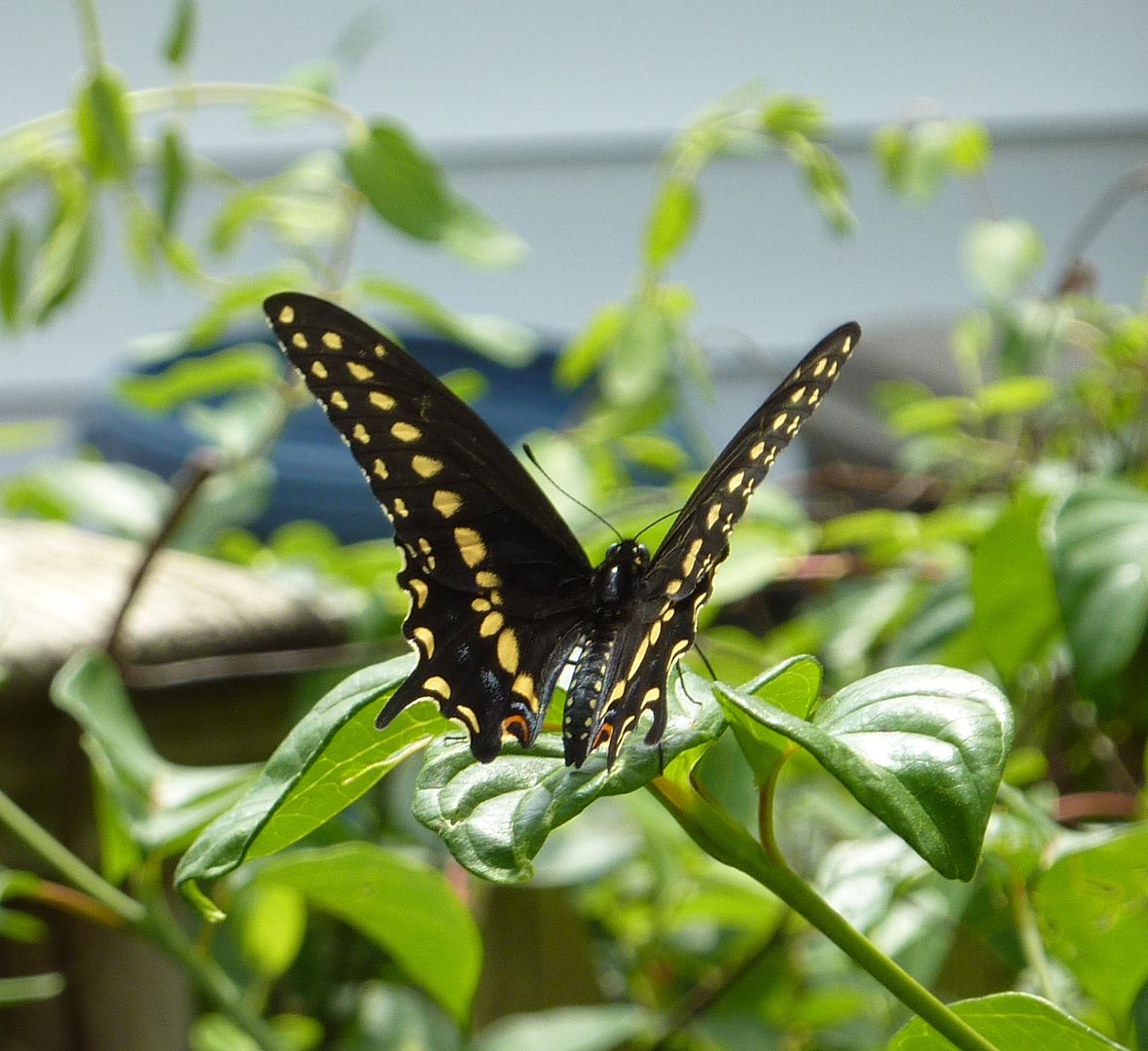
Black Swallowtail Before the Meadow
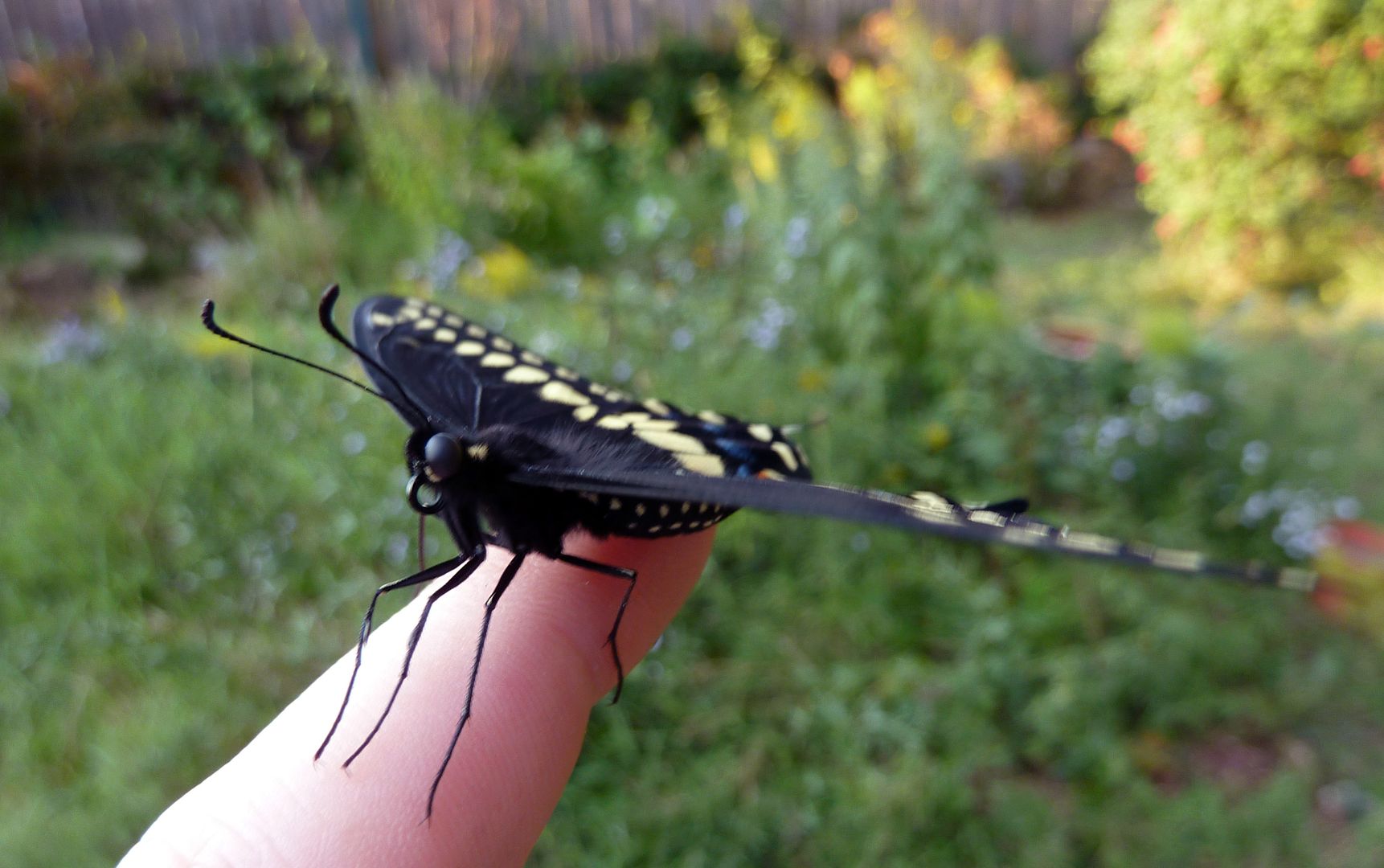
Also note the meadow garden in the background. I haven't been updating over the summer that much because the orange coneflower, Rudbeckia fulgida, and butterfly weed, Asclepias tuberosa, weren't as showy overall. The Sky Blue Asters, Symphyotrichum laeve, and Symphyotrichum azureus are starting to fill in nicely against the Showy Goldenrod, Solidago speciosa, and Coreopsis tripteris. The two aster species look way to similar to really tell apart, but that's okay as S. laeve tends to bloom a few weeks sooner than S. azureus, creating the illusion of a prolonged bloom.
Wednesday, August 29, 2012
Birds in the Backyard
While spying a Goldfinch through the window this morning I soon realized that there was a lot of bird activity going on in the yard. The Goldfinch itself landed on some Anise Hyssop to inspect for seeds then took off to one of the weedy Rose of Sharons growing along the fence. It took off before I could snap any pictures but then I noticed the Hummingbird flying about.

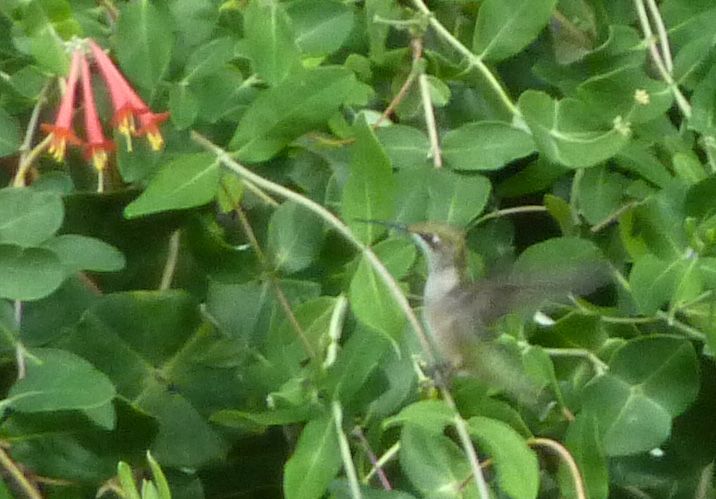 They've been showing up to the Coral Honeysuckle every morning and afternoon these past few weeks. As we move into colder weather the vine should produce another flush of blooms though nothing compared to the early spring flowers.
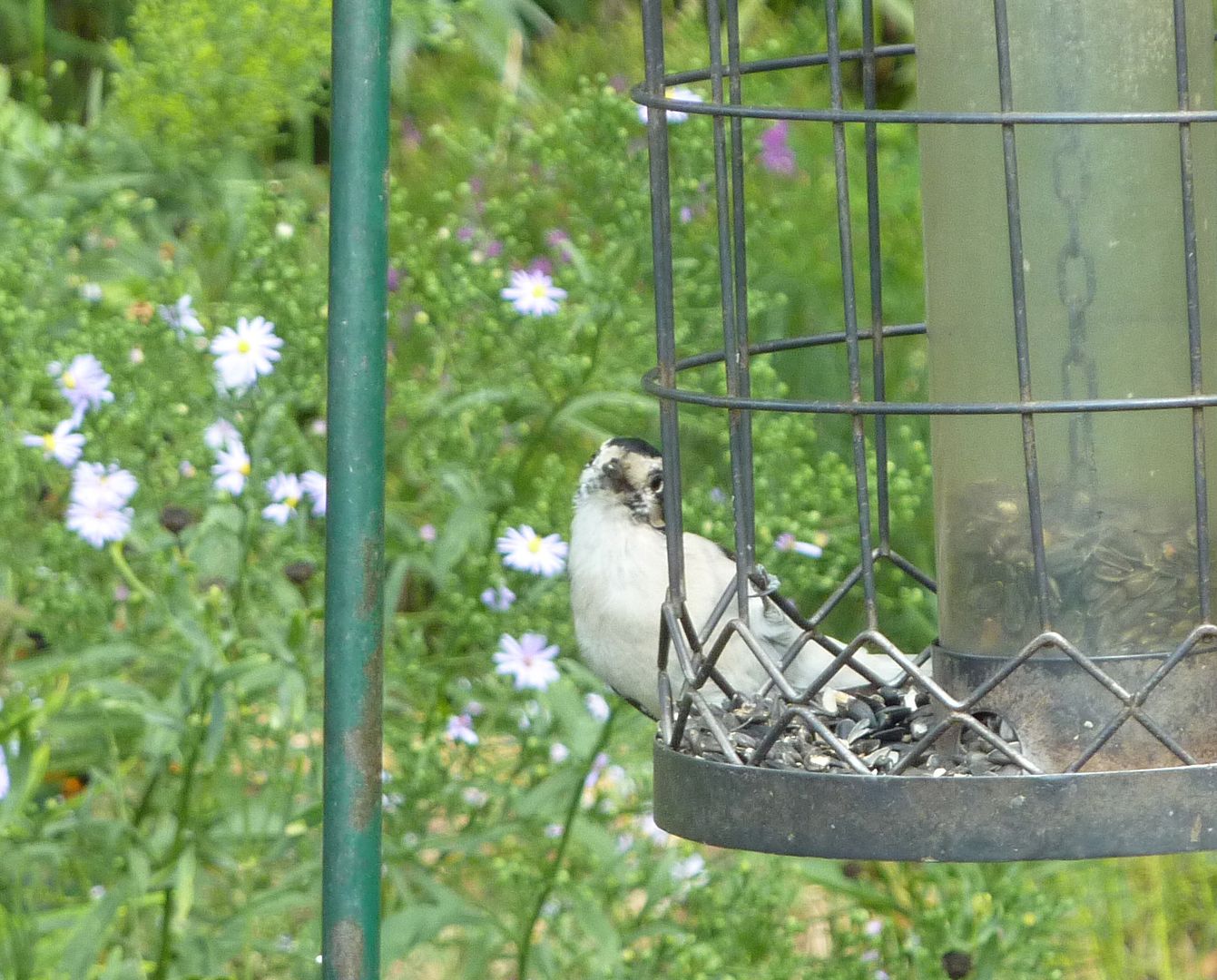 Rahhhh!?
 So I glanced at the bird feeder to find this speckled Black and White Warbler, which is the first time I've ever seen those in the yard. I understand that they migrate south but I've never noticed them before.
Tuesday, August 28, 2012
Caterpillars that Look Like Lady Gaga
Once again the Yahoo home page linked to a "news" story where someone over at Outdoor is blogging that years ago someone uploaded a photo of a moth that looks like a poodle.
Here is the original article.
It basically reads like it was written by a spoiled 16 year old girl.
What really got to me though was this comment here.
Which has inspired me to search the internet for images of Caterpillars that look like Lady Gaga. (Also a fun drinking game for Lepidopterists reading along at home.)
The Stinging Rose Caterpillar looks just like Lady Gaga.
The Paddle Caterpillar looks just like Lady Gaga.
The Giant Swallowtail Caterpillar, which actually mimics bird shit to not get eaten by birds, looks just like Lady Gaga.
The Spotted Tussock Caterpillar looks just like Lady Gaga.
And so on... So these caterpillars really don't have anything in common other than they look somewhat eccentric. I haven't seen Lady Gaga do anything new lately so maybe my vision of her is a few years old. She wears attention getting get ups, and costumes, and tries to come off as fashion forward. She's pushed the boundaries on acceptable female attire on so many fronts that I could probably have posted random insect photos and still captioned each one as it looks just like Lady Gaga.
Here is the original article.
It basically reads like it was written by a spoiled 16 year old girl.
The first word that comes to mind when casting your eyes upon this photo of a bedazzling insect labeled the Venezuelan Poodle Moth is Photoshop. Really? A moth that looks like a poodle? Eyelashes that Lady Gaga would envy? Seriously?
As it turns out, yes, it is real...
What really got to me though was this comment here.
This moth reminds us of Lady Gaga.
Which has inspired me to search the internet for images of Caterpillars that look like Lady Gaga. (Also a fun drinking game for Lepidopterists reading along at home.)
And so on... So these caterpillars really don't have anything in common other than they look somewhat eccentric. I haven't seen Lady Gaga do anything new lately so maybe my vision of her is a few years old. She wears attention getting get ups, and costumes, and tries to come off as fashion forward. She's pushed the boundaries on acceptable female attire on so many fronts that I could probably have posted random insect photos and still captioned each one as it looks just like Lady Gaga.
Monday, August 27, 2012
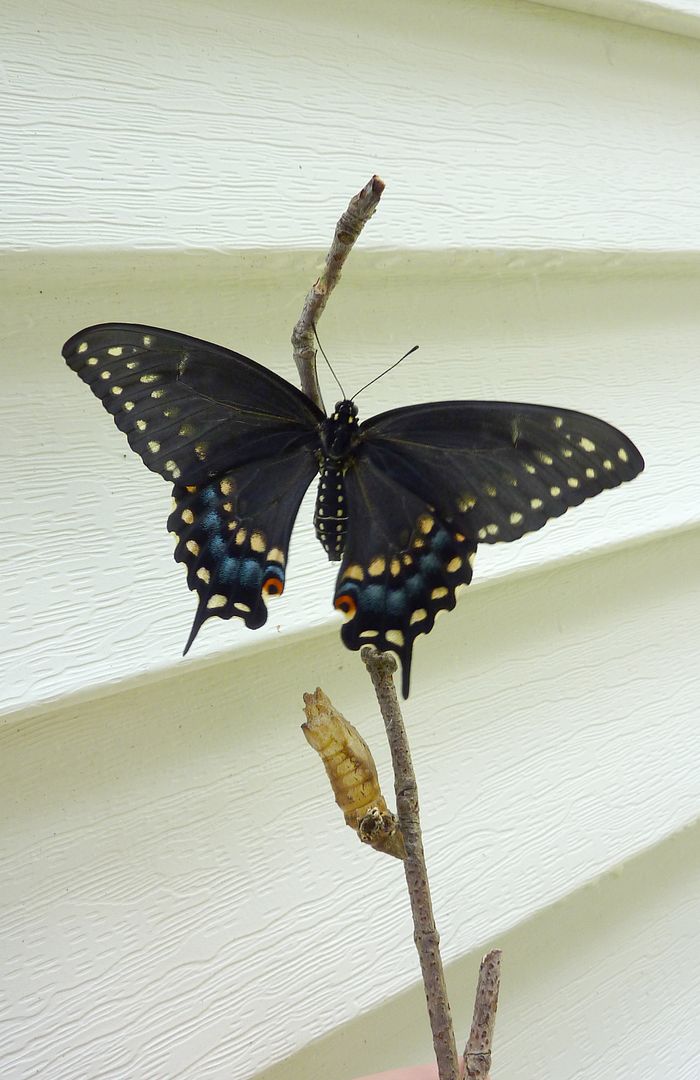
Black Swallowtail Hatched
Thursday, August 23, 2012
Confusing News Articles report 3,000,000 Bees Removed from Driveway in Queens
There's a news article going around today about 45 honeybee hives in one man's driveway having to be removed. None of them seem to seem to say clearly enough as to why, but BEES!!!
New York Post
Yahoo
CBS New York
I gather that he's selling his house, maybe? And the real estate agent freaked out, I think? And this man helped with the removal of his hives... where he might get fined an outrageous amount of money.
The Tone of the Article
Ewww these bees are awful! OMG there's 45 hives being kept like Dogs! Neighbors complained about the constant buzzing and being attacked by "swarms" of bees.
But...
This man thought of them like his faithful companions. Imagine 45 dogs living in a 20' by 20' area. For just pennies a day you too can donate to make sure this man's bee yard doesn't look like a shanty town in Rwanda.
The articles read to touch on both stories here and I don't understand. The Dog analogy does not work for either case. Maybe these people should visit a bee yard sometime. I mean they might be spaced out a bit more than 20' by 20' but we might as well compare humans on a farm vs. in the city.
How Many Hives?
45? Where? I'm looking at the pictures and I count and with estimating I count about 23. Some of those are nucs too, that is they're 5 frame boxes that make up the whole hive, instead of the traditional 10 frame boxes which one can continue to put boxes on top of. Maybe they just counted the boxes?
The bottom line is the headline is all you needed to read with any of these articles.
New York Post
Yahoo
CBS New York
I gather that he's selling his house, maybe? And the real estate agent freaked out, I think? And this man helped with the removal of his hives... where he might get fined an outrageous amount of money.
The Tone of the Article
Ewww these bees are awful! OMG there's 45 hives being kept like Dogs! Neighbors complained about the constant buzzing and being attacked by "swarms" of bees.
But...
This man thought of them like his faithful companions. Imagine 45 dogs living in a 20' by 20' area. For just pennies a day you too can donate to make sure this man's bee yard doesn't look like a shanty town in Rwanda.
The articles read to touch on both stories here and I don't understand. The Dog analogy does not work for either case. Maybe these people should visit a bee yard sometime. I mean they might be spaced out a bit more than 20' by 20' but we might as well compare humans on a farm vs. in the city.
How Many Hives?
45? Where? I'm looking at the pictures and I count and with estimating I count about 23. Some of those are nucs too, that is they're 5 frame boxes that make up the whole hive, instead of the traditional 10 frame boxes which one can continue to put boxes on top of. Maybe they just counted the boxes?

The bottom line is the headline is all you needed to read with any of these articles.
Tuesday, August 21, 2012
Black Swallowtail Chrysalis
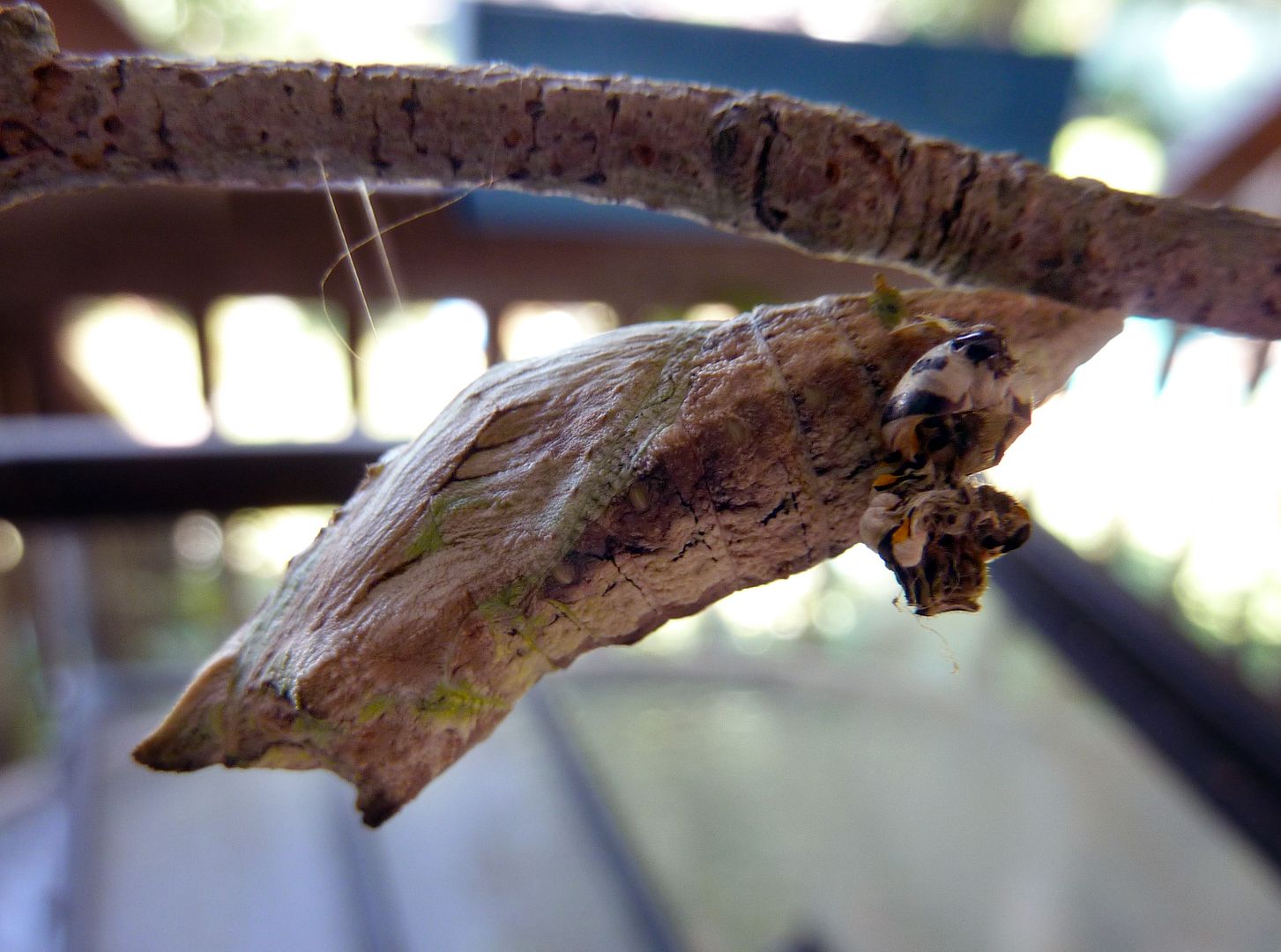
Black Swallowtail Chrysalis. Before forming this harder outer skin the caterpillar spins a safety line (top left) to hold it in place. They then shed off their outer layer of skin which you can still see here (middle right) somewhat still attached. Their skin then goes into a transformation taking on a wood-like texture to mimic a plant stem.
Black Swallowtails overwinter in the chrysalis stage and its around this time of the year that it becomes uncertain which chrysalises will hatch in a few days and which will wait until 6 to 8 months and hatch next spring.
Thursday, August 16, 2012
Black Swallowtail Cat Again

Monday, August 13, 2012
Black Swallowtail Caterpillar


Wednesday, August 8, 2012
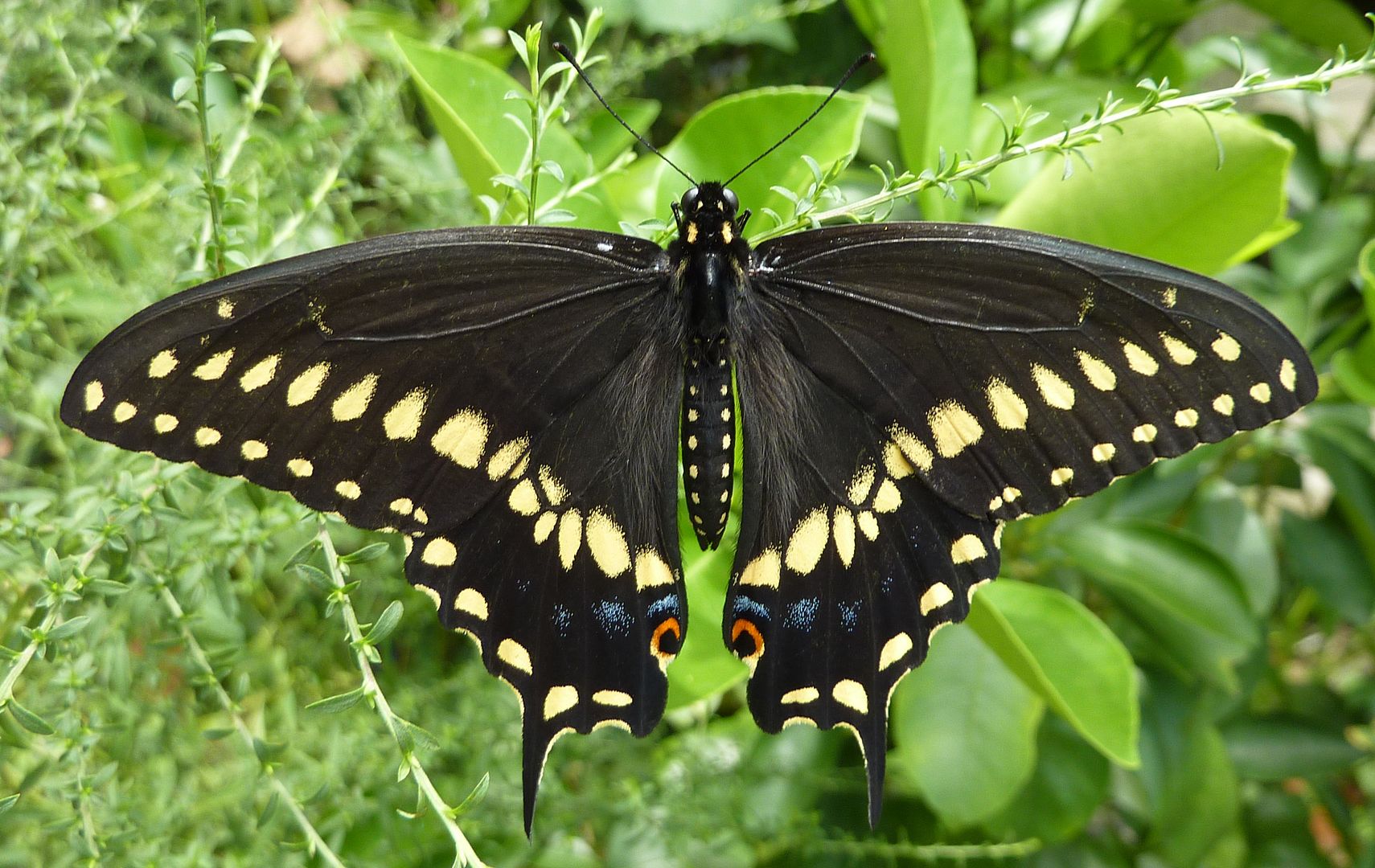
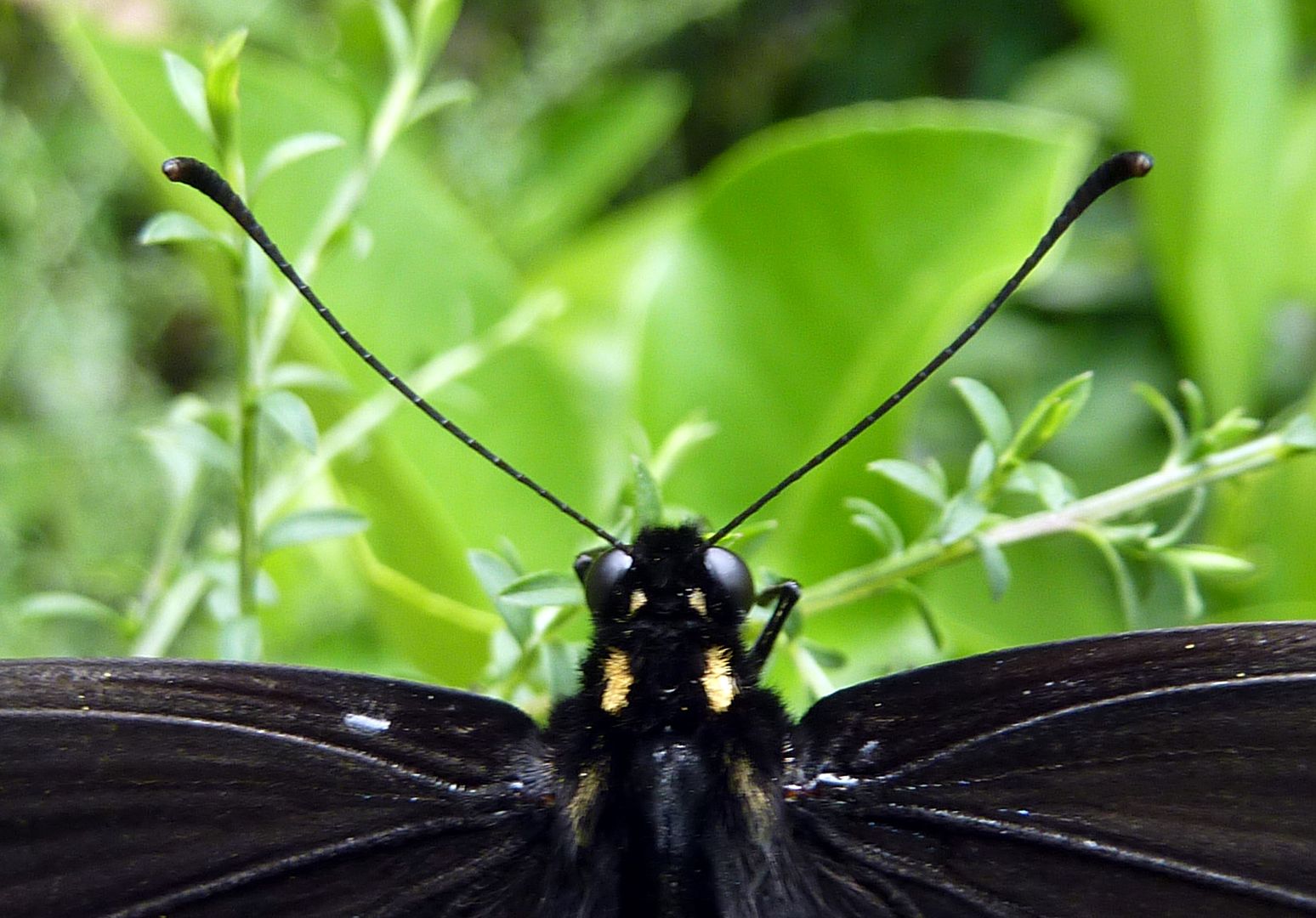
A Black Swallowtail

Subscribe to:
Posts (Atom)