Friday, January 27, 2012

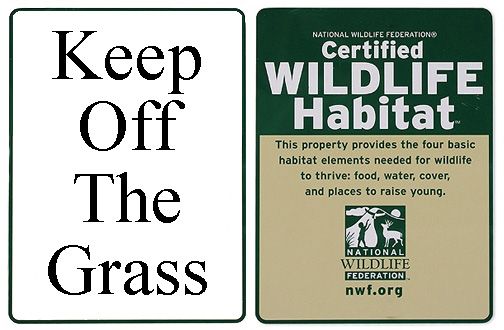
Keep Off the Certified Wildlife Habitat

How am I supposed to do both?

Okay I guess you could use stepping stones to get around but a lot of the chemicals used to keep grass looking golf course green year round aren't very environmentally friendly. Which is why it comes as something of a shock to find out the National Wildlife Federation has partnered with Scott/Monsanto.

For whatever reason most of the Wildlife Gardening community seems to be outraged. Normally these two signs above would be featured on two different lawns. Typically both are used to explain the madness in landscaping aesthetic. The Wildlife Habitat sign is ideal for explaining why there's a tall-grass meadow in the front yard, and the Keep Off Grass sign is ideal for explaining why the home owner's water bill is so high. Now we can have both!

To be honest though, I think some of the best landscapes are when these two elements work best together. Lawns look nice, they typically hold up to foot traffic, we're getting Eco friendly no mow varieties now, and the green tends to look better than bare ground. Prairies and small Meadow plantings are ideal garden plants whether they're in a wild densely planted patch, or each plant is spread out to have its own individual space around it. The "sins" of applying chemicals, mowing, and over watering lawns are on the home owner, not the Scott/Monsanto.

To talk about the National Wildlife Federation now, I've never been a huge fan of them. Just looking through their website and catalogs clearly their ideal customer is a female over the age of 35, who likes to wear nature sweaters, collects plush toys, and probably shops at the Hallmark once a month. They could really stand to widen their audience a little with the products they sell. Does anyone honestly want to Adopt a Moose or buy a Horseshoe Crab Plush Toy?

There was even a TV show at one point where they'd landscape a home to make it a Certified Wildlife Habitat. My memory of the show was them doing the bare minimum to satisfy their criteria. I get they were trying to show how easy it is, but at the same time I got the feeling they were just trying to sell signs. Planting butterfly weed, including a bird's bath, and making a pile of stones is hardly saving anything. In the episode they devoted around 5 minutes about the 1 butterfly weed plant they put in the garden and kept emphasizing "ALL THOSE BUTTERFLIES THAT ARE GOING TO GO NUTS FOR THIS!" which comes off being really stupid, and even more so that I can't recall there being any butterflies in the episode. Do these people know what they're doing at all? Imagen if the show was all like "Move That Bus!" and there was just one milkweed plant there. I feel like there was more effort put into hanging the Certified Wildlife Habitat sign than actually building the habitat itself. Canceling this show was the right thing to do becuase it sure wasn't doing them any favors.

Friday, January 20, 2012

Honey Bee Health


With the exception of showing the wrong species at 1:19, (Apis dorsata), this is the most intelligent and informative video on CCD out there.

Thursday, January 19, 2012

The Importance of "Organic"


A friend of mine posted this on facebook and I thought I'd share it here. It's a fairly popular video on youtube that has over 300,000 views. I actually had no idea these plants were sprayed with chemicals like this. We eat potatoes with almost every night. This seems like something I should look into and the experiment certainly seems easy enough to recreate.

As to her question: Which potato would you rather eat? My answer would be organic of course. However, once the potato has started growing the insides turn green, harden, and the potato shrivels up as it starts using it's stored energy (the white starch which we normally eat). Among the usual parts potato plants make, nicotine is also produced and found throughout the plant. It's no where near as high a concentration as a Tobacco plant but enough of it is there to make you sick. So really it's organic potatoes that aren't growing. When you find green parts inside potatoes they've only just started trying to grow, so it's easy enough to eat around these parts.

Wednesday, January 18, 2012

Farming Games


So there's a computer game that simulates farming called Farming Simulator 2011. Which looks like a worthy successor to Sim Farm in that you run a farm. From the game play that I've seen though it doesn't look like you get pick what you grow, and driving around is all you do. You can't even own a shot gun to point at unwanted solicitors and be like, "Get off my lawn."


I would love for there to be an updated version of this game. 3D or not though it would be great if they incorporate modern ideas such as dealing with invasive species, plant diseases, using Genetically Modified Crops, pollination, and even prairie restoration. The point wouldn't be to say one is better or worse but rather let the player get informed and take a side. Maybe even play it out to it's ultimate goal, even if it is a deluded fantasy.

Highly favoring GM crops might lead society to a world where everything is naturally trimmed to perfection. Lawns naturally stop growing after they reach 4 inches tall, trees look proper to an ascetic and naturally grow into topiary shapes, Oh and corn cures cancer now.

Highly favoring conservation might lead to a society where permaculture farms are in everyone's back yards, or "environmental corridors" as our city architects now design housing developments around. The seed bank is over flowing with heirloom varieties. And the people are richer in a different way.

And of course there's all the fun stuff in between. Getting Hemp legalized and having it used as clothing, and printing money or whatever. Importing exotic species or unlocking native ones that are currently not on the market.

Wednesday, January 4, 2012

NETWORKS FOR LIFE - Doug Tallamy 09/13/11


It's come to my attention that Doug Tallamy has done another talk and it's here on youtube. I recommending turning the volume up a little though as I found him to be very quiet in the talk. This man is a master of talking about biodiversity. Other than the volume issue this is a well edited talk.

I wish he'd write something else because "Bringing Nature Home" is his only real book, that he's been the sole author.

The most recent "The New American Landscape" is something he co-authored with maybe a dozen or so others. I intend to read it at some point.

Tuesday, January 3, 2012

CCD Media Flood Warning

Core A, Runckel C, Ivers J, Quock C, Siapno T, et al. (2012) A New Threat to Honey Bees, the Parasitic Phorid Fly Apocephalus borealis. PLoS ONE 7(1): e29639. doi:10.1371/journal.pone.0029639

Yet another possible theory to CCD, one that NEEDS TESTING has come up as a possible cause of CCD. A parasitic fly, Apocephalus borealis, which typically uses bumblebees as hosts has been found to also use Honeybees as well. Their life cycles seem to overlap with that of CCD epidemics. Basically the fly injects eggs into the abdomen of the host and a few days later, I read, about 13 new flies burst out of the bee. While infected the host bee will continue flying at night in a daze, thus they don't return to the hive hive.

So there's lots of correlation here. The next step will be to find out how far spread these flies are and whether their populations are great enough to decimate whole fields of hives within their life cycle for the effected areas.

Wednesday, December 28, 2011

A Year in the Smokies


The folks who run the Great Smoky Mountains National Park have uploaded a nice little video to sum up the year. I'd like to visit them someday and see all the wildflowers and waterfalls in the spring time.

Saturday, December 17, 2011

How My Prairie Did: Year 1

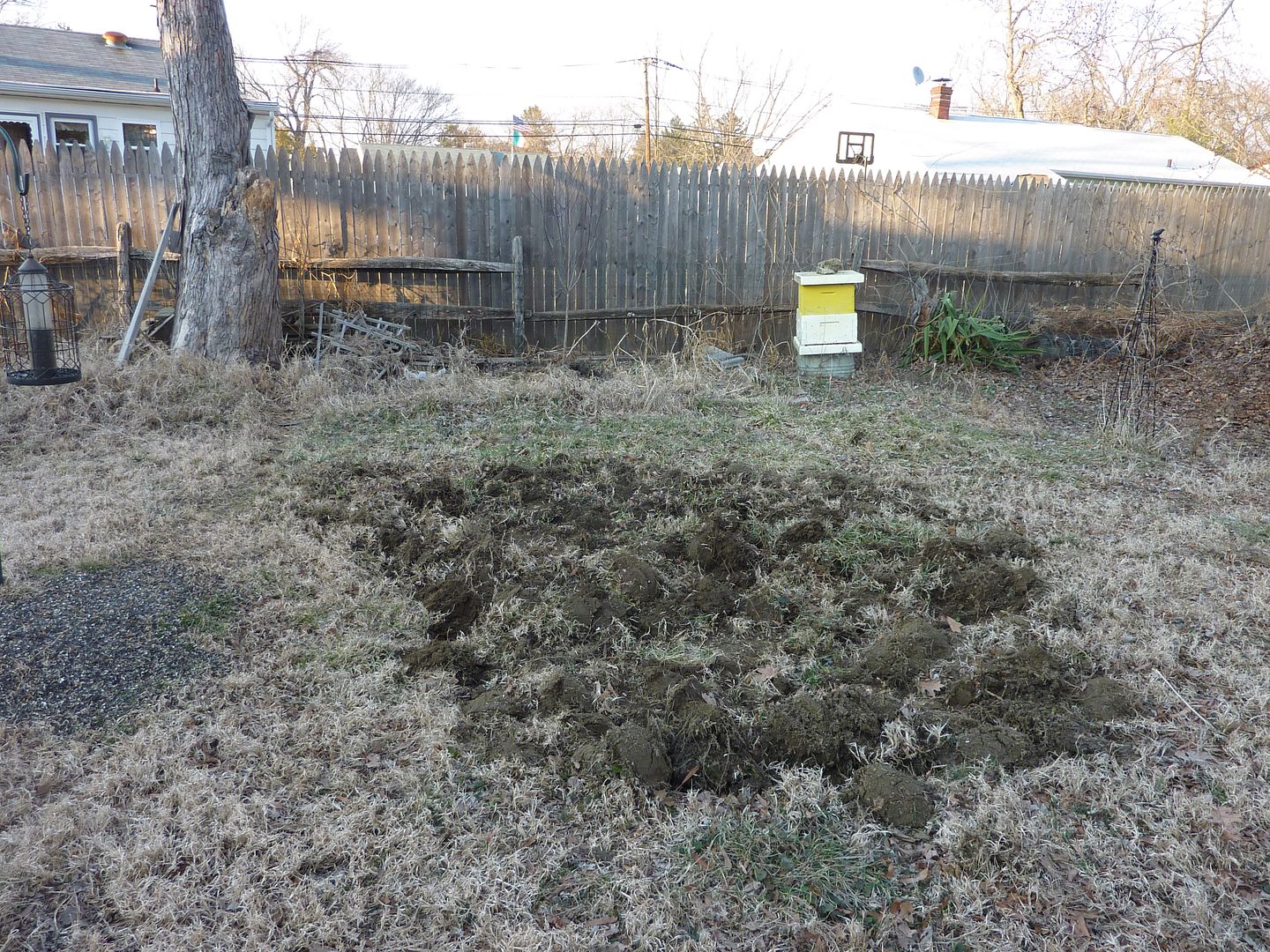
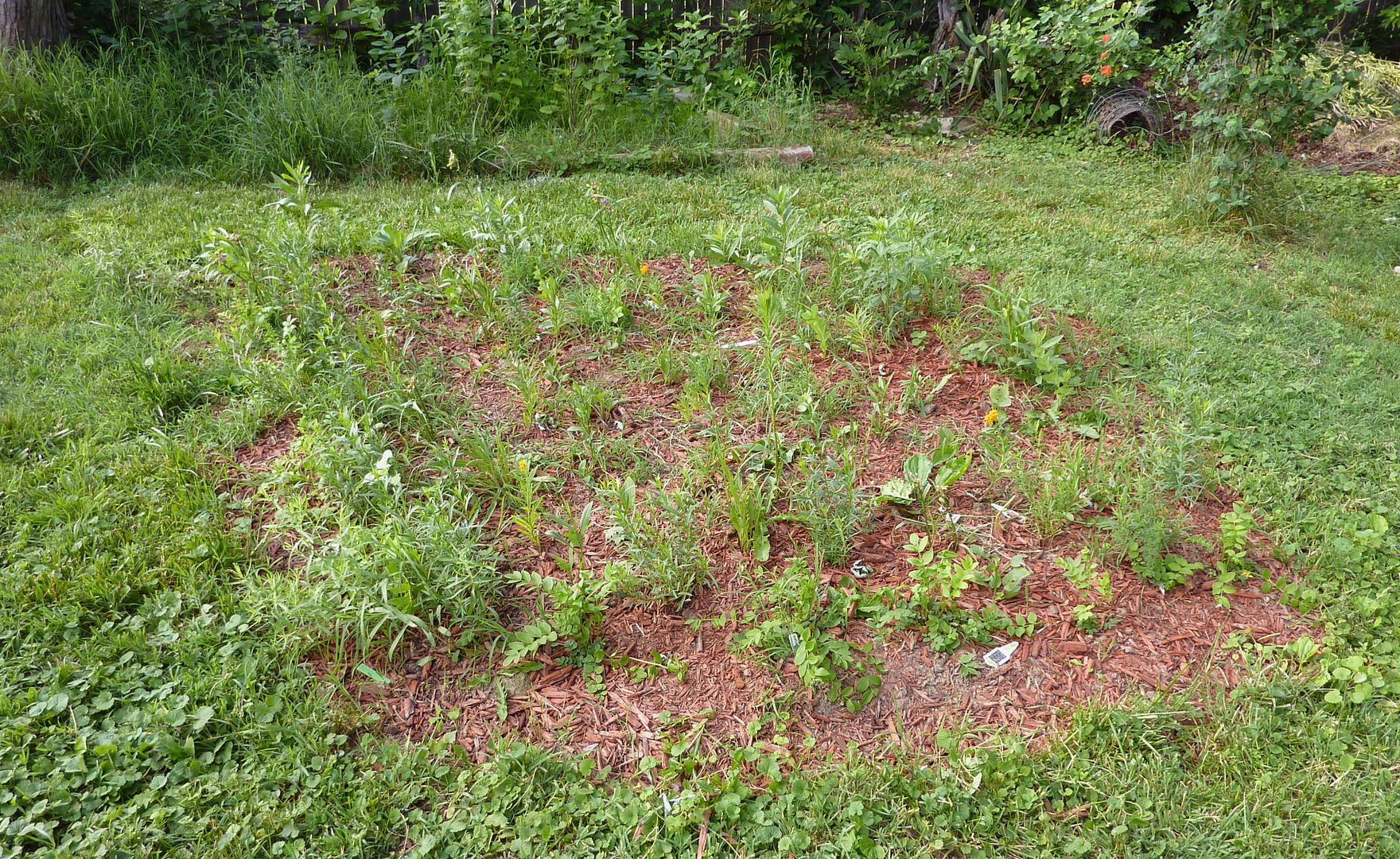
So earlier this year I started a prairie garden, the wrong way. Generally you're supposed to either suffocate or herbicide everything in the desired location for a full year. Had I taken that seriously I might have simply used the space as a vegetable garden with plastic mulch. I have several family members who use this stuff for their gardens and have great results. There is virtually no weeding.

As this relates to a prairie garden though I read eliminating everything from the site has to be done in order for most seeds to germinate, and for most seedlings to get through their first year.Another thing I've read is that turning the soil over (like I did) disrupts the seed bank and causes a mass germination of weeds. For both of these reasons I decided to lay down a wood mulch, and rather than using seeds I went with plugs.

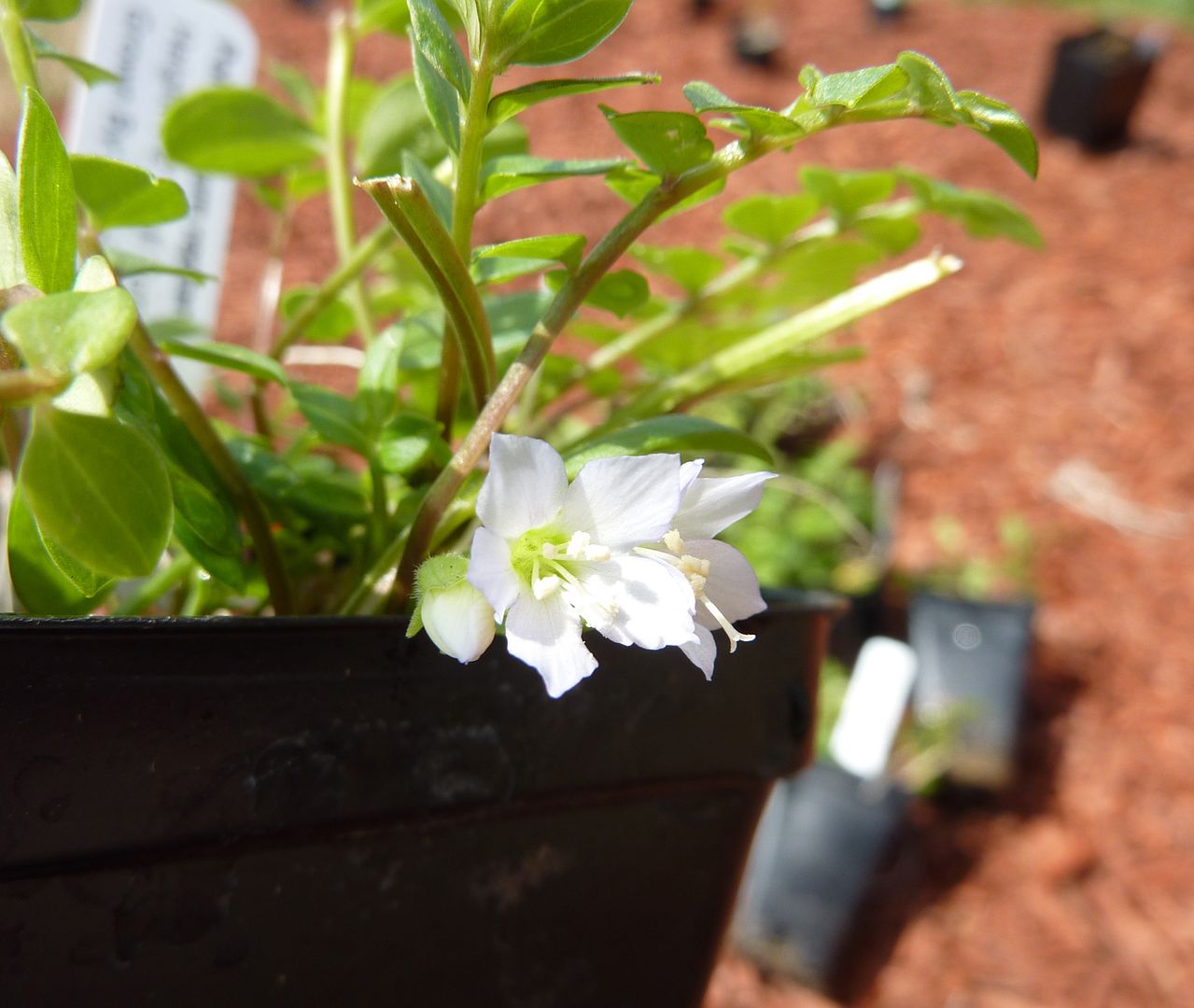
Plugs are generally plants that have already been growing for a season that typically come in 4' pots. My theory was these plants are more mature and are better able to hold their own against the weeds. Sure enough many of them flowered shortly after planting. This Jacob's Ladder, Polemonium reptans, above was actually flowering in the pot (also a sign of root stress).

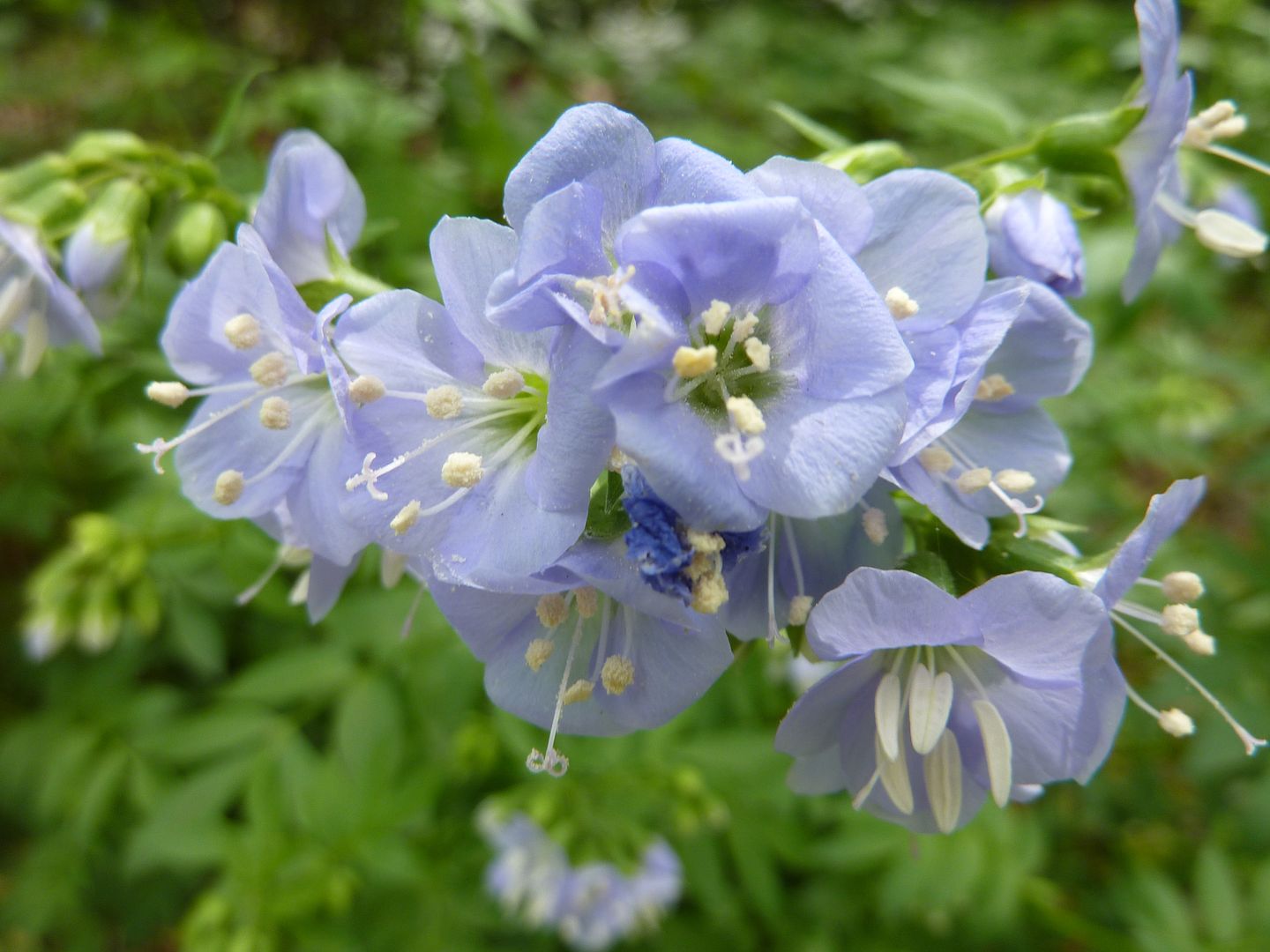
Their flowers actually turn blue with age and when mass planted one almost gets a misty cloud effect. They will grow in full sun, full shade, somewhat dry, to somewhat wet, and there are assorted cultivars with all sorts of foliage options. I went with the true species of course. 


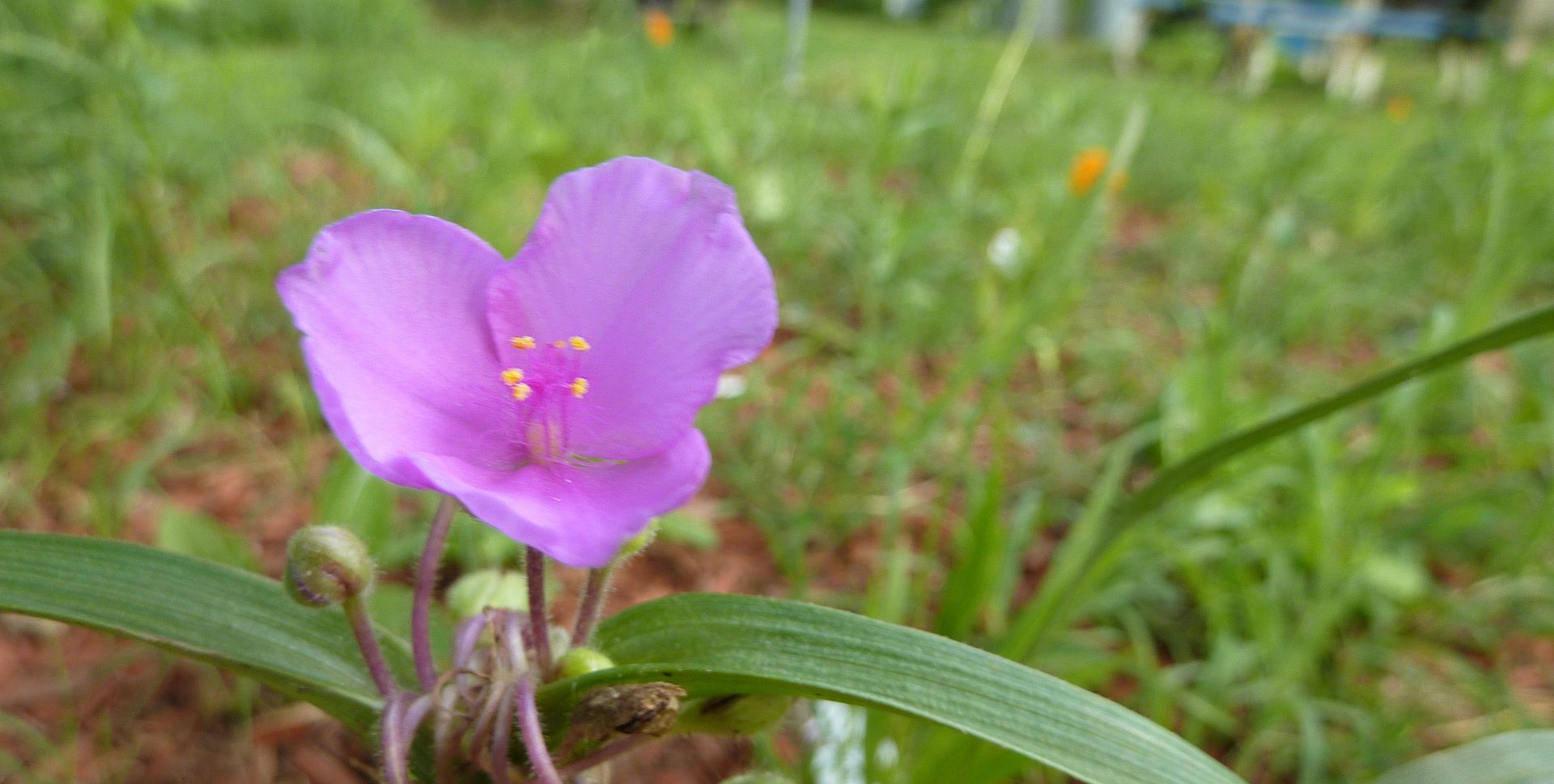
Western Spiderwort, Tradescantia occidentalis, is for whatever reason listed as Native to New Jersey, and New York and otherwise restricted to the western half of the US. I didn't know what to expect with this plant. I needed something grass-like but wanted it to flower too.

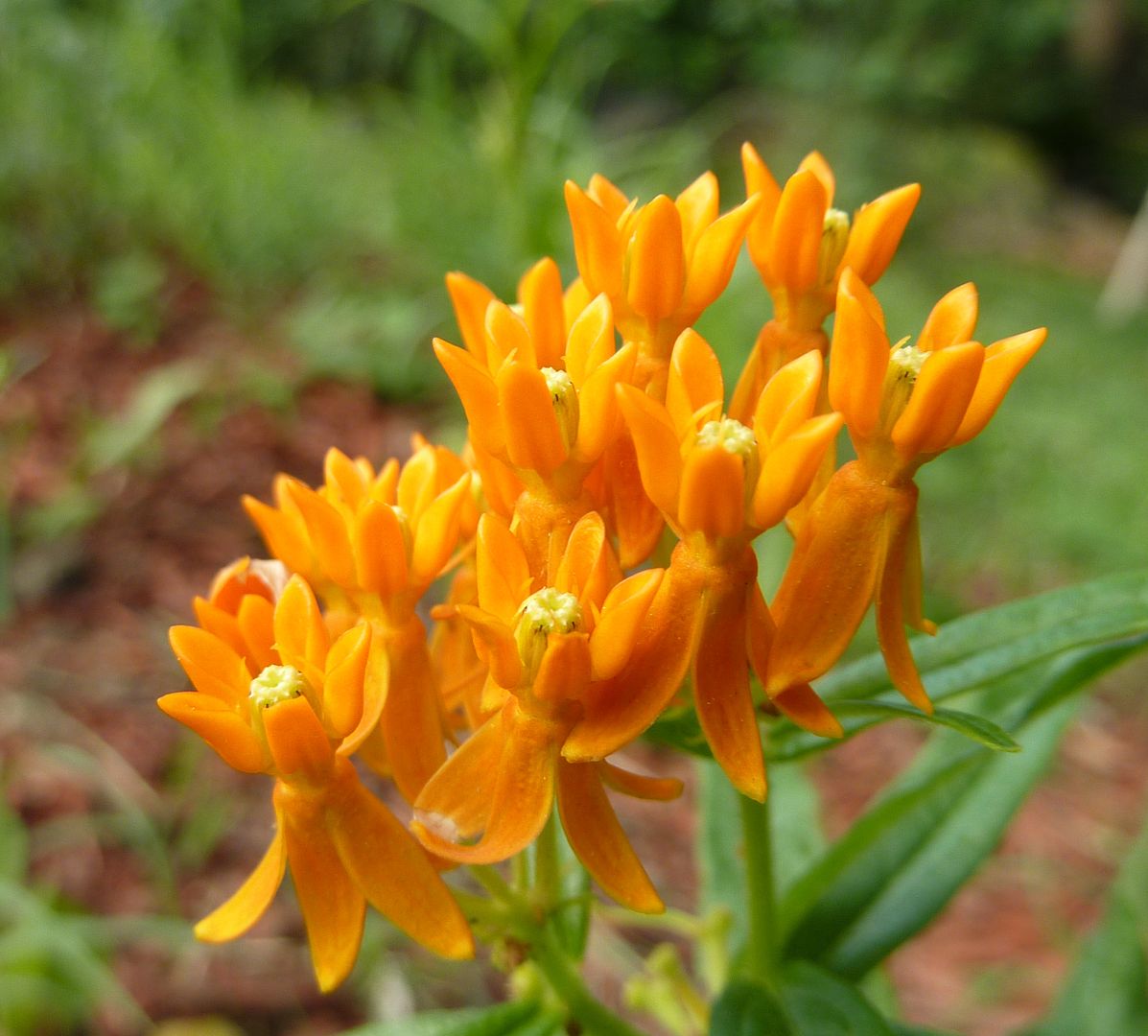
This was a great choice because I love bright colors. And this sure went with the orange of the Butterfly Weed, Asclepias tuberosa.

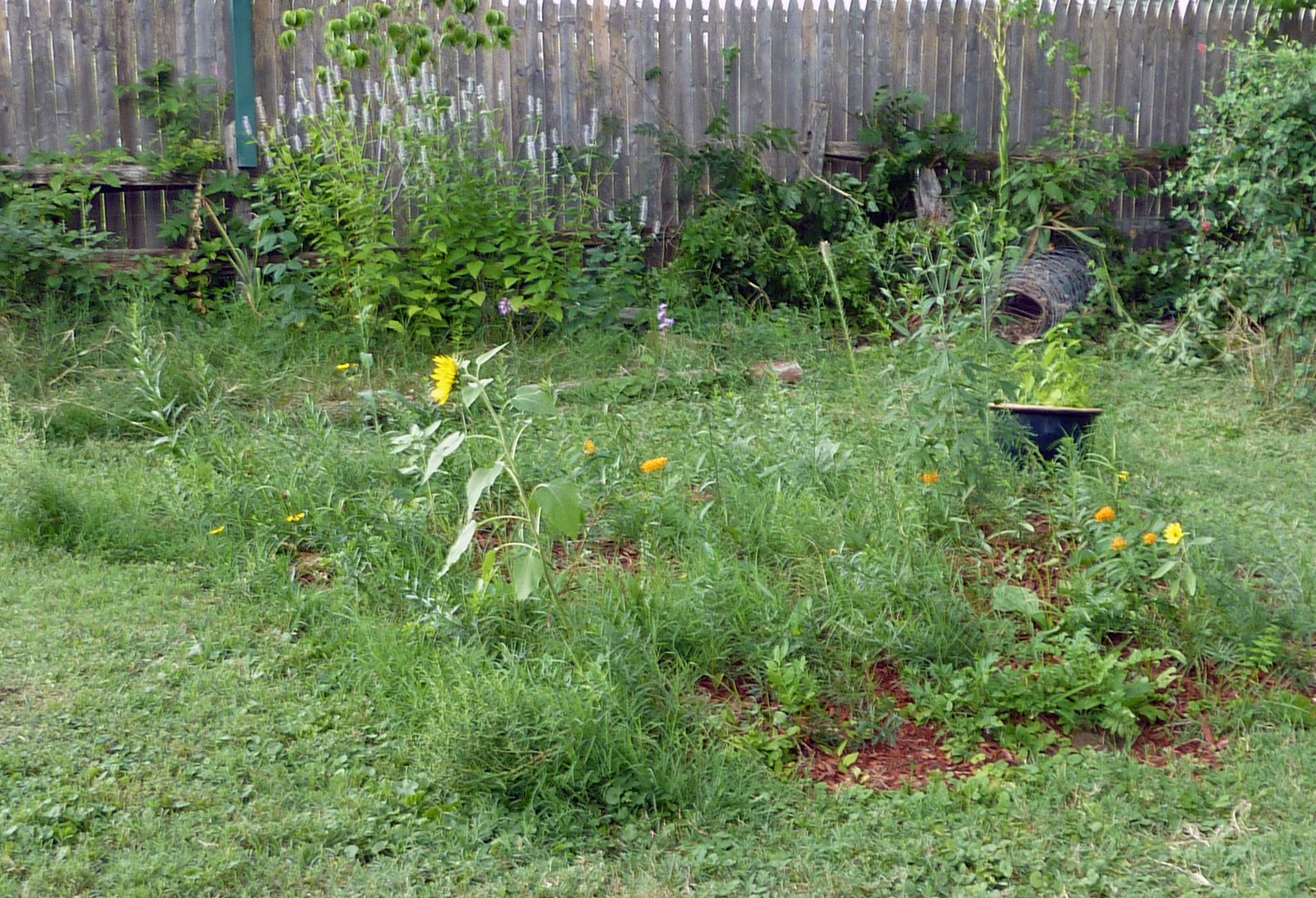
Things were going nicely at first. Generally the warm season grass that comprises our lawn hadn't taken over yet.

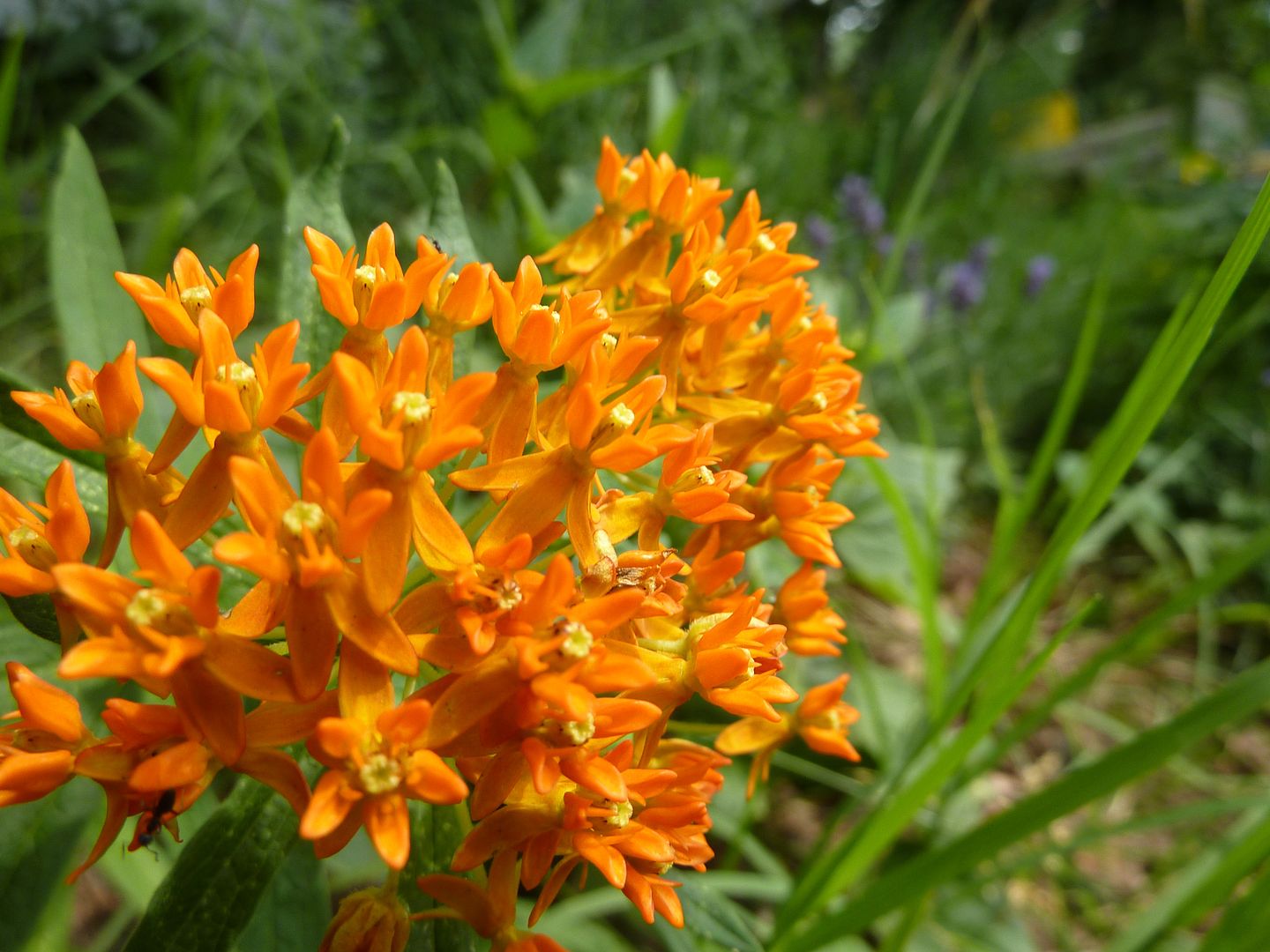
Almost all of the butterfly weed bloomed this year.


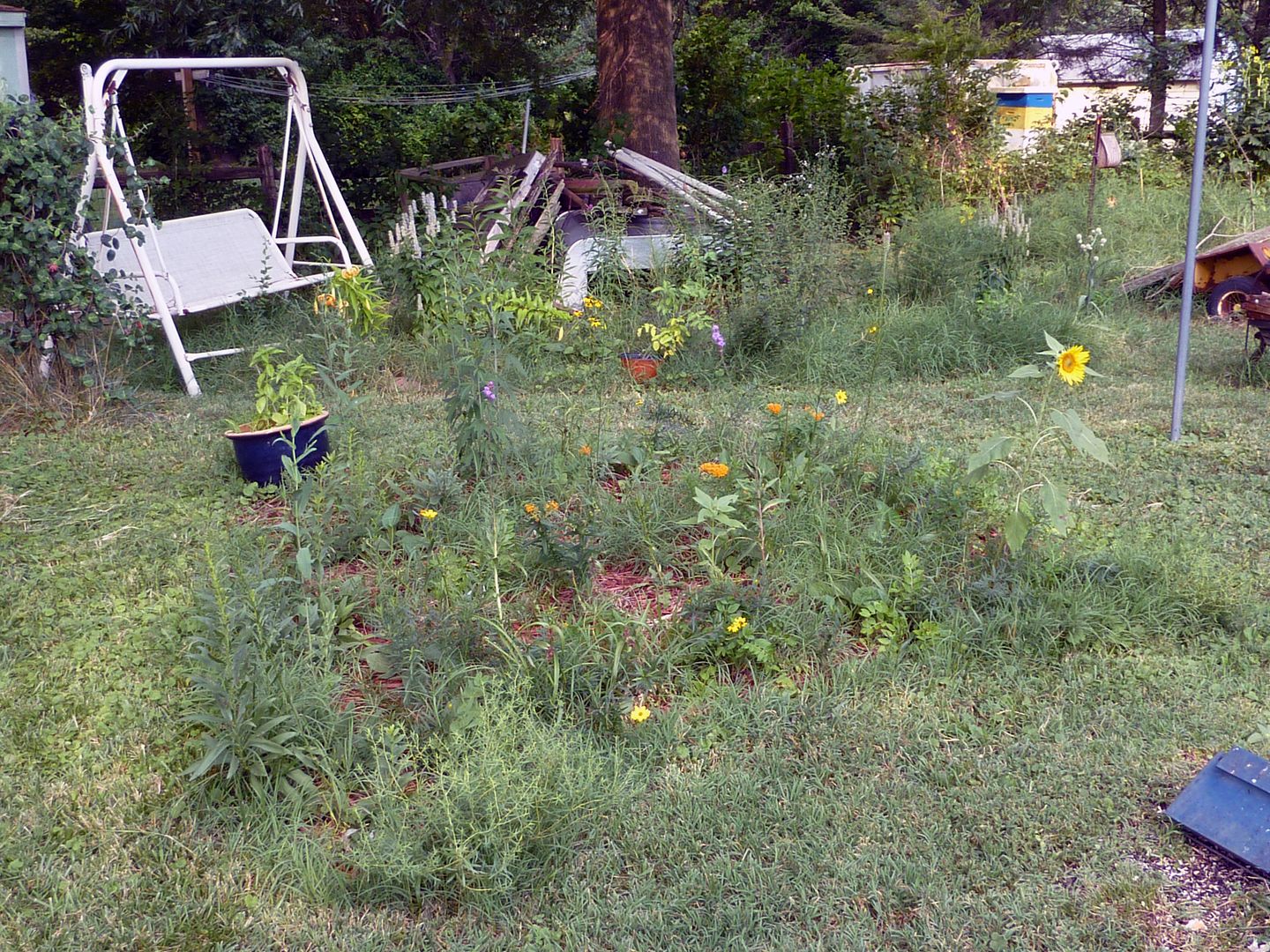
As summer got into full swing the grasses started encroaching with root tubers. A sunflower from the adjacent bird feeder started growing from seed as well. Behind this garden against the fence I planted a native dogwood, Cornus florida, and found a spot for some Anise Hyssop, Agastache foeniculum, to go.

From another angle we can see my solution to all the crap laying around in our yard is to plant gardens in front of them. Actually the glider just needs covers or something on them and it will look nicer. The truck cab in the middle there holds straw under it supposidly for wildlife to live but really I could do without it. We've been stacking old PVC pipe and logs on top of it for convenience.

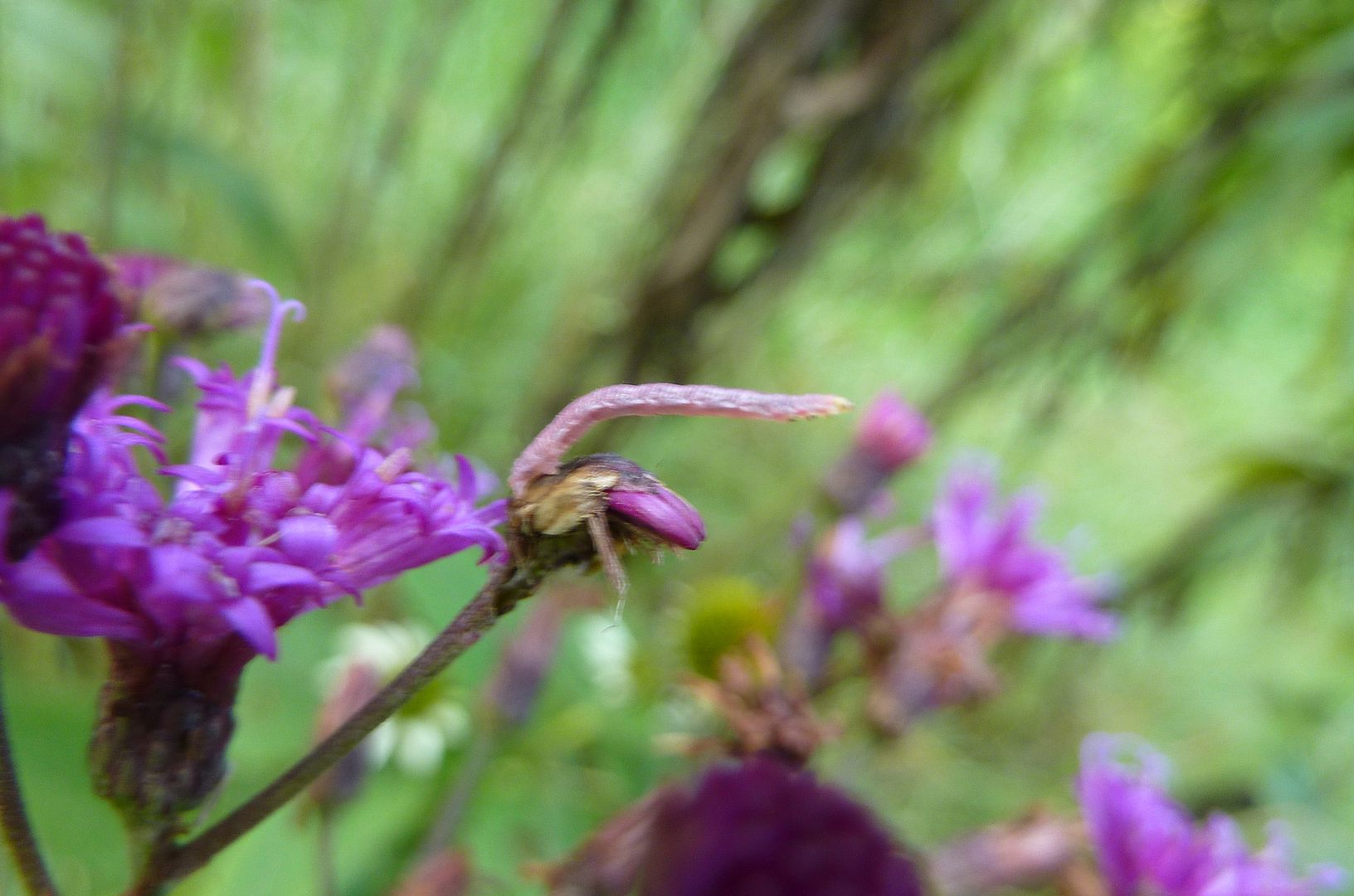
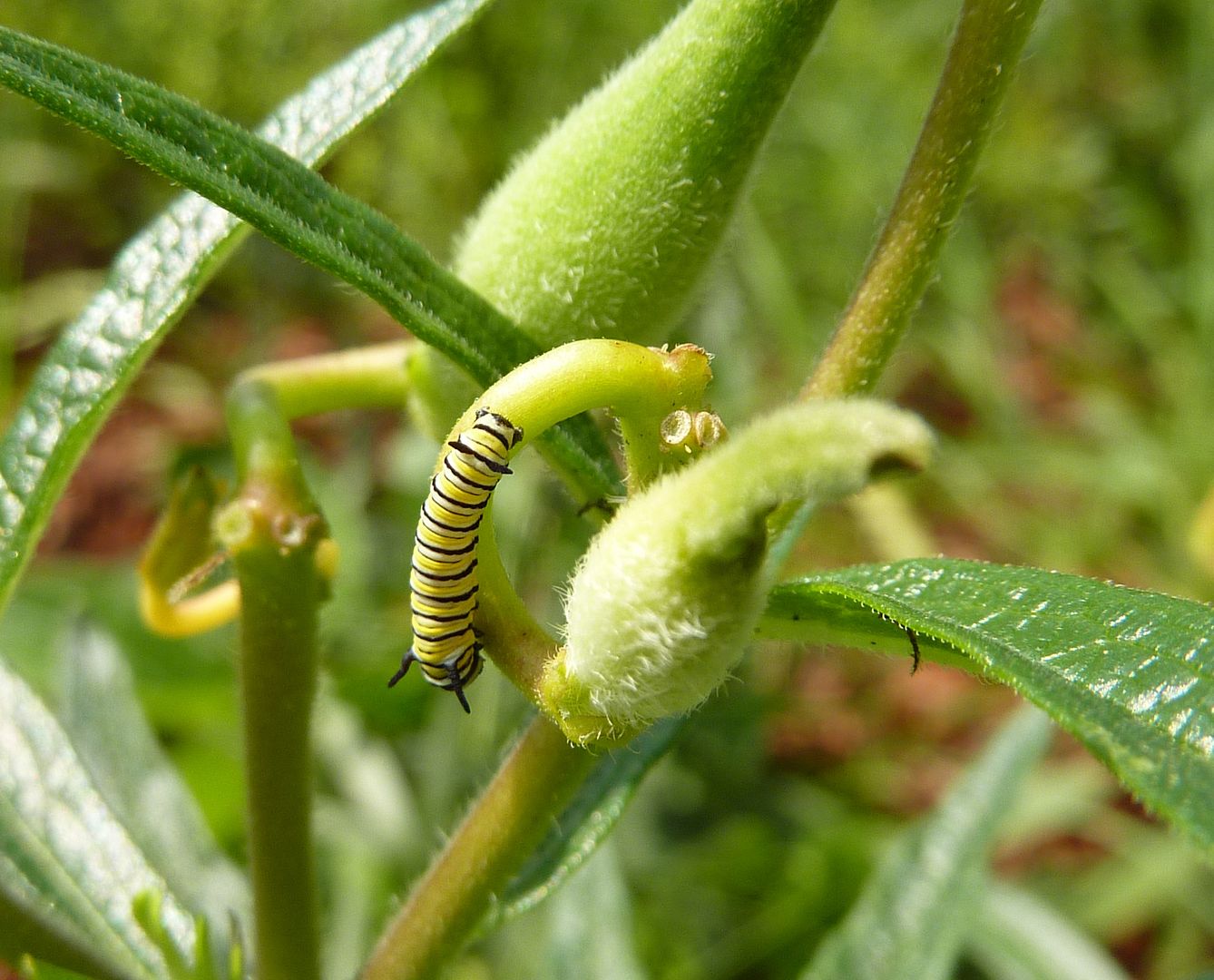
Adjacent Iron Weeds in various gardens started blooming. I noticed this caterpillar that I keep forgetting the name of. Basically they turn the color of whatever type of flower they happen to be eating. I've found them in all sorts of colors.


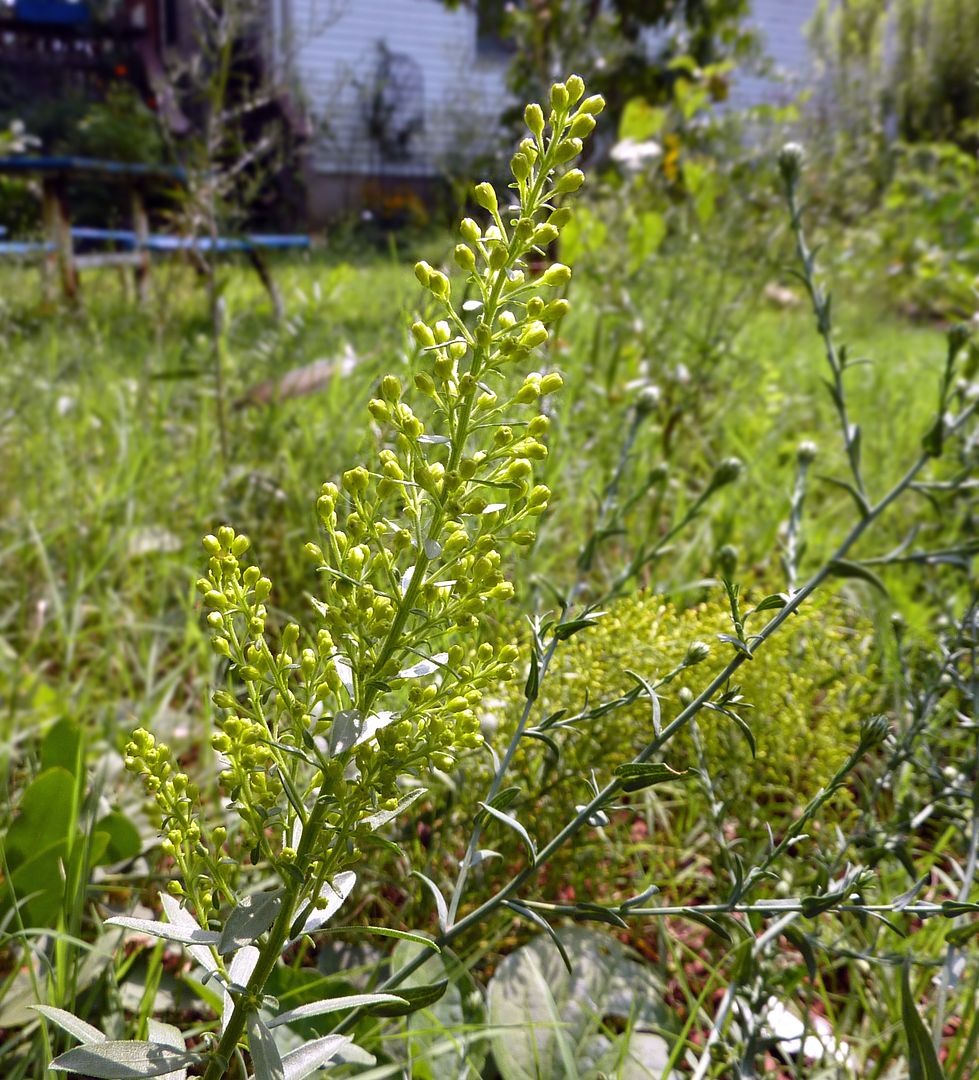
Come August the Showy Goldenrod, Solidago speciosa, started budding. Now I've herd two opinions about this plant. A source in Missouri from the Shaw Nature Preserve says this plant is down right thuggish, and loves to spread everywhere. The guy who maintains the prairie at the Mt. Cuba Center in Delaware says they've grown a few plants there right next to their meadow garden for years and it's never reseeded. So your local variety and how it reacts to your soil type may vary.


The Monarchs found the milkweed though I noticed none of the caterpillars in the prairie garden made it to adulthood. I suspect it's due to the lack of cover, and having a bird feeder right next to door sure didn't help. Even though they're toxic to eat, birds and spiders will still take bites out of them until they learn not to do so.

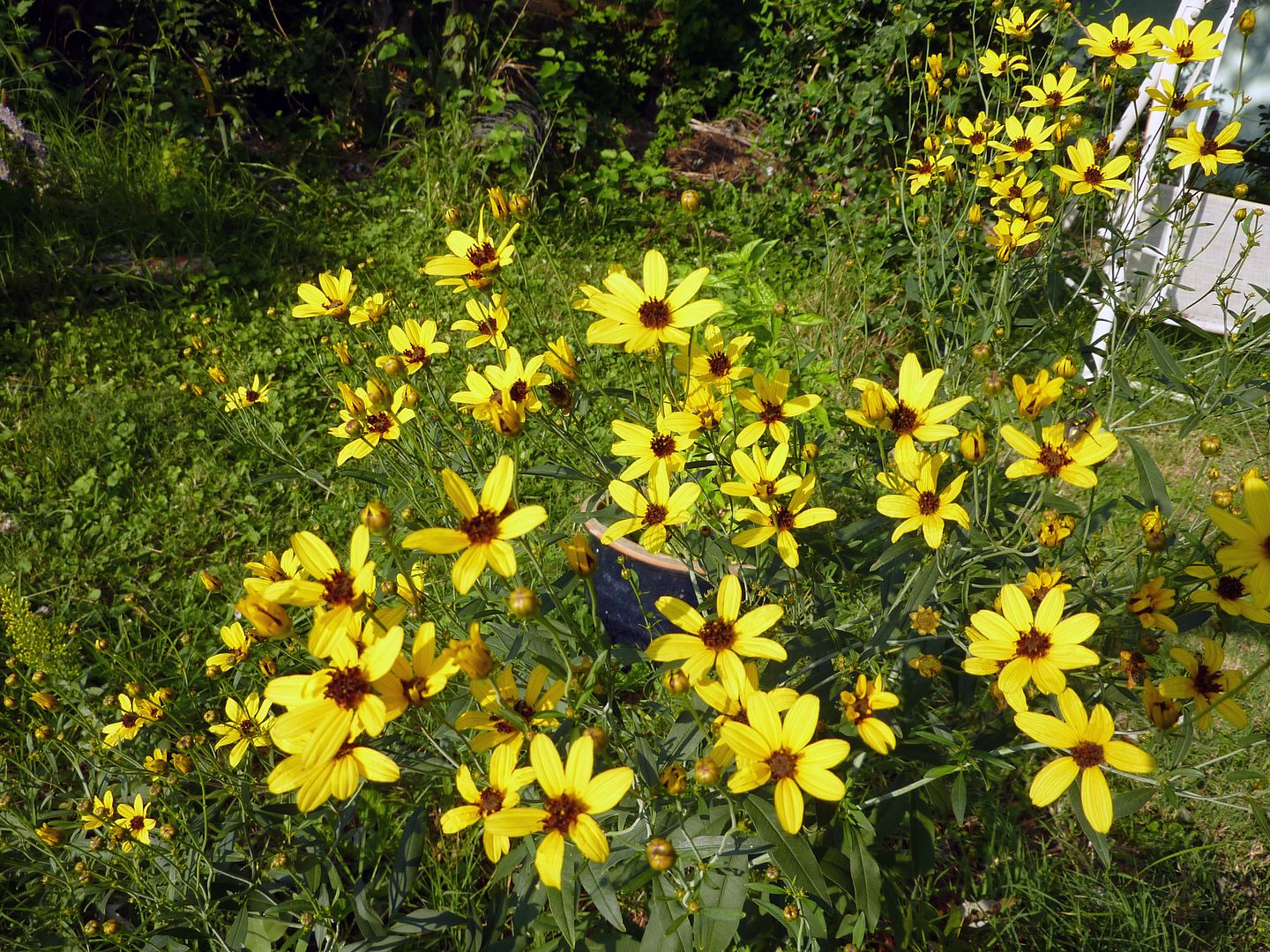
You know it's the end of summer when things start falling over. The Showy Goldenrods are pretty much laying down, though it's not entirely displeasing. The Tall Coreopsis, Coreopsis tripteris, (at right) did a great job standing up all by itself. I love tall perennials but hate it when they fall over.

Here you can see the grass encroaching among the other plants. It's a little tough to pull out of the ground, so hopefully next year I can pull it out just as it starts growing. I've noticed some other plants in my other gardens do push that grass right out of their way. So hopefully when things get better established the grass will get shaded out.

Here's the tall Coreopsis, though not as tall as it's supposed to get. I read online they grow to be 5' to 8' tall.


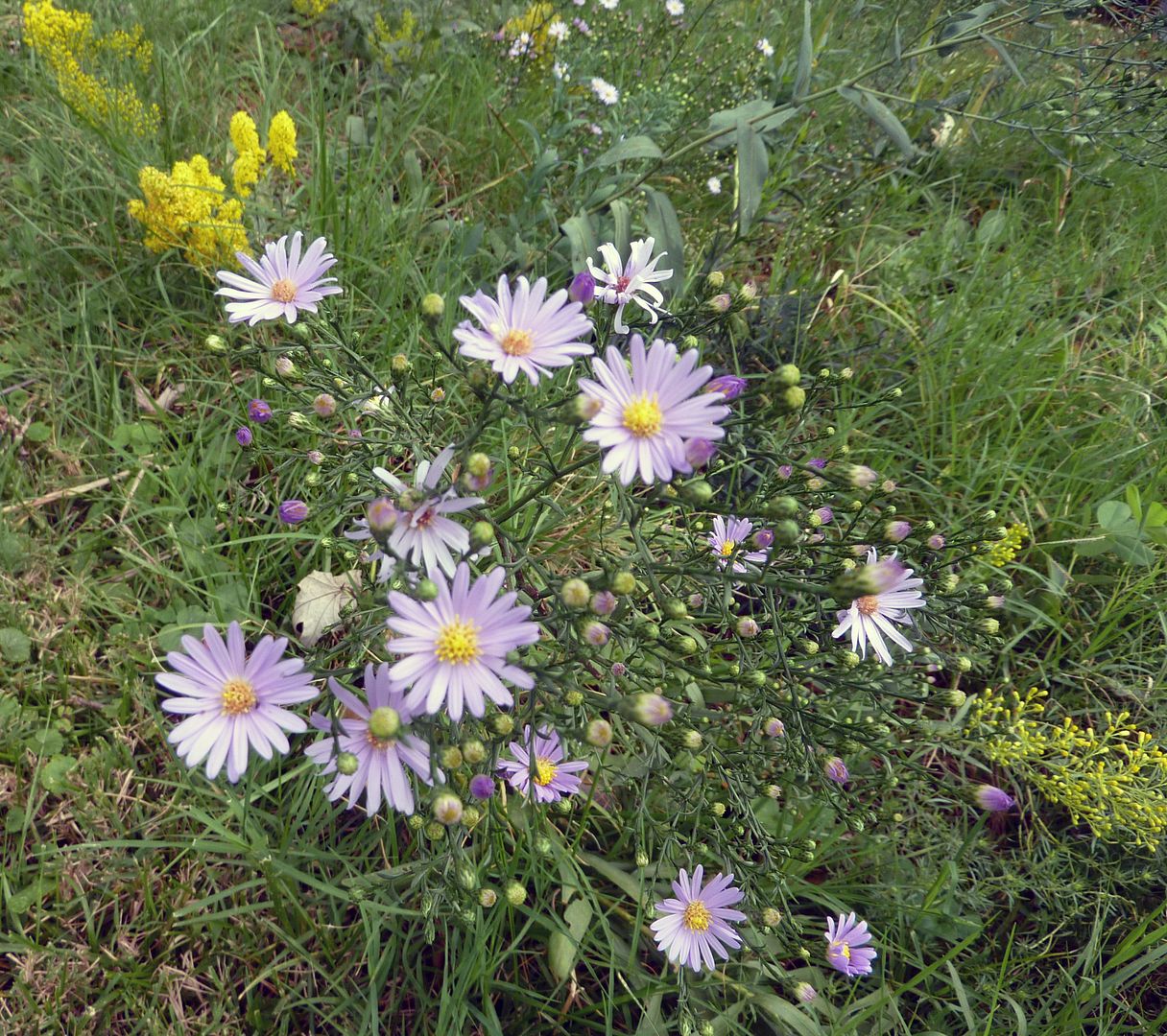
I learned the hard way that Sky Blue Aster and Smooth Blue Aster look exactly the same. The only difference is Smooth Blue has a slightly larger flower, and Sky Blue has extra leaves around the stem. Neither are distinguishable at a glance. The flower color is exactly the same. (You're looking at Smooth Blue Aster in case you were wondering.) Both are pretty but I don't seen the need to own both.


Things I planted but didn't get to see:
Lace Leaf Coreopsis - grew and flowered but not very well. 
Stiff Coreopsis - grew but didn't flower. This plant reseeds freely and spreads by root suckers. They're not very big plants but can be a slight problem in mass.
Blue Star - Will probably get to big for this spot but we'll see what happens.
Blue False Indigo - Will probably get to big for this spot but we'll see what happens.
Purple Prairie Clover - Grew, but wildlife kept nibbling off the flower buds before any of them bloomed.
Ozark Coneflower - This went dormant right when I planted it. I'm not even sure they'll come back next year. 
Orange Coneflower - which looks exactly like Black Eyed Susan. Supposedly it's longer lived.
Meadow Liatris - Well worth your money if you can grow them. One of the best Monarch nectar plants.
Aromatic Aster - More people should grow this for it's natural dome habit. As for the smell they're only slightly fragrant but it's nothing special.


Backup Plan:
To plant more of what works.