I've been having a busy week. Issues at work, Harvesting Honey, and it figures the Trillium cuneatum berry decided to open. I want to turn the harvesting honey bit into a show so I'll save that for later. Work issues are of course Work and according to the employee manual "I do not legally represent the company," and it's not related anyhow. So that leaves the Trillium thing.
Going back to an earlier photo we have Trillium "berries." They're a leathery pod-like structure filled with a fleshy material with elaiosome covered seeds.
The berry eventually opens up and is quickly found by ants. Trilliums rely on ants to disperse their seeds. But not all ants are created equal in doing the job. Here we see a Crematogaster species simply foraging inside the seed for the elaiosome and flesh around the seeds, as opposed to taking the seeds back to the nest. Had they dragged these seeds home they would not likely be successful. Crematogaster often nest in rotting wood or hallow cavities. While many Trillium like growing in organic rich soil, sprouting out the sides of a rotting log is not ideal. On the other hand many Crematogaster species are known for their incredibly long foraging lines. This colony in particular runs the full length of our fence, passing through the front drive way, into the front garden, across the front step, into the side garden, and I lose it from there somewhere in the neighbor's yard.
I doubt they would even drag the seeds anywhere though. Other ants, typically larger in size, don't have as much of an issue with dragging food to the safety of the nest.
Crematogaster get the common name Acrobat Ant for their defensive stance. They are armed with a stinger that dispenses droplets of venom. They use it like a paint brush to lubricate the joints of their foes with it.
Even after the berry is gone they still treat the remaining flesh as a food item.
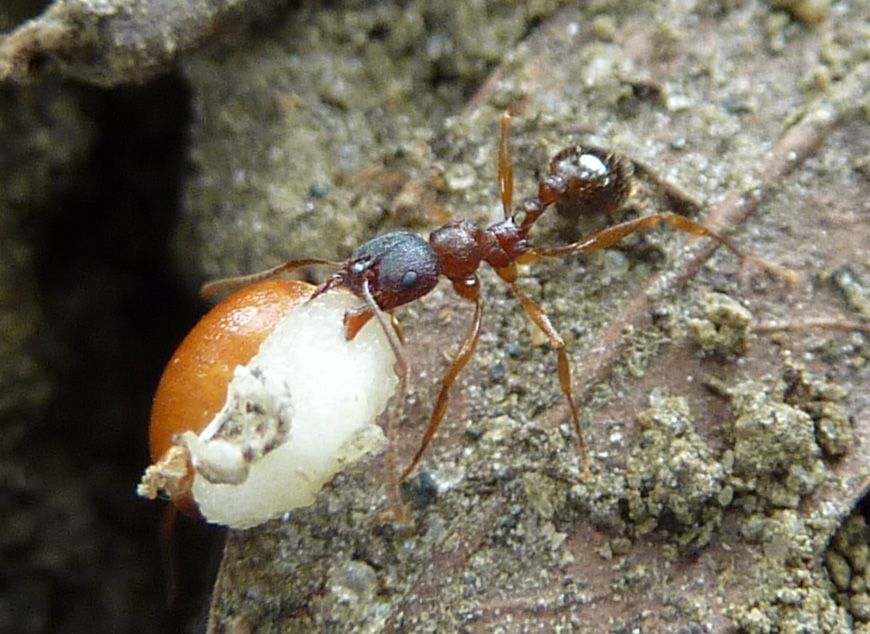
Naturally I've done some testing with my seeds. I've found common forest species such as Aphaenogaster (pictured above), Myrmica, Formcia, and Camponotus all carry the seed home. Though in the case of Camponotus there's the rick of ending up inside a tree or way to deep under the soil among tree roots. What's neat is studies have show colonies that have elaiosome as a food source produce more new queens the fallowing year. Specifically this applies to Aphaenogaster and Myrmica. Though another study found in some species of Myrmica they produced more workers.
It's unclear why and which is more beneficial. The bottom line though is these are a plants that make Ant Food. As an experiment I'm feeding all my captive colonies the stuff to see if it has any effect. Pictured above is Camponotus castaneus.
Two things I've noticed: The first is that elaiosome is tough, fleshy, and very much attached to the seed. The second is Trillium seeds are hard like uncooked popcorn. It's likely they take two years to germinate to decrease the possibility of being eaten. Aphaenogaster and Myrmica are both in the subfamily that specializes in starches, a.k.a. seeds. It's likely they become lost in the nest during the 2 years before they germinate, often the colony will have moved on entirely.
Saturday, July 31, 2010
Friday, July 30, 2010
I'm Back
76 jars of honey and several shifts of work later, I'm finally free to blog again. New posts are coming soon. Also I have no idea why there's an ad to some Asian website on here. No idea what's it's advertising either. hmmm.
Monday, July 26, 2010
Gone Honey Harvesting
Tomorrow I plan on harvesting honey from my honey bees. This is typically a full day job and I plan on making a video out of it too so blogging might be scarce for a few days. In the mean here's a picture of a rose.
'Agatha Christie'
Sunday, July 25, 2010
Tetramorium Colony
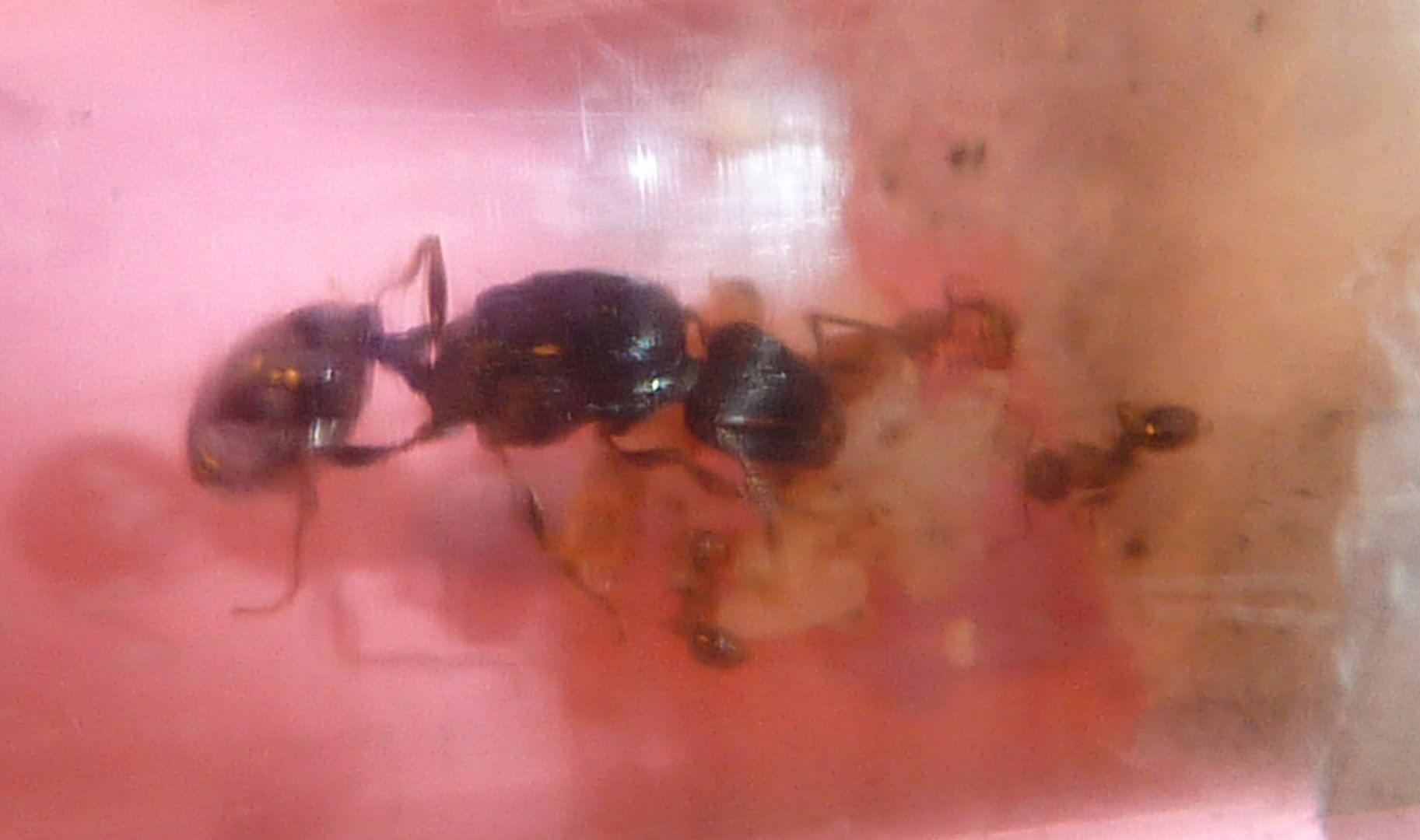
So I'm involved with the Raise a Tetramorium Colony Contest. Here is a picture of my current prized queen. Common Pavement Ants are an invasive species in the US and they tend to do well in captivity. Actually they're multiple species but 2 or 3 are so abundant the world over that it was an ideal genus for such a contest.
This picture was taken just hours after the one above. (they were also moved onto a red index card) Note how the pupa in the first picture is already a walking enclosed worker.
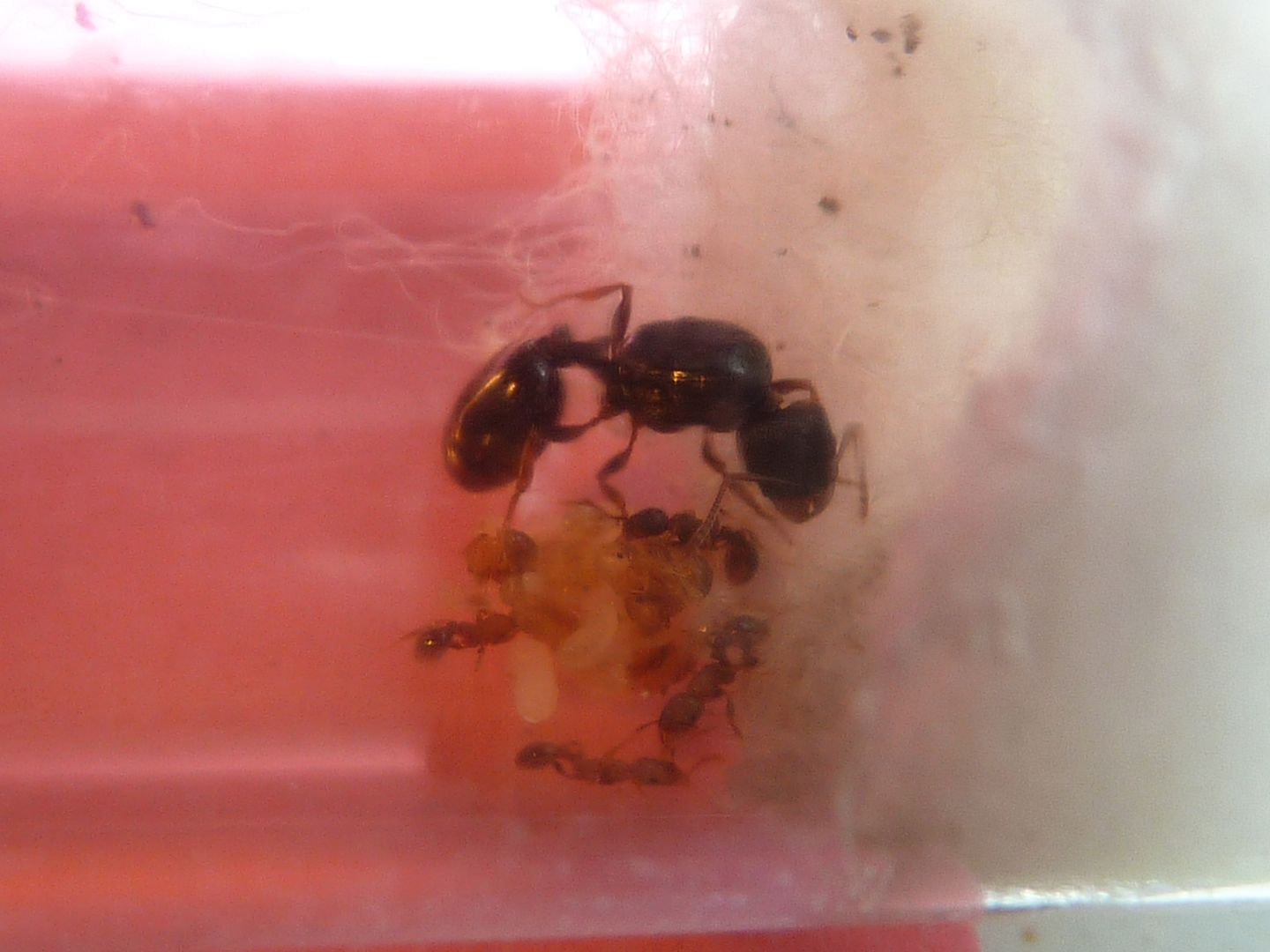
And hours after that there are now 4 workers with more on the way. This queen was caught only 4 weeks prior to her first workers. I've seen queens produce colonies of 50 workers without any added food. That's impressive! Because I'm in it to win it though I'll be feeding my colony here excessively. My secrete weapon (hopefully,) will be Trillium Seed Elaiosome.
Labels:
Colony,
Tetramorium
Friday, July 23, 2010
Clethra alnifolia Video
No swarm of insects to be seen here but some can be just as good. Each morning I walk out the front door and am usually greeted by the fragrance of this plant. I have two planted out front and can't wait for them to reach their 8' tall goodness. Unfortunately this past winter's snow fall has bent most of the branches downward. Hopefully this winter isn't as harsh.
A few pollinators I've seen on the plant not featured on the video are assorted sweat bees, scoliid wasps, and some type of blue mosquito that's slightly larger than the blood sucking one.
Thursday, July 22, 2010
Memories of Summer Sweet
Clethra alnifolia (Summer Sweet) is a plant very dear to me. I first saw it growing some years ago in a friend's garden. He's since moved away and the new owners have cut the thing down. I'm glad to say I saw it blooming in it's glory.
My friend was on vacation and I was looking after his garden. I didn't know what the plant was at the time. I entered the garden immediately smelling something incredibly sweet. It was a wonderful smell and I looked around at what on earth it could be. I finally homed in on in more than 30' away from the garden gate as the strange shrub by his garage. By then my jaw had dropped at the extreme array of pollinators working the shrub. Many of these insects I'd never seen before and several to this day I've never seen since. Enormous black wasps that are bulky like a Cicada Killer, on par with that of a Hummingbird flew over the thing. They were not Hummingbird moths... those I could recognize on the plant. A huge array of Scoliid Wasps flocked around the plant among tiny metallic green and gold sweat bees. To my surprise Honey Bees and Bumblebees weren't that common at all.
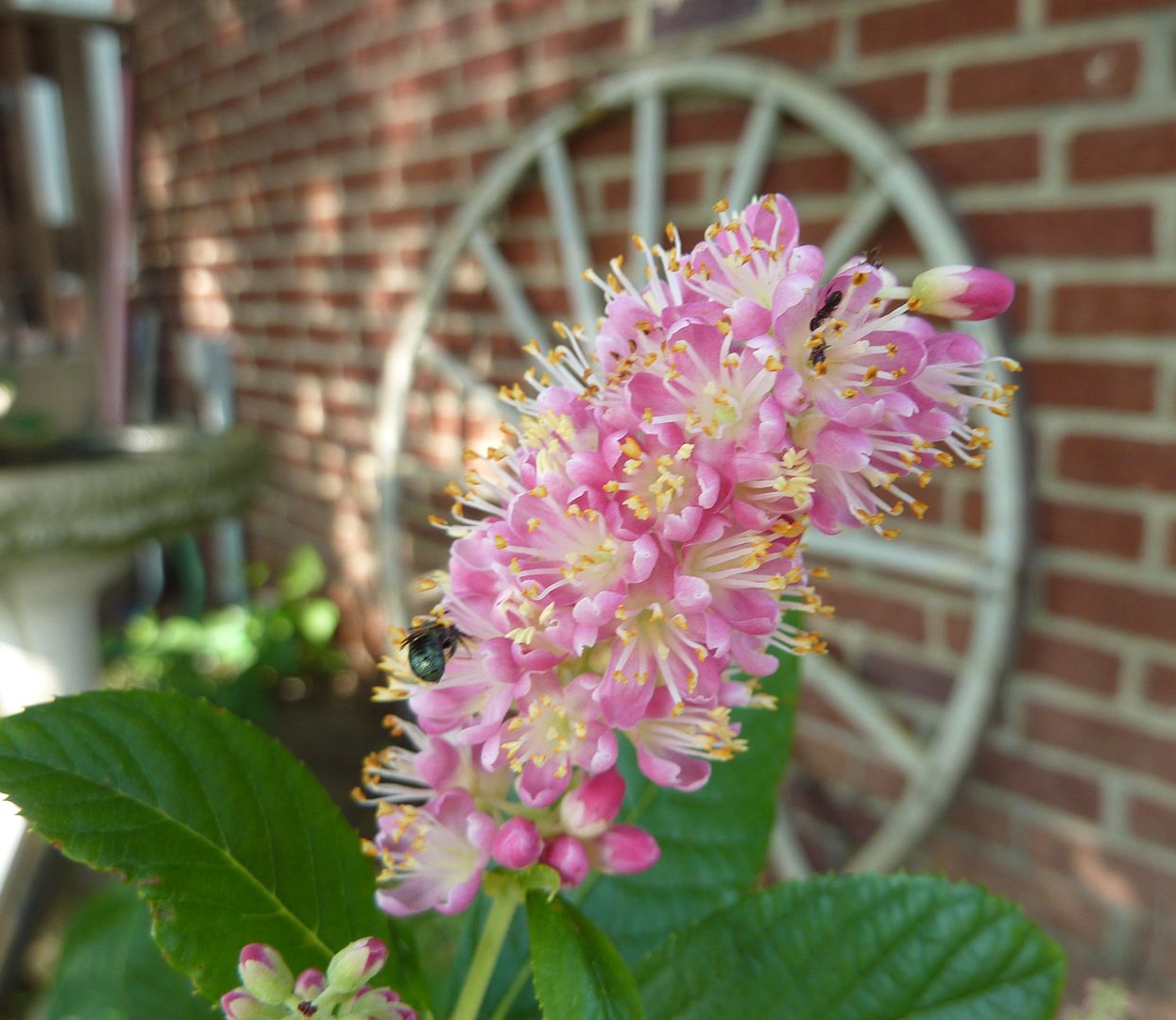
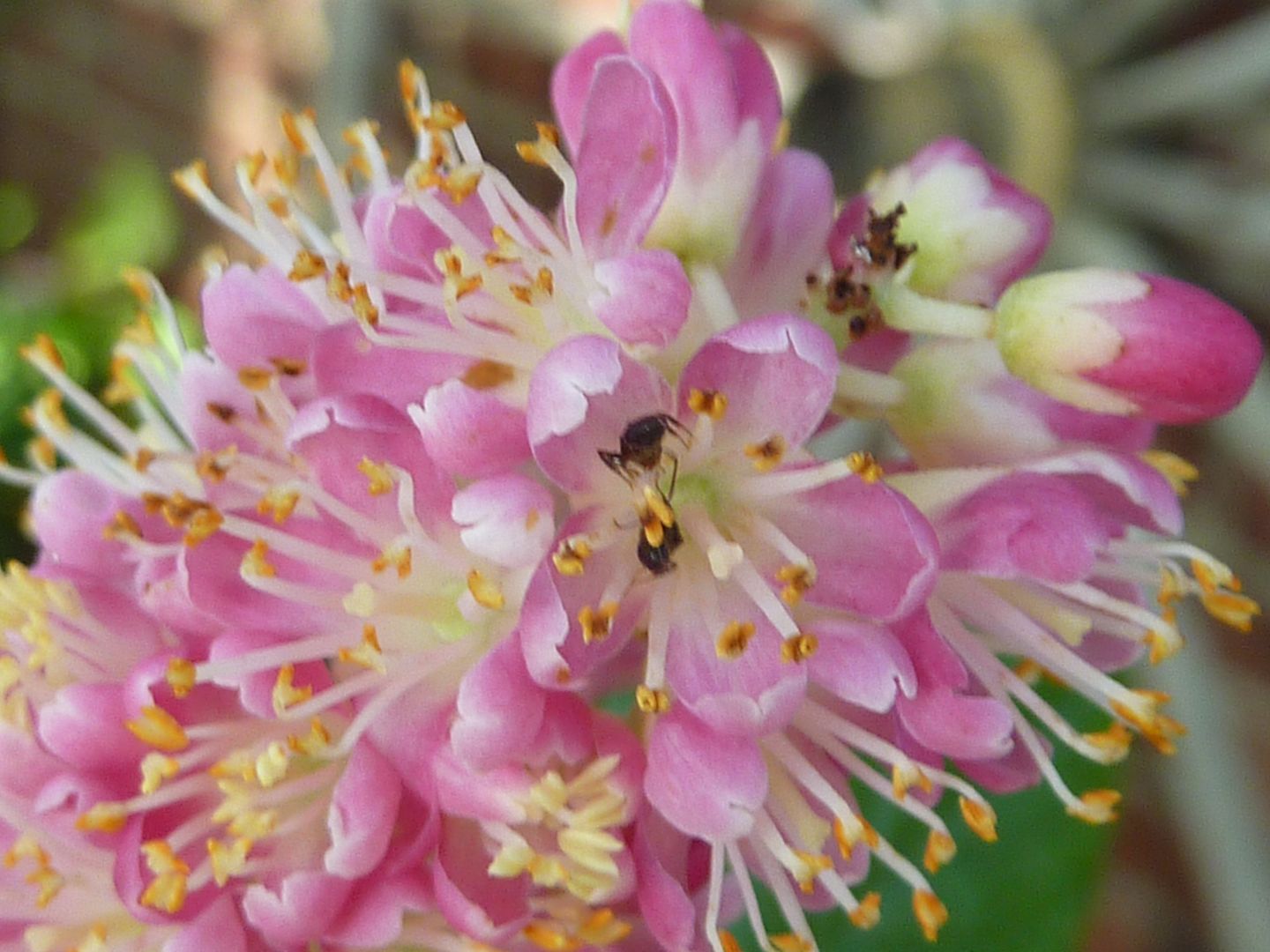
To this day I've never seen such a diversity on any other plant. I've since planted 6 Clethra alnifolia's (Summer Sweet) and not once seen the cloud of insects I saw that day. Pictured is a red/pink flowering cultivar called "Ruby Spice." The true species has all white flowers. Only 3 of the plants are a size just shy of what my friend had in his yard. But planted in mass should have the same effect right? It's hard to believe red flowers would dull it that much.
Well at any rate, I probably caught a plant in it's most ideal conditions at the peak of blooming. At least the ants seem to like it too.
Tuesday, July 20, 2010
More Reattlesnake Master
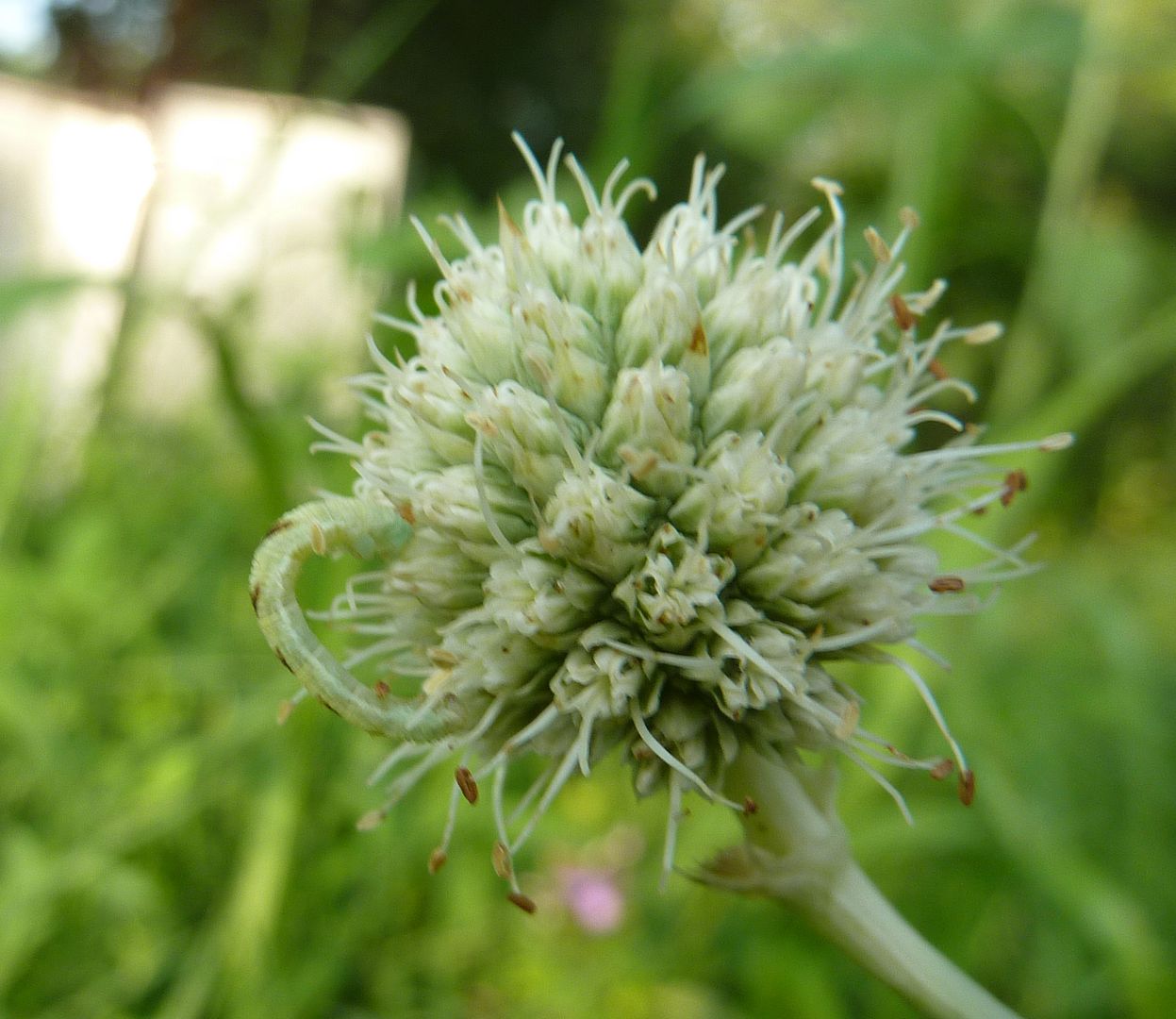
This little inch worm is either very smart or very stupid. On the blooms to Rattlesnake Master is about the last place I'd expect to find a caterpillar. I've seen nothing but assorted wasps pollinating that plant.
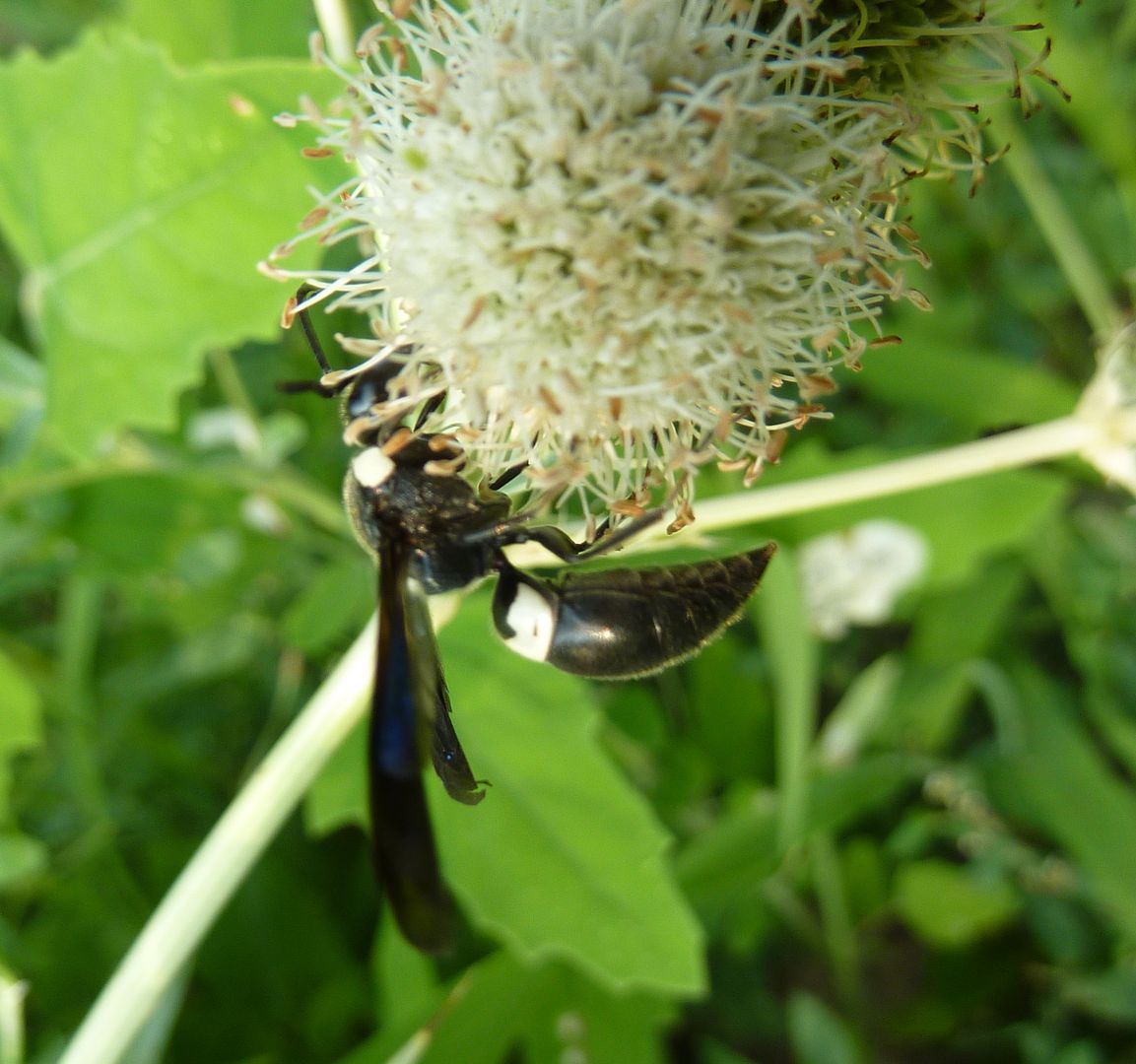
At least two are species of Scoliid wasp. This plant is beneficial in how many specialized predatory wasps it attracts alone.
Here's part 3 of the videos I've been doing. Wasps are very easily spooked. So often I'll go out to film the wasps only have have half of them fly off the plant. This time though they were all fairly well behaved.
Monday, July 19, 2010
Rattlesnake Master, Eryngium yuccifolium
A Mud Dauber and Scoliid Wasp working the Rattlesnake Master blooms. This is one of the odder looking natives I planted last fall. I'd read it's pollinated by wasps but had no idea it would actually attract them. I don't normally see Scoliid Wasps until the fall time when Sedum blooms. The Mud Dauber I sometimes see working Raspberries but not often. I see Potter Wasps more commonly working those along with bumblebees.
Wasps of course are very beneficial. Though they are somewhat counterproductive in a butterfly garden. Turns out they're to good at their job. I have loads of violets that are nibbled to bits by caterpillars, and likely hosts to some pretty butterflies. That said I've only been able to see one caterpillar this year and that was picked off shortly after by a paper wasp. When we get outside the realm of common paper wasps and yellow jackets though, we start to find more specialized predators. Many Mud Daubers specialize in hunting spiders. Scoliid Wasps burrow into lawns to inject their eggs in root eating beetle grubs.
The adults feed on nectar like bees do, and it takes certain plants to get their attention. It's the only way to really admire the color patterns. Scoliid Wasps in particular are very pretty.
Sunday, July 18, 2010
Ants Under Glass
Well we bought a hummingbird feeder and it says to change the mysterious red liquid every 5 days. I leave that for my mom to do, and prefer feeding hummingbirds the natural way. Buying it was her idea. We've had them in the past, nothing ever shows up to them so we stopped for a while. But now that we've seen a hummingbird at the native honeysuckle, Lonicera sempervirens, that's changed.
So we went to change the water and...
Oh My God! It's full of dead ants! AHHHHH!
Yes it seems the nocturnal foraging Camponotus castaneus, one of the largest ants of North America, can somehow fit through the guard that normally keeps bees out of the thing. Another Camponotus species can also fit through but it's one of the smaller species you'd expect to find floating around in this thing among dozens of others. C. castaneus major workers are around 15mm long which is pretty darn close to an inch. So we've moved the feeder to another spot in the yard. I'd rather not slowly kill this beautiful species.
Dead ants aside, this creates sometime beautiful in itself. It's on par with looking at specimens preserved in a vile of alcohol I think. The abdomen swells up to the point that the digestive track can becomes visible. The color becomes somber, (alcohol is usually yellow/amber in color,) which can force people to see details they would have otherwise ignored thanks to the color. Color is of course useful but patterns vary in ants and while I'd never say ignore it, color has to be backed up by other details.
As interesting as this was, I hope I don't keep finding ants in this thing.
Friday, July 16, 2010
Good Pollinator Plants for the Summer
Though not native and the very definition of "weedy looking," Blue Globe Thistle, Echinops ritro, gets a fair amount of pollinator action. That said it's an awful weed and serious measures should be taken to dead head the things. Those leaves are razer sharp and can draw blood. You don't want this escaping into your yard. It really raises a lot of questions as to how it ended being sold as an ornamental. I guess blue flowers are so prized that exceptions are made in the otherwise well manicured ornamental industry.
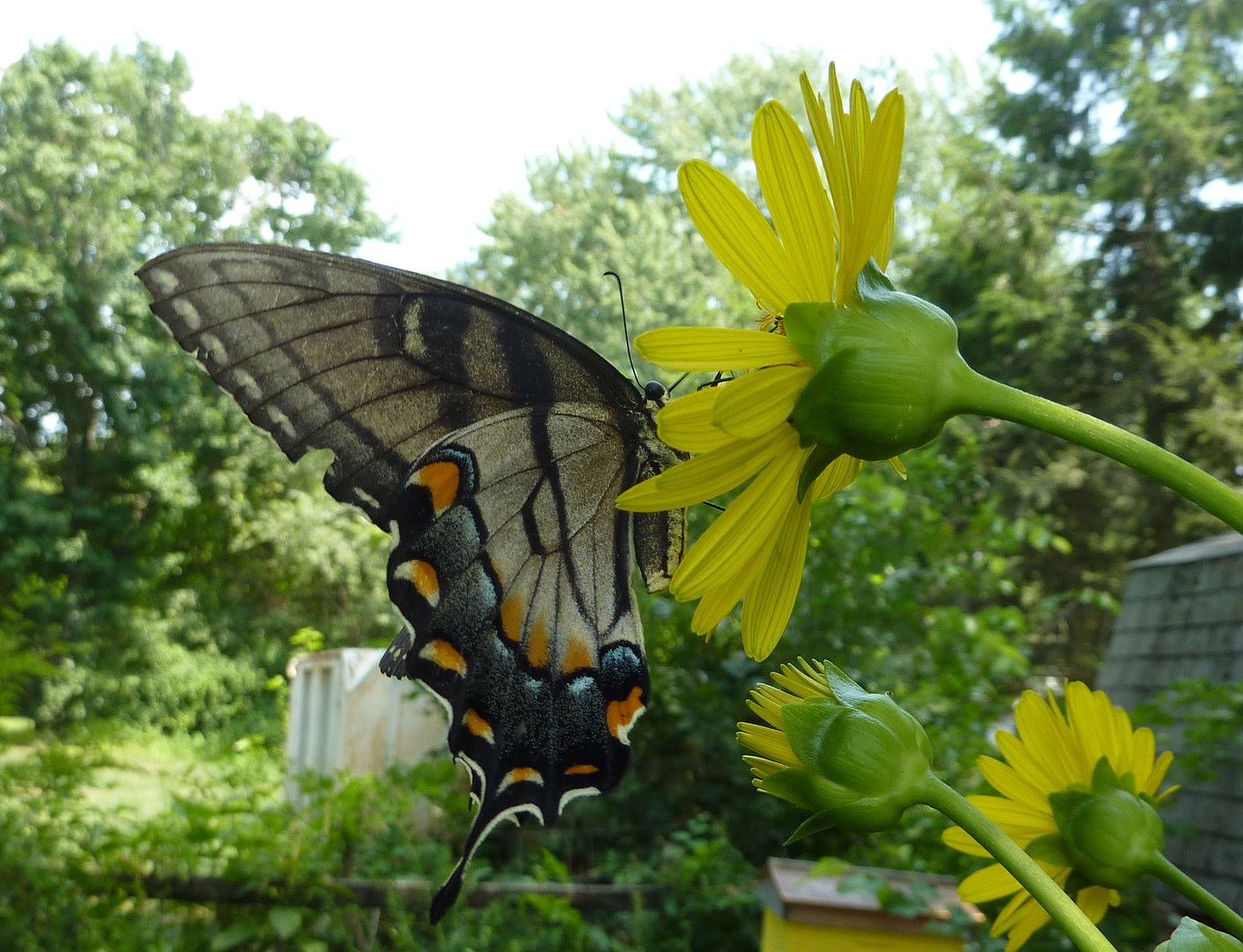
Cup Plant, Silphium perfoliatum, is native but it's also pretty weedy. Plant with caution. a good alternative would be the classic patch of Sunflowers. To give you the idea of how weedy this plant is, I only had 4 of these plants last year.... As you can see they've spread out to form their own clumps just as Goldenrod does.
Swallowtail butterflies also love them.
Anise Hyssop, Agastache foeniculum, is by far one of the best sources at this time of year. They're a native perennial, will reseed in the right type of soil, and look great in the garden.
Subscribe to:
Posts (Atom)