Tuesday, August 4, 2009
Sunday, August 2, 2009
Clethra alnifolia, Summersweet
Clethra alnifolia is in my opinion one of the best smelling plants ever. I first encountered this in a friend's garden. The plant was 3 or 4 years old and in a very up right bush form then. You could start to smell it two doors down. Standing next to the thing is surprisingly not overpowering in the slightest. It's this plant that inspired me to buy four saplings the following year. I gave two away, one to a friend and the other to my aunt. The two I kept didn't flower the first year. I'm happy to say though that changed this year.
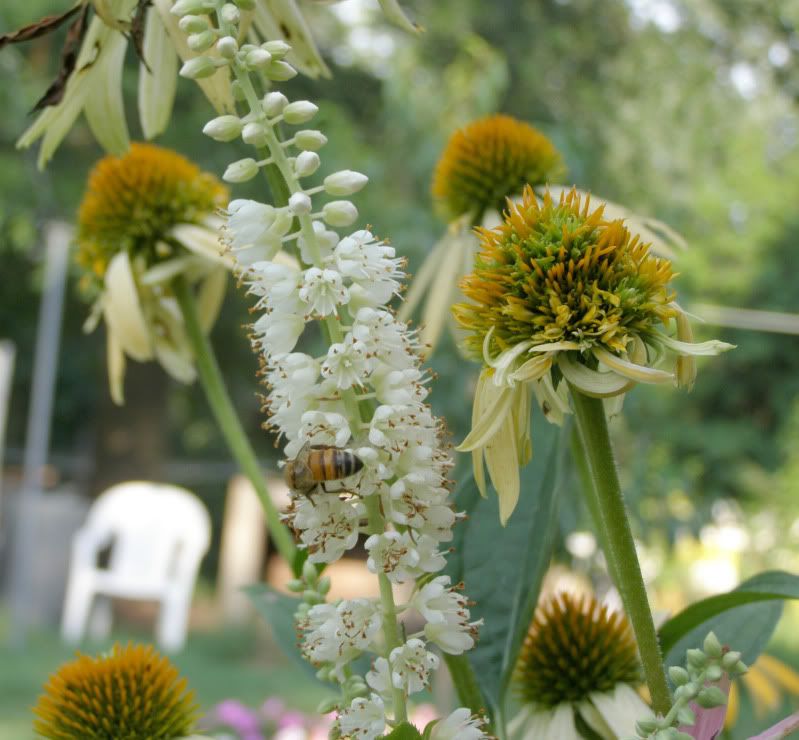
Coneflowers are not the best companions. They're being moved when the Summersweet fills in more. The other plant I kept is stuck in a forest of Goldenrod, but flowering well. They tolerate shade pretty well. Unfortunantly I don't have any images of a full grown plant so once again we turn to Google Search.
Though flowering, neither of the two plants are pumping out that sweet fragrance I love so much on the level of a 3 year old plant. So it takes some patiance. I highly recommend this plant. If it's native near you and you have some shade then it's the plant for you.
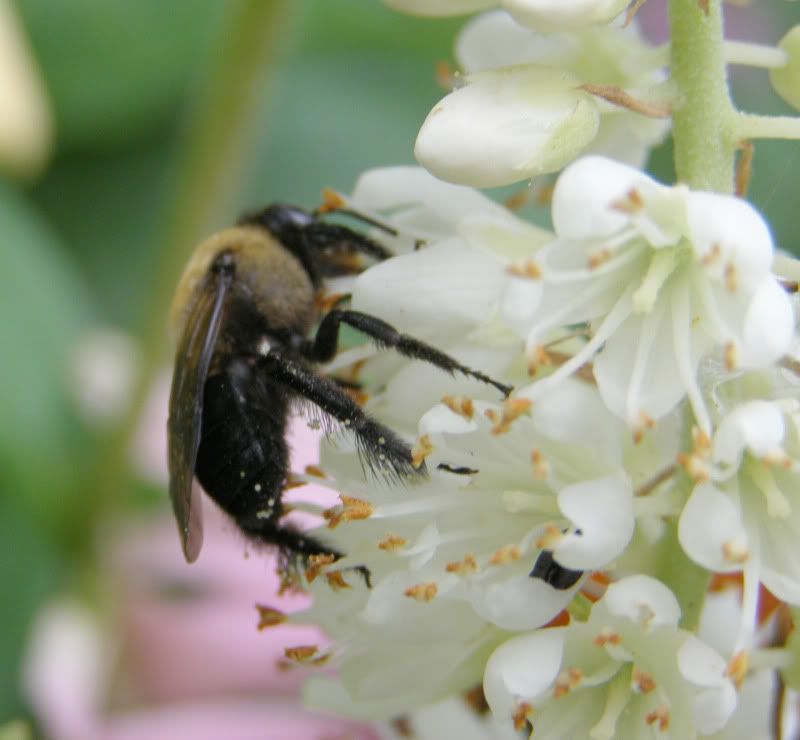
Something I'm amazed at with almost ALL the images on Google Search is how none of the plants are covered in bees. The fragrance this plant gives out is hypnotically attractive. The one plant in my friend's garden was covered in hundreds of species of bees. It's an amazingly rich source of nectar and one of the few plants blooming in late summer.
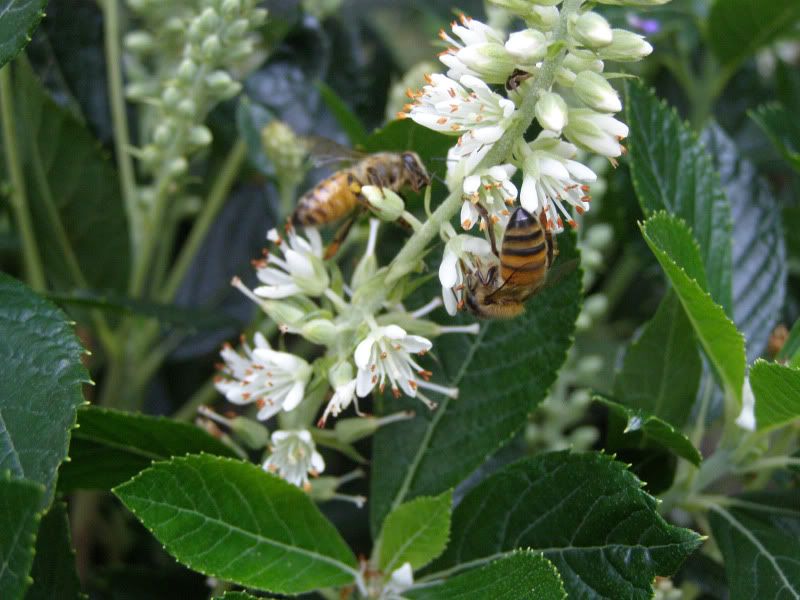
Here you can see some leaves to a plant and hopefully see it's landscaping potential. What's also great about this plant is I've started finding garden center sell it. One place I bought a full 3 year old bush, marked down to $15 from $30. I may go back and buy another. Considering this plant blooms at it's peak in late summer, when I bought it, that's was an amazing deal. The Fools!
Coneflowers are not the best companions. They're being moved when the Summersweet fills in more. The other plant I kept is stuck in a forest of Goldenrod, but flowering well. They tolerate shade pretty well. Unfortunantly I don't have any images of a full grown plant so once again we turn to Google Search.
Though flowering, neither of the two plants are pumping out that sweet fragrance I love so much on the level of a 3 year old plant. So it takes some patiance. I highly recommend this plant. If it's native near you and you have some shade then it's the plant for you.
Something I'm amazed at with almost ALL the images on Google Search is how none of the plants are covered in bees. The fragrance this plant gives out is hypnotically attractive. The one plant in my friend's garden was covered in hundreds of species of bees. It's an amazingly rich source of nectar and one of the few plants blooming in late summer.
Here you can see some leaves to a plant and hopefully see it's landscaping potential. What's also great about this plant is I've started finding garden center sell it. One place I bought a full 3 year old bush, marked down to $15 from $30. I may go back and buy another. Considering this plant blooms at it's peak in late summer, when I bought it, that's was an amazing deal. The Fools!
Saturday, August 1, 2009
The Usefulness of Sunflowers, part 2
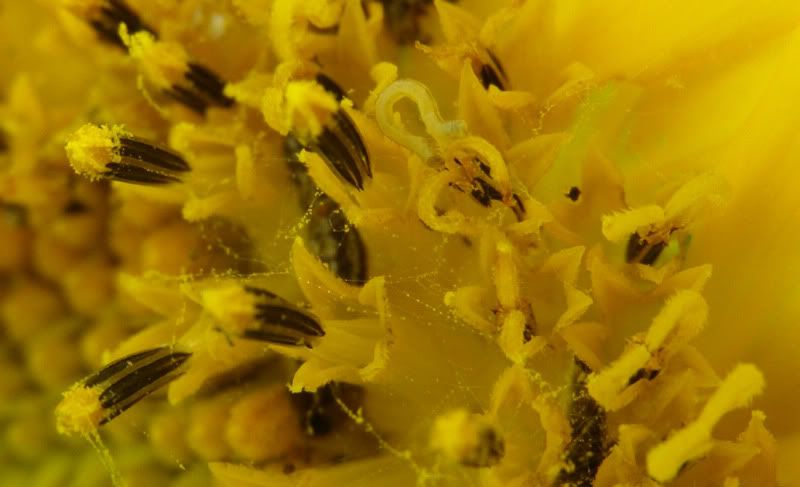
If you look hard enough you can make out an inchworm of some sort in the picture above. They're making a silky mess of some of the flowers but it's not an epidemic. I've just been finding a few of these little guys in some of the flowers. The mess of silk is usually a sign that they're there.
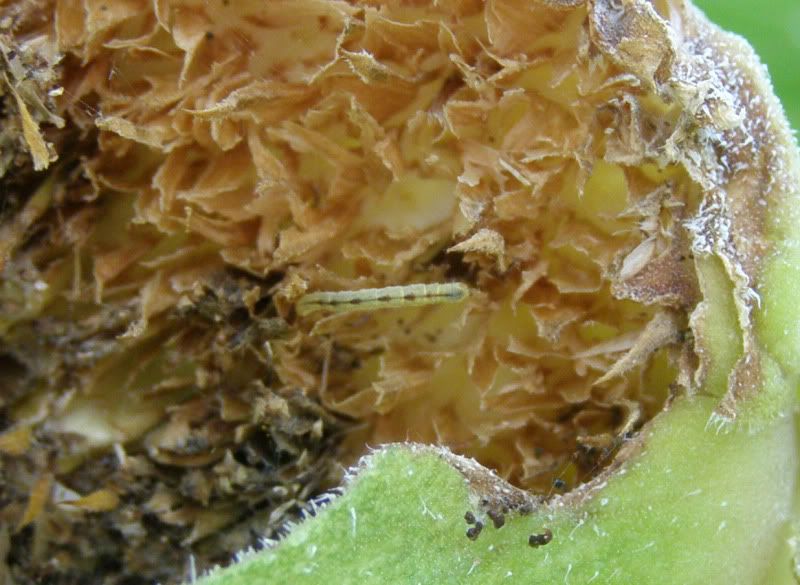
As the flower fades and the gold finches start eating their cover, if not the caterpillar itself they become more active and start to wonder off the flower. This, however, is a double edged sword.
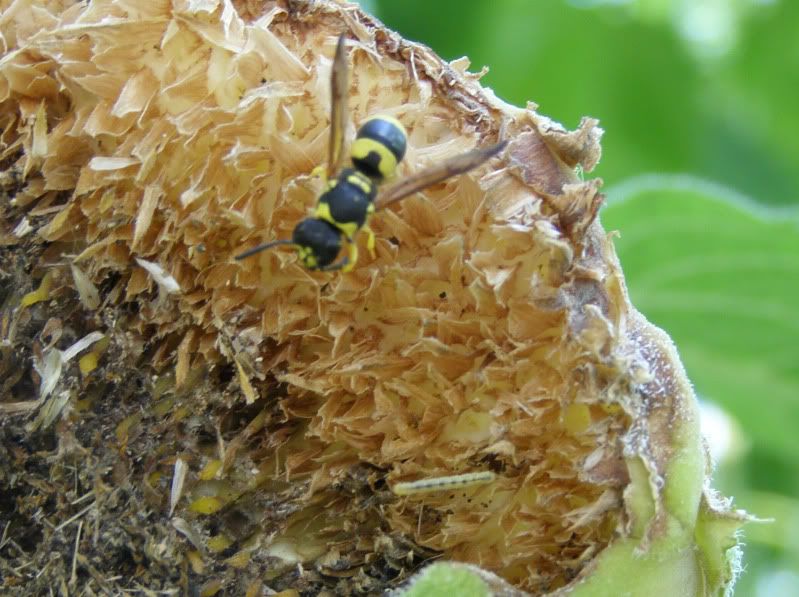
Mason Wasps actually burrow through the mess made in the flowers in search of these worms. Staying has it's risks. They poke their their head into each slot where a seed used to sit and burrow into the hollow part of the flower.
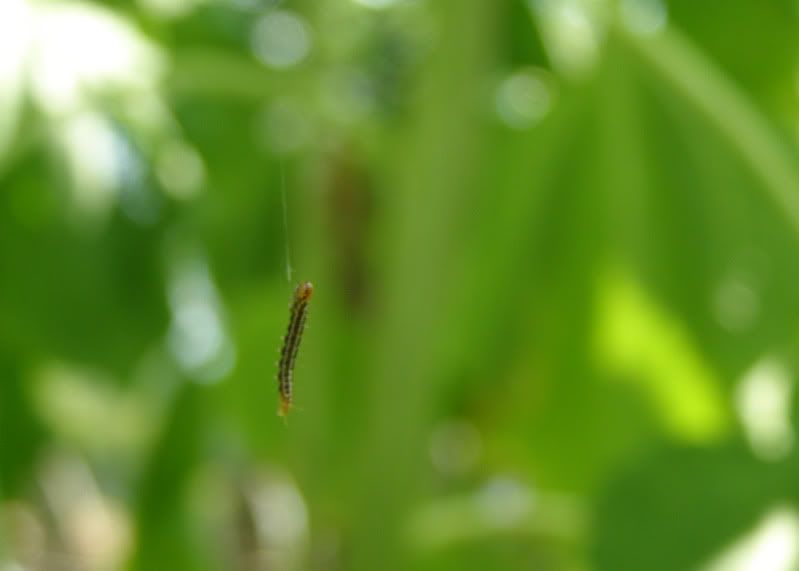
Sometimes looking like a worm on a fishing line is a bad thing.

Others crawl around the plant on the outside. I have no idea what they turn into but I would assume some sort of small moth.
Friday, July 31, 2009
The Usefulness of Sunflowers
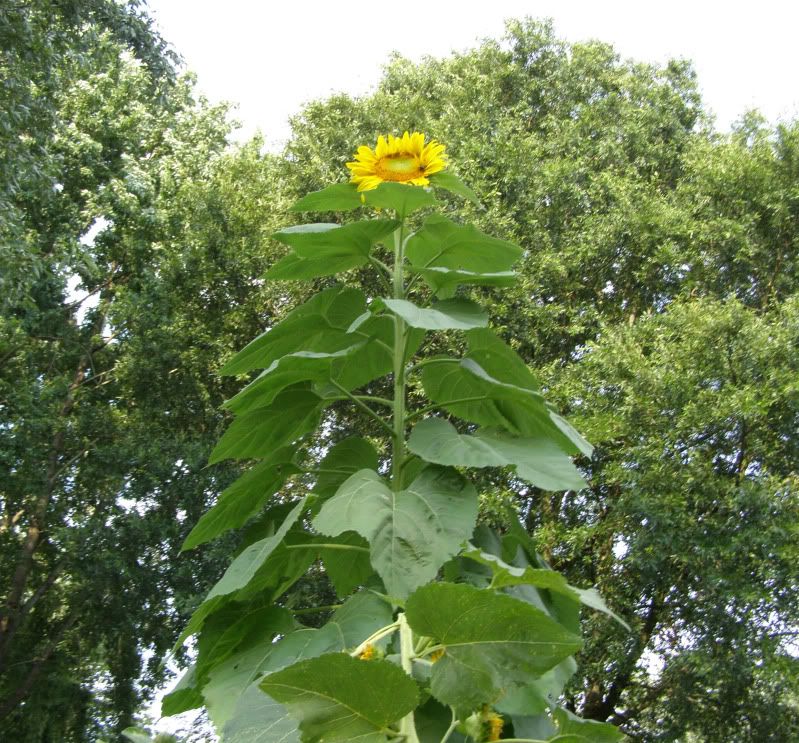
As I may have said before, Sunflowers are one of the cheapest plants you can buy to dramatically change a landscape. Sure they're only annuals but they reseed and occasionally come back the following year. This one pictured above came from a seed mixed into our compost pile. It is easily 13 feet tall.
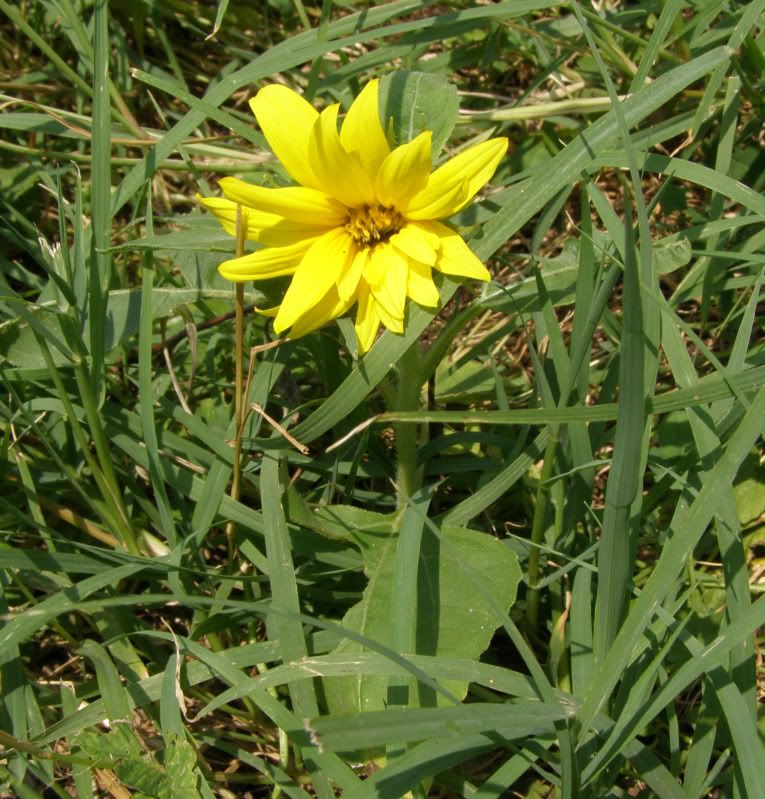
Even when not planted in the right space they do well. This one is a volunteer that came up around our bird feeder. All of the constant foot traffic from the birds and a ground hog occasionally chomping at it has seriously effected it's size. I measured it to be 6 inches, but as you can see it is flowering. It will be luck if it produces more than 5 seeds but flowering all the same.
Last year I took the remaining seed head and just tossed them into the compost pile. The result was this year I had sunflowers of varying size come up everywhere I spread the compost around. They react well to wintering and tilled soil.
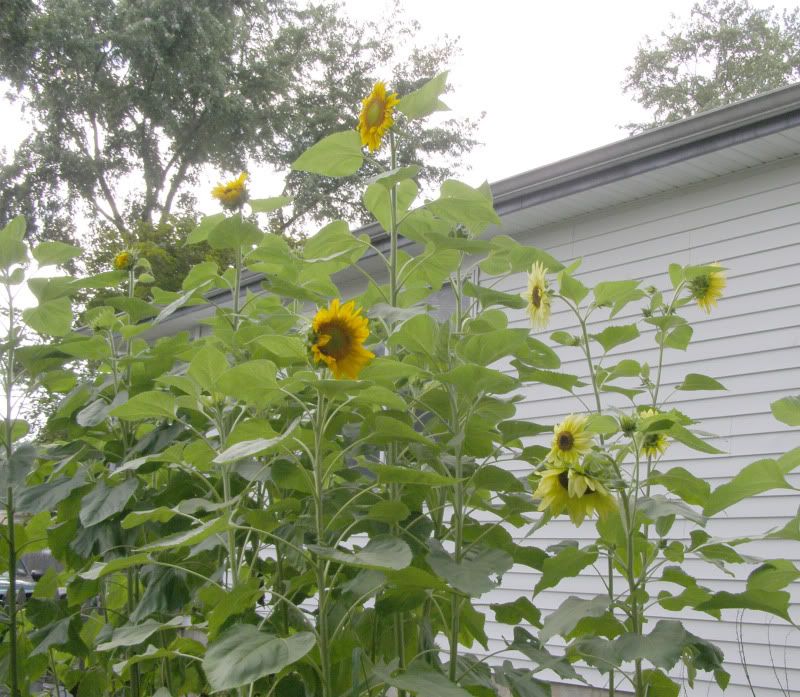
Here on the other side of the house are more sunflower. They're about just as tall as the big one from the first photo. Lemon Queen's are on the right side and I use these for The Great Sunflower Project. Photographing the flowers alone though is tricky because they're so pale with dark center. The best I could come up with is to take their picture next to sunflowers that are more yellow. Unfortunately they're not arranged in any well though out way for a good photo. I'll see what I can do next year.

Even after they've bloomed they serve a purpose in the garden. Goldfinches prefer to eat seeds directly from the flower head. They eat from other plants of course like Liatris, and Coneflowers but Sunflowers are defiantly the main attractor.
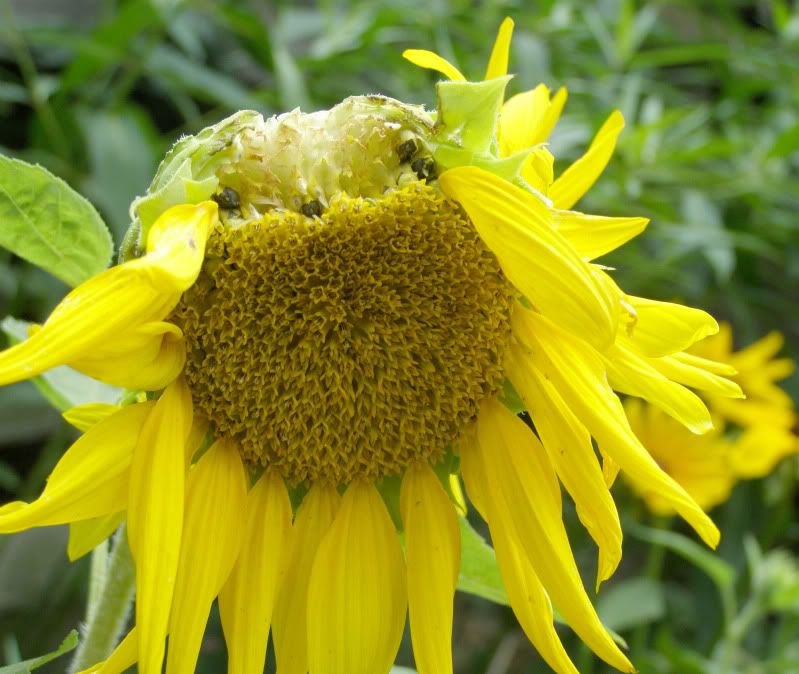
Balding the sunflowers is certainly something they're good at. Though not pleasing to the eye, it's a clear sign that Goldfinches have been in your garden.
Thursday, July 30, 2009
Harvesting Honey
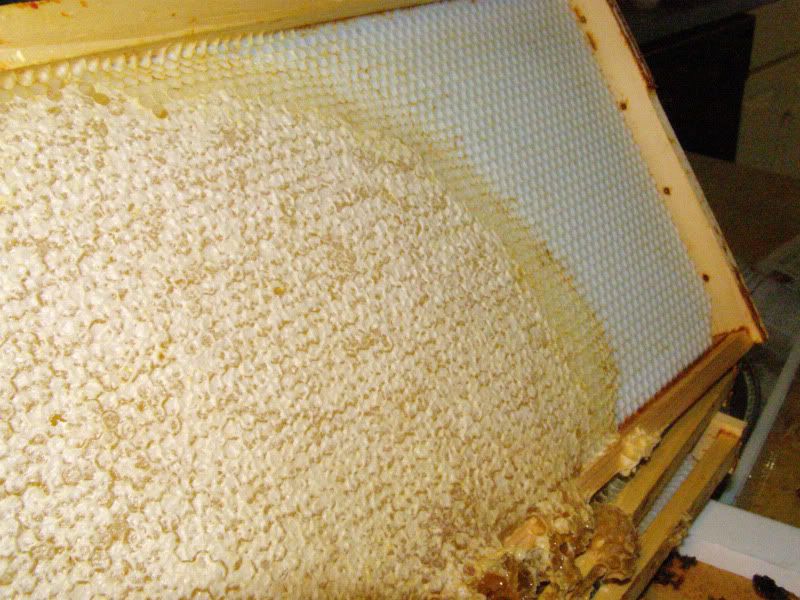
There is no better hobby for isolate neighbors and going broke while doing it than Beekeeping. You need about 40 hives that you can take 10 frames full of honey from on a yearly basis, just to make the equivalent of a minimum wage paying job in a year. On the up side though, selling each jar at a rate of $5 each is about $10,000 for a single day's work. A full frame from a deep (as seen above, but it isn't full) can easily fill three 1lb jars.
On the down side, the moment you put a single beehive in your yard suddenly you'll find out who your friends are. People who have never been stung before will come forward claiming they're deadly allergic to bee stings! And they know this because they are not dead. Somehow what seems like 90% of the town next to me became allergic to bees over night. All it took was one person afraid of insects to petition the town into banning beekeeping.
True enough roughly 7 people in 1000 are born allergic to bees. That will never change for the course of their life. People with poor immune systems, usually meaning the young and the elderly, may also have an adverse reaction when stung by a bee. So you can develop an allergic reaction though you were not allergic before. A lot of beekeepers retire for this reason.
Thankfully honey bees, and bees in general, don't sting very often. You usually have to go well out of your way to get a bee sting. Probably the most common incident is when you step on some White Dutch Clover being worked by a bee, which proceeds to get pissed off. Other random stings come from people wearing something the bees don't like and consider offensive. Occasionally fabric softener is enough but beauty produces can also say the stinger of a bee. Usually you still need to be bothering the insect for this to happen though and the odor or substance merely sways the decision of sting or no sting.
So this women was trying to ban beekeeping a town over. And she nearly succeeded too. But then someone pointed out the fact that I live just 4 blocks down in the neighboring town an bees are known to travel 6 miles from the hive. So banning beekeeping in her town would only be a cosmetic tough. She seemed like an avid gardener too so I don't understand what she has against bees. This is a little off topic though.

I harvested honey a few days ago. Of four hives I was only able to take from two of them. You always try to leave the bees some excess honey and only when they have stores in the upper parts of the nest, away from the brood. Two of the hives just didn't have anything worth taking. I may harvest again at the end of August and see what's up then. In the picture above you see a medium sized frame which is way more manageable than a frame from a deep. I think it's called a shallow but the size for a medium frame has always confused me.

Here is a frame from a super, which is the smallest size. All of these frames are taken form the hives after the bees have been brushed off them. They were then brought into our kitchen where I had the Extractor, trays and pans all setup.
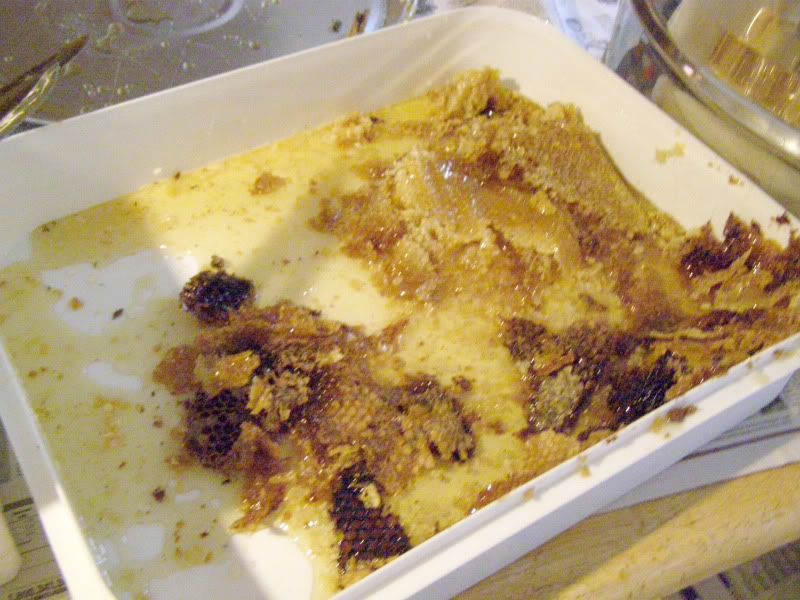
Each frame has to be uncapped. Some beekeepers use special heat knives but I don't think they're all that necessary. Controlling the heat is always an issue, and I never had any trouble using a regular kitchen knife.
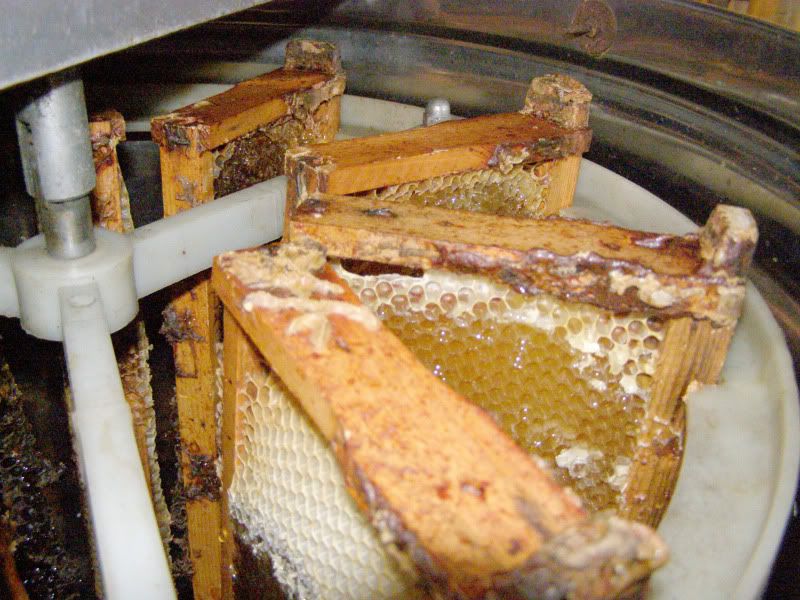
Once uncapped they're put into the Honey Extractor. The one I have sells for $450 - $500. It holds 9 small or medium frames, or 3 large frames at a time. They're spun for about 15 minutes as fast as I can manage. And we pray the legs to the dinning room table don't break.
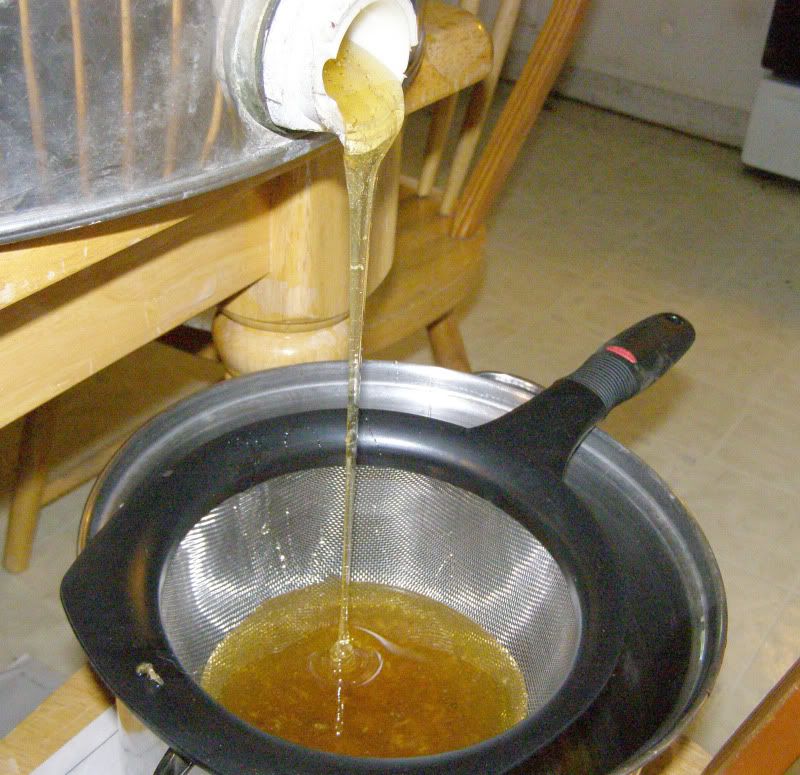
The honey flows out quickly as it all drains down to the bottom. It pours down into a strainer over a pan. This removes the majority of the wax. Everything that does get through is small enough that it doesn't really matter. People actually pay good money to buy the comb uncapped and chew on it raw. It is completely edible and still tastes like honey.

It's now able to be bottled. This process is repeated until every frame has been spun clean. This alone took the better half of the day.
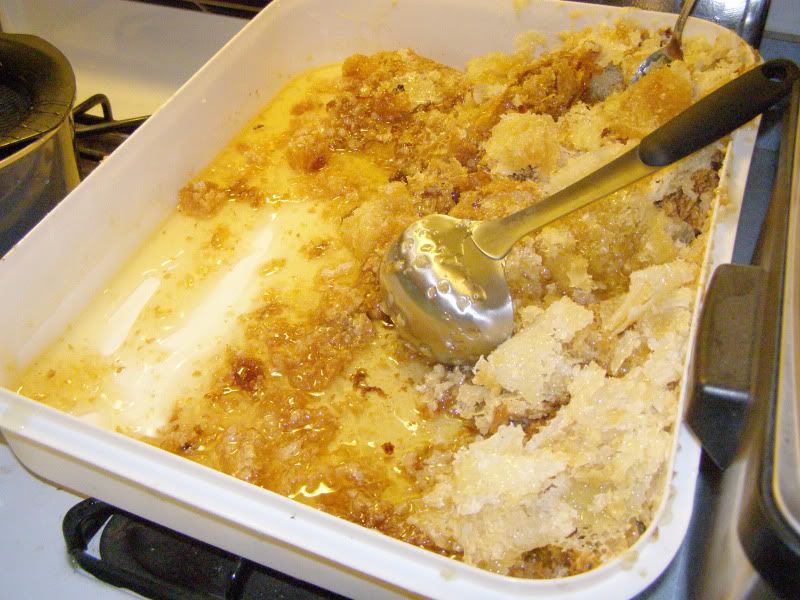
As for the excess honey that spilled out when uncapping cells, that is strained through too but in a different way.
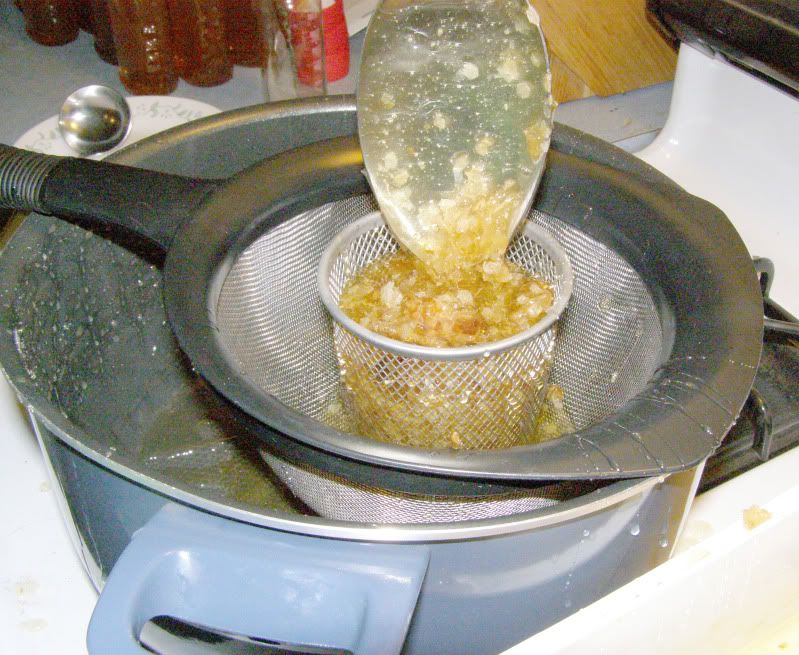
To prevent the strainer from clogging we use a wire cup (a simple pencil holder that is never used for holding pencils!) to catch most of the wax. Without this it would pool up in the clogged strainer below. This saves me a lot of time. The cup is emptied a number of times into a pan. Later we'll allow the bees outside to clean it off and the wax bits can be melted down into candles.

The end result is jars of honey. I sell these for $5 each and was able to fill 50 so far (not all are in the photo). They're all labeled with the year and as "Wildflower" Honey. The year helps people who don't use honey that often keep on top of their jars. Honey doesn't go bad but does ferment slowly. Usually long before fermenting though it crystallizes in the jar. Placing it in warm, not boiling, water will slowly melt it back into honey.
It's called Wildflower because I can't claim that 70% (I think) of the nectar all came from one plant, or plant family. Had the bees been working a farm of say Blueberries or Fire Weed, or Clover or Apple or something like that, it can be tested to see if 70% (I think) did in fact come from that crop. This is a good marketing way for a single beekeeper to sell "flavors" of honey. People like to have tastings of honey of all sorts. There are just as many factors with honey tasting as there are with fine wine. Wildflower is the default label for Honey in general, and there's nothing wrong with that. Depending on when you harvest wildflower honey the color, taste, and even smell of the end mix will be unique. This is sometimes good, and sometimes bad. Goldenrod Honey I've been told smells like a gym sock.
So this was a potential $250 pay check for me which is not bad for a day's work. The trouble now is selling it. usually I keep a few jars with me and sell to my coworkers neighbors, and various friends from all around. I always sell out every year but it does take time for this to happen.
The sales pitch is always a fun. I don't like to say "it helps with allergies," because there is absolutely no scientific proof that honey does anything one way or the other, but it's such a wide spread belief that I sort of nod to it. I just says something like "I do hear that a lot." Though I really don't think it's true at all. Yes, there are flakes of pollen in the honey, especially because there are partials of wax in it too. But why not just eat Pollen? It's sold in the herbal remedy area of your local drug store. Any sort of sneezing is usually attributed to a handful of plants blooming which is usually over after two weeks anyhow. I wonder how many head colds have gotten me a sale over the years.
The other thing that really sells it to people is telling them how to use it. Every time we grill pork chops we use regular spices and things that season the meat. The moment we harvest honey though, suddenly we're adding it to the mix. Take 1/3 to 1/2 of a 1lb jar and mix it in a bowl with whatever you like to season with. Mix it well and brush it on generously. Cook as normal and it will caramelize which gives it a real nice rich flavor. There are loads of recipes out there.
Honey is easily one of the most expensive "herbs" you can buy, and chefs pay good money to get something that wasn't imported from China. I always get compliments about how much better tasting the honey from my hives is compared to what's sold at most food stores.
Wednesday, July 29, 2009
Joe Pye Weed
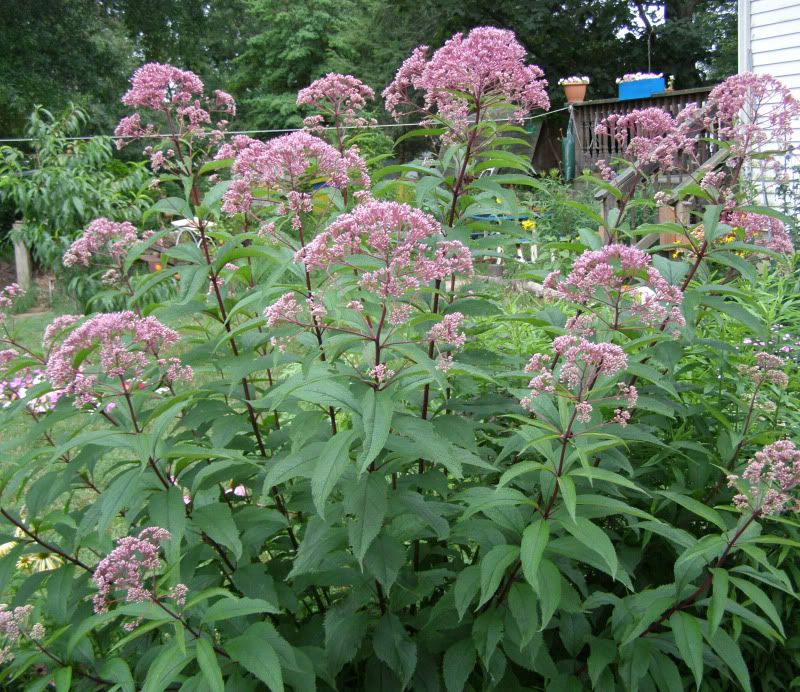
A real focal point in my garden now is Hollow Stem Joe Pye Weed, Eupatorium fistulsum. I bought two years ago from Forest Farm which I love because of their selection of plants, but wouldn't recommend because they gouge you up the *** with shipping! Thankfully Prairie Nursery sells them for much cheaper. I suppose buying 4 of them is a good deal, but look at how big just one plant gets. I believe it reproduces by rhizomes too. So you're getting a lot for your money. I actually want to plant more of these in the yard.
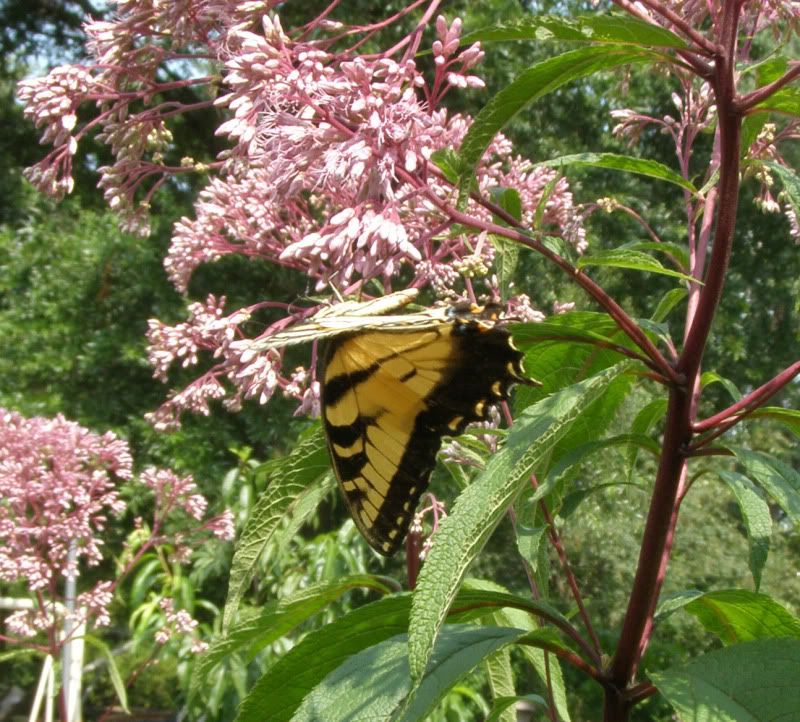
I love this plant for a lot of reasons. Firstly, I found my first swallowtail of the year on one. The Eastern Tiget Swallowtail, Papilio glaucus. I only wish it staid around for more than 5 seconds. That was the one and only picture I was able to get.
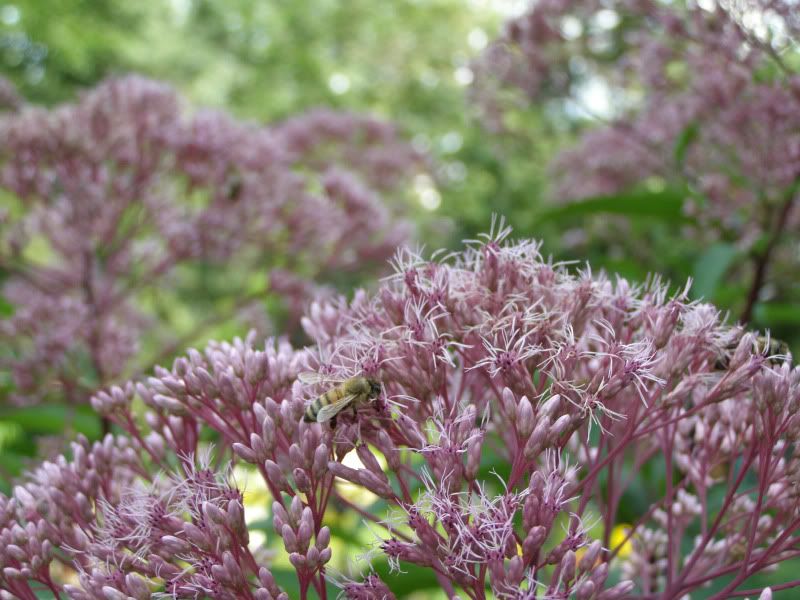
Another reason to love this plant is the slight madicinal fragrance it produces. It's at it's peak right as the afternoon shade hits it. I've noticed it doesn't always produce it though so perhaps there are other factors. It's nice all the same though.
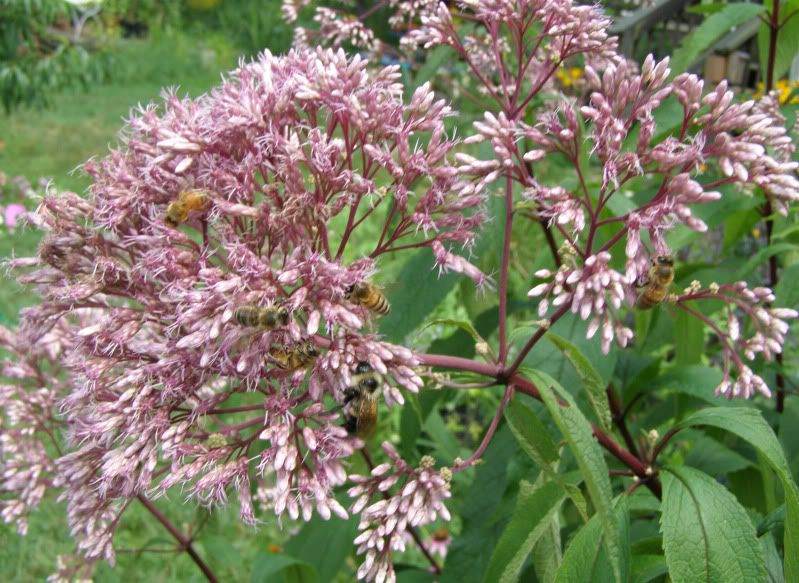
Bees love this plant. Very little is blooming in late summer compared with other seasons. Asters and Goldenrod are good alternitives but not all Asters get a lot of attention, and Goldenrod is more of a fall plant. Joe Pye Weed though is just right. It blooms just in time for migratory butterflies too.


The flowers aren't the prettiest thing in the world upclose. Really it's just some hairy tendrals poking out of bud that looks barely opened. It has a lot to in common with Liatris which are also blooming here and there all around.
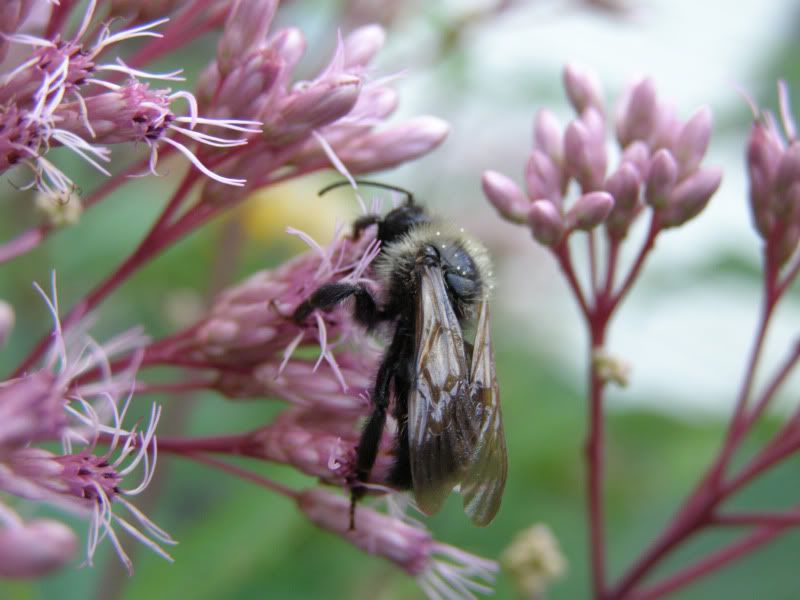

I'm seeing this curious bee showing up at the plant too. I want to say it's a bumblebee ... but it's lost a lot of hair, and hardly has any yellow on it. Might be Psithyrus ashtoni, a bumblebee but still a social parasite of other Bombus species. (note Psithyrus might be known as Bombus now, I'm not up on bee taxonomy.)
Ant Subfamilies of North America
This is an elaboration for those seeking to learn more about ants (and copied from an older forum post here).
For a quick lesson on Ant Anatomy see here.
To Identify to Subfamily (above Genus and species level) consider reading "Ants of North America" by Brian L. Fisher and Stefan P. Cover. There is also a key available online at Ants of South Eastern United States for subfamily level.
Though not an expert this is my take on identifying ants to subfamily leve. A lot of the ants are in 1 of the 4 main subfamilies. North America has 10 ant subfamilies total. Myrmecos.net has them arranged beautifully but not all of them are present.
The four most common subfamilies are Myrmicinae, Ponerinae, Formicinae, and Dolichoderinae. The lesser found ones are Amblyoponinae, Cerapachyinae, Ecitoninae, Ectatomminae, Proceratiinae, and Pseudomyrmecinae. All of the genera in each group have their own survival tactic and body shape. Please disregard color entirly until you're ready to identify an ant to species level (even then it's not always helpful).
Let's get the lesser ones out of the way first.
Ecitoninae are our army ants. Though rarely found they're easily recognized, they're almost completely blind and have incredibly small eyes compared to the size of the head. Myrmecos.net has them labeled as Doryline Section. Neivamyrmex is probably the best representative of what North American Army Ants look like. They have wingless queens that don't participate in nuptial flights. Males fly out to find other colonies, get captured by them and mate with new queen(s). Colonies later divide once or twice a year, a very low rate for ants! For this reason they should not be kept in captivity. Simply observe them, take pictures if you like, and let them be. If they are a pest remember that colonies are nomadic and will leave within a week or two. Please don't kill them. They are specialized predators of other ants. (Eciton Army Ants are commonly shown in nature documentaries, but are only found in South America.)
Ectatomminae is unique for North America because there is only one introduced genus, Gnamptogenys which has only two species in it. Notice the groves all over the body, the curved mandibles, how hard it is to tell if that's two waist segments or a malformed abdomen.
Proceratiinae is another unique looking group because all it's members have specially shaped abdomens. These are discrete predators found almost exclusively in leaf litter, and wood mulch. Though common, one has to go well out of their way to find them usually. These are subterranean predators of spider eggs, and invertebrates found such places. (I got lucky once and found one right in my back yard a few years ago, here.)
Pseudomyrmecinae is another one easy to ID because of how unique the ants look. The genus Pseudomyrmex is a good representative. Notice the huge eyes compared to the size of the head, the long slender bodies, two waist segments, and the fact that nearly all of them are associated with a plant. They are also known for having a painful sting so be careful.
Amblyoponinae and Cerapachyinae I don't know a whole lot about. They are rarely found except by experts. Both look similar to the subfamily Ponerinae. They all have a poorly defined second waist segment. Amblyoponinae tend to be specialized predators (see Amblyopone), they have a stinger, and mandibles with well defined teeth. Cerapachyinae I'm not even going to attempt to summarize. Genera in this group are cryptic, unknown, and I believe have only been found a dozen times or less between California and Texas.
And now onto the big four. Identifying these deserves a topic in itself.
Myrmicinae, always have two waist segment! They have also adapted the ability to consume starch, Seeds! These are all your Aphaenogasters, Monomorium, Temnothorax, Tetramorium, Myrmica, Solenopsis, Messor, Pogonomyrmex, Pheidole! and so on. These are some of the largest genera in North America. They are our harvester ants and scavengers. Very diverse group of ants. They are also our Fungus growing ants: Atta, Acromyrmex, and Trachymyrmex. They have stingers but cannot spray acid, nor do they produce odors. The closest thing they have to projectile warfare is Crematogaster using their flexible stinger like a paint brush to paint venom onto the enemy.
Ponerinae, these are the more common discrete foragers you'll find. The genus Ponera is a good representative. Though they appear to have one waist segment, I believe technically they have two. The one well defined waist segment they have is actually bulky and almost as large as the abdomen itself. The abdomen to most of these ants usually has an odd segment that allows it to be more flexible. (Boloponera is a good example of this but not found in North America) Queens in this group tend to be worker-like but can be different in size somewhat.
Formicinae, always have one waist segment! They have evolved to consume and store sugary foods. These are all the Prenolepis, Lasius, Formica, Camponotus, Brachymyrmex, Paratrechina, Myrmecocystus, Polyergus, and so on. These are the majority of the ants you see tending aphids, visiting flowers, they're collecting nectar and have the repletes (a special caste) to store it. See Here. The plates that make up the exoskeletain of the abdomen abdomen actually expand as their social stomach swells up with food. As this happens, the inner membrane of the abdomen swells up too and pushes the plates that make up the abdomen outward. They don't sting but can spray venom, or sometimes formic acid. Spraying acid is usually done in open wounds as a secondary action to biting, but Some Formica species are known for spraying venom wildly into the air when disturbed. Some Lasius are actually called Citronella ants because they produce a lemony odor.
Dolichoderinae, always have one waist segment! They have a lot in common with Formicinae because they almost look the same. The main difference listed in "Urban Ants of North America and Europe" seems to be the tip of the abdomen has no hair around it. I don't like just leaving it there though. This group includes Dolichoderus, Dorymyrmex, Forelius, Tapinoma, and one or two others. They're odorous ants, though many of them need to be squished in order to produce the odor. Like Formicinae they can also spray venom but it has more instant potency. The term "Ant Mace" comes from Forelius ants spraying directly in the eyes of other ants. Their head shape and body textures also differ from genera in the Formicinae subfamily.
Once you have a good idea of what subfamily your ant is in you can potentially figure out what genus and potentially species after that. "Ants of North America" by Brian L. Fisher and Stefan P. Cover has the most complete list of ant species for North America in back of it.
For a quick lesson on Ant Anatomy see here.
To Identify to Subfamily (above Genus and species level) consider reading "Ants of North America" by Brian L. Fisher and Stefan P. Cover. There is also a key available online at Ants of South Eastern United States for subfamily level.
Though not an expert this is my take on identifying ants to subfamily leve. A lot of the ants are in 1 of the 4 main subfamilies. North America has 10 ant subfamilies total. Myrmecos.net has them arranged beautifully but not all of them are present.
The four most common subfamilies are Myrmicinae, Ponerinae, Formicinae, and Dolichoderinae. The lesser found ones are Amblyoponinae, Cerapachyinae, Ecitoninae, Ectatomminae, Proceratiinae, and Pseudomyrmecinae. All of the genera in each group have their own survival tactic and body shape. Please disregard color entirly until you're ready to identify an ant to species level (even then it's not always helpful).
Let's get the lesser ones out of the way first.
Ecitoninae are our army ants. Though rarely found they're easily recognized, they're almost completely blind and have incredibly small eyes compared to the size of the head. Myrmecos.net has them labeled as Doryline Section. Neivamyrmex is probably the best representative of what North American Army Ants look like. They have wingless queens that don't participate in nuptial flights. Males fly out to find other colonies, get captured by them and mate with new queen(s). Colonies later divide once or twice a year, a very low rate for ants! For this reason they should not be kept in captivity. Simply observe them, take pictures if you like, and let them be. If they are a pest remember that colonies are nomadic and will leave within a week or two. Please don't kill them. They are specialized predators of other ants. (Eciton Army Ants are commonly shown in nature documentaries, but are only found in South America.)
Ectatomminae is unique for North America because there is only one introduced genus, Gnamptogenys which has only two species in it. Notice the groves all over the body, the curved mandibles, how hard it is to tell if that's two waist segments or a malformed abdomen.
Proceratiinae is another unique looking group because all it's members have specially shaped abdomens. These are discrete predators found almost exclusively in leaf litter, and wood mulch. Though common, one has to go well out of their way to find them usually. These are subterranean predators of spider eggs, and invertebrates found such places. (I got lucky once and found one right in my back yard a few years ago, here.)
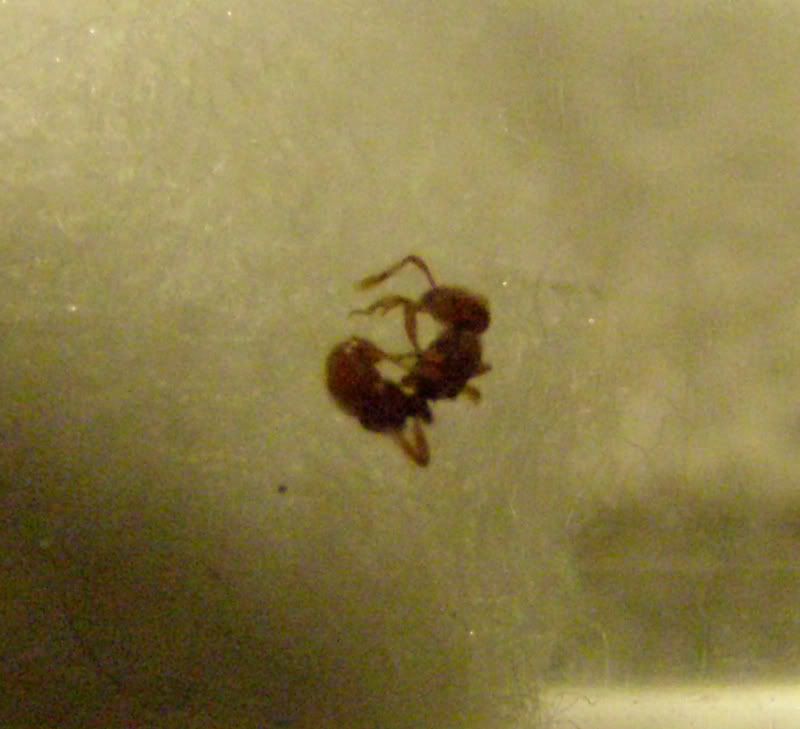
Pseudomyrmecinae is another one easy to ID because of how unique the ants look. The genus Pseudomyrmex is a good representative. Notice the huge eyes compared to the size of the head, the long slender bodies, two waist segments, and the fact that nearly all of them are associated with a plant. They are also known for having a painful sting so be careful.
Amblyoponinae and Cerapachyinae I don't know a whole lot about. They are rarely found except by experts. Both look similar to the subfamily Ponerinae. They all have a poorly defined second waist segment. Amblyoponinae tend to be specialized predators (see Amblyopone), they have a stinger, and mandibles with well defined teeth. Cerapachyinae I'm not even going to attempt to summarize. Genera in this group are cryptic, unknown, and I believe have only been found a dozen times or less between California and Texas.
And now onto the big four. Identifying these deserves a topic in itself.
Myrmicinae, always have two waist segment! They have also adapted the ability to consume starch, Seeds! These are all your Aphaenogasters, Monomorium, Temnothorax, Tetramorium, Myrmica, Solenopsis, Messor, Pogonomyrmex, Pheidole! and so on. These are some of the largest genera in North America. They are our harvester ants and scavengers. Very diverse group of ants. They are also our Fungus growing ants: Atta, Acromyrmex, and Trachymyrmex. They have stingers but cannot spray acid, nor do they produce odors. The closest thing they have to projectile warfare is Crematogaster using their flexible stinger like a paint brush to paint venom onto the enemy.
Ponerinae, these are the more common discrete foragers you'll find. The genus Ponera is a good representative. Though they appear to have one waist segment, I believe technically they have two. The one well defined waist segment they have is actually bulky and almost as large as the abdomen itself. The abdomen to most of these ants usually has an odd segment that allows it to be more flexible. (Boloponera is a good example of this but not found in North America) Queens in this group tend to be worker-like but can be different in size somewhat.
Formicinae, always have one waist segment! They have evolved to consume and store sugary foods. These are all the Prenolepis, Lasius, Formica, Camponotus, Brachymyrmex, Paratrechina, Myrmecocystus, Polyergus, and so on. These are the majority of the ants you see tending aphids, visiting flowers, they're collecting nectar and have the repletes (a special caste) to store it. See Here. The plates that make up the exoskeletain of the abdomen abdomen actually expand as their social stomach swells up with food. As this happens, the inner membrane of the abdomen swells up too and pushes the plates that make up the abdomen outward. They don't sting but can spray venom, or sometimes formic acid. Spraying acid is usually done in open wounds as a secondary action to biting, but Some Formica species are known for spraying venom wildly into the air when disturbed. Some Lasius are actually called Citronella ants because they produce a lemony odor.
Dolichoderinae, always have one waist segment! They have a lot in common with Formicinae because they almost look the same. The main difference listed in "Urban Ants of North America and Europe" seems to be the tip of the abdomen has no hair around it. I don't like just leaving it there though. This group includes Dolichoderus, Dorymyrmex, Forelius, Tapinoma, and one or two others. They're odorous ants, though many of them need to be squished in order to produce the odor. Like Formicinae they can also spray venom but it has more instant potency. The term "Ant Mace" comes from Forelius ants spraying directly in the eyes of other ants. Their head shape and body textures also differ from genera in the Formicinae subfamily.
Once you have a good idea of what subfamily your ant is in you can potentially figure out what genus and potentially species after that. "Ants of North America" by Brian L. Fisher and Stefan P. Cover has the most complete list of ant species for North America in back of it.
Tuesday, July 28, 2009
Turk's Cap Lily and Liatris

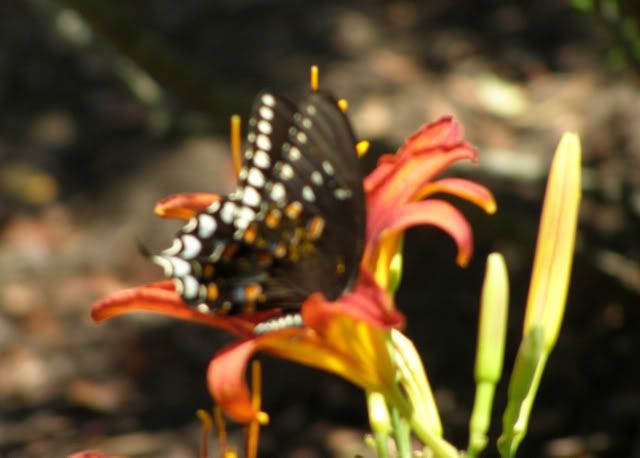
Of 6 plants of Turk's Cap Lily planted last fall, only one came up this year. I'm normally not very big on lilies but this one was so pretty and unique. I bought it specifically as a native alternative to the other Lilies planted next to it. It blooms much later and thankfully goes great to the Liatris.
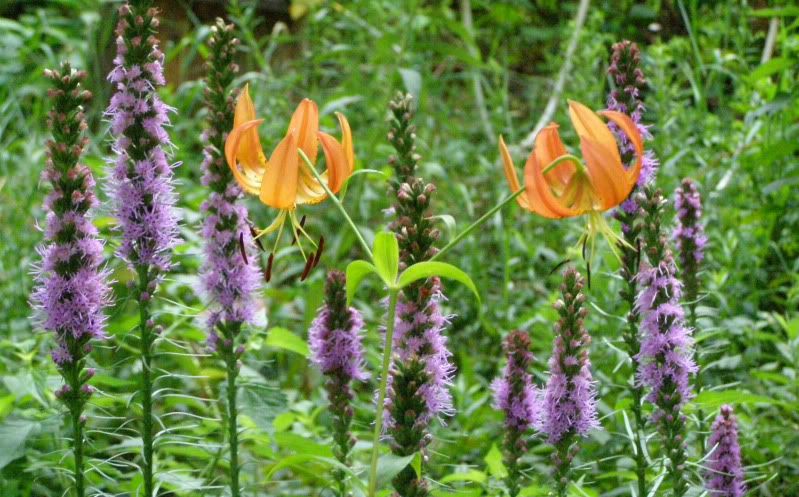
Hopefully it does well, comes back with more flowers, and in the long run propagates. Pictures I've seen online show that Butterflies actually pollinate them. But of course I've seen butterflies working regular Lilies too, see here.
Monday, July 27, 2009
Fruiting Trees
While taking pictures of the Winged Sumac there was more happening along the forest edge.
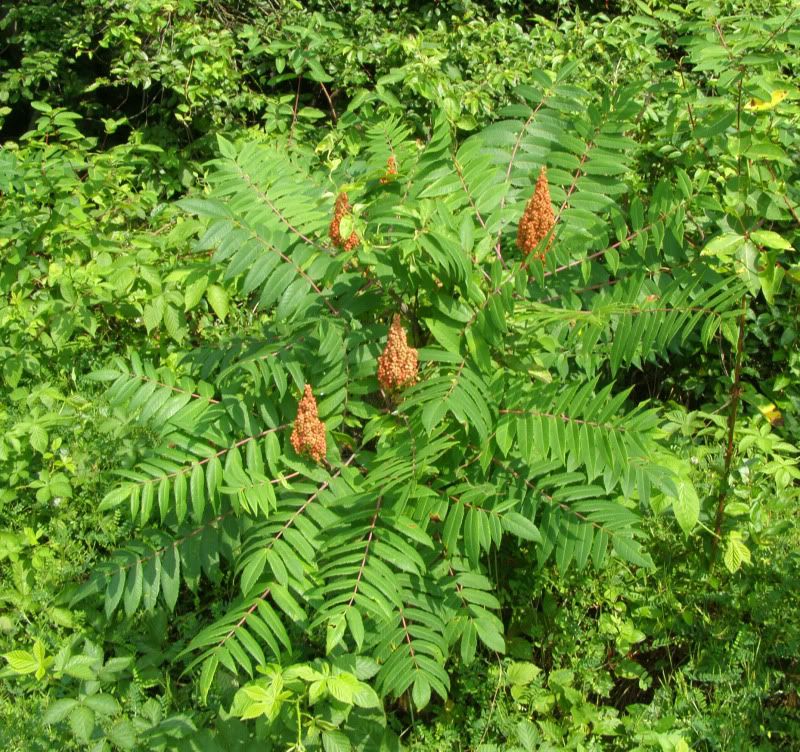
Here is regular Sumac which has already flowered and is developing fruit now.
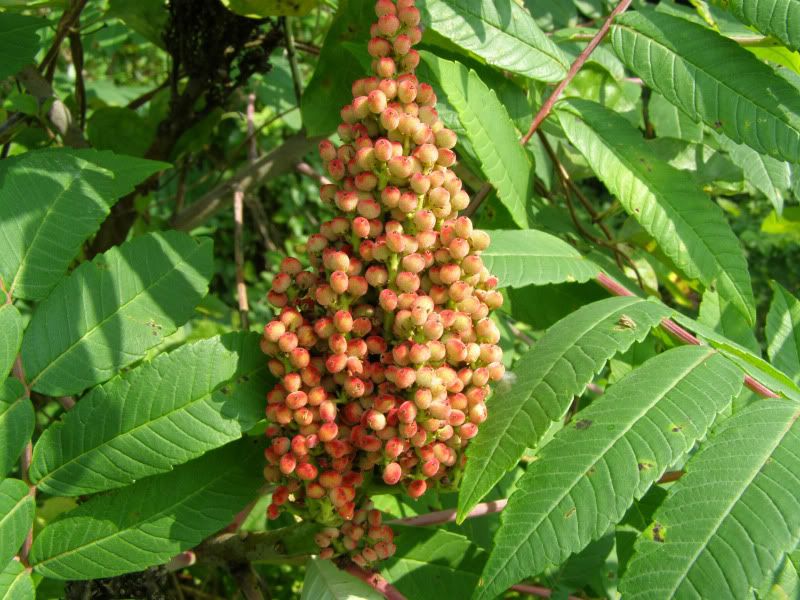
The "berries" are very showy in my opinion. What's odd though is that this tree wasn't more common. The Winged Sumac were all over the place but this was the only odd ball of the bunch.
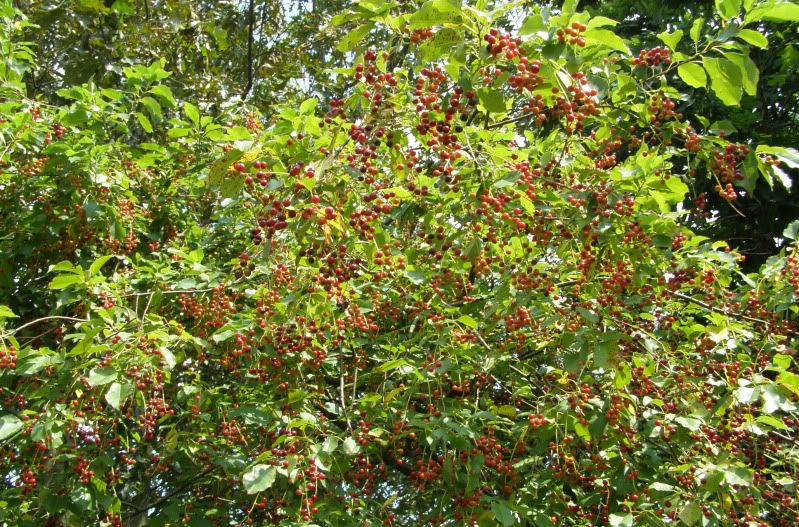
What I think is a Black Cherry was also growing. I haven't properly identified it though so we'll say Prunus sp. The berries on these trees are an excellent source of food for birds, especially for summer and fall.

I believe some sort of jam can be made from the fruit. I'm not daring enough to try it.
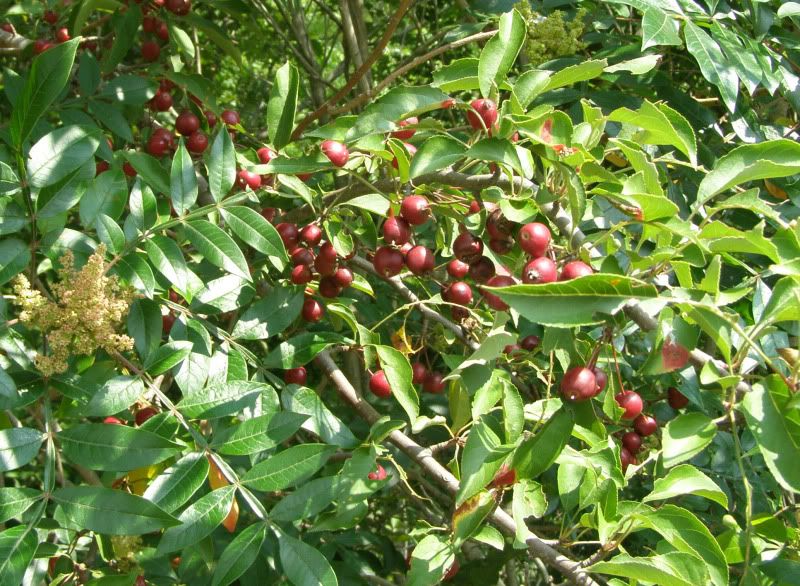
Some type of Crabapple, Malus sp, was growing wildly. This is more of a fall and winter food source for birds. Though I can't speak for this tree I know from the one I have in my yard that the fruit stais on the tree for most of the winter. It also looks great after a snowfall. I believe they stay on the tree for so long because they don't tast great.
Wintering birds go for what tastes best first so assorted berry plants slowly lose their winter interest in the order of best tasting. I think these are average.
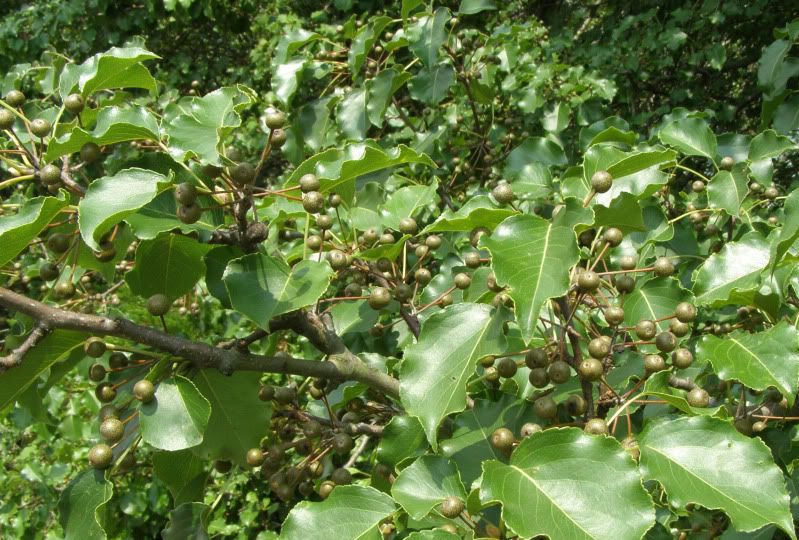
A Bradford Pear which escaped cultivation was also fruiting here. Artificial Trees made entirely out of plastic are just as useful as these trees. I don't understand why strip malls don't just buy plastic trees. Instead they have to go with these weak wood trees that don't offer anything to the environment.
Here is regular Sumac which has already flowered and is developing fruit now.
The "berries" are very showy in my opinion. What's odd though is that this tree wasn't more common. The Winged Sumac were all over the place but this was the only odd ball of the bunch.
What I think is a Black Cherry was also growing. I haven't properly identified it though so we'll say Prunus sp. The berries on these trees are an excellent source of food for birds, especially for summer and fall.
I believe some sort of jam can be made from the fruit. I'm not daring enough to try it.
Some type of Crabapple, Malus sp, was growing wildly. This is more of a fall and winter food source for birds. Though I can't speak for this tree I know from the one I have in my yard that the fruit stais on the tree for most of the winter. It also looks great after a snowfall. I believe they stay on the tree for so long because they don't tast great.
Wintering birds go for what tastes best first so assorted berry plants slowly lose their winter interest in the order of best tasting. I think these are average.
A Bradford Pear which escaped cultivation was also fruiting here. Artificial Trees made entirely out of plastic are just as useful as these trees. I don't understand why strip malls don't just buy plastic trees. Instead they have to go with these weak wood trees that don't offer anything to the environment.
Sunday, July 26, 2009
White Caterpillar
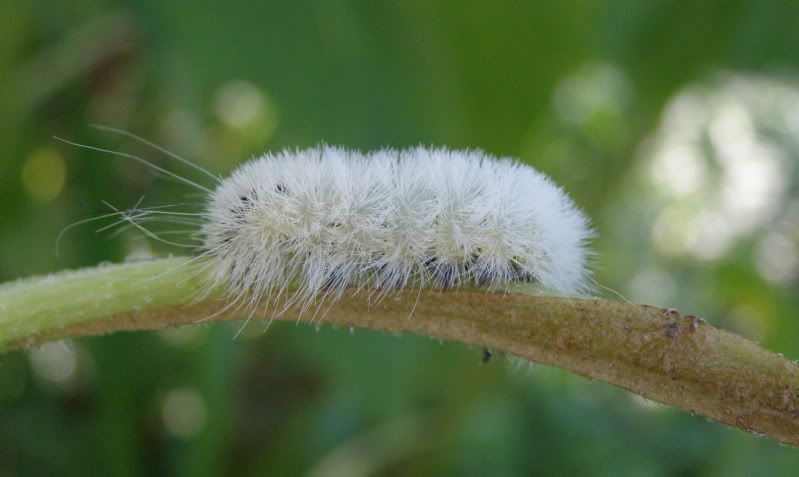
Found an ugly white clump on my sunflowers a few days ago.
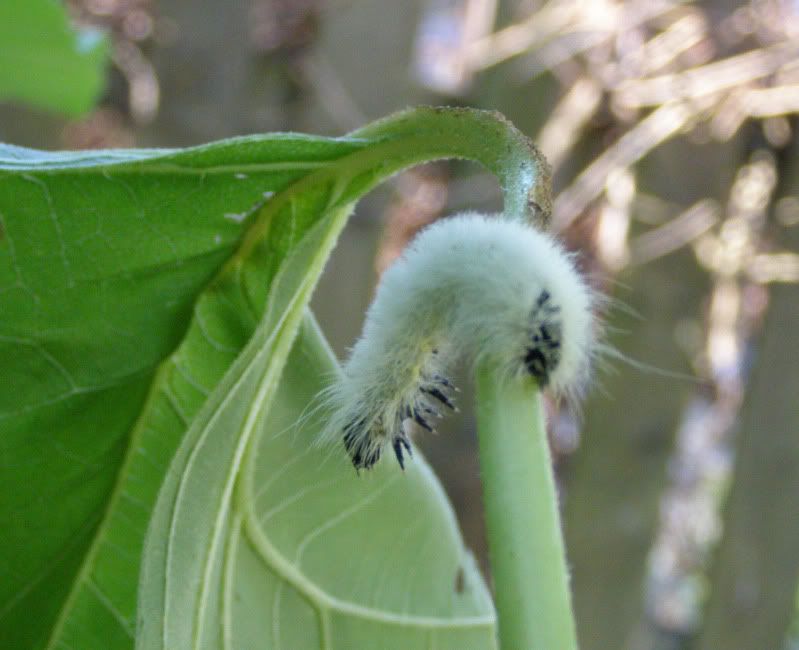
Then realized it was some sort of woolly caterpillar. Suddenly it didn't look as ugly. I've no idea what species it is. And I'm not certain that sunflowers are the host plant. I never saw it eating any leaves, and can't find it out there now. The actual Woolly Bear caterpillar, I've read, has the ability to eat virtually any plant it likes, but they do wonder great distances for unknown reasons.
Subscribe to:
Posts (Atom)