Thursday, March 7, 2013
Honeybees help Native Bees
Here's another study I wish I'd known about before publishing my book. To summaries, conservationists hate honeybees because they move in, and take all the resources from native bees (pollen, nectar, and cavity nesting space). But it seems after they initially move in they still pollinate the plants adequately enough to produce more nectar plants. I had noted that honeybees don't bother with young trees, unless they're all grown together as in an orchard, and its these that most of our native bees work. Now they eventually go on to become bigger trees that get honeybee attention, but I think it still evens out somewhat. Young trees are still being produced and coming of age to flower.
Now this story is on a tropical forest setting that's constantly recycling itself. In a suburban setting this isn't happening enough, and when it is, it's often a landowner or landscaper, who wants to plant something more for beauty and often the country of origin isn't considered. The pollen to alien plants is often lacking in nutritional quality or even toxic for native species. The pollen and nectar resources that landscaping around strip malls and suburban neighborhoods produce is a pittance compared to the forest or prairie that once grew there.
Labels:
Bees,
Honeybees,
native,
Pollinators,
Video
Wednesday, March 6, 2013
The Annoying Process of Publishing a Book
So back in October and November I decided that I had enough photos, information, and creativity to start writing a book... and finish it this time! "Writing a Book" has been my answer to the question "So what are you doing?" for the past nine years or so. So it's great to finally start something and get it done to completing this time. That being said, I have some praise and complaints to dish out for the whole process.
If you go to Amazon.com, and scroll all the way to the bottom, you'll find something like "Self Publish With Us," and that takes you over to Create Space, which is what I used to self publish. My logic there was I wanted a physical copy of the book I wrote which was important to me. Barns & Nobel will only offer your book as a digital copy. Some other places are happy to publish your book too but you have to order your copies and sell them yourself.
So here's the process I went though.
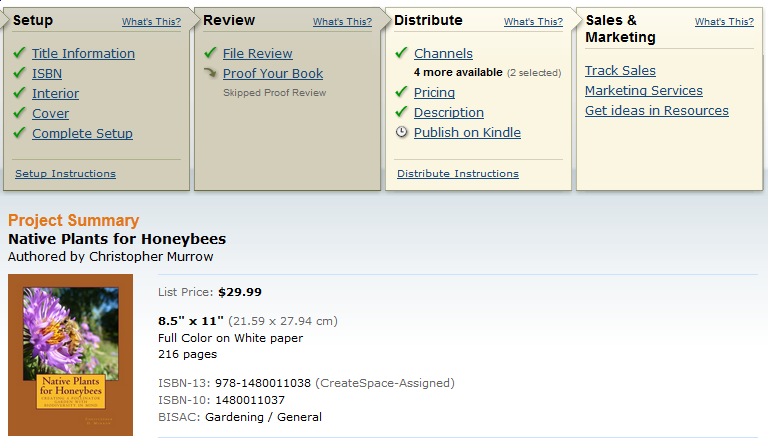
Fill out all your author and title information, get an ISBN, pick a size you want and you're ready to roll.
Once you have all that settled, spend however long it takes to type your book. Learn about adding Table of Contents, Graphs, and Page Numbers, which should all be standard in whatever typing program you're using.
Interior: Your file needs to be at least 24 pages (I think) in order to upload and preview. You'll probably be uploading and replacing the previous file a lot just to make sure things look right. This can take several minutes depending on how big your file is. You're then given a nice looking pdf preview with page turning animations that I really likes with Create Space. Here is where all the little flaws are pointed out. What was 4 by 6 inches in your typing program (Word, Office, etc...) might not be the same 4 by 6 in their format, and you may need to tweak things.
Something I got annoyed with was, I'd have a paragraph below my images, but because their format saw there was space after the image to fit a letter, they'd break up the first word in the sentance to put those letters beside the image and I don't know why. So "There are flowers..." would become
[PICTURE] "T
here are flowers..."
So you want to look out for that kind of stuff. Adding an [Enter] or enlarging the photo slightly made this go away.
Now here's the pain. You have to "fix" it in your file which might not have the same problem, and then upload it again. I would love to have been able to just fix it in their program so I wouldn't have to upload, but oh well.
Cover: For the cover Create Space has you covered. They have a wonderful program that I really enjoyed playing with. You just upload the picture you want, pick a few colors, and fill in the text boxes. I actually found this really enjoyable and easy. However, if you need to upload your file again, it assumes you might have changed the size format, so you need to sift through your cover again. This was a minor annoyance but not really a problem in the grand scheme of things.
File Review: So you think you're finished. You're all proofread, everything is the way you want it laid out, and it's "perfect". You're probably wrong, but that's where this step comes in. You submit your book to them, and they get back to you sometime a day later. One thing they caught with my book was for Author I had my middle initial in some places but not in others. Some things they fix for you but other things you're responsible for.
Proof Your Book: So you've been approved, Great! You get the final say in whether or not to go forward. I highly recommend buying a proof copy (this is usually an at cost price) before moving forward. This is a dramatic difference between reading a paragraph on your computer and holding it in your hands. I found I was far more aware of the paragraph overall when holding a physical copy than when I read it on my screen. As soon as it arrives, Get the red pen out, and go to town giving it a final read through. I thought I was already done by this point, but I kept finding maybe one mistake every few pages.
Also get a few friends and people who's opinions you trust to read it too. English teachers are especially valuable as they tend to remember all the little rules to everything. And hopefully they can give you a short sentance or two long review for the back cover.
Channels and Pricing: This is self explanatory. My book is on Amazon for $29.99. Unfortunately I went a little overboard with photos and the 216 pages at an 8 by 11 size drove up the cost. Had I written a novel say 4 by 6 and used fewer photos or made them all black and white, it would be cheaper for them to produce. Not surprisingly I make more money from the $9.99 Kindle version because it doesn't really cost anything to produce. Enabling the preview for both is done just after it's available. Getting it on the Kindle is submitted after it's published and available on amazon, though you can enable on or the other as you like.
If you go to Amazon.com, and scroll all the way to the bottom, you'll find something like "Self Publish With Us," and that takes you over to Create Space, which is what I used to self publish. My logic there was I wanted a physical copy of the book I wrote which was important to me. Barns & Nobel will only offer your book as a digital copy. Some other places are happy to publish your book too but you have to order your copies and sell them yourself.
So here's the process I went though.
Fill out all your author and title information, get an ISBN, pick a size you want and you're ready to roll.Once you have all that settled, spend however long it takes to type your book. Learn about adding Table of Contents, Graphs, and Page Numbers, which should all be standard in whatever typing program you're using.
Interior: Your file needs to be at least 24 pages (I think) in order to upload and preview. You'll probably be uploading and replacing the previous file a lot just to make sure things look right. This can take several minutes depending on how big your file is. You're then given a nice looking pdf preview with page turning animations that I really likes with Create Space. Here is where all the little flaws are pointed out. What was 4 by 6 inches in your typing program (Word, Office, etc...) might not be the same 4 by 6 in their format, and you may need to tweak things.
Something I got annoyed with was, I'd have a paragraph below my images, but because their format saw there was space after the image to fit a letter, they'd break up the first word in the sentance to put those letters beside the image and I don't know why. So "There are flowers..." would become
[PICTURE] "T
here are flowers..."
So you want to look out for that kind of stuff. Adding an [Enter] or enlarging the photo slightly made this go away.
Now here's the pain. You have to "fix" it in your file which might not have the same problem, and then upload it again. I would love to have been able to just fix it in their program so I wouldn't have to upload, but oh well.
Cover: For the cover Create Space has you covered. They have a wonderful program that I really enjoyed playing with. You just upload the picture you want, pick a few colors, and fill in the text boxes. I actually found this really enjoyable and easy. However, if you need to upload your file again, it assumes you might have changed the size format, so you need to sift through your cover again. This was a minor annoyance but not really a problem in the grand scheme of things.
File Review: So you think you're finished. You're all proofread, everything is the way you want it laid out, and it's "perfect". You're probably wrong, but that's where this step comes in. You submit your book to them, and they get back to you sometime a day later. One thing they caught with my book was for Author I had my middle initial in some places but not in others. Some things they fix for you but other things you're responsible for.
Proof Your Book: So you've been approved, Great! You get the final say in whether or not to go forward. I highly recommend buying a proof copy (this is usually an at cost price) before moving forward. This is a dramatic difference between reading a paragraph on your computer and holding it in your hands. I found I was far more aware of the paragraph overall when holding a physical copy than when I read it on my screen. As soon as it arrives, Get the red pen out, and go to town giving it a final read through. I thought I was already done by this point, but I kept finding maybe one mistake every few pages.
Also get a few friends and people who's opinions you trust to read it too. English teachers are especially valuable as they tend to remember all the little rules to everything. And hopefully they can give you a short sentance or two long review for the back cover.
Channels and Pricing: This is self explanatory. My book is on Amazon for $29.99. Unfortunately I went a little overboard with photos and the 216 pages at an 8 by 11 size drove up the cost. Had I written a novel say 4 by 6 and used fewer photos or made them all black and white, it would be cheaper for them to produce. Not surprisingly I make more money from the $9.99 Kindle version because it doesn't really cost anything to produce. Enabling the preview for both is done just after it's available. Getting it on the Kindle is submitted after it's published and available on amazon, though you can enable on or the other as you like.
2013 Philadelphia International Flower Show
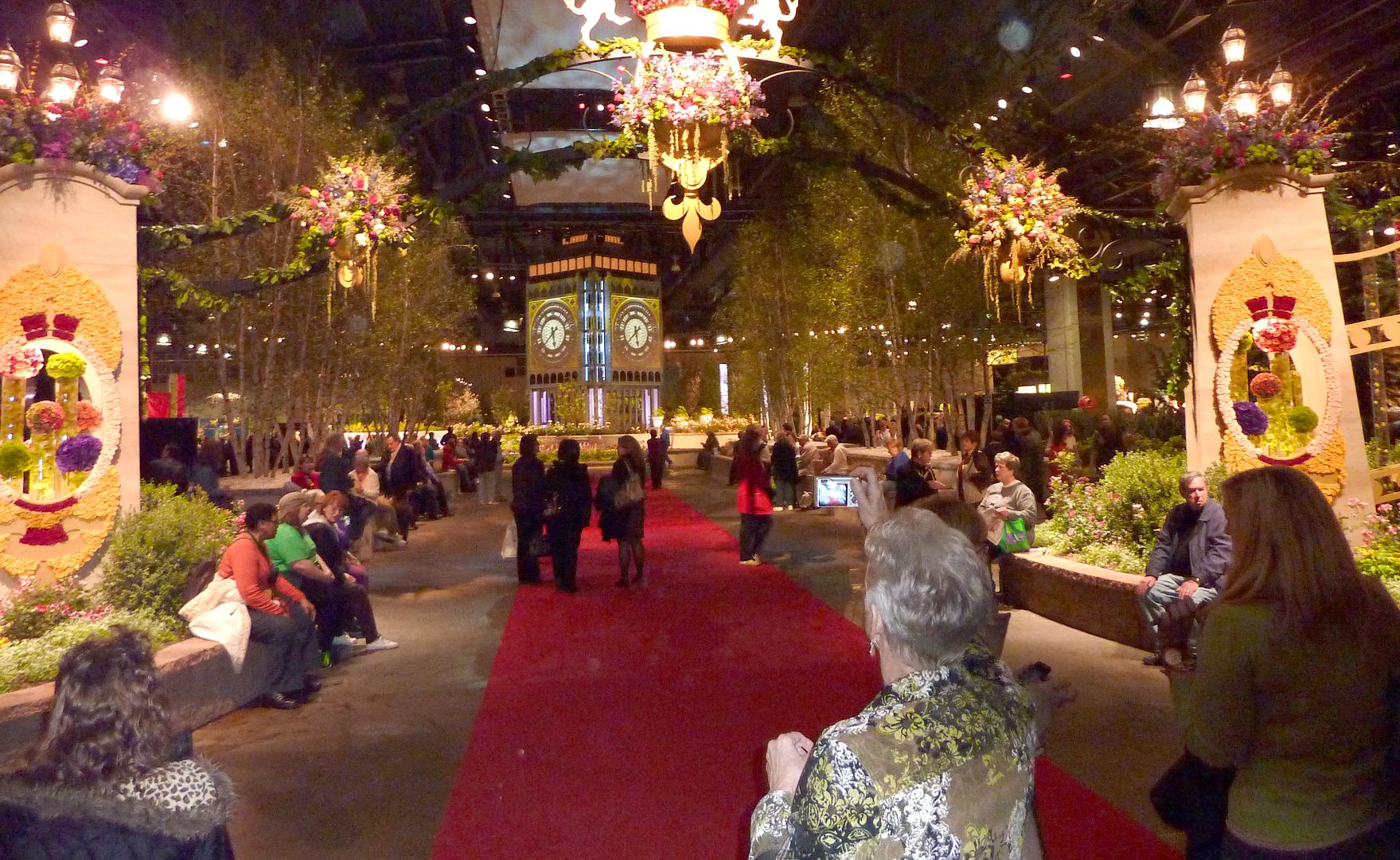
I'd give this show an overall 3.5 out of 5, which is okay. I didn't feel like it was a waste of time but there wasn't a whole lot that thrilled me either. I saw a lot more green this year than in previous years and that's a problem for a flower show. Something else I learned is that the best time to go is just after 4:00pm on the weekdays.There was barely any crowd at all, and I can recall in year's past when you were elbow to elbow.
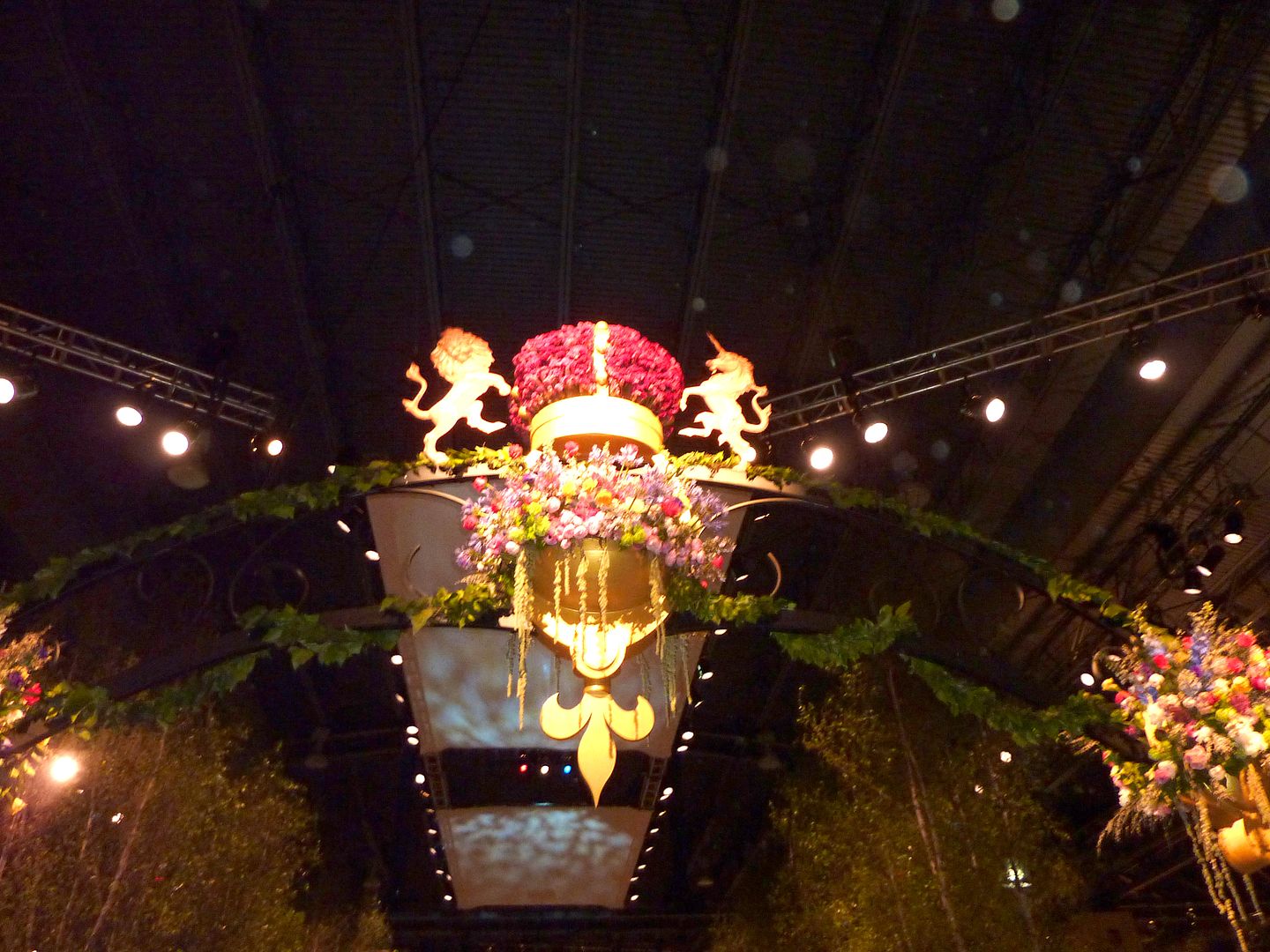
The British theme was a nice one, with lots of royal looking flower arrangements, but these were a little sparse.
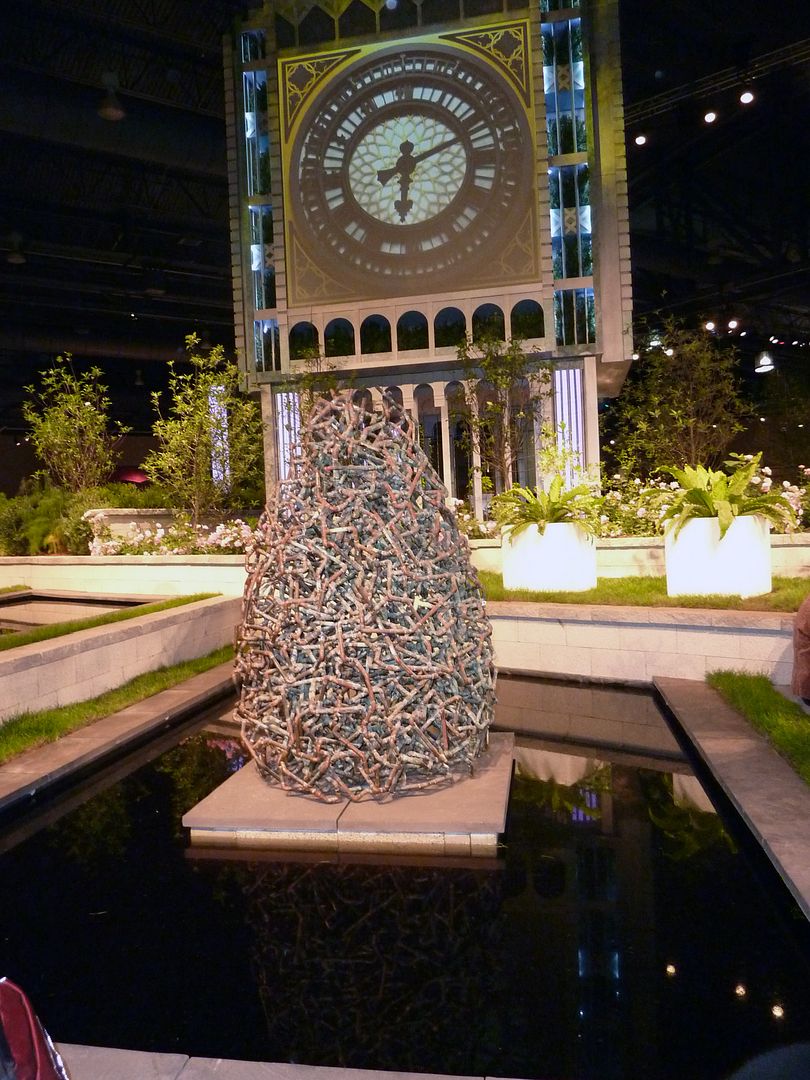
The centerpiece of the show is a short replica of Big Ben, which is actually a video screen of an animated clock. Every hour, on the hour, it played a mildly offensive video that really shoved the British theme in your face. Still-images of British comedians, rock stars, and members of the royal family were cheaply animated, like someone making an internet joke and I wondered if they even had the rights to use these images. Having them all salute the flag of England painted on someone's ass would have fit in perfectly.
Birch Trees lined the isles though I'm not sure what they have to do with England. (Aren't they native to North America?)
So I started to walk around looking for inspiration, which sadly I don't get a whole lot of. Most of the displays were colorful and had some plants that I found impressive, but I wasn't sure about some of the combinations.
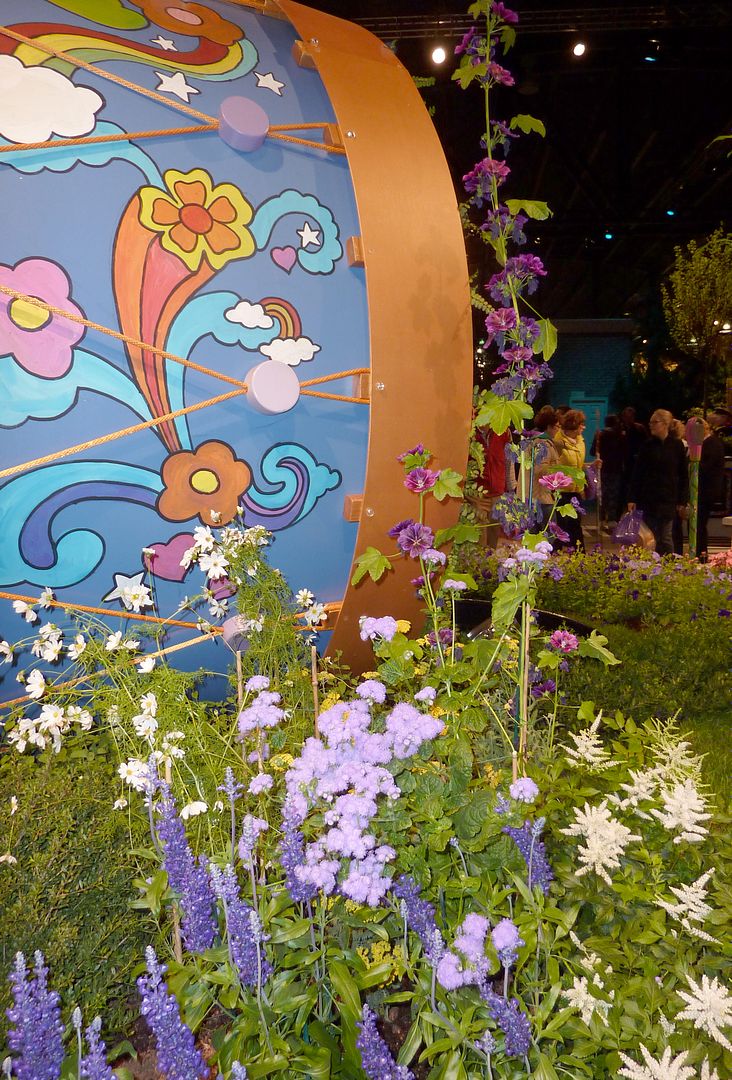
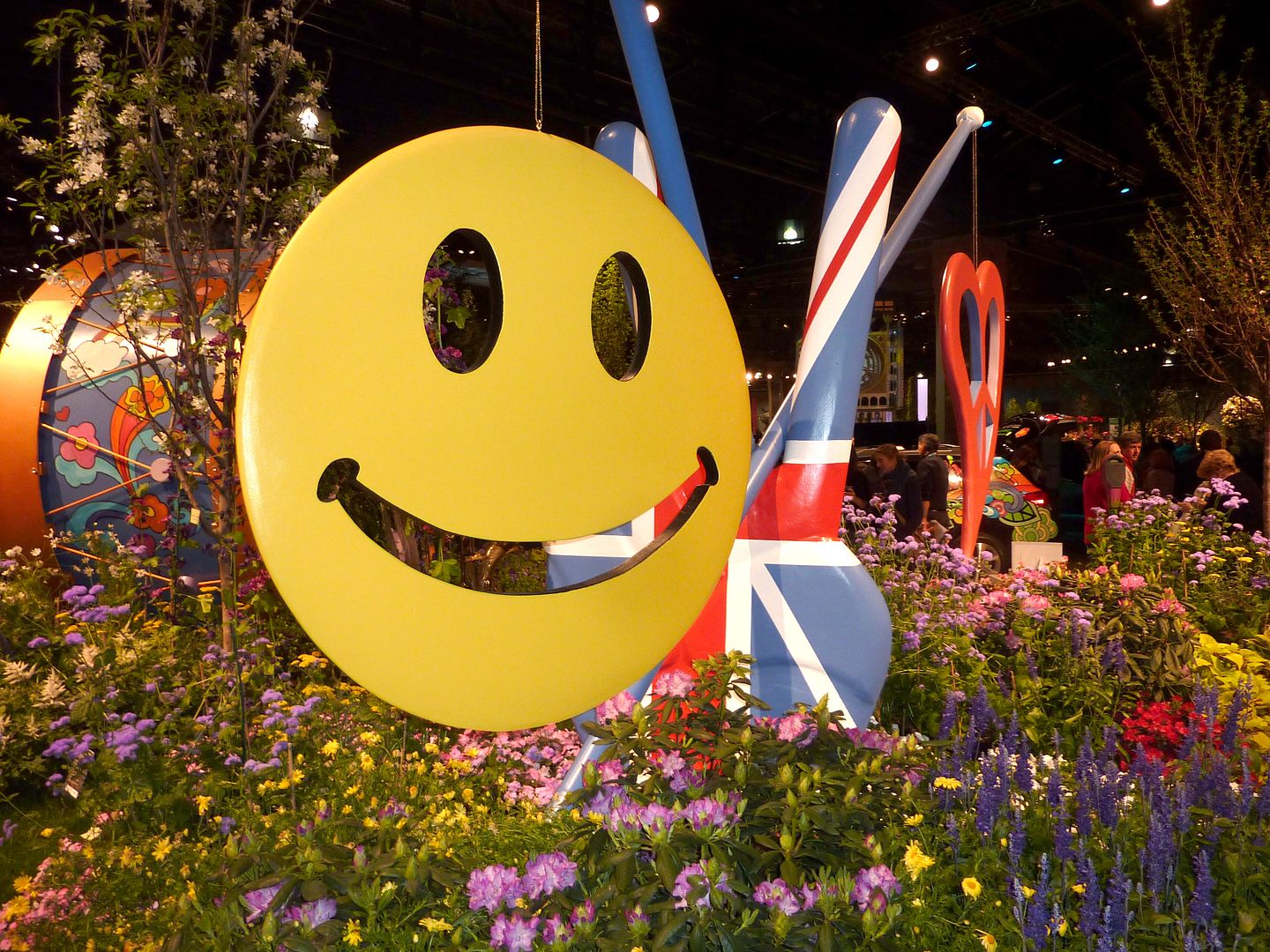
I think a lot of the props had a greater impact than the plants did.
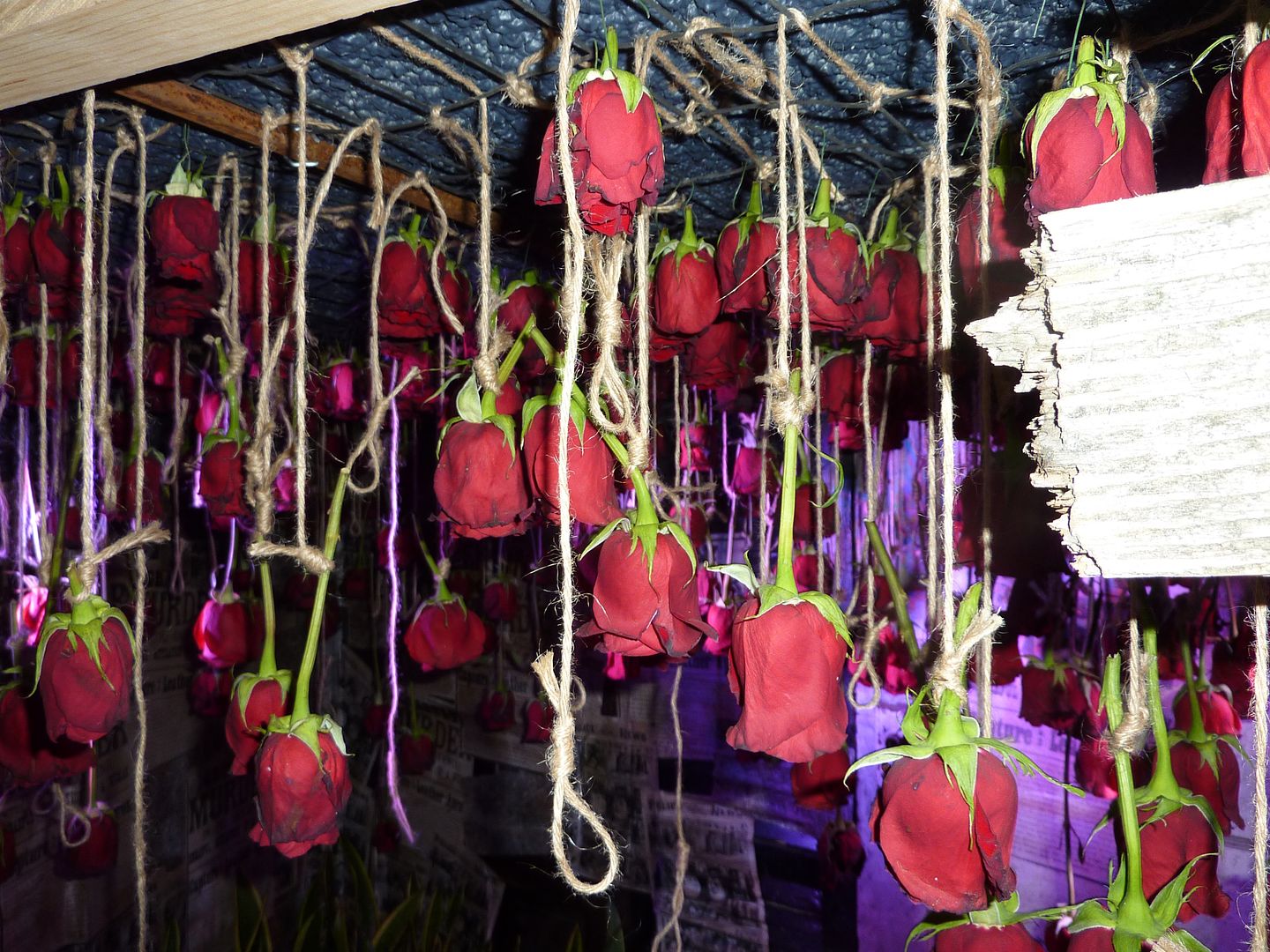
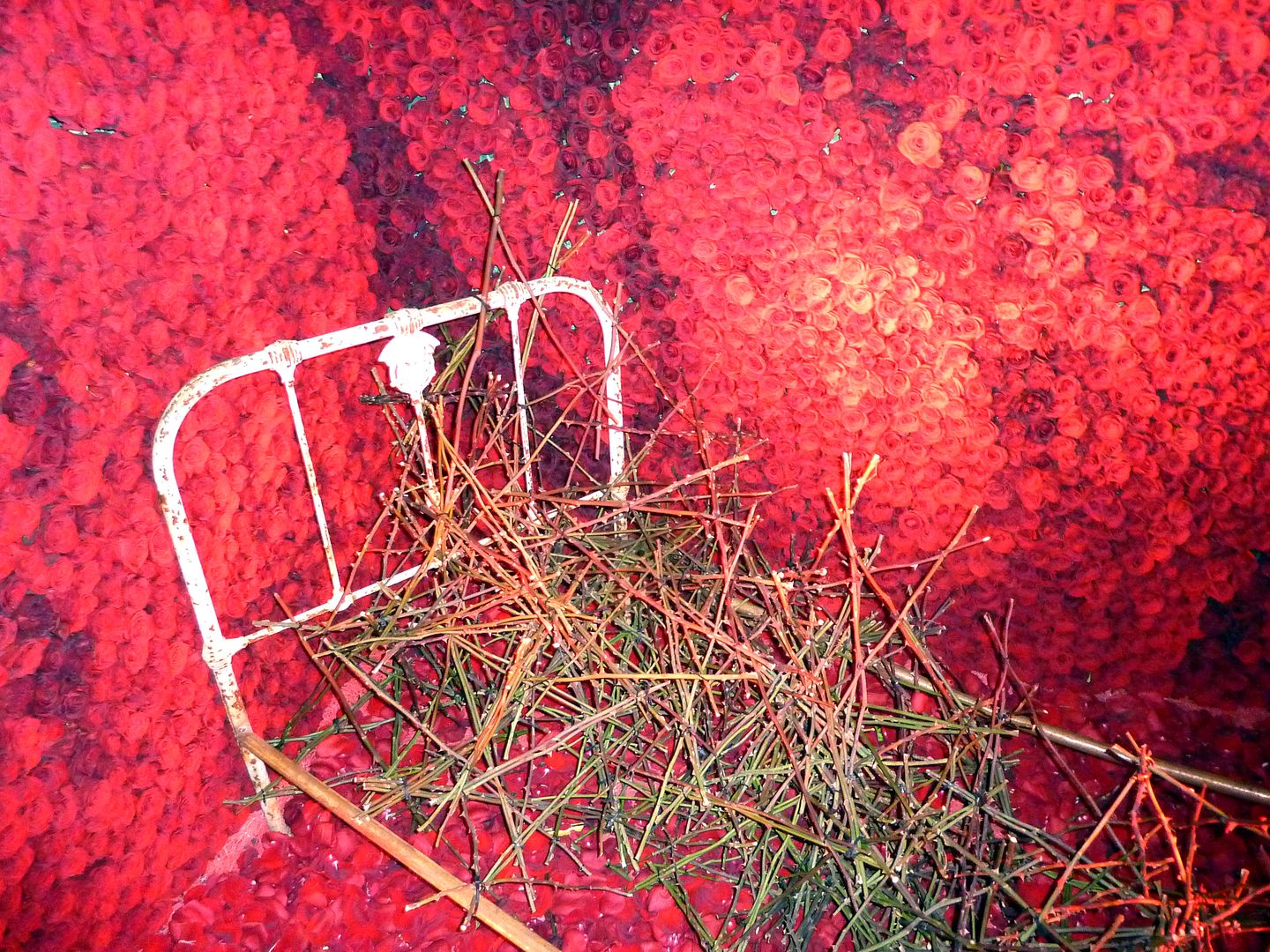
Holy hell, where am I again? I think the designer to this one committed suicide. Hidden in the corner of the show there was a display that seemed to be more about artistic emotion and design than anything to do with gardening. I actually started to like it as an artiest. One women commented that this was a tribute to Jack the Ripper.... I'm unsure if she was joking, and can't imagine why anyone would ever promote a murderer like that.
The walls, floor, and ceiling to this little room were padded with roses, their thorny stems coating a bed, the perfect cell for a mad gardener to sleep.
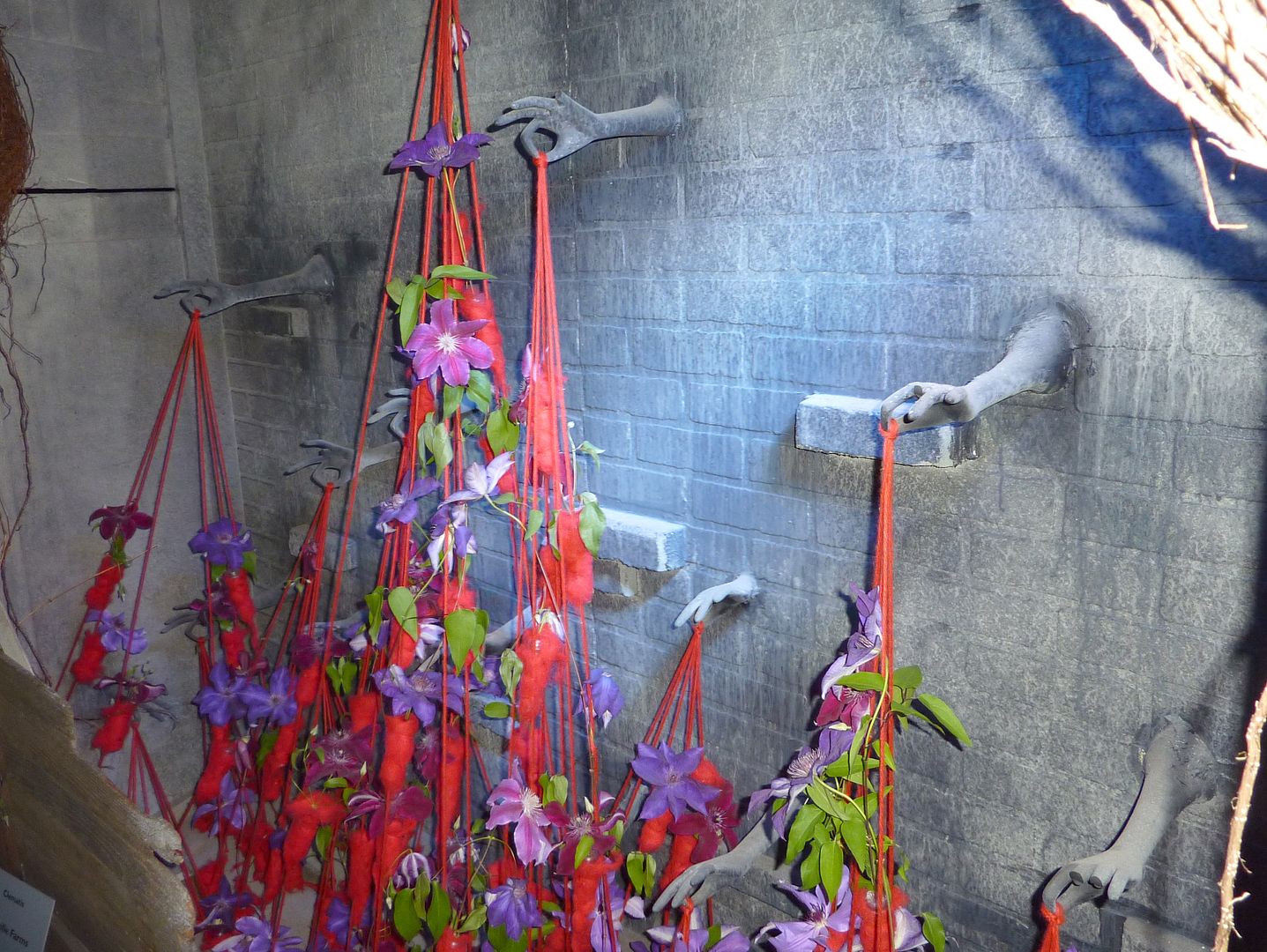
An interesting take on a hanging garden, I guess. I liked the stone hands.
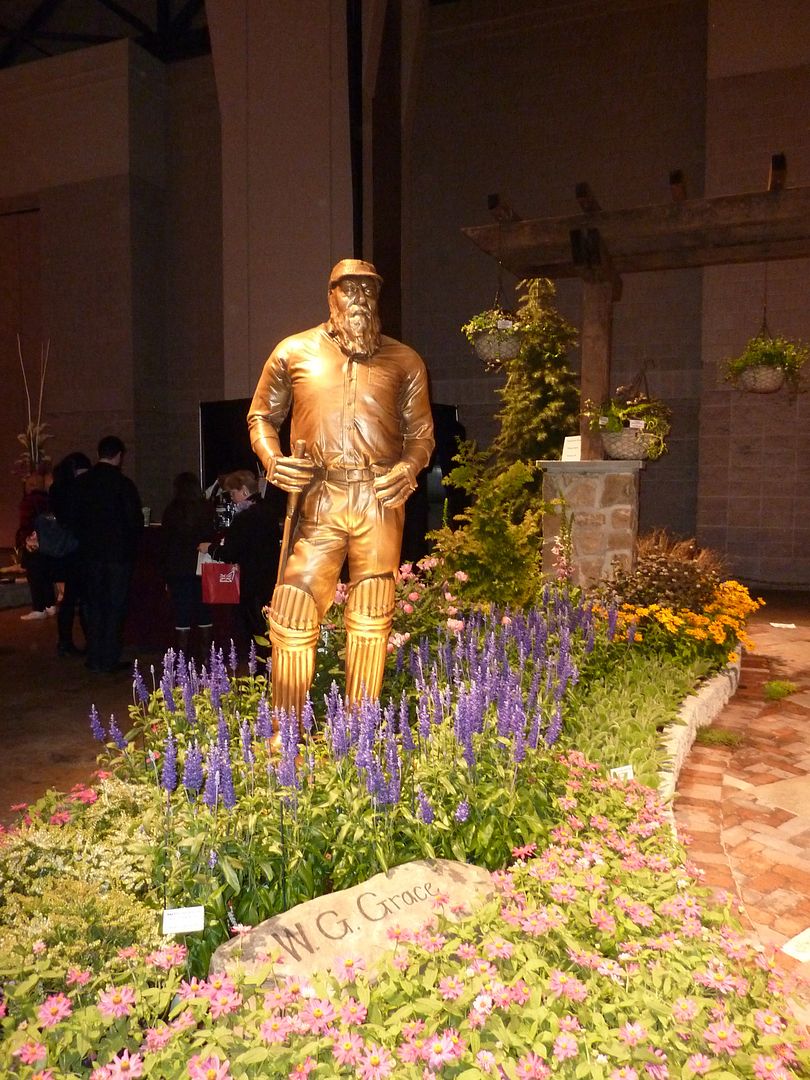
The display next to it was a more traditional garden setting. A path leading up to a house and a tribute to the sport of Cricket.
This display was a lot wider, but I felt this statue caught my eye the most. Once you've seen a well flowered front to a house, you've pretty much seen them all.
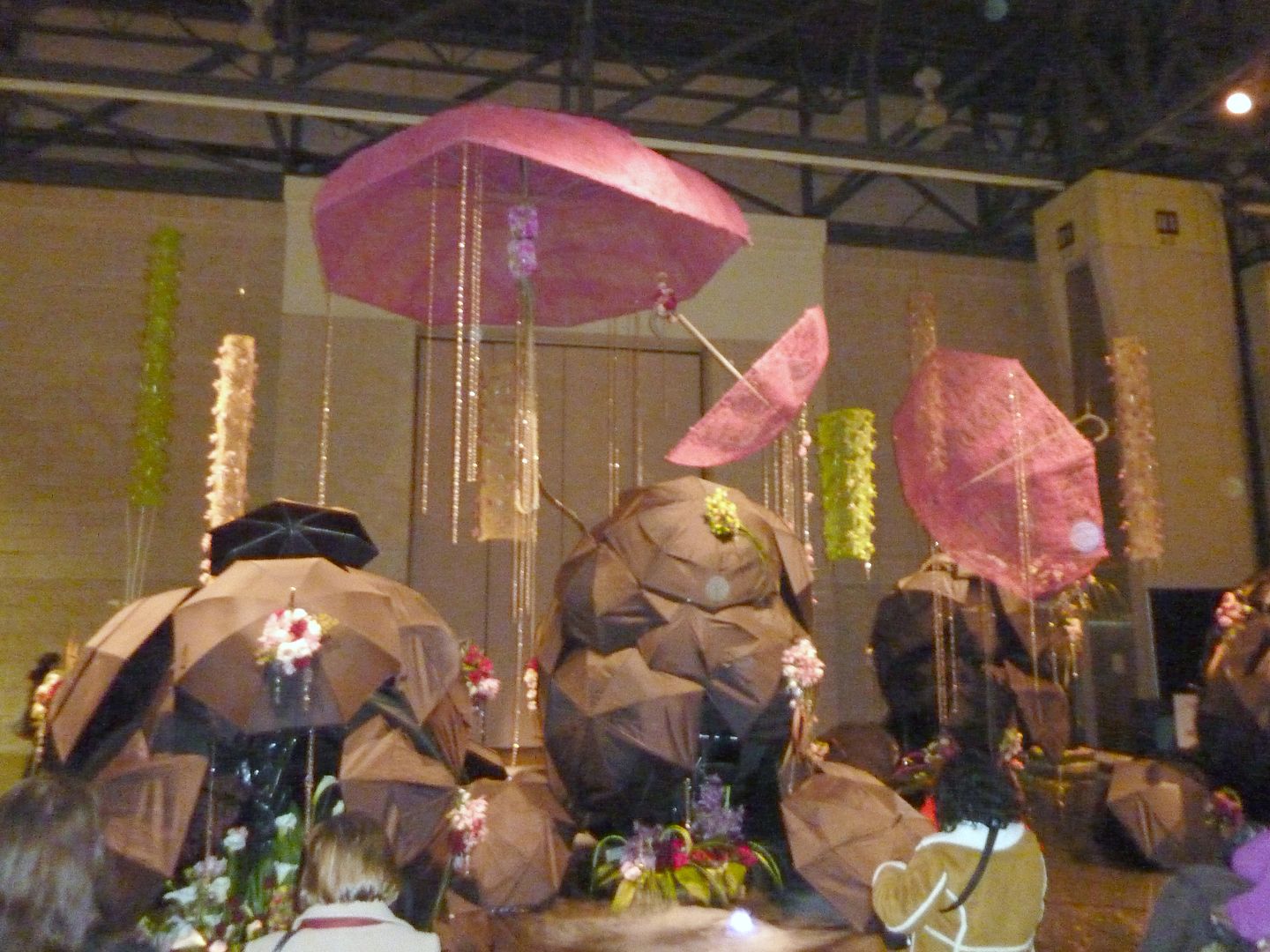
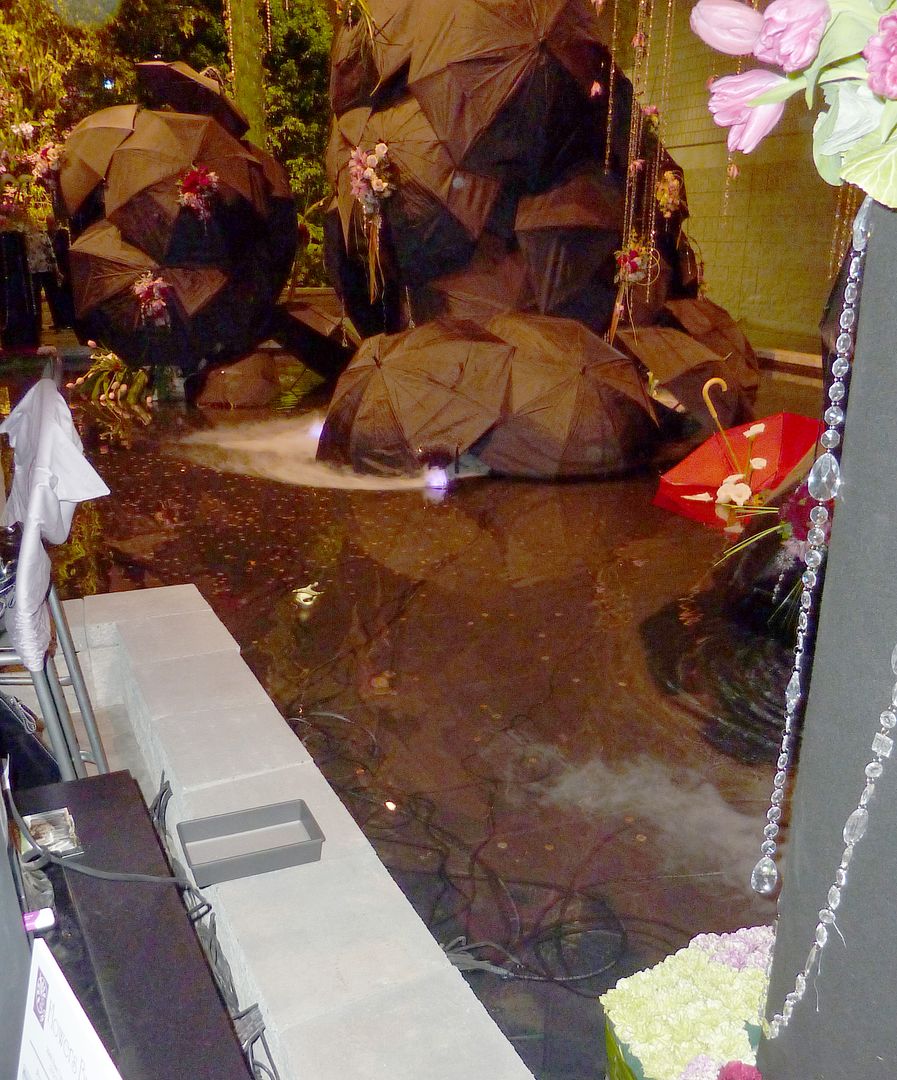
This display failed in a lot of ways. There are almost no flowers, though I think the pink umbrellas are made out of them. The black ones were actually fountains, though the trickling one gets from a garden hose was all that came out. I don't get it.
They had smoke machines, but they failed to hide the pool of water, and all their electrical cords were in plain view. Maybe they had it foggy for the judges, but I thought it was tacky and surely someone else could have done better.
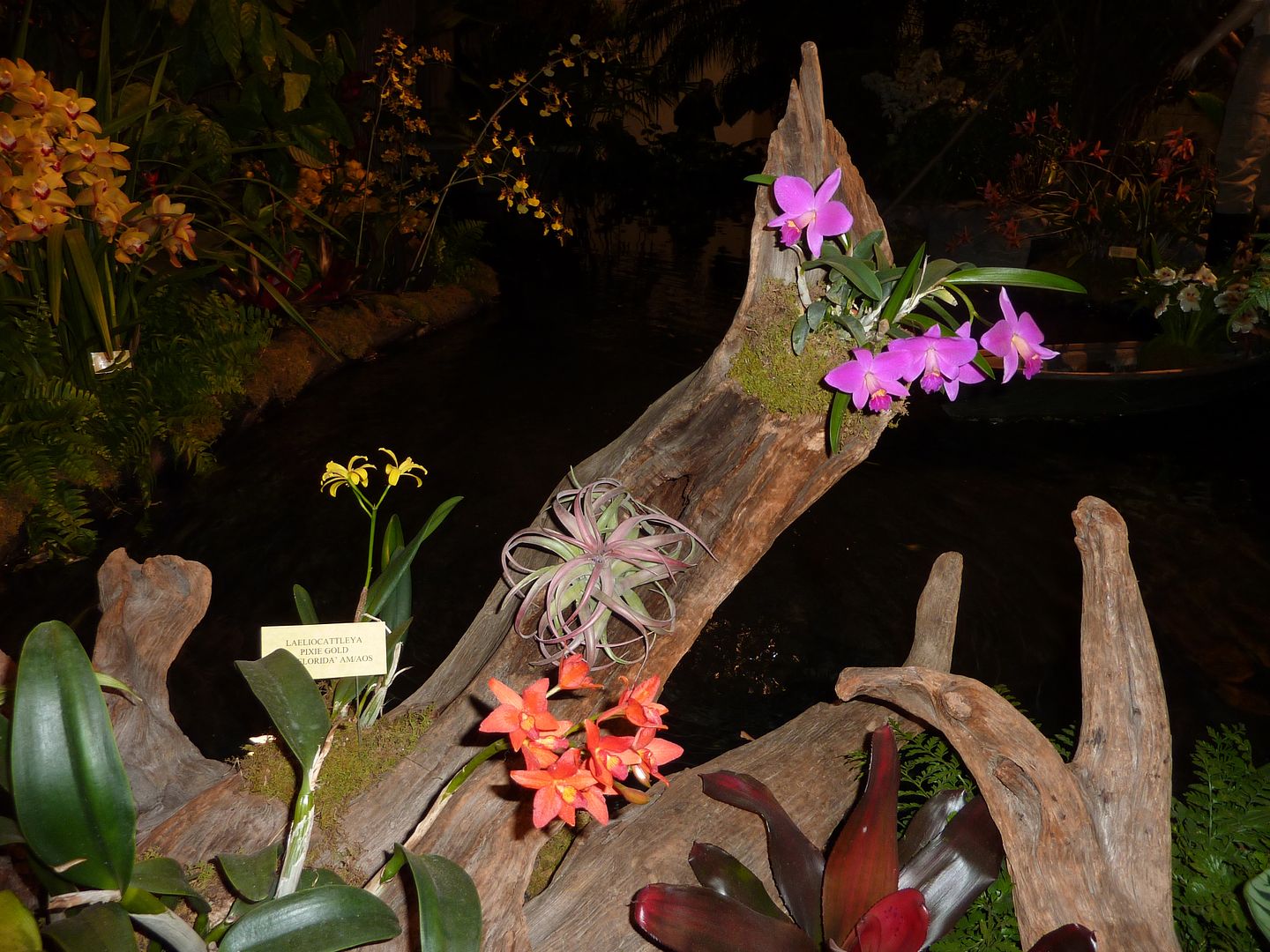
Beside it was a tropical paradise. Orchids and assorted trees and plants of the rain forest seemed to be all that were used.
Orchids are so bright and vibrant sometimes.
A highlight was they actually had a chocolate tree with fruit on it.
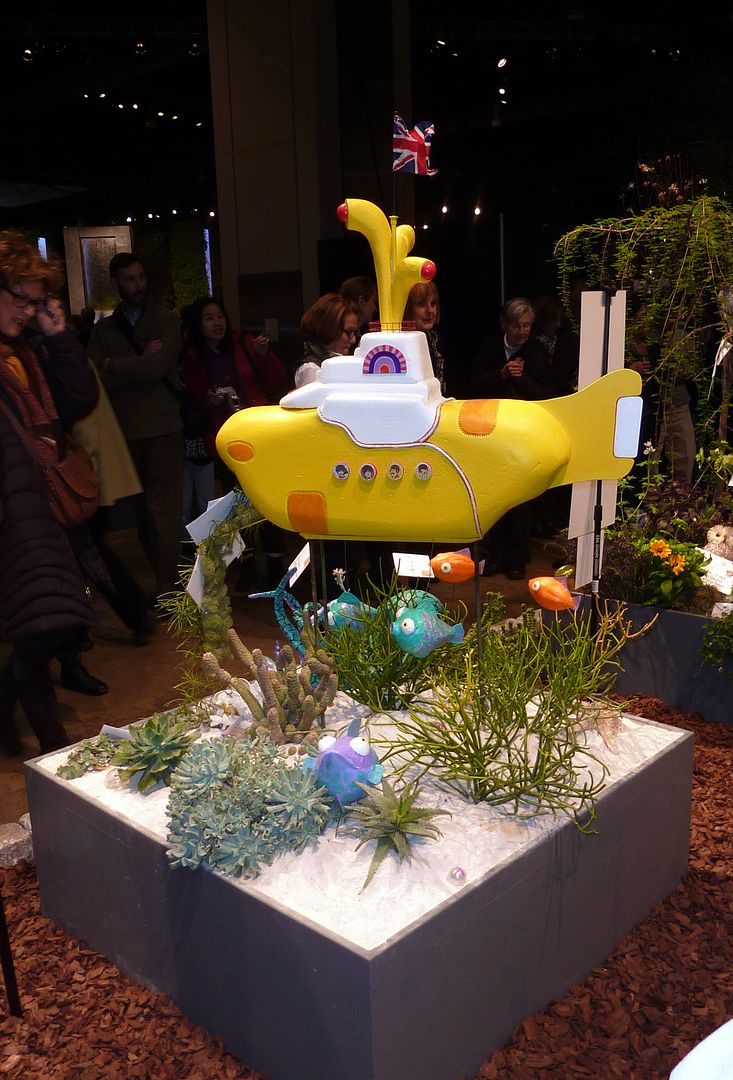
Nods to the beetles were scattered through the show, but I thought they were almost too expected given the theme.
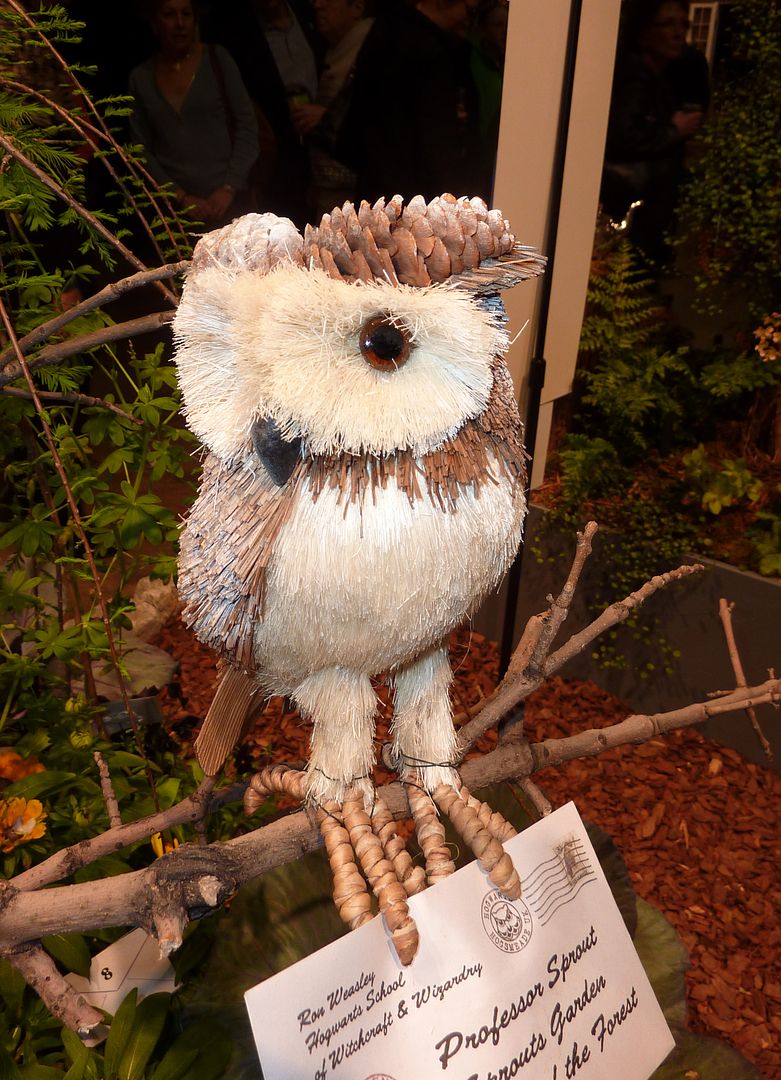
I loved this owl. I think it's made entirely out of plant material.
Witch Hazel. This plant is actual flowering at this time of year, and there are many color variations of it now.
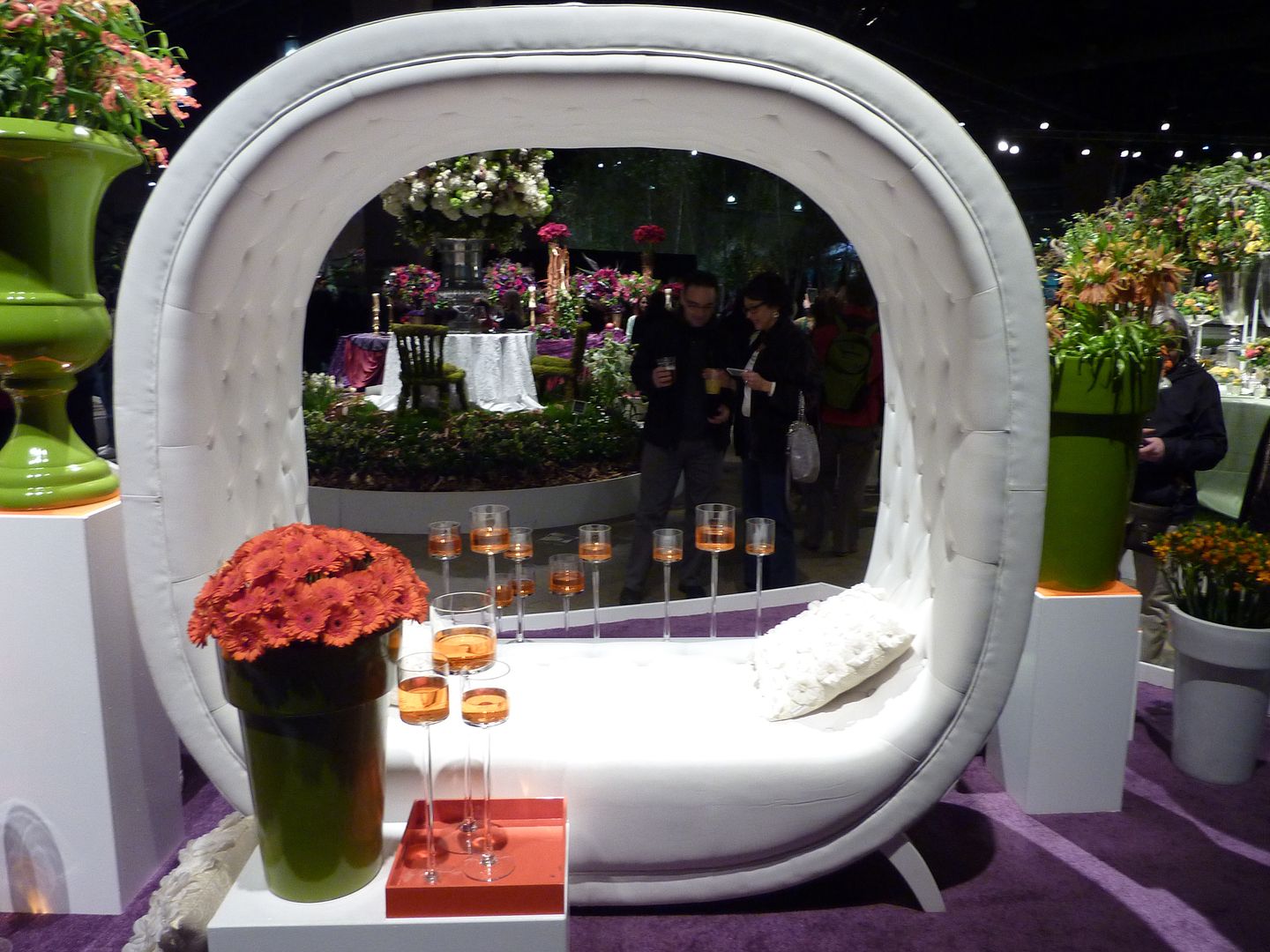
This one had some neat furniture.
I'm actually curious where they bought this one.
Rounding back to the clock, we found some odd egg shaped statues. This one is made out of pipes. (This is a flower show right?)
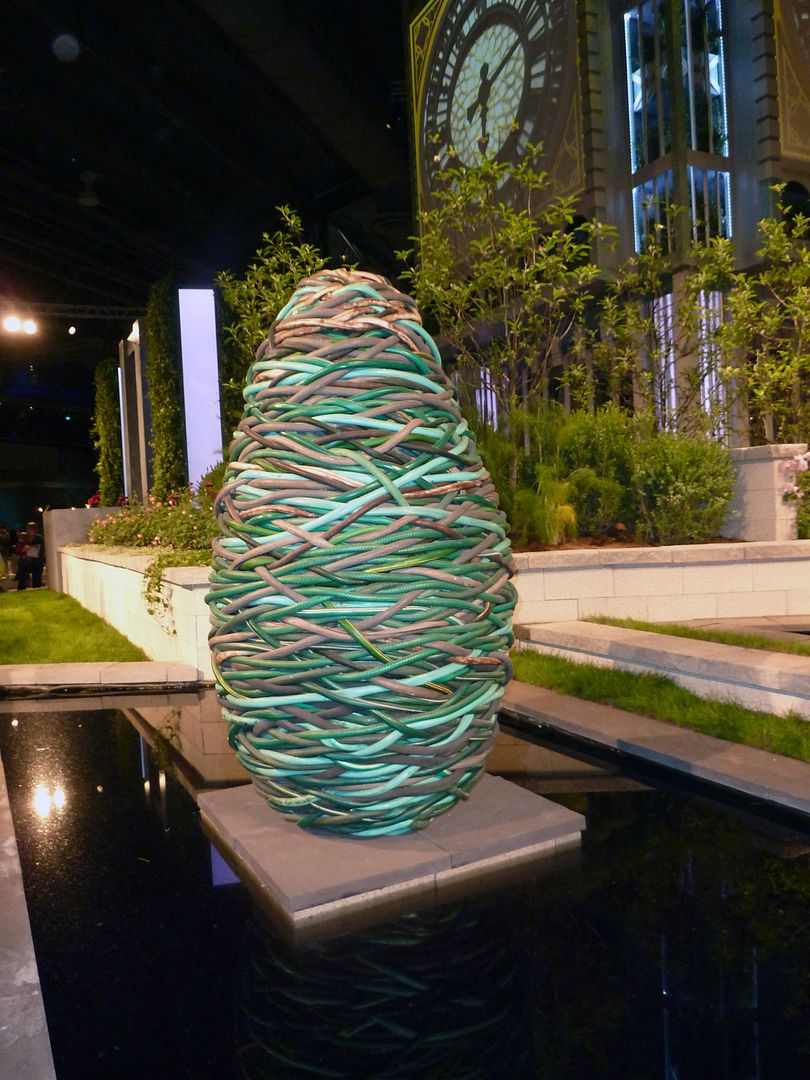
Garden hose. That's what mine looks like right now out in our shed.
More traditional displays had an emphasis on bulbs. In years past I'd complained about how over used they were. They're just too easy, too common, and with the exception of last year having nothing but orchids, they were prominently featured in every display.
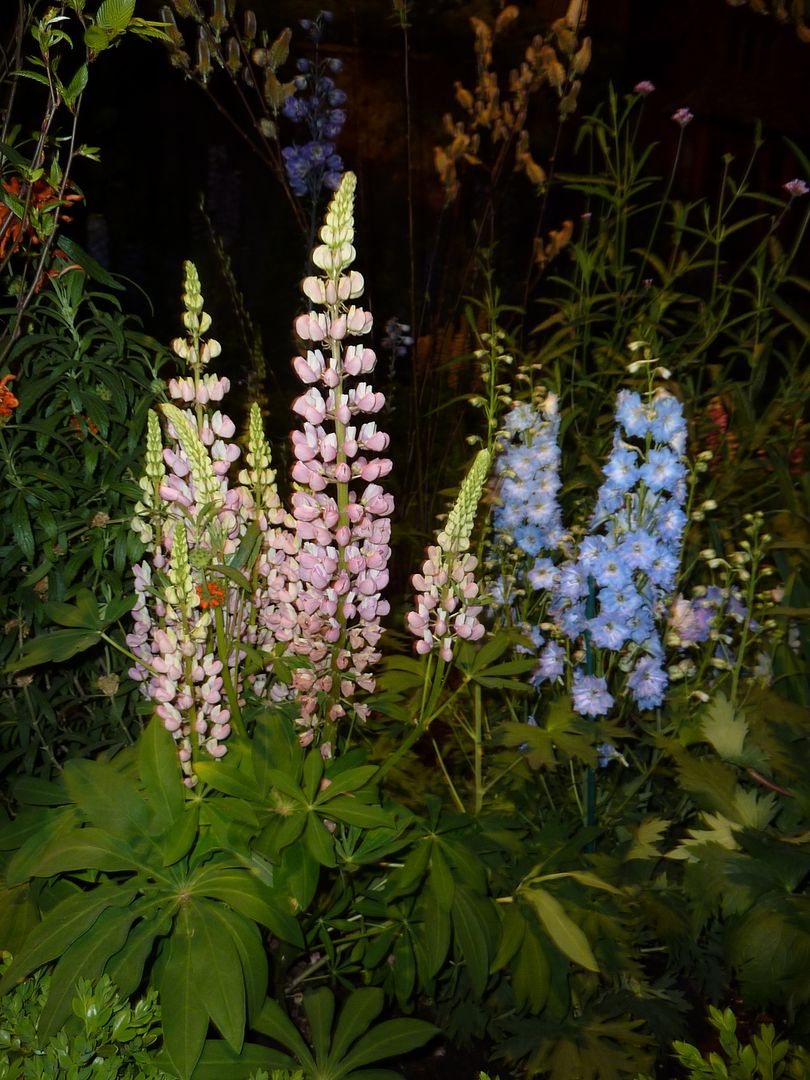
Lupines and Delphinium.
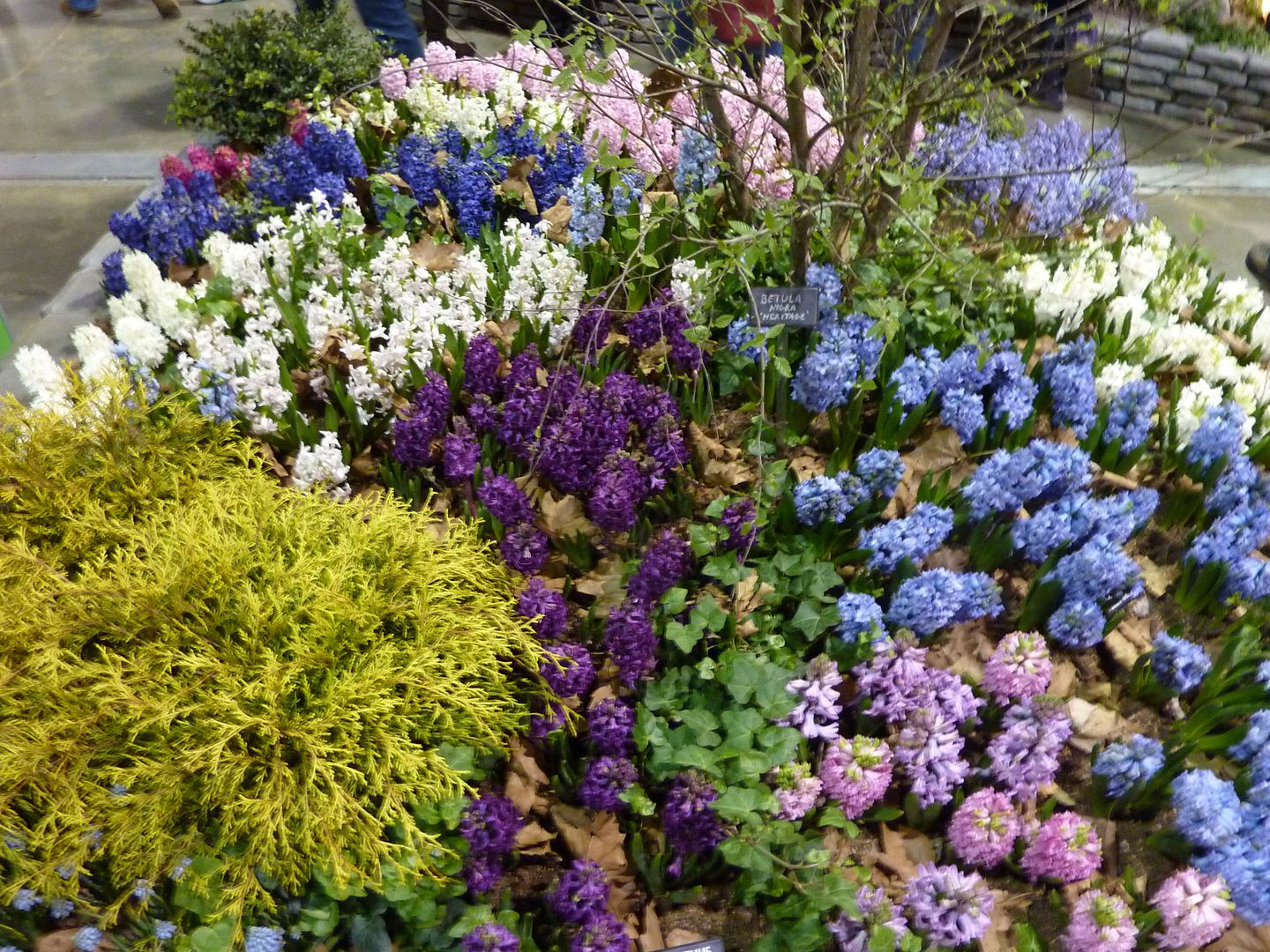
Hyacinths... I don't have anything to say about these. The blue ones look nice with whatever yellow fringed evergreen that is. Besides that there's just lots of color.
Tulips... lots and lots of tulips... and a cold frame that's growing bulbs for god knows why.
Tulips and Grape Hyacinth. The shoes are appropriate considering they hale from the same general part of the world that most bulbs come from.
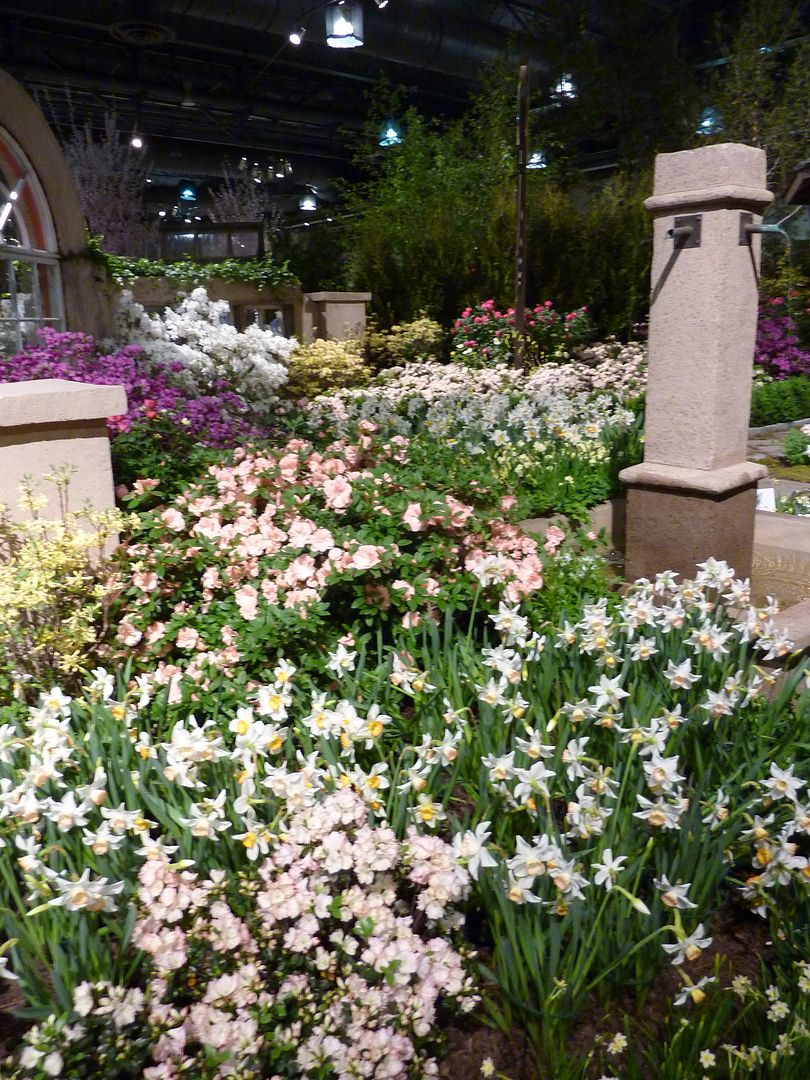
Daffodils, Rhododendrons, and maybe one or two other things. This actually works for me. If you're going to do bulbs, make it a rocky hillside, like the slopes of a mountain but then COVER IT IN COLOR!!! This sort of does that. One year I'd love to walk through the show and feel like I were walking the center of a valley and all around me flowers grow.Or even imitate a bulb farm but make it stretch a sizable portion of the show! Avoid the "Garden Zoo" effect and make things look natural.
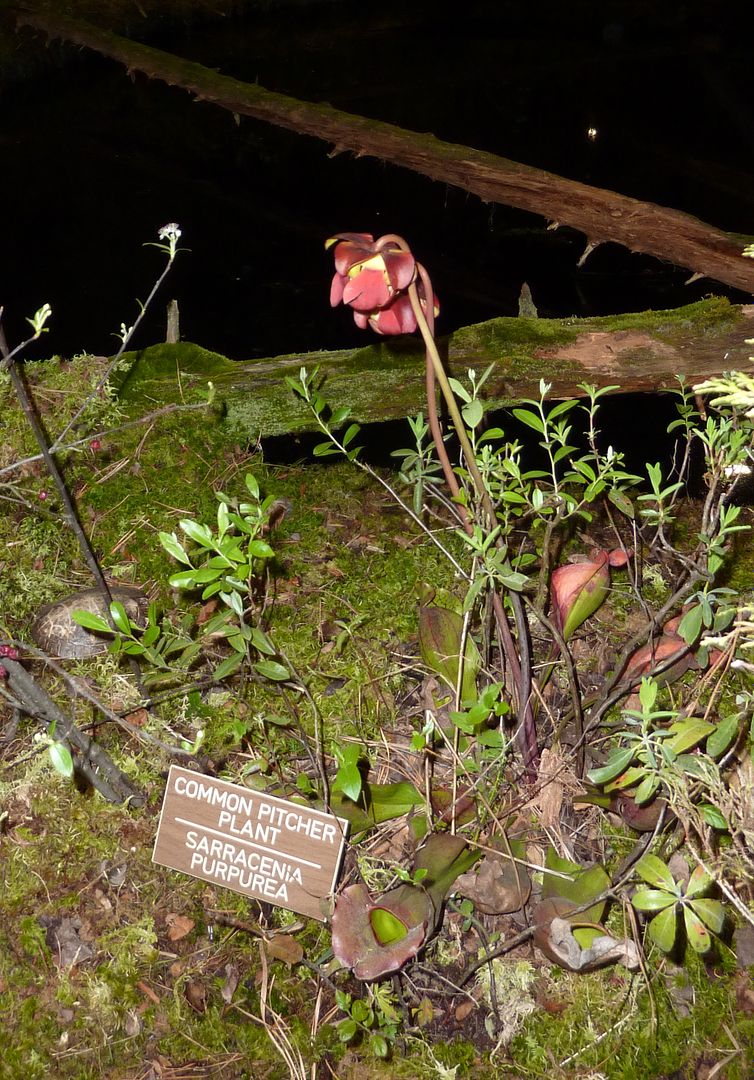
Our native pitcher plant, Sarracenia purpurea.
Sarracenia purpurea flower.
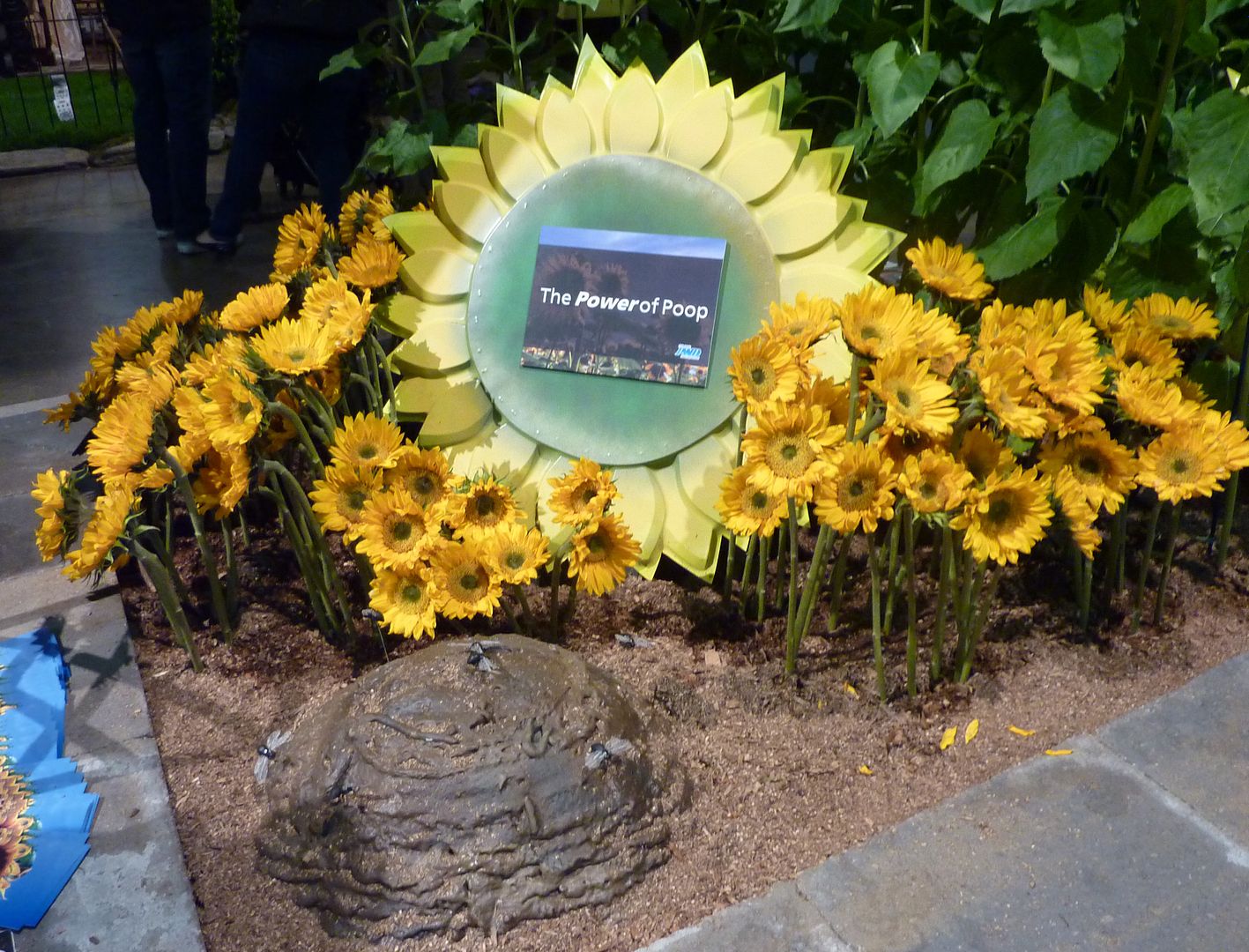
The Power of Poop.... and they have sunflowers for their display.
Lots and lots of sunflowers.
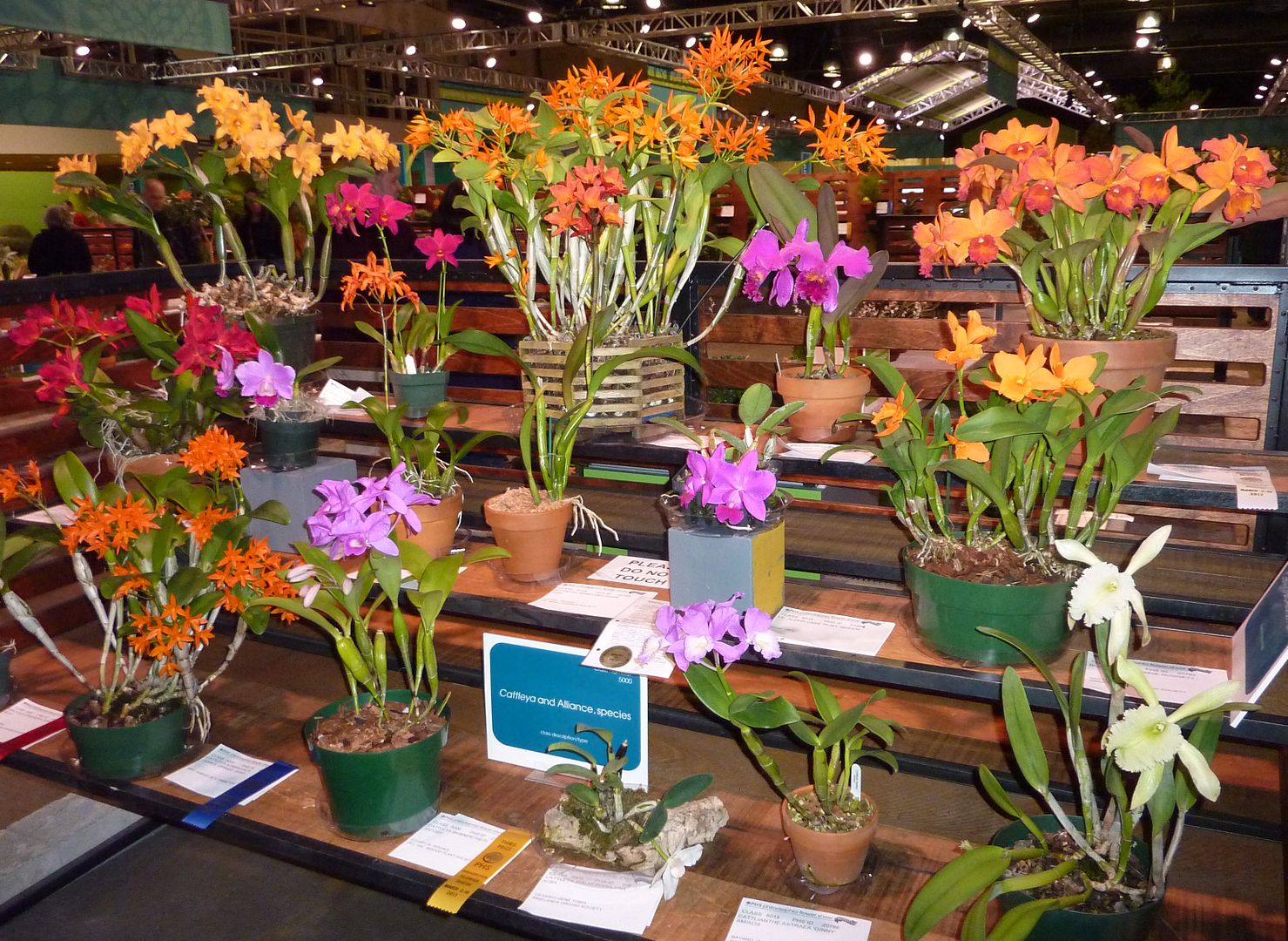
Orchids. Lots and lots of colorful orchids. This part of the show focused on individual plants which I noticed had improved from previous years.
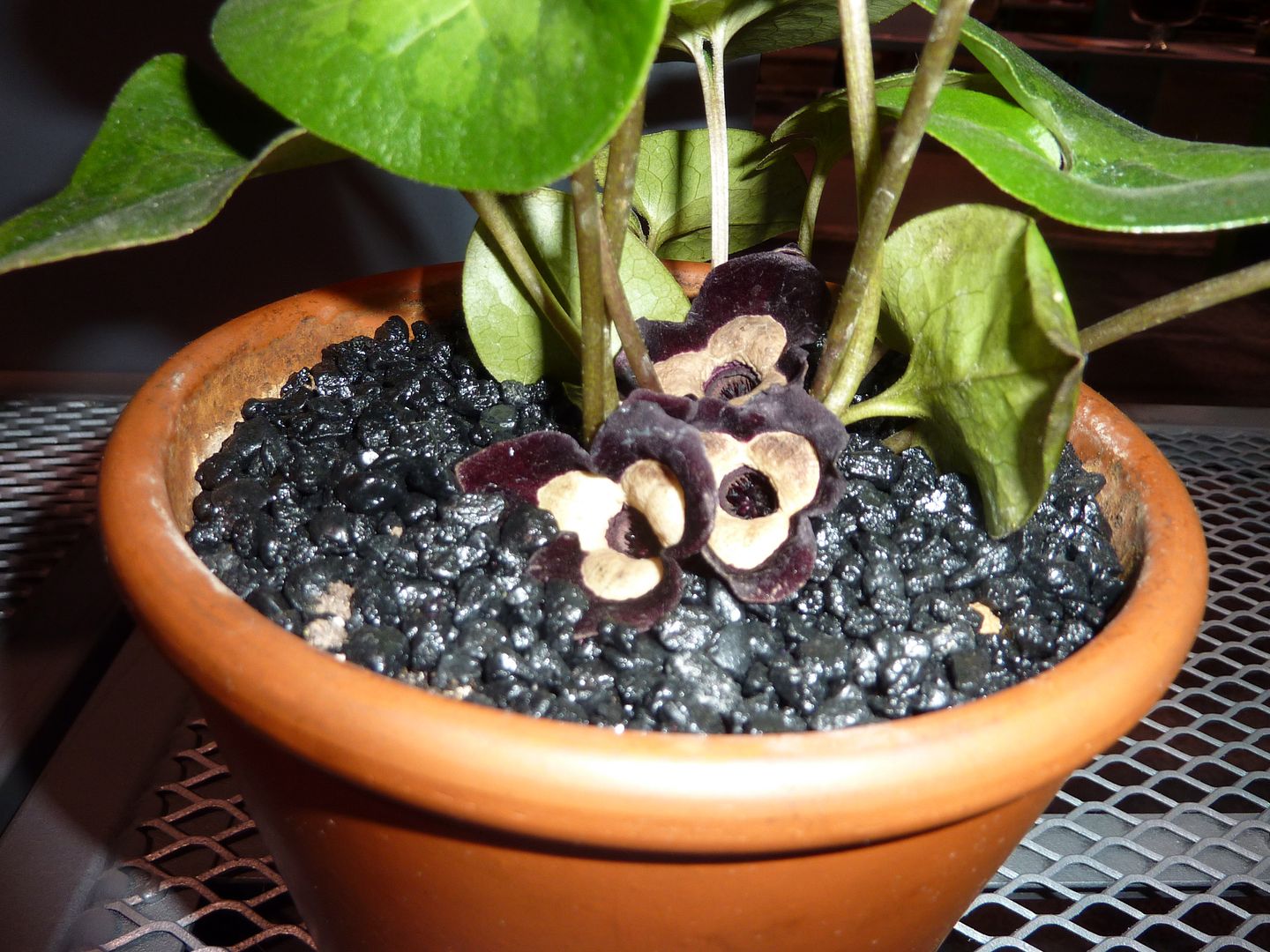
Panda Flowers. This is an Asian relative of our native Wild Ginger.
Ant Plant! In the wild this plant attaches itself to a tree and grows a fat hollow cavity for ants to live inside. Some of them even produce food bodies for the ants to eat.
The British theme was a nice one, with lots of royal looking flower arrangements, but these were a little sparse.
The centerpiece of the show is a short replica of Big Ben, which is actually a video screen of an animated clock. Every hour, on the hour, it played a mildly offensive video that really shoved the British theme in your face. Still-images of British comedians, rock stars, and members of the royal family were cheaply animated, like someone making an internet joke and I wondered if they even had the rights to use these images. Having them all salute the flag of England painted on someone's ass would have fit in perfectly.
Birch Trees lined the isles though I'm not sure what they have to do with England. (Aren't they native to North America?)
I think a lot of the props had a greater impact than the plants did.
Holy hell, where am I again? I think the designer to this one committed suicide. Hidden in the corner of the show there was a display that seemed to be more about artistic emotion and design than anything to do with gardening. I actually started to like it as an artiest. One women commented that this was a tribute to Jack the Ripper.... I'm unsure if she was joking, and can't imagine why anyone would ever promote a murderer like that.
The walls, floor, and ceiling to this little room were padded with roses, their thorny stems coating a bed, the perfect cell for a mad gardener to sleep.
An interesting take on a hanging garden, I guess. I liked the stone hands.
The display next to it was a more traditional garden setting. A path leading up to a house and a tribute to the sport of Cricket.
This display was a lot wider, but I felt this statue caught my eye the most. Once you've seen a well flowered front to a house, you've pretty much seen them all.
This display failed in a lot of ways. There are almost no flowers, though I think the pink umbrellas are made out of them. The black ones were actually fountains, though the trickling one gets from a garden hose was all that came out. I don't get it.
They had smoke machines, but they failed to hide the pool of water, and all their electrical cords were in plain view. Maybe they had it foggy for the judges, but I thought it was tacky and surely someone else could have done better.
Beside it was a tropical paradise. Orchids and assorted trees and plants of the rain forest seemed to be all that were used.
Orchids are so bright and vibrant sometimes.
A highlight was they actually had a chocolate tree with fruit on it.
Nods to the beetles were scattered through the show, but I thought they were almost too expected given the theme.
I loved this owl. I think it's made entirely out of plant material.
Witch Hazel. This plant is actual flowering at this time of year, and there are many color variations of it now.
This one had some neat furniture.
I'm actually curious where they bought this one.
Garden hose. That's what mine looks like right now out in our shed.
More traditional displays had an emphasis on bulbs. In years past I'd complained about how over used they were. They're just too easy, too common, and with the exception of last year having nothing but orchids, they were prominently featured in every display.
Lupines and Delphinium.
Hyacinths... I don't have anything to say about these. The blue ones look nice with whatever yellow fringed evergreen that is. Besides that there's just lots of color.
Tulips... lots and lots of tulips... and a cold frame that's growing bulbs for god knows why.
Tulips and Grape Hyacinth. The shoes are appropriate considering they hale from the same general part of the world that most bulbs come from.
Daffodils, Rhododendrons, and maybe one or two other things. This actually works for me. If you're going to do bulbs, make it a rocky hillside, like the slopes of a mountain but then COVER IT IN COLOR!!! This sort of does that. One year I'd love to walk through the show and feel like I were walking the center of a valley and all around me flowers grow.Or even imitate a bulb farm but make it stretch a sizable portion of the show! Avoid the "Garden Zoo" effect and make things look natural.
Our native pitcher plant, Sarracenia purpurea.
Sarracenia purpurea flower.
The Power of Poop.... and they have sunflowers for their display.
Lots and lots of sunflowers.
Orchids. Lots and lots of colorful orchids. This part of the show focused on individual plants which I noticed had improved from previous years.
Panda Flowers. This is an Asian relative of our native Wild Ginger.
Ant Plant! In the wild this plant attaches itself to a tree and grows a fat hollow cavity for ants to live inside. Some of them even produce food bodies for the ants to eat.
Labels:
Design,
Flower Show,
flowers,
Orchids,
Rose,
Sunflowers
Saturday, March 2, 2013
Eastern Black Swallowtail Winter Update
This past year I was able to raise 9 Eastern Black Swallowtail caterpillars in a screened cage. They over winter as a chrysalis and hatch out sometime in late winter or early spring right in time to get another generation of butterflies going again. They're stored in our basement which is freezing cold, along with my mason bee nest blocks, which I should be cleaning off and treating for mites and such but ... oh well.
Tuesday, February 19, 2013
Window Shelves
Window Shelves, ready for seed starting. I'll be adding a third shelf eventually, as well as trying out some seed starter trays from Jung... which arrived today and are annoyingly tiny.
Labels:
Seeds
Wednesday, February 13, 2013
"Native Plants for Honeybees" Now on Sale
"Native Plants for Honeybees" is now published and for sale at Create Space, and Amazon.com right now, as well as the Kindle Bookstore. The emphasis is on Eastern Natives Plants, though not quite as south as Florida, Texas, or California. I know it's not really said anywhere but hopefully the big New England Aster on the cover gives everyone the idea. A few western natives are included but not many, and certainly not as many as I'd like to recommend.
A Brief Overall:
Is it Native?
The Evolution of Flowering Plants: How different flower shapes attract different pollinators. Some native bees will only use the pollen to certain plants to feed to their young, in a similar way that butterflies only lay their eggs on certain host plants.
Measuring Biodiversity: Butterfly Gardening, some of the other insects native plants attract, Leaf Beetles, Aphids, and their predators and parasites and such.
Ants: they make up 1/3 the total insects of the world by number (not species) so it only makes sense to talk about their relation with honeybees. Honeybee hives are often used by some species as nests, and the hives themselves are fountains of resources in many regards. I talk about the degrees in which ants interact with them. The topic of illegal trade is also brought up here.
Don't Waste Their Time: This is the best advise I can give to any gardener trying to get honeybees in their garden.
The Plant List: 95 pages of Food Plants, Flowering Trees, Spring Ephemerals, and Wildflowers honeybees use to get them through the year. Not all are commercially available but those that aren't are brought up for good reason. Most are available of course.
Book Recomendations and Native Plant Nurseries with emphasis on ones that allow you to fill up a shopping card and check out on your own. I hate nurseries that call you in person and ask for your credit info.
A Brief Overall:
Is it Native?
The Evolution of Flowering Plants: How different flower shapes attract different pollinators. Some native bees will only use the pollen to certain plants to feed to their young, in a similar way that butterflies only lay their eggs on certain host plants.
Measuring Biodiversity: Butterfly Gardening, some of the other insects native plants attract, Leaf Beetles, Aphids, and their predators and parasites and such.
Ants: they make up 1/3 the total insects of the world by number (not species) so it only makes sense to talk about their relation with honeybees. Honeybee hives are often used by some species as nests, and the hives themselves are fountains of resources in many regards. I talk about the degrees in which ants interact with them. The topic of illegal trade is also brought up here.
Don't Waste Their Time: This is the best advise I can give to any gardener trying to get honeybees in their garden.
The Plant List: 95 pages of Food Plants, Flowering Trees, Spring Ephemerals, and Wildflowers honeybees use to get them through the year. Not all are commercially available but those that aren't are brought up for good reason. Most are available of course.
Book Recomendations and Native Plant Nurseries with emphasis on ones that allow you to fill up a shopping card and check out on your own. I hate nurseries that call you in person and ask for your credit info.
Sunday, February 10, 2013
Thinning the Tall Goldenrod, Solidago altissma
Tall Goldenrod, Solidago altissma, started in my garden as just one cane. Actually I had a butterfly bush there and noticed one of the stems looked different. When I got rid of the butterfly bush I kept the stem and it turned out to be goldenrod.
The following year that one stem turned into 7, then 12, then 40, then ~100 and I've stopped counting ever since. I've kept them confined to an area that's only 3' by 6'. But they'd grow to be so much taller, 8' to 13' and often they'd fall over into the surrounding pathways. While I have thinned them in the past, this year I decided to pull as much as I could. I'm still going to have plants growing there, but hopefully I won't need to thin them for another few years.
Thursday, February 7, 2013
False Potato Beetle
The
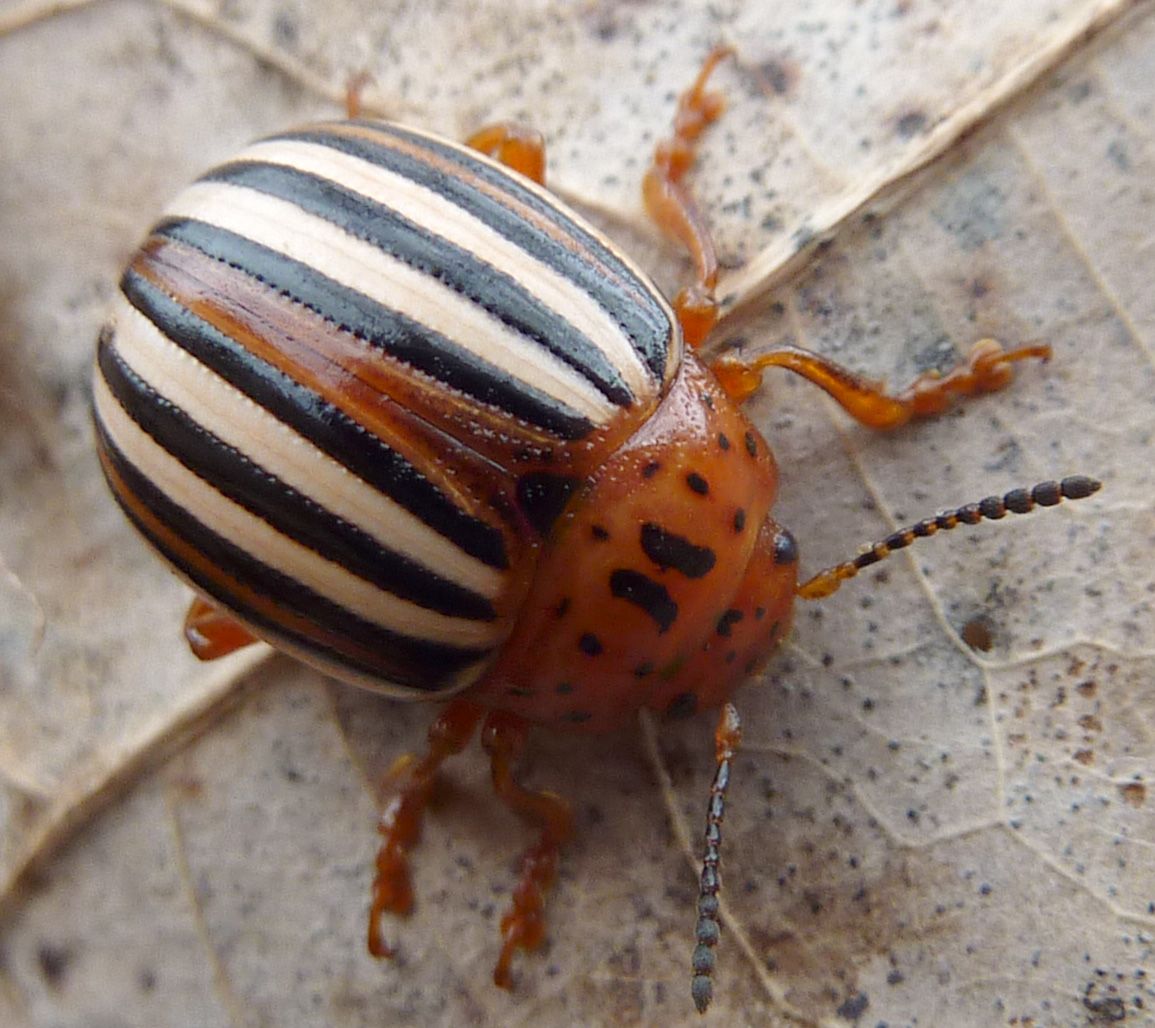
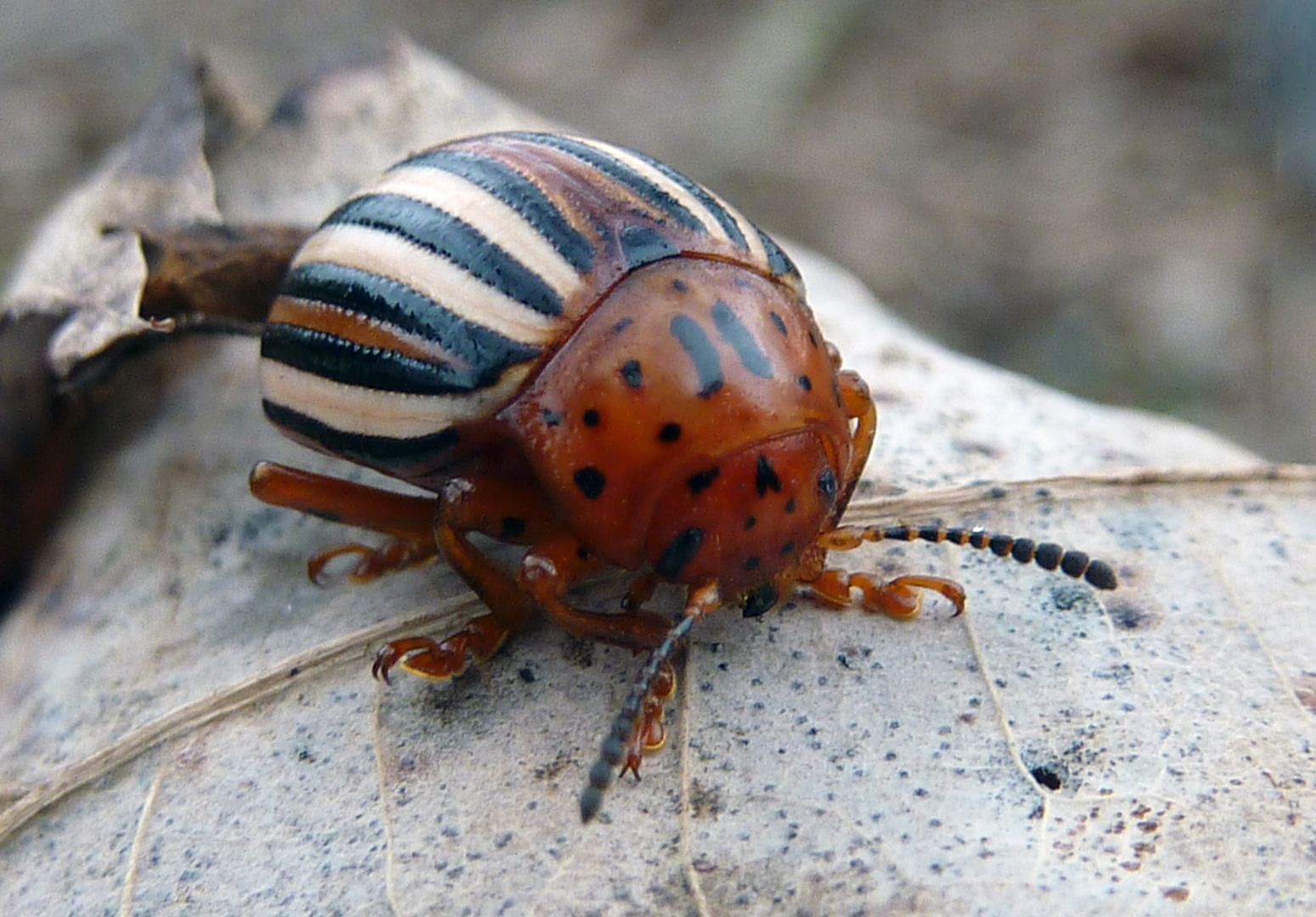
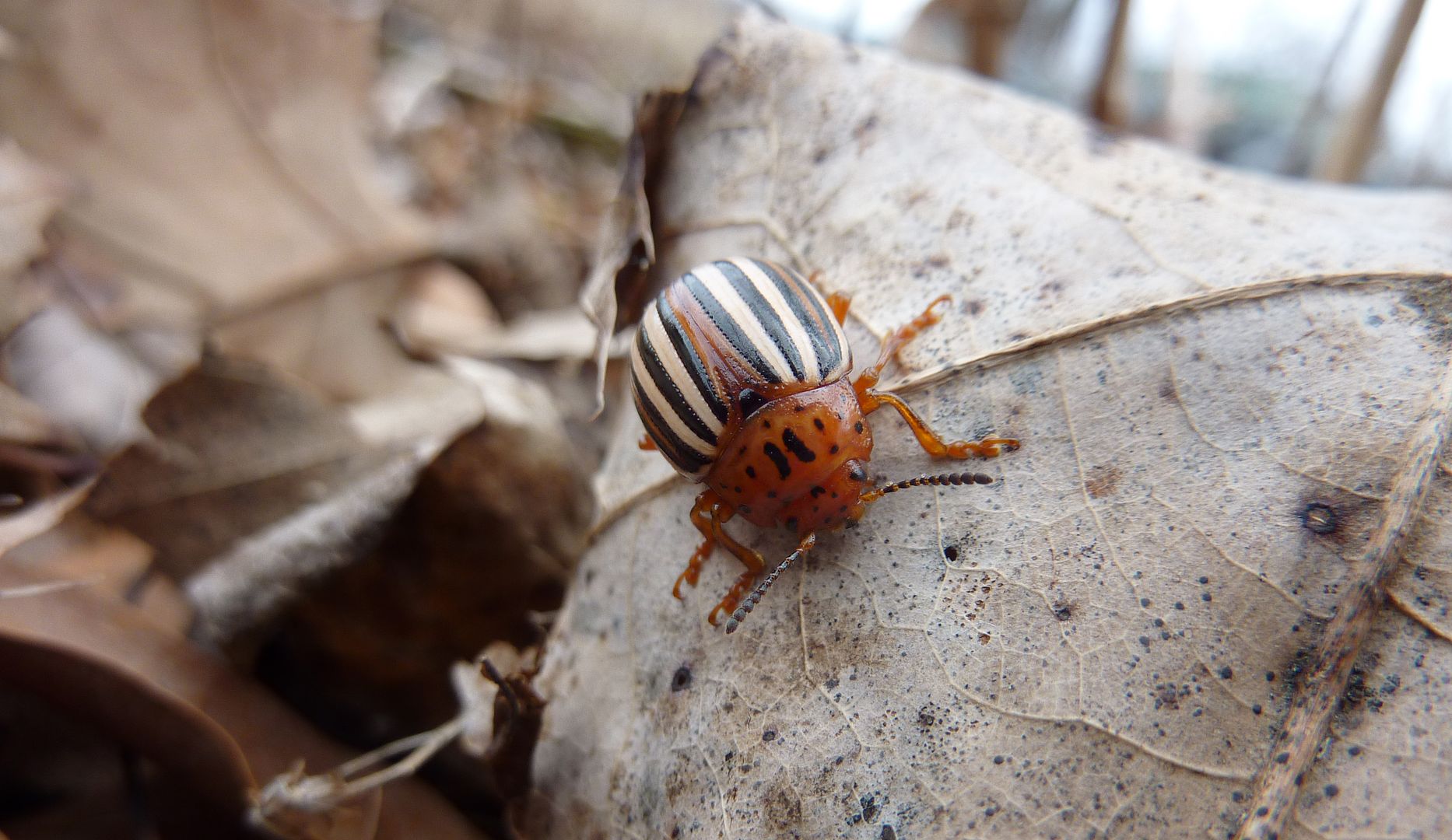
False Potato Beetle, Leptinotarsa juncta, apparently overwinters as an
adult, hiding among the leaf litter.
Note the chestnut-brown stripe down its back which is not found on the Colorado Potato Beetle.
The larva to this species is also white, whereas the Colorado Potato Beetle is brown or rosy colored.
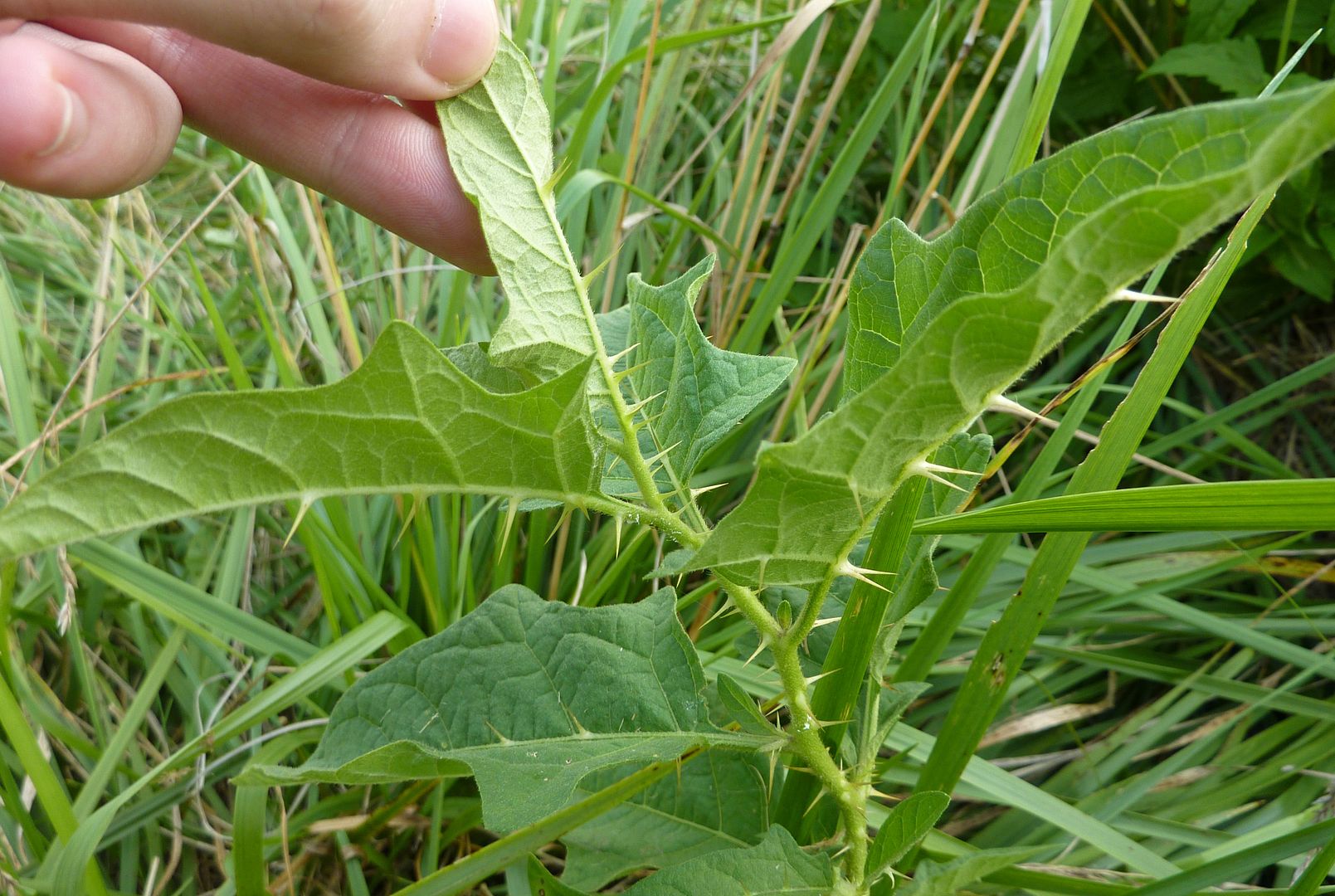
Host plants include Horse-Nettle which has mysteriously become a lawn weed with one of my neighbors. The flower to this plant is exactly like you see on a potato plant, but they only grow a foot or two long and are covered in some nasty thorns, that actually run along the central vane of the leaves too.
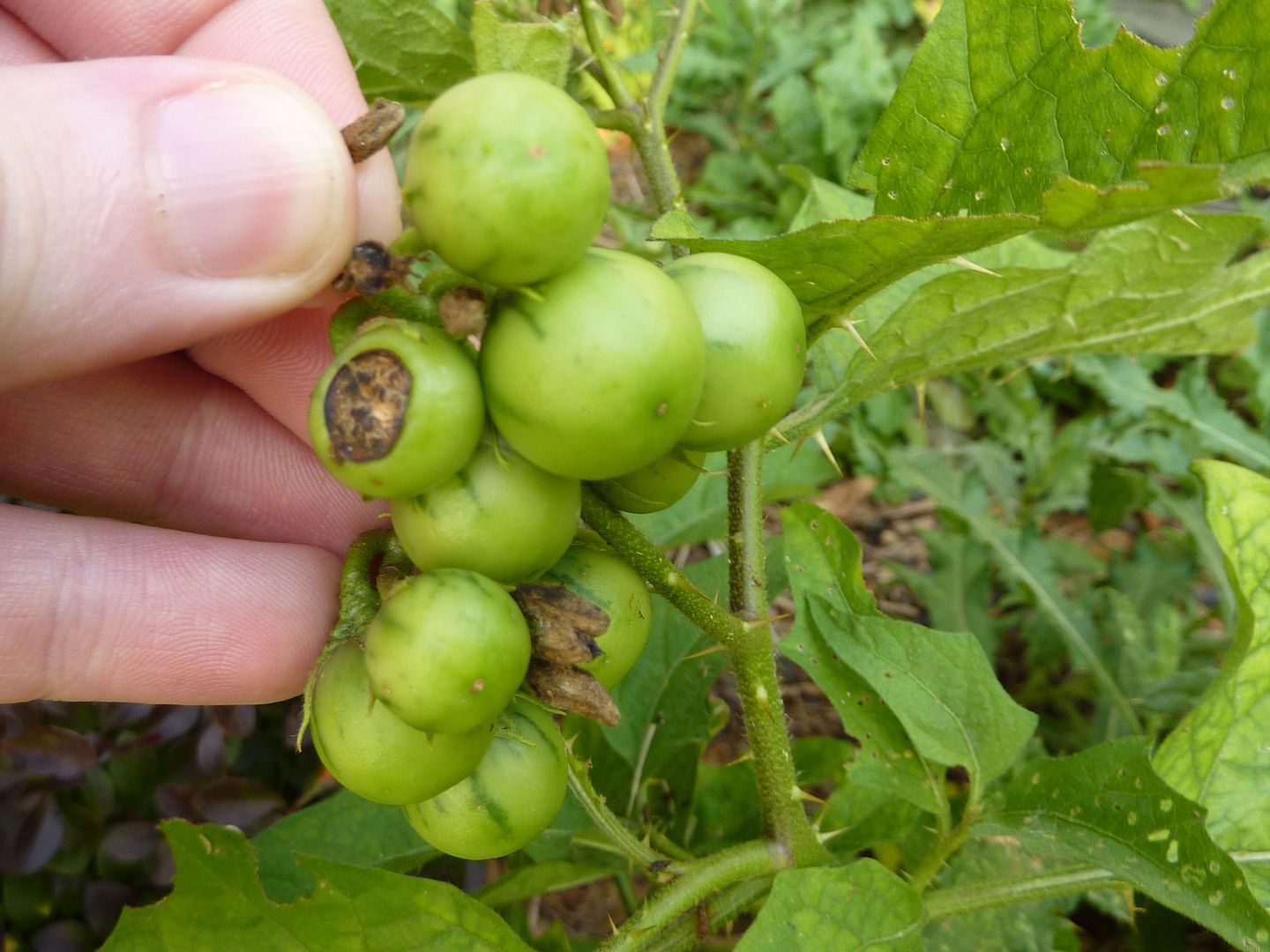
This plant is a relative of the Tomato and even produces small cherry tomato-like fruits. I don't believe they're edible to humans, and in facts are probably poisonous! I have no idea what caused this plant to suddenly show up in my neighborhood! I've lived here all my childhood, and only noticed how abundant it was in my neighbor's lawn in the past two years. Presumably he treated his lawn with grass seed that was contaminated with those of Horse-Nettle.
They also use Nightshade which does occur along our fence but isn't all that common.
Note the chestnut-brown stripe down its back which is not found on the Colorado Potato Beetle.
The larva to this species is also white, whereas the Colorado Potato Beetle is brown or rosy colored.
Host plants include Horse-Nettle which has mysteriously become a lawn weed with one of my neighbors. The flower to this plant is exactly like you see on a potato plant, but they only grow a foot or two long and are covered in some nasty thorns, that actually run along the central vane of the leaves too.
This plant is a relative of the Tomato and even produces small cherry tomato-like fruits. I don't believe they're edible to humans, and in facts are probably poisonous! I have no idea what caused this plant to suddenly show up in my neighborhood! I've lived here all my childhood, and only noticed how abundant it was in my neighbor's lawn in the past two years. Presumably he treated his lawn with grass seed that was contaminated with those of Horse-Nettle.
They also use Nightshade which does occur along our fence but isn't all that common.
Wednesday, February 6, 2013
Coming to an Internet near you
Got a proof copy in the mail today. Sadly I've since made edits after ordering but it feels so good just to have something you can hold in your hands. The paper quality is somewhat lacking, in my opinion, but hopefully that's because it's a proof copy (which cost me $10 less than the minimum price I'm allowed to sell it for). Presumably the finished copy will have better paper quality
Regrettably I was not able to add any gardening or honeybee related drinking games. And the thought of taking a shot every time you saw a bee or butterfly would quickly turn most readers into alcoholics.
Labels:
Book
Saturday, February 2, 2013
Transplanting Trilliums
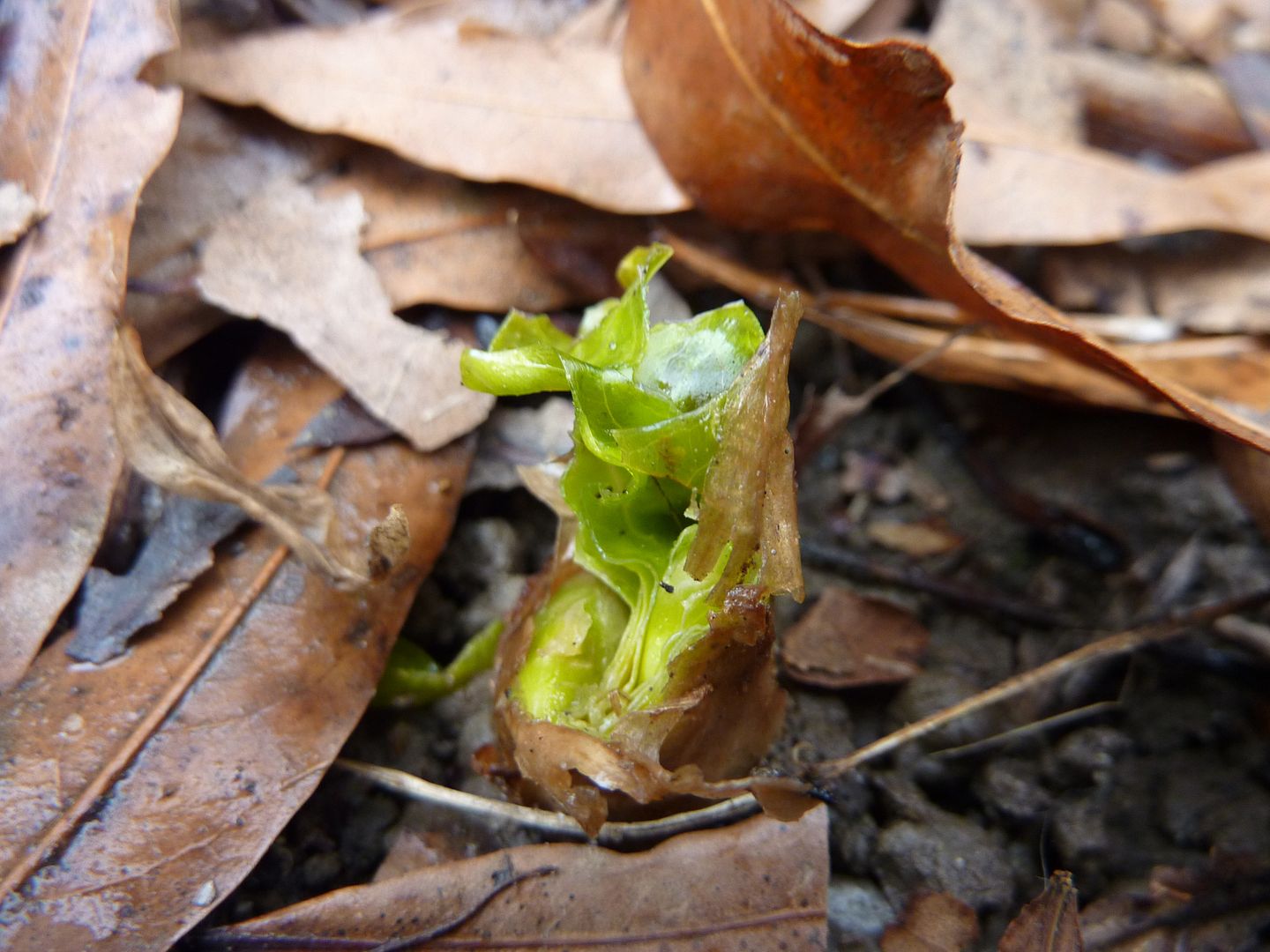
Trilliums are ideally transplanted in August or September, right when the green growth dies back. I've been meaning to do that because some of mine are planted in a garden that's too dry over the summer. They typically abort their seed pods and go dormant before spreading them, unless I'm careful to water them every other day. Last year I waited too long and couldn't remember where they were planted, so I'm doing it a little late this year.
Trillium luteum seems to be the earliest species to push out of the ground. Because of this happening right when they wake up, I'm only moving two of them as a test. I'm expecting them to abort the flower as they don't do well to disturbance like this.
Their root takes on the form of a rhizome. Basically these are mutant potatoes that grow long-wise through the soil moving through the soil very slowly over the decades, dividing on occasion and very slowly separating. The older parts of the rhizome will slowly rot, at a rate relative to the soil conditions. In ideal soil conditions, old Trillium plants can grow out to form hundreds of stems before any noticeable rotting happens, while Trilliums in poor soil will be looser, spread out, and reproduce better by seed.
I don't see any rot happening down at the old part of the plant. It looks like someone manually divided it at some point, but you can see that stems emerge from the newest part of the rhizome, as well as most of the roots.
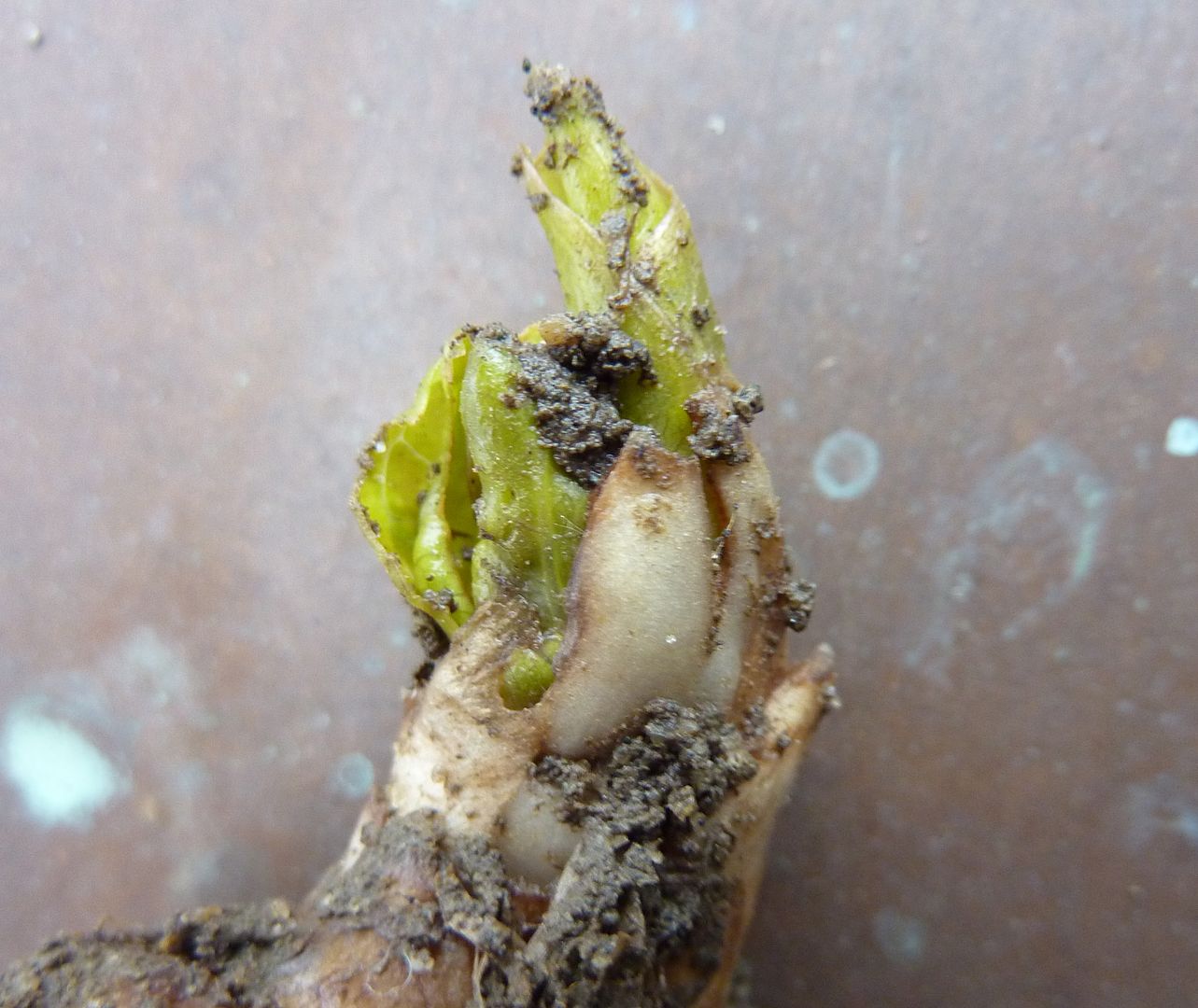
The leaves and flower are basically already formed, it's simply a matter for the plant to push this growth up to inflate.
Of the two that I moved, I only disturbed the soil from one of them, while the other I kept mostly undisturbed in a big clump of earth. Hopefully I'll get lucky, and they won't abort the flowers.
Trillium luteum seems to be the earliest species to push out of the ground. Because of this happening right when they wake up, I'm only moving two of them as a test. I'm expecting them to abort the flower as they don't do well to disturbance like this.
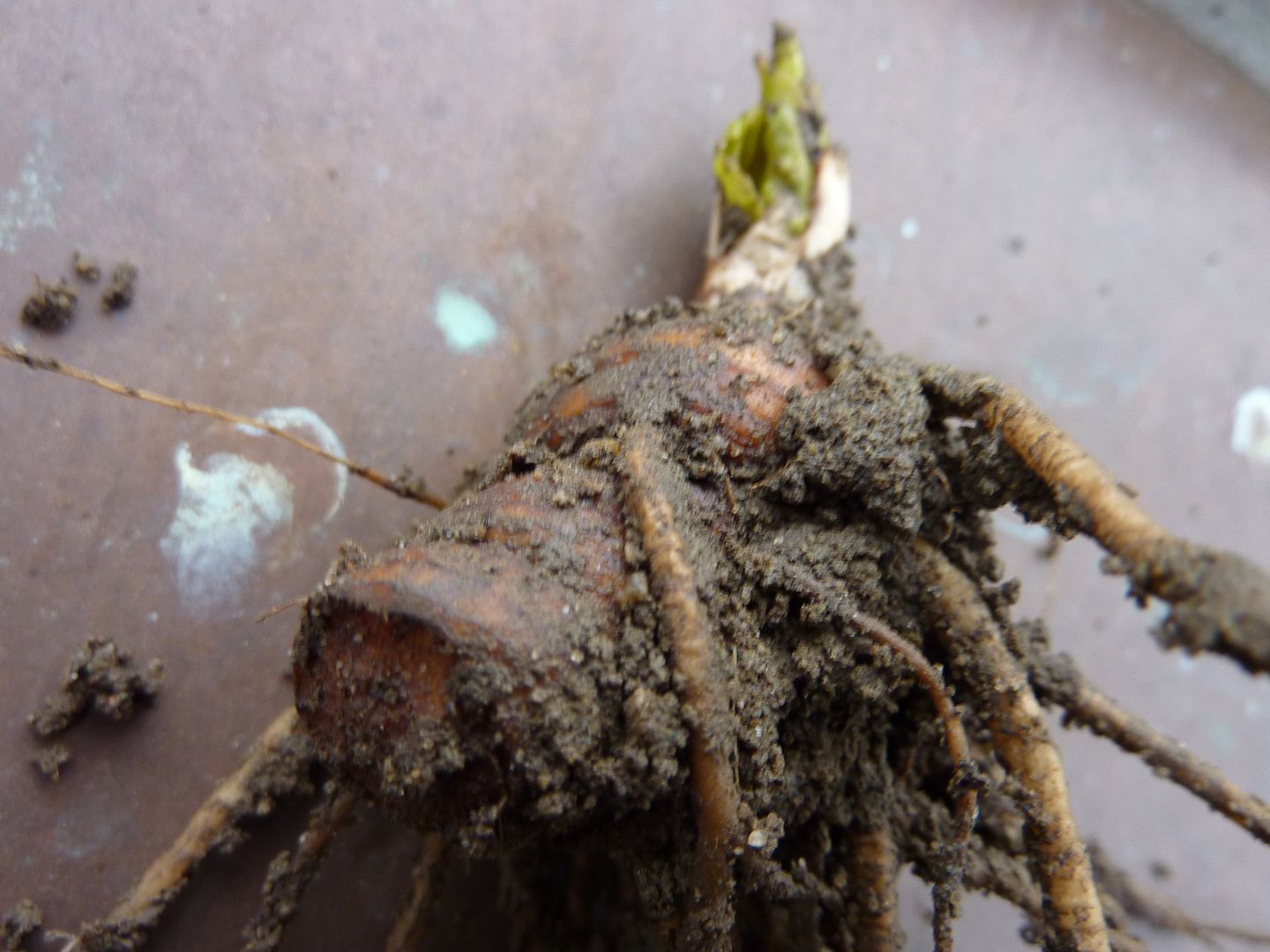
Their root takes on the form of a rhizome. Basically these are mutant potatoes that grow long-wise through the soil moving through the soil very slowly over the decades, dividing on occasion and very slowly separating. The older parts of the rhizome will slowly rot, at a rate relative to the soil conditions. In ideal soil conditions, old Trillium plants can grow out to form hundreds of stems before any noticeable rotting happens, while Trilliums in poor soil will be looser, spread out, and reproduce better by seed.
I don't see any rot happening down at the old part of the plant. It looks like someone manually divided it at some point, but you can see that stems emerge from the newest part of the rhizome, as well as most of the roots.
The leaves and flower are basically already formed, it's simply a matter for the plant to push this growth up to inflate.
Of the two that I moved, I only disturbed the soil from one of them, while the other I kept mostly undisturbed in a big clump of earth. Hopefully I'll get lucky, and they won't abort the flowers.
Subscribe to:
Posts (Atom)