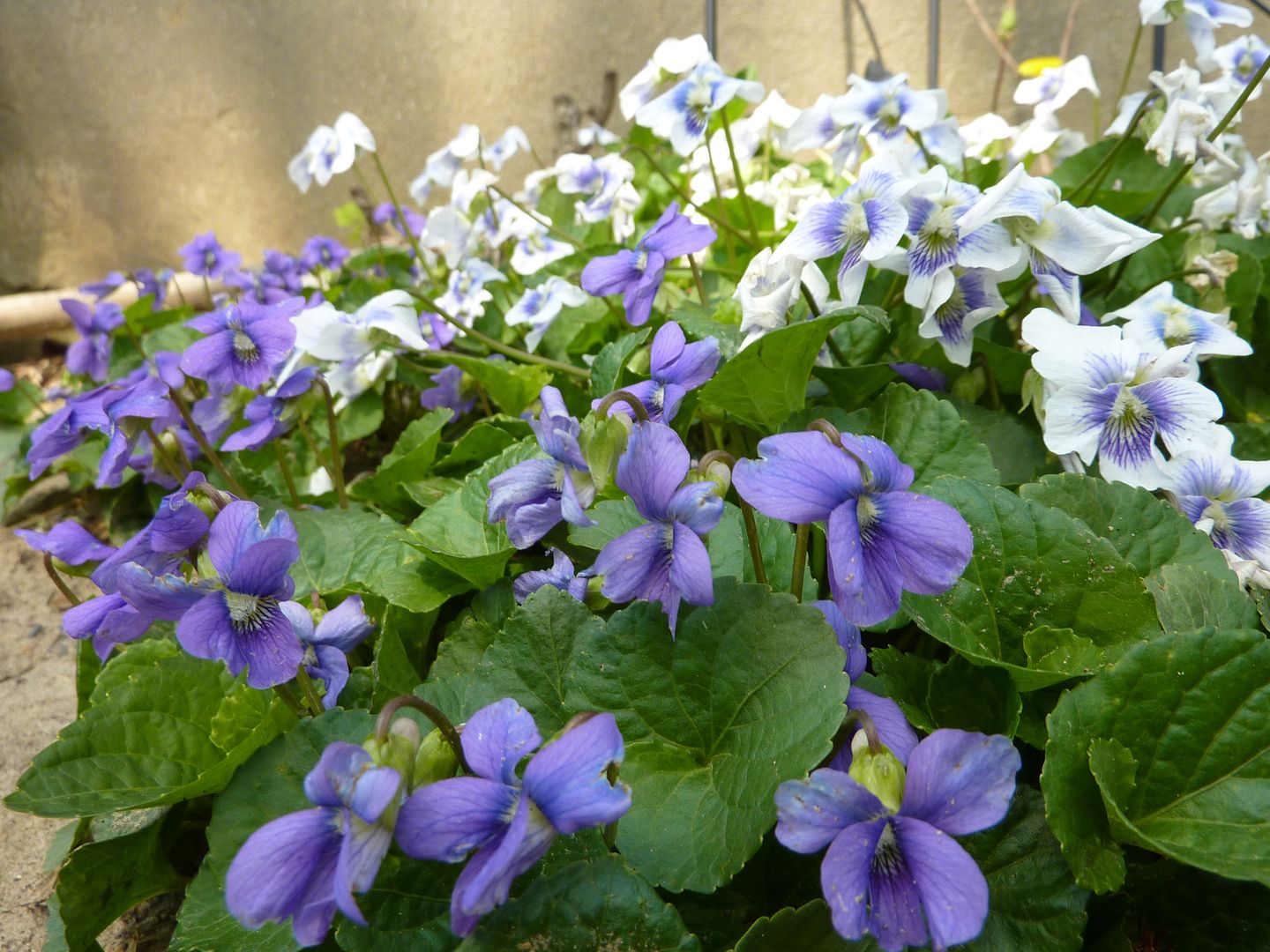
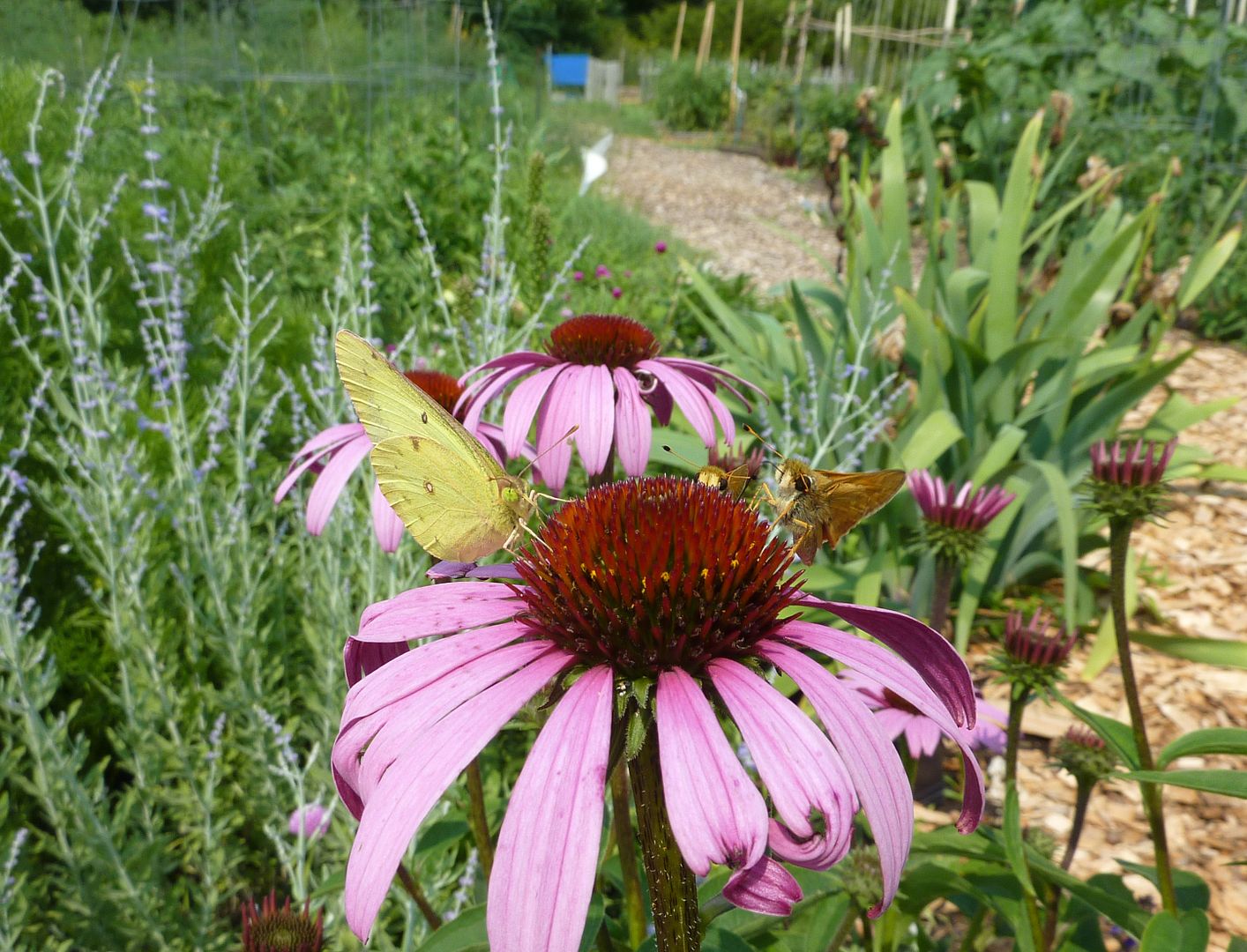
By now I had found enough new plants I'd never herd of or seen in person that I fully felt this was worth the $10 the class cost. Actually the plant they give you at the end was worth that much. Let's continue on.
Chelone lyonii, Pink Turtle Head. Not to be confused with...
Chelone glabra, White Turtle Head. Both of these are marvelous plants. I think of them as a native form of snap dragon however I've come to find they like it wet and can't survive in dry conditions. I don't know if this is right or not but at the Mt. Cuba Center they were mostly in places near the pond, though a few were up hill some, but as you can see with the Pink Turtle Head they were being watered.
Aconitum uncinatum, Wild Monkshood. This isn't the best specimen of this plant they had there. The common names comes from the irregular shape of the flower petals.
Here you can see the hints of blue from the flowers and nearly imposable to make out foliage of the vine itself. This plant dotted all over the gardens as an accent color. Some of the other plants there had blue flowers all over the vine while this one only had them at the tips of new growth. The fuller vines were attractive to butterflies including the Monarch however that photo didn't turn out. This is a plant I'd be interested in trying out.
Another plant they had patches of here and there was Spigelia marilandica, Indian Pink. Supposedly this one is beloved by hummingbirds and when you look at the flower it's easy to see why.
A downside to the plant though is they produce very few flowers. On the upside though when pollination is successful they make exploding seed pods. Those are always fun!
Right up against the pond, (and just about every road side down there!) was Impatiens capensis, Jewelweed!
This is another beloved by hummingbirds. Growing it for the flowers along won't kill you either. This is one I almost bought this year. The thing that held me back though was it's an annual. As with all Impatiens they have exploding seed pods. Seeds take two years to germinate. So patches of this plant will come and go in 3 year rotations.
The other common name to this plant is Touch Me Not because it's related to poison ivy. However, people seem to be touching it nonstop for it's anti poison ivy properties. Apparently the sap to this plant counters that of poison ivy. I don't know if this is true though.
Lobelia siphilitica, Blue Lobelia. This was a nice spot of blue growing by the pond. It's a shame I didn't get any better pictures.
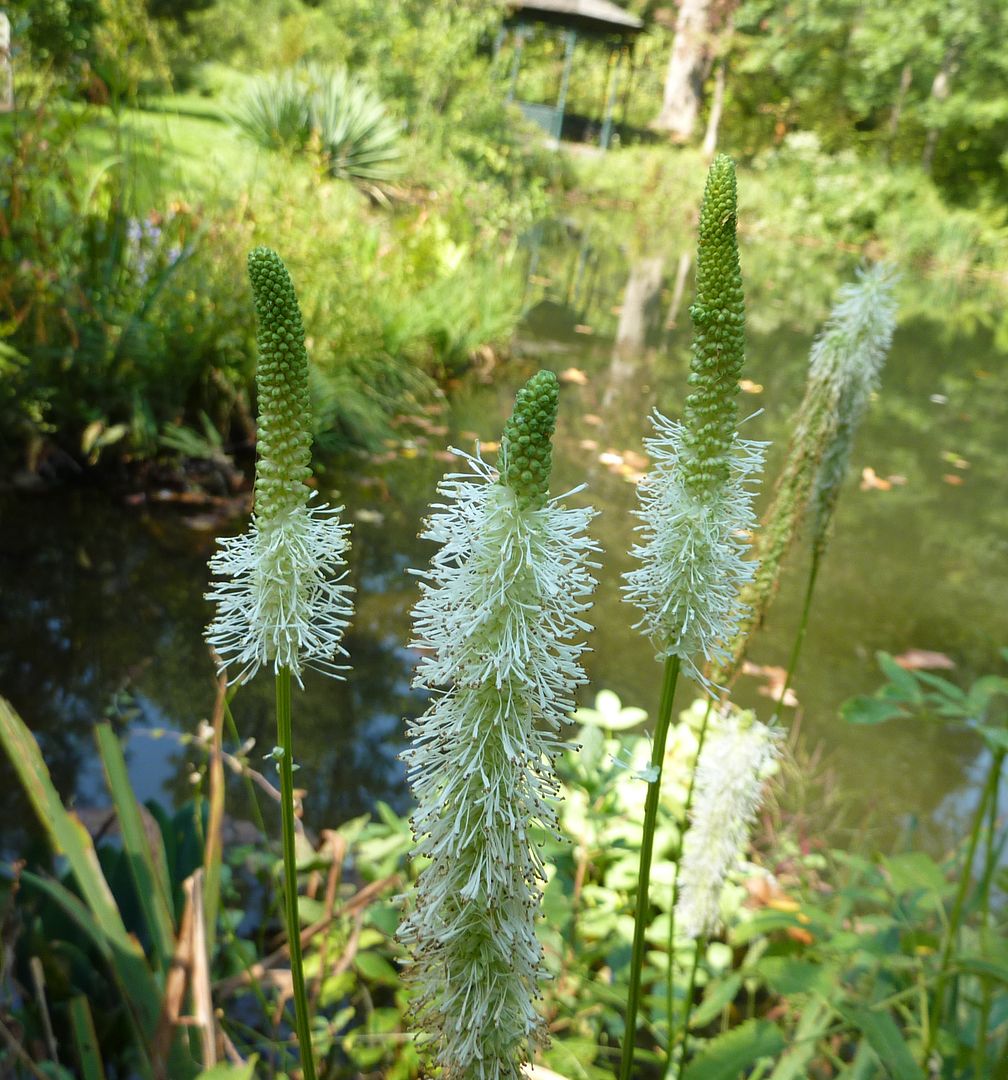
Sanguisorba canadensis, Canadian Burnet. This is one I always hear bees love and yet when I saw it growing there it had no bees on it. Not one. There were quite a few of these clumps of flower stalks too. Not a single bees was on it though. Maybe it has to be a certain time of day or different kind of bee but I just didn't get why it wasn't being loved by bees. I came pretty close to buying this plant and now I'm having second thought.
I'll have part 3 up sometime tomorrow. Let me just say though that standing over the pond there with all the flowers around was the most relaxed I'd felt in a long time. I'm not someone who's stressed out constantly so it's weird that the whole sensation of being relaxed swept over me. I could seriously see a yoga class or something on part with that taking place here.
Saturday, September 25, 2010
Friday, September 24, 2010
Mt. Cuba Center's Autumn Wildflower Palette (Part 1)
Yesterday I had the pleasure of attending a course at the Mt. Cuba Center. It was myself, a friend, and 12 other people. After witnessing the sights I saw there I can't help feeling there's something wrong with the world. The cost of admission was $10 and includes a two hour tour of the gardens and a free plant at the end of it. Had I known only 14 people were going to show up I'd have tried a lot harder to get more friends to join me.
Mt. Cuba has a certain stigma in the gardening circle I'm in. Basically everyone agrees that because they're in a woodland setting they have a lot more is blooming in the spring time when the majority of full shade plants bloom. They're right of course but that's no reason to miss out on learning.
Earlier this year I went to the Philadelphia Flower Show (the largest flower show of it's kind in North America!) and I went to Mt. Cuba Center's Spring Wildflower Celebration.
Cost of Admission:
Philadelphia Flower Show - $26 dollars and I felt ripped off.
Mt. Cuba Wildflower Celebration - Free and they hand you a plant for being in the first 500 people... I left there feeling like I must have spent $50 to get in.
Maybe it's just the medium but Mt. Cuba was so much better on so many levels. There's something about walking through an actual garden that carries a single theme of colors and views the whole way through that never fails to be awe inspiring. Where as the Philadelphia Flower show is like walking through a massive garage of broke down parade floats. Flowers are arranged for design ascetic and views. Plants from far off parts of the world are highlighted without any regard or consideration for the environment. I suppose this highlights a difference between non-prophet organizations and landscaping businesses.
My point is having more flowers isn't necessarily better. This was the first time I've been to Mt. Cuba in the late summer/fall time. And I'm happy to say I had just as nice a time as in the spring.
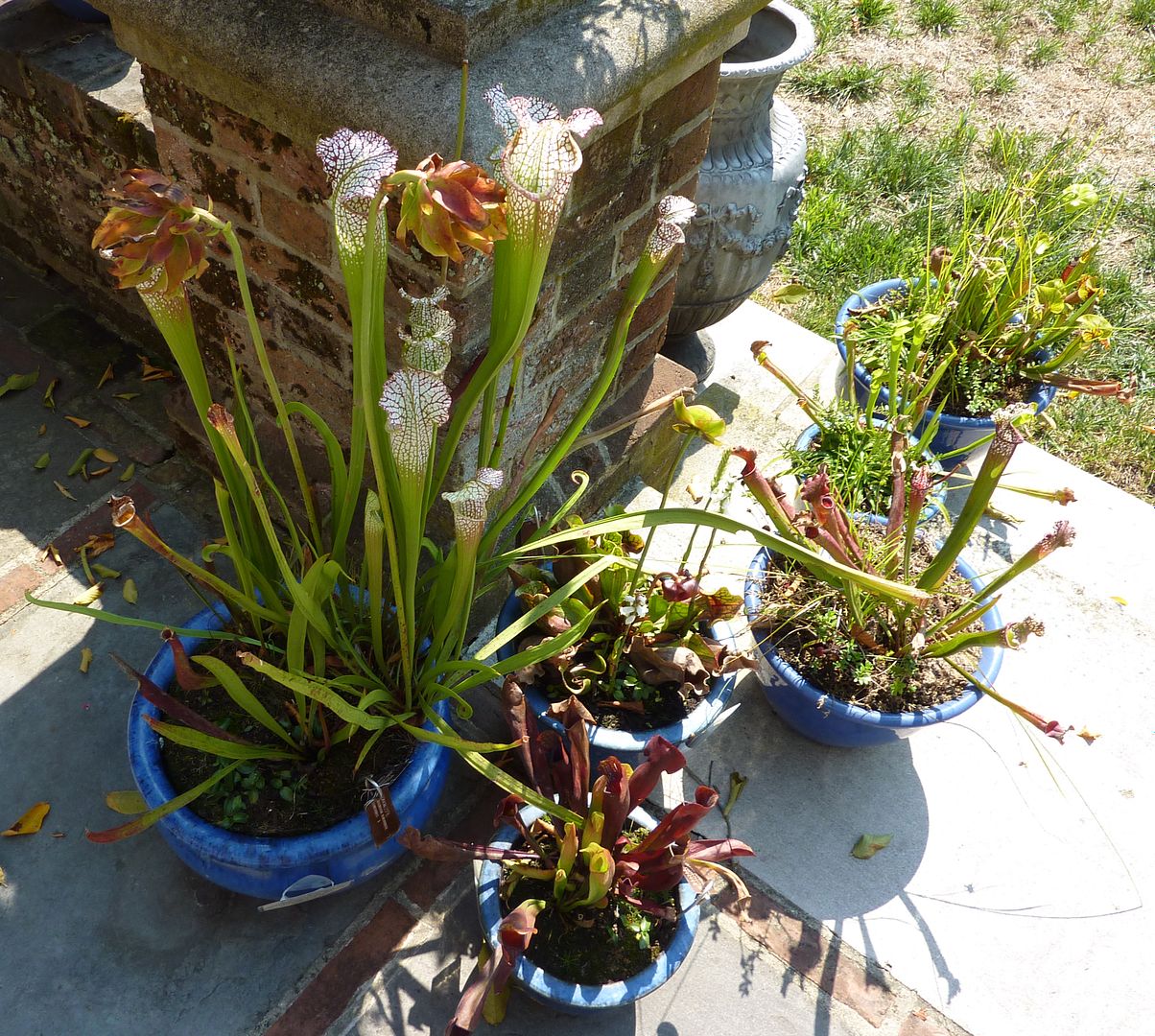
My day began resting on the terrace waiting for the class to begin.
Their pots of carnivorous plants were still out and as carnivorous as ever. I was surprised to see many of them were still blooming, although maybe it's just the fact they're still in pots. I don't know how stressed flowering works in these plants.
The flowers to various pitcher plants feature a safety net to help prevent the pollinator from falling into the pitchers below.
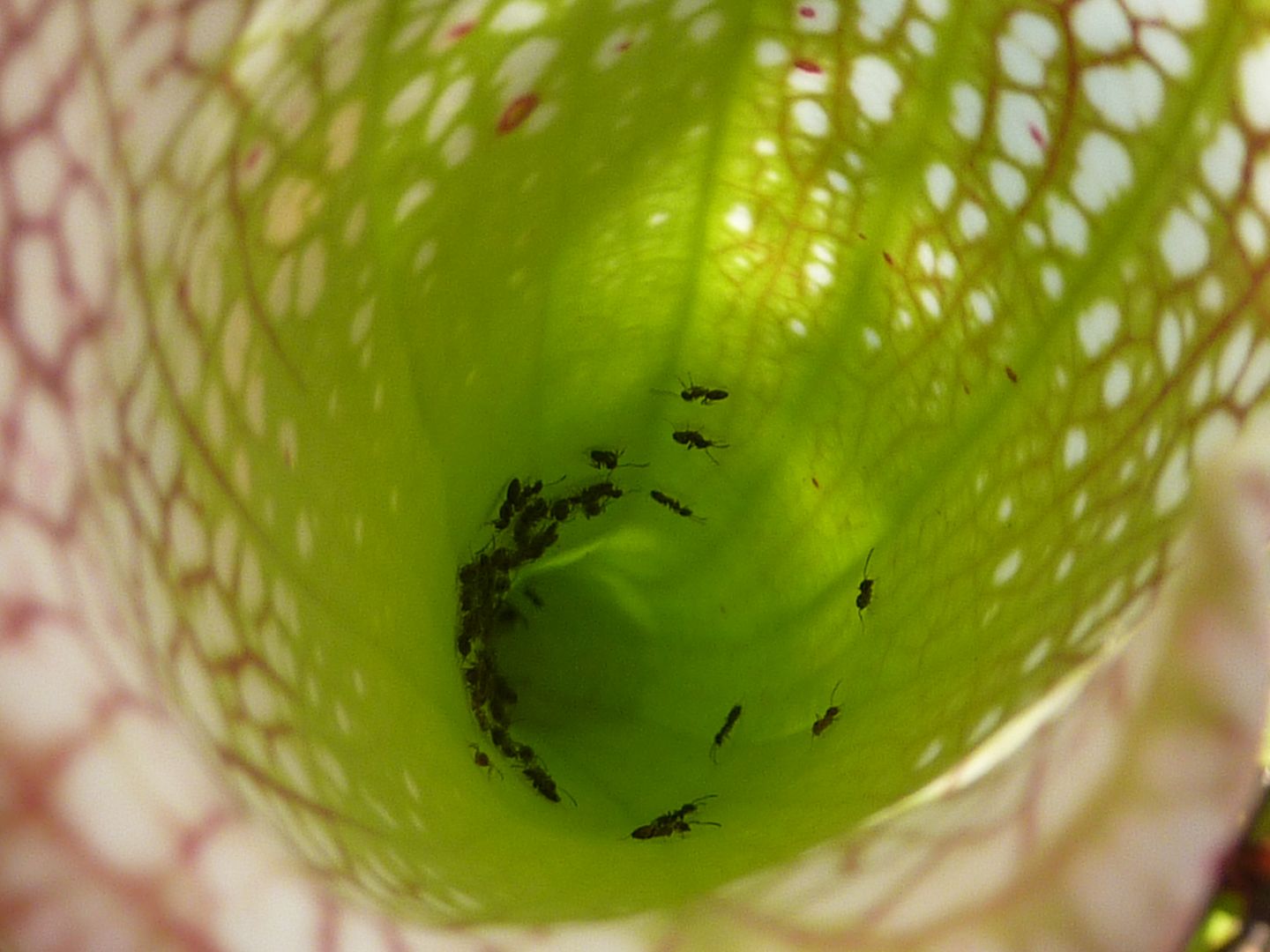
Glancing inside I spied dozens of ants. All of which were alive to my surprise.
Tapinoma sessile, The odorous house ant. I didn't get to stay long enough to see if they were just trapped or somehow treating the pitcher as a food source.
Starting the tour, one of the first plants highlighted was Dicentra eximia, Wild Bleeding-Heart. They go well with ferns but notice how it's still blooming! I'd originally shied away from this species when picking out a bleeding heart for the front garden. I favored one who's flowers looked more heart shaped. Normally these bloom like crazy in the spring but this species will start to bloom again in the fall time.
Collinsonia canadensis, horse balm. This is the big leaf plant in the middle with all the tall spires of small yellow flowers.
I'm not that crazy about the flowers or the plant in particular. But yah know I've always wanted to get my beekeeper friends to plant more natives and have been looking for a shade tolerant nectar source. This could be it. I may give it a try.
Spiranthes odorata, Fragrant Ladies-Tresses. This is a native orchid ... on a very bad day, it's been excessively hot and dry for the whole area. Here is a google image search for what they should look like. The flowers put on quite a show but are a little small for my taste. They are fragrant but I wasn't able to get close enough to them. As for the "Tresses" they don't really look like hair to me and I question the origin of this common name. They might go good next to a pond area where one can sit down and relax.
Eurybia divaricata, White Wood Aster. While we're on the topic of our first aster let me say Asters of North America are now all Asters by common name only. A rather helpful hand out lists all the genera Asters are now put in.
They are:
Symphyotrichum
Ionactis
Eurybia
Seriocarpus
Doellingeria
Ampelaster
and Oclemena.
This white woodland aster is quite common in the area. I know I have several species that reseed all on their own all over my yard. They're easy to grow but don't spread to much to be weedy.
To the left here is the awesome foliage to Amsonia hubrichtii, what they're calling Hubricht's Blue Star. Arkansas Blue Star is another one. In the spring time this plant comes up thinly with lots of blue five pointed flowers. As the summer goes on it turns into this shaggy cloud of wonderful foliage. I just want to lay in it. Very cool plant and there are other Amsonia that are native to more parts of the country but I'm not sure they're as thick and full looking.
This Goldenrod ground cover is Solidago sphacelata, Autumn Goldenrod. For those of you tired of those towering goldenrods that are 5' to 10' tall, this is the ground cover for you. Now that I realize there's this size distance of Solidago's I'm tempted to make a garden of nothing but them.... which is a lot of yellow. This was also the plant everyone who took the class got for free.
This huge plant in the background I thought was a perennial sunflower even after the tour guide kept calling it a Coreopsis. But then I had a closer look and realized oh my god that seriously is Coreopsis that isn't 2' tall.
Coreopsis tripteris, Tall Tickseed. This Goliath of the garden is going on my list for spring of next year! It's huge but the foliage is light and airy as you'd expect from a Coreopsis. Assorted checkerspot butterflies were dancing around it and some ironweed (no photos sorry). The only downside I believe is it might be one of those plants that gets too tall and falls over on everything.
Tomorrow comes part 2 hopefully. There were lots of other plants I didn't get to photograph or did but the images didn't turn out as I'd like.
Labels:
Garden,
Prairie,
Wildflowers
Wednesday, September 22, 2010
Be Back Soon
Coming Soon.
I'll be spending the day in Delaware for a class at the Mt. Cuba Center. It's on fall wildflowers and hopefully I'll have lots of nice pictures and plant ideas. I hear it's better to go in the spring time because they have so many woodland wildflowers and they just come up all over the place. They are located in a forest so we'll see if that's true. They do have a prairie or two on the grounds and they look after an adjacent one I think for meadow studies. So this should be a fun day.
Saturday, September 18, 2010
Hepatica Semi-Evergreen Foliage
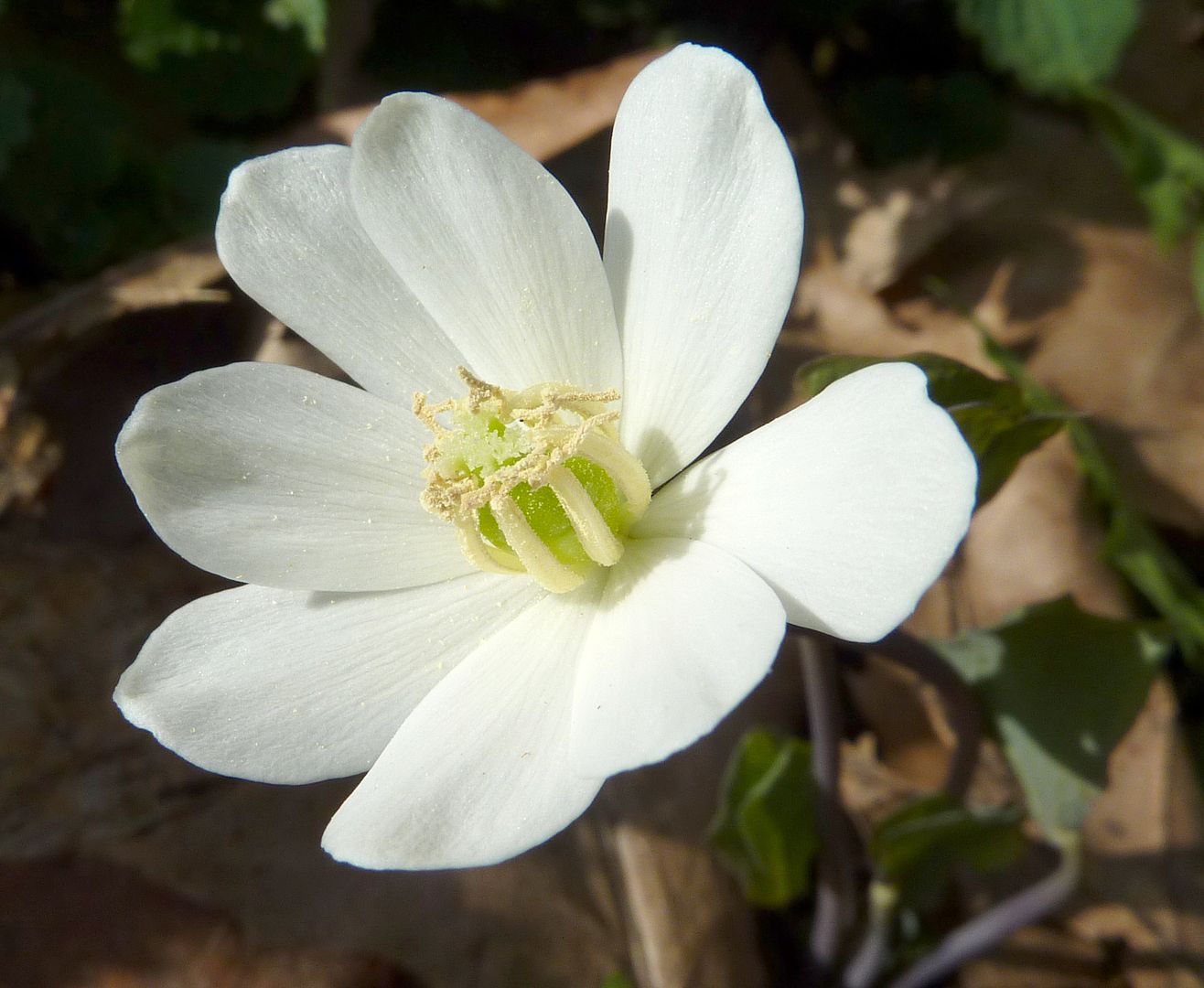
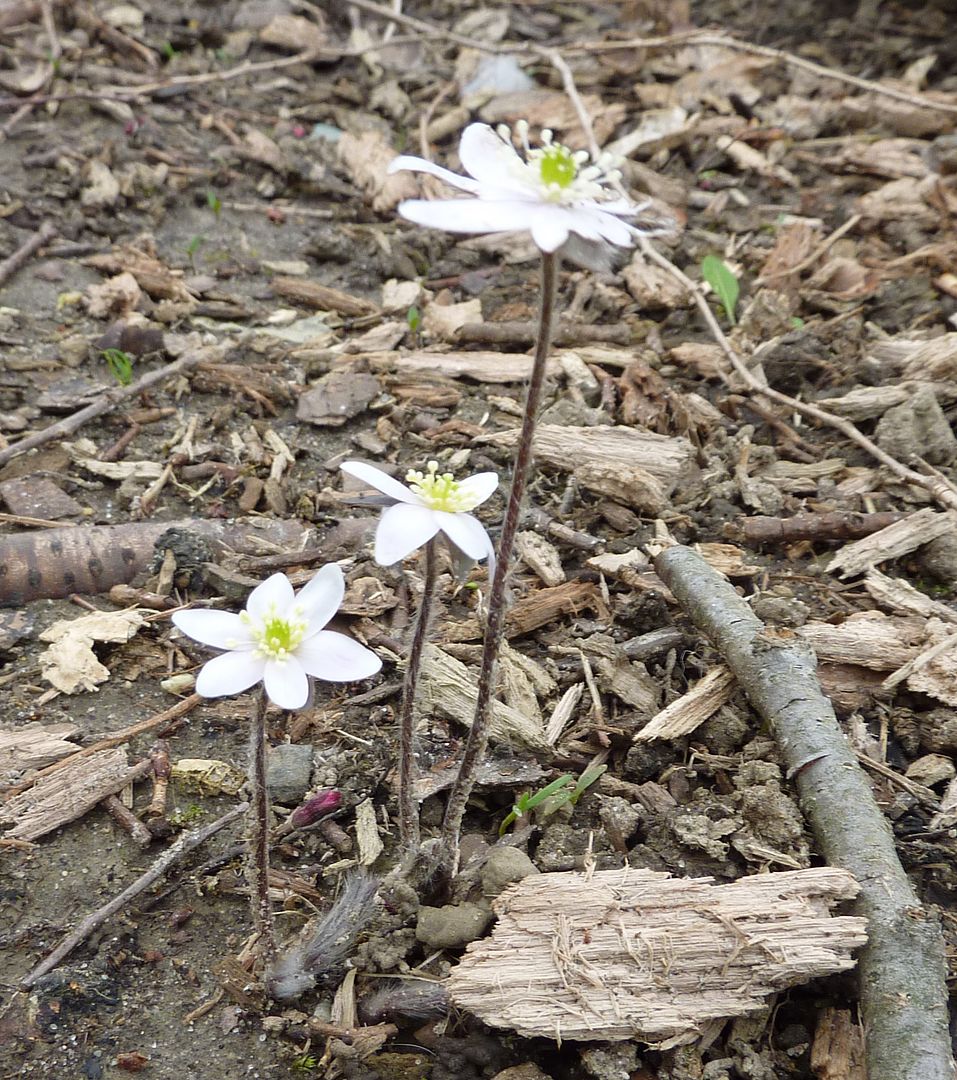
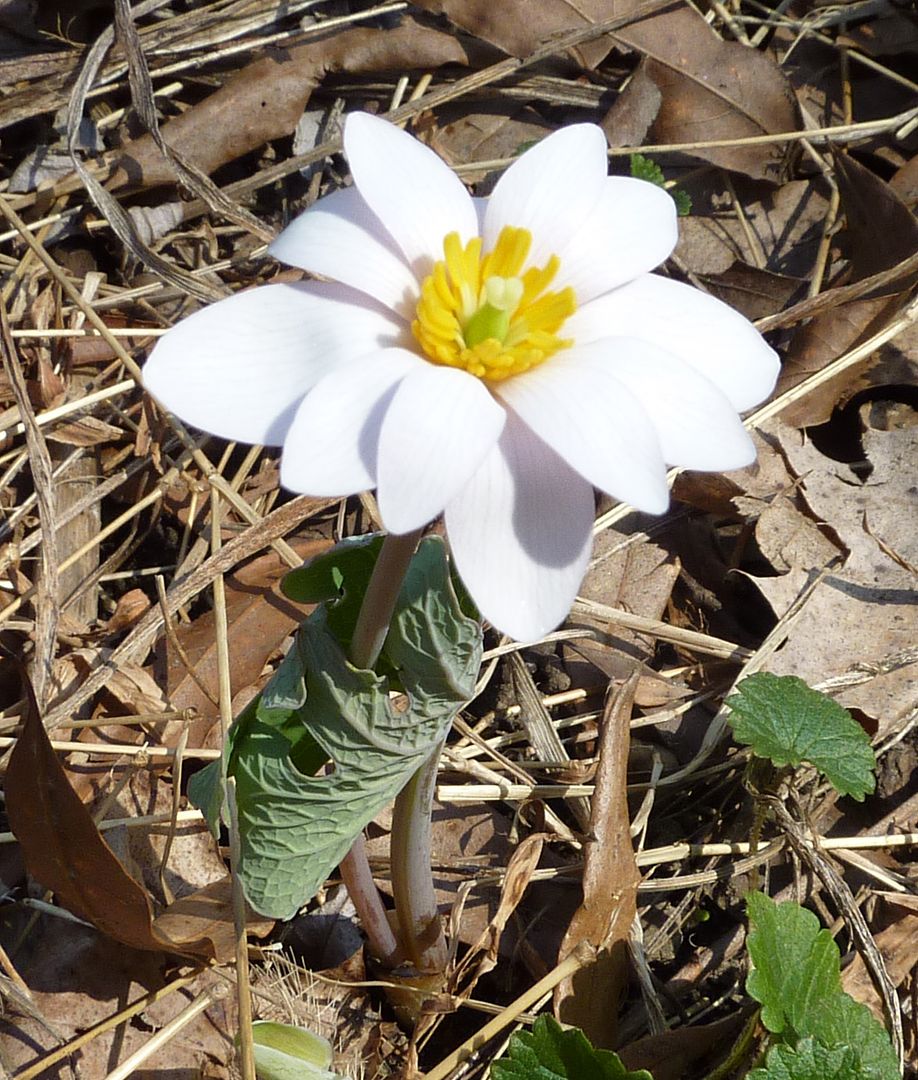
A charming benefit to the spring wildflower Hepatica is it's semi-evergreen. So while all those Trilliums, Bloodroot, Bleeding Hearts, Twin leaf, and so on have all died back, Hepatica still keeps it's foliage well into the winter. They are semi-evergreen though, so the leaves do die off by next spring. Semi-evergreen implies that it will still have leaves even after all the deciduous trees have dropped theirs'. So this is a good plant to spread around and possibly use to mark where other wildflowers are planted. Violets could also be used in this way but they can sometimes spread a little aggressively.
Just something to keep in mind what with all the insane deals out there on bulbs now.
Labels:
Hepatica
Thursday, September 16, 2010
Passionflower Sugar Fest
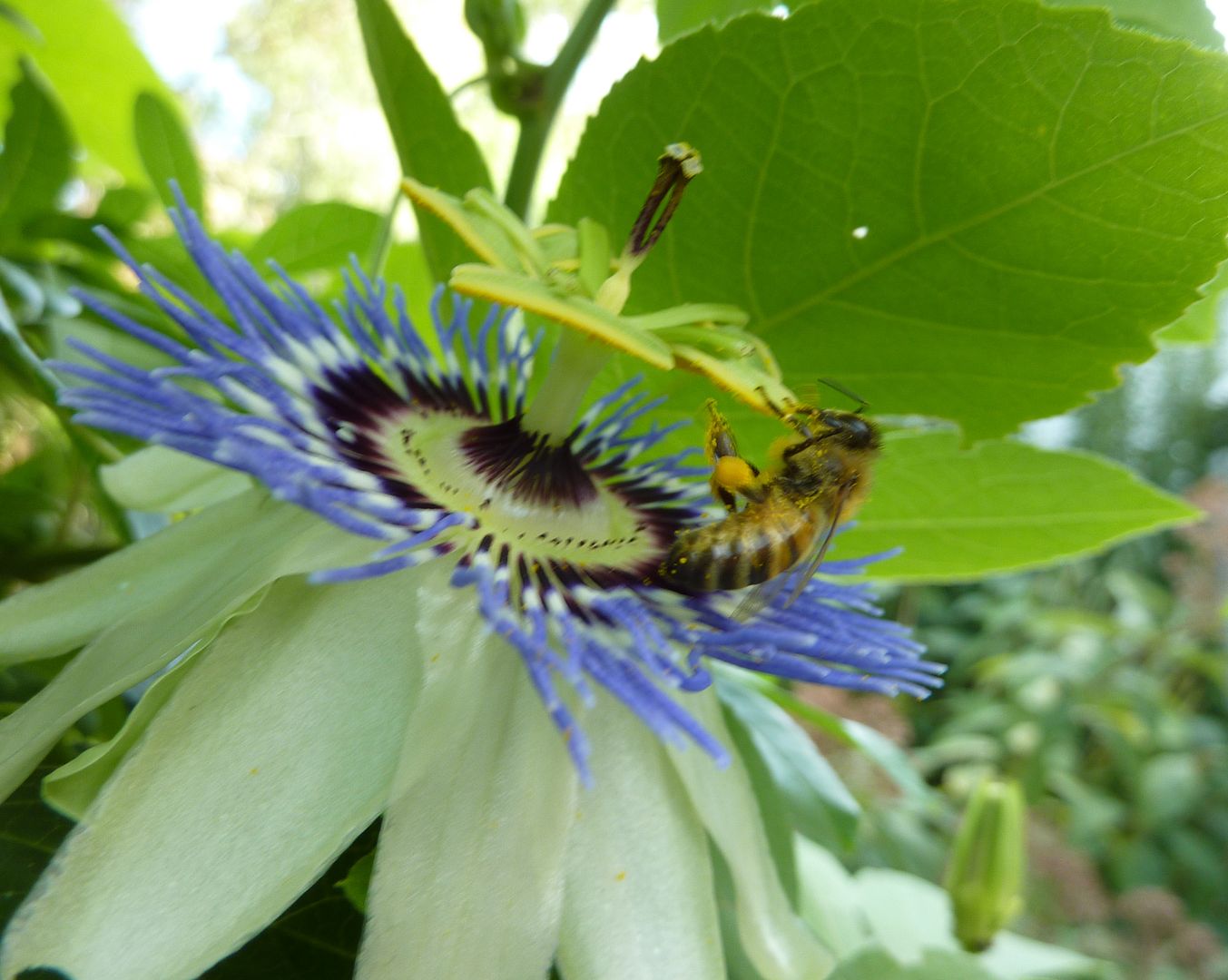
Finally! I have finally seen a bee pollinating the passionflowers. However, this one is a little to short to do it properly.
Thankfully the bee had enough sense to jump up and start kicking her feet to collect pollen. Really cute to watch.
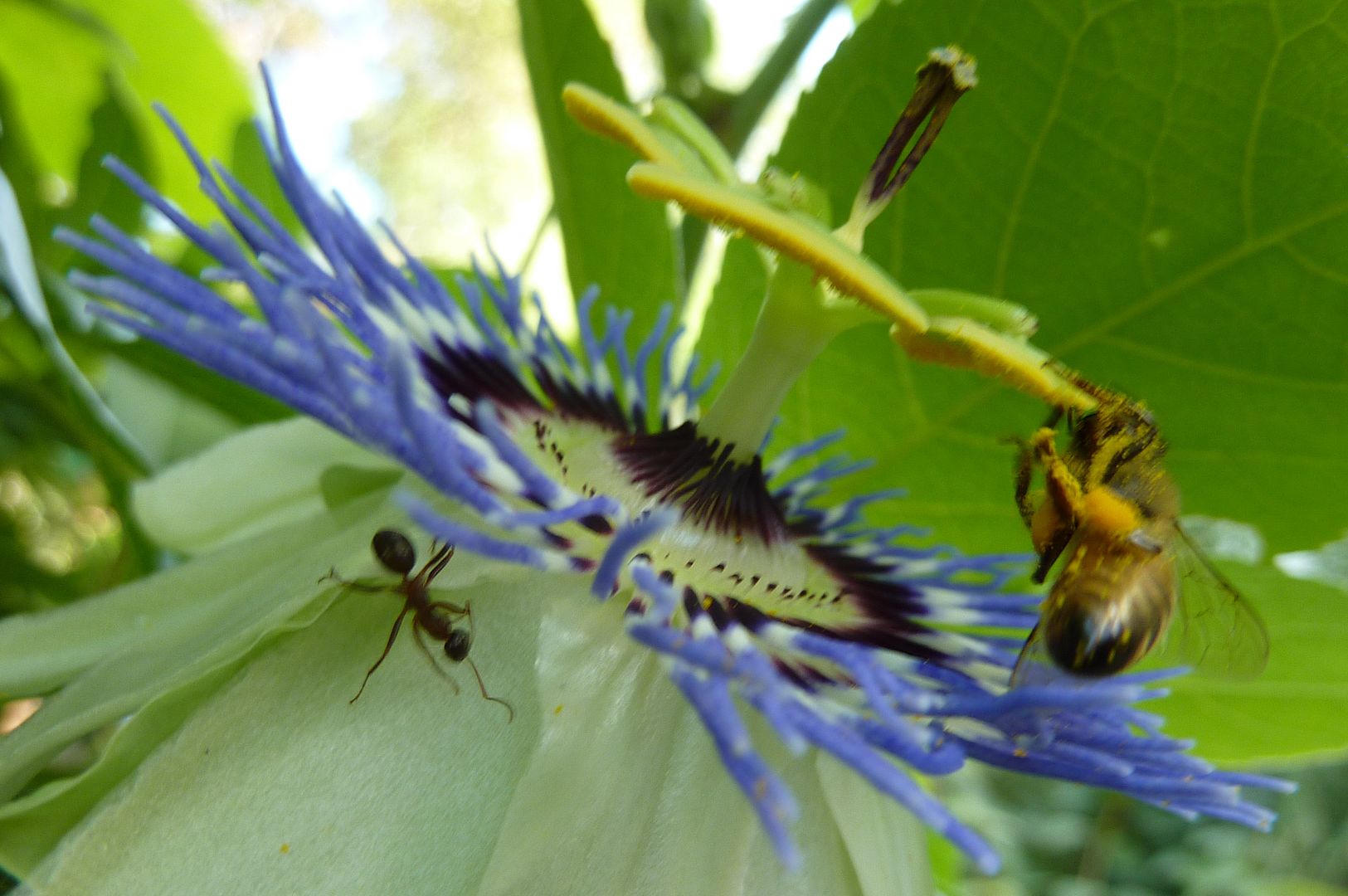
I've been seeing way more ants on this plant than anything really. What's odd though is not only are ants stealing nectar from the flower but...
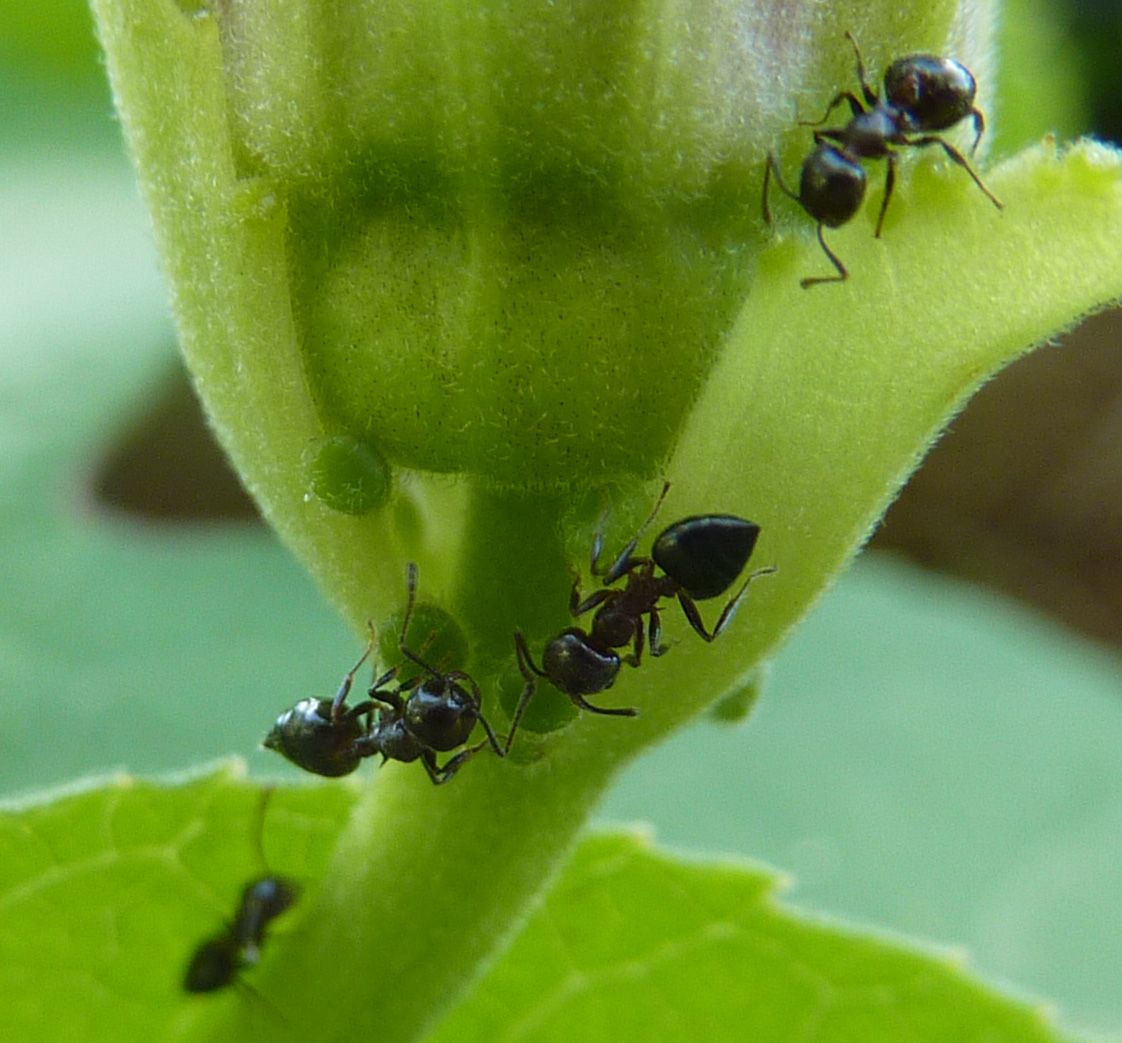
The plant also has pores that produce extra floral nectar. Traditionally this is what pores that produce nectar are for outside of the flower, but wow no wonder Passionflower pollination is so hard. The plant might as well be bleeding sugar.
Labels:
Ants,
Bees,
nectar,
Passionflower
Tuesday, September 14, 2010
'Black Jack' Sedum Bees
I don't know what it is about 'Black Jack' Sedum but bees just swarm the plant every year more so than other Sedums. The other and more commonly sold 'Autumn Joy' Sedum is a bigger plant, has lots more flowers on it, but doesn't get anywhere near the amount of attention. Maybe it's to do with the darker Sedums in general. I'm not even certain on the species name.
Ideally I should be taking pictures of this plant during the "magic hour" where the sun has at an angle and lighting isn't as harsh. Work and other things have gotten in the way of that a lot lately so this is the best I could do.
There are years when 'Autumn Joy' barely gets any attention at all.
Ideally I should be taking pictures of this plant during the "magic hour" where the sun has at an angle and lighting isn't as harsh. Work and other things have gotten in the way of that a lot lately so this is the best I could do.
There are years when 'Autumn Joy' barely gets any attention at all.
Saturday, September 11, 2010
Myrmecochory - Seed Dispersal by Ants
Ants featured in this video and weather or not they successfully planted the seed.
Aphaenogaster rudis Pass
Formica pallidefulva Pass
Formica subsericea Pass
Camponotus castaneus Pass
(Camponotus only tried in captivity but the seeds are not likely in a good position in the nest, e.g. dead tree or too deep in the ground.)
Temnothorax sp. Fail
Tetramorium species E. Fail
Monomorium minimum Fail
Tapinoma sessile Fail
Crematogaster cerasi Fail
Solenopsis molesta Fail
Plants Featured in this Video
![]() |
| Trillium grandiflorum |
![]() | |
| Twinleaf - Jeffersonia diphylla |
![]() |
| Hepatica |
![]() |
| Bloodroot - Sanguinaria canadensis |
![]() |
| Violets |
![]() |
| Bleeding Hearts - Dicentra sp. |
![]() |
| Trillium cuneatum |
Labels:
Ants,
flowers,
Myrmecochory,
native,
Seeds,
Wildflowers
Thursday, September 9, 2010
Monarchs and the Plants They Use
Well the milkweed has started hatching out Monarch butterflies. I can confirm that at least 2 have hatched from my patch alone. That's not accounting for all the caterpillars that crawled away from the plants. I'm still finding eggs on other plants about the yard too. Last year I had the issue of vanishing caterpillars but I kept seeing Monarchs taking off from beneath the foliage in that garden. This year I learned they abandon the plant once they reach the last instar or so. I might get another generation out of this.
While we're on the topic of Monarchs let's discuss some nectar plants. The Meadow Liatris, Liatris ligulistylis, has stopped blooming. Though I planted a bunch this spring because they were stored in a green house to long only the former plants from last year bloomed. Even with two flower heads I had monarchs on them!
Asters are coming along but not quite there yet. Another plant in the Aster family that has started blooming though is Goldenrod. Solidago is a huge genus of very similar looking plants that are notorious for hybridizing.
Solidago rugosa 'fireworks' is blooming nicely but I find it shocking that nothing is working this young plant. More established plants are more bush-like and fuller looking. It's another case of wait and see.
I didn't think to examine this at the time but it might be a chrysalis to some type of Lepidoptera, (or flake of something). As far as perennial forbs go, Solidago is the most beneficial host plant a garden can have. The true number is either 150 or 250 species (I honestly forget) but the issue here is none are that memorable.
There are numerous videos and pictures online of Monarchs, and many other pollinators, covering Goldenrod in mass. I suspect Solidago canadensis and similar species are the main plant here.
The patch of Solidago gigantea I have is loaded with flower buds but has yet to bloom. It's a monster of a patch too. I've pegged it as the last plant in my garden to bloom as it normally does so well into November. It's a real highlight having what is possibly the only flowering plant for miles around as it's generally covered in bees.
Labels:
Aster,
Goldenrod,
Lepidoptera,
Liatris,
Monarch
Monday, September 6, 2010
Sedums and Other Late Summer Blooms
Here's a short video of pollinator friendly plants. The emphases is on what few Sedums are in my collection. 'Autumn Joy' and 'Black Jack' Sedum are the only two I really have. Sedum ternatum is the only Sedum that's native to my area and one of the few species that grows in the eastern US at all (that is native). I'll have pictures later on.
Also featured are the nonnative Blue Mist Shrub (Caryopteris clandonensi) and the native Blue Mist Flower (Eupatorium coelestinum). The colors pair nicely but I'm not sure they're good companions. Sneezeweed (Helenium autumnale) is also featured and but there isn't much going on with it. There isn't much going on the Blue Mist Flower either but it's only the first year I've had that species. Supposedly it's a Monarch favorite so we'll have to wait and see.
Labels:
flowers,
Plants,
Pollinators,
Video
Thursday, September 2, 2010
Flowers from Summer to Fall
So all spring time I was talking about a succession of bloom. This year I was able to cover some of the earliest flowers like Hepatica, Bloodroot, and the nonnative Crocus. And I staid pretty consistent with a new flower almost every day up until mid summer.
I never really got to talk about Purple Cone Flowers. Mostly because the ones in my yard aren't doing that great. All the store bought plants have pretty much died and certainly don't reseed. However the ones I grew from seed are doing great and slowly spreading. So I'll be able to talk about them next year hopefully.
The Black Eye Susan is doing fair but frankly the plant bores me. I almost never see anything working it and strongly believe a large patch of it is needed in order to really get the attention of anything.
Sneezing weed is blooming now and I love it but it's one of those plants that likes to fall over if it's not in the right conditions.
Comes in a variety of mostly hot colors though.
Blue Mistflower, Eupatorium coelestinum, is blooming but none of the plants are big enough to really be getting the attention of anything. I love the color though and look forward to this plant spreading like a weed in years to come.
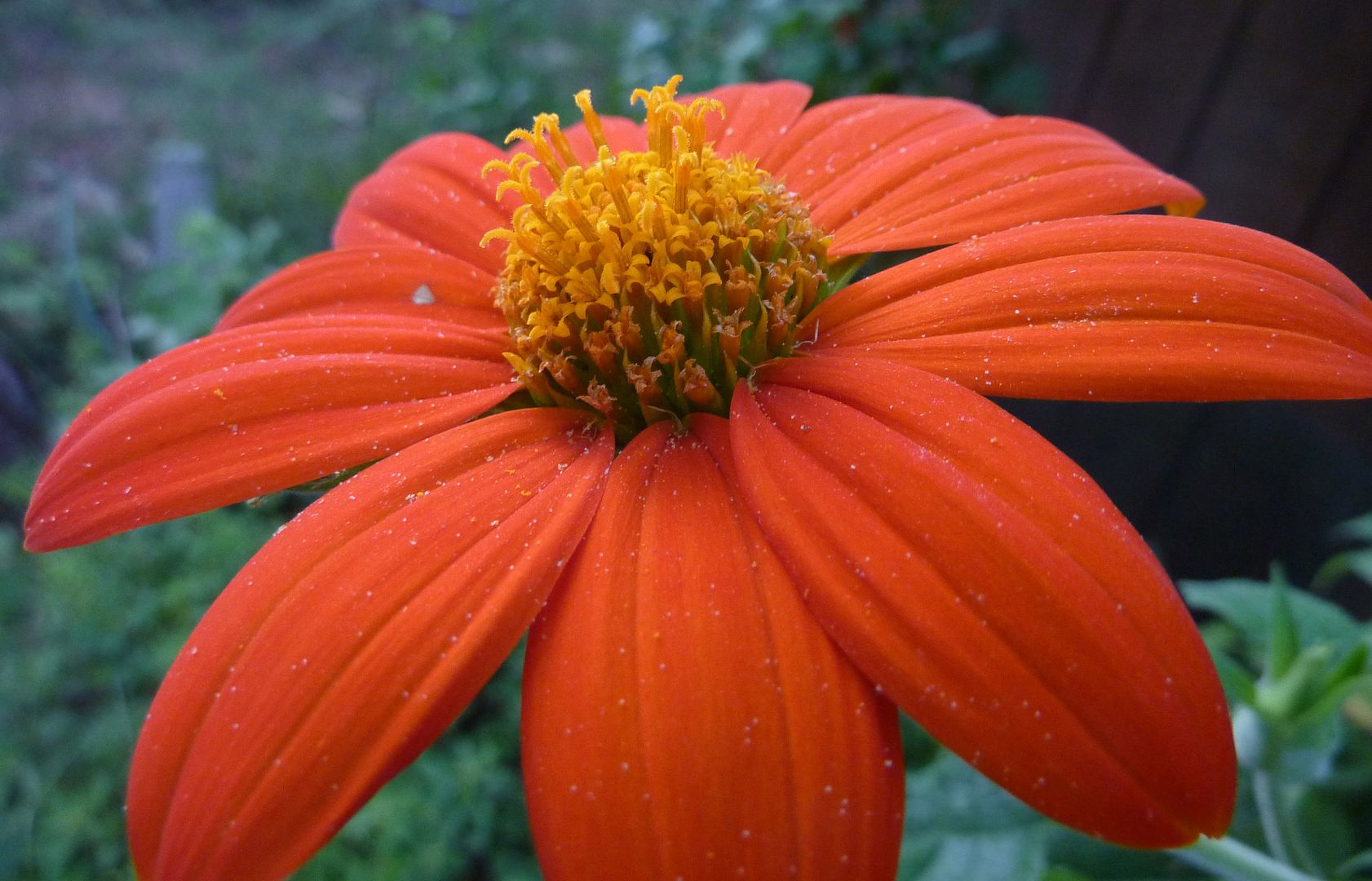
Mexican Sunflowers, which are not native, are blooming up a storm. This is a wonderful annual. The flower easily has the most intense orange color I've ever seen in any flower. And because it's an annual from Mexico there's little to no chance of it spreading or coming back next year.
What I'm really waiting for though is are the Asters! This wonderful fall flowering group of plants boasts some of the prettiest flowers around. While the trees around them have their leaves changing color some members of this group are flowering strong with their excellent colors and bustling with insect activity. They have just started blooming here I can't wait for the show to begin.
Subscribe to:
Posts (Atom)