Tuesday, September 22, 2009

Ants and Sunflowers

Sure the blooms are all but spent and the seeds are all but eaten, but sunflowers still have a lot to offer. Most of the hard stems (some of which are several inches thick) have snapped or split open thanks to squirrels climbing up to eat all the seeds. A swarm of Goldfinches certainly didn't help with that either. One morning my mom opened the blind to find more than 50 of those birds all over our sunflower patch. They're right up against the window so all of them took to the air immediately and we were treated to a big flash of yellow taking off.


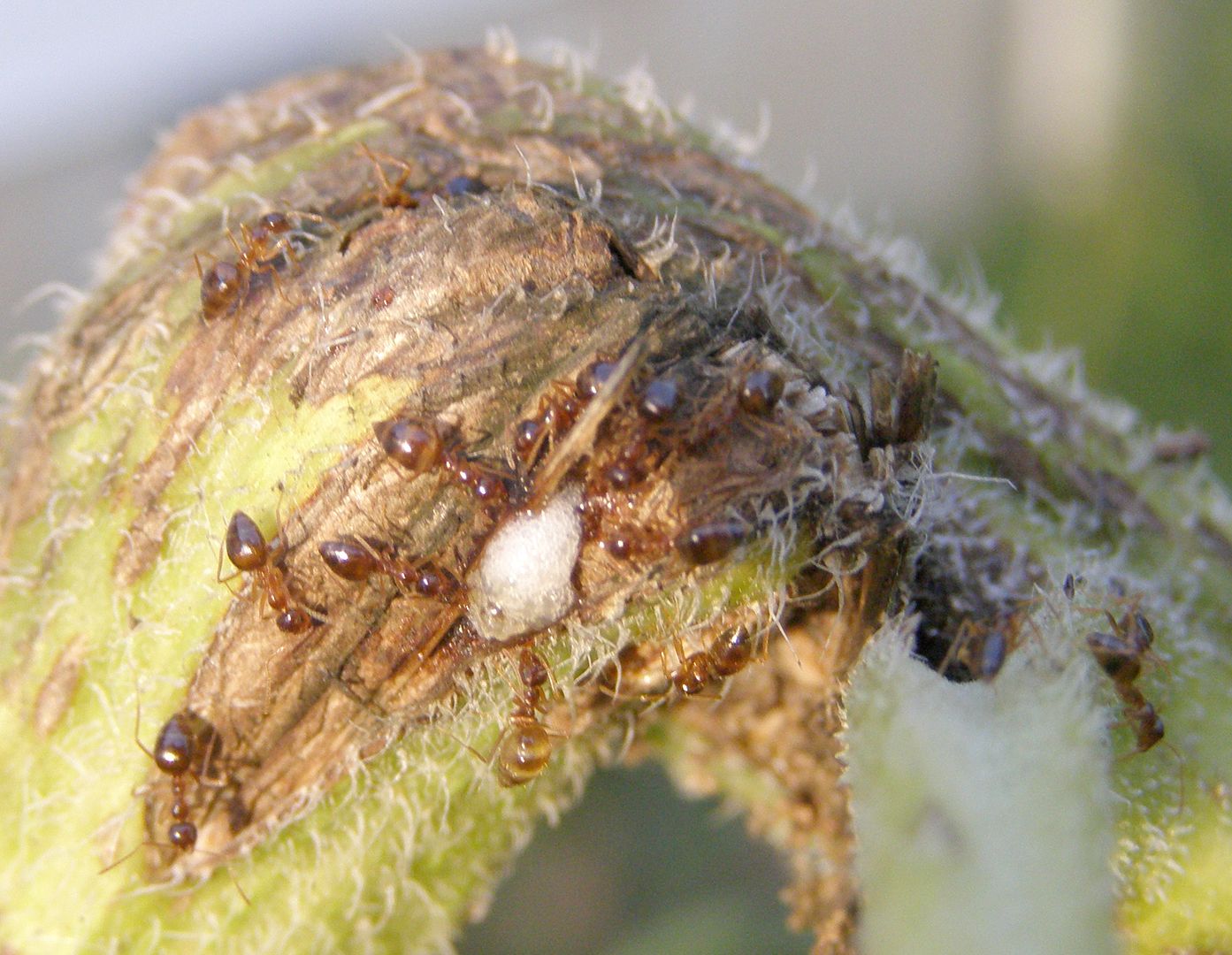
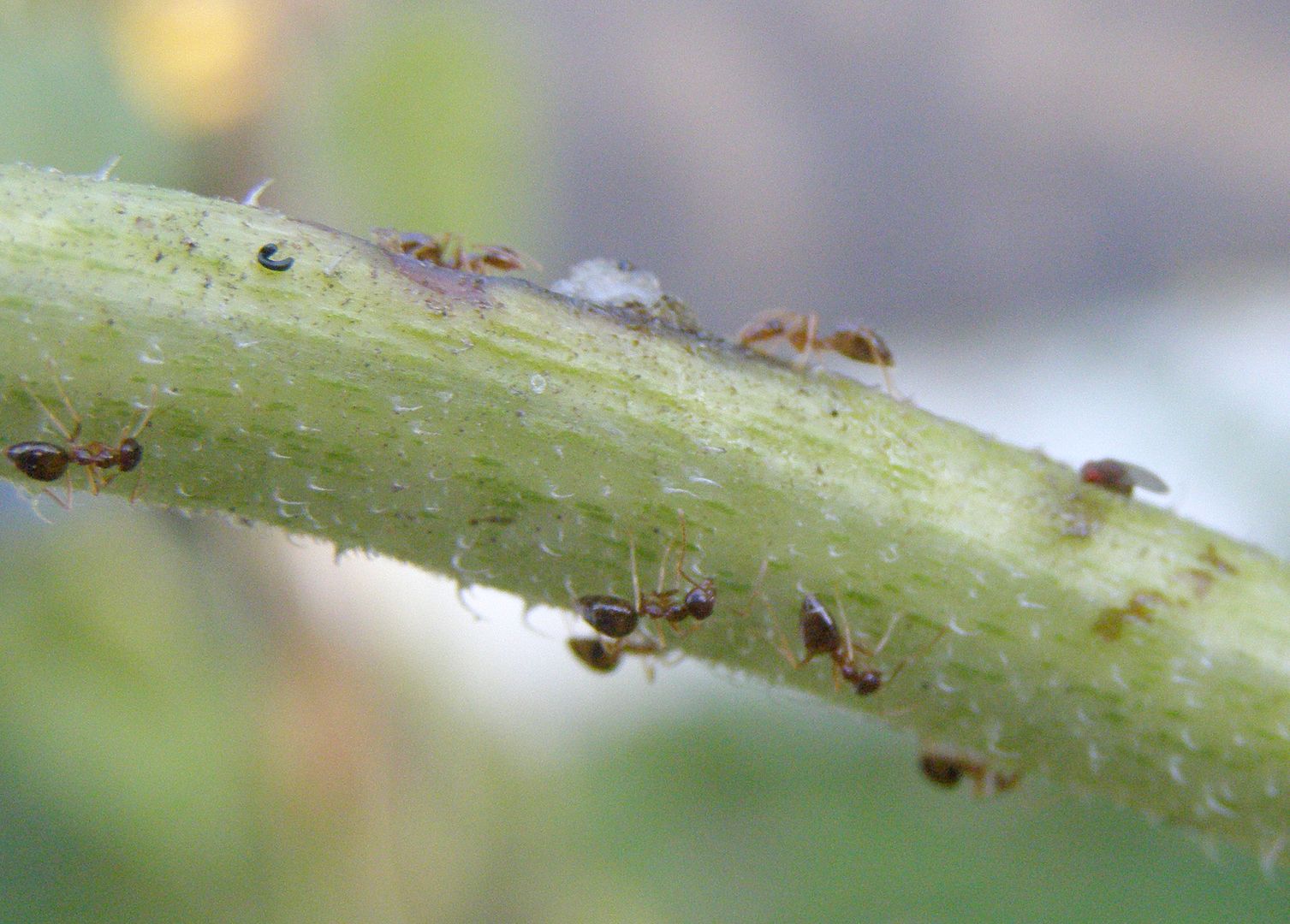
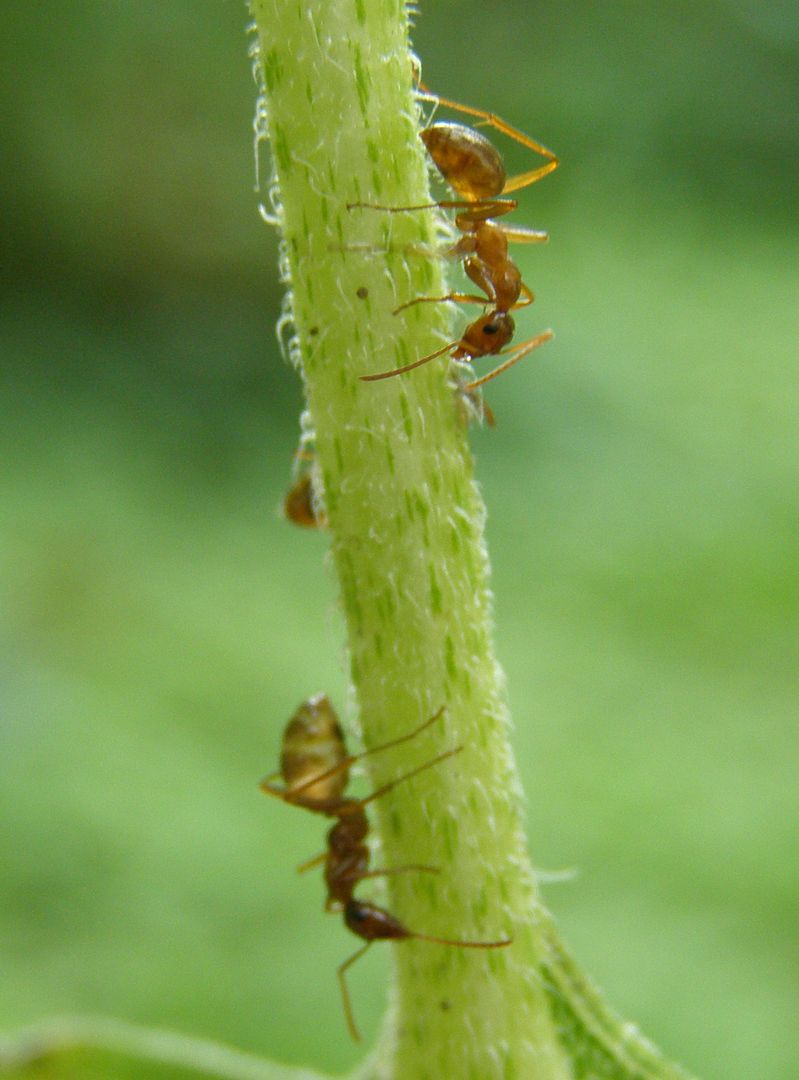
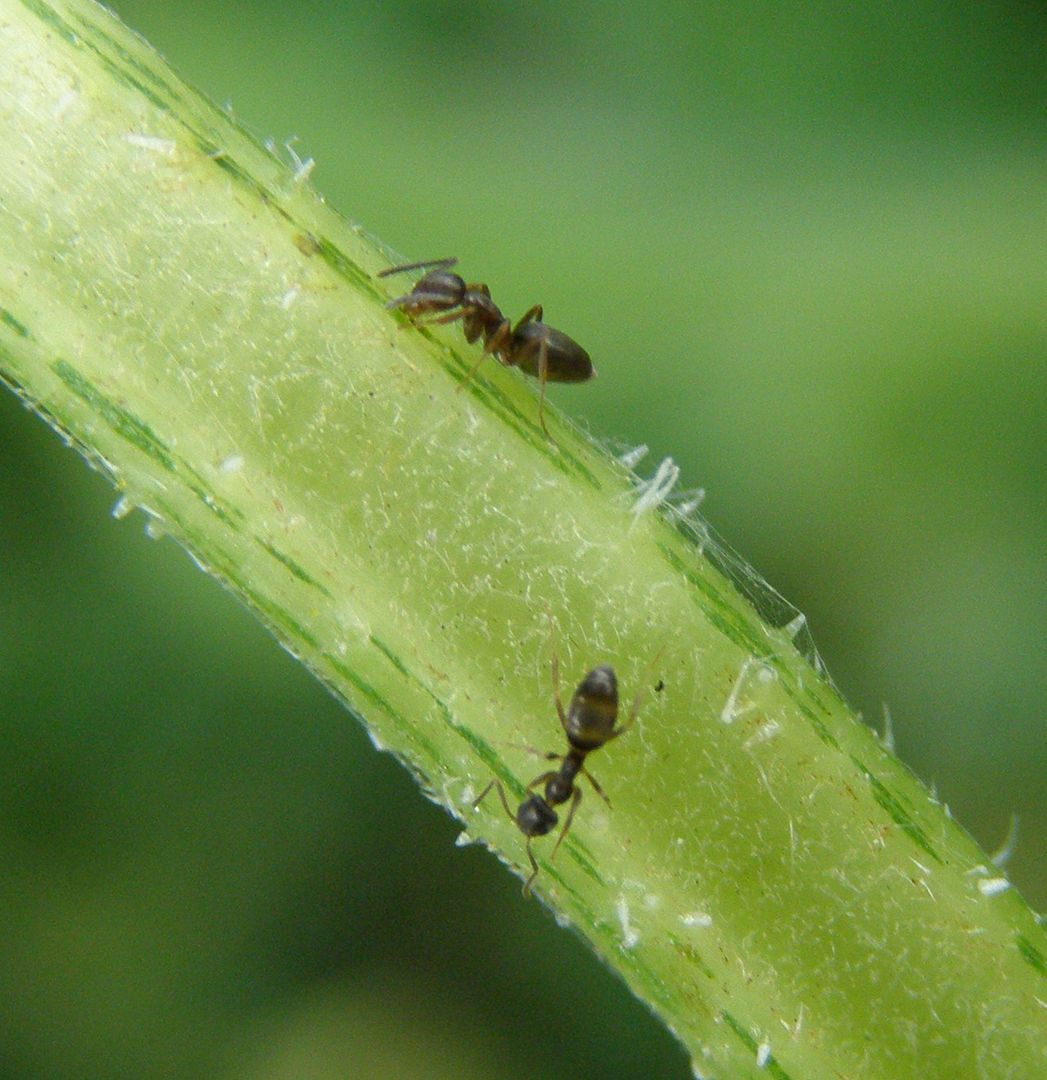
With so many damaged plants sap is spilling out onto the ground and getting a lot of attention. Prenolepis imparis, The Winter Ant, was one of many species stocking up on the sweet sugary food. Sugars store better and are vital to a colonies survival over the winter.


There's a friendly foraging war going on as some individual sunflowers are better producers than others. Wasps and flies are darting around licking everywhere. But the ants are more interested in the sap to deal with them.


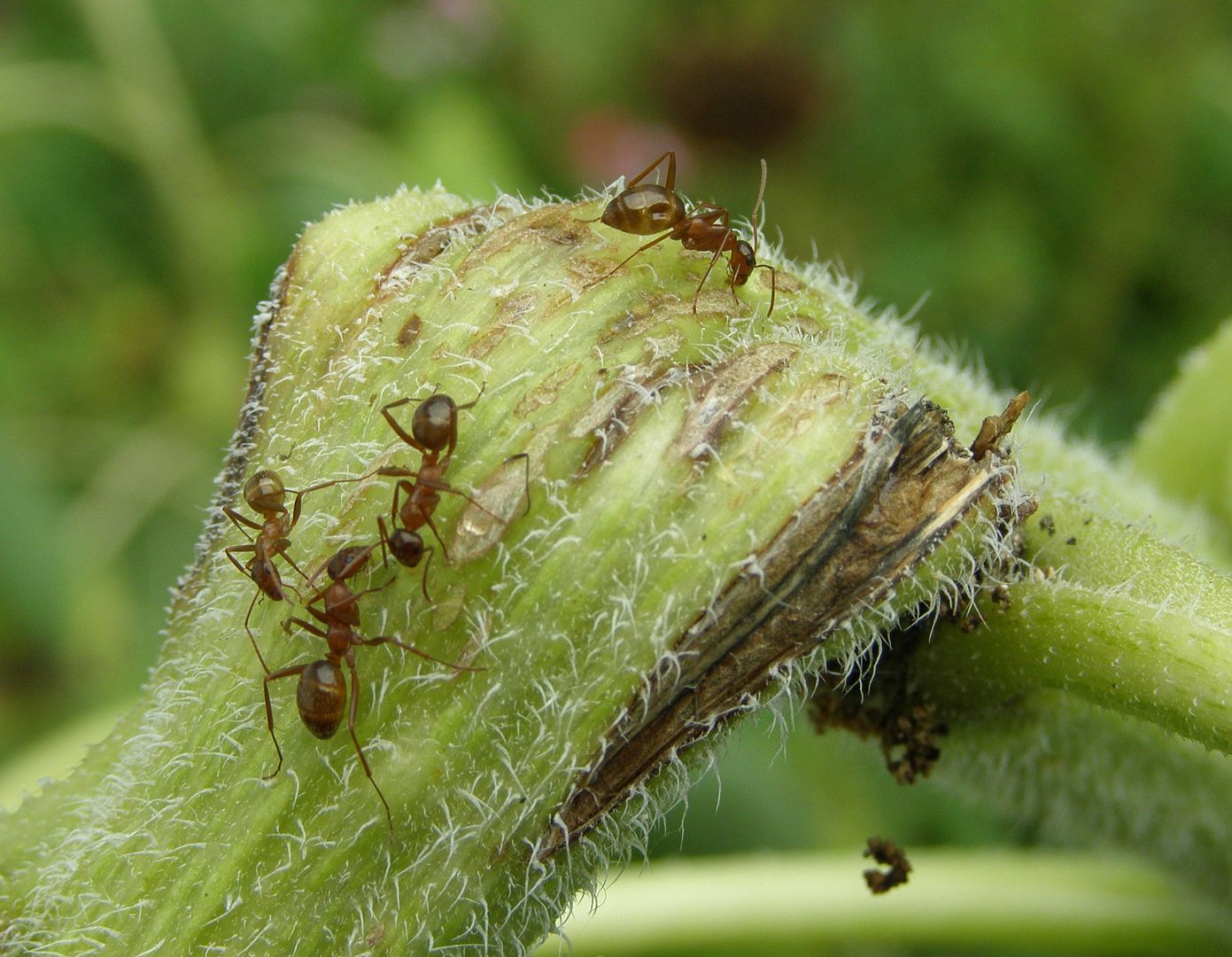
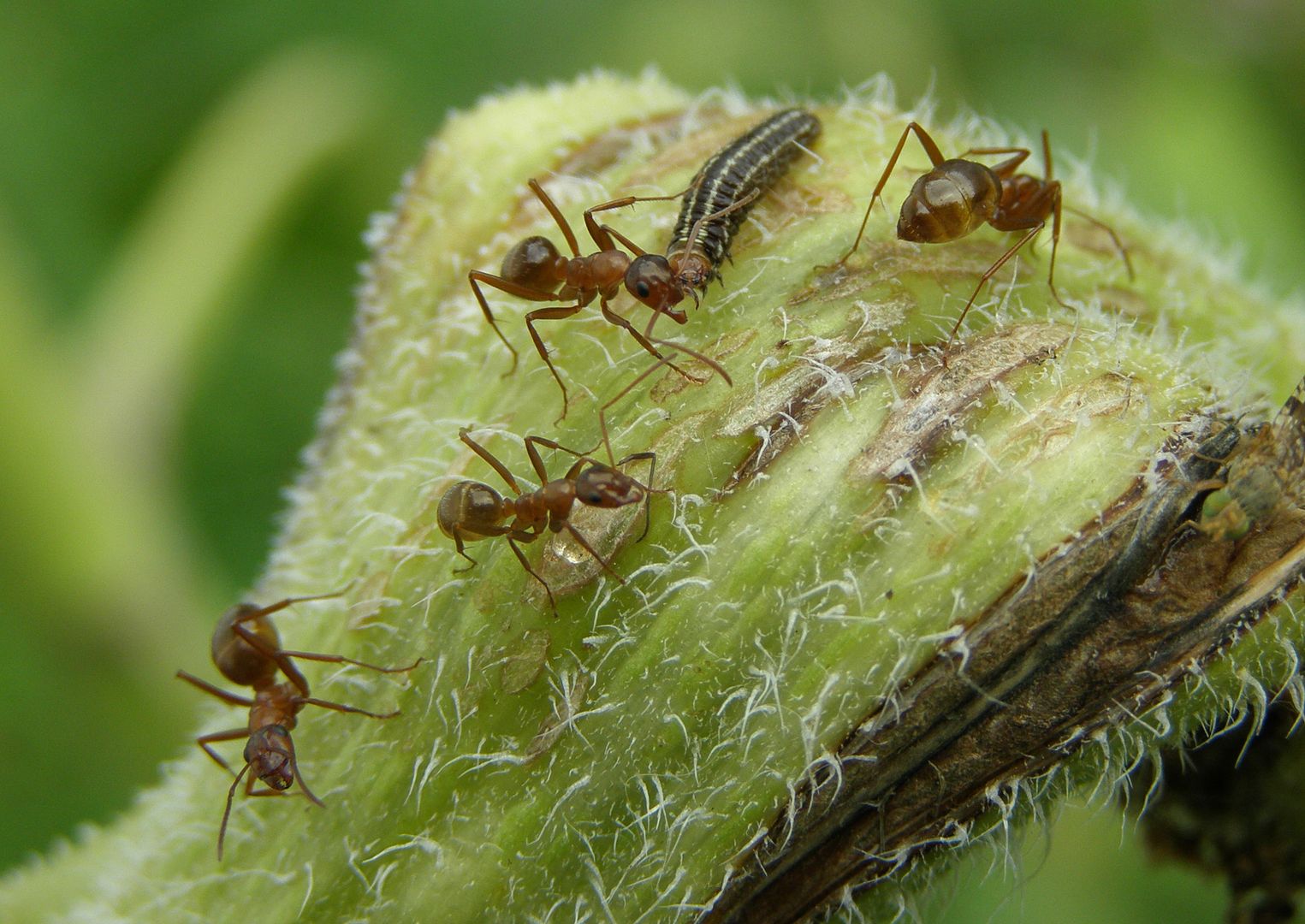
At some times of the day a common Formica species has control of what I believe is the hot spot of the sap flow. But there's no real conflict over the resource.


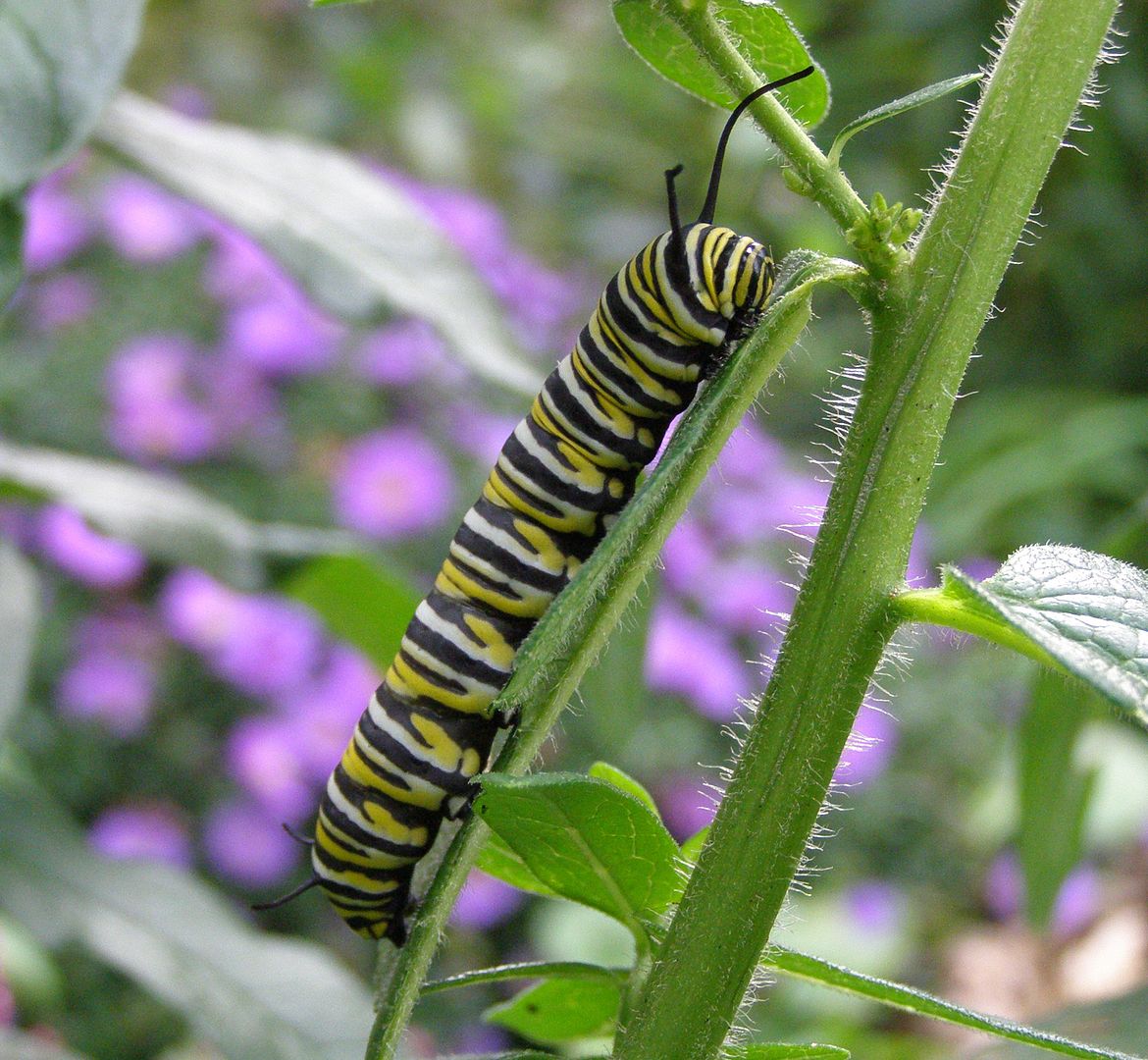
Even when a caterpillar crawls out from within the hollow stem the ants pay it no mind. They bite at it in an aggressive stance and send it on it's way rather than eating it. Formica colonies currently have no brood in the nest, as they don't keep brood over the winter. The larvae are used to digest solid foods so the ants have no use for caterpillars at this time.


Workers gorge themselves to the point where their abdomens become transparent.


Tapinoma sessile, The Odorous House Ant, was also present but not a lot. Because they don't have what I would call a true replete caste workers can only carry small amounts of food.

Monday, September 21, 2009

The Scoliid Wasp

Well the Internet got fixed a little bit faster than I expected. Apparently my phone companies tech support doesn't know they're open on weekends. So here's what I haven't been able to post about.


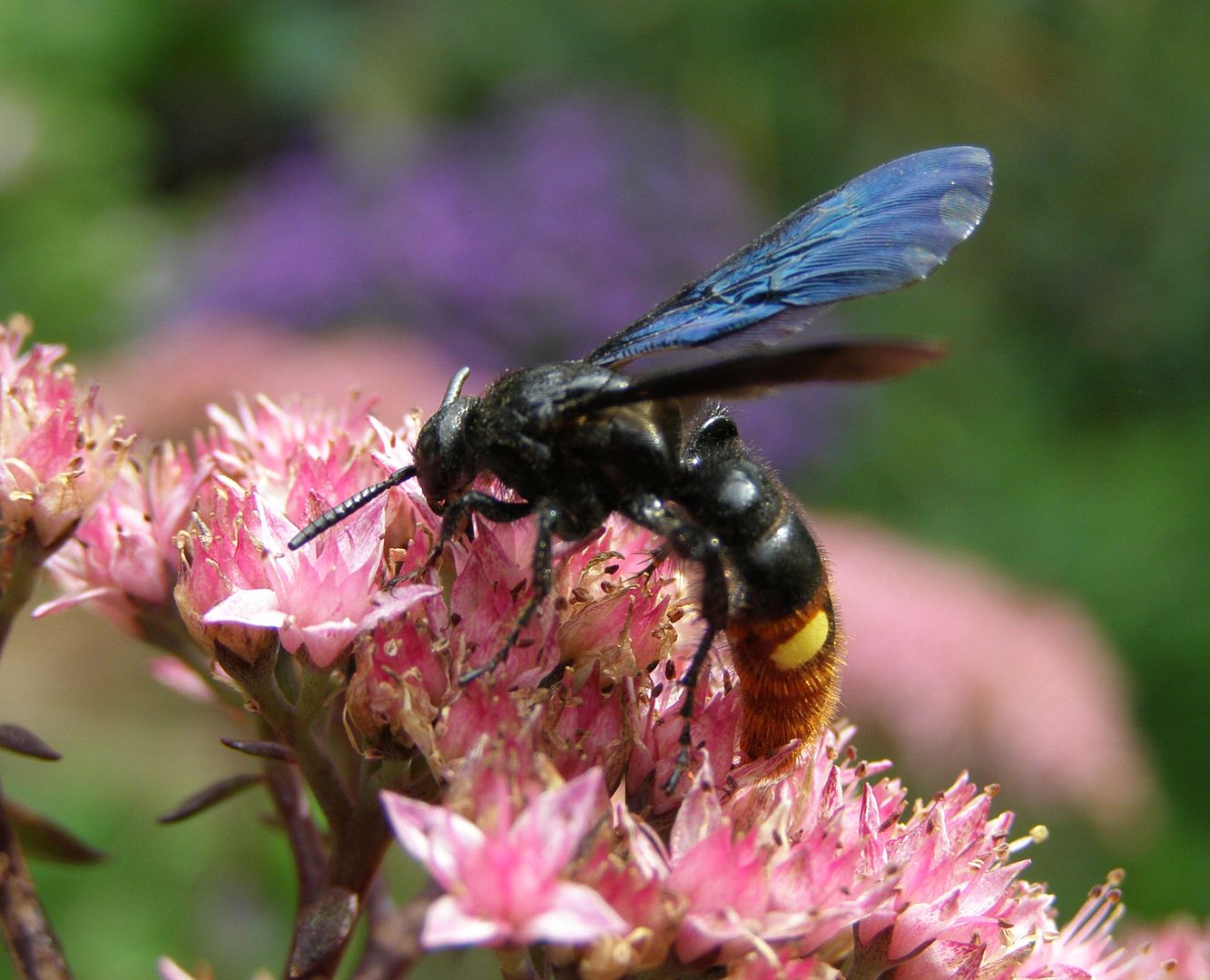
The Scoliid Wasp, Scolia dubia, is a natural control of the imported Japanese Beetles and others. They burrow through infested lawns searching for grubs to inject eggs into. They rarely if ever sting too. So they're an over all beneficial wasp and pretty to look at from the right angle.


When not seeking out grubs adults gorge on nectar from lots of different plants. Usually ones with lots of tiny flowers such as Goldenrod, Clethra alnifolia, and Sedum. As with many solitary bees though they're only active for a short while; in this case about August to September so keep your eye open.

I want to say I've seen other species around though. One was a much smaller wasp but the abdomen had to be twice as long as the rest of the body. Which was funny to see.

Friday, September 18, 2009

I’m Not Dead

Hi everyone. I’m still blogging. Last week my internet went out so i’m taking another short break. Should be a week or so. I’m doing this on my phone now. Until then, bye.

Wednesday, September 9, 2009

Pheidole pilifera


My current colony of Pheidole pilifera testing the limits of the macro feature on my camera. Here they're collecting sugar water. (Liquids are hazardous to creatures their size so it's important to feed liquids absorbed into something.) A lot of people are put off by their size but others love the fact they have a major caste. The big headed ants (also the common name) are a caste of ant normally used to store food and crush seeds. While I'm not confident enough to feed these ants seeds, I'm more than happy to give them sugar water. Seeds that aren't crushed usually start to grow.

Monday, September 7, 2009

Butterfly Farming


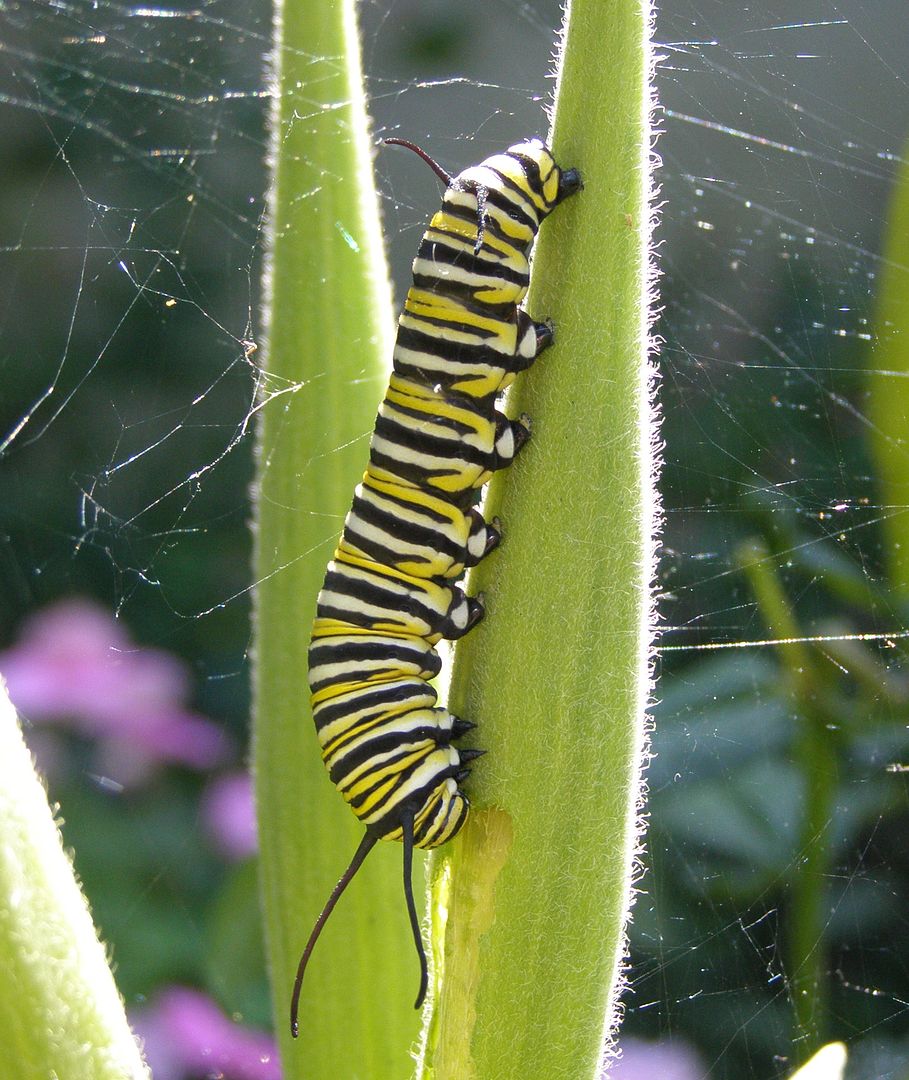
Though the Monarchs have all but migrated their caterpillars are still roaming about the milkweed nibbling on large leaves. Several have already formed a chrysalis and I want to say one's already hatched and taken off. I walked out one day to find a brightly colored Monarch sunbathing on the milkweed and then struggled to fly though it's wings were in perfect condition. After a short flight it landed low on one of our trees. This is exactly what I saw in Monarch who've hatched in past years. Monarch chrysalises are very hard to find. They blend in perfectly with the foliage to most milkweed plants.


Milkweed was one of the first things I planted in my native plant garden and it has been very influential. Though I'd planted it past it's flowering time Monarchs still used it and one happened to make chrysalis in plane sight. Two weeks to the day we found it I watched a Monarch emerge. To this day I've thought what a shame it is that I haven't been able to find any "good" plants for this sort of thing. If you have 4 healthy plants of Milkweed you're almost guaranteed to have a Monarch hatch out in your yard.

Live Butterfly Garden

So I found a product that I will be buying and try out. The thing is timing needs to be done carefully. It's a bit to late in the year to be raising butterflies. Even saving the product for the early spring can be risky. To get the most out of this product I feel it would be best to grow them in the kit first and have them ready to release out in a garden full of host plants. The trouble is their caterpillars naturally feed on flower petals (or in this case "rays") to flowers found in the Aster family. After doing some reading I can't find any Aster family plants that flower in the spring. Thankfully though I may have found the answer.

Another plant Painted Ladies are said to use is our native Pussytoe. It's an odd sort of plant that I'm not familiar with, but it's growing on me the more I read about it. It's a wind pollinator (we won't hold that against it,) that forms colonies. They have separate male and female flowers that oddly enough tend to all produce either one sex or the other depending what "colony" they're in. Perhaps they reproduce by runners and slowly spread? Antennaria plantaginifolia is the taller of the two and could make a nice early blooming perennial beside Daffodils or Tulips. Antennaria neglecta is much much shorter and could easily be planted in the lawn beside Crocuses.

Once these two plants are established it could be simple enough to open the lid of the butterfly kit and turn it over onto the pussytoe before letting them go. Assuming you have a healthy mix of males and females they might lay eggs and hopefully produce a second batch of butterflies. Or an early snack for a hungry bird, worth trying all the same.

The Labor Day Ant


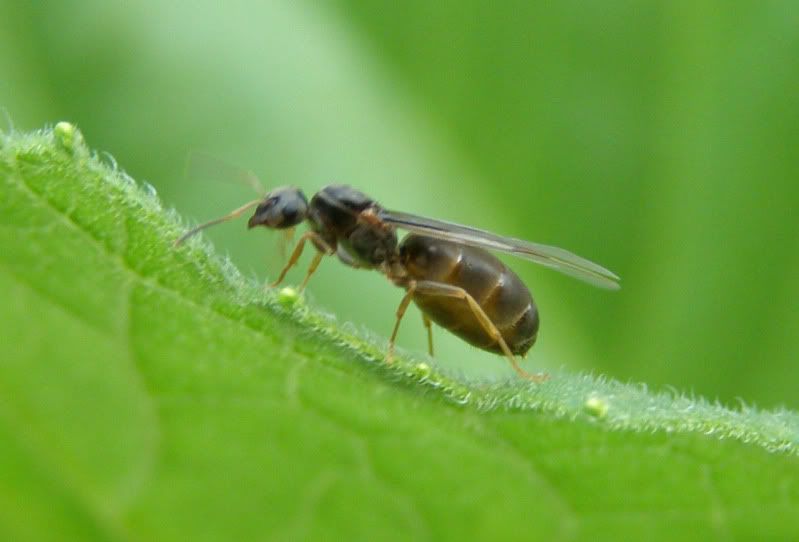
Lasius neoniger is a very common North American ant. It's called The Labor Day ant because their mating season starts from mid August and continues into late September. Though not found everywhere, the places where they do occur they tend to be very abundant almost to the point of being invasive. They tend to nest in open fields or along forest edges. Nuptial flights are held in the late afternoon just before the sun goes down. All this can spell disaster for out door barbecues and gatherings nation wide.

Colonies release thousands of winged males and new queens into the air all at once. For many parts of the country Labor Day falls on the peak of their mating season. Thankfully the main swarm usually takes place high up in the air but having the swarm over head doesn't necessarily spare anyone. Once the flight begins alates will be taking off and landing for hours. Taking off usually stops at sundown but that still leaves hundreds of them in the air. They're drawn to lights once night falls. And this all starts up again on the next day, weather permitting of course.

The other thing Lasius neoniger is know for is ruining the sport of golf. See Here Because they like to nest in open fields golf courses are perfect nesting spots. These ants like to make small mounts too and they make putting areas look messy.


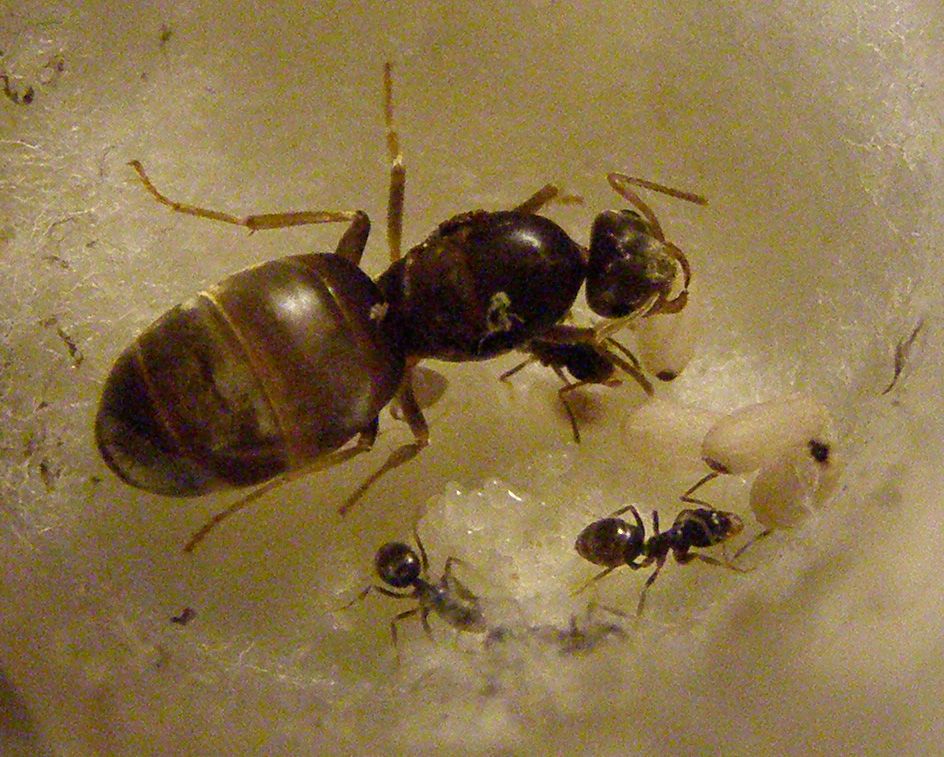
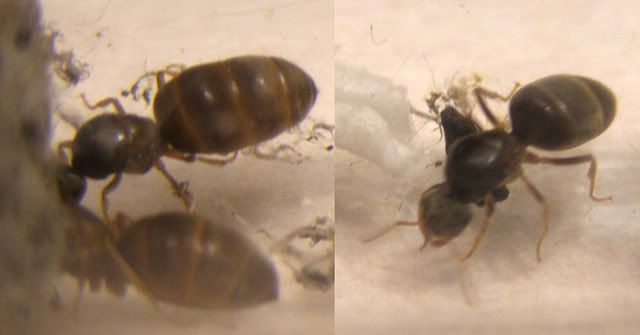
Lasius neoniger isn't entirely to blame though as dozens of other Lasius species are also flying. Other genera are doing this too but most get their flights out of the way in the early morning. Lasius alienus (pictured above) is the forest dwelling counterpart to L. neoniger. Note the legs are more yellow, and the abdomen lacks the velvety sheen of hairs. Neither of these traits are consistent because they can hybridize. L. alienus just tends to nest in dead wood or a combination of wood and dirt.


Not the best picture in the world, but L. neoniger is on the left, L. alienus is on the right. The other issue to look for is behavior. L. neoniger make for much better parents and attentively guard brood even when disturbed. L. alienus queens I've found when disturbed will run around frantically. Another interesting point is the queens pictured above were nesting in the same test tube tending the same batch of workers. Lasius queens seem to tolerate one another even when they are not the same species.

Lasius flavus is the other common one flying now. Queens are much smaller then the other two and tend to be a hard to describe brown-orange color that in the right lighting I swear looks green. Unlike the other two they have orange workers instead of black. But they shouldn't be confused with parasitic species that have just started flying in Canada. I'll save them for another post.

Sunday, September 6, 2009

Black Jack Sedum

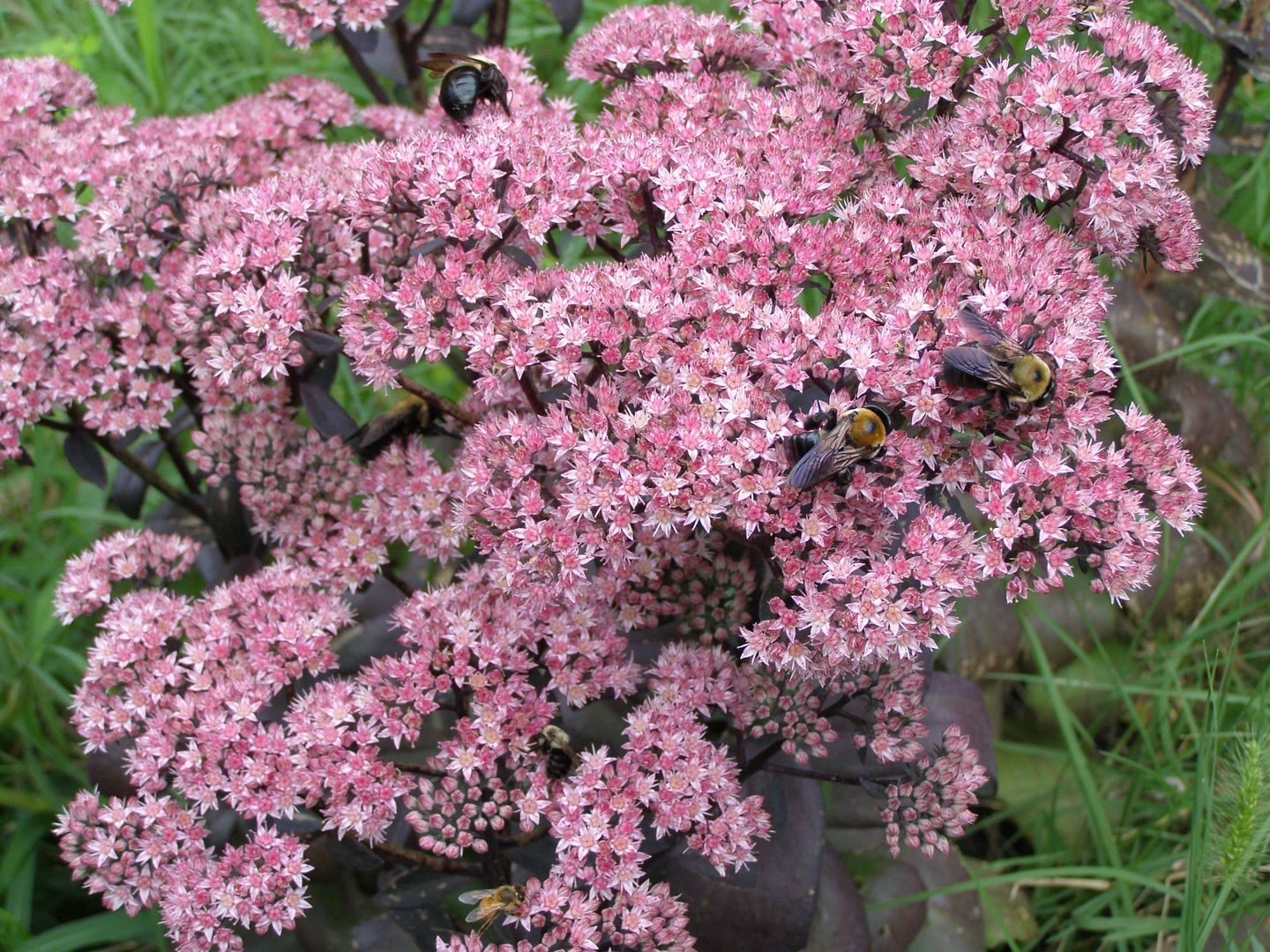
The plant I've been struggling to not accidentally call Jack Black Sedum. This is an odd dark leaved cultivar of some Sedum species. It's one of my most prized plants because it's a unique looking color, stands out great in the garden, and blooms right after Joe Pye Weed.


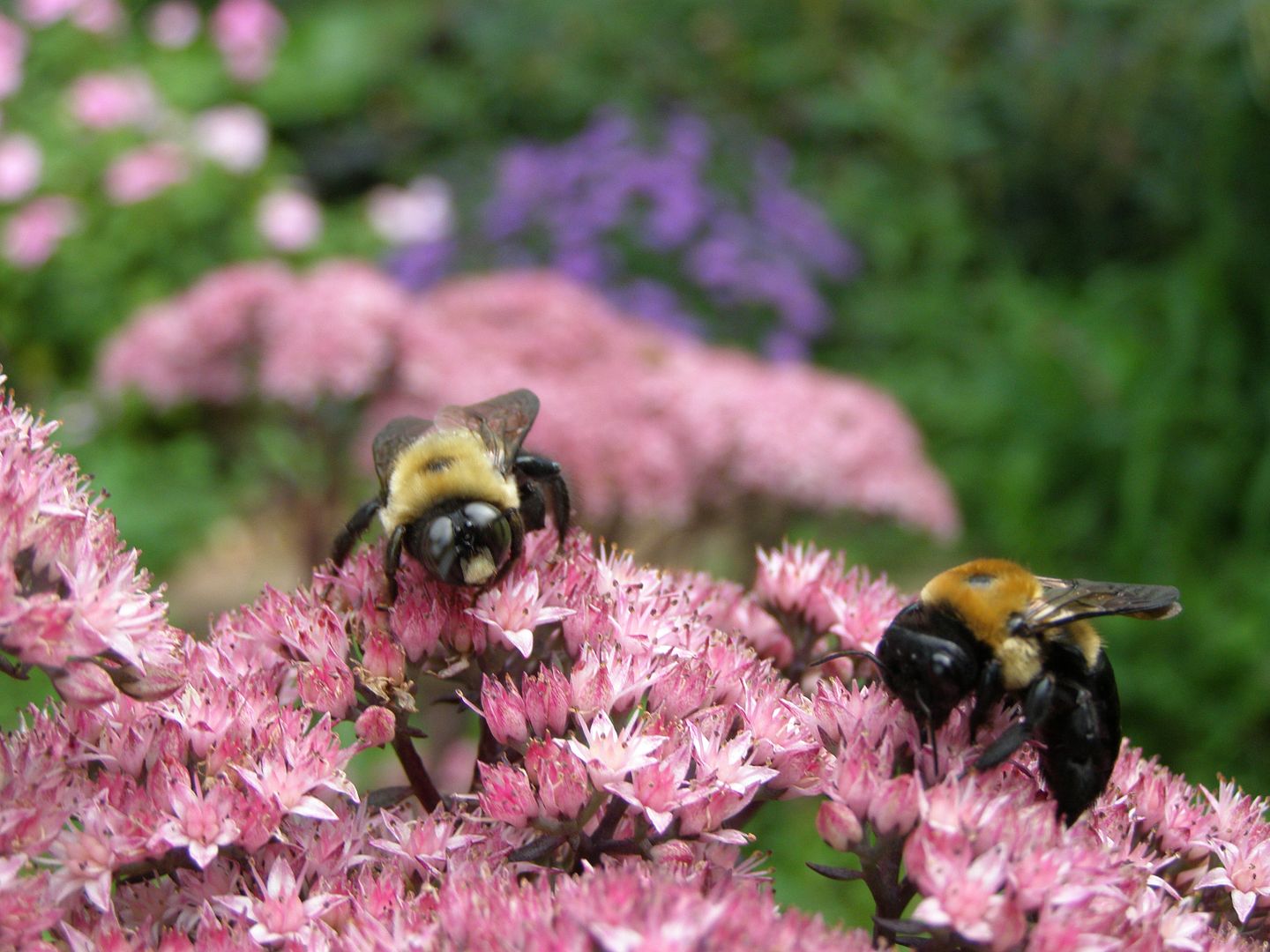
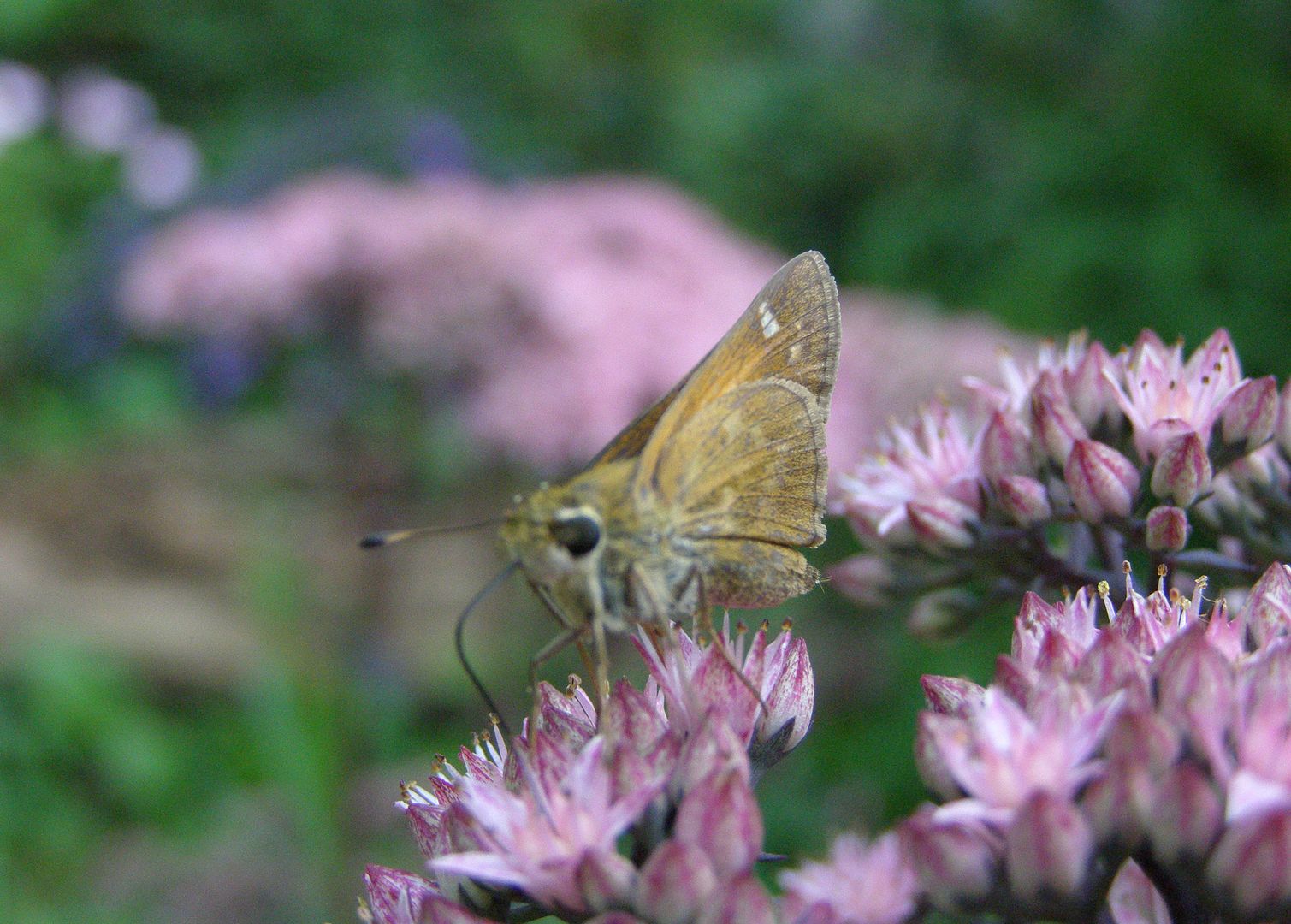
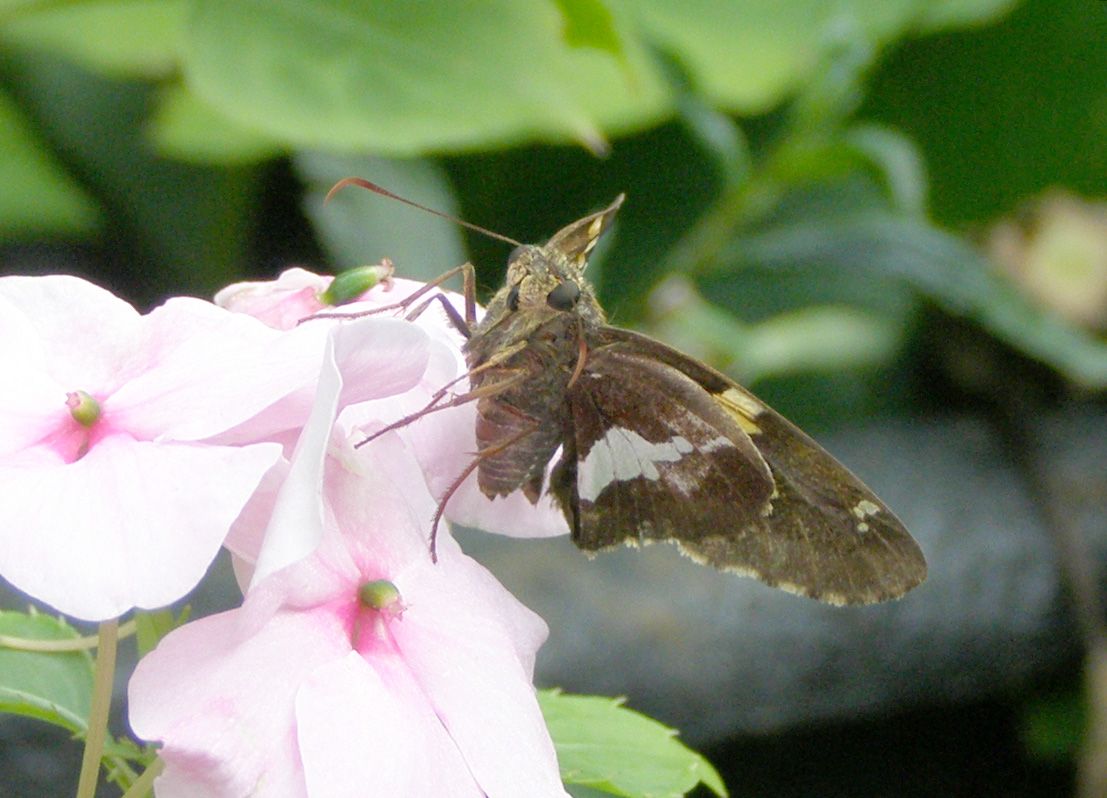
As you can see it gets loads of skippers. Other bees and pollinators also love it.


The flowers are brighter than other sedums. It's a deeper pink. Last year it got lots of honey bees but this year not so much. Oddly enough it's a butterfly magnet more than anything.


And it goes great with fall blooming asters and mums. I'm hoping to take cuttings from it and start them indoors over the winter.


Skippers have always been the brown sometimes orange butterfly I never really cared about. But I have to say seeing dozens of them all together is an interesting sight.


I'm seeing some more diversity too. This one was twice as big as all the others but much perfected impatient.

Friday, September 4, 2009

Beer Ants


Don't Drink It!

I have about 8 friends who would absolutely love this. I thought I'd share. Things You Never Knew Existed sells it HERE.

Thursday, September 3, 2009

Possably a Full Shade Growing Nectar Source


Though this plant is called Bugbane clearly some insects like it. Cimicifuga racemosa is not a plant I know a whole lot about. I know it's native, it has leafy purplish foliage parsley-like in shape. I planted it last year in a shady spot but the darn sun likes to move as autum comes and the poor plant fried. This year though it seems to be tolerating the added light a little better and I might actually get to see one of those flowers bloom.

If this plant gets lots of bees as I hope it does then it will fill a hole greatly needed in the backyard beekeeper. A full shade plant that bees love, even if they're are for nonnative honey bees, would fill a gap in many a yard. Though honey bees have been found to cause the decline in native bee populations I feel the added foliage and nectar sources where there was none before will only benefit the whole. I will report back when it starts flowering.

Tuesday, September 1, 2009

Ants Eating

As Autumn approaches the main diet of ants tends to shift away from protein (caterpillars, insects, other ants, etc...) and becomes geared more towards sweets. Often times though it's not because they know winter is coming, but more a result of there being less protein foods around. Though wasps may die off over the winter, modern day ants have learned to store sugars (some better than others) to sustain the colony.
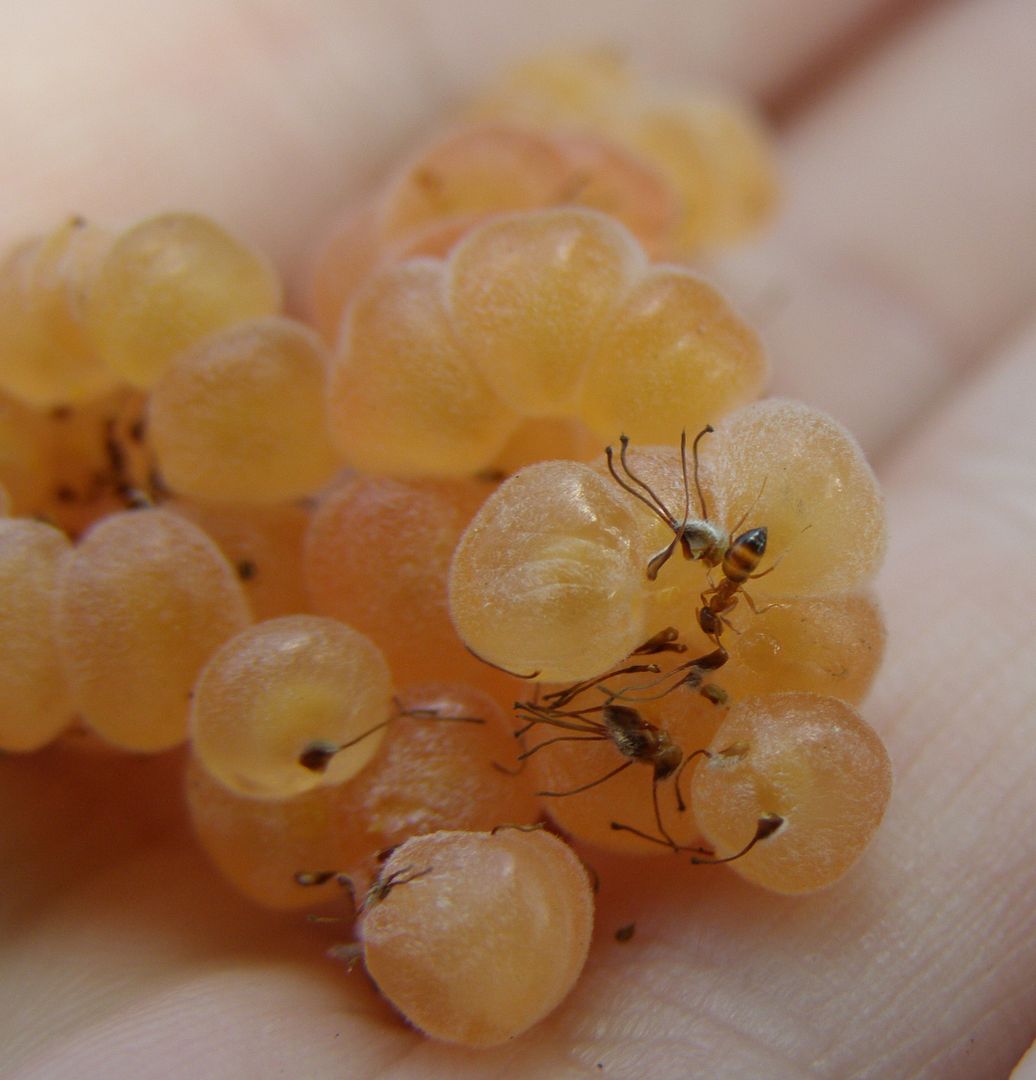

Paratrechina faisonensis, a common ant without a common name, is a small scavenger ant that's been feasting on my raspberries all summer. It's only now that the fall hits when they start to focus heavily on the fruit. Pictured above is one of the orange fruiting varieties. The ones sold in the store are an ugly pale yellow with what looks like black hair poking out of each berry. The ones on my plants were a nice amber color and the black hair effect those things give is completely lost. They're full of juice and very tasty.

Paratrechina species are frequently shipped around the world accidentially and found in flower pots.
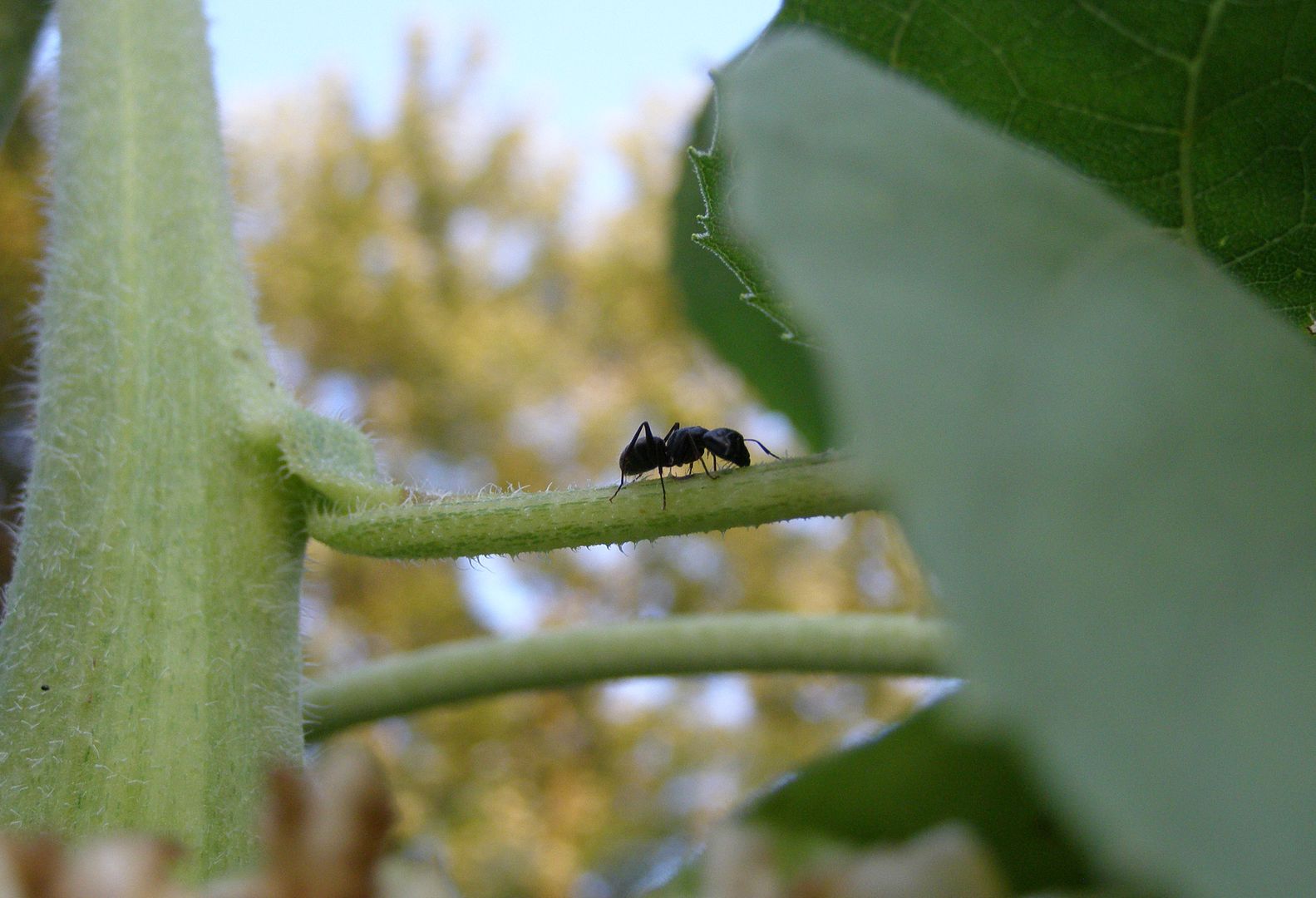

Camponotus pennsylvanicus, The Black Carpenter Ant, can be quite the pest to homes. The real issue though is that they like to nest in wood suffering from extreme water damage... if you have extreme water damage in your home, the ants are the least of your worries. They sometimes do nest in perfectly fine wood but it's a rare occurance.

Camponotus, though the second largest genus of ant in the world with some 600+ species (50 of whome occur in the US and Canada) they lack a metapleural gland! This is one of the traits that disginguishes them from wasps, as well having waist segments, though neither of these two traits are consistant. The gland secretes antibiotics and essentially keep the ant clean. To substitue this Camponotus ants frequently collect plant sap. Pictured above is a major worker sipping some off the sunflowers I grew.
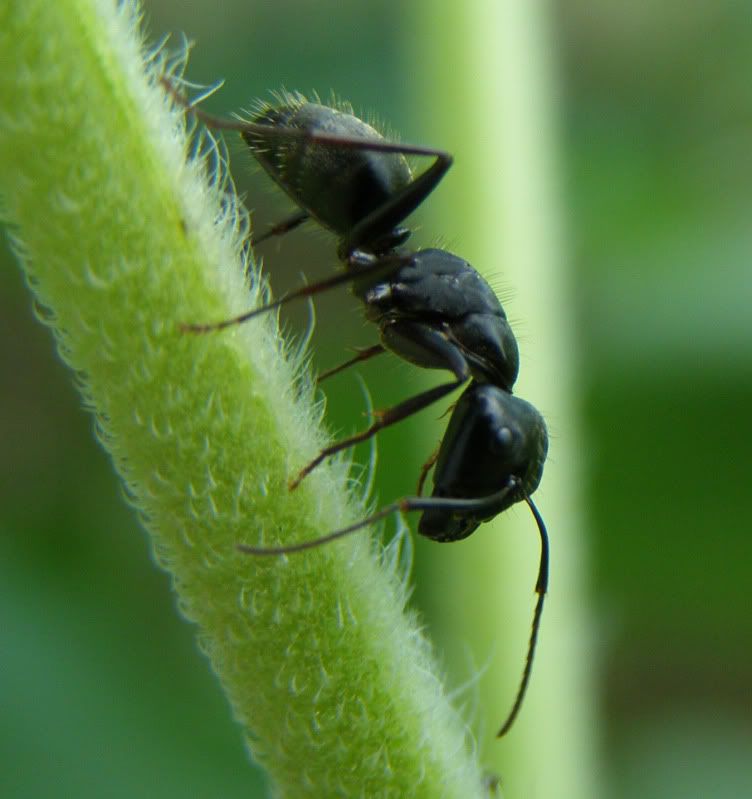

They are among the largest, if not the largest, ant in North America. They are easily identified from the gold/gray fur on the abdomen. They don't occur on the west coast. They forage mostly at night too so massive colonies can often go unnoticed.
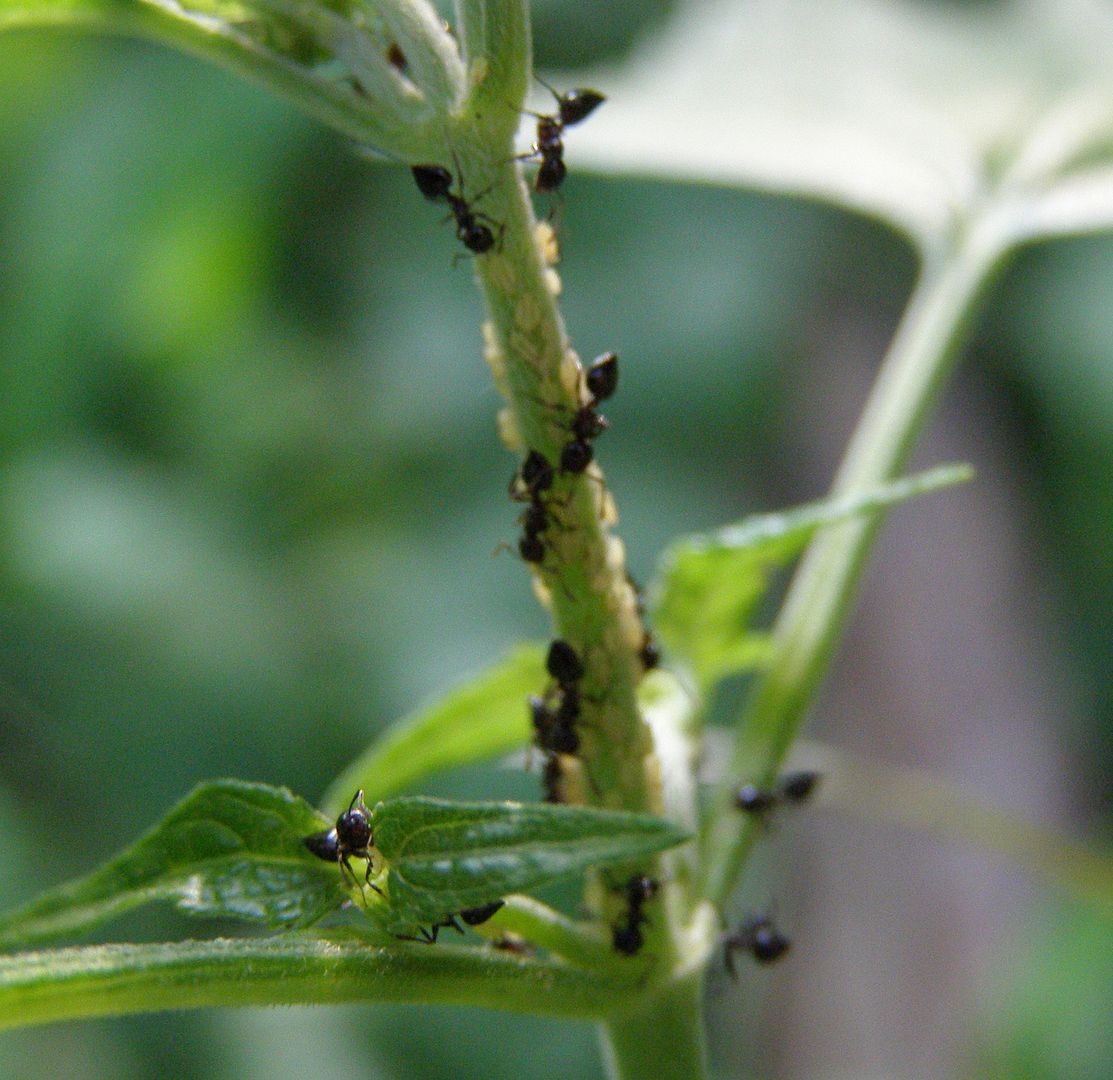

Crematogaster cerasi, is probably our most widely distributed Acrobat Ant in North America. Here a group of them collect honey dew from aphids on some weed out in the yard. As you get farther south (towards Florida, Texas, and California) they become much more diverse. Many of them form special relationships with hollow plants and use them as nests. Up north though, C. cerasi nests in dead wood or hollow structures. Their foraging lines can be extensive. Subcolonies are established because suitable dead wood structures are not common. Foraging trails usually maintain contact with these places though. I'm unsure how many queens per colony.
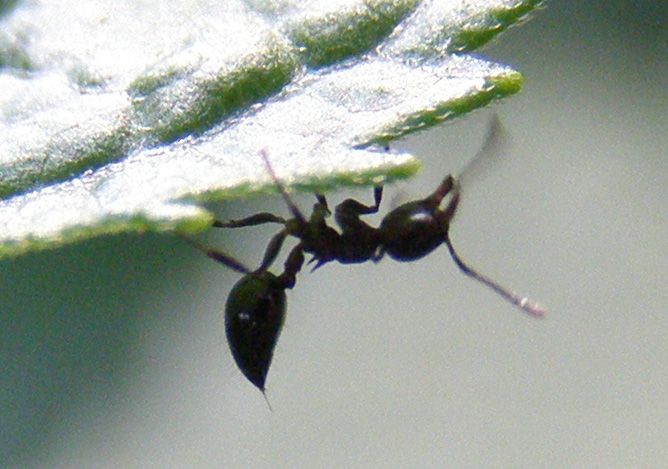

They get the name acrobat ant because they like to sting over head, rather than under. In a sqorpion-like pose, they're almost doing a hand stand. The abdomen appears heart shaped when viewed from above. Their "stinger" is actually limber and used to paint venom on enemies rather than injecting it.