Monday, April 13, 2009

Woodland Wildflowers


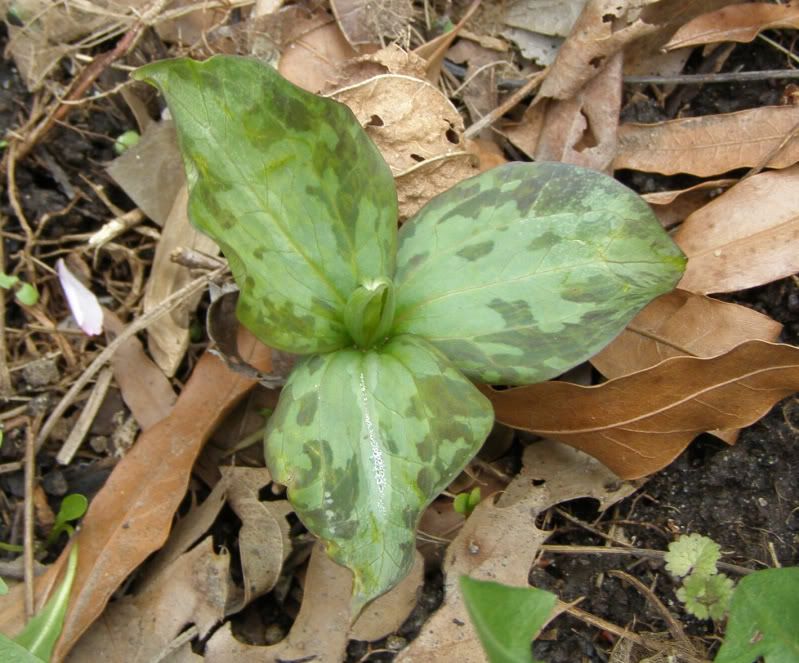
Well that didn't take long. One of the Trilliums is flowering at a very low height. I don't know the species name to this one in particular but it's only 3 inches tall, and that's a flower bud on it. I know it's red flowering one though but we'll see how true that is. Color can vary with Trillium species though one color does seem to dominate. Assuming it's pollinated though I should get some Trillium seeds to test around and see what ants like them or just see if/how they distribute around the yard.

Other Trilliums I have are a bit taller than this one, but don't have the flower bud yet. This is fine I think though because they might still produce more leaves (series of 3) before flowering. Or the flower bud is under or to the side of the leaves and I haven't noticed it yet. In either case I'll be planting more trilliums for years to come until I get a continuous bloom.


Bloodroot is also coming up nicely. However I don't know if it will flower this year. All the pictures I see online show them flowering before the leaf unfolds. As a landscaping plant I'd say this could be treated and planted anywhere you'd think a Crocus would look nice. They bloom a bit later though. And as with the Trilliums they are distributed by ants.

Hopefully all these ant plants will pay off and I'll get some pictures of ants obtaining obtaining the seeds. These plants might even mark where some ant colonies are.

The Lupins are Coming! The Lupins are Coming!

Well I have my seeds for the year planted. Peas, Tomatoes, Parsley, Fennel, and probably other plants I'll buy as starters later on. And I wanted to devote an entire flat to Lupinus perennis which I'd bought 1oz of from Prairie Nursery. It's actually a pretty plant as well a host plant to one of those endangered butterflies I'm always going on about. It doesn't flower it's first year and I don't have any pictures of it otherwise so here is a Google search of Lupinus perennis.

So I have the flat ready when all of a sudden I douce the entire 1oz packet of seeds with the garden hose. So that's about two hand fulls of seeds (maybe a few thousand) that are all about to grow. Granted I was going to plant them all anyhow, but it would have been nice to have some spare laying around. So now I have two flats, and several flower pots, some belonging to my neighbors without their knowlage, devoted to this one wildflower. I'm sure the endangered butterfly will be thrilled.

So the point here is, depending on how many of them germinate, I might be selling or giving away a lot of this plant in the near future. We'll see what happens. The seeds might require chilling for a few months. If only I had another oz of seeds incase none of these grow. Oh well, I tried. If nothing grows in a few weeks I'll attempt chilling the flats, but I think I've seen lupins come up normally in some seed mixes.

Friday, April 10, 2009

Nectarine Flowers


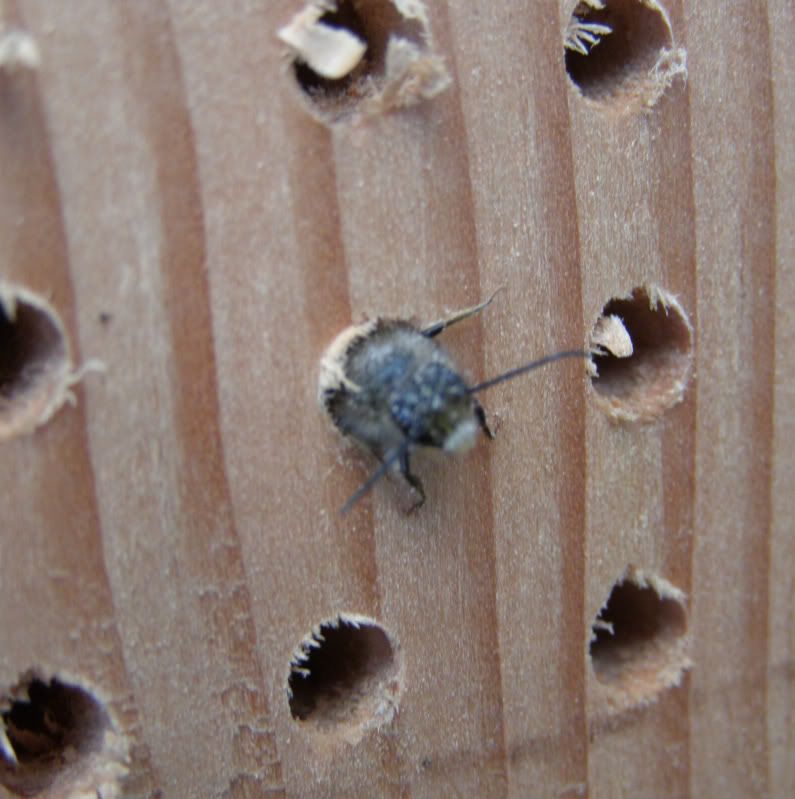
Took some more pictures today of the bees working the nectarine tree. I notice that Honey bees have a much easier time flying around and visit far more flowers than the mason bees. But whenever the mason bees do enter a flower they come out completely covered in pollen. I think it's their weaker wing that prevent them from flying the great distances that honey bees do. I believe the smaller size of the mason bees allows them to reach more parts of the flowers too but we'll see who the better pollinator is. If nectarines didn't produce only one seed (I think) I might have marked what flowers are visited by what bees with ribbons or paint or something.


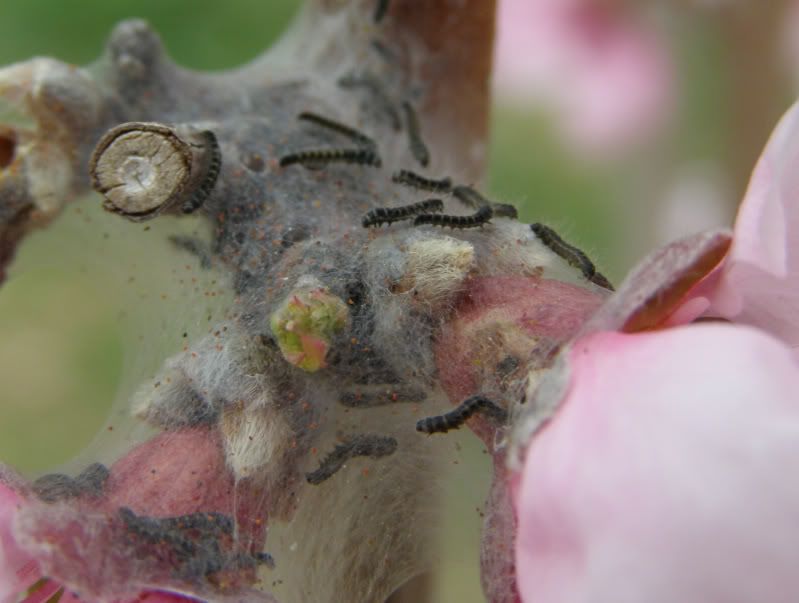
This is all that's left of the caterpillars and I'm wondering why I ever though they'd be a threat. I removed two clusters of them out of fear they might devour the tree. There were still quite a few groups of them left and lots that had spread around on their own. I don't know what happened to these other groups but there's only a few of them left. Because they're only on the one branch I don't think they're going to harm the end harvest if any.

Chelone glabra shortage?

So last year I attended a talk by Doug Tallamy at Mt. Cuba in Delaware. He was giving a lecture and promoting his new book "Bringing Nature Home: How Native plants Sustain Wildlife in Our Gardens" and one of the underlining themes of the night was just as the title suggests. Ways to make our land more sustainable to the native wildlife.

This need to own unique plants and have the best design around has gotten out of hand. These are often nonnative plants to the region, and offer nothing in the way of supporting nature. It starts with a few people importing a unique plant, growers then mass produce it and it's sold to the public who do little if any research on what they're buying other than the information tag which markets the plant's highlights.

The trouble with this starts with insects. Most of these nonnative plants are marketed as Pest Free. This is an awful lie but I won't get into that. The trouble is our native Lepidoptera (Moths and Butterflies) use native plants 40 to 1 as their hosts. This varies from species to species but what's imporant about these insects is they're abundant. It takes a hell of a lot more than bird seed to feed a baby bird. The lack of native plants has drastically damaged the population of our migratory bird populations as a result of all this landscaping.

So naturally after the talk everyone who attended the talk recieved a native plant. In this case it was Chelone glabra, White Turtle Head. The reason for this is they're trying to save a threatened species of butterfly, The Baltimore Checkerspot, Euphydryas phaeton. Naturally I was happy to plant a host plant to such a butterfly out in the garden. I can't say if it survived yet but I do see something growing where I put it. I'll post back later on.

Now as a rule to butterfly gardening they usually suggest that you have 3 to 5 of a single plant to really get the species's attention. And I have to say this is true for wildflower, perennials. (Trees don't worry about.) This applies for nectar plants as well host plants. My friend who has a single plant of Milkweed has never had a Monarch butterfly lay any eggs on her plant where as I get Monarchs every year becuase I have 4 milkweeds of one variety and recently added several others.

A story told at the lecture was how this butterfly wasn't seen in New Jersey for some years. But some garden center, (I wish I could remember the name) started selling it. Well suddenly they discovered all these caterpillars all over the plants and they had started spreading to other local plants. As it turns out the Baltimore Checkerspot is still here in NJ. And this is the entire reason this plant was given out.

The trouble I'm having is I can't find anyone selling White Turtle Head. I go to some very good plant nursuries, and websites, and they're all selling Red Turtle Head, which isn't used by the Baltimore Checkerspot. Or they're selling Physostegia virginiana which lookes just like White Turtle Head, but again, doesn't work. So this is all leading me to wonder if there isn't a mass shortage of this plant.

So if anyone out there can help me I would appreciated it.
Wednesday, April 8, 2009

Update: April

Ants

The Prenolepsis imparis queen I caught is so far doing fine. She has a nice cluster of eggs and will probably have some workers in a few weeks. Of course that's still a month or two off.
I'm still finding males to them gathering around lights at night. Nuptial flights are still going on along forested areas and one should keep an eye out for them there in the afternoon hours.


Several queens of Lasius neoniger I caught last August are also doing well. However, I'm having some condensation issues in their tubes and needed to adjust that. I'm trying to figure out a better way to get them to move to a new test tube and allow some sort of ventilation to occur so condensation doesn't become a problem. In the process of fixing this issue I noticed several of their larva did not spin cocoons. And this is an interesting thing the bring up. Wild colonies have access to dirt and flakes of dust (they nest in the ground) and when it comes time for the larva to spin a cocoon for it's final metamorphoses they need a bit of debris to get started. In a test tube setup, among other clean setups, they rarely have this option. Thus captive colonies mostly produce naked pupa and one can gage how tidy the nest is.

Bees
Mason bees have started waking up and I'm thrilled to see their adorable faces. They are completely timid but otherwise shy. I would love to take some close up macro shots of one in action but they always fly away. Hopefully I'll catch a few when more of them emerge though. Their nesting block is still mostly full of cells. (There is a lingering thought that they might all be dead from the refrigirator but we'll see what happens. They normally takes a few weeks to emerge anyhow I'm told.)

Butterflies
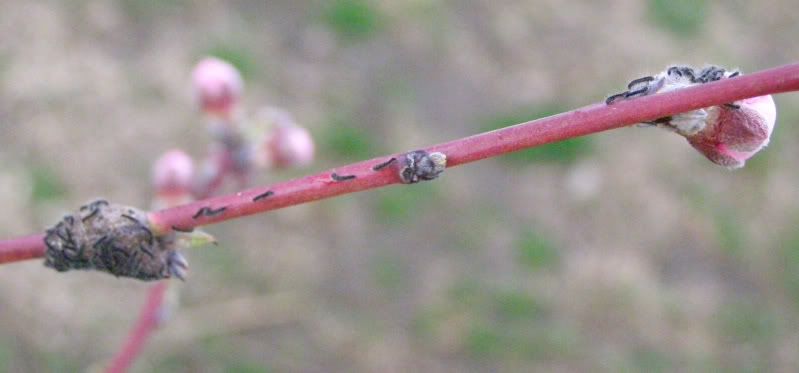
The caterpillars on the nectarine tree have completely vanished! It's been windy the past few days and I saw a few entering the flower buds for shelter, while others spun cocoons. While I did notice some unopened flower buds were hollowed out I can't say that I see any on the tree. They remained on one of the weaker side branches of 3 or 5 main ones and I'd say weren't that big of a pest at all (so far). They're either really good at hiding or were eaten by something.

Nature
Well spring is certainly here for most of the country. Garden stores are stocking up on easter plants, but I urdge readers to not get carried away by them. It is the perfect time to buy yourself a fruit tree, berry bushes have a lot to offer, and genarally anything native to your part of the world will be beneficial. I'm thirlled to see Lowes Hardware has more plants labled Native this year and they're even seated on the shelves next to the regular plants too. The benefit that native plants offer is they are useful in far more ways than the nonnative. Most native plants that flower support a pollinator. Plants that are targeted by caterpillars offer food for young birds, weather it's a tree or a sun loving wild flower. Shade wildflowers too have much to offer and many are even distributed by ants as I read in "The Ecology and Evolution of Ant-Plant Interactions."
This book has me inspired to include more plants that are distributed by ants out in the yard.


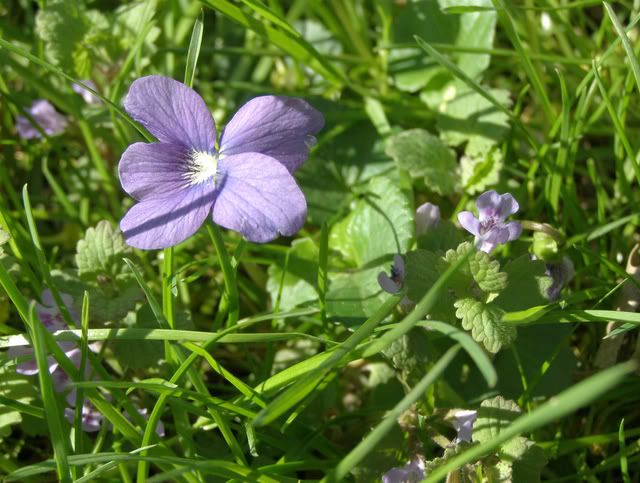
One plant that has been growing out in the yard for years is the New Jersey State Flower, Viole sororia, pictured above. This is not featured in any of their lists in the book as a plant distributed by ants. But it has me wondering. You see in the past I had wondered if this plant was distributed by ants and located some seeds from one. These are featured on pods very low to the ground, an ideal place for ants to find them. So I gave some seeds to an Aphaenogaster species which didn't care about it. Thanks to reading this book I now know more. One would assume Aphaenogaster would make an ideal seed distributing species for it's nesting in woodland habits here on the east coast. But the thing is Aphaenogaster don't nest near this particular violet out in the yard. Assuming it is being distributed by ants, Aphaenogaster wouldn't be the ideal candidate. Tapinoma, Formica and Lasius however do nest near it though and would make for an idea distributor. I'll have more on this topic in a later post.

Monday, April 6, 2009

Sunday, April 5, 2009

Mason Bee Update


It's been very windy here the past few days and nothing has really been done. I'm seeing more Mason Bees flying around. And happy to see they discovered the nectarine tree. For the most part they buzz around it zigzagging left and right over it. Most are not doing anything at all besides flying but occasionally I see one land on a flower and really work it. This is uncommon though and I haven't gotten a good picture yet.


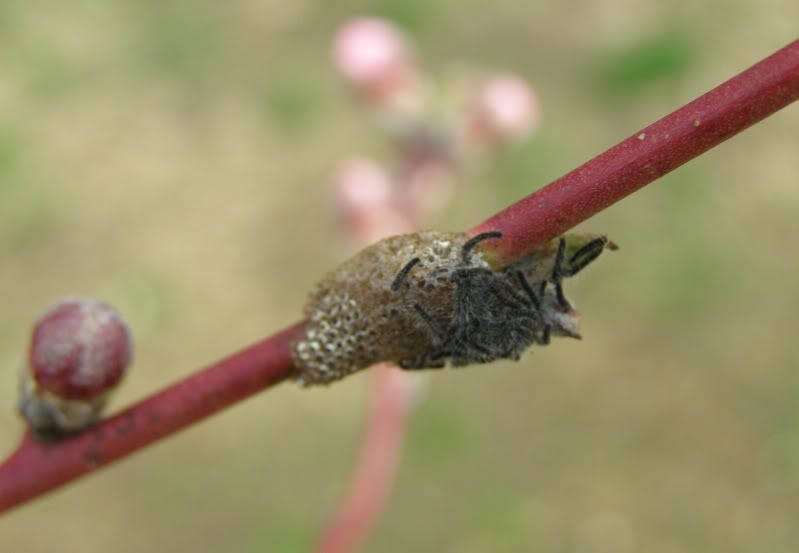
The caterpillars have have spread to a few more flowers. They ball up around the flower as one great mass of fuzz. I though the wind would have blown them off but I was apparently wrong. Tiny silk webs have formed around the flowers they are on. I didn't realize so many of them would come out of one egg sack. There must be 400 or more. Because of this I've removed two of the clumps of caterpillars. I'll continue to do this as I feel is needed. I have every confidence that they could eat every flower on this tree. I will test them as a source of ant food later on.

Friday, April 3, 2009

Mason Bees


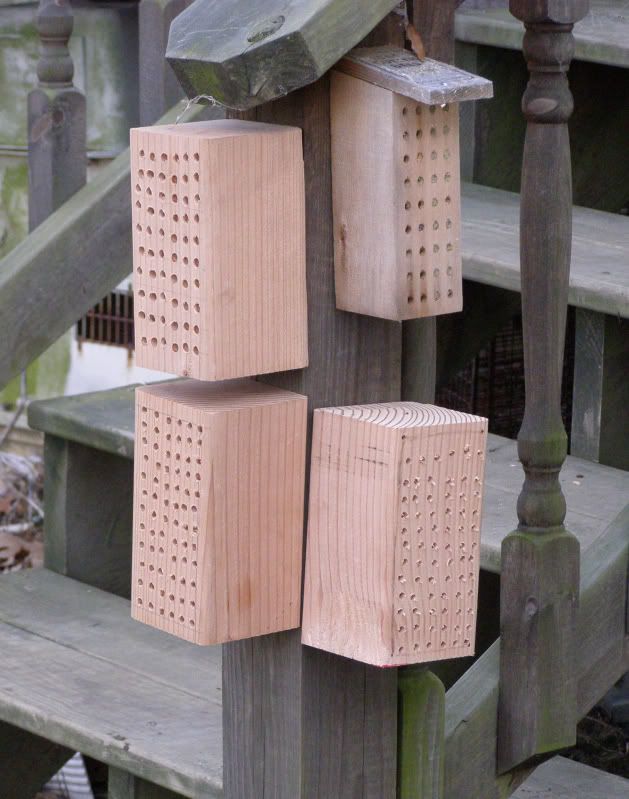
Trees here are now in full bloom or coming into it. And it's exactly the right time for mason bees to become active. Earlier today a few Mason Bees started emerging from the one I had bought from Knox Cellars Native Pollinators last year. Upon arrival I realized these wooden nesting blocks are easy enough to make. Turns out the bees like mine just as good.


What's neat is the bees aren't as picky as I though they'd be about the hole size. These are smaller than the average mason bee. I see them scoping out all the different sized holes though. 5/16, 3/16, and 5/32 are all being used by these bees. (I didn't use 7/32 or 1/4 found between 5/16 and the others.)

These are ideal pollinators for backyard fruit trees. And I happen to have a Nectarine tree within 10 feet of their nesting blocks. It is about to come into bloom and I look forward to seeing if they work it. They should be active for another 6 weeks or so.


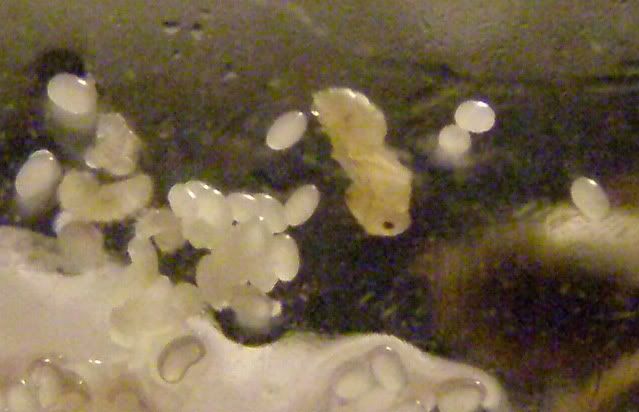
The egg sack on the Nectarine tree has also split open. And tiny caterpillars have started pouring out of the thing. I'm curious to see how much damage they can do. I justafy this by saying if I get just 12 Nectarines from the tree in two years or so then it was worth paying the $15 for the tree. Still, I noticed they have a liking for the flower petals and if they do to much damage I may remove them.

Thursday, April 2, 2009

Trilliums Emerging


Somewhat surprising, I found a few Trilliums growing out in the yard. This particular one photographed I planted at this time about last year. It didn't grow then because it had already attempted that in the bag. Other Trilliums that I planted around it also didn't grow and I don't think are coming up either. I really question why garden centers and stores sell these to be planted in late winter and spring. The least they could do is store them outside.

One reason could be that squirrels and rodents like eating them. I know I planted a bunch in the fall as well and I'm certain nearly all of those were dug up and devoured. The thing is though that this is easily avoided. Just water them after you plant, because squirrels don't like digging in wet soil. Placing chicken wire down is another precaution to prevent things from digging in general. Lastly throw leaf litter down to hide the open soil.

I'll post back with more about this plant when it starts flowering. They are ideal for shade and best off all Ants are the main way their seeds are distributed.

Wednesday, April 1, 2009

NPR The Secret Society of Superorganisms

Earlier today NPR aired an interview with Edward O. Wilson. Give it a listen here.

Also give this a listen too. Butterfly Does Great Ant Impression, here.