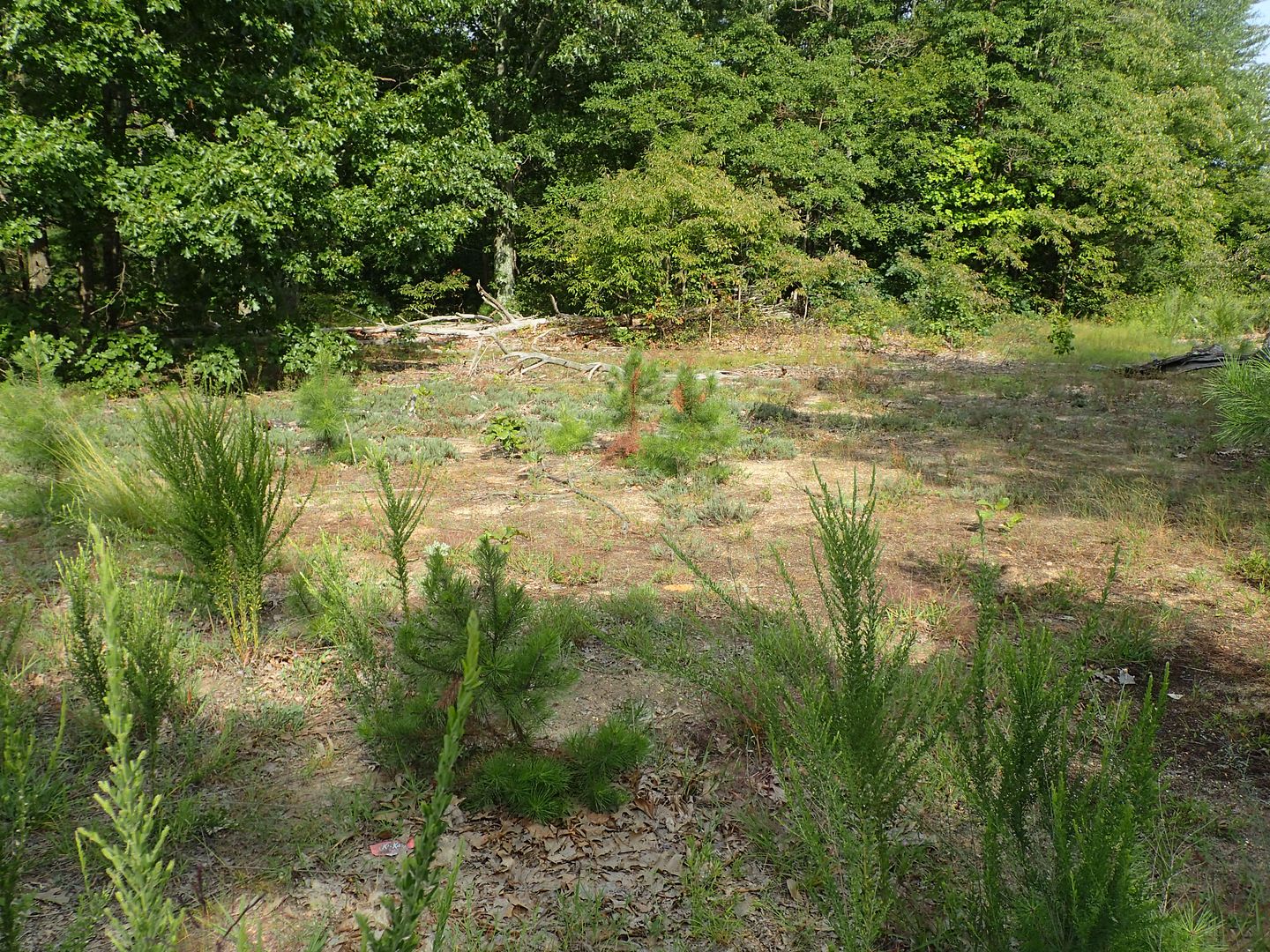
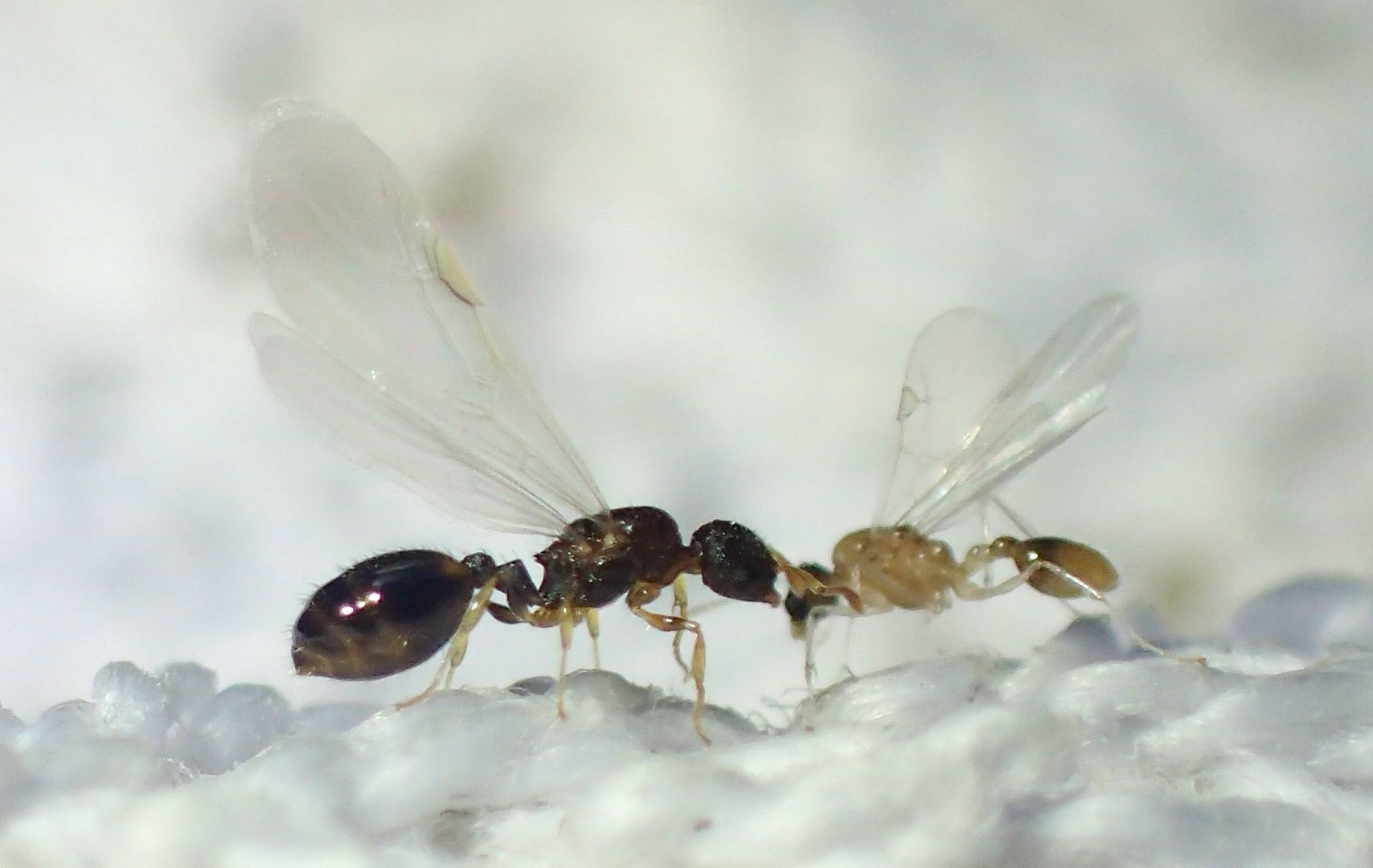
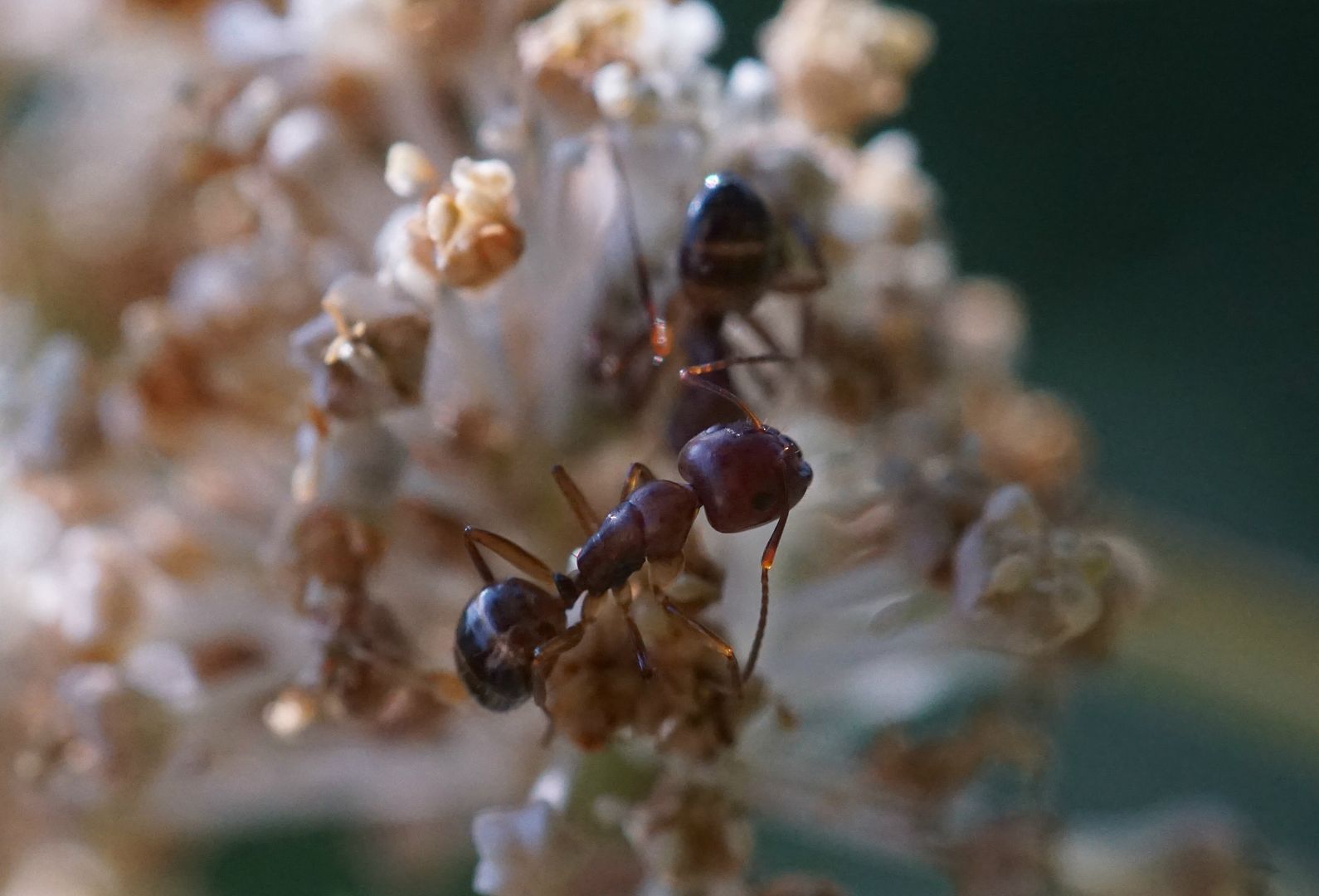
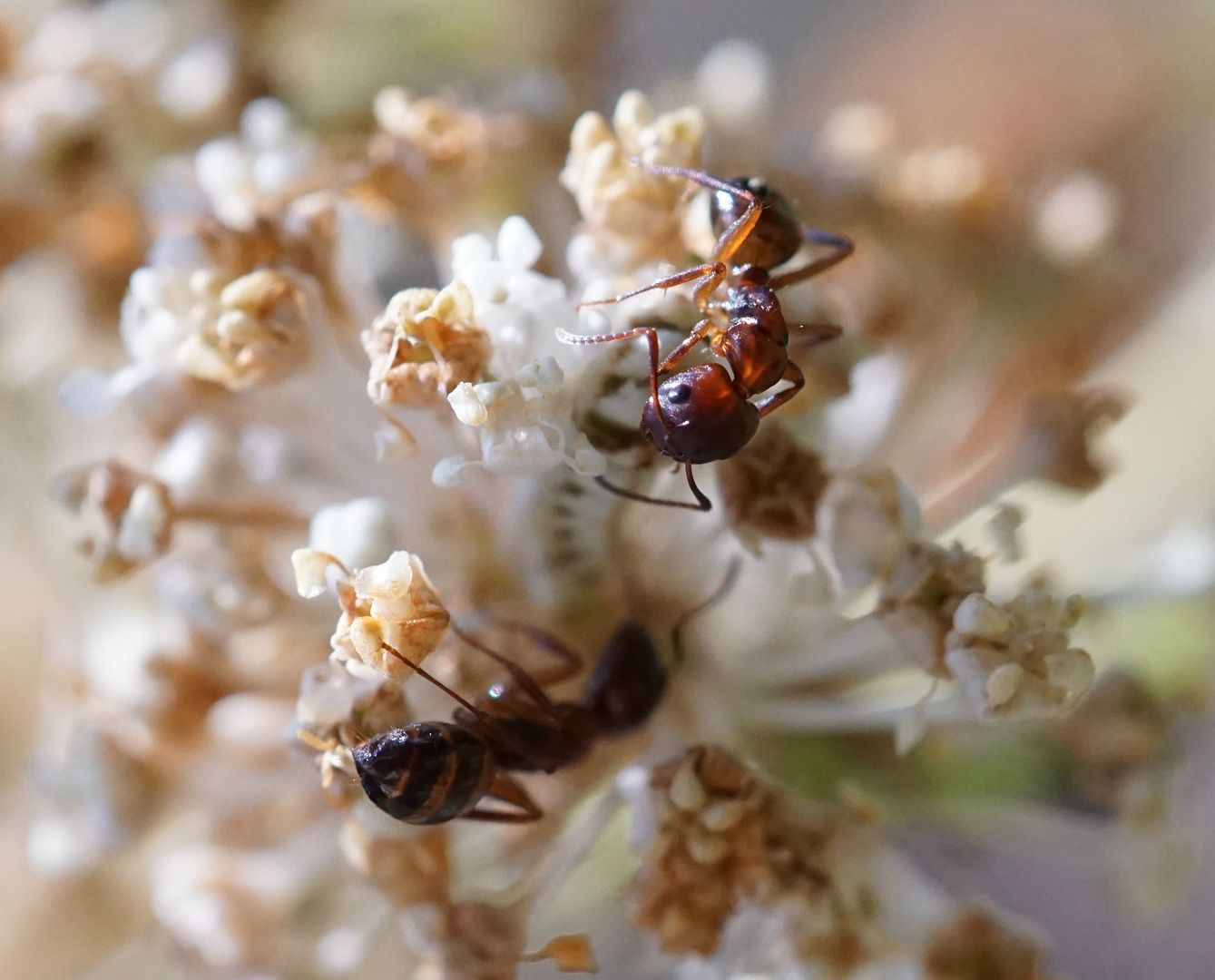
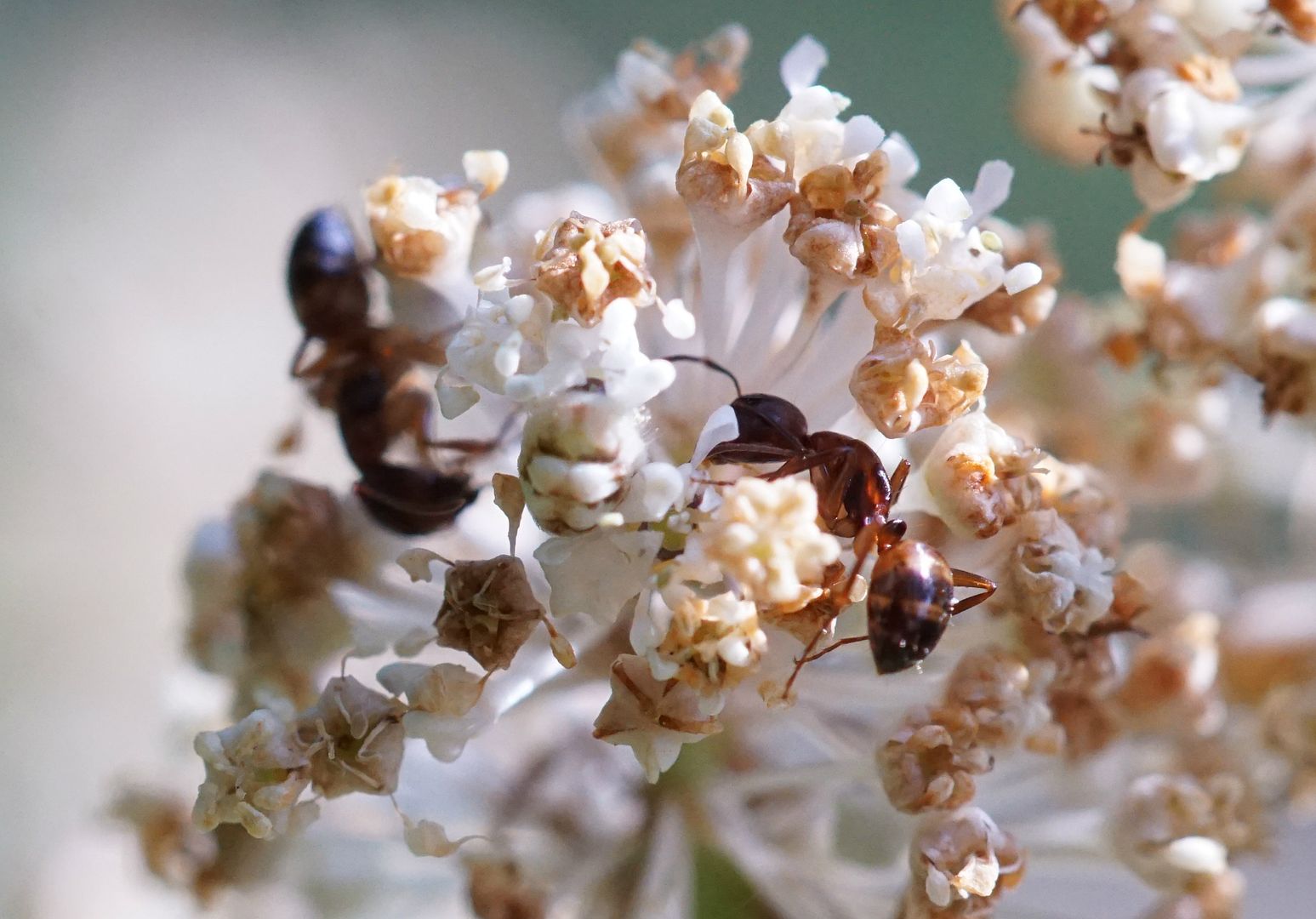
Finally got around to visiting Turkey Swamp Park this year and a few other locations around that county.
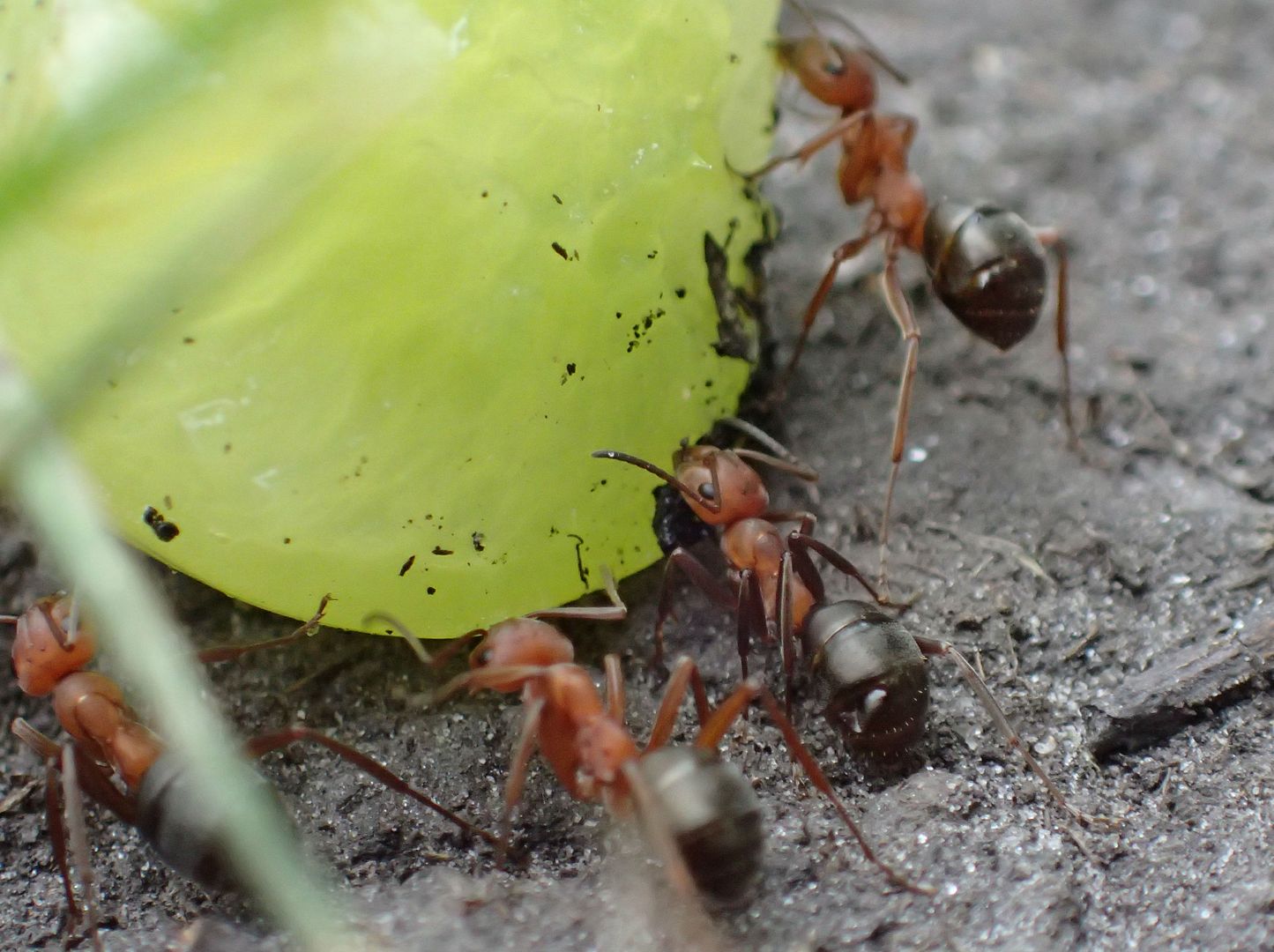
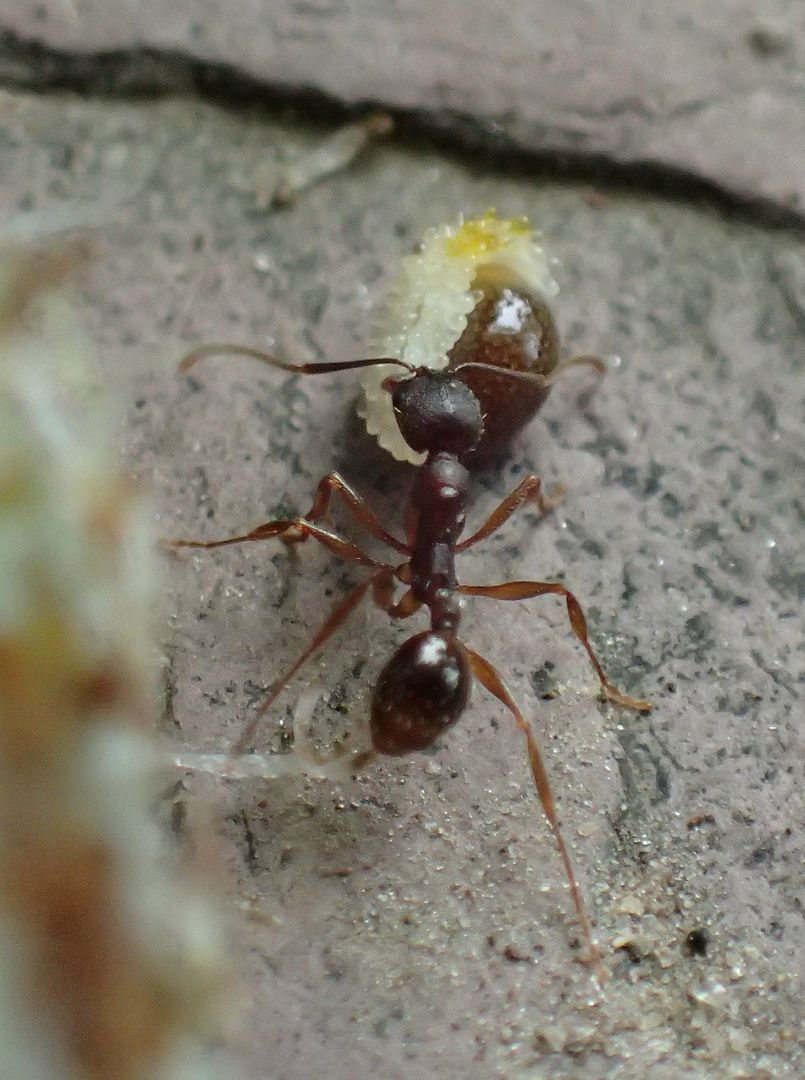
Formica integra, were still there with foraging "trunk" trails. These are well maintained trails made by ants that tend to be in the same place every year. The ground around them is actually compacted down, not from the weight of the ants but because they're so good at clearing everything else away it's on the compacted parts that stay. The trail also ventures underground every few feet.
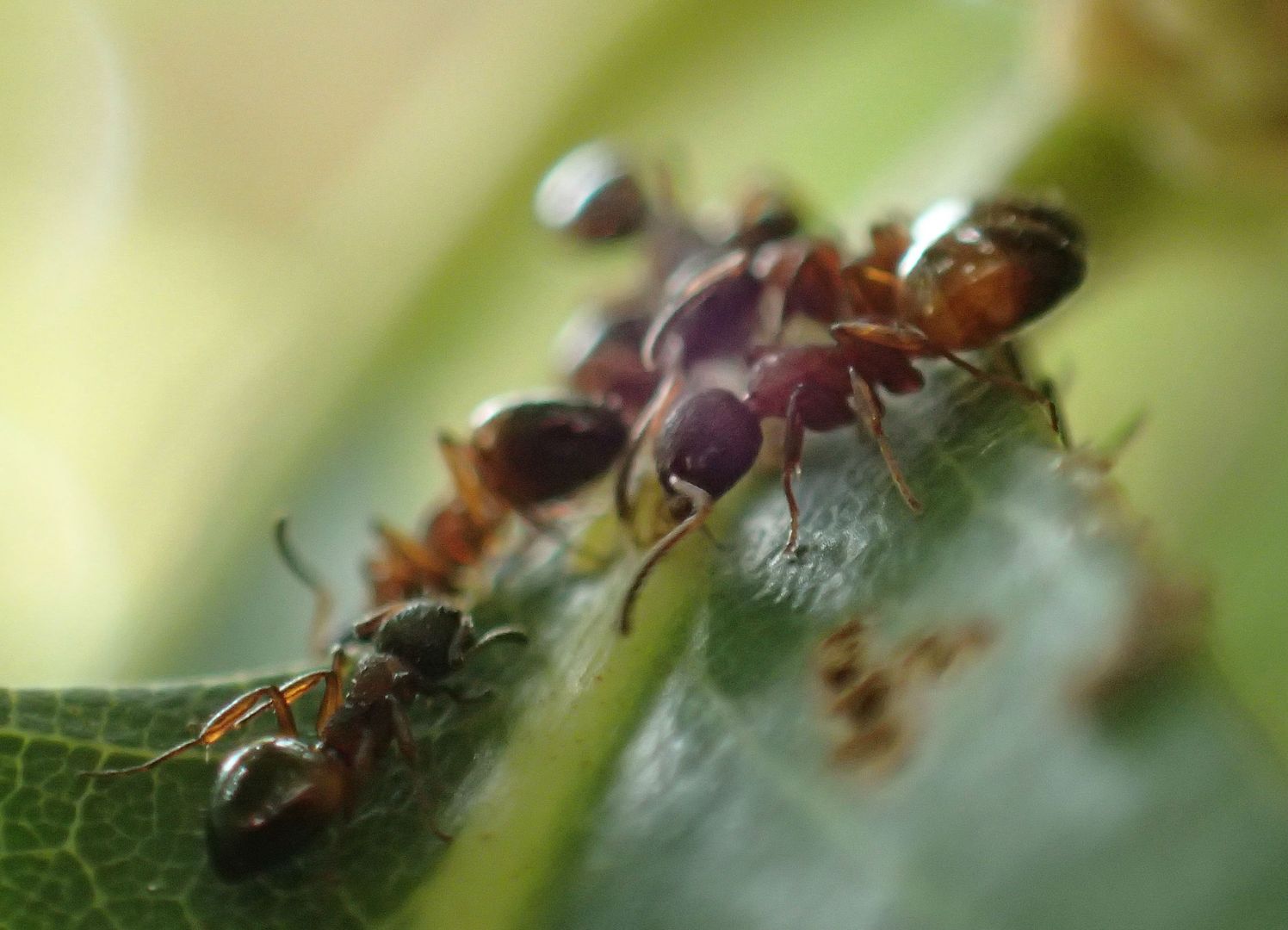
Dolichoderus plagiatus, are a species I've been calling "cone ants" but that almost as generic as calling them "black ants." The cone though refers to a hump-like structure on their mesosoma. This isn't visible in the photo above but online images of them show it more clearly, see here. Of the four Dolichoderus species in the US this is certainly one of the most colorful. They have bright orange spots that are sometimes full stripes on the gaster which goes well with the rest of the body which ranges from red/brown to black.
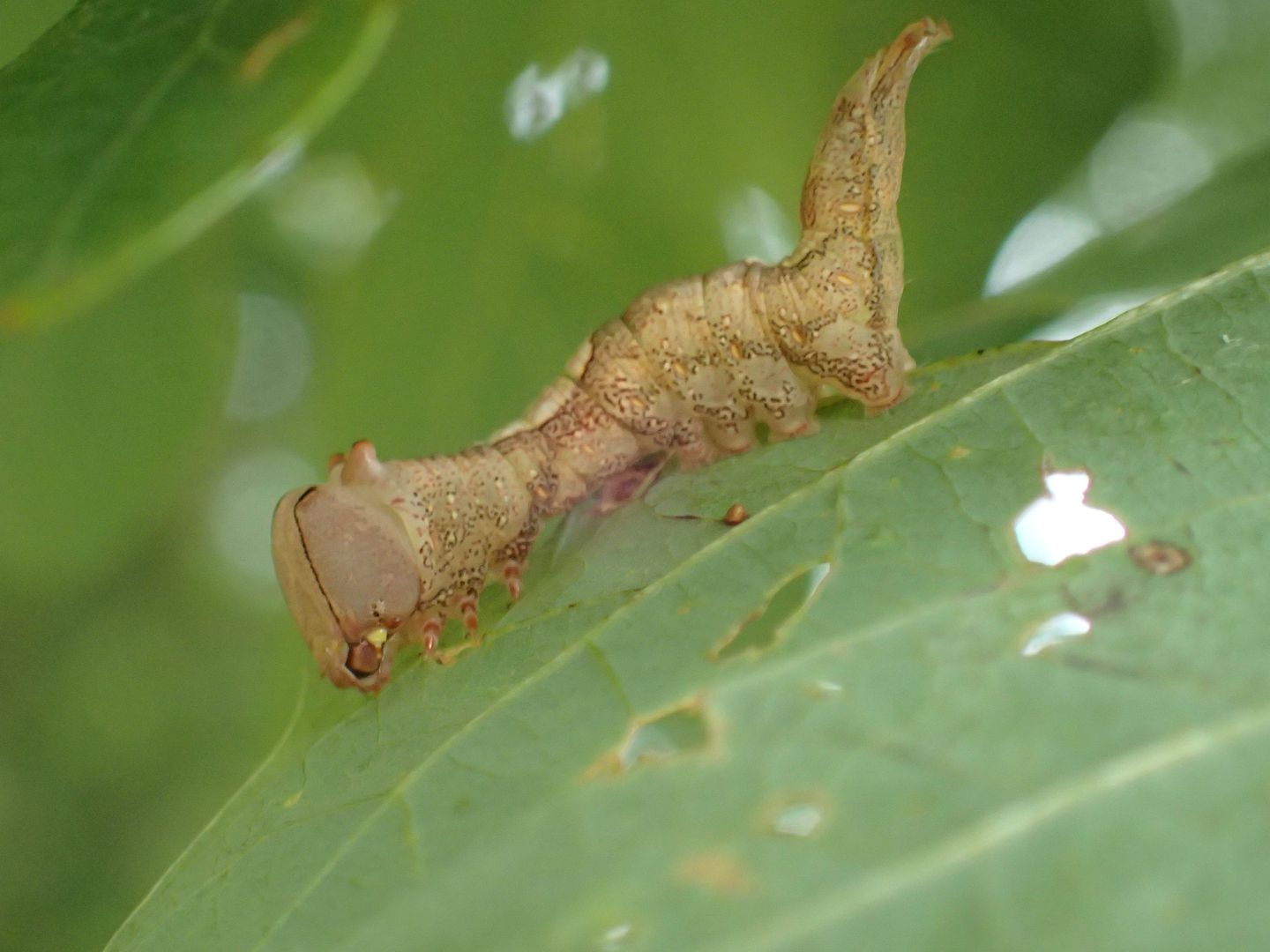
Oak Trees were full of life. White Oak in particular was bustling with caterpillars and aphids being tended by ants.
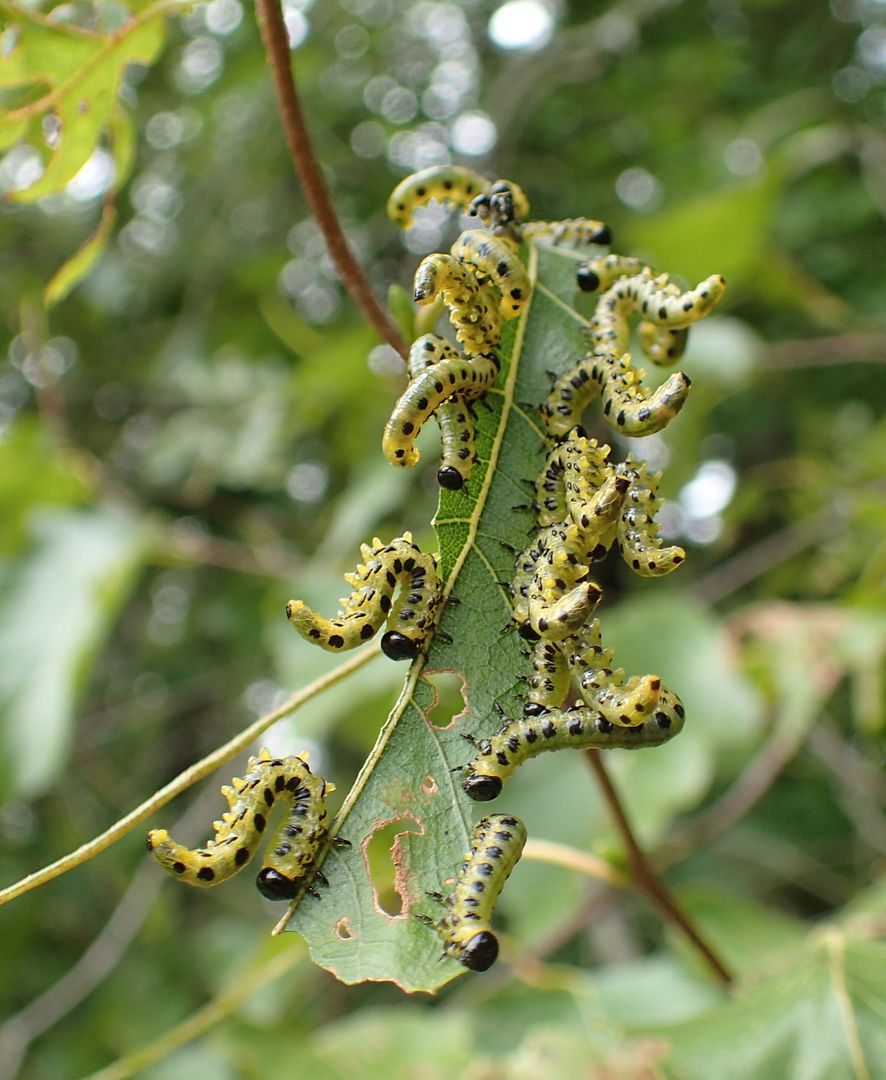
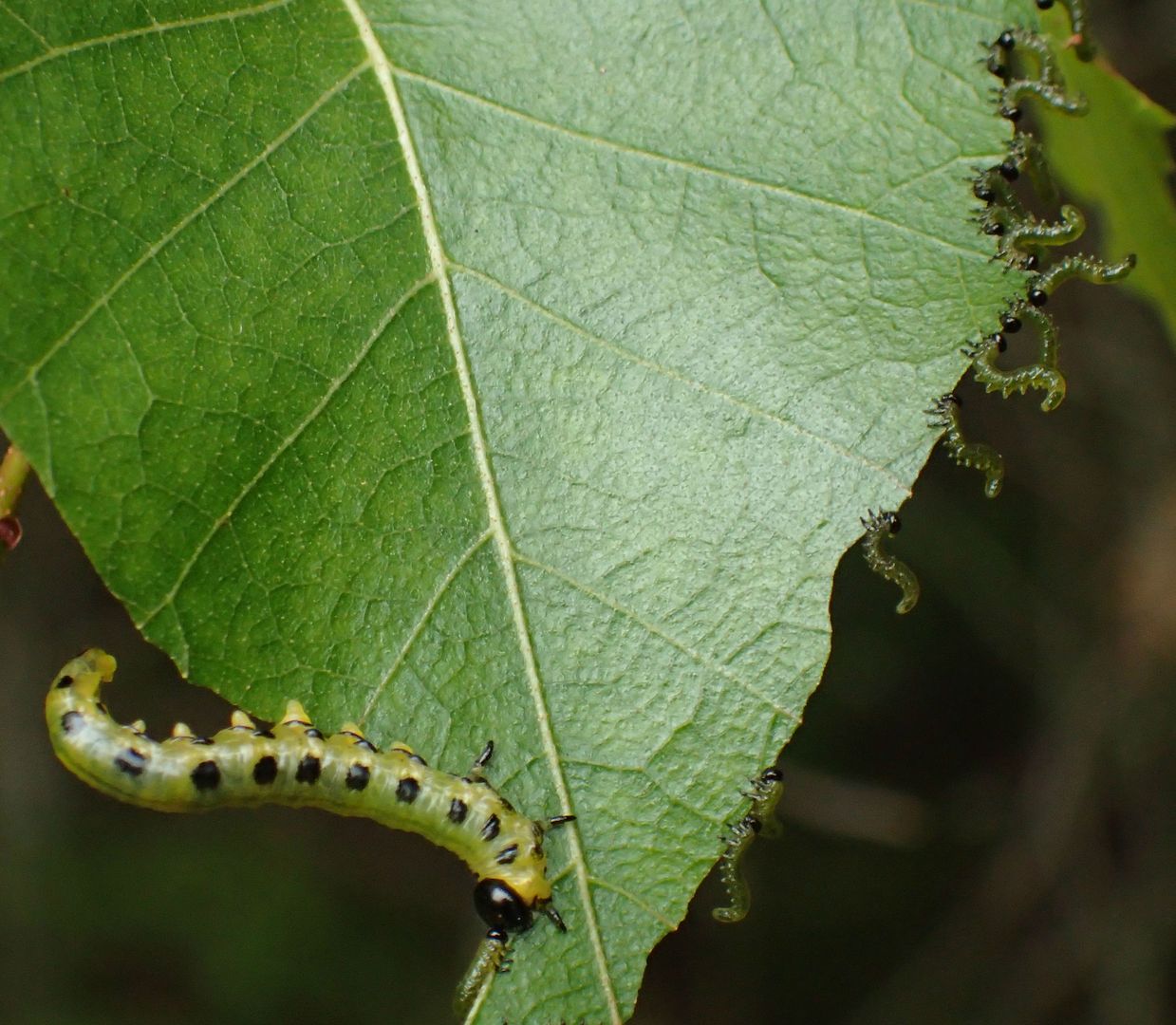
Another tree I couldn't identify was loaded with sawfly larva.
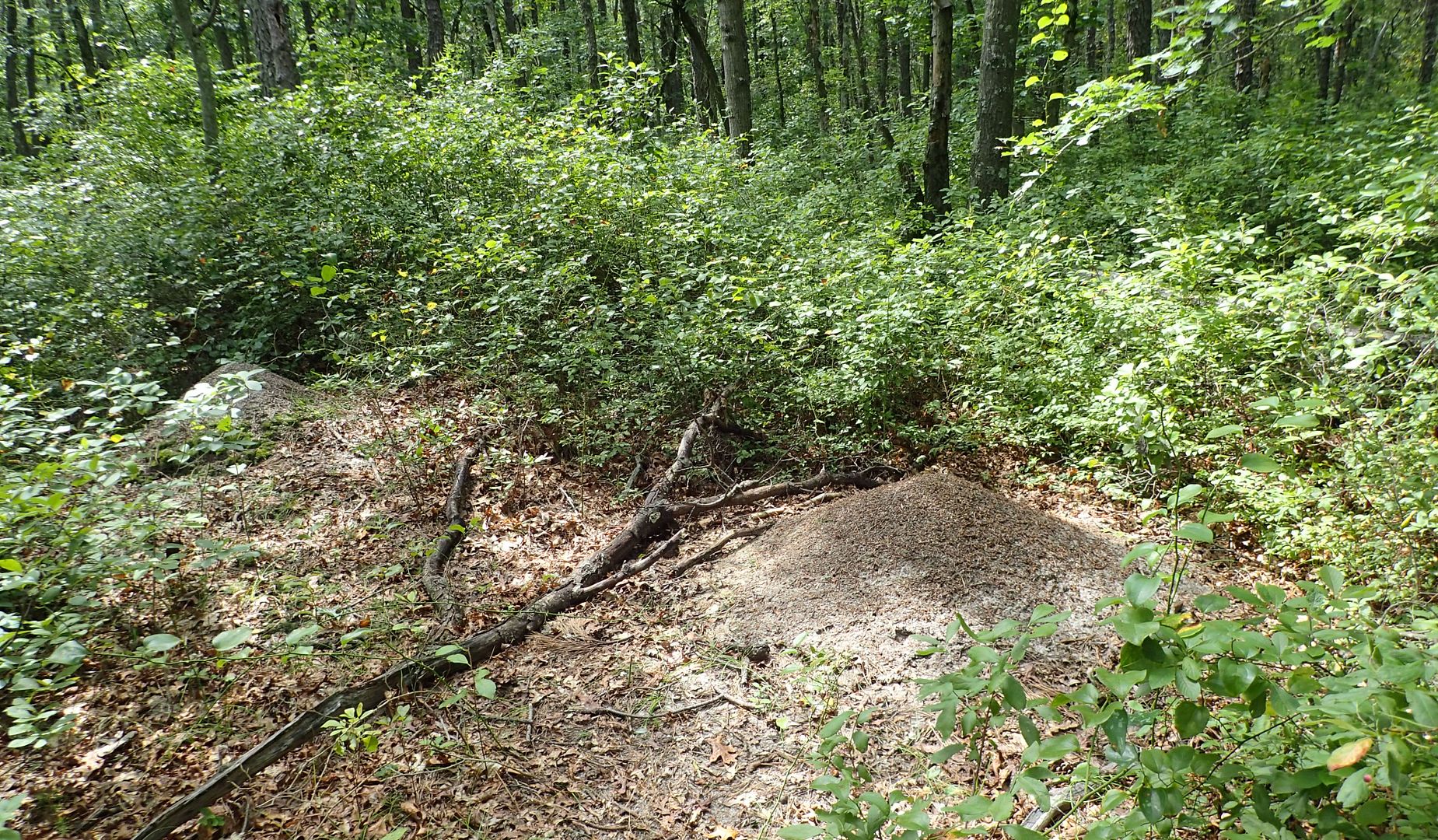
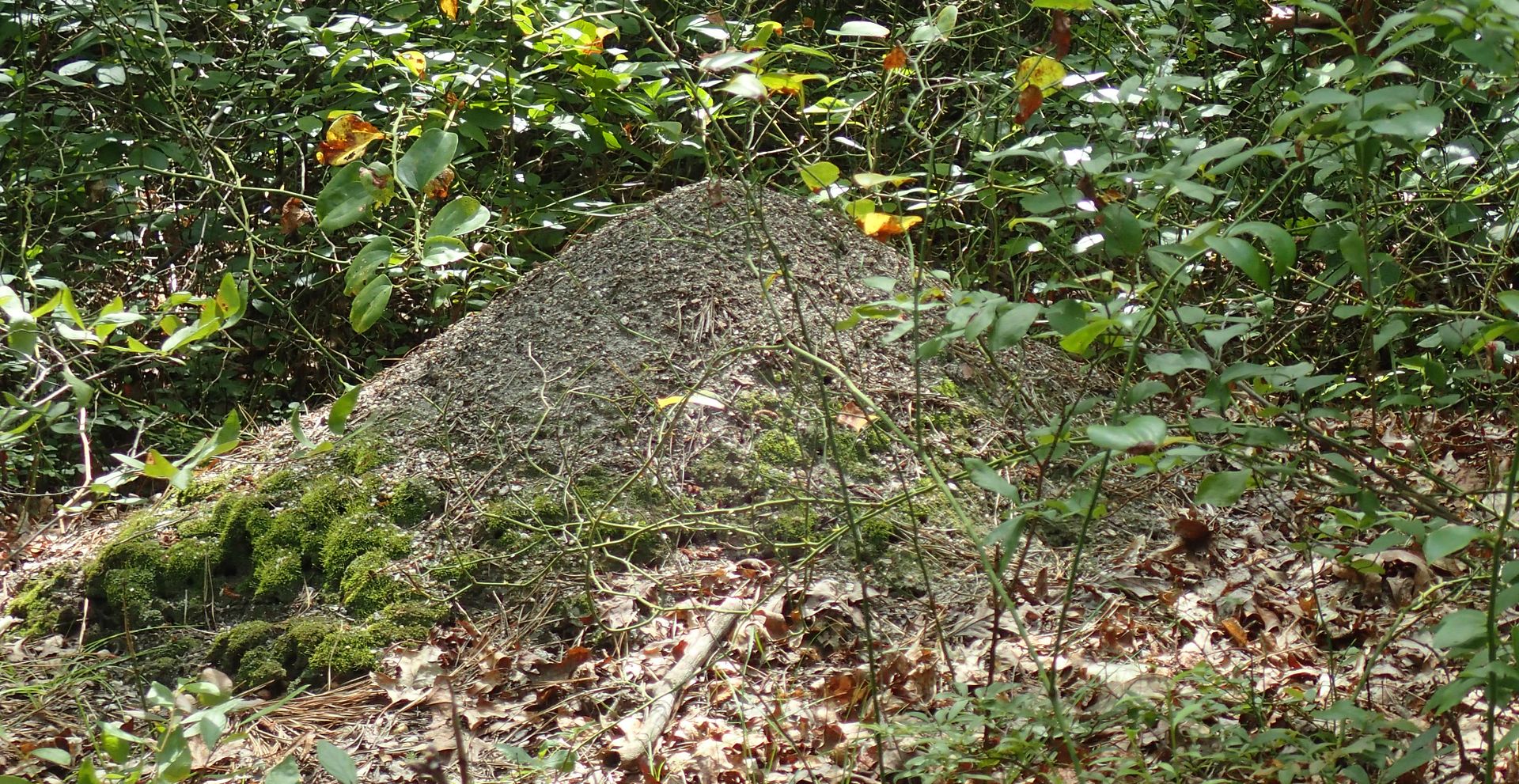
The Formica exsectoides mounds are still there. They weren't that active though. We went on too nice of a day it seems because for once you couldn't hear the leaves rustling from millions of ants crawling around. (I want my money back!)
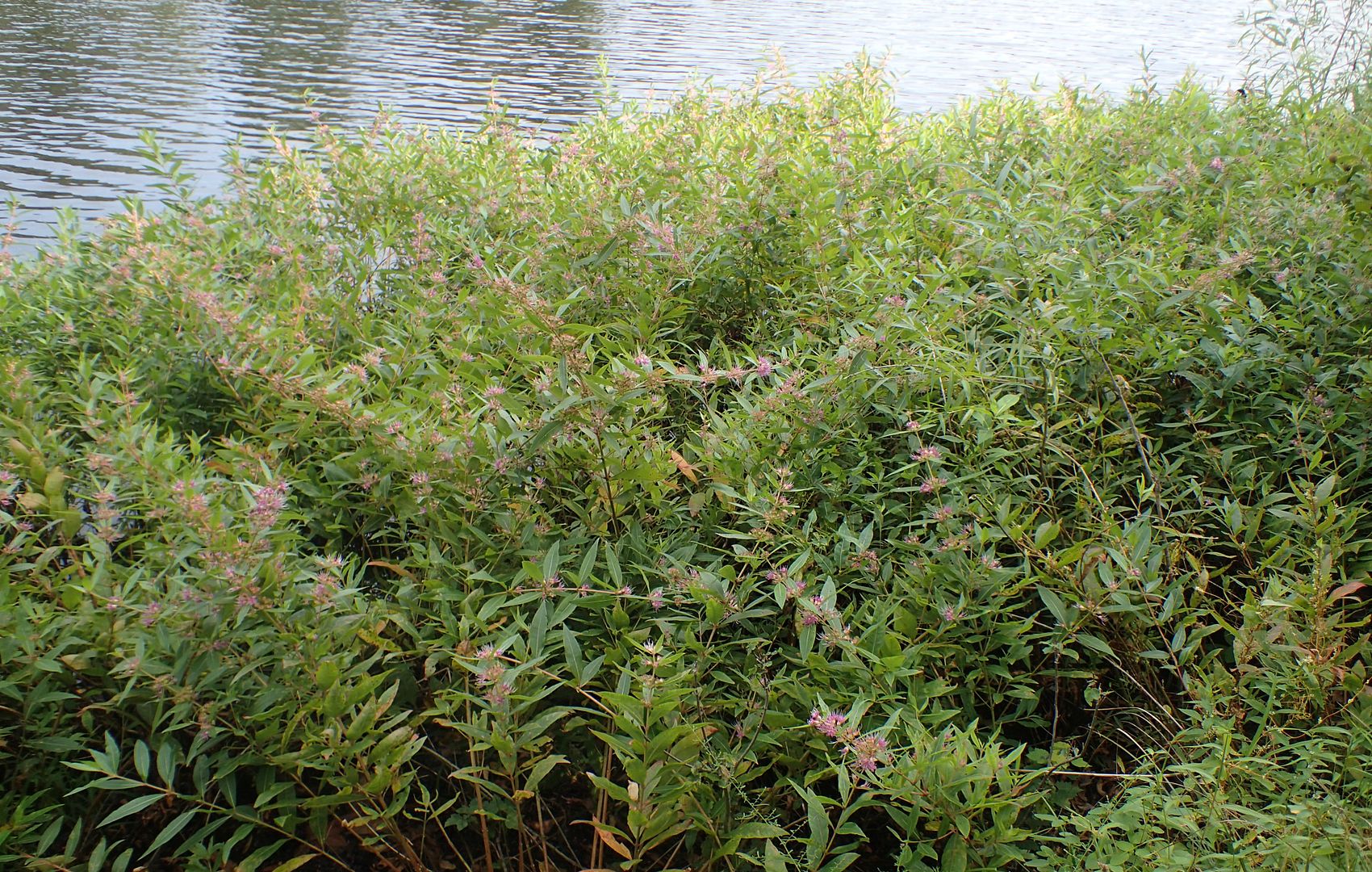
Plant wise, I found a stand of Swamp Loosestrife, Decodon verticillatus, which is an uncommon aquatic wildflower. It has a wide distribution across most of the eastern US and Canada. It was bustling with bees and several butterflies.
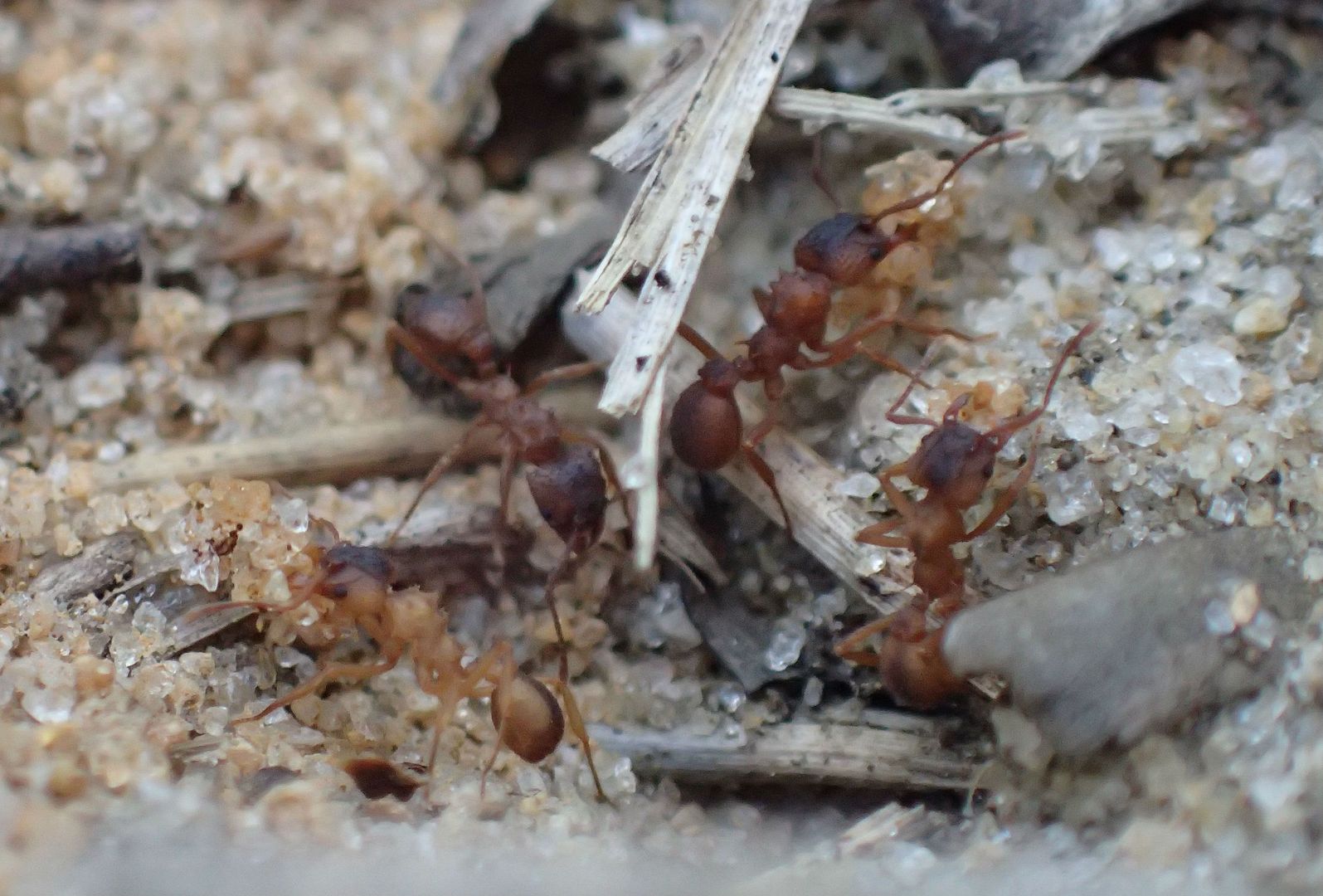
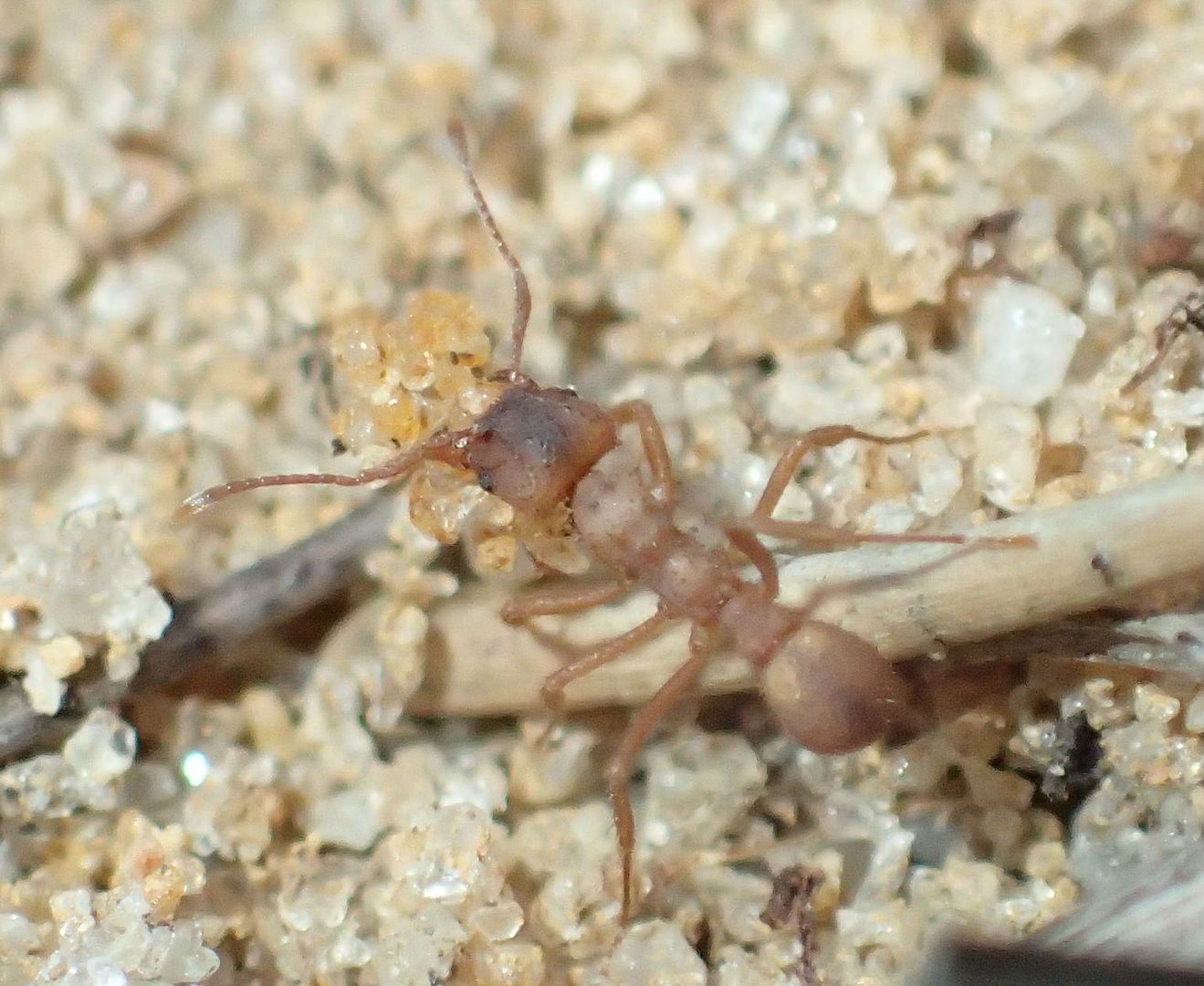
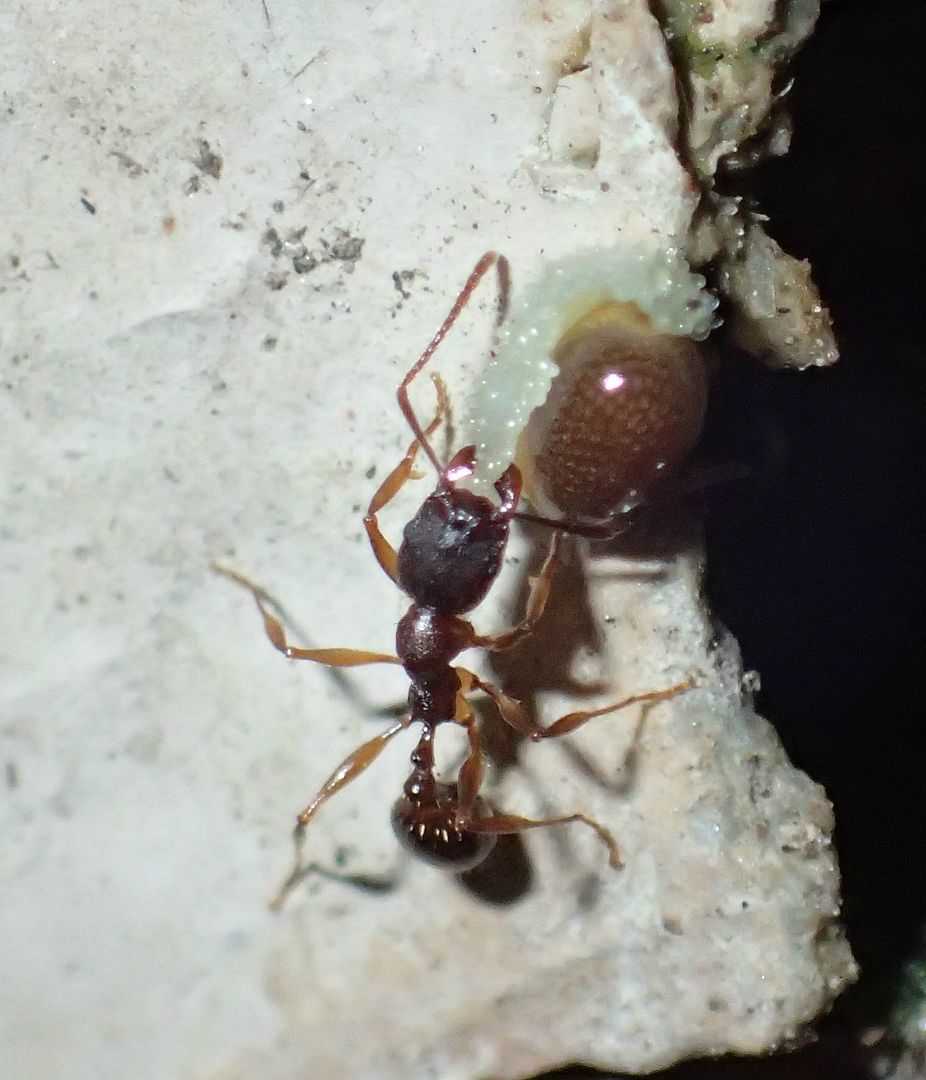
Trachymyrmex septentrionalis, the Northern Fungus Farming Ant, likes to nest in sandy soil along odd types of scrub land where strange plants tend to grow. Prickly Pear is the only one I could really identify but there were lots of odd plants that might be mosses or are low growing conifers that barely push out of the ground and have compound leaves.
We also found a few colonies in an adjacent field where a patchy not so lush lawn was grown... I'm not sure if it's patchy because no one's water and maintaining it, or because the tiny leaf cutter ants are slowly stripping it. Whatever the case, these are ants of dry sandy settings in full sun where resources might be limited. They thrive here because they focus on other types of food, namely a kind of fungus they maintain by fertilizing with flower petals, bits of foliage, and the frass of caterpillars and grasshoppers.
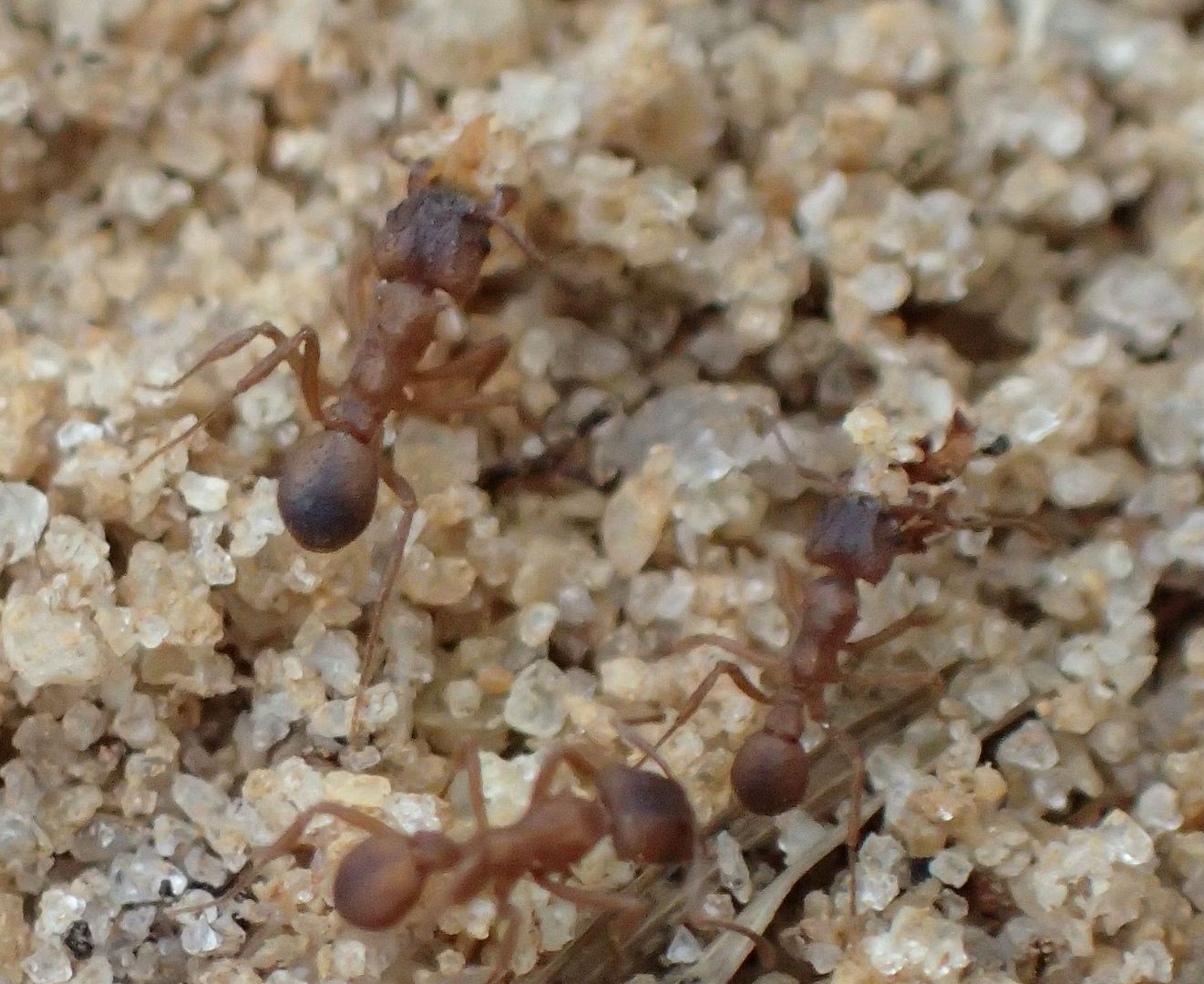
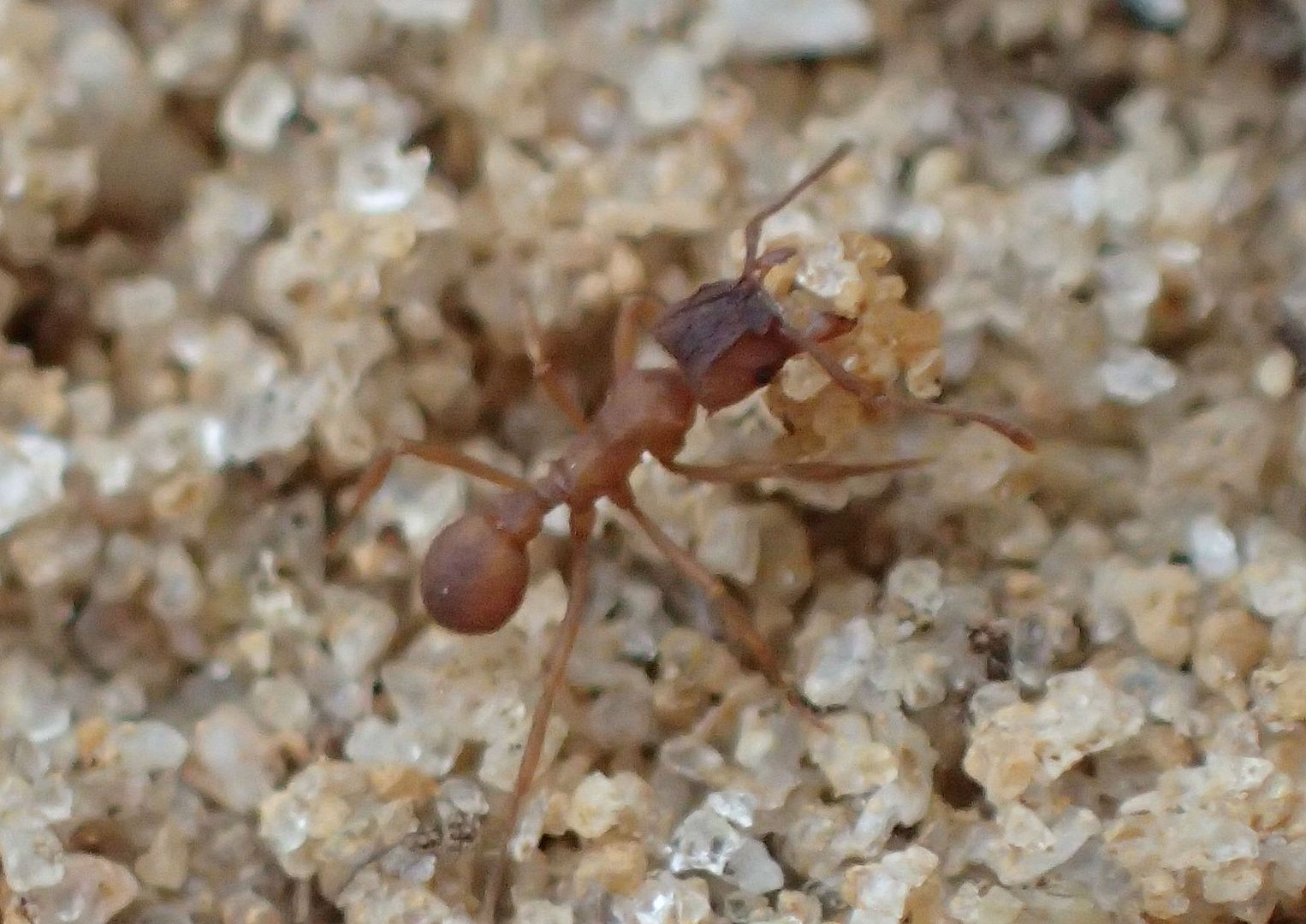
These are small ants verging on 3 to 4 mm long. And even within that the workers vary somewhat within the same colony.
As far as ants in the North East go they're easy to identify. Their heads have spines on them, and their mesosoma has several small sets too. Their color is a unique orange/brown tone and parts that verge on being purple.
Also when they dig they also gather up the dirt in clumps, making their mounds somewhat unique.
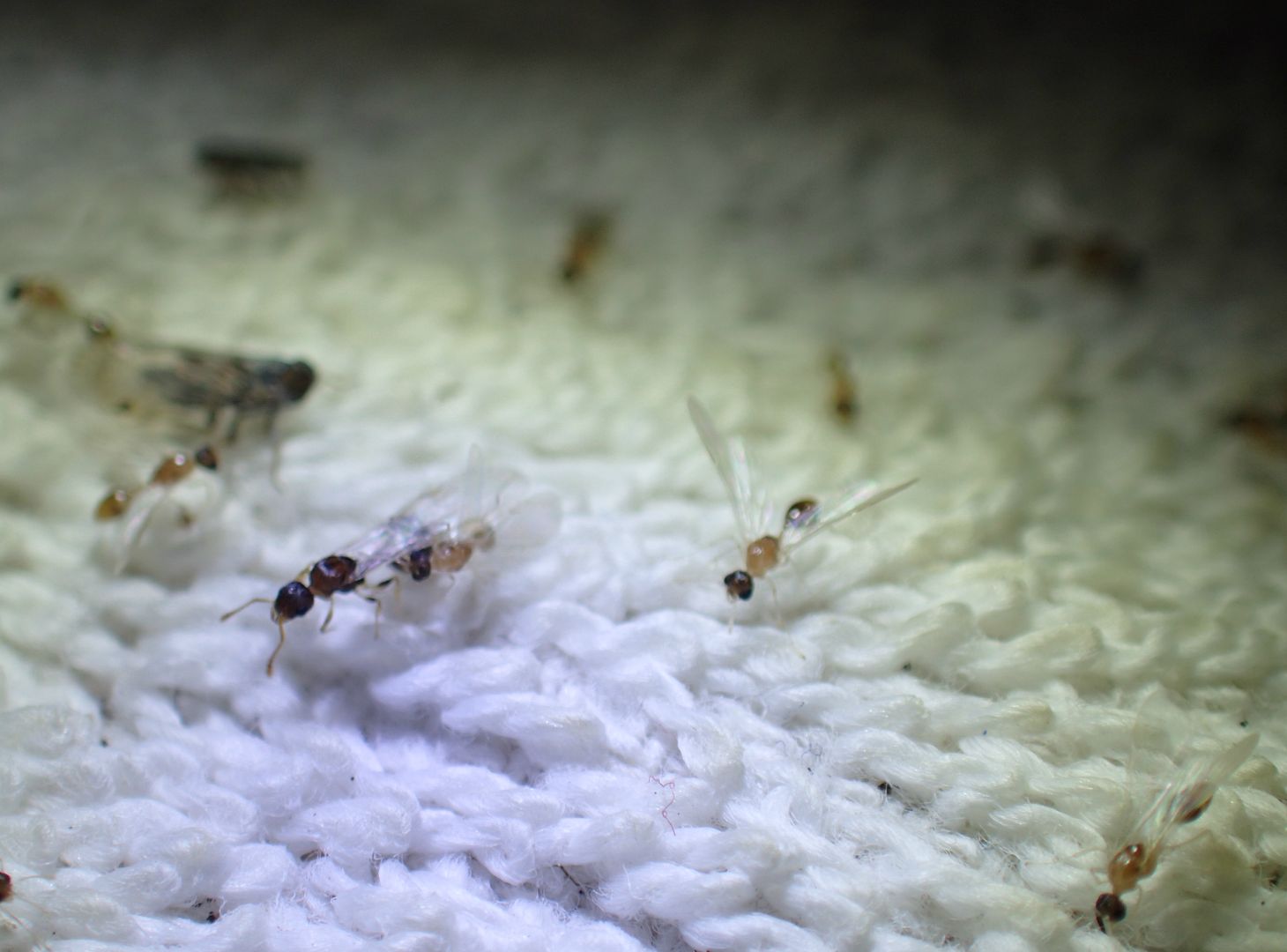
Had the black light on almost every night this week and saw lots of Acorn Ant activity.
Hundreds of males to at least three species showed up at the black light between the hours of 9:00pm and 10:30pm. They probably fly all night but I don't need to stay out that late.
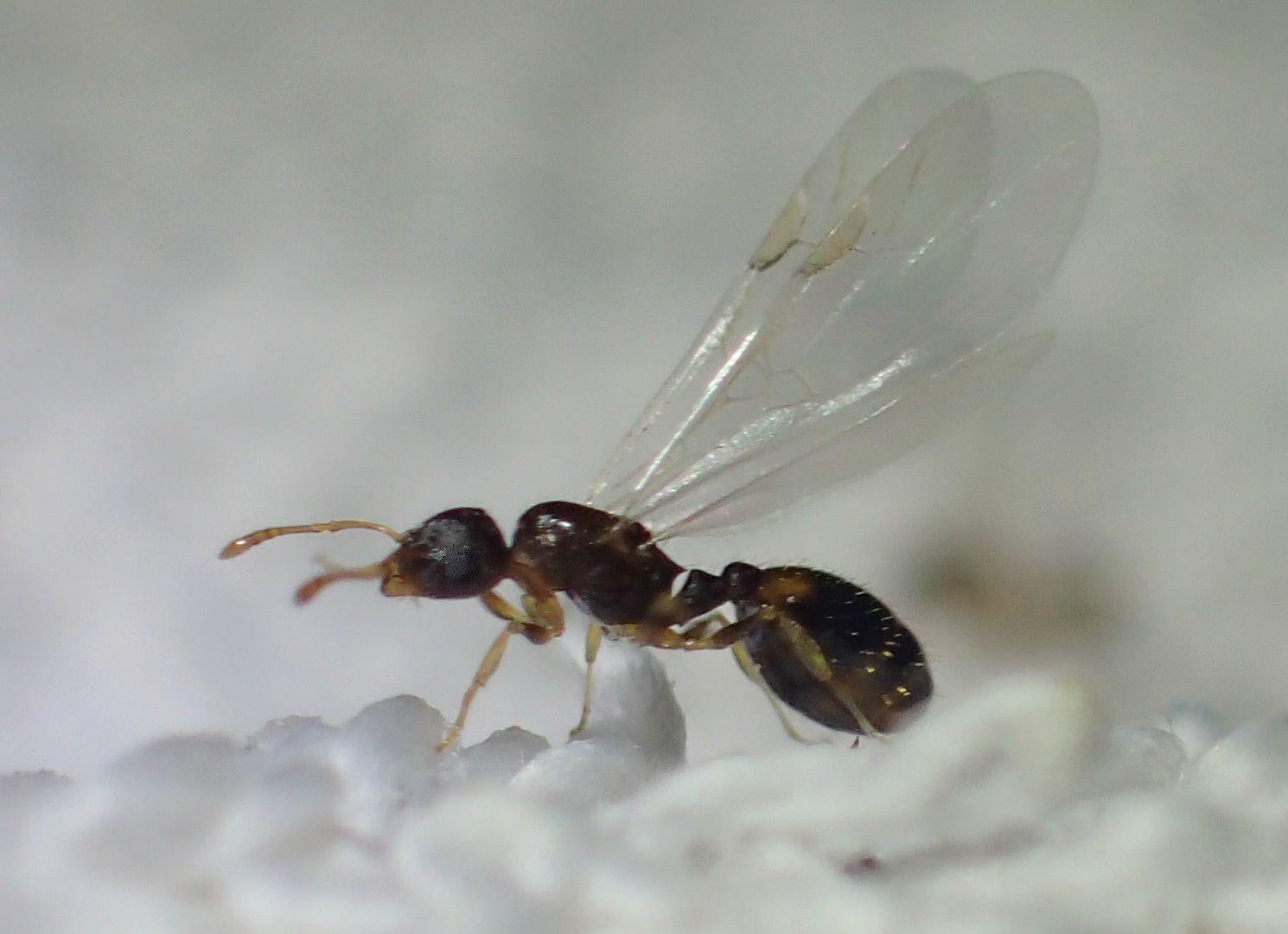
I've come to learn that identifying queens in this genus should never be done at a glance because there are some oddities I've never seen before.
So in the video this is what I was calling Temnothorax longispinosus. The problem is online images of queens of the species show them as totally black! None of this yellow spots on the gaster or bands of color. The legs are correct though. At a glance without any magnification this ant looked totally black to m.
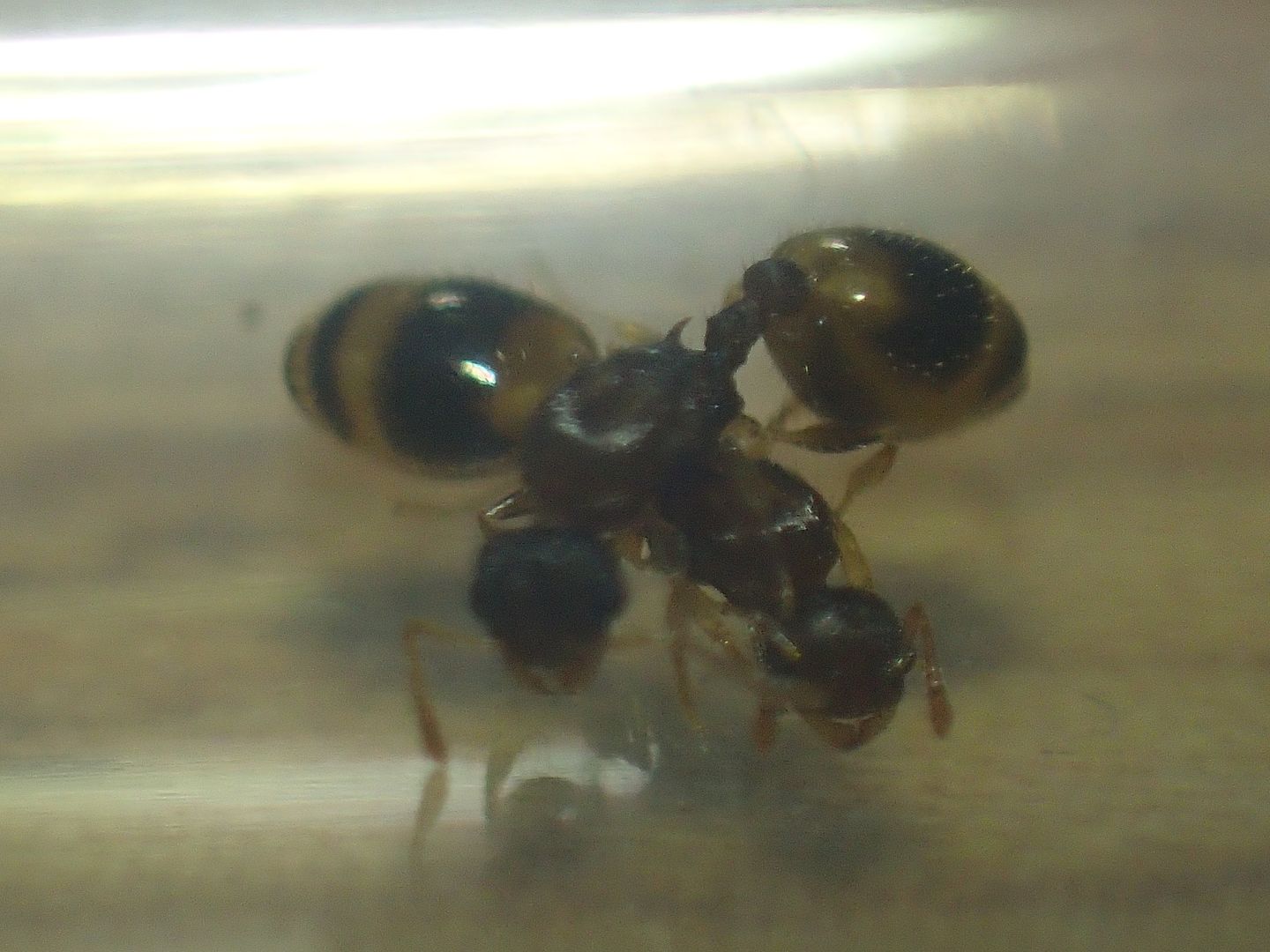
Now compare that to this queen. This is most likely Temnothorax ambiguus, and there were a lot of these running around in the video. They were very much different than the larger black species in the photo above. The trouble is though now that I have them in test tube setups these two look identical to one another! So I either have two species with very similar looking queens or some of the colonies to one species were just dehydrated (perhaps nesting somewhere with a small entrance hole requiring queens to slim down to leave the nest?)...
This is a Temnothorax curvispinosus queen. It is basically what all of my queens now look like besides a slight detail.
The name "curvispinosus" refers to their curved spines. Those little thorns you see on rear part of the thorax on Temnothorax ants.
The name T. ambiguus refers to how difficult they are to tell apart from T. curvispinosus. The one main difference is that their spines are not curved at all.
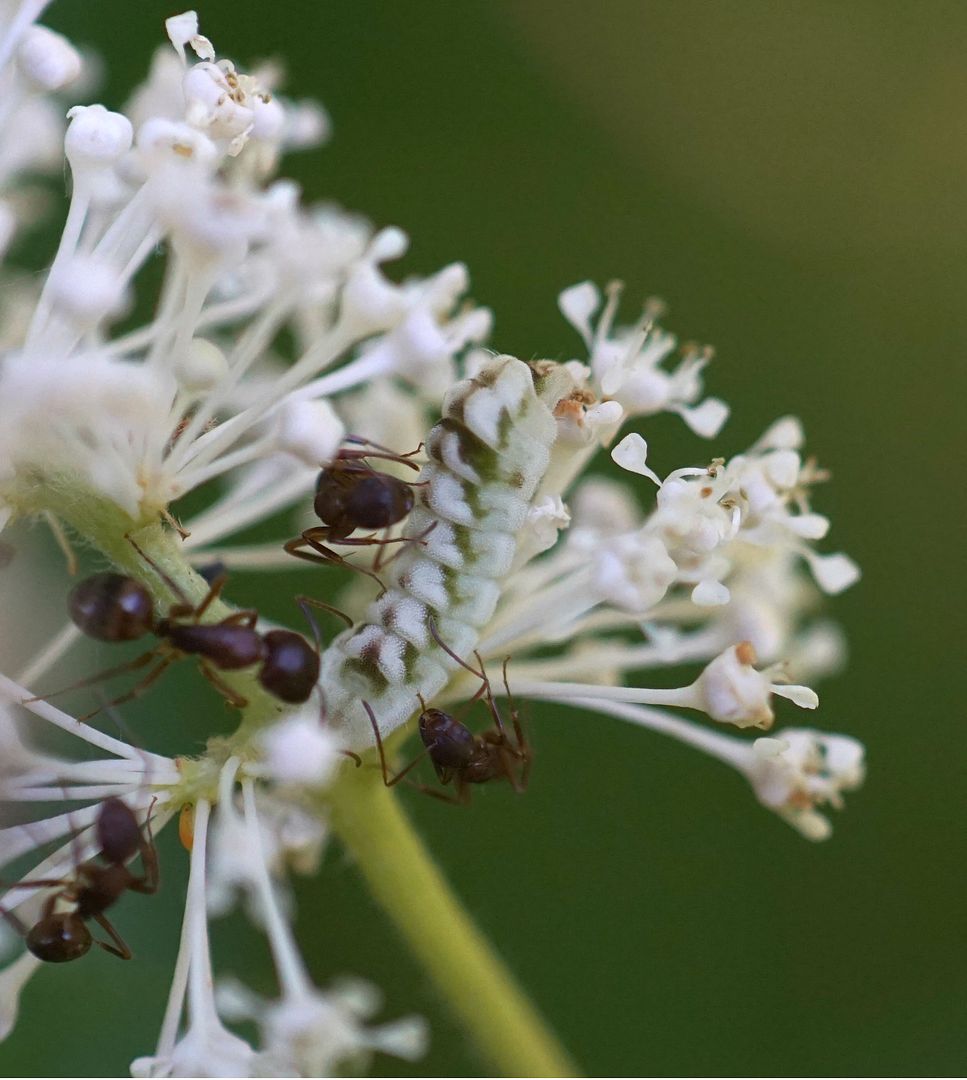
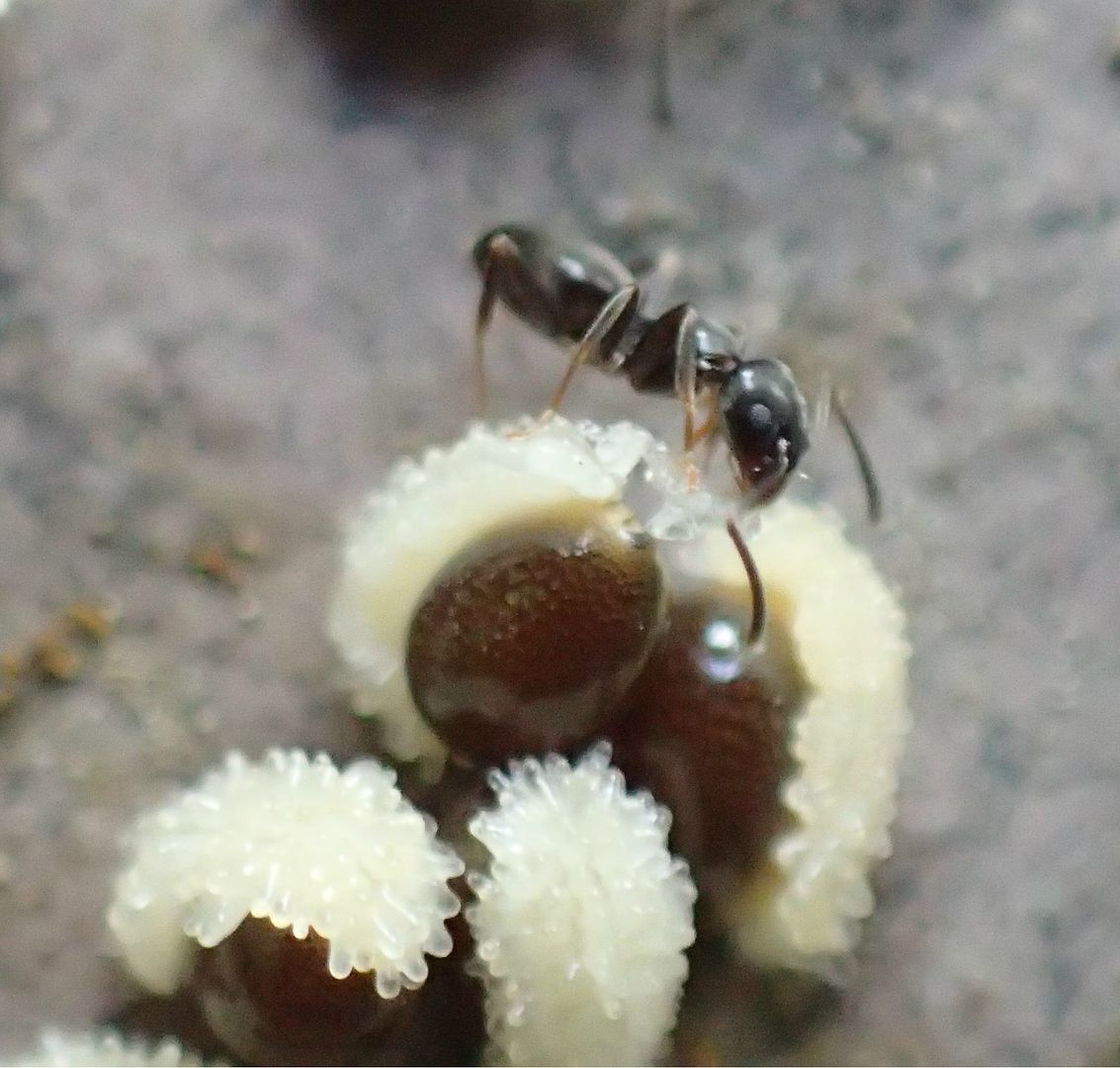
My New Jersey Tea plant, Ceanothus americanus, is full of Spring/Summer Azure
caterpillars. Their strategy to not get eaten is to produce
honeydew to entice ants into protecting them. In this case the ants are
Camponotus subbarbatus (a.k.a. "The Slightly Bearded Carpenter Ant" a
common name referring to the slightly hard to see small hairs on their
cheeks that lots of other ants also have... and not the more obvious
yellow bands very easily seen on queens and larger workers that's almost never seen
on other ant species in their range.)
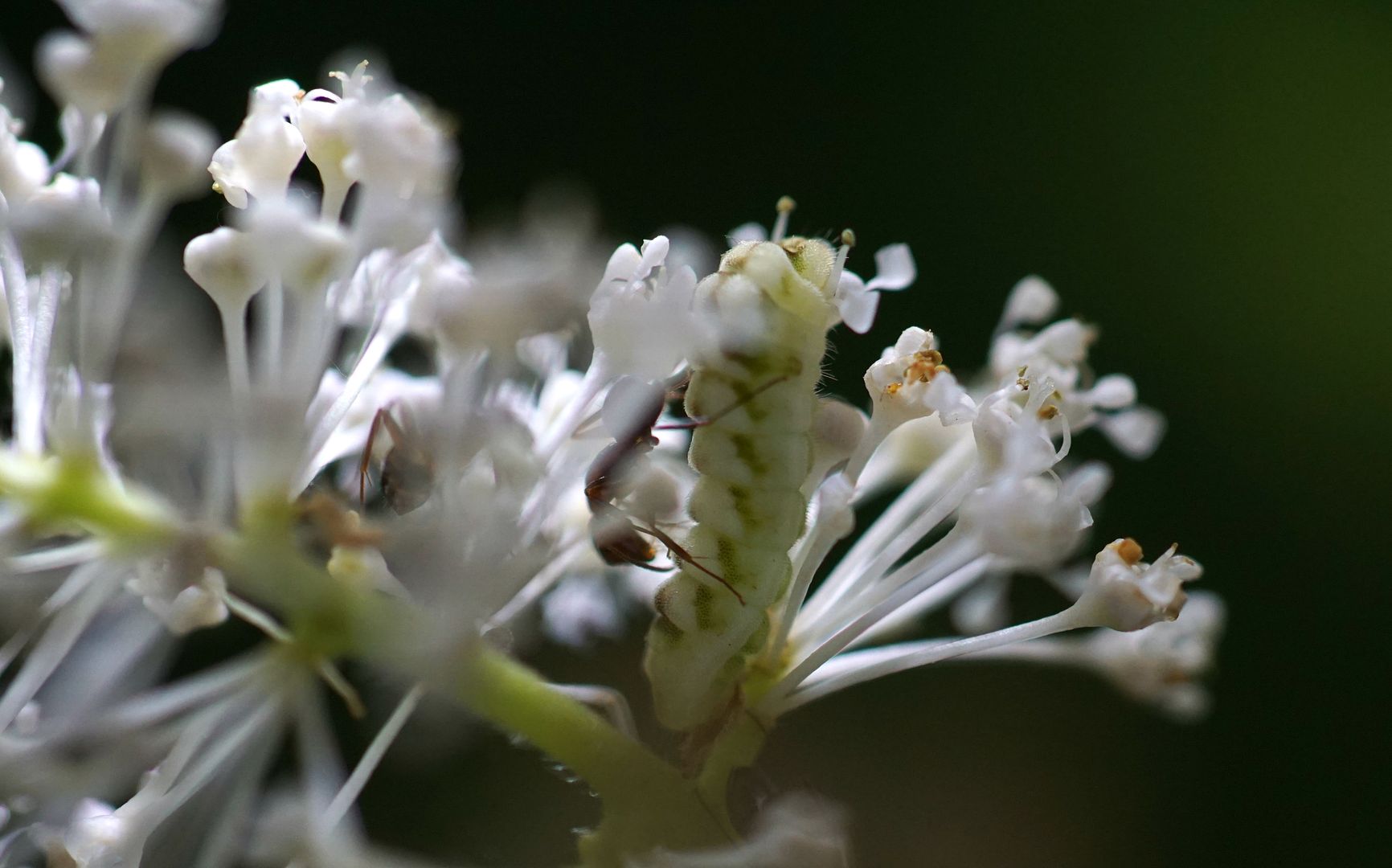
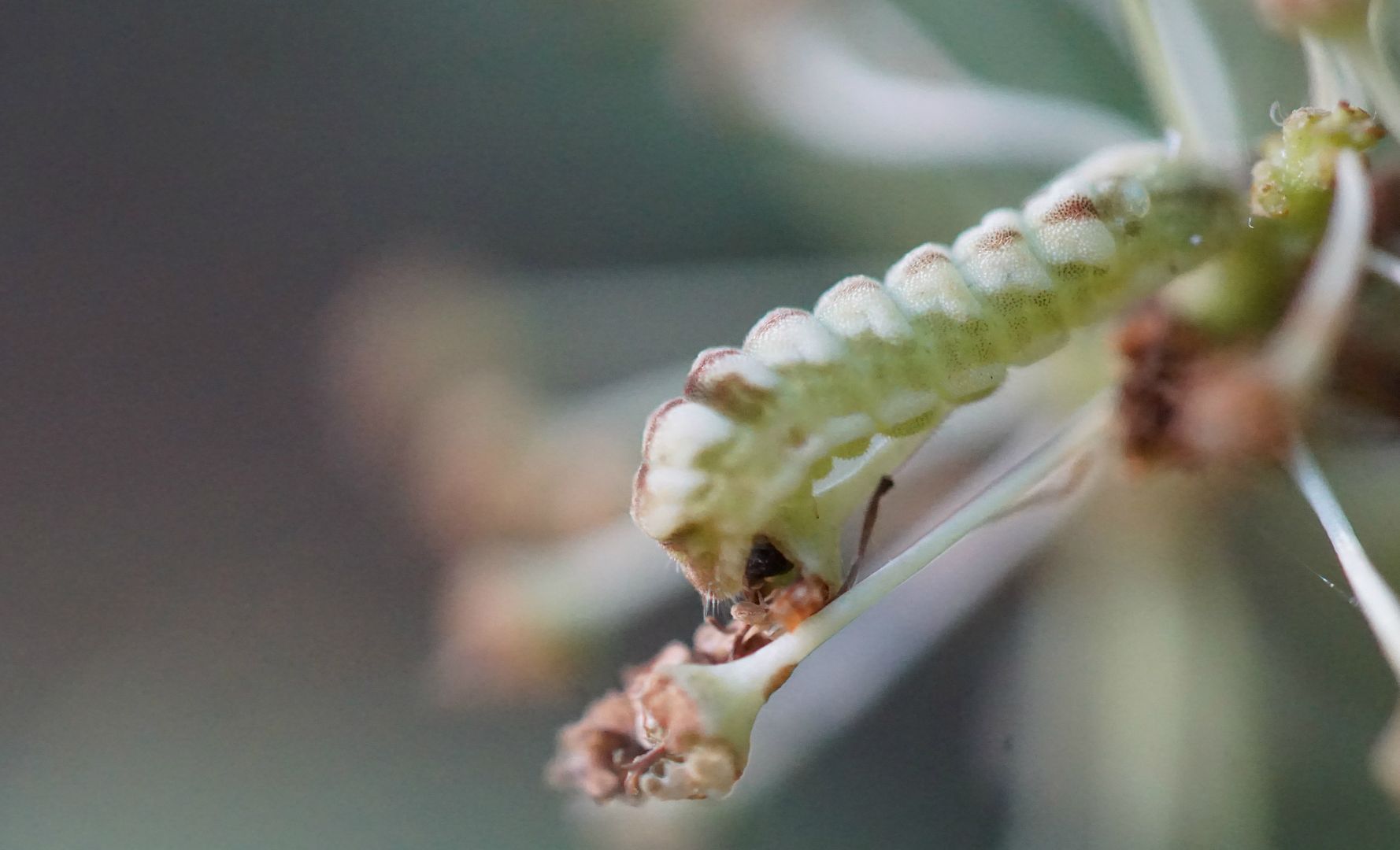
The caterpillars gain the pigment and to some extent the texture of whatever they happen to be eating. In this case it's the flowers. Doing this helps them blend in with the plant, however the gangs of ants constantly hanging around them gives them away.
The butterflies are common where they occur and fairly wide spread across the north east, but the need for ants along with host plants can make some members of this genus uncommon.
The Karner Blue Butterfly is likely endangered because not only do they require wild lupins as a host plant. They also need ants to protect them and bring them back into the nest. Once inside they turn carnivorous and begin consuming the ant's brood for food, all the while still producing sweet honeydew for the ants to feed on. This isn't that bad though as ants often consume their own eggs or feed larva to one another, and the caterpillar itself isn't much bigger than two or three adult ants.
Spring and Summer Azures aren't as finicky. They can be found on a wider array of plants and don't need to be brought into an ant nest at all. (During the winter, they may survive better underground inside of an ant's nest where they form a chrysalis but I'm not sure they do this.)
Host plants include the New Jersey Tea, as seen above, some Dogwoods, Collinsia sp, and Spiraea salicifolia. I've also found them consuming the flowers to Sourwood trees. They always start on the flowers to these plants which tend to be soft and tender (and likely lack any defensive chemicals the plant might be producing in its leaves) before moving onto consuming the leaves themselves if they need to. They take on the color of the flowers they consume so they're usually pink on Spiraea salicifolia, and can be sort of purple on Collinsia sp. and then turn green when they start eating the leaves.
Flowers are a good place to start because there's often ants stealing
nectar from them already. Oddly enough once the ants find the
caterpillar and taste the honeydew they produce, they will stop stealing
nectar from the flowers and focus entirely on tending them. The caterpillars will also produce noises like a queen ant would make.
Another benefit of having ants around is they protect against parasitic wasps that try to jam eggs in them. Ones that get parasitized will hatch out as wasps instead of butterflies after the chrysalis phase.
The New Jersey Tea shrubs I own are now finished flowering and most of their blooms are falling fast. The caterpillars are now moving on to consuming the leaves.
I'll be rearing a few indoors to ensure they survive. I'm curious to see if any wasps emerge.
Their chrysalis's are extremely tiny and can be made on something as small as a blade of grass. Rearing them myself will help ensure I don't run them over with the mower.
This week I got to explore the ants at the Mt. Cuba Center, a former DuPont estate located in Delaware. Today it's a ~600 acre native plant preserve of which about 45 have been turned walkable gardens.
PLEASE NOTE: this is not a place you would ever bring a shovel to dig for ants. It is an actual garden, you need to stay on the paths, there's no flipping logs or rocks or ripping the bark off of trees as is typically done when looking for ants, and of course this survey was done with permission.
Samples collected are going to be shipped off to AntWeb.org, run out of the California Academy of Science, and School of Ants, a citizen science project based in Florida.
Most Common Species Found: Formica subsericea, Aphaenogaster rudis, Lasius alienus, Temnothorax curvipinosus, Solenopsis molesta, Camponotus chromaiodes, Camponotus pennsylvanicus, Camponotus americanus, Nylanderia flavipes, Tetramorium caespiteum
Unidentified species: Monomorium sp., Formica cf. pallidefulva, Nylanderia sp., Lasius cf. neoniger, (Might have collected Tapinoma sessile and a Myrmica sp. but unsure as of now.)
Ants Seen From Past Trips but not Collected: Prenolepis imparis, Dorymyrmex sp.
Observations: (1) With hundreds of colonies of Formica subsericea in their meadow one slave making species or Polyergus colony could seriously change the power dynamic of their meadow garden. The invasive Tetramorium caespitum had surprisingly uncommon.
(2) Digging into the soil and flipping logs especially in the wild woodland areas would likely yield additional species such as Lasius clavigar, Lasius interjectus, and Lasius umbratus. All three are subterranean aphid farmers that rarely come to the surface for food. Further diligence would likely produce species of Strumigenys and Proceratium as well.
(3) It's odd no Crematogaster species were found. Likewise none of the smaller Camponotus species were observed. Tapinoma sessile should have been more common too given the amount of leaf litter and dead wood used in the gardens, I'm not even certain it was collected or that I even saw it there. All three are notorious nectar thieves of flowers so it's strange to have not seen any of these.
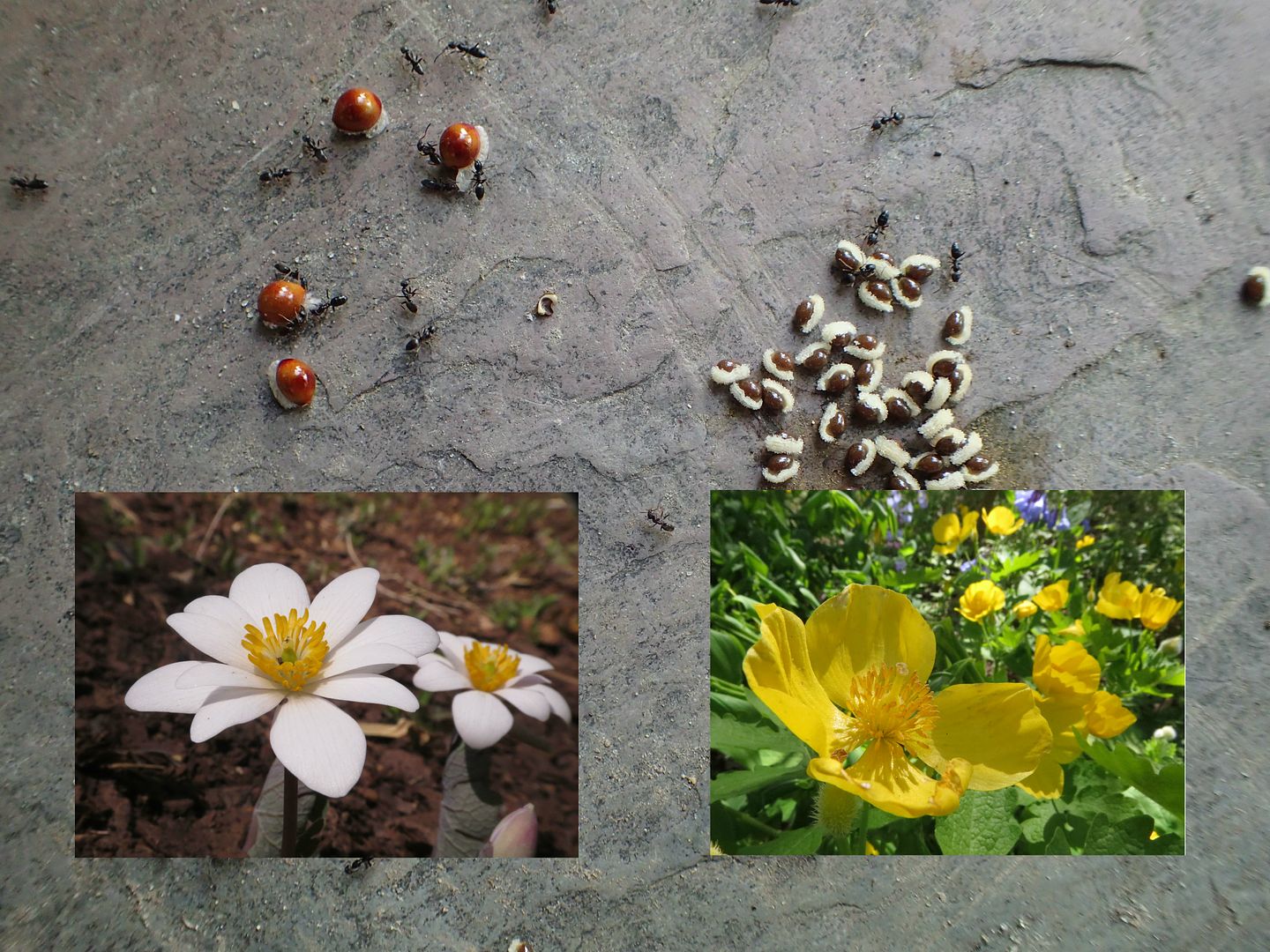
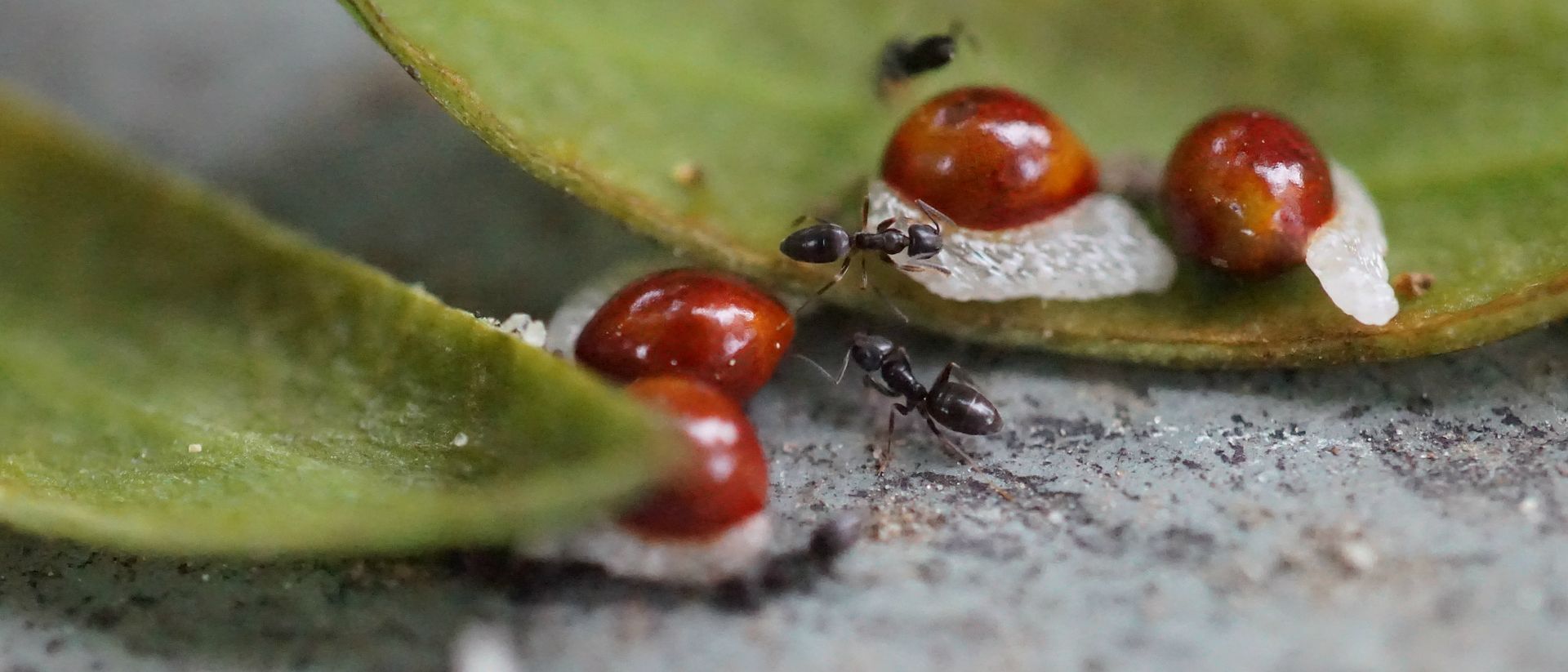
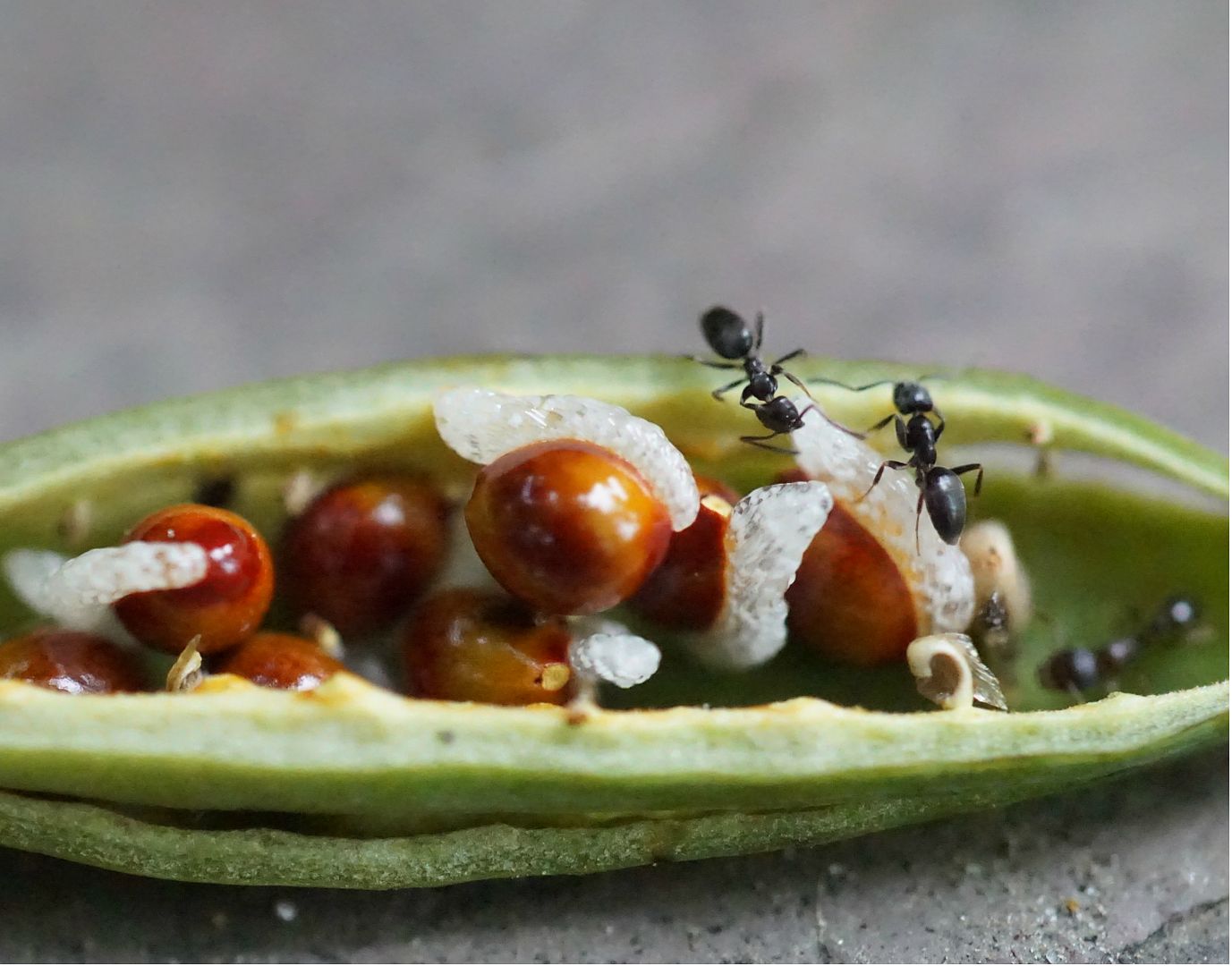
This week Woodland Poppies and Bloodroot went to seed. Both plants have elaiosome on their seeds which entice ants into dispersing them.
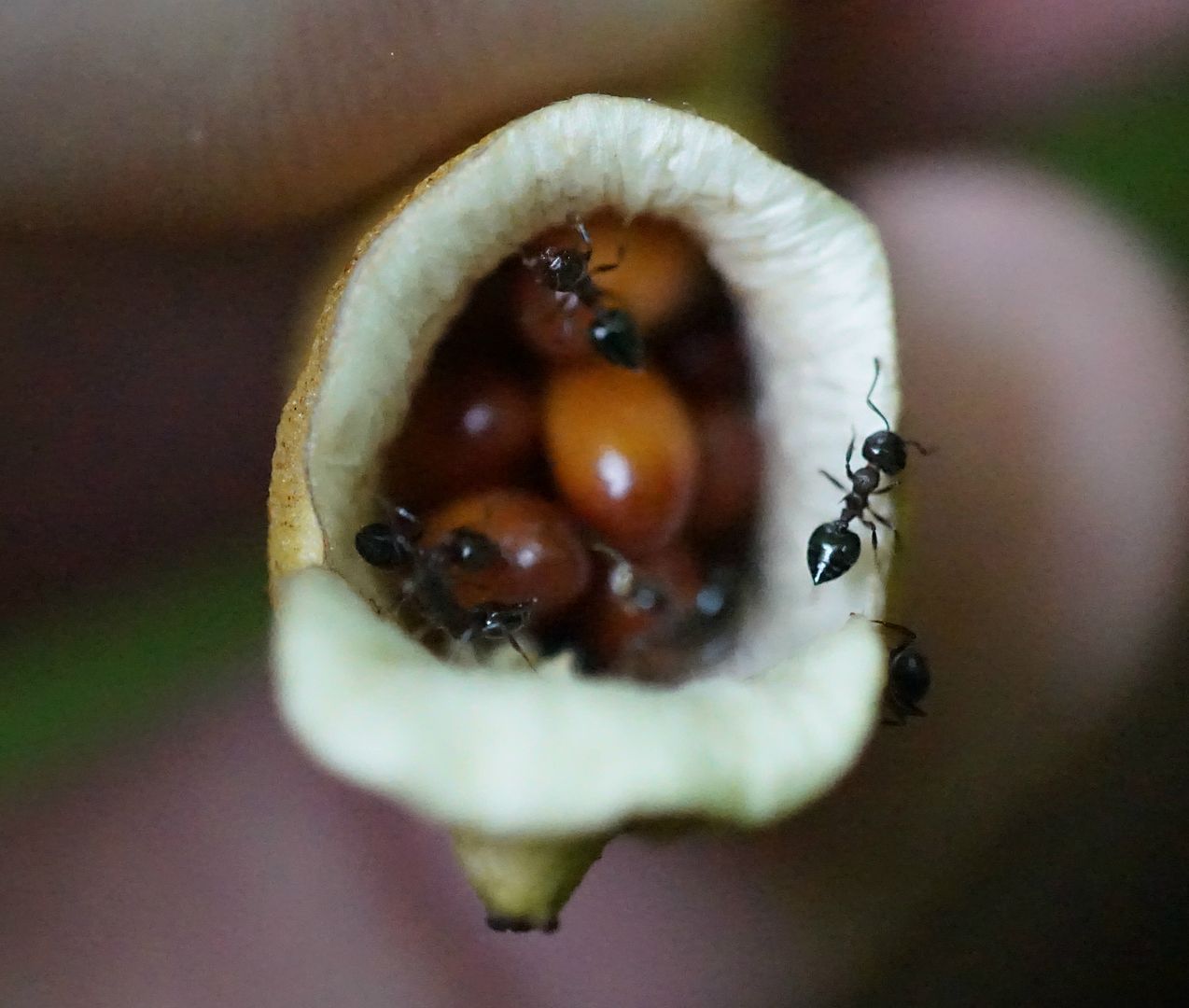
Twinleaf also went to seed but none of my plants flowered at the same time as one another. Presumably the lack of crosspollination means the packets of elaiosome on the seeds are smaller, and they're already pretty tiny on these plants as it is. Pictured above is Crematogaster cerasi which isn't strong enough to physically lift the seeds. Even the seeds that fell out of the pod naturally from the wind blowing it around were practically unmoved.
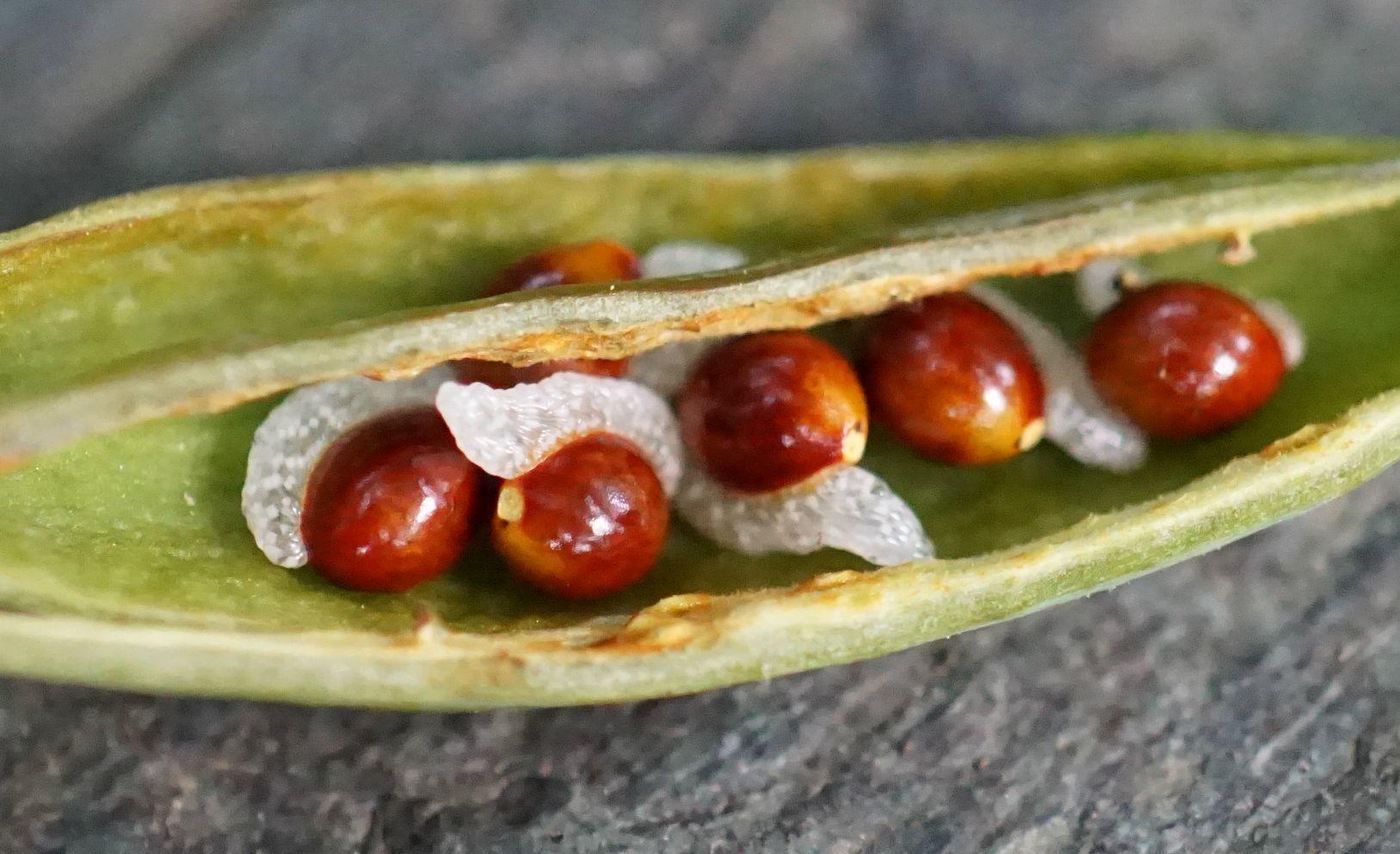
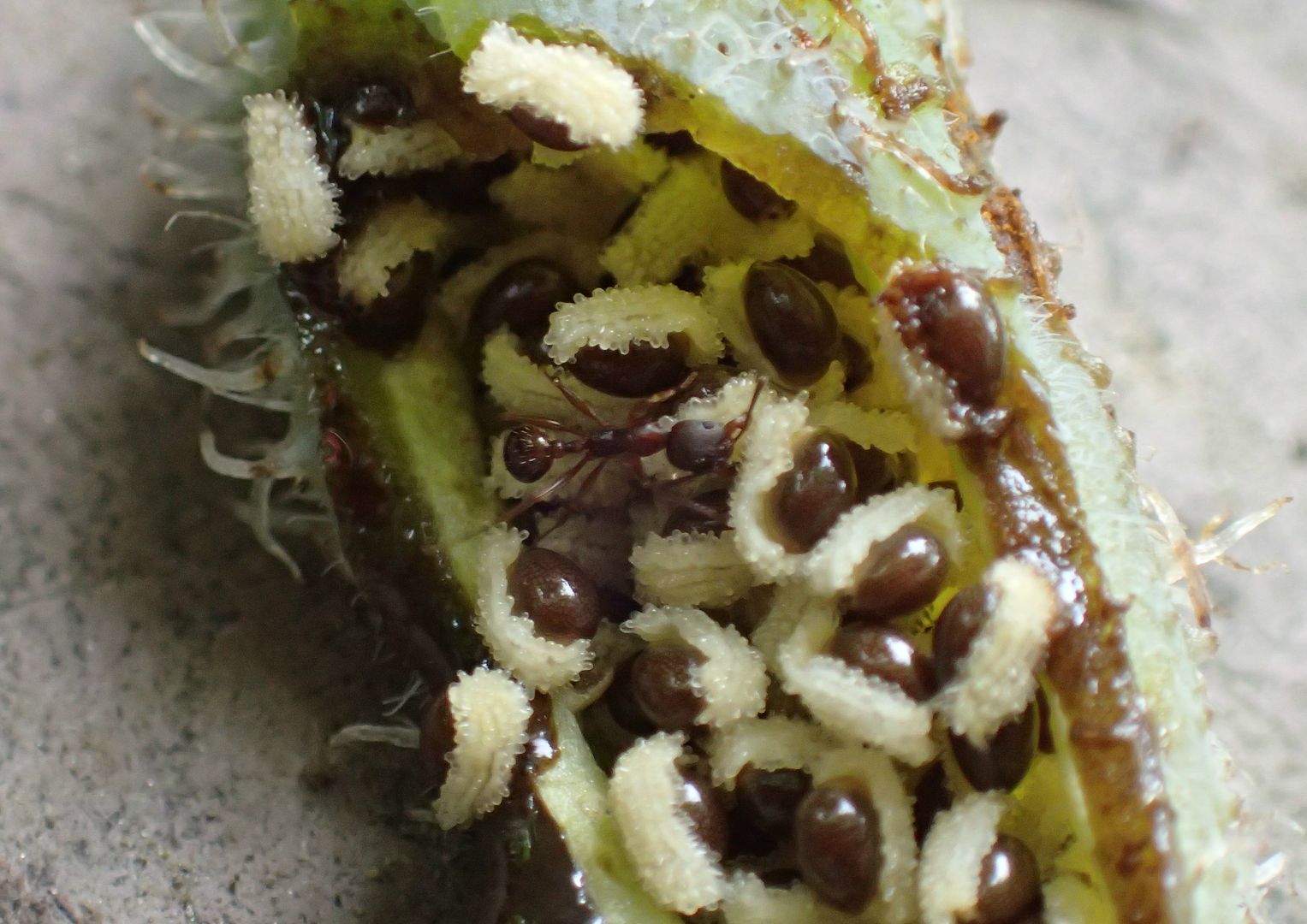
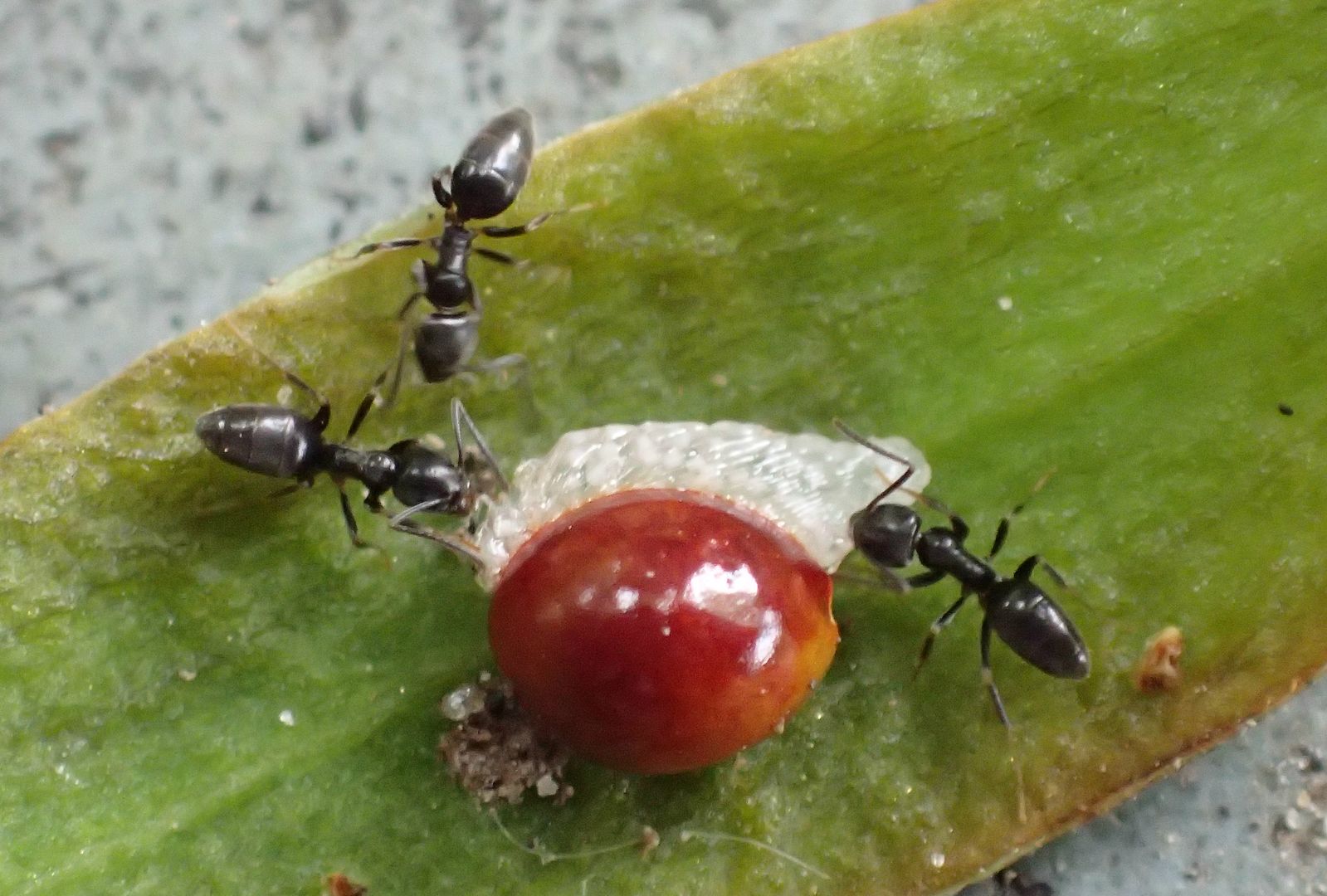
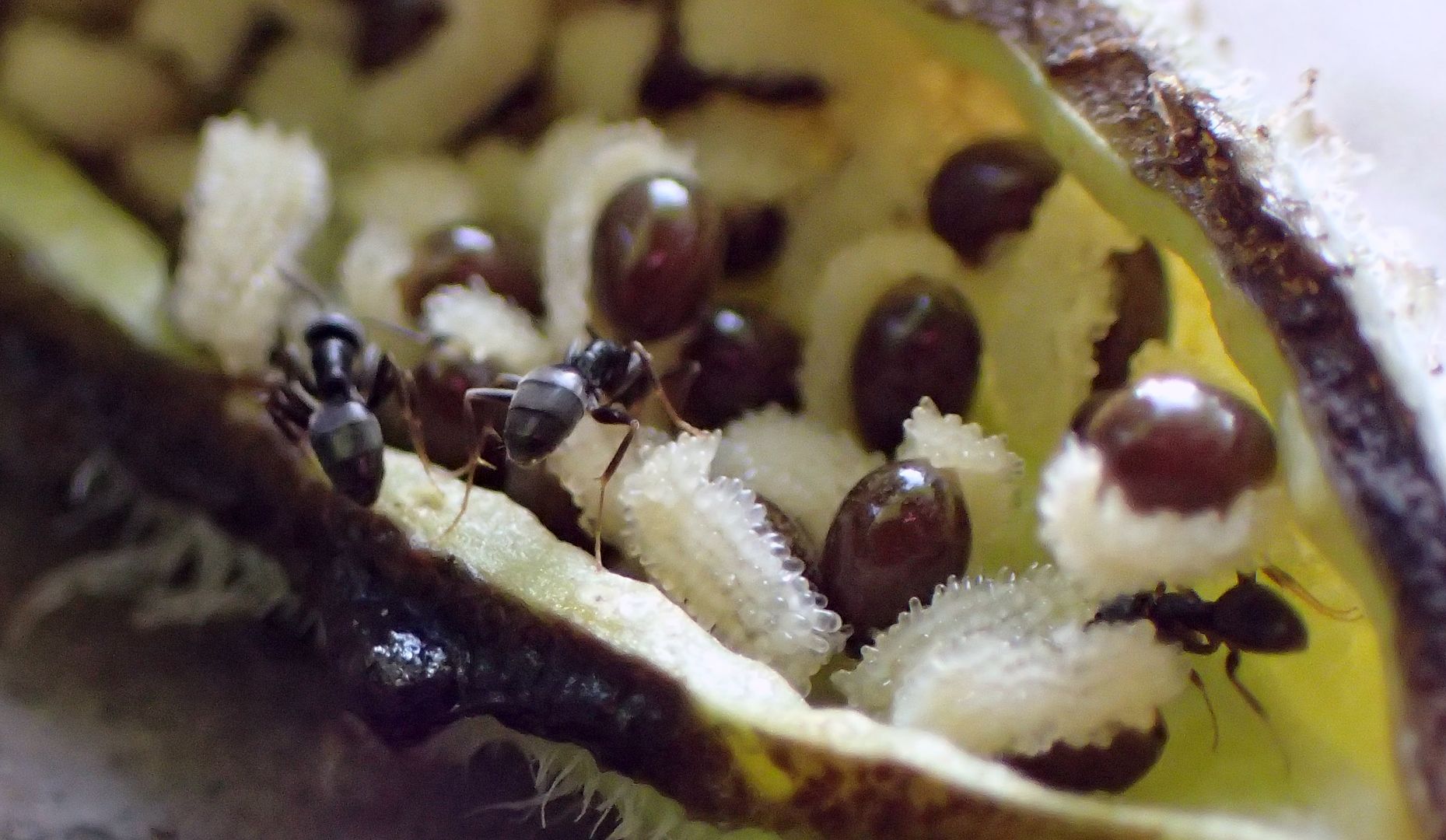
So the focus was on the Bloodroot and the Woodland Poppy. Both have great big packets of elaiosome on their seeds. I would love to include Twinleaf one year but they're tricky; seedpods can seem ripe but the seeds inside might still be soft.
Bloodroot seeds are about the same size as Twinleaf, and the packets of elaiosome are huge by comparison.
Woodland Poppy seeds are smaller but also have tons of elaiosome on them, though they look different. Actually the seeds to this pod are just shy from being ripe as they're normally black colored, but these should be dark enough that they'll still grow.
The two main ant species attracted are the Odorous House Ant, Tapinoma sessile, and....
... Aphaenogaster rudis. This ant for the most part doesn't have a common name. In "A Field Guide to the Ants of New England" they're referred to as "The Rough Aphaenogaster" which refers to a rough spot on the thorax that set it apart from other Aphaenogaster. The problem here though is the genus name is in the common name so why bother? Also A. rudis has been found to be a HUGE species complex! I forget the exact number but I recall a study saying there was something like 8 or 16 nearly identical-looking species that all fall under the A. rudis blanket. Each one has a different number of chromosome in their DNA so you actually have to look at their blood to tell them apart. I don't have access to that kind of tech so for convenient sake they're all A. rudis, and to be honest they're all pretty similar to one another. I've found a few colonies before that have multiple queens and others that only have just one, some colonies seem to divide, but all pretty much nest in forests with colonies of ~2,000 ants.
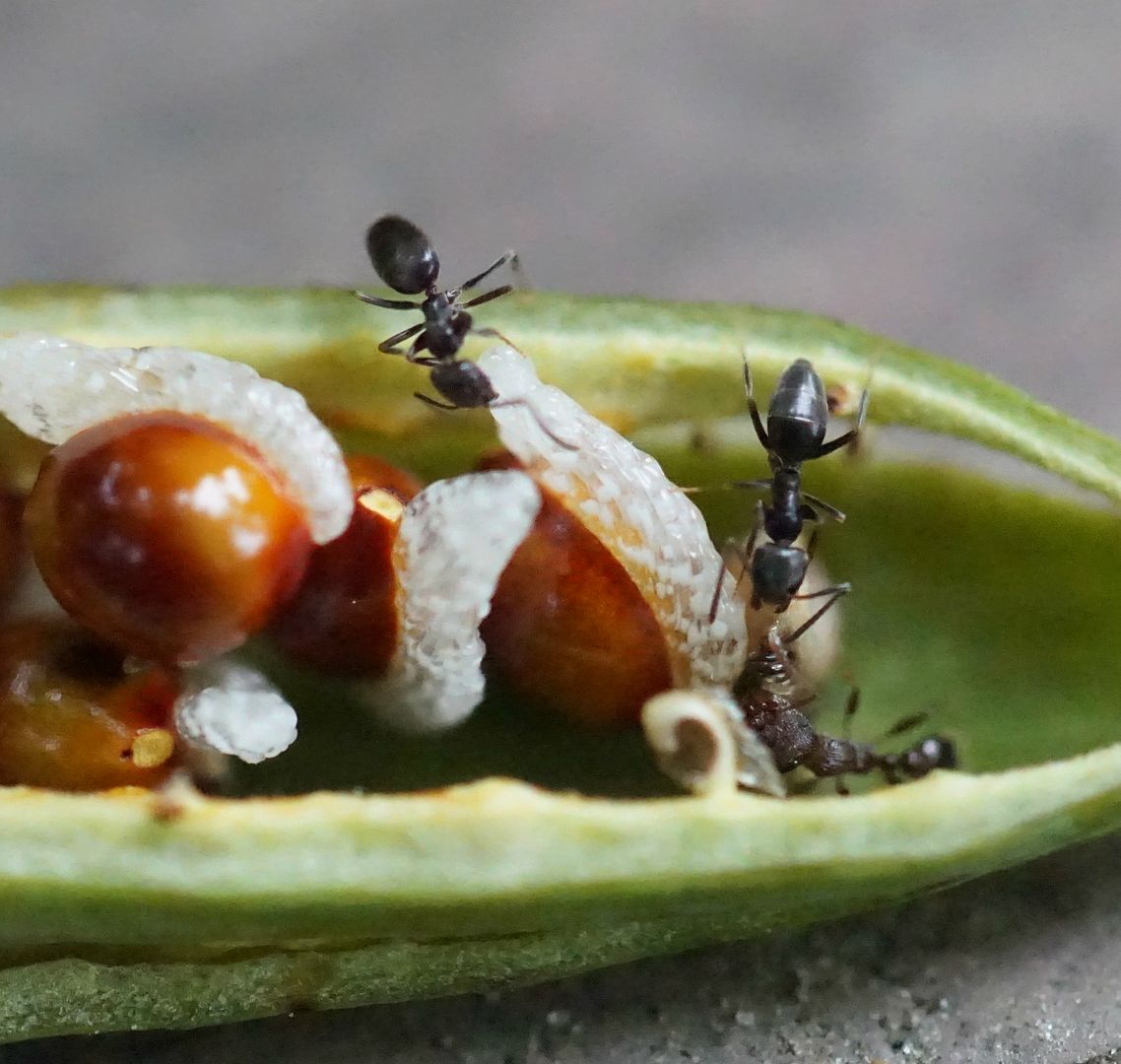
Tapinoma sessile are either incapable or unwilling to transport Bloodroot seeds.
The seeds overall are too large and bulky for them to lift so they spent the whole time just nibbling at the elaiosome.
They started to bite pieces off and carrying them back to the nest bit by bit. At no point did they actually move the seeds other than to accidentally jostle one or two of them free of the pod.
Aphaenogaster rudis on the other hand was more than happy to haul the seeds off.
They would latch hold of the elaiosome and drag them back to the nest that way.
With Woodland Poppy, I was amazed to see Tapinoma sessile workers actually carrying them back to the nest. Most of their time was spent on removing the elaiosome from the seeds within the pod but several of the workers actually did disperse them... the colony is nesting in a soliar light but they're still dispersing them.
This is a native ant species so it's not too surprising to see them dispersing a native plant species but there is still a problem. The Odorous House Ant is often the little black ant seen running around your bathroom and kitchen counter. They nest opportunistically in mulch, under tree bark, and in man made structures. So they're not the best ant to be dispersing seeds because they can end up in the walls of your home, in foundation bricks, or under loose bark, but also in the mulch of your garden, and in flower pots. So it's the flip of the coin as to whether they end up in a spot they can grow.
Aphaenogaster rudis is better at the task.
They're generalist scavengers more in the habit of bringing food items back to the nest.
They nest under logs, in leaf litter, or along clumps of grass.
At no point during my observations did I witness any try to remove the elaiosome from the seeds outside of the nest. Actually shortly after bringing them into the nest the seeds were quickly discarded out to the colony's midden (trash) pile which was hidden among leaf litter.
Midden piles are where ants put their garbage. Old insect carcasses, dead workers, spent cocoons, general roughage and things to be discarded all get piled up here. In deserts of the South West they're very noticeable around ant nests but here in the forests of the North Eastern United States they're often hidden under leaf litter.
Overall were it not for the ants dispersing these seeds they wouldn't have gotten very far. New plants would try to germinate just inches away from the old ones and the patch would move at a snails pace and only on the rarest of occasions would they travel up hill. Thanks to the ants carrying the seeds off, even if they're dropped or discarded shortly after, new populations of these plants can spring up to 24' away, potentially more if colonies fight over them or raid the midden piles of other colonies they often do for dead ants.
Other ants that also showed: Prenolepis imparis - single worker that did not recruit other nest mates. Nylanderia flavipes - even smaller than Tapinoma sessile in size. Barely able to remove elaiosome. did not disperse seeds. Temnothorax curvispinosus - even smaller than Nylanderia flavipes. Incapable of recruiting nest mates as they don't use chemical trails.
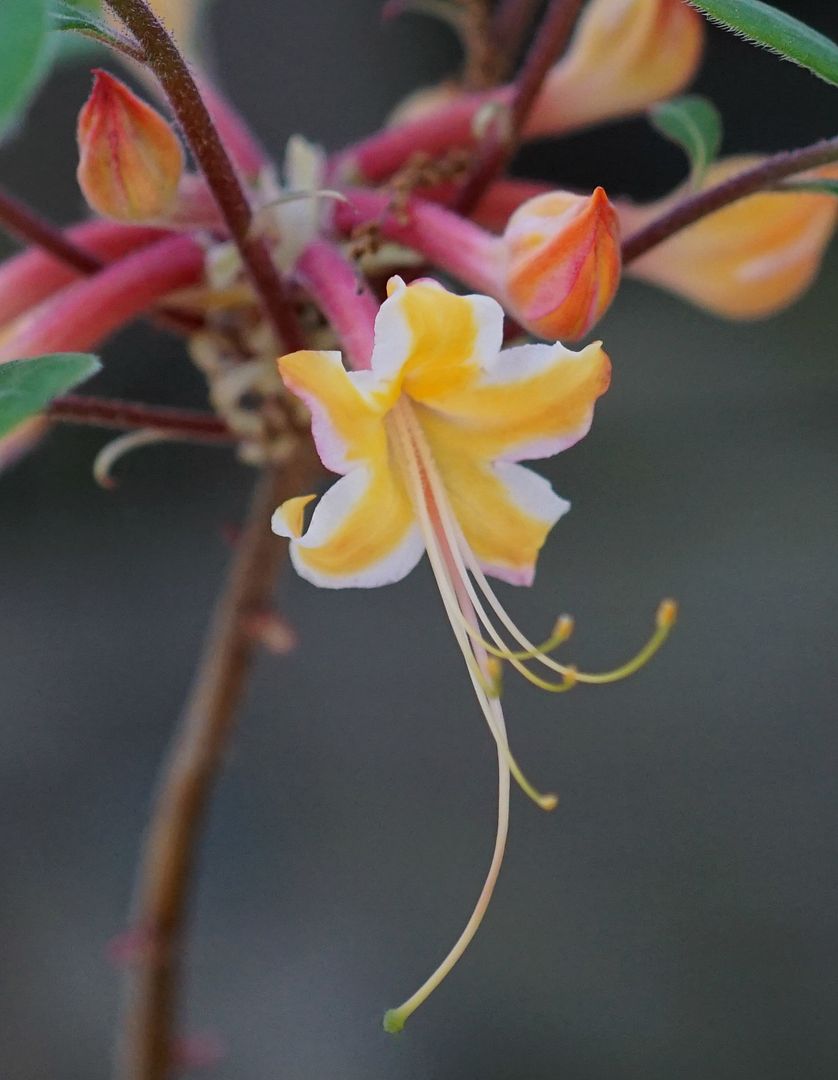
Rhododendron austrinum 'Millie Mac' is finally flowering. I've had this shrub in my garden for a few years now and it finally decided to send out some blooms. R. austrinum is a southern species but that shouldn't have been a problem because the nursery I bought it from is north of me and they have fields of it! A lot went into preventing this shrub from flowering sooner. It probably needs more sun but also wasn't that good of a plant to begin with.
I bought it on a garden tour form a wholesale nursery. Basically we were given a tour of a farm and allowed to pick out plants as we went along. I had my heart set on this particular cultivar and picked out the very best one there. However, a women who was also on the tour didn't know what to buy so I talked her into trying this one a try. Well, she picked the very worst one imaginable! There were dead branches in the thing, it was an irregular shape, and frankly I think it should have been thrown in the compost. Well the tour ended with us all eating lunch at a different facility and she left before I did... and took my plant... probably on accident. To be fair, I have no way of know if the plant I picked out would have fared better. It probably is a lighting issue because it's 5' tall now and only now decided to flower.
A single Trillium cf. erectum. I'm told this is actually what the flowers look like on young plants of this species... I'm not at all confident but the only other option is Trillium sulcatum. The problem is T. erectum should have much longer petals so it looks more like T. sulcatum, but T. sulcatum is supposed to be a much taller plant with more robust leaves.... you see my problem. In the past I had thought this was T. vaseyi but apparently they always have the flower hanging down under the leaves, so I can at least rule that one out.
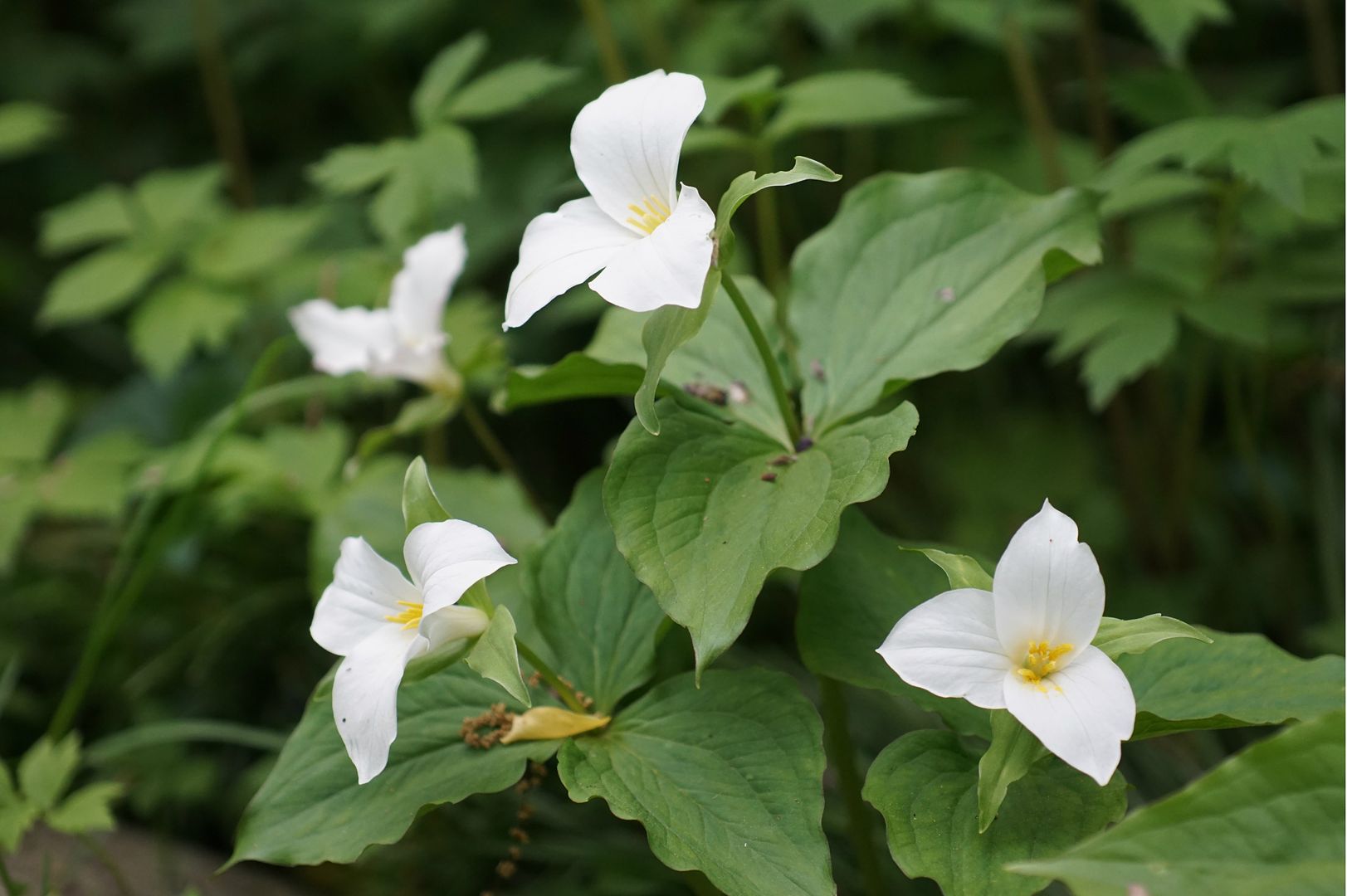
This was the main clump of Trillium grandiflorum last week.
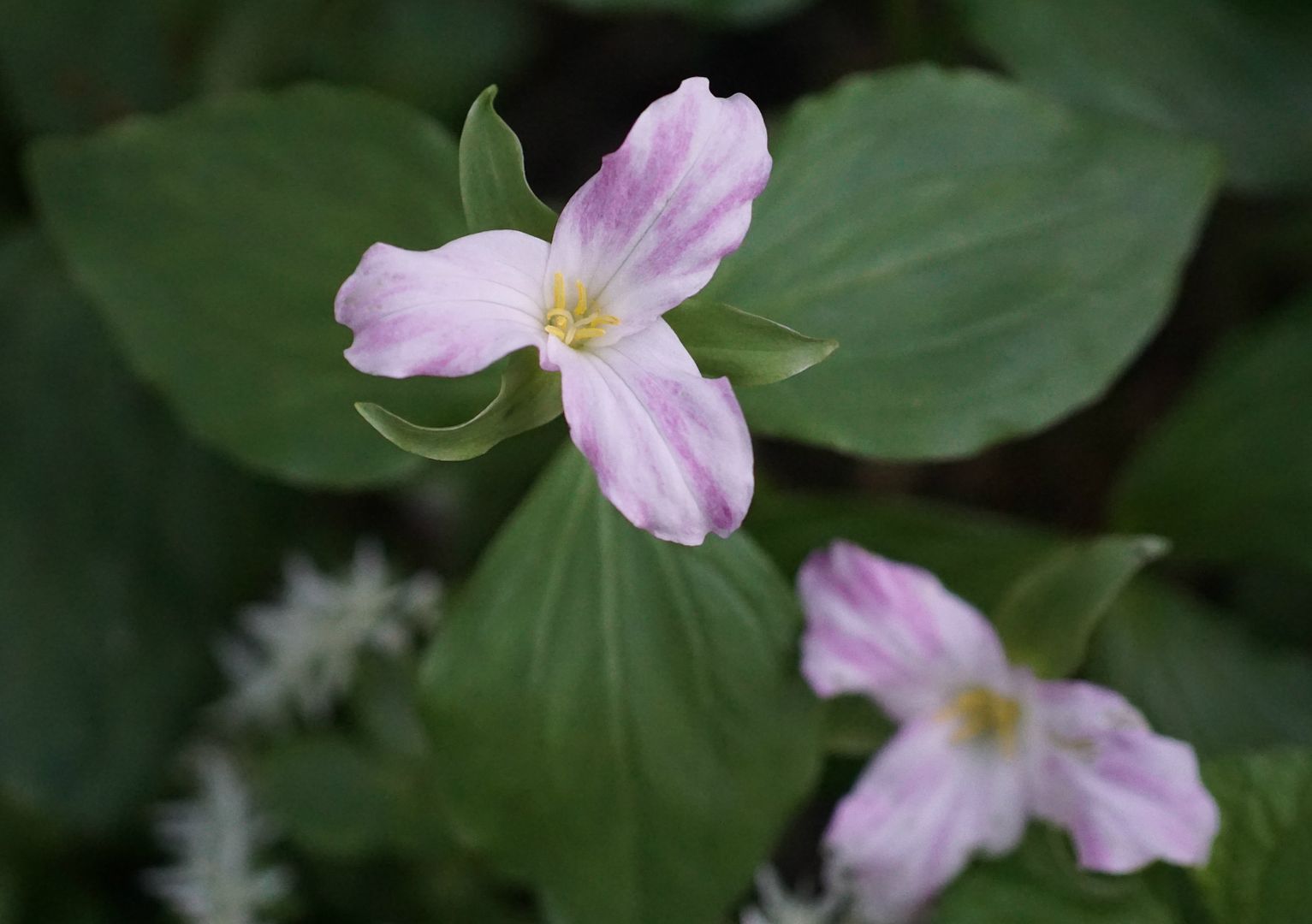
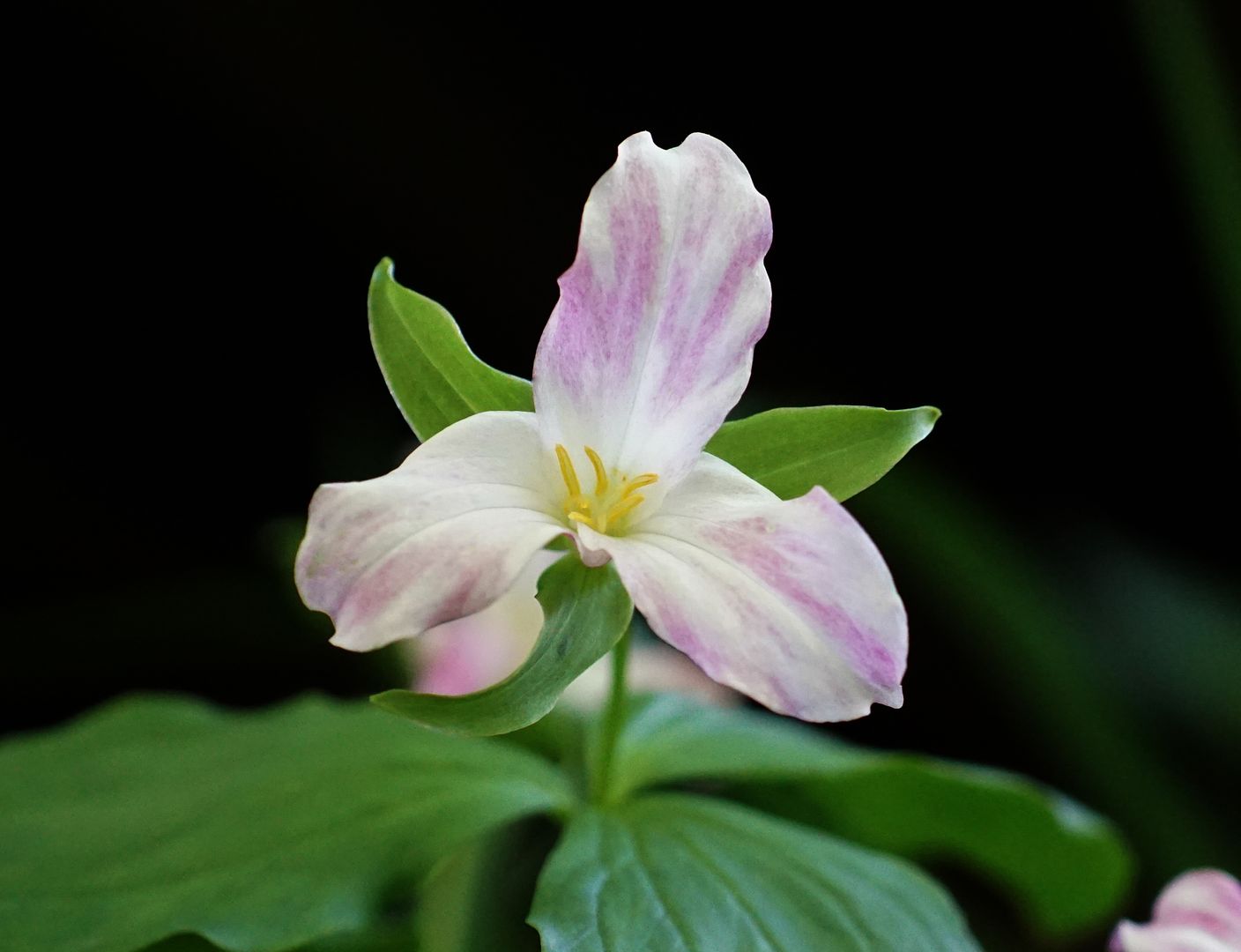
And here are some other Trillium grandiflorum plants a few days ago. They have pretty much faded now. Though the pink is pretty, it doesn't hold up to rain fall. The petals turn almost transparent and melt away.