A few days ago it was unbearably hot and humid out, but I was enjoying it nonetheless because this seemed to bring out all the ants and other bugs of interest. There were so many types of ants wondering all over my plants that I was tempted to make a video about them all but the mosquitoes got the better of me.
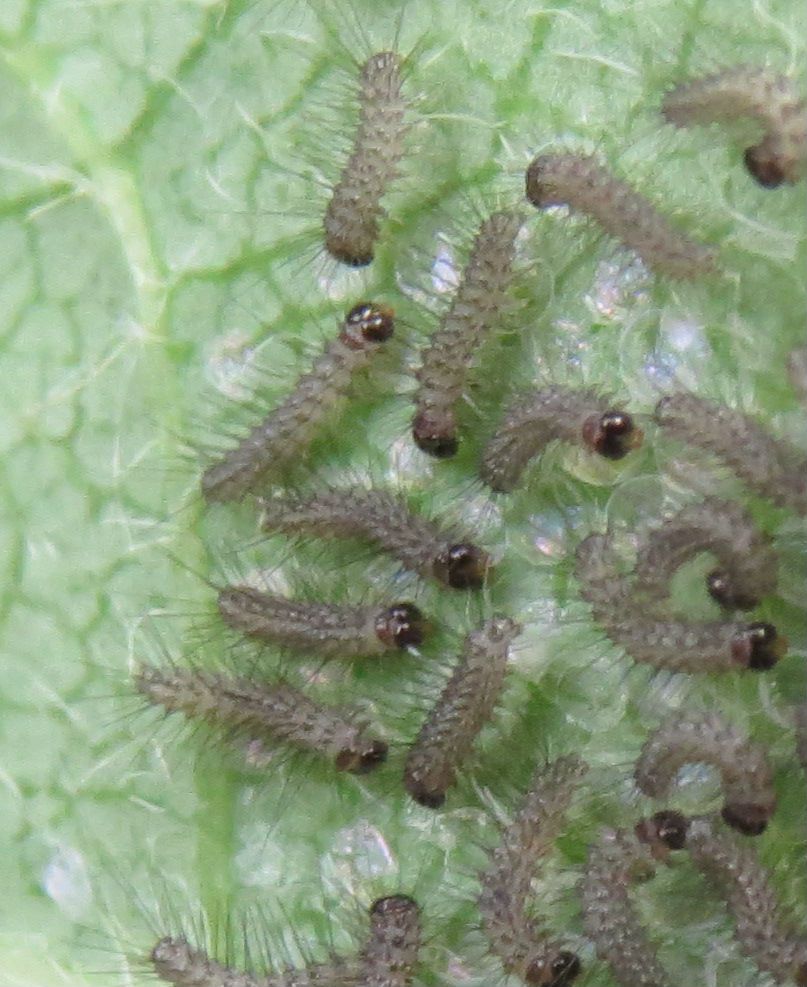
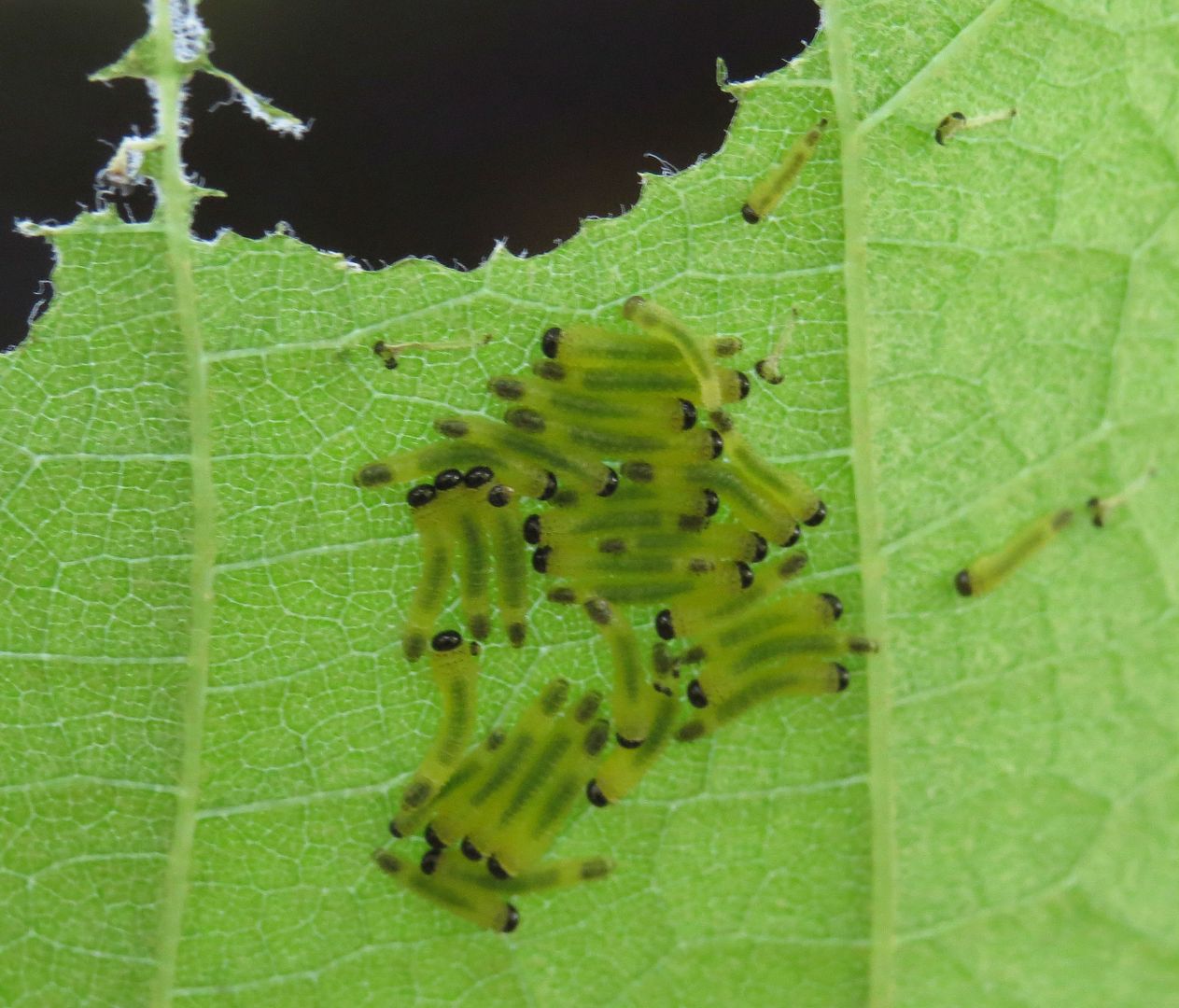
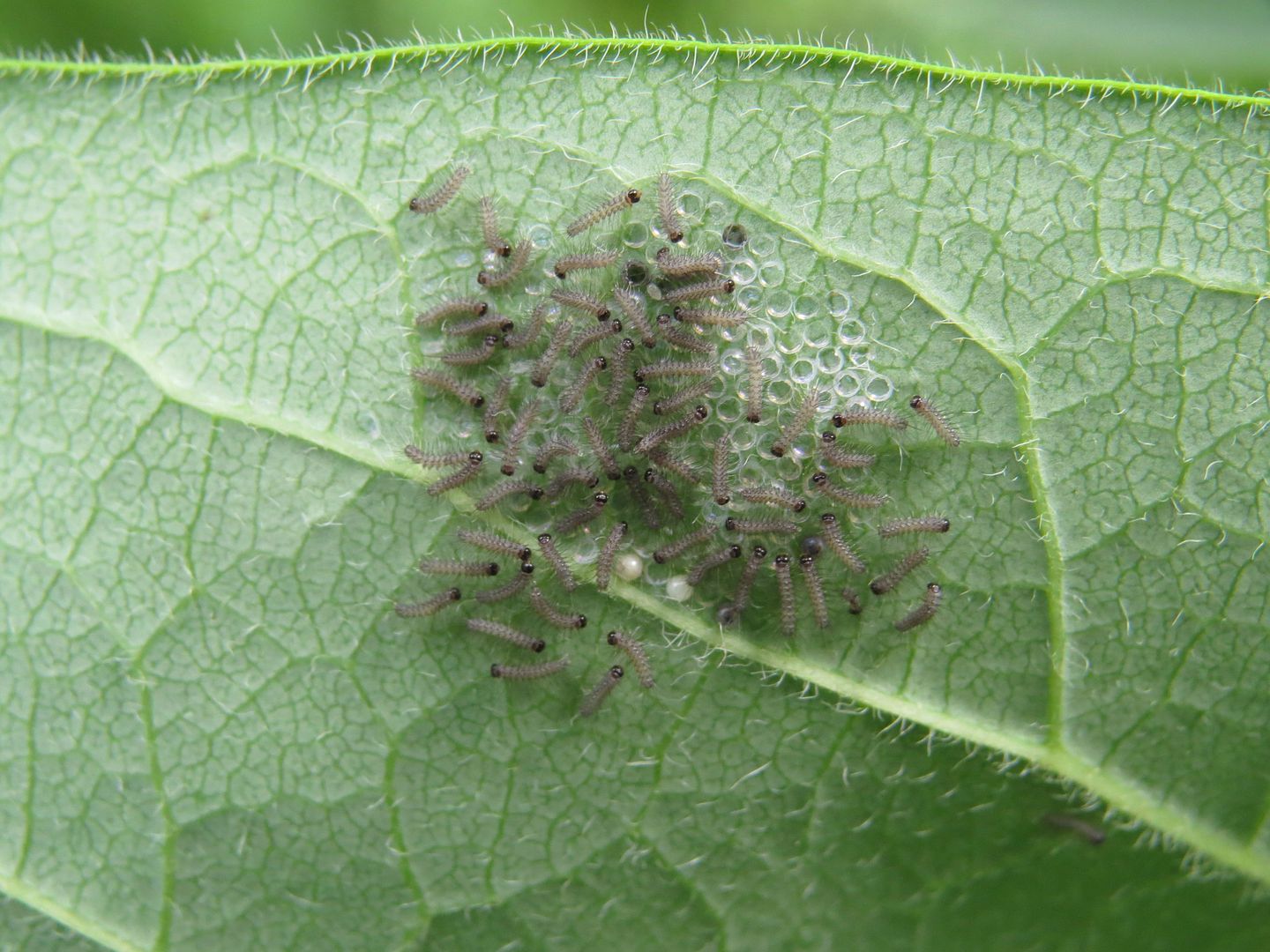
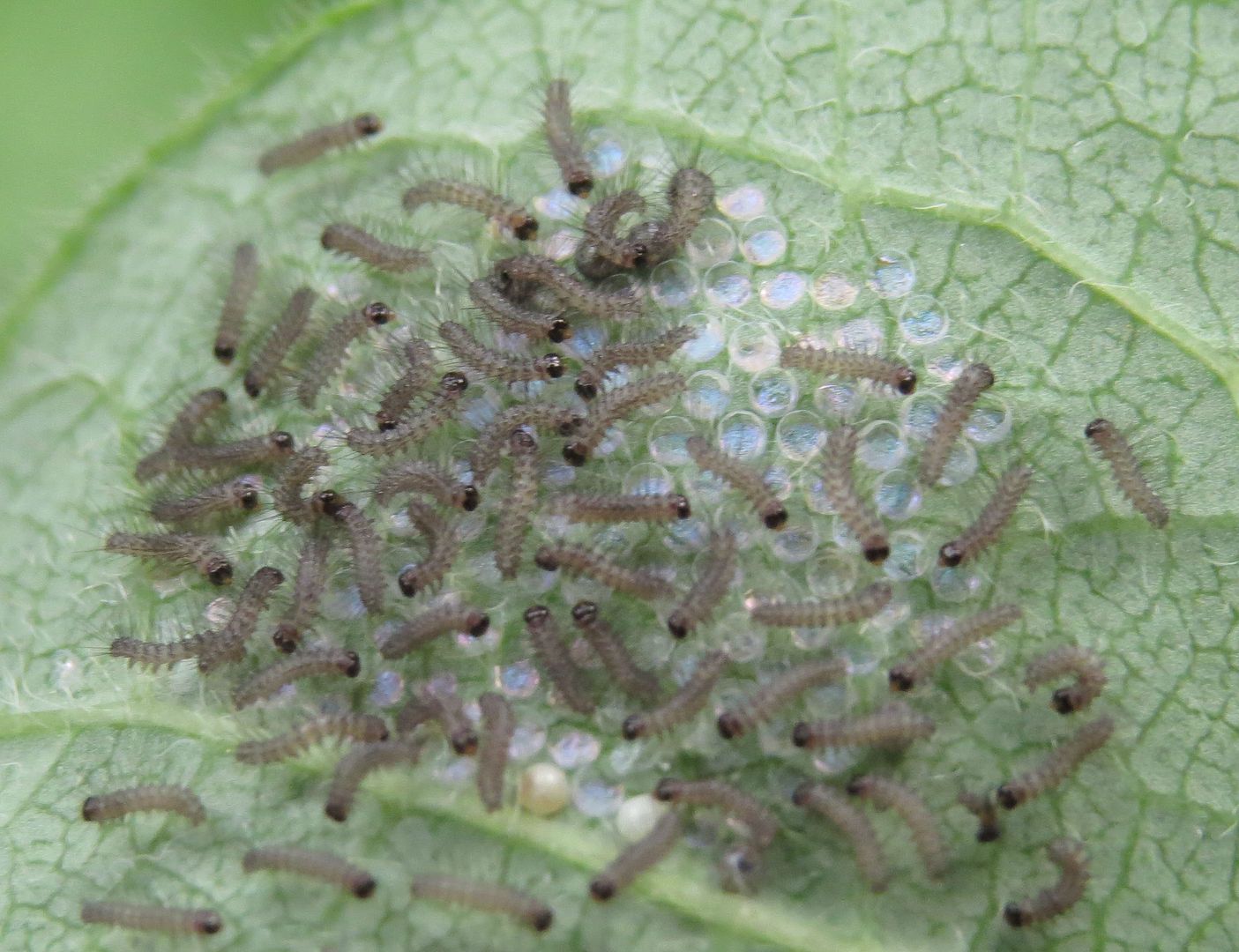
One thing I had to photograph was this patch of caterpillars on my Persimmon tree. My assumption was they were some type of giant silk moth but I don't believe that to be the case.
Unfortunately they were all dead the next morning. No doubt a large black carpenter ant, Camponotus pennsylvanicus, came along and chewed them all up into mush as there were several of those out on the tree. The whole clutch of them could have fit on a quarter, they were that tiny. I'm kicking myself for not removing the leaf and placing them into the butterfly cage.
I've no idea what they were, other than they were on Native Persimmon, they're were sort of hairy, and that I live in New Jersey. If anyone out there wants to take a crack at identifying them, be my guest.
So I then realized this week, there are a lot of caterpillars in my yard!
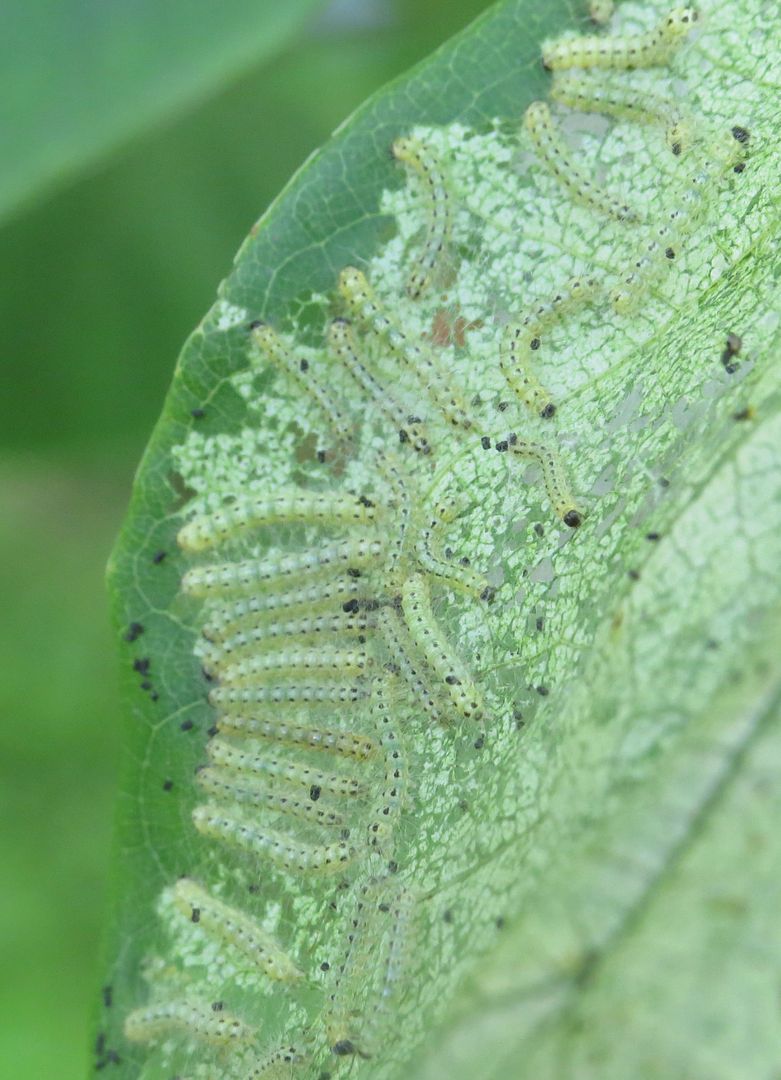
The Eastern Redbud has Fall Webworm, Hypantria cunea, which are poorly named because it's clearly the start of summer.
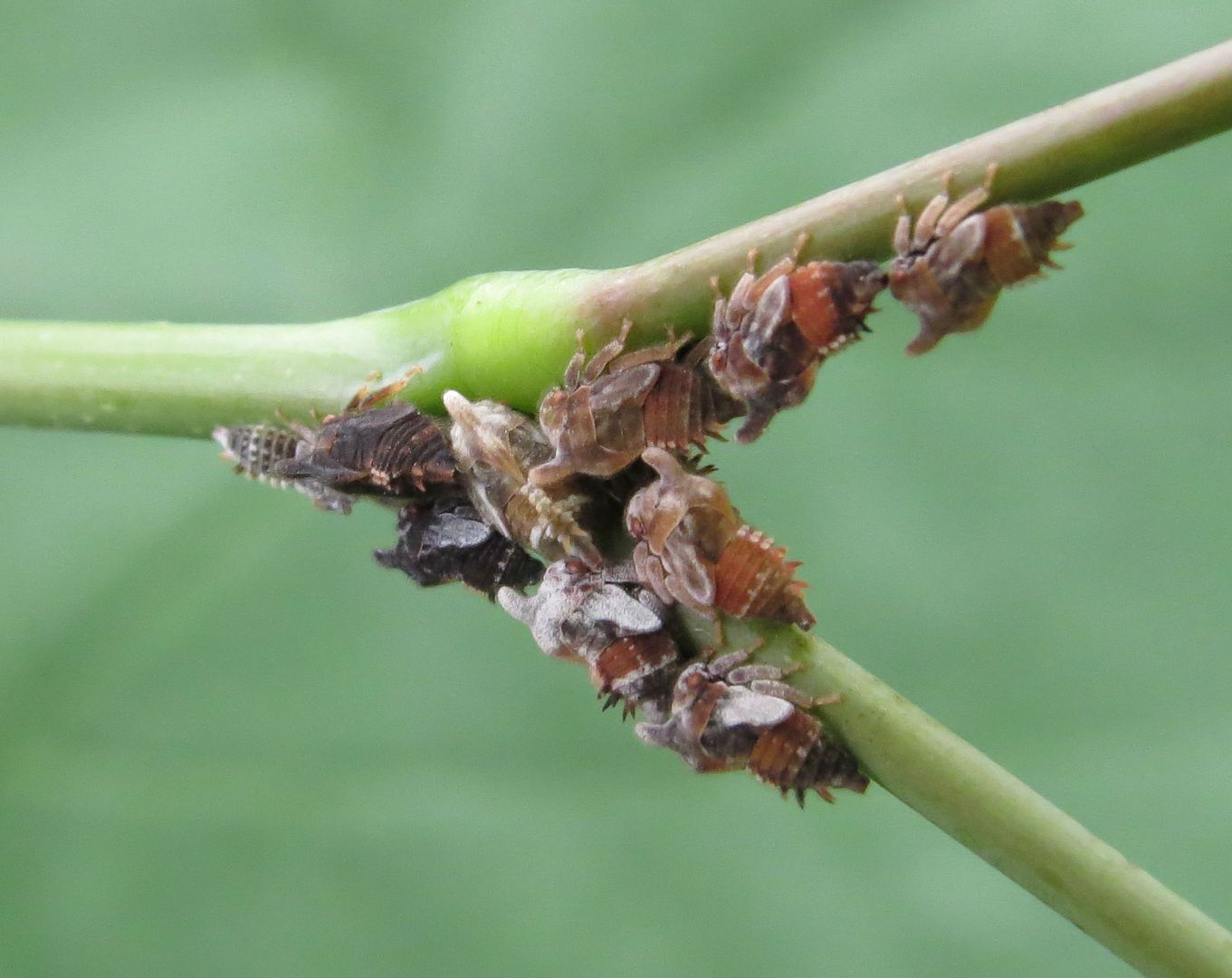
The tree also has treehoppers and a few aphids which are attracting ants that are supposed to help prevent insect herbivores or at least discourage and harass them onto other plants. It's not a perfect system but it does have an effect.
Fall Webworms get around this though by sticking together in a small group and forming webs around the leaves they eat for protection.
They do this until they're big enough to take on a few ants or develop other defenses. I'm not sure what they are for this species but I know long hairs, tasting bad, chemical weaponry, are a small taste of what some caterpillars do for protection. It's the early instars when the caterpillars have basically just hatched and don't have these defenses when they're picked off by everything, like the ones I found on the Persimmon tree.
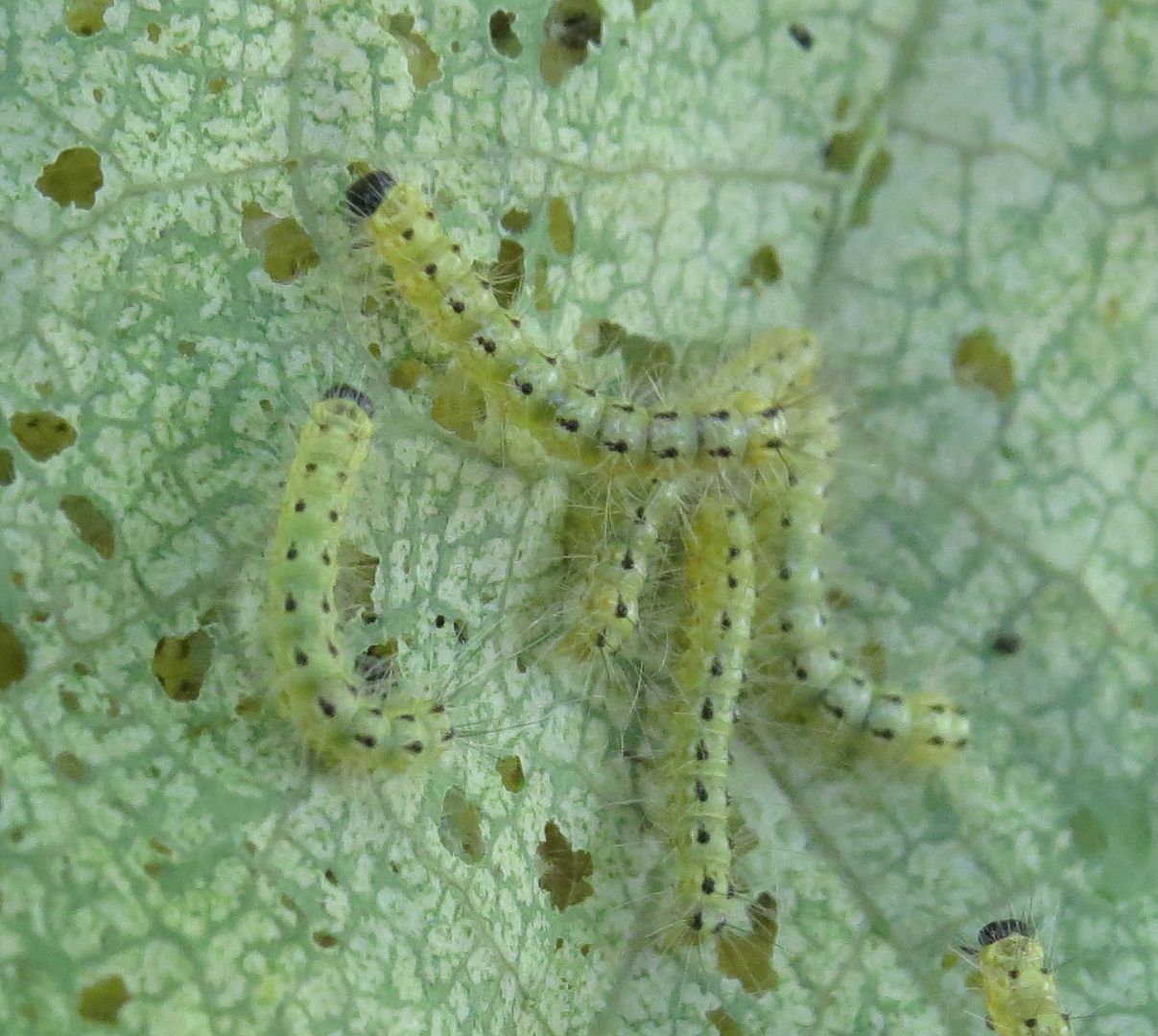
The Eight-Spotted Forester is a day-flying moth (not quite a butterfly) that hosts on grape vines. The adult has black wings and eight cream/white or pail blue spots on the wings, hence the name.
Caterpillars are somewhat colorful looking and are in the habit of jumping ship upon disturbance, often leaving a silk lasso behind so they can climb back up. Grape Vines are very aggressive growing and often the caterpillars don't effect the yield of the crop.
Now I tried looking up what young Eight-Spotted Foresters look like, and I don't think these are them. What interests me is that the grape vine doesn't have any pores that produce extra floral nectar or attract aphids and other insects to do that for the plant. So that means the only ants walking over the plant are simply foraging for the sake of it, meaning fewer ants compared to a plant that's gushing out food to encourage them. So I'm curious to see how far these guys get.
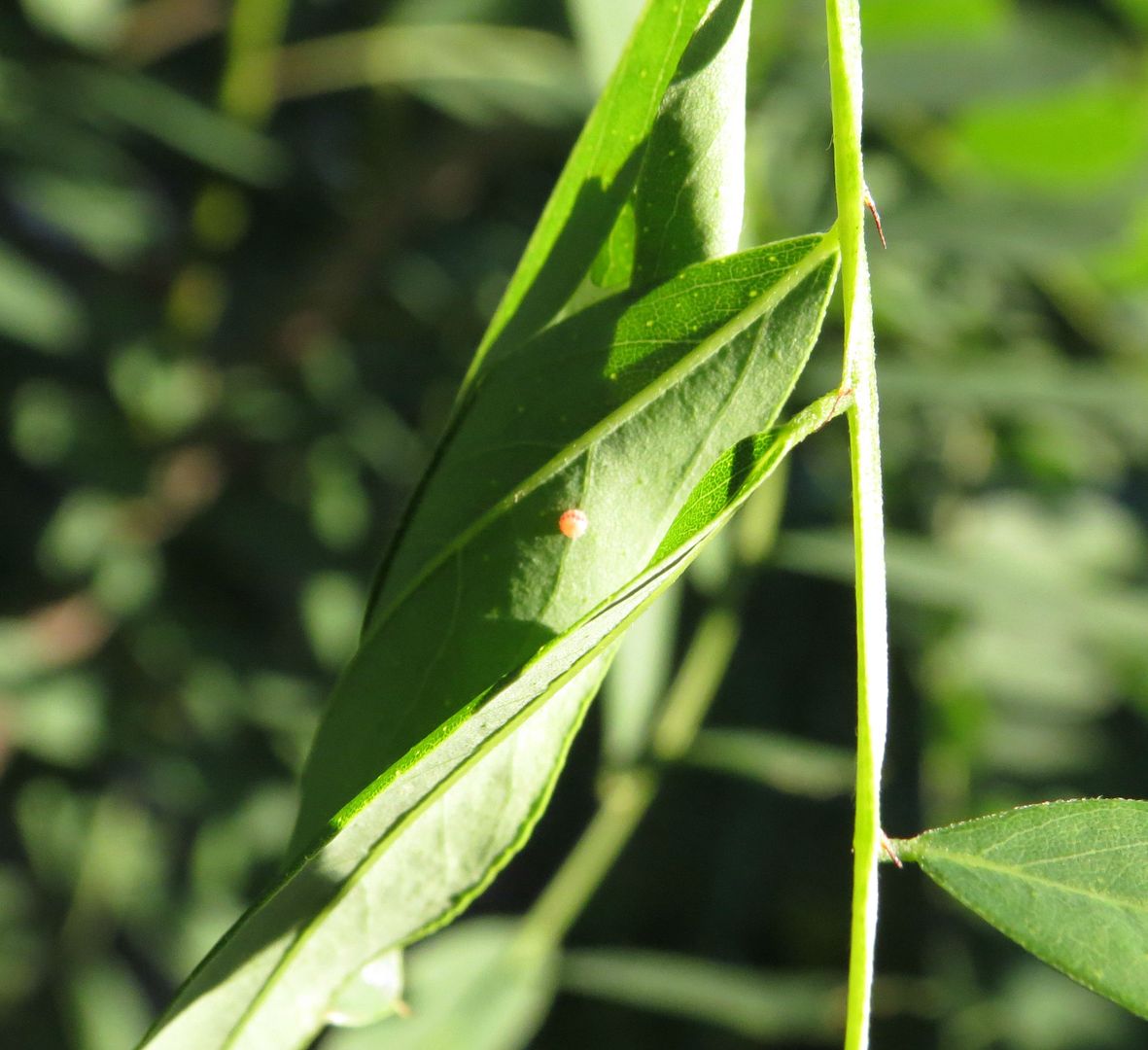
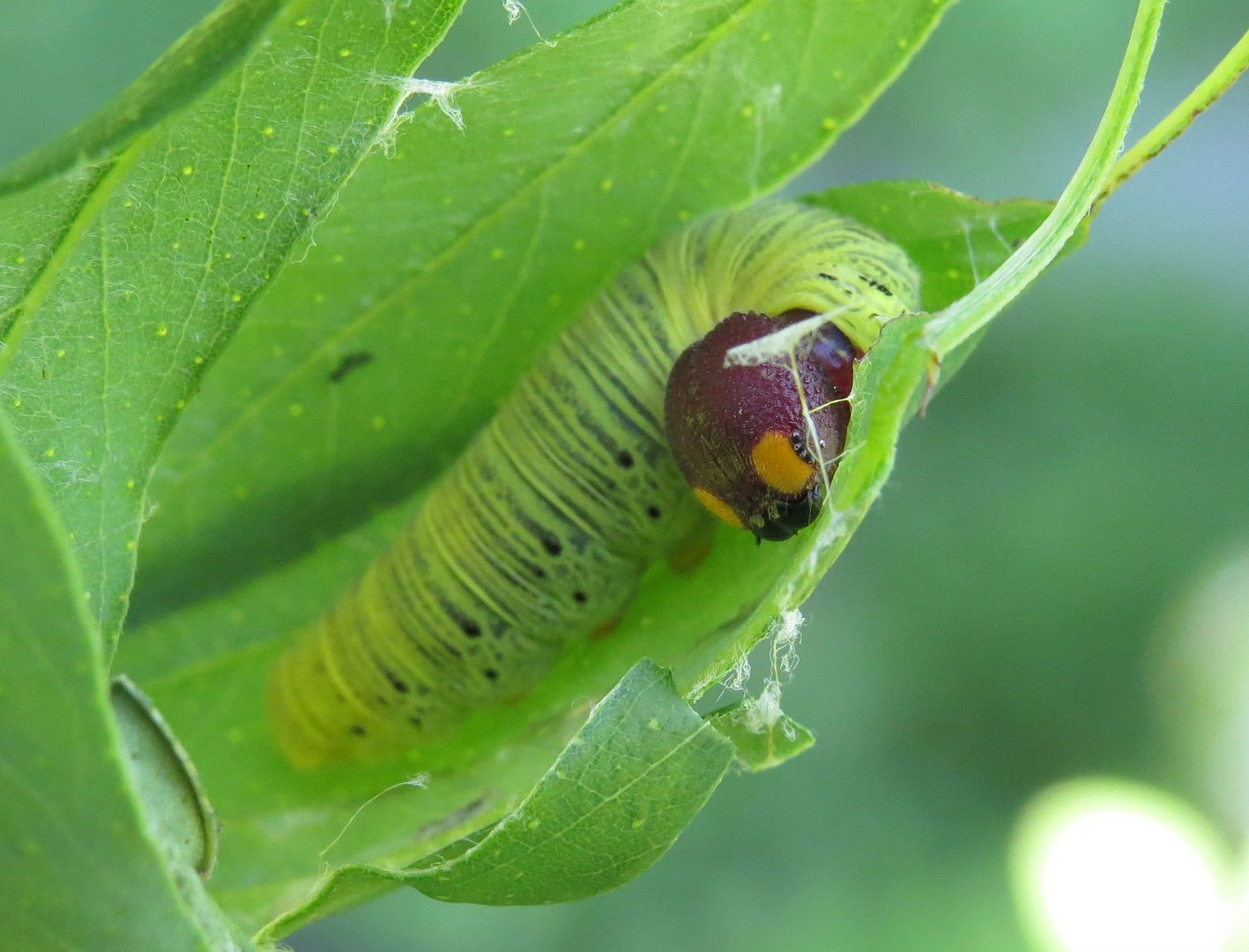
And lastly the False Indigo Bush, Amorpha fruticosa, has not only eggs but fully grown caterpillars on it.
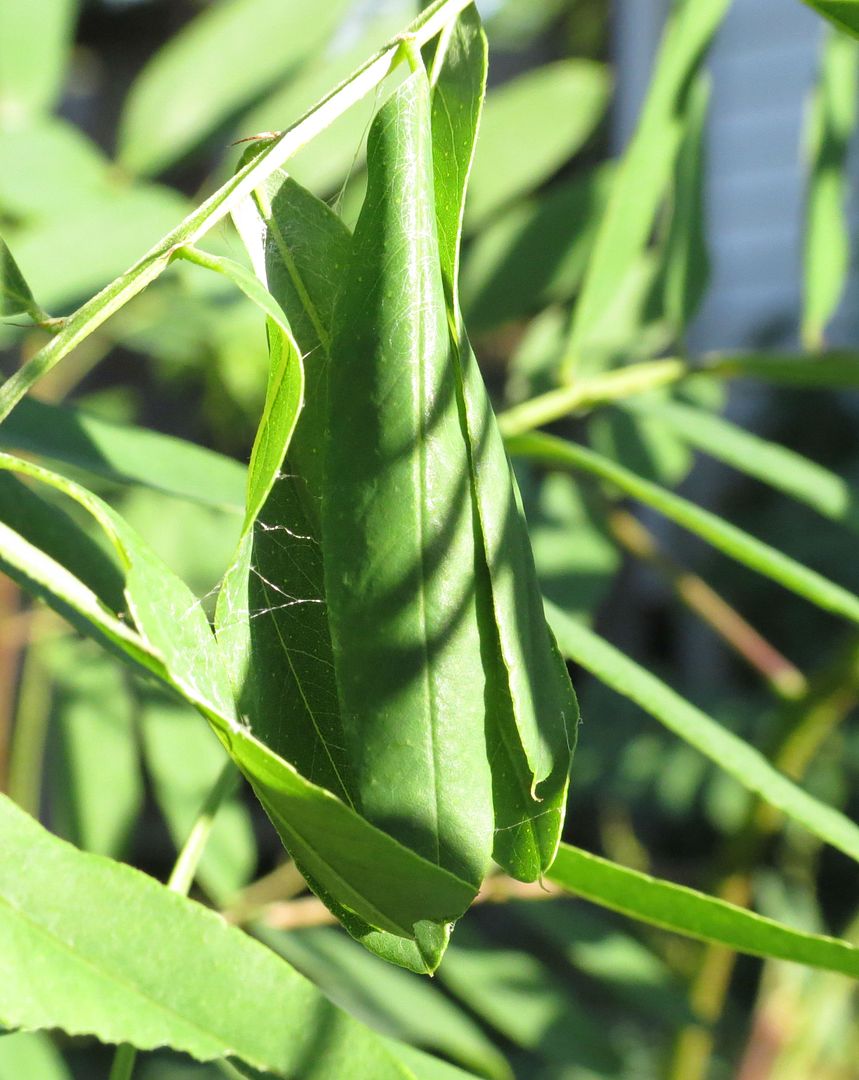
Silver Spotted Skippers, Epargyreus clarus, forage at night, making them hard to spot. During the day they stay inside a small "shed" of leaves they've woven together to hide from birds. Smaller caterpillars simply chew a section of a single leaf and fold it over with silk.
This is another case of the plant not attracting ants, other than letting them steal nectar from the flowers, but even this isn't a popular practice compared to other plants.
The caterpillars are a decent size and employ an additional tactic to hide from ants. One of the things ants look when hunting is insect frass; when they find it they know an insect can't be far. In this case though the caterpillars actually launch their frass pellets several feet away from them. They also lay silk down on just about everything they walk on to discourage ants from following them.
Friday, June 20, 2014
Wednesday, June 4, 2014
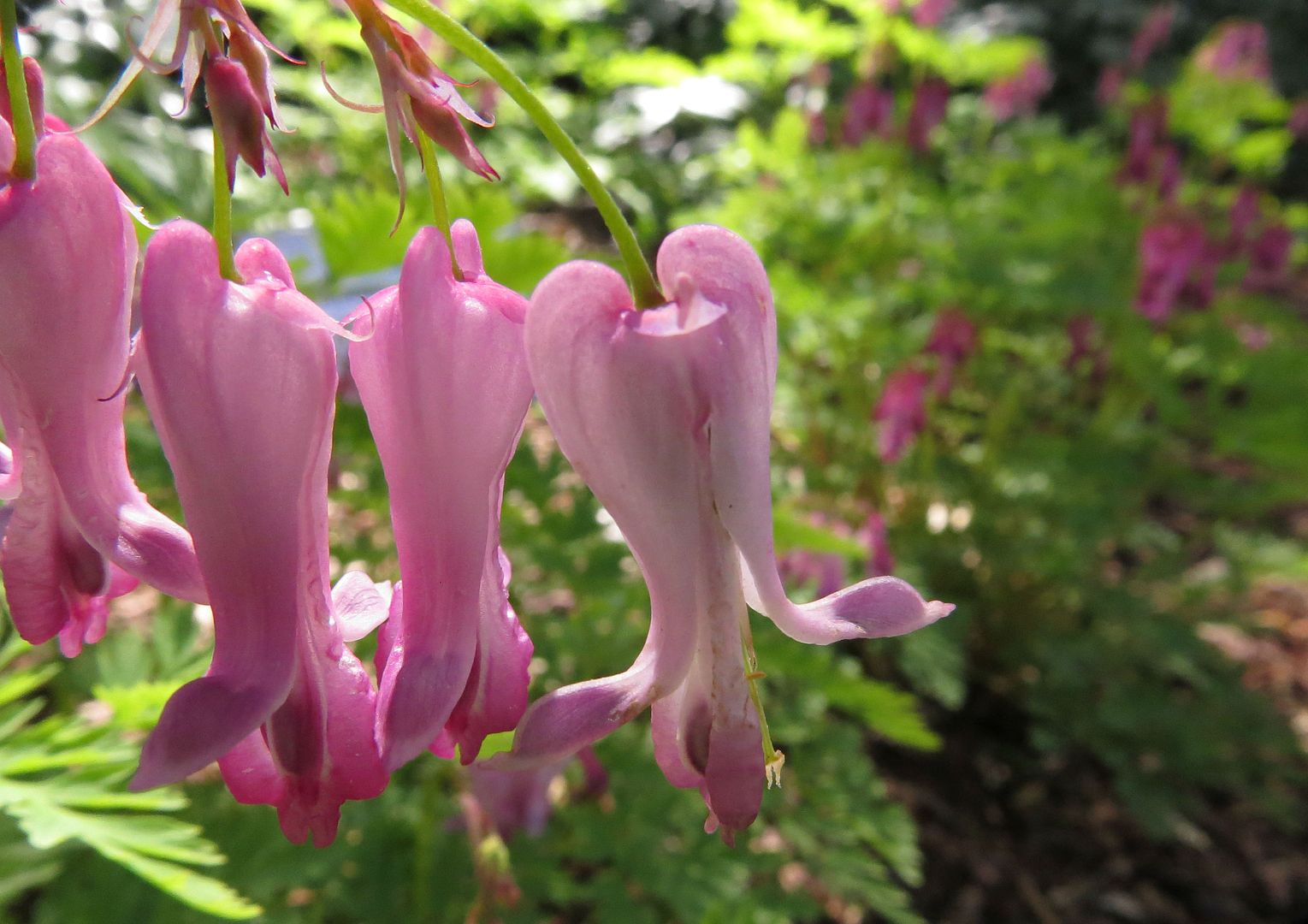
Myrmecochory: Turkey Corn (Dicentra eximia)
Turkey Corn, Dicentra eximia, is a ... wildflower? I don't think it dies back technically until the autumn so it's not an ephemeral. The peak bloom is in the springtime though alongside the majority of our ephemerals in North America. A lot of people mistake this for Bleeding Heart, Lamprocapnos spectabilis, but that's a different genus and it's not native; it's also more commonly sold by nurseries but both tend to be available if you look hard enough. Turkey Corn is better though because, despite the flowers not being as heart shaped, it actually blooms year round until it goes dormant in the autumn.
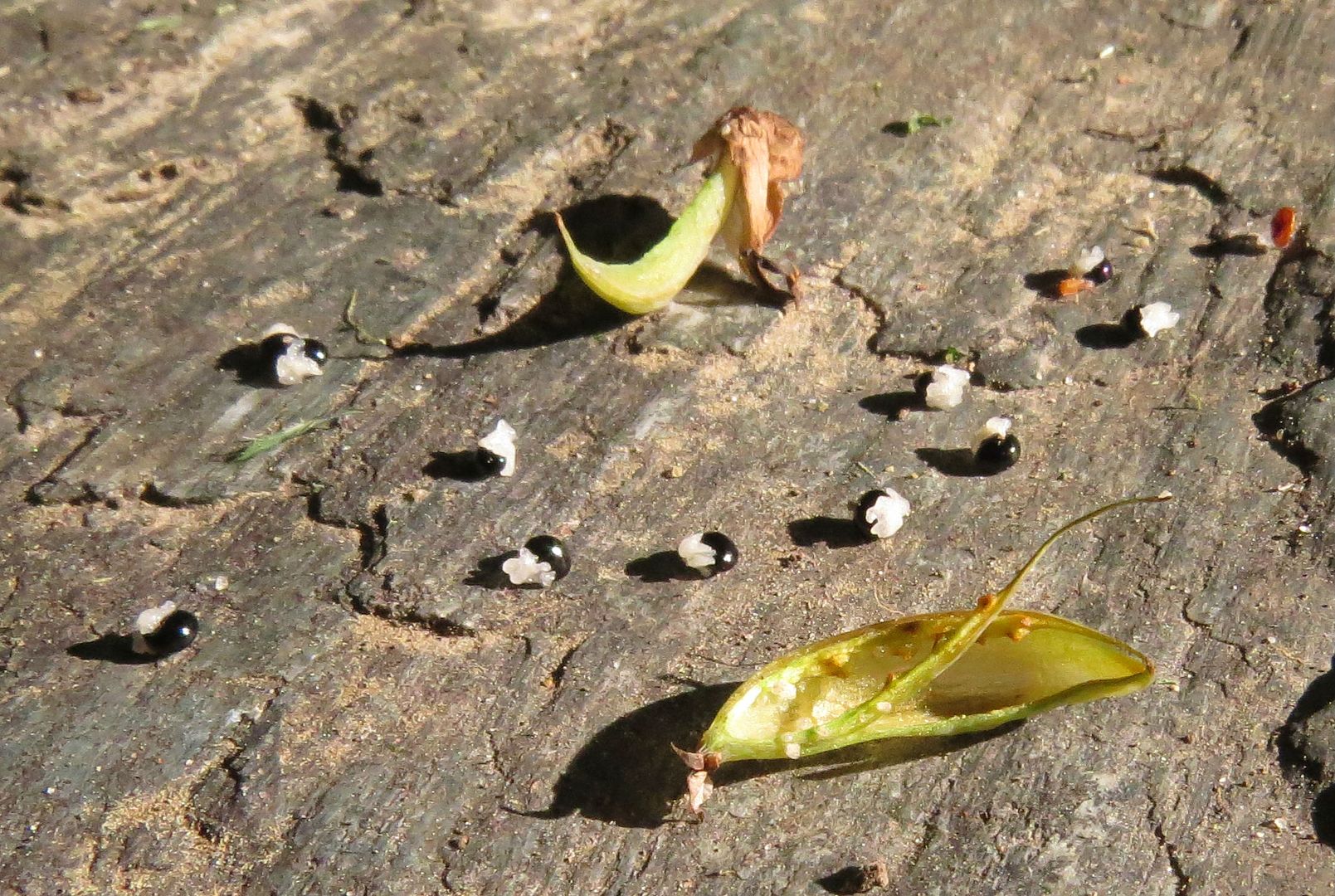
Maybe 4 to 6 weeks after flowering seed pods will form on some of the blooms. Oddly enough though I've never seen any pollinators tending to the flowers so perhaps nocturnal moths are what it attracts? Seeds are tiny black beads with packets of elaiosome on them.
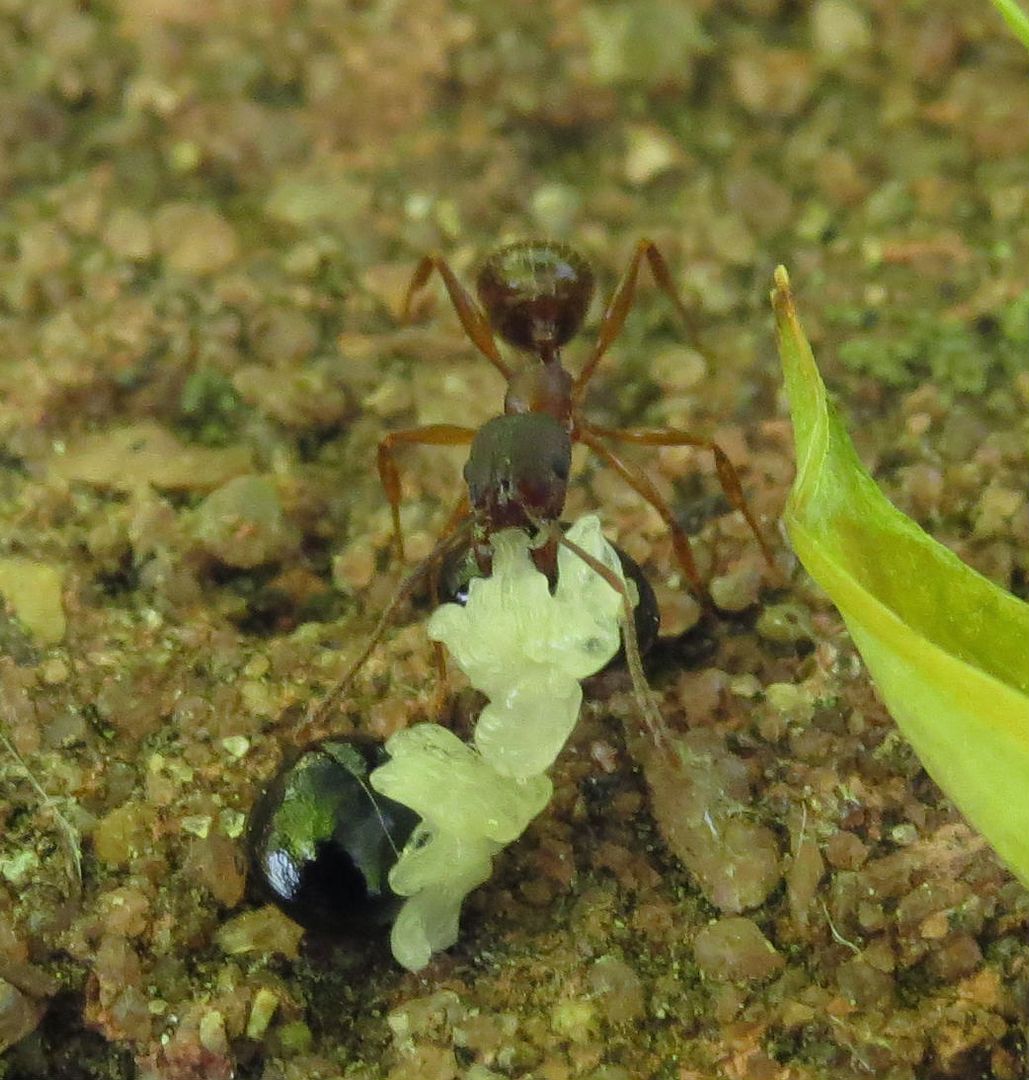
Elaiosome is a lipid rich substance that ants find irresistible. Nutritionally speaking, it has more in common with a dead insect than nectar or honey, thus the ant thinks it's just found a dead bug, or eggs. It's been found that this substance effects the caste system within the colony. Some species will produce more new queens while others produce more workers over reproductive. So colonies will either go bigger or spread faster depending on which ant we're talking here. Both can benefit the plant in the long run. A bigger colony will plant more seeds in a central location; colonies also move and change location every year or two thus multiple patches are planted over the years. New queens produce more colonies overall so the seeds from one patch of plants can be taken in multiple directions potentially.
Monday, June 2, 2014
Major Nectar Flows of the North East United States (May/June)
Okay where to begin.
About a month ago all the dogwoods were flowering, and while people are very familiar with the main two Cornus florida and Cornus kousa (not native) I've never really been impressed by the attention they get by bees. These are the big flowering dogwoods with the really big white "petals" which are actually bracks, modified leaves that are white or pink colored to act like flower petals. But unlike flower petals, they're able to produce chlorophyll to a degree where as true petals and rays do not.
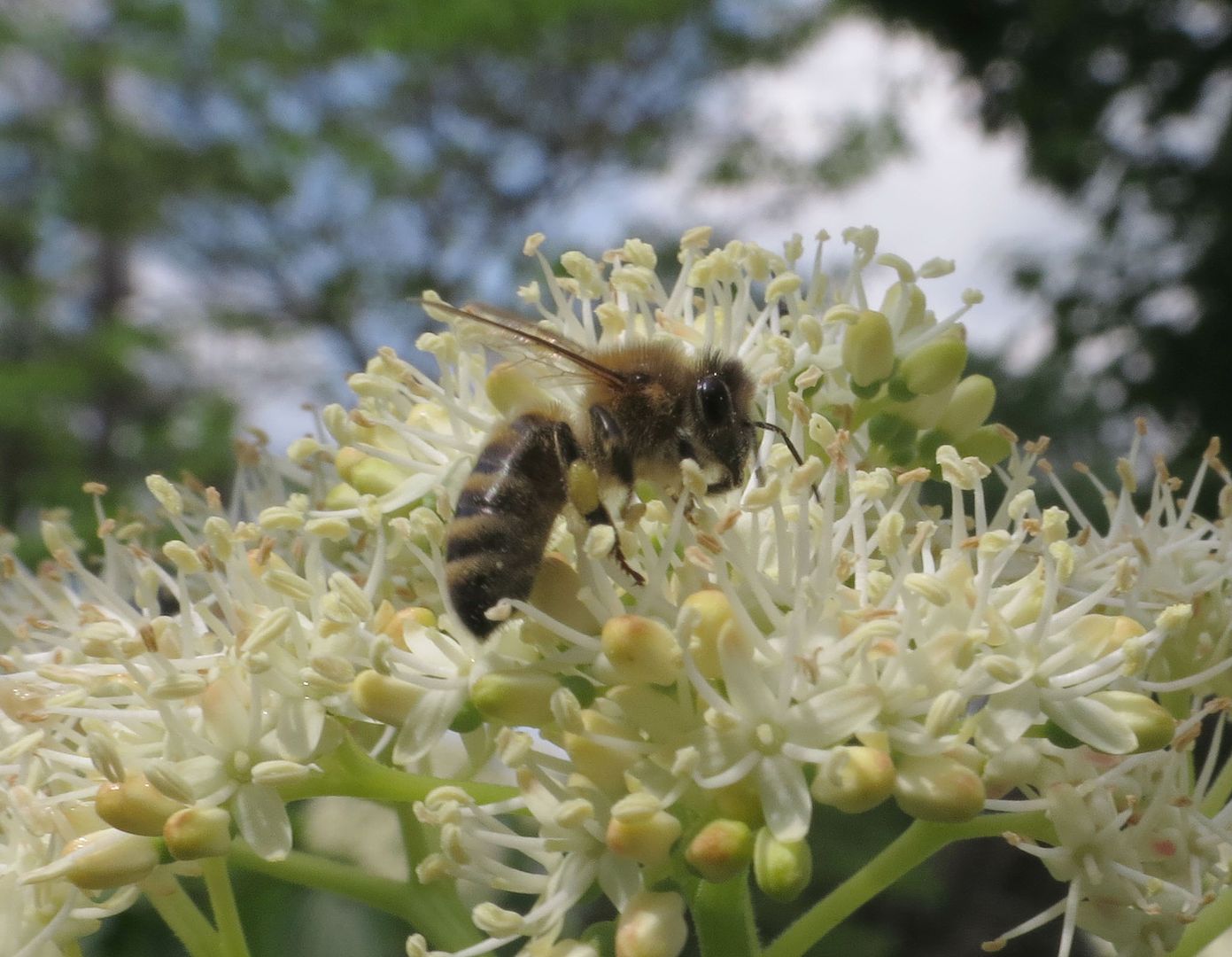
Pictured above is the Alternate Leaf Dogwood, Cornus alternifolia. This species lacks the big showy white bracks of its cousin and instead easily produces ten times more flowers! This makes them extremely popular with pollinators, and honeybees are no exception. One failing though is I believe the plant is only used for pollen (or otherwise produces an insignificant amount of nectar for bees to bother with) but it's certainly a powerhouse at doing so. Growers will be impressed with the flowering display of saplings and every year they become more and more showy.
Other dogwoods, such as the Red Twig Dogwood, Cornus sericea, take on more of a shrub habit. They have similar flower displays to C. alternifolia but nowhere near the amount of flowers, and thus have to grow considerably larger to get the same pollinator attention.
White Dutch Clover, Trifolium repens, this is a common lawn "weed" that I'm all for planting. It's hard to remain a native plant purest with a plant that spices up the nonnative American lawn. You can buy seeds to this plant by the pound which have about a 40% success rate when seeded into an established lawn. Plants produce their own fertilizer too and are fairly hardy. Even with large patches of this plant in bloom though you only see a hand full of bees even bothering with them. What makes them so successful as a nectar plant though is the fact that almost every lawn has them.
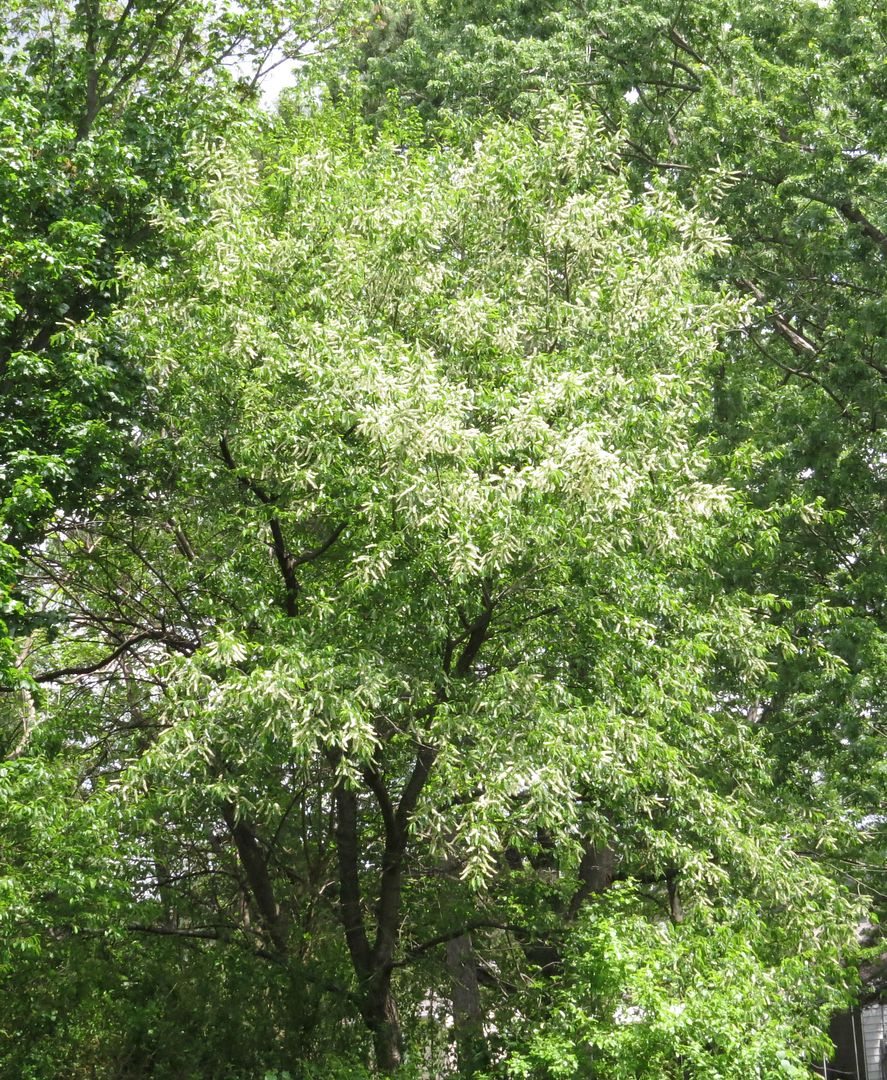
Black Cherry, Prunus serotina. Truth be told, this isn't a very popular plant with any pollinators, but it's bloom time, along with other cherry/plums, fills a gap between a few others. It's also a host plant for the Tiger Swallowtail Butterfly, the berries are edible though perhaps better used for pies and jam making, or left to the birds as it's one of the earliest to ripen.
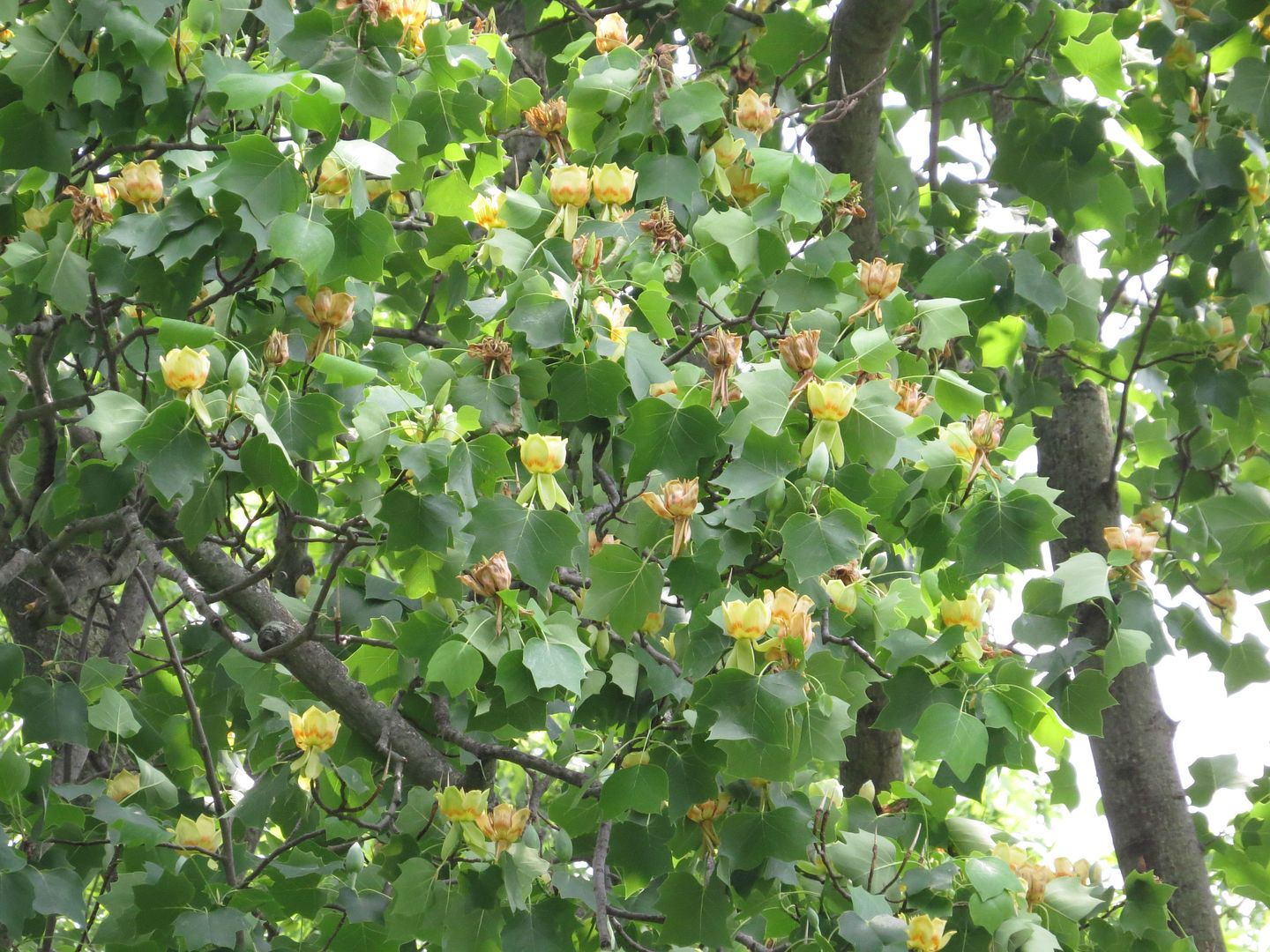
Tulip Tree, Liriodendron tulipifera. Not to be confused with Magnolias, this is one of the fastest growing and tallest trees in the forest. A dozen or so honeybees can work a single flower at a time, though it's not every year that it's flowers are prized. As odd as it sounds, honeybees will only work this tree intensely on years when the blooming is later than usual but also preceded by a rain storm. Rain causes most trees to produce three times as much nectar so on wet years a hive will produce a lot more honey. This tree is also a host plant for Tiger Swallowtails, so it's well worth planting if you've got the space.
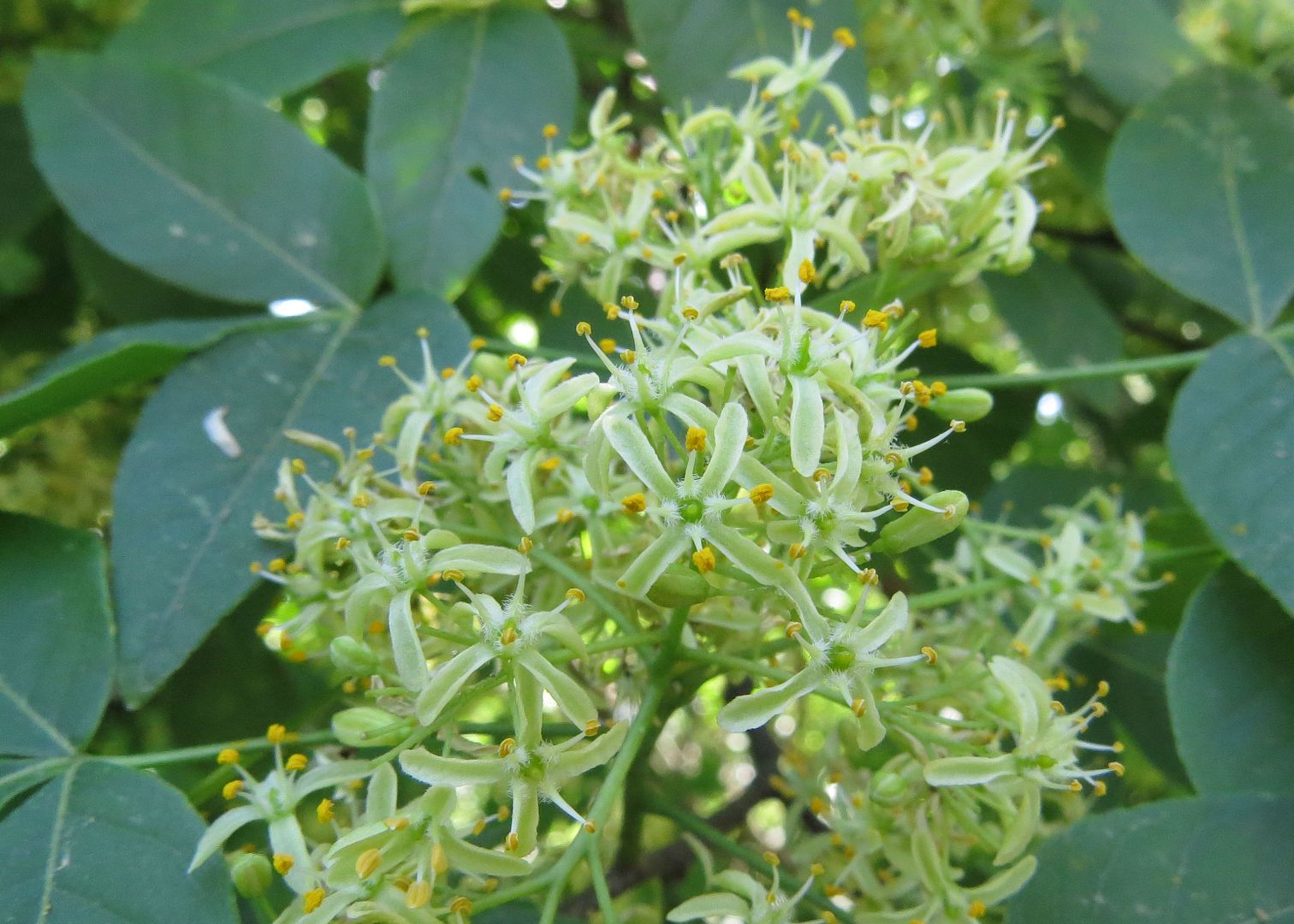
Hop Tree, Ptelea trifoliata. This tree has become somewhat uncommon which is a shame because bees go nuts for it. The foliage superficially resembles poison ivy, and can have a displeasing odor when disturbed. They can grow in full shade or full sun, but of course flower best in full sun. Also I've noticed that bees only work the flowers that are in full sun, often high up in the tree. (I would have gotten pictures of honeybees on this one but this isn't my tree and I didn't have a ladder accessible.) Another trait one might be on the fence about; this is the host plant to the Giant Swallowtail Butterfly, which is the largest butterfly in North America. The caterpillars mimic bird droppings and have been known to completely defoliate whole shrubs and trees of this plant! So gardeners need to choose between a good nectar plant (assuming it's in full sun) or living with flocks of the largest butterfly in North America flying through their yard.
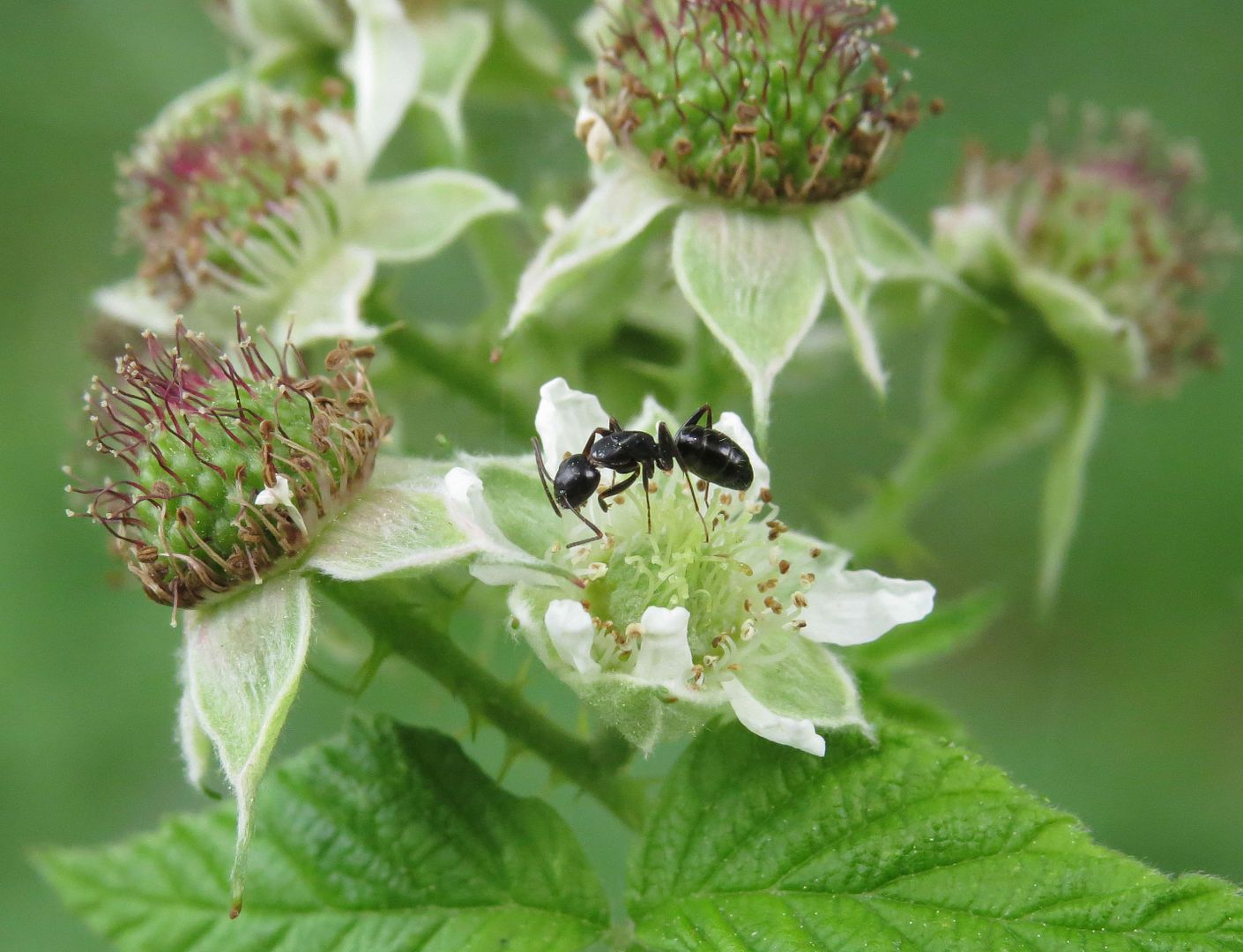
Okay that's an ant, not a bee, but even they like to steal the nectar from some of these plants. Members of the Ribes genus are high up on the pollinator list. Red Raspberries in particular are beloved by honeybees but only when allowed to grow into a nice sized patch. Blackberries get a silver medal, maybe bronze compared to the classic Red Raspberries but are still worth growing.
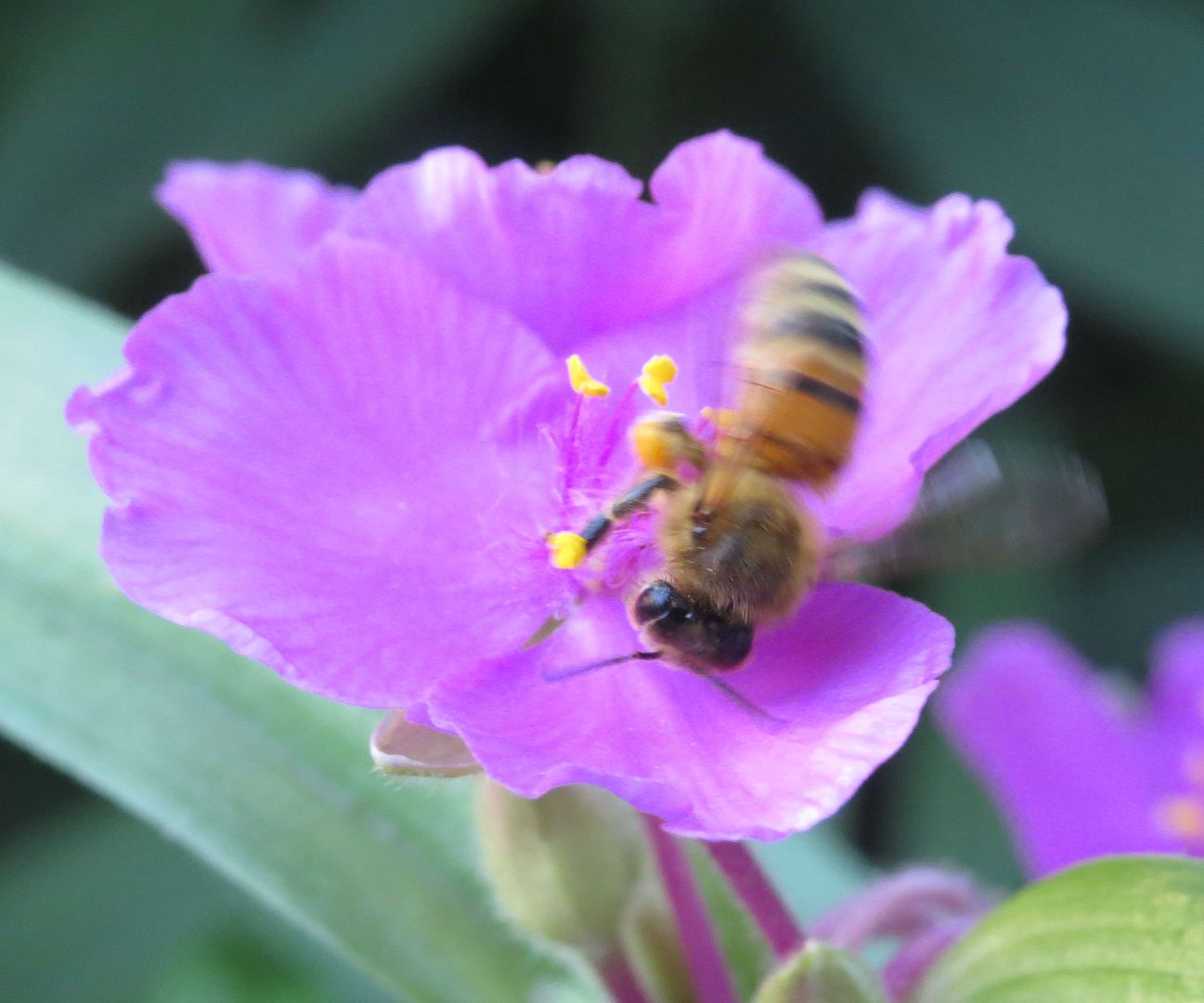
Spiderwort, Tradescantia sp., these only open in the daylight hours, and are usually closed by 4:00pm. Honeybees work them, usually before noon time when the pollen is fresh. Patches of this plant need to be at least two feet around in order for honeybees to bother with them though. I planted a few dozen plants three years ago and it's taken that long for them to even take notice. Thankfully spiderwort is one of those care free natives that grows, spreads, and goes dormant with almost no maintenance or care.
Black Locust is another one that's flowering now. It's a medium sized tree with chains of white, wisteria-like flowers on it. I've been unable to find time to get pictures of it so far. The same goes for Catalpa Trees which are also flowering, and have great big white trumpets for blooms.
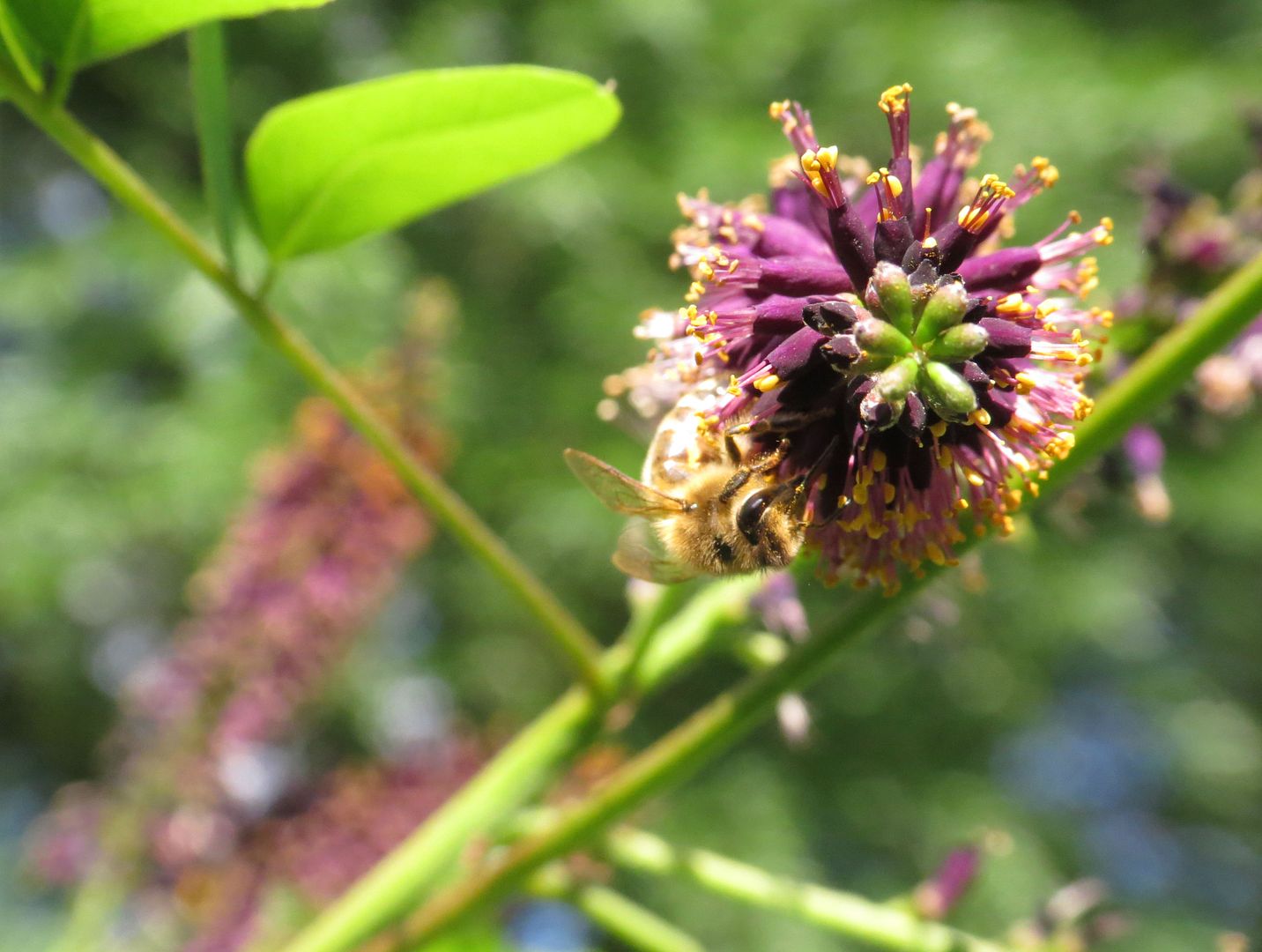
False Indigo Shrub, Amorpha fruicosa, this is another one that's not often planted. The flowers are fragrant, plum colored with bright orange pollen, and appear similar to Butterfly Bush, but better smelling and with an open habit.
This is another nitrogen fixing plants that produces its own fertilizer. It produces part shade beneath it too so you can grow it fairly close to a vegetable garden with little impact on the crops below.
It's also a host plant for the Silver Stripe Skipper, the largest of the skippers of North America. Unlike other supposed host plants of that butterfly, I've actually found the caterpillars on the plant!
And a reminder that I wrote a book titled "Native Plants for Honeybees" last year on that topic. Word of warning, it's self published, and thus not on the best quality of paper. I encourage you to give the free preview a try before commuting to purchase. Reading through some of the negative reviews I see not everyone thinks my opinion on plants was worth their time, also one seemed against self published in general.
About a month ago all the dogwoods were flowering, and while people are very familiar with the main two Cornus florida and Cornus kousa (not native) I've never really been impressed by the attention they get by bees. These are the big flowering dogwoods with the really big white "petals" which are actually bracks, modified leaves that are white or pink colored to act like flower petals. But unlike flower petals, they're able to produce chlorophyll to a degree where as true petals and rays do not.
Pictured above is the Alternate Leaf Dogwood, Cornus alternifolia. This species lacks the big showy white bracks of its cousin and instead easily produces ten times more flowers! This makes them extremely popular with pollinators, and honeybees are no exception. One failing though is I believe the plant is only used for pollen (or otherwise produces an insignificant amount of nectar for bees to bother with) but it's certainly a powerhouse at doing so. Growers will be impressed with the flowering display of saplings and every year they become more and more showy.
Other dogwoods, such as the Red Twig Dogwood, Cornus sericea, take on more of a shrub habit. They have similar flower displays to C. alternifolia but nowhere near the amount of flowers, and thus have to grow considerably larger to get the same pollinator attention.
White Dutch Clover, Trifolium repens, this is a common lawn "weed" that I'm all for planting. It's hard to remain a native plant purest with a plant that spices up the nonnative American lawn. You can buy seeds to this plant by the pound which have about a 40% success rate when seeded into an established lawn. Plants produce their own fertilizer too and are fairly hardy. Even with large patches of this plant in bloom though you only see a hand full of bees even bothering with them. What makes them so successful as a nectar plant though is the fact that almost every lawn has them.
Black Cherry, Prunus serotina. Truth be told, this isn't a very popular plant with any pollinators, but it's bloom time, along with other cherry/plums, fills a gap between a few others. It's also a host plant for the Tiger Swallowtail Butterfly, the berries are edible though perhaps better used for pies and jam making, or left to the birds as it's one of the earliest to ripen.
Tulip Tree, Liriodendron tulipifera. Not to be confused with Magnolias, this is one of the fastest growing and tallest trees in the forest. A dozen or so honeybees can work a single flower at a time, though it's not every year that it's flowers are prized. As odd as it sounds, honeybees will only work this tree intensely on years when the blooming is later than usual but also preceded by a rain storm. Rain causes most trees to produce three times as much nectar so on wet years a hive will produce a lot more honey. This tree is also a host plant for Tiger Swallowtails, so it's well worth planting if you've got the space.
Hop Tree, Ptelea trifoliata. This tree has become somewhat uncommon which is a shame because bees go nuts for it. The foliage superficially resembles poison ivy, and can have a displeasing odor when disturbed. They can grow in full shade or full sun, but of course flower best in full sun. Also I've noticed that bees only work the flowers that are in full sun, often high up in the tree. (I would have gotten pictures of honeybees on this one but this isn't my tree and I didn't have a ladder accessible.) Another trait one might be on the fence about; this is the host plant to the Giant Swallowtail Butterfly, which is the largest butterfly in North America. The caterpillars mimic bird droppings and have been known to completely defoliate whole shrubs and trees of this plant! So gardeners need to choose between a good nectar plant (assuming it's in full sun) or living with flocks of the largest butterfly in North America flying through their yard.
Okay that's an ant, not a bee, but even they like to steal the nectar from some of these plants. Members of the Ribes genus are high up on the pollinator list. Red Raspberries in particular are beloved by honeybees but only when allowed to grow into a nice sized patch. Blackberries get a silver medal, maybe bronze compared to the classic Red Raspberries but are still worth growing.
Spiderwort, Tradescantia sp., these only open in the daylight hours, and are usually closed by 4:00pm. Honeybees work them, usually before noon time when the pollen is fresh. Patches of this plant need to be at least two feet around in order for honeybees to bother with them though. I planted a few dozen plants three years ago and it's taken that long for them to even take notice. Thankfully spiderwort is one of those care free natives that grows, spreads, and goes dormant with almost no maintenance or care.
Black Locust is another one that's flowering now. It's a medium sized tree with chains of white, wisteria-like flowers on it. I've been unable to find time to get pictures of it so far. The same goes for Catalpa Trees which are also flowering, and have great big white trumpets for blooms.
False Indigo Shrub, Amorpha fruicosa, this is another one that's not often planted. The flowers are fragrant, plum colored with bright orange pollen, and appear similar to Butterfly Bush, but better smelling and with an open habit.
This is another nitrogen fixing plants that produces its own fertilizer. It produces part shade beneath it too so you can grow it fairly close to a vegetable garden with little impact on the crops below.
It's also a host plant for the Silver Stripe Skipper, the largest of the skippers of North America. Unlike other supposed host plants of that butterfly, I've actually found the caterpillars on the plant!
And a reminder that I wrote a book titled "Native Plants for Honeybees" last year on that topic. Word of warning, it's self published, and thus not on the best quality of paper. I encourage you to give the free preview a try before commuting to purchase. Reading through some of the negative reviews I see not everyone thinks my opinion on plants was worth their time, also one seemed against self published in general.
Thursday, May 15, 2014
Rhododendron Ant Trap
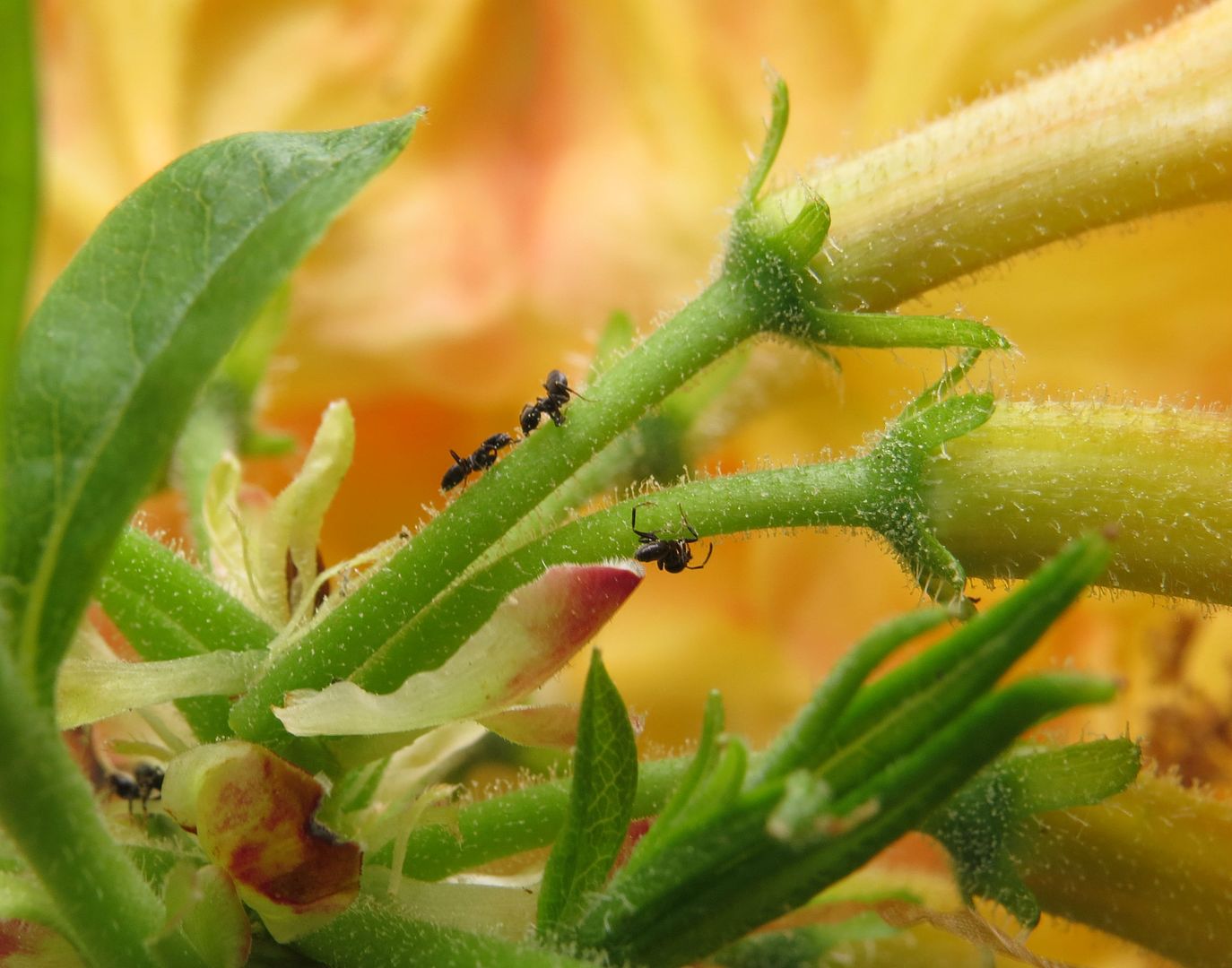
The odorous house ant, Tapinoma sessile, is a noted nectar thief of assorted flowers. Often they'll steal the nectar to plants that have noted defenses against ants robbing he nectar. But this times it seems the odorous house ant has met its match.
Our native Flame Azalea, Rhododendron calendulaceum, has some very pretty yellow-orange and sometimes red flowers that are fragrant. Hummingbirds, butterflies and bumblebees are all occasional visitors to this plant. The dead ants and gnats attached to the flower stem entice Hummingbirds in for a different reason.
Free Hummingbird Food
Labels:
Ants,
native,
Plants,
Rhododendrons,
Tapinoma,
Wildflowers
Saturday, May 10, 2014
Thursday, May 1, 2014
The Mt. Cuba Center's 10th Annual Wildflower Celebration
Last Sunday the Mt. Cuba Center held their 10th annual Wildflower Celebration. This has truly become an event I've tried to attend every year ever since I learned about the place. The gardens there are spectacular as always, however because of the long winter we had I feel that the general peak bloom of the place was 2 or 3 weeks behind.
Fern-leaf Phacelia, Phacelia bipinnatifida, had only just started to open. And even the May Apples which are very abundant in parts of the forests there weren't blooming yet.
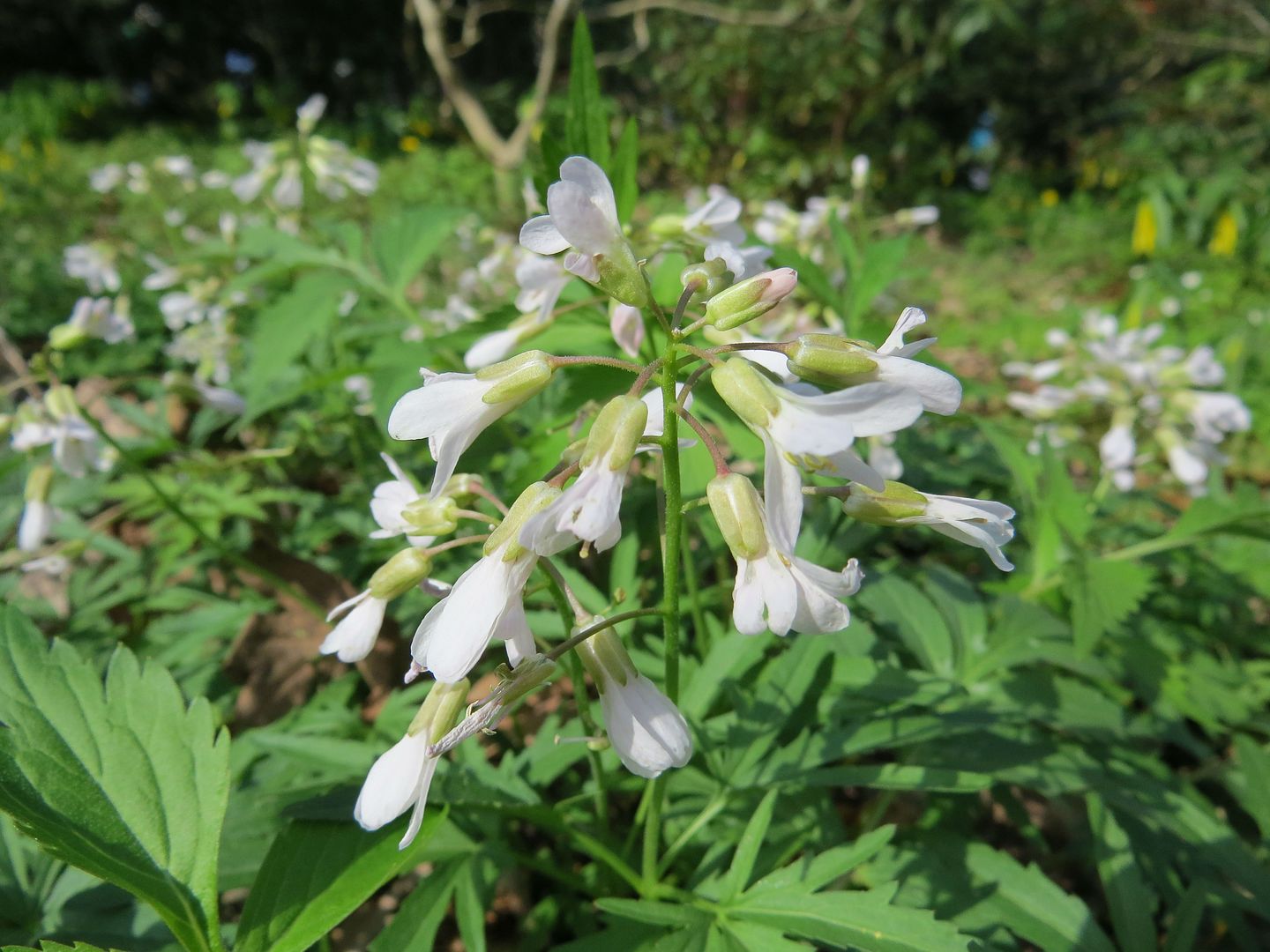
I was slightly impressed to find a Toothwort, Cardamine concatenata, still blooming from two weeks ago when I had visited before for the early spring blooming tour. Other plants I saw then like Hepatica, and Bloodroot were pretty much completely done flowering for the year.
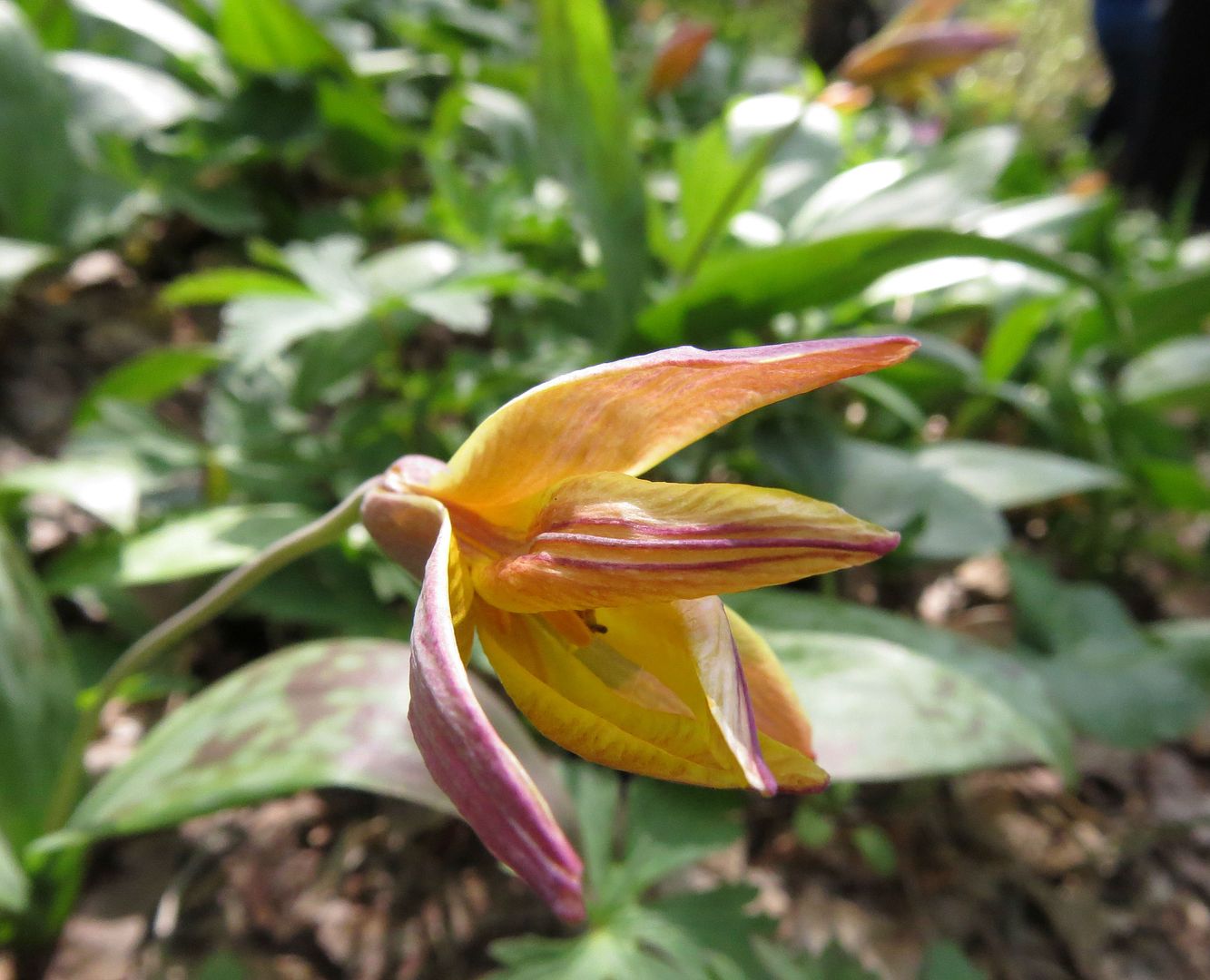
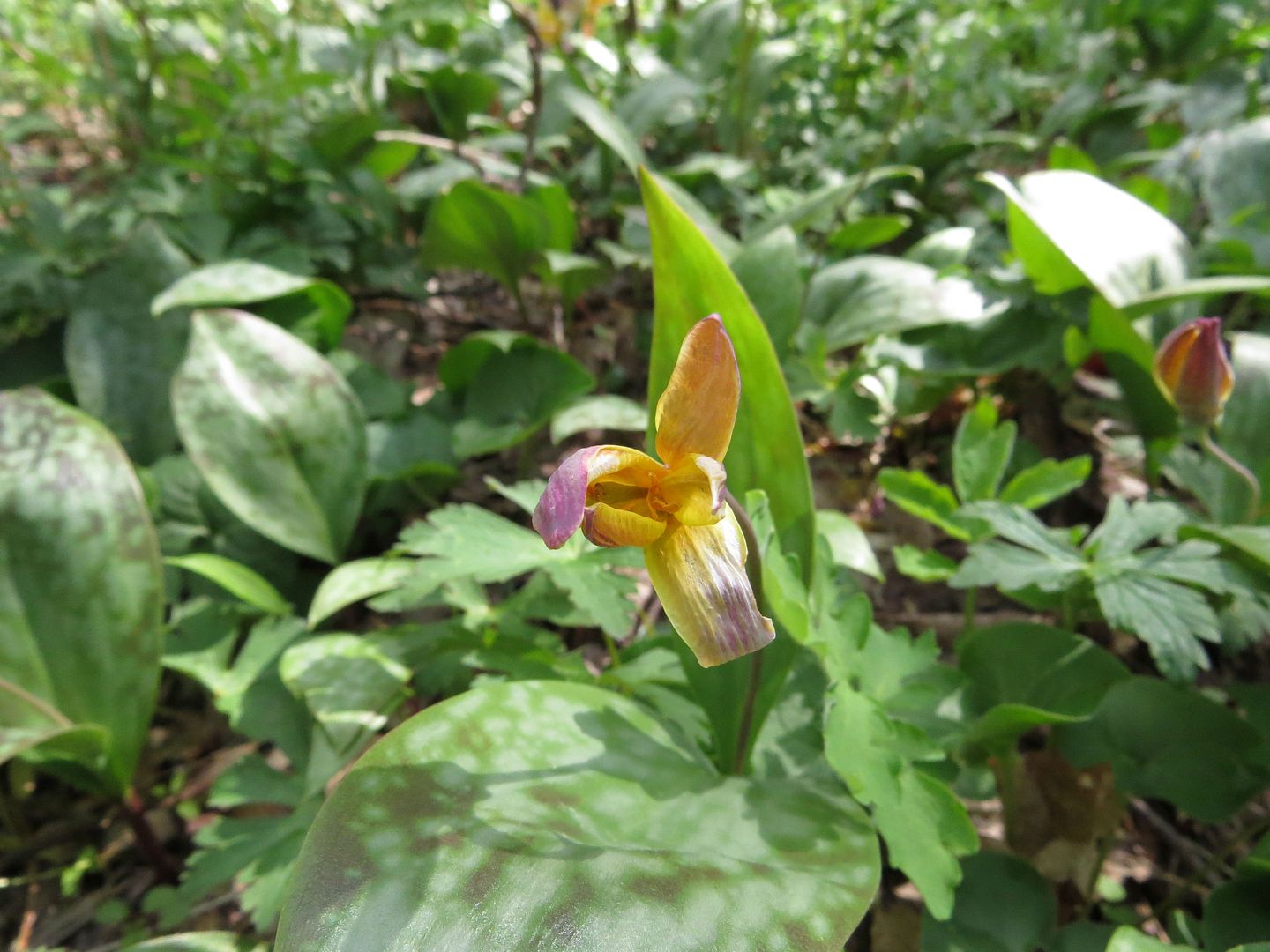
There were more Trout Lillies flowering but most were past their prime. Even so, the flowers were interesting and pretty to look at.
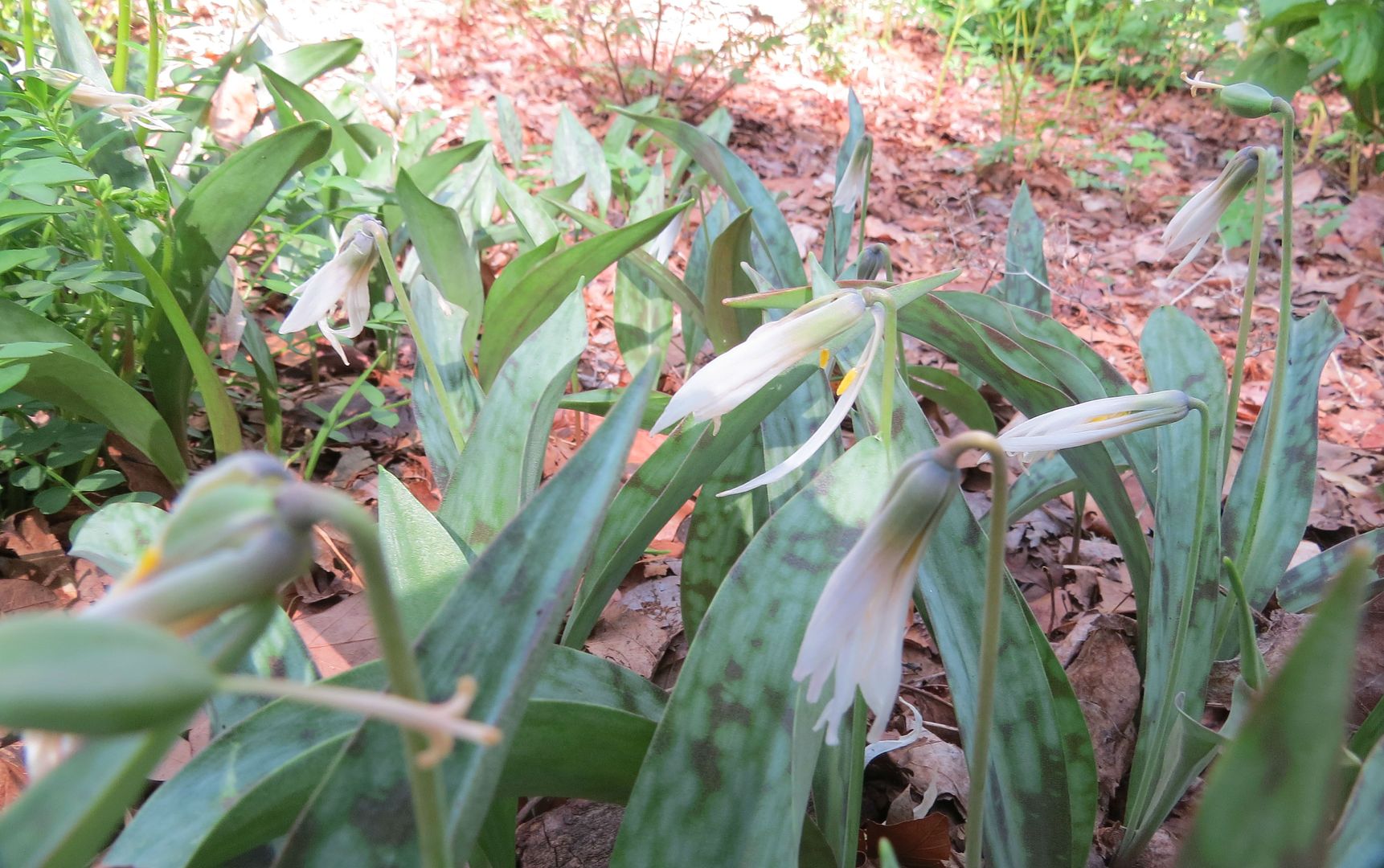
The White flowering species must have also flowered after my previous visit and had since faded on the day of the celebration. That's kind of the charm of going every year though. Some years there are carpets of flowers all over the place, and others it's little hints of wildflowers you might not have noticed.
A Rhododendron. Bumblebees were working this but refused to stand still long enough for me to get a good shot.
Dutchman's Breeches, Dicentra cucullaria, get their name from resembling pants.
Turkey Corn, Dicentra eximia, because they're not really heart shaped enough to call them bleeding hearts.
Green and Gold, Dicentra eximia. This is one of those wildflowers native plant gardeners like to gush about. Honestly it's never impressed me, though I read it has a very long bloom time. Maybe I'll plant it someday.
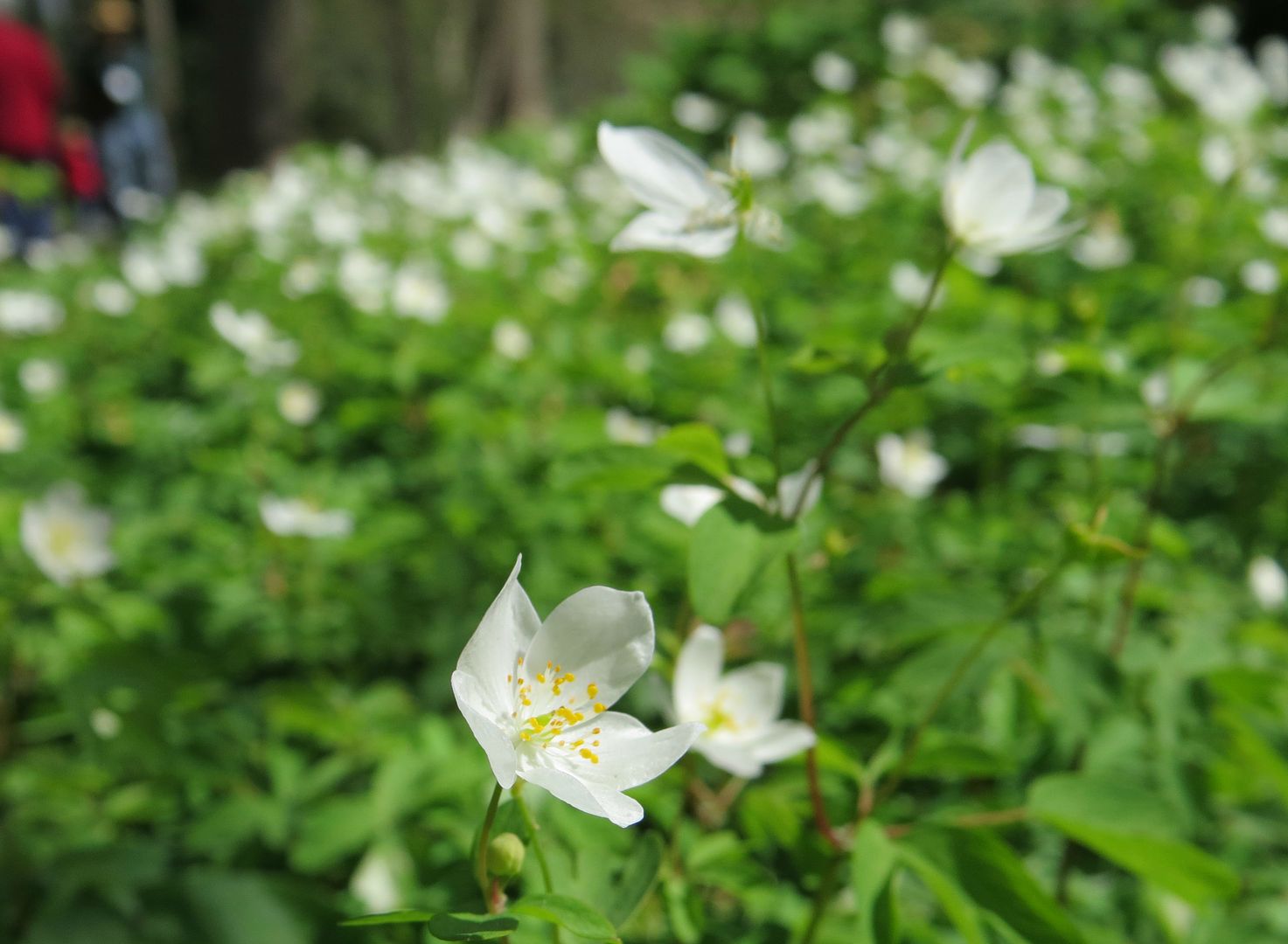
Anemone sp.
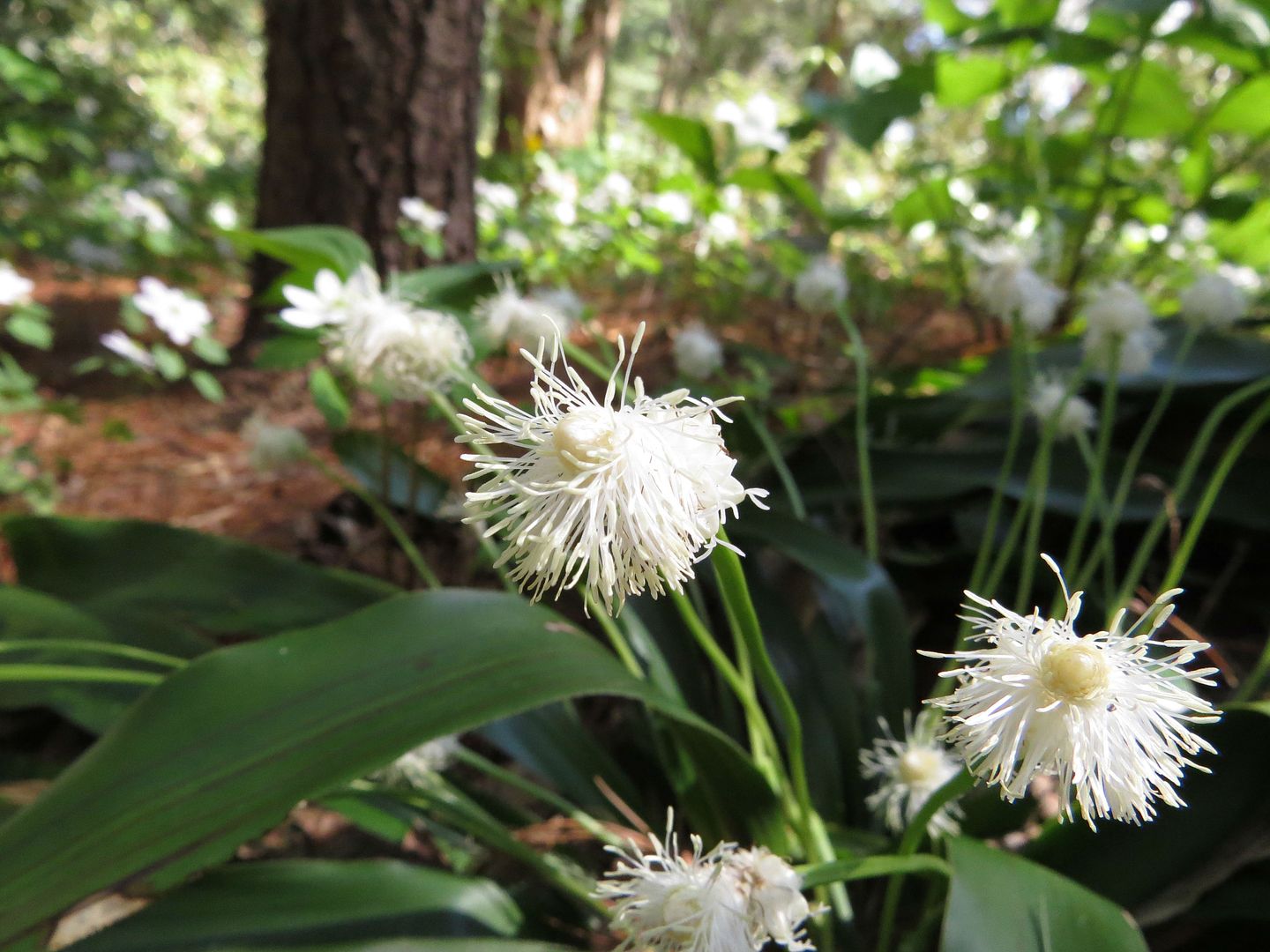
Fraser's Sedge, Cymophyllus fraserianus, a flowering sedge that actually has showy flowers.
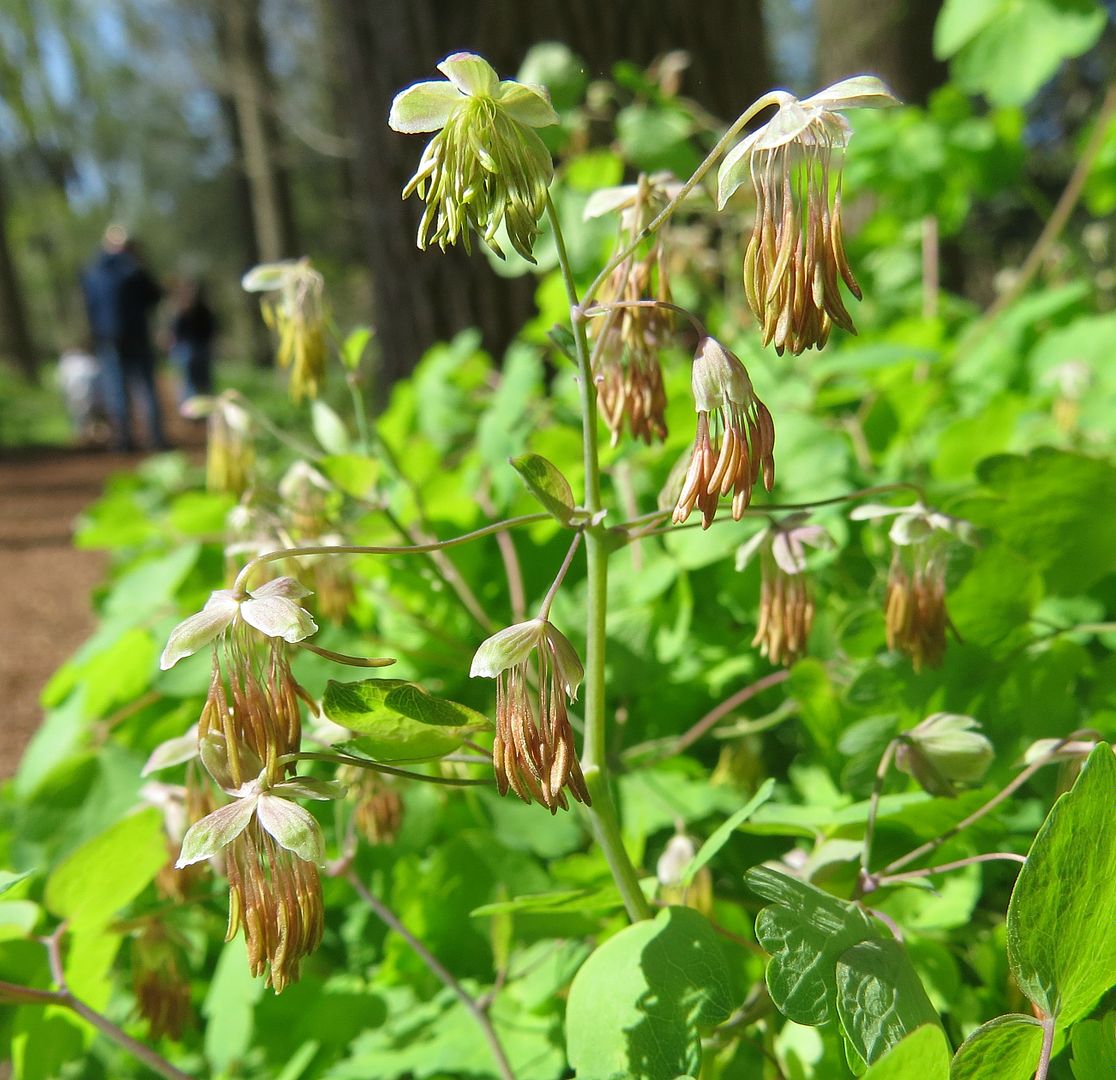
Rue, I think. This is wind pollinated but you can still occasionally find bees going after the pollen.
The ponds were extremely abundant with tadpoles this year. There were spots with so many of them that you couldn't see the bottom of the pond. I'm told something like 5 species of frogs use their ponds as a spawning pool. None of which were added, they all showed up on their own.
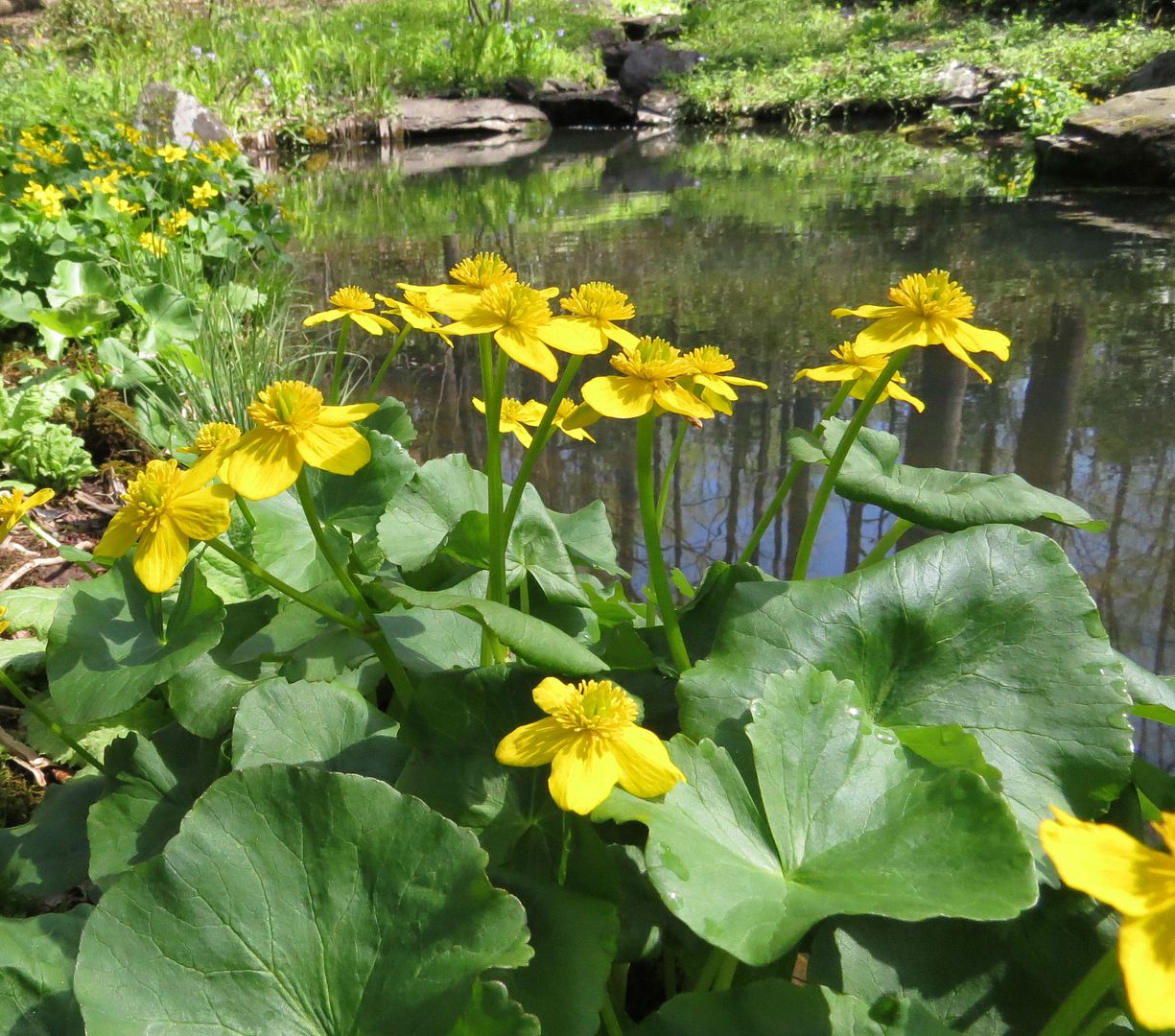
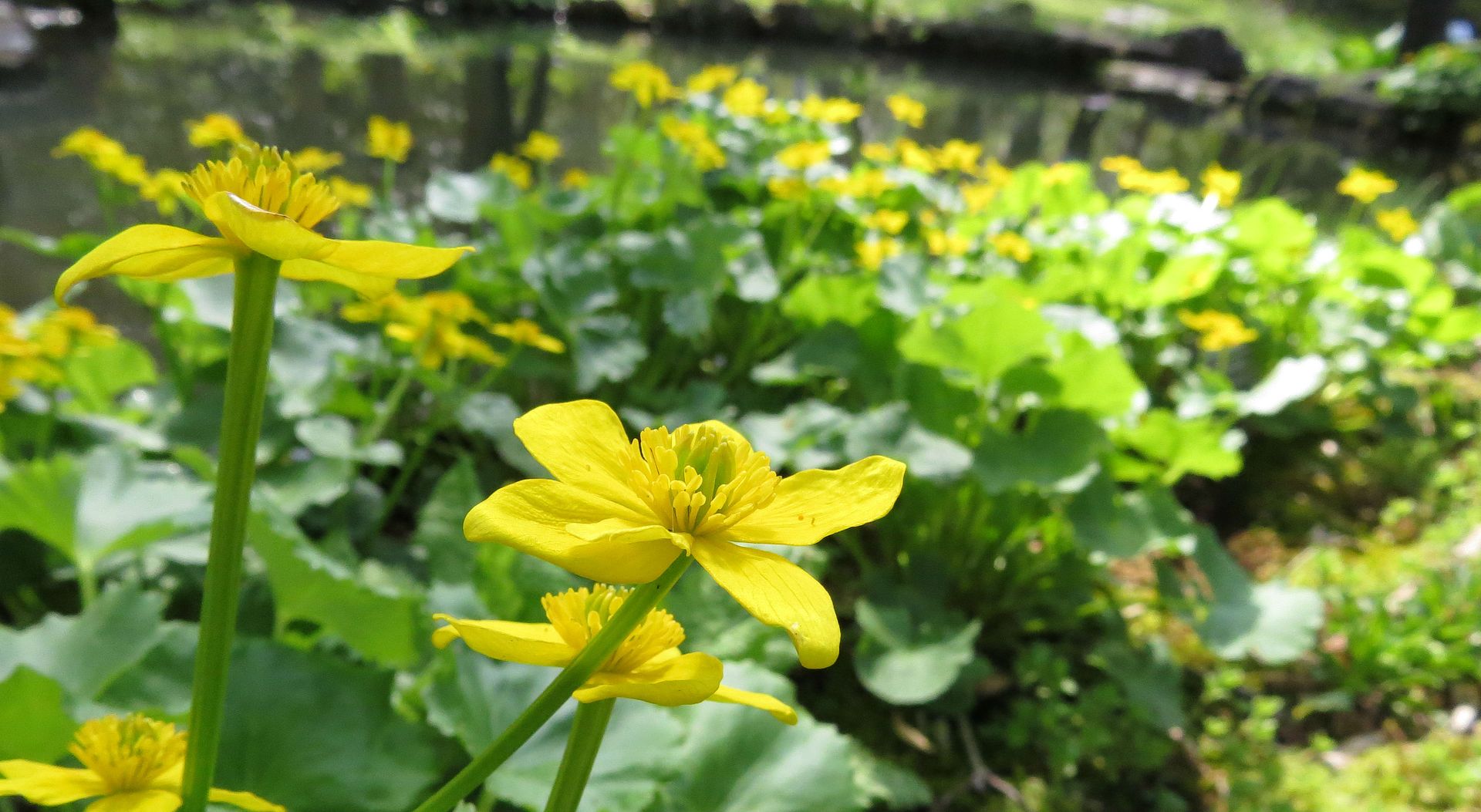
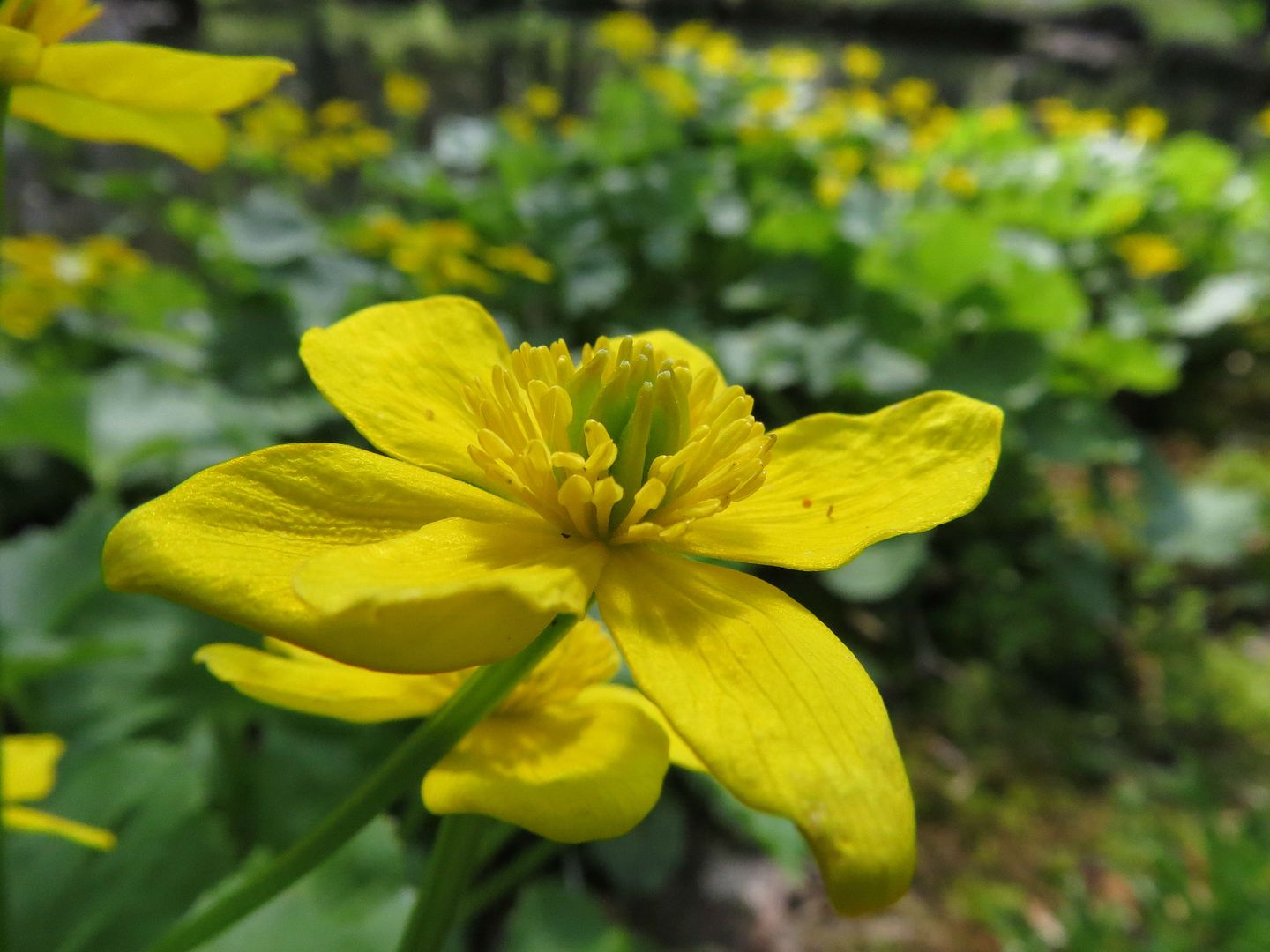
Marsh Marigold, Caltha palustris, was abundantly in bloom around their ponds. This was the first year I saw this plant blooming at it's peak and the nonnative they have there not. The Mt. Cuba Center isn't totally native, partly because of the former owner of the estate. Her name was Mrs. Copeland (hope I'm spelling that right,) and while she was devoted to creating a wonderful native plant garden, a few of her favorite nonnatives still grow in the gardens. She had a saying I'm told that went something like, "If it isn't native, then it ought to be."
So on most years I'd see Japanese Primroses, Primula japonica, all over the pond area adding some vibrant magenta and pinks to the color spectrum. I have to admit they are pretty plants but not fitting with the theme.
I've been meaning to add Marsh Marigold to my pond at home, which can grow is fairly flooded conditions.
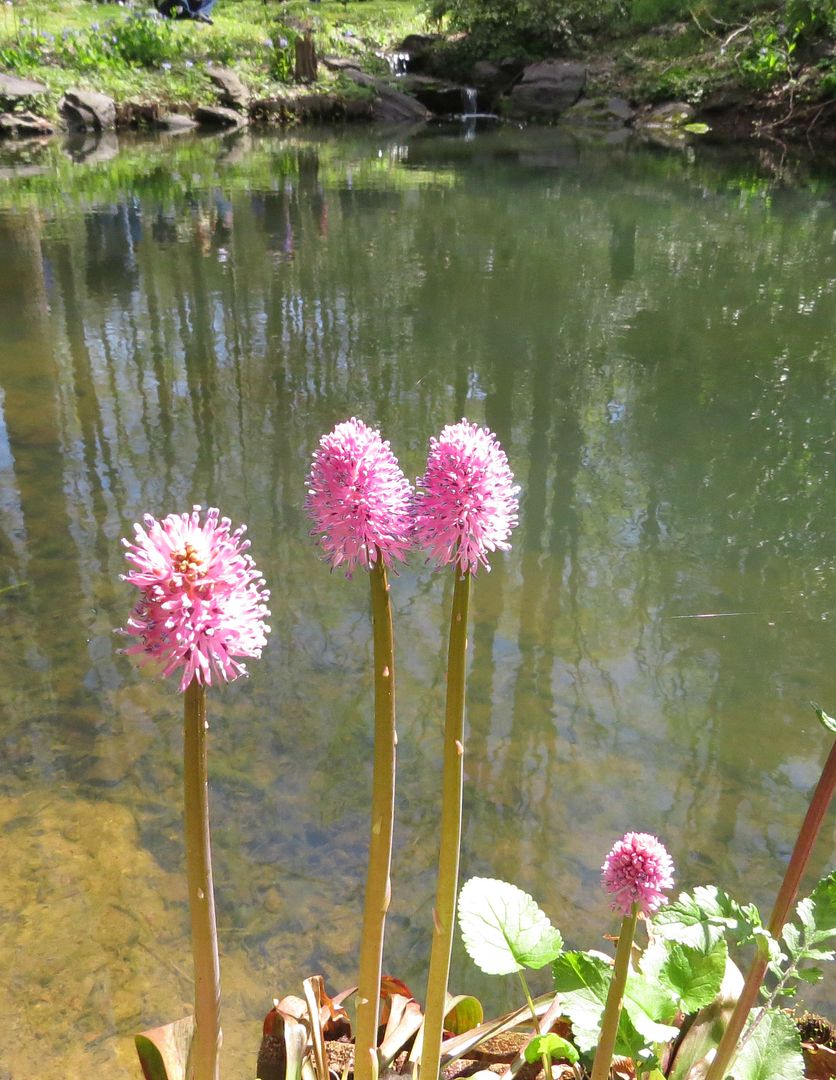
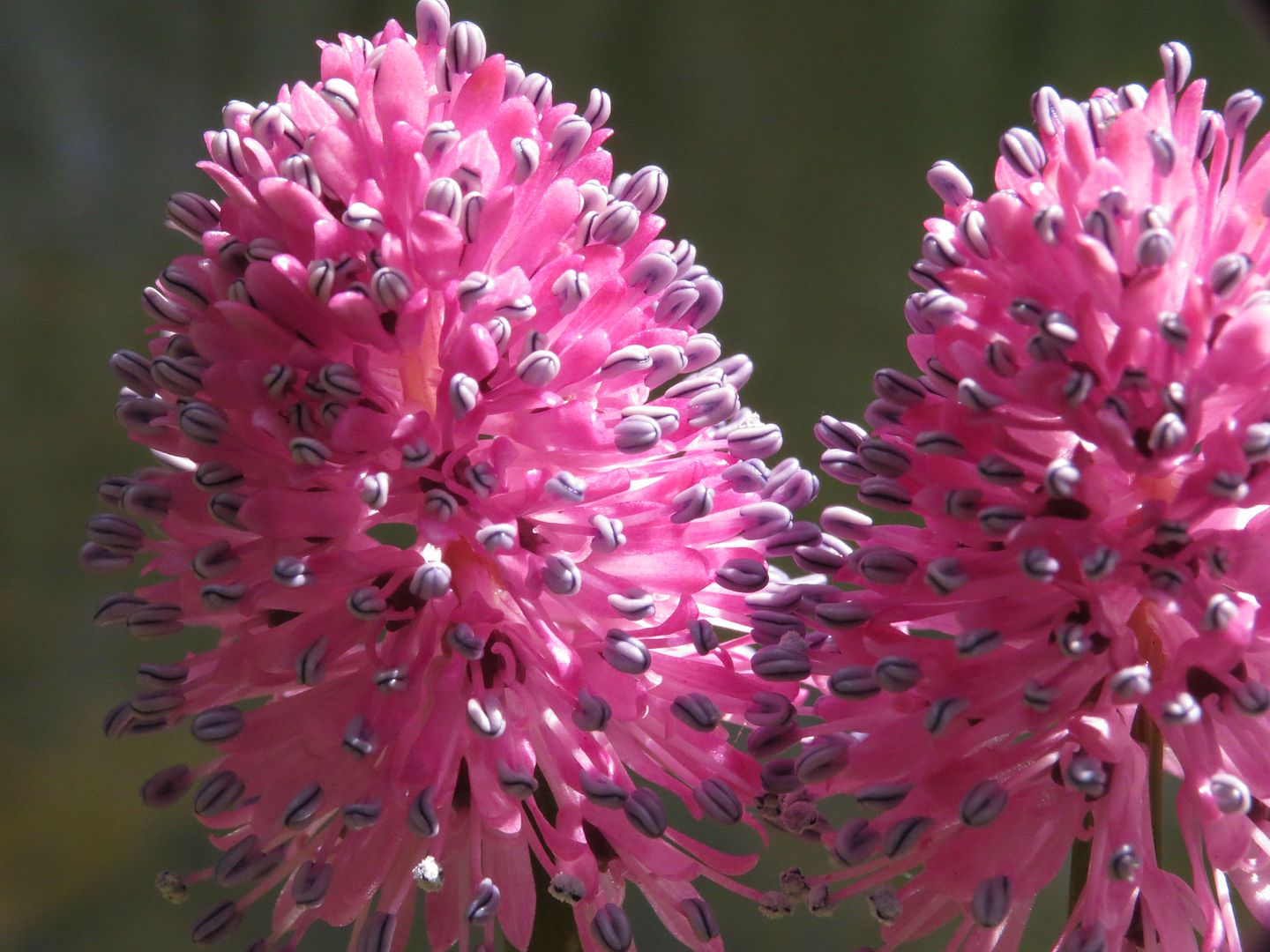
Swamp Pink, Helonias bullata, an endangered species (though only threatened in some states) was just starting to bloom in patches here and there. This is a nice pop of color but doesn't spread enough to be productive in the horticultural industry.
The one nursery I knew that was able to germinate the seeds found that they require an exact amount of cold hours, nothing more and nothing less to get the seeds to this plant to germinate.
I'm not 100% sure but I think this is Bog Blueberry, Vaccinium uliginosum. This was a blueberry shrub they had planed right in the flood area of their ponds, along side pitcher plants and bog sage.
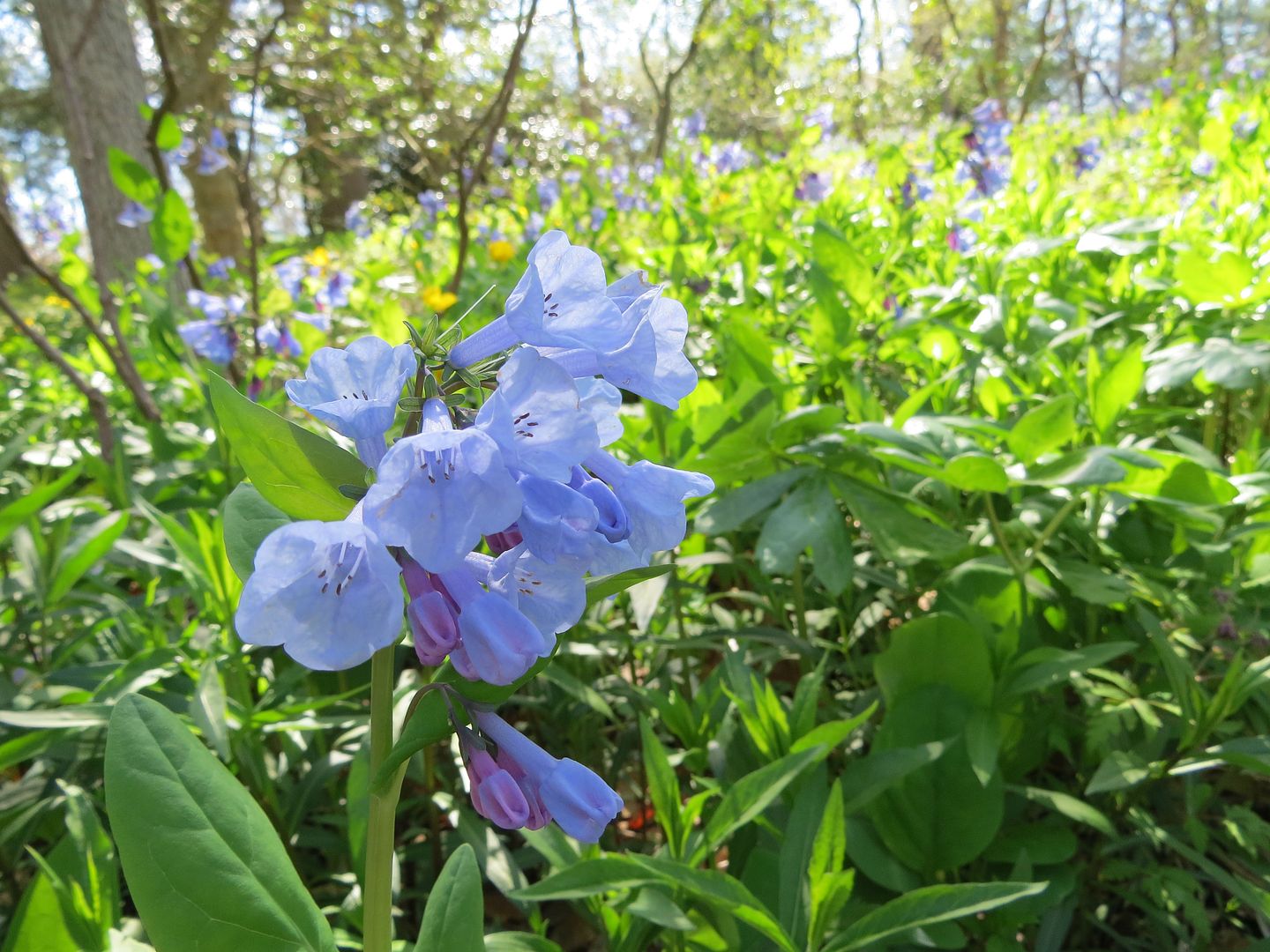
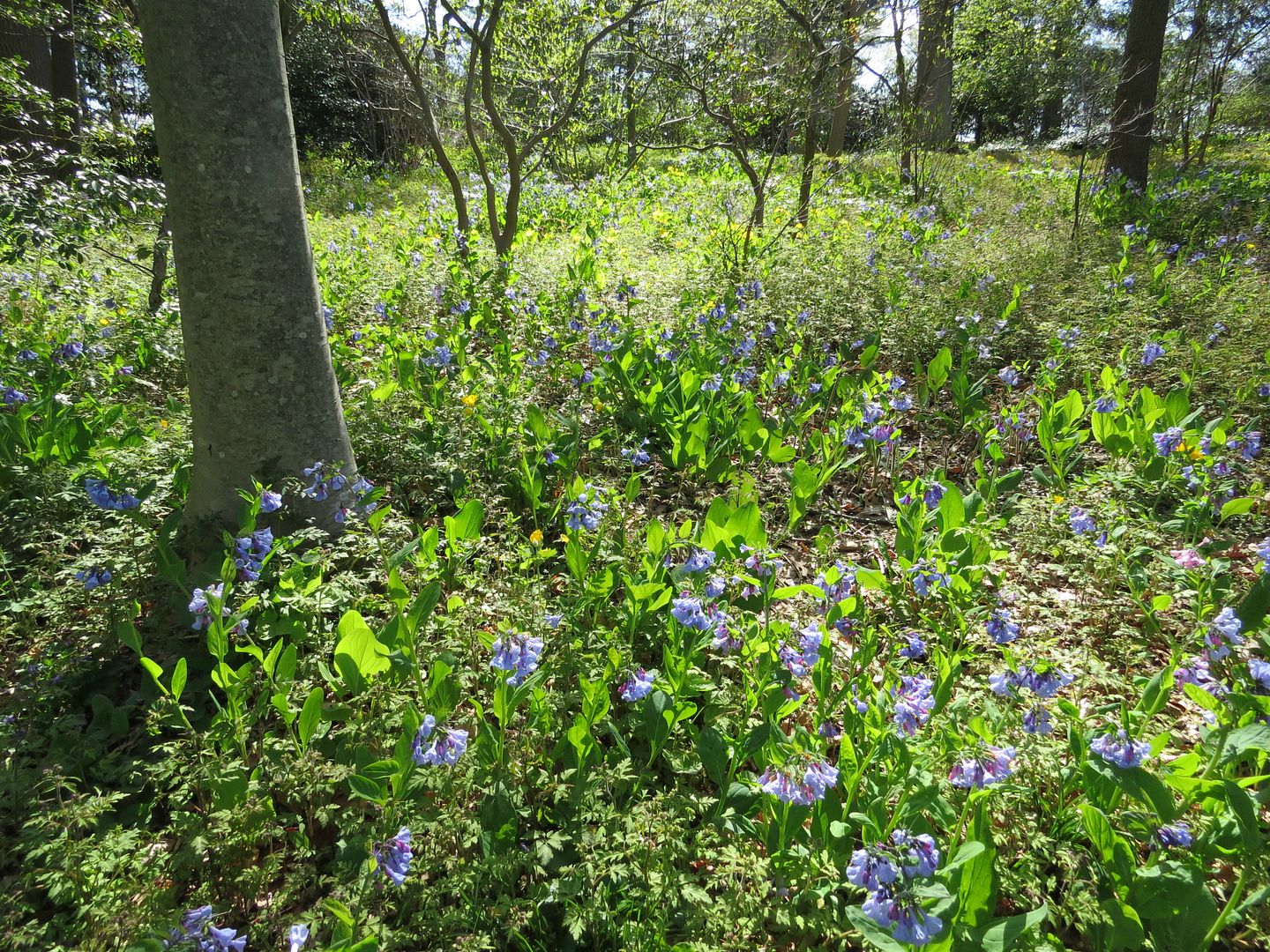
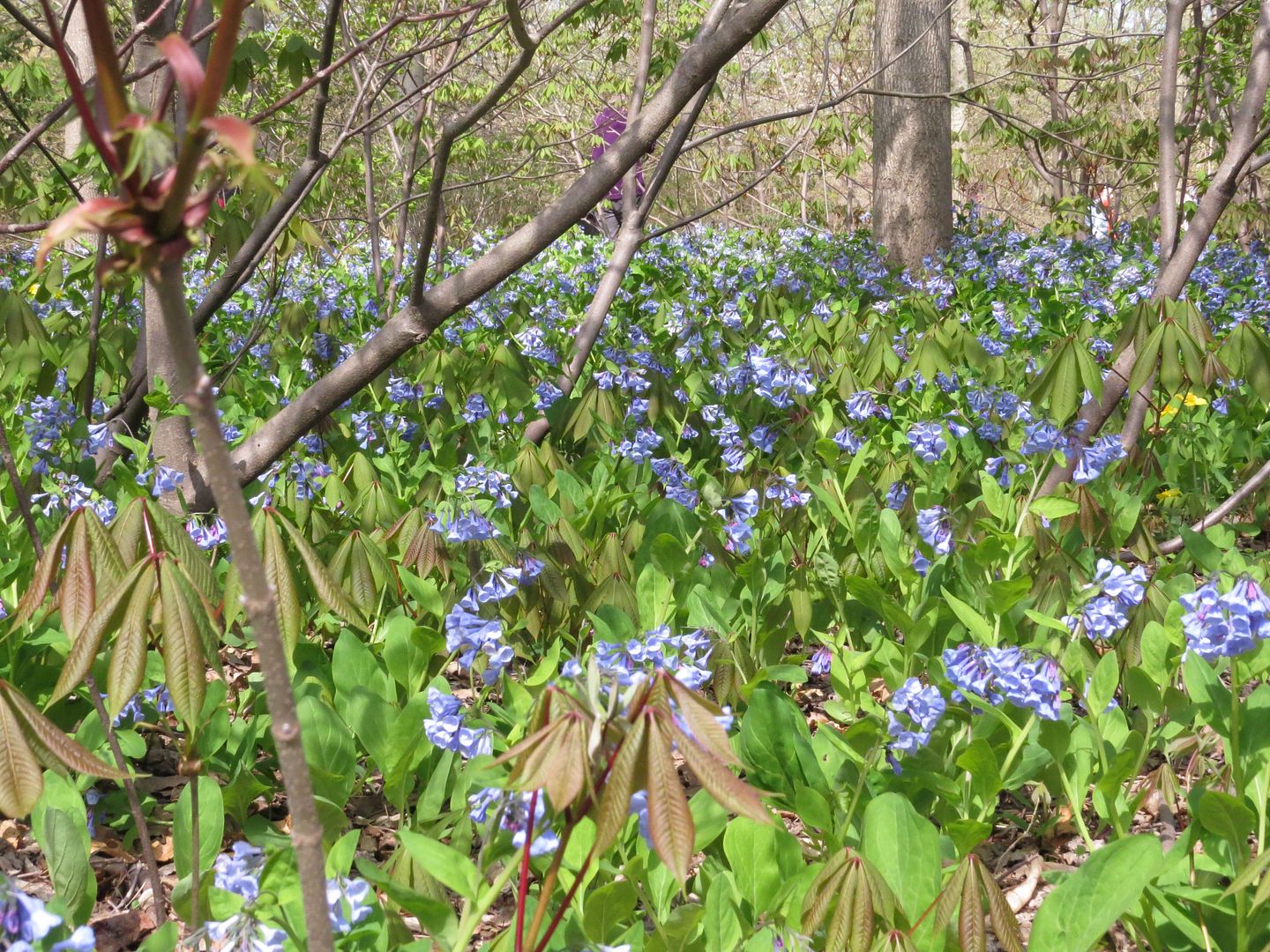
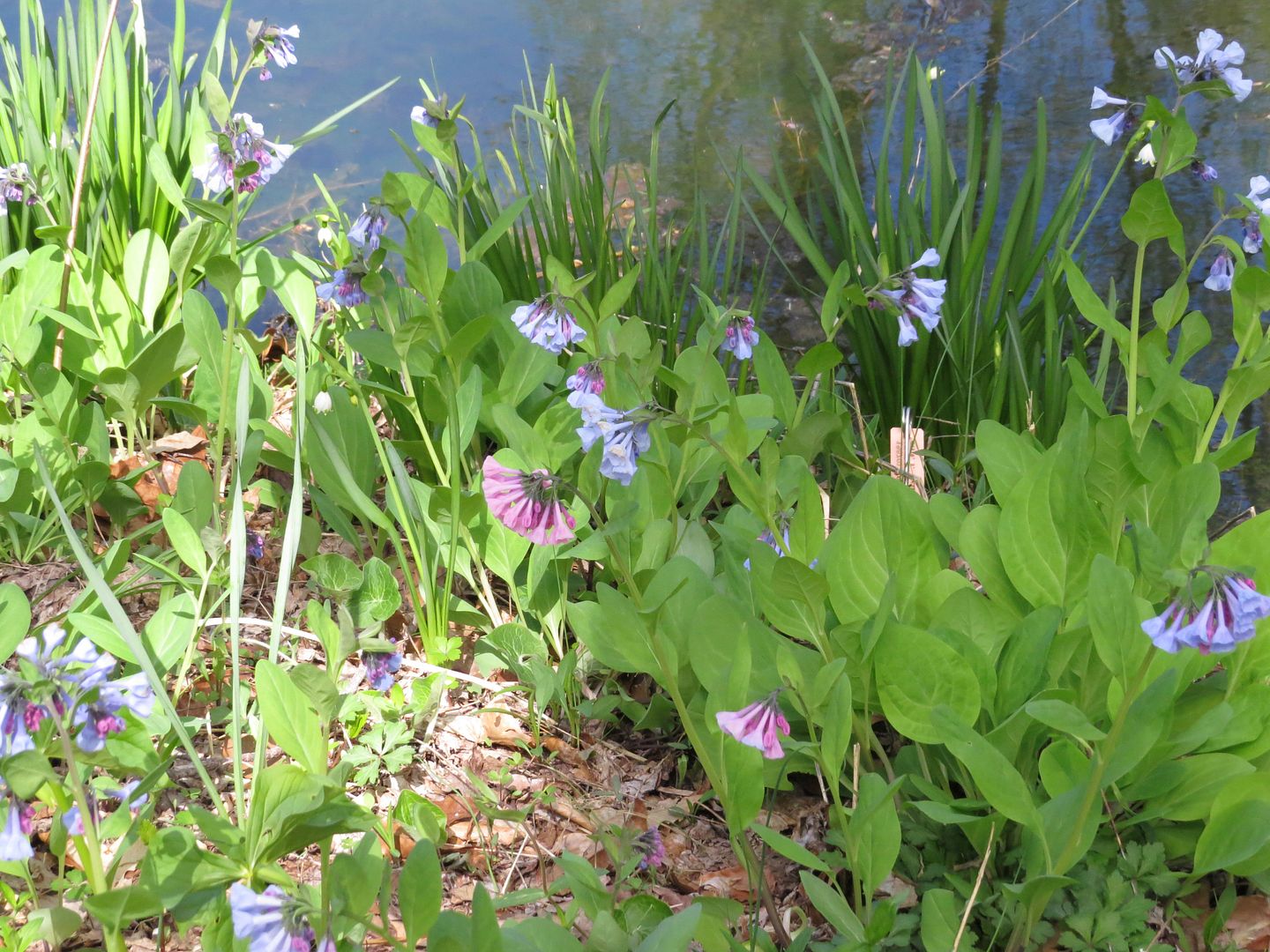
Virginia Bluebells, Mertensia virginica. This was the main burst of color on the forest floor this year. It's a wonderful perennial that forms a deep tap root. Some have said it's hard to get rid of once established and does spread freely by seed. Honestly though the gardeners there seem to keep it under control. I'd say the Woodland Poppy spread way more prolifically.
This would have been fuller looking had they held the event in two or three weeks. The Virginia Bluebells are peaking right now, but mixed in here is all Fern-leaf Phacelia and Woodland Poppy, neither of which is really flowering heavily yet.
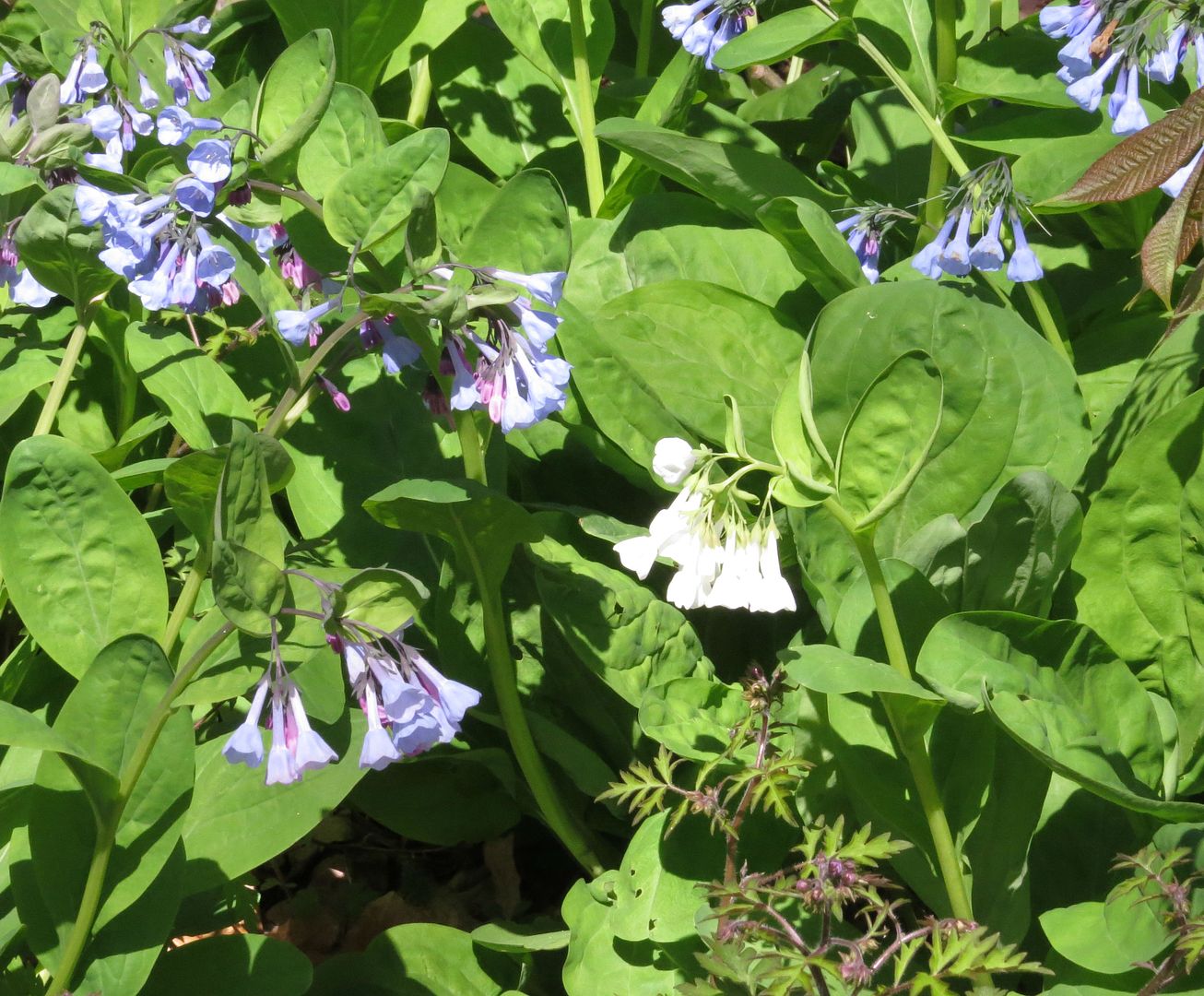
When you have this many of the same species growing in such numbers, variations are bound to show up.
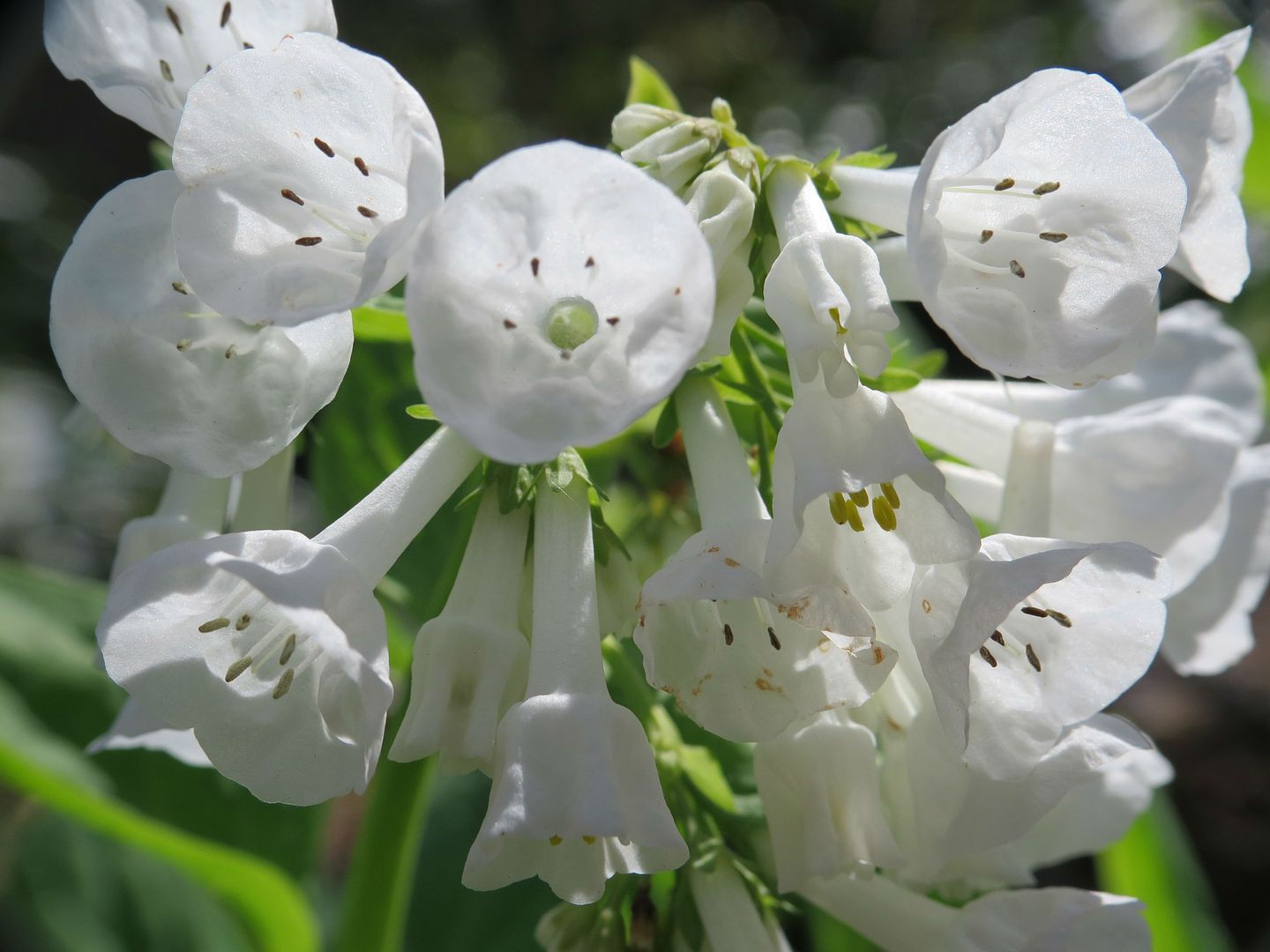
Normally the flowers open up in a tone of pink but quickly turn blue once they open fully. Here is an individual that seems to lack any pigment at all.
The flowers are simply white.
Likewise, these two plants by their pond never turned blue at all, and yet the flowers are fully opened.
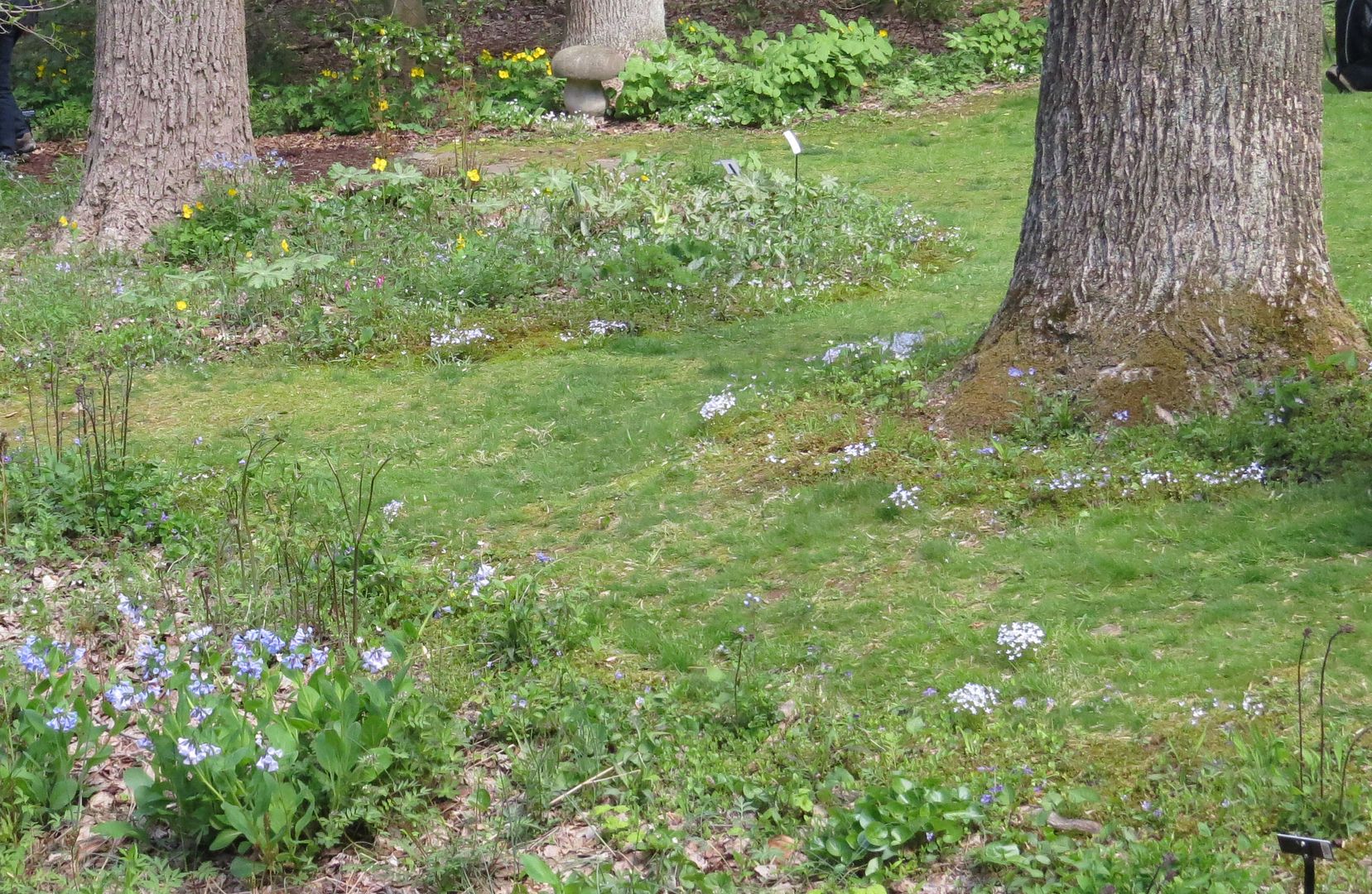
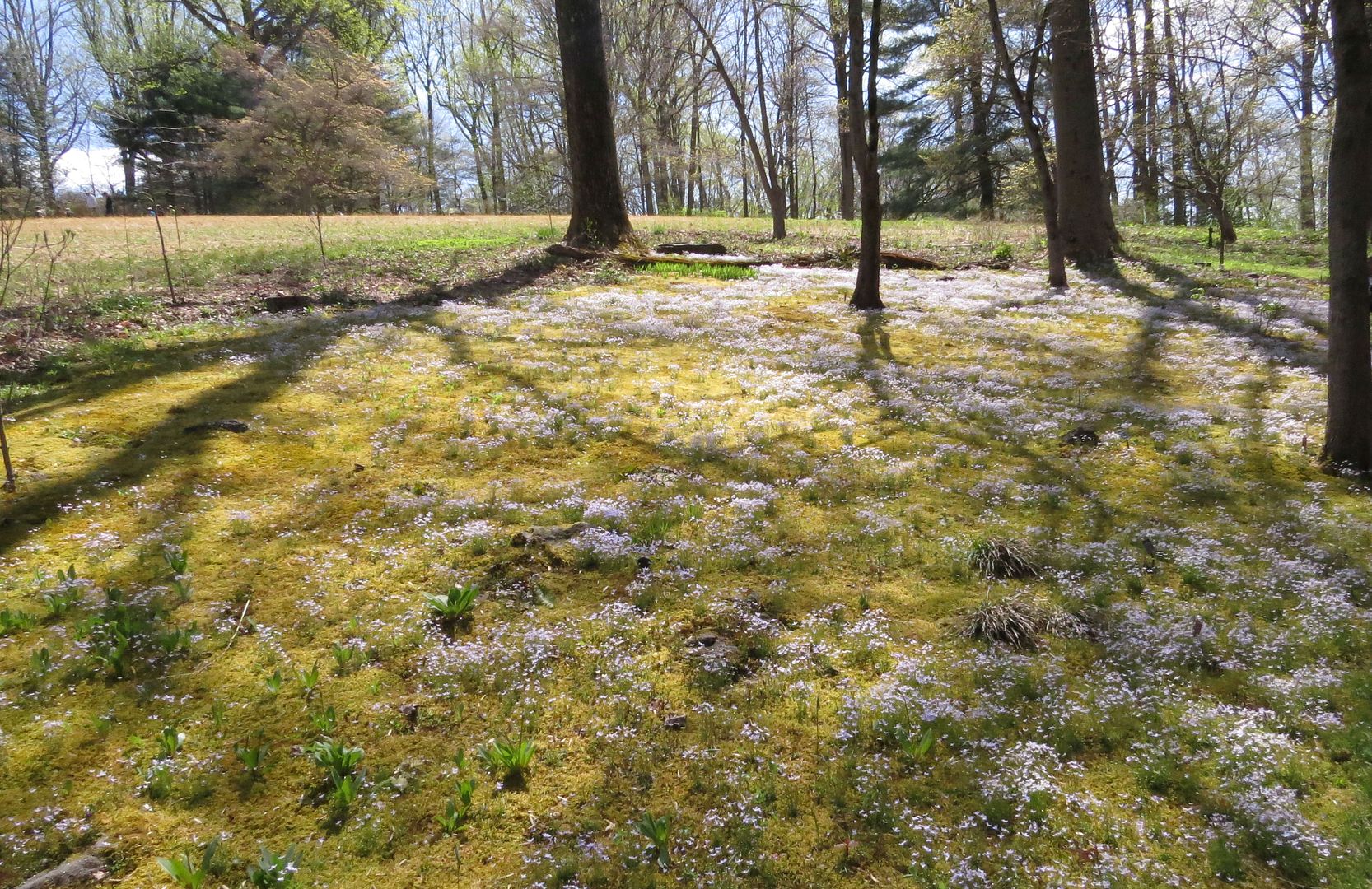
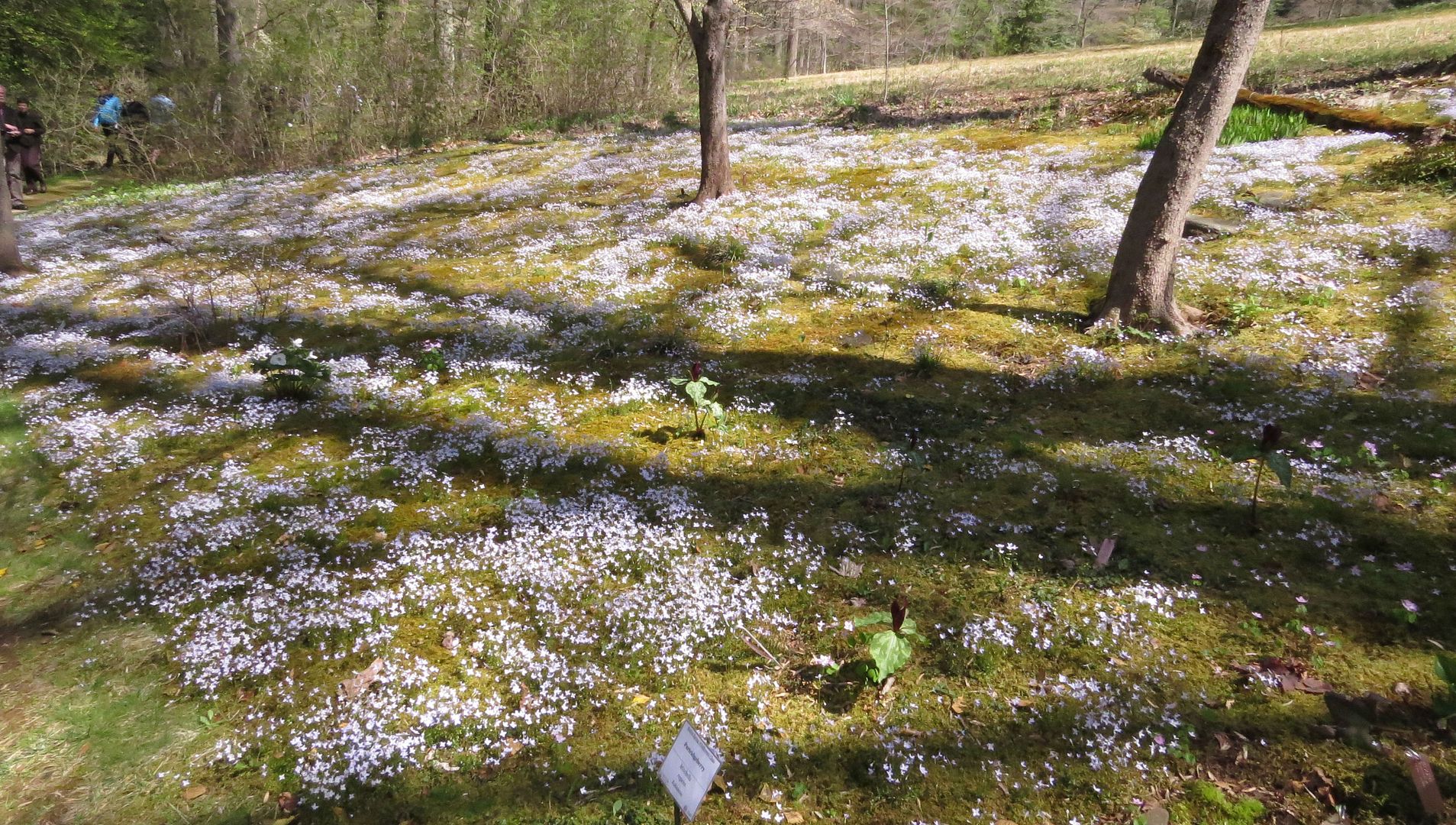
Around the ponds there are small patches of lawn separated by moss patches. I'm told the gardeners use tweezers to maintain this boundary. I've come to find mossy patches are the ideal place to grow one wildflower in particular.
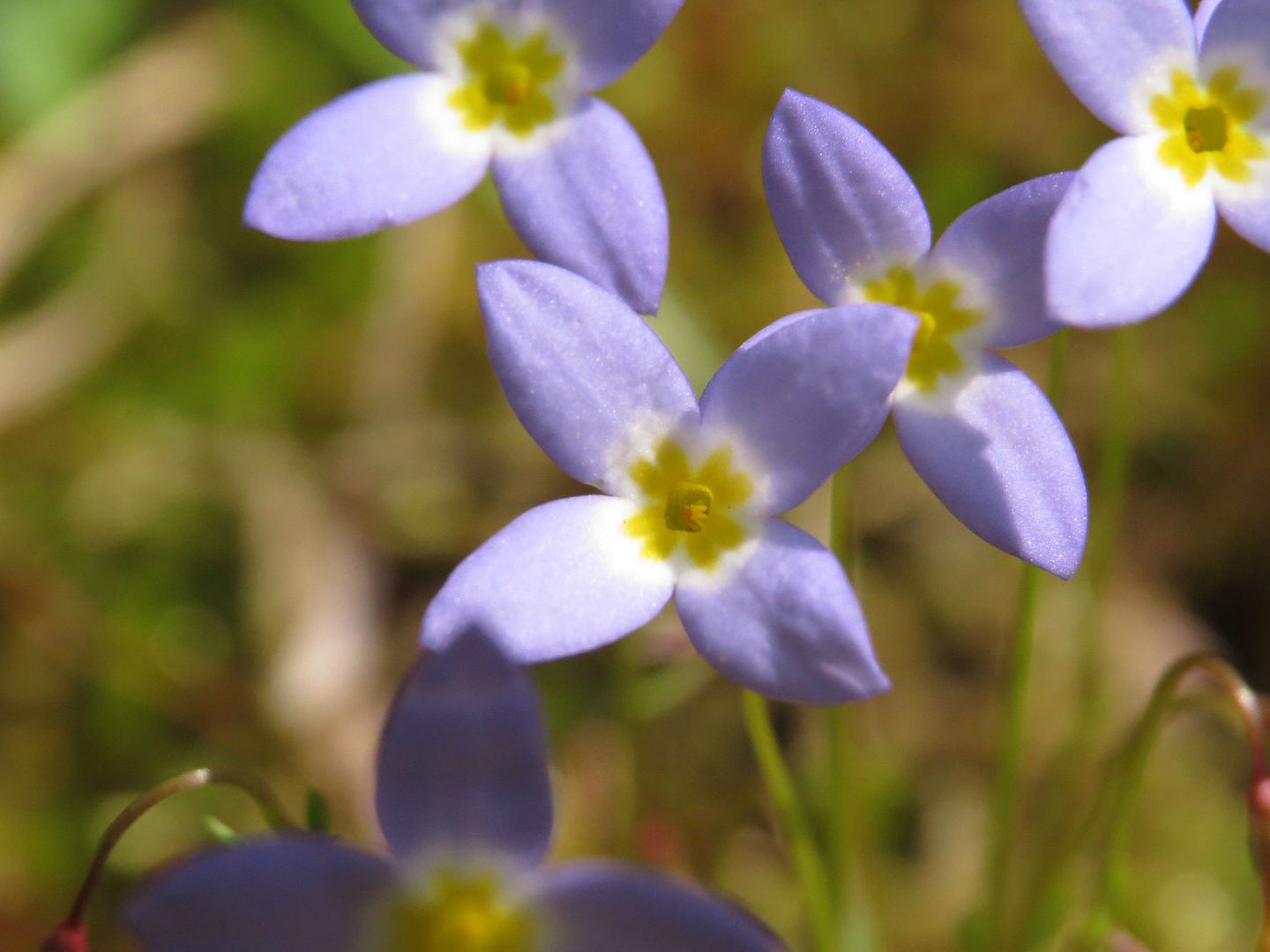
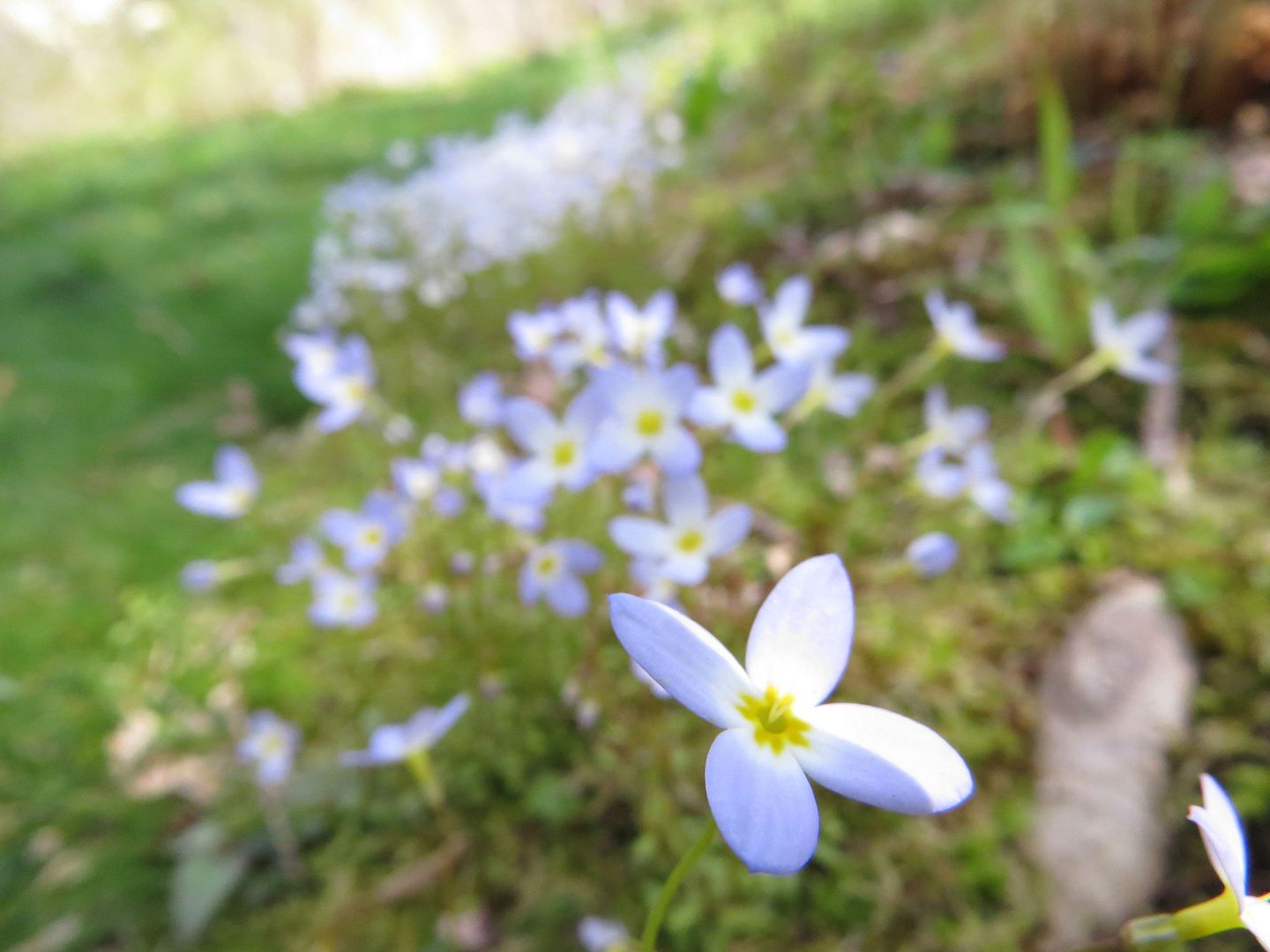
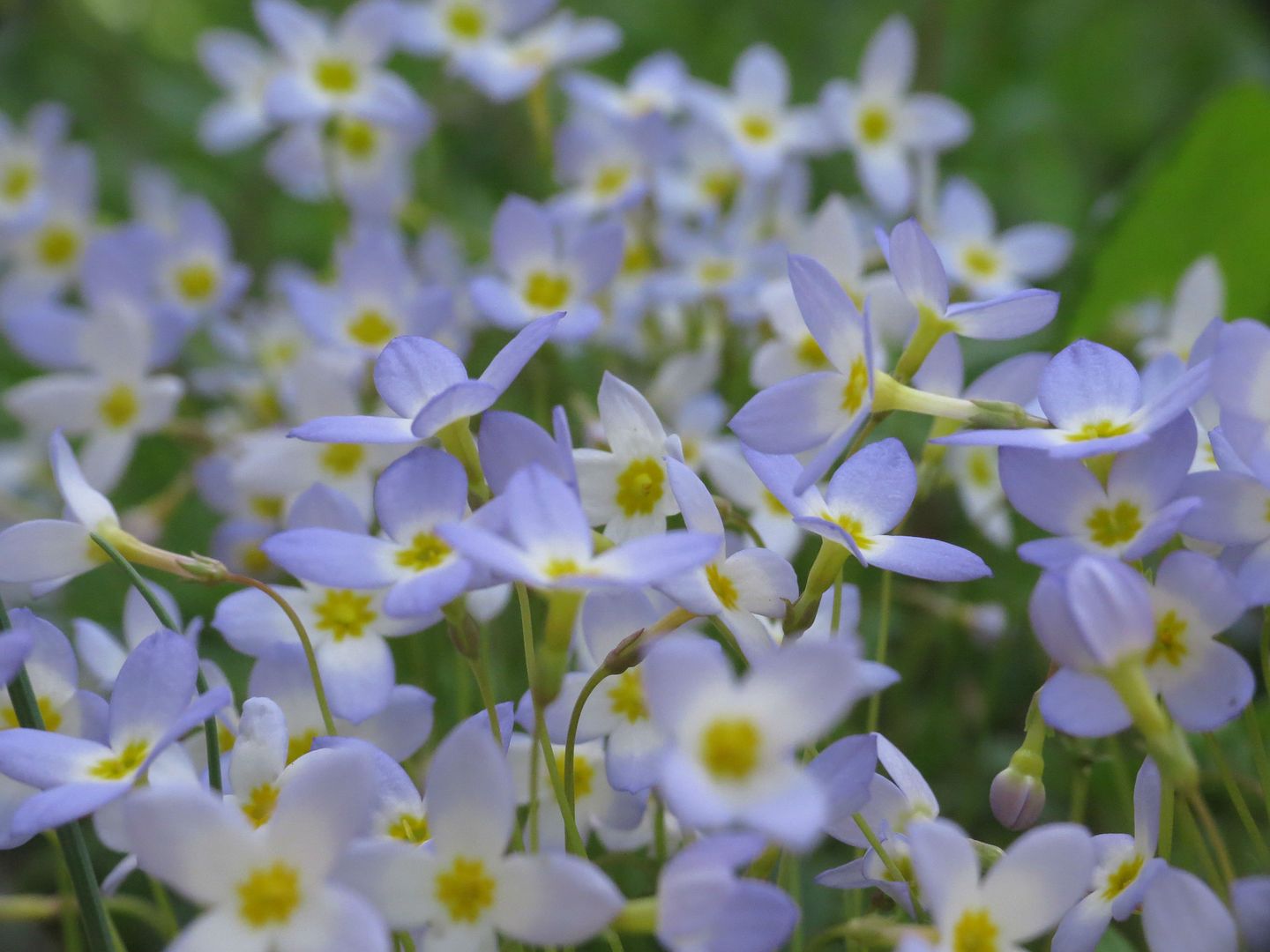
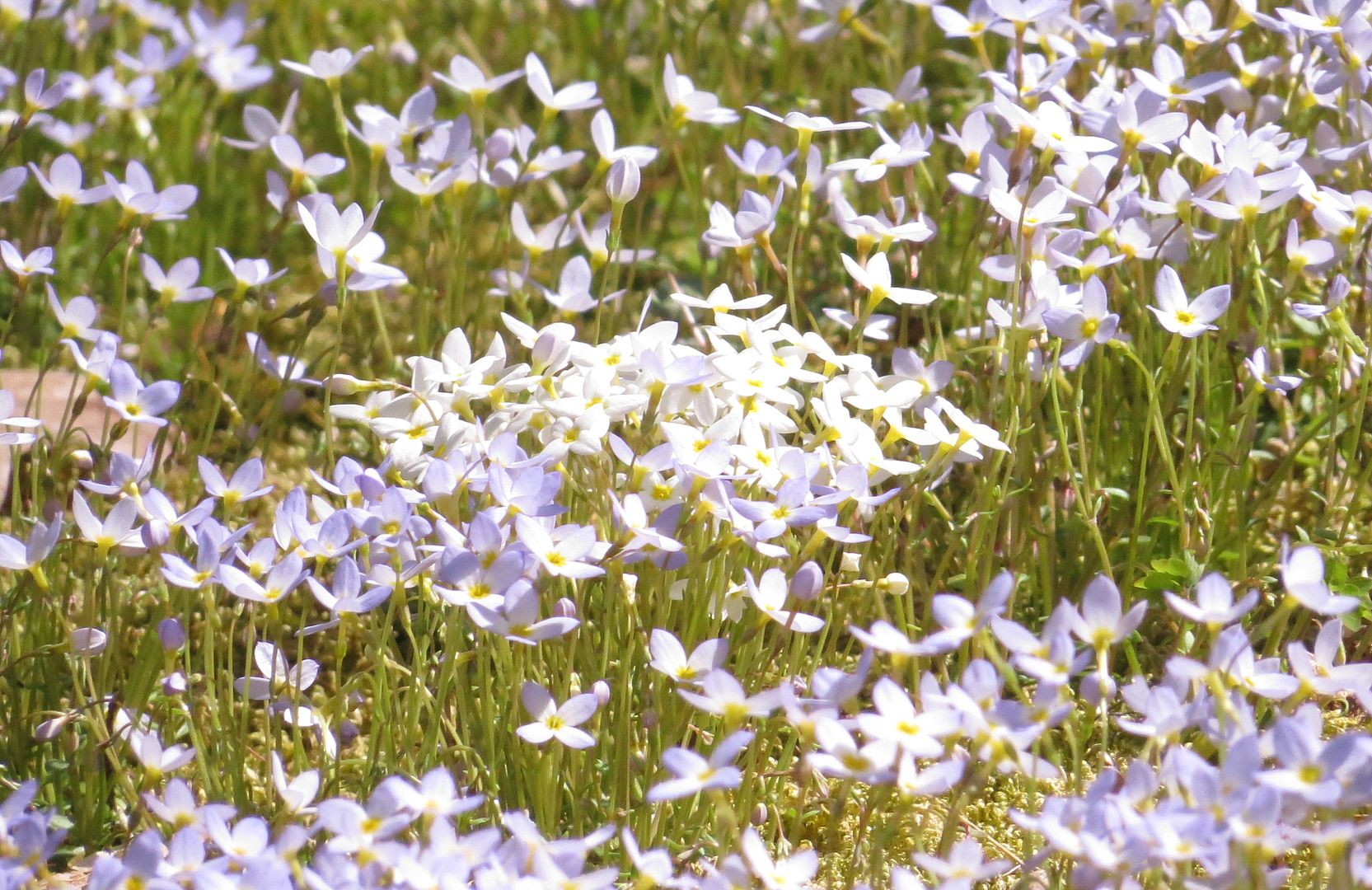
Bluets, Houstonia caerulea.
These are also called Quaker Ladies, though I'm not sure why. Something to do with the plant being small and unassuming except when they bloom. The corms to these plants are about the same size as the flower, and yet each plant somehow pushes out 20 flowers all at once. The foliage is a simple rosette of leaves, but even then the flowers take up most of the mass of the plant.
They bloom so thick at times that they must shade out the leaves below, though I've never known this to be an issue with an ephemeral. Many of them will produce only a flower and then after it fades push out some leaves.
I was happy to find the moss garden full of Bluets this year. In years past, I felt the population here may have been dying out.
Before I knew what a Bluet was, I honestly thought there was a patch of snow up on the hill for some reason. You almost want to dive in and make a snow angle. This year the effect was there, though shrubs planted right before the patch ruin the surprise.
Even here there are unique individuals growing. One plant (yes one plant makes that many flowers!) had only produced white flowers. It stood out in a sea of pale blue flowers.
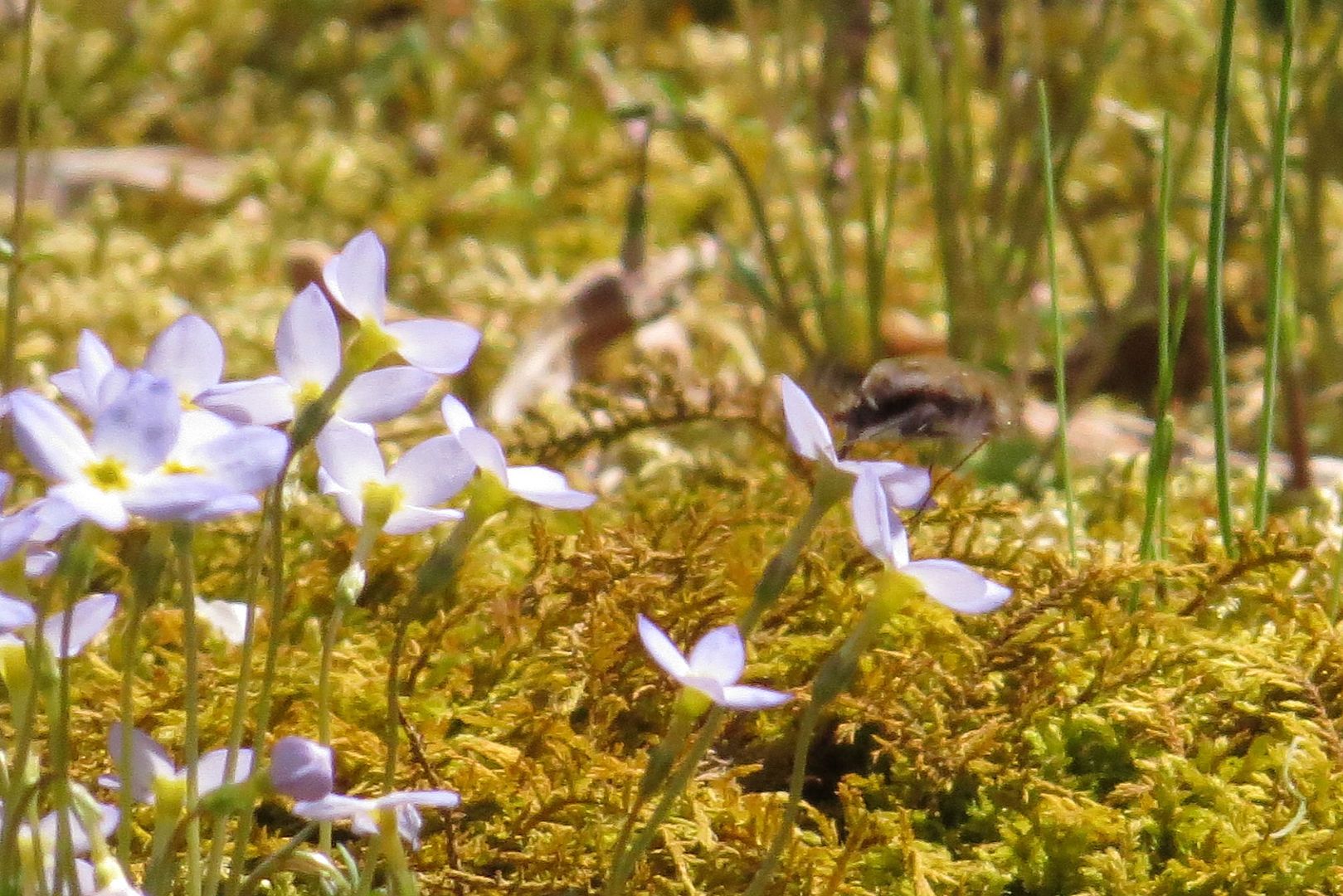
Beeflies were buzzing about pollinating them. You can sort of see one here, though they zipped around mostly in the middle of the patch and they frown on walking into the garden beds.
I tried to grow bluets once. They over wintered just fine, and flowered the following spring, however, come summer they died off sadly. I believe growing them in moss is somewhat vital to their survival as they are delicate little evergreen plants. Considering the size of their root they're probably not drought tolerant in the slightest.
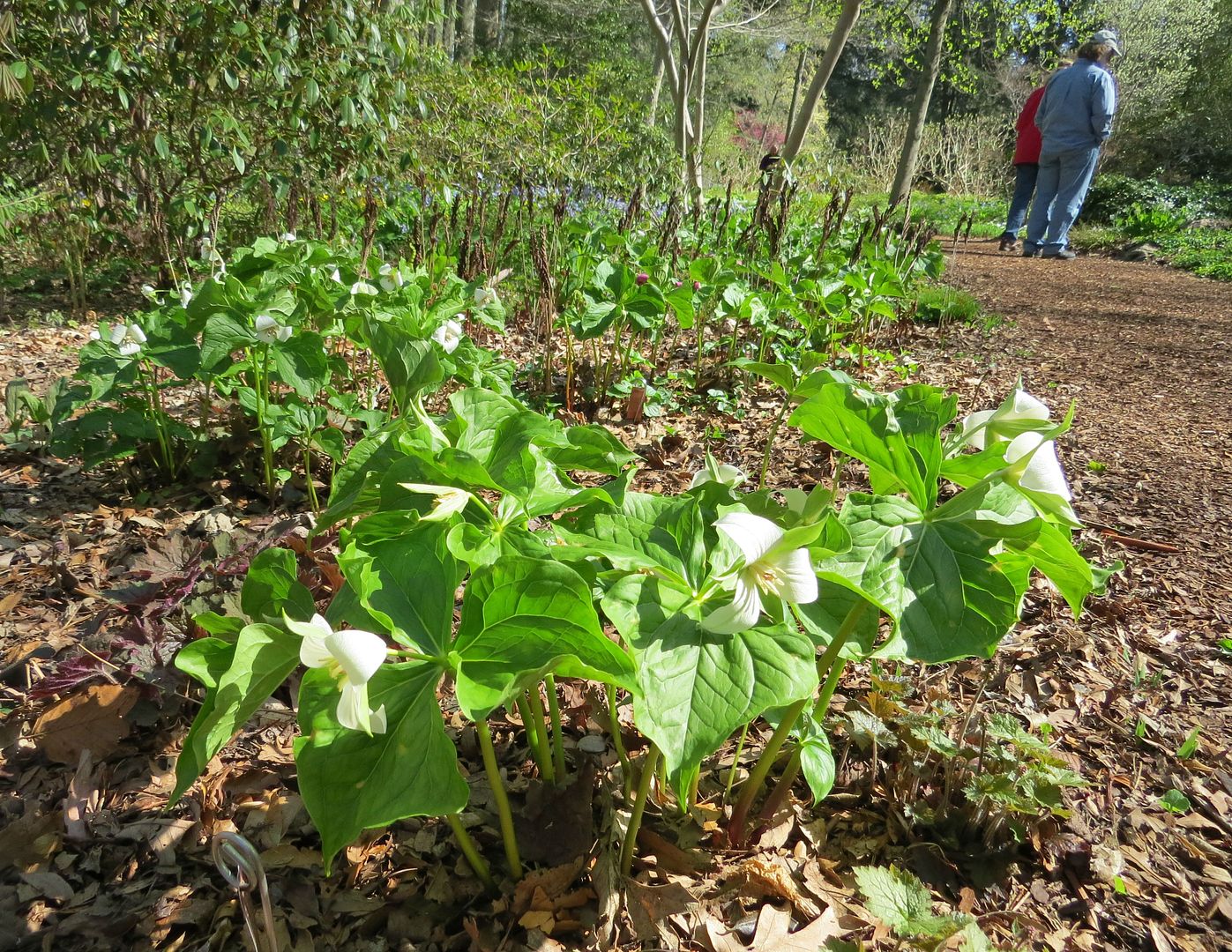
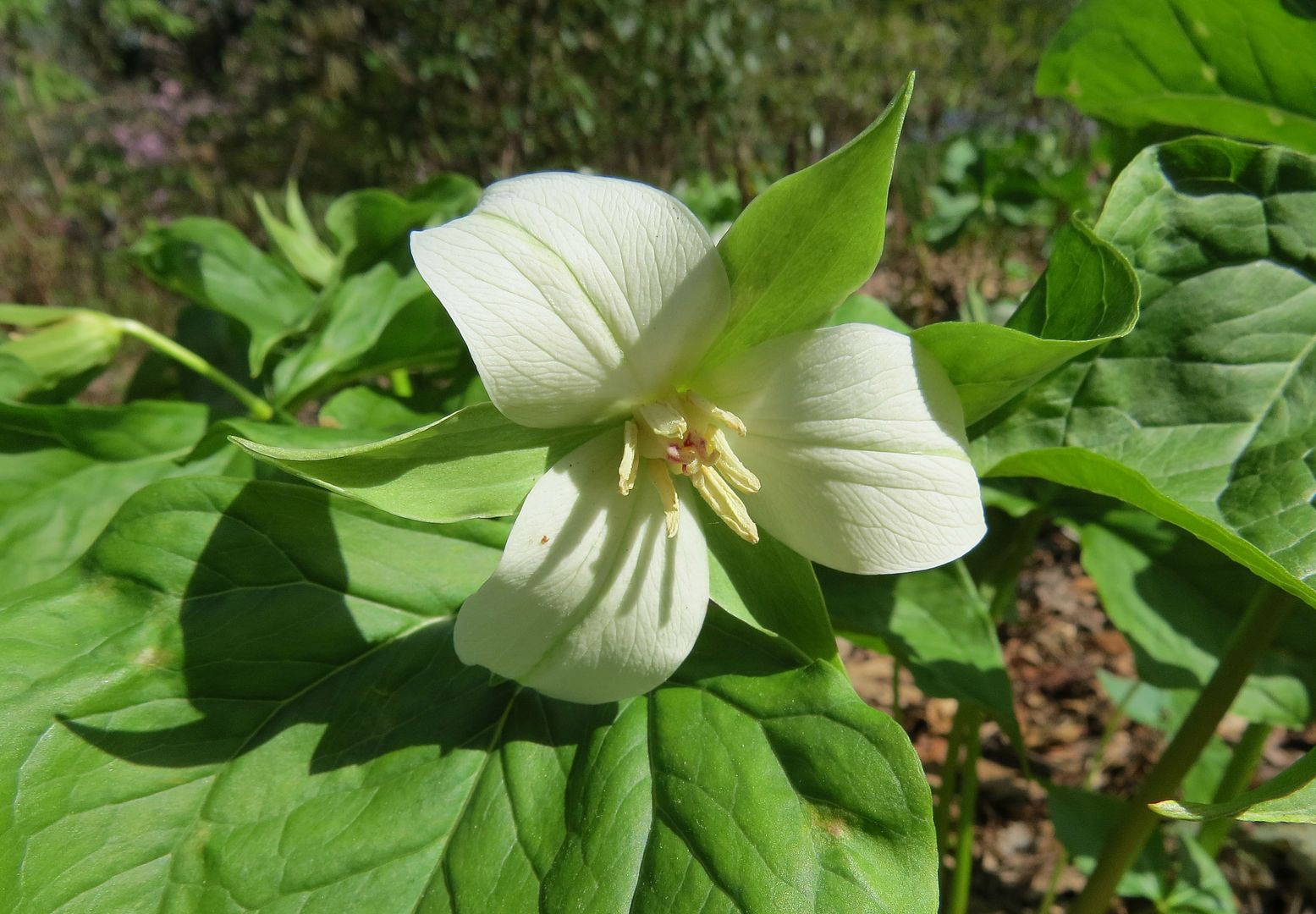
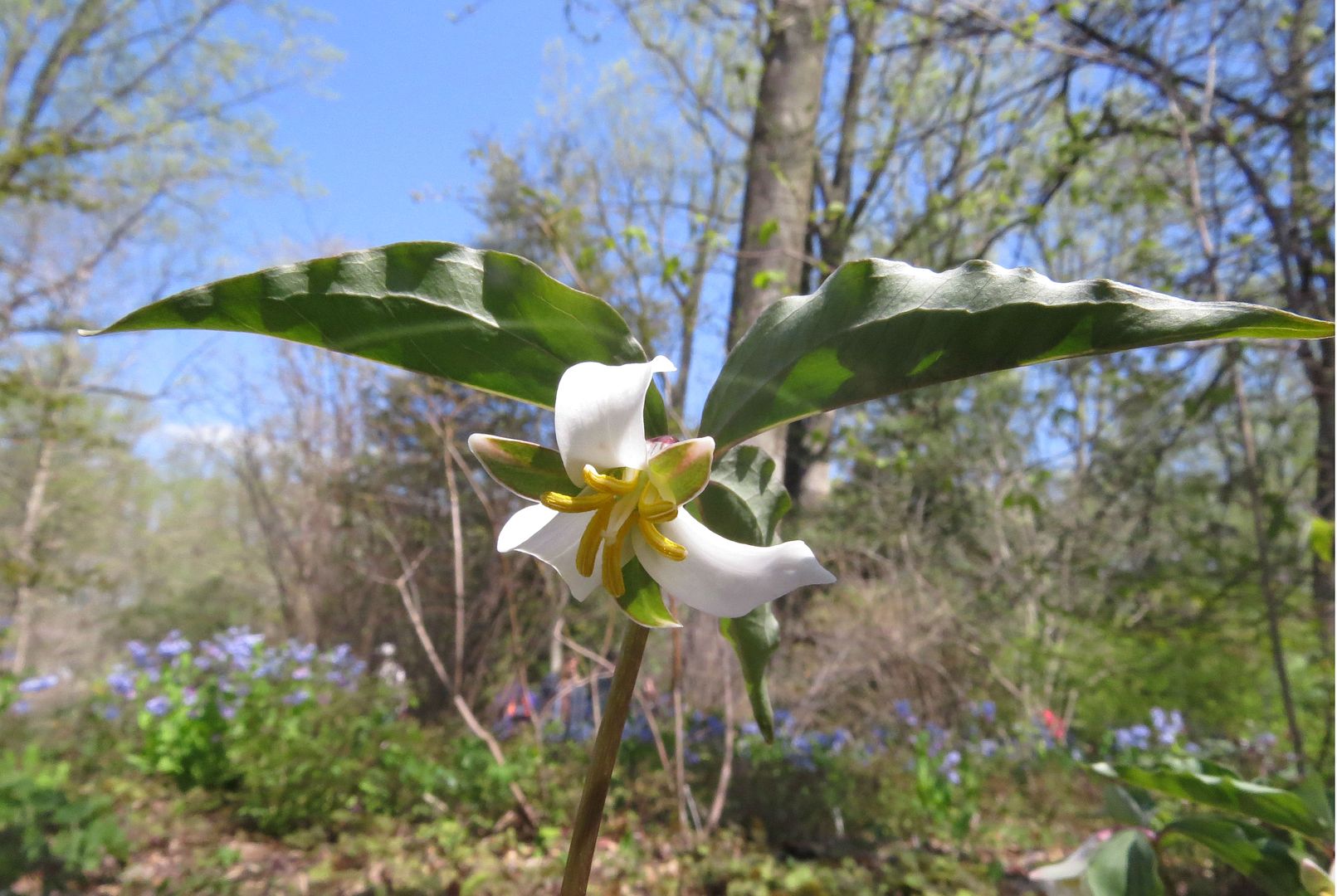
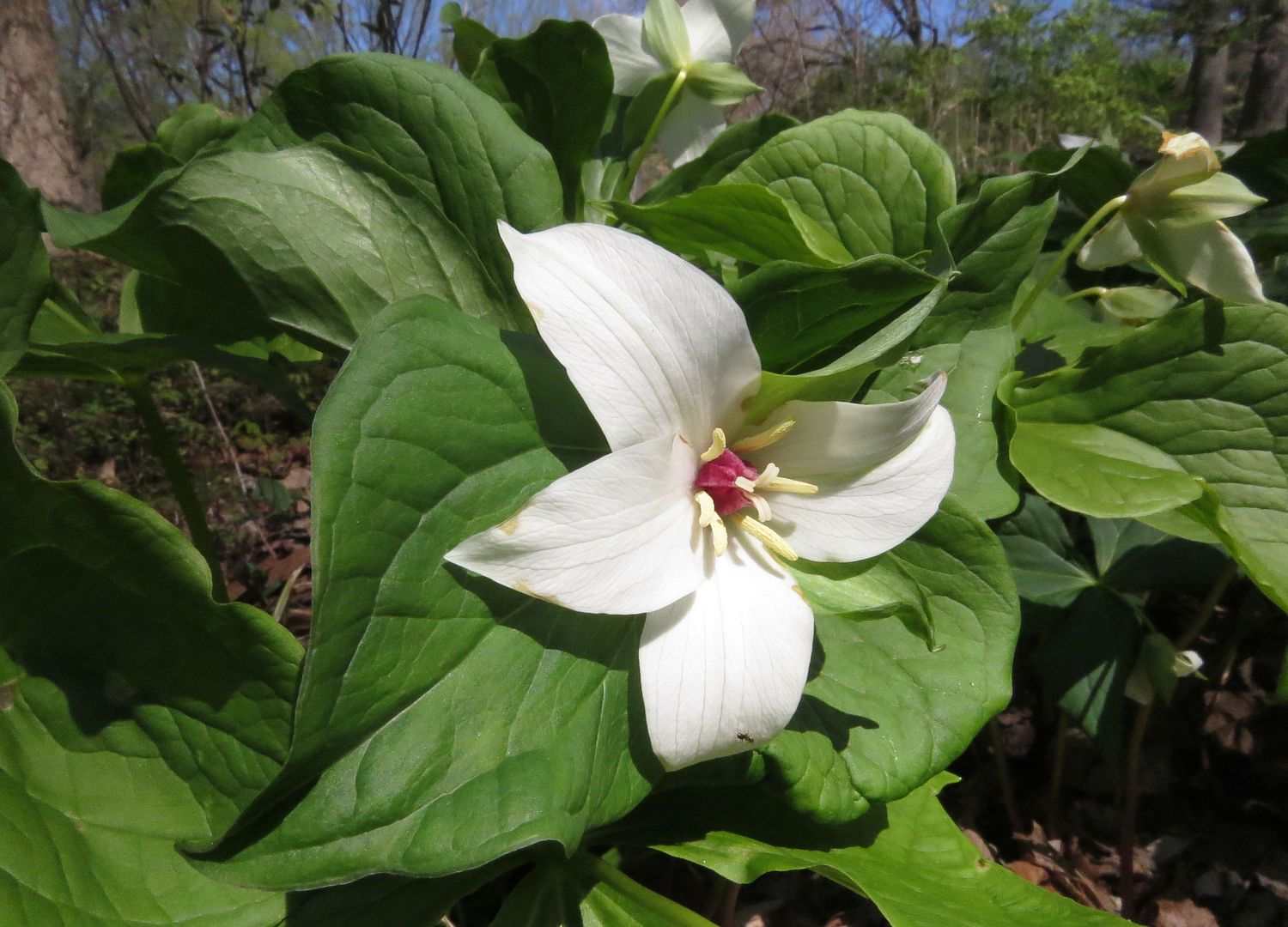
But the real highlight of the Mt. Cuba Center in the spring time has got to be the Trilliums. Many people were passing them by unaware of the glory of these amazing plants.
For starters it's unusual for a native plant garden to not have at least one species. These take two years from seed to germinate, producing a simple single leaf on the third year and that's all. Year four they may produce two leaves, and then three leaves on the fifth. Then sometime between year six and ten, they should flower. From there they can slowly divide more flowering shoots to very slowly form a clump. They don't like fertilizer, even the slow release stuff will diminish the size of the rhizome or kill them. They like to grow in full shade, and can tolerate partial to full sun, provided they're watered regularly once a week. Lack of sufficient water (whether in full sun or shade) can cause the seed pod to shrivel up and die. Seeds are coated in elaiosome, which is basically ant food! So your seeds can walk away on you if you're not careful. So in summary these plants are tricky to grow and take the better half of a decade to flower.
Trillium grandiflorum is probably the most well know and beloved of the Trilliums. It's the provenance flower to parts of Canada, and illegal to pick or dig up there. You can still find nurseries selling them but expect to pay something around $10 to $20.
As a side note I had always wondered why the Mt. Cuba Center had a section called the Trillium Garden, when it's clear to anyone that they have more Trilliums planted in big patches elsewhere in the gardens. But then I realized, this is where they keep all the cultivars and hybrids that have popped up over the years.
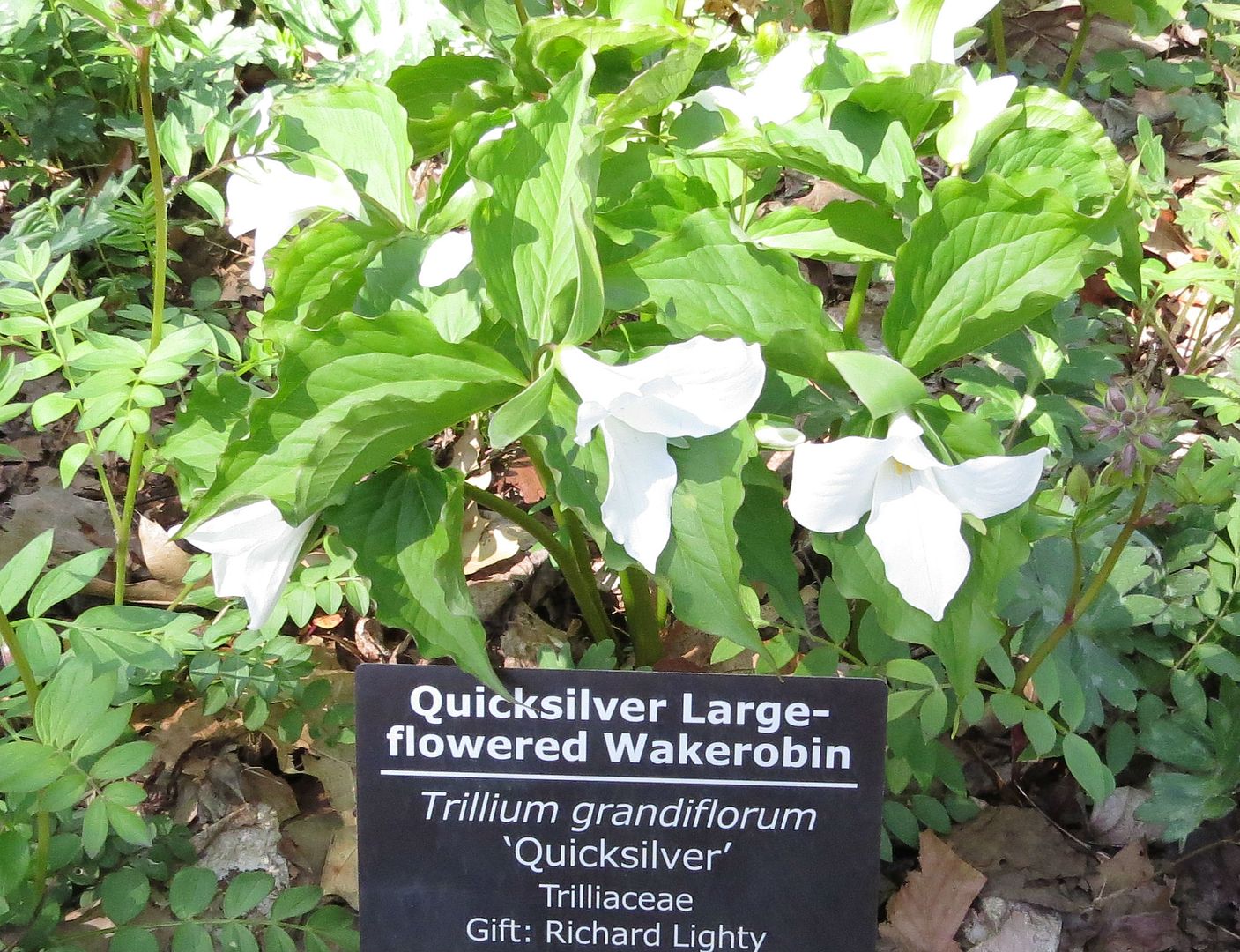
Trillium grandiflorum 'Quicksilver' is fairly true to the true species, however it supposedly spreads faster than the true species.
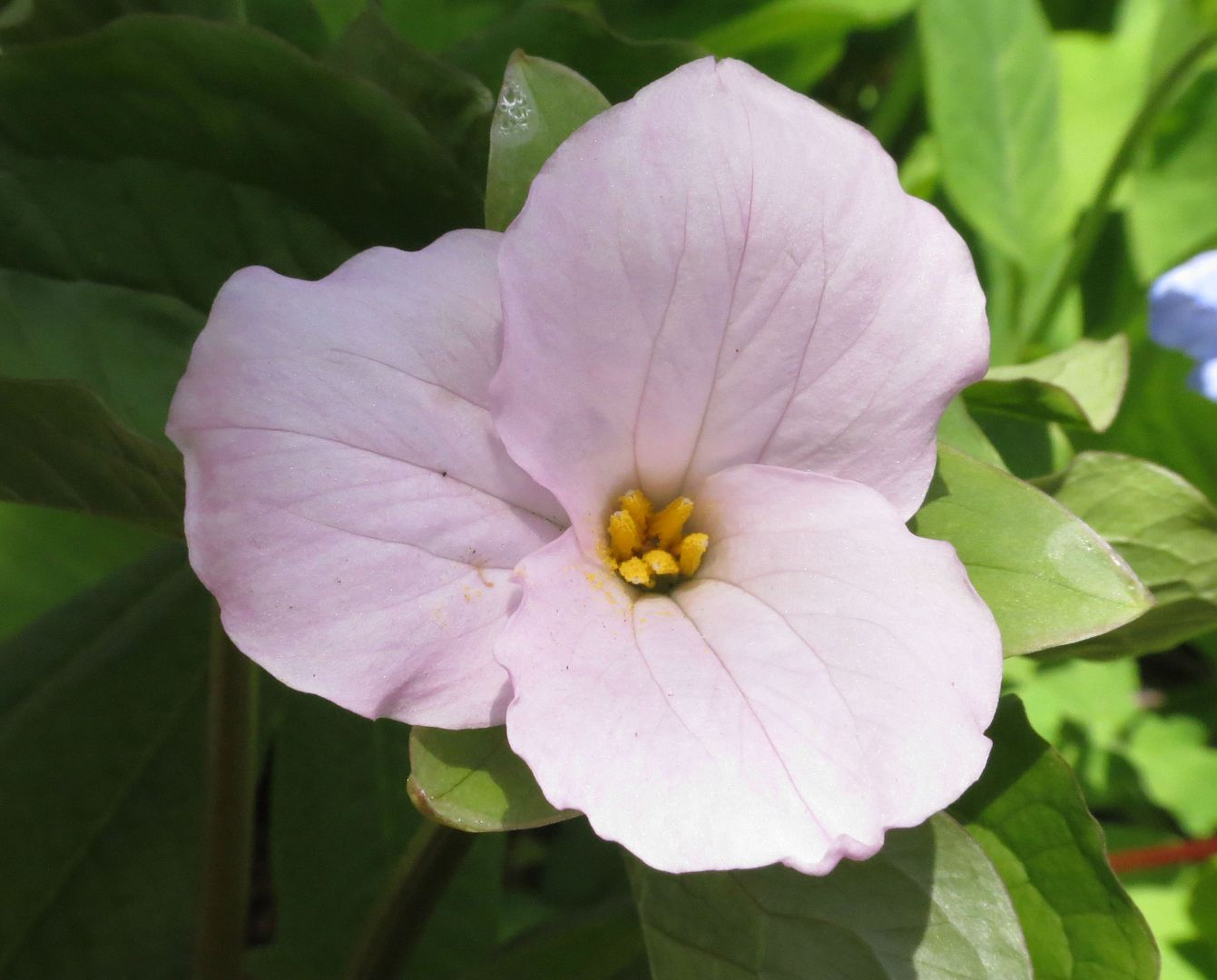
I didn't get the name of this one but it opened slightly pink. Normally they turn pink and magenta after a week of flowering white. It's not a huge difference but still a note worthy one.
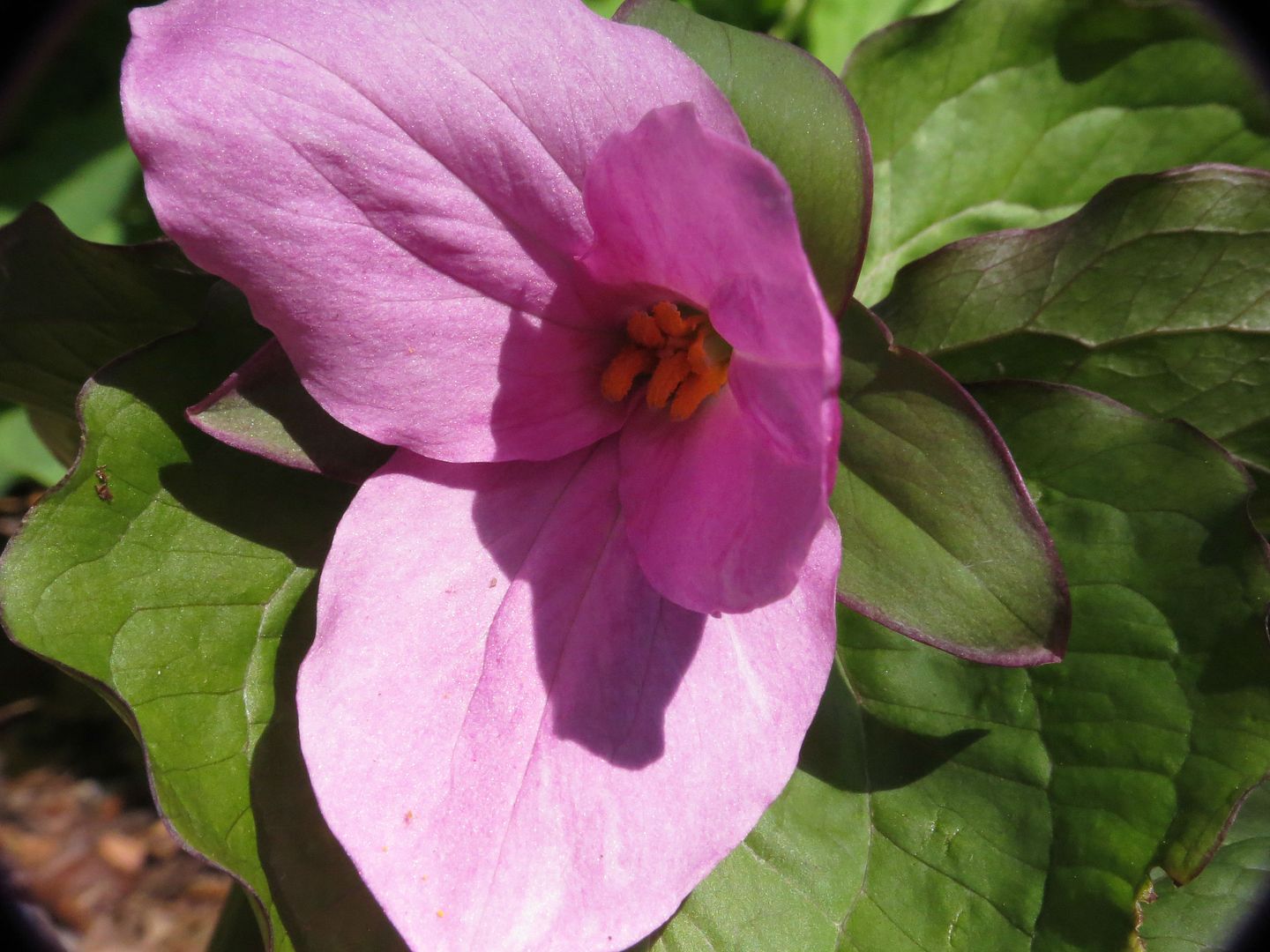
Another cultivar they had opened as a more striking magenta.
This one doesn't have any reproductive parts at all. The flower is useless but this plant is still able to spread by an expanding rhizome which even divides every few years.
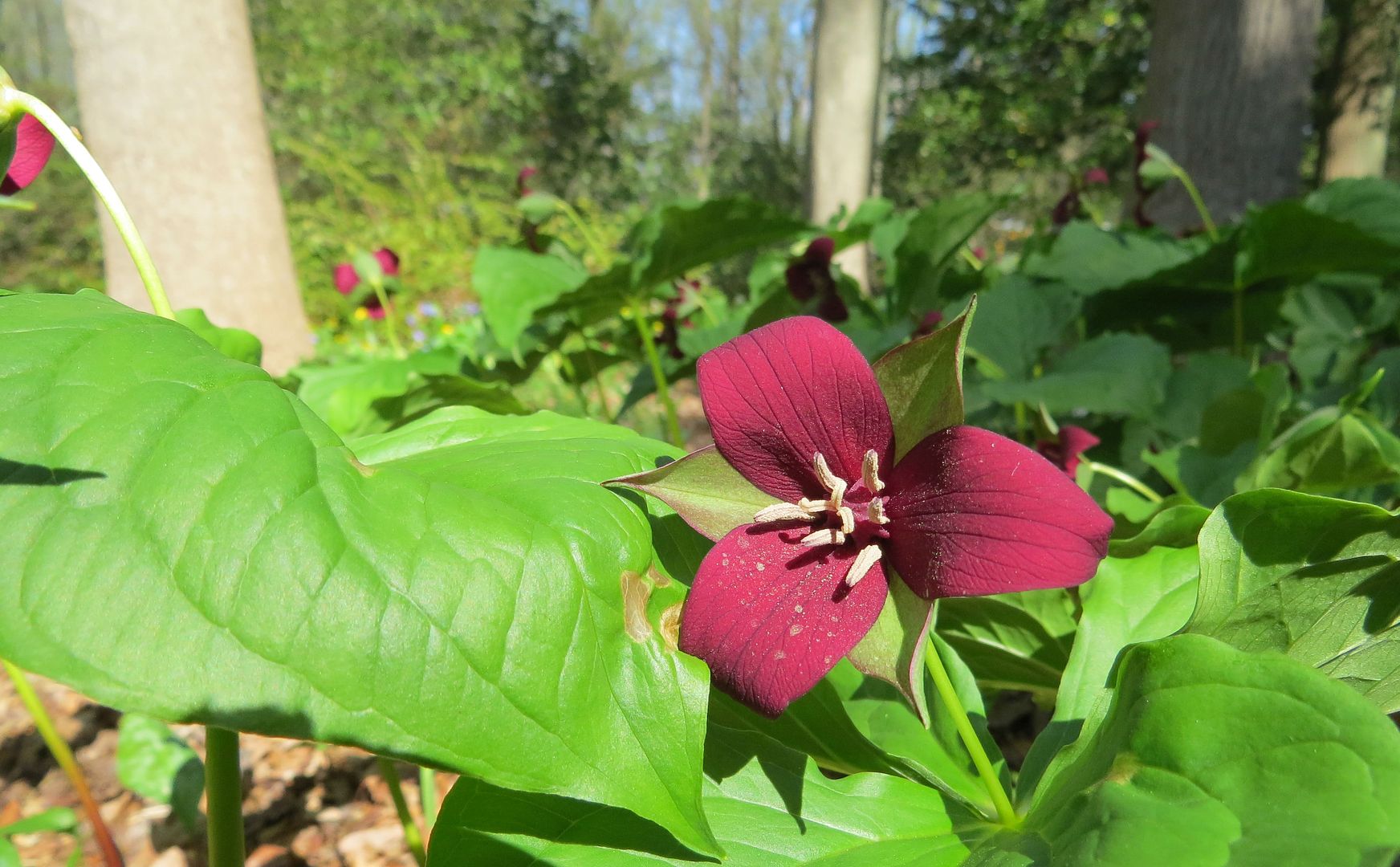
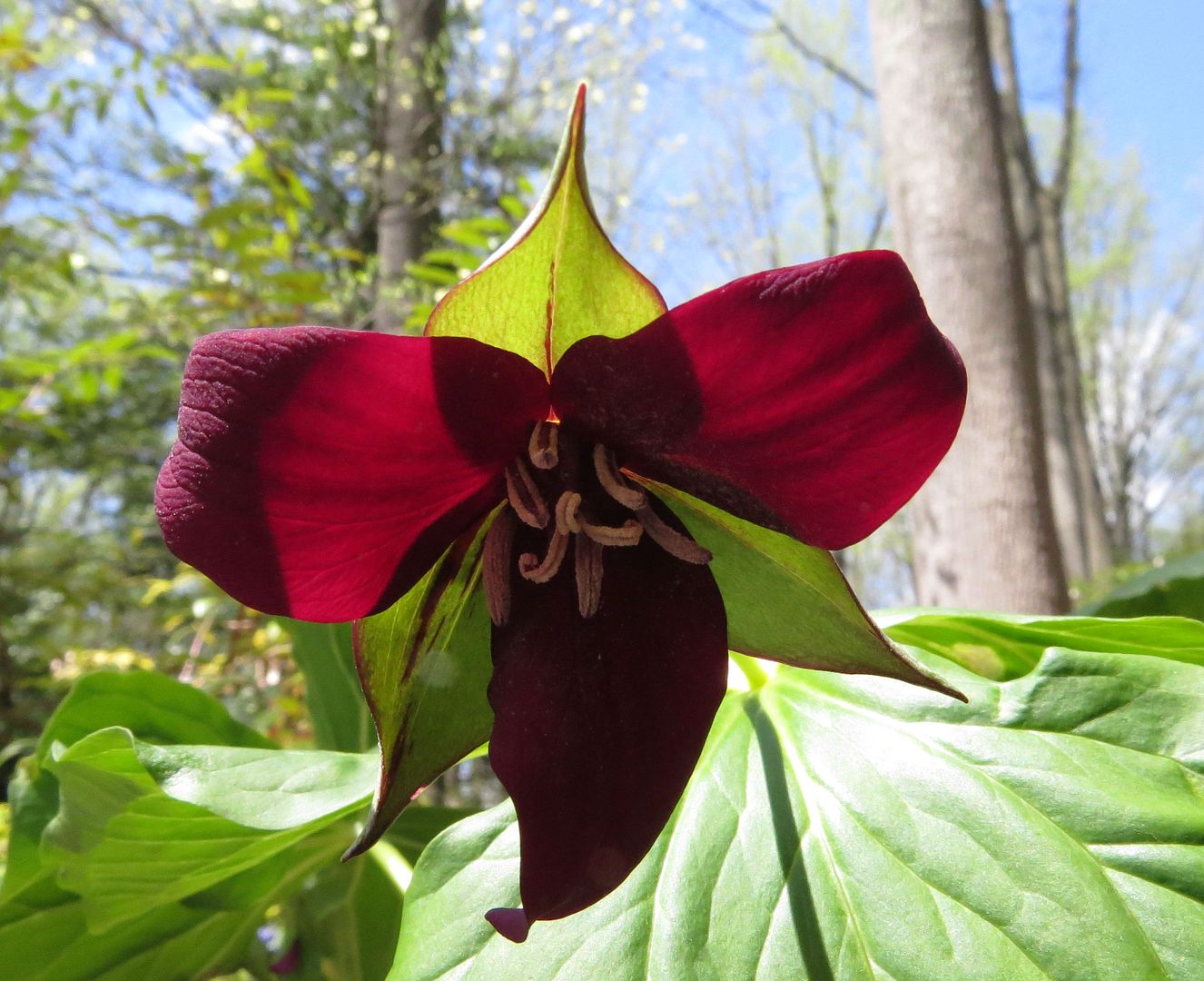
Trillium erectum is probably the prettiest of the red flowering species.
Despite it's beauty, the flower smells like a dead fish to attract flies and carrion beetles to pollinate it. Thankfully one has to practically put their nose inside the flower to observe this fact.
Trillium cernuum is a neat one on par with T. grandiflorum. The flower is a bit more open though.
Trillium catesbaei. This is truly one of the prettier species to have, but harder to grow. They don't divide too often and it's even more difficult to get them to reproduce by seed.
The flower opens white but later turns a sharp shade of pink.
Trillium simile. This is actually my favorite Trillium. The flower is almost a perfect triangle. A life goal of mine is to someday commission a piece of jewelry in the shape of this flower. Not sure what it would be called but something to pin above a breast pocket on a suit, or cufflinks perhaps?
Elsewhere in the gardens there was a patch that had been flowering a little bit longer. You can tell from the developing seed pod.
I was also thrilled to find a mutation! This one has four petals instead of three!
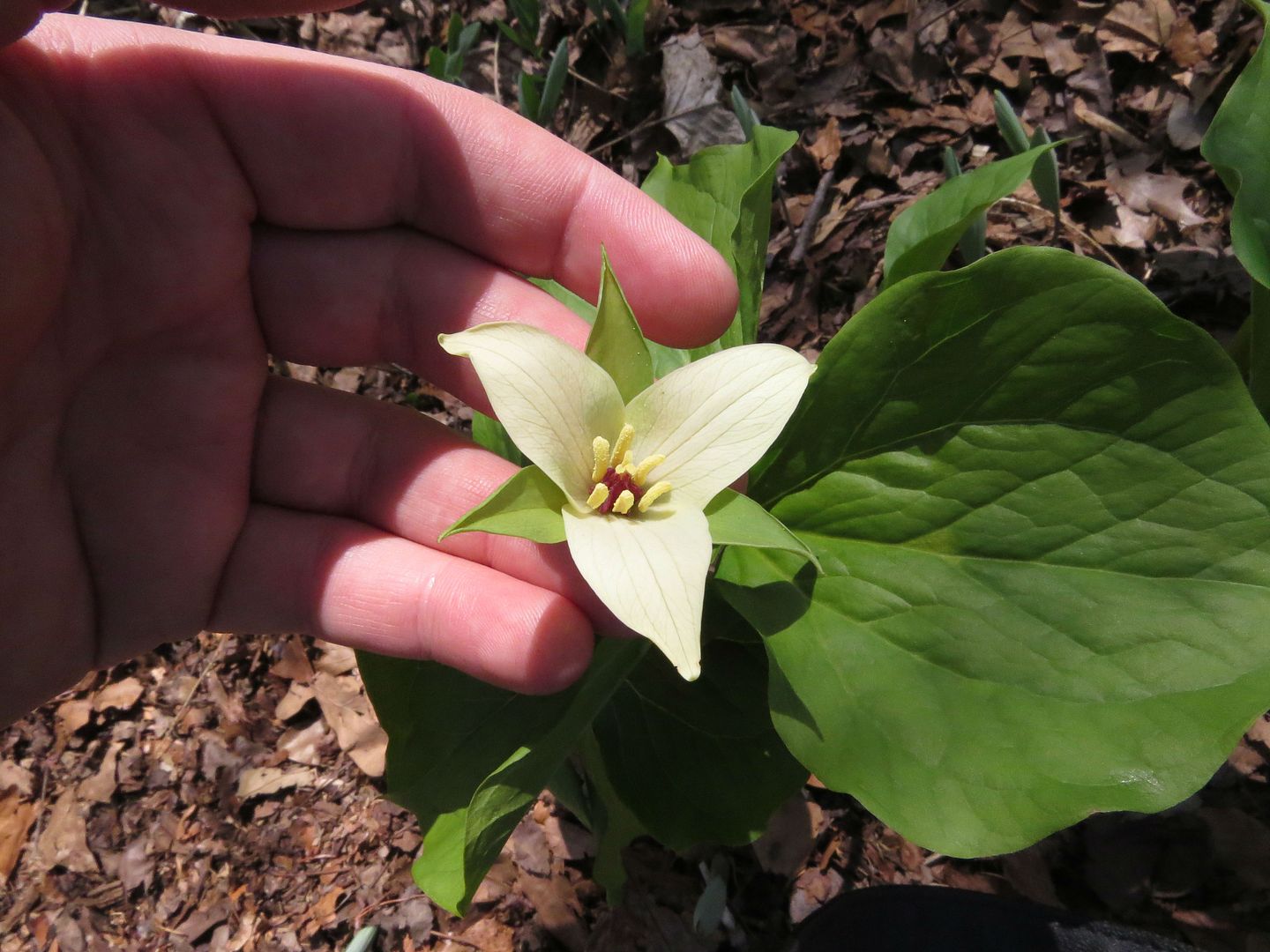
Up in the Trillium garden they had a variety that has slightly yellow petals. (A crossed with T. luteum perhaps?)
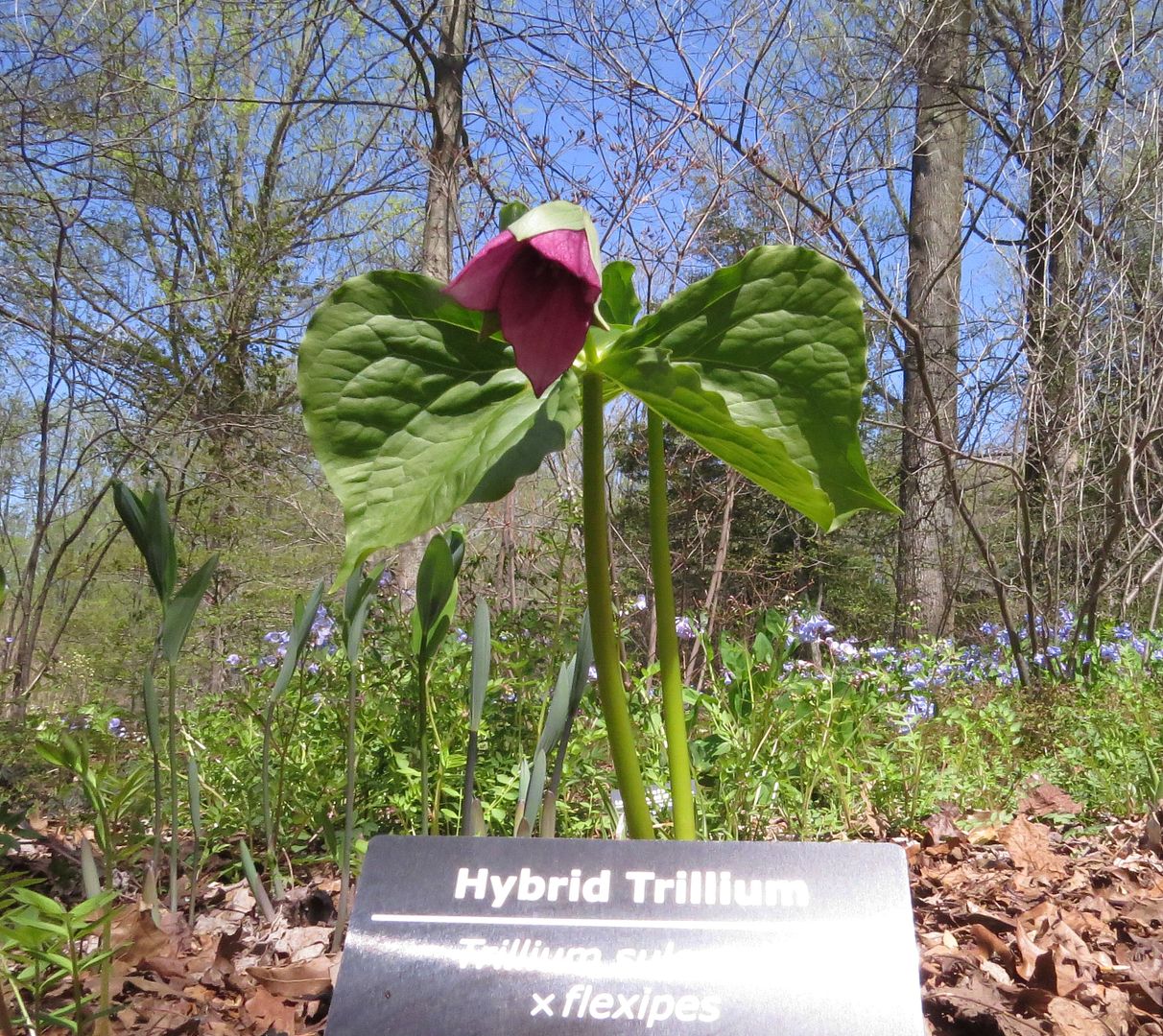
Trillium flexipes x erectum, this was a neat one to see. The flower resembles that of T. flexipes while the color is more in line of T. erectum... I didn't think to check if it smelled of dead fish like T. erectum. But it seems to bloom when T. erectum does because I don't recall seeing any T. flexipes open.
Trillium sulcatum x flexipes. Another flexipes hybrid.
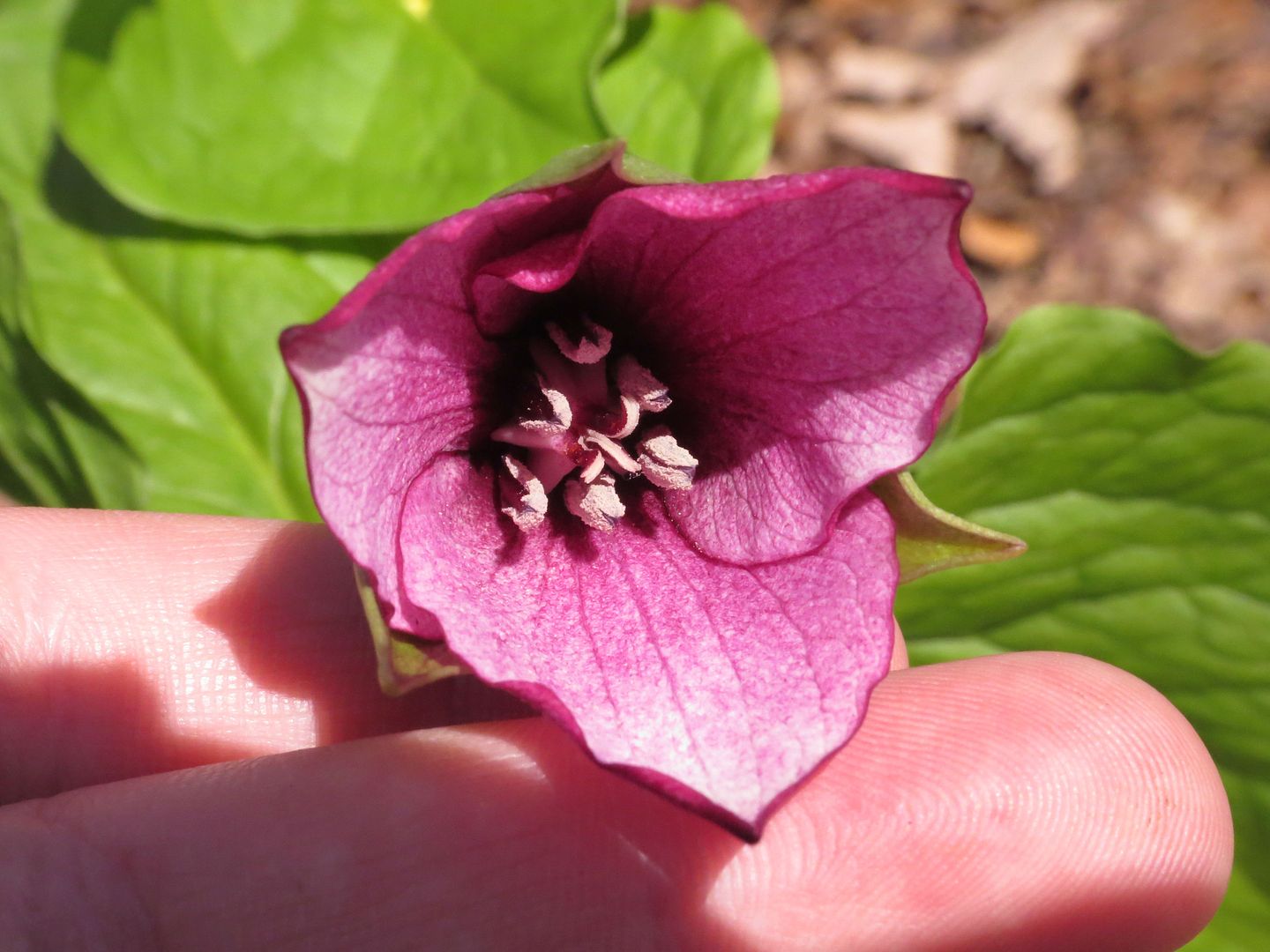
Another hybrid with T. flexipes, though this time most of the reproductive parts and color seem to come from T. sulcatum.
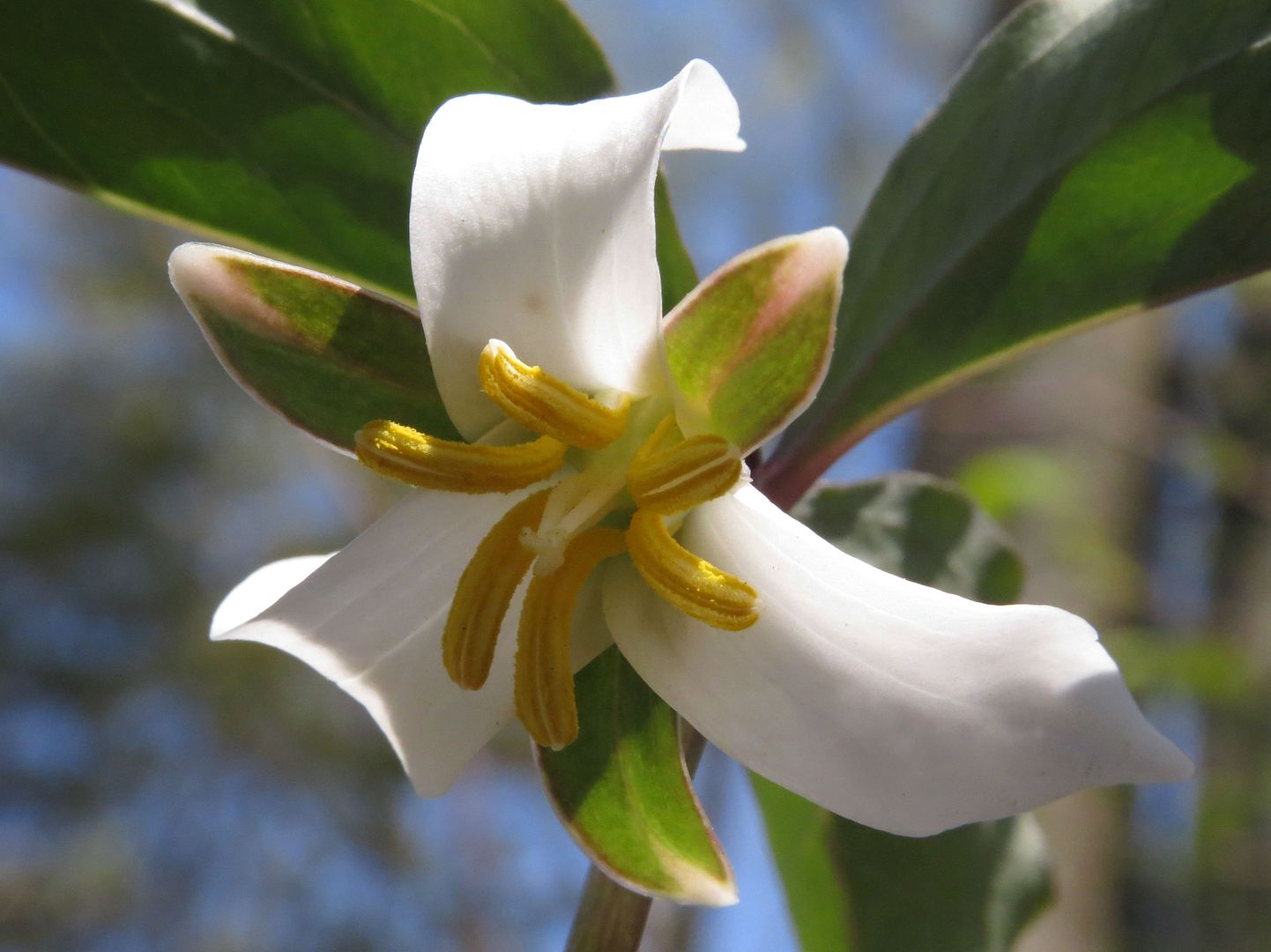
Trillium underwoodii.
I believe this was the only patch of this species growing there. I like the darkness of the flower and earthy tone of the pollen.
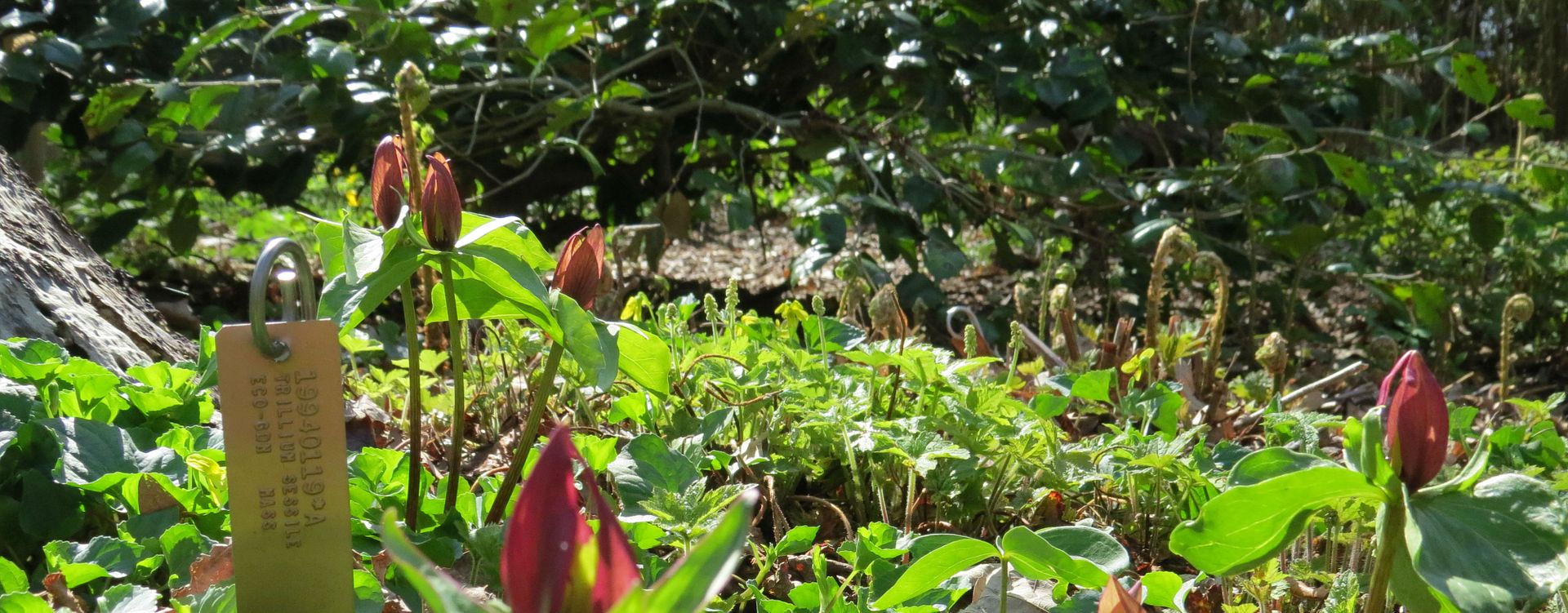
A patch of Trillium sessile. (I know because I read the label.)
Trillium luteum. This species is one of the only yellow flowering ones. It also smells like oranges, very pleasant. This is another easy to grow species.
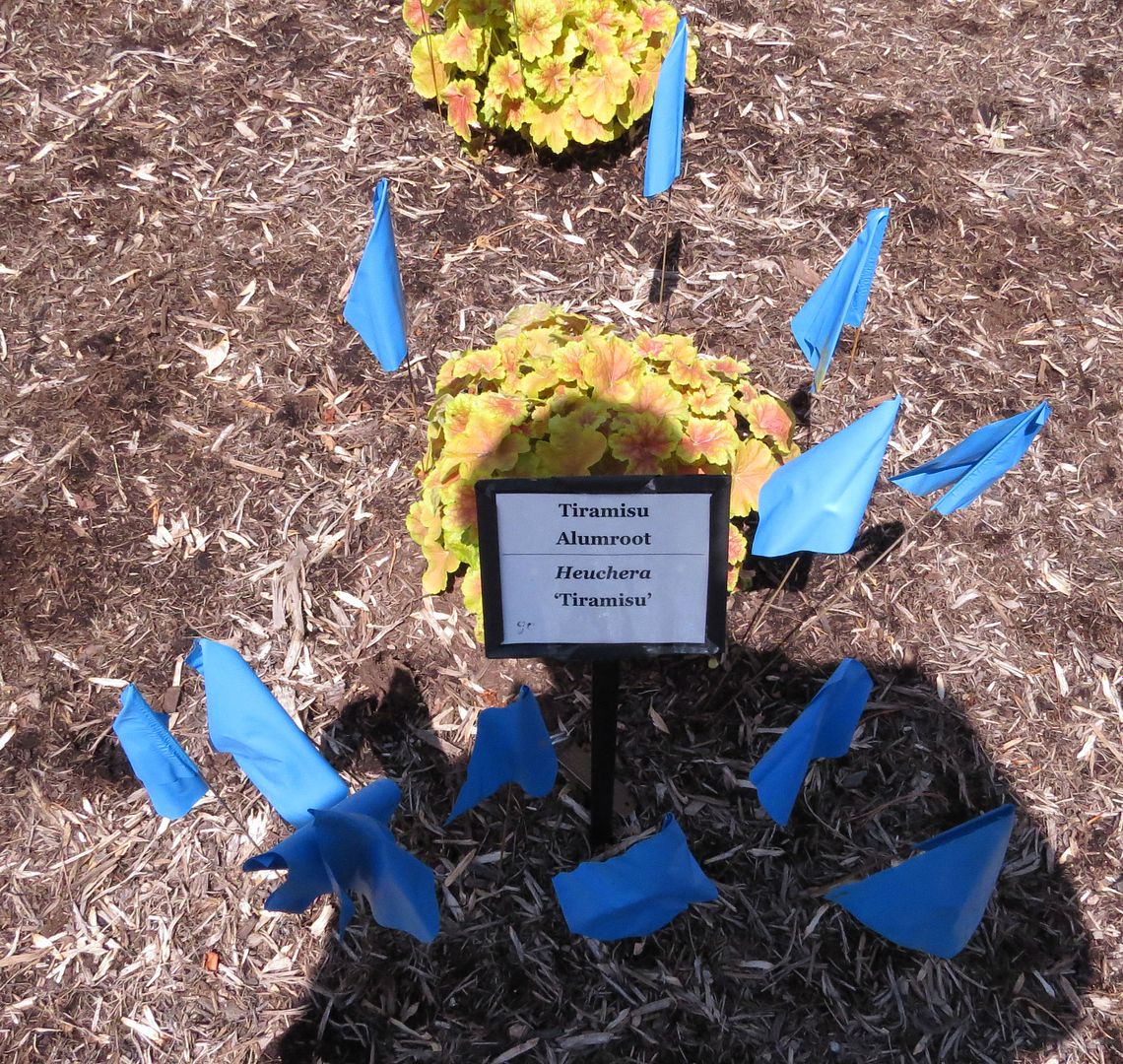
Outside of the gardens they had food and activities about up near the main house. They still had a trial of Heuchera's going on in their trial garden. I was handed a flag and asked to pick the best one. I was the first to vote for the cultivar 'Tiramisu' and later when I went back I saw it was actually winning of what had to bee some 50+ varieties. I picked it because the amber and purple foliage ones didn't appeal to me, and I didn't like the red or lime green ones, so I found one that was just green enough but also with just the right amount of copper in the leaves. There was another cultivar right next to it that barely had any copper in the leaves at all.
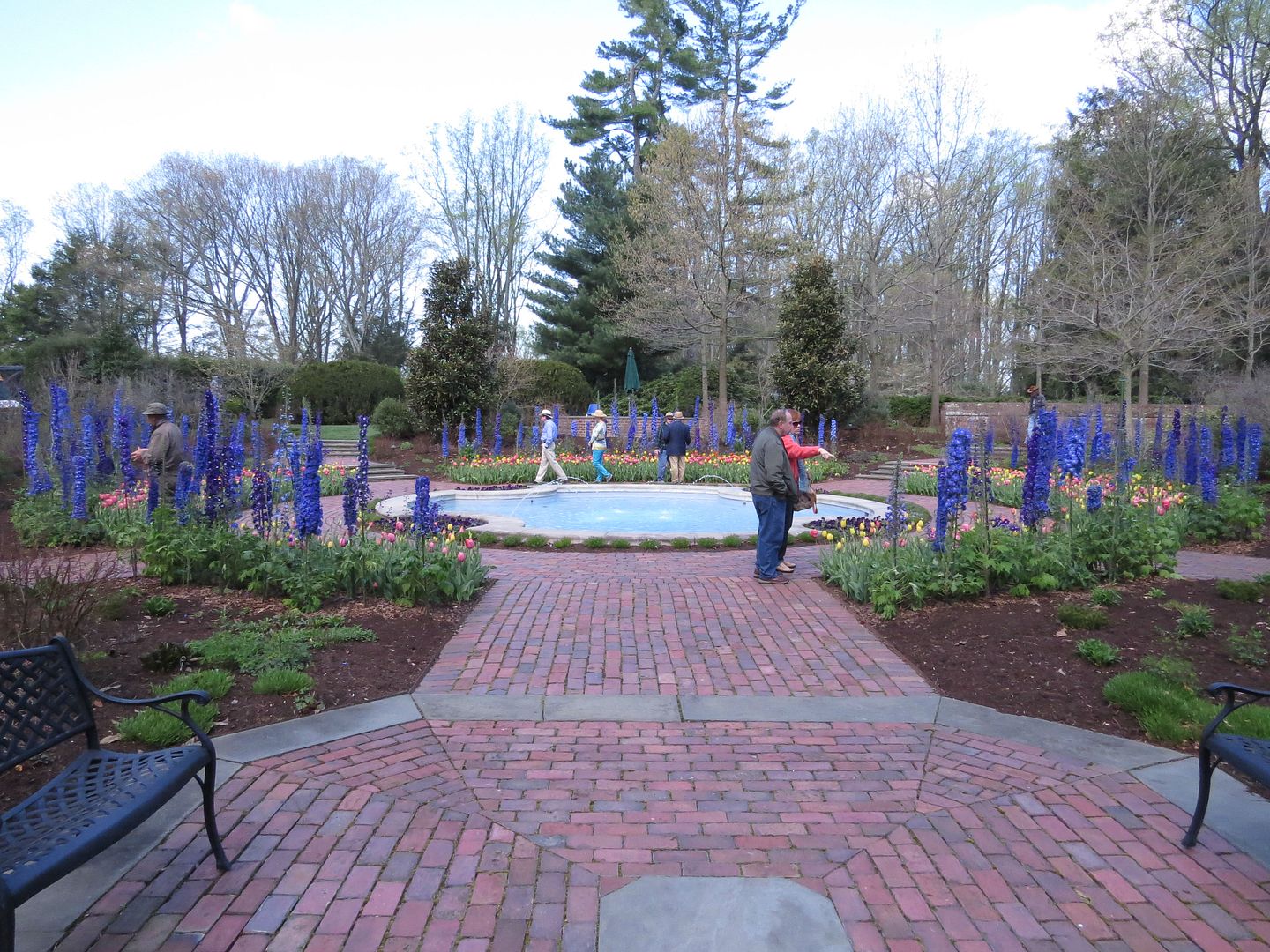
The Round Garden sits directly beside the house. Delphiniums and tulips were the biggest splashes of color here. It's a more formal garden and Mrs. Copeland was fond of Delphiniums so they plant them every year in her memory. I think it's lovely, but frankly if I lived there, that pond would be converted into a hot tub so fast!
Also planted in this garden are the more formal and garden friendly cultivars of native plants, most of which flower over the summer.
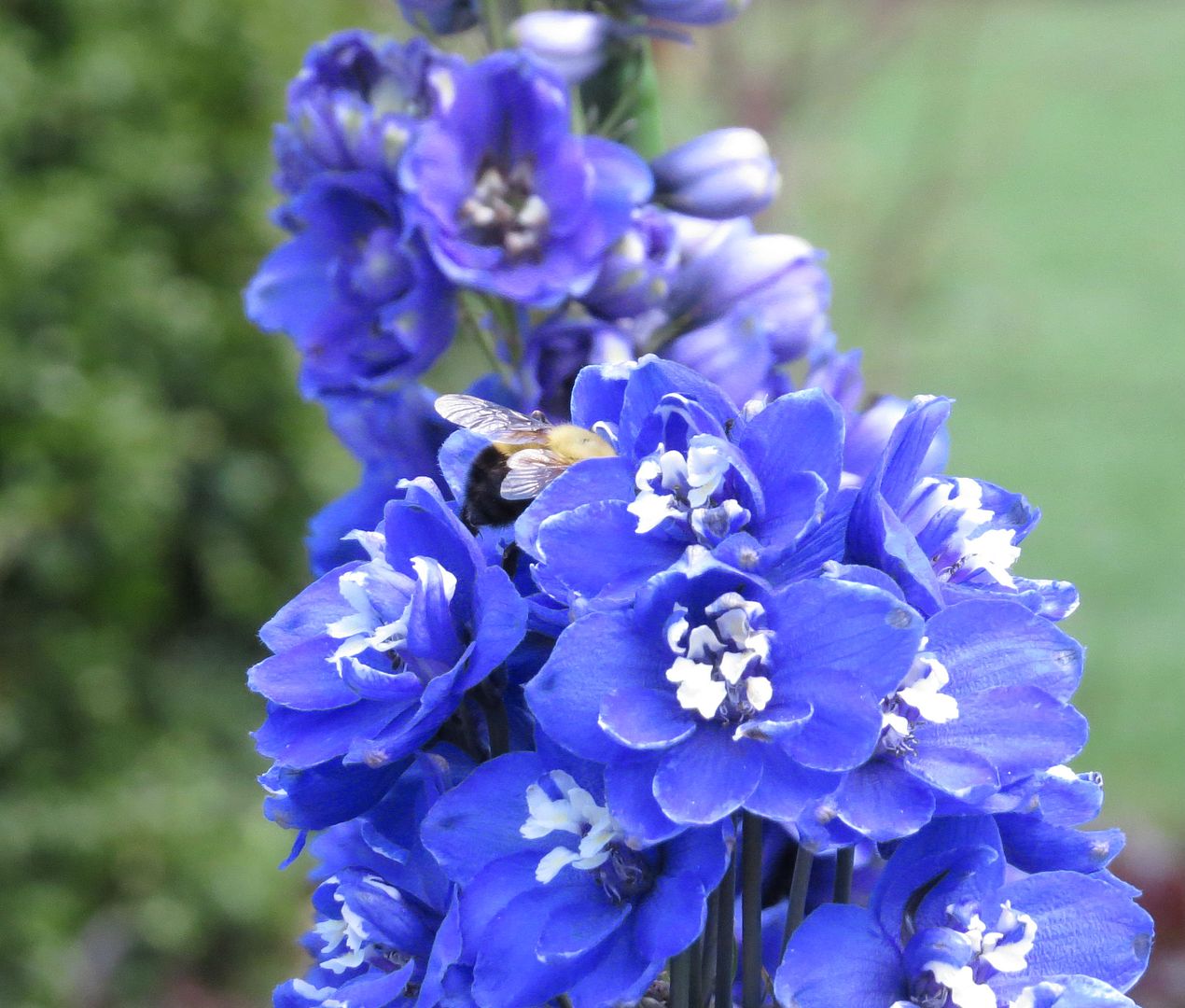
Bumblebees were working the Delphiniums.
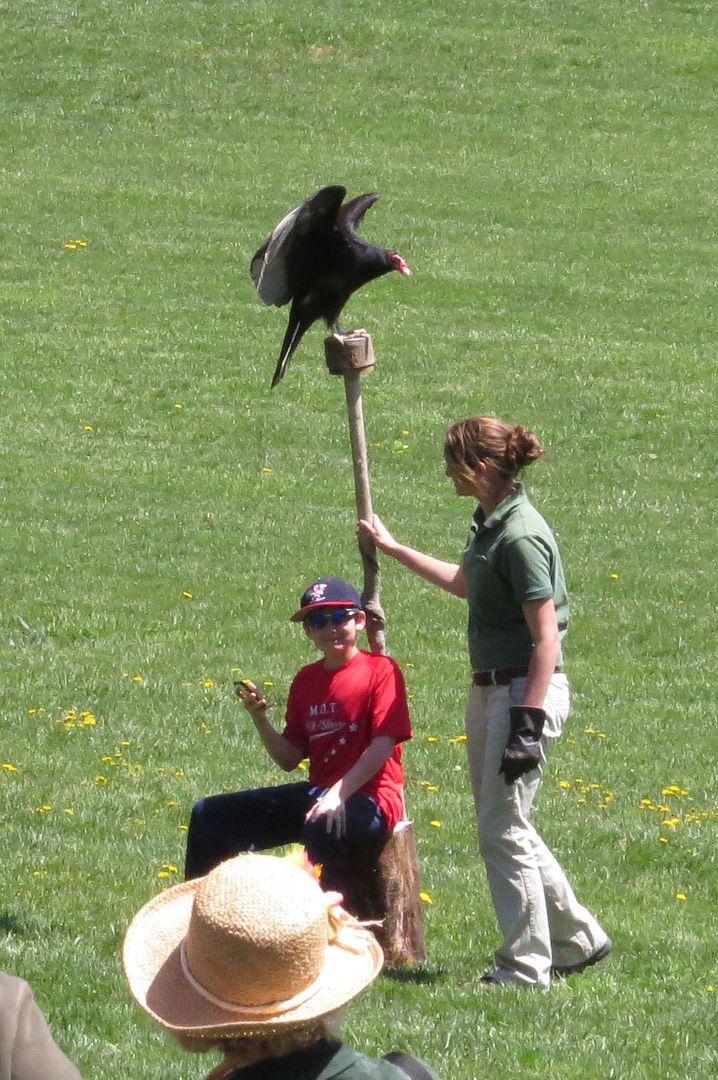
They once again held a raptor bird demonstration. I only caught the tail end of the show this year....
and so did this small child apparently.
Who survived!
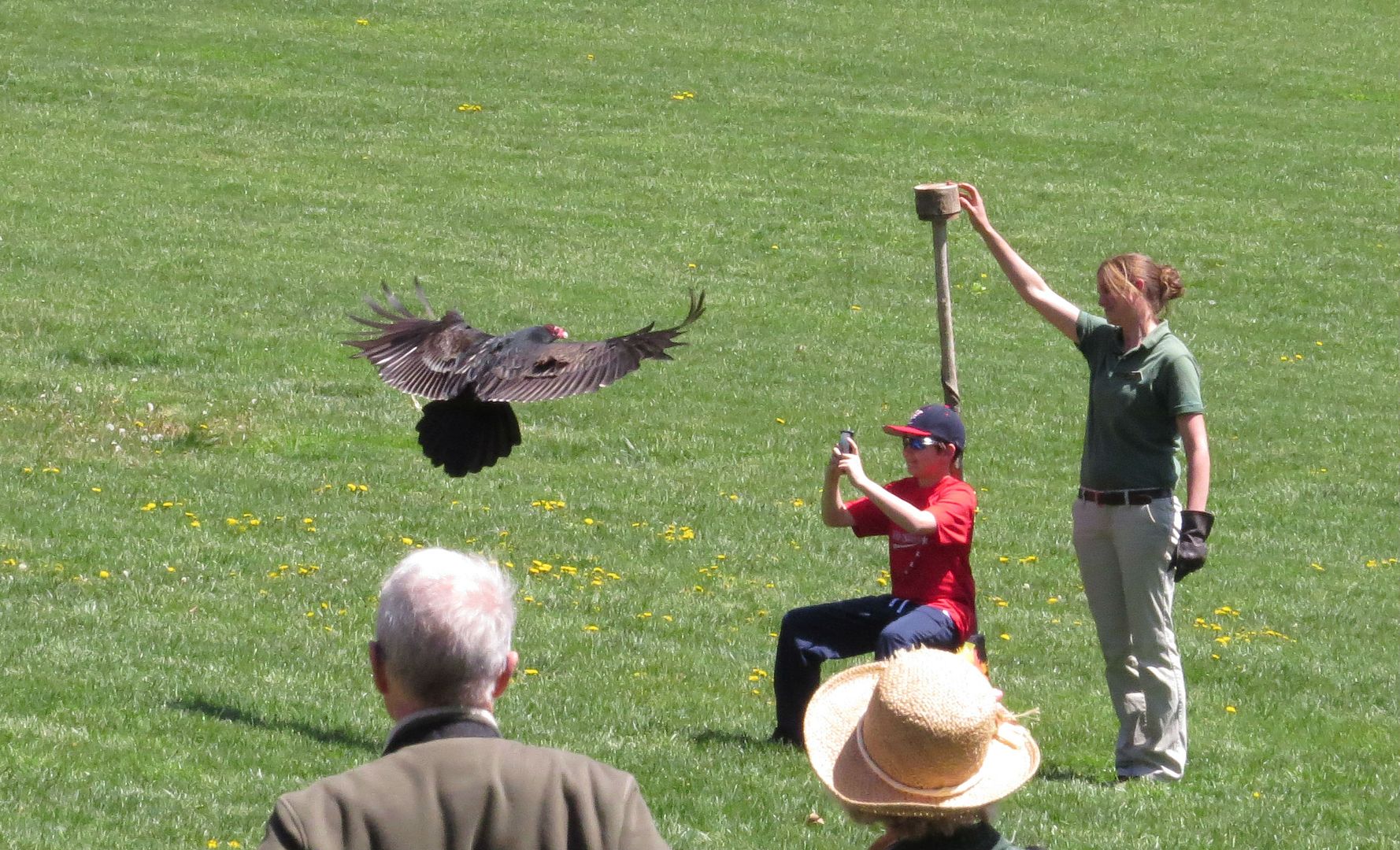
They did this great thing this year where they asked for a young volunteer with a camera to take a seat right by the perch for the Turkey Vulture. He probably got an amazing photo too.
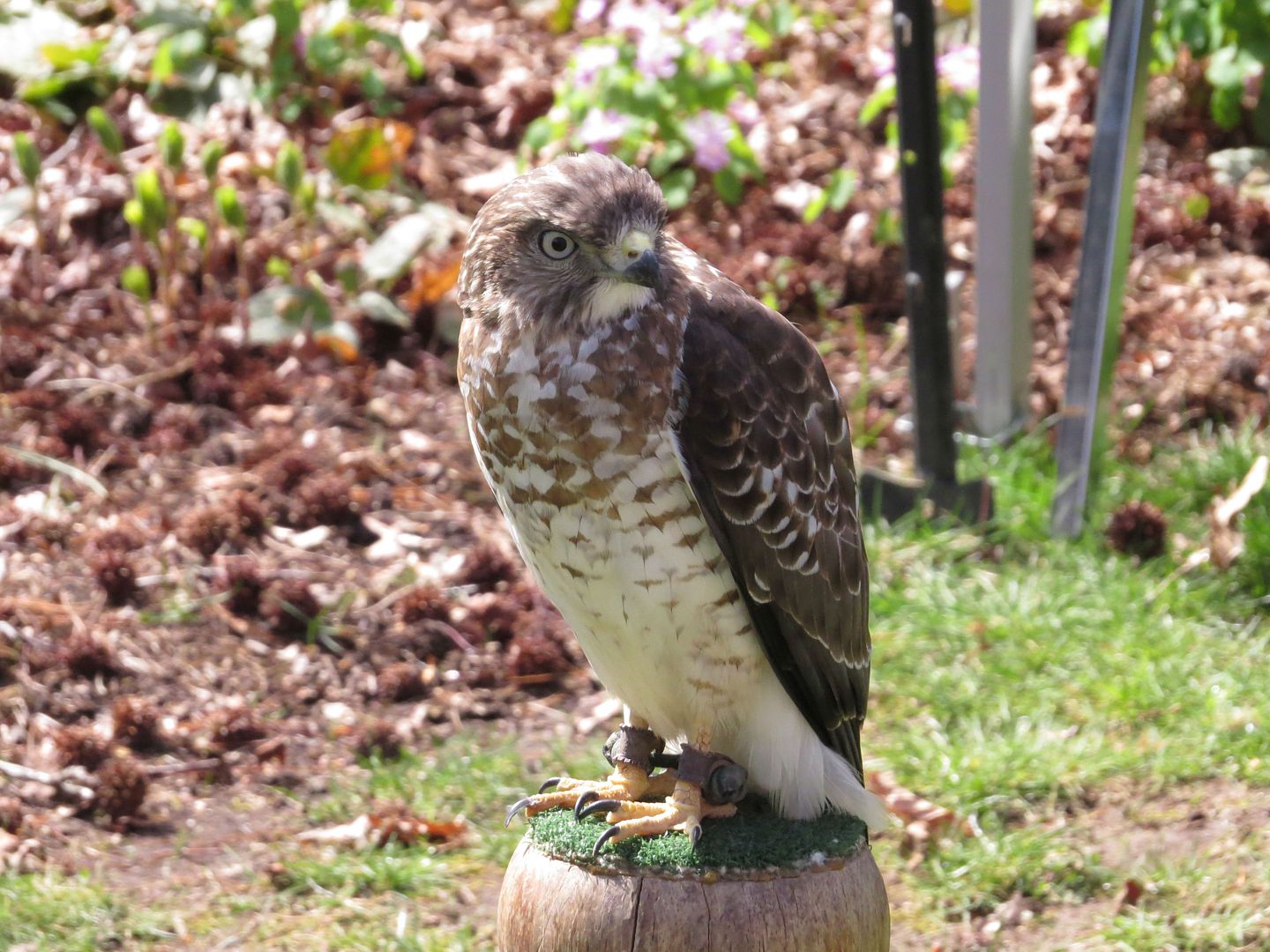
When not preforming, their birds were perched out for all to observe. I'm not really a bird person but I know this is a screech owl.
Peregrine Falcon? Some type of falcon?
A bird... (or plane) of some sort?
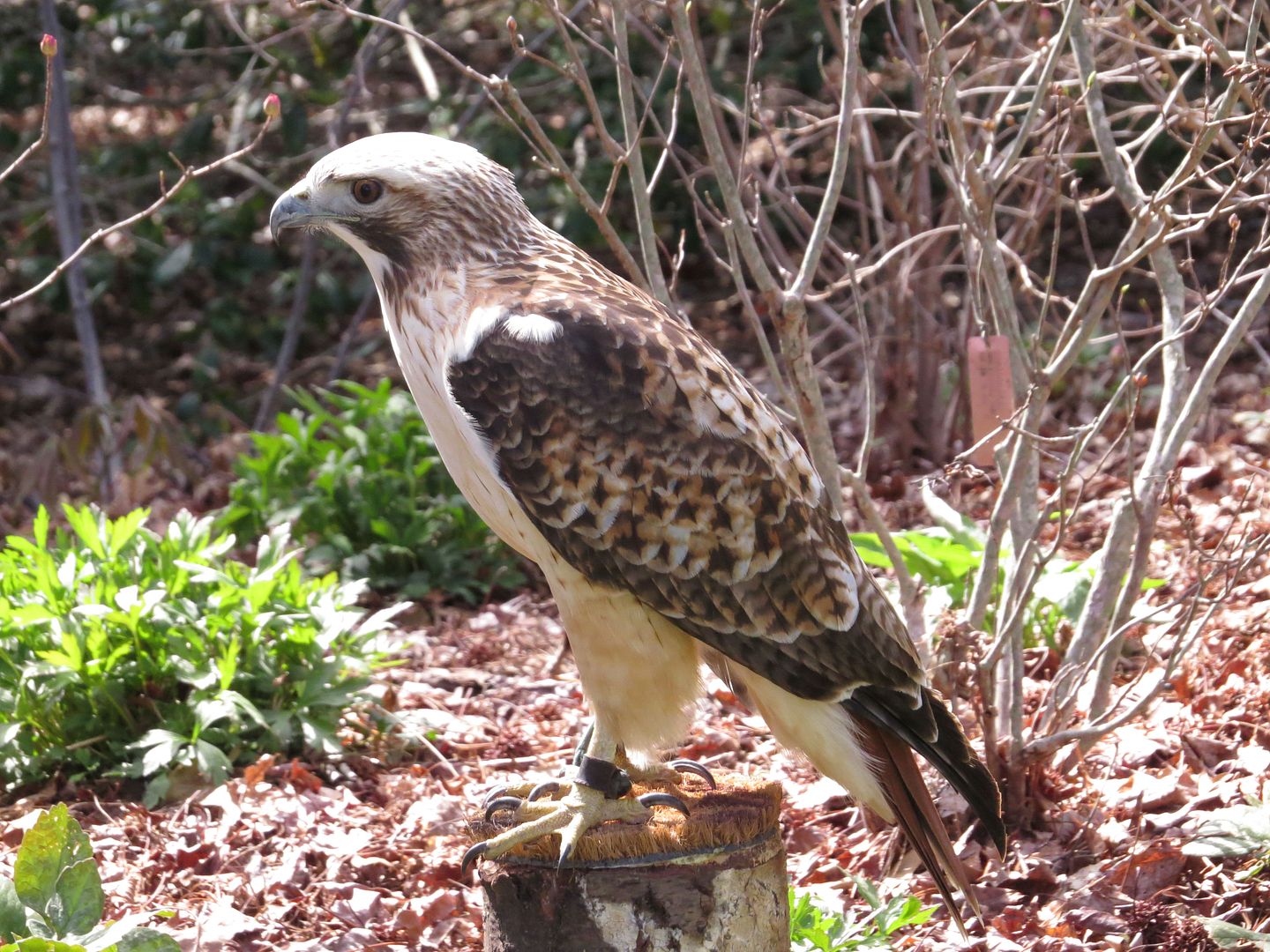
Red Tailed Hawk?
Fern-leaf Phacelia, Phacelia bipinnatifida, had only just started to open. And even the May Apples which are very abundant in parts of the forests there weren't blooming yet.
I was slightly impressed to find a Toothwort, Cardamine concatenata, still blooming from two weeks ago when I had visited before for the early spring blooming tour. Other plants I saw then like Hepatica, and Bloodroot were pretty much completely done flowering for the year.
There were more Trout Lillies flowering but most were past their prime. Even so, the flowers were interesting and pretty to look at.
The White flowering species must have also flowered after my previous visit and had since faded on the day of the celebration. That's kind of the charm of going every year though. Some years there are carpets of flowers all over the place, and others it's little hints of wildflowers you might not have noticed.
A Rhododendron. Bumblebees were working this but refused to stand still long enough for me to get a good shot.
Dutchman's Breeches, Dicentra cucullaria, get their name from resembling pants.
Turkey Corn, Dicentra eximia, because they're not really heart shaped enough to call them bleeding hearts.
Green and Gold, Dicentra eximia. This is one of those wildflowers native plant gardeners like to gush about. Honestly it's never impressed me, though I read it has a very long bloom time. Maybe I'll plant it someday.
Anemone sp.
Fraser's Sedge, Cymophyllus fraserianus, a flowering sedge that actually has showy flowers.
Rue, I think. This is wind pollinated but you can still occasionally find bees going after the pollen.
The ponds were extremely abundant with tadpoles this year. There were spots with so many of them that you couldn't see the bottom of the pond. I'm told something like 5 species of frogs use their ponds as a spawning pool. None of which were added, they all showed up on their own.
Marsh Marigold, Caltha palustris, was abundantly in bloom around their ponds. This was the first year I saw this plant blooming at it's peak and the nonnative they have there not. The Mt. Cuba Center isn't totally native, partly because of the former owner of the estate. Her name was Mrs. Copeland (hope I'm spelling that right,) and while she was devoted to creating a wonderful native plant garden, a few of her favorite nonnatives still grow in the gardens. She had a saying I'm told that went something like, "If it isn't native, then it ought to be."
So on most years I'd see Japanese Primroses, Primula japonica, all over the pond area adding some vibrant magenta and pinks to the color spectrum. I have to admit they are pretty plants but not fitting with the theme.
I've been meaning to add Marsh Marigold to my pond at home, which can grow is fairly flooded conditions.
Swamp Pink, Helonias bullata, an endangered species (though only threatened in some states) was just starting to bloom in patches here and there. This is a nice pop of color but doesn't spread enough to be productive in the horticultural industry.
The one nursery I knew that was able to germinate the seeds found that they require an exact amount of cold hours, nothing more and nothing less to get the seeds to this plant to germinate.
I'm not 100% sure but I think this is Bog Blueberry, Vaccinium uliginosum. This was a blueberry shrub they had planed right in the flood area of their ponds, along side pitcher plants and bog sage.
Virginia Bluebells, Mertensia virginica. This was the main burst of color on the forest floor this year. It's a wonderful perennial that forms a deep tap root. Some have said it's hard to get rid of once established and does spread freely by seed. Honestly though the gardeners there seem to keep it under control. I'd say the Woodland Poppy spread way more prolifically.
This was one of the few plants that bumblebees were actively working. Here a young queen (they're all pretty much queens this early in the year) is gathering nectar from one.
When you have this many of the same species growing in such numbers, variations are bound to show up.
The flowers are simply white.
Likewise, these two plants by their pond never turned blue at all, and yet the flowers are fully opened.
Around the ponds there are small patches of lawn separated by moss patches. I'm told the gardeners use tweezers to maintain this boundary. I've come to find mossy patches are the ideal place to grow one wildflower in particular.
Bluets, Houstonia caerulea.
These are also called Quaker Ladies, though I'm not sure why. Something to do with the plant being small and unassuming except when they bloom. The corms to these plants are about the same size as the flower, and yet each plant somehow pushes out 20 flowers all at once. The foliage is a simple rosette of leaves, but even then the flowers take up most of the mass of the plant.
They bloom so thick at times that they must shade out the leaves below, though I've never known this to be an issue with an ephemeral. Many of them will produce only a flower and then after it fades push out some leaves.
I was happy to find the moss garden full of Bluets this year. In years past, I felt the population here may have been dying out.
Before I knew what a Bluet was, I honestly thought there was a patch of snow up on the hill for some reason. You almost want to dive in and make a snow angle. This year the effect was there, though shrubs planted right before the patch ruin the surprise.
Even here there are unique individuals growing. One plant (yes one plant makes that many flowers!) had only produced white flowers. It stood out in a sea of pale blue flowers.
Beeflies were buzzing about pollinating them. You can sort of see one here, though they zipped around mostly in the middle of the patch and they frown on walking into the garden beds.
I tried to grow bluets once. They over wintered just fine, and flowered the following spring, however, come summer they died off sadly. I believe growing them in moss is somewhat vital to their survival as they are delicate little evergreen plants. Considering the size of their root they're probably not drought tolerant in the slightest.
But the real highlight of the Mt. Cuba Center in the spring time has got to be the Trilliums. Many people were passing them by unaware of the glory of these amazing plants.
For starters it's unusual for a native plant garden to not have at least one species. These take two years from seed to germinate, producing a simple single leaf on the third year and that's all. Year four they may produce two leaves, and then three leaves on the fifth. Then sometime between year six and ten, they should flower. From there they can slowly divide more flowering shoots to very slowly form a clump. They don't like fertilizer, even the slow release stuff will diminish the size of the rhizome or kill them. They like to grow in full shade, and can tolerate partial to full sun, provided they're watered regularly once a week. Lack of sufficient water (whether in full sun or shade) can cause the seed pod to shrivel up and die. Seeds are coated in elaiosome, which is basically ant food! So your seeds can walk away on you if you're not careful. So in summary these plants are tricky to grow and take the better half of a decade to flower.
Trillium grandiflorum is probably the most well know and beloved of the Trilliums. It's the provenance flower to parts of Canada, and illegal to pick or dig up there. You can still find nurseries selling them but expect to pay something around $10 to $20.
As a side note I had always wondered why the Mt. Cuba Center had a section called the Trillium Garden, when it's clear to anyone that they have more Trilliums planted in big patches elsewhere in the gardens. But then I realized, this is where they keep all the cultivars and hybrids that have popped up over the years.
Trillium grandiflorum 'Quicksilver' is fairly true to the true species, however it supposedly spreads faster than the true species.
I didn't get the name of this one but it opened slightly pink. Normally they turn pink and magenta after a week of flowering white. It's not a huge difference but still a note worthy one.
Another cultivar they had opened as a more striking magenta.
This one doesn't have any reproductive parts at all. The flower is useless but this plant is still able to spread by an expanding rhizome which even divides every few years.
Trillium erectum is probably the prettiest of the red flowering species.
Despite it's beauty, the flower smells like a dead fish to attract flies and carrion beetles to pollinate it. Thankfully one has to practically put their nose inside the flower to observe this fact.
Trillium cernuum is a neat one on par with T. grandiflorum. The flower is a bit more open though.
Trillium catesbaei. This is truly one of the prettier species to have, but harder to grow. They don't divide too often and it's even more difficult to get them to reproduce by seed.
The flower opens white but later turns a sharp shade of pink.
Trillium simile. This is actually my favorite Trillium. The flower is almost a perfect triangle. A life goal of mine is to someday commission a piece of jewelry in the shape of this flower. Not sure what it would be called but something to pin above a breast pocket on a suit, or cufflinks perhaps?
Elsewhere in the gardens there was a patch that had been flowering a little bit longer. You can tell from the developing seed pod.
I was also thrilled to find a mutation! This one has four petals instead of three!
Up in the Trillium garden they had a variety that has slightly yellow petals. (A crossed with T. luteum perhaps?)
Trillium flexipes x erectum, this was a neat one to see. The flower resembles that of T. flexipes while the color is more in line of T. erectum... I didn't think to check if it smelled of dead fish like T. erectum. But it seems to bloom when T. erectum does because I don't recall seeing any T. flexipes open.
Trillium sulcatum x flexipes. Another flexipes hybrid.
Another hybrid with T. flexipes, though this time most of the reproductive parts and color seem to come from T. sulcatum.
Trillium underwoodii.
I believe this was the only patch of this species growing there. I like the darkness of the flower and earthy tone of the pollen.
A patch of Trillium sessile. (I know because I read the label.)
Trillium luteum. This species is one of the only yellow flowering ones. It also smells like oranges, very pleasant. This is another easy to grow species.
Outside of the gardens they had food and activities about up near the main house. They still had a trial of Heuchera's going on in their trial garden. I was handed a flag and asked to pick the best one. I was the first to vote for the cultivar 'Tiramisu' and later when I went back I saw it was actually winning of what had to bee some 50+ varieties. I picked it because the amber and purple foliage ones didn't appeal to me, and I didn't like the red or lime green ones, so I found one that was just green enough but also with just the right amount of copper in the leaves. There was another cultivar right next to it that barely had any copper in the leaves at all.
The Round Garden sits directly beside the house. Delphiniums and tulips were the biggest splashes of color here. It's a more formal garden and Mrs. Copeland was fond of Delphiniums so they plant them every year in her memory. I think it's lovely, but frankly if I lived there, that pond would be converted into a hot tub so fast!
Also planted in this garden are the more formal and garden friendly cultivars of native plants, most of which flower over the summer.
Bumblebees were working the Delphiniums.
They once again held a raptor bird demonstration. I only caught the tail end of the show this year....
and so did this small child apparently.
Who survived!
They did this great thing this year where they asked for a young volunteer with a camera to take a seat right by the perch for the Turkey Vulture. He probably got an amazing photo too.
When not preforming, their birds were perched out for all to observe. I'm not really a bird person but I know this is a screech owl.
Peregrine Falcon? Some type of falcon?
A bird... (or plane) of some sort?
Red Tailed Hawk?
Subscribe to:
Posts (Atom)