Saturday, April 14, 2012

A Look at Two Lasius In My Yard

I was out in the garden today digging around to plant some 215 Liatris corms when I naturally started breaking into ant nests on accident. The two I'd like to focus on are species of Lasius that look very similar.

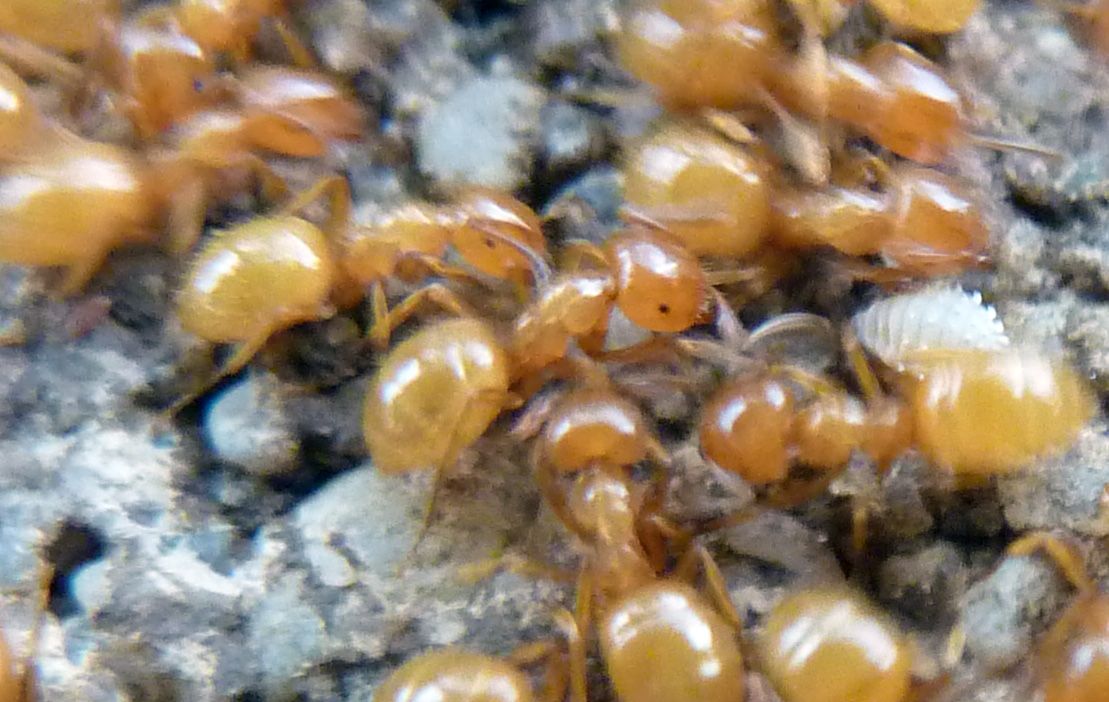
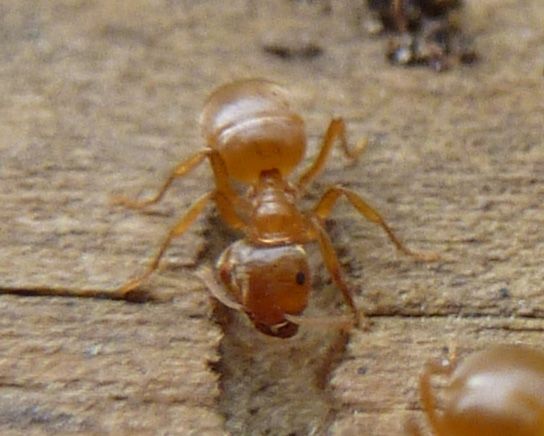
Lasius claviger is the slightly smaller of the two at about 3 or 4mm long. They're a brighter orange yellow color and their eyes are relatively small in comparison to their head.

Lasius umbratus is slightly larger at maybe 4 or 5mm long. They're not as bright looking but rather a richer shade of orange learning more toward brown than yellow. And their eyes are larger in comparison to their head. They're also slightly duller looking, and not as shiny as L. claviger.

Both species live almost entirely underground though I've noticed L. claviger sticks with soil nests wherever there are the roots to trees and large shrubs. While L. umbratus more often nest in mixed nests of rotting wood and soil, and I'd associate them more living along side termites. 

While all this is well and good, I've noticed there are perhaps 4 species in yard. What I'm calling L. umbratus is at least one species here, though maybe not L. umbratus itself, certainly something in the umbratus group. What I'm calling L. claviger however seems to have at least 3 forms. L. interjectus I'm sure is one and differs only in that the hairs along the gaster are more parted than the L. claviger. The third version is almost completely yellow, smaller looking, and more easily stirred into producing the citronella odor. I didn't encounter this one today but if I find them again I'll try and get pictures, key it out, and report back. They seem to be completely devoted to wet muddy clay soil though as I've never seen them when it's dry out.

Thursday, April 12, 2012

Some Wild Bees

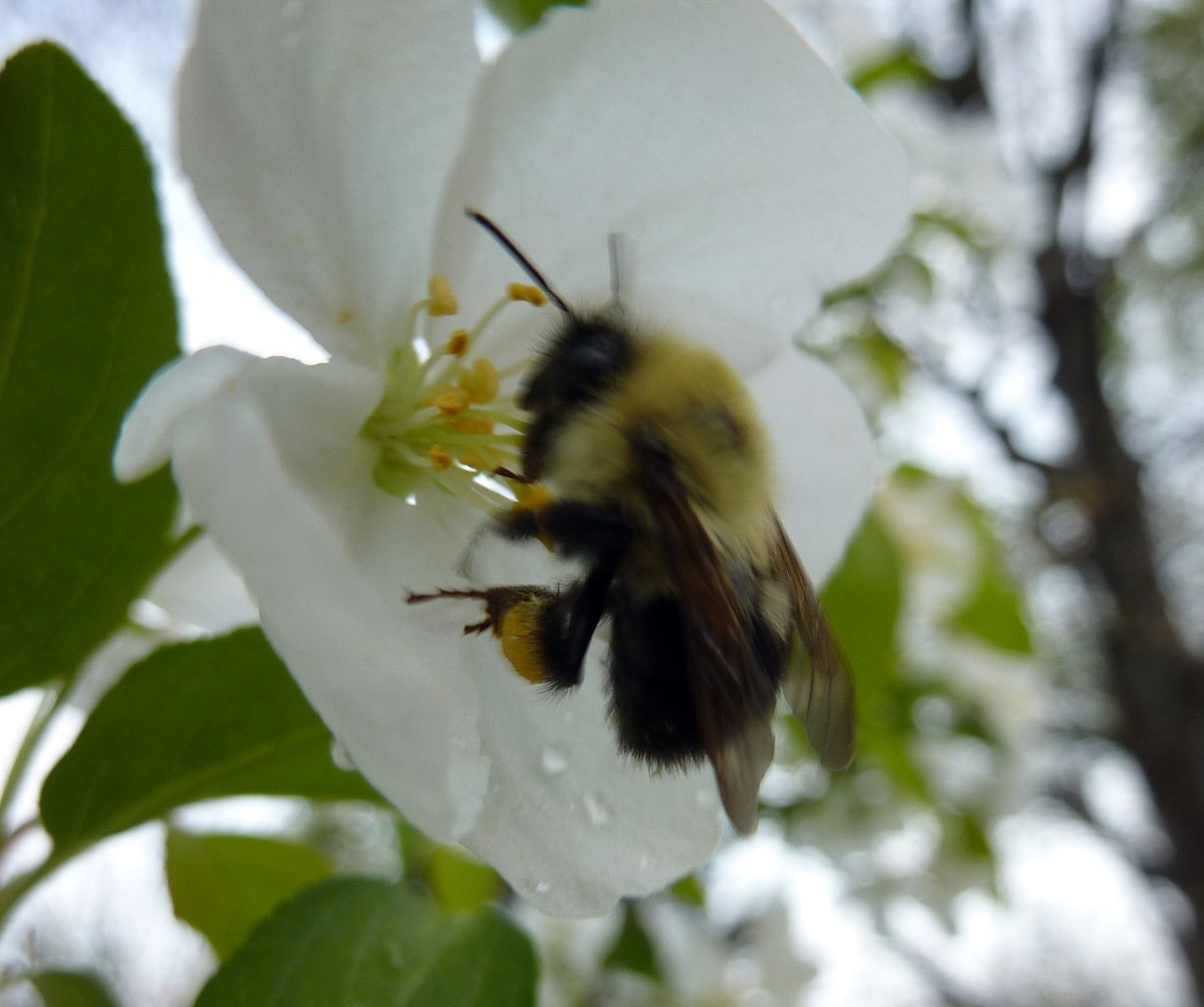
My friend tells me this is a worker bumblebee, most likely Bombus bimaculatus. This warm year seems to have sped up their cycle somewhat so it's a little early to see workers flying about in April. Even so, this is one of the shorter lived species, with hives normally petering out in July. They make their reproductives and the colony soon falls apart for the year leaving loan males and young queens out in the wild waiting until the end of summer, all of autumn and most of winter to pass before starting a hive of the own. I'd be curious to know if this year's hives grow larger than usual or perhaps makes reproductives sooner than normal.

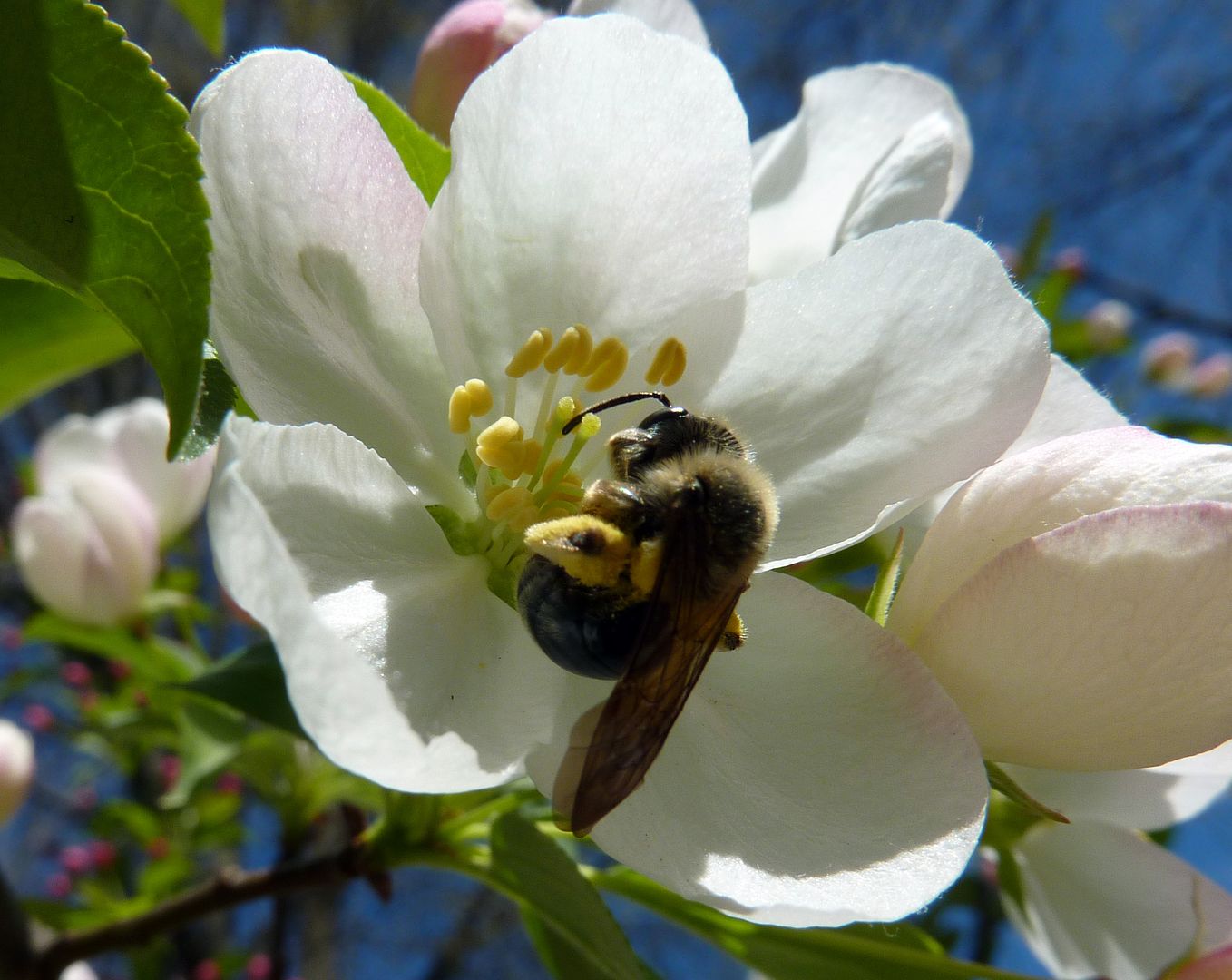
Osmia lignaria, The Blue Orchard Mason Bee, is one of the few bees I can identify on my own. I believe the reason might be because it's somewhat unique looking. This is a type of Mason bee which lives in preexisting, tube shaped, cavities that only have one entrance. That sounds like a long list of requirements but the structure occurs naturally in nature all the time: wood boring beetle grubs emerging from a tree, or last year's hollow stemmed herbaceous perennials for example. 

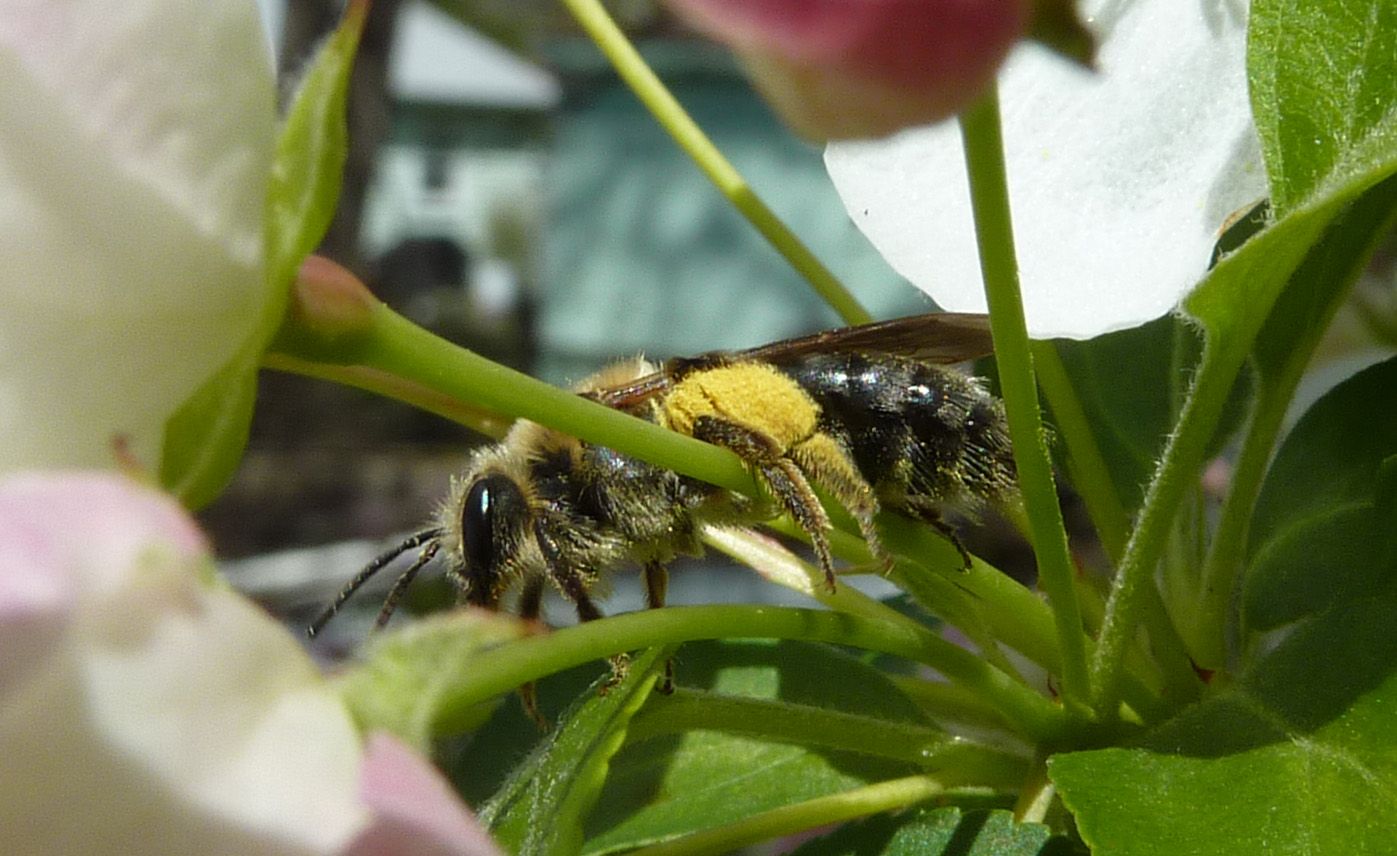
This Andrena sp. is a type of mining or digger bee. Both common names work as they nest underground no matter what you call them. Unlike Mason bees they collect pollen on their legs, while Masons store it under the abdomen. I'm not sure why this is though perhaps it has something to do with digging requires thick sturdy legs with hairs to aid in moving the soil. These same hairs likely double as pollen collectors.


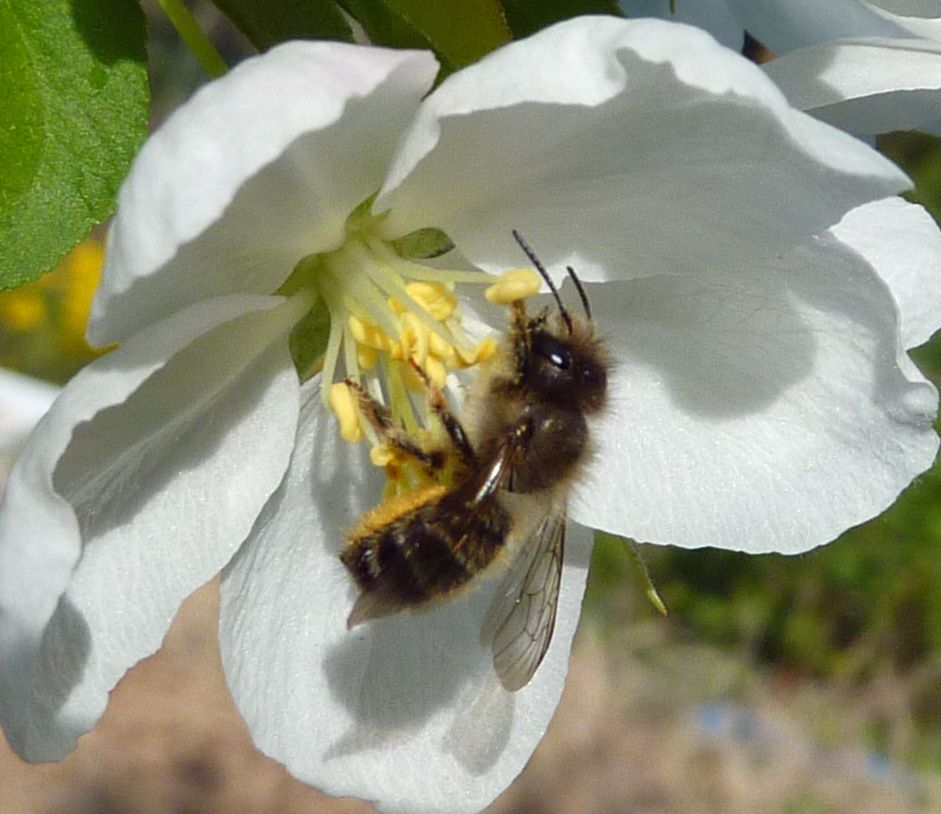
Osmia taurus, an introduced species that's displacing some of our natives. Because of this and other introduced mason bees, most experts seem to be on the fence about recommending Mason Bee Tubes (such as those sold by Knox Cellars Native Pollinators). The idea being such sites would allow the nonnatives to gain access to other locations they haven't reached. At the same time though they provide nesting for natives as well. Unfortunately this is a topic that needs more study. O. taurus is abundant in my area but I still have native species, and presumably 2 other species nesting alongside them.

A major reason to discourage nonnative bees is they sometimes specialize in pollinating noxious weeds. The Giant Resin Bee, Megachile sculpturalis, is an introduced species from Asia. It's basically an overgrown leaf cutter bee that goes right for plant resin instead of cutting leaves. It's also a more suited pollinator of the dreaded Kudzu, Pueraria montana. Kudzu used to rarely produce seeds as very few of our native pollinators were managing to pollinate the flowers, though I'm sure many were able to steal nectar from it.

As things leaf out we'll start to see real leaf cutter bees flying around. These nest in both underground holes and in preexisting tubes. They're set apart from digger and mason bees in that they cut slices out of leaves to make chambers, instead of using mud or simply burying their young. Over the summer I'll also be keeping an eye out for Squash Bees, Sunflower Bees, and Rose Mallow Bees. Also buzzing about now should be Blueberry Bees; all of whom specialize in flower shapes that their common names suggest.
Saturday, April 7, 2012

Woodland Poppy

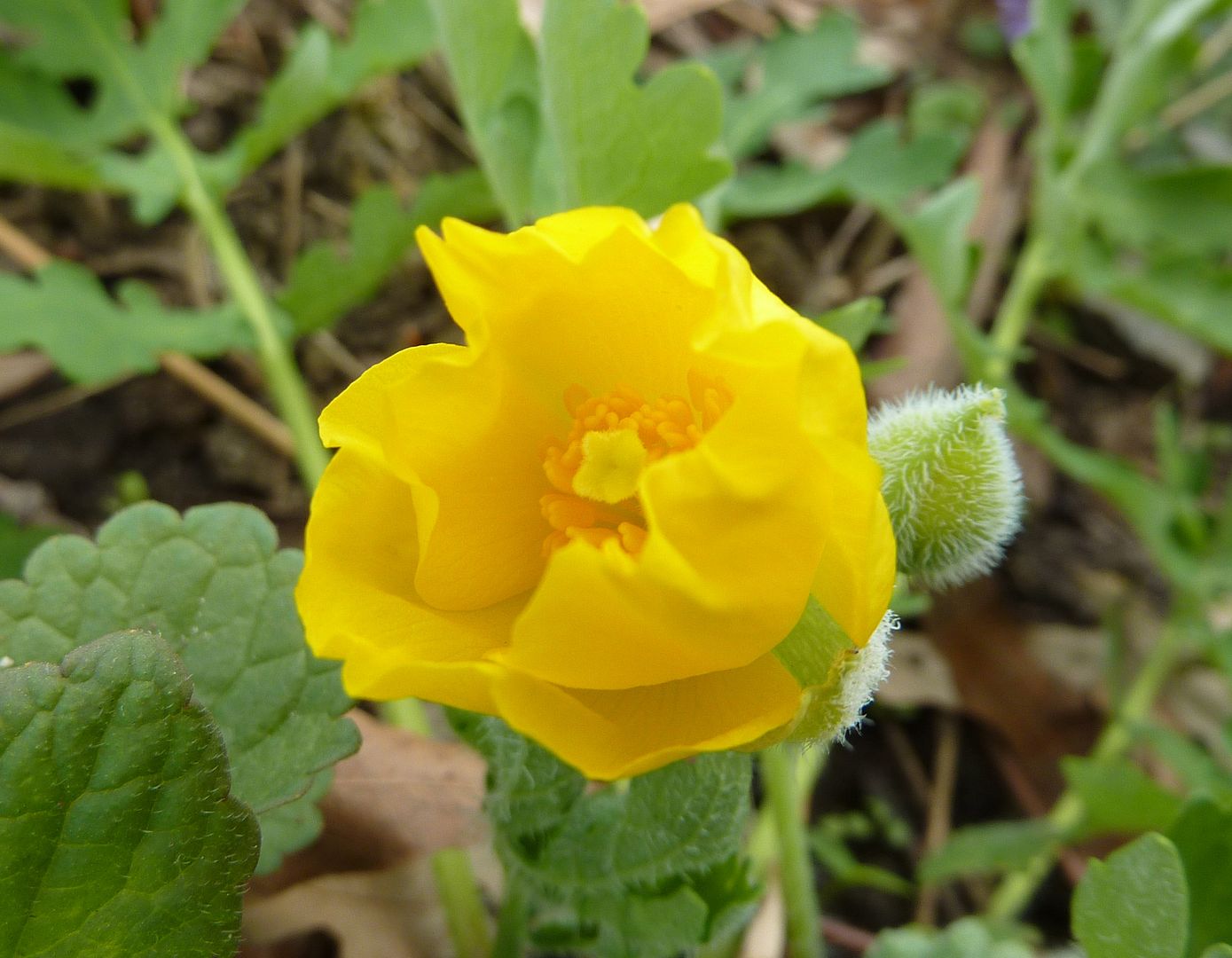
Woodland Poppy is flowering. This is also called the Celandine Poppy but I never understood that name. Scientific names are always best though and this one's refereed to as Stylophorum diphyllum. It's a shade loving member of the Poppy family that's every bit as pretty as its western counter part, the California Poppy, Eschscholzia californica.

This is also a perennial, where as the California Poppy I believe is an annual. I think the flowers look so much better when they're half open.

Once they open all the way they lose some of their grandeur in my opinion. Another issue is early on they flower fairly low to the ground. The lack of foliage and flower color really make this plant look like a dandelion from afar. Eventually more flowers will open though and the plant will reach 18" high. So they're an okay companion plant for most woodland plantings.

This is also not native to New Jersey, where I live. I've never let that stop me from planting a native before though, especially one that distributes it's seeds with the aid of ants.

Wednesday, April 4, 2012

Pollinating the Plum Tree

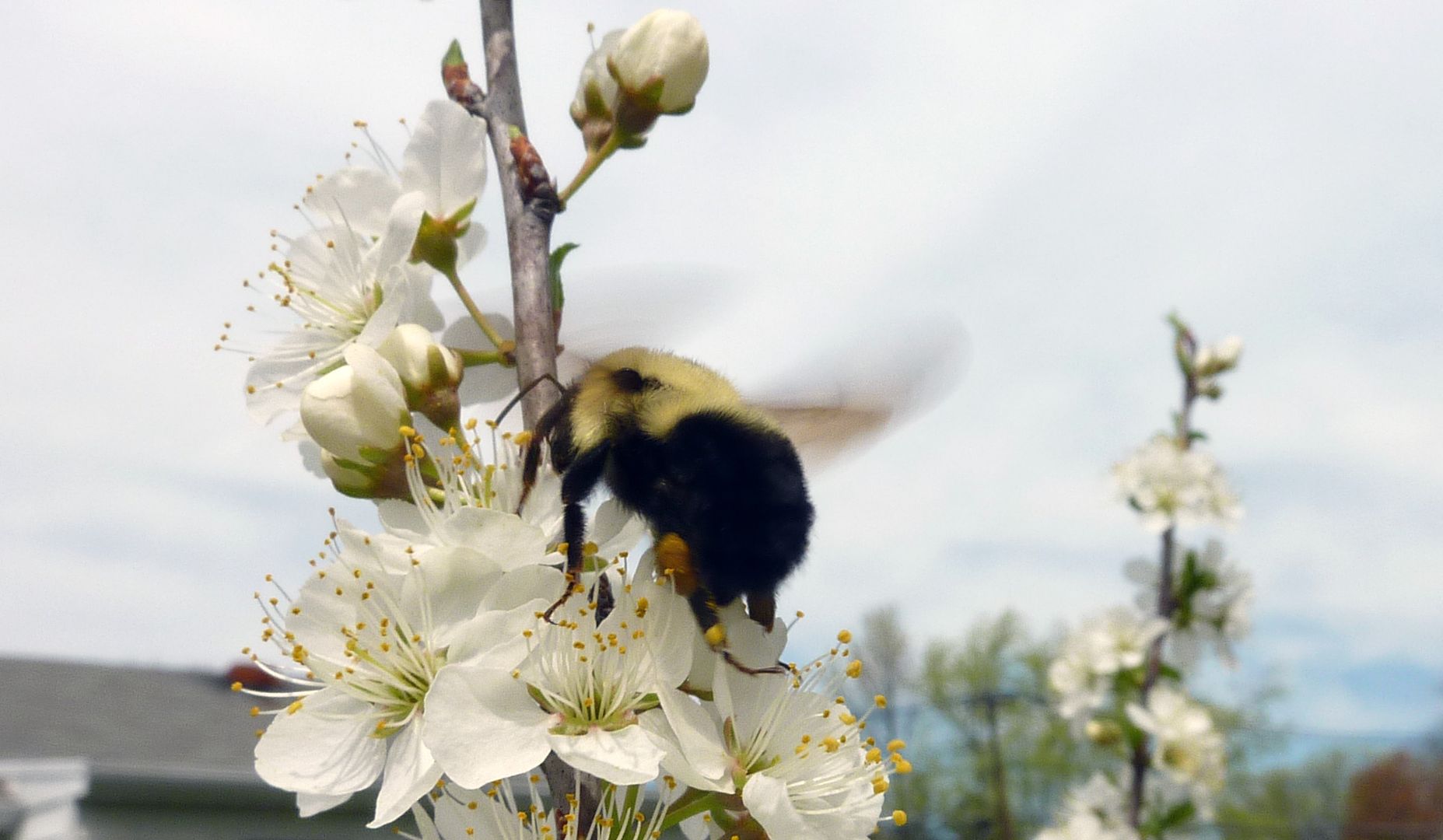
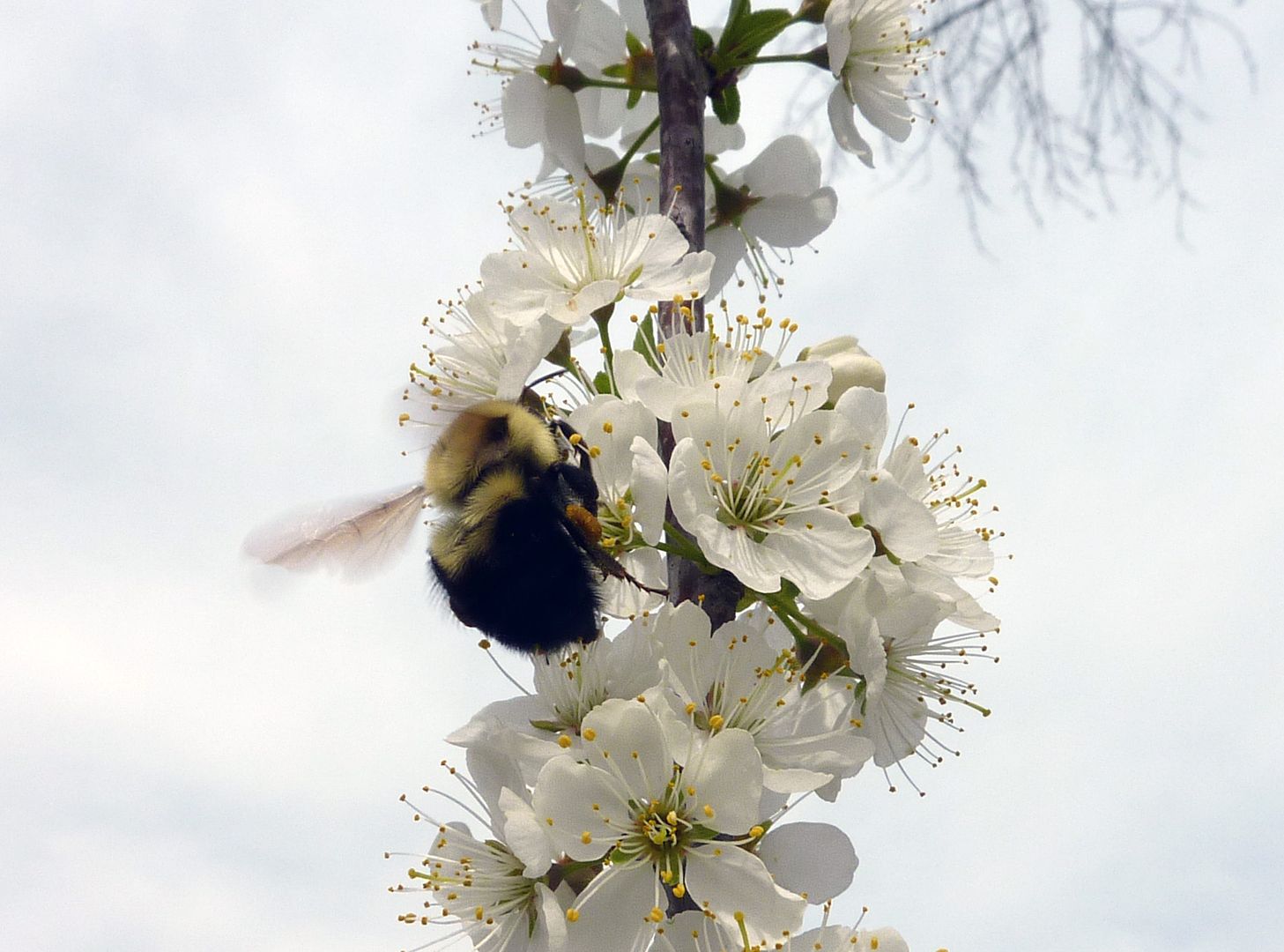
A bumblebee queen found the plum tree.

She was having a pollinate-a-thon running rings around each column of flowers.

Normally I'd try catching them but we're so late in the season already. The fact that she's carrying pollen means she's already committed to a nest site.

Tuesday, April 3, 2012

Native Plum Flowering

Our Native Plum is flowering in full force this year. I actually have 4 of these planted right next to one another. You're looking at two in the picture, then there's a pink flowering 5 in 1 peach and whatever tree, then next to that are the other two plums. I believe they are Prunus americana but I'm not sure of that. As it's is a Prunus though that means it's very beneficial to nature both in Lepidoptera host plants, and to wild life. The flowers have a great scent to them.

Thursday, March 29, 2012

Found a Box Turtle

Found an Eastern Box Turtle, Terrapene carolina, out in the yard last week. We don't have the best fences in the world and there's a small ditch I dug for drainage, so there are a few spots where she could have easily crawled on in. It is a girl, or so my mom tells me. Mom's always loved box turtles and she's determined to keep it. We built a turtle habitat and everything for it out under the pine tree. So I get to design a turtle garden.

An issue though is I understand female box turtles leave the forest around now to lay their eggs out in fields. The resulting babies live underground for the first few years feeding on god knows what. 


Wednesday, March 28, 2012

Eastern Redbud

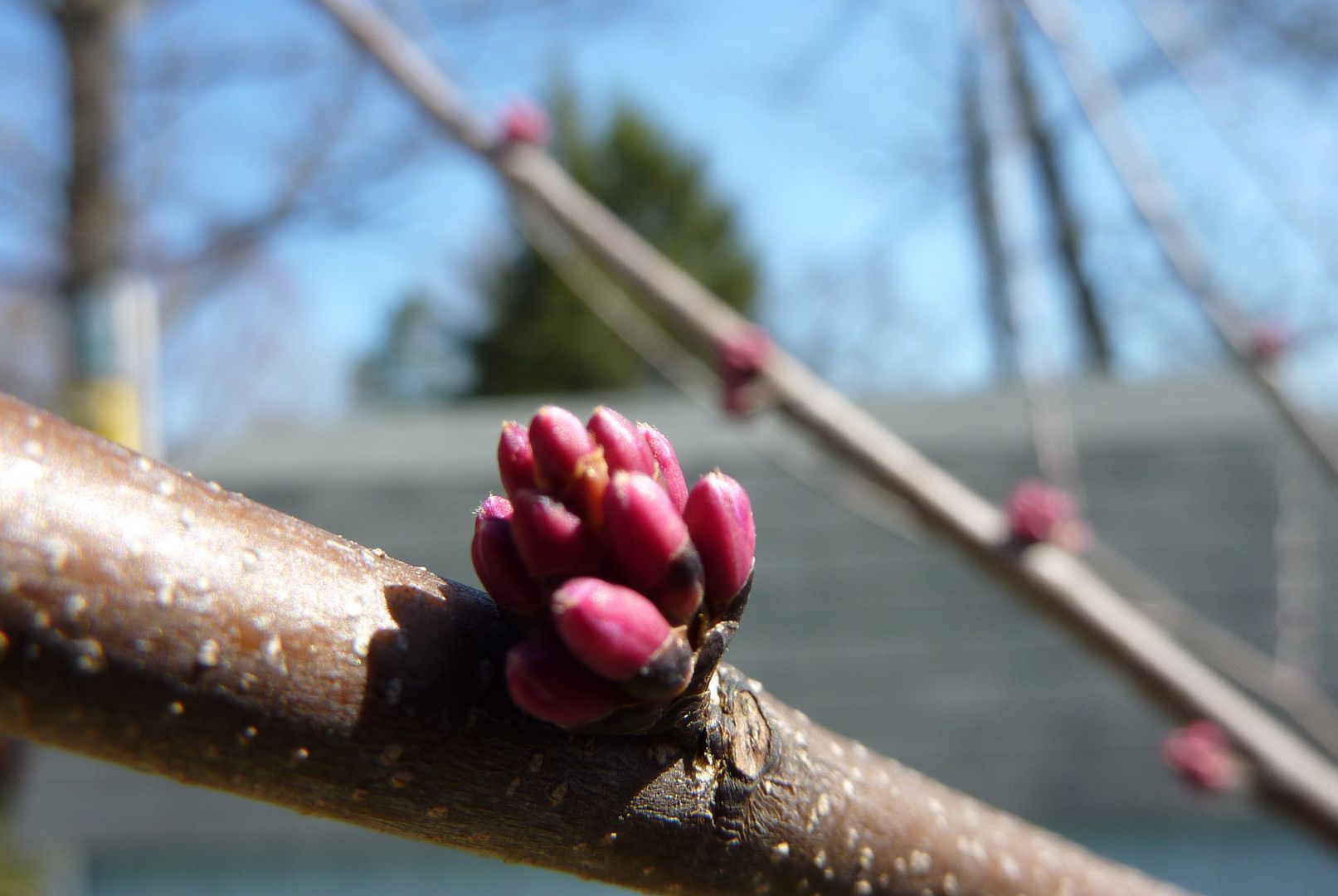
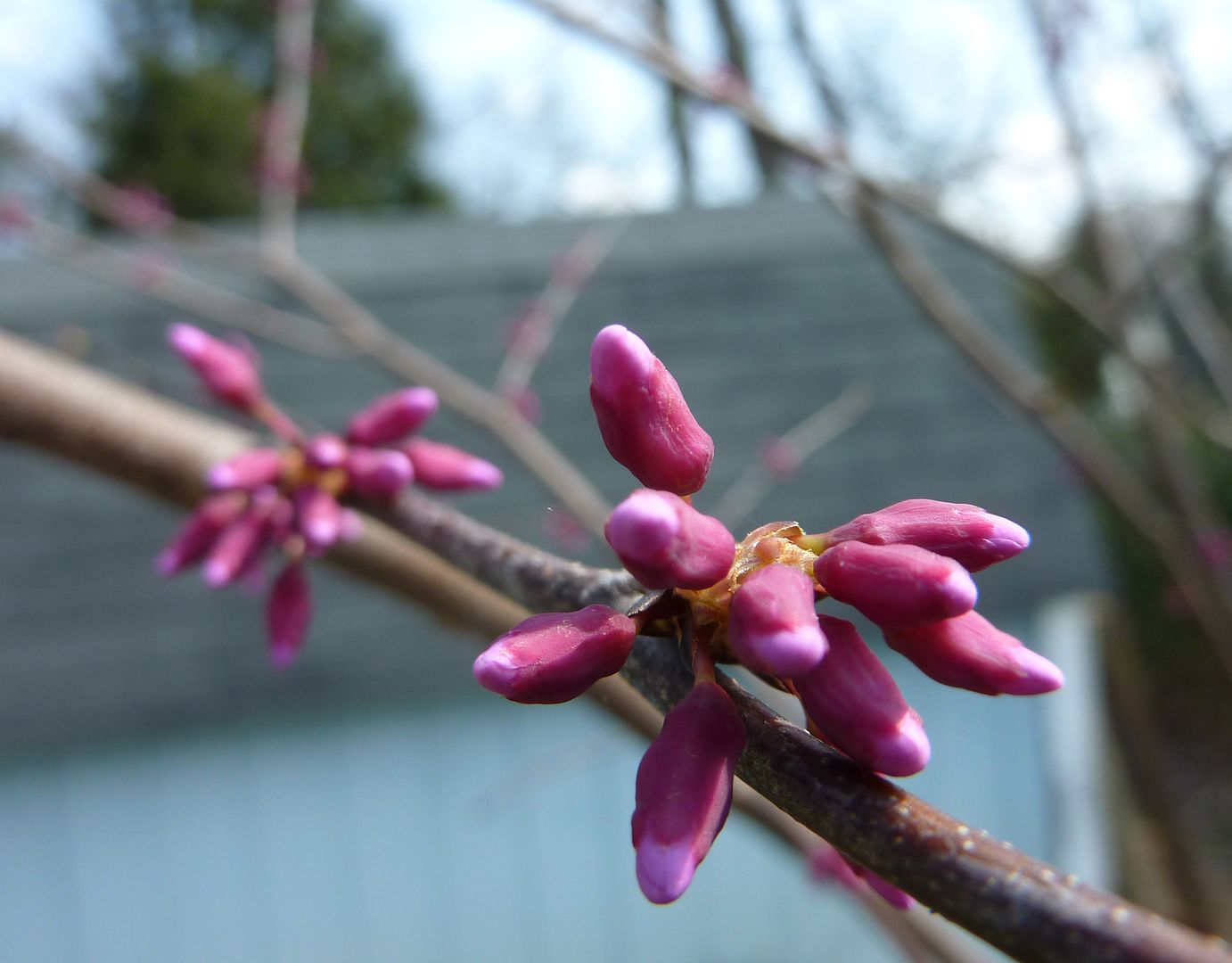
Eastern Redbud, Cercis canadensis, is blooming.

 The buds are red! Hence the name Red-Bud.

The flowers are pink!

I don't know how why people always complain that the Redbud's flowers are pink. It's because the buds are not the flowers!

Anyhow this was a sapling I got from the Arbor Day Foundation probably 4 or 5 years ago. Last year was the first year that it was as tall as me, and it grew tall over the past year.

Tuesday, March 27, 2012

Bad Dog

Scratching sound... 
Mom "Oh that's the dog knocking. I'll go let her in."

Me "Okay."

A moment later...
To the sound of our dog, Mandy, trampling through the house.
Mom "Oh My God! NO NOOOO!"
Me "What's wrong?"

Mandy found the remains of a wasp nest from last year and through it was a Frisbee. After calming mom down I assured her all the wasps would be dead at this time of year. And also that I saw it way up in a tree over the winter so there's no way anyone hit it with pesticide. Never the less we weren't about to let her eat the thing so we took it away from her pretty quick.

Wednesday, March 21, 2012

The Prairie War

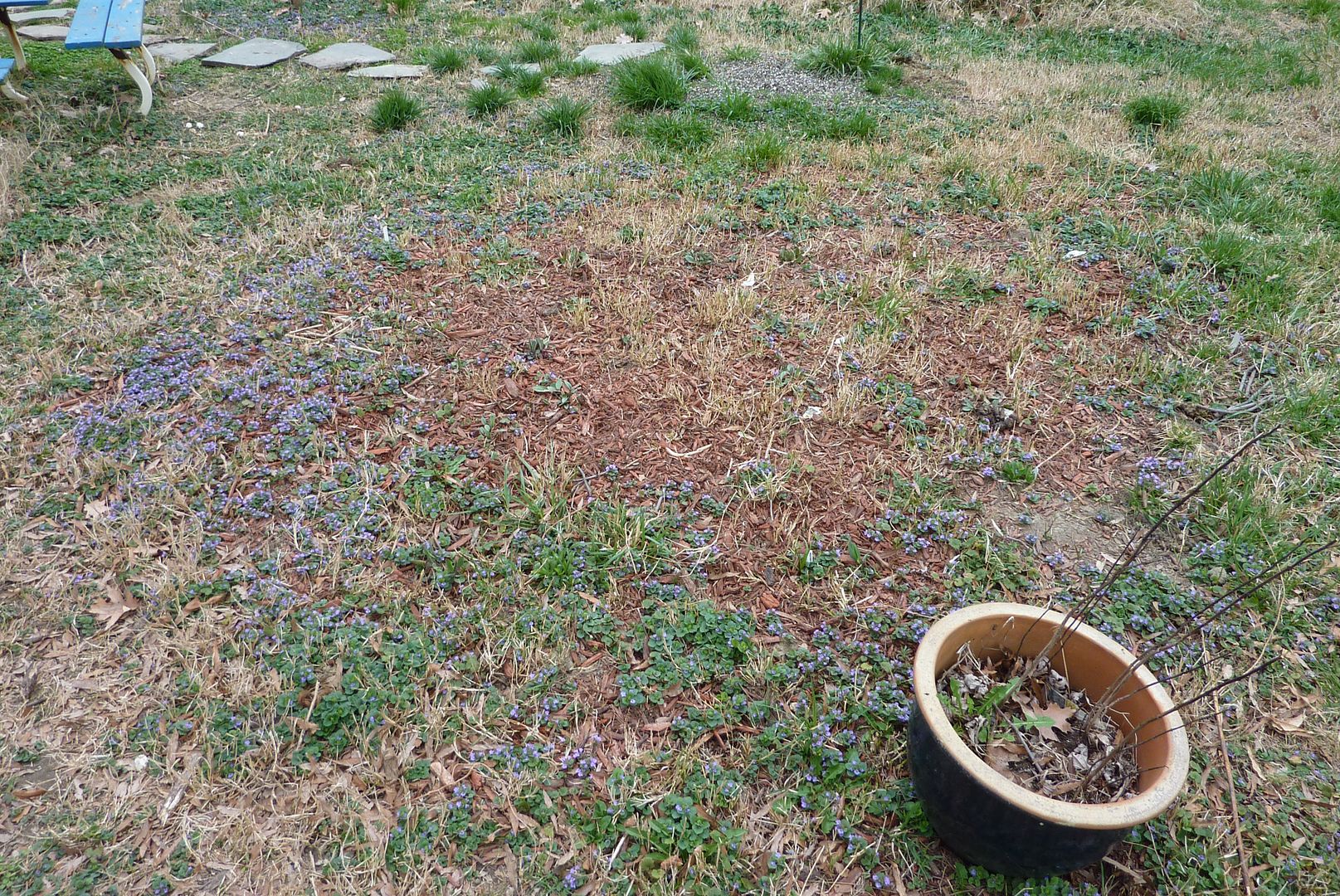
While it might not look it, the prairie is actually coming back to life. It's a little taken over at the moment by Creeping Charlie, Glechoma hederacea, which is the creeping plant with the bright blue flower. It's not native but I tolerate it because my honeybees like it. It's also very easy to weed out as it has a shallow root system. 

So far everything except the Milkweed seems to be emerging. Here I think we're looking at Blue False Indigo, though it's a little hard to tell. The Spiderwort looks like it's reseeded, some of the Asters are coming back aggressively, the coneflowers are sending up their first leaves, and it won't be long before the Jacob's Ladder will be flowering.

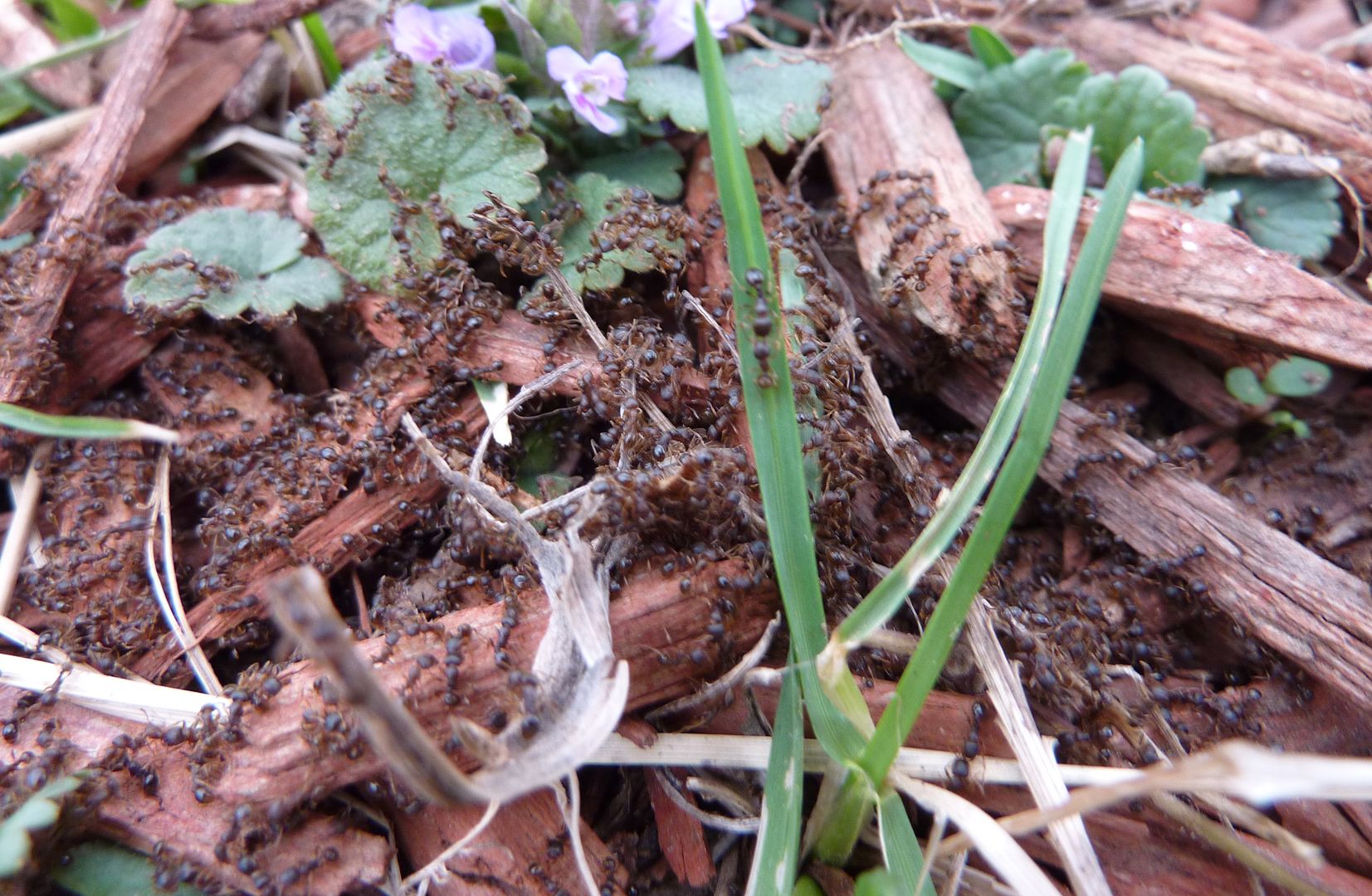
Something that shocked me was the Pavement Ants have already started fighting over territory. They're nonnative species that's "invasive" in that it displaces some species of Formica. Not the worst species in the world and they're almost control their own population thanks to wars like this. Their colonies can get huge, 80,000 or so, and they fight over sunny exposed areas to incubate their brood and speed up worker production. Often the losing colony is destroyed or crippled for the season.

So hopefully once all the native plants here in my monarch meadow get growing they'll be able to better fend off these foreign invaders.