Thursday, April 30, 2009

Food on the Tree


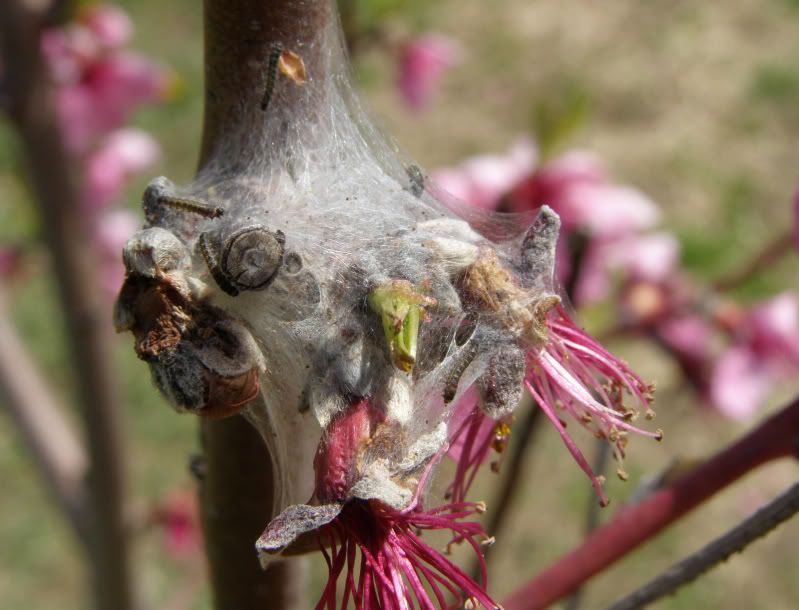
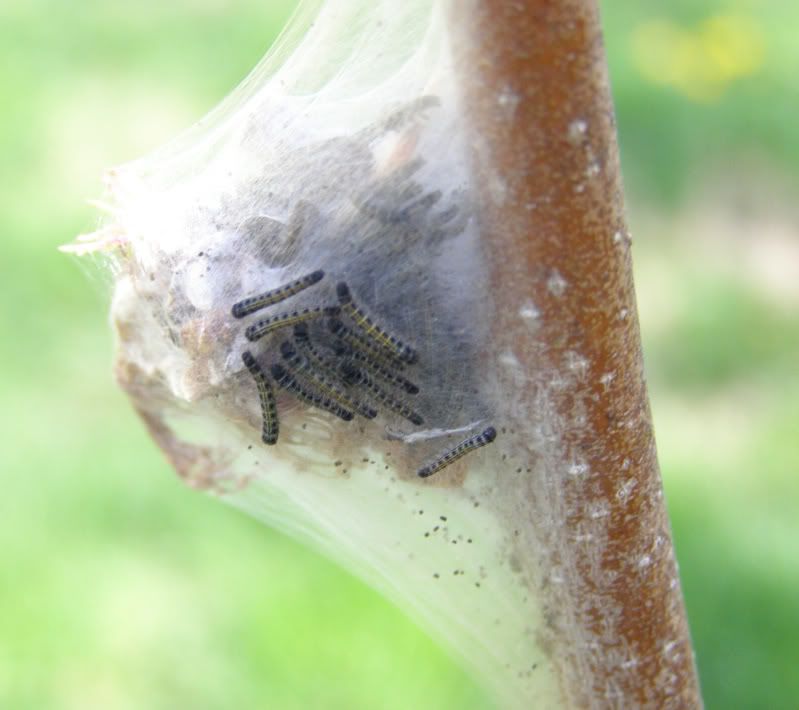
The caterpillars are still there but their numbers have diminished dramatically. The original 400 or so are now down to 10 or 20. I have seen some leaves nibbled up but it's nothing compared with the rest of the tree. Now that the ants have woken up I"m happy to see Formica, Crematogaster, and Camponotus species all roaming around the tree. Mostly they're sipping at the fresh sap from the newly emerging leaves. Though I haven't seen them going after the caterpillars I can't say that I've seen any caterpillars outside of their protective tent. I have not been able to get a good picture of any of the ants on the tree. Mostly Formica are all over it in the day, and Camponotus replace them at night. Crematogaster only have a forager now and then, but nothing special.


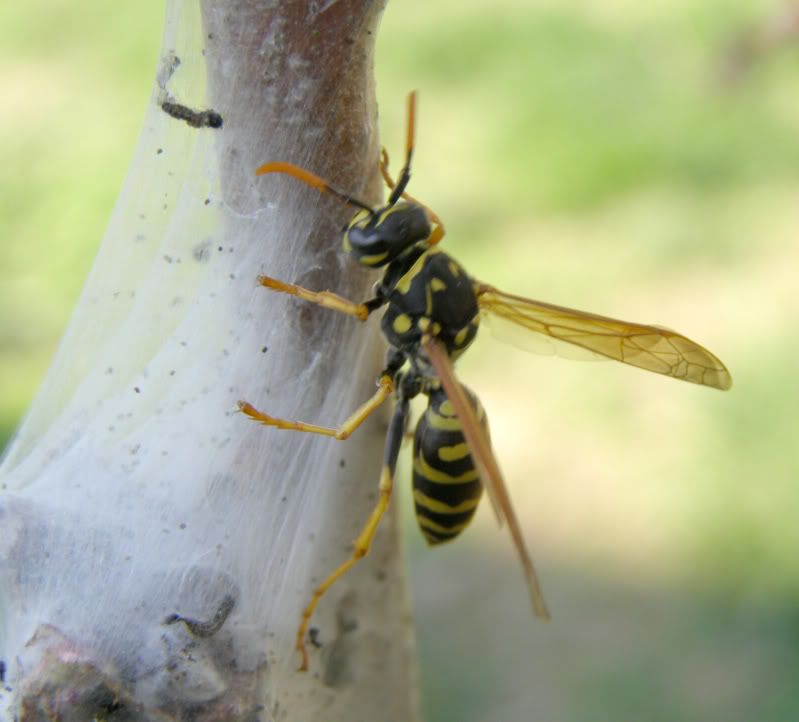
A wasp was also probing over the tree and attacked the web a bit. One caterpillar on the outside was attacked but then ignored. Probably to small of a meal. The wasps know where the nest is though so they'll be back to get any of the big ones.

The end result so far is besides a few flowers, less than 10, of probably 200 blooms these caterpillars haven't done any damage. I don't know if the cold night we had will effect the fruit at all. Assuming the frost didn't effect the bloom I don't see any reason why I won't get some fruit. Though it wasn't the most impressive bloom in the forest I saw Honey Bees and a few species of Mason Bees working the flowers.

Tuesday, April 28, 2009

They Grow Up So Fast


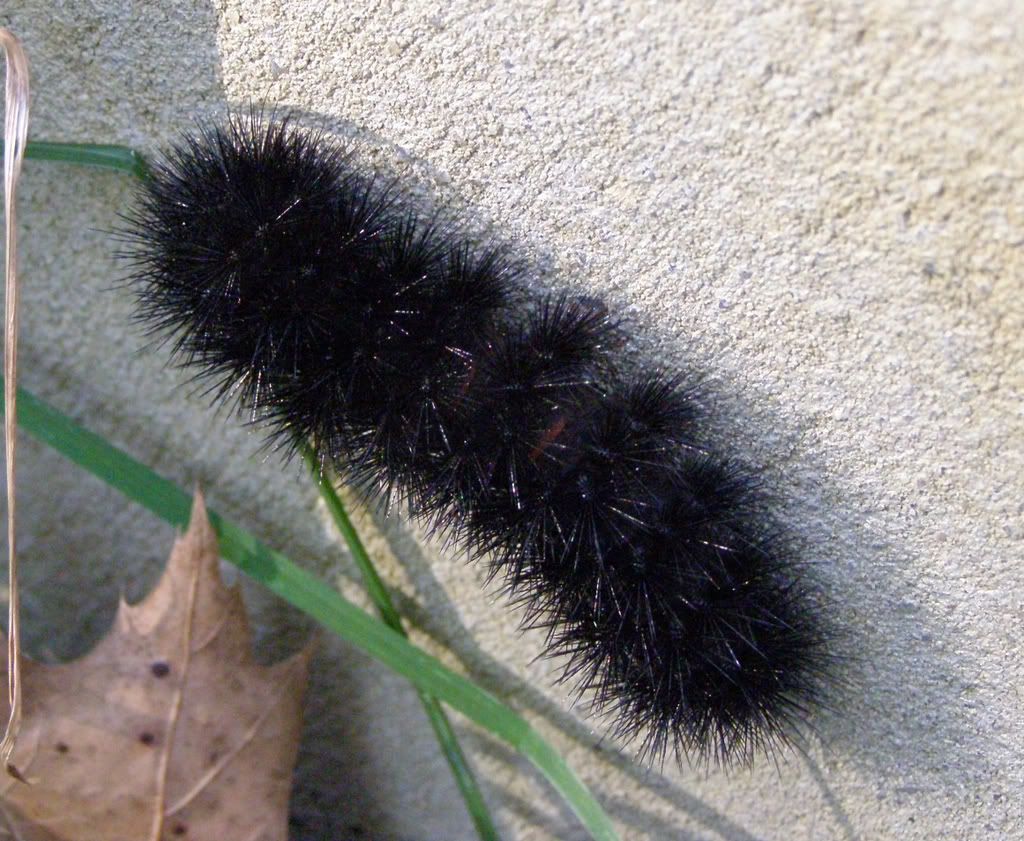
This is the Giant Leopard Moth, Hypercompe scibonia, and this photo was taken last fall in November or there abouts. I always assumed they made cocoons and over wintered but boy was I wrong.


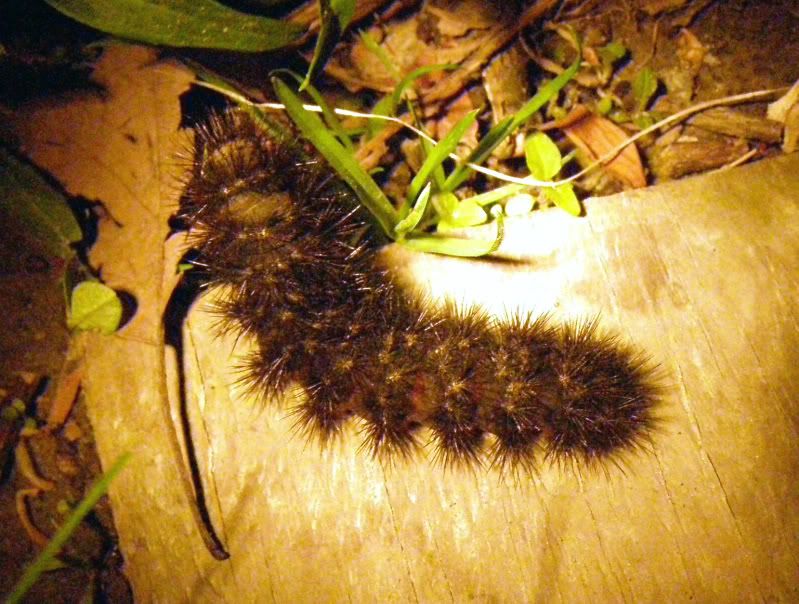
Here is probably the same Giant Leopard caterpillar in a picture I took earlier this week. It's about 5 inches long now! They're commonly seen in the fall along with Woolly Bear caterpillars, but now that it's spring their grazing has turned nocturnal.


According to "Caterpillars of Eastern North America" by David L. Wagner, I read that common food plants are broadly popyphagous, many forbs or woody plants, including cherry, dandelion, oak, plantain, sunflower, violet, and willow. Here in the photo it's hard to tell but it is eating a dandelion. During the day he probably takes refuge in our wood pile.

Monday, April 27, 2009

What's Flying Now

A brief heatwave here has taken the east coast, or at least where I live. The past few days have been ungodly humid and hot out, about 85 degrees. And it's this that really triggers the Camponotus to fly. C. americanus C. pennsylvanicus, and C. subbarbatus are the only two confirmed sightings so far. Considering all of these ants have black males though it's likely other Camponotus are in the mix.

Lasius interjectus is also flying. I'm at a lose with this one. Ya see it's a parasitic Lasius... but usually they fly in the late summer and fall time. Mostly the fall though right after their host species L. neoniger, and L. alienus. This sort of makes sense, except they're flying in November, only weeks away from the cold of winter. Is it so hard for L. claviger and L. umbratus to simply over winter their queens? This isn't a matter of home heating causing a nuptial flight, this is the time of year when L. interjectus fly.

The only reason I can think of for this different mating season is method of attack. L. umbratus and L. claviger fly in the late summer and fall time and over winter on the surface. I find them walking around in the spring time and also find them mixed in the soil. What I'm thinking is they densely cover a neighborhood and some find host queens of L. neoniger and L. alienus and take advantage of their banding together behavior. Lasius queens regardless of species will happily get along with one another. The parasites actually rely on this fact and somehow sway the workers to favor them.

Because the host species here would already have their workers it's now it's likely Lasius interjectus are more able to deal with colonies that already have workers. Maybe even adult colonies.... or even is a parasite of L. umbratus or L. claviger. This is all theory though so let's move on.

Two genera I did not expect to find this year are Temnothorax, and Myrmica. Normally I catch Temnothorax in mid summer, and Myrmica in early Fall. Both of these species are small. This is normal for Temnothorax but the Myrmica was only a milimeter larger than a Tetramorium worker, 5mm total. It says a lot about my eyes I think that I'm able to look down where loads of Tetramorium are foraging and pick out two ants that look incredably similar.

Well that does it for now. As May rolls I expect more Camponotus species to start flying. Colonies of Brachymyrmex have alates in them but I don't expect to find them flying. I may come across a queen however.

Solenopsis species, Fire Ants, have been flying for a while but might be entering their first break. When they do stop they'll take something like 4 to 8 weeks off and start flying again or whenever able. I think the same applies with Pogonomyrmex and Myrmecocystus too. They'll also be flying again over the summer, but probably not the same species.

The next major flight in my opinion would be that of Tetramorium. The earliest they fly up where I am is the very last week of May but June is more accurate. If you're down south though then the might fly a bit earlier.
Friday, April 24, 2009

Mt. Cuba Center Lake


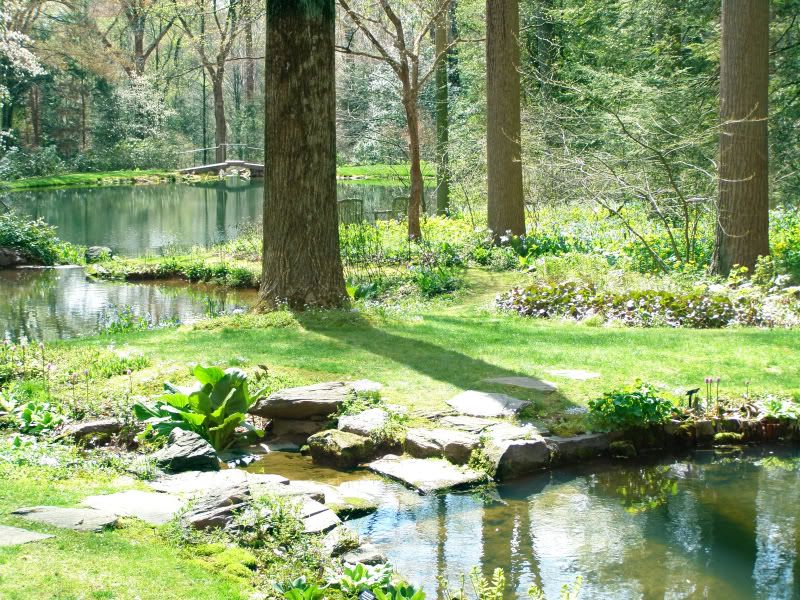
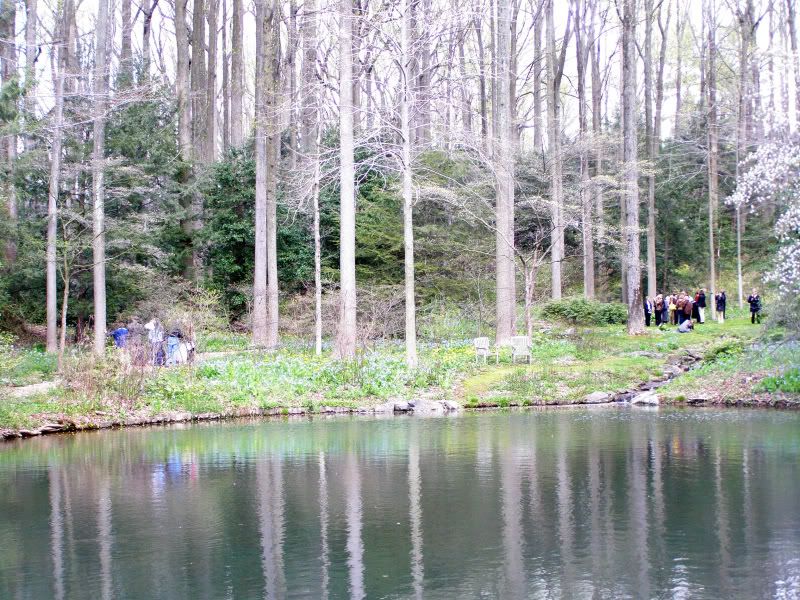
Yesterday I went to the Mt. Cuba Center (pronounced Cube I think,) to see the Trilliums. This post isn't about that but I will talk about them later. The Mt. Cuba Center is a very large native plant garden, but I should point out not all the plants are native. Probably my favorite part of the garden was their lake/river. It is a man made structure but they do a fair job of keeping it natural.


Painted Turtles sunbathing on a log.


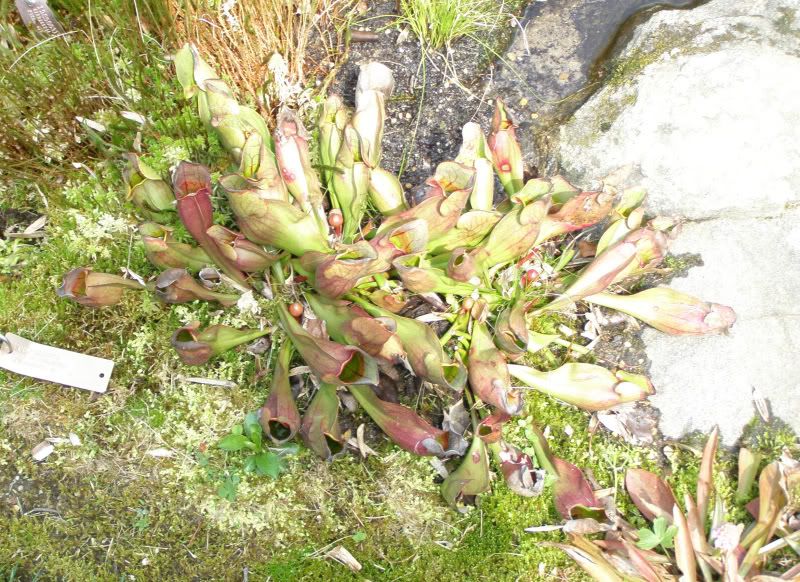
Along the sides is a barrier of moss that is maintained. Bug eating pitcher plants lined the sides.

Wednesday, April 22, 2009

Happy Earth Day!

I'm going to start with a list of ways, easiest to hardest (about) that you can help save the planet. Some of these might only apply to Americas but the concepts are still the same.

1) Go see the new Disney film "Earth" which is out in theaters today. Disney has promised to plant a tree for every customer who goes to see this film opening weekend. So you have until the last showing on Sunday (April 26) to see this movie. Although the trailer made the movie out to be stock footage of animals I assure you almost all of those scenes were used in the trailer and there's still 6 reels of stunning visuals to behold. Much of it has been shot specifically for the movie. Go see it.

2) Donate $10 (I think) to the Arbor Day Foundation. Doing this not only supports the planting of tree but they'll also send you 10 saplings in the mail. When given the choice, you should always go with trees native to your region. This way insects will find the most use from them and this in turn benefits migratory birds and so on. The only real issue I recall having with this place is they don't monitor what varieties of the tree they give out. So if you keep the Dogwood saplings for example they might be our native Cornus florida, or the imported Cornus kousa which is useless to insects of North America. However, it's better to plant a tree than to not as it will reduce your carbon footprint. Most of the tree they give out are beautiful and beneficial.

3) Plant a garden. Anything that reduces the size of your lawn is greatly beneficial as lawn mowers use way more gas than cars do. Fruits and Vegetables, regardless of their origin benefit you because you're getting some much needed vitamins in your diet. Plan for the future and plant a fruit tree and grape vine. Though you probably won't get a lot of fruit off of either for the first few years, compare the cost of the fruit to the cost of the tree. Varieties of Sunflowers will benefit pollinators and you'll start to see Gold Finches and maybe other birds as well. There are loads of options out there so start taking advantage of them. Concord Grapes, Vitis labrusca, is native to the America, and very disease resistant. Blueberries, Cranberries, and Huckleberries are also native and do well here. Blueberry bushes can be planted right in the landscape though do require some acidity and good drainage in the soil.

Well those are my three for the day.

Monday, April 20, 2009

Mevio Upgrading

For the past week now Mevio has been upgrading their website. This happens off an on and it annoys me to think people can't watch the new shows of Ant Chat.... and that I can't upload any new ones until they stop doing this for a day or two. I'm finishing up one show and it might be done by this weekend. My regular job, needing to replace tires on my car, and going away are all things preventing me from finishing it in a timely manner. I am determined to get it out before the end of the month though. So I don't want anyone to think the show is going away anytime soon. But if you're subscribing to us on iTunes you might see a little "Error" icon whenever your podcasts update.

Saturday, April 18, 2009

Don't Fall In


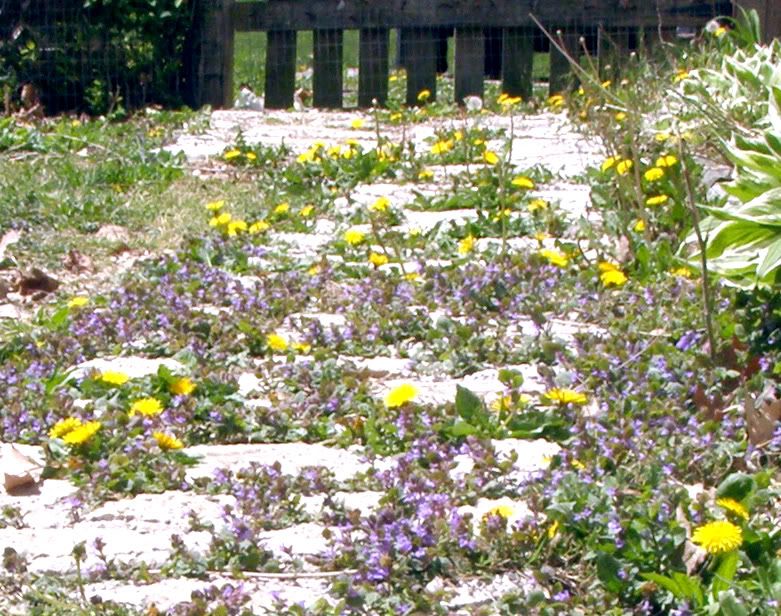
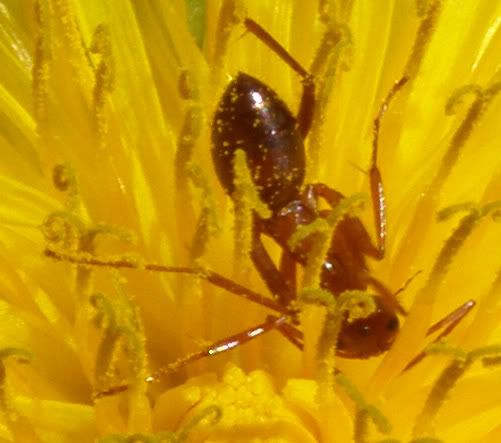
It was a beautiful day outside. The bees were all over the nesting blocks but I can't say that they were the only ones in the action. Ants were all over legs deep in pollen. Formica, and Tapinoma were both in dandelions. Considering the parts the ant have to tough and how covered in pollen they are, it's likely that they are pollinating the flower. Not that these flowers need any help with pollination from ants. Just about any bee will work the flowers.


This little girl was licking nectar out of a creeping mint that is All Over My Yard! I tolerate both because they're worked by bees. The mint plant does get in the way in the garden though but at least it looks pretty in our walkway. I couldn't get the color right though but they are more blue than seen below. Dandelions are also a native plant and really I think the only weedy part about them is the seeds that follow the flower. I actually think that Dandelions might be an ideal plant for captive colonies. Pollen is fed to honey bee larva and I suspect ant larva may find nourishment from this too. The plant could be dead headed after flowering to promote blooming.


Monday, April 13, 2009

Woodland Wildflowers


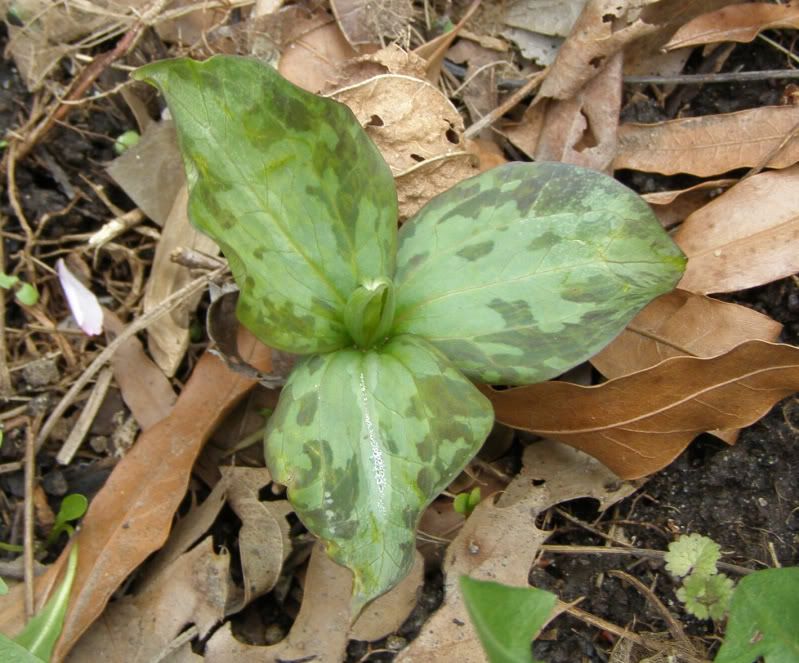
Well that didn't take long. One of the Trilliums is flowering at a very low height. I don't know the species name to this one in particular but it's only 3 inches tall, and that's a flower bud on it. I know it's red flowering one though but we'll see how true that is. Color can vary with Trillium species though one color does seem to dominate. Assuming it's pollinated though I should get some Trillium seeds to test around and see what ants like them or just see if/how they distribute around the yard.

Other Trilliums I have are a bit taller than this one, but don't have the flower bud yet. This is fine I think though because they might still produce more leaves (series of 3) before flowering. Or the flower bud is under or to the side of the leaves and I haven't noticed it yet. In either case I'll be planting more trilliums for years to come until I get a continuous bloom.


Bloodroot is also coming up nicely. However I don't know if it will flower this year. All the pictures I see online show them flowering before the leaf unfolds. As a landscaping plant I'd say this could be treated and planted anywhere you'd think a Crocus would look nice. They bloom a bit later though. And as with the Trilliums they are distributed by ants.

Hopefully all these ant plants will pay off and I'll get some pictures of ants obtaining obtaining the seeds. These plants might even mark where some ant colonies are.

The Lupins are Coming! The Lupins are Coming!

Well I have my seeds for the year planted. Peas, Tomatoes, Parsley, Fennel, and probably other plants I'll buy as starters later on. And I wanted to devote an entire flat to Lupinus perennis which I'd bought 1oz of from Prairie Nursery. It's actually a pretty plant as well a host plant to one of those endangered butterflies I'm always going on about. It doesn't flower it's first year and I don't have any pictures of it otherwise so here is a Google search of Lupinus perennis.

So I have the flat ready when all of a sudden I douce the entire 1oz packet of seeds with the garden hose. So that's about two hand fulls of seeds (maybe a few thousand) that are all about to grow. Granted I was going to plant them all anyhow, but it would have been nice to have some spare laying around. So now I have two flats, and several flower pots, some belonging to my neighbors without their knowlage, devoted to this one wildflower. I'm sure the endangered butterfly will be thrilled.

So the point here is, depending on how many of them germinate, I might be selling or giving away a lot of this plant in the near future. We'll see what happens. The seeds might require chilling for a few months. If only I had another oz of seeds incase none of these grow. Oh well, I tried. If nothing grows in a few weeks I'll attempt chilling the flats, but I think I've seen lupins come up normally in some seed mixes.

Friday, April 10, 2009

Nectarine Flowers


Took some more pictures today of the bees working the nectarine tree. I notice that Honey bees have a much easier time flying around and visit far more flowers than the mason bees. But whenever the mason bees do enter a flower they come out completely covered in pollen. I think it's their weaker wing that prevent them from flying the great distances that honey bees do. I believe the smaller size of the mason bees allows them to reach more parts of the flowers too but we'll see who the better pollinator is. If nectarines didn't produce only one seed (I think) I might have marked what flowers are visited by what bees with ribbons or paint or something.


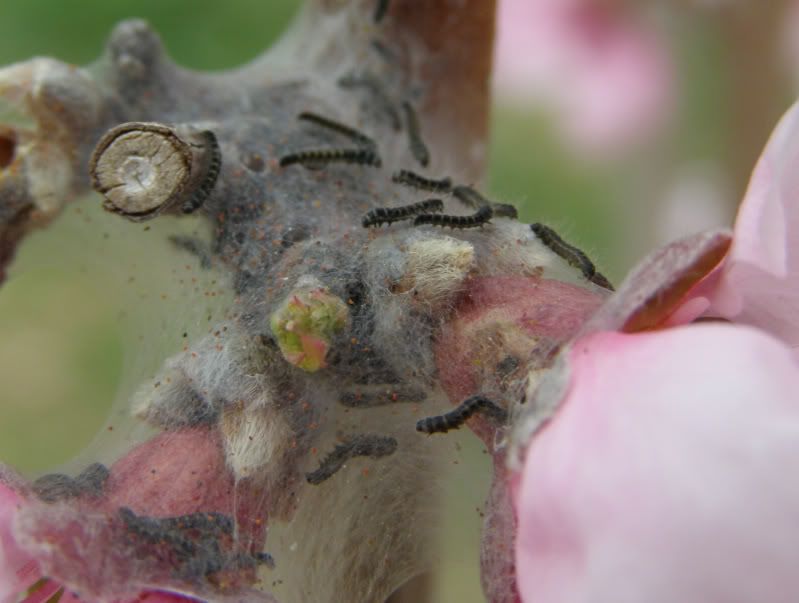
This is all that's left of the caterpillars and I'm wondering why I ever though they'd be a threat. I removed two clusters of them out of fear they might devour the tree. There were still quite a few groups of them left and lots that had spread around on their own. I don't know what happened to these other groups but there's only a few of them left. Because they're only on the one branch I don't think they're going to harm the end harvest if any.