Sunday, September 27, 2015

A Visit to Cape May, NJ

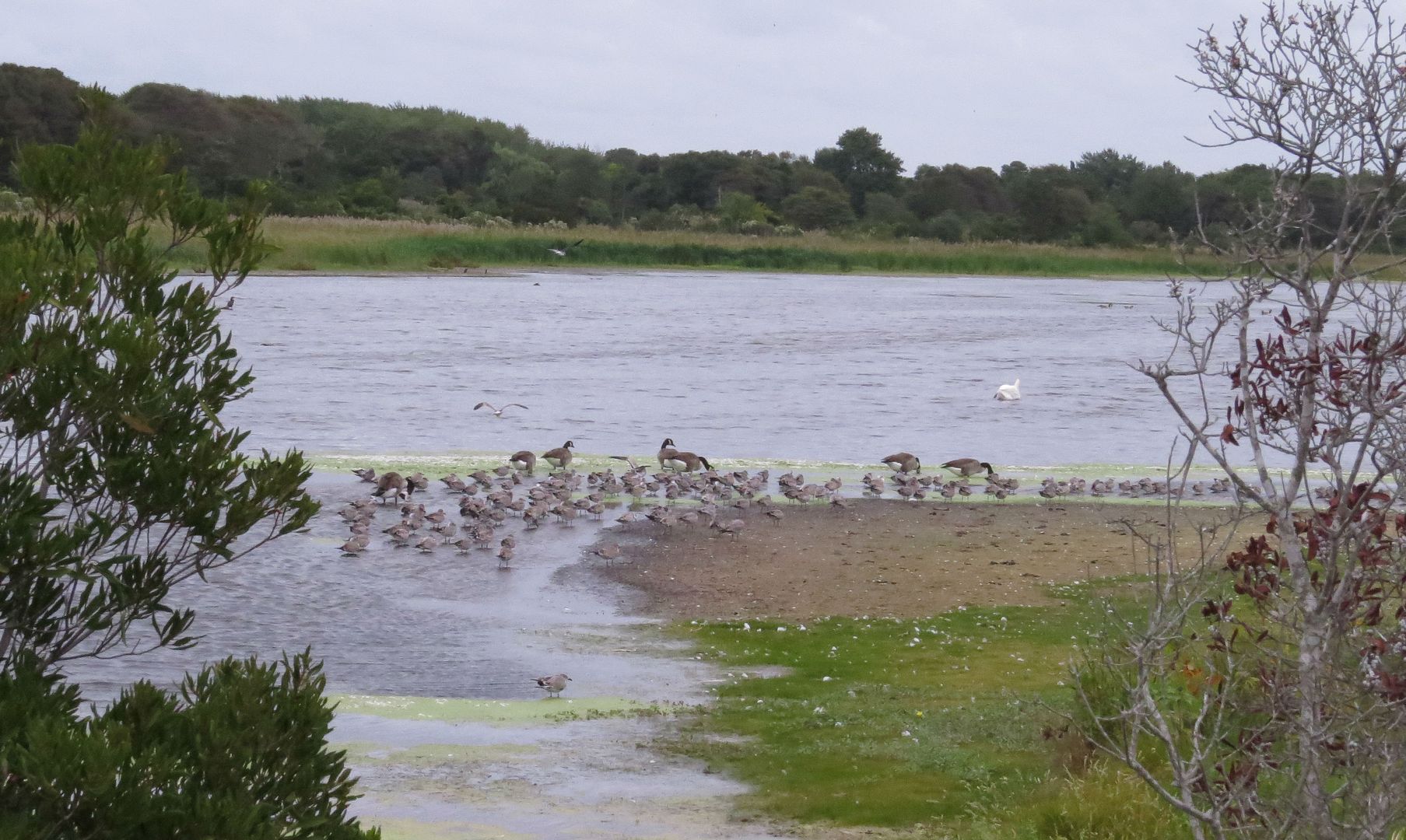
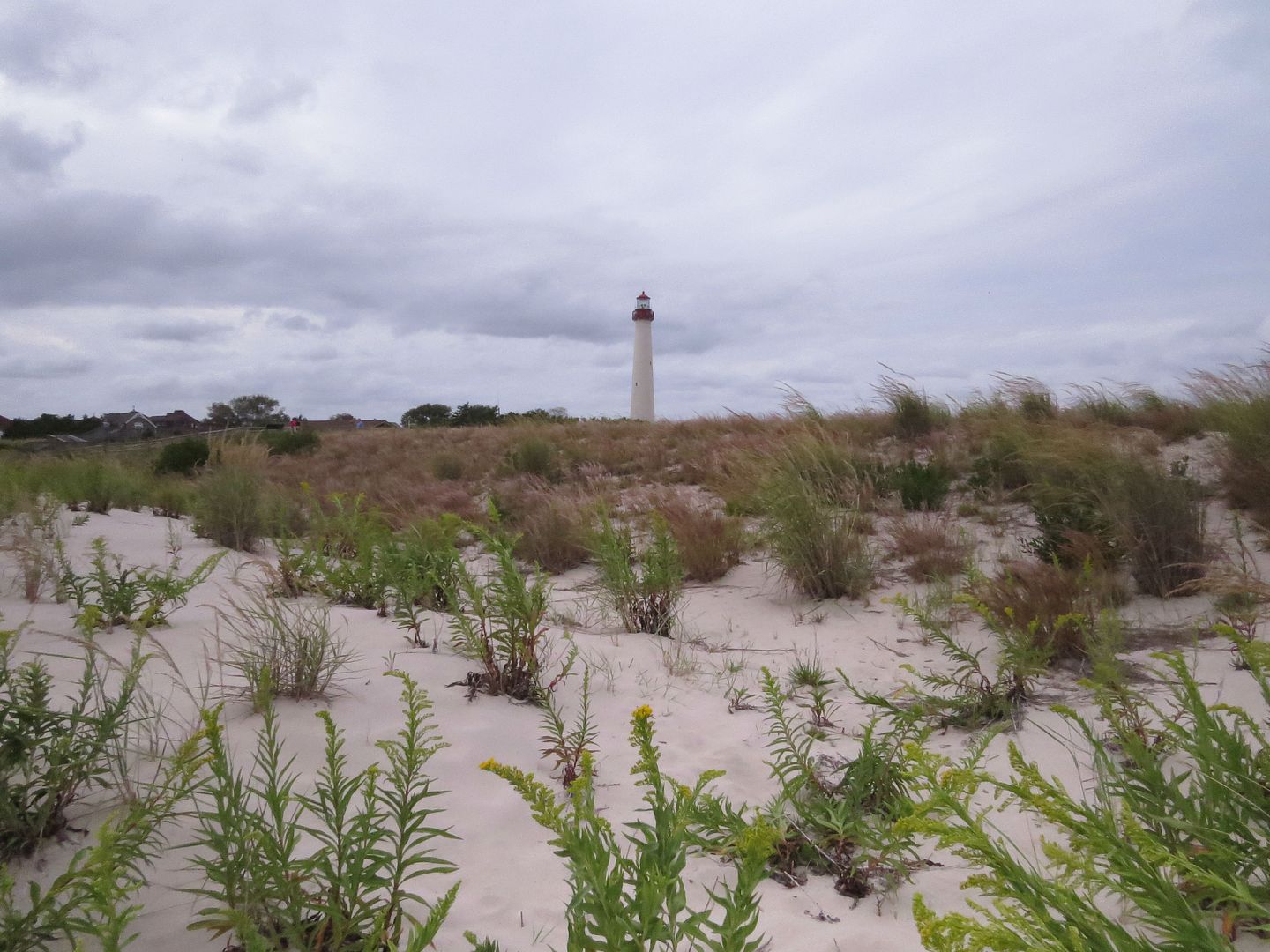
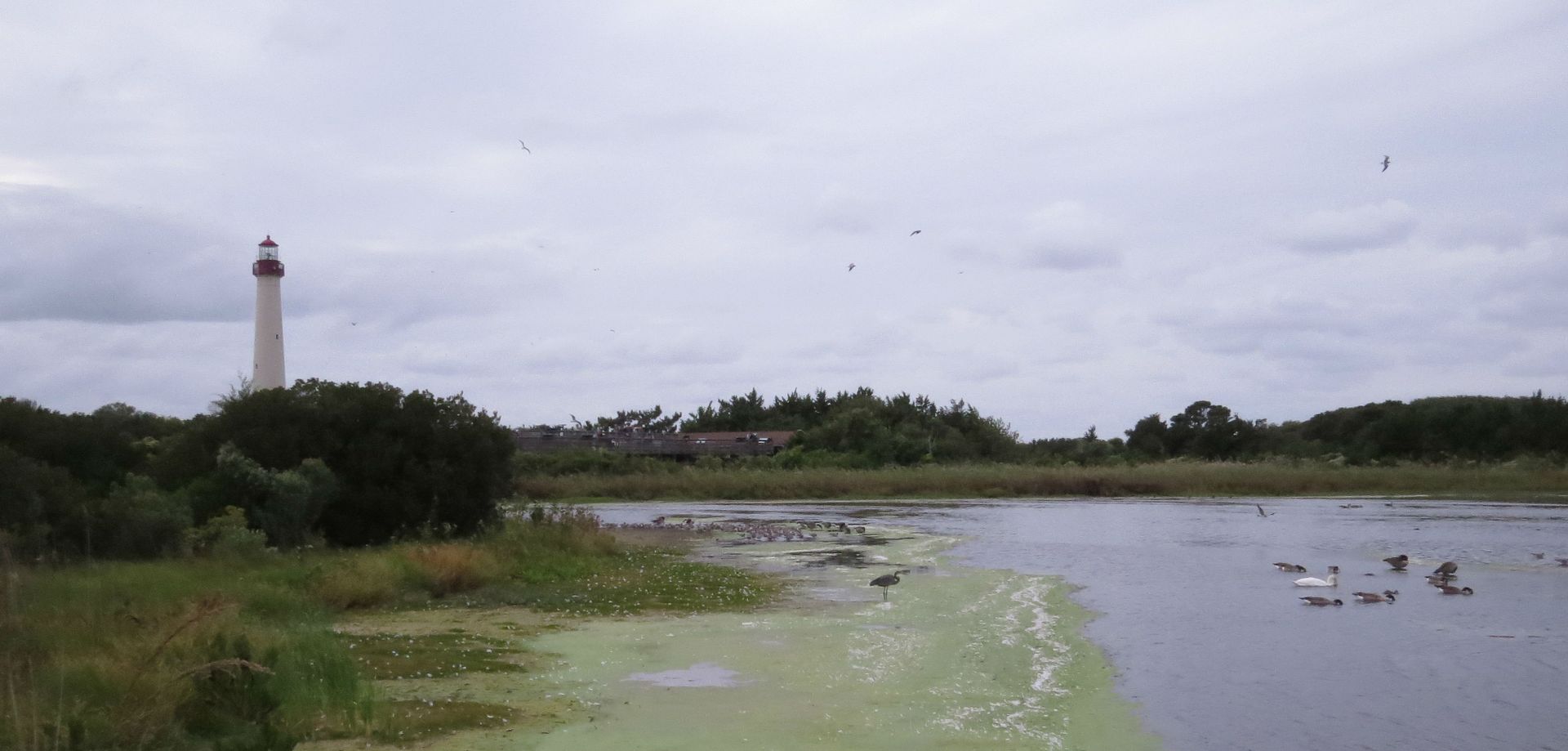
I drove down to Cape May yesterday. This is only an hour and a half from where I live in New Jersey. On one side of the dunes is a sprawling bird sanctuary, ponds, and platforms and docks which bird watchers can use to photograph the various sorts of birds that migrate through.

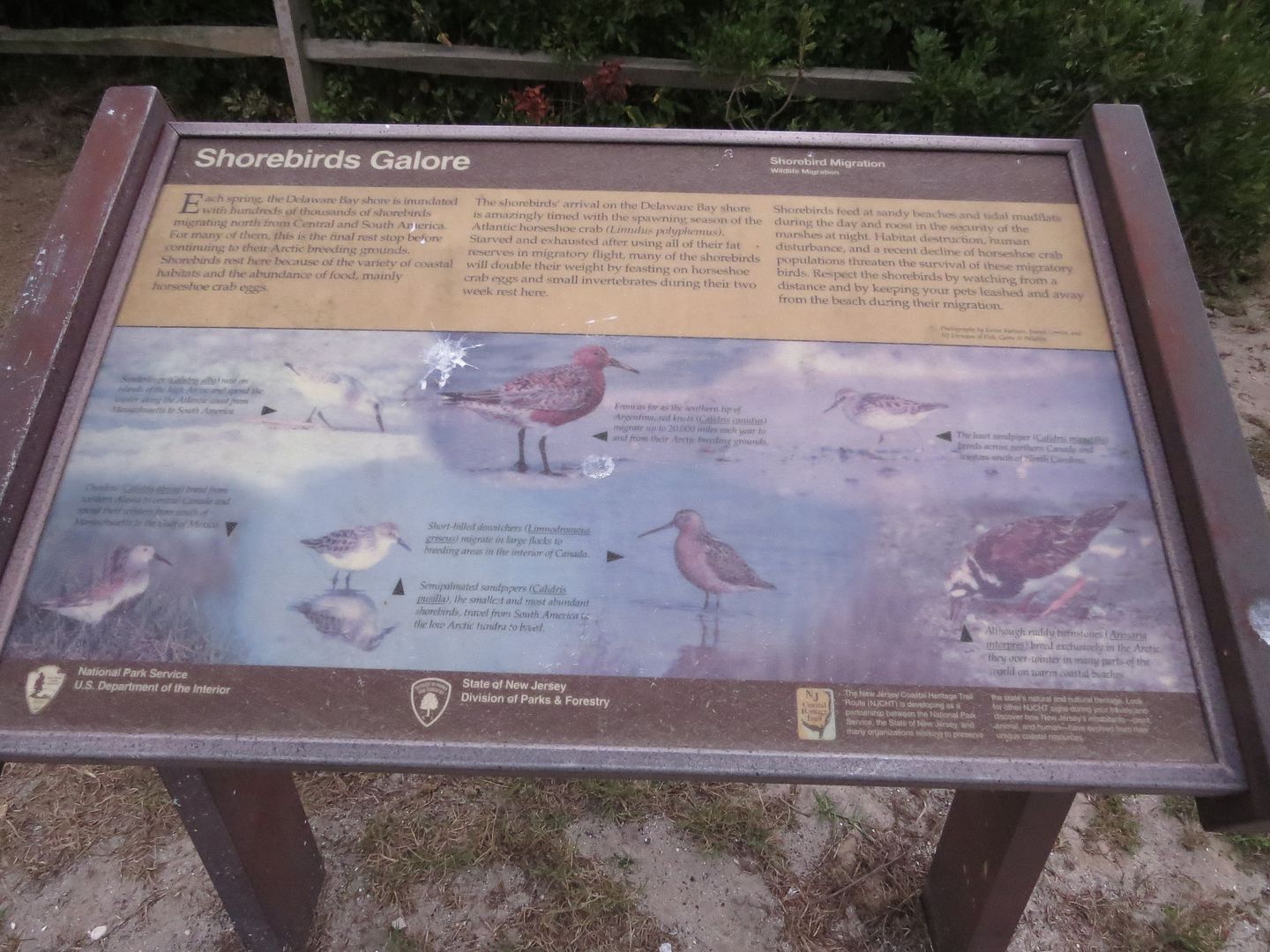
It's something of a birding hot spot in the country. I passed more than one tour in progress with lecturers discussing the different sorts of swans and herrings they were looking at. There's an informative sign that talks about the more exotic birds on the list, which the birds had shat on, along with my car.

I'm sure I got a picture of something exciting here, but birds really aren't my thing.

Just on the other side of the dunes there is a sandy beach with droves of seaside goldenrod planted for the Monarch migration. That's the reason I went down there but the day proved too cold and windy for butterflies to fly.

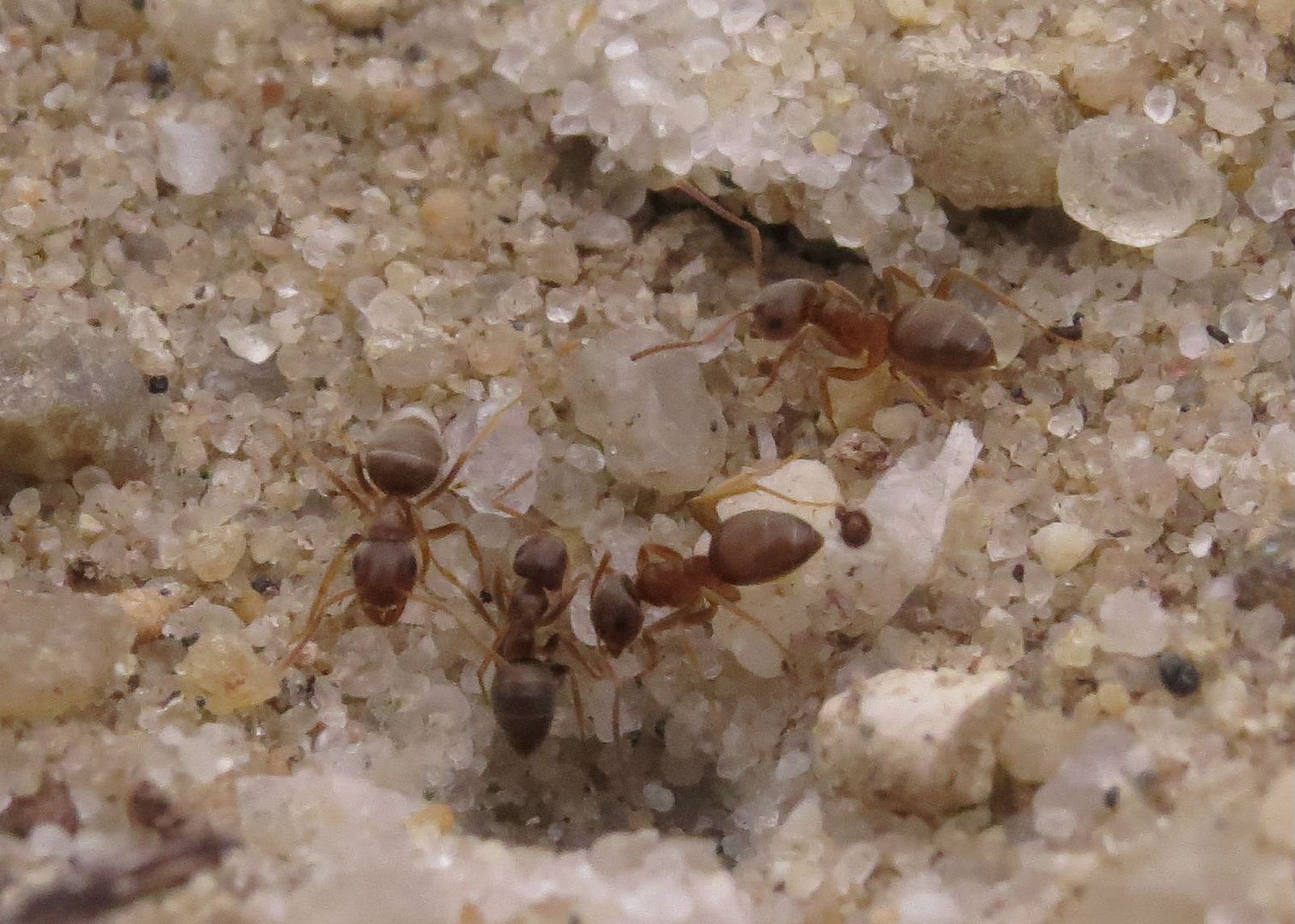
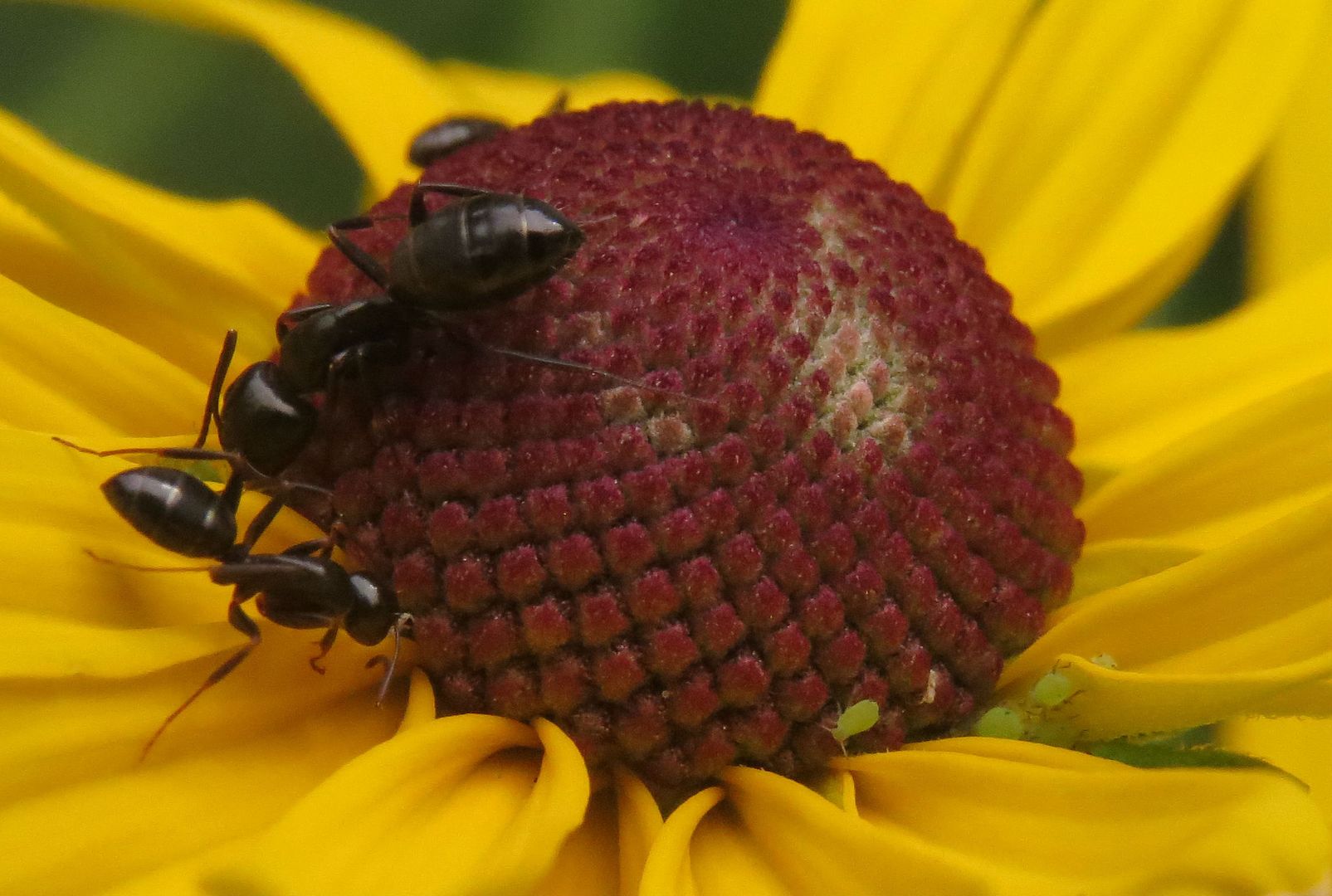
The day wasn't a total bust, as I found a few ants to photograph. This is the common Lasius neoniger, or Labor Day Ant, who's nuptial flights typically happen around Labor Day and in the afternoon no less, sometimes ruining BBQ's and the sport of golf across the US. They're otherwise a rather plane and common sort of ant that make small mounds wherever the soil tends to have some amount of sand to it and in full sun locations.

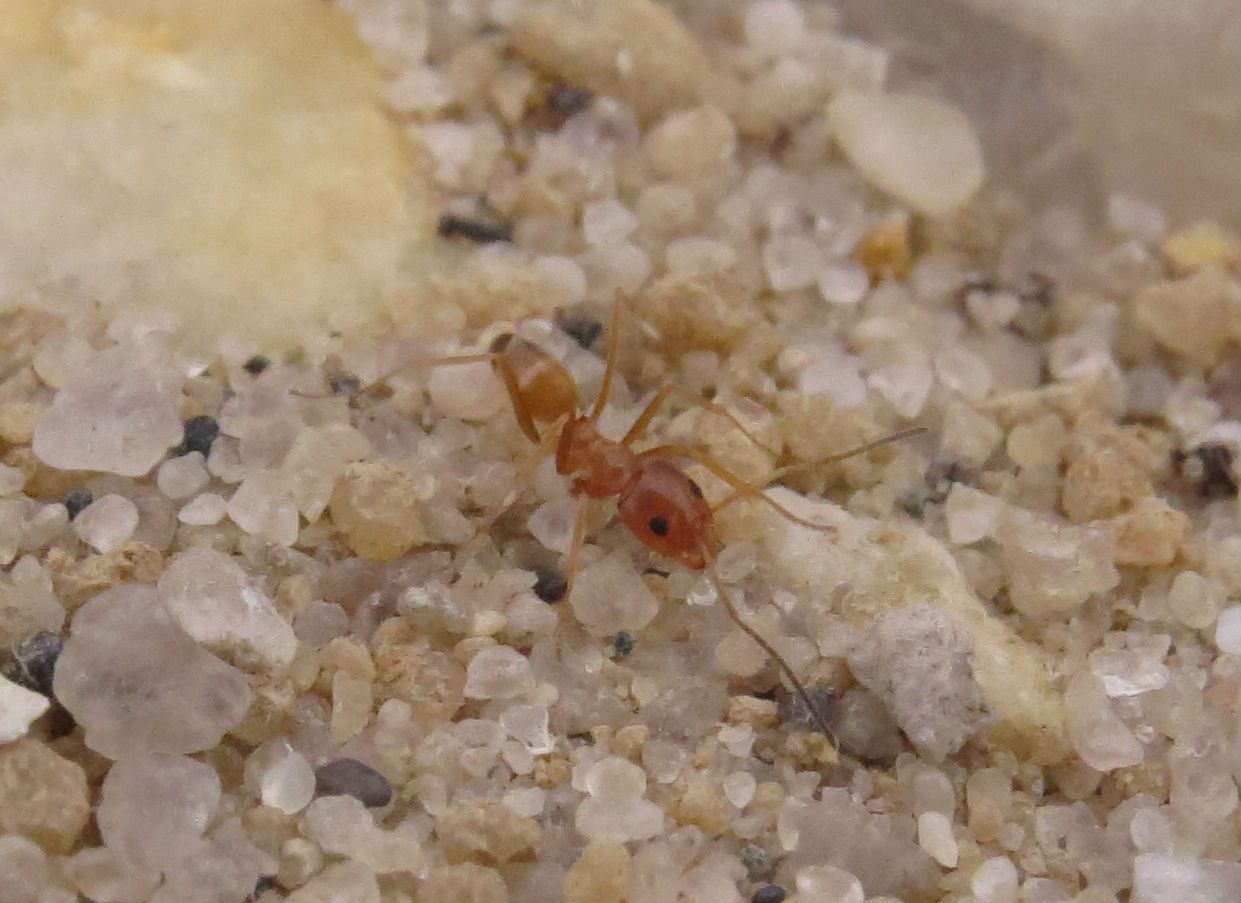
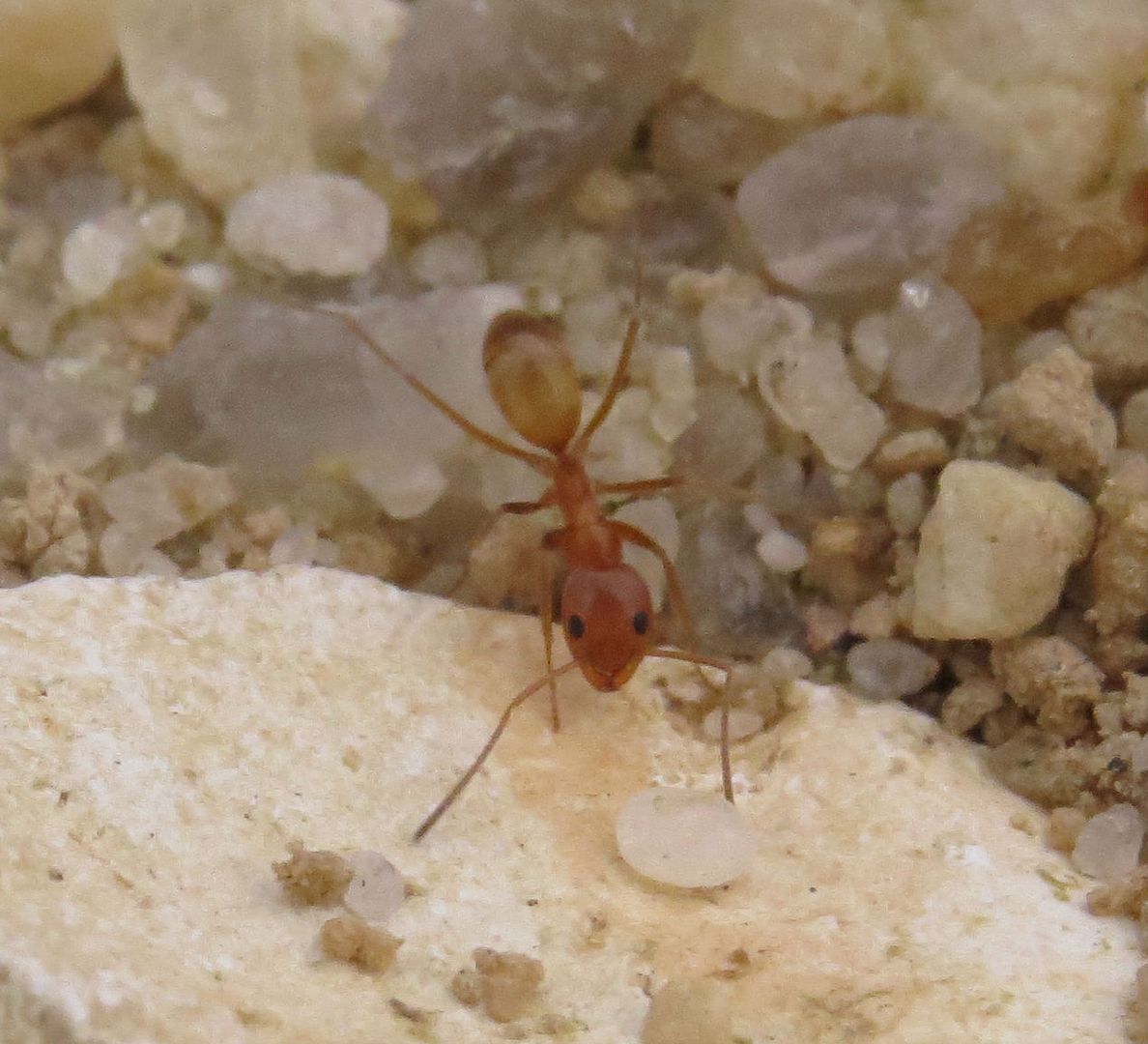
Also found, and slightly more interesting, was the population of Dorymyrmex bureni. This is a species at home to the state of Florida and South Carolina, but in recent years, it's worked its way up the coast and can now be found in New Jersey!

I believe it was first noticed by someone back in 2011 according to Bug Guide. Curiously the Citizen Science website School of Ants doesn't have a dot there yet, though I may have to fix that. Now that it's 2015 I can say the population there seems to be thriving as I found dozens of nests which outnumbered the indigenous Lasius neoniger. In past years though I've never known the beach line of Cape May to be abundant with ant colonies so this probably isn't an issue to worry about. Simply climate change allowing a species to push its range north.


Saturday, September 26, 2015

Also Flowering at the Mt. Cuba Center

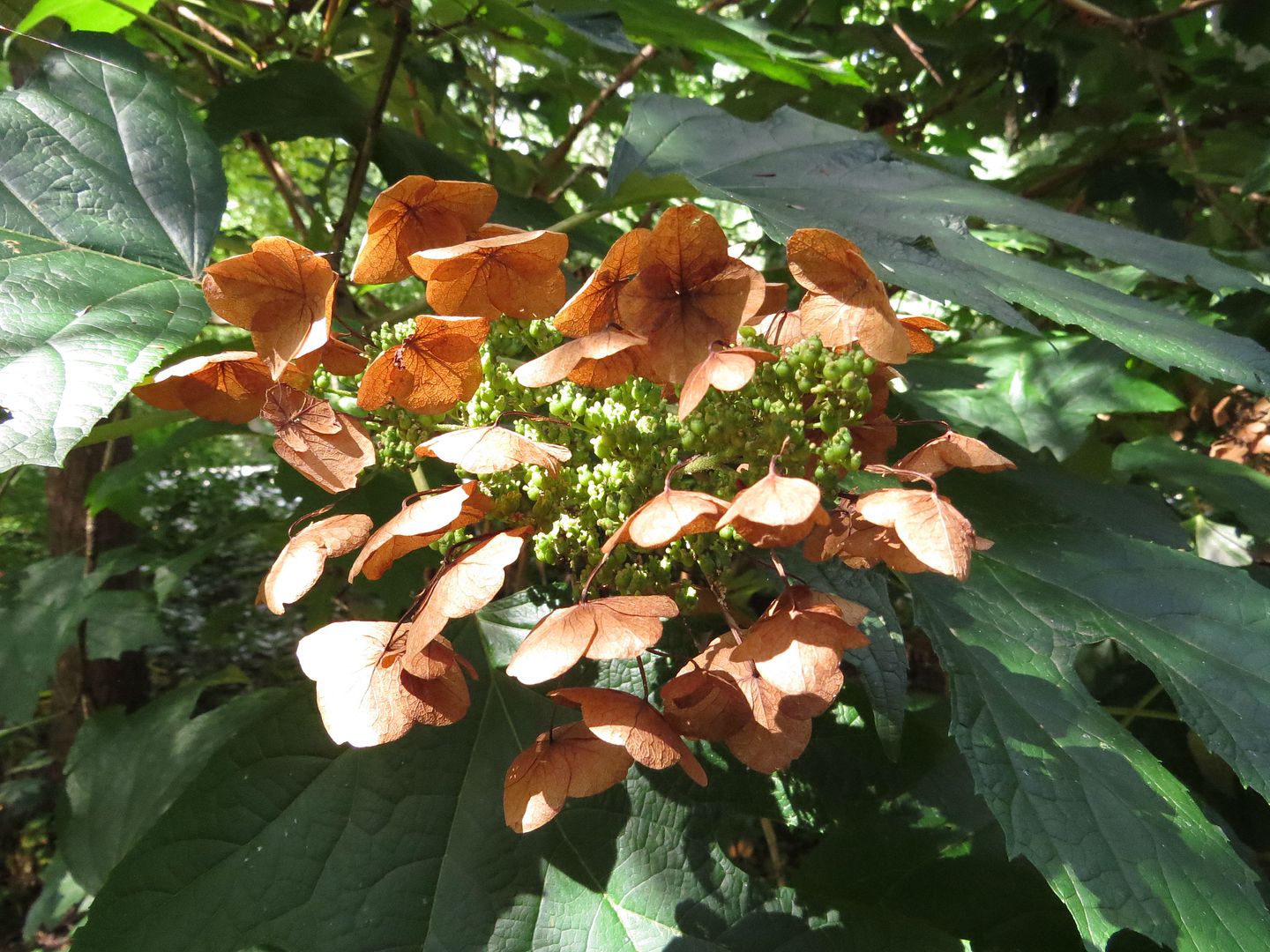
With the majority of summer blooming flowers going to seed or fruit, there's now a new cast of flowering plants coming into bloom. And the Mt. Cuba Center is nothing if not inspiring to see what's flowering and when. I strain to think of species they don't have growing somewhere on their property; Campanula americana comes to mind but really few others. In fact I'd say going there has broadened my knowlage of plant species. At times it feels as though I'm walking through Donald Leopold's "Native Plants of the Northeast" which few other gardens can do.

I've been to Longwood Gardens several times and they should really change their name to Long Lawn Gardens. They have long pathways that go on quite a ways with flowers lining the side, but the trouble is it's the same 5 to 10 species or cultivars repeated over and over again, making it about as exciting as watching a copy machine pump out page after page. Their green house has an impressive collection of plants but are setup like museum dioramas without the fake cave men and stuffed animals. Their meadow is the only real highlight I'd say worth going to because of the wildlife factor which at times even out shines the Mt. Cuba Center.  

At the Mt. Cuba Center meadow there's still plenty of wildlife flying around but mostly in bug form.

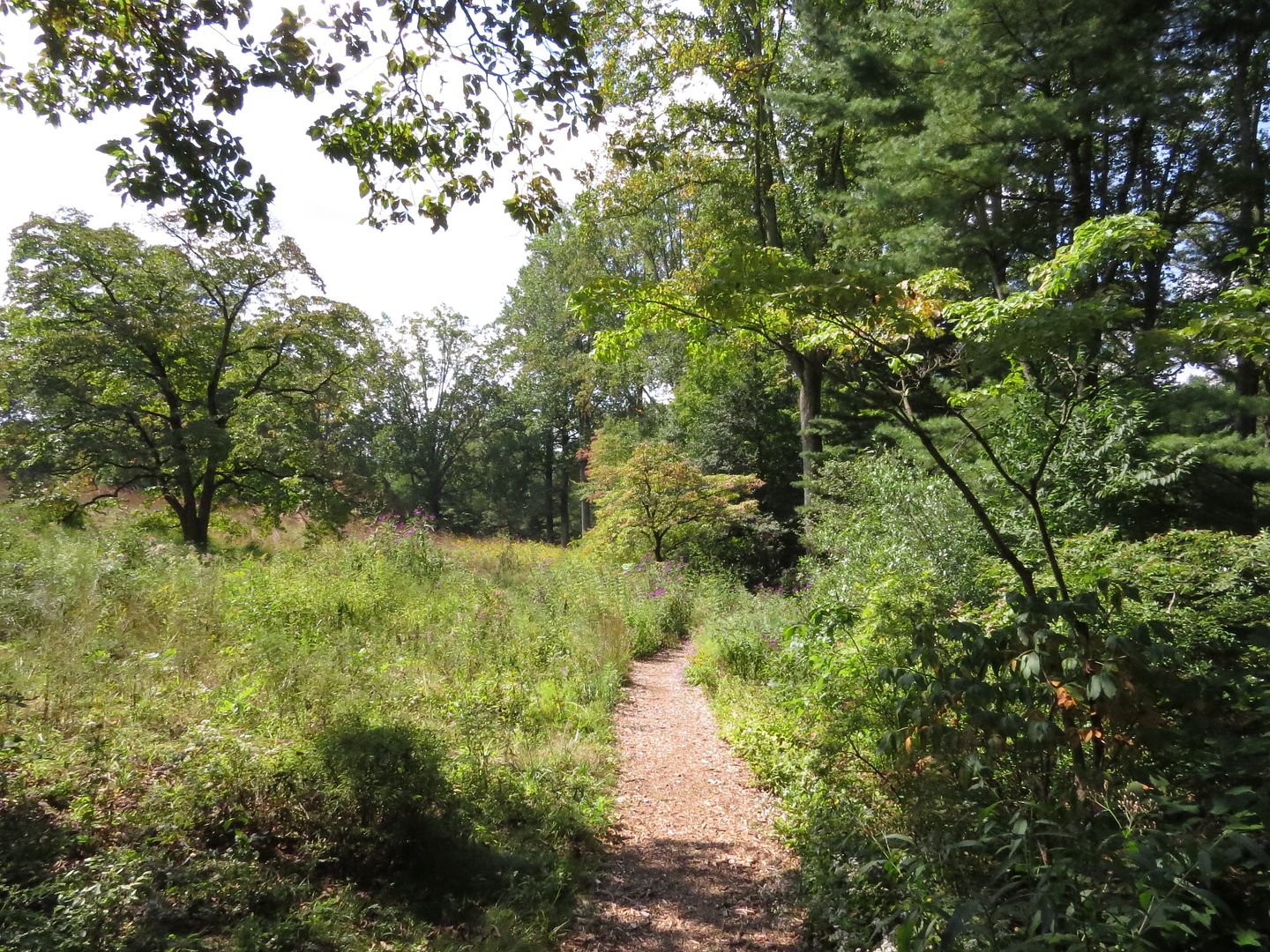
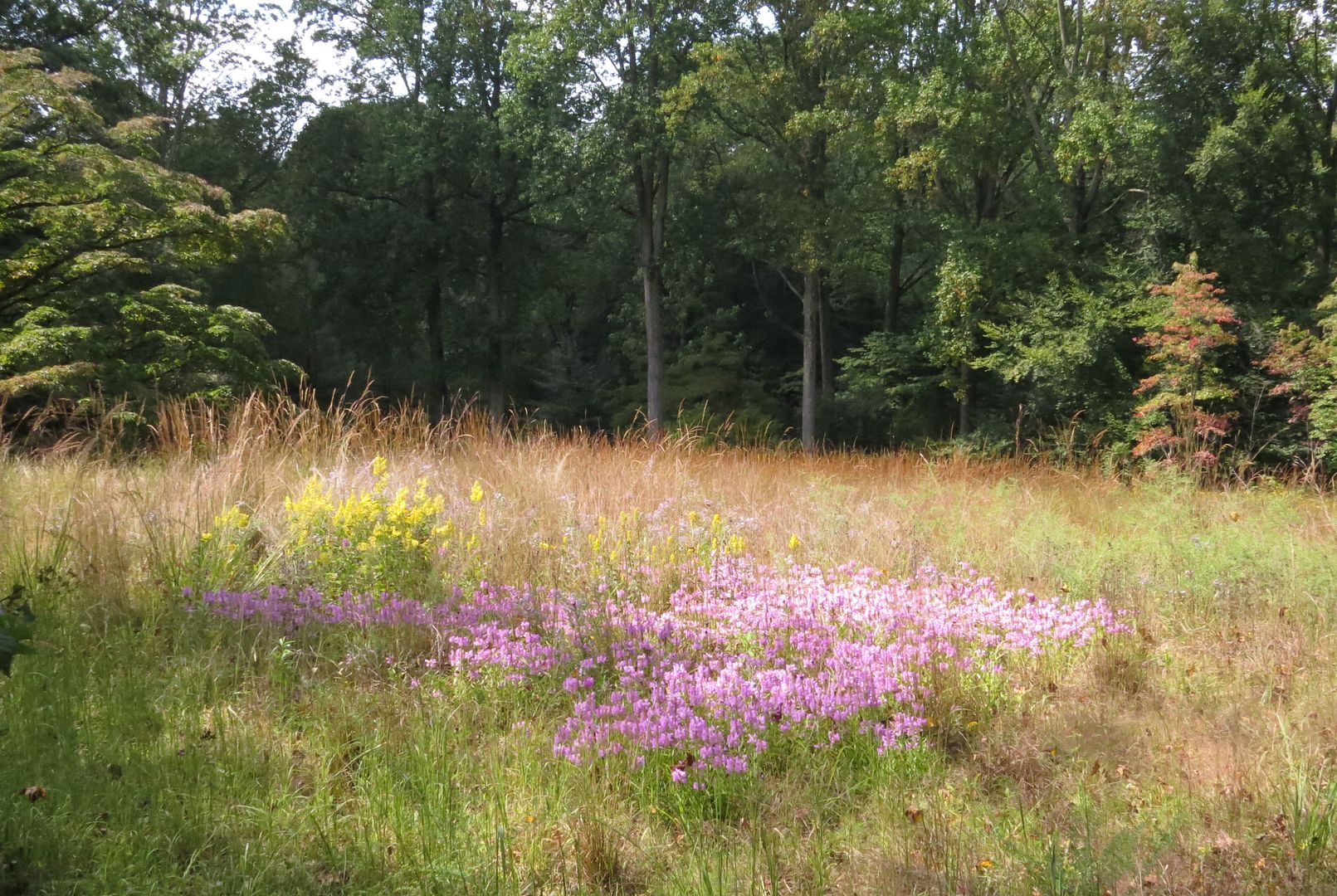
The natural approach looks better, though I know lots of people won't like this. I just love the sweeping effect of color and the movement of the grass as the wind blows over the field. They do have sections where they specifically put in a plant so when they do tours they can show it front and center.

The late Mrs. Copeland strongly believed that a meadow should primarily be made up of grasses. I do see the beauty in that, but frankly I find such meadows to be boring. Grasses are almost exclusively wind pollinated so you don't get the bees and butterflies that you get when incorporating wildflowers.


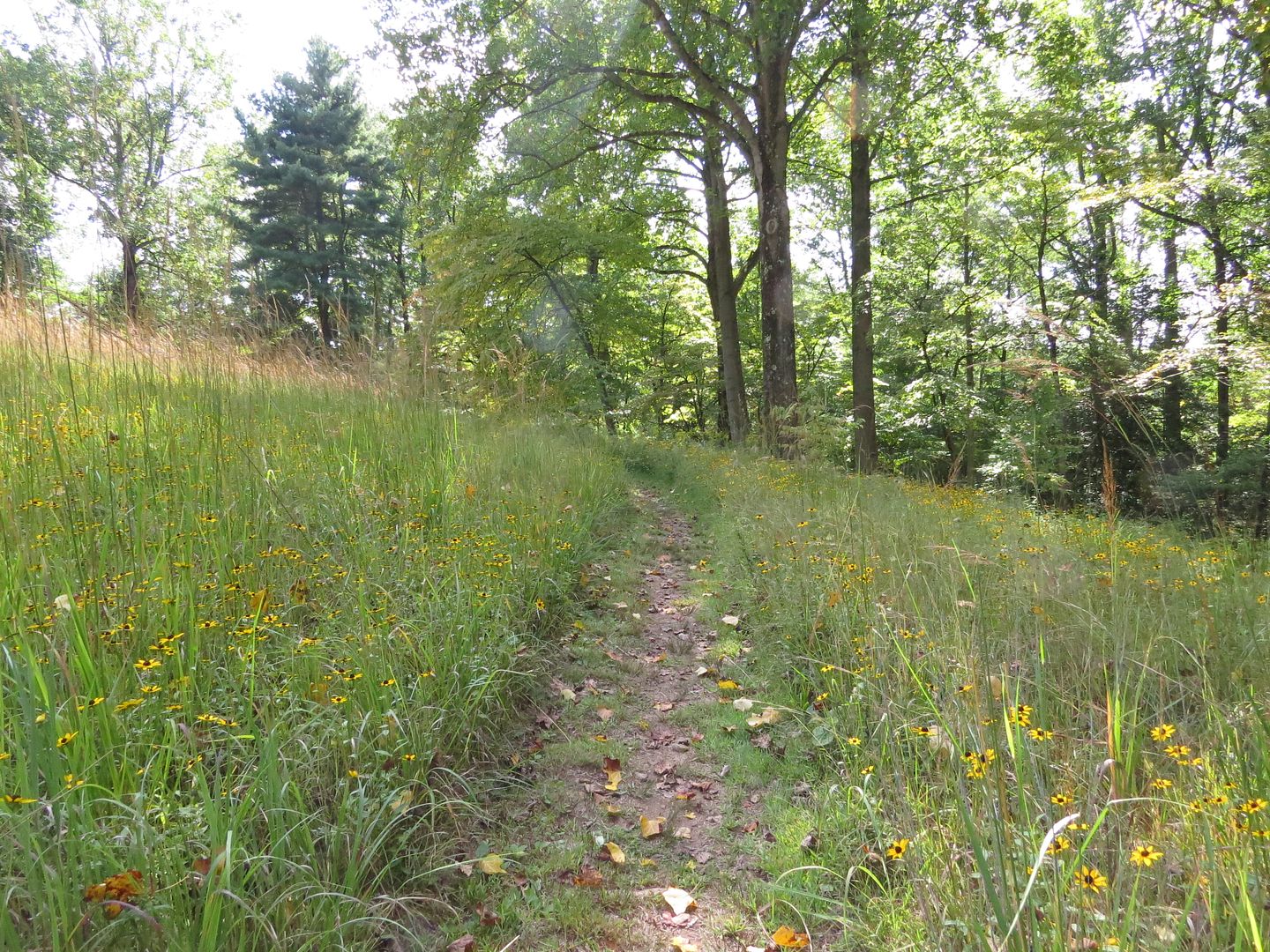
At the top of the meadow is the wildflower bed, which you can't see from the bottom. Beyond that line of tall grasses is a hill that gradually slopes down to the ponds where there is a gazebo for sitting. The meadow looks wonderful from that spot, and they try to maintain the primarily grass feel of it down there.

Upon closer inspection though it becomes obvious that several wildflowers have crept down the hill. Black-eyed Susan primarily but also a small amount of Butterfly weed. Both of which I believe were intentional.


Pearl Crescents, common in some gardens, rare in others. These are one of the few butterflies I find drawn to Black-eyed Susans. They host on an assortment of Asters. I believe they're in the habit of laying a single egg here and there, thus it takes a lot of Asters scattered around a forest edge to get them to flourish.

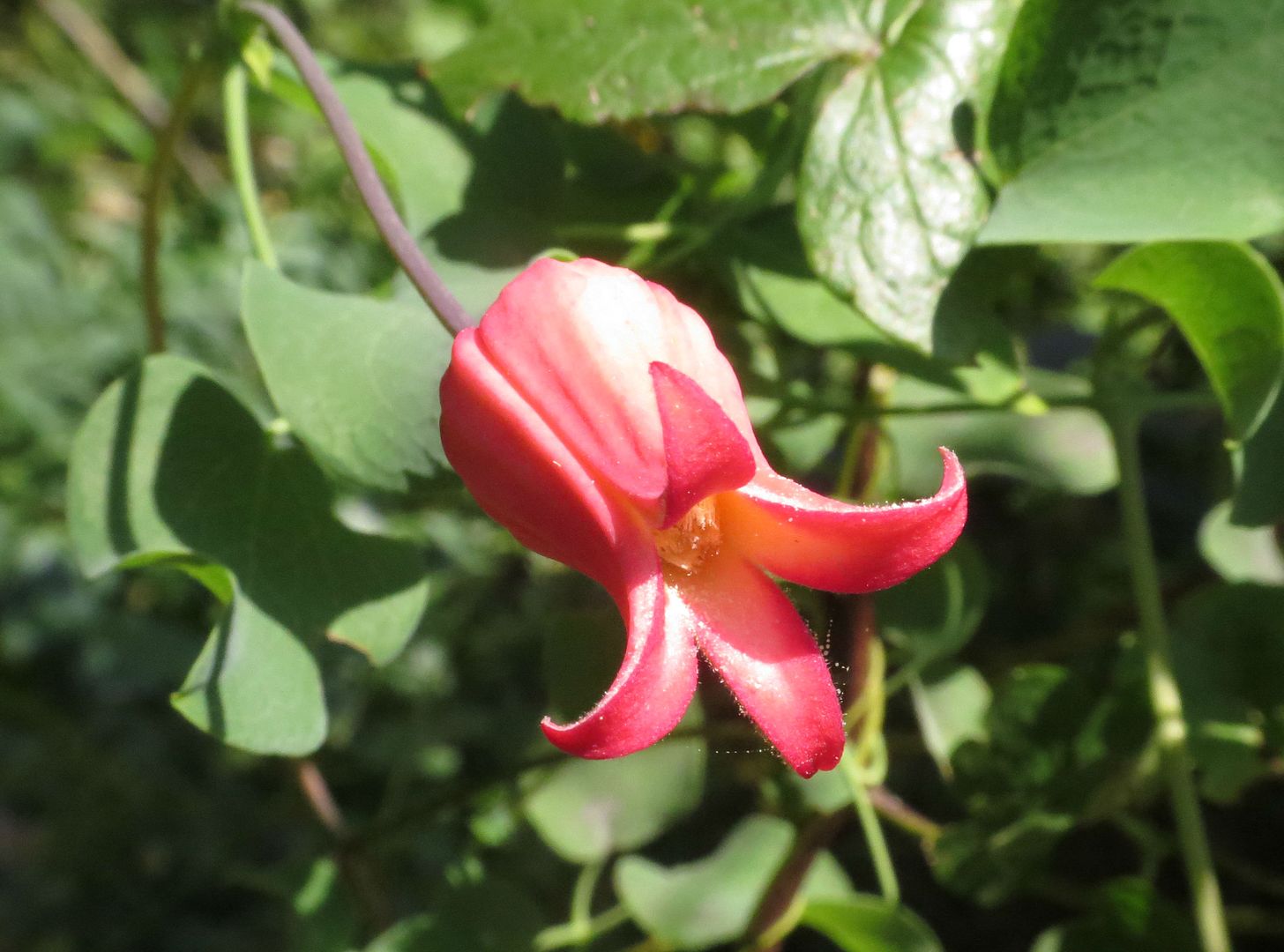
The Mt. Cuba Center was where I first learned what a Leather Flower was. Turns out our native Clematis are rather pretty-looking. They're almost like a fat honeysuckle, and they're good about growing through other plants. Unlike a lot of vines, I believe they die back to the ground each year.

Jewelweed grows like a weed all along the roadsides of that part of Delaware. They include a few plants in their gardens, but I'm sure they also must weed a fair amount of it out.

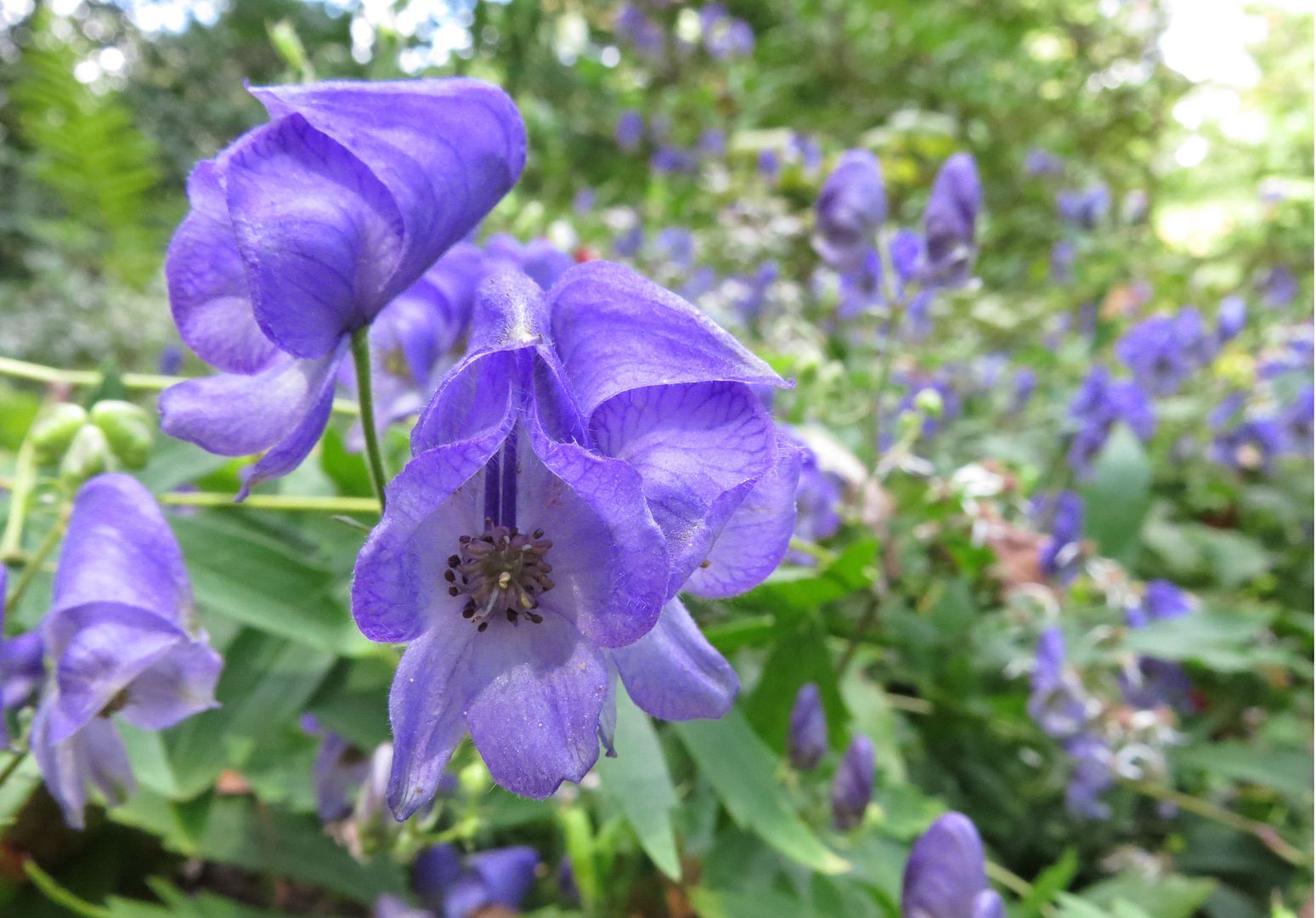
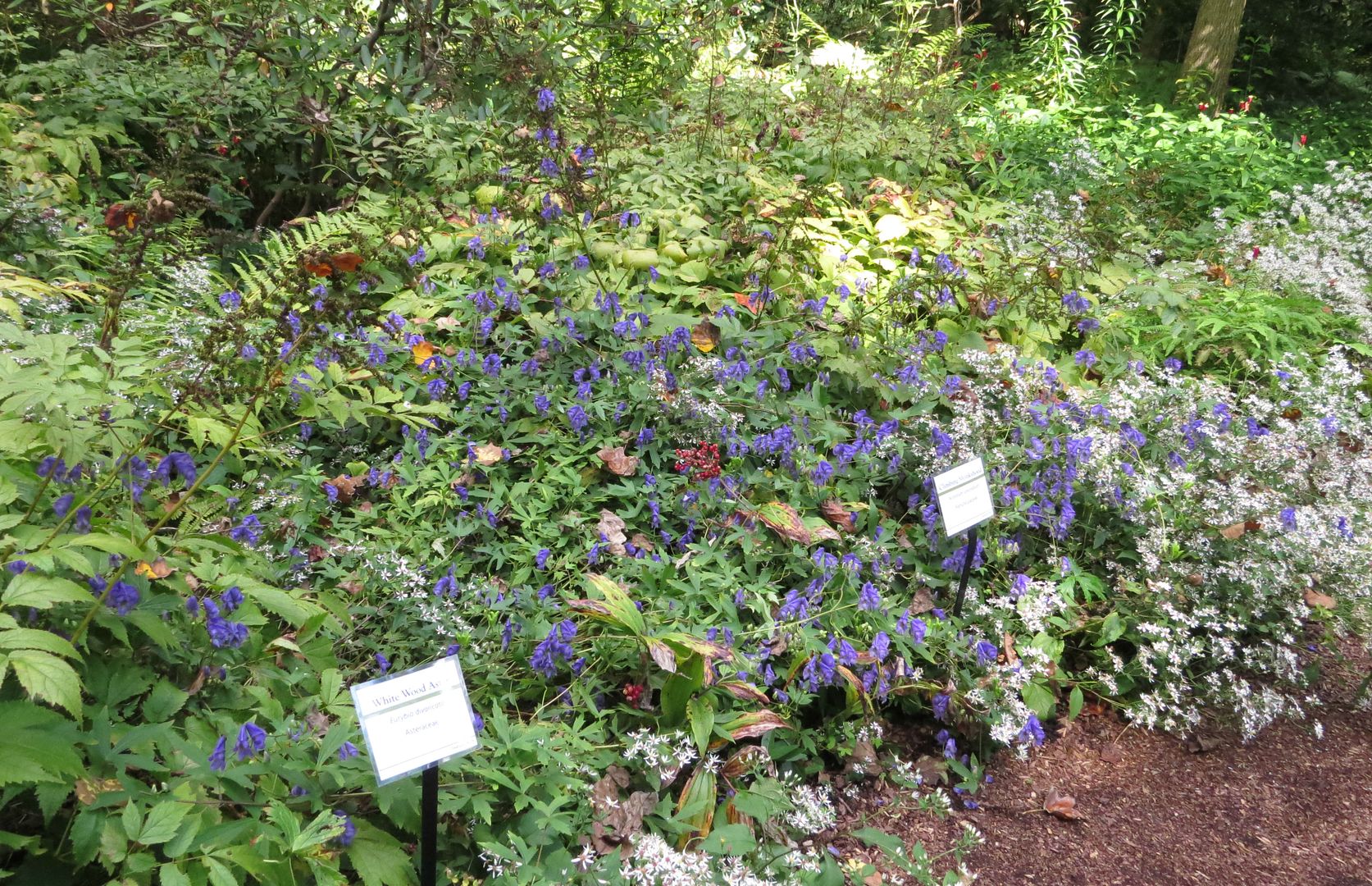
They make Southern Blue Monkshood look so easy to grow. Aconitum uncinatum, is another vine that dies back to the ground. They have it growing in patches and individual specimens, each time though the foliage is usually hidden with whatever plant they're growing up, through, or laying on. It's only after the plant flowers that anyone really bothers to notice it.

The plant I have in my garden is maybe a single stem with a single cluster of flowers at the end of it. Here though, they have plants that send up dozens of stems that spread out and climb up other plants to bloom all over the place.

This is also one of those deadly plants native Americans used to poison their arrows with so maybe it's good that it's not growing in big patches in my yard.

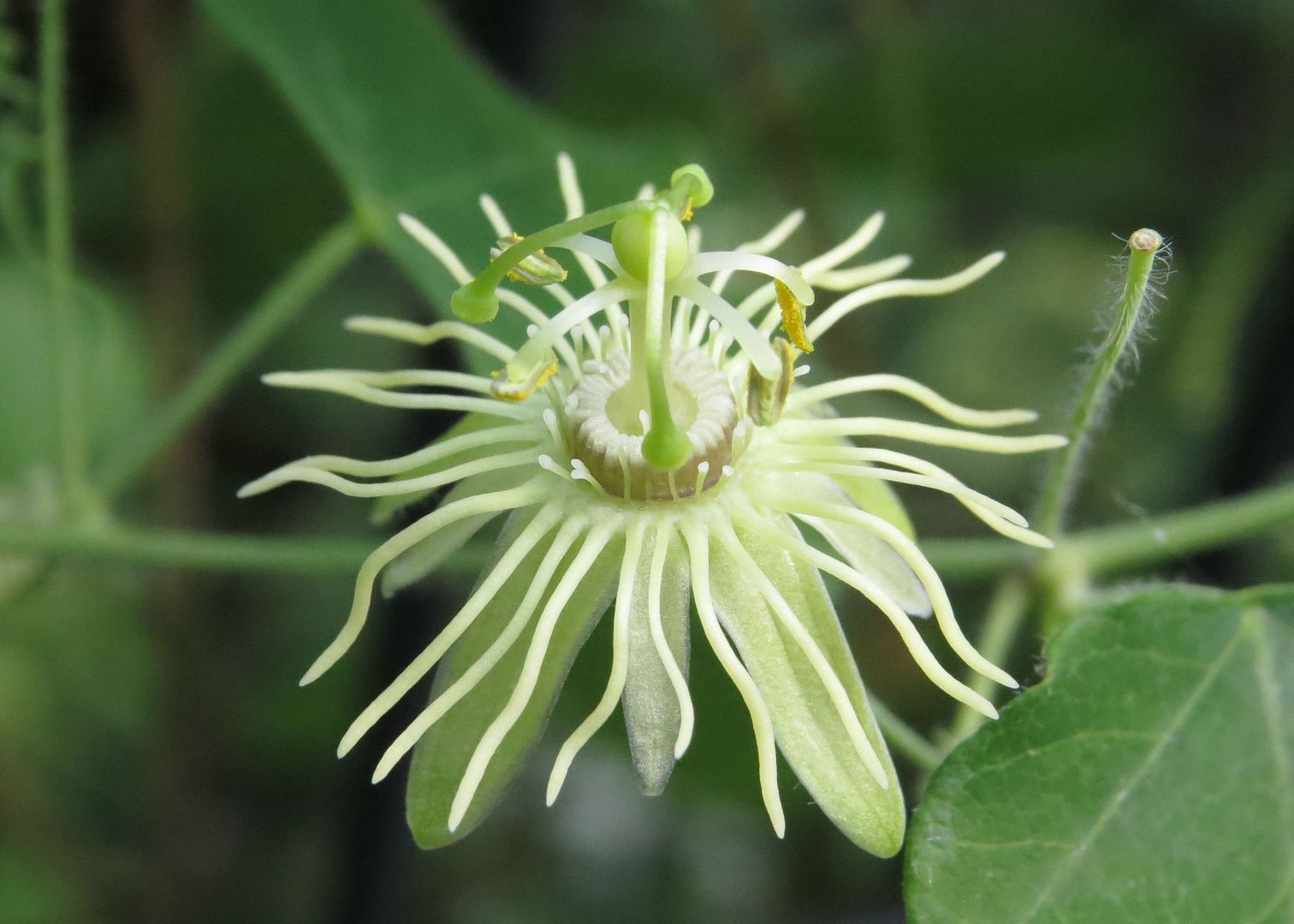
Yellow Passionflower, Passiflora lutea. This plant has the most charming little leaves I've ever seen on a plant, and the flowers are so tiny compared to other passion vines. This could be replacement for English Ivy in some scenarios.

I had a Yellow Passion plant in my garden that would come up as a single stem, make a few flowers and die off. The Mt. Cuba Center though has one that's taken over the corner fence of their Trial Garden and is loaded with blooms and berries.

Tuesday, September 22, 2015

Honeybees on Fall Flowers

While visiting the Mt. Cuba Center this past weekend I was treated to a variety of fall wildflowers with fall colors right around the corner.

The gardeners there do such an amazing job, and they've introduced a number of cultivars over the years that I find well worth the effort in tracking down.

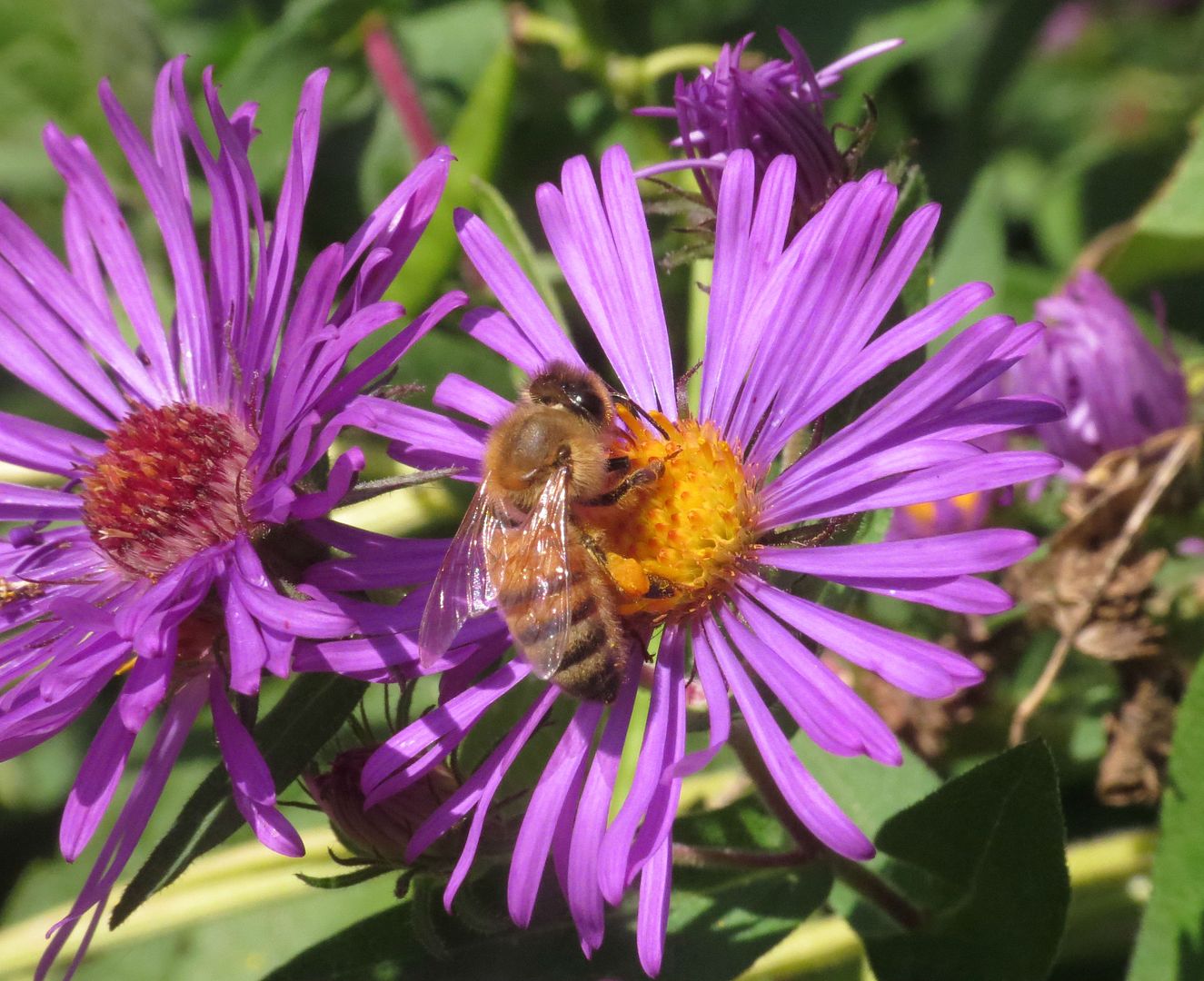
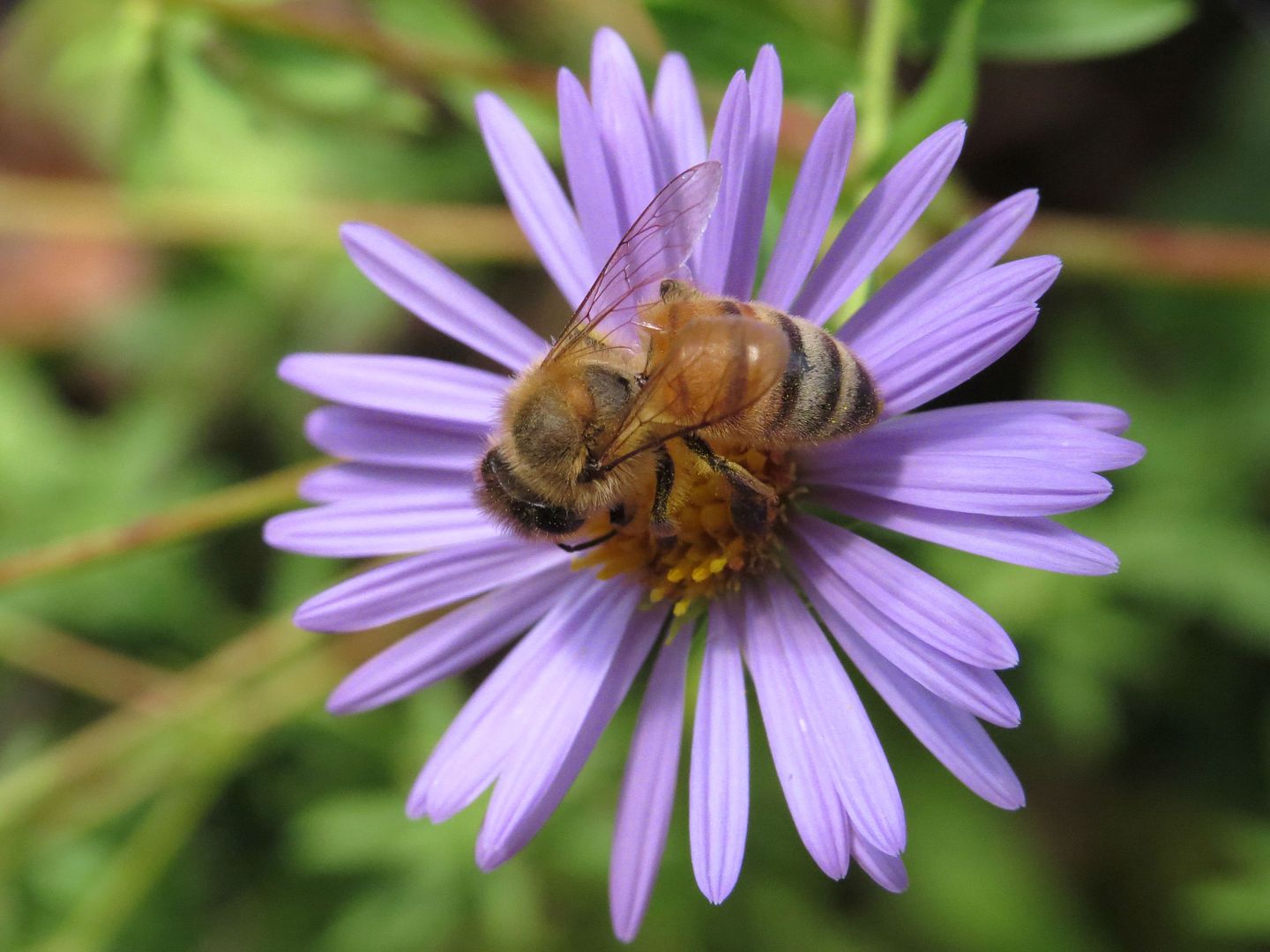
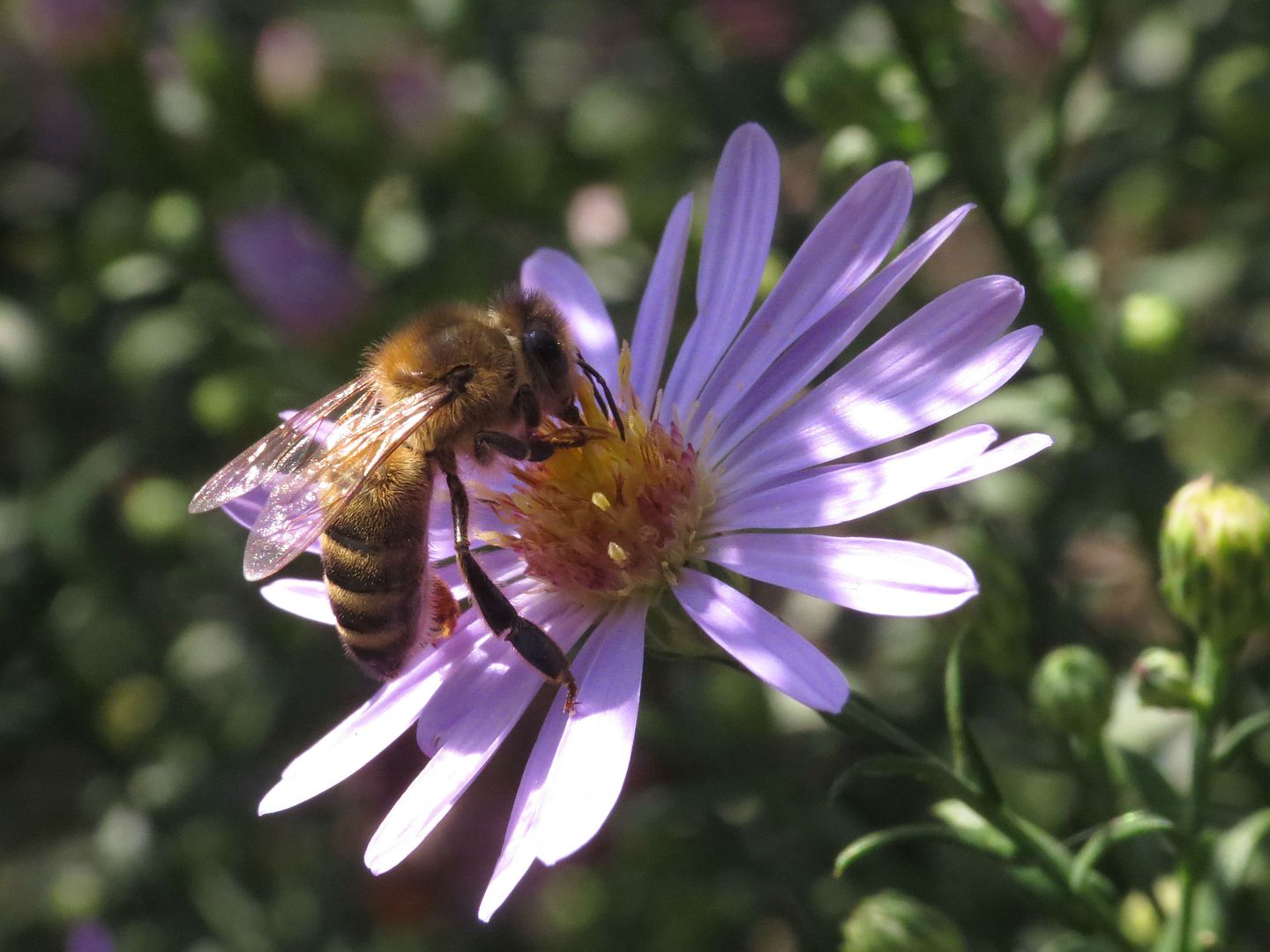
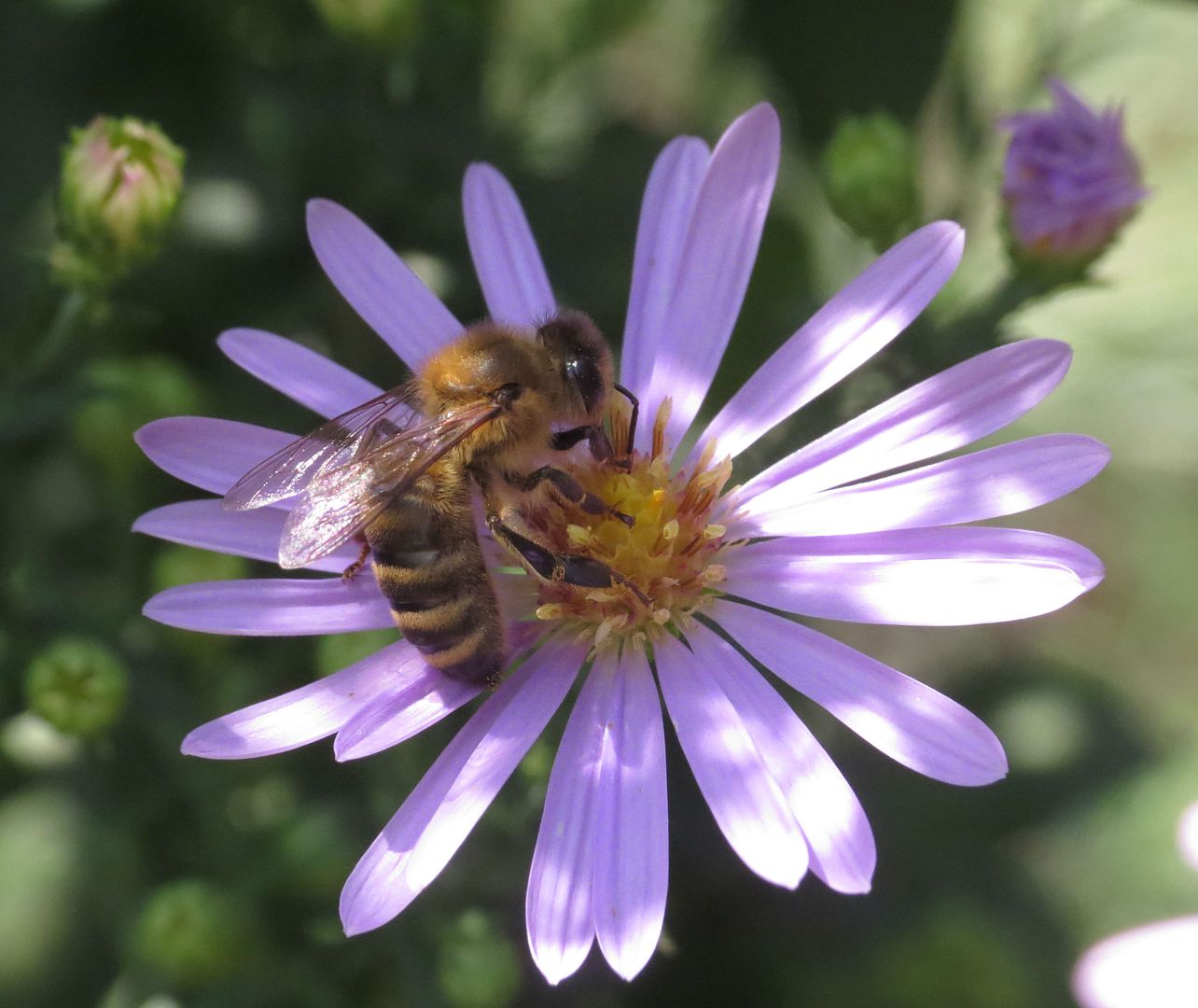
And of course now that they have a few honeybee hives on the property it's become far more apparent what native plants the bees really love. Now that Mountain Mint has finished blooming, I believe the winner of most perennial beds will be the common New England Aster, Symphyotrichum novae-angliae.

New England Asters come in a variety of colors but I've found the purple to be the most common. Pink, brilliant shades of Red, White and everything in between are also possible. Lost of cultivars are available on the market today and they're pretty easy grow by division or spreading seeds in pots of dirt outside over the winter. They can be slightly weedy but sometimes it's worth it to let them flower before pulling. A friend of mine had New England Asters take over his meadow garden but now he has every color in the rainbow.

Symphyotrichum laeve 'Bluebird' is an up right perennial that grows more flowers than the true species. This is because it's actually a hybrid with another species, though I don't know the particulars on that. They look great if you can grow them. I've tried in the past and believe they benefit from regular watering, and or mulch, as opposed to testing out their drought tolerance. I don't believe this cultivar is prolific by seed, but they are pretty when grown beside other asters or goldenrod of similar height.


Aromatic Aster 'October Skies' is wonderful in mass plantings. A cultivar of Symphyotrichum olongifolium, this is a low growing aster which lays on the ground forming thick cloud-like pillows of flowers. Perfect at the edge of a flower bed or scattered among a meadow/garden of low plants.

White Woodland Aster... actually I'm a little unclear what species this one in particular is. It's one of the lower growing species with masses of white blooms. Oddly enough I have a species or two of these that come up wild in my yard and I only rarely see honeybees take a liking to them. At Mt. Cuba the clumps they had growing in the sparse woodland were getting a decent amount of attention. Not as much as any of the other asters but certainly more than anything else flowering in the woods.

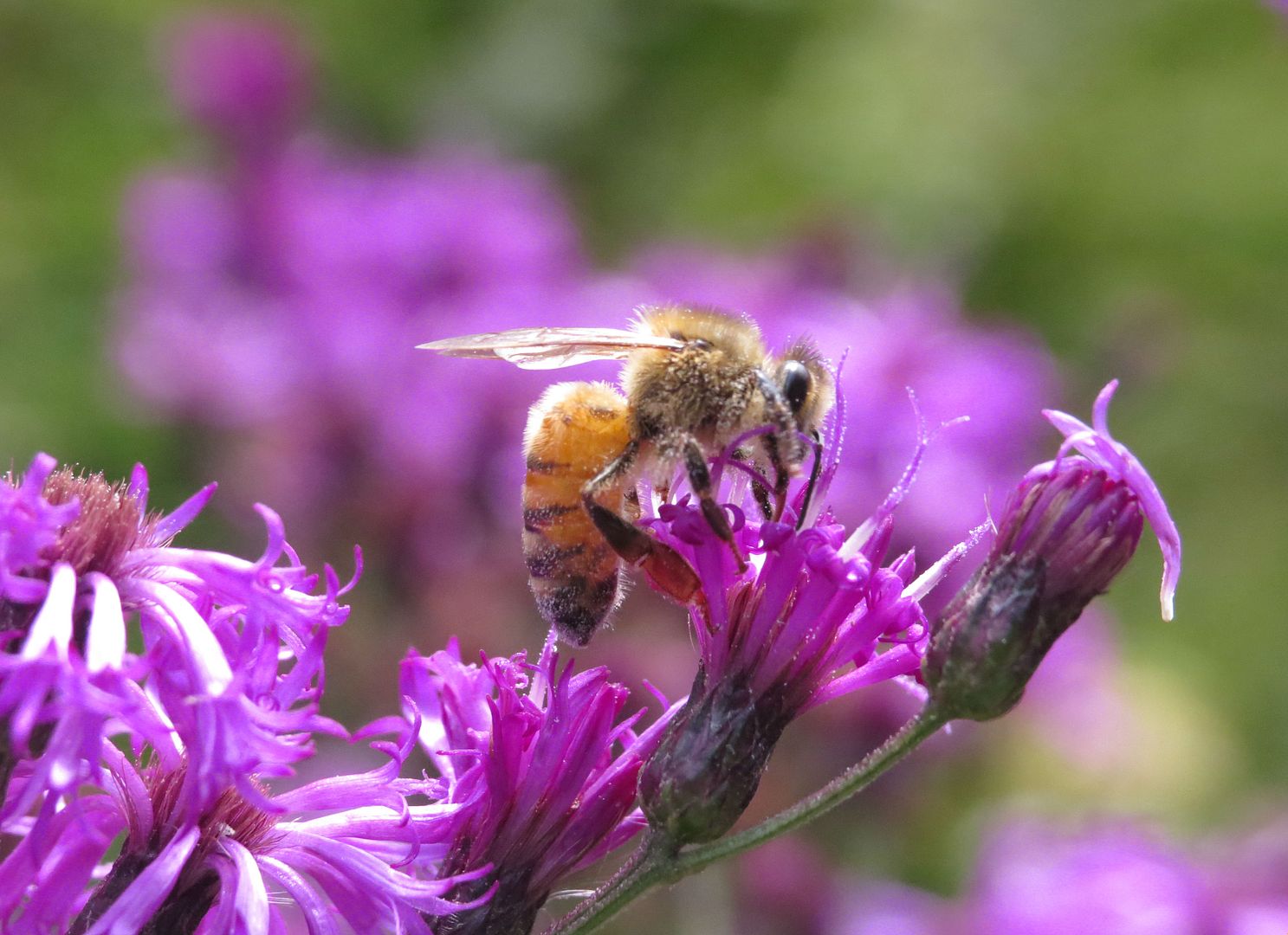
Vernonia angustifolia 'Plum Peachy' is a form of Narrow-leaf Ironweed with darker foliage and is more compact than the wild species. I believe it may also have flowers more evenly spread around it as opposed to just at the tips of stems but I could be confusing that with another the Mt. Cuba Center has/is working on.

 I didn't think to take photos of the foliage at the time but it has nice narrow leaves and looked similar to other cultivars of ironweed I'd seen in local nurseries. It was getting a decent amount of attention, slightly more so than the goldenrods growing around it but I know honeybees don't go nuts for goldenrod until after the peak Aster blooms. I'm planting three of these this fall and putting them right in next to my narrow-leaf Amsonia to see if they grow well at all.

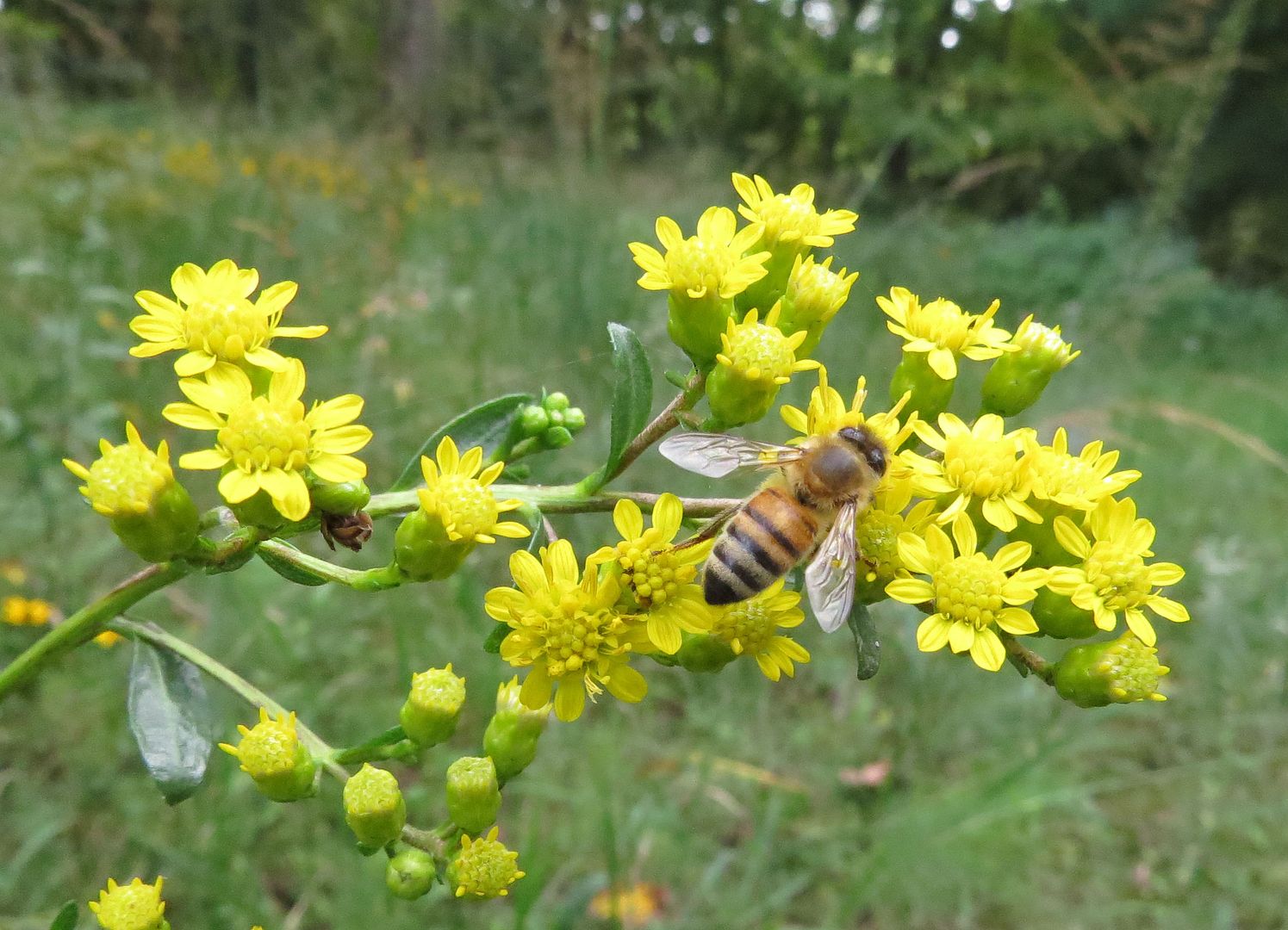
Stiff Goldenrod, Solidago rigida, was blooming well. This was the first time I've ever seen this species and I was taken by how big and fat the flower petals are which you usually don't even notice on Goldenrods. They had a patch of 50 or so plants, or at least that's about how many flowering stems there were.

Just thought this was a good shot. Had the bee been posed a little better I'd go as far to say excellent.

Noticed some spittle bugs on the stem. They produce a foam or "spit" to hide within while they feed on the plant much like an aphid. 

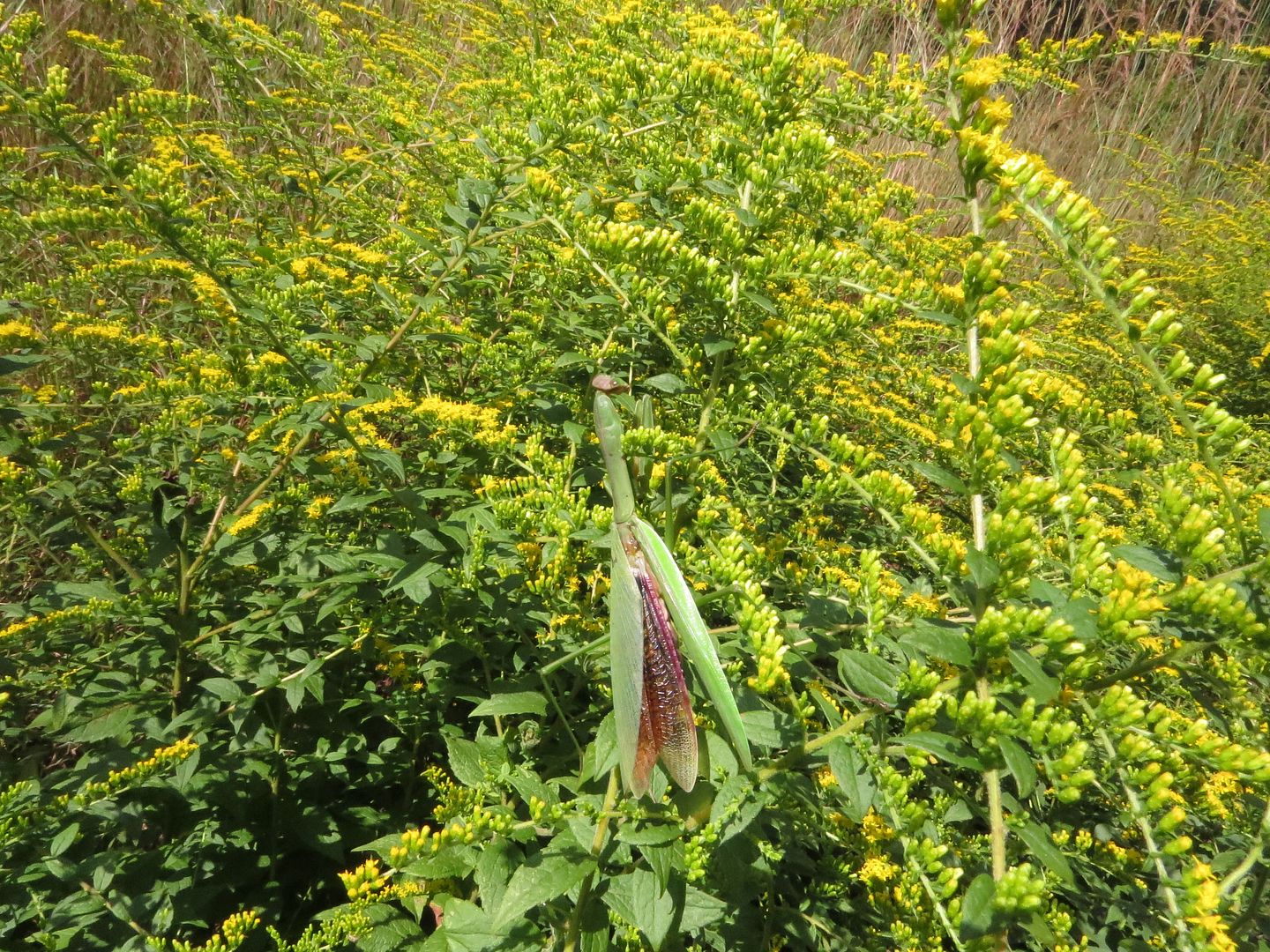
Solidago 'Fireworks' was also flowering, though not getting as much attention as I've seen it get in the past. (The huge hungry mantis about to lay an egg casing might have something to do with that.) It's also not quite at its peak bloom yet and that's really when honeybees tend to take over such nectar sources.

Obedient Plant is typically swarming with pollinators but I didn't find that to be the case that day. At least it wasn't for the patch that was next to the path. They also have it planted out in the meadow itself for a lovely pink effect but I didn't notice much flying around.

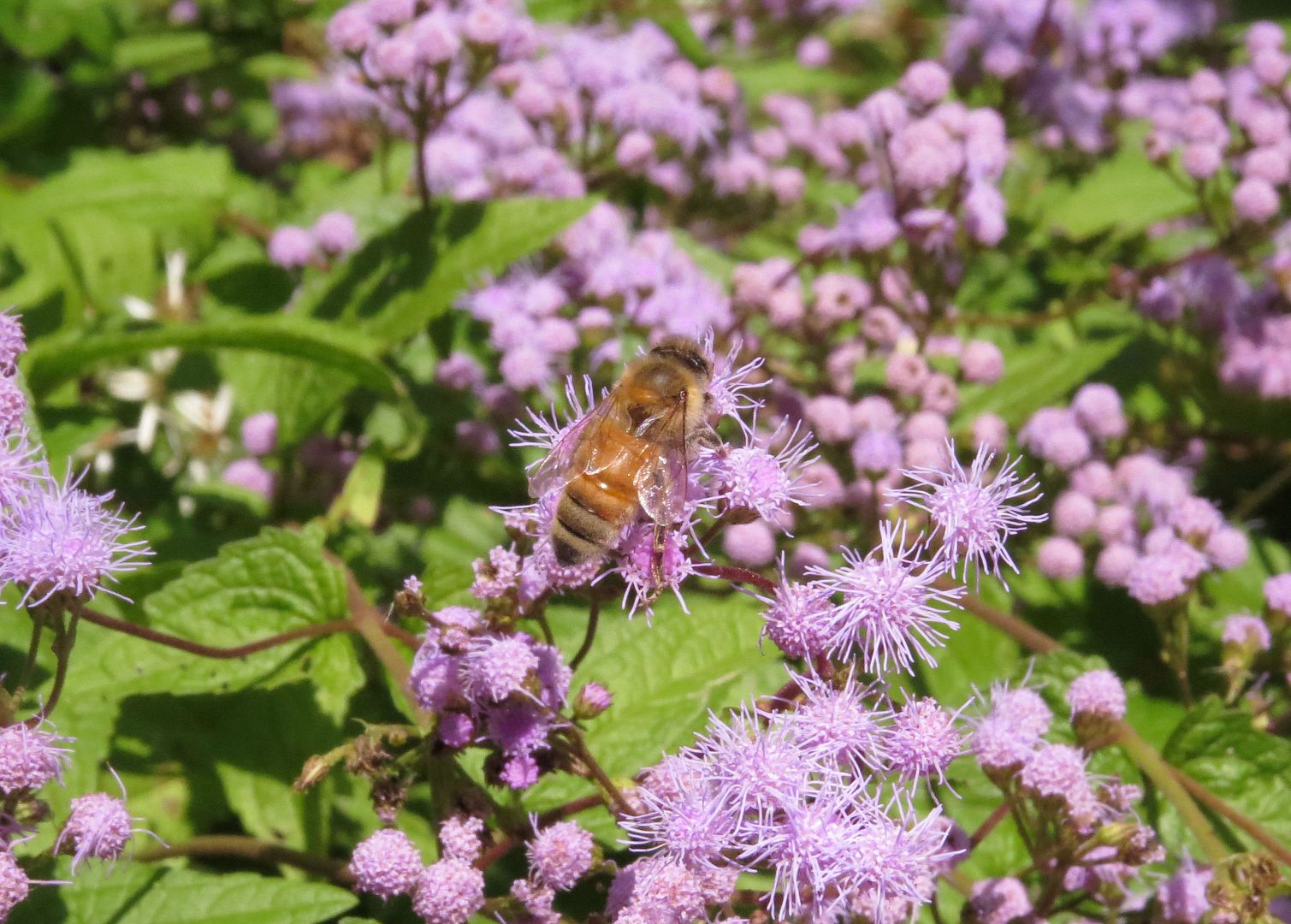
Mistflower, Conoclinum coelestinum. I was slightly surprised to see honeybees on this one. First off I've never been able to get this species to grow in my yard. They have water requirements that are somewhat finicky; too wet and they don't survive the winter, too dry and they won't reproduce. I read they're ideally a shade plant and the more sunlight they receive the more moisture they require. The Mt. Cuba Center had them in full sun, at the bottom of a slope.

Honeybees use other plants that were formerly in the Eupatorium genus. Pretty much all of Joe Pye Weeds are a hit with them, but only some of the Boneset species.

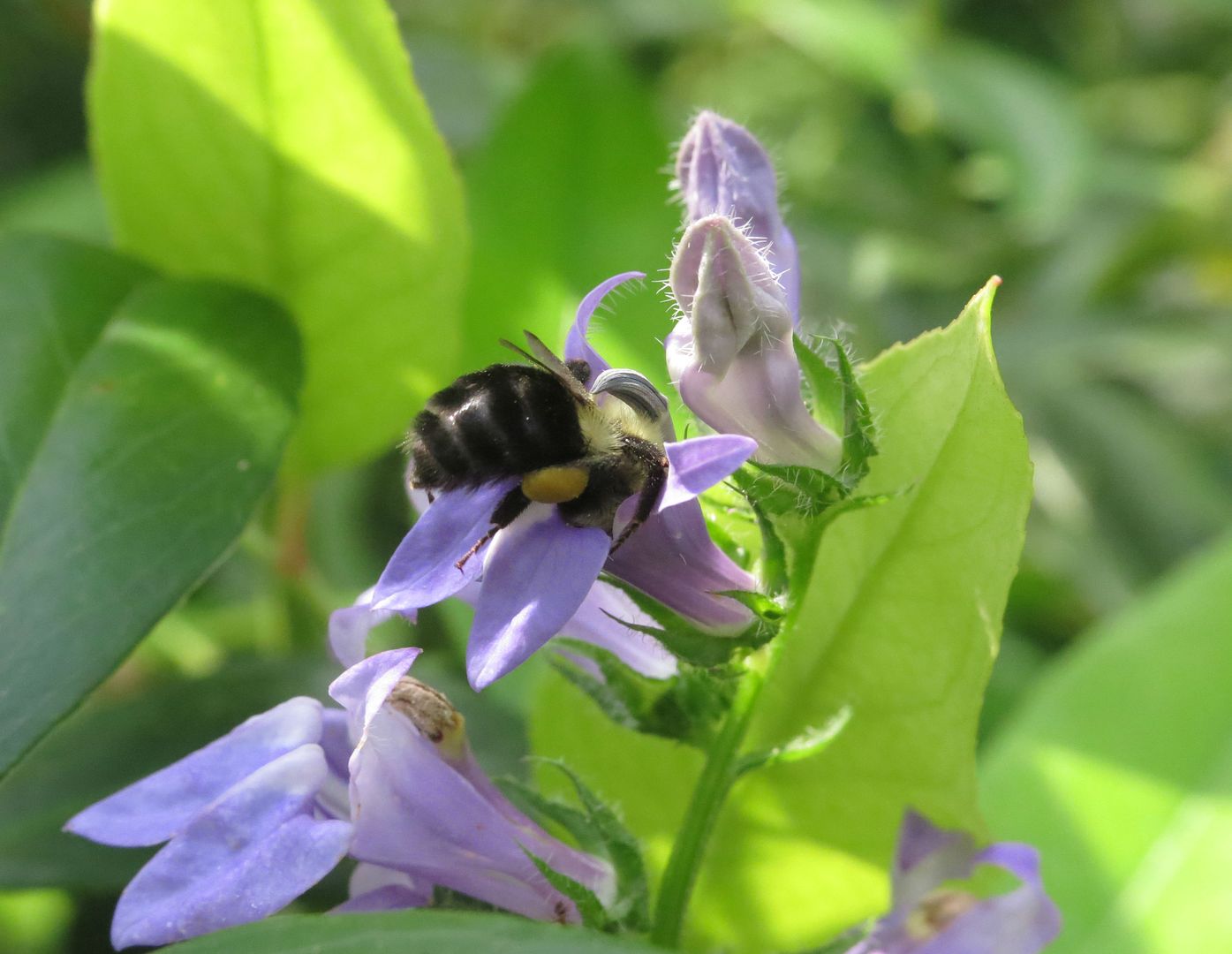
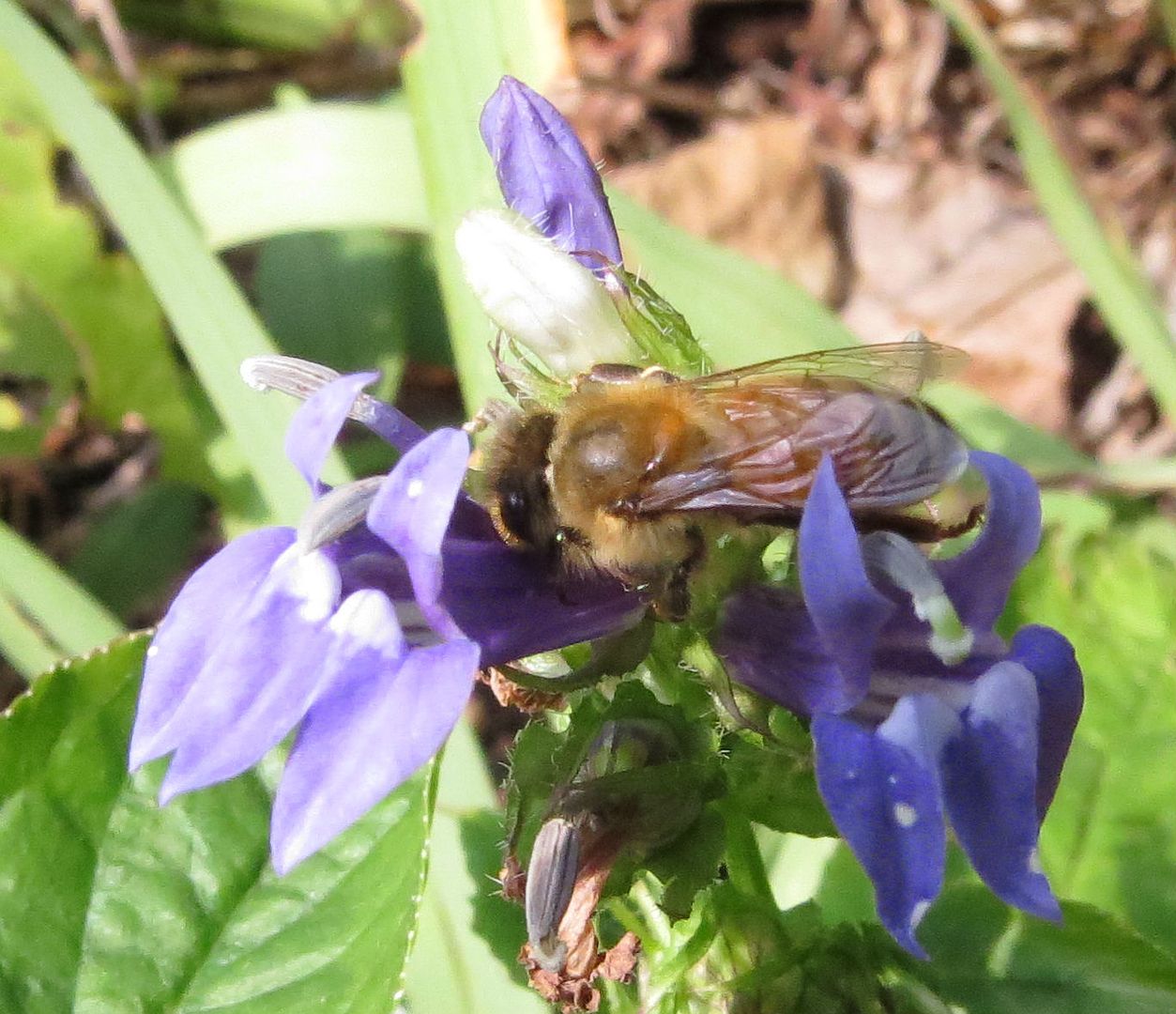
Our native Blue Lobelia, Lobelia siphilitica, is an upright, sometimes hard to establish and other times weedy perennial, with tube shaped pale blue flowers. I observe that while this is a wetland species, specamins growing closest to the water are among the shortest at around 2' at most while those growing farther away could reach up to 5' though 3 and a half certainly seemed more the norm.

Honeybees are perfectly capable of working the flowers but I noticed none of them were bothering to do so. The only flowers they visited were ones which carpenter bees had already chewed holes in.

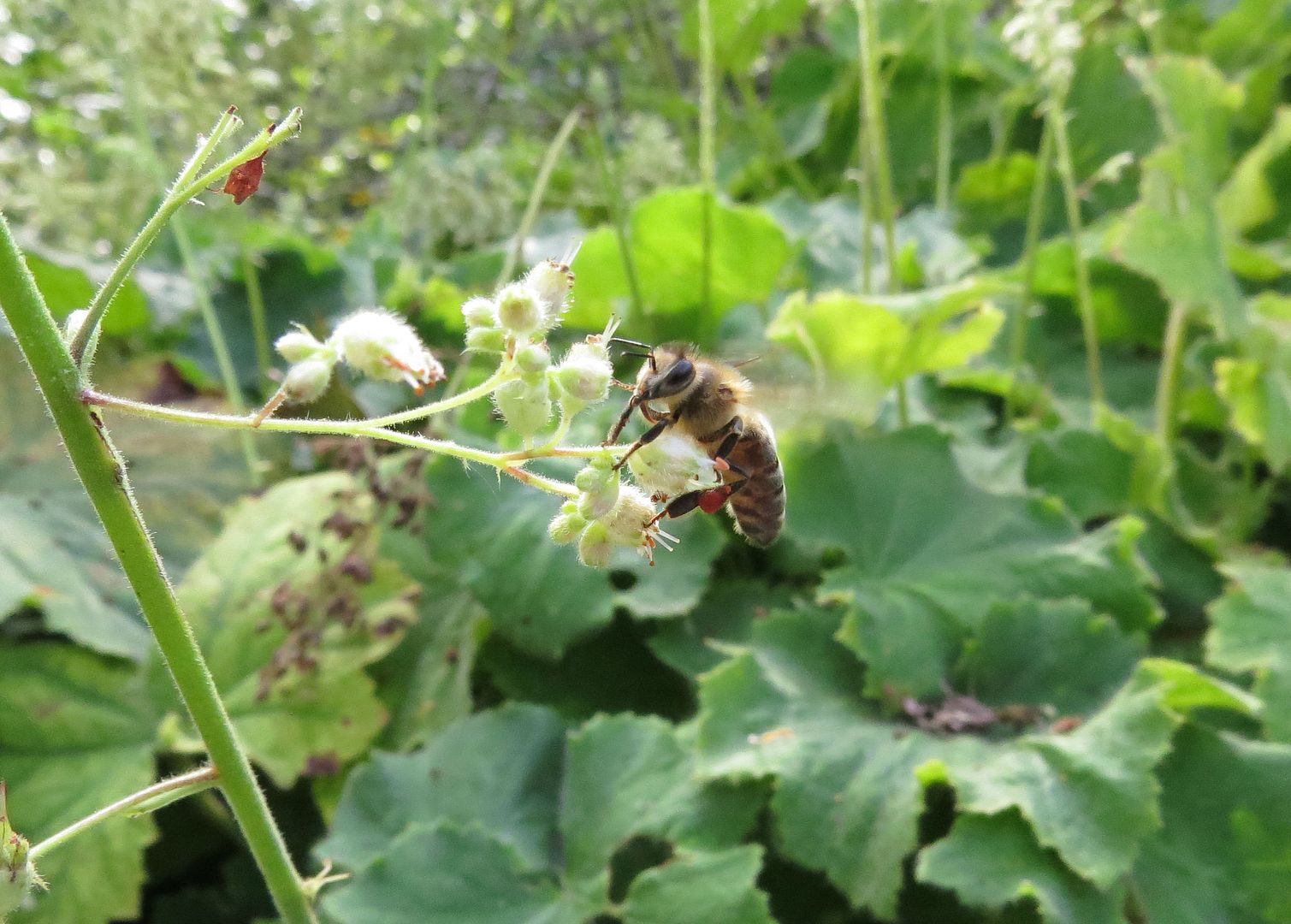
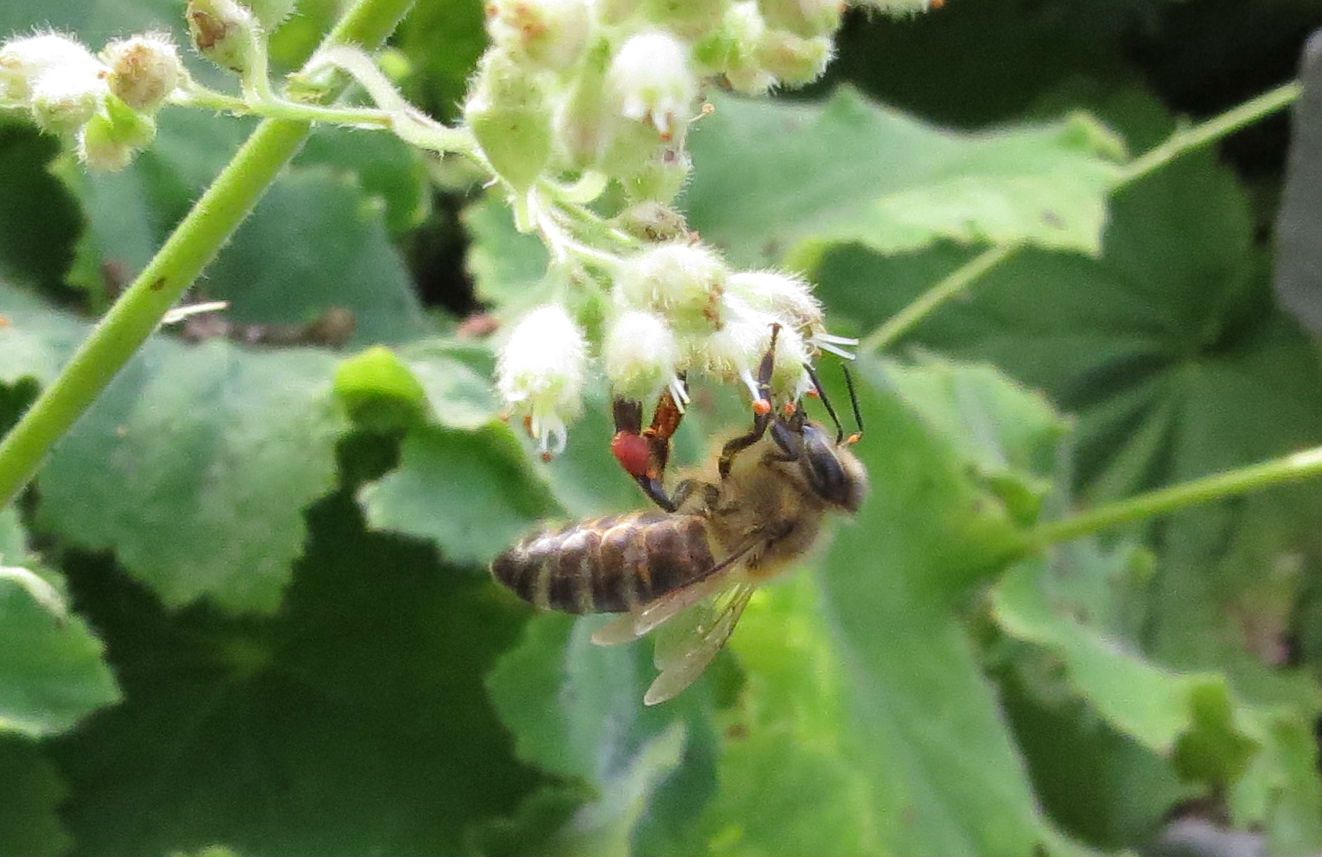
And lastly, I noticed honeybees working one of the Heucheras. This is a genus of plants with hundreds of cultivars that offer every color imaginable. They're mostly pollinated by flies but a certain few, typically ones with larger (for the genus) white flowers are visited by bees.

This particular species was mass planted near the Round Garden and the bees were gathering up nectar, and just look at that wonderful deep red pollen.
Saturday, September 19, 2015

Honeybees on Black-eyed Susan


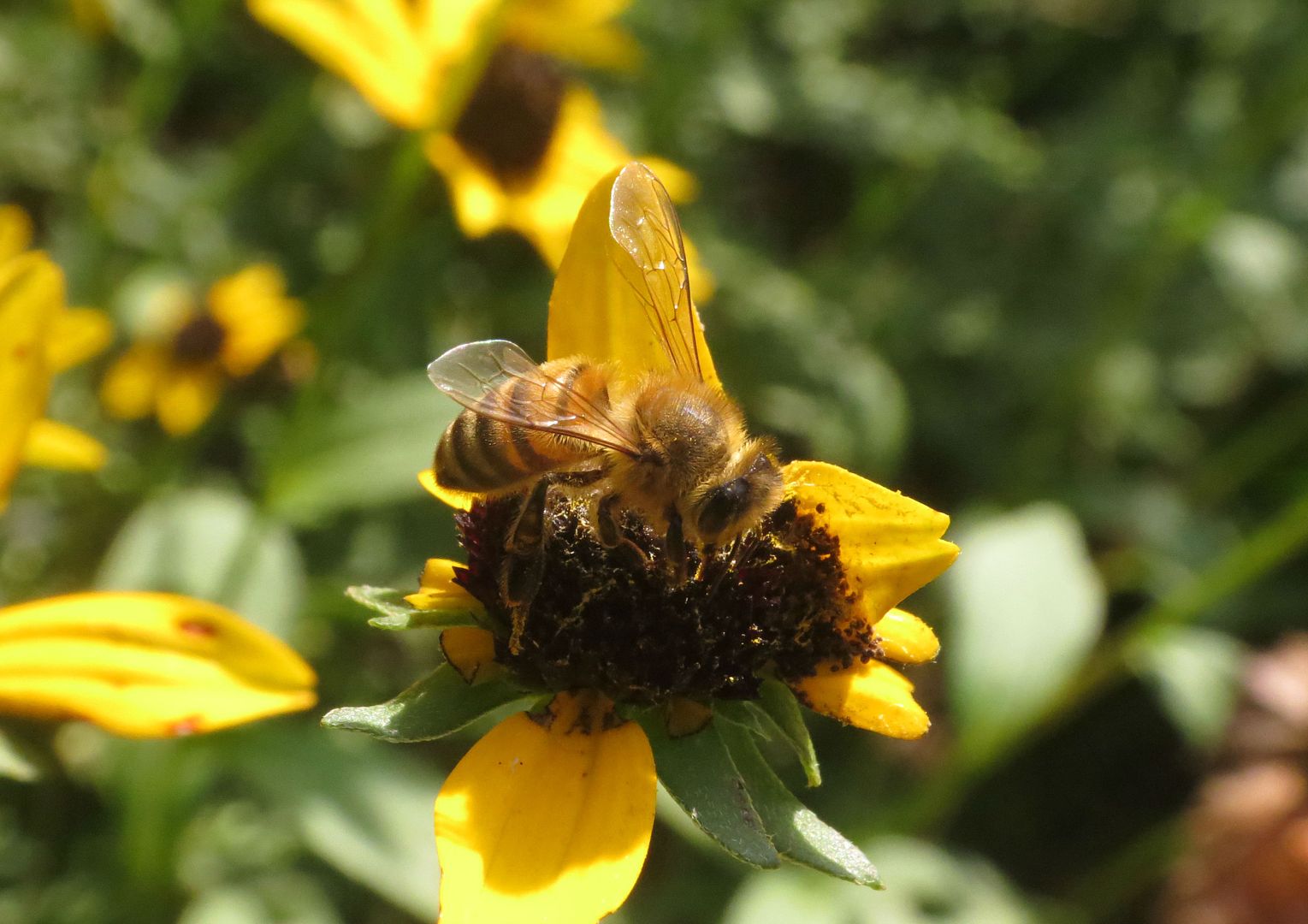
I've never seen Honeybees bothering with Black-eyed Susans before, even bumblebees won't bother with them. But on my recent visit to the Mt. Cuba Center in DE, sure enough I found some working the plants. But they were only working the ones in a huge patch at the top of the hill where assorted Asters and Goldenrod were planted around. Others planted out in the grassy meadow received no attention at all, though I'll concede they were not planted as densely. What I think is happening is the honeybees that found the asters took the sweet nectar home and did a waggle dance to tell their fellow bees where the sweet nectar was. So the new foragers coming to locate the source of the nectar mostly found the Black-eyed Susans instead of the Asters.


On rare occasions when I do find honeybees working Black-eyed Susans, away from other nectar plants, it's usually on the cultivars that have enormous flowers compared to the true species, seen above, which doesn't always have its petals.

I'm half tempted to say the bees were tending aphids that sometimes infest the flowers to various Rudbeckia species but I know that wasn't the case.

I also spotted a Pearl Crescent fluttering about on the flowers. I wonder if the Mt. Cuba Center's new hybrid aster 'Bluebird' is a host plant for this species. It's a hybrid between two Asters but only Symphyotrichum laeve is listed as a host.

Wednesday, August 5, 2015

Spring Azure Host on Sourwood

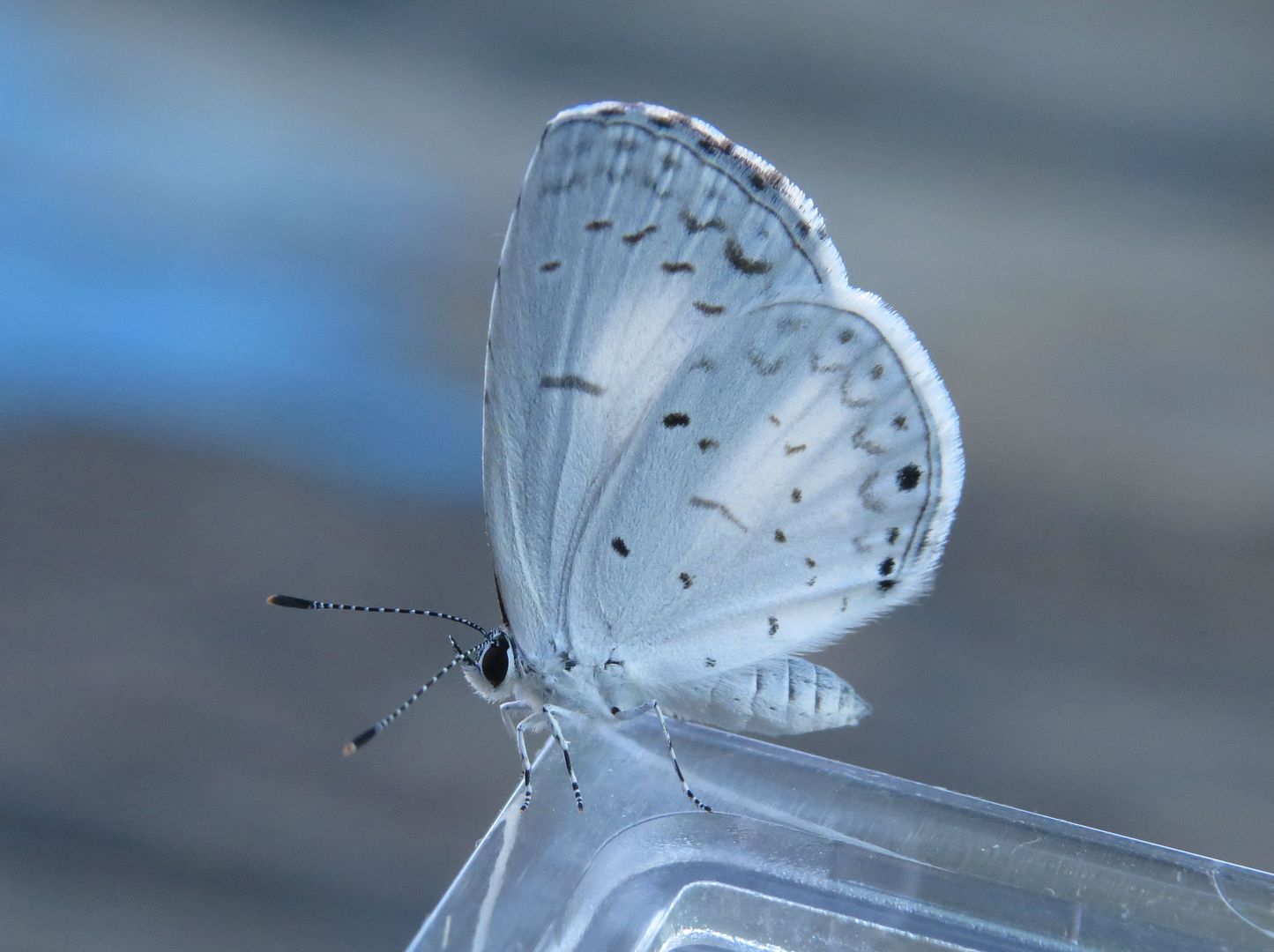
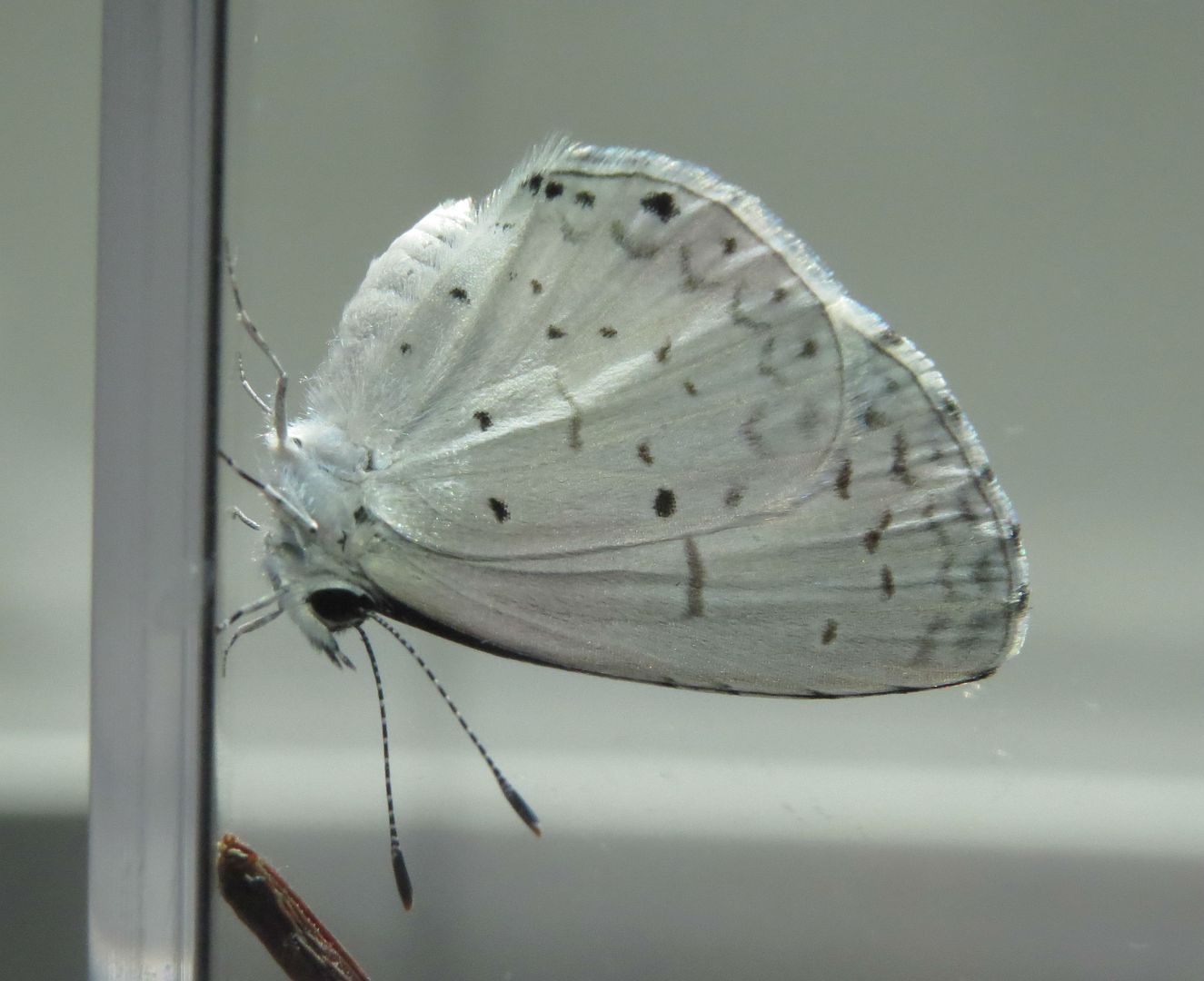
On a recent post, I talked about how I discovered caterpillars consuming the flowers to my Sourwood tree. I was determined to find out what they were so I collected one and put it in a jar on my desk. A few days passed and the caterpillar formed a chrysalis, the smallest chrysalis I've ever seen! And roughly ten days later, it has emerged, no surrogate ant colony needed.

Spring Azure it is! Something in the Celastrina ladon complex. Basically there's like 4 or 5 butterflies that all look seemingly identical to one another and have a huge variety of host plants. What makes them a complex is that it's unclear how many species are involved, which ones use what host plants, and how each host plant alters the appearance of the caterpillar and the adult form. Overall this butterfly uses the flower buds Dogwoods, New Jersey Tea, and a few others but some host plants such as the Sourwood are unknown, which might suggest there are more species out there than the initial 4 or 5 believed to be in existence. 

Saturday, August 1, 2015

Honeybees on Nodding Onion

My little patch of Nodding Onions has started to get more attention than hummingbirds. With more than 45 plants in bloom, my honeybees have started to take an interest. This is good because their focus has otherwise been completely devoted to the patch of mountain mint in an adjacent garden bed. Mints, while rich nectar sources, I've found can sometimes add their flavor of the honey which some folks don't like. They're also starting to work the Anise Hyssop, Joe Pye Weed as well the Buttonbush and Clethra alnifolia now that they're all in full bloom. Nodding onions were a surprise though. I had assumed they'd be treated like purple cone flowers, one or two bees per 50 blooms, but these are getting slightly more attention than that. 

Another thing is that I've realized I probably ordered about 32 plants two years ago, and now I have almost 50 flowering... so they've clearly reproduced. There's the main clump I have in a sandy patch which is how they grow them at the Mt. Cuba Center. Bulbs (onions) benefit from drainage in the soil, so when I read that they will also grow in clay, I'm skeptical. Yes they might grow and flower in clay but I suspect they won't reproduce as well or last as many years as they would in sandy spots.

Granted the ones I have planted in clay are doing perfectly fine. In fact, at the risk of calling myself a hypocrite, the main patch I first planted in the sand seemed like it went through shock. The plants were lanky, wilted, seemed to demand more water. But that was the first year, now that they've got their roots established they seem to be growing equal to if not better than the ones I started in clay.

Sorry for photographing pretty much the same bee over and over again. My camera was out of batteries from another project, and I only had my cell phone to work with. I'll try and get more picks to better diversify my angles and bees, etc...
Along with the main patch, I have a few plants scattered in other gardens and along pathways but nowhere near as densely planted. While walking the garden I noticed the honeybees had found these plants too which is a little odd. Generally when a bee does a waggle dance in the hive to give the coordinates about this awesome source of food they found, they normally wouldn't be finding these random plants away from the main patch. It's as though they're finding the main patch of onions and then exploring a bit to find plants that aren't getting as much attention. Normally when I see bees foraging in, say a field, you find them on the plants where the flowering is the most dense, rarely in the smaller patches forming the outskirts, if you understand what I mean.

I'm taken by the lack of info there is on this plant as a nectar and pollen source for honeybees. It's generally agreed upon that bees like the plant, as well as everything in the Allium family (Garlic, Chives, other Onions) and if hummingbirds are using it as a nectar source you can be sure it's of high quality.

In the book "Honey Plants of North America" they generalize onions into a simple paragraph, almost treating them like a cliff note. Granted the book was published in 1926 but it's still a publication well worth owning (though their taxonomy is almost 100 years out of date). In it they write, "Valuable for honey when grown for seed... ...The honey is amber-colored, and the peculiar onion odor and flavor almost disappear as it ripens. The flowers are white." But this refers to Allium cepa the common white onion grown the world over, not our native Allium cernuum and they pretty much skip over every other species though I think it's safe to say bees like all members of this family.