Sunday, December 11, 2011

Best of Butterflies 2011

I've been noticing a trend with the Lepidoptera (Moths and Butterflies) in my area. As the flowers all come out each spring we get an assortment of small tent caterpillars. Their mother moth had attached the eggs to the tree the previous autumn. Once they hatch the caterpillars begin nibbling away at the tender new flower petals to mostly fruit trees. At the same time migrations like the Red Admiral, Painted Lady, and American Lady start up, all of whom fly lightning fast and are easy to miss if you're not looking. Eastern Commas and Mourning Cloaks come out of hibernation and flutter about with the newly emerged Swallowtails, of which there are incredibly few at the start of the year.

After this initial boom we enter something of a drought with butterflies. This all changes come June, July, and August, as things have gotten into full swing. Generally any butterfly worth its salt will be flying around at this time of year. During the heart of summer they almost completely disappear during the hottest part of the day. Come 4:00pm though they'll be back out in full swing. The Monarch for the most part hasn't had its population explosion yet, so this is really the time when Swallowtails steal the show. Giant Silk and Royal Moths can be found around lights at night. 

Once we hit August we're overtaken by orange and black. The Monarch population is approaching its peak for the year and their migration south begins. A few others migrate at this time but they're not as well known by the general public.

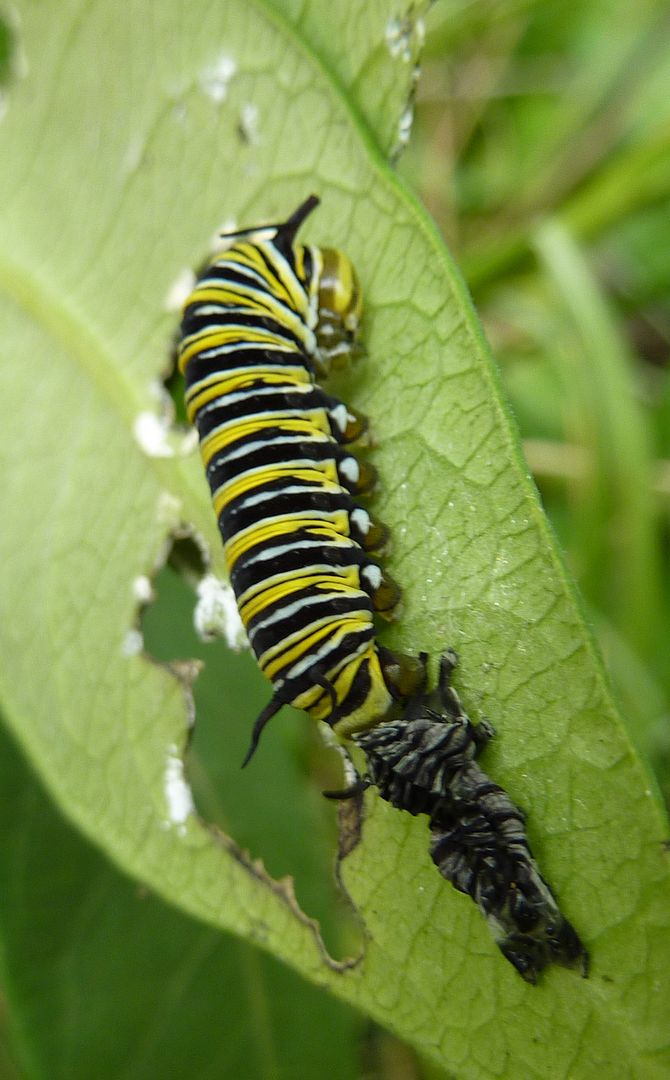
I often feel that the Monarch gets too much attention in butterfly gardens. It really is the only species the general public seems comfortable enough discussing. This is on par with the Honeybee hogging all the spotlight in the "Save the Bees" movement. Monarchs are almost too easy! You plant milkweed and you're almost assured to get some caterpillars. And not just any caterpillars, ones that are fearless out in the open nibbling away on host plants in the middle of the day. They're a big middle finger to anything trying to eat them, though I guess the 1 in 25 survival rate makes up for it.

By comparison the lengths swallowtail caterpillars go to not get eaten seem extreme. Early on most species are disguised as bird dung, wet bird dung! During the day most of them are not out eating, though a few species are more fearless than others. The cowards are tucked away under leaves or among the bark. After nibbling on a leaf, they will cut that leaf off at the stem to hide evidence of caterpillar nibbling! The spicebush swallowtail is mimicking a snake and even it hides during the day! (Here is a video of this in action where. Those tube like structures on the head along with releasing an odor will rub right into the bird's eyes.)

An excellent second species to go for besides the Monarch would be the Pipevine Swallowtail. Because they're poisonous to eat, just like the Monarch, their caterpillars can afford to be out eating during day light hours. Here is a video demonstrating that.


Anyhow here's how I did this year.
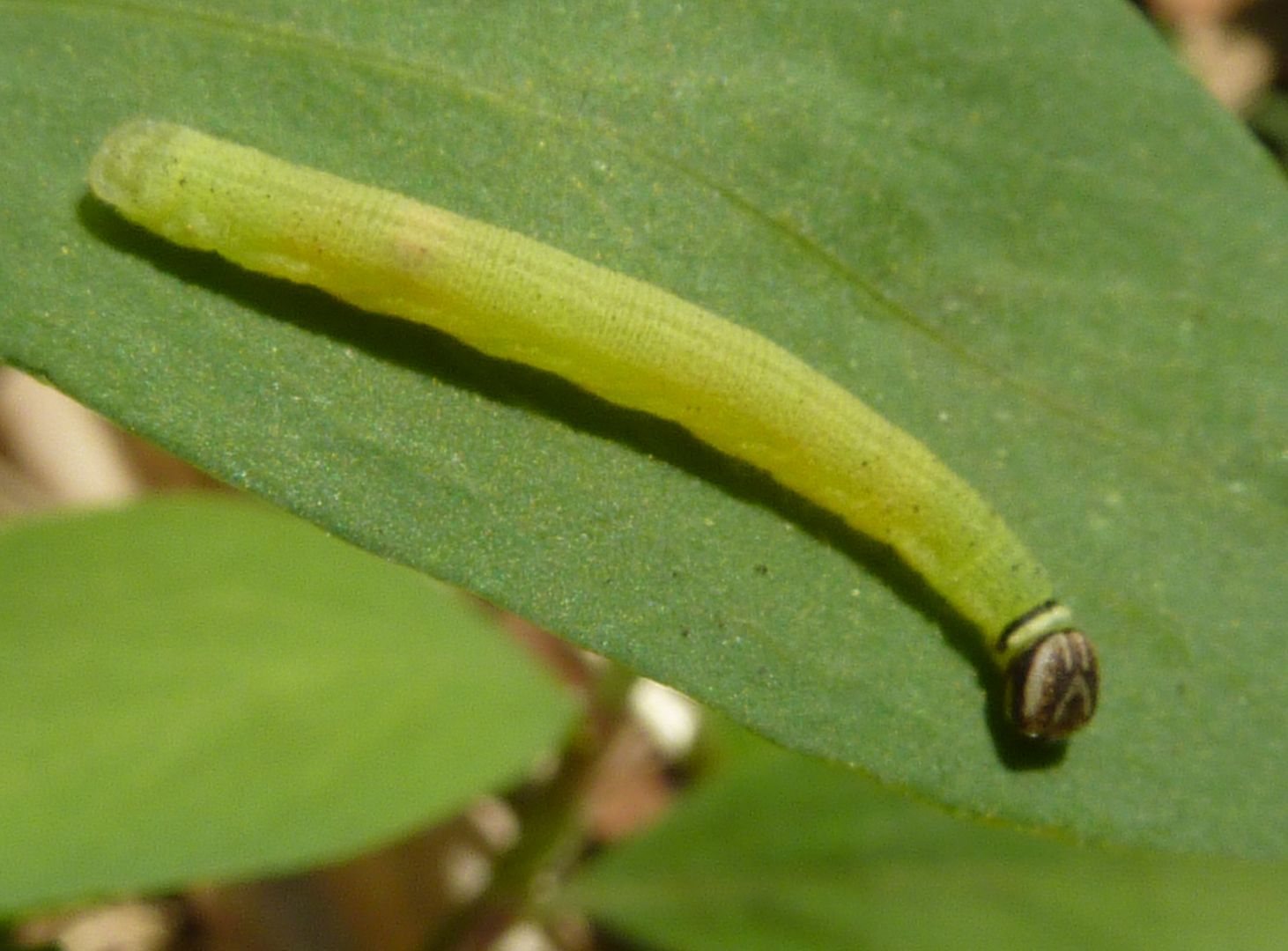
The caterpillar to some kind of Lepidoptera. It might be to a Duskewing skipper or something else. I honestly don't know. I found it nibbling on some type of small weed that I frankly have never paid any attention to until I found this caterpillar on it.

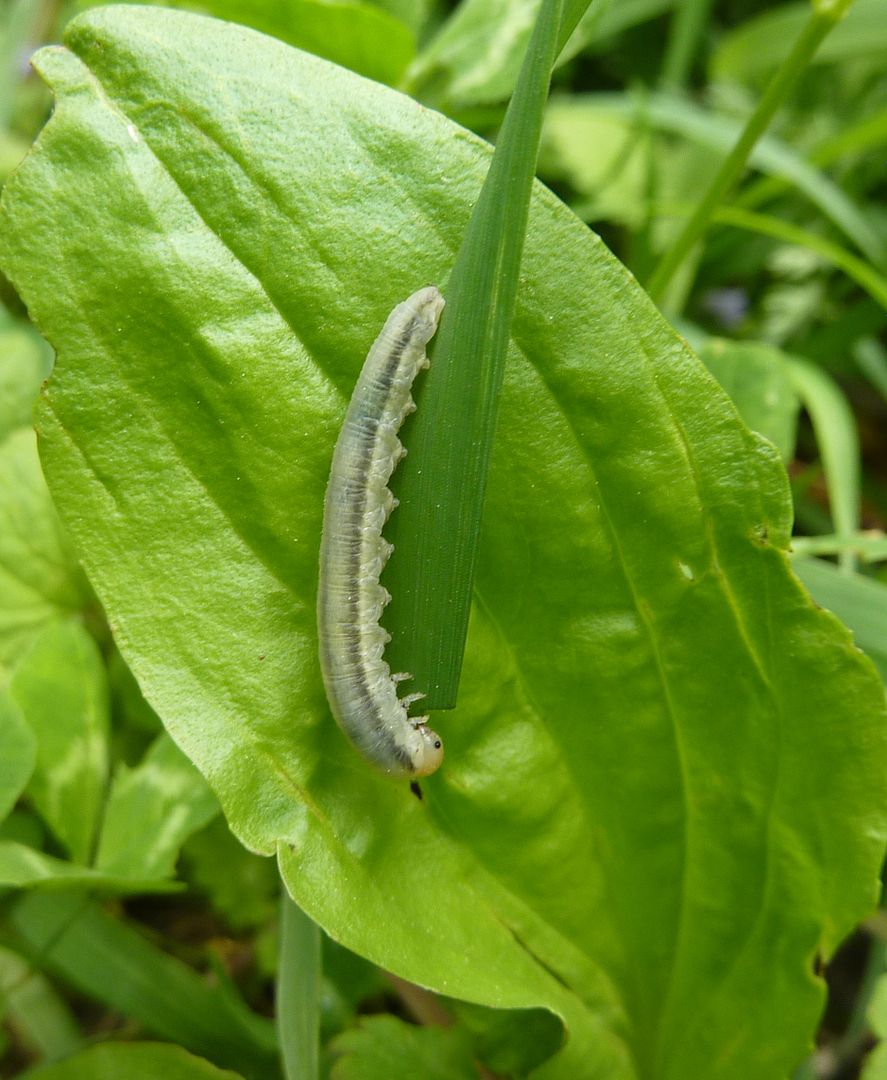
This might be some kind of sawfly larvae or a caterpillar to some moth I've never paid any attention to. What's neat is I learned they all come out at dusk to nibble on a type of grass we have growing all over. And I was a little surprised to find my yard had lots of them munching away.

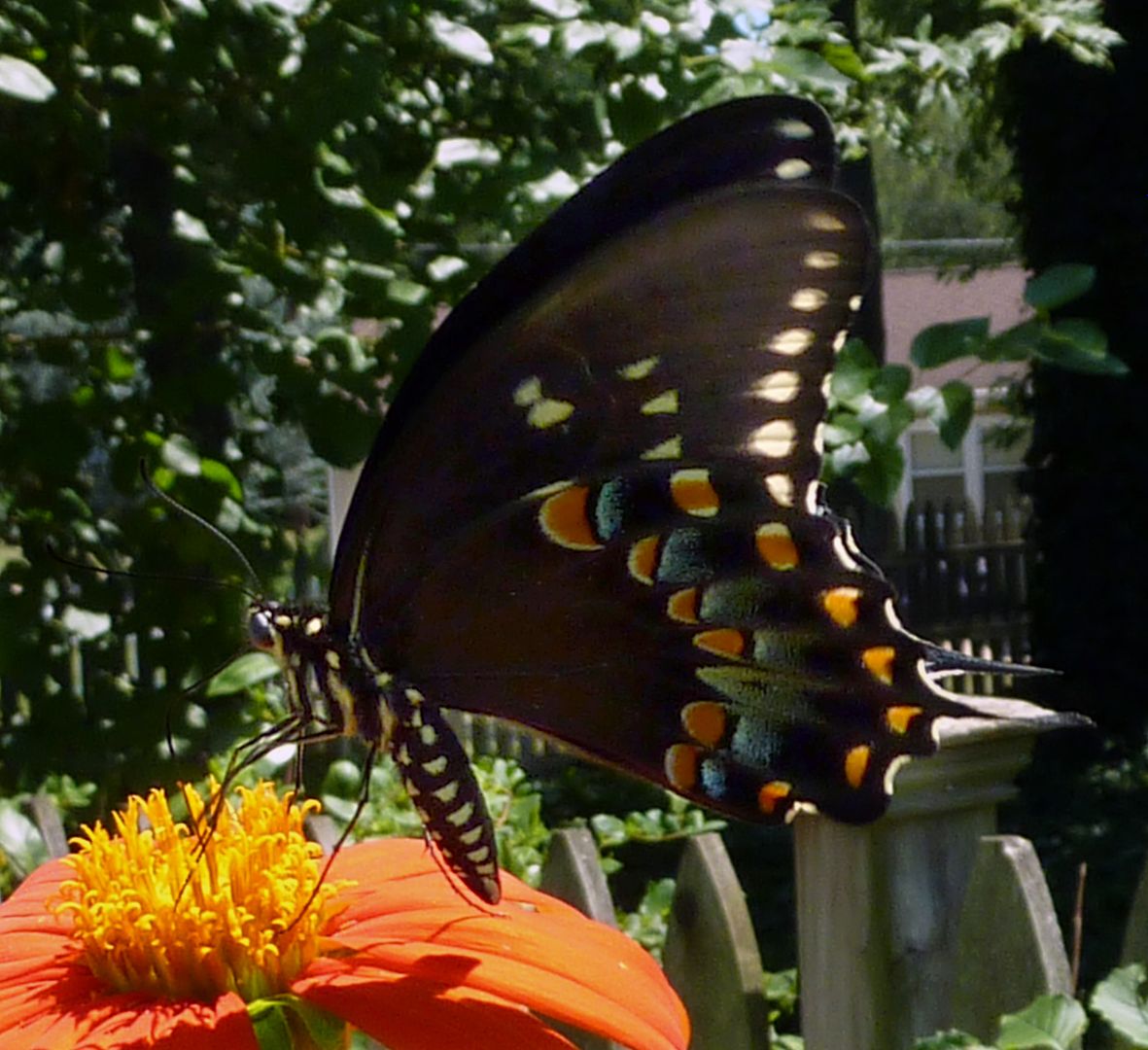
I finally figured out how to tell the Spicebush Swallowtail, Papilio troilus, apart from other Swallowtails. Note the line of large orange spots under the wing. One of the spots is missing and replaced by a blue streak.

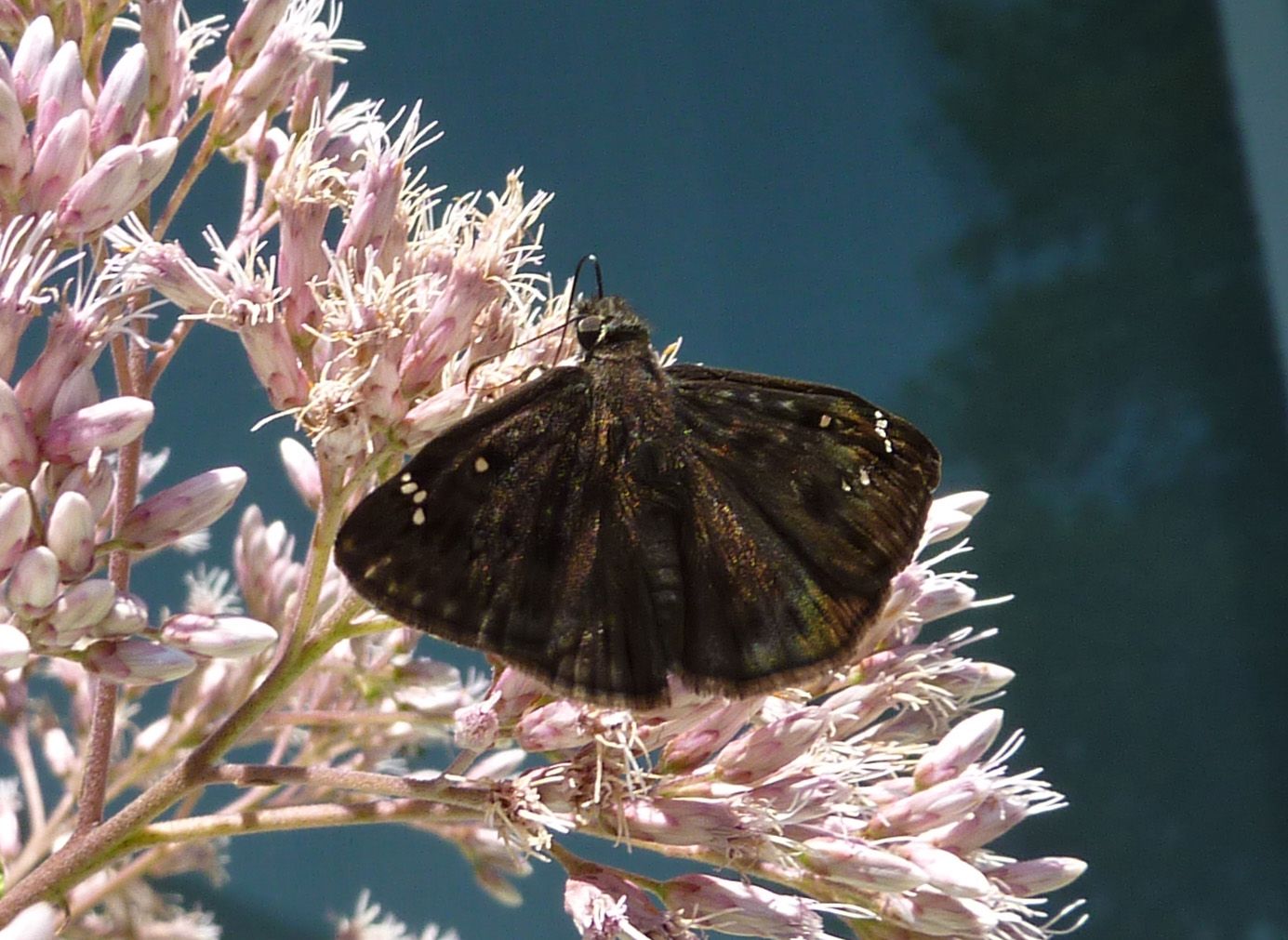
A Duskywing Skipper of some kind.

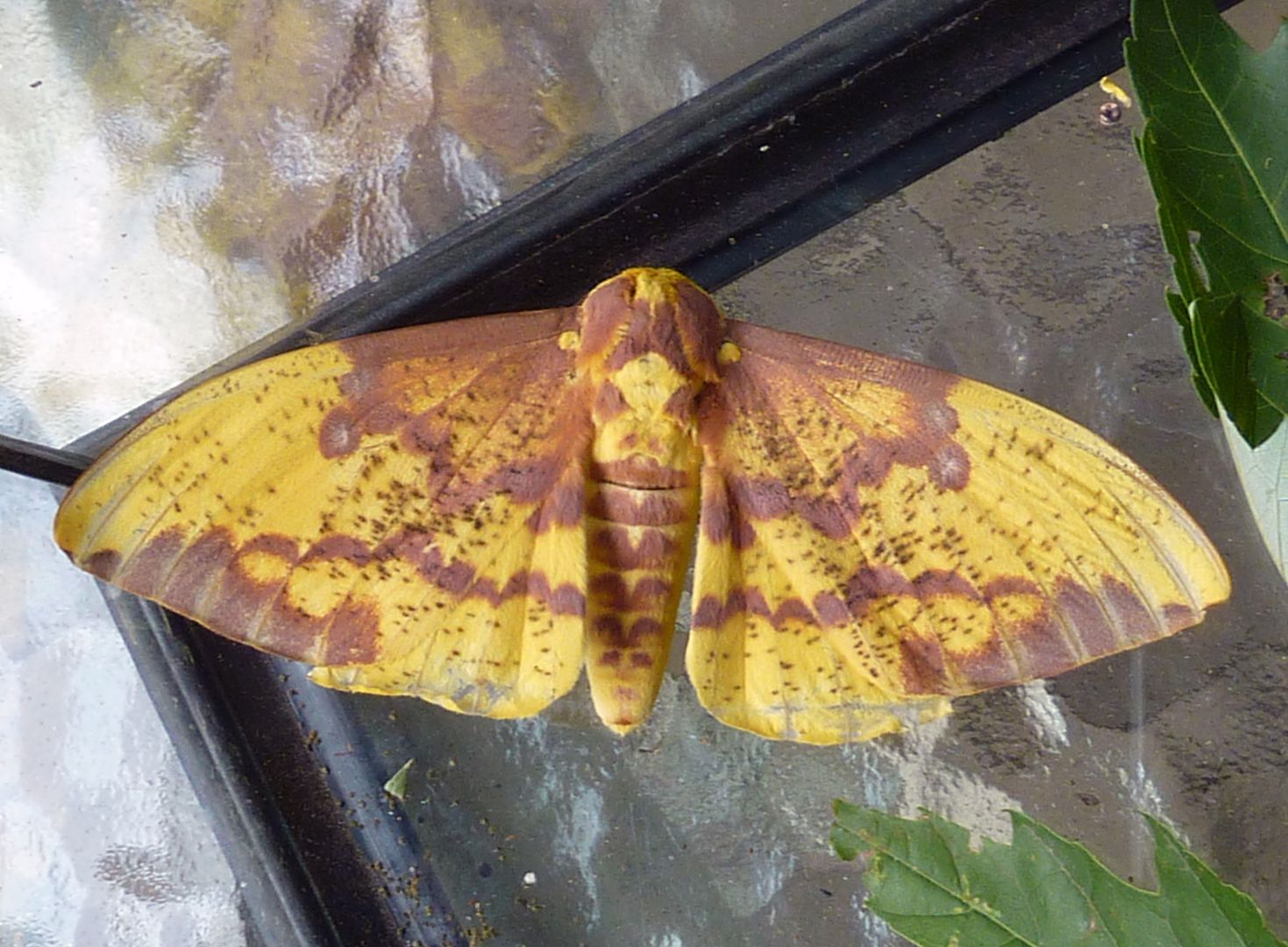
Imperial Moth, Eacles imperial, is I caught several of these this year. I always keep over night then release them immediately. I know how time sensitive their life cycle is. These giant silk and royal moths are about the size of my hand.

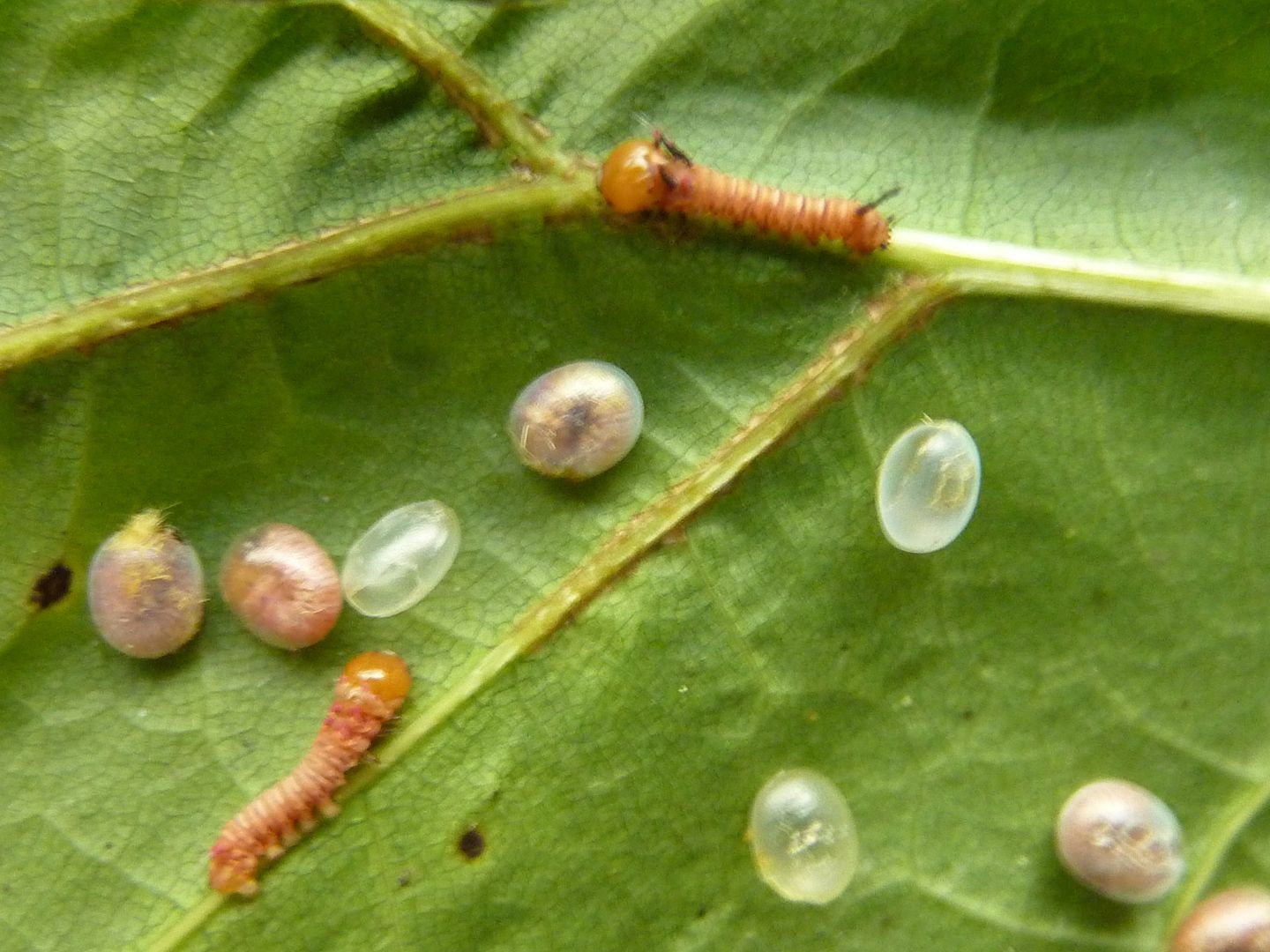
I even tried rearing them in captivity. Sadly my ability to do this successful is lacking and I've yet to raise one to adults.

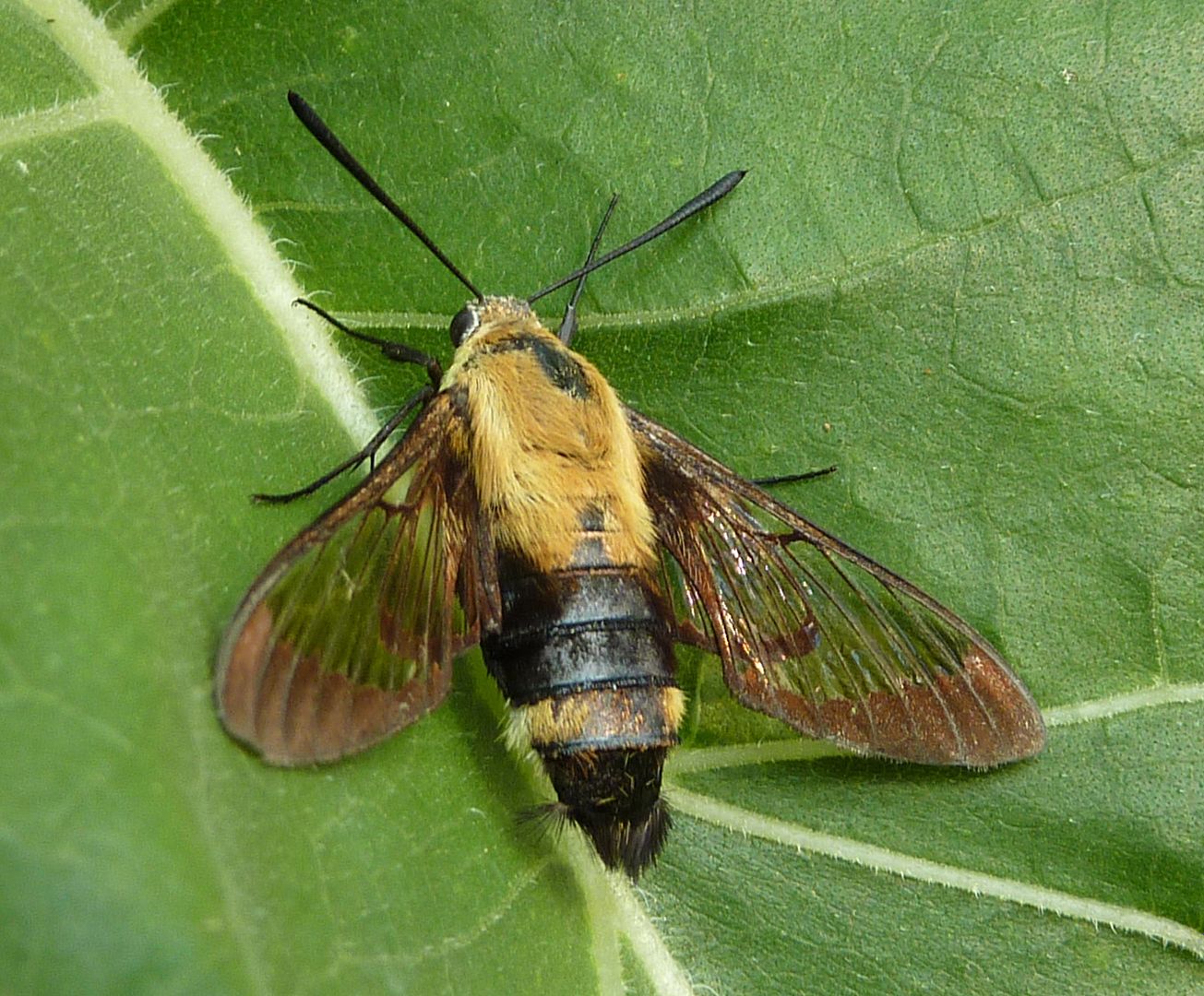
I finally got a Snowberry Clearwing Moth, Hemaris diffinis, to hold still. Our honeysuckle plants were teaming with these.

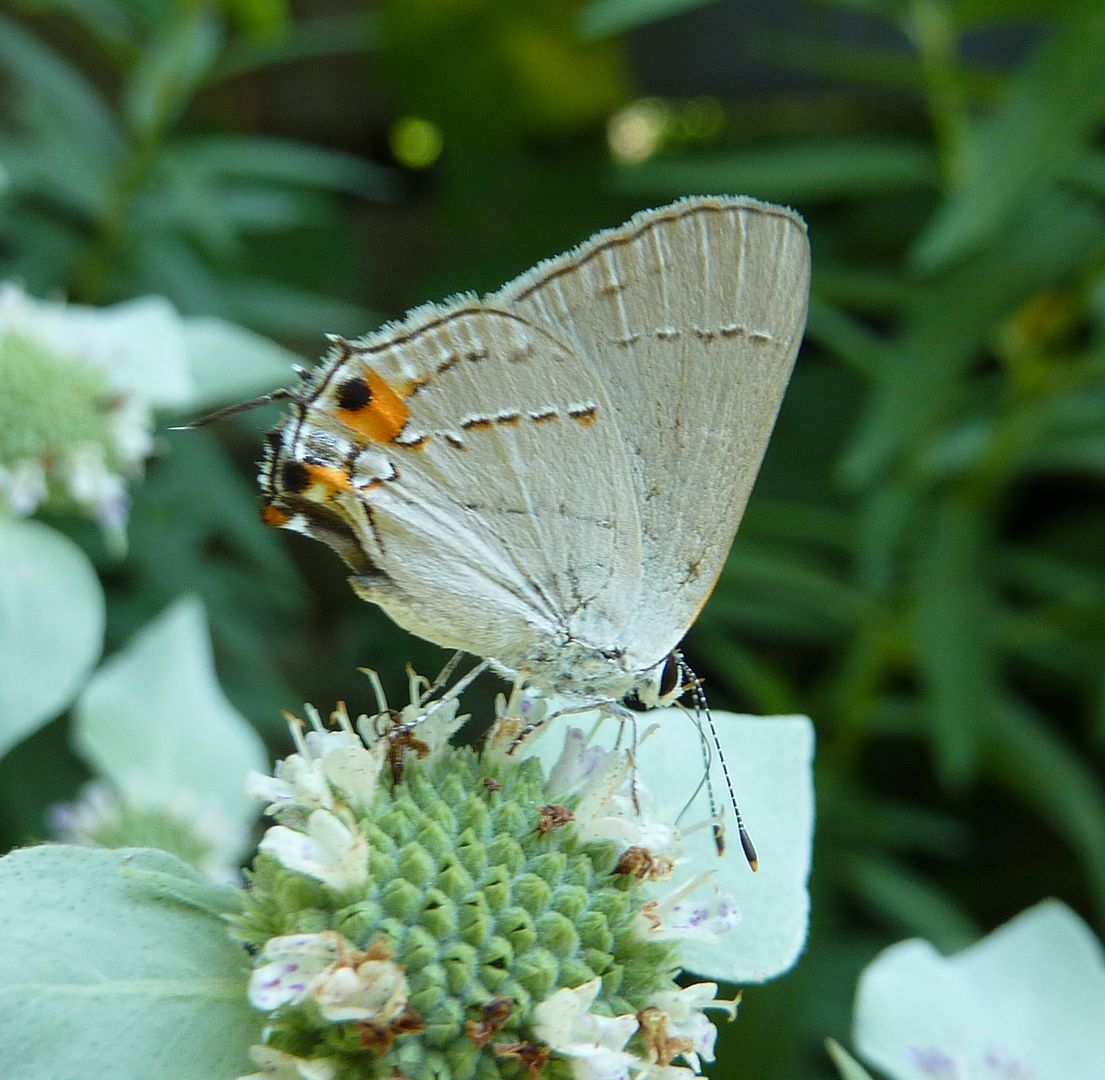
Some type Elf or Blue or something. This group of Lepidoptera I'm not very familiar with.

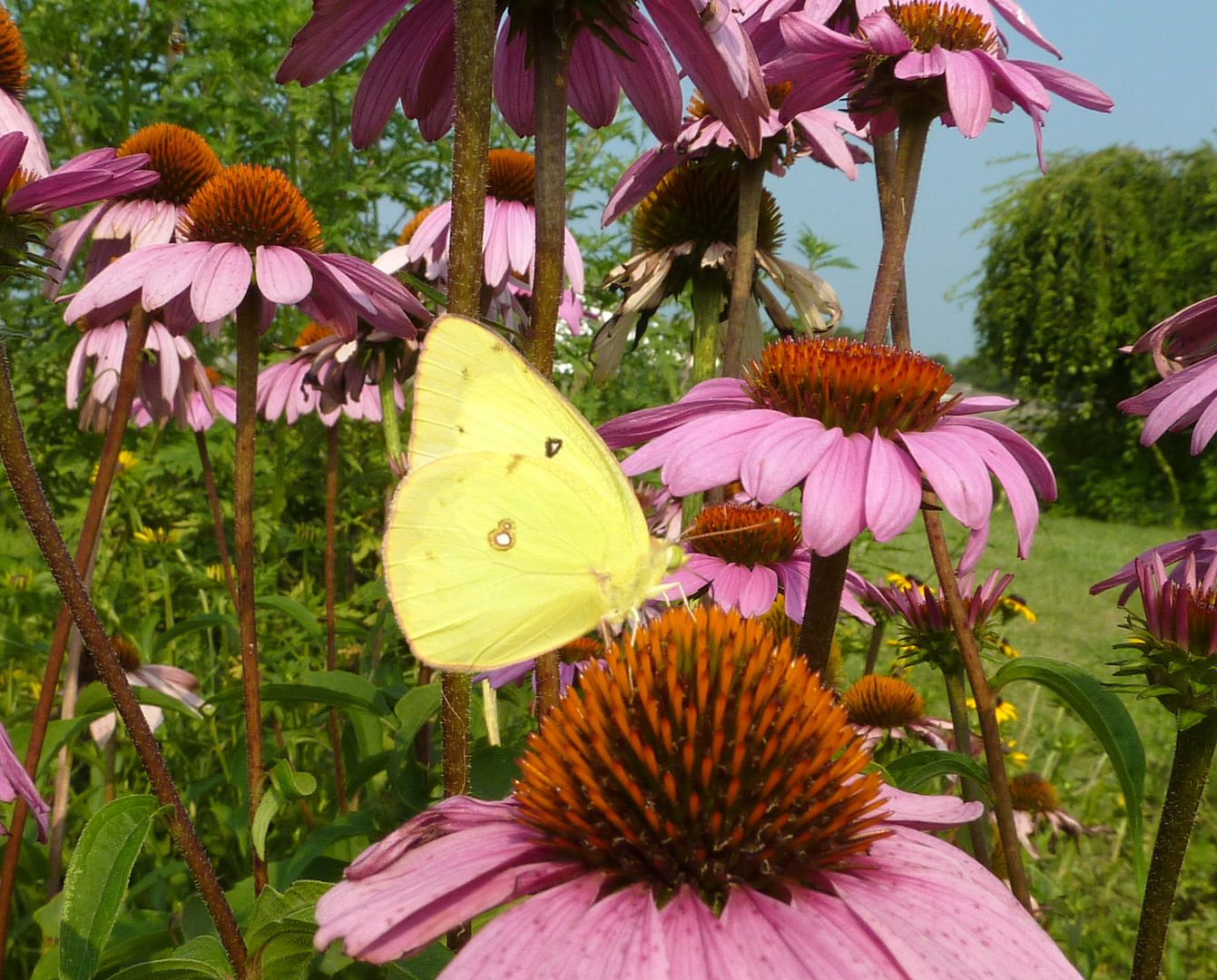
A Cloudless Sulphur, Phoebis sennae. I've been trying my best to make these more common in my yard. There's also a relationship between this species, their host plant, and some ants I hope to someday document.

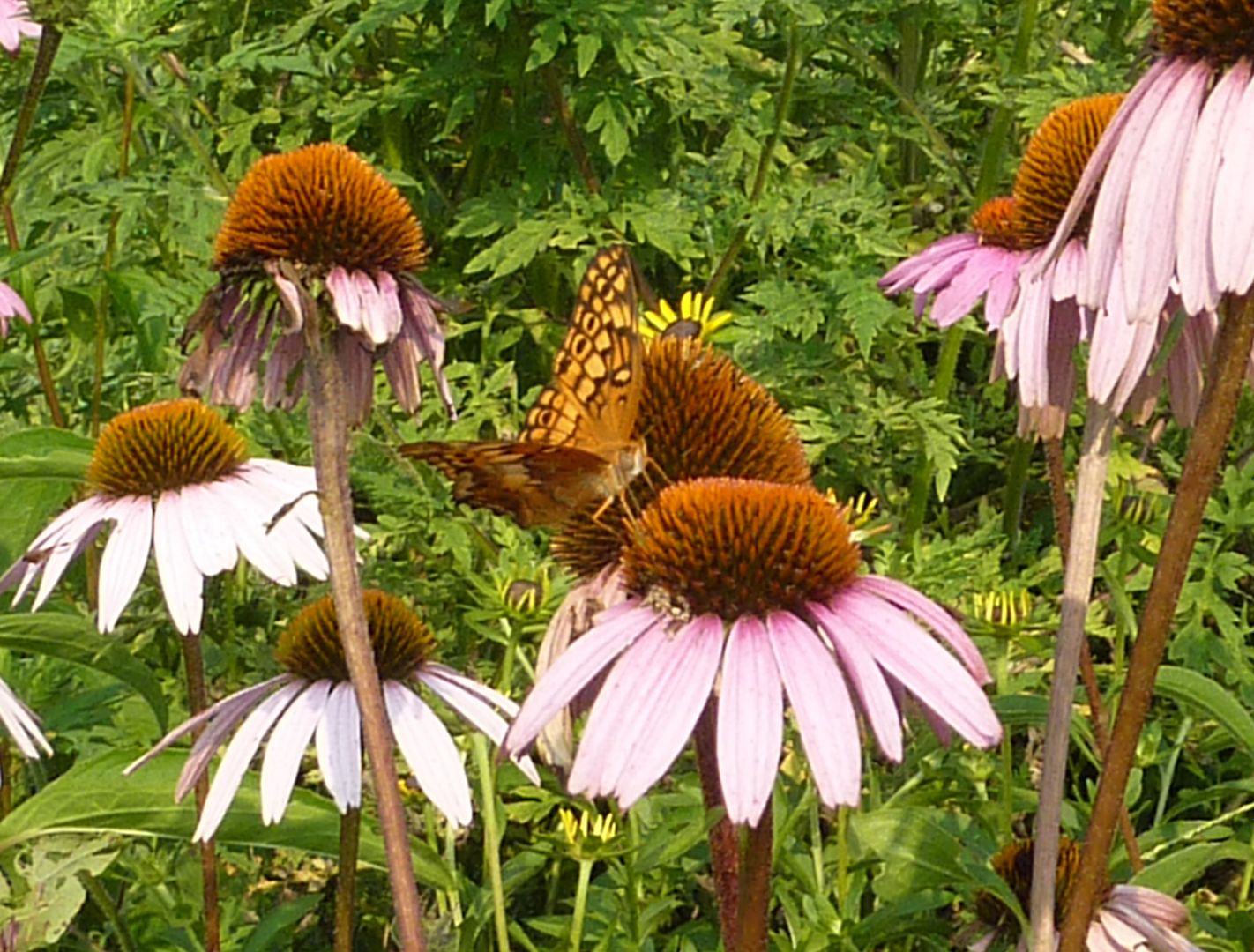
Fritillaries are another group of Butterfly that I'm just starting to learn about. From what I can gather they don't travel that much at all. People with these in their gardens should feel honored as many species are restricted to only a few fields and are often considered a mark of quality.

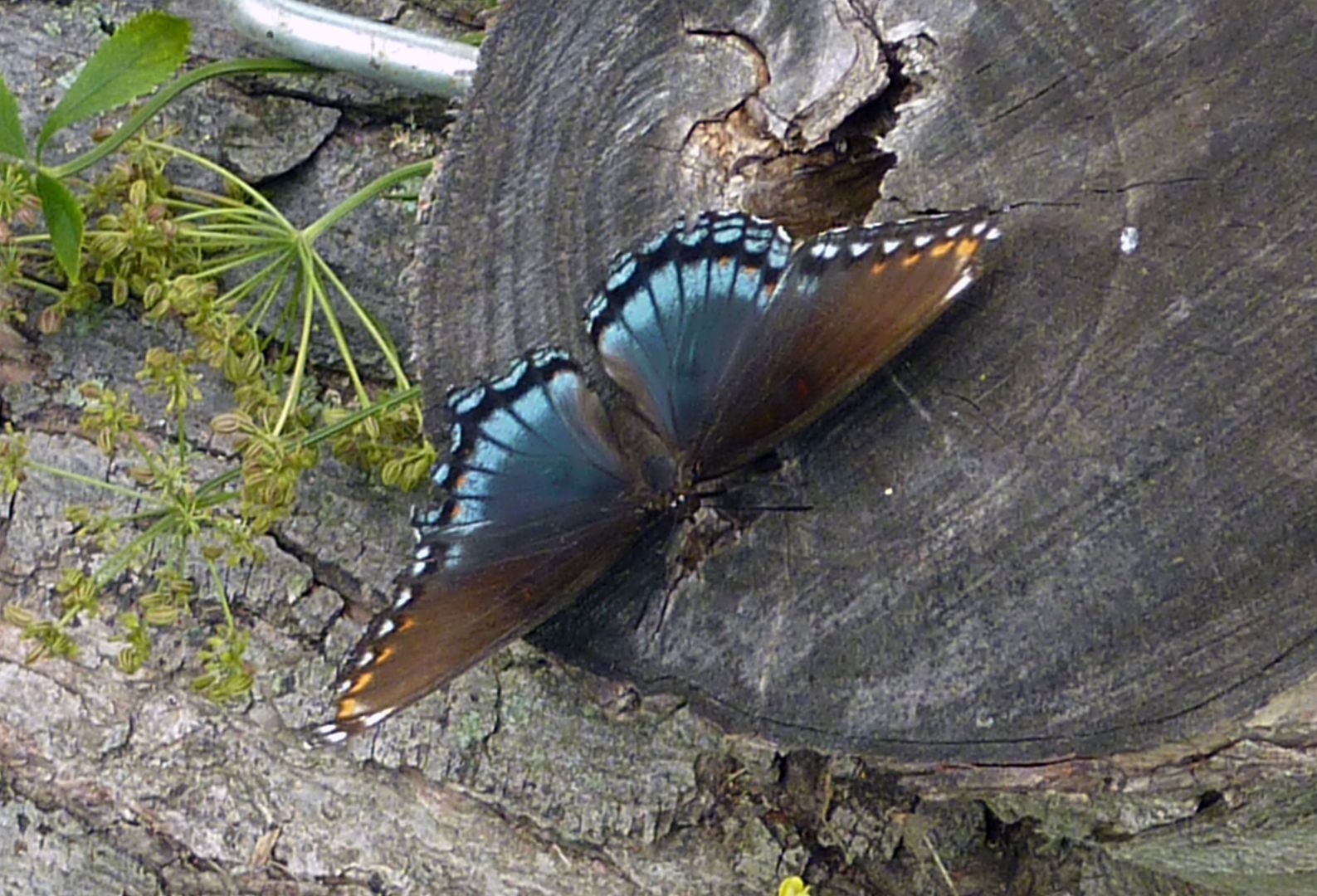
A little upside down, but, this is a Red Spotted Purple, Limenitis arthem. And you can see from the smooth curve on the rear wings that it is not swallowtail. It is mimicking a swallowtail as are many other swallowtails, who all strive to look like the Pipevine Swallowtail, Battus philenor.

  
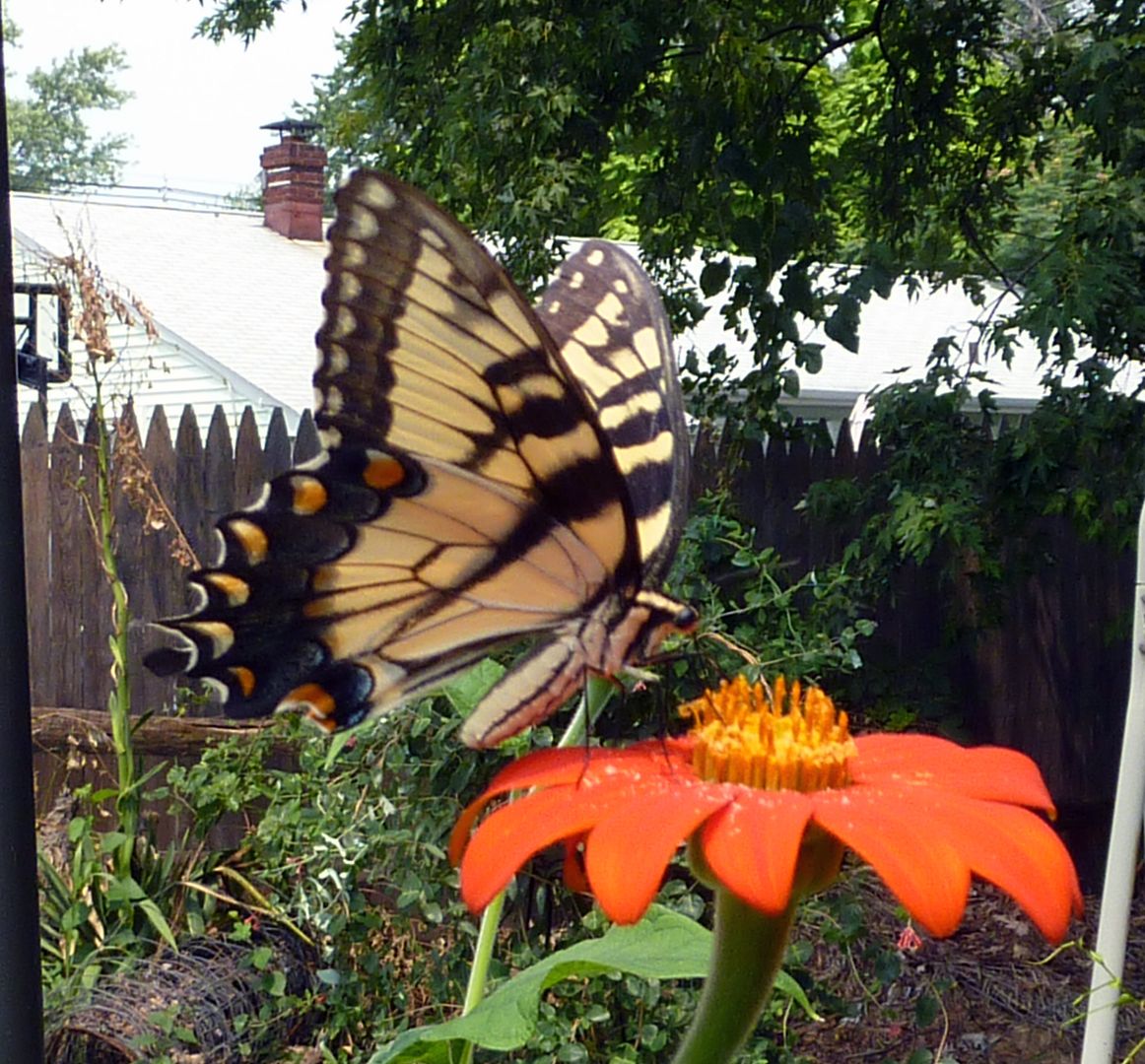
The Eastern Tiger Swallowtail, Papilio glaucus, (and maybe a few others) don't really try to mimic their Pipevine cousin at all. Only 1/3 females are born black, though when the Pipevine Swallowtail is prescient in the area that number can jump much higher. Males for whatever reason are always yellow and seem to proudly patrol from host plant to host plant, typically tall trees in the Cherry, Ash, Tulip and other genera. I'm not sure how they get away with being so showy and not poisonous. Perhaps their size allows them to break this rule, or perhaps the stripes remind birds of cats?

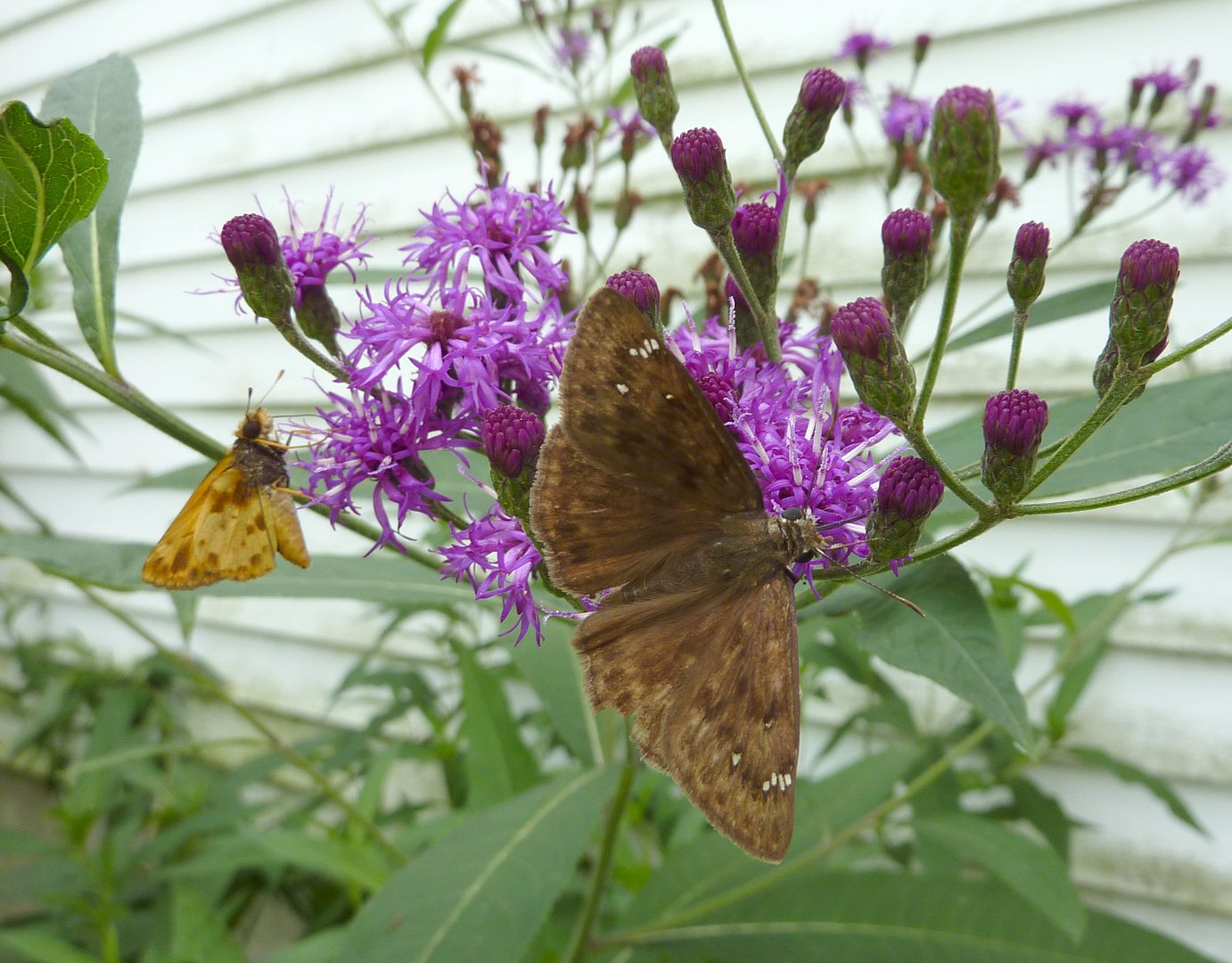
A skipper in back, and a duskywing in front on some Ironweed. 


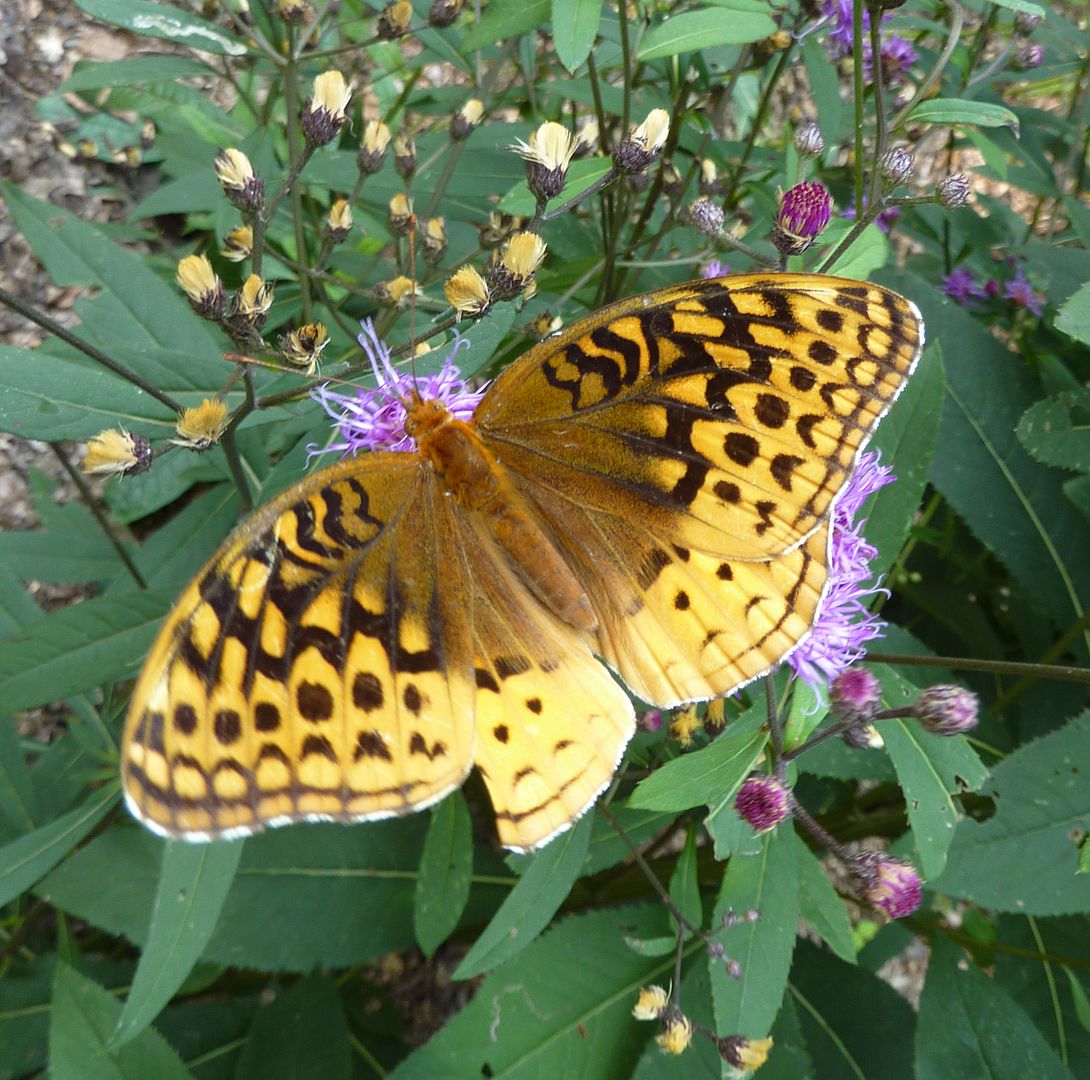
The Great Spangled Fritillary Butterfly, Speyeria cybele, is slightly larger than a Monarch Butterfly. As with other Fritillaries I read that females haphazardly lay eggs each autumn without any real regard for host plants. The resulting caterpillars are born and over winter without eating for ~7 months. Their host plants are Violets, which can be very common thankfully. Caterpillars that are successful at staying alive will develop quite an appetite and eat two whole plants everyday. 


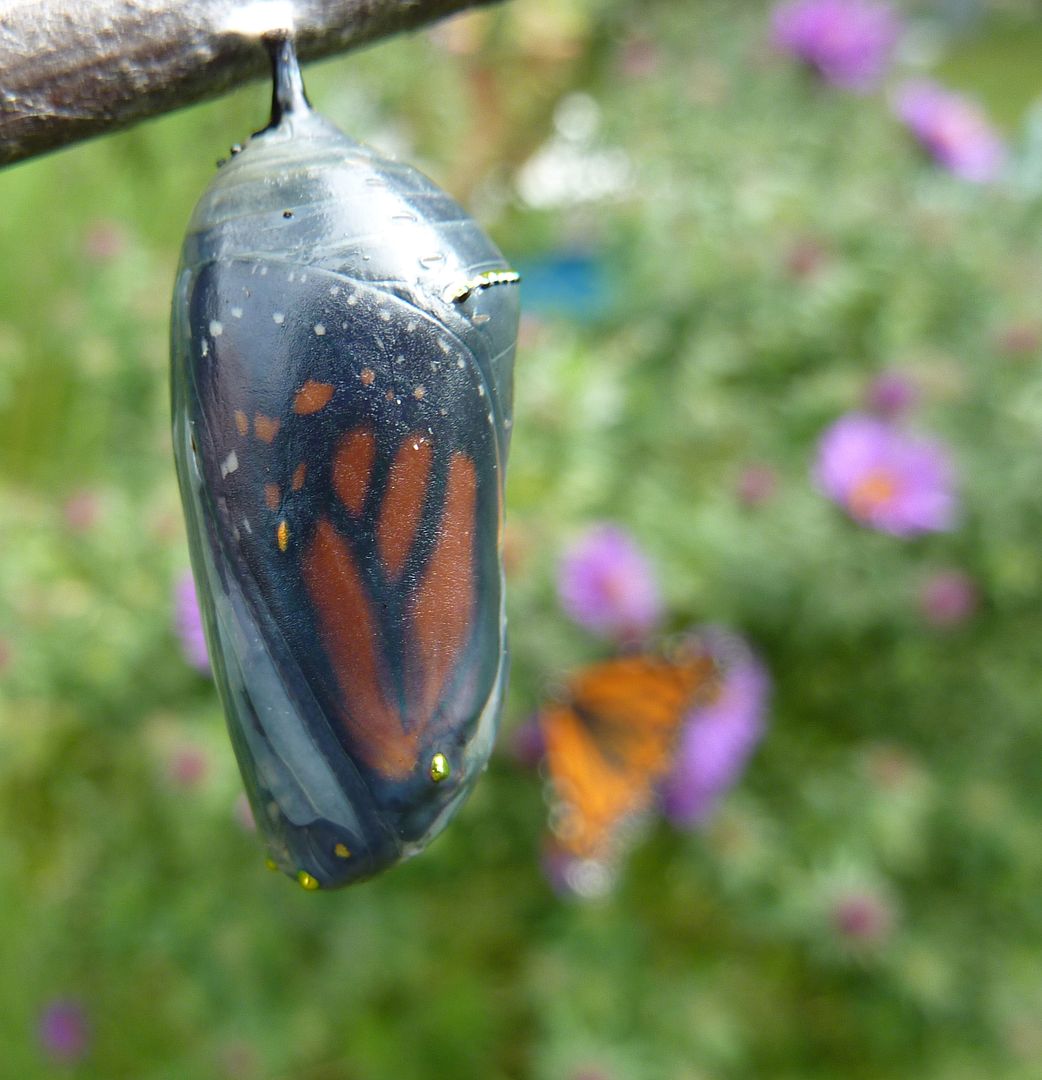
Butterfly season comes to its close here in August as the Monarchs start their migration south. Danaus plexippus


This year I raised several caterpillars in captivity and made a video of the process. 

You may look but don't eat. 


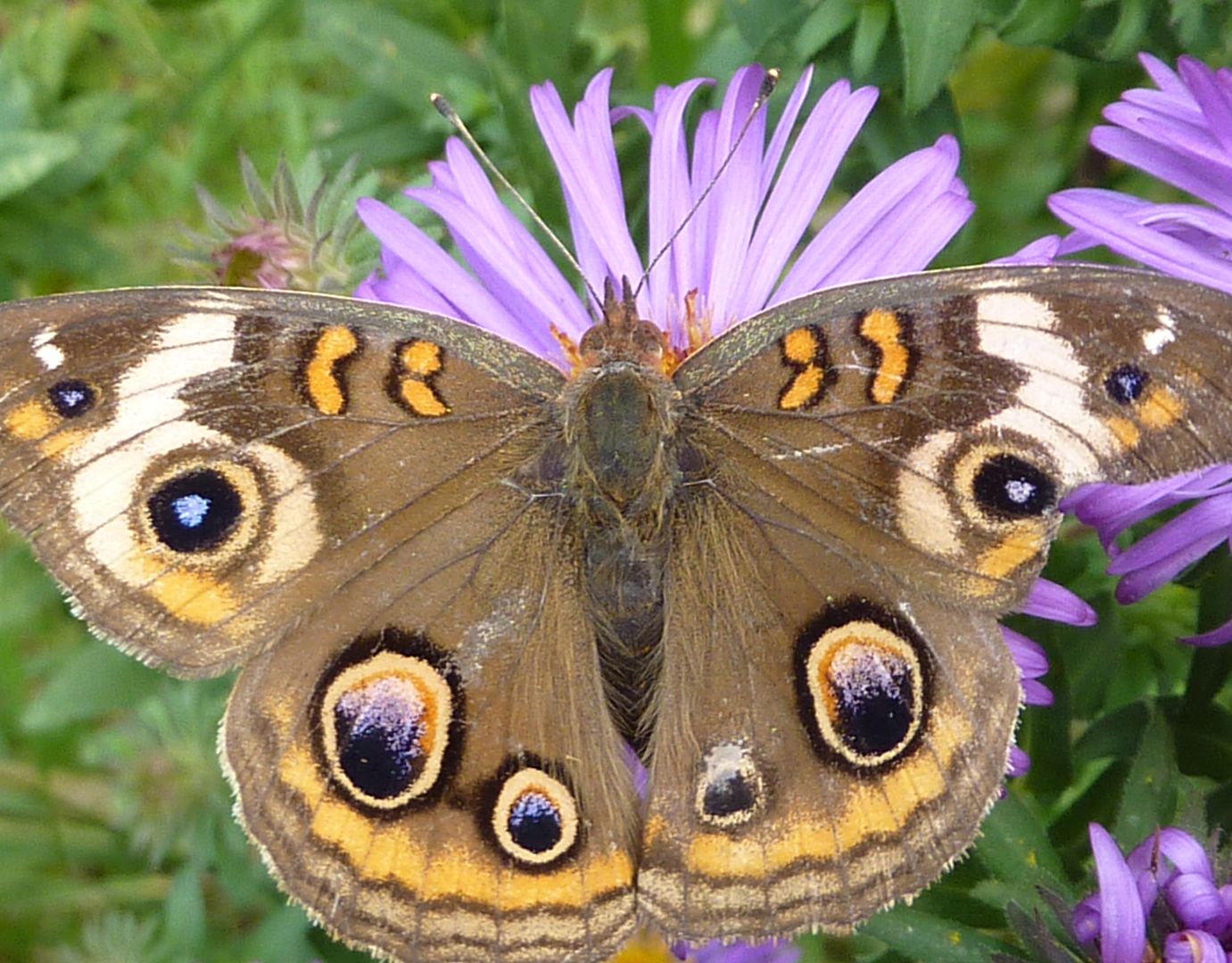
Another migration happening at the same time is that of the Common Buckeye, Junonia coenia.


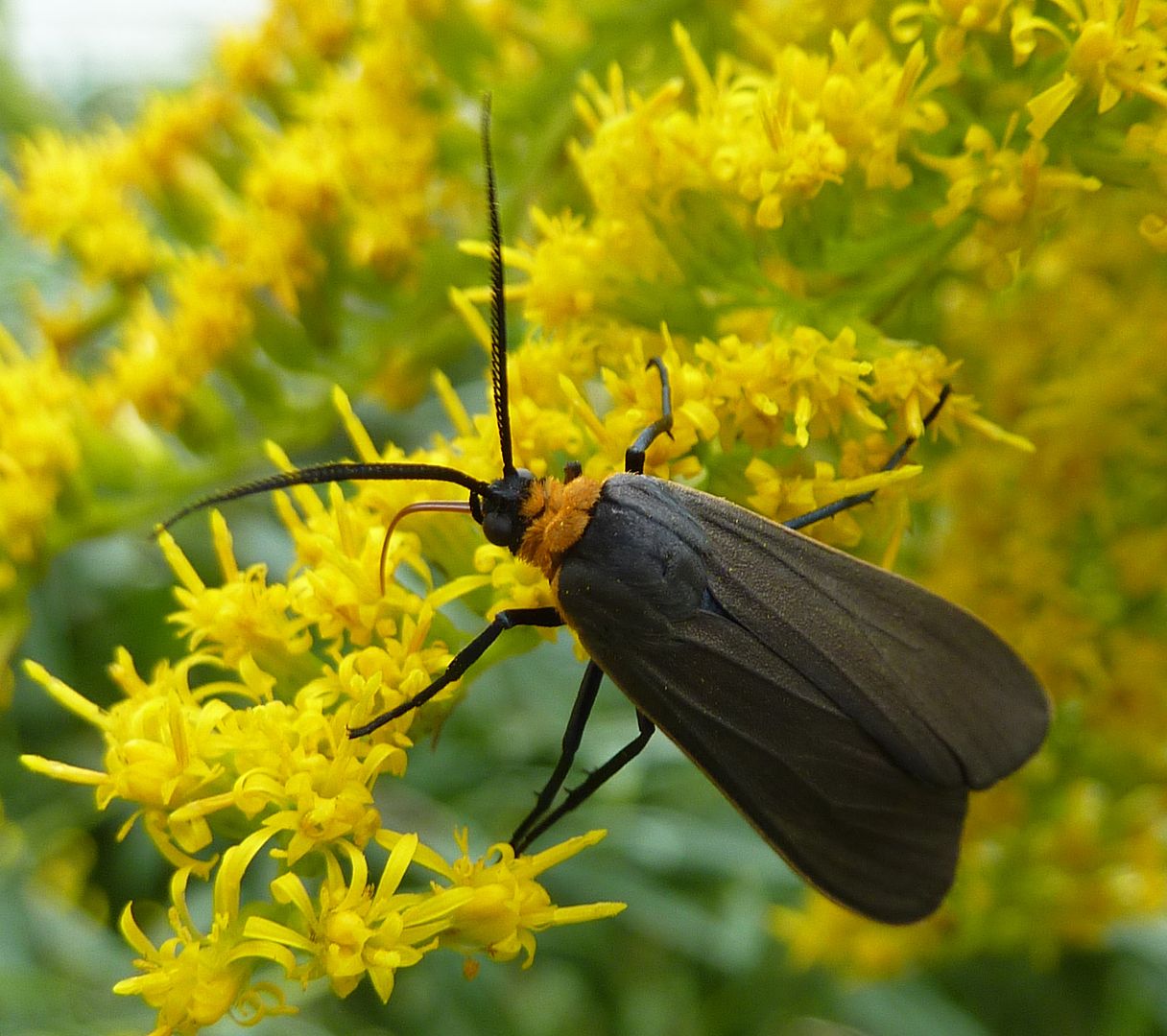
The last of the Lepidoptera for the year was this Yellow-Collared Scape Moth, Cisseps fulvicollis

Not a bad way to end the year at all.

Wednesday, December 7, 2011

Best of Bees and Wasps 2011

I was a little surprised this year that I've only taken 45 pictures total in this catagory. I did do more videos though.

The year starts off with Honeybees bringing in the usual black yellowish green pollen. I suspect it's from Maple trees.

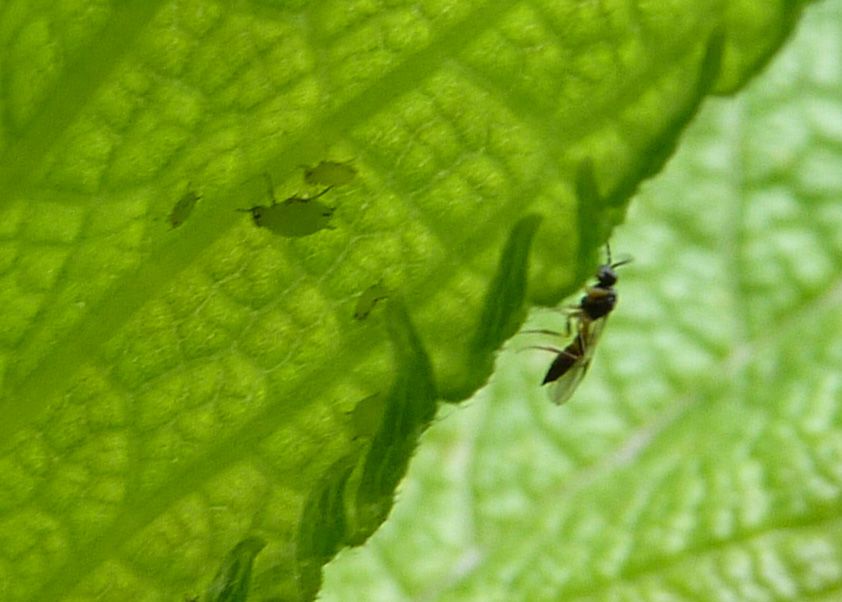
This tiny wasp here is a parasite of aphids. As I recall I witnessed it injecting eggs into multiple aphids that day but was unable to get pictures of the deed in action. I'm not sure whether I tried doing video but I don't seem to have one on hand.


Bees working an apple tree in April.

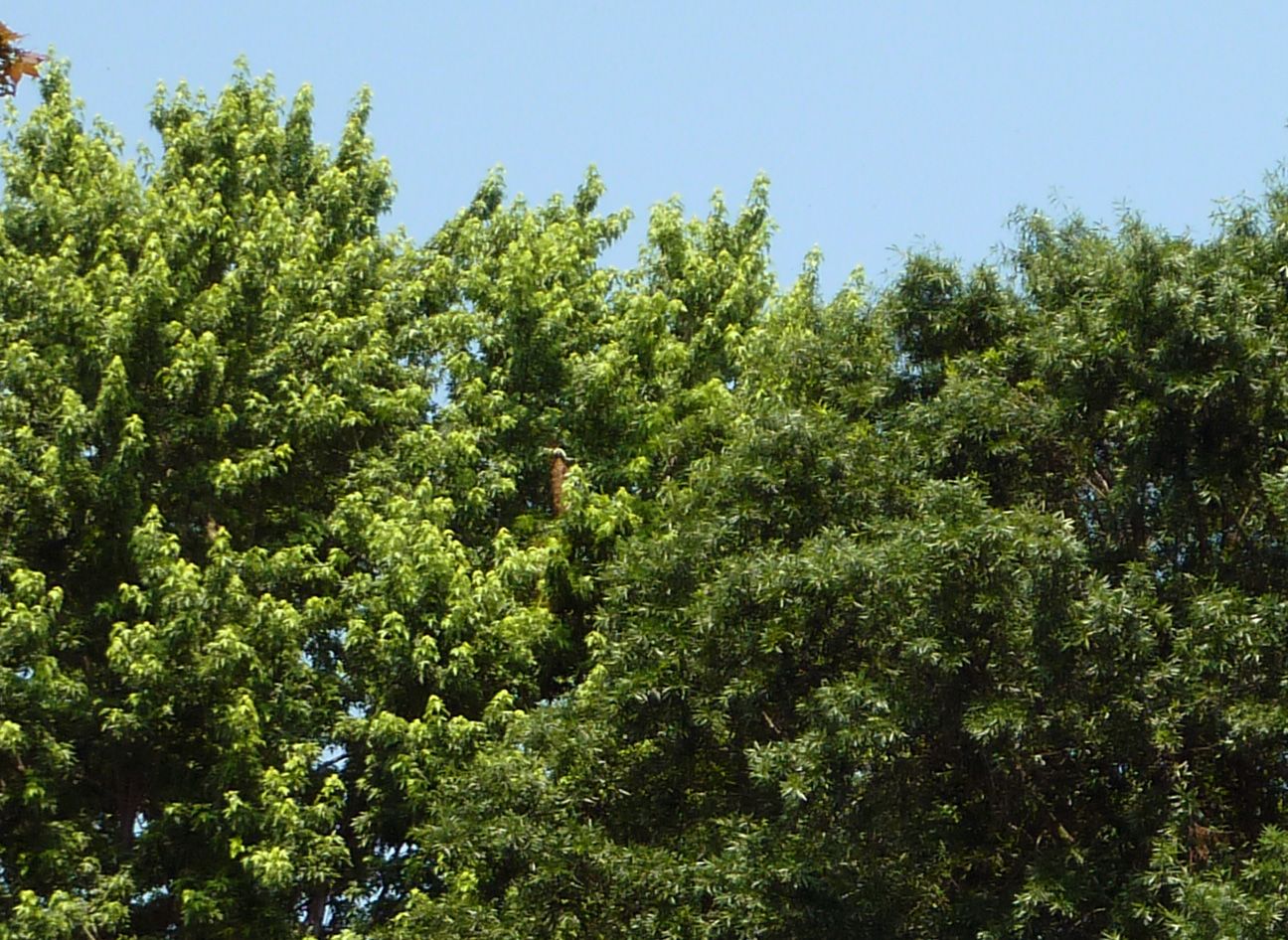
Each May our Honeybee hives swarm and land nearby to start out. This brownish blob in the tree here is a swarm of ~40,000 bees. They later took off and I never saw them again.

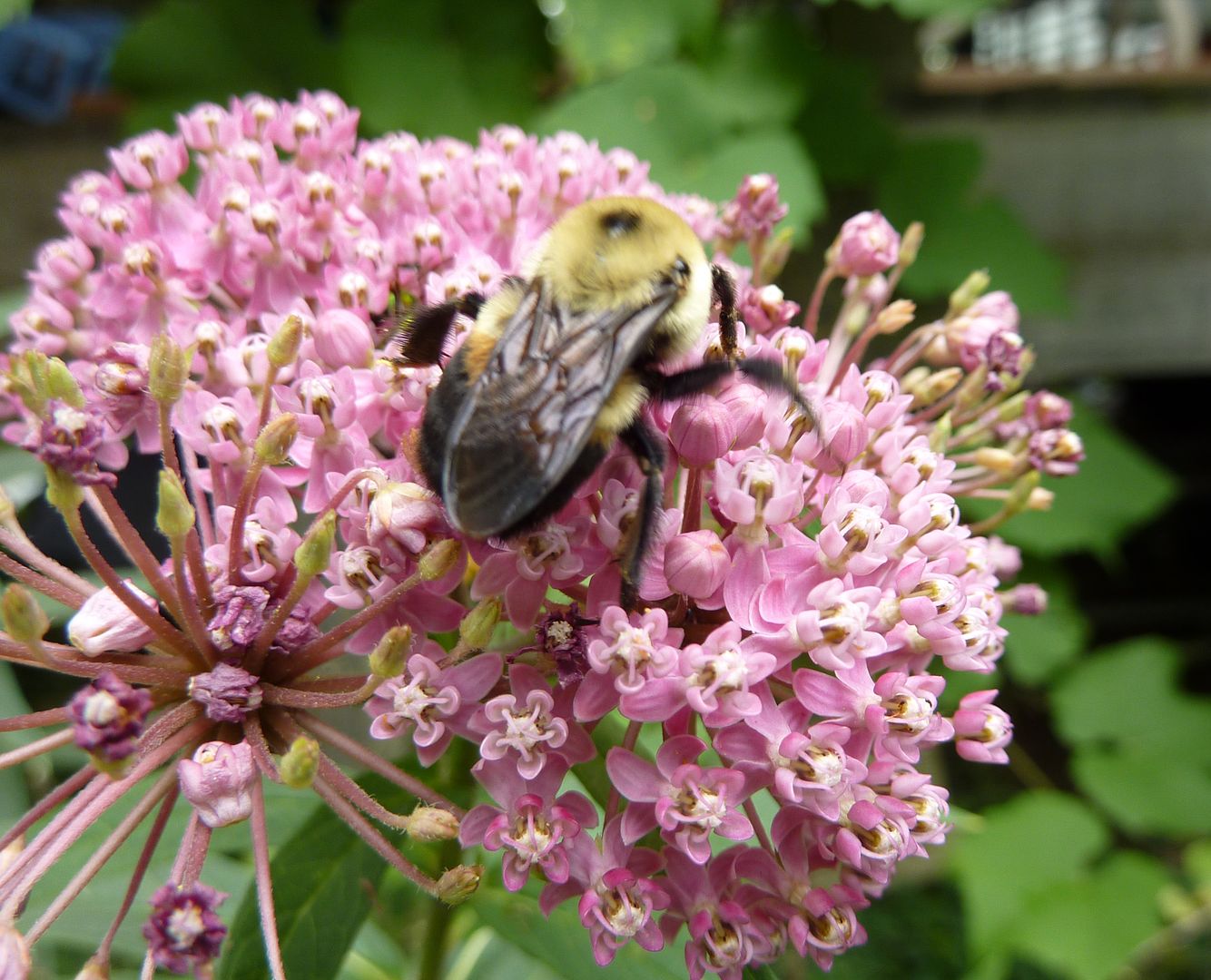
Even in May and June, Bumblebee hives are still starting up. Here a queen is collecting nectar on some Swamp Milkweed, Asclepias incarnata.


Wasps or some Mountain Mint in July. 


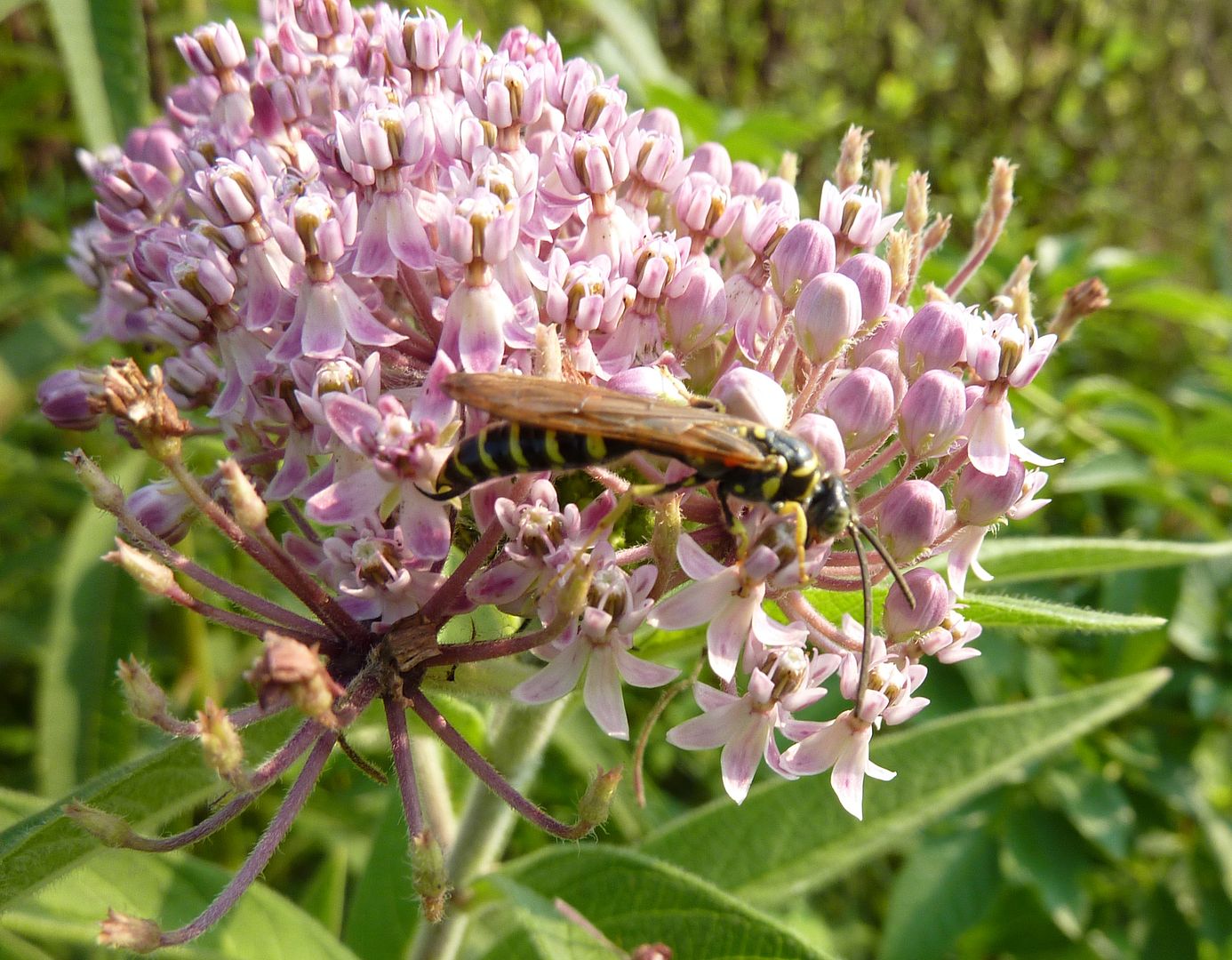
More wasps on a stunning specimen of Swamp Milkweed, Asclepias incarnata.

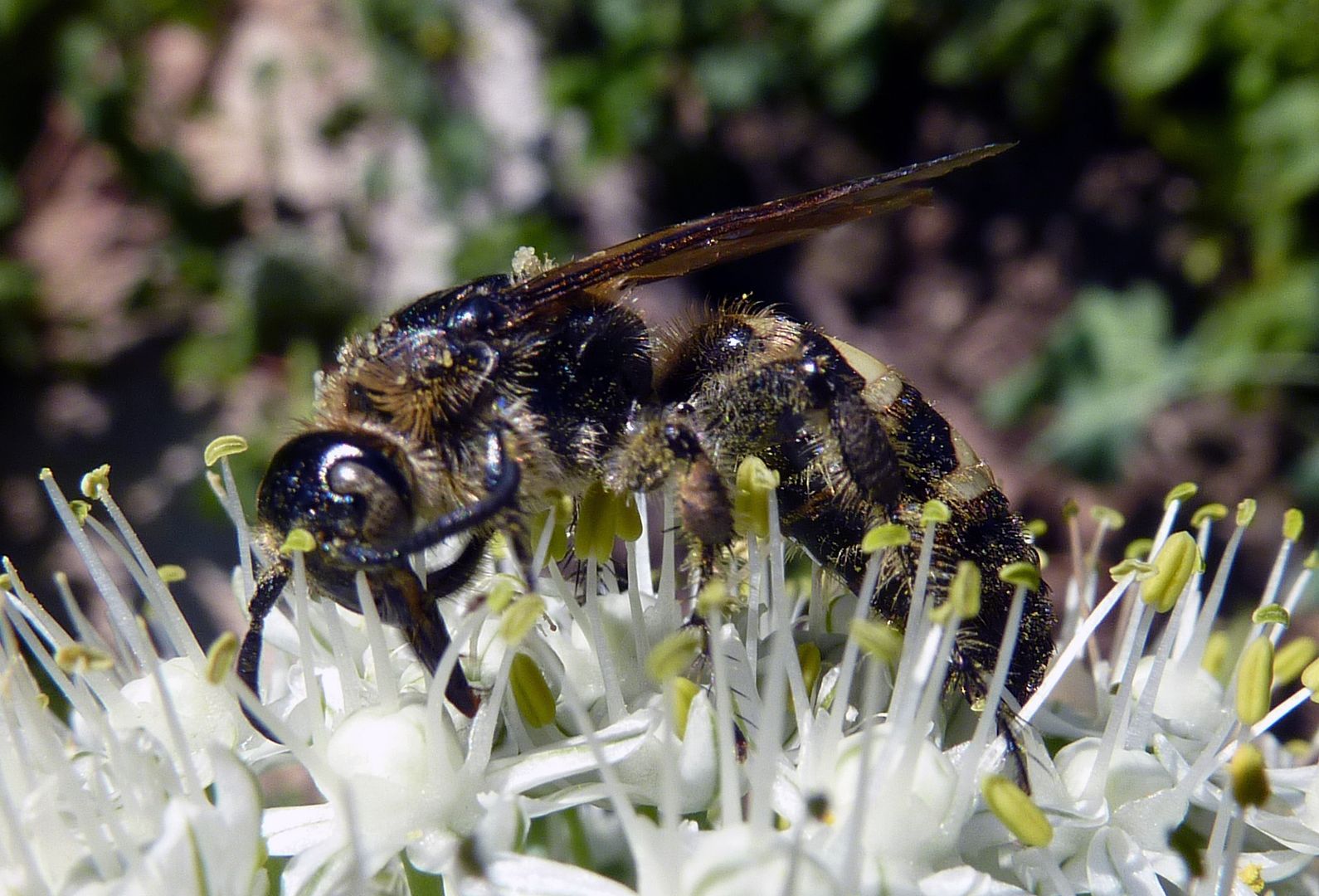
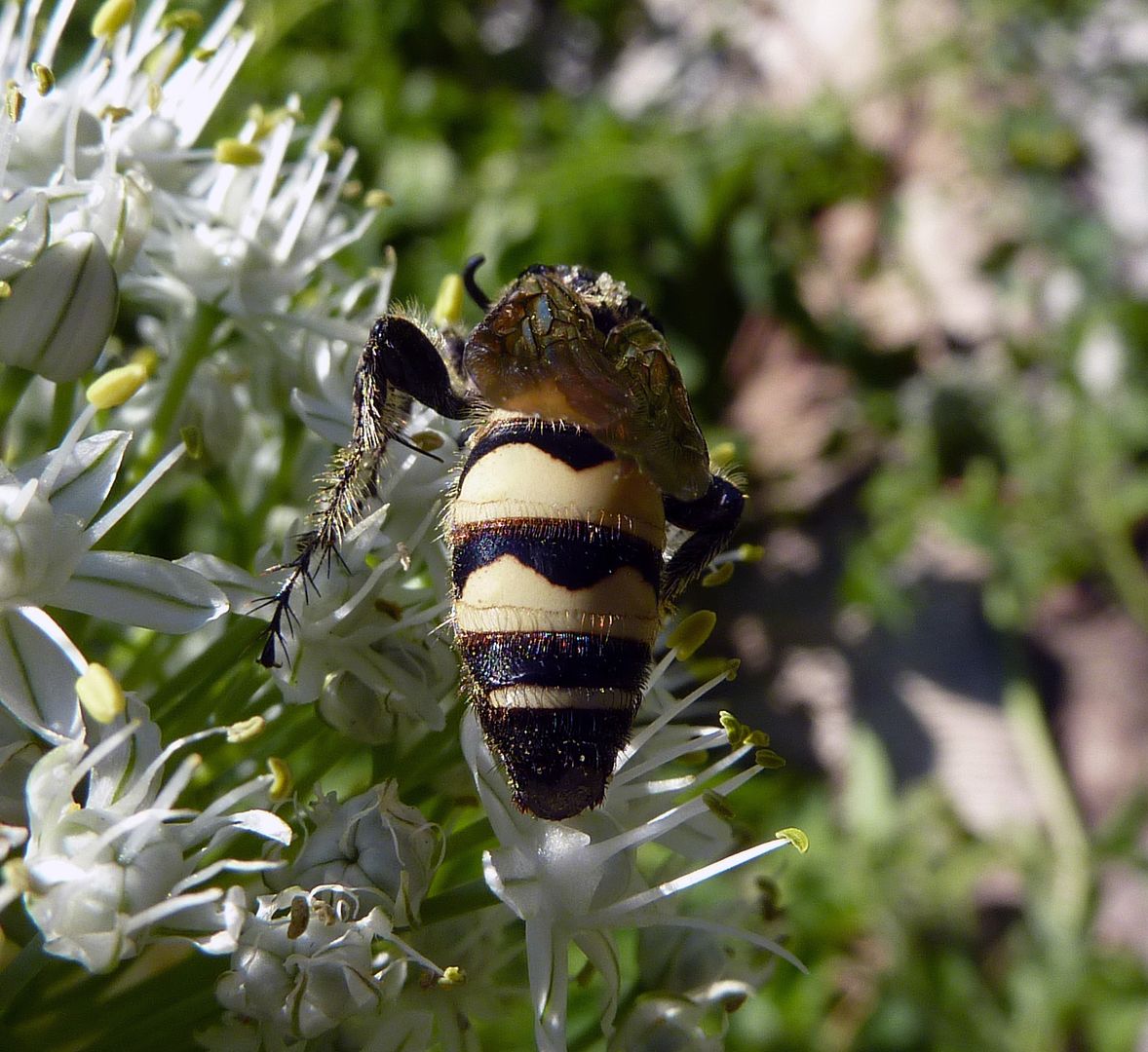
An unknown wasp on Swamp Milkweed flowers.

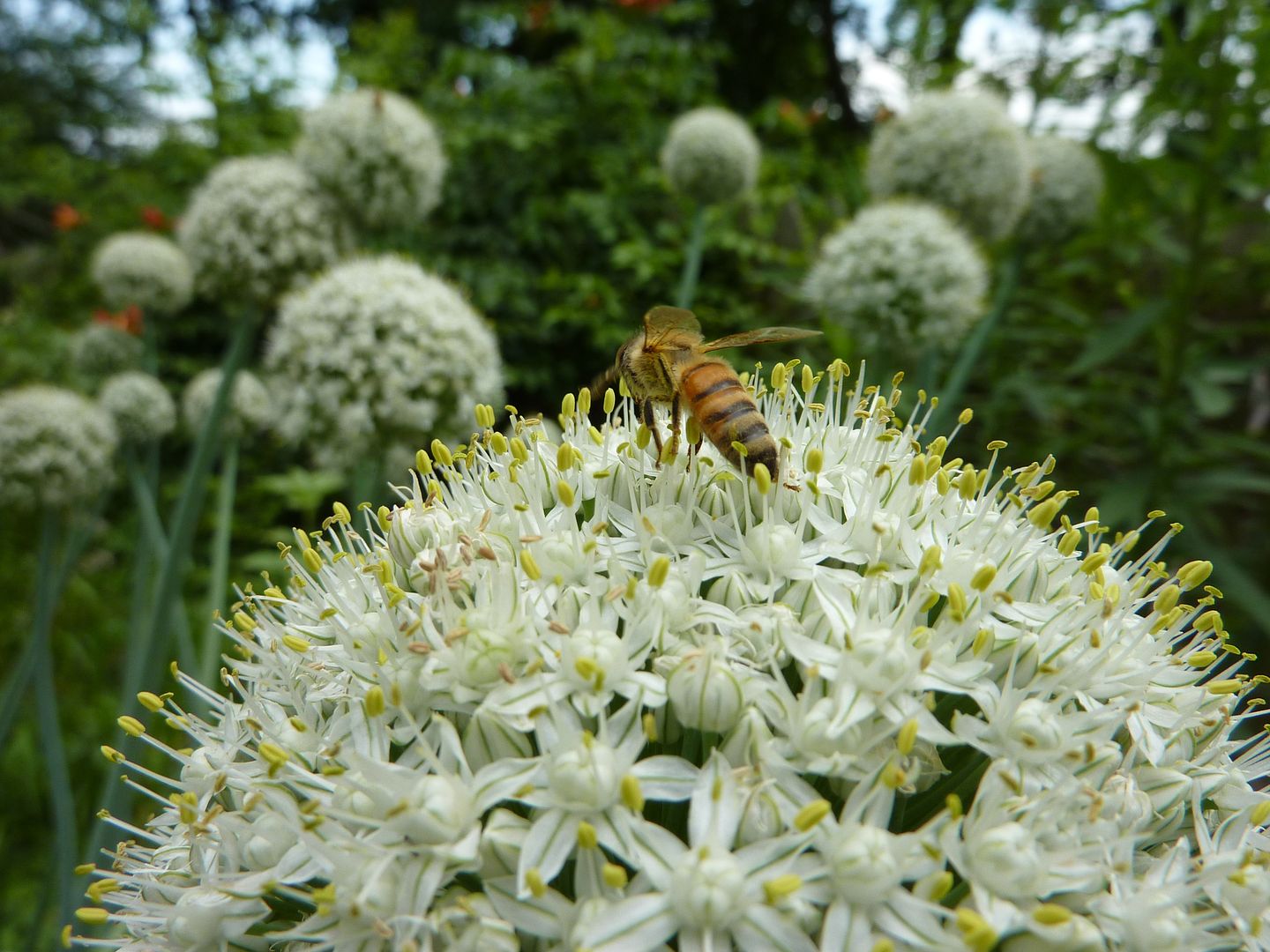
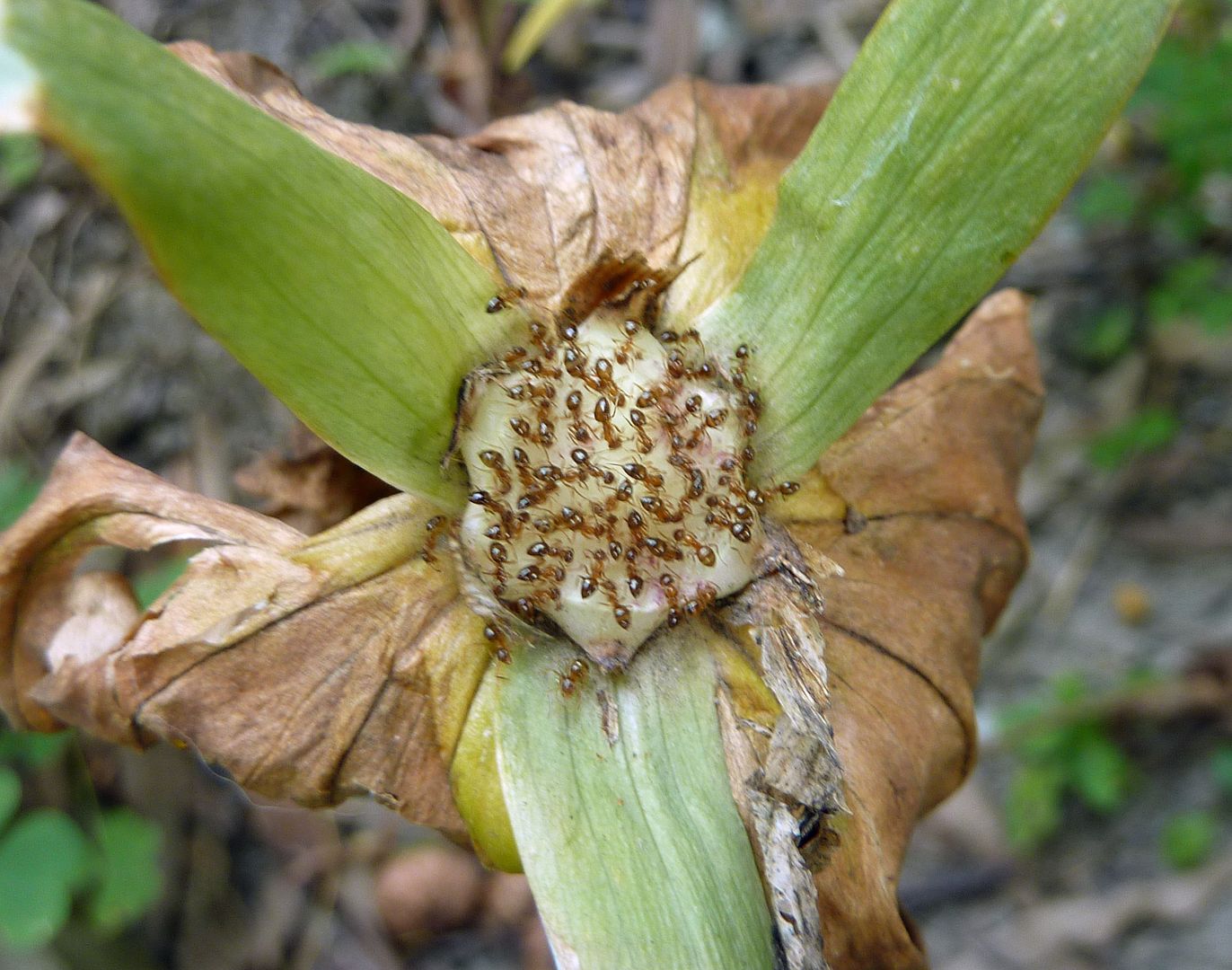
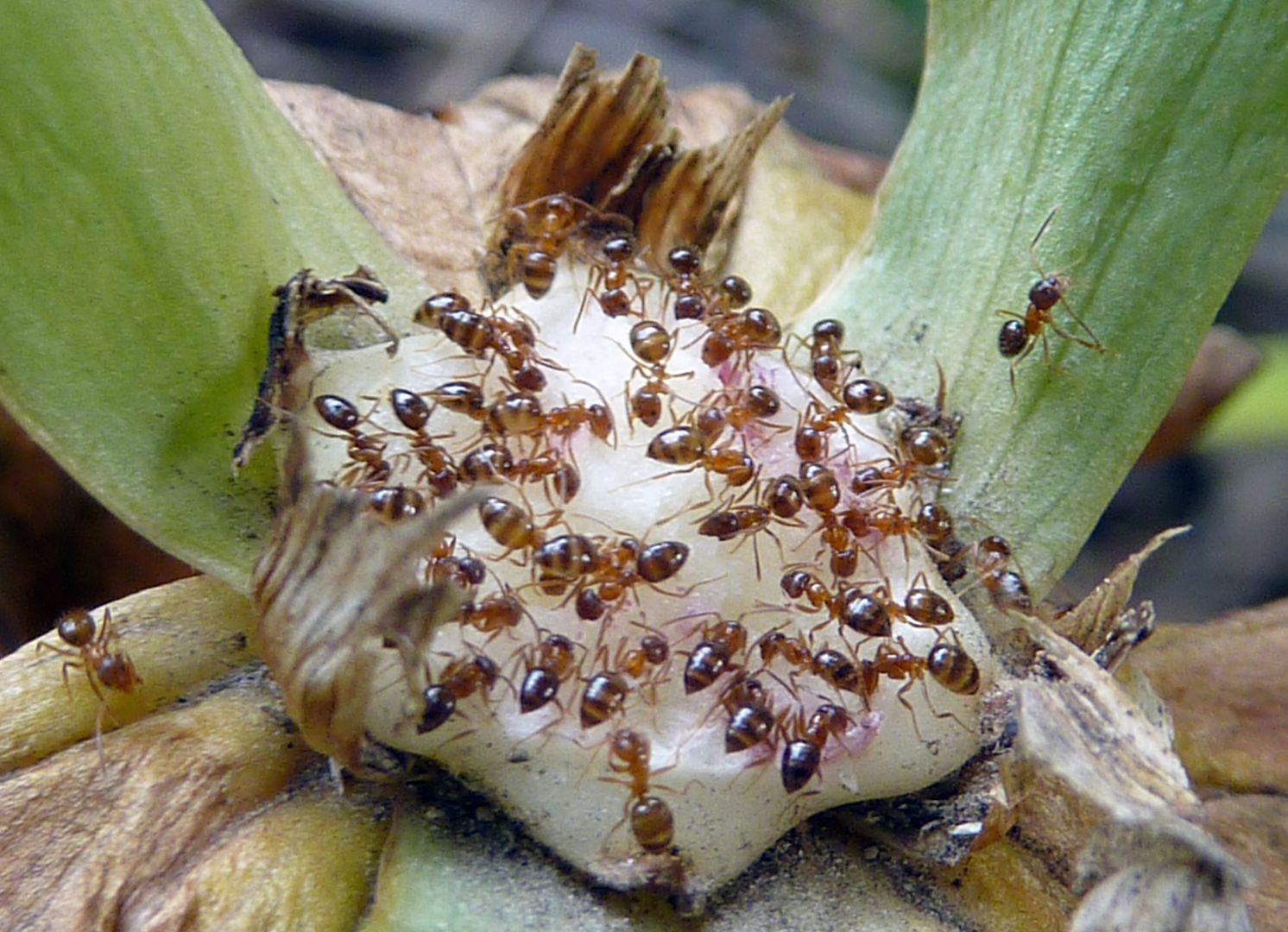
The large white globes of onions provide nectar to lots of bee species.

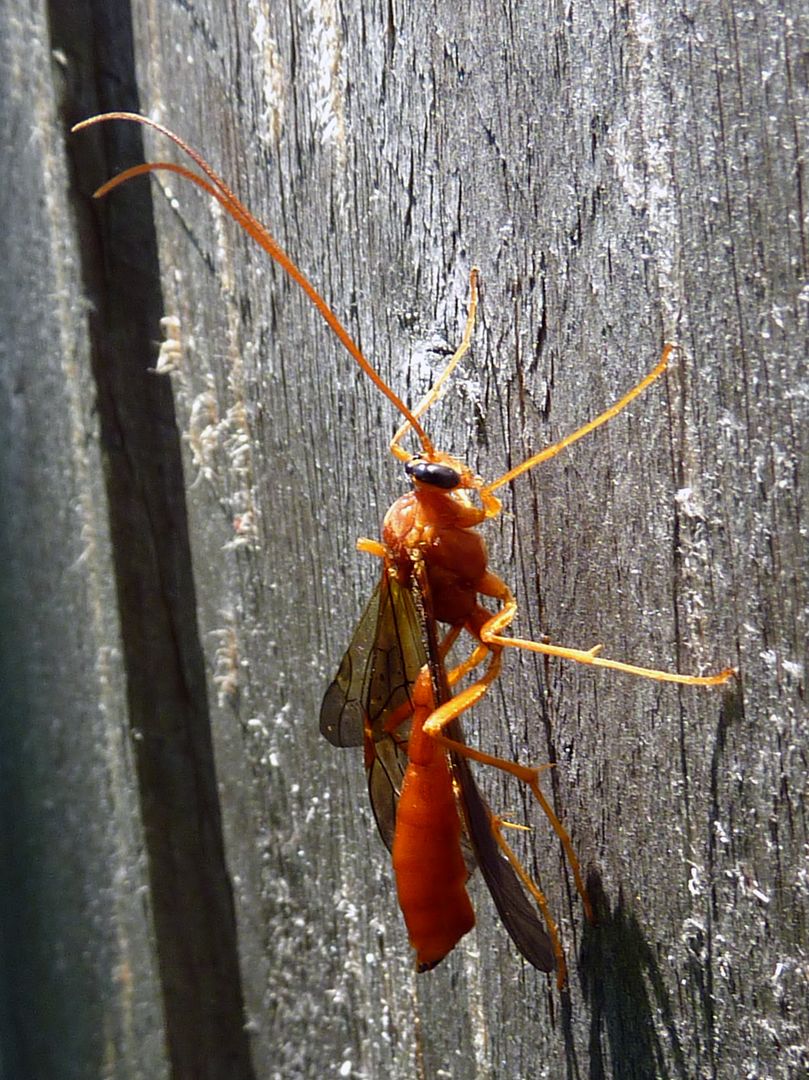
Colorful Ichneumon wasps emerge in mid to late summer. They're harmless to humans but can often be the cause of bee phobias. Their abdomen contains a long coiled up egg laying syringe (which I forget the name of). When exposed it becomes several times longer than their body, about the length of an average pen, and it's used to drill into trees in search of beetle grubs which are already damaging the tree. Here is a video on youtube showing this aspect off. Some species of Ichneumon wasp specialize in caterpillars, beetles, or mason bees.

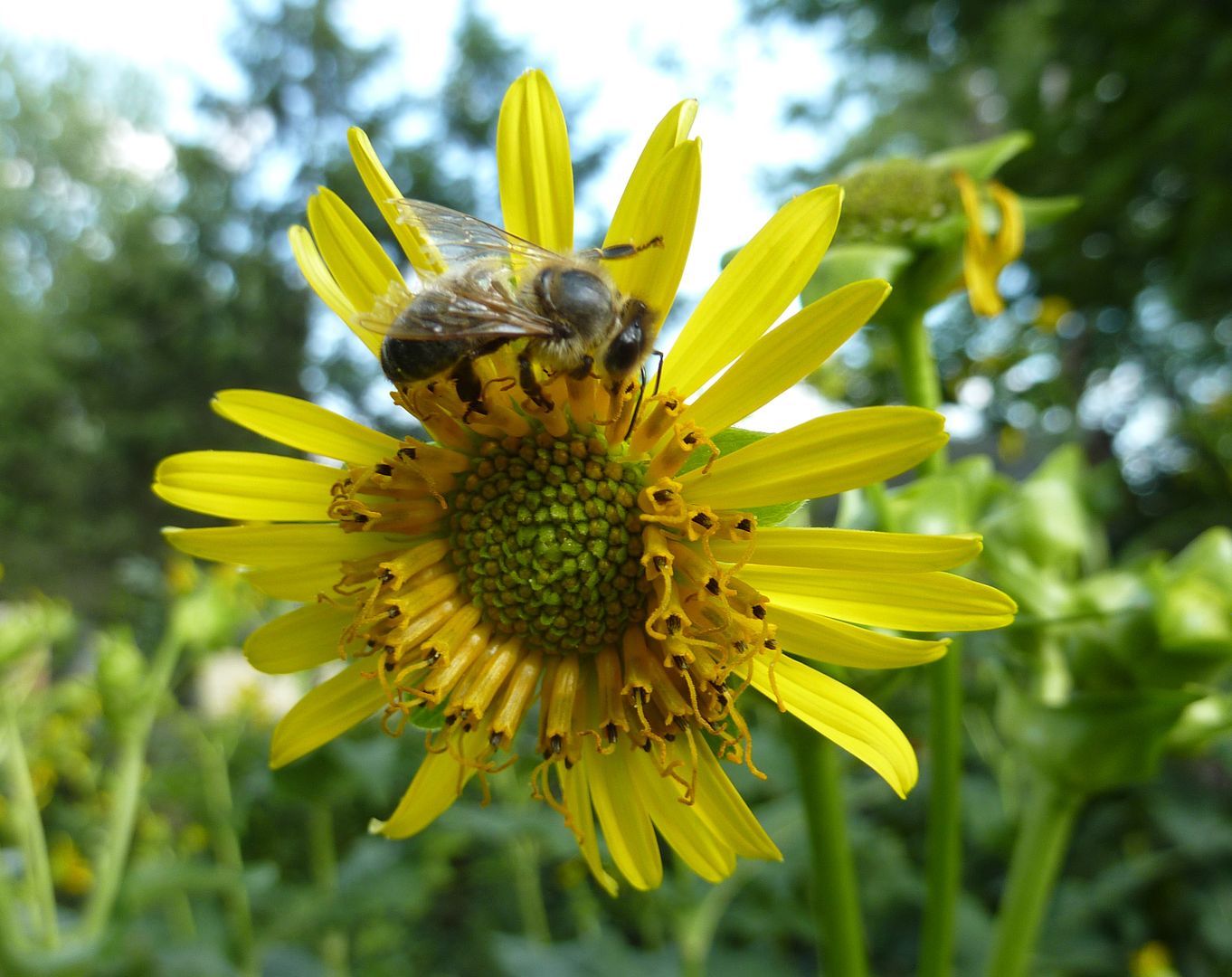
Honeybee on Cup Plant flower. Notice how the flowers in the disk are opening from the inside out.

Honeybee on a Cup Plant flower. Notice how the flowers in the disk are opening from the outside in.

Cup Plants are notorious for having flowers that do that even on the same plant, between flowers growing next to one another.

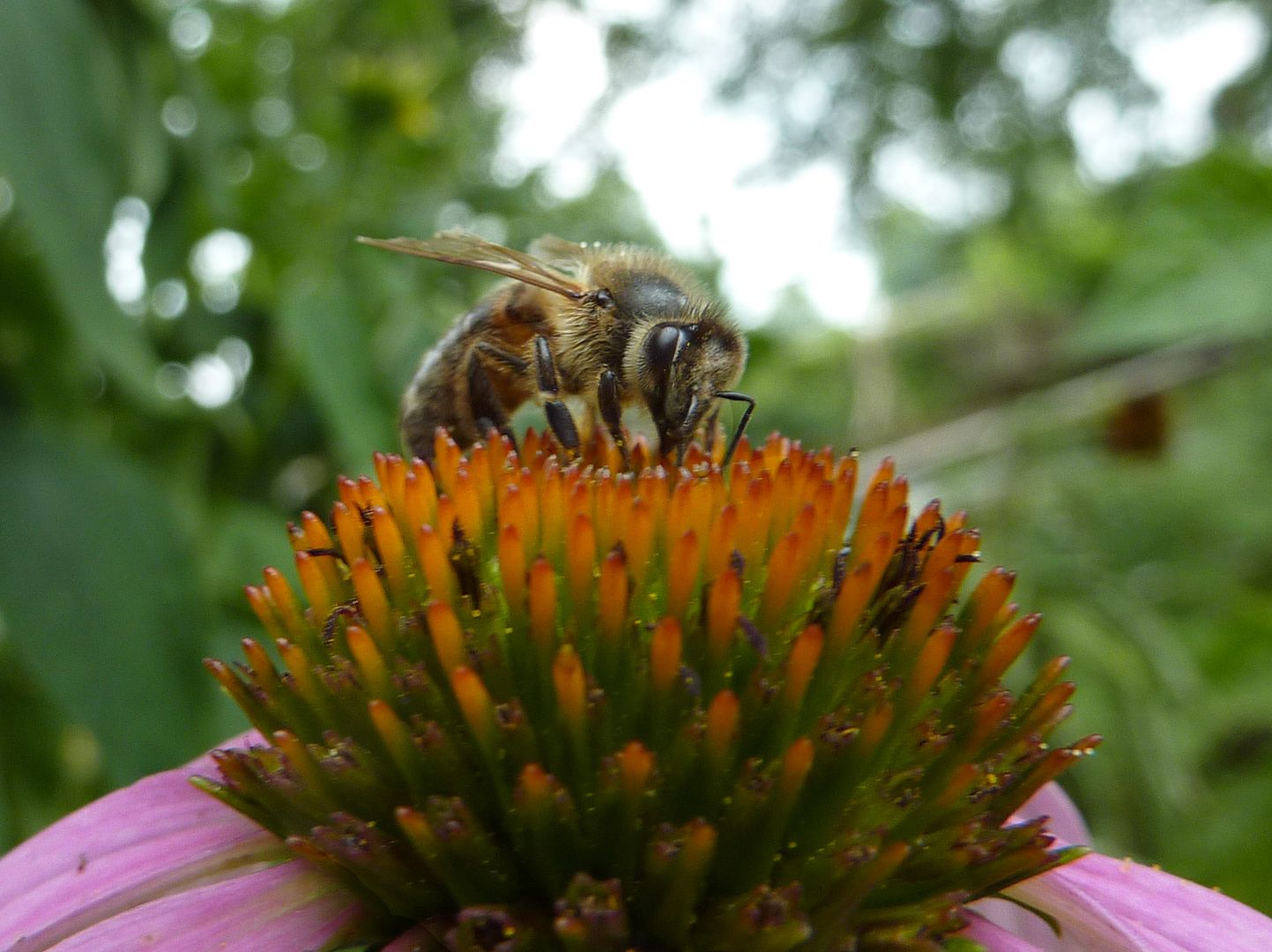
Honeybee on Coneflower.

Bumblebee on Butterfly Weed, Asclepias tuberosa.

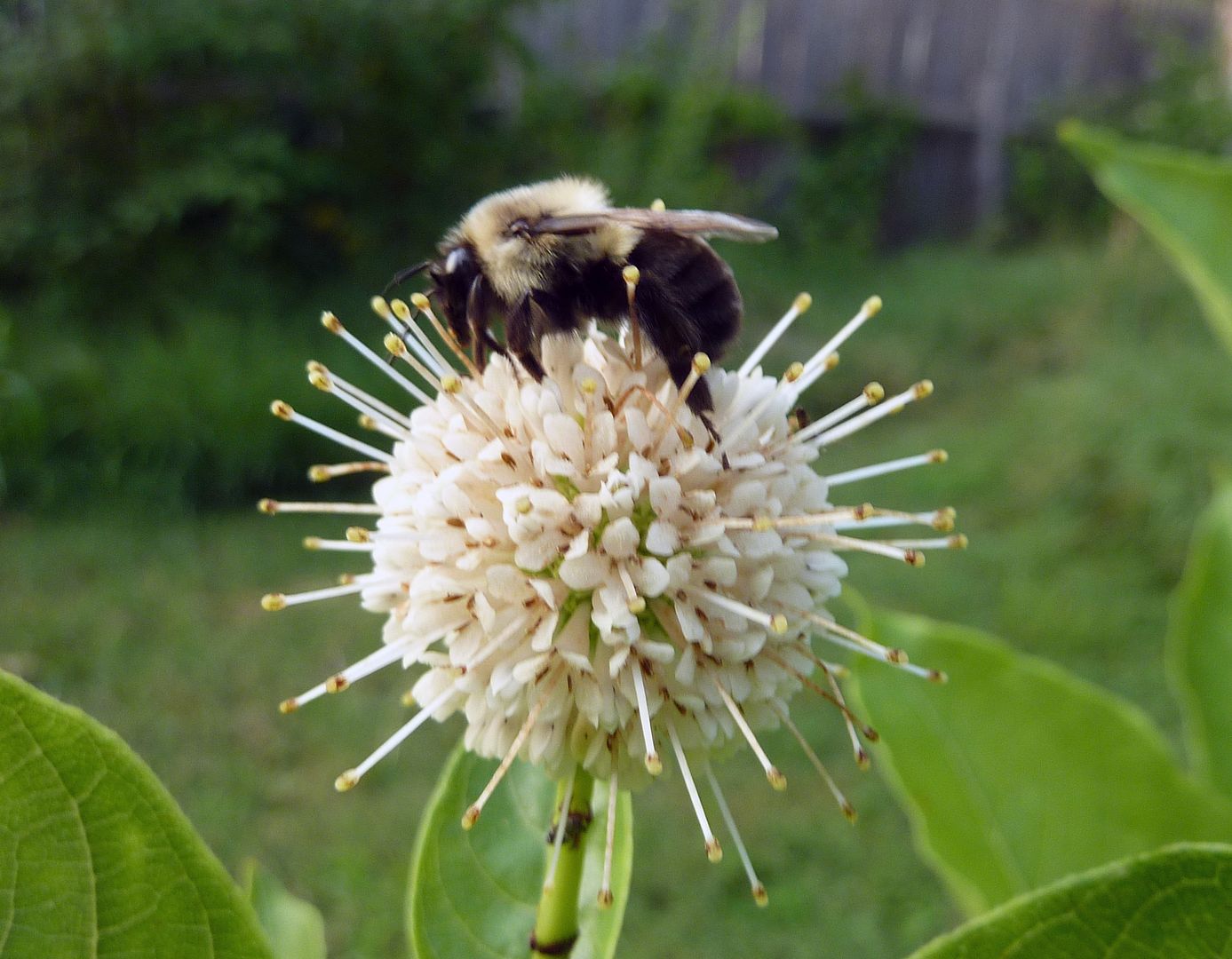
Bumblebee on Button Bush flowers.

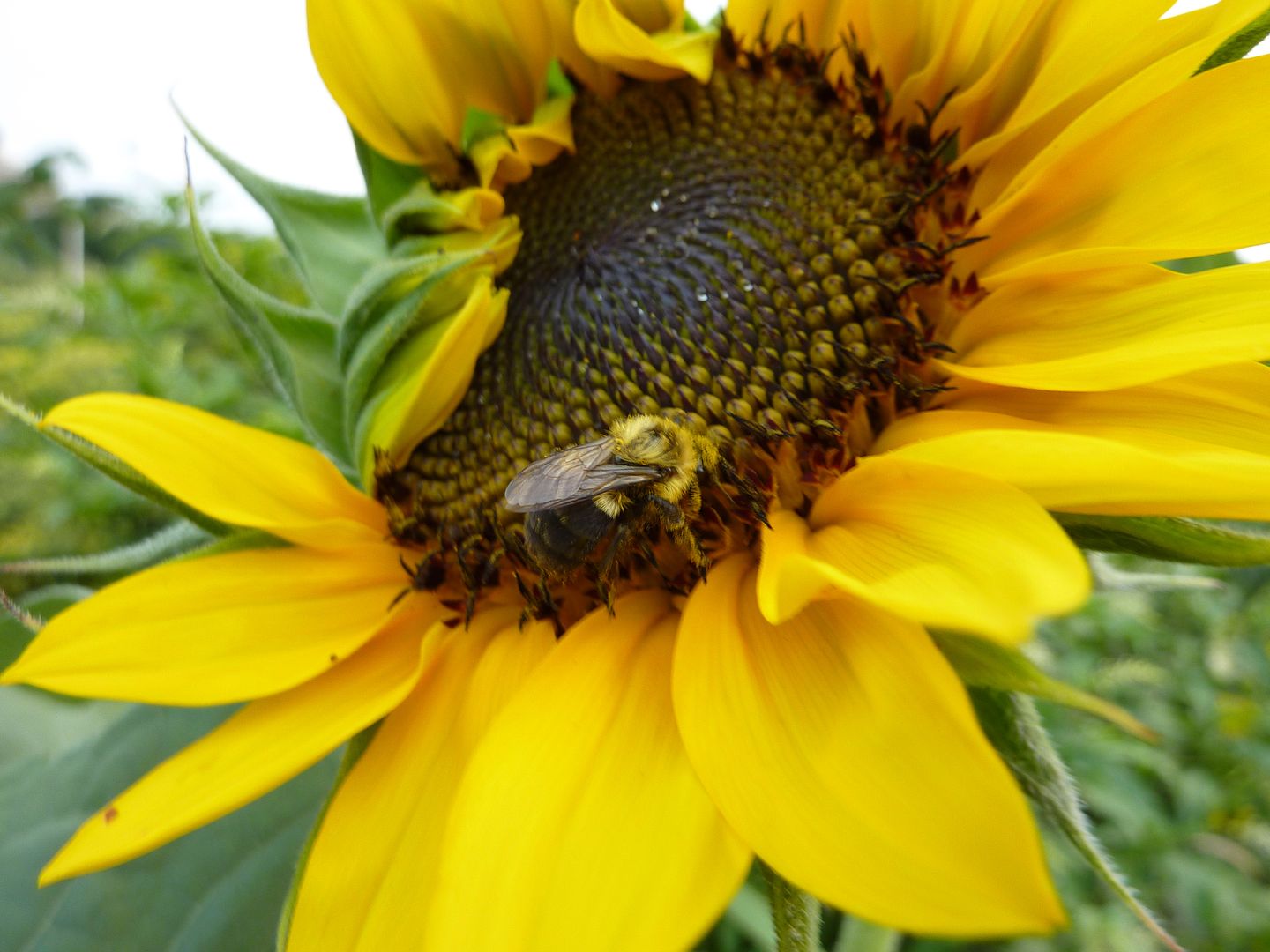
Bumblebee on a sunflower.


Some Honeybees working Liatris microcephala. This was at a nursery I was touring. The overpowering music was great to drown out the sounds of the tour guide talking.

Bee specimens arranged in a cup.

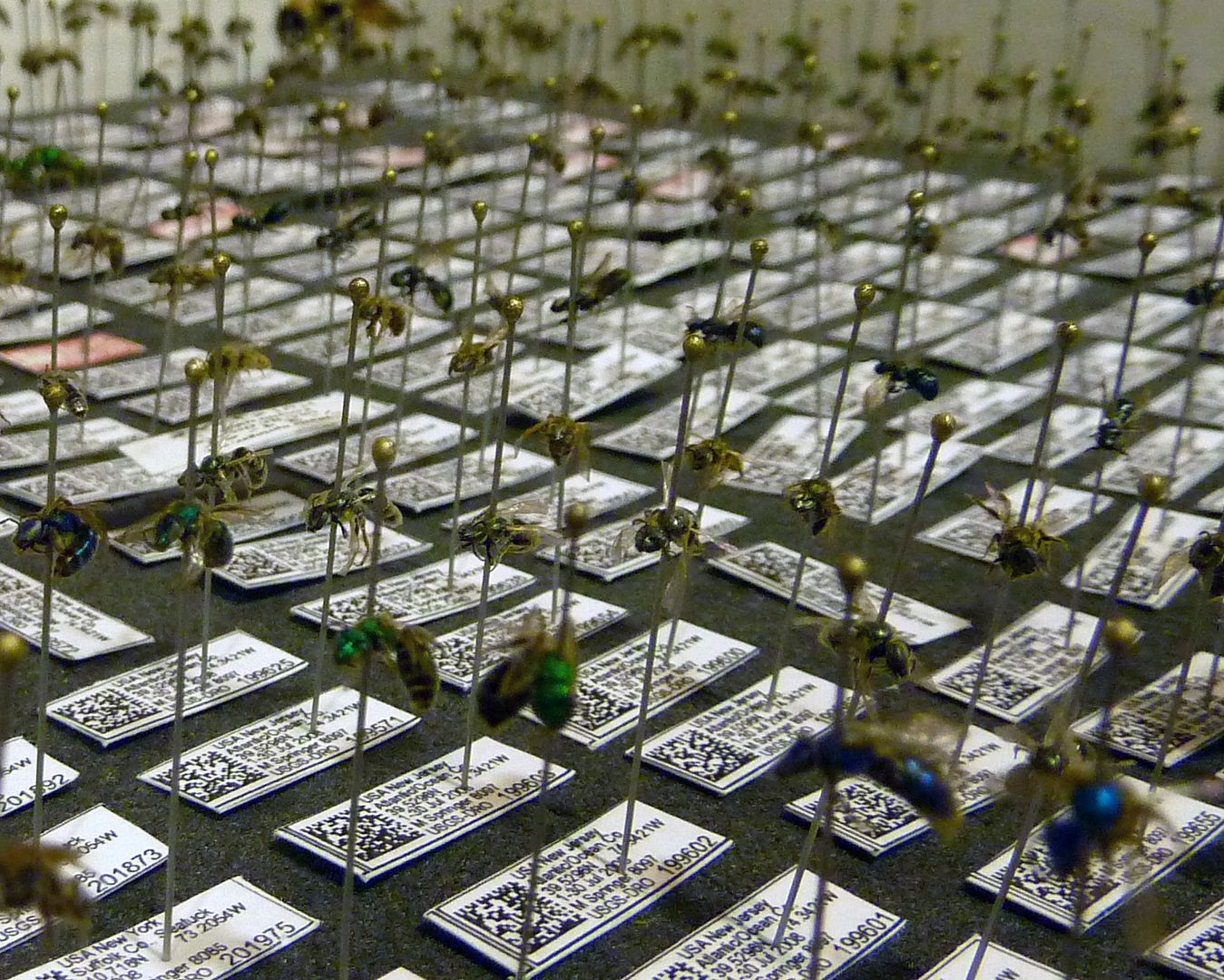
Bee specimens pinned in a box.


Lastly who could forget the massive goldenrod plant I have. The species is Solidago altissima, Tall Goldenrod, and it's a food source to just about anything that's alive for the first frost later to come. It's also a good nectar source for next years queen bumblebees; one is featured in the video at 2:35.

Tuesday, December 6, 2011

Best of Ants 2011

It's that time of year again where I recap the best my photography skills had to offer for the year.

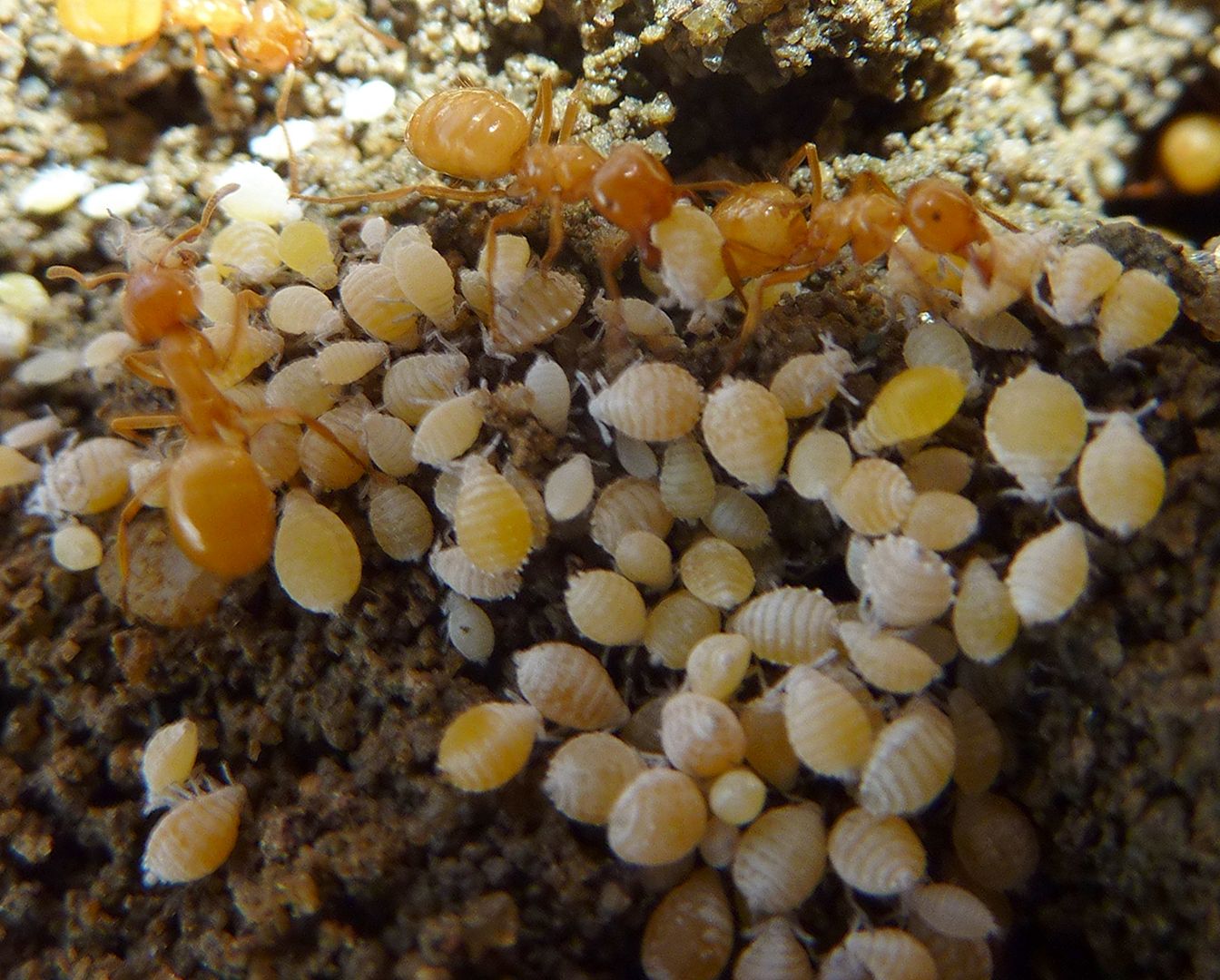
Some Lasius interjectus workers retrieving their root aphid stock which over wintered as eggs from the previous autumn. These herds of insects will nourish the colony in the coming year.

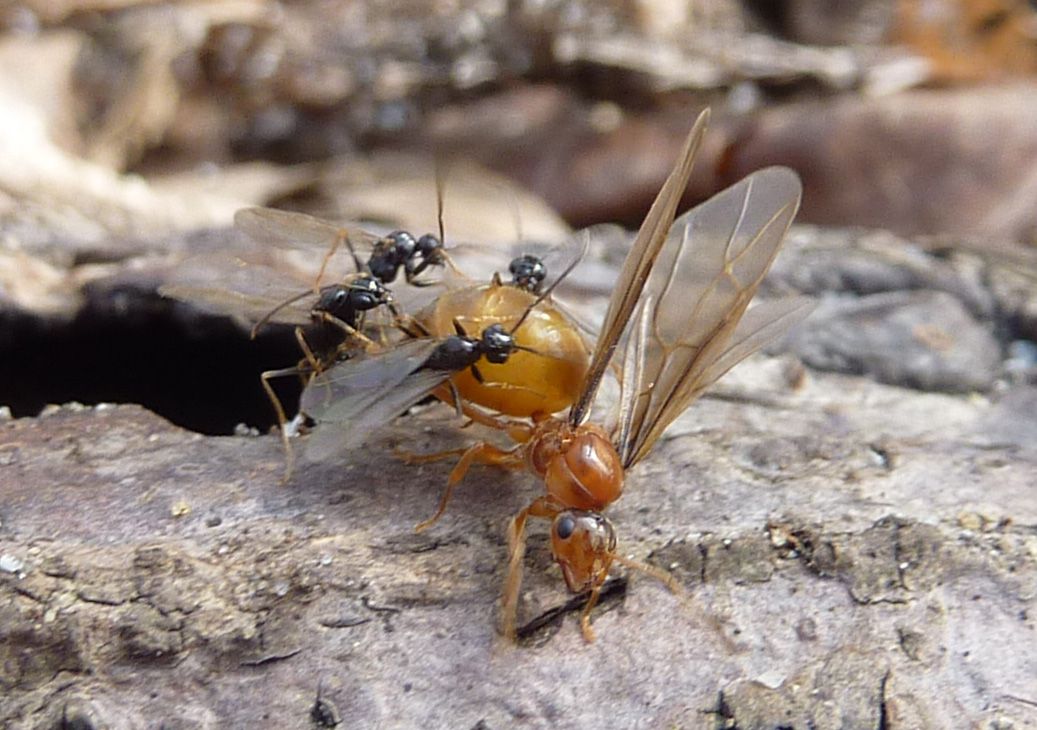
A Prenolepis imparis, Winter Ant, queen and male escorts. Nuptial flights to this species are fairly predictable taking place on the first few warm days (~70F) of the year. Queens take flight in the afternoon and are out numbered by males roughly 200 to 1. Mating happens in swarms low to the ground or otherwise at eye level.

I've always loved how queens are such a robust color. Male ants universally are almost always black for species the world over. Very few deviate away from this standard.

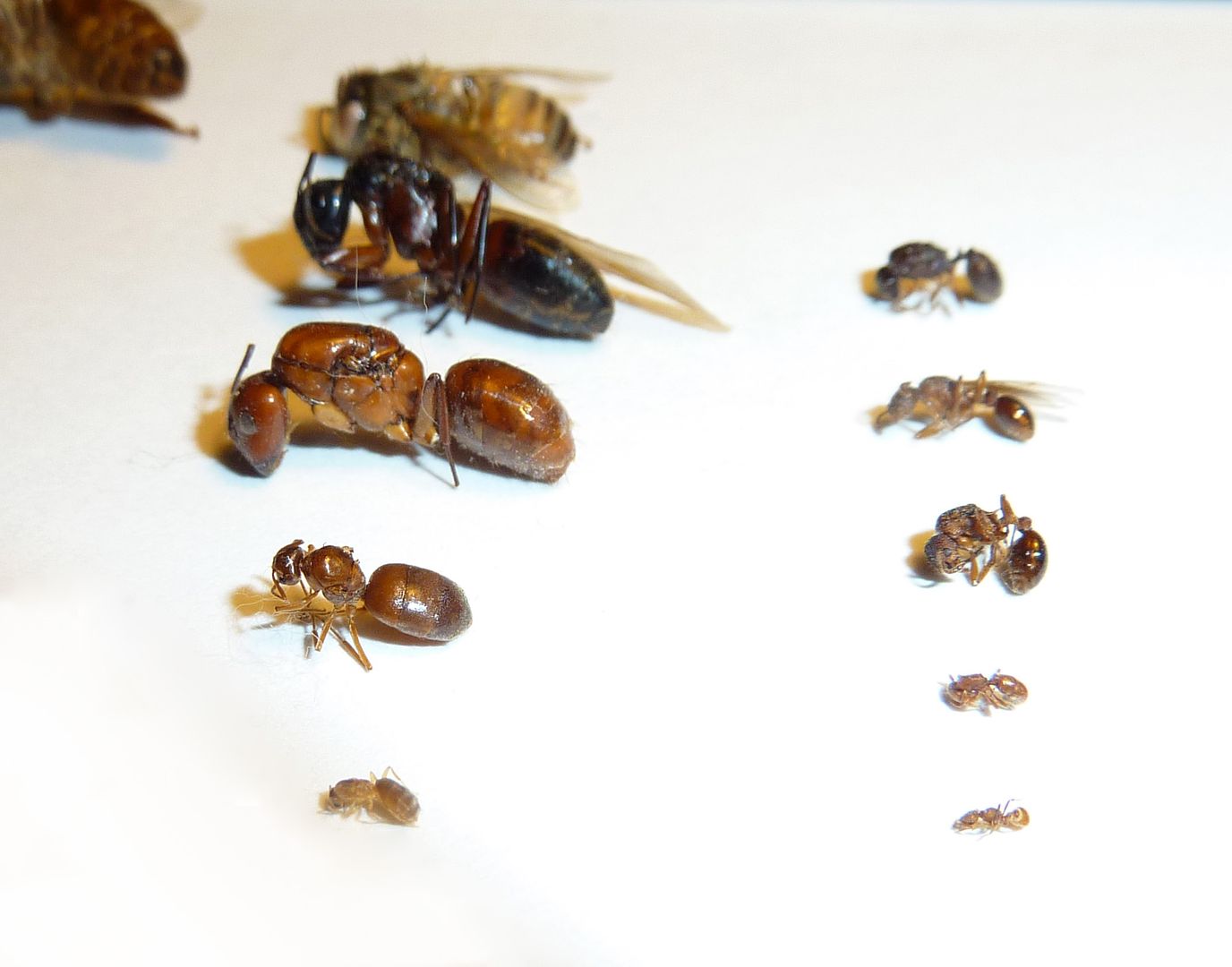
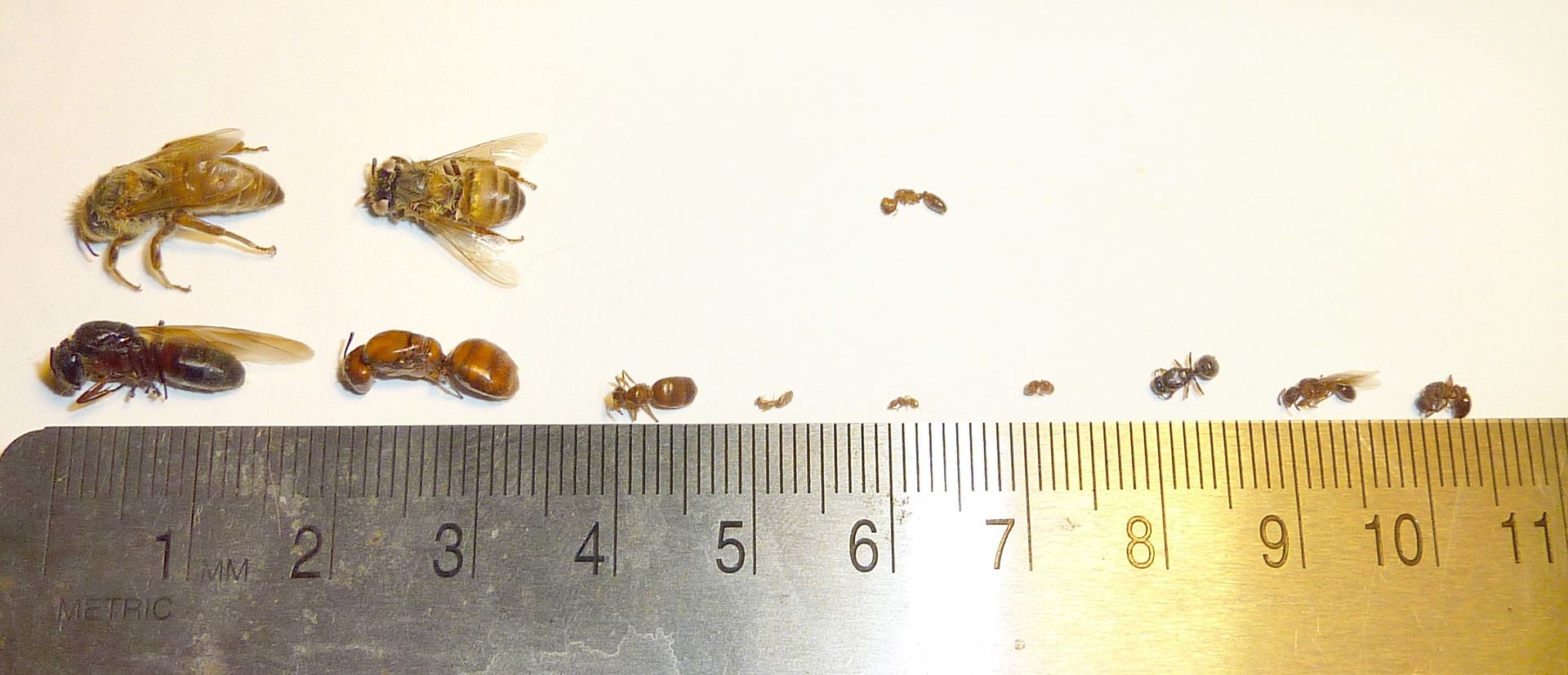
A collection of ant queen from various species. (There is also a worker and half a queen honeybee in the very top left side.)

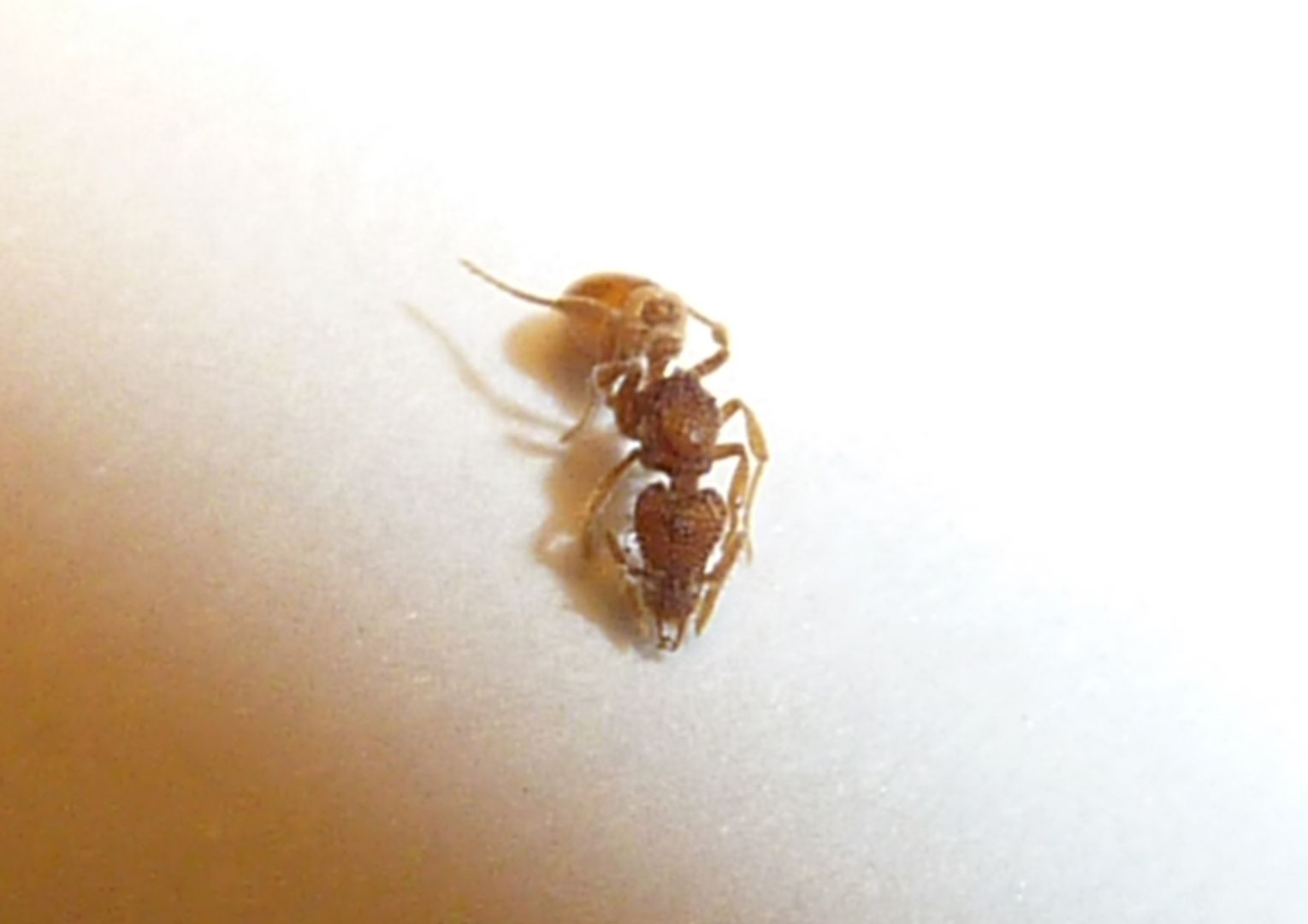
This isn't a particularly great photo. I just love that I finally got around to taking pictures of my Pyramica specimen. This is a genus comprised of subterranean hunters that specalize in small arthropods and collembolans. Because they're subterranean one has to more or less chance upon them or sift through the right material. Around the world this genus gets quite colorful. Check them out on Ant Web.

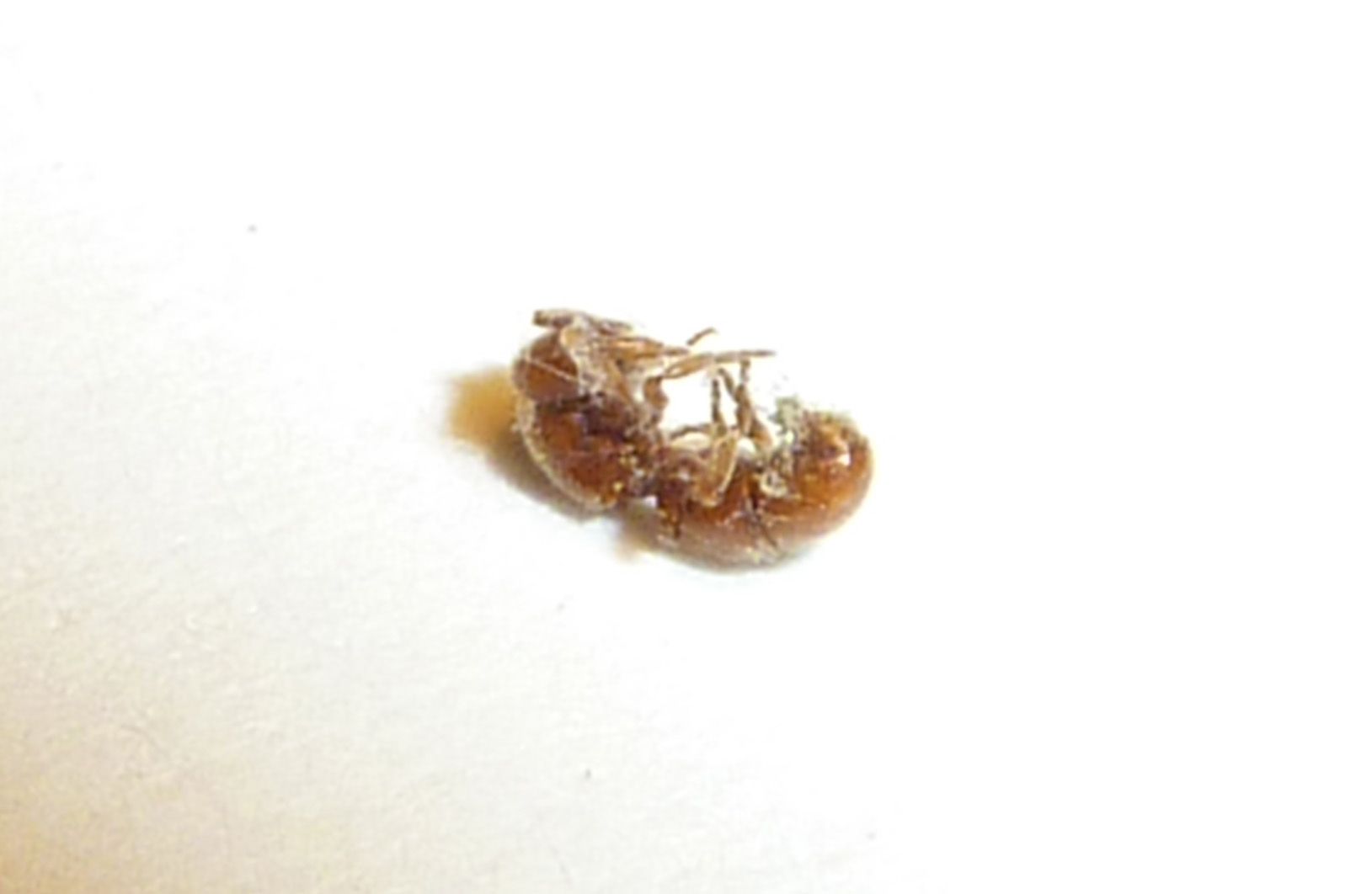
The same is true for my Proceratium specimen. These use a different method of hunting. The tip of their abdomen is unusual looking because the tip naturally curls around to point forward. This makes stinging pray items easier while hunting in tight enclosed spaces.

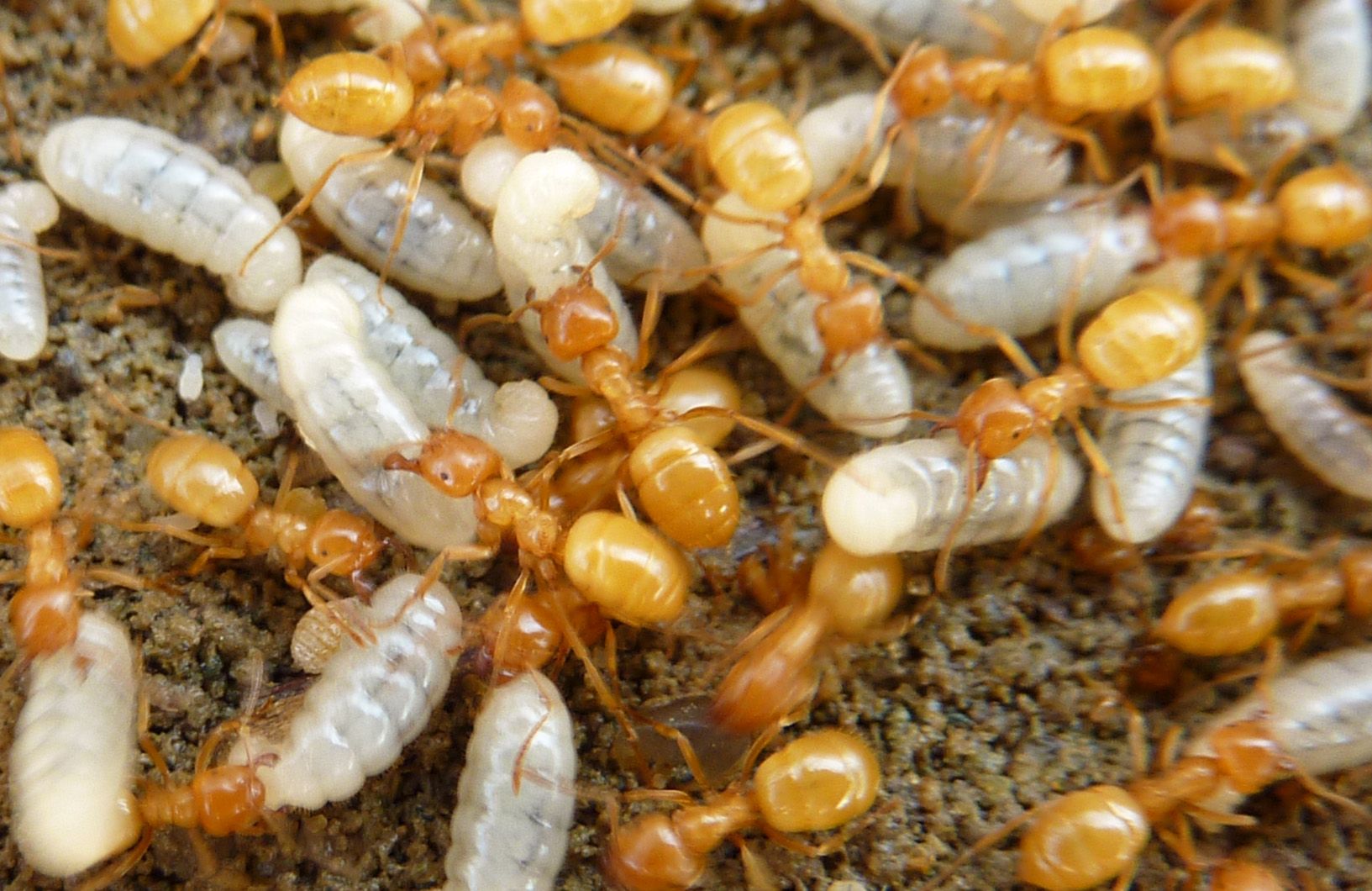
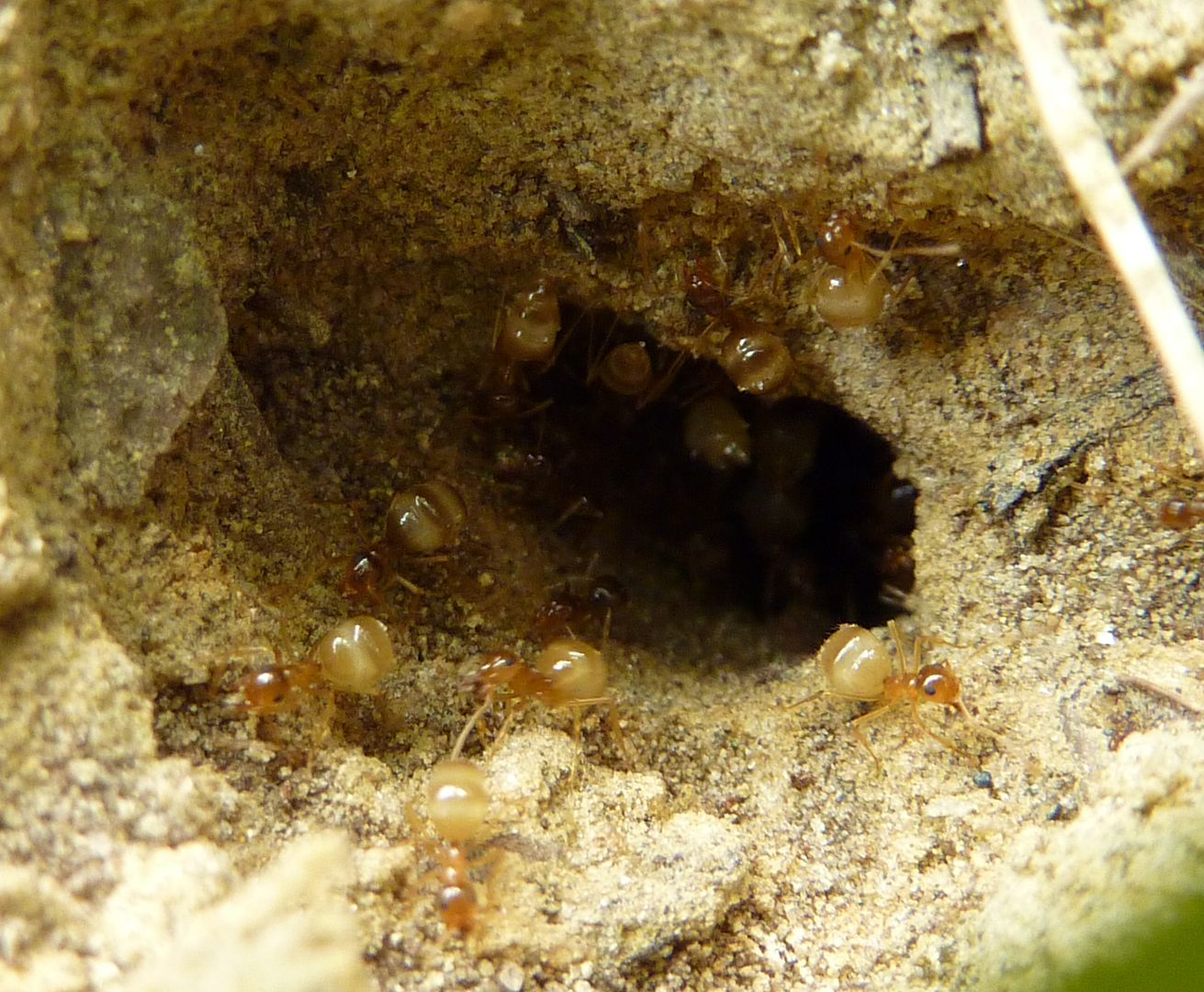
Lasius interjectus workers scrambling to protect the larva after a photographer disturbs the nest. 

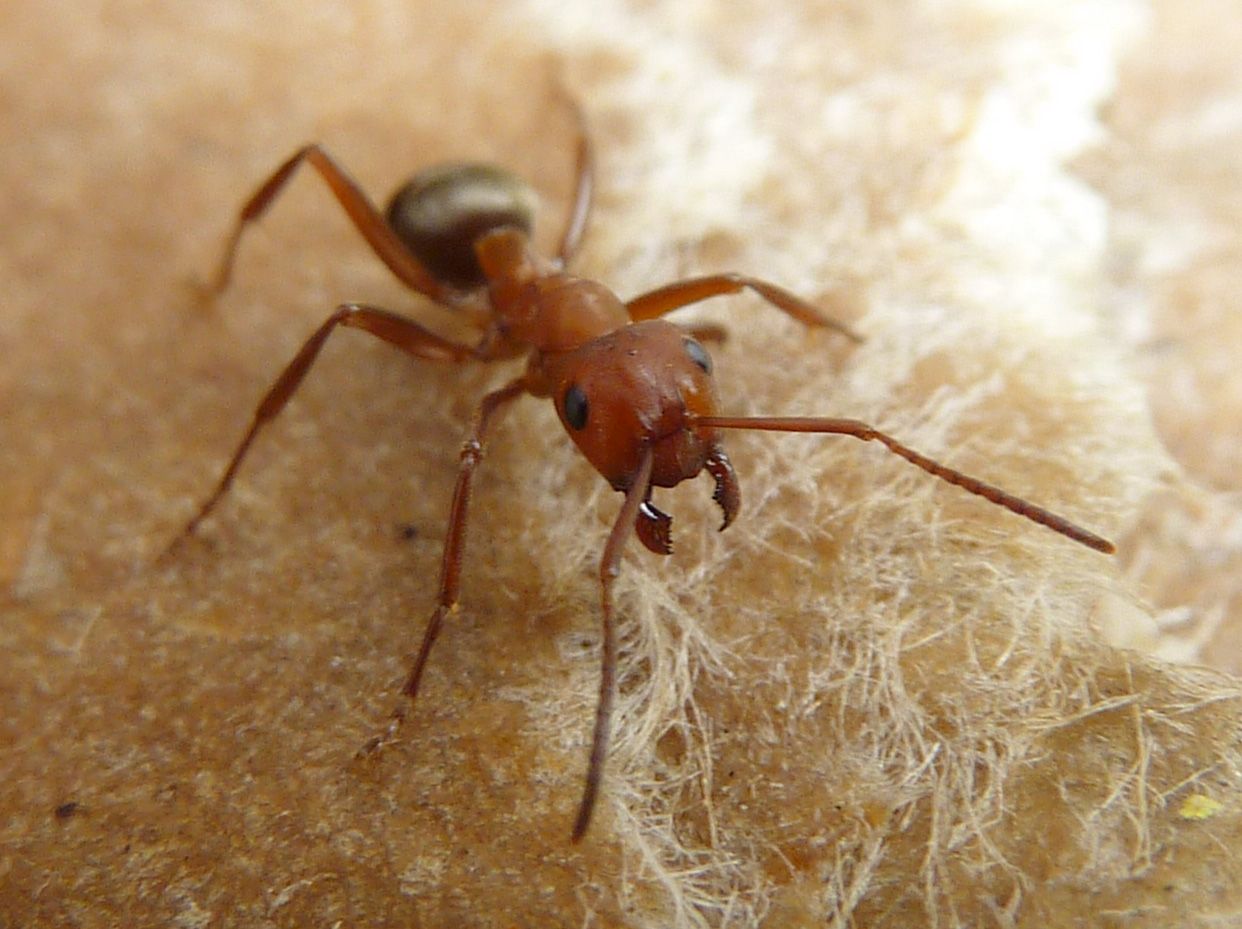
The perfect shot of the clypeal notch (between the mandibles) to a Formica pergandei worker. Formica is one of the largest genera of ants in North America, though not the world. From your back yard, to the peaks of the Rocky Mountains, there is a species to fit every notch except the arid south. To confuse matters even more it's a genus filled with social parasites and slave makers of other Formica. That notch in the middle of the clypeus means this species is in the Sanguinea subgroup, making identification a choice between 11 species instead of 100.

Another Formica worker. This time Formica subsericea which is the most common and widely distributed of the darker members of the Fusca group. The Fusca species in Formica are the most industrious of the host groups. Their colonies tend aphids and other sap producing insects from multiple trees at a time during the day. 

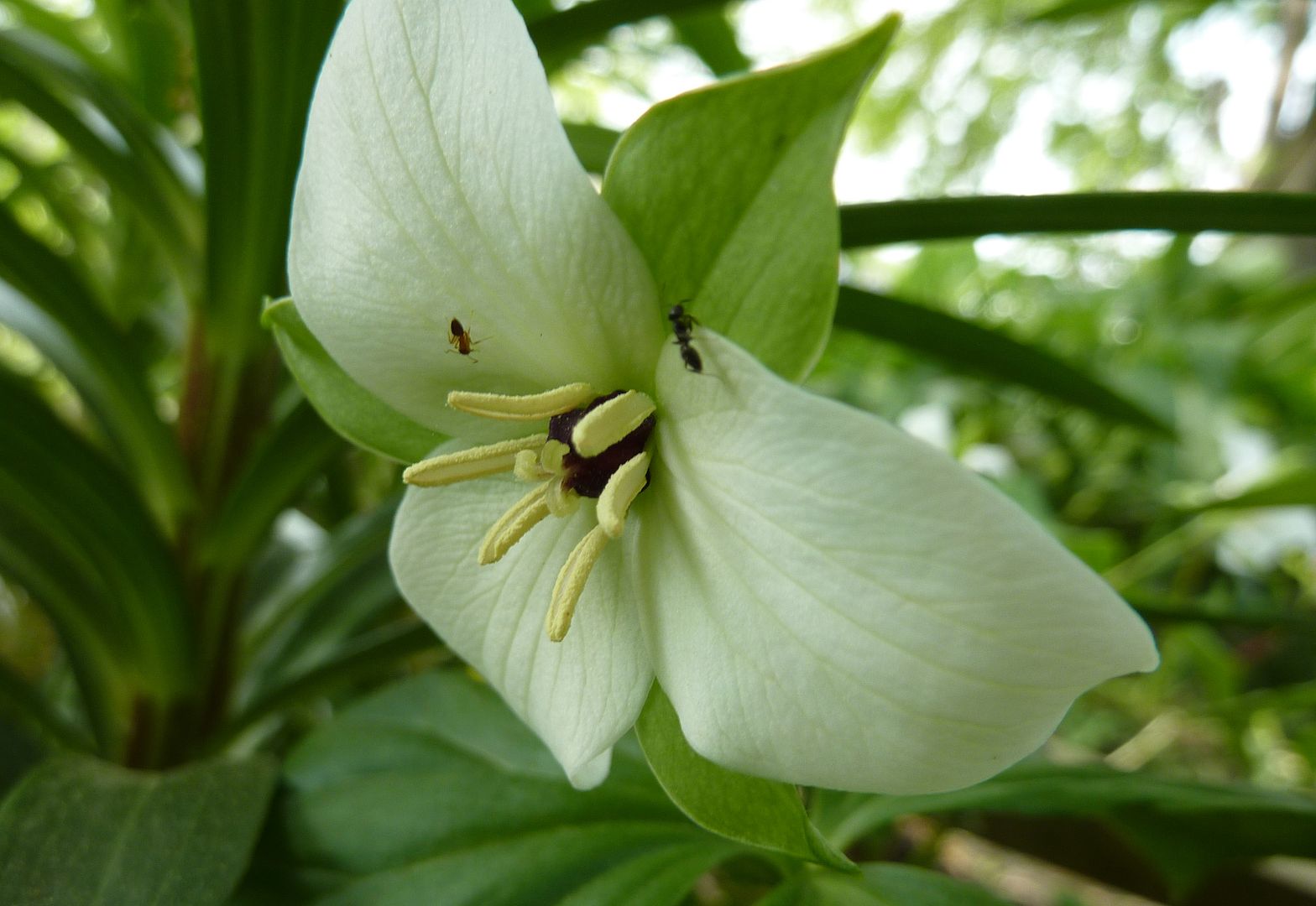
Mixing two of my favorite things, ants and Trilliums. Trillium simile is one of my favorites because the petals come to form a triangle. When grown in a group they have an architectural effect I like, though you'll get that from masses of any Trillium species. The ants are Tapinoma sessile (black) and Nylanderia flavipes (dark orange) which I have found to be notorious for stealing nectar and at the same time eager for seeds to develop.

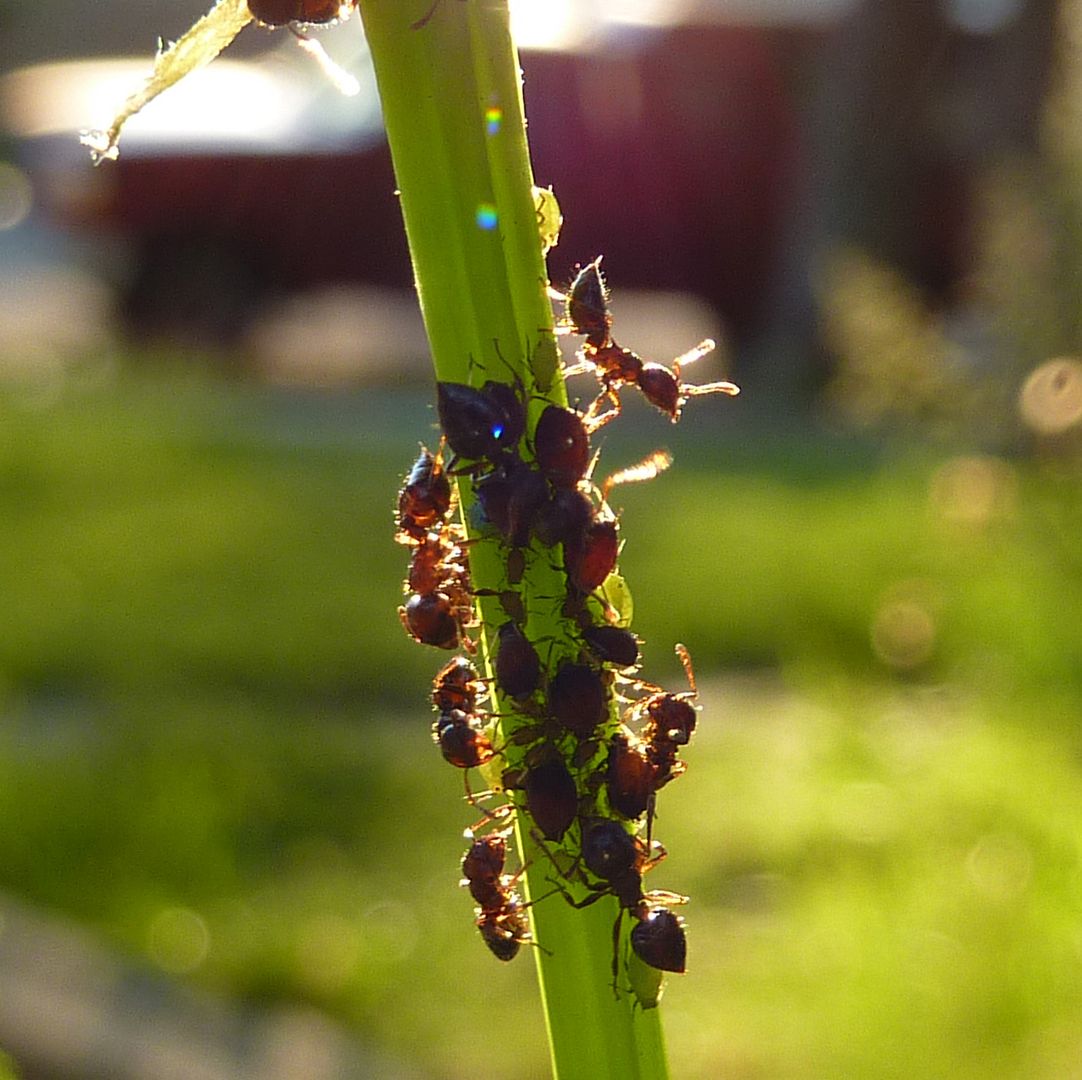
 Crematogaster cerasi workers tending aphids in the sunset.

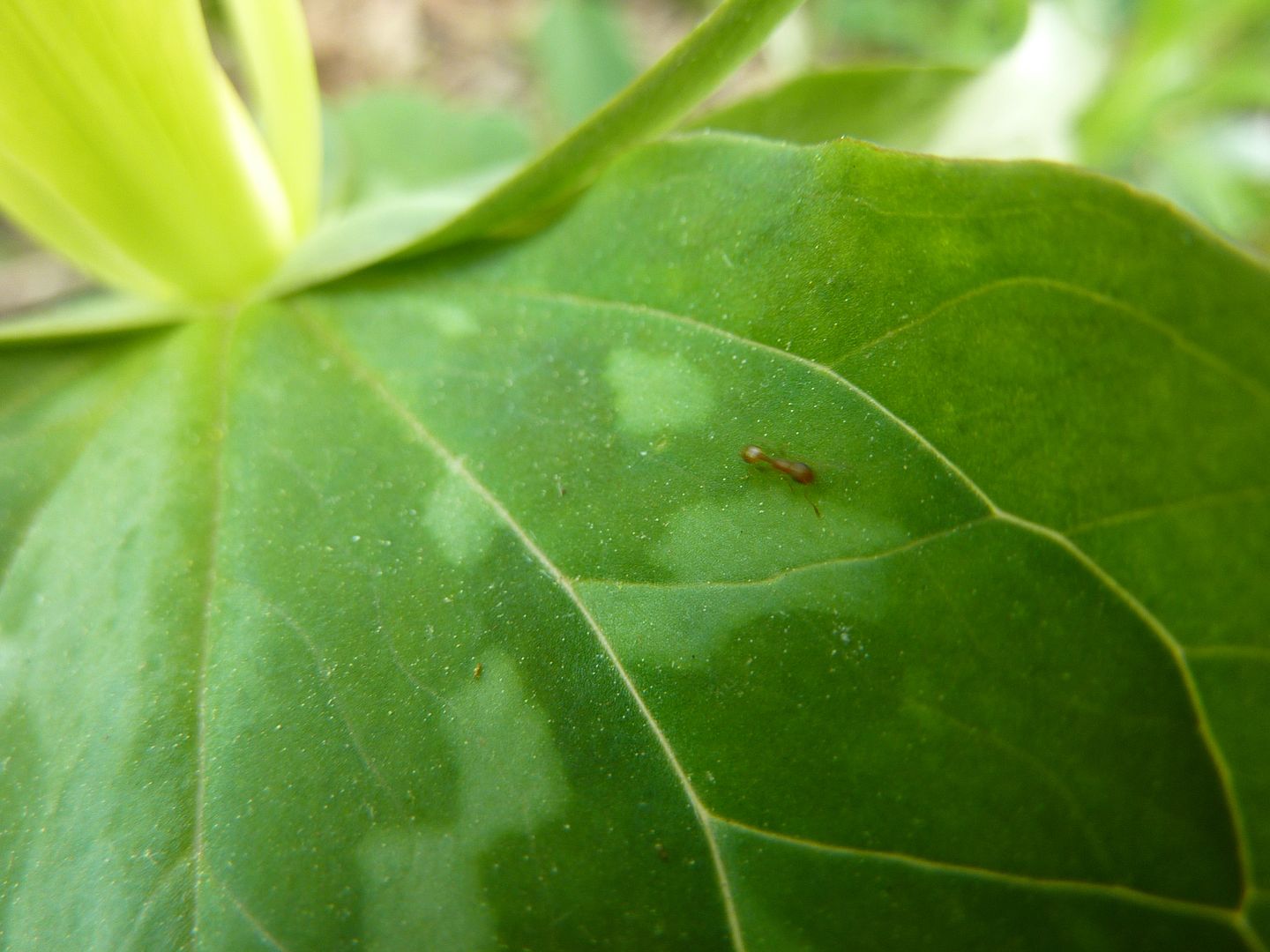
An insignificant little ant, possibility Temnothorax, roams a Trillium leaf in search for food.

A rather small queen ant in the genus Stenamma. I didn't even know this genus existed in New Jersey let alone my backyard but here it is. Seeing her brings into question all of my identifications of the smaller ants like the Temnothorax above.

A Camponotus castaneus queen I caught earlier this year. I love this species because it's the only solid orange ant around here in that genus.

Prenolepis imparis colonies slowdown once summer hits. Their workers inflate with food and are put to work digging tunnels to make the nest deeper. They'll retreat to the damper parts over the summer and move back towards the surface as the rains come back again. Before winter hits they'll eventually be the only species out foraging long after other species have gone into hibernation. They're not called the winter ant for nothing.


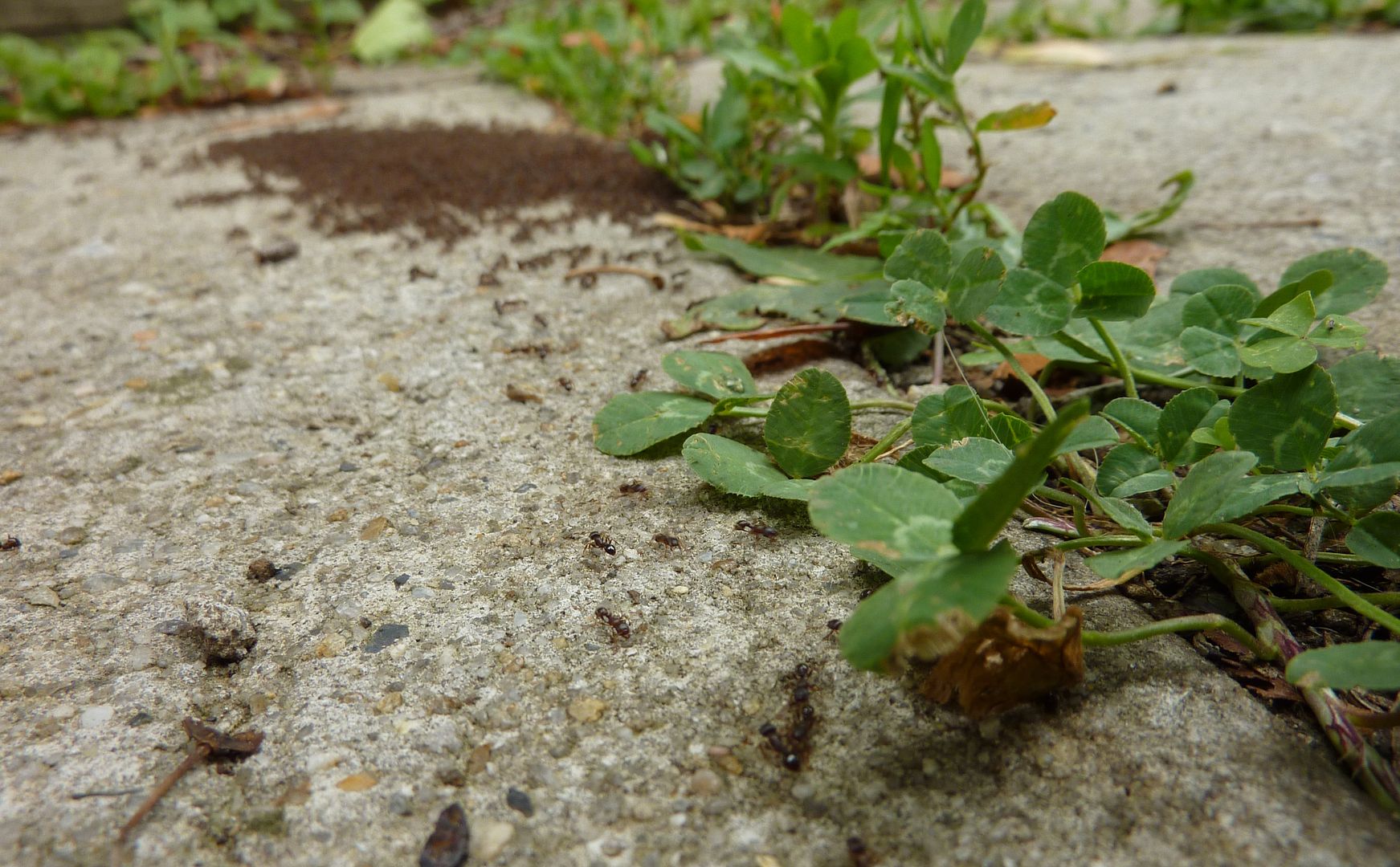
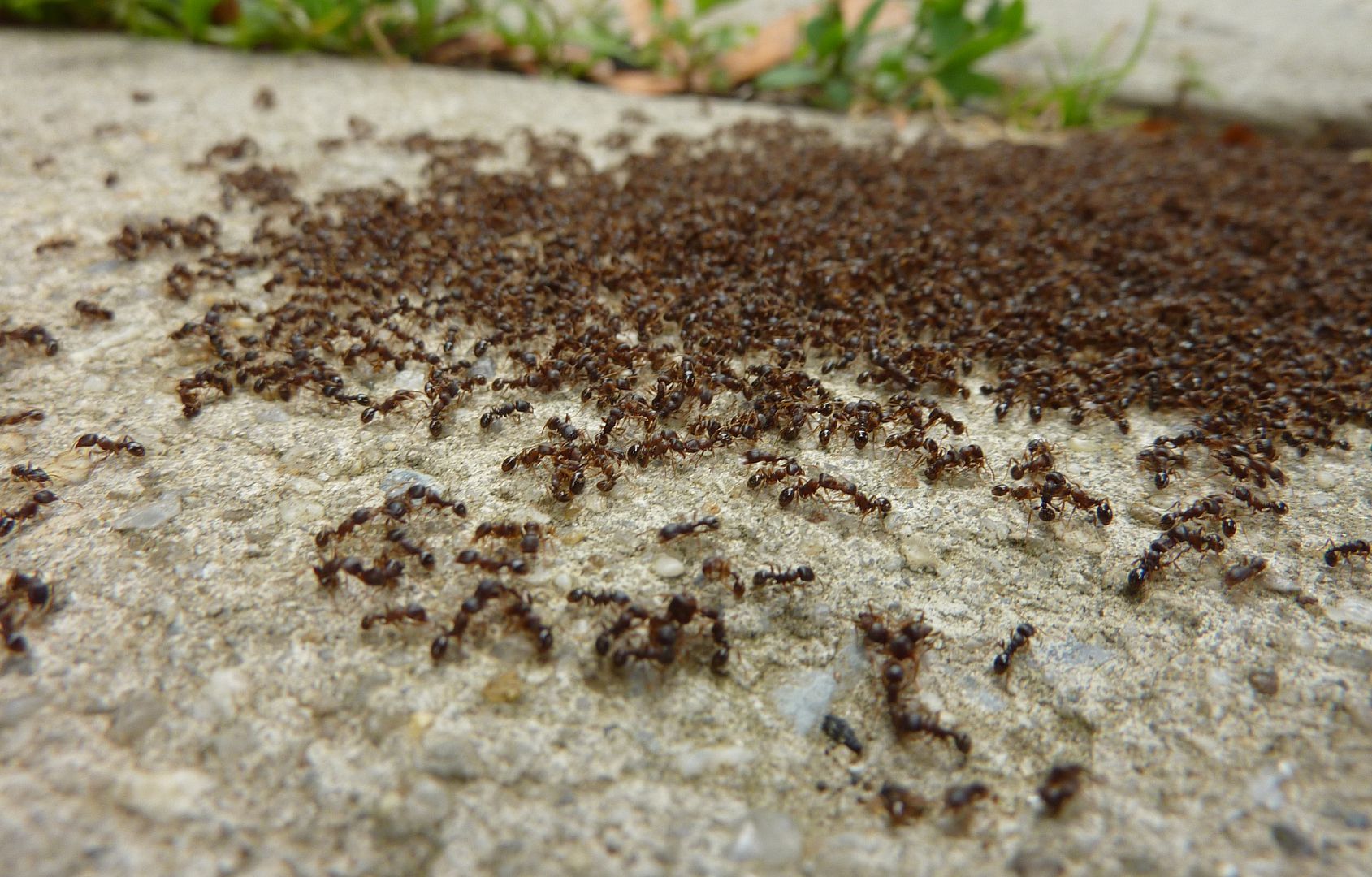
An ominous black stain in the late spring/summer time is more than likely a battle between two colonies of pavement ant, Tetramorium species E. (The E is thanks to their taxonomic limbo at the moment... I wish they'd made it stand for something at least like erecta


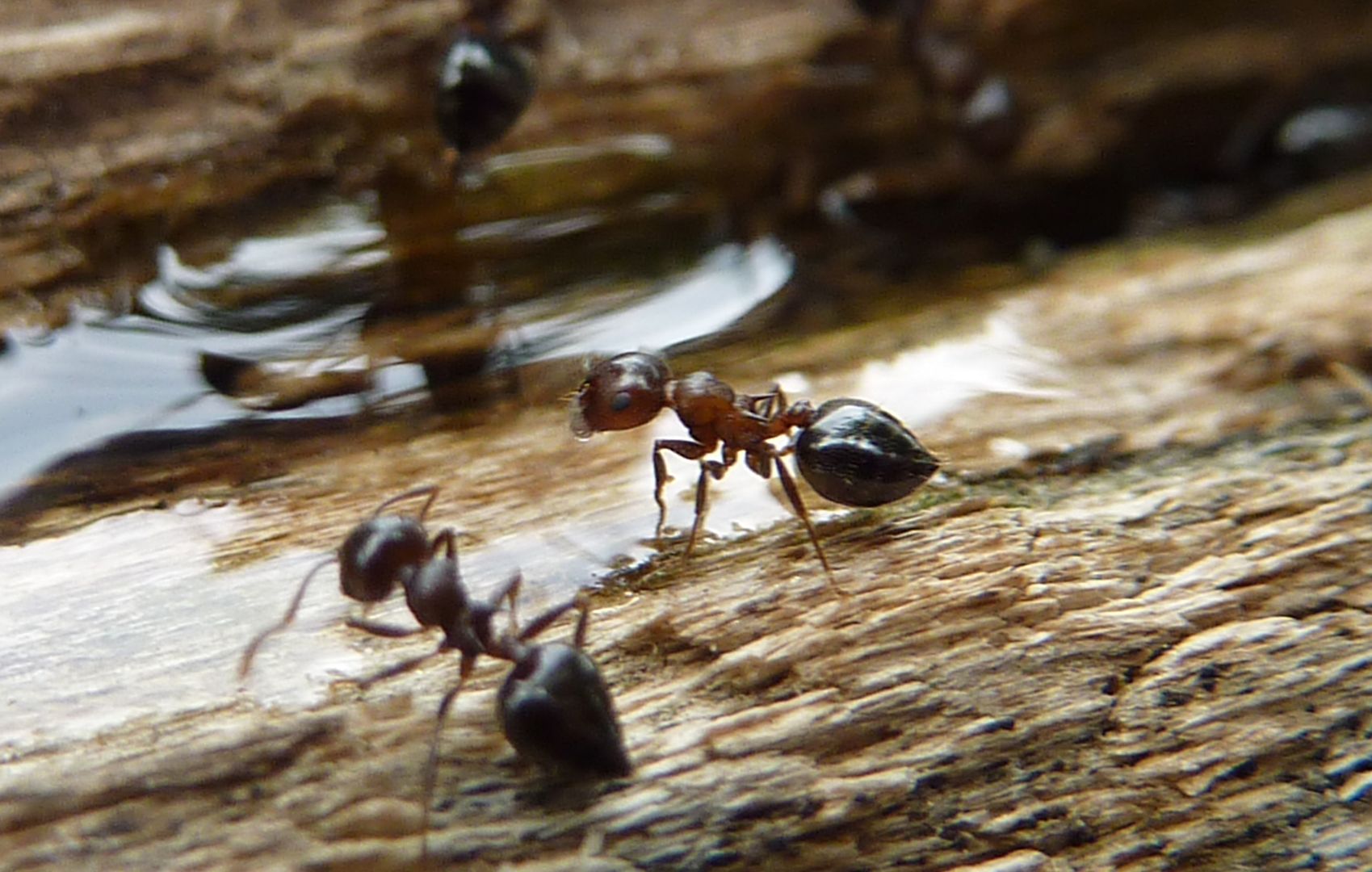
Alex Wild who is a very well respected insect photographer featured this image on his blog. Though he color corrected it to make a better image. This species is normally black in color but a few colonies around here tend towards being dark brown or slightly bicolored.

While baiting the yard with honey here and there it's easy for anyone to check the ant diversity hanging about. Here some Crematogaster cerasi workers sip at a small pool of honey.

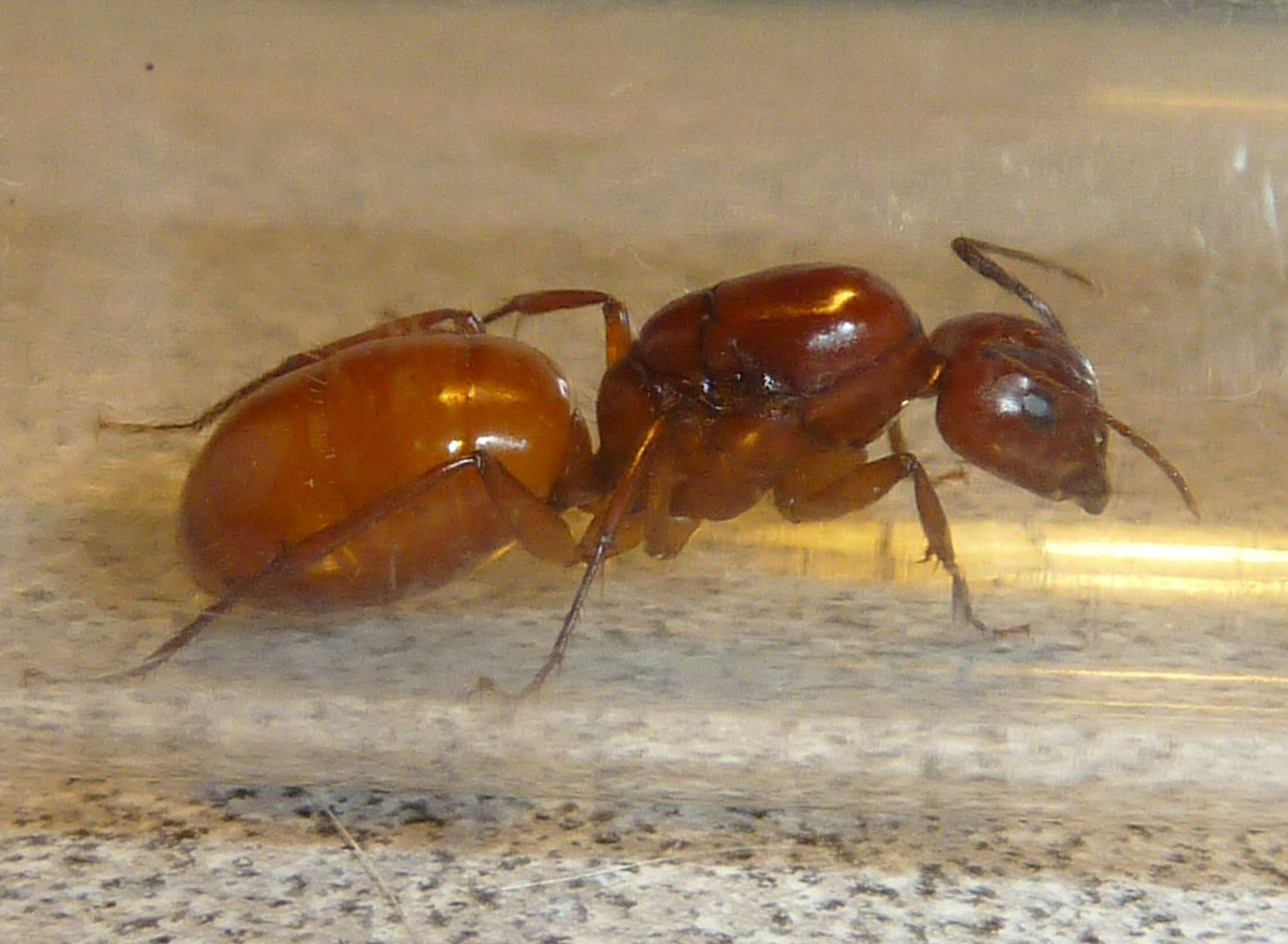
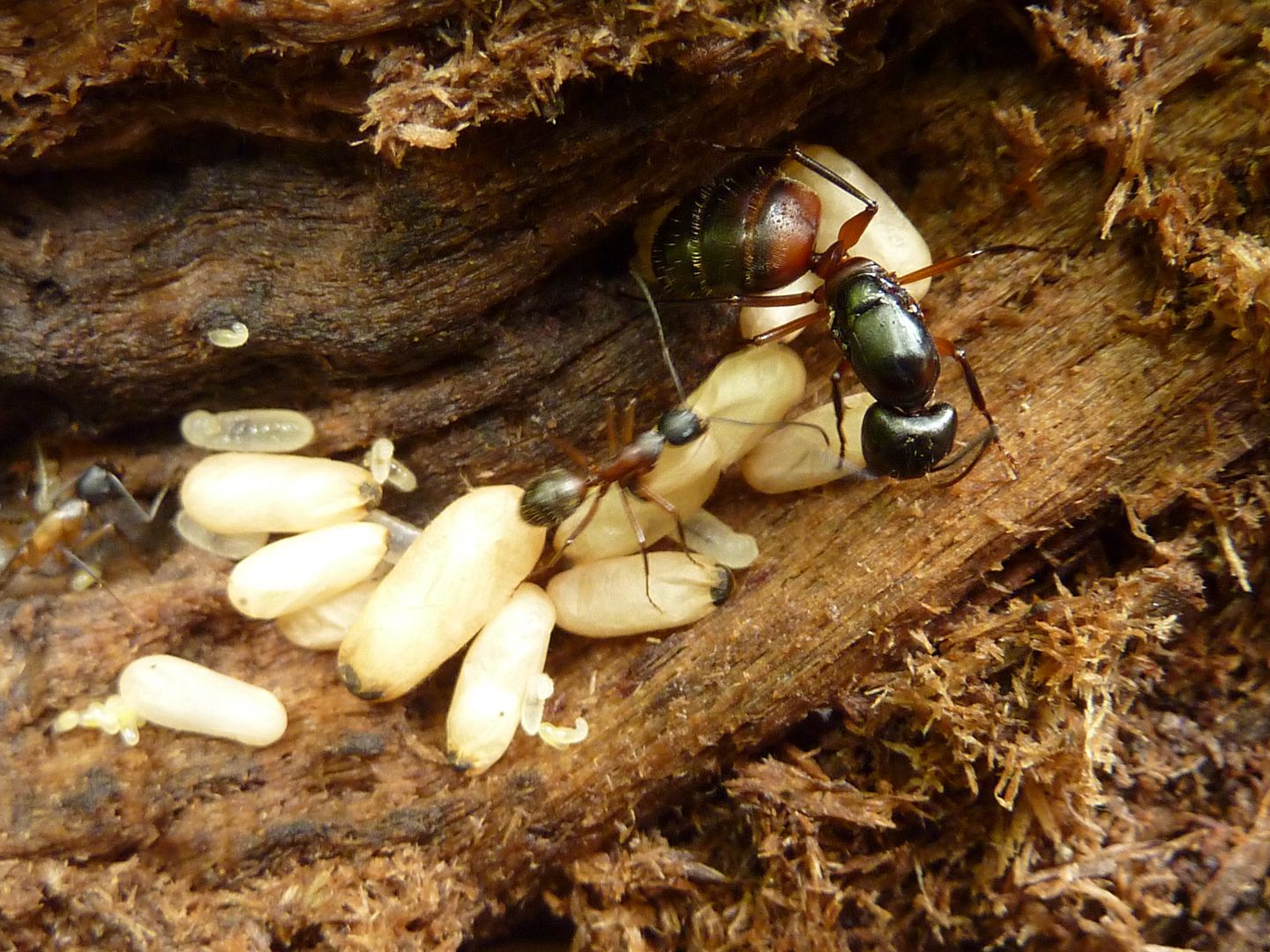
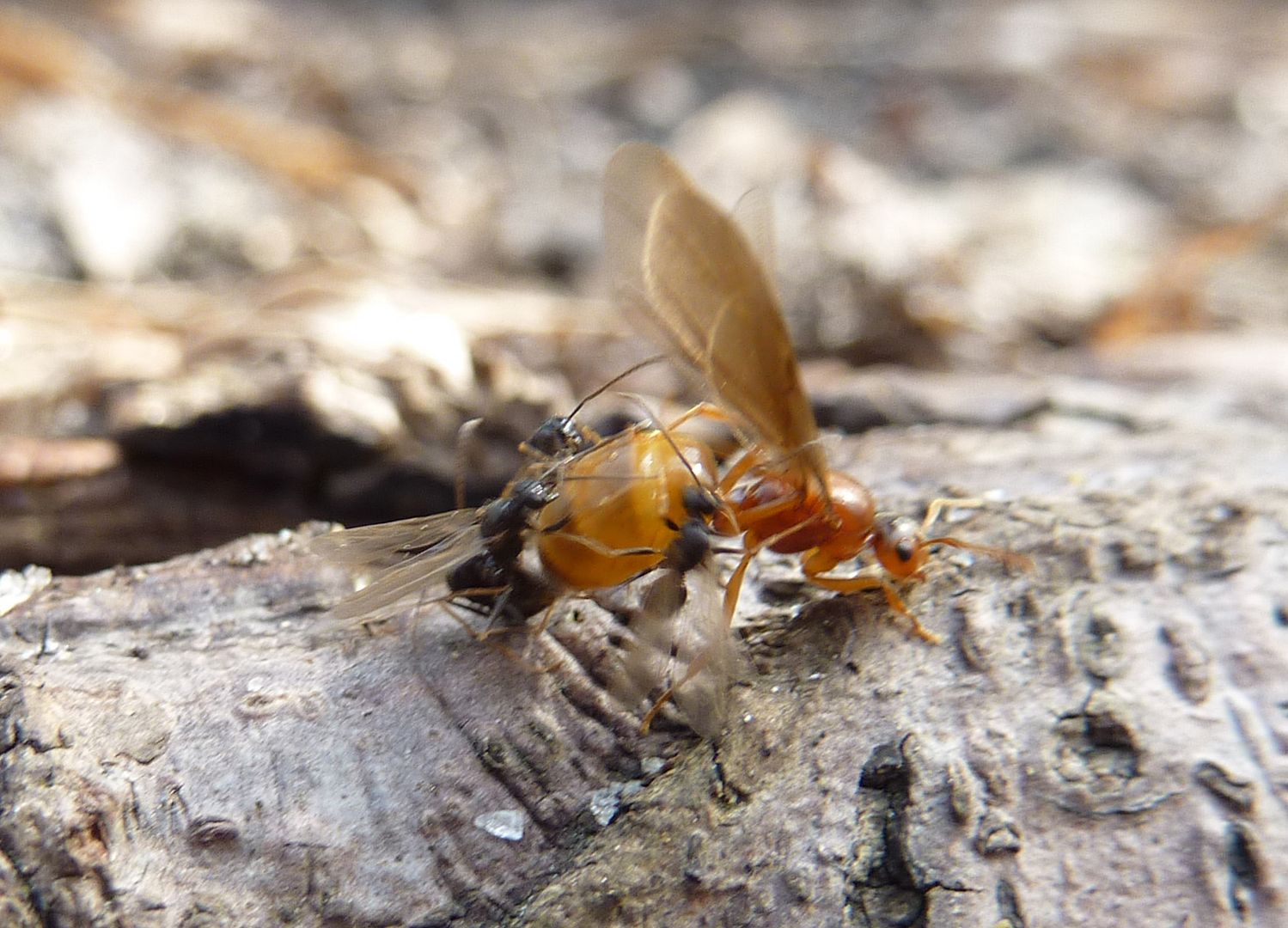
While having a friend over one day I mentioned I have random workers to a species that seems to be starting up in my yard. As luck would have it we moved an old log in the garden to look under, but it broke open in the process and revealed the nest chamber and queen to the ants I'd just mentioned to him. Camponotus chromaiodes is very common in the Pine Barrens and I'm thrilled they've decided to nest here. They differ from Camponotus novaeboracinsis in the amount of hair on the gaster/abdomen and the amount of red on the mesosoma. C. chromaiodes always has black shoulders while C. novaeboracinsis is solid red. These traits vary somewhat within the colony but are the standards among the largest workers in the colony.The color patterns of queens is another matter. C. chromaiodes is as seen above, with a little bit of red under the mesosoma and somewhat on the gaster. C. nobaeboracinsis queens tend to have more red on the mesosoma and less on the gaster.

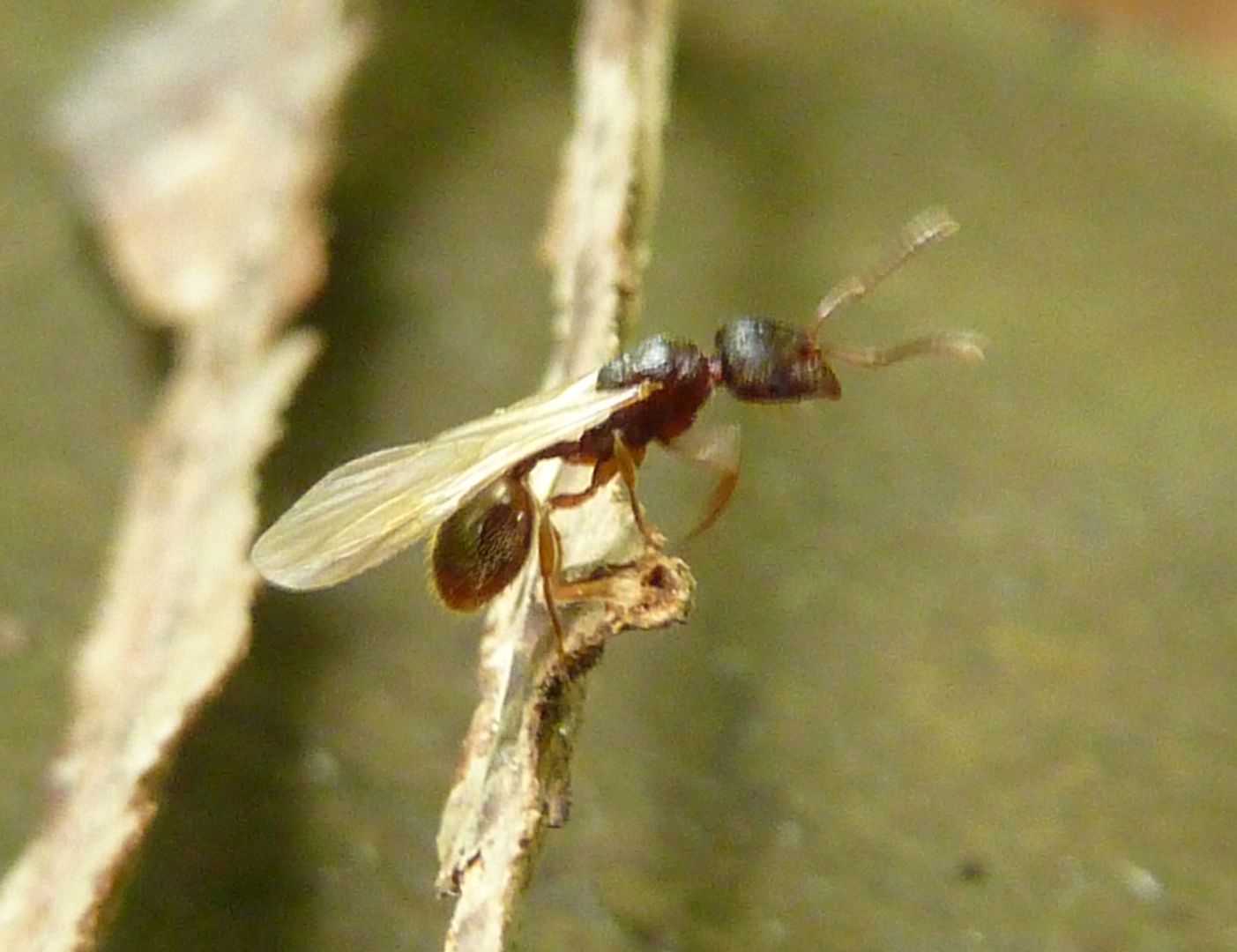
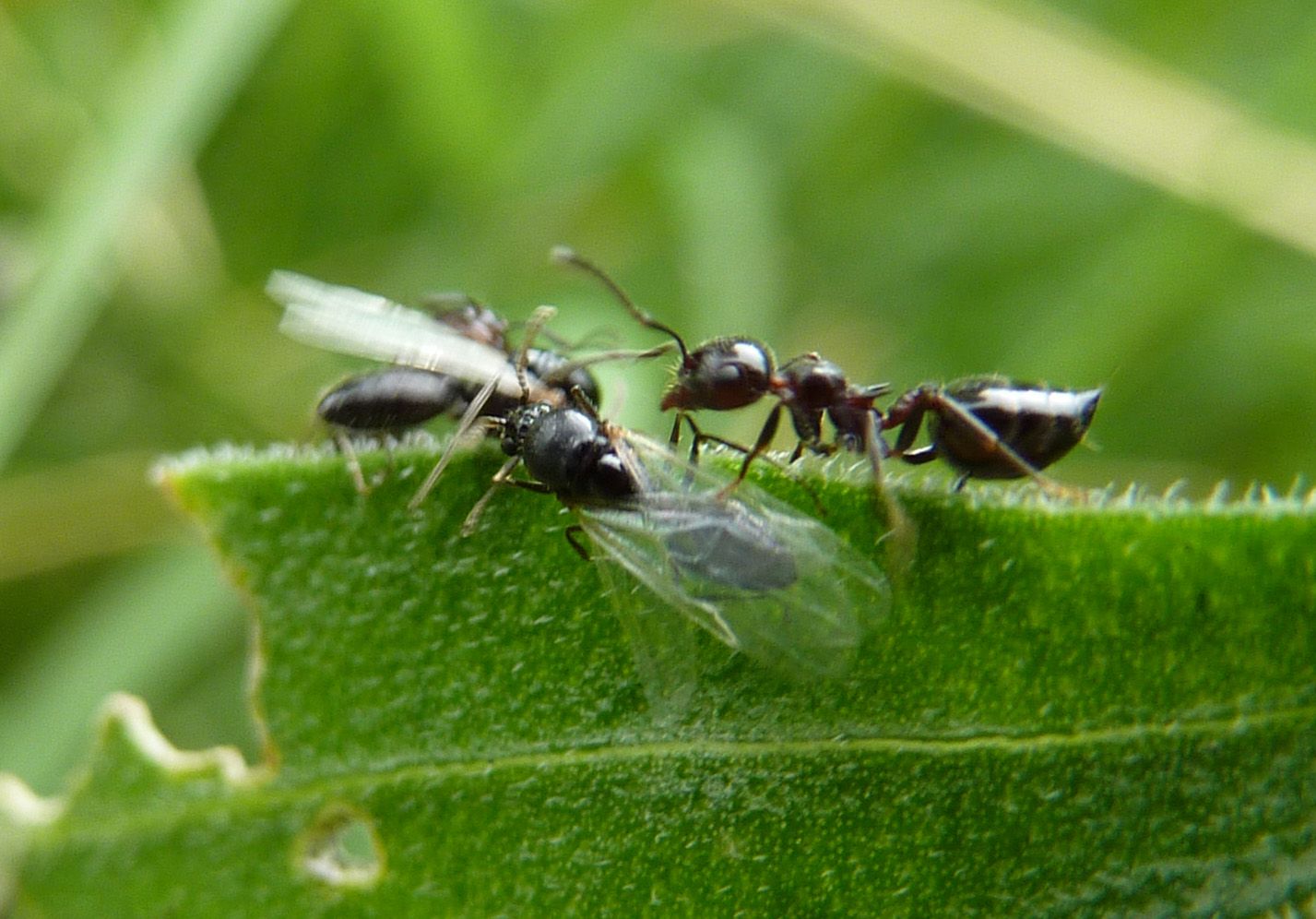
A Crematogaster cerasi workers and male posed on a leaf.

A successful experiment I did where I documented and allowed 4 colonies of Prenolepis imparis to combine. The colony is still together to this day.

An Aphaenogaster rudis workers walking among the Trillium seeds.

Yellow Jackets stealing Trillium seeds and potentially planting or dispersing them perhaps?

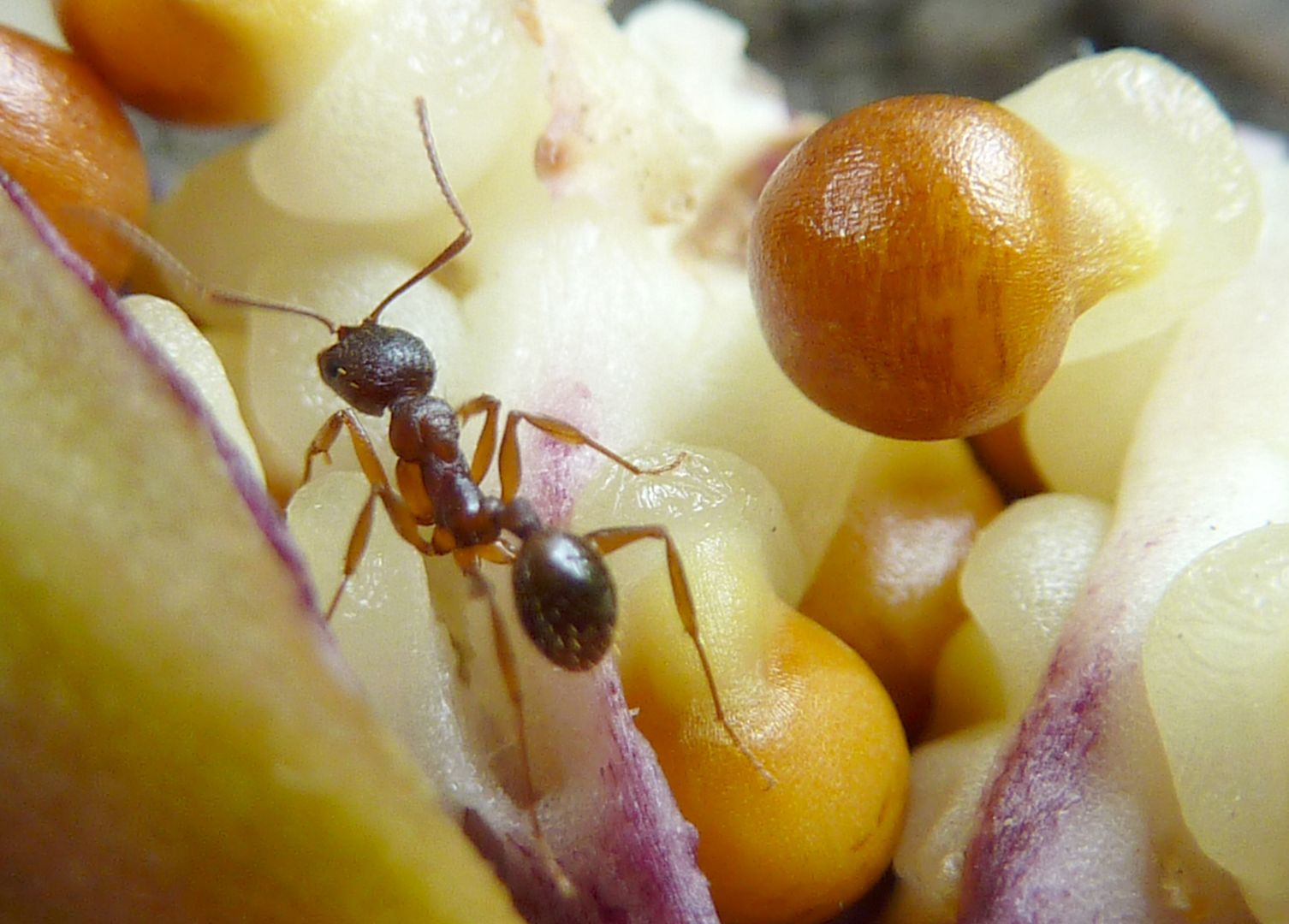
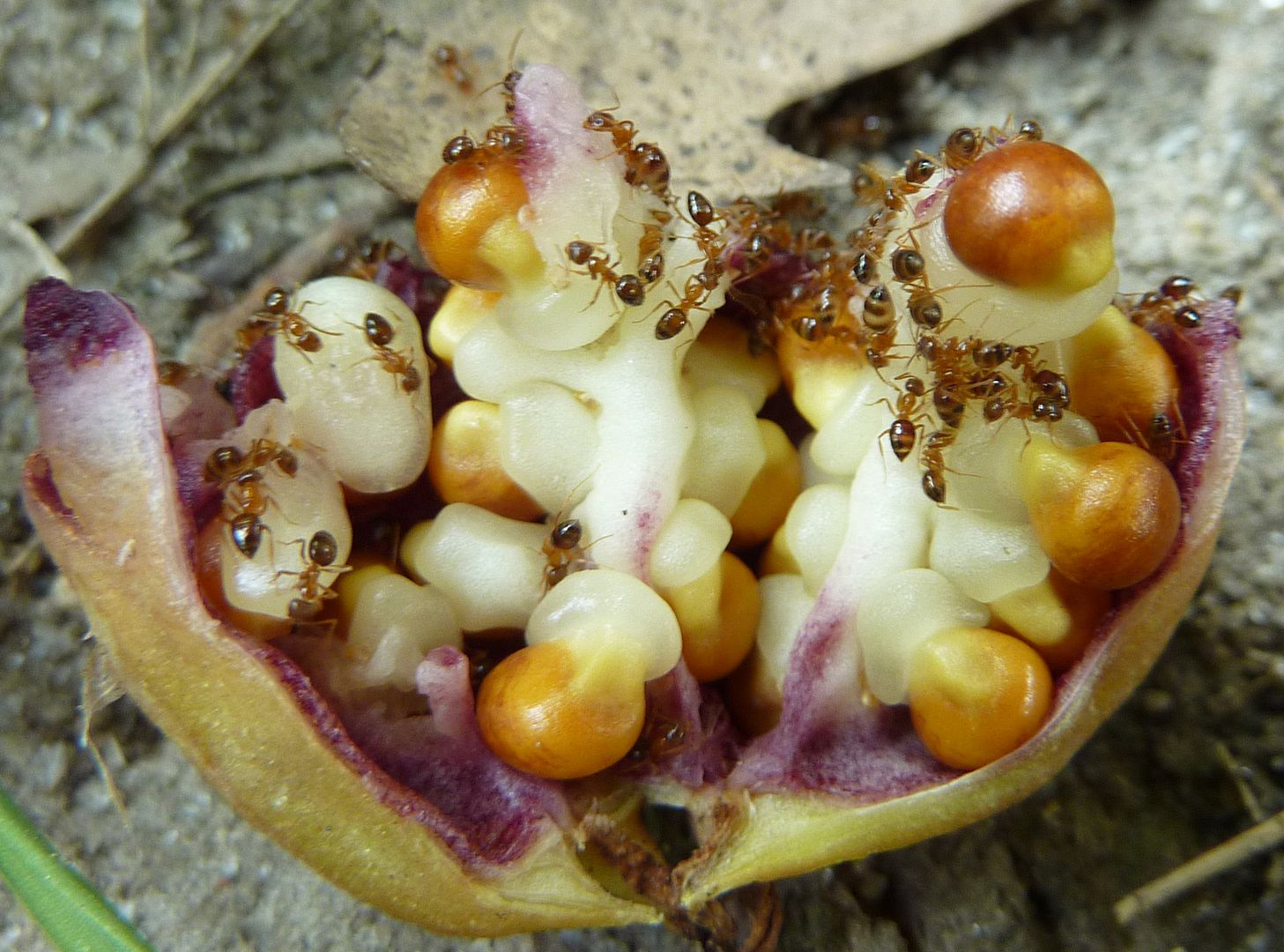
Hordes of Nylanderia flavipes eating the elaiosome off of the Trillium seeds. Because these ants are too small to carry the seeds they simply remove the ant food in place. Sadly this negates the purpose of the elaiosome which is intended to get the ants to carry the seed into their underground nest, effectively planting the seed.

Nylanderia flavipes polishing off the fleshy material where the Trillium seed pod once stood.

This just says it all about what scavengers ants are; they're finding nourishment in what amounts to connective tissue on the plant.

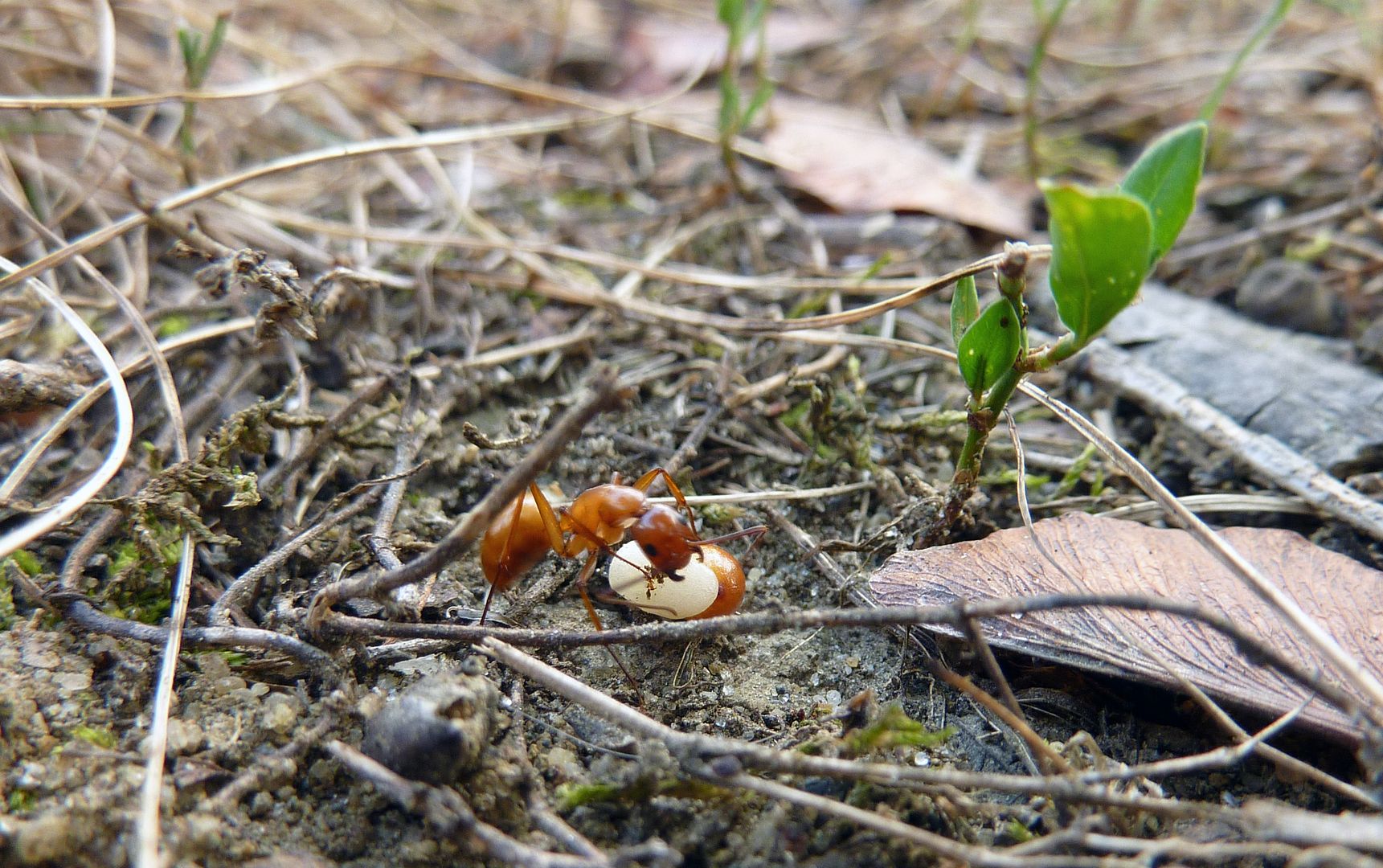
A massive Camponotus castaneus worker has no trouble carrying a Trillium seed home single handed. It's one of the few species that are both willing to carry the seeds away from the plant and are bigger than the seed itself.

Of course if the thing had a handle it might be easier to carry.

Lastly we have my colony of Formica pergandei and their host Formica pallidefulva and F. incerta workers. F. pergandei colonies can not maintain themselves using their own workforce. They have specialized in stealing cocoons from other Formica species which are then raised as workers of their own nest. There is some evidence though these devoted slave makers weren't always this way. Note the tiny worker in the middle left. Callow castes are often the first ants new queens produce; they are cheaper to make and smaller than the average worker of an adult colony. Their job is to help the queen produce the next generation of workers. Eventually callows are never produced again in favor of larger more standardized workers. True slave makers would never have any use for such a caste and yet here it is. At the very least they seem to help the colony transition into devoted slave makers, though I would be surprised if they were produced beyond the first few broods by the queen.

Hopefully I can keep this colony alive and report more on them in later posts. I may even try to setup a fragment colony of host workers and brood so I can document them raiding it someday.
Thursday, December 1, 2011

Lee Reich has a blogs

I've just learned that Gardening Author, Lee Reich, has a blog. And he was recently interviewed by the folks over at Growing a Greener World.
I've actually gone and seen Lee give a lecture in person. The topic was on native food crops and was the first time I learned about Persimmons, Paw Paws, and Lingon Berries. Also I had no idea we had native varieties of Strawberries, and Raspberries.