Saturday, October 9, 2010

My Thoughts on Virues and Fungi cause CCD

Iridovirus and Microsporidian Linked to Honey Bee Colony Decline
Alright so it's been a few days since this came out. I have been reading it and have come to the conclusion that it's nothing too special. In short they took samples of bees from 2006 to 2009 (2010?) from CCD effected hives, and they've listed all the correlating combinations of viruses and fungi that seem to cause CCD. 

I'd be interested to know what the bees were pollinating? How were they coming into contact with these viruses and fungi spores? But unfortunately we probably don't know that much about the ones killing the bees in this case. 


We also observed Varroa mites in some, but not all of the CCD colonies.
Excuse me? You didn't find mites in all of the beehives? Okay either you're not looking hard enough or those hives recently re-queened or something. There are Varroa mites in every beehive! Drones which move freely from hive to hive (just droning on with their lives of one day mating or not) are just one way that Varroa mites enter the hive. Enlarged drone cells are often targeted by the mites too. 

These results support the correlation observed by the MSP data that suggests than an interaction between N. ceranae and an IIV-6-like virus may be involved in bee mortality.
Why isn't the bees immune system fighting back? 


I can see a definite drop here... but what is the correlation again? This chart seems to show that the Virus and the Nosema don't have to be together to cause CCD. It looks like they can kill bees well enough on their own.

Common Buckeye Sightng

Junonia coenia, Common Buckeye. This little jewel scurried out of the brush outback (I haven't been mowing the lawn,) and I can't help but think what a shame it is that adults and caterpillars don't over winter where I am. Even though I have an abundance of one of their host plants growing like a weed outback, Plantain. No not the banana; Plantago major, the small little plant who's sap is supposidly good for bee stings and bug bites. Other hosts include common everyday snapdragons, something called toadflax, Gerardia, as well as Ruellia nodiflora. This info is brought to you by...

Friday, October 8, 2010

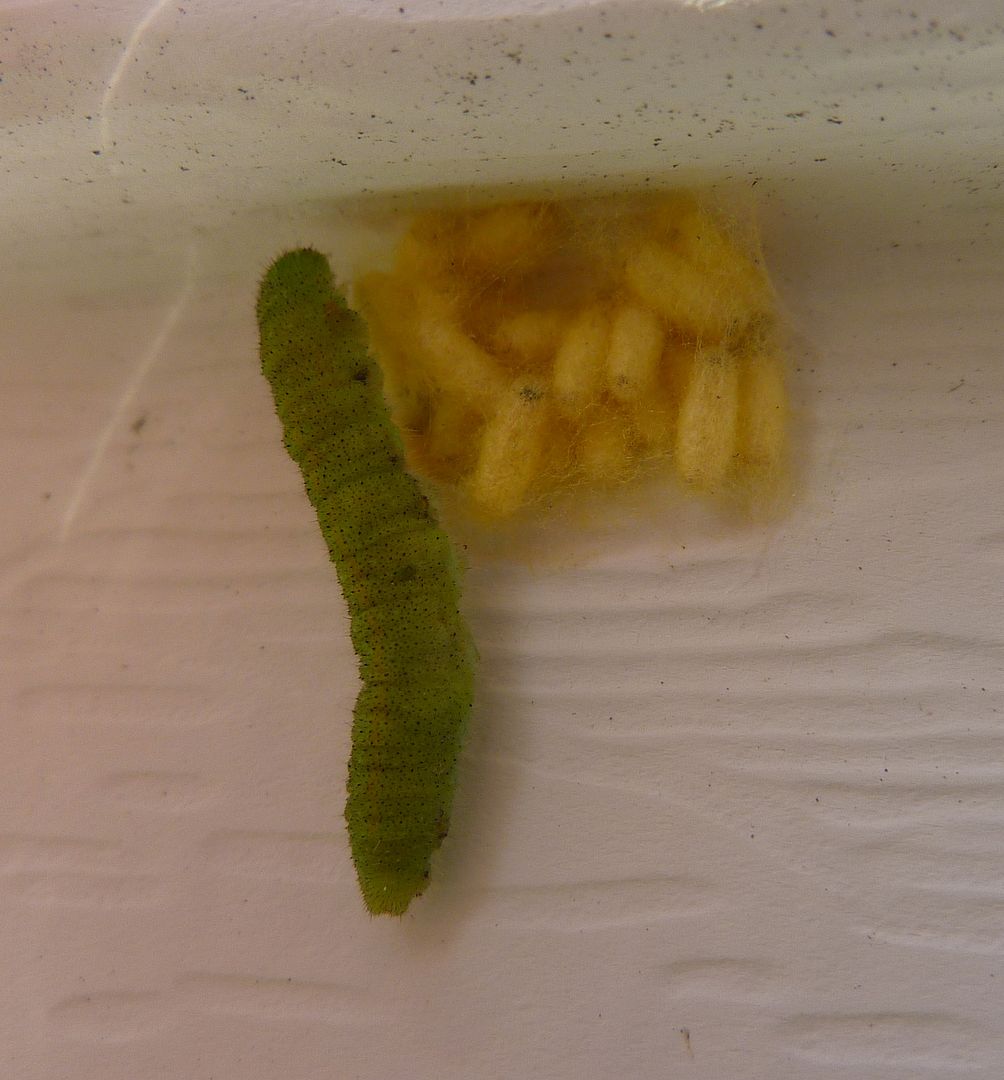
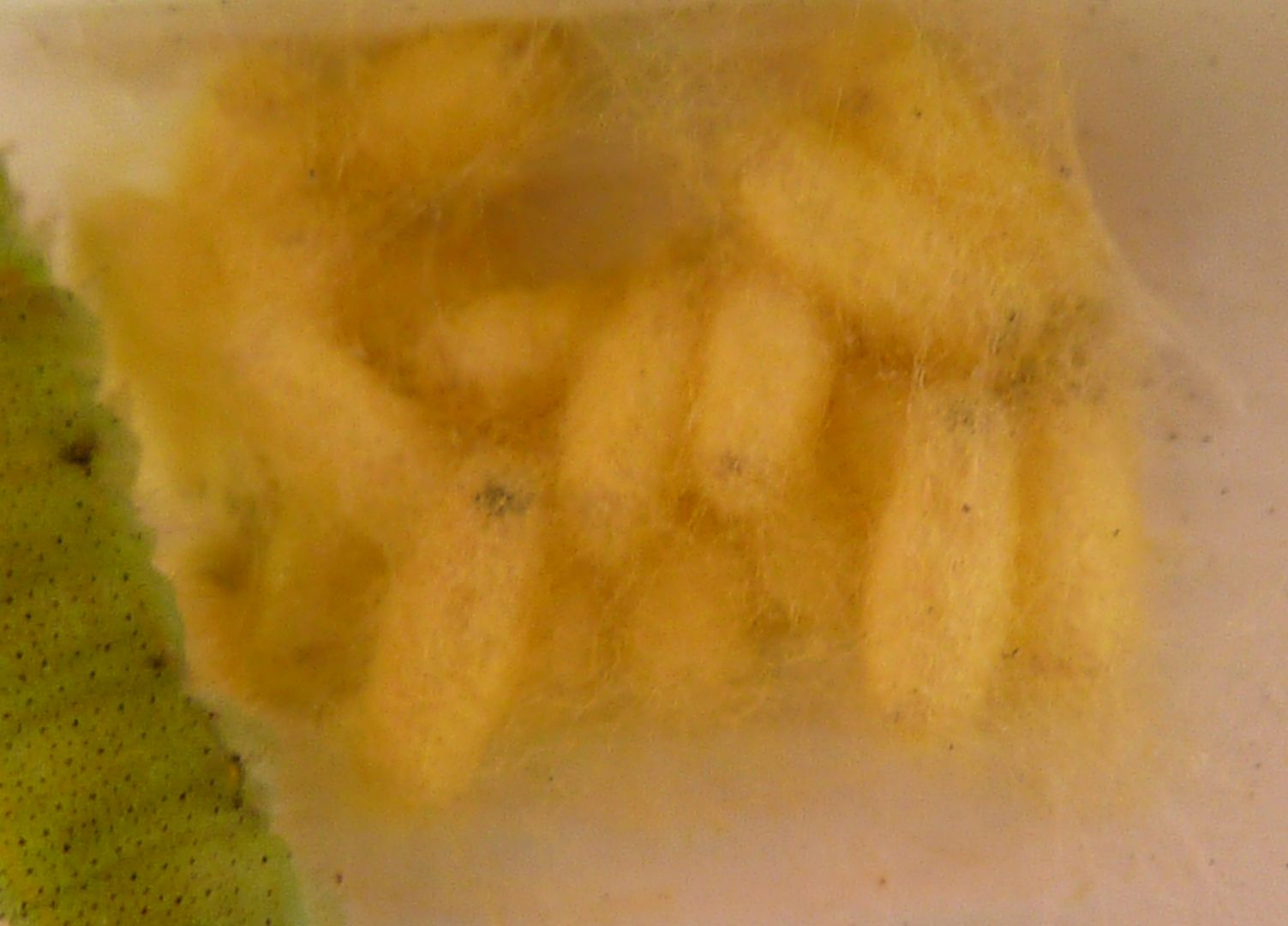
Caterpillars Eaten from the Inside Out


And what's really cool is I found this happening along the side of my house!

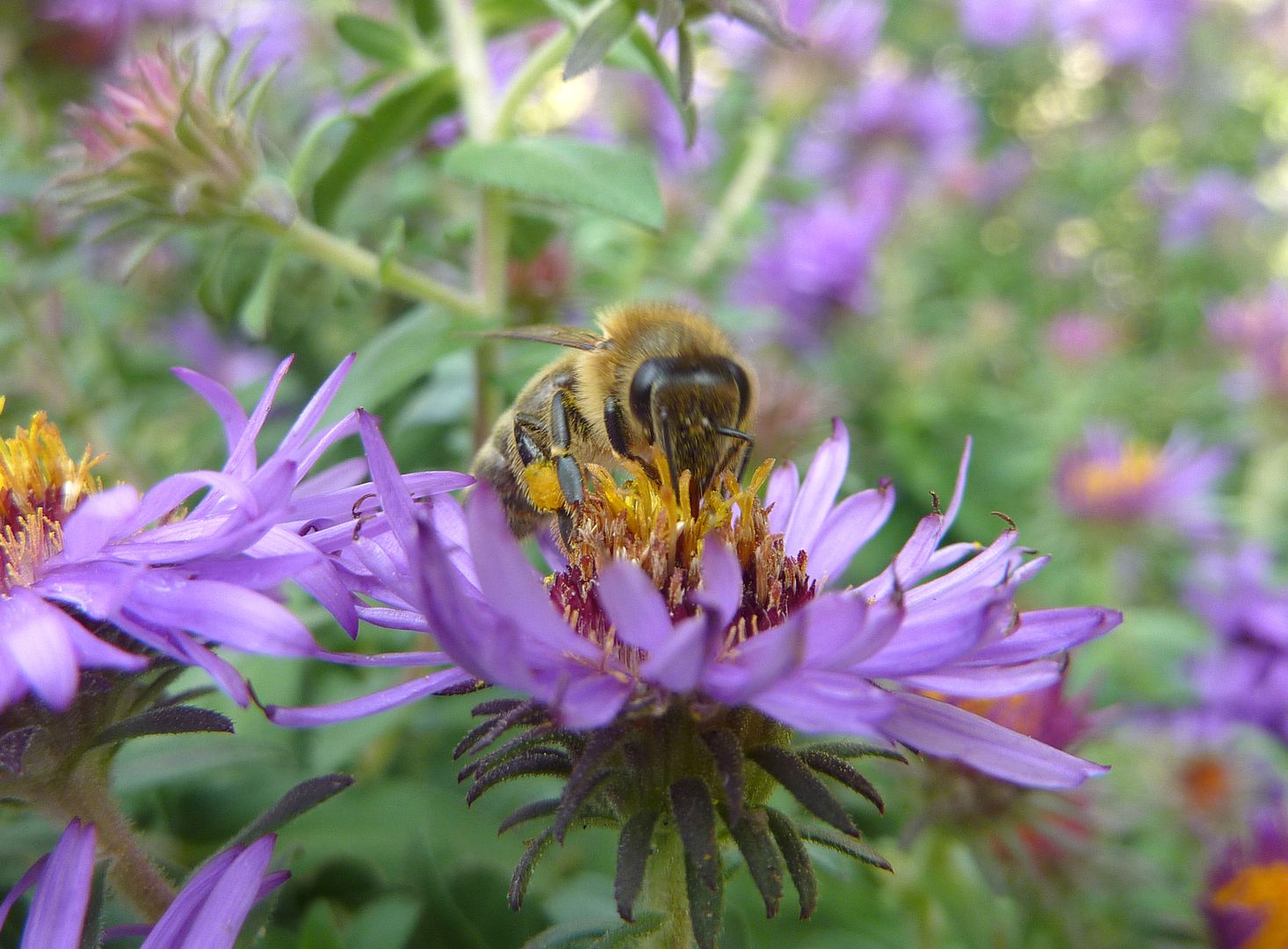
Busy Bees on New England Aster


Well the New England Aster, Symphyotrichum novae-angliae, has started blooming up a storm. This plant comes in other colors as well including red, pink, purple and pale or intense versions of those. What's great though is you always get the intense yellow anthers inside the flower that play off the color so nicely, even against spent flower heads that are brown and going to seed. The only down side as you can see in the video is the plants can get to tall and fall over. This is usually avoided at the nursery because the plants will have been cut back to a few inches in June or July. This promotes the compact flowering part to form closer to the ground.

A Honey Bee working a New England Aster


A Honey Bee working a New England Aster
A Green Sweat Bee working a New England Aster

Thursday, October 7, 2010

Viruses and Fungi Combination Linked to CCD

Jerry Bromenshenk is my new hero for the moment. A New York Times article today talked about the findings that a new study has found a link between a virus and fungi combination that is causing CCD. The article also mentions his using of honey bees to help detect land mines. Which shockingly enough has evidence to back it up. Read here! Detecting explosives with honey bees aside, here is the abstract to the scientific study linking viruses and fungi to CCD that the article is based on. 

Abstract 

Background

In 2010 Colony Collapse Disorder (CCD), again devastated honey bee colonies in the USA, indicating that the problem is neither diminishing nor has it been resolved. Many CCD investigations, using sensitive genome-based methods, have found small RNA bee viruses and the microsporidia, Nosema apis and N. ceranae in healthy and collapsing colonies alike with no single pathogen firmly linked to honey bee losses.

Methodology/Principal Findings

We used Mass spectrometry-based proteomics (MSP) to identify and quantify thousands of proteins from healthy and collapsing bee colonies. MSP revealed two unreported RNA viruses in North American honey bees, Varroa destructor-1 virus and Kakugo virus, and identified an invertebrate iridescent virus (IIV) (Iridoviridae) associated with CCD colonies. Prevalence of IIV significantly discriminated among strong, failing, and collapsed colonies. In addition, bees in failing colonies contained not only IIV, but also Nosema. Co-occurrence of these microbes consistently marked CCD in (1) bees from commercial apiaries sampled across the U.S. in 2006–2007, (2) bees sequentially sampled as the disorder progressed in an observation hive colony in 2008, and (3) bees from a recurrence of CCD in Florida in 2009. The pathogen pairing was not observed in samples from colonies with no history of CCD, namely bees from Australia and a large, non-migratory beekeeping business in Montana. Laboratory cage trials with a strain of IIV type 6 and Nosema ceranae confirmed that co-infection with these two pathogens was more lethal to bees than either pathogen alone.

Conclusions/Significance

These findings implicate co-infection by IIV and Nosema with honey bee colony decline, giving credence to older research pointing to IIV, interacting with Nosema and mites, as probable cause of bee losses in the USA, Europe, and Asia. We next need to characterize the IIV and Nosema that we detected and develop management practices to reduce honey bee losses.


So basically the viruses got on their cell phones and called the fungi, and were all like, "Yo, I'm inside a Bee! Why don't you come join me?" And the scientists (the stupid ones anyhow) were all like ... Cell Phones cause CCD!


Granted I had my own little theory, or at least I sided with the people saying it was neonicotinoid sprayed crops that sweat out the chemical in their sap. That has proven incorrect but at least it was more plausible a theory than putting a cell phone in a bee hive and calling them up.

---------------------------------------------------------------------------------------------------
Iridovirus and Microsporidian Linked to Honey Bee Colony Decline

Saturday, October 2, 2010

Still Flowering

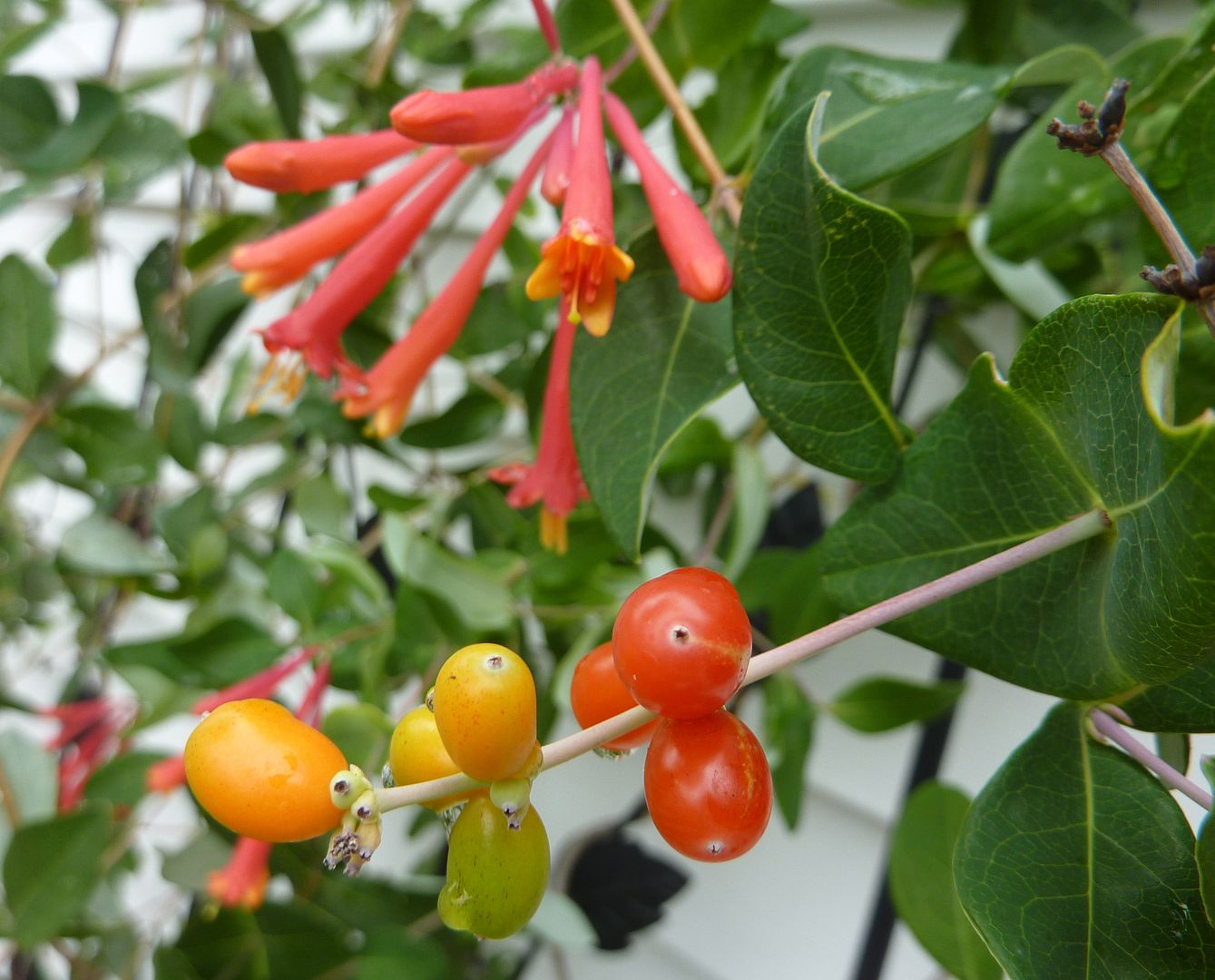
While some gardeners have been searching high and low for fall color this native honeysuckle, Lonicera sempervirens has been flowering since early spring! They bloom early for the hummingbird migration. Afterward, flowering dies down but continues sporadically over the summer. Now that it's getting cold again they're putting on another dazzling show for the migration back.

A delightful treat for other birds slowly form on the vine. I can't imagen hummingbirds eating the berries. Hopefully I'll get to photograph what does.

Friday, October 1, 2010

A Few Volunteers

... No this isn't a post asking for help getting this crap out of the yard. Though if someone would like to tell me the protocol for throwing away a glider from the 1980's that would be a great help. This is actually the spot we put all the miscellaneous things. The lawnmower lacking an engine is the easiest way to move a 300+ pound beehive. The rest is just a stack of branches to big or small to do much with. I'm posting this though becuase of the wildflowers naturally growing around all this. I didn't plant any of these. The species have been here for  plants, they all have been growing here since before the house was built and slowly spreading about in the untamed parts of the yard. (though that may have had something to do with the lawnmower breaking.)


A White Wood Aster of some type is one.

The other is White Snakeroot. This plant is notorious for causing livestock to produce poisonous milk at least to humans. Not a plant that farmers or people with to much land should be growing, at least if there is livestock around. 

Both plants are typically swarming with pollinators, usually smaller flies and sweat bees though. Rarely I'll see a honey bee on them and surprisingly enough I have never seen a bumblebee working either plant.

I took these pictures on a cloudy day where it had rained all morning. So there wasn't much out. Normally I'm not a fan of white flowering plants, and these two in particular aren't the prettiest I've seen. But there's something about them planted in mass, and if the light hits them just right that makes the whole area look prettier than it does on other times of the years.


The yard is littered with young plants with both species. If our yard became uncared for these two would surely take over among other plants.

Another plant slowly springing up all over is one of the shorter Goldenrods. Barely reaching 2' tall, I see this plant coming up in the dryer parts. This is the 5th species of Goldenrod to start growing out in the yard. I suppose this is a benefit to not weeding out the garden. But I guess the lesson here would be to learn what young plants look like before weeding it out.

The last volunteer I'll talk about is this pumpkin. The vine probably measures 25' and wasn't planted by me. Last year's compost pile was turned into a garden and this plant started growing of it's own steam. I allowed it to grow because I was curious to see what it would become. Watermelon, Cantaloupe/Muskmelon, Zucchini, and so on all look like the exact same vine to me, and some of them are simply the result of selectively breeding certain traits in and out of the plant.

Eat The Weeds: The Hollies


Another excellent video by Green Dean, this time it's about making tea from Hollies. As an avid tea drinker I thoroughly enjoyed this episode and am looking into getting a dwarf holly tree for those purposes. The nonnative my parents bought and planted isn't doing so well and the recent storm we had somehow sent a bike into what remains of the bush.

Monday, September 27, 2010

Orange Sulphur?

Getting back to plants in my yard, I was out and about Saturday taking pictures. Mostly of bees, and out of focus hummingbirds, when I noticed a wonderful swatch of yellow fluttering in.

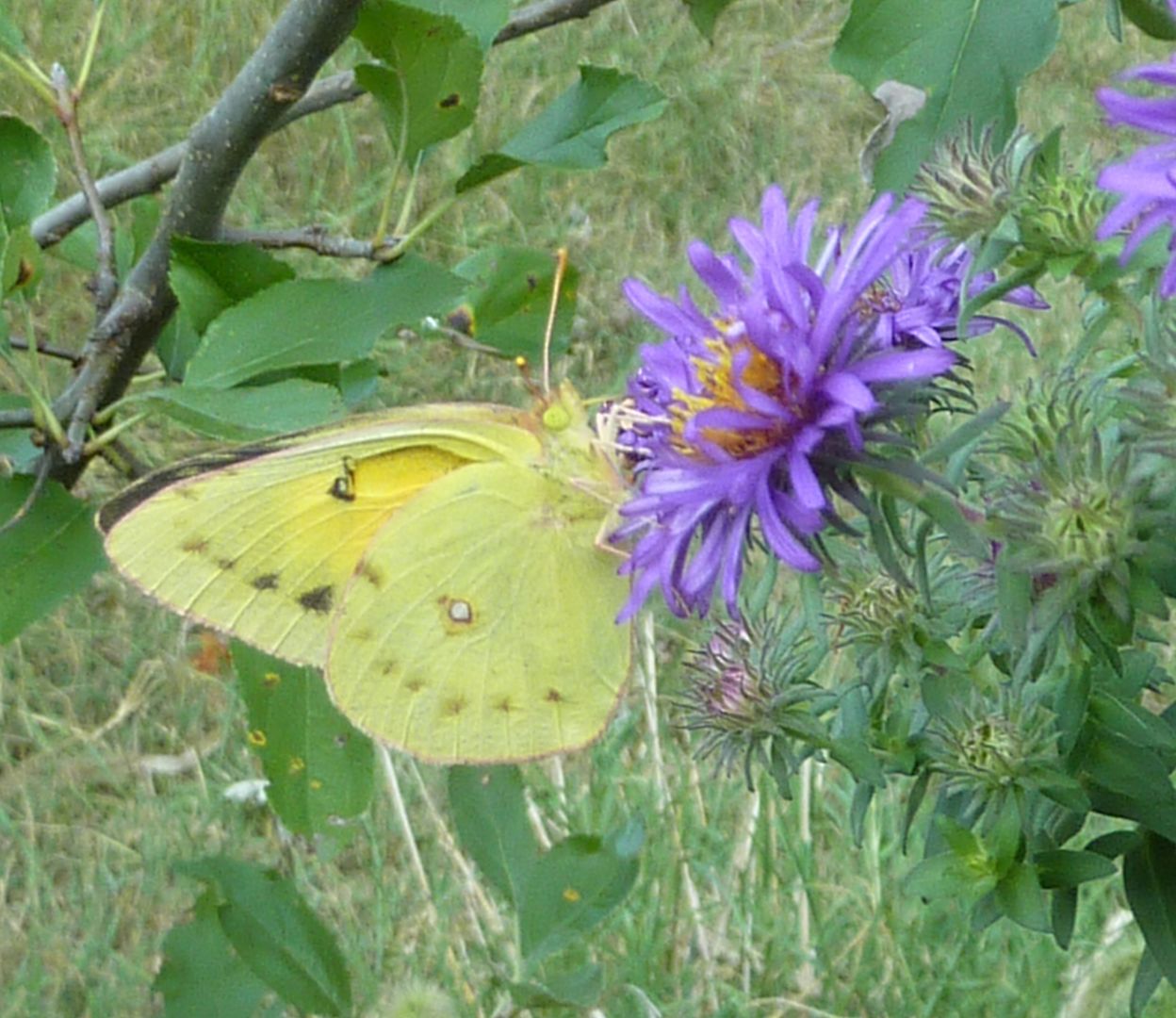
I think this is an Orange Sulphur. There was a fair amount of black fringe on the inside of the wings. You can sort of make it out here. There is also a brighter patch of yellow on the main wings that is probably orange when viewing them open. If it's not that species than it's likely just a Clouded Sulphur.

I love the green eyes to this group of butterflies. They most use Legumes as a host plant with emphases on the flowers and seed pods. According to BugGuide Alfalfa and Clovers also work.

Sunday, September 26, 2010

Mt. Cuba Center's Autumn Wildflower Palette (Part 3)

This is what put me in awe of the whole tour. It's such a shame my camera didn't capture the fine details.

Things like lighting change depending on how much light I'm standing in, how close, if I'm using a flash and so on. And sadly I don't know enough about photography to do this meadow justice.

This may not have been full of flowers but it's pretty in it's own right. Actually the entire meadow was in bloom it's just most flowering grasses aren't as pretty unless grown in mass to make an effect. Something lost in my photos thus far is how tall the grasses actually are. I believe shorter grasses were planted in front with a hard to make out aster here and there, but towards the back all the grasses were as tall as me. The red brown flourishes of the flower heads are really striking as they blow with the wind and sway in unison.

Something I wish I'd captured better was the soft evergreen to the right in the photo above. There's something about looking through it at the untamed wild beyond that softened the approach. It was like looking through a natural fence.

The meadow there is wonderful and can be viewed through many forest openings.

This Symphyotrichum novae-angliae, New England Aster... a red/pink variety, was quite the eye catcher.

Conoclinium coelestinum, Blue Mist Flower. These lined the forest patch. I have a few in my garden that I planted only just this year. Oddly enough the flower color is off, more red magenta.... which is odd for a plant called blue mist flower.

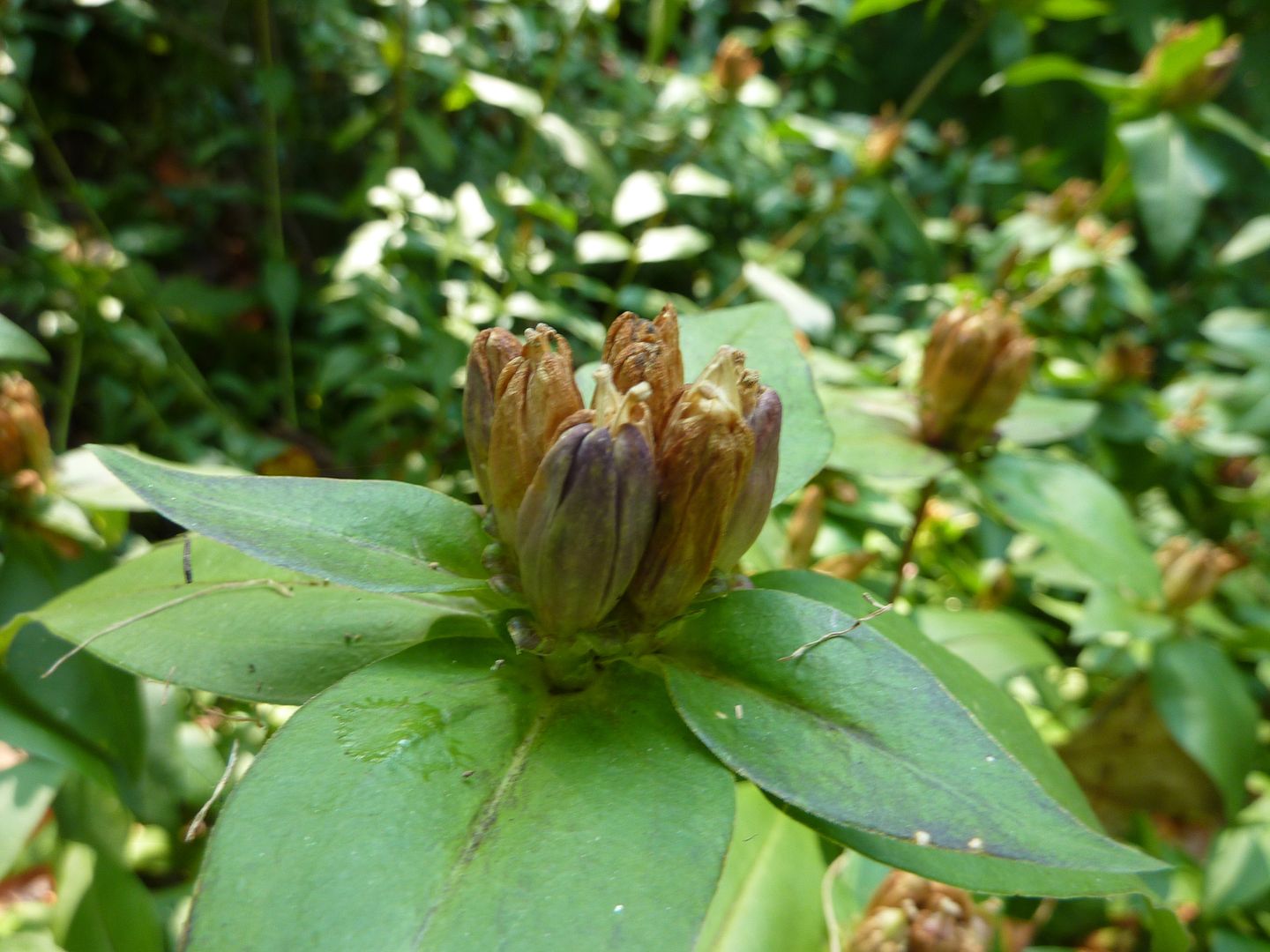
This is Blue Gentian, I believe the species was Gentiana makinoi but that might be wrong. The flowers are normally a rich royal blue color. These were obviously past their prime but I was taken by the wonderful chocolate color the flowers become. Everyone highlights the blue color of the flowers when selling these because there are so few blue flowering plants and at the end of summer no less that they forget the other attributes as well.

Now we move onto the meadow. The tour guides are the first people to tell you that this is an artificially maintained meadow. Without constant weeding out of tree and other woody species this patch of grass would return to a forest in a matter of years. Normally wildfires and herds of animals like bison, (elephants if you're in Africa), would create and maintain the Savannah-like habitat. Sadly deer aren't that good at what they do.

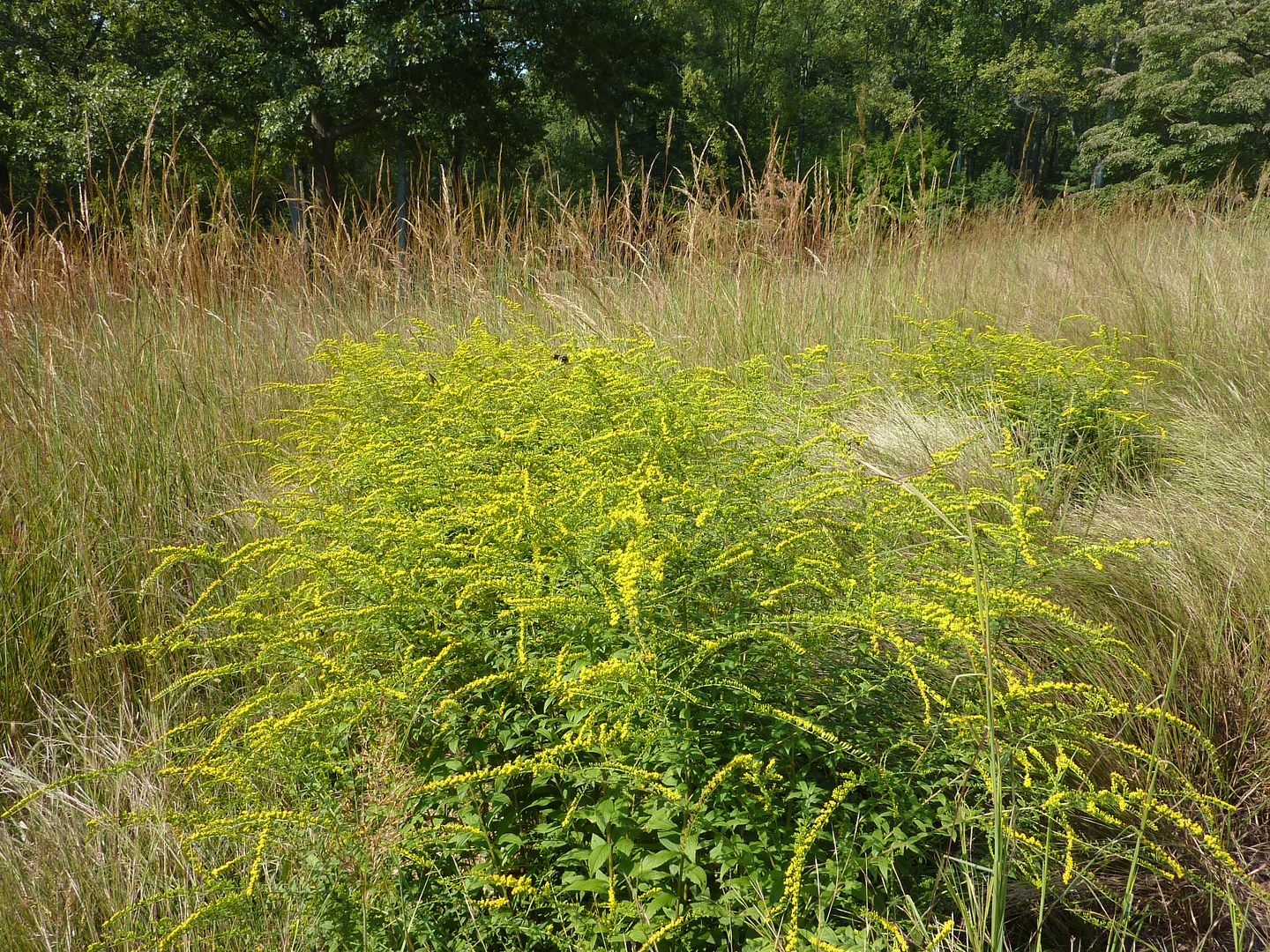
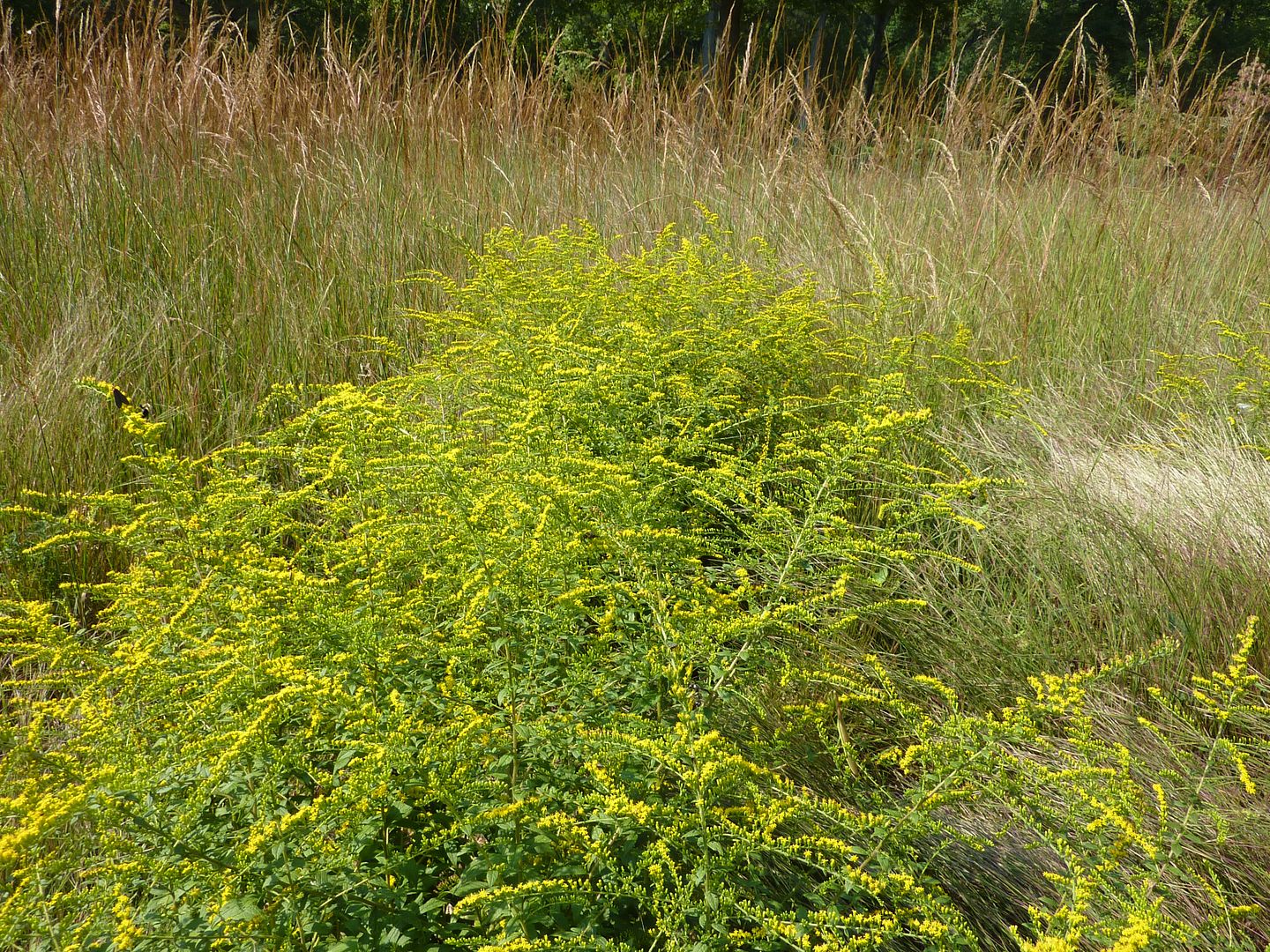
I really enjoyed seeing all the Solidagos blooming. It was nice for once to have someone around who could tell them all apart. It's such a massive genus. 


Solidago speciosa, Showy Goldenrod.

The flowers to this have a little more energy invested in them than other Solidago species. Notice how they actually have little flower petal-like rays circling each flower. The blooms also pull away form the stem and space themselves out a bit more too. Very nice plant.

Solidago rugosa, Wrinkle-Leaf Goldenrod. They had this species on display on purpose. First though notice the long shooting habit the flower stalks have. They all shoot away from the plant much more than most other species and someone came along to cultivate this into...

Solidago rugosa 'Fireworks'

It's called Fireworks because it looks like one. I actually planted one of these this year. Very nice plant. It has almost the habit of forming a bush to it.

I also spied this mantis among the foliage. It was picking off the many insects pollinating the flowers.

Rudbeckia fulgida, Black-Eyed Susan. I was a little surprised to see these blooming. They must have been dead headed or something because the ones I have in my garden are well past flowering and look sort of dead at this time of year. It's always charming to see this plant in mass.

From front to back, Black Eye'd Susan, False Indigo and it's black seed pods, patches of White Bone Set, and assorted grasses such as Big Blue Stem and Yellow Indian Grass.

Physostegia virginiana, Obedient Plant. I was having fun playing with this while the tour guide talked a little about plants. Basically you push the flowers from left to right and they stay there. 

I'm toying with the idea of turning the lawn into this.

So that pretty much ends the tour of the Mt. Cuba Center in the late summer fall time. There were so many plants I didn't get around to covering. Many shrubs loaded with berries, plants with serious ornamental appeal at this time of year, and still more flowers I didn't get good pictures of. There were so many asters with butterflies dancing around them too. It feels like such an insult that only 14 people showed up to this class. It only cost $10 and they give you a free plant at the end to take home.