"The Ecology and Evolution of Ant-Plant Interactions" by Victor Rico-Gray and Paulo S. Oliveira.
I started reading this book yesterday and I'm thrilled so far. I was expecting this book to focus heavily on Pogonomyrmex, Harvester Ants, and Atta, Leaf Cutter Ants. To my surprise though they are only really talked about for the second chapter. So the book is 9 chapters long what could they really talk about?
Reading on I find they other chapters focus on ants as a primary seed dispersal. So I'm thinking okay this is going to just talk about voilets and trilliums, which they do for the post part. But they end this chapter with a list of plants ants disperce the seeds of! Trilliums, some Violets, Wild Ginger, Blood Root, Bleeding Hearts (which is a big surprise to me!) all use ants to disperce seeds. The list goes on but but many of the plants are not in my area and I'm trying to keep the garden as native as I can.
What's interesting about this is the coating around the seeds that attracts the ants is fed to ant larva. And as it turns out this will change worker brood into queens. Thus colonies that work these seeds as a food source will produce more queen ants to make more colonies. When I get a few colonies going and have these plants I'll have to keep an eye on this behavior. Normally captive colonies don't produce reproductives.
The book goes on to name Ant Genera that disperce seeds. Probably most surprising is that Prenolepsis, Formica, Camponotus, Lasius, and Myrmica will plant seeds to these plants.
Later chapters of this book show Ants as a pollinator to some plants. Mostly plants growing in dry conditions and that have very small flowers. Generally any small insect will work as a pollinator but it's good to know ants contribute here.
Tuesday, March 31, 2009
Friday, March 27, 2009
Camponotus castaneus
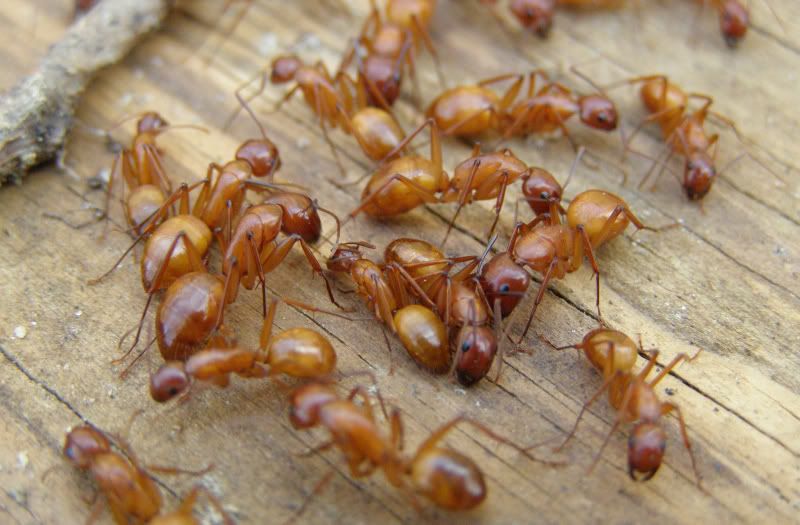
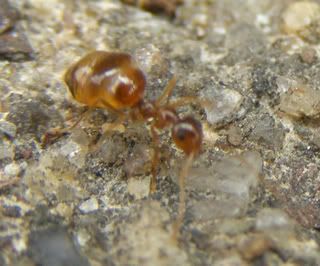
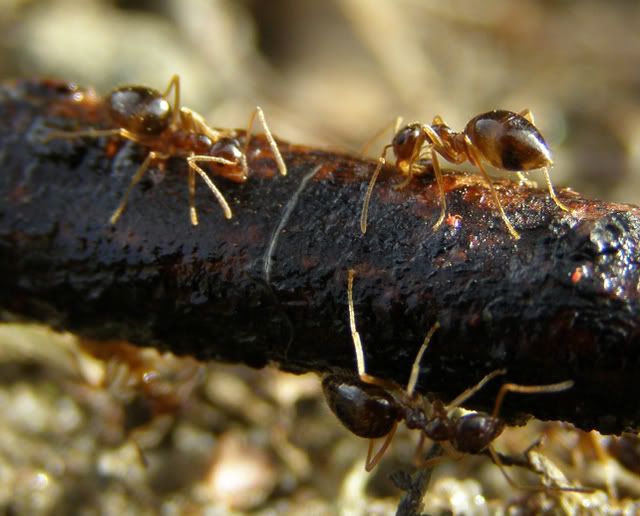
Some much needed rain last night gave me hope that Prenolepis imparis would fly. However all I found today were Camponotus castaneus workers out foraging. Though normally a nocternal forager they may still be seen on cloudy days. They normally nest in semi sandy soil around trees. The nest itself is located around the tree roots while the entrance is uaually a few feet form the trunk. They may take advantage of rocks and logs too but rarely build up into them.
Unfortunantly I've never been able to get queens of these to be successful. Boosting with pale workers seems to help. I say pale workers becasue Camponotus lay eggs in batches over the year and colonies don't always have cocoons to boost with. Pale workers are uaually a sign that they're less than 4 weeks old so the colony odor hasn't taken them yet. Such young workers rarely attack other ants, especially queens of their own species.
Ant Chat 8: Western American Ants
Something we didn't realize when recording is Myrmecocystus and Pogonomyrmex are currently flying. These are western ant genera with the exception of a single Pogonomyrmex species found in southern states (Florida, Georgia and serounding area).
Monday, March 23, 2009
Anting Season is Officially Open
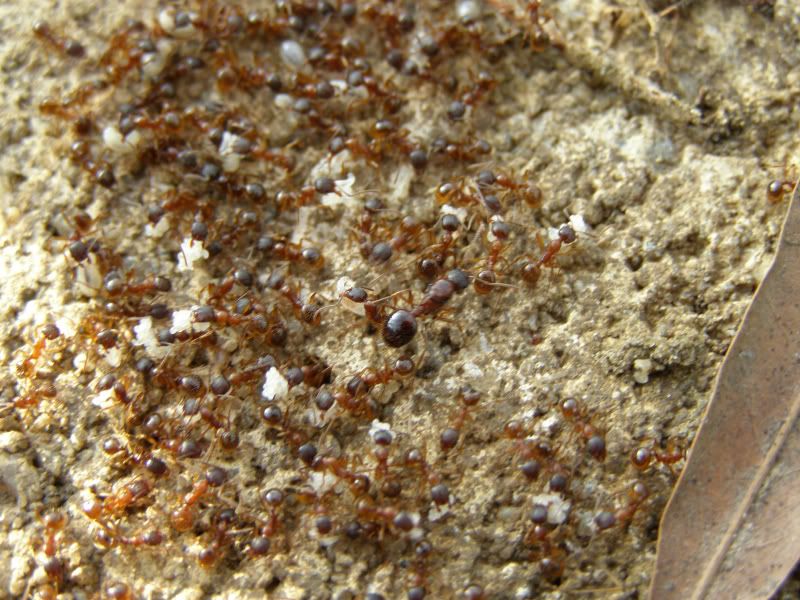
Colonies are warming up and a few have even flown. The season for all things ants has officially started. This is also the ideal time to catch colonies! Pictured above is an Aphaenogaster colony, queen present in the middle, that was under a rock out in my yard. I've had a few opportunities to catch assorted Formica colonies this way too, and even the nomadic Tapinoma is emerging.
Some Myrmecocystus are flying out west I believe along with Prenolepis imparis where found all over the countrie. I've caught a single queen so far this year and she's already produced eggs.
Captive queens of Lasius neoniger have huge piles of eggs and larva. It is taking longer than I recall for Lasius brood to develope but I can't complain the results. Some queens have mounds of eggs equal or greater in size to the queen herself! I definantly like hibernating ants now, but only when it works. (I lost some Pheidole queens that way and don't understand why.)
Termites here in NJ are producing alates (winged kings and queens) and will be flying probably sometime in April or May. As I recall they do so either in the early morning or around noon. When swarms aren't eroupting inside homes they can be found by their gleeming wings in the sun. Birds and very active Formica are another good sign of a flight. Locate wondering pairs and catch them both. Test tube setups and clustral cells work with termites but I believe they need soil in their container along with small bits of dead wood and grass.
Saturday, March 21, 2009
Is Ant Chat to Floral?
So I'm the host of Ant Chat along with Cody who hasn't been on the past few shows. But we keep in touch. Recently he was listening to a lot of the shows and said that it's way to floral. I'd like to address this now.
Yes a few of the shows have almost nothing to do with ants. The truth is I'd just like to turn it into a nature show with emphases on ants. And I talk about plants because it's so important to step back and look at what you're doing now and then. If the show were just about ants, it would consist of catching queens, digging up colonies and keeping them. There's a slight undertone there that nature is there for us to take advantage of, and I don't like that.
Yes I do catch queens which doesn't do a whole lot to the environment, I dig up colonies to common species which doesn't do a whole lot either. But the thing is there are people who take this to all new extremes. They find a swarm of ants and catch several hundred queens to one species. Catching so many queens of one species definitely puts a dent in the environment and I would only say it's ethical if this is done by a scientist or if it's a nonnative or invasive species. What are you going to do with 100 Lasius neoniger queens?
For people who buy exotic ants online, this is illegal in most countries but not commonly enforced. But let's ignore that issue for a moment. If you can't keep the ants alive locally to your area, what makes you think you can keep something more advanced?
I'll be addressing some of these things in future shows.
So I'm trying to inspire people to make the world a better place. There are reasons invasive ants are commonly found in your backyard. The image of that "golf course look" is one of them. For at least 200 years now we've been holding flower shows and competitions for good landscaping designs. People using foreign plants tended to win these because they competitions because they had something unique. These unique plants were loved and adored and people bought them on special order to make their landscape stand out. Eventually entire tree farms were devoted to nonnative plants and cultivars of these are mass marketed. Going to any garden center today I would say less than 5% of the plants there are native to the US.
When exotic sod (look at your front yard) was imported from South America it brought with it the invasive Red Fire Ant, Solenopsis invictia, which has decimated a huge chunk of ant diversity in southern states of the US and other countries. The Argentine Ant, Linepithema humile, likely came over with potted plants along with over 100 others nonnative species. Tetramorium caespitum is from Asia and no one knows how it got here but the pavement ant is commonly found in grass or along sidewalks. Myrmica rubra is from Europe and slowly taking over forests in the American North East. Monomorium destructor (The Destroyer Ant) is another invaisive in urban areas but isn't a horrable mennace yet. Where found though they've been known to remove protective rubber layers electrical work and phone lines and can nest in fabric.
So I like to talk about plants on the show in the hopes that I inspire a few people to improve their landscape. But it's hard to recomend native plants just for ants though. There are so many other benefits to these. Milkweed, Asclepias, is the host plant to the Monarch butterfly. But when they die back in the winter the stems are ideal for small colonies of ants to move in. Goldenrod, Solidago, is another one they can nest in but it's also a host plant as well very beneficial to pollinators. There are loads of plants ants will nest in the stems of. Some ants are specialized predators of caterpillars. Leaving dead wood around to decompose is greatly beneficial to the environment. Dead branches and trees also work, and if they're to far from anything to cause property damage don't need to be cut down. The ants and insects that normally take advantage of these will attract woodpeckers and offer a great spot for a grape vine to grow up.
The problem with this issue though is that I need time in order to show this benefit of gardening. One has to look at success in terms of years. Relandscaping your entire yard into a native plant paradice probably won't remove the nonnative ants form your area. But it will attract native ones to come in and eventally hopefully increase the biodiversity of your yard over a number of years.
Yes a few of the shows have almost nothing to do with ants. The truth is I'd just like to turn it into a nature show with emphases on ants. And I talk about plants because it's so important to step back and look at what you're doing now and then. If the show were just about ants, it would consist of catching queens, digging up colonies and keeping them. There's a slight undertone there that nature is there for us to take advantage of, and I don't like that.
Yes I do catch queens which doesn't do a whole lot to the environment, I dig up colonies to common species which doesn't do a whole lot either. But the thing is there are people who take this to all new extremes. They find a swarm of ants and catch several hundred queens to one species. Catching so many queens of one species definitely puts a dent in the environment and I would only say it's ethical if this is done by a scientist or if it's a nonnative or invasive species. What are you going to do with 100 Lasius neoniger queens?
For people who buy exotic ants online, this is illegal in most countries but not commonly enforced. But let's ignore that issue for a moment. If you can't keep the ants alive locally to your area, what makes you think you can keep something more advanced?
I'll be addressing some of these things in future shows.
So I'm trying to inspire people to make the world a better place. There are reasons invasive ants are commonly found in your backyard. The image of that "golf course look" is one of them. For at least 200 years now we've been holding flower shows and competitions for good landscaping designs. People using foreign plants tended to win these because they competitions because they had something unique. These unique plants were loved and adored and people bought them on special order to make their landscape stand out. Eventually entire tree farms were devoted to nonnative plants and cultivars of these are mass marketed. Going to any garden center today I would say less than 5% of the plants there are native to the US.
When exotic sod (look at your front yard) was imported from South America it brought with it the invasive Red Fire Ant, Solenopsis invictia, which has decimated a huge chunk of ant diversity in southern states of the US and other countries. The Argentine Ant, Linepithema humile, likely came over with potted plants along with over 100 others nonnative species. Tetramorium caespitum is from Asia and no one knows how it got here but the pavement ant is commonly found in grass or along sidewalks. Myrmica rubra is from Europe and slowly taking over forests in the American North East. Monomorium destructor (The Destroyer Ant) is another invaisive in urban areas but isn't a horrable mennace yet. Where found though they've been known to remove protective rubber layers electrical work and phone lines and can nest in fabric.
So I like to talk about plants on the show in the hopes that I inspire a few people to improve their landscape. But it's hard to recomend native plants just for ants though. There are so many other benefits to these. Milkweed, Asclepias, is the host plant to the Monarch butterfly. But when they die back in the winter the stems are ideal for small colonies of ants to move in. Goldenrod, Solidago, is another one they can nest in but it's also a host plant as well very beneficial to pollinators. There are loads of plants ants will nest in the stems of. Some ants are specialized predators of caterpillars. Leaving dead wood around to decompose is greatly beneficial to the environment. Dead branches and trees also work, and if they're to far from anything to cause property damage don't need to be cut down. The ants and insects that normally take advantage of these will attract woodpeckers and offer a great spot for a grape vine to grow up.
The problem with this issue though is that I need time in order to show this benefit of gardening. One has to look at success in terms of years. Relandscaping your entire yard into a native plant paradice probably won't remove the nonnative ants form your area. But it will attract native ones to come in and eventally hopefully increase the biodiversity of your yard over a number of years.
Friday, March 20, 2009
First Day of Spring
Today is the first day of spring, believe it or not. The day opened with a 1/4" of snow. It melted quickly though and the rest of the day was in the low 60's and 50's. Plants have started to arrive that I ordered from various places, but I'm not certain when to plant them. There's so much dew in the air right now, and it's supposed to drop down to the 20's overnight. That means it's going to frost and I need to cover the Native Honeysuckles, Lonicera semprvirens, I planted. I think they'll be fine but I'm going to cover them with mason jars just in case. Spring is off to a slow start.
Earlier in the week I set out my Bumblebee Boxes, and Mason Bee Nest Blocks. Bumblebee Boxes are a simple bird house with a 3/4" hole in it. A clump of fabric or "former rodent nest" makes it enticing for them to move in. Some species prefer to nest underground and for those you'll need to install a hose/tube/pipe out the front end and bury most of it. (I've found Bumblebees nesting in my garden hose before. They don't last long though. Just turn the water on and they're gone.) Place the box in an area with tall grass. The trouble is the low success rate. I read 1 in 3 boxes are successful but I haven't had any luck yet. Thankfully there are other bees that might use the box.
Mason Bees nest in pre-drilled holes in untreated wood. Don't drill all the way through though, they prefer one entrance. Different sized around the size 5/16ths seem to be what works.
I have a nesting block of mason bees from last year. I'm going to set it out probably tomorrow or when I see my fruit trees blooming. They're a spring mason bees (only active for 4 to 6 weeks) so I want to make sure they wake up at the right time. They have plenty of nesting for this year I'm sure. Two bees from last year FILLED a block of 20 holes. Each hole probably has 5 to 7 bees in it.
Earlier in the week I set out my Bumblebee Boxes, and Mason Bee Nest Blocks. Bumblebee Boxes are a simple bird house with a 3/4" hole in it. A clump of fabric or "former rodent nest" makes it enticing for them to move in. Some species prefer to nest underground and for those you'll need to install a hose/tube/pipe out the front end and bury most of it. (I've found Bumblebees nesting in my garden hose before. They don't last long though. Just turn the water on and they're gone.) Place the box in an area with tall grass. The trouble is the low success rate. I read 1 in 3 boxes are successful but I haven't had any luck yet. Thankfully there are other bees that might use the box.
Mason Bees nest in pre-drilled holes in untreated wood. Don't drill all the way through though, they prefer one entrance. Different sized around the size 5/16ths seem to be what works.
I have a nesting block of mason bees from last year. I'm going to set it out probably tomorrow or when I see my fruit trees blooming. They're a spring mason bees (only active for 4 to 6 weeks) so I want to make sure they wake up at the right time. They have plenty of nesting for this year I'm sure. Two bees from last year FILLED a block of 20 holes. Each hole probably has 5 to 7 bees in it.
Tuesday, March 17, 2009
Waking Up for Spring
Nuptial Flights
Today was warm enough for Prenolepis imparis to fly here but all I saw were males leaving colonies once again. I'm hoping the colonies I normally watch didn't simply favor males this year. It's been a yearly thing that I photograph the queens as they take off. Assuming the colony has queens to send out I'm assuming that it's just to dry now. The main flight of the area has yet to take place and I'm hoping it's just due to lack of rain.
Normally they'd be up and out on the first day they can in or after February. I believe the moisture they need is already there in the soil as the ground thaws.
Ants
In walking around the yard I found many colonies are coming out of hibernation. Prenolepis imparis is the only one that's actively foraging though. Others like Aphaenogaster and Formica are currently taking advantage of rocks and logs to warm up the colony. They sunbath (usually under the rock) and gather heat to bring back down to the winter chamber where the rest of the colony is.
Another thing out in my yard, I noticed under a piece of wood I commonly lift were three colonies of ants. Lasius claviger had their underground aphids up with them, Tetramorium casepitum (species E) was there in the middle, and Camponotus castaneur nesting next to them. This is a neat combination because the Lasius here is almost completely subterranean, the Tetramorium is an invasive grass ant, and the Camponotus only forages at night.
Bees
The honey bees were out today and bringing in loads of pollen. I'm happy that all 4 hives survived the winter. Now I need to see about controlling their swarming.
I also saw my first Bumblebee yesterday. This early in the year almost all the bumblebees you see are queens. Though starting new queens out in captivity is tricky I don't believe they have that high of a success rate.
When the trees start blooming I'll put my Mason Bees outside too. They're currently hibernating in the fridge, and I look forward to seeing them become active again.
Butterflies and Nature
Nothing to report on butterflies yet. There was the egg case that showed up on the nectarine tree but that's probably been there since the fall. I see similar things on trees out in the woods that are commonly targeted by tent caterpillars.
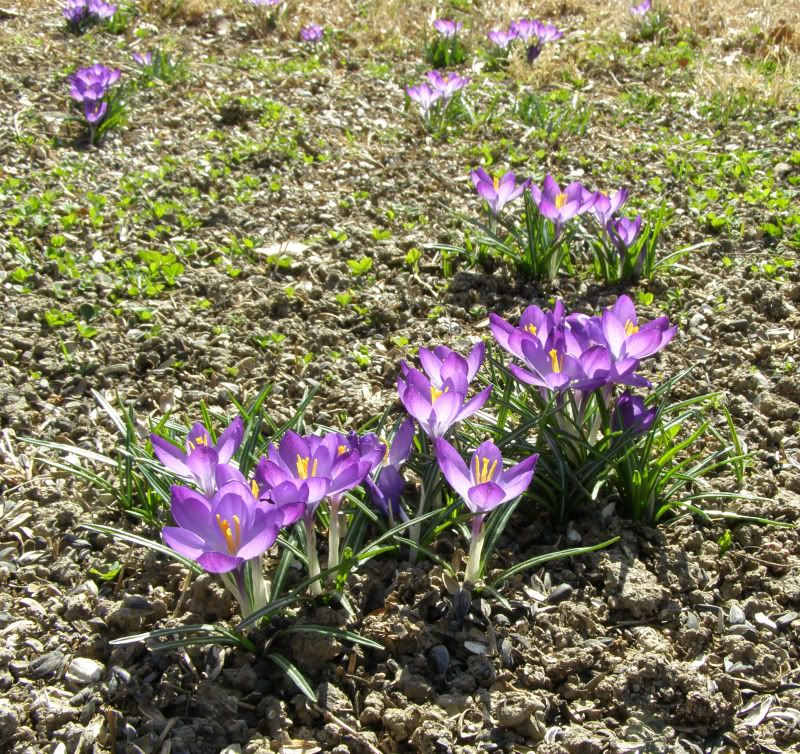
The Crocuses are amazing and blooming better than ever. The few that weren't eaten by the rodents around here have bloomed wonderfully and I even see some have divided.
The Native Honeysuckle I just got in I also planted. The day started out with me looking for a place to plant them. My mom finally saw pictures of what I was trying to plant.... And then she told me I could dig up her Butterfly Bush!!!!! (Something I've been wanting to get rid of since we bought it!) So I bought her a trellis and got another one for myself, and I have planted 2 of the 3 I bought. My one remaining Honeysuckle plant will go to one of my relatives I think or friends.
Saturday, March 14, 2009
Ant Update: March
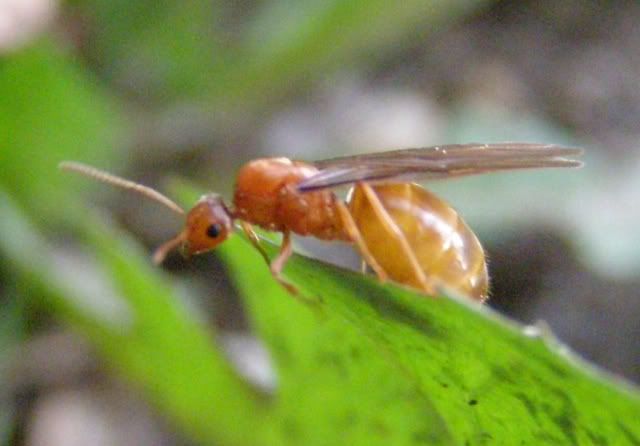
Prenolepis imparis should be flying all this and next month (April) but only on warm days above 60F or so. Flights usually start after noon at the earliest but are more likely to be seen closer to 4pm -5pm and last until sundown. It's best to find a colony or two of these ants and observe them at this time of day when the temperature feels right. On days when they fly it's usually warm enough that you don't need a coat but wind doesn't matter for this ant. They are a very ill-weathered ant. They'll fly in cloudy conditions with wind gusts up to 70mph.
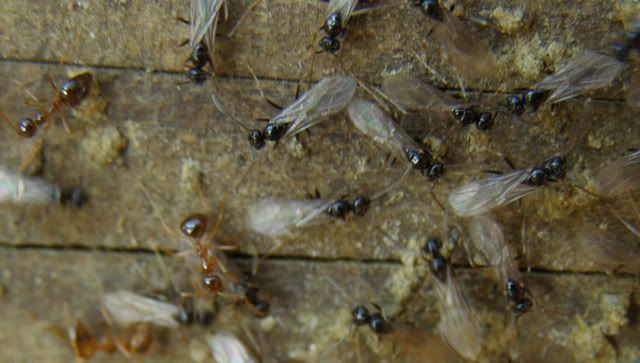
Swarms gather around trees and are usually low to the ground, sometimes above the canapy but not often. Males tend to greatly outnumber the queens too so swarms can appear as swarms of gnats. They don't fly as dynamicaly as gnats though so walking through a swarm will result in several of them landing on you, where as gnats will likely fly away more easily. Knowing what male ants look like is also handy.
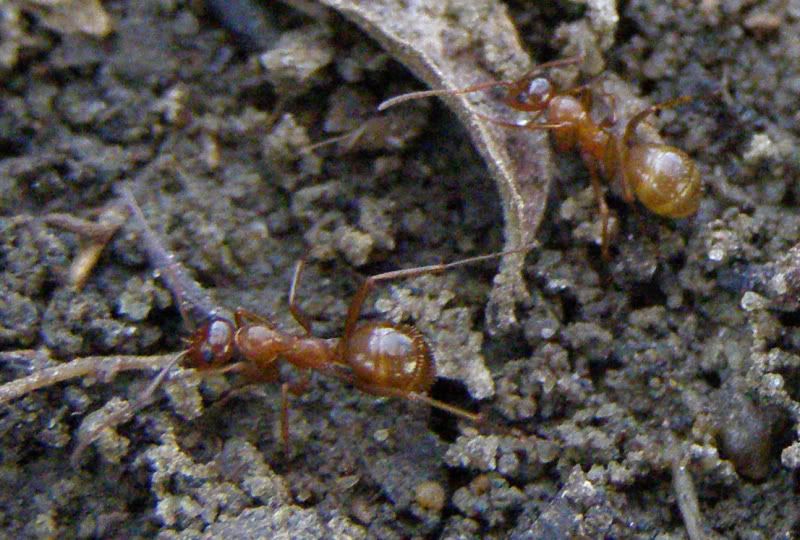
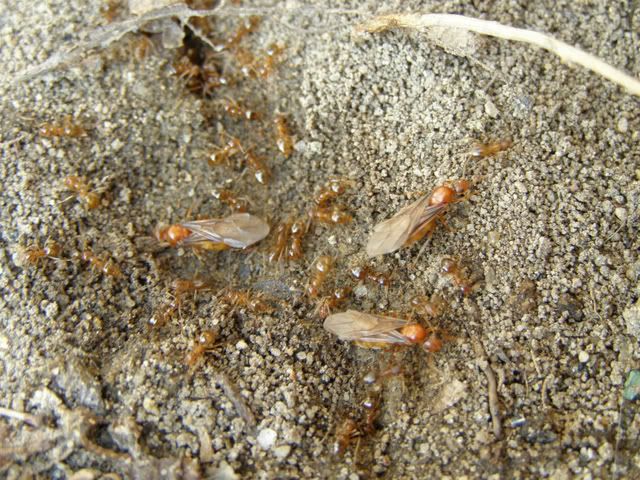
As you can see from the photo, queens are birghtly colored and in my opinion one of the prettiest ants you can find. There's something about the blushing red orange color of the thorax, and the blond yellows of the abdomen. As far as I know this is a unique color combination in the ants world.
Workers are about 4 milimeters long. Their color is either a pale brown color or a dark almost black color. This ant is also found all over America but are most common in forested areas.
Happy Anting
Thursday, March 12, 2009
Eggs on Nectarine Tree
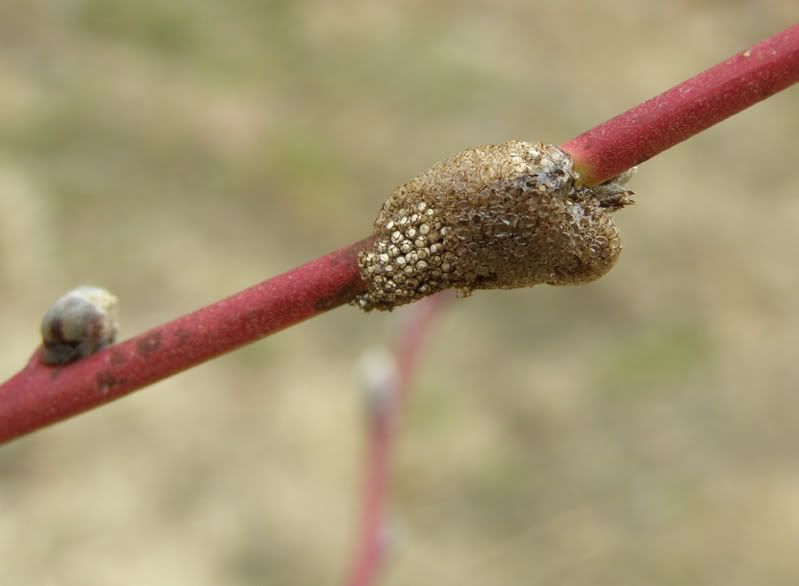
I was outside a bit ago inspecting my trees. We're supposed to get a cold front in and possibly more snow so I was worried that the frost might kill the flower buds if they're to far along. While inspecting the Nectarine tree though I found what I believe is the egg sack to a moth or butterfly. (There's an outside chance that it's a praying mantis but I doubt it.) Usually caterpillars are very specific about what they eat. Meaning they'll either eat the flower petals themselves or they'll go for the leaves that emerge with them shortly after. If they eat the leaves I have no problem with this... But if they go after the flower petals I'll be taking action. I want me some Nectarines!
Wednesday, March 11, 2009
Crocuses


Apparently the crocuses aren't done blooming yet. Earlier this week I had more crocuses come up. This batch was a nice purple color.
Subscribe to:
Posts (Atom)